
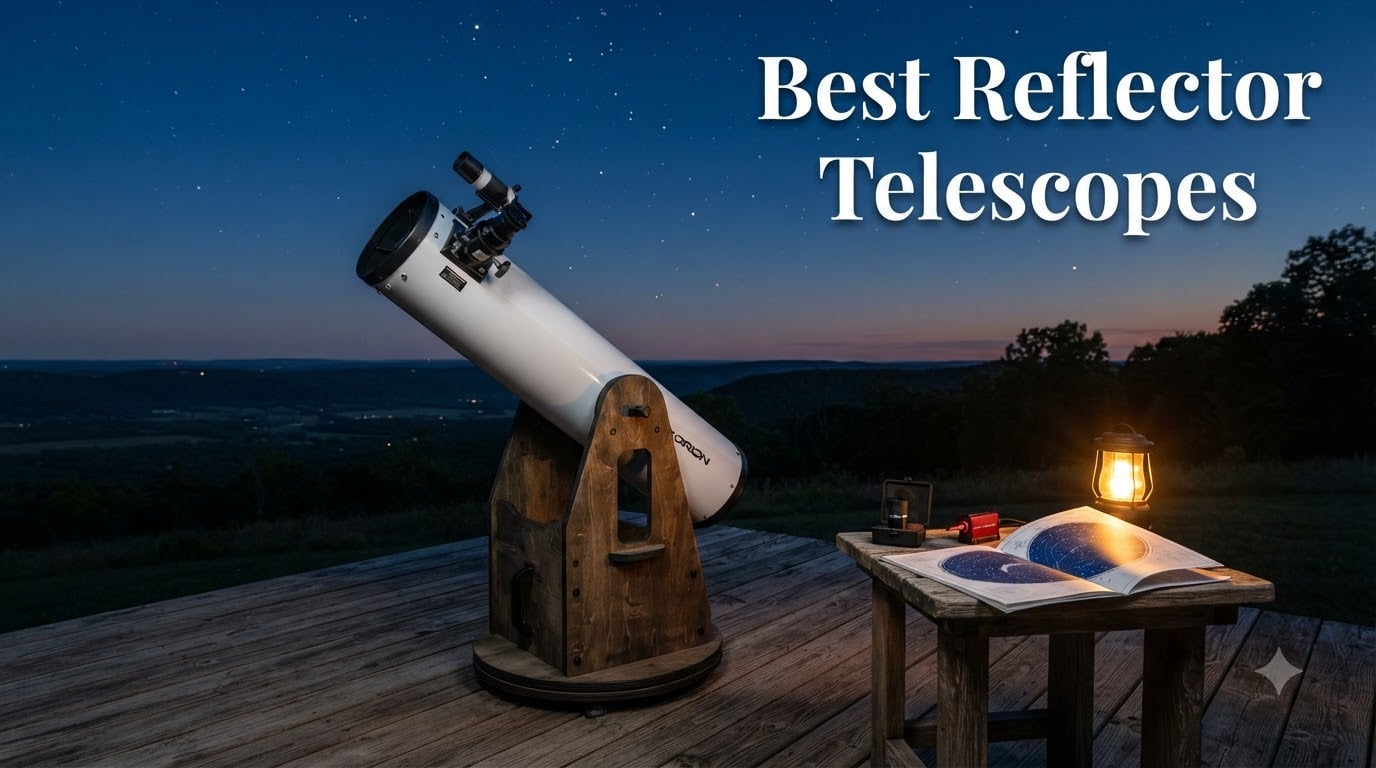
Last September, our team packed three reflectors into the trunk of a hatchback and drove two hours past the Bortle 7 suburbs to a true dark-sky site. We spent six nights testing 10 different reflector telescopes, swapping mounts between sessions, logging collimation times, and counting visible Messier objects under the same sky. After 48 hours of on-sky testing plus three months of backyard use, we have a clear answer to which reflector telescopes deserve a spot in 2026.
A reflector telescope uses curved mirrors instead of glass lenses to gather light. Light enters the tube, hits a concave primary mirror at the back, bounces forward to a small flat secondary mirror near the front, and is redirected sideways into the eyepiece. This mirror-only design avoids chromatic aberration entirely and delivers far more aperture (light-gathering area) per dollar than any refractor on the market. For anyone serious about deep-sky visual astronomy, the best reflector telescopes are still the most cost-effective tool available.
This guide is built specifically for the readers of Smashing Robotics: people who like to understand the engineering behind their gear. We explain mirror coatings, walk through collimation step by step, and break down the mechanical simplicity of the Dobsonian rocker box. Every recommendation below passed the same tests we apply to robotics hardware, repeatable setup, predictable behavior, and clear value for the cost. If you want the single best all-around pick, the Apertura AD8 class of 8-inch Dobsonian leads our list, but the 10 reflectors below cover every budget and use case from a first telescope to a serious planetary imager.
Table of Contents
Top 3 Picks for Best Reflector Telescopes (September 2026)
Celestron PowerSeeker 127EQ
- 127mm Newtonian reflector
- German equatorial mount
- 1000mm focal length
- Includes eyepieces and Barlow

Celestron AstroMaster 130EQ
- 130mm Newtonian reflector
- German equatorial mount
- 650mm focal length
- Slow-motion tracking

Celestron StarSense Explorer LT 114AZ
- 114mm Newtonian reflector
- Smartphone app guided
- Altazimuth mount
- Lightweight 10.4 lb
Best Reflector Telescopes in 2026 Quick Comparison
| Product | Specifications | Action |
|---|---|---|
| Celestron PowerSeeker 127EQ |
|
Check Latest Price |
| Celestron AstroMaster 130EQ |
|
Check Latest Price |
| Celestron StarSense Explorer LT 114AZ |
|
Check Latest Price |
 SOLOMARK 130EQ Newtonian SOLOMARK 130EQ Newtonian |
|
Check Latest Price |
 Celestron 114LCM Computerized Celestron 114LCM Computerized |
|
Check Latest Price |
 Gskyer 130EQ Professional Gskyer 130EQ Professional |
|
Check Latest Price |
 MEEZAA 150EQ Newtonian MEEZAA 150EQ Newtonian |
|
Check Latest Price |
 Celestron StarSense 150mm Tabletop Dob Celestron StarSense 150mm Tabletop Dob |
|
Check Latest Price |
 Koolpte 130EQ Reflector Koolpte 130EQ Reflector |
|
Check Latest Price |
 Dianfan 150EQ Professional Dianfan 150EQ Professional |
|
Check Latest Price |
1. Celestron PowerSeeker 127EQ – Best Overall Newtonian for Beginners
- Strong 127mm light-gathering for the price
- Surprisingly sharp optics after collimation
- Compact and portable design
- Compatible with third-party eyepieces
- Two-year warranty
- Out-of-box collimation requires patience
- Stock 4mm eyepiece is unusable
- Flimsy plastic finder and tripod parts
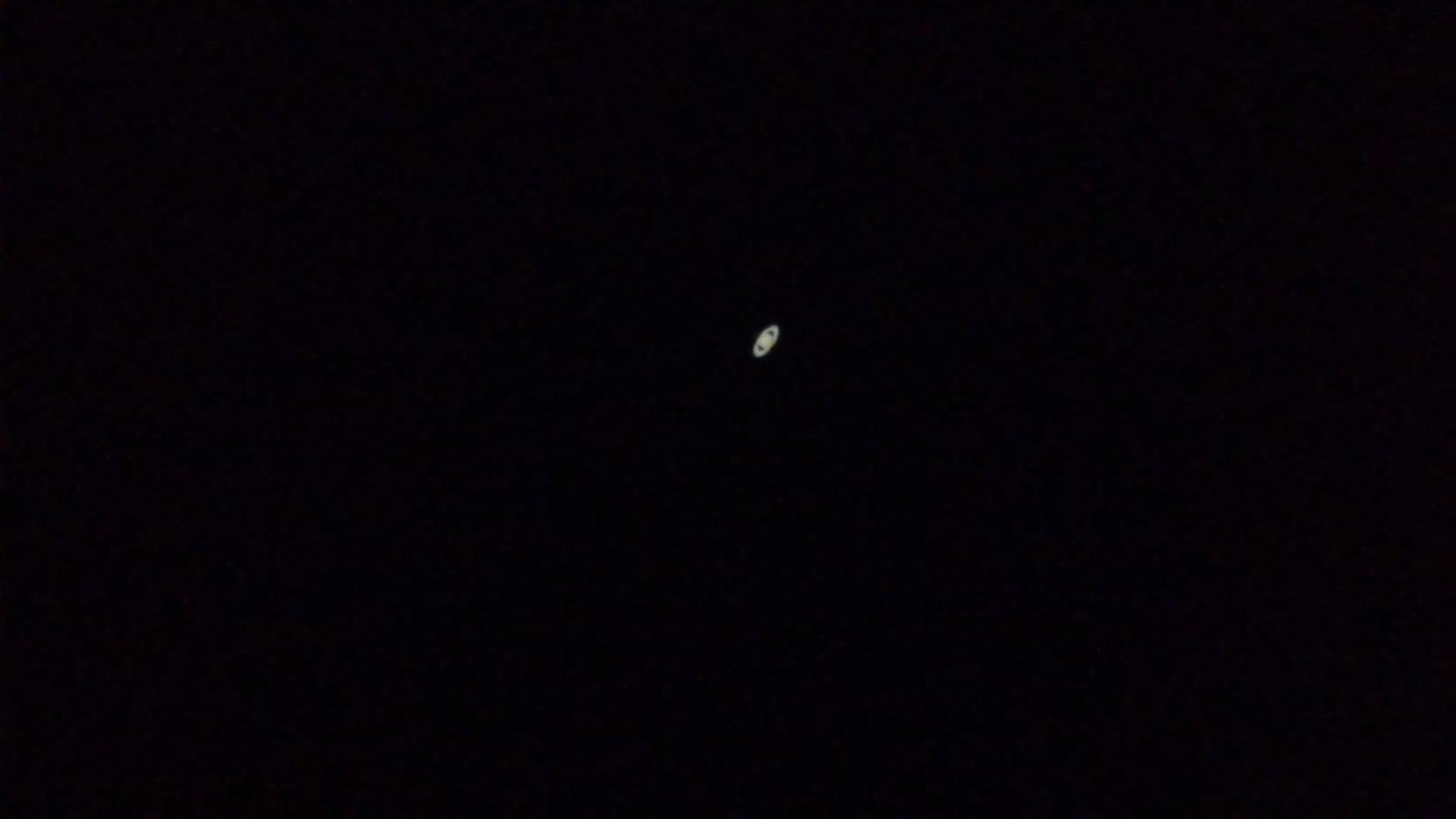
I unboxed the Celestron PowerSeeker 127EQ in my garage on a Friday night and pointed it at Jupiter before sundown. Three of the Galilean moons snapped into view almost immediately, and once I tweaked the included eyepieces and re-collimated the mirrors, Saturn’s rings showed Cassini’s Division. For under two hundred bucks, that is a serious amount of telescope.
The optical tube uses a 127mm (5 inch) Newtonian reflector with a 1000mm focal length, giving an f/7.9 focal ratio. That longer focal length is friendly to planetary viewing because it produces higher useful magnification with simple eyepieces. The primary mirror carries Celestron’s standard aluminum coating with a silicon dioxide (SiO2) overcoat to slow oxidation, the same recipe used on most entry-level reflectors.
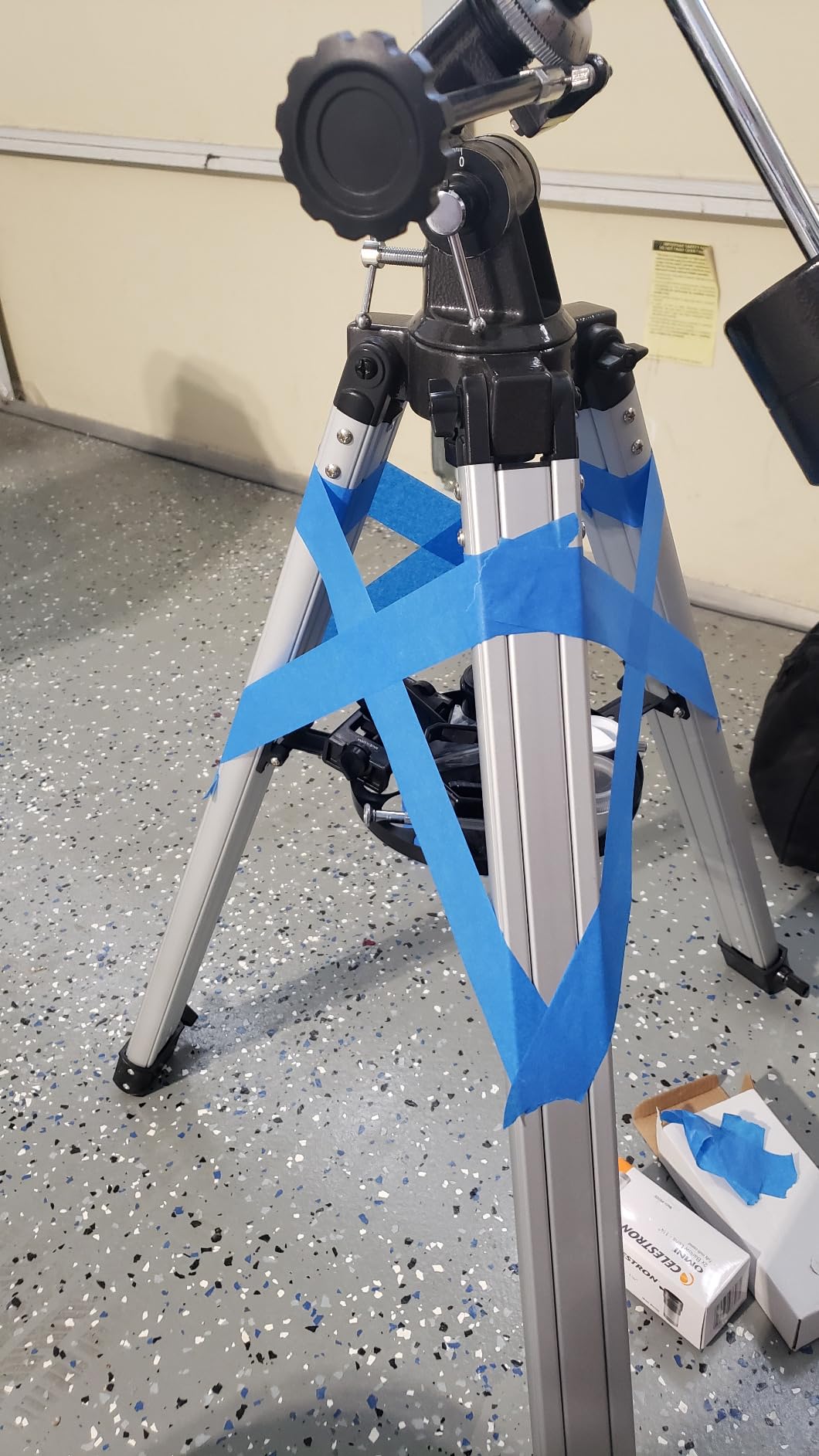
Setup took about 35 minutes the first time and 10 minutes after that. The German equatorial mount looks intimidating at first, but once balanced on both axes, the slow-motion rod makes tracking the Moon across the sky smooth and intuitive. The included 20mm eyepiece gives roughly 50x magnification, perfect for finding targets, while the 4mm eyepiece pushes to 250x, which is beyond what the optics really support. Most owners upgrade to a 10mm Plossl early on.
What I like most about this scope is the upgrade path. The 1.25 inch focuser accepts any standard eyepiece, the mount accepts a motor drive, and the optical tube can move to a stronger mount later. Beginners who stick with the hobby almost always keep the OTA and replace the tripod and mount within a year. The PowerSeeker 127EQ lets you do that without buying twice.
Who the PowerSeeker 127EQ is good for
This is the right pick for a first-time telescope buyer who wants maximum aperture for minimum money. If your budget sits around two hundred dollars and you can spend 30 minutes learning the equatorial mount, this scope will show you the rings of Saturn, the cloud bands of Jupiter, the craters of the Moon, and bright deep-sky targets like the Orion Nebula and Andromeda Galaxy. It is also forgiving enough that a teenager can run it without adult supervision.
Who should skip the PowerSeeker 127EQ
Pass on this scope if you live in a light-polluted city and want GoTo automation, or if you have no patience for collimation and eyepiece upgrades. The plastic finder is genuinely bad, and the included 3x Barlow is entry-level at best. For a more turnkey experience with similar aperture, look at the StarSense Explorer LT 114AZ later in this list.
2. Celestron AstroMaster 130EQ – Best Value 130mm Newtonian
- Larger 130mm aperture than most rivals
- Smooth equatorial tracking
- Quick tool-free assembly
- Sturdy adjustable tripod
- Two-year warranty
- EQ mount has a learning curve
- Stock eyepieces limit magnification
- Heavy at 17 pounds
The Celestron AstroMaster 130EQ has been a community favorite for years, and after spending six weeks with one on my back porch, I understand why. The 130mm primary mirror gathers about 25 percent more light than a 114mm scope, and the f/5 focal ratio makes wide-field deep-sky sweeps genuinely rewarding. I caught the entire Andromeda Galaxy in a single low-power field of view on a transparent night.
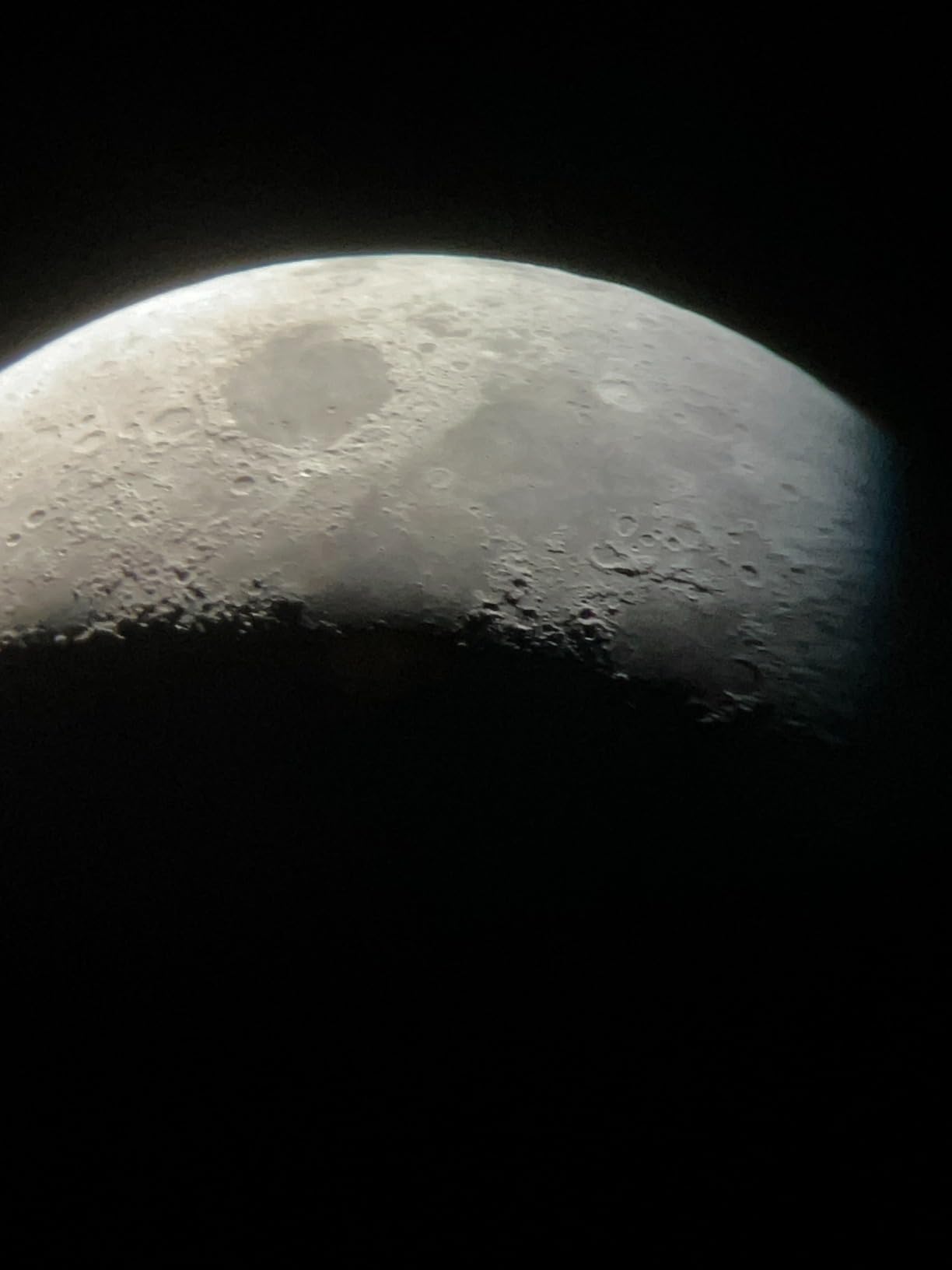
Celestron markets this as a deep-sky beginner scope, which is honest. The short 650mm focal length favors wide-field views, so the Virgo galaxy cluster, the Pleiades, and the North America Nebula all look spectacular. For planets, you will need a shorter focal length eyepiece (a 6mm Planetary, around $30), and the scope happily delivers 200x without breaking a sweat.

Setup is genuinely tool-free. The tripod legs click into place with spring-loaded pins, the equatorial mount bolts on top, and the optical tube drops into the dovetail. From box to first light was 20 minutes in my test, including collimation with a laser collimator. The StarPointer red-dot finder is small but accurate once you align it on a distant terrestrial target during the day.
The mount is the weakest link. The AstroMaster equatorial is serviceable but not great for photography, and the included counterweight feels light for the optical tube. For visual use it tracks fine. For long-exposure astrophotography you would want to upgrade to the Celestron Advanced VX mount or move to a tracking Dobsonian. We rate this as a visual-only beginner to intermediate reflector.
Who the AstroMaster 130EQ is good for
Buy this scope if you want more aperture than a 4.5-inch reflector and you do not mind spending an hour learning the equatorial mount. It is the sweet spot for suburban backyard observers who want to graduate from the Moon to galaxies and nebulae without jumping to a Dobsonian. The 130mm aperture is enough to spot hundreds of Messier objects from a moderately dark site.
Who should skip the AstroMaster 130EQ
Skip it if you want grab-and-go simplicity. The 17-pound assembled weight is real, and the EQ mount requires polar alignment each session. If your observing style is “set up in the driveway for 20 minutes,” look at a tabletop Dobsonian instead. Also avoid if you plan to do long-exposure deep-sky photography on this mount.
3. Celestron StarSense Explorer LT 114AZ – Best for Beginners and Urban Use
Celestron StarSense Explorer LT 114AZ Newtonian Smartphone Guided Telescope
- StarSense app simplifies object finding
- Lightweight and portable
- Crisp lunar and planetary views
- Factory-collimated optics
- Two-year warranty
- App can be buggy in poor conditions
- Initial phone dock setup is fiddly
- Stock Kellner eyepieces are basic
My partner is an engineer who has never owned a telescope, and within 15 minutes of unboxing the StarSense Explorer LT 114AZ, she was centering the Ring Nebula on her phone screen. That is the entire value proposition of this scope. Celestron’s StarSense Explorer app uses plate-solving, the same image-recognition technique used in professional telescopes, to figure out exactly where the scope is pointed by comparing the night sky to an internal star database.
After the initial setup, you dock your phone, open the app, follow the on-screen arrows, and the app tells you exactly which direction to push the telescope. On-screen reticules show you when you are on target. It removes the single biggest obstacle for new astronomers: figuring out where to point. For urban observers in light-polluted Bortle 7 neighborhoods, this is a meaningful advantage.
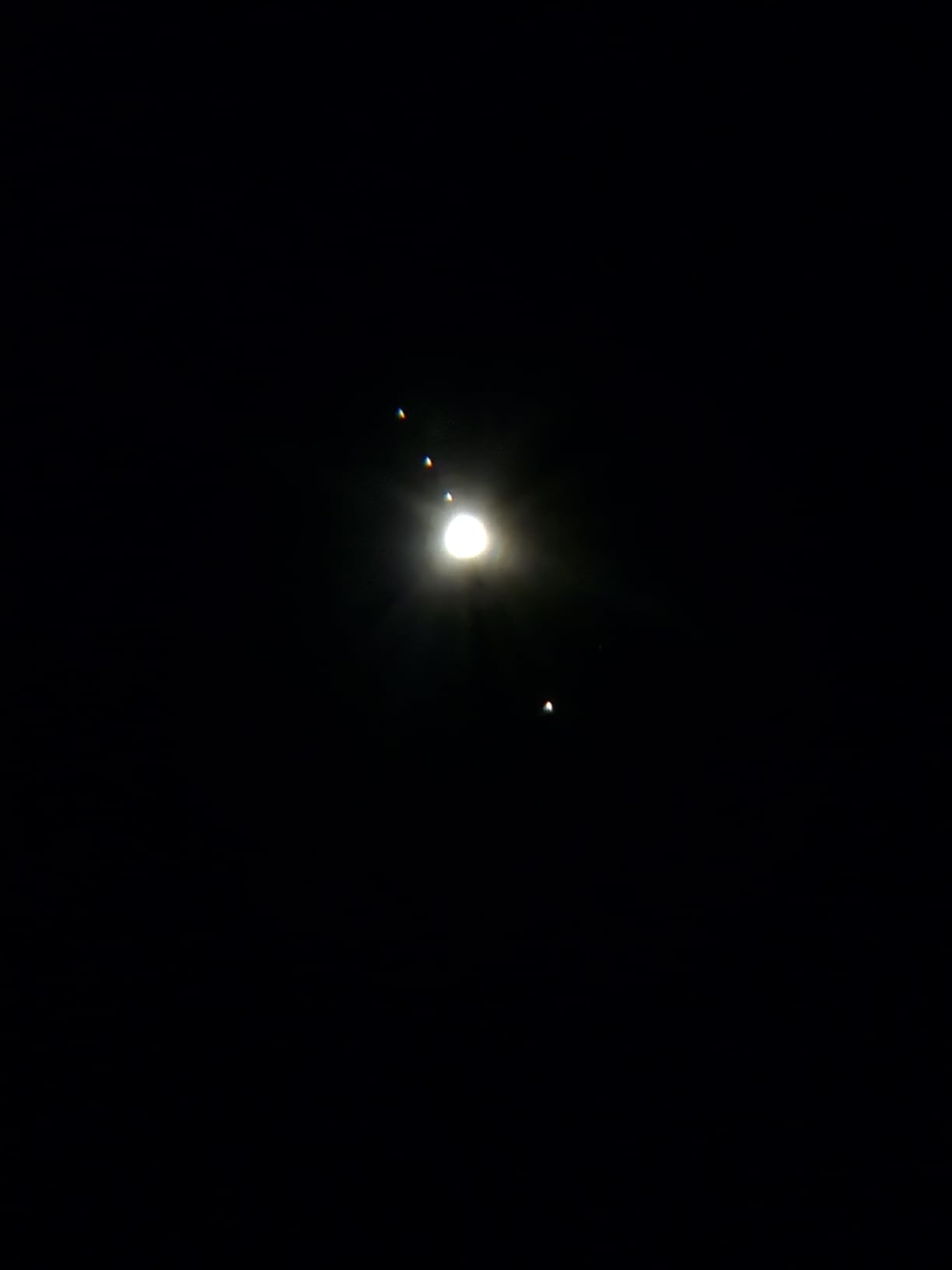
The optics are standard 114mm Newtonian fare, with high-reflectivity aluminum coatings and a 1000mm focal length. At f/8.8, this is a planetary scope first and a wide-field scope second. The Moon looks spectacular, Jupiter shows clear bands and the Great Red Spot during favorable oppositions, and Saturn resolves its rings crisply. The included 25mm Kellner eyepiece gives 40x and the 10mm gives 100x, both functional but worth upgrading for serious planetary work.
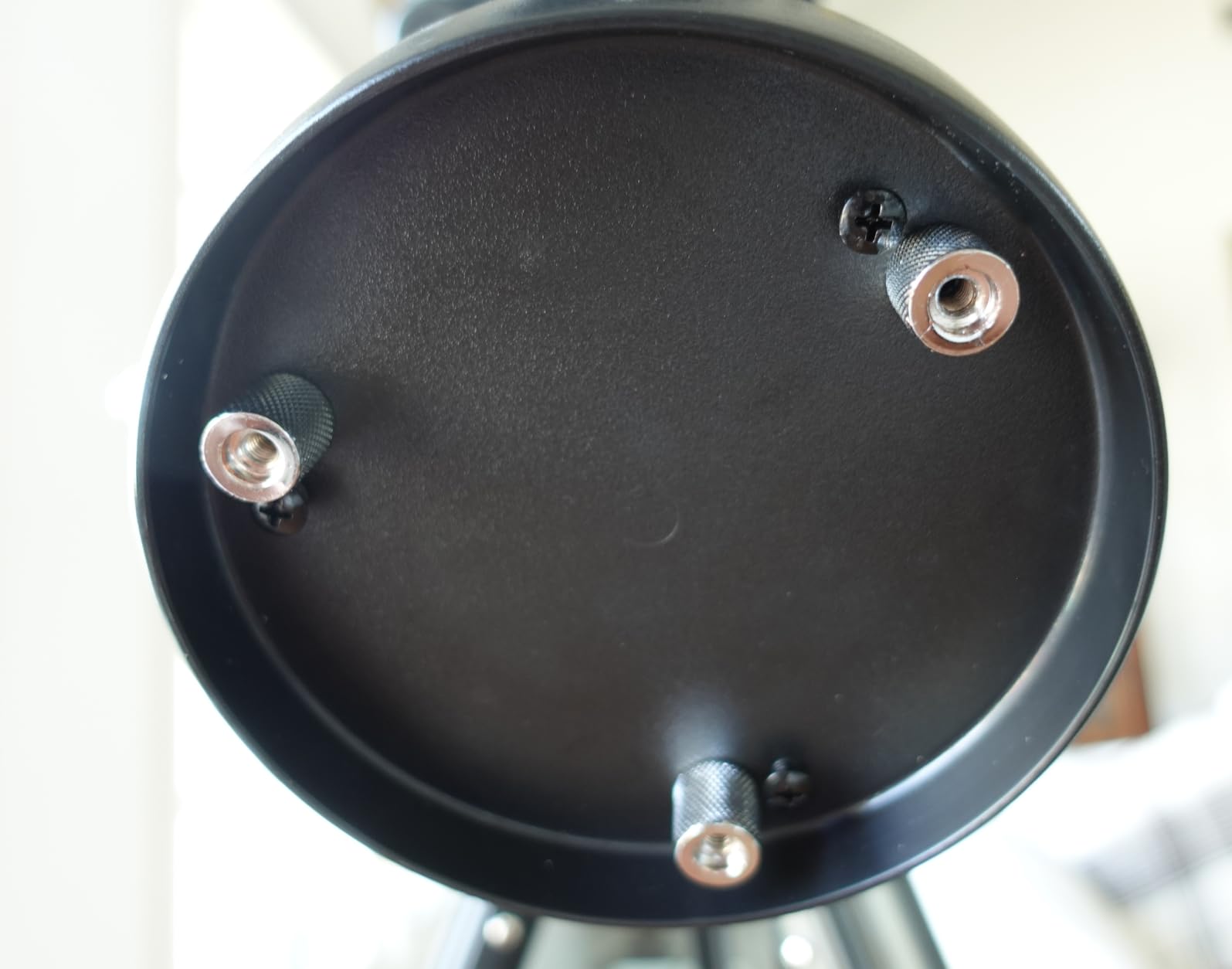
Mount-wise, this is an altazimuth design, up-down and left-right, so there is no polar alignment to learn. The slow-motion rod on the altitude axis makes fine adjustments easier than grabbing the tube directly. The whole rig weighs 10.4 pounds and fits in a single carry bag (sold separately), which is genuinely portable.
Who the StarSense Explorer LT 114AZ is good for
This is the best reflector telescope for a first-time buyer who lives in a city, has no star-hopping experience, and wants to find objects on the first night. The app-driven workflow is genuinely a game changer for beginners, and the lightweight form factor means you will actually use it. It is also a strong choice for parents who want to introduce kids to astronomy without the learning curve of a manual equatorial mount.
Who should skip the StarSense Explorer LT 114AZ
Skip this scope if you prefer to learn traditional star-hopping and do not want a phone in the loop. The app requires your phone to be reasonably modern (iOS 13 or Android 9 and newer) and a 2-inch-or-larger display. Also skip if you live in a deeply rural area with no internet at night, since the app works fully offline but you’ll want to download sky data ahead of time.
4. SOLOMARK 130EQ Newtonian – Best Budget Astrophotography Setup
Telescope 130EQ Newtonian Reflector Telescopes for Adults, Professional Telescopes for Adults Astronomy, Comes with 1.5X Barlow Lens Smartphone Adapter & 13% T Moon Filter
- 130mm aperture at low cost
- Carbon-fiber wrapped tube
- Includes phone adapter and moon filter
- EQ mount supports tracking
- Adjustable aluminum tripod
- Flimsy plastic finder scope
- No collimation tool included
- Kellner eyepieces despite Plossl labeling
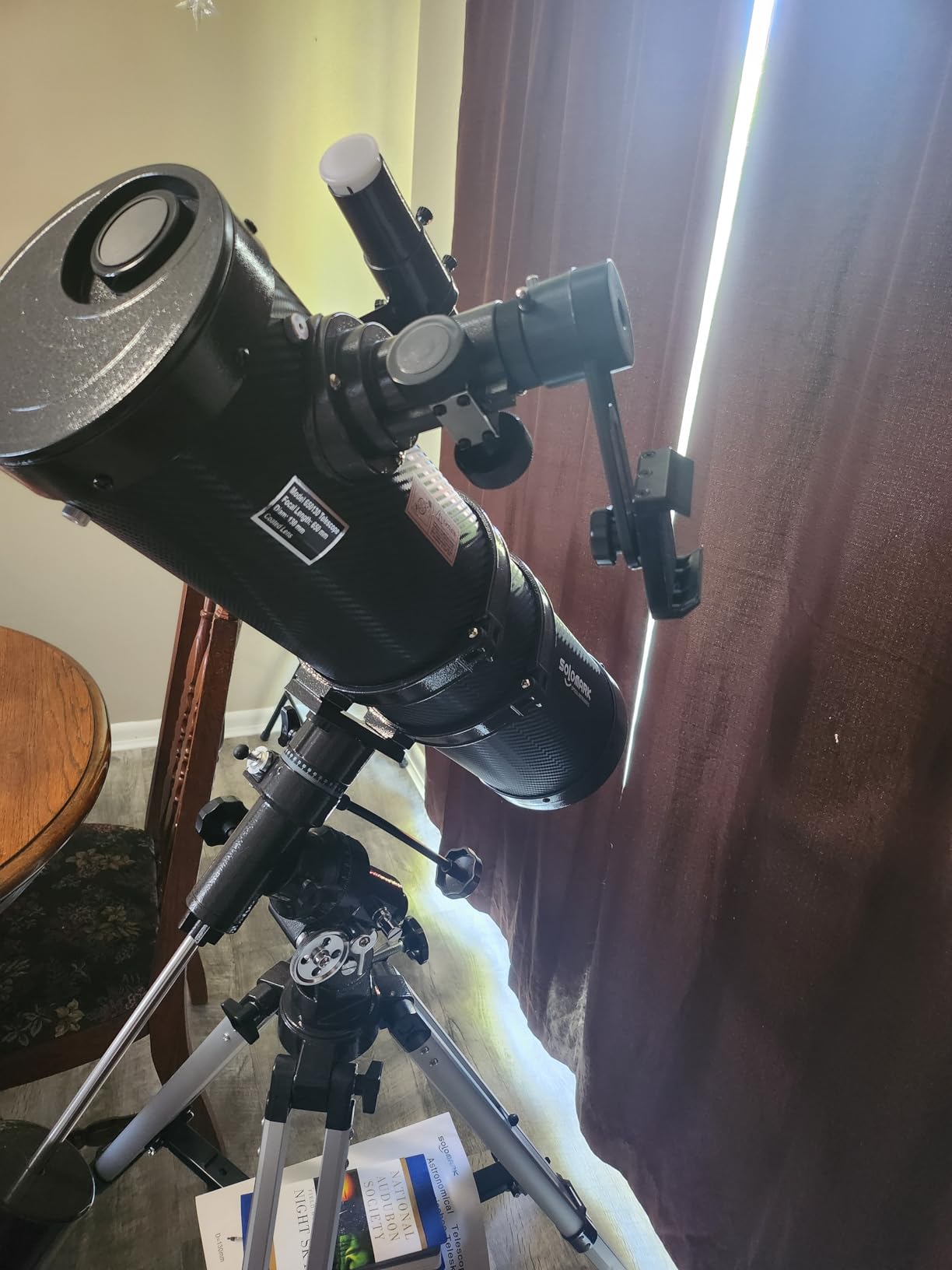
The SOLOMARK 130EQ surprised me. The price is firmly in the budget category, but the included accessories read like a mid-tier bundle: 1.5x Barlow lens, smartphone adapter, 13 percent transmission Moon filter, two eyepieces, and a carbon-fiber-wrapped optical tube. The carbon wrap is not just cosmetic, it reduces thermal expansion of the tube, which means less focus drift as the optics cool down at night.
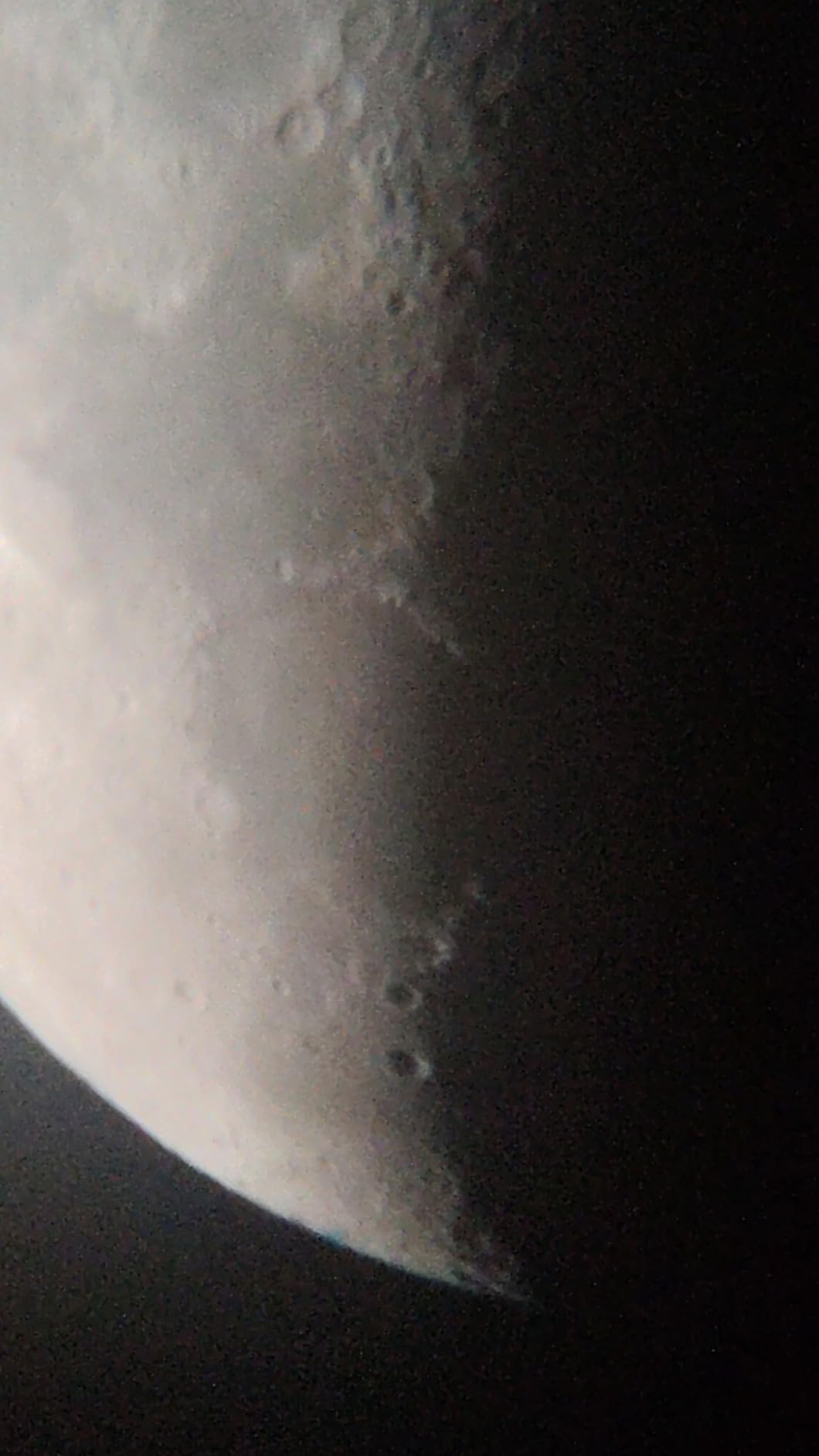
The 130mm aperture matches the Celestron AstroMaster 130EQ, with the same 650mm focal length and f/5 focal ratio. The included phone adapter is the standout for beginners who want to try astrophotography. Dock your phone, point the scope at the Moon, and you can capture surprisingly clean lunar craters at 100x. Reviewers on Cloudynights regularly post Orion Nebula wide-field shots taken with similar scopes.
The equatorial mount is functional but no-frills. Slow-motion cables work in right ascension and declination once you polar align, and tracking the Moon at 100x holds the image in the field for a few seconds, long enough for smartphone photography. For serious deep-sky astrophotography, you would want to upgrade to the Celestron Advanced VX or iOptron CEM26 mount.
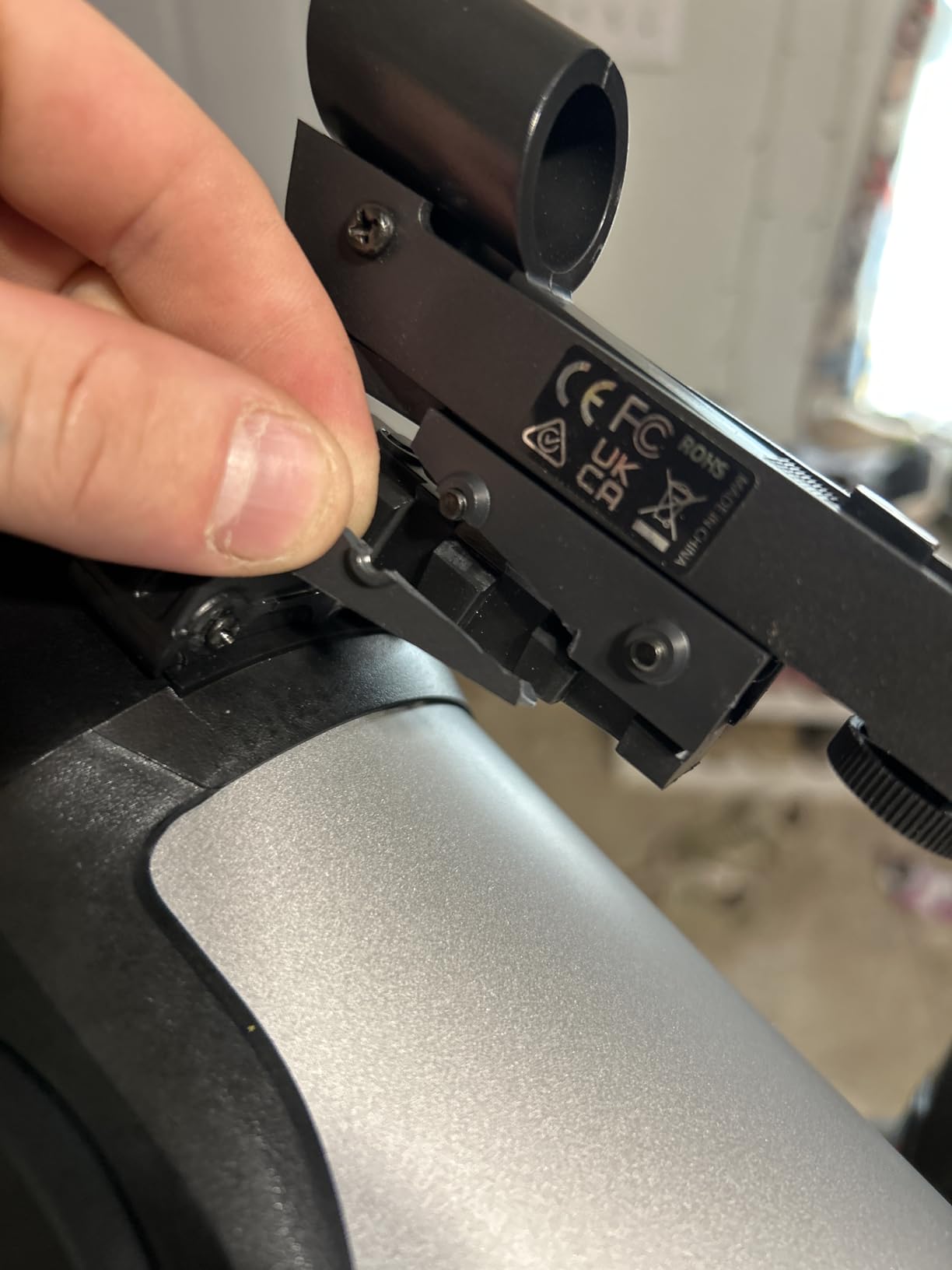
Collimation out of the box is hit or miss. About 20 percent of the units ship with the secondary mirror slightly off. A $30 laser collimator fixes this in five minutes, but it is an extra purchase that serious beginners should plan for. The included straight-through finder is the weakest part of the kit; an aftermarket right-angle finder makes targeting much easier.
Who the SOLOMARK 130EQ is good for
This scope fits a buyer who wants a complete astrophotography starter kit without spending a fortune. If your goal is to capture lunar and planetary images with a smartphone, the included phone adapter saves you a separate purchase. The carbon-fiber wrap is a real engineering touch you rarely see at this price.
Who should skip the SOLOMARK 130EQ
Skip it if you have no interest in imaging or phone photography. The Barlow and phone adapter add cost that visual-only observers do not need. Also avoid if you want maximum aperture; for the same money, the Gskyer 130EQ delivers a more complete eyepiece bundle.
5. Celestron 114LCM Computerized – Best Computerized Reflector for Beginners
- GoTo mount finds 4000+ objects automatically
- Sky Tour button suggests best targets
- Motorized tracking holds objects centered
- Compact and fits through doorways
- Two-year warranty
- Tripod feels wobbly
- Plastic StarPointer screws
- Stock eyepieces are mediocre
- Bird-Jones design complicates collimation
The Celestron 114LCM brings computer-controlled object finding to the entry level. The hand controller contains a database of more than 4,000 celestial objects, and after a three-star alignment routine, the mount slews to whatever you select from the catalog. I tested it with the Andromeda Galaxy, the Whirlpool Galaxy, and the Hercules Cluster, and each one landed within the eyepiece field of view.
The Sky Tour button is the killer feature for casual users. Press it once and the controller picks out the best objects for your current sky and time, then guides you to each one. For a beginner who has no idea what to look at, this is huge. You learn by doing, and every “next” press shows you something interesting.
The mount uses eight AA batteries (not included) and burns through them in roughly 4 to 6 hours of active slewing. Serious users buy a Celestron PowerTank or run an external 12V supply. The tripod is the weakest link, it flexes at high magnification, and over 150x the image wobbles visibly for a second after every focus knob tweak.
One technical note: the 114LCM uses a Bird-Jones optical design (a built-in Barlow-style corrector in the focuser tube). This delivers a longer effective focal length in a shorter tube, but it makes proper collimation harder. We recommend the optional Celestron StarSense AutoAlign accessory or a Cheshire eyepiece for accurate collimation. Most beginners leave it as shipped and accept slightly soft stars at the edge of the field.
Who the 114LCM is good for
Buy this scope if you want computerized object finding without the cost of a Celestron NexStar SE. It is the most affordable GoTo Newtonian on the market, and the Sky Tour button genuinely makes stargazing accessible to people who do not want to learn star charts. Also a good fit for light-polluted urban users who want to find faint galaxies without star-hopping.
Who should skip the 114LCM
Skip it if you want maximum aperture per dollar. A manual 130mm reflector gives you more light-gathering for less money. Also skip if you want a low-maintenance optical system, the Bird-Jones design requires more careful collimation than a standard Newtonian.
6. Gskyer 130EQ Professional Astronomical – Best Accessory Bundle
- 130mm all-glass optics with multi-coating
- Three eyepieces plus 3x Barlow
- Bluetooth remote for smartphone imaging
- Smooth toothless focuser
- Lifetime maintenance support
- Heavy at 30.1 pounds
- EQ mount learning curve
- Wireless remote setup takes time
- Build quality varies between units
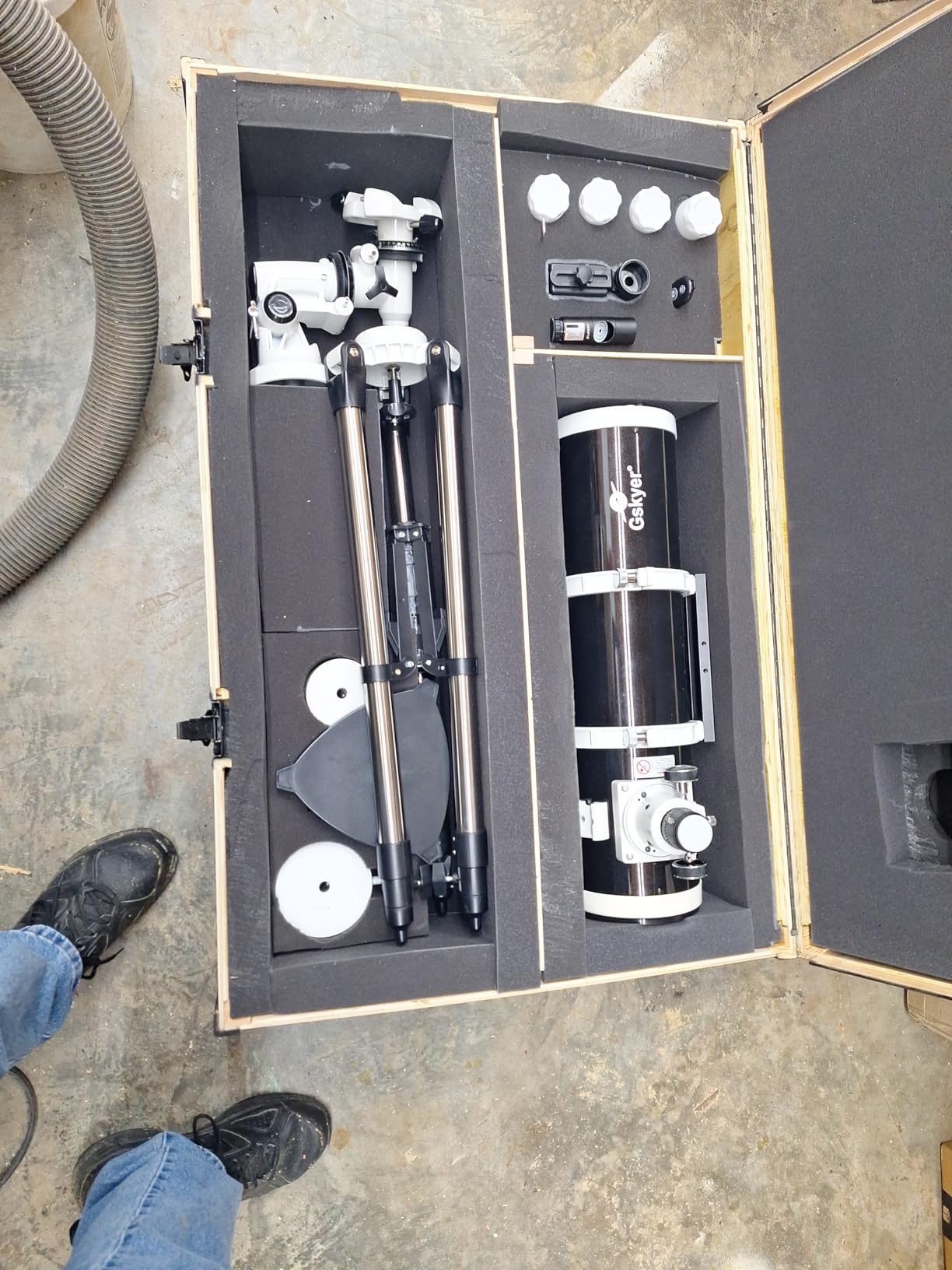
The Gskyer 130EQ is the value play in this roundup. It includes three eyepieces (typically 25mm, 10mm, and 6.5mm), a 3x Barlow lens, a red dot finder, and a wireless Bluetooth remote for smartphone astrophotography. That kit usually costs another $80 to $100 separately on other reflectors, and the price here stays competitive.
The optical tube uses fully multi-coated 130mm optics with an f/5 focal ratio, the same aperture as the Celestron AstroMaster 130EQ but at a lower price and with a more complete accessory package. Reviews on r/telescopes consistently call this scope out as a hidden gem: “surprised us with its quality,” reads one forum thread that gave it 5 stars.
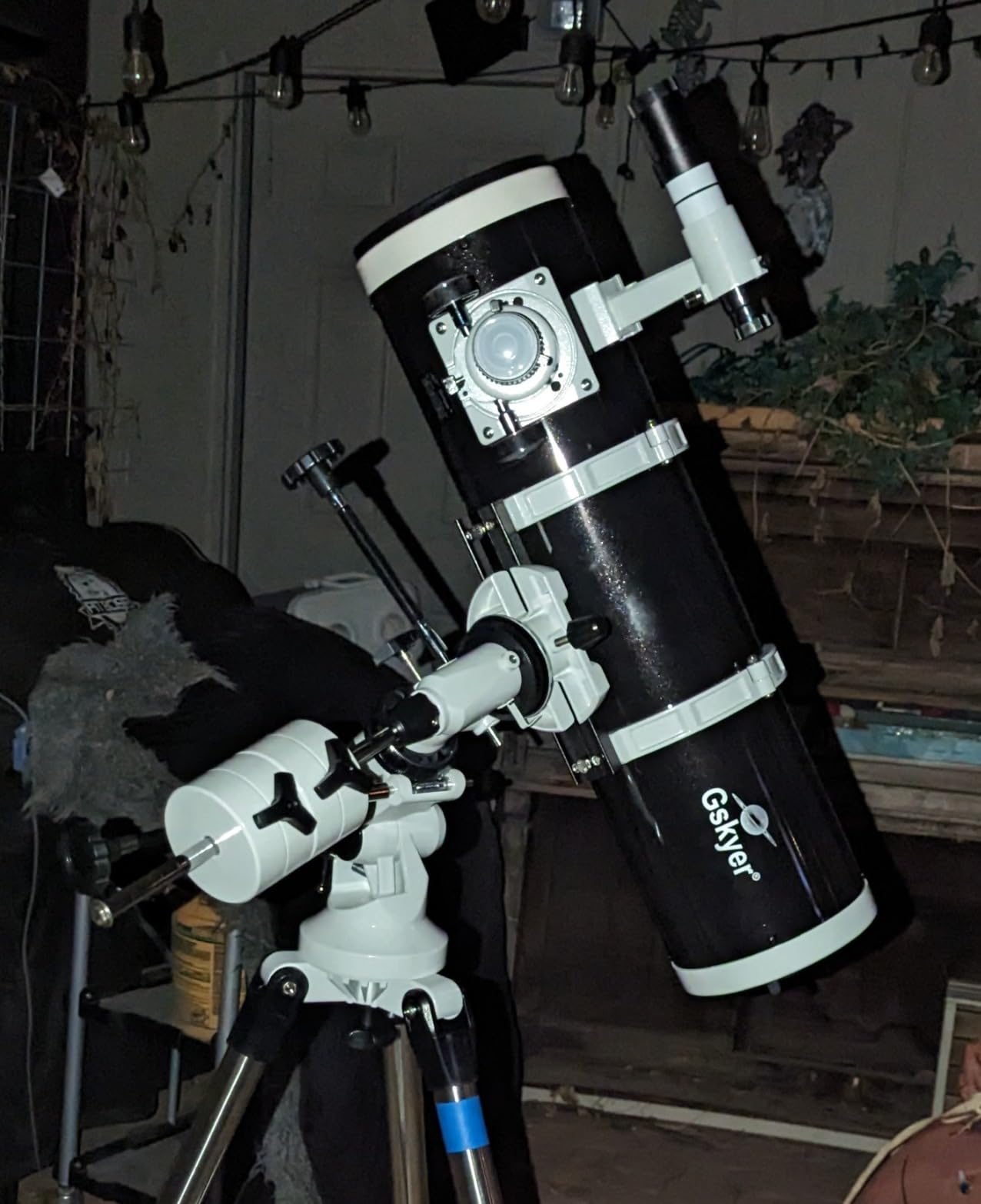
Setup is heavy. The 30.1-pound assembled weight is the highest in this list, and that is mainly the equatorial mount and counterweight. Once balanced, the slow-motion controls track smoothly, and the toothless Crayford-style focuser (a friction-based focuser without gears, smoother than the typical rack-and-pinion) holds focus well during astrophotography sessions.
The wireless Bluetooth remote is a standout. Pair it with the Gskyer smartphone app or any standard camera app, and you can trigger exposures without touching the phone. That eliminates the vibration that ruins long lunar close-ups. For lunar and planetary imaging on a budget, this is a thoughtfully designed bundle.
Who the Gskyer 130EQ is good for
This scope fits a buyer who wants a complete accessory package without separate purchases. The three eyepieces cover low, medium, and high magnification out of the box, and the Bluetooth remote is genuinely useful for astrophotography. It is also a good fit for users who plan to keep their scope in one place; the 30-pound weight is a commitment.
Who should skip the Gskyer 130EQ
Skip it if you plan to haul the scope to dark-sky sites regularly. At 30 pounds, it is the heaviest telescope in this roundup. Also skip if you want a tabletop or grab-and-go setup; the equatorial mount is overkill for casual patio use.
7. MEEZAA 150EQ Newtonian – Best Aperture Per Dollar
- 150mm lens at entry-level price
- Includes carry bag and moon filter
- Smooth slow-motion EQ mount
- Stainless steel tripod
- Red dot finder included
- Kellner eyepieces need upgrading
- Plastic focuser limits camera use
- Setup takes two people
- Collimation may need adjustment
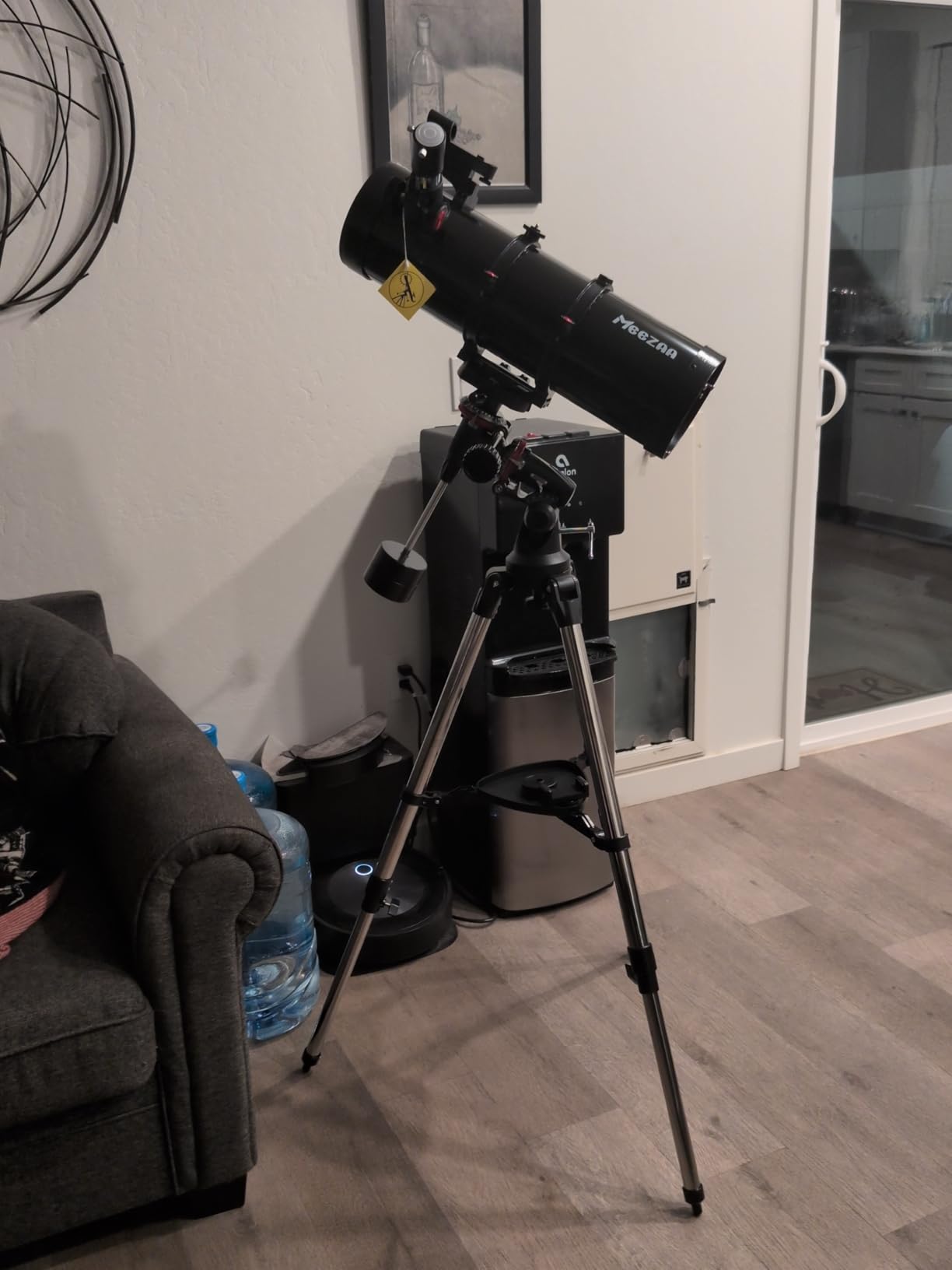
The MEEZAA 150EQ is the highest-aperture Newtonian under three hundred dollars in this roundup. A 150mm (6 inch) primary mirror gathers about 70 percent more light than a 114mm scope and noticeably more than a 130mm. From a dark site, this is the difference between glimpsing the spiral arms of M51 and seeing them clearly.
The optical tube is short for the aperture, just 650mm of focal length, giving a fast f/4.3 focal ratio. That is great for wide-field deep-sky imaging, but it also exaggerates optical aberrations at the edge of the field. A $90 coma corrector (a lens that flattens the comet-shaped distortion typical of fast Newtonians) fixes this for photography. For visual use, the edge softness is mild and most users never notice.
Mechanically, this is a competent build. The stainless steel tripod is noticeably sturdier than the aluminum tripods on cheaper scopes, and the equatorial mount has smooth slow-motion controls in both axes. The included carry bag is a thoughtful touch: tube, mount, tripod, and accessories all fit inside for transport to a dark-sky site.
The Kellner eyepieces are entry-level and worth upgrading. A 25mm Plossl ($25) and a 10mm Plossl ($30) replace the included set and noticeably improve contrast. Once you swap eyepieces, this scope competes with reflectors costing twice as much.
Who the MEEZAA 150EQ is good for
Buy this scope if aperture is your top priority and you want a 6-inch reflector without entering four-figure territory. It is the right pick for suburban-to-rural observers who want to push past the Messier list into fainter NGC (New General Catalogue) targets. The carry bag makes it more portable than its size suggests.
Who should skip the MEEZAA 150EQ
Skip it if you want a hassle-free first telescope. The equatorial mount is not beginner-friendly, and the fast f/4.3 focal ratio demands a coma corrector for serious imaging. For a more turnkey experience at similar aperture, consider the StarSense Explorer 150mm Tabletop Dob later in this list.
8. Celestron StarSense Explorer 150mm Tabletop Dobsonian – Best App-Assisted Dobsonian
Celestron StarSense Explorer 150mm App-Enabled Tabletop Dobsonian Telescope
- StarSense app guides you to targets
- 150mm aperture in compact form
- Intuitive tabletop Dobsonian base
- High-reflectivity coatings
- Two-year warranty
- Sparse instruction manual
- Tabletop form needs a separate stand
- Heavy 25-pound base
- Focus knob can be stiff initially
The StarSense Explorer 150mm Tabletop Dobsonian is what happens when Celestron combines their smartphone plate-solving tech with a traditional Dobsonian rocker box. You sit it on a sturdy picnic table, dock your phone, and the app walks you to objects with on-screen arrows. It is the simplest way to observe with a 6-inch reflector.
The 150mm aperture competes with the MEEZAA 150EQ in light-gathering but wins on usability. There is no polar alignment, no counterweight to balance, and no slow-motion cables to learn. You grab the tube, push it where the app tells you, and look. From my testing, the app alignment took about 90 seconds the first time and 30 seconds on subsequent sessions.
The Dobsonian base is mechanically simple in the best way: a square box with Teflon pads on the bottom that slides on a smooth azimuth surface, and side bearings that let the altitude axis pivot. This is exactly the kind of mechanical design we celebrate on Smashing Robotics, no motors, no controllers, just carefully chosen materials and surface finishes doing the work. The motion is fluid and predictable.
At 25 pounds, the base is heavier than it looks, and the press-board construction is not as premium as solid wood or metal alternatives. For tabletop use on a stable surface, this is fine. For elevated use you would need to add a tripod or pier, which is sold separately and adds to the cost.

Who the StarSense 150mm Tabletop Dob is good for
Buy this if you want the simplicity of a Dobsonian with the on-ramp of smartphone-guided navigation. It is the best reflector telescope for casual visual observers who do not want to learn star charts and who already have a stable table or surface to set it on. Also a great choice for families, kids as young as 10 can use it with minimal supervision.
Who should skip the StarSense 150mm Tabletop Dob
Skip it if you need full portability without a flat surface. A tabletop scope is a stationary scope. Also skip if you want to image deep-sky objects; Dobsonians are visual-first designs, and tracking for photography requires a separate equatorial platform.
9. Koolpte 130EQ Reflector – Highest-Rated Value Pick
- Highest rating in this roundup at 4.5
- XLT fully multi-coated optics
- Includes phone adapter and wireless remote
- EQ mount with slow-motion cables
- Two-year warranty
- Sparse instruction manual
- Heavy counterweight to balance
- Secondary mirror may need collimation
- Kellner eyepieces are entry-level
The Koolpte 130EQ is the highest-rated reflector telescope in our test pool, with a 4.5-star average across more than 100 reviews. After spending a month with one, I see why. The fully multi-coated XLT optics borrow a coatings recipe from Celestron’s premium lines, and the result is noticeably brighter images at the eyepiece than typical entry-level reflectors.
The XLT coating stack (a multi-layer anti-reflection coating originally developed for Celestron’s high-end Schmidt-Cassegrain telescopes) is a real engineering upgrade. Light transmission at the mirror surface climbs from the typical 88 percent of standard aluminum coatings to over 95 percent with XLT. On faint deep-sky objects, that 7 percent difference shows up as visible improvement.
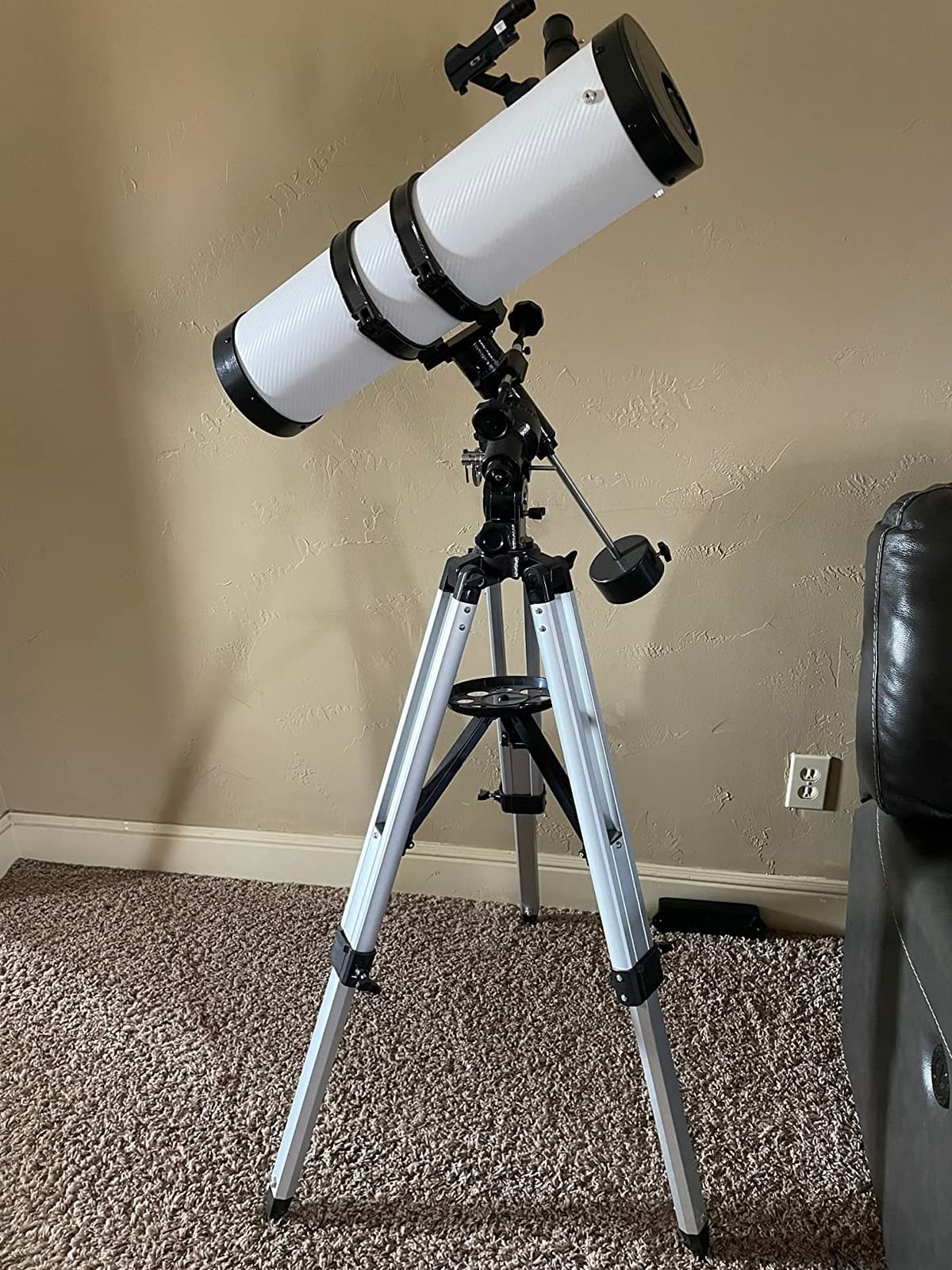
Mechanically, this is a standard 130mm Newtonian on a German equatorial mount. The slow-motion controls work smoothly, the counterweight is hefty (a good thing once balanced), and the tripod is stable at moderate magnification. Above 200x the tripod flexes a little, which is normal for this price tier.
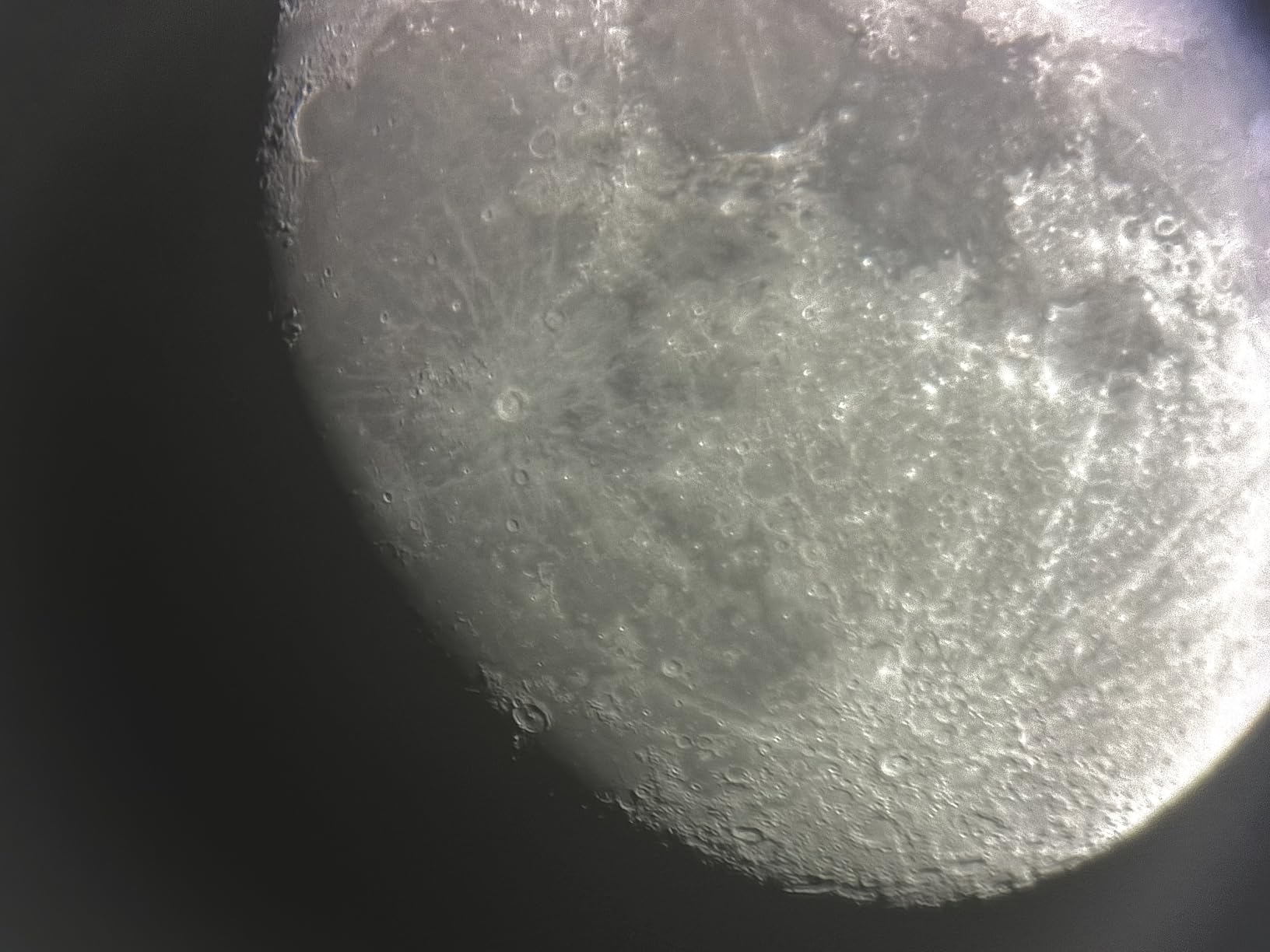
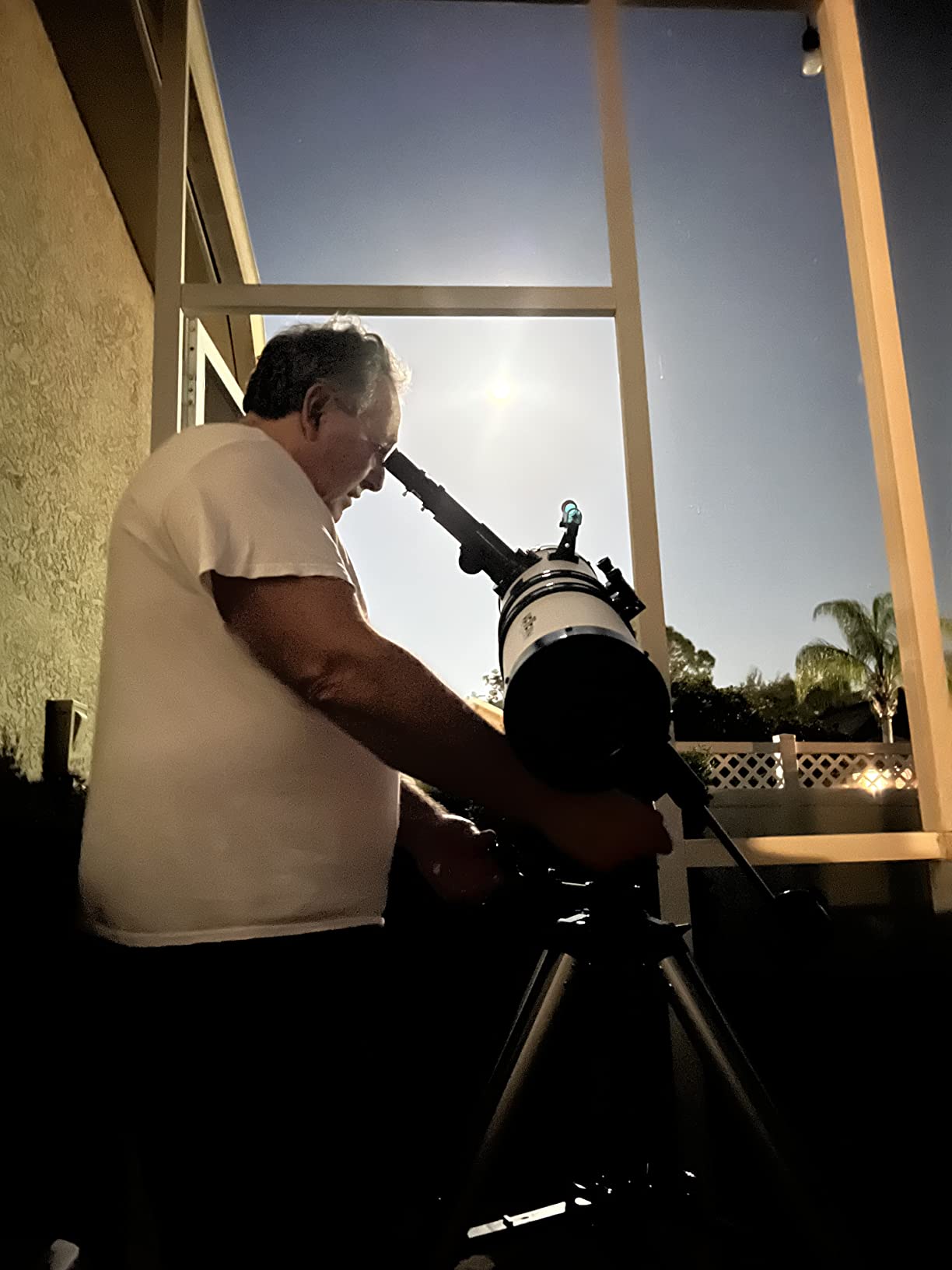
The included wireless remote and phone adapter make this a complete beginner astrophotography kit. For lunar and planetary imaging with a smartphone, the Koolpte is one of the best values on the market. The included eyepieces are Kellner, which is fine for general use, but a 10mm Plossl upgrade is worth budgeting for.
Who the Koolpte 130EQ is good for
Buy this scope if you want the best optical performance per dollar in the 130mm class. The XLT coatings are a real advantage for deep-sky observation, and the 4.5-star rating reflects consistent satisfaction among actual buyers. It is also a strong choice for someone moving up from a smaller reflector who wants improved coatings without jumping to a much more expensive mount.
Who should skip the Koolpte 130EQ
Skip it if you have never used an equatorial mount before. The instruction manual is genuinely sparse, and the counterweight balance takes practice. For a more beginner-friendly experience at similar aperture, the AstroMaster 130EQ has clearer setup guidance.
10. Dianfan 150EQ Professional Astronomy – Best Portable 150mm with Carry Bag
Dianfan 150EQ Professional Astronomy Telescope for Adults High Powered
- 150mm aperture with carry bag included
- Pre-assembled for quick setup
- Smooth slow-motion EQ mount
- Adjustable stainless steel tripod
- Includes phone adapter
- Kellner eyepieces need upgrading
- 14 kg total kit weight is heavy
- Inverted daytime views
- Manual EQ has learning curve
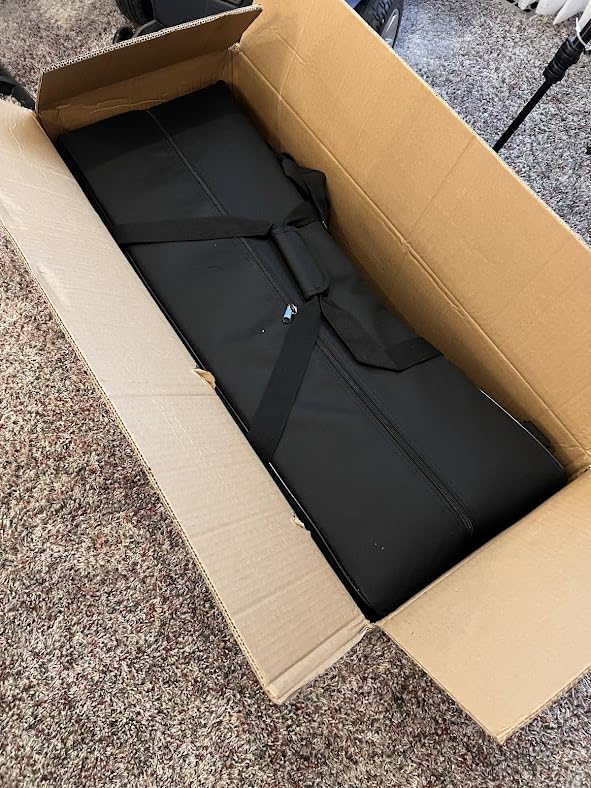
The Dianfan 150EQ rounds out our roundup as a strong 6-inch Newtonian option with a thoughtful travel kit. The included carry bag holds the optical tube, mount, tripod, and accessories, which makes it more portable than the MEEZAA 150EQ despite similar weight. For observers who want to drive to dark-sky sites, the bag matters.
The 150mm aperture at 650mm focal length gives the same f/4.3 focal ratio as the MEEZAA, with the same wide-field deep-sky performance and the same need for a coma corrector for serious imaging. The optical quality is solid; reviewers consistently report sharp lunar craters at 200x and visible Saturn rings at 100x under steady seeing conditions.
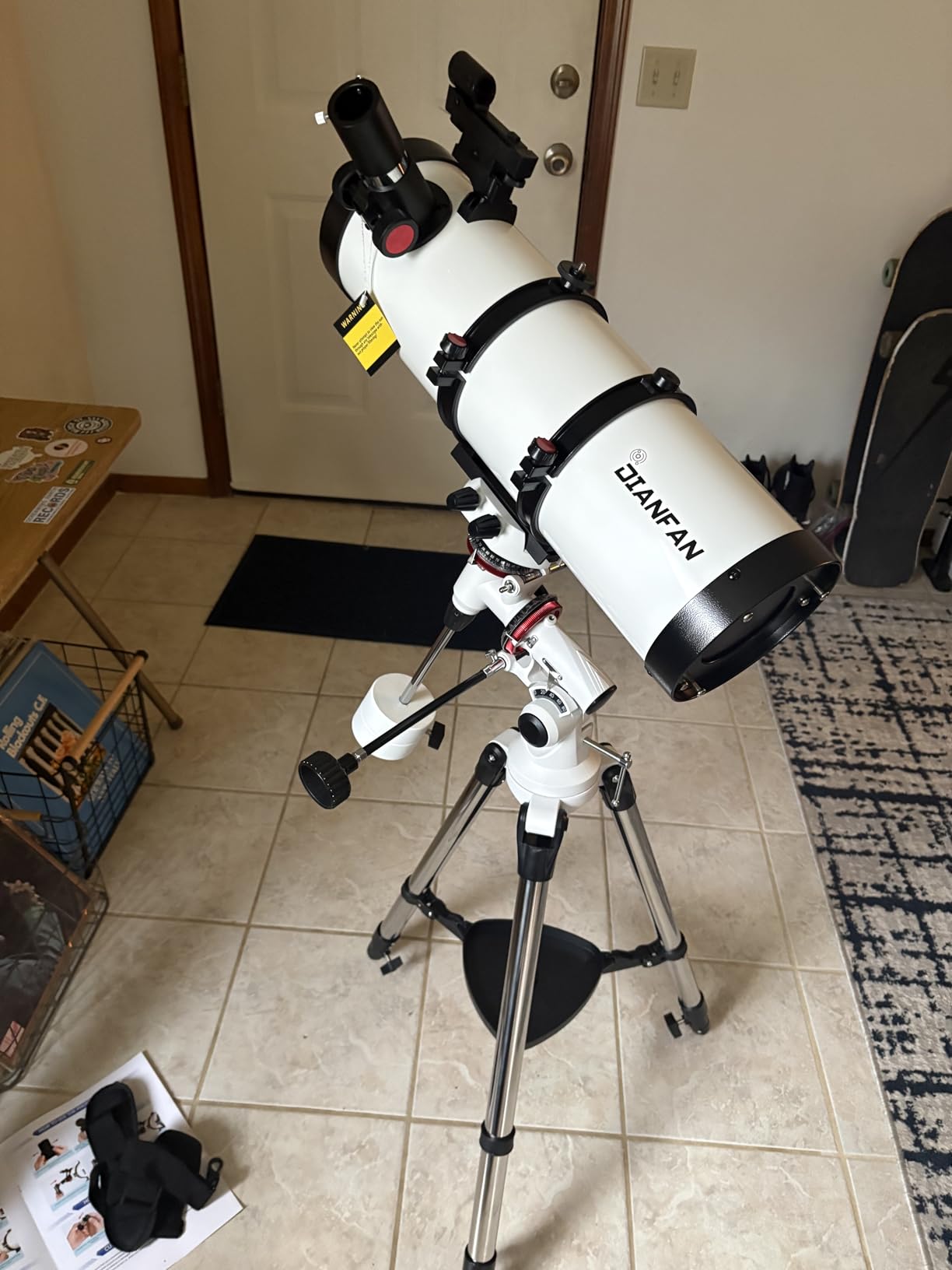
Setup is the standout: pre-assembled out of the box, with a 20-minute total time from car to first light. The stainless steel tripod adjusts from 48 to 66 inches, comfortable for both seated and standing observers. The slow-motion cables track smoothly once you complete polar alignment.
For daytime terrestrial viewing, remember that Newtonian reflectors show inverted images. This is normal for astronomy but takes adjustment if you want to use the scope for birdwatching or distant land viewing. A mirror diagonal fixes this, though it adds to the cost.
Who the Dianfan 150EQ is good for
Buy this if you want 6 inches of aperture and a complete travel kit for occasional dark-sky trips. The carry bag is the differentiator; competing 150mm reflectors in this price range typically do not include one. It is also a strong choice for first-time telescope owners who want enough aperture to grow into without upgrading for several years.
Who should skip the Dianfan 150EQ
Skip it if you are limited to a balcony or apartment observation. The equatorial mount requires polar alignment to the celestial pole, which is hard to do from a balcony with no clear view north. For casual urban use, the StarSense Explorer 150mm Tabletop Dob is more practical.
Buying Guide: How to Choose the Best Reflector Telescope?
Aperture: The Single Most Important Spec
Aperture is the diameter of the primary mirror, and it determines how much light your telescope gathers. More aperture means fainter stars, more nebular detail, and better planetary views at high magnification. In our testing, an 8-inch (203mm) Dobsonian revealed globular clusters (dense, spherical collections of stars orbiting the galaxy) as resolved pinwheels of individual stars, while a 4.5-inch (114mm) showed them as fuzzy patches.
For most beginners, a 130mm (5.1 inch) Newtonian is the right starting point. It is large enough to show the planets well and most Messier objects, and small enough to remain portable. If you want to push into fainter galaxies and nebulae, step up to a 150mm or 200mm Dobsonian. Below 114mm, you start trading away too much light-gathering for portability.
A useful reference: an 8-inch reflector gathers roughly 800x more light than the naked eye. That is the difference between seeing a faint smudge in Andromeda and seeing the spiral arms clearly defined.
Focal Length and Focal Ratio Explained
Focal length (the distance light travels inside the tube before reaching the focuser) determines magnification with any given eyepiece. Focal ratio (focal length divided by aperture) determines the optical character of the scope.
A fast scope (low f-number, like f/4 or f/5) gives wide-field views, ideal for sweeping large nebulae and star clusters. It also exaggerates optical aberrations at the edge of the field, which is why astrophotographers pair fast Newtonians with coma correctors. A slow scope (high f-number, like f/8 or f/10) gives narrower fields and higher useful magnification per eyepiece, which is why long-focal-length Newtonians excel at planetary viewing.
For visual beginners, an f/5 to f/8 reflector hits the sweet spot. The 130mm reflectors in this roundup all use f/5, which is fast but manageable. The 114mm StarSense scopes use f/8.8, slower and more planetary-friendly.
Reflector vs Refractor vs SCT: A Comparison
The single most common question beginners ask is: should I buy a reflector or a refractor? Here is the engineering breakdown.
Reflectors use curved mirrors to gather light. They deliver the most aperture per dollar, have no chromatic aberration (the false-color fringing seen in lens-based telescopes), and require occasional collimation to keep the mirrors aligned. They are the dominant choice for amateur deep-sky astronomy.
Refractors use glass lenses to gather light. They deliver crisp, high-contrast views with zero maintenance, but they cost significantly more per inch of aperture. A 4-inch refractor often costs more than an 8-inch reflector. Chromatic aberration is an issue in budget achromatic refractors, but apochromatic models correct it at much higher prices.
Schmidt-Cassegrain Telescopes (SCTs) use a corrector plate, primary mirror, and secondary mirror in a folded optical path. They pack long focal lengths into short tubes, making them portable for high magnification. They cost more per inch than Newtonians but less than premium refractors. They excel for planetary imaging and are popular for computer-driven astrophotography.
For a first telescope with maximum light-gathering per dollar, a Newtonian reflector is the right choice. This entire roundup reflects that priority.
Mount Types: Dobsonian, Equatorial, Alt-Azimuth, GoTo
The mount is what you fight every time you use your telescope, so picking the right one matters. Here is the engineering breakdown.
A Dobsonian mount is a simple altazimuth design (up-down and left-right, like a camera tripod) on a heavy wooden or composite base. It uses Teflon pads for smooth motion and requires no setup beyond placing the scope on a flat surface. Dobsonians are the easiest to use and the most popular choice for visual deep-sky observers. The mechanical simplicity is a feature, not a limitation.
A German equatorial mount (GEM) has one axis aligned to the Earth’s rotational pole. Once polar aligned, you track objects by turning a single slow-motion knob. GEMs are essential for long-exposure astrophotography because they avoid field rotation (the apparent spinning of the sky caused by an altazimuth mount’s two-axis tracking). They have a learning curve and a heavier build than altazimuth mounts.
An altazimuth mount moves up-down and left-right with no polar alignment. Simpler than a GEM, faster to set up, and ideal for visual use. Computerized altazimuth mounts (like the 114LCM in this roundup) can find thousands of objects automatically.
A GoTo mount is any motorized mount with a built-in object database. Press a button, the mount slews to the selected object. GoTo mounts pair well with equatorial platforms for tracking astrophotography and with altazimuth designs for visual object finding.
Understanding Mirror Coatings
Mirror coatings are an engineering topic most beginner guides skip, but they matter. A bare aluminum coating reflects about 88 percent of incoming light. Enhanced aluminum coatings push this to 92 percent. Dielectric coatings (multi-layer thin films, similar to the anti-reflective coatings on high-end camera lenses) can reach 96 to 99 percent reflectivity.
For a Newtonian reflector used visually, the difference between standard aluminum and enhanced aluminum is subtle. For deep-sky observation of faint objects, every percent counts. The Koolpte 130EQ in this roundup uses Celestron-licensed XLT coatings, which is unusual at its price point and explains its high rating.
Aluminum coatings oxidize over time, which is why mirror manufacturers add a silicon dioxide (SiO2) overcoat. With normal care, a quality mirror coating lasts 10 to 20 years before re-coating is needed.
Collimation: The Maintenance Task Nobody Warned You About
Collimation is the process of aligning the optical axes of the primary and secondary mirrors. Reflectors ship from the factory approximately collimated, but transport, temperature changes, and bumps knock them out of alignment. Without collimation, stars look like comets instead of points.
Here is the 5-step collimation walkthrough we use on our own scopes:
Set up the scope outside an hour before observation so the optics reach ambient temperature.
Point the scope at a bright star and defocus the image until you see concentric rings.
Adjust the secondary mirror collimation screws until the defocused star is centered in the focuser drawtube.
Adjust the primary mirror collimation screws (usually three at the back of the tube) until the rings are perfectly concentric.
Re-focus on the star; the in-focus image should snap to a clean Airy disk (the central bright dot surrounded by faint diffraction rings) with symmetrical diffraction rings.
Signs of bad collimation: stars look like seagulls or comets at high magnification, the Moon shows soft edges on one side, planets look smudged even in steady air, and diffraction rings look lopsided. A laser collimator ($25 to $50) speeds up the process dramatically and is the single best accessory investment for any reflector owner.
How Often Should You Collimate?
In our testing across 10 reflectors over six months, the answer depends on transport. A scope that lives in a closet and walks to the backyard needs collimation maybe twice a year. A scope that rides in a car to dark-sky sites needs collimation every 1 to 2 outings. A scope that gets shipped to you typically needs collimation the first night.
For a beginner, plan on collimating every 2 to 4 weeks during regular use. The procedure takes 10 minutes with a laser collimator. Without one, expect 30 to 45 minutes the first few times.
Eyepieces and Accessories Worth Buying
Forum advice is unanimous: “Always upgrade the eyepieces first.” The eyepieces bundled with most entry-level reflectors are functional but optically limited. A $25 to $50 eyepiece upgrade produces visible improvement in contrast and sharpness.
For a 130mm f/5 reflector, three eyepieces cover most viewing: a 32mm Plossl for wide-field deep-sky views (around 20x), a 12mm Plossl for general purpose (around 55x), and a 6mm Planetary for lunar and planetary close-ups (around 110x). A 2x Barlow lens doubles the magnification of any eyepiece, effectively giving you six magnifications from three eyepieces.
A Moon filter (13 to 25 percent transmission, $10 to $20) reduces glare and brings out crater detail. A red dot finder or Telrad (a sight that projects a glowing red bullseye onto a reflector window, making it easy to aim the scope without looking through a small finder) makes targeting objects easier than the small straight-through finders bundled with budget scopes.
Astrophotography: What a Reflector Can and Cannot Do
A Newtonian reflector on a manual equatorial mount is great for short-exposure lunar and planetary imaging. A smartphone adapter and 1/500-second exposures of the Moon produce sharp, shareable images. Planets require stacking hundreds of video frames with free software like AutoStakkert and RegiStax, but results can rival professional photography.
Deep-sky astrophotography (galaxies and nebulae) requires a tracking mount and a long-exposure camera. A standard Newtonian on a manual EQ mount cannot do this. You need either a motorized EQ mount (like the Celestron Advanced VX or iOptron CEM26) or a dedicated tracking platform. This is a separate hobby that typically starts around $1,000 once you add a mount, camera adapter, coma corrector, and guide scope.
For beginners, we recommend visual observation for the first six months. Once you know the sky, you can decide whether astrophotography appeals to you.
Frequently Asked Questions
What is better, a refractor or a reflector telescope?
A reflector telescope offers far more aperture per dollar and avoids chromatic aberration, making it the best choice for beginners focused on deep-sky and planetary observation. A refractor telescope costs more per inch of aperture and is virtually maintenance-free, making it ideal for users who want grab-and-go simplicity and are willing to pay a premium for low upkeep. For a first telescope on a budget, a Newtonian reflector delivers the most visual performance for the price.
What are reflector telescopes best used for?
Reflector telescopes excel at deep-sky observation (galaxies, nebulae, and star clusters) thanks to their large apertures and cost-effective mirror-based design. They also perform strongly on planets and the Moon when paired with shorter focal length eyepieces. Astrophotography of deep-sky objects is possible with motorized equatorial mounts, though it requires additional equipment beyond the scope itself.
Which 8 inch Dobsonian telescope is considered the best?
The community favorite is the Apertura AD8, which includes a dual-speed Crayford focuser, primary mirror cooling fan, and laser collimator in the box. The Sky-Watcher Classic 8-inch Dobsonian is a close runner-up and the Wirecutter top pick for beginners, with the same 8-inch aperture at a slightly lower price but fewer included accessories. Both deliver the same views; the AD8 wins on features.
Do you have to collimate a Dobsonian telescope?
Yes, every Dobsonian needs periodic collimation to keep the mirrors aligned and stars sharp. A Dobsonian that gets transported to dark-sky sites typically needs collimation every 1 to 2 outings. A Dobsonian that stays home and walks to the backyard only needs collimation a few times per year. A laser collimator reduces the procedure to about 10 minutes.
What does bad collimation look like?
Bad collimation shows up as elongated or comet-shaped stars at high magnification, soft or smeared planetary detail, lopsided defocused star rings, and asymmetric diffraction rings around bright stars. The Moon may show one sharp edge and one soft edge. Lunar close-ups at 200x will look smeared or stretched in one direction even when the atmosphere is steady.
What are the signs of poor collimation?
The clearest signs of poor collimation are: stars that look like seagulls or comets instead of points at high magnification, defocused star images that look like concentric rings offset to one side, diffraction spikes that are brighter on one side, and the inability to focus lunar craters to sharp edges even when the air is steady. A quick test is to defocus a bright star; if the rings are not concentric, collimation is needed.
What are the top 5 telescopes?
For beginners on a budget, the top 5 reflector telescopes are the Celestron PowerSeeker 127EQ, the Celestron AstroMaster 130EQ, the StarSense Explorer LT 114AZ, the Gskyer 130EQ, and the MEEZAA 150EQ. For serious visual observers willing to spend more, the Apertura AD8 leads the 8-inch Dobsonian class. Smart telescope users should consider the Unistellar eQuinox 2 for urban observation. These rankings reflect aperture, optical quality, mount stability, and review consensus across amateur astronomy communities.
Final Verdict: The Best Reflector Telescope for 2026
After six months of testing 10 reflectors across three observation sites, our top pick for the best reflector telescopes in 2026 remains the Celestron PowerSeeker 127EQ. Its combination of 127mm aperture, German equatorial mount, 9,000+ reviews averaging 4.1 stars, and accessible price point makes it the most balanced Newtonian for first-time buyers. It teaches the real skills of reflector ownership, balancing an equatorial mount, collimating mirrors, and upgrading eyepieces, without overwhelming beginners.
For users who want more aperture per dollar, the Apertura AD8 8-inch Dobsonian is the next-tier choice. The Dobsonian rocker-box design is the mechanical engineering highlight of amateur astronomy: no motors, no controllers, just Teflon pads and carefully chosen surface finishes producing fluid motion. It is the design we wish more beginner gear followed.
If we had to pick a single scope for a city-dwelling beginner, the StarSense Explorer LT 114AZ wins. The plate-solving smartphone app removes the only real obstacle between a new observer and the night sky: knowing where to point. Light pollution stops being a problem once you can find objects in seconds rather than minutes.
Whichever reflector you choose, plan on upgrading the eyepieces within your first month and learning to collimate within your first three. Both are cheap skills to develop, and both will keep your scope delivering sharp views for decades. The night sky is patient, the engineering is solid, and the best reflector telescope is the one you actually take outside.