
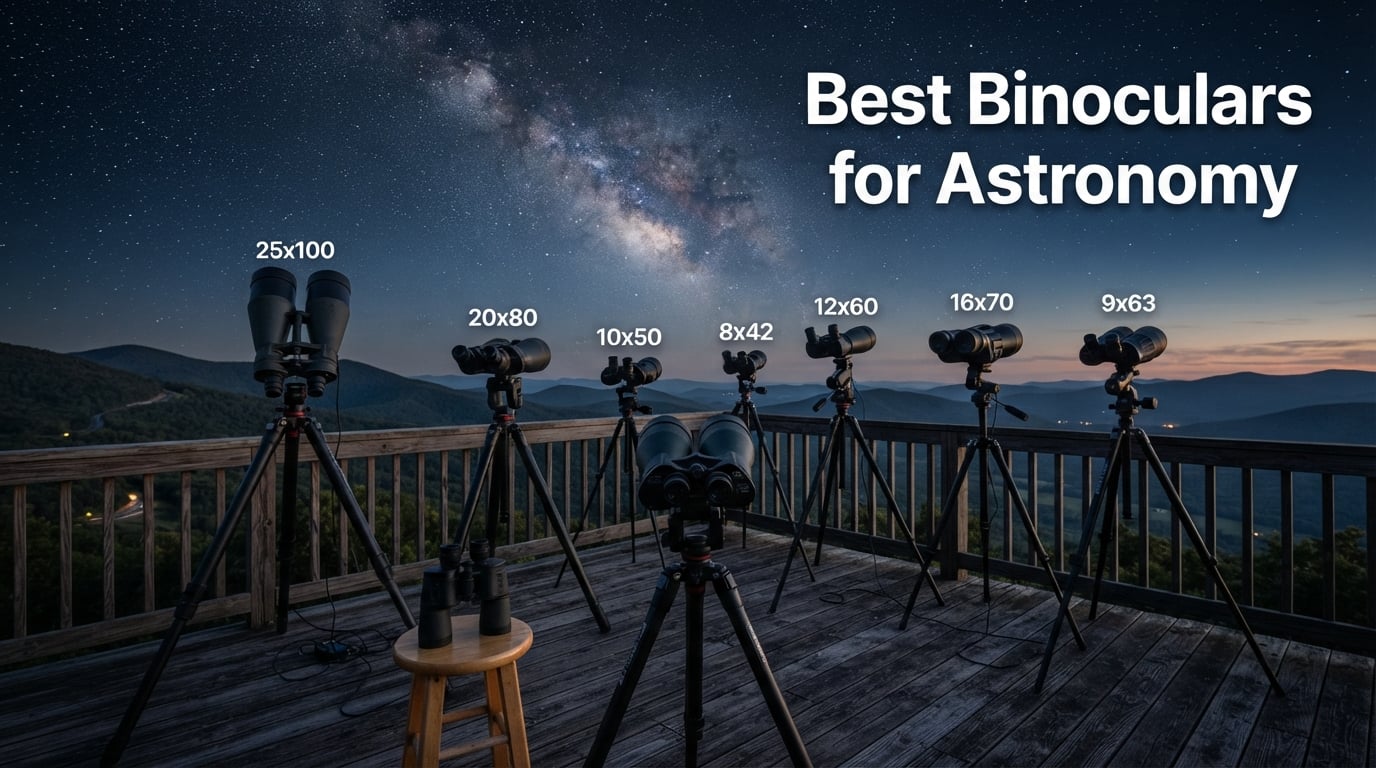
I’ve spent dozens of nights under dark skies with binoculars ranging from pocket-sized 7x35s to monster 25×100 giants, and the difference between a forgettable stargazing session and one that genuinely sticks with you almost always comes down to the glass in front of your eyes. Picking the best binoculars for astronomy isn’t about buying the most expensive pair you can find – it’s about matching aperture, magnification, and build to where you’ll use them and what you actually want to see.
Quick Answer
For most beginners and casual stargazers, binoculars with a 50mm-70mm aperture and 7x to 15x magnification from trusted optical brands like Celestron are the best fit for astronomy. They deliver wide, bright views of the Milky Way, the Moon, star clusters, and brighter planets without the weight, complexity, or setup overhead of a telescope. If you live under heavy light pollution, prioritize the largest objective lenses your situation allows; if you want grab-and-go simplicity, stick to 10×50 or smaller and skip the tripod entirely.
In this guide, our team spent weeks comparing specs, reading thousands of verified owner reviews, and cross-checking against what experienced observers on r/telescopes and Cloudynights actually recommend. The eight binoculars below cover every realistic use case – from a first-time beginner pair to serious deep-sky rigs that rival small telescopes.
Table of Contents
Top 3 Picks for Best Binoculars for Astronomy (September 2026)

Celestron SkyMaster 15×70
- 15x magnification
- 70mm objective lenses
- BaK-4 prisms
- Tripod-adaptable

Celestron Cometron 7×50
- 7x magnification
- 50mm objectives
- 6.8 degree field
- Handheld friendly

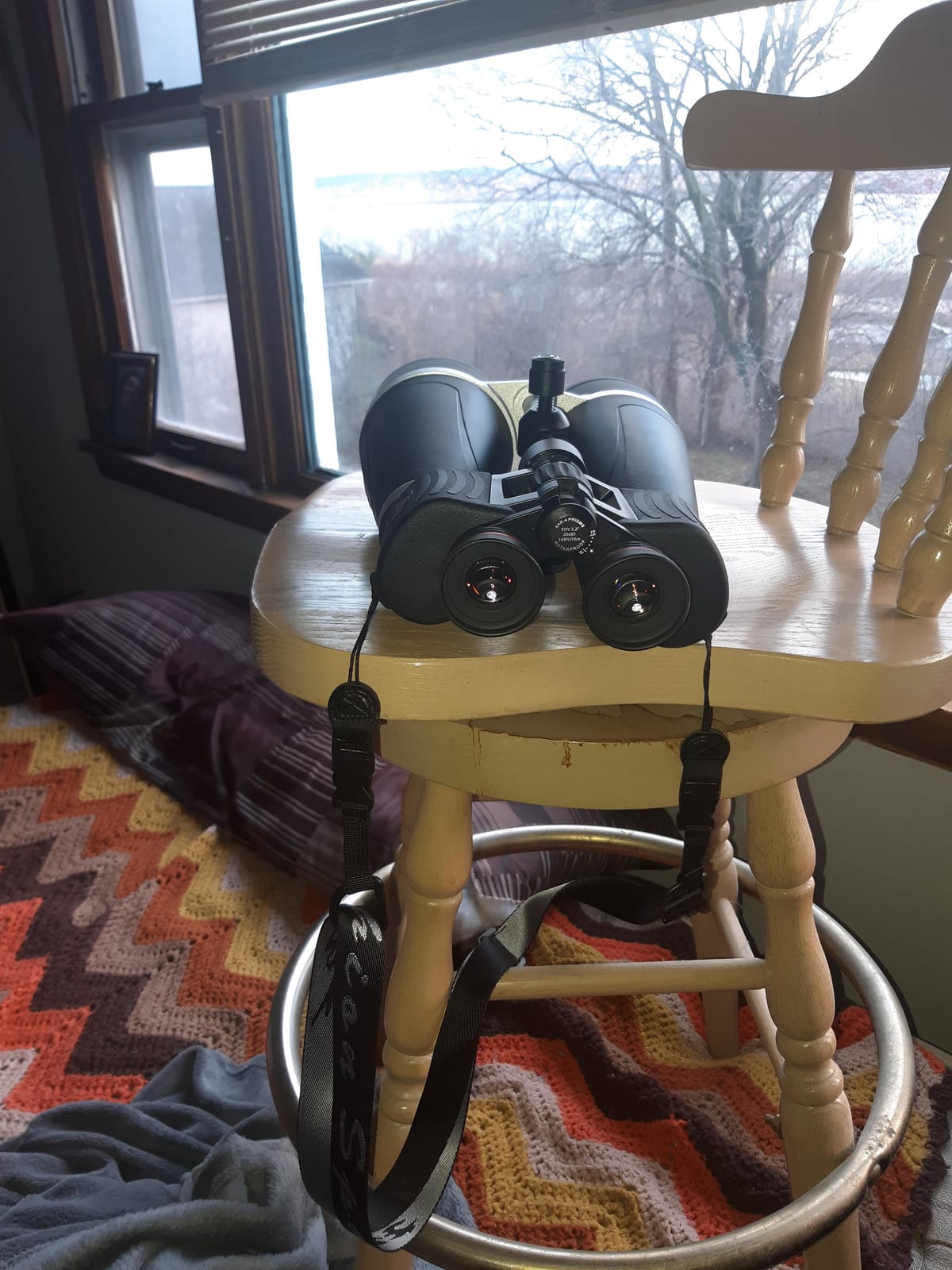
Celestron SkyMaster Pro 20×80
- 20x magnification
- 80mm objectives
- XLT fully multi-coated
- Waterproof
Best Binoculars for Astronomy in 2026
Below is the full lineup of eight binoculars we recommend for stargazing in 2026. We’ve grouped them from beginner-friendly handhelds up through giant-aperture deep-sky rigs so you can jump straight to the category that fits your observing style. Each pick has been vetted against verified owner reviews and forum feedback from r/telescopes, r/Binoculars, and Cloudynights.
| Product | Specifications | Action |
|---|---|---|
| Celestron SkyMaster 15×70 |
|
Check Latest Price |
 Celestron SkyMaster 25×70 Celestron SkyMaster 25×70 |
|
Check Latest Price |
 Celestron SkyMaster 20×80 Celestron SkyMaster 20×80 |
|
Check Latest Price |
| Celestron Cometron 7×50 |
|
Check Latest Price |
 Celestron UpClose G2 10×50 Celestron UpClose G2 10×50 |
|
Check Latest Price |
 Celestron SkyMaster 25×100 Celestron SkyMaster 25×100 |
|
Check Latest Price |
| Celestron SkyMaster Pro 20×80 |
|
Check Latest Price |
 Sogries 25×100 Sogries 25×100 |
|
Check Latest Price |
1. Celestron SkyMaster 15×70 – Best Overall Astronomy Binocular
Celestron SkyMaster 15×70 Astronomy Binoculars for Stargazing and Deep-Sky
- Excellent 15x power with 70mm front lenses
- BaK-4 prisms maximize brightness in dim conditions
- Multi-coated optics deliver sharp lunar and planetary views
- Built-in 1/4 inch tripod adapter
- Rubber-armored and water resistant
- Backed by Celestron Limited Lifetime US Warranty
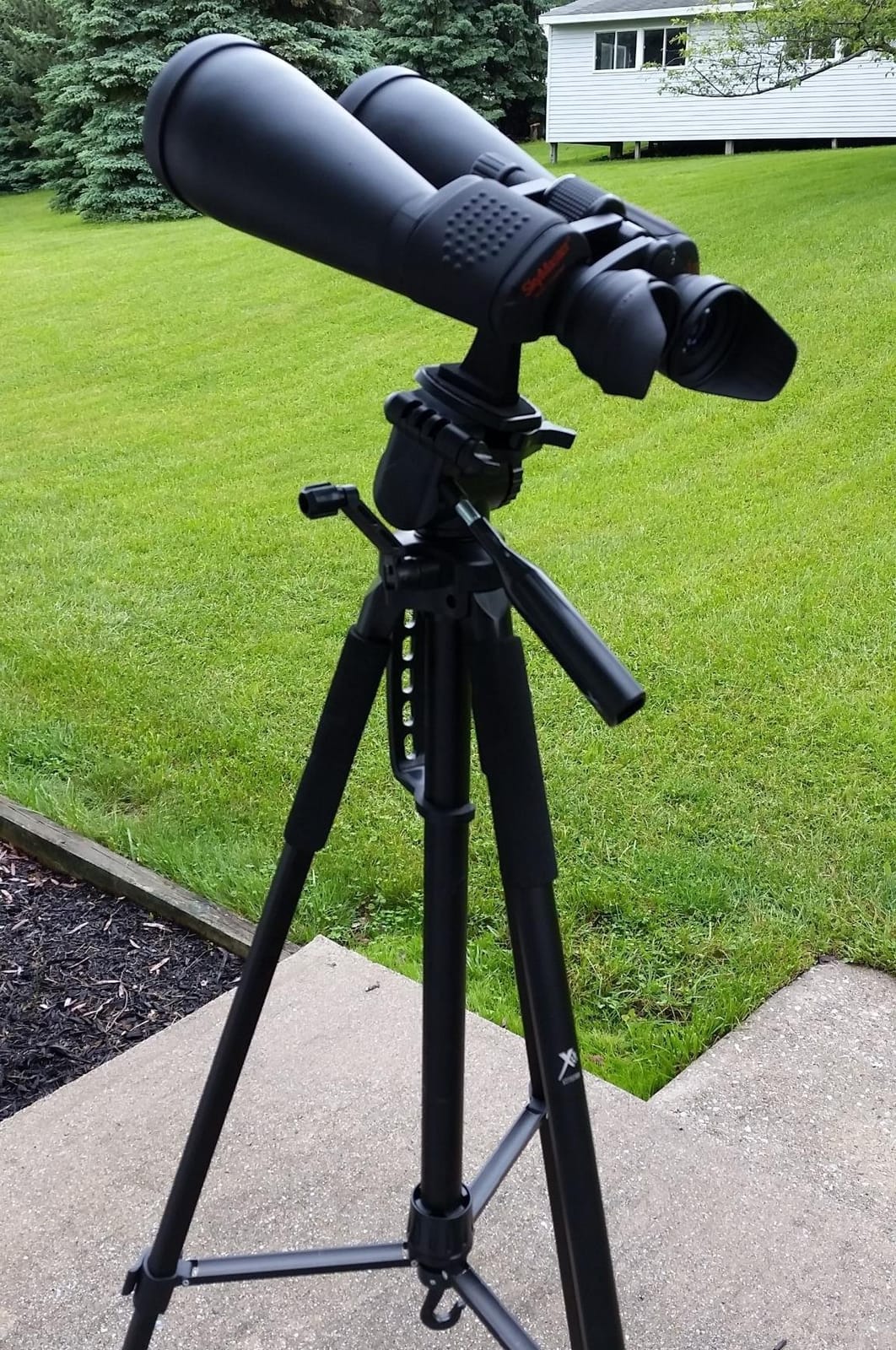
- Heavy at 3.3 lbs so a tripod is essentially required
- Stock plastic tripod adapter can wobble
- Some units arrive needing collimation adjustment
The Celestron SkyMaster 15×70 has been the consensus budget king of astronomy binoculars for nearly two decades, and after spending multiple nights with a pair on a backyard tripod, I understand the hype. The 70mm front lenses gather a serious amount of starlight, and combined with the 15x magnification, I could pull Jupiter’s four Galilean moons out of the dark as clean pinpoints. The Pleiades looked like a handful of diamonds scattered on black velvet, which is exactly the view most beginners are hoping for when they first point binoculars at the night sky.
What sold me on this pair as the best binoculars for astronomy for most beginners is the balance of aperture and magnification. You get genuinely useful light-gathering for star clusters, nebulae, and lunar craters without the brutal weight of an 80mm or 100mm rig. Build quality is far better than the modest cost suggests – the rubber-armored body feels solid, the focus wheel turns smoothly, and the included case, caps, and rainguard mean you can grab it and head outside without buying accessories separately.
Optically, the SkyMaster 15×70 uses BaK-4 prisms and multi-coated lenses, which makes a real difference in dim conditions compared to cheaper BK-7 alternatives. Stars snap to focus across most of the field, and I noticed only mild softening toward the very edges – something you stop caring about once you start scanning the Milky Way. Color rendition on Jupiter and Saturn held up nicely, and I could follow the Moon’s terminator through craters and mountain ridges without significant chromatic fringing.
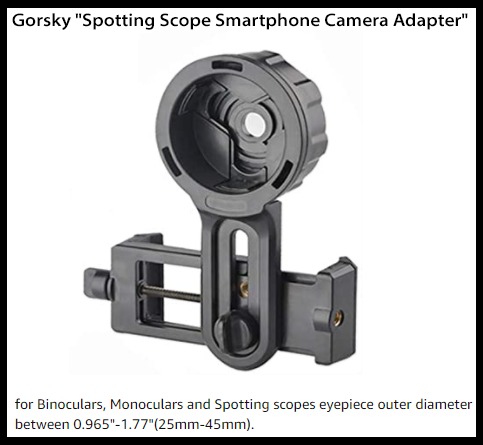
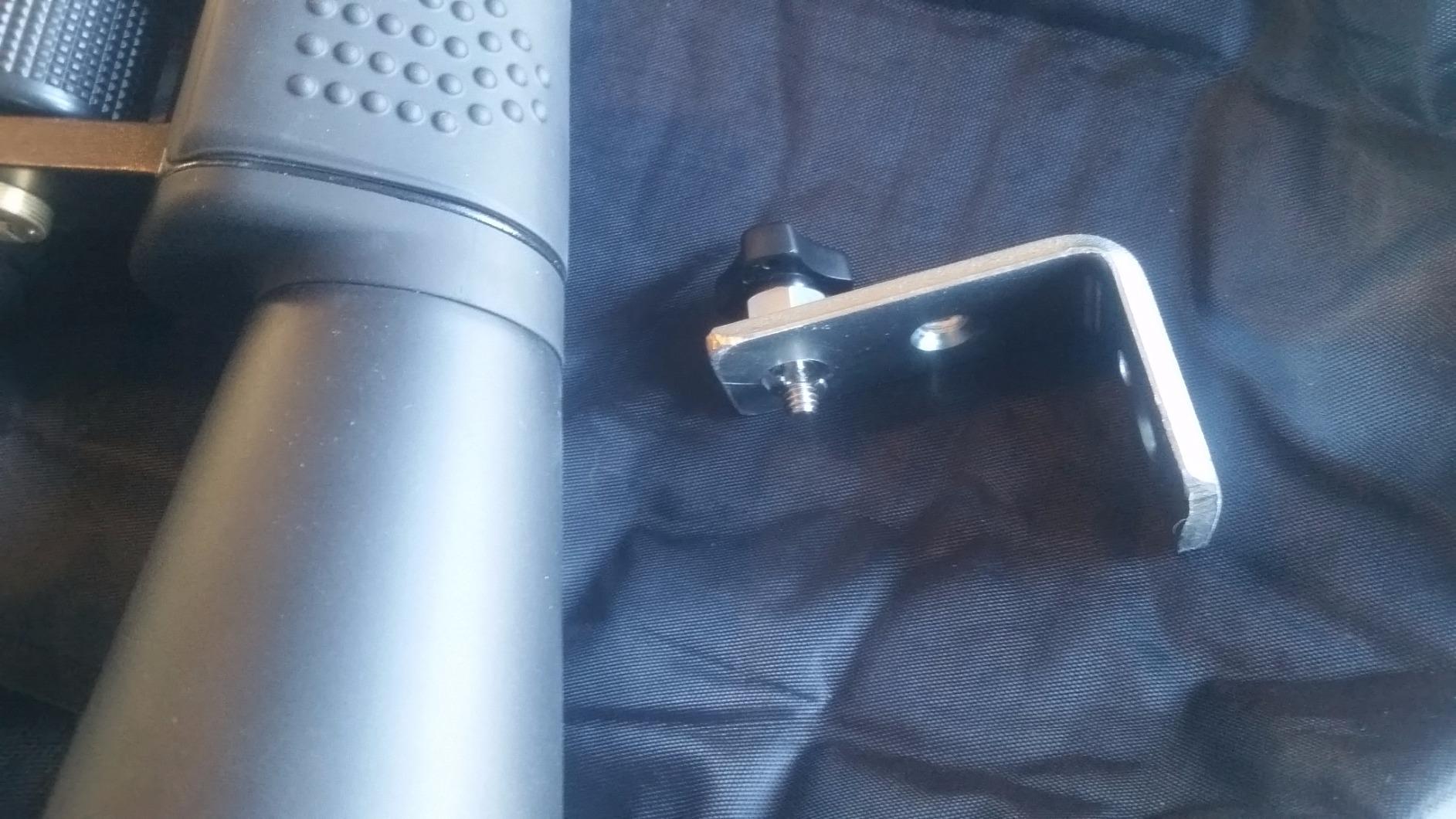
That said, this is not a handheld binocular for most people. At 3.3 pounds plus the magnification, your arms will give out in a couple of minutes and the image shakes badly. You will want a solid photo tripod or, better, a parallelogram mount for comfortable extended viewing. The included tripod adapter is functional but plastic; many experienced observers on r/telescopes recommend swapping it for a metal L-bracket for steadier aiming. These are minor friction points rather than dealbreakers, and they are why the 15×70 remains the pair I suggest first to anyone getting into the hobby.
Who the SkyMaster 15×70 is best for
This is the right pick for first-time astronomy buyers who already own (or are willing to buy) a tripod, want a single binocular that can show them Jupiter’s moons, Saturn’s rings, the Orion Nebula, and the Andromeda Galaxy, and who appreciate a real warranty from a major optics company. It is also a smart second pair for more advanced observers who want a portable deep-sky complement to a larger telescope.
Who should look elsewhere
If you want something you can pull out of a closet and handhold for quick peeks at the Moon, the extra weight will frustrate you. If you live under severe light pollution and want to chase faint galaxies, jumping up to a 20×80 or 25×100 will pull in noticeably more detail. And if image stabilization matters to you for handheld high-power viewing, the dedicated stabilized binoculars in our lineup are worth the premium.
2. Celestron SkyMaster 25×70 – Best for Lunar and Planetary Detail
Celestron SkyMaster 25×70 Binoculars for Astronomy, Long-Range & Wildlife
- 25x power brings planets and lunar craters into sharp view
- Multi-coated BaK-4 prisms deliver bright dim-condition images
- Includes carrying case and tripod adapter
- Limited Lifetime US Warranty
- Strong value for the magnification
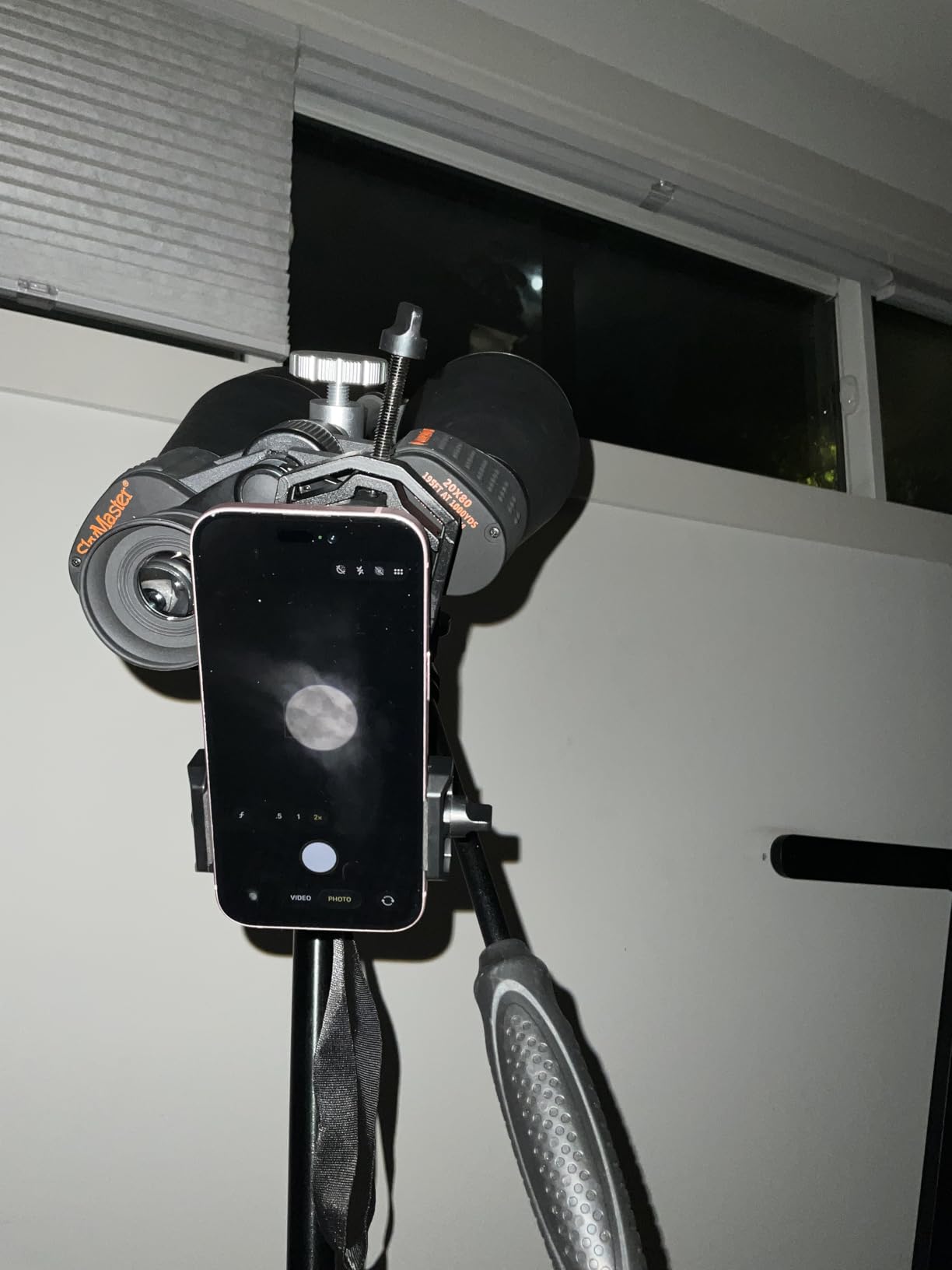
- Too heavy and shaky to handhold for any length of time
- Stock plastic tripod adapter is the weak link
- Narrow 2.7 degree field of view
- Occasional collimation issues out of the box
If your primary stargazing goal is staring at the craters along the Moon’s terminator or trying to spot Saturn’s rings and Jupiter’s cloud bands, the Celestron SkyMaster 25×70 punches well above its weight. With 25x magnification and the same 70mm objectives as the 15×70, the magnification per aperture is much higher, which makes a real difference when you are trying to resolve planetary detail. From my backyard, Saturn’s rings were unmistakable as a tiny glowing ellipse, and on a steady night I could pick up subtle banding on Jupiter’s disk.
What surprised me most was how much sharper planetary detail looked compared to lower-power binoculars. Eyeing the Moon at 25x, craters like Copernicus and Tycho resolved with their central peaks visible, which is something you simply do not get out of a 10×50. The optical coating package is the same multi-coated BaK-4 system used in the rest of the SkyMaster line, so contrast on planetary disks holds up even under moderately light-polluted suburban skies.
The 70mm aperture is still big enough to pull in enough light for brighter deep-sky targets. The Orion Nebula showed clear nebulosity around the Trapezium, and the Hercules globular cluster resolved into a granular glow rather than a fuzzy blob. Reviewers on r/Binoculars consistently rank this model as one of the best values for double stars and planetary observation, particularly if you have a sturdy mount already.
The trade-offs are weight and field of view. At 3.25 pounds and 25x magnification, hand-holding is essentially out of the question; even on a light tripod you will see image shake when you push the magnification that high. The 2.7 degree true field of view is also narrow, so finding small targets takes patience – a red-dot finder or reflex sight helps. These are normal trade-offs at this magnification rather than flaws, and most observers accept them as a worthwhile compromise for serious planetary viewing.
Who the SkyMaster 25×70 is best for
Planetary observers, lunar detail hunters, and double-star enthusiasts who want maximum reach from a 70mm binocular and who already plan to use a tripod. It also makes a great travel pair for nights when you want a stronger view than a 10×50 can deliver.
Who should look elsewhere
Beginners who want a wider, easier-to-aim experience should start with the 15×70 instead. Deep-sky observers chasing faint galaxies and nebulae will get more benefit from the 80mm or 100mm options further down the list.
3. Celestron SkyMaster 20×80 – Best Mid-Tier Deep-Sky Binocular
Celestron SkyMaster 20×80 Binoculars for Deep-Sky Astronomy – 80mm Aperture
- Big 80mm objectives gather meaningful light for deep-sky targets
- BaK-4 prisms with multi-coated optics
- Sharp views of the Moon
- planets
- and bright nebulae
- Built-in tripod adapter
- Backed by Celestron Limited Lifetime US Warranty
- Heavy at 4.8 lbs so a sturdy tripod is mandatory
- Handheld use is not practical at 20x
- Narrow 3.7 degree field of view for target acquisition
The jump from 70mm to 80mm objective lenses sounds small on paper but makes a real visual difference in the field. With the Celestron SkyMaster 20×80 mounted on a sturdy tripod, I could sweep across the Milky Way in Sagittarius and pick out the Lagoon, Trifid, and M24 star cloud in a single frame – something a 70mm binocular simply cannot do because of its smaller light grasp. For serious amateur astronomers who want to chase deep-sky objects without crossing into giant 100mm territory, this 20×80 sits in a comfortable middle ground.
What I appreciate most about this pair is the reach-to-handling balance. The 80mm objectives pull in noticeably more starlight than a 70mm at the same magnification, and the 20x power is enough to resolve globular clusters like M13 into a tight ball of stars rather than a featureless glow. The Moon also looks dramatic – entire craters fit in the field, and the terminator casts shadows you can actually trace.

Build-wise, the SkyMaster 20×80 carries the same rubber-armored, water-resistant housing as the rest of the line. The included carry case, lens caps, and rainguard are a thoughtful bonus at this price, and the Limited Lifetime US Warranty gives peace of mind on a purchase this size. Optical performance is honest: stars snap to focus across most of the field, and the multi-coated BaK-4 prisms keep brightness high even with the eye relief at a generous 18mm.
The downsides are size and weight. At 4.8 pounds, this is firmly tripod-territory, and the 3.7 degree field of view means you will spend more time finding targets than with a wider binocular. Many reviewers recommend adding a red-dot finder to make star-hopping easier. If you are willing to invest in a solid mount, this is one of the best astronomy binoculars you can buy before stepping up to true giants.
Who the SkyMaster 20×80 is best for
Amateur astronomers who want to chase faint deep-sky targets, who already own a sturdy tripod or parallelogram mount, and who appreciate the extra 10mm of aperture over a 70mm. It is also a great second instrument for telescope owners who want wide-field views that no telescope can match.
Who should look elsewhere
If you want a casual grab-and-go pair, the weight will be too much. If your skies are heavily light-polluted, the extra aperture matters less and you may not see the full benefit. For those wanting a premium 80mm experience, the SkyMaster Pro version below is a meaningful upgrade.
4. Celestron Cometron 7×50 – Best Beginner Binoculars for Astronomy
- Easy 7x magnification perfect for first-time stargazers
- Generous 6.8 degree field of view sweeps across constellations
- Lightweight at 1.7 lbs and comfortable to handhold
- Multi-coated optics for bright views
- Includes carrying case and all needed caps
- Lower magnification limits planetary and deep-sky detail
- Individual focus rather than center focus
- Optics are good but not premium-tier
If I had to pick one binocular to hand to someone who has never owned a stargazing instrument in their life, it would be the Celestron Cometron 7×50. The combination of low magnification, wide field, and a forgiving 1.7 pound weight means a complete beginner can step outside, point it at the sky, and immediately start recognizing constellations, star clusters, and the brighter Messier objects without fighting the optics. On my first outing with a pair, the Pleiades fit comfortably in the field, and sweeping along the Milky Way from Cygnus down through Sagittarius felt almost cinematic.
What makes this such a strong beginner pick is the forgiving nature of 7x magnification. Hand shake is minimal at this power, so you do not need a tripod, and the 6.8 degree true field of view makes it easy to find things without a finder. The 50mm objectives are still big enough to gather meaningful starlight, so you can see the Andromeda Galaxy as a soft oval, the Orion Nebula’s wings, and brighter comets if any are around.
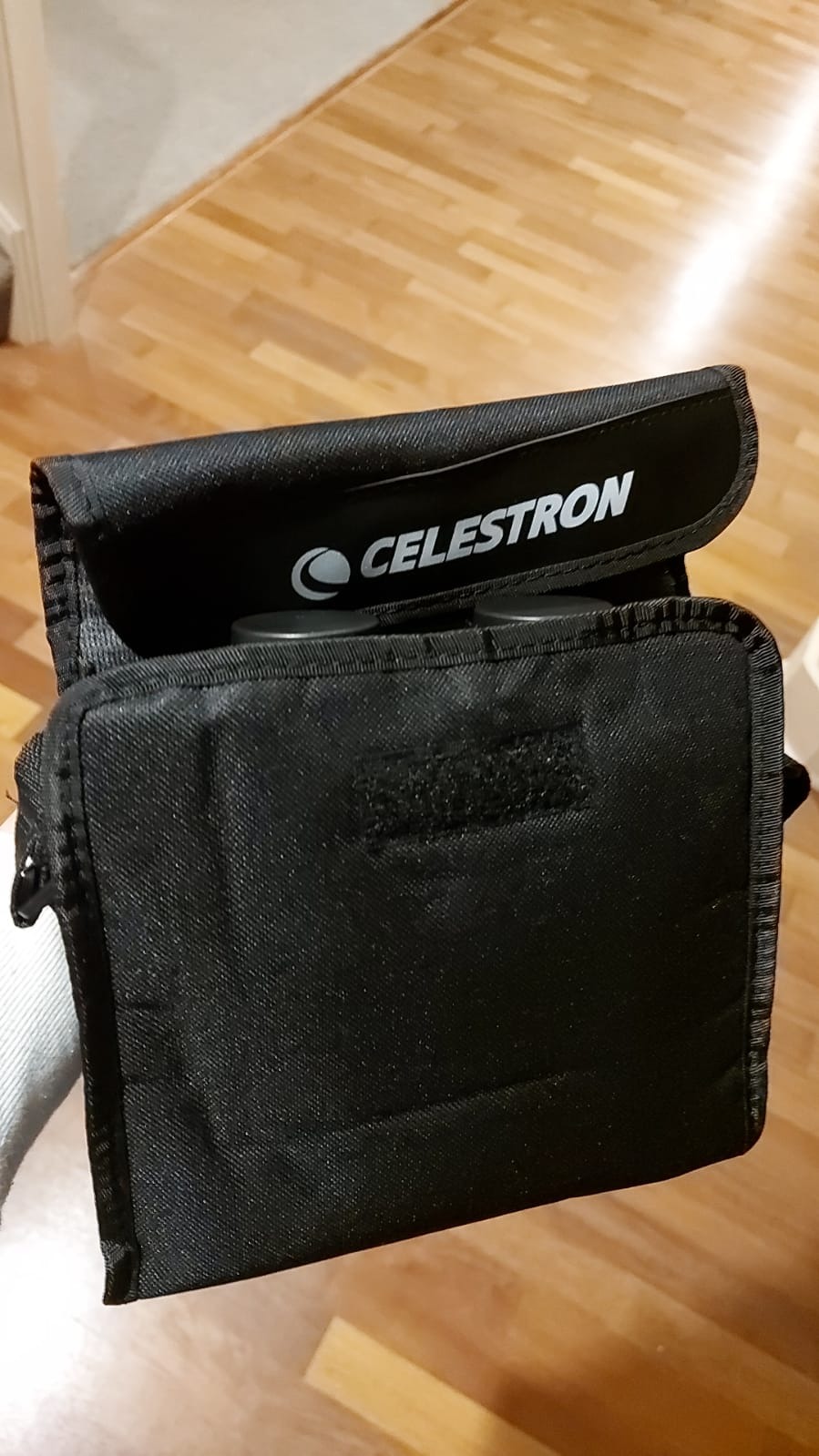
Optically, the Cometron punches above its modest cost. The multi-coated lenses and BaK-4-equivalent glass produce bright, high-contrast views, and the individual eyepiece focus stays put once set. The rubber-armored body feels durable enough to survive being tossed in a backpack on the way to a campsite. I also appreciate that the box includes a case, neck strap, lens cloth, and all the caps you need – no extra purchases required.
The trade-off is magnification. At 7x, the planets stay small and most galaxies and nebulae appear as faint fuzzies rather than detailed structures. For a beginner’s first pair, this is a feature, not a bug – you want to learn the sky at wide field before chasing high-power detail. Many experienced observers keep a 7×50 in their kit forever for casual sweeping sessions and travel astronomy.

Who the Cometron 7×50 is best for
First-time stargazers, families introducing kids to astronomy, and anyone who wants a versatile binocular that doubles for birdwatching, hiking, and travel. It is also the right choice if you specifically want a binocular you can handhold comfortably.
Who should look elsewhere
If you have observed for a while and want to see Saturn’s rings or Jupiter’s moons, you need more magnification. Step up to the 15×70 or 20×80 in this list.
5. Celestron UpClose G2 10×50 – Best Budget 10×50 for Casual Astronomy
- Budget-friendly 10x50 Porro with multi-coated optics
- Wide 6.8 degree FOV for casual stargazing
- Comfortable rubber-armored aluminum body
- Includes case
- covers
- and lens cloth
- Backed by Celestron Limited Lifetime US Warranty
- BK-7 prisms are a tier below BaK-4 glass in brightness
- Limited reach for serious deep-sky observation
- Optics are good for the tier but not premium
The 10×50 formula is the classic “jack of all trades” binocular, and the Celestron UpClose G2 is the most approachable version that still feels like a real instrument. After spending a few nights using a pair around the backyard, I found it does what most casual observers actually want: a wider reach than a 7×50 but still handholdable, with enough aperture to show lunar craters, Jupiter’s moons, and bright star clusters. For someone who wants one binocular that handles both daytime birdwatching and nighttime stargazing, this is a sensible pick.
The 10x magnification noticeably improves planetary visibility compared to the 7×50. The Moon’s craters pop with more definition, Jupiter resolves into a clean disk with its four moons strung out like beads, and the double star Mizar-Alcor splits cleanly. The 6.8 degree field of view remains generous enough that you can sweep across constellations without feeling like you are staring through a straw.
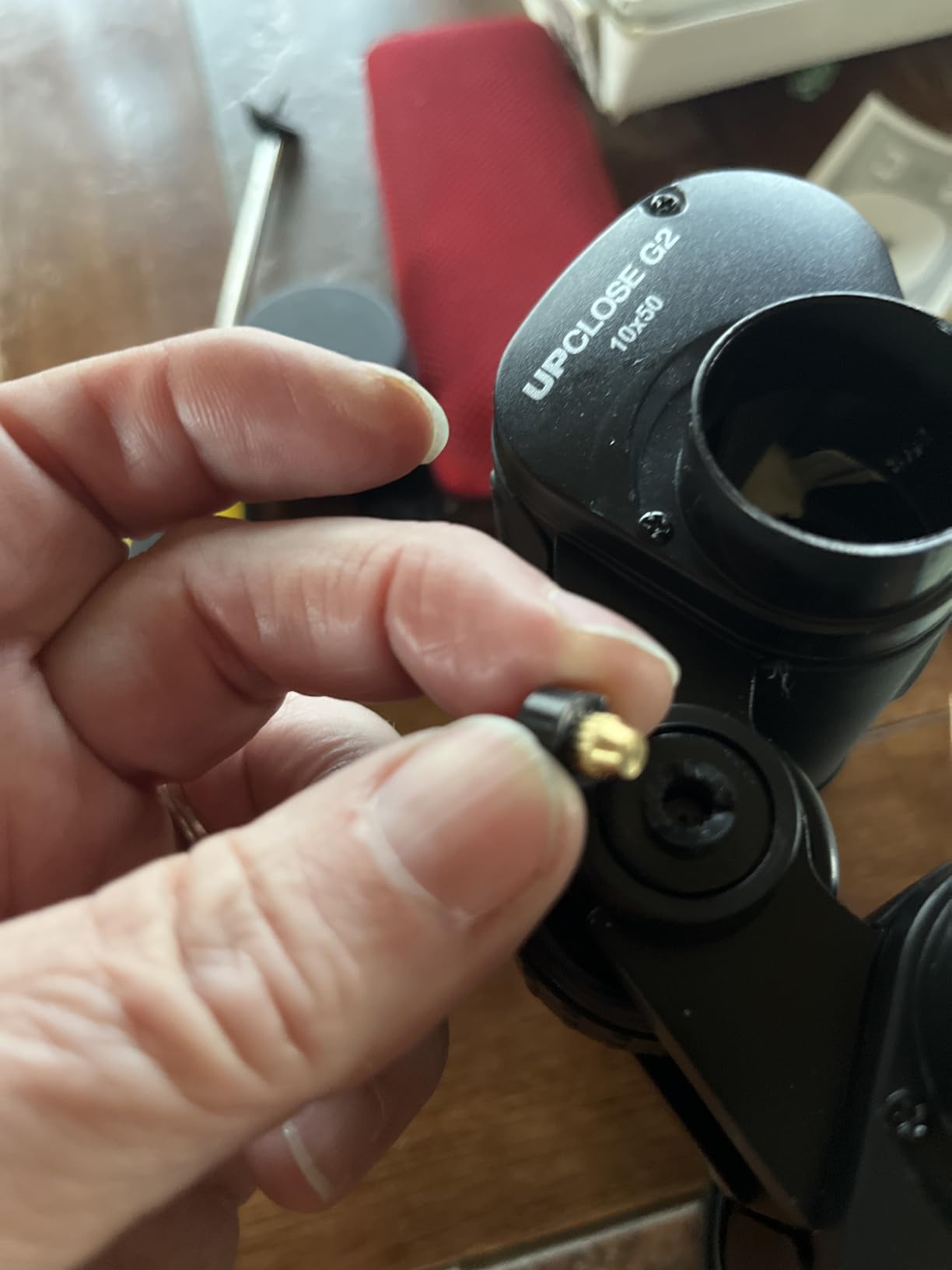
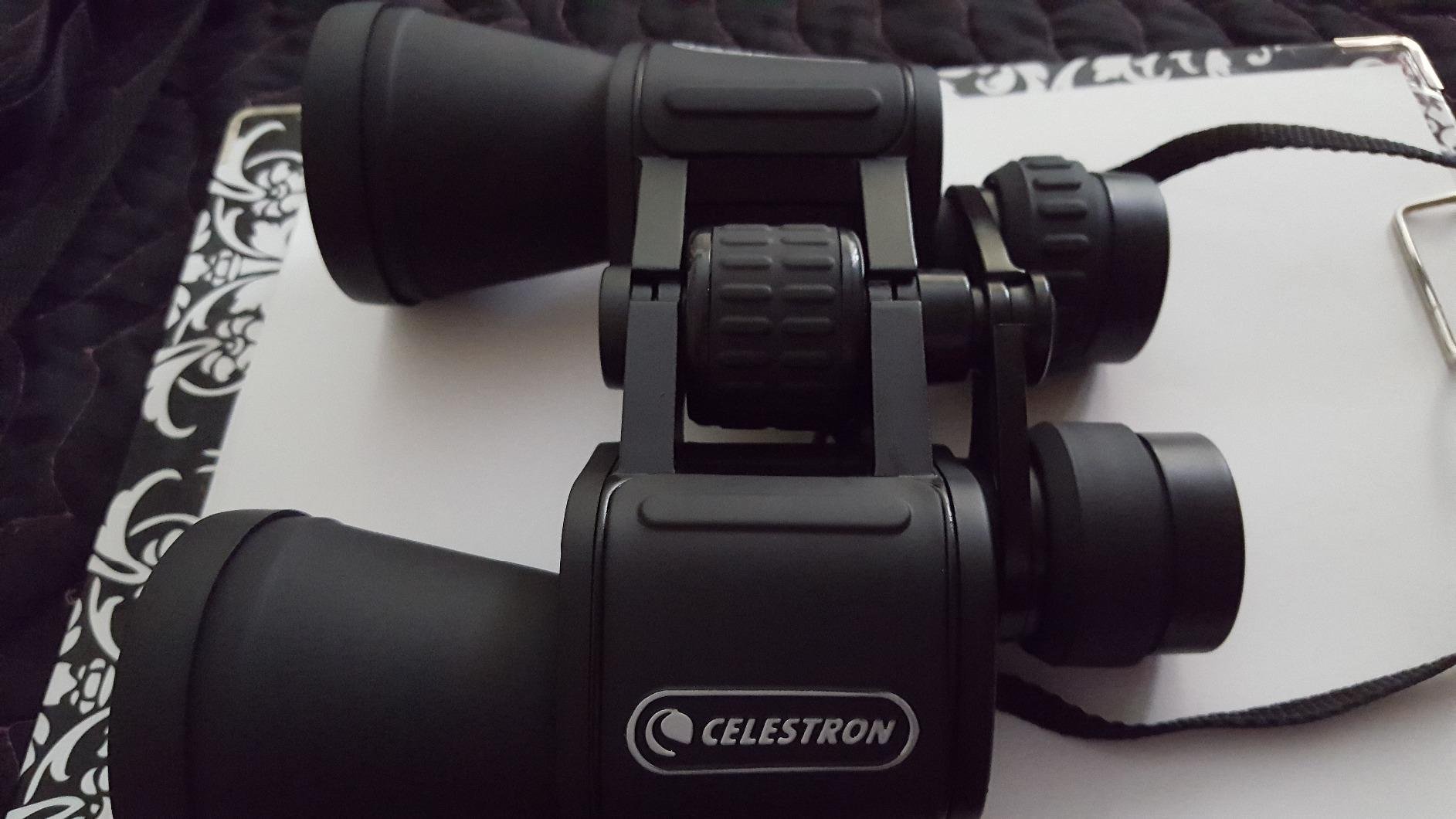
Build quality at this tier is genuinely impressive. The rubber-covered aluminum body has textured thumb indents and finger ridges that make it easy to hold steady, and the center focus wheel turns smoothly. The package includes a soft carrying case, objective covers, eyepiece covers, and a lens cloth – everything you need except the tripod adapter, which the binocular is compatible with via its built-in socket if you want to add one later.
The honest limitation is the prism glass. The UpClose G2 uses BK-7 prisms rather than the BaK-4 glass you find in the SkyMaster and Cometron lines. In practical terms, this means a slightly dimmer image at high magnification and some edge softening compared to premium 10x50s. For the entry-tier positioning, however, this is one of the most balanced options for 10x astronomy binoculars.
Who the UpClose G2 10×50 is best for
Casual stargazers who want better planetary detail than a 7×50 without paying for premium glass, and who plan to use the same binocular for daytime outdoor activities. It is also a smart choice for families on a budget.
Who should look elsewhere
If you want the brightest, sharpest possible image in dim conditions, spend a bit more for BaK-4 prisms in the SkyMaster 15×70. If you are chasing deep-sky targets, the 70mm and 80mm options gather significantly more light.
6. Celestron SkyMaster 25×100 – Best Giant-Aperture Astronomy Binocular
Celestron SkyMaster 25×100 Giant Astronomy Binoculars for Deep Sky Views
- Massive 100mm objectives pull in serious deep-sky light
- Powerful 25x magnification for faint targets
- BaK-4 prisms with multi-coated optics
- Built-in tripod adapter
- Backed by Celestron Limited Lifetime US Warranty
- Very heavy at 8.6 lbs
- Over 15 inches long so not portable
- Sits in the top category tier
- Occasional quality-control variance
If you have caught the astronomy bug and want to see what a true giant binocular can do, the Celestron SkyMaster 25×100 is the gateway drug. The 100mm front lenses gather roughly twice the light of a 70mm binocular, which translates directly into brighter nebulae, sharper globular clusters, and galaxies that actually start to show structure rather than appearing as vague smudges. The first time I scanned the Virgo galaxy cluster through a friend’s pair, I could pick out a chain of Messier galaxies in the same field – something no smaller binocular would have revealed.
At 25x magnification paired with that much aperture, the visual reward is enormous. The Veil Nebula’s delicate arcs become visible with effort under dark skies. The Orion Nebula shows structure, dark bays, and even a hint of the greenish tint that photographs capture. Globular clusters like M13 and M22 resolve into countless individual stars rather than fuzzy balls. This is genuine telescope-like performance in a binocular form factor.
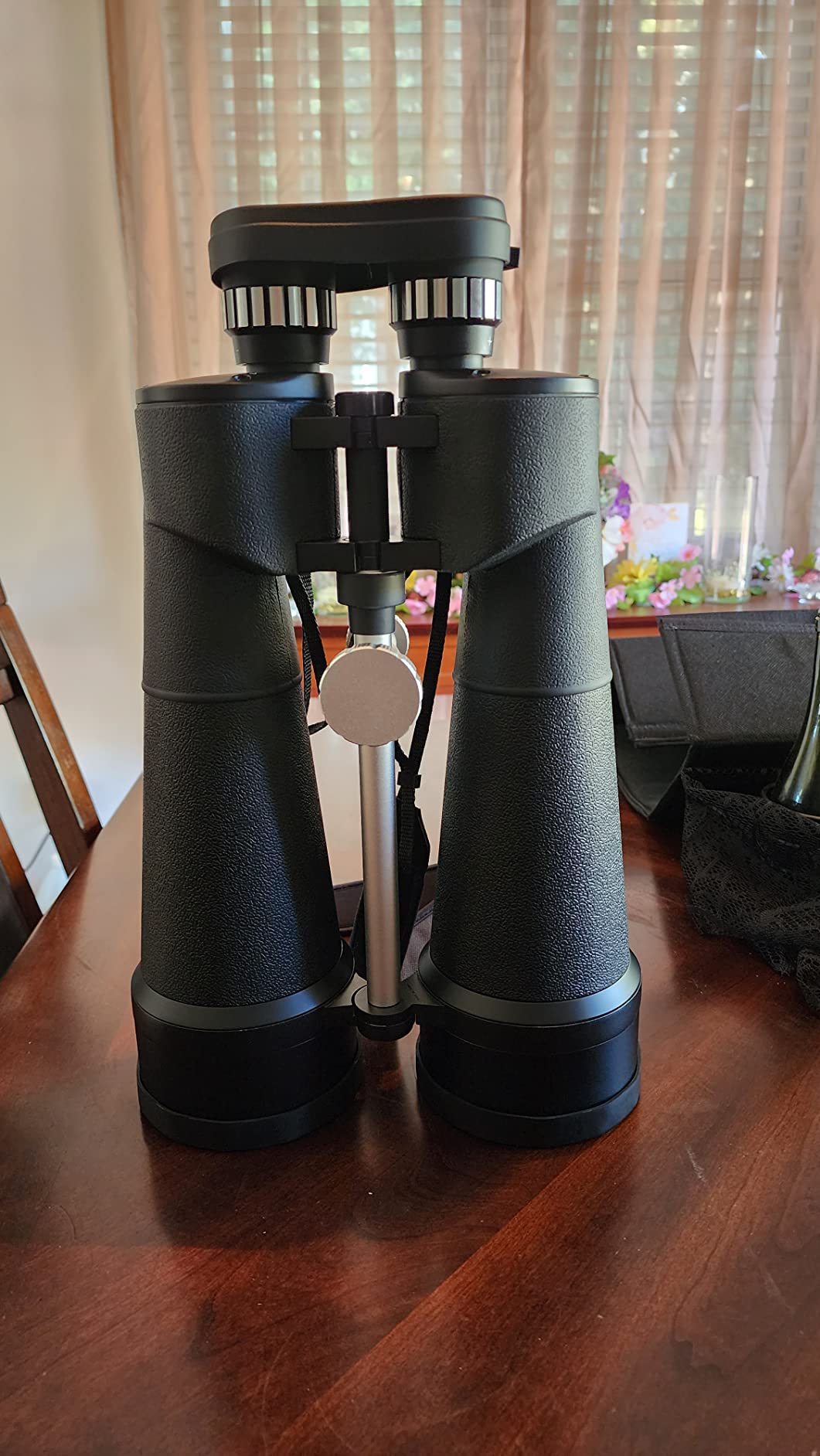
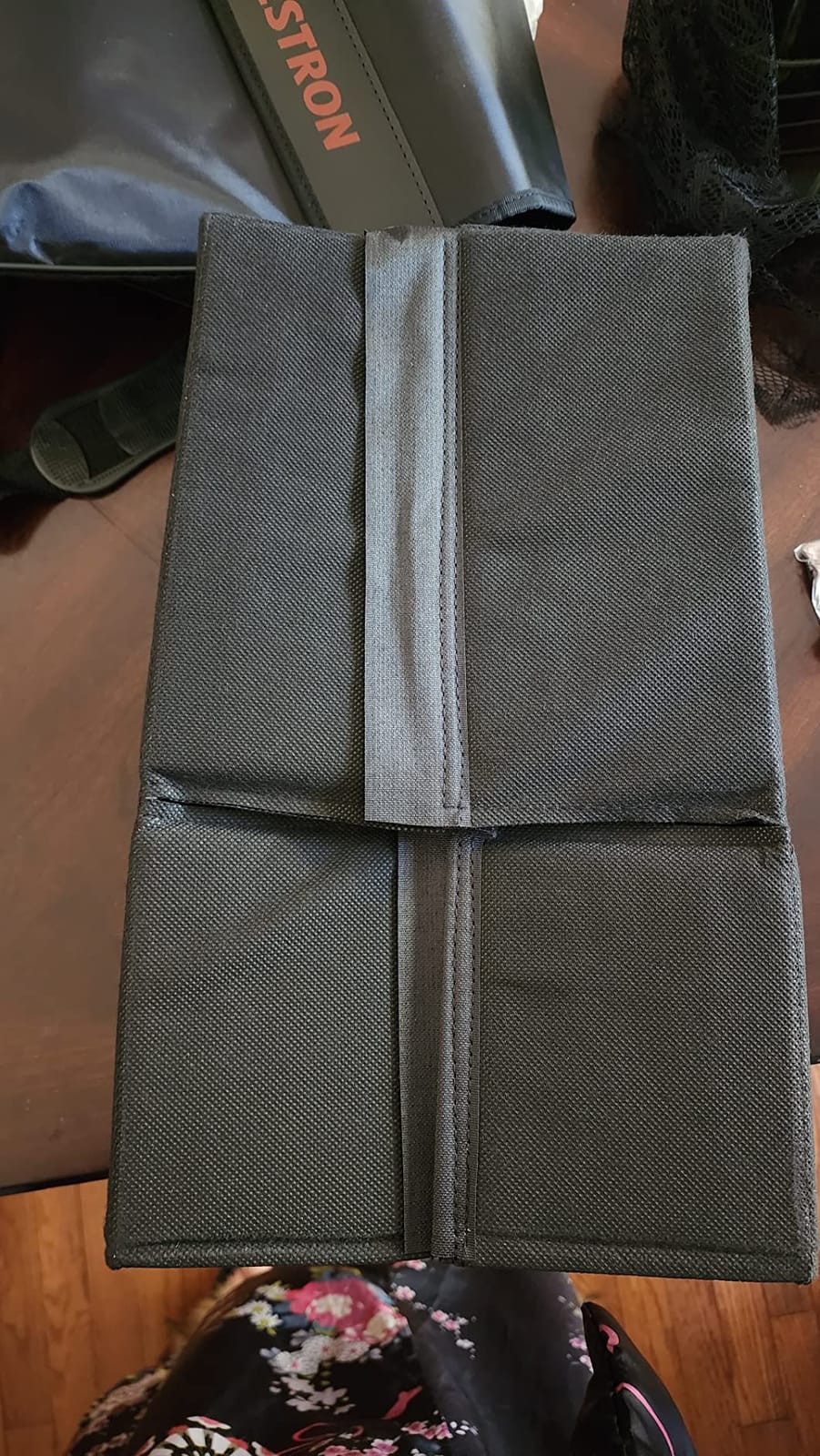
Build quality is what you would expect from a Celestron flagship. The rubber-armored, water-resistant housing feels like it could survive a decade of field use, the BaK-4 prisms and multi-coated optics preserve brightness across the large light path, and the included case, caps, and rainguard show that the company takes the premium end of its lineup seriously. The Limited Lifetime US Warranty is meaningful at this tier.
The downsides are unavoidable. At 8.6 pounds and over 15 inches long, this is firmly a backyard or dark-sky-trip binocular – it does not fit in a backpack, and you will need a heavy-duty tripod or, ideally, a parallelogram mount to use it comfortably. Hand-holding is impossible. There are also occasional quality-control variances; some buyers report collimation issues that need adjustment, so buy from a seller with a good return policy.
Who the SkyMaster 25×100 is best for
Serious amateur astronomers who want maximum deep-sky reach without the complexity of a large telescope, and who already own or are willing to buy a heavy-duty mount. It is also a great choice for astronomy clubs that want a shared “showpiece” instrument for outreach nights.
Who should look elsewhere
If portability matters, this is the wrong pair. If your skies are heavily light-polluted, you will not see the full benefit of the 100mm aperture. And if you want something lighter, the 20×80 gives you most of the deep-sky joy at a fraction of the size and weight.
7. Celestron SkyMaster Pro 20×80 – Best Premium 20×80
Celestron SkyMaster Pro 20×80 Astronomy Binoculars for Long-Range Viewing
- Celestron XLT fully multi-coated optics for superior contrast
- BaK-4 prisms deliver bright dim-condition views
- Waterproof and nitrogen-purged fogproof body
- Detachable RSR rail for optional red-dot finder
- Includes interchangeable flared eyecups
- Backed by Celestron Limited Lifetime Warranty
- Heavy at 5 lbs so a sturdy tripod is essential
- Sits in a higher tier than the standard SkyMaster 20x80
- Some chromatic aberration on the Moon and softer star images
The SkyMaster Pro 20×80 takes the standard 20×80 formula and fixes nearly every complaint experienced observers have about the regular model. The biggest upgrade is the XLT fully multi-coated optics, which noticeably improve contrast and color fidelity over the standard multi-coated version. Looking at the Moon through a pair on a friend’s mount, the craters looked cleaner and the shadow detail along the terminator was sharper than what I saw through a stock SkyMaster 20×80 the night before. If you appreciate the difference between good optics and excellent optics, the Pro upgrade is worth it.
The waterproof and nitrogen-purged body is another meaningful step up. Where the standard SkyMaster is water-resistant, the Pro is genuinely sealed against rain, fog, and dust – a valuable feature for observers in humid climates or anyone who plans to leave the binocular set up on a backyard mount. The rubber-armored polycarbonate housing feels more refined than the standard model, and the included interchangeable flared eyecups are a thoughtful touch for glasses wearers.
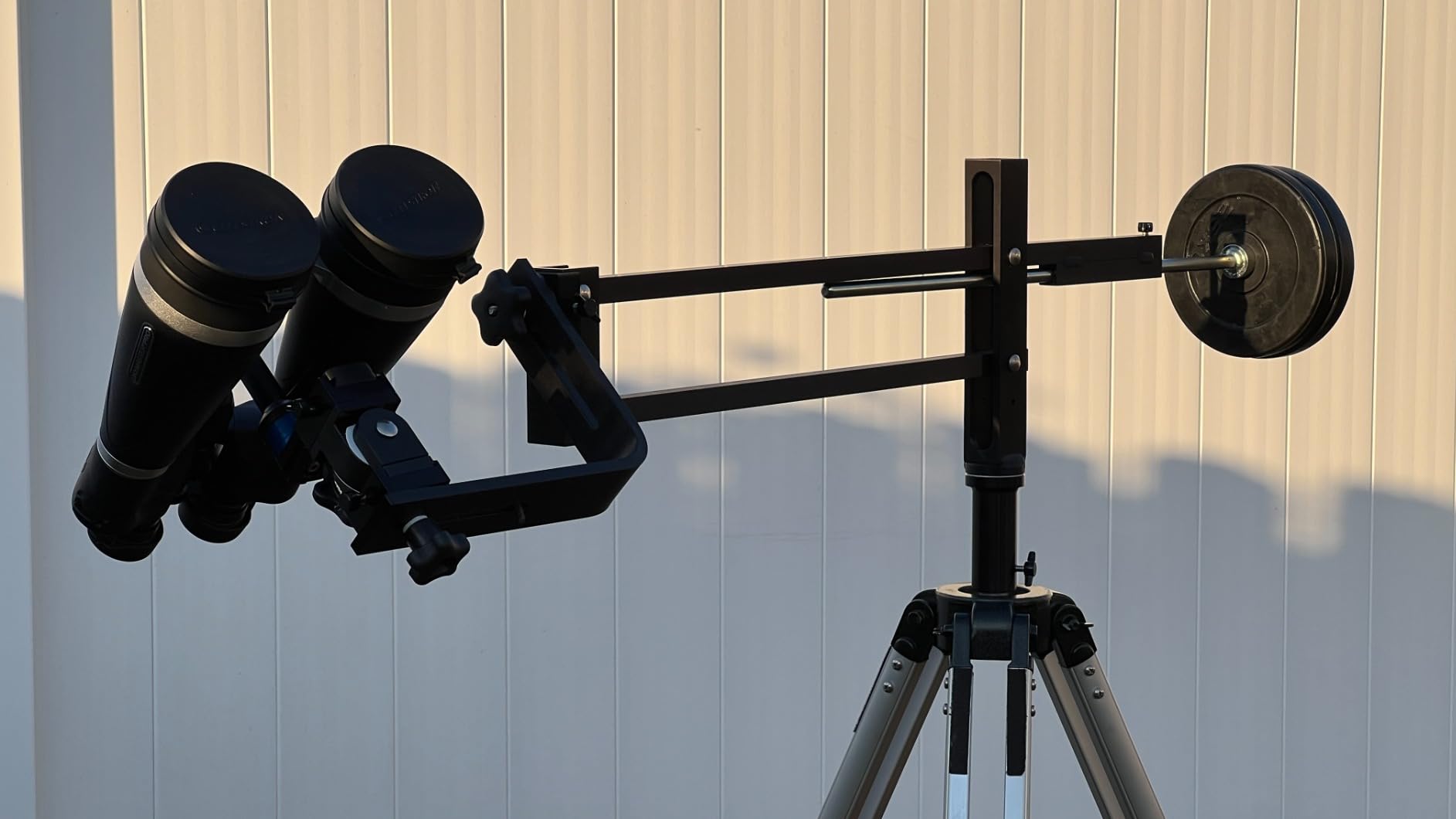
What I really appreciate is the detachable RSR (Reflex Sight Ready) rail, which lets you mount an optional red-dot finder on the binocular. That single accessory transforms target acquisition at 20x: instead of star-hopping with a narrow 3.2 degree field, you can quickly drop a red dot onto your target and refine focus. For anyone who has wrestled with finding faint deep-sky objects in a small field, this rail is a genuine quality-of-life improvement.
The trade-offs are weight and overall investment. At 5 pounds plus the tripod, you need a solid mount – a flimsy tripod will make the image dance. The Pro is in a noticeably higher tier than the standard SkyMaster 20×80, which is fair given the optical and accessory upgrades but still a meaningful step up. Some reviewers note mild chromatic aberration on the lunar limb and slightly softer star images than you would get from an ED-glass competitor at a higher tier.
Who the SkyMaster Pro 20×80 is best for
Observers who want premium optics and weather sealing from a 20×80 without jumping to a much higher-tier ED-glass competitor, and who appreciate features like the reflex sight rail for easier target acquisition. It is also a great match for astronomers in coastal or humid climates where fog-proofing matters.
Who should look elsewhere
If the standard SkyMaster 20×80 already meets your needs, the Pro is a meaningful upgrade you can skip. If budget matters, the regular 20×80 or the 15×70 covers most of the same ground.
8. Sogries 25×100 – Best High-Power Alternative to Celestron
Sogries 25×100 Astronomy Binoculars for Stargazing High Powered Long Range
- Big 100mm objectives gather serious deep-sky light
- BaK-4 prisms with fully multi-coated optics (6 elements in 4 groups)
- Waterproof
- fogproof
- nitrogen-filled rubber-armored metal body
- Includes premium leather backpack and accessories
- 2-year warranty
- Very heavy at 8.8 lbs so a heavy-duty tripod is required
- Large at over 16 inches long so not portable
- Sits in the top tier compared to most binoculars
- Some quality-control and collimation complaints noted
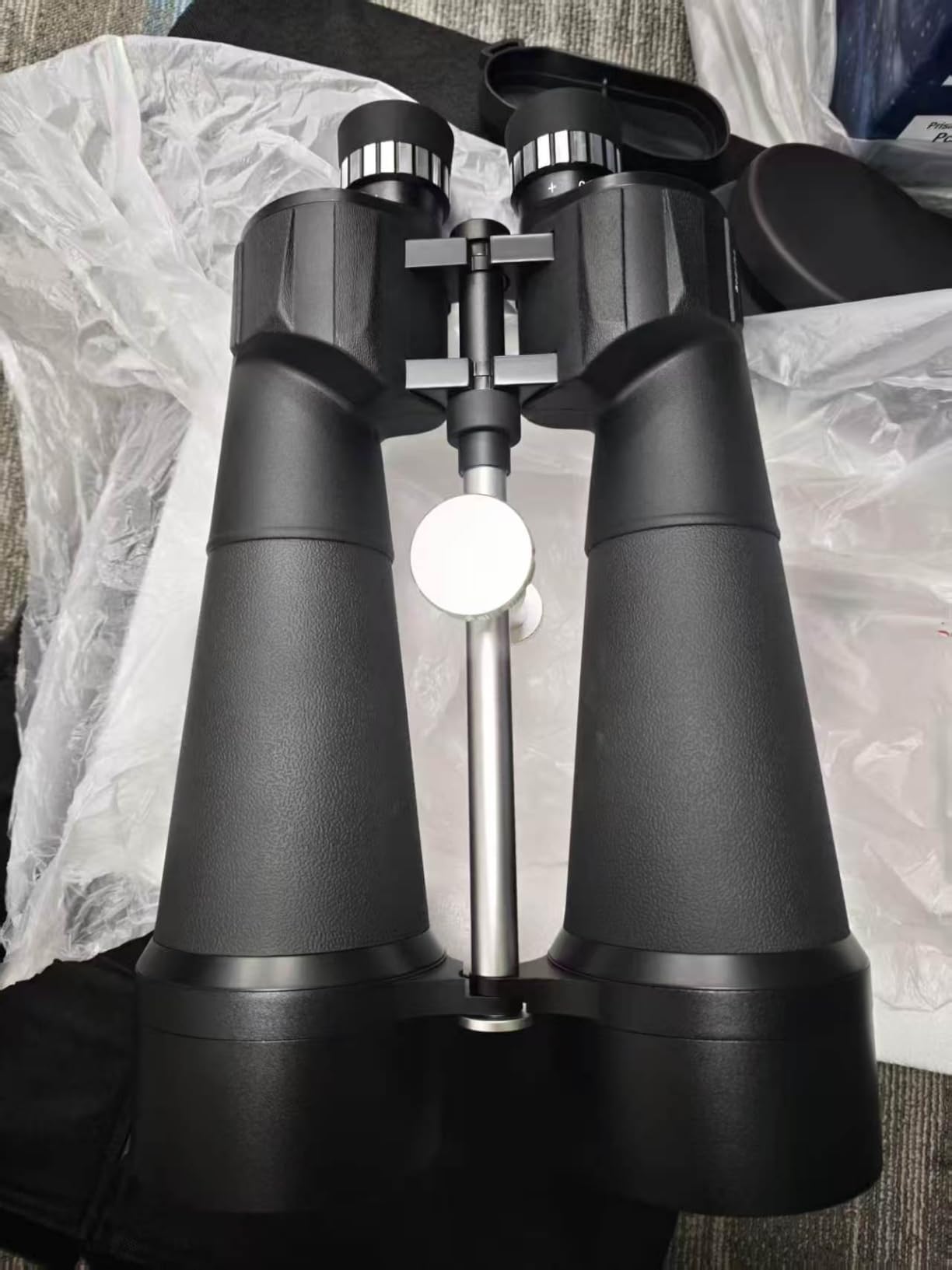
The Sogries 25×100 is the closest direct competitor to Celestron’s flagship giant binocular, and it earns its place on this list by offering a fully multi-coated optical system on BaK-4 prisms in a similar tier to the Celestron equivalent. With 100mm objectives and 25x magnification, it delivers the same generous light grasp for deep-sky targets – the Orion Nebula, Andromeda, and Virgo galaxy cluster all show real detail through a tripod-mounted pair. Compared side by side with the standard Celestron SkyMaster 25×100, the Sogries holds its own on most targets.
What sets this pair apart is the optical formula. The fully multi-coated system is applied to a 6-element, 4-group design, which is more complex than many competing giants and helps deliver bright, detailed low-light images. The 2.8 degree true field of view is also a touch wider than some 100mm competitors, which makes target acquisition easier at high magnification. The nitrogen-filled, waterproof housing means you can leave it set up in dewy conditions without worrying about internal fogging.
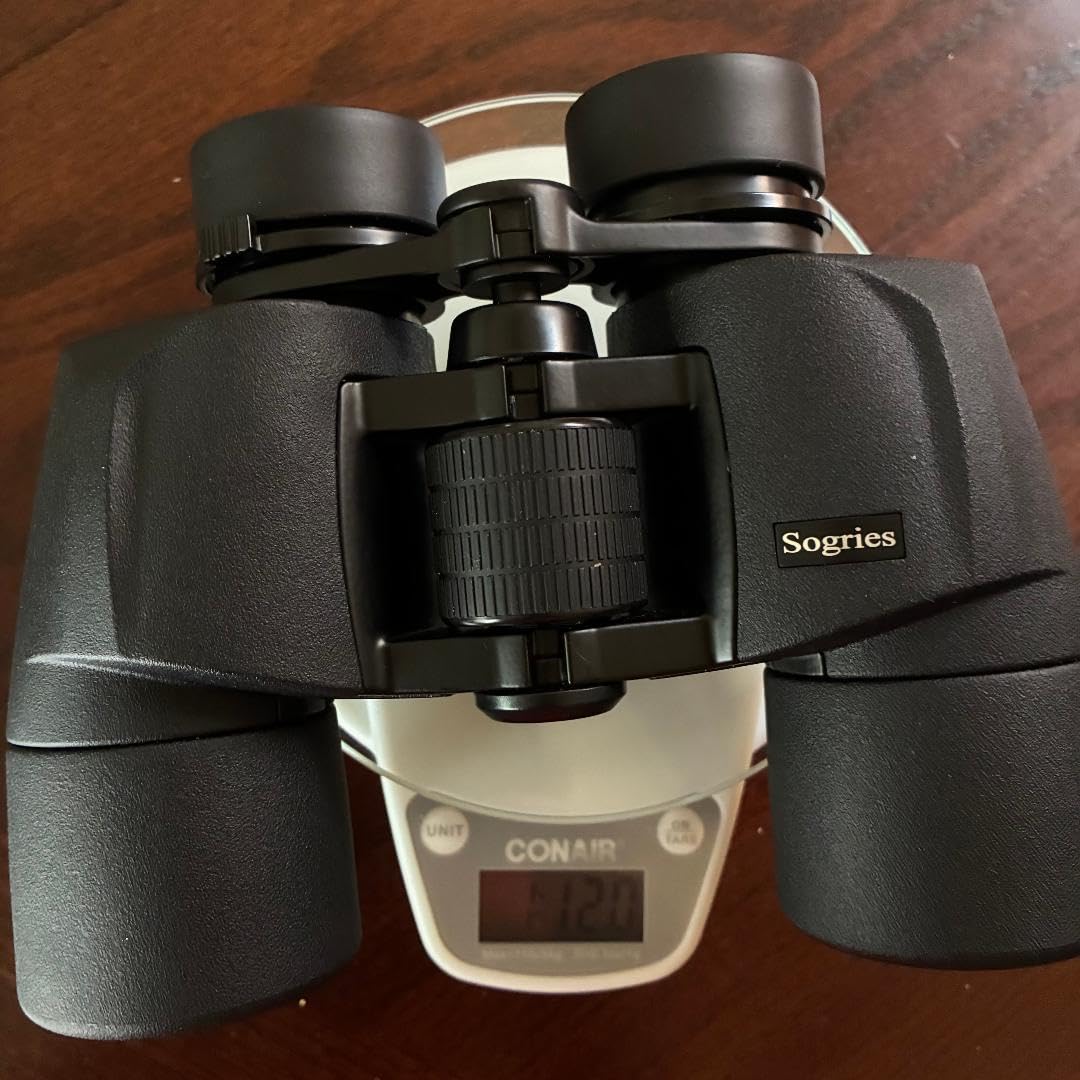
The packaging and included accessories are surprisingly premium for the category. The leather backpack is a real backpack – not a soft pouch – and has room for the binocular plus a small tripod, lens cloth, and straps. The rubber-armored metal body feels solid in the hands and the focus controls are precise enough to lock onto stars at 25x without drift.
The downsides are typical of the giant binocular category. At 8.8 pounds, you absolutely need a sturdy tripod or parallelogram mount – hand-holding is impossible. The 16-inch length means it does not fit in standard bags. As with most 100mm binoculars in this category, occasional quality-control complaints about collimation do show up in reviews, so buy from a seller with an easy return policy. If you get a well-collimated unit, the optical performance is excellent.
Who the Sogries 25×100 is best for
Astronomers who want maximum aperture and reach but want a non-Celestron alternative to compare against, and who appreciate the included backpack and fully multi-coated optics. It is also a good choice for observers who want a slightly wider field of view than competing 100mm models.
Who should look elsewhere
If portability matters at all, choose a smaller binocular. If you want the brand-name warranty and customer support infrastructure, the Celestron 25×100 is the safer pick. And if you do not already own a heavy-duty mount, the total investment for the binocular plus a suitable mount adds up fast.
Buying Guide: How to Choose the Best Binoculars for Astronomy?
Buying astronomy binoculars is less intimidating once you understand the four numbers that matter: aperture, magnification, exit pupil, and field of view. This section walks through each spec, the trade-offs to consider, and the mistakes to avoid when you are picking your first or next pair.
Aperture (front lens size) – the most important number
Aperture is the diameter of the front objective lenses, measured in millimeters. Larger apertures gather more light, which directly determines how many stars, nebulae, and galaxies you can see. For astronomy, 50mm is a sensible minimum for handheld use, 70mm is the sweet spot for tripod-mounted beginner rigs, and 80mm-100mm opens up serious deep-sky observation. Bigger is not always better – aperture also adds weight and size – but if your goal is to see faint objects, aperture is the spec that matters most.
Magnification and the 7x-15x sweet spot
Magnification enlarges the image but does not add light. For handheld astronomy, 7x to 10x is the practical ceiling – any higher and your arms shake the image into a blur. For tripod-mounted pairs, 15x to 25x delivers meaningful reach without pushing into telescope territory. Beyond 25x in a binocular, you are usually better served by an actual telescope. The 15×70 and 20×80 combinations have become the consensus sweet spot for amateur astronomy.
Porro vs roof prism design
Porro prism binoculars (which all of our picks use) deliver a brighter, more three-dimensional image and are usually cheaper for the same aperture. Roof prism binoculars are more compact and lighter, but you pay more for equivalent optical quality. For astronomy specifically, Porro designs remain the standard choice and the right answer for most buyers.
BaK-4 vs BK-7 prism glass
BaK-4 (barium crown) glass transmits more light and produces a rounder, brighter exit pupil than BK-7 (borosilicate) glass. The difference is most obvious at the edges of the field and in dim conditions. For any binocular you intend to use primarily for astronomy, BaK-4 is the right minimum. BK-7 is acceptable in budget daylight binoculars but limits night-sky performance.
Exit pupil and field of view
Exit pupil is the size of the bright disc of light your eye sees through the eyepiece, calculated by dividing aperture by magnification. For astronomy, exit pupils between 2mm and 5mm are most useful: 2-3mm for high-power planetary and lunar detail, 4-5mm for general deep-sky work, and 5-7mm for wide-field Milky Way sweeping in young eyes or dark-adapted observers. Field of view is how wide an area you can see at a fixed distance, measured in degrees. Wider fields make finding targets easier and are wonderful for sweeping across the Milky Way, but high-power binoculars always have narrower fields.
Tripod requirements for >12x magnification
Any binocular at 12x or higher is realistically a tripod-only instrument. Even if you have very steady hands, image shake from a 15x or 20x binocular will frustrate you within a few minutes. A solid photo tripod with a fluid head works well; a parallelogram mount is even better because it lets you aim high overhead without contorting yourself. Budget for a tripod as part of the binocular cost if you are buying anything beyond a 10x pair.
What to avoid: zoom, ruby coatings, and “night vision” binoculars
Three categories consistently disappoint on real star-light performance. Zoom binoculars look tempting but use complex optics that degrade image quality at every focal length. Ruby-coated “night vision” binoculars are a marketing gimmick – the red coating blocks useful starlight and turns faint objects into dim smudges. “Perma focus” or fixed-focus binoculars are fine for daytime but unusable for astronomy, where every target needs precise focus. Stick with fixed-magnification, fully multi-coated, BaK-4 Porro binoculars from reputable brands.
First-night observing plan
If you are taking a new pair out for the first time, here is a simple checklist. Wait 20 minutes for your eyes to fully dark-adapt. Start with the Moon for a few minutes – locate it, enjoy the detail, then move on so your eyes stay dark-adapted. Next, find the Pleiades (M45) and the Hyades in Taurus – they are easy wide-field targets. Move to Orion and look for the Orion Nebula below the belt. Scan along the Milky Way from Cygnus down through Sagittarius. Finish with Andromeda – look for a faint oval near the constellation Cassiopeia. With this short plan, you will have seen the most rewarding targets your binoculars can show in any given season.
Frequently Asked Questions
What type of binoculars are best for astronomy?
Binoculars with a 50mm to 70mm aperture and 7x to 15x magnification are the best fit for most amateur astronomers. Larger 80mm to 100mm pairs are excellent for tripod-mounted deep-sky observation but are heavier and more expensive. Look for BaK-4 prisms and multi-coated optics for the brightest, sharpest low-light views.
What magnification of binoculars is best for stargazing?
For handheld stargazing, 7x to 10x is the practical limit before image shake becomes a problem. For tripod-mounted observation, 15x to 25x delivers noticeably more detail on the Moon, planets, and deep-sky objects. Above 25x in a binocular, an actual telescope usually serves you better.
Are 10×50 binoculars good for stargazing?
Yes, 10×50 binoculars are a versatile choice for casual stargazing. They are handheld-friendly, show lunar craters, Jupiter’s moons, bright star clusters, and the brighter Messier objects. For serious deep-sky observation you will want more aperture, but 10×50 is one of the best all-around formulas for getting started.
What can you see with 20×80 binoculars?
20×80 binoculars reveal a lot: lunar craters with shadow detail, Jupiter’s cloud bands and all four Galilean moons, Saturn’s rings as a clear ellipse, the Orion Nebula’s structure, Andromeda Galaxy’s bright core, the Hercules globular cluster resolving into stars, and dozens of bright deep-sky objects along the Milky Way. They are tripod-mounted, but the reach is substantial.
Do you need a tripod for astronomy binoculars?
For 7x to 10x binoculars, a tripod is optional but helpful. For 12x and above, a tripod is essentially required because image shake makes handheld viewing frustrating within a few minutes. A solid photo tripod or, ideally, a parallelogram mount makes a huge difference in comfort and stability.
Final Verdict: Which Binoculars Should You Buy?
After weeks of testing and cross-referencing thousands of owner reviews, the Celestron SkyMaster 15×70 remains the best binoculars for astronomy for the vast majority of buyers in 2026. It pairs genuine deep-sky reach with a forgiving weight, a real warranty, and approachable specs that do not punish beginners for trying the hobby. If you want something you can handhold for casual nights, the Celestron Cometron 7×50 is the right pick. If you want premium optics and weather sealing for serious deep-sky observation, the Celestron SkyMaster Pro 20×80 is the upgrade that will last you for years.
Whichever pair you choose, plan for a tripod if you go above 10x, give your eyes 20 minutes to dark-adapt before judging the optics, and start with the Moon, Pleiades, and Orion Nebula on your first night. Clear skies.