
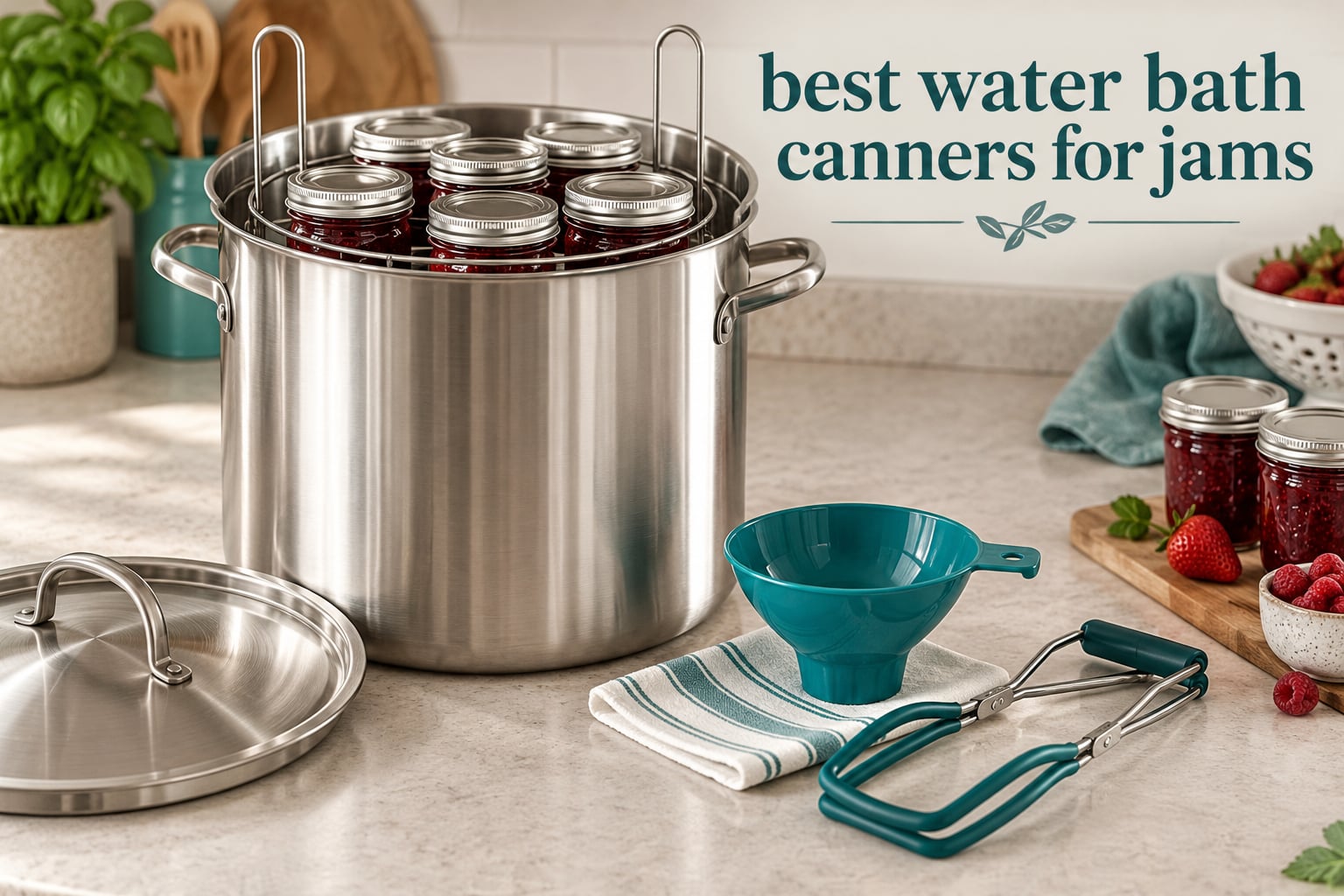
Jam season does not need a pressure canner, a dehydrator or a freezer full of space. It needs one tall, lidded pot that can hold jars of jam under a rolling boil, and that single piece of gear is where most beginners either get it right or lose a season of work. After comparing ten of the most-reviewed water bath canners on the market, weighing their racks, reading their jar capacities and matching them to the way people actually make jam, these are our picks for the best water bath canners for jams in 2026.
The reason a canner matters so much for jam is physical, not marketing. A pot has to be deep enough to keep water one to two inches above the jar lids, and it has to have a rack so no glass jar sits directly on the hot metal. Get either of those wrong and jars crack, seals fail, and you find out about it weeks later. Get them right and the same pot will still be in your kitchen twenty years from now.
We also looked at the gear that surrounds the canner, because on a robotics bench the tolerance matters more than the marketing copy. Precision matters in every system that runs on heat and water, and canning is a good example of a simple system where tolerances are unforgiving. This guide covers the ten picks, the jam-specific jar math, the durability traps, and the questions the manual never answers plainly.
Table of Contents
Why Jams Are a Water-Bath Food
Yes, jams can be water bath canned. Fruit is naturally acidic, and most tested jam recipes add bottled lemon juice on top of that, which puts jam firmly in the high-acid category where a boiling water bath is the correct, tested processing method.
That is different from low-acid vegetables and meats, which need a pressure canner to reach a high enough temperature to destroy spoilage organisms. Jam does not. A rolling boil for the time printed in a tested recipe is enough, and the cooling jar draws a vacuum that pulls the lid down into a seal.
Two details catch out new jam makers. Processing times are written per jar size, so a half-pint jam and a pint jam are not interchangeable. And above 1,000 feet, the same tested times have to be increased, because water boils at a lower temperature up there.
Top 3 Water-Bath Canners for Jams (October 2026)
These three are the ones we would put on a kitchen counter first. Each one has a high review count and a clear reason to exist beyond being a pot.

Granite Ware 8-Piece Enamel Kit
- 21.5 qt enamel pot with lid
- Chrome rack for 7 quart 9 pint or 12 half-pint jars
- Five-piece toolset and colander
- Nests for compact storage

Harvest 20 Qt Stainless Canner
- 20 qt stainless pot for water bath or steam
- Reversible double-sided rack
- Lid knob temperature indicator
- Flat clad induction base
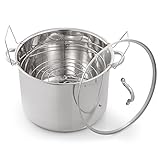
McSunley Prep N Cook 21.5 Qt
- Flat encapsulated base for gas electric and glass
- Rack holds 7 quart 9 pint or 12 half-pint jars
- Tempered glass lid
- Riveted cool-touch handles
Quick Comparison of All 10 Water-Bath Canners in 2026
Every canner below processes jam safely. What separates them is jar capacity per batch, how the pot handles a glass cooktop, and what else you can do with it after the jars are done.
| Product | Specifications | Action |
|---|---|---|
| Granite Ware 8-Piece Enamel Canning Kit |
|
Check Latest Price |
| McSunley Prep N Cook 21.5 Qt Stainless |
|
Check Latest Price |
| Harvest 20 Qt Stainless Canning Pot |
|
Check Latest Price |
 Ball EasyCanner Electric 21 Qt Ball EasyCanner Electric 21 Qt |
|
Check Latest Price |
 Supa Ant 24 Qt Porcelain Enamel Kit Supa Ant 24 Qt Porcelain Enamel Kit |
|
Check Latest Price |
 Vigamimn 20 Qt Stainless Starter Kit Vigamimn 20 Qt Stainless Starter Kit |
|
Check Latest Price |
 HOMKULA 27.5 Qt Stainless Canning Pot HOMKULA 27.5 Qt Stainless Canning Pot |
|
Check Latest Price |
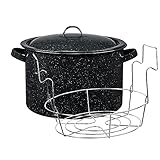 Granite Ware 12-Quart Covered Preserving Canner Granite Ware 12-Quart Covered Preserving Canner |
|
Check Latest Price |
 Ball Enamel Water Bath Canner Set Ball Enamel Water Bath Canner Set |
|
Check Latest Price |
 VEVOR 21 Qt Stainless Canning Pot VEVOR 21 Qt Stainless Canning Pot |
|
Check Latest Price |
1. Granite Ware 8-Piece Enamel Canning Kit – Best Overall for Jams
Granite Ware Canning Pot with Rack – 8 Piece Set Enamelware Water bath canner – Canning Starter Kit
- Complete kit with pot
- lid
- rack
- colander and five canning tools
- Light at about 4 pounds so it is easy to empty when hot
- Enamel surface is non-porous and easy to wash
- Everything nests inside the pot for compact storage
- High 4.7 rating across 4643 reviews
- Not compatible with induction or glass cooktops
- Enamel can chip at the rim and chipped spots can rust
- Included utensils are basic rather than heavy duty
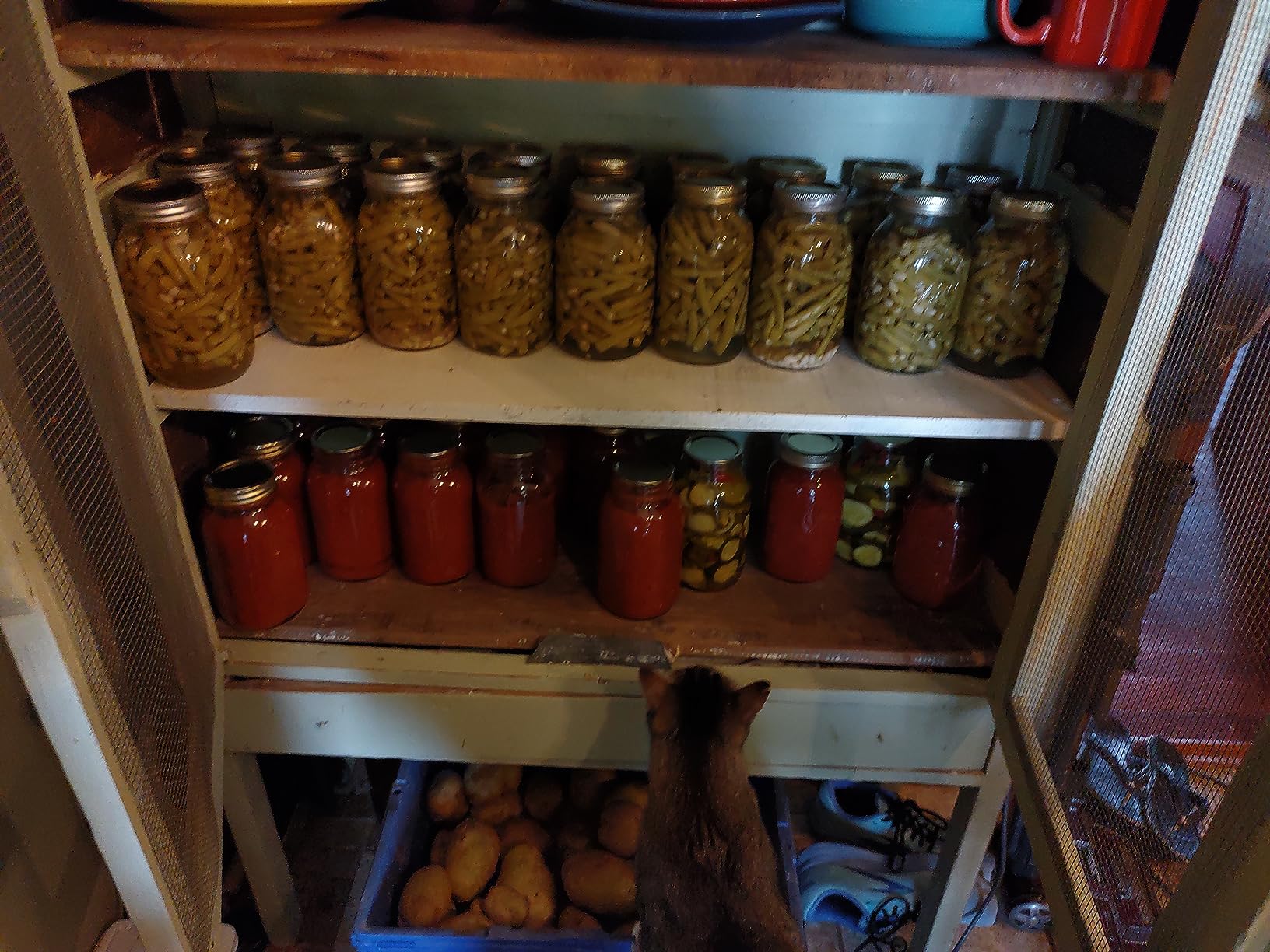
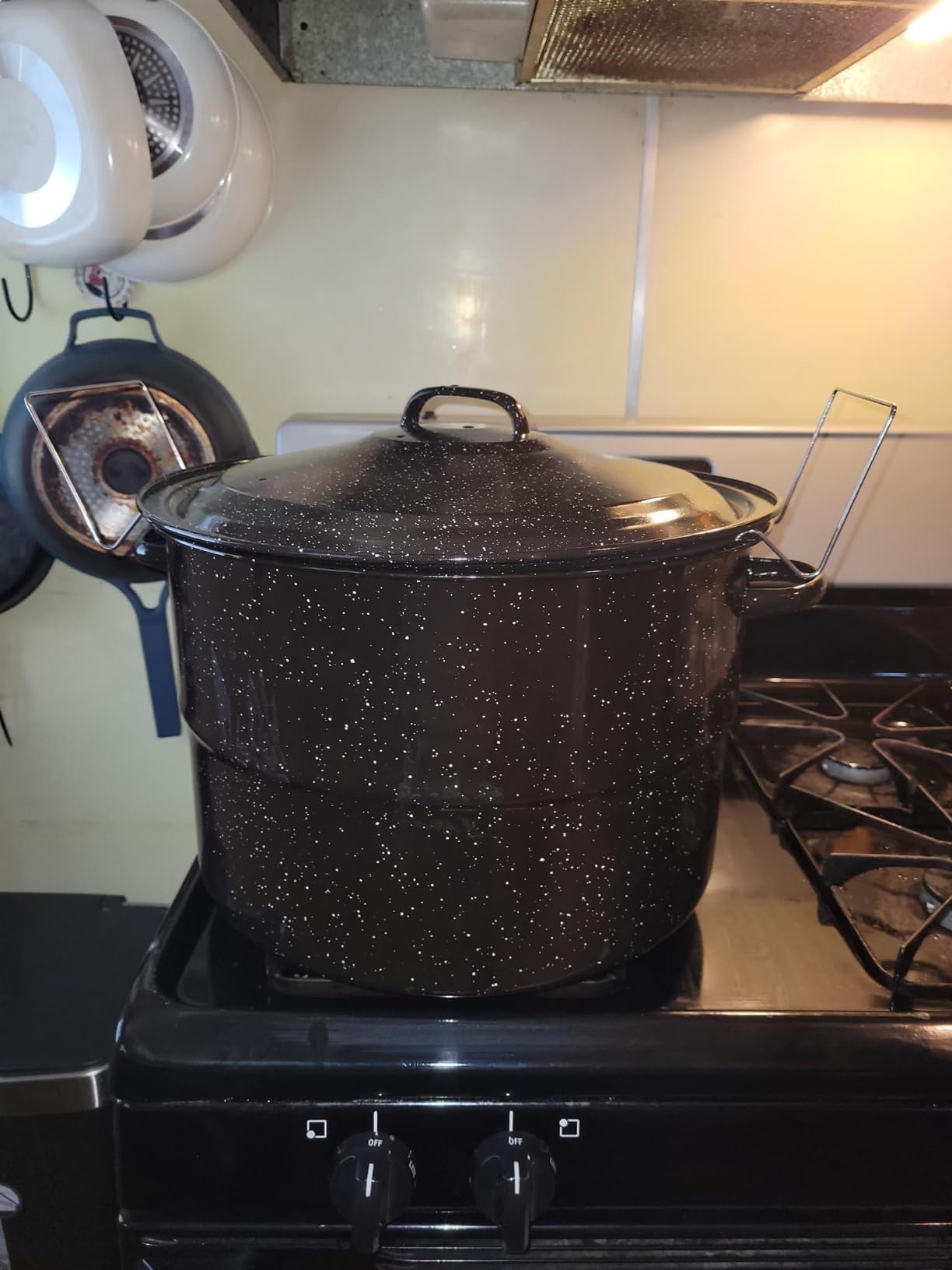
This is the kit we hand to a friend who has never canned anything. It is an 8-piece set built around a 21.5-quart vitrified enamel pot with a glossy finish, and the whole thing weighs about 4 pounds, which matters more than it sounds when you are lifting boiling water at the end of a long day.
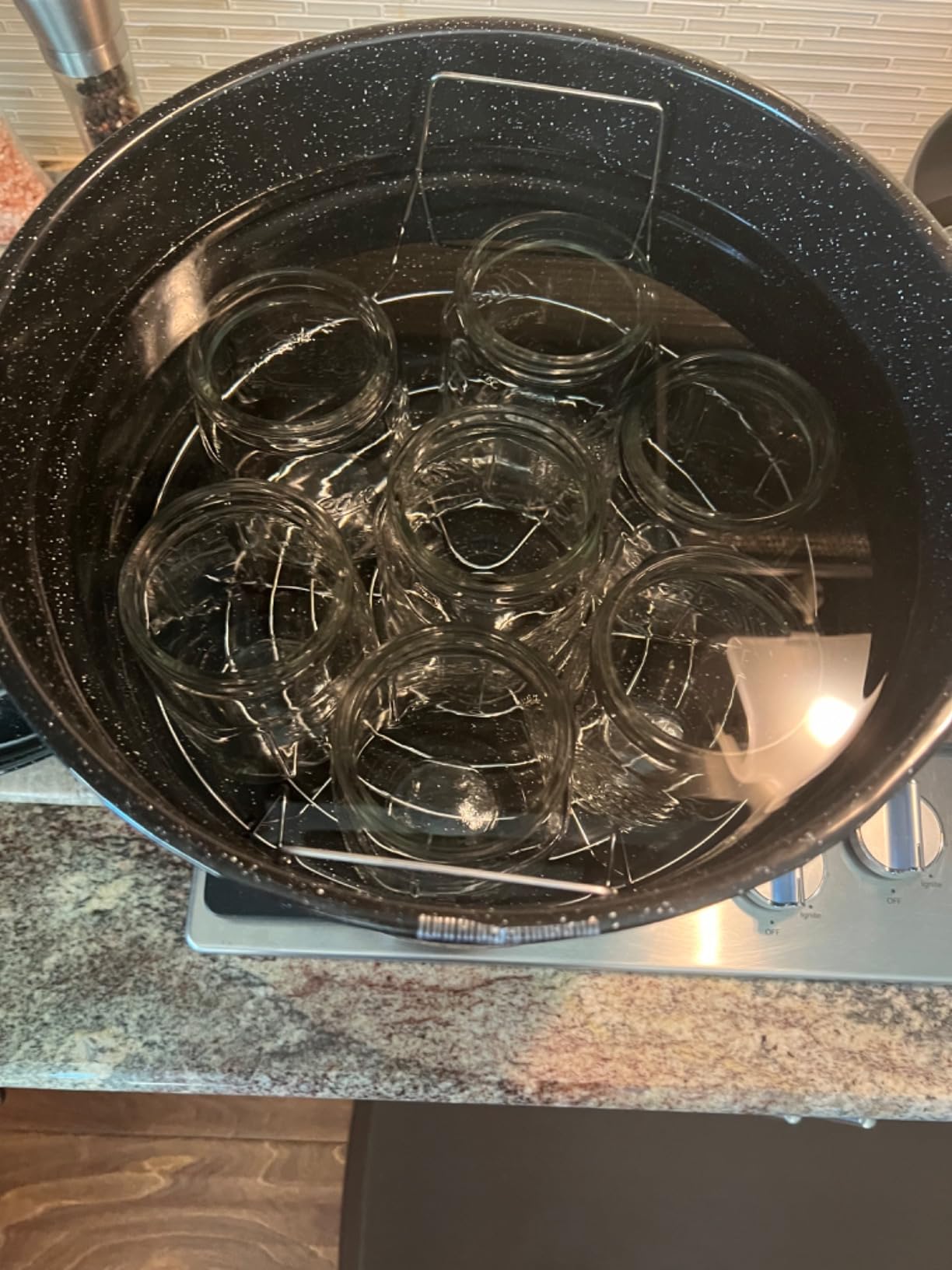
The rack is a rust-proof chromed steel piece that holds 7 one-quart, 9 one-pint or 12 half-pint jars. For jam work, the 12 half-pint configuration is the useful one, since most tested jam recipes are written for 4 ounce or 8 ounce jars rather than quarts.
The toolset is the part that removes friction. You get a bubble remover with a ruler, a jar lifter, a magnetic lid lifter, a jar wrench and a jar funnel, plus a colander. That means a first-timer does not have a trip to the store on jam day to find out that a lid lifter is not the same thing as a jar wrench.
Enamel over steel also cuts heat-up time compared with bare steel, because the coating does not scorch jam the way an uncoated pot bottom can. The non-porous surface wipes clean and, while it is undamaged, resists rust.
What to check before you buy it
This pot is not for induction or glass cooktops, and the listing is explicit about that. If your range is flat glass or induction, this is the wrong kit no matter how good everything else is, and the mistake surfaces as a pot that will not sit flat and heats in a ring.
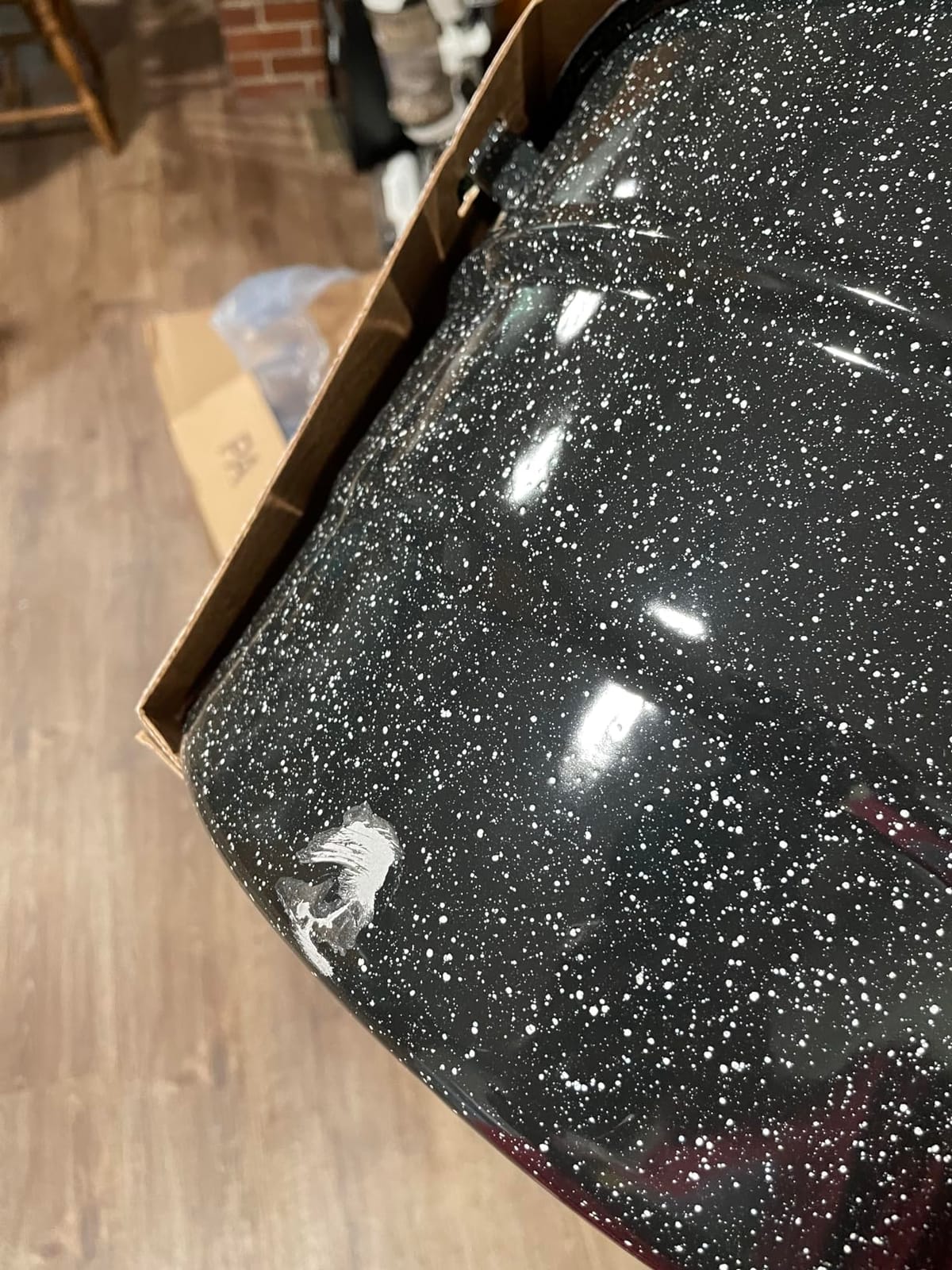
Enamel chips. It happens at the rim or the bottom edge when the pot gets knocked against a sink or a cupboard door, and once steel is exposed those spots can rust. Most enamel canners survive many seasons, but treat a chip as the beginning of a countdown rather than a cosmetic issue.
A few buyers report the chrome rack sitting loosely in the pot. Check the fit when it arrives, because a loose rack lets jars tip toward each other and crack.
Where it fits for jam making
For someone making six to twelve jars of strawberry jam a season, the 12 half-pint load is a perfect match and the extra room is just extra water to heat. Nothing about jam requires a bigger pot than this one provides.
It also nests down to a 14.17 by 14.17 by 10.35 inch footprint, so it disappears into a cupboard between seasons. If you are short on storage and long on counter space, that is worth more than it sounds.
It is the pick for a first canner who wants one box that solves the whole day, and the honest drawback is a cooktop you cannot compromise on.
2. Harvest 20 Qt Stainless Canning Pot – Best Cooktop Versatility
- Highest average rating here at 4.8 with 88 percent five-star reviews
- Reversible rack switches the pot between water bath and steam canning
- Flat clad bottom works on induction and gas and glass cooktops
- Lid temperature indicator signals when processing temperature is reached
- Backed by a 5-year warranty
- Very heavy even when empty
- Glass lid flexes and can crackle as it cools
- Limited headroom above jars for water in the 20-quart interior
This is the canner we would put at the top of a stovetop shortlist, and it holds the highest average rating at 4.8 across 2992 reviews. The 20-quart stainless body, model VKP1130, is built by VKP Brands and carries a 5-year manufacturer warranty, the longest term stated in this group.
The flat clad bottom is the headline for anyone not on a gas range. It is rated for induction, gas, electric, ceramic and smooth glass cooktops, which removes the single most common reason a canner gets returned.
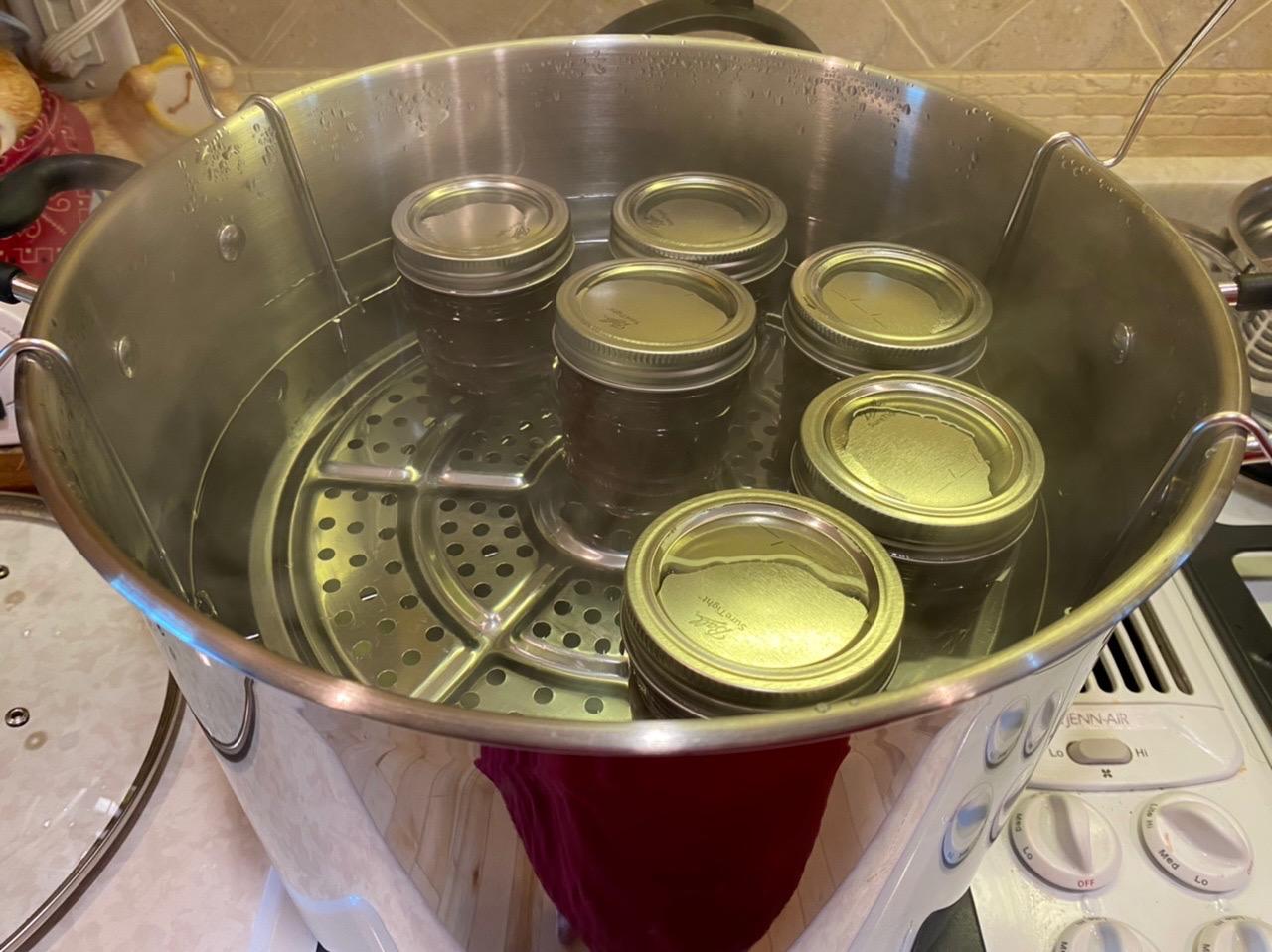
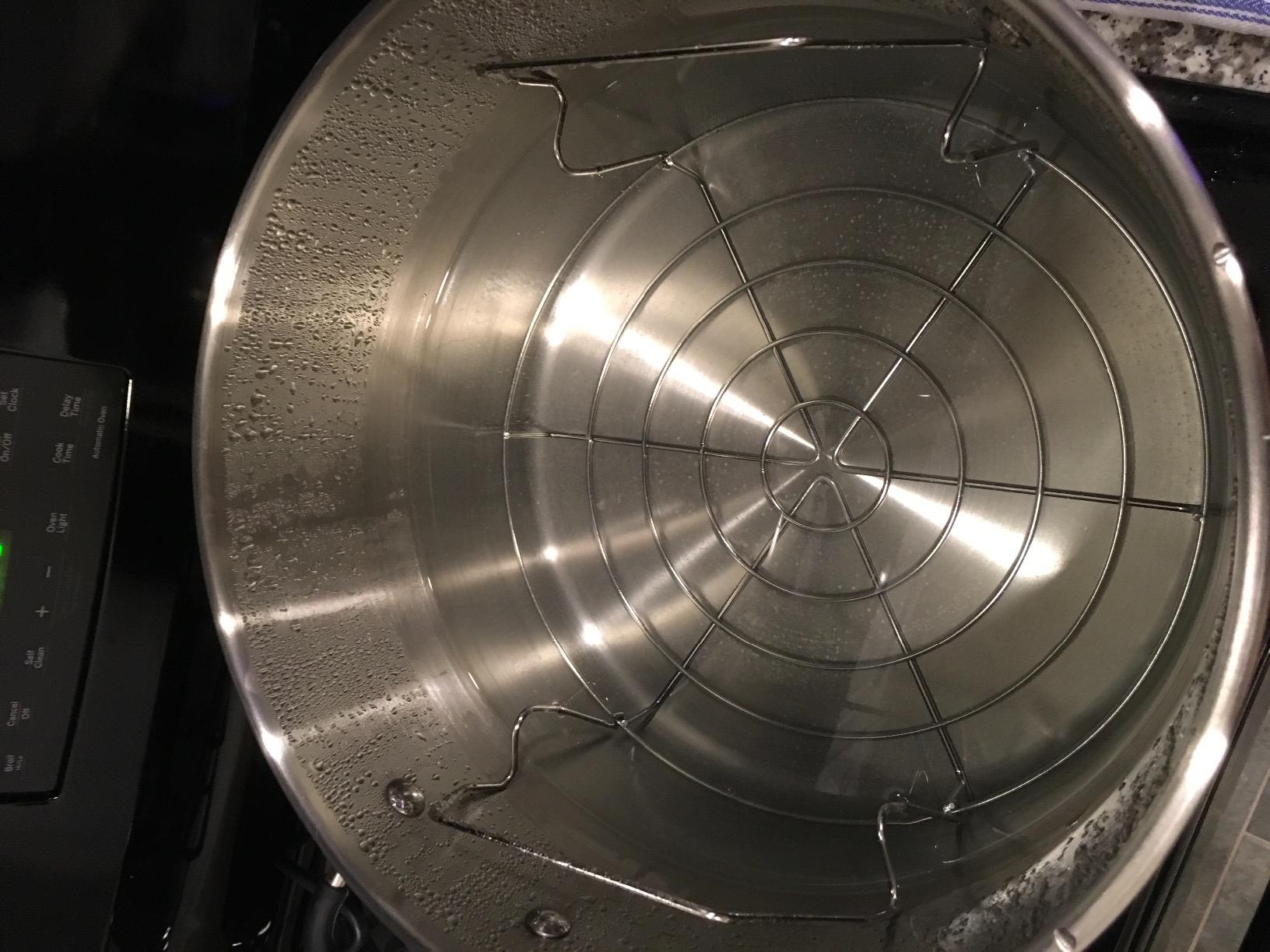
The double-sided rack is clever in a way that earns its keep. Flip it and the pot becomes a steam canner, so one vessel covers two validated methods. Capacity is up to 20 quarts of liquid, or 7 quart or 8 pint jars, with insulated silicone-capped handles for lifting a full pot.
There is a temperature indicator built into the lid knob. For a canner, knowing when the pot has actually reached processing temperature, rather than guessing from the burner setting, removes a genuine source of error.
What to check before you buy it
It weighs 10.1 pounds empty, and reviewers mention the weight consistently. Once the pot is full of near-boiling water and glass jars, moving it to drain is a two-person job on a bad day, so plan your workflow so you are not carrying it far.
The glass lid is a genuine mixed review. It lets you watch the contents come to boil, but some owners report it flexing and crackling as it cools, and storing it upside down traps water around the knob. Expect to set it aside the way you would any glass.
The 20-quart interior is shallower than the 21.5-quart pots in this group, which leaves less room above the jars for the required 1 to 2 inches of water. That margin matters, and it is the reason we would still run a smaller jam batch in it rather than a full 8 pint load.
Where it fits for jam making
If your cooktop is anything other than plain gas, this is the one we would buy first. Induction and glass compatibility alone justify the choice for a lot of kitchens, and the steam-canning flip means it does not sit idle eleven months a year.
The lid thermometer suits a careful beginner, and the 5-year warranty is the strongest durability signal on this list. Our reservation is purely about weight and headroom, not safety or build quality.
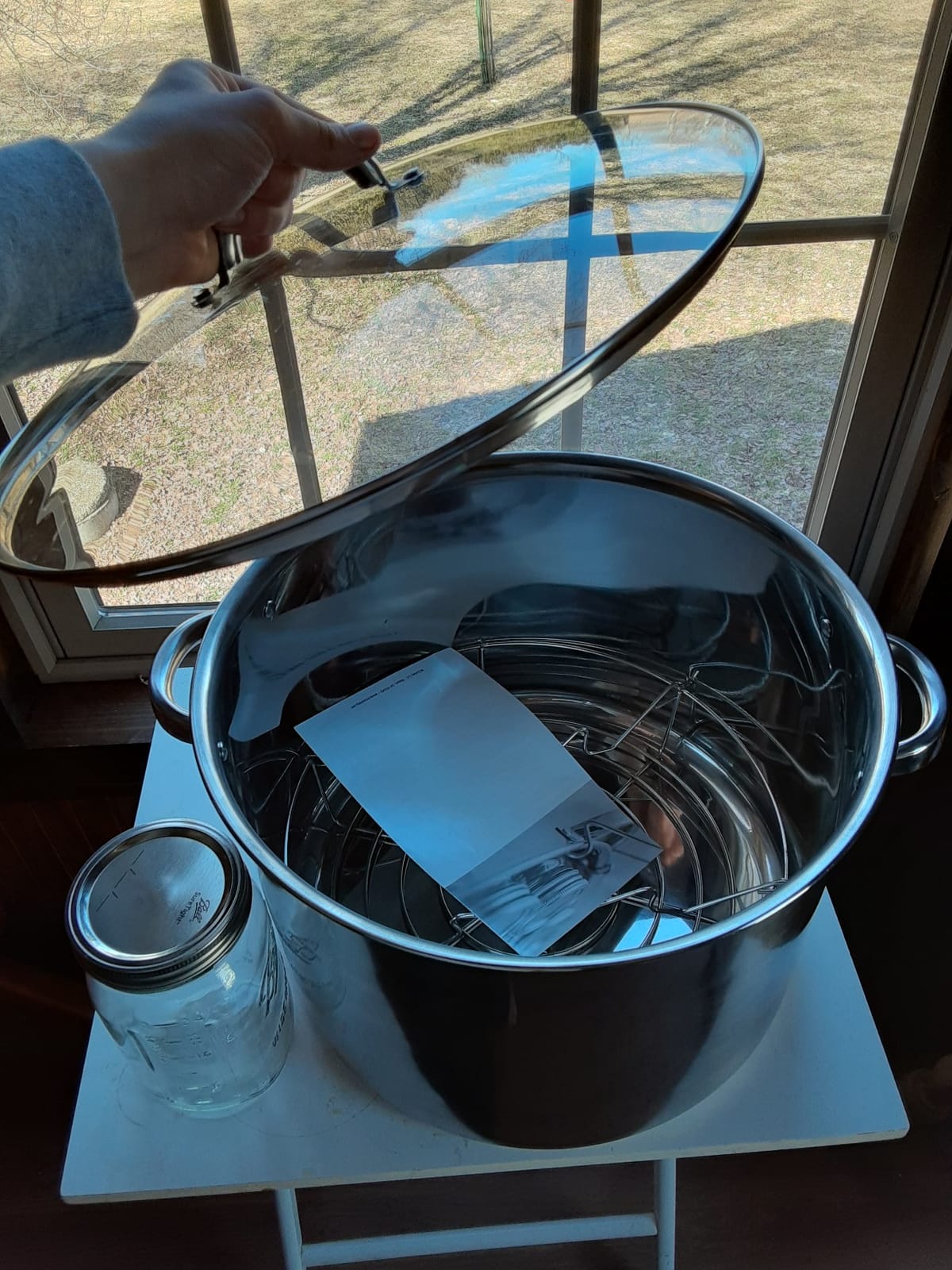
3. McSunley Prep N Cook 21.5 Qt – Best All-Round Stainless Steel
Prep•N•Cook by McSunley 21.5Qt Stainless Steel Water Bath Canner
- Large 21.5-quart capacity holds 7 quart
- 9 pint or 12 half-pint jars
- Flat encapsulated base works on gas
- electric and smooth glass cooktops
- Tempered glass lid lets you watch without lifting
- Doubles as a large soup pot
- 4.6 rating across 3707 reviews
- Jar lifter is not included
- Glass lid and riveted handles add cost over bare steel models
Model 620 has the largest review base of any stainless canner we looked at, with 3707 reviews averaging 4.6, and 82 percent of those reviews are five-star. That combination of long history and volume is worth something on a product that sits over a flame.
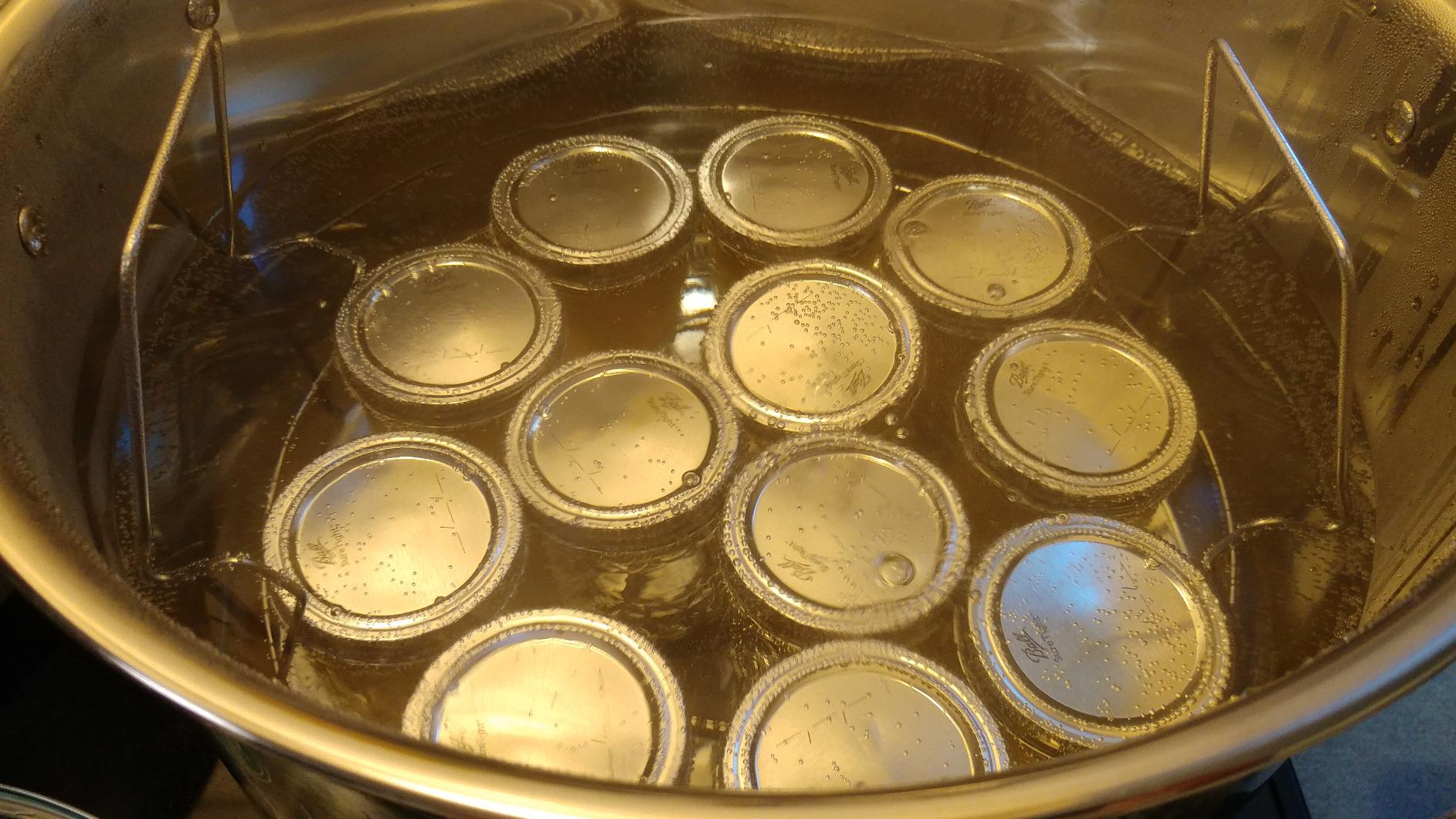
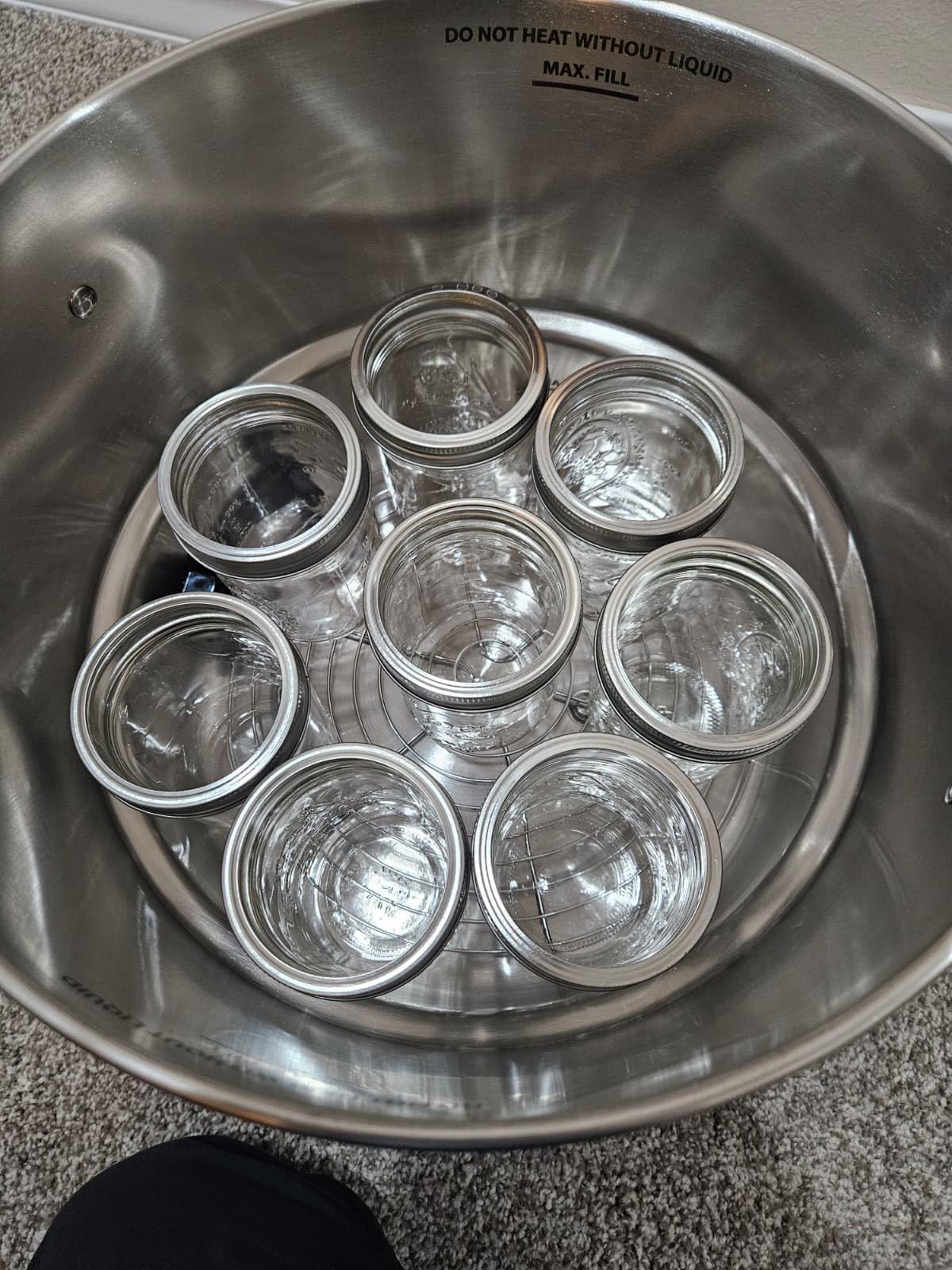
The rack holds 7 one-quart, 9 one-pint or 12 half-pint jars, matching the most common full load in this category. For jam, the 12 half-pint arrangement means one batch covers a typical small fruit haul without a second boil.
The flat aluminum encapsulated base spreads heat evenly and is listed for gas, electric and smooth glass ranges. Encapsulated construction matters more than it looks: a flat disc of bonded metal is the difference between a canner that heats evenly and one that scorches jam on the burner ring.
The tempered glass lid is shatter resistant and lets you check the boil without lifting the pot and dropping the temperature. The pot also doubles as a large soup pot, which is the secondary use that keeps it on the counter rather than in a cupboard.
What to check before you buy it
No jar lifter is included. The only listed complaint in the review data is about handling ergonomics, and that comes down to lifting hot glass in and out of boiling water by hand. Budget for a jar lifter if you do not already own one.
It is not listed for induction. The base is flat and aluminum encapsulated, but the manufacturer only names gas, electric and smooth glass, and we would not assume induction without confirmation.
At 8.5 pounds empty and 14 by 12.5 by 16.5 inches, it is a full-size pot. Measure the cabinet before you commit.
Where it fits for jam making
This is the canner we recommend to someone who wants stainless durability without the 27.5-quart weight problem. It is a genuine middle size, and 12 half-pint jars is a real jam batch.
For high-altitude kitchens, note that a 16.5 inch tall body leaves room for the extra water margin when processing times are extended above 1,000 feet. That is a quiet advantage over shorter pots.
If you have one stovetop burner to spare and want a pot that also does soup and stock, this is the balanced answer.
4. Ball EasyCanner Electric 21 Qt – Best for Apartments and RVs
Ball EasyCanner Electric Water Bath Canner, 21-Quart Capacity, Automated Heating, Multicooker & Steamer Functionality
- Automated preheating and processing removes the need to watch the pot
- Internal heat sensors hold temperature consistent batch to batch
- Frees the stovetop completely
- Multicooker and steamer modes extend it well past canning
- Stainless steel construction from a long-established canning brand
- The priciest unit we reviewed
- several times the outlay of a stovetop model
- Heaviest unit at 20.3 pounds when full
- Corded electric design is useless during a power outage
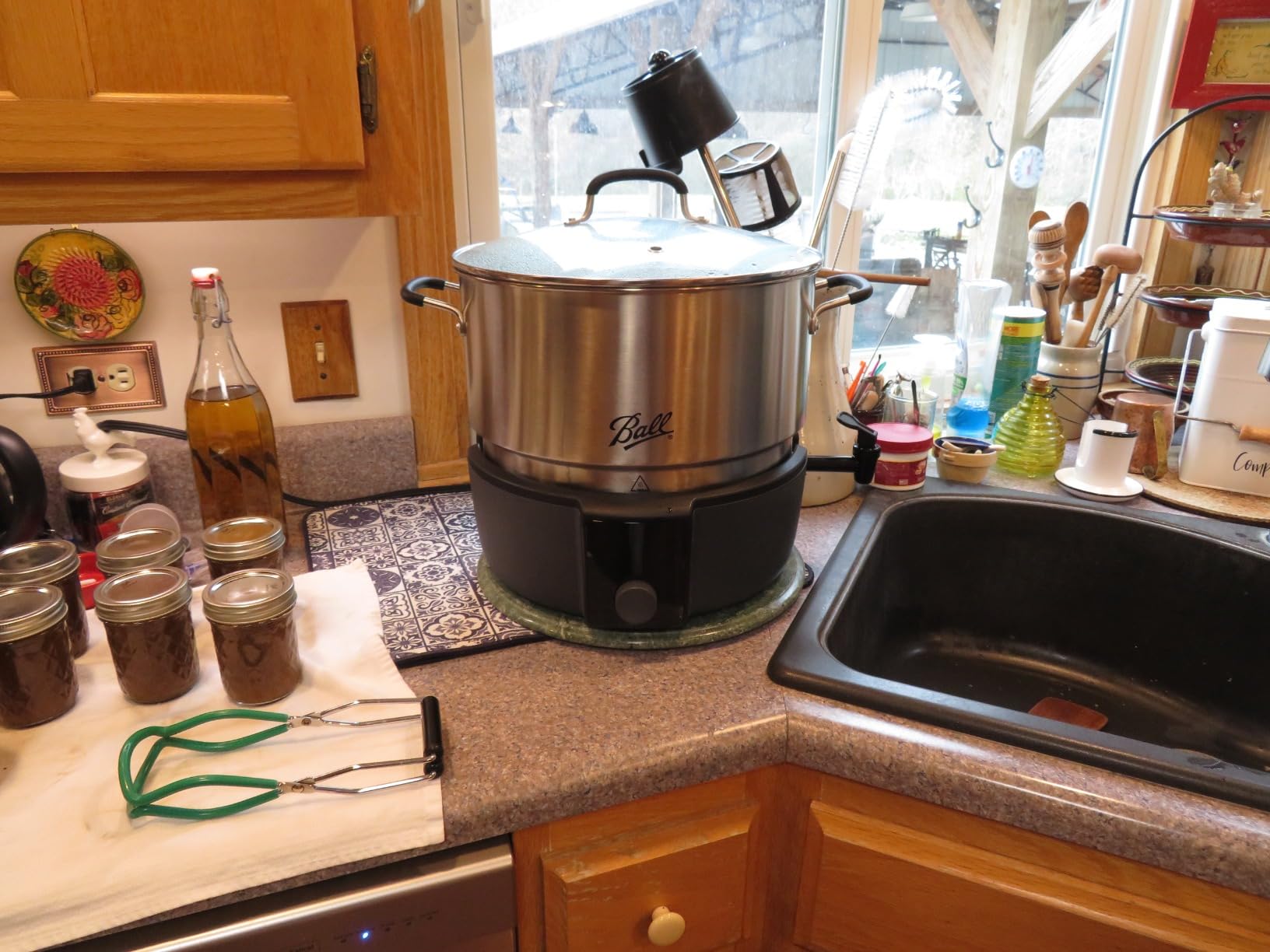
The Ball EasyCanner is a 21-quart freestanding electric canner, model 2177240, and it is the only countertop option in this guide. If you have no stove, no burner, or no patience for watching a rolling boil, it solves a real problem that a stovetop pot cannot.
Press and Forget controls run the preheat and processing cycle, and internal heat sensors hold the processing temperature steady from batch to batch. That consistency is the argument: a gas flame fluctuates, and the sensor does not.
Capacity is 7 quart or 8 pint jars, which is a normal jam load. Multicooker and steamer modes let the same appliance handle pasta, soups, vegetables and seafood, so the cost is spread across more than one season of use.
On official standing, the USDA does not approve or certify individual canners. The agency publishes tested processes, and the safe practice is to follow a tested recipe for the jar size and the processing time it specifies, whether the water is heated by flame or by element.
What to check before you buy it
It is the most expensive option here by a wide margin, and it is also the heaviest at 20.3 pounds. That combination means you need a clear counter and a real reason, not just a curiosity.
The appliance runs fixed program cycles, so you have to adapt to its settings rather than run an exact stovetop time. If a tested jam recipe calls for a specific boil duration, check how the unit handles it before you commit.
Being corded, it is also the wrong tool for a camping trip or a canning session during an outage. Electric units are convenient until the power goes out.
Where it fits for jam making
Apartment, RV, dorm or second-home kitchens are where this unit earns its place. It also suits anyone who finds a stovetop water bath genuinely nerve-racking, because the cycle runs without supervision.
If you already own a working stovetop canner, this is a second appliance rather than a first. For someone starting from nothing with no stove, it is the whole kit.
5. Supa Ant 24 Qt Porcelain Enamel Kit – Best Accessory Bundle
- Largest accessory bundle in this group by a wide margin
- Chemical-free porcelain enamel surface that is easy to clean
- Includes a half-pint-sized ladle
- measuring cups
- labels and a storage box
- Dishwasher friendly surface
- Backed by a 365-day warranty
- Not compatible with induction or glass cooktops
- Porcelain enamel is heavy and can chip at the rim
- Bright green tools are an aesthetic choice
The Supa Ant 24-quart set is the most complete beginner package we found, with the widest accessory bundle among the enamel kits here. Alongside the pot, rack and lid, the listing includes a funnel, jar lifter, magnetic lid lifter, jar wrench, tongs, a bubble remover, an oversize ladle and six measuring cups, plus homemade date labels and a storage box.
That oversize ladle is worth calling out. It is sized over half a pint, which is exactly the tool you need to fill 4 ounce jam jars cleanly rather than dribbling fruit syrup down the side.
The cooking surface is porcelain enamel over a steel core and is PFOA and PTFE free. The claim that matters in practice is the easy-clean one: a non-stick enamel interior means jam residue releases instead of carbonising onto the pot wall.
Demand is real. The listing ranks first in Canning Racks and third in Canning Kits, and it carries a 365-day warranty with US and UK-based support, which is rare in this category.
What to check before you buy it
Same cooktop limitation as the other enamel cans here: not suitable for induction or glass cooktop hubs. Check your range before the rest of the list, because no accessory bundle compensates for a pot that will not heat on your stove.
At 10 pounds, porcelain enamel is heavy, and it chips at the rim the way all enamel does. A chip exposes steel, and exposed steel is where rust starts.
The bright green tools are a matter of taste. If a coloured toolkit in your kitchen bothers you, this is a kit you will use every season, so it is worth a look before buying.
Where it fits for jam making
Buy this one if you are starting completely empty and want to buy once. The measuring cups, bubble remover, wrench and date labels cover the whole workflow from filling to labelling to storage.
The non-stick interior is a genuine advantage over bare stainless for jam specifically, since sugar in fruit syrup burns onto metal quickly once it starts reducing.
It suits a beginner on a gas or coil range who wants the full toolkit in one box. Note that it does not double as a steam canner or a soup pot in the way the stainless models do.
6. Vigamimn 20 Qt Stainless Starter Kit – Best Value Starter Kit
Canning Pot-Canning supplies starter kit, Canning Tool Kits Set for Beginners, Stainless Steel Water Bath Canner Kit with rack for canning
- 13-piece kit covering every step from filling to labelling
- Built-in timer in the lid knob is unusual and genuinely useful
- Three-layered base gives even heating
- All-stainless tools feel solid and resist bending
- Clear and consistent for first-time canners
- Some reviewers describe the metal as thinner than they would like
- Plastic timer knob on the lid is a likely weak point
- Rack holds fewer jars than the 20- to 24-quart competitors
The Vigamimn kit is a 20-quart food-grade stainless pot with a three-layered bottom, and it is the newest listing here, among the more recent additions to the category. It earns its place on one feature no competitor in this group has: a timer built into the lid knob.
For water bath canning, timing is the part people get wrong. A vented lid with a timer in the knob means you can start the clock at the boil without a separate timer sitting on a crowded counter next to a steaming pot.
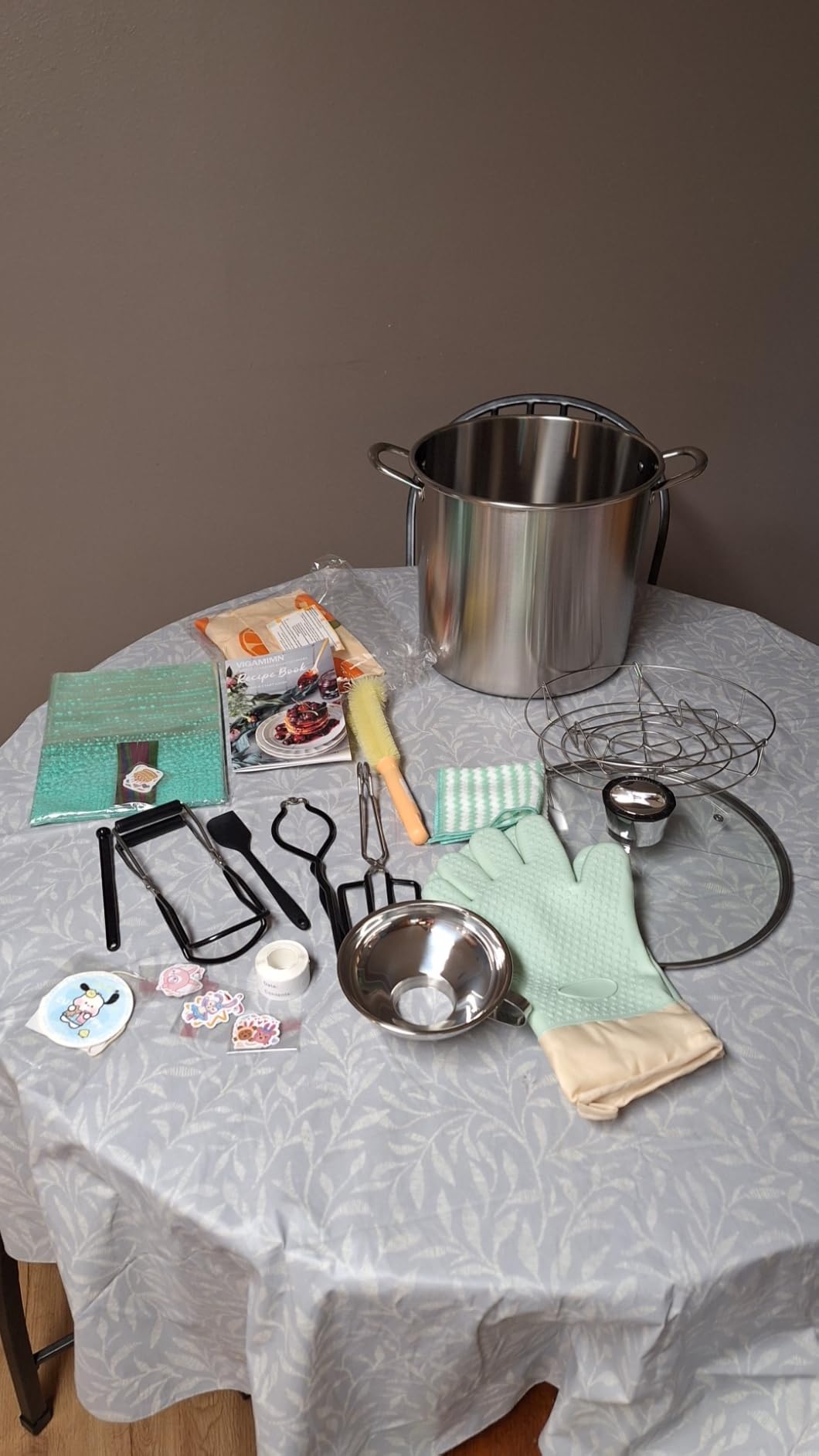
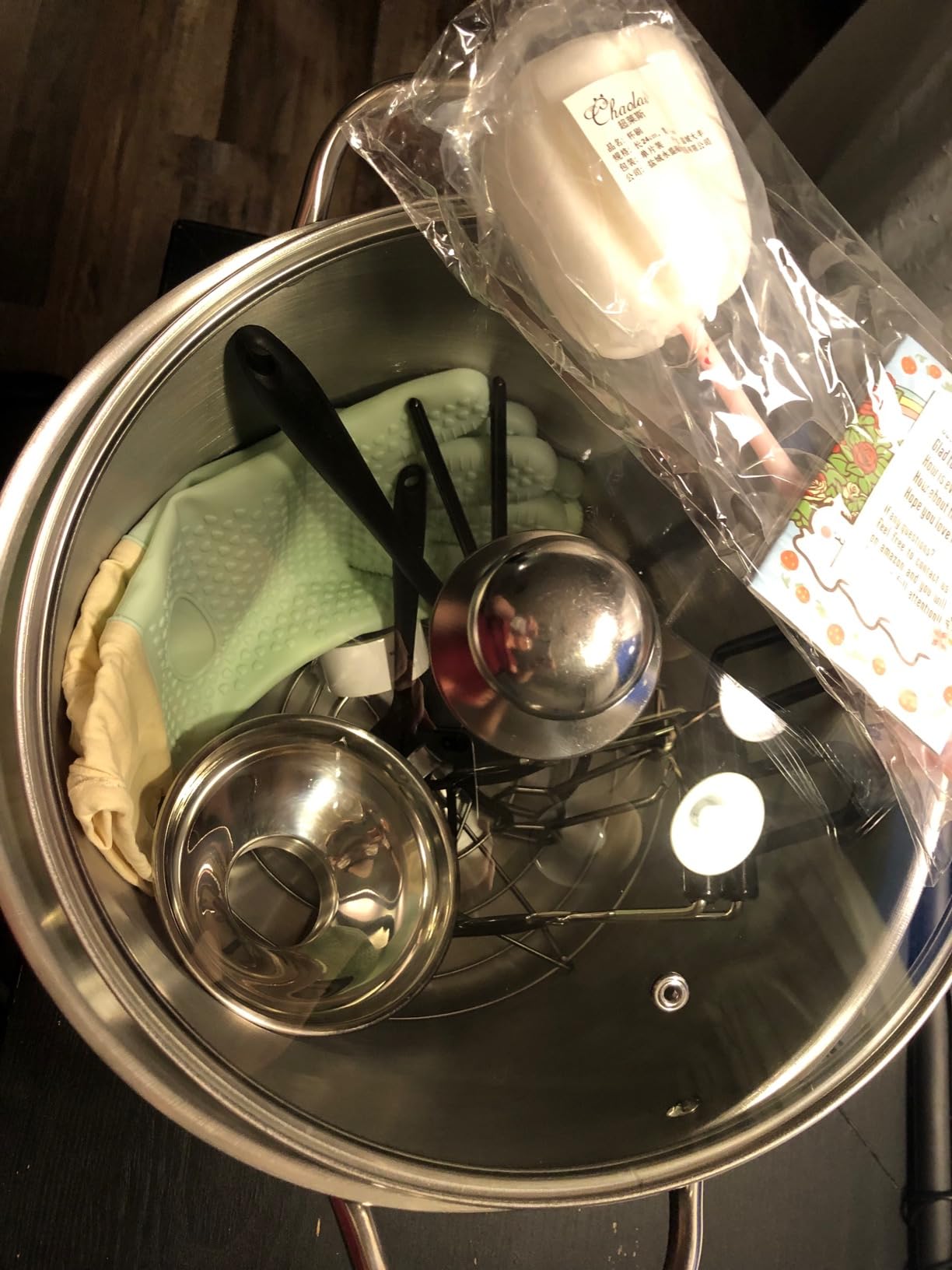
The accessory set has 13 pieces, including a collapsible rack, funnel, tongs, jar lifter, magnetic lid lifter, jar wrench, stirrer, a jam ladle, date labels and heat-resistant gloves. It is the most complete stainless bundle we looked at, and every piece is metal rather than plastic-heavy.
The rack holds approximately 8 pint or 5 quart jars. Buyers report the three-layer base working on induction, though the listing itself is less explicit about cooktop coverage than the Harvest canner is.
What to check before you buy it
The rack is the quiet limitation. Five quart jars is a smaller load than the 7 quart capacity of most 20- to 24-quart competitors, so a full basket of jam jars will not fit in one pass.
Some reviewers describe the metal as thinner and lighter duty than they would like, and the plastic timer knob on the lid is flagged as the likely failure point over years rather than seasons. Judge the metal gauge for yourself when it arrives.
With 492 reviews the history here is short compared with the established brands. The rating is strong at 4.7 with 85 percent five-star reviews, but there is less long-term durability data behind it.
Where it fits for jam making
This is the pick for someone who wants a stainless kit with a lid timer and does not want to assemble a toolset piece by piece. For half-pint jam work the jar count is less of an issue than for quarts.
Collapsible rack, vented lid and a jam ladle in the box make it a coherent package rather than a pot with a few extras. It is a solid middle option between a bare pot and a full premium kit.
7. HOMKULA 27.5 Qt Stainless Canning Pot – Best for Big Harvests
HOMKULA 27.5 QT Water Bath Canning Pot with Rack and Lid, Canning Supplies 2
- Biggest pot capacity here at 27.5 quarts
- Food-grade stainless resists corrosion
- discoloration and warping
- Thickened rack design keeps jars upright and stable
- All tools have heat-safe non-slip handles
- Rack folds and the kit stores compactly
- Newer listing with a smaller review base than the established brands
- No weight or dimension figures published in the listing
- Uncoated stainless has no non-stick surface so jam can scorch at high heat
At 27.5 quarts, this is the largest pot in the group, and that size is the entire argument. If you process a big fruit haul in one sitting, a smaller canner means two boil cycles, two preheats and twice the washing up.
The thickened rack is a real difference from the collapsible wire racks that ship with some kits. Wire racks flex, let jars lean together, and can sit jars flat against the pot bottom, which is the situation that cracks glass.
The food-grade stainless is uncoated. Reviewers value that it resists corrosion, discoloration and warping over time, and the foldable rack means the whole thing stores compactly between seasons.
The accessory set is ten pieces: a funnel, jar lifter, magnetic lid lifter, tongs, jar wrench, bubble remover with measurer, jam spoon, 100 date labels and heat-resistant gloves. Everything has heat-safe non-slip handles.
What to check before you buy it
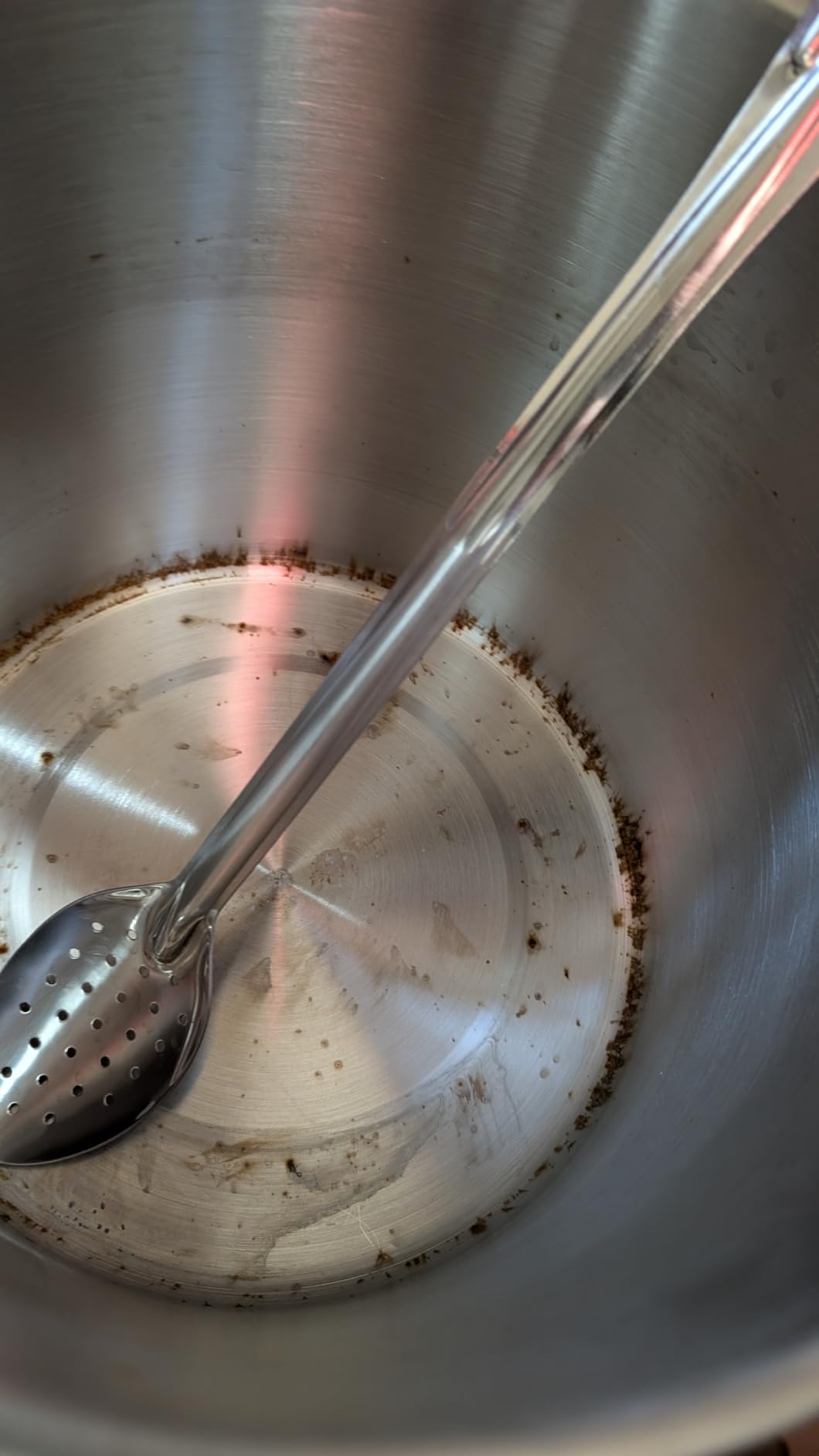
Uncoated stainless has no non-stick surface, so jam can scorch if the heat is too high. That is a working consideration for anyone reducing fruit syrup, which is exactly what jam making is.
Weight and dimensions are not published in the listing data, so measure your cabinet and your ability to lift a full pot before buying. Pots at this capacity are heavy when full.
The review base is 371, the second smallest here. The 4.7 rating with 83 percent five-star reviews is encouraging, but there is less evidence about a decade of use than for the established brands.
Where it fits for jam making
Batch size is the deciding factor. A 27.5-quart pot holds more full jars in a single pass, and for someone who processes a whole season at once that difference is measured in hours.
It is dishwasher safe except for the magnetic lid lifter, and the foldable rack makes storage simple. If you are a careful cook who watches the burner, the lack of coating is a fair trade for the room.
8. Granite Ware 12-Quart Covered Preserving Canner – Best for Small Batch Jam
- Enamel over steel distributes heat evenly and cuts heat-up time
- Three-way use as water bath canner
- blancher and colander
- Handle-free body is easy to wash and fits smaller sinks
- Dishwasher safe pot
- Long-standing design
- Smallest capacity here at 11.5 quarts and 7 jars of any size
- Not recommended for glass cooktops and not induction compatible
- Enamel is prone to chipping at the rim
- Lower 4.4 rating than the other Granite Ware set
This is the small-batch answer. The Granite Ware 12-quart covered preserving canner, model 706-2, holds 7 pint or 7 half-pint jars, and that is genuinely enough for most people making jam in a home kitchen rather than a community hall.
Forum consensus on small-batch jam is consistent: most people process a few jars to about a dozen a season. A 7-jar load matches that reality better than a 27.5-quart pot that mostly holds water.
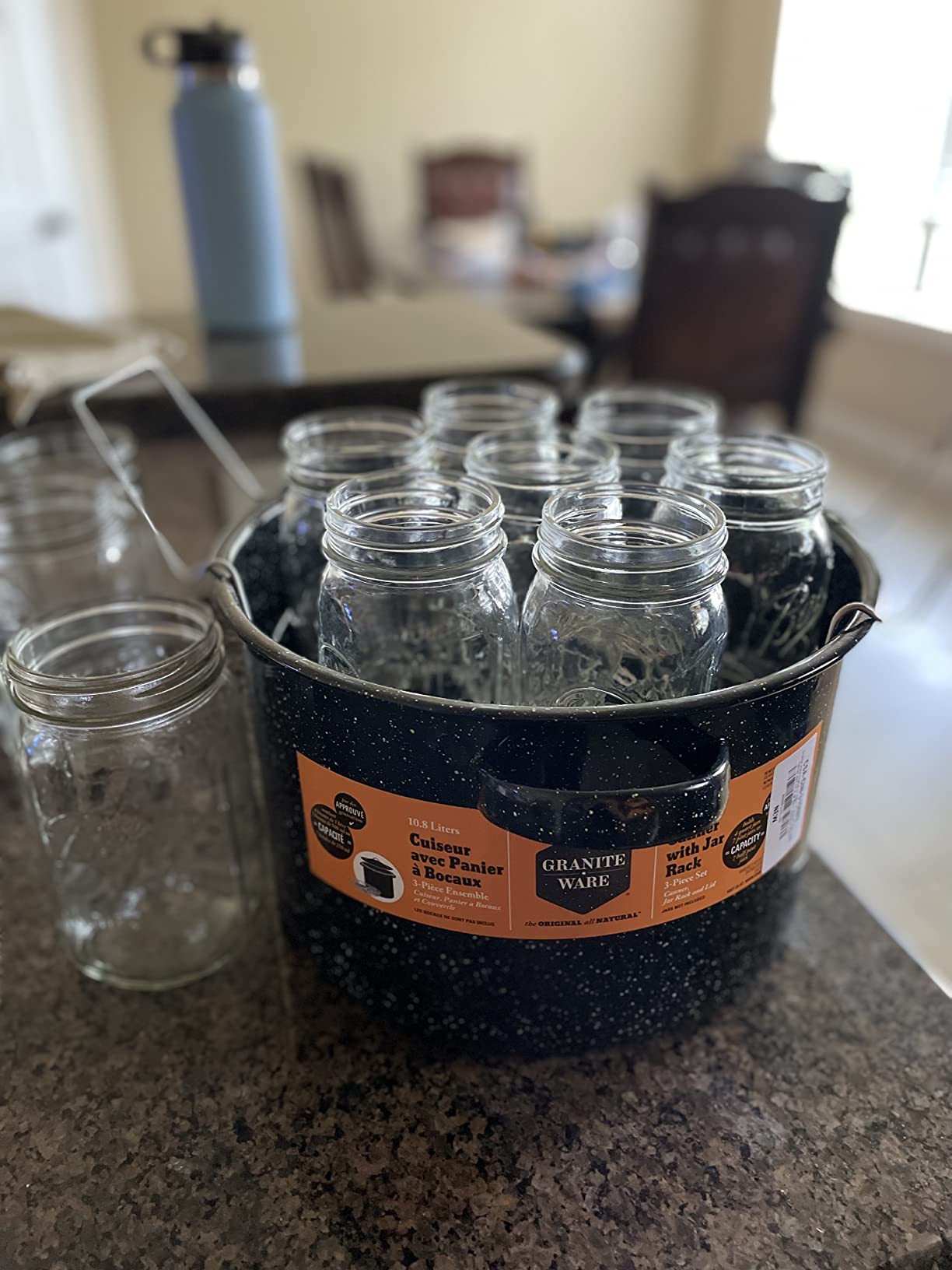
The porcelain enamel surface over a steel core gives even heat distribution, which cuts heat-up time compared with bare steel. It also doubles as a blancher and colander, so it is not a single-purpose jar pot.
The pot is dishwasher safe, with the rack and tool set hand washed. The handle-free body is easy to wash and fits smaller sinks, a real consideration in a kitchen without a large basin.
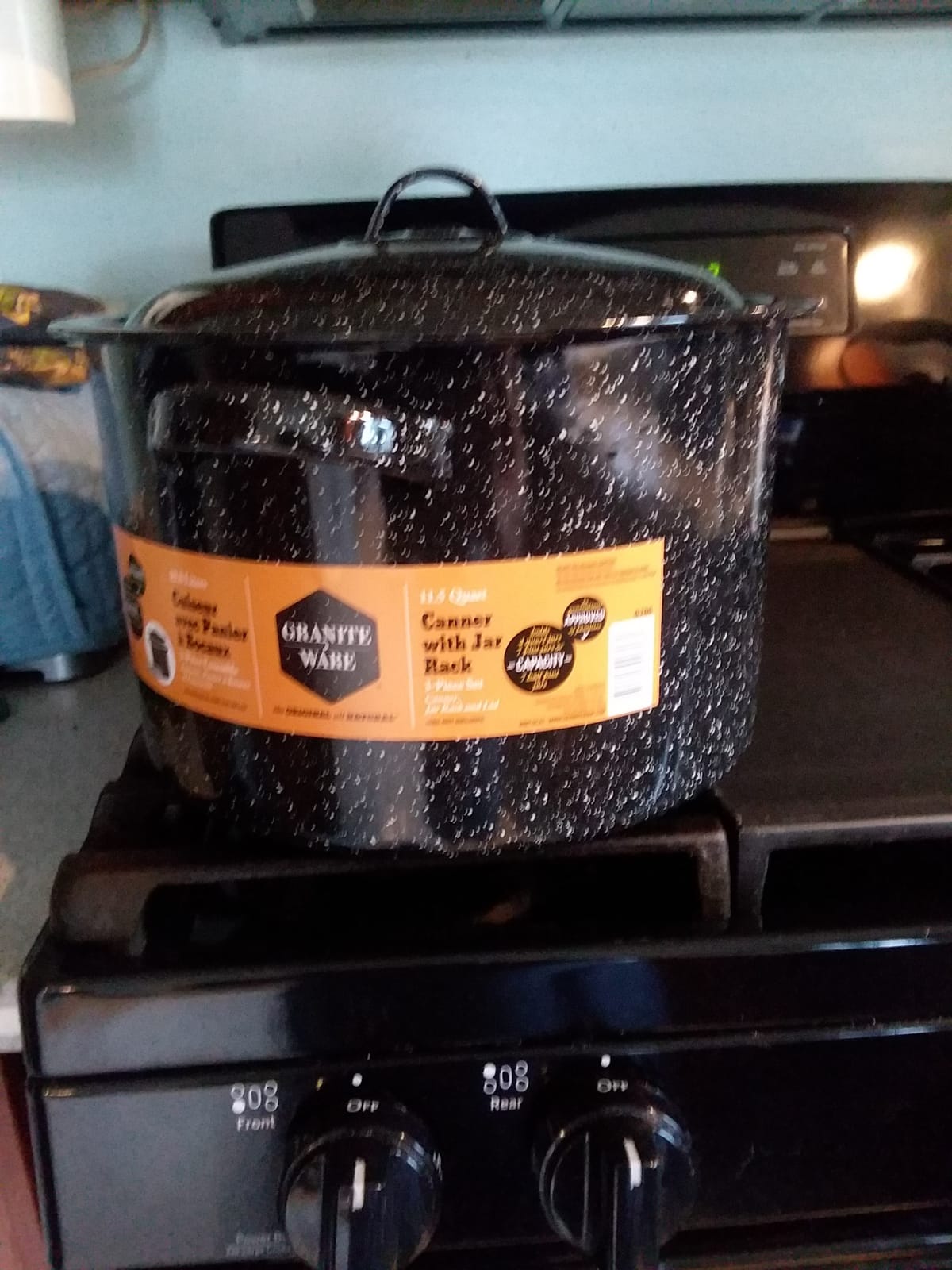
What to check before you buy it
It is not for glass cooktops and not induction compatible. The manufacturer says not recommended for glass cooktops rather than simply not supported, which is a softer warning but still a clear one.
Enamel chips at the rim with use, and chipped areas rust. This applies to every enamel canner in this guide, and it is the single most common long-term complaint reported by owners.
At 4.4 across 1824 reviews, it carries a lower average than the other Granite Ware set here, with capacity and cooktop restrictions accounting for most of the gap.
Where it fits for jam making
This is our recommendation for someone who makes a few jars of jam, not a season of it. Seven half-pint jars is a complete batch of most small fruit preserves.
It is also the smallest of the enamel cans in this guide, and a smaller pot of boiling water is easier and safer to move than a full 21.5-quart unit. For a first-timer, that matters.
If your stove is induction or glass, keep looking. Otherwise, this is a sensible, compact, dishwasher-friendly first canner.
9. Ball Enamel Water Bath Canner Set – Best for Brand Confidence
Ball Enamel Water Bath Canner, Including Chrome-Plated Rack and 4-Piece Utensil Set
- Backed by a brand long associated with home canning
- Non-porous enamel surface wipes clean easily
- Ships complete with lid
- chrome-plated rack and four utensils
- Broad flat base suited to standard stovetop heating
- Lowest review count of the established options with a mixed 4.4 rating
- Listing details are sparse on jar capacity and dimensions
- Enamel can chip at the rim and chipped areas will rust
- Not specified for induction or glass cooktops
Sometimes the reason to buy something is the name on it. This Ball enamel canner, model KC78046, comes from a brand that has been connected with home canning for generations, and the set ships with the pot, matching enamel lid, chrome-plated rack and a four-piece utensil set.
The enamel coated steel base is non-porous, so it wipes clean and does not absorb colour or odour from dark berry preserves. That is the practical argument for enamel over an uncoated pot when you process a lot of red fruit.
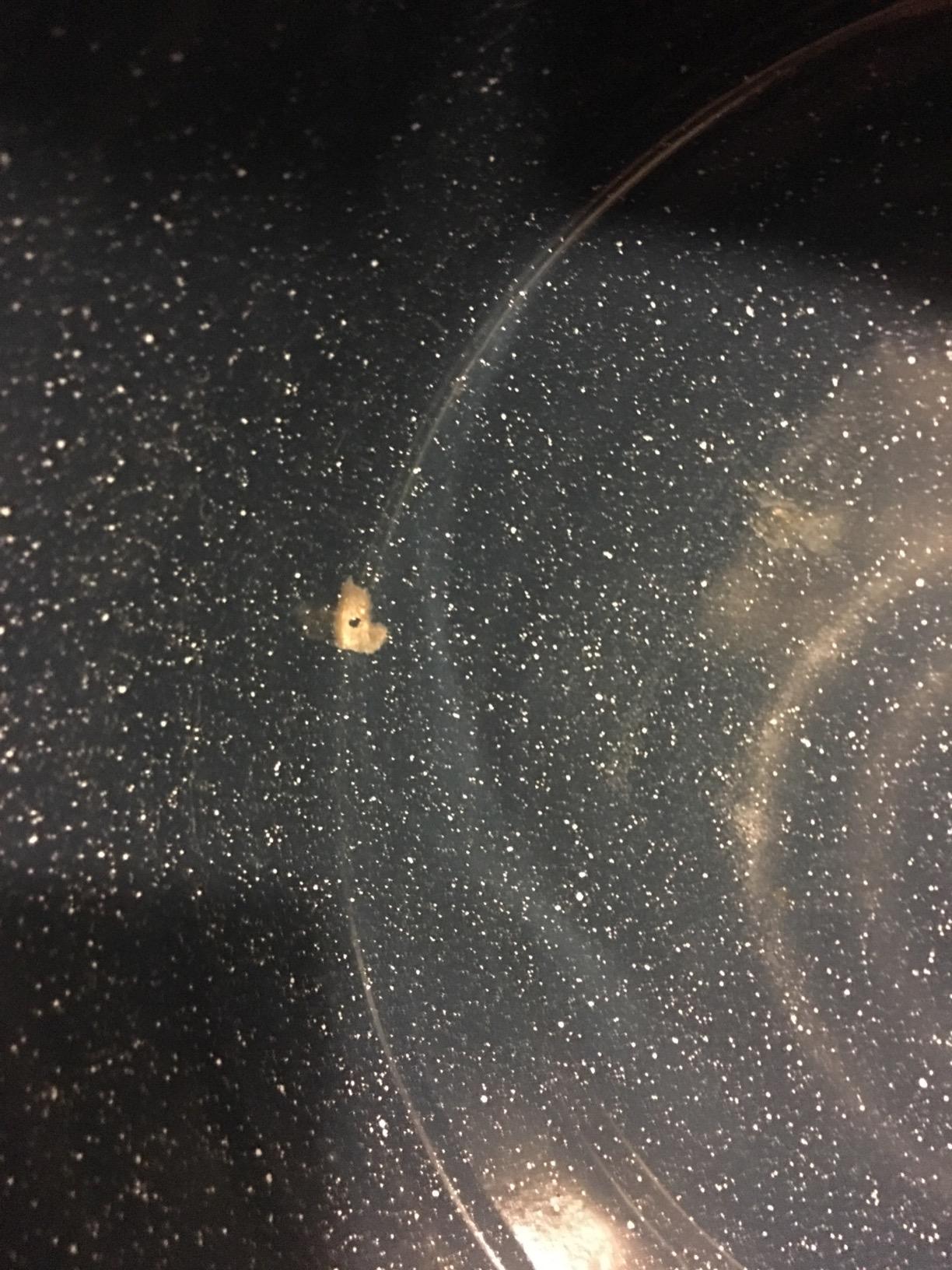
The broad flat base is suited to standard stovetop heating. It is a straightforward pot that does one job, which is not a criticism so much as a description of what you are buying.
For jam work, a non-porous surface that releases cleanly is genuinely useful, because sugar residue in fruit syrup is the thing that permanently stains and carbonises on bare steel.
What to check before you buy it
The listing is sparse. Jar capacity, reliable dimensions and weight are not stated in a way that lets you compare it against the others on this list, so treat the size as unverified until it arrives.
It is not specified for induction or glass cooktops, so the same caution applies as with the other enamel cans. Confirm your cooktop type before buying.
With 294 reviews and a 4.4 rating, this is one of the least well-documented options here. The enamel chipping and rust concern is the same as every other enamel pot, and the review base is too small to promise a long service life.
Where it fits for jam making
This suits someone who trusts the Ball name and wants a simple enamel pot with the basic tools, rather than a large kit or a multi-mode appliance. The four-piece utensil set covers filling and handling jars.
Our reservation is the thin documentation rather than the product. If you want a canner whose capacity and rack dimensions you can plan a jam batch around in advance, the Granite Ware 8-piece set gives you that much more clearly.
10. VEVOR 21 Qt Stainless Canning Pot – Best for Light Handling
- Lightest stainless option at 4.67 pounds so it is easy to handle when hot
- Thickened induction-compatible base works across every common cooktop type
- Glass lid allows monitoring without losing heat
- Matte finish is dishwasher safe and wipes clean easily
- Includes a rack and glass lid as standard
- Smallest review base here at 190 reviews
- Matte finish shows water spots and has no non-stick surface
- 7-jar batch size is modest
- Dual handles give less grip than wrapped handles
Weight is the first thing you notice about a canner. At 4.67 pounds, this 21-quart VEVOR stainless pot, model HS-003, is the lightest stainless option in the group by a wide margin, and that makes it the easiest to lift and drain when full of near-boiling water.
The thickened bottom is listed as compatible with induction, gas, electric, glass, ceramic and halogen cooktops. A glass lid and dual handle design complete the package.
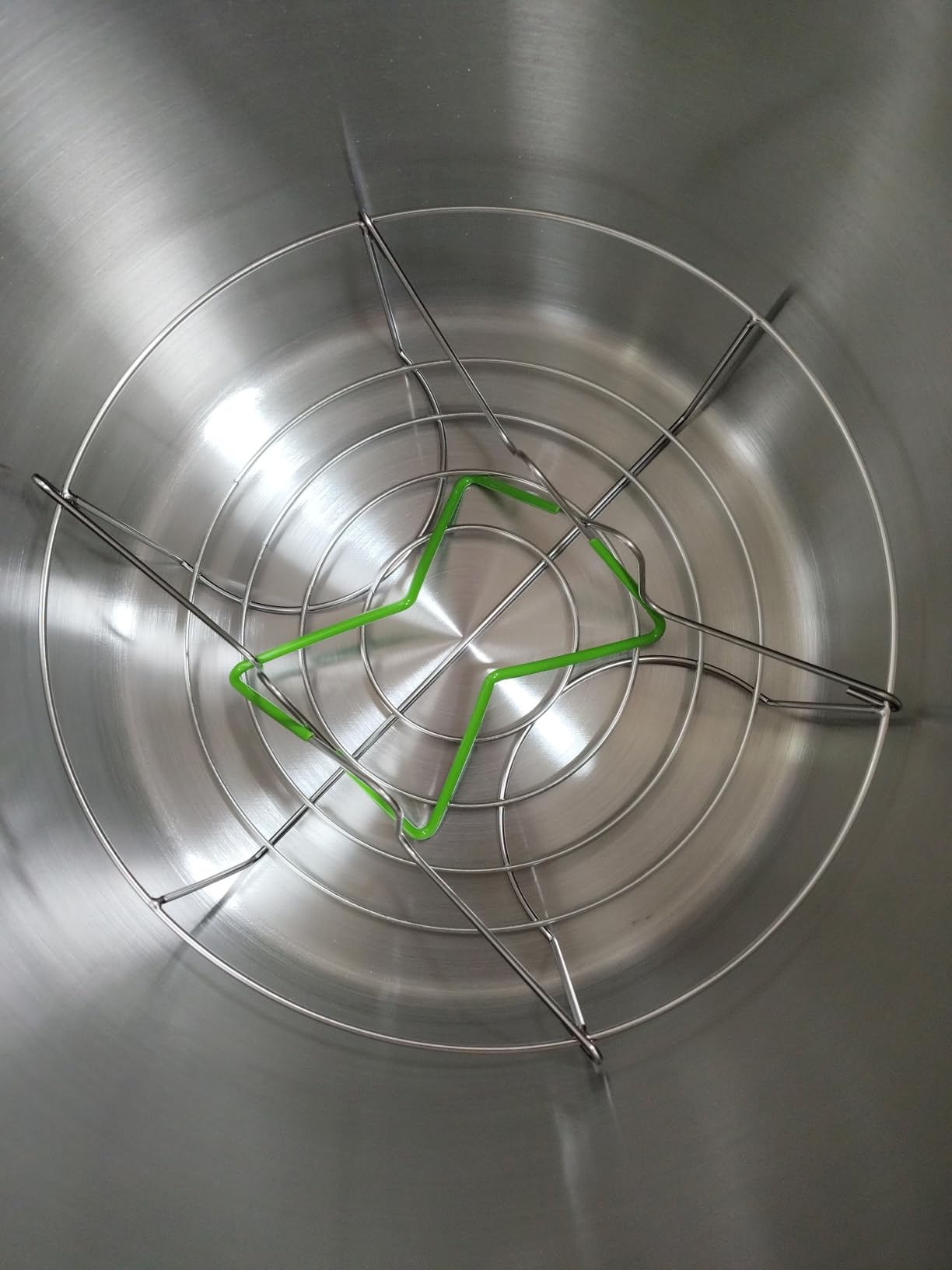
Capacity is about 7 jars of 430ml each, which is a modest load. For jam that works fine, since 430ml jars hold a standard portion and a small batch of fruit rarely fills more.
The matte finish is dishwasher safe and wipes down easily. The listing also notes that the pot is marketed for jam, preserves and fruit canning, and multiple kit configurations are available.
What to check before you buy it
With 190 reviews, this is the smallest review base here and the least well-documented for long-term durability. The 4.4 rating and 73 percent five-star reviews are fine, but there is simply less history behind them.
Matte stainless shows water spots and has no non-stick surface, so jam can scorch at high heat on the same stainless base that makes the pot so light.
Dual handles give less grip than larger wrapped handles on heavier pots, and a 7-jar batch is small next to the 27.5-quart option. Check the handle geometry before lifting a full pot.
Where it fits for jam making
This is the pick if ease of handling is your top priority, whether because of grip strength, a small kitchen or a pot that has to move from sink to burner without drama. Light weight is a safety benefit, not a gimmick.
Full cooktop compatibility makes it a safe first canner for almost any range. A 7-jar load suits a small-batch jam maker rather than a bulk preserver.
Among the picks here, it is the one with the least long-term evidence behind it, rather than the one we would expect to still own in fifteen years.
How to Choose a Water-Bath Canner for Jam?
Depth is the constraint that decides everything else. A quart jar stands roughly 7 inches tall, and you need water sitting 1 to 2 inches above the jar lids, so look for interior depth of at least 9 inches. Many shallow, wide pots look enormous by volume and still fail this test.
Capacity should match your actual batch. Roughly 7 quart jars or 8 to 9 pints is a typical full load for a 21-quart pot, and 12 half-pints is the jam-friendly number. Buying a 27.5-quart pot when you make six jars a season means heating a lot of water you never use. It is the same principle as sizing a cooling loop to the heat it has to move: match the system to the load.
Material decides the cooktop question. Enamel on steel heats evenly and releases jam cleanly, but it rules out induction and most glass cooktops, and it can chip. Stainless steel is heavier and slower to heat, but a flat or encapsulated base works across cooktop types and will not chip. Electric units skip the stovetop entirely.
Rack quality deserves more attention than most buyers give it. A collapsible wire rack flexes, rusts at the joints, and lets jars lean or touch the pot bottom. A thick chromed steel rack or a rigid folding rack holds jars upright and off the base, which is the single cheapest safety improvement available to a beginner.
Stovetop fit comes down to the bottom. A ridged enamel base does not sit properly on flat glass and creates a poor thermal contact on induction. Check with your cooktop manufacturer about weight limits on glass surfaces before setting a full pot of boiling water on one, and never assume a flat base means an approved setup.
Kit versus pot-only is really a question about what you already own. If you are starting empty, a kit with a rack, jar lifter, funnel, lid wand, bubble remover and measuring tools saves a shopping trip on the day you need them. If you already have those tools, a bare pot costs less and does the same job.
On the question that comes up most on canning forums: any sufficiently deep pot with a lid can function as a water bath canner, and plenty of people do it that way successfully. It is a legitimate option for someone who already owns a deep stock pot. What you give up is the published rack fit, the tested capacity, and the certainty that the pot will still be around next season. Judge our comparison of the trade-offs the same way you would judge any substitute component, with the same attention to tolerances.
Durability and Care: Chips, Rust and Rack Failure
Enamel chipping is the number one long-term complaint from owners, and the failure chain is well known. Knock the pot against a sink, chip the enamel at the rim or bottom edge, expose the steel underneath, and rust starts there. The pot is not ruined immediately, but the exposed area keeps going.
Stainless steel avoids that chain entirely, which is why many long-time canners migrate from enamel to stainless after a chip and report never going back. The trade is weight, heat-up time and the loss of a non-stick interior.
Drying matters more than washing. Dry the pot and the rack completely after every use, and store them apart if there is any chance of trapped moisture. A collapsible wire rack stored folded and damp will show surface rust at the wire joints within a season, and that is exactly where a rack cracks first.
If the supplied wire rack starts to flex or tip jars, replace it with a flat stainless rack rated for your pot. That single swap fixes the most common cause of jar breakage, and it is far cheaper than replacing a cracked jar of jam.
Do not use steel wool or harsh abrasives on enamel. A soft sponge and warm soapy water keep the non-porous surface in good condition, and a quick wipe of the dry rim after every batch prevents sugar residue from building up at the edge.
Water Bath Canner vs Steam Canner for Jam
A steam canner uses less water and less heat than a boiling water bath, and many canners note that it preserves fruit colour and texture better. Steam canning is a real alternative for delicate jams, and several of the stainless picks here, including the Harvest canner with its reversible double-sided rack, double as both.
The honest qualification is that boiling water remains the standard validated method. Some Extension offices have questioned steam canning safety, so if you are following a tested recipe written for a water bath, that is the method the recipe was validated with, and the jar lids, processing time and altitude adjustment all assume it.
Our advice is simple. Follow the tested recipe as written for the first few batches, and treat steam canning as a deliberate choice you research on its own rather than a shortcut into a validated process. Seal timing is where beginners panic, so wait for the jars to cool fully before pressing the center of a lid.
Frequently Asked Questions
Can jams be water bath canning?
Yes. Fruit is naturally acidic and most tested jam recipes add bottled lemon juice, which makes jam a high-acid food. A boiling water bath for the tested time, adjusted for altitude, is the correct and safe processing method. Low-acid vegetables and meats need a pressure canner instead.
Which water bath canner is best for jam?
For most people the Granite Ware 8-piece enamel kit is the best water bath canner for jam because it holds 12 half-pint jars and includes the tools a first-timer needs. If your cooktop is induction or glass, the Harvest 20-quart stainless canner is the better choice for compatibility.
What are the most common mistakes in water bath canning?
The usual failures are letting jars touch the pot bottom instead of using the rack, not keeping water one to two inches above the jar lids, using a pot too shallow for quart jars, forgetting to extend processing times above 1,000 feet, and testing lid seals while the jars are still hot. Old or reused lids also cause seal failures.
Do I need a water bath canner or can I use a stockpot?
Any sufficiently deep pot with a lid can function as a water bath canner, and many home canners do exactly that. The dedicated canner adds a published rack fit, verified jar capacity and a shape designed to keep glass off the base. If your pot is deep enough and you already own a rack, a stockpot is a legitimate option.
Are electric water bath canners safe?
The USDA does not approve individual canners. It publishes tested processes, and the safe practice is to follow a tested recipe for the jar size, altitude and processing time it specifies, whether the water is heated by flame or by an electric element. Electric units are safe when the tested time is followed exactly.
Is a steam canner as good as a water bath canner?
Steam canning uses less water and less heat and can preserve colour and texture in delicate fruit jams. Boiling water remains the standard validated method, and some Extension offices question steam canning, so follow a tested water bath recipe as written for your first batches and research steam canning separately.
How big should a water bath canner be for jam?
Interior depth of at least 9 inches matters more than volume, because the water must sit one to two inches above the jar lids. A 21-quart pot typically holds 7 quart jars, 9 pints or 12 half-pints, which suits most home jam batches. A 27.5-quart pot is only worth it if you process a full harvest at once.
Can I use a water bath canner on a glass-top stove?
Stainless models with a flat or encapsulated base are generally listed for smooth glass cooktops, and induction-capable models are the safest choice. Enamel canners with ridged or thin bases are usually not recommended for glass or induction. Check the cooktop manufacturer about weight limits before setting a full pot on a glass surface.
The Bottom Line
For most people making jam at home, the best water bath canners for jams in 2026 come down to two questions. If you are on gas or a coil range and want one box that does everything, the Granite Ware 8-piece enamel kit is our pick, because 12 half-pint jars and the full toolset cover a first season without a second purchase.
If your cooktop is glass or induction, skip every enamel canner on this list and go stainless. The Harvest 20-quart model has the highest rating, full cooktop coverage, a lid temperature indicator and a reversible rack for steam canning, with a 5-year warranty behind it.
Add a jar lifter if your canner does not include one, dry the pot and rack thoroughly after every use, and treat an enamel chip as a reason to start shopping for stainless. Check the jar lids are new, follow the tested processing time for your jar size, and increase it above 1,000 feet.