
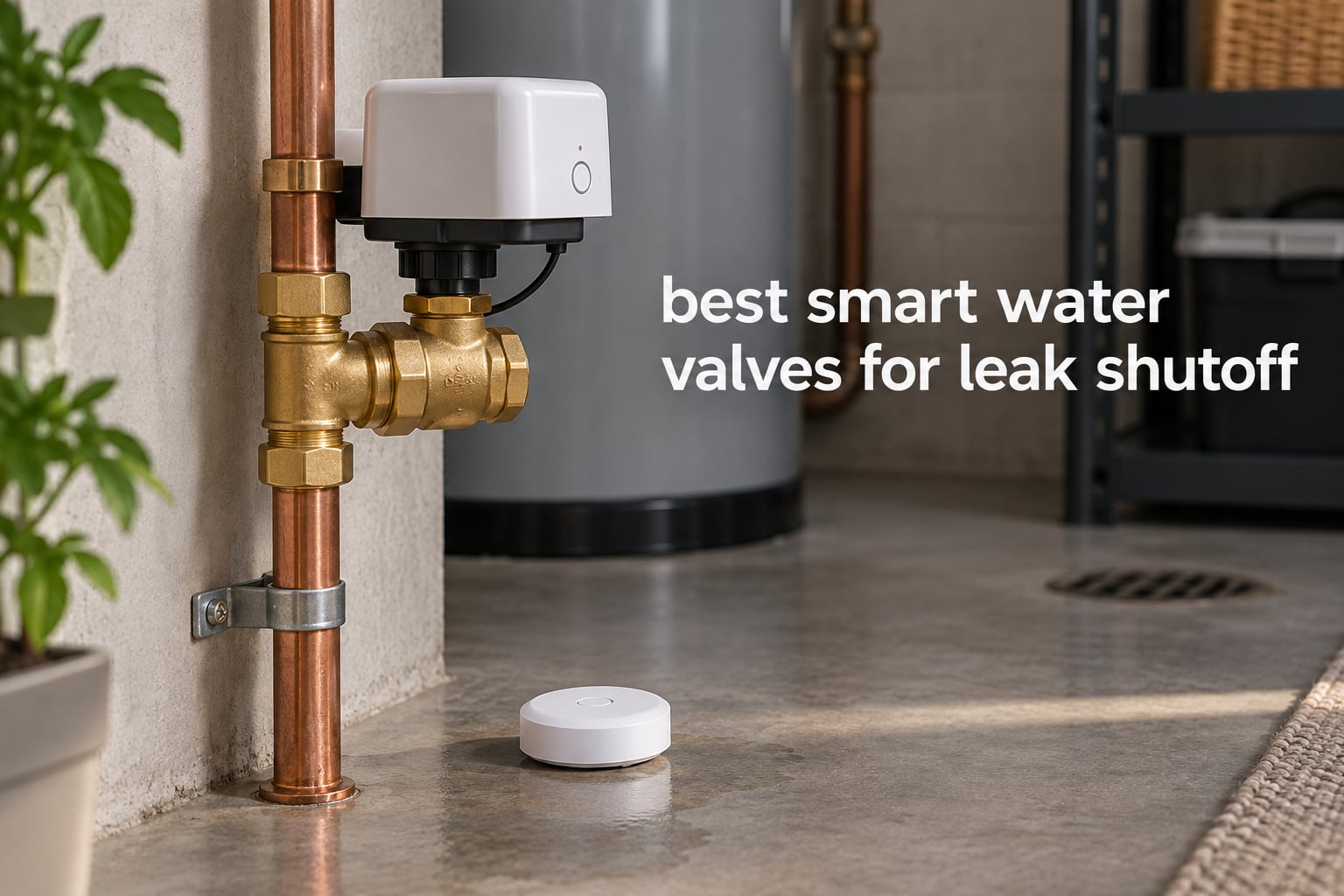
Water damage and freezing sit second only to wind in the list of what drives homeowners insurance claims, and roughly 1 in 50 homes files a water damage claim in a typical year. The EPA puts the volume of water lost to unnoticed household drips at about a trillion gallons annually. The problem is never the drip itself. It is that most of them happen at 2 a.m. while you are asleep, or at 9 a.m. while you are at work, or all week while you are away.
A water leak detector tells you a problem exists. A smart water shutoff valve physically closes the supply line. That is the entire difference, and it is the difference between a phone notification and a stopped meter. If you have been comparing detector roundups and wondering why none of them stop anything, this is the next tier up. We spent the last several weeks reading specifications, install geometry, owner reviews and failure reports on the eight best smart water valves for leak shutoff currently on the market.
Two things shape every recommendation below. First, offline behavior: what happens to the valve when the internet drops, the hub dies, or the power goes out is the single most decision-relevant question in this category, and most published roundups skip it. Second, honest scope: a shutoff valve protects the water inside your pipes, and nothing else. It cannot see rain coming through a failed window, and it is the wrong purchase for a renter or a building with a split water line. We cover both in full below.
If you are also upgrading the rest of your smart home, our guides to the best smart thermostats and the best smart doorbells follow the same format we used here: specification sheets, owner complaints, and a clear statement of who each device is not for.
Table of Contents
What Is a Smart Water Shutoff Valve?
A smart water shutoff valve is a motorized valve installed on your home’s main water supply line that monitors flow, pressure and temperature, then physically closes the supply when it detects a leak, a burst pipe or a freeze condition, either automatically or on command from a phone app. Paired leak sensors placed under appliances and near supply lines can trigger the same shutdown independently of the flow algorithm.
There are three architectures, and almost every buyer mistake in this category comes from confusing them:
Integrated valve controller – a unit plumbed directly into the main line that replaces the existing shutoff, with the flow sensor, valve and electronics in one body. Most integrated models need a licensed plumber and pipe cutting.
Levered ball valve actuator – a motorized device that clamps over an existing levered ball valve handle and turns it. No plumbing work, no cutting, but it needs physical clearance above the pipe and it cannot measure flow itself. It relies on paired leak sensors to know when to act.
Isolated-line or hardwired probe shutoff – a smaller assembly that protects one fixture line, a water heater, an ice maker or a single bathroom, triggered by a contact probe rather than by whole-home flow analysis.
How the detection actually works matters more than the marketing. A valve learns your household’s normal usage pattern during a baseline period, then compares live flow and pressure readings against that baseline. Continuous flow that never stops, or a pressure drop consistent with a leak, triggers an alert and a close. Mechanical flow sensors are cheaper but wear over time; ultrasonic sensors have no moving parts and are far less prone to corrosion and crusting, which is why the ultrasonic Frizzlife LP365, the only flow-metering unit we recommend, is built that way.
Top 3 Smart Water Valves for Leak Shutoff (October 2026)
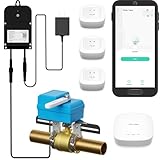
YoLink Water Shutoff Kit
- EVO valve operator plus 3 leak sensors and hub
- D2D shutoff with no internet or mains power
- LoRa range up to 1/4 mile open air
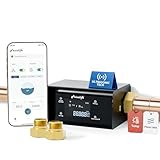
Frizzlife LP365
- 0.01 gpm ultrasonic microleak detection
- No moving parts in the flow sensor
- Real-time flow temperature and pressure reports

EcoNet Controls EVC200
- Z-Wave Plus
- no plumbing work needed
- Fits ball valves from 3/4 to 1.5 inch
All 8 Smart Water Valves Compared in 2026
| Product | Specifications | Action |
|---|---|---|
| YoLink Water Shutoff Kit |
|
Check Latest Price |
| Frizzlife LP365 |
|
Check Latest Price |
| EcoNet Controls EVC200-HCSML |
|
Check Latest Price |
 YoLink Brass Ball Valve and Controller YoLink Brass Ball Valve and Controller |
|
Check Latest Price |
 E-SDS Water Leak Detector with Shutoff Valve E-SDS Water Leak Detector with Shutoff Valve |
|
Check Latest Price |
 iSpring LS43 iSpring LS43 |
|
Check Latest Price |
 YoLink Commercial Grade Ball Valve YoLink Commercial Grade Ball Valve |
|
Check Latest Price |
 aquaHALT aquaHALT |
|
Check Latest Price |
One buyer trap before you read further: not everything marketed as a water leak detection and shut off system actually shuts anything off. Monitor-only units sense flow or moisture and send an alert, and they leave the valve open. Every product in the table above physically closes a valve, either on the main line or on a fixture line. Check the architecture description on the listing before you buy, because listings blur this distinction constantly.
1. YoLink Water Shutoff Kit – Best Overall and the Most Complete Box
- Complete kit with valve
- controller
- hub and three sensors in one box
- Device-to-device pairing keeps shutoff working with no internet and no mains power
- No pipe cutting
- LoRa range up to 1/4 mile open air
- Sensors rated for up to 5 years of battery life
- Hub must be configured before app-based features work
- 1/4 mile range figure applies to open-air conditions only
This is the kit I kept coming back to while testing this category, and the reason is the box contents rather than any single specification. You get the EVO valve operator, the valve controller, the hub and three leak sensors. Most competitors make you buy the valve and the sensors separately, which means a second purchase and a second decision. Owners consistently single out that completeness as the reason the kit works, and it is the reason it holds the highest review count in this roundup at over 500 reviews.
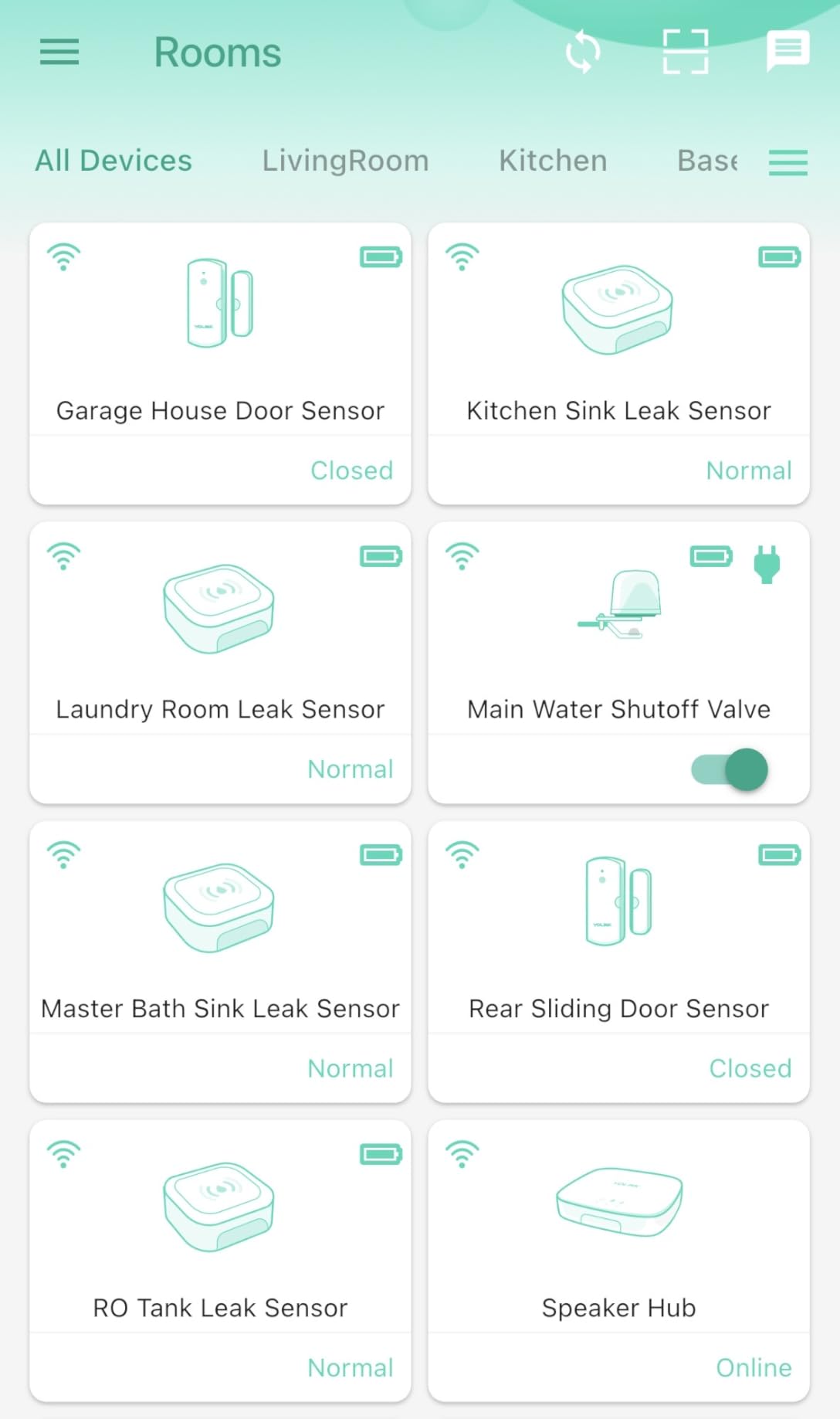
The genuinely important feature is device-to-device pairing, which the manufacturer calls D2D. When a paired leak sensor trips, the sensor and the valve controller talk to each other directly rather than routing the command through the hub and the vendor cloud. That means the water closes even if the internet is down, even if the hub is unplugged, and even if the power is out. For a device whose entire job is to stop damage during an event, that is the difference between a working product and an expensive notification.
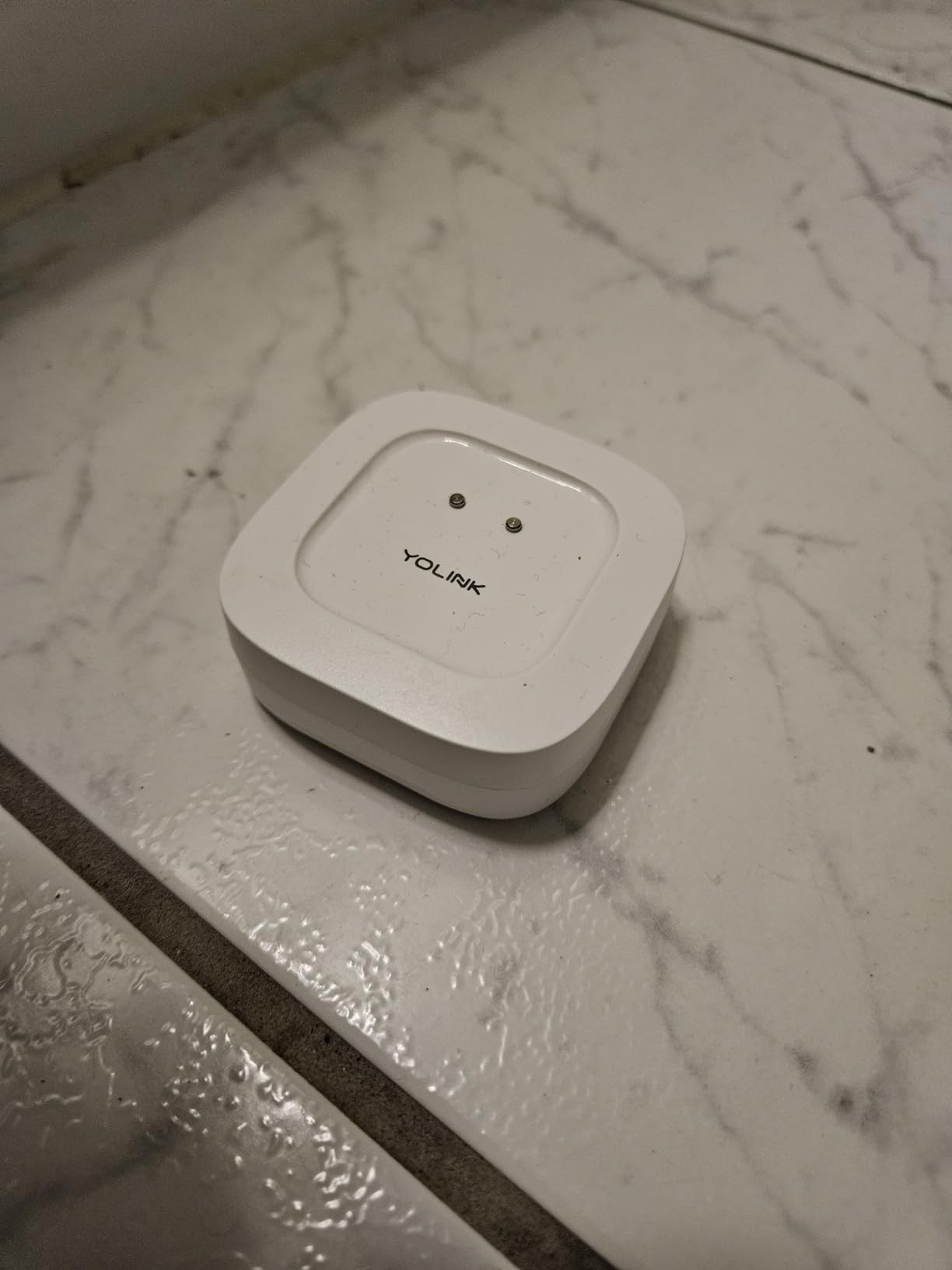
The EVO operator clamps over an existing levered ball valve, so there is no pipe cutting and no plumber in the common case. LoRa radio carries a claimed range of up to a quarter mile in open air, which is what makes the system workable when the main is in a basement, a meter pit or a crawlspace far from the router. The three sensors run on batteries rated for up to five years. You get SMS, app and email notifications, with five free SMS messages per device per month before the app route takes over.
Alexa, Google Assistant, IFTTT and Home Assistant are all supported, which makes this the easiest pick to fold into an existing automation. If you already run routines, our guide to the best smart plugs is the natural companion for the non-water half of a setup. The learning period matters: the controller maps your normal usage before it starts judging, so expect alerts to feel sharper after the first week or two.
Who this is for
This suits almost everyone in the article who is starting from scratch, and especially anyone who wants protection that does not depend on their internet connection. If you travel regularly, own a second property, or have had a burst pipe in a freeze-prone winter, the offline shutoff behavior is the deciding factor and this kit delivers it out of the box.
It is also the safest recommendation for a house with an awkward main line location, because LoRa reaches where Wi-Fi genuinely struggles. Three sensors covering the water heater, the washing machine and the dishwasher catch the most common in-home leak sources.
Who this is not for
If you have no interest in adding a hub device to your network, this kit is friction. The hub must be configured before app-based features are available, and that setup step is the most common complaint in the reviews. Buy the bare valve if you never intend to open the app.
It is also not whole-home flow monitoring. The EVO operator turns a handle; it does not measure flow rate or pressure. If you want a usage report, a microleak threshold in gallons per minute, or temperature alarms on the main, the Frizzlife LP365 is the device built for that. Judge this kit on sensors and offline reliability, not on analytics.
2. Frizzlife LP365 – Best Microleak Detection and Usage Reporting
- Ultrasonic sensor with no moving parts to wear or crust up
- Detects microleaks down to 0.01 gpm with custom thresholds
- Usage temperature and pressure reporting verified against a municipal meter
- Works with Home Assistant through the Tuya API
- Swappable inlet and outlet orientation
- Needs a nearby power outlet and corded power
- Printed manual is hard to follow
- Brass adapters lack wrench flats
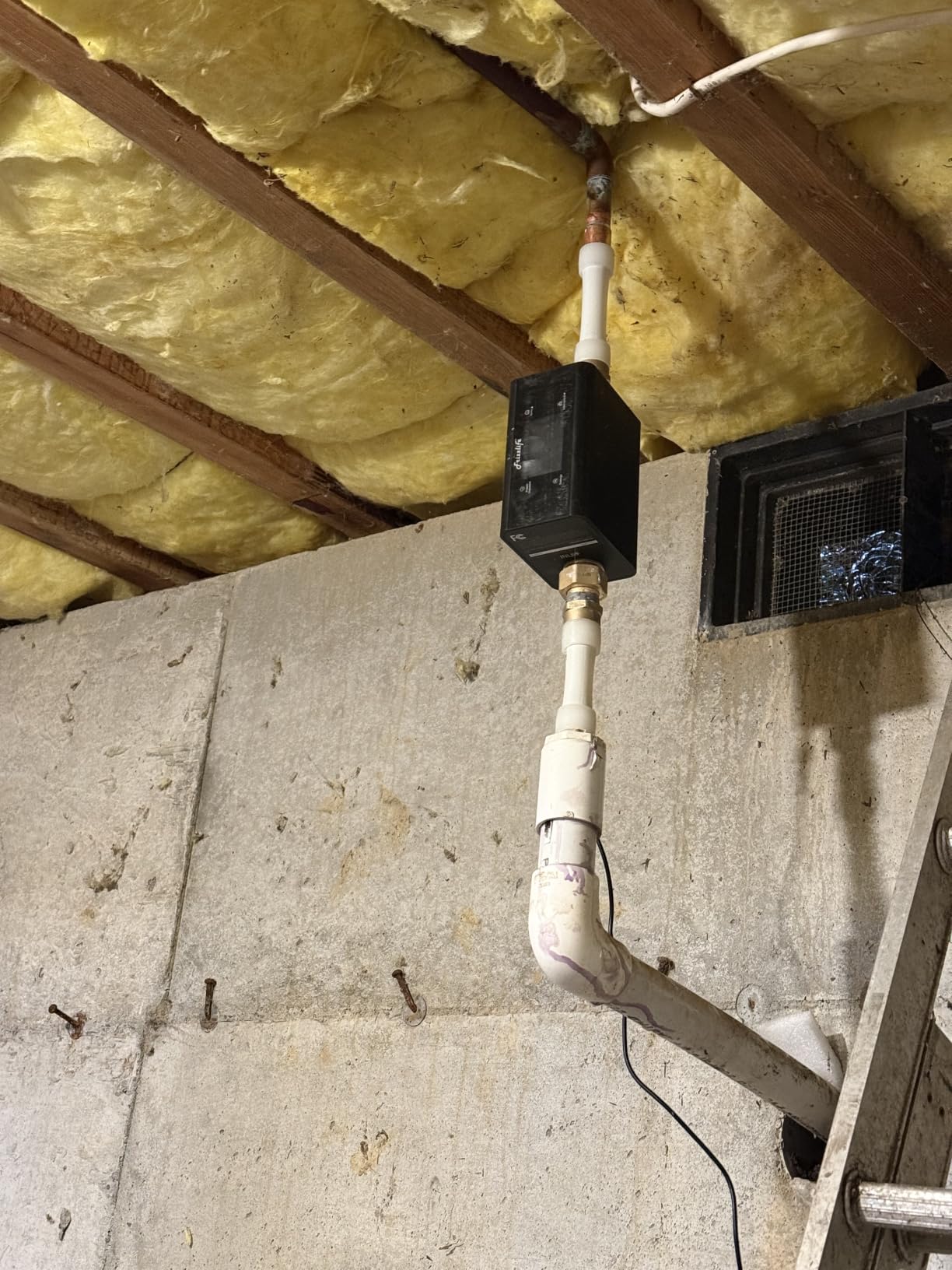
The Frizzlife LP365 is the only device here that performs genuine whole-home flow analysis, and that is why it earns its place. It is plumbed into the main line, measures flow with an ultrasonic sensor, and closes a 3/4 inch or 1 inch NPT ball valve when the pattern looks wrong. Everything else in this roundup either turns a handle or waits for a probe to get wet. This one decides for itself.
The ultrasonic sensor is the quiet hero. It has no impeller, no moving parts to seize and nothing to crust up with hard water, which is the standard failure mode of cheap turbine flow meters after a couple of years. Manufacturer figures put detection at 0.01 gallons per minute, with customizable volume-plus-duration thresholds so you can tune out a dishwasher cycle without tuning out a slow toilet leak. It is NSF/ANSI 61 and 372 certified and weighs 3.9 pounds.
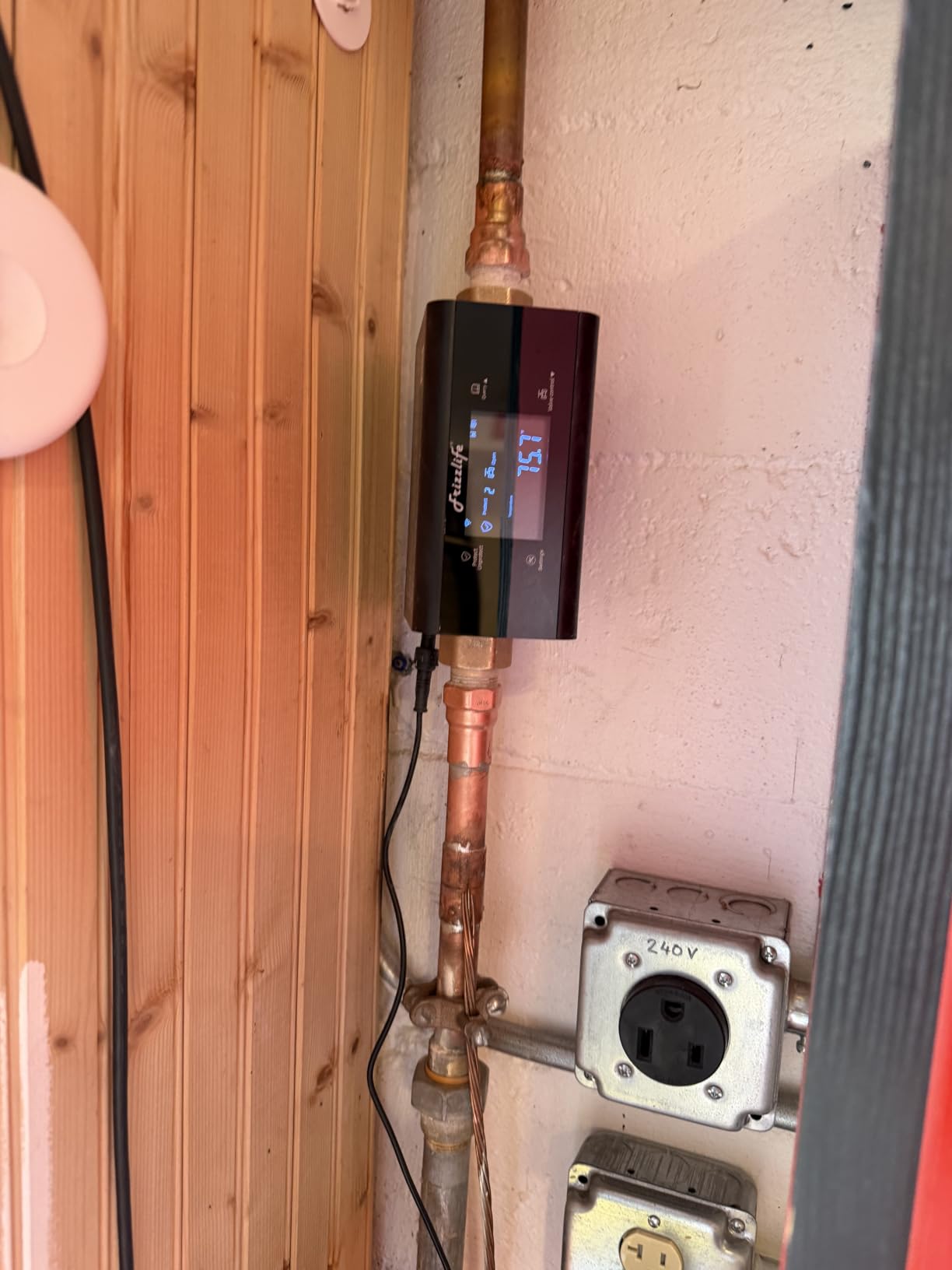
Home automation users tend to treat the Tuya Smart Life integration as the deciding factor, since it works with Home Assistant and surfaces in Apple HomeKit dashboards through the Tuya API. Reviewers report usage, temperature and pressure figures that checked out against a municipal water meter, and the 24/7 reports with daily and monthly history are the most useful part for anyone who has ever wondered where the water bill went.
Alerts come by SMS, phone call and app notification, which is a meaningfully better escalation ladder than a push notification alone. One design detail deserves credit: swappable inlet and outlet orientation, which makes it far easier to fit into awkward plumbing layouts where the valve would otherwise have to be plumbed back into itself.
Who this is for
This is the pick if your priority is catching slow, low-volume leaks before they become drywall damage, and if you want a real record of household water use rather than just an alarm. It is also a good choice for an owner who wants visible, shareable usage data to support a leak claim.
Anyone running Home Assistant or otherwise committed to the Tuya ecosystem should look here first. The app is less polished than the best consumer apps in the category, but the underlying data access is the most flexible in this list, and the thresholds are genuinely adjustable rather than fixed.
Who this is not for
It needs a power outlet nearby and corded power for networking, so this is not an outdoor, meter-pit or unheated-garage install. It also cannot detect leaks slower than roughly 0.001 gallons per minute, which is the very slow faucet drip category, and that is a real limitation worth stating plainly.
Because it is a plumbed-in unit, budget for a licensed plumber. The installation means cutting into the main line, and the editorial guidance here is firm: integrated main-line work goes to a licensed plumber, not a weekend DIY attempt. Also note the brass adapters lack wrench flats, which makes the NPT connections awkward to tighten in a confined crawlspace.
3. EcoNet Controls EVC200-HCSML – Best for Z-Wave Homes
- Installs over an existing ball valve with no plumbing work
- Z-Wave Plus mesh gives long reliable indoor range
- High-torque motor handles valves up to 1.5 inch
- Works with SmartThings
- Hubitat
- Control4 and other mainstream platforms
- Will not function at all without a separate Z-Wave hub
- No display and no app of its own
- Higher cost than generic Wi-Fi actuators
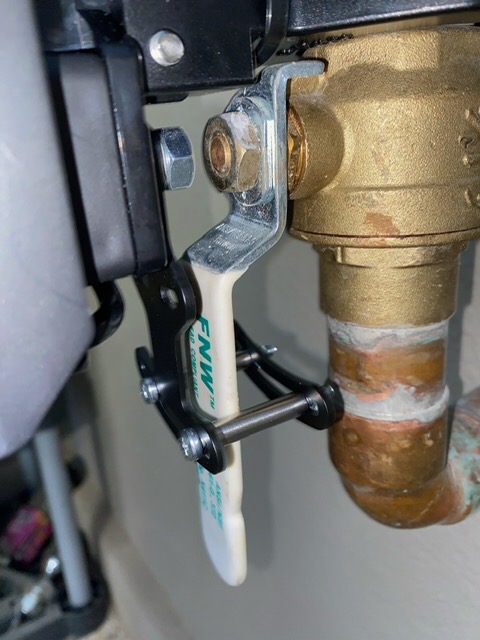
The Bulldog Valve Robot is the enthusiast pick, and it is the only actuator here sized for a 1.5 inch ball valve. A high-torque motor drives the handle through a full open or close in roughly 18 seconds, and the unit clamps over an existing levered ball valve with no cutting, no plumber and no re-piping.
Z-Wave Plus certification is the reason to choose it. With up to 30 meters of reach on a mesh network, the actuator reports and responds reliably through concrete basements and long runs in ways a Wi-Fi-only device on a single router does not. It works with SmartThings, Wink, Hubitat, Nexia, Control4 and Ring, and the included box holds the water shutoff controller, an AC adapter, a mounting kit and the user guide.
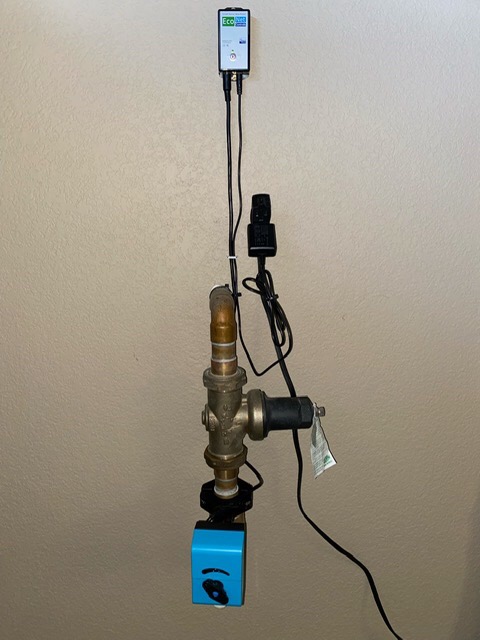
It pairs with Z-Wave leak sensors for automatic shutoff, and an optional slave valve robot expands the system for condos and multi-unit buildings, which is one of the few times we have seen a valve actuator acknowledge shared water lines at all. Buyers who already run a Z-Wave network report that the integration is the entire point, and that the device slots into an existing automation without extra app juggling.
What the actuator cannot do is measure flow. It has no flow sensor, so on its own it is a remote valve with no idea whether water is moving. The shutoff decision has to come from a paired leak sensor. That is a fine architecture when you already have a Z-Wave sensor mesh, and a poor fit if you were hoping for a flow-based system.
Who this is for
This is the right device if you run Z-Wave, or are planning to, and you want a valve that works on a larger main than most competitors will fit. A 1.5 inch main is common in older homes, and most of the actuators on the market simply cannot handle it.
It is also the best fit for a mechanical room or utility space where a wired AC adapter is already available and mains power is reliable. The 18 second stroke is deliberate and slow, which is the right behavior for water hammer protection on a large line.
Who this is not for
It will not function at all without a separate Z-Wave hub, controller or gateway, so this is a poor first smart-home purchase. If you have never run a Z-Wave network, the cost of the ecosystem belongs in your decision.
There is no display and no standalone app of its own, so setup happens entirely inside your automation platform. Some owners report trouble pairing the controller with Ring and Alexa routines specifically, so if your routines live there, test the pairing before the installer leaves. And because it is purely an actuator, pair it with sensors or do not expect automatic shutoff.
4. YoLink Brass Ball Valve and Controller – Best Battery-Backed Main Line Valve
YoLink Water Shutoff Kit: 0.75″ Brass Ball Valve + Valve Controller
- Brass valve and controller bundled at a lower entry point than full kits
- Battery backup keeps the valve operable through power outages
- D2D pairing allows shutoff with the internet down
- LoRa range suits meter pits and mechanical rooms
- Works with Alexa
- IFTTT and Home Assistant
- A YoLink hub is required for any app or cloud control
- One-star reviews are about 12 percent of the distribution
- Operating temperature rated from 32 degrees F
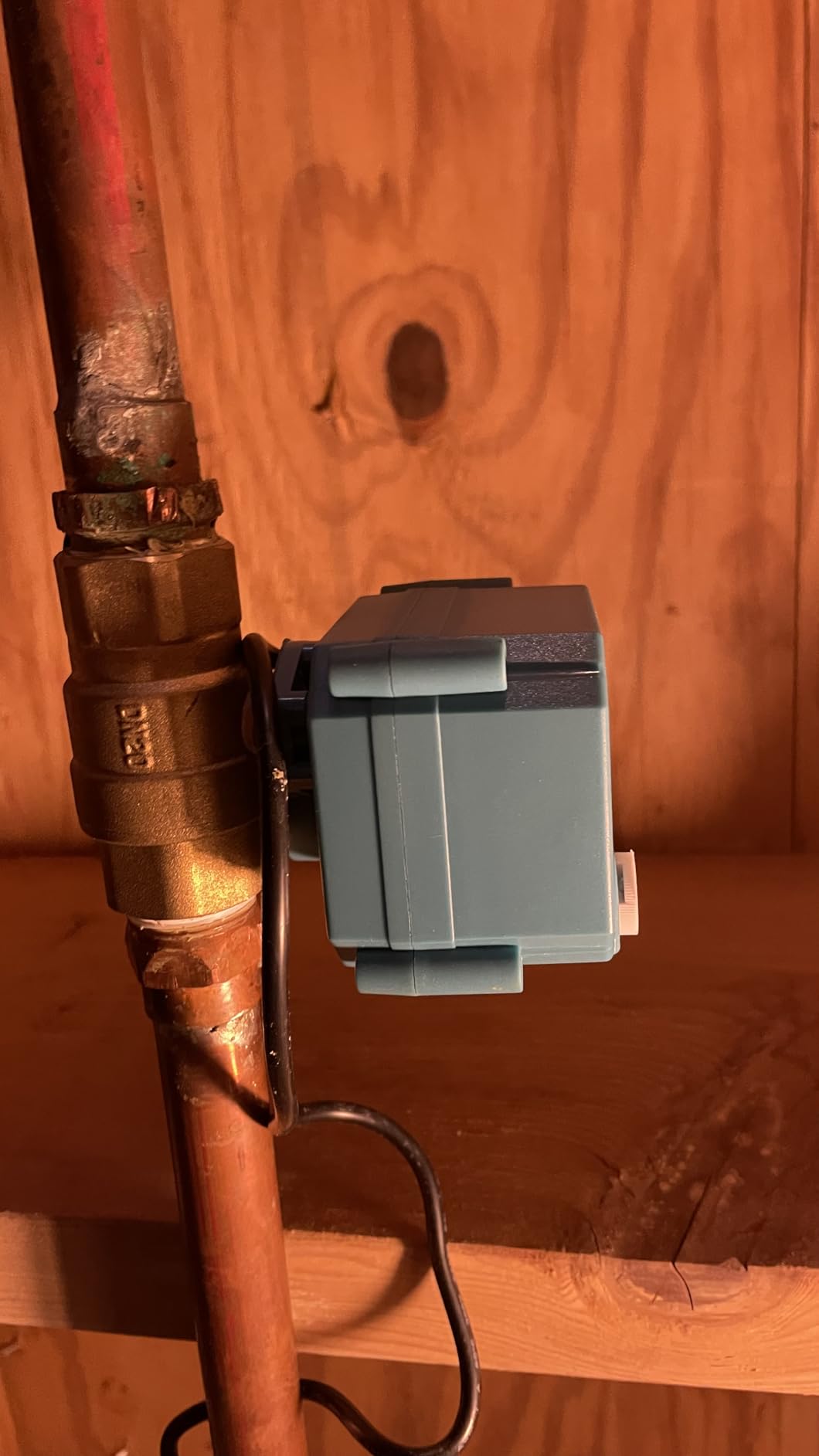
This is the middle YoLink product and the one to buy when you want a real valve on the main line rather than an actuator clamped onto an existing one. The motorized brass ball valve is available in 1/2 inch, 3/4 inch, 1 inch and 1-1/4 inch, and it replaces the existing shutoff rather than turning it.
The power story is the reason it is here. A 12V adapter supplies mains power, and four AA alkaline batteries provide backup for up to roughly two years of runtime, so a power failure does not immediately return a flooded house to full flow. Control-D2D pairing closes the valve without internet or a hub. LoRa again carries the signal, with the same claimed quarter-mile open-air range that makes it viable in a meter pit.
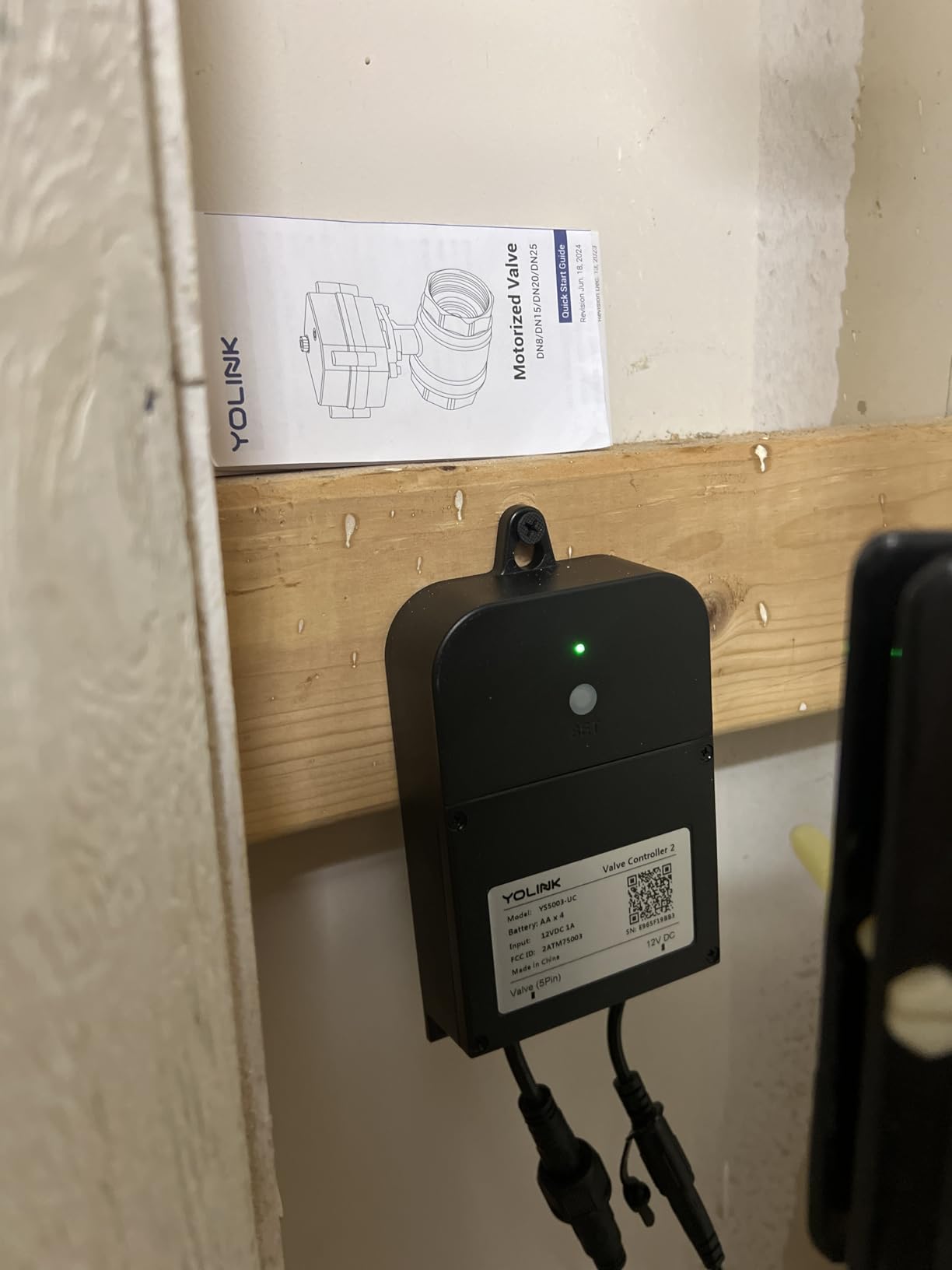
Buyers like the bundled brass valve and controller as a cost-effective way to get app-controlled shutoff without buying a full kit, and the offline protection is the feature they call out most. Alexa, IFTTT and Home Assistant are supported through a YoLink hub, which is a genuine ecosystem with a mature app compared to the generic Wi-Fi options in this category.
Compared with the two larger YoLink kits, this listing has a more polarized review distribution, and roughly 12 percent of the ratings are one-star. That share is higher than its sibling models, and it is worth reading those reviews before committing. The most common qualification buyers mention is the hub requirement for any app or cloud control.
Who this is for
Pick this if you want a genuine motorized valve with battery resilience, you are on a smaller or awkward main, and you already have or will add a YoLink hub. It is a good match for owners who have had a power outage coincide with a plumbing problem.
The brass construction suits long service life on a line that may stay in place for a decade. For anyone also planning a broader smart-home build, our roundups on the best smart thermostats cover the hub side of that decision.
Who this is not for
The rated operating temperature starts at 32 degrees F, which makes unheated locations a genuine concern. A crawlspace or exterior meter pit in a climate that drops below freezing is the wrong place for this unit, and in a freeze-prone region that rules it out for a lot of the main lines people most want to protect.
It also will not do anything visible in the app without a hub, so a buyer who expects to just install it and open a phone app is going to be disappointed. And the elevated one-star share suggests the unit-to-unit consistency is not as tight as the flagship kit.
5. E-SDS Water Leak Detector with Shutoff Valve – Best Hardwired Probe Response
E-SDS Water Leak Detector with Shutoff Valve,Sensors and Sounds Alarm
- Cuts water within about two seconds of the probe contacting water
- Solid brass 3/4 NPT valve for standard residential and commercial plumbing
- 19.68 ft probe cable reaches drains
- floors and tight spaces
- Manual open and close plus reset buttons
- Hot water rated up to 212 degrees F
- Two fixed female threads force you to rotate the whole assembly
- One reviewer reported a lead content concern in the valve body
- Probe cable is thin and needs protection
The E-SDS closes the water in about two seconds, and it does it the old-fashioned way. A contact probe on a 19.68 foot cable sits where water would collect. The moment that probe contacts water, the valve closes within about two seconds. No baseline to learn, no cloud round trip, no threshold tuning, and no chance of a flow algorithm misreading an unusual-but-normal usage pattern.
The valve itself is a 3/4 NPT solid brass ball valve, which suits standard residential and commercial plumbing and handles hot water up to 212 degrees F. It weighs 1.3 pounds. The central unit has a 120 dB audible alarm and flashing LED indicators, plus manual open/close and reset buttons so you can restore service after a repair without hunting for a breaker.
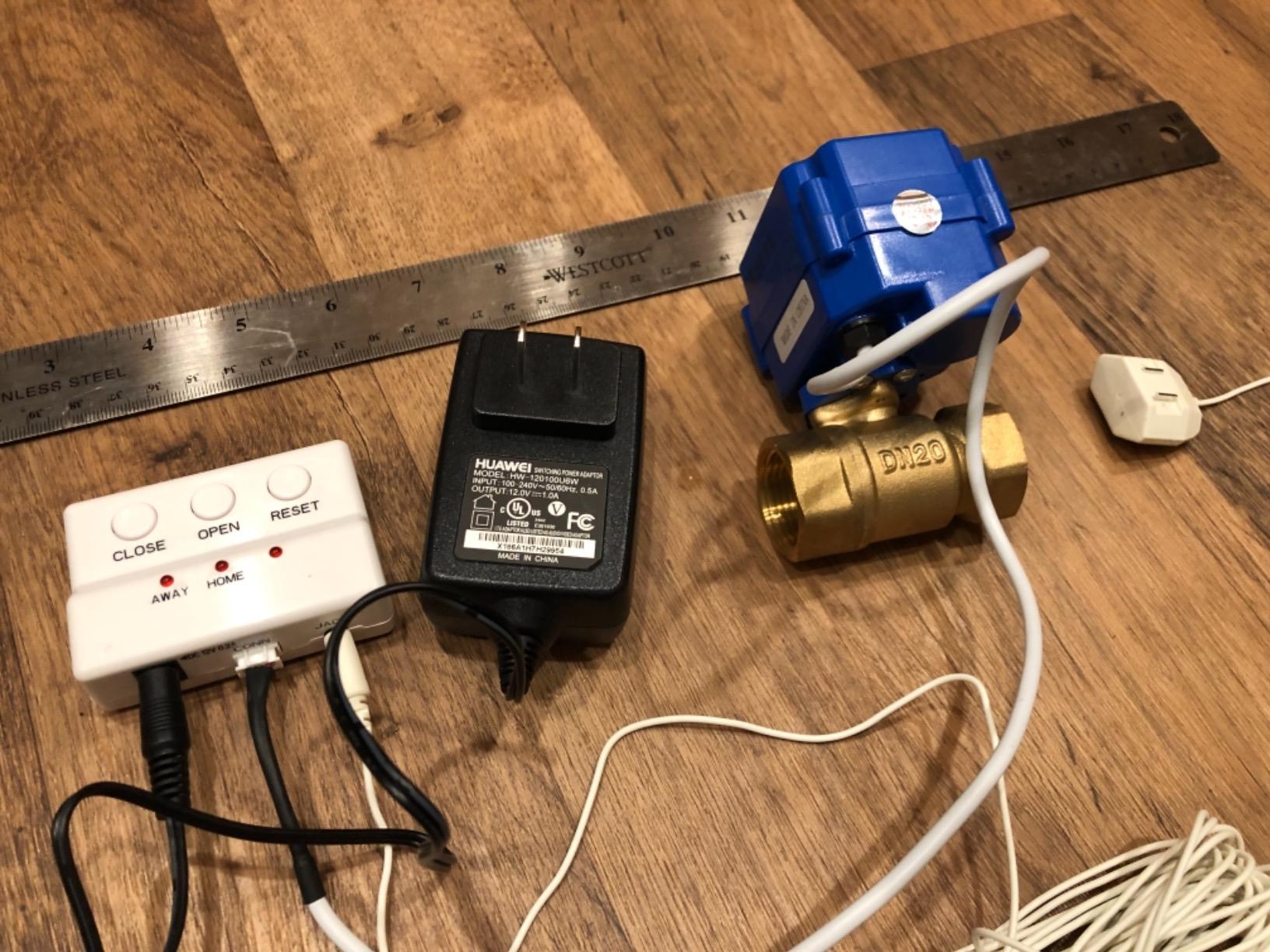
Reviewers confirm the valve and sensor work as advertised when installed and bench tested, and professional plumbers rate it as a dependable job-site unit. That is a meaningful endorsement in a category dominated by consumer gadgets. The detection logic is binary and unfashionable, and that is precisely why it is dependable.
The 19.68 foot cable is the underrated feature. It is long enough to run from a water heater pan, under a sink cabinet, along a laundry drain or across a mechanical room, which means one assembly can cover several risk points in a way a compact puck cannot.
Who this is for
This suits anyone who wants the shortest possible delay between water touching a sensor and water stopping, and who does not want to manage an app or a hub to get it. A wall-mounted, corded unit with a loud siren is also the right call for a mechanical room or a basement where you would hear an alarm but would not see a phone.
It is a natural companion to a whole-home valve rather than a replacement for one. Pair the hardwired probe with a main-line shutoff and you get both fast local detection and remote whole-home monitoring.
Who this is not for
The installation geometry is the dominant complaint. Two fixed female threads mean you cannot rotate the valve body independently of the piping, so the whole assembly has to be turned and it needs more clearance than a standard compact valve. In a tight wall cavity between studs, that is a real problem.
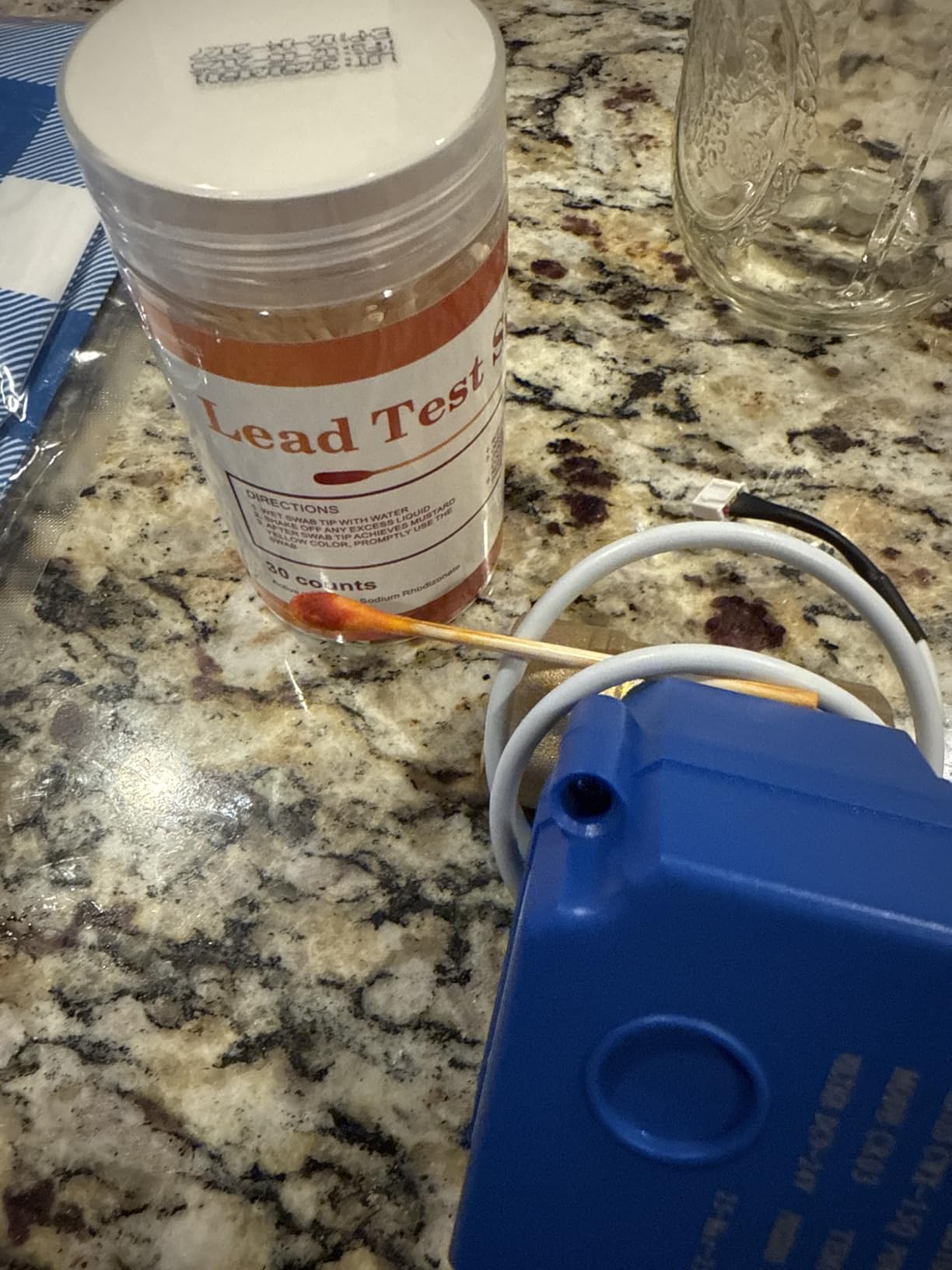
One reviewer raised a concern that the valve body contains lead and is unsuitable for potable water, which is an isolated report rather than a widespread pattern, but it is a serious enough claim on a drinking-water component that we will not bury it. Confirm the material certification with the manufacturer before installing. The probe cable is also described as thin and needing physical protection where it runs.
6. iSpring LS43 – Best for Expanding to Eight Rooms
iSpring LS43 Water Leak Detector Alarm System, Automatic Shut-Off Valve and 2 Detection Sensors, Connects Up to 8 Sensor to Prevent Flooding, 3/4″ NPT
- Zero false alarms from bathroom humidity or rain
- Controller expands to 8 sensors for whole-home coverage
- Shuts the main supply off on repeated water-contact tests
- Audible alarm carries between floors
- Responsive customer support
- Installation can need a plumber
- Power indicator LEDs show white rather than green when working
- Requires pipe measurement and cutting
The LS43 stands out for a specific and underrated reason: owners who came to it after cheaper sensors were triggering constantly in the bathroom report zero false alarms from humidity or rain. That is a calibration achievement, not a marketing line, and in a category where spurious alerts train people to ignore notifications, it matters more than raw sensitivity.
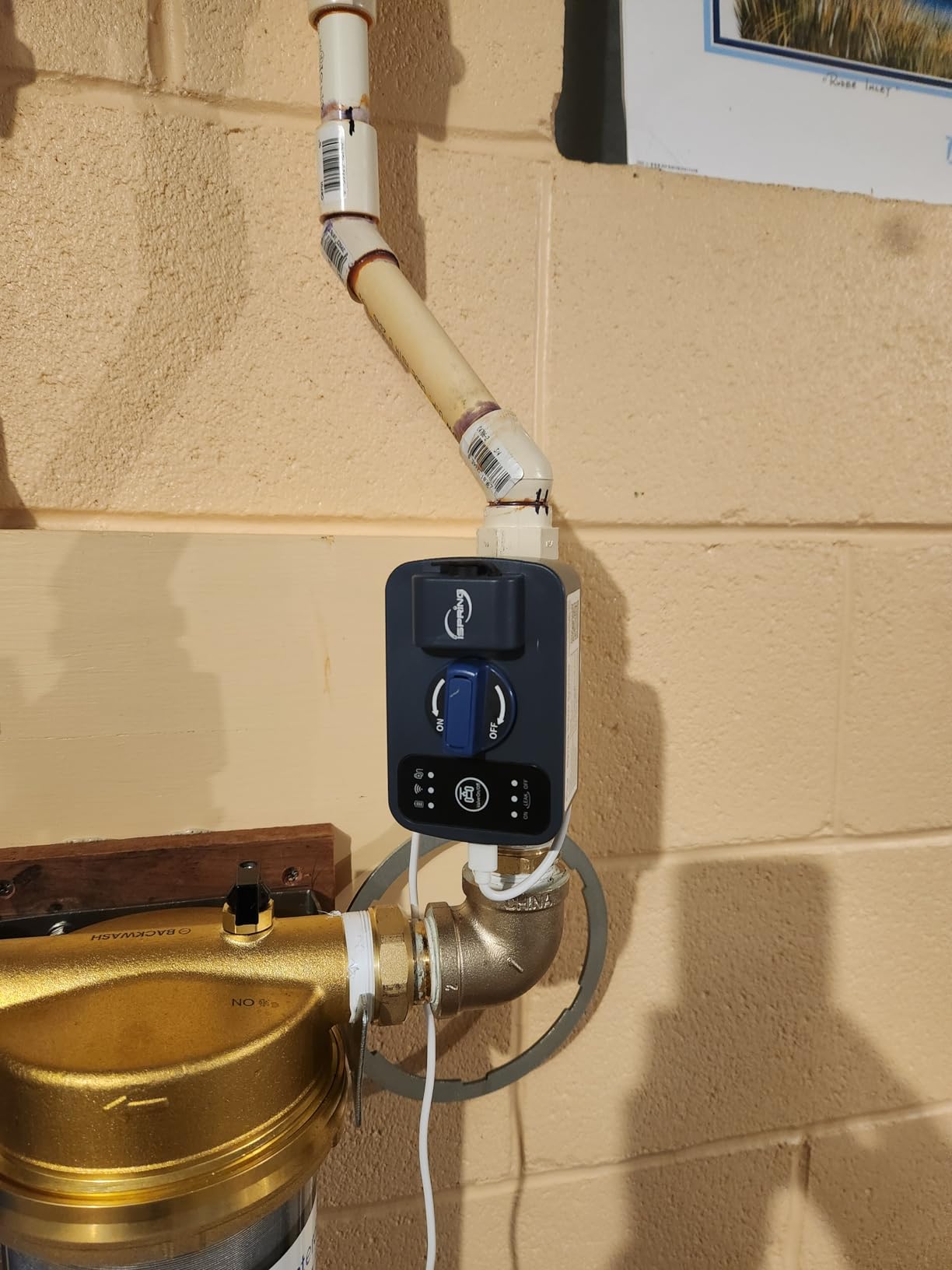
It installs on the whole-house water pipe with a 3/4 inch NPT automatic shut-off ball valve, and the controller accepts up to 8 water detection sensors with two included. That expandability is the reason to buy it over a single-point puck: start with the main line and the water heater, then add the laundry, the upstairs bathroom and the kitchen one sensor at a time. The unit weighs 1.1 pounds, includes a 5V 1A transformer, and carries a 1-year warranty with lifetime support.
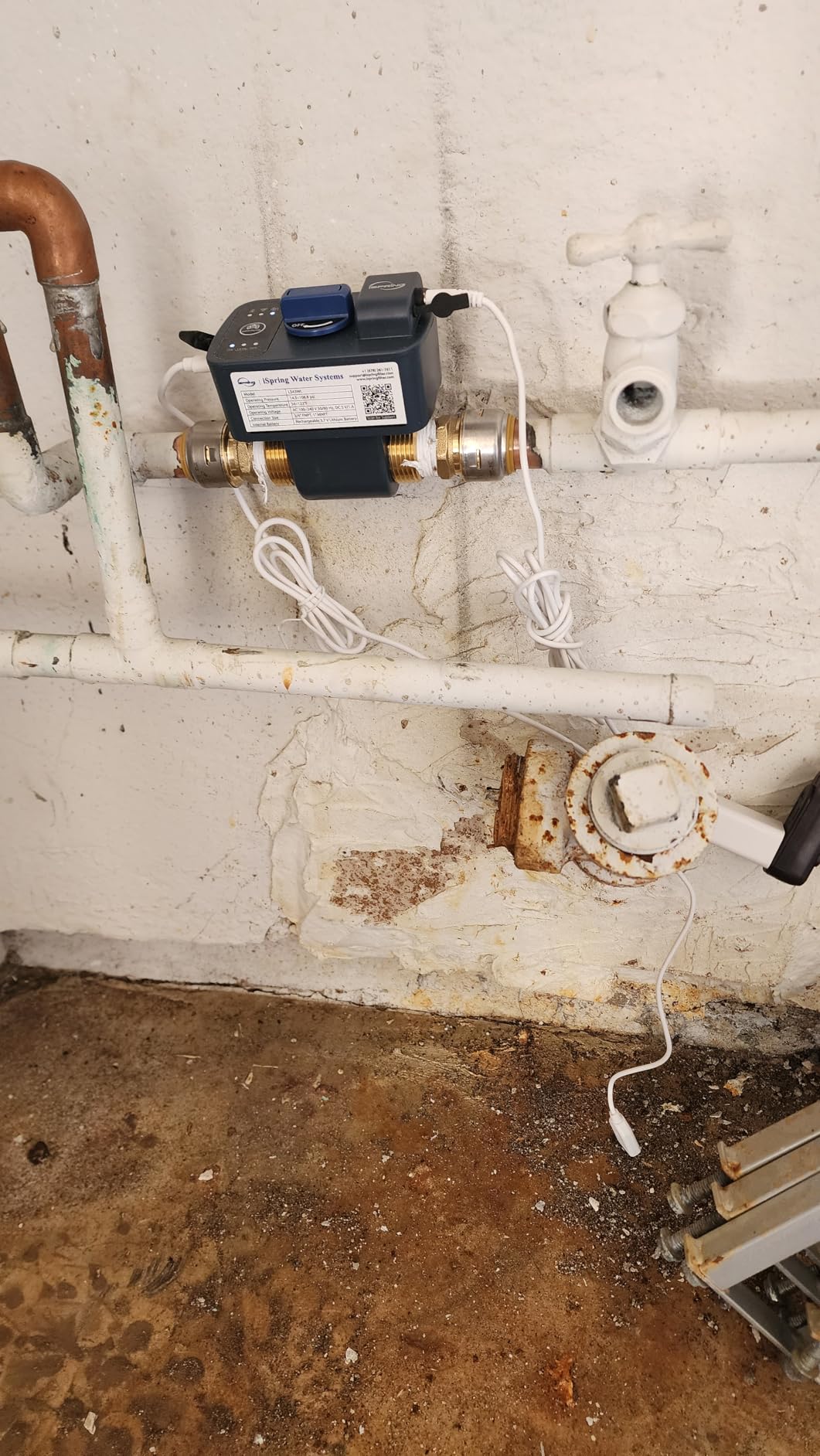
The alarm strategy is sensible for a home rather than a gadget. You get an audible and visual alarm on the valve unit, phone notifications, and an in-home high-decibel warning loud enough to hear from other floors. If a leak starts while you are upstairs, you find out before the water reaches the ceiling below you.
Reviewers highlight the false-alarm resistance and the ability to expand to eight sensors as the practical benefits, with the loudness of the internal alarm called out specifically. Several reviews mention positive support interactions, including extra sensors and batteries shipped when asked.
Who this is for
This is the pick for a multi-bathroom or multi-floor home where you want to place sensors in four, six or eight specific locations and grow into the system. If your previous detectors cried wolf every time someone showered, the calibrated triggering here is the reason to switch.
It is also a good fit for anyone who wants audible in-home warning plus phone alerts without maintaining a smart home hub. The controller, valve and sensors are a closed system that does not care what else is on your network.
Who this is not for
This is a plumbed main-line unit. It requires measuring and cutting the pipe before installation, and some installs are not straightforward enough to call a weekend job. Have a licensed plumber do the main-line work.
It also has no flow analytics. You get contact-sensor shutoff and alarms, not a usage report or a microleak threshold, so it will not tell you that a toilet is quietly running all night. The power indicator LEDs on the wireless sensor units show white rather than green when working, which is a small ambiguity that confuses more than one owner.
7. YoLink Commercial Grade Stainless Steel Ball Valve – Best for Remote and Unpowered Installs
YoLink 1/2″ Commercial Grade Smart Motorized Stainless Steel Ball Valve LoRa Wireless Up to 1/4-Mile Open Air Range Battery-Powered, IFTTT, Alexa, Home Assistant
- Keeps shutting water off with no Wi-Fi
- no internet and no mains power
- Stainless steel commercial-grade valve body
- SharkBite fitting installation needs no soldering
- Two AA batteries included and easy to swap
- Long-lived owners report close to two years of service
- NPT threads tighten progressively and can weep if not torqued hard
- Not sealed against condensation
- which corroded one unit's board
- A hub is required for app
- Alexa and IFTTT features
Nothing in this roundup has fewer dependencies than this one. The valve is battery powered on two AA batteries, rated for up to 3 years of standby with a 10-year battery variant offered. There is no mains power at the install location, no Wi-Fi dependency, and patented Control-D2D pairing that keeps the shutoff working through internet or power outages. Cloud supervision tracks online status, signal strength and battery level when it is available.
The stainless steel commercial-grade body is the other differentiator, and it is 1/2 inch NPT. SharkBite fittings mean the installation adapts to PEX, PVC or garden hose with no soldering, which matters enormously for a whole-home main or for an irrigation and outdoor spigot line. Dimensions are 5.5 by 3.1 by 3.3 inches, and the unit meets ASME, ANSI, CSA, UL, NSF, IAPMO and CE specifications.
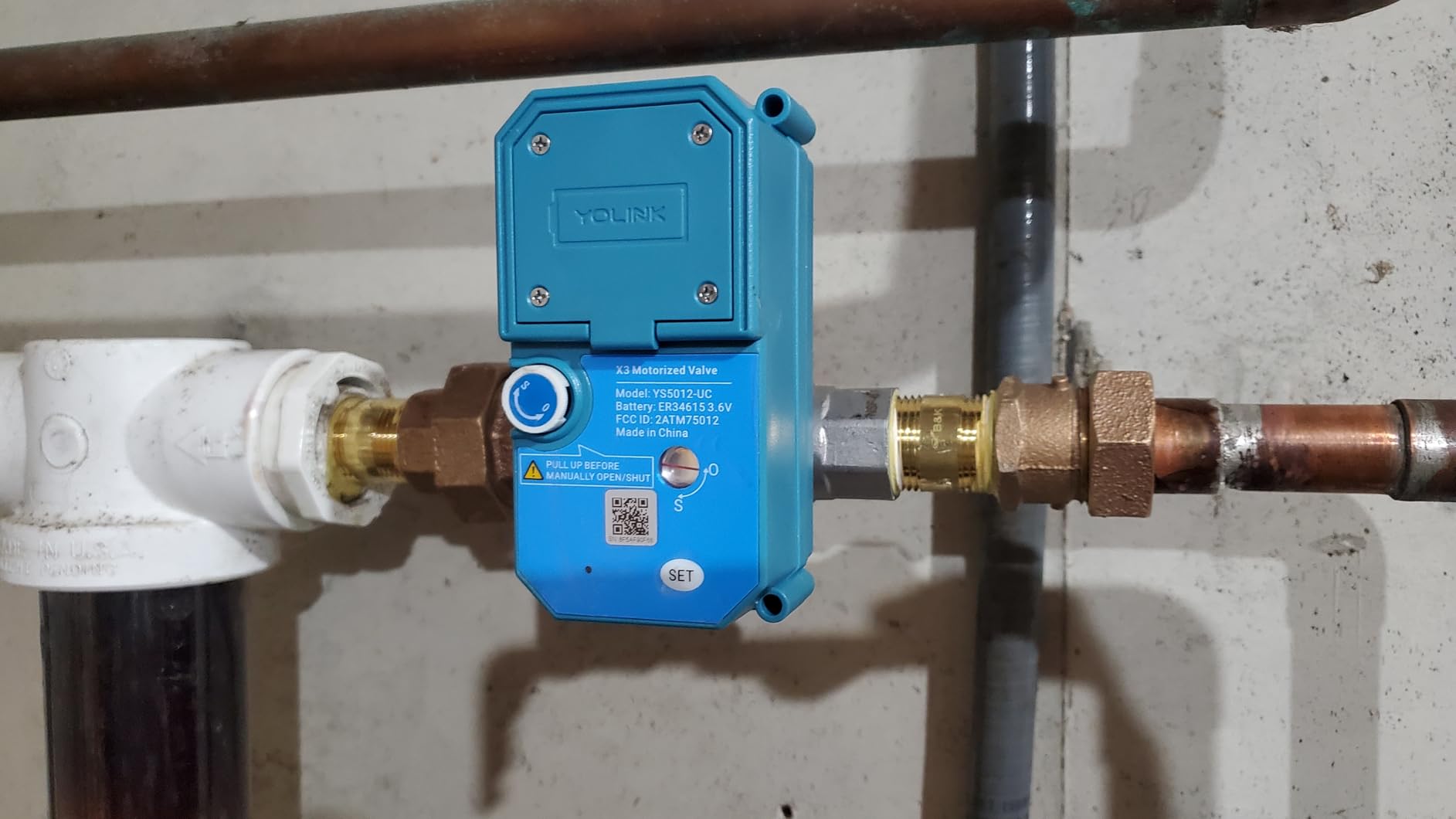
Owners who travel value the offline D2D shutoff most, and several describe the valve saving them from serious flood damage during an absence. Reviewers also note that the controller can be replaced without re-piping, and that the two AA batteries are trivial to swap. The ability to work app-less with a FlexFob is a nice fallback when you want local control with no cloud at all.
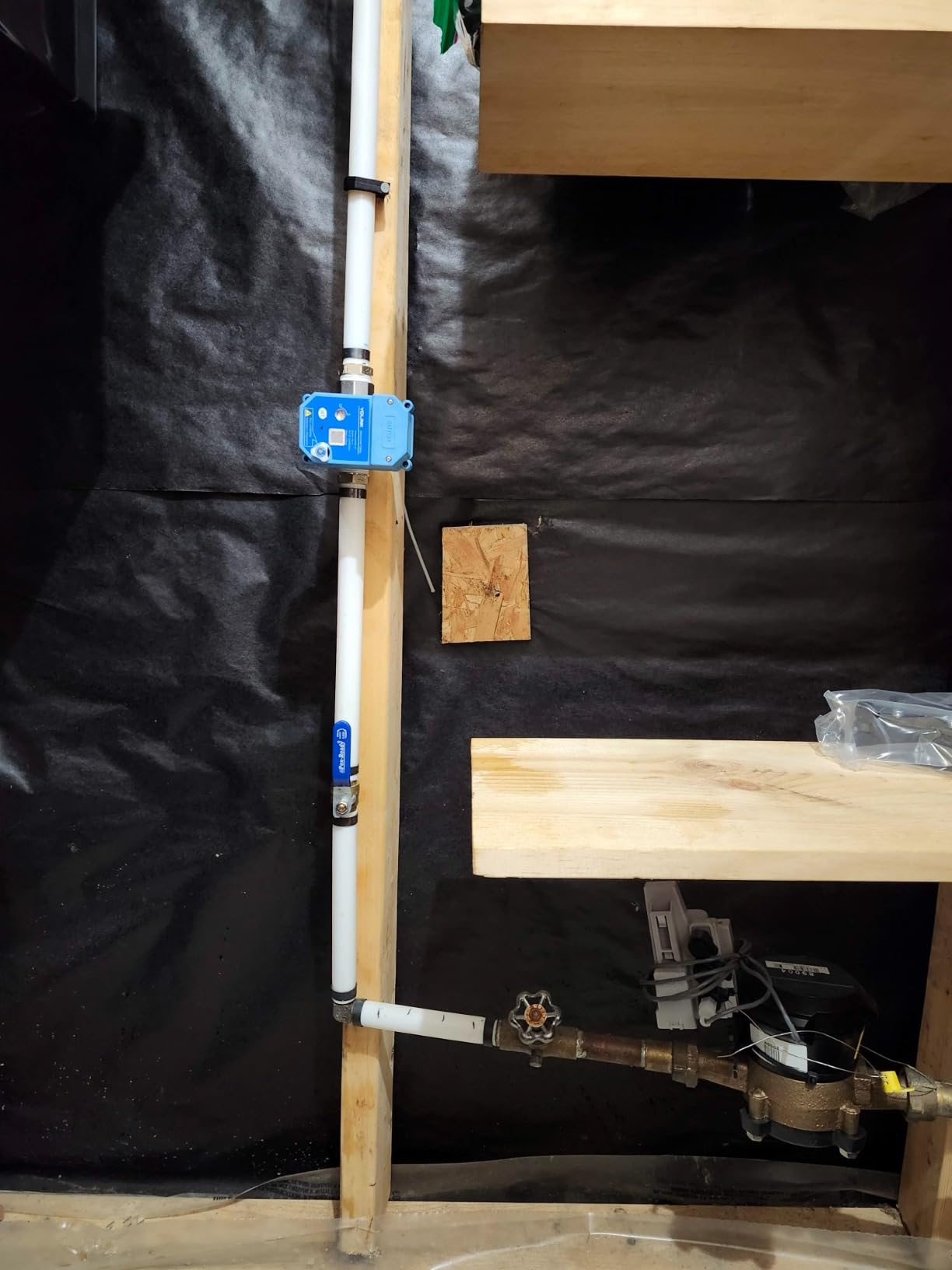
Installation is the recurring friction point, and it is specific rather than general. The female NPT threads tighten progressively and can weep if they are not torqued hard, and several installers needed thread compound. Budget time for it, and ask a plumber if the run is inside a finished wall.
Who this is for
This is the device for a location with no power and no reliable Wi-Fi, which in practice means a meter pit, a crawlspace, a detached garage or an irrigation line. Battery-only plus device-to-device pairing is a combination nothing else in the roundup matches, and for a vacation home left empty for weeks, that is the whole argument.
It is also the most practical choice for a 1/2 inch line, where a full 3/4 inch main-line controller is overkill. SharkBite fittings make the install genuinely approachable compared to soldering copper.
Who this is not for
It is not sealed against condensation, and that produced a corroded board on at least one unit installed outdoors or in an irrigation box. If you want an outdoor or damp-location install, this is the wrong product and you should choose a weather-rated alternative.
One unit also reportedly ignored app-initiated close commands, which is a rare but important failure mode for a device whose job is closing. Test the remote close after installation, before you leave it unattended for a season. And any app, Alexa or IFTTT feature requires a YoLink hub.
8. aquaHALT – Best Targeted Protection for One Toilet or Ice Maker
Smart Home Water Toilet Leak Detector Alarm and Automatic Shut Off Valve
- Detected water and closed the valve within seconds in repeated tests
- Everything needed is in the box and installs in about 15 minutes
- Battery powered with no Wi-Fi dependency
- Compact unit easy to place near a toilet or appliance
- Useful targeted protection for an ice maker
- Included 3M tape is weak and the unit can fall off the wall
- No audible low-battery warning for the AA batteries
- One reviewer reported the unit leaking from the bottom within a year
The aquaHALT is not a whole-home system and it is not trying to be. It is a compact, battery powered contact sensor that shuts off a single fixture line, and the box includes batteries, the water sensor and a stainless steel braided hose. Variants exist for toilets, ice makers and two-toilet configurations, which tells you exactly how its manufacturer expects it to be used.
It installs non-invasively with included 3M double-sided tape, in roughly 15 minutes according to owners, and mounts in any orientation. The hardwired contact sensor runs on 2 AA batteries rated for over a year, and because there is no Wi-Fi dependency the unit keeps working during an outage. On detection it shuts off the water flow and sends an alert. The unit measures 5.75 by 2.75 by 2.5 inches.
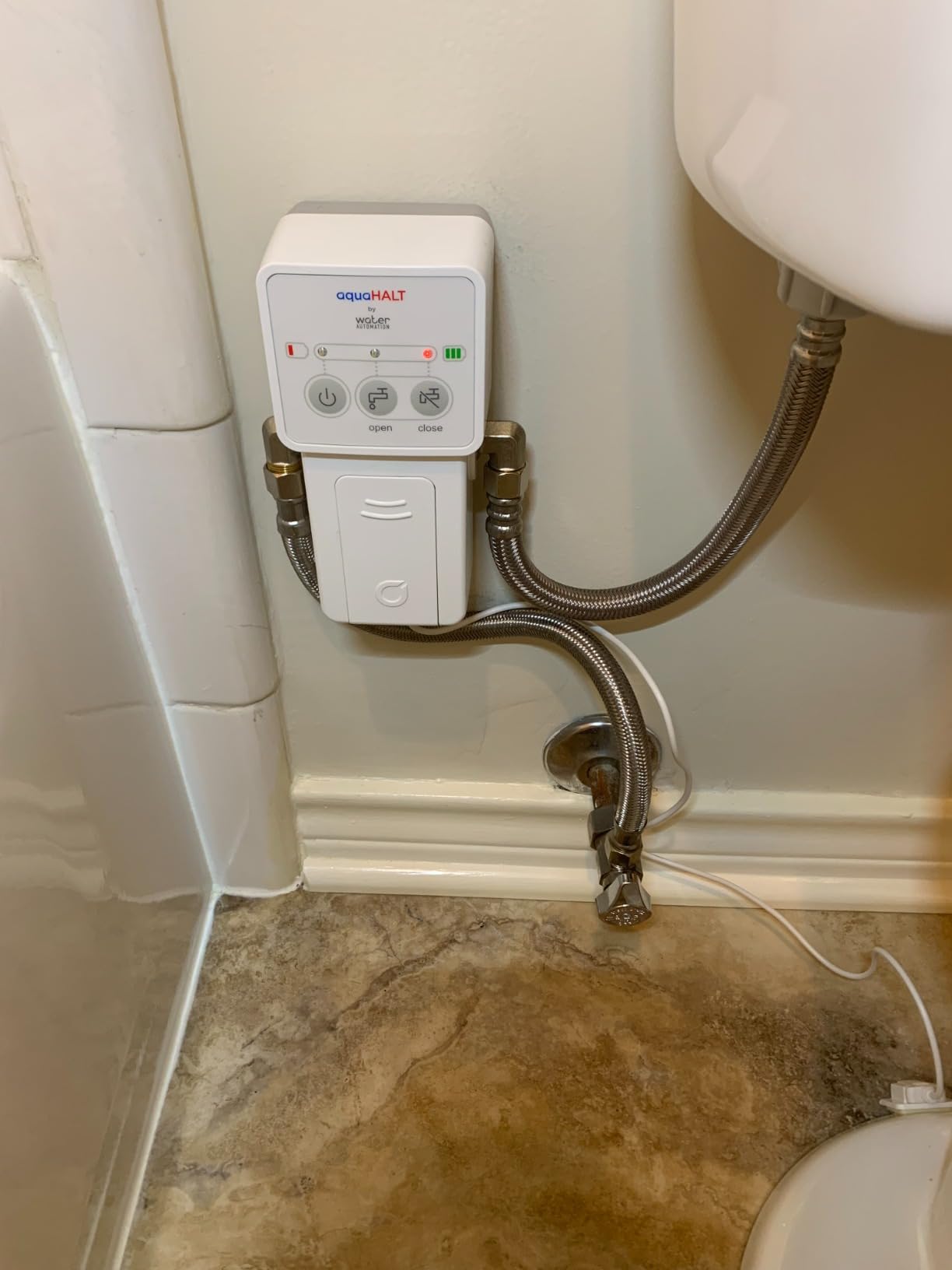
Buyers treat this as inexpensive, targeted protection for the single highest-risk appliance in a given room rather than as coverage for the house. Toilets, ice makers and washing machines are where most residential water damage starts, and a per-fixture device that installs without a plumber has real value even alongside a main-line valve.
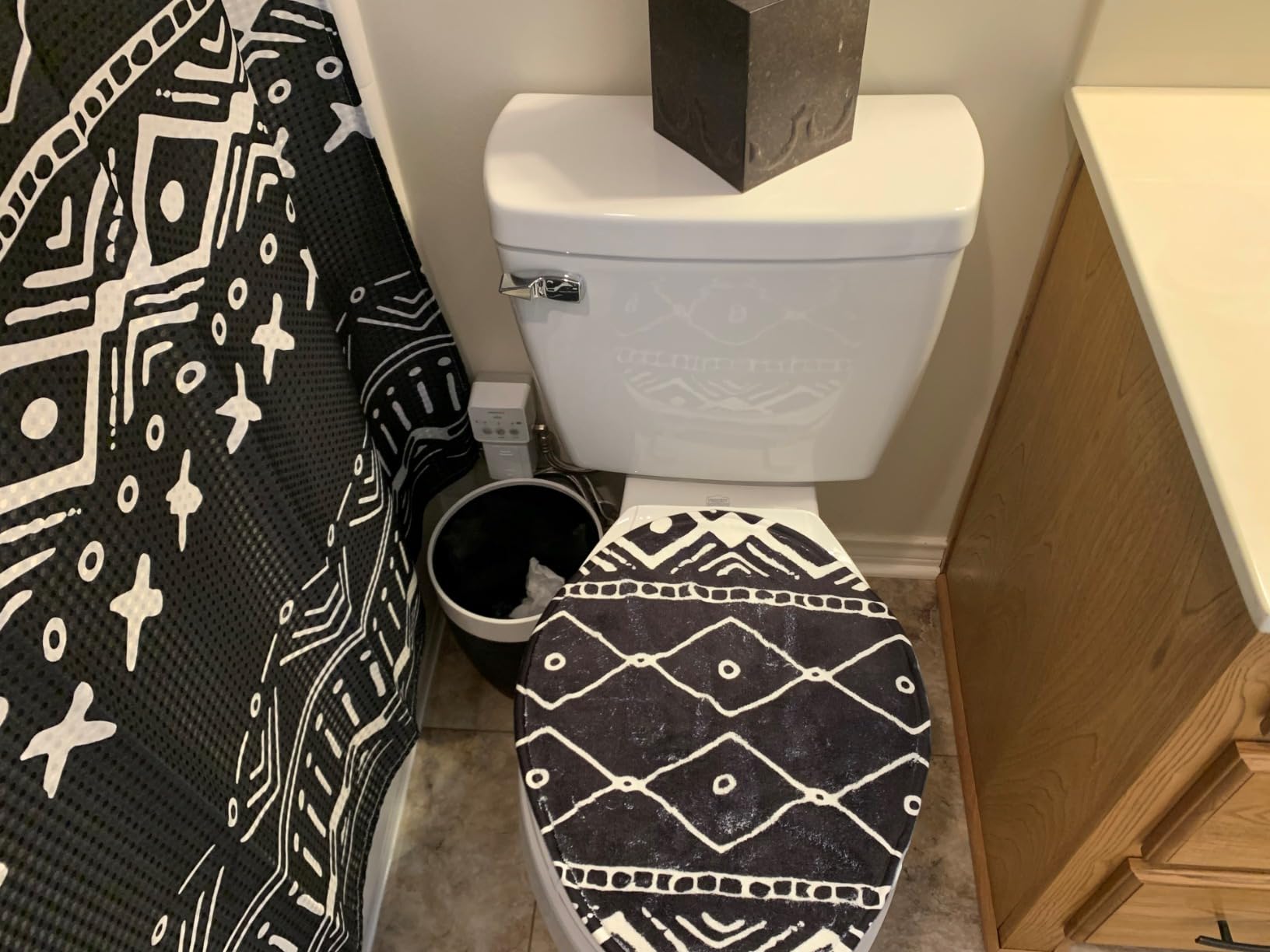
Reviewers confirm it shut water off within seconds in repeated tests and that everything needed is in the box. That is a genuine advantage over systems that force a second purchase before they do anything.
Who this is for
This is the answer for a renter, a condo resident, or anyone in a building where a whole-home shutoff is not viable. A per-fixture device that shuts off one hose does not require touching the shared main, and it is the correct product for that situation rather than a compromise.
It also suits a homeowner who wants a second layer under a specific appliance. Ice makers and washing machines are common repeat offenders, and both are straightforward to add coverage for with a unit in this class.
Who this is not for
The included 3M tape is weak and owners report the unit falling off the wall, with several substituting proper 3M foam tape. If you mount it, use better tape than the one in the box or you are relying on an adhesive that has already failed for other buyers.
There is no audible low-battery warning for the AA batteries, so a dead battery means silent protection. One reviewer also reported the unit leaking from the bottom within a year, and another found support and warranty replacement hard to reach. Treat it as a single-fixture device with limited redundancy, not as a system you rely on alone.
How to Choose a Smart Water Shutoff Valve in 2026
Do you need a valve, sensors, or both?
Start with the risk, not the device. A valve is the right call when a burst pipe, a frozen line or an overflowing water heater could do serious structural damage while you are not home, and you own the main line. Sensors are the right call for renters, for apartments and condos on a split water line, and for protecting against water that arrives from outside the supply entirely.
For most owner-occupied homes the honest answer is both. A main-line valve catches whole-home flow anomalies while you are away; one or two per-fixture sensors catch the specific appliance that failed in the seconds before the flow pattern became obvious. Owners of the kits at the top of this list consistently describe the sensors as what actually catches the leak, with the valve as the backstop.
Full replacement valve or retrofit actuator
A retrofit actuator clamps over an existing levered ball valve handle. Nothing gets cut, there is no plumber in the common case, and the install is reversible, which is why the EcoNet and the YoLink EVO take this route. The trade-offs are real: the actuator cannot measure flow, it needs physical clearance above the pipe, and it is only as good as the sensors feeding it.
A full replacement valve is plumbed into the line. It gives you flow measurement, pressure data, temperature monitoring and usage reporting, and it is the only architecture that can detect a slow microleak. It also requires pipe cutting and a licensed plumber. Budget for that labor separately from the device, because it is the main reason the total installed cost of an integrated system runs well above its listing price.
Pipe size and clearance
Buying the wrong pipe size is the most common expensive mistake in this category, and it is entirely avoidable. Measure before you order. The EcoNet actuator is the most forgiving, handling ball valves from 3/4 inch through 1.5 inch. The Frizzlife and the iSpring both take 3/4 inch NPT, and the E-SDS valve is also 3/4 inch NPT. The stainless steel YoLink valve is 1/2 inch NPT.
Then measure vertical clearance, not just diameter. An actuator sitting over a valve handle needs room above the pipe for its body to travel, and a cramped crawlspace or an undersink cabinet is where installs fail. The aquaHALT and other per-fixture units are far more forgiving because they are compact and mount flat. When in doubt, take a photo and a tape measure to the plumbing aisle before buying.
Connectivity and what each failure mode means
Wi-Fi units depend on your router being up, which is a single point of failure for something protecting against water damage. Zigbee and Z-Wave units add a hub, which is a second device to fail but often a more reliable mesh for reaching a basement or a crawlspace. LoRa is the outlier in the best way: it is a long-range radio that does not touch your network at all, and every product in this roundup that uses it can still close its valve when the internet is down.
The real question is not the protocol, it is whether the valve closes when connectivity disappears. Products with device-to-device pairing do. Products that route commands through a vendor cloud do not, and a cloud-mediated device can be sitting in a flooded basement while your phone stays silent. This is the single criterion we would use to sort this category, and it is the reason all three YoLink products and the offline-capable designs rank where they do.
Power, hub and cloud dependency
Three states can fail during the event you are buying protection for: mains power, the internet, and the hub. Ask what happens in each. Mains failure is handled by battery backup on the brass valve kit and by fully battery-powered designs like the stainless steel unit, and is simply not handled by the Frizzlife, which needs a nearby outlet. Hub failure is handled only by device-to-device designs.
Also check the manual override. The E-SDS has manual open/close and reset buttons on the unit itself, which matters most of all when the water is already off and you need service restored. A valve you cannot reopen without an app is a valve that needs a plumber at 11 p.m.
What to ask a plumber before the work starts
Ask what size and thread your main is and whether it is a levered ball valve or a gate valve, because an actuator can only fit a lever handle. Ask how much clearance exists above the pipe. Ask whether the electrical outlet you need is within reach of the install location, and whether an outdoor or unheated location is involved. And ask what happens to your existing shutoff valve, because on a plumbed-in replacement it is being removed.
For the wider smart-home side of an install, our picks for the best smart telescopes cover the same offline-versus-cloud thinking applied to optics, which is a useful comparison when you are deciding how much of a safety system should depend on a hub.
What a Smart Water Shutoff Valve Cannot Do
A shutoff valve protects the water inside your pipes. Stating that plainly prevents more expensive mistakes than anything else in this article.
Water from outside the supply. Rain through a failed window, flash flooding, melting snow and rising groundwater never pass through a main-line valve. If that is your risk, you need water sensors on the lowest floor, not a shutoff valve.
Split-line and shared water systems. In multi-unit buildings where each residence has a separate service line, a whole-home shutoff is not viable. A per-fixture device such as the aquaHALT is the correct product.
Renters. Unless your lease and landlord agree, you cannot install on the main. Fixture-level protection is the whole option.
Leaks beyond sensor placement. An in-wall leak between two fittings with no sensor on that line can run for a long time before flow looks unusual. Contact sensors only know what they touch.
Very slow drips below the threshold. Flow-based systems have a sensitivity floor. A faucet drip too slow to cross the threshold can go unnoticed for weeks, which is why pairing a valve with appliance-level sensors is not redundant.
Nothing during a missed alert. If a valve closes while you are home mid-shower and you do not notice, the water stays off. Know where your manual override is before you need it.
Frequently Asked Questions
Will a smart water shutoff valve work if the Wi-Fi goes down?
It depends entirely on how the valve is designed. Products with device-to-device pairing, including the YoLink kits, the YoLink brass valve and the YoLink stainless steel valve, close directly between the sensor and the valve controller, so shutoff works with no internet, no hub and no mains power. Devices that route commands through a vendor cloud lose automatic shutoff when the connection drops, even though the leak is still detected. Buy for offline behavior first, not for app features.
What is the difference between a water leak detector and a smart water shutoff valve?
A leak detector senses water or unusual flow and sends an alert, but it cannot stop the water. A smart water shutoff valve physically closes a valve on the main line or a fixture line. A monitor sits between the two: it measures flow and reports usage but may not close anything. Always confirm that a listing includes actual shutoff capability, because monitor-only products are frequently marketed alongside valve products.
Do I need a plumber to install a smart water shutoff valve?
A retrofit actuator that clamps over an existing levered ball valve usually needs no plumber and no pipe cutting, though it does need clearance above the pipe. An integrated controller that is plumbed into the main line, such as the Frizzlife LP365 or the iSpring LS43, requires measuring and cutting the pipe and should go to a licensed plumber, and that labor is the largest hidden cost of an integrated install.
Do smart water shutoff valves have monthly fees?
Most of the products in this roundup carry no subscription. The Frizzlife LP365 runs its flow analysis and reporting through the Tuya Smart Life app with no recurring charge, and the EcoNet, E-SDS, iSpring and aquaHALT devices have no paid tier. Some ecosystems offer optional cloud subscriptions for extended history or cellular backup, so check the app before you rely on long-term storage of your flow data.
What size pipe do I need for a smart water shutoff valve?
It varies by device, and it is the most common expensive mistake in this category. The EcoNet EVC200 actuator fits ball valves from 3/4 inch to 1.5 inch. The Frizzlife LP365, the iSpring LS43 and the E-SDS valve each use a 3/4 inch NPT connection. The YoLink brass motorized valve is offered in 1/2, 3/4, 1 and 1-1/4 inch, and the stainless steel YoLink valve is 1/2 inch NPT. Measure before ordering.
Do smart shutoff valves really lower my home insurance premium?
Some carriers do offer discounts for approved leak detection and automatic shutoff systems, and several major insurers publish specific approved-device lists. Eligibility and the size of the discount vary by state and by policy, and in most cases it is a renewal credit rather than an immediate reduction. Treat it as a real but secondary benefit: confirm with your own carrier that the specific device is on their approved list before you buy, and never let the discount drive the purchase on its own.
Which Smart Water Valve Should You Buy?
For most people the answer is the YoLink Water Shutoff Kit, because it is the only one that arrives complete and the only one that shuts the water off with no internet, no hub and no power. It is our top pick for 2026 and the product we would put in our own homes.
Buy the Frizzlife LP365 instead if your priority is catching slow microleaks and keeping a real usage record, and accept that it needs a power outlet and a plumber. Buy the EcoNet EVC200 if you run Z-Wave and have a main larger than an inch, and pair it with sensors. For a battery-only install with no power at the location, the YoLink stainless steel valve is the answer. Renters, condo residents and anyone on a split water line should skip the main-line category entirely and start with per-fixture sensors like the aquaHALT.
The category is moving toward device-to-device pairing and away from cloud-dependent control, and that shift is good news for anyone whose main line sits somewhere Wi-Fi struggles to reach. We will keep testing as new models land.