
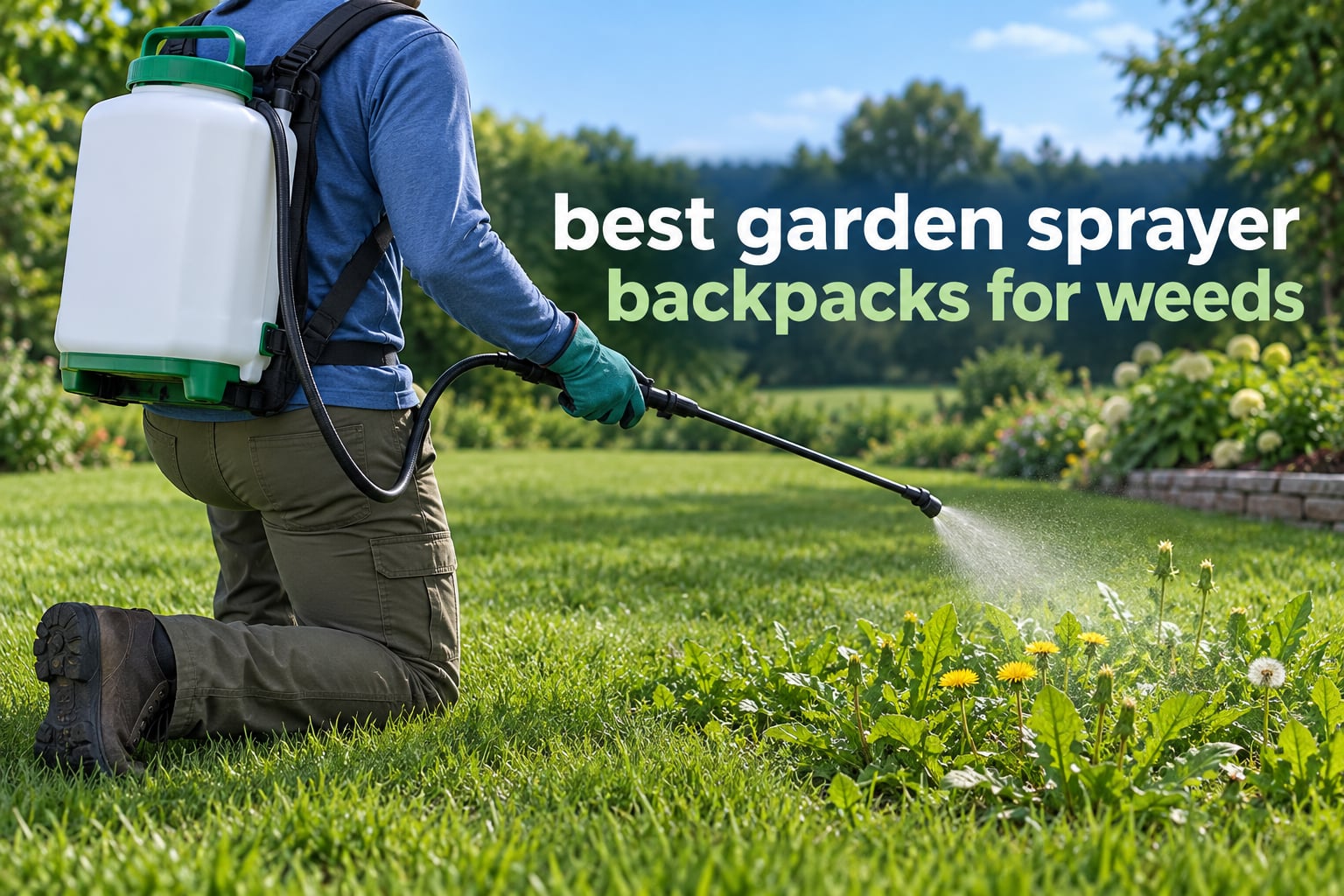
A backpack sprayer is a sealed tank with padded shoulder straps and a pump that builds pressure, forcing liquid herbicide, fertilizer, or pesticide through a hose and wand so you can cover a lawn, driveway, or garden bed without stopping to refill every few hundred square feet. That coverage is the whole point: weed control fails when coverage is uneven, and a hand wand or trigger sprayer empties long before a broad patch of clover or crabgrass is treated.
That is why the best garden sprayer backpacks for weeds sit at the top of our list for anyone treating more than a handful of isolated plants. A 4 gallon tank holds roughly 40 pounds of liquid when full, which covers on the order of a thousand square feet per load depending on the nozzle and your walking pace. Nobody wants to carry that weight to kill six dandelions, but it is the minimum sensible tool for broadcast herbicide on a lawn edge or a fence line.
We built this list around what actually shows up in owner reviews: gallons per charge, real pressure at the wand, whether the harness survives a full tank, and whether the seals tolerate glyphosate. We compared ten packs across manual, battery, and platform-locked designs, cross-checked the specs against owner reports, and used forum consensus from AgTalk, LawnSite, and TheLawnForum to flag what tends to break. We also wrote a related guide to the best drone backpacks for readers who want their gear tested the same way.
Here is the short version before the details. The PetraTools HD4000 is the pick for most people, because it combines adjustable pressure with a six to eight hour runtime and the largest review base in the group. Manual pump users should look at the CHAPIN 61500, and if you already own Makita or DEWALT batteries, the platform packs below may be the cheapest route to a second sprayer.
Best overall and best battery: PetraTools HD4000, adjustable 40-90 PSI with a 6-8 hour runtime
Best value manual pump: CHAPIN 61500, two-stage filtration and a service life owners measure in decades
Best for high-pressure spot work: Roundup 190314, 150 PSI with a lockable shut-off and Viton seals
Best for pro-grade herbicide application: Field King Max 190348, brass shut-off, stainless wand, six nozzles
Budget pick: REALWORK 4-Gallon, the only pack in the group with a pump handle that mounts on either side
Best for left or right hand use: SOLO 425, interchangeable pump handle and TeeJet compatibility
Best for Makita tool owners: VAXMAY 100 PSI, adjustable knob, battery and charger included
Best battery starter pack: SideKing, stainless telescopic gun and a 64 inch hose
Best nozzle variety: NPGLOBAL, eight nozzles and a lifetime warranty
Best for DEWALT platform owners: DEWALT 20V, Variflo flow control and triple filtration
Table of Contents
Top 3 Garden Sprayer Backpacks for Weed Control (October 2026)
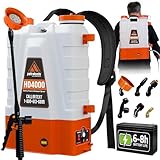
PetraTools HD4000
- 6-8 hour battery runtime
- 40-90 PSI adjustable pressure
- 34.5 inch extendable wand
- 6 nozzles

CHAPIN 61500
- 4 gallon translucent tank
- Two-stage filtration
- 48 inch hose with lock-on shut-off

Best Garden Sprayer Backpacks Compared in 2026
| Product | Specifications | Action |
|---|---|---|
| PetraTools HD4000 |
|
Check Latest Price |
| CHAPIN 61500 |
|
Check Latest Price |
| Roundup 190314 |
|
Check Latest Price |
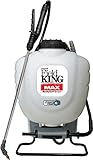 Field King Max 190348 Field King Max 190348 |
|
Check Latest Price |
 REALWORK 4-Gallon REALWORK 4-Gallon |
|
Check Latest Price |
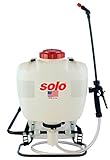 SOLO 425 SOLO 425 |
|
Check Latest Price |
 VAXMAY 100 PSI VAXMAY 100 PSI |
|
Check Latest Price |
 SideKing SideKing |
|
Check Latest Price |
 NPGLOBAL NPGLOBAL |
|
Check Latest Price |
 DEWALT 20V Backpack DEWALT 20V Backpack |
|
Check Latest Price |
1. PetraTools HD4000 Battery Backpack Sprayer – Best Overall for Weed Control
PetraTools HD4000 Battery Powered Backpack Sprayer, 6 Hr Runtime, 6 Nozzles
- Six to eight hours of continuous spraying
- Adjustable 40-90 PSI across six nozzles
- Double padded straps and a back pad
- Translucent tank with gallon markers and screen filter
- Heavier bulk than a manual pack
- Audible electric pump while spraying
- Wand connection needs occasional care
This is the pack I recommend to most people, and the reason is simple: it does the two things a weed sprayer needs most, in one design. The electric pump delivers adjustable pressure from 40 to 90 PSI, so you can dial down to a gentle fan for broadcast over turf or push up for dense stems, and the 12V 8AH battery runs six to eight hours and pumps more than 200 gallons per charge.
For weed work that range matters more than raw PSI. A lawn with broadleaf weeds in it wants low pressure and a wide fan pattern, because high pressure at close range is exactly what turns a spray job into a dead-lawn job. Owners consistently single out the pressure control and the padding at the shoulders and back as the two features that made long sessions bearable.
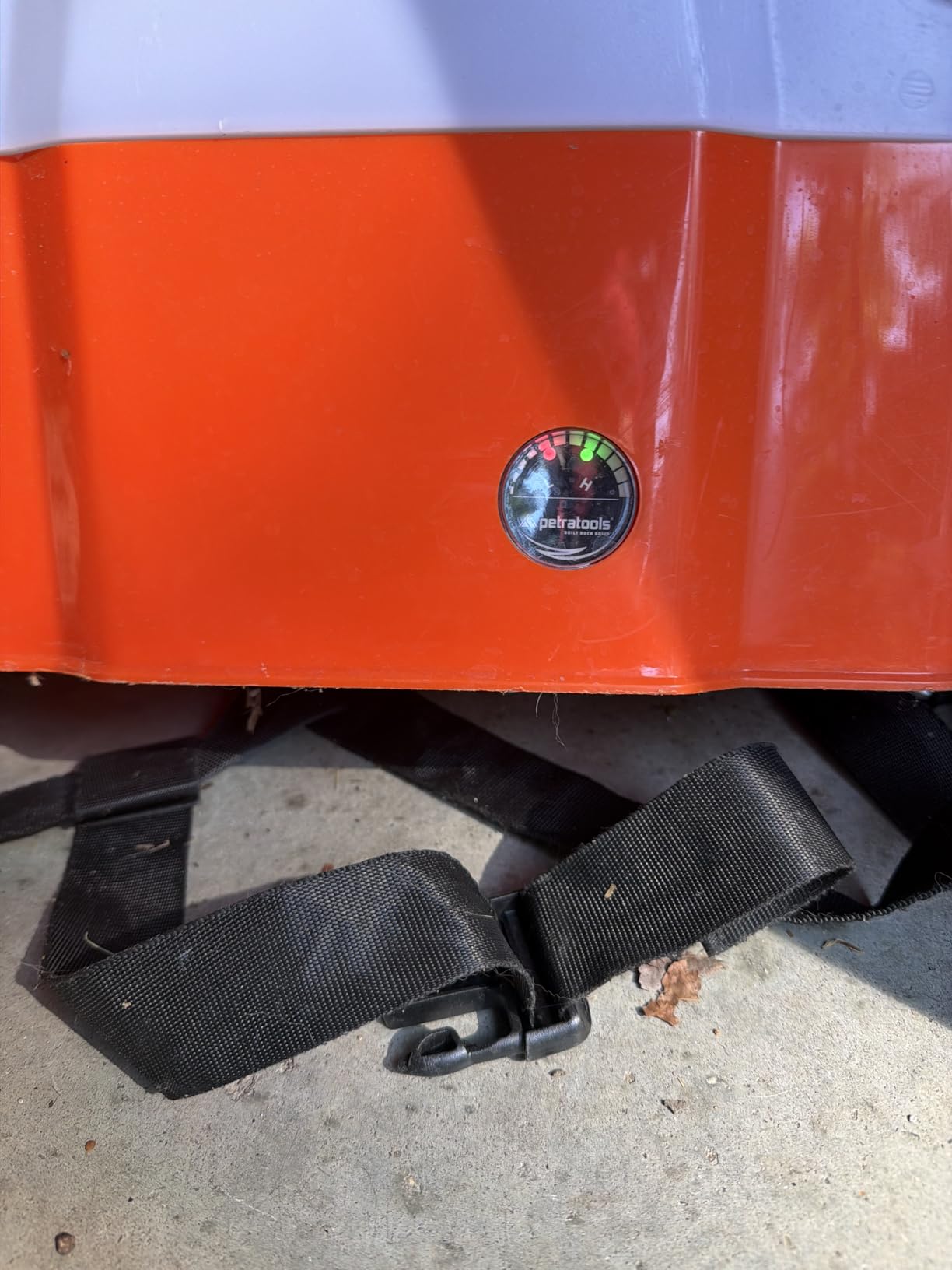
The tank is translucent 4-gallon HDPE with molded gallon markers and a screen filter, so you can see the level without pulling the pack off and catch debris before it reaches the nozzle. The 34.5 inch extendable wand and 48 inch high-pressure hose give you enough reach to treat under a fence line or along a foundation without crouching constantly.
It is not a small pack. Owners who treat several acres call it heavier in the hand than a manual model, and the electric pump makes a low hum that some people notice more than they expected. Those are the two consistent gripes across thousands of reviews; the wand joint does need a check before a long day, but nothing else in the feedback recurs.
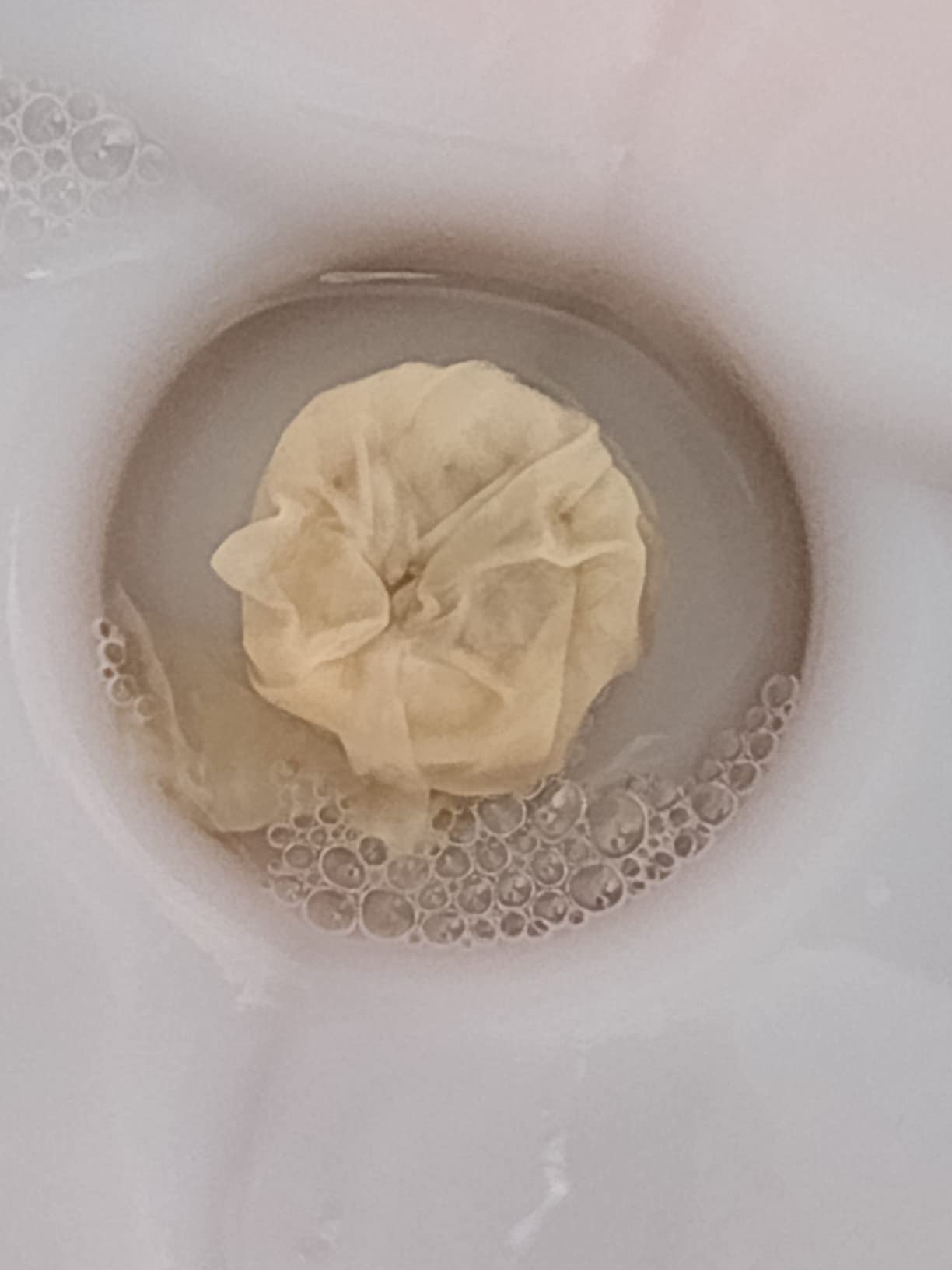
When the HD4000 is the right buy
It suits anyone with more than a small yard, especially a lawn with a spread of broadleaf weeds where a single pass at steady dilution beats spot treating one plant at a time. Six to eight hours means most people finish a property in one session and rarely think about a charger mid-job.
The adjustable pressure knob is the part that sets it apart from fixed-output battery packs. On LawnSite, users who love lithium power complain there is no way to regulate the spray, and that is a real limitation for delicate seedlings and close-range work.
When to pick something else
Skip it if storage space is tight or if you only treat a flower bed under a few hundred square feet, where the weight is more burden than benefit. It is also the wrong first battery sprayer if you are trying to stay inside a single tool platform and do not yet own 12V packs.
It is the wrong pick for a grower who needs to spray thick, woody brush at long range. At 90 PSI it tops out well below the 150 PSI packs below, which reach further but drift more if you are not careful.
2. CHAPIN 61500 Backpack Sprayer – Best Value Manual Pump
- Owners report 9 to 15 years of regular service
- Smooth and consistent pump pressure
- Two-stage filtration cuts nozzle clogs
- Nitrile seals tolerate common herbicides
- Easy filling through a 4 inch opening
- Must be pumped constantly to hold pressure
- Base ridge can dig into a taller lower back
- Light padding on the straps
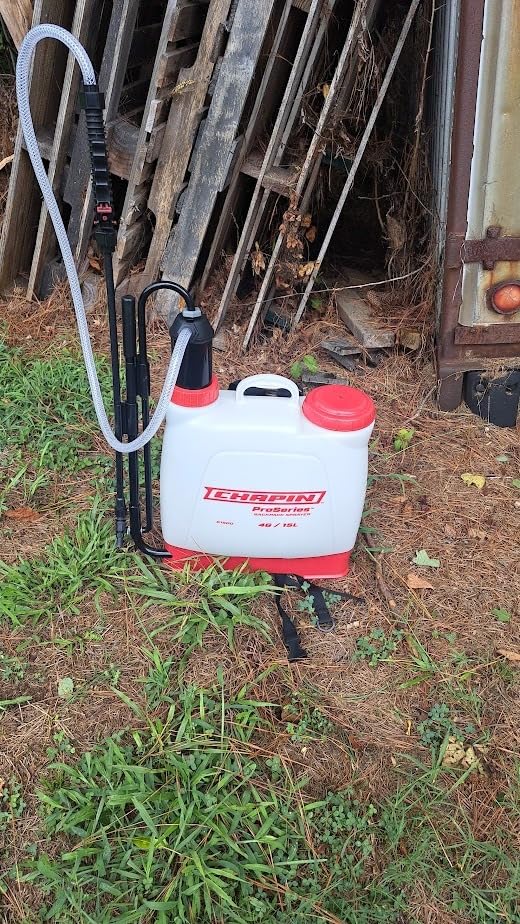
When we say this pack is built to last, that is not marketing copy, it is the single most repeated theme in the reviews. Multiple owners describe the same unit in service for five, ten, even fifteen years, and that kind of long ownership record is rare in this category.
Mechanically it is a straightforward 60 PSI manual pump with a 4 gallon translucent poly tank. The 4 inch fill opening with a filter cap is the detail that saves time on a multi-hour session, and the two-stage filtration, a filter in the shut-off plus a basket at the cap, is what keeps nozzles from clogging when you are spraying a mixed load of herbicide concentrate and water.
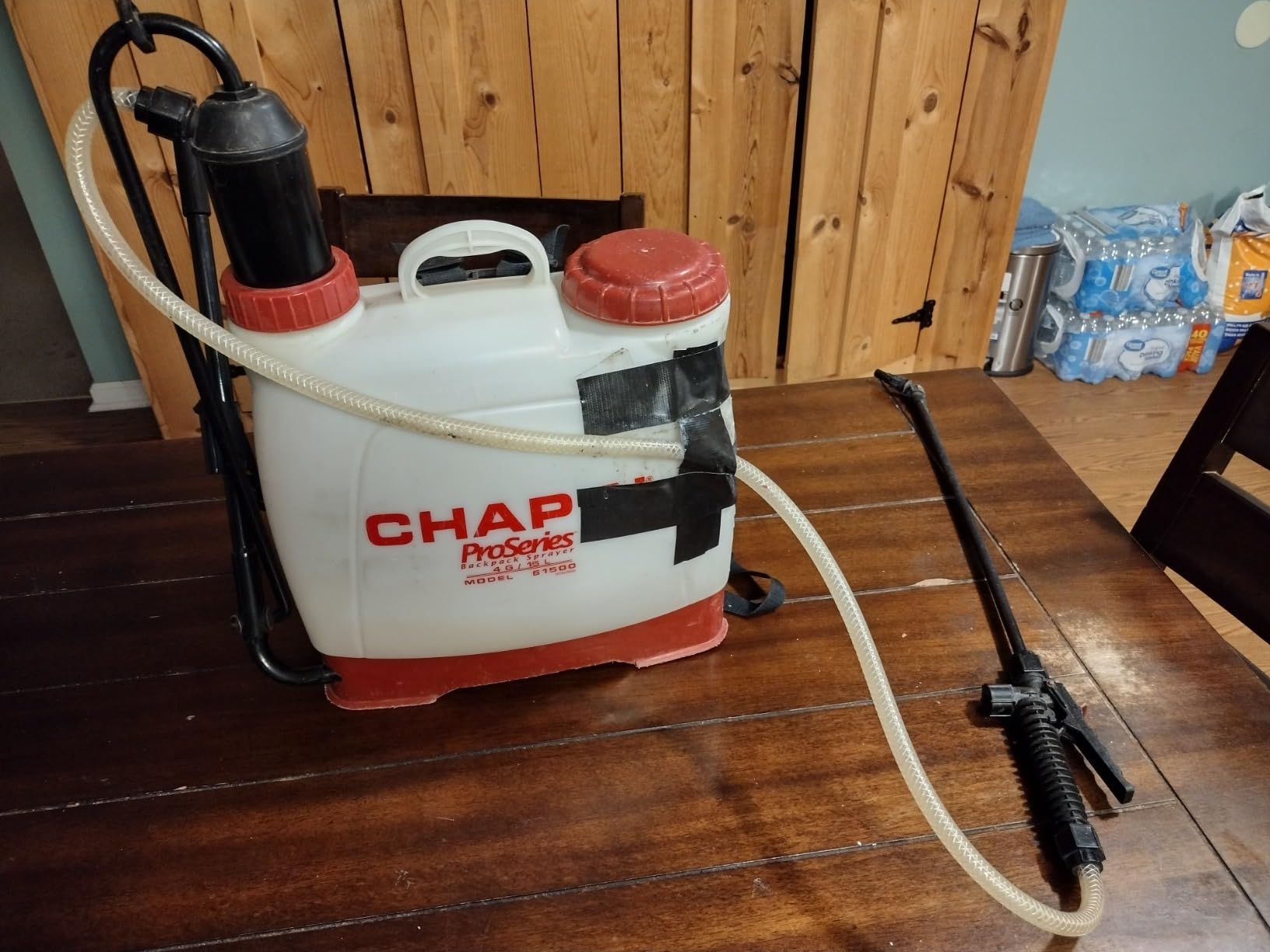
The nitrile seals are rated for common fertilizers, weed killers, and pesticides, which matters more than it sounds if you plan to alternate products in one tank. Forty-eight inches of reinforced hose and a lock-on cushion-grip shut-off mean you can set the trigger and walk a spray pattern without your hand cramping.
The cost of that longevity is effort. You pump it constantly to hold pressure, and a few owners note the base ridge pressing into the lower back on a full tank, particularly on taller frames. Straps are adjustable and padded but thin, and some suggest adding a chest cross-strap for loaded work.
Why this one outlasts the field
Simple, serviceable design is the point. There are no proprietary electronics to fail, the seals are replaceable, and the parts list is short. Forums treat warranty length and parts availability as the top quality signals in this category, and a simple pump wins on both.
At 60 PSI it produces a gentler spray than the 90 to 150 PSI packs, which is an advantage near turf and an disadvantage for woody stems. Broadleaf weed work on a lawn is the sweet spot.
Where it will frustrate you
Long sessions on a large property are where manual pumping shows. If you are treating acres rather than a suburban lawn, the arm fatigue is the reason most people move to a battery pack after a season or two.
Watch the fill line. Overfilling a soft poly tank is the fastest way to end up with a soaked back, and the hardware and instructions that ship with the pack are not always clear to a first-time owner.
3. Roundup 190314 Backpack Sprayer – Best for High-Pressure Spot Work
Roundup 190314 Backpack Sprayer for Fertilizers, Herbicides, Weed Killers & Insecticides, 4 Gallon
- Fewer pump strokes than hand-pump packs
- 150 PSI reaches into dense growth
- Viton seals resist chemical breakdown
- Built-in lumbar support and waist belt
- In-line filter resists clogs
- Tank can leak when filled to capacity
- Some units lose pressure as seals age
- Level is hard to read without removing the pack
This is the pick when weeds have gone woody, when you are treating a fence line where grass grows up into the spray, or when you want to reach a thicket from a standing position rather than kneeling. At 150 PSI it delivers more pressure than any manual pack here, and that is the whole design intent.
It runs a mechanized pump that needs far fewer strokes than a hand-pump pack, and owners covering a quarter acre or more in a session report the speed difference clearly. The angled wand head is a small detail that taller users appreciate, since it lets you spray upright instead of bending at the waist.
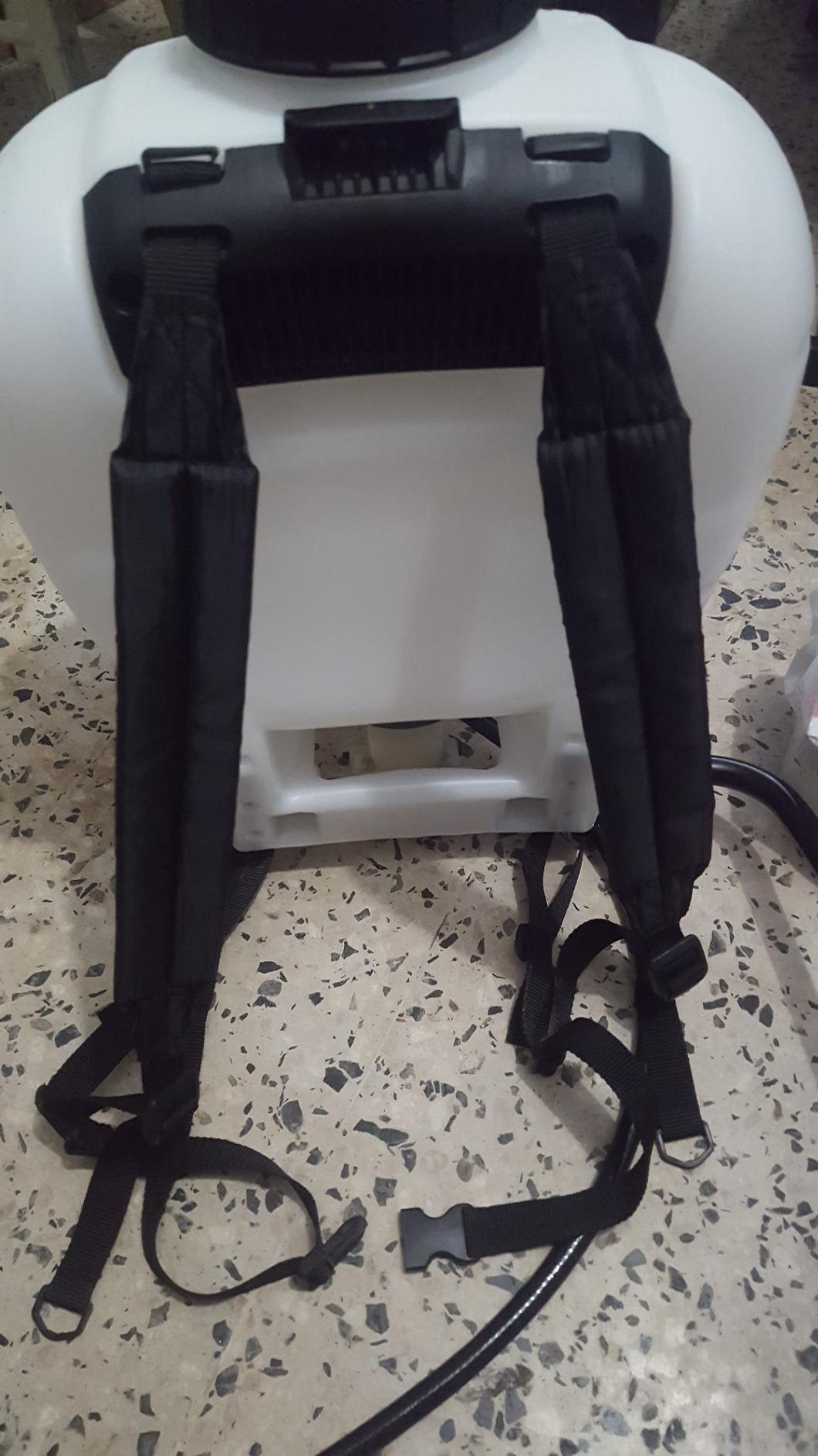
Viton seals and gaskets run through the pump and the shut-off, and that is a step up from nitrile for anyone running glyphosate regularly. Three nozzles come in the box, an adjustable poly, a high-volume fan, and a low-volume fan, which covers spot work, broadcast, and precise band application.
Pressure that high makes drift your problem to manage. A fine mist at 150 PSI will travel, and near a lawn edge or a flower bed you need to drop to the low-volume fan and work at a steady walking pace. That is a technique adjustment rather than a flaw, but it is the thing to know before you buy.
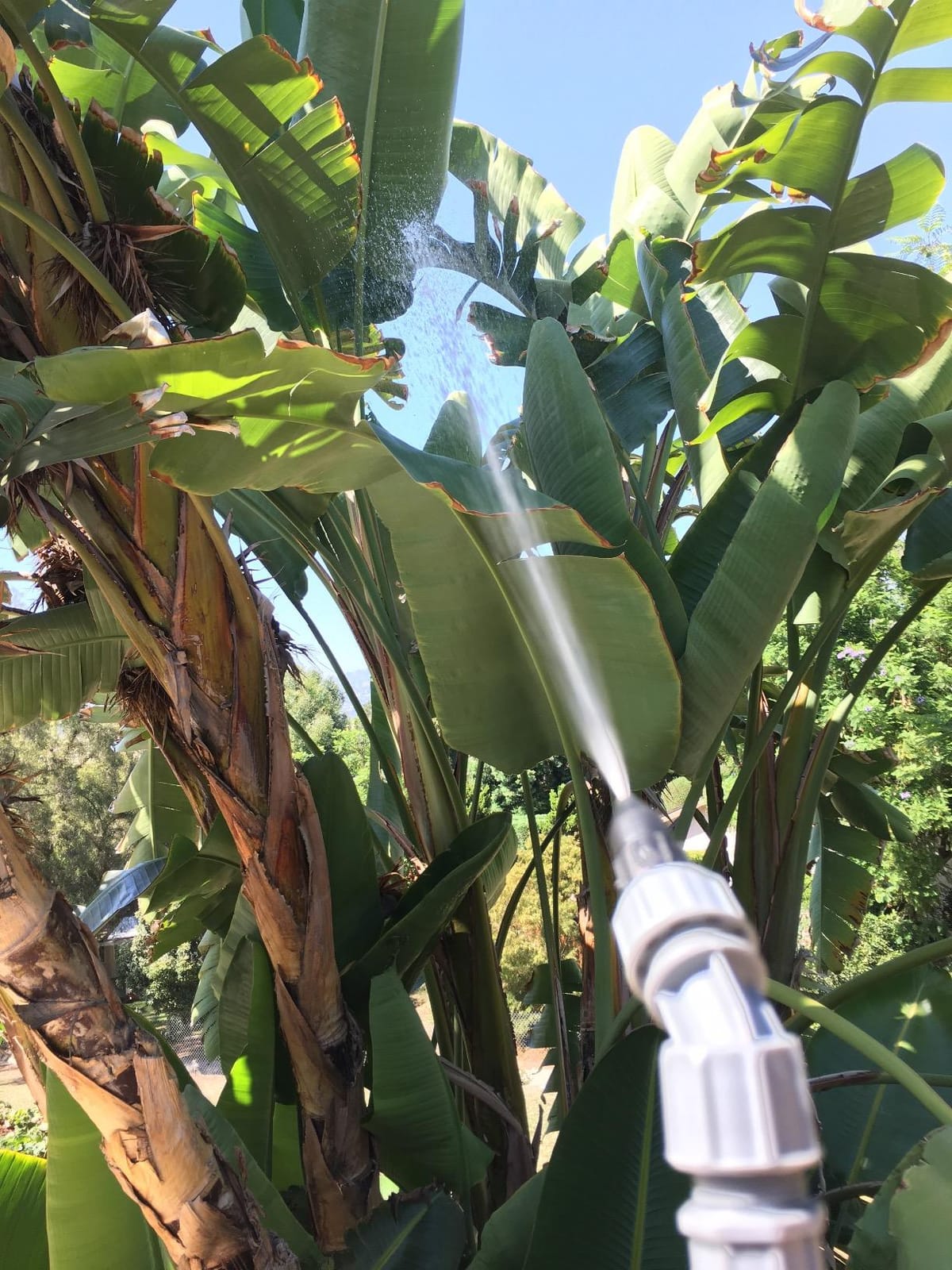
Where 150 PSI earns its place
Thick stands of weeds, brushy edges, fence lines tangled with grass, and any spot treatment that needs distance rather than coverage. The lock-on shut-off with a comfort grip also makes long continuous passes easier than a hand trigger.
Viton seals are the quiet advantage. Forum regulars who mix several products through one tank worry about cross-contamination and seal degradation, and Viton holds up better against a rotating chemical lineup than cheaper elastomers.
Where it costs you
Fill to the marked line and not past it. Owners report the tank leaking over the back when it is overfilled, and that is the most common complaint in the whole set of reviews for this pack.
A handful of units also lose pressure as the seals age, and the fluid level is difficult to judge without taking the pack off. If you spray delicate seedlings, the low-volume fan at the wand is the safest setting, not full pressure.
4. Field King Max 190348 Backpack Sprayer – Best for Pro-Grade Herbicide Work
Field King Max 190348 Backpack Sprayer for Professionals Applying Herbicides
- Stainless wand and brass hardware for heavy chemical work
- Internal no-leak pump keeps liquid off your back
- Six nozzles plus TeeJet compatibility
- Tool-free seal changes in minutes
- 12.8 pounds dry is the heaviest manual pack here
- Continuous pumping on a long job
- Short wand for reaching high into trees
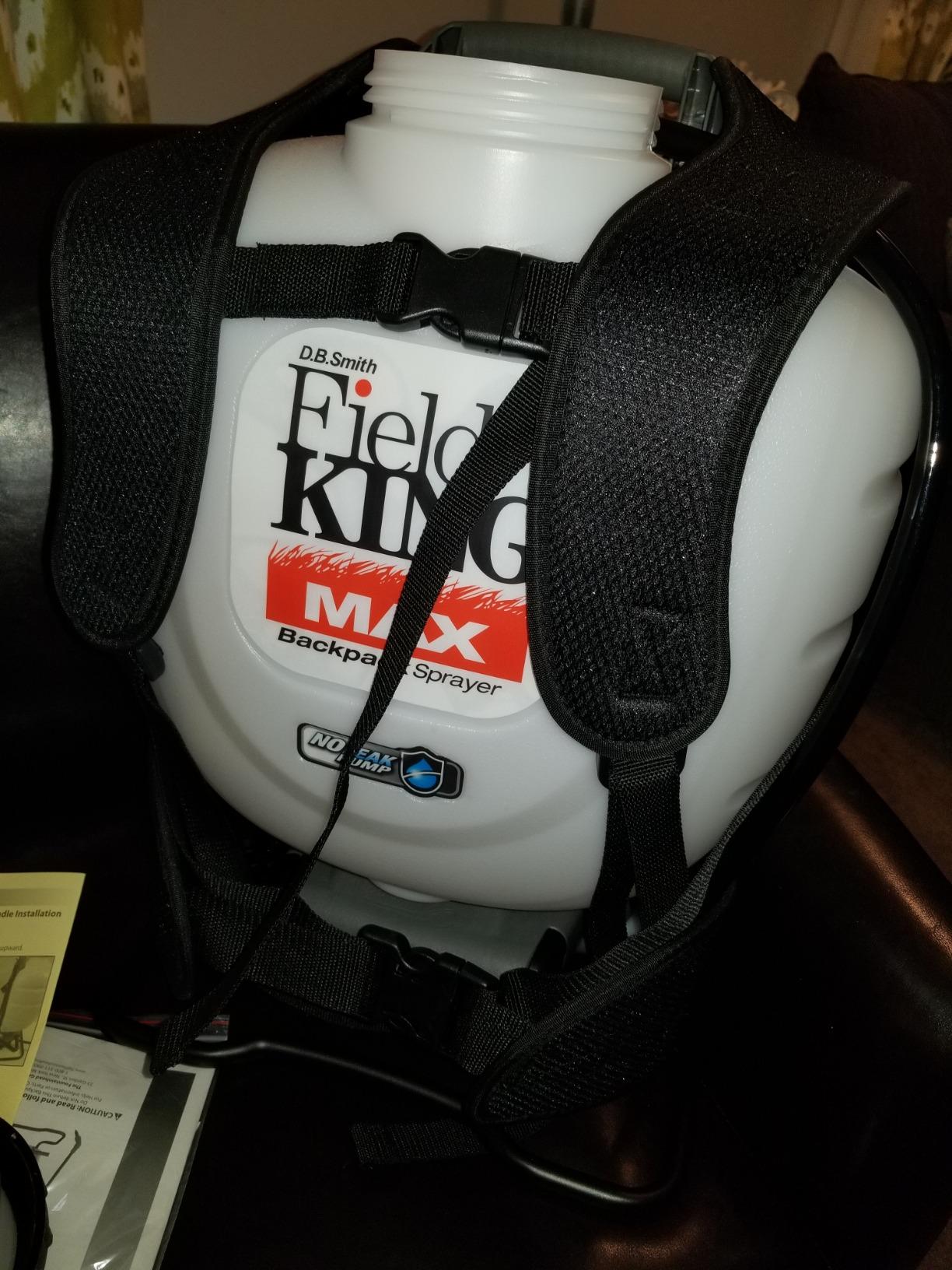
The Field King Max is what a landscaper reaches for and a homeowner should know about. At 12.8 pounds dry it is the heaviest manual pack in this group, and that weight is the price of a stainless steel wand, brass shut-off, and an internal no-leak pump that keeps chemical from running down your back.
Six nozzles ship in the box, adjustable brass, high-volume wide fan, low-volume wide fan, low-volume narrow fan, jet stream, and foaming, and the unit accepts TeeJet nozzles if you want a pattern this kit does not cover. Owners doing repeated herbicide work treat that pattern range as the reason the pack handles everything from turf broadcast to stem injection.
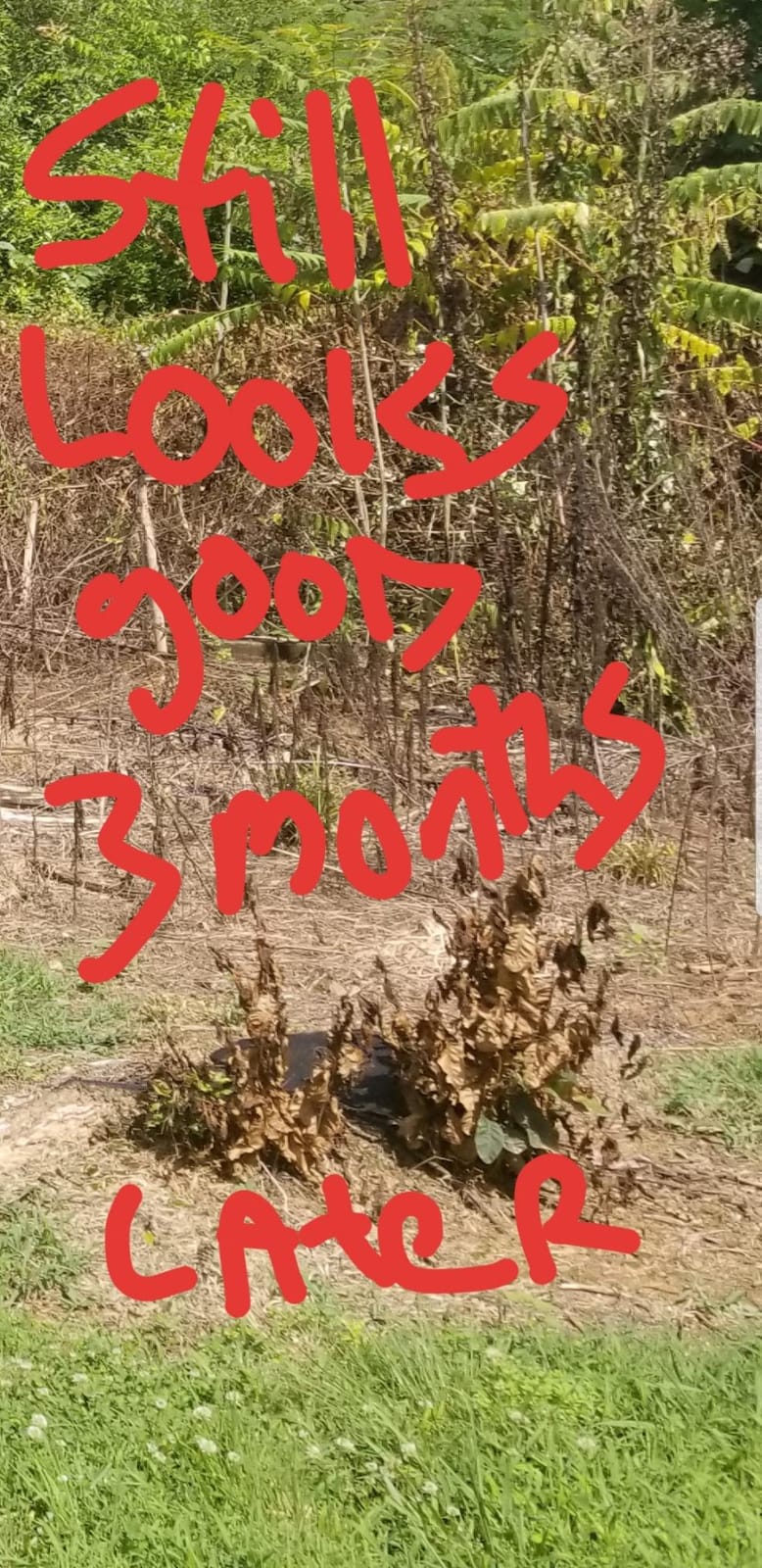
The tool-free seal changes matter more than they sound. You can swap the pump seals by hand in minutes without a full teardown, which is the difference between a ten-minute fix and a part on order for a week. Viton seals on the wand and a lockable brass shut-off with an in-line filter complete the chemical-resistance story.
AgTalk regulars treat Jacto warranty length and parts availability as the top quality signals in this category, and the Field King Max is the closest thing on this list to that same logic: metal hardware, serviceable seals, no electronics to fail.
Who should buy the pro-grade hardware
Anyone applying herbicide repeatedly, treating large areas, or who has already replaced the seals on a plastic pack more than once. The internal no-leak pump and brass shut-off are built for a full week of chemical work rather than a weekend.
If you like aftermarket nozzle work, the TeeJet compatibility means a mixed-brand tank setup stops being a limitation. That flexibility is what professionals tend to notice first.
What you give up for it
Weight and pumping effort. Twelve point eight pounds empty becomes a serious load when full, and the pump is manual throughout, so a full day of application will leave your arm tired.
The 21 inch stainless wand is short. It is fine at ground level but a reach problem if your weeds include brambles or saplings, and it is why we would not call this the pack for invasive woody growth.
5. REALWORK 4-Gallon Backpack Sprayer – Budget Pick
- Entry-level price for a 4 gallon pack
- Pump handle fits either side for either hand
- Includes a rebuild kit of spare seals and a strainer
- Semi-transparent tank for level checks
- Lowest pressure output in the group
- Awkward to shoulder when full
- Plastic threads can crack if overtightened
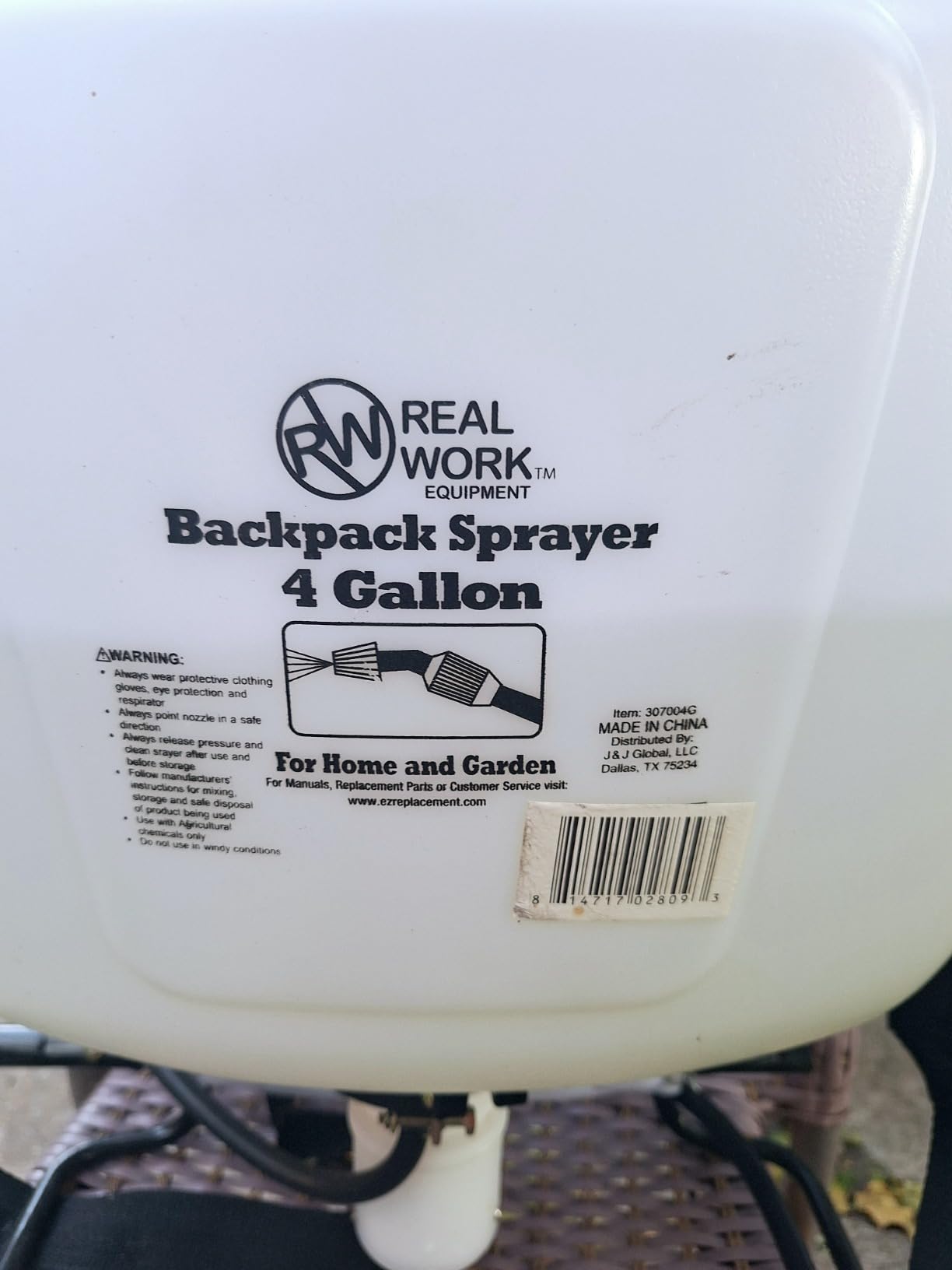
The REALWORK is the one to buy if you are putting a pack on your back for the first time and want to learn on something inexpensive. It does the basic job, watering, pest control, and light weed work, without the price of a pro-grade frame.
The detail that separates it from other budget packs is the interchangeable pump handle. It mounts on either side, so it suits either hand, and a lot of cheap sprayers lock you into one side for life. Owners call that out specifically, and it matters if you have any shoulder trouble.
It also includes a small rebuild kit, replacement seals, rings, and a strainer, which is generous at this tier. The semi-transparent HDPE tank and funnel-style fill top make level checks and filling simple, and the 59 inch reinforced hose is the longest on the manual packs here.
Pressure is the trade-off, and it is a real one. This is the lowest output in the group, so expect a gentle spray rather than reach. For broadcast herbicide on a lawn that is fine, but for dense growth you will be working closer to the plant and kneeling more often.
Where the budget pick makes sense
A first backpack sprayer, a small garden with limited storage, or a property where you mostly water and treat pests. The included spare seals mean an early leak is a five-minute fix rather than a replacement.
If you are a smaller-framed user or you spray around a lot of delicate plants, the low output is safer than a high-pressure pack. Nothing drifts further than an over-pressured mist.
When it is the wrong money
Skip it if you plan to treat acres, invasive woody weeds, or anything above your shoulder height. The pressure will not carry, and you will be on your knees more than you are standing.
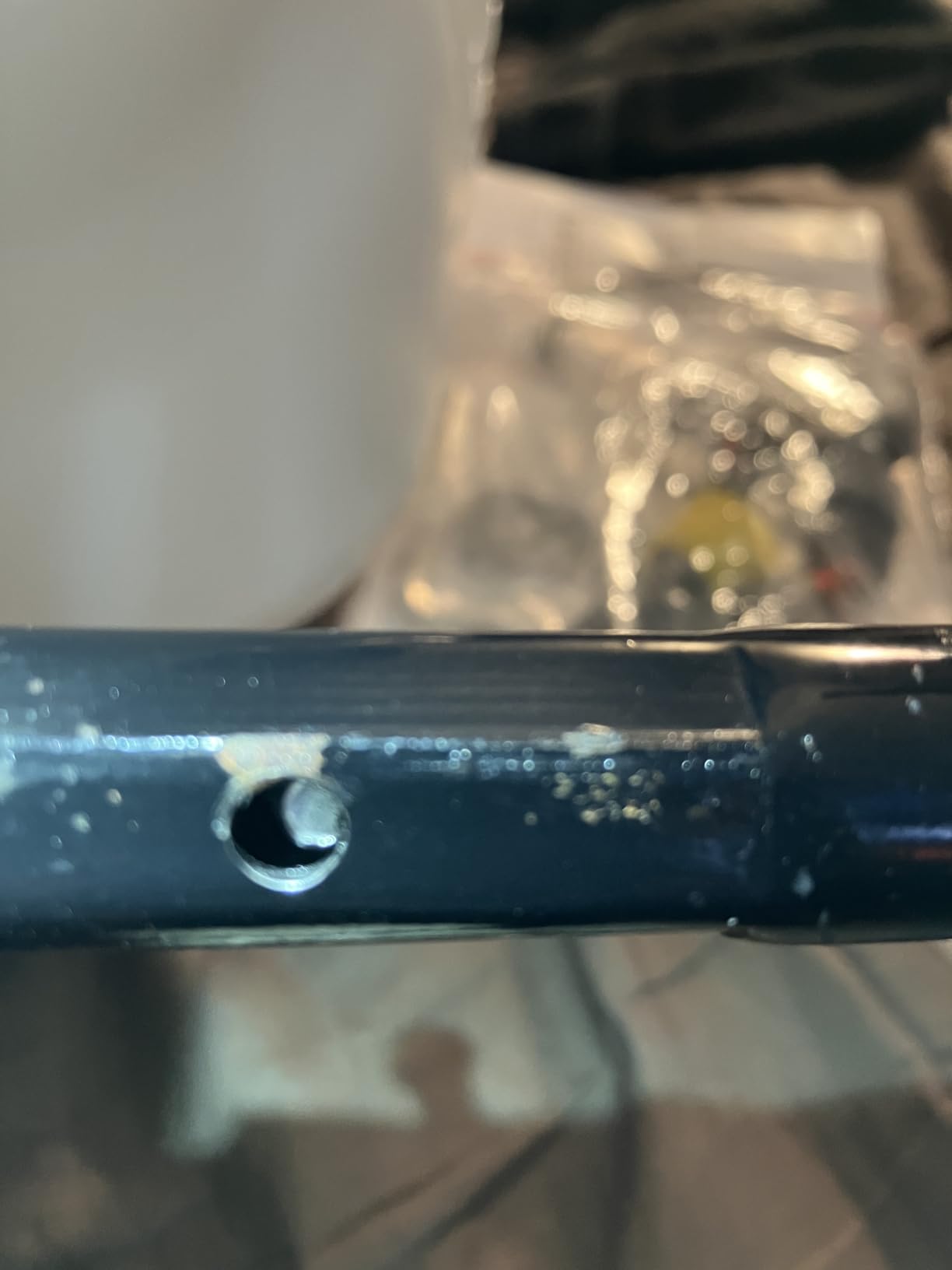
Handle the plastic threads gently. Owners report leaks and cracked fittings when the tank collar and wand collar are overtightened, and a few units arrive with mismatched pump lever parts or a cracked handle base. Inspect the tank on arrival.
6. SOLO 425 Piston Backpack Sprayer – Best for Either-Hand Operation
SOLO 425 4-Gallon Piston Backpack Sprayer, Wide Pressure Range up to 90 psi
- Wide pressure range up to 90 PSI
- Interchangeable pump handle suits either hand
- Extra-large fill opening for fast refills
- Balanced even when the tank is full
- Viton seals in key locations
- No chest cross-latch
- so a full tank can slip off
- Basic straps over long sessions
- Some leaking at the tank-to-hose connection
- Plastic wand and strap clips can break
The SOLO 425 has been a long-running favorite for weed and fertilizer work, and the reason is the piston pump. It delivers up to 90 PSI with a smooth, predictable stroke, which lands in the sweet spot for lawn broadleaf work where you want reach without a fine mist.
Four commercial-grade changeable nozzles come in the box, a plastic adjustable, fan spray, hollow cone, and jet stream, and the wand is TeeJet compatible. The hollow cone is the one to reach for on broadleaf weeds, because the coarse droplets in a cone pattern give better coverage on leaf surface than a fine mist.
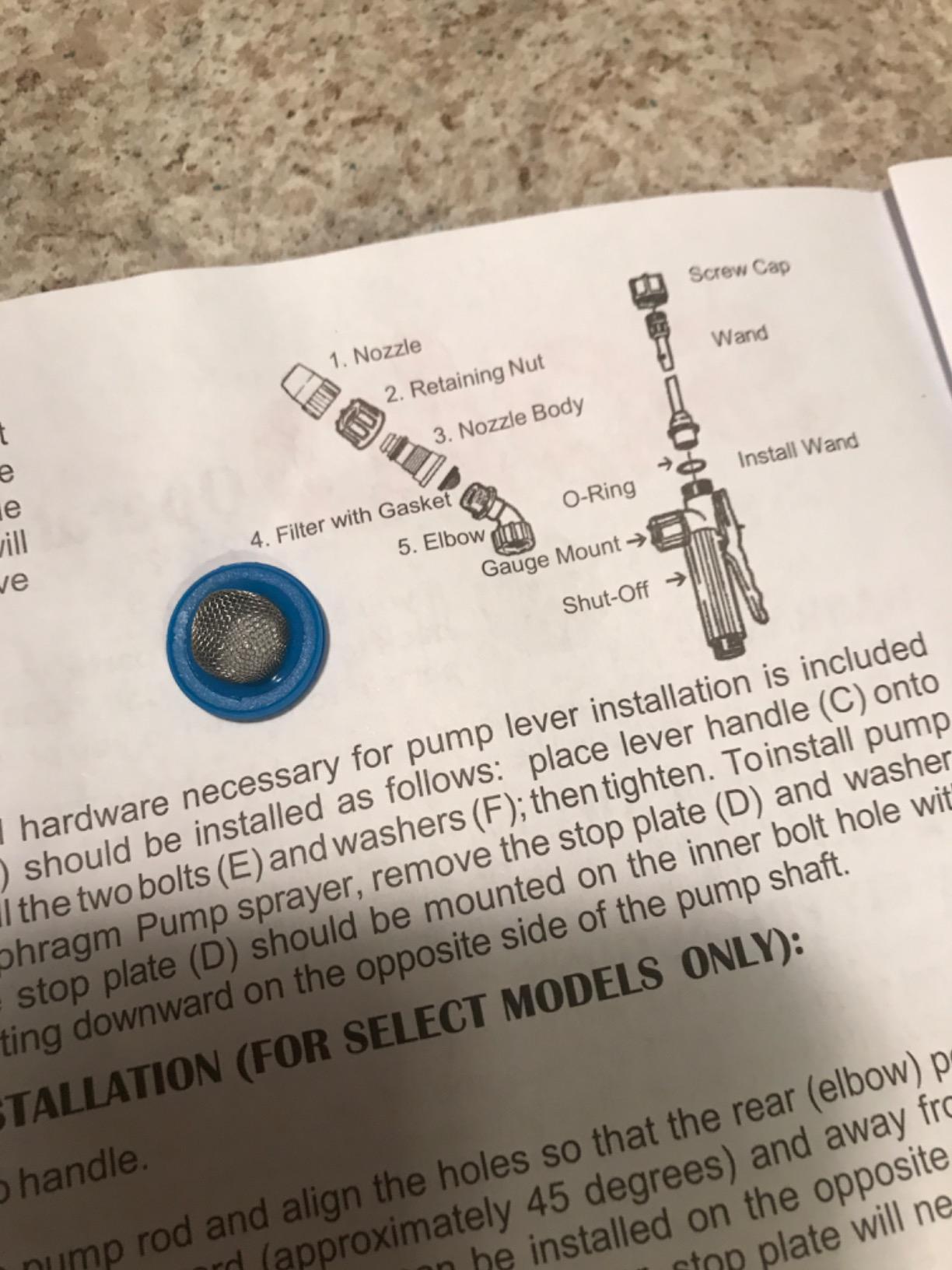
Two details set it apart for a long day. The pump handle is interchangeable so you can set it for either hand, and the metal frame carries an extra-large tank opening that makes filling and cleaning far faster than a narrow mouth. Raised gallon markers molded into the tank mean you can check the level without tipping the pack.
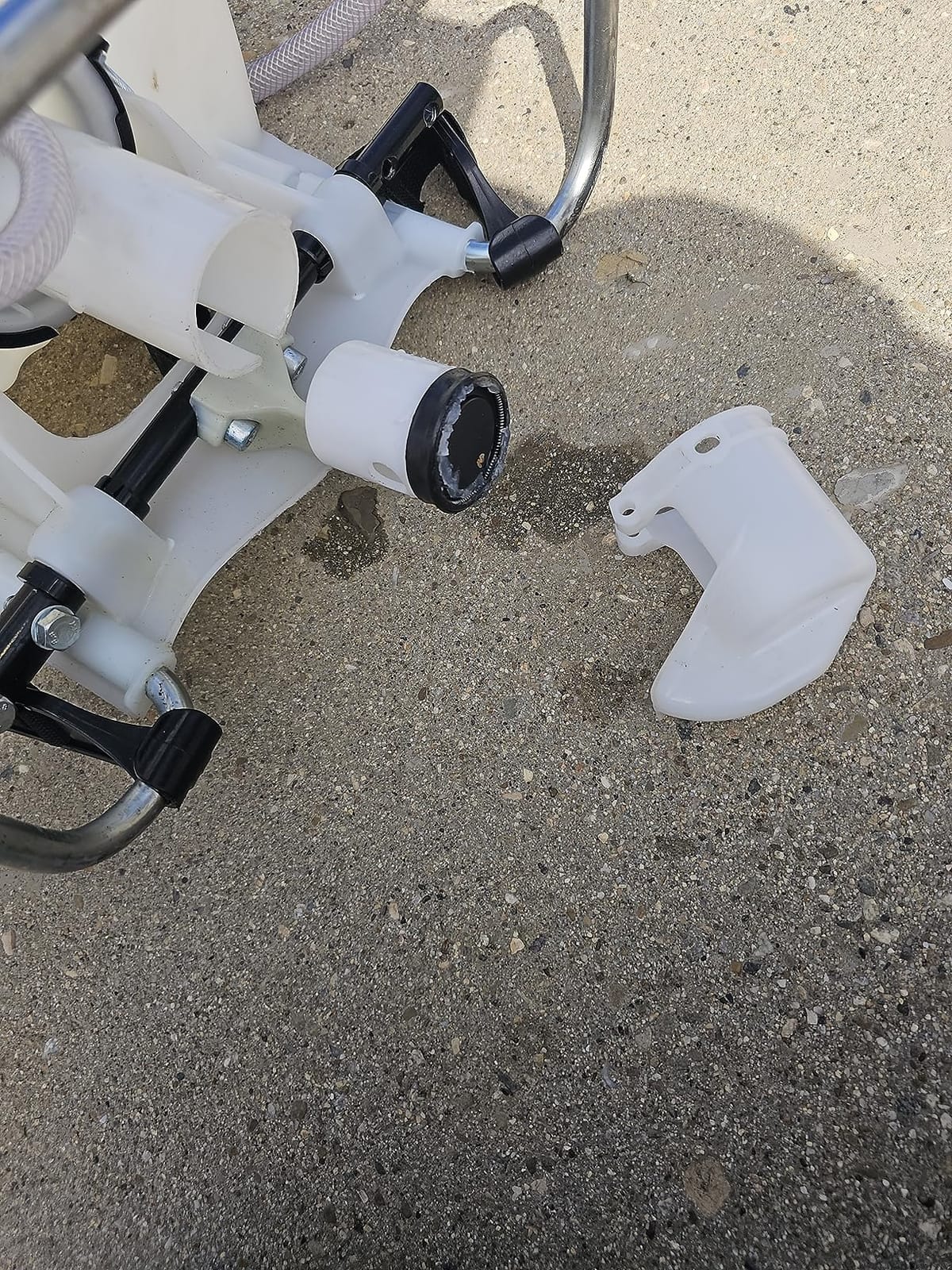
The harness is the weak point. There is no chest-level cross-latch, so a full tank can pull off the shoulders on a slope or when you bend, and the straps are basic by modern standards. A few owners also report leaking at the tank-to-hose connection and occasional broken plastic wand clips.
Where the piston pump earns its place
Mixed work. The same pack handles pre-emergent broadcast in spring, spot herbicide on a bed, and insecticide later in the season, and the four nozzle patterns cover each without extra buying.
Anyone who has used a diaphragm pack and hated the effort will notice the difference. The piston stroke is smooth, and 90 PSI covers most residential weed work without pushing droplets into the air.
When to pass on it
Hillside work is where the missing cross-latch becomes a problem. On uneven ground, a 4 gallon tank that can slide off your shoulders is a real hazard rather than an annoyance.
Long sessions on a big property will expose the thin straps. If you plan to spray for a full afternoon regularly, add a chest strap or step up to a harness with a waist belt and lumbar support.
7. VAXMAY 100 PSI Electric Backpack Sprayer – Best for Makita Battery Owners
- Runs up to 16 tank loads on the included battery
- Uses existing Makita 18V packs
- Adjustable pressure from mist to stream
- Telescopic wand reaches 39.3 inches
- Padded straps with waist support
- Depends on the Makita 18V platform for extra packs
- Voltage cutoff can be sensitive to a drained battery
- Five nozzles versus kits that include more
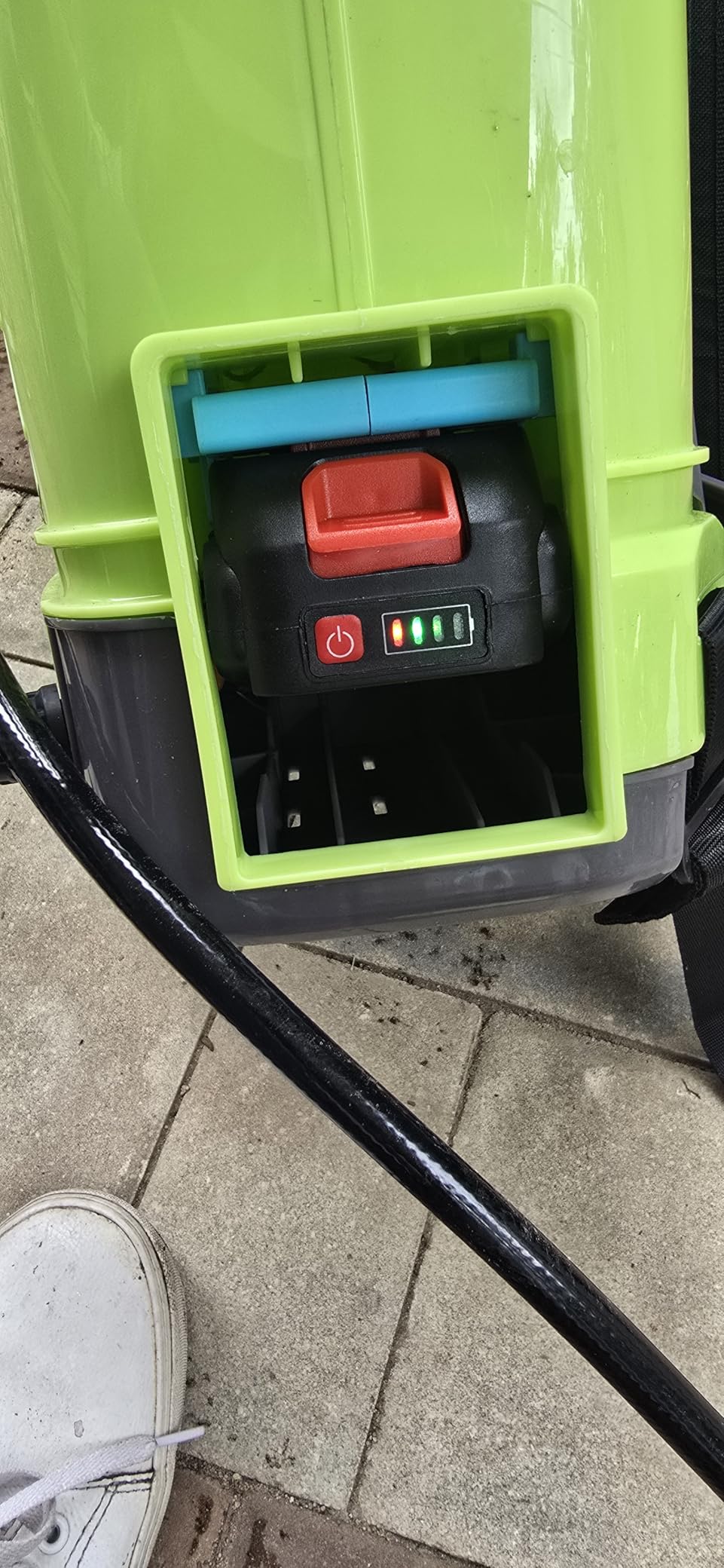
If your tools are already Makita, this is the battery sprayer to buy. The pack runs on the standard 18V slide, so the batteries in your tool bag already work, and a charger is included for the 2.6Ah pack that comes with it.
Pressure is the interesting part. A 3800 rpm motor delivers up to 100 PSI with a pressure knob rather than a fixed setting, which answers the complaint that dominates the forums about battery sprayers having no way to regulate output. Owners like being able to go from a mist for seedlings to a stream for reach on the same charge.
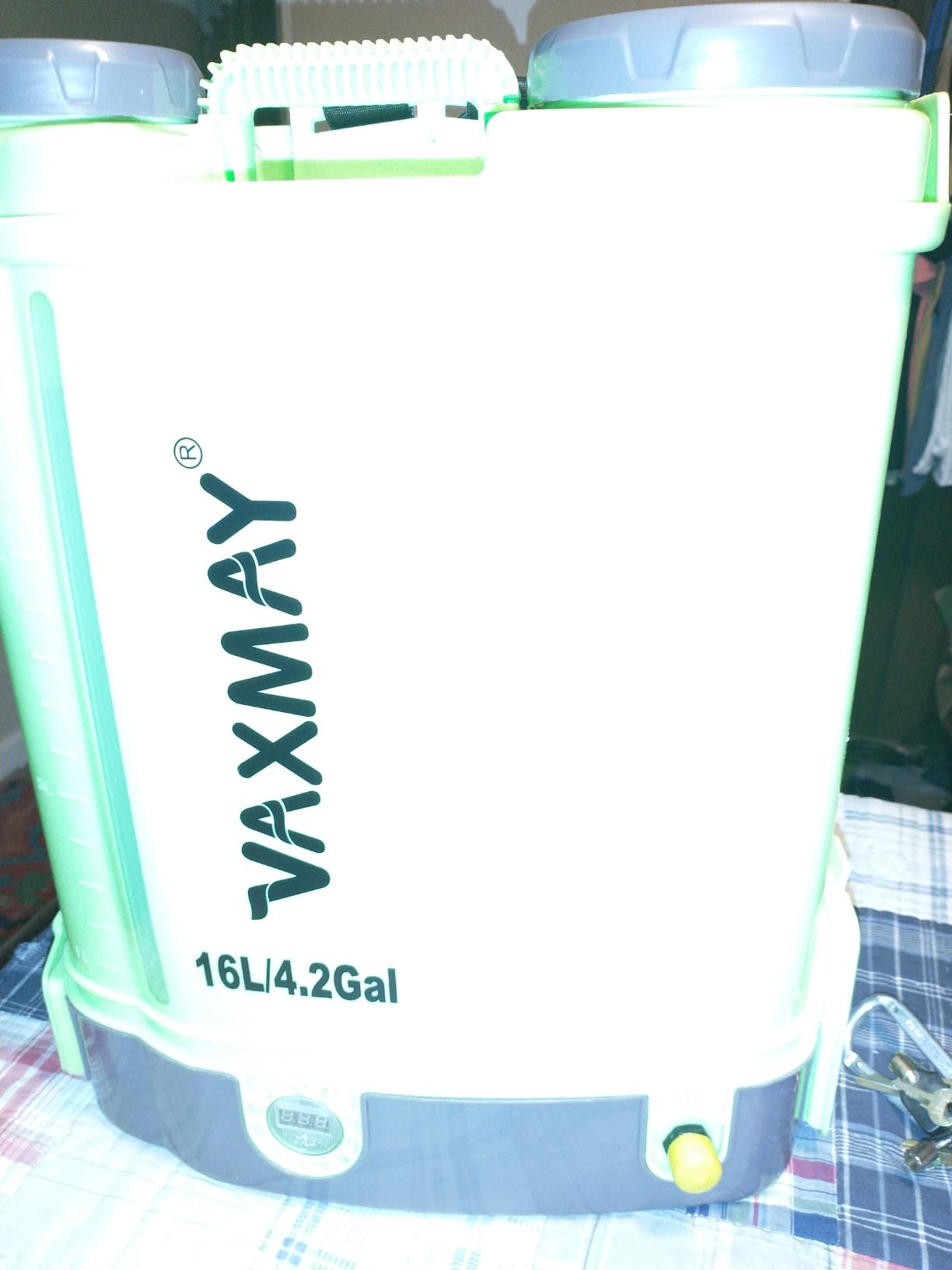
The telescopic wand extends to 39.3 inches, and the kit includes five nozzles plus a widened padded harness with waist support. Run time is the headline: up to 16 tank loads of water per charge on the included battery, which is more than most people will spray in a season of spot work.
Platform lock-in is a feature here and a trap elsewhere. The battery gauge and the automatic shutoff below 14V protect the pack, and that protection only works if you stay inside the 18V system. If you do not own Makita tools, read the next section before you commit.
Best case for a platform sprayer
If you already have two or more 18V packs, this sprayer effectively comes with a battery budget of zero. Swapping a drained pack mid-job takes seconds and no planning.
Adjustable 100 PSI output makes it usable on more than one job type, which fixed-output packs are not. It handles misting, broadcast, and reach without a wand change.
Where the platform costs you
If you are starting from nothing, you are buying into an ecosystem for one tool. The same money in a self-contained pack buys a battery, a charger, and no platform dependency.
The low-voltage cutoff can also cut out on a tired pack mid-job. Keep a second 18V battery charged, and check the digital voltage display before you start a long pass rather than halfway through it.
8. SideKing Battery Powered Backpack Sprayer – Best Battery Starter Pack
- Battery and charger included for a complete kit
- 100 PSI adjustable across mist to long-range stream
- Stainless steel telescopic gun
- 64 inch hose
- Five nozzles including windproof and F-type dual
- Roughly two hours of runtime per charge
- Limited to the Makita 18V platform
- A small share of pump and charging faults early on
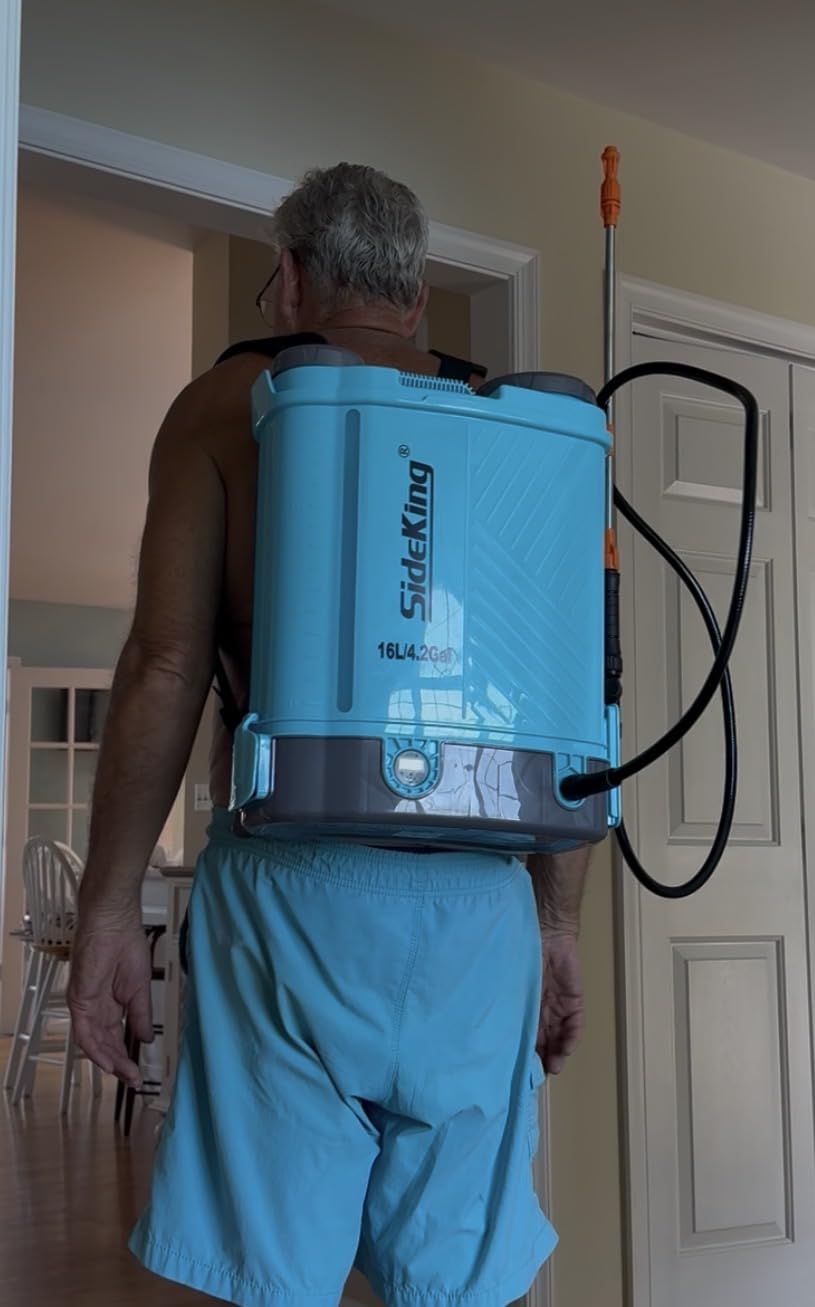
The SideKing is a complete kit out of the box: tank, electric pump, telescopic stainless gun, five nozzles, a 2.6Ah lithium battery, and a charger. For someone who wants to try battery spraying without researching platforms, that completeness is the selling point.
It delivers up to 100 PSI from an adjustable knob and reaches over 20 feet, which puts it in the same performance class as the pricier battery packs. The 4.2 gallon tank and the 64 inch hose are both roomier than most competitors here, and the double-layer padded straps are a step up from thin harness material.
Runtime is the honest limit. A 2.6Ah pack gives roughly two hours of continuous spraying, and the charger takes about three hours to refill it. On a large property that means planning a break, or a second pack, rather than spraying straight through.
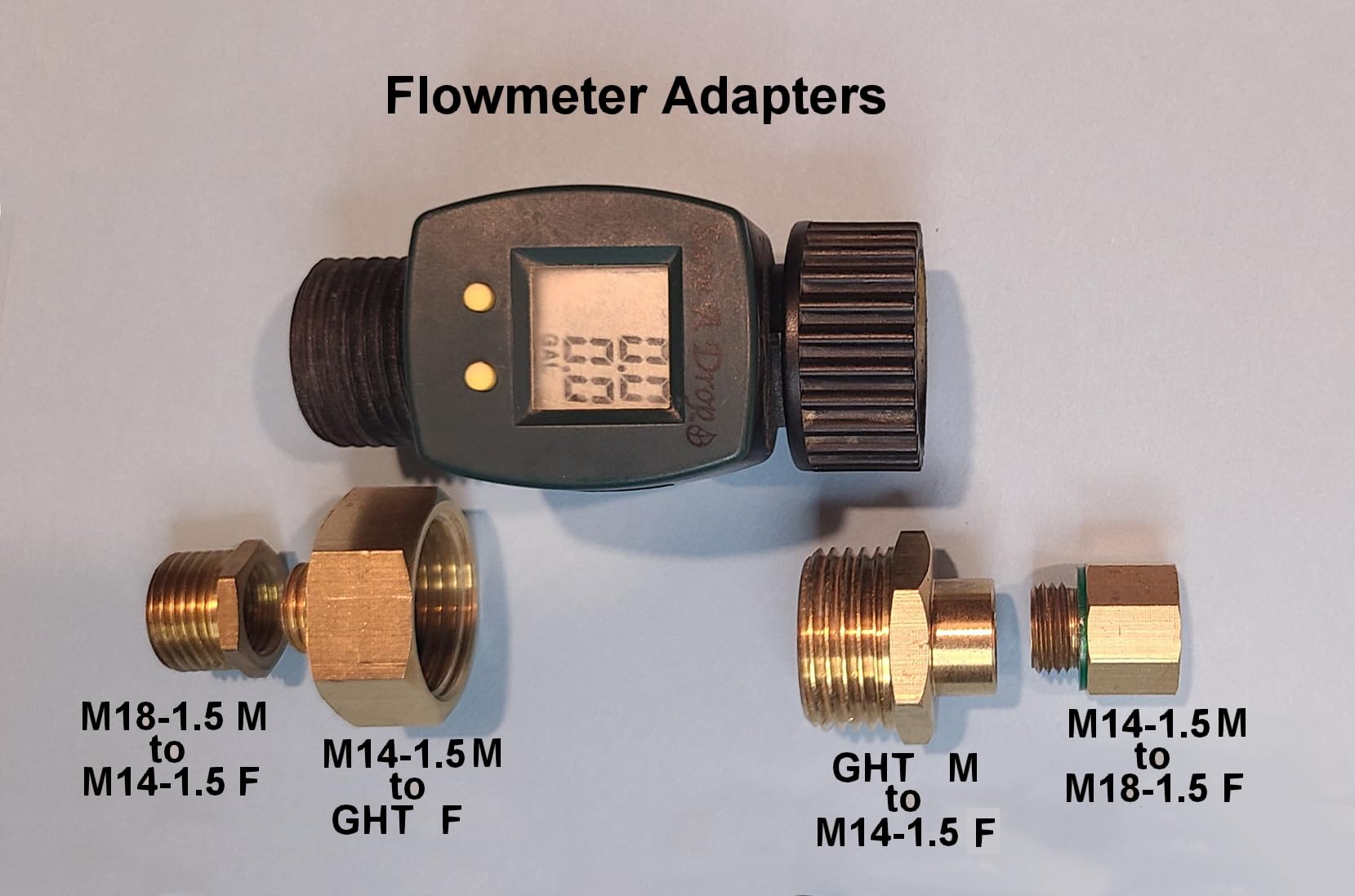
It runs on the same 18V slide as the VAXMAY, so owners of Makita packs can share batteries and buy extras cheaply. A digital voltage display with automatic shutoff below 14V guards the battery, and a small number of owners report pump or charging faults within the first weeks.
When a starter kit is the right format
First-time battery buyers, or anyone who wants a spare sprayer for a second property without managing a second charging system. Battery, charger, wand, and nozzles are all in the box.
The 64 inch hose and stainless gun give more reach than most packs at this tier, which helps on fence lines and foundation cracks where you do not want to kneel.
When two hours is not enough
If your property needs multiple full tank loads in a sitting, two hours of runtime means a mid-job wait for a three-hour charge. That is the single biggest reason buyers move up to a larger battery pack.
Also weigh the platform again. The included battery works, but every spare is an 18V slide pack rather than a generic one, so compare the ecosystem before buying a second.
9. NPGLOBAL Battery Backpack Sprayer – Best Nozzle Variety
- Eight nozzles
- the widest pattern selection here
- Pressure adjustable from 21.8 to 100 PSI
- Translucent tank with level markings
- Manufacturer replaces faulty units quickly
- Shoulder straps are thinly padded
- Lower strap connectors can slip off the tank
- Some trigger and pump failures within a season
- Leaks at pump and hose connections
Eight nozzles is the number that sets this pack apart. Most of the battery sprayers here include five or six, so if your weed work spans broadcast turf, fence lines, and dense stems, having the pattern choices already in the box removes the trial and error of finding the right nozzle separately.
The high-pressure hose adjusts from 21.8 to 100 PSI at a 4.0 L per minute flow rate, which is a wide and useful span. Low end for delicate seedlings and turf edges, high end for reach, and a stainless telescopic lance with a trigger lock for safe continuous spraying.
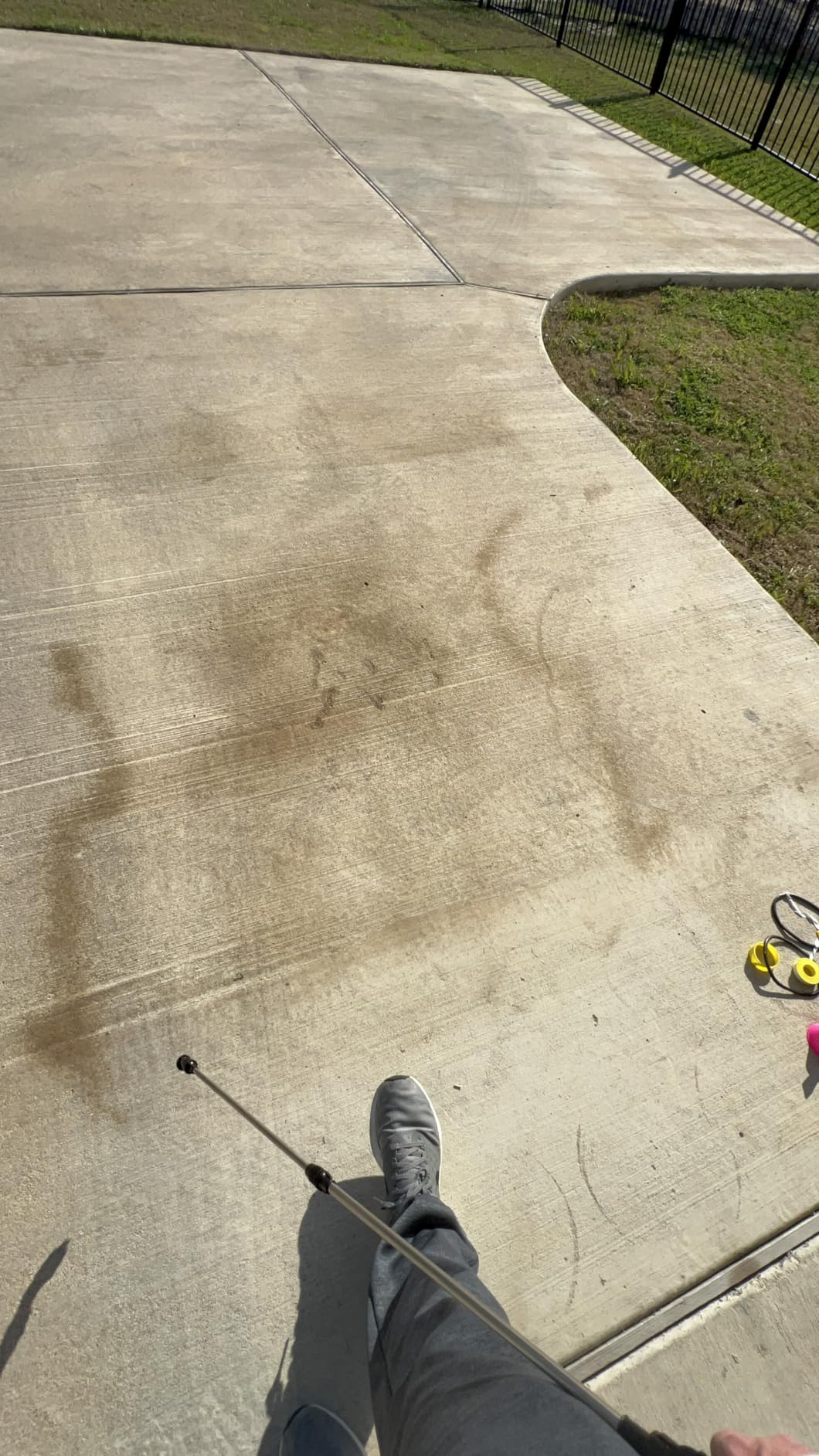
The translucent 4.2 gallon tank has level markings and a wide mouth lid with a strainer, so you can see how much is left and catch debris before it reaches the nozzles. A 240ml measuring bottle is included, which is quietly useful for getting dilution right, and the pack carries a lifetime warranty from the manufacturer.
That warranty is backed by responsive replacement service, and owners call it out as a reason for confidence. The complaints are consistent too: thin shoulder padding, lower strap connectors that can slip off the tank, and a small number of trigger or pump assemblies that fail within a season.
Why eight nozzles changes the job
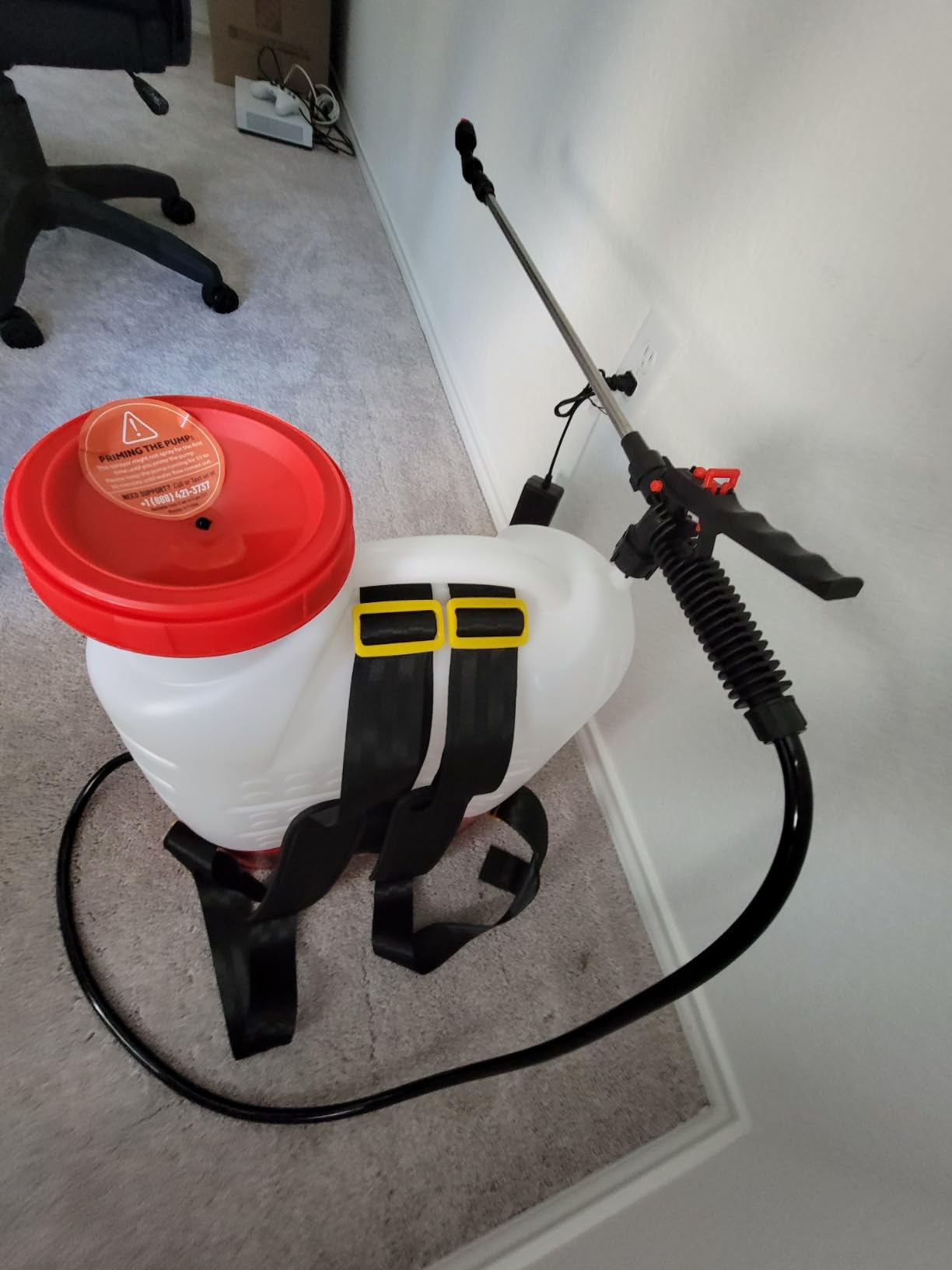
Nozzle choice is how you control coverage, and it is the least understood part of spraying. A wide fan broadcasts, a hollow cone coats leaf surface for broadleaf weeds, and a stream reaches. Having all of them avoids a trip back to the store mid-project.
Owners consistently rate the pressure and the pattern selection as the strongest parts of the pack, and the no-cost replacement service softens the durability concerns.
When to choose a different battery pack
If comfort on a long session matters most, this is not it. The straps are the least padded here, and the lower connectors can detach from the tank, which is a distraction when you are walking a long spray pattern.
If you are rough on gear, note the reports of trigger and pump failures and leaks at the pump and hose connections. Check those joints before every fill.
10. DEWALT 20V Lithium-Ion Backpack Sprayer – Best for DEWALT Platform Owners
DEWALT Lithium-Ion Powered Battery Backpack Sprayer DXSP190681
- Pump-free pressure frees up the spraying arm
- One 8Ah pack covered 21 gallons in owner testing
- Triple filtration resists clogging across fills
- Kink-resistant nylon-reinforced hose
- Shares batteries with existing DEWALT tools
- About 40 pounds loaded and top-heavy on rough ground
- Can tip forward on uneven terrain
- May need priming through the vent on first use
- A few early unit failures reported
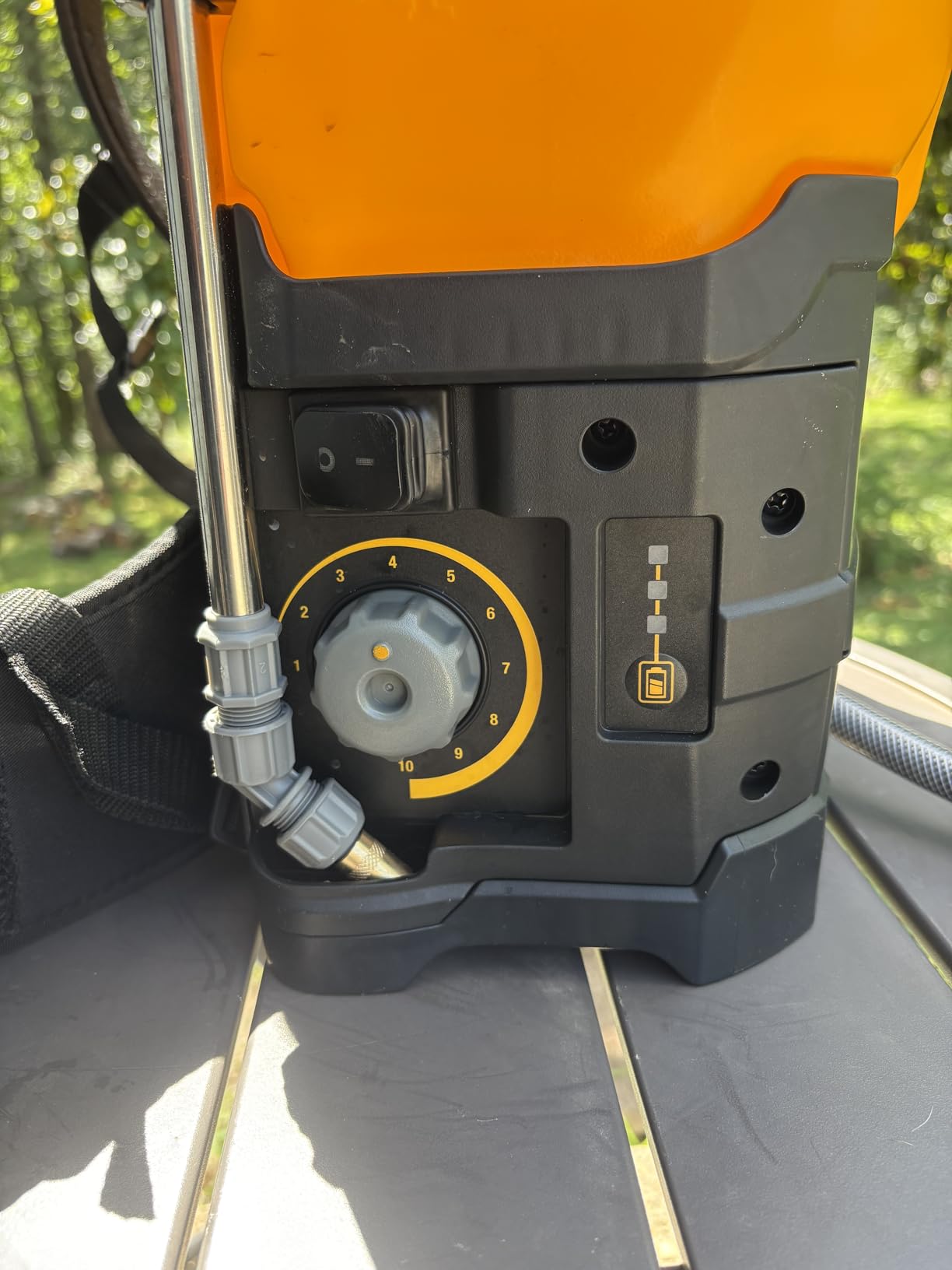
The DEWALT pack is the most substantial unit in this roundup, and professional applicators rate it as a genuine step up from manual pumping. Variflo technology adjusts the flow rate to match the application, so you can change output for a weed pass versus a fertilizer pass without changing nozzles.
Triple filtration is the detail that shows up in long ownership reports. One owner put a single 8Ah pack through 21 gallons with charge to spare and no clogging, and the 50 inch nylon-reinforced hose is specifically built to resist kinking, which is the most common complaint about cheaper hoses.
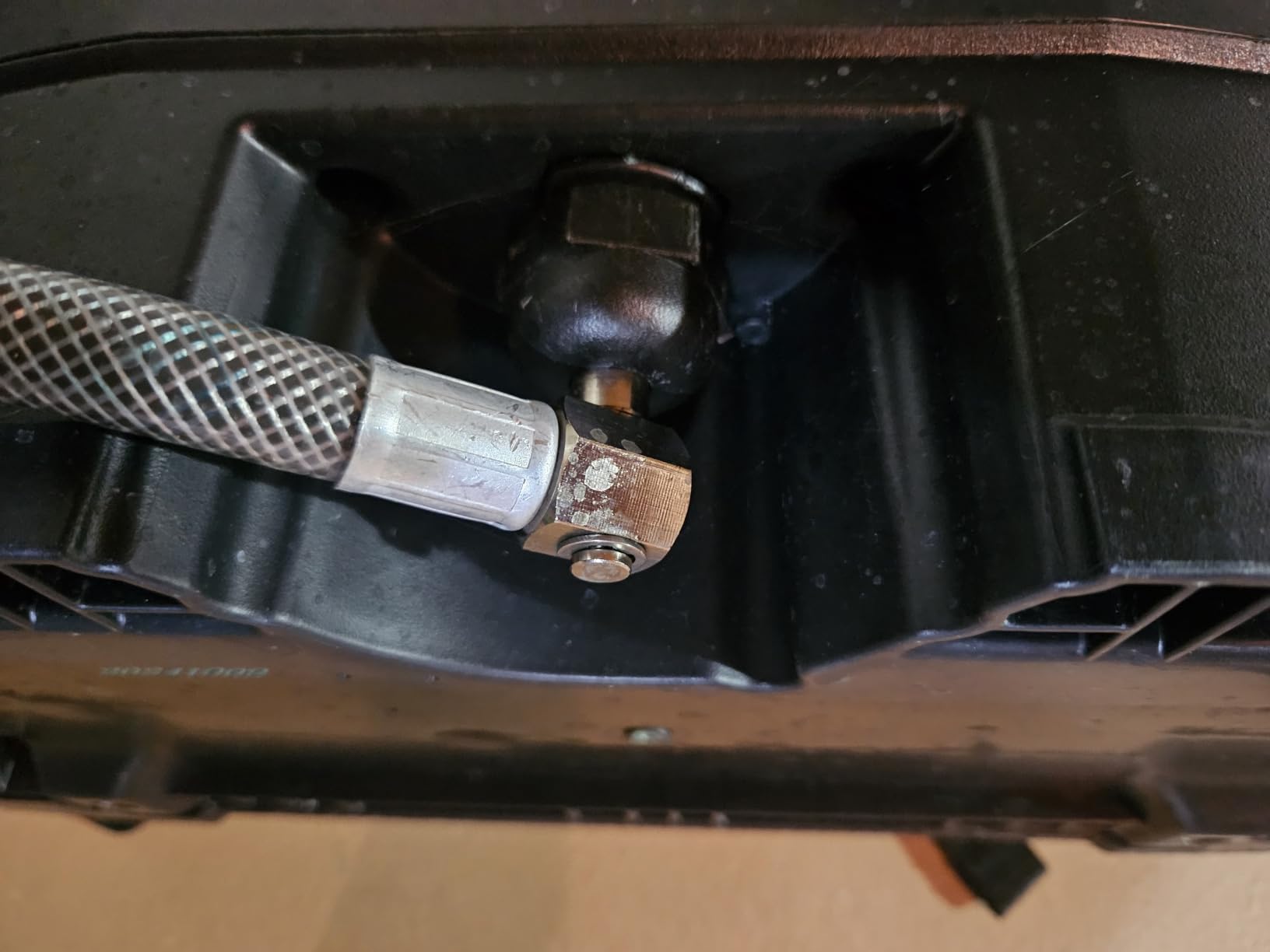
Waist straps help distribute the loaded weight, and that matters more here than anywhere else in the list. This is the heaviest pack we tested at roughly 40 pounds loaded, and it sits high on your back, which makes it stable on flat ground and awkward on slopes.
It runs on DEWALT 20V lithium-ion packs, and a battery and charger are included, so there is no platform cost to get started. A three year limited warranty is the longest stated warranty among the picks here. Some units needed priming with water through the vent before first use, and a few owners reported early failures with limited seller support.
Where the DEWALT pack pays off
Large properties and repeated professional work, where even pump-free pressure and a long runtime change how many gallons you can treat in a day. The filtration and hose construction suit daily use rather than occasional spraying.
Existing DEWALT owners effectively get the sprayer at a reduced cost, since the batteries and chargers are already on the shelf.
When it is too much machine
It is top-heavy when full and can tip forward on rough ground, so a sloped or uneven property is a real drawback. Small garden owners will feel the 40 pound load for a job a 2 gallon wand could handle.
Prime it with clean water through the vent before the first fill, and if you are on a platform, buy a spare 20V pack rather than planning a mid-job charge.
How to Choose a Backpack Sprayer for Weed Control
Start with the size of the job, then work down to pressure and comfort. A 4 gallon pack is the standard answer, and ArcheryTalk users converge on 4 or 5 gallons as the right starting size for a typical suburban property. The math behind that: a loaded 4 gallon tank is about 40 pounds, it covers roughly a thousand square feet or more per load at a normal walking pace, and it is still carryable over a slope.
Tank size and refill frequency. Under a quarter acre, a 4 gallon pack is enough and lighter on the shoulders. Past that, you are refilling constantly, and that is where a larger tank or a second battery starts to pay back. Bigger is not better for most people, because a full 5 gallon tank is meaningfully harder to carry uphill.
Pump type. A piston pump, like the SOLO 425, gives a smooth stroke and consistent pressure. A diaphragm pump handles thick mixes and grit better but works harder. A mechanized or electric pump removes arm fatigue entirely at the cost of electronics, weight, or a platform dependency.
Pressure and drift. PSI is reach, and reach is also drift. Fifty to sixty PSI suits turf and beds, ninety covers most residential work, and 150 lets you treat thick growth from a distance. Forums repeatedly flag that battery sprayers with fixed output are the biggest limitation, so adjustable pressure is worth paying for.
Nozzles. A hollow cone gives the coarse droplets that coat broadleaf leaf surfaces best. A flat fan broadcasts over turf. A stream reaches. Kits with four to eight patterns let you cover all three jobs without a second purchase, and aftermarket TeeJet nozzles fit the wand on several picks here.
Harness and comfort. Padded straps, a back pad, a waist belt, and lumbar support determine whether you finish a session. A chest cross-latch matters on slopes, and owners of packs without one report the tank pulling off their shoulders. Forum buyers treat warranty length and parts availability as the strongest quality signals, so check both before falling for a feature list.
Chemical compatibility. If you plan to run glyphosate, vinegar, or horticultural oils, look for Viton or nitrile seals and HDPE or poly tanks. Forum users worry about switching chemical brands through one tank, so budget for a thorough rinse between products, and check the tank material for anything acidic before you load it.
One note from the community: TheLawnForum users rate the B&G PestPro Power 4 as by far the best battery backpack sprayer they have used and recommend it specifically for weed control, and AgTalk members settle on Jacto for their three year warranty and full parts availability. Neither brand made this list on spec strength alone, which is a fair signal that build quality and parts support deserve as much weight as the numbers on a product page.
How Much Herbicide to Mix in a Backpack Sprayer
Always follow the label on your product, because rates vary by concentrate and by target weed. The label rate is the only safe guide, and the rule most people break is under-diluting to avoid damage and then under-treating the patch. A 4 gallon backpack should be filled with pre-measured concentrate first, water second, and shaken before it goes on the wand.
Measure concentrate with the measuring cap rather than by eye, keep a dedicated measuring container so residue does not contaminate a later job, and never mix two products in one load unless the label allows it. Rinse the tank, hose, wand, and nozzle fully between chemicals, because a trace of one herbicide in the next load is a real cross-contamination problem on food-adjacent plantings.
Battery Platform Lock-In and What It Costs You
If a battery sprayer runs on a tool platform, the sprayer is not a standalone purchase. Two of the picks here work with Makita 18V packs and one runs on DEWALT 20V, and the honest calculation is simple: the sprayer is cheap if you already own the batteries, and expensive if you do not. Buying a platform battery and charger for one tool is the most common regret we see in owner discussions.
The workaround is to pick a self-contained battery pack, or to buy the platform sprayer only when you have two or more packs already. Either way, buy a second battery before a large job rather than planning a three hour charge in the middle of a spray window.
Drift, Overspray and Protecting Your Lawn
Drift is what turns a successful weed treatment into a brown lawn, and it comes from pressure, droplet size, and wind. High PSI and a fine mist are the worst combination near turf, which is why we recommend the low-volume fan or a hollow cone at lower pressure for broadcast work on grass, and why the adjustable pressure packs are safer near planted areas.
Keep a steady walking pace, point the nozzle down rather than across, and never spray in wind. Check the label for a maximum wind speed, and if you can feel it on your face, it is too much. Holding the wand higher produces a fine mist that travels, while holding it lower keeps the spray where you aimed it.
Cleaning, Storage and Common Backpack Sprayer Problems
Flush the tank, hose, wand, and nozzles with clean water immediately after every chemical job, then run water through the wand until it comes out clear. Leaving dried concentrate in a hose is the most common cause of both blockage and seal damage, and a kinked or clogged hose is the most reported mechanical failure across the packs in this roundup.
Relieve pressure before opening the tank, store it with the cap off or loose in a place that will not freeze, and keep the pump seals lubricated if the manual calls for it. The recurring complaints to watch for are straps that are not padded enough, seals that stiffen after repeated chemical exposure, wand joints that leak at the collar, and small fill openings that slow a multi-hour session. Check the straps and collar before you start, not halfway through.
Frequently Asked Questions
What is the best sprayer for spraying weeds?
For most homeowners, a 4 gallon backpack sprayer with adjustable pressure and at least 40 to 90 PSI of output. The PetraTools HD4000 leads our list because its electric pump gives both battery runtime and a pressure knob, so you can dial down for turf edges and up for thick growth.
Are backpack sprayers worth it?
Yes, if you are treating more than a few hundred square feet. A hand sprayer empties after a short walk, and the refill trips are what cause uneven coverage and missed patches. If your job is a single flower bed, a 2 gallon pump sprayer is the better tool.
What PSI is best for spraying weeds?
Fifty to sixty PSI for broadcast herbicide on turf and near planted beds, around 90 PSI for general residential work, and 150 PSI for dense or woody growth where you need reach. The tradeoff is drift, since higher pressure produces finer droplets that travel further.
What are common problems with backpack sprayers?
The most reported issues are straps and harnesses that fail or dig in on a full tank, seals that stiffen and leak after repeated chemical exposure, hoses that kink and wand collars that drip, and clogs from dried concentrate left in the line. Battery models add low-voltage cutoffs and pump failures as a separate category.
How much roundup do I put in a backpack sprayer?
Follow the rate printed on your product label, since concentrate strengths differ. Measure the concentrate with a dedicated cap rather than by eye, add water second, and mix only one product per load. A 4 gallon backpack should be filled with measured concentrate first and water second, then shaken before spraying.
Conclusion: The Best Garden Sprayer Backpacks for 2026
The PetraTools HD4000 is the single best garden sprayer backpack for weeds in 2026 because it solves the two real problems with one design: adjustable pressure so you can protect turf, and a six to eight hour runtime so you can finish a property in one session. Owners back that up in the largest review base in this group, and the complaints are minor by comparison.
Buy the CHAPIN 61500 if you want a manual pack that lasts a decade or more, the Roundup 190314 if your weeds are woody and you need 150 PSI, and the Field King Max 190348 if you spray herbicide professionally. If you already own Makita or DEWALT batteries, the platform packs below may be the lowest-cost route to a second sprayer. Whichever you choose, flush it after every job and keep the fill line in sight.