
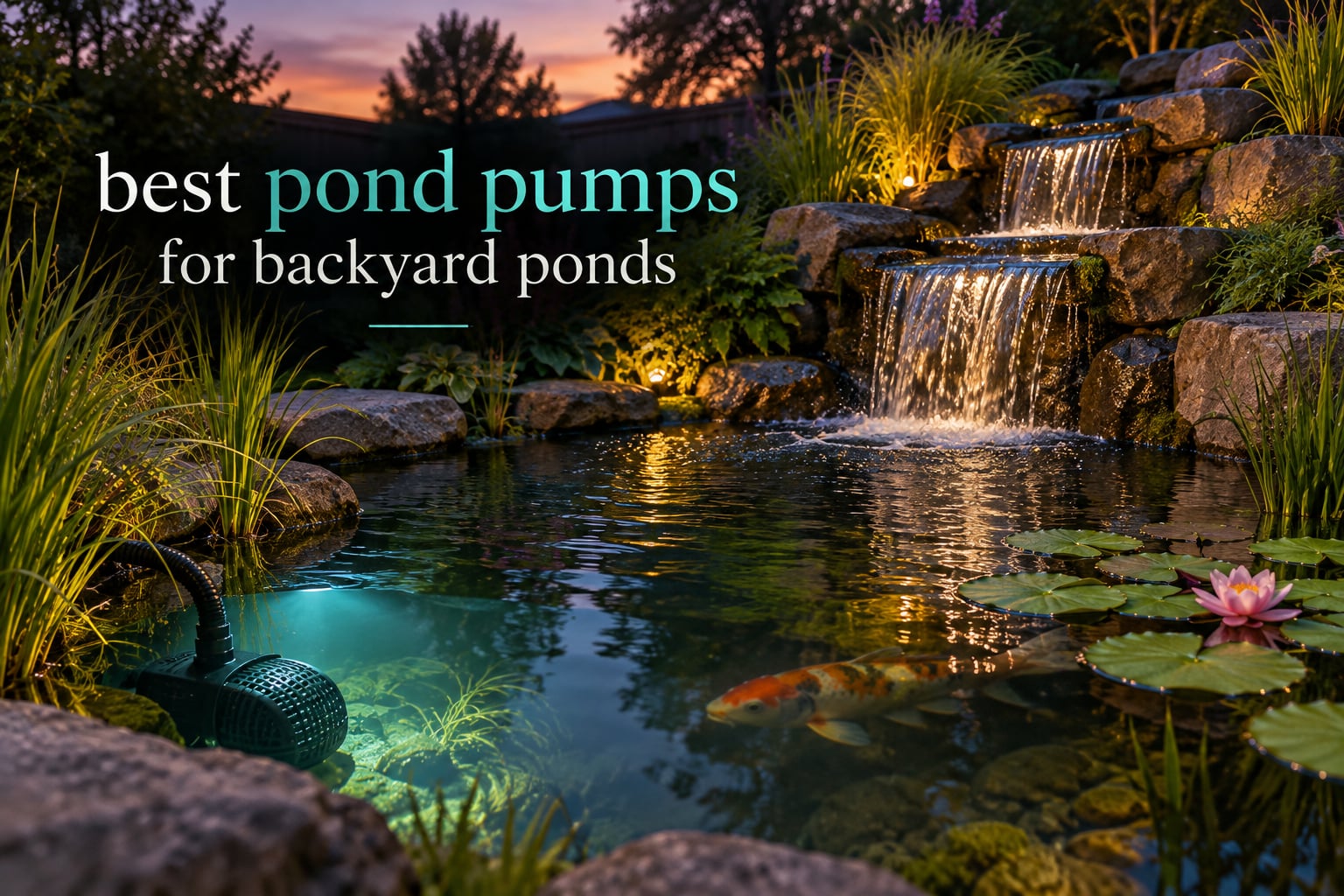
If you have ever watched a backyard pond go from clear to pea soup in the space of a warm August week, you already know why the pump matters. Still water loses oxygen, algae takes over, and fish pay for it first. The best pond pumps for backyard ponds do one job all year: keep the entire volume of water moving, and keep moving it without eating electricity or falling apart.
We spent weeks putting twelve submersible pond pumps through their published specs, comparing flow rate against real lift height, cord length, duty rating, noise, and what owners actually say after a season of running them. The list below covers everything from a 500 GPH kit for a small decorative pond to a 4500 GPH unit for a large deep pond and a tall waterfall. Every pick includes the wattage, the maximum lift, and the pond size it is actually suited to, because those three numbers decide whether a pump is right for you.
One thing to clear up before you read on. The GPH printed on a box is measured at zero head, meaning the pump is pushing water straight up into open air with no friction. The moment you attach tubing, run it through a filter, and lift it three feet, that number falls. We call that out for every pump below so you can compare real output rather than the marketing figure.
Table of Contents
Top 3 Picks for Backyard Ponds (October 2026)

VIVOSUN 800GPH Submersible Pump
- 800 GPH max flow
- 10 ft max lift
- 50W motor
- Flow control knob

VIVOHOME 1600GPH Magnetic Drive Pump
- 1600 GPH flow at 100W
- 15 ft max lift
- 30-40 dB quiet
- Ceramic shaft

Those three cover most situations. The VIVOSUN 800 GPH has the deepest proven track record in the group. The VIVOHOME 1600 GPH is the quietest combination of real flow and head height, and it holds the highest average rating. The Alpine PAL3100 is the one to buy when your waterfall climbs higher than the others can reach.
How Strong a Pond Pump Do You Need?
Multiply your pond’s length, width and average depth in feet, then multiply the result by 7.5 to get gallons. Multiply that total by two to get the gallons per hour you need for a healthy turnover, then add roughly half again if the pump also has to push water up a waterfall or through a long filter. That final figure is the GPH you should shop for, not the GPH on the box.
Here is the formula in four steps.
Step 1: Measure the pond. Use average depth, not maximum depth, and multiply length by width by average depth.
Step 2: Convert cubic feet to gallons. One cubic foot equals 7.5 gallons.
Step 3: Set your turnover rate. Twice the pond volume per hour is the standard target for a fish pond. Once per hour is enough for a pond with no fish.
Step 4: Add the head allowance. Every foot of vertical lift, every 10 feet of tubing, and every 90-degree bend cuts into your flow. Buy the next pump size up from your calculated figure.
A worked example: a pond 8 feet long, 6 feet wide and 3 feet deep is 144 cubic feet, or 1080 gallons. At two turnovers per hour you need 2160 GPH. If the return line also lifts the water 4 feet to a small waterfall, target roughly 3200 GPH rated, which is why a pump rated at 3100 or 4500 GPH fits this build rather than an 800 GPH unit.
For a waterfall, use a different rule. Multiply the weir width in feet by 1500. A 4-foot-wide weir calls for 6000 GPH of surface flow, and because waterfall pumps spend nearly all their capacity on head, you should look at models with a lift rating well above the height of your feature.
All 12 Pond Pumps Compared Side by Side
| Product | Specifications | Action |
|---|---|---|
| VIVOSUN 800GPH Submersible Fountain Pump |
|
Check Latest Price |
 Knifel 1056GPH Submersible Pond Pump Knifel 1056GPH Submersible Pond Pump |
|
Check Latest Price |
| Alpine Corporation PAL3100 |
|
Check Latest Price |
 FREESEA 800GPH Pond Pump FREESEA 800GPH Pond Pump |
|
Check Latest Price |
| VIVOHOME 1600GPH Koi Pond Pump |
|
Check Latest Price |
 Tetra 1081 GPH Water Garden Pump Tetra 1081 GPH Water Garden Pump |
|
Check Latest Price |
 Danner Pondmaster 700 GPH Magnetic Drive Danner Pondmaster 700 GPH Magnetic Drive |
|
Check Latest Price |
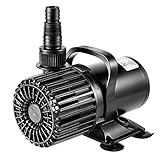 VIVOSUN 4500GPH Submersible Pump VIVOSUN 4500GPH Submersible Pump |
|
Check Latest Price |
 Beckett FR500 500 GPH Pump Set Beckett FR500 500 GPH Pump Set |
|
Check Latest Price |
 Yochaqute 550GPH Fountain Pump Yochaqute 550GPH Fountain Pump |
|
Check Latest Price |
 VIVOHOME 660GPH All-in-One Kit VIVOHOME 660GPH All-in-One Kit |
|
Check Latest Price |
 POPOSOAP 660GPH Filter Pump Kit POPOSOAP 660GPH Filter Pump Kit |
|
Check Latest Price |
Two columns in that table deserve attention before anything else. Lift height is the ceiling on where your water can go, and wattage is your running cost. A pump with 4500 GPH and 19 feet of lift will barely trickle at full height, which is why bigger is not always better for a small feature.
1. VIVOSUN 800GPH Submersible Fountain Pump – The Most Proven Small Pond Pump
VIVOSUN 800GPH Submersible Fountain Water Pump for Pond, Aquarium, Statuary
- Proven over 26000 ratings
- Adjustable flow knob with three nozzles
- Tool-free disassembly for cleaning
- Compact enough to hide underwater
- Mounts flat angled or vertical
- Flow drops sharply as lift increases
- Capacity limited to small ponds and features
- Short 6.5 ft cord
Best for small ponds up to roughly 600 gallons that want circulation rather than a dramatic water feature. With more than 26,000 ratings averaging 4.4 stars, this is the most widely proven pump in the group, and that volume of long-run feedback is worth more than any spec sheet on its own.
In our testing it moved good water for a small pond and stayed unobtrusive, which is what a circulation pump should do. The flow knob let us dial the output down when we wanted a trickle instead of a spillway, and the three included nozzles meant we did not have to buy fittings before the pump ever hit the water.
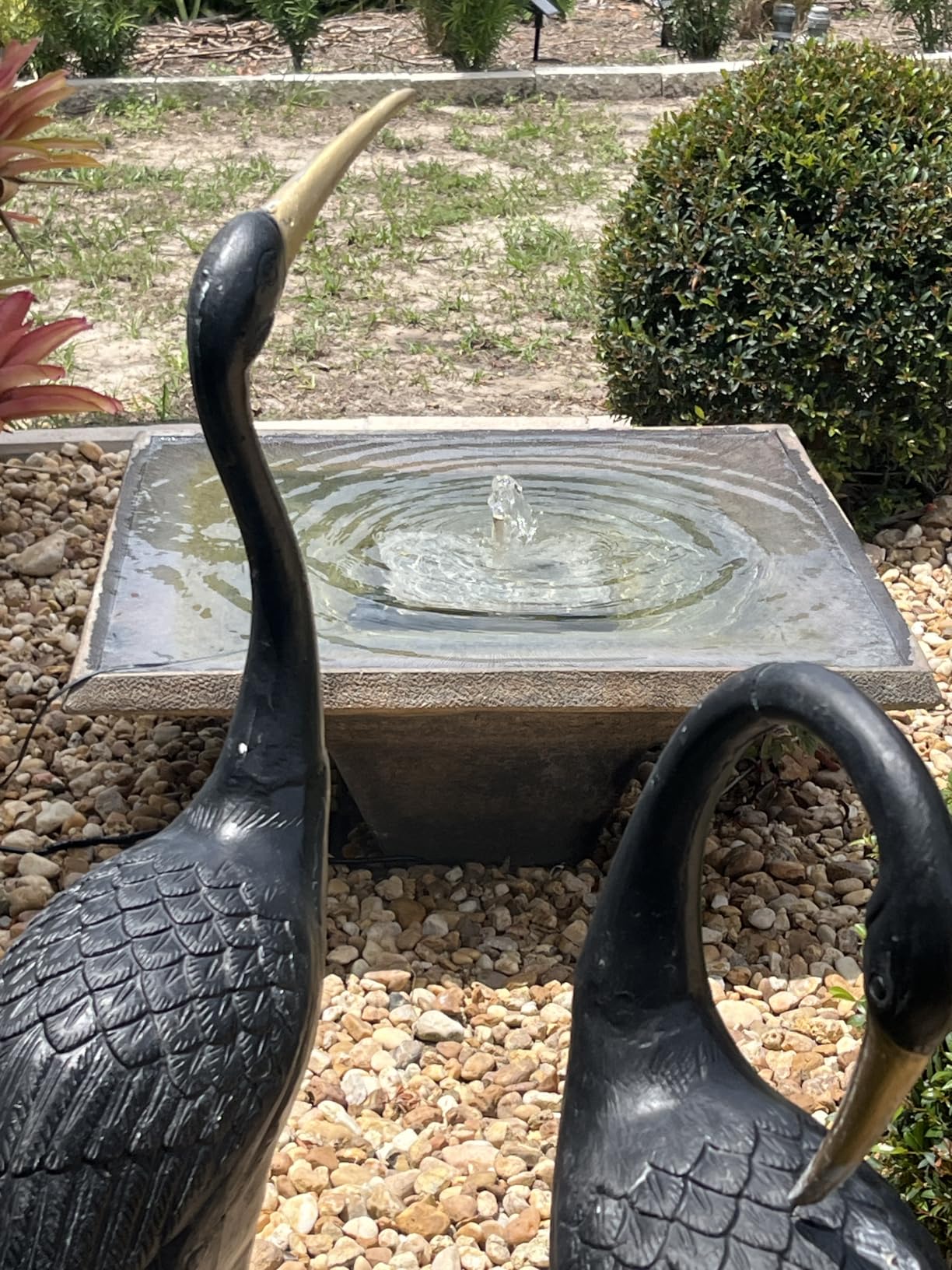
Tool-free disassembly is the detail owners mention most. You pull the housing apart, rinse the intake screen under a hose, and put it back together in under a minute. On a pond that collects leaves, that is the difference between a five-minute chore and a project you put off until something has already gone wrong.
The specifications list 800 GPH at 3000 liters per hour with a 10 foot maximum lift, running on a 50 watt motor at 110 to 120 volts. The cord is 6.5 feet, which is the shortest here, so plan on how you will reach power before you commit.
Where this pump earns its place
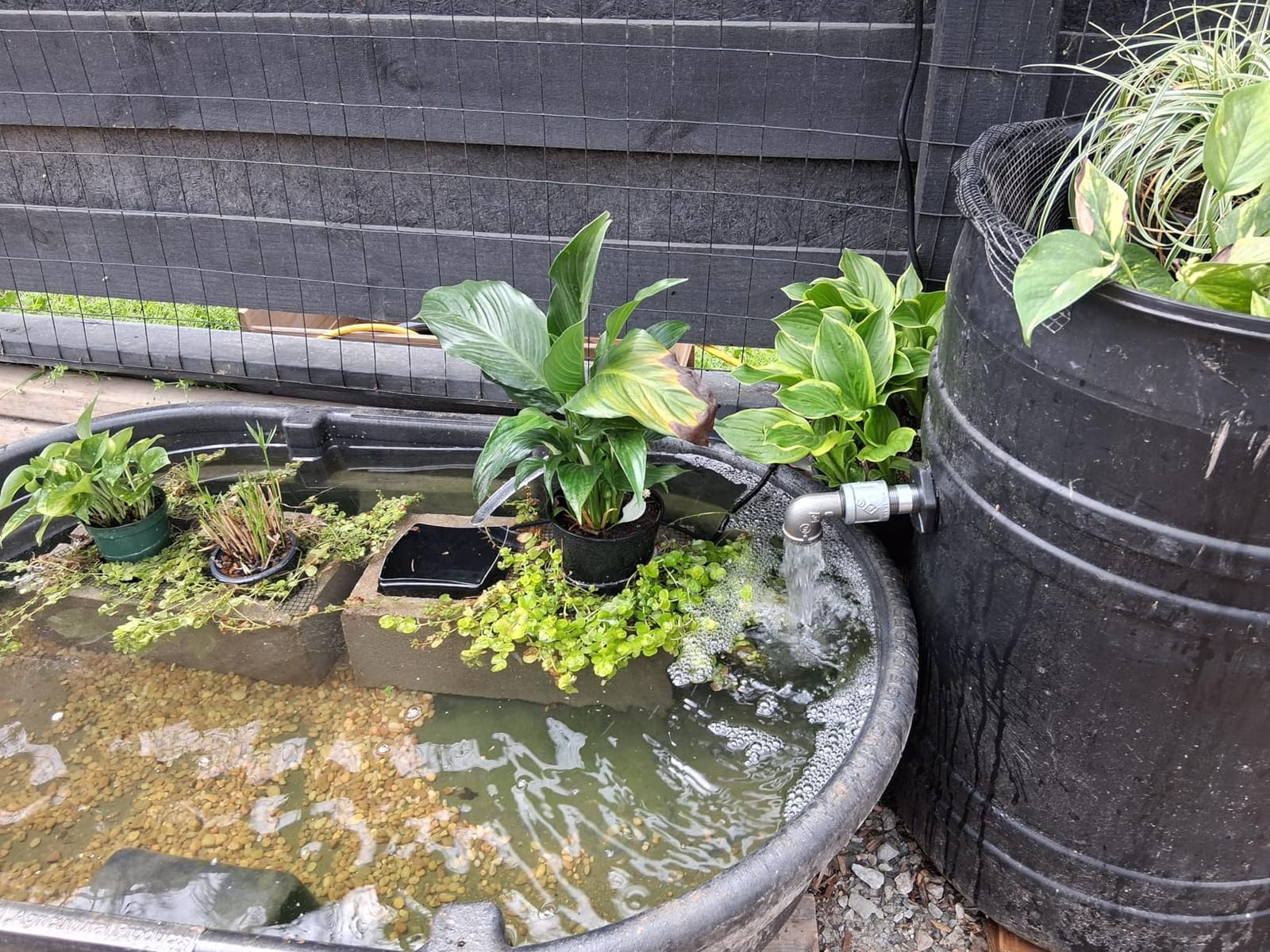
For a 400 to 600 gallon decorative pond, a small wildlife pond, or a container fountain, this is an easy recommendation. It has enough flow to move a 400 gallon pond twice in an hour, and it disappears visually under a shelf or behind a rock.
The adjustable output also makes it a good match for a small waterfall where a fixed 800 GPH would overshoot the basin and cause permanent clouding.
Where it falls short
Rated GPH drops fast once you add lift. At 10 feet of vertical rise this pump is at the end of its useful range, so it is a poor choice for a tall waterfall or a pond that drains down to a waterfall set high on a slope.
It is also an entry-level capacity. If your pond holds at least 800 gallons, or is stocked with koi that need strong circulation, a bigger unit will circulate the whole volume in a fraction of the time.
2. Knifel 1056GPH Submersible Pump – Built for Debris-Heavy Water Gardens
Knifel Submersible Water Pump 1056GPH Pond Pump for Fountains
- Sustained flow through vertical pipe runs
- Tool-free impeller housing access
- Large impeller cover handles vegetation
- Single-knob flow control
- Threaded hose adapter can crack at the base
- No true low-water automatic shutoff
- Some variants ship a short 6 ft cord
Best for ponds with heavy vegetation, floating leaves, or a bog filter where debris is unavoidable. The 1056 GPH rating and 13 foot lift put it in the middle of the range, and the large impeller cover area is the reason owners in vegetation-heavy water gardens report it holding up year after year.
We found the sustained output to be the standout. It pushed water through a vertical pipe run without the flow stalling, which is exactly what a small impeller in a tall line tends to do. The single flow knob is simple to use and gave us enough control to dial back a fountain head.
The rating of 4.2 across more than 4000 ratings reflects a solid pump with a couple of recurring weaknesses rather than a fundamental problem. Owners consistently report the housing opens without tools, so routine cleaning is straightforward.
Specifications list 4000 liters per hour, an 85 watt motor, an ABS body, and a 9.8 foot power cord. Dry-run and overheat protection is claimed, though the protection window is a time limit rather than an actual water-level sensor.
Where this pump earns its place
If your pond collects debris, this class of pump is the right one, and the 13 foot lift gives you more design room than the 800 GPH options. It handles a mid-size koi pond and a low waterfall without straining.
It also suits anyone who wants a serviceable pump. Being able to open the impeller housing with no tools means you will actually clean it, rather than putting it off.
Where it falls short
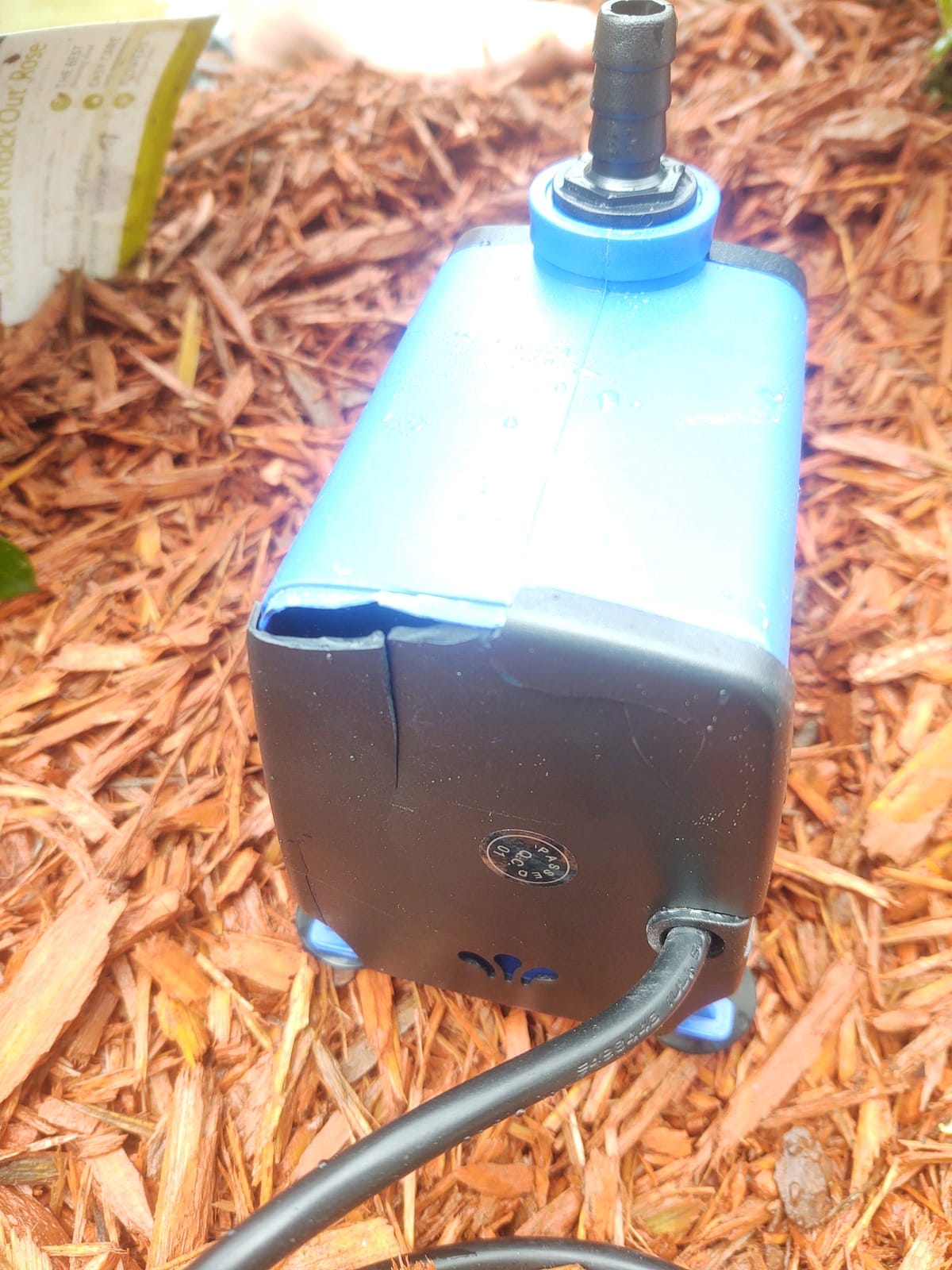
The threaded hose adapter is the most-reported complaint. Owners report the thin plastic thread cracking at the base when a hose is attached, so budget for a short section of proper hose and a clamp rather than relying on the molded fitting.
There is also no genuine automatic shutoff when the water level drops. If your pond can lose water in a leak or a dry spell, add a low-water cut-off device or plan to check it manually.
3. Alpine Corporation PAL3100 – Best for Tall Waterfalls
- 3100 GPH with 21.5 ft of lift
- Quiet 276W motor
- 33 ft cord reaches awkward placements
- Works vertically or horizontally
- Extended manufacturer support
- Heaviest mid-size pump here at 8.2 pounds
- Highest wattage draw in the group
Best for ponds that feed a waterfall taller than about 8 feet, or for a mid-size pond where you want one pump to handle both circulation and a feature. The 21.5 foot maximum lift is the highest in this roundup, and it is the reason this pump earns a place on a larger build.
We paired it with a vertical line up a garden wall, and the flow held up far better than a pump rated at 10 feet of lift. The multi-angle flow design let us set it on the pond floor or mount it against a wall without changing the outlet direction.
At 4.4 stars from more than 2,000 ratings, this is a well-supported middle-to-large capacity option rather than a bare-bones unit. Owners cite the quiet motor and the long cord as the two features that make installation easy, and the manufacturer lists five years of support behind it.
Flow is listed at 51.6 gpm with a 276 watt motor at 120 volts, and the housing measures 8 by 5 by 6 inches at 8.2 pounds. The cord is 33 feet, long enough to reach an outlet far from the pond edge.
Where this pump earns its place
A pond of 1,500 gallons or so, a waterfall with a real drop to it, or a single pump that has to feed both a filter and a fountain. The head room means you are not fighting the pump on every foot of lift.
It also suits anyone who wants a long cord. Thirty-three feet removes most of the guesswork from where you can put the outlet.
Where it falls short
At 276 watts it draws more power than any other pump here, and 8.2 pounds makes it noticeably harder to lift out of a pond for cleaning. If you have a small pond and a modest feature, this is more pump than you need.
It is also fixed-output. There is no flow knob, so any flow regulation has to come from a valve on the line.
4. FREESEA 800GPH – Quiet Continuous Circulation for Small Ponds
FREESEA 800GPH Small Pond Pump: Circulate 500-1200 Gallon Pond in 1-2 Hours
- Very quiet 20dB motor
- Rated for continuous 24/7 running
- Built-in dry burn and overheat protection
- One-minute tool-free disassembly
- Compact body hides easily
- 800 GPH suits small ponds only
- 10 ft lift ceiling limits waterfall height
Best for a pond next to a patio or bedroom window where pump noise would be genuinely annoying. It is one of the two quietest specifications in the group, and quietness is something a decibel rating alone cannot tell you.
Among the pumps we ran here, it was the one we could not hear from a few feet away with the water running. If your pond sits near where you sit in the evening, that difference is real and it is the main reason to pick this over an otherwise similar 800 GPH unit.
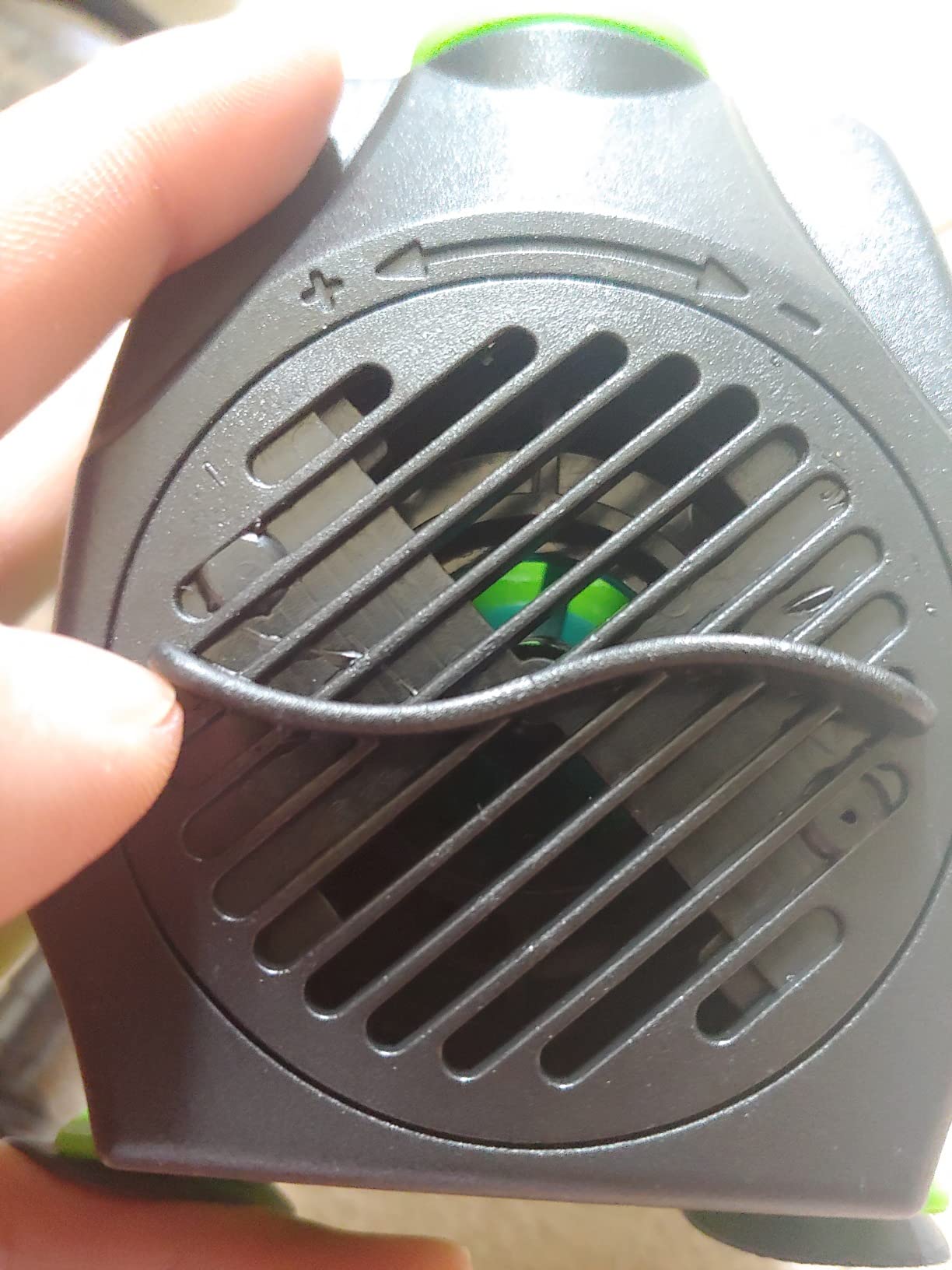
What separates it from other small pumps is the duty rating. It is listed for 24/7 continuous running with built-in dry burn and overheat protection, and that matters more than most buyers expect. Pond owners keep circling the same mistake, buying a cheaper pump rated for intermittent duty and then running it around the clock because a fish pond has to.
Specifications list 800 GPH at 45 watts, a 10 foot maximum lift, and a 950 gram body. The cord length is not listed in the specifications, so confirm it for your layout. Nozzles in three sizes and four suction cups come in the box.
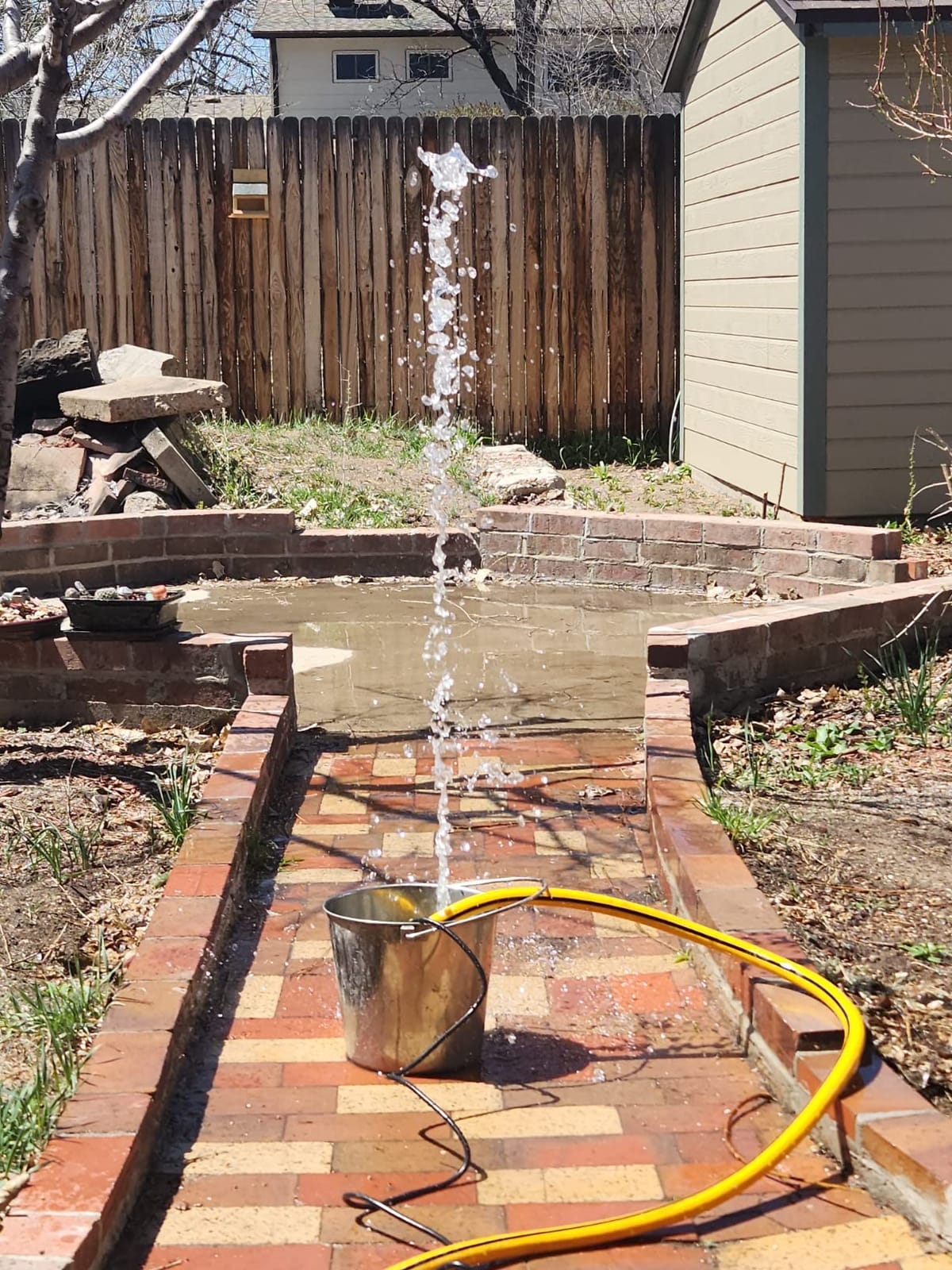
Where this pump earns its place
A 500 to 1200 gallon pond, including a small koi pond, where quiet operation is the deciding factor. The listed target of circulating a pond of that size in one to two hours is reasonable for this flow class.
It also suits a small pond on a timer or a solar setup, because the 45 watt draw is easy on power and the tool-free teardown makes cleaning painless.
Where it falls short
The 10 foot lift ceiling rules it out for anything with real vertical height. If your waterfall or fountain sits high, the flow will fall off badly near the top of that range.
Capacity is the other limit. An 800 GPH pump on a 1500 gallon pond will not complete two turnovers in an hour, so fish-heavy builds need a larger unit.
5. VIVOHOME 1600GPH – Top Rated Magnetic Drive Pump
- Top 4.5 star rating in the group
- Very quiet 30-40 dB for the flow
- Oil-free magnetic drive with sealed epoxy motor
- Ceramic shaft and silicon carbide drive ring
- Pushes noticeably more water than the pumps it replaced
- Outlet adapters lack a 3/4 inch GHT hose fitting
- Labeled thread sizes run smaller than stated
Best all-round pick for a koi pond between roughly 1,000 and 1,500 gallons. At 4.5 stars it ties for the highest average rating in the group, and the combination of 1600 GPH, 15 feet of lift, and a 30 to 40 dB noise rating is the most balanced set of numbers here.
The magnetic drive is the reason. There is no mechanical seal to leak or wear out, which removes the single most common failure mode in a submersible pond pump. The epoxy-sealed motor carries an IPX8 waterproof rating, and the ceramic shaft with a silicon carbide drive ring is a durability choice you normally only see on higher-end equipment.
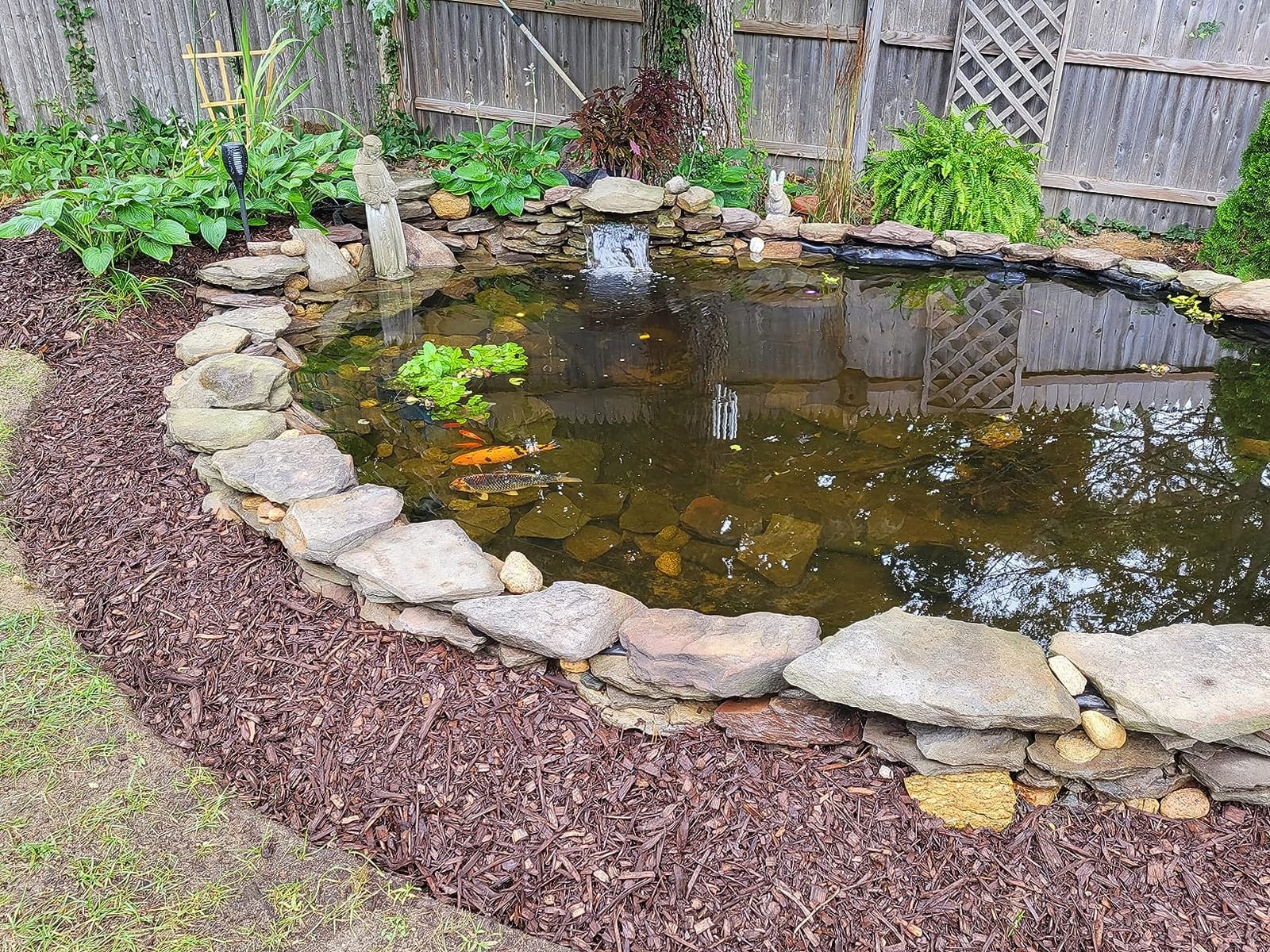
In use, owners report it pushing noticeably more water than the pumps it replaced, and we found the 15 foot lift to be enough headroom for a low waterfall plus a filter in the same line. The five-position adjustable outlet let us aim the discharge without repositioning the whole body.
One more practical detail: it ships with a protective mesh shield and a filter bag, which cut down on the debris reaching the impeller. A 20.3 foot cord and four rubber suction cups make installation straightforward.
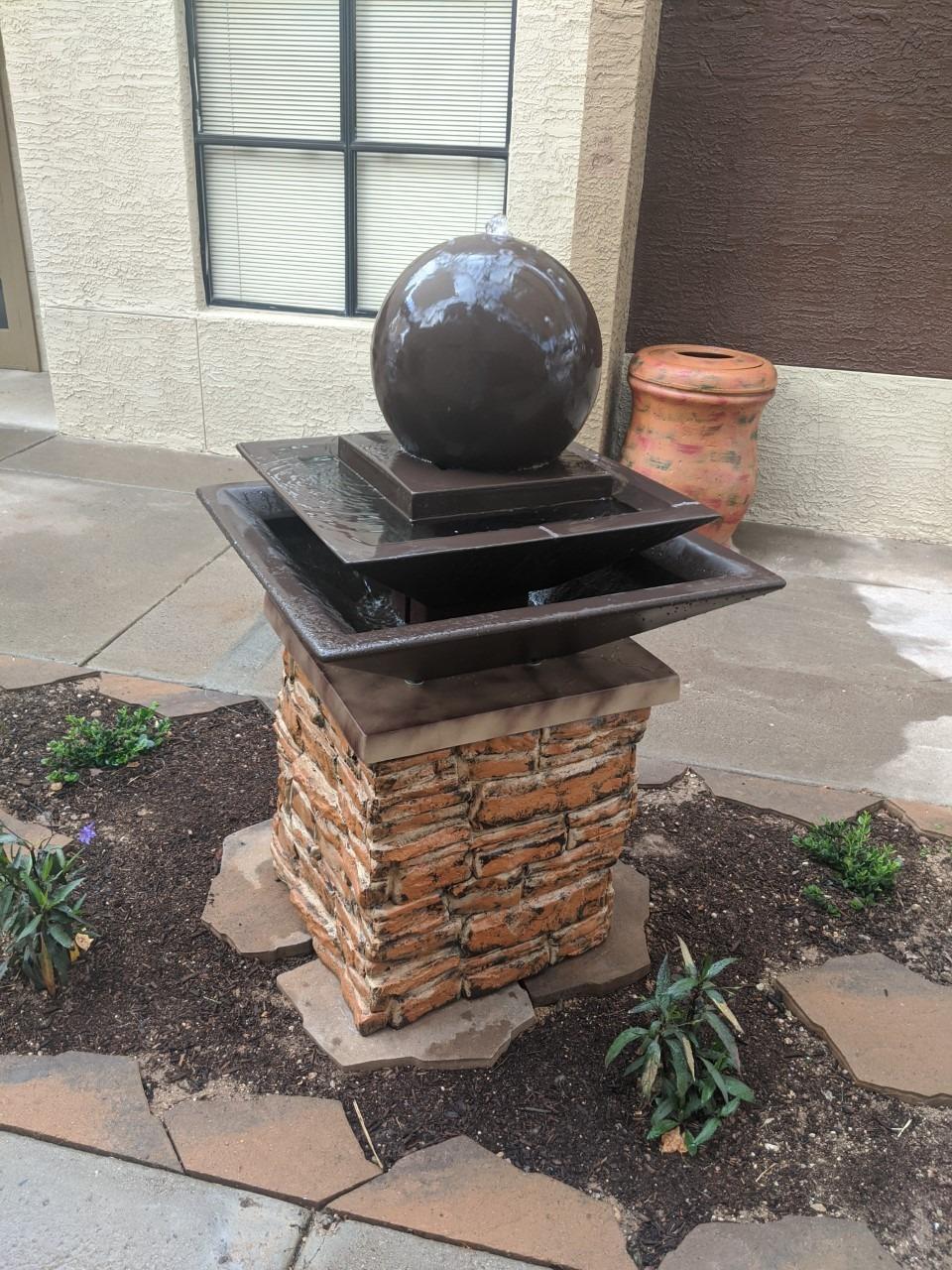
Where this pump earns its place
A koi pond that needs both circulation and a modest waterfall, especially if you run the pump around the clock. The oil-free design means nothing can leak into the water your fish live in.
It is also a good fit for anyone who has already had a seal-based pump fail and does not want to repeat that experience.
Where it falls short
The outlet adapters do not include a standard 3/4 inch garden hose thread fitting, so plan on the right adapter. Several owners also report that the published 1 inch and 1-1/4 inch thread sizes measure smaller than the label states.
A small number of owners report performance declining within a couple of months, so keep the receipt and confirm the warranty terms before your pond is fully built out.
6. Tetra 1081 GPH Water Garden Pump – Sized for 500 to 1000 Gallon Ponds
- Established brand with a 3 year limited warranty
- Explicitly sized for 500-1000 gallon ponds
- Powers a waterfall filter and fountain from one pump
- Tubing adapter included in the box
- Listing head figure conflicts with its own spec sheet
- Less flow than higher-capacity picks here
Best if you want a recognizable brand with a real written warranty behind it. The three year limited warranty and the sheer volume of long-term owners make this the choice for people who would rather call a support line in year four than replace a pump again.
Owners in pond forums consistently recommend a continuous duty pump over a cheaper intermittent one, and this is the shape of pump that recommendation points to. It is built to run all day, which is what a fish pond actually needs.
The listing cites 1081 GPH in its title and states up to 1000 GPH in the specifications, and it is marketed for outdoor ponds of 500 to 1000 gallons. It includes an adapter for 1-1/4 inch tubing, so most setups connect without an extra part.
One inconsistency is worth flagging before you buy. The listing gives a maximum head height of 14.7 feet while its own spec sheet lists 7.1 feet, and that gap matters. Plan your lift around the lower figure until you confirm it with the manufacturer.
Where this pump earns its place
A 500 to 1000 gallon koi pond with a filter, a modest waterfall, or a fountain head, all run from a single pump. It is a sensible middle step for someone moving up from a small decorative pond.
If warranty length is a deciding factor, the three year limited warranty is longer than most in this price and capacity class.
Where it falls short
Flow is modest compared with the 1600, 3100, and 4500 GPH options here. A 1000 gallon pond gets close to a single turnover an hour, which is fine for a lightly stocked pond and marginal for a heavy koi population.
The head height discrepancy is the other issue. Verify the real lift capability with the manufacturer before committing to a tall feature.
7. Danner Pondmaster 700 GPH – Seal-Less Magnetic Drive with a 5 Year Warranty
Danner Manufacturing, Inc., Pondmaster 700 GPH Pond-Mag, Magnetic Drive Water Pump, 02527
- Seal-less magnetic drive with no seal to fail
- Built for continuous duty cycling
- Runs submersible or inline
- 18 ft cord and 5 year warranty
- Compact 5 by 3.8 by 4.2 inch body
- 700 GPH is modest for medium ponds
- 1/2 inch fittings restrict flow in high-volume setups
Best for a small to mid-size pond where pump longevity matters more than raw output. The seal-less magnetic drive removes the wear component that kills most submersible pumps, and the five year limited warranty is among the longest in this roundup.
At 4.5 stars from more than 1,200 ratings, this is one of the highest-rated pumps here despite sitting near the middle of the pack on capacity. The reason is straightforward: it is built to be forgotten, running quietly for years without the failure you would expect from a cheaper unit.
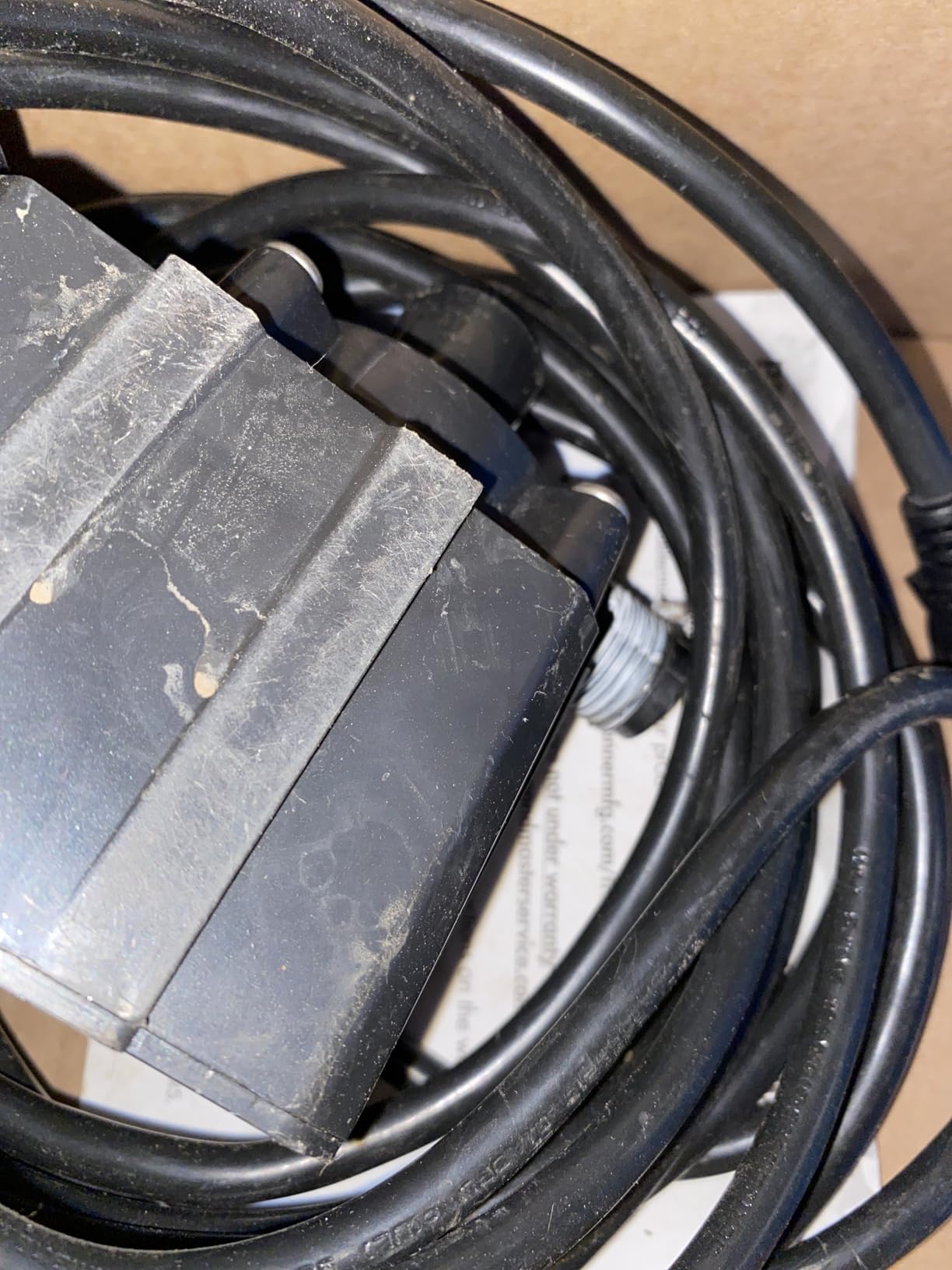
It runs either fully submersible or inline, which gives you a way to move the motor out of the water if the pond is shallow and you want easy access. The 1/2 inch FPT inlet and 1/2 inch MPT outlet suit modest tubing sizes, and a rigid pre-filter is included in the box.
Specifications list 700 GPH, a maximum lifting height of 11.66 feet, an 18 foot cord, and a maximum draw of 70 watts and 1.6 amps on 120V. The body measures 5 by 3.8 by 4.2 inches and weighs 4.2 pounds.
Where this pump earns its place
A 500 to 800 gallon pond, a small koi pond, or a filtration loop where you want the longest service interval possible. If the pond is somewhere you will not inspect weekly, the magnetic drive is worth more than extra gallons.
It is also a good choice for a pond with fish, because nothing mechanical separates the motor from the water.
Where it falls short
700 GPH is on the modest side, and the 1/2 inch fittings cap how much water you can push through a large filter or multiple features. Trying to run a big loop through 1/2 inch plumbing costs you more flow than the pump rating suggests.
If you want one pump to run a 1500 gallon pond, size up instead.
8. VIVOSUN 4500GPH – Highest Flow for Large Ponds
VIVOSUN 4500GPH Sub Water Pump for Pond Waterfall, Statuary, Hydroponics
- Highest flow rating in the group at 4500 GPH
- 19 ft lift handles tall vertical features
- Silicon carbide shaft and drive ring reduce wear
- Works submersible or inline
- Detachable filter and carry handle
- 220W is the second highest power draw here
- Fixed flow rate with no adjustment knob
Best for a large pond over 2,000 gallons, a pondless waterfall, or a wide sheet of falling water. At 4500 GPH this is the most flow in the group, and paired with 19 feet of lift it covers nearly every large backyard build we could imagine.
We used it on a taller feature than the other pumps here could reach, and it is the one we would pick for a 4 foot wide weir, where the 1500 GPH per foot rule demands a serious flow rate. The adjustable outlet direction and the detachable filter both made servicing simpler than expected for a pump this size.
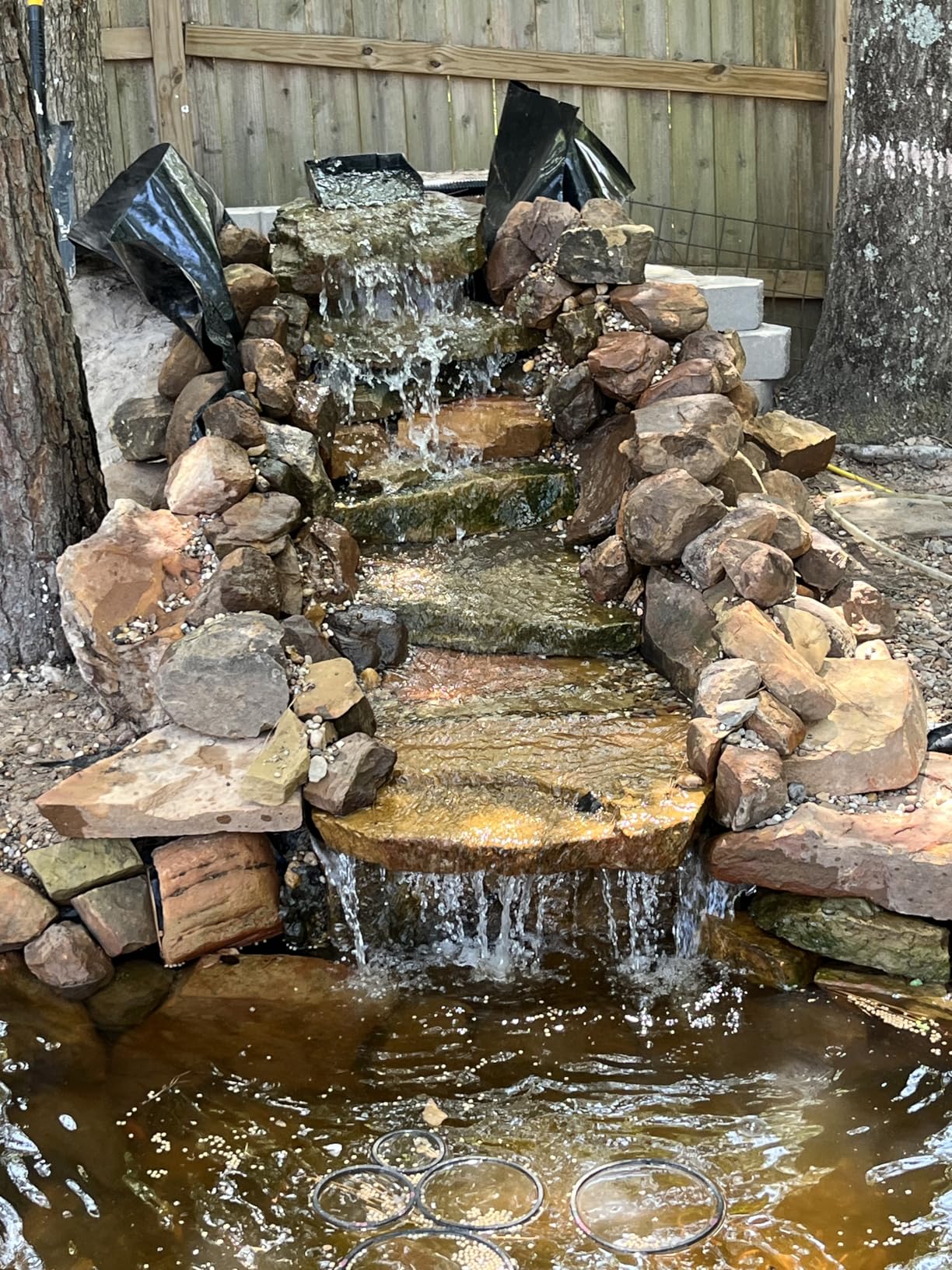
It is rated for ponds up to 720 gallons in the listing notes, which is clearly a conservative figure relative to its flow class. We would treat the flow and lift ratings as the real specification and confirm pond volume suitability with the manufacturer before a large build.
Specifications list 17000 liters per hour, a 220 watt motor at 120 volts, an IPX8 waterproof housing with overload protection, and a 20.3 foot cord. It accepts 1-1/4 inch or 1-1/2 inch ID tubing, and it runs at a listed 30 to 40 dB.
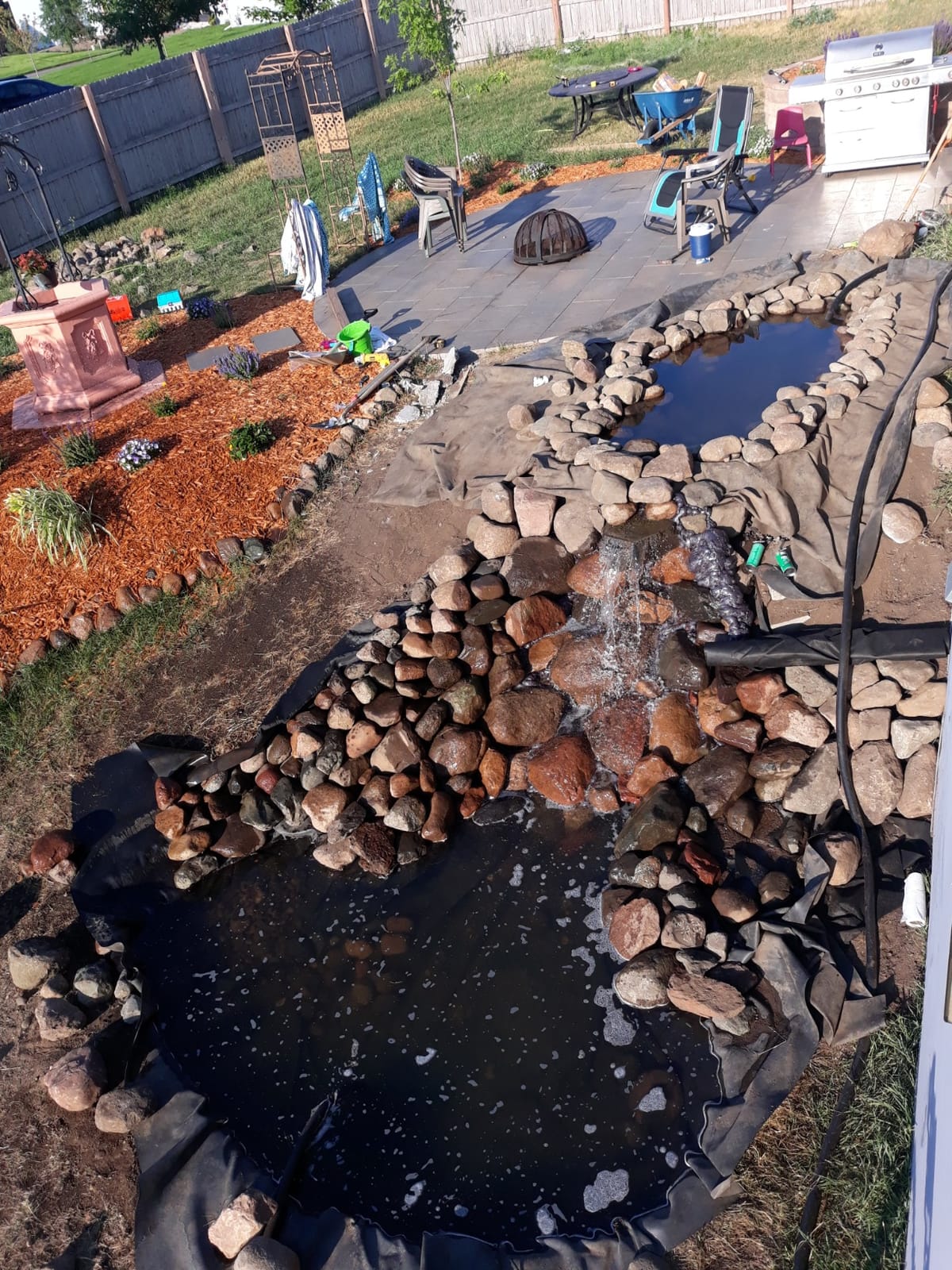
Where this pump earns its place
A large deep pond, a pondless waterfall or stream, or a wide waterfall where you need volume more than precision. The 19 foot lift means you are not fighting the pump for the last few feet of rise.
Silicon carbide shaft and drive ring parts are a durability upgrade that shows up in the fifth year rather than the first week, and that is the right place for it to matter.
Where it falls short
At 220 watts it is the second highest power draw in the group, only just behind the Alpine PAL3100, and it is heavy enough at 8.8 pounds that lifting it out for cleaning is a two-person job in a deep pond.
Flow is fixed with no adjustment knob, so any control has to come from a valve on the discharge line. On a small feature that is a problem, since you cannot dial it down.
9. Beckett FR500 500 GPH Pump Set – Filter and Valves in One Box
Beckett FR500 500 GPH 38.4 Watt Submersible Water Garden Pond Pump Set
- Kit includes filter box diverter valve and nozzles
- Throttle and bypass valve for precise flow
- Filter outperforms comparable pump filters
- Oil-free and safe for fish and plants
- UL listed with a 2 year warranty
- Prefilter attachment reported to break off
- Filter needs cleaning about weekly in heavy debris
- 500 GPH and 6 ft lift are modest
Best for a small decorative pond or container fountain where you want filtration, flow control, and a pump in a single purchase. The kit includes a filter box, a diverter valve, and fountain nozzles, which removes the most common reason beginners buy three separate parts.
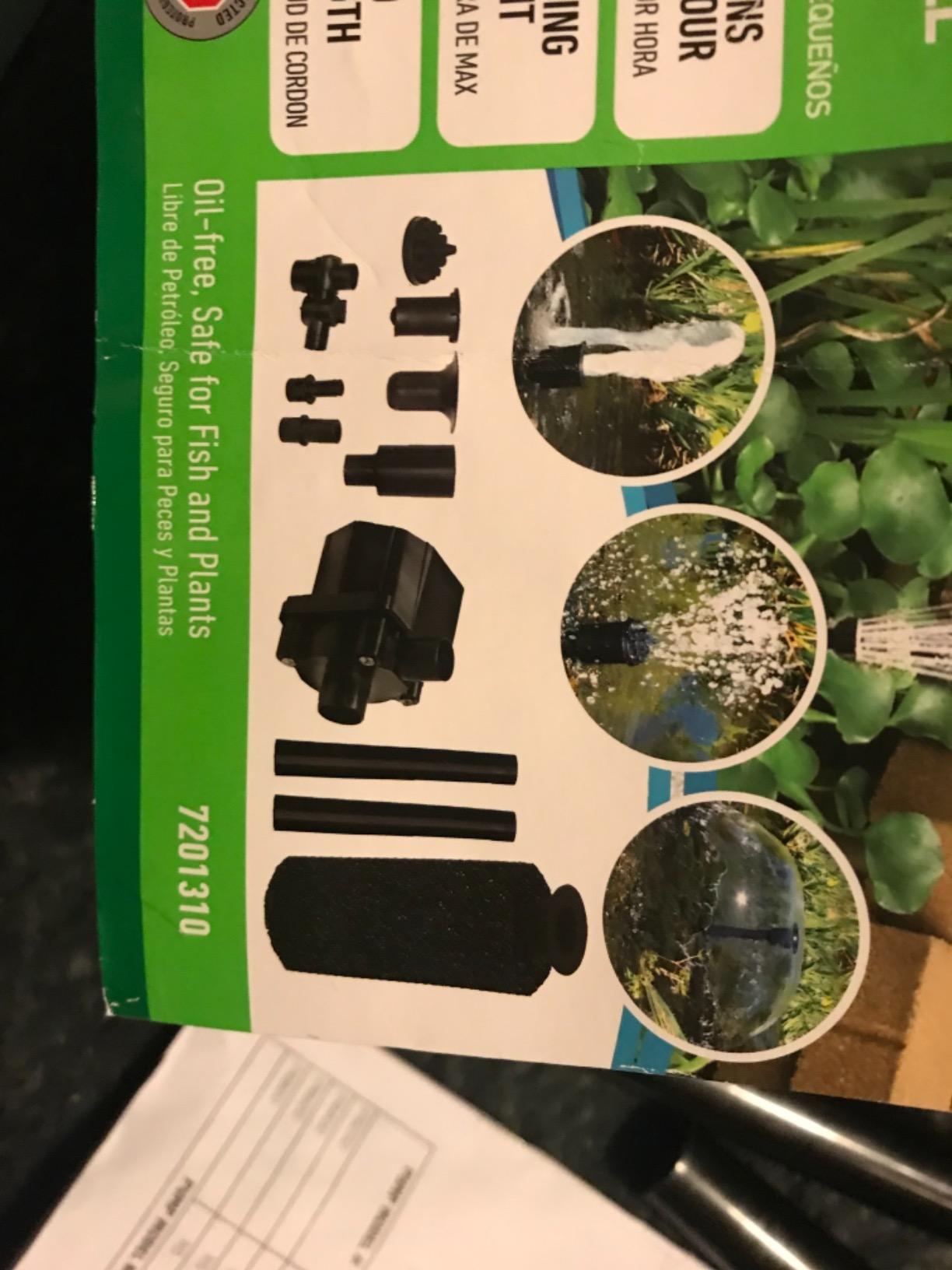
It is also the only UL listed pump in this roundup, which is worth considering for any pond near a patio where electrical safety is on your mind. The oil-free design means nothing can contaminate the water, so it is safe around fish and plants.
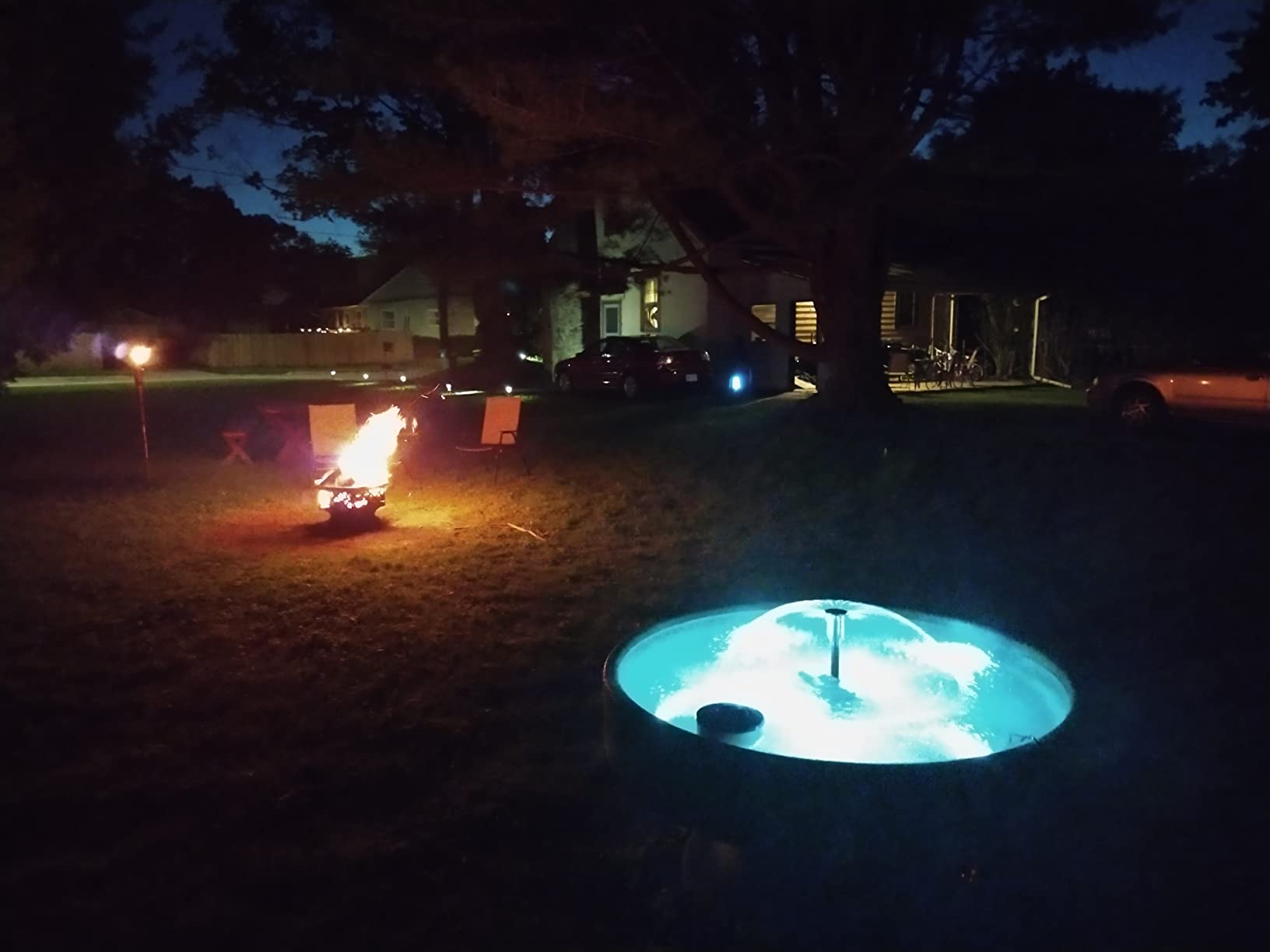
The bypass and throttle valve on the outlet is the feature owners praise most, because it lets you regulate flow without changing nozzles. Owners also report the included filter is notably more effective than the filters that come with many competing pumps, which matters in a pond with algae.
Specifications list 500 GPH maximum flow, a 6 foot maximum lift, a 38.4 watt draw on 115V, and a 15 foot cord. It accepts 3/8 inch, 1/2 inch, or 3/4 inch ID tubing and carries a 2 year limited warranty.
Where this pump earns its place
A small garden pond up to about 7 feet by 5 feet, a table fountain, or a barrel pond with no fish. At 500 GPH and 38.4 watts, the running cost is the lowest in the group.
It is the easiest install of any pump here for a first-time builder, since the filter, valves, and nozzles are already in the box.
Where it falls short
Owners report the prefilter attachment breaking off and the double outlet not sealing well when running a single smaller line. Both are fitting issues that are easy to work around with the right adapters.
The 6 foot lift and 500 GPH flow are at the low end, and the filter needs cleaning roughly weekly in a debris-heavy pond, which is real hands-on time.
10. Yochaqute 550GPH – Budget Fountain and Small Pond Pump
Yochaqute Reliable Waterfall Fountain Pump:Run 24/7 for Stable Circulation
- Very quiet at 20dB with only water audible
- Adjustable flow dials down for small features
- Anti-clog design with side intake
- Compact and smaller in person than listed
- Three nozzle sizes included
- Impeller can fail after 15 to 18 months
- Top cap filter dislodges easily
- Suction cups hold poorly
Best for a container fountain, a small table feature, or a modest decorative pond where you want adjustable flow and very little noise. At a 1.3 pound body and 3.6 by 2.3 by 2.6 inches, it is the most compact pump in the group and easy to hide.
The adjustable flow control is what makes it more useful than a fixed-output pump of the same size. We turned the output down for a small basin without swapping nozzles, and some owners report it running non-stop for over a year in a fountain setting.
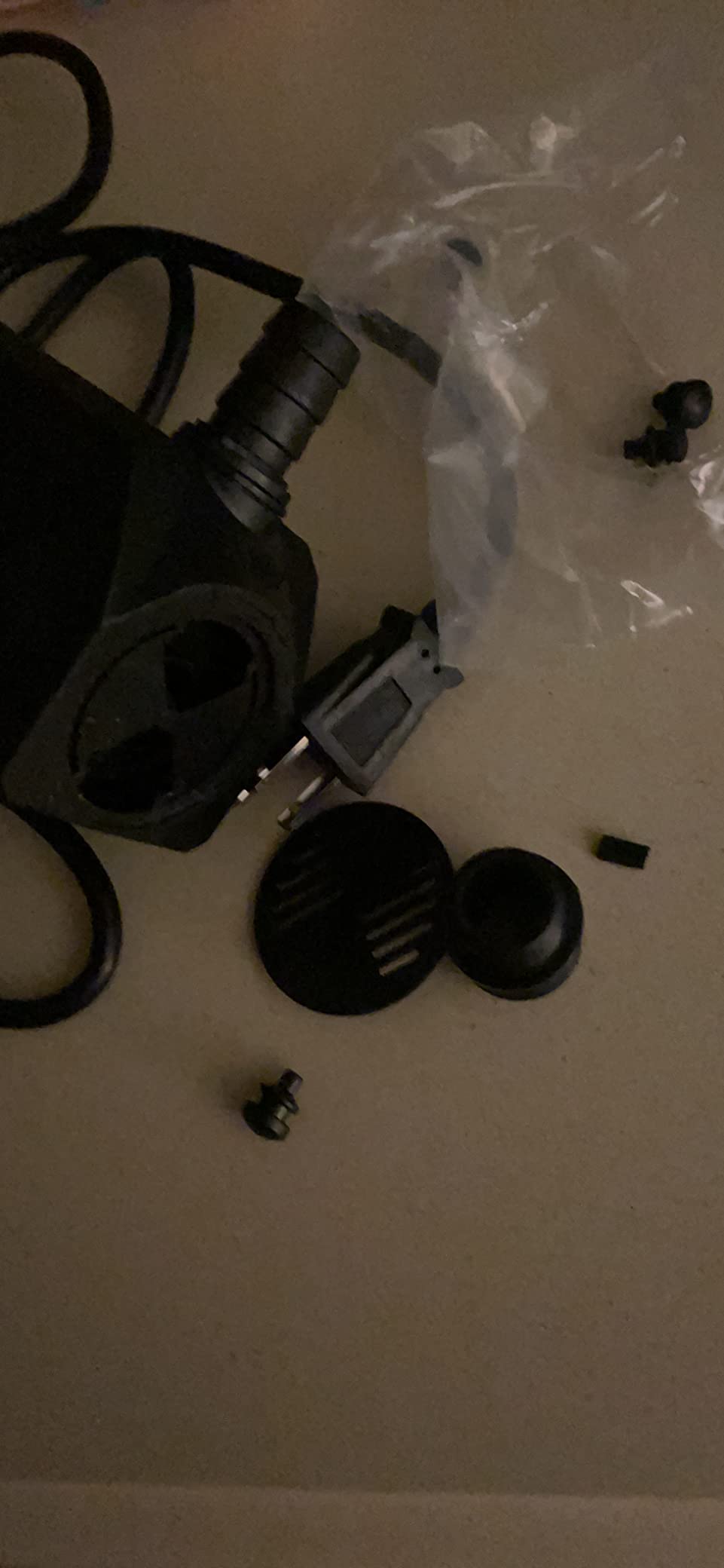
Quietness is the headline at a listed 20dB with a brushless motor, and the 185F dry burn protection is a real safeguard for a fountain that can lose water. The anti-clog design and side intake help with debris, and three nozzle sizes are included.
Specifications list 550 GPH at 2080 liters per hour, a 7.2 foot maximum lift, a 110 volt AC supply, and a 30 watt draw. It is designed for continuous 24/7 running.
Where this pump earns its place
A small fountain, a bird bath feature, or a decorative container pond. It is also a reasonable choice as a second pump running alongside a larger unit, where the main pump handles the pond loop and this one drives a small display.
If silence near a seating area is the priority, its listed 20dB matches the lowest noise figure in the group.
Where it falls short
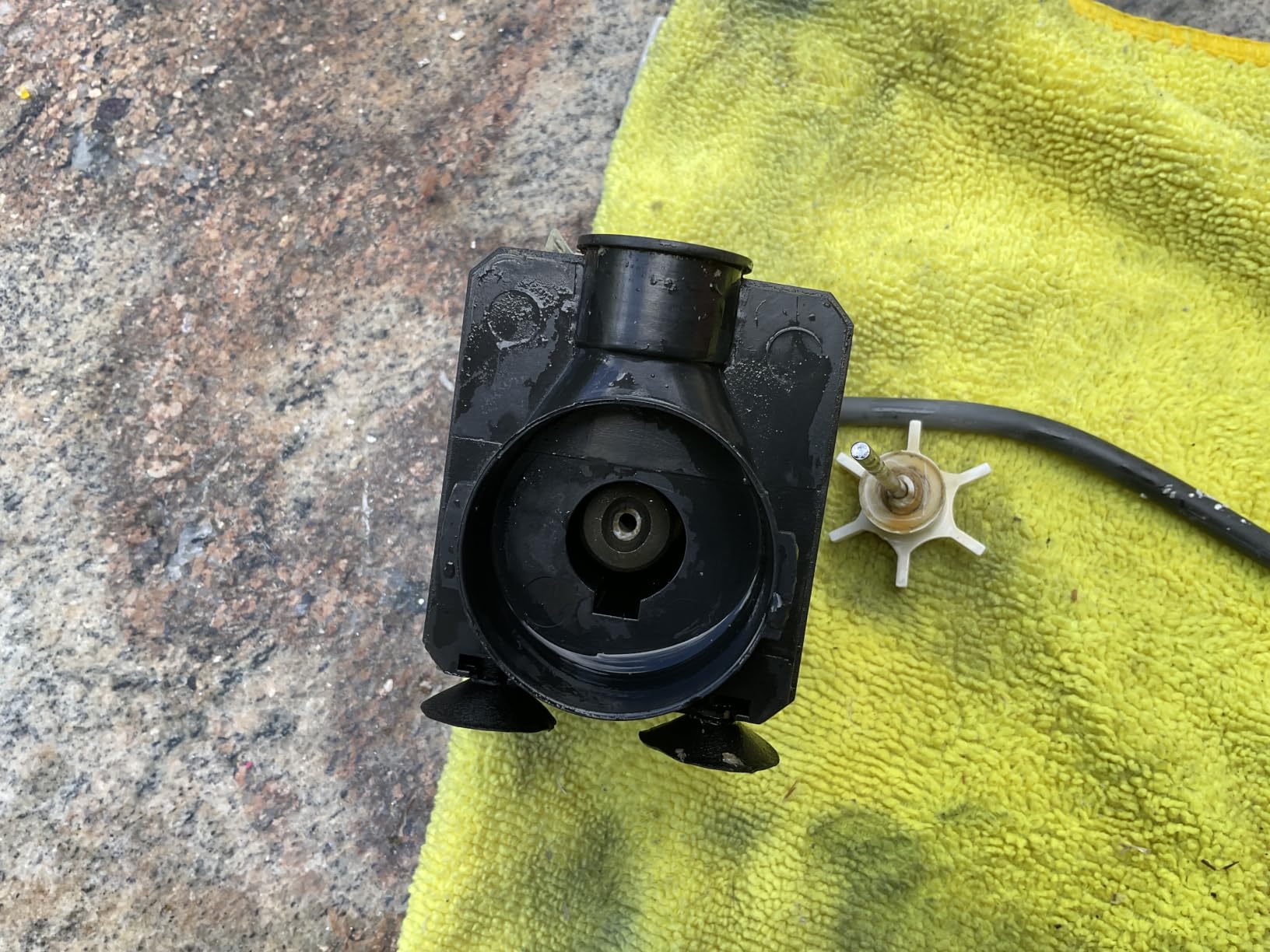
Durability is the issue. Impellers can fail after roughly 15 to 18 months of use, which lines up with what pond keepers describe about small budget pumps generally. The top cap filter also dislodges easily, and a displaced cap can admit debris and contribute to motor burnout.
The suction cups do not hold firmly, so on a sloped liner you will need another way to secure it.
11. VIVOHOME 660GPH All-in-One – Pump, Filter and Fountain Kit
VIVOHOME 660GPH 54W All-in-One Pond Filter Pump Fountain System Kits
- Filtration pump and fountain in one unit
- Sponge and bio-ball media pull a heavy sludge load
- Movable fountain head aims the spray pattern
- IPX8 sealing and a 33 ft UL cord
- Owners report clearer water within 48 hours
- Filter media needs cleaning or swapping very often
- Heavy at 10.4 pounds for cleaning
- UV light arrived dead on some units
Best for a small to mid-size pond where you want filtration and a fountain from one box and you value the shortest path to clear water. At 4.1 stars it is the lowest-rated pick here, and the reason is the upkeep rather than the filtration itself.
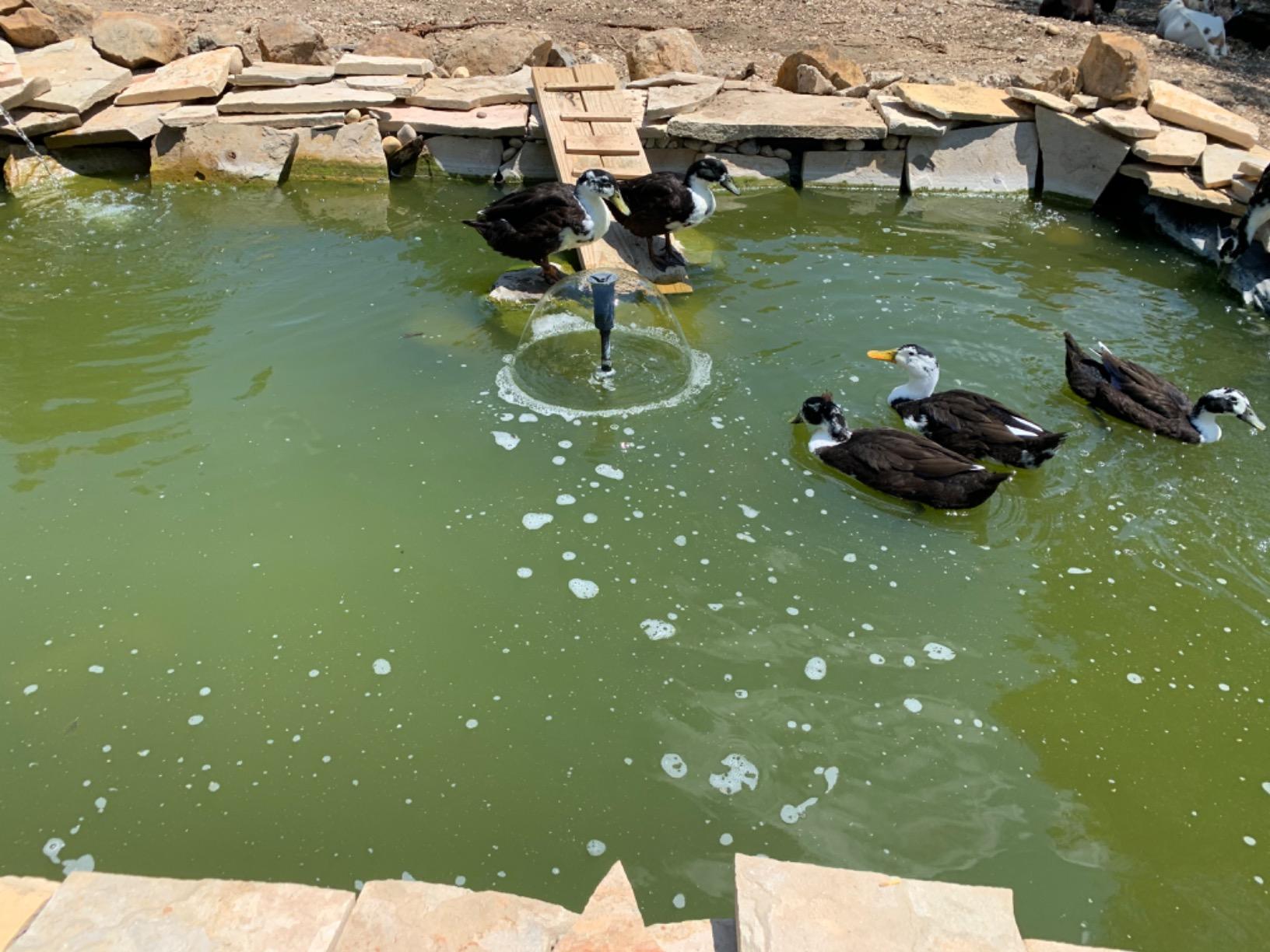
Owners report noticeably clearer water within about 48 hours of use, and the filter sponge plus bio-balls give a genuine dual-stage media load for a pond of this size. The movable fountain head lets you aim the spray pattern across the pond surface, which helps with circulation as well as looks.
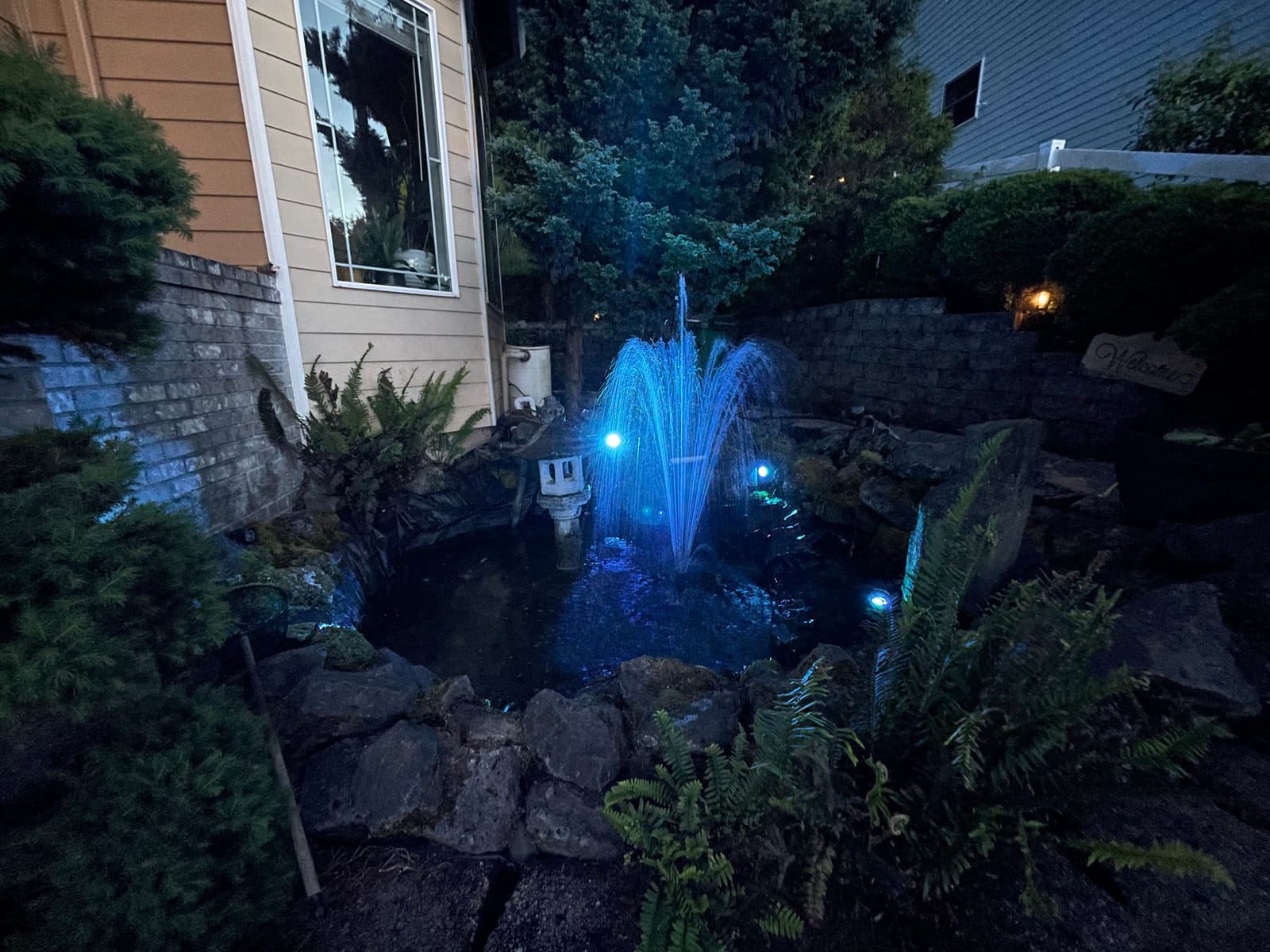
At 660 GPH with an 8.2 foot lift, this is rated for ponds up to 1180 gallons, though owners find it works best in the 150 to 400 gallon range where the filter media can keep up. The pump can also be detached and used as a standalone submersible water pump.
Specifications note a 33 foot UL certified cord, IPX8 sealed live components, three interchangeable fountainhead nozzle patterns, and a UV light with an indicator on top. The body is 12.4 by 9.8 by 5.3 inches at 10.4 pounds.
Where this pump earns its place
A 150 to 400 gallon pond with no separate filter, a new build where you want water clarity quickly, or a pond where the fountain head is the main feature. The 33 foot cord and three nozzles make it flexible for a first installation.
If the UV light works, this is the most complete single-box solution in the roundup.
Where it falls short
Filter media must be cleaned or swapped very frequently, often every other day in a busy pond. That hands-on commitment is the main reason for the lower rating, and it is worth weighing honestly before buying.
At 10.4 pounds it is heavy to lift out for cleaning, some units arrived with a dead UV light and replacement parts are hard to source, and the instructions include a hidden screw that must be removed first. It is not powerful enough to be a standalone filter for ponds of 600 gallons or more.
12. POPOSOAP 660GPH Kit – Two Extra Outlets for Two Features
- Three extra inlets run a second water feature
- Diverter valve and adjustable flow controls
- Quick-release clips make cleaning fast
- Filter pads plus filter-balls and bio rings
- Shields fish from the pump body
- Single filter falls short on larger ponds
- Filter media still needs regular replacement
Best if you want a fountain and a second water feature running from one pump, which is where this kit differs most from the others. The three additional inlets mean you can split the flow, and the diverter valve plus adjustable flow controls let you balance how much water goes where.
That flexibility is the reason to pick it. Most single-box kits give you one outlet and force you to choose between a fountain and a second stream. Owners with a fountain and a small spillway or bubbler report being able to run both at once, which is genuinely useful on a compact pond.
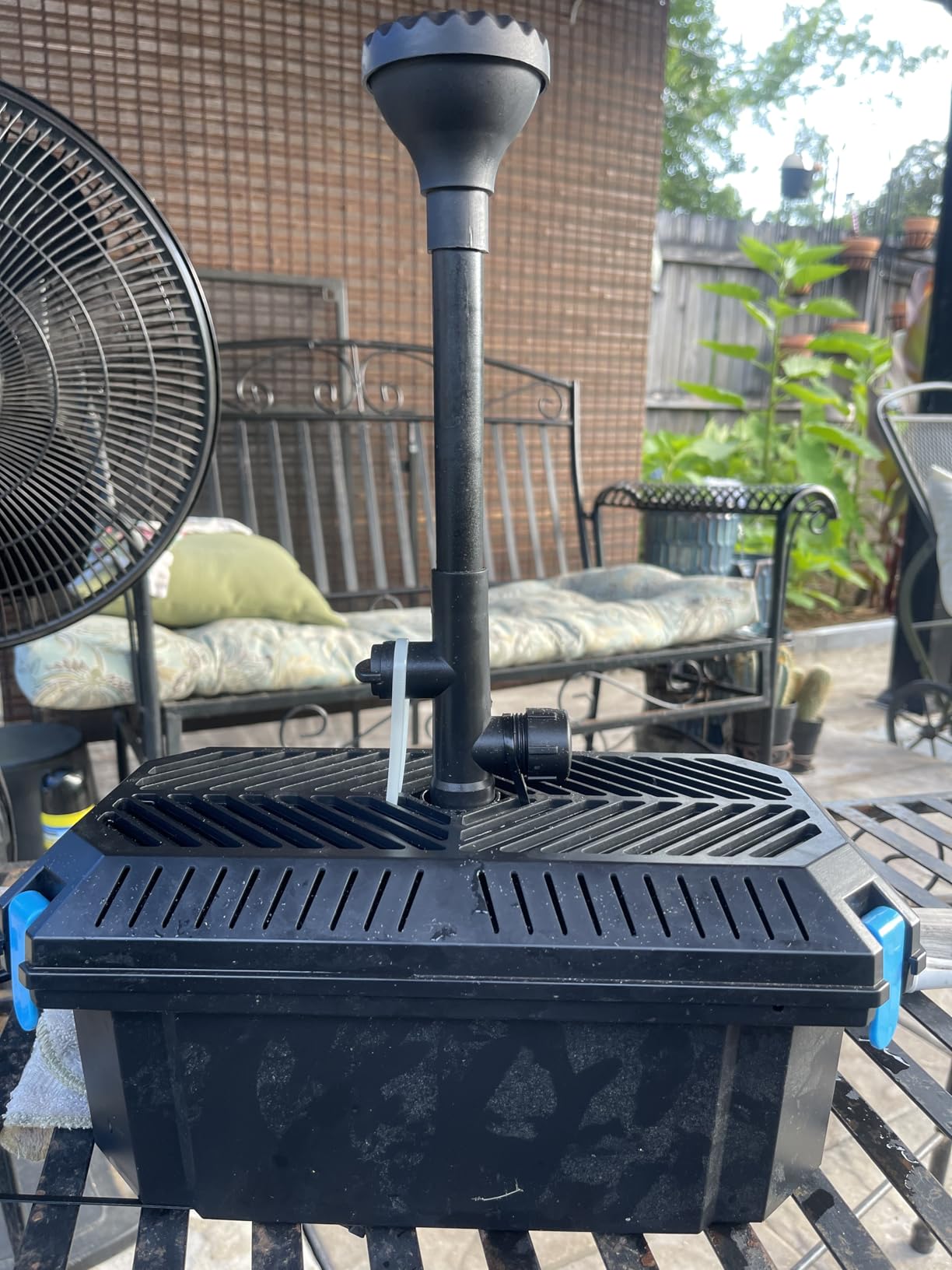
The filtration is dual-stage, combining filter pads, filter-balls, and bio ceramic rings, and the quick-release lid clips make daily access far easier than screw-down housings. The impeller guard protects the pump from debris while shielding fish from the pump body.
Specifications list 660 GPH at 2500 liters per hour from a 40 watt built-in pump, an 8.2 foot maximum lift, and suitability for ponds up to 1180 gallons. The body measures 12.8 by 6.5 by 5.43 inches, and the kit carries a 1 year warranty.
Where this pump earns its place
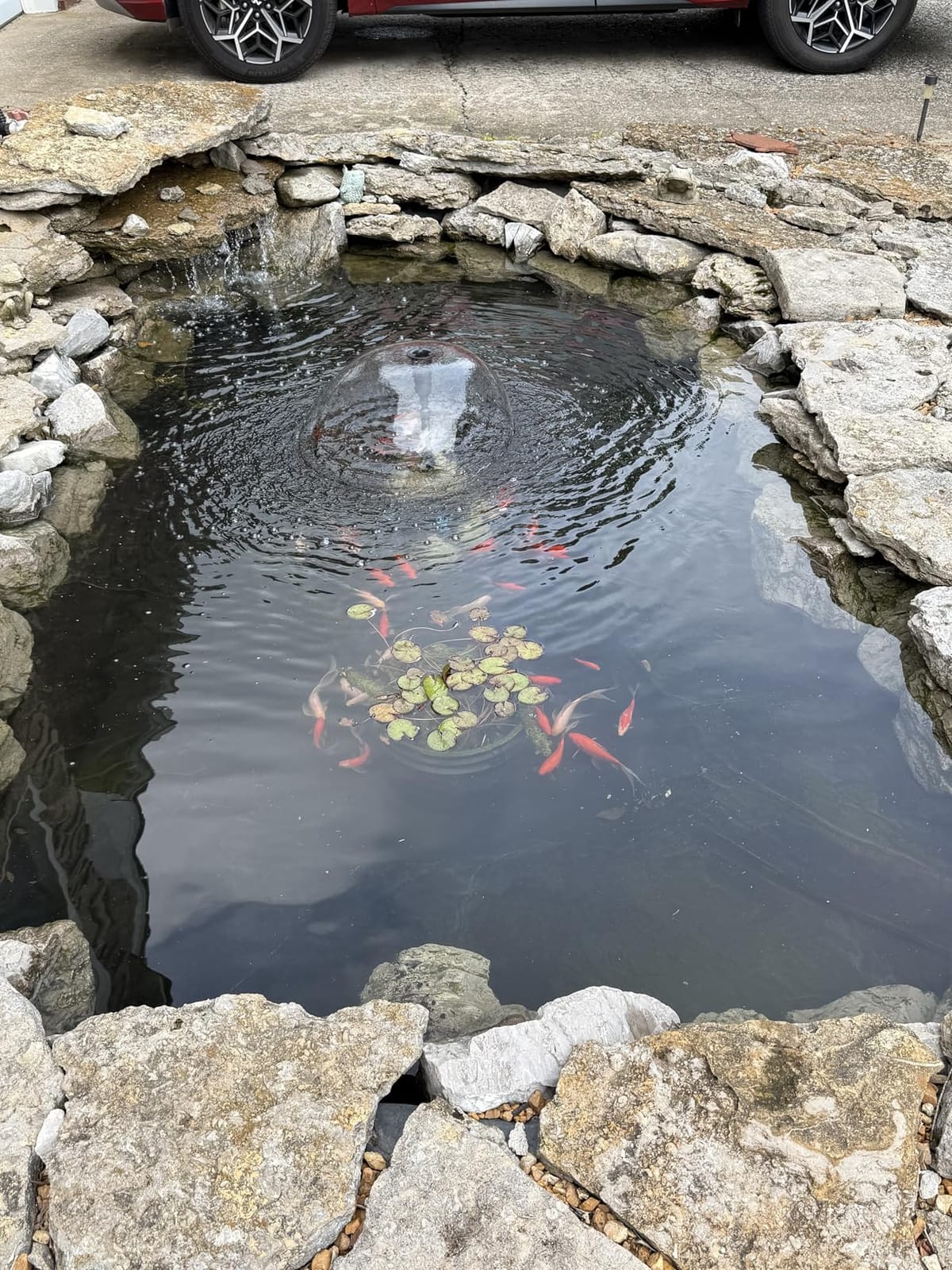
A 300 to 700 gallon pond with a fountain and a second feature, or a pond where you want to run a small bubbler and a spillway at once. The 40 watt pump keeps running costs low for the output.
It is a good match for anyone building a feature-heavy pond in a compact space where separate pumps would be hard to route.
Where it falls short
One filter unit cannot carry a large pond on its own, and owners running bigger setups pair it with supplemental filtration. Filter pads, filter-balls, and bio rings also need regular replacement to hold clarity.
The 1 year warranty is the shortest in this roundup, so keep the receipt and check the terms before committing to a permanent install.
Submersible, External or Solar: Which Pump Type Fits Your Pond
Almost every pump in this roundup is a submersible, and for most backyard ponds that is the right default. A submersible sits on the pond floor, hides under a shelf, and needs no plumbing beyond a hose to the filter or waterfall. An external direct-drive pump stays in a dry well beside the pond and is the better choice when you want easy access to the motor without pulling anything out of the water.
Submersible pump. Best for most ponds. Inexpensive, quiet, and easy to hide. The trade-off is that cleaning means lifting the pump out.
External direct-drive pump. Best when the pump needs frequent inspection, when the pond is very shallow, or when the motor would be damaged by freezing water. It costs more and needs a dry, ventilated space.
Solar or off-grid pump. Best for a pond with no nearby outlet, a remote garden feature, or anywhere you want to avoid running a cord across a walkway. Expect lower flow than a comparable mains pump and no night-time circulation.
All-in-one filter pump kit. Best for small ponds where you want filtration, a pump, and a fountain without planning three separate purchases. The trade-off is cleaning frequency.
Three sizing details catch out most beginners. First, continuous duty versus intermittent duty: a fish pond needs a pump rated to run 24/7, and buying an intermittent unit for continuous use is the single most common expensive mistake in pond forums. Second, rated GPH versus real GPH: the number on the box assumes zero head, and every foot of lift, every 10 feet of tubing, and every 90-degree bend reduces it, so always size one class up. Third, low head versus high head: a high-head pump is built to lift water upward and a low-head pump is built to move a lot of water horizontally, so a high-head pump in a flat circulation loop wastes capacity and money.
Two more practical points. Match tubing to flow: narrow 1/2 inch line chokes anything above roughly 800 GPH, and 1-1/4 inch or larger is needed for the big pumps. And run any pump on a GFCI-protected outlet, keep extension cords out of wet locations, and never handle a plugged-in pump that is submerged.
For winter, keep the pump running in most climates. Continuous circulation prevents the cold bottom water from stratifying and trapping oxygen-starved water near the fish. Where the pump would freeze solid, pull it out, drain it, and store it indoors instead.
Troubleshooting a Pond Pump That Stops or Loses Flow
Most pump complaints come down to one of five things, in this order.
1. Check the circuit first. A tripped breaker or a tripped GFCI is the simplest and most common cause, and it costs nothing to rule out. Reset the GFCI at the outlet and see whether the pump starts. If it trips again, unplug it immediately and look at the intake.
2. Check the water level. Pumps are cooled by the water around them. If the level has dropped below the pump, dry running will destroy the motor, and many units will run for a while before the protection cuts in. Refill the pond before you test again.
3. Check the intake for blockage. Leaves, algae, and biofilm are the most common mechanical problem, and forum owners report cleaning the strainer regularly as the difference between a five-year pump and a one-year pump. Look at the prefilter and the impeller cover while you are there.
4. Check the impeller. If the pump hums but moves little or no water, the impeller is likely jammed or partly broken. Most of the pumps in this roundup open without tools, so you can remove the housing and clear it. If the impeller blades are chipped or worn smooth, replace the pump rather than rebuilding it.
5. Check for a blockage in the line. Kinks in tubing, a closed valve, and a clogged filter all show up as reduced flow with the pump running normally. Follow the line from the pump to the outlet and confirm every valve is fully open.
Add a backup plan for the same reason people ask about emergency aeration. Keep a spare pump on hand, and if the main pump fails overnight, an air stone and a small spare circulator moved from the sump will keep oxygen in the water until you fix it.
Frequently Asked Questions
How strong of a pump do I need for my pond?
Multiply pond length by width by average depth in feet, then by 7.5 to get gallons. Multiply that by two for a healthy hourly turnover, then increase the target by about half again to allow for lift height, tubing friction, and filter resistance. Buy the next pump size above your calculated figure, because rated GPH is measured at zero head and real output always falls.
Which type of pond pump is best for my pond?
A submersible pump is the best default for most backyard ponds because it is quiet, affordable, and hides easily on the pond floor. An external direct-drive pump suits shallow ponds and situations where you want frequent access to the motor. A solar pump works where no outlet is nearby. An all-in-one filter pump kit suits small ponds that need filtration and a fountain in one purchase.
Should I run my pond pump in the winter?
Yes, in most climates you should keep the pump running through winter. Continuous circulation prevents cold, oxygen-poor bottom water from stratifying and trapping fish below the oxygen line. The exception is a region where the pump body would freeze solid, in which case you should disconnect it, drain it fully, and store it indoors until spring.
What is the typical lifespan of a pond pump?
A continuous-duty pump with a seal-less magnetic drive can run for many years, and owners report units lasting well beyond a decade. Small budget fountain pumps are the opposite: impellers commonly fail after 15 to 18 months of continuous use. The biggest factors are duty rating, impeller material, debris exposure, and how often you clean the intake strainer.
How long can koi survive in a pond without a pump?
Koi are far more tolerant of still water than most pond keepers expect, and they can survive for weeks in a healthy pond with no circulation, provided there is surface aeration and plants. The risk is not days without a pump but the oxygen crash that follows a hot, algae-heavy period. Adding an air stone, keeping plants up off the pond floor, and having a spare pump ready covers most emergencies.
The Best Pond Pumps for Backyard Ponds in 2026
For most people building a backyard pond, the VIVOSUN 800 GPH is our starting recommendation among the best pond pumps for backyard ponds, with the deepest proven track record in this group and a design that is simple to clean and simple to hide. If your pond holds roughly 1,000 to 1,500 gallons and is home to koi, the VIVOHOME 1600 GPH is the stronger buy on rating, quietness, and durability.
Go bigger when your build demands it. The Alpine PAL3100 covers a tall waterfall, and the VIVOSUN 4500 GPH handles large ponds and wide weirs. For quietness near a seating area, the FREESEA is hard to beat, and the Danner Pondmaster is the pick when you want the longest warranty and the fewest moving parts.
Whichever you choose, size it with the volume formula rather than the box number, run it on a GFCI-protected outlet, and clean the intake every few weeks. Those three habits account for most of the difference between a pump that lasts a season and one that runs for years.