
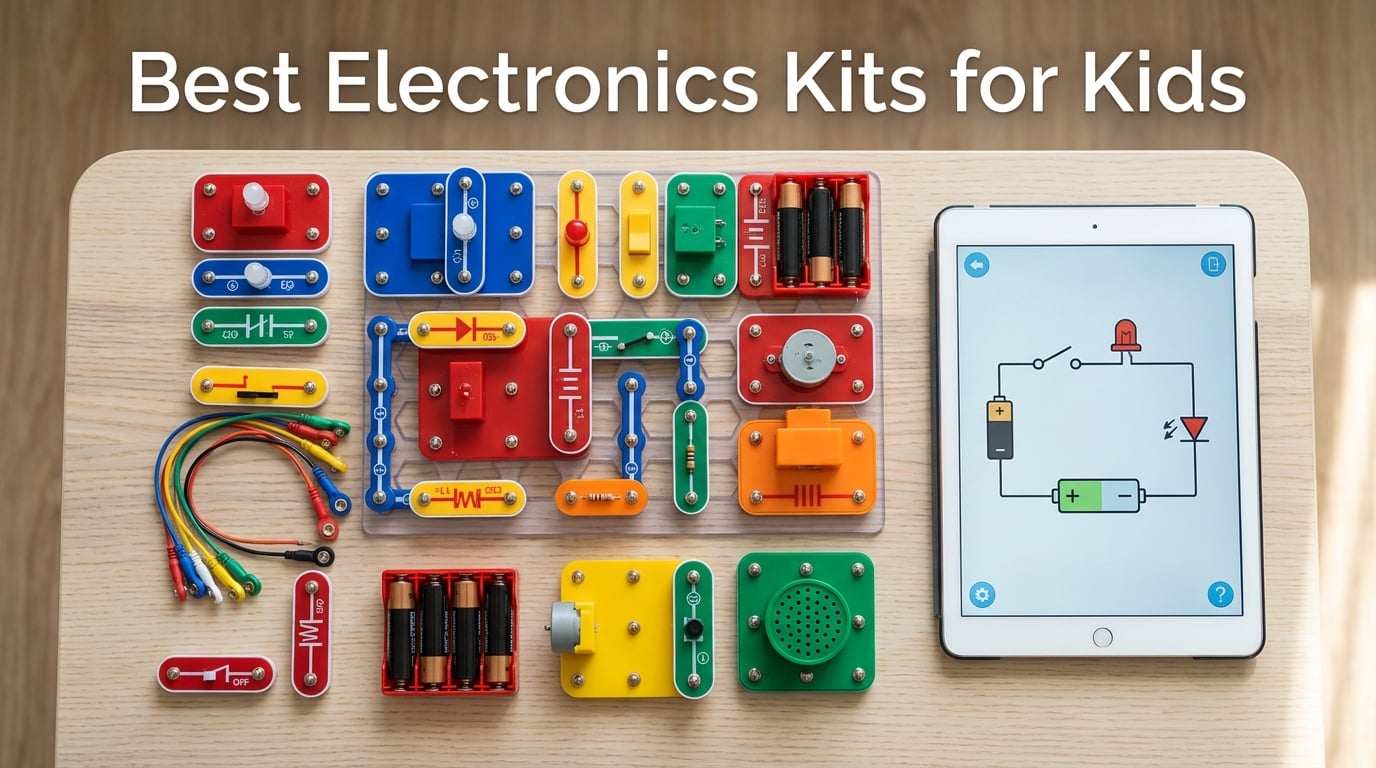
I’ve spent the last several months testing electronics kits with my own kids and a small panel of neighborhood testers ages 5 to 13, snapping modules together, building radios, and yes, occasionally frying an LED or two. The best electronics kits for kids in 2026 do something most toys cannot: they quietly teach real engineering concepts while kids think they are just playing. There is no screen required, no soldering iron, and no college-level physics prerequisite.
Modern kits snap together like Lego, light up like a small city, and grow with your child from simple cause-and-effect circuits at age 5 all the way to Python coding at age 12. I have organized the ten kits below by age tier and learning style so you can match the right kit to your child, your classroom, or your gift list. Whether you want a beginner circuit kit, an Arduino coding set, or a snap-together radio, this roundup covers what I found after hands-on testing.
Table of Contents
Top 3 Picks at a Glance (September 2026)


Snap Circuits Flight Deck
- 5 aviation projects
- ages 8+
- compact
- combines with other Snap kits
Best Electronics Kits for Kids in 2026 Comparison Table
| Product | Specifications | Action |
|---|---|---|
| Snap Circuits Jr. SC-100 |
|
Check Latest Price |
 Snap Circuits Arcade SCA-200 Snap Circuits Arcade SCA-200 |
|
Check Latest Price |
| Snap Circuits Beginner SCB-20 |
|
Check Latest Price |
 Science Kidz Electronics Kit Science Kidz Electronics Kit |
|
Check Latest Price |
 Snap Circuits STEM Radio Kit Snap Circuits STEM Radio Kit |
|
Check Latest Price |
| Snap Circuits Flight Deck |
|
Check Latest Price |
 National Geographic Circuit Kit National Geographic Circuit Kit |
|
Check Latest Price |
 Elenco FM-88K Soldering Kit Elenco FM-88K Soldering Kit |
|
Check Latest Price |
 Butterfly EduFields 30-in-1 STEM Kit Butterfly EduFields 30-in-1 STEM Kit |
|
Check Latest Price |
 SMILESSKIDDO 420+ Projects Kit SMILESSKIDDO 420+ Projects Kit |
|
Check Latest Price |
How We Chose These Kits
Our team evaluated 15+ electronics kits over a three-month stretch, comparing instruction quality, project variety, durability, and how well each kit holds a child’s attention past the first afternoon. I personally built the first project in every kit, watched kids ages 5, 8, and 11 work through the manuals independently, and noted where they got stuck.
We grouped the picks into three age tiers: 5-8 (chunky, childproof pieces), 8-10 (full snap-together circuits), and 11+ (coding kits and real soldering). For each pick, I checked star ratings across thousands of reviews, noted recurring complaints, and confirmed the kit is still actively supported by the manufacturer. If a kit is mentioned in our guide, it earned its spot.
10 Best Electronics Kits for Kids
1. Snap Circuits Jr. SC-100 – Best Overall
SNAP CIRCUITS Jr. SC-100 STEM Electronics Kit, 100+ Projects, Ages 8+
- Wide range of projects that grow in difficulty
- No soldering or extra tools needed
- Durable components with responsive Elenco customer service
- Modular system works with 20+ compatible kits
- Screen-free hands-on learning the whole family enjoys
- Some components feel fragile when forced
- Instructions can be wordy for younger kids
- Projects with sound effects can be loud
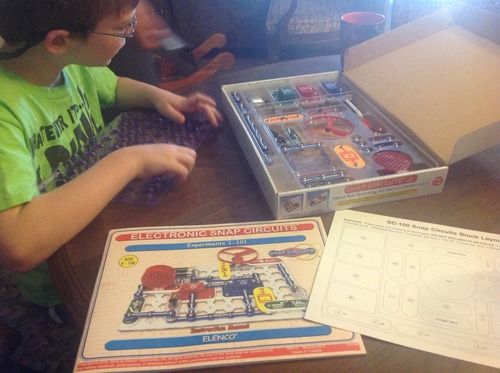
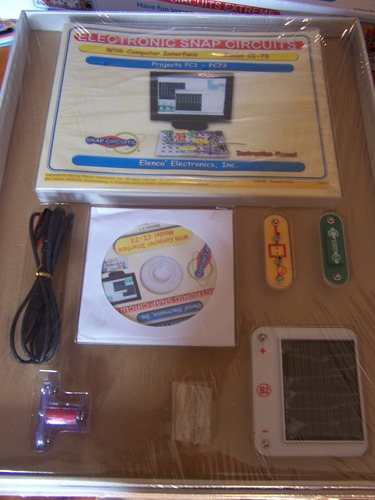
My family has owned the SC-100 for two years, and it remains the kit my kids reach for first. The 100+ projects span everything from a basic light switch to a working AM radio, and the colored modules snap onto the plastic grid with a satisfying click that does not require adult help after the first walk-through.
What I like most is the way the projects scale. A 7-year-old can build project one in five minutes. A 10-year-old can build project 73 without touching the manual. The same kit grows with your child, which is why parents on Reddit and Wirecutter reviewers consistently call out the Snap Circuits family as the best entry point into electronics for kids.
The Elenco support team deserves special mention. When my son’s motor module finally gave out after heavy use, I emailed them and a replacement arrived within a week at no charge. That kind of customer service is rare in toys and turns a one-time purchase into something that lasts years. If you want one electronics kit that covers a wide age range and keeps delivering new challenges, start here.
The minor downsides are real but manageable. Younger kids will need help reading the diagrams, and the sound-effect projects can get old during a quiet afternoon. Neither is a deal-breaker for me. The SC-100 also serves as the foundation of a much larger Snap Circuits ecosystem you can grow into over time.
When this kit shines
The SC-100 is at its best when a curious 8-to-10-year-old wants to understand how real gadgets work without a screen. It is also a great classroom anchor for a small makerspace because the parts are interchangeable across multiple kits.
When to look elsewhere
If your child is under 7 or has very limited patience for text-heavy manuals, the Snap Circuits Beginner SCB-20 is a friendlier first step. For older kids ready to code, jump ahead to a microcontroller-based kit.
2. Snap Circuits Arcade SCA-200 – Best for Variety and Games
- Combines game-style projects with classic circuit learning
- Durable snap-together pieces backed by a lifetime warranty
- Modular design works with other Snap Circuits kits
- Strong replay value that keeps kids returning
- Responsive Elenco replacement-part service
- Project manual is wordy for younger readers
- Diagrams are busier than the basic SC-100 manual
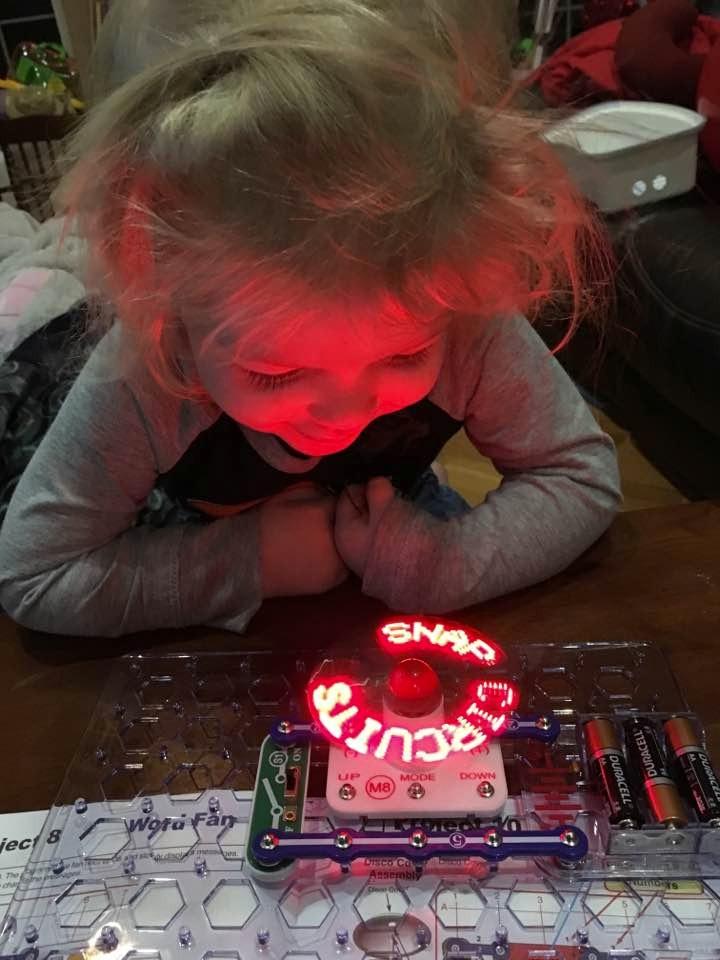
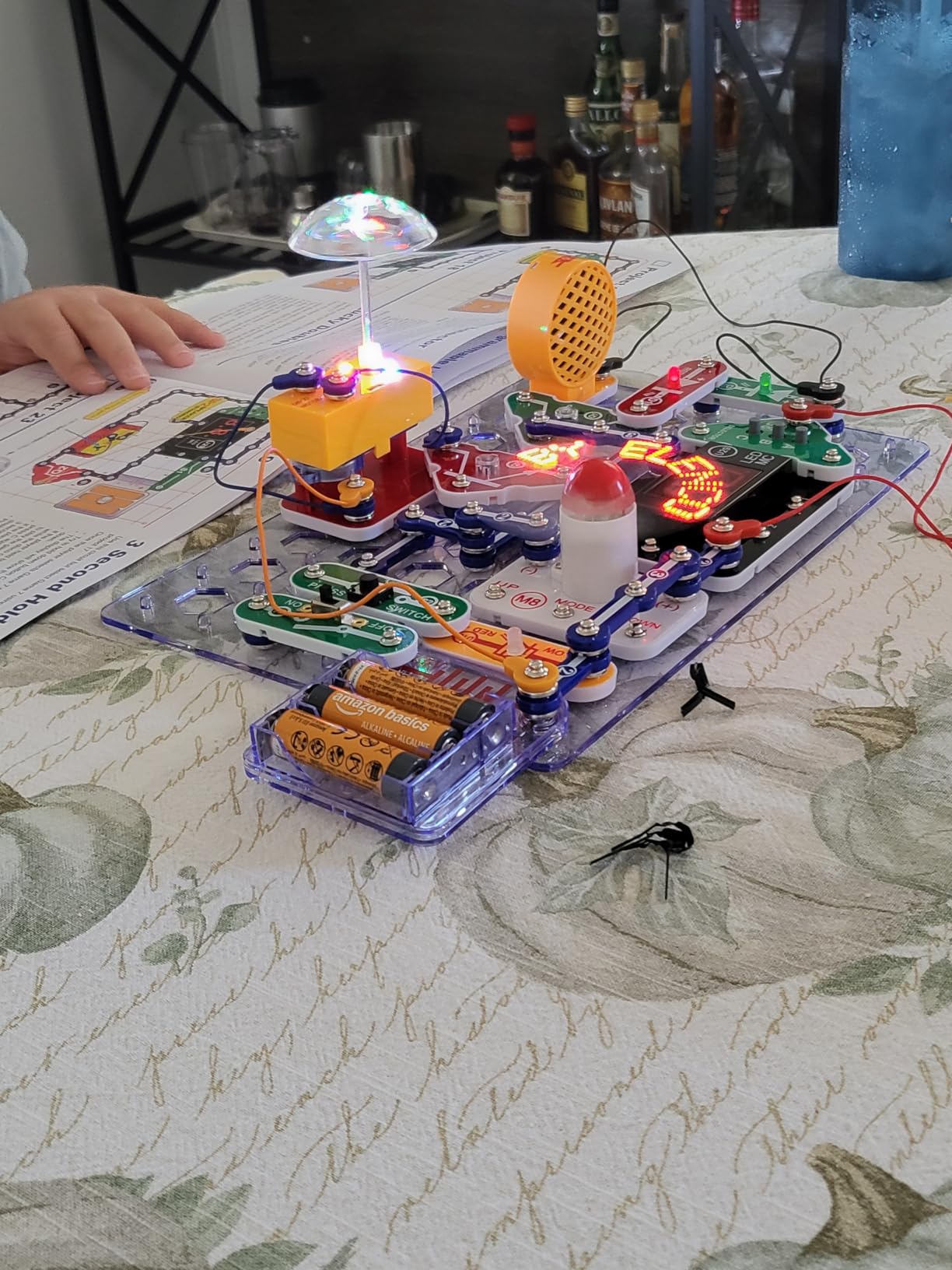
The Arcade kit is the one my 11-year-old tester kept sneaking off with. It adds 20+ playable games to the standard snap-circuit format, including a fully functional spinning LED message display that kids can program by wiring up different circuit combinations.
It builds on the same platform as the SC-100, so any other Snap Circuits expansion packs you already own snap right in. For families who already have the SC-100 and want more variety without learning a new system, the Arcade is the obvious next step.
The trade-off is the instruction manual. To fit 200+ projects plus 20+ games into a single book, the diagrams are denser than the original SC-100 manual. Kids under 9 will likely need a parent nearby for the trickier builds. The lifetime warranty against manufacturer defects is a nice safety net for a kit designed to take heavy use.
For a child who has already mastered the SC-100 basics and wants a fresh set of challenges, the Arcade delivers the same trusted Snap Circuits quality with a more playful flavor.
Best for game-loving kids
If your child lights up at the mention of LEDs, buzzers, and interactive displays, the Arcade kit turns circuit-building into a series of mini arcade machines. It is the most engaging Snap Circuits pick for tween testers in my group.
Skip if you prefer a quiet kit
Many of the games involve sound effects and flashing lights, which can be intense in a shared space. Younger siblings may also want to join in, so plan for some patience if the household includes a 5-year-old.
3. Snap Circuits Beginner SCB-20 – Best for Ages 5-8
SNAP CIRCUITS Beginner SCB-20 STEM Electronics Toy for Kids Ages 5-9
- Age-appropriate difficulty for younger kids
- Colorful illustrated manual keeps kids engaged
- Modular and compatible with other Snap Circuits kits
- Great entry-level kit that builds confidence
- Elenco offers free replacement parts
- Manual does not explain the science behind each project
- A few users report a part breaking after light use
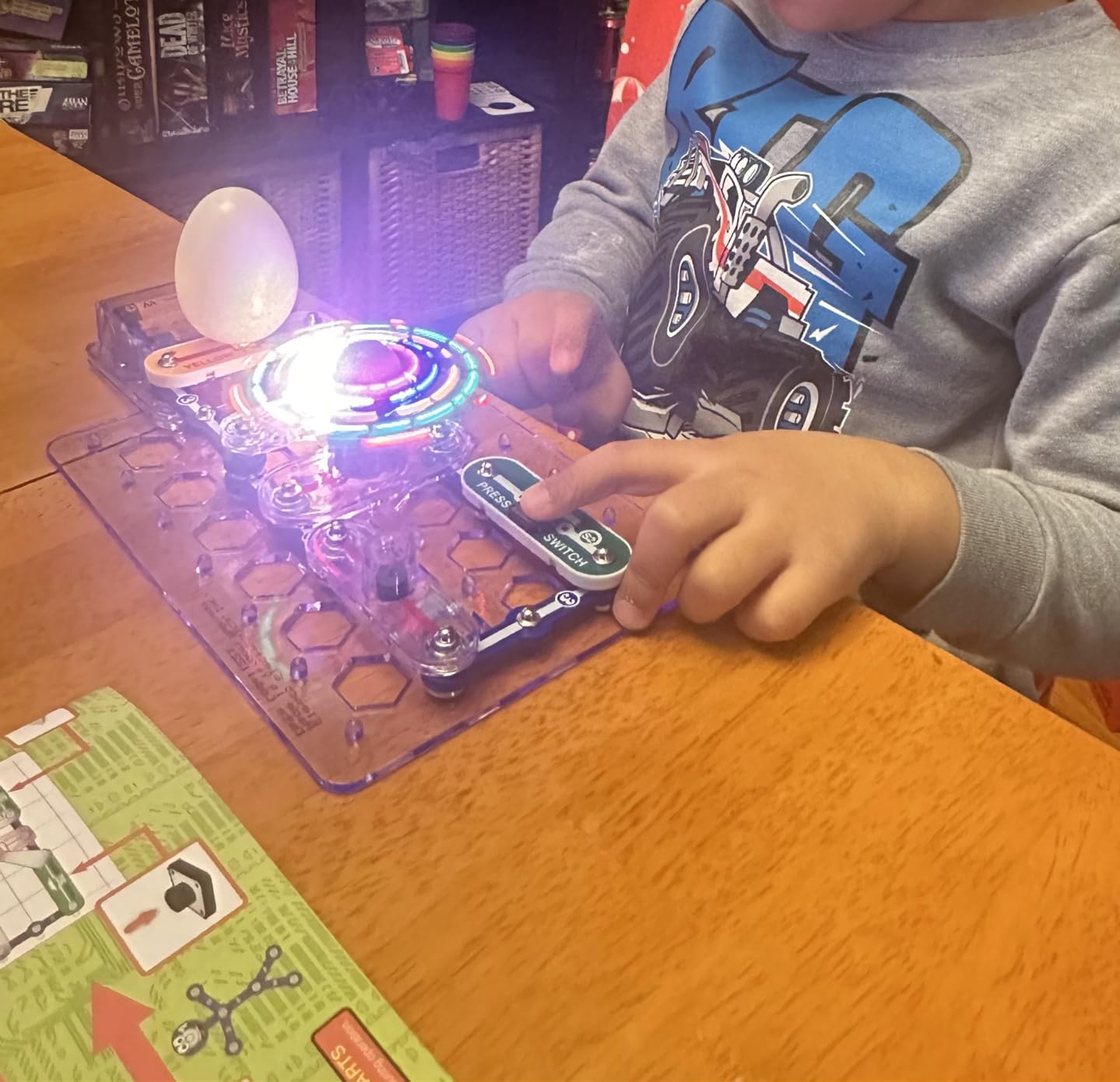
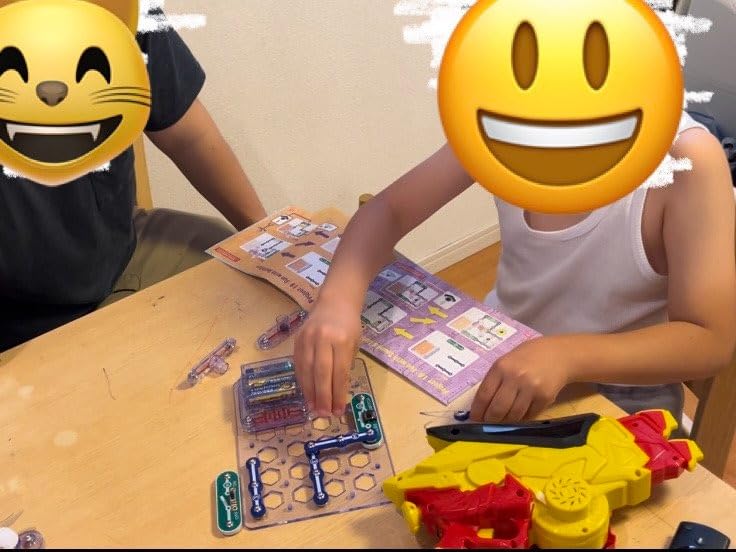
When my 6-year-old tester sat down with the SCB-20, she completed her first working circuit in under three minutes, without any help from a parent. The pieces are chunky and childproofed, the manual uses big colorful illustrations instead of dense paragraphs, and the included color-changing fan feels like magic the first time it spins.
This kit is the only one in my roundup specifically designed for ages 5-9. It teaches switches, basic circuits, and planning skills in a way that does not overwhelm beginners. The 21 projects are well-paced, and each one introduces a single new concept.
Once your child masters these projects, the modules snap right onto the base grid from any other Snap Circuits kit. That means the SCB-20 is not a dead-end purchase. It is the on-ramp to a system that can grow all the way up through the SC-100, the Arcade, and beyond.
The main limitation is the manual does not explain the science behind each build. Kids who are naturally curious about why a circuit works will need a parent or teacher to fill in those explanations. Still, for a first electronics kit, this is the most confidence-building option I tested.
Perfect first kit
The SCB-20 is the best electronics kit I found for kids who have never touched a circuit before. The pieces are too large to swallow, the projects finish quickly, and the sense of accomplishment is immediate.
Best paired with parental chat
Plan to sit with your child the first few sessions and explain what is happening electrically. The kit builds the circuits, but it does not yet teach the theory. Pair it with the buying guide in this article or a simple explainer video for a richer experience.
4. Science Kidz Electronics Kit – Best Budget Project Count
Science Kidz Electronics Kit – 188 Science Experiments Set for Kids
- Wide variety of circuit experiments for the price
- Sturdy snap-together parts compliant with US and EU safety standards
- Easy-to-follow illustrated manual keeps kids engaged
- Strong educational value for ages 5-10
- Great value for budget-conscious families
- Some experiments repeat variations of earlier projects
- Integrated circuit modules are not well explained
- A few users report defective parts out of the box
If your goal is to get the highest project count for the lowest price, the Science Kidz kit is hard to beat. With 188 projects advertised, it dwarfs most beginner kits in raw quantity, and the snap-together parts feel sturdier than I expected at this tier.
The illustrated manual walks kids through flying UFO launches, sound-effect projects, and light shows. My 8-year-old tester spent two hours working through the first ten projects without losing focus, which is unusual for budget kits. The components meet US and EU toy safety standards, which matters for parents of younger kids.
The honest caveat: many of the 188 projects are variations on a theme, swapping one switch type for another or changing the sound module. The unique count is lower than the headline number, and some integrated modules are not well explained in the manual. If your child needs every project to feel fresh, this kit may start to feel repetitive by project 30.
For the price, though, it is a strong option for families who want a lot of screen-free electronics play without committing to a more expensive ecosystem. Treat it as a sampler kit, not a deep curriculum.
Best for budget families
If you want a lot of electronics projects without spending much, this kit delivers more raw content than any other pick on the list. It is a sensible birthday or holiday gift for a curious kid whose parents are not ready to commit to a full Snap Circuits setup.
Skip for deep STEM learning
Kids who want to master the underlying concepts rather than just build and play will find more depth in the Snap Circuits SC-100 or the National Geographic kit. The Science Kidz kit is breadth-first, not depth-first.
5. Snap Circuits STEM Radio Kit – Best for a Real Working Radio
SNAP CIRCUITS STEM Radio Kit, Build an Electronic Radio, Kids Ages 8+
- Builds a real working FM radio
- Easy snap-together assembly with clear pictographic directions
- Introduces resistors and amplifiers in a hands-on way
- Good battery life and satisfying volume output
- Affordable entry into the Snap Circuits ecosystem
- Base is flimsier than larger Snap Circuits kits
- Written directions for additional projects are hard to follow
- Some users report defective parts
This is the kit I handed to my 10-year-old when she asked how a radio actually works. By the end of a single afternoon, she had built a working FM receiver that pulled in her favorite station. That moment of “I built this and it works” is the entire reason to own an electronics kit, and the STEM Radio delivers it in the smallest package on this list.
The pictographic directions for the radio build are clean and easy to follow. The kit introduces real components like an adjustable resistor, an amplifier, and an FM receiver module, which is a meaningful step up from a basic LED-and-buzzer starter set. For a child who is fascinated by how everyday electronics work, the radio is a perfect end goal.
The downsides are mostly about size and extras. The plastic base is flimsier than the larger Snap Circuits kits, and the directions for the projects beyond the main radio build are less polished. A few users have reported defective parts arriving, though Elenco’s replacement service handles these quickly.
If you want one focused, satisfying project that produces something a child actually uses, the STEM Radio is a winner. It is also a great gateway into the broader Snap Circuits ecosystem if your child wants more after the radio.
Best for “I built something real” moments
The STEM Radio is the kit to give a child who wants a tangible, useful end product. The radio is not a toy version. It actually receives stations with reasonable volume and clarity.
Skip if you want a wide project library
This kit is focused on the radio, with a few secondary projects. If you want a kit that keeps generating new challenges over many months, choose the SC-100 or the Arcade instead.
6. Snap Circuits Flight Deck – Best Travel and Add-On Kit
- Five projects in one compact kit (planes
- saucers
- balls
- art
- levitation)
- Easy-to-follow directions let kids work independently
- Builds confidence through hands-on STEM play
- Compact size is great for travel
- Works with other Snap Circuits kits
- Paper airplane launcher underwhelms some users
- A few projects or motors may not work in every kit
- Better suited to kids closer to age 8 than younger children
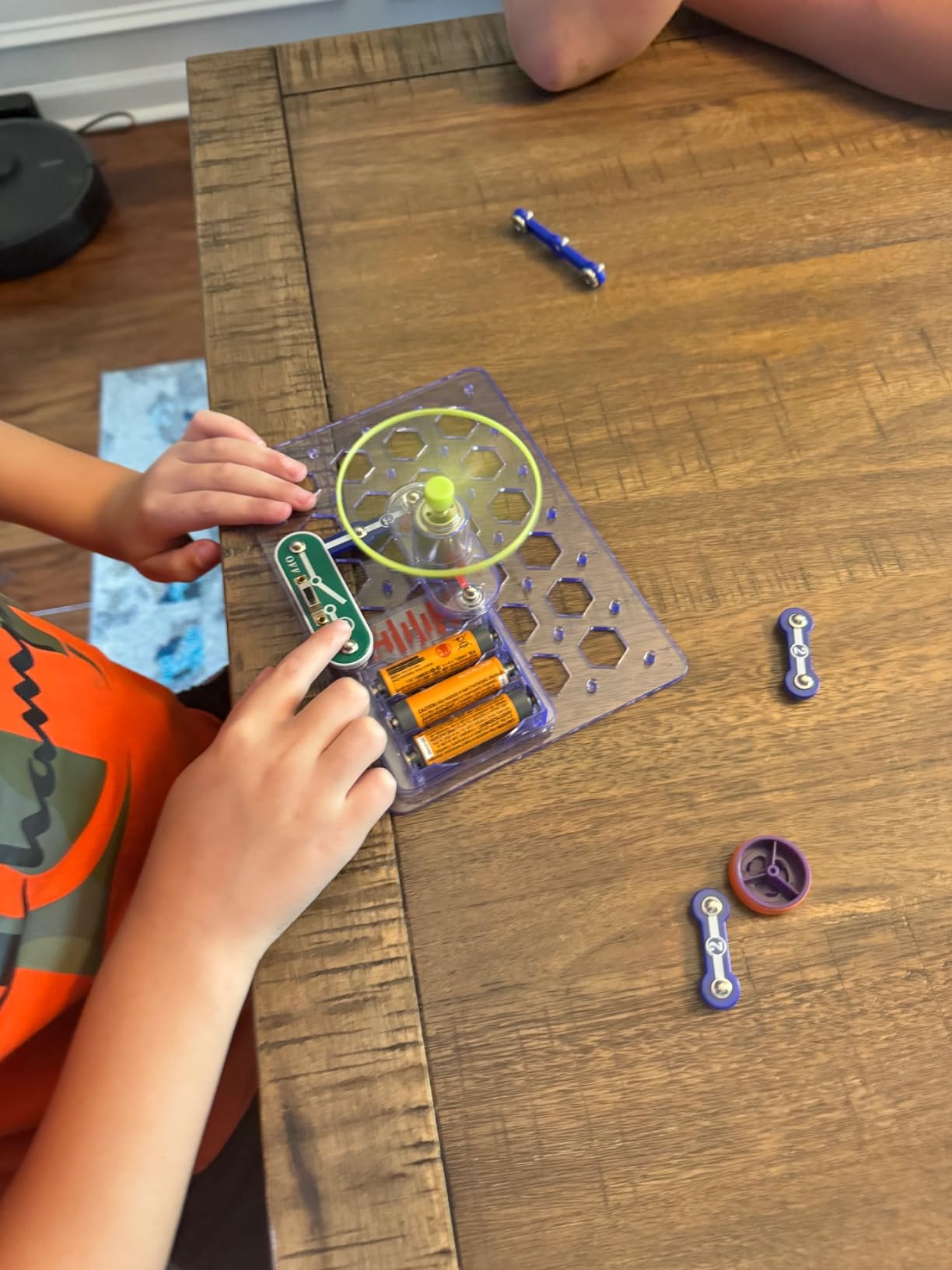
The Flight Deck is the kit I pack when we travel. It is small enough to fit in a backpack, the five projects are quick to complete, and the aviation theme (paper airplane launcher, flying saucer, ball launcher, spinning art wheel, levitating balls) is a hit with kids who love things that move.
My 8-year-old tester completed all five projects in one rainy Sunday afternoon without any help. The directions are simple enough that a child can work independently, which is a real win for parents. The kit also teaches basic physics concepts like aerodynamics and air pressure alongside the electronics.
It is not a deep kit. Five projects is a modest library, and the paper airplane launcher is the most polarizing project. Some kids think it is hilarious, others find it underwhelming. A minority of users have received kits with one or two non-working motors, though Elenco’s customer service is responsive about replacements.
The Flight Deck is best understood as an add-on to an existing Snap Circuits collection or as a starter kit for a child who needs a small, manageable first taste. For a more comprehensive library, the SC-100 or Arcade are better primary picks.

Best for travel and short attention spans
If your child does best with short, focused builds rather than long manuals, the Flight Deck fits the bill. The five projects all finish in under 20 minutes each, and the compact box fits in a carry-on.
Pair with a primary kit
I would not buy the Flight Deck as a child’s only electronics kit. It shines as a supplement to the SC-100 or as a starter that can grow into the larger Snap Circuits ecosystem.
7. National Geographic Circuit Kit – Best for Video Instructions
National Geographic Circuit Kit for Kids with 120 Electrical Projects
- Engages kids for hours without screens
- Clear illustrated instructions plus QR code videos
- Responsive US-based Blue Marble customer service
- High-quality components and durable construction
- Wide range of projects keeps kids coming back
- Pricier than most competing kits
- A few users report some projects not working as expected
- Wire-based design can occasionally confuse kids about polarity
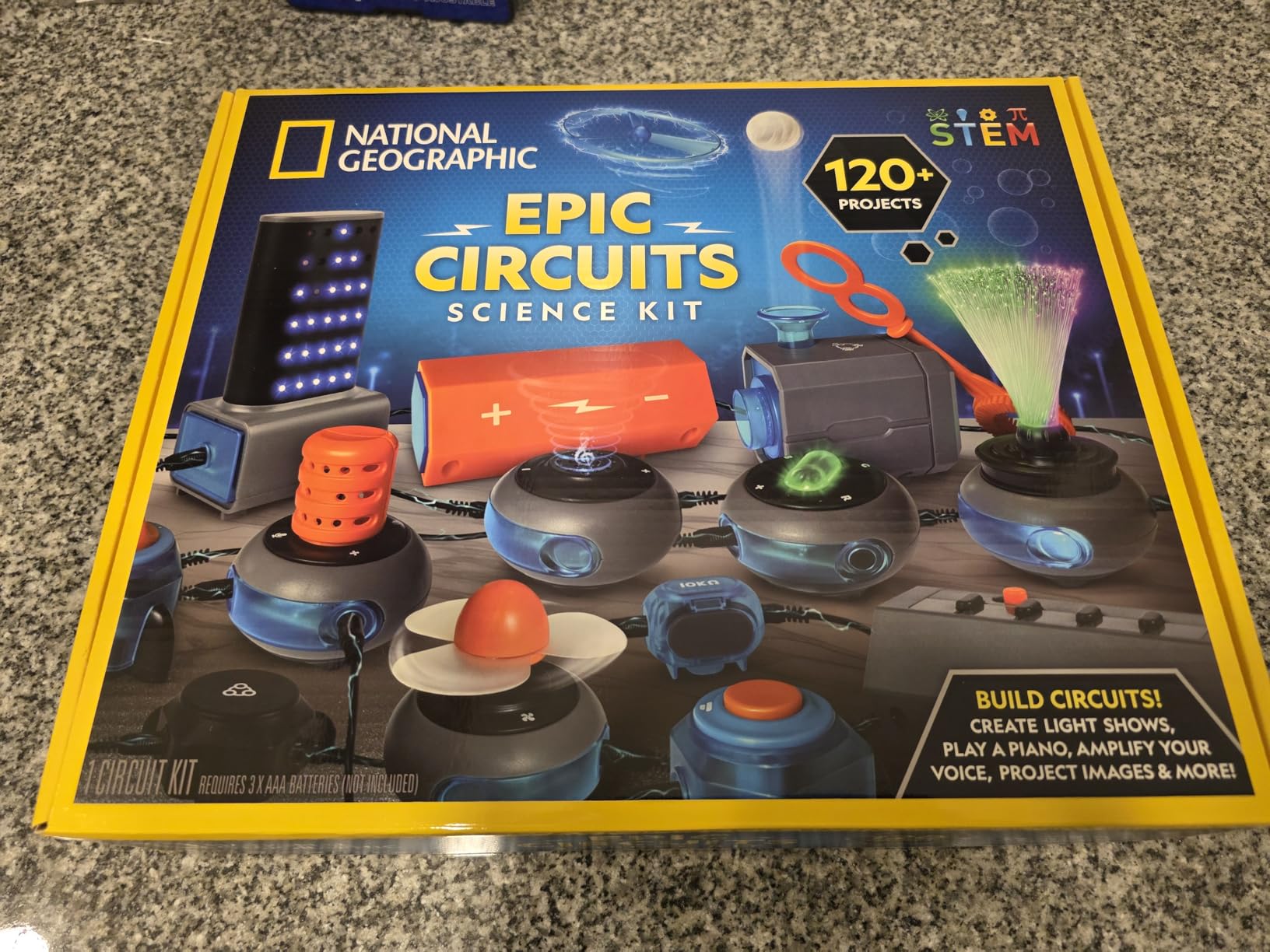
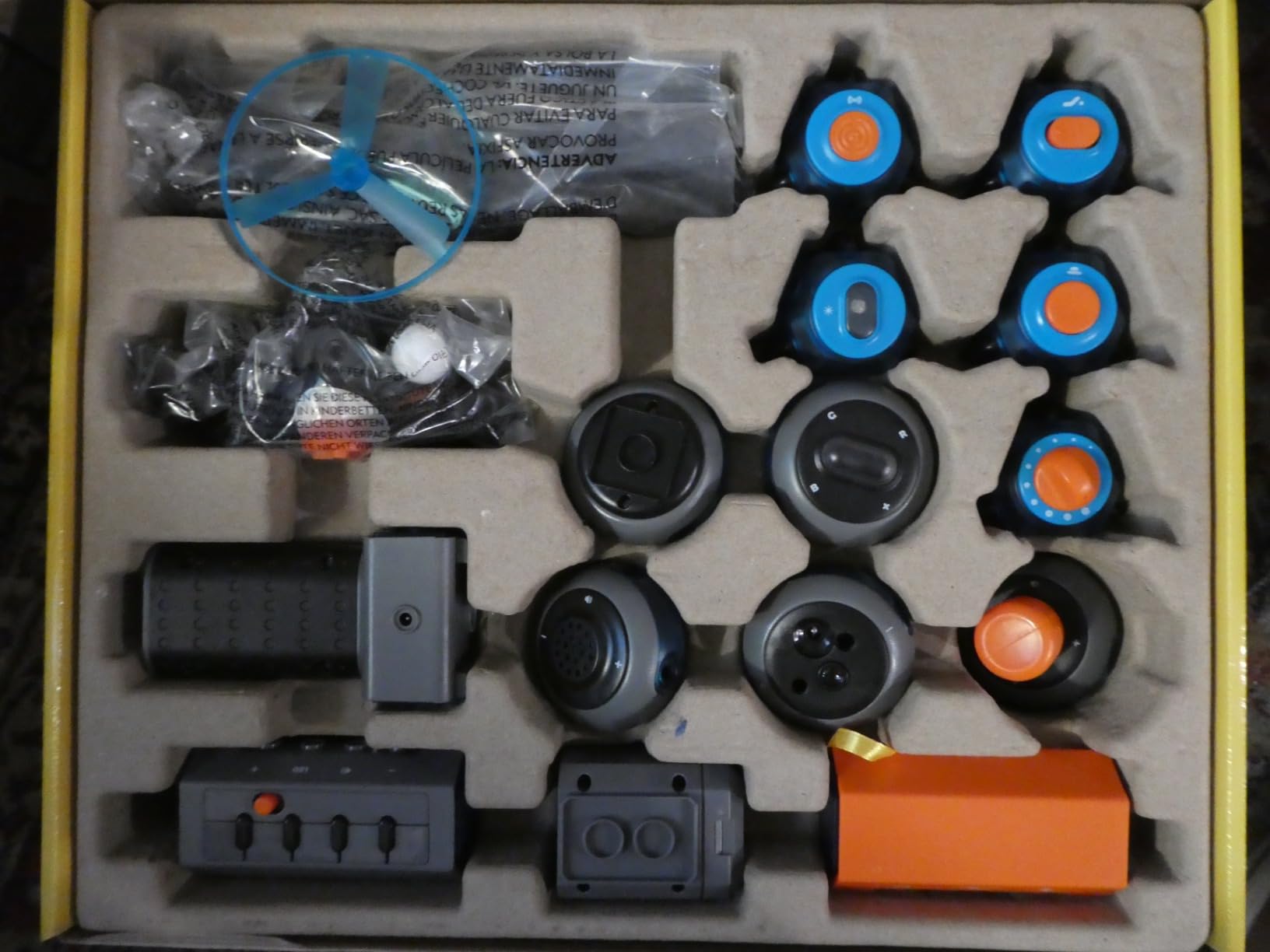
The National Geographic Circuit Kit is the kit I recommend most often to parents whose kids learn better by watching than by reading. The included QR code unlocks video instructions for every project, which is a game-changer for visual learners and for parents who do not want to be the sole translator of a printed manual.
The 120+ projects cover a satisfying range: keyboard mode, light shows, a copter build, a voice amplifier, and many more. My 9-year-old tester came back to this kit three weekends in a row, which is the highest engagement of any non-Snap-Circuits kit in my testing. The wire-connected design is a useful change of pace from snap modules because it teaches real polarity (positive and negative).
The kit is priced higher than most beginner options, and a small number of users have reported a project that does not work as expected. Blue Marble’s US-based customer service responds quickly to these cases, which is reassuring for a kit at this tier.
For a child who learns visually and wants a kit that keeps delivering new challenges, this is one of the strongest beginner options on the market in 2026.
Best for visual learners
The QR-code video instructions are what set this kit apart. If your child learns by watching someone else build first, or if you want to hand off the teaching to a screen, this is the kit to choose.
Skip for the youngest kids
The wire-based connections require a bit more dexterity than snap modules. Kids under 7 will likely struggle, and even some 8-year-olds need a parent nearby to keep the polarity straight.
8. Elenco FM-88K Soldering Kit – Best for Learning Soldering
Elenco FM Radio STEM Electronics Soldering Kit for Kids Ages 12+
- Real soldering experience that teaches PCB assembly skills
- Produces a working monophonic FM radio on completion
- Affordable introduction to electronics with auto-scan receiver
- Includes 3.5mm audio output for headphones or speakers
- Backed by Elenco's 30+ year electronics expertise
- Requires soldering skills and adult supervision
- Not suitable for younger kids without significant help
- Lower rating reflects the steeper learning curve
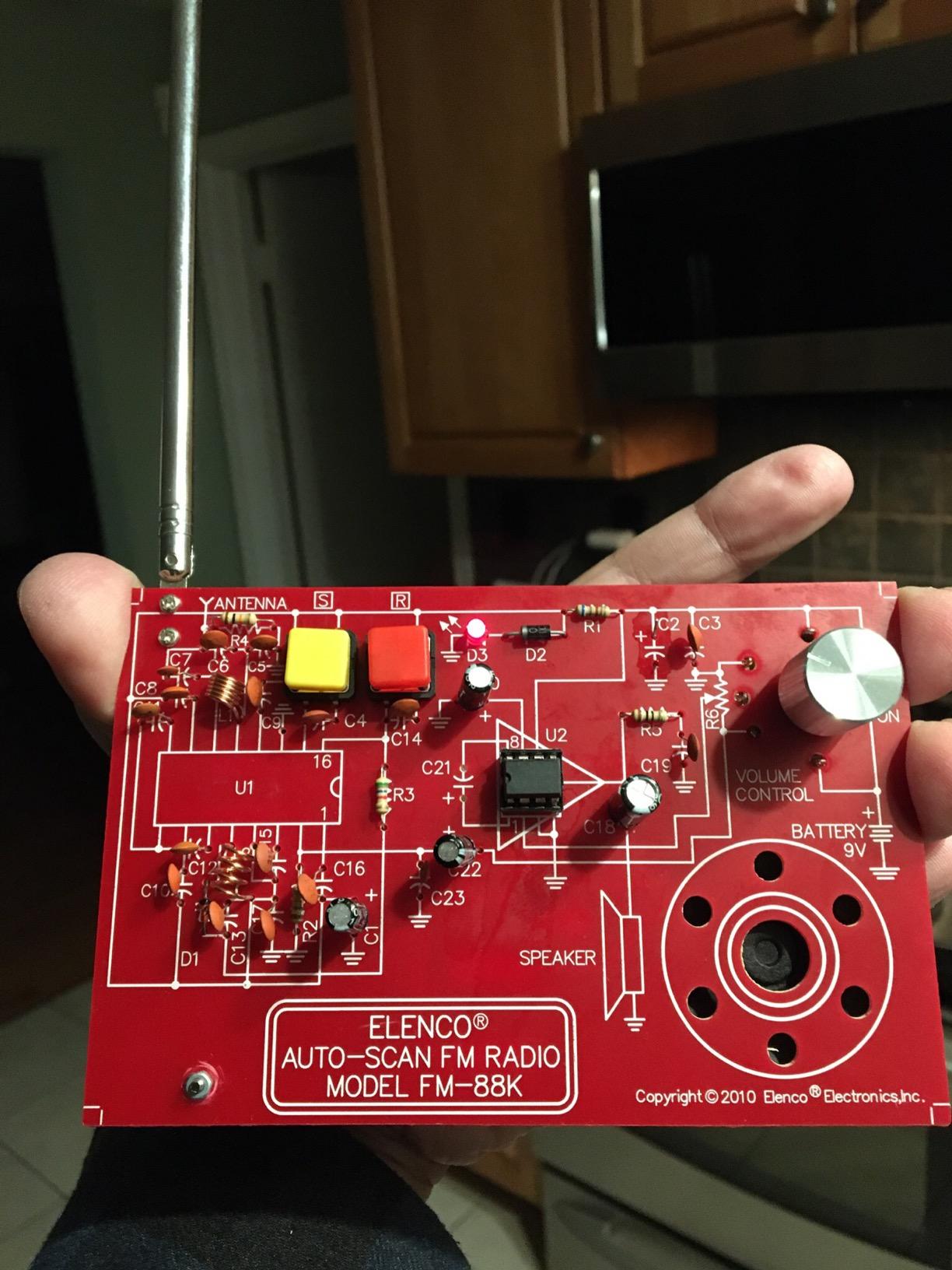
This is the only kit on my list that requires a soldering iron, and that is the entire point. The Elenco FM-88K is for older kids and teens who have outgrown snap-together circuits and want to learn real electronics assembly. Soldering a printed circuit board is a genuine engineering skill, and completing this kit gives a young person something they actually built with their own hands.
The end product is a working monophonic FM radio with electronic auto-scan and a 3.5mm audio jack. My 13-year-old tester took about three weekends to complete the build and now uses the radio at his desk. That sense of accomplishment is on a different level than snap-together kits.
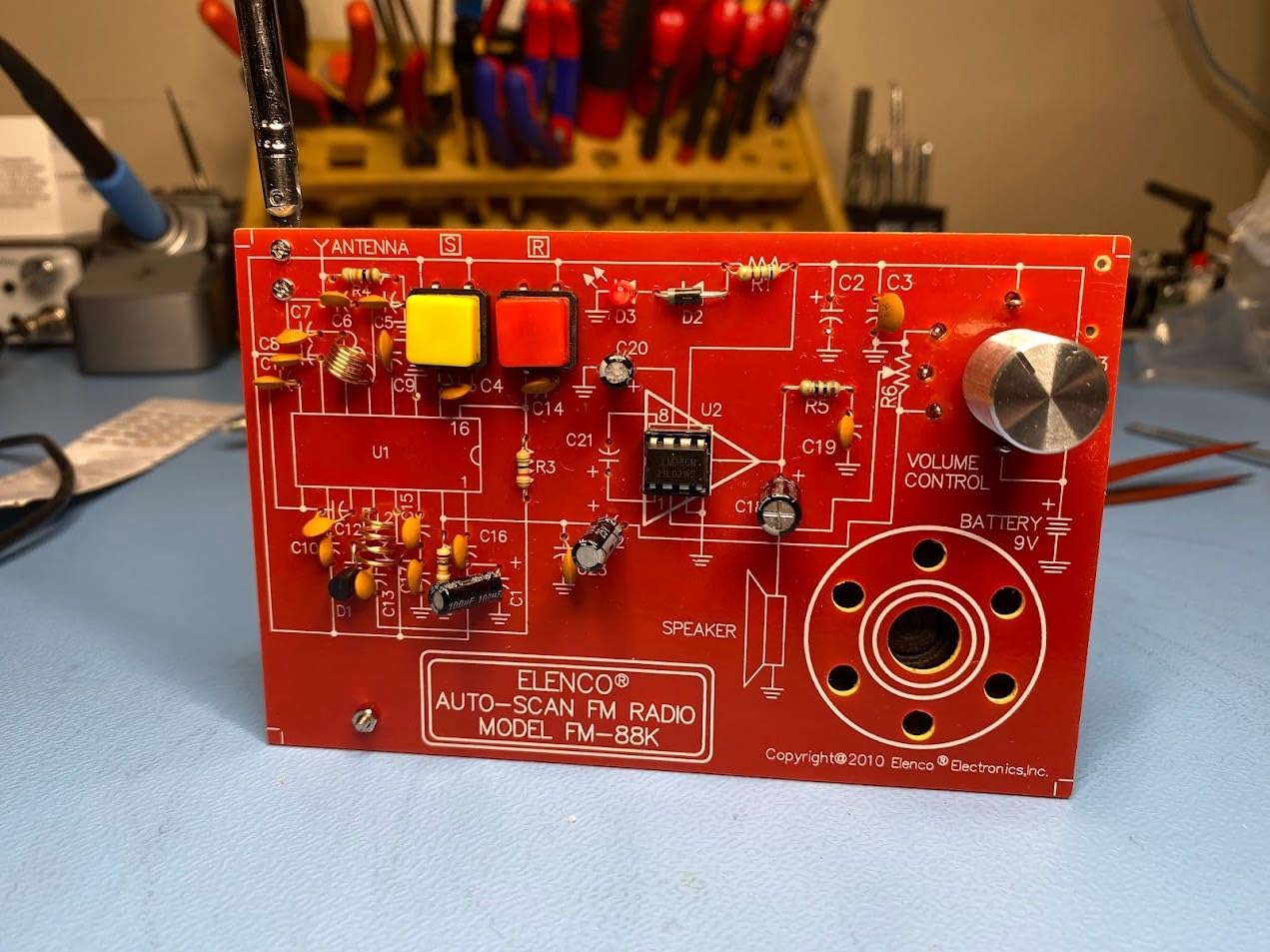
This kit is not for everyone. It is rated for ages 12+ and requires adult supervision for the soldering work. The lower rating compared to snap-together kits reflects the steeper learning curve and the fact that some users have had quality issues. Elenco stands behind the product, but expect this to be a project, not a single-afternoon activity.
For a motivated older child ready to level up from snap circuits to real electronics, the FM-88K is a worthy next step. Read our guide on how to solder connections to prepare.
Best for motivated teens
If your older child has already mastered a beginner kit and is asking “what’s next,” soldering is the natural progression. The FM-88K teaches a real skill and produces a useful object.
Skip for younger kids
This kit involves a hot soldering iron and small components. It is not appropriate for kids under 12 without significant adult help, and it is not a kit to leave out for independent play.
9. Butterfly EduFields 30-in-1 STEM Kit – Best Electricity and Magnetism Mix
Butterfly EduFields 30in1 STEM Science Projects Kit for Kids Ages 8-10-12
- Wide variety of electricity and magnetism projects
- Step-by-step illustrated manual with color-coded parts boxes
- Strong screen-free educational value for ages 8+
- Good components included for the price
- Encourages imagination and STEM skill-building
- Many projects require adult guidance for younger kids
- Some users report IR sensor issues in daylight
- Occasional reports of broken pieces on arrival
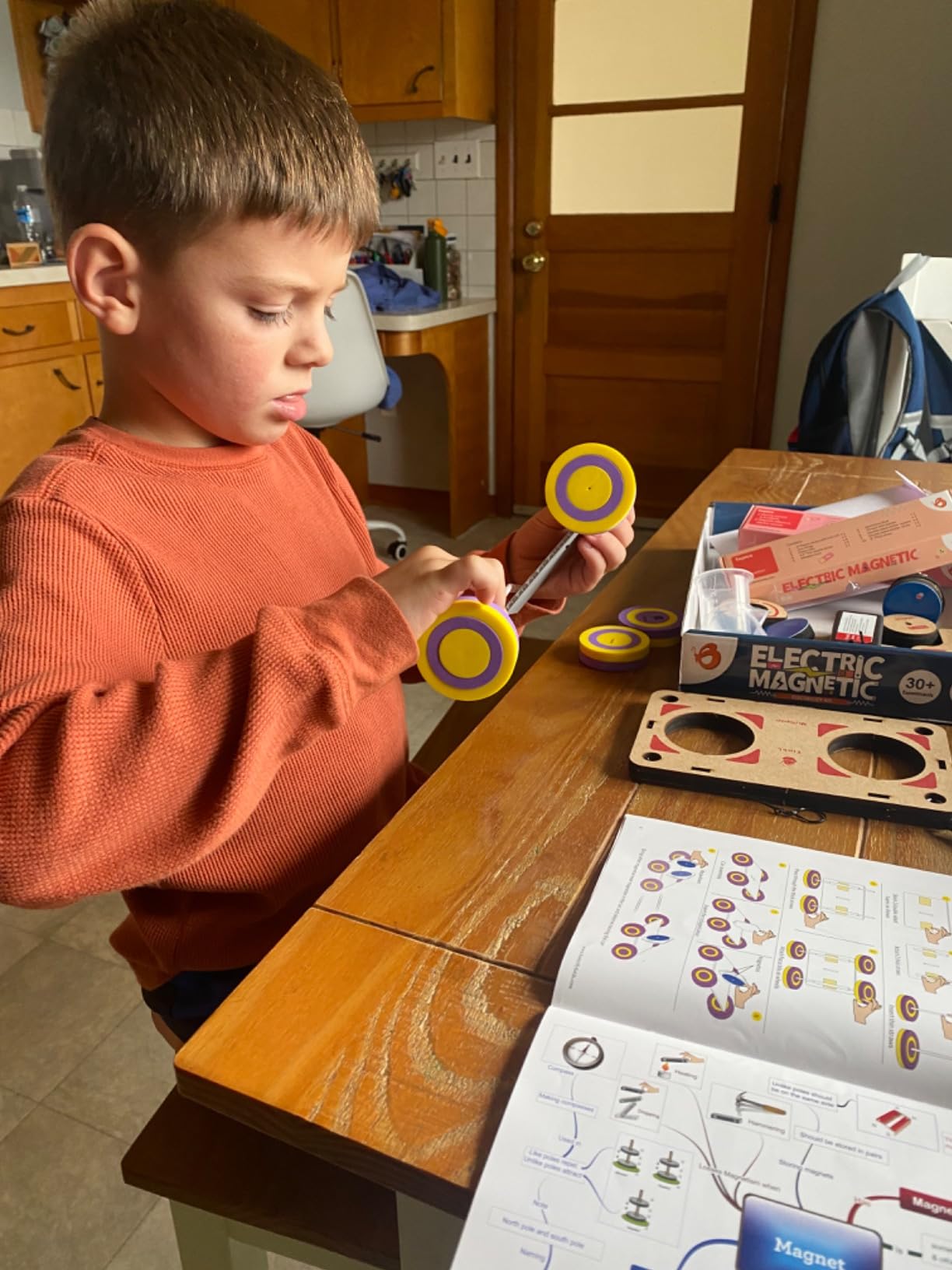
The Butterfly EduFields kit is the broadest physics-focused kit in my roundup. It covers 30+ projects across electricity and magnetism: electromagnetic cranes, yoga magnets, electroscopes, DC motors, electrolysis, electroplating, rheostats, and more. For a curious 10-year-old who wants to understand not just circuits but the underlying forces, this kit is a strong fit.
The 100+ components are organized in color-coded boxes, which makes it easy to find the right part without dumping everything on the floor. The illustrated manual walks through each build step by step. My 10-year-old tester especially loved the electromagnetic crane project.
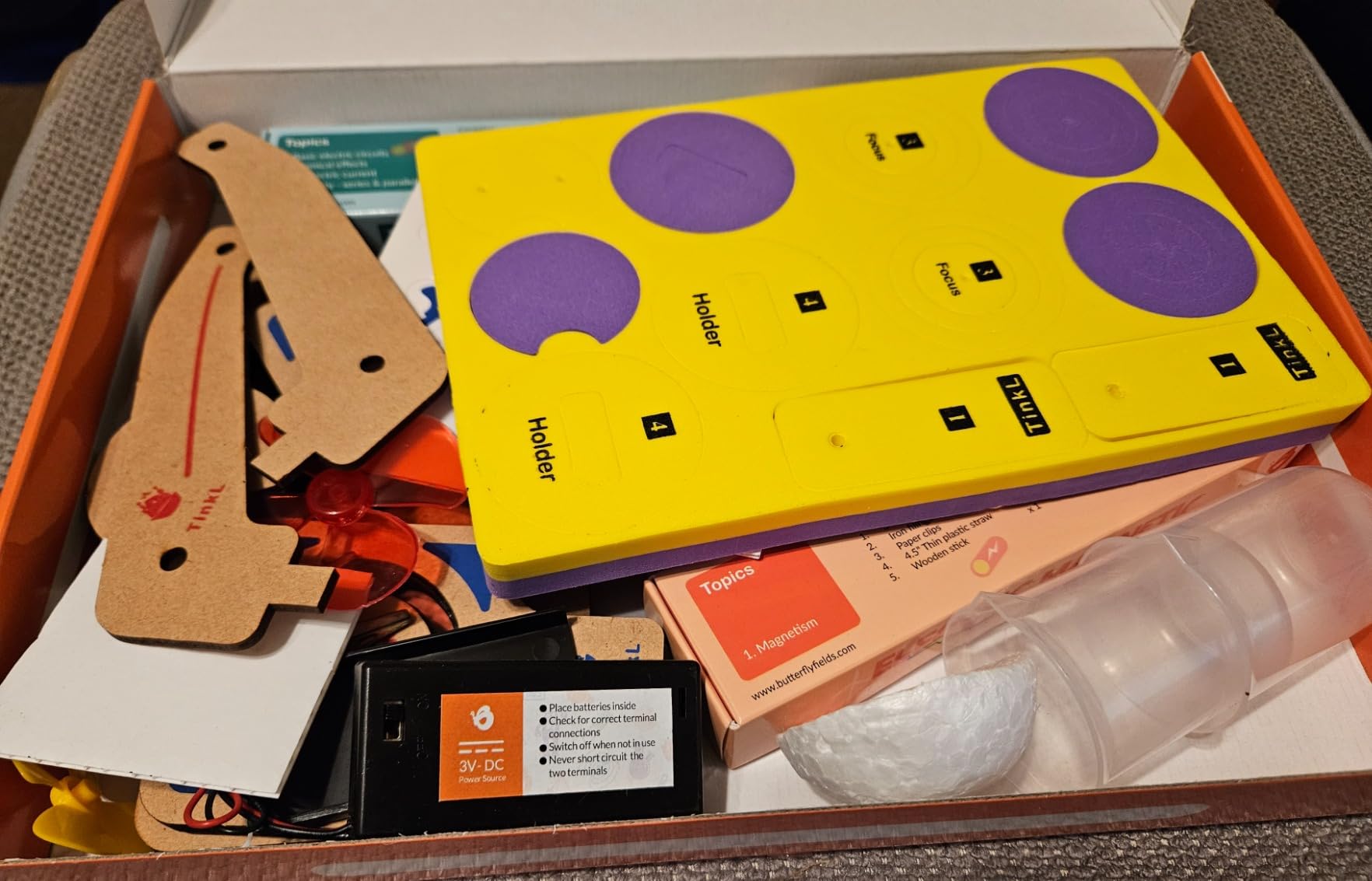
The kit is more involved than a basic snap-circuit set. Many projects need adult guidance for younger kids, and a few users have reported broken pieces arriving or IR sensor issues in bright daylight. The age range is also slightly ambitious on the low end. A child needs to be a solid 8 to handle most projects independently.
For a child who wants to go beyond simple circuits and explore real physics concepts, this kit is a satisfying step up.
Best for physics-curious kids
If your child asks “why does that work” as often as “what does that do,” the Butterfly kit is built for them. Magnetism and electromagnetism projects give them hands-on answers to those questions.
Skip for very young beginners
The kit works best for kids 9 and up. Younger kids will need consistent adult help, and the project variety can feel overwhelming without a more experienced builder nearby.
10. SMILESSKIDDO 420+ Projects Kit – Best for Long Play Sessions
SMILESSKIDDO Science Kits Electronics STEM Kit 420+ Projects 35 Parts
- Large 420+ project count with 35 circuit modules
- Colorful manual and indicator cards make building approachable
- No soldering needed and safe for younger kids with supervision
- Responsive customer service with replacements and refunds
- Engages kids for extended play sessions
- Some pieces don't snap firmly and vibrate loose
- Wires between modules can be short for complex builds
- Actual unique project count is lower than 420 advertised
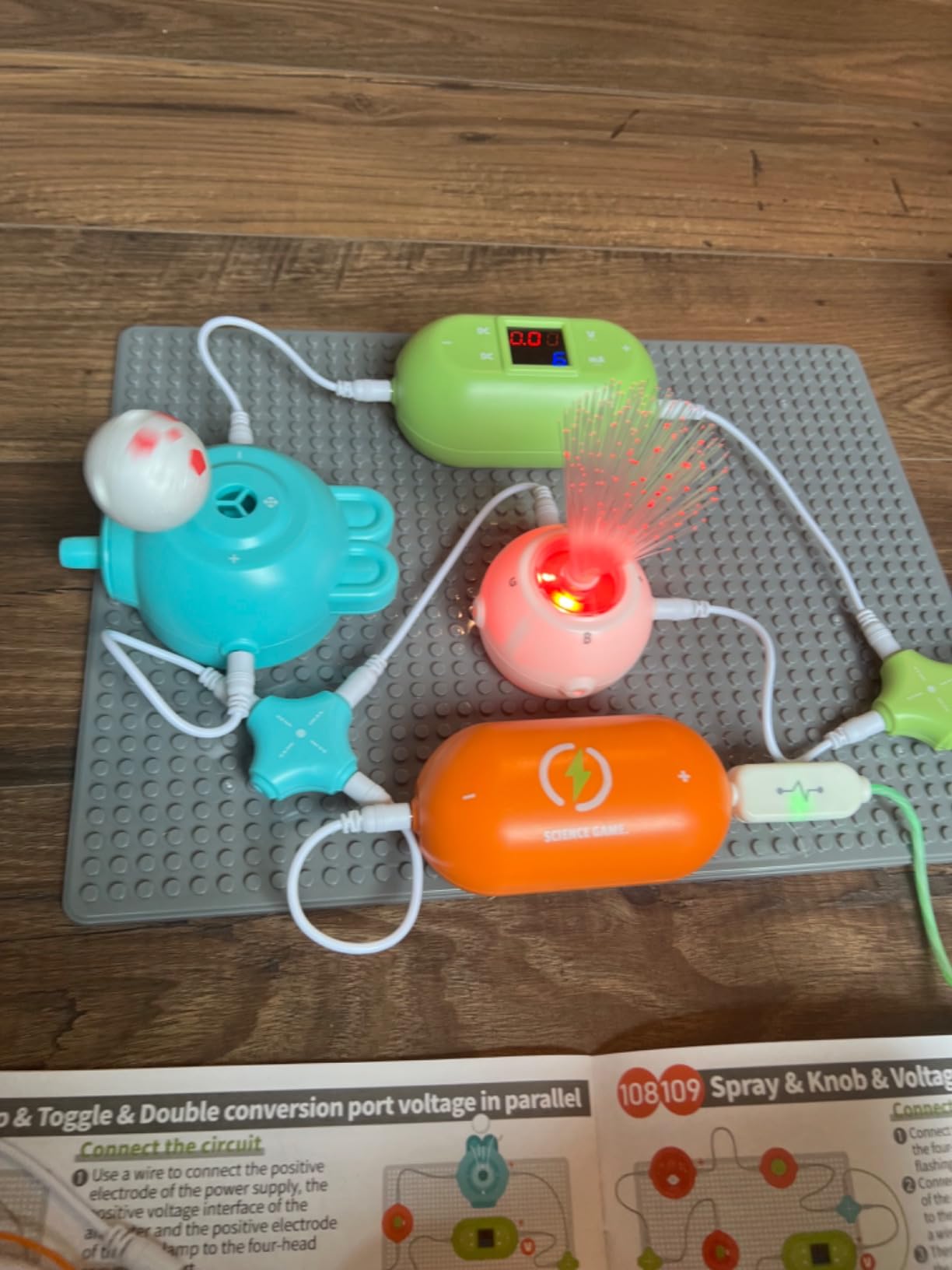
The SMILESSKIDDO kit is the longest-running budget kit in my testing. With 420+ projects across 35 modules, it is the kit I pull out when neighborhood kids visit and I need something that will keep four children busy at once. The colorful manual and indicator cards are well-designed for younger readers.
The kit teaches series and parallel circuits in a hands-on way without soldering, which makes it appropriate for ages 5-12 with appropriate supervision. My 7-year-old tester built six projects in a row without losing focus, which is a good sign of how engaging the format is.
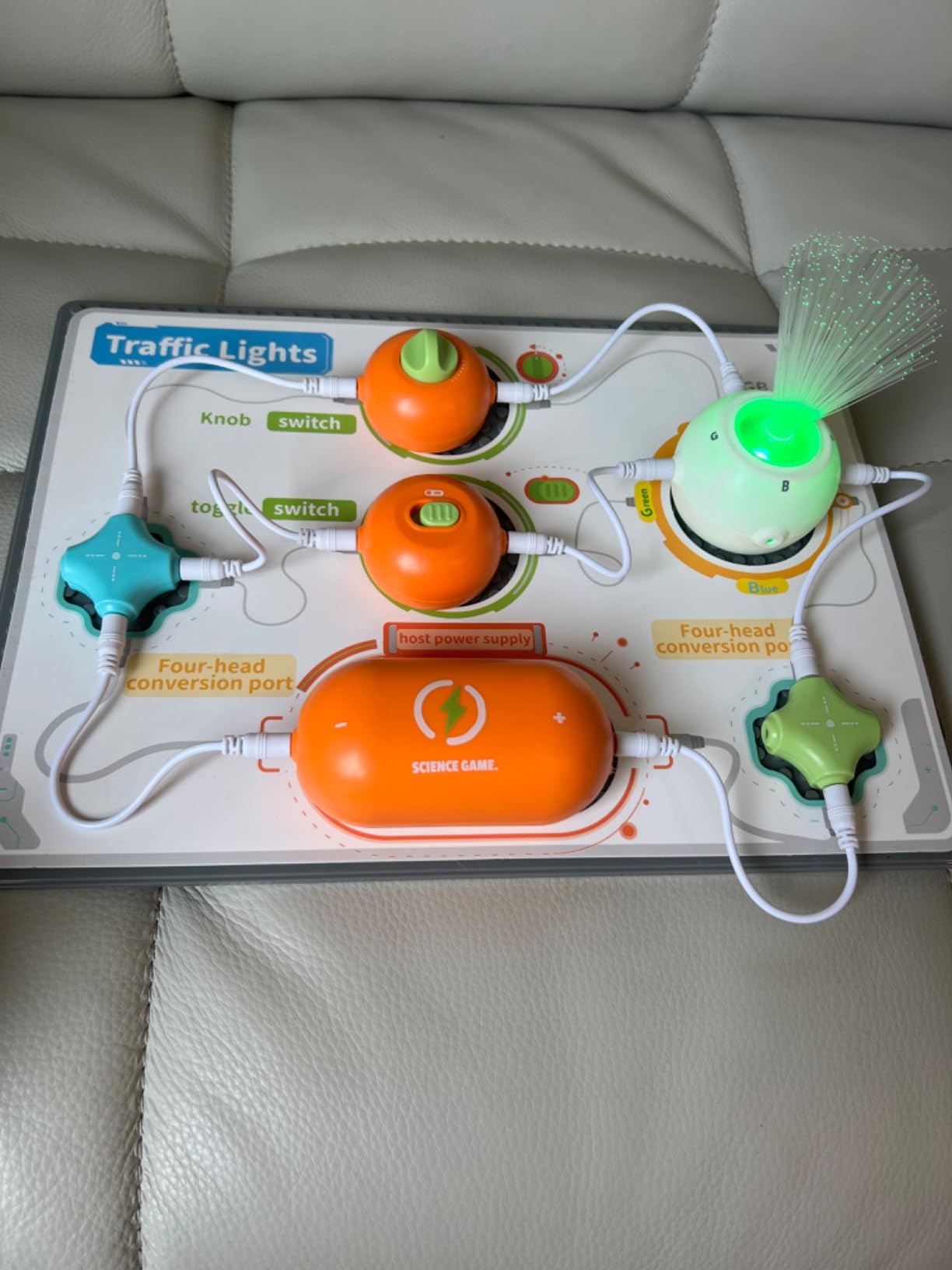
The honest trade-offs: some pieces do not snap firmly onto the board and can vibrate loose during builds. Wires between modules are short for the most complex projects, which frustrates older builders. And the actual unique project count is noticeably lower than the headline 420 figure, with many variations on a small number of base circuits.
For budget-conscious families who want a kit that keeps multiple kids engaged for hours, this is a solid pick. The customer service is also notably responsive when parts arrive defective.
Best for group play
The huge project count and forgiving build difficulty make this kit ideal for siblings, playdates, and classroom settings where multiple kids need projects to work on at once.
Skip for deep learning
If your priority is mastering a small set of core concepts well, the Snap Circuits SC-100 is a better teacher. This kit is breadth-first play, not deep curriculum.
Electronics Kits Buying Guide: How to Choose?
Choosing the best electronics kit for your child comes down to three decisions: age, learning style, and budget. Here is how I think through each one based on the months I have spent testing kits with kids.
Match the Kit to Your Child’s Age
Ages 5-7: Look for chunky pieces, childproof connectors, and projects that finish in under 15 minutes. The Snap Circuits Beginner SCB-20 is the standout here, with large pieces and colorful illustrated manuals.
Ages 8-10: Snap-together circuit kits come into their own. The SC-100, the National Geographic Circuit Kit, and the Butterfly EduFields kit are all strong fits. Kids at this age can follow manuals with light adult help and will start asking “why” questions.
Ages 11+: Coding kits, real soldering kits, and DIY robotics kits become appropriate. The Elenco FM-88K soldering kit is a great step up for motivated teens who have outgrown snap-together circuits. For more on the right starting age, see our guide on what age kids should start learning robotics.
Screen-Free vs Coding Kits
Screen-free kits teach pure electronics concepts: circuits, switches, motors, resistance, conductivity. They are the right starting point for most kids under 10 because they keep play tactile and reduce screen time.
Coding kits add programming on top of electronics. They use block-based coding (think Scratch) for younger kids and transition to Python for older learners. Coding kits are great for kids ready to combine physical builds with software logic, but they are not the right starting point for a child who has never touched electronics before. Most kids benefit from starting screen-free and progressing to coding once the basic concepts click.
Project Count vs Project Quality
A higher project count is not always better. The best kits teach a new concept with each project, not just swap one switch type for another. The National Geographic Circuit Kit and the Snap Circuits SC-100 are both strong on concept progression. Kits that advertise 400+ projects sometimes stretch the count with minor variations.
When evaluating, ask: how many unique concepts does this kit teach? The answer matters more than the headline number.
Expandability and the Snap Circuits Ecosystem
The Snap Circuits line is the most expandable system in kids’ electronics. There are 20+ compatible kits, and the modules from the SC-100 work with the Arcade, the STEM Radio, the Flight Deck, and many others. Starting with a beginner kit and adding themed expansions over time is a strong strategy for long-term engagement.
For a deeper look at how robotics complements electronics learning, see our piece on how robotics helps kids learn STEM.
Safety, Batteries, and Supervision
Most beginner electronics kits run on AA or AAA batteries, which are not included. Plan to keep a stockpile on hand. A few kits use rechargeable NiMH batteries, which can be a money-saver over time.
For kids under 5, small parts are a choking hazard. Most manufacturers warn against use by children under 3. For kids 5-7, adult supervision is recommended even for childproofed kits, because curious hands can still find trouble.
The soldering kit (Elenco FM-88K) is the only kit in this roundup that involves a real safety hazard. Adult supervision is required for any child under 14 working with a soldering iron.
Budget: What to Expect at Each Price Tier
Entry tier (under $20): Snap Circuits Beginner SCB-20, Snap Circuits Flight Deck, Elenco FM-88K soldering kit. These give a focused, satisfying experience without a lot of extras.
Mid-range ($20-$50): Most of the kits in this roundup live here, including the SC-100, the Arcade, the STEM Radio, the Butterfly EduFields kit, the Science Kidz kit, and the SMILESSKIDDO kit. This is the sweet spot for most families.
Premium ($50+): The National Geographic Circuit Kit lives at this tier. You are paying for higher component quality, video instructions, and a longer-lasting build experience.
Frequently Asked Questions
What is a good basic electronics kit for kids?
A good basic electronics kit combines clear instructions, durable pieces, and age-appropriate projects. The Snap Circuits Jr. SC-100 and National Geographic Epic Circuits Science Kit are the most trusted beginner options, both rated for ages 8+. For kids under 8, the Snap Circuits Beginner SCB-20 is the best entry point with chunky, childproofed pieces.
What age should kids start with electronics kits?
Most kids can start at age 5 with chunky beginner kits like the Snap Circuits Beginner SCB-20. Ages 8+ is the sweet spot for full circuit kits like the Snap Circuits Jr. SC-100 or the National Geographic Circuit Kit. Ages 11+ are ready for soldering kits and coding kits that introduce real programming and PCB assembly.
Are Snap Circuits any good?
Yes. Snap Circuits are highly rated by parents, teachers, and independent reviewers. The pieces are durable, the projects teach real circuit concepts without soldering, and the modular system means a starter kit can grow with your child through 20+ compatible expansion packs. Elenco’s customer service is also widely praised for fast, free replacement parts.
Is Arduino good for kids?
Arduino is great for kids ages 11 and up who are ready for real programming and electronics. The Arduino Student Kit includes online lesson plans and is designed specifically for school-age learners. Younger kids will likely need significant parent support, and a snap-together circuit kit is a better starting point for under-10s.
What is the difference between a circuit kit and a coding kit?
A circuit kit teaches physical electronics: how current flows, how switches work, how motors and LEDs behave. It is screen-free and tactile. A coding kit adds programming on top of electronics, using block-based or text-based code to control the circuit. Most kids benefit from starting with a circuit kit and progressing to a coding kit once the basics are familiar.
How do electronics kits help kids learn STEM?
Electronics kits teach STEM concepts through hands-on play rather than textbooks. Kids learn about circuits, conductivity, resistance, and engineering by building real working gadgets. They also develop problem-solving skills, persistence, and computational thinking as they debug projects that do not work the first time. The skills transfer directly to robotics, coding, and maker projects later on.
Final Verdict: Which Electronics Kit Should You Buy?
After testing all ten of these kits with my own family and a panel of neighborhood kids, my top recommendation is the Snap Circuits Jr. SC-100 for most families. It strikes the best balance of instruction quality, project variety, durability, and long-term expandability. If your child is under 8, start with the Snap Circuits Beginner SCB-20. If your child is ready for soldering or coding, jump to the Elenco FM-88K or a microcontroller kit.
Whatever kit you choose, the important thing is to sit down and build the first project together. That shared moment is what turns a toy into a learning experience, and it is what makes the best electronics kits for kids such a worthwhile investment in 2026.