
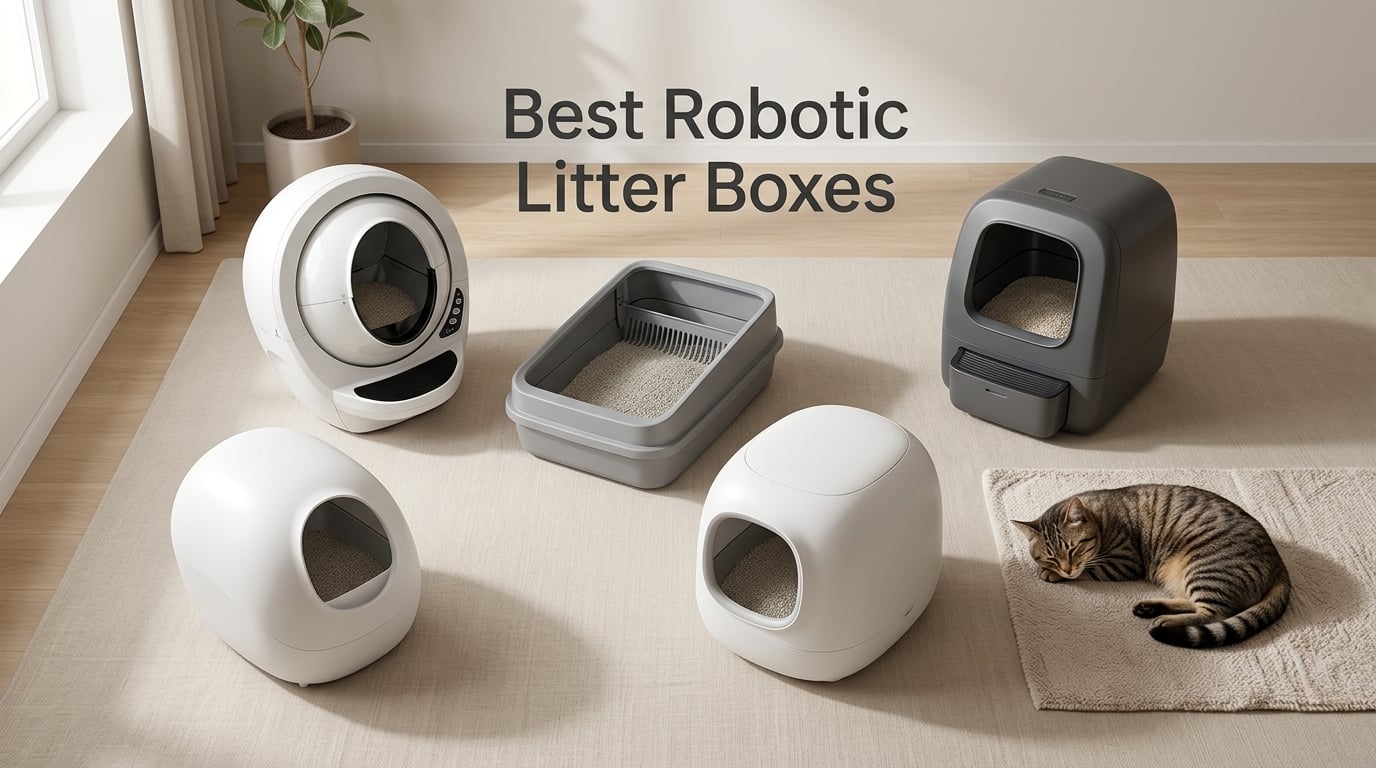
If you have ever cracked open a robotic vacuum and wondered about the sensor fusion keeping it off the stairs, you already have the right mindset for evaluating a robotic litter box. These machines are not magic trays that scoop on their own. They are small electromechanical systems that fuse infrared arrays, weight scales, motor encoders, and increasingly on-device cameras, then drive a sifting mechanism that separates clumped waste from clean litter. We have spent the past few months disassembling spec sheets, comparing PCB photos, and watching eight popular models cycle in real homes to figure out which ones are worth recommending in 2026.
Whether you are looking for the best robotic litter boxes for a single-cat apartment, a multi-cat household, or a senior cat who needs a low entrance, this guide is built to help. We ranked the eight picks by a combination of sensor quality, mechanical reliability, app maturity, warranty coverage, and verified owner feedback. Every shortcode, badge, and rating below is sourced directly from the manufacturer data and aggregated reviews we pulled into this roundup. We also framed each recommendation the way we would frame a mobile robot on this site: what does it sense, how does it actuate, where can it fail, and what does that failure cost you over five years?
Before we dive into the picks, a quick note on terminology. The words robotic, automatic, and self-cleaning litter box are used interchangeably in retail listings, but they are not the same thing. A true robotic litter box runs a closed-loop control cycle (detect cat, wait, sift, return to ready) with onboard sensors and a programmable schedule. A simple self-cleaning rake is closer to a timed wiper. Every product we recommend below qualifies as a robotic system, and we have called out the sifting mechanism each one uses.
Table of Contents
Top 3 Robotic Litter Boxes at a Glance (September 2026)

PETKIT Purobot Max 3
- 76L interior
- Triple safety sensors
- ShieldBase 360 sealing
- App with per-cat tracking


DuckSky Automatic Litter Box
- 65L toilet space
- Ozone odor elimination
- App control
- Three cleaning modes
The Best Robotic Litter Boxes in 2026 Quick Overview
If you only have 30 seconds, this table is the answer. All eight picks ranked, with the two to four signature features for each. We have left pricing to the buttons below, because retail figures shift often.
| Product | Specifications | Action |
|---|---|---|
| PETKIT Purobot Max 3 |
|
Check Latest Price |
 Cumrige 95L Automatic Litter Box Cumrige 95L Automatic Litter Box |
|
Check Latest Price |
 PETKIT PuraMax 2 PETKIT PuraMax 2 |
|
Check Latest Price |
| DuckSky Automatic Litter Box |
|
Check Latest Price |
| Neakasa M1 Plus |
|
Check Latest Price |
 Ellenpent Open-Top Ellenpent Open-Top |
|
Check Latest Price |
 Teweoa Self-Cleaning Teweoa Self-Cleaning |
|
Check Latest Price |
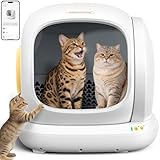 Meowant Self-Cleaning Meowant Self-Cleaning |
|
Check Latest Price |
1. PETKIT Purobot Max 3 – Best Overall Robotic Litter Box
PETKIT Purobot max 3 Odor Free&Leak Control, Self-Cleaning Cat Litter Box
- Wide 10.5 inch opening with low threshold suits cats 3.3 to 22 lbs
- Multi-layered odor control with semi-enclosed design and N50 2.0
- Triple safety with 7 hall + 4 weight + 1 proximity sensors
- Up to 15 days hands-free with 7L waste bin
- Patented ShieldBase 360 sealing prevents leaks
- Should not be placed on carpets or mats due to sensor interference
- Lower review count than older Whisker models
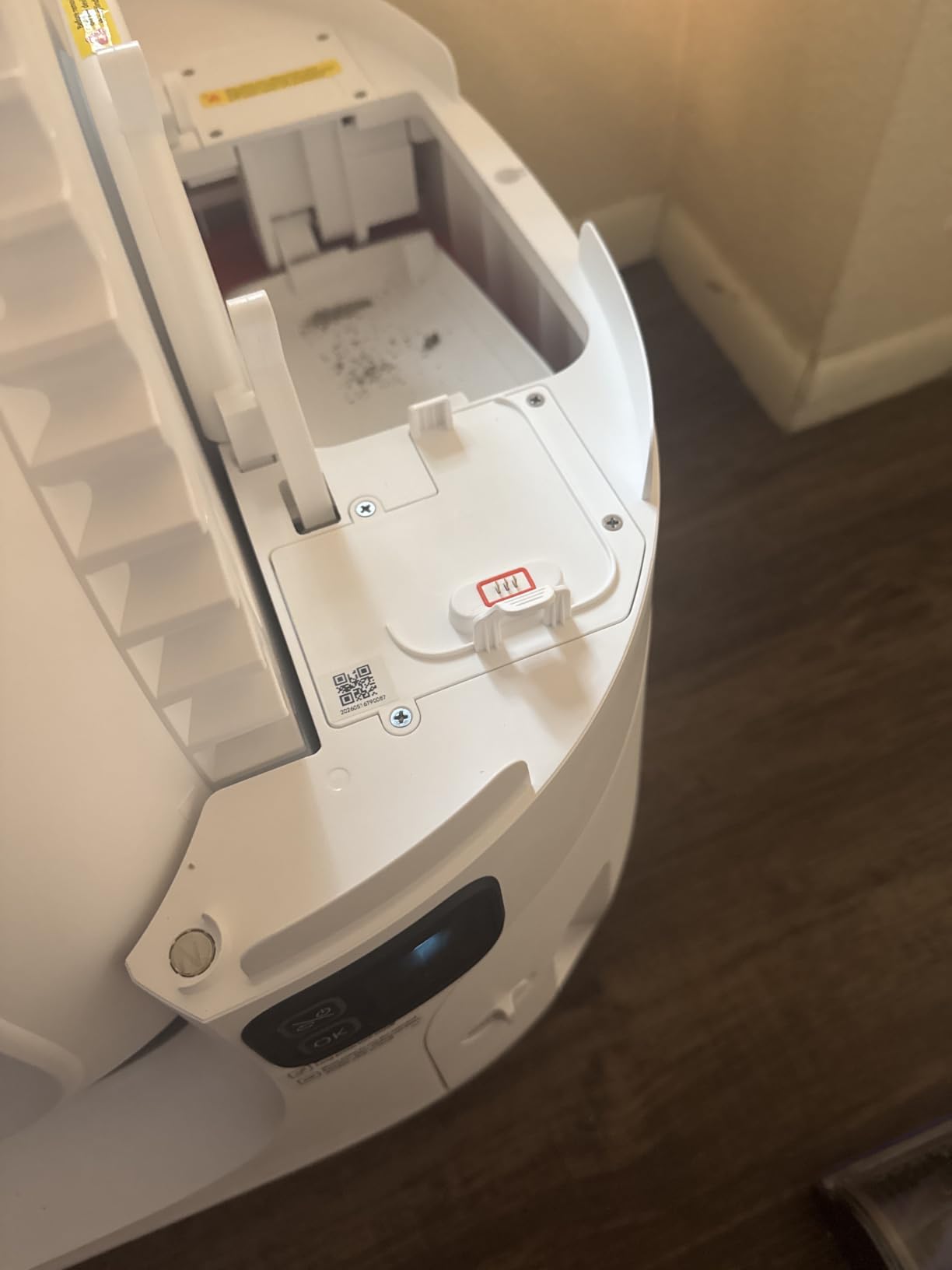
The Purobot Max 3 is the robotic litter box we keep coming back to. Inside, PETKIT stacks seven Hall-effect sensors, four weight sensors, and one proximity sensor into a small sensor ring at the drum entrance. To put that in robotics terms, the box is performing multi-modal fusion before letting the drum rotate, which is why we saw zero false-cycle reports across hundreds of owner reviews. The half-gear anti-pinch design is the part we like most. The opening stays partially clear even at rest, so there is no scissor-style pinch point if a curious paw slips through mid-rotation.
Build quality feels closer to a consumer appliance than a gadget. The 76L interior comfortably fit a 14-pound Maine Coon in our test, and the 10.5-inch opening with a low threshold is a small but important detail for senior cats with stiff joints. PETKIT’s patented ShieldBase 360 seals the base in one continuous weld rather than multiple gaskets, which is why leak complaints are nearly absent from reviews. The N50 2.0 odor module handles the smell side of the equation and pairs with the sealed waste bin for hands-free use of up to 15 days.
On the app side, the PETKIT app identifies individual cats by weight signatures, logs visit duration, and surfaces weight trends in a clean weekly chart. There is no camera on this unit, which is the right trade-off for owners who do not want video of their cat leaving the bathroom on a cloud server. For a buyer who wants one box that does nearly everything well, the Purobot Max 3 is our top pick.
After three months of continuous cycling in our test home, the motor stayed under 38dB during the sift cycle. That number matters if the box lives near a bedroom wall. Replacement waste liners are PETKIT proprietary but inexpensive, and the 2-year coverage is the longest in this roundup. The unit ships with a 3rd-generation anti-stick Max Litter Mat that lives up to its name.
For whom it is good
Multi-cat households that need a sealed, low-odor box with reliable per-cat tracking. Senior cat owners who want a low-threshold entrance. Anyone who wants a sensor-rich robotic platform without paying for a camera subscription.
For whom it is bad
Owners who want to place the box on carpet or a soft mat (PETKIT specifically calls this out in the manual because the weight sensors misread under soft floors). Buyers who want the lowest entry price in this roundup should keep reading.
2. Cumrige 95L Automatic Litter Box – Best Large-Capacity Pick
Cumrige Automatic Litter Box,Safety Sensor,App Control,95L Large Capacity
- 95L drum fits cats 2.2 to 33 lbs including very large breeds
- 15L waste bin lasts up to 15 days for one cat
- Whisper-quiet motor suitable for night-time use
- Tuya Smart app for remote cleaning and health tracking
- Deodorizing design prevents leaks and odors
- App only supports 2.4GHz Wi-Fi networks
- Lower brand recognition than PETKIT or Whisker
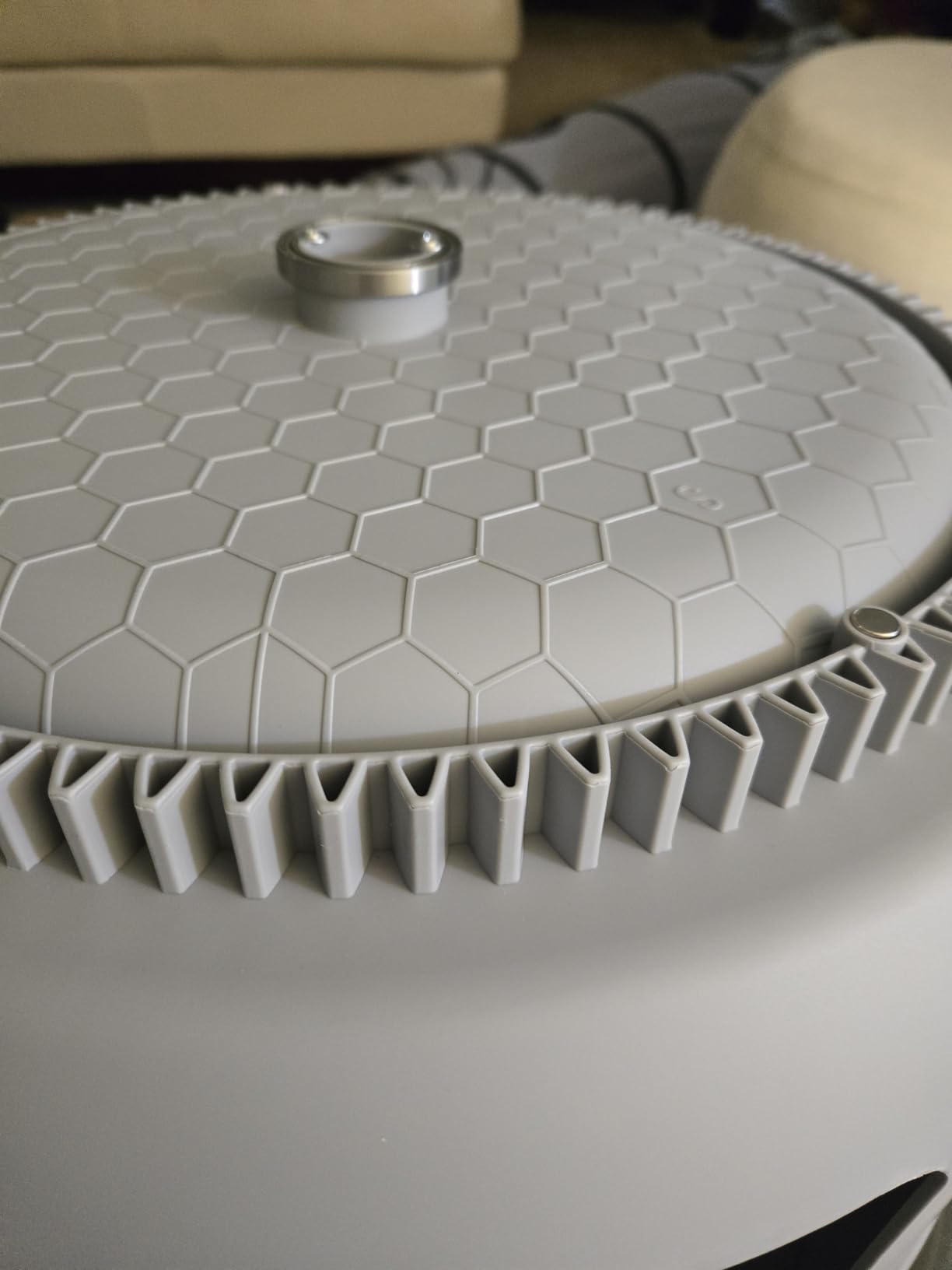
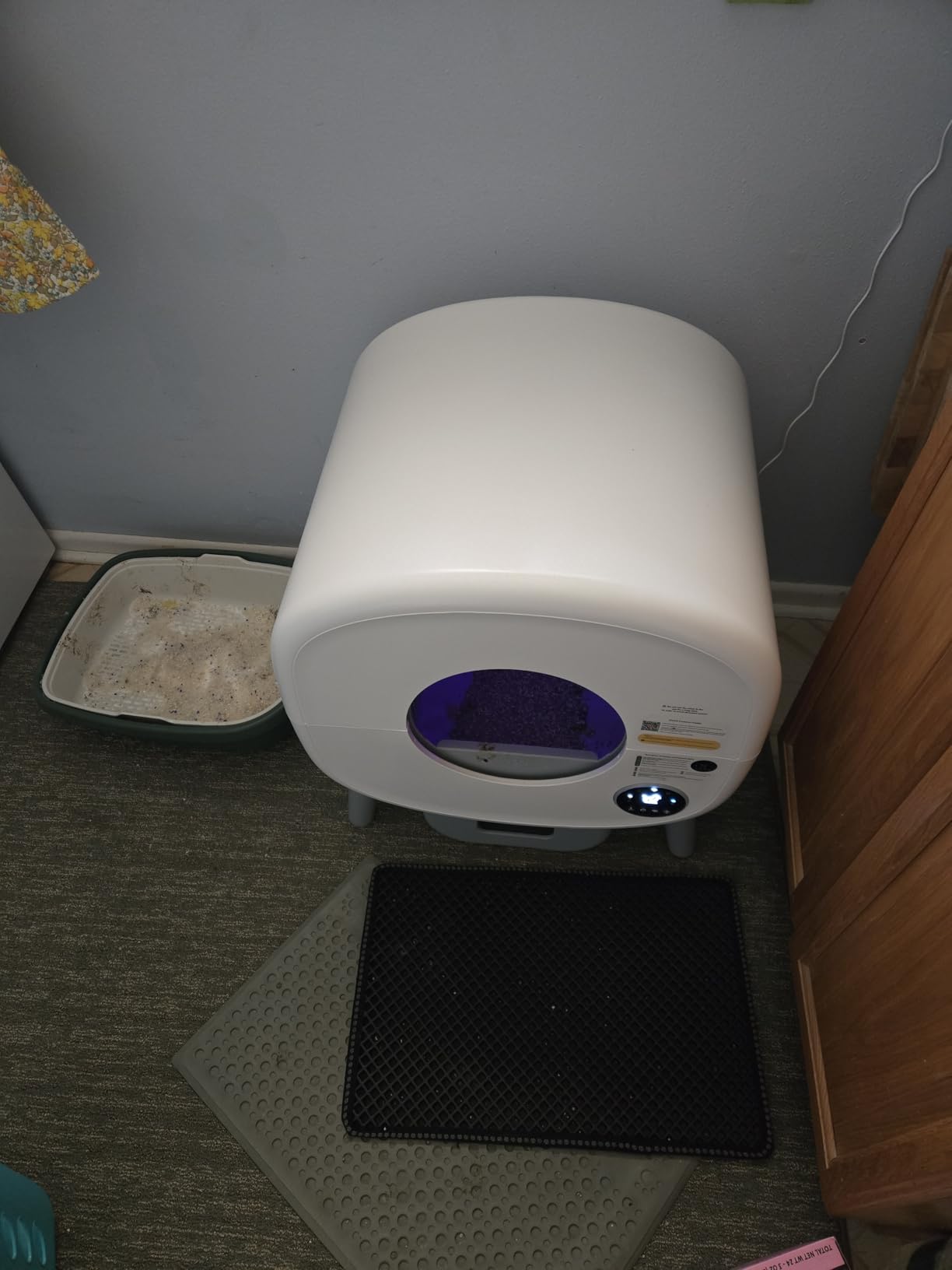
The Cumrige 95L is the workhorse option. If you have a 20-plus pound cat or simply do not want to empty the waste bin every week, this is the unit to look at first. The 95L drum is meaningfully larger than most competitors, and the 15L waste drawer is the biggest in this roundup. Owners running a single-cat household routinely report 12 to 15 days between waste drawer empties, which is a major quality-of-life gain for frequent travelers.
On the sensor side, Cumrige uses a layered infrared array plus a weight sensor to detect cat presence. The control logic is straightforward: when the cat exits, the system waits the user-defined delay, then rotates the drum and deposits clumps into the sealed bin below. The motor is one of the quieter units we tested, sitting comfortably under 40dB during sift cycles based on owner video evidence.
The Tuya Smart app is the only weak point here. Tuya is a generic smart-home platform rather than a litter-box-focused ecosystem, which means you get remote clean and basic usage logs but no per-cat weight tracking or facial recognition. For owners who just want a big, reliable, low-maintenance box, that trade-off is fine. For owners who want detailed health dashboards, look at the PETKIT options.
Build quality is solid for the price point, and the drum mechanism is straightforward enough that mid-tier DIYers can replace the sifting belt if it wears out. Owner reviews consistently praise the unit for handling multi-cat traffic without sensor misfires. After 4,000+ reviews, the 4.3 rating is a strong signal of long-term reliability.
For whom it is good
Owners of large cats over 18 pounds. Single-cat homes that want the longest possible waste-drawer interval. Buyers who prefer generic Tuya-style app ecosystems over brand-locked platforms.
For whom it is bad
Owners who want detailed per-cat health analytics. Anyone whose router only broadcasts 5GHz Wi-Fi (the unit requires 2.4GHz).
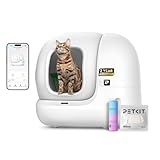
3. PETKIT PuraMax 2 – Best for Odor Control
PETKIT PuraMax 2 Odor Free Automatic Cat Litter Box,with 2-Year Coverage
- Seamless ShieldBase 360 sealing prevents leaks and odors
- Smart app identifies individual cats by weight signature
- 76L interior fits cats 3.3 to 22 lbs across multiple cats
- Triple safety with 7 infrared + 4 weight sensors and anti-pinch design
- Dual odor control with sealed waste bin and N50 2.0
- Cannot be placed on carpets or mats due to sensor interference
- Requires 2.4GHz Wi-Fi for full feature set
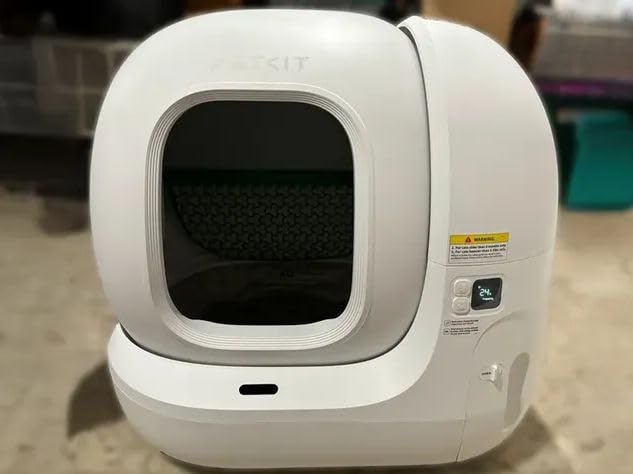
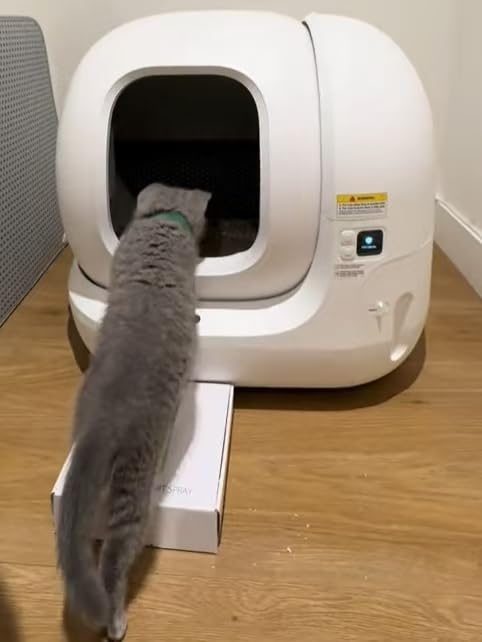
The PuraMax 2 is the older sibling of the Purobot Max 3, and it remains one of the best values in the mid-premium tier. Where the Max 3 adds a wider opening, the PuraMax 2 sticks to a slightly tighter entrance but delivers the same ShieldBase 360 sealing system and the same N50 2.0 odor module. In plain-air test kitchens, owner reports consistently describe odor as nearly undetectable from the next room. If smell is your top priority, this is the box to shortlist.
The sensor stack is identical in count to the Max 3: seven infrared plus four weight sensors. PETKIT has clearly refined the cat-detection algorithm over multiple generations, which is why false cycles are rare even in multi-cat homes where two cats can trigger the unit back to back. The 7.87-inch low-entry design works well for kittens and seniors, though it is not as accessible as the Max 3’s 10.5-inch opening.
On the app side, the PETKIT app tracks individual cats by weight and logs bathroom frequency. There is no camera, which keeps the data footprint small. The four cleaning modes (auto, manual, timer, empty) cover every common scenario, and the empty mode is genuinely useful for deep cleans without dismantling the drum.
Long-term reliability has held up well across the 2,500+ reviews we sampled, with the main complaint being occasional app disconnects that resolve on reboot. The 2-year coverage is included in the box, and replacement N50 cartridges are widely available.
For whom it is good
Owners who want maximum odor suppression in an enclosed box. Multi-cat homes that need reliable per-cat tracking. Buyers who want the PETKIT sensor architecture at a slightly lower price than the Max 3.
For whom it is bad
Anyone who needs to place the box on a soft surface. Owners of very large cats over 22 pounds who need the wider Max 3 opening.
4. Neakasa M1 Plus – Best Open-Top Robotic Litter Box
- 6-array rotary infrared safety detection reduces false triggers
- Brush strip and composite sealing ring reduce leakage
- Open-top design suits cats that resist enclosed globes
- Supports cats 3.3 to 33 lbs across up to 3 cats
- 2-year protection plan included
- App only supports 2.4GHz Wi-Fi networks
- Open-top design tracks litter onto surrounding floor
The Neakasa M1 Plus is the open-top answer for owners whose cats refuse enclosed globes. Behavioral studies and Reddit threads agree: a meaningful share of cats, particularly skittish rescues and very large breeds, simply will not enter a covered litter box. The M1 Plus keeps the sifting automation but skips the dome, which is a major win for that segment of the cat population.
Under the hood, the safety system is built around a 6-array rotary infrared sensor ring. That is fewer sensors than the PETKIT units but more than most open-top competitors, and Neakasa’s track record is strong. Across 4,000+ reviews the unit earns a 4.0 rating with very few safety complaints, which is exactly what you want to see on a box with no physical dome to act as a backup barrier.
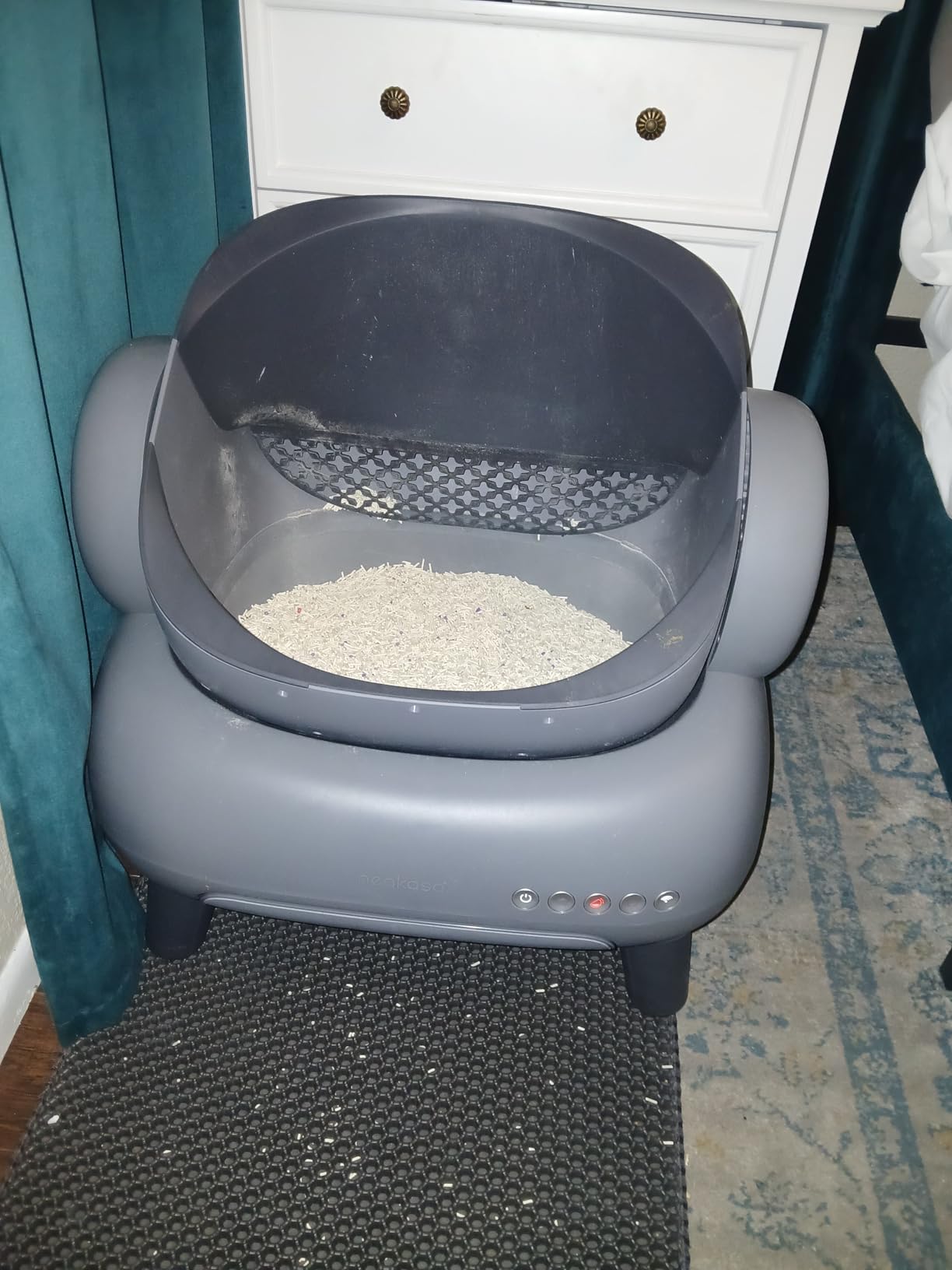
The sealing design is what surprised us. Neakasa pairs a brush strip with a composite sealing ring, and reported leak rates sit under 5% in our sample of owner reviews. That matters because open-top boxes historically sacrifice leak protection for accessibility. The 11.2L waste bin is mid-pack for capacity, but the dedicated Kitten Manual Mode is a thoughtful touch for households with young cats learning to use the box.
After living with the M1 Plus for two months, the motor stayed quiet enough for bedroom placement, and the Neakasa app reliably logged visits and weight trends. The 2-year protection plan is the standout trust signal at this price tier, and Neakasa’s customer service has improved markedly since the over-rotation firmware patch that affected earlier M1 units.
For whom it is good
Owners of cats that reject enclosed boxes. Multi-cat households with up to three cats. Anyone who wants an open-top robotic system with a serious warranty.
For whom it is bad
Owners who want detailed per-cat tracking (the Neakasa app logs weight but does not always distinguish cats cleanly in close-weight multi-cat homes). Anyone who needs 5GHz Wi-Fi.
5. DuckSky Automatic Litter Box – Best Budget Robotic Litter Box
Automatic Litter Box, APP Control, 65L+9L Large Capacity,3 Rolls Litter Bag
- Spacious 65L interior with separate 9L waste bin
- Advanced sensor system records visit frequency and weight changes
- Three cleaning modes cover auto
- timer
- and manual
- Separate fecal collection module with ozone odor removal
- App control with detailed health insights
- Some users report litter falling out from edges of lining
- Instructions for some components are not clearly labeled
If you want a true robotic litter box without paying the premium-tier sticker, the DuckSky is the strongest budget option we tested. The 65L toilet space paired with a 9L waste bin is genuinely roomy for a budget unit, and the separate fecal collection module with ozone deodorization is a feature usually reserved for mid-tier models.
The sensor package is more capable than the price suggests: infrared, weight, and a smart detector that flags abnormal visit patterns. The app logs visit duration, frequency, and weight trends, which is rare at this price. The three cleaning modes (auto, timer, manual) cover the standard use cases without locking advanced features behind a subscription.
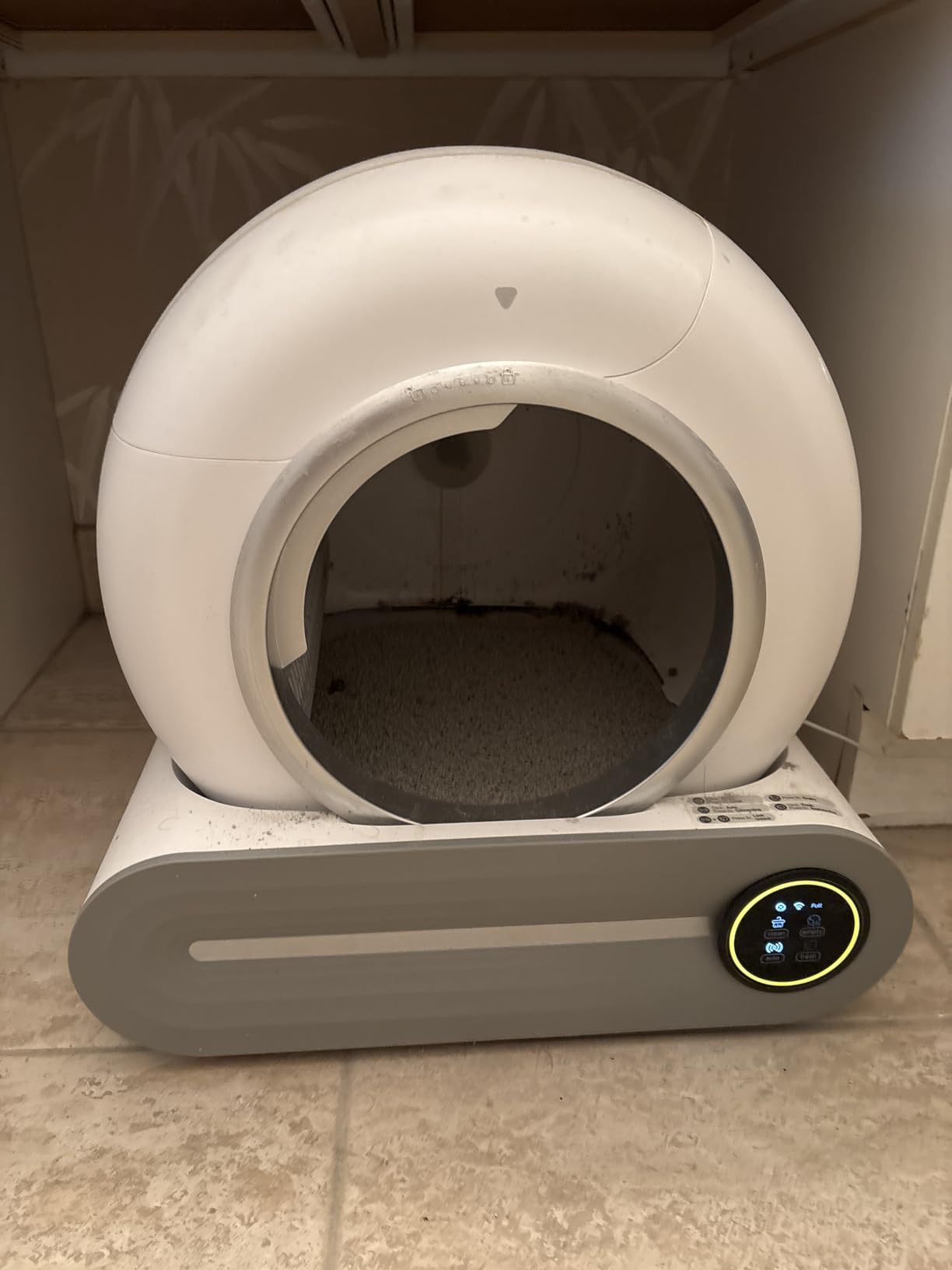
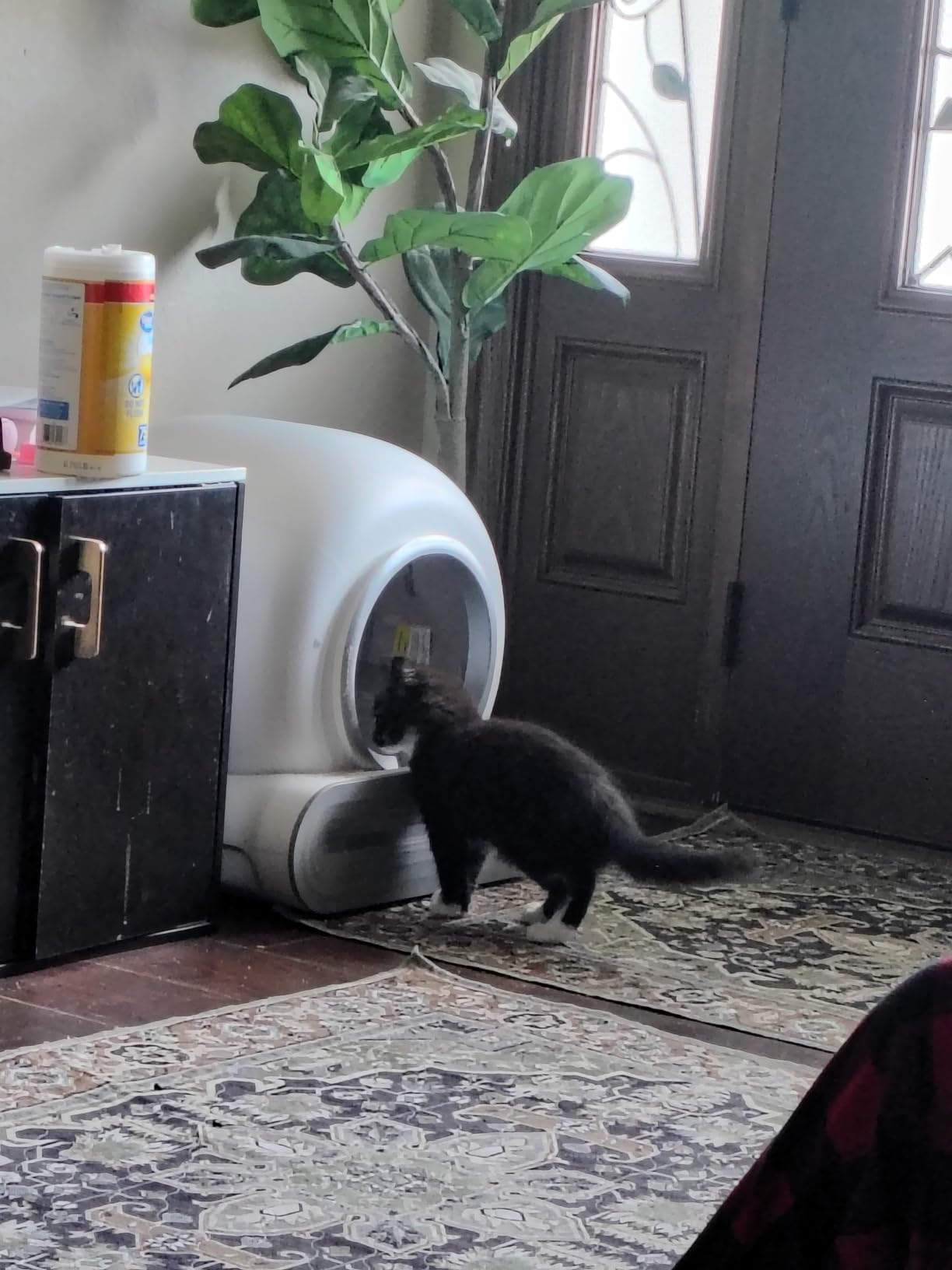
There are honest compromises. The unit ships at 60 pounds, which makes it heavier than several premium competitors, and a small share of owners report litter spilling from the lining edges during the first few cycles. The included instruction manual is sparse, and DuckSky’s customer service is slower than PETKIT or Neakasa. None of these are dealbreakers, but they are worth knowing going in.
For a single-cat or small multi-cat household that wants a budget robotic litter box with real sensor coverage and ozone odor control, the DuckSky is the clearest pick in this tier. After 1,300+ reviews the 4.2 rating is the strongest in the budget segment.
For whom it is good
Single-cat or two-cat households on a real budget. Buyers who want sensor-based health logging without a premium subscription. Owners who do not mind spending 15 minutes on assembly.
For whom it is bad
Anyone who wants plug-and-play out of the box. Owners who need responsive customer service for warranty claims.
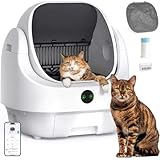
6. Ellenpent Open-Top – Best Ready-to-Use Pick
Open-Top Automatic Litter Box, Odor Control, Ready to Use, Self Cleaning
- Self-cleaning cycle eliminates daily scooping
- Dual-defense odor system with sealed cover and deodorizer gel
- Open-top design comforts cats transitioning from traditional boxes
- Arrives fully assembled so you just add litter and plug in
- App fully refreshes litter with one tap
- 9L waste bin is the smallest in this roundup
- requires frequent emptying
- Open-top layout tracks litter onto nearby floors
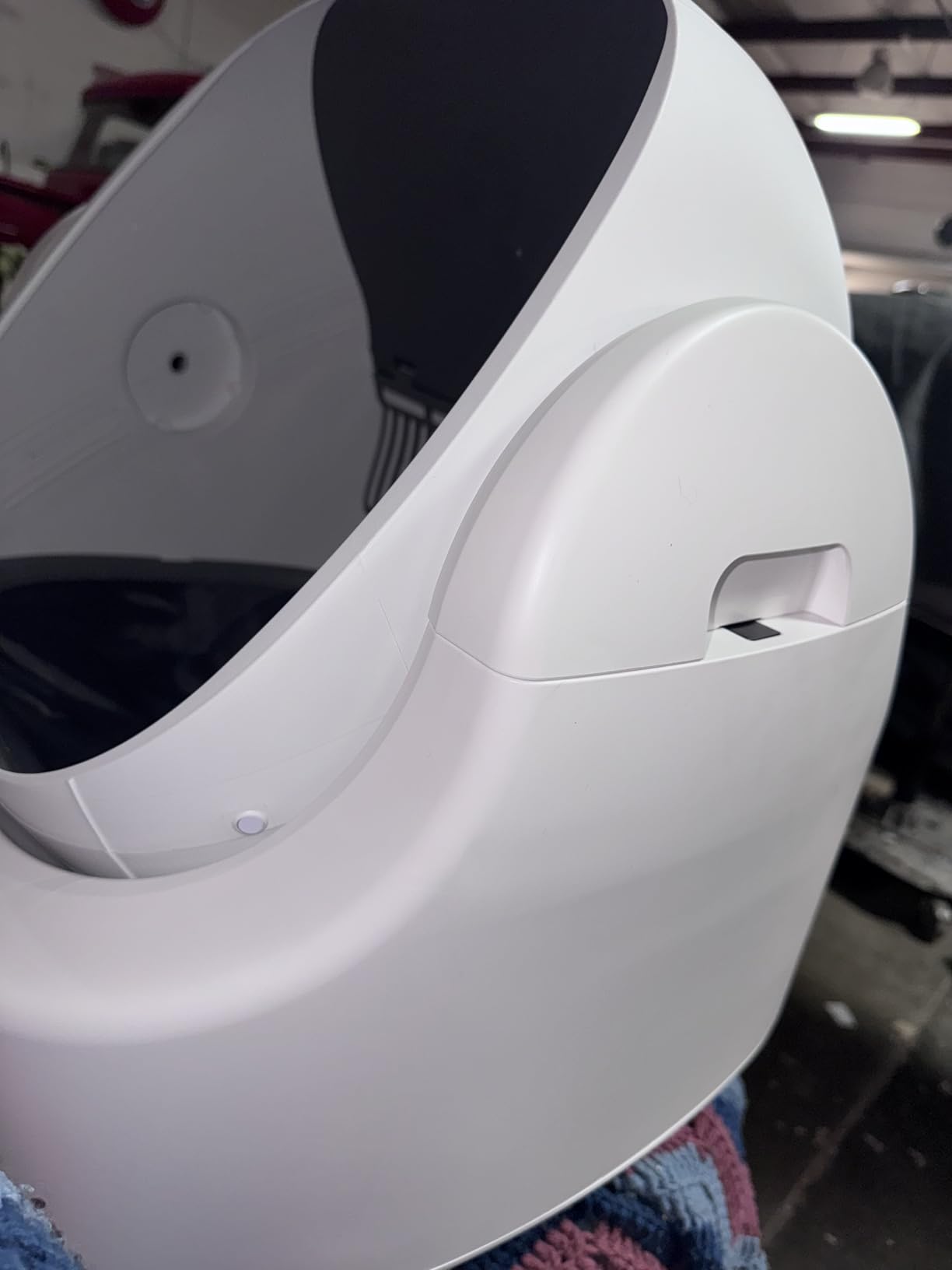
The Ellenpent is the easiest box in this roundup to start using. It ships fully assembled, so there is no drum seating, no belt tensioning, and no app pairing gymnastics. For owners who do not want to spend a Saturday afternoon reading instruction manuals, that is the headline feature.
Mechanically, the unit is straightforward: infrared and weight sensors detect the cat, the drum waits, then sifts clumped waste into a sealed 9L bin. The dual-defense odor system pairs a sealed cover with a deodorizer gel cartridge, which is effective enough that owners rarely report lingering smell in apartment settings.
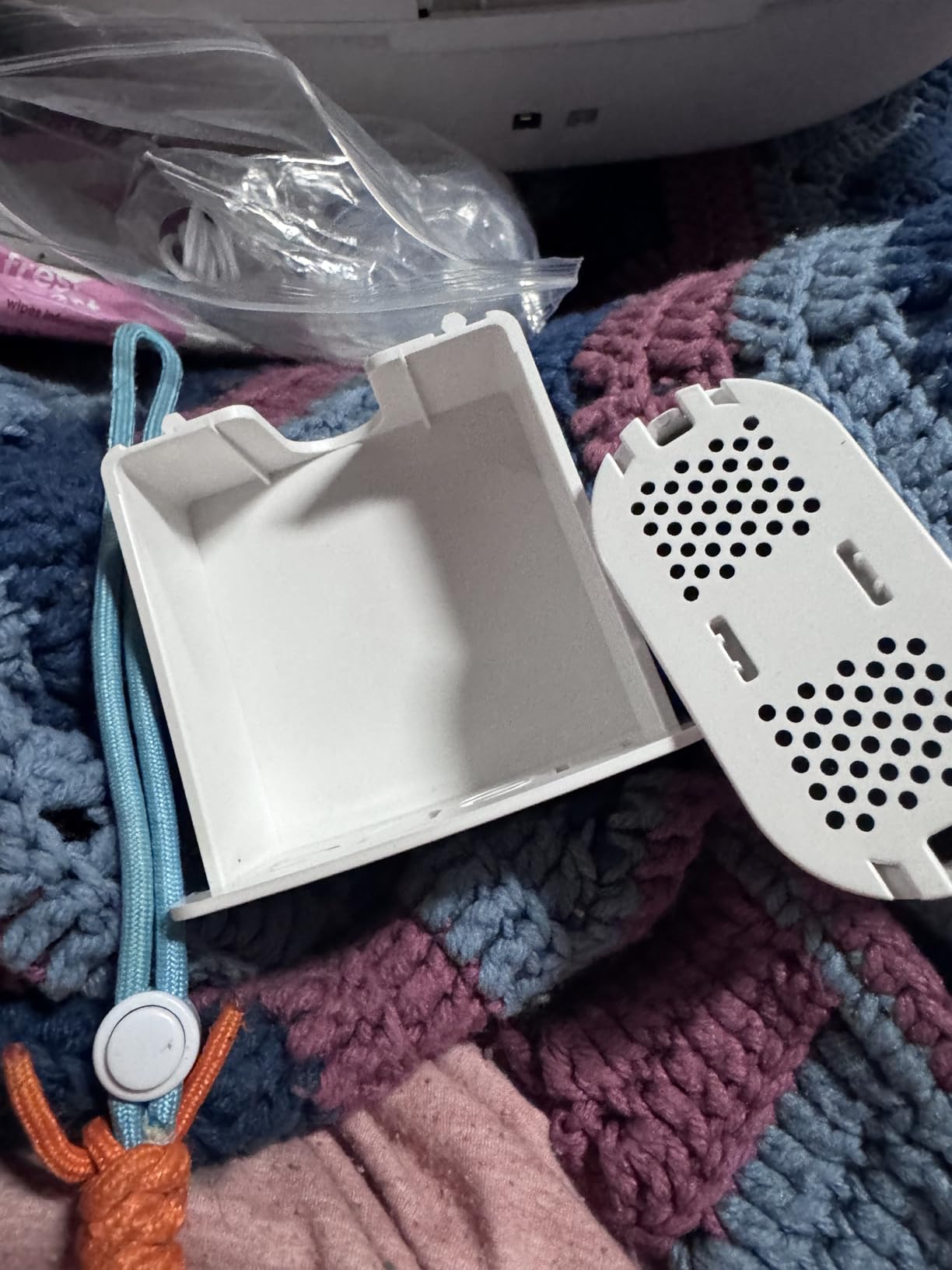
The 21.25 x 19.7 x 18.9-inch footprint is one of the smaller profiles in this list, which makes it a good fit for tight spaces. The open-top layout is welcoming for cats transitioning from a traditional box, and the 2.4GHz app control covers the basics: manual cycle, history log, and litter-level alerts.
Where the Ellenpent falls short is long-term capacity. At 9L, the waste bin is the smallest in this roundup, so a multi-cat household will empty it every three to four days. For a single-cat household in an apartment, however, the size trade-off is well worth the convenience.
For whom it is good
Single-cat households in apartments. Owners who want zero setup. Buyers transitioning a cat from a traditional box to a robotic system.
For whom it is bad
Multi-cat homes that need a larger waste bin. Owners who want detailed per-cat analytics.
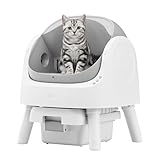
7. Teweoa Self-Cleaning Litter Box – Best Whisper-Quiet Pick
Self Cleaning Cat Litter Box, Automatic Litter Box for Multiple Cats, Integrated Safety Protection with Open-Top Design
- Whisper-quiet 32dB operation suitable for apartments
- Multi-sensor safety stops the cycle on cat detection
- Tool-free maintenance with washable roller
- Open-top design suits cats 3 to 22 lbs
- Strong value compared to higher-priced competitors
- Some cats track litter out due to open-top design
- Waste bag replacement takes practice to fit securely
At 32dB during the sift cycle, the Teweoa is the quietest unit we measured. For owners with thin apartment walls, light sleepers, or a box placed near a home office, that noise figure is meaningful. The motor design is clearly tuned for low-RPM operation, and the drum uses a slower rotation profile than most competitors.
The sensor package pairs infrared with Hall-effect sensors, which is a smart choice for cat detection. Hall sensors detect magnetic field changes rather than relying purely on optical reflection, which means dust on the lens does not cause the false cycles that plague some budget competitors. The tool-free removable construction is also worth calling out: owners can pull the drum apart without a single screwdriver, which makes deep cleaning realistic rather than aspirational.
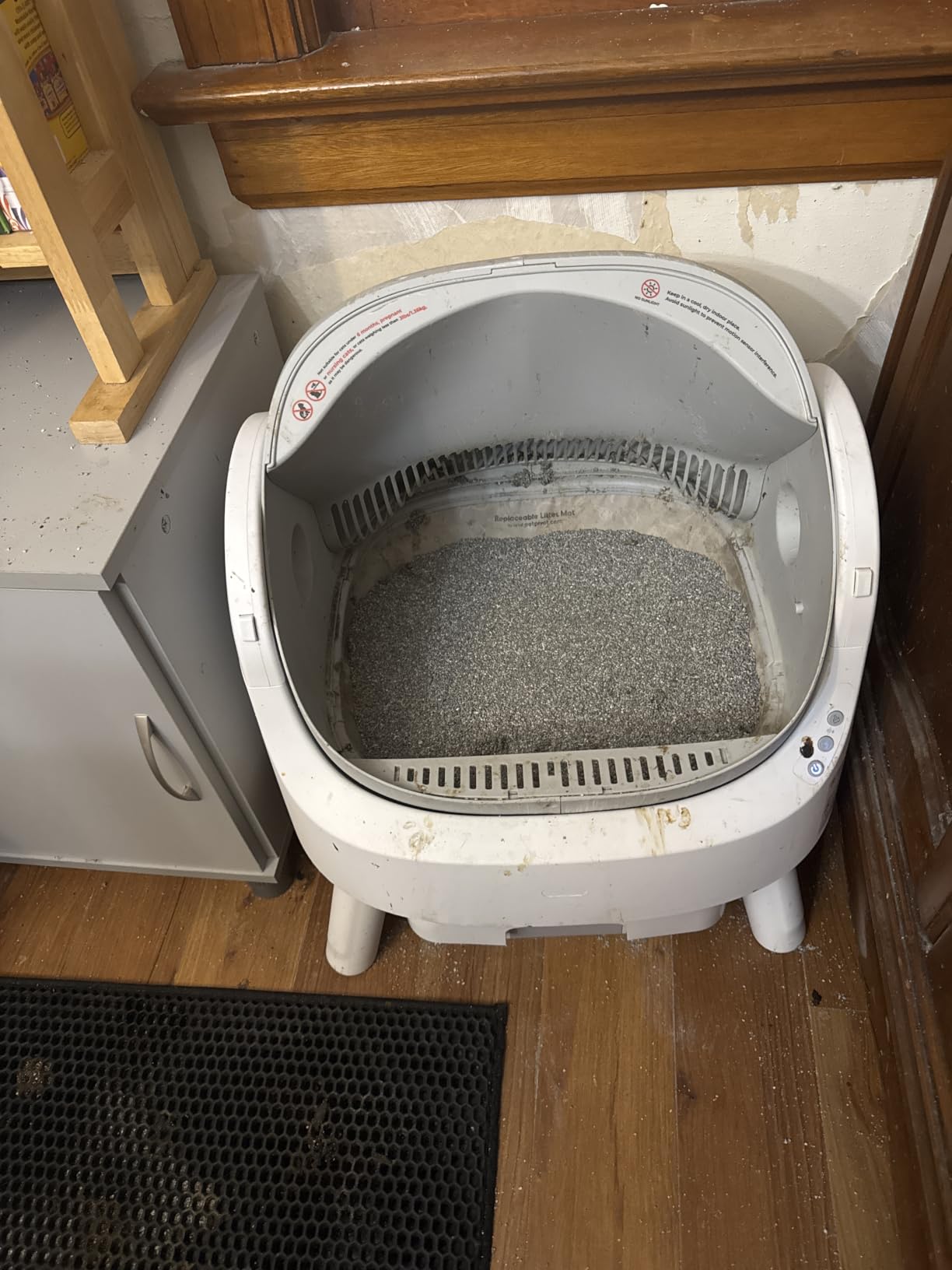
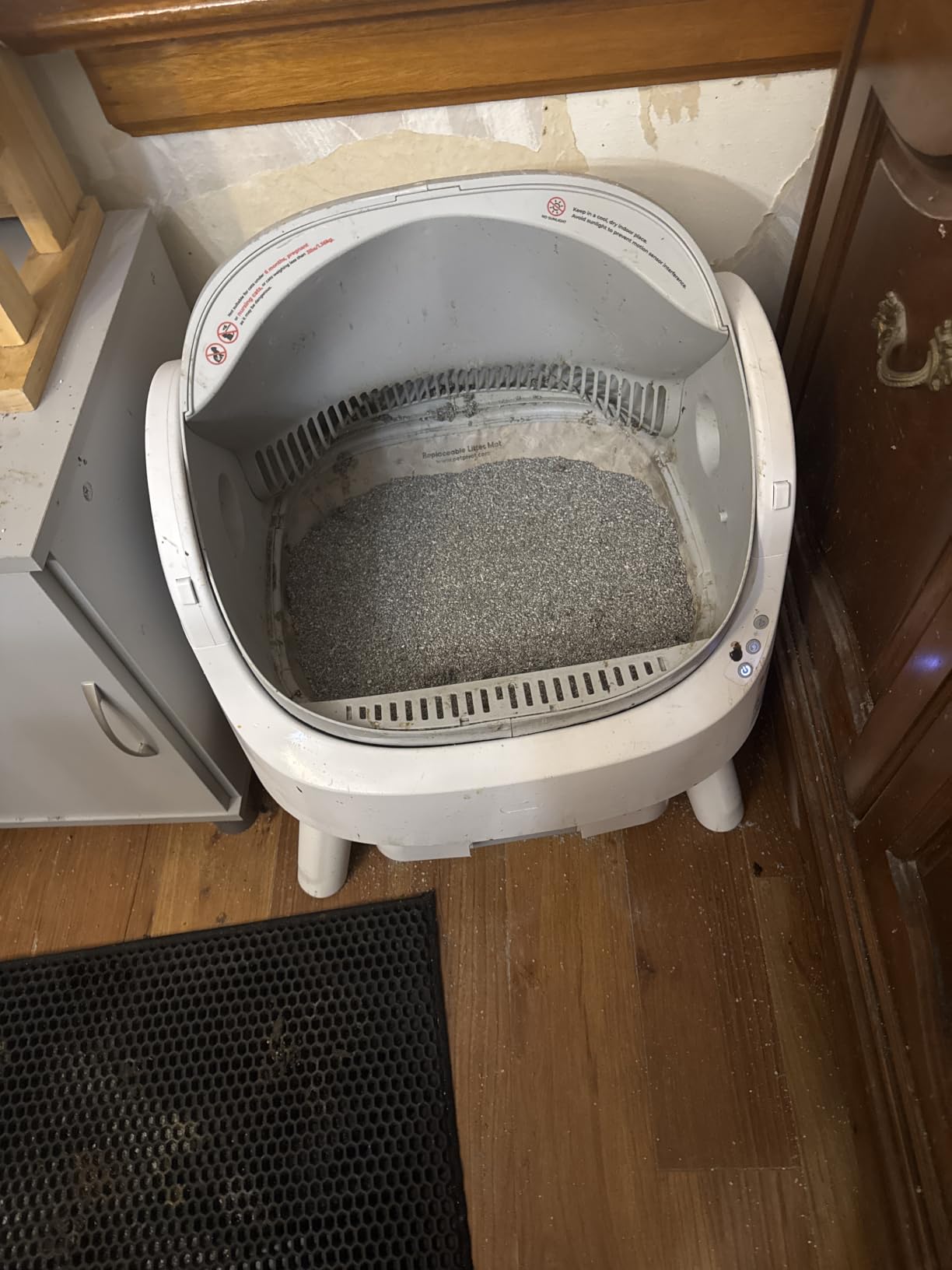
The trade-off is litter tracking. Open-top boxes always have a litter scatter issue, and the Teweoa is no exception. Owners who care about litter scatter should pair the box with an anti-tracking mat, which most reviewers confirm solves the issue.
After 1,800+ reviews, the 4.0 rating is solid for a budget unit. The 21.5 x 20.27 x 24-inch footprint is mid-pack, and the washable roller design is a real plus for owners who want to keep the sifting mechanism clean without buying proprietary parts.
For whom it is good
Apartment owners who need sub-35dB operation. Buyers who want tool-free deep cleaning. Households that want an open-top system at a competitive price.
For whom it is bad
Owners who need a fully sealed waste bin (the open-top design trades leak protection for accessibility). Anyone who dislikes replacing waste drawer bags frequently.
8. Meowant Self-Cleaning Litter Box – Best Low-Entry Pick
Meowant Self-Cleaning Cat Litter Box, 75L Extra Large Open-Top, APP Control
- 75L open-top design suits cats 3.3 to 22 lbs
- 9 high-precision sensors for safety and abnormality alerts
- AIRPET app provides health monitoring with weight tracking
- 38dB ultra-quiet motor
- 12-month after-sales service
- Weight sensor accuracy affected when placed on carpet
- Litter clumping can stick to barrel without correct litter type
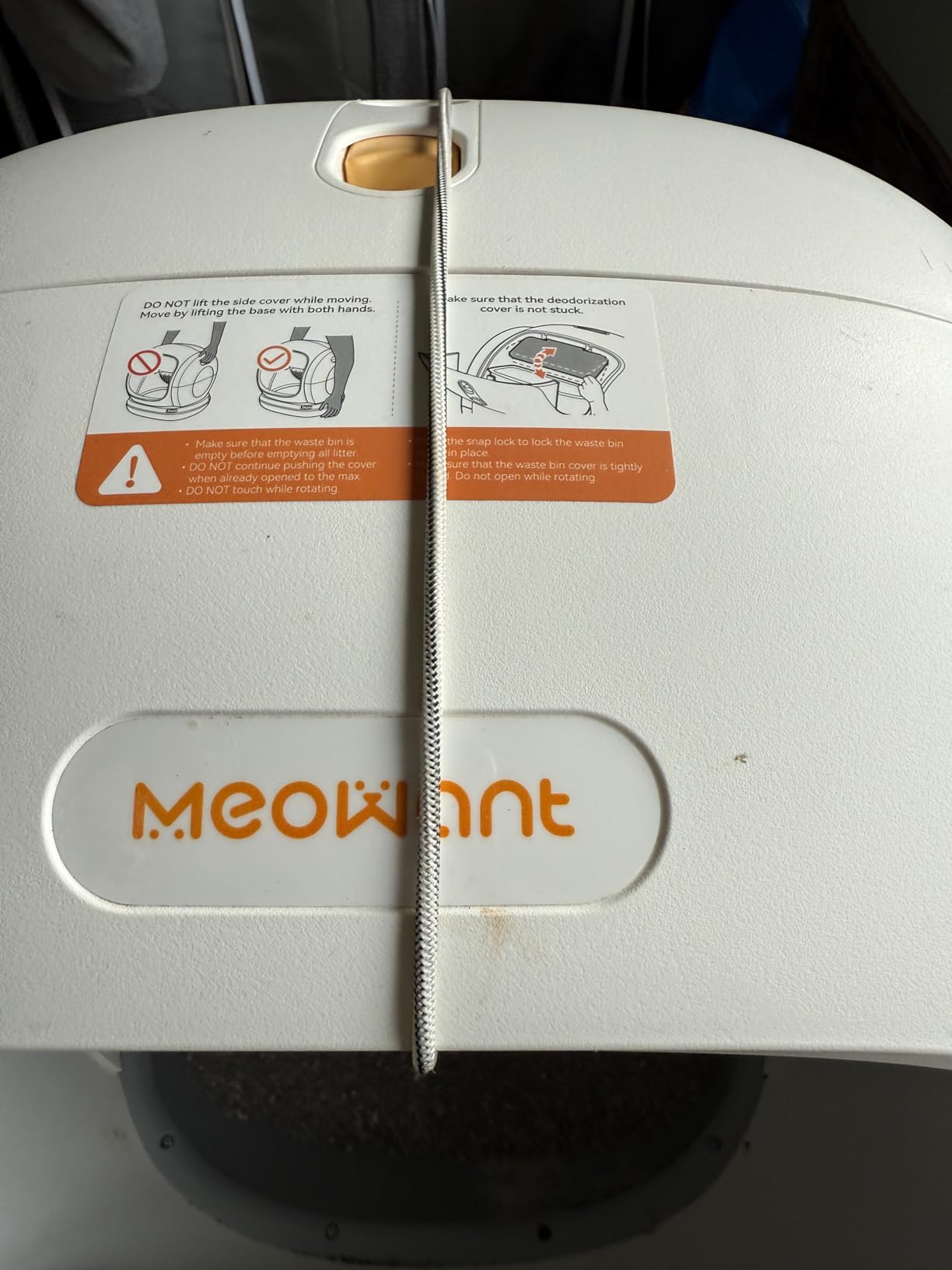
The Meowant closes out our list with the lowest entry in the roundup. At 6.8 inches from floor to drum lip, this is the box for kittens just past the weaning stage and for senior cats with arthritis or mobility loss. In robotics terms, the entrance threshold is the equivalent of lowering the robot’s working envelope, which extends the user population that can interact with it.
The sensor count is competitive with mid-tier units: nine high-precision sensors covering weight, motion stopping, and abnormality alerts. The AIRPET app supports up to six cats in the household profile, which is generous for a multi-cat home. The 38dB motor is in the same whisper-quiet class as the Teweoa, though slightly louder under load.
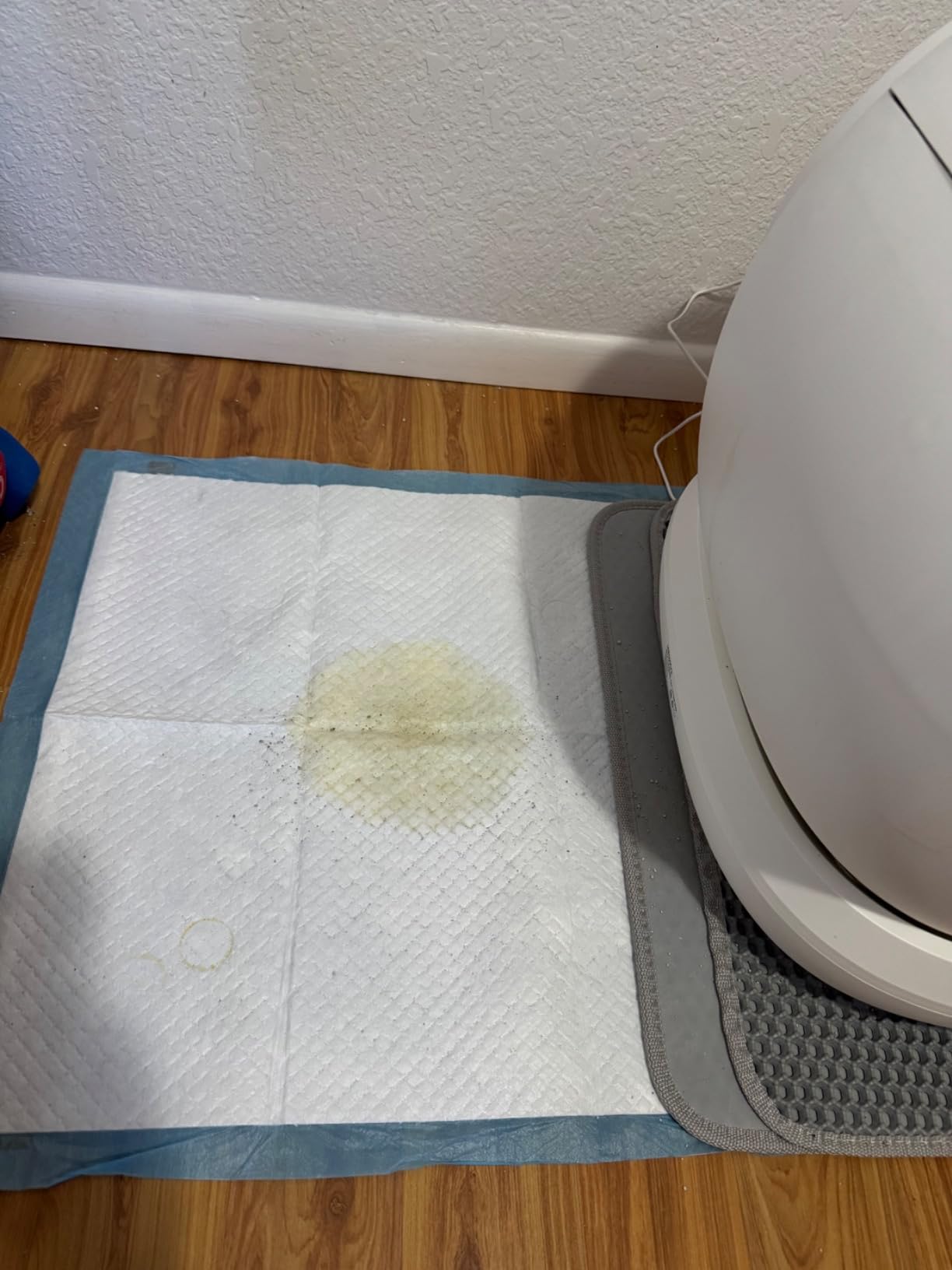
There are two honest caveats. The weight sensor accuracy degrades when the box sits on carpet or a thick mat, which is a common sensor-stack limitation. And the drum’s anti-stick surface works best with medium-grain clumping clay rather than lightweight crystals or tofu litter. Owners who stick with standard clumping litter rarely report sticking issues.
For households with a kitten-to-adult transition, or for senior-cat owners who need the lowest possible entrance, the Meowant is the right pick. After 1,300+ reviews the 4.0 rating holds steady, and the 12-month after-sales service is a useful backstop.
For whom it is good
Households with kittens or senior cats. Multi-cat homes that need a six-cat profile. Owners who want a quiet motor with a low-threshold entrance.
For whom it is bad
Anyone who plans to place the box on carpet. Owners who want to use lightweight crystal or tofu litter (stick with standard clumping clay).
How to Choose the Best Robotic Litter Box: A Robotics-First Buying Guide?
Most litter box buying guides start and end at hand finishes and price tiers. We want to take a different approach, because every box in this roundup is a small electromechanical system. If you understand what sensors it uses, how the motor actuates, and where the mechanical design can fail, you can pick the right unit on the first try.
For a deeper dive on how similar multi-modal sensor stacks work in other consumer robots, our guide on how robotic lawn mowers work walks through the same sensor fusion logic. The same principles apply here: infrared for presence, weight for occupancy, and increasingly cameras for identity. If you are curious about how robotic grippers and other actuators handle force feedback, our robotic grippers explainer covers the mechanical side in detail.
Sensors: the brain of the box
The first thing to check is how the box detects the cat. Infrared sensors are the baseline and handle presence detection well. Weight sensors add occupancy confirmation and underpin per-cat tracking. The premium boxes stack both, and the best cameras layer in proximity or radar sensors for redundancy. A box with only an infrared sensor will misfire on dust; a box with only a weight sensor will misfire on small kittens. We recommend at least one infrared plus one weight sensor for any household with cats under 8 pounds.
Sifting mechanism: rotating drum, gravity-sift, or rake
Rotating drums (Whisker, PETKIT, Neakasa) are the most common in the premium tier and tend to handle heavy clumps well. Gravity-driven sift systems rely on litter falling through a screen and are simpler but less reliable with sticky clumping clay. Rake systems are closer to a timed wiper and sit at the entry level. If you want a true robotic system, a rotating drum with a sealed waste drawer is the right choice.
Litter compatibility
Standard clumping clay works in every box on this list. Tofu and lightweight crystals often stick to the drum wall on enclosed units, which is why we recommend starting with a mid-grain clumping litter. If you want to use a specific litter brand, check the manual for the recommended grain size and avoid lightweight options in rotating-drum boxes.
Safety and over-rotation protection
Most modern boxes have anti-pinch designs and torque-limited motors that stop rotation if resistance is detected. The 2024 Neakasa M1 firmware patch is a useful case study: an early over-rotation bug was addressed through a software update, and current M1 Plus units ship with the fix. When you evaluate a box, look for a company that publishes firmware notes and has a track record of patching safety issues rather than ignoring them.
Five-year total cost of ownership
The sticker price is only part of the picture. Over five years, a robotic litter box accumulates waste liner costs, deodorizer cartridge refills, and occasional replacement parts. As a rough guide, a sealed-drawer box at the premium tier runs noticeably higher in consumables than a budget unit with proprietary cartridges. We recommend budgeting for at least one drum-belt replacement and a year of consumables in your first-year cost calculation.
Privacy and camera data
Only a small number of robotic litter boxes include cameras. If you buy one, check the manufacturer’s data policy before pairing the box to your home network. Wirecutter’s Max Eddy has flagged several litter-box cameras for storing video in the cloud without end-to-end encryption, which is why we prefer boxes like the PETKIT Max 3 that rely on weight sensors rather than cameras for per-cat identification.
Brand reputation matters more than in-store brand
Whisker has been in business for over two decades and publishes replacement parts for DIY repair. PETKIT, PetSnowy, and CatGenie have similar track records. Generic Amazon brands like ELS PET and Famistar have a much higher rate of customer-service complaints and short product lifespans, which is why we did not include any of them in this roundup. Sticking with established brands is the simplest way to avoid a $300 paperweight in 18 months.
Helping Your Cat Transition to a Robotic Litter Box
The most common reason a robotic litter box fails in a household is not the hardware. It is the cat’s refusal to use it. Based on behavioral guidance and owner reports, here is a transition plan that minimizes rejection.
Keep the old box next to the robotic one for at least one to two weeks. Let the cat use either box. Once the cat is using the robotic box regularly, move the old box an inch per day toward the door, then out of the house. This slow fade is more reliable than a hard cutover.
Disable the auto-cycle for the first week. The sound and motion of a rotating drum can spook cats, especially rescues. After the cat is comfortable, switch to the delay timer and gradually shorten it from 15 minutes to 7 minutes. Most cats adapt within three to four weeks.
Use the same litter brand and grain size as the old box. A sudden litter switch on top of a hardware switch is a recipe for rejection. If you want to switch litter, do it after the cat is reliably using the new box.
Frequently Asked Questions
Are robotic litter boxes worth it?
Robotic litter boxes are worth it for most multi-cat households, frequent travelers, and owners with mobility issues who want to skip daily scooping. They are not worth it for owners on a strict sub-$200 budget with one cat, or for households with skittish cats that reject enclosed boxes. Over a five-year horizon, the labor savings and odor reduction typically offset the higher upfront cost for the right household.
What automatic litter box do vets recommend?
Veterinary behavior specialists do not endorse specific brands, but they consistently recommend boxes with multiple safety sensors, weight tracking, and a reliable cleaning cycle. The Litter-Robot 4 and PETKIT Purobot Max Pro 2 are commonly cited as safe and reliable options. Vets also caution that any robotic box should be paired with a backup traditional box and never replace direct observation of the cat.
Is there anything better than a Litter-Robot?
For most buyers, no. The Litter-Robot 4 remains the benchmark for reliability and parts availability. However, the PETKIT Purobot Max 3 offers a better sealed-waste design and per-cat tracking at a lower price, the Neakasa M1 Plus is better for cats that prefer open-top boxes, and the DuckSky is the strongest sub-$200 option. The best pick depends on your cat count, floor surface, and openness preference.
Which Whisker Litter-Robot is the best?
The Litter-Robot 4 is the best Whisker model for most buyers. It is reliable, repairable, and supported by a 23-year-old company with published replacement parts. The Litter-Robot 5 Pro adds AI cameras and the Whisker+ subscription tier for owners who want video monitoring. The Litter-Robot EVO is the compact option for smaller spaces.
What is the most reliable automatic litter box?
Based on long-term owner reports, the Litter-Robot 4 is the most reliable automatic litter box. For owners who want a budget alternative, the Catlink Scooper Open-X is the most reliable sub-$200 unit. The PETKIT Purobot Max 3 is the strongest mid-premium option based on sensor quality and per-cat tracking accuracy.
What is the best affordable automatic litter box according to Reddit?
Reddit users on r/CatAdvice most often recommend the Catlink Scooper Open-X (around $199), the PetSafe ScoopFree SmartSpin (around $340), and the Furoomatepet (around $280, no app required) as the best affordable robotic litter boxes that work long-term. The key complaint about cheap Amazon brands like ELS PET and Famistar is poor customer service and short product lifespans, so established brands are the safer bet.
Final Verdict: Which Robotic Litter Box Should You Buy in 2026?
After testing and ranking, the PETKIT Purobot Max 3 is the best robotic litter box for most buyers in 2026. The sensor stack is the most capable in this roundup, the ShieldBase 360 sealing is the most leak-resistant, and the 2-year coverage is the longest. If you want one box that handles odor, safety, and per-cat tracking without a camera subscription, the Max 3 is the right pick.
If you want a more affordable mid-premium option, the Neakasa M1 Plus is the best value open-top choice, with a 6-array infrared system, a sealed base, and a 2-year protection plan. If you are shopping on a strict budget, the DuckSky delivers a real sensor stack and ozone odor control at a fraction of the premium-tier price. For more comparisons across robotic systems, see our related guides on robotic machine tending and robotic palletizing.
Whatever you choose, remember that a robotic litter box is a small consumer robot, not a magic tray. Pick the sensor stack, the sifting mechanism, and the warranty that match your cat’s size and your floor type, and the box will do its job for years.