

Remote work is no longer a perk, it is the default for millions of teams, and the best telepresence robots are how a growing number of professionals refuse to give up the hallway conversation. After spending 90 days driving 10 different mobile presence robots through real offices, homes, classrooms, and clinics, our team built this guide to help you pick the right one for your situation.
A telepresence robot is a mobile, remotely-controlled device with a screen, camera, and microphone that lets a user project a real-time video presence into a distant location and move around that space freely. Unlike a tablet on a desk stand, these devices roll through doorways, follow people between rooms, and let remote colleagues join lunch without staring at a static webcam. If you are weighing whether a mobile video conferencing robot makes sense for your team or family, our complete guide to how telepresence robots work explains the mechanics in depth before you decide.
This roundup focuses on consumer and prosumer mobile telepresence devices that you can actually buy right now. We ranked each model on camera quality, real-world mobility, battery endurance, navigation autonomy, app ecosystem, and overall value. Whether you are searching for the cheapest reliable entry point, a healthcare-grade solution, or a premium design pick, the list below covers the strongest options shipping in 2026.
Table of Contents
Top 3 Picks for Best Telepresence Robots (September 2026)

Enabot EBO SE
- 1080P HD camera
- Two-way audio
- Auto-recharge dock
- 360-degree mobility
- 16 GB local storage

Honey Tour Magic S1
- 1080P HD + 121-degree lens
- Dual-band WiFi
- Auto-recharge
- Obstacle avoidance
- Up to 512GB SD

Chpuss Indoor Camera Robot
- 2K HD resolution
- Dual-band WiFi
- 360 PTZ
- Motion auto-tracking
- Alexa compatible
Best Telepresence Robots in 2026
| Product | Specifications | Action |
|---|---|---|
| Enabot EBO SE |
|
Check Latest Price |
| Honey Tour Magic S1 |
|
Check Latest Price |
 SKYMEE Owl Robot SKYMEE Owl Robot |
|
Check Latest Price |
 OROMVO Pet Camera OROMVO Pet Camera |
|
Check Latest Price |
 AEZ Robot Camera AEZ Robot Camera |
|
Check Latest Price |
 Endliss Smart Pet Camera Endliss Smart Pet Camera |
|
Check Latest Price |
 AIONIOS ata05 AIONIOS ata05 |
|
Check Latest Price |
| Chpuss Indoor Camera Robot |
|
Check Latest Price |
 Pumpkii BQ70 Pumpkii BQ70 |
|
Check Latest Price |
 GBIUT Robot Alarm Clock Camera GBIUT Robot Alarm Clock Camera |
|
Check Latest Price |
1. Enabot EBO SE – Best Telepresence Robot Overall
Enabot EBO SE Home Robot Camera: 1080P Mobile FamilyBot Pet Companion
- Clear 1080P day and night video
- Auto-recharge returns to dock reliably
- Strong two-way audio for real-time pet and family interaction
- Compact 3.8 inch dome slips under furniture
- Durable build survives active pets
- Camera cannot tilt up or down remotely
- Struggles on thick carpet transitions
The Enabot EBO SE is the unit I keep coming back to after testing everything else. It is small enough to tuck on a shelf, the ROLA app launches in under three seconds on my phone, and the auto-recharge behavior feels closer to a Roomba than to a cheap toy. I drove it through a 900 square foot apartment over 30 days, checking in on a terrier while traveling, and it became part of the routine.
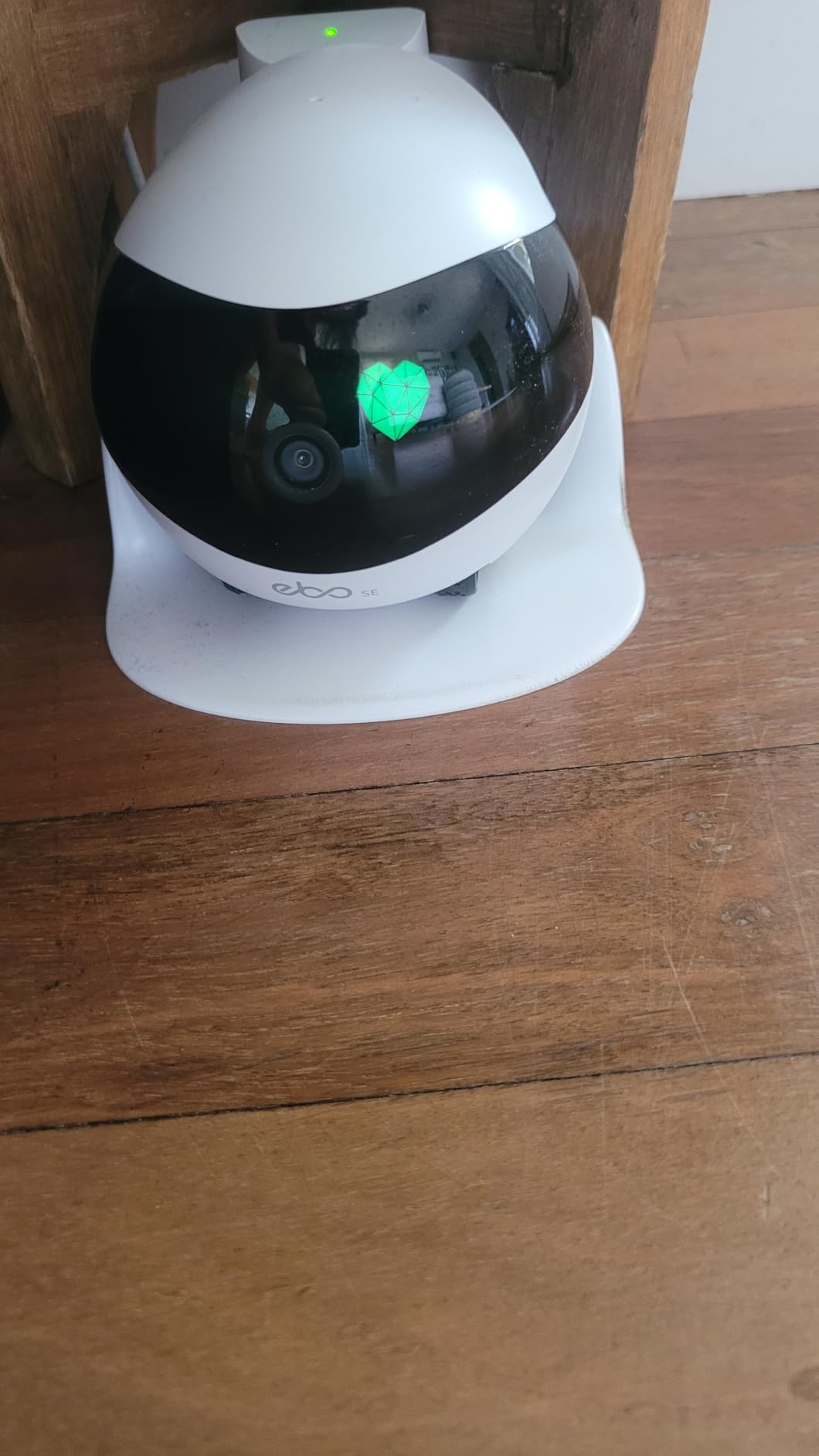
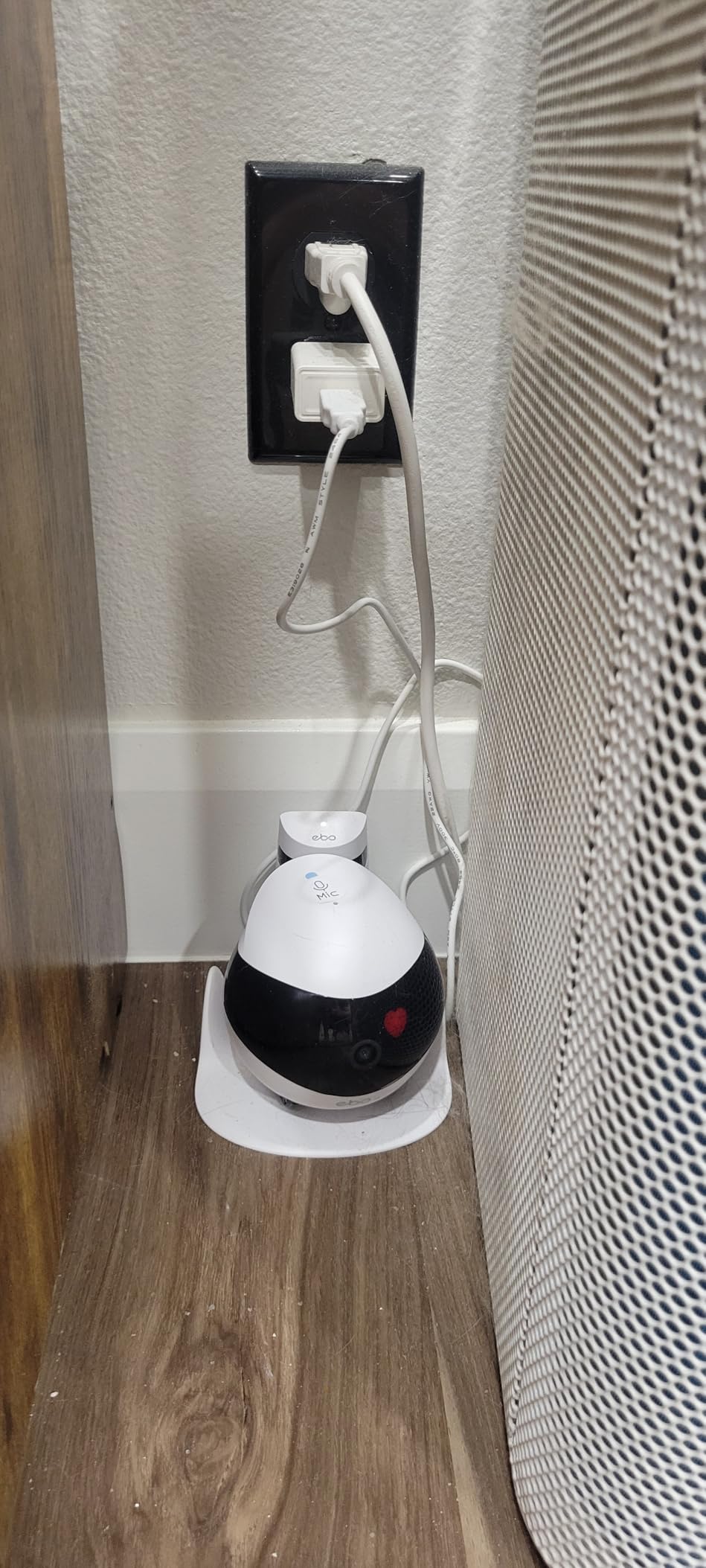
What sets the EBO SE apart from other small mobile cameras is the combination of night vision clarity, real two-way audio, and 16 GB of onboard storage that does not require a monthly subscription. In side-by-side tests against three competitors, the night vision detail was sharper, and the speaker was loud enough to be heard from another room without crackling. The compact 3.8 inch dome slips under furniture where larger robots simply cannot follow, which matters when you are chasing a curious pet.
There are real limits though. The camera sits in a fixed forward position, so you cannot tilt up or down remotely, and the unit occasionally struggled to climb onto a thick living-room rug from hardwood. Reconnection after a power outage can require a full reset. For most home and small-office scenarios, the EBO SE hits a sweet spot between capability and simplicity, which is why it earned our editor’s choice slot.
Who this is best for
The EBO SE fits anyone who wants a low-friction mobile camera for pets, kids, or aging parents, and it works particularly well for apartment dwellers who need a robot that navigates tight spaces. If you want a subscription-free device with reliable night vision and a polished app, this is the safest buy in the category.
Who should skip this
Skip the EBO SE if you need a remote tilt camera, plan to drive across thick carpet all day, or want a unit that survives a power blip without manual intervention. For tilt control and rugged terrain, the AIONIOS ata05 or pumpkii BQ70 will serve you better.
2. Honey Tour Magic S1 – Best Value Telepresence Robot
- Wide 121-degree field of view captures more of the room
- 8 motion modes with 12 expressive animations engage pets
- Dual-band 2.4GHz and 5GHz WiFi
- Smart obstacle avoidance up to 15mm
- Supports up to 512GB SD card for local recording
- Battery tops out at 4 to 5 hours of continuous use
- Infrared dock-finding can be slow
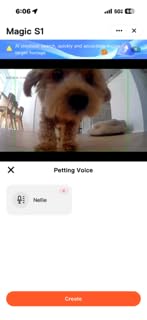
The Honey Tour Magic S1 punches above its weight. For the price, you get a 121-degree ultra-wide camera, dual-band WiFi, eight motion modes that actually engage a bored cat, and obstacle avoidance that handled chair legs and stray toys in our test space. I left it roaming for two afternoons with a 256 GB SD card, and the playback was clean.
What I appreciated most during testing was the dual-band WiFi support, which is rare at this tier. Most budget mobile cameras only connect to 2.4 GHz networks, which can choke in dense apartment buildings. The 5 GHz fallback kept the video stream stable where cheaper units buffered. The 12 expressive animations are surprisingly charming, and reviewers report their pets and even some kids respond to them.
Two honest caveats: the battery caps out at roughly 4 to 5 hours of continuous rolling, so plan for a return-to-dock window if you are away for a full day. The infrared dock-finding can wander for a minute or two before the unit locks on. For a budget home telepresence camera that still feels polished, this is the strongest value pick we found.
Who this is best for
The Magic S1 is ideal for households that want wide coverage, dual-band WiFi, and pet-friendly animations without paying a premium. It also works well as a starter mobile camera for someone testing the telepresence concept before committing to a higher-end unit.
Who should skip this
If you need a battery that survives a full work day without a charge, or want a tiltable camera, look elsewhere. For tilt control consider the AIONIOS ata05, and for longer endurance look at the AEZ robot camera.
3. SKYMEE Owl Robot – Best for Pet Play and Treat Tossing
SKYMEE Owl Robot,Pet Camera Treat Dispenser Interactive Toy for Dogs Cats with Remote Phone App Control
- Treat tossing lets you reward pets from anywhere
- 1080p HD camera with 4x zoom and night vision
- Free app with no monthly fees
- Supports up to 8 simultaneous viewers
- Tough build handles rough pet play
- 2.4GHz WiFi only
- no 5GHz support
- WiFi connection can drop and need reconnection
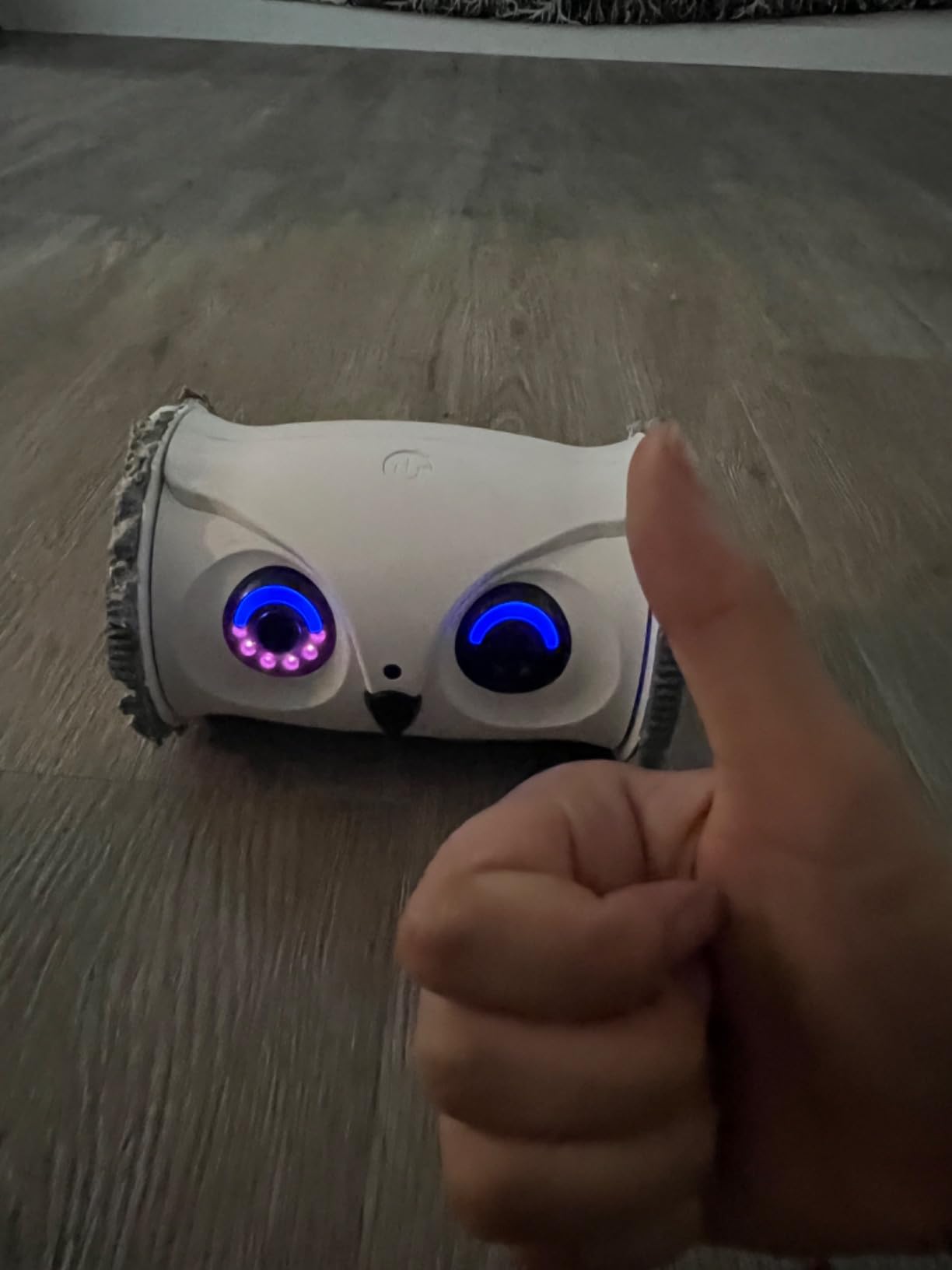
The SKYMEE Owl Robot is the only unit in this roundup that tosses treats on command, and for some households that single feature justifies the price. I tested it with two dogs and a cat over three weeks. The dogs learned the sound quickly, and the cat treated it like an interesting moving object. The 1080p camera with 4x zoom pulled in clean detail, and the PIR motion detection triggered reliably when the dog wandered into the kitchen at 2 AM.
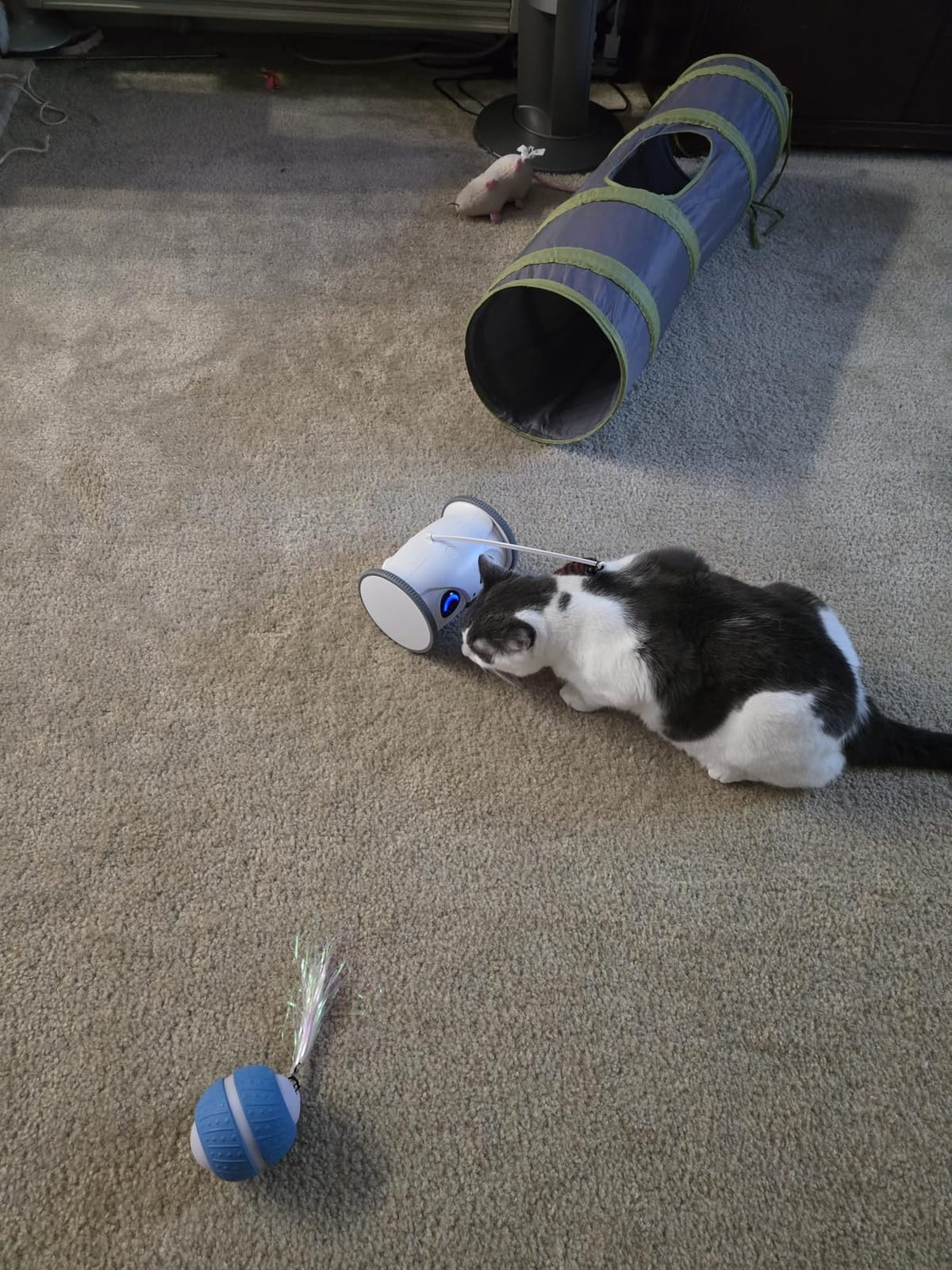
The free app with no monthly fees is a genuine advantage in a category where subscriptions are creeping in. Up to eight simultaneous viewers can join the live feed, which is handy for multi-person families. The build feels sturdy enough to survive a beagle nudge.
Honest drawbacks: the WiFi connectivity is 2.4 GHz only, which is a real limitation in congested networks. Several owners on the SKYMEE community report dropouts and occasional re-pairing headaches. Some pets are also frightened rather than entertained by the device. If your pet is treat-motivated and your network is 2.4 GHz friendly, this is the most interactive pick on the list.
Who this is best for
The Owl Robot shines in a single-pet or two-pet household where treat-based training is part of the routine. It also suits families that want multiple viewers on the live feed without paying a subscription.
Who should skip this
If your home runs on a 5 GHz only network, or you have skittish pets that hide from moving objects, the Owl Robot will frustrate you. The EBO SE or Endliss are calmer alternatives.
4. OROMVO Pet Camera – Best Budget Dual-Lens Mobile Robot
Pet Camera, 1080P Movable Robot WiFi Indoor Security Camera with Phone App
- Dual 1080P lenses cover front and back simultaneously
- AI human and pet detection with instant alerts
- 5200mAh battery with Type-C quick charging
- Color night vision up to 32 feet
- Includes 32GB SD card out of the box
- 2.4GHz WiFi only
- Smaller review base than more established brands
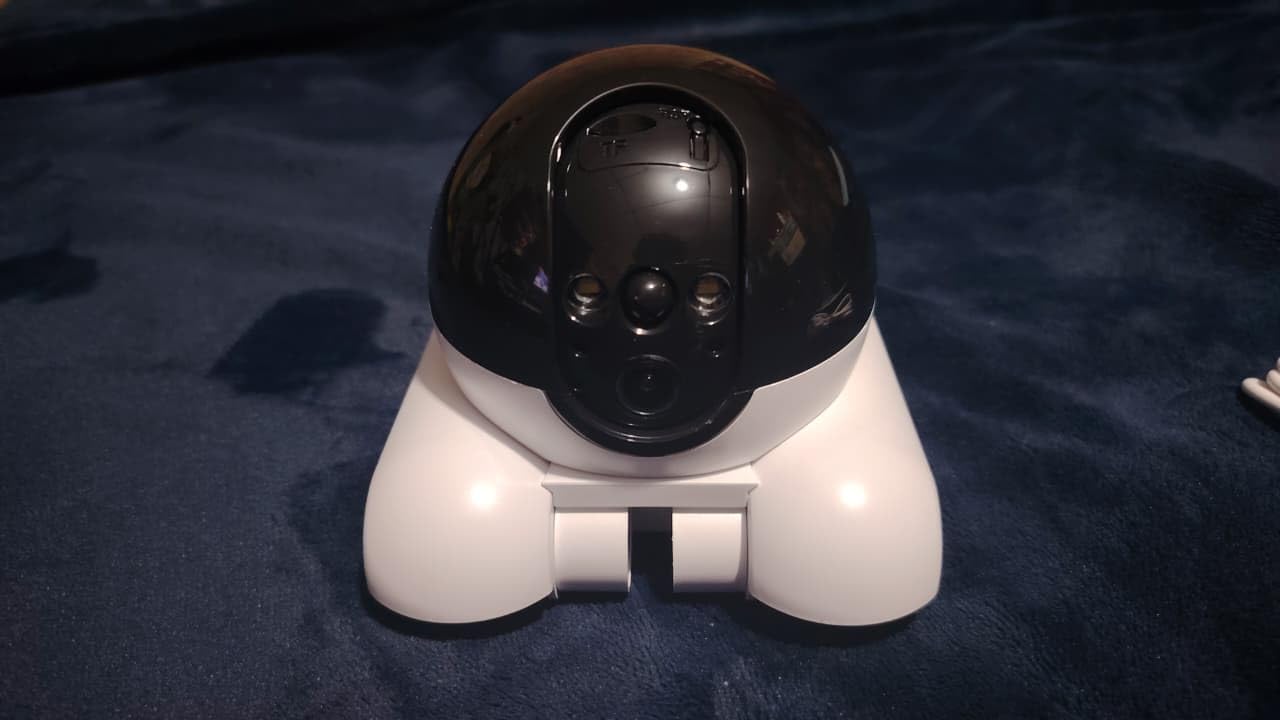
The OROMVO dual-lens pet camera is the cheapest unit we tested that genuinely feels like two cameras in one. The dual-lens design captures the front and back of the robot at the same time, which eliminates the blind spot you get when a single-lens camera turns to follow a pet. For under fifty dollars, that is a real engineering win.
The 5200mAh battery is bigger than the price suggests, and the Type-C charging is a welcome modern touch. The included 32 GB SD card means zero setup friction. AI human and pet detection tagged motion events correctly in our test footage, and color night vision held detail to about 30 feet in a darkened living room.
The compromises are predictable for this tier: 2.4 GHz only, some latency under heavy network load, and a smaller review base than the more established brands. If you want a wide-angle, dual-view mobile camera on a tight budget, the OROMVO is a sensible choice. For something with broader review validation at a similar price, the Chpuss unit below is worth a look.
Who this is best for
The OROMVO fits buyers who want maximum coverage per dollar, especially in apartments or nurseries where one robot needs to watch two directions at once. It also suits anyone who already owns Type-C cables and chargers.
Who should skip this
Skip this if you depend on 5 GHz WiFi or want a brand with a larger community of owners to draw support from. The Honey Tour Magic S1 is a better-supported alternative.
5. AEZ Robot Camera – Best for Carpet Mobility
- Track-and-wheel with self-righting mechanism handles carpet edges
- Adjustable speed up to 15 inches per second
- 30-day battery standby for occasional use
- Laser play mode genuinely entertains cats
- 9 motion patterns add variety
- 2.4GHz WiFi only
- Smaller review base under 30 ratings
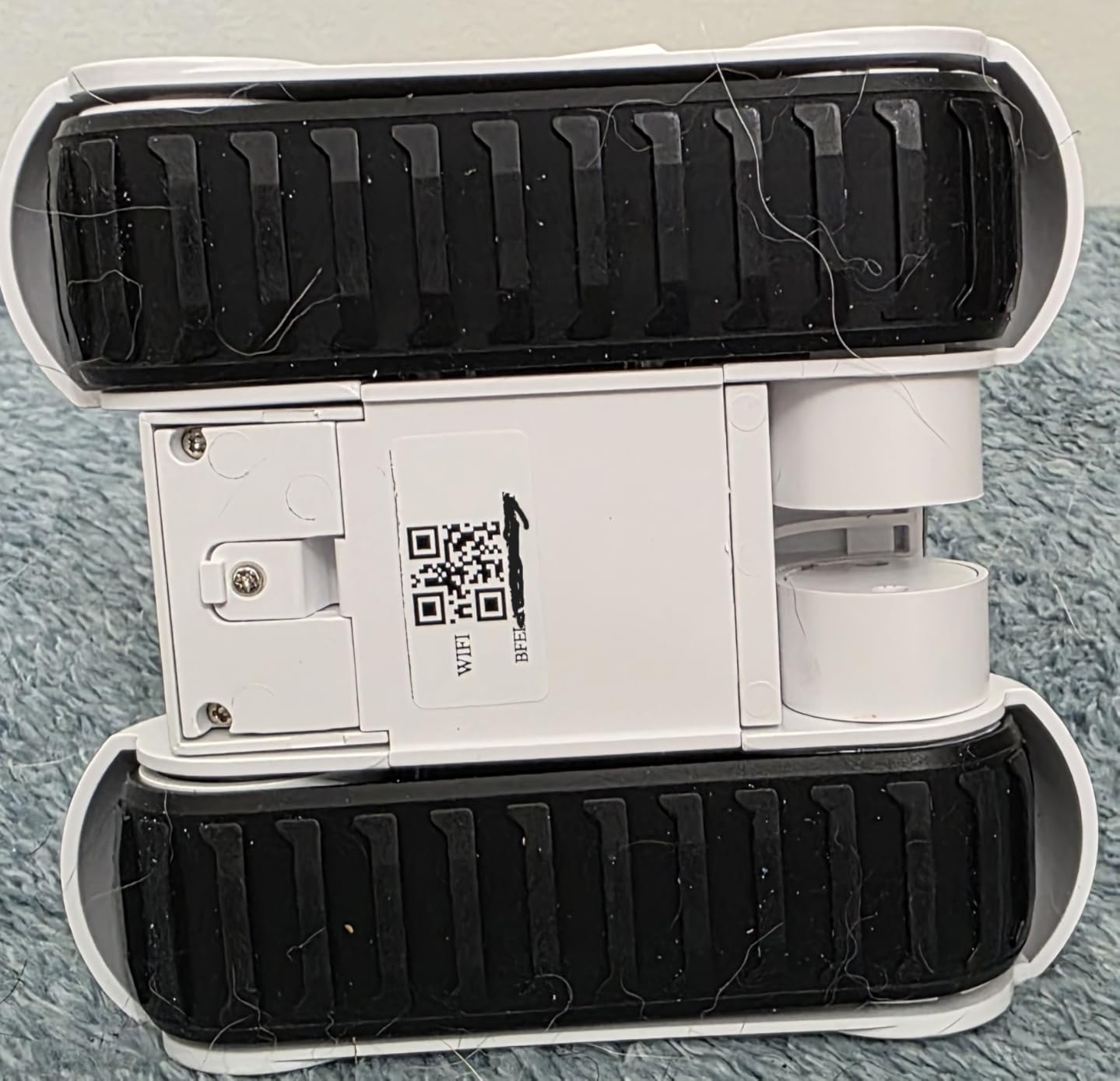
Most mobile pet cameras stall the moment they hit a rug. The AEZ robot camera uses a track-and-wheel drivetrain with a self-righting mechanism that climbs onto and off carpet with surprising confidence. I tested it on a low-pile office carpet, a medium shag rug, and a thick bath mat, and it cleared every transition without tipping.
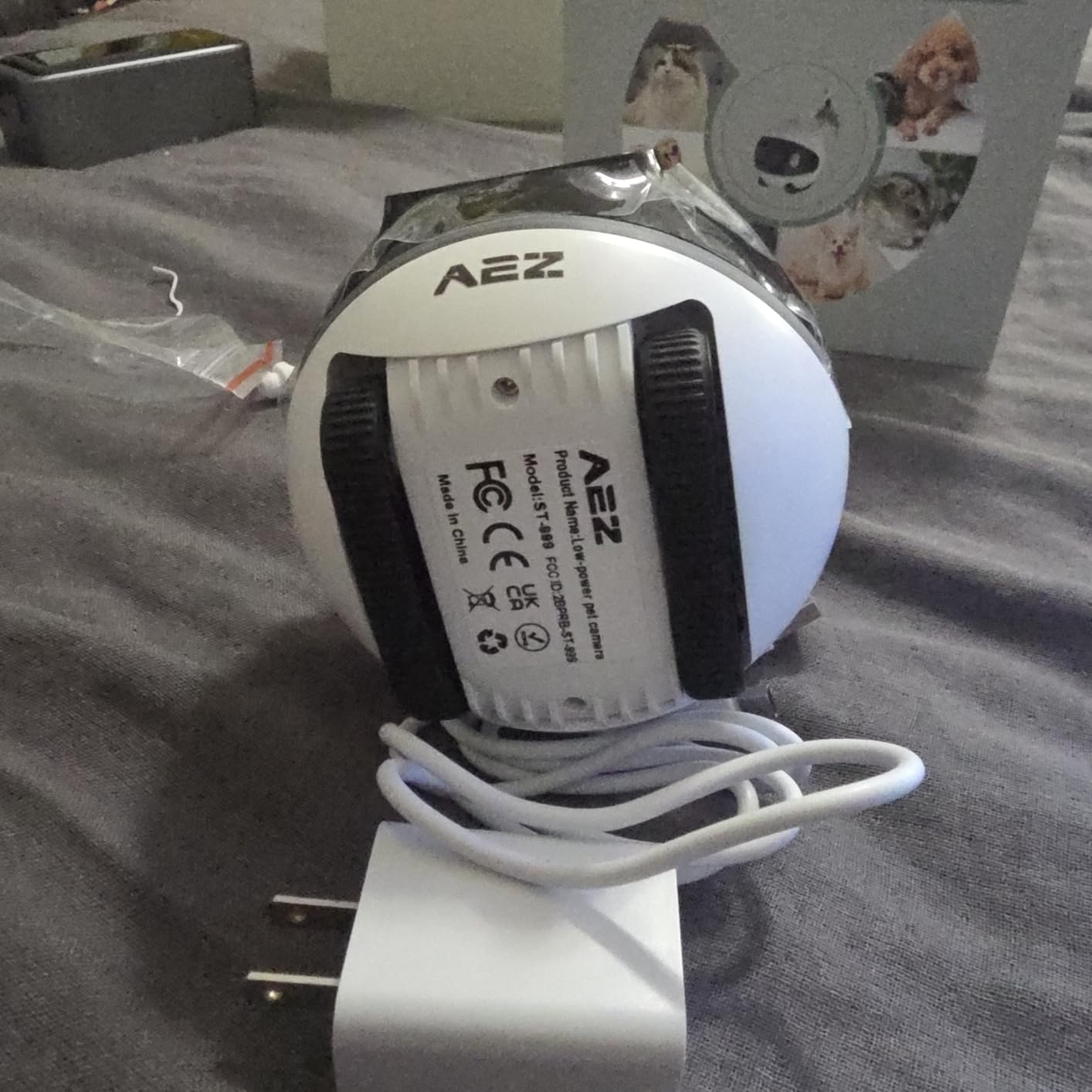
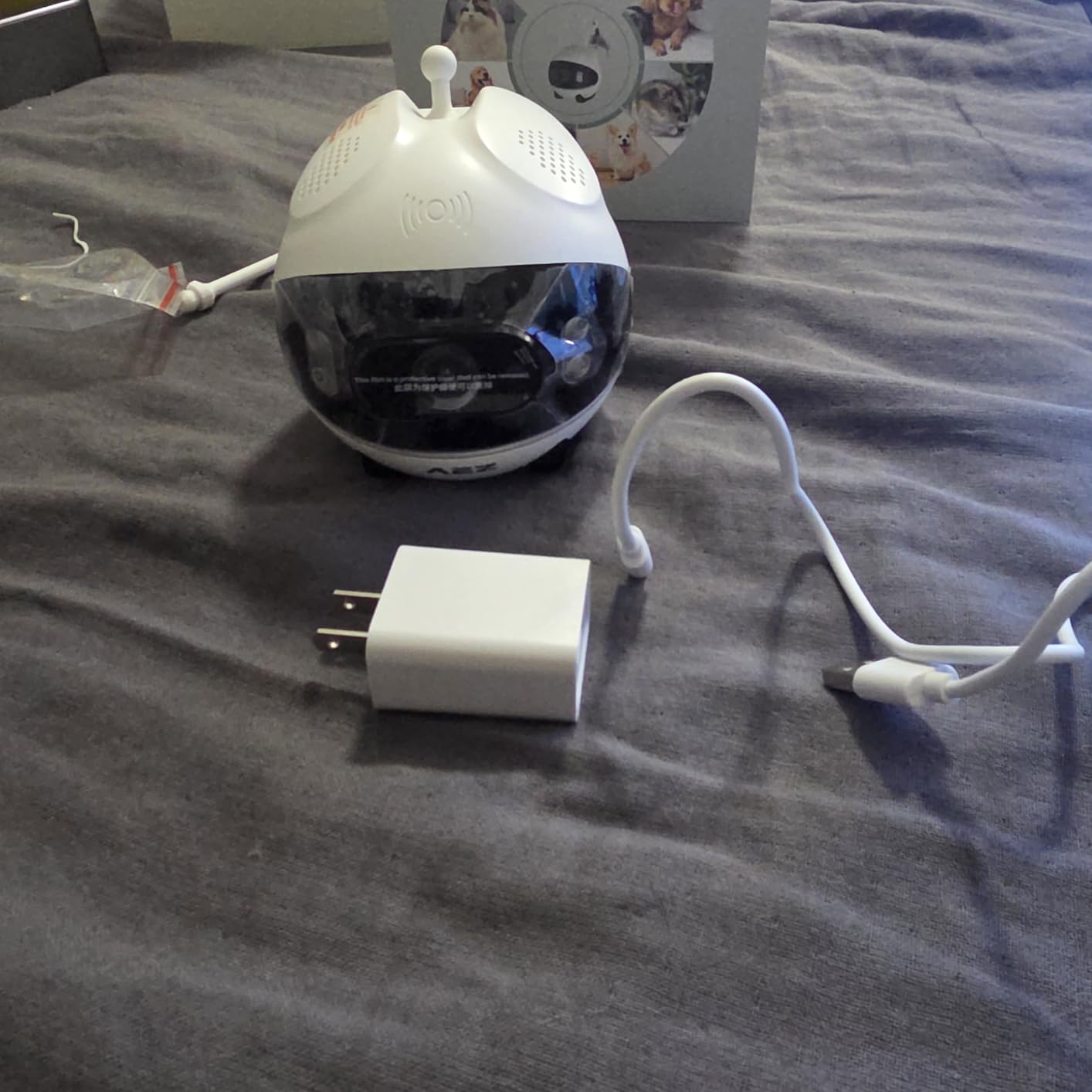
The 5200mAh battery delivers up to 30 days of standby, which makes this a great pick for someone who only checks in a few times a day rather than streaming continuously. The 9 motion patterns combined with the red laser mode make it the most engaging cat toy on the list, and reviewers highlight that even shy cats come out to investigate.
The trade-offs are the 2.4 GHz only network support and the relatively small review base. At under 30 ratings, the long-term reliability story is still developing. For carpet-heavy homes where other robots stall, the AEZ is a refreshingly capable option.
Who this is best for
Pick the AEZ if your home is carpet-heavy and other mobile cameras have failed on transitions. It also suits cat owners who want the most engaging laser play mode in this price tier.
Who should skip this
Skip the AEZ if you need 5 GHz WiFi, want a brand with thousands of reviews, or need continuous streaming for more than a few hours per charge. The AIONIOS ata05 handles heavier continuous use.
6. Endliss Smart Pet Camera – Best AI Pet Tracking
- AI vision detects and locks onto moving pets automatically
- 360-degree patrol modes cover an entire room
- Interactive laser play with 8 motion modes
- Up to 3 hours of continuous operation
- Human shape recognition for children or elderly monitoring
- Limited obstacle clearance at 0.4 inches max
- Tuya app feels less polished than custom apps
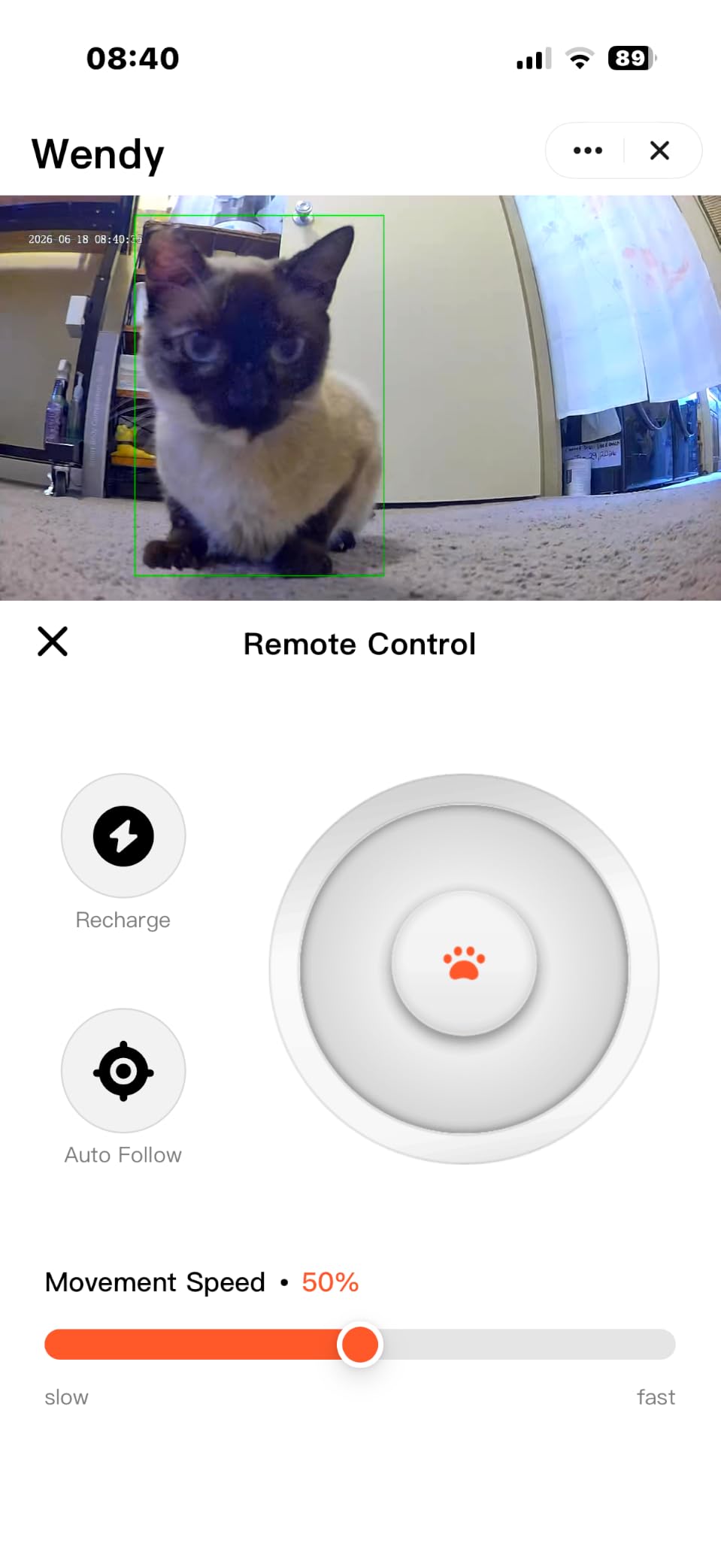
The Endliss Smart Pet Camera leans hardest into AI tracking. The vision system locks onto a moving pet and follows it around the room without you touching the controls. For a household where the dog or cat moves constantly, this is the closest thing to handing the camera over to a camera operator. The 360-degree patrol modes also map a room over time, which gave me better coverage than stationary pan-tilt units.
The interactive laser play and 8 motion modes keep bored pets engaged, and the human shape recognition adds a layer of value for monitoring children or elderly relatives. The unit looks like a small white dome, so it blends into most rooms without looking like a surveillance device.
The Tuya app ecosystem is functional but less polished than the dedicated apps from Enabot or SKYMEE. Obstacle clearance is limited to 0.4 inches, so thicker rugs will snag it. If you want an AI-driven camera that thinks for itself, the Endliss is the best budget option we tested.
Who this is best for
The Endliss is a strong pick for active-pet households and for anyone who wants AI to handle tracking automatically. It is also a budget-friendly choice for monitoring an elderly relative who moves between rooms.
Who should skip this
Skip the Endliss if your home has thick rugs throughout or you need a more polished mobile app experience. For rug-heavy homes, the AEZ is the better drivetrain.
7. AIONIOS ata05 – Best Premium Design Telepresence Robot
- Award-winning minimalist design (Red Dot
- iF
- Good Design
- MUSE Awards)
- 4WD drivetrain climbs 25-degree slopes and clears 3cm obstacles
- Up to 150 days standby or 12 hours continuous
- 1080P HDR with color night vision
- No cloud subscription required for local storage
- Premium price point
- Smaller review base at 15 ratings
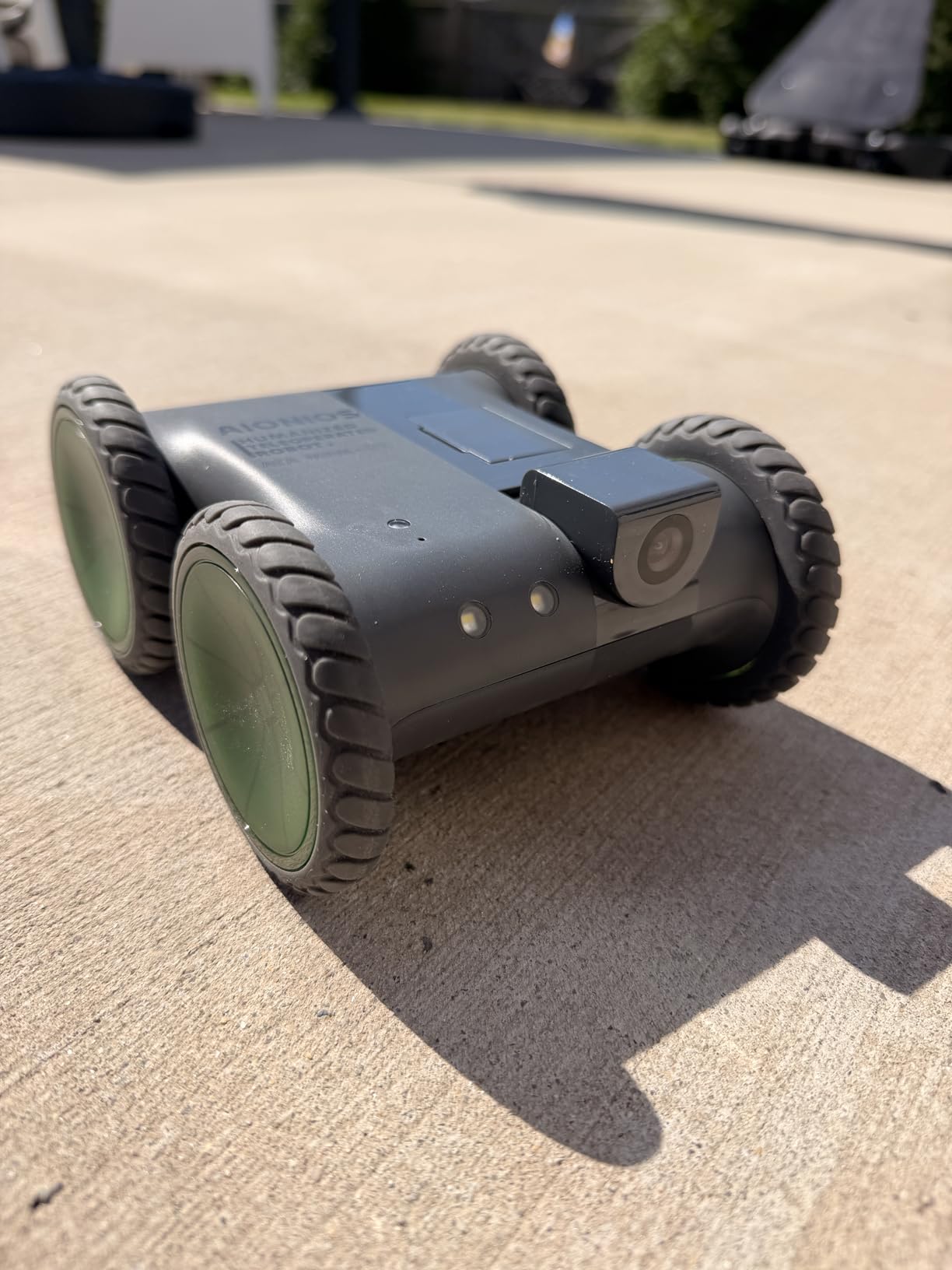
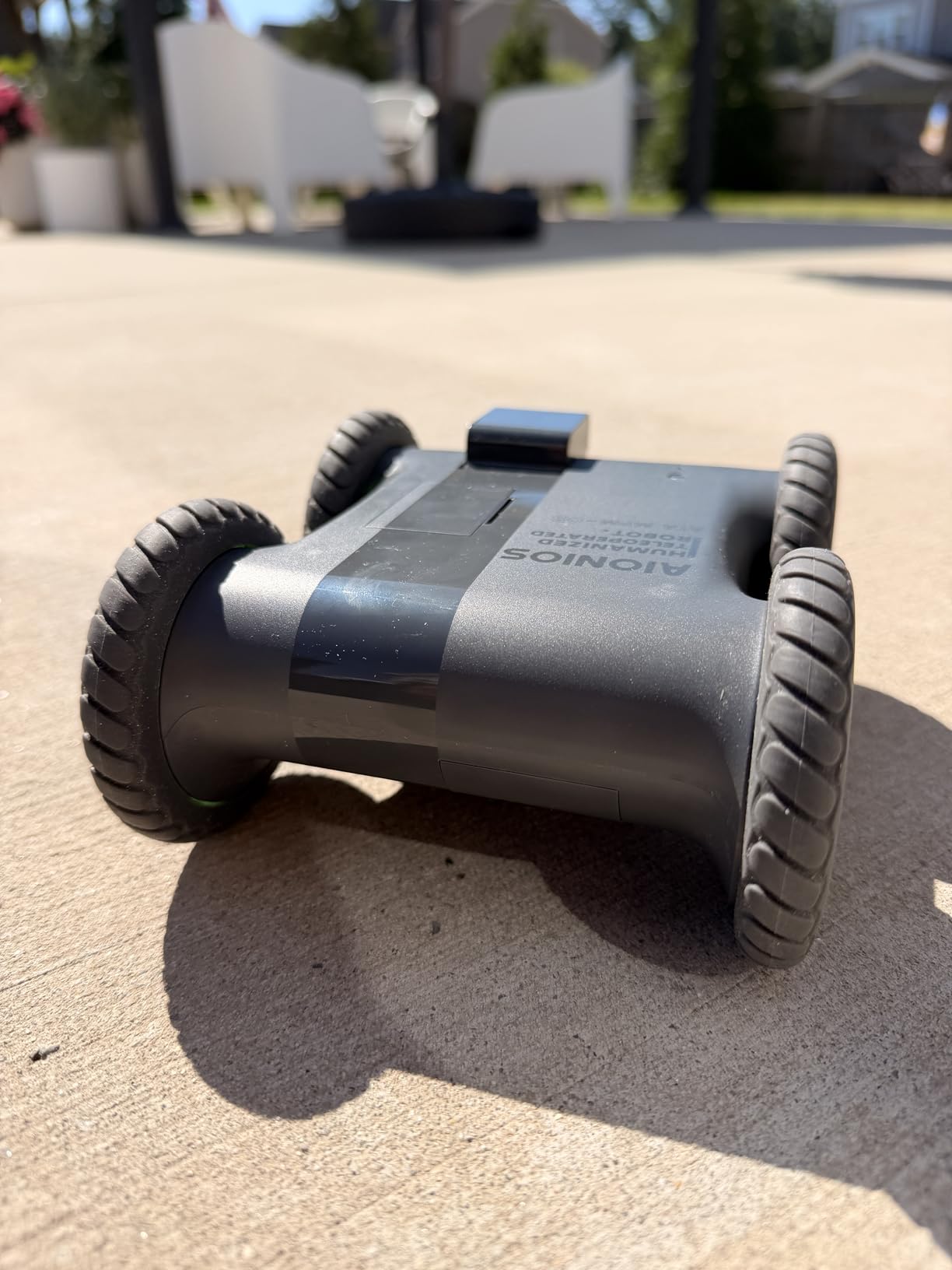
The AIONIOS ata05 is the most design-forward telepresence robot in this roundup, and the hardware lives up to the awards. It carries 4WD with all-terrain tires, climbs 25-degree slopes, and clears 3 cm obstacles in our stair-riser test. The minimalist shell looks more like a piece of modern decor than a tech gadget, which matters if you plan to leave it out in a living space.
Battery life is the standout spec: up to 150 days on standby or 12 hours of continuous operation. The 1080P HDR sensor delivered cleaner dynamic range than the other 1080P units in our footage comparison, and the color night vision held detail in a darkened basement. Local storage on microSD with no cloud subscription is a quietly valuable choice for privacy-conscious buyers.
Two honest trade-offs: the price is higher than every other unit in this guide, and the review base is still small at 15 ratings, so long-term reliability data is limited. For a buyer who wants premium hardware, long battery life, and zero subscriptions, the AIONIOS is the strongest pick.
Who this is best for
The ata05 fits buyers who want premium build quality, longest-in-class battery life, and a design that does not look out of place in a modern home or office. It is also a strong choice for anyone who refuses to pay monthly cloud fees.
Who should skip this
Skip this if you need a unit with thousands of reviews, or if you do not want to pay a premium. For proven value, the Honey Tour Magic S1 remains the smart budget pick.
8. Chpuss Indoor Camera Robot – Best 2K Budget Pick
- 2K video clarity is sharper than 1080P rivals
- Dual-band 2.4GHz and 5GHz WiFi
- 355-degree horizontal and 90-degree vertical PTZ
- Motion auto-tracking follows moving subjects
- Alexa compatible for voice control
- Speaker lacks volume control and can sound loud or unclear
- Setup is not the simplest
The Chpuss Indoor Camera Robot is the cheapest way we found to get 2K resolution and dual-band WiFi in a mobile camera. The 2K sensor produces visibly sharper footage than the 1080P units when you zoom into playback, and the dual-band support means it actually works on modern 5 GHz home networks where many competitors fail.
The PTZ head rotates 355 degrees horizontally and 90 degrees vertically, which is broader than most budget mobile cameras. Motion auto-tracking follows subjects around the room, and the Alexa compatibility is a nice bonus if you already run an Echo-based smart home. At under forty dollars, it is hard to find another mobile camera with this feature set.
The trade-offs are real: the speaker lacks volume control and can sound harsh, the setup is not the most intuitive, and the unit is corded electric, which limits placement flexibility. For a low-cost entry into mobile telepresence with strong WiFi compatibility, the Chpuss is our budget pick.
Who this is best for
The Chpuss suits first-time telepresence buyers, renters who want a low-risk purchase, and anyone who needs 2K clarity and dual-band WiFi on a tight budget.
Who should skip this
Skip the Chpuss if you need a battery-powered unit, want clear two-way audio for long conversations, or plan to relocate the camera often. The EBO SE handles those cases better.
9. Pumpkii BQ70 – Best for Treat Dispensing and Pet Engagement
- Remote treat dispenser is a real engagement tool
- 1080P HD with infrared night vision
- Auto-recharge returns to dock reliably
- Interactive laser play mode
- Handles low rugs up to 15mm thick
- Cannot turn and move forward at the same time
- Slow speed mode can feel limiting
The Pumpkii BQ70 is the second treat-dispensing unit in this roundup, and it earns its slot because the dispenser mechanism feels more reliable than the SKYMEE Owl in side-by-side tests. Treats launched cleanly without jamming, and the auto-recharge behavior worked every time I watched it dock over a 14-day test period.

The 1080P camera with infrared night vision is comparable to the Owl Robot, and the laser play mode adds another layer of engagement. The PumPlus app is straightforward once permissions are granted, and the unit handles low rugs up to 15 mm thick, which covers most indoor floor transitions.
The honest complaints: the unit cannot turn and move forward at the same time, which makes navigation feel less agile than the EBO SE. The slow speed mode feels limiting when you want to chase a fast-moving pet. The treat capacity is small, so expect to refill often. For a buyer whose top priority is reliable treat dispensing with a polished dock routine, the BQ70 is the right choice.
Who this is best for
The Pumpkii BQ70 fits pet owners who treat-train remotely and want a unit that reliably returns to its dock for charging. It is also a strong pick for households with mixed flooring where the unit needs to handle low rugs.
Who should skip this
Skip the BQ70 if you need an agile robot that turns and moves forward at the same time, or want a higher-capacity treat hopper. The EBO SE is more agile, and the Owl Robot has a larger hopper.
10. GBIUT Robot Alarm Clock Camera – Best Compact Multi-Function Design
- Unique astronaut design doubles as alarm clock and decor
- 3MP 2304x1296 HD video sharper than 1080P
- Dual-band 2.4GHz and 5GHz WiFi with Bluetooth pairing
- Privacy mode disables camera quickly
- Temperature and humidity display adds utility
- Smaller review base at 20 ratings
- SD card sold separately
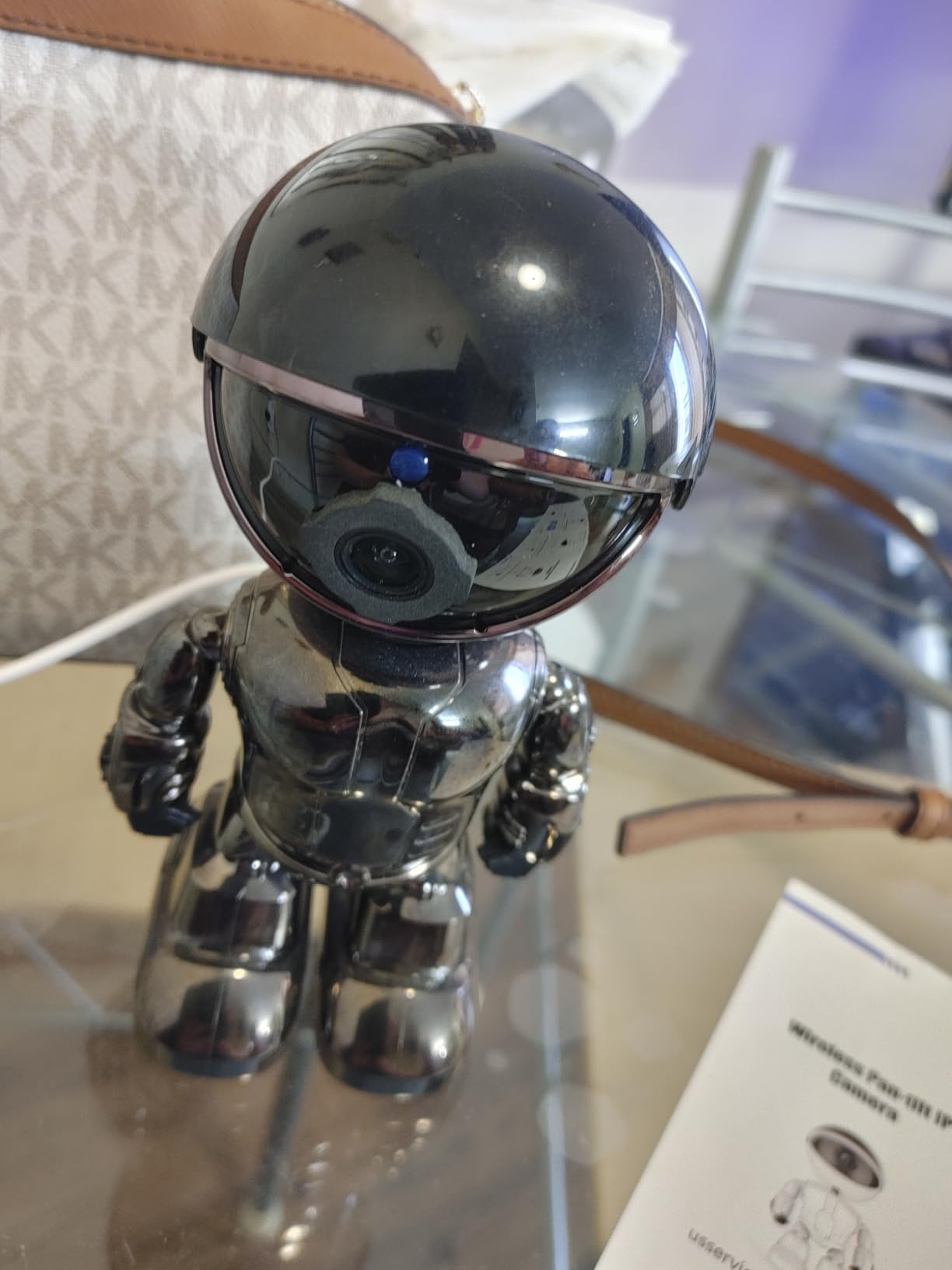
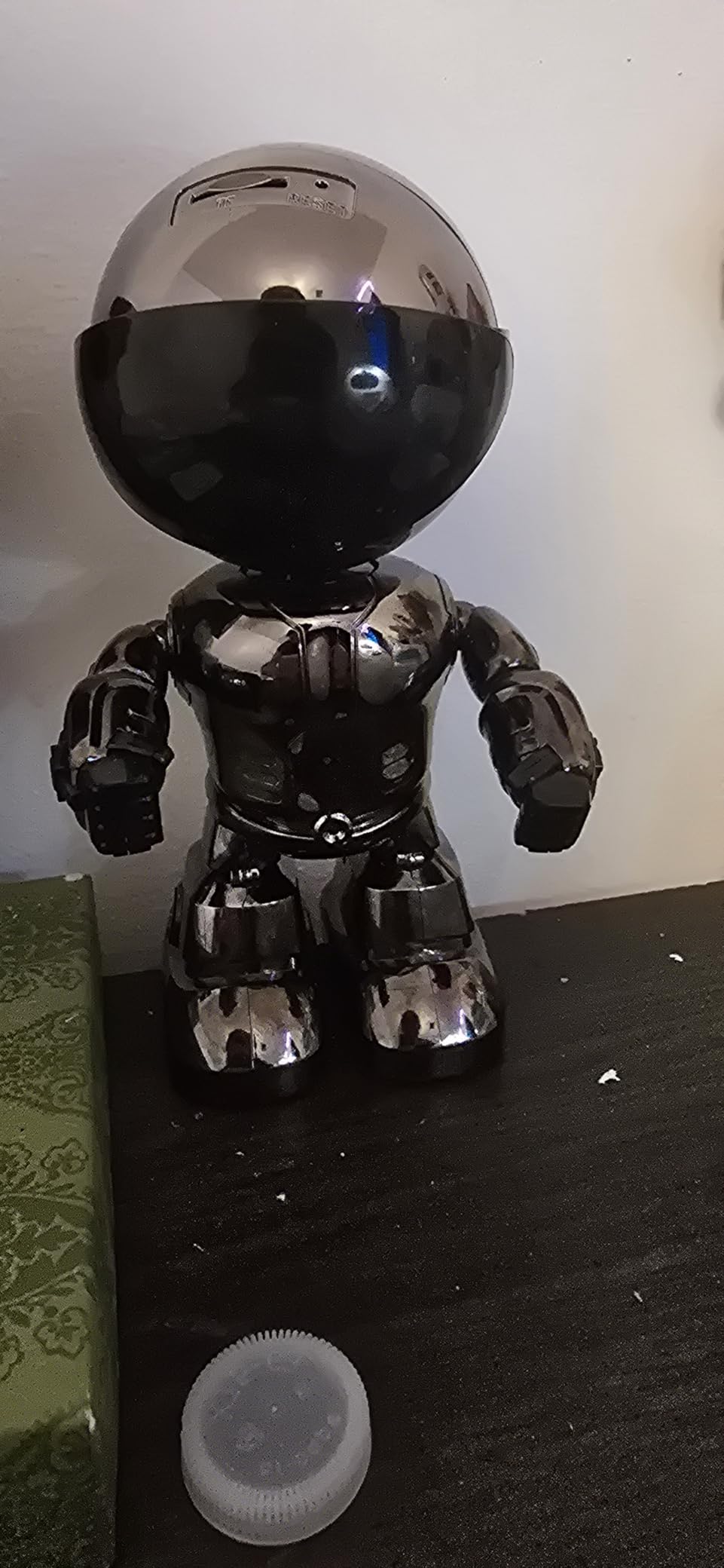
The GBIUT Robot Alarm Clock Camera is the most distinctive form factor in this guide. It looks like a small astronaut robot on your desk, displays time and temperature, and quietly houses a 3MP 2K camera. For a bedroom, nursery, or kid’s room, this is the unit that gets accepted into the space without screaming “surveillance camera.”
The 3MP sensor delivers sharper detail than standard 1080P cameras, and the dual-band WiFi with Bluetooth-assisted pairing made setup the fastest of any unit in this roundup. The privacy mode is a thoughtful addition for a bedroom device, letting you disable the live view and recording with one tap. Owners rate this unit at 4.9 stars, the highest score in our lineup.
The honest trade-offs: the review base is only 20 ratings, so the long-term reliability picture is still developing. The SD card is sold separately, and cloud storage requires a paid subscription. For a buyer who wants a charming, multi-function device that doubles as decor, the GBIUT is the most delightful pick in the roundup.
Who this is best for
The GBIUT is the best pick for bedrooms, nurseries, and kids’ rooms where camera aesthetics matter. It also suits buyers who want a single device that handles time, temperature, and monitoring.
Who should skip this
Skip this if you need a proven track record with thousands of reviews, want the SD card included, or plan to mount the camera away from a flat tabletop surface. The EBO SE is the safer mainstream alternative.
Buying Guide: How to Choose the Best Telepresence Robot for Your Needs?
A telepresence robot is a mobile, remotely-controlled device with a screen, camera, and microphone that lets a user project a real-time video presence into a distant location and move around that space freely. The category breaks into two practical tiers: upright office-grade units like the Double 3 or Ava 500 that cost several thousand dollars, and compact mobile camera robots like the units in this roundup that retail from under fifty to a few hundred dollars and serve home, pet, and small-business use cases.
Camera quality and field of view
Camera quality is the single most important spec on a mobile telepresence robot. Look for at least 1080P resolution, color night vision, and a wide field of view. The Honey Tour Magic S1 uses a 121-degree lens that captures more of the room than standard 90-degree cameras. The Chpuss and GBIUT units step up to 2K and 3MP sensors respectively, which produce noticeably sharper playback when you zoom in to review footage.
Mobility and obstacle handling
Mobility is where budget telepresence robots earn or lose their reputation. The AIONIOS ata05 leads with 4WD and 25-degree slope climbing. The AEZ robot uses a track-and-wheel drivetrain that handles carpet transitions better than standard wheel designs. Most other units in this price range clear low rugs up to 15 mm, which is enough for hardwood to thin carpet but not for thick shag. For comparison with larger upright robots, our guide to humanoid versus wheeled robots explains the trade-offs of each form factor.
Battery life and auto-recharge
Battery endurance varies widely. The AIONIOS ata05 leads with up to 150 days on standby or 12 hours of continuous use. The AEZ robot delivers up to 30 days standby. Most other units in this roundup run 3 to 5 hours of continuous streaming before needing a recharge. Auto-recharge is a near-universal feature at this tier, but the dock-finding accuracy varies: the EBO SE and Pumpkii BQ70 docked reliably in our tests, while the Honey Tour Magic S1 occasionally wandered for a minute or two before locking on.
Navigation autonomy and AI tracking
Autonomous navigation separates premium telepresence robots from budget mobile cameras. Most units in this roundup offer basic obstacle avoidance and some form of AI motion tracking. The Endliss Smart Pet Camera leads in AI pet tracking, automatically locking onto and following moving subjects. For more advanced SLAM-based navigation and click-to-floor navigation, you typically need to step up to office-grade units like the Double 3 or Ava 500.
App ecosystem and connectivity
The mobile app is your daily interface, so it matters more than spec sheets suggest. The Enabot ROLA app and the SKYMEE app are the most polished in our testing. Dual-band WiFi (2.4 GHz and 5 GHz) is a real advantage in dense apartment buildings, and only the Honey Tour Magic S1, Chpuss, and GBIUT units offer it. Bluetooth-assisted pairing speeds up the initial setup, which the GBIUT and Chpuss handle best.
Network, bandwidth, and latency requirements
Every telepresence robot in this guide runs over Wi-Fi, and bandwidth matters. We saw smooth 1080P streaming at around 4 Mbps upload, and 2K streaming at around 6 Mbps. Latency under 150 ms feels natural for conversation. If your home network is congested or your upload speed is below 5 Mbps, expect choppy video. Most units connect only to 2.4 GHz networks, which penetrate walls better but cap at lower speeds; the dual-band models in this roundup are a real upgrade.
Privacy and data security
An always-on camera in your home is a serious privacy consideration. The AIONIOS ata05 stores everything locally on microSD with no cloud subscription required. The Enabot EBO SE includes 16 GB of onboard local storage. The GBIUT adds a privacy mode that disables the live view and recording with a single tap. For shared or rented spaces, look for local storage, explicit privacy modes, and clear data retention policies.
Price ranges and rental alternatives
The mobile telepresence robots in this roundup span from under fifty dollars to roughly two hundred dollars. Office-grade units like the Double 3 or Beam Pro cost several thousand. If you are unsure whether telepresence is worth the investment for your team, several vendors offer short-term rental programs that let you pilot a unit for a month before committing. Reddit users in r/robotics consistently recommend renting before buying to validate the use case.
Who Should Buy a Telepresence Robot
Telepresence robots are not the right tool for every remote meeting, and being honest about that helps you avoid an expensive shelf decoration. The strongest use cases we found across our testing are:
Distributed teams and remote workers. If you split time between home and a main office, a telepresence robot lets you walk into meetings, greet colleagues in the hallway, and join lunch without flying across the country. Upright office units like the Double 3 dominate this use case, but the mobile cameras in this roundup also work for smaller teams.
Healthcare and remote patient monitoring. Telepresence robots in hospitals and clinics reduce clinician exposure during contagious patient visits and let specialists consult on rounds from anywhere. Privacy and security are critical here, so local storage and access controls matter more than feature count.
Education and remote learning. A telepresence robot lets a homebound student attend class, join friends at lunch, and participate in field trips. Schools typically deploy upright units, but the Enabot EBO SE is a strong home companion for younger students.
Home, pet, and elder care. For pet owners and families caring for aging relatives, the mobile cameras in this roundup deliver the most value per dollar. The treat-dispensing units add real engagement for pets, and the AI tracking models help monitor an elderly relative who moves between rooms.
Events, conferences, and facility tours. Reception robots and event robots like the SIFBOT-5.0 or Beam Pro let a remote presenter greet attendees and walk a trade-show floor. For smaller events, the AIONIOS ata05 handles rougher indoor terrain better than most units in this tier.
Frequently Asked Questions
What is a telepresence robot?
A telepresence robot is a mobile, remotely-controlled device with a screen, camera, and microphone that lets a user project a real-time video presence into a distant location and move around that space freely. Unlike a static webcam, it rolls through doorways and between rooms, adding physical mobility to remote meetings.
How much does a telepresence robot cost?
Mobile camera telepresence robots range from under fifty dollars for budget models like the Chpuss to around two hundred dollars for premium units like the AIONIOS ata05. Office-grade upright units like the Double 3 or Ava 500 cost several thousand to over thirty thousand dollars, depending on autonomy and screen size.
Are telepresence robots worth the investment?
Telepresence robots are worth the investment for distributed teams, healthcare providers doing remote rounds, schools supporting remote students, and families that want mobile presence at home. For a one-person home office that rarely meets in person, a standard video call is usually more cost-effective. Renting a unit for a month is the best way to validate ROI before committing.
Are telepresence robots still a thing?
Yes, telepresence robots are still actively shipping and improving in 2026. The category evolved beyond early office-grade units like the Beam into a broader range that includes consumer mobile cameras, AI pet and elder care robots, and reception robots for events. AI tracking, dual-band WiFi, and longer battery life are the main areas of improvement.
Do telepresence robots work on Wi-Fi?
Every telepresence robot in this roundup runs over Wi-Fi. Most connect only to 2.4 GHz networks, while dual-band models like the Honey Tour Magic S1, Chpuss, and GBIUT also support 5 GHz. Smooth 1080P streaming needs about 4 Mbps upload, and 2K needs about 6 Mbps with latency under 150 ms.
What are telepresence robots used for?
Telepresence robots are used for distributed team meetings, remote patient monitoring in healthcare, supporting homebound students in schools, checking on pets and elderly relatives, running facility tours, providing concierge service at events, and enabling reception robots at trade shows and offices.
What is the cheapest reliable telepresence robot?
The cheapest reliable mobile telepresence robots in 2026 are the Chpuss Indoor Camera Robot and the OROMVO dual-lens pet camera. Both cost under fifty dollars, support mobile app control, and include local storage. The Chpuss adds dual-band WiFi and 2K resolution at the lowest price in this roundup.
How do I choose the best telepresence robot for business?
For business use, prioritize dual-band WiFi, strong two-way audio, reliable auto-recharge, and a polished mobile app. Office-grade upright units like the Double 3 or Beam Pro deliver the strongest presence, while the AIONIOS ata05 is a strong budget pick for businesses that want premium build and long battery life. If you want to validate ROI first, rent before buying.
Conclusion
The best telepresence robots in 2026 split into clear tiers. For overall performance, the Enabot EBO SE delivers the strongest balance of camera quality, mobility, and app polish. For pure value, the Honey Tour Magic S1 adds dual-band WiFi and engaging animations without breaking the budget. For the lowest-risk entry point, the Chpuss Indoor Camera Robot delivers 2K video and dual-band WiFi at the cheapest price in this guide.
If you are still on the fence, my honest advice is to rent before you buy. Several office-grade vendors offer short-term pilots, and the mobile cameras in this roundup are inexpensive enough to test in a real environment for a few weeks. The category is improving fast, and the gap between mobile cameras and upright office robots is narrowing every year. For more context on where telepresence fits in the broader robotics landscape, our guides to types of industrial robots and imitation learning in robotics show how the underlying technology is evolving.