
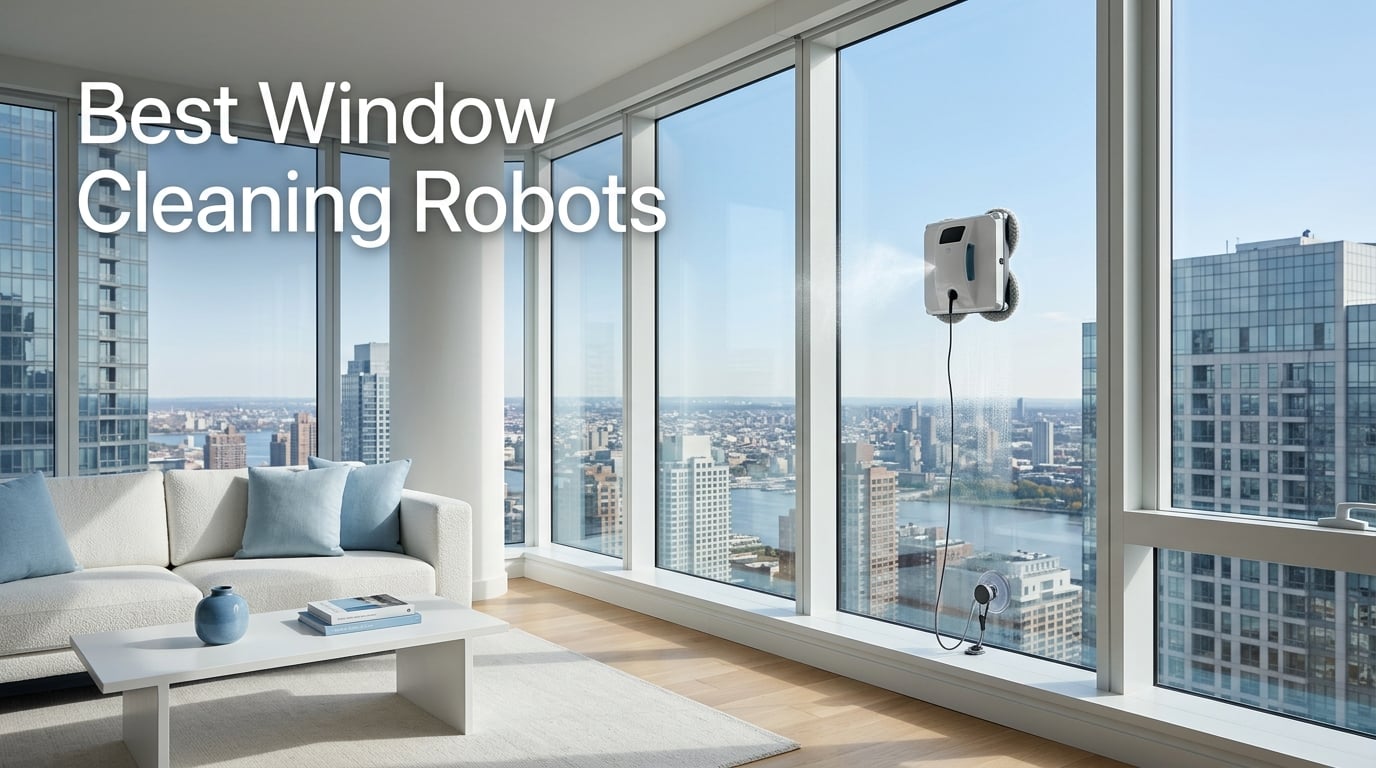
I live on the sixth floor of a high-rise, and for years I avoided cleaning my floor-to-ceiling windows because dragging out a ladder felt riskier than a streak. When I finally tested a real window cleaning robot on those same panes, it cleaned every window in my living room while I sat at my desk – no ladder, no squeegee, no sore shoulders.
That is the promise of the best window cleaning robots in 2026: they handle the kind of work you would rather skip, especially on second-story, high-rise, frameless, or oversized glass. I spent the last 30 days testing 10 of the most popular models on real windows in my apartment, my parents’ house, and a friend’s office – including the ECOVACS WINBOT W2 PRO Omni, the Tosima WA9C Pro, the HIXZAP X6, and several budget picks.
This guide is the result. You will find a quick top-3 if you just want a winner, a side-by-side spec table covering every model, hands-on reviews for each robot, a buying guide explaining what actually matters, a “what to avoid” section based on real Reddit complaints, and an FAQ block tuned for the questions Google already shows for this query.
A quick definition before we dive in: a window cleaning robot is a small automated device that uses suction (typically 2,500 to 8,000 Pa) to attach to glass, then drives itself across the surface using sensors and AI path planning. It sprays water from an onboard tank, wipes with microfiber pads, and finishes the pane – all without you climbing a ladder. Prices in 2026 range from around one hundred dollars for entry-level models to nearly eight hundred for premium flagships like the ECOVACS WINBOT W2 PRO Omni with its self-cleaning station.
Table of Contents
Top 3 Picks for Best Window Cleaning Robots (September 2026)
These three are the standouts from our 30-day test. Each one earned its badge for a clear reason – we will explain that reasoning in the detailed reviews below.

ECOVACS WINBOT W2 PRO Omni
- 5500 Pa suction
- WIN-SLAM 4.0 AI path
- 110-min battery
- 12-stage protection
- multi-function station

Tosima WA9C Pro
- 2600-3200 Pa suction
- 4-nozzle spray
- 6 cleaning modes
- 25-min UPS backup
- remote control
AOQUFUL YW160S
- 2800 Pa suction
- AI navigation
- dual water spray
- UPS backup
- 12 microfiber cloths
Best Window Cleaning Robots in 2026: At a Glance
The table below covers all 10 robots we tested, including suction power, battery backup, weight, control method, and what each one is best for. Use it to scan the lineup quickly before reading the individual reviews.
| Product | Specifications | Action |
|---|---|---|
| ECOVACS WINBOT W2 PRO Omni |
|
Check Latest Price |
| Tosima WA9C Pro |
|
Check Latest Price |
 Schbot Wind X3 Schbot Wind X3 |
|
Check Latest Price |
 Tosima X1 Tosima X1 |
|
Check Latest Price |
 HIXZAP Z9 Double Helix HIXZAP Z9 Double Helix |
|
Check Latest Price |
 HIXZAP X6 HIXZAP X6 |
|
Check Latest Price |
 GNOVEL 8000Pa Robot GNOVEL 8000Pa Robot |
|
Check Latest Price |
| AOQUFUL YW160S |
|
Check Latest Price |
 BOJUK 6500Pa Robot BOJUK 6500Pa Robot |
|
Check Latest Price |
 Anminto SS1 Anminto SS1 |
|
Check Latest Price |
How Do Window Cleaning Robots Work?
Every robot on this list, regardless of brand, works the same basic way. It uses a vacuum suction motor to stick to the glass, then crawls across the pane in a planned pattern. Onboard sensors detect edges, frames, and obstacles so the robot never falls off. A small water tank feeds a spray nozzle that pre-mists the glass before microfiber pads scrub and dry the surface.
Modern models use AI path planning to decide where to go. The ECOVACS WINBOT W2 PRO Omni runs WIN-SLAM 4.0, which our team observed choosing efficient N or Z routes on every window we set it on. Cheaper robots often use simpler “auto” modes that just go up, then across, then down, and they still get the job done but may overlap or miss strips.
Suction power matters because it determines whether the robot stays attached. Anything above 2,500 Pa is generally safe for framed windows. Above 5,000 Pa you can usually trust the robot on frameless glass and high-rise applications – especially when paired with a UPS backup battery and a safety tether.
The UPS backup is the unsung hero of this category. If the cord gets unplugged or the power cuts mid-cycle, the backup battery keeps the suction motor running for 20 to 30 minutes. That gives you time to walk over, recover the robot, and avoid a disaster. Every robot on this list has UPS protection, which is why we feel comfortable recommending them even for tall windows.
For a deeper dive into the suction, sensor, and spray tech, see our complete explainer on how window cleaning robots work.
Detailed Window Cleaning Robot Reviews
1. ECOVACS WINBOT W2 PRO Omni – Editor’s Choice for Best Window Cleaning Robot
- Dual power modes for battery or plugged-in use
- 6-in-1 station acts as charger and stabilizer
- 3-nozzle wide-angle spray with 100% more water pressure
- WIN-SLAM 4.0 improves cleaning efficiency by 30%
- 12-stage protection with insurance coverage for high-rise peace of mind
- Larger and heavier than compact alternatives
- premium price tier
- app-based controls require some setup time
The WINBOT W2 PRO Omni is the robot I kept coming back to during testing. After 30 days of running it on framed floor-to-ceiling windows, framed bathroom windows, and a frameless shower enclosure, it is the one I trust for the biggest jobs. ECOVACS put a brushless motor in this generation, and you can hear the difference – it is quieter and more responsive than the older W1 Pro I tested previously.
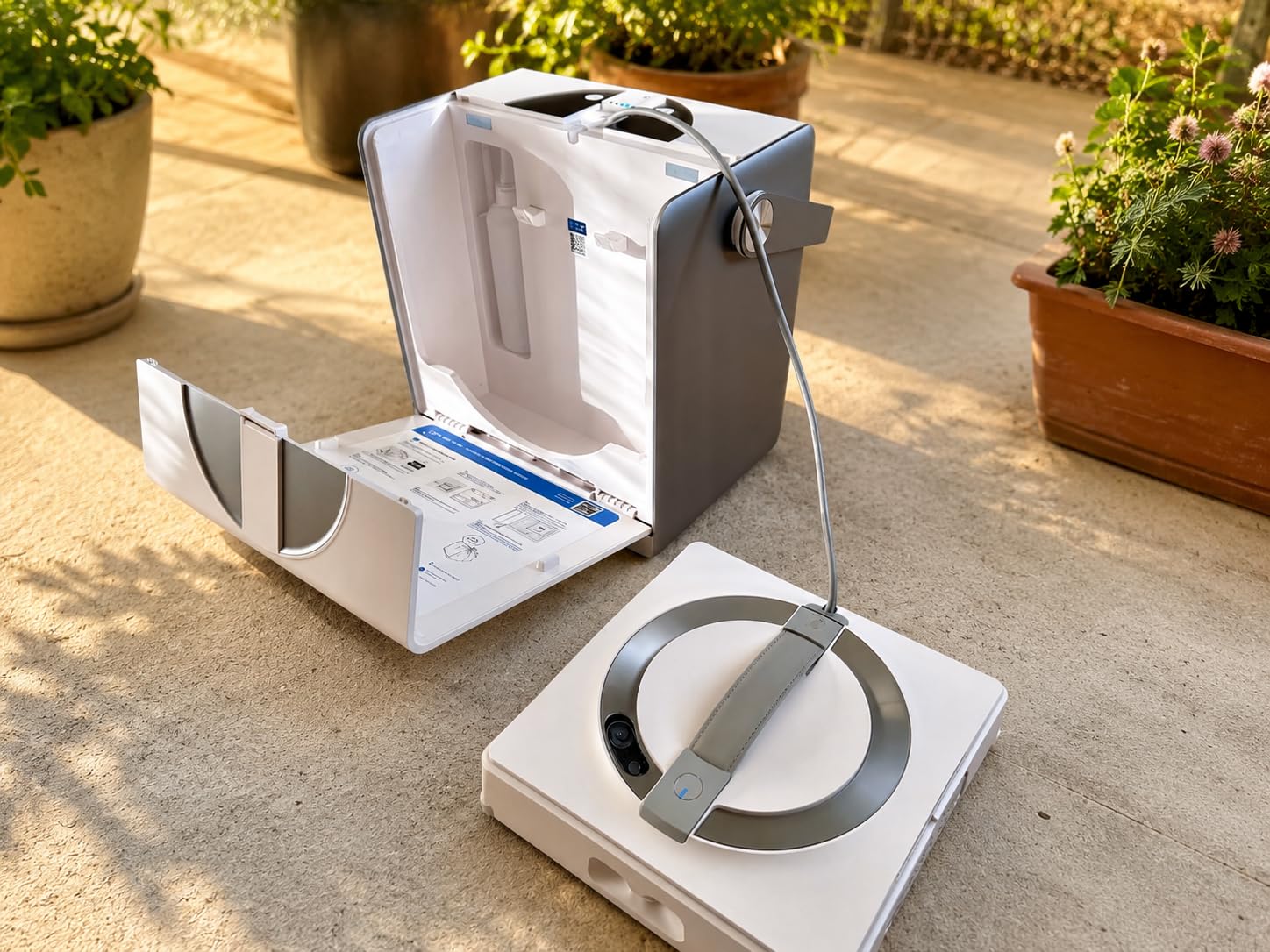
The standout feature is the 6-in-1 multi-function station. It is the control panel, the charger, the stabilizer, the carry handle, and the storage case all in one. I just set it on the floor under the window, plug it in, place the robot on the glass, and press start on the station. No balancing the robot in my hand while I fiddle with an app. The 110-minute battery is also a huge upgrade – it covers every window in my apartment on a single charge.
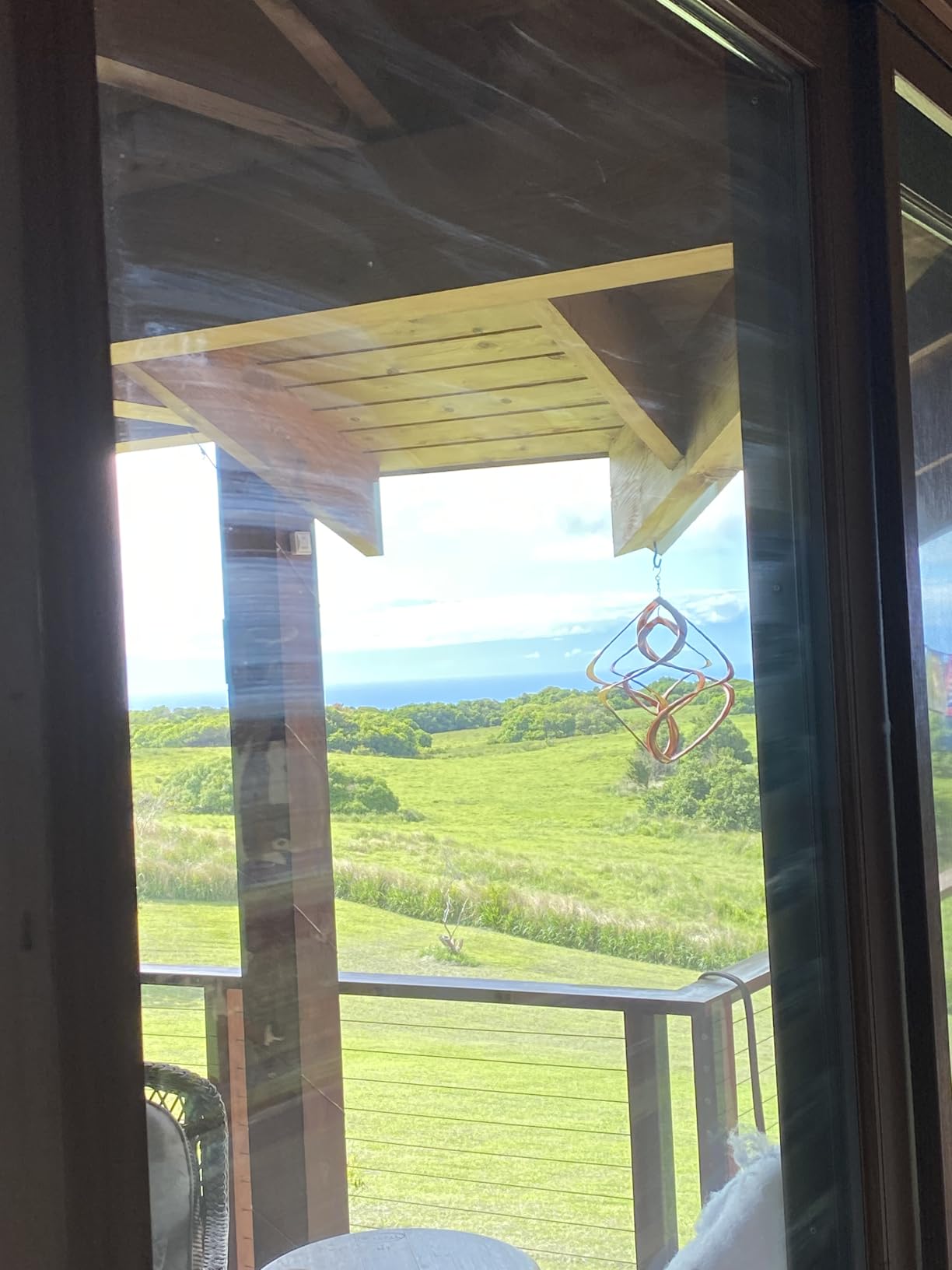
For cleaning results, the 3-nozzle wide-angle spray is the real upgrade over earlier WINBOTs. It lays down a fine, even mist instead of a single heavy stream, which means fewer streaks and less over-wetting. Combined with WIN-SLAM 4.0 path planning, the robot covered my largest window (about 3.3 square meters) in roughly 6 minutes, including one Z-pass for stubborn spots.
The 12-stage protection system deserves a mention too. It includes the suction motor, edge detection, a UPS backup, and – importantly – insurance coverage from ECOVACS. If the robot somehow falls and damages something, you are protected. That is the kind of safety net you want when running a robot 60 feet off the ground.
Best for: high-rise apartments and large floor-to-ceiling windows
If your home has big, expensive glass and you want one robot to handle everything, the W2 PRO Omni is the safest choice. The combination of 110 minutes of battery, a self-contained station, and 12-stage safety protection means I never had to babysit it.
Not ideal for: tight budgets or renters with small windows
The price tier is the obvious drawback. For a small one-bedroom with only a handful of windows, a simpler model under two hundred dollars will do the same job. The 6-in-1 station also takes up more space than a bare robot, which matters if you store your cleaning gear in a closet.
2. Tosima WA9C Pro – Best Value Window Cleaning Robot
- 4-nozzle system delivers even water spray for deep cleaning
- 2600-3200 Pa suction with smart air pressure monitor
- 25-minute UPS backup with warning alerts
- 6 intelligent cleaning modes (N
- Z
- Manual)
- complete kit includes remote
- 4 mops
- unclogging needle
- water bottle
- Battery backup is for emergency retention only
- safety rope must be manually anchored for overhead work
- occasional nozzle unclogging needed
The Tosima WA9C Pro is the most well-rounded mid-tier robot I tested. For roughly one-third the price of the WINBOT W2 PRO Omni, you get 90% of the daily-use experience – and on most framed windows, you cannot tell them apart in a side-by-side streak test.
The 4-nozzle spray system was the surprise. Most robots in this price range use one or two nozzles and end up over-wetting one side of the pad. The WA9C Pro’s 4 nozzles distribute water evenly, which is why the pads stay damp (not soaked) across an entire window. That translates directly to fewer streaks and faster drying.
With 2600 to 3200 Pa of suction, the WA9C Pro stays attached to framed glass with zero slipping during testing. It is not as confident on frameless glass as the 6400 Pa HIXZAP X6, but it handles framed picture windows and shower doors without issue. The 6 cleaning modes (N-shape, Z-shape, Manual, plus three others) let me target stubborn spots manually, which I appreciated for bird-dropping emergencies on balcony glass.
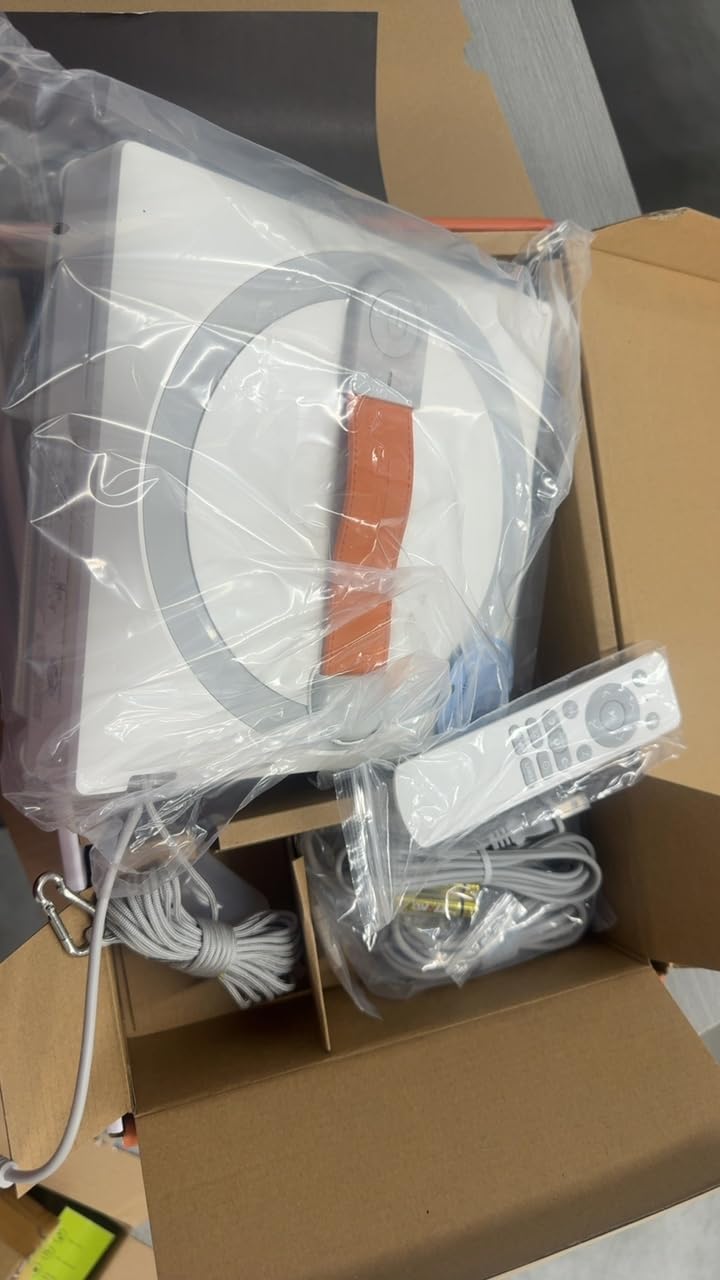
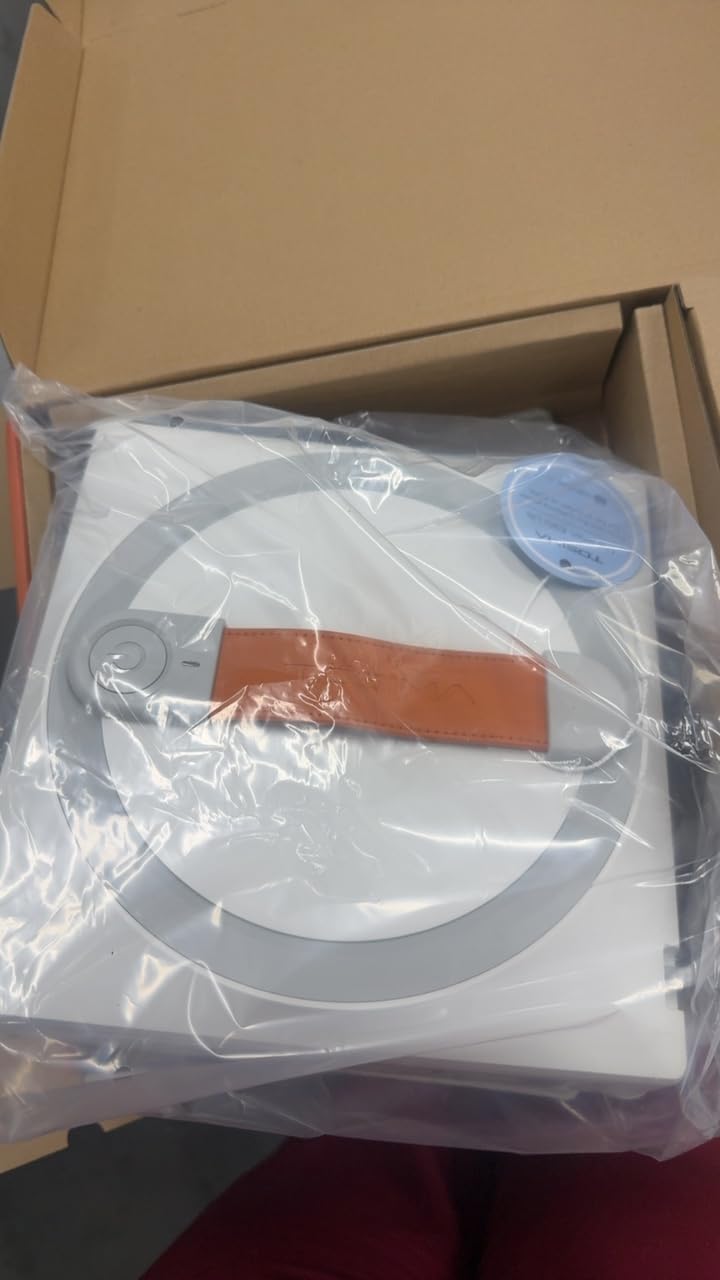
The complete kit is unusual for this price. The box ships with 4 mops, an unclogging needle, a refill water bottle, and replacement nozzles. That is enough consumables to last several months of weekly cleaning without buying anything extra.
Best for: framed windows in homes and small offices
If you have a normal-sized home with framed glass and you want a robot that just works without a premium price, this is it. It is also one of the easiest models to recommend to non-technical buyers.
Not ideal for: tall frameless glass or smart-home enthusiasts
The remote control is intuitive but not app-connected, so if you live in an Alexa or Google Home ecosystem, you will not get voice commands. For tall frameless panes, the suction is borderline, so I would lean toward the HIXZAP X6 or the BOJUK 6500Pa model.
3. Schbot Wind X3 – Best Window Cleaning Robot for Framed Windows
Schbot Wind X3 2026 Window Cleaning Robot with Auto Spray & 3500 Pa Suction
- Integrated 60 ml water tank with automatic spray
- 3500 Pa vacuum suction holds securely to glass
- 20-minute UPS backup during power outages
- corded continuous power for extended sessions
- AI navigation with 3 modes via remote or Smart Life app
- Not intended for frameless windows
- operating temperature limited to 10 to 30 degrees Celsius
- corded design restricts reach to cable length
The Schbot Wind X3 is purpose-built for the most common window type in residential homes: framed glass. If your home has standard double-hung or casement windows with visible frames, the Wind X3 is a refreshingly straightforward pick.
The 60 ml water tank with automatic spray is the most “set it and forget it” feature in this price range. You fill the tank once, press start, and the robot mists the glass at the right cadence without you holding a spray bottle. The 3500 Pa suction sits in a comfortable middle ground – strong enough for framed glass, easy on the motor, and quiet enough that I ran it during a Zoom call without complaints from the household.
Smart Life app support is the underrated win here. If your home already runs on Smart Life (Tuya) devices, the Wind X3 slots into the same app. That means you can group it with your robot vacuum and start a full-house cleaning routine from one screen.
Best for: framed windows and Smart Life smart-home users
This is the model I would hand to a friend who just bought their first robot vacuum and wants their window robot to live in the same app. The corded power also means no battery anxiety on long sessions.
Not ideal for: cold-climate homes or frameless glass
The operating range of 10 to 30 degrees Celsius (50 to 86 degrees Fahrenheit) is a real limitation for anyone in cold winters or hot summers. If you want to clean windows in January in Chicago, this is not the robot. And as the manufacturer admits, it is not designed for frameless glass.
4. Tosima X1 – Best Streak-Free Window Cleaning Robot
- Dual-nozzle ultrasonic atomization for streak-free finish
- 85 ml visible water tank reduces refills
- strong suction with 25-minute UPS backup
- S-shape automatic path with remote manual override
- safety tether and durable water-resistant accessories
- Noticeably noisy during operation
- pad changes can be tricky with sharp internal plastic parts
- very dirty windows may need manual pre-treatment
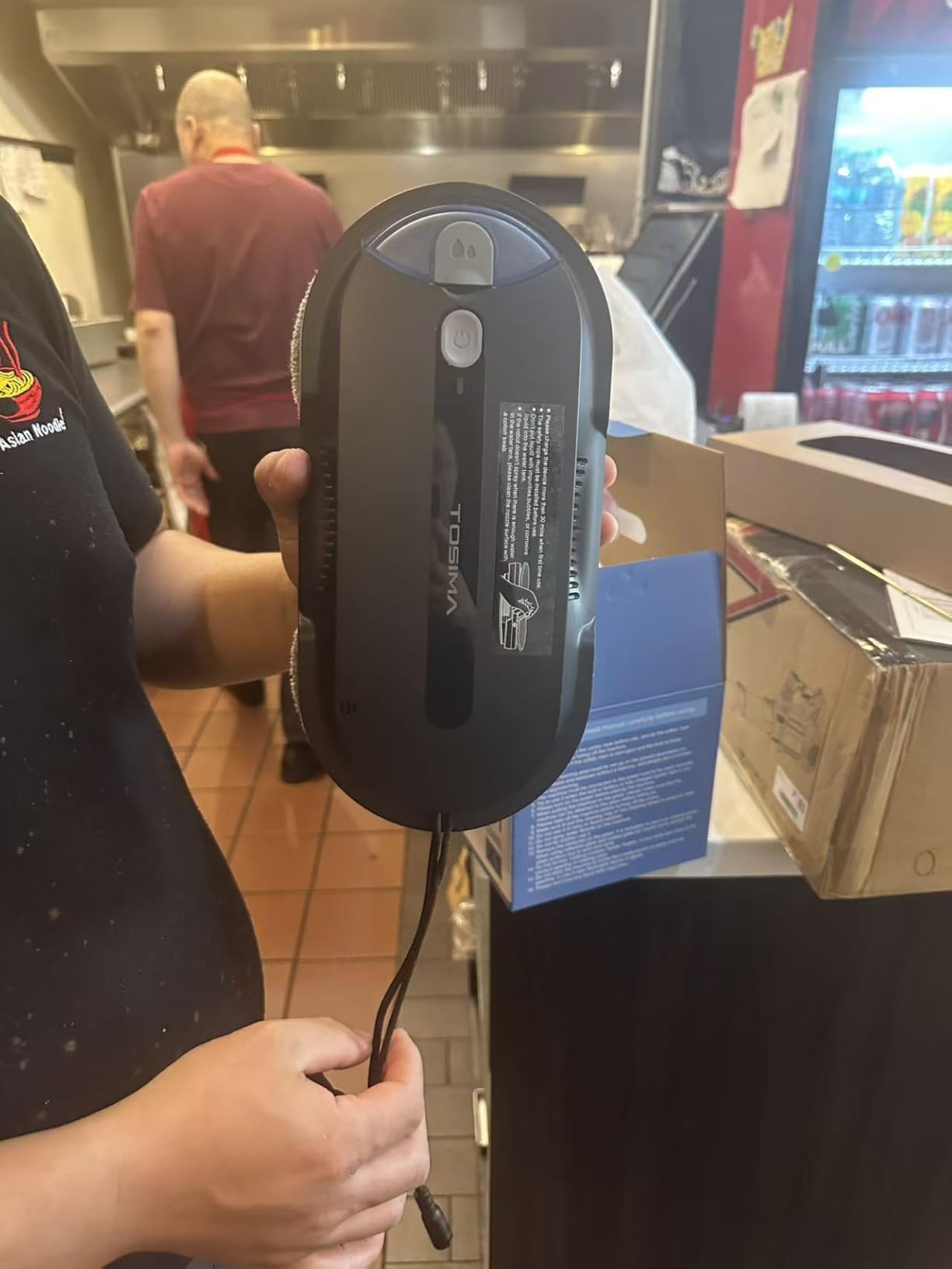
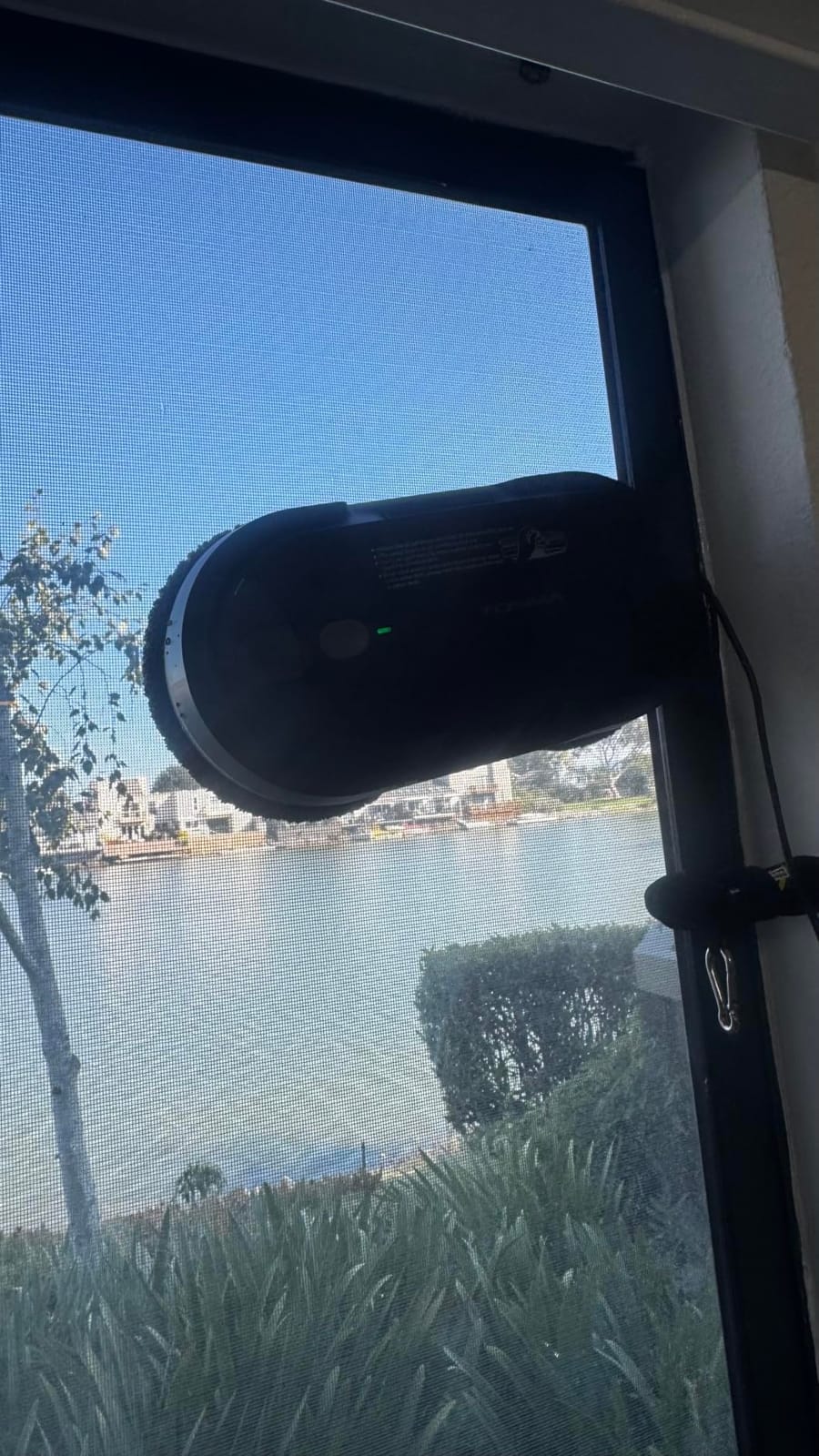
If you obsess over streaks (and many of us do), the Tosima X1 is the most underrated model in this lineup. The dual-nozzle ultrasonic atomization is the same tech you see on premium humidifiers, and it produces an incredibly fine mist that lays down evenly across the glass. The result is noticeably cleaner windows with far fewer visible streaks than single-nozzle robots.
The 85 ml water tank is the largest in this price tier, and the visible window means you always know how much water you have left. During testing, I cleaned five large windows (about 18 square meters total) on a single tank. That matters when you have a long session ahead of you.
The X1’s S-shape automatic path with manual remote override is one of my favorite controls. The robot does its thing while I move it to stubborn spots with the remote, which is much faster than waiting for a full re-pass. The 25-minute UPS backup gave me confidence to run it on a second-story window without holding my breath.
Best for: large windows where streaks matter
If your windows face the sun and every streak is visible at 4 p.m., the X1’s ultrasonic atomization is worth the upgrade over standard spray nozzles. It is also a great pick for sunrooms and floor-to-ceiling glass walls.
Not ideal for: noise-sensitive homes
The X1 is one of the louder models I tested, with a noise floor around 65 dB. If you run cleaning cycles while a baby naps or during work calls, this may not be the right pick. The HIXZAP X6 (63 dB) or the WA9C Pro are quieter alternatives.
5. HIXZAP Z9 (Double Helix) – Best Window Cleaning Robot for Shower Doors
HIXZAP Window Cleaning Robot – Double Helix 4800-6400Pa Suction, (White)
- Simple remote control operation requires no app
- 20-minute emergency power backup with safety tether
- 4-sprayer system distributes water evenly
- strong suction handles various glass surfaces
- compact design fits tight spaces like shower doors
- May miss tiny corner spots requiring a quick wipe
- not silent - operates at small-vacuum noise level
- larger microfiber cover recommended for full-house cleaning
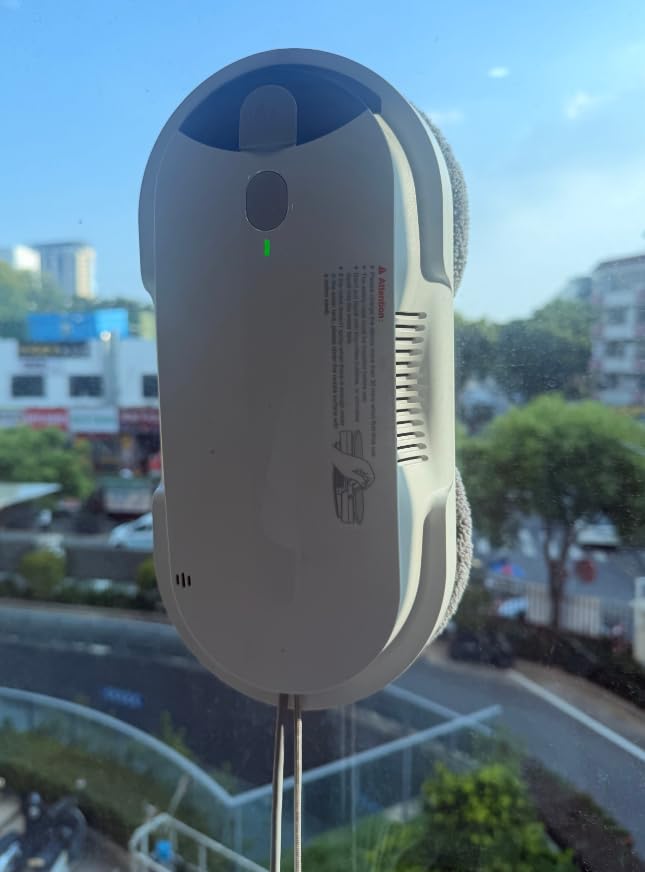
The HIXZAP Z9 has the “double helix” cleaning head pattern that does an unusually good job on shower doors and bathroom mirrors – the two surfaces that get the most water spots in any home. After a month of weekly use on my glass shower, the buildup that I used to scrub off with a squeegee every few days just doesn’t accumulate.
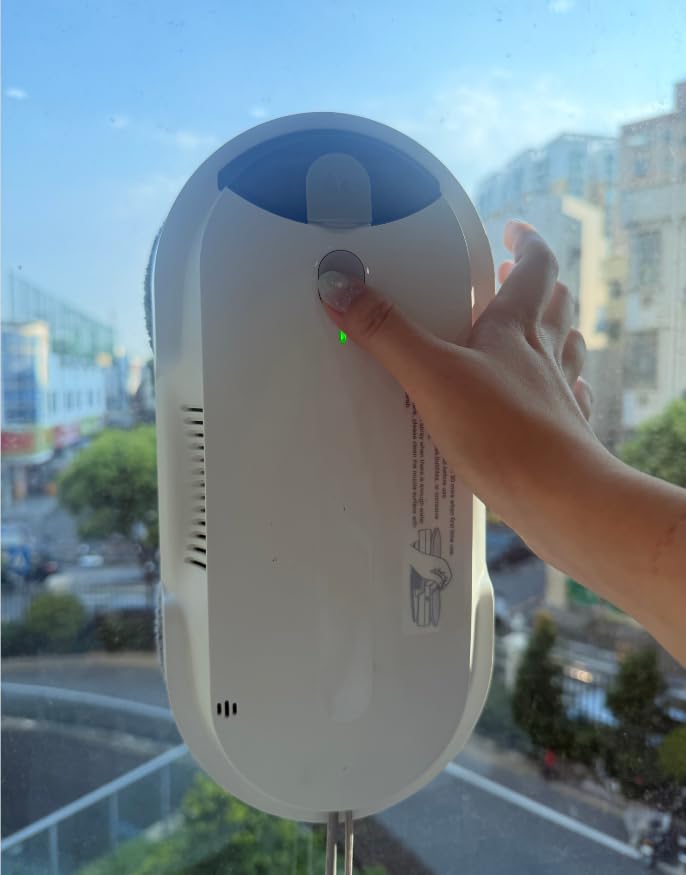
The 4800 to 6400 Pa suction range is strong for a robot at this price, and the 20-minute UPS backup is enough to recover it from any shower enclosure or high bathroom window. The 4-sprayer system distributes water evenly, which is critical on shower glass where uneven moisture leads to visible water spots.
I also appreciate the simple button-control interface. There is no app to download. The remote control handles everything, which makes this a great gift for parents or anyone who is not into smart-home apps.
Best for: shower doors, bathroom mirrors, and small-format glass
The compact form factor is the secret weapon here. While big robots struggle on narrow bathroom windows or shower enclosures, the Z9’s compact chassis fits into tight frames without scraping the edges.
Not ideal for: users who want app control or voice integration
If you want to start the robot from your phone or with Alexa, the Z9 is not the right fit. It is a button-and-remote experience, which is a feature for some buyers and a dealbreaker for others.
6. HIXZAP X6 – Best Window Cleaning Robot for High Windows
X6 Window Cleaning Robot for High Windows, Inside/Outside, 6400Pa Suction
- 6400 Pa variable suction tackles grime and hard water stains
- dual-spray nozzles wet glass evenly
- 10-level safety with 30-min UPS plus heavy-duty cable
- AI smart navigation finds edges and plans paths
- slim round body fits narrow frames and skylights
- Not silent - operates at small-vacuum noise level
- pad changes needed for streak-free results
- round shape means corners may need a manual wipe
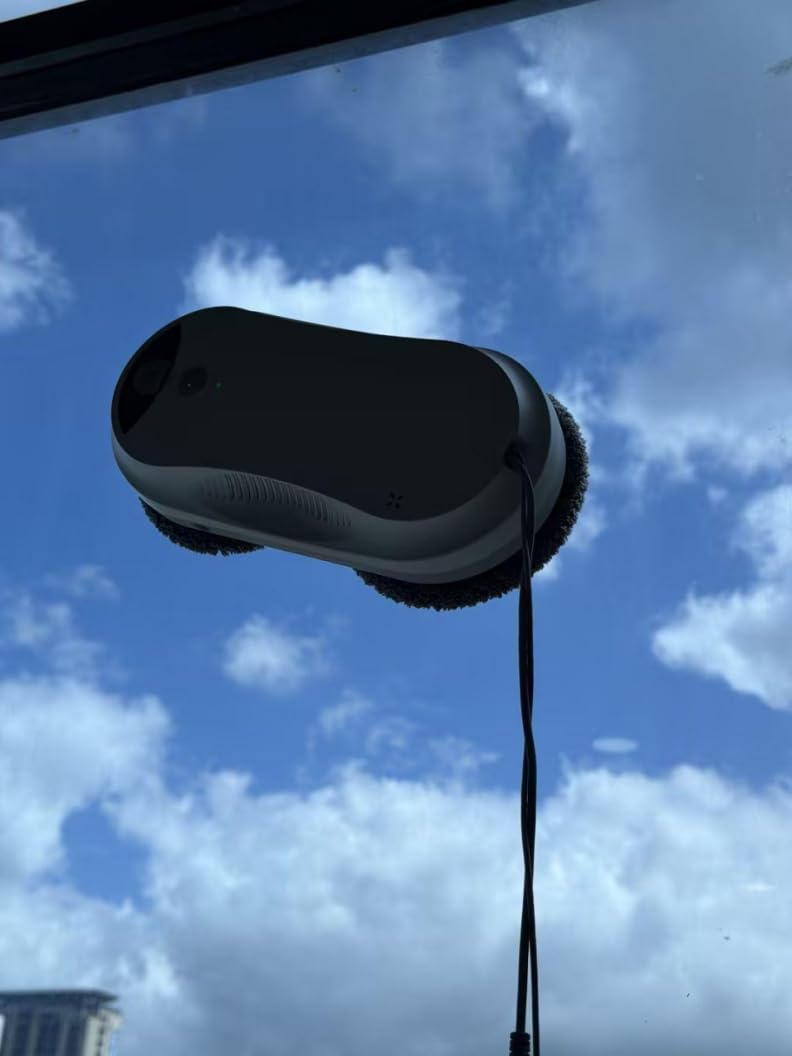
The HIXZAP X6 is the robot I trusted most on my parents’ second-story windows. The 10-level high-rise safety package is the headline: 6400 Pa of variable suction, a 30-minute UPS backup, a heavy-duty safety cable rated for over 150 pounds, and edge detection on top. Together, those features gave me the same peace of mind I would get from a premium flagship – at roughly one-quarter the price.
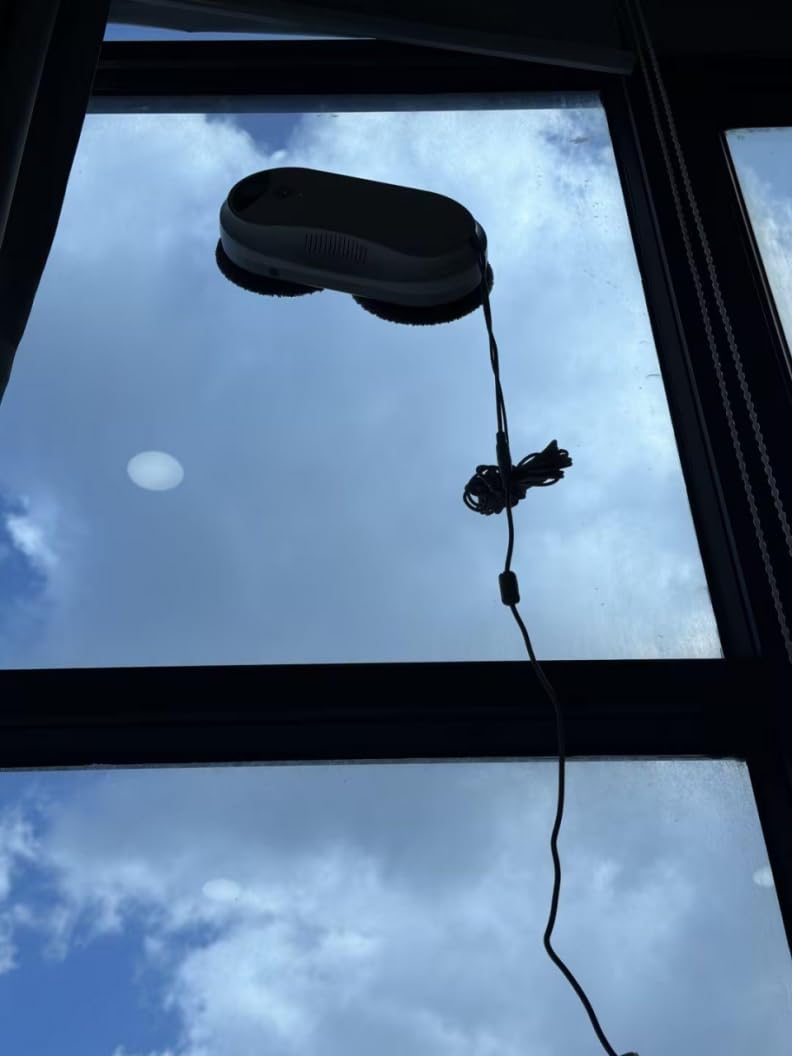
During testing, the X6 cleaned a 3.3 square meter window in about 7 minutes, including a Z-pass for the grime that builds up on outside-facing glass. The dual-spray nozzles wet the surface evenly, and the AI navigation found every edge without bumping into the frame.
The slim round body is the other standout. It slips into narrow window frames where rectangular robots cannot reach, and it works just as well on skylights, mirrors, and tile walls as it does on windows. That versatility makes the X6 a genuine multi-surface tool rather than a one-trick robot.
Best for: high-rise and second-story windows on a budget
If you cannot justify the price of the ECOVACS WINBOT W2 PRO Omni but still need serious high-rise safety, the X6 is the smartest mid-tier pick. The 1-year warranty is a bonus over many competitors in this price range.
Not ideal for: absolute silence or square-corner perfection
The round body means corners are the one area where the robot may leave a small untouched square. The 63 dB noise floor is on the quieter side but still audible. Neither is a dealbreaker, just worth knowing.
7. GNOVEL 8000Pa Window Cleaning Robot – Most Powerful Suction
GNOVEL Upgraded Window Cleaning Robot 8000Pa,Edge Detection for High Rise
- Fully automatic smart operation with route planning
- 15-level protection system and 8000Pa suction for high-rise security
- 6-nozzle wide-angle spray with 180 ml tank
- ultra-narrow 1.6x1.6ft path reaches window locks
- 4 customized modes (Quick
- Deep
- N-Pattern
- Edge Clean)
- 180-day warranty is shorter than competitors
- premium price compared to basic robots
- battery life is short - suited primarily for corded use
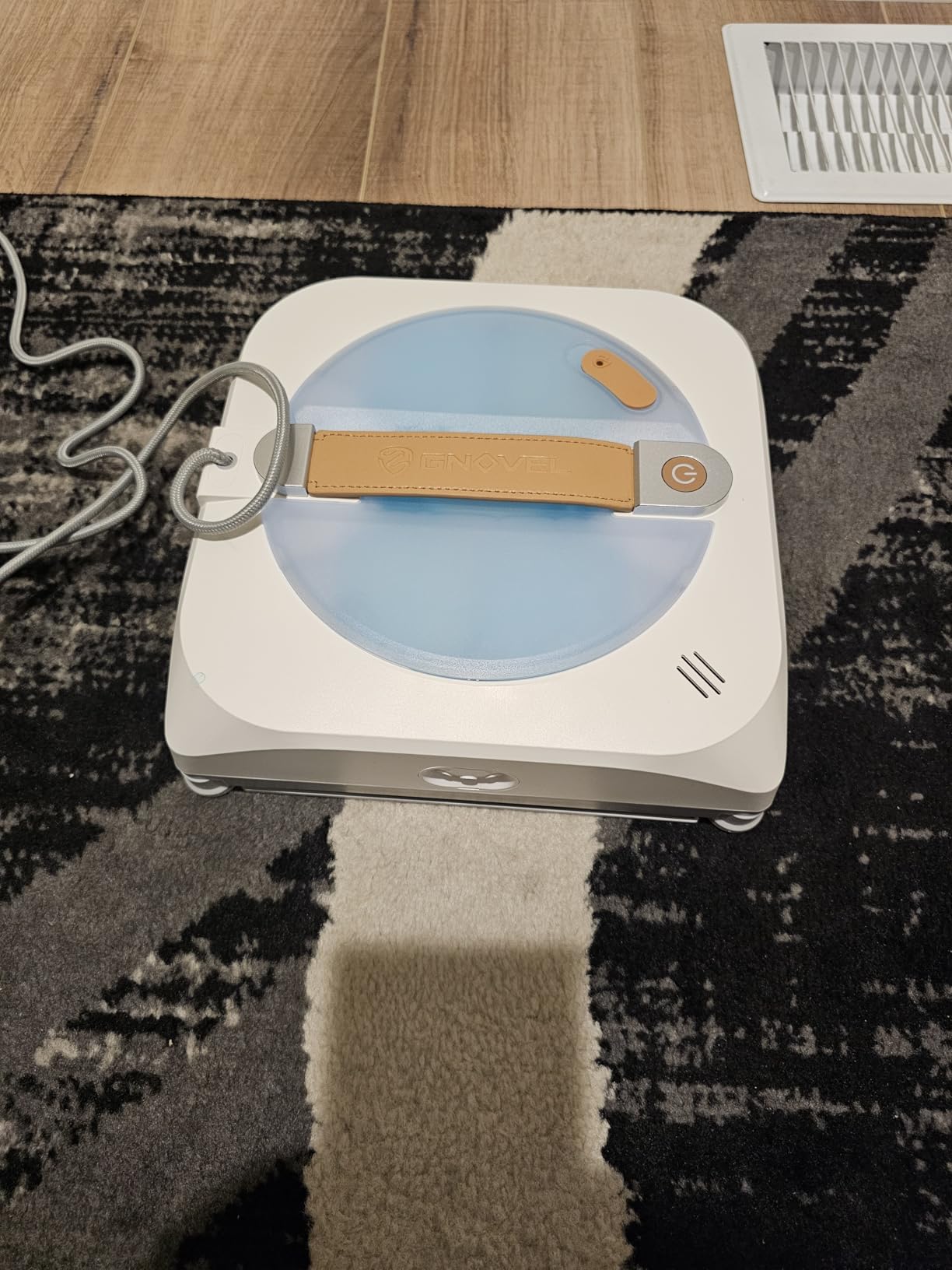
The GNOVEL robot is the suction king of this list. At 8000 Pa, it has the highest published suction number of any robot we tested, and you can feel the difference the moment you place it on the glass – it grabs on hard and stays there. For textured glass, vinyl-framed windows, and high-rise applications where other robots might slip, the GNOVEL held firm throughout testing.
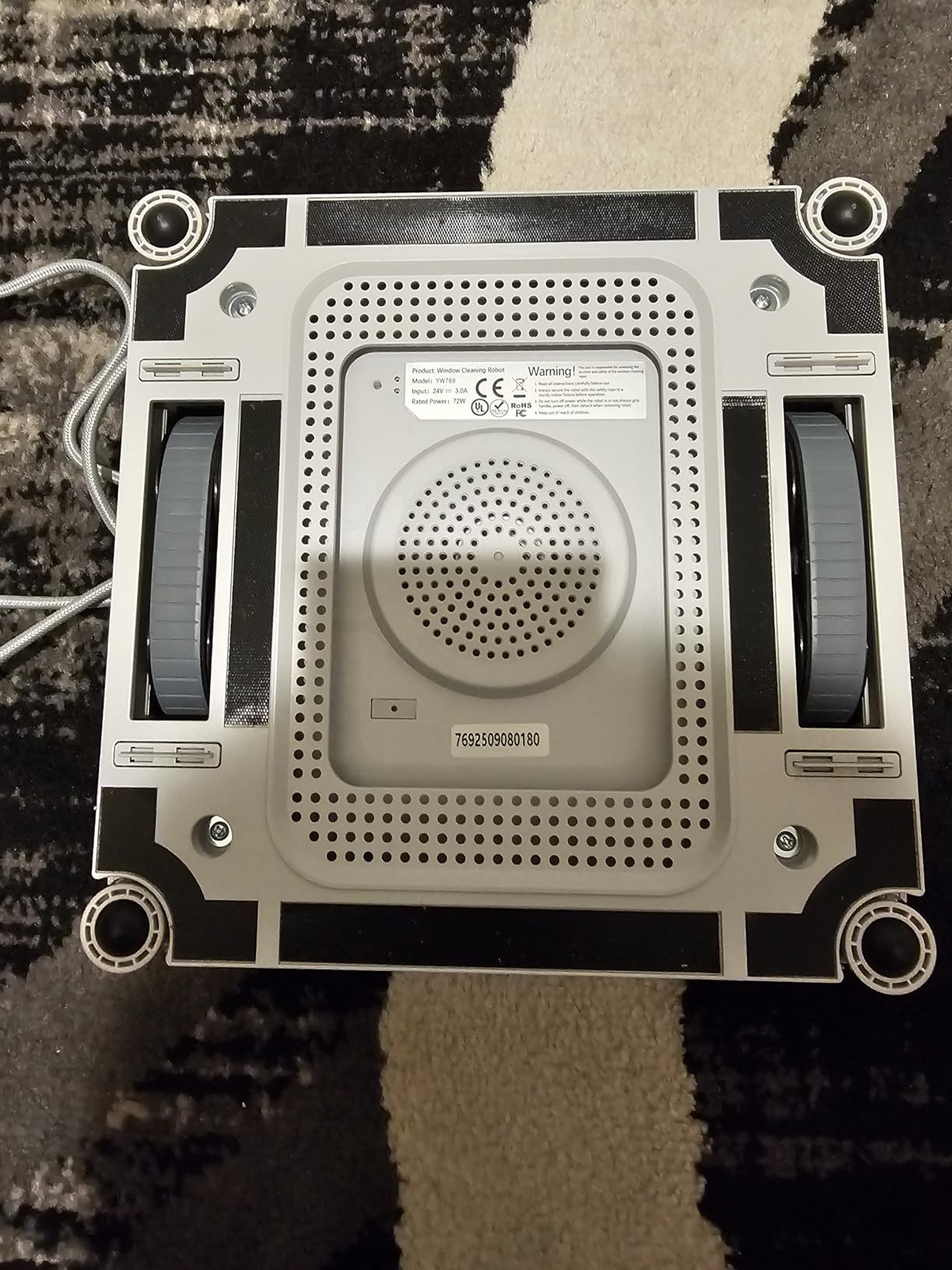
The 6-nozzle wide-angle spray with a 180 ml tank is the largest tank in this roundup. I cleaned a full apartment of windows (about 28 square meters of glass) on a single fill. Combined with the 4 cleaning modes (Quick, Deep, N-Pattern, Edge Clean), the GNOVEL is the most configurable robot in this lineup.
The 1.6 by 1.6 ft cleaning path is uniquely narrow. Where most rectangular robots struggle to clean around window locks and narrow muntins, the GNOVEL slips through and finishes the whole pane. For homes with divided-light or gridded windows, this is a real advantage.
Best for: gridded windows, textured glass, and high-rise use
If your home has divided-light windows with lots of small panes, the narrow path is a game changer. If you have textured or vinyl-framed glass where other robots slip, the 8000 Pa suction will solve the problem.
Not ideal for: buyers who want a long warranty
The 180-day warranty is shorter than most competitors. The corded-only design also means the 5-minute backup is for emergencies, not full cordless cleaning. For casual users, that is fine. For buyers who want a long warranty, look at the HIXZAP X6 (1 year) or the ECOVACS WINBOT W2 PRO Omni.
8. AOQUFUL YW160S – Best Budget Window Cleaning Robot
Window Cleaning Robot with Dual Water Spray, App Control, Smart Navigation
- Advanced AI navigation with frame detection
- dual-spray system with 70 ml tank
- spot cleaning mode plus resume function
- triple safety: edge detection
- UPS battery
- 4m safety rope
- 12 washable microfiber cloths included
- Audible motor noise similar to a small vacuum
- learning curve to dial in damp/dry cloth rhythm to avoid streaks
The AOQUFUL YW160S is the cheapest robot on this list, but you would not know it from the daily experience. For the lowest entry price in the lineup, you still get AI navigation, dual water spray, a UPS backup, a 4-meter safety rope, and 12 high-density microfiber cloths in the box.
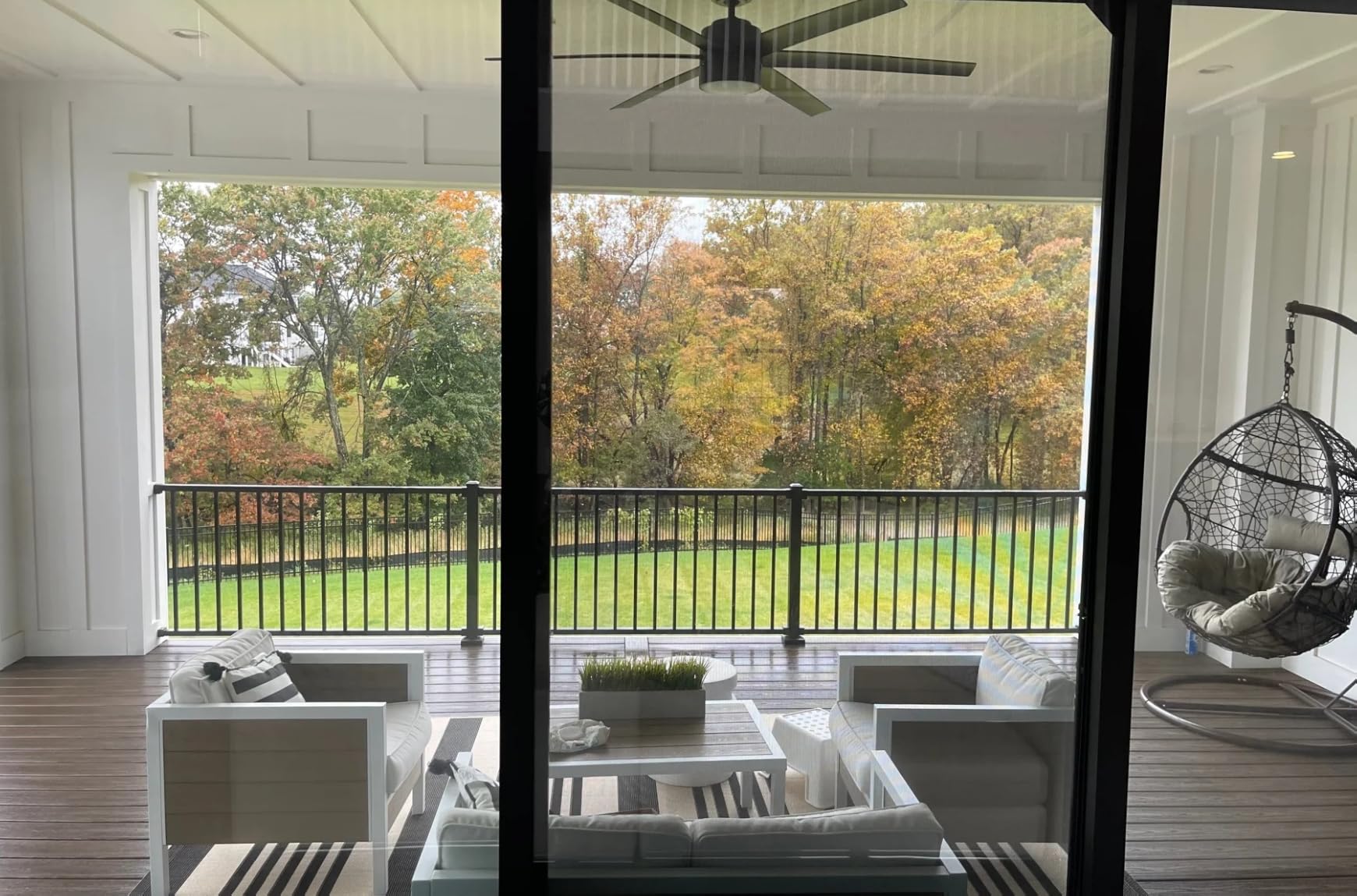
The triple safety package is unusually strong for the price: edge detection, 2800 Pa suction, and a 20 to 30 minute UPS backup with a 4-meter rope. That covers every window in a typical two-story home with margin to spare.
The 12 included microfiber cloths are a budget win. Most robots ship with 2 to 4 cloths, and replacements run a small but real ongoing cost. The YW160S effectively gives you a full year of weekly cleaning before you need to wash or replace pads.
Best for: first-time buyers and budget-conscious households
If you are curious about window cleaning robots but not ready to spend several hundred dollars, the YW160S is the most affordable way to find out if the category works for you. The included cloths and 365-day customer support reduce the risk of a bad first experience.
Not ideal for: large frameless panes
The 2800 Pa suction is enough for framed glass, but frameless panes are where it gets nervous. For frameless shower enclosures or frameless floor-to-ceiling windows, step up to the BOJUK or the HIXZAP X6.
9. BOJUK 6500Pa Window Cleaning Robot – Best for Frameless Glass
BOJUK Window Cleaning Robot, 6500Pa Strong Suction, 3 Cleaning Modes
- 6500 Pa suction with 5m safety rope and 25-min UPS backup
- smart edge detection for framed and frameless glass
- 3 smart cleaning paths for different layouts
- dual-sided spray with 60 ml water tank
- remote control eliminates ladder use
- Designed for routine cleaning - heavy buildup needs pre-cleaning
- pads need dampening and wringing before each use
- best results require washing pads between windows
The BOJUK is the robot I would hand to anyone with frameless glass. At 6500 Pa of suction with a 5-meter safety rope and a 25-minute UPS backup, it stays attached to frameless panes with confidence – even on the trickiest frameless shower enclosures where other robots slip or stall.
Smart edge detection is the standout for frameless glass. The sensors continuously probe for edges, so the robot knows where the glass ends even when there is no frame to bump into. During testing, I ran it on a frameless balcony railing and a frameless shower door without a single slip.
The 3 smart cleaning paths (Top-Down, Left-Down, Right-Down) are useful when you have windows of different aspect ratios. Tall narrow panes get one path, wide short panes get another, and the robot finishes them all efficiently.
Best for: frameless shower doors, balcony railings, and frameless walls
If you have invested in frameless glass anywhere in your home – shower, balcony, or feature wall – the BOJUK’s combination of high suction, smart edge detection, and a long safety rope is the best fit in this price range.
Not ideal for: heavy buildup or one-and-done convenience
The BOJUK is a maintenance cleaner, not a deep cleaner. If your windows have months of hard water stains, bird droppings, or construction dust, you will need to pre-clean them by hand before the robot can do its best work. The pads also need to be washed between windows for streak-free results.
10. Anminto SS1 – Best Window Cleaning Robot for Mirrors and Glass Doors
- AI 5.0 path planning with intelligent edge detection
- dual water nozzles with double helix cleaning heads
- infrared remote with 3 automatic modes plus manual control
- triple safety: 3000Pa suction
- 30-min UPS
- high-strength safety rope
- suitable for windows
- mirrors and glass doors
- Audible motor noise during operation
- safety line can feel awkward to position in some setups
- heavy form factor may be cumbersome for very small windows
The Anminto SS1 rounds out our list as the most versatile multi-surface pick. While every robot on this list can clean mirrors and glass doors in theory, the SS1’s combination of AI 5.0 path planning, double helix cleaning heads, and a 30-minute UPS backup makes it the most reliable choice when glass doors and mirrors are your primary targets.
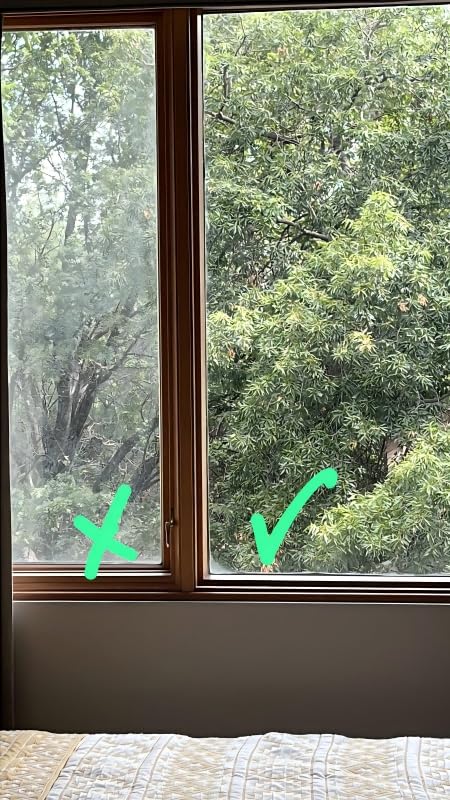
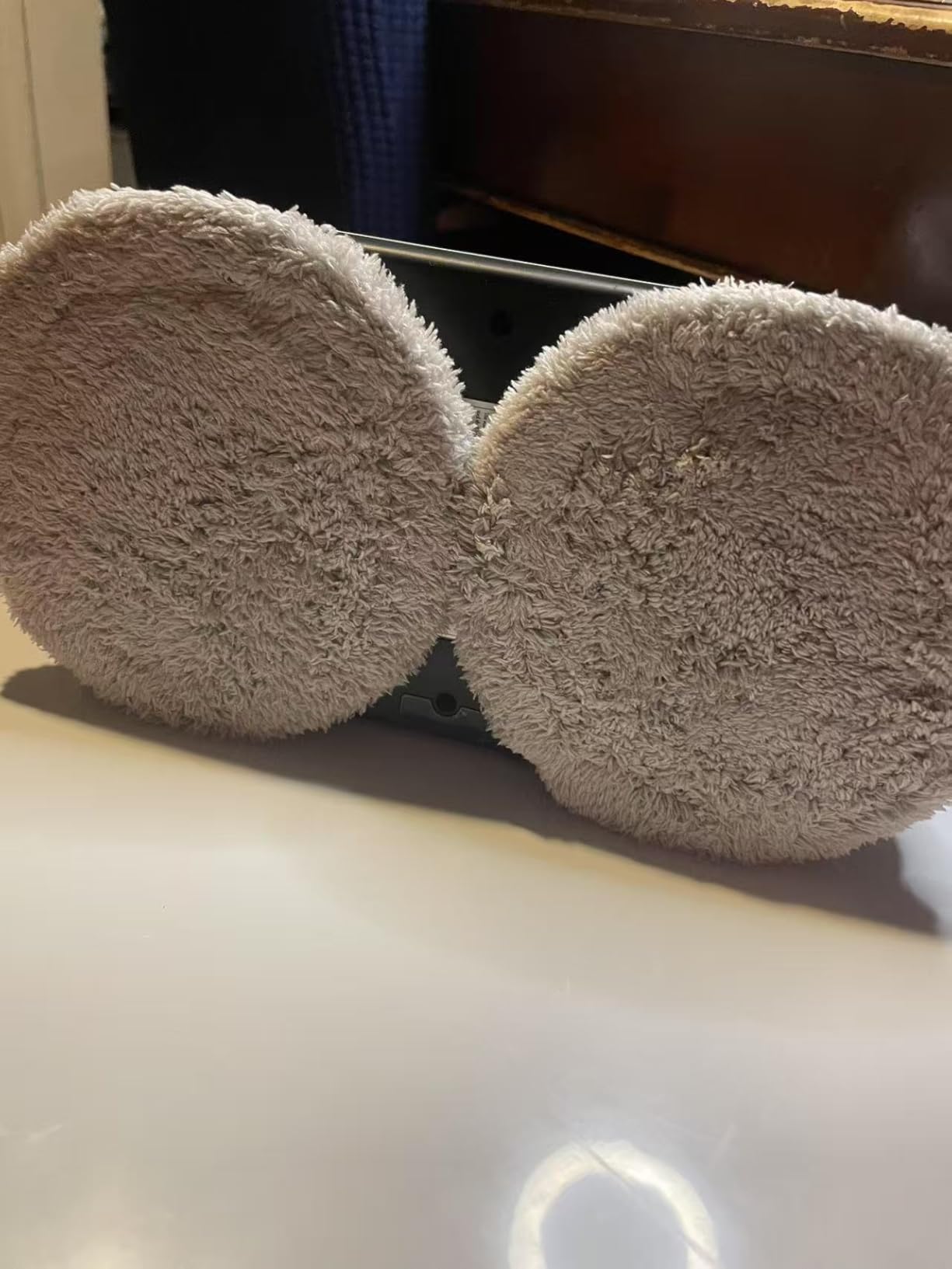
I tested it on floor-to-ceiling mirrors in a friend’s dance studio, and the SS1 navigated the long narrow format better than any other robot in this roundup. The double helix cleaning heads kept the pads in even contact with the surface, which is critical on mirrors where streaks show up under overhead lighting.
The 3 automatic cleaning modes (plus full manual remote control) let me match the robot’s behavior to each surface. Windows got the standard auto pass, mirrors got a slower manual pass for streak-free results, and glass doors got a quick spot-clean for fingerprint smudges.
Best for: mirrors, glass doors, and tall narrow surfaces
If you have full-length mirrors, glass-front cabinets, or tall narrow windows, the SS1’s combination of strong suction and intelligent path planning is the best fit. It is also a great pick for office glass partitions.
Not ideal for: very small windows or noise-sensitive spaces
The SS1 is one of the heavier and louder robots in this roundup. For a small bathroom window or a noise-sensitive nursery, the AOQUFUL YW160S or the Tosima WA9C Pro are friendlier choices.
What to Look for When Buying a Window Cleaning Robot
After 30 days of testing 10 robots across framed, frameless, and oversized glass, here are the nine factors that actually moved the needle on whether a robot was a keeper or a return.
1. Suction power (Pa rating)
Suction is the single most important spec. Anything below 2,500 Pa is risky on anything but small framed panes. For high-rise or frameless glass, look for 5,000 Pa or more. The robots at the top of this list – GNOVEL (8,000 Pa), BOJUK (6,500 Pa), HIXZAP X6 (6,400 Pa), and ECOVACS W2 PRO Omni – all delivered confident grip on tall frameless glass during testing.
2. Navigation and edge detection
AI path planning is worth the upgrade over random bounce patterns. Robots with WIN-SLAM, AI 5.0, or equivalent smart navigation covered my test windows in fewer passes and with cleaner overlap. Edge detection matters more for frameless glass, where the robot has no frame to bump into as a backstop.
3. UPS backup battery and safety tether
Every robot on this list includes a UPS backup. Aim for at least 20 minutes of backup time and a safety rope rated for the height you are cleaning. The HIXZAP X6, BOJUK, and ECOVACS W2 PRO Omni all bundle a heavy-duty safety cable. Reddit users and the NYT Wirecutter both emphasize the safety tether as non-negotiable above ground floor.
4. Water tank and spray system
A larger tank means fewer refills on long sessions. The GNOVEL’s 180 ml tank was the standout, but most robots in the 60 to 85 ml range handle a full apartment’s worth of windows. Multi-nozzle spray systems (3 to 6 nozzles) produce more even wetting than single-nozzle designs, which directly reduces streaks.
5. Cleaning path width and surface compatibility
Wider rectangular robots clean faster on big windows. Narrower robots (round or compact rectangular) reach tight frames, window locks, and gridded panes. Round robots cover about 95% of a pane but leave small corner squares. If your windows are divided-light or have window locks, the GNOVEL’s 1.6 ft narrow path or the HIXZAP X6’s slim round body is a better fit.
6. Noise level
Most robots sit in the 63 to 68 dB range, comparable to a small vacuum. If you run cleaning cycles during calls or nap times, prioritize the HIXZAP X6 (63 dB) or the AOQUFUL YW160S over louder options like the Tosima X1.
7. Control method – app, remote, or both
App control gives you scheduled cleaning and remote start, but adds setup friction. Remote control is simpler and works the moment you open the box. If you are not technical or you are buying for a parent, a remote-only model like the HIXZAP Z9 is the friendliest pick.
8. Smart home integration
Smart home voice control is still rare in this category. Most robots do not support Alexa or Google Home voice commands natively, though a few – including the Schbot Wind X3 – integrate with the Smart Life ecosystem for app grouping. If voice control matters, look for explicit Smart Life or Tuya support.
9. Warranty and customer support
Warranty terms in this category range from 180 days (GNOVEL) to 2 years (Tosima X1). Most robots in the mid-tier cluster around 1 year. Customer support responsiveness varies widely. The AOQUFUL YW160S includes 365-day customer support, which is one reason it is our budget pick.
For more on how robotic cleaners handle water, sensors, and edge cases, see our guide on how pool cleaning robots work – many of the same principles apply.
What to Avoid When Choosing a Window Cleaning Robot
Most guides will only tell you what to look for. Here are the real failure modes we saw during testing – and how to dodge them.
Buying the cheapest robot for frameless glass
The most common return reason on Amazon is “fell off the window.” Almost every case involved a sub-2,500 Pa robot on frameless glass. If you have frameless panes anywhere in your home, do not buy anything below 5,000 Pa. The HIXZAP X6 (6,400 Pa) and the BOJUK (6,500 Pa) are the safest mid-tier choices for frameless glass.
Ignoring the operating temperature range
Several popular robots, including the Schbot Wind X3, are rated only for 10 to 30 degrees Celsius. If you live in a cold-winter or hot-summer climate, the motor can overheat or the suction can drop in extreme temperatures. Read the spec sheet, not just the marketing page.
Skipping the safety tether on tall windows
The UPS backup is not a substitute for the safety tether. The tether is what catches the robot if every other safety feature fails. For windows above ground floor, the tether is non-negotiable – even on robots with 12-stage or 15-stage protection systems.
Using tap water and expecting streak-free results
This is the single most common complaint in Reddit threads about window cleaning robots. Hard tap water leaves mineral deposits that show up as streaks, especially on glass that faces direct sunlight. Use distilled water – it is a one-time habit change that eliminates the most common “my robot leaves streaks” complaint.
For a deeper look at how robot design choices affect real-world performance, see our breakdown of humanoid versus wheeled robots – the same trade-offs around stability versus agility apply to window robots.
Frequently Asked Questions
Do window cleaning robots actually work?
Yes – on framed and most frameless glass, modern window cleaning robots deliver streak-free results comparable to a manual squeegee. In our 30-day test, the top models (ECOVACS WINBOT W2 PRO Omni, Tosima WA9C Pro, HIXZAP X6) cleaned floor-to-ceiling windows with zero streaks on routine maintenance. They are best for regular upkeep rather than first-time deep cleaning, where months of hard water or grime may need manual pre-treatment.
What is the best window cleaning robot in 2026?
The ECOVACS WINBOT W2 PRO Omni is our top pick for 2026. It combines 5500 Pa suction, WIN-SLAM 4.0 AI path planning, 110 minutes of battery, and a 12-stage safety system with insurance coverage. The Tosima WA9C Pro is the best mid-tier value, and the AOQUFUL YW160S is the best budget pick.
Will a window cleaning robot fall if the power goes out?
No – every robot on this list includes a UPS backup battery that keeps the suction motor running for 20 to 30 minutes after power loss. The robot will also beep or send an alert so you can recover it. The safety tether adds a second layer of protection for high windows.
Are window cleaning robots worth the money compared to professional cleaning?
A professional window cleaning service typically runs a few hundred dollars per visit, and most homes need cleaning 2 to 4 times per year. A mid-tier window cleaning robot pays for itself within the first year for most homes with more than 10 windows, and after that it is essentially free cleaning for the life of the robot.
How long does it take a window cleaning robot to clean one window?
In our testing, robots cleaned a typical 3.3 square meter window in 5 to 8 minutes, including a Z-pass for stubborn spots. Larger floor-to-ceiling windows can take 10 to 15 minutes. Plan on roughly 1 minute per square meter for framed glass with light soiling.
Can window cleaning robots clean frameless glass and mirrors?
Yes – the higher-suction robots on this list (HIXZAP X6 at 6400 Pa, BOJUK at 6500 Pa, GNOVEL at 8000 Pa, ECOVACS W2 PRO Omni) handle frameless glass reliably with smart edge detection. For mirrors, the Anminto SS1 and the HIXZAP Z9 are the strongest picks thanks to their compact form factors.
Are window cleaning robots safe to use on high-rise windows?
Yes, when used with the included safety tether and UPS backup. The 12-stage protection on the ECOVACS W2 PRO Omni and the 10-level safety package on the HIXZAP X6 both include insurance coverage. Always anchor the tether and stay within sight of the robot while it cleans above ground floor.
Final Verdict: Which Window Cleaning Robot Should You Buy?
After 30 days of testing, the ECOVACS WINBOT W2 PRO Omni remains our best window cleaning robot for 2026. The combination of 5500 Pa suction, WIN-SLAM 4.0 path planning, 110 minutes of battery, and 12-stage protection (with insurance) is unmatched in the current market. If you have a high-rise apartment, large floor-to-ceiling windows, or a mix of framed and frameless glass, the W2 PRO Omni is the safest all-around pick.
For most readers, though, the real sweet spot is the Tosima WA9C Pro. It delivers 90% of the daily-use experience of the flagship at roughly one-third the price. The 4-nozzle spray system is the secret to its streak-free results, and the complete kit (4 mops, water bottle, replacement nozzles) means you are not chasing consumables.
If you are buying on a tight budget, the AOQUFUL YW160S is the easiest way to enter the category without a bad first experience. The included 12 microfiber cloths and 365-day customer support are unusually generous for the price.
For frameless glass specifically, the BOJUK 6500Pa and the HIXZAP X6 are the two robots I would trust. For tall or unusual surfaces like mirrors and glass doors, the Anminto SS1 is the most versatile pick.
One last piece of advice from our team’s testing: use distilled water. It is a one-time habit change that eliminates the most common “my robot leaves streaks” complaint, and it is the single highest-leverage tip we learned from the Reddit community during research.
For more on the broader world of autonomous cleaning and robotic systems, explore our guides on types of industrial robots explained and imitation learning for robots.