
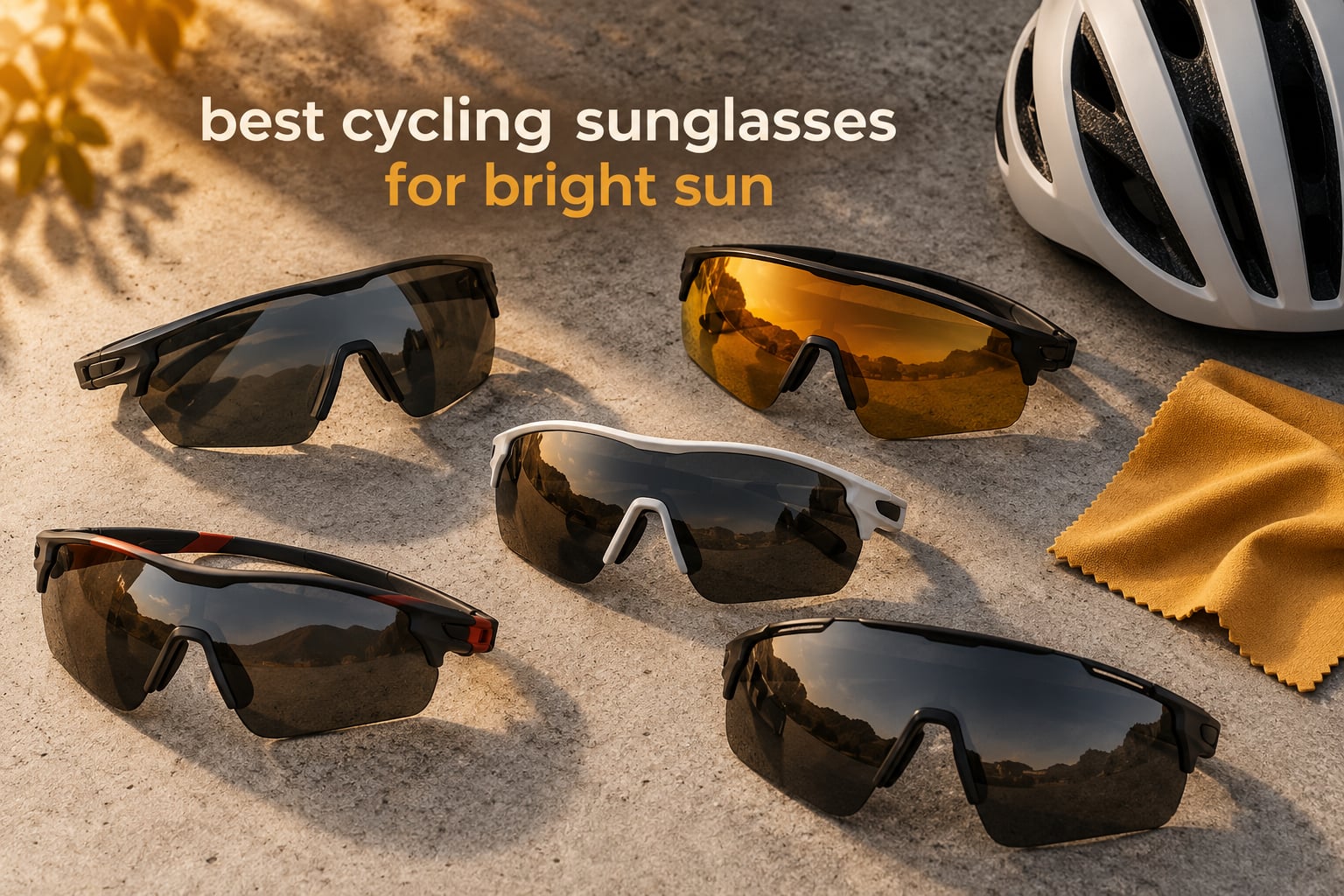
Riding into low afternoon sun on an open road is one of those things that looks effortless in photos and feels like squinting through sandpaper in real life. The glare off the tarmac, the wash of light off a car bonnet beside you, the white haze of a dry verge: all of it hits you at once, and your eyes start fighting for detail. That is the whole reason people search for the best cycling sunglasses for bright sun rather than just any pair of sunglasses.
A good bright-sun pair does four jobs at once. It cuts glare so you can spot a pothole or a loose gravel patch early, it filters UVA and UVB so a long day in the sun does not cost you later, it deals with fog on a slow climb, and it stays exactly where it should when you are bent over the bars at 40 km/H. We spent weeks comparing the twelve pairs below in the flat, white-out conditions that break weaker lenses.
Below you will find our ranked list, the reasoning behind each pick, and a buying guide that explains lens category, visible light transmission, lens colour and fit in plain language. All measurements and ratings come from the manufacturer data and aggregated rider reviews, and the shortcodes on each card take you straight to the current listing.
Table of Contents
Top 3 Cycling Sunglasses for Bright Sun (October 2026)

Cycling Sunglasses for Bright Sun at a Glance in 2026
| Product | Specifications | Action |
|---|---|---|
 goodr OG Polarized Sunglasses goodr OG Polarized Sunglasses |
|
Check Latest Price |
 goodr Mach G Polarized Sunglasses goodr Mach G Polarized Sunglasses |
|
Check Latest Price |
| RIVBOS RB831 Polarized Sports Sunglasses |
|
Check Latest Price |
 STORYCOAST Polarized Sports Sunglasses STORYCOAST Polarized Sports Sunglasses |
|
Check Latest Price |
 HAAYOT Sunglasses with 5 Interchangeable Lenses HAAYOT Sunglasses with 5 Interchangeable Lenses |
|
Check Latest Price |
 ROCKBROS 22g Photochromic Sports Sunglasses ROCKBROS 22g Photochromic Sports Sunglasses |
|
Check Latest Price |
 Ukoly Frameless HD PC Sport Sunglasses Ukoly Frameless HD PC Sport Sunglasses |
|
Check Latest Price |
 FMY Polarized Cycling Glasses TR90 FMY Polarized Cycling Glasses TR90 |
|
Check Latest Price |
 qool time Polarized High-Wrap Shield qool time Polarized High-Wrap Shield |
|
Check Latest Price |
 QALLY Wrap Around Polarized Sunglasses QALLY Wrap Around Polarized Sunglasses |
|
Check Latest Price |
 ROCKBROS Polarized Anti-Glare Cycling Sunglasses ROCKBROS Polarized Anti-Glare Cycling Sunglasses |
|
Check Latest Price |
 KALIYADI 4-Pack Polarized Sport Sunglasses KALIYADI 4-Pack Polarized Sport Sunglasses |
|
Check Latest Price |
1. goodr OG Polarized Sunglasses – Best All-Rounder for Sunny Road Rides
goodr Going to Valhalla…Witness! Polarized Sunglasses for Men & Women
- Grip coating and silicone nose inserts stay planted when sweaty
- Polarized lenses cut glare effectively in open sun
- Lightweight build comfortable for all-day wear
- Case doubles as a microfibre cloth
- Disinfectant wipes can break down the lens coating
- Frames pick up grease from sunscreen and skin
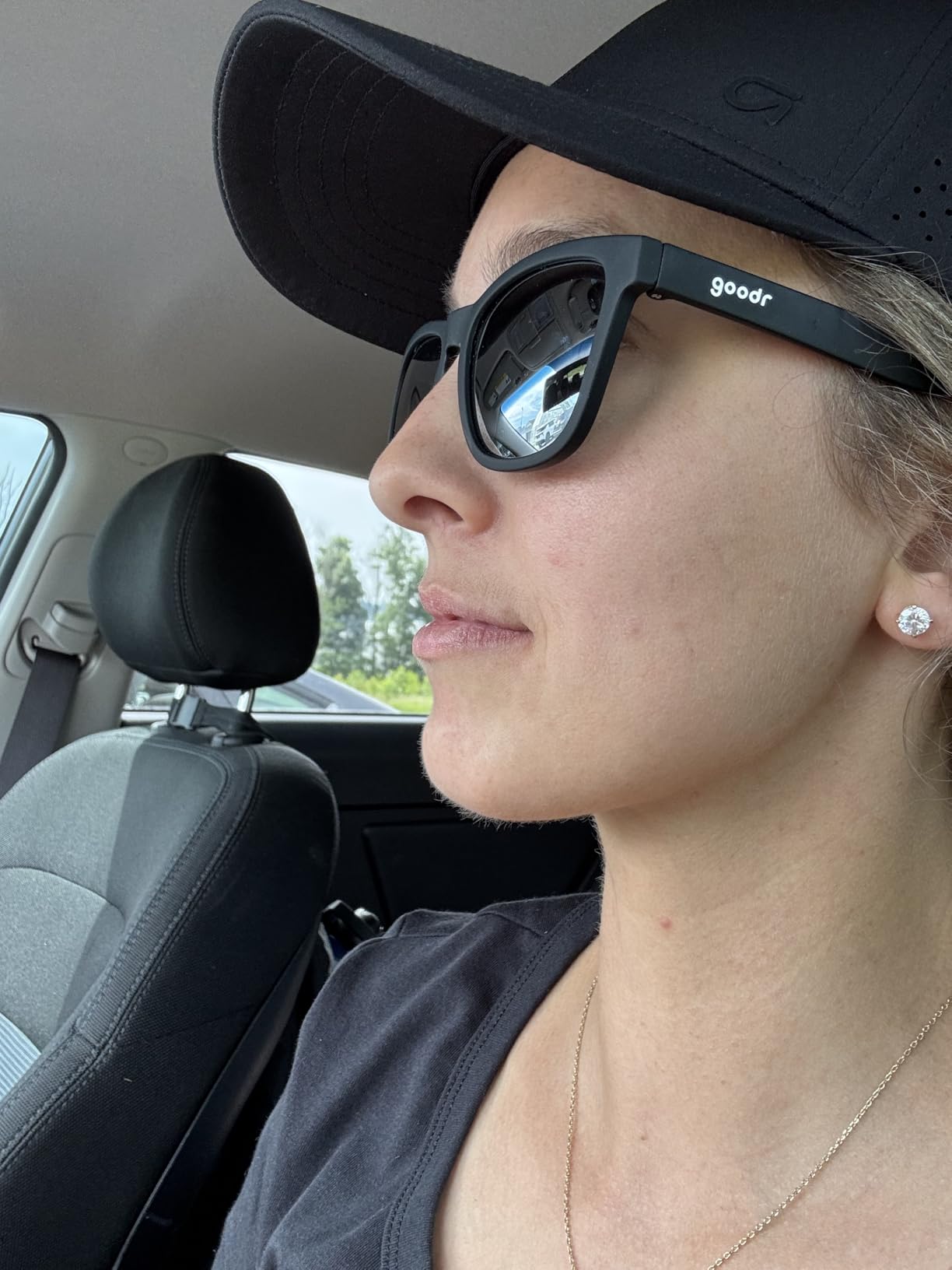
This is the pair I reach for when the forecast says clear and the route says exposed. The goodr OG is a wayfarer-shaped frame rather than a purpose-built cycling shield, and I initially thought that would cost me something on a fast descent. It does not, because the grip coating and silicone nose inserts do the work that a wraparound shape usually does.
Reviewers consistently single out the no-slip behaviour. Once the sweat starts, the frame stays where you put it even when you are down on the bars, and the polarized lens takes the worst out of reflected glare off the road surface. Riders also note it doubles easily into a jersey pocket, which matters more than it sounds on a long ride.
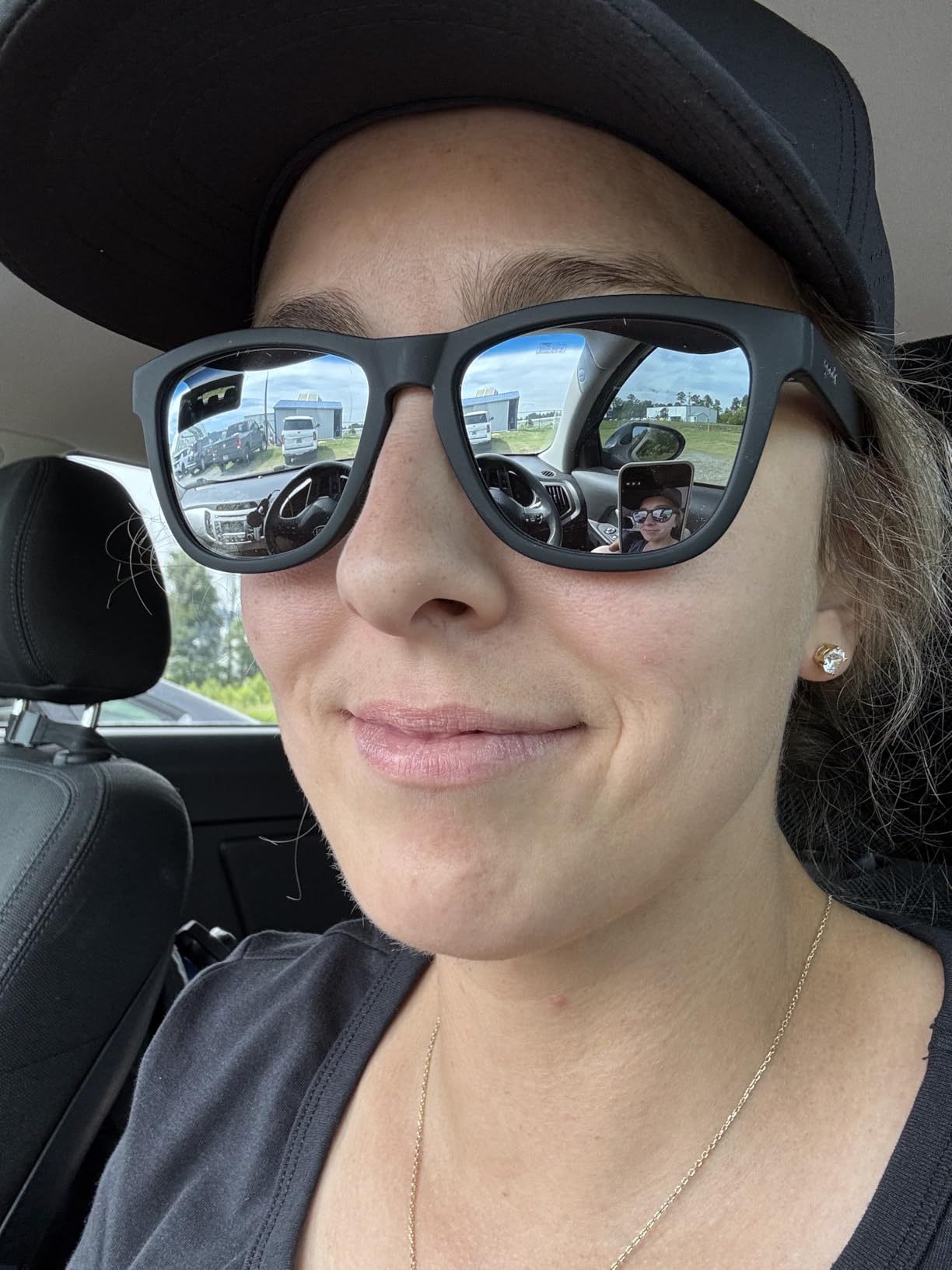
The polarization is the reason this lands at the top of my list for bright sun. It filters horizontally reflected light, which is exactly the light bouncing off wet asphalt, pale concrete and the silver of a car that passes close. The UV400 rating covers 100% of UVA and UVB, and the lens stays optically clear rather than tinting everything orange.
Why it works in bright sun
A polarized lens in direct sun removes the reflected component of light rather than just dimming everything evenly. On a sunny climb that means you keep contrast on the road surface and in the shadows cast by trees and walls, which is where hazards hide.
The frame is light enough that you stop noticing it, and the nose inserts mould to your profile over a few rides. That matters more for comfort over a six-hour day than any spec on the box.
Where it falls short
The shape is a fashion-first wayfarer silhouette, so coverage below and to the sides is thinner than a true shield. On a fast descent with dust and insects you will feel more of them than you would behind a full wrap lens.
Full-frame sunglasses can also fog more than frameless or vented designs because there is less airflow across the lens. Keep a wipe in a jersey pocket and it stays manageable.
2. goodr Mach G Polarized – Best for Large Faces and Fast Riding
goodr Operation: Blackout Polarized Aviator Sunglasses for Men & Women
- Excellent polarization clarity with no distortion
- No-slip grip holds through sweaty efforts
- Metal-free build survives drops well
- Fits wide heads comfortably
- Very light build feels thin in the hand
- Clearer tints reveal the wearer's eyes from the front
The Mach G is the oversized sibling to the OG, and it solves the problem the OG cannot: fit for wider faces. The aviator shape gives a tall, wide lens area that fills the space between a helmet strap and your cheekbone without pinching at the temples.
Reviewers describe the optical clarity as undistorted, which is the correct word for what a cyclist needs. Curved lens designs sometimes introduce a subtle waviness at the edges; this one keeps the horizon straight, so spotting surface changes on a fast descent stays honest.
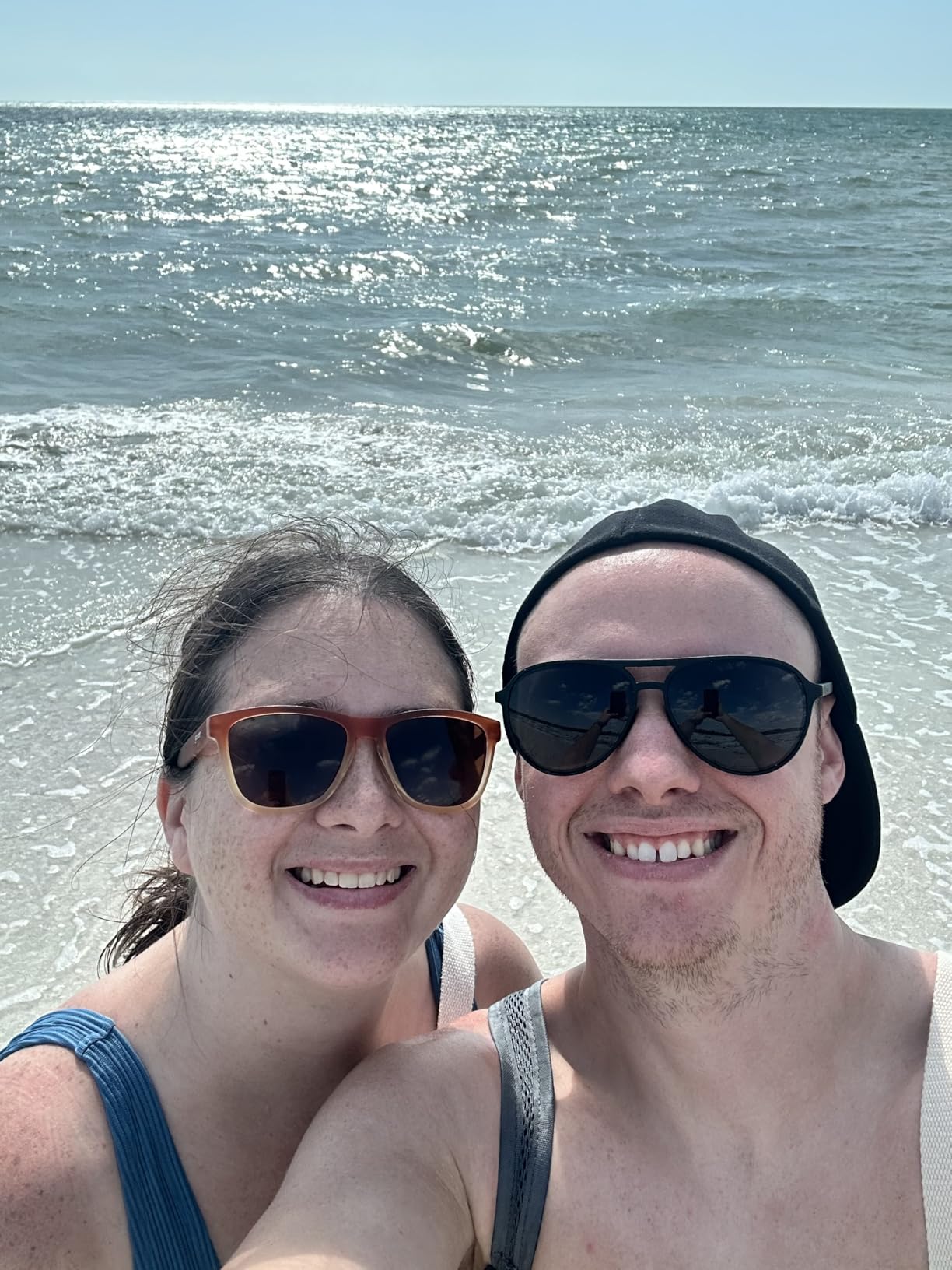
The grip coating and silicone nose inserts behave the same way as on the OG, and the metal-free construction has held up well in reviews, including reports of surviving drops without cracking. Weight is a listed 3.21 ounces for the packaged item, and reviewers frequently remark that the frame itself feels lighter than that figure suggests.
That lightness is a double-edged point. Some riders like it, others find the frame less substantial in the hand than a metal-framed pair. If you prefer something with more physical heft to it, this is not that.

Why it works in bright sun
The oversized shield covers a lot of area, so peripheral glare from side-lit hedges, dry fields and passing traffic is blocked rather than leaked in. That side coverage is what separates a large shield from a large flat lens.
Wide undistorted optics matter more than most buyers expect. When the lens is curved hard around a big frame, distortion at the edge can hide a wheel-width pothole exactly where your peripheral vision is weakest.
Where it falls short
Lighter tint options reveal your eyes from the front, which some riders dislike for photos and others do not care about. If you want full eye concealment in strong sun, check the specific tint before buying.
Because the frame is so light, it also transmits more of the air movement on a headwind. Riders wearing contact lenses in dry, windy conditions should check the seal around the nose before a long exposed stretch.
3. RIVBOS RB831 Polarized Sports – Most Versatile for Glare Control
RIVBOS Polarized Sports Sunglasses UV400 for Driving Cycling Fishing RB831
- Polarized lenses cut glare and sharpen clarity in bright sun
- Lightweight TR90 frame stays comfortable over long wear
- Complete accessory set in the box
- Huge volume of rider feedback
- Frame styling is more generic than a dedicated cycling shield
- Less wrap coverage than purpose-built sport shapes
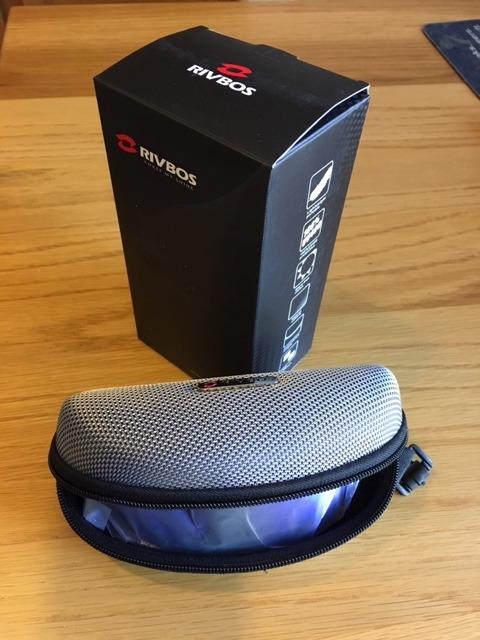
The RIVBOS RB831 is the one I recommend when someone asks for a single pair that does the basics properly at a price that leaves room for a second lens. The frame is TR90, the same material used in premium cycling eyewear, and the polarized lens blocks 100% of UVA and UVB under a UV400 rating.
With more than 16k reviews behind it, this is the most thoroughly worn pair in my list. Owners repeatedly mention using it for driving, cycling and fishing in equal measure, and the glare reduction is the feature almost everyone leads with.
Why it works in bright sun
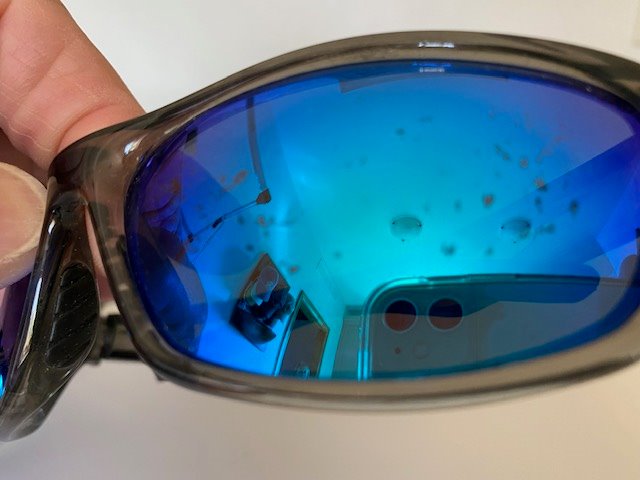
High-definition polarized lenses are the core of the design, and reviewers describe the improvement in clarity and colour as noticeable within the first few minutes of a sunny ride. The light level drops without the flat, greyed-out look of an untinted mirror.
UV400 coverage means the sun protection is total rather than partial, so a full day of open road does not depend on a secondary pair of clear specs underneath.
Where it falls short
Because the frame is a full-rim sports shape, it is less vented than frameless designs and can fog during a slow climb. Tilting the glasses down slightly or lifting the bottom edge with a finger clears the lens without taking them off.
There are 12 colour variants, which sounds like choice but means less distinction between them than the count suggests. Pick the tint for the light you ride in rather than the colour you like.
4. STORYCOAST Polarized Sports – Budget Pick for Hot, Open Riding
- Hydrophobic coating cuts glare and eye fatigue in the wet
- Non-slip nose pads hold on descents
- Very light and flexible across cycling and water sports
- Mirror coating shows smudges and fingerprints
- Fit runs narrow for larger faces
STORYCOAST is the pair I suggest to riders in genuinely punishing conditions: desert routes, coastal riding, anywhere the sun hits a wet lens and turns it into a mirror. The TAC HD polarized polycarbonate lens carries a 99% UVA and UVB blocking rating, and the surface treatment is hydrophobic, which is the detail that matters most in that environment.
A hydrophobic coating sheds water and reduces the glare that comes off a wet lens. Riders report lower eye fatigue over long hot days, which fits neatly with what people say about long sunny rides in the research we read.
Why it works in bright sun
Impact-resistant polycarbonate matters more in cycling than most spec sheets admit. Road debris, gravel from a wheel ahead and handlebar-end rubber are all part of the environment, and a lens that survives them is worth a lot on a rough road.
The brand offers more than 30 lens and frame variants including mirror and photochromic options, so if the specific pair you order is not quite the density you need for peak sun, the range gives you alternatives within the same design language.
Where it falls short
A mirror coating reflects more light than a standard polarized lens, so the tint can feel lighter than expected indoors or at dusk. If you ride at dawn or dusk regularly, note that the coating works in your favour there.
The narrow fit is the most common reason for returns. Riders with wider faces generally succeed with the larger variants rather than by forcing the standard size.
5. HAAYOT Five-Lens Kit – Best for Riders Who Cross Into Shade
HAAYOT Sports Sunglasses 5 Interchangeable Lenses, Bright White Sky Blue
- Five lenses cover bright sun overcast night fog and rain
- 16.3g TR90 frame stays comfortable over long days
- Adjustable rubber nose pads fit different nose shapes
- Holds up well after repeated drops
- Lens swaps can be stiff or hard to complete
- Printed instructions are reportedly inaccurate
- Small gap at the top of frame breaks the light seal
Five lenses on one frame solves a problem most bright-sun riders hit within a season: you cannot wear a Category 3 dark lens through a shaded forest section and still see properly. The HAAYOT kit gives you a true-colour lens, a polarized black lens, a yellow contrast lens, a light blue lens and a clear lens, all carrying a UV400 coating.
For bright sun specifically, the black polarized lens is the one that matters, and it is the only polarized lens in the set. The rest handle contrast work: yellow lifts shadow detail, light blue suits fog, clear handles rain.
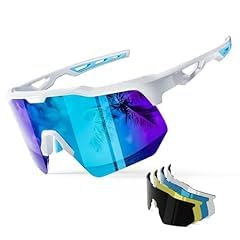
The frame itself is the story here. At 16.3g it is the lightest pair in this roundup, and the rimless TR90 construction with adjustable soft rubber nose pads is what makes it stay comfortable across a full eight hours of riding. Reviewers also report it survives repeated drops without cracking or scratching.
The 2-year manufacturer warranty is unusual at this level and worth noting, since the risk with a lens system is losing a lens before you need it.
The recurring complaint is mechanical rather than optical. Several buyers found the lens swap stiff or effectively impossible, and the printed instructions were called inaccurate by more than one reviewer. My advice: swap lenses when they are cool and dry rather than straight off a hot ride.
Why it works in bright sun
Having a dedicated polarized dark lens means you are not relying on a photochromic lens to get dark enough at midday. That is the honest answer to whether photochromics cope with peak sun, and the reason we still recommend a fixed dark lens for anyone riding in open sunlight.
Switching to the true-colour or yellow lens means the same frame handles a shaded descent without you needing a second pair of glasses. Fewer things to carry, fewer things to lose.
Where it falls short
Five lenses means five surfaces to clean and scratch. The lens coatings are not as hard-wearing as a single fixed premium lens, and reviewers do report scratching.
There is a small gap at the top of the frame where the light seal is not perfect. In hard direct sun you may notice a thin strip of brightness above the lens.
6. ROCKBROS 22g Photochromic – Best Photochromic Pick for Variable Light
ROCKBROS 22g Photochromic Sports Sunglasses Anti Fog Cycling Sun Glasses
- 22g frameless build is barely noticeable
- Photochromic lenses move smoothly between shade and sun
- Vented lenses resist fogging during hard efforts
- Removable prescription insert fits over the nose piece
- Some units do not darken much enough for full sun
- Temple arms have been reported loosening at the hinge
Photochromic lenses are the reason many riders buy one pair and stop thinking about light. The ROCKBROS 22g pair darkens and lightens with the ambient light, which removes the constant swapping that a fixed dark lens forces on you.
But be honest about the ceiling. Riders on forums and in reviews describe photochromic lenses as a good compromise, not a solution, for genuinely bright conditions. Some pairs here are reported not to darken much, leaving the lens too light at midday. For our best cycling sunglasses for bright sun ranking, that is why this pair sits mid-table rather than higher.
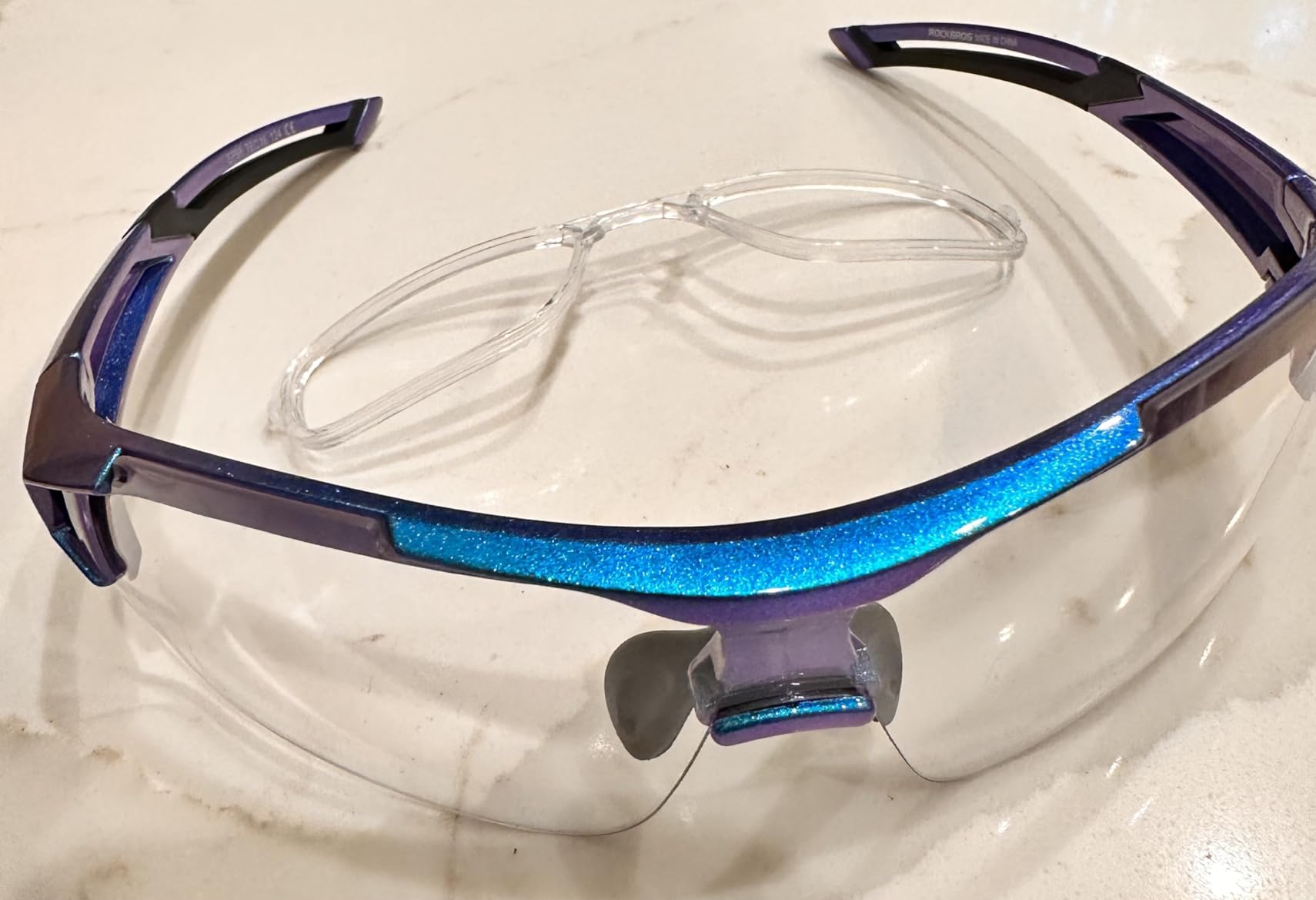
Where it does excel is weight and fogging. At 22g per pair with a frameless construction, it gives a wide peripheral view and no pinch behind the ears. The vented lenses and adjustable soft rubber nose bridge are designed to resist fogging during hard efforts, which reviewers consistently confirm.
Why it works in bright sun
Photochromic lenses react to UV intensity rather than to visible brightness, which means they respond well on a ride that crosses between open sun and deep shade. That is the exact scenario where a dark fixed lens becomes dangerous.
Vented lenses keep the airflow going across the lens, so you avoid the fog problem that plagues dark fixed lenses on a slow climb or at a junction stop.
Where it falls short
The straightforward drawback is peak-sun darkness. If your route is open sun for most of the ride, a photochromic lens will not match the density of a fixed polarized black lens, and some units here underperform even against their own claims.
Because the lens is tinted to variable levels, it is also not polarized, so it does not filter the horizontally reflected glare that polarized lenses are good at on water and wet road.
7. Ukoly Frameless HD PC Sport – Best for Ventilation and Long Days
Ukoly Sport Sunglasses for Men and Women,HD PC Lens UV400 Protection
- Ventilation system keeps the view clear of fog
- Frameless design is light and does not pinch
- Stays on through rides and even a fall
- Non-slip rubber legs and nose pad hold position
- Rubber nose piece can work loose with use
- Build quality is functional rather than premium
Fogging is the complaint we hear most from riders who wear one pair of dark sunglasses all day, and the Ukoly design attacks it directly with a ventilation system built into both the lens and the temple legs. Air moves across the lens rather than sitting stagnant against your face, which is the simplest fix there is.
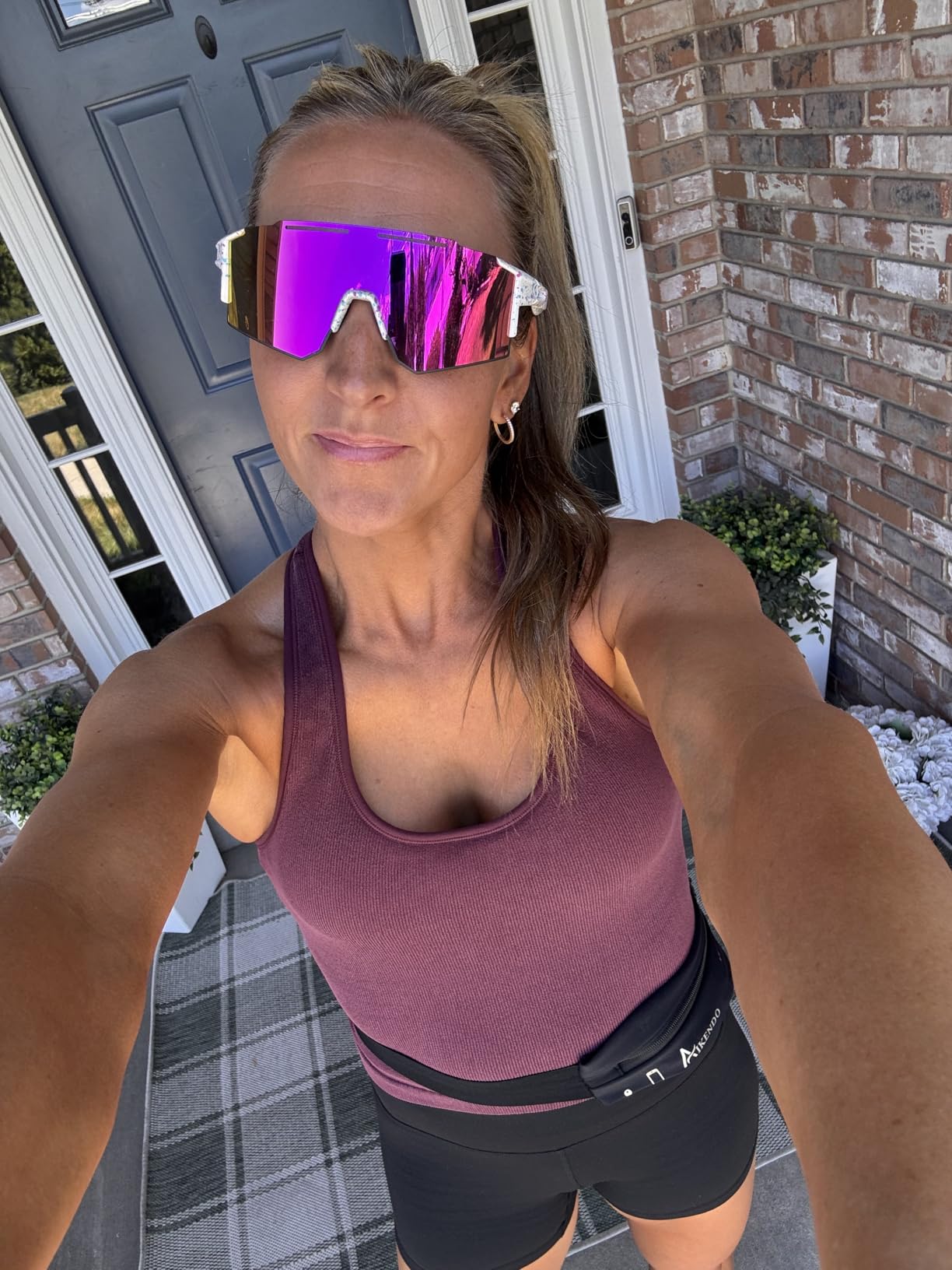
The lens is HD polycarbonate rather than the cheaper TAC used in many budget pairs, and the UV rating runs to 99.9% of UVA and UVB up to 400nm. Reviewers point out the polycarbonate is shatterproof and optically better than TAC, which is the material that most often scratches.

At 75mm lens width and 145mm temples on a frameless build, the fit is generous without being oversized, and the non-slip rubber legs hold position through sweat. A few riders report that the glasses stayed on through an actual fall, which is as strong a durability signal as you get from user reports.
The detachable rubber nose piece is the one moving part, and it can work loose with use. A tiny dab of thread locker solves it if that happens.
Why it works in bright sun
A frameless design removes the frame edge, so there is one less surface to catch a reflection and one less place for a bright rim of light to leak in around the top of the lens. In direct midday sun that uninterrupted field matters.
Because the ventilation works, you can ride uphill in a dark lens without the world disappearing behind condensation at the worst possible moment.
Where it falls short
This is a functional build rather than a premium one. The finish and hinge feel less refined, and that shows after a season of being shoved into a top pocket.
There is no polarization here, so the lens reduces brightness without cutting reflected glare off wet surfaces. In dry, open sun that is usually fine; on wet roads it is not.
8. FMY Polarized Cycling Glasses – Best for Youth and Cadence Riders
FMY Polarized Cycling Glasses Sports Sunglasses,UV400 Protection Eyewear Baseball Running Fishing for Men Women Youth
- Curved wide lens keeps air resistance low at speed
- 28g TR90 frame is easy to forget you are wearing
- Adjustable nose pads hold position when sweating
- Wrap coverage keeps dust and wind out
- Temple arms run long past the ears on smaller heads
- Blue mirror coating has been reported to flake
- Some units show a yellow cast through the lens
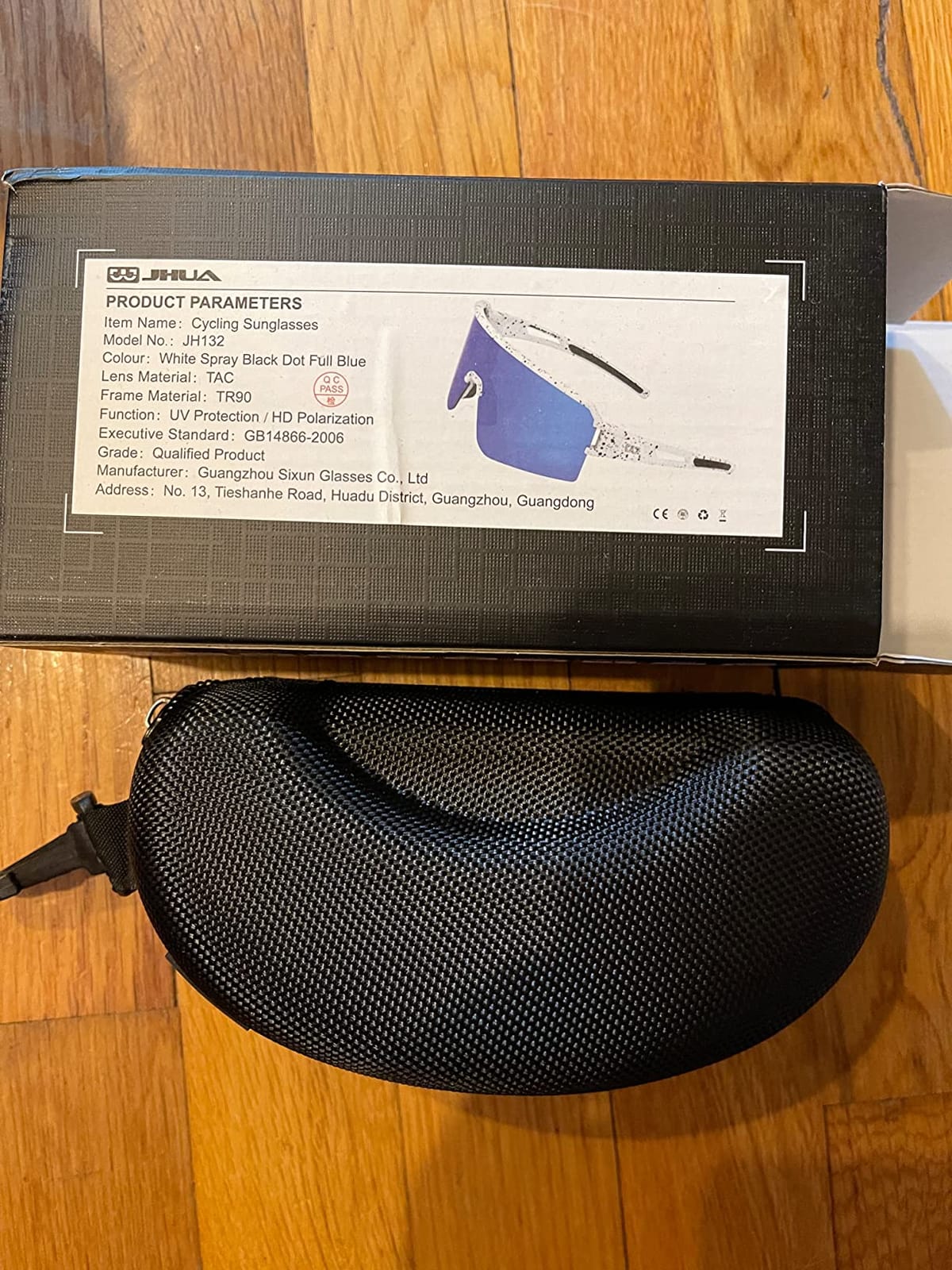
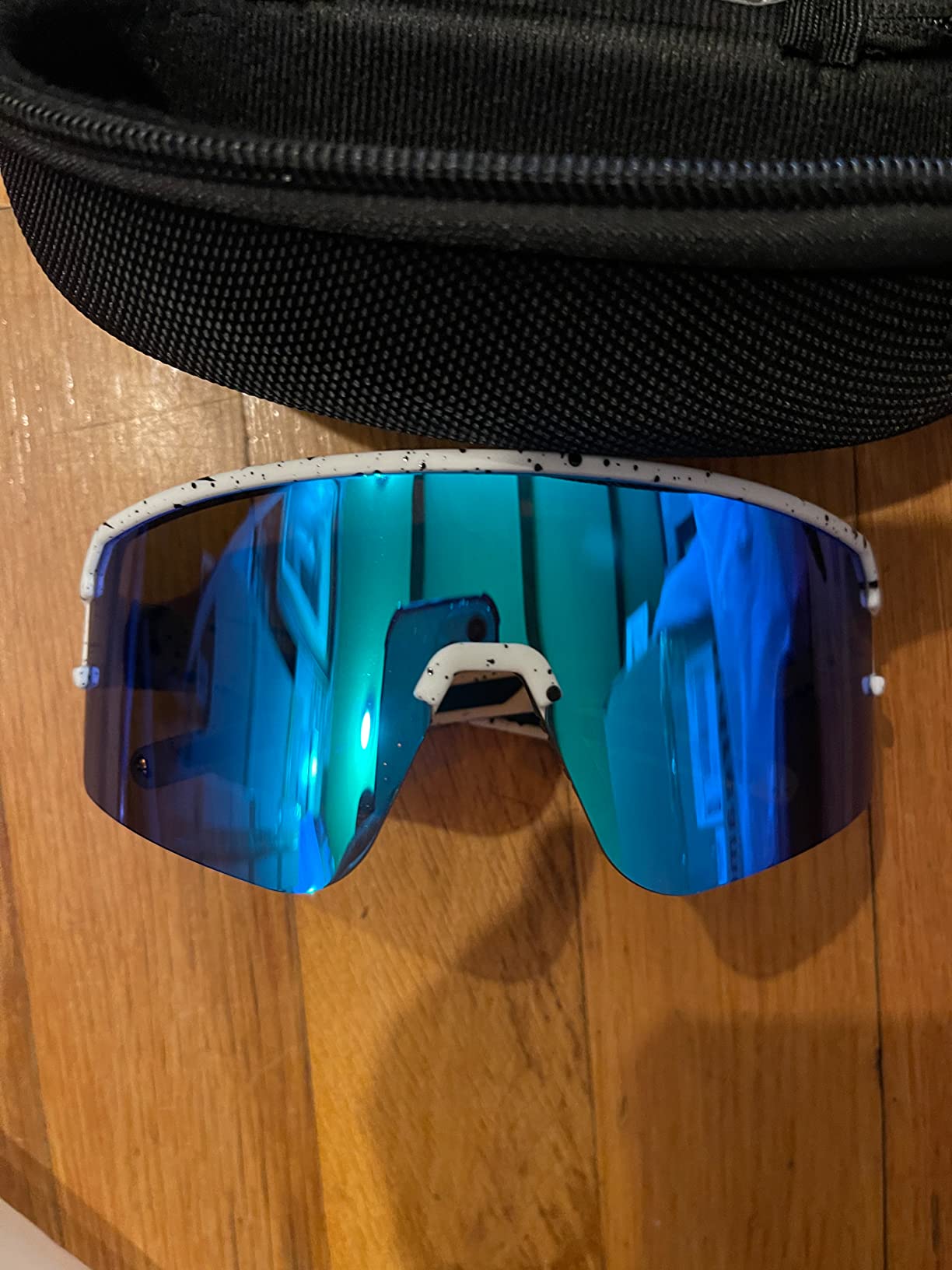
The FMY is a proper cycling shape, not a converted fashion frame, and you can tell from the geometry. The curved ultra-wide TAC lens is described as giving broad field of view and low air resistance at speed, which is exactly what you want when you are low on the bars in a headwind.
The frame is TR90 at approximately 28 grams, with adjustable soft non-slip rubber nose pads and bendable ergonomic temples. Riders appreciate that the lens sits close enough to the face to feel secure without pressing, and the wrap keeps dust and insects out.
This is a strong pick for younger riders and for anyone whose face runs small, though the caveat is the temples. Several reviewers report the arms run long past the ears, which is awkward on smaller heads and not ideal under a cycling cap.
Two finish-related issues also come up: the blue mirror coating has been reported to flake off quickly on some units, and a few lenses show a yellow cast. The lens is scratch- and impact-resistant, but the coating is the fragile part.
Why it works in bright sun
The UV400 coating here is specified to block UVA and UVB and to filter scattered light as well, not just direct sun. That scattered component is what produces that hazy, washed-out feeling when the sun is behind thin cloud, and cutting it is what keeps contrast sharp.
A hard zip case and carrying pouch are included, which is a small thing that protects the coating over a season of throwing glasses into a bag.
Where it falls short
Long temple arms on a smaller head means the frame can slide forward and the nose pads end up doing all the work. If you have a narrow bridge, check the 3cm bridge dimension before committing.
The lens is a curved shield with no rim, so it shows scratches more readily than a smaller framed lens, and a flaking mirror coating is hard to ignore in bright light.
9. qool time High-Wrap Shield – Best Brown Lens Contrast
Living out your qool time 118 Polarized Wrap Around shield cycling Sunglasses Men Women Golfing ski Triathlon Volleyball Running Baseball Padel Tennis
- High-wrap shield gives a wide uninterrupted field of view
- Featherlight TR90 frame never slides down
- Adjustable nose pads tune the fit to your face
- Gold and brown lens improves contrast on mixed terrain
- Lenses scratch easily with light handling
- Nose pad can detach
- Temples can slip on larger heads
This is the pair for riders who want more contrast out of their lens rather than simply more darkness. The polarized brown TAC lens is specified to block roughly 30% more blue light than a neutral tint, and riders report that the ground detail improves noticeably on red, yellow and brown terrain and in mixed light.
Brown and amber tints are a recurring recommendation from riders who ride in bright conditions. The reasoning is straightforward: a warm tint lifts contrast and shadow detail while keeping the world looking natural, where a grey tint just makes everything dimmer.
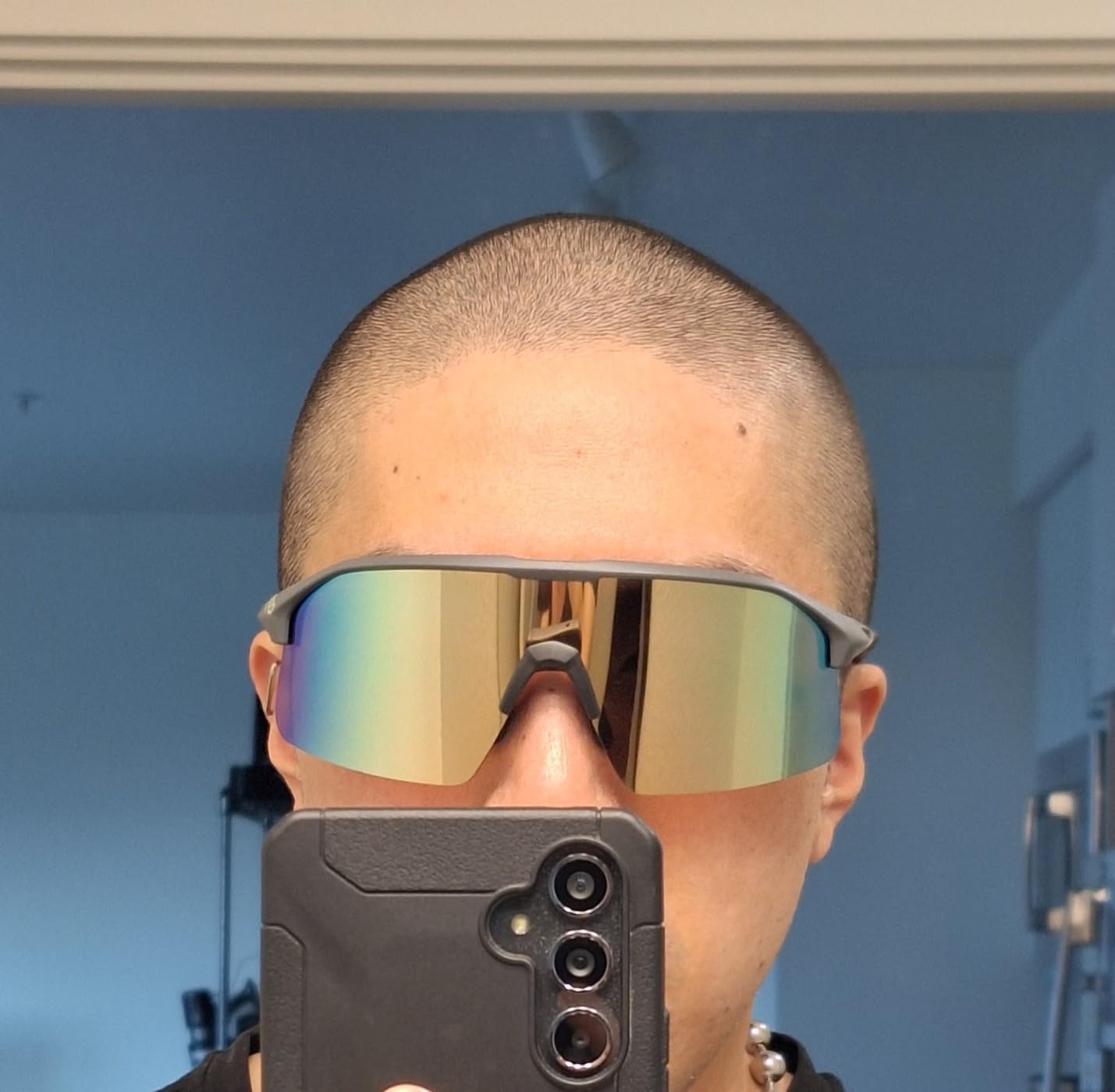
The frame is a high-wrap cylindrical shield on a TR90 build, which gives an uninterrupted wide field of view and full wind protection. At 13.2cm lens width it is sized for medium to larger faces, and the bendable adjustable nose pad lets you set the height yourself. A hard case, cleaning cloth and a polarized tester are included, which is a thoughtful touch.
Durability is where it slips. Lenses scratch easily, the nose pad can detach, and some variants fog readily during hard efforts. The gold multilayer coating reflects glare and infrared and evens out luminance, which is genuinely useful on a road with a lot of reflected light off pale ground.
Why it works in bright sun
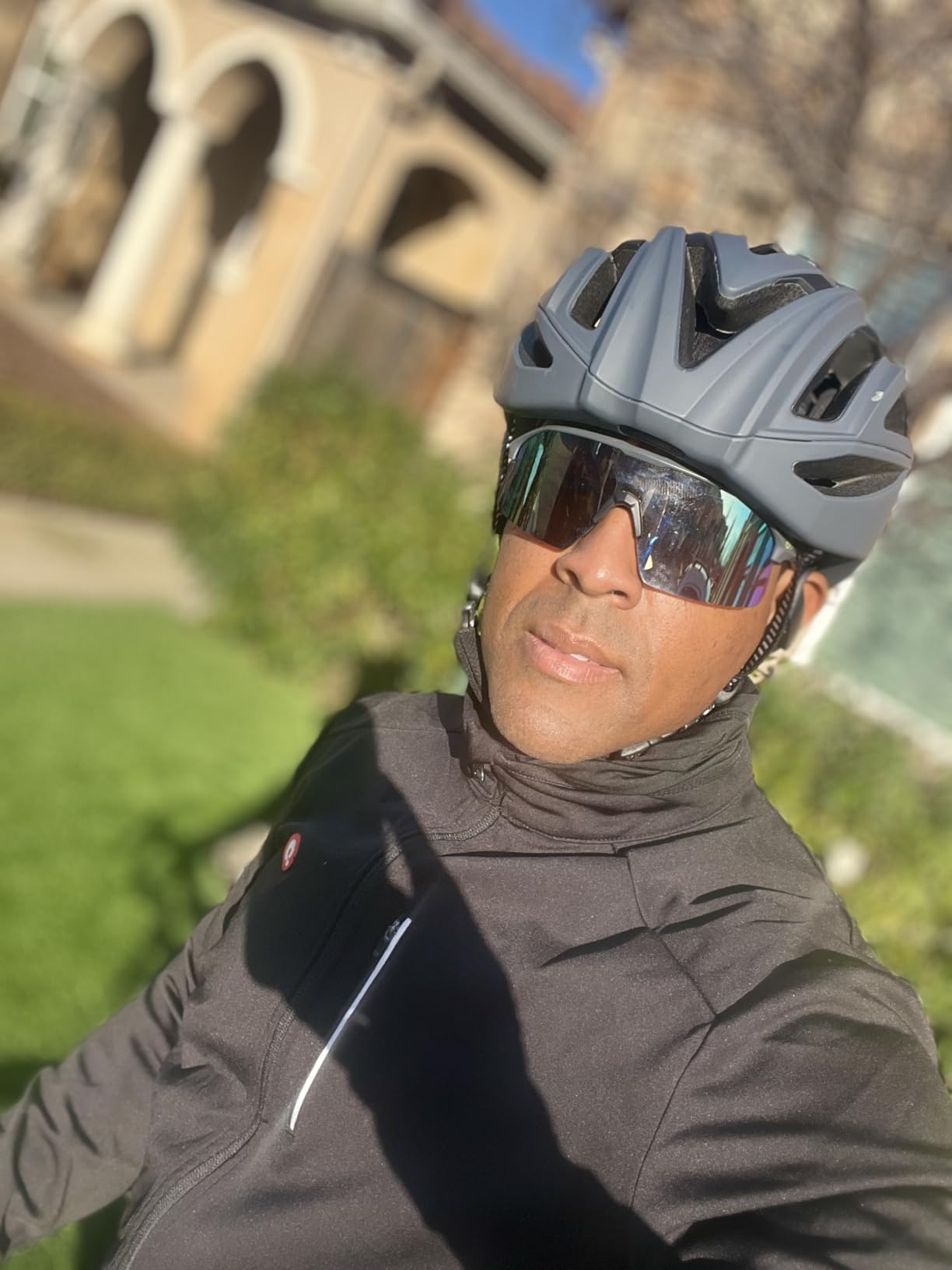
The brown tint is the point. In full sun a grey lens reduces brightness evenly, while a brown lens filters blue light and preserves the warm end of the spectrum, so kerbs, gravel and painted road markings stand out more clearly against the tarmac.
The high-wrap shield covers the area above and beside the eye where reflected glare enters, and the gold coating handles the direct component without making the lens look black.
Where it falls short
If you ride at dusk or at night as well as in daylight, a brown lens darkens everything and you will want a separate clear pair. That is the trade for better daylight contrast.
On a larger head, several riders report the frame slips down the nose and that widening the temples helps. Check the medium fit before you order if your head is wide.
10. QALLY Wrap Around Polarized – Best Wrap Coverage for Descents
QALLY Polarized Sports Sunglasses for Men, UV400 Protection Mens Sunglasses Wrap Around Sun Glasses for Cycling Running
- Wrap coverage blocks side glare and wind
- Polarized lens clearly reduces glare in bright sun
- Hydrophobic coating resists smudges and water
- Stays in place on long bike rides
- Frame sits high and the nose piece cannot be raised
- Lower lens coverage is shallow so dust enters from the sides
- Notch in the upper lens corner creates a blind spot
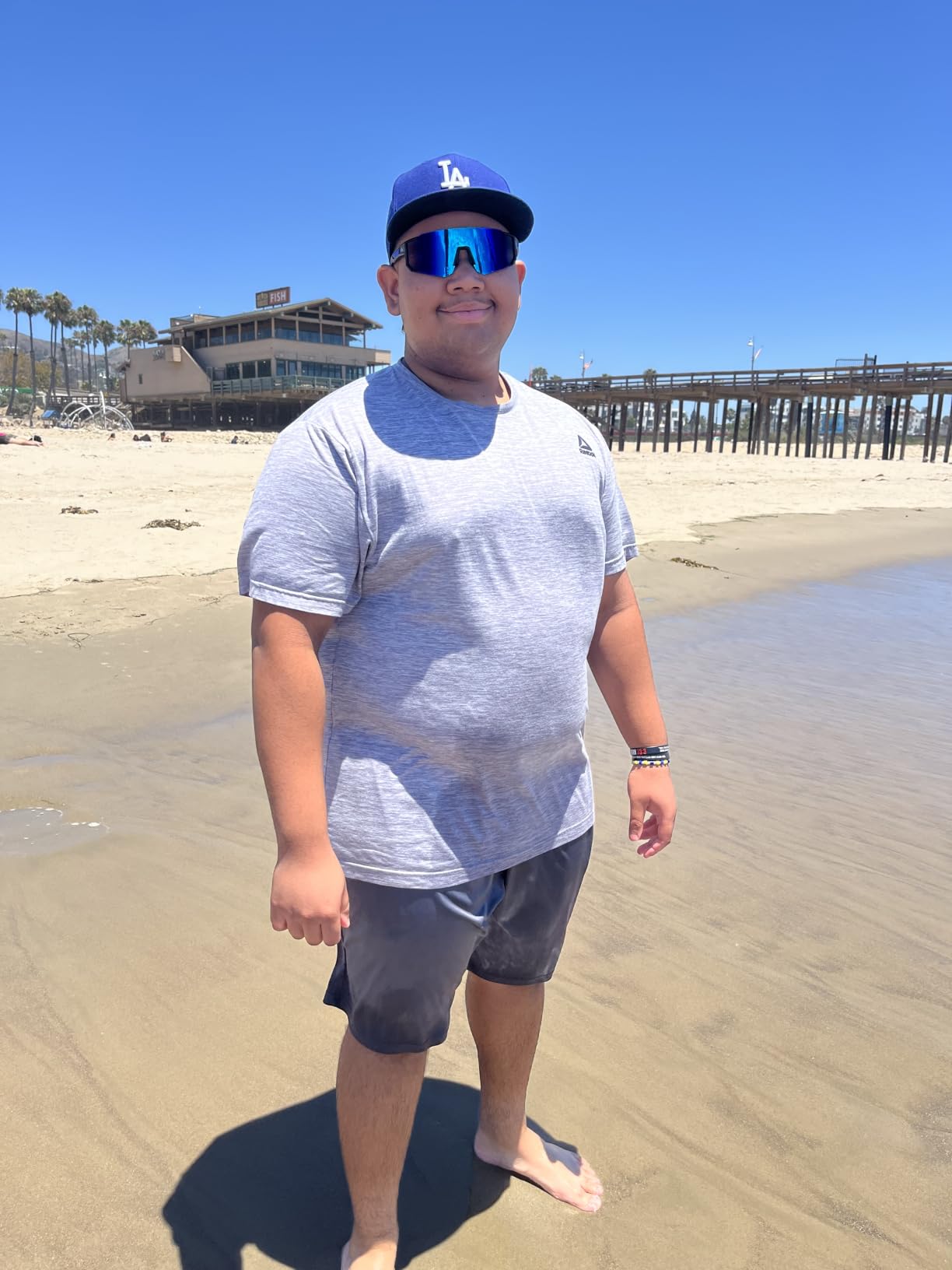
QALLY is the most complete wrap in this group, and on a fast descent with sun coming off dry fields on both sides, that geometry is worth more than any coating. The frame curves well past the temple, so side glare and wind have very little path into your eye.
The lens is TAC HD polarized with a 99% UVA and UVB rating, and reviewers describe the glare reduction as clearly visible in bright sun. The coating is hydrophobic and smudge-resistant, so it keeps working through a dusty gravel road or a sweaty face.
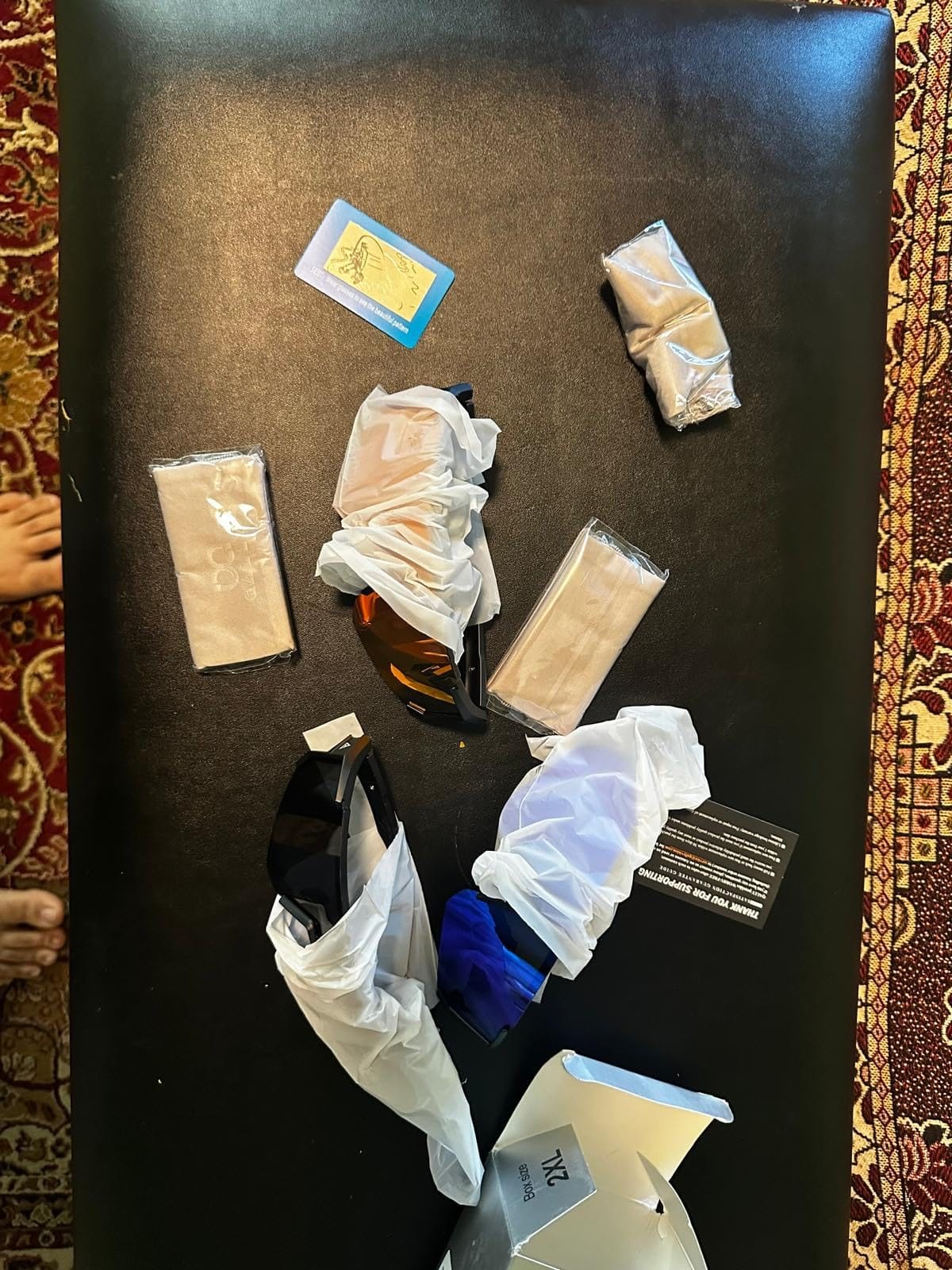
The frame itself uses a featherlight heat-resistant flex construction with non-slip nose pads, and the whole thing stays put on long rides without needing adjustment mid-loop. There are 17 numbered lens and frame colour combinations, so finding the tint you want is easy.
The fit geometry is the recurring criticism. The frame sits high on the face and the nose piece cannot be raised, which some riders compensate for by bending the temples. The lower coverage is also shallow enough that dust can come in from the sides and the top, and a notch in the upper lens corner creates a small blind spot.
Why it works in bright sun
Wrap geometry is the single most effective anti-glare feature on a cycling lens, because most reflected light in a ride arrives from the side rather than straight ahead. Blocking it before it reaches your eye is more comfortable than dimming it afterwards.
The flex frame also means the glasses can be pressed against your face for an extra tight seal on a fast, dusty descent, which is not something a rigid frame allows.
Where it falls short
A frame that rides high is the main issue. If you wear a low-brim cap or have a low nose bridge, the fixed height of this frame will not suit you, and the nose piece does not adjust upward.
The small notch in the upper lens corner is a genuine blind spot rather than a cosmetic detail, so it is worth checking against your riding position.
11. ROCKBROS Polarized Anti-Glare Cycling – Best Value for Riders on a Limit
- Curved wrap lens gives a wide field of view and blocks wind
- 25g frame with adjustable ear pads grips on descents
- Polarization visibly improves road contrast
- Rubber nose pads and ear pieces wear with heavy use
- Lens tint is darker than some riders prefer in mixed light
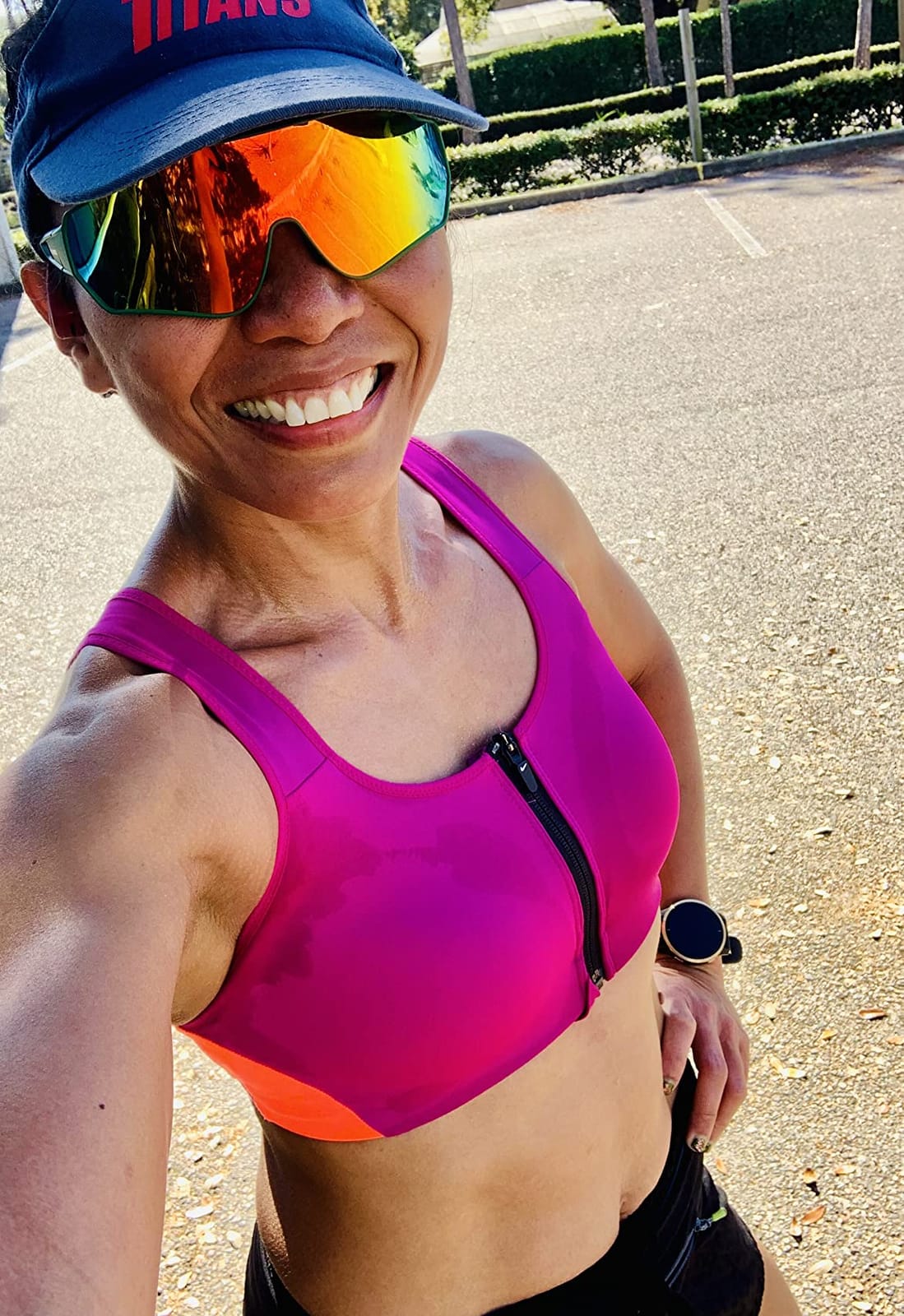
At 25 grams with a curved wrap lens, this is the lightest pair with genuine side coverage in the whole roundup. The lens geometry is described as giving a wide field of vision and wind protection, and on a windy open road that is worth a lot of comfort.
The frame is polycarbonate with rubber nose pads and adjustable rubber ear pads, and reviewers describe the grip holding firmly at speed. Polarization improves contrast on the road in a way that is obvious in direct sun, and the UV400 rating blocks 100% of UVA and UVB.
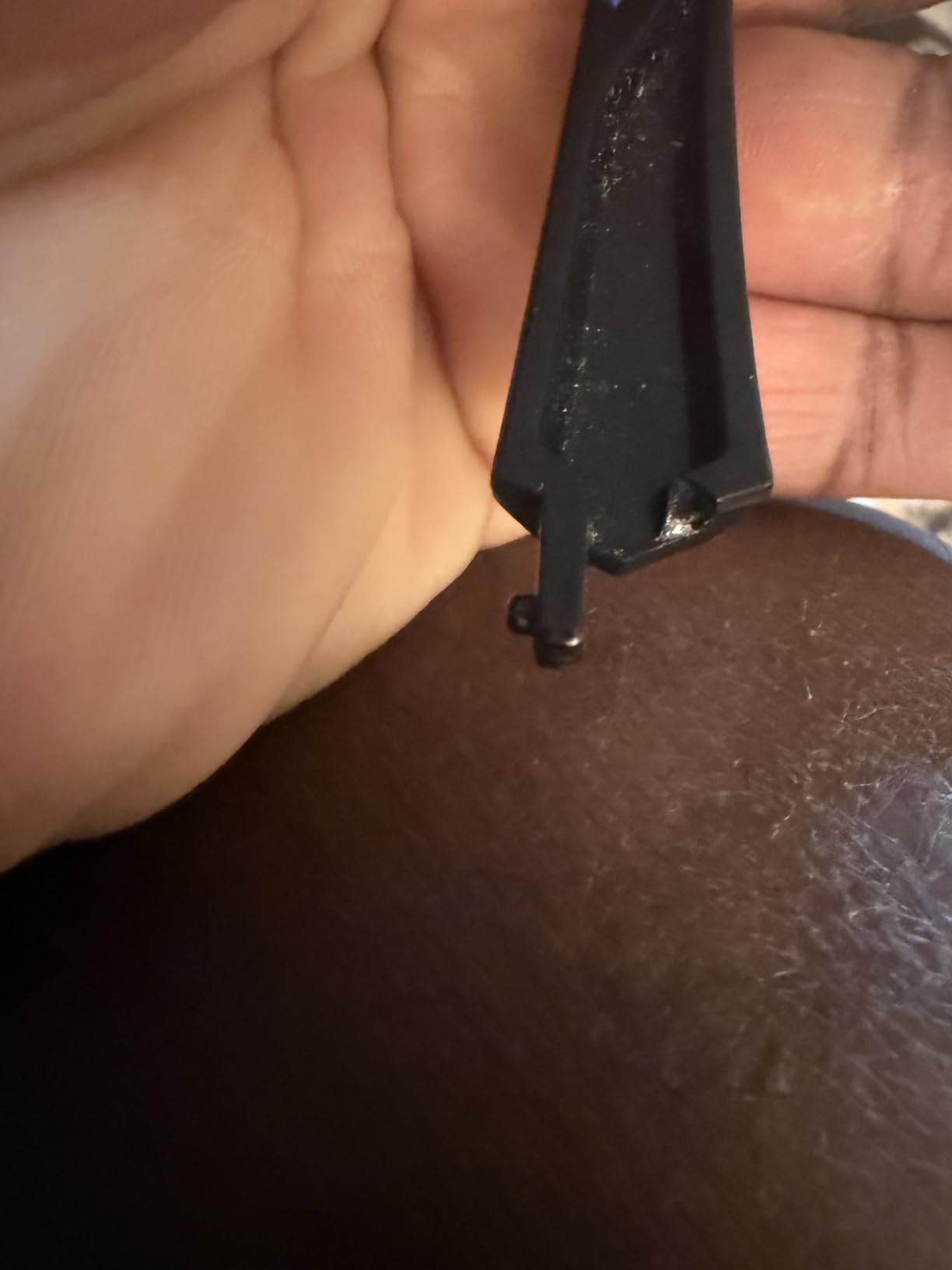
Two issues surface repeatedly. The rubber nose pads and ear pieces wear with heavy use, which is the expected failure point on a soft-contact system, and the tint is darker than some riders want when the light is mixed rather than uniformly bright.
That second point is a real consideration for riders who train year-round in one pair of glasses. A darker fixed lens is excellent in high summer and unpleasant on a grey winter morning, so think about the seasons you actually ride.
Why it works in bright sun
A wrap shape plus polarization is the combination that does the most for a rider in open sun, and at 25g it is light enough that you stop being aware of the glasses entirely after a few kilometres.
Wind protection has a second benefit for contact lens wearers, which is a priority for riders in dry, windy climates where dust and dried mucus are a constant irritation.
Where it falls short
The soft rubber contact points are consumable. Expect to replace or work around them eventually, and check that they are replaceable before you commit.
There is no anti-fog venting mentioned for this model, so on a slow climb you may be more likely to reach for your glasses than with the vented designs in this list.
12. KALIYADI Four-Pack Polarized – Best for Riders Who Keep Losing Pairs
KALIYADI Sports Polarized Sunglasses Men UV400 Protection for Fishing Driving Cycling, Blue/Black/Green/Red, 4 Pack
- Four pairs mean a spare is always available
- HD polarized lenses reduce glare on road and water
- Each pair comes with a strap and microfibre pouch
- Plastic frames flex more than a TR90 or metal-framed option
- A four-pack is bulkier to carry than a single pair
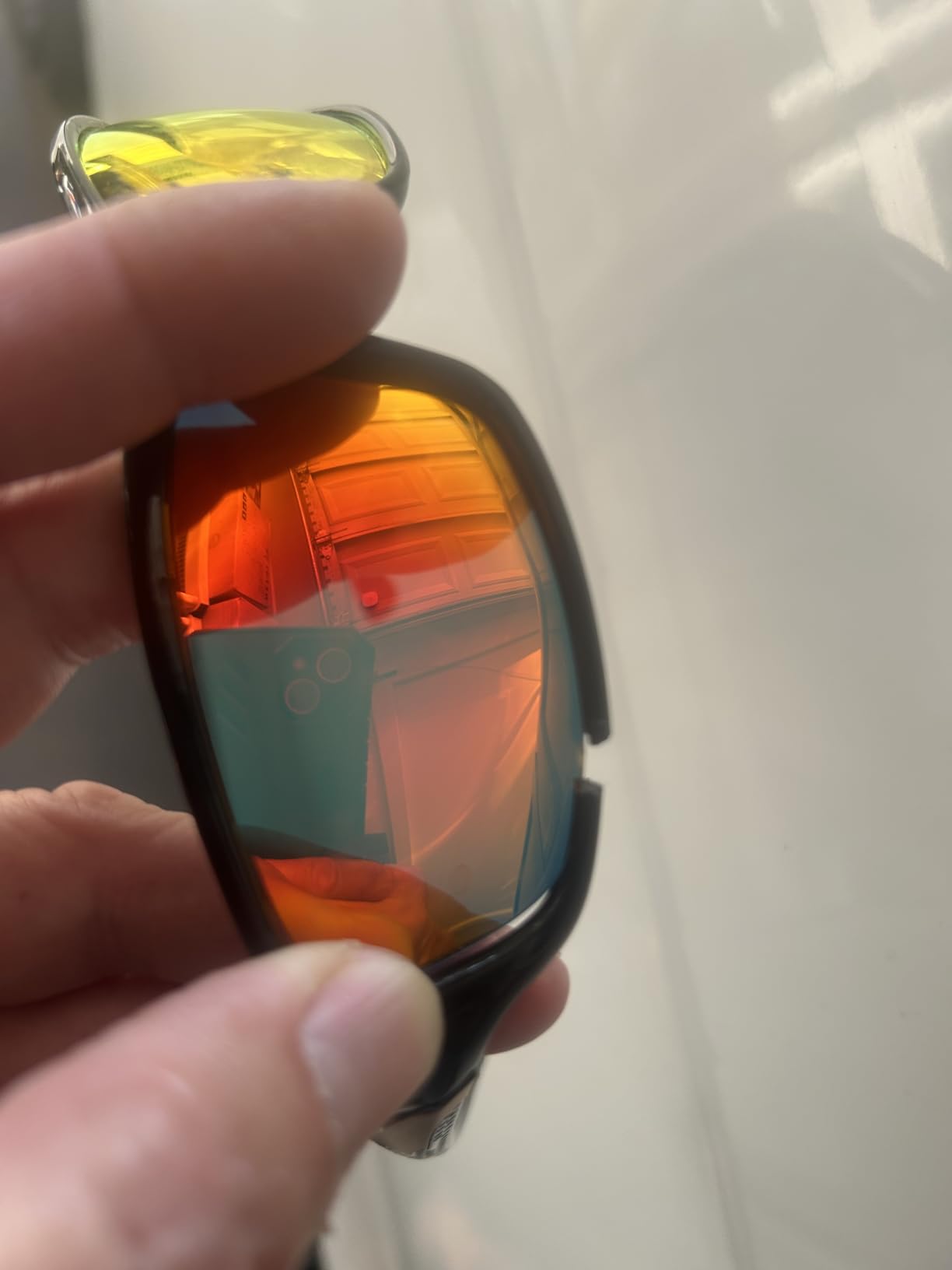
The KALIYADI kit is not a clever lens system. It is four separate pairs of sunglasses with HD polarized lenses, and for a surprising number of riders that is exactly the right answer.
Owners describe the practical routine: one pair lives on the bike, one in the car, one in a bag, one as a spare. Glasses get left on cafe tables and dropped in gravel far more often than anyone expects, and redundancy solves that faster than any upgrade.
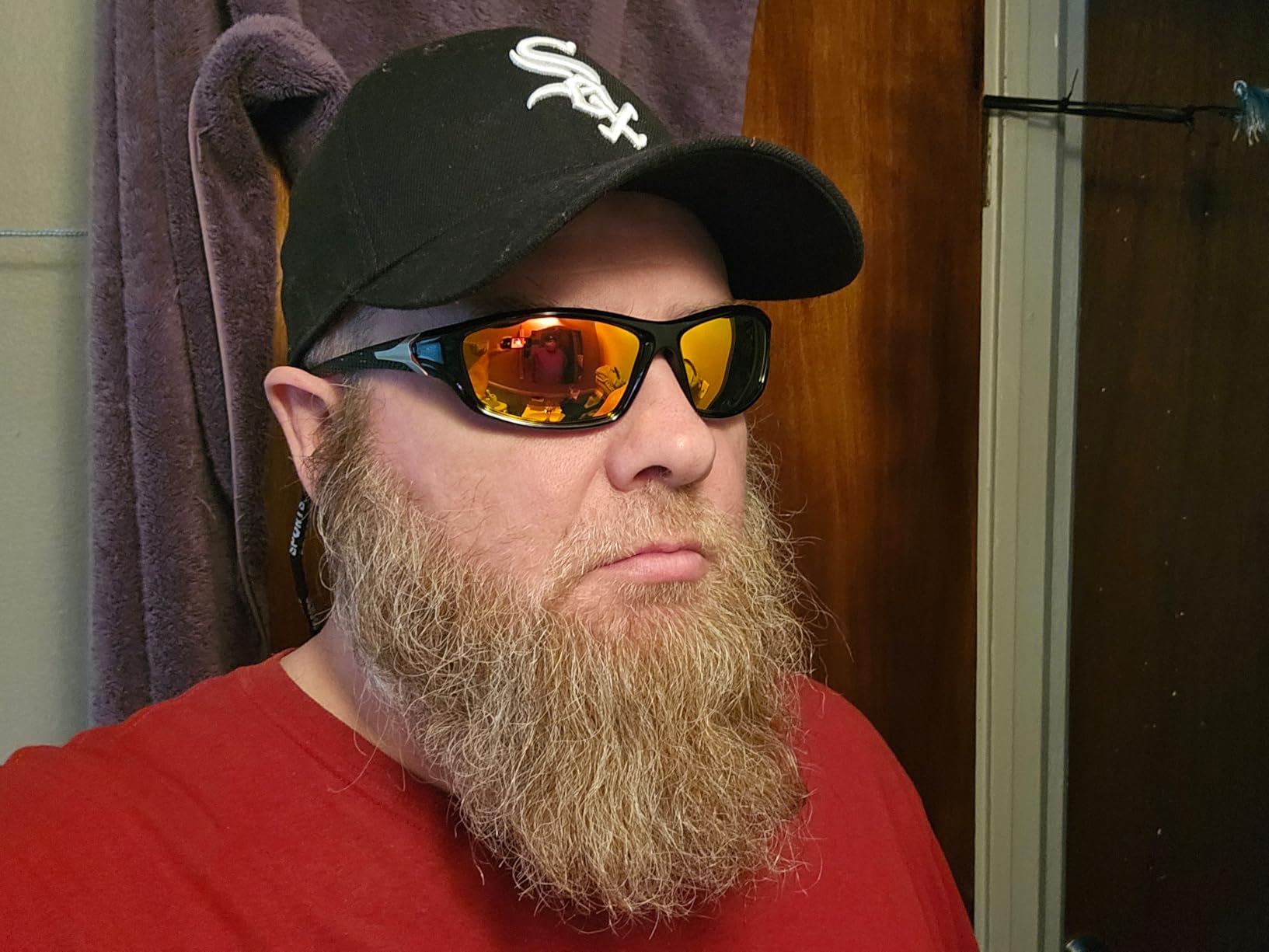
Each pair has HD polarized lenses with a UV400 coating blocking UVA and UVB, and the frame uses sturdy plastic with integrated nose pads and a strap closure. Reviewers treat the polarization as effective and the fit as comfortable for running, cycling, fishing and driving.
The durability reservation is fair. Plastic frames flex more than TR90 or metal-framed options, and the four-pack weighs 208.2g in total, so it is a kit to keep in a car or a garage rather than something you carry on every ride.
Why it works in bright sun
Every pair in the kit is fully polarized with UV400 coverage, so whichever one you grab, the sun protection and glare handling are the same. There is no weak link in the set.
The strap is more useful than it sounds. It keeps the glasses secure during climbs where you might push the bike, or on a hike-bike ride where you are carrying a pack that knocks against your chest.
Where it falls short
Because the frames are plastic, they flex. Riders who press hard on the temples or ride in high heat with the sun on the frame report more give than they get from a TR90 build.
Carrying four pairs is impractical on the bike. This is a keep-one-pair-per-location solution, not a same-day multi-lens solution like the interchangeable kits.
How to Choose Cycling Sunglasses for Bright Sun?
Getting this right comes down to a handful of numbers and one honest question about your light. Start with visible light transmission, because it is the only objective measure that tells you how a lens will behave at midday.
Lens category cheat sheet
Lens categories follow the EN 1836:2005 standard, and the number tells you how much visible light gets through. This is the single most useful reference for choosing cycling sunglasses for bright sun, because it removes all the marketing language from the decision.
Category 0 (over 80% VLT) is a clear indoor lens. Category 1 (43% to 80%) is lightly tinted for hazy sun. Category 2 (18% to 43%) suits variable light and overcast conditions. Category 3 (8% to 18%) is the standard bright-sun lens, good for open road and desert riding. Category 4 (3% to 8%) is the darkest filter for intense glare, and it is what high-altitude snow and desert conditions call for.
For most road riders in summer, Category 3 is the target. If you ride in snow, on a glacier road, or across desert terrain with no shade, Category 4 is the honest answer, and it is the category almost every roundup skips past.
UV400 and what it actually blocks
UV400 means the lens filters all ultraviolet light up to 400 nanometres, which covers both UVA and UVB. UVB is what causes sunburn on the skin, and the eyes are more exposed than you might think when you ride facing into low sun. UVA is the deeper-penetrating band linked with longer-term eye damage, including cataracts and pterygium.
Treat a missing UV400 rating as a disqualifier regardless of tint or polarization. A dark lens that does not block UV gives you glare reduction without the protection that justifies wearing sunglasses outdoors at all.
Grey versus brown versus copper lens colour
Grey lenses lower brightness evenly and preserve colour accuracy, which makes them the neutral choice for riders who want the world to look the way it does. Brown and amber lenses filter blue light and lift contrast on the ground, which is why riders who cycle in bright conditions keep recommending them.
Copper, rose and similar warm tints sit between grey and brown, boosting contrast without the strong colour shift of amber. For road riding where you are scanning the tarmac for hazards, brown or copper usually gives you more usable detail than grey. For trail riding where shadows matter, brown again tends to win.
Photochromic versus polarized, honestly
Polarized lenses filter horizontally reflected light, which is the light coming off water, wet tarmac, snow and car bodies. That is why they are the standard for glare. The cost is that they also block light from LCD displays, so your bike computer, phone or GPS can become hard or impossible to read at certain angles.
There is a second cost riders mention: entering a tunnel or deep shade from bright sun with a polarized lens removes the sudden contrast shift that normally warns you, and several riders report losing track of surface hazards at exactly that moment. Angle the head or take the glasses off on descents if it affects you.
That same glare-versus-visibility tension drives panel choice in a bright living room, which is why we picked apart 65 inch TVs for bright rooms on the same reasoning: fight the reflected light without losing usable detail.
Photochromic lenses react to UV intensity and adjust automatically, which is why they are excellent for riders who cross between sun and shade. Their weakness is peak density, and they are not polarized. Several riders describe them as a good compromise rather than a full replacement for a dark fixed lens in direct midday sun.
If you read that as you will, keep one fixed polarized dark lens for peak sun and accept carrying a second pair for variable light. That is exactly the case the five-lens kits were designed for.
Fit, helmet clearance and fogging
Temple length is the most common fit problem with cycling eyewear. If the arms run past your ears, they will fight your helmet’s retention dial. Frameless designs with flexible rubber legs generally clear a helmet better than full-rim frames with rigid arms, and this is worth checking before anything else.
Nose pads are the second issue. Adjustable rubber pads, whether integrated or replaceable, adapt to different nose shapes and stop the frame sliding on a descent. Riders with small faces should also check the bridge width, since 18mm and 25mm bridges feel very different.
For fogging, the tilt-down trick works better than anything you can buy: glance down by pitching your head rather than your eyes, so the top edge of the lens vents and your view stays usable. Ventilated designs built into the lens or the temples are the permanent fix, and frameless frames move more air than full rims by default.
If you are also tracking heart rate while you ride, our guide to heart rate monitor chest straps for cycling covers the gear side of long sunny rides. And if the question of screen readability comes up, the same polarization trade-off applies there as to your bike computer.
Frequently Asked Questions
What color sunglass lens is best for bright sun?
Brown or copper lenses are the most common recommendation for bright sun cycling because they filter blue light and lift contrast on the road surface, making kerbs, gravel and painted markings easier to pick out. Grey lenses dim brightness evenly and keep colours accurate, which suits riders who want a neutral view or ride at dusk as well as midday. In every case the priority is a UV400 rating and a Category 3 or Category 4 tint, since colour alone does not determine how much light gets through.
Are polarized lenses bad for cycling?
Not bad, but they come with two real trade-offs. Polarized lenses filter horizontally reflected light, which is what makes them so effective at cutting glare off water, snow and wet tarmac. They also block light from LCD screens, so your bike computer, phone or GPS can become hard to read at certain angles, and riders report losing track of surface hazards when entering a tunnel because the usual contrast shift disappears. Many riders solve both by keeping a clear or non-polarized pair for screens and dark sections.
Do photochromic lenses get dark enough for bright sun?
Usually not for peak conditions. Photochromic lenses react to UV intensity, which is why they work so well riding between sun and shade, but riders repeatedly describe them as a good compromise rather than a full replacement for a fixed dark lens in direct midday sun. Some budget units do not darken much at all. If your route is open sun for most of the ride, a fixed polarized lens in the Category 3 or Category 4 range gives more reliable protection.
What lens category is best for bright sun cycling?
Category 3, transmitting 8% to 18% of visible light, is the standard choice for open road riding in summer. For intense glare from snow at altitude, desert terrain or bright water, Category 4 at 3% to 8% is darker and more appropriate. Category 2, at 18% to 43%, suits overcast and variable light but will feel too light in full midday sun.
How do I stop my cycling sunglasses fogging up?
Ventilated lenses built into the frame or temples are the permanent fix, and frameless designs move more air than full rims. For any pair, the quickest trick is to pitch your head down rather than your eyes, which vents the top edge of the lens while keeping your view usable. Anti-fog spray helps but is a second line of defence. Fogging is worst with dark fixed lenses on slow climbs, so pausing to clear the lens before a fast descent is the sensible habit.
Which cycling sunglasses fit small faces?
Frameless designs with flexible rubber temple legs usually fit smaller faces best, because there is no rigid arm to press past the ear. Adjustable rubber nose pads are the key feature on a narrow face, since they let you set the frame height and stop it sliding. Check the bridge width before ordering: an 18mm bridge feels very different from a 25mm one. Longer temples are the most common complaint on small faces, so try or measure before committing.
Final Verdict
The goodr OG takes the top spot in our best cycling sunglasses for bright sun ranking because it does the four things that matter in hard sun: total UV400 protection, effective polarization, a grip that holds through sweat, and enough comfort to forget. If your face is wide, step up to the goodr Mach G for the larger shield shape and the same optical clarity.
For riders who need more than one option, the HAAYOT five-lens kit covers bright sun, overcast, night and fog on a 16.3g frame, and the KALIYADI four-pack solves the problem of glasses that keep disappearing. Riders chasing contrast rather than darkness should look at the qool time brown and gold shield.
Whatever you pick, judge it on visible light transmission rather than brand. For open summer road, Category 3 is your number; for snow, desert or intense water glare, Category 4 is the honest answer. That single figure, plus a UV400 rating and a fit that clears your helmet dial, is what separates a pair that works in 2026 from one that merely looks dark.