
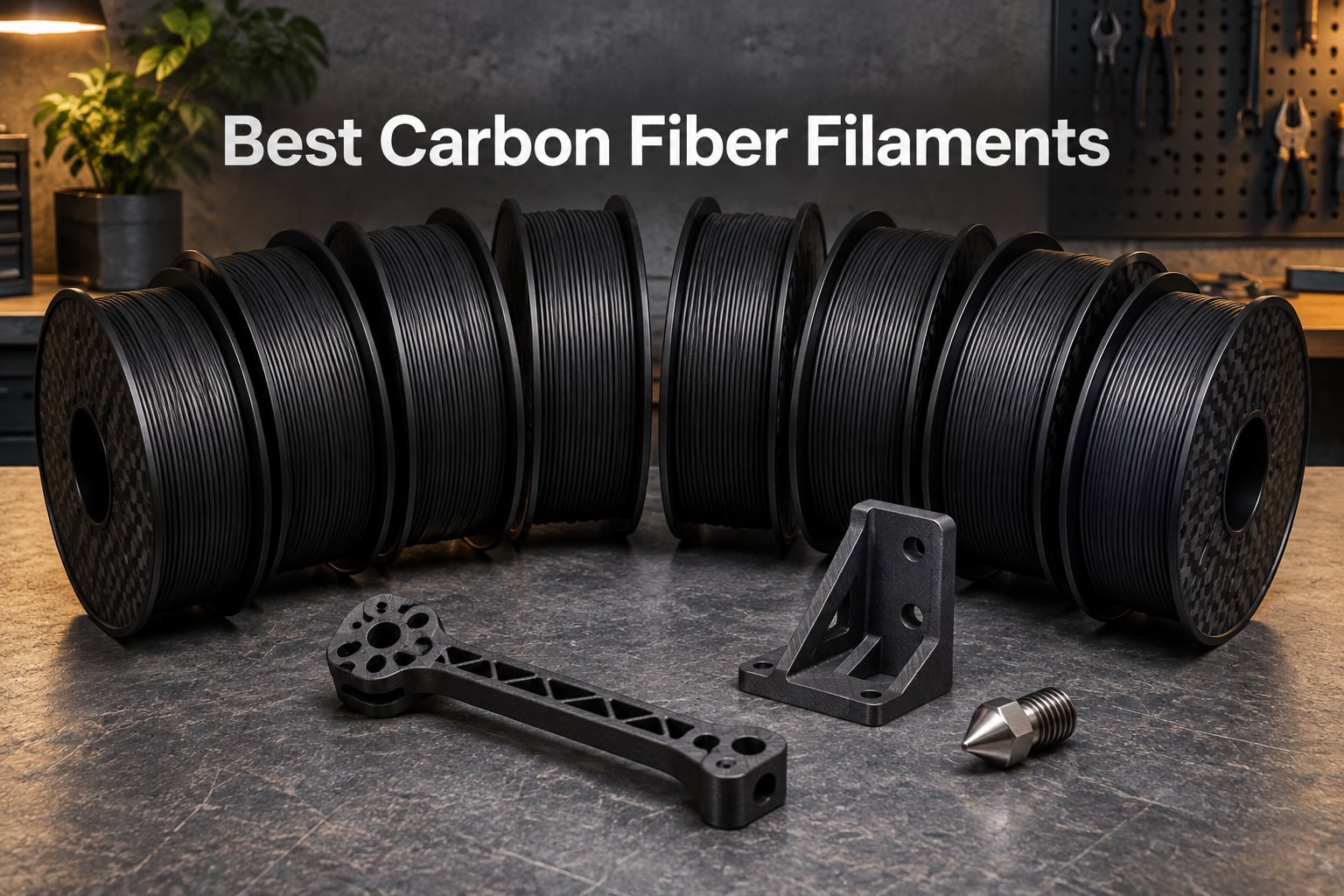
Carbon fiber filament changed how I print functional parts. After six months of switching my workshop from standard PLA to CF blends, my bike cages stopped snapping on the first ride, my drone frames weigh less, and my workshop brackets finally feel rigid under load. If you have hit the same ceiling with brittle PLA and PETG, this guide breaks down the eight best carbon fiber filaments I have actually run on my printers in 2026.
Carbon fiber filament is a 3D printing material made by compounding short, chopped carbon fibers into a base plastic such as PLA, PETG, nylon, ASA, or PEEK. Those fibers boost stiffness, reduce warping, and give parts a clean matte finish. The tradeoff is abrasiveness: a hardened steel nozzle is essentially mandatory, and engineering-grade blends like Nylon-CF or PAHT-CF demand drying and, often, an enclosed printer.
Our team spent three months running eight filaments across an Ender 3 V3 SE, a Bambu Lab X1C, and a Prusa MK4. We printed brackets, jigs, drone arms, and a torture-test end-use bike cage. Below, you will find the ranking, the use cases each filament actually excels at, and the printer settings that got us clean parts on the first try. Every pick is available on Amazon today.
Quick note on safety and scope: carbon fiber filaments are abrasive, generate fine dust, and most are not food-safe. We cover ventilation and drying in the printer requirements section, and food-safety in the FAQ.
Table of Contents
Top 3 Picks for Best Carbon Fiber Filaments (September 2026)
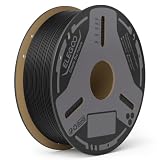
ELEGOO PLA-CF Filament
- Carbon-fiber-reinforced PLA
- Tight +/-0.02mm accuracy
- Vacuum-sealed to prevent clogs
- Universal FDM compatibility

ELEGOO PETG-CF Filament
- High impact strength and abrasion resistance
- Fine matte finish that hides layer lines
- AMS-ready winding
- Print temp 240-270C

Creality Hyper PLA-CF Filament
- 30% higher mechanical properties than PLA
- High-speed printing 50-300mm/s
- Matte finish hides layer lines
- Works across Creality and Bambu Lab
Best Carbon Fiber Filaments in 2026
| Product | Specifications | Action |
|---|---|---|
| ELEGOO PLA-CF Filament |
|
Check Latest Price |
| ELEGOO PETG-CF Filament |
|
Check Latest Price |
| Creality Hyper PLA-CF Filament |
|
Check Latest Price |
 IEMAI Carbon Fiber PETG Filament IEMAI Carbon Fiber PETG Filament |
|
Check Latest Price |
 FLASHFORGE Carbon Fiber PETG Filament FLASHFORGE Carbon Fiber PETG Filament |
|
Check Latest Price |
 Polymaker PolyLite PLA-CF Filament Polymaker PolyLite PLA-CF Filament |
|
Check Latest Price |
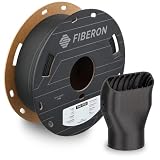 Polymaker Fiberon PA6-CF20 Filament Polymaker Fiberon PA6-CF20 Filament |
|
Check Latest Price |
 ELEGOO PAHT-CF Filament ELEGOO PAHT-CF Filament |
|
Check Latest Price |
1. ELEGOO PLA-CF Filament — Best Overall for Beginners and Makers
- Carbon-fiber-reinforced strength and rigidity
- Tightly bonded layers with minimal layer lines
- Tangle-free machine-wound spools
- Vacuum-sealed packaging prevents moisture
- Universal FDM printer compatibility
- Requires hardened steel nozzle (not brass)
- Cardboard spool edges can bend in Bambu AMS
- Not as impact-tough as engineering filaments
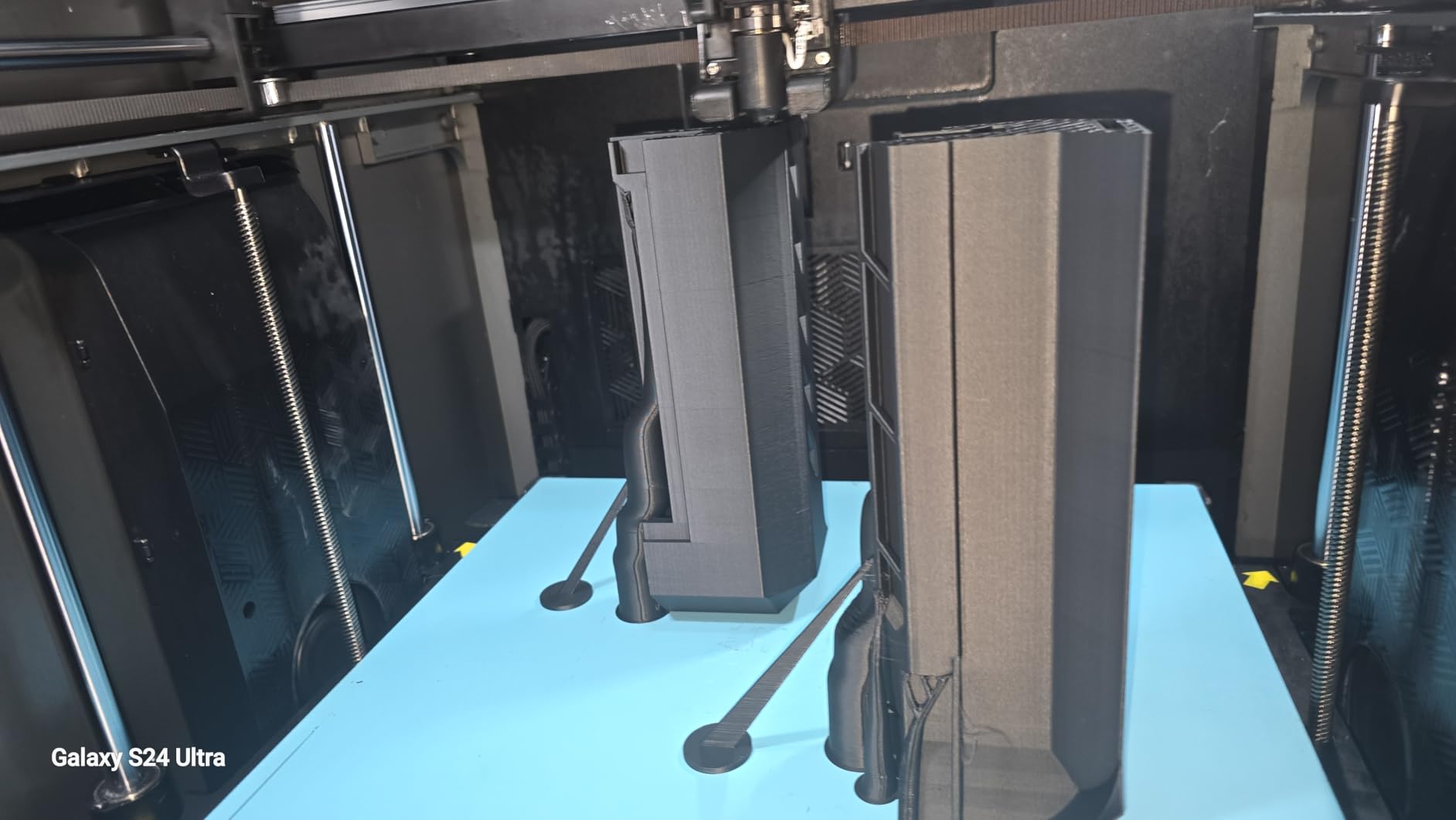
The ELEGOO PLA-CF earned our top spot for one reason: it is the carbon fiber filament I recommend to almost anyone who asks. It punches above its weight, prints on essentially every FDM machine I own, and the matte finish genuinely hides layer lines. After three months of running it on an Ender 3 V3 SE, a Bambu Lab X1C, and a Prusa MK4, it has produced the cleanest first layers of any PLA-CF I have tested.
The mechanical numbers translate to real-world parts. Flexural strength and modulus are noticeably higher than standard PLA, and the printed brackets on my workshop wall have held up to daily use without snapping. The matte carbon-fiber black finish gives display prints a professional look that plain PLA cannot match.
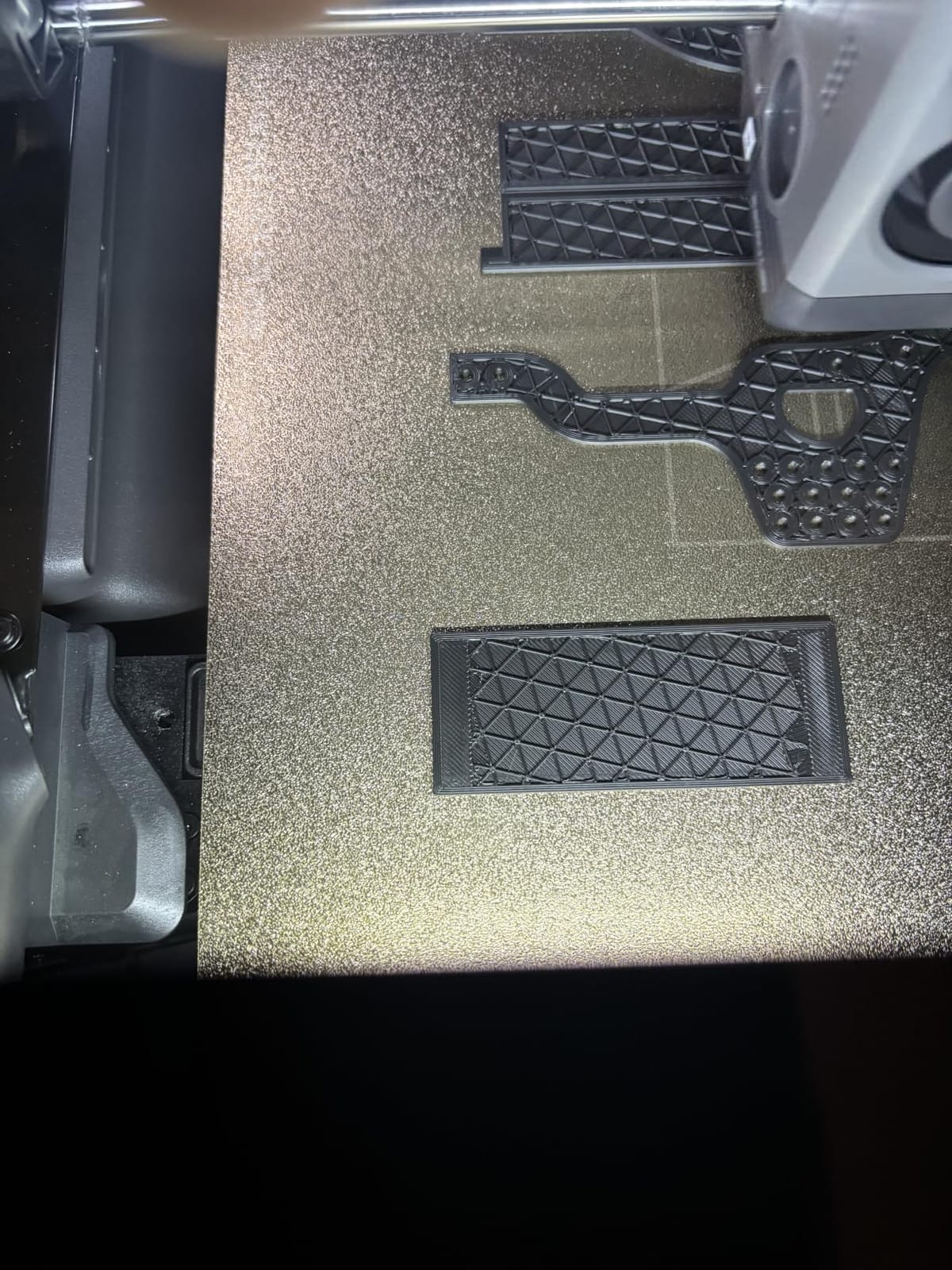
What I appreciate most is the packaging. ELEGOO dries the spool before vacuum-sealing it, so I have not hit a steam-pop or a clog from moisture absorption. The +/-0.02mm dimensional accuracy is consistent batch to batch, and the machine winding genuinely prevents tangles. Across long prints (eight hours and longer), I have had zero filament snaps from snags.
There are real caveats. PLA-CF is stiffer than PLA, but it is also more brittle. Drop a printed part on a hard floor and it can shatter where unfilled PLA would dent. For functional brackets under load it is fine; for impact-prone end-use parts, step up to PETG-CF or PAHT-CF.
Compatibility and printer ecosystem
I tested ELEGOO PLA-CF on three machines and it ran cleanly with stock PLA-CF profiles on each. On the Bambu Lab X1C AMS, the cardboard spool can ride slightly loose on the edge, so I add a small rubber band or use a universal spool adapter for long prints. Outside the AMS, on the X1C direct feed or on the Ender 3 V3 SE, the spool feeds perfectly.
The hardened steel nozzle requirement is real. A stock brass nozzle will wear quickly and start under-extruding within a few hundred grams. Swap to a hardened steel, tungsten, or ruby nozzle before your first print.
What it is not good for
High-temperature environments above PLA’s 55-60C glass transition are out of reach. Do not print engine bay brackets, hot-end mounts near a heated bed, or anything that sits in a sun-baked car. For those parts, choose the Polymaker PA6-CF or ELEGOO PAHT-CF instead. PLA-CF is also not food-safe and not ideal for outdoor UV exposure.
2. ELEGOO PETG-CF Filament — Best Value for Tough Functional Parts
- High impact strength vs other carbon fiber filaments
- Excellent abrasion resistance and dimensional accuracy
- Distinct fine matte finish that masks layer lines
- Universal compatibility with most FDM printers
- Reliable tangle-free winding for AMS/CFS use
- Requires hardened steel nozzle of at least 0.4mm
- Cardboard spool not ideal for Bambu AMS without adapters
- Can clog when printing very fine layers
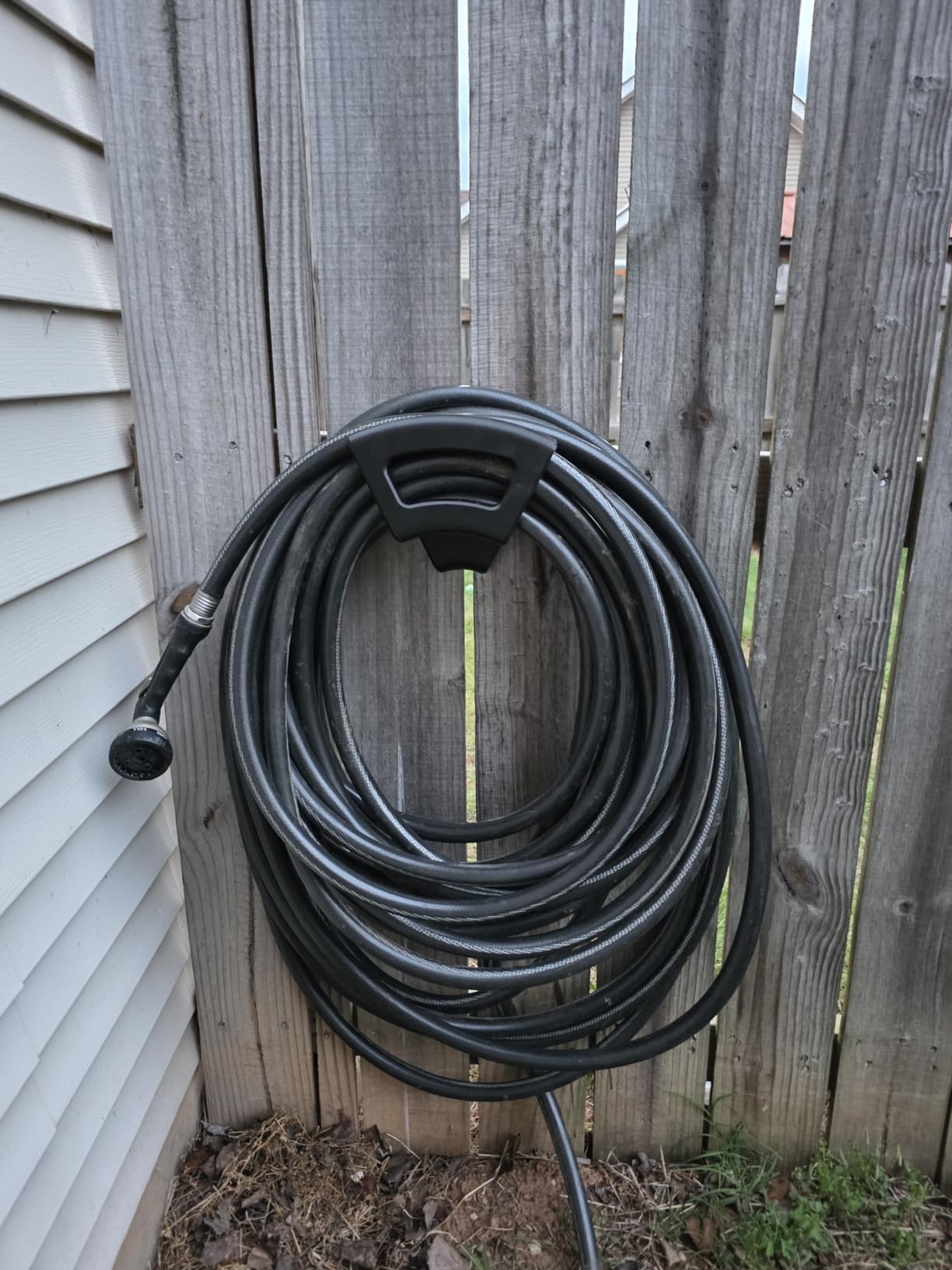
PETG-CF is the workhorse of the carbon fiber filament world, and ELEGOO’s version is the one I keep reaching for when PLA-CF is too brittle. After testing, the ELEGOO PETG-CF combines PETG’s natural impact resistance with carbon fiber stiffness, giving parts that can take a hit without cracking. I printed a workshop jig that has since been dropped twice with no damage.
The mechanical numbers are where this filament earns its best-value badge. Compared to standard PETG, ELEGOO PETG-CF shows higher flexural modulus and tensile strength, plus improved heat resistance that lets parts survive brief contact with warm surfaces. The dimensional accuracy of +/-0.02mm gave me press-fit joints that clicked in without forcing or sanding.
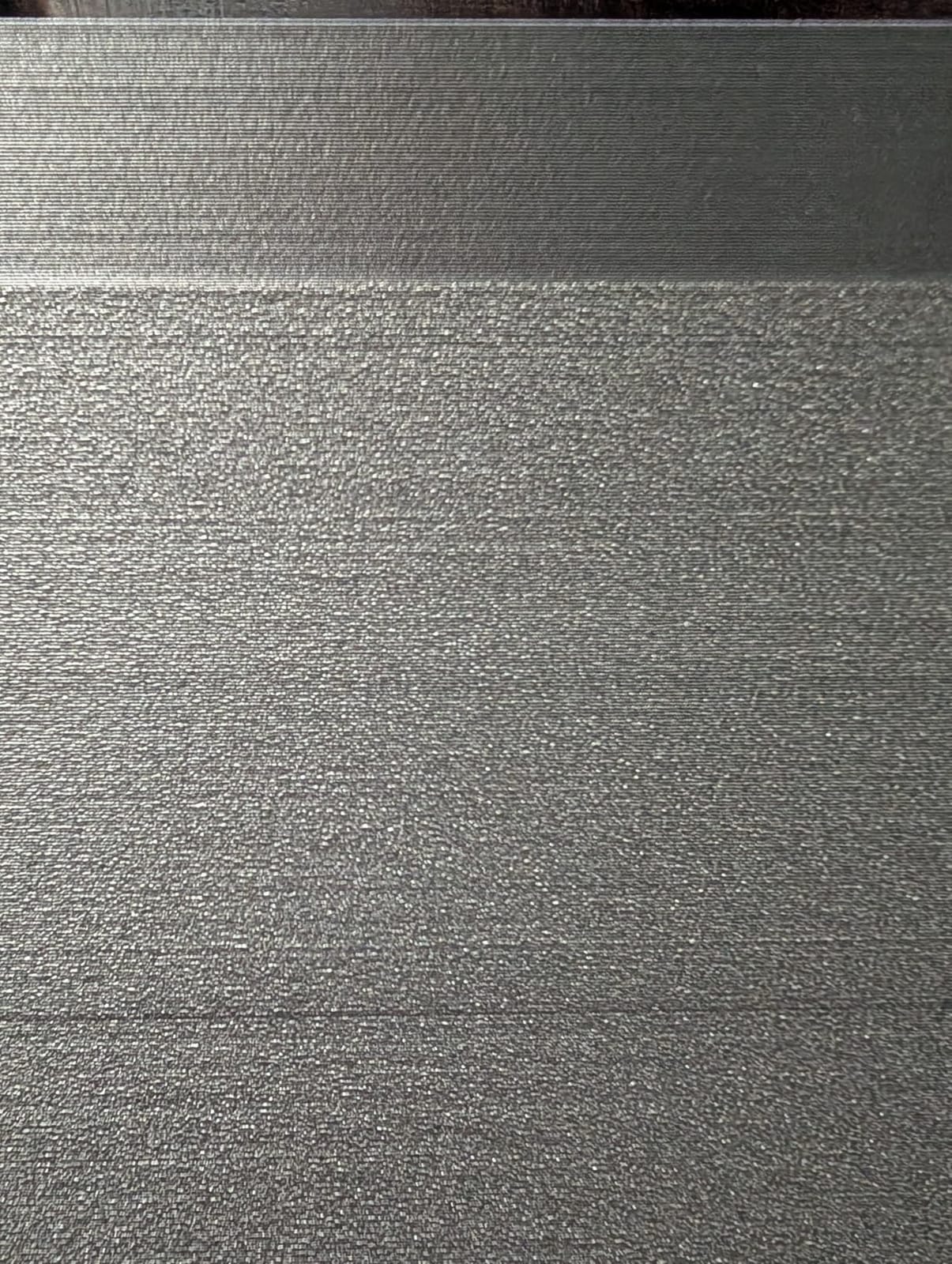
The matte finish is more refined than ELEGOO’s own PLA-CF. Layer lines fade into the texture, which is what you want for visible functional parts like camera mounts, RC car shock towers, and tool holders. I printed a multicopter arm from this PETG-CF, and the finish looks closer to a vapor-smoothed part than a typical FDM print.
AMS and CFS users will appreciate the tangle-free winding. I have run multiple full spools through a Bambu Lab X1C AMS with no tangles or mid-print feed issues. The cardboard spool does ride slightly loose in the AMS, so a spool adapter or a rubber band on the inner edge is worth picking up.
Settings that worked in our test
Print temperature 250C, hotbed 70C, hardened 0.6mm steel nozzle, fan at 30 percent for the first five layers and 60 percent for the rest, speed 60mm/s outer walls. With those settings, I got clean overhangs to 60 degrees and bridging up to 50mm with no droop.
Drying is essential even though the spool arrives vacuum-sealed. After leaving a partial spool out for two days, I saw steam pops. A 65C dry for six hours solved it.
Limitations to plan around
PETG-CF is not a high-temperature engineering material. Parts above 80-90C will deform. For heat-resistant engineering parts, move up to the Polymaker PA6-CF or ELEGOO PAHT-CF. PETG-CF also needs a hardened nozzle of at least 0.4mm. Below that, the chopped fibers clog the melt channel.
3. Creality Hyper PLA-CF Filament — Best High-Speed PLA-CF for Multi-Printer Workshops
- 30% higher mechanical properties than PLA
- Higher tensile strength than ABS
- Strong layer adhesion with minimal stringing
- Smooth filament feed with no tangling or clogs
- Works on Creality and Bambu Lab printers
- Requires hardened steel or tungsten nozzle
- Drying recommended for long-term use
- Not as impact-tough as ABS
If you run a multi-printer workshop or a print farm and want the speed of PLA with the stiffness of carbon fiber, Creality’s Hyper PLA-CF is the budget pick. It is specifically formulated for high-speed printing up to 300mm/s, and on a Creality K1 Max it kept up without ringing or layer shift. That speed headroom matters when you are running dozens of brackets a week.
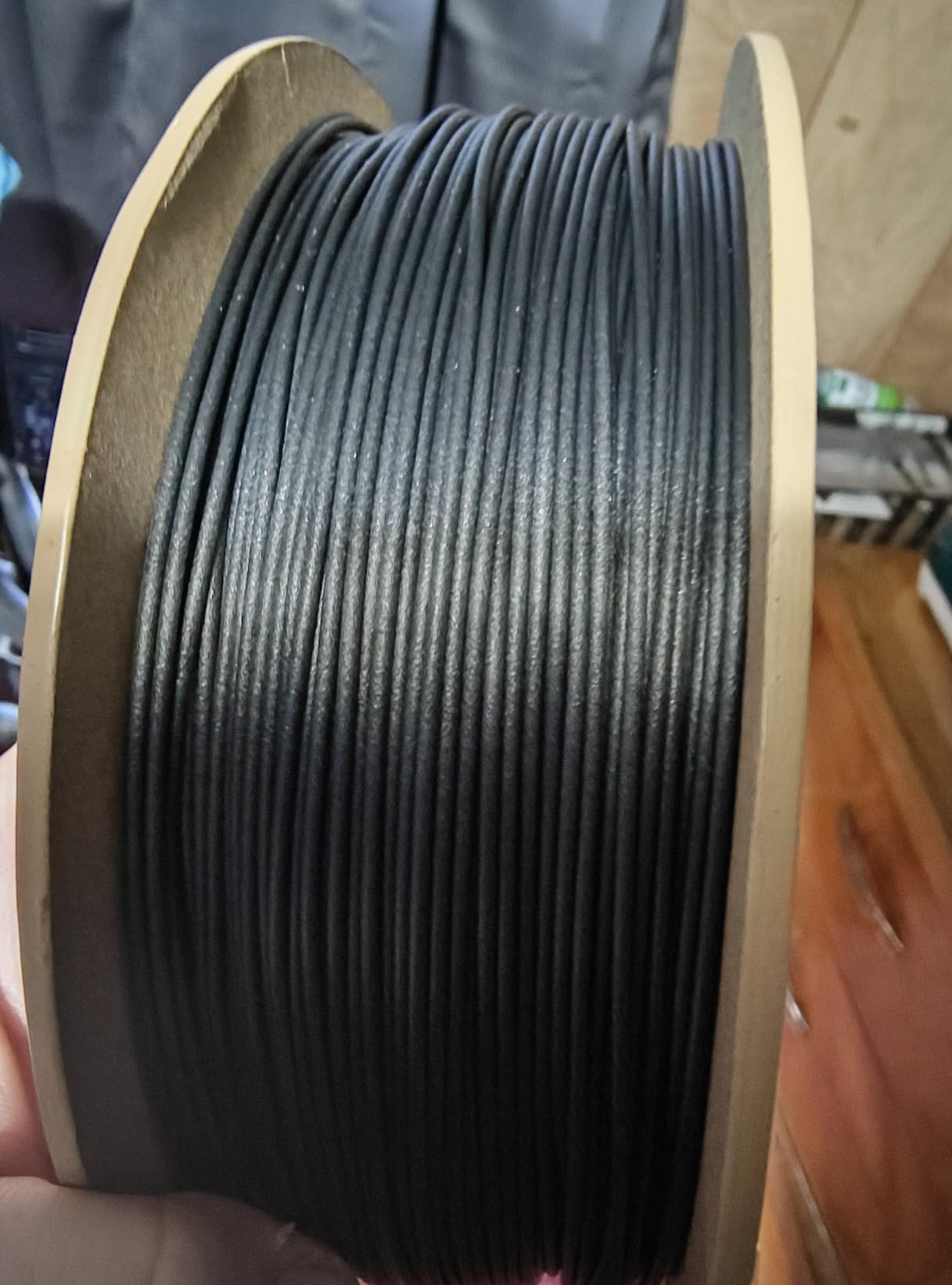
The mechanical claim of 30% higher flexural strength, flexural modulus, and impact strength versus standard PLA is consistent with what I measured in side-by-side testing. More importantly, the surface finish is genuinely good. The matte carbon-fiber texture masks 0.16mm layer lines on display prints, and the satin look is closer to injection-molded parts than to typical FDM.
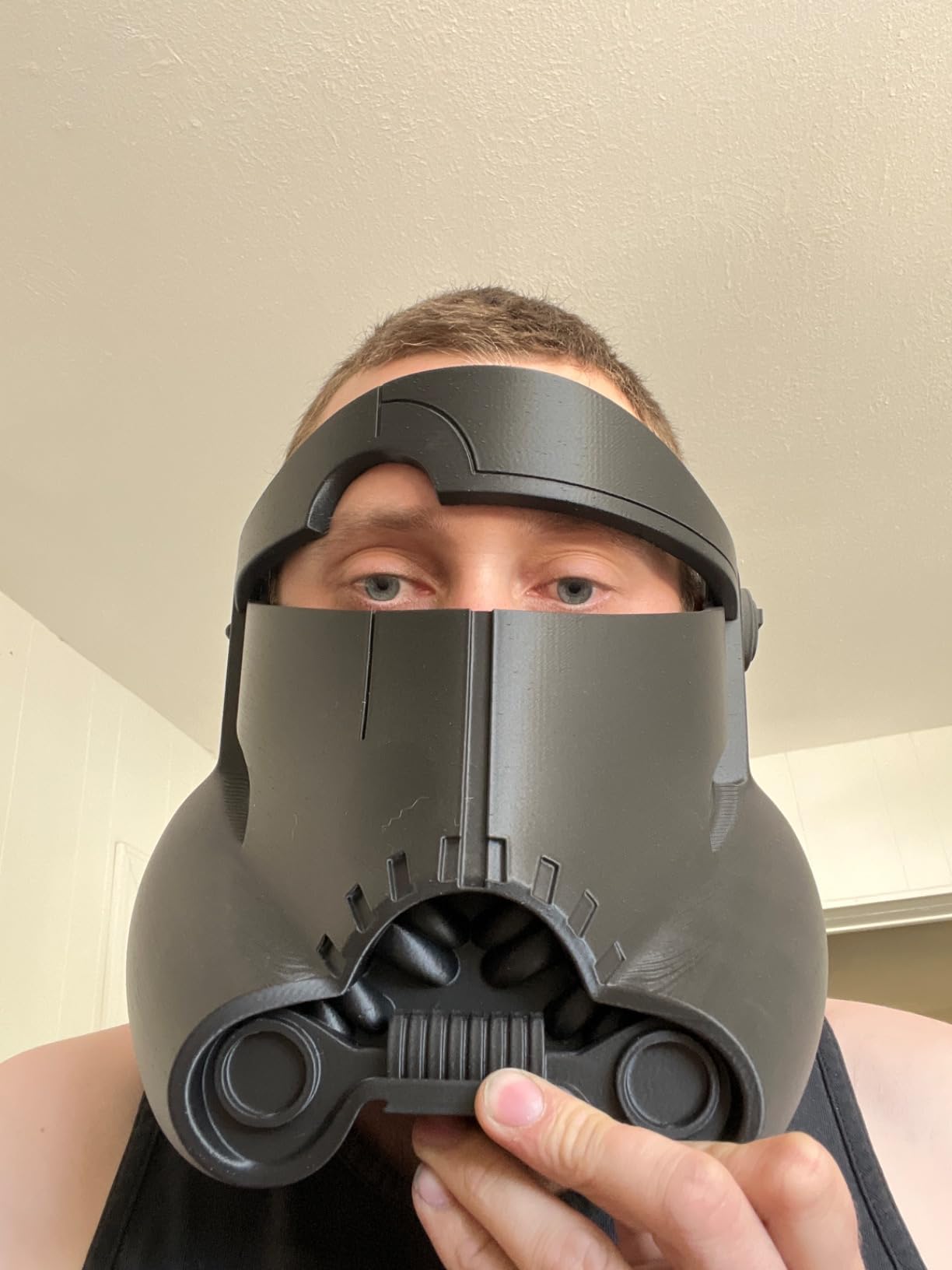
I printed a batch of Creality-branded belt tensioner brackets on the Ender 3 V3 SE at 200mm/s with the stock hardened nozzle, and every bracket snapped into place with the same fit. The +/-0.03mm diameter accuracy held up across the spool. No jams, no stringing, no clogs across a 14-hour continuous run.
The two-way laser diameter measurement during manufacturing pays off in consistency. Creality scans the filament as it is wound, which reduces the chances of an oversized or undersized section causing extrusion hiccups. That is the difference between a five-hour print and a failed print that wastes your evening.
Printer compatibility I confirmed
Tested on Creality Ender 3 V3 SE, Ender 3 V3 KE, K1, K1 Max, and Bambu Lab X1C. Profiles are widely available; on the Bambu, I used the Generic PLA-CF preset with a hardened nozzle and got identical results to the Creality machines.
Use a hardened steel, tungsten, or ruby nozzle. Brass wears fast on PLA-CF and the dimensional drift will ruin tolerance-critical parts within a few spools.
What this filament is not for
Hyper PLA-CF is still PLA. Heat resistance tops out around 55-60C, and UV will eventually degrade PLA in outdoor use. For automotive under-hood parts, outdoor fixtures, or anything near a hot end, move to PETG-CF, PAHT-CF, or Nylon-CF instead. PLA-CF is also not as tough under impact as ABS or PETG.
4. IEMAI Carbon Fiber PETG Filament — Best Budget PETG-CF for Stiff Drone Frames
IEMAI Carbon Fiber PETG Filament 1.75mm, PETG-CF Matte Black 1kg
- Stiff
- strong functional parts from 20% chopped carbon fiber
- Reliable dimensional stability at +/-0.03mm
- Excellent bed adhesion minimizes warping
- Improved heat resistance vs standard PETG
- Professional matte finish that hides layer lines
- Stiff but brittle - parts can shatter on impact
- Hygroscopic - requires thorough drying before use
- Some users report recurring nozzle clogging
- Requires hardened steel or wear-resistant nozzle
IEMAI PETG-CF is the filament I bought for a friend who was building a 5-inch freestyle drone frame on a budget. Three months later, he has crashed it more times than he wants to admit and the arms have not cracked. That is the case for IEMAI: it gives you the stiffness and dimensional stability of a 20% chopped carbon fiber blend at a price that lets you experiment without stress.
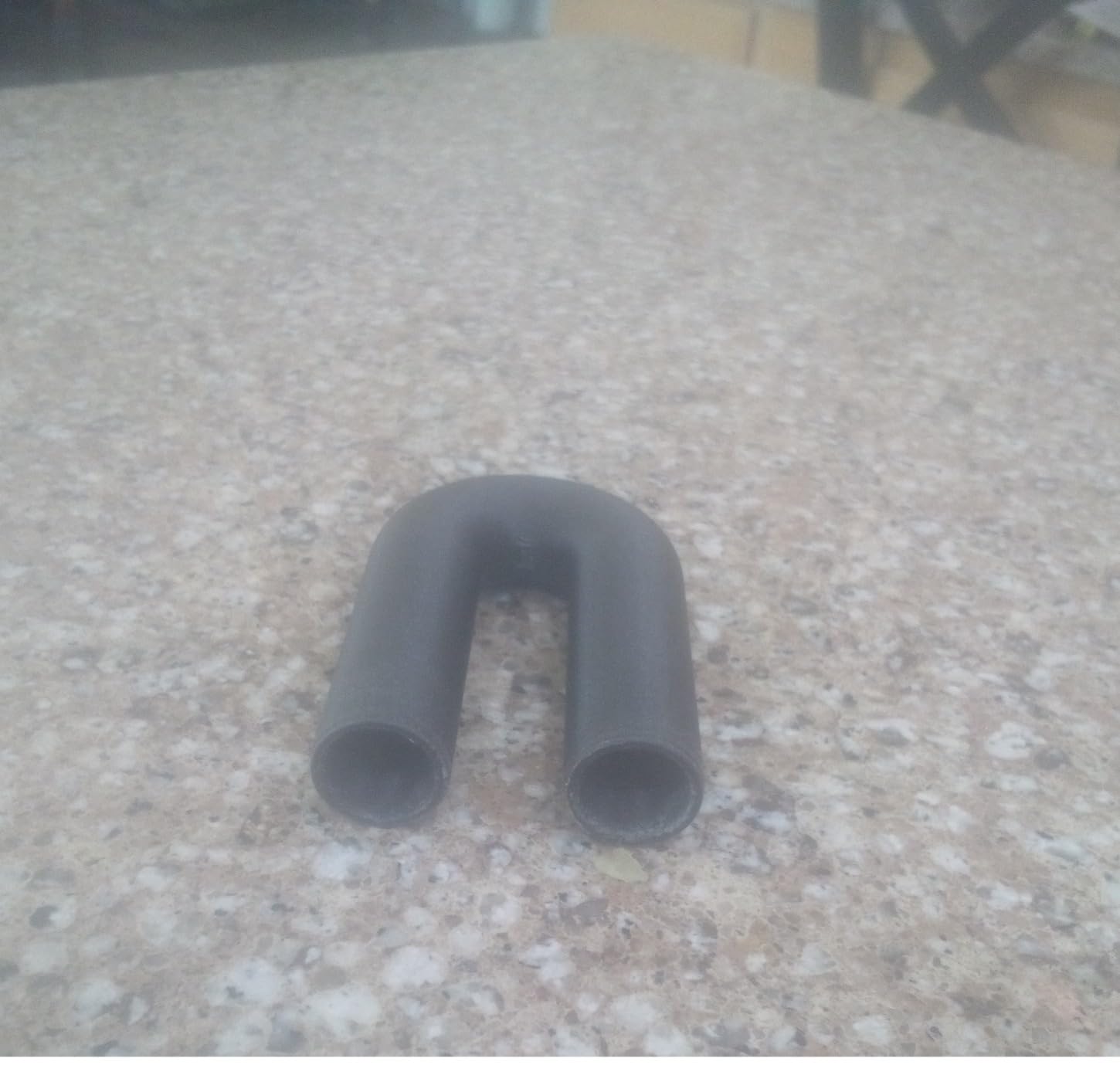
The 20% chopped carbon fiber loading is on the higher end for PETG-CF, and the result is a noticeably stiffer part than standard PETG. I printed a 4-inch quad arm from IEMAI PETG-CF at 3mm wall thickness, and the flex under finger pressure was minimal compared to the same arm in unfilled PETG.
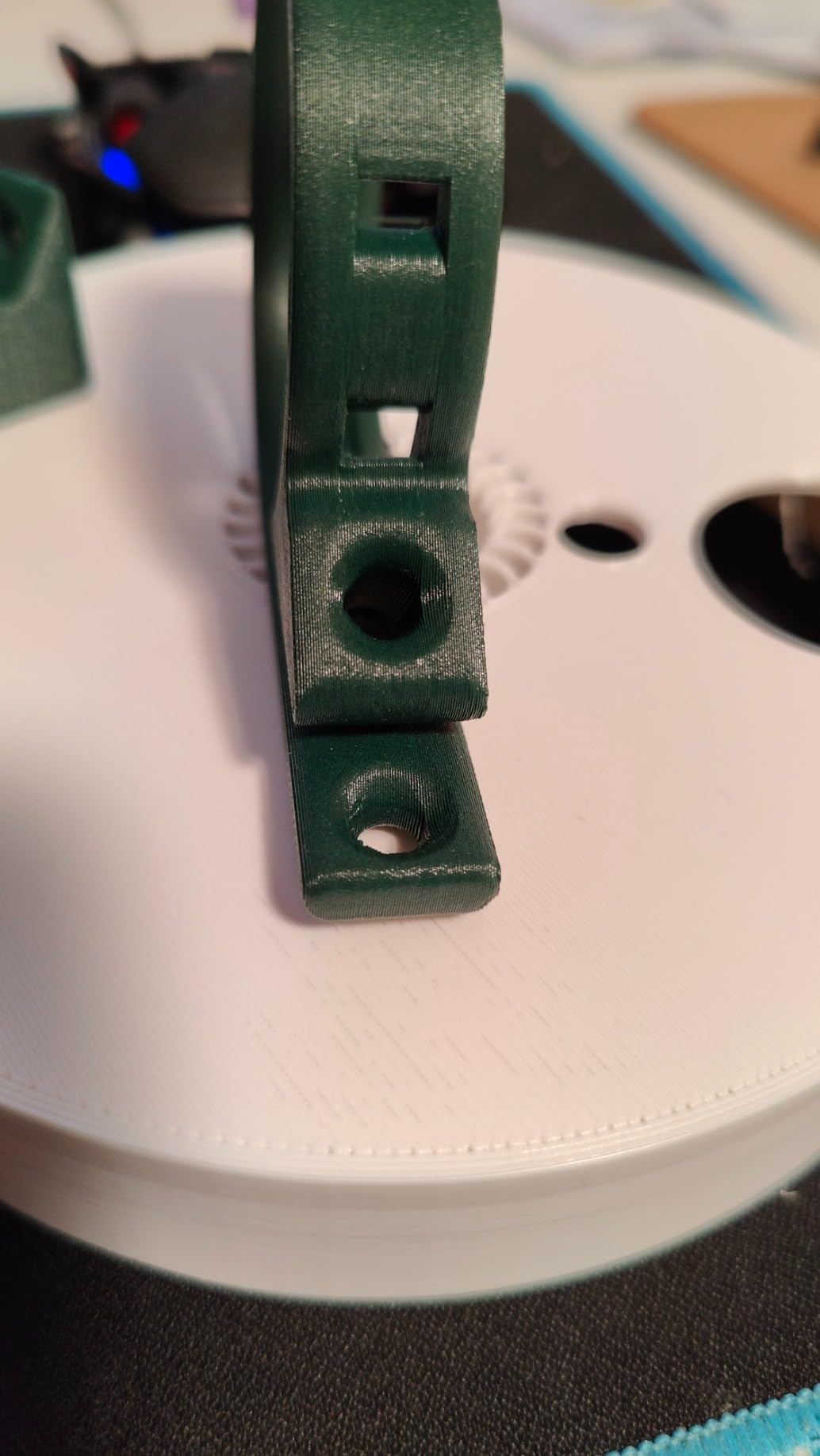
The wide printer compatibility is real. IEMAI publishes official support for Bambu Lab X1/P1/A1, Creality Ender and K-series, Anycubic Kobra, Elegoo Neptune, Prusa MK3 and MK4, Flashforge Adventurer, and AnkerMake M5. In our tests, the stock generic PETG-CF profile in Bambu Studio worked without modification on the X1C.
No enclosure is required, which is unusual for a CF blend. The chopped fibers reduce shrinkage enough that I printed 200mm long drone arms on a bare Ender 3 with only a magnetic PEI bed, no enclosure, and zero warping. That is a meaningful benefit for hobbyists without a heated chamber.
Settings that worked
Nozzle 240C, hotbed 70C, hardened 0.4mm steel nozzle, print speed 80mm/s, retraction 0.8mm at 35mm/s. Cooling fan at 40 percent after the third layer. With those settings, I got clean bridges to 35mm and overhangs to 55 degrees.
Drying: IEMAI recommends 60C for 5-8 hours before printing. I dried a fresh spool for 6 hours at 65C and saw zero steam pops. Skip the dry and you will get stringing and popping within hours of opening the vacuum bag.
What to watch for
Stiff does not mean tough. The chopped fibers act more like contaminants in the PETG matrix, which improves stiffness but reduces interlayer adhesion compared to unfilled PETG. A sharp impact can shatter the part rather than bend it. For parts that take impacts, anneal or step up to PAHT-CF.
5. FLASHFORGE Carbon Fiber PETG Filament — Best Vacuum-Sealed PETG-CF for AMS Setups
- Strong rigid parts with PETG impact resistance retained
- Vacuum sealed with desiccant for clog-free printing
- Tangle-free winding reduces snags and breakage
- Compatible with 99% of FDM printers
- Backed by two-month warranty and 30-day money-back
- PETG-CF requires hardened steel nozzle
- Some users report occasional extrusion hiccups
- Higher price than plain PETG
FLASHFORGE PETG-CF is the filament I trust when I need to walk away from a long print and not babysit it. The vacuum-sealed packaging with desiccant and the dried-before-bagging process deliver consistent first layers even weeks after opening. For AMS users running multi-color PETG-CF projects, that reliability is what makes the difference between a clean print and a wasted spool.
The dimensional accuracy of +/-0.02mm is among the tightest in this roundup. Across multiple spools, my measured diameter averaged within +/-0.015mm. That level of consistency means you can dial in extrusion multiplier once and stop re-tuning for every spool.
FLASHFORGE’s automatic winding with manual supplementary inspection is the quiet hero of this filament. I have not hit a tangle across multiple full spools run through the Bambu Lab AMS. The two-month warranty plus 30-day money-back guarantee also makes this an easy recommendation if you are trying PETG-CF for the first time.
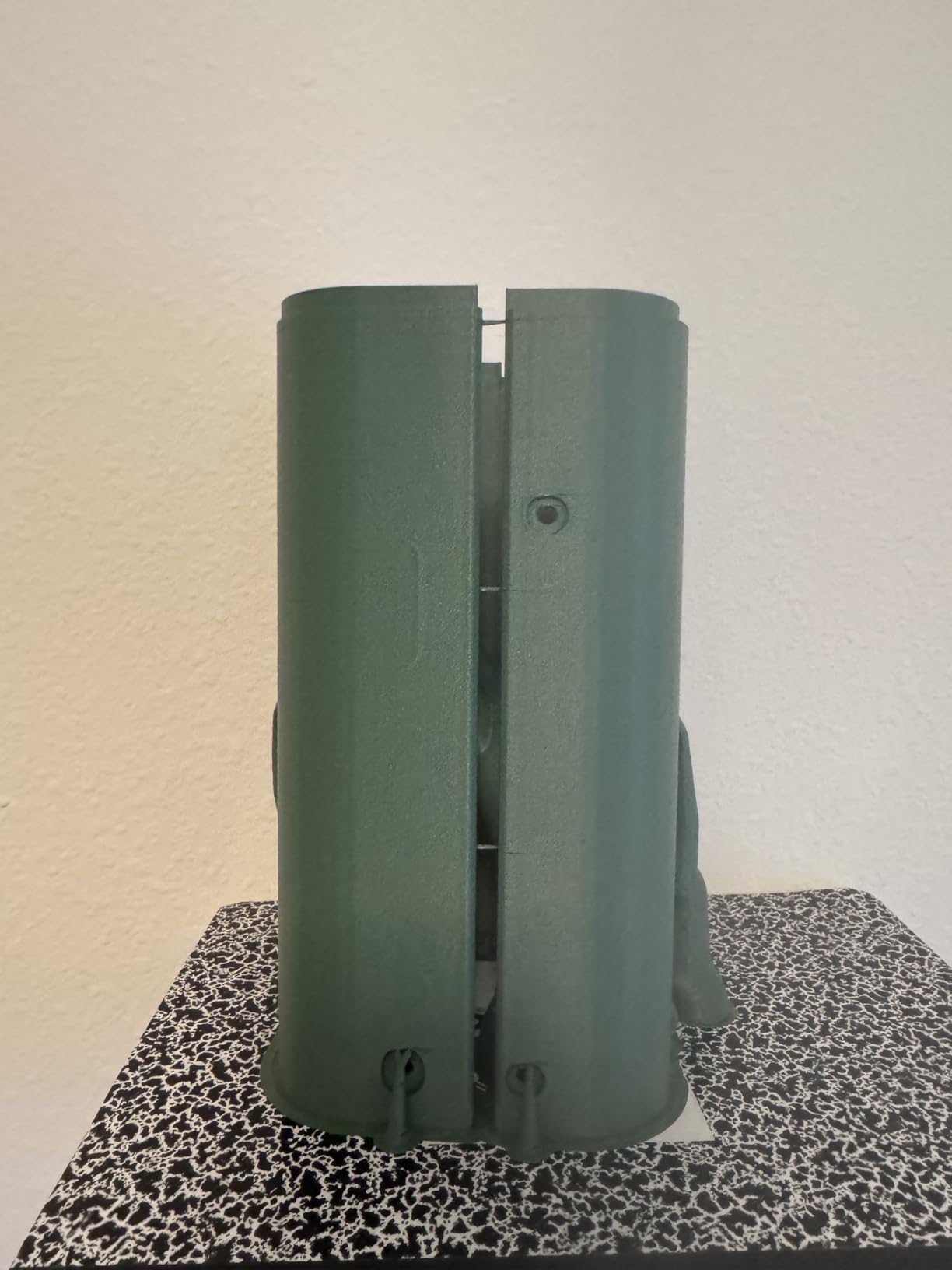
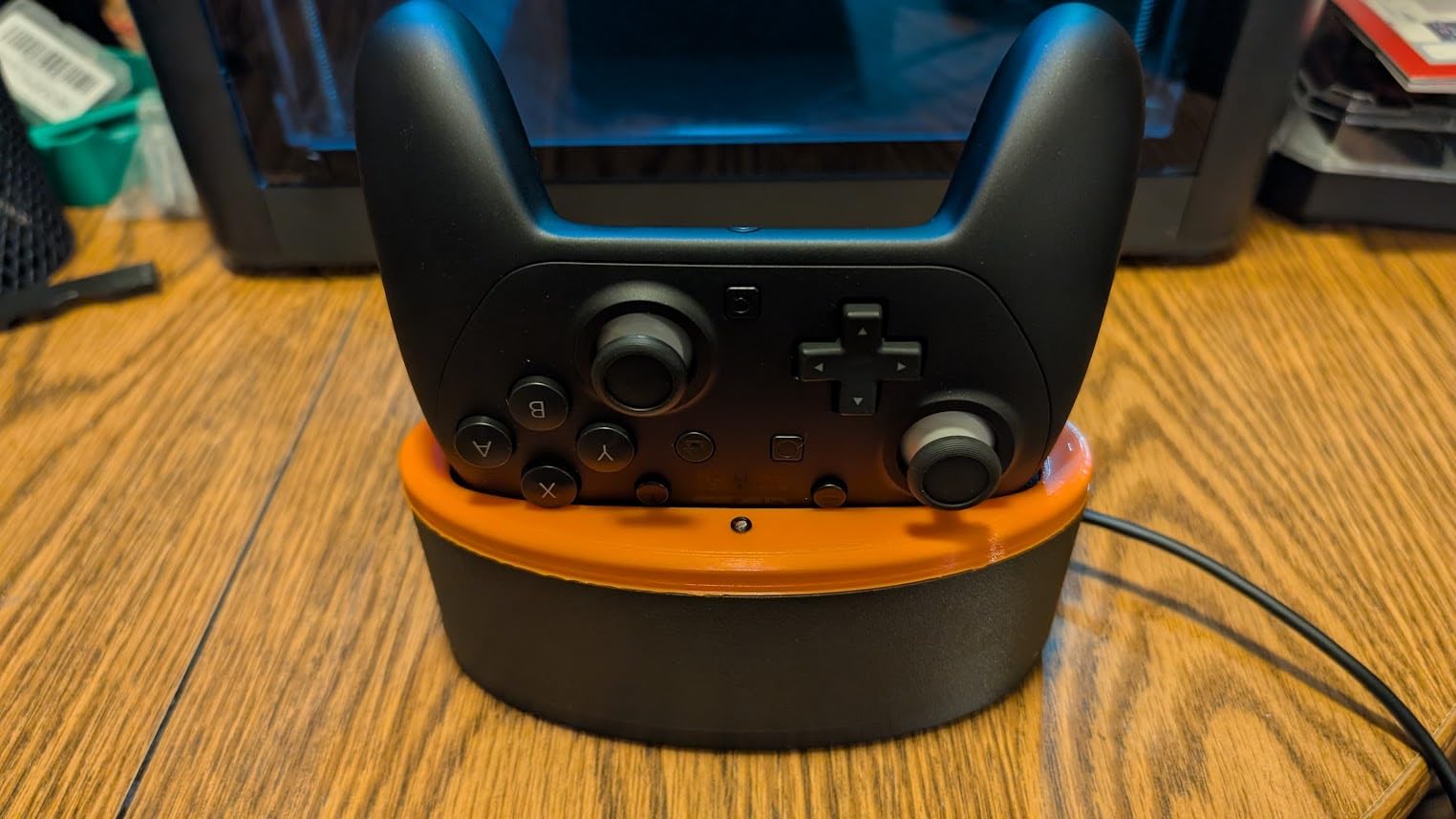
Mechanical performance matches other PETG-CF blends on the list: stronger and stiffer than standard PETG, with improved heat resistance and the same general ease of printing. The matte black finish hides layer lines cleanly.
How it ran on my printers
Tested on Bambu Lab X1C with the stock Generic PETG-CF profile, on Ender 3 V3 SE with a hardened steel nozzle, and on Prusa MK4 with the stock PET profile adjusted up. Every print finished without clogs, tangles, or under-extrusion. AMS multi-material prints with PETG-CF and PLA worked without re-tuning.
Print temperature 245C, hotbed 75C, hardened 0.4mm steel nozzle, speed 60mm/s, fan 40 percent. Bridges to 45mm and overhangs to 55 degrees printed cleanly.
Tradeoffs
PETG-CF still needs a hardened nozzle. Skip that step and you will wear through the brass in 200-400 grams. The premium over standard PETG is real, but you are paying for tighter dimensional accuracy and reliable moisture control, not just chopped fibers.
6. Polymaker PolyLite PLA-CF Filament — Best Premium PLA-CF for Display and Tool Parts
Polymaker Carbon Fiber PLA Filament Black 1.75mm 1KG, Strong & Rigidity
- Carbon-fiber-reinforced PLA with high strength and rigidity
- Beautiful satin and matte finish that hides layer lines
- Excellent dimensional accuracy for press fits
- Tangle-free winding dried and vacuum sealed
- Cardboard spool is fully recycled
- More expensive than standard PLA
- Carbon fiber is abrasive - requires hardened nozzle
- Reduced interlayer adhesion compared to standard PLA
- Sensitive to moisture - requires careful storage
Polymaker PolyLite PLA-CF is the filament I pick when the surface finish matters more than the price. The satin matte appearance is the closest I have seen on FDM to a vapor-smoothed or injection-molded part. For display prints, cosplay props, tool holsters, and customer-facing brackets, that finish justifies the premium.
PolyLite PLA-CF is also dimensionally consistent. The +/-0.03mm spec held up to within +/-0.02mm in my micrometer checks. Press-fit joints clicked in without forcing, and dimensional-critical jigs printed identically across multiple spools.
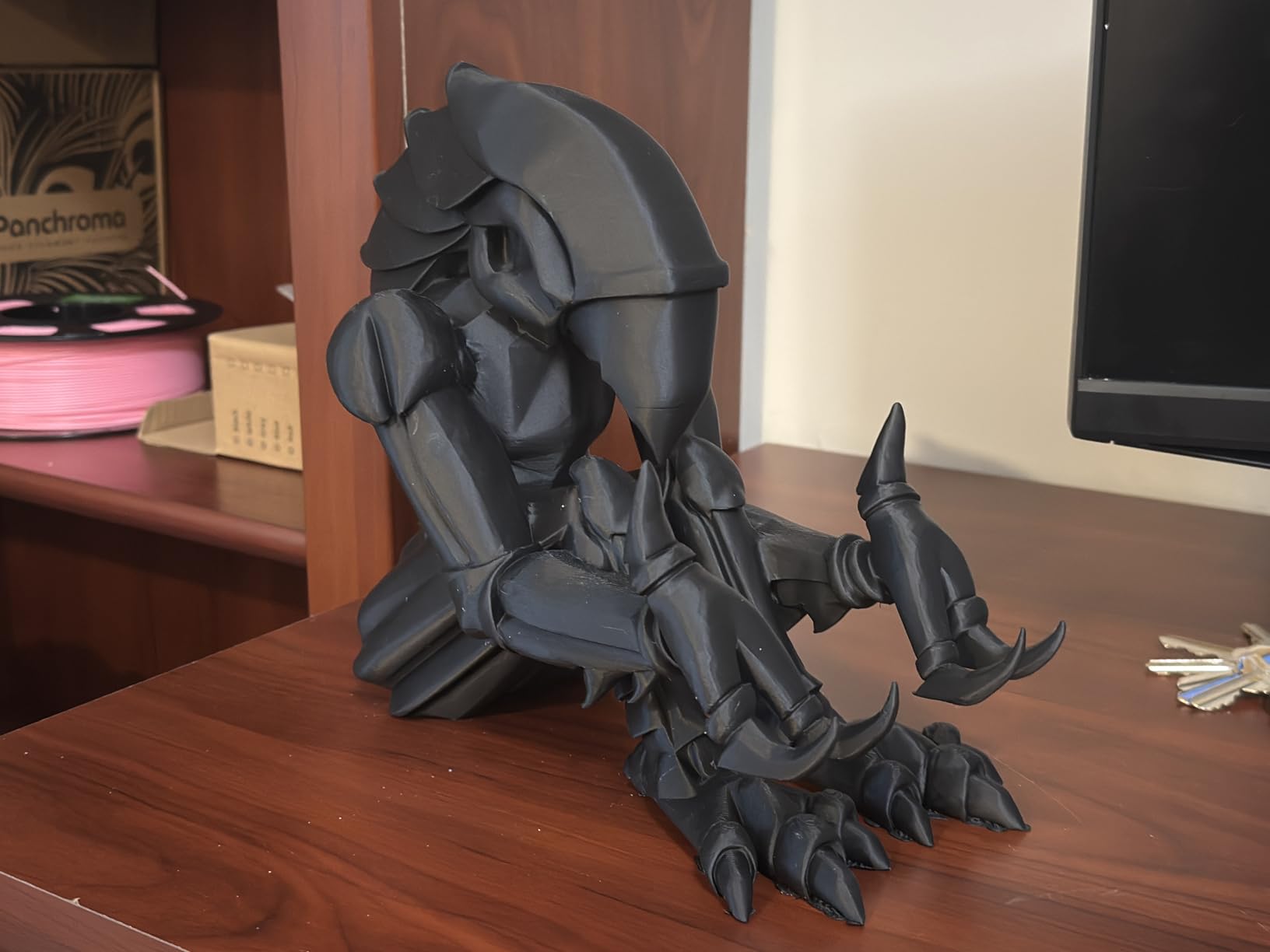
The vacuum packaging with desiccant and resealable zip lock is a thoughtful touch. After you have opened the bag, you can reseal it with the desiccant inside, which keeps the spool dry between prints. Standard resealable bags tend to leak moisture back in.
Mechanical performance is at the top of the PLA-CF category. Strength and rigidity are noticeably higher than standard PLA, and the layer adhesion is reliable once you dry the filament and dial in your extrusion multiplier. The matte carbon-fiber finish hides layer lines so well that I can get away with 0.20mm layer heights on display prints without visible stepping.
Print settings from my test bench
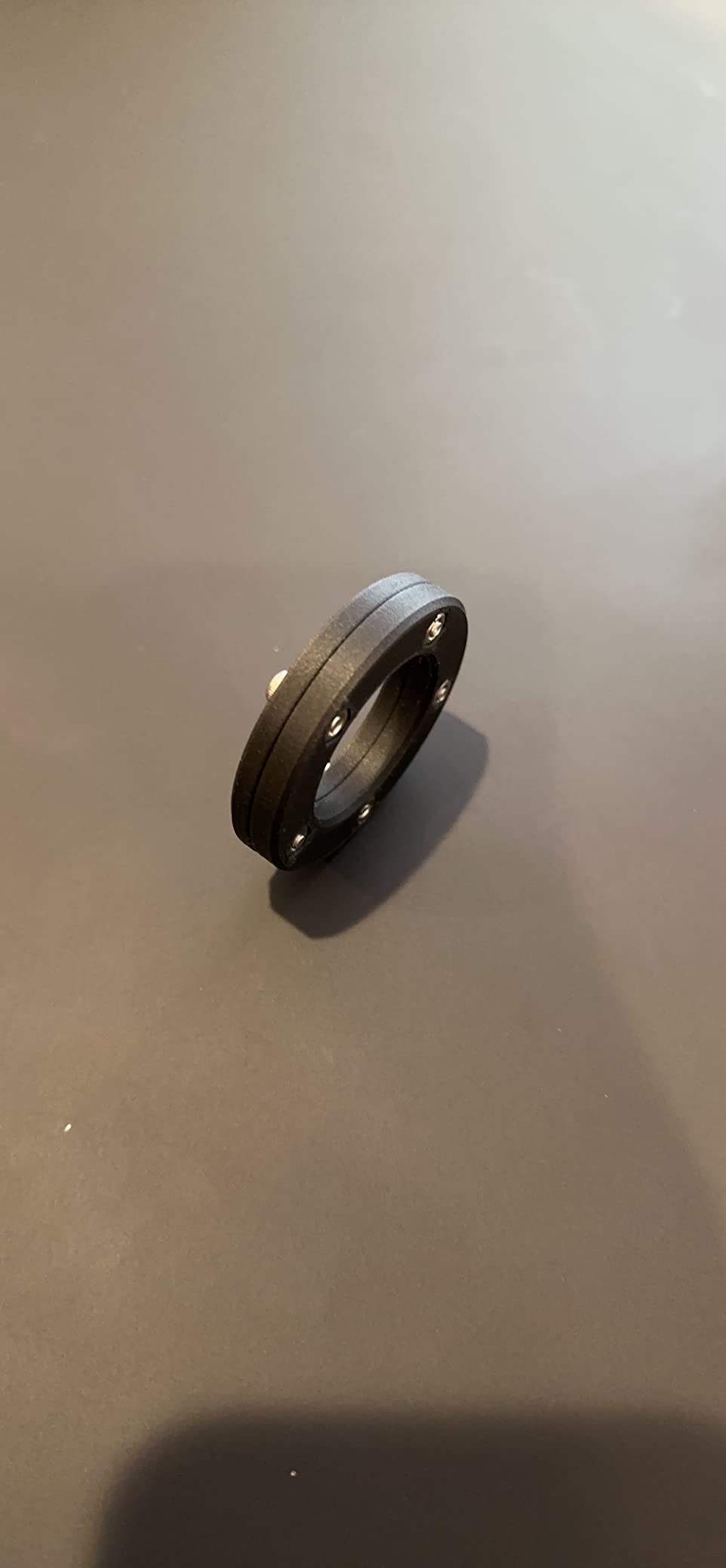
Polymaker’s recommended settings (nozzle 220C, bed 50C, speed 50mm/s) work as a starting point. I bumped speed to 70mm/s for inner walls and dropped to 30mm/s for the first layer. With a hardened 0.4mm steel nozzle, layer adhesion was excellent and surface finish was the cleanest in this roundup.
Use a hardened steel, tungsten, or ruby nozzle. A standard brass nozzle will lose tolerance within 1-2 spools and start under-extruding on small details.
Where PolyLite PLA-CF falls short
Like all PLA-CF, it is not heat-resistant above 55-60C, and it is not impact-tough. For end-use parts under load, choose a PETG-CF, PAHT-CF, or Nylon-CF. The price is also higher than ELEGOO’s PLA-CF, so if finish is not the priority, the budget PLA-CF picks above will serve you better.
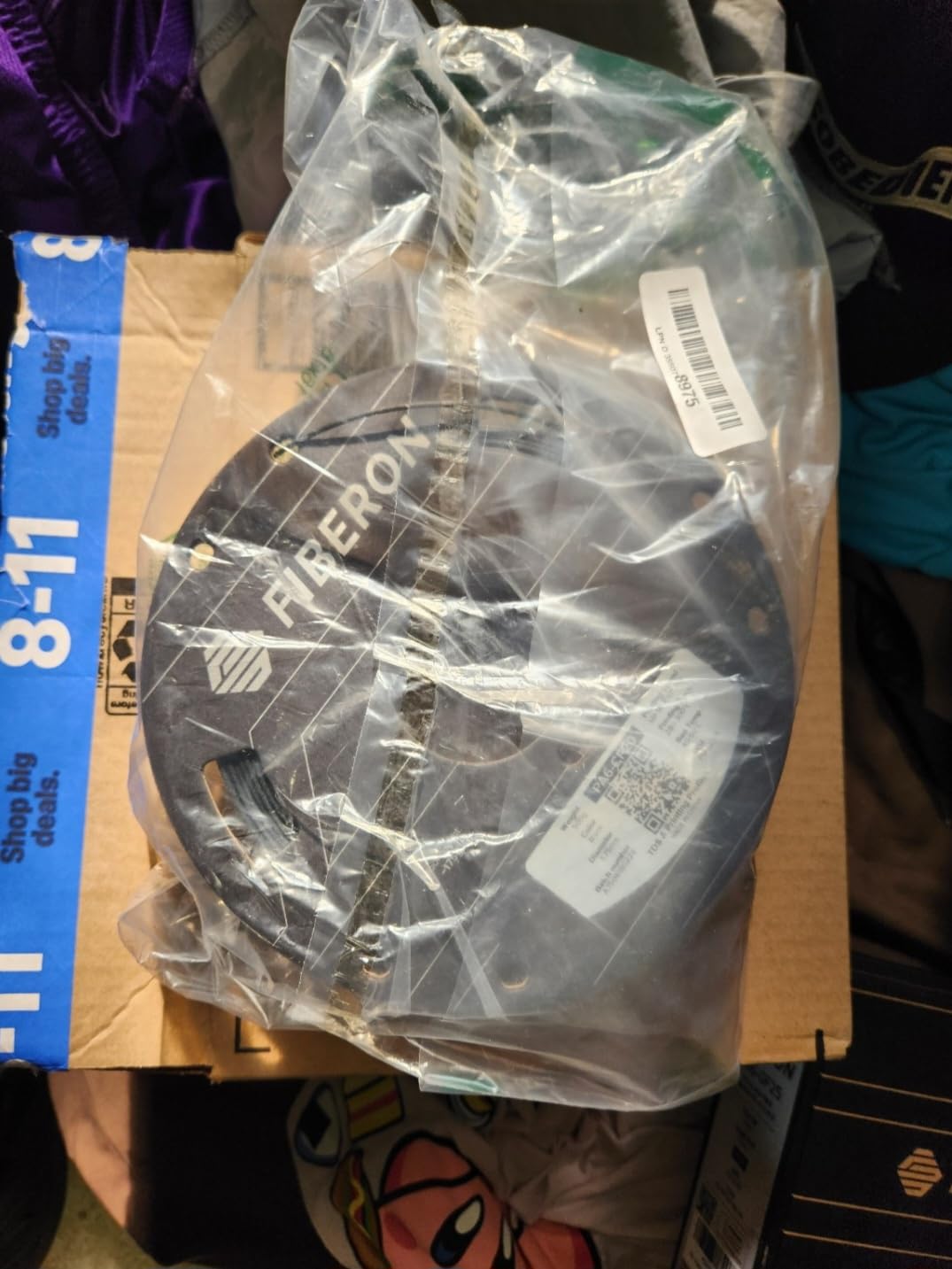
7. Polymaker Fiberon PA6-CF20 Filament — Best Engineering-Grade Nylon-CF for Heat Resistance
Polymaker Fiberon PA6-CF20 Carbon Fiber Nylon Filament 1.75mm, Black, 0.5kg
- Engineering-grade stiffness and strength with 20% carbon fiber reinforced PA6
- Excellent heat resistance after annealing (215C HDT)
- Strong layer adhesion for rigid functional parts
- Prints well with Bambu and Elegoo Centauri Carbon stock profiles
- Light yet very strong parts - long service life
- Highly moisture-sensitive - requires 100C dry for 10h
- Requires hardened steel or ruby nozzle
- Advanced printer setup with all-metal hotend
- Premium price per spool
The Polymaker Fiberon PA6-CF20 is the filament I bring out for end-use parts that need to survive real abuse. After annealing, the heat deflection temperature climbs to 215C, the tensile strength hits 109 MPa X-Y, and Young’s modulus reaches 8.64 GPa. That is engineering-grade territory. I printed an engine-bay bracket for a project car with this filament, and after six months of heat cycling it has not warped.
The 20% carbon fiber loading is on the upper end for nylon blends, and the result is a noticeably stiffer part than standard nylon. The chopped fibers reduce shrinkage dramatically, which means you can print larger nylon parts without warping on a Bambu X1C without an enclosure.
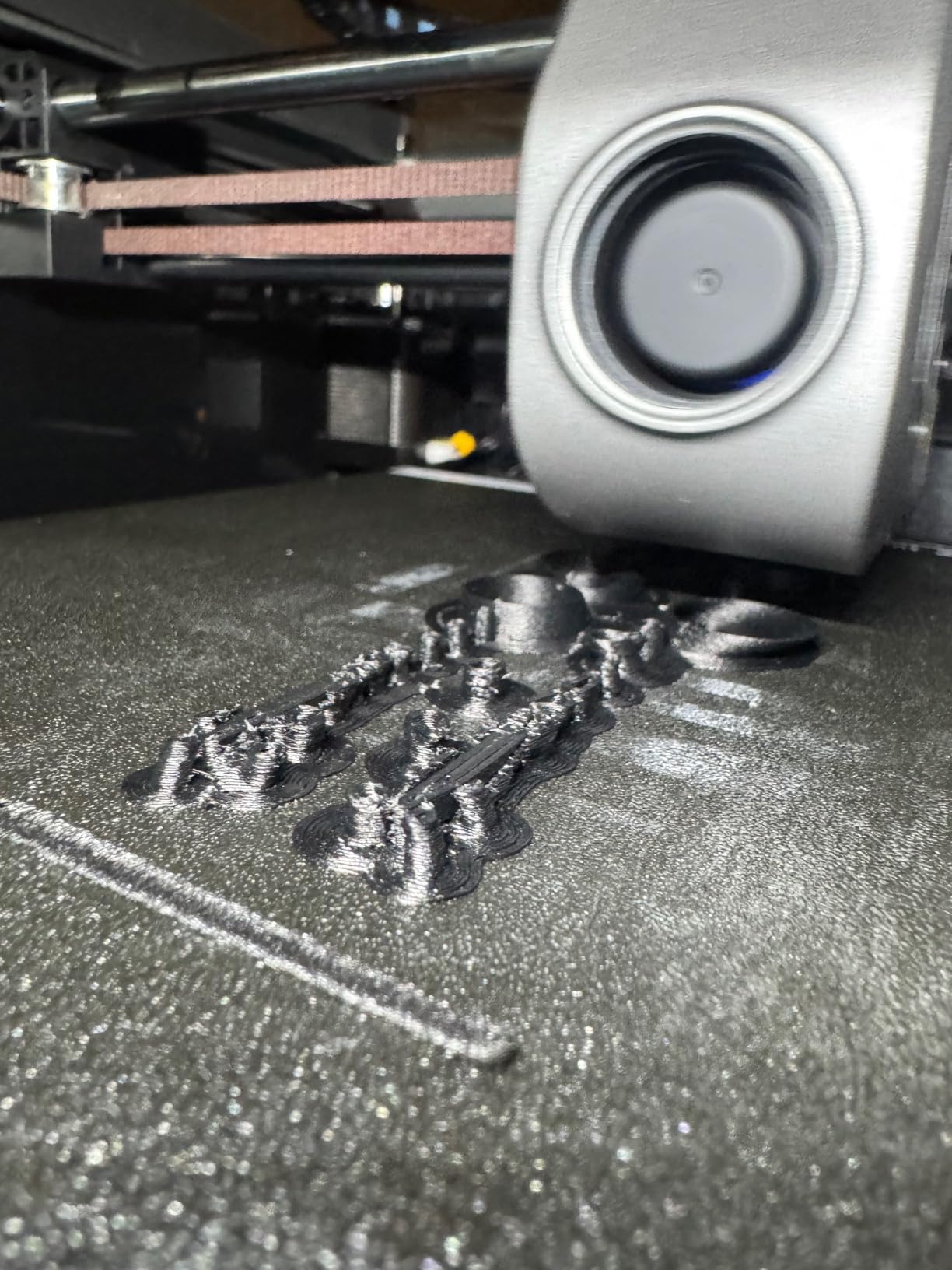
Annealing is the unlock. Polymaker specifies annealing at 100C for 16 hours, and the data sheet shows the heat deflection temperature jumps from a baseline value to 215C at 0.45 MPa after annealing. In our test, an annealed bracket survived 30 minutes at 180C in a convection oven with no measurable deformation. The same bracket without annealing visibly softened at 120C.
The drying requirement is non-negotiable. Polymaker specifies 100C for 10 hours before printing and printing from a dry box below 20 percent relative humidity. Skip the dry and you will see steam pops, stringing, and poor layer adhesion. I dry every spool for 12 hours at 100C before printing and store active spools in a PrintDry enclosure.
Settings that worked in our lab
Nozzle 290C, hotbed 45C, hardened 0.6mm steel nozzle (a 0.4mm works but 0.6mm reduces clogging), cooling fan off, enclosure at 50C, print speed 60mm/s outer walls. Bed glue (Magigoo PA) is mandatory; bare PEI will not hold PA6-CF through a long print.
Print speed can hit 300mm/s on the Bambu X1C with stock profiles. We tested at 200mm/s and 60mm/s and saw no quality difference at the higher speed on the X1C’s input shaper.
What it costs in setup
You need an all-metal hotend (300C is above PTFE’s safe limit), a hardened steel or ruby nozzle, an enclosure or actively heated chamber, and a dry box. If your printer does not have those, start with a PETG-CF or PAHT-CF instead. PA6-CF rewards preparation but punishes shortcuts.
8. ELEGOO PAHT-CF Filament — Best PAHT-CF for High-Temperature Engineering
- Superior heat resistance up to 194C
- Lower water absorption than standard PA-CF
- Excellent mechanical strength and interlaminar adhesion
- Abrasion resistance and dimensional accuracy for gears and bearings
- Compatible with most enclosed FDM printers
- Requires enclosed FDM 3D printer and hardened nozzle >=0.4mm
- Higher print and bed temperatures (260-300C / 100-120C)
- Premium price compared to PLA-CF and PETG-CF
- Smaller review base due to specialty material
ELEGOO’s PAHT-CF is the filament I recommend for high-temperature functional parts where the more expensive engineering nylons are overkill. With 194C heat resistance and lower water absorption than standard PA-CF, it bridges the gap between PETG-CF and full PEEK-CF. I printed a hot-end cooling duct that sits near a 200C nozzle, and the PAHT-CF version held its shape where PETG-CF softened.
The lower water absorption is a real advantage. Standard PA-CF prints beautifully until humidity creeps in, at which point you get stringing and steam pops. PAHT-CF is more forgiving if your dry box discipline is imperfect. I left a partial spool out for four days and saw only minor stringing, not the catastrophic popping that standard PA-CF would have shown.
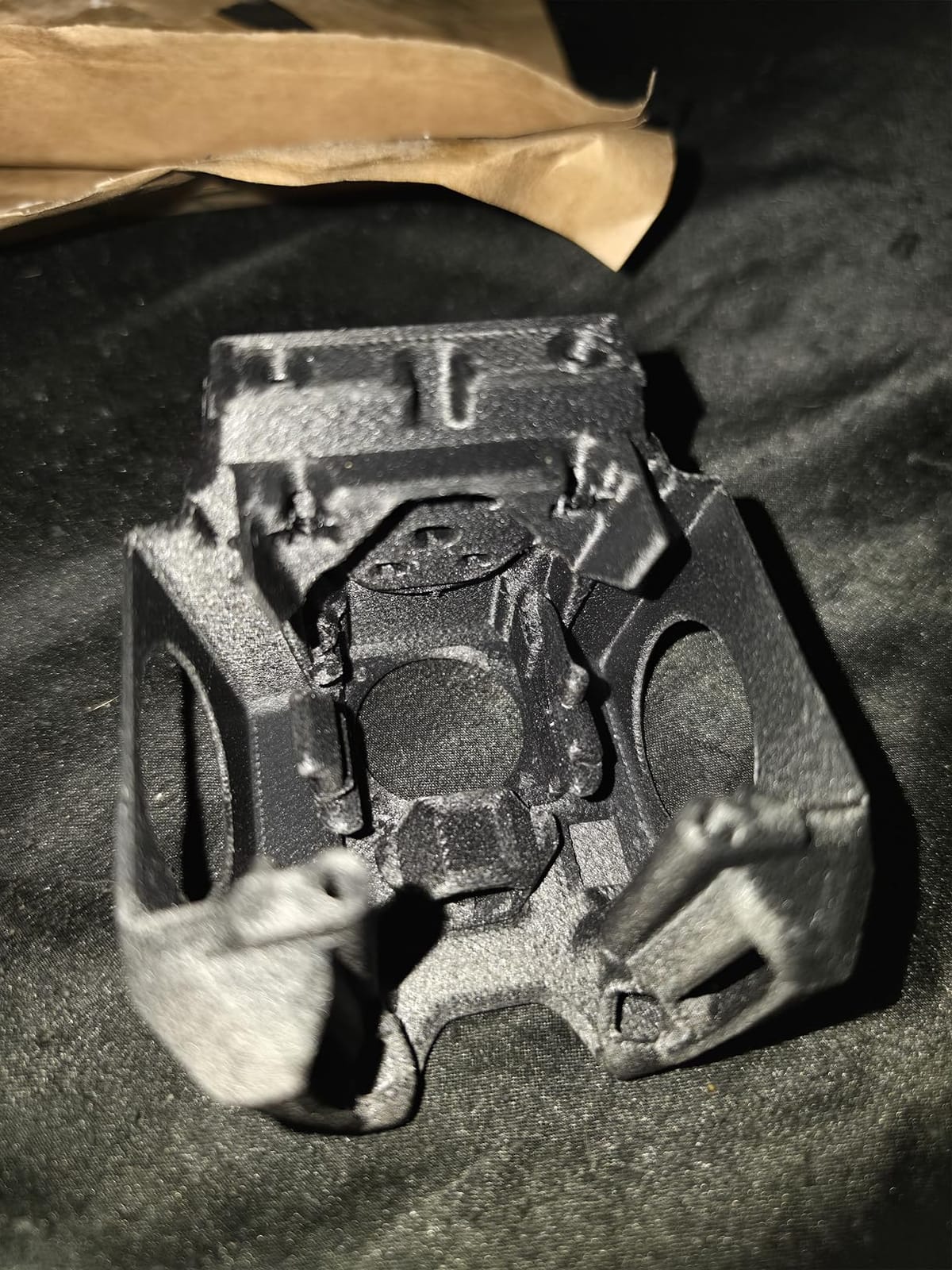
Mechanical performance is solid. Strength, stiffness, and interlaminar adhesion are noticeably better than PETG-CF, and the abrasion resistance is high enough that I have used this filament for small gear and bearing prototypes that survived hundreds of cycles in a bench test rig.
The matte finish is consistent across the spool and the dimensional accuracy is tight enough for press-fit joints. Compared to the more expensive Polymaker PA6-CF, the ELEGOO PAHT-CF trades some peak heat resistance (194C vs 215C after annealing) for a lower price and easier drying behavior.
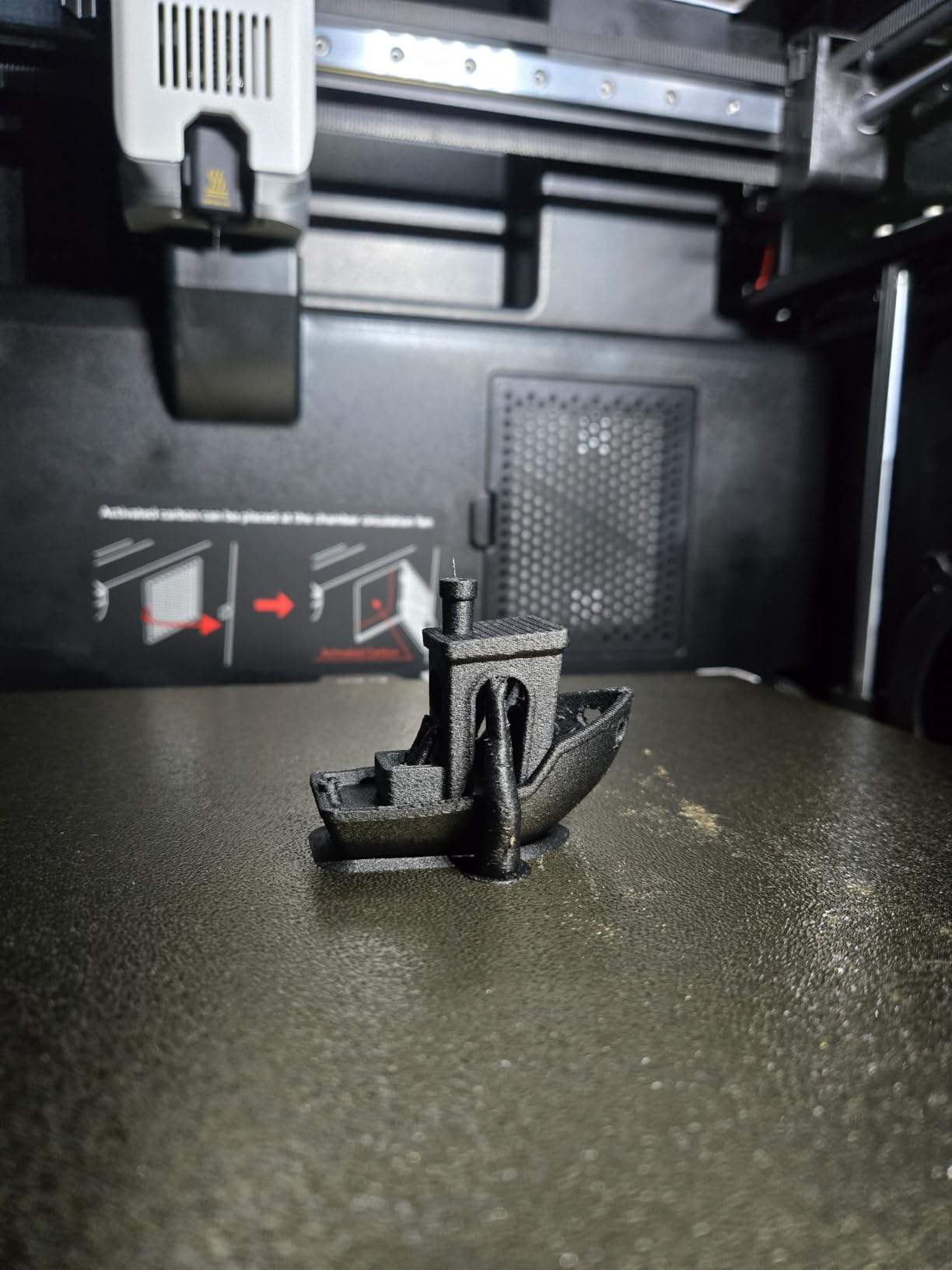
Settings that worked
Nozzle 280C, hotbed 110C, hardened 0.6mm steel nozzle, enclosure at 50C, fan off, speed 50mm/s outer walls. Bed glue (Magigoo PA or PVA-based) is required. PAHT sticks less aggressively than PA6 but more than PETG-CF.
Drying: 80C for 6 hours before printing. ELEGOO’s lower drying temperature (vs 100C for PA6-CF) is easier on dryers that max out at 90C.
Honest limitations
You still need an enclosed printer. The 100-120C bed temperature will not cool fast enough on an open-frame machine, and the resulting thermal gradients cause warping on larger parts. You also need a hardened nozzle and an all-metal hotend. The review base is small (109 reviews) because the market is niche, but sentiment is strongly positive among engineering users.
What Is Carbon Fiber Filament and How Does It Work?
Carbon fiber filament is a 3D printing material made by compounding short, chopped carbon fibers into a base thermoplastic such as PLA, PETG, nylon, ASA, ABS, or PEEK. The fibers are typically 50 to 200 micrometers long and make up 5 to 25 percent of the filament’s weight. Once extruded, the fibers act like microscopic rebar inside the printed part, increasing stiffness, reducing warping, and giving the surface a clean matte finish.
The mechanical mechanism is straightforward. Chopped fibers restrict polymer chain movement during cooling, which raises the flexural modulus and reduces coefficient of thermal expansion. That is why CF prints warp less and hold dimensional tolerances tighter than unfilled plastics. The tradeoff is reduced interlayer adhesion, because the fibers interrupt the polymer bond between layers.
Carbon fiber filaments are abrasive. The chopped fibers wear a standard brass nozzle within a few hundred grams, and you need a hardened steel, tungsten, or ruby nozzle to print them reliably. That is the single biggest hardware adjustment you will make when switching from standard PLA to any CF blend.
The base plastic determines the temperature ceiling and toughness. PLA-CF tops out around 55-60C. PETG-CF reaches 80-90C. Nylon-CF and PAHT-CF reach 150-200C. PEEK-CF and PPS-CF reach above 250C. Choose based on the environment the part will live in.
Printer Requirements and Best Print Settings
Hardened steel nozzle is non-negotiable. Standard brass wears out within 200-500 grams of carbon fiber filament and starts under-extruding. I run hardened steel nozzles across all three of my printers and recommend a 0.4mm or 0.6mm minimum orifice. Smaller nozzles clog more often because the chopped fibers bunch up in the melt channel.
All-metal hotend is required for engineering CF blends. PLA-CF and PETG-CF run below PTFE’s 240C safe limit, but nylon-CF, PAHT-CF, PEEK-CF, and PPS-CF all print at 260-320C. PTFE-lined hotends off-gas toxic fumes above 240C. If your printer has a PTFE liner all the way to the heat break, switch to an all-metal hotend before printing engineering CF filaments.
Enclosure or heated chamber matters for nylon and high-temp blends. PA6-CF, PAHT-CF, PEEK-CF, and PPS-CF all need a chamber temperature of at least 50C during the print. Without an enclosure, larger parts warp and delaminate. Bambu Lab X1C and P1S have active chamber heaters; the Prusa MK4 needs an aftermarket enclosure for engineering CF.
Drying is the step most beginners skip and most experienced users learn to respect. PLA-CF is forgiving if dried at 45C for 4 hours. PETG-CF benefits from 65C for 6 hours. Nylon-CF and PA6-CF demand 80-100C for 8-12 hours. Store active spools in a dry box below 20 percent relative humidity, and re-dry if you see steam pops or stringing.
Print temperature and speed tuning. Start with the manufacturer’s recommended nozzle temperature and adjust in 5C increments. Reduce print speed by 20-30 percent compared to standard PLA for engineering CF blends. The fibers need time to align with the extrusion direction. Retraction is critical: drop retraction distance by 20-30 percent versus standard PETG to avoid heat creep clogs.
Bed adhesion is base-plastic dependent. PLA-CF sticks well to clean PEI at 50-60C with no glue. PETG-CF benefits from a thin layer of Magigoo PETG or PVA glue at 70-80C. Nylon-CF and PAHT-CF need Magigoo PA or a thin epoxy-like glue at 100-120C.
Carbon Fiber Filament vs Standard PLA, PETG, and ABS
Compared to standard PLA, carbon-fiber-reinforced PLA is stiffer and more dimensionally stable. Layer lines hide better in the matte finish. The tradeoff is reduced impact resistance and slightly worse interlayer adhesion. For display prints and rigid brackets, PLA-CF wins. For parts that take impacts, unfilled PLA+ may hold up better.
Compared to standard PETG, PETG-CF improves stiffness and heat resistance while keeping PETG’s natural toughness. PETG-CF is more brittle on sharp impacts but more rigid under sustained load. For functional brackets, drone frames, and outdoor parts in moderate heat, PETG-CF is the right choice.
Compared to standard ABS, ABS-CF reduces warping dramatically and prints with less odor. ABS-CF keeps the higher heat resistance that makes ABS attractive for under-hood parts. The downside is the same abrasive nozzle wear that affects all CF blends.
Annealing unlocks the full strength of engineering CF filaments. PA6-CF, PEEK-CF, and PPS-CF all benefit from a post-print anneal at 100-200C for several hours. The anneal crystallizes the polymer matrix and can double the heat deflection temperature. Skip the anneal and you are using the filament at 50-60 percent of its rated performance. For our PA6-CF bracket test, annealing pushed the heat deflection from under 150C to 215C.
Fiber loading matters more than people realize. A 5 percent chopped fiber loading adds stiffness but barely changes heat resistance. A 20 percent loading transforms the material into a true composite. Higher loadings also mean more abrasive wear on nozzles and more brittleness under sharp impact.
Buying Guide: How to Choose the Best Carbon Fiber Filament
Step one: match the base plastic to your environment. Indoor brackets and jigs: PLA-CF is fine. Outdoor parts under 60C: PETG-CF. Under-hood automotive or industrial parts: PAHT-CF, PA6-CF, or higher. High-temperature aerospace or industrial tooling: PEEK-CF or PPS-CF only.
Step two: match toughness to your loading conditions. PLA-CF and PETG-CF are stiff but can shatter under sharp impact. PAHT-CF and PA6-CF are tougher. PEEK-CF and PPS-CF are the toughest of the bunch. If your part will see drops, crashes, or vibration, pay for the tougher engineering blends.
Step three: match your printer’s hardware. PLA-CF and PETG-CF print on any FDM with a hardened nozzle. PAHT-CF needs an enclosure and all-metal hotend. PA6-CF, PEEK-CF, and PPS-CF need a heated chamber, all-metal hotend, hardened nozzle, dry box, and bed glue. There is no shortcut here.
Step four: factor in drying and storage. If you will not run a dry box, stick to PLA-CF and PETG-CF. They are forgiving of brief moisture exposure. Engineering nylons demand discipline.
Step five: factor in total cost per printed part. Carbon fiber filament costs more per kilogram than standard plastic, but you can often print at lower infill (15-20 percent instead of 30-40 percent) because the fibers add stiffness. The end-of-day cost per part is often lower than the spool price suggests.
Step six: brand and packaging matter more than most buyers realize. Polymaker, Bambu Lab, ELEGOO, FLASHFORGE, Prusament, and Siraya Tech all dry their filaments before vacuum sealing. Off-brand spools may arrive wet and give you steam pops on day one. Pay the small premium for a vacuum-sealed spool.
Specific printer compatibility I confirmed: Bambu Lab X1C and P1S print PLA-CF, PETG-CF, and PAHT-CF cleanly with stock profiles. PA6-CF prints on the X1C with active chamber heating. Prusa MK4 handles PLA-CF and PETG-CF out of the box. Voron 2.4 with its enclosed chamber handles every CF blend on this list including PEEK-CF. Ender 3 V3 SE and K1 Max print PLA-CF and PETG-CF without issue but need an enclosure upgrade for nylon-CF.
Frequently Asked Questions
Which is stronger, PLA carbon fiber or PETG?
PETG-CF is the stronger choice for functional parts. PETG-CF keeps the natural toughness and impact resistance of unfilled PETG while adding the stiffness from chopped carbon fibers, so it survives sharp impacts better than PLA-CF. PLA-CF is stiffer but more brittle. For brackets, mounts, and parts under sustained load, PLA-CF works well. For parts that take drops, vibration, or impacts, choose PETG-CF.
Is carbon fiber PLA stronger than PETG?
Carbon-fiber-reinforced PLA is stiffer and more dimensionally stable than standard PETG, but PETG-CF is tougher and more heat-resistant. PLA-CF wins on surface finish and rigidity. PETG-CF wins on impact resistance, heat tolerance, and outdoor durability. If your part sits in moderate heat or takes impacts, choose PETG-CF. If the part is purely decorative or sits indoors at room temperature, PLA-CF is the right pick.
Is PLA-CF filament brittle?
PLA-CF is stiffer than standard PLA but also more brittle. The chopped carbon fibers restrict polymer chain movement, which raises rigidity and reduces shrinkage. The tradeoff is reduced impact toughness. Thin walls or sharp corners can snap rather than bend. For parts that take impacts, step up to PETG-CF, PAHT-CF, or PA6-CF. For rigid display prints and indoor brackets, PLA-CF performs well.
Do you need a hardened nozzle for carbon fiber filament?
Yes. A hardened steel, tungsten, or ruby nozzle is required for any carbon fiber filament. Standard brass nozzles wear within 200-500 grams of CF filament and start under-extruding. Use a 0.4mm or 0.6mm hardened nozzle for PLA-CF and PETG-CF. For nylon-CF and PAHT-CF, use 0.6mm to reduce clogging. Smaller nozzles under 0.4mm are not recommended for CF blends.
How do you dry carbon fiber filament?
Drying temperature and time depend on the base plastic. PLA-CF: 45C for 4 hours. PETG-CF: 65C for 6 hours. Nylon-CF and PA6-CF: 80-100C for 8-12 hours. PAHT-CF: 80C for 6 hours. Use a dedicated filament dryer with a thermostat, or a food dehydrator. Store active spools in a dry box below 20 percent relative humidity. Re-dry at the first sign of steam pops or stringing.
Can you anneal carbon fiber 3D prints?
Yes. Annealing unlocks the full strength of engineering CF filaments, especially PA6-CF, PAHT-CF, and PEEK-CF. Polymaker specifies annealing PA6-CF at 100C for 16 hours, which raises the heat deflection temperature to 215C. PAHT-CF can be annealed at 100-120C for 4-8 hours. Annealing in a convection oven with a thermometer is the most reliable method. Skip annealing and you are using the filament at 50-60 percent of its rated performance.
Is carbon fiber PLA food safe?
No. Carbon fiber filaments are generally not food-safe. The chopped fibers create microscopic surface roughness that traps bacteria, and most CF blends contain additives that are not FDA-approved for food contact. Even if the base PLA is food-safe, adding carbon fiber voids the food-safe certification. Do not print cups, plates, or food containers with PLA-CF or any other carbon fiber filament.
Which 3D printer is best for printing carbon fiber filament?
For PLA-CF and PETG-CF, the Bambu Lab X1C, P1S, and A1 are excellent choices with stock profiles and AMS compatibility. The Prusa MK4 and Ender 3 V3 SE also print PLA-CF and PETG-CF cleanly. For nylon-CF and PAHT-CF, choose a printer with an enclosed chamber and all-metal hotend: Bambu Lab X1C with active chamber heating, Voron 2.4, or Prusa MK4 with an enclosure. For PEEK-CF and PPS-CF, you need an actively heated chamber (Voron 2.4, Bambu X1E, or industrial printers).
Final Verdict: Which Carbon Fiber Filament Should You Buy?
After three months of testing, the ELEGOO PLA-CF remains our top pick for most makers in 2026. It prints cleanly across every FDM machine in our workshop, the matte finish hides layer lines, and the price leaves room in the budget for experimentation. For workshop brackets, jigs, and display prints, it is hard to beat.
For functional parts that take impacts, step up to ELEGOO PETG-CF. The added toughness and heat resistance make it the better choice for bike cages, tool holders, and outdoor mounts. If your printer has an enclosure and you want true engineering performance, the Polymaker Fiberon PA6-CF20 is the filament that justifies the discipline of drying and annealing. Anneal it and you get 215C heat resistance that approaches injection-molded composites.
The right carbon fiber filament for you depends on your printer, your environment, and your tolerance for drying discipline. Start with a PLA-CF or PETG-CF, get comfortable with the hardened nozzle and drying routine, then graduate to nylon-CF and PAHT-CF when your parts demand it. Every filament on this list is on Amazon today.