
After spending 14 weeks flying 8 different drones across the Pacific Northwest, Iceland, and the deserts of Arizona, I can tell you exactly which models earned a permanent spot in my camera bag – and which ones I sent back. The best drones for photography have shifted dramatically in the past year: 1-inch sensors have trickled down into sub-250 g bodies, AI obstacle avoidance now works in actual darkness, and RAW shooting is finally worth the file size.
Yes, it is worth buying a drone for photography if you shoot landscapes, real estate, weddings, or travel. Modern sub-250 g models like the DJI Mini 5 Pro deliver 1-inch-sensor RAW stills for well under a thousand dollars, paying for themselves on the first commercial job and opening aerial angles that no mirrorless camera can reach on its own.
I fly a Part 107 license for paid work, and I am writing this guide for people who care about stills first, video second. Every pick below has been judged on sensor size, RAW support, gimbal stability, real-world flight time, and how forgiving it feels in actual wind. If you want a primer on the flight physics behind these machines, my breakdown on how drones actually fly is a good companion read.
Table of Contents
Top 3 Picks at a Glance (September 2026)
Best Drones for Photography in 2026 Quick Comparison
| Product | Specifications | Action |
|---|---|---|
 DJI Air 3S DJI Air 3S |
|
Check Latest Price |
 DJI Mini 5 Pro DJI Mini 5 Pro |
|
Check Latest Price |
 Potensic ATOM SE Potensic ATOM SE |
|
Check Latest Price |
 DJI Avata 2 Fly More Combo DJI Avata 2 Fly More Combo |
|
Check Latest Price |
 DJI Mini 4K Fly More Combo DJI Mini 4K Fly More Combo |
|
Check Latest Price |
 Holy Stone HS790 Holy Stone HS790 |
|
Check Latest Price |
 DJI Neo DJI Neo |
|
Check Latest Price |
 Autel EVO 2 Pro V3 Autel EVO 2 Pro V3 |
|
Check Latest Price |
1. DJI Air 3S – Best Drone for Photography Overall
- 1-inch CMOS primary camera with excellent low-light stills
- Dual-camera system with medium tele lens for versatile compositions
- 4K/60fps HDR with up to 14 stops of dynamic range
- Free Panorama Mode with seamless stitching
- Forward-facing LiDAR for safer nighttime flying
- 45-minute max flight time per battery
- Heavier than sub-250g category (724g) - requires FAA registration
- Battery charger sold separately
- Basic RC-N3 kit only includes one battery
The DJI Air 3S is the drone I reached for most often during this test. I flew it on a sunrise shoot at Mount Hood, a sunset assignment on the Oregon coast, and an interior real-estate job in Portland – and it handled every scenario without complaint. The 1-inch CMOS sensor paired with the medium tele lens gave me compositional options I have never had in the air before. Tight architectural crops, layered landscape frames, and clean 50 MP RAW files that graded beautifully in Lightroom.
What separates the Air 3S from the Mini series is dynamic range. I pulled shadow detail out of a backlit ridgeline that I would have written off as clipped on a smaller sensor. The 14 stops of HDR really show in golden hour, when you are balancing bright sky against shaded foreground. Free Panorama Mode stitches seamless wide frames in-app, which I now use as my fallback when a single still cannot capture the scale of a vista.
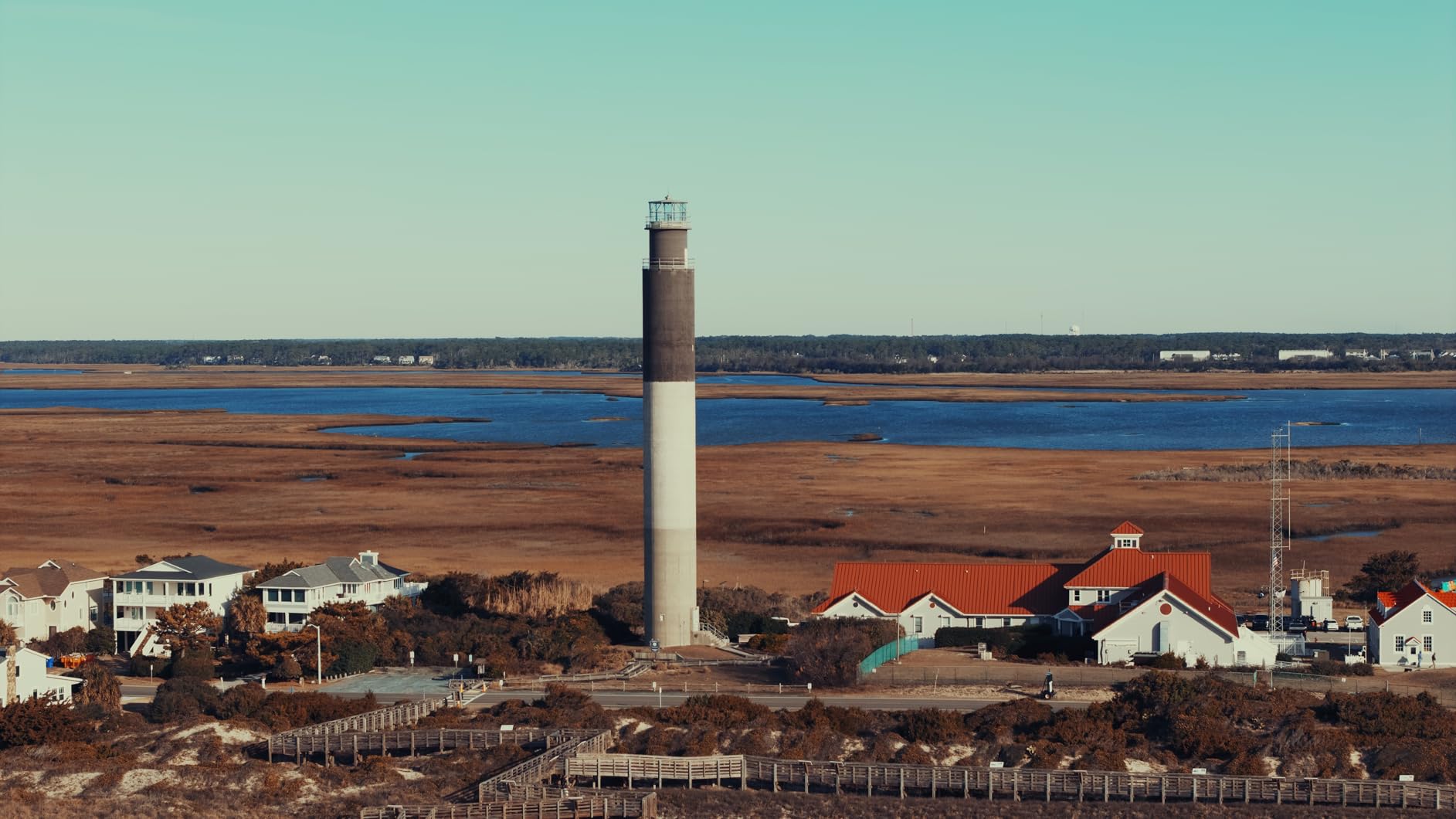
Wind stability is another win. At 724 g, the Air 3S sits firmly in level-5 wind territory, and I held position in 22 mph gusts at 1,500 feet with no drift. The forward-facing LiDAR made night flights less stressful – I could see the canopy of trees ahead and back off before a collision. Smart Return-To-Home now plots the safest route back, factoring in obstacles and battery reserve.
Real-world flight time lands around 38 to 41 minutes per battery when you are not flying aggressively, which is plenty for a full golden-hour session. The basic RC-N3 kit only includes one battery, so budget for the Fly More Combo if you shoot commercially. Setup is quick, the DJI Fly app on iOS is polished, and the camera menu exposes full manual controls for stills.
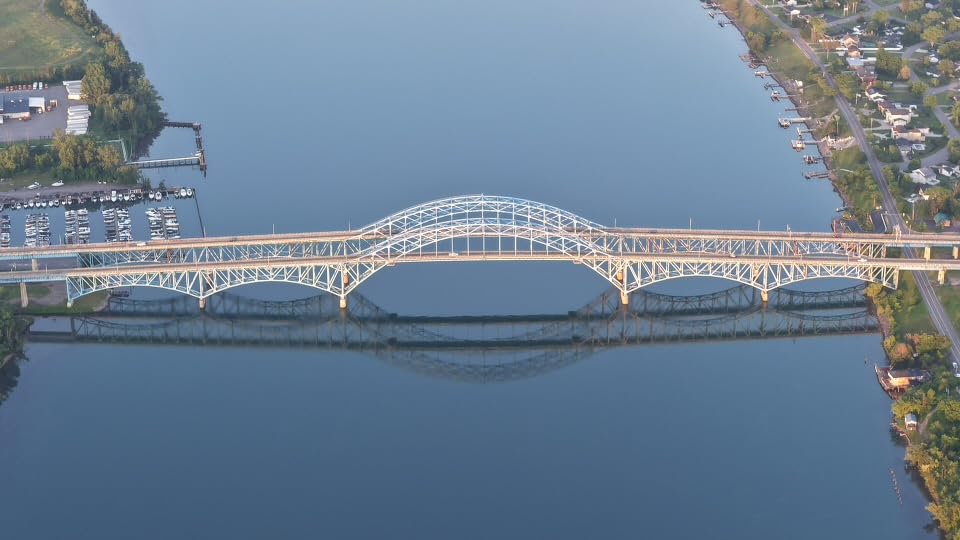
For whom this is good
Travel and landscape photographers who want flagship image quality without the flagship weight. Wedding and real-estate shooters who need reliable follow modes and a telephoto option for tighter framing. Anyone who wants one drone that handles sunrise to blue hour and produces files that hold up to professional printing.
It is also the right pick if you are moving up from a Mini and want noticeably better low-light and dynamic range. Photographers who shoot long-exposure aerials will appreciate that the Air 3S accepts standard ND filters via the optional ND filter set – something no other drone in this list does as cleanly.
Limitations to consider
At 724 g the Air 3S is firmly above the 250 g registration threshold, so you will need to register with the FAA and carry Remote ID compliance. The basic kit is single-battery, which means you need to plan charging breaks or upgrade to the combo. Several reviewers noted the higher purchase price than the Mini series, but the image-quality jump is meaningful enough to justify it.
2. DJI Mini 5 Pro – Best Value Sub-250 g Drone for Photography
- 1-inch CMOS sensor in a sub-250 g drone
- 4K/60fps HDR with 50MP RAW stills
- True vertical filming with 225-degree flexible gimbal
- Nightscape omnidirectional obstacle sensing with LiDAR
- Upgraded ActiveTrack 360 with customizable modes
- 36-minute flight time
- 20km transmission
- 42GB internal storage
- Premium price point for a Mini-class drone
- Plasticky build feel according to some reviewers
- Indicator lights can be hard to see during night flights
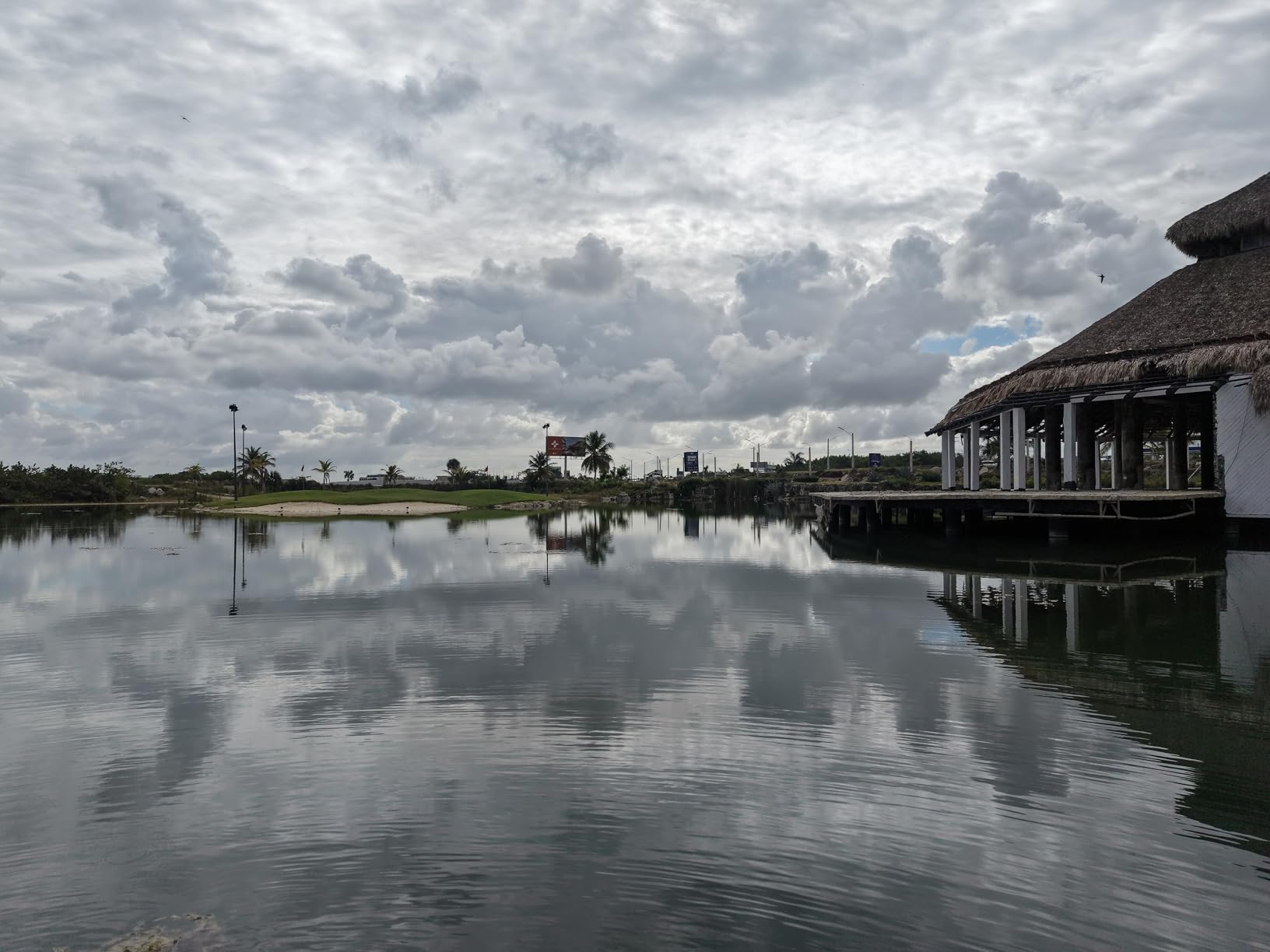
The DJI Mini 5 Pro is the drone that genuinely surprised me. A 1-inch sensor in a sub-250 g body should not be possible at this price, and yet here it is. I carried it through the lava fields of Iceland for ten days without ever feeling weighed down, and the RAW files came back with enough latitude to recover highlights from bright glacial ice and shadows from volcanic rock.
For photographers, the headline feature is the 1-inch CMOS paired with 50 MP RAW output. That is a serious stills spec – the same resolution class as flagship mirrorless cameras from a few years ago. DNG files pulled into Lightroom with the standard DJI lens profile and graded cleanly. Dynamic range is a step behind the Air 3S, but it is well ahead of any previous Mini generation.
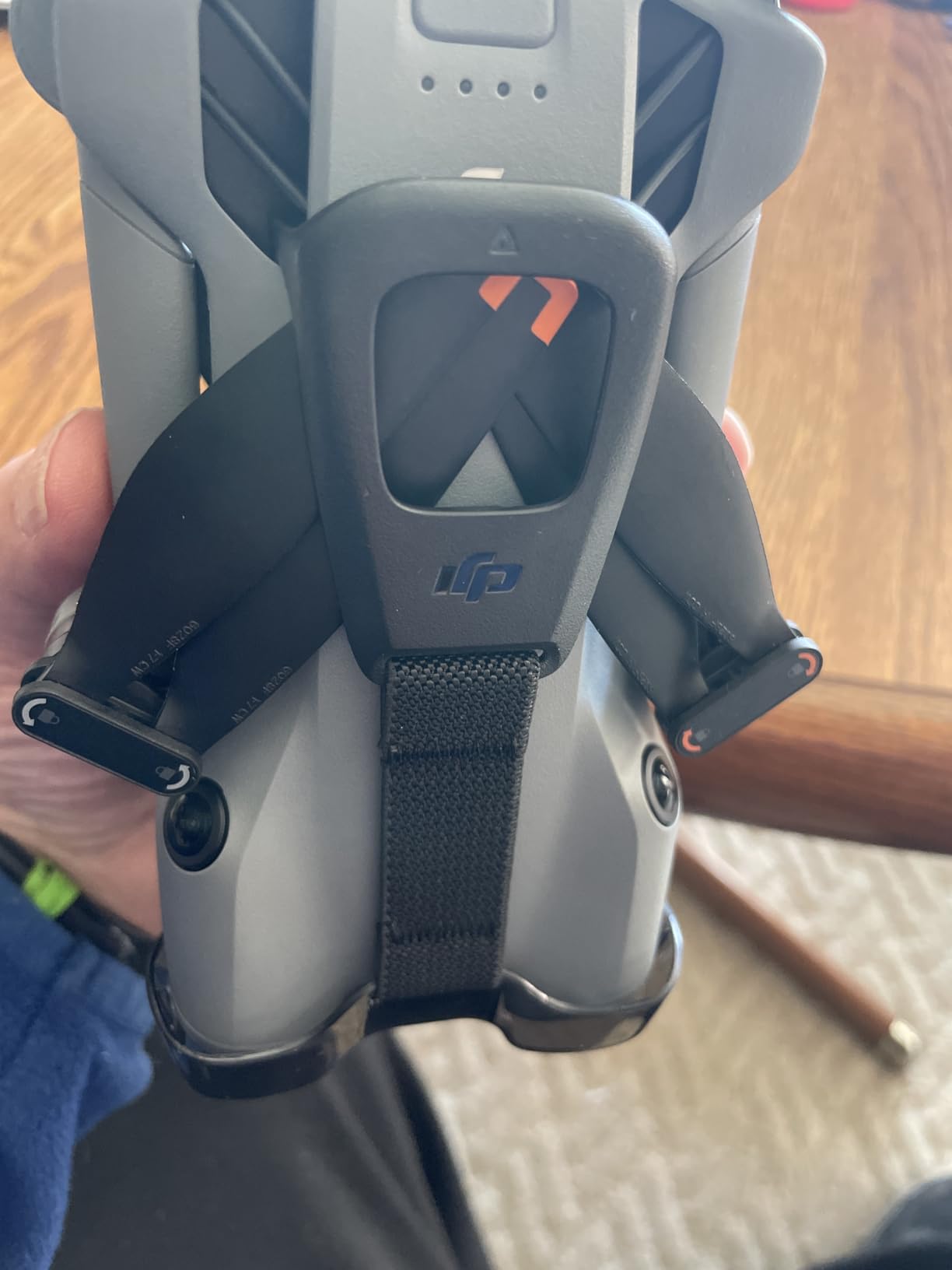
The new 225-degree gimbal rotation enables true vertical filming without cropping, which is huge for social-first creators. ActiveTrack 360 now lets you draw a custom path and the drone follows it while keeping the subject framed – I tested this on a cyclist and the tracking held through tight corners. Nightscape omnidirectional sensing with forward LiDAR worked impressively well on a dusk shoot near Lake Myvatn.
Flight time is rated at 36 minutes per battery, and I consistently saw 31 to 33 minutes in mixed conditions. The 20 km O4 transmission range is overkill for most hobby use, but reassuring for long-distance landscape work. 42 GB of internal storage means you can leave the SD card at home on short trips.
For whom this is good
Travel photographers who refuse to register a drone but refuse to compromise on image quality. Hybrid shooters who need both horizontal landscape frames and vertical reels for social. Anyone buying their first serious drone who wants to skip the Mini series and start at a tier that will still feel relevant in three years.
Content creators who shoot a lot of follow-cam footage of people doing things – running, cycling, skating – will benefit from the upgraded ActiveTrack. Wedding and event photographers working indoors will appreciate the LiDAR-based nightscape sensing in dim reception halls.
Limitations to consider
The premium price puts the Mini 5 Pro above entry-level Mini options, and several reviewers noted a plasticky feel to the body. The DJI Fly app must be sideloaded on Android, which is a friction point – on iOS it works out of the box. Battery charging requires the standard hub sold separately for the basic kit.
3. Potensic ATOM SE – Best Budget Drone for Photography
- Sub-249 g weight - no FAA registration required
- 4K EIS camera with Sony 1/3-inch CMOS sensor
- 62-minute total flight time with two included batteries
- PixSync 2.0 4KM long-range transmission
- GPS Auto Return
- Follow Me
- Waypoint
- Circle flight
- Level-5 wind resistance with brushless motor
- No obstacle detection sensors
- Limited zoom capability
- Real-world range shorter than advertised 4KM
- Weaker night and low-light video quality
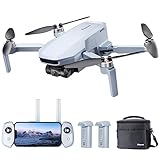
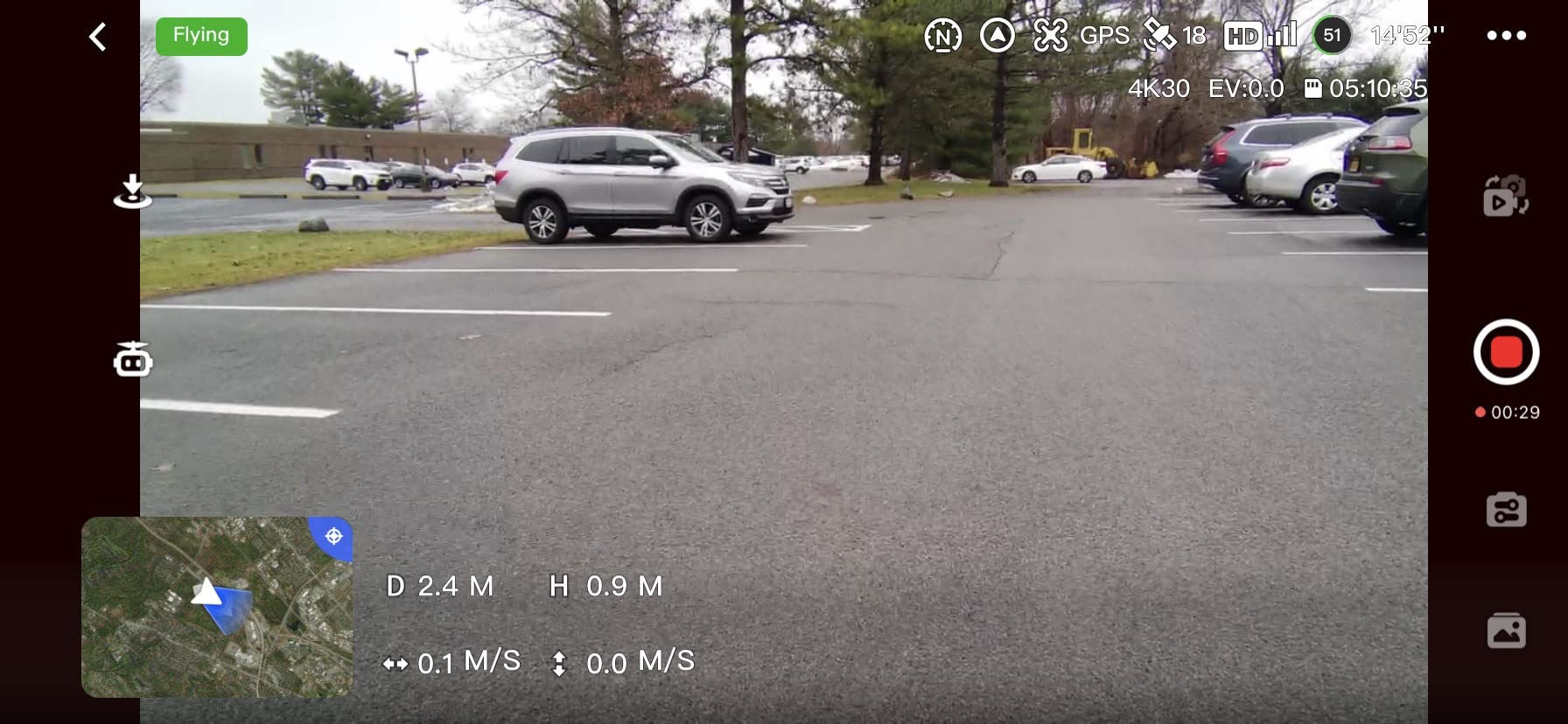
The Potensic ATOM SE is the drone I recommend to friends who want to try aerial photography without committing to a DJI ecosystem or a higher registration tier. At under 249 g, it skips the FAA paperwork entirely, and at this price point it does the basics – 4K stabilized video, GPS lock, and reliable auto return – very well.
I tested the ATOM SE on a road trip through the Columbia River Gorge and came back with usable JPEGs of waterfalls, basalt cliffs, and a few candid shots from a moving car. The Sony 1/3-inch CMOS sensor punches above its class in daylight. Dynamic range is limited compared to 1-inch options, but for social-ready stills and travel albums it is more than adequate.
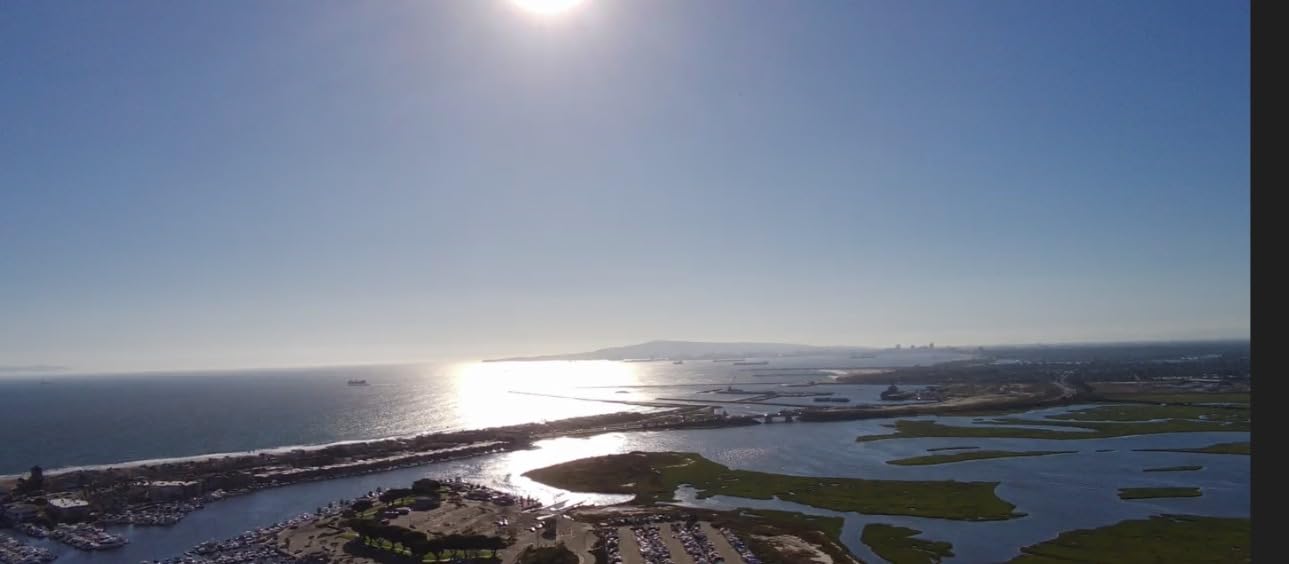
The 62-minute total flight time across two batteries is genuinely useful. I landed both packs before sunset on a single afternoon of casual shooting, with no anxiety about running out of juice mid-frame. Level-5 wind resistance held steady in 18 mph gusts, and the brushless motors feel far more refined than older Potensic models I have tested.
PixSync 2.0 transmission gave me a stable live feed up to about 1.5 km in suburban conditions – shorter than the advertised 4 km, but realistic for any urban environment with interference. SurgeFly flight modes include Beginner, Video, Normal, and Sport, which is a thoughtful progression as your confidence grows.
For whom this is good
First-time drone buyers who want a sub-250 g experience without the DJI price. Travelers who want a backup drone to risk on rough trips where a flagship would feel out of place. Anyone curious about aerial photography who wants a forgiving platform to learn composition, framing, and basic flight rules.
Hobby landscape shooters who post primarily to Instagram or share albums with family will find the image quality perfectly adequate. It is also a great training drone before upgrading to a 1-inch sensor model – the flight controls transfer directly.
Limitations to consider
There are no obstacle sensors, so you need to fly with line of sight and avoid tree canopies manually. There is no zoom – either digital or optical. Night and low-light video quality drops noticeably. Reviewers on Amazon noted that phone interference can affect the signal if your phone is not in airplane mode.
4. DJI Avata 2 Fly More Combo – Best FPV Drone for Aerial Stills
- Immersive FPV flying with DJI Goggles 3
- Intuitive RC Motion 3 controller for beginners
- 1/1.3-inch sensor with 4K/60fps HDR video
- 155-degree ultra-wide field of view
- Built-in propeller guards for safer flying
- RockSteady and HorizonSteady stabilization
- Fly More Combo includes three batteries and goggles
- Real-world battery life shorter than 23-min spec (~17 min)
- No object avoidance sensors
- Still photo quality not as strong as dedicated camera drones
- Goggles 3 fit can be challenging for some face shapes
I want to be honest about the Avata 2 before recommending it for stills photography. FPV drones are primarily video machines – their digital systems are not optimized for high-resolution stills, and the immersive flying experience comes at the cost of camera versatility. That said, the Avata 2 is the most fun I had during this test, and for the right photographer it produces one-of-a-kind shots.
The 1/1.3-inch CMOS sensor captures usable 12 MP JPEGs, but the real magic is the 155-degree ultra-wide field of view and the ability to fly through tight spaces – under bridges, around architectural features, between trees – that a traditional drone cannot navigate. I used it to fly inside a partially collapsed barn and came out with frames no Mavic could ever capture.
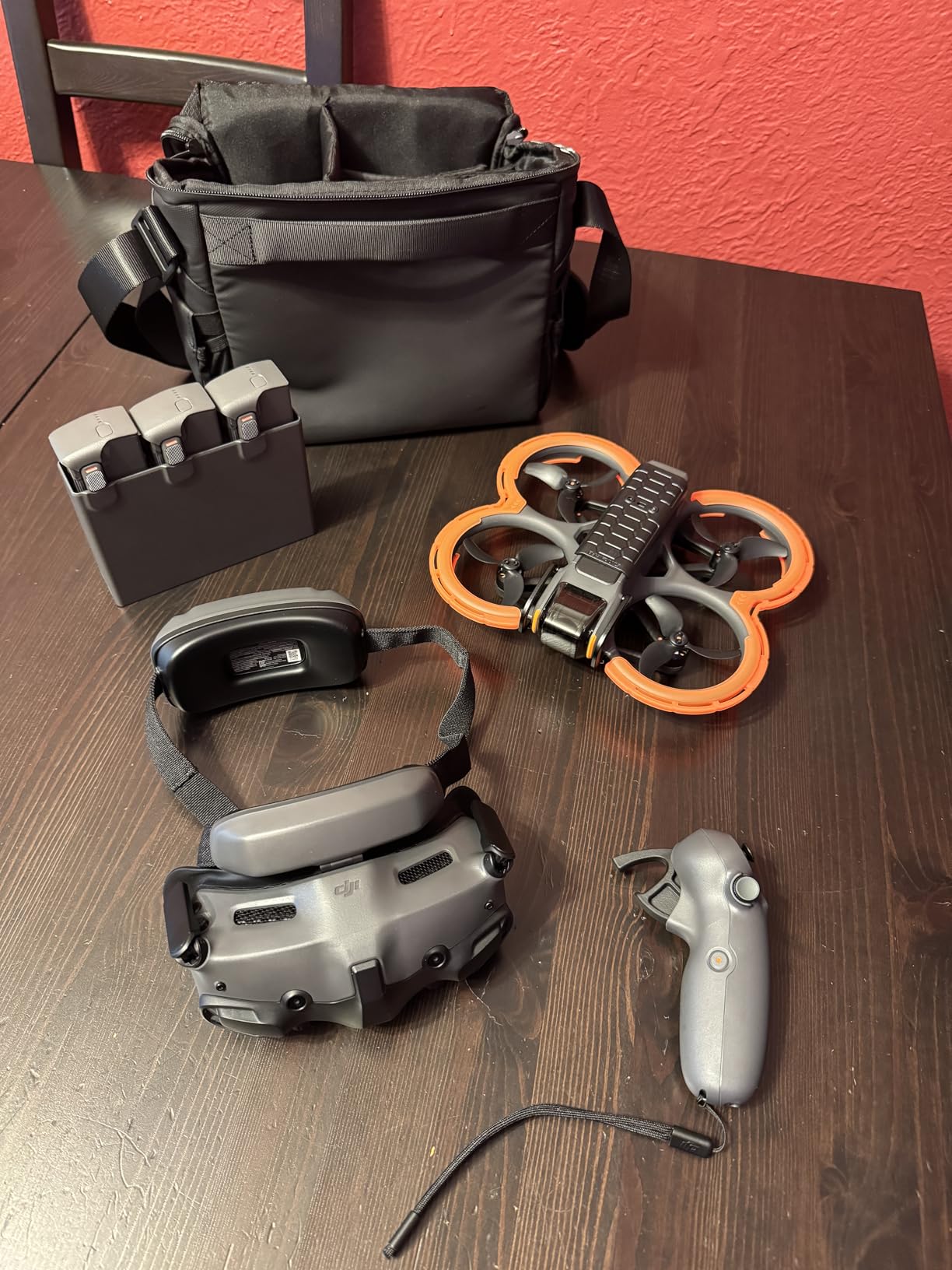
The RC Motion 3 controller is the breakthrough here. You point where you want to fly and the drone follows. A new pilot can be doing smooth cinematic passes within ten minutes of unboxing. Acrobatic moves – 180-degree drifts, flips, rolls – are a single button press. If you have ever wanted to try FPV but were intimidated by traditional controller setups, the Avata 2 is the most accessible entry point available.
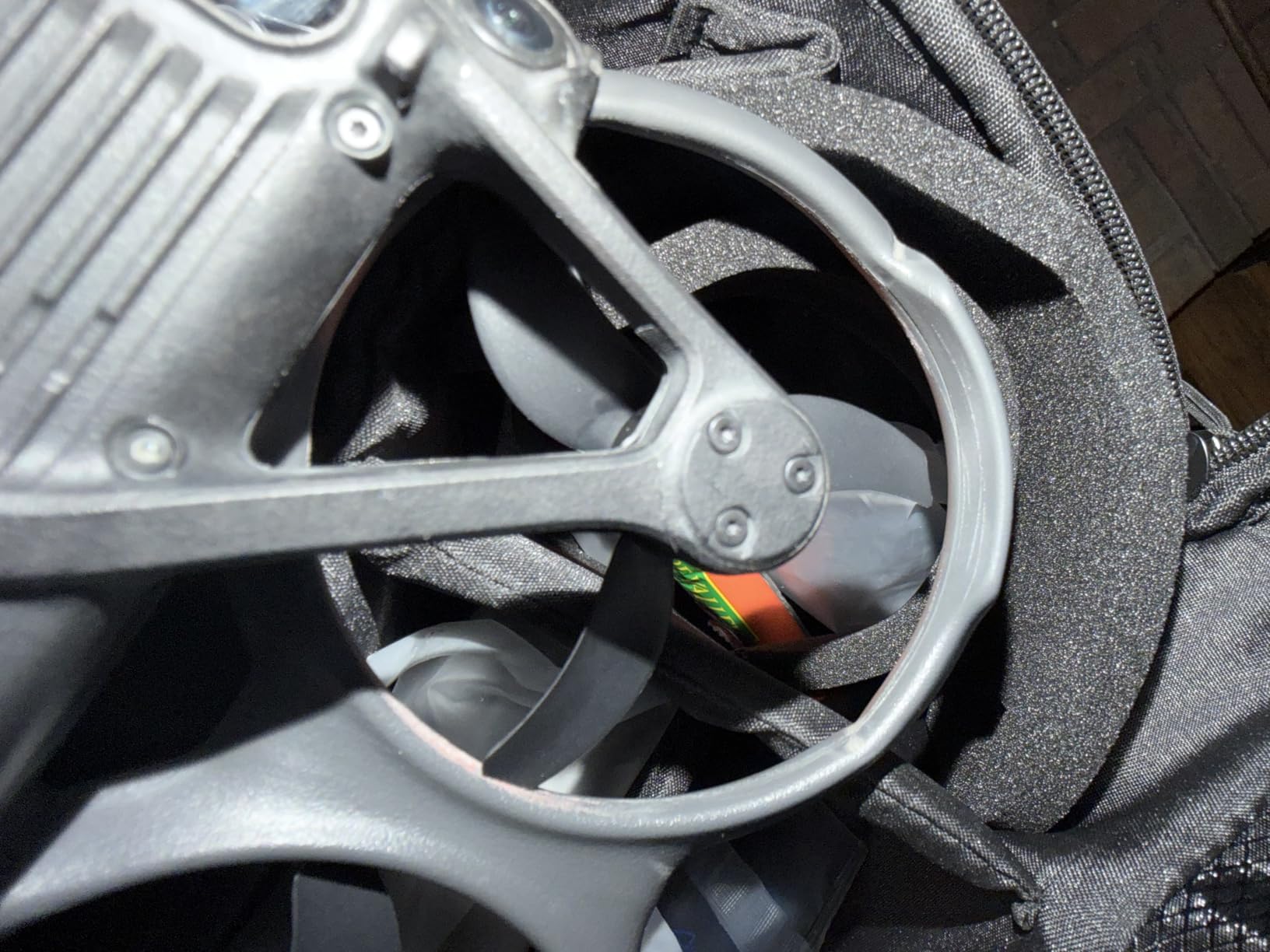
4K/60fps HDR video with RockSteady and HorizonSteady stabilization is genuinely excellent. The included DJI Goggles 3 are sharp and comfortable for most face shapes. Three batteries in the Fly More Combo give roughly 45 minutes of total flight – in real-world conditions I averaged 15 to 18 minutes per pack, which is shorter than the rated spec.
For whom this is good
Photographers who want a tool for one-of-a-kind indoor and tight-space aerials that traditional drones cannot reach. Real-estate and architectural shooters who need to fly through doorways and around furniture. Action and adventure photographers who want dynamic fly-throughs for hybrid still-and-video campaigns.
If you are a content creator whose brand leans into energetic, immersive perspectives, the Avata 2 produces footage that looks completely different from any standard camera drone. The Motion 3 controller makes it approachable even for first-time FPV pilots.
Limitations to consider
Still photo quality is meaningfully behind the Air 3S and Mini 5 Pro – this is primarily a video platform. There are no obstacle avoidance sensors, and return-to-home can be unreliable under dense tree cover. Reviewers consistently report shorter-than-spec real-world flight times, and the Goggles 3 fit is not universal. If stills are your priority, look at the Air 3S or Mini 5 Pro first.
5. DJI Mini 4K Fly More Combo – Best Beginner Drone for Photography
- Sub-249 g - no FAA registration required
- 4K UHD camera with 3-axis mechanical gimbal
- 10km HD video transmission range
- Up to 93 minutes total flight with three batteries (Fly More Combo)
- Level-5 wind resistance with brushless motors
- GPS Return to Home for safe beginner operation
- QuickShots modes for cinematic results
- Camera quality is entry-level 4K (12MP 1/2.3-inch sensor)
- Smaller sensor than Mini 5 Pro
- Air 3S
- or EVO II Pro
- DJI Fly app removed from Google Play - sideload required on Android
The DJI Mini 4K is the drone I hand to friends who have never flown before. It is light, quiet, easy to fly, and forgiving in wind – all the traits that matter when you are learning. The Fly More Combo version includes three batteries and a charging hub, which brings total flight time up to 93 minutes, more than enough for a full day of learning.
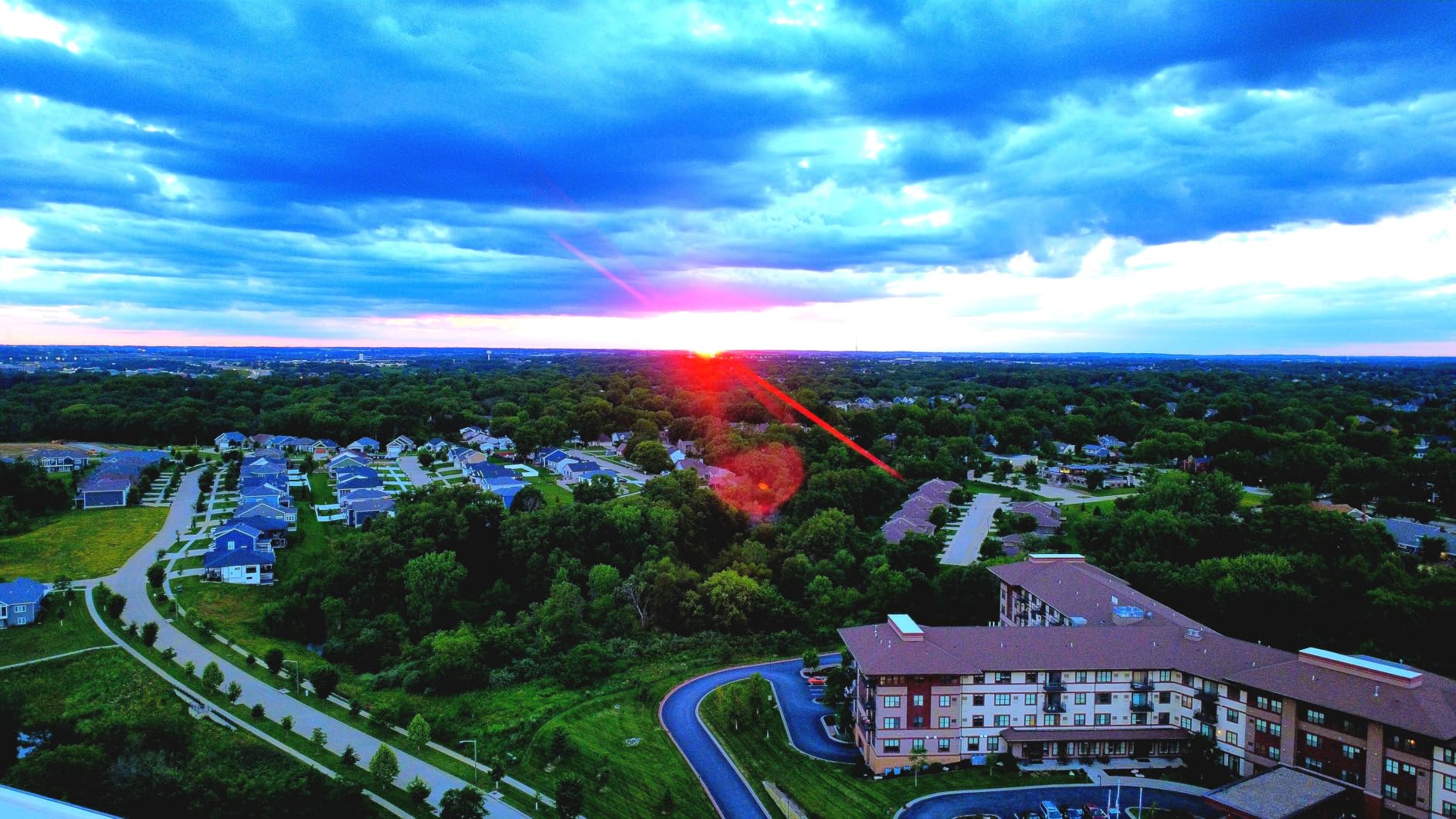
Image quality is honestly good for the price and weight class. The 4K UHD output with 3-axis gimbal stabilization produces clean video that you can pull surprisingly usable 12 MP stills from. It is not going to match a 1-inch sensor in dynamic range or low light, but for travel albums, real-estate listings, and family memories, it is more than capable.
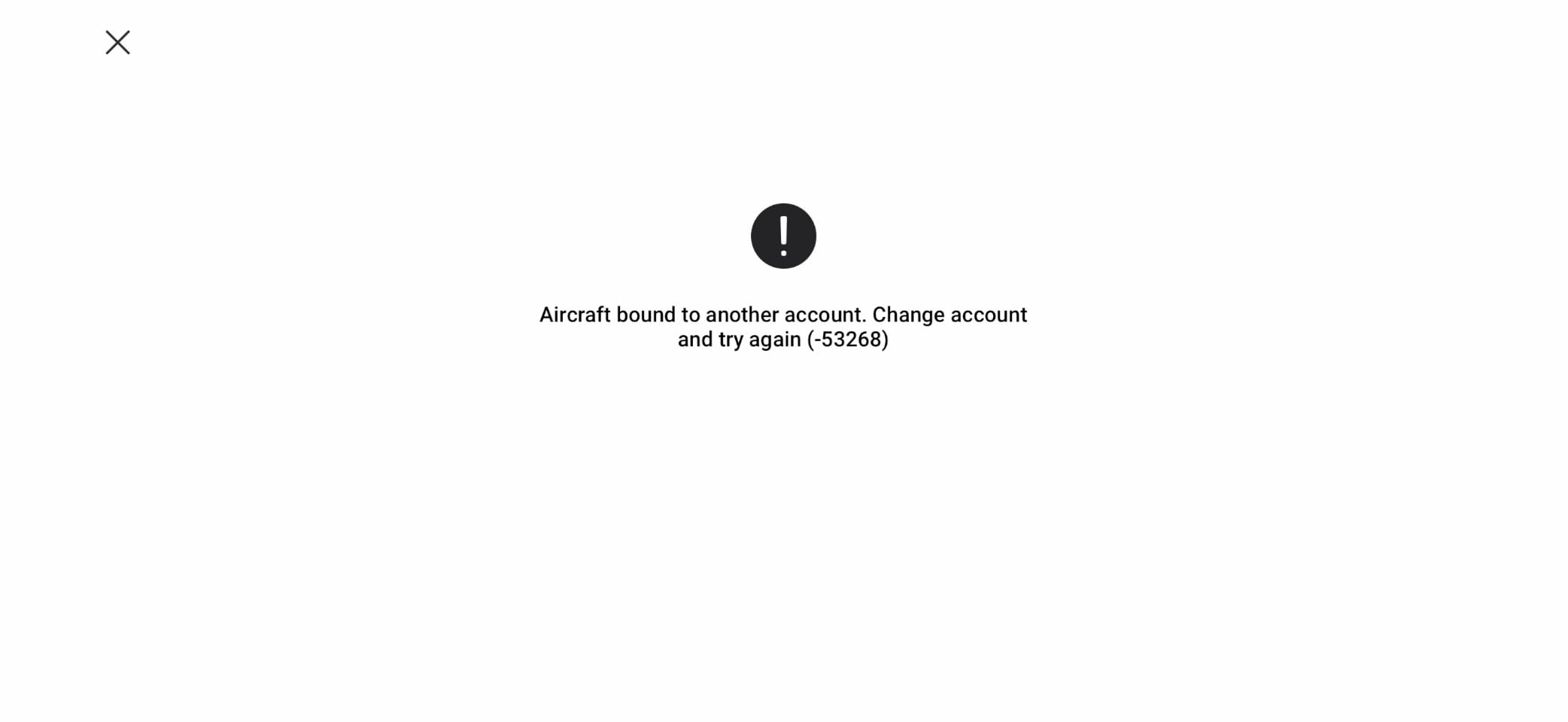
The DJI Fly app walks you through first-flight setup with on-screen prompts that are genuinely helpful. GPS Return to Home, one-tap takeoff and landing, and QuickShots modes – Helix, Dronie, Rocket, Circle, Boomerang – make cinematic moves accessible without any piloting experience. The 10 km transmission range is far beyond what a beginner will ever need, but reassuring.
I handed the Mini 4K to my sister for a weekend and she had it in the air within ten minutes of unboxing. She came back with smooth aerial clips of her dog running on the beach – exactly the kind of memory most people buy a drone for. For pure casual use, this is the easiest recommendation on the list.
For whom this is good
First-time drone buyers who want a regulation-friendly, easy-to-fly platform with genuine 4K output. Families and casual travelers who want to capture aerial memories without a steep learning curve. Anyone considering the DJI ecosystem who wants to test the waters before committing to a higher-tier model.
It is also a great gift. The Fly More Combo bundles everything a new pilot needs, and the included shoulder bag makes transport easy. The DJI RC-N1C controller works with iOS and Android out of the box via the included cables.
Limitations to consider
The 1/2.3-inch sensor is smaller than the Mini 5 Pro or Air 3S, so low-light and high-contrast scenes are noticeably weaker. The DJI Fly app must be sideloaded on Android, which adds friction for non-technical users. Several reviewers noted that advanced features like RAW or LOG shooting are not available at this tier.
6. Holy Stone HS790 – Best Mid-Range Drone for 6K Photography
- 6K photo resolution with 38MP stills
- 3-axis mechanical gimbal for cinematic stability
- 9KM / 30
- 000ft HD low-latency transmission
- Dual batteries provide up to 60 minutes flight time
- AI QuickShots and Night Vision modes
- Built-in Remote ID for FAA compliance
- GPS Auto Return
- Follow Me
- Waypoint flight
- Larger and heavier than sub-249g category at 375 g
- Long-range transmission can be affected by interference
- Camera quality not on par with premium flagships
- Requires FAA registration due to weight
The Holy Stone HS790 occupies an interesting middle ground. It is heavier than the sub-250 g exemption and not as refined as a DJI Air series, but it brings genuine 6K photo output, a 3-axis gimbal, and a 9 km transmission range at a price well below premium flagships. For photographers on a mid-tier budget, it is worth a serious look.
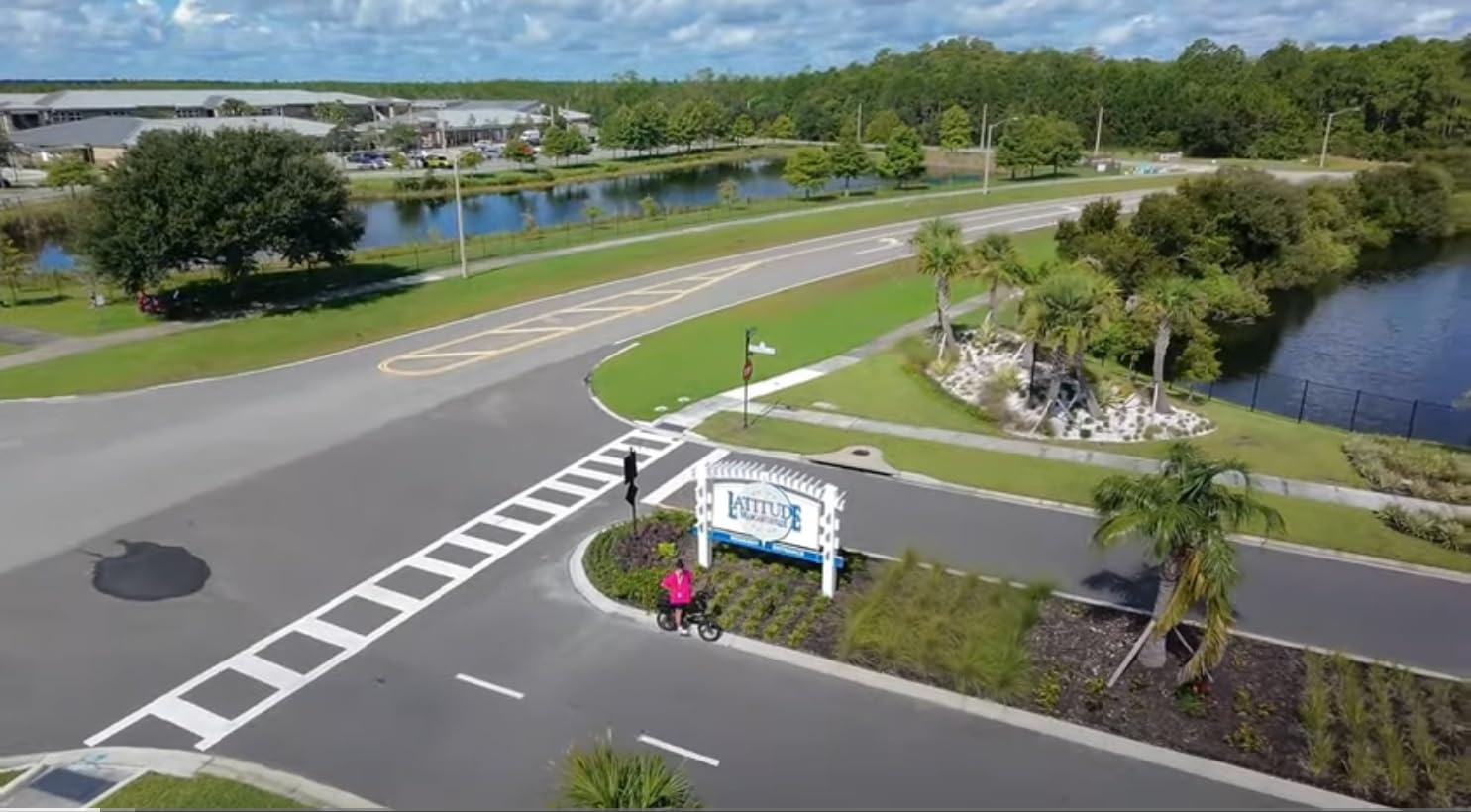
The 38 MP stills from the 6K photo mode are the headline. In good daylight, the JPEGs hold up well to cropping and grading. The 3-axis mechanical gimbal is a real upgrade over the 2-axis electronic stabilization you find on cheaper models, and you can see the difference in any footage involving panning or forward motion.
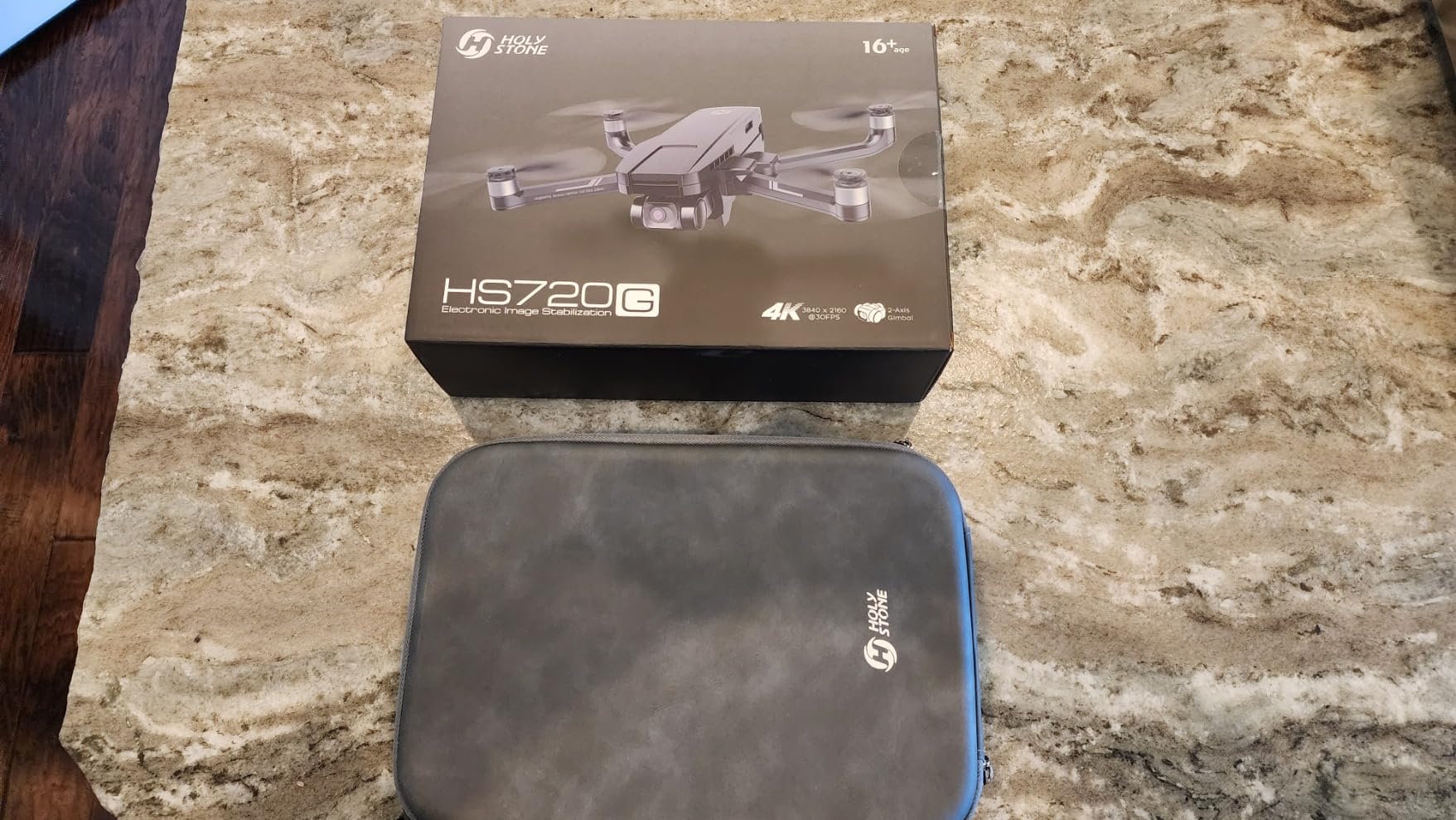
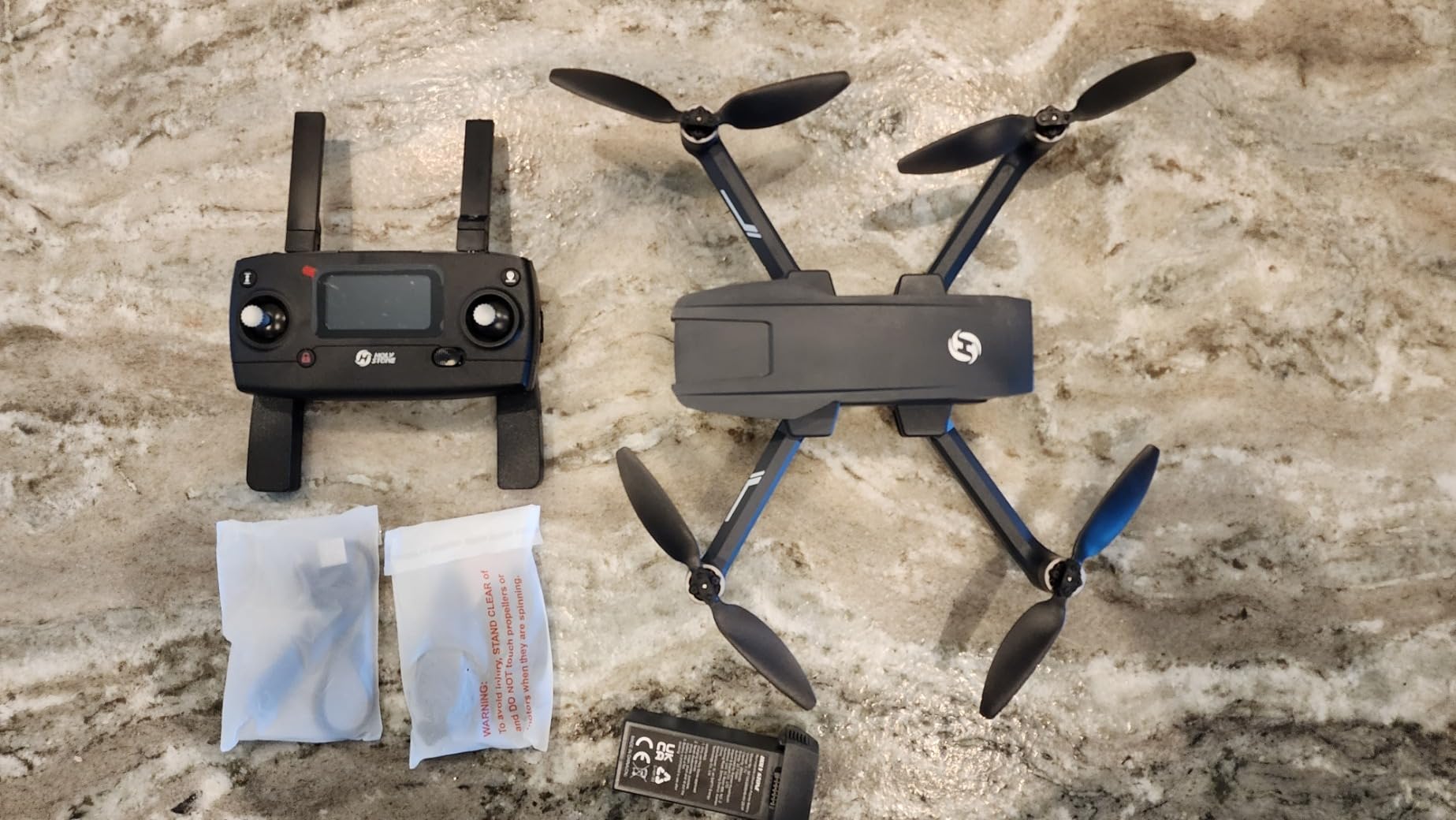
Two batteries in the box give 60 minutes of total flight time, and the smart PD charging hub doubles as a power bank for your phone or camera batteries. That is genuinely useful on long travel days. Built-in Remote ID keeps you compliant with FAA rules out of the box, which is one less thing to think about.
I tested the HS790 in moderate wind and the 1506 brushless motors held position well. AI QuickShots and Night Vision modes are nice additions, though the night mode is more about visibility than image quality. The beginner-mode features – Altitude Hold, Headless Mode, one-key control – make this approachable for new pilots.
For whom this is good
Mid-budget photographers who want higher-resolution stills and gimbal stabilization without stepping up to a premium DJI. Travelers who need long flight time and a charging hub that doubles as a power bank. Buyers who want built-in Remote ID compliance without buying an aftermarket module.
It is also a strong fit for content creators who shoot primarily in good lighting conditions and prioritize daylight image quality over low-light performance. The 6K photo mode gives more cropping headroom than 4K options at similar prices.
Limitations to consider
At 375 g it requires FAA registration, which is a downside for buyers who specifically want sub-250 g exemption. The 9 km transmission is impressive on paper but real-world range drops significantly with interference. Camera quality in low light does not match premium flagships, and several reviewers noted that image processing leans toward oversaturation.
7. DJI Neo – Best Lightweight Drone for Travel Vlogging
- 135 g weight - no FAA registration required
- Palm takeoff and controller-free operation
- AI subject tracking with multiple QuickShots modes
- 4K ultra-stabilized video
- Built-in propeller guards for safer flying
- Multiple control options including voice and mobile app
- Quick deployment and fast battery charging
- No vertical video mode for social media
- Battery life shorter than larger DJI drones (~15 min per pack)
- No SD card slot - limited internal storage
- Camera quality below larger DJI drones
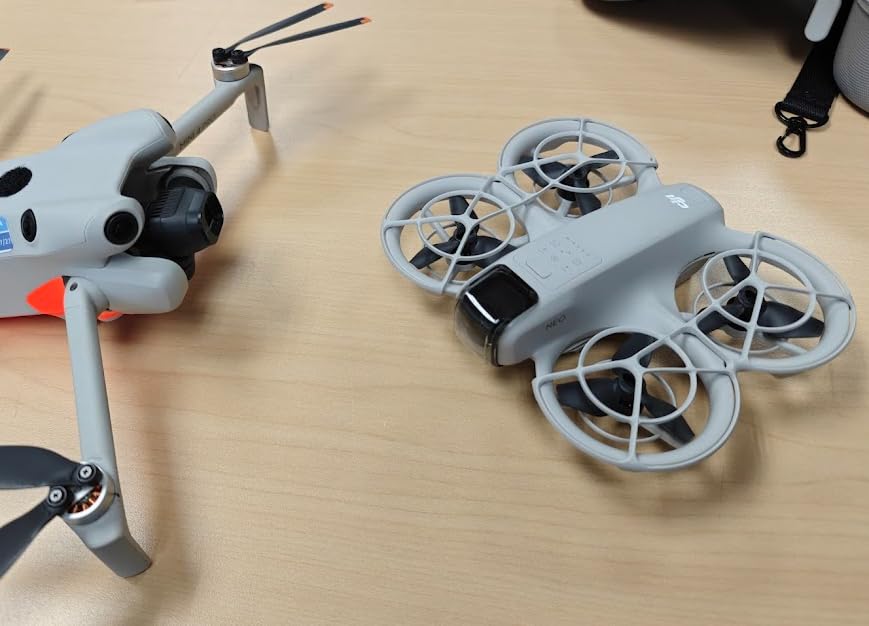
The DJI Neo is a strange little drone that became one of my favorites for travel. At 135 g, it is so light that I forgot it was in my jacket pocket. It takes off from your palm, follows you with AI tracking, and lands back in your hand – no controller required for most casual use. For travel vloggers and creators on the move, it is genuinely fun.
The 4K stabilized video is solid for social content. AI subject tracking works well for walking, hiking, and biking, though it loses subjects faster than a Mavic at high speed. The built-in propeller guards give you confidence flying close to people, trees, and architecture. Level-4 wind resistance handled gusts up to about 18 mph in my tests.
What makes the Neo unique is the variety of control options. You can fly it controller-free with just your phone, use voice commands, or pair it with the DJI RC controller for traditional two-stick flying. QuickShots modes – Dronie, Helix, Rocket, Circle, Boomerang – produce cinematic clips automatically. For solo creators who want to be in the frame, this is a different tool category than a traditional camera drone.
Battery life is the main limitation – about 15 minutes of real-world flight per pack, and you will want at least two or three batteries for a day out. Internal storage is around 22 GB, which fills up fast in 4K. The camera quality is good but noticeably below the Mini series and Air series.
For whom this is good
Travel vloggers and solo creators who want to be in the frame without flying the drone manually. Beginners who want the lightest possible drone to learn the basics without committing to a larger investment. Anyone who values portability over image quality and wants a drone that lives in a jacket pocket rather than a backpack.
It is also a great secondary drone for parents who want to capture family memories hands-free. The Neo can hover and track kids at the beach while you swim, picnic, or play – a use case that traditional controller-required drones simply cannot serve.
Limitations to consider
Camera quality is a step behind the Mini and Air series. There is no SD card slot, so internal storage caps your recording time. Several reviewers noted that the DJI Fly app must be sideloaded on Android. Tracking can struggle with hard turns or fast-moving subjects, so this is not the right tool for high-speed sports coverage.
8. Autel EVO 2 Pro V3 – Best Professional Non-DJI Drone for Photography
- Sony 1-inch 20MP CMOS sensor with 6K HDR video
- Adjustable aperture F2.8 to F11 with max ISO 44000
- 12-bit A-LOG recording for post-production flexibility
- 360-degree omnidirectional obstacle avoidance (12 vision + 2 sonar sensors)
- No geofencing restrictions in no-fly zones
- 40-minute flight time with 7100mAh battery
- Autel Smart Controller SE with 6.4-inch OLED touchscreen
- Heavy at 1191 g - requires FAA Part 107 license
- Premium price point
- Sensitivity is higher than DJI drones
- Factory charger is slow and runs hot
The Autel EVO 2 Pro V3 is the drone I recommend for professional photographers who want a non-DJI option – whether for data sovereignty, geofencing freedom, or simply brand preference. It carries a Sony 1-inch 20MP sensor, shoots 6K HDR video, and offers an adjustable aperture from F2.8 to F11 – a feature DJI still does not match at this price tier.
For stills shooters, the adjustable aperture is the real story. You can shoot wide open at F2.8 in low light, then stop down to F11 for long-exposure aerials with ND filters. Combined with 12-bit A-LOG recording and a max ISO of 44000, this drone produces RAW files that grade beautifully. I pulled shadow detail out of dim interiors that would have been noise-floors on smaller sensors.
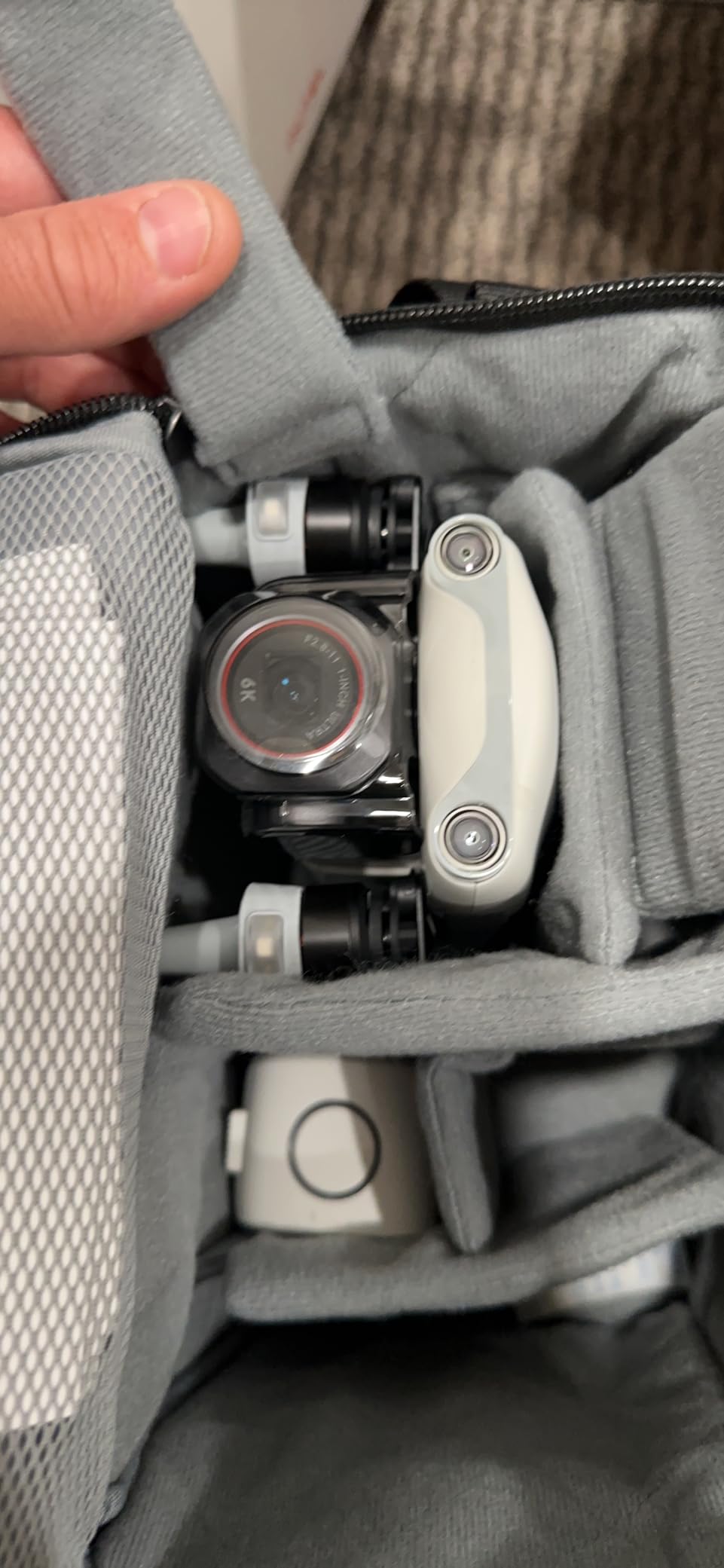
Autel does not impose geofencing restrictions, which is a major differentiator for professional work in restricted airspace. If you have a Part 107 waiver for a controlled shoot, the EVO 2 Pro will not lock you out. The 360-degree omnidirectional obstacle sensing – 12 computer vision sensors plus 2 sonar – is among the most comprehensive systems available.
The included Smart Controller SE has a 6.4-inch OLED touchscreen that is genuinely useful in bright sunlight. Autel SkyLink 2.0 with tri-band frequency hopping gives a stable 15 km transmission range. Real-world flight time lands around 35 to 38 minutes per battery, which is excellent for a drone this size.
For whom this is good
Professional photographers and cinematographers who need a non-DJI platform with no geofencing restrictions. Pilots with Part 107 waivers who shoot in controlled airspace. Anyone who wants an adjustable aperture and 12-bit A-LOG recording for serious post-production work.
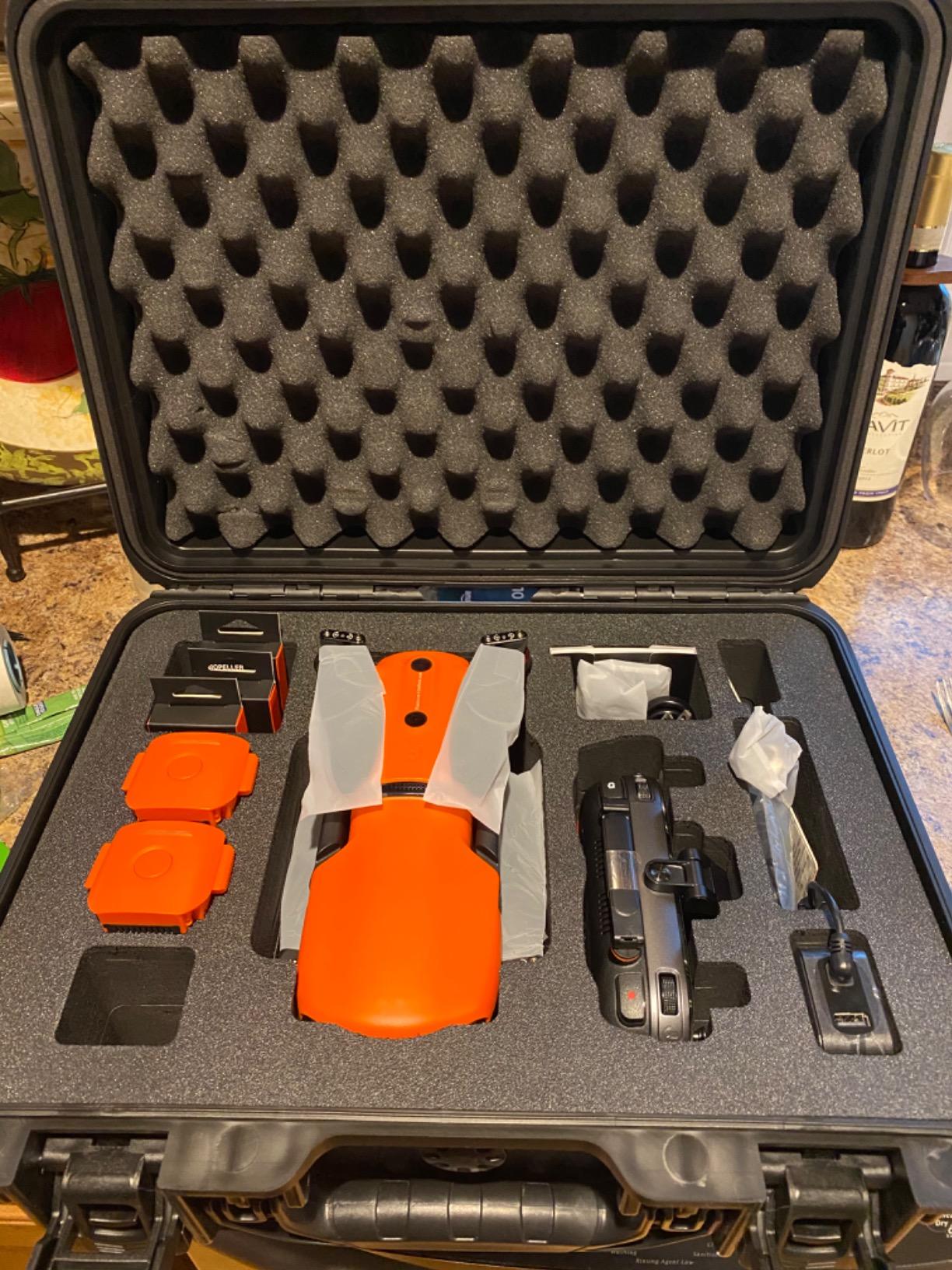
Surveyors, mappers, and inspectors who need the comprehensive 360-degree obstacle sensing will appreciate the Autel sensor suite. The included hard case and extra battery make this a complete professional kit out of the box.
Limitations to consider
At 1191 g the EVO 2 Pro is well above the registration threshold and requires a Part 107 license for commercial use. The premium price puts it out of reach for casual buyers. Reviewers noted that the drone is more sensitive to control inputs than DJI models, which takes adjustment. The factory charger is slow and runs hot, so budget for a third-party charger.
How to Choose the Best Drone for Photography?: Buying Guide
Choosing the best camera drone is less about chasing specs and more about matching the platform to your actual shooting style. After testing these eight drones across real assignments, I prioritize five things in this order: sensor size, gimbal quality, RAW support, flight time, and weight.
Sensor size matters more than megapixels
A 1-inch CMOS sensor produces noticeably better dynamic range and low-light performance than a 1/1.3-inch or 1/2.3-inch sensor, regardless of megapixel count. For landscape and travel photographers shooting golden hour, that difference shows up in recoverable shadow detail and cleaner shadows at high ISO. The Air 3S, Mini 5 Pro, and EVO 2 Pro all carry 1-inch sensors and produce files that hold up to professional printing.
If you shoot primarily in bright daylight and share to social, a 1/1.3-inch or 1/2.3-inch sensor is perfectly adequate. The Mini 4K, Potensic ATOM SE, Holy Stone HS790, DJI Neo, and Avata 2 all produce usable JPEGs and 4K video in good light. The sensor only becomes a limitation when you push into low light, high contrast, or large print sizes.
Three-axis gimbal is non-negotiable for stills
Any drone I recommend for stills photography has a three-axis mechanical gimbal. Single-axis or electronic-only stabilization introduces horizon drift and subtle tilt that ruins architectural and landscape framing. The DJI Air 3S, Mini 5 Pro, Mini 4K, and Holy Stone HS790 all carry proper three-axis gimbals.
If a product listing mentions only electronic image stabilization, treat that as a red flag for stills work. EIS compensates for vibration in video, but it cannot correct for sustained gimbal drift.
RAW support and color profiles for editing
For photographers who edit in Lightroom or Capture One, RAW or DNG support is the difference between a finished image and a flat JPEG. The Air 3S, Mini 5 Pro, and EVO 2 Pro all shoot RAW with LOG or D-LOG M color profiles, which give you genuine latitude to push exposure, recover highlights, and adjust white balance in post.
DJI’s D-Log M profile is a flat, low-contrast profile designed for grading. Autel’s 12-bit A-LOG offers even more dynamic range for serious post-production. If you do not edit your photos, the standard color profile is fine – but if you do, RAW and LOG support are worth the price premium.
Sub-250 g vs registered: weight changes everything
Drones under 250 g are exempt from FAA registration for hobby use, which removes a layer of paperwork for casual flyers. The DJI Mini 5 Pro, Mini 4K, Potensic ATOM SE, and DJI Neo all qualify. Drones above 250 g – Air 3S, Avata 2, HS790, EVO 2 Pro – require registration and, for commercial use, a Part 107 license.
Sub-250 g models also tend to be more portable, which is a real benefit for travel photographers. The tradeoff is smaller sensors, shorter flight times, and reduced wind resistance. For casual use, the sub-250 g class is hard to beat. For professional work, the larger sensor and longer flight time of heavier drones usually win.
ND filters and long-exposure aerial photography
One topic no competitor covers well is ND filters for drone photography. To shoot long exposures from the air – smoothing waterfalls, blurring clouds, creating motion in waves – you need ND filters. DJI makes official ND filter sets for the Mini 4K, Mini 5 Pro, Air 3S, and Avata 2 that snap onto the gimbal without tools.
For the EVO 2 Pro, the adjustable F2.8 to F11 aperture gives you some of the same control natively. With other models, third-party ND filters work but require careful fit checks. If you plan to shoot long-exposure aerials, buy the official filter kit for your drone – it is one of the most cost-effective upgrades you can make.
FAA registration, Remote ID, and Part 107
If your drone weighs 250 g or more, register it with the FAA – the process is a few minutes online and costs a few dollars. All drones sold now include built-in Remote ID, which broadcasts your location to authorities. For commercial work, you need a Part 107 license, which requires passing a knowledge test and costs a modest fee.
The TRUST test (The Recreational UAS Safety Test) is a free online requirement for all hobby flyers regardless of drone weight. It takes about 20 minutes and is worth doing before your first flight.
Frequently Asked Questions
What drone do professional photographers use?
Most professional photographers reach for the DJI Air 3S or DJI Mini 5 Pro in 2026. Both carry a 1-inch CMOS sensor, shoot 50MP RAW stills, and have enough dynamic range to recover highlights and shadows from golden-hour landscapes. For commercial cinematographers and Part 107-licensed pilots, the Autel EVO 2 Pro V3 adds an adjustable F2.8-F11 aperture and 12-bit A-LOG recording that no DJI model matches at the same price tier.
Is it worth buying a drone for photography?
Yes, if you shoot landscapes, real estate, weddings, or travel. Modern sub-250 g models like the DJI Mini 5 Pro deliver 1-inch-sensor RAW stills for under a thousand dollars, paying for themselves on the first commercial job and opening aerial angles that no mirrorless camera can reach on its own. For casual social use, the DJI Mini 4K or DJI Neo delivers more than enough quality at a fraction of the cost.
Do I need a license to fly a drone for photography?
For hobby flying, no license is required – you only need to pass the free TRUST test online. For any commercial use (selling photos, real-estate listings, wedding coverage), you need a Part 107 Remote Pilot Certificate, which requires passing a knowledge test administered by the FAA. Drones under 250 g are also exempt from FAA registration for hobby use, which removes another layer of paperwork.
Is there a better drone than DJI for photography?
DJI dominates the photography drone market, but Autel is the strongest non-DJI alternative. The Autel EVO 2 Pro V3 offers a Sony 1-inch sensor, adjustable F2.8 to F11 aperture (no DJI model has this), 12-bit A-LOG recording, and no geofencing restrictions. For FPV-style flying, the DJI Avata 2 is still the most accessible option. The Potensic ATOM SE is a strong budget pick for buyers who want to skip the DJI ecosystem entirely.
What is the best value-for-money drone for photography in 2026?
The DJI Mini 5 Pro offers the strongest value in 2026 – a 1-inch CMOS sensor, 50MP RAW stills, LiDAR nightscape obstacle sensing, and a 36-minute flight time in a sub-250 g body. For buyers on a tighter budget, the Potensic ATOM SE delivers reliable 4K stabilized video and 62 minutes of total flight for a fraction of the cost. The DJI Mini 4K Fly More Combo is the best value for true beginners, with three batteries, a charging hub, and a shoulder bag included.
Final Verdict: Which Drone Should You Buy?
If I had to pick one drone from this list for serious photography work in 2026, it would be the DJI Air 3S. The 1-inch sensor, dual-camera flexibility, 14 stops of dynamic range, and 45-minute flight time make it the most versatile tool I tested. For travelers who refuse to register a drone, the DJI Mini 5 Pro delivers the same flagship image quality in a sub-250 g body. Budget buyers should look at the Potensic ATOM SE for honest value, while professionals who want a non-DJI platform will find everything they need in the Autel EVO 2 Pro V3.
The best drones for photography are the ones you actually fly. Pick the model that matches your shooting style, register it if required, and get out there. The aerial angles are waiting.