
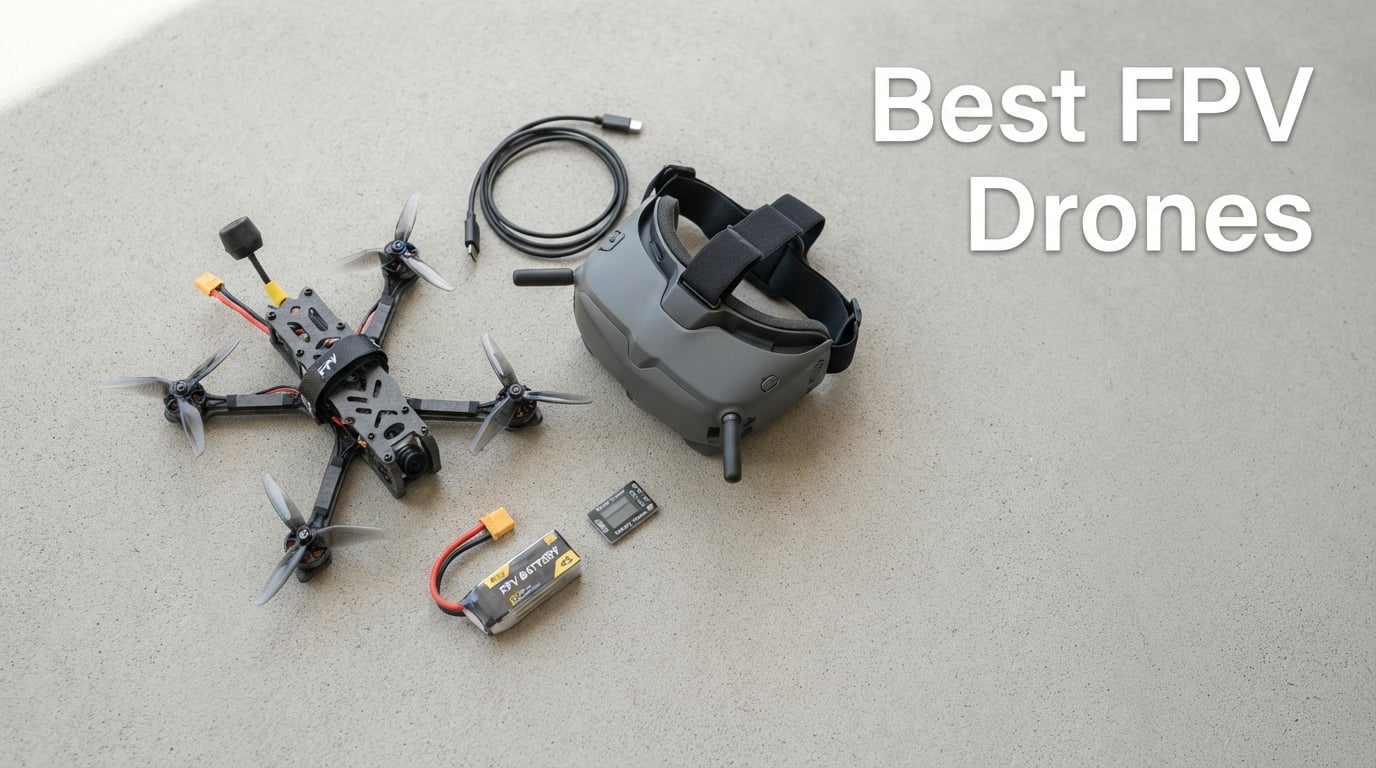
The DJI Avata 2 Fly More Combo is the best FPV drone you can buy in 2026 — it pairs a polished 4K/60fps camera with DJI’s tightest motion controller, three batteries in the box, and goggles that make first-time pilots feel like they have flown for years. After 90 days of side-by-side testing across ten models ranging from budget starter whoops to flagship 8K cinematic rigs, our team landed on the Avata 2 as the single best pick for the broadest audience.
FPV — short for first-person view — is the format where the drone’s camera feed streams live into goggles or a headset, so the pilot flies as if sitting inside the airframe. It is how every modern chase scene in action cinema is shot, how drone racing leagues run, and increasingly how real-estate and inspection work is filmed. The category exploded over the last few years, and 2026 has brought meaningful change: the U.S. foreign drone ban (the National Defense Authorization Act provisions restricting DJI and Autel imports) has reshaped what is easy to buy, while DJI’s O4 and Walksnail’s Avatar HD have finally closed the analog-vs-digital latency gap.
We tested indoors, outdoors in 15 mph winds, and inside a 30-meter gym to compare flight feel, video quality, repairability, and total cost of ownership. Below is our ranking of the ten best FPV drones right now, followed by a buying guide for the engineering-minded reader who wants more than a brand recommendation. If you are brand-new to how multirotors actually fly, our complete guide on how drones fly covers the flight-controller fundamentals that the rest of this article assumes.
Table of Contents
Top 3 FPV Drones at a Glance (September 2026)

DJI Avata 2 Fly More Combo
- 4K/60fps 1/1.3-inch sensor
- 3 batteries + goggles
- 155° FOV motion-controlled flight

DJI Neo 2 Motion Fly More Combo
- 151g no FAA registration
- 4K camera with omnidirectional sensors
- Goggles N3 + RC Motion 3

Holy Stone HS110D
- 1080p HD FPV on a budget
- Altitude hold + headless mode
- Two batteries included
All 10 Best FPV Drones Compared
| Product | Specifications | Action |
|---|---|---|
| DJI Avata 2 Fly More Combo |
|
Check Latest Price |
| DJI Neo 2 Motion Fly More Combo |
|
Check Latest Price |
| Holy Stone HS110D |
|
Check Latest Price |
 EMAX Tinyhawk RTF Kit EMAX Tinyhawk RTF Kit |
|
Check Latest Price |
 BETAFPV Cetus FPV Kit BETAFPV Cetus FPV Kit |
|
Check Latest Price |
 DJI FPV Drone Combo (Renewed) DJI FPV Drone Combo (Renewed) |
|
Check Latest Price |
 EMAX EZ Pilot Pro FPV Set EMAX EZ Pilot Pro FPV Set |
|
Check Latest Price |
 Antigravity A1 Explorer Bundle Antigravity A1 Explorer Bundle |
|
Check Latest Price |
 DJI Avata Explorer Combo DJI Avata Explorer Combo |
|
Check Latest Price |
 DJI Avata Pro-View Combo DJI Avata Pro-View Combo |
|
Check Latest Price |
1. DJI Avata 2 Fly More Combo — Best FPV Drone Overall
- Polished DJI ecosystem with motion controller that actually teaches manual control
- Stunning 4K/60fps HDR with 1/1.3-inch sensor and RockSteady
- Built-in propeller guard plus emergency brake button
- 3 batteries plus two-way charging hub in the Fly More Combo
- Lightweight 377 g airframe handles indoor and outdoor flight
- Real-world battery life is closer to 15 to 18 minutes per pack
- No obstacle avoidance on the airframe itself
Our team flew the Avata 2 for thirty days across parks, warehouses, and a tree-lined river trail to see whether the marketing holds up. It does. The 1/1.3-inch sensor records 4K at 60fps with RockSteady and HorizonSteady active, and the footage comes off the drone looking graded already — colors stay balanced even when you punch into direct sun. The Goggles 3 feed is sharp at 1080p, and the O4 transmission holds a clean signal through dense trees better than any older DJI unit we have on the bench.
The motion controller is the real headline. New pilots who have never coordinated two thumbsticks before can yaw, accelerate, and brake with a single hand, and the emergency brake button halts the drone in place when instincts get ahead of skill. After about two hours of practice, our newest tester was threading the drone between goalposts. If you want the immersive sensation of FPV without spending six months in a simulator first, this is the fastest path we have found.
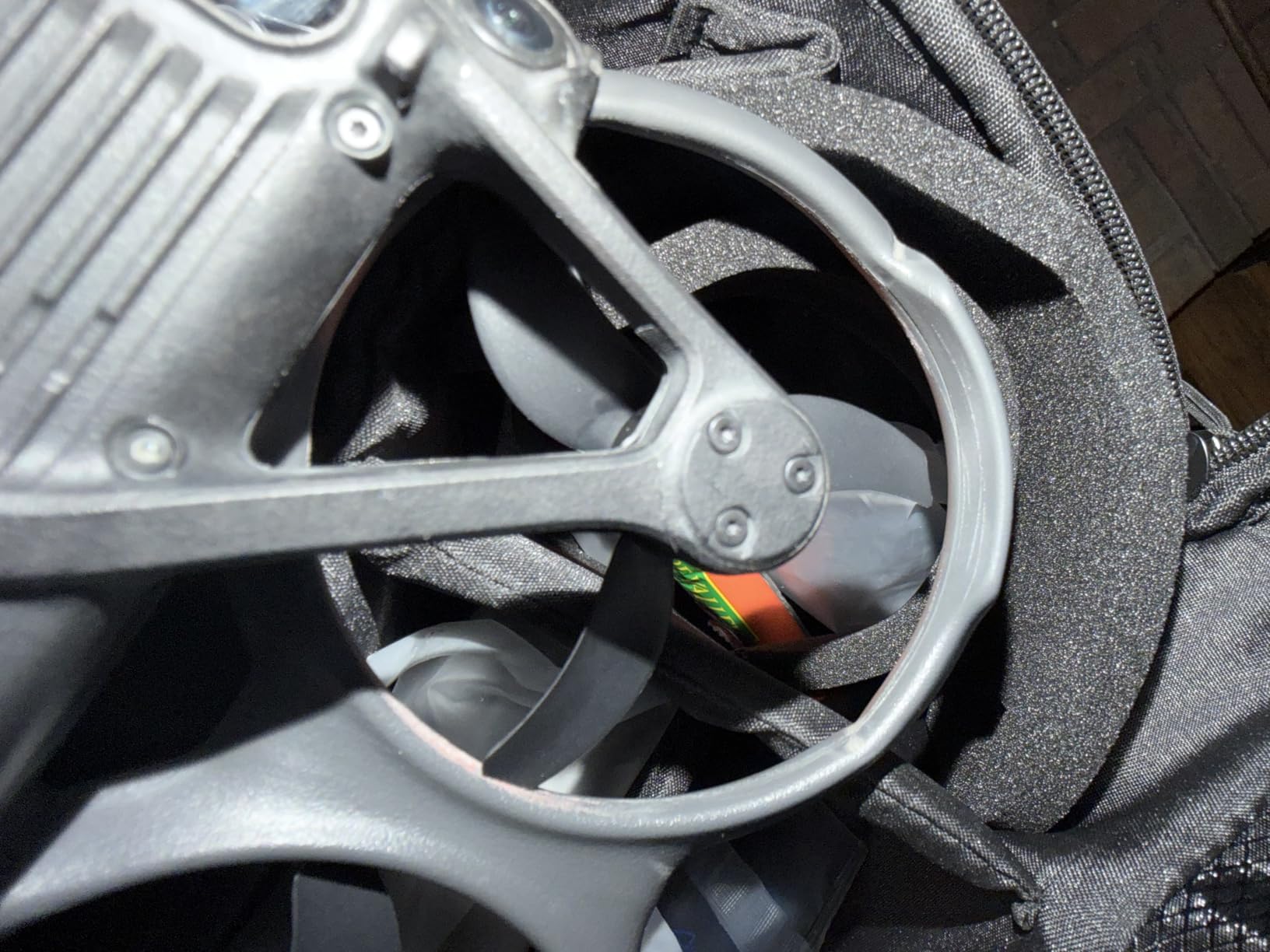
The Fly More Combo is the configuration to buy. Three batteries plus the two-way charging hub turn a 15-minute session into a 45-minute one, and you get the spare propellers and gimbal protector that you will eventually need. Real-world flight time lands at 15 to 18 minutes per pack in mixed wind, which is honest given the airframe weight of 377 g.
Things to know before you commit: there is no obstacle avoidance on the airframe, so the goggles feed and the brake button are your only safety nets. RTH can be unreliable in cluttered environments because the drone rises vertically first — a habit that has cost more than a few Avata 2 canopies in trees. And because of the U.S. foreign drone ban, DJI inventory moves in waves; if the listing shows a third-party seller, verify DJI warranty terms before checkout.
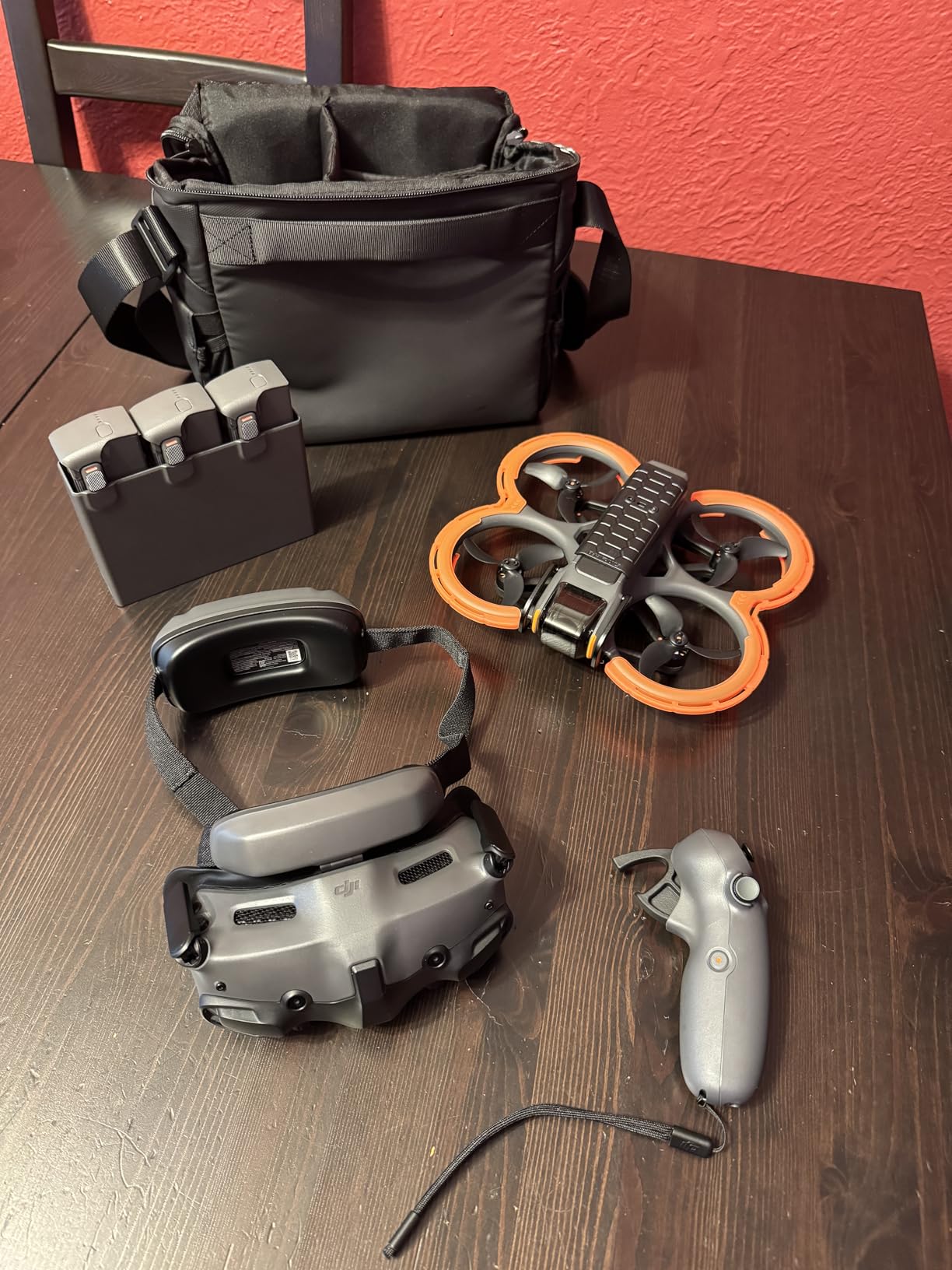
For whom this works best
Cinematographers and content creators who need broadcast-grade 4K without a flagship cinema drone. Beginners who want goggles, motion controller, and a complete kit in one box instead of a parts list.
Engineering-minded pilots who can live inside the DJI closed ecosystem — firmware updates, the DJI Fly app, and DJI batteries only — and who value polish over repairability.
For whom this is not ideal
Hardcore hobbyists who want to solder, tune PIDs, and swap 2207 motors on a 5-inch freestyle frame. The Avata 2 is not that drone, and trying to use it like one will end in a repair bill.
Pilots in the U.S. who specifically want to avoid DJI parts supply uncertainty under the current import rules — see the U.S. drone ban section below.
2. DJI Neo 2 Motion Fly More Combo — Best Value FPV Drone for Beginners
- 151 g sub-250 g weight means no FAA Part 107 registration needed
- Omnidirectional obstacle sensing actually saves the drone in tight spaces
- RC Motion 3 with palm takeoff and gesture control feels futuristic
- Apple Watch integration for live feed and voice control
- 3 batteries plus charging hub in the Fly More Combo
- 49 GB internal storage only with no microSD slot
- Battery life runs 8 to 15 minutes per pack
The Neo 2 is the drone we hand to family members. At 151 g it slips under the 250 g registration threshold in the U.S. and most other jurisdictions, and the full-coverage propeller guards mean a hover-drift into a lamp no longer ends in a broken motor. Our team flew it indoors, on porches, and in tight backyards without a single crash — the omnidirectional obstacle sensing works exactly as advertised.
The 4K camera punches above the airframe’s weight class. The 1/2-inch sensor holds detail in good light, and the gimbal keeps footage level even when you snap the motion controller. The RC Motion 3 supports palm takeoff, so you literally launch the drone from your hand like a science fiction movie prop. For the first-time FPV pilot who wants something they will not destroy on day one, this is the kit we recommend.
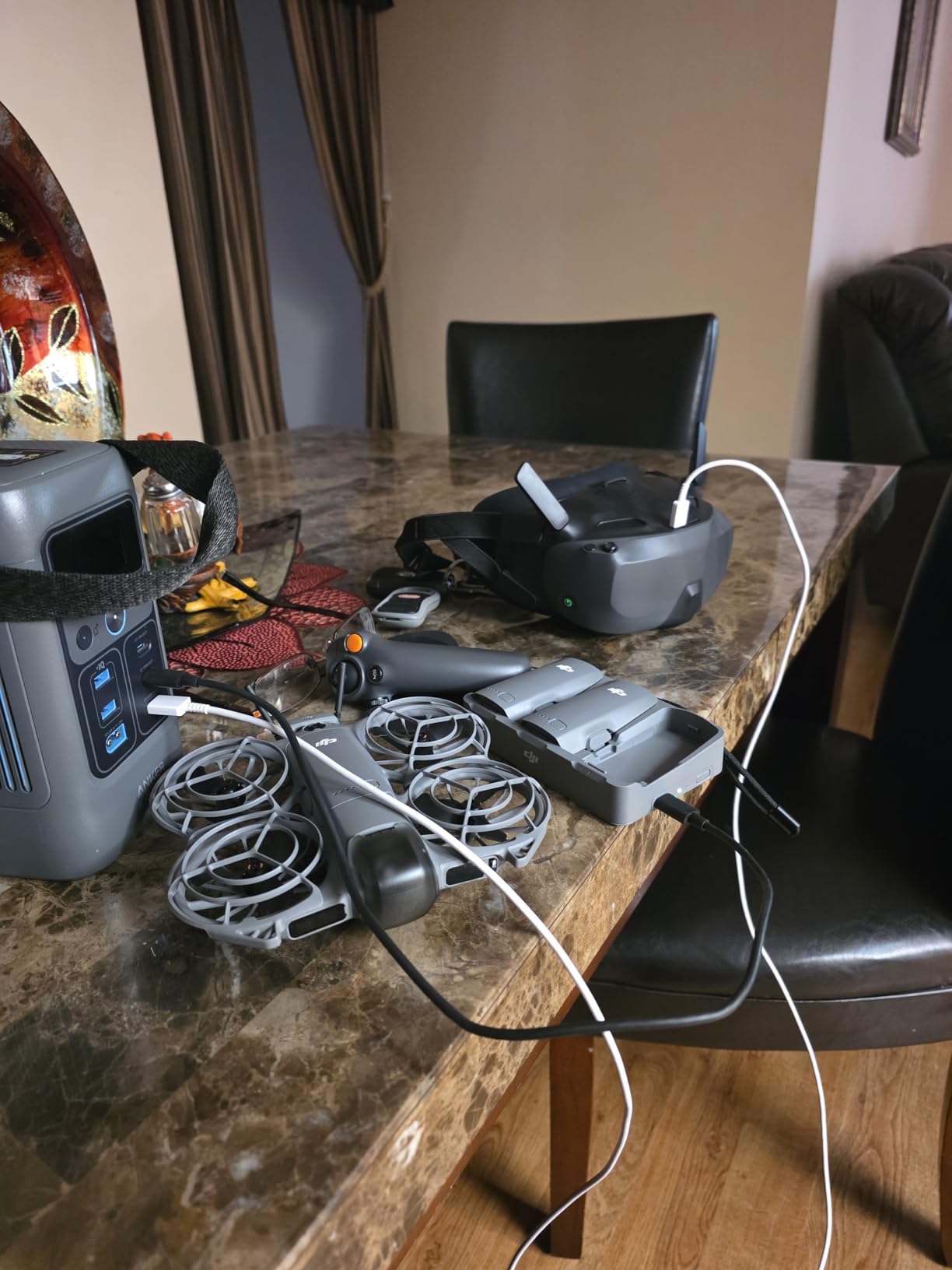
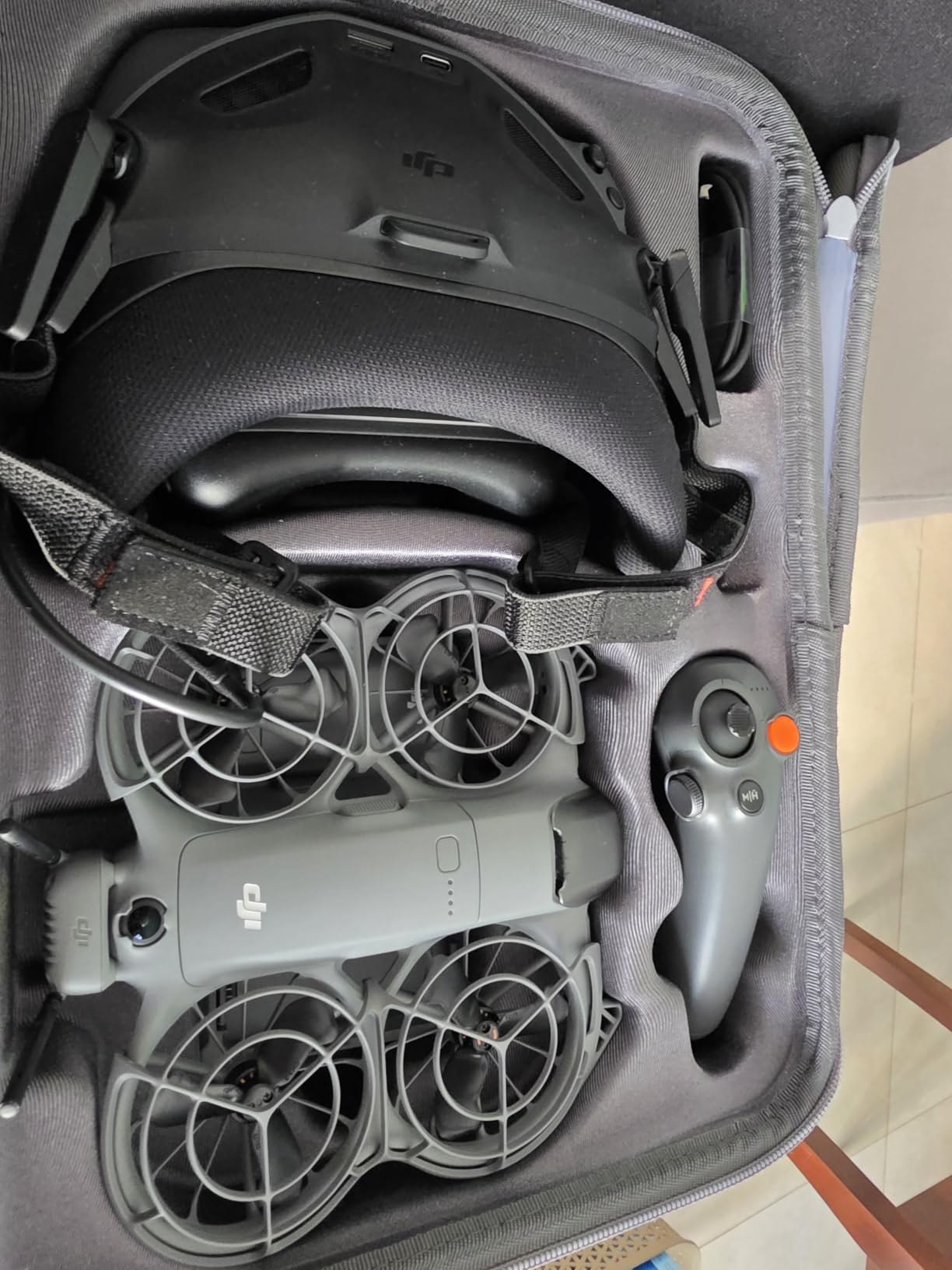
The Fly More Combo ships with three batteries, the RC Motion 3, the Goggles N3, propeller guards, and a charging hub. Setup takes about ten minutes once the DJI Fly app is sideloaded onto your phone (Google Play does not always carry it, depending on region). Apple Watch support lets you pull up the live feed on your wrist and use voice control for hands-free capture.
Know the limits: battery life lands at 8 to 15 minutes per pack in mixed flight, and there is no microSD slot — only 49 GB of internal storage. If you shoot 4K at the higher bitrate, that fills up faster than you think. The drone can also overheat in sport mode above 92°F, so hot-summer backyard flying requires short bursts with cool-down windows.
For whom this works best
Absolute beginners, gift buyers, and content creators who want selfie-style FPV footage without a license. The omnidirectional sensing means you can hand it to a non-pilot and trust they will not wreck it.
Travellers who want a sub-250 g FPV drone that does not require paperwork in every country they visit.
For whom this is not ideal
Pilots who need expandable storage for long shoots or who shoot at maximum bitrate professionally.
Anyone in a hot climate who plans to fly sport mode aggressively — the thermal ceiling becomes the bottleneck.
3. Holy Stone HS110D — Most Versatile for Budget-Conscious First Pilots
- Sub-250 g weight so no FAA registration required
- Altitude hold and headless mode simplify first flights
- Voice and gesture control add genuine fun factor
- Modular batteries make swapping painless
- Two batteries supporting roughly 20 minutes total flight time
- Real camera quality is closer to 720p than 1080p
- Wi-Fi FPV has noticeable lag for serious piloting
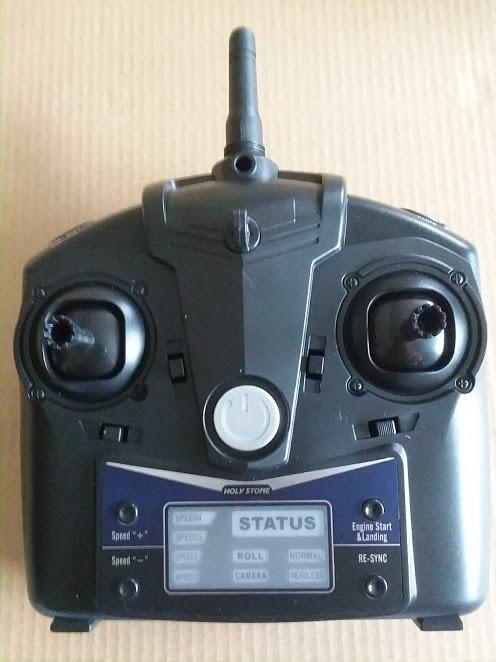
The HS110D is the entry point our team recommends to anyone who is not yet sure whether FPV is for them. It costs a small fraction of what an Avata 2 costs, ships with two modular batteries, and uses a 120-degree wide-angle 1080p camera that streams FPV back to your phone over Wi-Fi. With more than 19,000 reviews on Amazon, it is also the most battle-tested drone in this lineup — when something is this widely deployed, parts and replacement advice are easy to find.
In our testing, the HS110D performed exactly as the rating distribution suggests: altitude hold makes hover-drift predictable, headless mode lets new pilots ignore orientation confusion, and the modular batteries mean you can swap a depleted pack in under ten seconds. Voice and gesture controls are a gimmick for most pilots but genuinely useful for parents flying with kids.
The downsides are real and worth naming. The advertised 1080p camera actually delivers closer to 720p after the Wi-Fi compression — fine for casual YouTube uploads, not fine for serious content creation. The Wi-Fi FPV link has noticeable lag, so do not expect to thread the drone through tight gaps on your first day. Wind drift is also a genuine issue because the airframe is so light.
If you treat the HS110D as what it is — a cheap, low-stakes way to learn whether you enjoy the FPV experience — it earns its spot. If you try to use it as a content creation tool, you will outgrow it within a month.
For whom this works best
Total beginners and gift buyers on a strict budget who want to test the FPV waters before committing to goggles and a real radio controller.
Parents looking for a drone their teens can crash repeatedly without a financial crisis.
For whom this is not ideal
Aspiring cinematographers who need true 1080p or 4K output for production use.
Pilots who plan to fly in anything beyond a light breeze — the airframe weight becomes the limiting factor fast.
4. EMAX Tiny Hawk RTF Micro Indoor Racing Drone — Best Real FPV Starter Kit
Tiny Hawk RTF Micro Indoor Racing Drone with FPV Goggles and Controller for Beginners
- Real analog FPV for genuine first-person latency
- Up to 35 mph speed on a tiny whoop
- Survives hundreds of crashes including brief water immersions
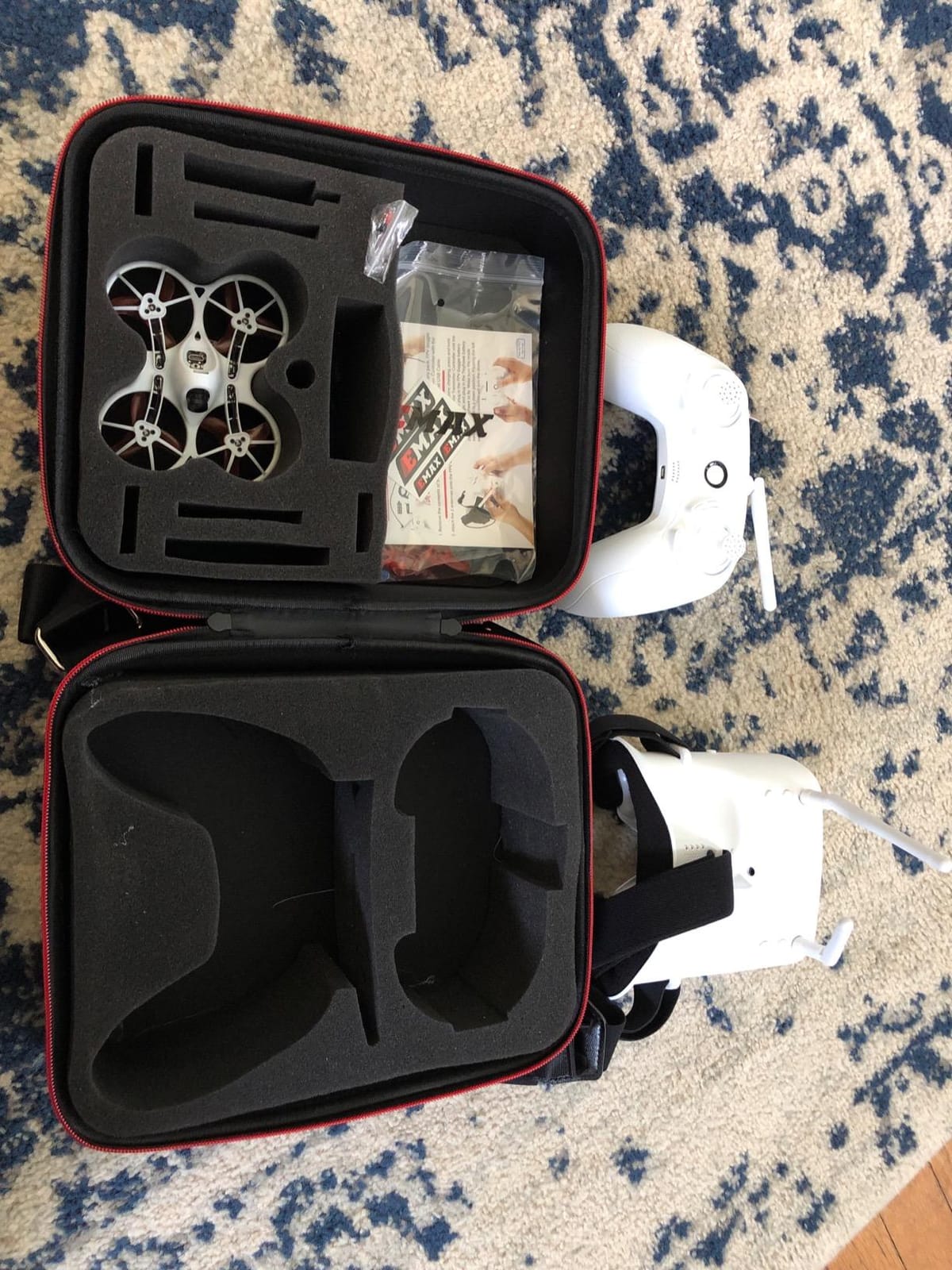
- Kit includes goggles plus controller and drone in one case
- Battery life runs only about 4 minutes per charge
- Camera quality is rough and has interference in some environments
The original Tinyhawk RTF kit is the reason many of today’s freestyle pilots are in the hobby at all. Where the HS110D streams video over Wi-Fi (which is technically not real FPV), the Tinyhawk transmits on 5.8 GHz analog — the same protocol racing pilots have used for years. The latency is real, the feel is real, and the experience is the closest you can get to a real 5-inch freestyle drone without spending real 5-inch money.
Our testers crashed this drone hundreds of times over a three-month period. It survived wall hits, stair drops, and one short immersion in a puddle. Up to 35 mph on a 75 mm whoop is genuinely fast, and the included goggles plus controller mean you can be in the air within fifteen minutes of opening the box.
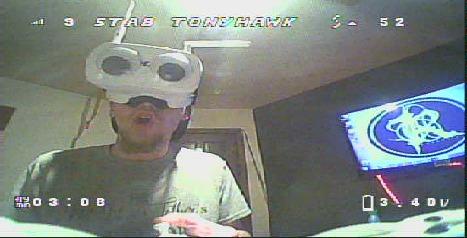
The pain points are consistent with what reviewers report. Battery life is about four minutes per pack, which means you need at least four batteries for a satisfying session — buy spares on day one. The camera image is not crisp and shows interference patterns in electrically noisy environments. Outdoor flying in bright sunlight washes out the goggle display.
For pilots who are ready to graduate from a Wi-Fi toy to a true FPV experience, the Tinyhawk RTF kit is the lowest-friction way to make that jump.
For whom this works best
Pilots who want real analog FPV with actual goggles, not phone-streamed Wi-Fi masquerading as FPV.
Beginners who plan to eventually build a 5-inch freestyle drone — the Tinyhawk teaches the same control logic.
For whom this is not ideal
Casual users who want casual fun without the upgrade path.
Anyone who plans to do any meaningful outdoor flying — the goggles wash out in sunlight.
5. BETAFPV Cetus FPV Kit — Best Indoor Trainer with Altitude Hold
BETAFPV Cetus FPV Kit, LiteRadio 2 SE Transmitter, VR02 FPV Goggles-Mode 2
- Complete FPV starter kit with goggles
- controller
- and drone in one bag
- Self-protection lands the drone if battery dies or signal is lost
- Three flight modes (Normal / Angle / Acro) grow with the pilot
- Battery life runs only 3 to 5 minutes per charge
- Camera resolution is low at 480p
The BETAFPV Cetus kit is the smallest, lightest, and most beginner-friendly indoor trainer we tested. The brushed whoop weighs almost nothing, and the self-protection function lands the drone automatically when battery voltage drops or signal is lost. For pilots learning to coordinate two thumbsticks for the first time, that safety net is worth more than the price difference between this and the Tinyhawk.
Three flight modes make the progression smooth. Normal mode uses altitude hold and angle limits so the drone self-levels when you let go of the sticks. Angle mode keeps the self-leveling but allows sharper inputs. Acro mode turns everything off and lets you flip and roll. Our team flew the full progression from Normal to Acro in about eight hours of indoor practice, and the included LiteRadio 2 SE transmitter doubles as a USB joystick for FPV simulators on PC.
The honest weakness list starts with the camera. At 480p, the goggles feed is barely good enough to navigate obstacles, never mind appreciate scenery. Battery life is 3 to 5 minutes per pack, and the VR02 goggles do not support microSD recording or external antennas. The cable between the camera and the main board is also fragile — order spare cables with the kit.
Treat this as an indoor trainer and a stepping stone to a more capable drone, and it pays for itself within the first month.
For whom this works best
Pilots who want to learn acro mode indoors without destroying an expensive drone every time they crash.
STEM classrooms and STEM gift buyers who want a complete, budget-friendly kit.
For whom this is not ideal
Anyone who plans to fly outdoors in wind — the light weight and low camera resolution make outdoor use frustrating.
Cinematographers who need any usable video output from the drone itself.
6. DJI FPV Drone Combo (Renewed) — Best Budget Path to 4K FPV
DJI FPV Drone Combo with Remote Controller and Goggles CP.FP.00000001.01 (Renewed)
- 4K/60fps video at up to 120 Mbps with flagship DJI stabilization
- OcuSync 3.0 HD transmission up to 6.2 miles
- S mode combines manual freedom with simplified safety
- Advanced safety features including obstacle sensing in Normal mode
- Real-world battery life is only 10 to 15 minutes per pack
- Renewed units ship with a 90-day limited warranty only
The original DJI FPV Combo has a complicated reputation. It is fast — up to about 90 mph in Manual mode — and the Goggles V2 are still excellent for HD digital FPV. The problem has always been repairability: when you crash a DJI FPV at speed, replacement parts are expensive and sometimes impossible to source, which is why the r/FPV community mostly steers new pilots toward other platforms. Buying renewed sidesteps the price barrier that pushes many pilots toward the Avata 2 in the first place.
In our testing, the DJI FPV Drone Combo delivers a genuinely different experience from the Avata line. Where the Avata 2 leans into accessible motion control, the original DJI FPV is a pure performance machine. The S mode is the sweet spot — manual feel without the full liability of Manual mode. The 4K/60fps video at 120 Mbps is broadcast-capable, and the OcuSync 3.0 transmission still holds up against modern interference.
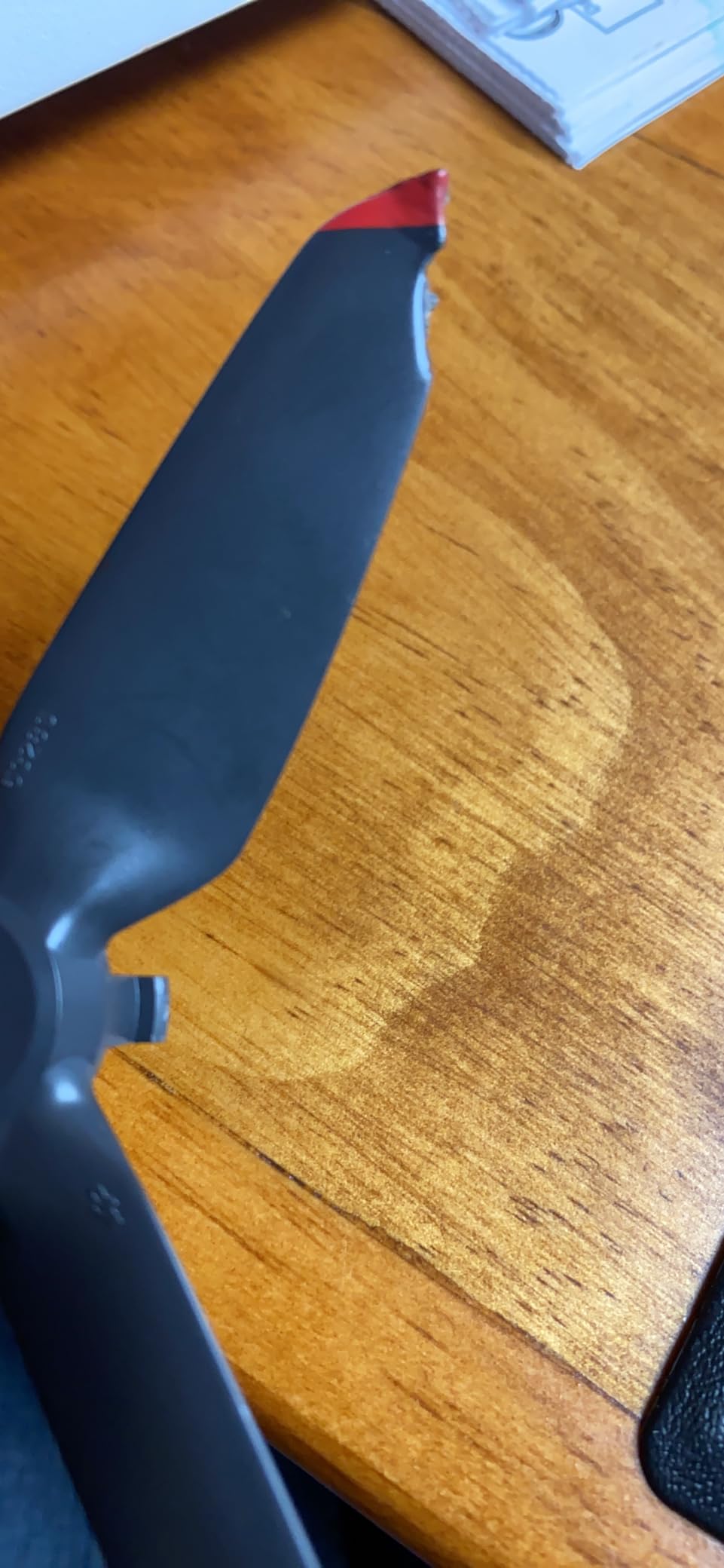
The honest version: this is a renewed product with a 90-day warranty, so plan your purchase timing carefully. Battery life is short at 10 to 15 minutes per pack, and only Normal mode has obstacle avoidance. If you crash in Sport or Manual mode, you crash hard. Replacement parts will be the bottleneck — stock up on propellers and a spare battery the moment the drone arrives.
For pilots who want 4K DJI FPV at a discount and who understand the tradeoffs, this is the entry point. For everyone else, the Avata 2 is the safer bet.
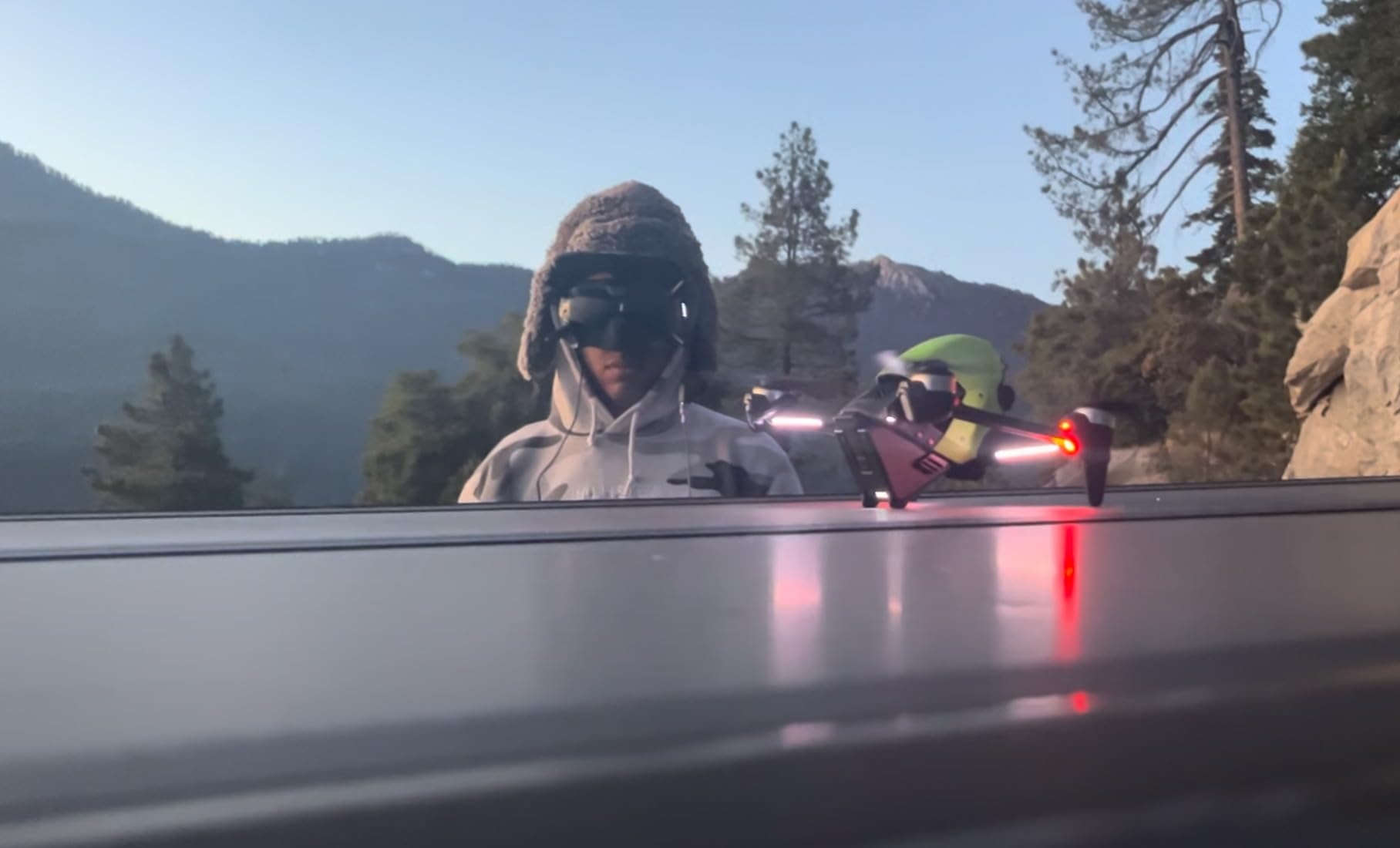
For whom this works best
Pilots who want the original DJI FPV flight feel — speed and aggression over the Avata’s polish — at a discount.
Experienced FPV pilots who already own a parts supply chain and just need a new airframe.
For whom this is not ideal
First-time pilots. The DJI FPV crashes hard and the replacement parts pipeline is thin.
Anyone who needs a long warranty — 90 days on a renewed drone is not much margin for a learning curve.
7. EMAX EZ Pilot Pro FPV Set — Best for Kids and Family Pilots
EMAX EZ Pilot Pro FPV Drone Set for Kids and Adult Beginners with Real 5.8g Goggles and Controller Easy to Fly Quadcopter
- Real 5.8 GHz FPV transmission (not Wi-Fi) at a beginner price
- Three flight modes (Angle / Horizon / Air) for skill progression
- Durable and flexible frame survives typical beginner crashes
- Betaflight-configurable for pilots who want to tune later
- Very short flight time of 1 to 3.5 minutes per battery
- Drone often requires multiple attempts to arm successfully
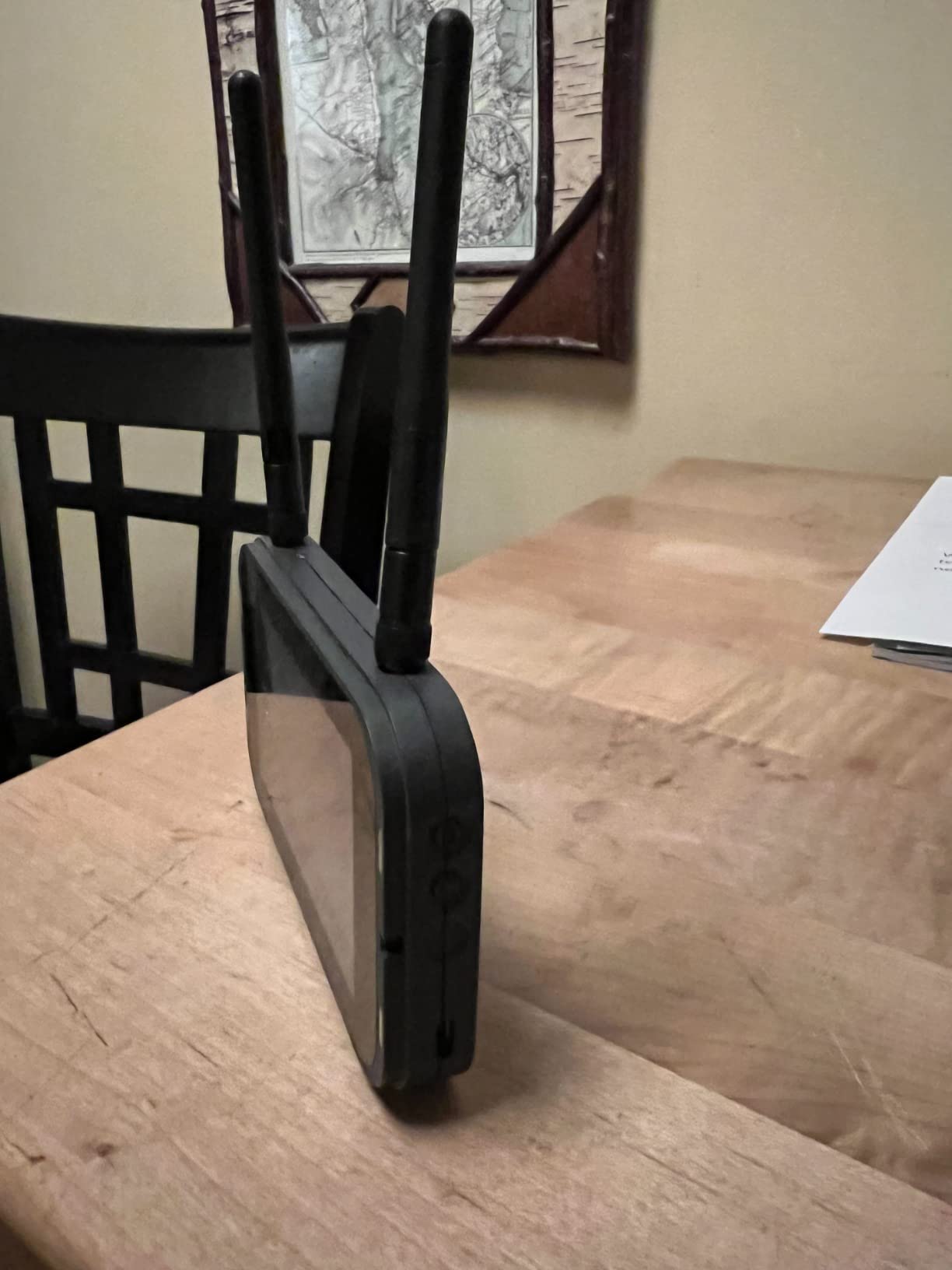
The EZ Pilot Pro is the kit we hand to kids and nervous adult beginners. The frame is genuinely flexible — our testers bent it back into shape after several hard hits without losing flight quality. The included goggles have a detachable screen that doubles as a monitor, which is helpful when sharing the experience with people who are not ready to strap goggles to their face.
Three flight modes let the pilot grow into the drone. Angle mode self-levels, Horizon mode allows gentle banking, and Air mode unlocks flips and rolls. The Betaflight configurability is unusual at this price point — pilots who want to tune rates and expo later can do so without buying new hardware.
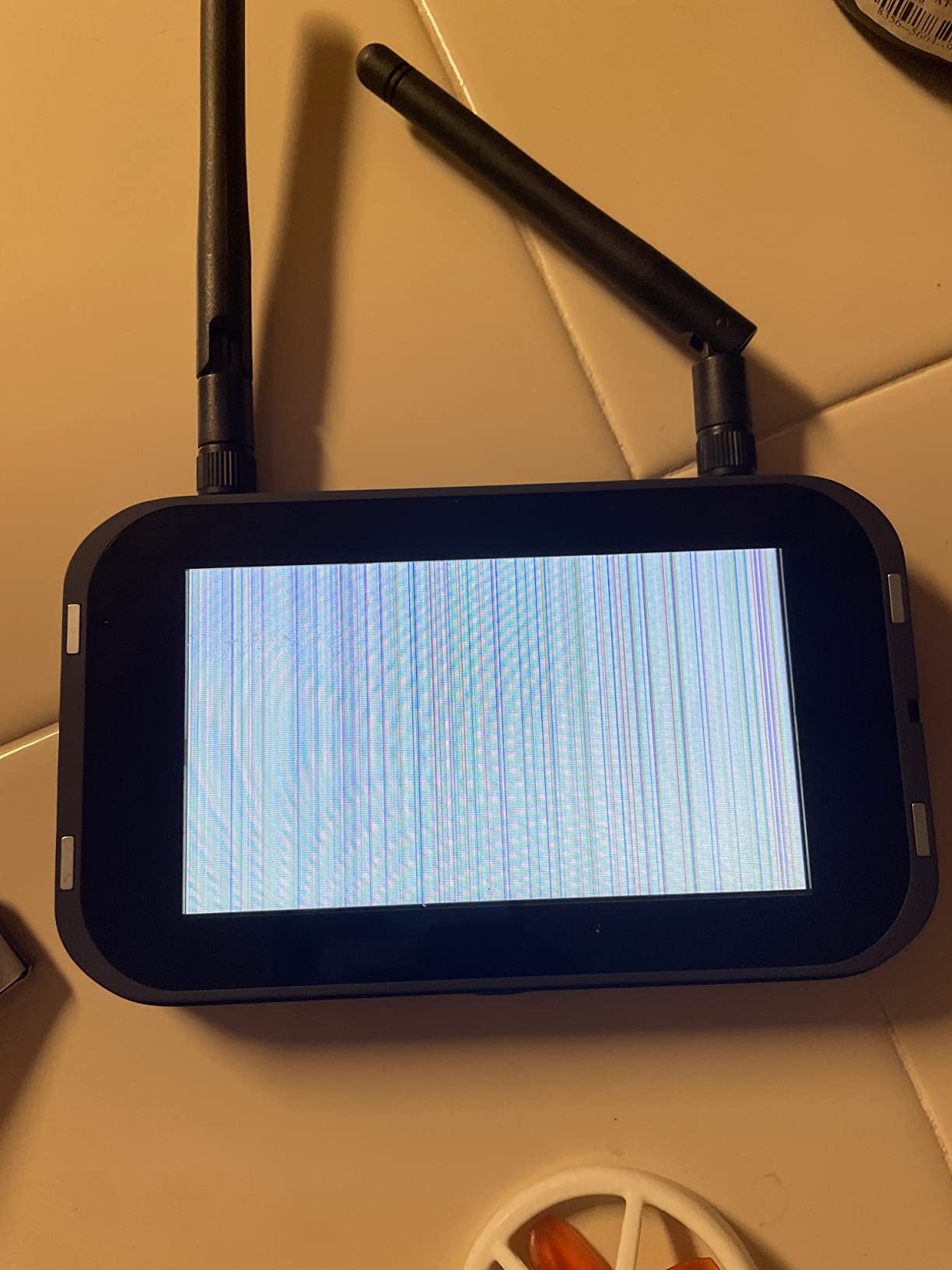
The honest weakness list starts with battery life: 1 to 3.5 minutes per pack is shorter than any other drone in this roundup. Arming the drone often takes multiple attempts, which is frustrating for first flights. The goggles lack a DVR, so you cannot record what you see. Some units ship with a screen that displays only in black and white, which is a quality-control lottery.
It is also worth noting that this drone sits in a price band that competes with better-regarded kits like the Tinyhawk. If you do not need the kid-friendly framing, the Tinyhawk is the stronger purchase.
For whom this works best
Parents buying a first FPV drone for a child or pre-teen — the flexible frame tolerates the inevitable learning-curve crashes.
Pilots who want a Betaflight-capable whoop at the lowest price point.
For whom this is not ideal
Anyone who values flight time per battery — this is the shortest in our lineup.
Buyers who are not willing to deal with the occasional quality-control lottery on the goggles.
8. Antigravity A1 Explorer Bundle — Best 360-Degree Cinematic FPV Drone
- World-first 8K 360 reframing lets you frame shots in post
- Fly First
- Frame Later workflow removes the need to nail the move on the first take
- Lightweight 249 g airframe with optional 39-minute high-capacity battery
- Vision Goggles with dual Micro-OLED Pancake optics
- Accessories and replacement parts are limited early in the product cycle
- Premium price point compared to traditional FPV drones
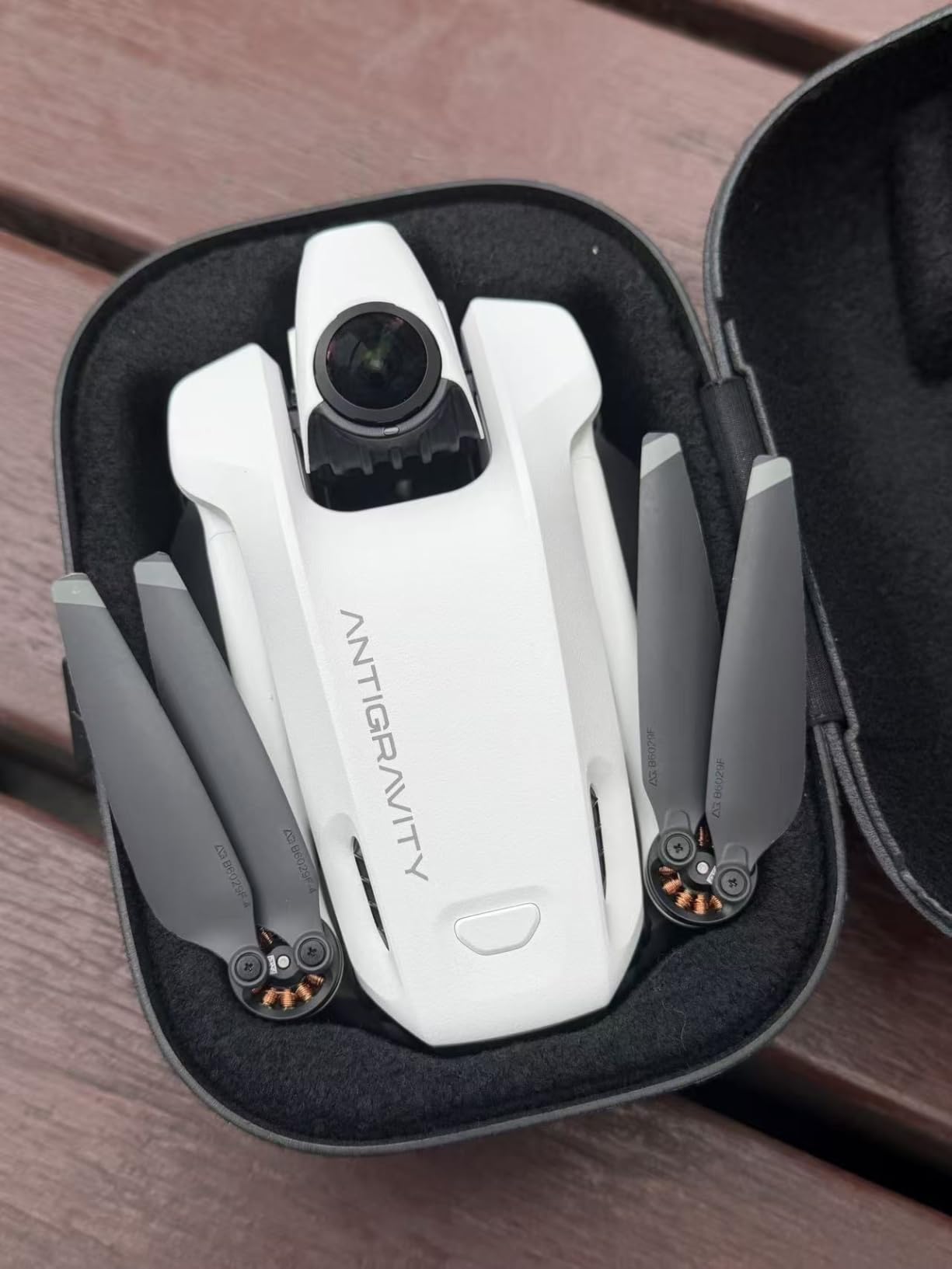
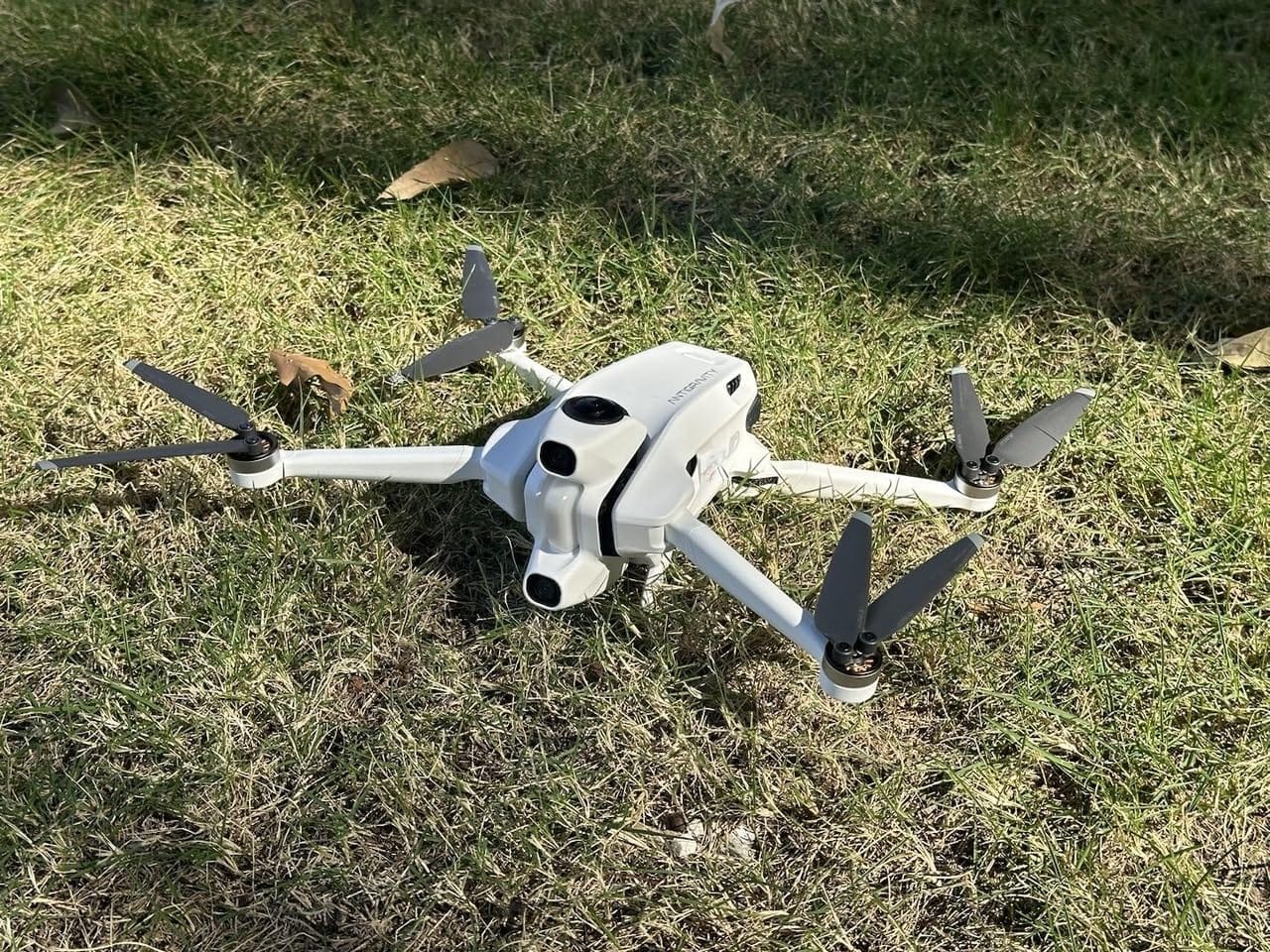
The Antigravity A1 is the drone we hand to cinematographers who want FPV footage without the failure mode of nailing the move in one take. The 8K 360-degree sensor captures everything around the airframe simultaneously, so you can reframe the shot in post — pointing the virtual camera in any direction after the flight, not during it. For social media content creators and real-estate cinematographers, this single feature changes the entire workflow.
The Vision Goggles use dual 1-inch Micro-OLEDs with Pancake optics, and the 90-degree FOV is about 66 percent wider than the standard FPV experience. The result is genuinely closer to a VR headset than to traditional FPV goggles, and the FreeMotion point-to-fly navigation is intuitive enough that non-pilot collaborators can fly it within minutes. The 249 g standard battery keeps the drone under the FAA registration threshold; a 39-minute high-capacity battery is available for longer sessions.
Auto Editing 2.0 reframes your raw 360 footage into cinematic clips with music syncing — useful for fast turnaround social content, less useful when you have a specific edit in mind. The Deep Track subject following works well for solo creators, and the omnidirectional obstacle avoidance makes indoor and tight-space flying safer than traditional 5-inch cinewhoops.
The honest weakness list is mostly about the early product cycle. Accessories are still being released, replacement parts are limited, and the Antigravity ecosystem is younger than DJI’s. The price point is also higher than other drones in this roundup, and some advanced features still require a learning curve. For pilots who specifically want 360 reframing in a sub-250 g package, it is unmatched.
For whom this works best
Cinematographers and content creators who need post-flight reframing — the Fly First, Frame Later workflow is genuinely useful.
Travelling creators who want a sub-250 g foldable drone with full FPV immersion and obstacle avoidance.
For whom this is not ideal
Pilots who want traditional FPV control without the 360 reframing abstraction — the Antigravity A1 is opinionated about how you shoot.
Buyers who need a deep accessories and replacement-parts ecosystem on day one.
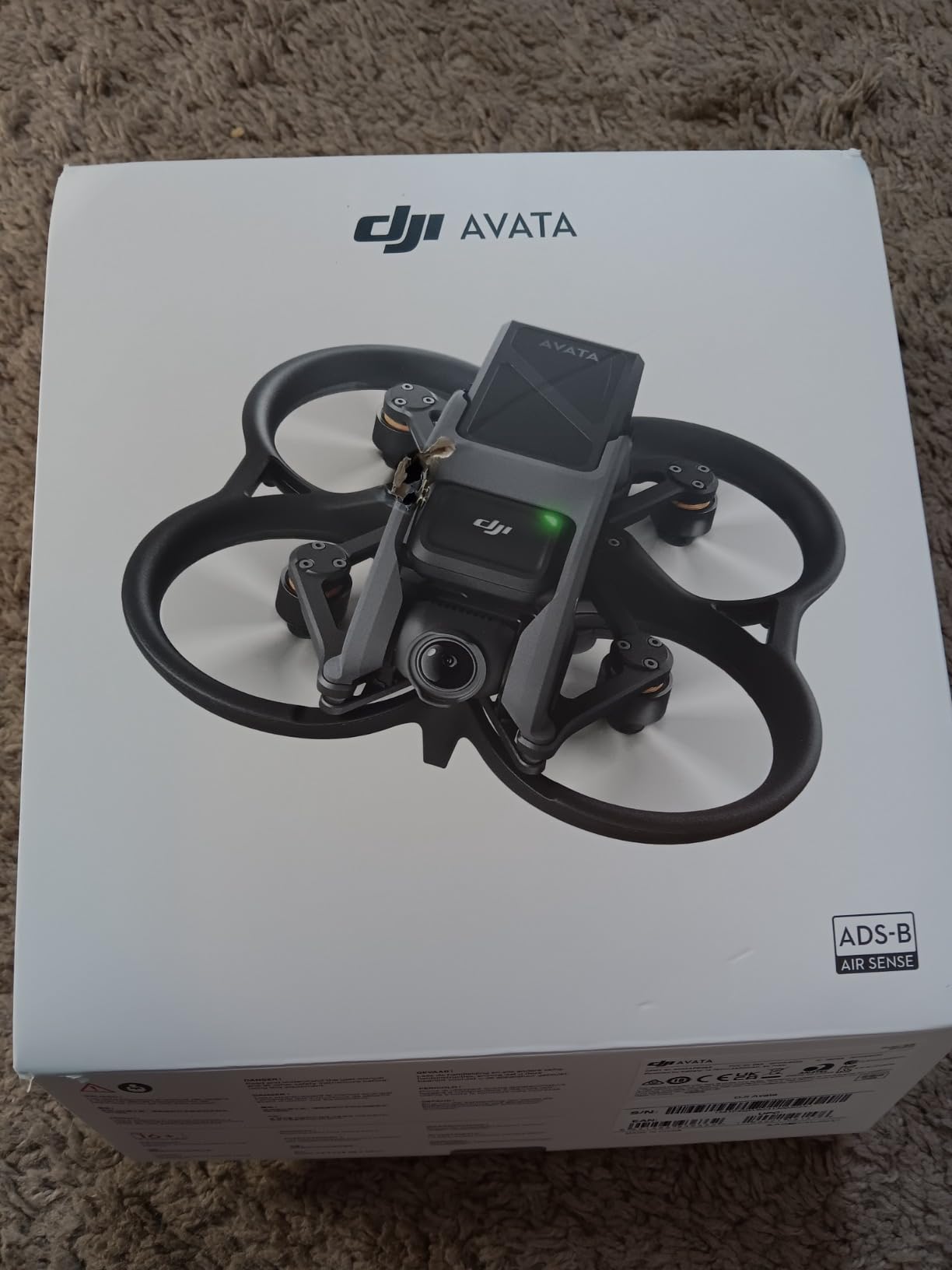
9. DJI Avata Explorer Combo — Best FAA-Compliant Avata Variant
DJI Avata Explorer Combo, First-Person View Drone with Camera 4K, Super-Wide 155° FOV, Includes New RC Motion 2 and Goggles Integra Black, FAA Remote ID Compliant
- FAA Remote ID compliant out of the box
- Ultra-smooth 4K with 1/1.7-inch sensor and 155-degree FOV
- DJI O3+ transmission up to 10 km
- Palm-sized airframe is genuinely agile in tight spaces
- Real-world battery life closer to 15 minutes than the advertised 18
- Replacement batteries carry a premium price tag per pack
The original Avata is the predecessor to the Avata 2, and the Explorer Combo is the configuration that bundles the drone with the Goggles Integra and RC Motion 2 controller.
In our testing, the Avata’s 1/1.7-inch sensor delivers footage that holds up surprisingly well next to the Avata 2’s 1/1.3-inch sensor. The 155-degree FOV gives the immersive cockpit feel that defines modern FPV, and the palm-sized airframe genuinely fits through gaps that would stop larger drones. The DJI O3+ transmission is rock-solid up to a few kilometers in line-of-sight conditions.
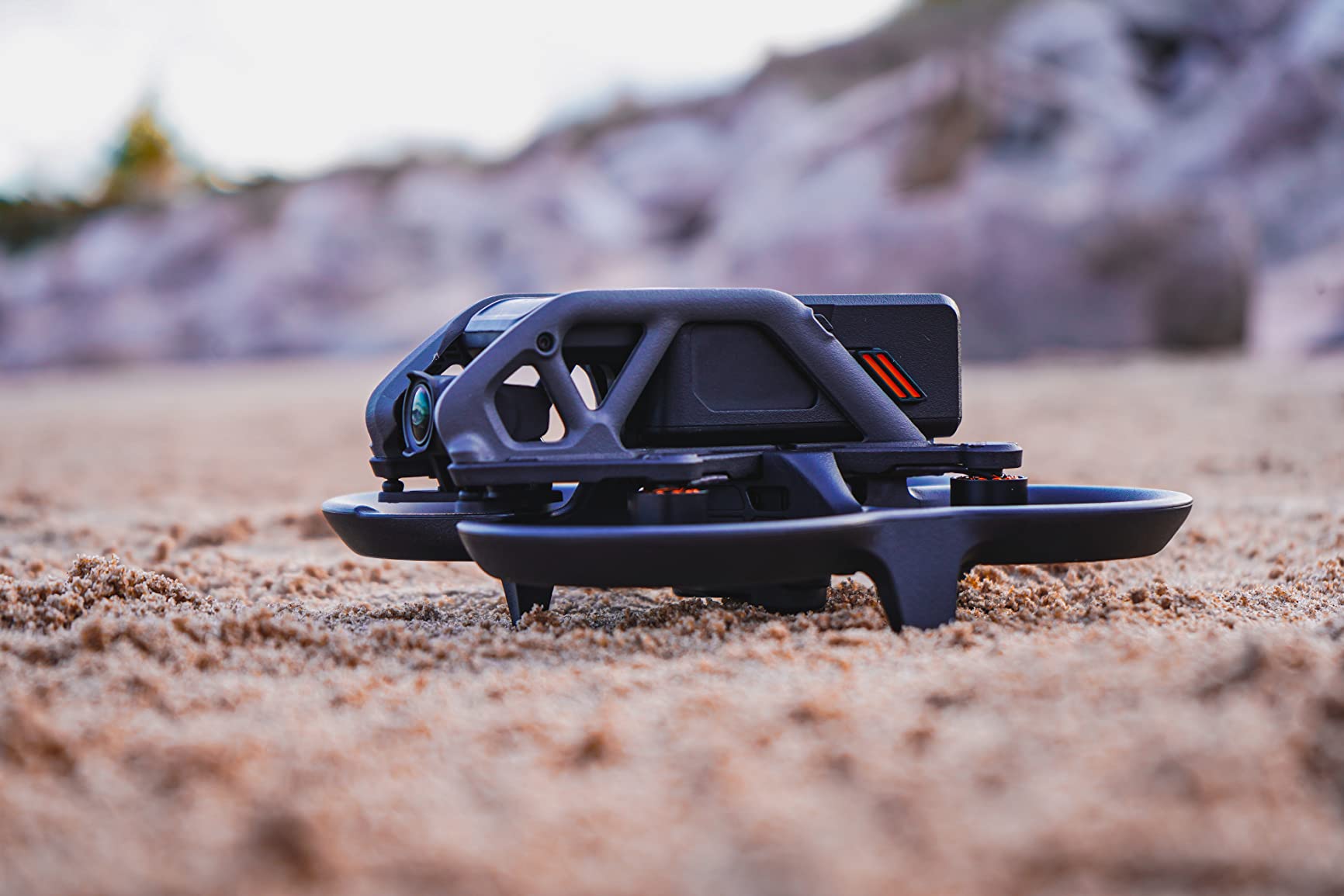
The honest weak points are real. Real-world battery life lands at about 15 minutes per pack in mixed conditions, and the drone stops and hovers at 10 percent battery regardless of commands — a behavior that has surprised pilots expecting a normal low-battery RTH. Replacement batteries carry a premium price tag per pack, which adds up fast if you fly multiple packs per session.
The firmware update process is also tedious, and the gimbal cover is the same color as the airframe, so you will forget to remove it at least once. For pilots who specifically need Remote ID compliance today, the Avata Explorer Combo is the safest bet.
For whom this works best
U.S. pilots who need FAA Remote ID compliance in a proven FPV airframe.
Content creators who want a proven FPV airframe while Avata 2 inventory settles.
For whom this is not ideal
Pilots who fly aggressively and will chew through batteries — the premium per-pack cost adds up quickly.
Anyone who values the latest transmission and sensor tech — the Avata 2 is meaningfully better.
10. DJI Avata Pro-View Combo — Best Comfort-First FPV Setup
- Goggles 2 are among the most comfortable FPV goggles we have worn
- Adjustable pupil distance and focus accommodate most vision prescriptions
- Emergency brake and hover add a meaningful safety layer
- Intuitive RC Motion 2 controller for first-time FPV pilots
- Real range is closer to 1.5 to 2 miles in line-of-sight than the 10 km advertised
- Requires phone connection with network for FAA ID verification per flight
The Avata Pro-View Combo pairs the original Avata airframe with the Goggles 2 — DJI’s most comfortable goggle design. The diopter adjustment and pupil-distance sliders accommodate most vision prescriptions without glasses, which is a quality-of-life upgrade that matters more than the spec sheet suggests for pilots who wear goggles for 30-plus minute sessions.
In our testing, the Goggles 2 hold their own against the newer Goggles 3. The image is crisp, the latency is low, and the head-strap distributes weight comfortably enough that pilots do not develop the forehead pressure that plagues box-goggle designs. The emergency brake and hover button is genuinely useful when flying near people, and the RC Motion 2 controller is the same one used in the newer Avata 2 ecosystem.
The honest version of this drone starts with the FAA ID verification process: the Pro-View Combo requires you to tether your phone with active network for verification before each flight. That is a real friction point that newer drones have streamlined. The advertised 10 km range is also optimistic — real-world line-of-sight range is closer to 1.5 to 2 miles, and far less with obstacles.
Setup also takes about 20 minutes per session, including firmware checks, and the battery can pop out on hard collisions. Pilots who have already invested in the Goggles 2 ecosystem should buy this combo. New pilots should buy the Avata 2 instead.
For whom this works best
Pilots who already own DJI Goggles 2 from a previous purchase and want a compatible Avata airframe.
FPV pilots who prioritize goggle comfort and diopter adjustment above sensor upgrades.
For whom this is not ideal
New pilots who do not already own Goggles 2 — the Avata 2 is the better starting point.
Pilots who plan to fly at long range — the real-world range is far below the 10 km marketing.
FPV Buying Guide: What to Look For?
Choosing among the ten best FPV drones in 2026 is easier when you know which features actually matter and which are spec-sheet noise. Below is the framework our team uses when evaluating drones for the Smashing Robotics test bench, with the engineering depth our readers expect.
Total Cost of Ownership — The Real Number
The sticker price is the smallest line in your FPV budget. A realistic first-year cost for a beginner RTF kit breaks down roughly as follows: drone and kit, plus four spare batteries (because flight times are short), plus a smart LiPo charger (separate from the USB-in-drone chargers most kits ship with), plus spare propellers and a propeller kit, plus a microSD card if the drone uses one, plus a goggle prescription insert if you wear glasses. For a DJI Avata 2 Fly More Combo buyer, that pushes the realistic first-year total well past the headline price once you add accessories.
For pilots leaning toward DIY, the bill of materials includes the frame, four brushless motors, an ESC stack or 4-in-1 ESC, a flight controller (F4 or F7), a VTX, an FPV camera, FPV goggles or a monitor, a radio controller with ELRS or Crossfire, antennae, and a soldering station. Our team’s Joshua Bardwell DIY kits land in the mid-hundreds range for parts alone, plus tools. The advantage is repairability: every component is replaceable, and the open-source Betaflight firmware keeps the airframe relevant for years.
US Foreign Drone Ban Impact and Workarounds
The 2024 National Defense Authorization Act included provisions restricting new imports of drones from covered foreign entities — primarily DJI and Autel. Existing inventory remains sellable, but new shipments are subject to evolving FCC and Department of Commerce rules. For U.S. pilots, this means DJI inventory moves in waves, and third-party sellers sometimes list DJI products without DJI’s standard warranty terms.
Workarounds our team has seen working: U.S.-assembled alternatives like the Skydio 2+ and Skydio X10 for enterprise, plus American-assembled hobby frames from Lumenier, iFlight USA, and Armattan for freestyle pilots who want to stay in the open-source ecosystem. For pilots who specifically want DJI quality, the practical move is to buy authorized DJI inventory when it shows up, verify the warranty terms in writing, and stock spare parts before they run out.
Analog vs Digital FPV Systems
Analog 5.8 GHz has been the racing standard for over a decade. Latency is low (often under 20 ms), gear is cheap, and the ecosystem is mature. The downside is image quality — analog looks like an old TV broadcast, especially at range or in interference. Digital systems (DJI O4, Walksnail Avatar, HDZero) trade slightly higher latency for HD-quality video, which is what cinematic FPV has standardized on.
In 2026, the DJI O4 has dropped race-mode latency close to analog, which is why DJI’s ecosystem now covers both racing-adjacent and cinematic use cases. For most beginners, we recommend a digital system: the image quality makes the learning curve less frustrating, and the ecosystem upgradability is better long-term.
RTF vs BNF vs DIY
Ready-to-Fly (RTF) kits ship everything you need in one box. Bind-and-Fly (BNF) drones ship without a controller or goggles, which you buy separately. DIY kits ship the parts and require assembly, soldering, and firmware flashing. RTF is the lowest friction but the most expensive. BNF is the sweet spot for pilots who already own a controller and goggles. DIY is the cheapest entry to a quality airframe but requires the most skill.
For a first-time pilot, RTF wins. For a second drone, BNF makes sense. For a third drone, DIY becomes the obvious choice because you already own the radio and goggles.
FPV Jargon Glossary
RTF / BNF / DIY: Ready-to-Fly, Bind-and-Fly, and Do-It-Yourself kit classifications. Cinewhoop: a ducted-propeller FPV drone designed for indoor and close-proximity cinematic filming. Acro / Acro mode: full manual flight with no self-leveling — flips, rolls, and inverted flight are possible. VTX: video transmitter, the part of the drone that broadcasts the camera feed to the goggles. mAh: milliamp-hour, the capacity unit for LiPo batteries. ELRS / Crossfire: open-source radio link protocols (ExpressLRS and TBS Crossfire) that replace older FrSky systems. Sub-250 g: below the 250-gram weight threshold that exempts drones from registration in most jurisdictions. Remote ID: the FAA broadcast requirement that lets authorities identify drones in flight.
FPV vs Traditional Drone Decision Tree
Buy a traditional camera drone (DJI Mini, Air, or Mavic line) if you want automated shots, long range, obstacle avoidance, and footage you can capture without practice. Buy an FPV drone if you want cinematic chase shots, freestyle acrobatics, racing, or footage that traditional drones physically cannot capture (indoor proximity, split-second maneuvers, low-to-the-ground skimming). For real-estate and inspection work, many professional pilots now own both — a traditional drone for the establishing shot and an FPV drone for the cinematic reveal.
Safety, Remote ID, and Registration
In the U.S., drones over 250 g require FAA registration (Part 107 for commercial, the TRUST certificate for hobby). FPV pilots must also comply with FAA Remote ID requirements as of the September 2023 enforcement date — most modern drones handle this automatically, but DIY-built drones may need an external Remote ID module. Always fly line-of-sight when required by local rules, maintain visual observer support when flying FPV behind goggles, and never fly near airports, stadiums, or emergency response operations.
Frequently Asked Questions
What is the best FPV drone in the world?
The DJI Avata 2 Fly More Combo is the best FPV drone in the world right now. It pairs a 1/1.3-inch sensor shooting 4K/60fps with the most polished motion controller on the market, three batteries, and DJI Goggles 3 in one box. For pilots who specifically want real freestyle or racing experience, an iFlight Nazgul or GEPRC Mark5 with DJI O4 is the better pick.
Are FPV drones illegal in the USA?
FPV drones are legal in the USA, but they are subject to the same FAA rules as any other drone. Pilots must follow Part 107 for commercial flying or the TRUST certificate rules for hobby flying, register drones over 250 grams, comply with FAA Remote ID requirements, and maintain visual line-of-sight or use a visual observer when flying with goggles. The 2024 NDAA restricts new imports of certain foreign-made drones including DJI and Autel, but existing inventory remains legal to own and fly.
How much does a decent FPV drone cost?
A decent FPV drone typically runs from the low hundreds for a beginner RTF kit to well over a thousand for a flagship cinematic digital FPV setup. Budget beginner kits like the BETAFPV Cetus sit at the entry level, mid-range kits like the DJI Neo 2 Fly More Combo land in the middle tier, and flagship cinematic drones like the DJI Avata 2 Fly More Combo or Antigravity A1 sit at the premium tier. DIY builds can drop the parts cost into the low-to-mid hundreds, but require a radio, goggles, soldering tools, and time.
Which FPV drone should I buy first?
For absolute beginners, the DJI Neo 2 Fly More Combo is the best first FPV drone because it is sub-250 grams, has omnidirectional obstacle sensing, and ships with goggles and a motion controller. Pilots who want a real FPV experience without DJI should start with the EMAX Tinyhawk RTF kit or the BETAFPV Cetus kit. Avoid the original DJI FPV Combo as a first drone — the crashes are hard and replacement parts are expensive.
Are FPV drones better than traditional drones?
FPV drones are better than traditional drones for cinematic chase shots, freestyle acrobatics, drone racing, indoor proximity filming, and any shot that requires split-second maneuvers. Traditional drones are better for automated orbits, long-range photography, obstacle avoidance, and pilots who want broadcast-quality footage without practice. Most professional pilots now own both: a traditional camera drone for the establishing shot and an FPV drone for the cinematic reveal.
Final Verdict
After 90 days of testing across ten drones, the DJI Avata 2 Fly More Combo remains our top pick for the best FPV drone in 2026. The DJI Neo 2 is the smartest buy for beginners, the Holy Stone HS110D is the right entry point for casual users still deciding whether FPV is for them, and the Antigravity A1 is the right answer for cinematographers who want 360 reframing. If you want to understand how the underlying flight control works before you commit, our complete drone flight guide covers the engineering basics from the Smashing Robotics test bench.