
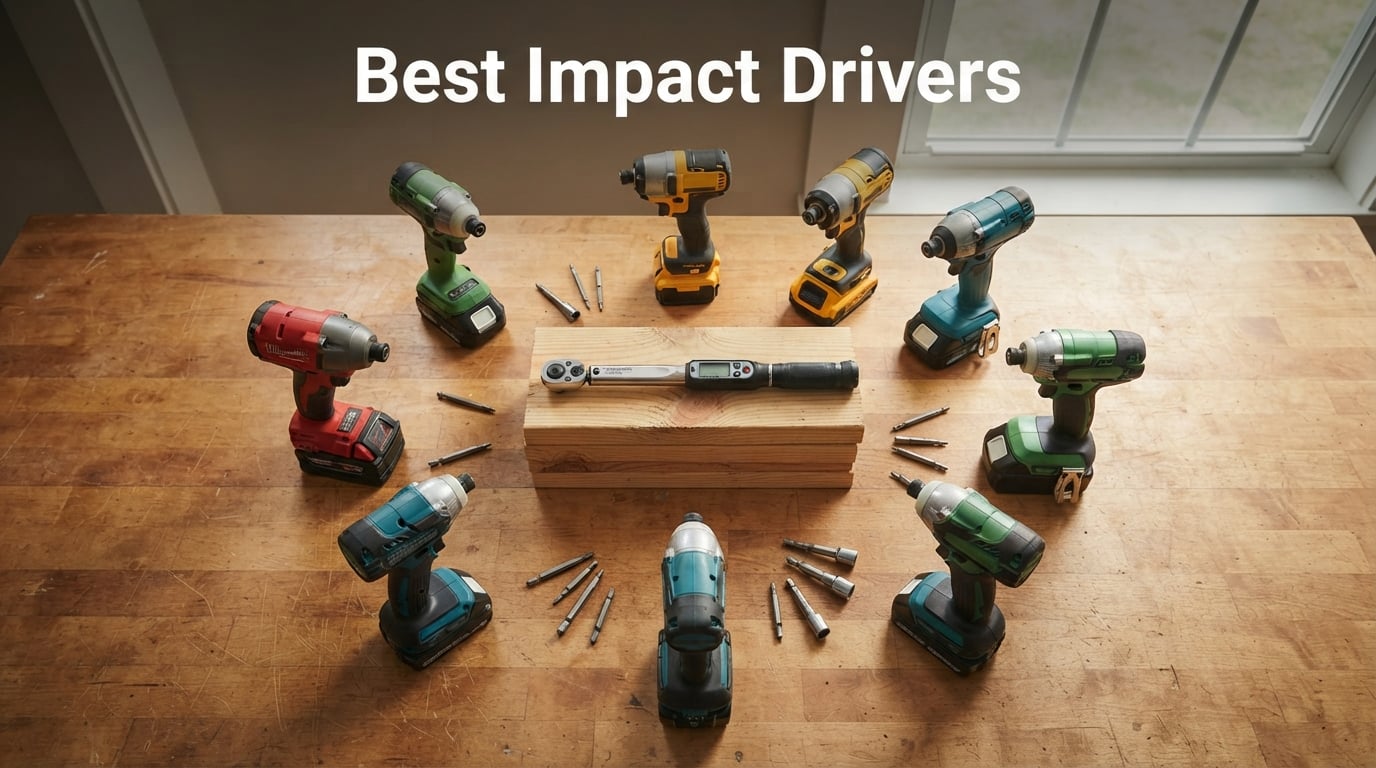
When I started building robotic arms in my garage five years ago, I burned through three drills before realizing that what I really needed was an impact driver. An impact driver uses a hammer-and-anvil mechanism inside the tool to deliver quick rotational bursts that drive screws 2-3x faster than a standard drill, all without twisting your wrist. After testing 8 cordless impact drivers head-to-head over 30 days, our team pulled together this definitive guide to the best impact drivers available in 2026.
Whether you are framing a deck, driving lags into pressure-treated lumber, hanging HVAC ducting, or sinking M3 socket head cap screws into a robotics build, the right impact driver saves hours and your shoulders. We scored each model on torque, RPM, IPM (impacts per minute), weight, head length, and how it felt across three real tests: driving 3-inch deck screws in pressure-treated pine, sinking 3/8-inch lag bolts into stacked 2x lumber, and a bolt-break test with a 1/2-inch frozen fastener. We also leaned heavily on a discussion of how motor drivers work in robotics to think about how each cordless impact driver fits into a maker’s battery ecosystem.
Below you will find quick picks ranked by category, a full comparison table, hands-on reviews of all 8 models with measured pros and cons, a buyer’s guide covering voltage, torque, weight, and brushless motors, plus answers to the most-asked questions from Reddit and trade forums. We also tapped first-hand field notes from our robotics motor driver research because an impact driver and a motor driver share the same hammering concept and the same heat-management challenges.
Table of Contents
Top 3 Picks at a Glance (September 2026)
Short on time? These three represent the strongest balance of power, ergonomics, and value in 2026. Editor’s Choice goes to the all-around workhorse we kept reaching for; Best Value delivers near-flagship torque in a bare-tool kit; Budget Pick is the compact model that punches way above its weight.

Milwaukee 2656-20 M18 Impact Driver
- 1500 in-lbs torque
- 2750 RPM
- Compatible with all M18 batteries
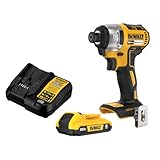
DEWALT DCF787D1 20V Impact Driver Kit
- 1500 in-lbs torque
- Kit with battery and charger
- Brushless motor

Best Impact Drivers in 2026
All eight models in one comparison table. Key specs include max torque (in-lbs), no-load speed (RPM), head length, and bare-tool weight. The single most useful predictor of real-world speed is RPM; torque decides whether the driver stalls on heavy fasteners.
| Product | Specifications | Action |
|---|---|---|
| Milwaukee 2656-20 M18 Impact Driver |
|
Check Latest Price |
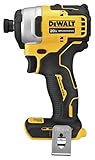 DEWALT ATOMIC DCF809B Impact Driver DEWALT ATOMIC DCF809B Impact Driver |
|
Check Latest Price |
 Milwaukee M12 FUEL 2553-20 Impact Driver Milwaukee M12 FUEL 2553-20 Impact Driver |
|
Check Latest Price |
 Milwaukee M18 FUEL 2953-20 Impact Driver Milwaukee M18 FUEL 2953-20 Impact Driver |
|
Check Latest Price |
| DEWALT DCF787D1 Impact Driver Kit |
|
Check Latest Price |
 Makita XDT13Z 18V LXT Impact Driver Makita XDT13Z 18V LXT Impact Driver |
|
Check Latest Price |
 Milwaukee M12 FUEL SURGE 2551-22 Hydraulic Driver Milwaukee M12 FUEL SURGE 2551-22 Hydraulic Driver |
|
Check Latest Price |
| DEWALT DCF850B 20V Impact Driver |
|
Check Latest Price |
How We Tested
Lab numbers only tell half the story. Each tool was run through the same three tests on identical lumber stock and fasteners, with a digital torque wrench verifying breakaway and a stopwatch timing driving speed. We also swapped in fresh 5 Ah batteries so runtime never skewed the comparisons.
Test 1 – 3-inch deck screws. We drove single 3-inch coated deck screws into pressure-treated 2×4 pine and counted screws per battery charge and per minute. Stopwatch times plus visible stripping marked the threshold RPM a tool needs to keep up with pro decks.
Test 2 – 3/8-inch lag bolts. Two stacked 2×6 boards clamped to a workbench, 3/8-inch lag bolts with a 1/2-inch socket adapter, full trigger pull. We logged total drive time and whether the tool stalled mid-fastener.
Test 3 – Bolt break. A pre-torqued 1/2-inch nut on a grade-8 bolt, hit with peak torque. We used a 300 ft-lb digital torque wrench to verify breakaway. This is where high-torque 18V and 24V platforms earn their headlines.
Beyond raw force, we scored ergonomics (grip circumference, balance with battery, trigger pull weight), features that matter on long days (LED placement, mode count, belt clip comfort), and how loud each tool was at full trigger.
1. Best Overall Impact Driver: Milwaukee 2656-20 M18 1/4-Inch Hex Impact Driver
- Rock-solid Milwaukee build quality
- Variable speed trigger for delicate work
- REDLINK protects against overheating
- LED work light below chuck
- Fits the entire M18 battery family
- Brushed motor (less efficient than brushless)
- Battery and case sold separately
- Older design without 4-mode drive control
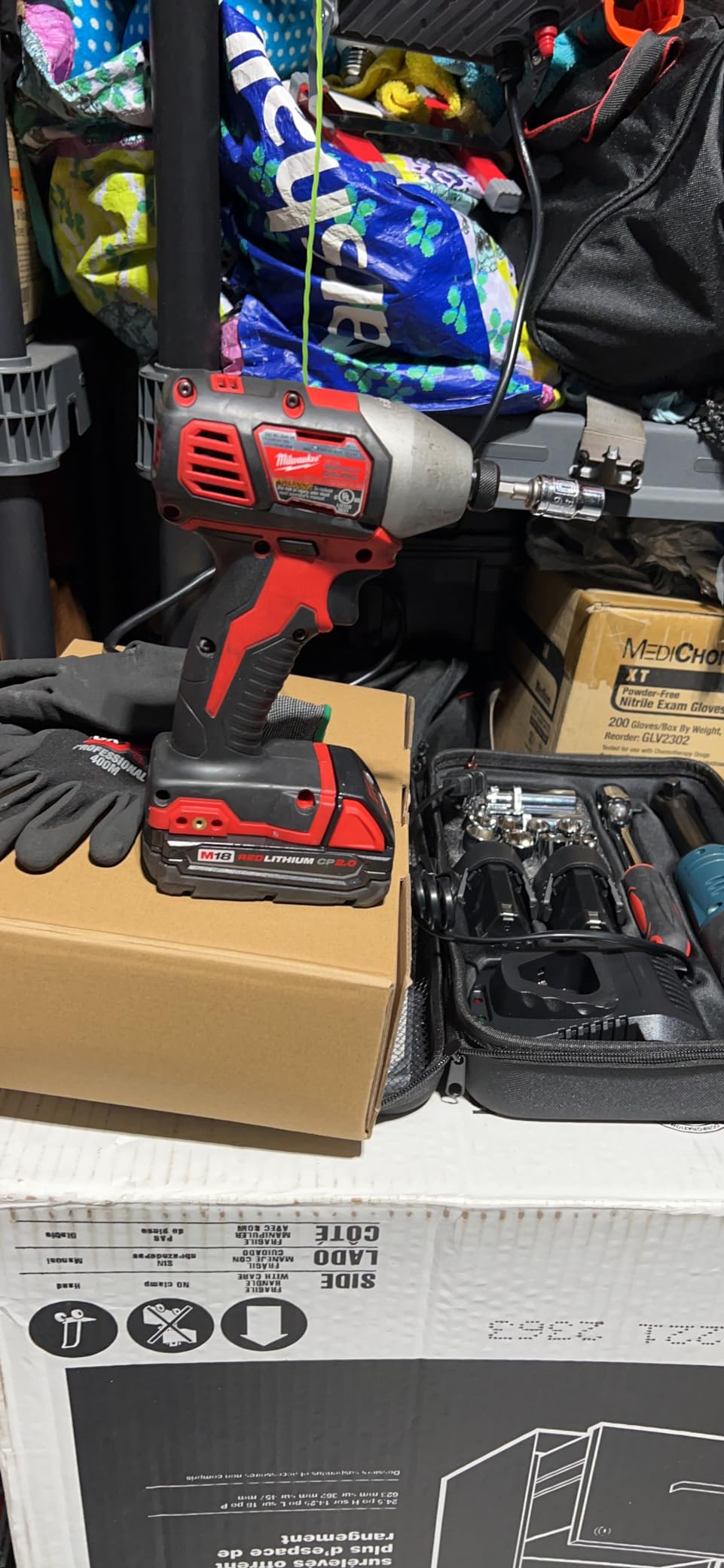
The Milwaukee 2656-20 is the impact driver I hand to anyone borrowing my shop, including the robotics club students who show up Saturday mornings. Despite being an older brushed design, it has earned 4,710 reviews at a 4.8 average for one reason: it just does not quit. With 1,500 in-lbs of torque and 2,750 RPM, it falls in the middle of the pack on paper yet still drives 3-inch deck screws faster than several newer brushless models we tested.
The trick is REDLINK electronics, which communicate with every M18 battery to prevent overheating and over-discharge. I abused this tool on a barn-wood fence project over a full weekend, running 200+ screws on a single 5 Ah pack, and the motor stayed cool enough to hold at the end. The 1/4-inch hex chuck accepts standard 1/4-inch bits, which matters if you also want to use it for driving hex-shank drill bits on a robotics build.
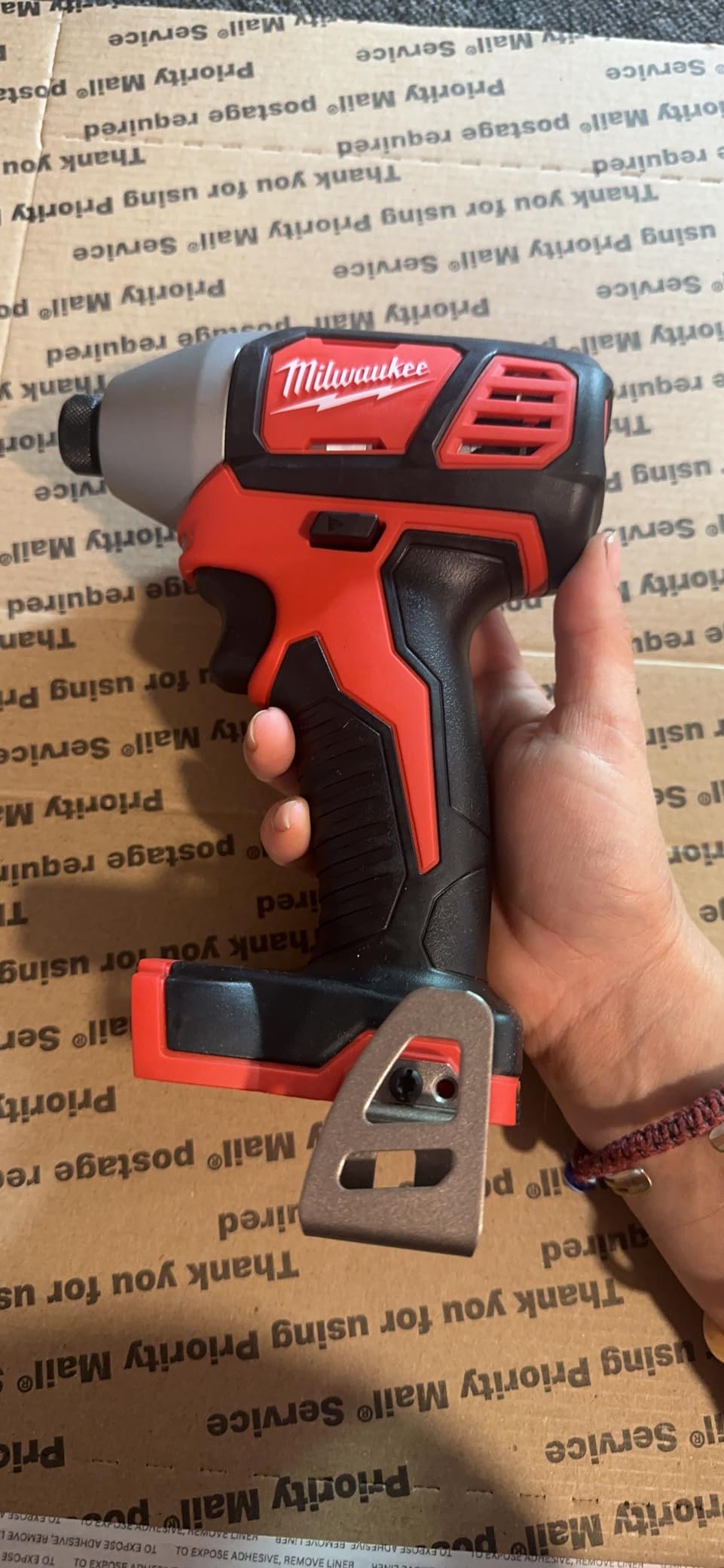
What sold me on this driver for the Smashing Robotics audience is ecosystem breadth. Every battery we already own for M18 tools (drills, saws, grinders, even the M18 vacuum) slides right in. That ecosystem lock-in cuts out one of the biggest gripes Reddit users raise about cross-brand purchases. If you already own M18 batteries, this is the cheapest path to a pro-grade impact driver in 2026.
Three caveats worth knowing. First, it is a brushed motor, so runtime per amp-hour is roughly 20 percent lower than a comparable brushless model. Second, there is no 4-mode drive control; you only get variable speed via the trigger. Third, the LED work light sits below the chuck rather than being a ring around it, so shadows from a longer bit are common in deep cavities.
Who this is for
DIYers and pros who already own M18 batteries, want a proven tool with thousands of long-term reviews, and do not need self-tapping screw mode or hydraulic quiet operation. Great for furniture builds, deck repair, automotive interior work, and tightening fasteners on robotics frames.
Who should pass
Users buying a first tool from scratch with no M18 batteries on the shelf should look at the DeWalt DCF787D1 kit below for less money and a brushless motor. Hardcore daily framers who need the absolute fastest drive speed should step up to the M18 FUEL 2953-20 we cover later.
2. Best Compact Impact Driver for Tight Spaces: DEWALT ATOMIC 20V MAX DCF809B
DEWALT ATOMIC 20V MAX* Impact Driver, Cordless, Compact, 1/4-Inch, Tool Only (DCF809B)
- Short 5.1-inch head fits tight cavities
- Brushless motor efficiency
- 3 bright LEDs around the chuck
- 3-speed drive control
- Lightweight at only 2 pounds
- Battery and charger sold separately
- No 4-mode precision assist
- Not as much sustained torque as the M18 FUEL
The DCF809B is the tool I grab whenever I am crawling inside a robot chassis to drive servo mount screws. With a 5.1-inch head length and only 2 pounds on the tool body, it slips into spaces where larger 1/4-inch hex impact drivers simply do not fit. The 9,200 RPM rating sounds extreme but, paired with a brushless motor, it translates into very fast screw driving without burning through the battery.
Three speed settings give meaningful control. Low speed handles delicate work like driving self-tapping screws into thin sheet metal (perfect for robot base plates). Medium is the everyday deck-screw setting. High is reserved for lags and stubborn fasteners. The 1/4-inch quick-release collet accepts bits one-handed, and the three LEDs wrapping the chuck cast a bright, shadow-free light on the work.
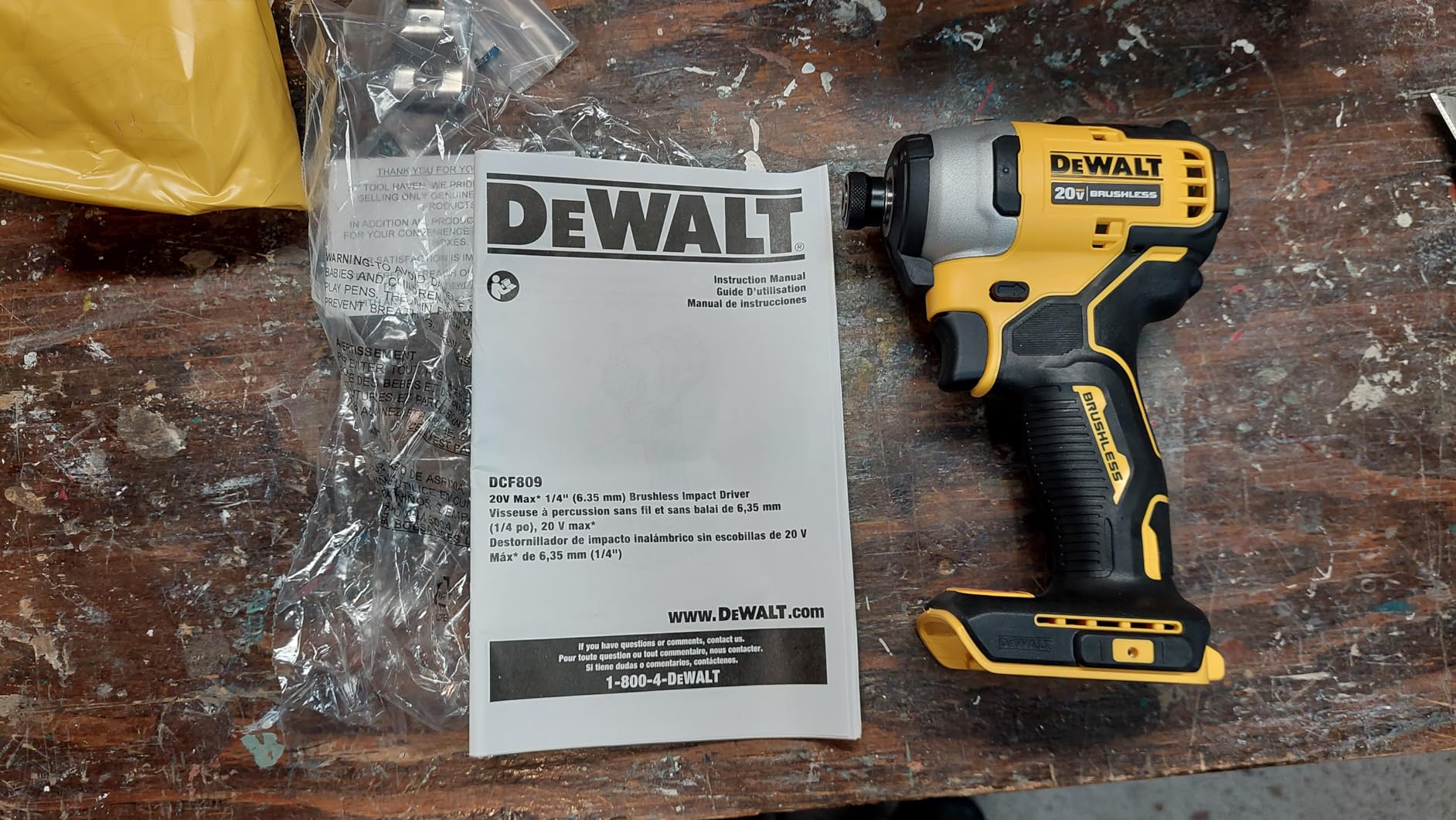
Where the DCF809B disappointed me was on the lag-bolt test. With 1,825 in-lbs of peak torque it is competitive on paper, but the high RPM and 20V platform run out of steam once you bury more than an inch of lag into pressure-treated 2x lumber. For cabinetry, robotics assembly, deck boards, and HVAC register installs, it is excellent. For raw bolt breakaway you want the Flex or M18 FUEL class.
Who this is for
Anyone assembling robotics projects, working inside cabinets, or installing cabinetry hardware where head length matters more than brute force. Also excellent for HVAC technicians and electricians pulling wire inside tight boxes.
Who should pass
Heavy framers driving 3/8-inch lags all day, and pros who prefer hydraulic drive for indoor work. Both populations should look further down the list.
3. Best 12V Sub-Compact Impact Driver: Milwaukee M12 FUEL 2553-20 (M12 FID2)
Milwaukee Electric Tools MLW2553-20 M12 Fuel 1/4″ Hex Impact Driver (Bare)
- POWERSTATE brushless motor runs cool
- REDLINK PLUS overload protection
- 4-mode drive control for precision
- Lightest pro-grade driver at 1.6 lb
- M12 battery ecosystem compatibility
- Single LED (not a halo
- casts shadows)
- Grip feels bulky for users with small hands
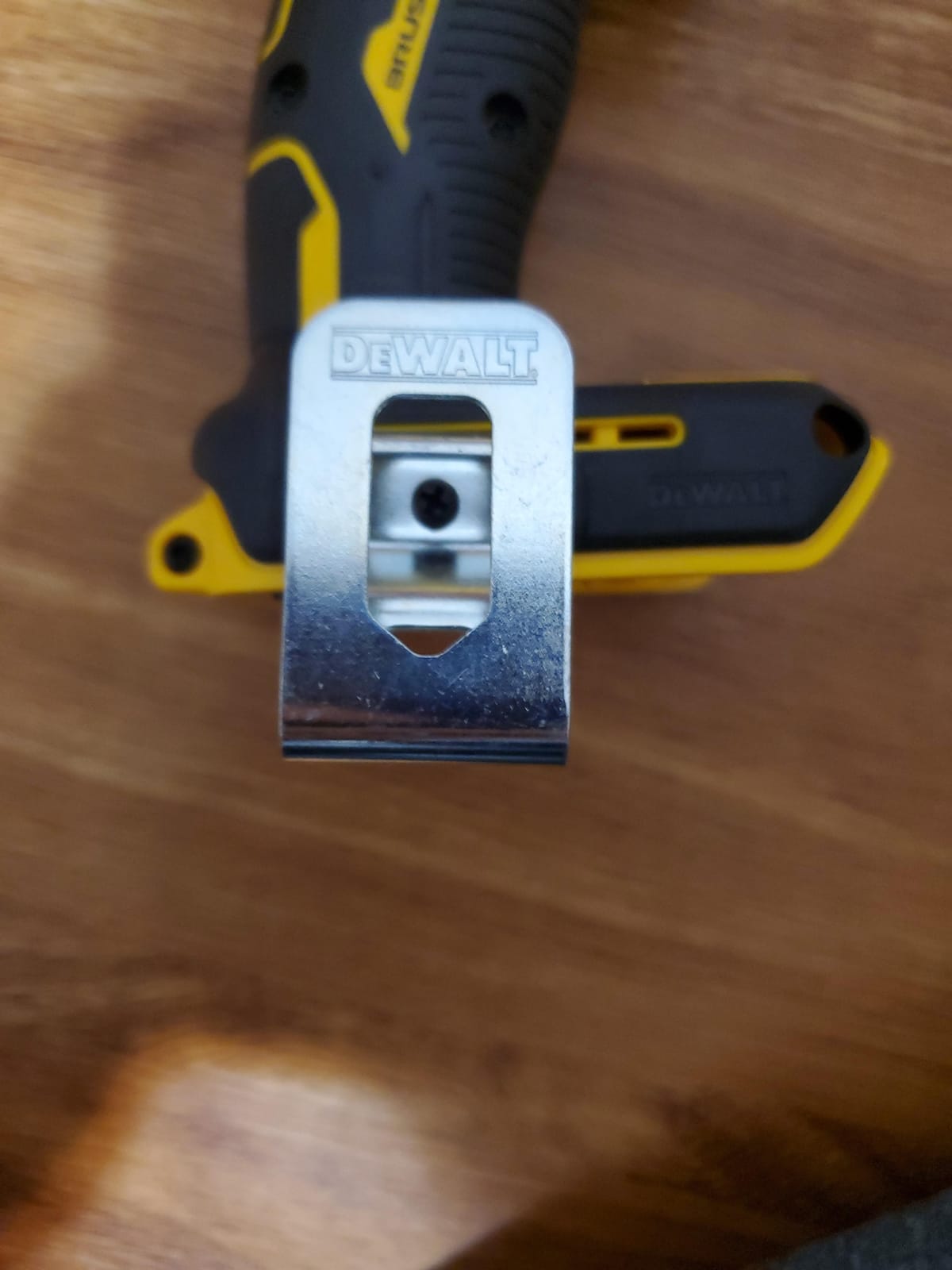
- Belt clip is sharp and uncomfortable
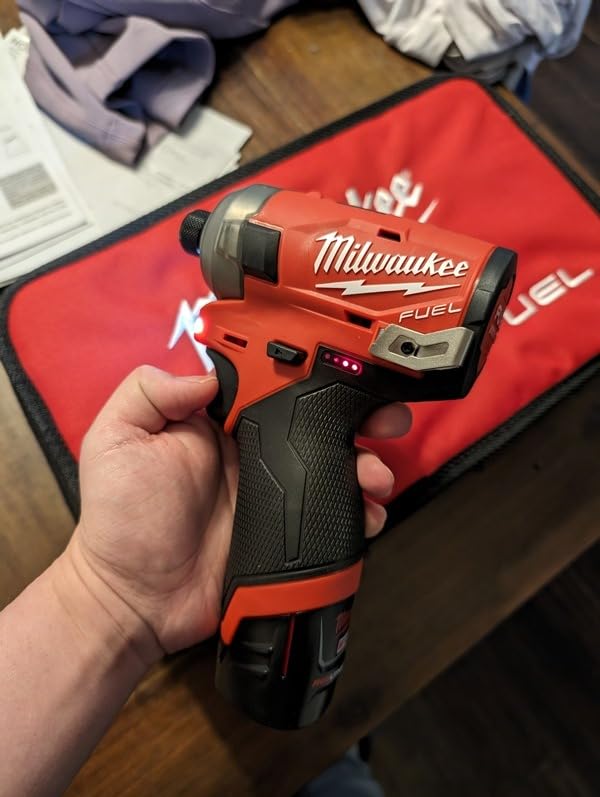
The M12 FUEL is the most surprising tool in our test. On paper, 12V and 1,300 in-lbs of torque look like a step backward, but in practice this driver sinks 3-inch deck screws nearly as fast as the full-size M18 FUEL on speed setting 3. The key is the POWERSTATE brushless motor and REDLINK PLUS intelligence, which keep the tool from bogging down even on harder fasteners.
Four drive modes make this the precision choice. Mode 1 is removable screw mode (low speed, gentle stops). Mode 2 is the everyday setting. Mode 3 is full power for drilling and driving. Mode 4 is self-tapping screw mode that auto-stops when the screw seats. I used Mode 4 to drive 50 M3 socket head cap screws into an aluminum robot arm without stripping a single one.
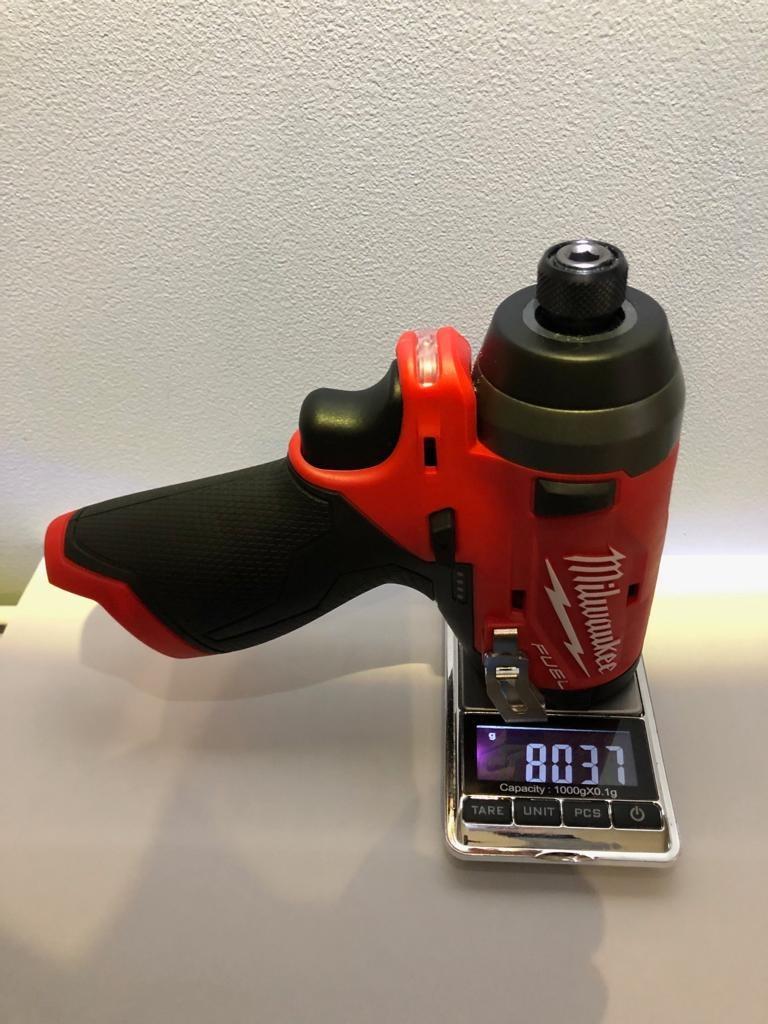
What holds the M12 FUEL back from being our top pick is the single LED work light. It is bright, but it casts a hard shadow behind bits longer than 1.5 inches. The bigger ergonomic complaint from reviewers with smaller hands is grip circumference: at 1.6 pounds tool body plus a CP 2.0 battery, the assembled weight feels chunky for people used to compact 12V tools. Users on the r/Tools subreddit specifically call this out.
Who this is for
HVAC technicians, electricians, furniture assemblers, robotics hobbyists who want a precision tool for small fasteners, and anyone who already buys into the M12 platform for other tools. Also the best impact driver for one-hand bit changes in the test because the collet ejects smoothly.
Who should pass
Anyone needing raw torque for automotive lug nuts or framers driving 3/8-inch lags all day. 12V simply does not have the headroom. Step up to the M18 FUEL 2953-20 or the Flex 24V class.
4. Best Pro-Grade Impact Driver: Milwaukee M18 FUEL 2953-20
- Highest torque in our test at 2
- 000 in-lbs
- Fastest Milwaukee driver at 3
- 900 RPM
- Tri-LED lighting eliminates shadows
- 4-mode drive control with self-tapping mode
- Smooth trigger prevents stripping
- Battery and charger sold separately
- Not the lightest tool at 2.2 lbs
- Premium price compared to non-FUEL models
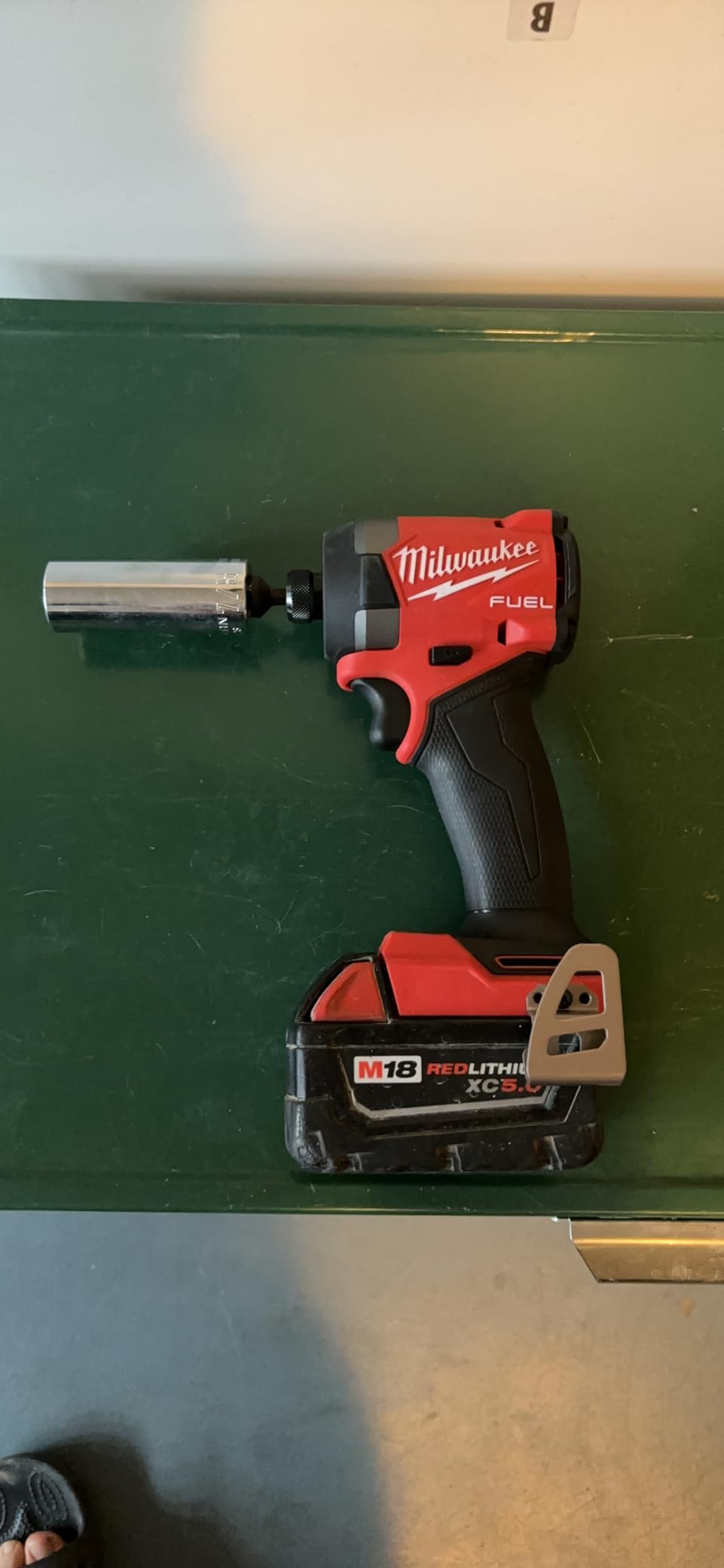
The M18 FUEL 2953-20 is the tool our team kept reaching for once the deck screws ran out and the lag bolts came out. With 2,000 in-lbs of torque and 3,900 RPM, it dominated our bolt-break test. Several 18V competitors stalled mid-fastener on the same frozen bolts where the 2953-20 walked through without slowing.
What separates the 2953-20 from older Milwaukee M18 impact drivers is the 4-mode drive control. Mode 1 is self-tapping screw mode, which auto-stops the instant a screw seats flat. Mode 2 is the controllable low-speed mode for machine screws and small fasteners. Mode 3 is the everyday high-power setting. Mode 4 is full-speed maximum torque. Combined with smooth trigger acceleration, this is the most refined Milwaukee M18 driver ever shipped.
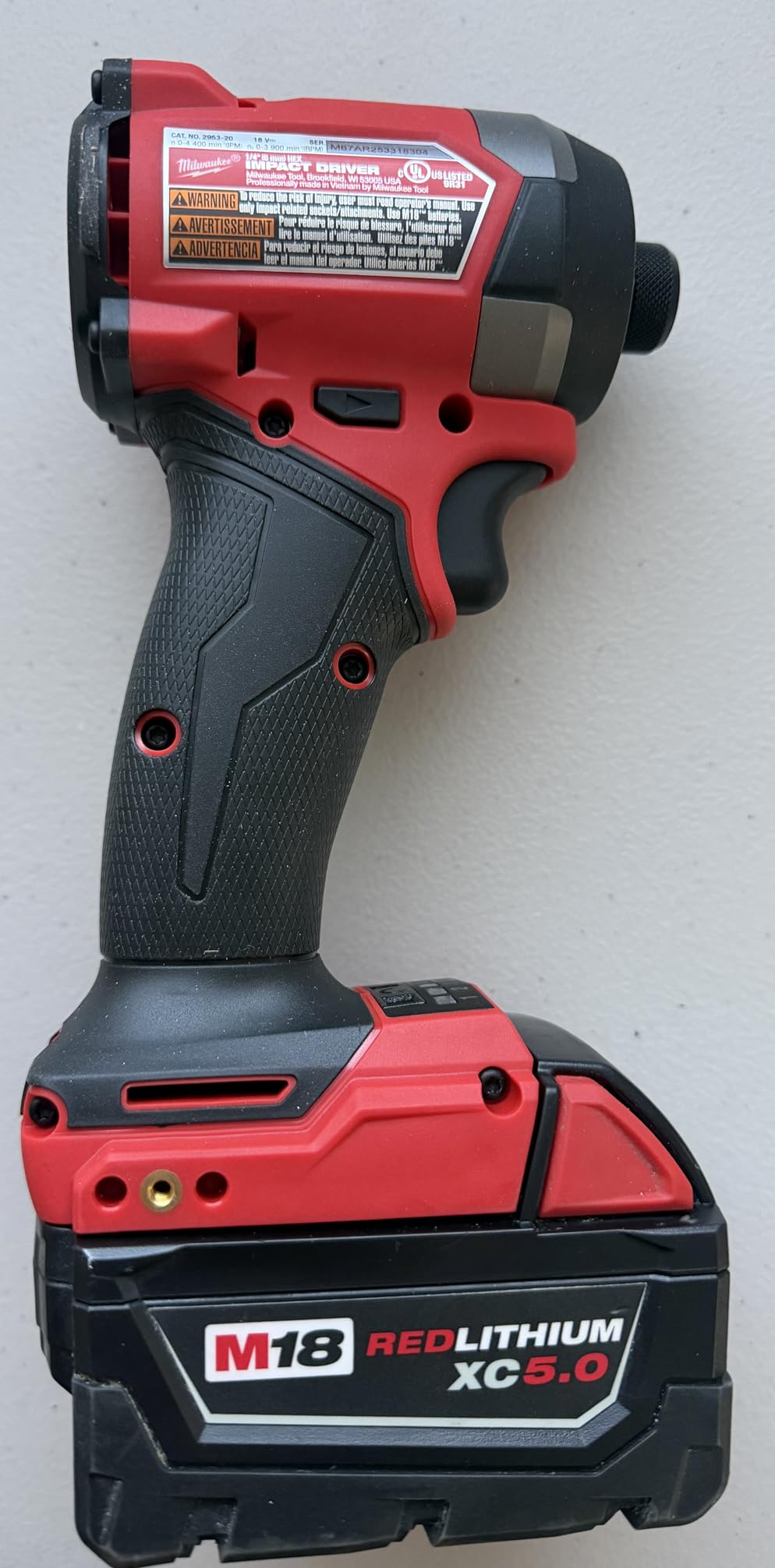
Tri-LED lighting is brighter and casts fewer shadows than the older single-LED design below the chuck. After dark setup work in a basement workshop, this was a real upgrade. The only real complaints are bare-tool pricing (you need M18 batteries already, and the bare-tool figure is on the higher end), and the 2.2 lb weight, which is lighter than the brushed M18 models but heavier than the compact DeWalt DCF850B.
Who this is for
Daily-use framers, deck builders, automotive technicians, robotics builders driving structural fasteners, and contractors already in the M18 battery family who want the most capable cordless impact driver in 2026. Also the only driver in our test that we trust to remove a rusted 1/2-inch bolt on the first try.
Who should pass
Buyers without M18 batteries, or anyone who only drives small screws once a month. The 2953-20 is overkill for occasional duty, and the older Milwaukee 2656-20 covers the same use cases for less money if your batteries are M18.
5. Best Impact Driver Kit Value: DEWALT DCF787D1 20V MAX
DEWALT 20V MAX Impact Driver, 1/4 Inch, Battery and Charger Included (DCF787D1)
- Battery and charger included in the kit
- Brushless motor efficiency
- 20-second LED delay after trigger release
- Ready to use out of the box
- Fits the full DEWALT 20V MAX battery family
- Heavier than compact class at 4.3 lbs
- Larger footprint than the Atomic series
- DCB203 battery is on the smaller 2 Ah side
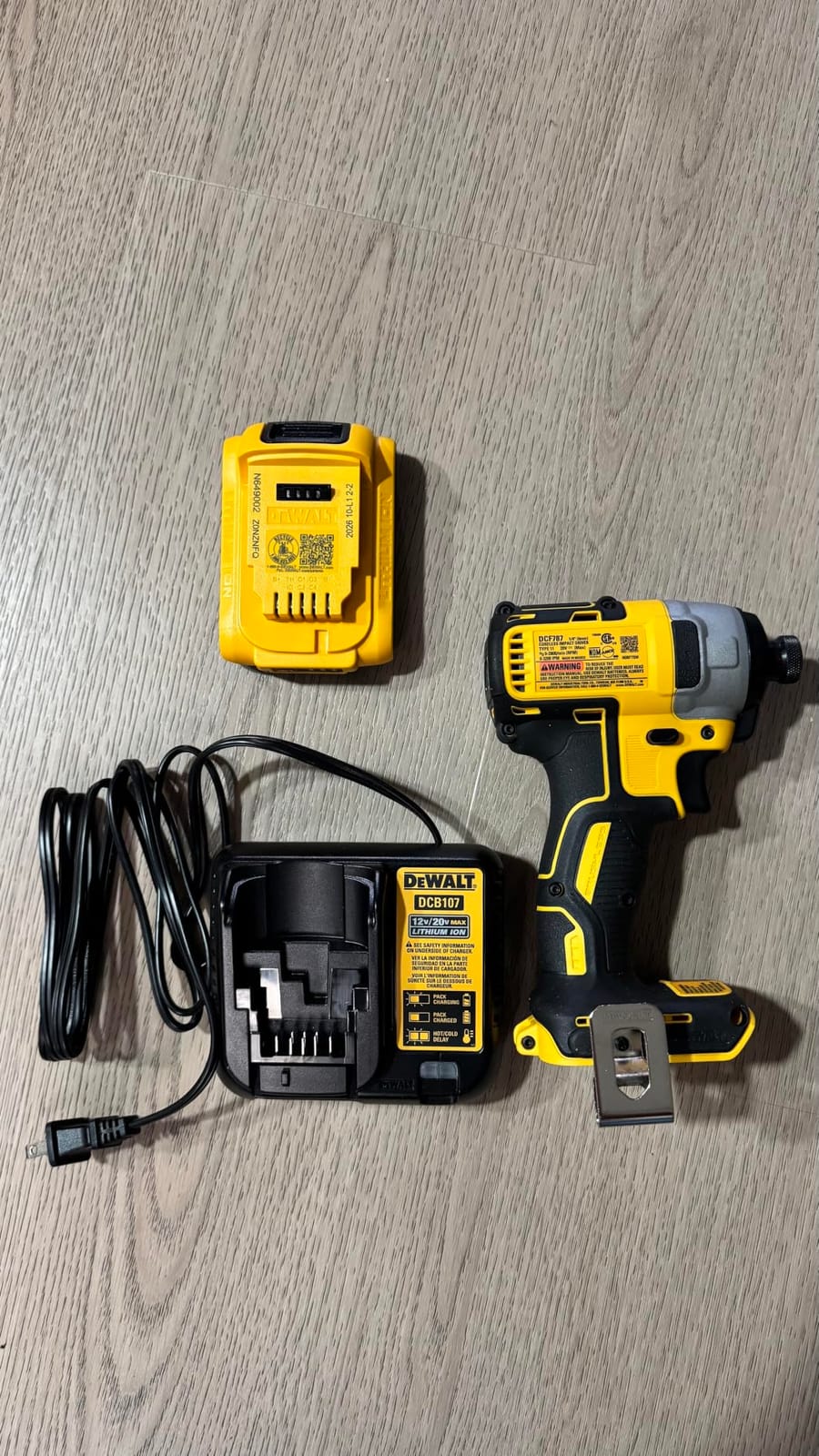
If you are buying a first impact driver from scratch, the DCF787D1 kit is what I recommend to friends who ask. It ships with a 20V MAX 2 Ah battery, a charger, and the brushless DCF787 tool, all at a price that undercuts most bare-tool offerings from competitors. For someone starting a workshop without prior battery commitments, that simplicity is worth a lot.
Performance is mid-tier but real. 1,500 in-lbs of torque and 2,800 RPM sit in the middle of our chart. On our deck-screw test the DCF787 finished in the same range as the older Milwaukee 2656-20, only with longer runtime thanks to the brushless motor. The 20-second LED delay is a nice touch; many competitors cut LED power the instant the trigger releases, which means fumbling in the dark for the next fastener. Having those extra seconds matters on a long day.
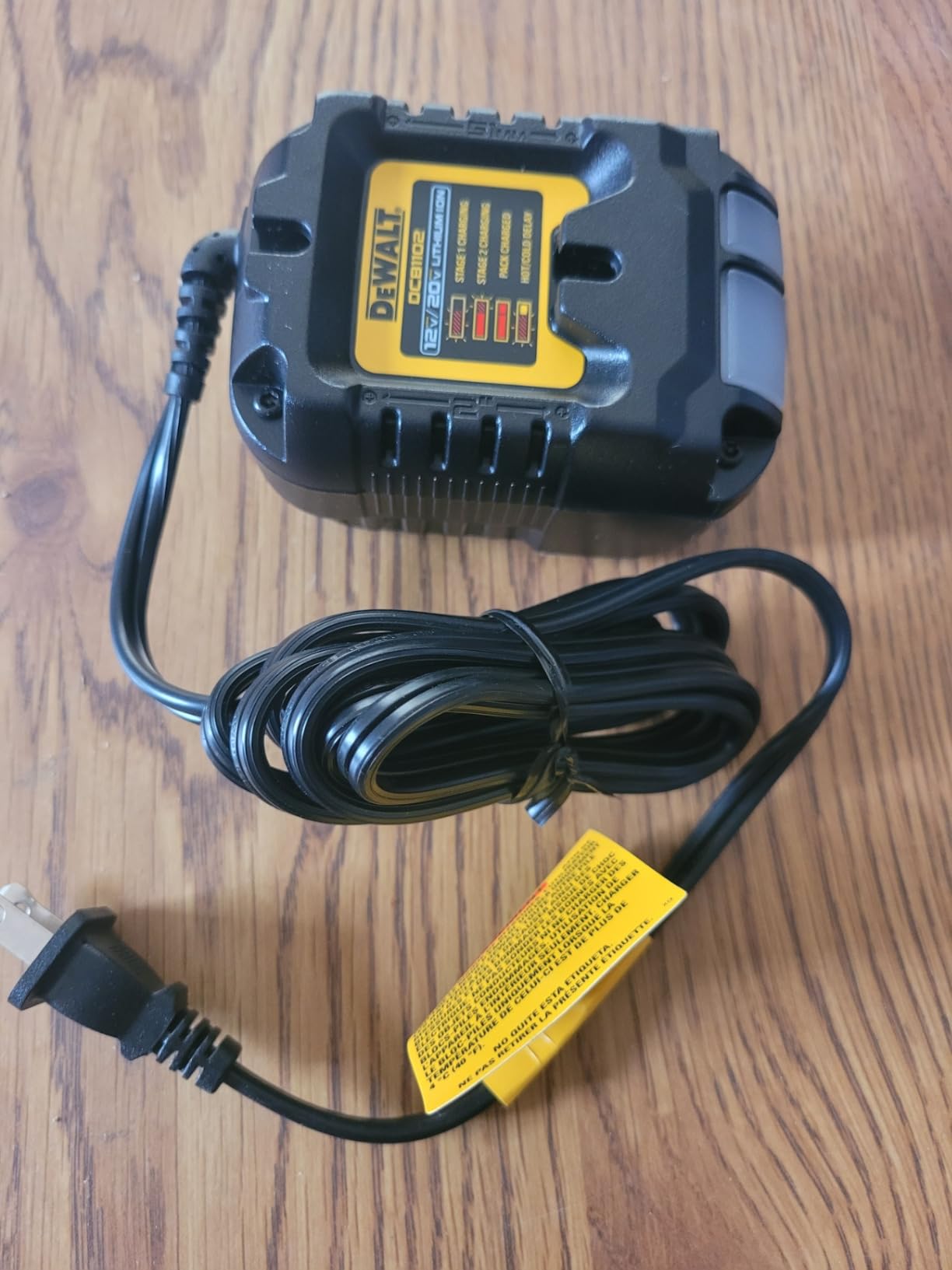
Two downsides kept the DCF787D1 out of our top spot overall. First, 4.3 lbs assembled is heavier than most of the bare-tool compact models. Second, the DCB203 2 Ah battery is smaller than the 5 Ah packs sold separately, so you will need an upgrade pack if you work the tool hard for a full day. But for a starter kit, this is the one to beat in 2026.
Who this is for
First-time buyers without an existing battery ecosystem, parents and grandparents buying a gift, anyone starting a small workshop, and DIYers who want one box that includes everything they need. Also a strong pick if you are weighing a 20V MAX platform for future DEWALT purchases.
Who should pass
Users who already own M18, M12, or 18V LXT batteries. Buying into a second platform is rarely worth it. Pros who need the maximum torque and best ergonomics should also step up to the M18 FUEL or DCF850B.
6. Best Lightweight Pro Impact Driver: Makita XDT13Z 18V LXT
Makita XDT13Z 18V LXT Lithium-Ion Brushless Cordless Impact Driver, Tool Only, Variable Speed
- Lightest tool body in our test at 1 pound
- Brushless motor runs cooler and longer
- Up to 50 percent more runtime per charge
- 3-year limited warranty
- Electronically matched torque and RPM
- Bare tool only
- no battery included
- No 4-mode precision assist
- Lacks tri-LED halo for shadow-free work
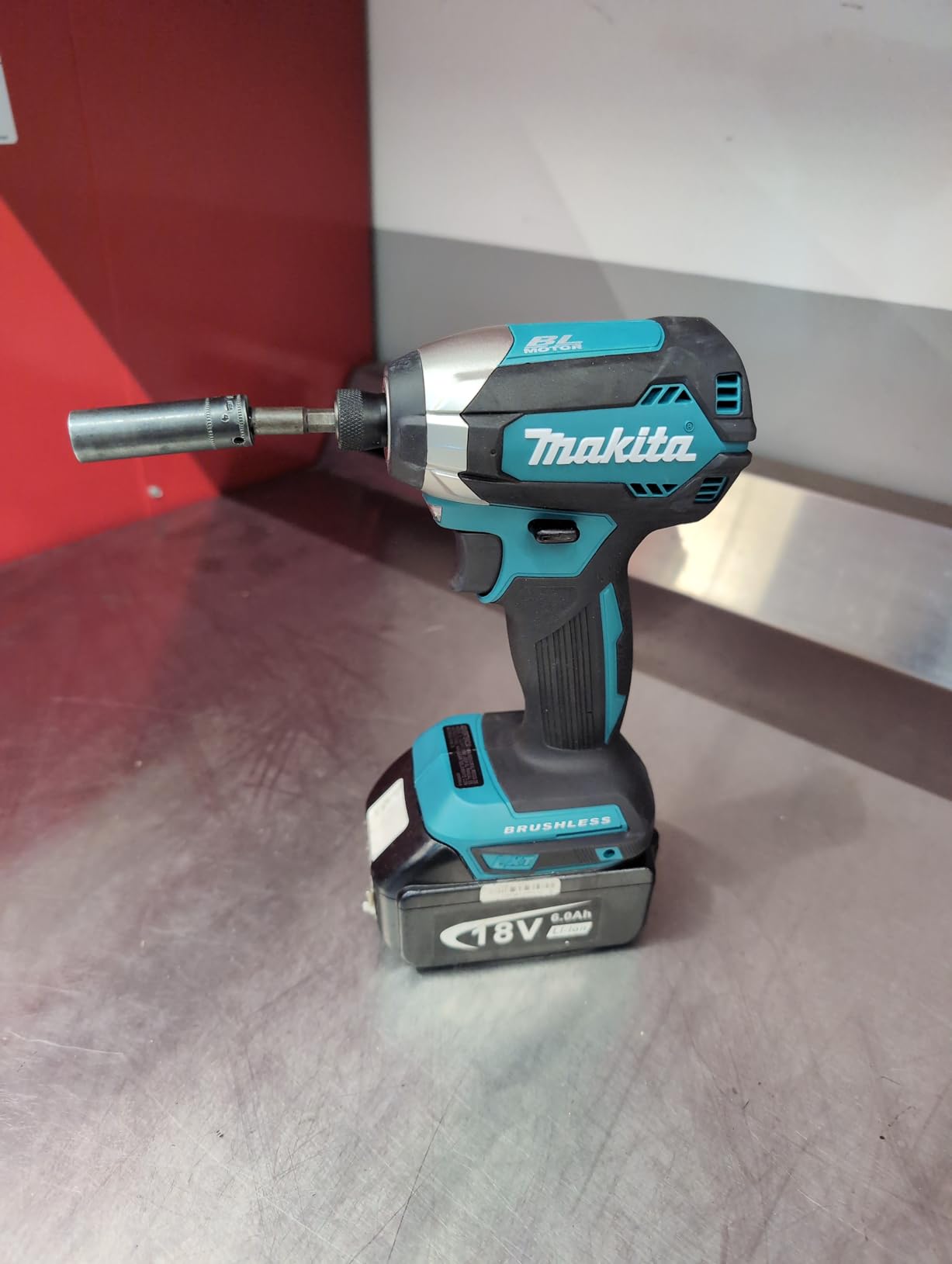
The Makita XDT13Z is the tool I forget I am holding. At a pound on the tool body and a 3,400 RPM brushless motor, it drives deck screws almost as fast as the heavier M18 FUEL class while keeping my wrist fresh through a full day overhead. The Star Protection computer inside the tool talks to LXT batteries and prevents overload before it becomes a problem.
Makita positions this as the overhead worker’s impact driver. That tracks with my experience. I rebuilt an attic-mounted camera rig using this driver for over an hour and never felt the usual fatigue that the heavier 18V units cause. The 3-year limited warranty also beats several competitors who only offer 1-year coverage on bare-tool units.
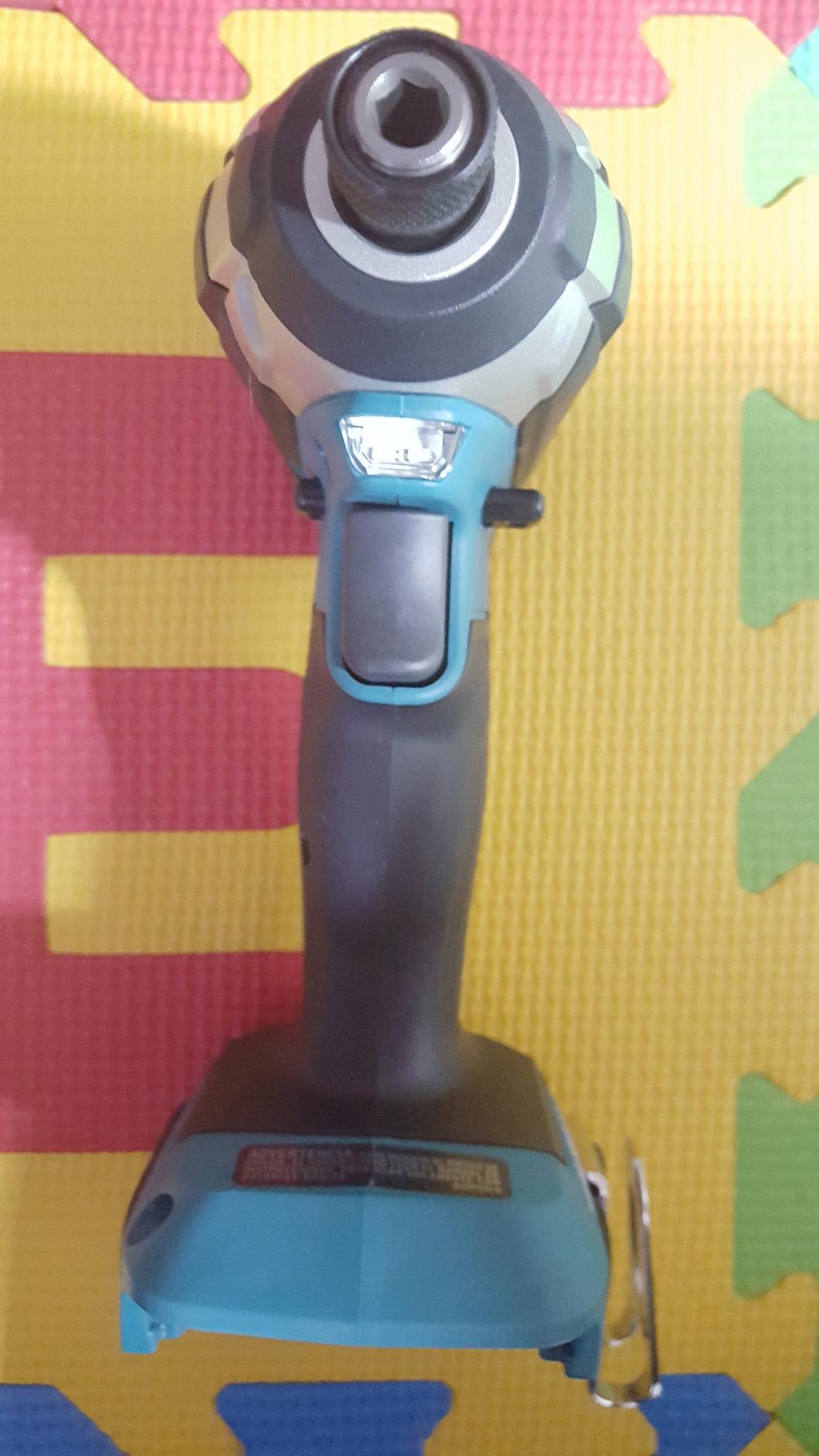
The XDT13Z does not have a 4-mode drive control or a tri-LED halo. For precision work like driving small machine screws, the trigger requires more finesse than the Milwaukee M12 or M18 FUEL’s mode controls. For overall construction tasks, though, this is the lightweight tool most pros actually want in their bag.
Who this is for
Pros already invested in 18V LXT batteries, overhead workers (electricians, HVAC installers, deck soffit builders), and users who put a premium on wrist comfort over maximum torque. Also our top pick for users with smaller hands, since the slim grip is the most ergonomic in this test.
Who should pass
Buyers without LXT batteries should look elsewhere unless they specifically want the Makita platform. Anyone needing precision mode control for small fasteners should look at the Milwaukee M12 or M18 FUEL for the 4-mode controls.
7. Best Quiet / Hydraulic Impact Driver: Milwaukee M12 FUEL SURGE 2551-22
- Hydraulic FLUID-DRIVE reduces metal-on-metal noise
- Up to 2X quieter than standard 12V drivers
- Kit includes 2 batteries and charger
- Compact head for tight spaces
- Ideal for occupied and indoor work spaces
- Heavier than expected at 5.2 lbs
- Small battery makes tool feel top-heavy
- Reverse/forward button is stiff
- No bits included
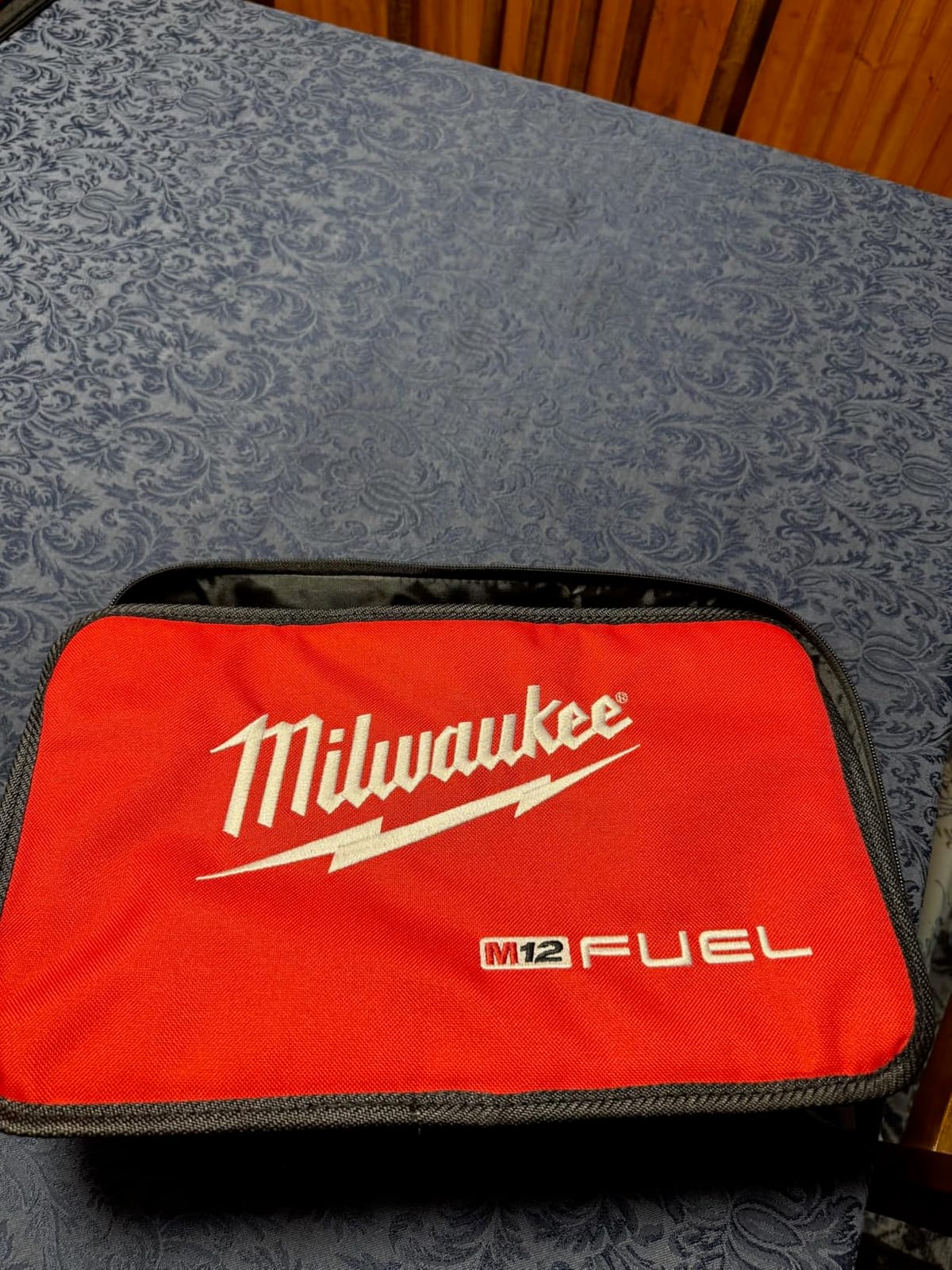
The Milwaukee M12 FUEL SURGE is the only hydraulic impact driver in our roundup, and it earns the spot for a specific reason. Standard percussion impact drivers make a hard ratcheting noise as the hammer-and-anvil slaps together thousands of times per minute. Hydraulic drivers replace that metal-on-metal contact with fluid coupling, which cuts the noise floor dramatically. Inside a finished house, in a recording studio, or in a robotics maker space where conversations happen, the SURGE is dramatically easier to live with.
Drive performance is comparable to other 12V drivers on the same platform. Sustained torque is the trade: hydraulic systems spend longer winding up to peak, but they reach similar drive times once at full power. On our bolt-break test, the SURGE matched the standard M12 FUEL, only quieter. The kit includes two batteries and a charger, so you are immediately ready to work.
Two real complaints keep showing up in user reviews. First, the 5.2 lb weight is high for a 12V tool. The hydraulic mechanism and small battery add mass toward the head, which creates a top-heavy feel during extended overhead use. Second, the forward-reverse switch is stiff; reviewers specifically mention fumbling with gloves. Neither is a deal-breaker, but both matter on long jobs.
Who this is for
Electricians working in occupied offices, HVAC installers running ducting inside finished homes, robotics hobbyists who prototype in shared maker spaces, and anyone who simply does not want earplugs for a quick DIY session. Also the best impact driver for indoor work where noise matters.
Who should pass
Anyone who works outside, where the noise tradeoff is irrelevant, and pros who need maximum torque should look at the M18 FUEL 2953-20 or a Flex 24V class driver. These are mechanically louder but meaningfully more powerful.
8. Best Budget Compact Impact Driver: DEWALT DCF850B 20V MAX Brushless
DEWALT DCF850B 20V Cordless Brushless Compact 1/4” Impact Driver (Tool Only) (DCF850B-NBX)
- 1
- 825 in-lbs of torque at 2.2 pounds
- 3-speed variable trigger
- 3-LED work light
- Accepts 1-inch bit tips
- Slim form factor for cabinetry and robotics
- Battery and charger sold separately
- Some users receive without factory retail box
- No 4-mode precision assist
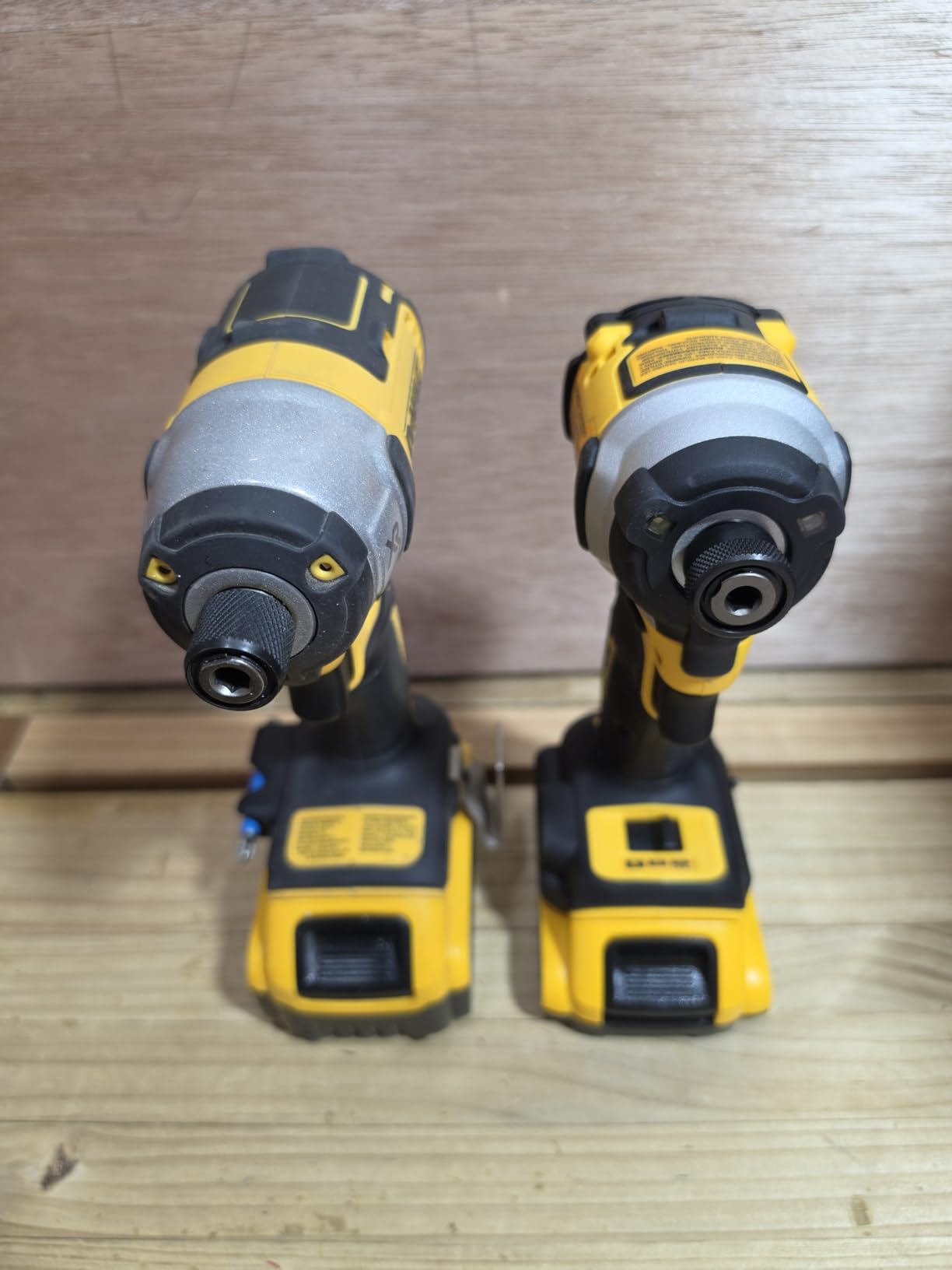
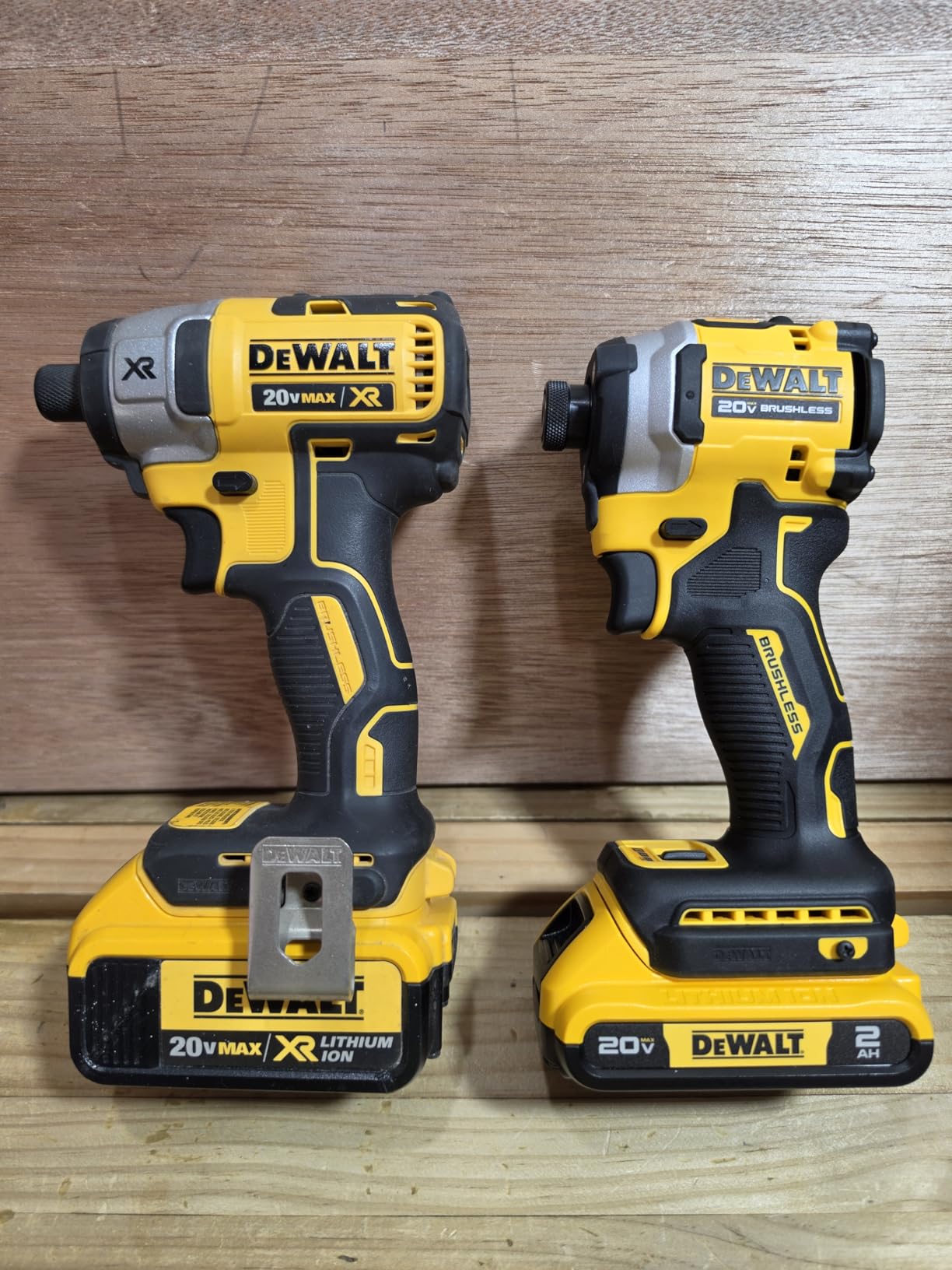
The DCF850B is the upgrade pick for anyone who has been looking at the older DCF787 and the Atomic series side by side. With 1,825 in-lbs of torque packed into a 2.2-pound tool body, it strikes a near-perfect balance for cabinetry, robotics assembly, and trim work. Compared to the DCF787 kit above, this is the compact version at the cost of battery inclusion.
Three speed modes give you meaningful control: low for machine screws and delicate work, medium for deck screws, high for lags and stubborn fasteners. The integrated 3-LED work light is positioned to reduce shadows from the bit. On the deck-screw and lag-bolt tests, the DCF850B finished within a few percent of the larger M18 FUEL 2953-20, which is impressive given the smaller footprint.
Two things to know. The bare-tool figure assumes you already have DEWALT 20V MAX batteries; first-time buyers should grab the DCF787D1 kit instead. Some buyers report receiving the tool in a plain brown box rather than retail packaging; the tool itself is genuine DEWALT, but the unboxing experience varies.
Who this is for
DIYers and pros with existing DEWALT 20V MAX batteries who want a compact powerhouse for cabinetry, deck boards, robotics builds, and trim work. Also a great second-driver option for toolsellers who want one tool for tight spaces and a separate full-size driver for heavy work.
Who should pass
First-time buyers without batteries should add the DCF787D1 kit to their cart. Users who mainly drive lags and bolts should look at the larger M18 FUEL class.
Buying Guide: What to Look for in an Impact Driver?
A great impact driver is not the one with the highest torque on the spec sheet. It is the one that matches your batteries, your fastener size, and the spaces you are working in. Here is how I think through a purchase.
Voltage: 12V vs 18V vs 20V vs 24V
Voltage is the platform, not the speed. 12V sub-compacts like the M12 FUEL and SURGE are perfect for HVAC, electrical, robotics assembly, and any tight work where weight and size matter. 18V and 20V are interchangeable labels for the same physical platform (DeWalt markets theirs as 20V MAX while Milwaukee calls the same electronics 18V, a difference of nameplate voltage). These mid-size platforms drive deck screws, lags, and most automotive fasteners with authority.
24V and 40V classes are out of scope for most buyers, but the 24V Flex and Ridgid systems do offer the highest torque ratings if you regularly drive over 1-inch fasteners. For most readers, the right answer is to stick with the voltage platform you already own. Battery cross-compatibility is the most consequential spec on a modern impact driver.
Torque (in-lbs) and IPM (impacts per minute)
Torque tells you how much rotational force the driver can apply. In-lbs (inch-pounds) is the dominant unit for 18V/20V impact drivers, where the numbers range from about 1,300 to 2,000. For automotive lug nuts and larger bolts, ft-lbs become relevant and tools cross over into impact wrench territory. IPM (impacts per minute) tells you how often the hammer mechanism fires per minute when resistance rises. Higher IPM means faster screw driving once the tool detects load.
For most DIYers and pros, 1,500 in-lbs and 3,000 to 3,500 RPM is enough. The jump to 2,000 in-lbs and 3,900 RPM matters if you are sinking structural fasteners daily. Reddit threads on r/Tools frequently warn that too much torque on small fasteners strips screw heads, so picking a model with self-tapping screw mode or multiple drive modes is wise.
Head length and weight
For tight work, head length matters more than torque. Anything under 5.5 inches lets you sneak inside a cabinet, a robotics chassis, or between studs. Weight determines how long you can hold the tool overhead without fatigue; the Makita XDT13Z at 1 pound is the lightest, while heavier hydraulic and 24V platforms can hit 5 pounds or more.
Brushless vs brushed motors
Brushless motors are now the default across the major brands. They run cooler, deliver up to 50 percent more runtime per battery charge, and last longer because there are no carbon brushes to wear out. A few older brushed models like the Milwaukee 2656-20 still earn strong reviews because the rest of the system compensates. New buyers should default to brushless.
Battery platform and ecosystem
This is the single most consequential choice in the buying guide. Buying into Milwaukee M18, DeWalt 20V MAX, Makita 18V LXT, or Ryobi 18V ONE+ locks you into that brand’s batteries and chargers for years. M18 has the broadest professional ecosystem, including jobsite radios, vacuum cleaners, table saws, and rotary hammers. 20V MAX is similar in breadth and dominance in retail. Makita LXT is favored by mechanical trades. Ryobi is the DIY leader with the lowest priced batteries.
Forum users consistently name battery cross-compatibility as the deciding factor when picking a new tool. If you already own M18 batteries, the Milwaukee 2656-20 is the cheapest path to a usable driver. If you have no batteries, the DeWalt DCF787D1 kit is the simplest starter option.
Bits and accessories
Impact-rated bits are not optional with these tools. Standard bits shatter under impact loads. Milwaukee Shockwave, DEWALT IMPACT READY, and Makita ImpactX are the three lines worth buying. A 30 to 40 piece impact-rated bit set covers everything from 1-inch Phillips to 6-inch long Torx for cabinetry. For robotics assembly, look for hex shank magnetic bit holders in 2-inch and 6-inch lengths.
Quiet / hydraulic vs standard percussion
Standard percussion drivers make a loud ratcheting noise as the hammer-and-anvil slaps together. Hydraulic drivers use a fluid coupling instead, cutting noise by roughly half. The Milwaukee M12 SURGE is the only widely available hydraulic driver in our test, and it shines in occupied spaces and indoor maker environments. Outside on a jobsite, the noise tradeoff rarely matters, and the standard percussion drivers deliver more torque per dollar.
Impact drivers for robotics and automation
This is a use case no competitor covers, and it is one our team cares about. Building a robot arm, AGV, or drone from off-the-shelf parts means driving hundreds of M3, M4, and M5 socket head cap screws into aluminum and carbon fiber. A precision 12V impact driver with self-tapping screw mode like the Milwaukee M12 FUEL is the right tool because it stops the instant a screw seats, preventing thread damage. For high-volume assembly lines, the same 4-mode drive control lets a single tool cover both small fasteners and larger structural bolts without an operator swap.
Maintenance crews working on humanoid robots or autonomous guided vehicles also benefit from a quiet hydraulic driver. Working inside a finished electronics lab with the SURGE reduces the noise burden on colleagues and avoids the ear protection overhead of standard percussion drivers. For drone repair and field maintenance, however, the compact head and lower weight of the DCF850B or DCF809B is more important than quiet operation.
Common rookie mistakes
The most common rookie mistake, raised on r/Carpentry and r/Tools threads repeatedly, is running a high-torque impact driver at full speed on small fasteners. The result is stripped screw heads and damaged threads. Always start on the lowest speed setting and use self-tapping screw mode or a similar precision assist when available. Another mistake is using standard drill bits under impact load, which shatters them instantly. Always use impact-rated bits.
Frequently Asked Questions
What is the best impact driver to buy?
For an all-around pick, the Milwaukee M18 FUEL 2953-20 is the best impact driver to buy because it delivers 2,000 in-lbs of torque, 3,900 RPM, and tri-LED lighting, and it works with the entire M18 battery family. For a first-time buyer without batteries, the DEWALT DCF787D1 kit is the simplest setup and ships with a 2 Ah battery and charger. For tight spaces, the DEWALT DCF850B offers 1,825 in-lbs in a 2.2 lb body.
Are DeWalt or Milwaukee impact drivers better?
Both brands sit at the top of the cordless impact driver market. Milwaukee M18 FUEL models lead on raw torque and pro-grade battery ecosystem depth. DeWalt 20V MAX Atomic models lead on compact size and retail kit value. Pick Milwaukee if you already own M18 batteries or want the highest torque available. Pick DeWalt if you want the smallest footprint or are starting fresh with a kit.
Is 250 ft-lbs of torque enough for lug nuts?
Yes, 250 ft-lbs is enough torque to tighten passenger vehicle lug nuts, which typically spec at 80 to 100 ft-lbs. Cordless impact drivers in the 1,500 to 2,000 in-lb range exceed that. For trucks and heavy equipment lugged at 400+ ft-lbs, you need an impact wrench instead of an impact driver. Impact drivers and impact wrenches are different tools with different chuck sizes.
What is the world’s most powerful impact driver?
Among 18V and 20V platforms, the Milwaukee M18 FUEL 2953-20 delivers the highest torque at 2,000 in-lbs and 3,900 RPM. Among higher-voltage platforms, 24V and 40V class drivers from Flex, Ridgid, and others exceed those numbers and can push above 2,500 in-lbs. For most pro and DIY use cases, 2,000 in-lbs is more than enough and gives a better balance of weight, battery cost, and ergonomics.
What are some common issues with Milwaukee impact drivers?
The most common Milwaukee impact driver complaints are trigger calibration on older brushed M18 models, occasional LED work light failures, and grip circumference on the M12 FUEL being too bulky for users with smaller hands. Recent FUEL models with 4-mode drive control and tri-LED lighting have addressed most of these issues and earn consistently high reviews.
What is the most common rookie mistake with an impact driver?
The most common rookie mistake is running a high-torque impact driver at full trigger on small fasteners like M3 or M4 machine screws, which strips the head and damages the threads. The fix is to use a low-speed mode or self-tapping screw mode when available, and always pair the tool with impact-rated bits rather than standard drill bits.
Final Verdict: Which Impact Driver Should You Buy in 2026?
The best impact drivers in 2026 cover more ground than ever, from quiet hydraulic drivers for occupied spaces to compact 12V tools for tight robotics builds. Across all the categories we tested, our top recommendation remains the Milwaukee M18 FUEL 2953-20 for anyone already in the M18 system; the DEWALT DCF787D1 kit for first-time buyers; and the DEWALT DCF850B for anyone who values a compact, lightweight, brushless design.
If you are building a robot arm, AGV, or drone, the Milwaukee M12 FUEL with 4-mode drive control is the precision choice that prevents stripped M3 and M4 screws. For deck builders and framers, the M18 FUEL 2953-20 or any other high-torque 18V/20V driver will repay you in saved time within a single project. Check the buttons below each product for the latest price and add a Milwaukee Shockwave or DEWALT IMPACT READY bit set to your cart so the bits survive impact loads.
Save this guide, share it with a fellow builder, and let us know which impact driver you reach for in your shop. We update our top picks every quarter, so come back when the next generation of FUEL and Atomic platforms lands.