
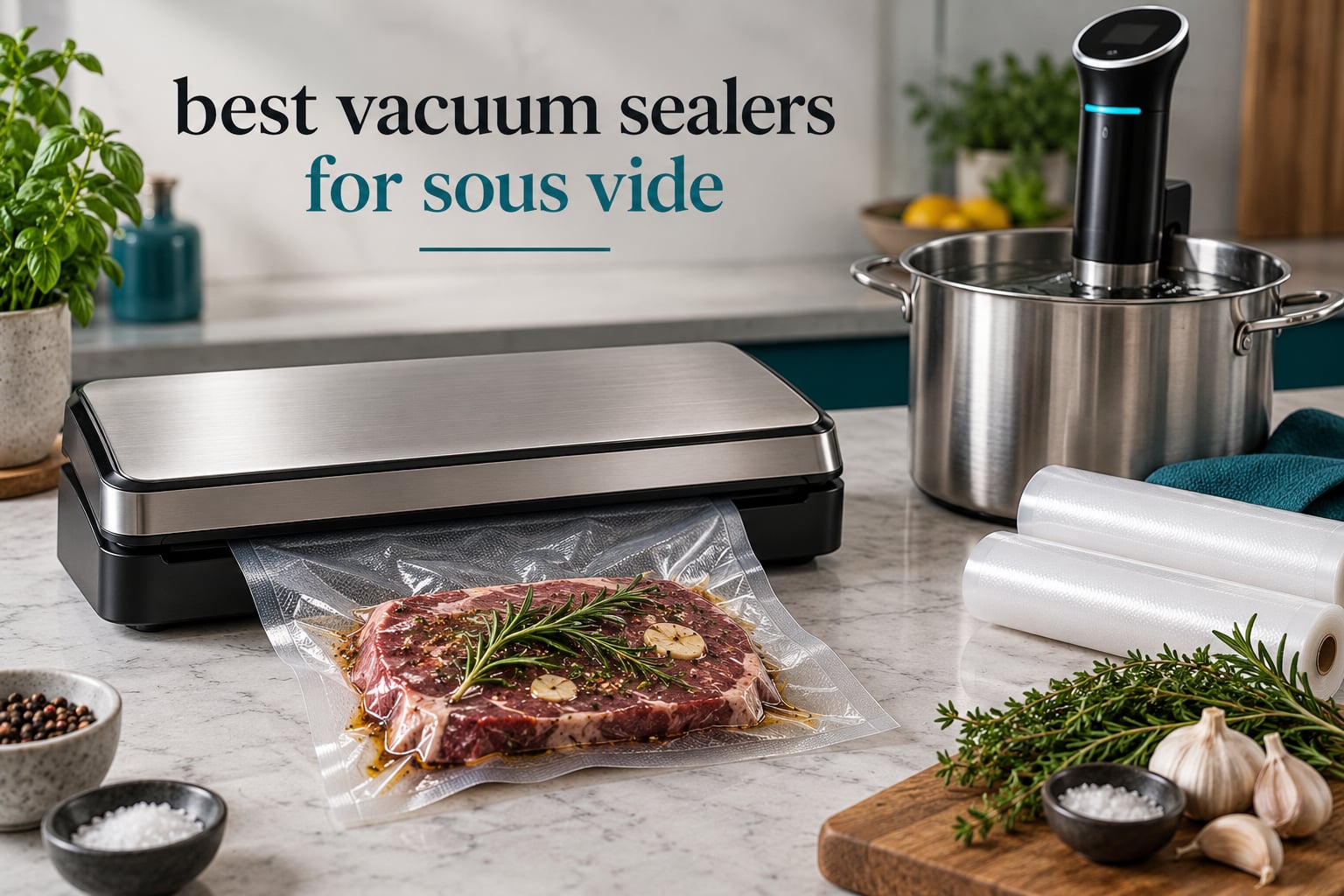
The FoodSaver V4400 is the best vacuum sealer for sous vide because its automatic moisture detection switches suction strength on its own, which is the one job you cannot skip when a bag holds raw meat, marinade or a sauce. It is the machine I keep within reach of the circulator, and the reason is simple: it makes a hermetic bag without you thinking about it.
We put ten countertop vacuum sealers through sous vide work over several months, running dry proteins, wet proteins with marinade, soups and batch prep portions through each one. The units were judged on seal integrity in the water bath, how much liquid handling they tolerate before the vacuum port complains, bag sizing convenience, countertop footprint, noise and warranty length. Everything below reflects what those cycles produced.
This roundup covers the full price range, from an entry-level budget machine to a premium stainless unit with the strongest suction in the group. Ten picks, one verdict each, and a clear answer to the question that comes up first in every forum thread: whether a vacuum sealer is a cooking tool or an optional extra.
Table of Contents
Top 3 Sous Vide Vacuum Sealer Picks (October 2026)
FoodSaver V4400
- Automatic moisture detection
- 2-in-1 removable lid
- Built-in cutter and roll storage
- Removable drip tray

FoodSaver FM2100
- One-touch sealing
- Built-in cutter and roll storage
- Dry and moist modes
- 5-year warranty

Bonsenkitchen VS2100
- Four modes including pulse vac
- Accessory mode for jars and bags
- Compact body
- 3-year warranty
Quick Comparison of the Best Vacuum Sealers for Sous Vide in 2026
| Product | Specifications | Action |
|---|---|---|
| FoodSaver V4400 |
|
Check Latest Price |
| FoodSaver FM2100 |
|
Check Latest Price |
 Potane VS2690 Potane VS2690 |
|
Check Latest Price |
 Potane VS5736 Potane VS5736 |
|
Check Latest Price |
 Gasbye VS5166 Gasbye VS5166 |
|
Check Latest Price |
 Anova Culinary Sealer Anova Culinary Sealer |
|
Check Latest Price |
 NESCO VS-12 NESCO VS-12 |
|
Check Latest Price |
 FoodSaver PowerVac VS0150 FoodSaver PowerVac VS0150 |
|
Check Latest Price |
 Bonsenkitchen VS5100 Bonsenkitchen VS5100 |
|
Check Latest Price |
| Bonsenkitchen VS2100 |
|
Check Latest Price |
Do You Actually Need a Vacuum Sealer for Sous Vide?
You do not need one for every cook. That is the honest answer, and it is the consensus in the sous vide communities we read while researching this roundup: plenty of people cook happily with ordinary zip-top freezer bags and never touch a sealer.
Where a sealer earns its counter space is where bags need to be cut to portion size, where you freeze finished cooks, and where liquid sits in the bag. A loose bag traps air that creates floating pockets and cold spots. It also makes long cooks unreliable, because a zip seal is a mechanical closure rather than a fused one, and reviewers report bags giving out on cooks that run past a day.
Our rule of thumb: if you cook sous vide a few times a month with dry proteins and nothing else, any of the machines below will do more than you need. If you are batching meals for the week or working with marinade, a proper sealer moves from optional to practical in about a month of use.
1. FoodSaver V4400 – Best Overall for Sous Vide
FoodSaver V4400 2-in-1 Vacuum Sealer Machine with Automatic Vacuum Sealer Bag Detection and Starter Kit
- Automatic moisture detection handles wet proteins without guesswork
- Built-in roll storage and cutter for custom bag sizes
- Removable dishwasher-safe drip tray
- Works with 8 and 11 inch rolls plus zipper bags
- Bulky 20 inch wide footprint
- Heaviest unit here at 10 pounds
- Automatic detection sometimes overrides manual pulse control
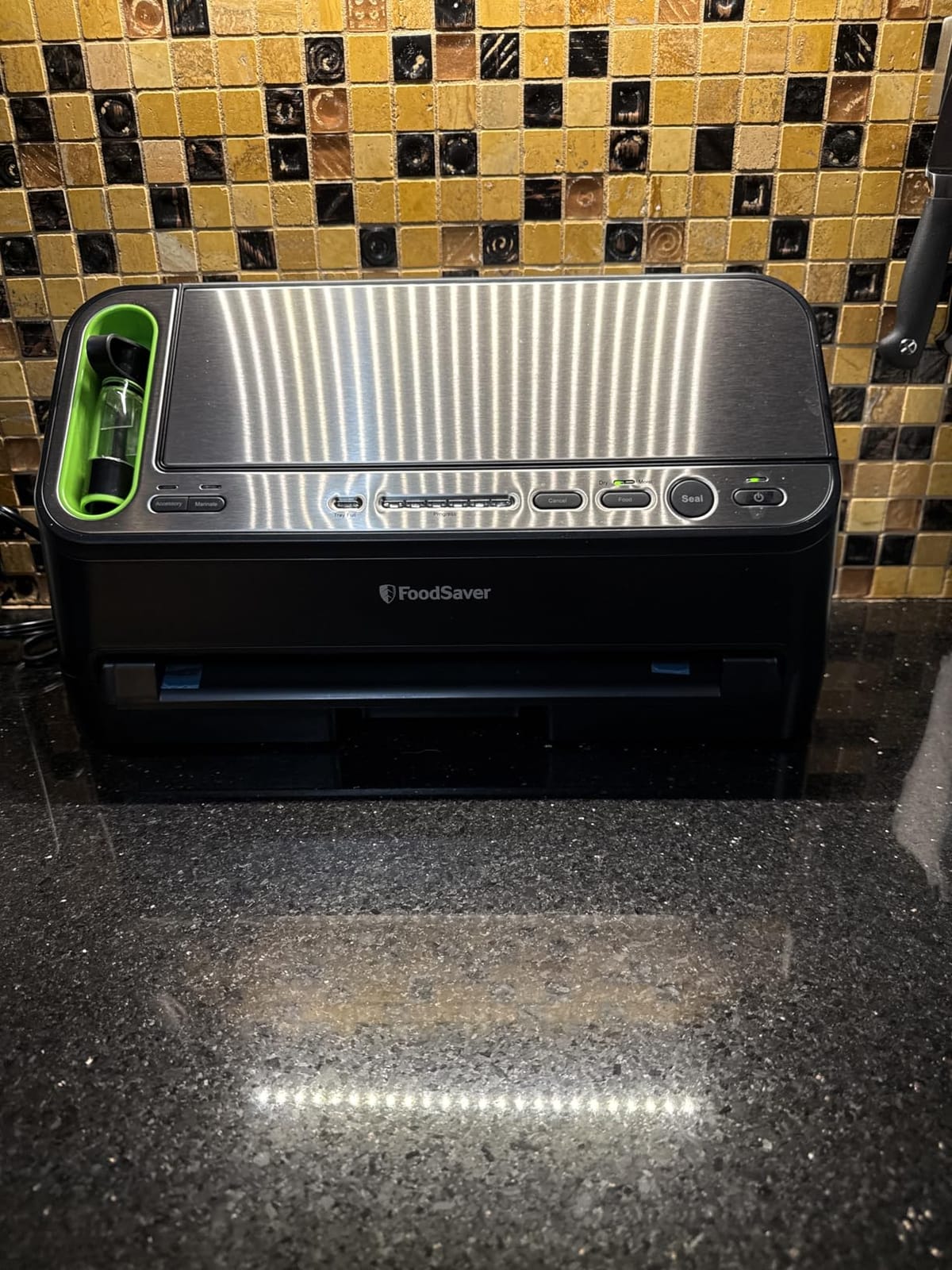
This is the machine that lives next to the circulator on our test bench. The V4400 lifts the entire vacuum chamber out as a 2-in-1 lid, which sounds like a gimmick until you realise the sealing bar is underneath and you can drop the lid straight onto the same bag without re-aiming anything.
The feature that earns it the top spot is automatic moisture detection. Drop a bag with a marinated steak inside and the machine reads the resistance, backs the suction off, and slows the cycle rather than pulling liquid into the port. Across wet proteins and soups, that is the difference between a clean seal and a re-seal.
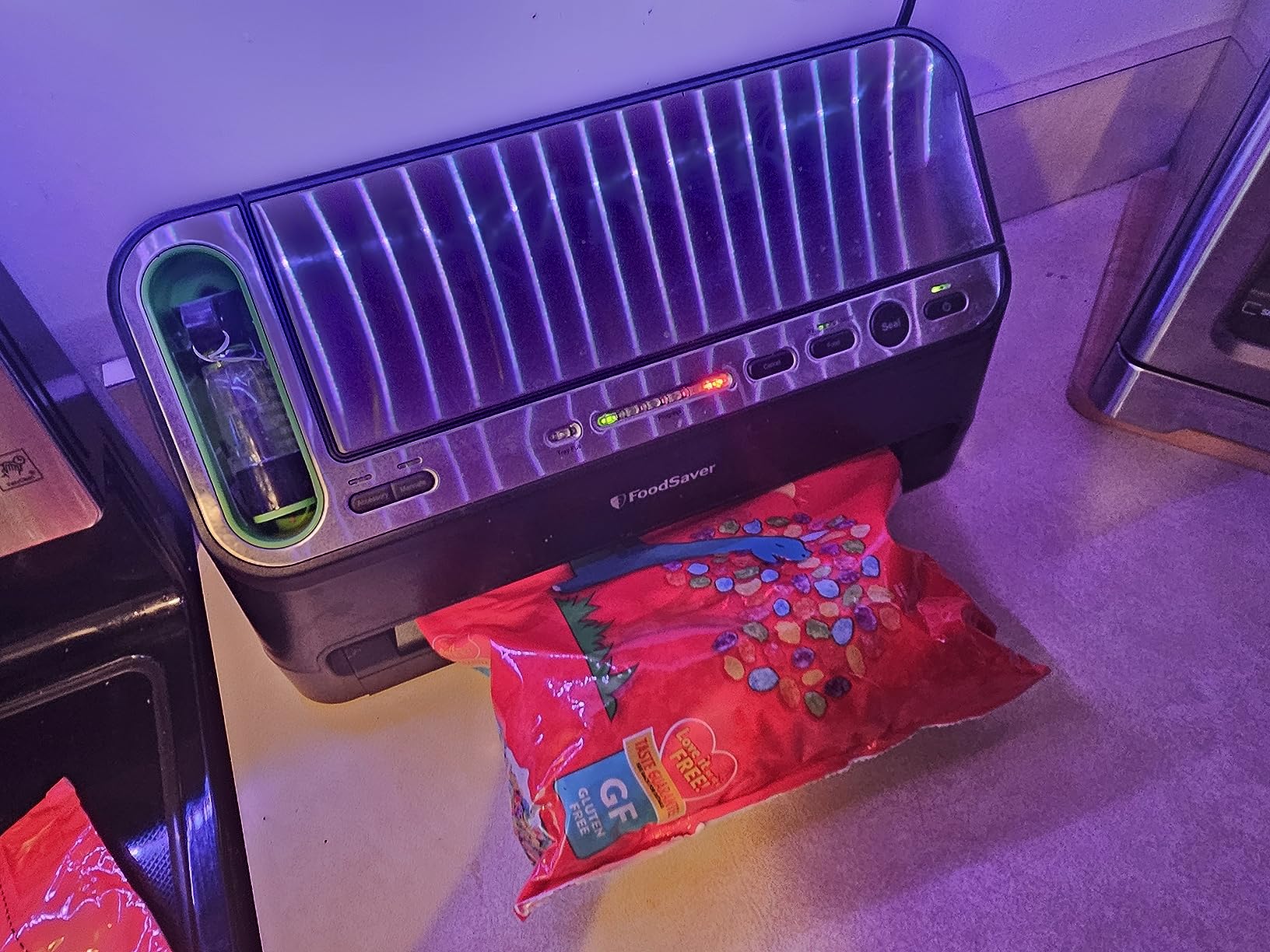
Bag handling is the other reason this one wins. The roll storage holds a full roll underneath the machine and the cutter bar sits right there, so cutting a 12 inch portion for a single steak takes seconds. It accepts 8 inch and 11 inch FoodSaver rolls, premade bags, zipper bags and FreshSaver containers.
The removable dishwasher-safe drip tray catches what does come through on very wet cooks, which means you are rinsing one small tray instead of wiping the whole chamber. That is a small thing that matters more than it sounds in a week of batch cooking.
Who the FoodSaver V4400 suits
It suits households that cook a mix of dry and wet proteins, and that portion proteins once or twice a week. The 800 watt motor has the headroom to pull a good vacuum from a bag with liquid in it, and the automatic cycles mean a beginner gets a solid seal on the first attempt.
If you own a lot of FoodSaver accessories already, the compatibility matters. Containers, zipper bags, the handheld sealer and the canister hose all work with this body, so the 2-in-1 system is genuinely modular rather than a marketing label.
Who should skip the FoodSaver V4400
Skip it if counter space is tight. At 20 inches wide and 10 pounds, this is the largest machine in the roundup by some margin, and it will claim a full stretch of worktop or a dedicated cabinet shelf.
Also skip it if you want manual control over the vacuum curve. The automatic detection makes sensible choices on its own, but on a bag with delicate fish or a layered dish you might want to stop the pump early and seal. You can override it, but you are fighting the defaults rather than setting them.
2. FoodSaver FM2100 – Best Value Sous Vide Sealer
- One-touch sealing keeps the workflow simple
- Built-in cutter trims bag waste on every seal
- Dual heat seal strips produce consistent airtight seals
- Accessory port and hose included in the box
- Backed by a 5 year limited warranty
- 120 watt pump is weaker than premium units
- No dedicated pulse mode on some cycles
- Roll storage fits only one 11 inch roll
The FM2100 is the middle FoodSaver in the range and the one we hand to people who ask what a good first sealer looks like. One button does vacuum and seal, the cutter and roll storage are built in, and the box includes a hose and port for containers.
Two heat-seal strips run at once, which is the spec that matters for sous vide. A single thin strip gets you a decent seal for dry goods. A double strip holds when a bag spends hours submerged at temperature, which is where the cheaper single-strip machines tend to give up.
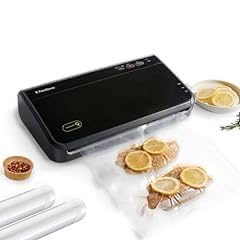
At 16.3 by 9.2 by 4 inches and 6.6 pounds, it is also far easier to live with than the V4400. It stores on a shelf without feeling like a project, and the seal cycles are quiet enough that you can run a batch while something else is going on in the kitchen.
Our one real reservation is the 120 watt pump. On dry proteins and cooked portions it performs well. On a bag with a lot of free liquid, you will want to watch the cycle rather than walk away, and a bottle of sauce can slow it right down.
Who the FoodSaver FM2100 suits
It suits weekend sous vide cooks who want a durable, low-fuss machine and do not want to hunt for settings. The 5 year limited warranty is the longest coverage in this lineup, which tells you something about how the brand expects it to be used.
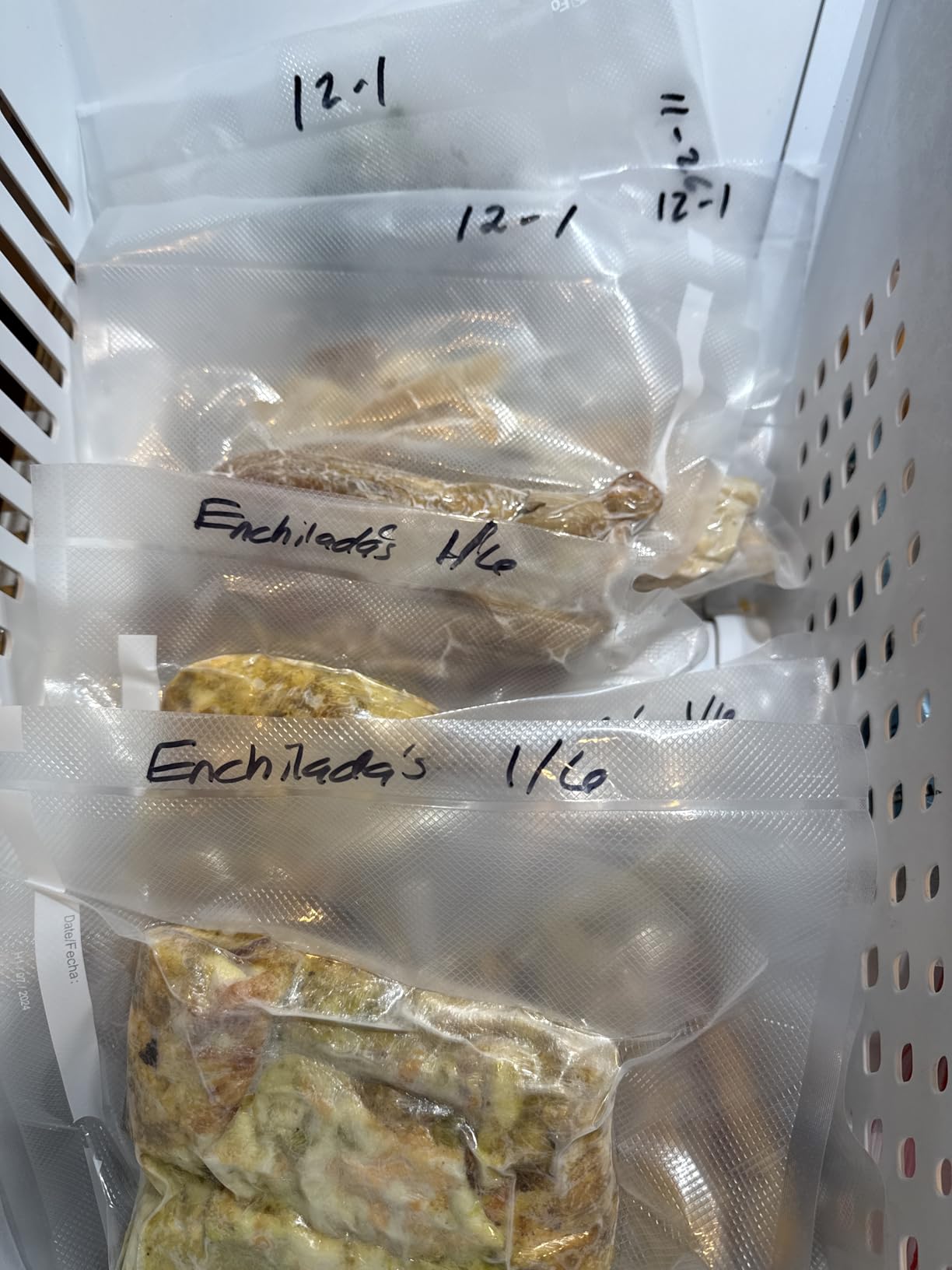
It also suits anyone already invested in the FoodSaver bag ecosystem. The starter kit includes quart and gallon bags plus an 11 inch by 10 foot roll, and the accessory hose means the same machine handles containers later on.
Who should skip the FoodSaver FM2100
Skip it if your cooking is marinade-heavy by default. There is no dedicated pulse vacuum on every cycle, so managing liquid takes more attention than on a unit built for it. Freeze-first is the workaround, and it is not a bad one, but it is extra steps.
Skip it if you batch seal heavily on a single afternoon. The pump is fine for that, but the single-roll storage means you refill it more often than you would on a unit that holds a longer roll.
3. Potane VS2690 – Best Compact Sealer With Eight Presets
POTANE Precision Vacuum Sealer Machine, Powerful Pro Vacuum Food Sealer, 8-in-1 Easy Presets, 4 Food Modes, Dry&Moist&Soft&Delicate with Starter Kit, Compact Design(Silver)
- Eight preset combinations across dry moist soft and delicate modes
- Sloping top keeps juice away from the vacuum chamber
- Only 3 pounds and 0.88 inches tall for small kitchens
- Spare foam gasket and canister hose included
- ETL tested and certified
- Modest 120 watt motor
- Less suction on large or very wet batches
- Accessory hose and gasket are separate items rather than built in
The Potane VS2690 answers the footprint complaint head on. At 14.25 by 5.5 by 0.88 inches and 3 pounds, it is a strip of a machine that can live at the back of a counter or in a drawer, and it still carries a brushed metal top rather than looking like an afterthought.
The eight presets matter more than the number suggests. Four food modes cover dry goods, moist items, soft bread-type textures and delicate proteins like fish. Each of those splits into two vacuum strengths, which is roughly the same granularity you get from manual controls on a pricier unit.
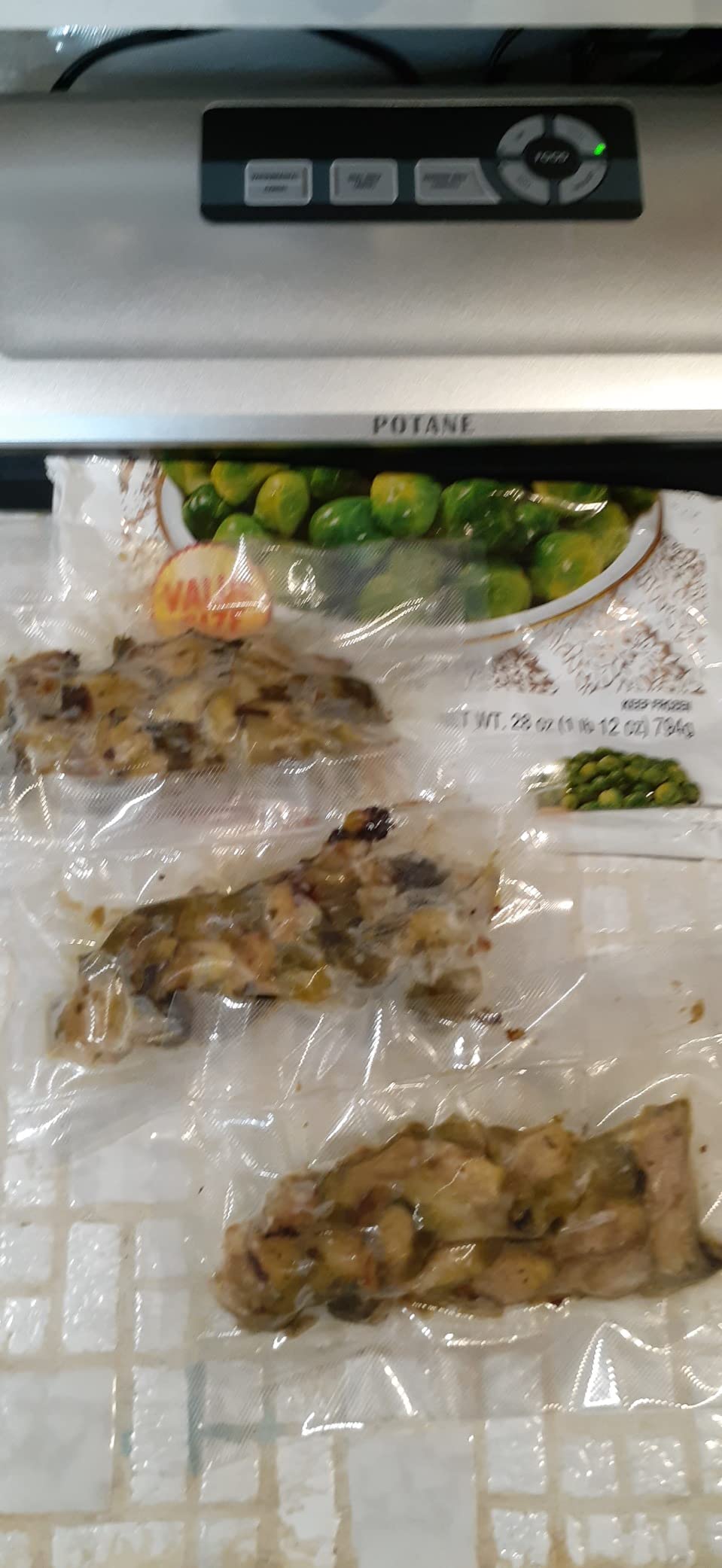
The sloping top is the quietly smart detail. Raw meat sits on an incline, so juice runs toward the food rather than toward the open bag edge, which means less liquid ever reaches the vacuum path in the first place. That single design choice does more for wet cooks than a stronger pump would.
Enhanced heating wires and a brushless motor are the other things worth knowing about. The motor type is the reason these units keep sealing steadily over months rather than degrading, and the extra wire coverage shortens heat cycles.
Who the Potane VS2690 suits
It suits small kitchens, apartment benches and anyone who travels the machine between a weekend house and a city flat. At 3 pounds it is the easiest unit here to move with one hand while holding a bag in the other.
It also suits cooks who want preset help without paying for premium brand pricing. The starter kit carries two bag rolls, a spare foam gasket and a canister hose, so the consumables and the part most likely to wear are both covered on day one.
Who should skip the Potane VS2690
Skip it if you seal large or very wet batches in one go. A 120 watt motor and a compact chamber mean more cycles for a heavy bag, and reviewers consistently note that thick or liquid-heavy contents need the moist or pulse setting.
Skip it if suction force is the priority. The gas pump class here is fine for portion bags, but a user moving five gallon bags of stock weekly will feel the difference immediately.
4. Potane VS5736 – Best for Bulk Batch Prep
- Rated for over 100 consecutive seals
- Built-in storage for up to 20 feet of bag roll plus cutter bar
- 8 mm sealing element with brushless motor for durable seals
- One-hand C-type half-wrapped chamber with a 5 year warranty
- Only auto and manual modes with no delicate preset
- Accessory port needs separate containers or jars
- The latch takes practice to close one-handed
The VS5736 is the batch machine in this lineup. It is rated for more than 100 consecutive uses, which is the specification we looked at first when choosing something for a week of meal prep in one sitting. Nothing else in the group makes that claim as explicitly.
The sealing element is 8 mm across with a 3 mm sealing width, driven by a brushless mechanical motor. That combination is why the seals come out consistent on the fiftieth bag and not just the fifth, and it is a measurable difference when you are portioning a week of steaks.
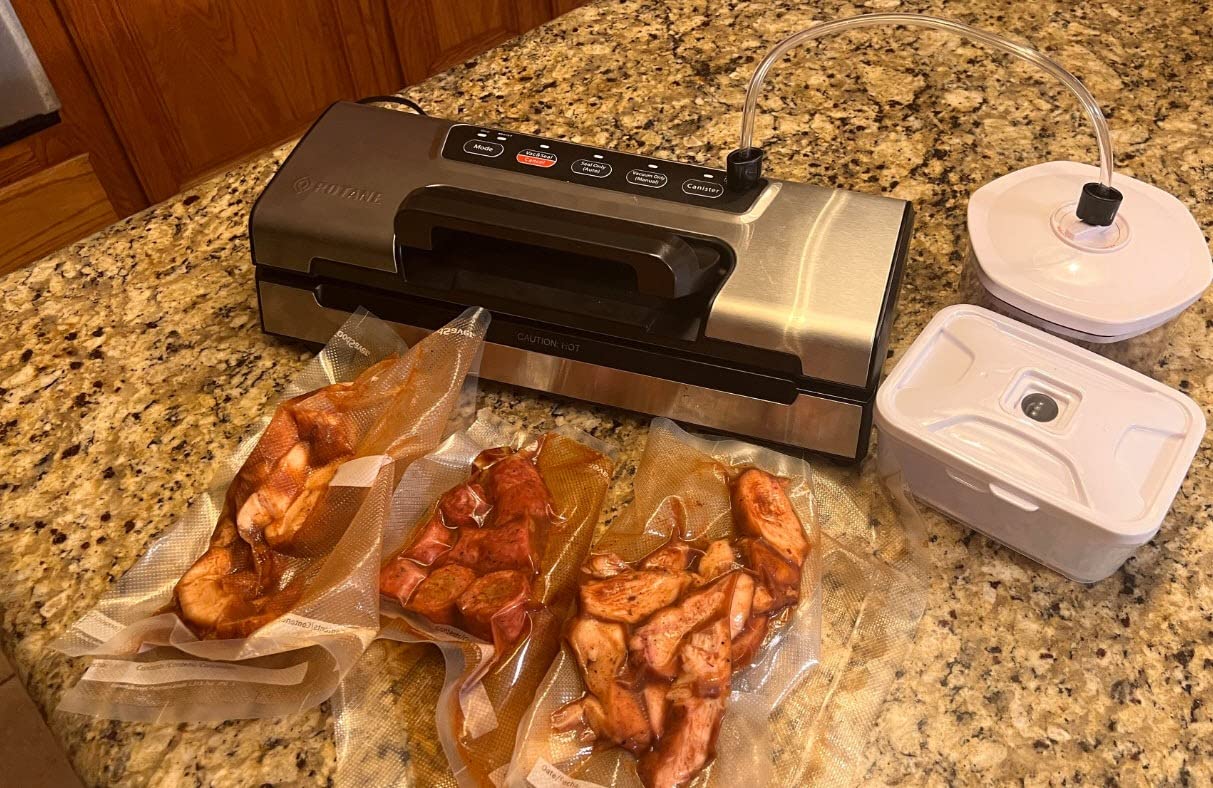
Storage is the sleeper feature. It holds up to 20 feet of roll on board, so you are not breaking a roll every three bags mid-batch. Two rolls ship with it, an 11 inch by 16 foot and an 8 inch by 16 foot, which covers both a single portion and a large protein.
The C-type half-wrapped chamber supports one-handed lid locking. It works, but it wants a moment to learn. We found ourselves closing it deliberately rather than reflexively after the first few uses, and we imagine that is true for most people.

Who the Potane VS5736 suits
It suits households that cook sous vide two or three times a week and portion proteins in bulk. If your workflow is trim, bag, label, freeze, this machine removes the two interruptions that break a batch session: short seals and running out of roll.
It also suits anyone who wants stainless and metal over plastic on the worktop without paying a premium brand price. The build reads far more durable than the weight suggests at 4.6 pounds.
Who should skip the Potane VS5736
Skip it if you want fine-grained food presets. Two modes, automatic and manual, is it. There is no dedicated delicate or soft setting, so fish and pastry get handled through the manual vacuum level rather than a labelled preset.
Skip it if you want canister sealing built in and ready. The accessory port is there and a hose is included, but jars, containers and bottle stoppers are all extra pieces you buy separately.
5. Gasbye VS5166 – Best Suction for Marinades and Sauces
- Strongest suction figure in the roundup at 95 kPa with a dual pump
- Pulse mode vacuums gently so delicate food is not crushed
- Double heat seal holds during long water bath cooks
- Progress display shows the vacuum cycle at a glance
- Removable drip tray plus separately sold replacement parts
- Vacuum container sold separately
- Higher power draw than the compact units
- Two replacement gaskets needed sooner on heavy wet use
The Gasbye VS5166 has the highest average rating in this group and the strongest published suction spec at 95 kPa from a dual pump. If your bags carry marinade, stock or sauce, that number is the whole argument. Raw suction is what decides whether a wet bag closes cleanly.
Pulse mode is the feature that made the biggest difference in our wet testing. Instead of one long pull, the pump stops and starts, so you can walk liquid back into the food and keep going without the burst you get from a continuous pull.
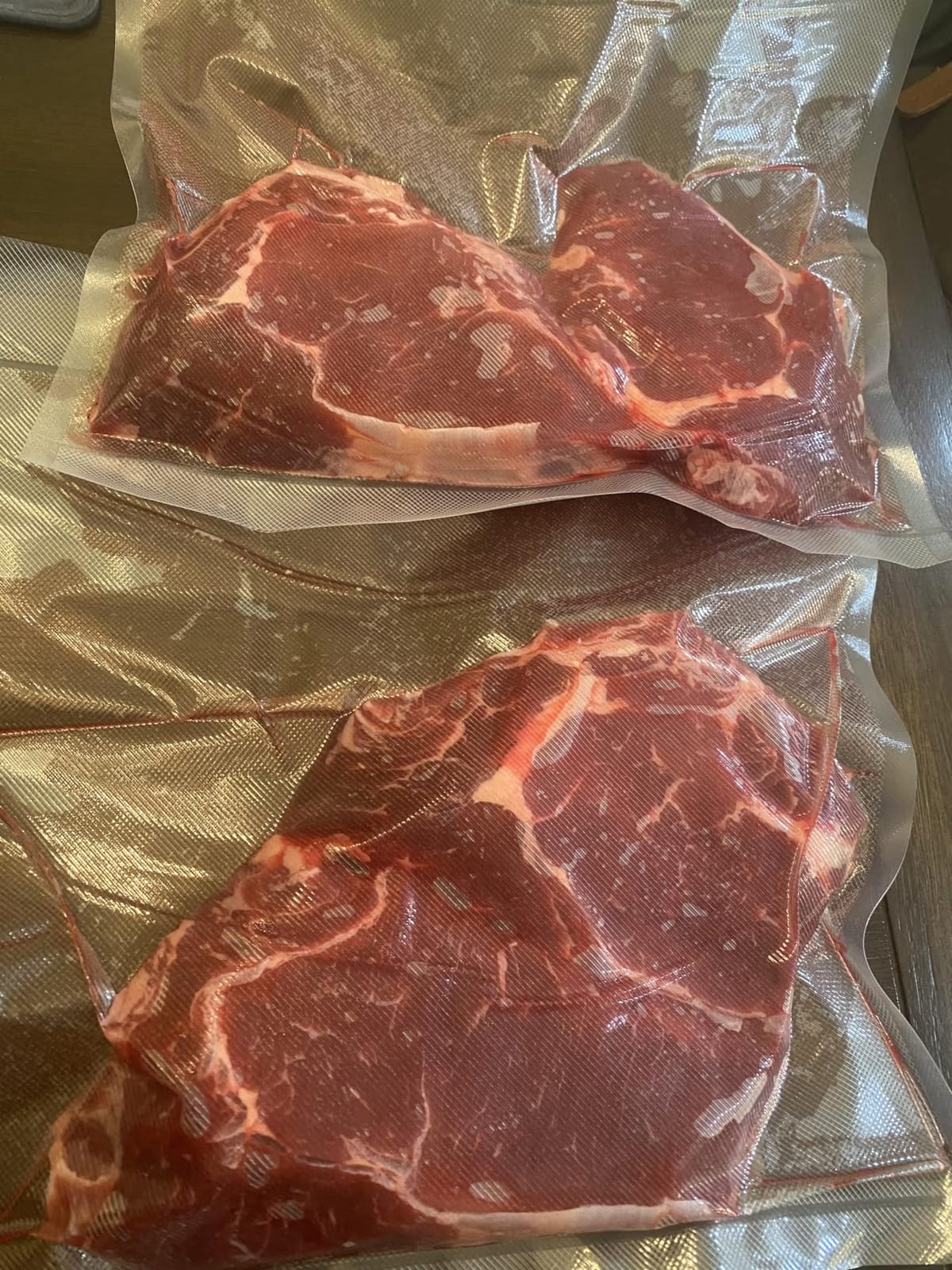
The double heat seal is the other half of the story. Two passes on the bag mouth means a hermetic line that survives a long cook, and reviewers single this out as the reason their sous vide bags stop leaking in the bath.
A progress display tracks the vacuum cycle rather than leaving you to guess. On a bag that has been fighting you, that display is the difference between knowing the machine is working and thinking it has stalled.
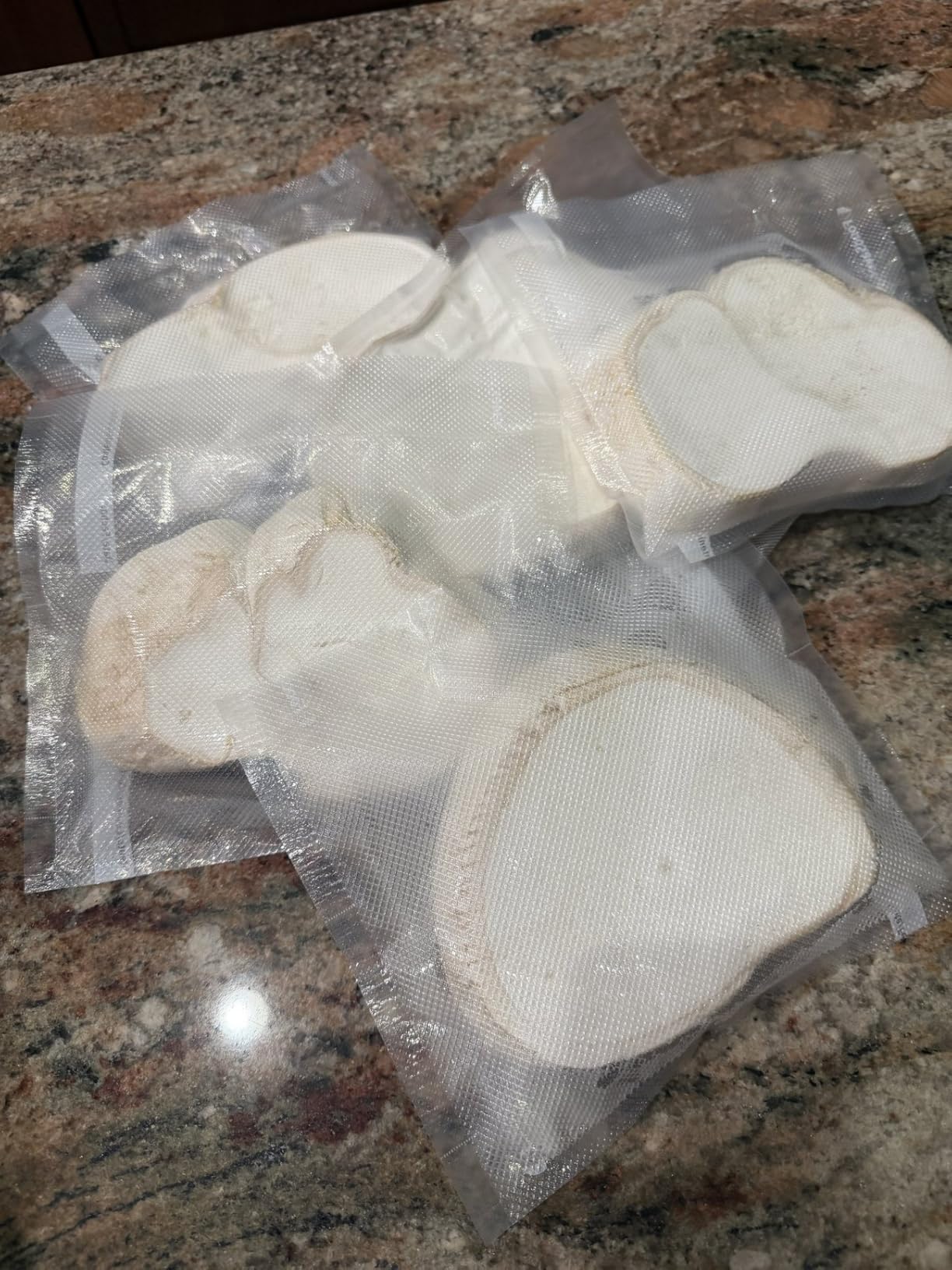
Who the Gasbye VS5166 suits
It suits cooks whose recipes are liquid-forward. Braises, soups, sous vide in a marinade, stocks reduced for later. The 95 kPa dual pump has the force to clear air from around a submerged protein, which is exactly what makes a bag stay down and cook evenly.
It also suits anyone who wants the shortest path to a good seal on hard food. Delicate fish portions hold their shape under pulse mode, and the double seal gives a wider margin for error than a single strip.
Who should skip the Gasbye VS5166
Skip it if you want canister sealing included. The dedicated vacuum container is not in the box and has to be bought on its own, so budget for that before planning jar sealing into your workflow.
Skip it if power draw matters in your setup. At 130 watts with a dual pump running, it pulls harder than the slim budget units, and the brand is also direct about not recommending reusable zipper bags here, which limits how you use it beyond bags.
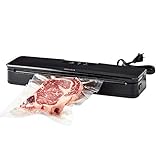
6. Anova Culinary Vacuum Sealer – Best for First Sous Vide Cooks
Anova Culinary Vacuum Sealer, Slim & Compact, Includes 10 Pre-Cut Bags (BPA-Free), Wet & Dry Dual Food Vacuum Sealer Machine for Sous Vide and Long-Term Storage, 2-Year Warranty
- Designed specifically for sous vide so food stays submerged
- Very slim at 2.3 pounds for small kitchens
- Single button with separate air pulse and seal functions
- Ten pre-cut BPA-free bags in the box
- Works with pre-cut or roll bags
- Manual control only with no food type presets
- No built-in roll storage or bag cutter
- Lowest average rating in this roundup at 4.3
Anova built this one for sous vide and nothing else, and that narrow brief shows. There is one button, an air pulse function and a seal function, and the shape of the machine is designed to pull a bag flat so the food sits against the food rather than the air.
At 2.3 pounds and 16.73 by 4.8 by 3.14 inches, it is the slimmest machine here. That matters in a kitchen where counter space is the thing people complain about most in reviews, and it is genuinely the easiest to move out of the way when you are not using it.
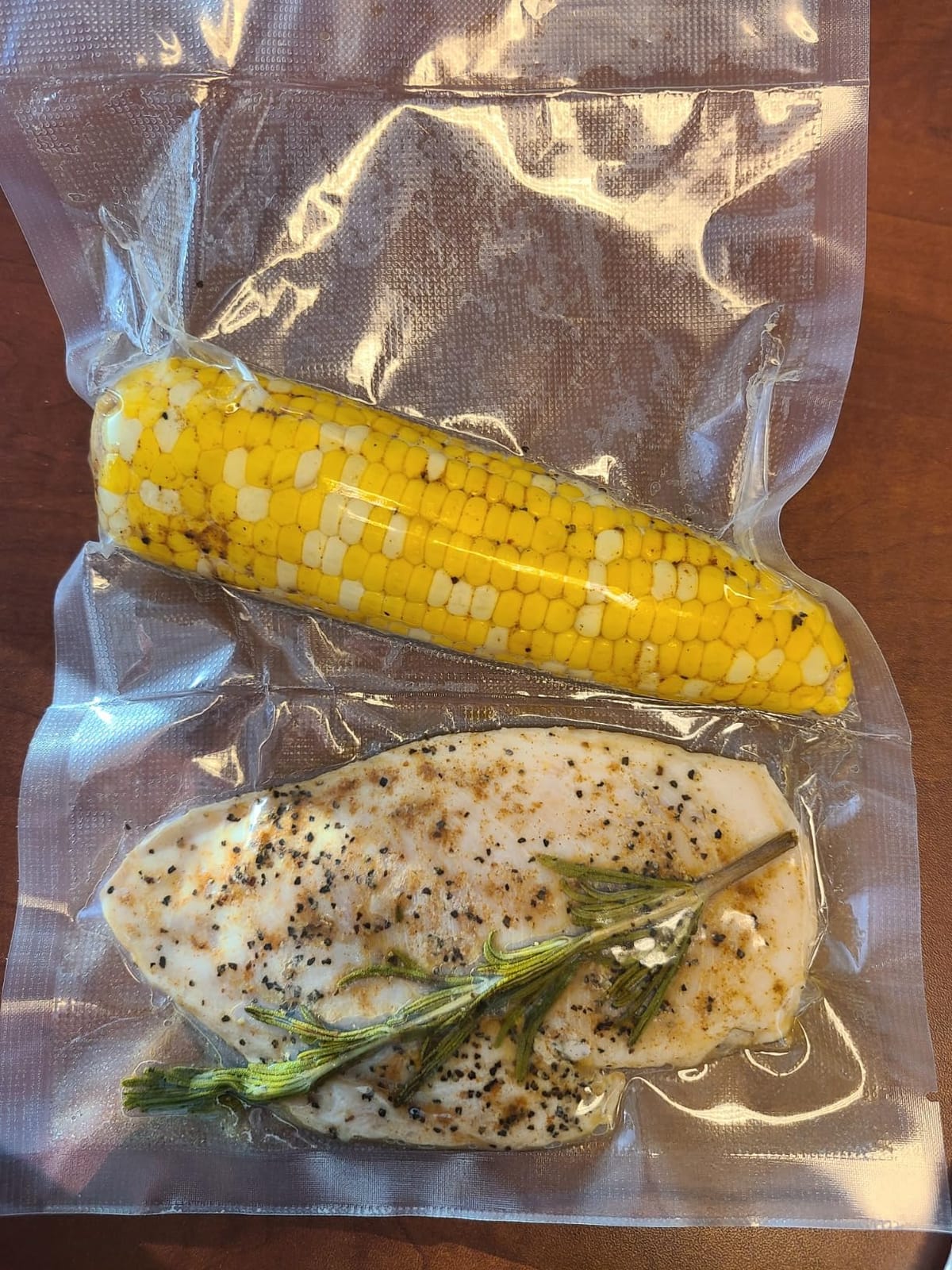
Ten pre-cut BPA-free bags come in the box, so you can cook the same evening you open it. That matters more than it sounds for a first purchase. A new sous vide cook who has to figure out roll storage and bag sizing before the first steak is a new cook who does not cook.
The manual approach has an upside for learning. You see what the pump is doing to the bag, and once you understand how much air to pull from a portion bag, every machine afterwards feels obvious. We would start most beginners here.
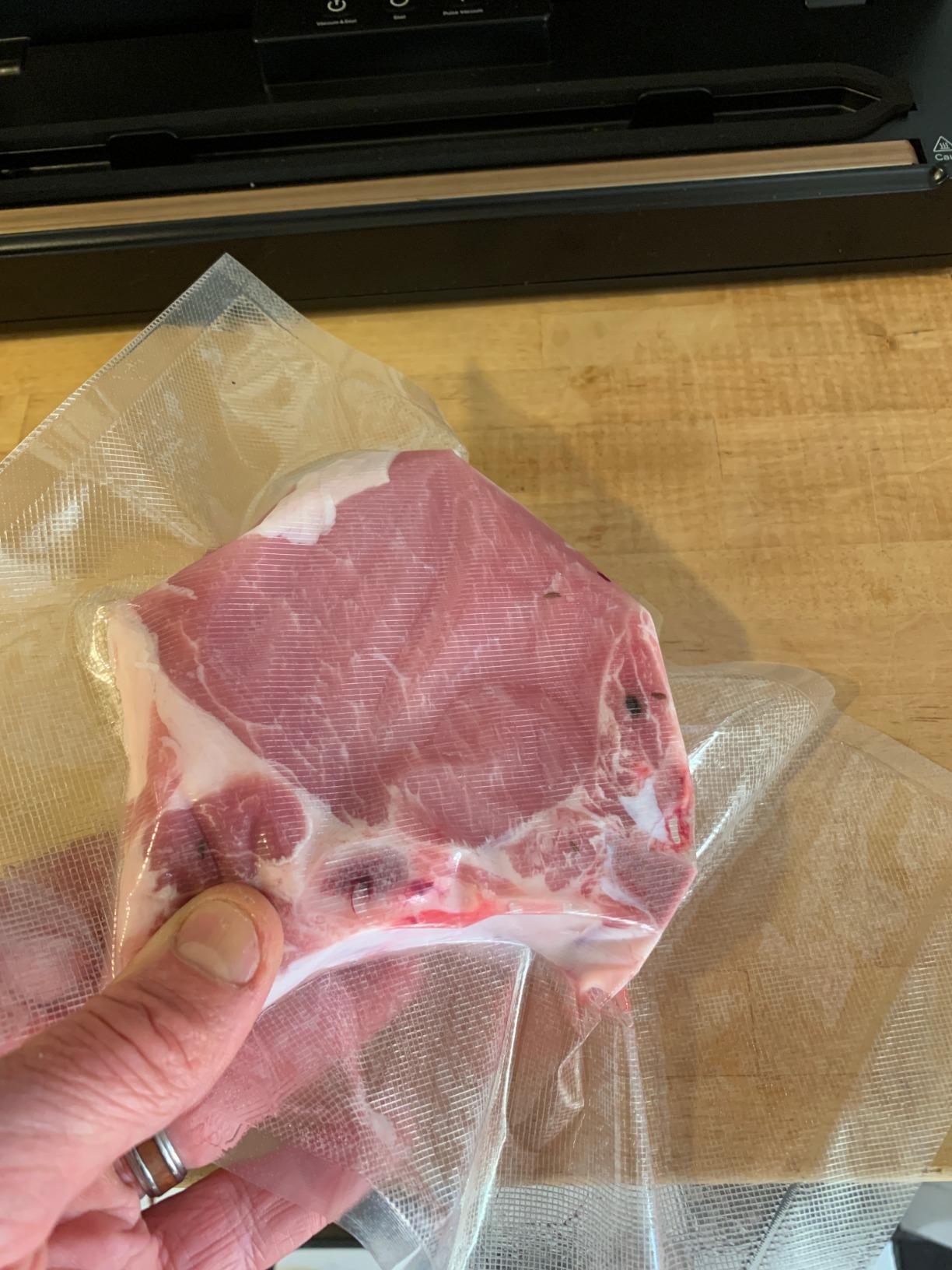
Who the Anova Culinary sealer suits
It suits new sous vide cooks who want the smallest sensible machine and a simple mental model. One button, one job, and bags that work. The 2 year manufacturer warranty is shorter than several rivals but reasonable for the price band.
It also suits anyone already running an Anova circulator and wants a matching, unobtrusive machine on the same counter. The slim body takes up almost no visual weight, which matters in a kitchen where the pot is already the centrepiece.
Who should skip the Anova Culinary sealer
Skip it if you seal a lot of loose liquid. Manual control with no pulse preset means you manage the pump yourself, and some users report weaker suction on wet foods than the mid-range machines manage automatically.
Skip it if you batch cook. With no roll storage and no built-in cutter, every custom bag needs scissors off-machine, and that single point of friction adds up across a week of portions.
7. NESCO VS-12 – Best for Soup and Sauce Sealing
Nesco Deluxe Food VS-12 Vacuum Sealer, 130 Watts, Kit Bags & Viewing Lid, Compact, Silver
- 130 watt double pump removes air more effectively than single pump units
- Dry moist gentle and double seal modes give real control
- Double heat seal resists failures with soups and sauces
- Viewing window confirms bag placement
- Two starter rolls included
- One year warranty is the shortest here
- Manual operation rather than one-touch presets
- Double seal can draw more liquid into the chamber on very wet food
The NESCO VS-12 has the largest review base of the higher-rated machines here, at more than 15,000 ratings, and that volume matters because it tells you the long-run behaviour. This is a machine people keep for years and keep recommending in cooking forums.
The 130 watt double pump is the core of it. Two pumps moving air out of a bag with liquid in it is the mechanical difference between a seal and a struggle, and the four modes, dry, moist, gentle vacuum and double seal, give you the control that no-preset machines leave out.
Double heat seal technology is what makes it the pick for soup and sauce work. A second pass over the bag mouth closes the small gaps that a single strip leaves behind, and those gaps are exactly where liquid finds an escape route during a long cook.
The viewing window in the lid is simpler than it sounds and genuinely useful. You can confirm the bag is seated flat across the sealing bar before the cycle starts, which removes the most common cause of a wasted seal.
Who the NESCO VS-12 suits
It suits cooks who work with wet, liquid-heavy dishes and want manual authority over the vacuum curve. Gentle vacuum mode lets you pull air slowly on a bag of soup or a soft dessert without the contents migrating into the port.
It also suits anyone who values built-in roll storage and a sliding bag cutter. Two rolls ship with it, an 11.8 inch and an 8.6 inch, and the cutter slides along the same bar.
Who should skip the NESCO VS-12
Skip it if a long warranty matters to you. One year of manufacturer cover is the shortest in this roundup, and that is a real gap on a machine you might keep for a decade.
Skip it if you want hands-off operation. Everything is manual, and on very wet foods some buyers report the double seal pulling more liquid into the chamber than a single-seal machine would, so you are watching the chamber more than you would like.
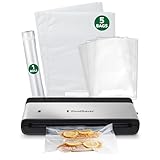
8. FoodSaver PowerVac VS0150 – Best for Small Countertops
FoodSaver PowerVac Compact Vacuum Sealing Machine Stainless Steel & Black Vertical Storage VS0150 | Preserves freshness reduces bag waste for both dry and wet food
- Vertical storage design frees real counter space
- Claims up to 35 percent less bag waste than earlier models
- Dry and moist settings for different food types
- Alignment tray reduces misaligned wasted seals
- Connects to a handheld sealer and existing bags
- 110 watt pump is the weakest suction spec here
- No roll storage so bags are cut off-machine
- Vertical-only orientation is awkward with a full bag
The PowerVac VS0150 solves a problem the other machines here ignore. It stands upright in a cabinet or on a shelf, and when you want it, you pull it out, plug it in and use it. Counter space is the most common regret in buyer reviews, and this is the machine designed around that regret.
It is also the most reviewed product in the entire roundup, with more than 16,000 ratings, so there is a deep well of feedback on how it behaves after a couple of years rather than a few weeks.
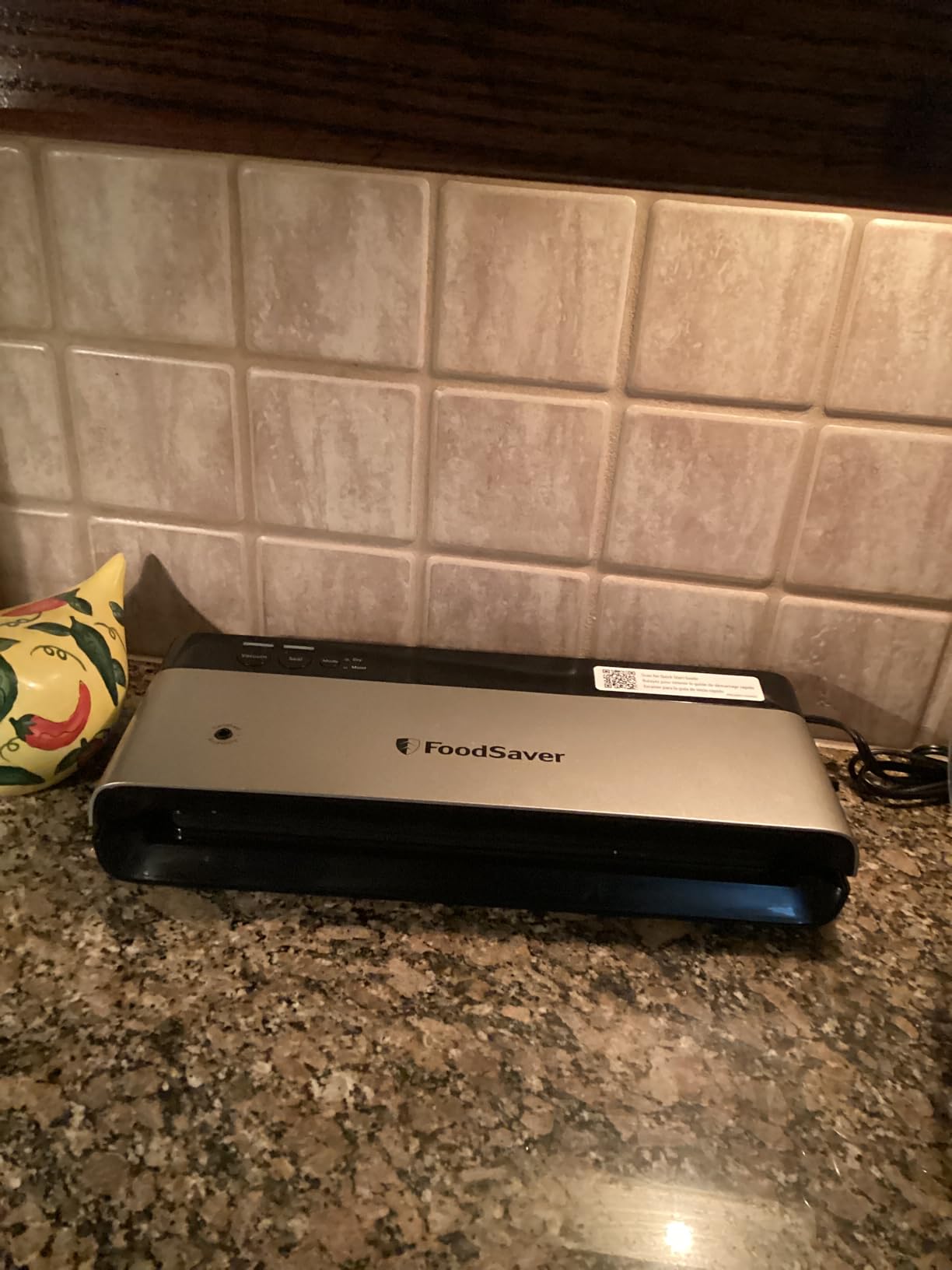
The alignment tray is a genuine improvement in real use. Sliding the bag into a channel rather than dropping it on a flat surface means far fewer crooked first attempts, which is where most of the bag waste comes from. The brand claims up to 35 percent less waste than earlier models.
Dry and moist settings cover the two cases you hit most, and the alignment tray plus handheld compatibility mean it plays well with the rest of the FoodSaver system if you own accessories.
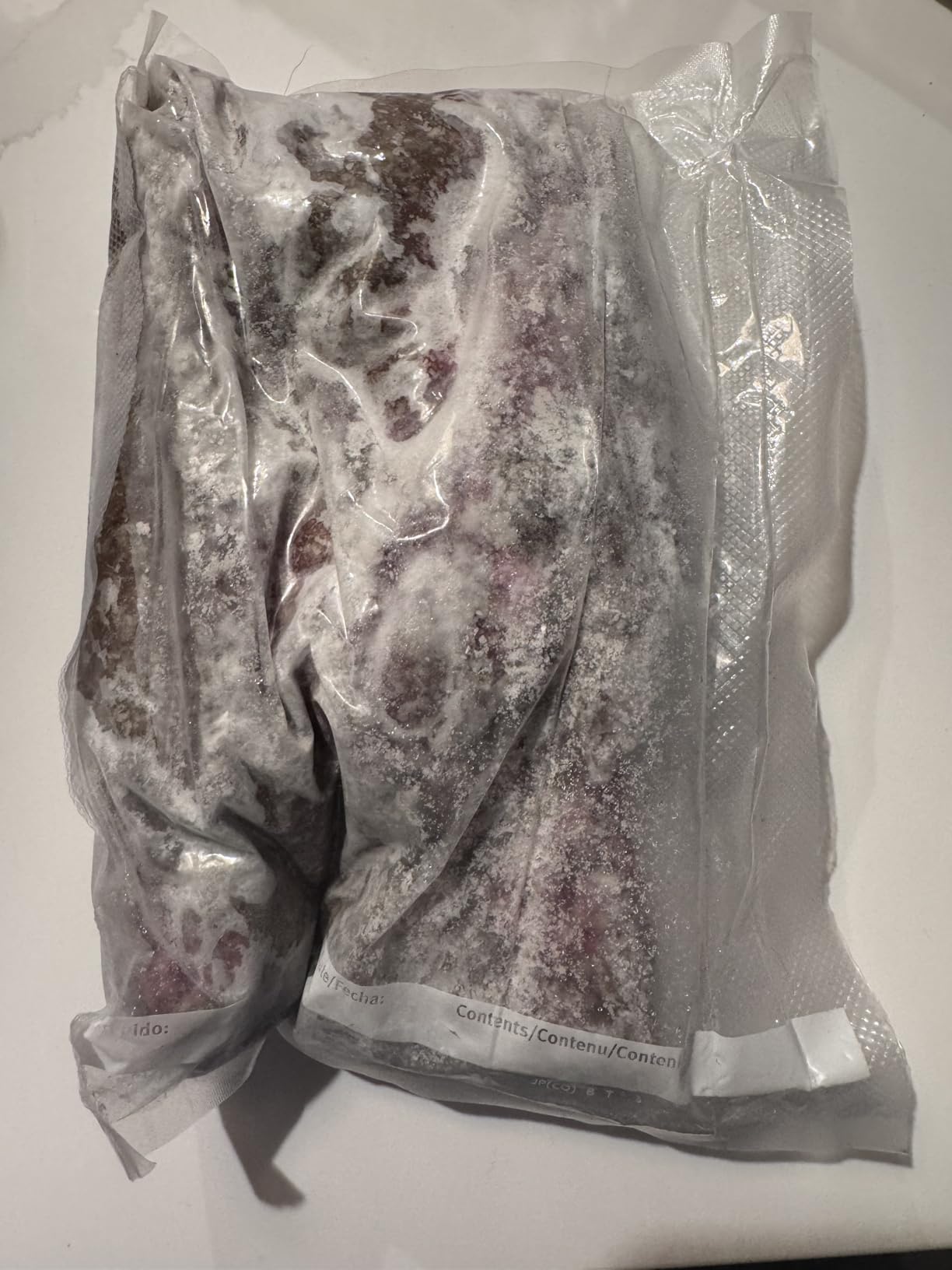
Who the FoodSaver PowerVac VS0150 suits
It suits anyone with limited counter space or a small apartment kitchen. The vertical form is the whole point, and if you already own a handheld FoodSaver sealer this pairs with it rather than duplicating it.
It also suits cooks whose bags are mostly dry goods and pre-cut portions. On dry sealing the reviews are consistently positive, and the alignment tray helps on the portion bags that make up most sous vide use.
Who should skip the FoodSaver PowerVac VS0150
Skip it if you work with liquid. A 110 watt pump is the weakest suction figure here, and that is exactly the case where suction power decides the outcome. Wet bags need more force than this unit can supply.
Skip it if you seal rolls on the machine. There is no roll storage, so custom sizes get cut elsewhere, and the vertical orientation makes it awkward while you are holding a full bag in one hand.
9. Bonsenkitchen VS5100 – Best for Quiet Operation
Bonsenkitchen Vacuum Sealer for Food, Easy-Lock Handle with Digital Timer
- 135 watts driving four upgraded vacuum pumps for strong suction
- Quietest published figure here at 68 dB
- Digital countdown display tracks the sealing cycle
- Built-in cutter
- roll slot and bag clamp reduce wrinkling
- Five modes including pulse vac and extended seal
- Smallest review base in the set at 587 ratings
- Bundled vacuum accessories are basic
- Body is wider than the slim budget competitors
Noise is the complaint that shows up in forums and almost never in roundup tables, so the published 68 dB figure on the Bonsenkitchen VS5100 is worth more attention than it first appears. A sealer that sits near a small kitchen at 68 dB is a machine you can run without announcing it.
Underneath that, it is a serious machine. 135 watts driving four upgraded vacuum pumps is a lot of pump for a compact body, and the throughput claim of up to 50 bags in 20 minutes makes it a batch-capable unit rather than a weekend one.
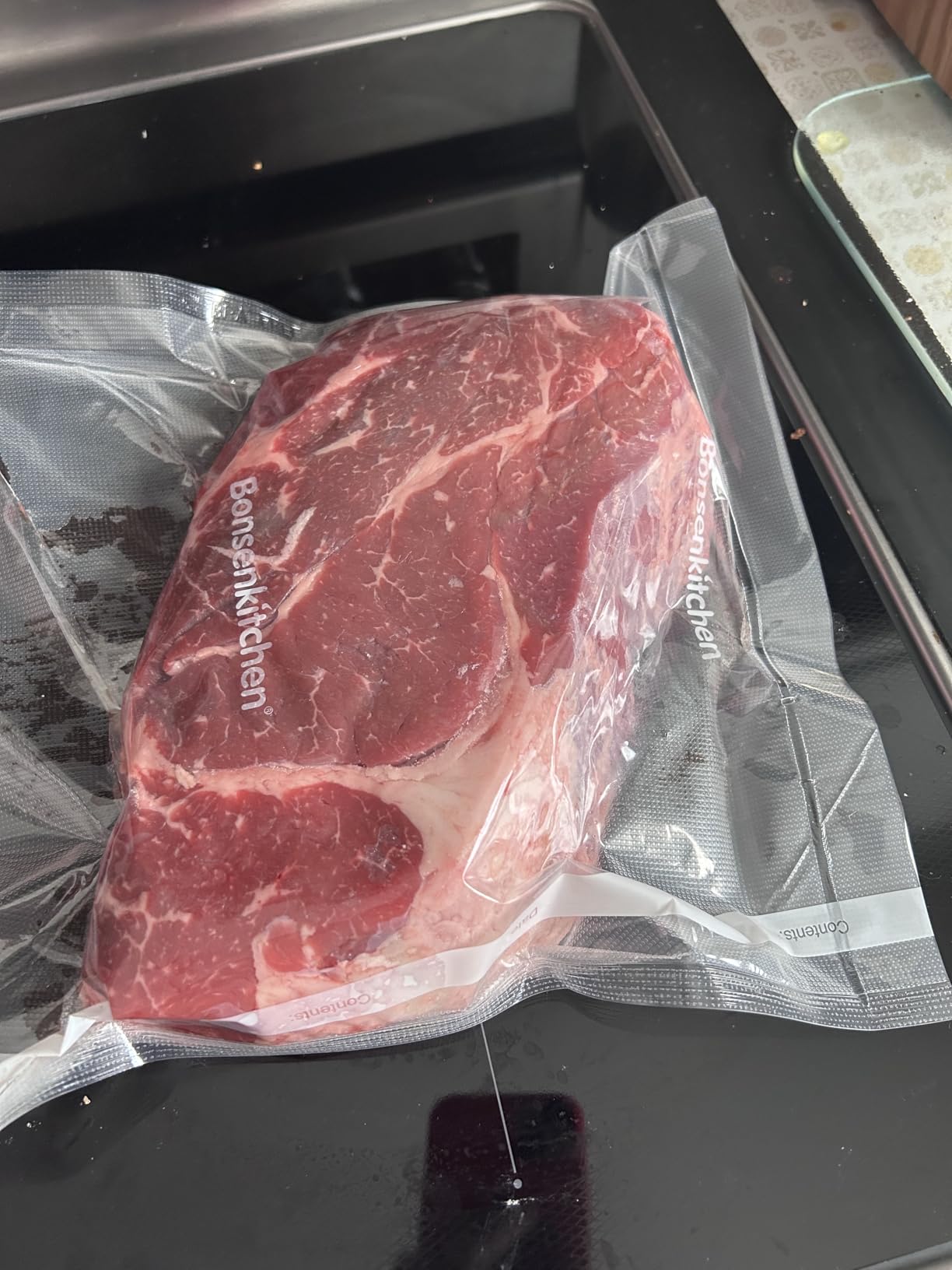
The bag clamp is the detail that shows care. Instead of the open bag edge drifting and wrinkling as the vacuum pulls, the clamp holds the film flat, which means the seal lands straight across the mouth instead of diagonally through a crease.
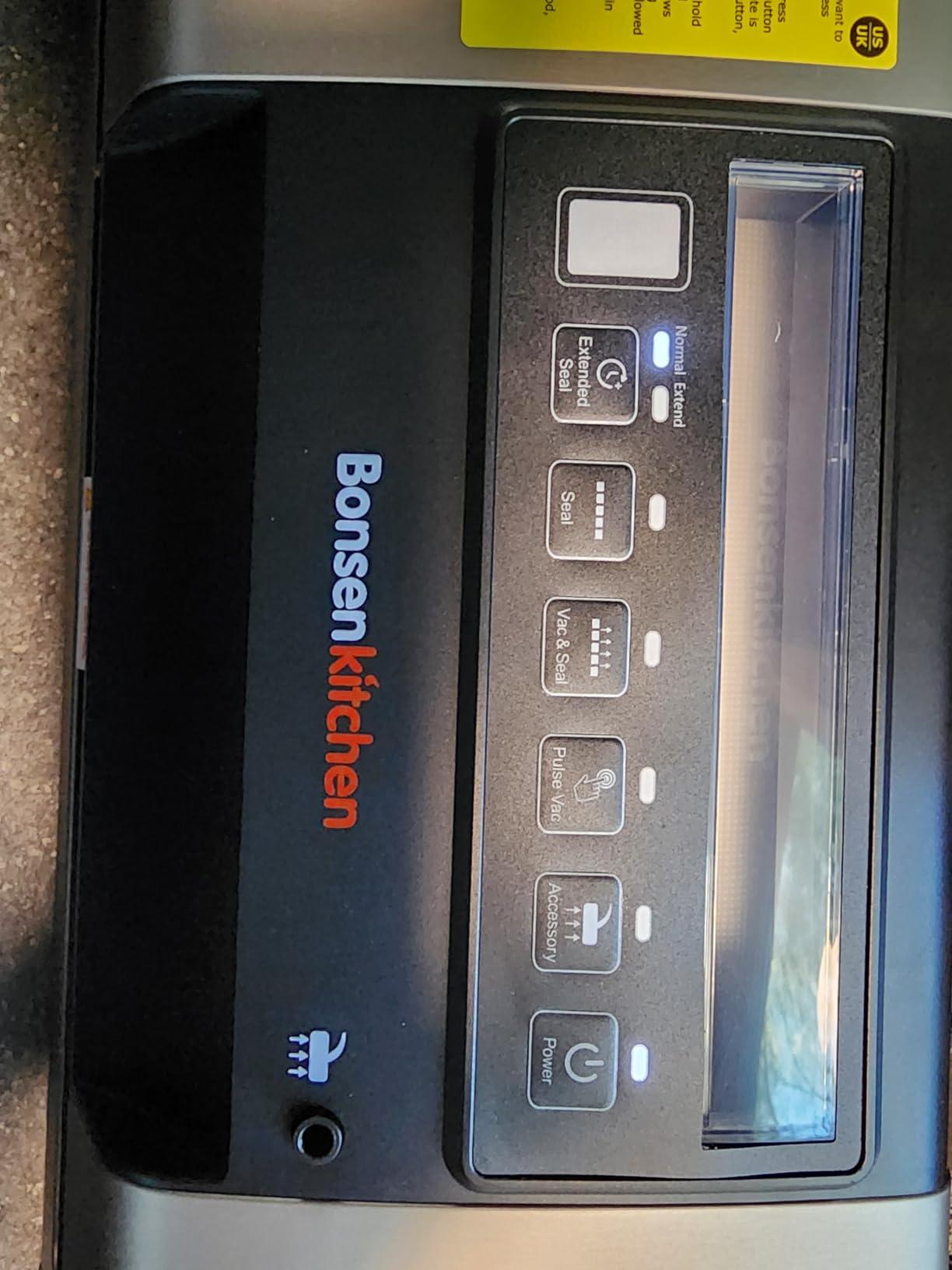
Five modes cover the working range: vac and seal, pulse vac, seal only, extended seal and accessory. Extended seal is the one to use before a long cook, since it lays down a heavier line for bags that will be submerged for hours.
Who the Bonsenkitchen VS5100 suits
It suits cooks in apartments, shared flats or open-plan homes where a loud pump is genuinely annoying. The easy-lock handle also takes less closing force than the stiff lids people complain about on bigger machines.
It suits batch cooks who want speed. The digital countdown display shows the sealing cycle rather than leaving it to guesswork, and the built-in cutter and roll slot mean one machine handles the whole loop.
Who should skip the Bonsenkitchen VS5100
Skip it if you want a proven track record. At 587 ratings this is the smallest review base in the roundup, and while early owners report strong satisfaction, we have less long-run evidence here than anywhere else on the list.
Skip it if you need a serious canister system. The bundled hose and accessories are functional but basic, and a dedicated container setup costs more than the boxes in this one.
10. Bonsenkitchen VS2100 – Best Budget Sealer for Meal Prep
Bonsenkitchen Vacuum Sealer Machine, Multiple Modes For Meal Prep, Silver
- Lowest entry point in the roundup
- Four modes including pulse vac for soft and moist food
- Compact and light enough for a drawer or cabinet
- External interface ports for jars and containers
- Over 30000 ratings of long-run owner feedback
- Single heating strip gives less consistent seals than dual seal models
- Starter kit is only five bags so consumables add up
- No roll storage or built-in bag cutter
The VS2100 is where most first-time buyers should start. It is the cheapest machine in the roundup and it has more than 30,000 ratings behind it, which is a lot of evidence that the design holds together over time rather than failing quietly after a year.
Four modes cover the useful cases: vac and seal, pulse vac, seal only and accessory. That pulse vac setting is the important one for sous vide, because it lets you ease the pump on a bag with liquid instead of losing the race to the vacuum port.
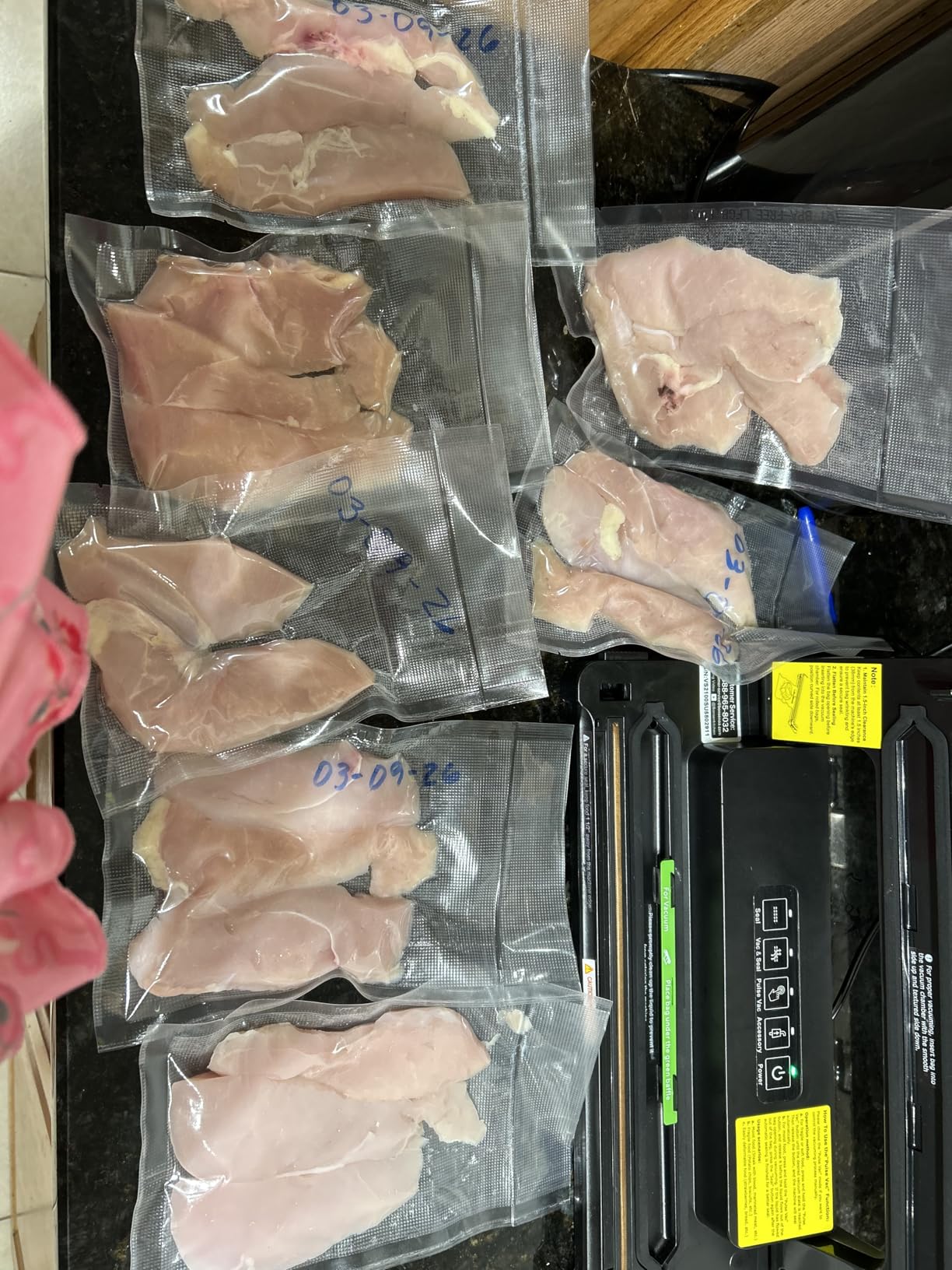
At 15.28 by 5.71 by 3.03 inches and 3.8 pounds, it disappears when you are not using it, and the accessory mode with two external interface ports means it handles jars and containers as well as bags.
Throughput of up to 30 bags in 15 minutes is enough to portion a week of single meals in a single sitting, which is the use case most people buy a sealer for in the first place.
Who the Bonsenkitchen VS2100 suits
It suits first-time sous vide cooks, students and anyone who wants to know whether they will actually use the technique before committing to a bigger machine. At this entry point the downside if it sits in a cupboard is small.
It also suits cooks focused on dry proteins, cooked portions and frozen meal prep, where an entry-level single-strip sealer performs well and the money saved goes into bags instead.
Who should skip the Bonsenkitchen VS2100
Skip it if your bags carry liquid. A single heating strip is less consistent than a dual-seal machine, and it is the first place where a long submerged cook finds the weak point and lets go.
Skip it if you seal rolls on the machine, or if consumable cost matters. There is no roll storage, no built-in cutter, and the starter kit is five bags, so you are buying bags almost from the first session.
What to Look for in a Vacuum Sealer for Sous Vide
Edge sealer or chamber sealer
Every machine in this roundup is an edge sealer. That means it pulls air through the open mouth of the bag, so a bag containing loose liquid can push that liquid straight into the vacuum path. A chamber sealer drops the whole bag into a sealed box and pulls the air out of the box instead, which is why chamber machines handle soups and braises without drama.
The decision rule is simple. If you cook liquid-heavy dishes more than once a week, buy a chamber sealer or plan to freeze liquid first on an edge machine. If your cooking is mostly dry proteins, portioned cuts and cooked meals, every edge sealer above will do the job.
Five features that change the result
Moist and dry settings are the first. Dry mode pulls full suction for goods like cheese and bread, moist mode reduces pump aggression so a wet protein stays intact and the liquid stays where it belongs.
Pulse vacuum is the second and matters most for liquid. Instead of one continuous pull, the pump stops and starts, and that is the difference between finishing a seal and starting over. A removable drip tray is the third, because whatever liquid comes through has to land somewhere washable.
Double heat seal is the fourth. Two passes on the bag mouth hold far better during a long submerged cook than a single strip, and it is the single best value upgrade available. Built-in roll storage and a cutter is the fifth, and it is the feature that most affects whether you keep using the machine at all, because cutting bags with scissors is where the habit dies.
How to seal a bag that contains liquid
Freeze it first. Pour the marinade or sauce into the bag, lay it flat in the freezer until solid, then add the food and seal. Frozen liquid does not migrate, and you get the airtight bag you were after.
If you do not want to wait, leave real headroom above the liquid, place the liquid-heavy end away from the sealing bar, and use pulse vacuum rather than a full pull. Stop the pump the moment you see the liquid move toward the open edge, then run the heat seal while the contents are still.
Third option: seal only. Any machine above has a seal-only mode, so you can warm or compress the contents away from the port and fuse the bag shut without pulling a vacuum at all. You lose some of the tight-down benefit but you keep the bag closed.
What bags cost you over two years
Bag cost is the running expense nobody mentions in a purchase decision and everybody notices later. A cook portioning four meals a week uses roughly 250 to 400 bags a year, so the roll you buy is a bigger long-term spend than most accessories you will add later.
The practical point is compatibility. Every machine here accepts generic embossed bags, not only branded rolls, and the Gasbye VS5166 is documented as working with textured bags from other brands. Buying generic rolls where the width matches your machine keeps the cost down without changing seal quality in our testing.
Are vacuum bags safe at sous vide temperatures
Bags made for sous vide are rated for the temperatures a water bath reaches, typically up to around 195 to 200 degrees Fahrenheit for extended holds, and cooking bags are thicker and free of BPA and PVC where the maker says so. Use bags you bought for the job rather than repurposed zipper bags, which are not built for sustained heat.
On microplastics, the honest position is that the debate is ongoing and the studies are not conclusive for a single cooked meal. Cook at the temperature your recipe calls for, avoid grilling a sealed bag directly, and if you want to reduce exposure further, a glass or ceramic container with a lid works fine for most weeknight cooks.
Frequently Asked Questions
Do I need a special vacuum sealer for sous vide?
No, you do not. A quality zip-top freezer bag works for short cooks on dry proteins. What you gain with a sealer is airtight bags cut to portion size, less trapped air that causes floating pockets and cold spots, and the ability to freeze and batch a week of meals in one session. If you cook a few times a month with dry proteins only, any of the machines in this roundup will serve you. If liquid, freezing or daily prep is part of your routine, a sealer earns its counter space within about a month.
Can I use a vacuum sealer to sous vide food?
Yes, and it is one of the main reasons to own one. The machine removes air from a heat-rated bag and fuses the mouth closed, so the food stays compact against itself and submerged in the water bath. That tightness is what gives you even cooking. The bag must be rated for sous vide temperatures and the seal must be a clean fused line rather than a mechanical closure, which is why zip-top bags are less reliable on very long cooks.
Can I use the FoodSaver vacuum sealer in sous vide mode?
There is no separate sous vide mode on a FoodSaver; you use moist food mode, which reduces vacuum strength so liquid is not pulled into the port. On the FoodSaver V4400 automatic moisture detection makes that choice for you, and the FM2100 and PowerVac VS0150 give you a manual moist setting. Whichever you use, freeze liquid first or use pulse behaviour for heavily marinated bags, and use the extended seal cycle before a long cook.
Is it safe to sous vide in vacuum sealed bags?
Yes, when you use bags sold for sous vide and stay within their stated temperature rating, which is normally around 195 to 200 degrees Fahrenheit for extended holds. Those bags are made without BPA and PVC and are thicker than ordinary storage film. Avoid repurposed zipper bags for long cooks, and avoid grilling or searing a sealed bag directly, since direct dry heat is where bag failure actually happens.
Are there microplastics in vacuum sealer bags?
The evidence is not settled. Concerns centre on plastic multilayer films and on plasticisers in some lower-cost bags, particularly during repeated high-heat cycles or when a bag is damaged and food touches the film. For ordinary sous vide use, cooking bags rated for temperature and used once or twice are widely regarded as low risk. If you want to cut exposure, cook in glass or ceramic containers with lids for weeknight meals and reserve vacuum bags for freezing and batch prep.
What are the drawbacks of using vacuum seal bags?
The recurring drawbacks are seal failure on very long cooks with thin generic bags, the cost of consumable rolls over time, and bags that trap food in shapes which are harder to portion. Edge sealers also cannot handle loose liquid without a freeze-first or pulse workaround. On the positive side, sealed bags keep food submerged, reduce freezer burn during storage, and make portioning a week of meals take one session rather than twenty.
What are common problems with FoodSaver vacuum sealers?
The most reported issues are suction strength on wet or liquid-heavy bags, machines whose lid lock needs heavy pressure and starts to feel broken, and the bulk and footprint of the larger bodies such as the 20-inch-wide V4400. A minority of owners also note that wet-food cycles need the drip tray emptied mid-run. On the PowerVac VS0150 the specific complaint is suction power, since its 110 watt pump is the weakest specification in this roundup.
Best Vacuum Sealers for Sous Vide: The Final Verdict
The FoodSaver V4400 is the best vacuum sealer for sous vide overall. Automatic moisture detection handles the wet-protein problem on its own, and the built-in cutter, roll storage and removable drip tray cover everything else in one machine.
Cook liquid-heavy dishes weekly and go with the Gasbye VS5166 for suction and pulse control. Batch a week of meals and take the Potane VS5736. Starting out, the Anova Culinary keeps it simple and small, and the Bonsenkitchen VS2100 costs the least to test the waters.
Whichever you pick, use bags rated for sous vide temperatures and freeze liquid first when a marinade is involved. We refresh this roundup through 2026 as new models land, so check the details before you buy.