
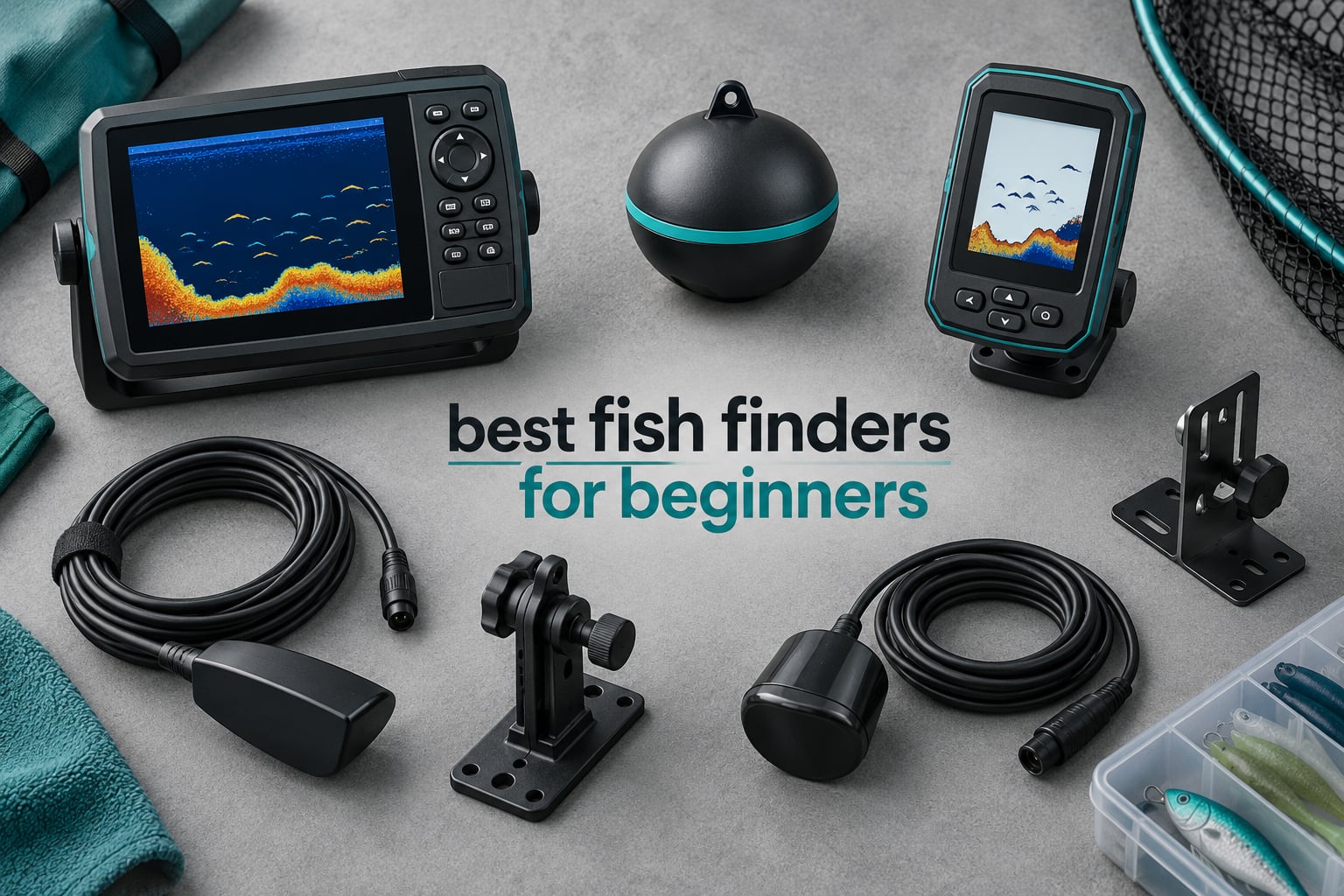
If you have never run electronics on a boat, the honest truth is that a fish finder shortens the learning curve more than almost any other single piece of gear. It replaces an entire season of guessing with a picture of depth, bottom hardness and cover right on your screen, and it lets you mark the spot that produced three bites so you can come back to it. Updated for October 2026, this roundup covers the ten units I would actually put in a beginner’s hands, from mounted consoles to castable pods.
That said, the market is full of jargon that has nothing to do with catching fish. CHIRP, ClearVu, SideVu, down imaging, forward-facing sonar, NMEA 2000. Before we get into the picks, one answer that saves beginners real money: always check whether the transducer is in the box. Some units ship with one, some do not, and it is the single most common surprise buyers run into. Every review below states plainly what is included.
We spent weeks working through the review data, spec sheets and owner feedback on all ten of these units, and we leaned on three things to rank them: how many owners have actually lived with the unit, how simple the first ten minutes are with it, and whether the transducer is included. Our aim with the best fish finders for beginners here is short, useful answers rather than a spec dump. If you are new to all of this, the Garmin Striker 4 is where most people should start.
Table of Contents
Top 3 Best Fish Finders For Beginners (October 2026)
Before the long list, these are the three units I keep recommending to people buying their first fish finder. Each one comes with a transducer in the box, which removes the most common hidden cost on the way in.

Garmin Striker 4
- 3.5 inch sunlight readable LCD
- CHIRP sonar with ClearVu
- Transducer and transom mount included
- 1600 ft freshwater depth rating

Garmin STRIKER Vivid 4cv
- 4 inch color screen with vivid palettes
- CHIRP plus ClearVu from one GT20 transducer
- Quickdraw Contours built in
- High sensitivity GPS

Humminbird PiranhaMAX 4
- 4.3 inch screen for the size class
- Dual beam sonar with wide and narrow modes
- XNT transom transducer included
- 600 ft depth rating
All 10 Fish Finders at a Glance in 2026
Here is the whole lineup in one place. Every unit below ships with its transducer or sensor in the box, so the number in the table is what you actually unbox rather than what you have to hunt for afterwards. We sorted them so the mounted console units come first, then the handheld and castable options for anglers without a boat.
| Product | Specifications | Action |
|---|---|---|
| Garmin Striker 4 |
|
Check Latest Price |
| Garmin STRIKER Vivid 4cv |
|
Check Latest Price |
| Humminbird PiranhaMAX 4 |
|
Check Latest Price |
 Lowrance HOOK Reveal 5 SplitShot Lowrance HOOK Reveal 5 SplitShot |
|
Check Latest Price |
 LUCKY Portable Fish Finder LUCKY Portable Fish Finder |
|
Check Latest Price |
 Deeper START Deeper START |
|
Check Latest Price |
 Venterior Portable Fish Finder Venterior Portable Fish Finder |
|
Check Latest Price |
 ReelSonar iBobber ReelSonar iBobber |
|
Check Latest Price |
 Deeper PRO+ 2 Sonar Deeper PRO+ 2 Sonar |
|
Check Latest Price |
 Humminbird HELIX 5 CHIRP GPS G3 Humminbird HELIX 5 CHIRP GPS G3 |
|
Check Latest Price |
The 10 Best Fish Finders for Beginners, Reviewed
1. Garmin Striker 4 — Best Overall for Beginners
Garmin 010-01550-00 Striker 4 with Transducer, 3.5″ GPS Fishfinder with Chirp
- Dedicated buttons work with cold wet hands
- Accurate depth and bottom contour readings
- Transducer and transom mount in the box
- Bright in direct sun
- Over 9000 owners have rated it
- No battery included
- Signal weakens at higher trolling speed
- Thin supplied power lead
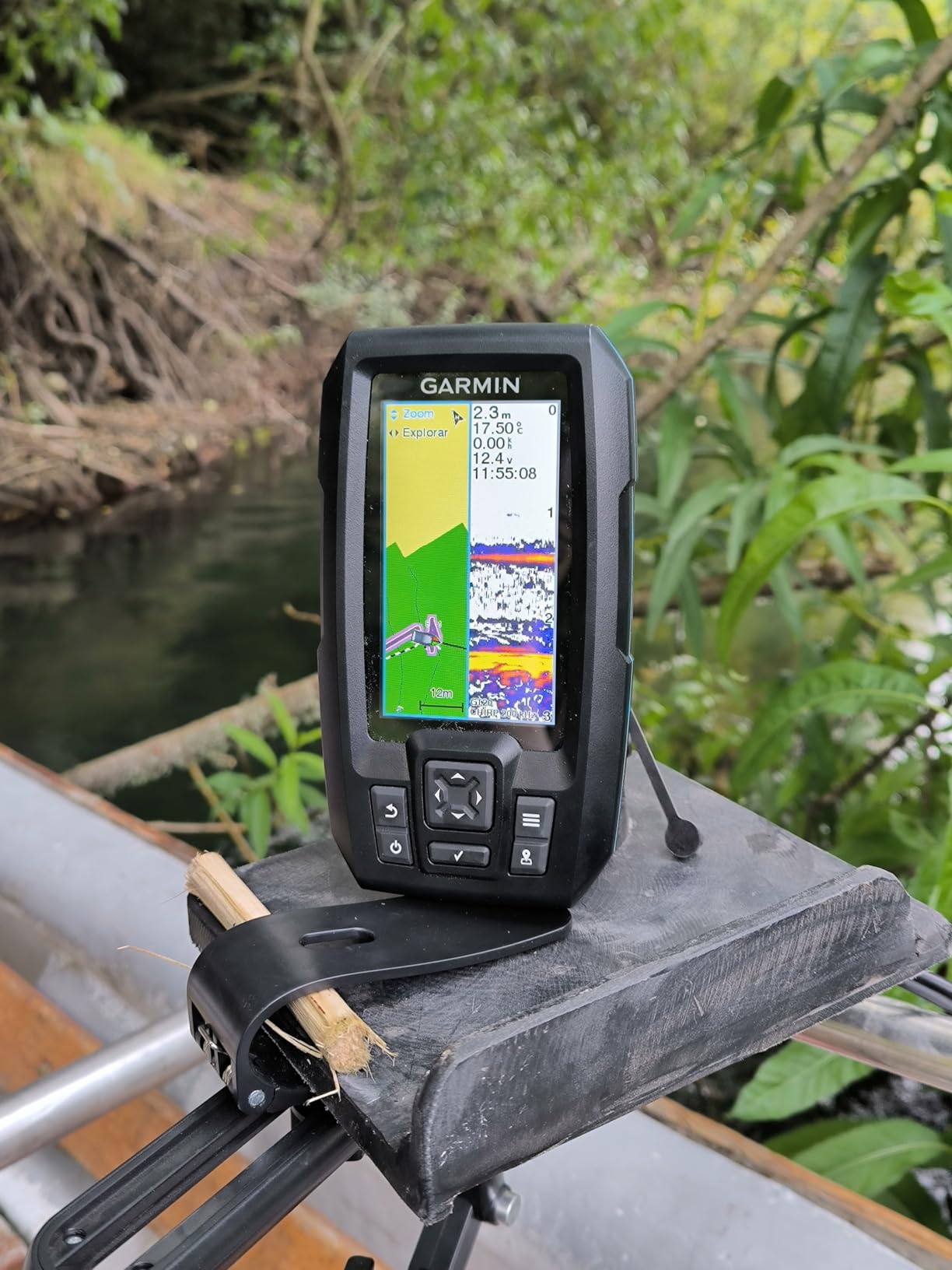
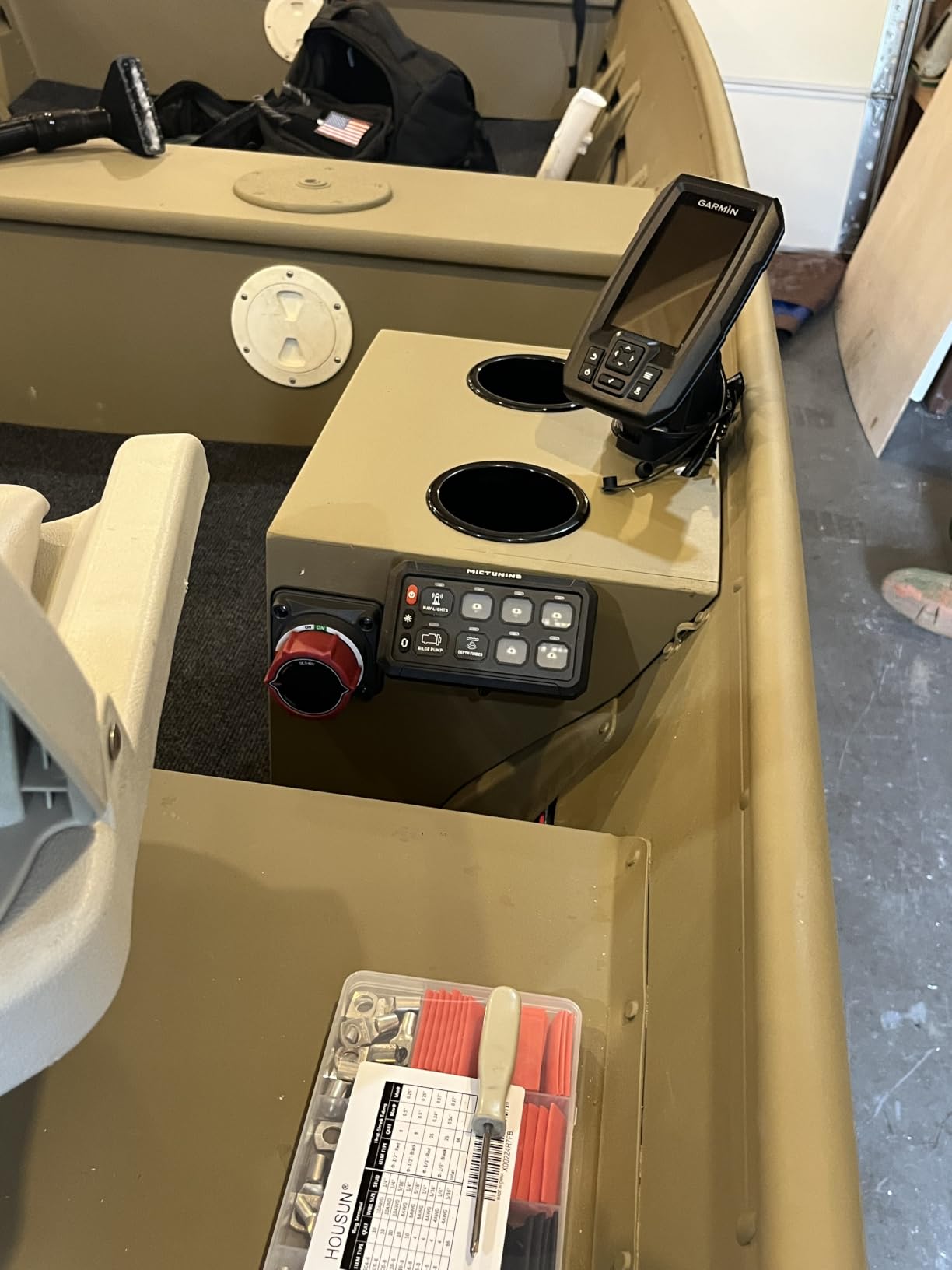
I put the Striker 4 first because it has the deepest well of owner feedback of any unit in this roundup, and nearly all of that feedback points the same direction. Anglers who had never owned a fish finder describe the first trip as uneventful in the best way: power it up, drop the transducer, watch depth and bottom appear, mark a waypoint. There is no mapping setup, no account, no app and no menu tree to learn.
The keypad matters more than it sounds. Every control has a dedicated button, so you can change zoom or sensitivity without fishing through a touchscreen menu with cold hands on a moving boat. The 3.5 inch screen is genuinely readable in full sun, which is not always true of small screens.
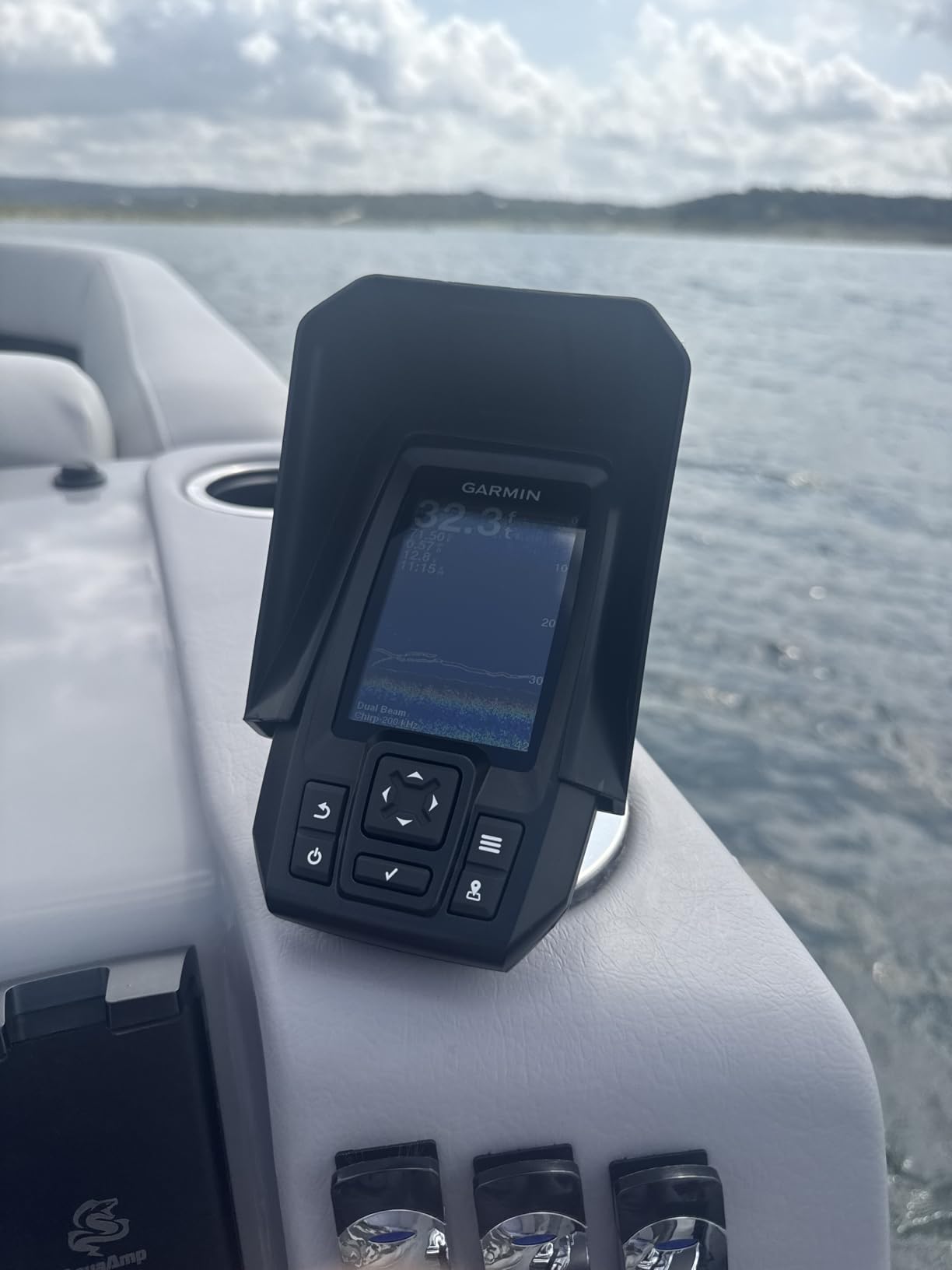
Two real limits are worth planning around. First, there is no battery in the box, so a kayak or small-boat angler needs a small sealed lead-acid or lithium pack separately. Second, the signal is best near idle trolling pace; owners report the picture degrading at higher speeds, which is a fair trade for a first season.
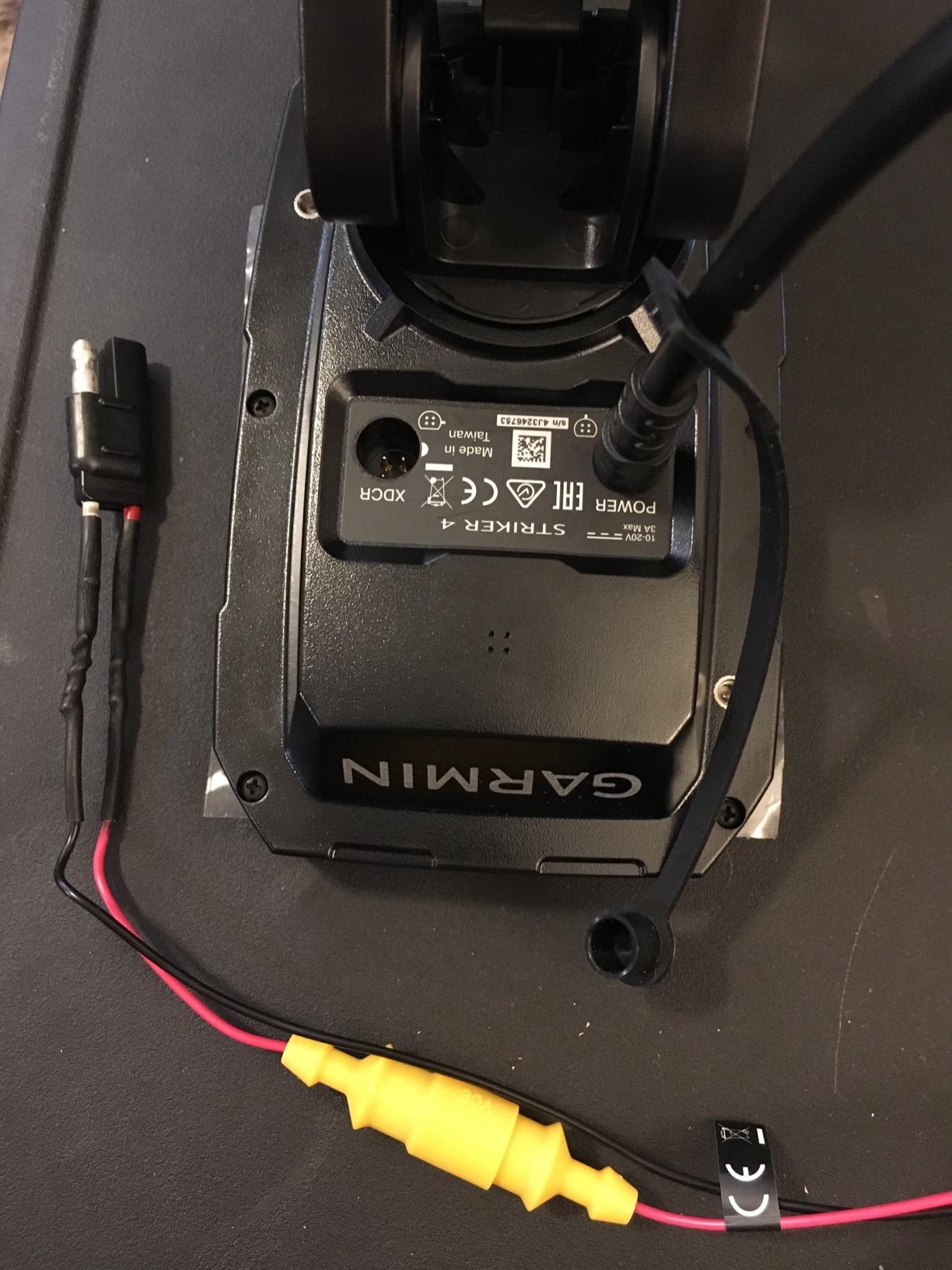
On the wiring side, several owners mention the supplied power lead is thin and needed reinforcing at the connection. A few buyers also hit defective power cables early on and had Garmin replace them through warranty. That is a solvable annoyance rather than a design problem, and the depth readings, temperature, battery voltage and speed readouts are consistently described as accurate.
Why the Striker 4 works for a first-time buyer?
It does one job well and hides everything else. CHIRP sends a continuous sweep of frequencies rather than a single tone, and the practical result is crisper fish arches with better target separation, which is the difference between seeing a blob and telling a fish from brush.
For a beginner, that single improvement is worth more than any imaging feature further up the price ladder. You learn to read the screen faster because the returns are cleaner.
Where it will frustrate you?
The 3.5 inch display limits how far you can zoom into a spot before the picture turns to mush, and there is no battery included. If you fish mostly from a kayak or a bank with no power source, look at the castable units later in this list instead.
2. Garmin STRIKER Vivid 4cv — Best First Color Unit
- Highest rated unit in this group
- Color palettes separate fish from structure easily
- One transducer covers CHIRP and ClearVu
- Quickdraw Contours included at no cost
- Keypad rather than touchscreen
- No preloaded charts
- Only a 2 year warranty
The step up from a monochrome screen is larger than the spec sheet suggests. Owners consistently say the vivid color palettes are what make a color display worth the money, because you can pick out a fish arch against a brown bottom or a green weed line at a glance instead of reading it from brightness alone.
The GT20 transducer that ships in the box handles Garmin CHIRP traditional sonar and CHIRP ClearVu scanning sonar from a single mount, so you get a traditional view and a downward structure view without buying a second transducer.
Quickdraw Contours is included rather than sold as an upgrade, and it draws your own depth map as you move. For a beginner, being able to go back and look at a map of where you found drop-offs is genuinely useful, even if it is not a premium chart.
The honest limit is that no charts are preloaded. You get your own contours, not a detailed lake chart with roads and creek markers. That is fine for finding structure and marking waypoints, and it is also why this unit stays in the beginner tier. High sensitivity GPS handles waypoints, routes and boat speed.
Who this suits?
Anyone who spent a season squinting at grayscale returns and decided they want more. The 4 inch screen is a comfortable step up in size as well as color, and the button layout carries over the simplicity people liked on the smaller Garmin.
Who should pass?
If you want detailed navigation charts on day one, this is not the unit, because charting is an add-on elsewhere too. If you have already decided that plain 2D sonar tells you everything you need, the Striker 4 gives you that for less.
3. Humminbird PiranhaMAX 4 — Best Value Console Unit
- Large screen for the entry tier
- Transducer in the box
- Dual beam sonar is easy to understand
- Long running entry level model
- Monochrome with no color imaging
- No GPS or charting
- Only a 1 year warranty
The PiranhaMAX 4 is the model a lot of people meet first in a shop, and the reason is simple: a 4.3 inch monochrome screen with a transom transducer in the box and nothing else to configure. Dual beam sonar gives you a narrow beam for detail and a wide beam for coverage, and switching between them is a single button press.
Owners describe it as dependable rather than exciting. It shows depth, structure and contours reliably, which is exactly what a beginner needs to learn the vocabulary of the screen.
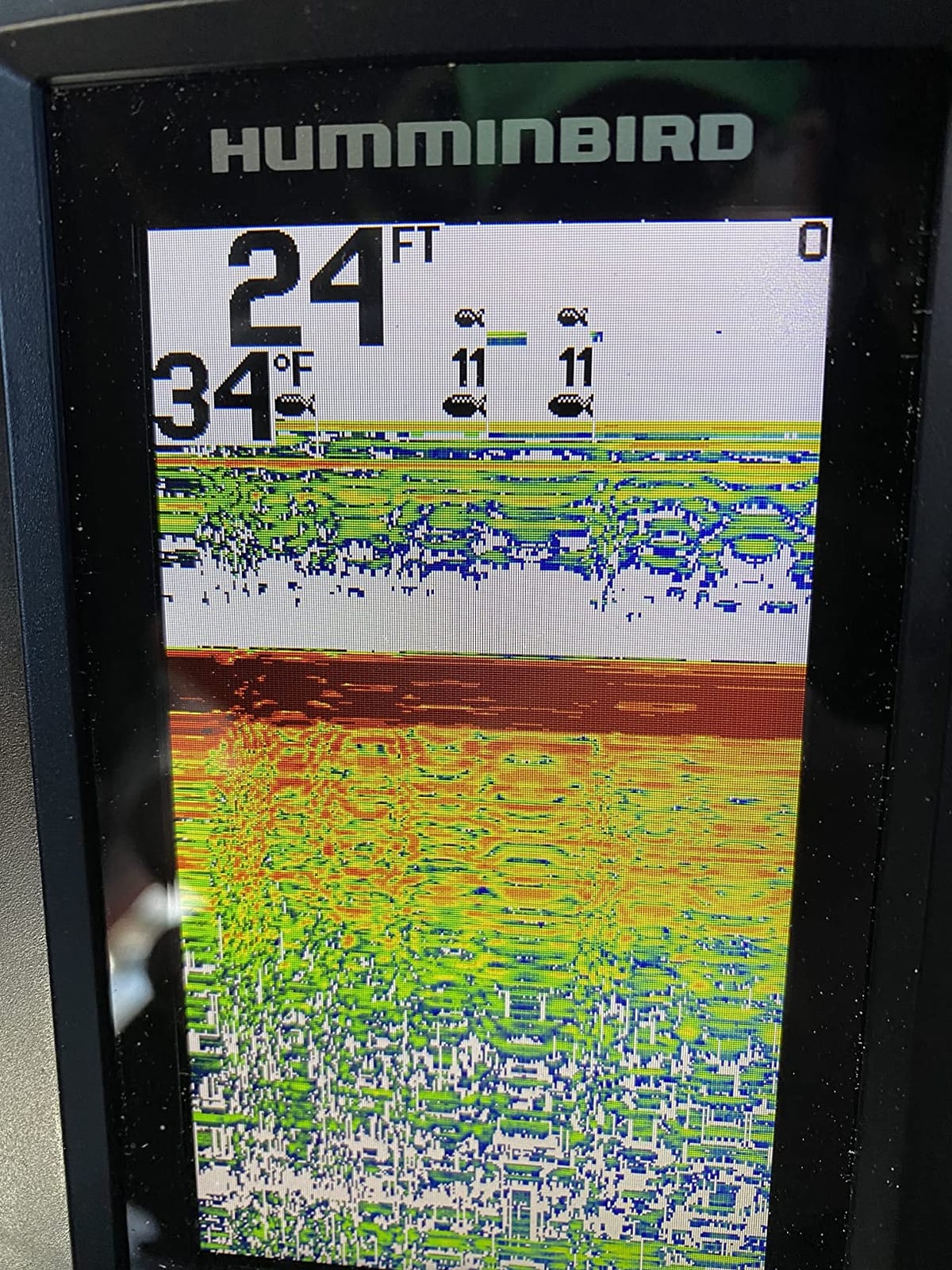
There is no GPS or charting in this configuration, so you cannot mark a waypoint and come back to it. If your boat has a separate GPS chartplotter already, that is fine. If it does not, you should know that going in rather than discovering it on the water.
Two smaller notes from owner feedback: the unit weighs about 2 pounds, which is heavier than the castable alternatives on this list, and the warranty is one year. Neither matters much on a permanently mounted console.
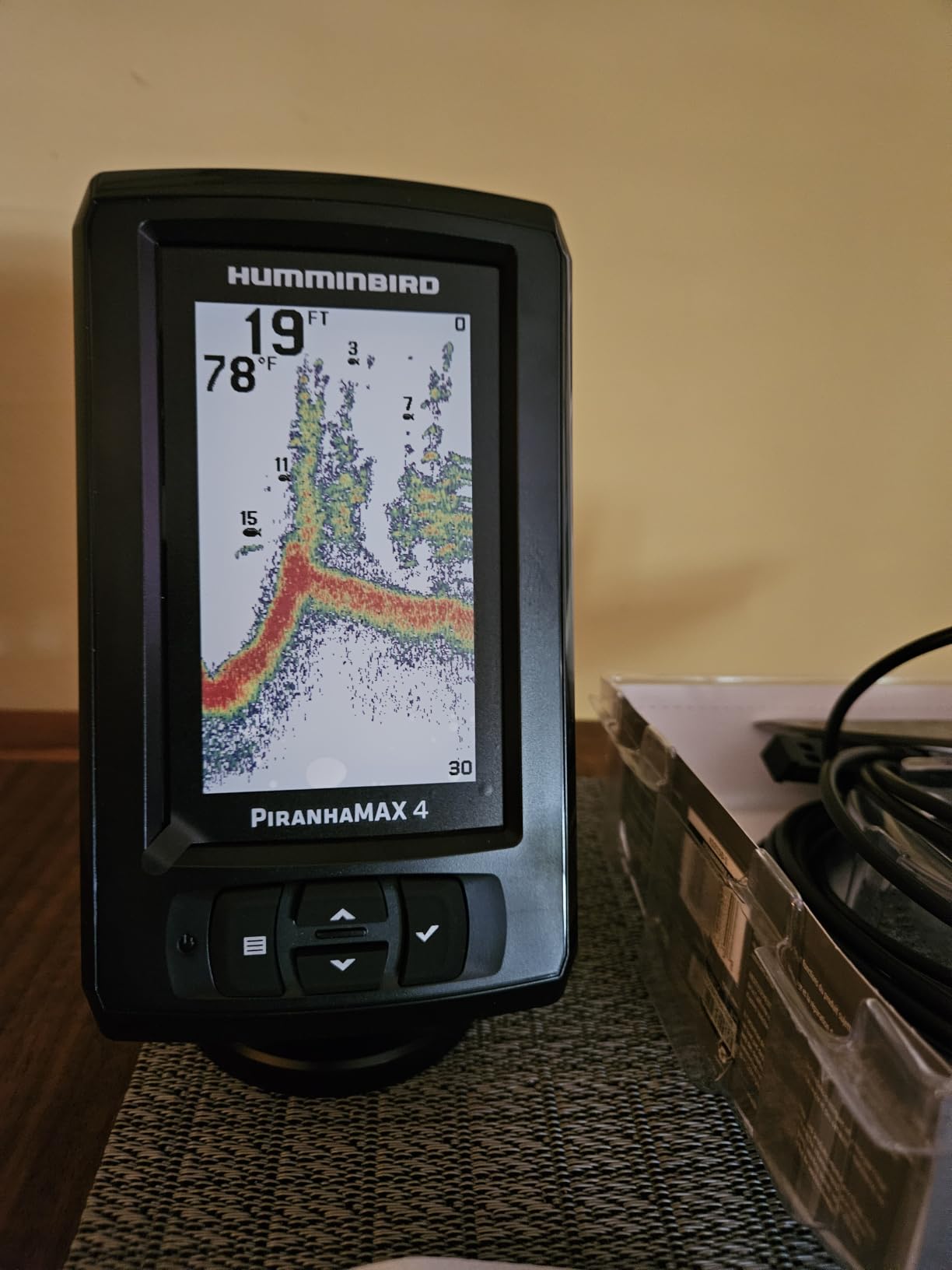
Why it is worth a spot on this list?
Humminbird builds this entry line for people who will keep it for years, and the feedback pattern supports that. You get a transom mount, a swivel bracket and a transducer, which means a complete install out of the box.
The catch
Color is the first thing you will miss, and the lack of GPS means no waypoint marking. Anglers fishing unfamiliar water repeatedly should weigh that more heavily than screen size.
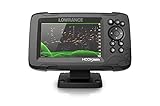
4. Lowrance HOOK Reveal 5 SplitShot — Best for Mapping Water
Lowrance HOOK Reveal 5 SplitShot – 5-inch Fish Finder with SplitShot Transducer, Preloaded C-MAP US Inland Mapping
- Maps of almost 4000 inland lakes preloaded
- Autotuning removes manual setup work
- SolarMAX screen stays readable in sun
- Flush mount fits many OEM layouts
- Lowest rating in this group
- Menus take study to learn
- A few units report transducer communication failures
This is the only unit in the roundup that arrives with detailed inland charts already loaded, covering almost 4,000 US lakes. For a beginner who does not know where the creek channels run, having a map of your lake before you ever launch is worth a lot of the confusion it removes.
The SplitShot transducer combines wide-angle high frequency CHIRP with DownScan Imaging, so you see both the traditional arch view and a picture of structure directly beneath the boat. FISHREVEAL blends the two so fish stand out against the bottom.
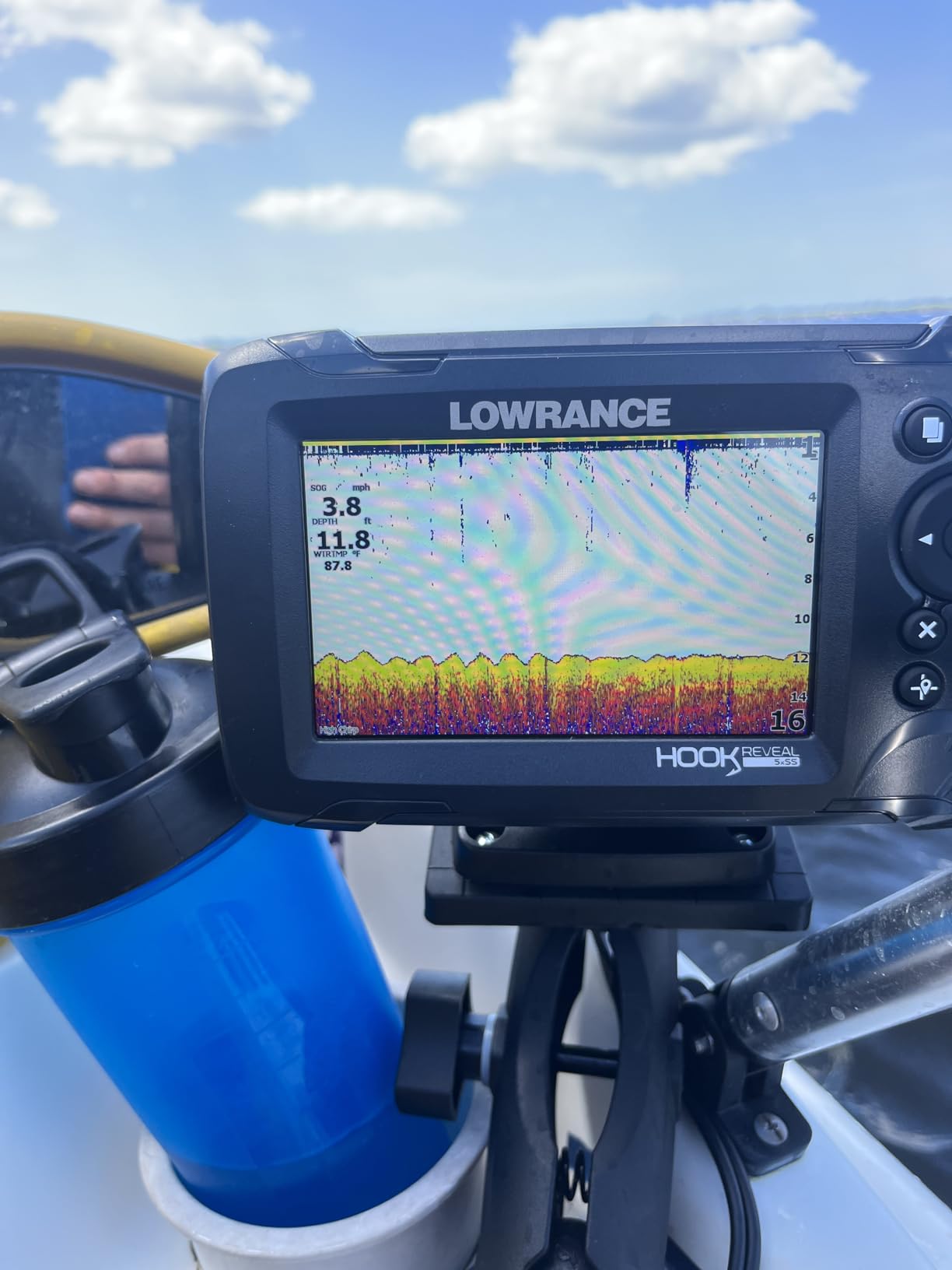
Autotuning sonar is the sleeper feature for a first-timer. It adjusts the settings as conditions change, which means less time buried in a menu trying to work out why you cannot see anything. The SolarMAX screen stays clear in direct sunlight.
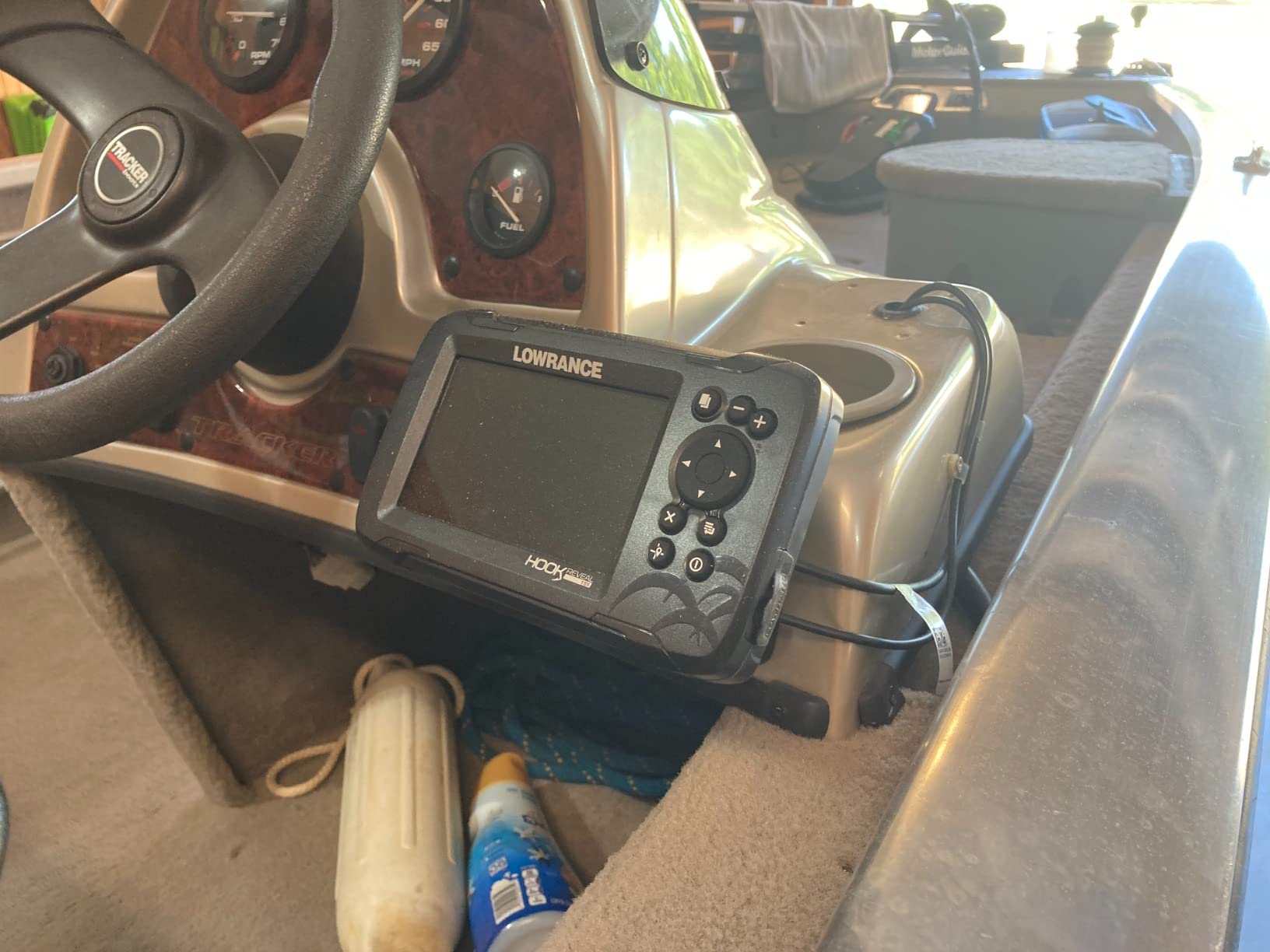
Be aware this unit has the lowest average rating in the group at 4.2, and the reason is specific. Alongside the small-screen complaint and the fiddly install routing, a portion of reviews report units failing to communicate with the transducer head unit, which turns into a painful warranty experience. Mounting space is also tight in some console layouts, and running the transducer cable without fish tape is genuinely awkward.
Why it earns its place?
Preloaded mapping plus autotuning plus a daylight screen is a combination no other entry unit here offers. If you fish a lake you do not know, that combination is the difference between a productive afternoon and a slow one.
Why a beginner might hesitate?
The menus take some study, and the transducer communication reports are real enough that you should keep the packaging and check the unit on your bench before you mount it permanently. The 5 inch screen also feels smaller to owners over 50.
5. LUCKY Portable Fish Finder — Best Budget Handheld
- Very low outlay for a first unit
- Depth readings verified accurate
- Works through a kayak hull
- Fits one hand and packs small
- Coarse fish target detection
- Will not read through fiberglass
- Not usable from shore
This is the cheapest real answer to the question and it does one thing well: it tells you how deep the water is and roughly what is down there. Users comparing it side by side with a mounted transducer confirm the depth numbers are accurate, including through the bottom of a kayak hull.
The transducer attaches to the hull, so it suits a plastic kayak, an inflatable or a small boat without a console. Five sensitivity levels help in clear or turbid water, and there is a fish and fish-school alarm.
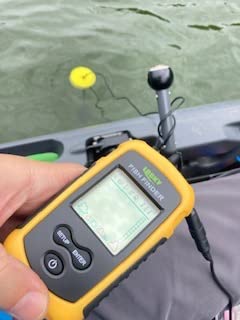
Be clear about the limits, because they are not subtle. Fish target detection is coarse and picks up minnows alongside larger fish, so treat anything on screen as a hint rather than a fish you are about to catch. It will not read reliably through a fiberglass hull, and despite the marketing, it cannot be used from shore.
Battery life is around 4 to 5 hours of continuous use on a fresh battery, longer in battery-save mode, and a few buyers report units that stopped powering on after light use. The 2 inch screen is small by any standard in 2026.

Where it makes sense?
A child learning to fish, a snowmobile or ice trip, or a plastic kayak where drilling into the hull is not an option. It is also the lowest-risk way to find out whether you even enjoy reading sonar before you invest in a console.
Where it falls short?
Anyone who wants to tell a bass from a baitfish, fish from brush, or mark a productive spot and return to it. There is no GPS, no storage and no way to separate structure from fish.
6. Deeper START — Best for Shore and Dock Anglers
- No wiring
- mounting or external battery
- Fish Deeper app is free on iOS and Android
- Every scan is saved with time and location
- Cable free design reels in cleanly
- Requires a phone or tablet you already own
- Glare limits screen readability in sun
- 6 hour battery is short for a full day
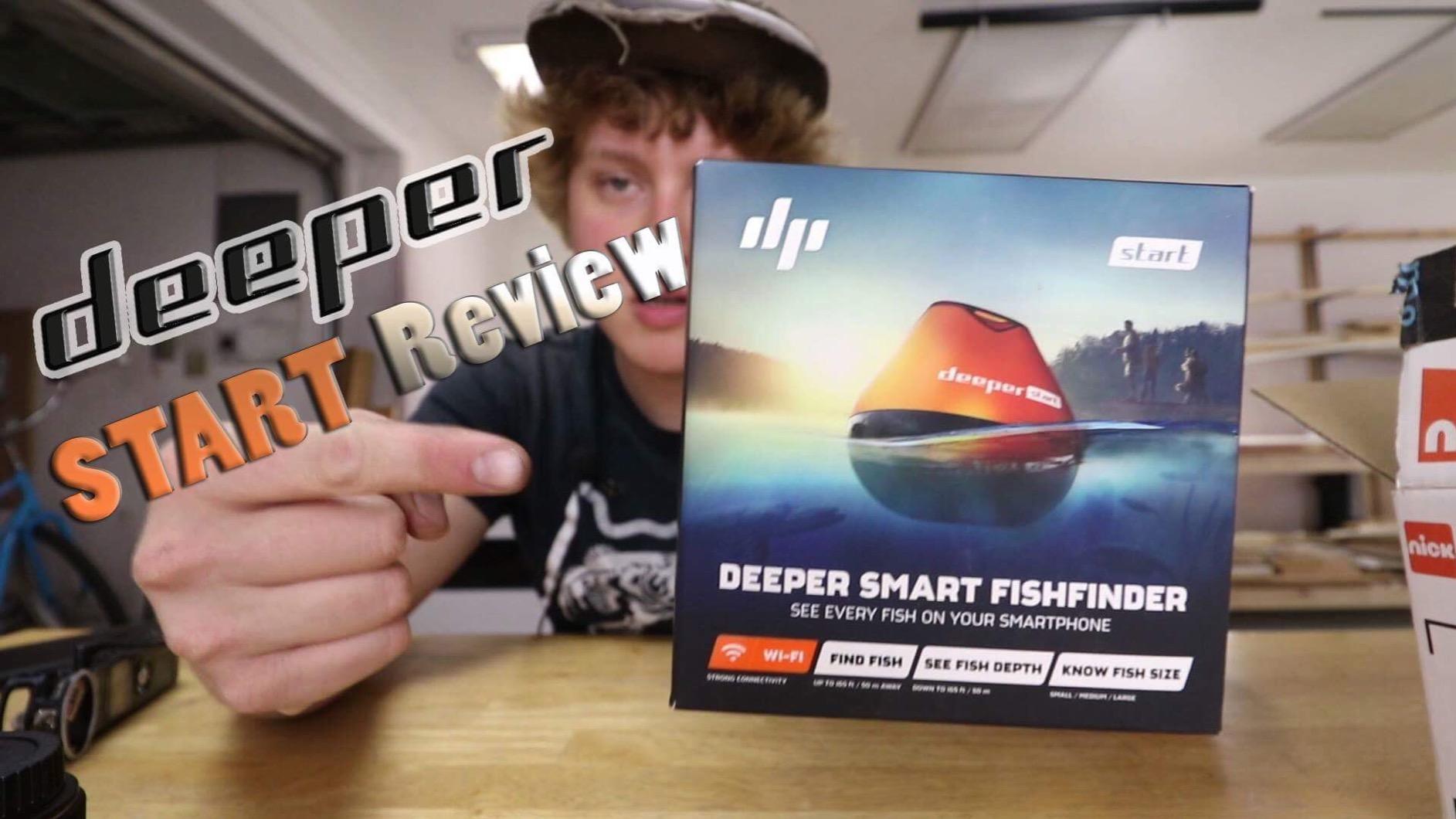
The Deeper START answers a question the console units cannot: what do I do when I do not have a boat. You cast the pod out, it generates its own Wi-Fi, and the free Fish Deeper app turns your phone into the screen. No drilling, no cable, no battery pack.
It reaches out to 165 ft on the cast and down to 165 ft with a 40 degree sonar beam, and there is a night mode for low light. Owners report being reading data within minutes of pairing the app.
The feature I like most for a beginner is automatic scan saving. Every sweep is stored with its time and location, so after a session you can look back and see exactly where the drop-off was, rather than trying to remember it.
Because it creates its own Wi-Fi, it does not eat into mobile data. Full charge takes 2.5 hours and the battery runs about 6 hours, which is a working day for most sessions but not for two long days back to back.
Best fit for a beginner
If you fish from a dock, a bank or a kayak and you already own a phone, this is the least complicated way to see structure for the first time. The learning curve is learning to cast accurately, not learning a menu.
Where the limitation bites?
The beam angle is narrower than dedicated castable units, so you cover less water per cast. Reading the screen in bright sun is also harder than any backlit dedicated display, and if you do not have a phone yet, that is a real added cost.
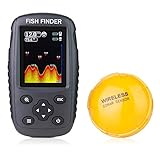
7. Venterior Portable Fish Finder — Best Castable With Its Own Screen
Venterior Portable Rechargeable Fish Finder Wireless Sonar Sensor Fishfinder Depth Locator with Fish Size, Temperature, Bottom Contour, Color Display
- Its own screen so no phone needed
- Switchable black and white backgrounds
- Works straight out of the box
- Recharges for three to four hours of use
- Wide beam reduces ice fishing accuracy
- Cold weather shortens battery life
- Sensor indicator misreads out of water
This is the castable option for someone who does not want to read a phone screen in bright sun. The handheld has a 2.6 inch color TFT display and the sensor links wirelessly at up to 262 ft, so you can cast from a bank, sit on a dock, or fish from a kayak.
The two selectable backgrounds are the detail that converts me on this one. Switch to white in direct sunlight and back to black at night, and the display stays readable in both. It reports depth, temperature, fish size category, fish depth and bottom contour.
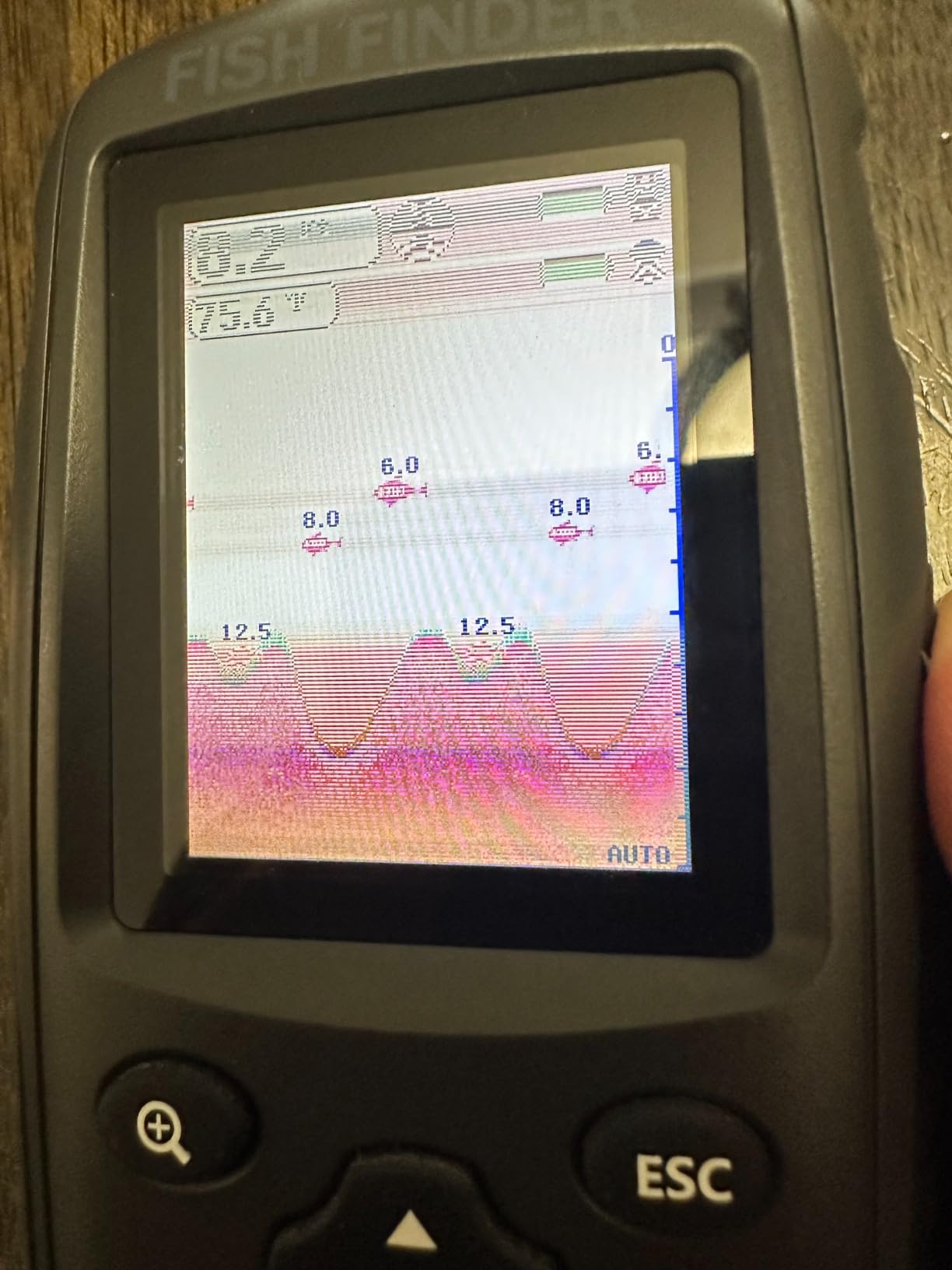
No drilling is required. Two small holes in the sensor let you tether it with fishing line and cast with a medium rod, and it connects as soon as it hits the water. Owners like that the menu is simple enough for a first-time buyer to navigate without reading a manual.
The 105 degree beam is wide, which is great for coverage and bad for ice fishing, since the signal bounces off ice hole walls and reduces depth accuracy. The sensor indicator also only reads correctly while the sensor is in the water, which catches new owners out. Fish size categories of small, medium and big are subjective rather than measured.
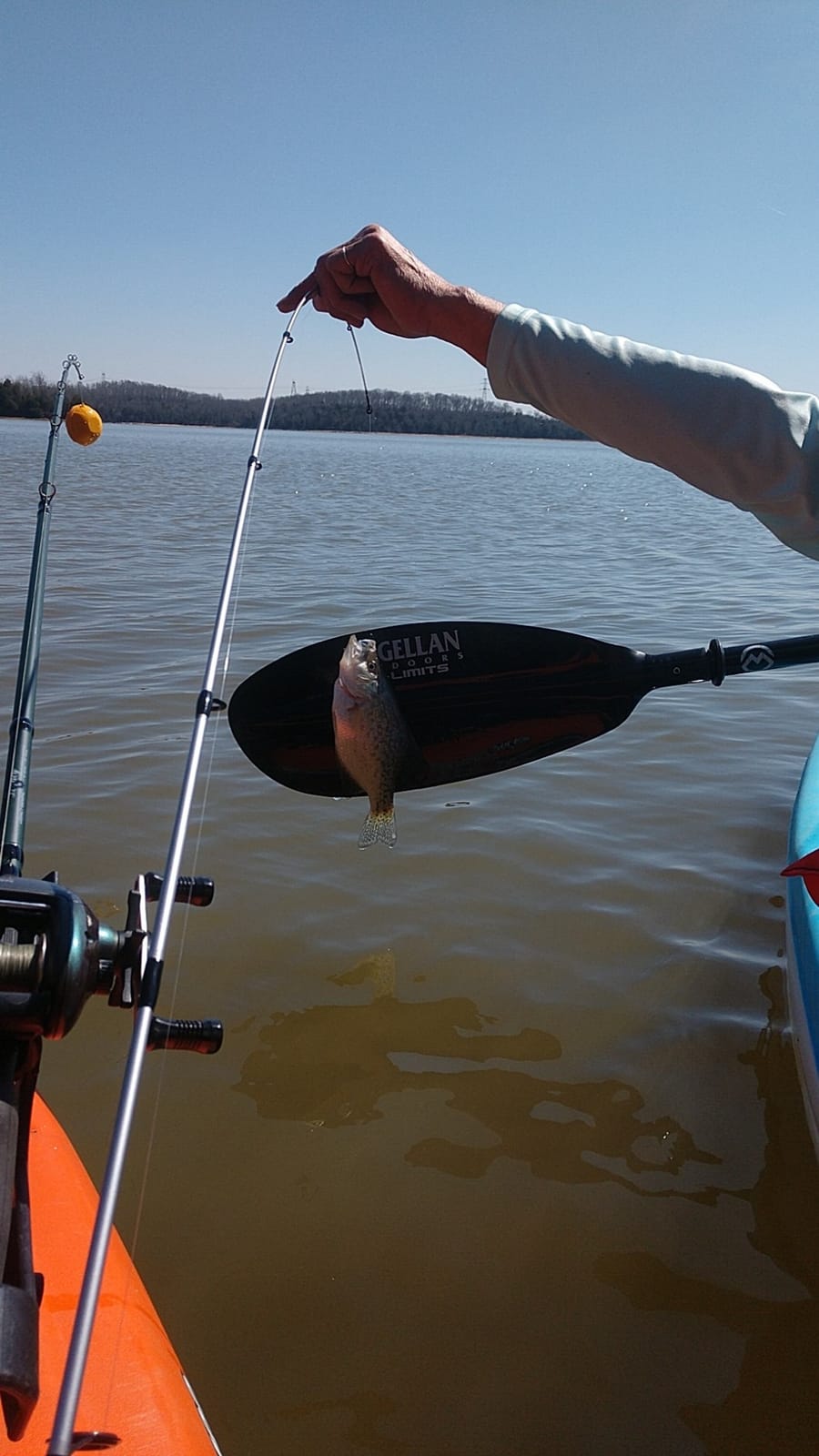
Why it beats a phone-based unit for many beginners?
Glare is the single biggest complaint about app-based sonar. Having a dedicated backlit screen with a white mode removes that problem entirely, and the 2 year warranty is longer than most entry units offer.
Where it does not work well?
Cold weather drains the rechargeable sensor faster, so pack a USB power bank for ice trips. It also cannot be dragged behind a moving boat without throwing false signals, which rules it out for trolling.
8. ReelSonar iBobber — Best for Long Battery Life
Reelsonar Portable Fish Finder Accurate Fish Depth Finder with Depth Range of 135 feet 10+ Hours Battery Life with iOS & Android App Wireless
- Pocket sized and casts well
- 9 to 10 hours measured on a full charge
- Turns itself on in water and off when dry
- App has a demo mode and tutorials
- Short Bluetooth range drops readings
- Needs water at least 1 m deep
- Only a 1 year warranty
The iBobber is the most reviewed unit on this list and the most polarising, which tells you something useful about portable sonar in general. Shore and coarse anglers report accurate depth, weed and temperature readings with a battery that genuinely runs 9 to 10 hours, which beats every other castable here by a wide margin.
It is a line-attached float that powers itself on when it enters the water and off when it dries, so a day of casting costs you very little battery. Depth-tagged fish icons are color coded by size, and there is a fish alarm plus a strike alert for when something is biting.
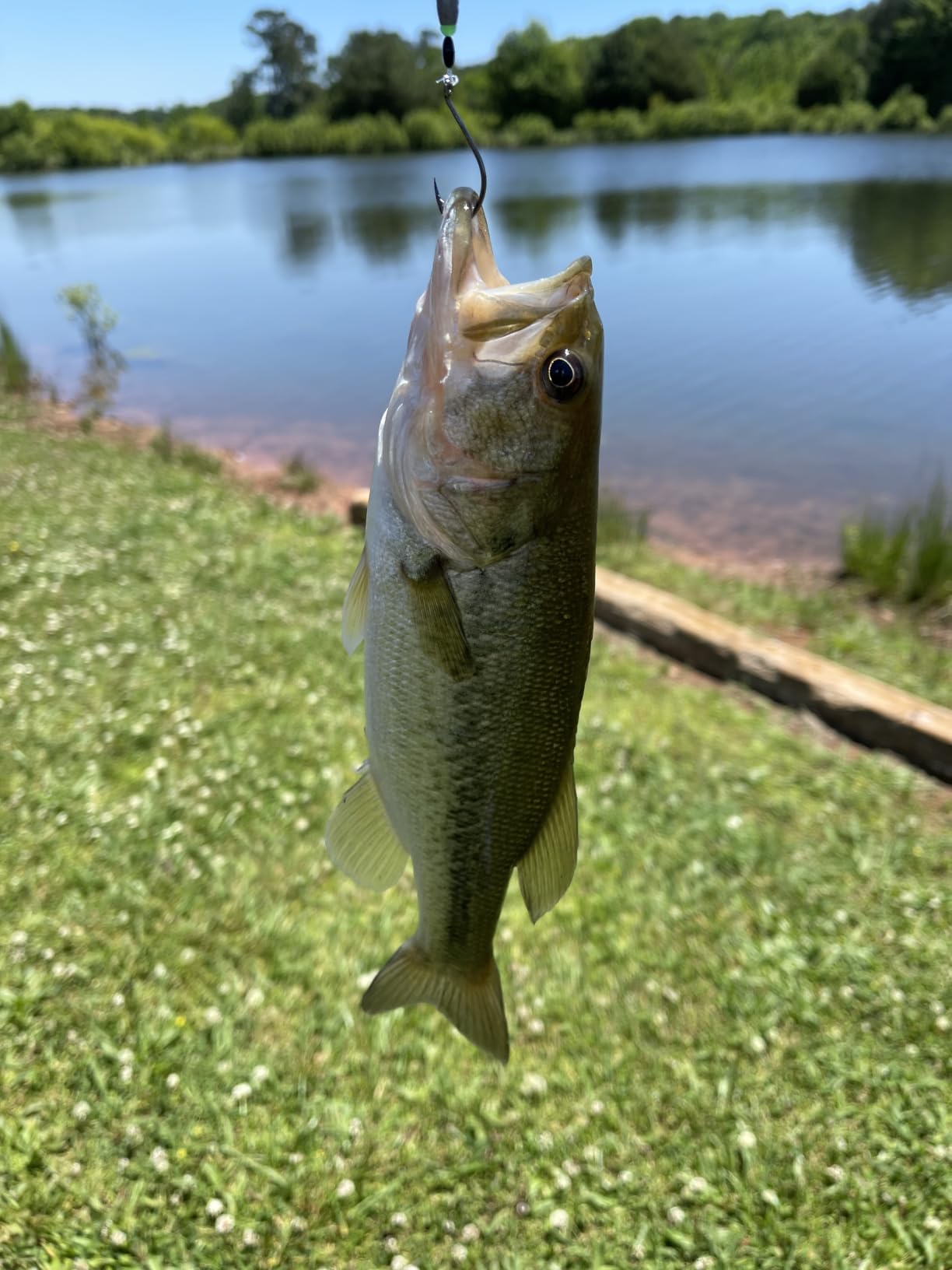
The split in feedback is not subtle. Users in aluminum boats, in shallow water or while trolling report Bluetooth dropouts, phantom depth readings and units that lost charge while sitting in storage. Bluetooth line-of-sight range is roughly 10 m, so the phone has to stay close.
The sonar also only works properly in water at least 1 m deep, which rules out shallow ponds and small creeks entirely. Later firmware improved reliability, though not every owner saw the benefit. The app itself is genuinely good, with a demo mode that teaches you what the arcs mean.
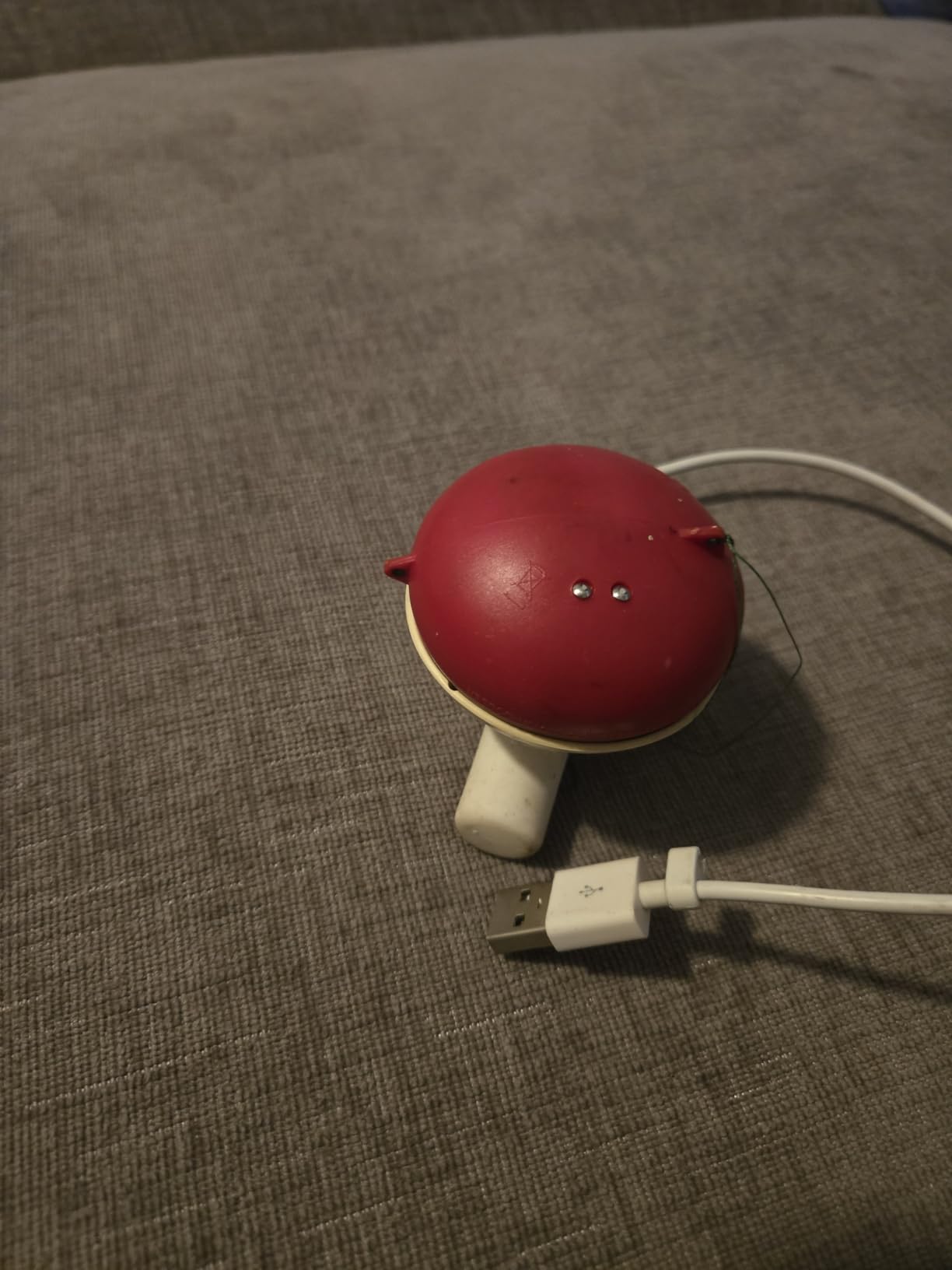
Where it wins?
A full day of bank or dock fishing in deeper water, on one charge, with a phone you already own. Coarse anglers get useful weed and temperature data that dedicated mounted units are not pointed at anyway.
Where it fails?
Shallow water, aluminum hulls and anything involving a moving boat. This is the unit to skip if you keep reporting phantom readings in review after review, because that is the documented weak spot rather than bad luck.
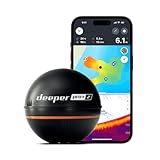
9. Deeper PRO+ 2 Sonar — Best for Castable GPS Mapping
Deeper PRO+ 2 Sonar Fish Finder – Portable Fish Finder and Depth Finder For Kayaks, Boats and Ice Fishing with GPS Enabled | Castable Deeper Fish Finder with FREE User Friendly App
- Built in GPS lets you make bathymetric maps
- Three beam modes for coverage or detail
- 0.4 inch target separation in narrow beam
- Own Wi-Fi is steadier than Bluetooth
- Needs a phone or tablet for the display
- Glare on the phone screen in direct sun
- GPS setup takes time before first use
The PRO+ 2 is the step up from the Deeper START, and the single feature that separates them is built-in GPS. With it, you can create bathymetric maps from the shore, the dock or the bank and save them to the Fish Deeper app, which means a mapped favorite spot from a session where you never launched a boat.
Three beam modes cover a real decision. Wide covers more water, narrow drills into one spot, and target separation of 0.4 inch in narrow beam lets you pick out a specific lure while vertical jigging.
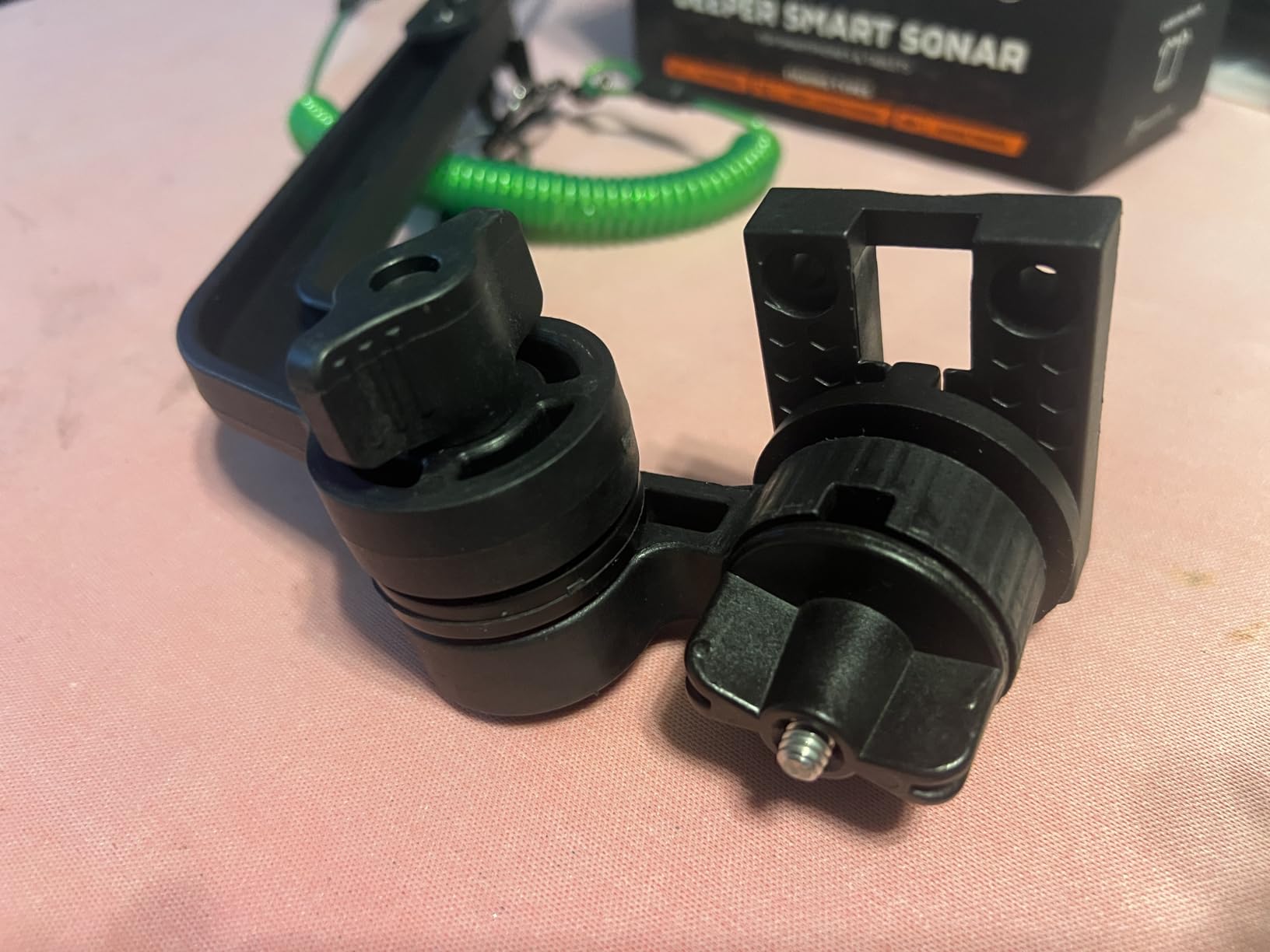
The connection is its own Wi-Fi rather than Bluetooth, and owners report steadier connectivity as the practical difference that matters when you are casting and the data has to keep coming. It weighs 3.2 ounces and comes with a neoprene pouch and attachment bolts, so it lives in a tackle box.
Accuracy is rated to 330 ft with a 2 year limited manufacturer warranty. The trade-offs are the ones every phone-based unit shares: you need a phone or tablet, reading it in direct sun is harder than a dedicated backlit screen, and the GPS and mapping features need setup time before they are useful.
Who should buy this one?
An angler who fishes structure from shore or a dock and wants to come back to the exact spot next time. Built-in GPS is rare in a castable unit and it changes what you can do with the data.
Who should skip it?
If you already own a Garmin or Lowrance console, this duplicates mapping at a lower level. It is also a bigger outlay than entry castable units for what are ultimately the same basic depth readings.
10. Humminbird HELIX 5 CHIRP GPS G3 — Best Step-Up Color Unit
Humminbird Helix 5 G3 GPS Fish Finder with Transducer & Dual Spectrum Chirp Sonar
- Dual Spectrum CHIRP with wide and narrow modes
- Preloaded basemap covers 10000 plus lakes
- 5 inch color screen is a real step up
- Softkeys stay usable in bad weather
- Highest outlay in this roundup
- Premium charts cost extra
- AutoChart Live ships with 8 hours of recording
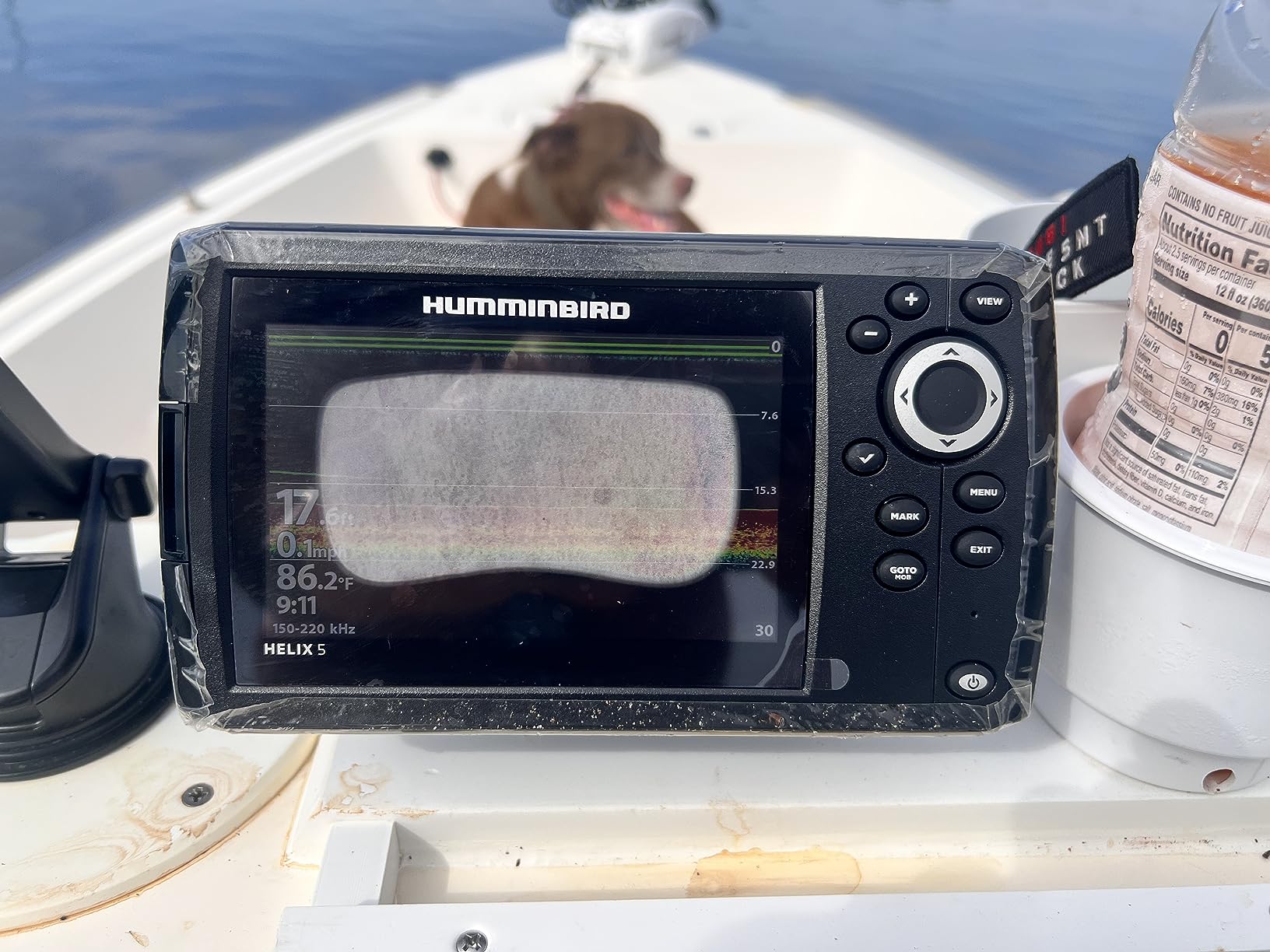
The HELIX 5 CHIRP GPS G3 is what to buy if you know you will keep fishing after your first season and want to avoid buying twice. Dual Spectrum CHIRP gives you both a wide mode for maximum coverage and a narrow mode for detailed scanning on the same unit, and a Low-Q transducer delivers precise 2D target separation.
The Humminbird Basemap covers more than 10,000 lakes and the continental US coast, and it works out of the box with no card to buy. AutoChart Live begins recording depth contours, bottom hardness and vegetation as you boat.
Controls are softkey based, and owners with cold and wet hands say the interface stays reliable in poor weather. The gimbal bracket and the XNT transom transducer are both included, so the install is complete.
The trade-off is commitment. This is the most expensive unit in the roundup, and it only makes sense if you are staying in the sport. Premium charting with LakeMaster, CoastMaster or Navionics is a separate purchase, and AutoChart Live ships with eight hours of built-in recording before you would add a Zero Line SD card. It is a fixed transom install rather than anything portable.
Why it is worth stretching to?
Screen size is the honest reason. A 5 inch color TFT is legible from a standing position in a way a 3.5 inch monochrome never is, and if you plan to fish from a console for years, that difference pays off every trip.
Why it is wrong for right now?
If your season is undecided, this is an expensive way to find out whether you like electronics. Start with the Striker 4 and move up when you know what you want from side imaging and live sonar.
How to Choose a Fish Finder for Beginners in 2026?
Most beginner mistakes come from buying the wrong type of unit for the boat, then blaming the unit. Answer these five questions in order and the choice narrows fast. For related buying guides on first-time gear, our multimeter guide for beginners and oscilloscope picks for beginners follow the same rule: match the tool to the task before you look at features.
Garmin vs Humminbird vs Lowrance: which brand should a beginner buy?
All three build legitimate entry units, and the differences that matter to a first-timer are about the interface and what is included in the box, not about sonar quality. Garmin wins on button simplicity and on including Quickdraw Contours at no cost, which is why two of our picks are Garmin units. Humminbird tends to bundle more hardware, since the PiranhaMAX 4 and the HELIX 5 both ship with a transom transducer and a mount.
Lowrance wins on preloaded mapping. The HOOK Reveal 5 arrives with charts of almost 4,000 inland lakes and an autotuning sonar that does the setup work for you. If you ask whether Lowrance or Humminbird is better, the honest answer is that Lowrance wins for charted water and Humminbird wins for physical hardware in the box.
If you ask whether Garmin is better than Humminbird, it comes down to menu philosophy: Garmin is more button-driven and forgiving, Humminbird is more menu-driven and configurable. Neither is better for everyone. If you are asking rather than shopping, spend your effort on the transducer question instead, because a missing transducer costs you more than a brand difference ever will.
What sonar do I actually need as a beginner?
Traditional 2D CHIRP is enough for your first season. It gives you depth, bottom contour, structure and fish arches, and you cannot yet read a return well enough to justify more detail. CHIRP is worth insisting on because it sweeps a range of frequencies at once, which produces crisper arches and better target separation than a single-frequency unit at the same price.
Down imaging adds a downward-looking picture of structure and is the natural first upgrade. Side imaging sweeps to each side and is more useful on open flats than structure. Forward-facing sonar and live imaging are third-step features: valuable, expensive, and mostly wasted on someone still learning what an arch looks like. IPX7 water rating matters more than any of that if you fish in rain or spray.
How to read your fish finder screen for the first time?
A fish arch is a small crescent that rises off the bottom line and returns to it. A solid blob sitting on the bottom is more likely brush, a stump or a rock. Long vertical streaks are trees or standing timber. A hard bottom shows a thick, bright return; a soft bottom shows a thin, faint one. A tight cluster of small marks hovering above a feature is a baitfish ball with predators underneath.
Turn your sensitivity up gradually rather than all the way. Too much sensitivity paints the screen with noise and every return looks like a fish, which is the fastest way to lose confidence in the unit. Keep your eyes on the bottom line and let the arches come to you.
What a beginner can safely skip?
Premium chart cards, NMEA 2000 networking, forward-facing sonar, multi-screen integration and quad-core processors. None of them make you catch more fish in your first season. Buy them when you have a specific complaint, such as wanting to see structure to either side of the boat.
Two things not to skip: the transducer, if it is not included, and a proper power source if you are not hardwiring to a boat. Both are the difference between a working fish finder and an expensive paperweight on the transom.
Mounted, portable or castable: which fits your fishing?
Mounted console units suit a jon boat or small boat with a battery and a transom. They are the most reliable and the cheapest per hour of use, but they need wiring and drilling. Portable handhelds suit ice fishing, inflatable craft and kids, and they read depth reliably but tell you little about fish.
Castable units suit shore, bank and kayak anglers who already own a phone, except the Venterior in this list, which brings its own screen. If you have no boat at all, the castable section of this roundup is the relevant one. Beginners who also enjoy building things might like our beginner drone picks as a second electronics purchase.
Frequently Asked Questions
Is Garmin better than Humminbird?
Neither is better for every beginner. Garmin is generally more button-driven and simple to learn, and it includes Quickdraw Contours mapping at no extra cost on the STRIKER Vivid 4cv. Humminbird tends to bundle more physical hardware with the unit, such as a transom transducer and mounting bracket. For a first fish finder, decide based on interface simplicity and what is in the box rather than on sonar brand alone.
What are the top 5 fish finders for beginners?
Our top five are the Garmin Striker 4 as the best overall starting point, the Garmin STRIKER Vivid 4cv as the best first color unit, the Humminbird PiranhaMAX 4 as the best value console, the Lowrance HOOK Reveal 5 SplitShot as the best for preloaded mapping, and the Humminbird HELIX 5 CHIRP GPS G3 as the best step-up color unit. All five ship with a transducer or mount in the box.
Is Lowrance or Humminbird better?
Lowrance is the better pick for anglers fishing charted freshwater because the HOOK Reveal 5 SplitShot arrives with preloaded inland maps and autotuning sonar. Humminbird is the better pick if you want more hardware included and a wider range of chart options later, since the HELIX 5 ships with a gimbal bracket and transom transducer and accepts premium LakeMaster and Navionics cards.
Do I need to buy a transducer separately?
It depends entirely on the unit. Every fish finder in our roundup includes its transducer or castable sensor in the box, which is why we filtered for that. The transducer is the part that sends and receives the sonar pulse, so a unit without one cannot do anything. Always check the included components list before buying, since a replacement transducer can cost more than the head unit itself.
Can I use a fish finder on a kayak?
Yes, and the choice depends on your hull and your power. Hard-mounted options need a plastic or composite hull that transmits sonar and a small rechargeable battery, with the Striker 4 being a common choice. Castable options like the Deeper START or the Deeper PRO+ 2 Sonar avoid drilling entirely. The LUCKY handheld also works through a kayak hull, though it will not read through fiberglass.
What is the difference between CHIRP and traditional sonar?
Traditional sonar sends a single frequency pulse and shows what comes back. CHIRP, which stands for compressed high intensity radar pulse, sends a continuous sweep across a range of frequencies and combines the returns. The practical result is crisper fish arches and better target separation, which is what lets a beginner tell a fish apart from brush or a stump. Most entry units we recommend include CHIRP.
The Best Fish Finder for Beginners in 2026
If you are buying your first fish finder and want one unit that covers almost every beginner mistake, choose the Garmin Striker 4. It has the largest body of owner feedback of anything in this roundup, a dedicated-button interface you can work with cold hands, a daylight-readable screen and a transducer in the box. Add a small battery if you fish from a kayak.
If your boat has a console and a battery, upgrade to the STRIKER Vivid 4cv for color and ClearVu imaging, or step up to the Humminbird PiranhaMAX 4 if you want the largest screen for the least money. Fish unknown lakes and want charts already loaded, and the Lowrance HOOK Reveal 5 SplitShot is the answer.
No boat? Start with a castable. The Venterior solves glare with its own screen, the Deeper PRO+ 2 Sonar adds GPS mapping, and the Deeper START is the simplest way to learn what sonar is telling you. Whatever you choose, buy the transducer, buy a power source you can rely on, and give the screen a season before deciding it did not work.