
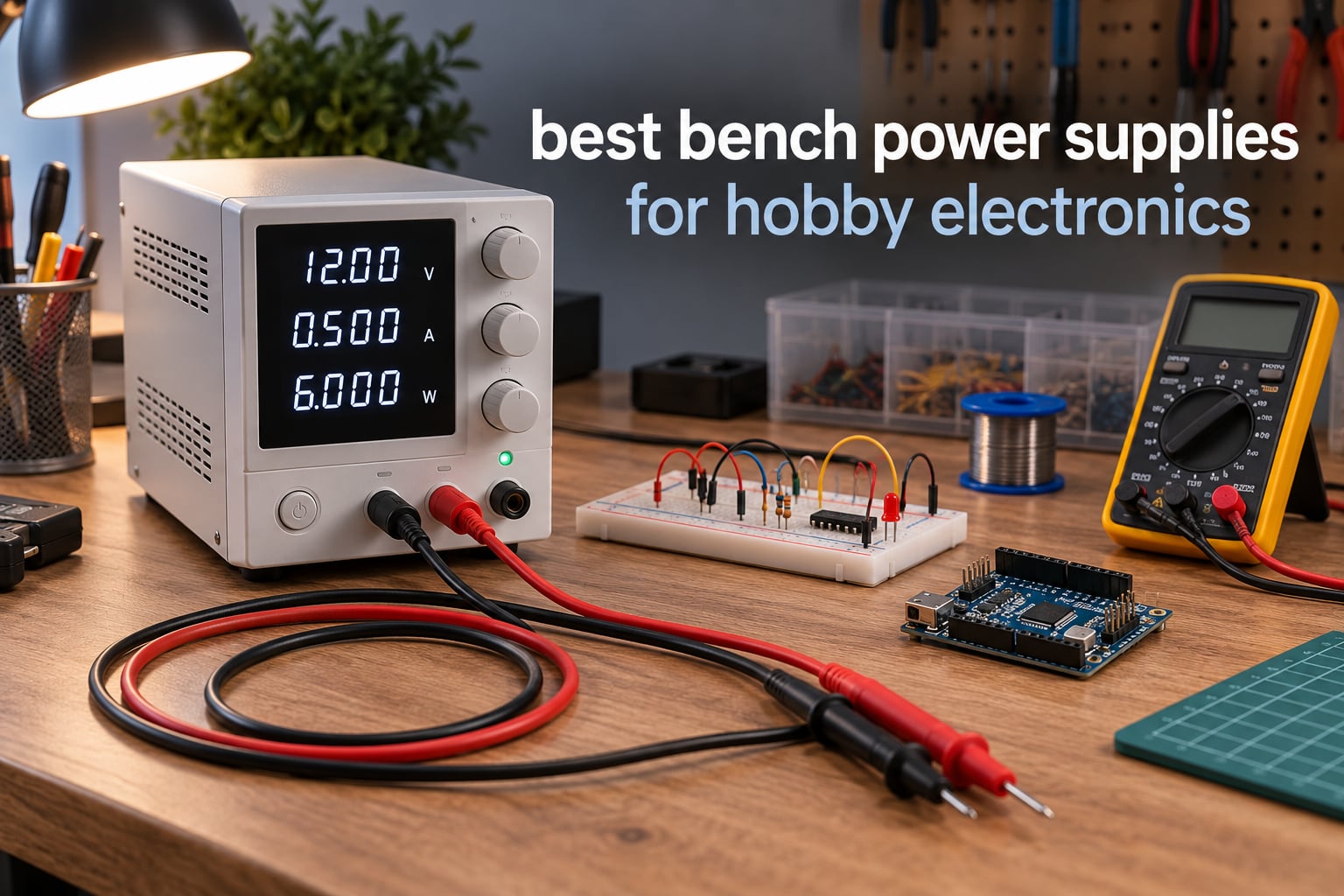
A bench power supply is the box that turns a mains wall socket into a voltage you chose and a current you capped. That second half is the part people miss, and it is the reason the best bench power supplies for hobby electronics rank above every other bench tool you can buy.
I have spent more time than I would like to admit watching microcontroller boards get powered for the first time. The ones that survived had a real current limit set before the leads went on. The ones that did not are in the parts bin. This guide covers ten adjustable DC supplies that actually do what the front panel says, and it explains the checks worth making before you plug anything in.
Everything here was last checked in October 2026. Prices move constantly, so use the buttons below to see current listings rather than trusting any number you may find quoted elsewhere.
If your interest is narrower, we have separate guides on programmable power supplies and Raspberry Pi power supplies. For a broader view of bench equipment, our bench power supply overview covers the categories this list ranks within.
Table of Contents
Top 3 Bench Power Supplies For Hobby Electronics (October 2026)
Three picks cover almost every hobbyist. The Kiprim DC310S is the most capable machine here, with a colour screen, programmable waveforms and adjustable protection thresholds. The KORAD KD3005D is the one to buy if analog noise is the thing keeping you up at night. The Siglent SPD3303X-E is the only pick with three isolated outputs, and it is the right tool for rail simulation work.

Kiprim DC310S
- 0-30V / 0-10A
- 300W
- Colour LCD with curve mode
- Programmable waveform and presets
- Adjustable OVP
- OCP and thermal thresholds

KORAD KD3005D
- Linear regulation
- 0-30V / 0-5A
- Dual 4-digit LED displays
- Switchable 110V / 220V input
- Metal enclosure
- 9 lb
Siglent SPD3303X-E
- Three isolated outputs
- 32V/3.2A on two channels
- Fixed 2.5V/3.3V/5V channel
- Series and parallel modes
- 3-year warranty
All 10 Bench Power Supplies Compared Side by Side in 2026
Every model in the roundup, in one place. All ten deliver a 0-30V adjustable output, and all ten offer constant current limiting, which is the feature that separates a real bench supply from an adjustable wall adapter.
| Product | Specifications | Action |
|---|---|---|
| Kiprim DC310S |
|
Check Latest Price |
| KORAD KD3005D |
|
Check Latest Price |
| Siglent SPD3303X-E |
|
Check Latest Price |
 Kungber SPS3010B Kungber SPS3010B |
|
Check Latest Price |
 HYELEC HY3005S HYELEC HY3005S |
|
Check Latest Price |
 Jesverty SPS-3010 Jesverty SPS-3010 |
|
Check Latest Price |
 WANPTEK TPS-C3010H WANPTEK TPS-C3010H |
|
Check Latest Price |
 NICE-POWER SPS-C3010 NICE-POWER SPS-C3010 |
|
Check Latest Price |
 LONGWEI LW-K3010D LONGWEI LW-K3010D |
|
Check Latest Price |
 FNIRSI DPS-150 FNIRSI DPS-150 |
|
Check Latest Price |
What Is a Bench Power Supply?
A bench power supply is a mains-powered lab supply that sits on your workbench, giving you an adjustable regulated DC output voltage and, crucially, an adjustable current limit, so you can power a prototype at a known voltage and cap the current if the circuit is wrong.
The two operating modes matter more than any other spec on the page. In constant voltage mode the supply holds the voltage you set. In constant current mode it holds the current you set and lets the voltage sag. Most units cross over automatically, so when your load demands more than the limit you dialled in, the voltage collapses instead of the current running away.
Most hobby units also float, which means the output terminals are not tied to mains earth. That is what lets you wire a positive rail, a negative rail and a common without a second supply, and it is also why the green binding post on the front panel needs its own explanation, covered further down.
One warning before the reviews. Search results for this term are cluttered with audio and PA power supplies from brands like Pyle and Pyramid. Those are fixed-output units for amplifiers, not adjustable DC sources, and they will not do anything described in this guide.
1. Kiprim DC310S – programmable 30V 10A supply with a colour display
- Colour LCD shows set and actual voltage
- current
- power and runtime
- Number and curve display modes at 10mV and 1mA resolution
- Adjustable overvoltage
- overcurrent and 85C thermal thresholds
- Four memory presets plus 10-point programmable waveform output
- Rear USB for PC control and firmware updates
- 110V input only
- Long feature list takes time to learn
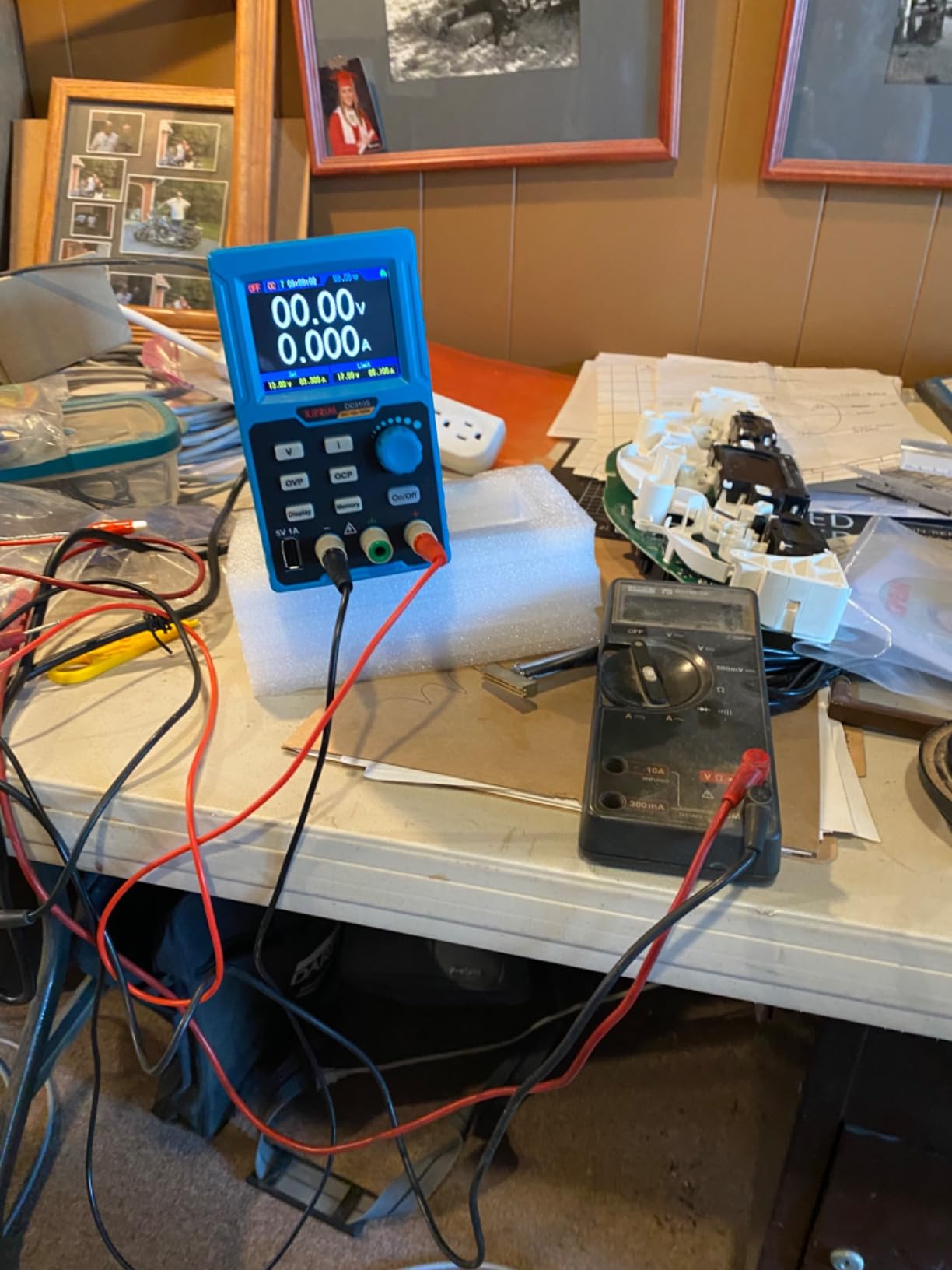
The DC310S is the machine I reach for when a task needs more than a knob. I used it across several weeks of microcontroller bring-up and power-rail testing, and the screen showing setpoint and measured value side by side is the feature I missed most when I went back to a simpler unit.
Reviewers consistently single out the colour display, the adjustable protection thresholds and the preset recall as the reasons to step up from a basic switching supply. The 10-point waveform output also lets you script simple load profiles from a PC instead of turning a knob.
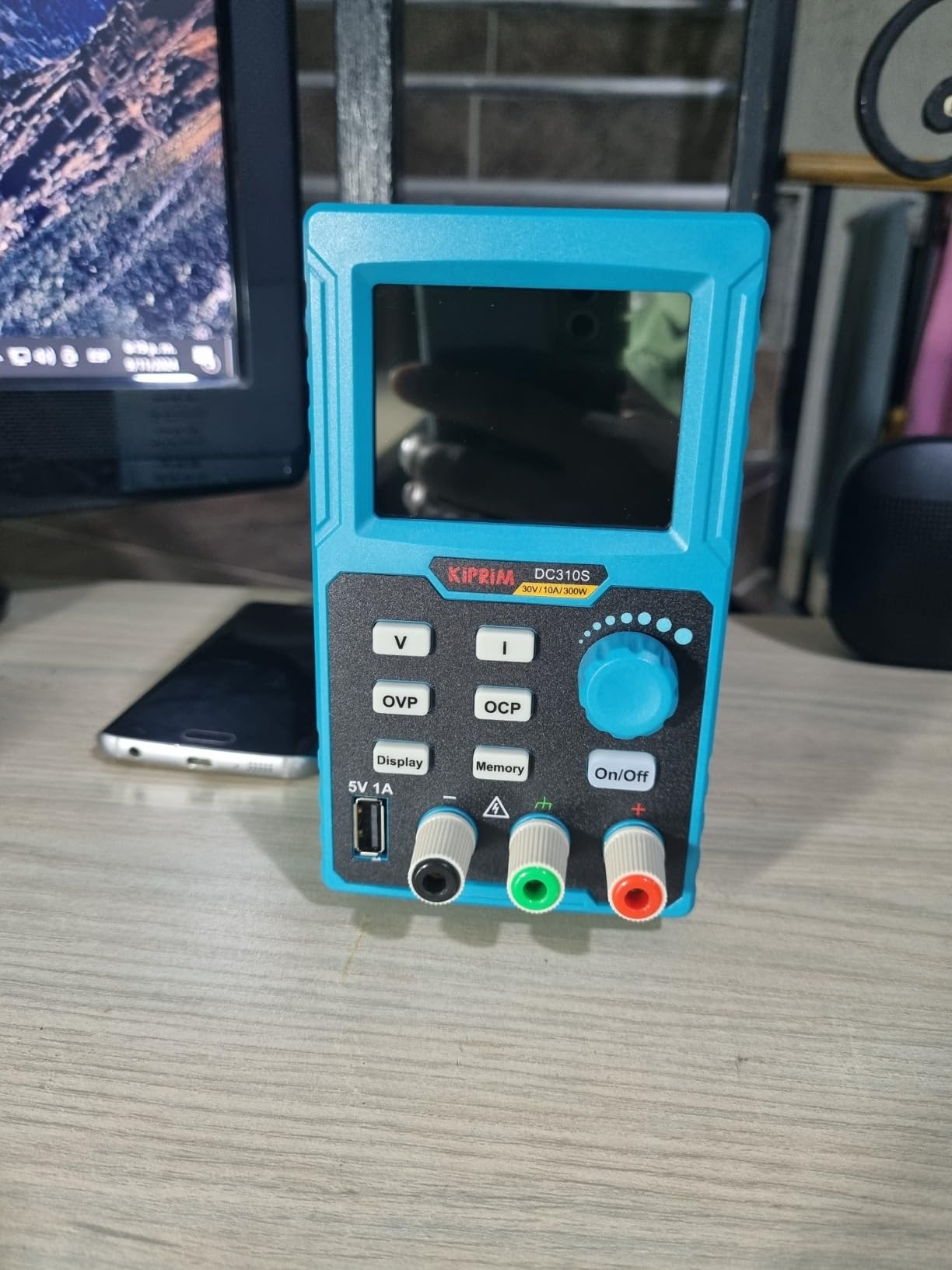
Because the overvoltage, overcurrent and thermal cut-offs are all user-settable, you can set a trip point that matches the load rather than a generic factory default. On a circuit with an absolute maximum of 5.5V, a limit you set at 5.6V is a real safety net rather than a decorative one.
It comes with a fuse, a banana-to-alligator cable, a mains lead, a manual and a CD. One thing to plan for: the rear input is 110V only, so it needs a step-down transformer on 230V mains rather than a simple plug adapter.
Who will get the most out of it?
Anyone who scripts their test sequences, logs runtime and power alongside voltage, or wants protection thresholds matched to a specific device. The preset recall alone saves real time when you move between a 3.3V rail and a 12V motor rail all day.
Where it falls short?
The feature list is dense, and first-time users report a learning curve with the software and menus. If you only need 5V and 12V for a breadboard, you will not open half of these controls, and a simpler 30V 5A model serves you better.
2. KORAD KD3005D – linear 30V 5A supply for low-noise analog work
KORAD KD3005D – Precision Variable Adjustable 30V, 5A DC Linear Power Supply Digital Regulated Lab Grade…
- Linear regulation keeps noise low on sensitive circuits
- Dual 4-digit LED displays with fully digital controls
- Switchable 110V and 220V input
- Metal enclosure stays put on a crowded bench
- Automatic switching between mA and A readout
- Bulky 14 x 10 x 10 inch footprint
- 9 lb weight
- Only 5A maximum current
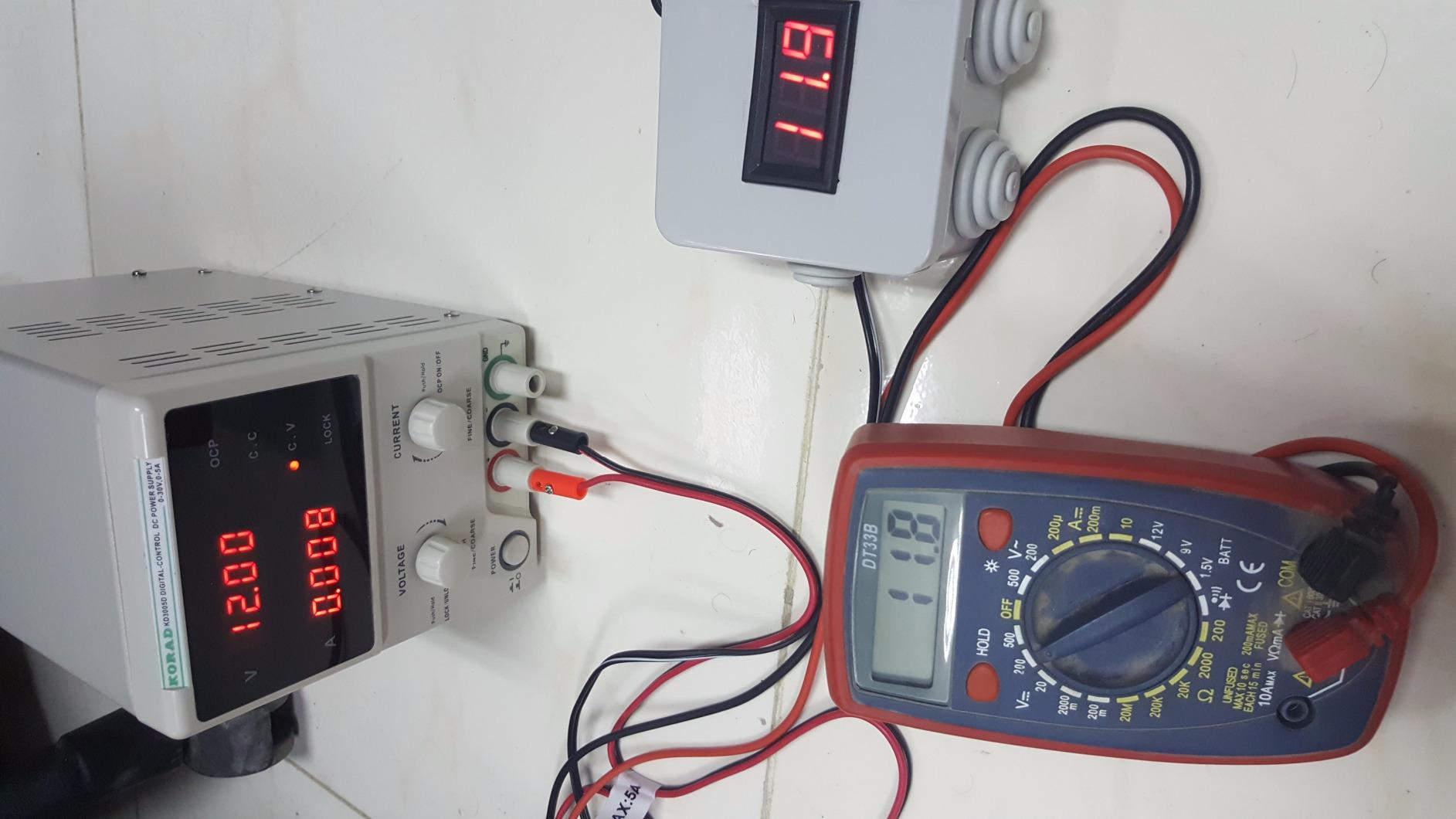
The KD3005D is the community default for good reasons. It is a linear design, so there is no switching converter to inject noise into your signal path, and that difference is audible on low-level analog work in a way that no datasheet number conveys.
Reviewers accept the size and the 5A ceiling as the price of the cleaner output. The metal enclosure and dual 4-digit displays are the other recurring praises, and the automatic mA to A switching saves you from squinting at a decimal point.
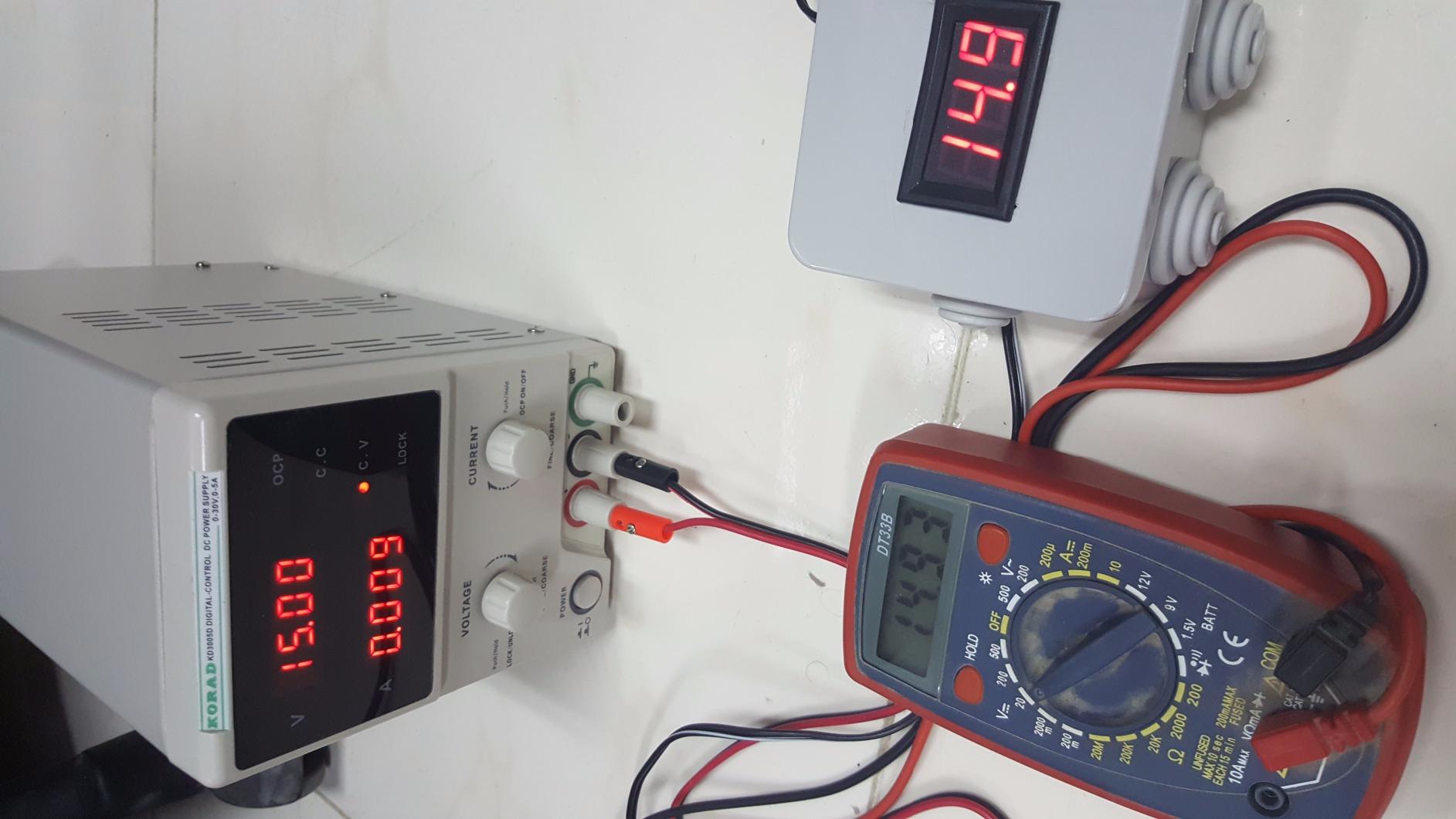
Two channels would help more than it does, because every measurement of a dual-rail circuit means swapping leads back and forth. The switchable 110V and 220V input does make it a far more portable purchase than the 110V-only models on this list.
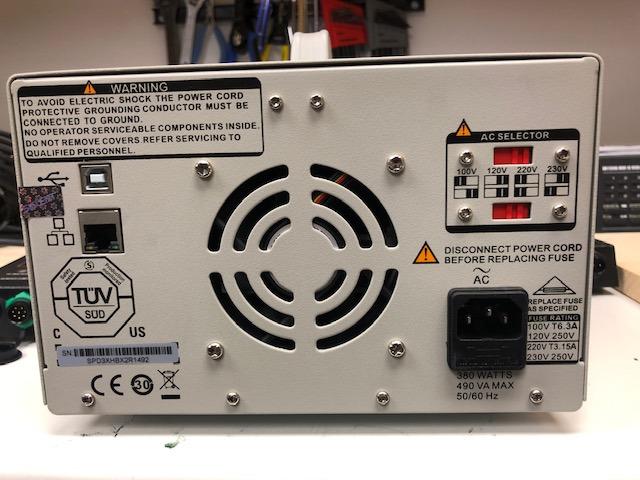
It ships with 5 amp test leads, the unit itself, a power cord and a manual. Protection covers overload, short circuit and over-temperature, which is the baseline you want before wiring a prototype to it.
Who will get the most out of it?
Op-amp circuits, audio and low-level analog measurement, preamplifier work and any project where switching ripple would show up in your readings. At 14 by 10 by 10 inches it claims real bench space, so plan the layout before it arrives.
Where it falls short?
Five amps is not enough for larger LED runs, 12V motor testing or multi-rail work. A minority of buyers also report occasional quality-control inconsistency, so keep the packing material and test the unit before your project depends on it.
3. Siglent SPD3303X-E – three isolated outputs for rail simulation
- Three independently controlled and isolated outputs
- Independent
- series and parallel output modes
- Timing output function and trending graphs
- 3-year warranty with 100-230V universal input
- 220W total across all three channels
- By far the most expensive model in this roundup
- Heavy 17.6 lb chassis and 16 x 14 x 11 inch footprint
- Each adjustable channel is limited to about 3A
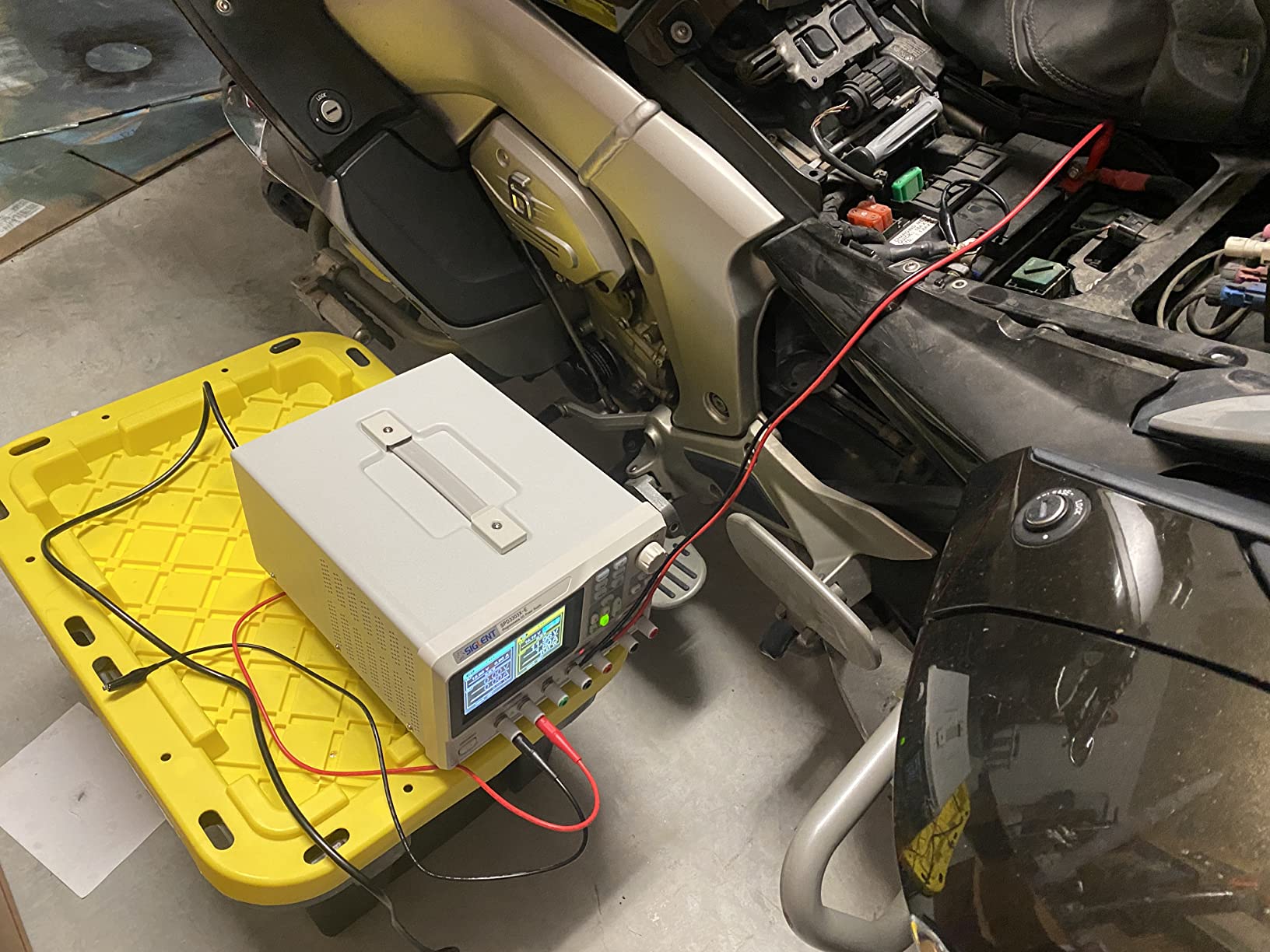
This is the only supply on the list with three genuinely isolated outputs, and that changes what you can wire. Two channels give 32V at 3.2A each, and the third covers a fixed 2.5V, 3.3V or 5V rail at 3.2A for logic work.
Reviewers buy it for circuit development and rail simulation rather than general tinkering. The independent, series and parallel modes are the reason people accept the premium, along with the timing output and trending graphs.
Simulating a converter that expects a 5V input and a 12V output means running two rails at once and watching them together. On a single-channel supply you would swap connections and lose the timing relationship between the rails entirely.
It is a standard configuration with 100-230V universal input, air cooling, and a 3-year manufacturer warranty, which is longer than anything else here. The 220W total is shared across the three channels, not per channel.
Who will get the most out of it?
Anyone developing power-conversion circuits, sequencing multiple rails, or needing a low-noise 3.3V and 5V reference alongside an adjustable supply. The 3-year warranty also matters if it lives in a shared lab rather than on your own desk.
Where it falls short?
It costs several times what the 300W switching models do, and at 17.6 lb you will move it rarely and deliberately. The roughly 3A per adjustable channel rules it out for motor and LED array testing.
4. Kungber SPS3010B – 30V 10A with a real-time Ah charging readout
- Intelligent charging mode with real-time Ah readout and automatic cut-off
- Overcurrent detection alarm that cuts output on short circuits
- 18W USB port for device charging
- Compact 2.3 lb body for a 300W supply
- Multiple protection circuits covering thermal
- leakage
- overload and short circuit
- On-screen voltage drop in the leads at high current
- Encoder adjustment takes practice for first-time users
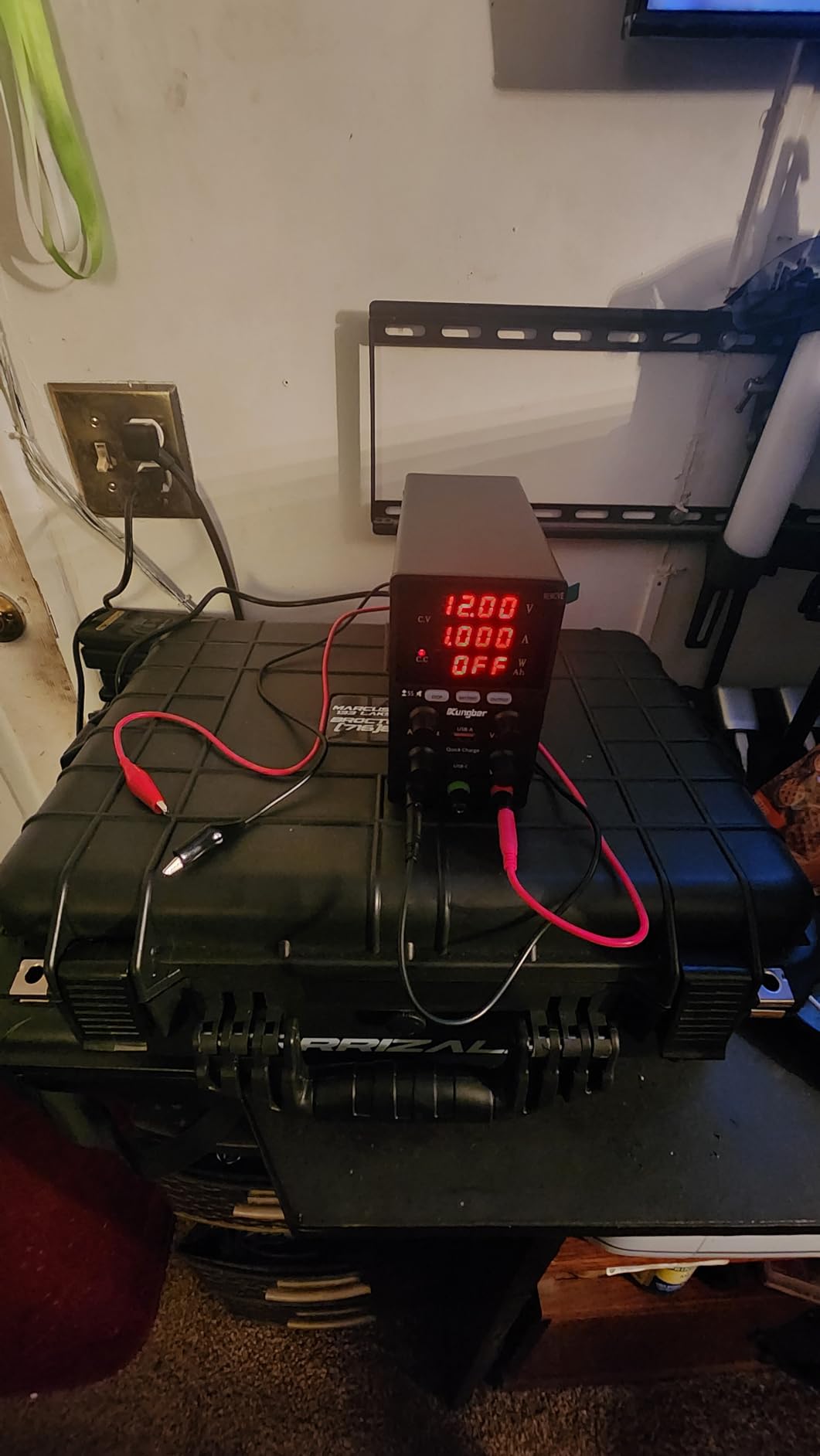
The SPS3010B is the most-reviewed model in this roundup, and the reason is a charging mode that shows accumulated amp-hours while a pack is filling. For anyone restoring tool batteries or balancing modules, that readout replaces a guess and a clamp meter.
Reviewers praise the encoder knob, the automatic CV to CC handover during charging, and the bright 4-digit readout. At 2.3 lb and 7.59 by 3.35 by 6.1 inches it is one of the more portable 300W supplies in the range.
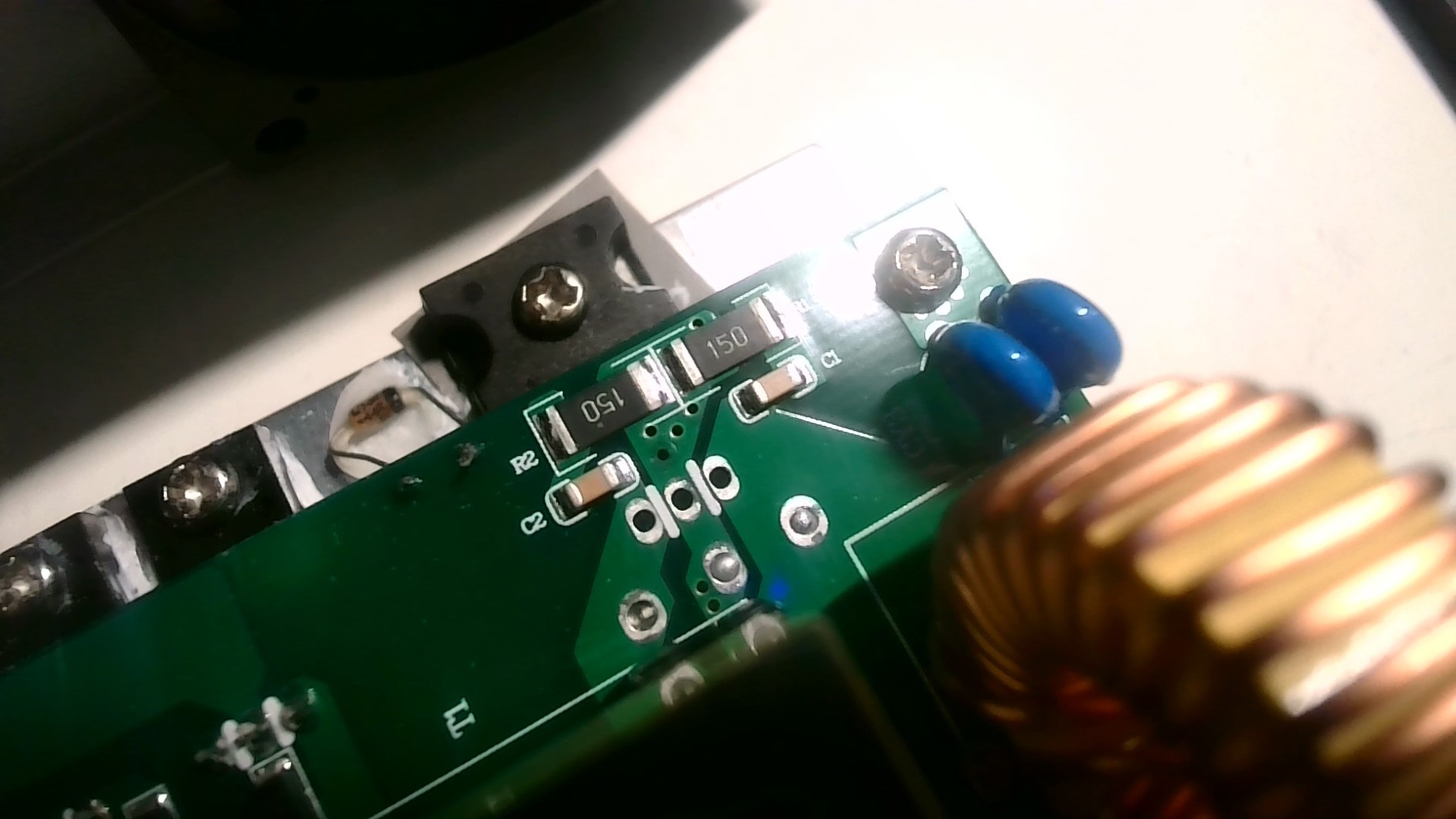
Thermal protection kicks in with fan activation above 122F, and the overcurrent alarm shuts the output down on a short rather than relying on a fuse. Note the on-screen voltage drop at high current, since the display reads the setpoint and the leads lose a little along the way.
The precision encoder handles coarse and fine adjustment in one control, which keeps the panel clean at the cost of some initial practice. A plastic enclosure keeps weight down, though it is not the premium feel of a metal box.
Who will get the most out of it?
Battery restoration work, module pack balancing, and any bench where 10 amps at 30 volts is genuinely useful. The Ah readout turns an otherwise guess-based charging session into a measured one.
Where it falls short?
A single channel, so dual-rail and multi-rail designs are out. For analog or RF work the switching topology is not the quietest option, and anyone who values the measured voltage over the displayed one should keep a multimeter nearby.
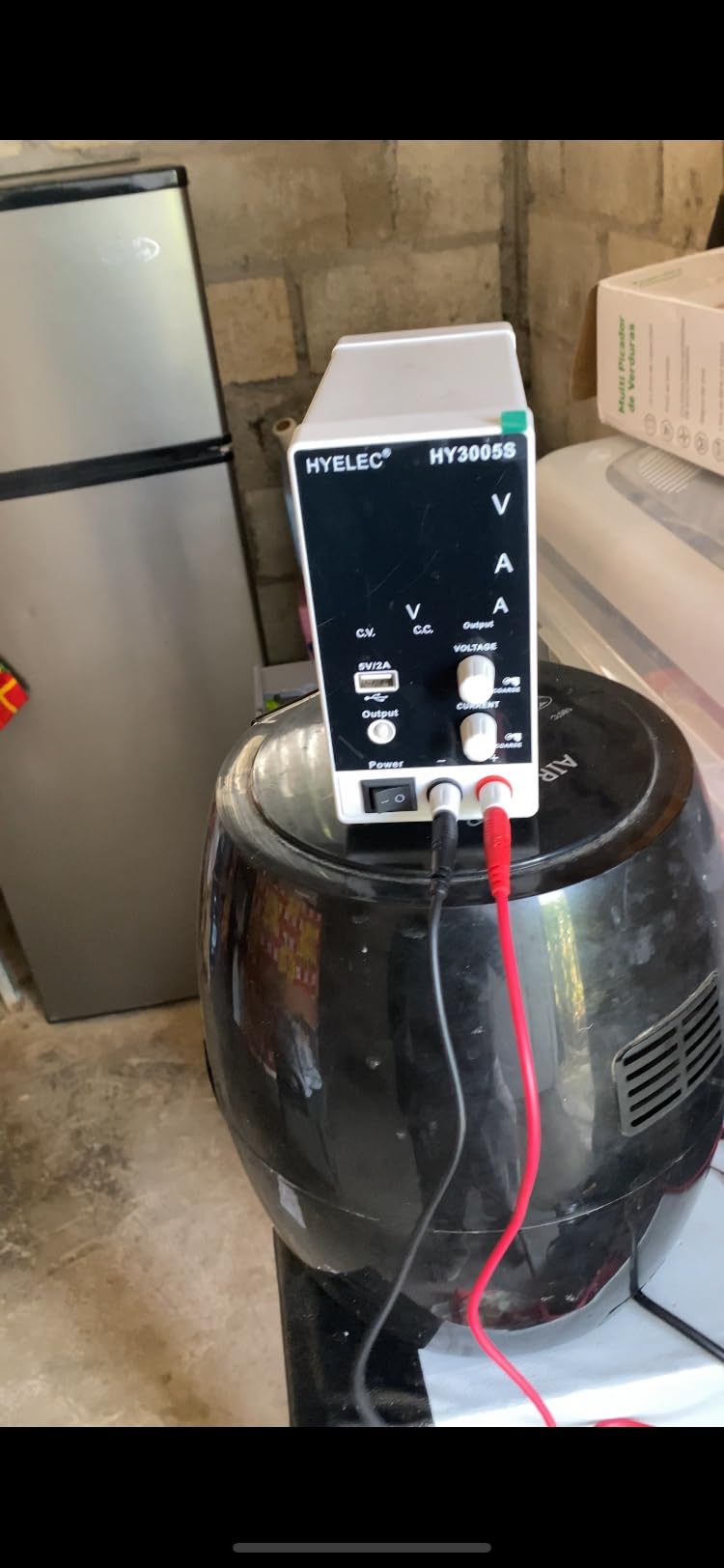
5. HYELEC HY3005S – 30V 5A starter supply with binding post outputs
- Highest average rating in this roundup at 4.7 stars across 181 reviews
- Encoder knob toggles between coarse and fine adjustment
- 0.01V and 0.001A resolution with a steady readout
- Independent OUTPUT button prevents accidental load damage
- 5-way binding posts suit breadboard prototyping
- Measured accuracy verified within 5mV of a Fluke voltmeter
- Very light chassis that can shift when pressed
- Only a 30V / 5A output ceiling
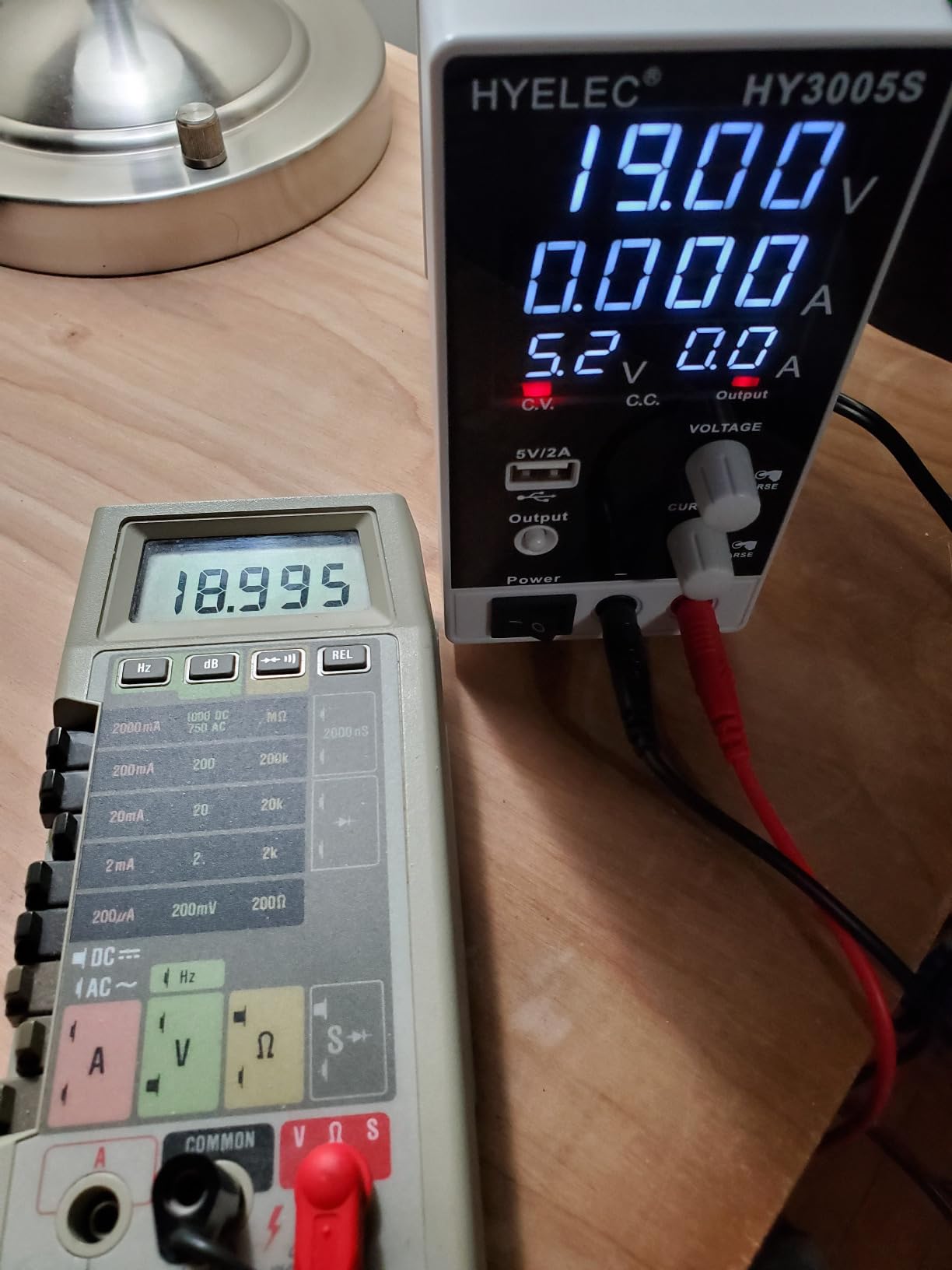
The HY3005S is the highest-rated model here, and the number holds up. One owner measured output within 5mV of a Fluke voltmeter, which is a better result than several pricier machines manage, and it is the kind of accuracy claim hobbyists care about.
Owners who moved up from analogue potentiometer supplies praise the fully digital controls, the separate output enable and the USB output. Electronics students in particular rate it as an affordable first bench supply, and the 5-way binding posts are singled out as a real improvement for breadboard work.
Short circuit, overload and over-temperature protection run alongside a temperature-controlled fan. At 1.65 lb and 7.5 by 3.15 by 5.9 inches it is small enough to live on a crowded shelf and light enough to move with one hand.
Binding posts rather than bare terminals mean you can clip leads on and leave them attached between sessions, which saves more time than it sounds. The 5V 2A USB interface covers phone charging without a separate adapter.
Who will get the most out of it?
Students, first-time builders, and anyone working at 5V, 9V or 12V with a load under 5 amps. If you mainly breadboard microcontrollers and light sensors, this covers the job without overpaying for wattage you will not draw.
Where it falls short?
Five amps is a hard ceiling, and the light chassis shifts if you lean on the buttons. The input is 110V, so 230V users need a step-down transformer rather than a plug change.
6. Jesverty SPS-3010 – 30V 10A tower showing voltage, current and power
- High-resolution 4-digit LED showing V
- A and W at once
- Automatic constant-voltage and constant-current mode switching
- Compact 7.1 x 3.35 x 6.1 inch body at about 2.5 lb
- Built-in short-circuit
- overload and thermal protection with a grounding terminal
- 5V 2A USB port and test leads included
- Bundled test leads are basic for sustained high-current runs
- AC input and power cord configuration varies by destination
The SPS-3010 sits at the top of the Lab Power Supplies category rankings, and the reason is the display. Showing voltage, current and power together at 0.01V and 0.001A resolution means you can watch load changes without switching modes.
Buyers cite display resolution, build quality and the automatic constant-current behaviour as the main strengths. Some owners advise upgrading to heavier-gauge leads for long high-current sessions, which is sensible advice rather than a defect.
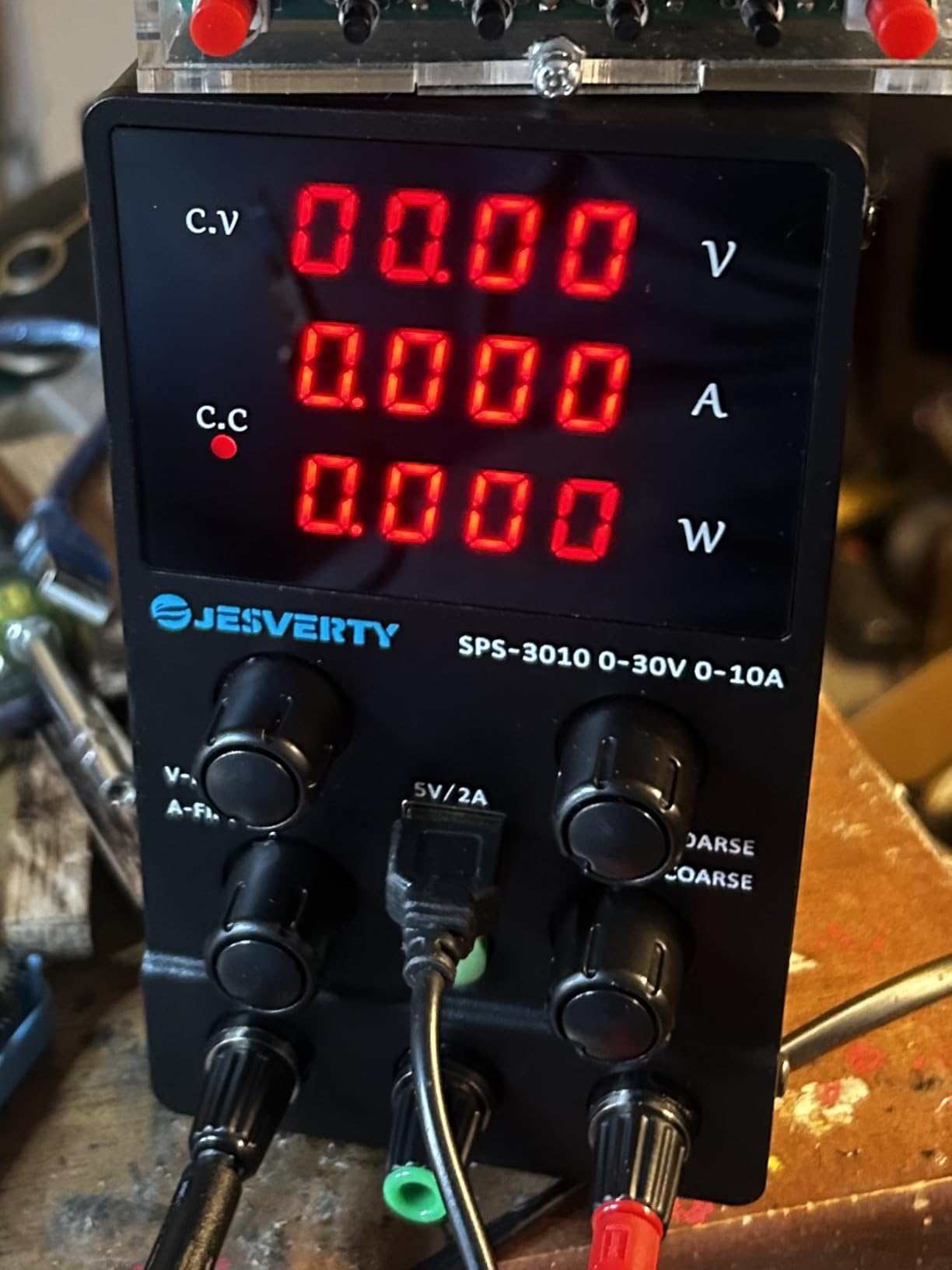
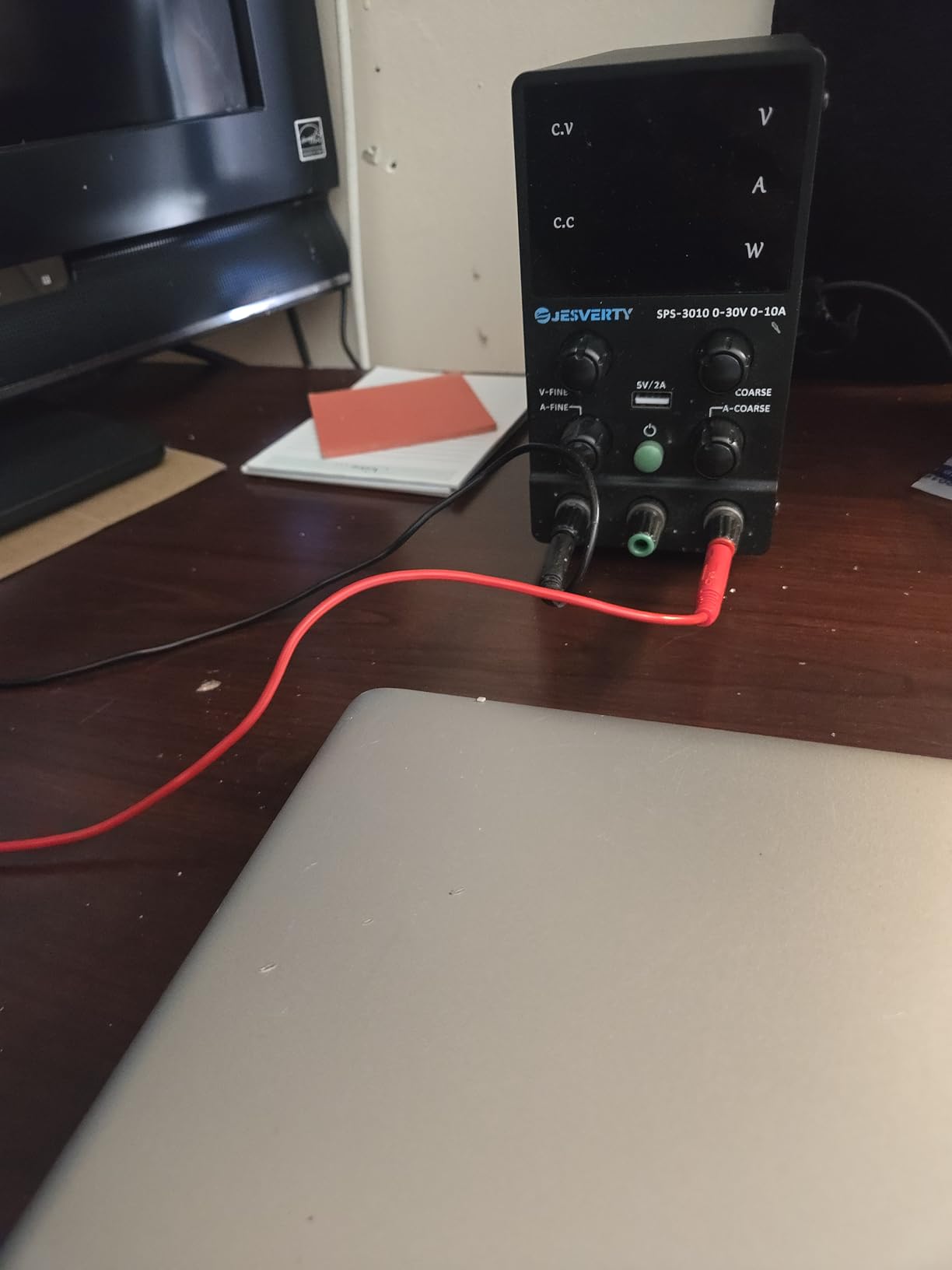
Protection covers short circuit, overload, grounding and thermal events, and a grounding terminal is fitted on the panel. The polycarbonate tower form factor keeps the footprint narrow, which matters on a bench with a scope and a soldering station already on it.
Coarse and fine adjustment controls give you usable increments across the full 0-30V and 0-10A range. The listing carries a one-year warranty, which is longer than the 90-day covers some competitors offer.
Who will get the most out of it?
Hobbyists who want 10 amps of headroom for motor, servo and LED strip testing without spending on a multi-channel machine. The three-digit-at-a-glance power reading helps you size a load before connecting it.
Where it falls short?
The supplied leads are basic and are not rated for sustained high-current runs, so buy proper leads if you plan to sit at 8 amps. The mains input and cord configuration varies by destination, so check what arrives.
7. WANPTEK TPS-C3010H – memory presets, encoder knob and a key lock
- Encoder knob gives digit-by-digit control down to 0.01V
- Three M1
- M2 and M3 memory presets for repetitive tasks
- Output ON/OFF switch prevents sparking when wiring
- OCP auto-cuts on short circuit and resumes after clearing
- Key lock protects setpoints from accidental changes
- Rear 115V / 230V selector switch
- Included output leads are terminal-style rather than banana plugs
- Power-on beep cannot be disabled and is loud
- Amperage readout is somewhat imprecise
- Short AC power cord
Preset recall is the feature that sets this one apart for me. Three memory slots mean the 3.3V, 5V and 12V setpoints you use constantly are one press away, instead of a knob turn and a re-read of the display.
Reviewers across Europe and North America praise the quiet encoder-based setpoint entry and the continuous current readout. The most common complaints are about the accessories rather than the electronics, which is usually a good sign.
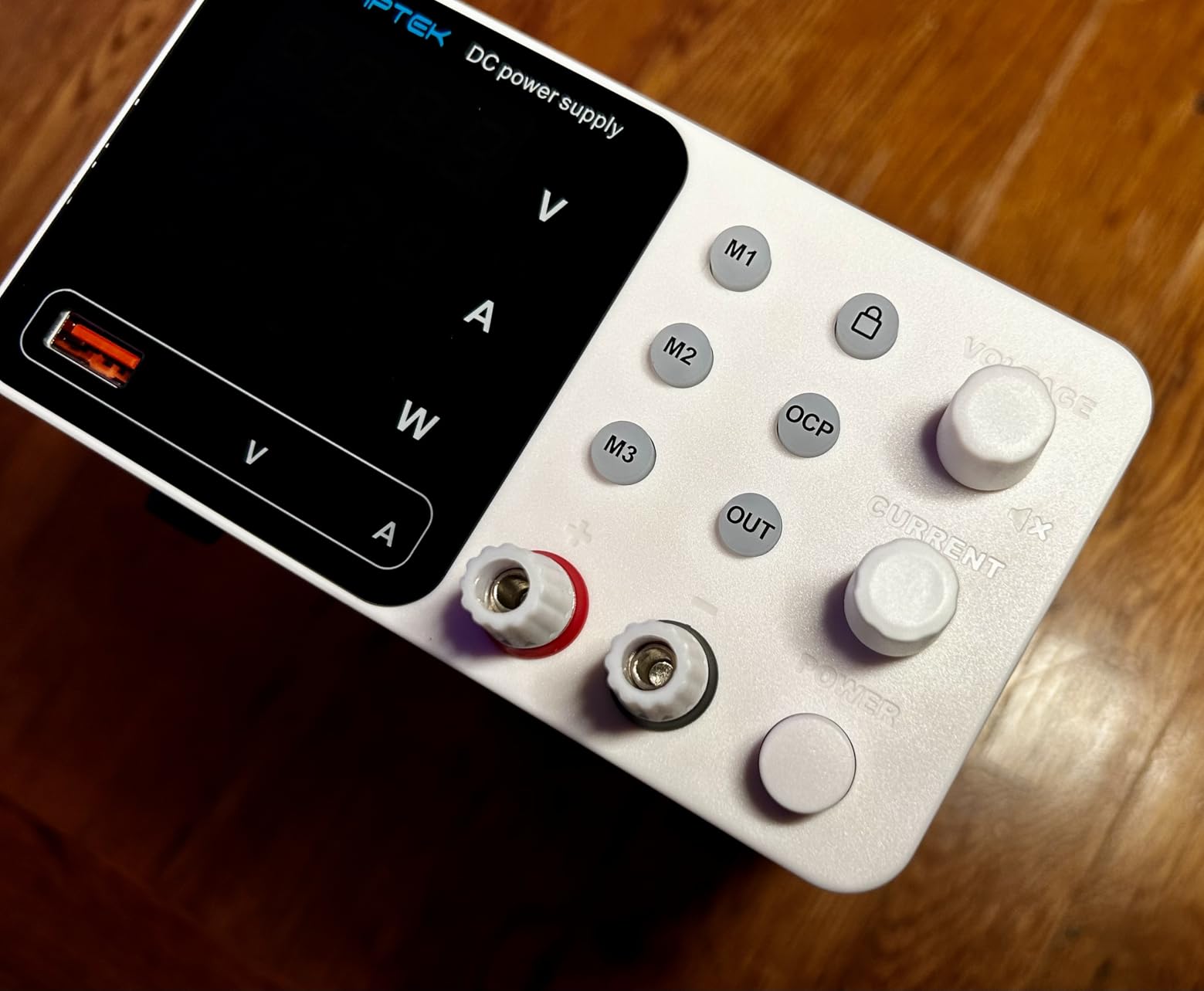
The output on/off switch means you can rewire a load without cycling the mains, and the OCP auto-cuts on a short then resumes once the fault clears. A key lock stops a bumped knob from changing a setpoint mid-test, which matters more than it sounds.
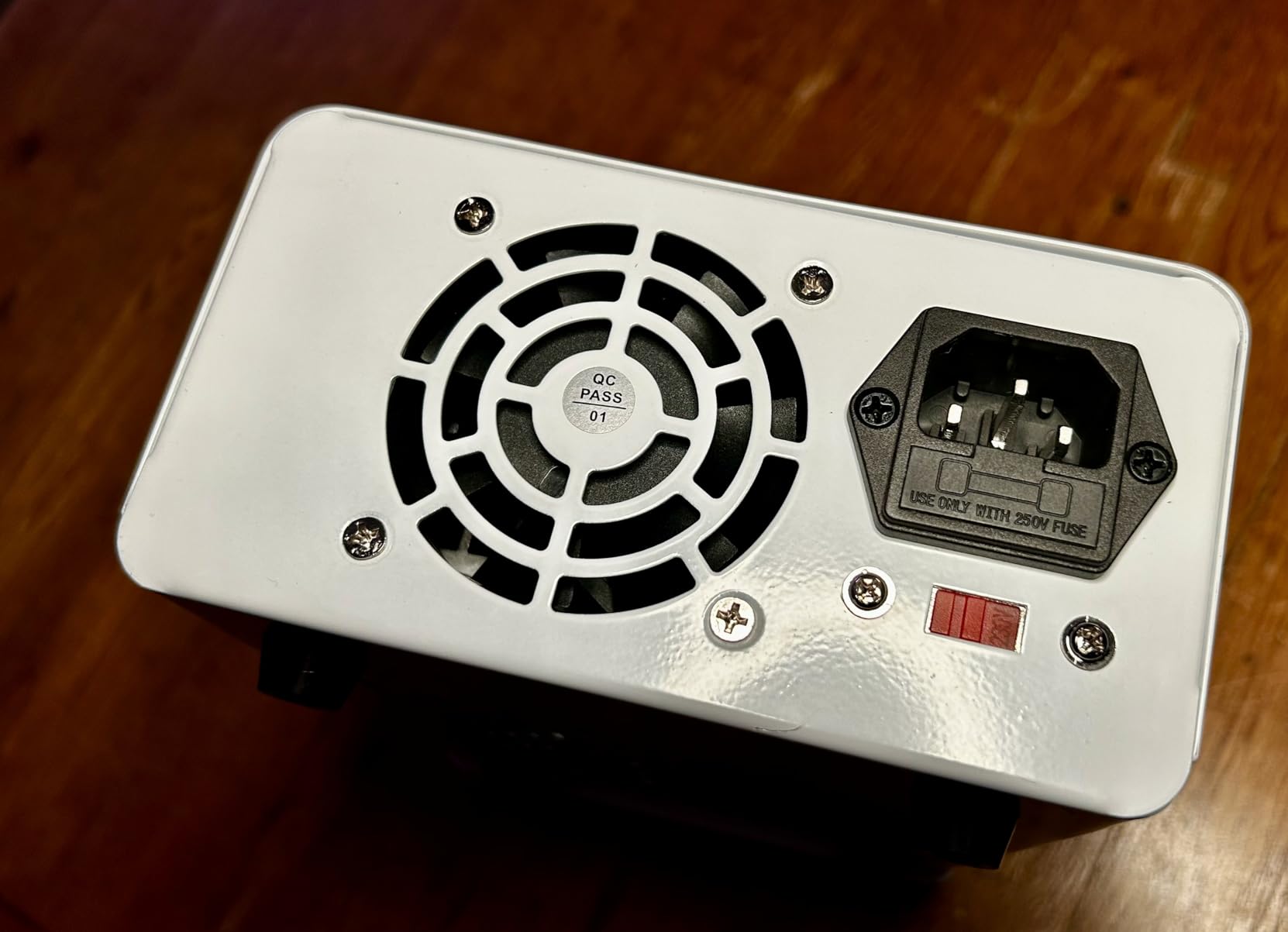
Check the rear 115V and 230V selector before first power-up, because one owner reported a voltage-hold problem caused by leaving it in the wrong position. Rated weight is 1.2 kg with a 8.27 by 5.71 by 3.15 inch body.
Who will get the most out of it?
Anyone who cycles between the same handful of setpoints during a session, such as firmware bring-up on a board that needs 3.3V, 5V and a 12V sensor rail. The key lock is useful in a shared or busy workspace.
Where it falls short?
The bundled output leads are terminal-style rather than banana plugs, which is awkward for breadboard work until you replace them. The power-on beep cannot be muted, the amperage readout is only roughly indicative, and some models lack an earth connection.
8. NICE-POWER SPS-C3010 – vertical supply with a front-panel OUTPUT switch
- OUTPUT enable switch lets you set voltage and current with the load disconnected
- Stable low-ripple output under continuous 4-6A loads
- Coarse and fine potentiometer knobs plus a front power switch
- Automatic constant-voltage to constant-current conversion
- 5V 2A USB port and temperature-controlled fan
- Light 2.6 lb vertical chassis with rubber feet
- Fine adjustment range is narrow
- 110V input only
- One owner reported an early unit failure
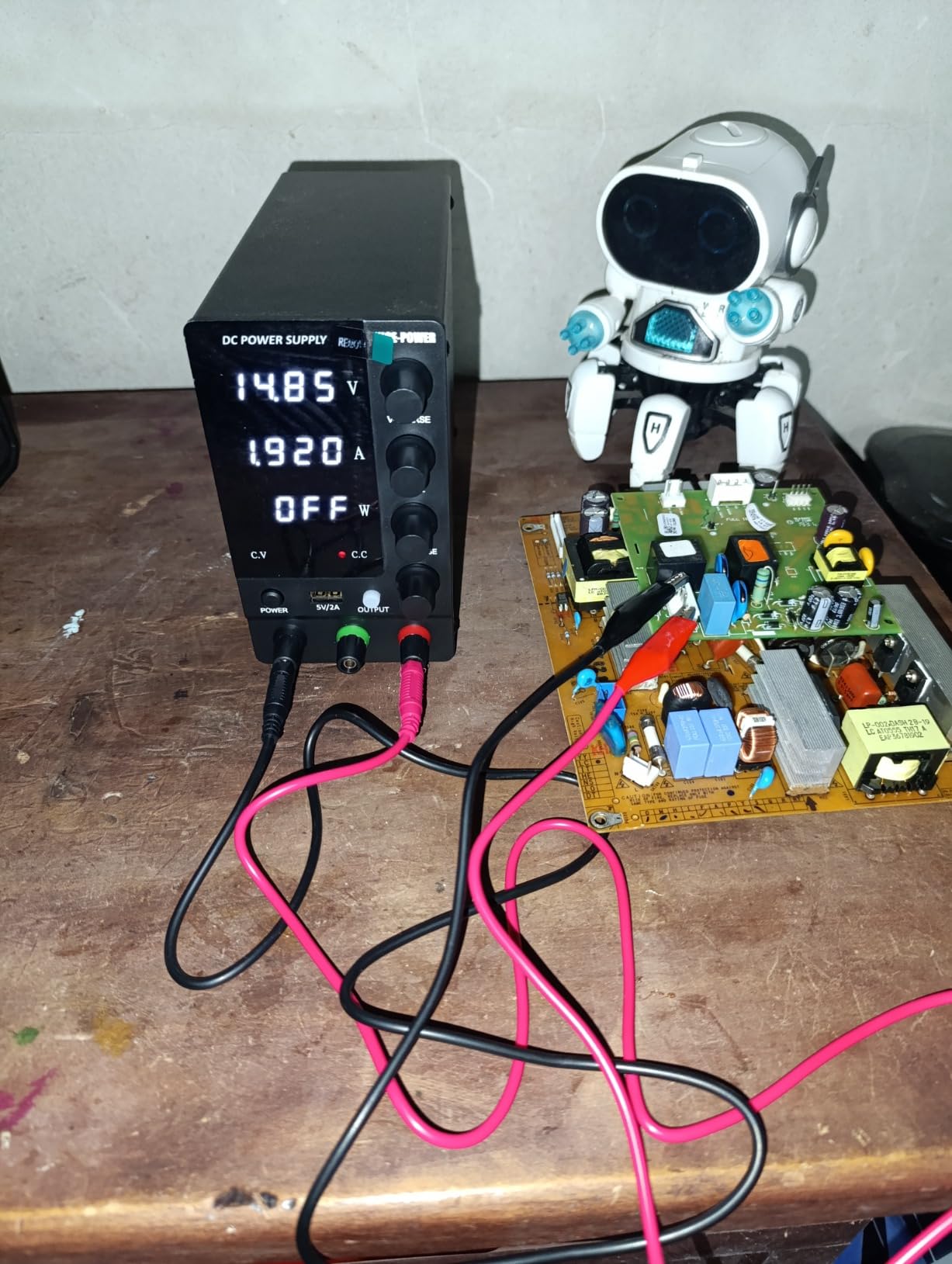
The dedicated OUTPUT switch is the reason this one sits high for me. You can set your voltage and current with the load disconnected and only then connect the circuit, which removes the single most common cause of a bad first power-up.
Reviewers use it for balancing EV module packs, repairing power-tool batteries and general prototyping, and credit the automatic constant-voltage to constant-current handover. Occasional quality complaints appear, but replacements have been reported as satisfactory.
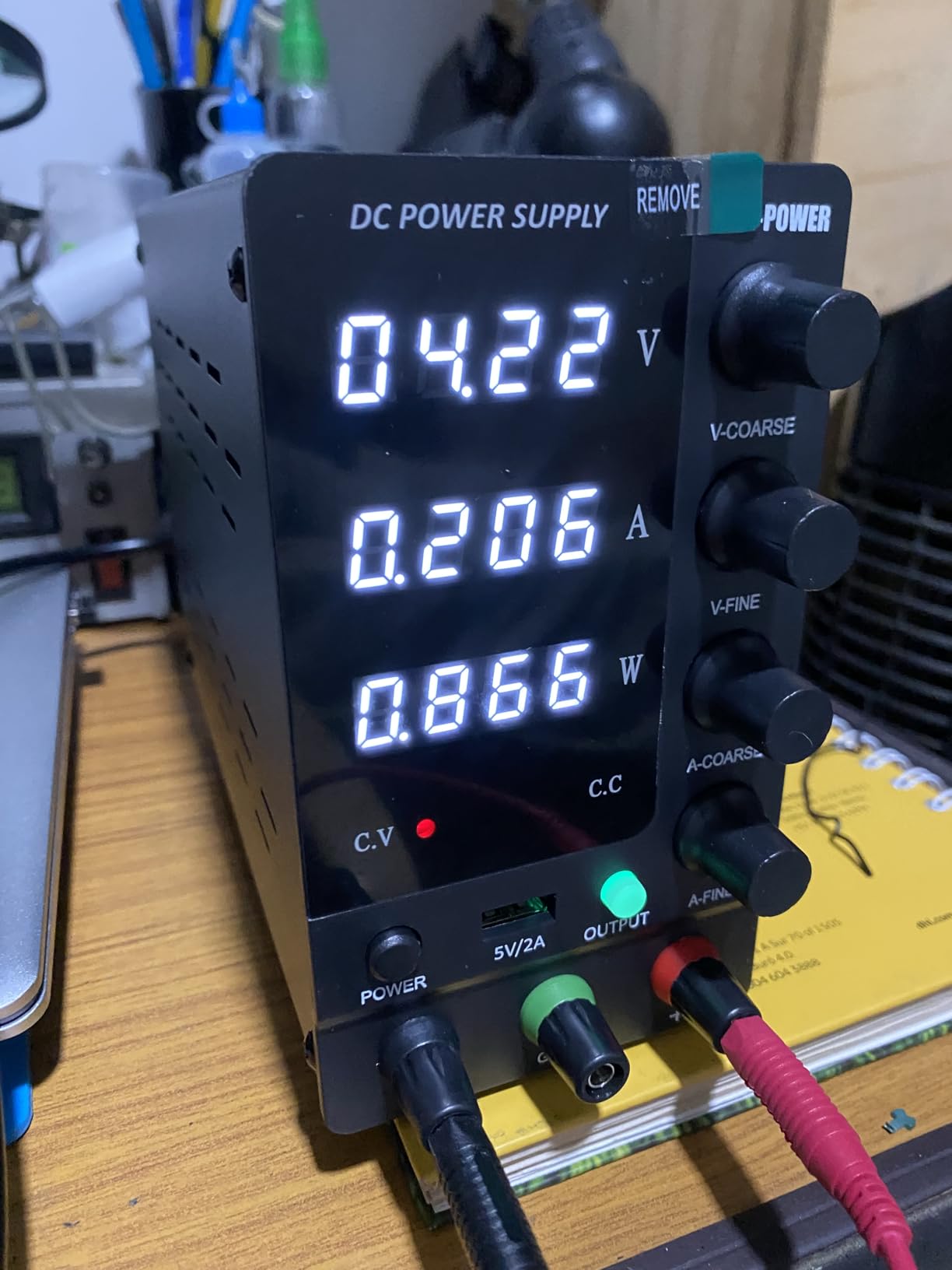
Protection here is the most complete on a single-channel unit, covering leakage, grounding, over-voltage, over-current, over-power, overload, over-temperature and short circuit. The 4-digit LED resolves to 0.01V and 0.001A with a live power calculation.
Output was reported stable under continuous 4 to 6 amp loads, which is where cheaper units tend to sag. The vertical 3.3 by 8.4 by 5.5 inch chassis at 2.6 lb leaves bench depth free for a scope.
Who will get the most out of it?
Anyone powering packs of cells for balancing work, or running continuous loads in the 4 to 6 amp band where lesser supplies sag. The OUTPUT switch makes it the safest of the single-channel options to hand to a beginner.
Where it falls short?
The fine adjustment range is narrow enough that you may need to re-centre the coarse knob for a precise value. Input is 110V only, and one owner reported an early failure after about a week, so test the output before a project depends on it.
9. LONGWEI LW-K3010D – 30V 10A aimed at repair work
- Backlit 3-digit LED readout of voltage
- current and power
- Adjustable in 0.1V and 0.01A steps across the full range
- Intelligent temperature-controlled fan with side heat-radiation grooves
- Includes test probes and an alligator clip output cable
- Grounding wire with limited-flow
- over-power
- over-temperature and overload protection
- Only a 3-digit display against 4-digit rivals
- Heavier chassis than comparable 300W models
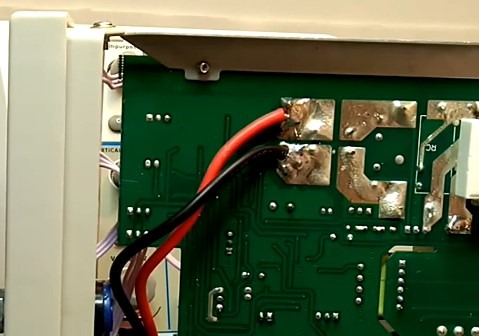
The LW-K3010D turns up in spectrophotometer and lab equipment repair, which is a good sign for anyone doing fault-finding rather than design. The 0.1V and 0.01A steps are coarse by hobby standards but perfectly workable when you are chasing a fault.
Buyers appreciate the clear backlit display and a fan that runs cool, and the included accessories mean you can start immediately. Occasional remarks focus on the coarse 3-digit readout, which is the one real specification compromise.
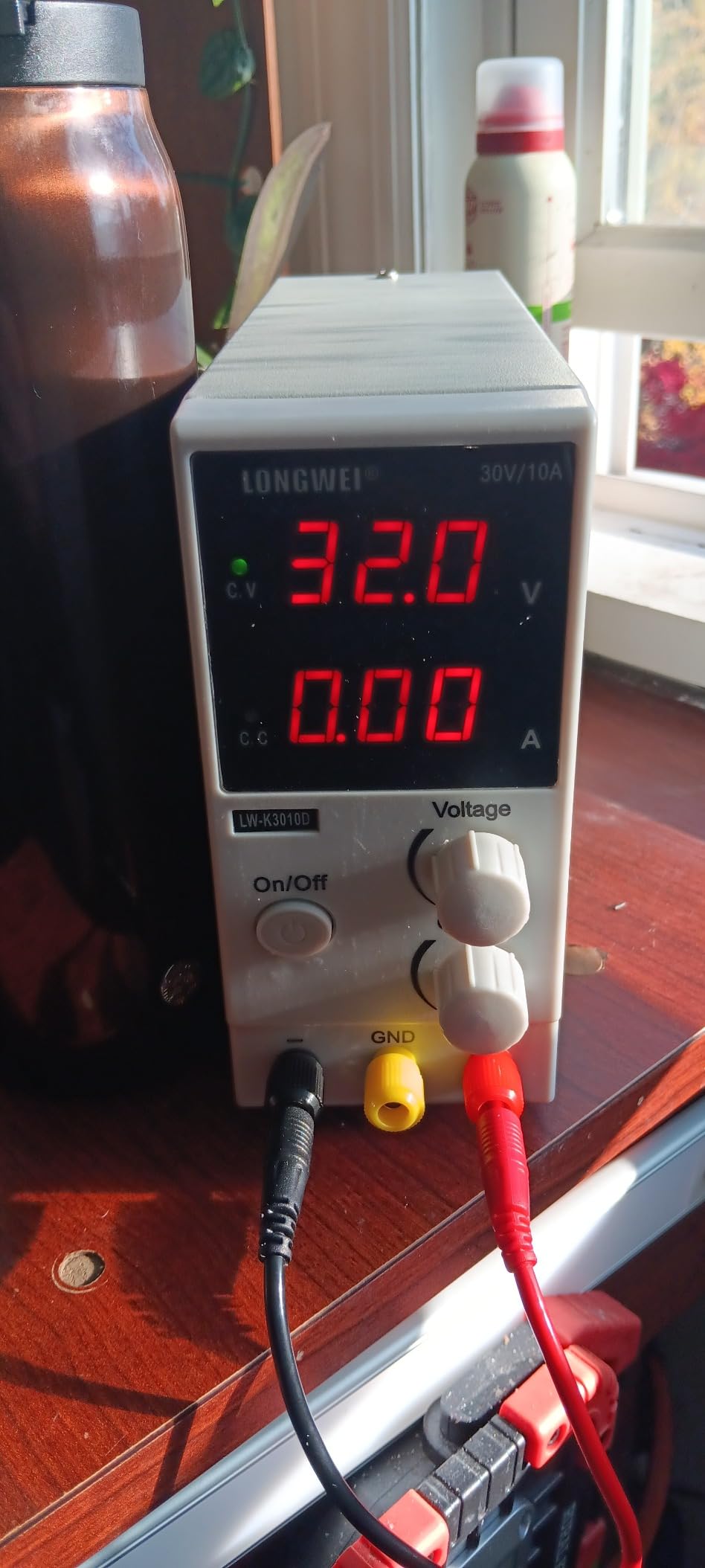
The grounding wire and the limited-flow, over-power, over-temperature and overload protections are useful on a repair bench where the load is unknown. Side heat-radiation grooves supplement the fan and keep the chassis cooler at sustained load.
It comes with test probes and an alligator clip output cable, plus a US power cord. The silver finish and crystal enclosure construction are unusual in this category, and the input is listed as 240V AC, so check the destination variant.
Who will get the most out of it?
Repair and refurbishment work on equipment with unknown power demands, and 230V users who want a unit matched to their local mains. The included probes and clips save a trip to the drawer before you start.
Where it falls short?
A 3-digit display shows 30.0V rather than 30.00V, so fine setpoint work is guesswork at the low end. It is also heavier than comparable 300W models, and the 4.4 average rating sits below the rest of this list.
10. FNIRSI DPS-150 – portable 150W unit with a flip colour screen
FNIRSI DPS-150 DC Power Supply Variable 30V 5A, 4-Digit IPS Flip Display
- Under 20mV ripple for precision work and sensitive equipment
- 2.8 inch IPS colour screen with 90-degree flip for multi-angle viewing
- Numerical and curve display modes for a live view of power status
- PC
- QC and DC input modes with six preset parameter groups
- Eight safety protections including overvoltage
- overcurrent
- short circuit and overheat
- Compact 4.06 x 3.07 x 1.18 inch body at 1.4 lb
- 150W total ceiling is lower than the 300W models
- Highest share of 3-star reviews in the FNIRSI listing
The DPS-150 is the one to take to a customer site or a classroom. At 4.06 by 3.07 by 1.18 inches and 1.4 lb it fits in a tool bag, and the 90-degree flip screen means you can read it without crouching over the bench.
Reviewers prioritise the colour screen, curve plotting and low ripple over raw wattage. The connection options are unusually flexible, with 4mm banana heads, U-shaped terminals and fine copper wires all supported.
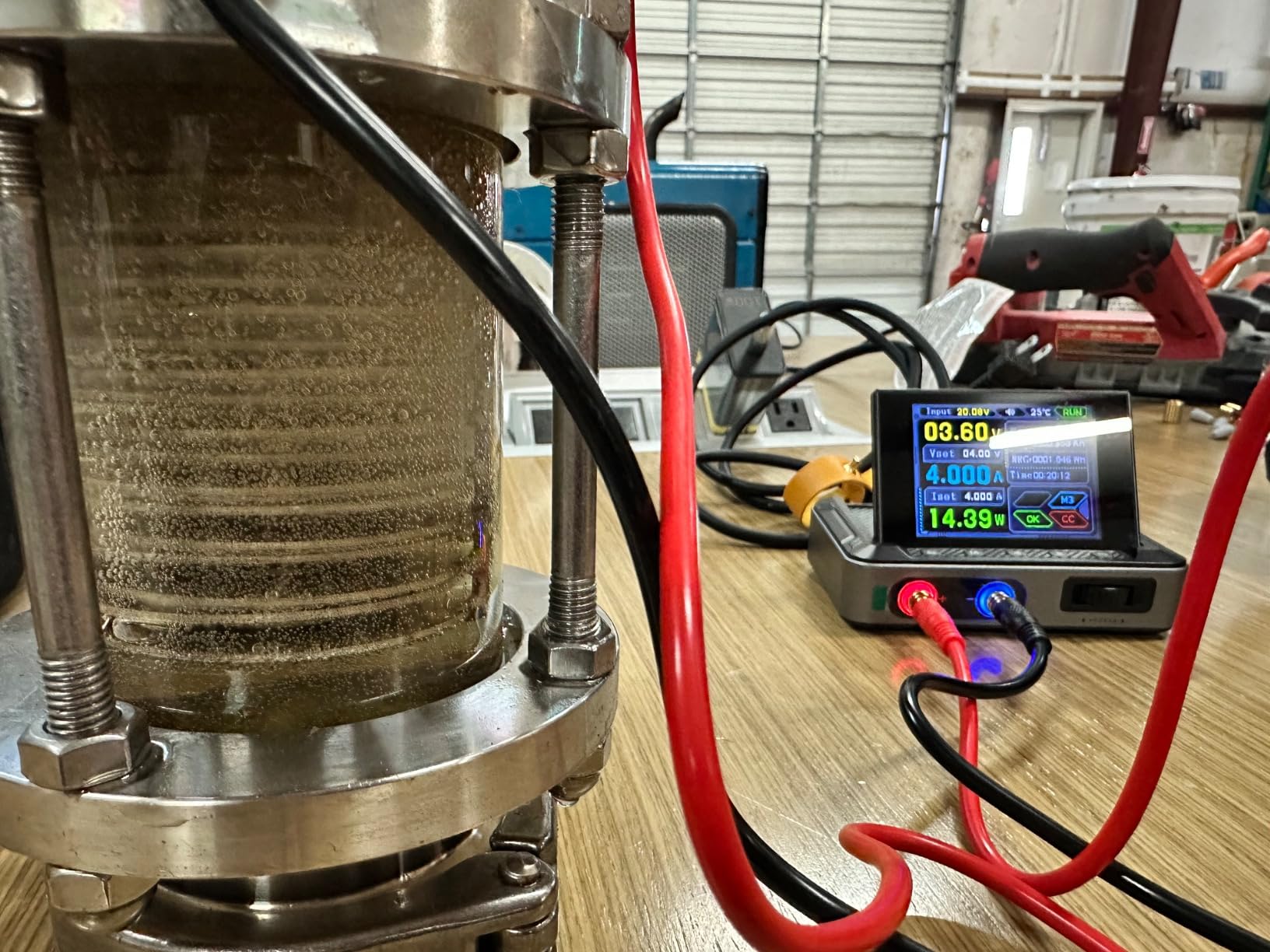
Under 20mV ripple makes it a reasonable choice for sensitive equipment, and the eight protection mechanisms include overvoltage, overcurrent, short circuit and overheat. A one-year manufacturer warranty is included.
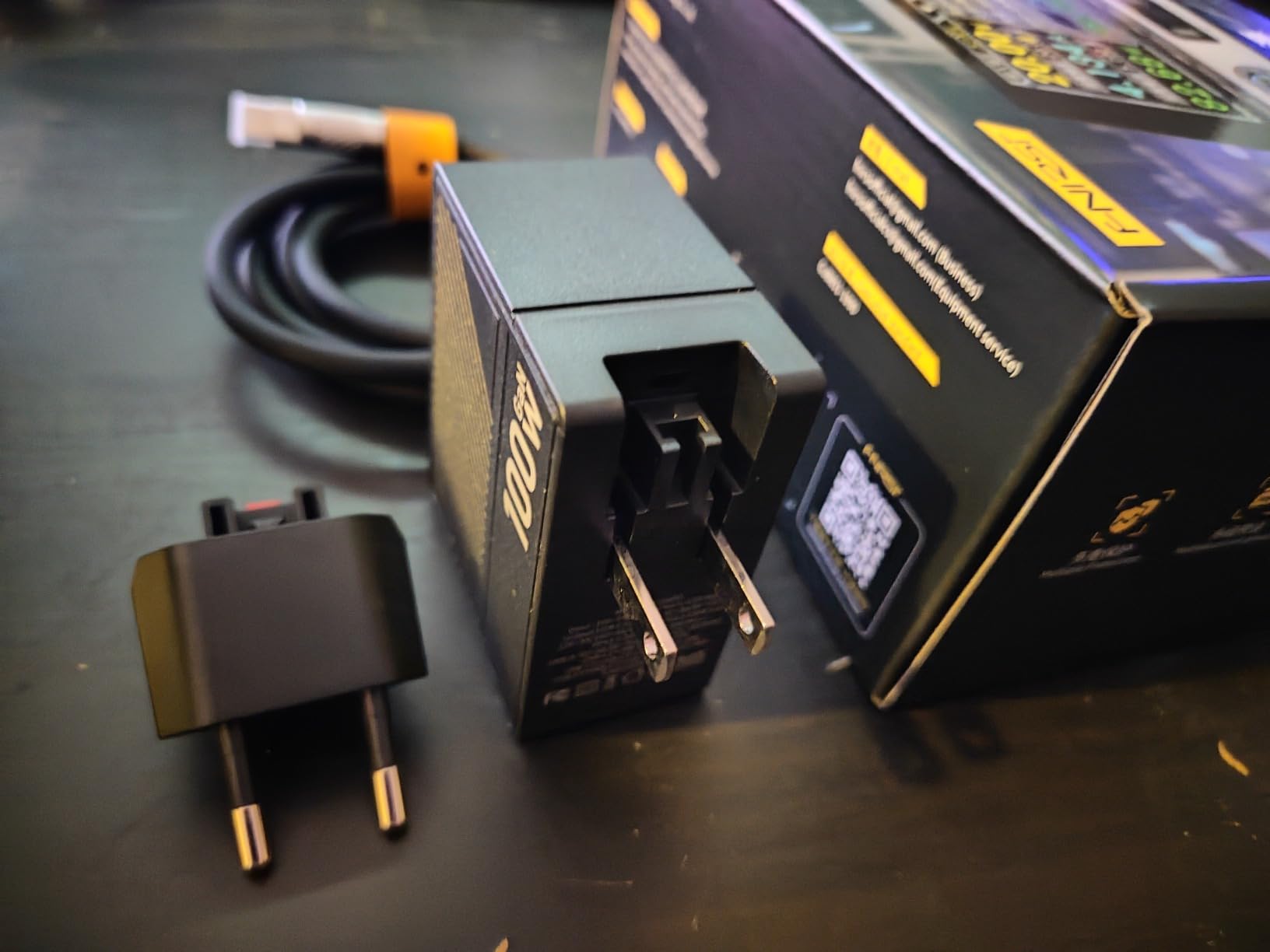
PC, QC and DC input modes mean you can run it from a USB-C charger or a battery pack, which is what makes it genuinely portable rather than just small. Six preset parameter groups speed up repeat setpoints.
Who will get the most out of it?
Field repair, teaching labs and anyone working away from a fixed bench. The flip screen and the choice of terminal types make it readable and connectable in places a fixed supply cannot go.
Where it falls short?
The 150W total ceiling is half what the 300W models deliver, so it cannot drive larger LED runs or heavier motors. It also carries the highest share of 3-star reviews, reflecting a real feature trade-off rather than a defect.
How to Choose a Bench Power Supply?
What to look for in a bench power supply?
Eight things decide whether a supply is useful to you:
Real constant current limiting. Short the outputs and confirm the CC indicator lights and the displayed current actually clamps. A CC light that only flashes while the current runs away is worse than no indicator at all.
Adjustable output switch. Set voltage and current with the load disconnected, then connect. If you have to cycle the mains to enable the output, you will spike it every time.
0-30V and 0-5A minimum. That covers nearly all microcontroller, LED and small motor work. Go to 10A for 12V motor and LED strip testing.
Floating, isolated outputs. Required if you ever want a negative rail or want to wire two supplies in series.
Protection you can set yourself. Settable overvoltage, overcurrent and thermal thresholds beat a fixed factory trip point.
Ripple and noise figures. Matters most for analog, audio and RF. A linear supply wins here by design.
Output terminal type. Binding posts and banana jacks beat bare screw terminals for breadboard work.
Warranty length. One year or more, and a downloadable manual that documents a genuine CC mode.
Linear or switching: which suits your circuits?
A linear supply regulates with a pass transistor and adds almost no switching ripple, which is why the KORAD is the pick for analog work. It also runs hot and wastes power as heat.
A switching supply is smaller, cooler and more efficient, and it reaches 10 amps in a lightweight box. The noise it adds rarely matters for digital logic, and for most hobby work that trade is the right one. Match the topology to the circuit rather than the price.
How many volts and amps you actually need?
Most hobby circuits fall into three bands. Microcontrollers and sensors sit at 3.3V and 5V below 500mA, 12V motors and servos need 2A or more, and LED strip runs want 10A at 12V. Buy for the largest load you expect, not the smallest.
Check whether the unit has a separate output enable, and whether the display reads the setpoint or the value at the terminals. At high current the lead resistance means those are not the same number, which is the single most common source of confusion in a beginner’s first hour.
Setting the current limit before your first power-up
Do this before connecting anything, every time you bring up a new board.
Set the output voltage to the circuit’s nominal rail with the load disconnected.
Short the output terminals together with a jumper.
Turn the current limit up from zero until the CC indicator lights, then back off slightly.
Remove the short, confirm the display returns to CV, and only then connect your circuit.
If a board is genuinely faulty, that limit turns a dead component into a reading on the display. Setting the limit low, around 100mA for a microcontroller board, and raising it once the current draw looks sane is the habit worth building.
Why the earth binding post is not a common?
Many three-post supplies show red, black and green terminals, and the green one looks like a shared negative. It is not. It is a chassis earth connection, electrically separate from the floating output terminals, and it cannot supply a return path for your circuit current.
This is also the reason a single-channel floating supply can still produce a positive and a negative rail for op-amp work: you connect the negative output to the circuit common and the supply’s own output forms the loop. Just never treat green as common.
Two things a bench supply is not
It is not a battery charger. A supply set to a cell’s nominal voltage has no CC-to-CV profile, no cell balancing and no thermal monitoring, and charging lithium cells that way has started fires in hobby workshops. Use a proper charger.
Nor is it a substitute for an ATX power supply in the way many expect. An ATX unit is fine for fixed 5V and 12V rails, but it cannot be varied, current-limited in a useful way, or read back, and the two should never be paralleled because their feedback loops fight. If you want mains-derived DC, buy the instrument.
Display resolution is not accuracy
A 0.01V readout means the last digit changes, not that the output is accurate to 10mV. Accuracy is a separate spec, usually stated as a percentage plus a span term, and the gap between the two is widest on budget models. Verify with a multimeter before you trust a reading, and remember that many hobby units report the setpoint rather than the measured terminal voltage.
For remote and automated work, units with PC control or SCPI over USB or LAN change what a bench session looks like. Our guide to programmable power supplies covers that class in more depth.
Frequently Asked Questions
What is a good brand of bench power supply?
Korad and Siglent are the two names most often recommended in electronics communities, and both appear in this roundup. Korad is known for linear regulation and quiet output, Siglent for multi-channel isolated outputs with a long warranty. For adjustable DC units aimed at hobby work, the Kiprim and HYELEC models here score highly on measured accuracy and feature density. The brand matters less than verifying real constant current limiting before you buy.
How do I choose a bench power supply?
Start with the largest load you expect: 0-30V and 0-5A covers most microcontroller, LED and small motor work, while 10A at 30V is needed for LED strips and 12V motors. Then confirm a real constant current mode, a separate output enable switch, and protection thresholds you can set yourself. Choose linear regulation for analog and RF work, switching for digital, and add channels only if you need dual or multiple rails.
Which brand of power supply is the most reliable?
Reliability tracks build quality and protection coverage more than the badge on the front. The Siglent SPD3303X-E carries a 3-year warranty, the Kiprim DC310S adds adjustable overvoltage, overcurrent and thermal thresholds, and the WANPTEK includes a key lock to protect setpoints. Budget single-channel models are adequate but report more early failures, so test output and current limiting before a project depends on one.
What is the best 12 volt power supply for bench testing?
For 12V bench testing, look for a supply whose current limit is above your expected load. The 30V 10A models in this roundup, including the Kungber SPS3010B, Jesverty SPS-3010 and NICE-POWER SPS-C3010, give ample headroom for 12V motors, servos and LED strip. Set the current limit before the first power-up and raise it gradually while watching the display rather than assuming the circuit is fine.
Why are bench power supplies so expensive?
The gap between budget and premium models buys linear regulation for low noise, multiple isolated output channels, hardware settable protection, measured accuracy and a longer warranty. A three-year warranty and independent channel control on a Siglent SPD3303X-E sit at a very different tier from a basic switching unit. For most digital hobby work a mid-range single-channel model is enough, and the premium tier only pays off for analog, rail simulation or lab use.
What should I look for in a bench power supply?
Check eight things: genuine constant current limiting confirmed by shorting the outputs, a separate output enable switch, at least 0-30V and 0-5A, floating isolated terminals, user-settable overvoltage and overcurrent limits, stated ripple and noise, binding post or banana outputs, and a warranty of a year or more. Confirm the accuracy spec separately from the display resolution, because the two are frequently conflated in budget models.
Which Bench Power Supply Should You Buy?
The Kiprim DC310S takes our top spot among the best bench power supplies for hobby electronics because it packs measurable accuracy, a colour screen, programmable waveforms and user-settable protection into a single-channel 300W body. Where the work is analog and noise is the enemy, the KORAD KD3005D is the right call, and where you need three isolated rails, nothing else on this list substitutes for the Siglent SPD3303X-E.
Whatever you pick, set the current limit before the leads go on. That one habit prevents more destroyed boards than any other feature on any of these machines. All picks and specifications were last verified in October 2026.