
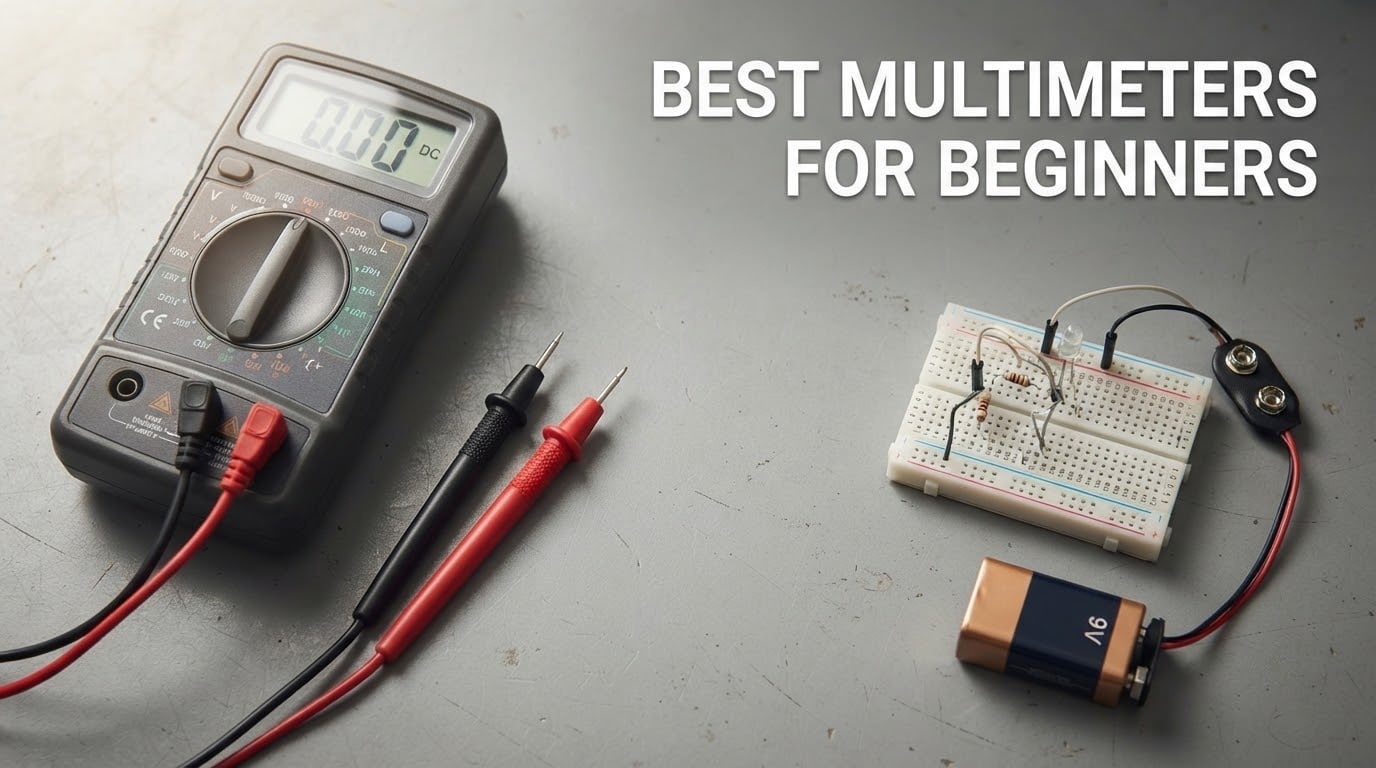
Short answer: the AstroAI AM33D is the best multimeter for beginners who just want a dependable meter for outlets, batteries and basic circuits, and the AstroAI 6000-count True RMS model is the pick for anyone who will also be probing breadboards and 3D printer electronics. Both measure AC and DC voltage, DC current, resistance, continuity and diode test, both switch on with a single 9V battery, and both include test leads in the box. Everything else on this list is a variation on that idea, chosen for a specific job.
A multimeter is the single most useful diagnostic instrument in electronics. It measures voltage, current and resistance, and most beginner models add an audible continuity beep, a diode test and sometimes capacitance, frequency and temperature. More importantly for a beginner, it is the only way to confirm that a circuit is dead and a wire is unbroken before you touch it, which makes it a safety instrument as much as a measuring one.
You will want one if you are starting electronics as a hobby, working on Arduino, ESP32 or Raspberry Pi boards, building 3D printers, tracing car 12V systems, or fixing things around the house. It is also the prerequisite tool for almost any robotics build, which is why we keep coming back to it. We compared eight meters side by side, weighed the feature sets against what a beginner actually touches, and cross-checked the claims against owner reviews. Last updated: October 2026.
Table of Contents
Key Features to Look For in a Beginner Multimeter
These are the criteria we sorted all eight meters against. If a feature is not on this list, it is almost certainly something you can add later for less money than you would spend on a meter that has it.
Auto-Ranging
Auto-ranging meters pick the measurement range themselves, so you turn the dial to voltage and touch the probes to the circuit. Manual-ranging meters force you to select a scale first, and a wrong choice shows a lone 1 or an overload symbol instead of a number. For a first meter, auto-ranging removes an entire category of beginner frustration, which is why it heads this list.
Safety Ratings
A CAT rating tells you what the meter is certified to survive. CAT II covers plug-in outlets and household wiring, CAT III covers sub-panels and appliance circuits, and CAT IV covers the service entrance where the utility supply meets the building. CAT III 600V is the practical minimum for anyone who will open a wall or a panel. Our reasoning for CAT ratings in more detail is in the buying guide below.
Input Impedance
Input impedance is the resistance the meter presents to the circuit, and 10 MegaOhm is the number to look for. A 10 MegaOhm input draws so little current that it will not disturb a weak signal or a vehicle ECU, which makes the meter safe to connect across a live automotive circuit just to read the voltage.
True RMS
True RMS meters calculate the true root mean square of an AC waveform. Average-responding meters approximate that on clean sine waves and drift on anything with electronics in it, because switched-mode power supplies and dimmers produce distorted, non-linear waveforms. You do not need True RMS on day one, but it is the single feature that matters most if you will work on modern mains or variable speed drives.
Counts and Resolution
Counts are how many digits the display can show. A 1999-count meter reads 0 to 1999 before it switches to a decimal place, and a 6000-count meter reads to 6000, giving you roughly three times the resolution on the same value. As one electronics-design forum regular put it, most beginner measurements are just as good on a 3-1/2 digit meter as on a 4-1/2 digit one. Resolution is the last thing to pay for.
Continuity Beep and Diode Test
An audible continuity beep lets you trace a wire or check a switch without watching the display, and it turns cable testing from a two-minute job into a five-second one. Diode test lights up LEDs and confirms forward voltage drops. Both are cheap to include, and every meter on this list has them.
Top 3 Picks for the Best Multimeters for Beginners (October 2026)

Every Meter in This Roundup at a Glance (October 2026)
| Product | Specifications | Action |
|---|---|---|
 AstroAI AM33D Digital Multimeter 2000 Counts AstroAI AM33D Digital Multimeter 2000 Counts |
|
Check Latest Price |
 Klein Tools MM325 Manual-Ranging 600V Multimeter Klein Tools MM325 Manual-Ranging 600V Multimeter |
|
Check Latest Price |
| AstroAI True RMS 6000-Count Auto-Ranging Multimeter |
|
Check Latest Price |
 Crenova MS8233D True RMS 6000-Count Multimeter Crenova MS8233D True RMS 6000-Count Multimeter |
|
Check Latest Price |
 Innova 3320 Auto-Ranging Digital Multimeter Innova 3320 Auto-Ranging Digital Multimeter |
|
Check Latest Price |
| KAIWEETS HT118A Automotive True RMS 6000-Count Meter |
|
Check Latest Price |
 Klein Tools MM320KIT Electrical Test Kit Klein Tools MM320KIT Electrical Test Kit |
|
Check Latest Price |
 Fluke 117 True RMS Multimeter Fluke 117 True RMS Multimeter |
|
Check Latest Price |
1. AstroAI AM33D – The Lowest-Cost Way Into the Hobby
- Backlit 1999-count LCD reads clearly in dark panels
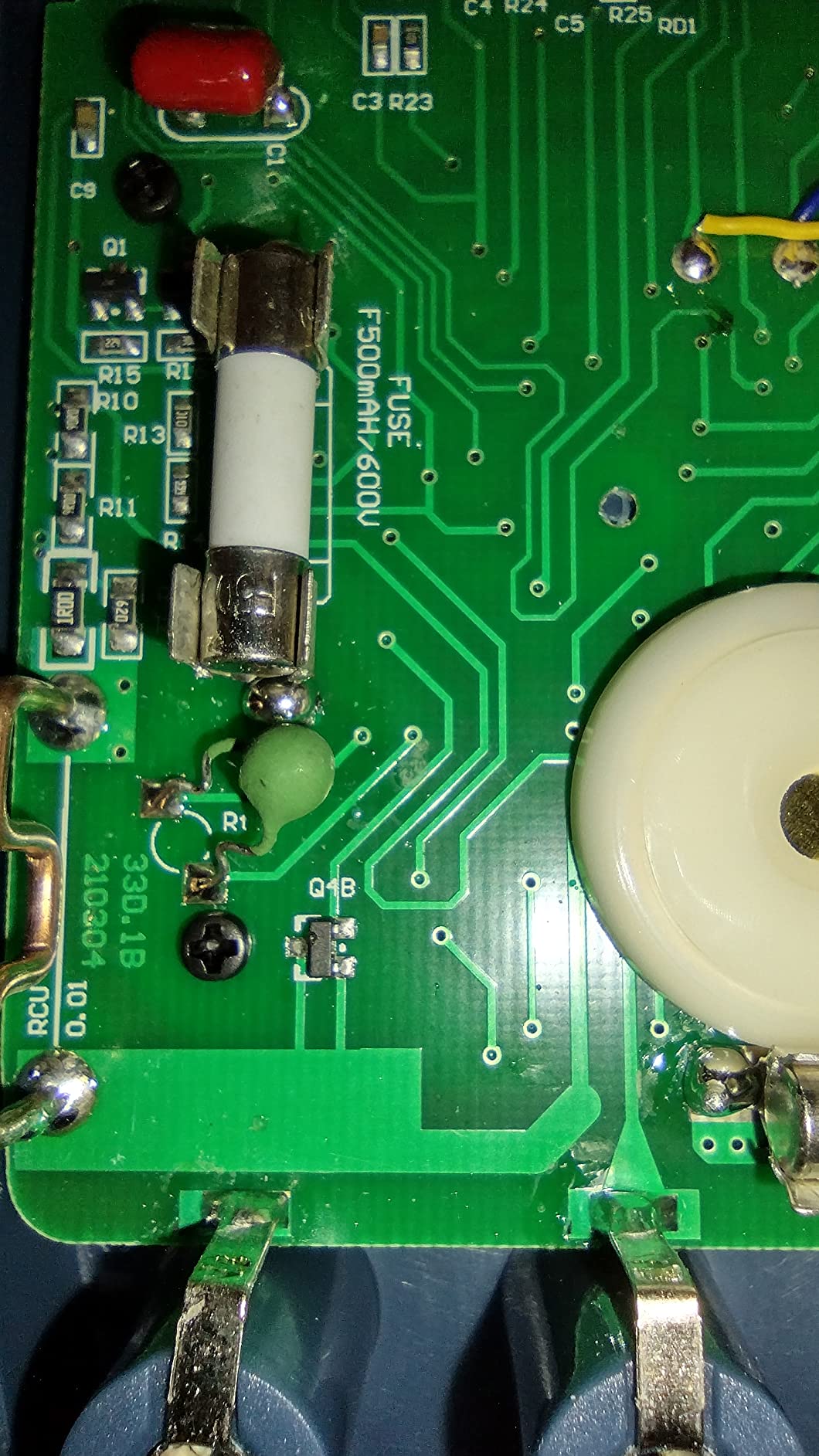
- Double anti-burn fuse with silicone protective cover
- Test leads battery and manual all in the box
- Data hold and audible continuity buzzer
- Manual ranging means you pick the range yourself
- No AC current measurement
- 1999 counts is coarse for precision work
The AM33D is the meter I hand to friends who are buying their first instrument, and it is the most reviewed meter in this group by a wide margin, with owner feedback numbering into the tens of thousands. It covers the four things a beginner actually needs: AC and DC voltage, DC current, and resistance, with continuity and diode test on the same dial. Maximum working voltage is 500 volts, which is comfortable for outlets, lamp circuits and any 12V or 24V DC system.
The 0.6 inch backlit LCD is bigger than it looks in photos, and the display marks negative readings with an explicit sign rather than a leading minus tucked into the corner. That single detail is the difference between a beginner trusting a reading and double-checking it.
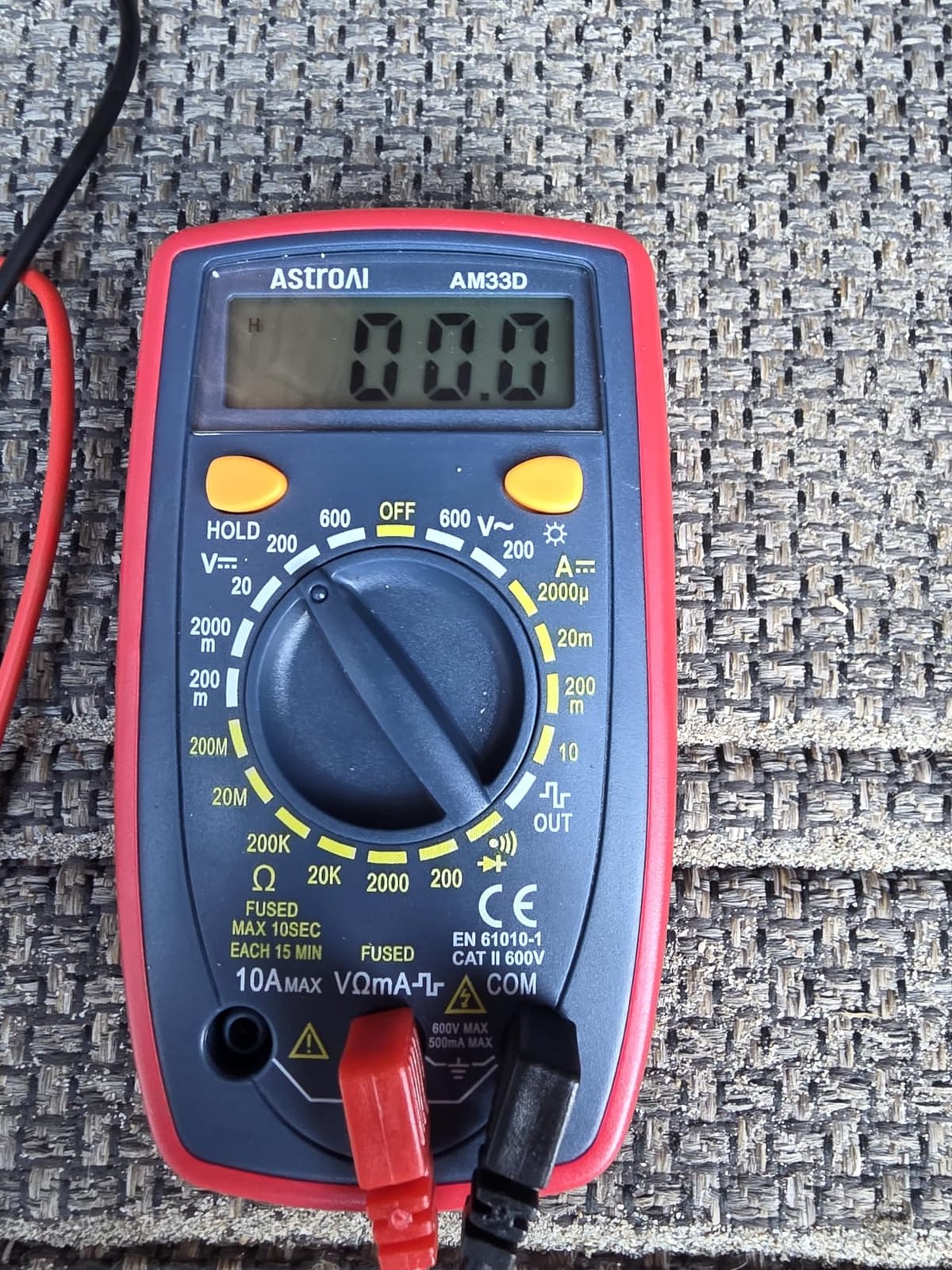
The honest drawback is manual ranging. You choose the scale yourself, and if you pick one that is too low the display shows a 1 or an overload symbol instead of a number. Owners also note that the two reads per second sampling speed is slow when you are watching a value move, and that setting the leads or the rotary switch incorrectly produces no reading at all, which confuses people who have never held a meter. AC current is not measured at all on this model, and AC voltage readings below 100mV are unreliable.
None of that stops it being the right first meter for household work. The double anti-burn fuse with its silicone cover is a sensible inclusion at this level, and the operating range of 32 F to 104 F means it will not misbehave in a cold garage or a hot attic. If you can live with choosing ranges manually, this is the least complicated way to learn what the numbers mean.
When this is the right first meter
Choose the AM33D if your work is outlets, light fittings, batteries, fuses and appliance cords, or if you are on a strict budget and want the cheapest path into owning a meter. Reviewers consistently report accurate readings for household and automotive testing, which is exactly where this meter will spend its life. The 3-year warranty from AstroAI is longer than most competitors in the category offer.
When to look elsewhere
Move up a step if you plan to work on a breadboard, where 1999 counts and two reads per second make small voltage changes hard to see. Anyone chasing AC current, capacitance, or anything above 500 volts also needs a different instrument. And if the idea of dialling in a range by hand will frustrate you, an auto-ranging meter will save weeks of avoidable hassle.
2. Klein Tools MM325 – Best CAT III Meter for Working Around Outlets
Klein Tools MM325 Multimeter, Digital Manual-Ranging 600V AC/DC Voltage Tester, Tests Batteries, Current, Resistance, Diodes, and Continuity
- Highest rating among the dedicated meters here at 4.7 stars
- LED lead-alert LEDs show correct lead placement
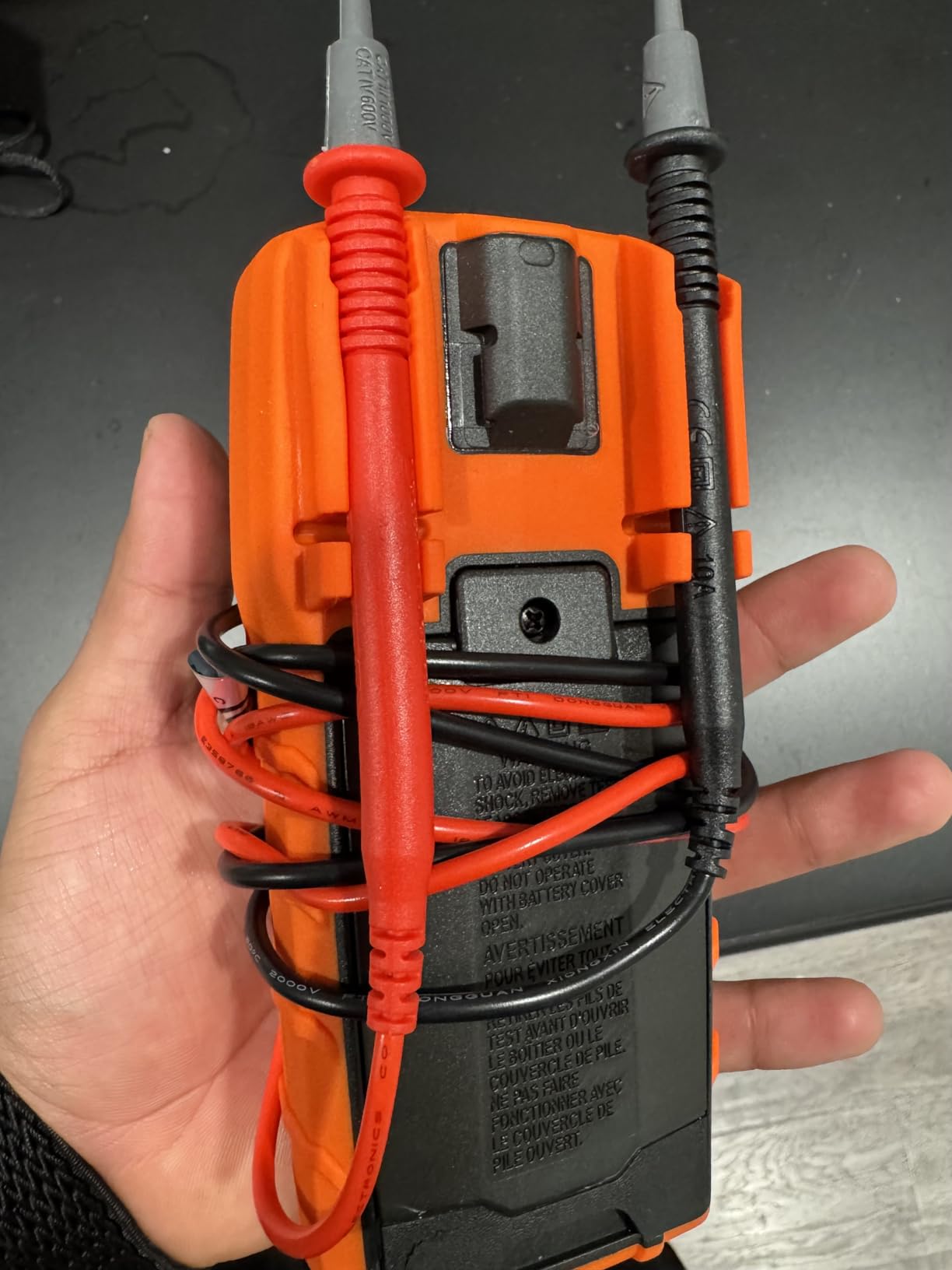
- Backlit LCD with test lead storage on the back
- Battery test mode covers 9V and 1.5V cells
- Manual ranging with no auto-ranging mode
- Resistance ceiling of 2 MegaOhm
- Magnet and kickstand accessories sold separately
Klein built the MM325 for people who work around outlets and panels rather than on circuit boards, and the CAT III 600V safety rating is the reason it stands apart from cheaper meters in this list. CAT III means it is certified for sub-panels and appliance circuits, not just plug sockets, which is the category a real DIY job lives in.
The feature I would highlight to a nervous beginner is the LED lead-alert protection. Two lights in the lead sockets show you which jack each lead belongs in, and they change state if you plug the red lead into the current jack when the dial is set to voltage. That is the exact mistake that ends up inside a safety section further down this page, and this meter warns you about it before the damage happens.
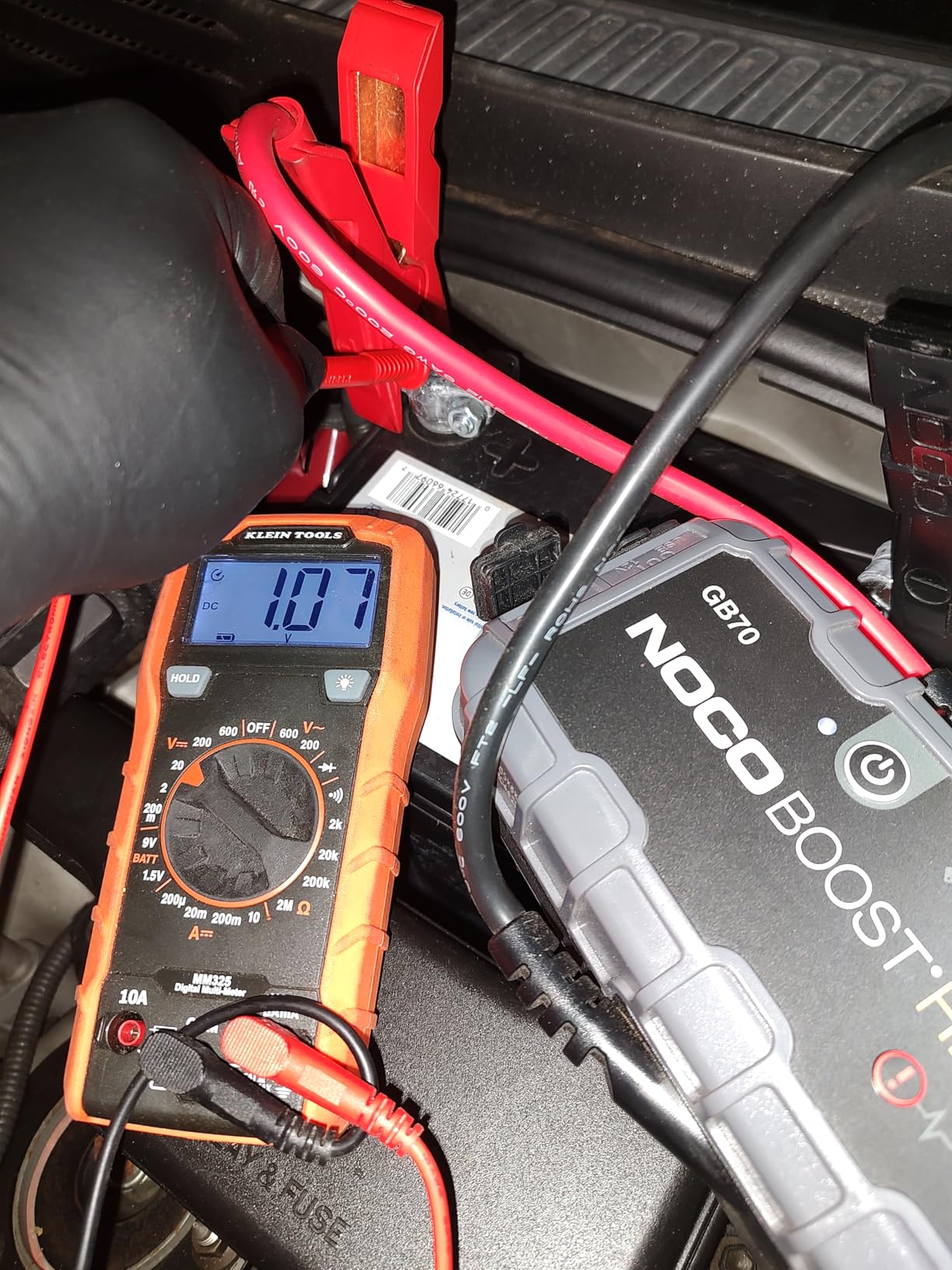
It also measures up to 600V AC and DC, 10A DC current and resistance to 2 MegaOhm, with continuity, diode and battery test functions. The battery test covers 9V and 1.5V cells, which covers the batteries most households actually have. Test lead holders on the back, a kickstand and an optional magnetic hanger mean you can work hands-free on a ladder or in a ceiling void.
The compromise is manual ranging, which the most cited owner complaint reflects, alongside the modest 2 MegaOhm resistance ceiling. In practice, a resistor above 2 MegaOhm only matters if you are working on high-value parts or a sensor array. For household circuits, this is a genuinely capable meter.
Why this suits a first-time homeowner
Owners highlight the build quality, the lead-alert LEDs and the backlit display as the beginner-friendly touches, and the feedback is heavily weighted toward people who wire professionally. The backlight matters more than expected when you are testing an outlet in a dark garage or behind an appliance. If your work is wiring rather than circuitry, the safety rating and ergonomics outweigh the resolution.
Where it falls short
The manual-ranging design means you will occasionally show an overload symbol and have to think about it, and the resistance range is the tightest of the dedicated meters here. The magnetic hanger and kickstand accessories are sold separately, so plan on buying one if you work overhead. For 5V rails and 3.3V logic levels, the 2 MegaOhm ceiling is not the limitation, the 1999-class resolution is.
3. AstroAI 6000-Count True RMS – Best All-Rounder for a Beginner Bench
- True RMS AC readings that track a Fluke-class reference meter
- Auto-ranging removes range selection entirely
- Capacitance frequency duty cycle and temperature in one meter
- Fast continuity beep makes tracing wiring quick
- Frequency counter falls short of its printed claim
- hFE socket uses a C-B-E rather than B-C-E layout
- Backlight does not stay lit continuously
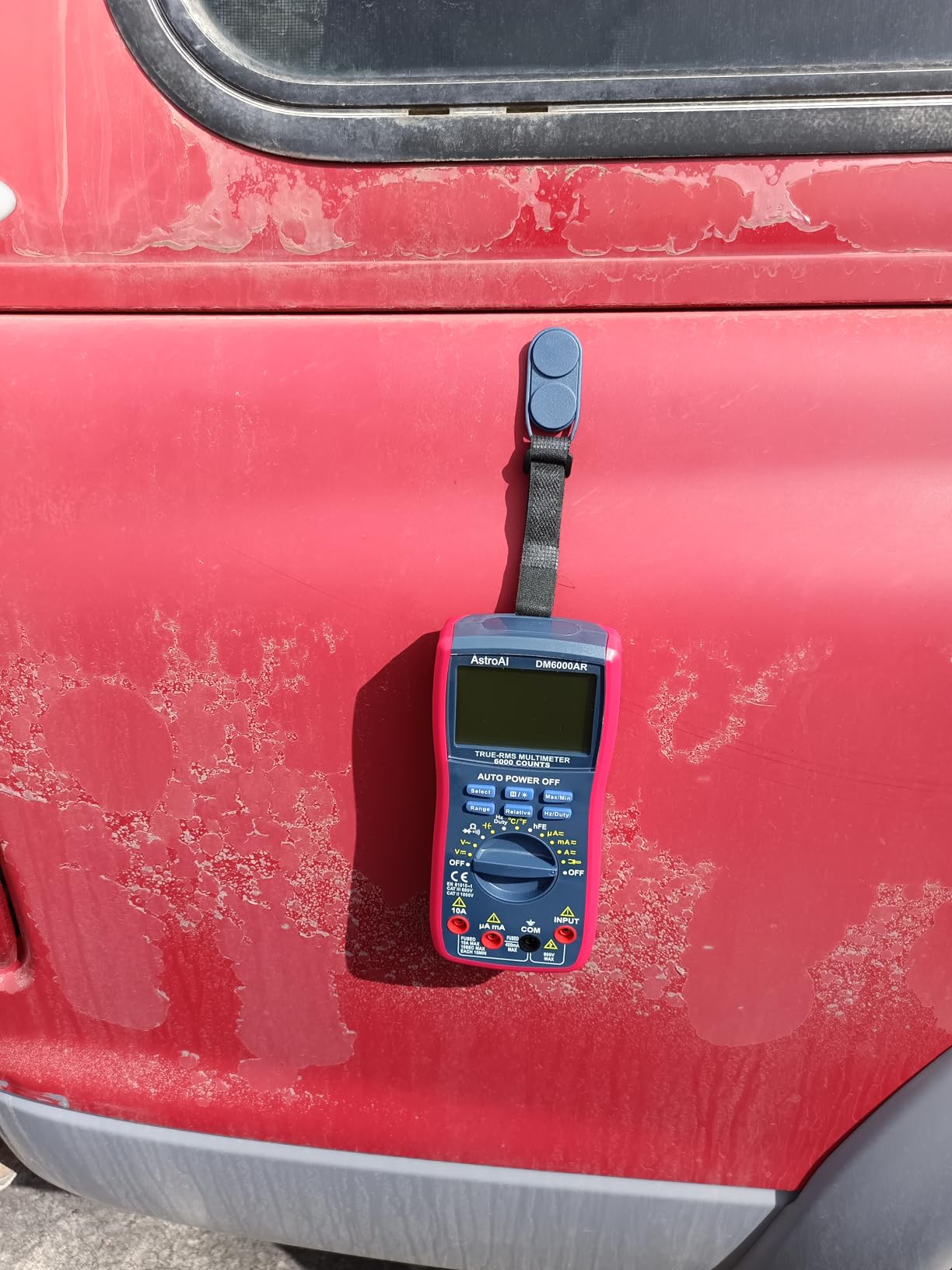
This is the meter I recommend to anyone moving from household repairs into electronics. It is auto-ranging with 6000 counts, True RMS on both AC voltage and AC current, and it handles up to 1000V DC. The measurement list covers AC and DC voltage and current, resistance, capacitance, frequency, duty cycle, continuity, diode and temperature, which is more capability than most beginners will ever use in their first year.
The jump from 1999 to 6000 counts is more useful than it sounds. On a 5V rail, a 1999-count meter can only show two decimal places before the range steps, while a 6000-count meter gives you a tenth-of-a-volt resolution. That is the difference between watching a rail sag under load and missing it entirely.
Owners consistently describe the True RMS AC readings as accurate against far more expensive reference meters, and the auto-ranging as fast enough that you stop thinking about it. The continuity beep is quick, which matters more than it sounds when you are chasing a break in a cable. The double ceramic fuse and the large backlit display round out a well-judged feature set.
The most detailed owner reviews are also the most critical. The advertised 60MHz frequency counter tops out far lower in practice and needs a few volts peak-to-peak to register anything, and the hFE transistor test runs a low test current through a socket wired C-B-E rather than the more common B-C-E order. Treat the transistor socket as a rough indicator, not a measurement.
Why it suits a growing hobby bench
If you are moving into Arduino, ESP32 or 3D printer work, this is the meter that stops you needing a second instrument in six months. The temperature probe covers heated bed thermistors, the capacitance range covers electrolytic and ceramic parts, and the duty cycle function helps with motor control and LED drivers. A kickstand on the back means you can set it on the bench and read it while your hands stay on the board.
What to watch out for
Do not rely on the frequency counter or the hFE socket for anything that matters, and expect the backlight to time out quickly, which is a nuisance in a dim workshop. The magnets on the back pick up small metal debris, so wipe the meter before laying it next to a breadboard. Reviewers also note that the included thermocouple goes unused in most setups, so do not let it push you toward a more expensive meter.
4. Crenova MS8233D – Best Value Kit with Non-Contact Voltage Detection
- Non-contact voltage detection with audible and visual alarm
- Switchable manual and auto range modes
- Carry case alligator clips and leads included
- Two built-in fuses with an insulated rubber holster
- One-year warranty is shorter than category leaders
- Buzzer beeps faster at higher voltages
- Auto power off interrupts longer testing sessions
The Crenova MS8233D packages a genuine 6000-count True RMS meter with a non-contact voltage detector, a carry bag, alligator clips and two fuses, and it carries an IEC 61010-1 CAT III 600V rating. For the money, that combination is hard to argue with, and the accessory kit is the reason many owners keep it in the car rather than the toolbox.
Non-contact voltage detection is the feature that earns its place. You sweep the probe near a conductor and the meter beeps and flashes before you touch anything, which is the fastest way to identify which wire in a box is live. Owners single this out more than any other feature, and it pairs perfectly with the audible continuity beep for tracing circuits end to end.
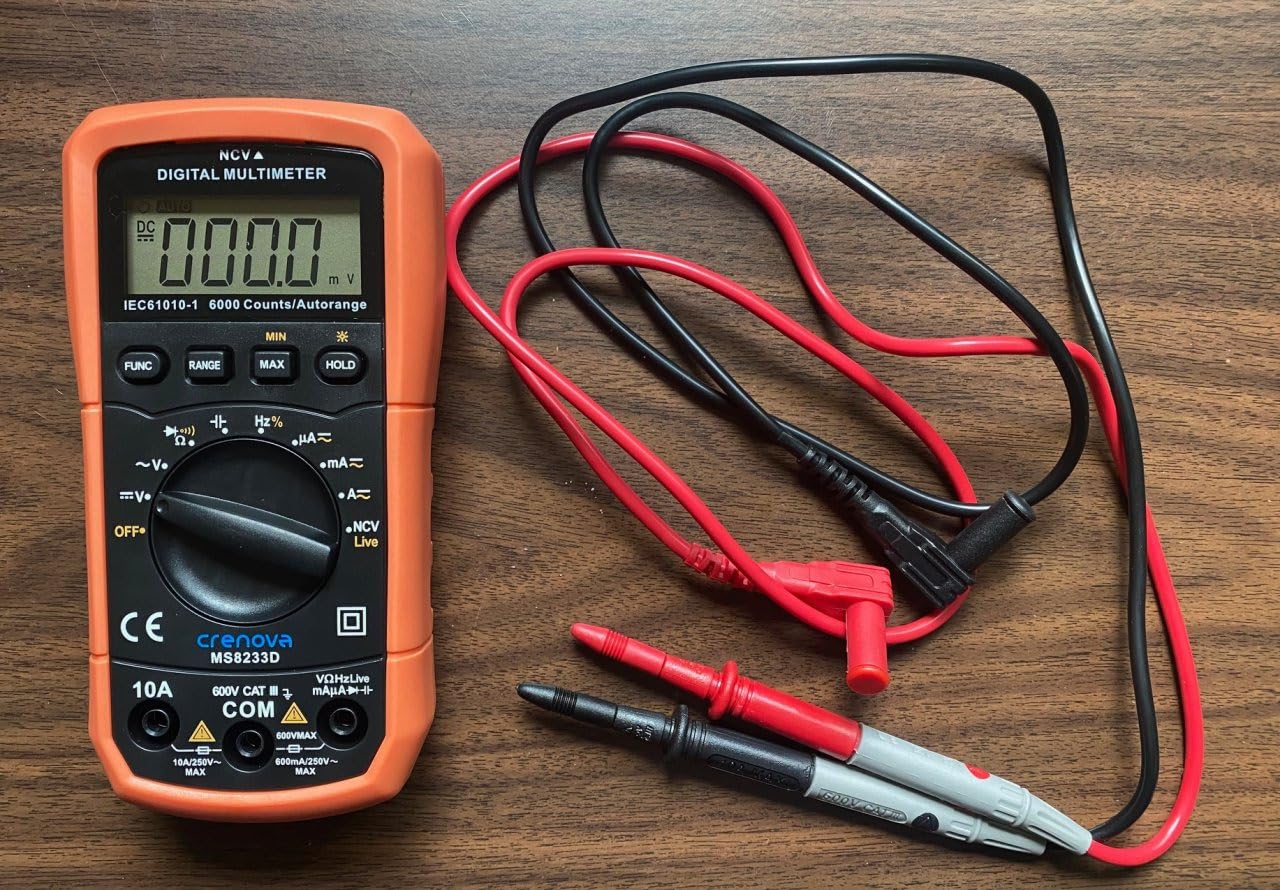
Unusually, it also gives you a switchable manual and auto range mode. Auto is the default for beginners, and manual is there when you want to hold a range while watching a value drift, such as a charging current or a warming thermistor. Max/min, data hold, a low battery indicator and auto power off are all included, and sampling is 3 reads per second.
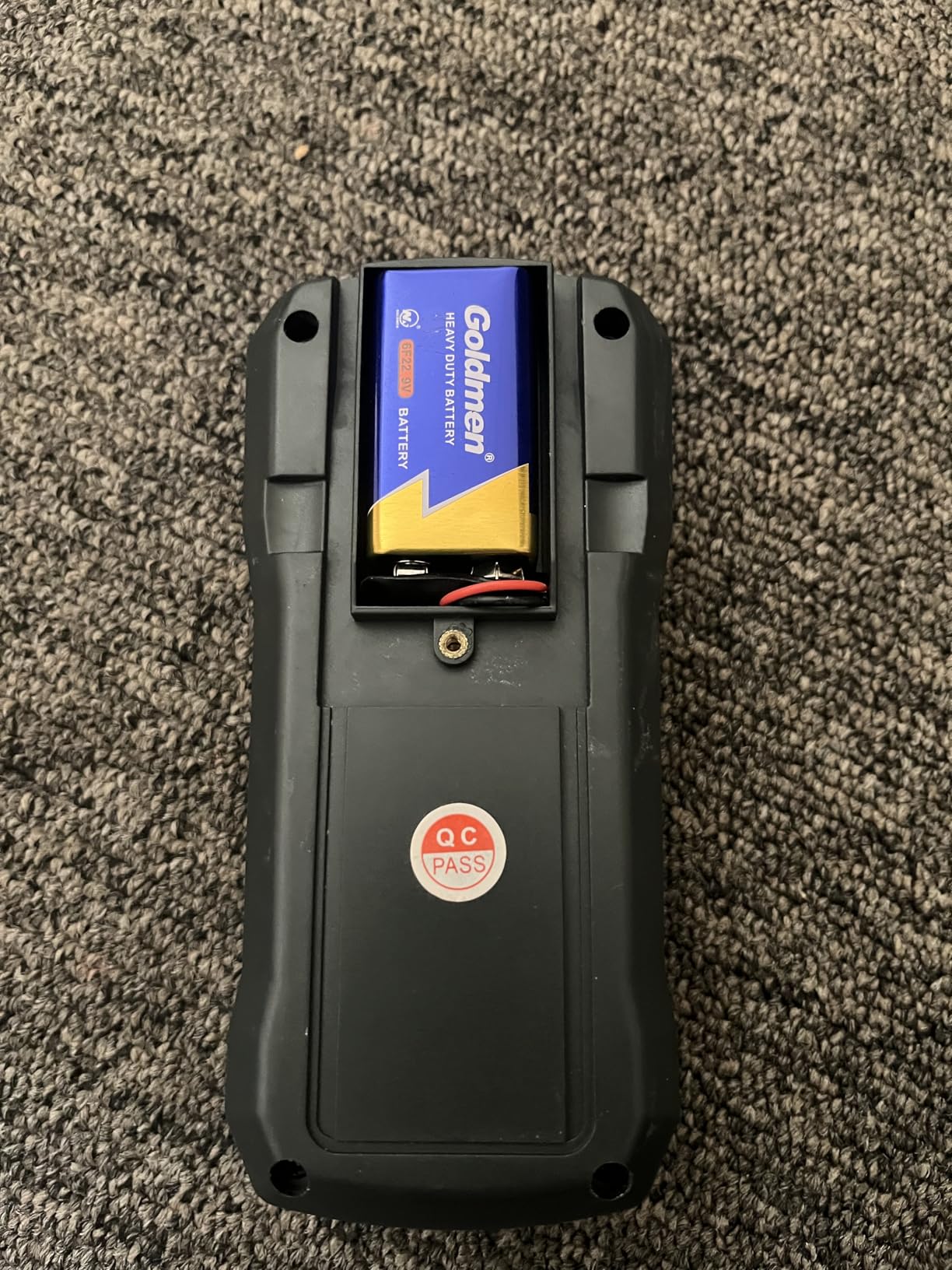
The weaknesses are consistent across the reviews. The one-year warranty is the shortest in this roundup, the buzzer speeds up at higher voltages which becomes genuinely noisy when you are working in a tight enclosure, and auto power off will end a long measurement session if you are not touching the dial.
Best value for a broad first kit
If you want one meter that covers household wiring, car work and light bench electronics without buying accessories separately, the accessory kit is the deciding factor. The insulated rubber holster and the two built-in fuses are a sensible pairing, and CAT III 600V gives it the same working category as the Klein. Owners also like that the screen is bright enough to read through a windscreen at dusk.
Where it is not the answer
The 3 reads per second sampling rate will not capture a fast transient, so it is the wrong meter if you are measuring inrush current. The buzzer volume is a real complaint in confined spaces, and if you keep tools in a bag that gets thrown in a van, the one-year warranty means a failure is a full replacement rather than a repair. For anyone who plans to work on a three-phase supply, look at the KAIWEETS instead.
5. Innova 3320 – Best for Car Batteries and 12V Circuits
- DC voltage current and resistance verified close to Fluke references
- 10 MegaOhm input impedance protects vehicle ECUs
- LED battery load test with colour-coded status
- Reads voltage down to 0.001V
- AC current limited to roughly 200mA
- No backlight and no data hold
- Weak continuity beep needs the probes scraped together
The Innova 3320 is the oldest meter in this group and still one of the most recommended by people who use them daily. Long-term owners, some of whom report running several units for well over a decade, praise the fast auto-ranging, the LED battery load tester and the accuracy, and the manufacturer has specified readings against Fluke 87-5 and Fluke 179 references as nearly identical for DC voltage, DC current and resistance.
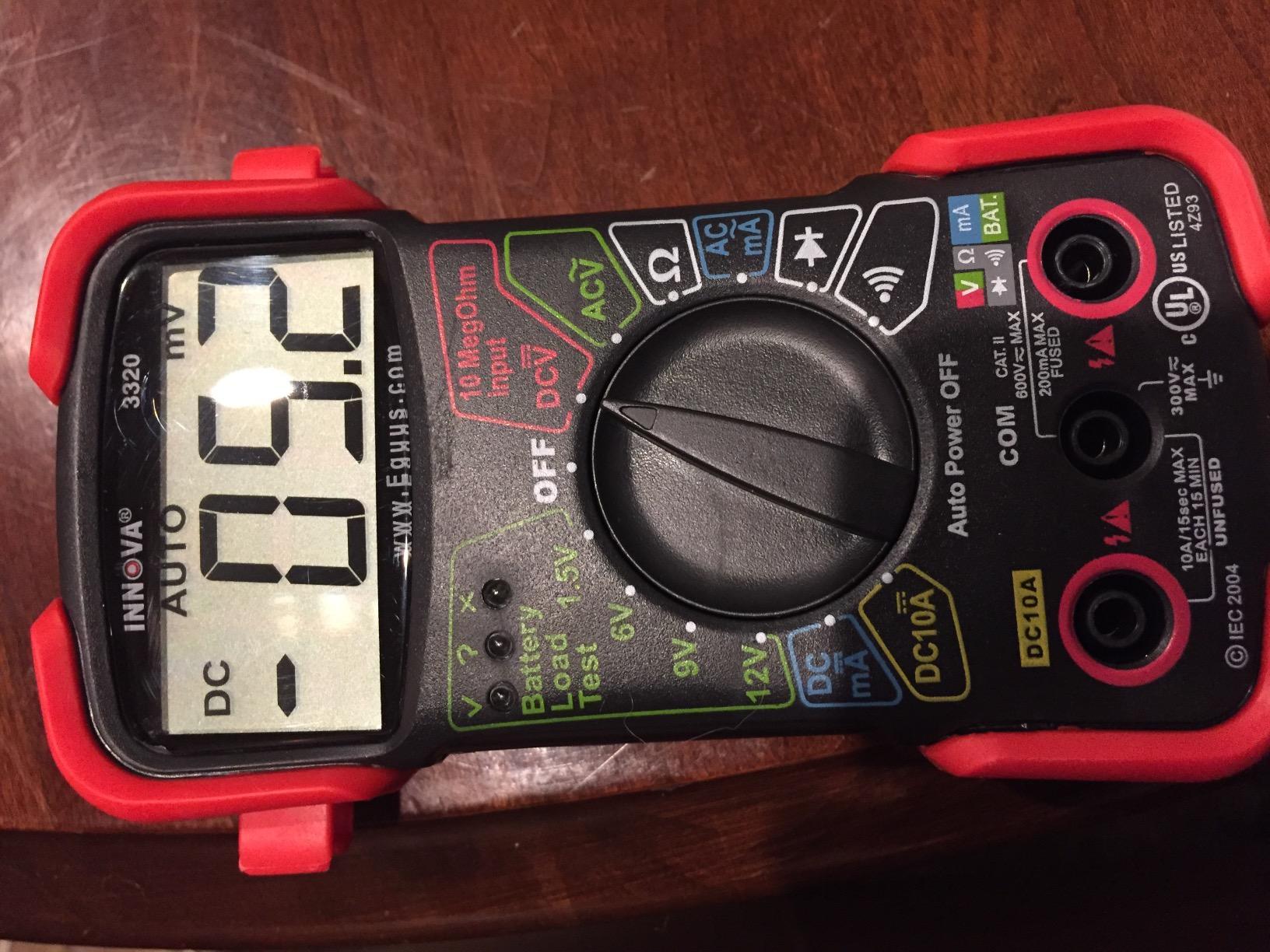
The 10 MegaOhm input impedance is the reason it is safe on a car. That figure means the meter draws so little current that connecting it across a live 12V circuit will not disturb the vehicle ECU or a weak sensor signal, and it reads voltage down to 0.001V, far finer than most meters at this level. The colour-coded LEDs give a battery load test result at a glance, which turns a five-minute garage job into a thirty-second one.
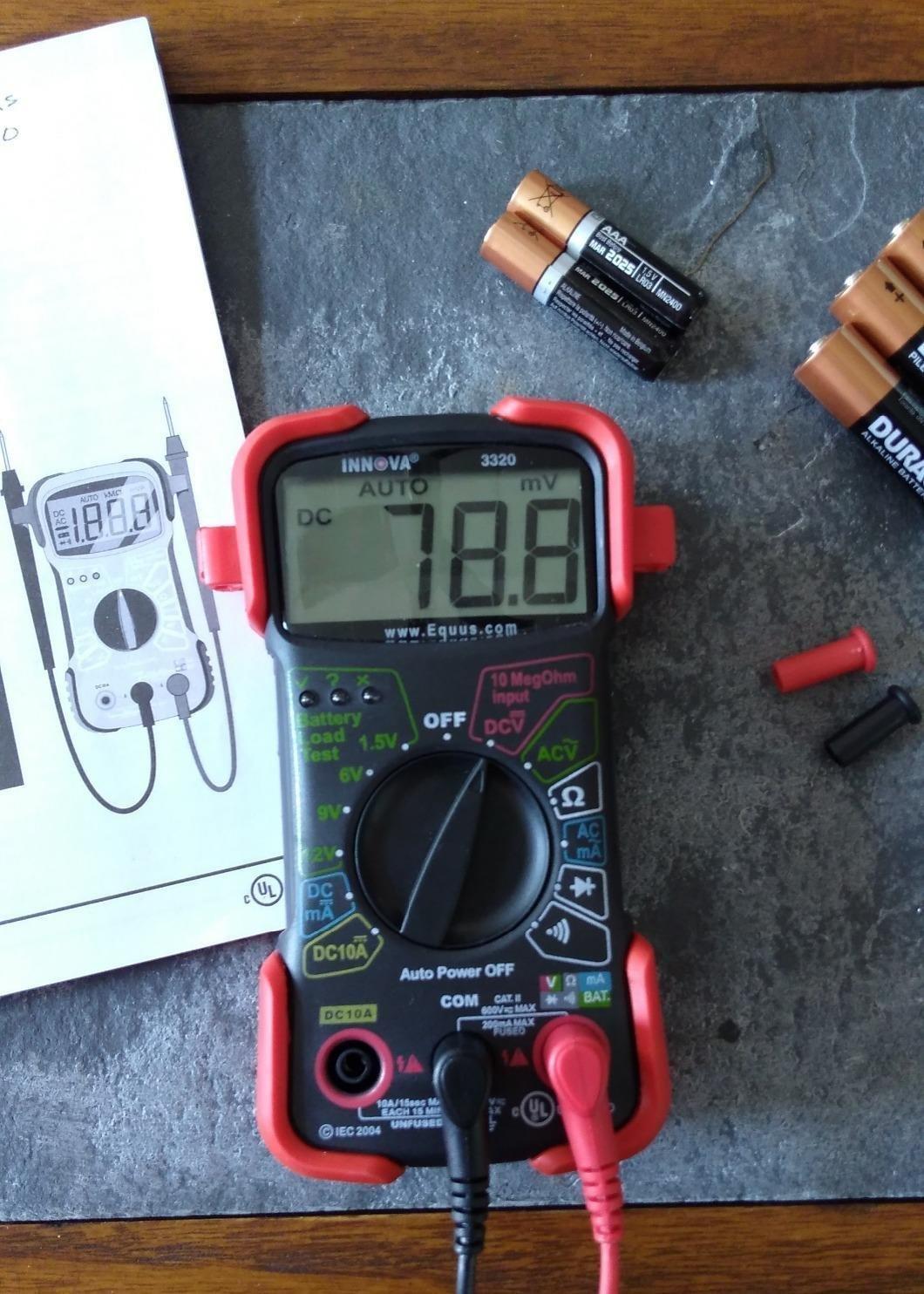
It runs happily on 1.2V Eneloop rechargeable AA cells, is UL certified, and carries a one-year limited warranty. The resistance function shares a single setting for both AC and DC voltage, which is one less decision to make at the dial.
The compromises are equally clear. AC current is limited to roughly 200mA, so it is effectively a DC meter for anything meaningful. There is no backlight, which makes night work genuinely difficult, and no data hold, so a reading must be written down the moment it appears. Reviewers also mention a weak continuity beep, loose-feeling rotary switch behaviour, and an internal fuse on the battery-test circuit that has been reported to fail.
Why it works so well on vehicles
A car is a 12V system where a surprising number of sensors and modules are sensitive to how much current you draw when you probe them. The 10 MegaOhm input impedance is the single most important spec for that work, and this meter has it as a headline feature rather than a footnote. If your projects are automotive, solar panels or battery banks, the resolution down to 0.001V is also harder to get anywhere else at this level.
Where you will bump into limits
No backlight and no data hold are the two things you will miss first, especially working under a dashboard after dark. Do not plan to use it for AC analysis, and if you build electronics on a breadboard as well as working on cars, the 200mA AC ceiling and the loose rotary switch are reasons to consider a 6000-count alternative. It is also the least forgiving meter here about auto-ranging on very low and very high resistance values.
6. KAIWEETS HT118A – Top Rated for CAT III and CAT IV Work
KAIWEETS Digital Multimeter Automotive TRMS Tester 6000 Counts NCV for Car
- Widest safety rating in the group at CAT III 1000V and CAT IV 600V
- Illuminated input jacks confirm correct lead placement
- Backlight flashlight kickstand and pen slot for night work
- 36-month warranty with lifetime technical support
- Heaviest dedicated meter here at 0.55 kg
- Many menu functions exceed what a beginner needs
- Thermocouple must be used correctly or readings mislead
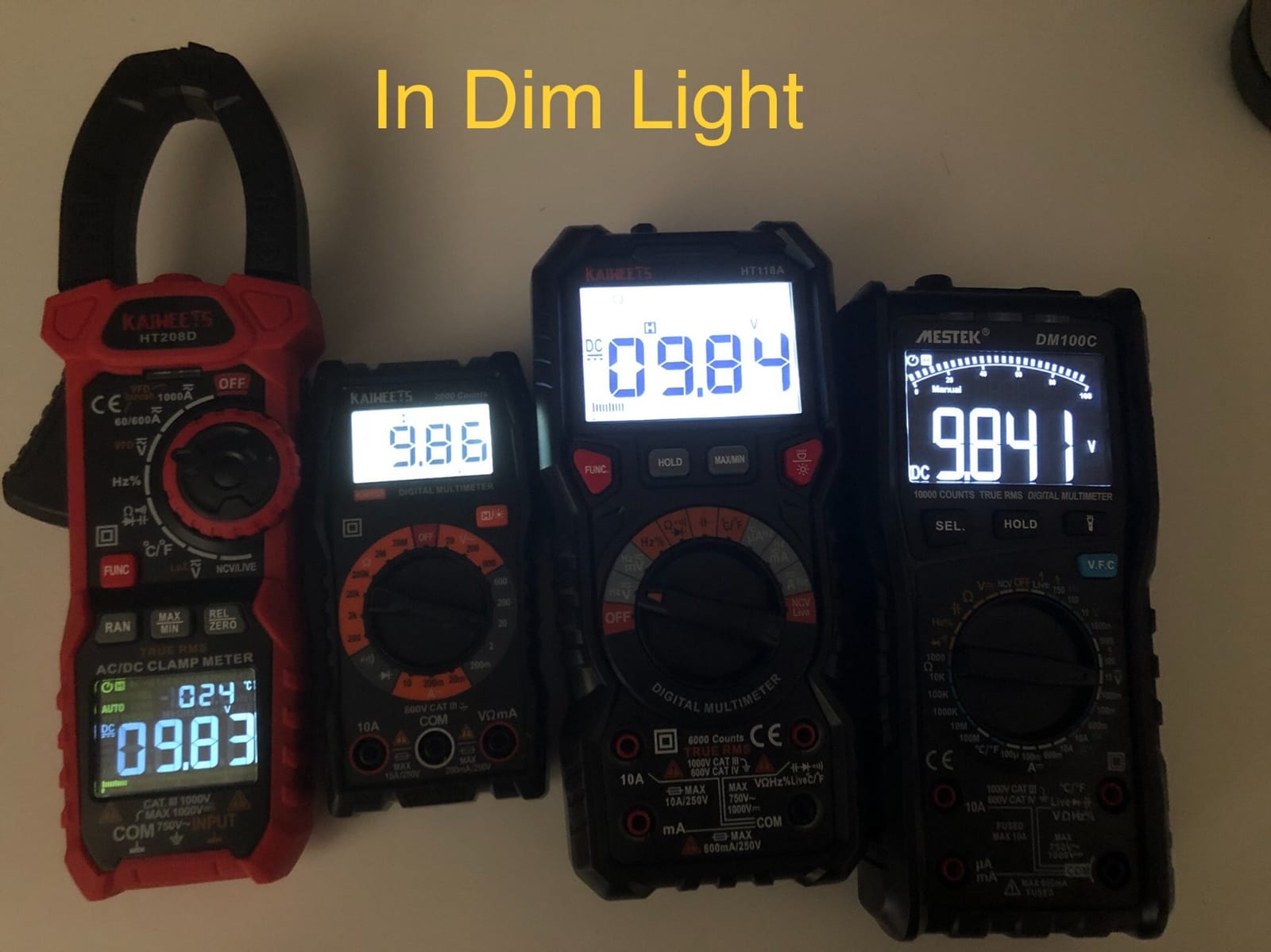
The KAIWEETS HT118A is the only meter in this roundup with a CAT IV rating, and it carries CAT III 1000V as well. That is the certification category for the service entrance, which makes it the choice if you will ever be working where the utility supply meets the building rather than only at a socket. It is also IEC, CE and RoHS certified with a double ceramic fuse and thermistor protection.
Its 6000-count True RMS engine measures up to 1000V DC and 750V AC, 10A AC and DC current and 60 MegaOhm resistance, plus temperature, capacitance, frequency, duty cycle, diode, wire on-off and continuity. Non-contact voltage testing and a live-wire alarm with sound and light are both present, and the illumination on the input jacks shows where each lead belongs, the same beginner protection the Klein MM325 offers.
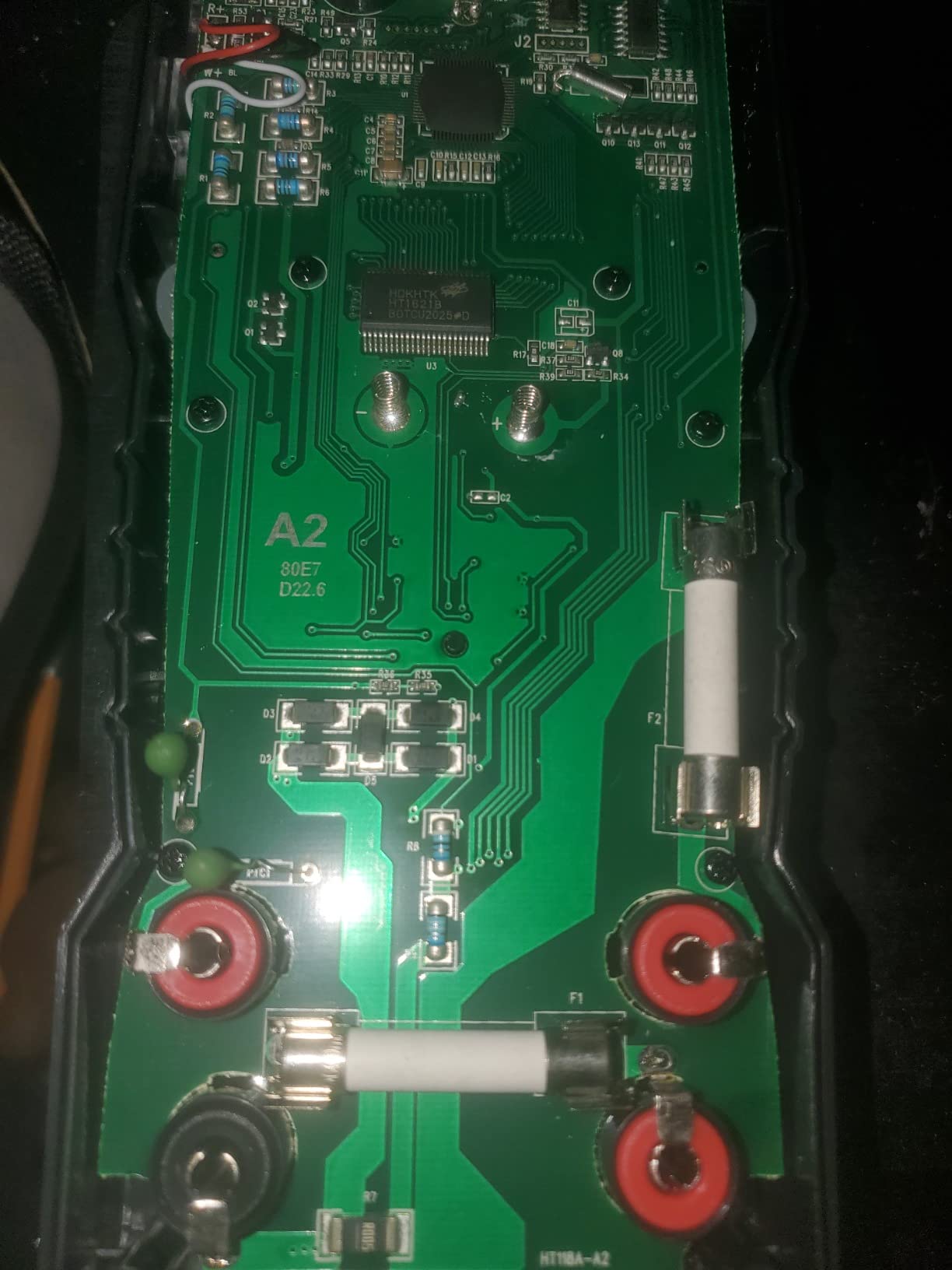
The extras are the ones you only notice in use. A large 2.9 inch backlit LCD, a built-in flashlight for dark engine bays, a kickstand and a pen slot, plus min, max and average recording with data retention. Owners point to the illuminated jacks and the flashlight as the features that make automotive work easier, and the 36-month warranty with lifetime technical support is the longest support commitment here.
It is also the heaviest dedicated meter in the group at 0.55 kg, and the feature list can overwhelm a beginner. Reviewers are candid that most of the menu functions go unused at first, which is exactly the risk with a meter this comprehensive: you pay for capability you are not ready for. The thermocouple also gives meaningless results if it is used incorrectly.
Who actually needs CAT IV
CAT II covers plug-in outlets and the wiring behind them, CAT III covers sub-panels, fixed installations and appliance circuits, and CAT IV covers the origin of the installation where the utility supply enters. If you are checking a wall outlet, CAT II is enough. If you are opening a consumer unit or working on a circuit that runs back to the panel, you want CAT III. CAT IV is for the service entrance itself, and very few DIY jobs touch that.
When it is too much meter
If your work is a desk, a breadboard and a few household repairs, this is a large, heavy instrument with a menu system built for a technician. The weight adds up over a full evening of panel work, and beginners routinely ignore most of the advanced functions. A simpler 6000-count model is lighter, cheaper and faster to learn, and you can add a clamp meter later rather than carrying a general-purpose meter everywhere.
7. Klein Tools MM320KIT – Best Complete Outlet Troubleshooting Kit
Klein Tools MM320KIT Digital Multimeter Electrical Test Kit, Non-Contact Voltage Tester, Receptacle Tester, Carrying Case and Batteries
- Covers three jobs in one case with a multimeter and two testers
- RT210 identifies open ground reverse polarity and open neutral
- NCVT3P doubles as a flashlight in dark panels
- Carrying case and batteries included
- Heaviest package here at 1.6 pounds with the case and accessories
- MM320 is manual-ranging for a first-time user
- Resistance limited to 2 MegaOhm on the meter
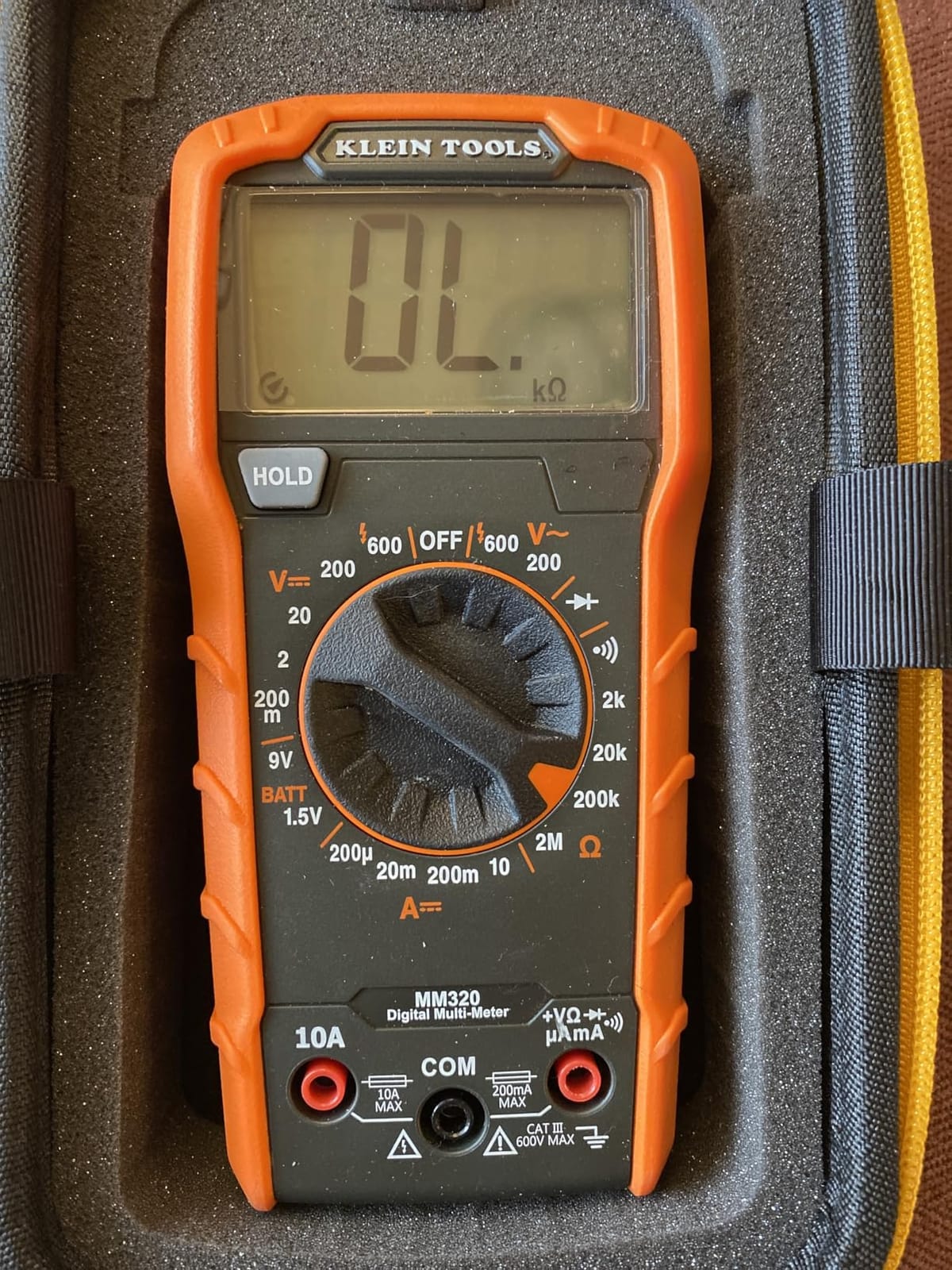
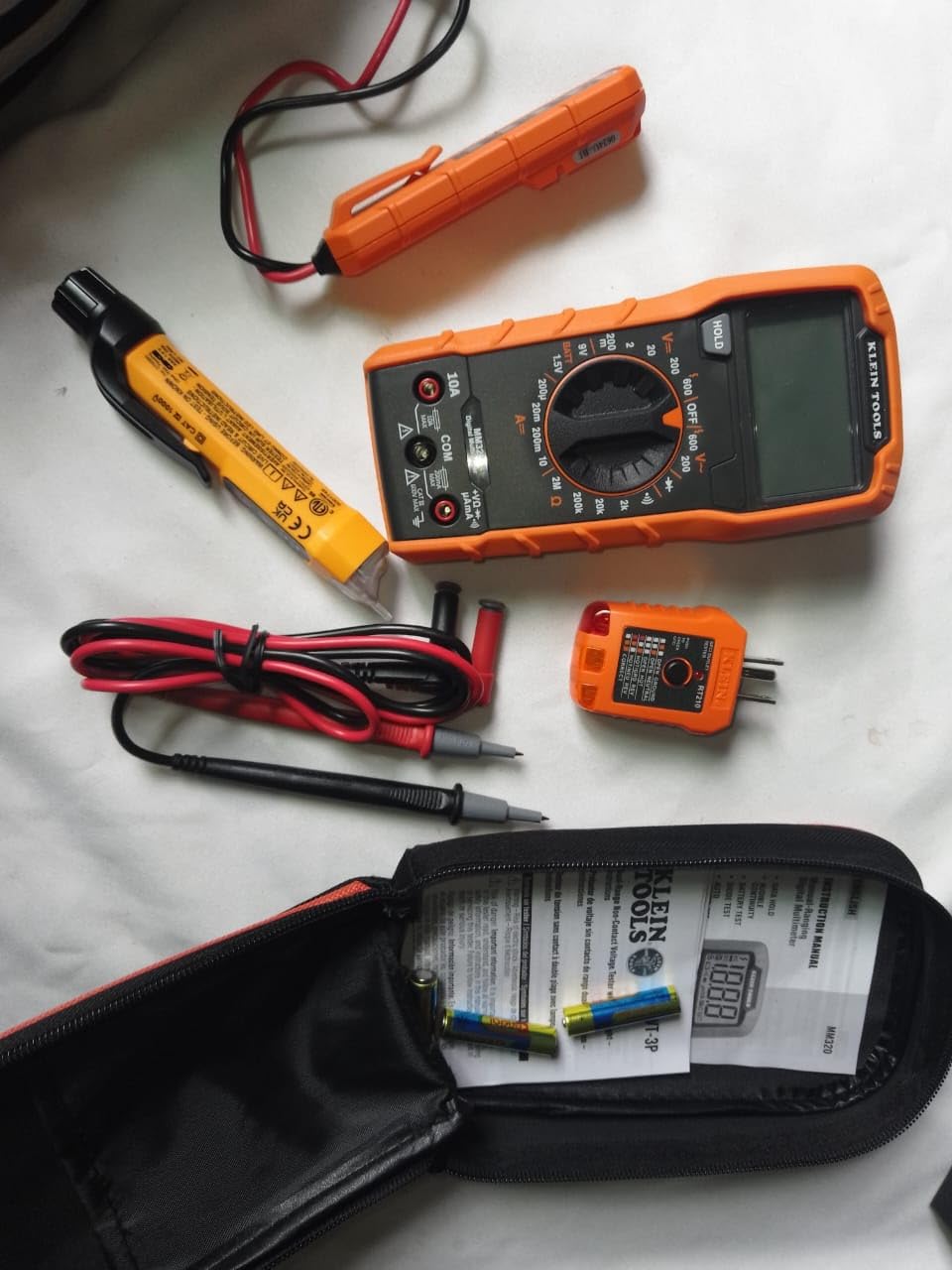
Most beginner mistakes happen at the outlet, not on the breadboard, and the MM320KIT is built for that specific job. It pairs a Klein MM320 manual-ranging multimeter with an ET45 receptacle tester, an RT210 wiring fault tester and an NCVT3P non-contact voltage tester with a built-in flashlight, all in a carrying case with batteries.
The receptacle testers are the reason to buy this rather than a bare meter. The RT210 identifies open ground, reverse polarity, open hot, open neutral and hot/ground reversed, which are the faults that cause a breaker to trip or a shock risk, and it does so without opening the outlet face. The ET45 covers 28-240V AC and 32-330V DC with its own test lead holder.
Owners treat this as a complete troubleshooting package rather than a meter with extras, and the feedback comes largely from people who work on wiring professionally. They like that faults can be identified safely, and the flashlight on the NCVT3P is useful in a dark panel box. For anyone who mainly wants to answer the question of why a socket or a lamp is misbehaving, this answers it in seconds.
The limits are the limits of the meter inside. The MM320 is manual-ranging, its resistance range tops out at 2 MegaOhm, and the receptacle tester is AC and DC only, so it will not verify GFCI function. At 1.6 pounds the whole package is the bulkiest item here, mostly because of the case and the accessories rather than the instrument itself.
Best for outlet and wiring faults
If your work is diagnosing why a circuit trips, why a lamp flickers or whether an outlet is wired safely, this kit is a better fit than any single meter in this roundup. The MM320 itself measures up to 600V AC and DC, 10A DC current, and tests batteries, diodes and continuity. The NCVT3P detects 12-1000V AC or 70-1000V AC, so you can identify a live conductor before you touch it.
When it is the wrong purchase
Skip it if you are heading towards electronics rather than wiring. There is no capacitance, no temperature, no auto-ranging and no backlit display on the meter itself, and the manual ranging will frustrate you the first time a reading overloads. It is also the heaviest thing to carry up a ladder, which matters more than it sounds when you are working alone.
8. Fluke 117 – Best for a Meter You Keep for Decades
- Highest rated meter in this group at 4.8 stars with 90 percent five-star
- Low impedance mode separates ghost voltage from real voltage
- AutoVolt removes the AC or DC selection decision
- Three-year warranty and 400 hour typical battery life
- Most expensive option here by a wide margin
- No milliamp range and no integrated current clamp
- Supplied probes are thin and tangle easily
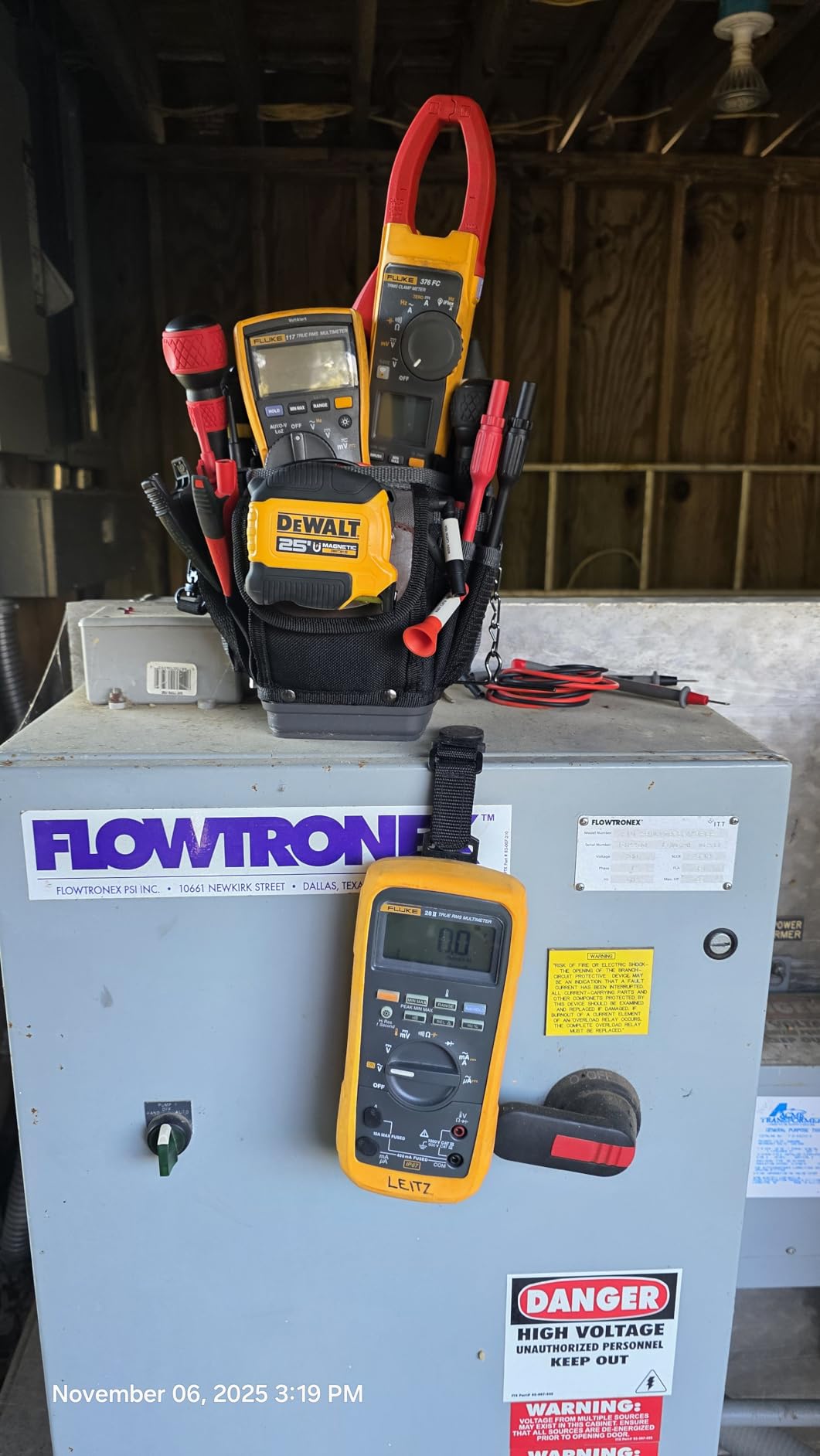
The Fluke 117 carries the highest owner rating of any meter here, with the strongest share of five-star reviews, and the reason is not a feature list so much as feel. The rotary action, the button response and the readout all feel like a tool that will outlive several hobbies, which matches the long-standing community view of Fluke as the durable choice. On the EEVblog beginners forum, that reputation comes up repeatedly, with veterans describing the meters as built, accurate, reliable and frequently available for replacement parts.
The two features that matter to a beginner are AutoVolt, which senses whether the circuit is AC or DC and picks the right mode so you cannot choose wrongly, and low impedance mode. A standard high-impedance meter will happily show 90V on a disconnected wire from induced pickup, which sends beginners hunting for a fault that is not there. LoZ mode loads the circuit enough that the ghost reading collapses to near zero.
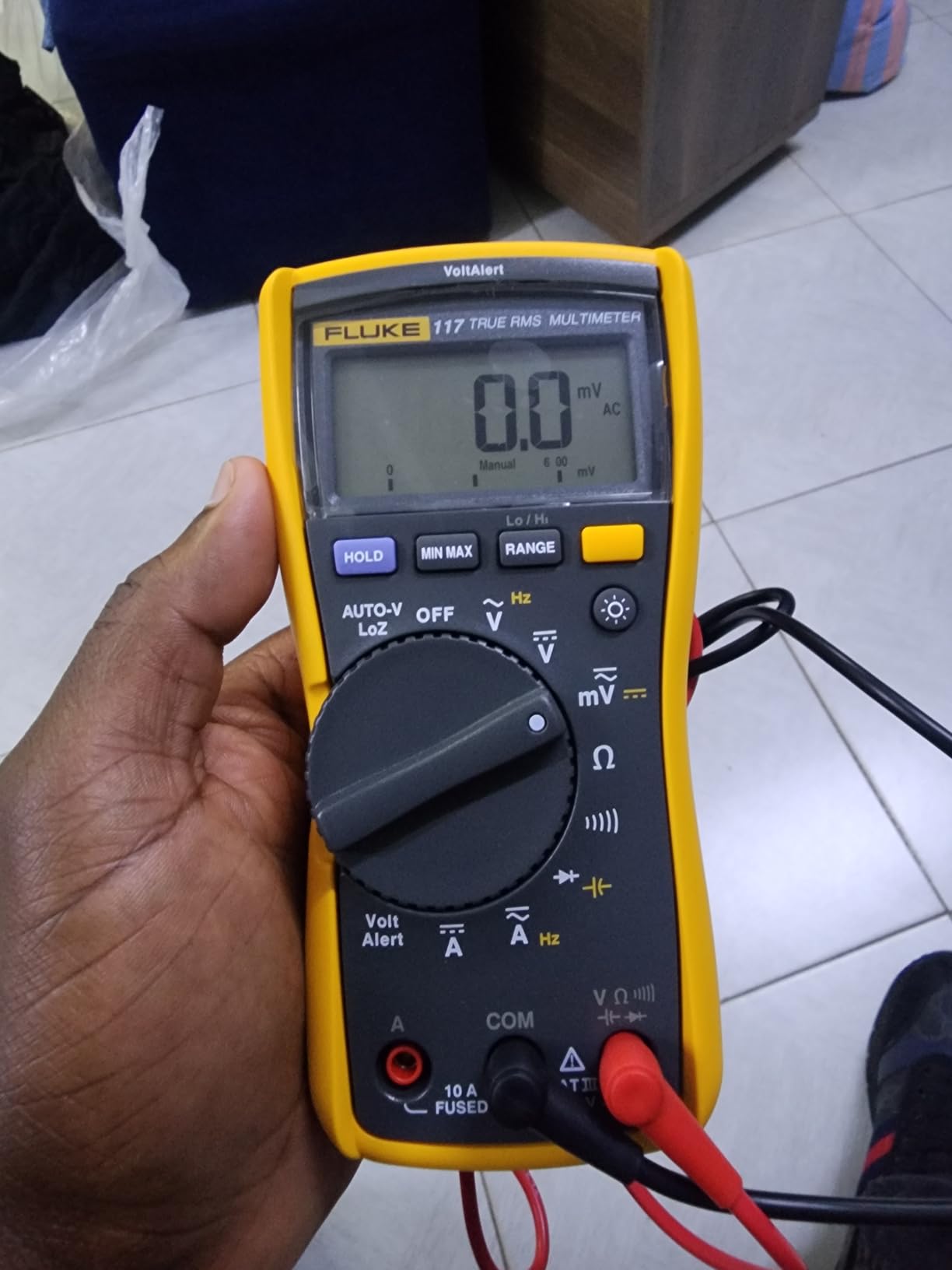
True RMS handling covers non-linear loads, a 600.0 mV DC range resolves down to 0.1 mV for small signal work, and VoltAlert gives non-contact voltage detection with a beeper and LED. Min, max and average recording, a large white LED backlight, a 3-year warranty and 400 hours of typical battery life complete a package built for daily professional use.
The significant drawback is that it has no milliamp range and no integrated current clamp, so measuring current means breaking the circuit, which is precisely the thing a beginner should avoid doing. Owners frequently end up buying a second clamp meter alongside it. The supplied probes are also thin and tangle easily, and capacitance is there but there is no temperature measurement.
When the premium is justified
The extra money buys accuracy that holds up for years, a safety certification you can rely on, a warranty that covers a working life rather than a single season, and replacement probes that will still be sold in a decade. Electrician Talk threads consistently recommend starting on something affordable and moving up once you know what you need, so treat this as a second or third meter rather than a first.
When a cheaper meter is the smarter buy
Nothing in the accuracy department is lost by starting on a 6000-count True RMS meter, and several of them here have owner-reported readings that track reference instruments closely. If your work is a bench, a breadboard or household circuits, the money saved on a Fluke is better spent on a clamp meter for current or a thermocouple. You also give up the LoZ ghost-voltage mode, which is a real loss but one you can live with until you meet a misleading reading.
Safety First: Picking the Right Input Jack
Almost every beginner multimeter story that goes wrong ends the same way: a fuse blows, the meter goes dead, and the meter was not at fault. It is worth reading this section before the first time you use yours, because the mistake takes seconds and the fix takes a screwdriver.
The jack you use depends entirely on what you are measuring. The COM jack, marked with a minus sign, takes the black lead for every measurement. For voltage, resistance, continuity, diode, capacitance and frequency, the red lead goes in the jack marked V with an ohm symbol, which is the one most beginners use. For current, the red lead must go in the jack marked mA for small currents or 10A for larger ones.
The rule that prevents the damage: never measure current on a powered circuit in a way that allows the full source voltage across the meter’s current input, and never leave the red lead in the current jack while the dial is set to voltage. If you put the red lead into the mA or 10A jack and touch those probes across a live 12V supply, the meter’s internal fuse is the weakest link in the path and it goes. Every meter in this roundup has fuse protection and a double-fuse design on several models, which reduces the risk but does not remove it.
For AC current specifically, a clamp meter is the safer instrument because it measures the current around the conductor without you having to disconnect anything or open the circuit. Electricians reach for one by habit. If you find yourself regularly measuring current, a meter and a clamp meter together cover far more than a single general-purpose instrument can.
If you are not certain a circuit is dead, treat it as live. Shut off the breaker, verify with the meter, and verify again with a second method. If the work involves a sub-panel, a service entrance, a three-phase supply or anything you do not recognise, call a licensed electrician. No multimeter in this roundup makes unsafe work safe, and the CAT rating on the label tells you what the instrument can survive, not what you are qualified to do.
How to Choose a Beginner Multimeter?
Rather than chasing the longest feature list, work through these six questions in order. The first two decide which meter you should look at, and the rest only matter once you have narrowed the field.
Auto-ranging or manual-ranging?
For a first meter, choose auto-ranging. A manual-ranging meter makes you select the scale before every measurement, and a wrong selection shows a 1 or an overload symbol instead of a reading. That is not a small inconvenience, because a beginner cannot tell the difference between an overload and a real fault. Manual ranging is not wrong, and pros use it deliberately to hold a range while a value moves, but it is a poor default for learning. Two of the meters here, the Crenova and the KAIWEETS, let you switch between both, which is the ideal arrangement if you can find one.
How many counts do you actually need?
Counts are the number of digits the display can resolve, and they matter far less to a beginner than the marketing suggests. One electronics-design forum regular made the point well: most measurements you will take come out the same on a 3-1/2 digit meter as on a 4-1/2 digit meter. What counts do buy you is resolution on small values, which becomes relevant the moment you start probing 3.3V logic levels, sensor outputs or a loaded 5V rail. Below 1999 counts is rare and below 2000 counts is where a meter starts costing you decimal places.
What does CAT III actually mean?
CAT II is for plug-in outlets and the general wiring branch circuit behind them, typically to 300V. CAT III is for fixed installations, distribution boards and appliance circuits, typically to 600V. CAT IV is the service entrance and the wiring between the meter and the supply, and it carries the highest transient rating. A homeowner replacing a socket is CAT II work. Opening a consumer unit, working on an appliance circuit or testing anything near the supply is CAT III. Pay for CAT III if you might do that even once.
Digital or analog?
Buy a digital meter. An analog meter uses a needle against a printed scale, which is slower to read, harder to interpret for a beginner and impossible to hold accurately. The only argument for analog is a feel for a moving needle that some experienced technicians still value, and that does not apply to learning. It also protects your circuit less well, because a high-impedance digital meter with a 10 MegaOhm input disturbs a circuit far less than a classic analog movement.
Do you need True RMS and NCV?
True RMS matters if you will work on anything with electronics feeding it, variable speed drives, modern lighting dimmers or a mains supply. It is not essential for a 12V DC battery or a resistive circuit. Non-contact voltage detection is a convenience rather than a measurement: it tells you a conductor is energised, and it can be fooled by shielded cable and by adjacent live conductors, so it never replaces a measurement with the leads.
What are your first ten measurements?
Plan the first session before you unbox the meter. Start with a fresh battery on the battery test, then a wall outlet for AC voltage, then the continuity beep on an appliance cord end to end, then a lamp in its socket, then continuity on a fuse, then a resistor taken off a board to read its value, then a diode or LED to check forward voltage, then a potentiometer turned through its travel while you watch the wiper voltage, then a 5V or 3.3V rail on a powered board, and finally a sensor output while you wiggle the connector to catch an intermittent fault. That sequence moves from safe to energised and gives you a working vocabulary in about an hour.
If you are working on embedded projects, the bench-meter side of this is worth reading next. Our guide to the best bench multimeters covers the fixed instruments that sit on a desk rather than in a tool bag, and best multimeters for electronics goes deeper on resolution and accuracy for circuit work.
What the Extra Money Actually Buys You
Is a cheap multimeter better than an expensive one? For a beginner, on day one, the cheap meter is usually the better buy. The community consensus across the forums ranking for this question is consistent: professionals recommend starting on something affordable and general-purpose, and upgrading once you know what you actually need. The exception is anyone working on live mains, where the CAT certification is not optional.
Here is what each tier tends to add. The entry tier gives you AC and DC voltage, DC current, resistance, continuity and diode, which covers 95 percent of household and hobby tasks, and accuracy is usually better than the specification suggests. The middle tier adds auto-ranging, 6000 counts, True RMS, capacitance, temperature and NCV, which is where most people should stop. The top tier adds build quality that survives drops, replacement parts that stay available for decades, Min/Max/Average recording, low impedance mode for ghost voltage, and a multi-year warranty.
The forum consensus also points at the counter-intuitive part: paying extra for high resolution is often wasted money, because most beginner measurements are identical either way. Spending on durability, CAT certification and a warranty is the part that pays back. One recurring failure report in the video engineering community is worth noting too, where a long-trusted meter was written off after corrosion around the 9V battery terminal broke the terminal off entirely, which is a reminder that the cheapest meters often fail at the weakest mechanical point.
If you want to see how the professional end of this compares, our roundups of multimeters for electricians and budget multimeters cover both ends of that range in more depth, and best digital multimeters covers the general digital category.
Frequently Asked Questions
Is a cheap multimeter better than an expensive multimeter?
For a beginner on day one, a cheaper auto-ranging meter is genuinely sufficient. Accuracy on entry-level models is usually better than the specification claims, and the measurements most beginners take come out the same as they would on an expensive meter. The premium buys durability, CAT III or CAT IV safety certification, True RMS, low impedance mode and a multi-year warranty, none of which you need until you start working on live mains or non-linear AC loads.
Is a Fluke or Klein multimeter better?
They optimise for different work. Klein meters are built for electricians, with CAT III ratings, illuminated or alerting input jacks, receptacle testers in the kit options and manual ranging that trades resolution for reach. Fluke meters prioritise build quality, availability of replacement parts, True RMS accuracy and features like low impedance mode that separate real voltage from ghost voltage. For household wiring and outlet work, Klein. For a tool you expect to keep for a decade and any mains diagnostics, Fluke.
What’s a good multimeter for home use?
An auto-ranging meter with a CAT II 600V rating, an audible continuity beep, non-contact voltage detection and a backlit display covers essentially all household work. For standard plug-in outlets CAT II is sufficient, and you only need CAT III if you will be opening sub-panels or working on appliance circuits. Among the meters here, the Klein MM325 and the Crenova MS8233D are the natural fits, and the Klein MM320KIT adds receptacle testers for wiring faults.
What is the best multimeter for general use?
The AstroAI AM33D is the most broadly capable pick for a first meter, covering AC and DC voltage, DC current, resistance, continuity and diode test with a backlit display and a double anti-burn fuse. If you want auto-ranging and more resolution, the AstroAI 6000-count True RMS model adds capacitance, frequency, duty cycle and temperature. Either one will serve you for years of household and hobby work.
Should beginners buy an auto-ranging or manual-ranging multimeter?
Auto-ranging. A manual-ranging meter requires you to select a scale before every measurement, and choosing the wrong one shows a 1 or an overload symbol rather than a reading, which is hard for a beginner to distinguish from a genuine fault. Manual ranging does have a purpose, since holding a fixed range while a value moves gives a steadier reading, so the ideal choice is a meter that does both. The Crenova MS8233D and the KAIWEETS HT118A both offer switchable auto and manual modes.
What can I safely measure with a beginner multimeter?
On a battery-powered circuit you can measure voltage, current, resistance, continuity, diode forward voltage and capacitance freely. On household mains, measure AC voltage, resistance and continuity with the circuit de-energised, and stay well inside the meter’s CAT rating, treating a CAT II meter as CAT II only. Avoid probing current on a live circuit, because that is the mistake that blows the internal fuse. If a circuit involves a sub-panel, a service entrance or anything you do not recognise, call a licensed electrician.
Which Beginner Multimeter Should You Buy
Start with the AstroAI AM33D. It covers every measurement a beginner will take on household circuits, batteries and car 12V systems, the most owner feedback of any meter in this roundup, and a three-year warranty. Accept that you will choose ranges yourself, and read the input jack section above before your first session.
If you are heading straight into electronics, take the AstroAI 6000-count True RMS instead. Auto-ranging, three times the resolution and capacitance, frequency, duty cycle and temperature mean it will not need replacing the moment you start probing boards. For household wiring specifically, the Klein MM325 brings CAT III certification and lead-alert protection, and the Crenova MS8233D adds non-contact voltage detection with a full accessory kit. Working on cars, the Innova 3320 has the 10 MegaOhm input impedance that keeps a vehicle ECU happy. Outlets and wiring faults go to the Klein MM320KIT, mains or panel work to the KAIWEETS HT118A for its CAT IV rating, and a meter you expect to keep for twenty years to the Fluke 117.
Whatever you choose, the fastest way to get value from it is the first-ten-measurements session above. Good luck, and if anything on this list still leaves you unsure, tell us what you are building and we will point you at the right one.