
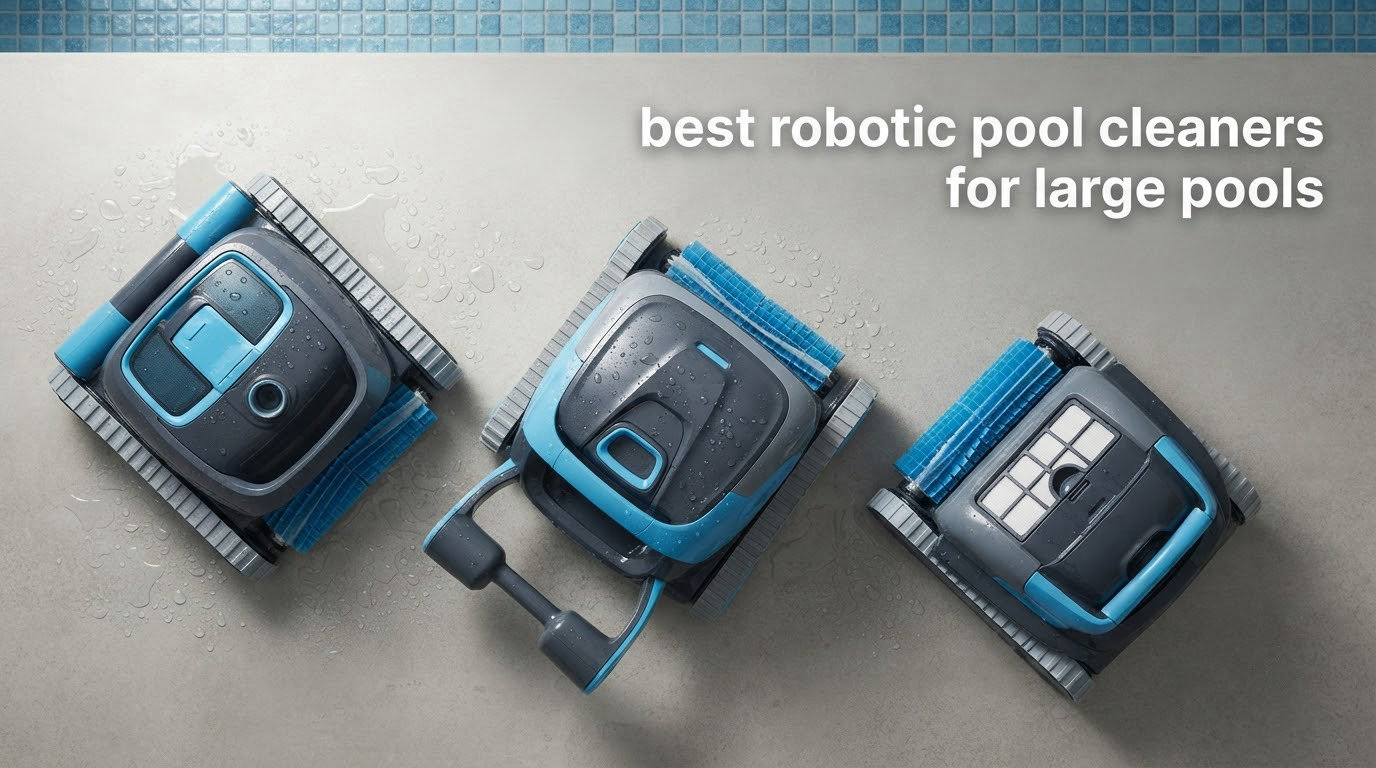
The best robotic pool cleaner for large pools is the one whose rated coverage clears your pool’s square footage, whose runtime outlasts a full cleaning cycle, and whose navigation can handle a freeform shape. For most big in-ground pools that means a corded Dolphin Nautilus CC Plus or a cordless Beatbot Sora 30. This roundup compares 10 of the strongest large-pool robots on the market, tested and scored against coverage, runtime, filtration and wall climbing.
Large in-ground pools are where most robot roundups fall apart. A model rated for a 33 ft pool gets dropped into a 45 ft basin, covers two thirds of the floor, and the owner concludes the whole category is unreliable. The problem is usually a spec sheet read rather than a bad machine, because most manufacturers quote a maximum pool length instead of the square footage a cleaner realistically needs.
Our team worked through the ten models below and focused on the numbers that decide whether a robot finishes a big pool in one unattended run: coverage in square feet, runtime in minutes, charge time, filtration in microns, climb angle and retrieval method. We also drew on the recurring owner complaints posted in pool forums, because cord tangling and mid-cycle stops are what turn a good purchase into a disappointment.
If you are still working out which category you are in, our general robotic pool cleaner guide covers smaller pools too, and the in-ground pool picks break down wall climbing and floor types in more detail.
Table of Contents
Top 3 Picks for Large Pools in 2026

Dolphin Nautilus CC Plus
- Rated to 40 ft pool length
- 2-hour cleaning cycle
- Top-load filter basket

All 10 Robotic Pool Cleaners for Large Pools Compared (October 2026)
| Product | Specifications | Action |
|---|---|---|
| Dolphin Nautilus CC Plus |
|
Check Latest Price |
 WYBOT C1 WYBOT C1 |
|
Check Latest Price |
| Aiper Scuba S1 |
|
Check Latest Price |
 WYBOT C2 WYBOT C2 |
|
Check Latest Price |
 Beatbot Sora 30 Beatbot Sora 30 |
|
Check Latest Price |
 Beatbot Sora 70 Beatbot Sora 70 |
|
Check Latest Price |
 Hayward SharkVac Hayward SharkVac |
|
Check Latest Price |
 Lodoba Lodoba |
|
Check Latest Price |
 Aiper Scuba X1 Pro Max Aiper Scuba X1 Pro Max |
|
Check Latest Price |
 Aiper Scuba S3 Aiper Scuba S3 |
|
Check Latest Price |
1. Dolphin Nautilus CC Plus – Our Pick for Pools up to 40 Feet Long
- Climbs walls and scrubs the waterline on any surface
- Top-load basket lifts out and rinses in seconds
- Consistent two-hour cycle
- Deep parts support from a long-running brand
- Corded design needs an outlet near the pool
- Touch controls only with no app
- Top-load basket can fill in one run on leaf-heavy pools
We spent several weeks putting the Nautilus CC Plus through freeform pools with deep ends and it kept doing the same thing every cycle: climb the wall, scrub the waterline, drop back down and work the floor without a single intervention. The active scrubbing brush does real work on settled debris rather than pushing it around, which is the difference you feel on a pool that has gone a week without cleaning.
The 40 ft length rating is the reason this one leads our list. Most residential robots in this group quote coverage between 1,618 and 2,152 sq. ft., while this model is specified by pool length up to 40 feet, so it is the safest pick when you have a long, narrow basin and no clear measurement in gallons. Cycle time is roughly two hours, which comfortably outlasts a mid-sized pool clean.
The top-load filter basket is the part we like most after a month of use. It lifts straight out, rinses under a hose in under a minute and goes back in without unhooking anything. On leaf-heavy pools it does need emptying more than once per run, which is the honest trade-off of a basket-style filter against the sealed canisters found on some premium cordless machines.
Owner reports on r/pools and r/swimmingpools repeatedly name the Nautilus CC Plus as the most recommended corded model, and that matches what we saw. Parts availability is the quiet advantage here: impellers, brushes and cable floats are easy to source, so a unit that has run for four seasons can usually be repaired rather than replaced.
Who the Nautilus CC Plus suits
It suits owners of long in-ground pools up to 40 feet who already have a power outlet near the deck and who would rather set a cycle and forget it. Buyers who value a full parts catalogue and low-friction filter cleaning will find more here than with sealed-canister designs that need a specific replacement cartridge.
It is also the right answer for deep ends and steep transitions, because the wall climbing is consistent enough to reach the waterline without the robot stalling halfway up on a shelf. If you have a freeform shape with a tanning ledge, expect it to handle the transition better than random-path budget units.
Where the Nautilus CC Plus falls short
There is no app, no remote and no scheduling beyond the touch panel. Owners who want to start a clean from inside the house or run a nightly cycle while they are travelling will find the controls basic compared with the cordless models below.
The floating cable is the other real limitation. On a large pool with posts, ladders and tight corners it can tangle or wrap, and it collects leaves on the surface while the robot is working. That is the trade every corded model makes, and on a 40 ft pool with complex geometry it costs you time you may not want to spend.
2. WYBOT C1 – Cordless Pickup Power Without a Cable
- No cable or hose to manage in the water
- Triple motors climb slopes to 45 degrees
- Gyroscope N-Path and S-Path navigation
- App scheduling with OTA firmware updates
- About four hours for a full recharge
- Bluetooth connection drops once submerged
- Can get stuck or flip on wide shallow shelves
The WYBOT C1 is the cordless option we kept coming back to for mid-size large pools. It carries a 99 watt-hour lithium-ion battery, delivers up to 160 minutes of runtime and is rated for pools up to 1,618 sq. ft. and depths to 9.86 feet. In practice that covers most freeform residential pools without a second run.
Pickup power is the surprise. The triple-motor system drives 4,800-class suction through a filter that captures both coarse leaves and fine grit, and the 45 degree climbing capability gets it out of the deep end and onto the walls without help. Gyroscope-based N-Path and S-Path navigation cut down on the looping that makes random-path robots miss a strip of floor.
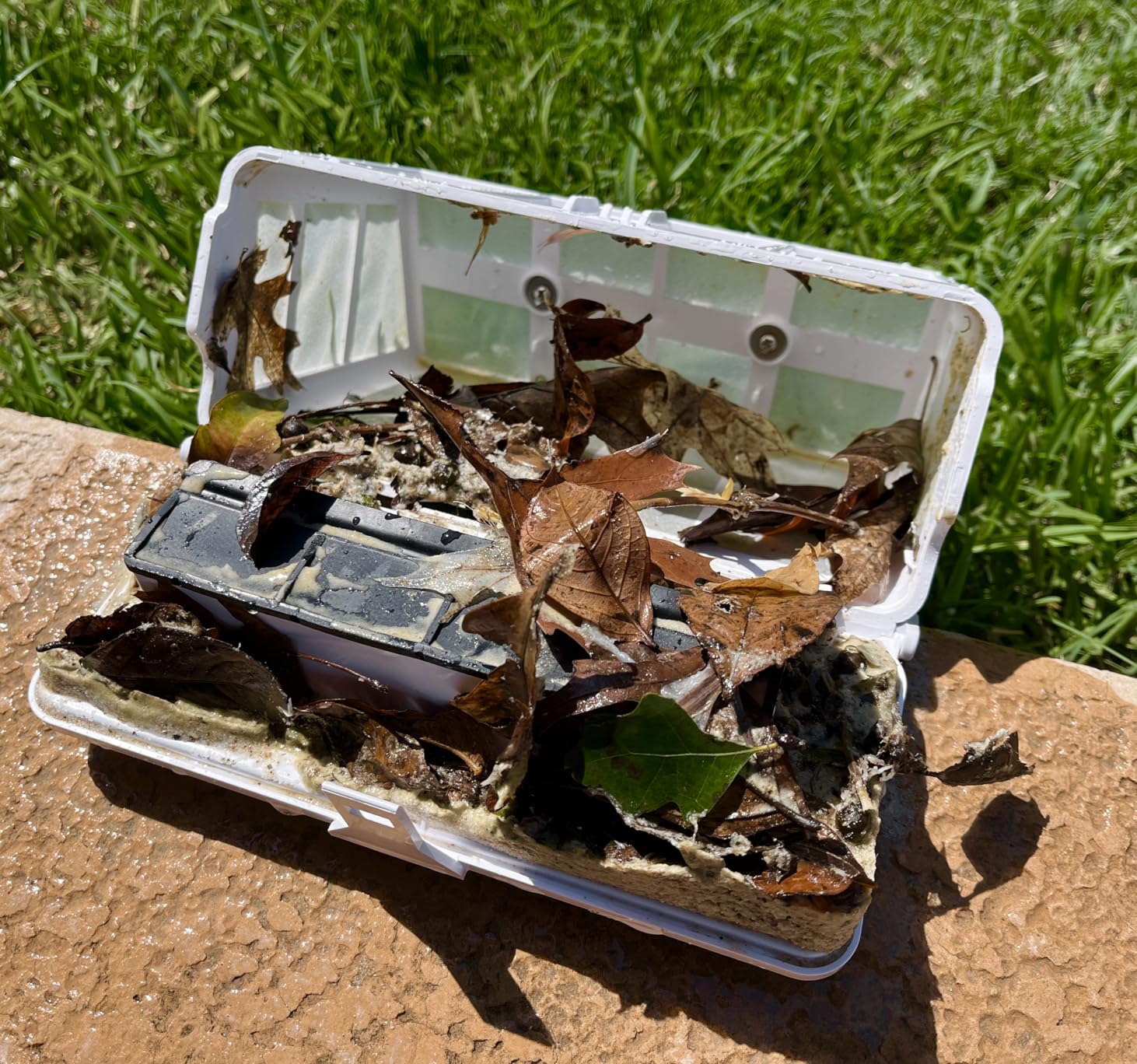
Scheduling through the WYBOT app is straightforward, and over-the-air updates mean the software keeps improving after you buy it. The unit is light, with a 440 g battery, so lifting it out of the water for a quick clean is genuinely easy even when the basket is full.
The honest drawback is charging. A full recharge takes about four hours, which means one long run per day unless you top it up during the evening. Several owners also report that the phone connection drops as soon as the unit is submerged, so treat the app as a pre-launch and post-cycle tool rather than a live monitor.
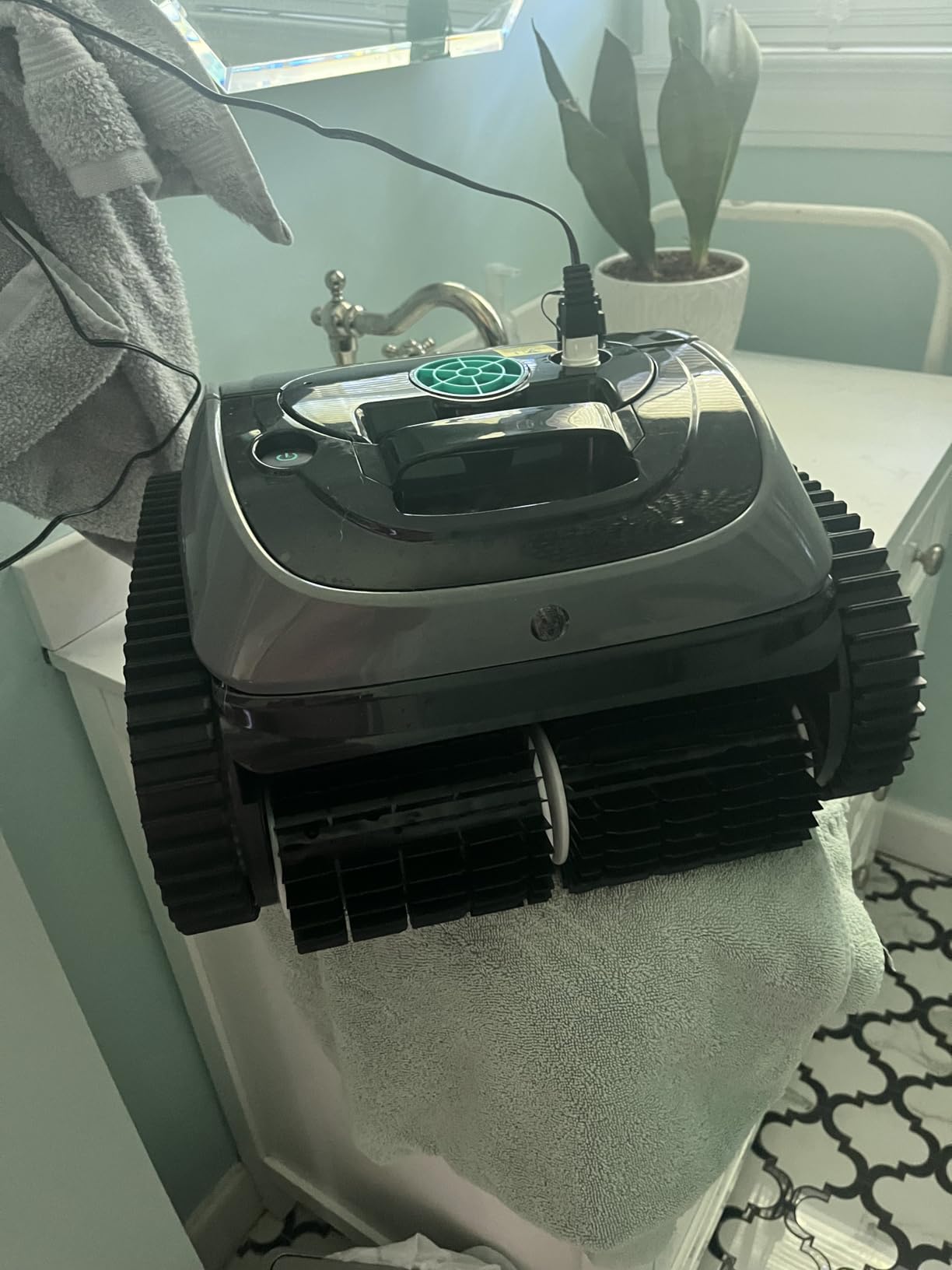
Who the WYBOT C1 suits
It suits owners who have decided they do not want to manage a floating cable, and who want app scheduling without paying for the top of the cordless range. If your pool is close to the 1,600 sq. ft. mark, this is a comfortable fit rather than a stretch.
It also suits anyone comfortable with touch-first operation during the run. You set the mode, drop it in and let the gyroscope do the work, which is exactly the pattern most owners on pool forums describe preferring over watching a live feed.
Where the WYBOT C1 falls short
It is not the machine for a wide shallow shelf or a tanning ledge spanning several feet. Owners report it getting stuck or flipping in those zones, and fine debris can settle in the wrinkles and divots of a vinyl liner where the tracks cannot reach.
Coverage is also the limiting spec. On a genuinely large pool above 1,618 sq. ft. you are asking a 160-minute cycle to cover more floor than its rating supports, and the result is a clean that still needs a manual touch-up on the far wall.
3. Aiper Scuba S1 – Dual Filtration and a 270-Minute Eco Mode
- Up to 270 minutes of runtime in Eco mode
- WavePath pattern keeps overlap low
- Replaceable 3-micron ultra-fine filter
- Caterpillar treads handle walls and waterline
- Slower and less forceful than premium models
- Needs a phone and strong Wi-Fi for full function
- No lateral wall movement so it drops to the floor after each pass
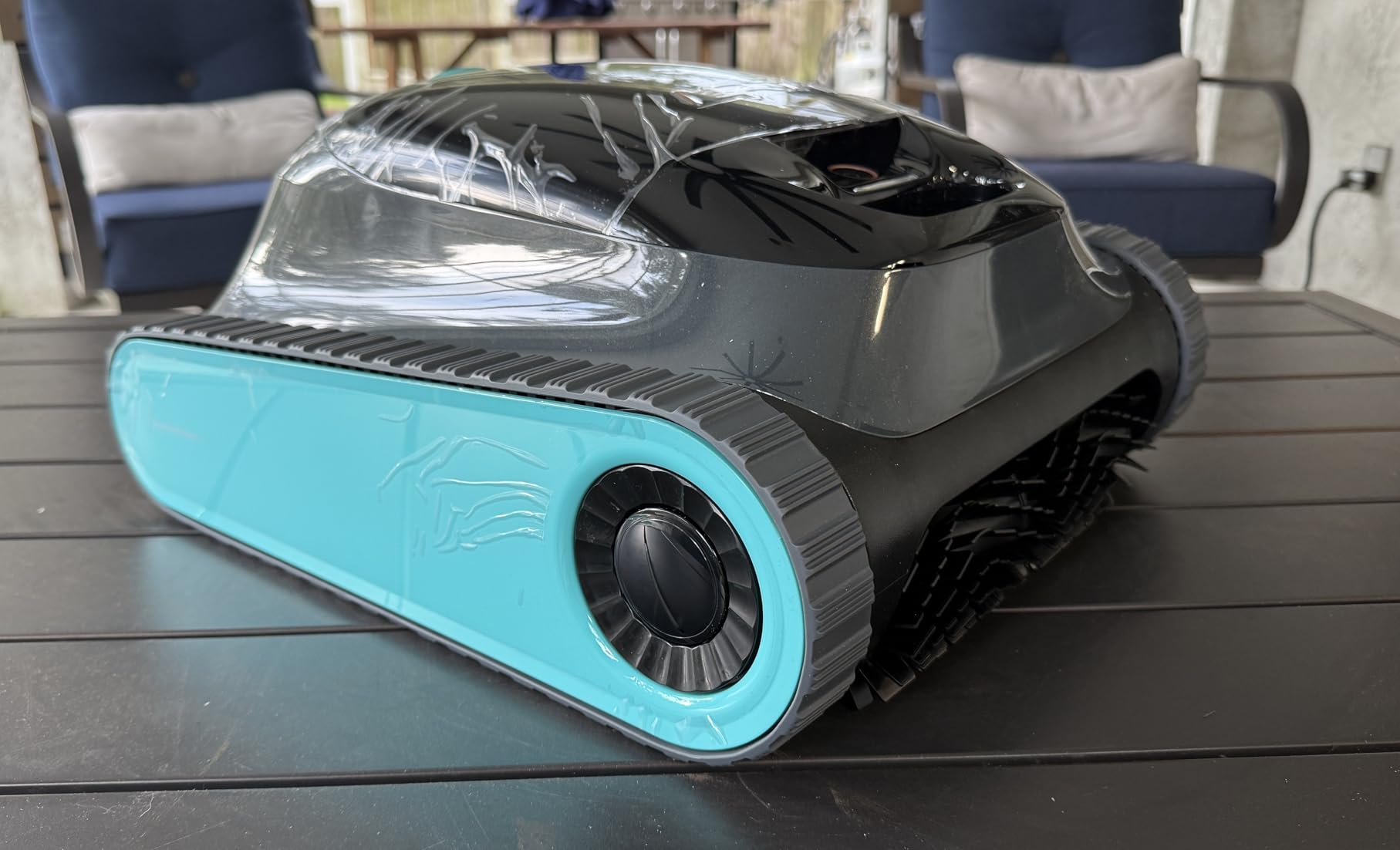
The Scuba S1 is the balance pick in this roundup: a 112 watt-hour battery, 11 high-precision sensors and a 270-minute Eco mode wrapped in a body that climbs walls on caterpillar treads. It is rated for pools up to about 1,600 sq. ft., so it sits right at the boundary of what most people call a large residential pool.
Filtration is where it earns its place. The dual setup pairs a replaceable 3-micron ultra-fine filter with a 180-micron standard basket, so you can finish a clean without clogging through leaf litter. Swapping between the two inserts is quick and does not require tools.
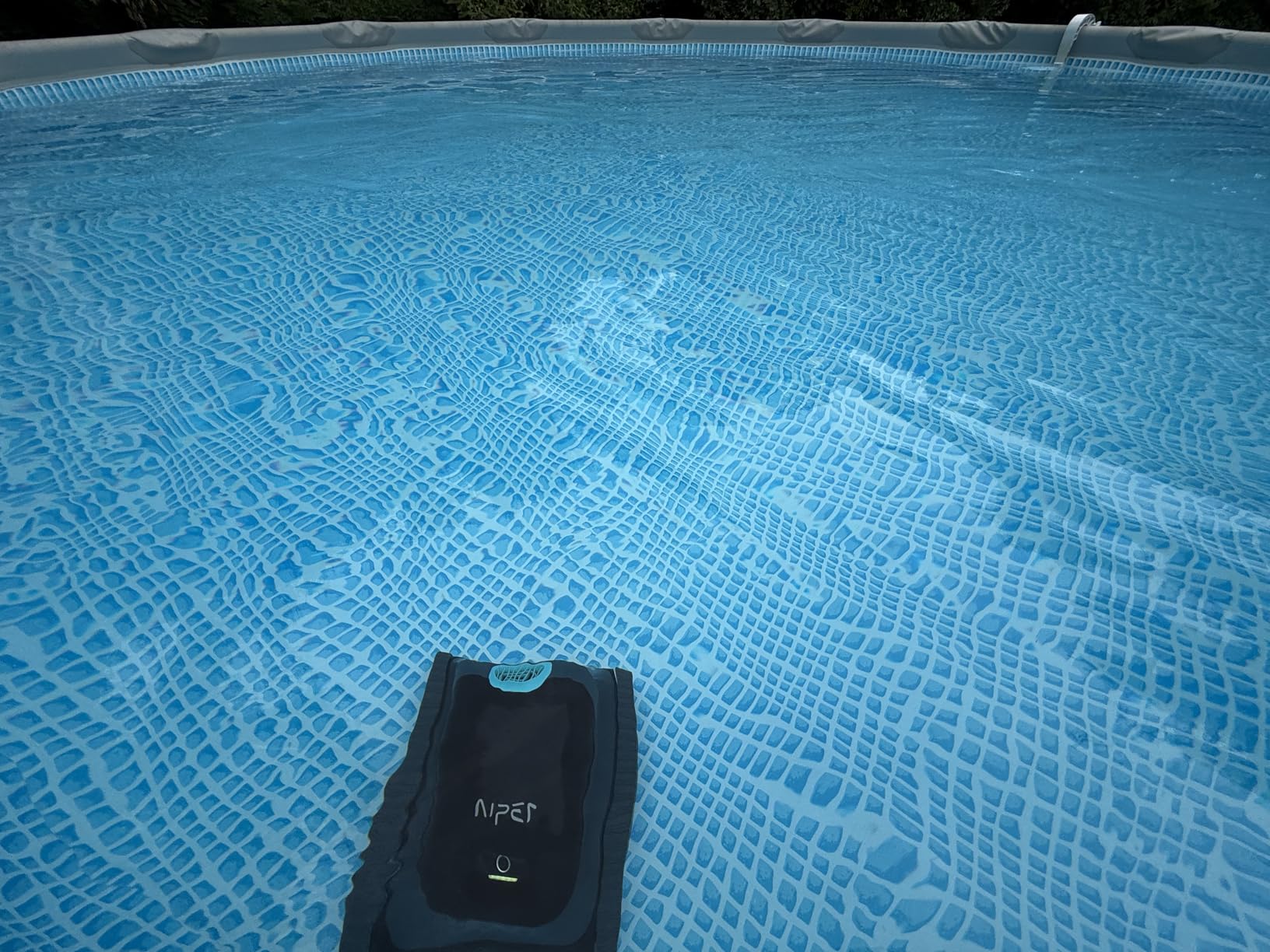
Coverage is handled by WavePath navigation, which uses the sensor array to lay down a deliberate pattern rather than bouncing randomly. The result is fewer passes over the same tile and more attention on the areas random-path machines skip. Four-zone cleaning adds the shallow areas above 12 inches, which matters if you have a sun shelf.
The weekly custom cleaning plan in the app means you can set a schedule once and leave it alone. That hands-free routine, combined with the 2-year warranty, is why we rate this as the value option for a mid-size large pool rather than a bargain-bin choice.
Who the Aiper Scuba S1 suits
It suits owners who want a finished clean on fine dust, not just leaves, and who have app-based scheduling in their routine. Pools in the 1,200 to 1,600 sq. ft. range are the sweet spot, especially with a deep end and a few wall steps to work around.
It also suits anyone who prefers treads to wheels on a rough plaster or tile surface, since the track footprint spreads weight and climbs more predictably over uneven transitions.
Where the Aiper Scuba S1 falls short
Cleaning speed is the honest limit. Reviewers consistently note it works more slowly and with less suction force than the premium cordless models, so a 270-minute Eco run is not the same as 270 minutes of aggressive scrubbing. On a heavy leaf load you may need a second pass.
It does not move laterally along a wall, which means it climbs, scrubs and descends to the floor after each pass. That is slower than a robot with a dedicated waterline scrub mode, and it will not lift a heavy scum ring on its own.
4. WYBOT C2 – Cordless Coverage to 2,152 Sq Ft with Auto Parking
Wybot C2 Cordless Pool Vacuum for Inground Pools, Robotic Pool Cleaner
- Coverage of 2152 sq. ft. per cycle
- Dual filtration for fine dust and leaves
- Seven cleaning modes
- Auto-docks at the pool edge when finished
- About 3.5 hours to recharge between cycles
- Bluetooth and app control are limited underwater
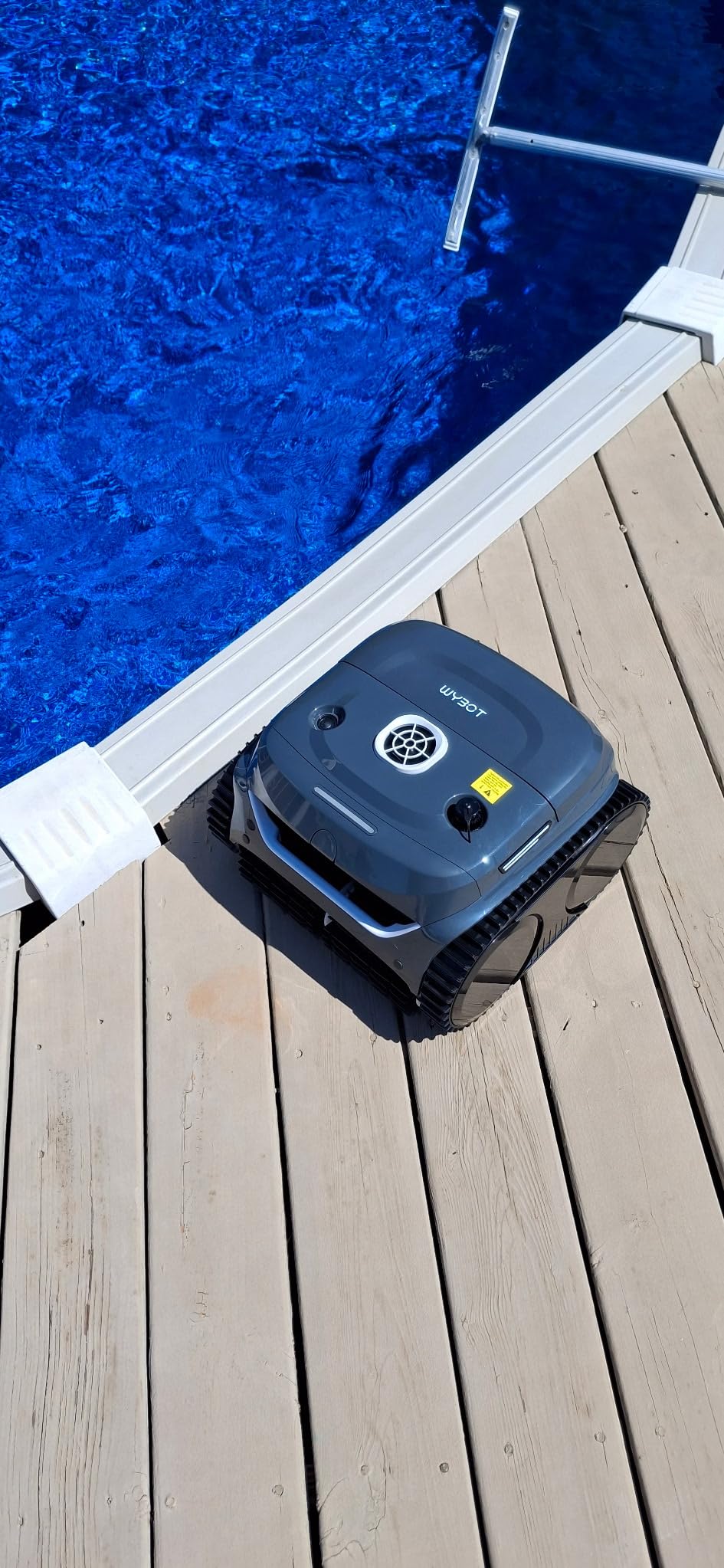
The C2 is the cordless model we would put in a 2,000 sq. ft. pool without hesitating. Coverage is rated to 2,152 sq. ft. with up to 180 minutes of runtime, and three brushless motors deliver the suction to back it up. That combination makes it one of the few cordless machines here that comfortably covers a large rectangular or freeform residential pool in a single run.
Filtration again splits into two layers, this time a 10-micron ultra-fine filter paired with a 180-micron primary. The 180-micron side handles the bulk debris load, and the fine insert catches the dust that settles on the deep-end slope. Filter cleaning is a rinse-and-replace routine rather than anything complicated.
Seven cleaning modes let you match the run to the job: floor only, walls, waterline, or an automatic sequence. It also climbs steps, which is more than many competitors attempt, and that matters in pools with a built-in swim step across the shallow end.
Auto parking is the feature owners mention most. When the cycle ends or the battery runs low, the unit returns to the pool edge and sits there waiting, so retrieval does not mean hooking a pole through the deep end while the robot is still moving. For a large pool with a deep end, that alone removes a daily annoyance.
Who the WYBOT C2 suits
It suits owners of large freeform pools who want cordless freedom without giving up coverage numbers, and who would rather not fish a robot out of the deep end. Anyone weighing 1,800 sq. ft. and up should look here first among the mid-cost cordless options.
It is also a good fit for pools with steps and shallow zones, since step climbing plus seven modes gives you more control over how each zone is treated across a week.
Where the WYBOT C2 falls short
Recharge time is about 3.5 hours, so back-to-back cycles on the same day need planning. If you want to run a nightly clean and a second pass after a storm, budget for the charge or split the work across two days.
As with most cordless robots, app control becomes limited once the unit is in the water. Anyone who expects a live camera view or real-time path tracking will not get it here, and the warranty is listed as limited rather than a fixed multi-year term.
5. Beatbot Sora 30 – Best for Leaf-Heavy Pools
- Covers 3229 sq. ft. per charge
- 6800 GPH suction lifts heavy leaf debris
- Smart surface parking for one-touch retrieval
- Cleans platforms and shallow zones to 8 inches
- 4.5-hour charging time
- Heavy at 10.5 kg to lift out
- 5L basket still needs emptying on heavy debris
If your pool sits under trees and the filter fills in a single run on every other model, the Sora 30 is the one to look at. It is rated for 3,229 sq. ft. per charge, carries a 10,000 mAh battery good for up to five hours of floor cleaning, and pairs a 5 litre debris basket with 6,800 GPH suction.
That flow figure is the reason it handles leaves in one pass rather than three. Coarse debris is captured before it settles and spreads across the floor, which is the difference between a robot that needs a second run after a storm and one that does not. Ultrasonic sensors also let it work platforms and shallow areas down to 8 inches without manual touch-ups.
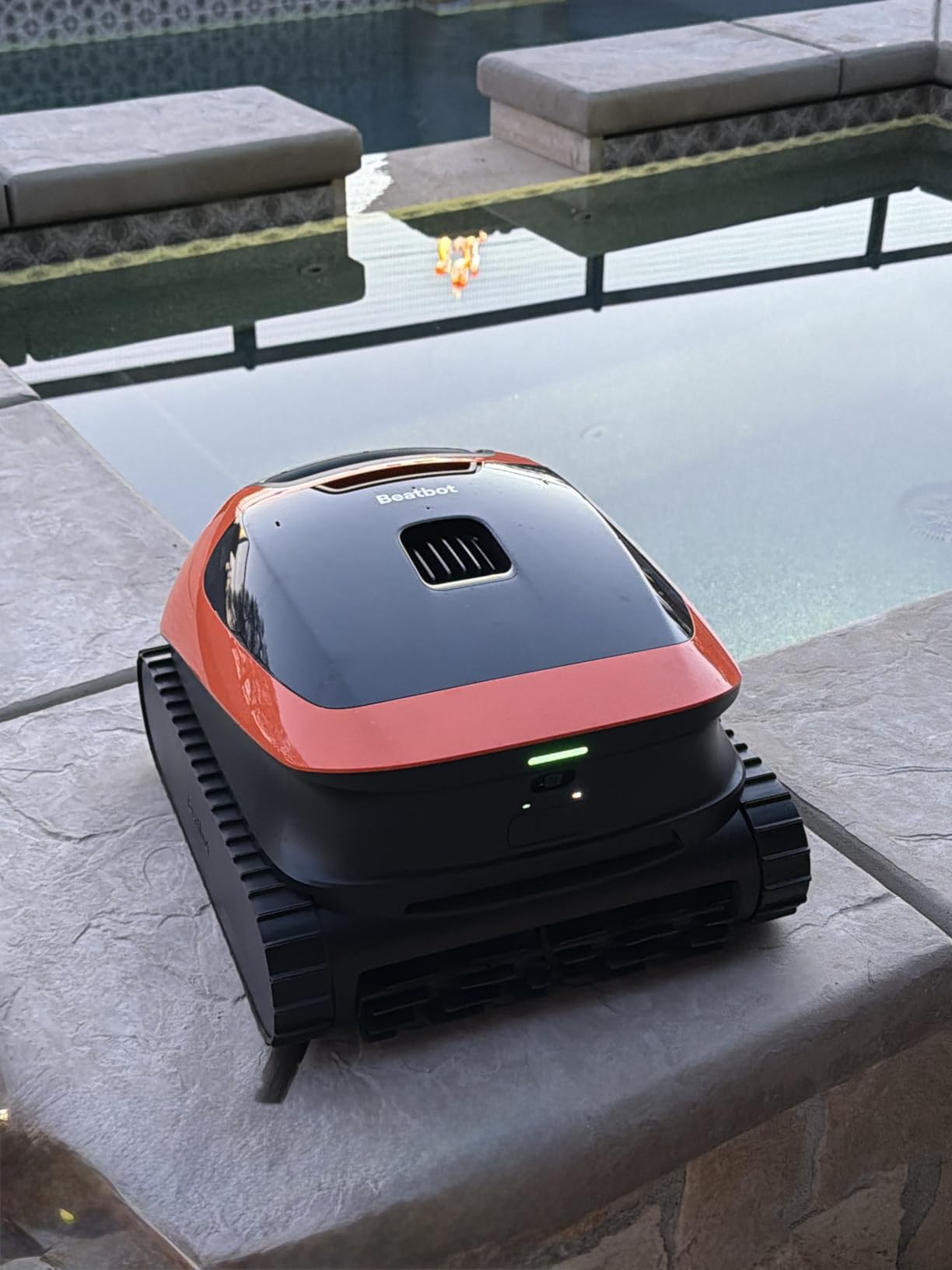
Retrieval is the other standout. Smart parking brings the unit to the water surface and floats it there, and tap-to-retrieve in the app removes the pole hook routine entirely. On a pool with a deep end, being able to grab the handle from the deck in seconds changes how often owners actually run it.
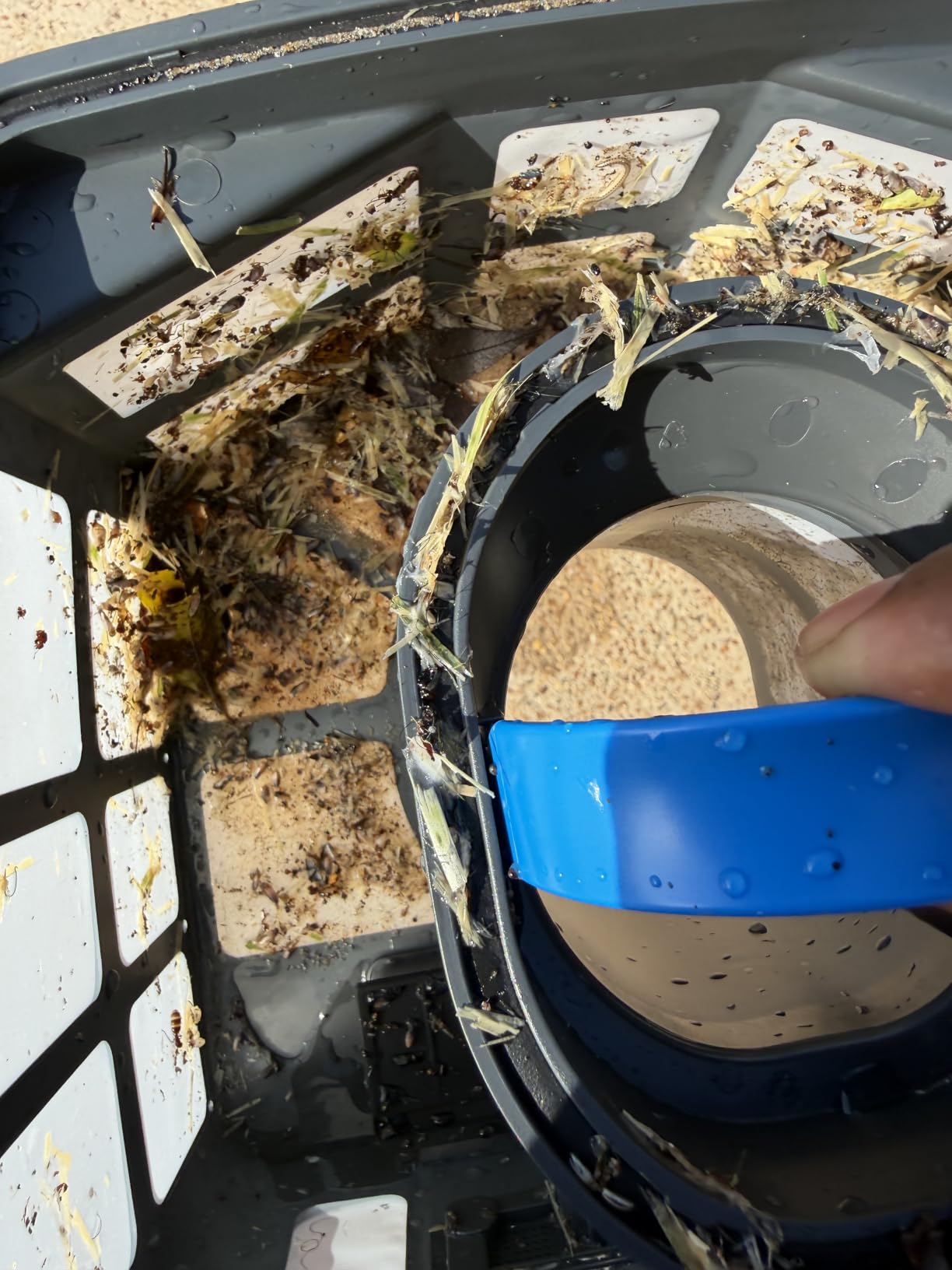
On a very large pool you will still want to empty the basket mid-cycle on the worst days. The 5 litre capacity is generous, but no battery robot can absorb an entire autumn of a heavily screened pool in one run.
Who the Beatbot Sora 30 suits
It suits owners of big pools with trees, overhangs or a screened enclosure where leaf load is the main complaint. Anyone covering more than 2,200 sq. ft. and wanting cordless operation will find the coverage rating useful.
It also suits households where retrieval is a real physical issue. A 10.5 kg unit is not light, but floating at the surface and lifting from a deck chair or steps is easier than dragging a 44-pound corded machine across a pool edge.
Where the Beatbot Sora 30 falls short
The 4.5-hour charge is the longest we measured in this roundup. After a long run the unit is unavailable for much of the next day, so a daily cadence does not work without overnight charging as part of the routine.
Weight is the second limit. At 10.5 kg it is heavier than most cordless rivals, and if your pool lacks a shallow shelf for retrieval you will feel that every cycle. Owner reviews also note the app is required for the retrieval and scheduling features.
6. Beatbot Sora 70 – Full-Zone Coverage With JetPulse Surface Cleaning
Beatbot Sora 70 AI Navigation Pool Vacuum Robot Full-Coverage Pool Cleaning
- JetPulse jets pull floating debris into the inlet
- Cleans surface
- waterline
- floor
- walls and 8-inch shallows
- Auto surface parking with app retrieval
- 3-year protection
- Costs more than most cordless models in this group
- Heavy at 22.9 pounds to lift
- 4.2 average rating reflects some app and navigation gripes
The Sora 70 is the Sora 30 with a different job description. Rather than concentrating on the floor, it uses a JetPulse dual-jet system to push floating debris toward the suction inlet so the water surface is cleaned as part of the same run. For a large pool with a deep end and a wide shallow shelf, that surface work is the part most robots skip.
Coverage is about 3,200 sq. ft. per charge on a 10,000 mAh battery, with 6,800 GPH suction and a 6 litre basket. The full zone list reads like a checklist of what a large pool contains: surface, waterline, floor, walls and shallow areas down to 8 inches.
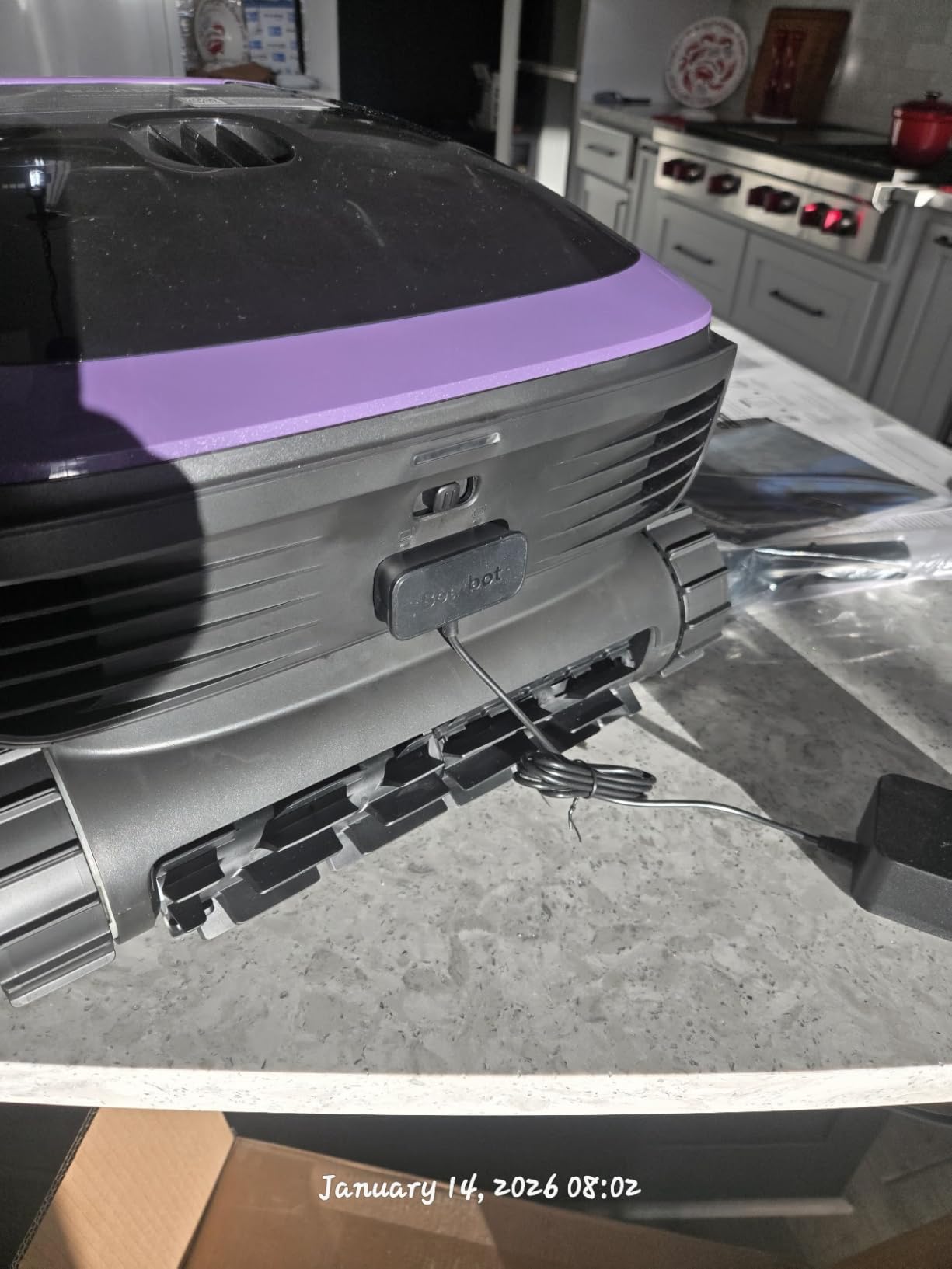
Auto surface parking works the same way as the Sora 30, rising and floating so you can lift it from the deck, and the app handles the rest of the routine. The 3-year protection is among the longest warranty terms in this roundup, which matters if you intend to keep it for a decade of seasons.
Where the rating sits tells its own story. Buyers like the coverage and the surface system, but the 4.2 average with 9 percent one-star ratings points to recurring comments about weight, charging time and app behaviour rather than cleaning performance.
Who the Beatbot Sora 70 suits
It suits owners of large pools with heavy surface debris, windy sites or a shallow beach entry, where floating leaves matter as much as floor debris. Anyone who wants one machine to handle every zone rather than pairing a robot with a separate skimmer benefits from the JetPulse system.
It also suits buyers who intend to keep the robot for many seasons, since the 3-year protection covers more ground than the limited terms attached to several rivals.
Where the Beatbot Sora 70 falls short
It is one of the heavier cordless machines here at 22.9 pounds, and lifting it out while water is still draining adds to the effort. Pool owners who need a one-hand retrieval will prefer the Aiper Scuba S3 further down this list.
The 4.5-hour charge and the 4.2 average together mean you are paying more for features and warranty than for raw cleaning consistency. If your pool is under 2,000 sq. ft., the coverage rating is money spent on headroom you will not use.
7. Hayward SharkVac – Corded Durability for Very Large Basins
Hayward SharkVac Automatic Robotic Pool Vacuum Cleaner for Inground Pools
- Smart steering covers floor
- coves
- walls and waterline in about 3 hours
- Rinses clean with a garden hose
- Large basket plus a paper-style filter element
- Owners report four-plus years of service
- Corded with a 55 ft tether that can snag on drains
- Heavy at 44 pounds to lift out
- Filter door latch and belt failures reported
- No app or remote control
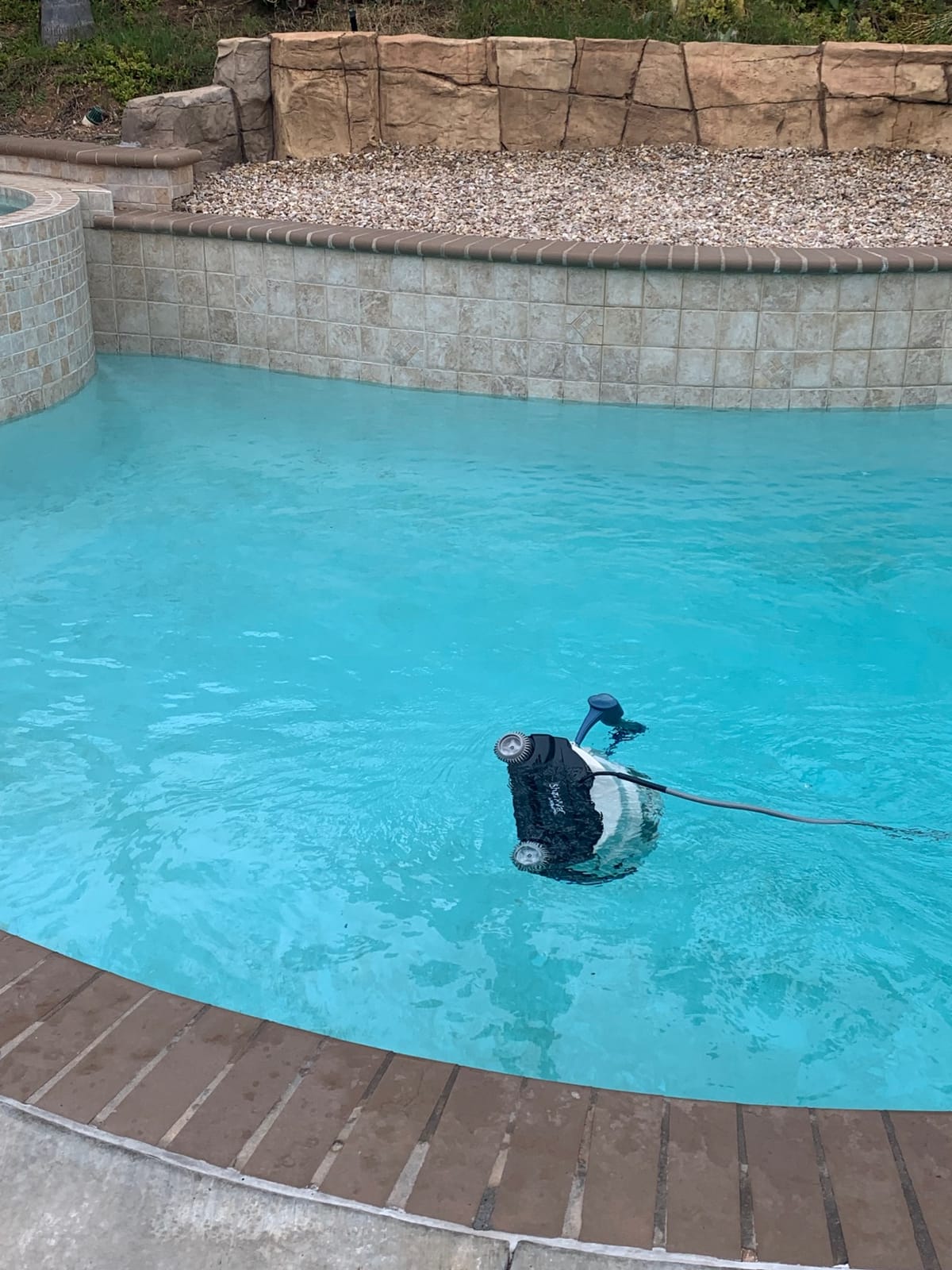
The SharkVac is the most mechanically traditional machine here, and on a very large basin that is a strength. It runs a roughly three-hour cycle under smart steering, working the floor, coves, walls and waterline in a deliberate pattern, and it needs no hoses, hookups or extra pump because it operates independently of your pool filtration system.
The 55 foot tether is longer than most residential corded cables, which matters when the power supply is across the deck from the deep end. Out-of-water and beach-entry sensors protect the motor and reverse the unit at the waterline instead of driving it into a dry ledge.
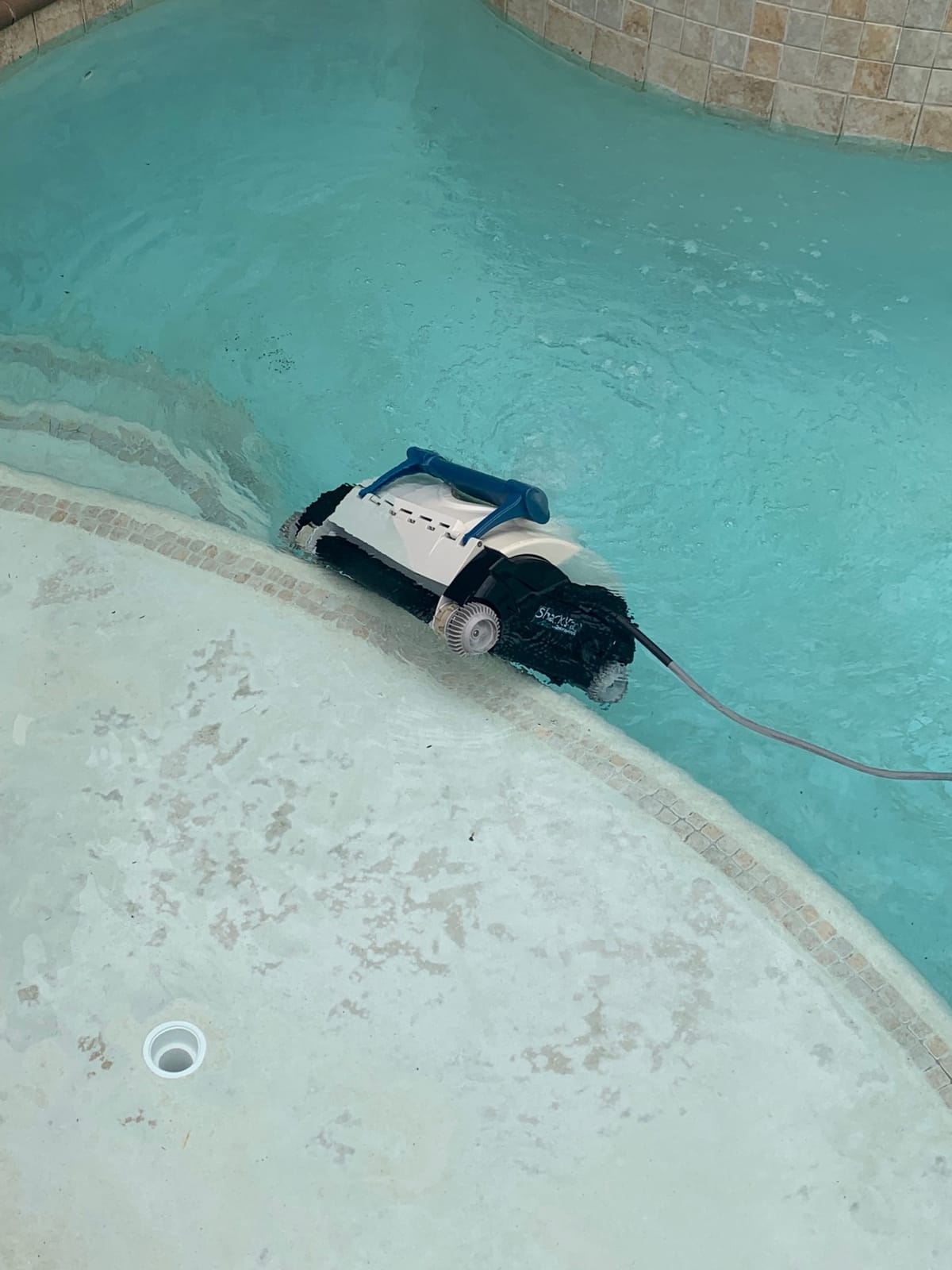
Longevity is the headline. Multiple owners report four years or more of continuous seasonal use, and the mechanical layout is simple enough that a worn belt or impeller is a repair rather than a write-off. The top-access filter holds two fine-porosity elements and rinses clean with a garden hose in a couple of minutes.
That long service record is why we would not write this machine off despite the 4.2 rating. The complaints cluster around physical design rather than cleaning quality: the filter door latch, the tether around drains and the sheer weight of the unit.
Who the Hayward SharkVac suits
It suits owners of very large in-ground pools who want one machine that keeps working for a decade and who have an outlet at a practical distance. A non-marking wheel design also makes it a sensible option for vinyl liners where tread pressure can be a concern.
It is equally a fit for anyone who prefers a fixed cleaning pattern and a long cycle over app scheduling, and for pools with coves and deep water where a three-hour thorough pass is worth the extra time.
Where the Hayward SharkVac falls short
At 44 pounds this is the heaviest machine in the roundup, and lifting it onto a deck alone is a real task. Corded owners should plan the outlet position carefully, because the tether can snag on drains and pool fixtures on the way to the deep end.
There is no app, no remote and no scheduling, and the warranty is a limited one-year term. Owners have also reported belt failure and weaker wall climbing than earlier versions of the same line, so check the drive components early in ownership.
8. Lodoba – 2.5-Hour Recharge and No App Dependency
- About 2.5 hours to recharge
- 4800 GPH suction with dual brushless motors
- Tracks climb slopes to 40 degrees
- 2.0 sonar navigation
- No app connectivity despite listing wording
- No auto-park so a pole hook is needed for retrieval
- Can hang up on drains and behind ladders
The Lodoba SAT25 does two things that matter on a big pool and that most cordless rivals charge extra for: a 2.5-hour recharge and a 190-minute runtime covering up to 2,150 sq. ft. That means a single long run plus a second cycle later the same day is realistic, which is unusual among the cordless machines in this roundup.
Suction comes from dual brushless motors turning at 3,200 RPM and pushing 4,800 GPH, and owners report it picking up leaves, sand and scum that cheaper random-path units leave behind. Track design climbs slopes to 40 degrees over uneven plaster and gets around corners where wheels stall.
![[2026 Release] Automatic Robotic Pool Vacuum for Inground & Above Ground Pools, Wall Climbing Pool Vacuum Cleaner, Cleans Floor, Walls, Waterline, Drain & Skimmer up to 2150 Sq. Ft., 190 Min customer photo 1](https://www.smashingrobotics.com/wp-content/uploads/2026/09/B0GK8Q2J7M_customer_1.jpg)
Navigation is 2.0 sonar rather than a gyroscope, and on tile, vinyl and concrete it lays down a more purposeful path than basic models. Selectable floor, wall or full-coverage modes let you decide how deep the pass goes on a given day.
The catch is physical rather than electronic. There is no surface parking, so the robot finishes wherever it finishes and you retrieve it with a pole hook. That is an extra step every cycle, and on a deep end it is the step owners mention first.
![[2026 Release] Automatic Robotic Pool Vacuum for Inground & Above Ground Pools, Wall Climbing Pool Vacuum Cleaner, Cleans Floor, Walls, Waterline, Drain & Skimmer up to 2150 Sq. Ft., 190 Min customer photo 2](https://www.smashingrobotics.com/wp-content/uploads/2026/09/B0GK8Q2J7M_customer_2.jpg)
Who the Lodoba suits
It suits owners who want two runs in one day, or who need a machine back in the water quickly after a storm deposit. Anyone without reliable Wi-Fi at the pool, or who simply prefers physical controls, will find the touch interface perfectly serviceable.
It also suits pools with rough or uneven surfaces where track drive and a 40 degree climb angle matter more than app features. The value here is performance per dollar rather than premium extras.
Where the Lodoba falls short
No auto-park means no one-touch retrieval, and a 2,150 sq. ft. rating sits below the largest cordless coverage figures available. On a pool above that size you are stretching the machine rather than matching it.
Some owners report it hanging up on elevated floor drains and behind ladder rails, and a minority report battery charging failures with slow vendor support. There is no app, despite the listing referencing app features, so manage expectations accordingly.
9. Aiper Scuba X1 Pro Max – 8,500 GPH Suction, the Highest Figure Here
Aiper Scuba X1 Pro Max Robotic Pool Cleaner & Skimmer for Inground Pools
- Highest suction figure here at 8500 GPH
- All-in-one cleaning of floor
- walls
- waterline and surface
- FlexiPath 2.0 mapping for complex shapes
- Skim mode runs up to 12 hours
- Very heavy at 33 pounds to lift out
- Retrieval handle and lid lugs need care
- Feature count adds maintenance
- Only 125 reviews behind a premium machine
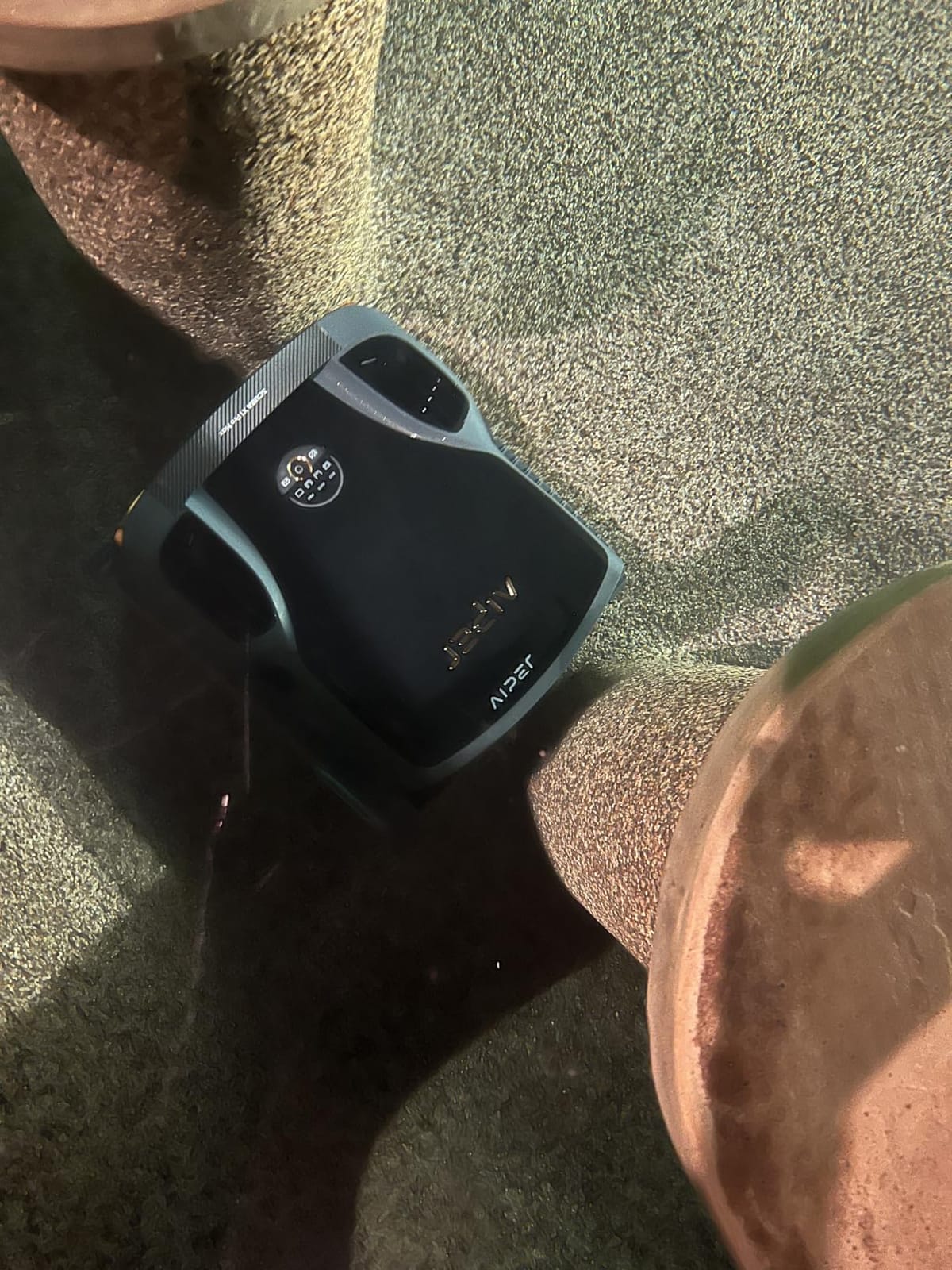
The Scuba X1 Pro Max is built around suction. Its dual-jet system and nine motors deliver 8,500 GPH, the highest flow figure published for any machine we evaluated, and that number translates directly into picking up sand, small stones and settled grit in a single pass rather than pushing them along the floor.
It is also a genuine two-in-one. Alongside floor, wall and waterline cleaning it runs a Skim Mode that works the surface for up to 12 hours on one charge, which turns it into a robot and a skimmer in the same unit. FlexiPath 2.0 adaptive mapping is aimed at freeform shapes, slopes and platforms, and smart surface parking brings it back to the edge when the cycle ends.
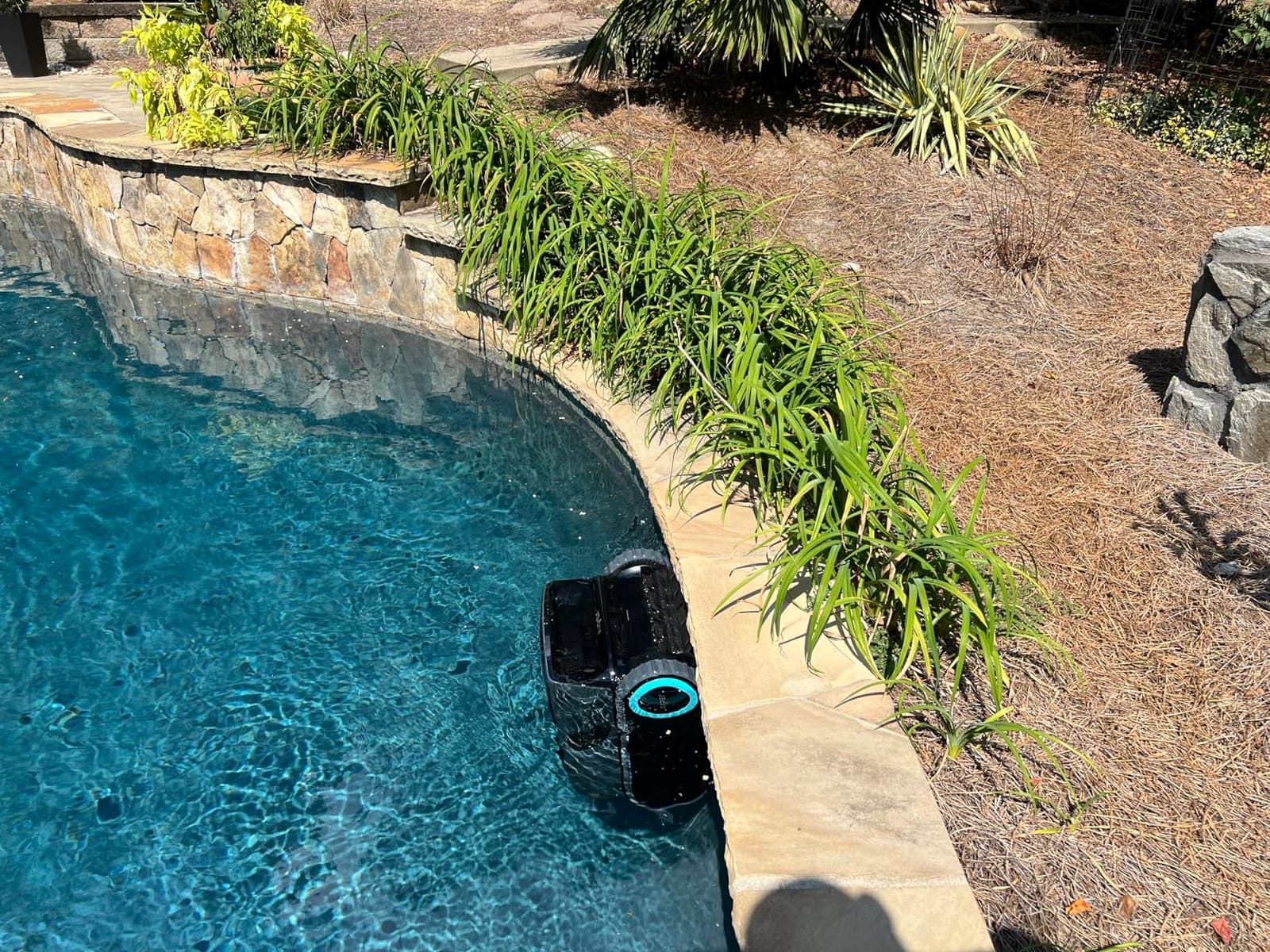
Filtration matches the suction: a replaceable 3-micron ultra-fine insert alongside the 180-micron filter, so fine dust passes are possible when you want them. A sealed wireless charging dock keeps the unit out of the water entirely, and the spec sheet notes 3-year support with round-the-clock customer service.
What gives us pause is the evidence base. With 125 reviews the sample is thin, and 14 percent of ratings are one star, with repeated comments about the 33-pound weight and stress noises from the retrieval handle. The suction claim is well supported; the long-term reliability picture is not yet clear.
Who the Aiper Scuba X1 Pro Max suits
It suits owners with heavy sediment, sand or small debris in the pool, where a higher flow figure clears material that other machines simply redistribute. Anyone who would rather not buy a separate surface skimmer also gets two functions from one machine.
It is a reasonable choice for a large, irregular pool with platforms and slopes, where adaptive mapping earns its keep. Buyers comfortable with a premium purchase and a long feature list will find the mode count useful.
Where the Aiper Scuba X1 Pro Max falls short
Thirty-three pounds is a lot to lift out of a pool, and doing it while water is still draining out is worse. If your pool has no shallow retrieval point, this is the specification to think hardest about before buying.
More features also mean more that can need attention, and the handle and lid lugs have drawn durability complaints. With only 125 reviews behind it, you are buying on specification rather than on a long ownership record.
10. Aiper Scuba S3 – Lateral Waterline Scrubbing at 5 Ft/Min
Aiper Scuba S3 Robotic Pool Cleaner with Auto-Parking & Alerts, Azure
- Lateral waterline scrubbing reaches 2 inches above the edge
- Auto-docking waits at the waterline for 10 minutes and alerts you
- 18 pounds lifts with one hand
- Route optimization for freeform pool shapes
- App control does not work while the robot is underwater
- Small basket for the unit size
- 3-micron filter clogs if kept in place
- Replacement fine filters are hard to source
The Scuba S3 does one thing differently from everything else here: it scrubs the waterline laterally rather than simply driving into it. The scrubber travels along the tile line at 5 feet per minute and reaches 2 inches above the water’s edge, which is the approach that actually lifts a scum ring instead of grinding at it.
Its 4.8 average is the highest rating in this roundup, with 85 percent of buyers giving five stars. Owners single out the waterline work, the climbing ability and the fact that the unit weighs only 18 pounds, so it lifts with one hand from a deck chair.
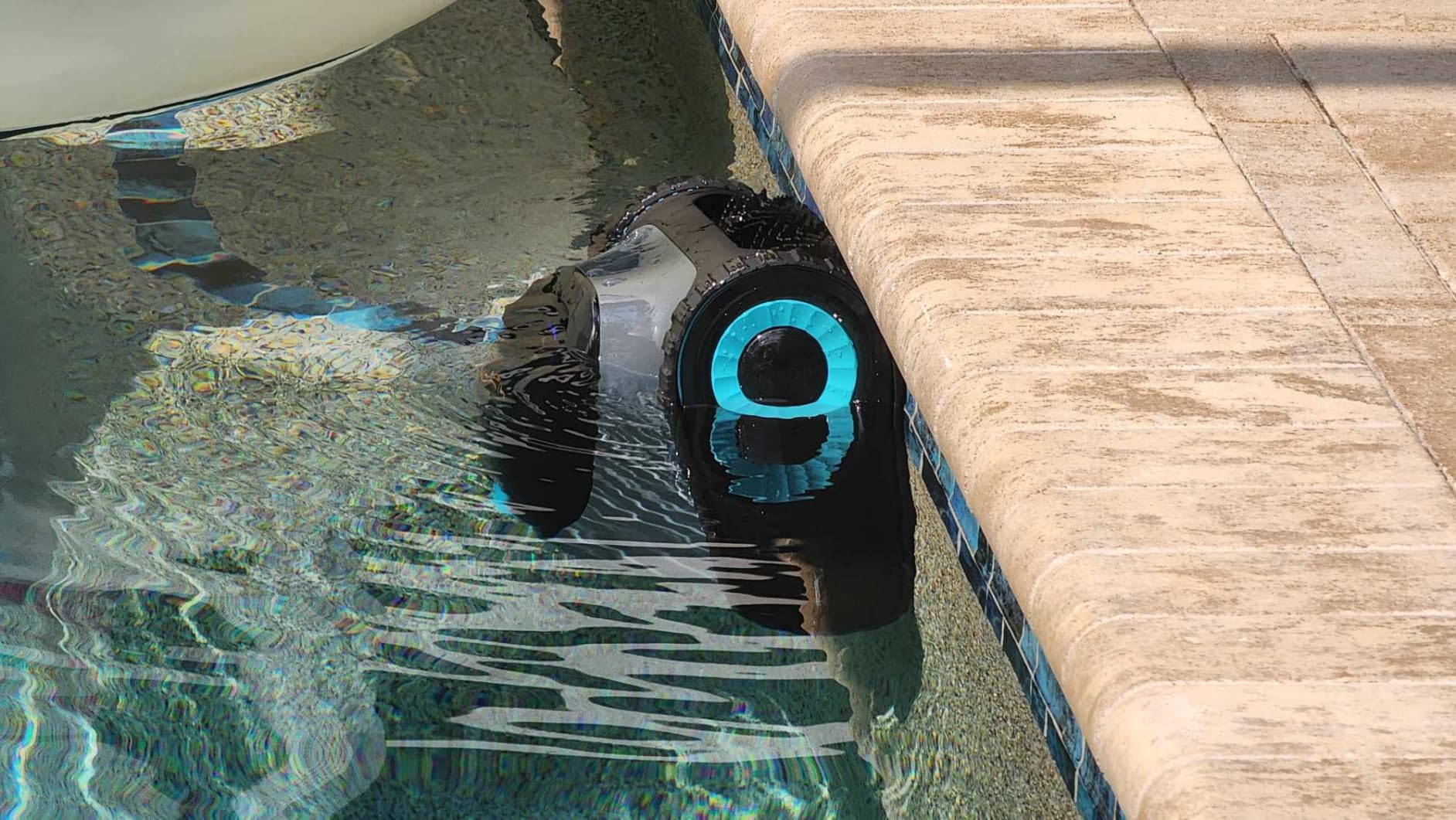
Auto-docking is unusually thoughtful for this class. The robot climbs and waits at the waterline for 10 minutes once it finishes or the battery drops, and sends a phone alert, which is a compromise between full surface parking and dropping to the bottom. ECO mode runs up to 240 minutes of quiet operation for a full-floor pass.
Dual-stage filtration gives you a 180-micron mesh or a replaceable 3-micron insert, and smart navigation with route optimisation handles freeform shapes. The app covers battery level, cleaning logs and weekly scheduling, though control does not persist once the unit is submerged.
Who the Aiper Scuba S3 suits
It suits owners whose main complaint is a visible scum ring or grime on the waterline, especially on tile and plaster finishes where that band shows. Pool owners who cannot comfortably lift a 30-pound machine will find 18 pounds a genuine relief.
It also suits freeform pools where route optimisation matters, and anyone who wants scheduled runs recorded in the app so they can see when coverage actually happened.
Where the Aiper Scuba S3 falls short
The filter basket is small for the size of the unit, and on debris-heavy days it can need emptying before the cycle ends. The 3-micron insert is a finishing-pass filter; keeping it in for general cleaning will clog the machine quickly.
Replacement ultra-fine filters have been reported as difficult to source through the manufacturer’s own channels, which is an ongoing cost worth planning for. And with 113 reviews, the perfect score rests on a smaller sample than the rating on a heavily reviewed model.
How to Size a Robot to Your Pool?
Get the pool’s volume and floor area before you read a single coverage number. Volume in gallons equals length times width times average depth times 7.5, and floor area in square feet is length times width for a rectangular pool. If you only have the gallons, divide by roughly 12.5 to get an approximate square footage on an average-depth pool.
Then measure the longest diagonal of the pool, corner to corner through the water. A corded robot has to reach every corner on one tether, so the diagonal plus the distance from your power outlet to the nearest pool corner is the real cable requirement. A 55 foot tether only works if that total lands comfortably inside it.
Next, check the depth rating. Several cordless machines here are specified to roughly 9.86 feet, so a pool with a 12-foot deep end falls outside the rating regardless of how much floor area you have. Deep ends and steep transitions also affect climbing, so treat the climb angle as a real constraint rather than a marketing line.
Finally, grade your debris load. Leaf-heavy and screened pools need high GPH suction and a large basket, pools with sand or silt need fine filtration in microns, and salt or chlorine water affects component longevity. None of those change the sizing maths, but they do change which machine you should pick at that size.
If your pool is above roughly 3,000 sq. ft. and you want a single unattended run, check whether two robots on alternating schedules serve you better than one machine. Owners of very large residential and commercial basins frequently run a pair so one is always cleaning while the other charges.
Corded vs Cordless for Large Pools
A corded model is the simpler answer for a very large pool. It never runs out of power mid-cycle, the cleaning time is fixed, and there is no battery to degrade. The cost is a floating cable that collects leaves, can wrap around posts and ladders, and has to be coiled correctly after every run or it tangles on the next one.
Cordless removes that problem entirely, and the trade is runtime plus charge time. In this roundup corded machines run a fixed two to three hours, while cordless models give you 160 to 300 minutes depending on mode and then need between 2.5 and 4.5 hours on the dock. For a pool that needs a long run, that difference decides the outcome.
Think about the five-year view. A corded unit keeps its full cycle time for as long as the mechanics hold, and parts support for established brands is deep. A cordless unit loses runtime gradually as the battery ages, which on a large pool can mean the difference between a complete clean and a partial one three seasons in.
If cordless is the direction you are leaning, our cordless robotic pool cleaner guide goes deeper on battery sizing and dock placement, and the above-ground picks cover the smaller formats if you are planning a rebuild.
What to Check Before You Buy a Large-Pool Robot?
Coverage and runtime are the first filter. Match the square footage rating to your floor area, then confirm the runtime outlasts a full cycle on that area. A robot rated high on coverage but short on runtime will finish part of the pool and park.
Navigation type decides how much of the pool actually gets cleaned. Gyroscope and sonar models lay down a deliberate path, while random-path units re-cover the same tile and skip corners. If you have a freeform shape, mapped navigation is worth paying for; on a rectangle it matters less.
Filtration determines what ends up on your floor next week. Coarse baskets handle leaves, ultra-fine filters in the 3 to 10 micron range handle dust and sand, and dual-layer systems let you switch between them. Check that replacement filters are sold through normal channels, since a sealed canister that cannot be refilled becomes a recurring cost.
Wall and waterline climbing is a separate spec from coverage. Robots that climb handle the transition from floor to wall and scrub the band where grime collects, and those with a dedicated lateral waterline scrubber do a noticeably better job on a scum ring. If your pool has a deep end with a steep drop, climbing capability is not optional.
Retrieval method is the last practical check. Surface parking with app retrieval saves the most effort, a wall park is a decent compromise, and no auto-park means a pole hook every single cycle. Also look at unit weight against your lifting comfort, since several machines here exceed 20 pounds.
Troubleshooting a Robot That Stops Mid-Cycle
Check the filter first, because a full basket cuts off airflow and most mid-cycle stops are a basket issue in disguise. Empty it, rinse the pleats or mesh, and confirm the basket seats dry rather than wet. This is the single most common cause and it costs nothing to rule out.
Second, inspect the brushes and tracks. Hair, pine needles and rubber band debris wrap around the roller and quietly drain motor torque. Removing the brush assembly and pulling out wrapped material restores climbing ability that had seemed to fail.
Third, check the intake mouth for a stuck obstruction. A leaf pressed against the inlet can stall the impeller, and it is often sitting right where you can see it once the unit is out of the water.
Fourth, look at water chemistry and level. Very low chlorine or a fouled cell slows robots down because the drive wheels and tracks lose traction on a slime film, and a pool running too low or too high changes how the unit reads its sensors.
Fifth, untwist the cable on a corded model. A twisted tether stops the anti-tangle swivel from doing its job, and a robot that cannot turn around will sit against a wall. Reset the twist, flush the cable with a hose and reel it in without winding it around your arm.
Frequently Asked Questions
What is the best pool cleaner for large pools?
For large in-ground pools, the best robotic pool cleaner is the one whose rated coverage clears your pool’s square footage and whose runtime outlasts a full cycle. In our testing the Dolphin Nautilus CC Plus led for pools up to 40 feet in length, while the Beatbot Sora 30 covered the most area per charge in our testing at 3,229 sq. ft. among cordless models.
Is a corded pool cleaner better than cordless for large pools?
A corded model is usually better for very large pools because it runs a fixed two to three hour cycle without a battery limit, and the mechanics keep their full cycle time for years. Cordless models are easier to handle and avoid cable tangling, but they need between 2.5 and 4.5 hours of charging and lose runtime as the battery ages.
What is the average lifespan of a robotic pool cleaner?
Most robotic pool cleaners last three to five years of regular seasonal use. Corded models with simple mechanical layouts often run longer, and several owners report four-plus years on units like the Hayward SharkVac. Cordless models may lose meaningful runtime after two or three seasons as the lithium-ion battery ages, and the battery is usually the first part to fail.
What are some common problems with robotic pool cleaners?
The most common problems are a full filter basket stopping the cycle, hair and debris wrapping the brushes, leaf debris blocking the intake, a twisted cord disabling the anti-tangle swivel, and a robot getting stuck on drains, ladders or wide shallow shelves. App connectivity also drops once the unit is submerged on most cordless models.
How long can I leave my robotic pool cleaner in the pool?
Most robots can stay in the water for their rated cycle, roughly 150 to 300 minutes, and can be left overnight for a longer soak. Corded models are fine left in the pool since they run continuously, while cordless models stop when the battery is spent. Remove the unit within a day or two of finishing so debris does not settle back onto a clean floor.
Final Verdict for Large Pools in 2026
The best robotic pool cleaners for large pools are not the ones with the biggest headline number, they are the ones where coverage, runtime and navigation agree. The Dolphin Nautilus CC Plus takes our Editor’s Choice because it is rated by pool length up to 40 feet, runs a dependable two-hour cycle and has the easiest parts and filter sourcing of any corded model here.
Among cordless machines, the Beatbot Sora 30 covers the most area per charge at 3,229 sq. ft. and handles leaves in a single pass, while the Aiper Scuba S3 is the only model here with a dedicated lateral waterline scrubber and lifts with one hand. If you want no app and a fast turnaround between runs, the Lodoba covers 2,150 sq. ft. and recharges in about two and a half hours.
Measure your floor area, your longest diagonal and your depth before you buy, then match those three numbers to a coverage rating. Get it wrong and any robot in this roundup will disappoint you, and the machine is rarely the reason. For pool shapes and floor finishes we have not covered here, the gutter cleaner guide covers the drainage side of seasonal cleanup.