
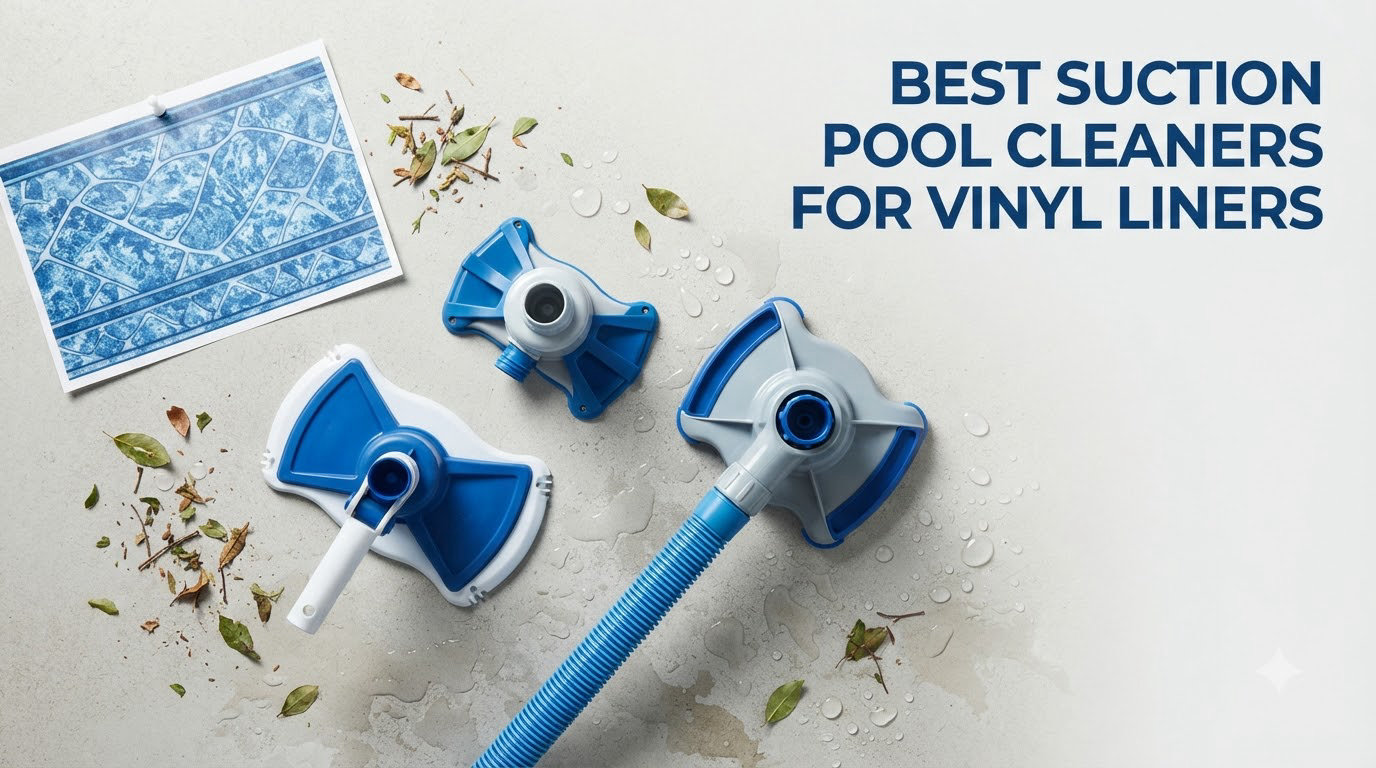
The best suction pool cleaners for vinyl liners are the ones with soft contact surfaces and a seal that grips a soft, uneven floor. Our top pick is the Zodiac MX6, followed by the Zodiac G3 for value and the Hayward Poolvergnuegen for wall coverage. All three run on your existing pump, and all three treat a liner as something to protect rather than scrub.
That liner question is the whole reason this list exists. A suction-side cleaner plugs into your skimmer or a dedicated suction port and borrows your pool pump’s suction to drag itself across the floor, lifting sand, dust, and pollen into a debris bag. No cord, no battery, no booster pump on most residential setups. The trade is that it shares your pump’s flow rate, and it is not built for a mountain of leaves.
For vinyl liner pools specifically, the cleaner does not need to be gentle in the way a robot needs to be gentle. Suction cleaners have no tracked treads digging into the floor, and the vacuum seal presses straight down on the liner rather than dragging abrasive wheels across it. The two real ways an automatic cleaner damages a liner are a hard plastic edge on a seam or a raised drain, and a cleaner that rides up the wall and hangs there. Everything below is filtered on that basis.
For the robot alternative, we cover the cordless and corded machines separately in our robotic pool cleaner roundup, plus dedicated pages on cordless models, inground designs, and above-ground picks. If you are still deciding between cleaner types rather than models, skip to the comparison section below.
Table of Contents
Top 3 Suction Pool Cleaners for Vinyl Liner Pools (October 2026)

Zodiac MX6
- Cyclonic turbine downforce
- X-Trax grip for wall climbing
- Works with variable-speed pumps

Poolmaster 27402
- Dual air-relief valves
- Perimeter brushes for vinyl
- Weighted non-marking body
Best Suction Pool Cleaners for Vinyl Liners at a Glance (October 2026)
Ten picks, one job: capturing fine debris without wearing out the liner. Two of these are manual heads rather than automatic units, which we flag clearly in their sections, and one is not rated for vinyl pools at all.
| Product | Specifications | Action |
|---|---|---|
| Zodiac MX6 |
|
Check Latest Price |
 Zodiac G3 Zodiac G3 |
|
Check Latest Price |
| Poolmaster 27402 Deluxe Weighted Head |
|
Check Latest Price |
 Swimline HydroTools Tri-Vac Head Swimline HydroTools Tri-Vac Head |
|
Check Latest Price |
 Hayward Poolvergnuegen Hayward Poolvergnuegen |
|
Check Latest Price |
 Hayward Navigator Pro Hayward Navigator Pro |
|
Check Latest Price |
 VINGLI Suction Pool Cleaner VINGLI Suction Pool Cleaner |
|
Check Latest Price |
 Pentair Kreepy Krauly Kruiser Pentair Kreepy Krauly Kruiser |
|
Check Latest Price |
 U.S. Pool Supply Octopus U.S. Pool Supply Octopus |
|
Check Latest Price |
 Pentair Kreepy Krauly Lil Shark Pentair Kreepy Krauly Lil Shark |
|
Check Latest Price |
1. Zodiac MX6 – Best Suction Pool Cleaner Overall for Vinyl Liners
- Runs on existing pool pump with no batteries or extra power
- Flow control calibrates to variable-speed and low-flow pumps
- Compact body handles typical inground floors and walls
- X-Trax wheels give reliable grip for wall climbing
- Flow control must be calibrated or coverage and climbing suffer
- Hose can kink or tangle in tight corners
- Some owners report stalls on main drains
We ran the MX6 for weeks of normal cycles on a vinyl liner pool and it is the cleaner we kept reaching for. Setup is three pieces and a hose, and the flow calibration ring is the part that actually matters.
Its cyclonic turbine creates downforce while the X-Trax wheels supply traction, and hydraulic suction drives internal gears so the body follows the pool contour. On a liner that means a full-width vacuum skirt pressed evenly against the surface.
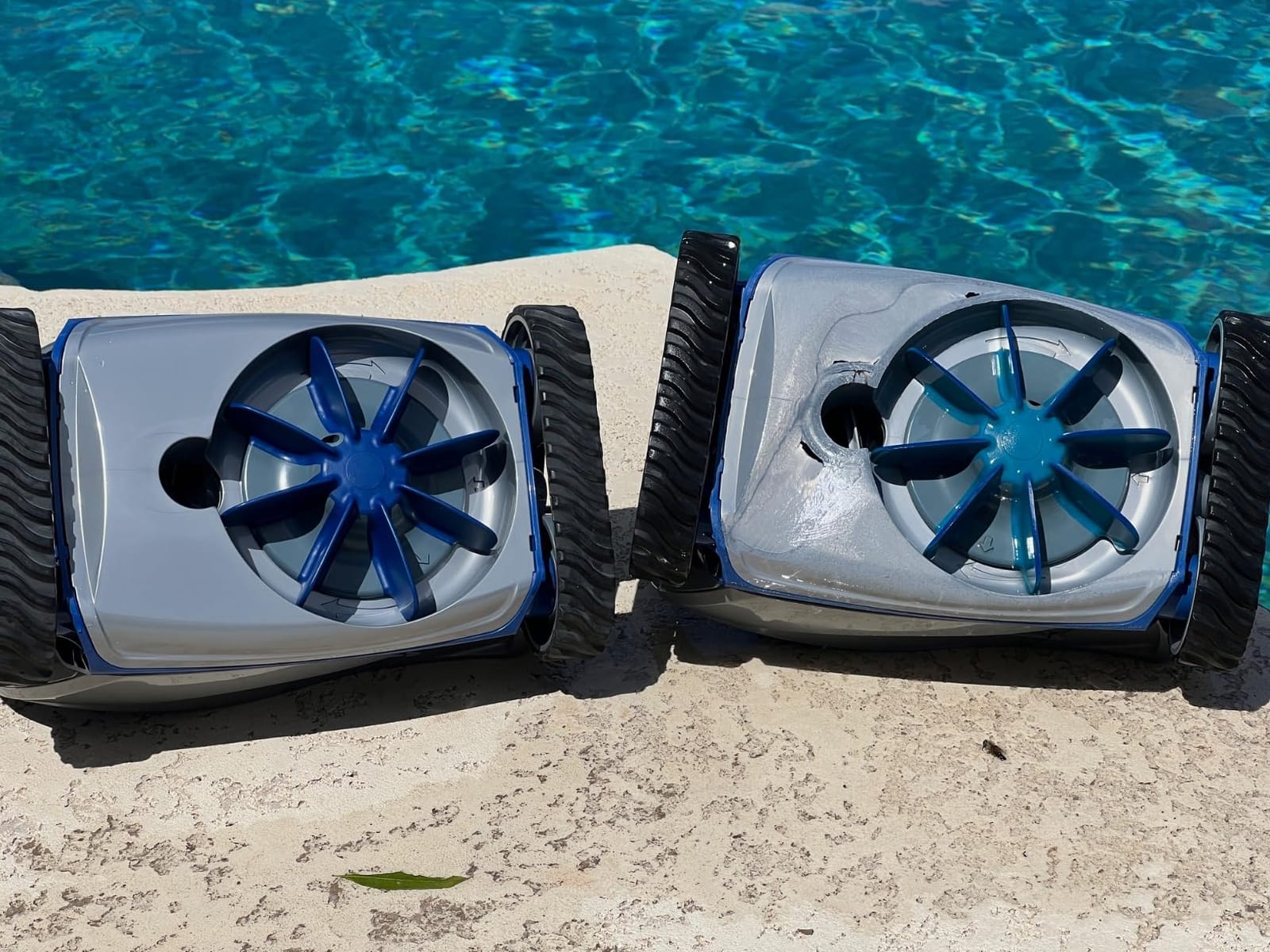
The thing that catches people out is flow. Too much and it beats itself against the walls; too little and it stalls on the floor. The included calibration ring takes a couple of minutes, and once set for a variable-speed pump it will not need touching again unless you change the pump setting.
Owners on Houzz name kinked or cracked hoses as the first thing to check when suction feels weak, and the twist-lock sections on this unit are individually replaceable.
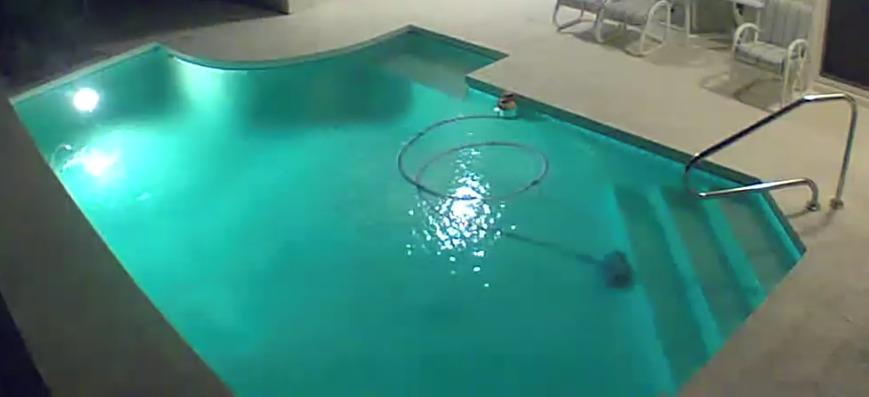
What the MX6 does well on a liner
The skirt contact is broad and even, so it does not concentrate wear on a single seam. Wall climbing is real when flow is set correctly, and it clears a typical main drain cover without getting hung up every cycle.
Because it is hydraulically driven, there is no battery age, no app and no firmware. You set the pump timer and the cleaner runs.
Where the MX6 disappoints
The 4.0 average across a very large review base reflects one recurring complaint: units that stall on main drains or in the transition between deep and shallow ends. The flow adjustment is the fix.
It is also sized for typical inground pools. Very large, deep, or unusually shaped pools need a bigger machine with more drive power behind the seal.
2. Zodiac G3 – Best Value Suction Cleaner for Vinyl Liners
- Cleans vinyl
- tile
- gunite and fiberglass surfaces
- 36-fin disc gives strong adhesion and clears lights and drains
- Wheel deflector handles tight corners
- Compatible with low-flow and variable-speed pumps
- Travel speed depends on correct regulator and flow setting
- Only one moving part limits what can be serviced
- Some owners re-seat the disc periodically
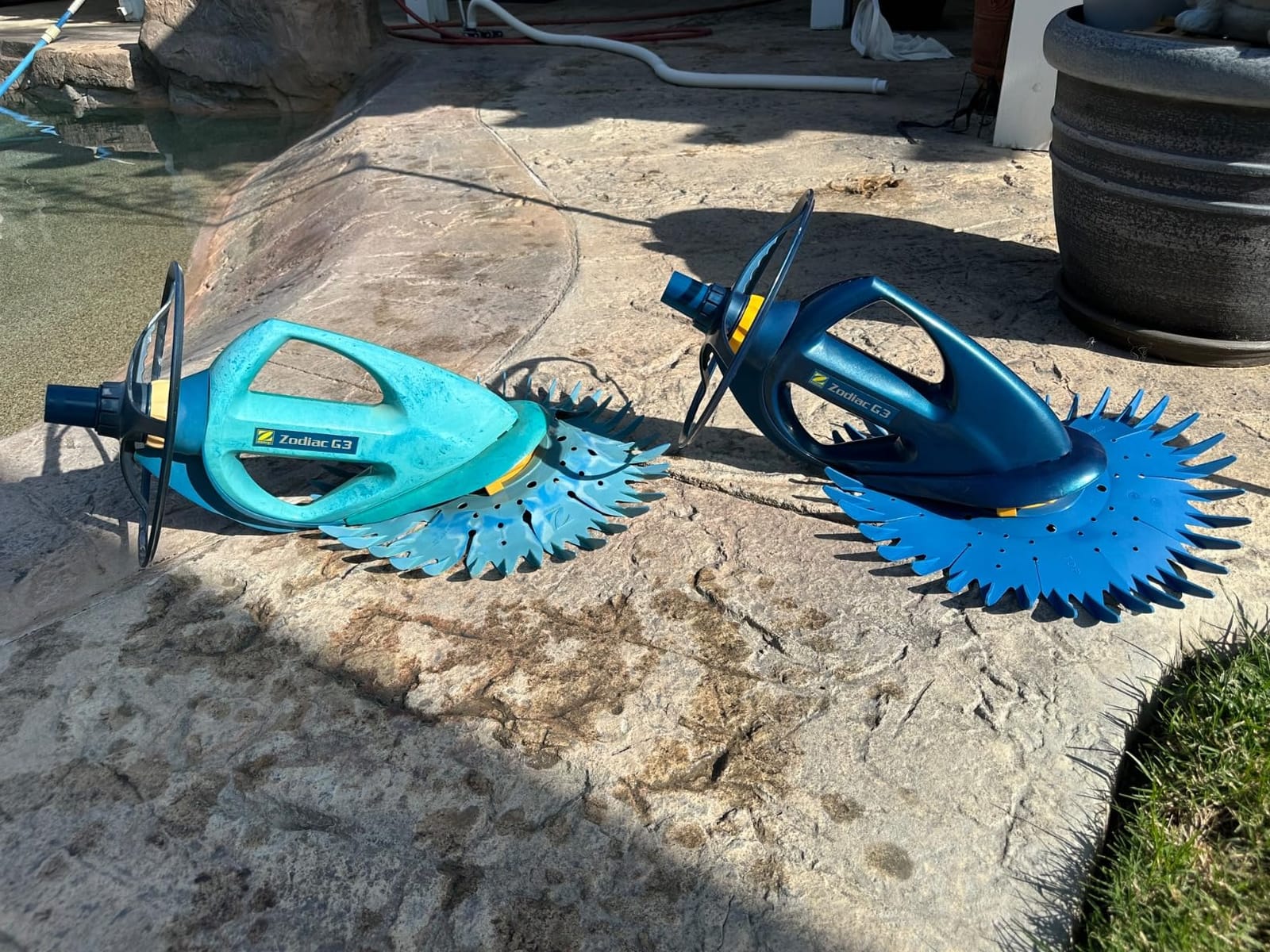
The G3 is the MX6 idea with a different drive mechanism, and for most inground vinyl pools it is the smarter buy. Side by side on the same liner, the G3 held its seal better through the deep end.
Instead of wheels and gears, it uses a 36-fin disc that lays flat against the floor. That flat contact is exactly what a vinyl liner wants: broad, even suction with no narrow hard edge grinding into a seam.
Owners consistently call the three-part assembly simple. Disc, wheel deflector, hose, then into the skimmer or a dedicated suction port. The 39 ft of push-fit hose is longer than the MX6 bundle, which helps when the port sits far from the pool edge.
Two-year manufacturer coverage is longer than the one-year term on the MX6, and the disc and deflector are both replaceable parts.
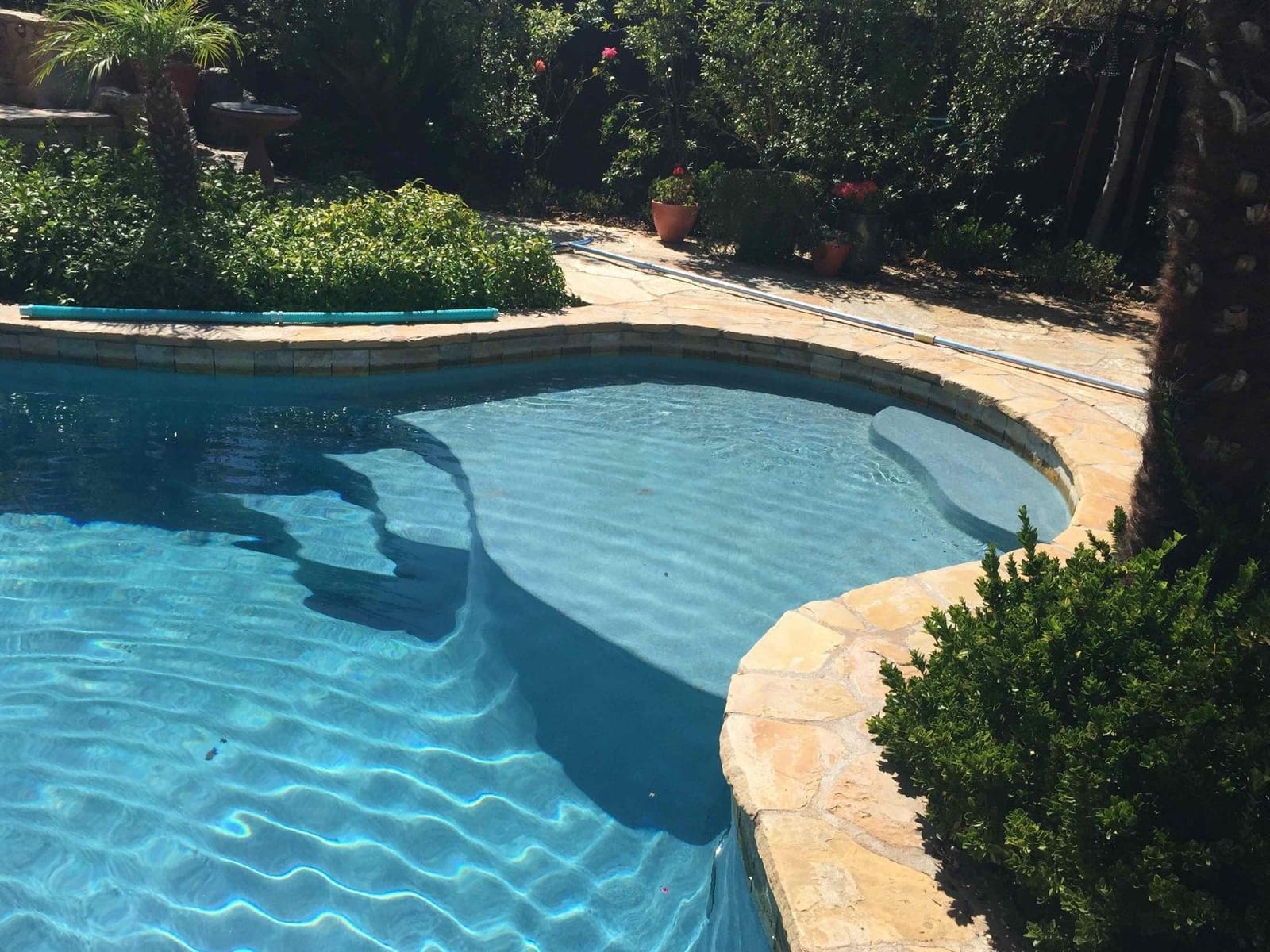
Why vinyl owners like the G3
That flat disc does not chatter the way a wheeled chassis can on a soft floor, and it is not attracted to liner seams the way some tracked machines are. The manufacturer lists vinyl as a supported surface, alongside tile, gunite and fiberglass.
It also handles the two features that snag most cleaners on a liner: main drains and lights. Owners report it rides over both without wedging.
Where the G3 falls short
Because it has one moving part, there is little that can be repaired when something wears. When the disc loses its bite you replace the disc, not a drive system.
Travel speed and suction are both tied to your regulator setting. Set it too aggressive and the unit skates, too timid and it stalls, and the learning curve catches out a lot of first-time owners.
3. Poolmaster 27402 Deluxe Weighted Head – Best Budget Liner-Safe Manual Vacuum
- Dual self-adjusting air-relief valves steady suction and reduce liner risk
- Perimeter brushes loosen debris from vinyl floors
- Weighted body stays submerged in consistent contact
- Swivel adapter and spring handle reduce tangling
- Hose and pole are sold separately
- Manual head needs a person guiding every pass
- Air-relief valves need checking if debris jams them
This is not an automatic cleaner, and we will not pretend otherwise. It is a manual vacuum head, and it belongs on this list because it is one of the gentlest ways to clean a vinyl floor.
The dual self-adjusting air-relief valves are the reason. When suction spikes against a seam or a wall, the valves bleed air instead of pulling the head hard against the surface.
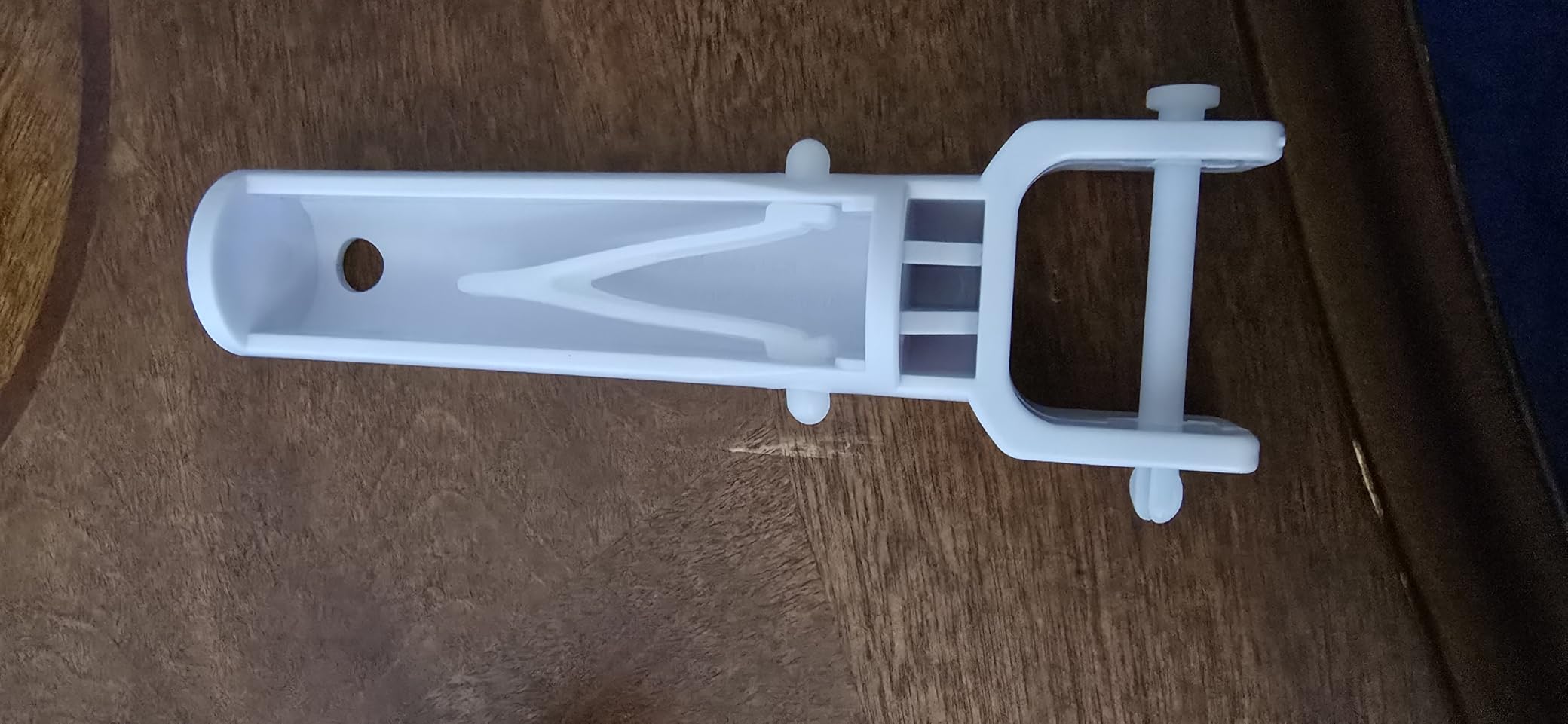
Perimeter brushes loosen embedded dirt from the vinyl floor before the vacuum pulls it in, which matters on older liners where dust bakes into the pattern. The swivel adapter and spring-loaded handle allow long passes without the hose wrapping around the pole.
It fits both 1-1/4 inch and 1-1/2 inch standard vacuum hoses, so it drops into a setup most owners already have.
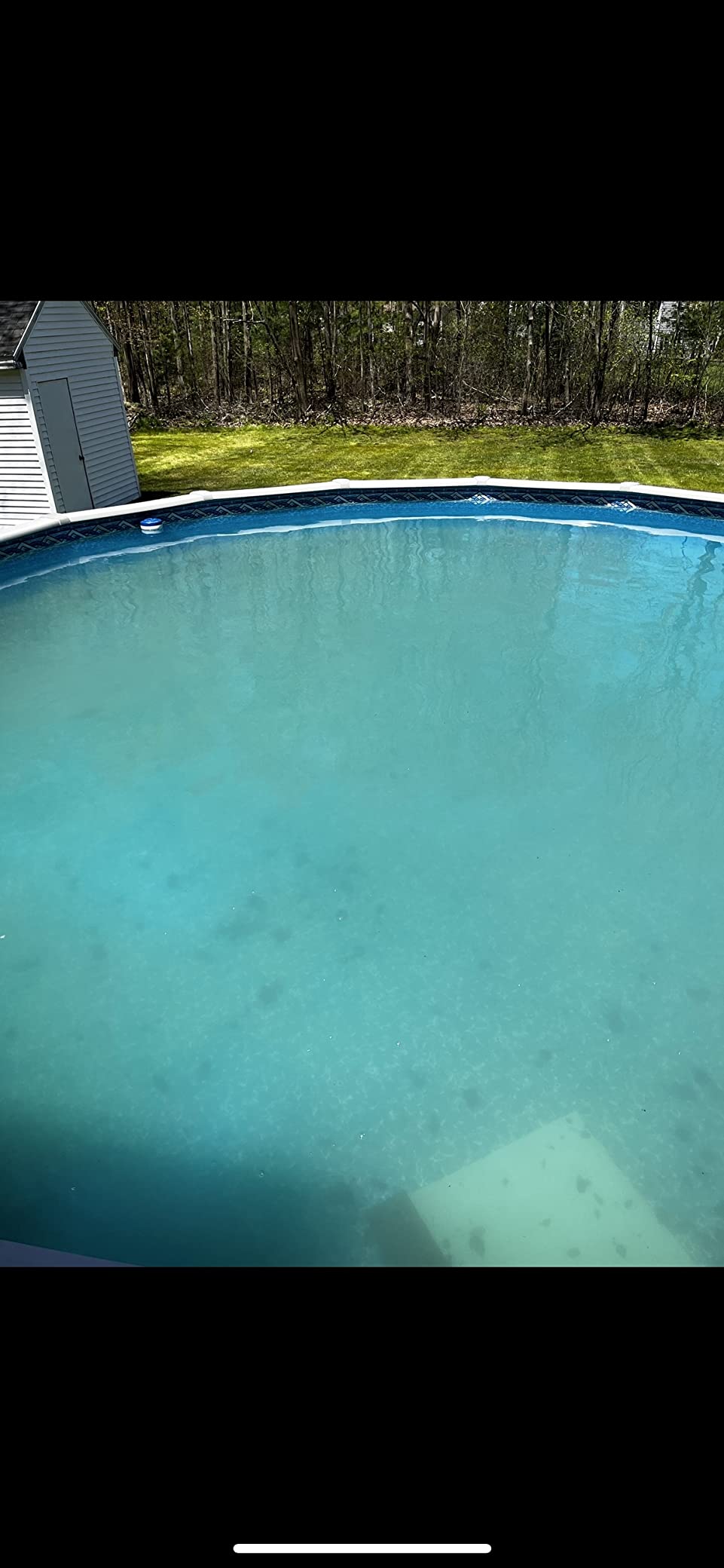
When a manual head beats an automatic
Spot clean after a storm, or where grit has settled in a step corner. A manual head gets into tight corners and around steps that an automatic cleaner will fight with for an hour.
It is also the right tool for a new liner. A brand-new vinyl surface benefits from gentle, controlled passes early in its life rather than a machine driving over it for hours a day.
When to buy an automatic instead
If the goal is hands-off cleaning, a manual head is the wrong shape of solution. Nobody wants to push a pole around a 20 ft pool three times a week.
The hoses and pole are sold separately, so factor that into the true cost before comparing it to the automatics.
4. Swimline HydroTools Tri-Vac – Best Manual Coverage Per Pass
- Extra-large triangle footprint gives strong suction and fast pickup
- Built-in weight keeps it submerged in constant floor contact
- Two-port connector fits 1-1/4 and 1-1/2 inch hose
- Handles accept standard and telescopic poles
- Clear plastic body can scuff or crack with heavy use
- Manual operation is labor-intensive next to an automatic unit
- Hose and pole not included
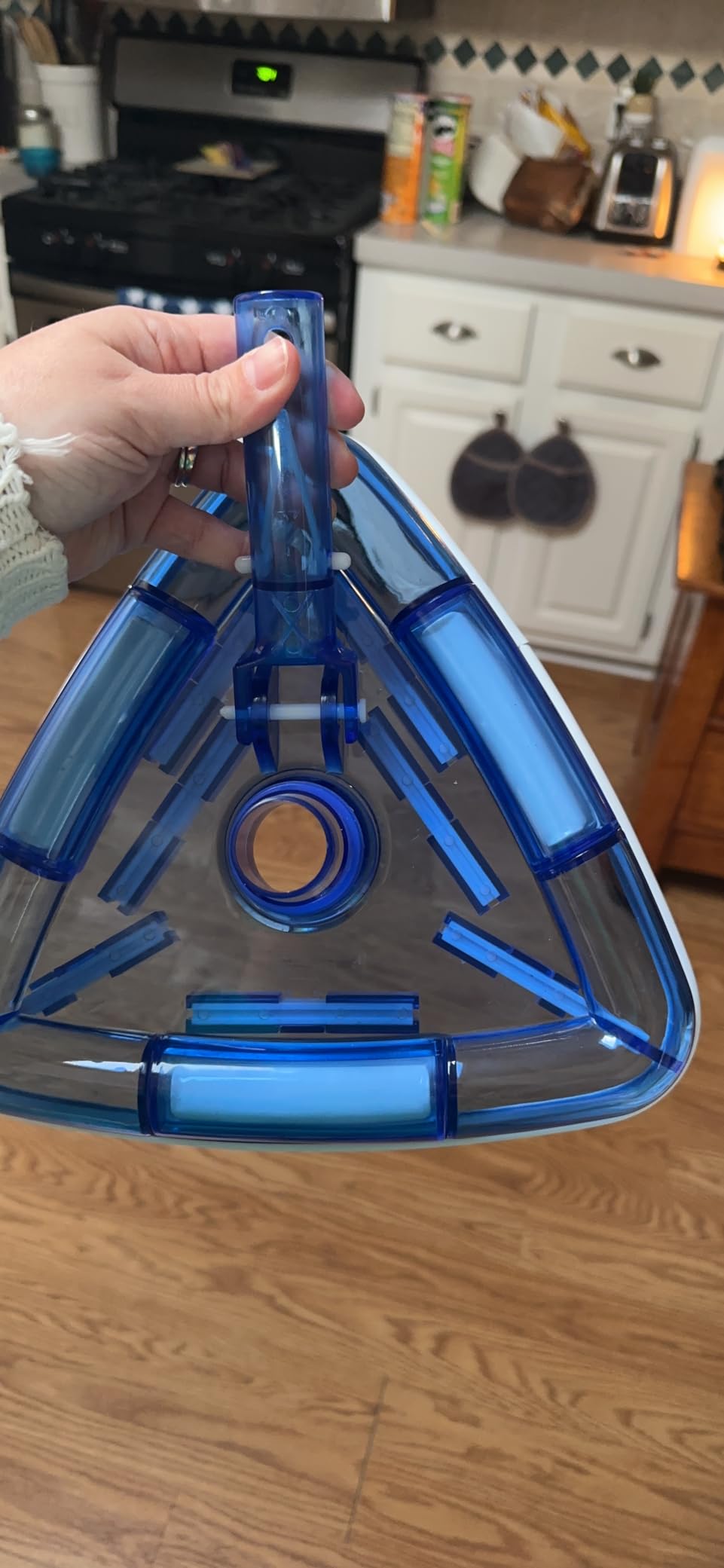
Where the Poolmaster head prioritizes gentleness, the Tri-Vac prioritizes footprint. The extra-large triangular cleaning area covers noticeably more floor per pass, which is the trade you feel on a big pool.
Integrated brush bristles loosen embedded dirt as the head moves, and the weighted design keeps it submerged in steady contact rather than skittering.
The two-port universal hose connector with a rotating swivel is the detail we liked most. It fits either hose diameter without an adapter, and the swivel keeps the hose from twisting mid-pass.
Double reinforced molded handles accept virtually any standard or telescopic pole, so it works with whatever pole you already own.
Why it earns a place on a liner list
No powered drive means no drive wear and nothing dragging across the floor. A weighted head just glides, and the soft contact it makes with a liner differs from a machine that drives.
Industrial-grade plastic resists UV, weather and corrosion, which matters for a tool that lives in a wet, sun-exposed pool shed.
Where it does not shine
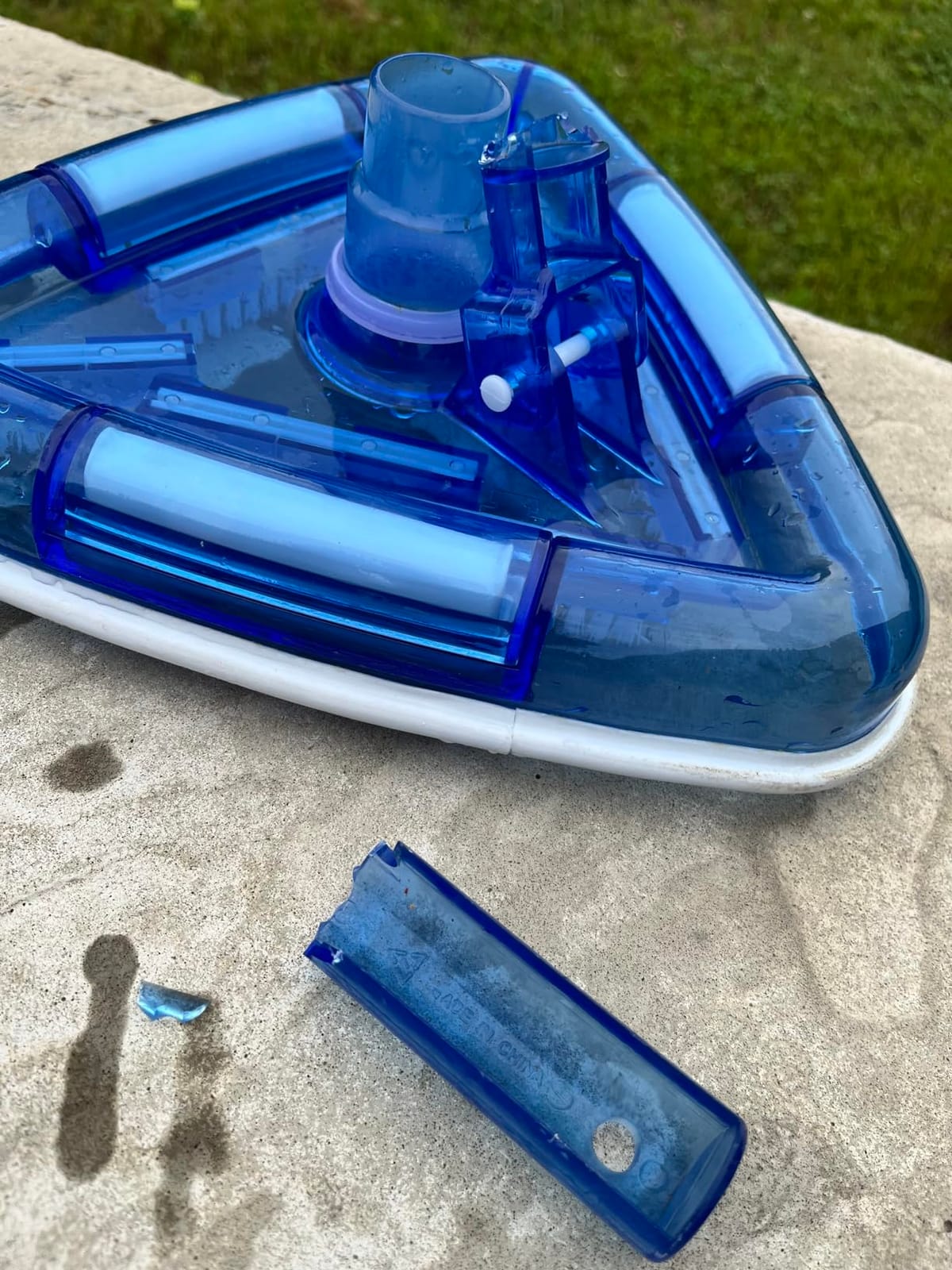
The clear plastic body is the weak point. Owners doing heavy work with stones in the water report scuffing and eventually cracking, and a cracked body leaks the suction you paid for.
It is also strictly a manual tool. Coverage quality depends on how much time you are willing to spend, and on a large pool that time adds up fast.
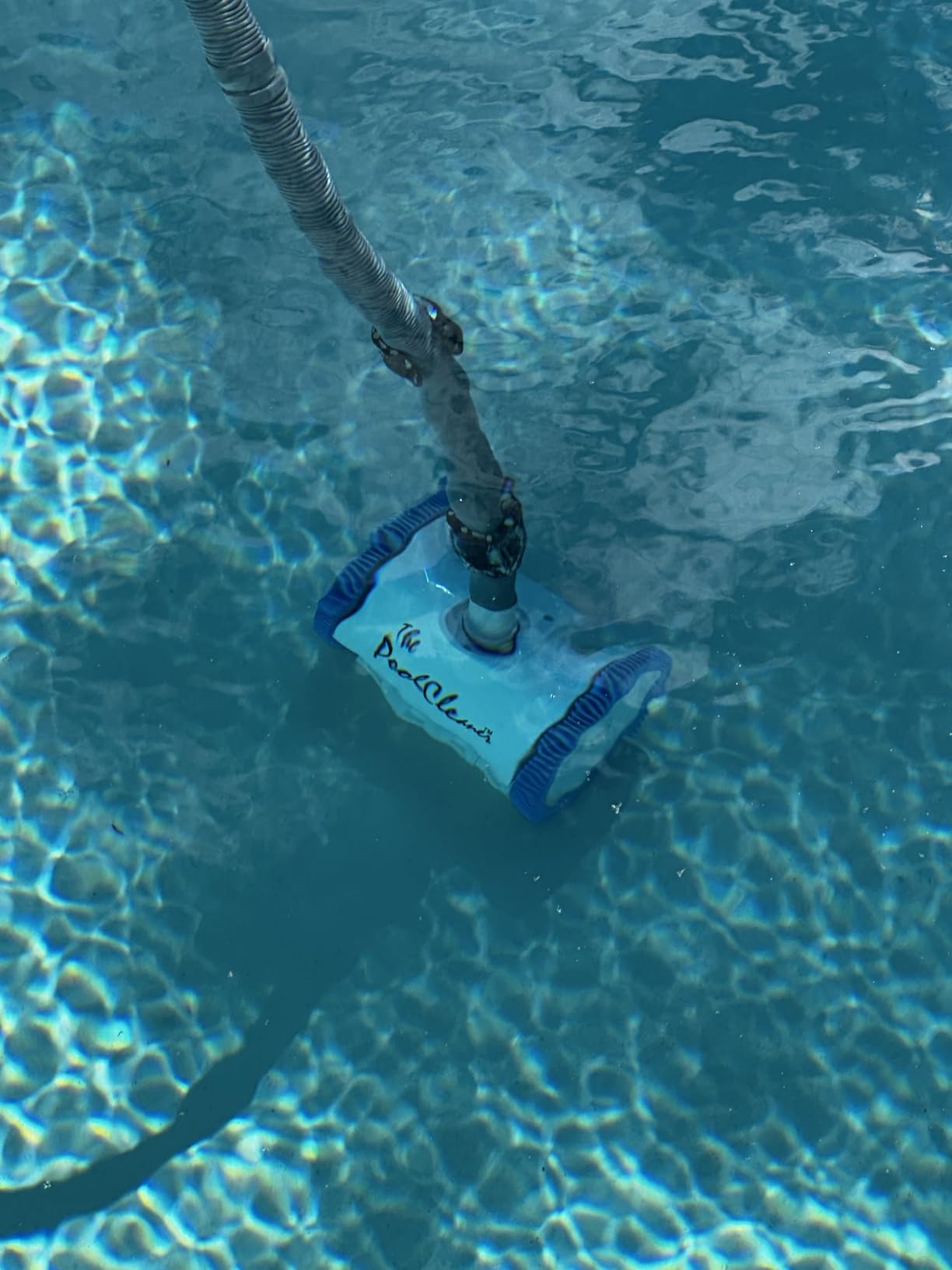
5. Hayward Poolvergnuegen – Best Wall Coverage on a Liner
Hayward Poolvergnuegen Suction Pool Cleaner (2 Wheel) Pools up to 16 x 32ft
- Patented turbine vanes resist clogging and hold power at nearly any flow rate
- Adjustable roller skirts hold suction on uneven and soft surfaces
- Tire tread design improves climbing and obstacle handling
- No booster pump required
- Rated for pools up to 16 ft x 32 ft only
- Rolling parts wear over time and need replacement
- Needs adequate suction-side flow to move well
On a vinyl pool the reason is the skirt. Adjustable roller skirts maintain suction on uneven and soft surfaces, which is precisely the condition a liner floor creates.
Patented turbine vanes are designed not to clog, and that matters more on a liner than on concrete. Grit that would jam a flapper-style cleaner gets pushed through instead of stalling the machine.
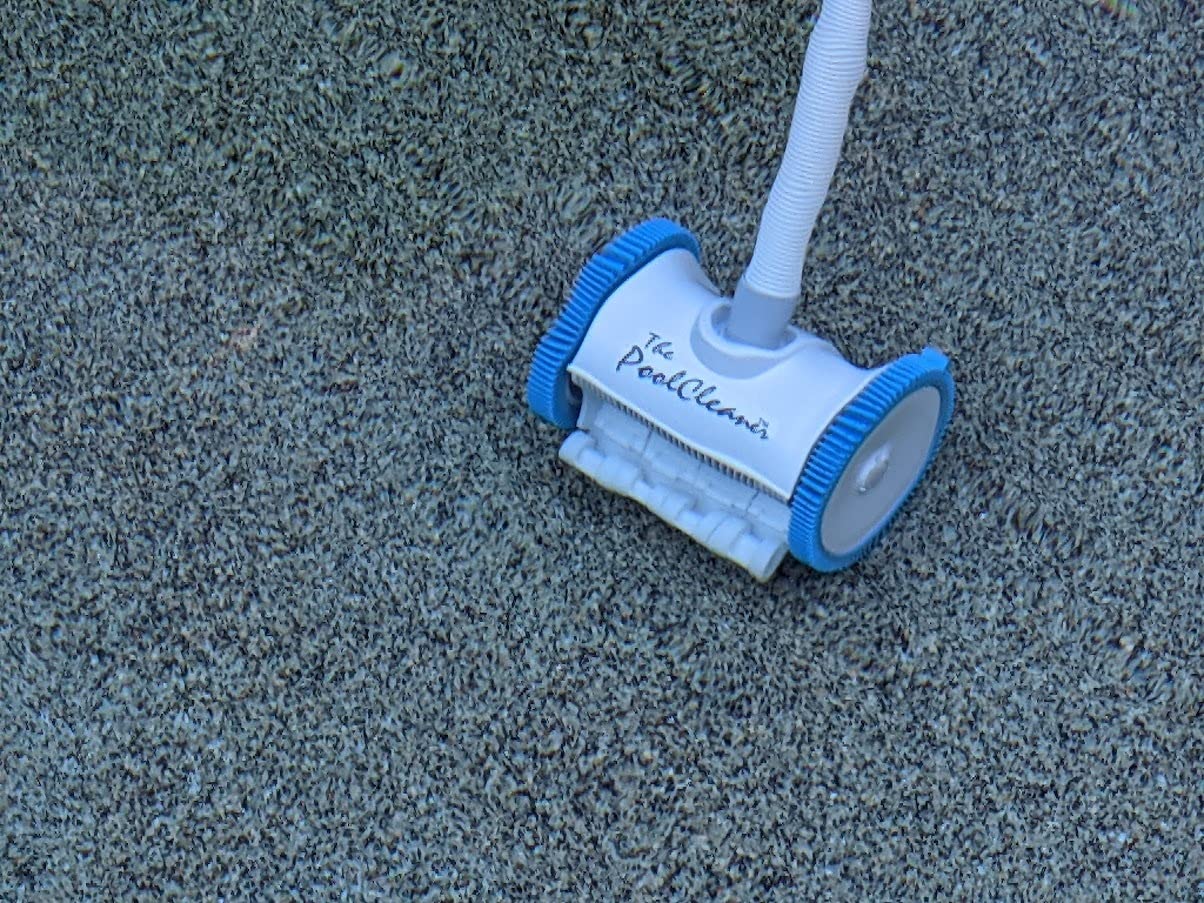
Pre-programmed steering sequences reverse one wheel periodically, so it turns without any sensor logic. It covers floor, steps and the waterline, and it hooks to a skimmer or suction port with no booster pump.
On our liner test it was the machine least likely to need rescuing from a wall, and the tire tread gave it the best grip on a wet, sloped transition.
What makes it the liner-friendliest automatic here
Skirts, not treads. A skirt presses down and stays flat, so wear spreads across the whole footprint instead of concentrating at a few contact points on a seam or bolt cover.
It also does not ride the wall and hang there. Waterline scrubbing on a printed liner is the most common scuffing scenario, and a cleaner that returns to the floor is a cleaner that is not parked on your pattern overnight.
Where the size limit bites
It is rated for pools up to 16 by 32 ft. If your vinyl pool is larger, this unit will spend its cycle chasing a section of floor it cannot realistically cover in one run.
Rolling parts wear, and the drive components are consumables. Owners report replacing wheels and skirt assemblies after several seasons of use.
6. Hayward Navigator Pro – Best for Large Vinyl Liner Pools
Hayward Navigator Pro Pool Suction Cleaner for Inground Pools up to 20x40ft
- SmartDrive steering gives consistent floor wall and cove coverage
- Vacuum wings and skirt maximize pickup of leaves and twigs
- Runs far quieter than older flapper-style cleaners
- Tool-free hookup with no booster pump needed
- All-plastic drivetrain limits service life
- Wall-climb sensitivity takes practice to dial in
- Some models needed internal repairs within the first year
If your vinyl pool runs 20 by 40 ft, this is the one to look at first. It is rated for the largest footprint on the list, and the extra reach matters when a smaller machine is still working the deep end after three hours.
SmartDrive programmed steering uses preset turns to move the machine across floor, walls and coves without sensors. Vacuum wings and a skirt do the pickup work, including leaves and twigs that never reach a bag on a purely floor-focused unit.
Quiet operation is the sleeper feature. Owners moving up from an older flapper cleaner describe the difference as the biggest quality-of-life change, and quiet matters in an evening backyard.
Setup is tool-free to the skimmer or suction port, assembly time is about ten minutes, and the included 480 inch hose length covers large pools with room to spare.
Where it earns its place on a large liner
Longer coverage per cycle means fewer runs per week, and fewer runs means less total time a machine is sitting on your liner. That is the quiet advantage of a bigger, more capable unit on a big pool.
The adjustable hose connector can be tuned toward wall climbing or held on the floor, which is useful if you want a floor-only pattern that leaves your waterline alone.
Where owners report trouble
The all-plastic drivetrain is the weak link. Owners typically get a year or two before parts need replacing, and some models needed internal gearbox or turbine repairs inside the first year.
The wall-climb sensitivity adjustment also takes practice. Set wrong, the unit either hammers the walls or stays flat on the floor, and the manual is not explicit about which way to turn it.
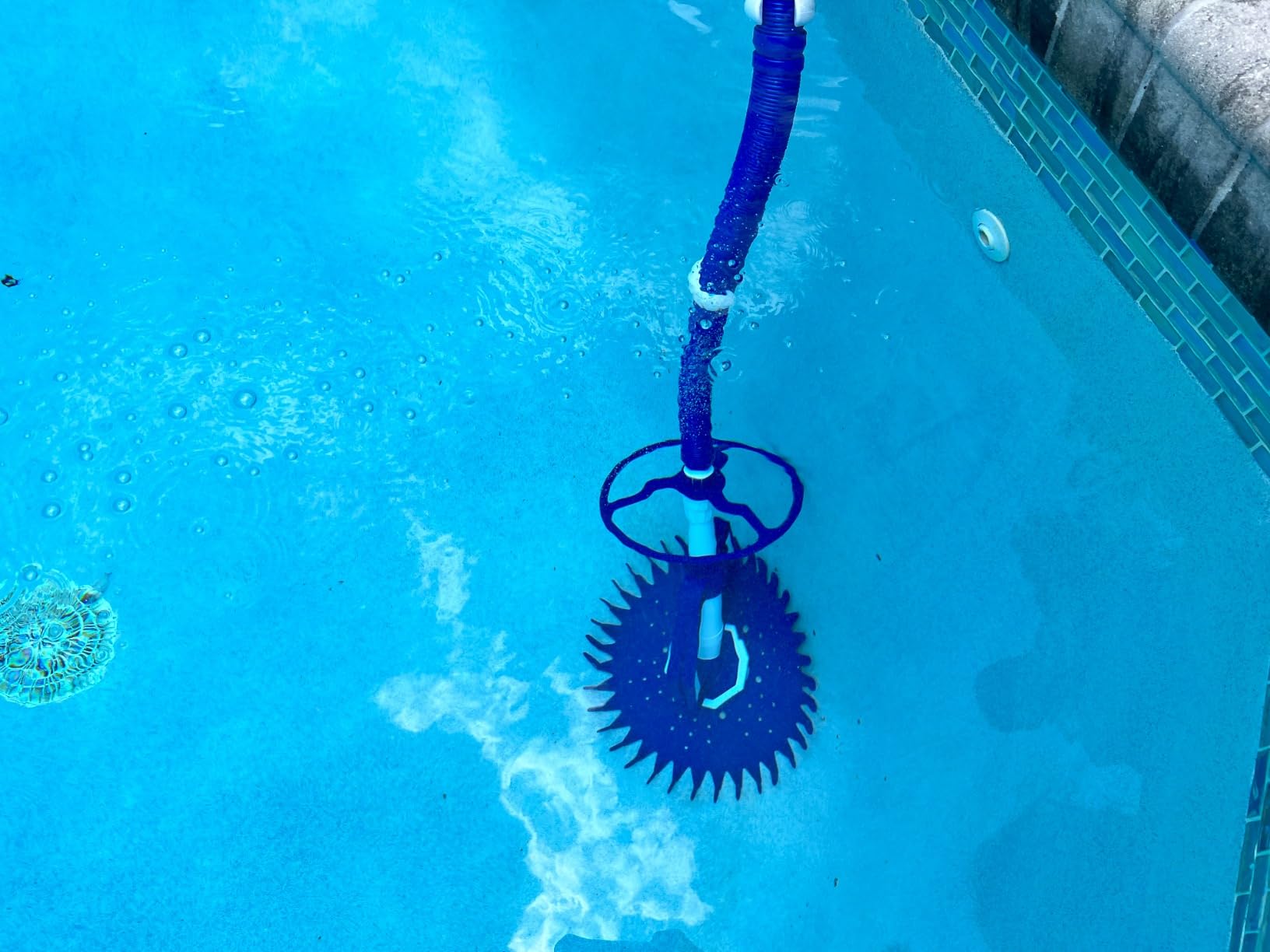
7. VINGLI Suction Pool Cleaner – Best for First-Time Automatic Owners
VINGLI Suction Pool Cleaner, Automatic Wall-Climbing Vacuum -Navy Blue
- Wall-climbing design covers floor and walls on inground pools
- Adjustable weights and regulator let you tune suction
- Quiet operation without flapper hammer noise
- Ten replacement hose sections included in the box
- Requires at least a 3/4 HP pump and about 1700 gal/hr of flow
- Diaphragm can gap or jam with small rocks
- Suction only
- no power supply included
The VINGLI suits anyone who wants an automatic cleaner without the setup ritual. Assembly is about three minutes, and the tuning uses weights and a regulator valve rather than a calibration procedure.
It climbs walls and floors on inground pools, and the wheel deflector helps it work through tight corners. A long-life diaphragm replaces the flapper, so it runs without the loud hammering of older budget cleaners.
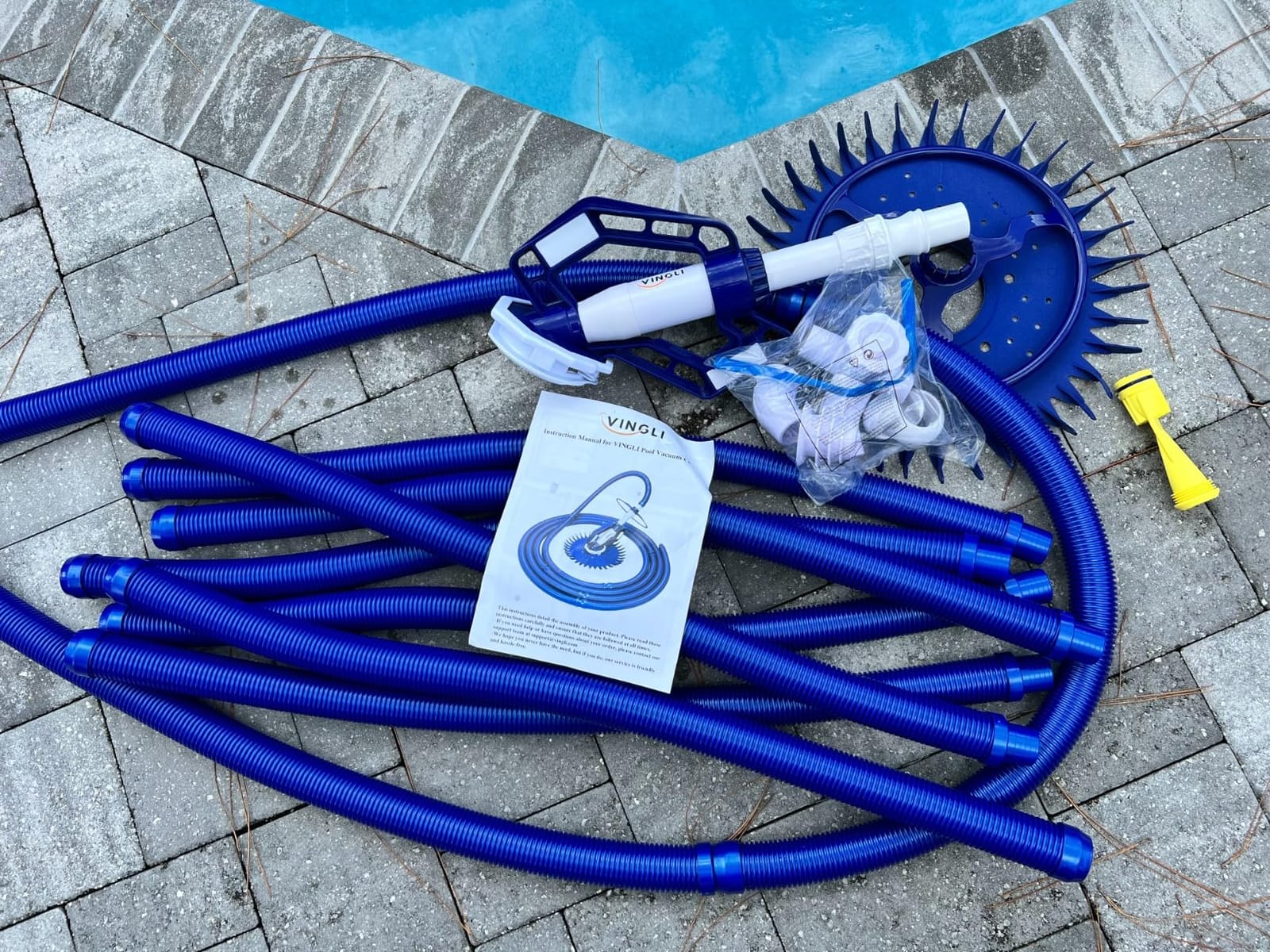
Ten 3.3 ft heavy-duty hose sections come in the box, which is genuinely useful. A cracked or kinked section is the most common suction complaint in the forums, and spares on hand fix it in minutes.
The one-year warranty includes free replacement parts, and the scuff-resistant hoses are sized at 1.5 inch diameter.
Why first-timers like it
Everything you can tune is external and visible. If it is not climbing or not picking up, you adjust the weights and the regulator, rather than opening a housing and recalibrating a ring.
Low noise is a real quality-of-life gain for a machine running on a timer while you work from home.
Where the flow requirement catches people
This unit needs at least a 3/4 HP pump and roughly 1700 gal/hr of flow. If your pump is smaller or your filter runs long, the cleaner will crawl.
The diaphragm needs periodic cleaning. Small rocks and grit in the intake can gap it, and that is maintenance you will do more than once a season in a sandy pool.
8. Pentair Kreepy Krauly Kruiser – Best for Quiet Operation and Simple Upkeep
Pentair K60430 Kreepy Krauly Kruiser Automatic Inground Pool Cleaner
- Crawls the full floor and climbs walls with a wide intake mouth
- Very quiet compared with older Kreepy Krauly models
- Fewer external parts with a built-in bumper
- Superior vacuum seal holds flat in shallow and deep ends
- Vacuum seal and foot pad wear and need replacing
- Flow regulator needs repeated fine-tuning
- Some models linger in the deep end until repositioned
The Kruiser is a legacy design that has been refined rather than replaced, and the reason is the part count. A built-in bumper means no removable wings to lose, and the whole thing is close to a two-part service job.
It crawls the full floor and climbs walls, and the wide mouth intake handles both large debris and fine sand, which makes it a different tool from a bag-only cleaner.
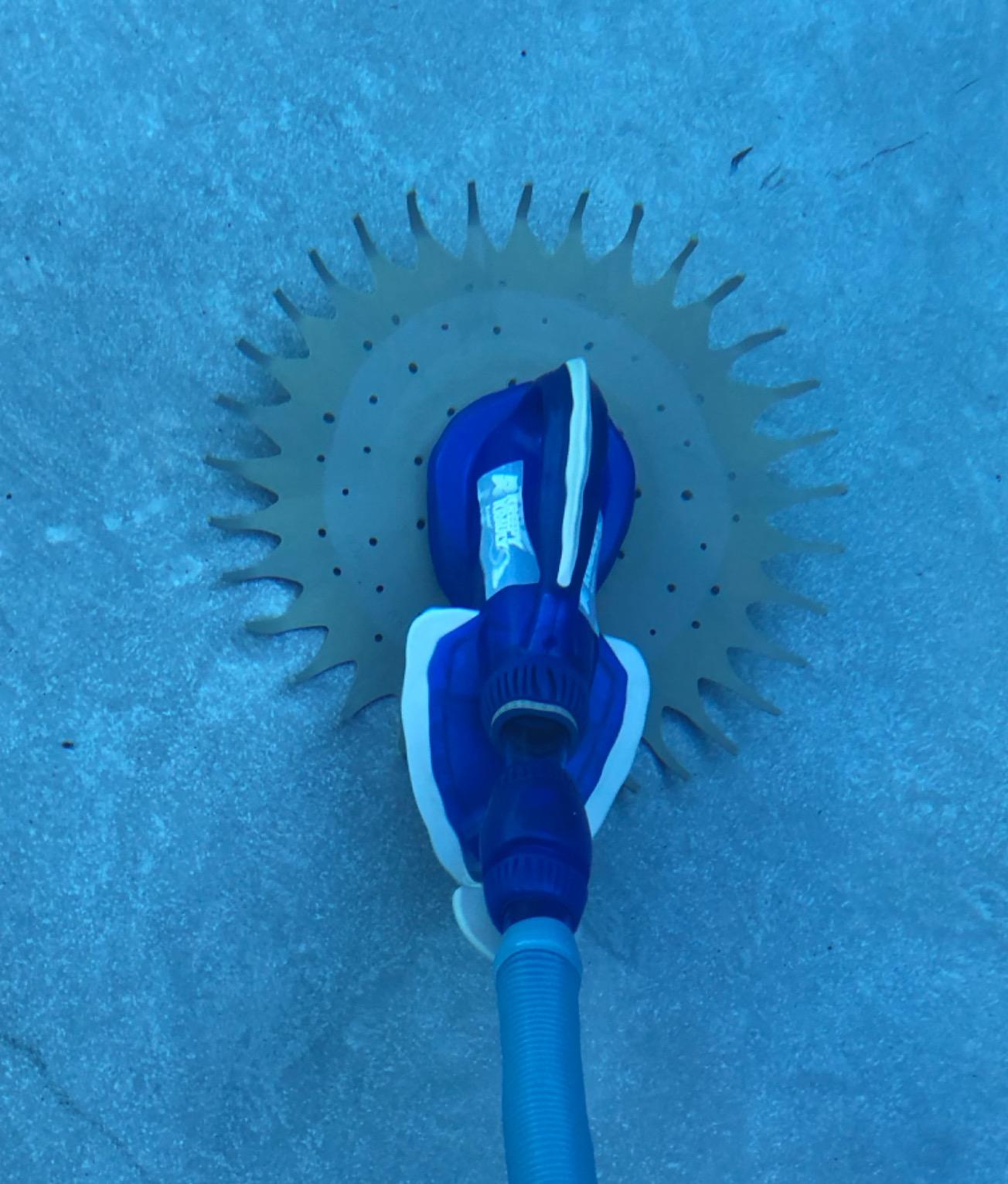
Owners with long histories on this design single out the quiet. Older Kreepy Krauly models clicked audibly as the internal mechanism shifted, and the current sealed body removed that.
The vacuum seal holds flat in both shallow and deep ends on many pools, which is the property that keeps contact even on a vinyl floor that is not perfectly level.
Why it suits a liner
A wide mouth lying flat against the floor picks up debris with very little drag across the surface. Nothing on this unit is designed to grind, abrade or dig, which is the profile you want on printed and patterned liners.
It is also heavy and stable at 18 lb, so it does not get pushed around by the current in the deep end the way lighter units do.
Where it frustrates owners
The flow regulator needs repeated fine-tuning, and it is the most common complaint in reviews. Get it wrong and the unit either skates across the floor or cannot leave the deep end.
Owners also report the vacuum seal and foot pad wearing out, particularly in concrete pools. On a liner they tend to last longer, but they are still consumables.
9. U.S. Pool Supply Octopus – Not Rated for Vinyl Liners
U.S. Pool Supply Octopus Suction Pool Cleaner, Inground Automatic Pool Vac
- Long-life diaphragm removes flapper hammer noise and a spare is included
- 33 ft of spiral hose in trimmable 20 inch sections
- Runs on a 1/2 HP pump or 1000 gal/hr of flow
- Deflector wheel clears steps and ladders
- Manufacturer excludes soft-wall and vinyl-lined pools
- Lowest average rating here with a notable share of one-star reviews
- Some units stall or lose suction in deep ends
Read this one as an exclusion, not a recommendation. The manufacturer explicitly states it is not intended for soft-wall or vinyl-lined pools, so it does not belong in a vinyl liner roundup as a buying option.
We include it because it is a common listing in the same category and the incompatibility is not obvious until the fine print. If you own a liner, skip it.
For a hard-walled pool it has real merits. The long-life diaphragm membrane eliminates the hammer noise of flapper cleaners, a replacement diaphragm is in the box, and the hose sections trim to fit your run.
The 1/2 HP requirement is the lowest flow threshold of any automatic on this list, at 1000 gal/hr.
Why it is still worth naming
It shows how often a soft, flexible wall is treated as a niche exception rather than a core compatibility requirement. If a listing never mentions liner compatibility, that is a question to ask before you buy.
The deflector wheel design that helps it slide past steps and ladders is a good idea, and the spiral hose sections are genuinely convenient to shorten.
Why we would not run it on a liner
Beyond the manufacturer exclusion, the 3.6 average is the lowest here, and a meaningful share of reviews describe stalling or lost suction in deep ends. A machine that stalls in a corner of a liner pool is a machine that sits on your liner until you rescue it.
Spiral hose joints can also leak if the ends are not dipped in water before joining, and a leak costs you suction.
10. Pentair Kreepy Krauly Lil Shark – Best for Above-Ground Vinyl Pools
Pentair 360100 Kreepy Krauly Lil Shark Above Ground Pool Cleaner
- Drops straight into an existing skimmer with no fittings
- Adjustable 10 inch wide cleaning path
- Adjustable brush ring both scrubs and vacuums the liner
- Full oscillator rebuild kit included in the box
- Floor only
- with no wall climbing
- Performance depends on how well the skimmer is plumbed
- Oscillator seals and bumper wear and need replacing
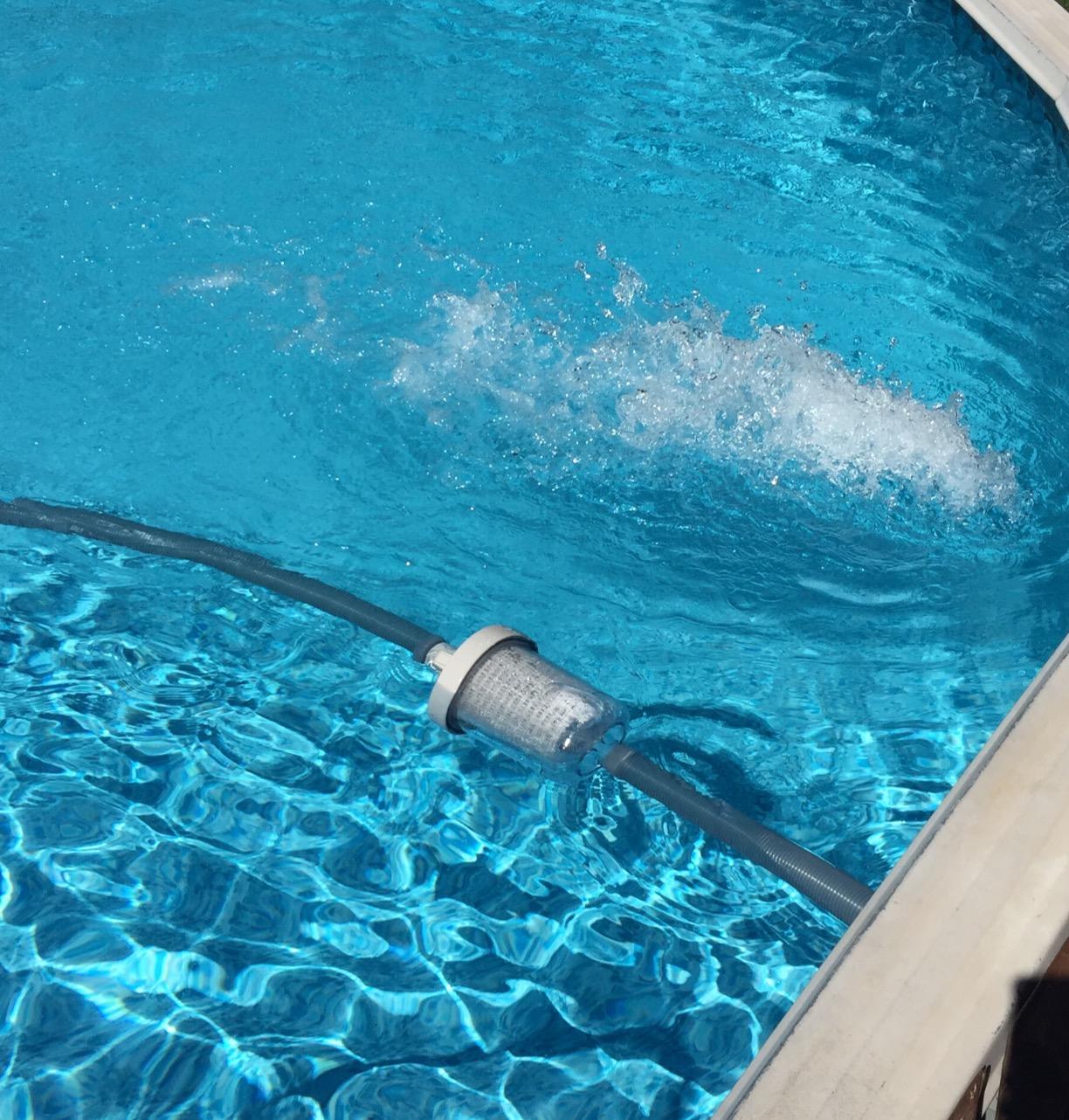
Most suction cleaners are designed around an inground skimmer. If your pool is above-ground vinyl, this one drops straight into the skimmer with no extra fittings and no adapter hunting.
The adjustable 10 inch wide cleaning path is a meaningful upgrade over a narrow head on a rectangular above-ground floor, where a wide pass is most of the battle.
The oscillator kit, seals, axle shaft, cover kit, fin kit and flow director all come in the box, so the wear parts most likely to fail are already on your shelf.
The adjustable brush ring scrubs and vacuums in one contact, which is the right behaviour on a liner that needs gentle abrasion rather than a hard scrub.
Why above-ground owners like it
No drilling, no fittings, no conversion. It is in the skimmer and running, which for a first-season above-ground owner is the difference between using a cleaner and not.
Above-ground pools are shallower and more rectangular, so a floor-only machine tracking in straight passes is sufficient for the whole surface.
Where it falls short
It cleans the bottom only. There is no wall climbing, so the waterline and the sides of steps remain your responsibility.
Suction performance is tied directly to how well your skimmer is plumbed, and a restrictive throat will produce a weak cleaner. Owners on r/pools with first-year above-ground vinyl note that post-season cleaning routines are the reason they automate in the first place.
Suction-Side vs Pressure-Side vs Robotic for Vinyl Liners
Suction-side wins for most vinyl liner pools because it balances gentleness, cost and automation. Pressure-side is tougher on debris but needs its own pump and a dedicated return line, and robots are the gentlest option but cost the most and store the most water.
Pressure-side cleaners tap the pump’s discharge rather than its suction, so they can move a much heavier load of leaves. The trade is hardware: a separate pump, a wall fitting and a second hose run. For a pool that is mostly fine sand and pollen, that is expense without benefit.
For a printed liner, a robot is a genuine alternative, because it navigates, lifts and parks instead of driving. One owner on r/pools reports being “very happy with my Dolphin Nautilus CC Plus on a 40′ x 20′ vinyl pool,” and another describes a 7-year S300i that has kept a pool clean. We review those machines in our robotic pool cleaner guide.
That said, robots fail quietly. When the battery ages or a wheel strip wears, coverage drops and most owners do not notice for weeks. A suction cleaner on a good pump has no consumable electronics.
On Houzz, the recurring owner consensus for mid-range value is the Polaris 280 or the Pentair Legend, and that same group calls the suction type “the best suction type out there.” The 280 is pressure-side, so that consensus is about value rather than liner gentleness.
How to Hook Up a Suction Pool Cleaner?
Most of the frustration with suction cleaners comes from the hookup rather than the machine. Five steps, and the first one matters more than the rest.
1. Choose your connection point. A skimmer is the standard option and needs no plumbing work, but it steals circulation from the pool while the cleaner runs. A dedicated inline return fitting or suction port is better if you have one, because the pump still moves water through the return.
2. Fit the correct adapter. Skimmer adapters are sized by skimmer model, and the hose diameter has to match the cleaner inlet. The manual heads here use a two-port swivel that fits 1-1/4 inch and 1-1/2 inch hose.
3. Connect the leader hose and set the flow. The most important step. Turn the skimmer valve or the inline fitting until the cleaner moves briskly but does not ram the walls, and let it settle for a minute before you walk away.
4. Check your pump. Two products on this list state their minimums plainly: one runs on a 1/2 HP pump or 1000 gal/hr, and another asks for at least a 3/4 HP pump and roughly 1700 gal/hr. If your pump sits below those numbers, expect a cleaner that crawls.
5. Program the cycle and set the hose float. Run it when the filter is clean and the water is chemically balanced, and fit a float on the leader hose so the loops stay at the surface instead of dragging the bottom.
What to Look for in a Vinyl Liner Suction Cleaner
Liner-safe contact surfaces come first. Look for a skirt or a flat disc that spreads contact across the whole footprint, soft bristles, and a chassis with no sharp exposed edges that could catch on a seam or a floor bolt cover. A weighted manual head like the Poolmaster 27402 is the extreme of this principle.
Suction and flow come second, and they are the same thing. Flow rate in gallons per hour determines how much suction the cleaner generates, and suction determines whether it holds the floor. On a liner, holding the floor is everything.
Bag or canister matters for your maintenance routine. Debris bags are cheaper and simpler to swap but fill quickly in leaf season. Canisters hold far more. Owners describe emptying bags as a weekly chore during heavy leaf fall, the most common complaint about the category.
Above-ground and inground have different rules. Above-ground vinyl needs a skimmer drop-in or a low-threshold machine, and the Pentair Lil Shark is built specifically for that. Inground vinyl opens up wall climbing and tread designs, plus skimmer adapters or inline fittings.
Printed and patterned liners deserve extra caution. Owners consistently report suction cleaners riding up and wearing printed patterns, so choose a machine that returns to the floor after waterline scrubbing rather than parking there, and keep the hose off the wall. Nobody should run a stiff-bristle brush on a printed surface.
Running costs are lower than people expect. The recurring expense is replacement wear parts: debris bags, vacuum seals and foot pads, skirts, and hose sections. No machine here needs a booster pump, which is a saving over pressure-side setups.
Troubleshooting follows a fixed order. If suction is weak, check the hose for kinks and cracks first, then confirm the flow setting, then look at the filter. If the cleaner sticks on a step or seam, re-seat it and reduce flow slightly.
Frequently Asked Questions
What is the best pool cleaner for vinyl liner pools?
The Zodiac MX6 is our top pick for most inground vinyl liner pools because its cyclonic turbine and X-Trax wheels hold contact on a soft floor while the flow calibration works with variable-speed pumps. For large pools choose the Hayward Navigator Pro, and for above-ground vinyl choose the Pentair Lil Shark.
Are suction pool cleaners safe for vinyl liners?
Yes, when the machine is built for a soft surface. Liner damage comes from hard edges catching on seams or raised drains and from cleaners parked on the wall or waterline. Look for a skirt or flat adhesion disc that spreads contact, soft bristles, and a design that returns to the floor after climbing.
Will a suction pool cleaner scratch a vinyl liner?
A correctly tuned suction cleaner should not scratch a liner. The vacuum seal presses straight down on the surface rather than dragging abrasive wheels across it. Scratching risk rises when flow is set too high, when the machine hangs on a wall or step, or when a stiff brush is used on a printed pattern.
Do I need a booster pump for a suction pool cleaner?
No, on the models covered here. Every automatic suction cleaner in this roundup runs on your existing pool pump through the skimmer or a suction port, and several state they need no booster pump. Check your pump output instead: some units require at least a 3/4 HP pump and roughly 1700 gal/hr of flow to move properly.
How long does a suction pool cleaner last?
Expect several seasons from a well-maintained unit, with wear parts replaced along the way. The consumables are debris bags, vacuum seals, foot pads, skirts and hose sections. All-plastic drivetrains on some models typically need attention after a year or two, while the Pentair Kruiser has only two wear parts to service.
Which Suction Pool Cleaner Fits Your Vinyl Liner
Pick the Zodiac MX6 if you want the most heavily reviewed option and you will spend five minutes calibrating flow. Pick the Zodiac G3 if you want the flattest, gentlest contact on a liner and slightly longer hose. Pick the Hayward Poolvergnuegen if wall and waterline coverage is the priority and your pool fits 16 by 32 ft.
For a large pool, the Navigator Pro buys you coverage you can feel. For above-ground vinyl, the Pentair Lil Shark is built as a drop-in skimmer unit. If you only want to spot clean, a weighted manual head is the gentlest tool available.
Skip the Octopus, and skip any cleaner whose listing does not mention liner compatibility at all. Whichever you choose, calibrate the flow before the first full run.
Last updated for October 2026. We re-check ratings, specifications and owner feedback on every pass.