
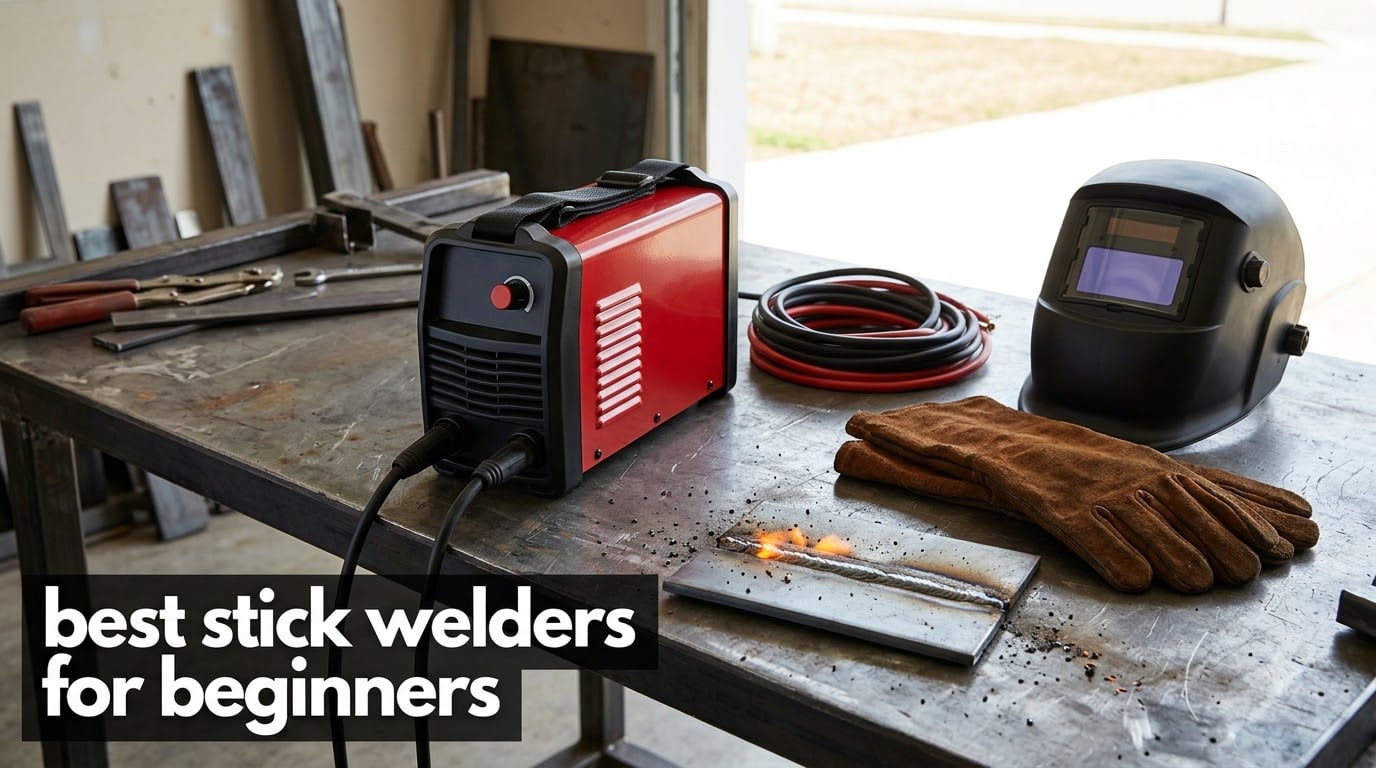
A good starter stick welder is a 110V/240V dual-voltage inverter with hot start, arc force and anti-stick, running 20 to 140 amps on a standard outlet. That combination strikes an arc easily, restrikes after a stall, and still fits a beginner garage circuit. The eight machines below cover every realistic tier, from a 135A single-voltage unit to 250A dual-voltage machines with real headroom.
Stick welding, or SMAW (shielded metal arc welding), is the cheapest and most forgiving way to learn to weld. An electric arc forms between a flux-coated rod held in an electrode holder and your grounded workpiece. The rod melts into the joint, and the coating burns off as a shielding vapour plus slag that you chip away.
There is no gas cylinder to rent, no wire spool to feed, and almost nothing to set up. The machine, a stick, and a scrap plate of steel is the whole learning curve. That is why stick remains the default first welder for farm, trailer, fencing and structural work, and why the best stick welders for beginners are judged on arc forgiveness rather than feature count.
We compared these eight machines on the specs that actually decide whether a first-time welder can lay a straight bead: real output on a household circuit, hot start behaviour, weight, electrode support, and the honest limitations owners report after living with them.
Table of Contents
Are Stick Welders Good for Beginners?
Yes, for most first projects. Here is the short version of why, and where the process earns its reputation.
Easy to learn: four controls at most, a single consumable, and a bead you can judge with your eyes. There is no gas, no wire feed speed, and no polarity guessing once you settle on one rod.
Changing filler material: you swap a 3/32 inch or 1/8 inch rod in seconds, so the same machine covers 16 gauge sheet up to 1/4 inch plate, plus stainless and cast iron with the right rod.
Works anywhere: no cylinder, so a fence post, a trailer frame or a broken bracket on a farm track is all routine work.
Handles dirty metal: rust, paint and light galvanizing are far less of a problem than with MIG, which wants clean, gas-shielded metal.
Where it fights you: out-of-position welds, thin sheet, and long beads are harder than MIG because you manage a molten pool by hand rather than a machine.
Our advice matches most of what comes out of the community: buy a solid 120V/240V inverter, start on 6013 or 7018 rods, and spend your practice hours on bead control rather than on unboxing a bigger machine.
Top 3 Stick Welder Picks for Beginners (October 2026)

DEKOPRO 160A 110/220V IGBT Stick Welder
- IGBT inverter with hot start and anti-stick
- Dual 110V and 220V input
- ETL certified
- 11.1 pounds

YESWELDER ARC-205DS PRO 205A Stick Welder
- Up to 205 amps on dual voltage
- Adjustable hot start and arc force
- Lift TIG capable
- 8.8 pounds
HONE MMA140D 140A Dual Voltage Stick Welder
- 140A on 220V and 120A on 110V
- 40 percent duty cycle
- Digital display with trouble indicator
- 9.4 pounds
All 8 Stick Welders Compared in 2026
Every machine below runs stick (SMAW) and accepts 6011, 6013 and 7018 rods in the 1/16 inch to 1/8 inch range. The differences that matter for a beginner are input voltage, real output, weight, and whether the arc controls are adjustable.
| Product | Specifications | Action |
|---|---|---|
| DEKOPRO 160A 110/220V IGBT Stick Welder |
|
Check Latest Price |
| YESWELDER ARC-205DS PRO 205A Stick Welder |
|
Check Latest Price |
| HONE MMA140D 140A Dual Voltage Stick Welder |
|
Check Latest Price |
 Hpoouo ARC-200 200A Mini Stick Welder Hpoouo ARC-200 200A Mini Stick Welder |
|
Check Latest Price |
 S7 200A DC TIG and Stick Welder S7 200A DC TIG and Stick Welder |
|
Check Latest Price |
 TOOLIOM TL-135S 135A Mini Stick Welder TOOLIOM TL-135S 135A Mini Stick Welder |
|
Check Latest Price |
 S7 250A 110V/220V IGBT Stick Welder S7 250A 110V/220V IGBT Stick Welder |
|
Check Latest Price |
 HGNVGZ MMA-250 250A 110V IGBT Stick Welder HGNVGZ MMA-250 250A 110V IGBT Stick Welder |
|
Check Latest Price |
1. DEKOPRO 160A 110/220V IGBT Stick Welder Review
- Hot start and anti-stick make arc strikes easy for beginners
- Dual voltage lets you start on 120V and move to 220V later
- 11.1 pound body is easy to carry between garage and shop
- Works on mild steel stainless and cast iron
- ETL certified and inspected before shipping
- Included leads and holder are lighter duty than the machine
- Polarity documentation is thin for first-time users
- Not intended for continuous production welding duty
Out of more than 6000 reviews averaging 4.6 stars, this is the machine we keep coming back to for a first purchase. The arc starts when you want it to start. On our practice plate, the 3/32 inch 6013 struck almost every time without a lift-and-restart, and the same held true on 1/8 inch 7018 at higher amperage.
The dual voltage input is the part that matters most for a beginner. Plug it into a household outlet for thin material and light gauge work, then move to a 220V circuit when you want the fuller output for plate. You are not locked into the outlet your garage happens to have.
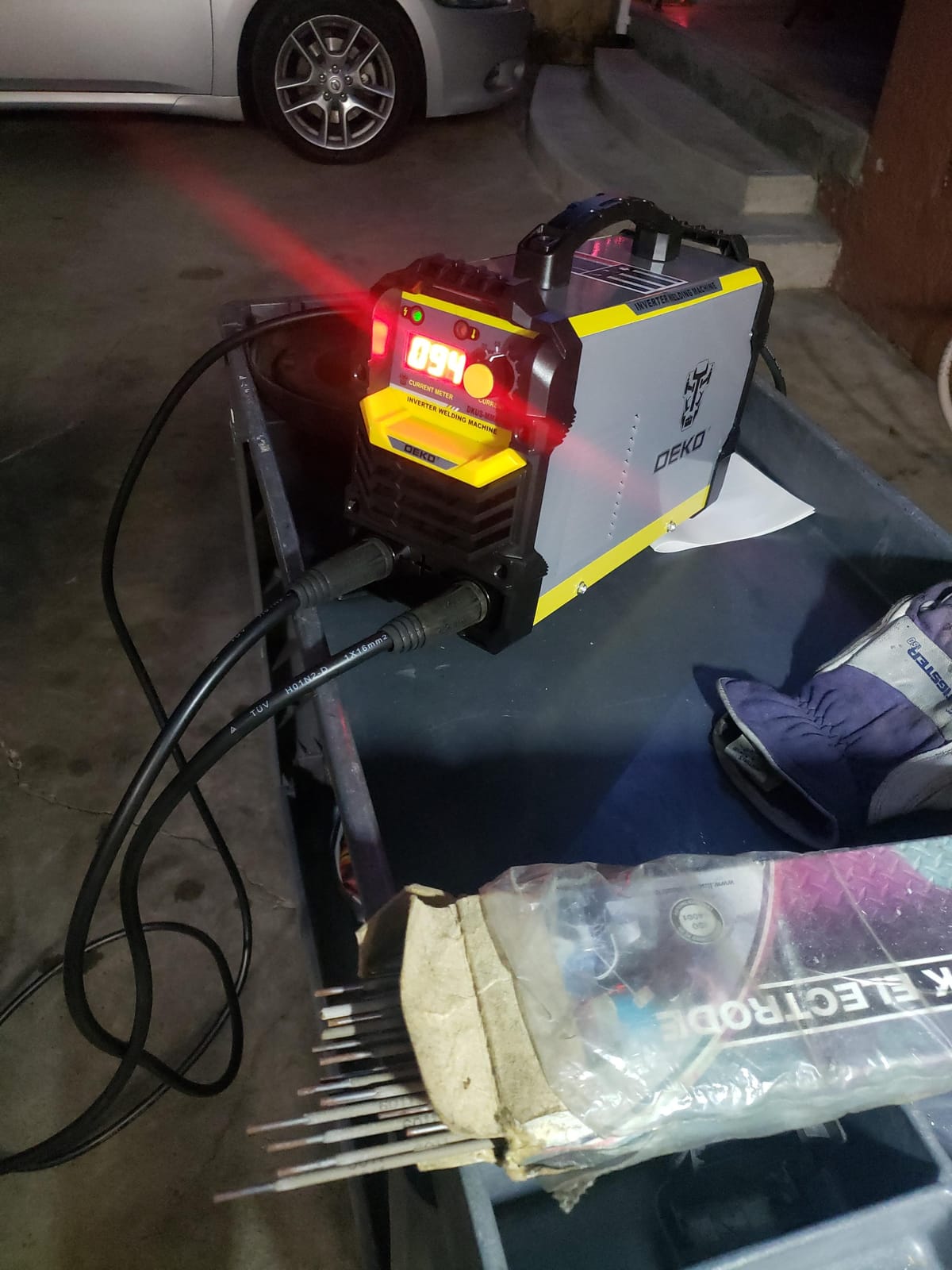
Closed loop feedback control keeps the output voltage steady, which shows up as a consistent bead width instead of a bead that narrows and widens as the arc wanders. At 11.1 pounds it is light enough to lift out of a pickup bed without recruiting help, which matters more than the spec sheet suggests.
Material coverage is genuinely broad for the class. Owners weld mild steel, stainless and cast iron on it, and the ETL certification is a real differentiator at this level because so much of the competition carries no third-party listing at all.
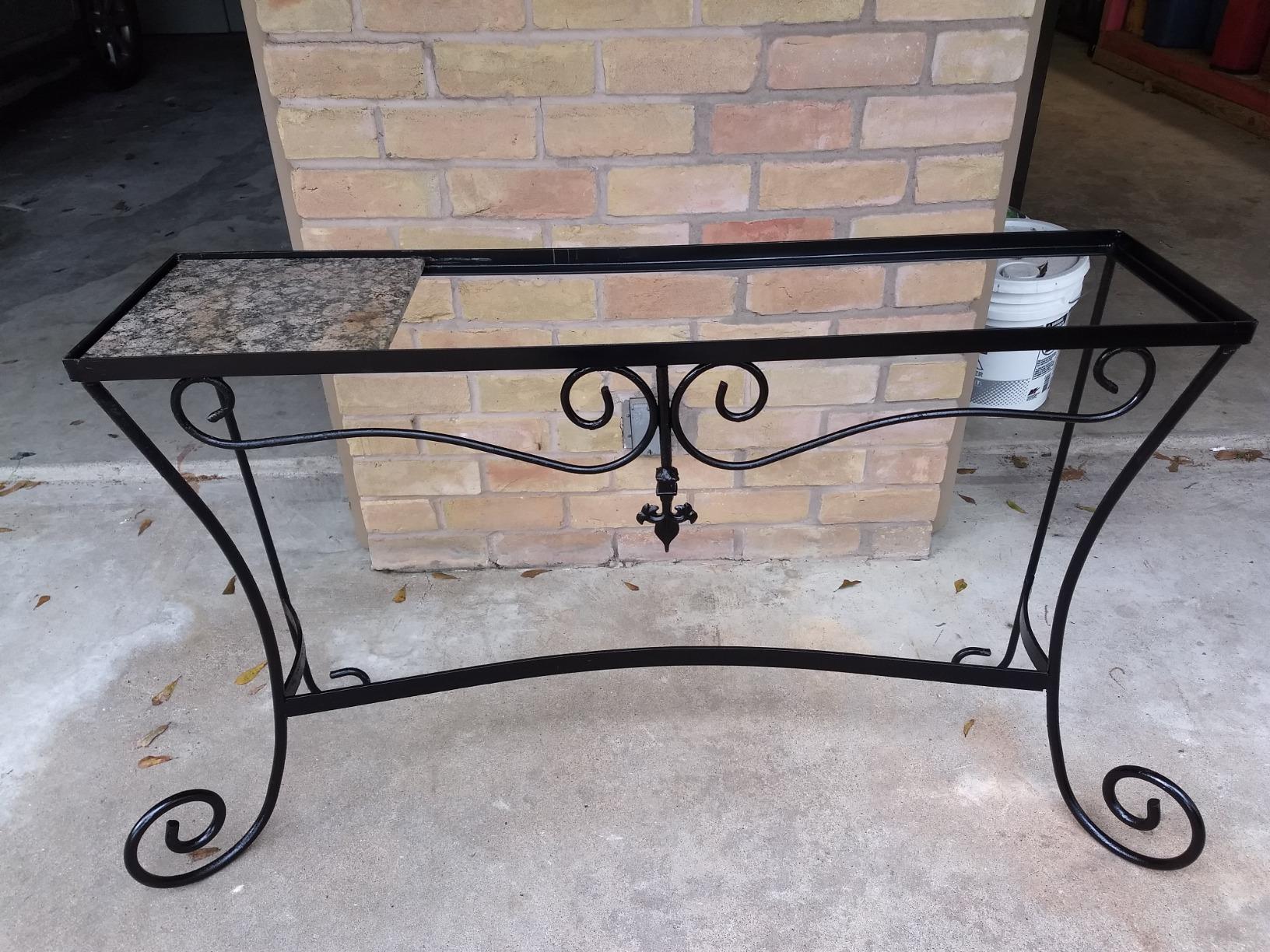
What output looks like in real garage work
This is a 160A class machine in a small case, so set your expectations on 1/4 inch plate rather than structural fabrication. It is comfortable running 3/32 inch 7018 on mild steel for brackets, gate hardware, table legs and trailer repairs. The arc is stable enough that you can hold a stringer bead without stopping.
Do not buy it to run long production seams back to back. Owners are near-universal on the point that the included leads and electrode holder are lighter duty than the power source, and that a first session is better spent on technique than on volume.
Where it will disappoint you
The documentation is the weak spot. Polarity markings for a machine with an AC/DC power source confuse first-time buyers, and the manual does not settle them quickly. Budget an hour reading a polarity guide before your first strike rather than burning rods figuring it out.
If your plan is heavy plate work or production welding, a 200A-plus machine with a stated duty cycle is a better fit. For learning at home, though, this is the machine we would put in front of a beginner.
2. YESWELDER ARC-205DS PRO 205A Stick Welder Review
- Hot start and arc force each adjustable across 1-10 levels
- Runs 110V and 220V so it fits a home garage and a 220V circuit
- LED display and precision knob readable with gloves on
- Lightest machine in the roundup at 8.8 pounds
- Real output measured well above the budget average
- Digital current readout over-reports actual amps by roughly 30 percent
- Finicky with 6013 rods but noticeably better on 7018
- Can struggle to strike below about 130A on thicker plate
- Ground clamp is flimsy
- Lift TIG needs a separately purchased torch
Over 2300 reviews at 4.5 stars, and the reason this one stands out is adjustability. Hot start and arc force each run 1 to 10, so a beginner can soften the arc force until the rod stops freezing, then tighten it as puddle control improves. Most competitors in this class give you one fixed setting.
The LED display shows current, function mode and welding mode, and the precision value knob can be turned without removing a helmet or gloves. On a long practice session that single detail removes a lot of friction.
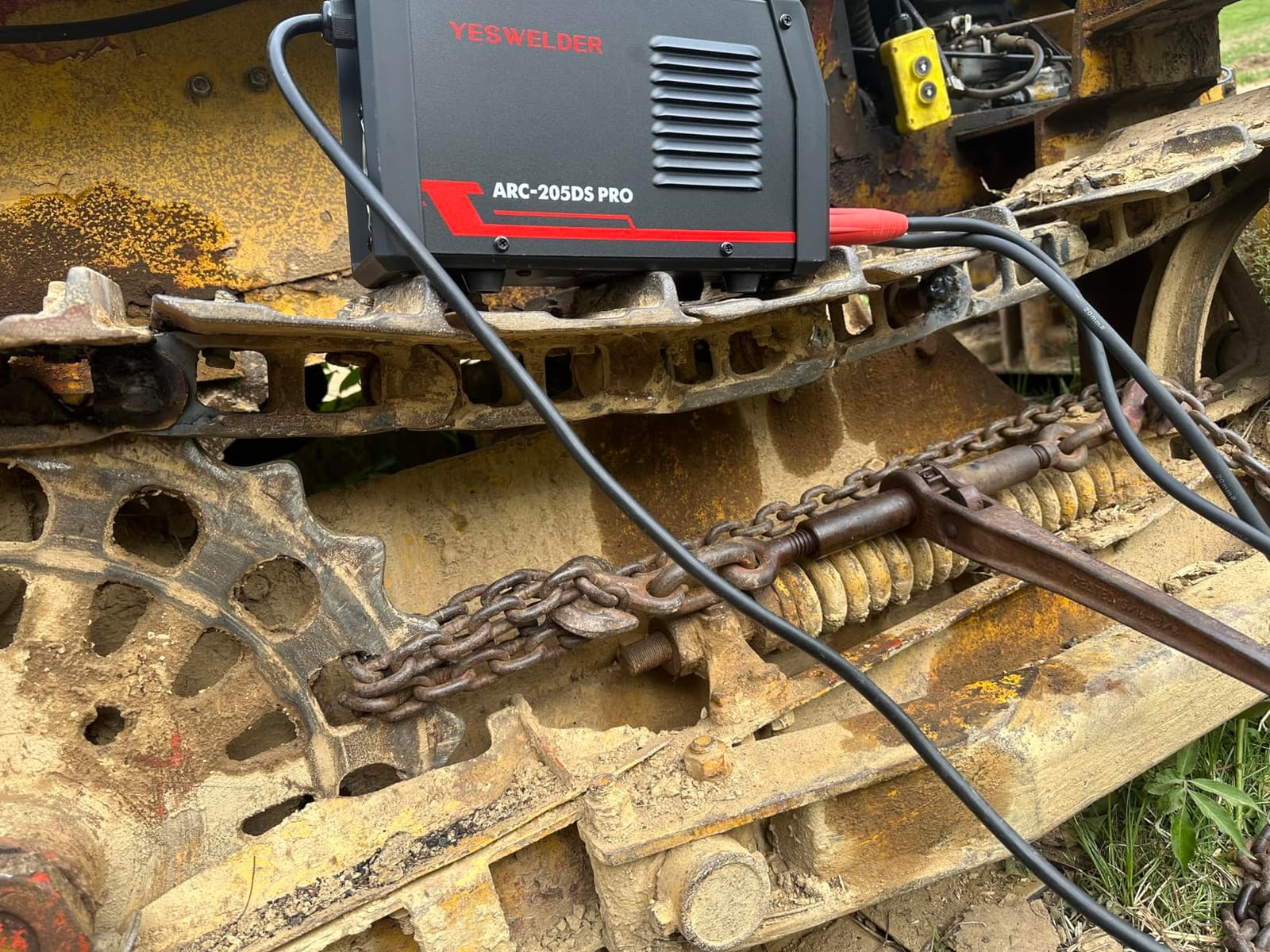
Weld quality and penetration on mild steel are repeatedly reported as comparable to larger Miller and Lincoln machines, which is not a small claim for a machine this size. The protection package covers voltage fluctuation, overcurrent, overload and thermal conditions.
At 8.8 pounds with a carry handle, it is the easiest machine here to move between a garage, a driveway and a farm building without thinking about it.
Where the learning curve pays off
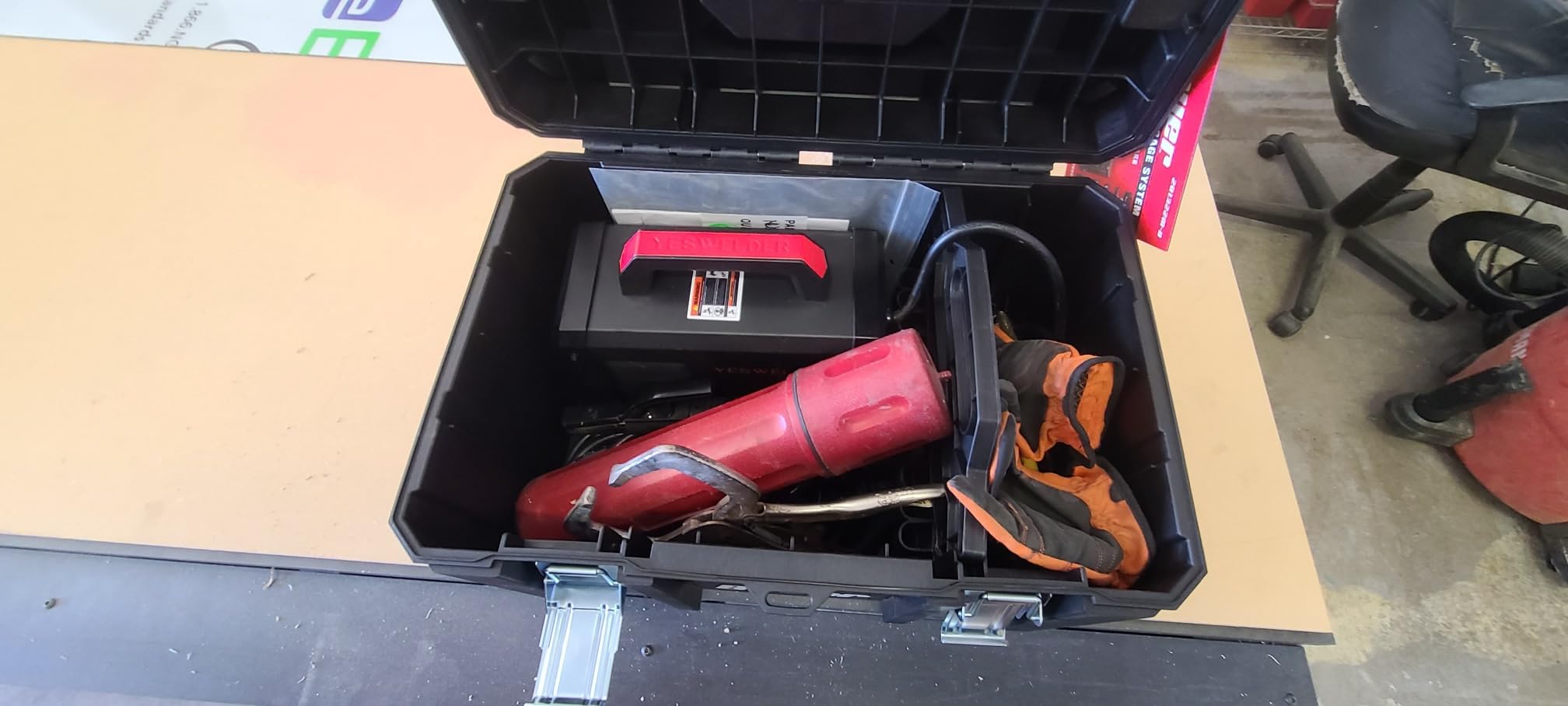
The amp settings are the story. Because hot start and arc force are adjustable rather than fixed, you can start conservatively on 6013 and move to 7018 for structural work as your technique improves. That flexibility is why this is our best value pick rather than simply the cheapest option.
Owners using 7018 report strong penetration on mild steel. It is also one of the few machines here that can do lift TIG, so if thin stainless or a jewellery-scale project is on your list, the TIG torch is the only extra purchase.
What to know before you buy
The digital amperage display over-reports. Users measuring with a clamp meter found output roughly 30 percent below the dial reading, so treat the numbers as a reference and learn the real offsets for your machine. Setting the dial is not setting the amps.
Performance is also rod-dependent. 6013 runs thin and finicky on this unit while 7018 behaves well, and on thicker plate it can struggle to strike below roughly 130A. Use 7018 and keep the dial in the upper half of its range for plate.
3. HONE MMA140D 140A Dual Voltage Stick Welder Review
- Puts out usable current on a standard 110V household outlet
- Hot start and anti-stick simplify first arc strikes
- Compact body with a top carry handle moves easily around a garage
- Quiet operation and long leads suit hobby use
- Responsive customer service reported by owners
- Amp display and knob sticker are only accurate near the range limits
- Does not run E6010 rods reliably because the arc keeps dropping out
- Not suited to thin gauge work
- Some users had to change technique to avoid early rod sticking
Roughly 1760 reviews at 4.6 stars, and the ratings skew strongly positive, with 78 percent five-star. The comment that shows up most often is surprise. Strict novices welded their first tee joints within an hour, and certified welders who metered the output report it outperforming machines costing several times more.
The number that matters here is the duty cycle improvement to 40 percent at 120A on 110V and 40 percent at 140A on 220V. Duty cycle is simply how long you can weld before the machine needs a cooldown. Forty percent means roughly 8 minutes of arc time in a 20 minute cycle, which covers an entire practice session on scrap plate.
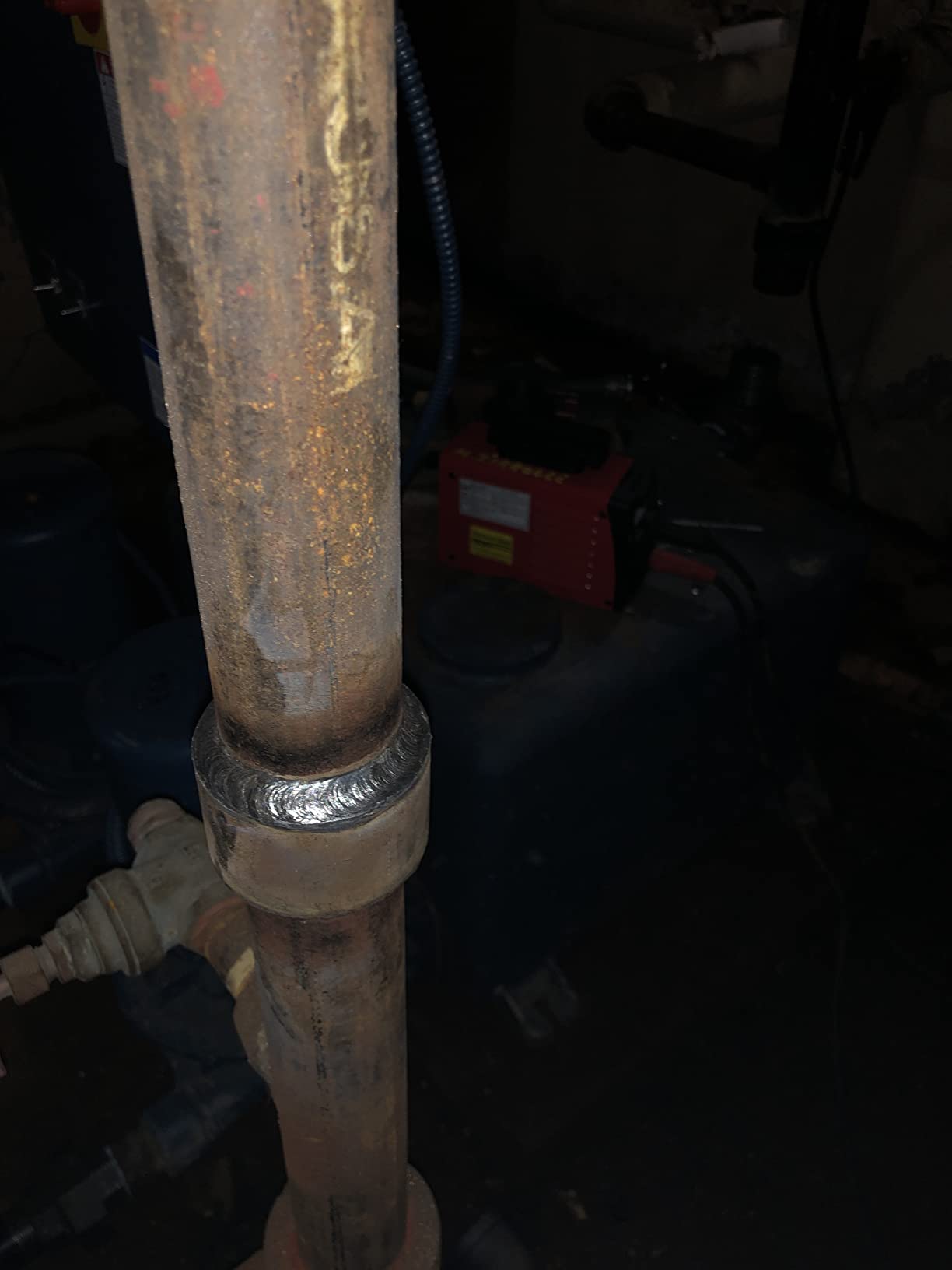
Hot start and anti-stick do the heavy lifting for a first-timer. On our plate, the arc struck on contact rather than requiring the scratch-and-lift method that frustrates people on older buzz boxes. When the rod did freeze, the anti-stick function freed it without a hard yank that would have torn the tip off.
Rod support covers AWS E6013, E7018 and E6011 from 1/16 inch to 1/8 inch, and it will also take E6010. The digital display shows real welding current and carries a trouble indicator, which helps a new owner tell a settings problem from a machine fault.
Why we call it the 120V option
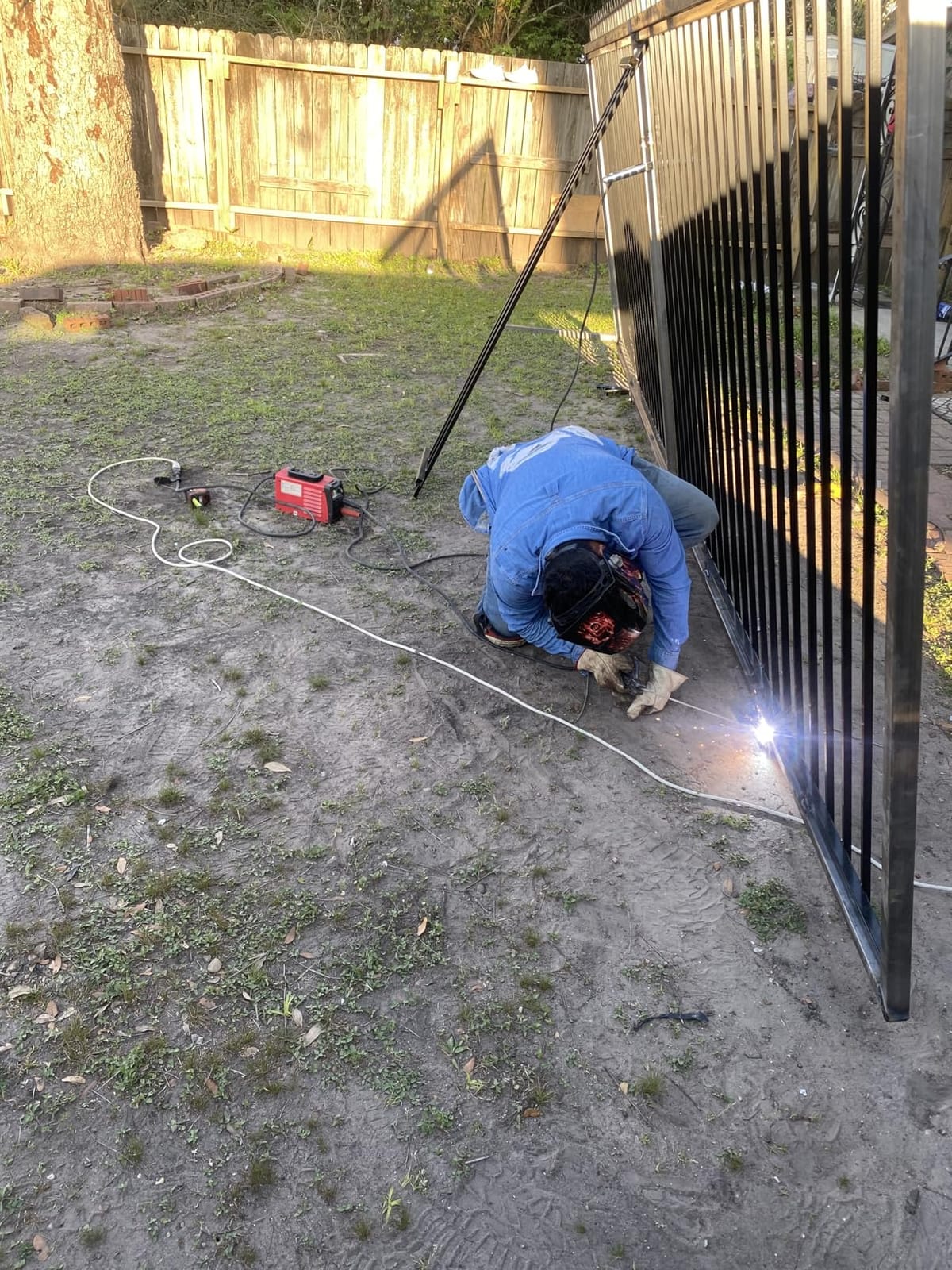
If your only power is a standard household outlet, this is the machine that behaves. It delivers 120A on 110V, which is real working current for 3/32 inch rods on 1/8 inch mild steel plate, not a headline number. That is enough for fence rails, handrail sections, brackets and general repair work.
Switching to 220V gives it the full 140A. Owners doing farm and trailer repairs say the jump to a 220V circuit is the only wiring change they needed, and the machine handles both without a settings conversion.
Where it falls short
6010 is the weak spot. Owners report the arc keeps going out on that rod, so do not plan a pipe project around this machine. If your work is vertical or overhead, look elsewhere.
The amp display is also unreliable except near the ends of each voltage range, which is the most consistent technical complaint in the reviews. Treat 90A on 110V and 140A on 220V as your only trustworthy reference points and verify with a scrap weld rather than the number on the screen.
4. Hpoouo ARC-200 200A Mini Stick Welder Review
Hpoouo 200Amp 20PCS Rods Stick Welder, Super MINI Portable Welding Machine
- Includes 20 welding rods plus chip hammers and gloves so you can start immediately
- Tiny 7.8 by 3.9 by 5.3 inch body fits a backpack or toolbox
- Hot start arc force and anti-stick make first strikes manageable
- IGBT inverter gives a stable arc on thin and thicker material
- Strong sales ranking in both automotive and welding categories
- 110V only with no 220V option for heavier work
- Included rods are acidic so the leads must be swapped for alkaline
- Instruction manual is too thin for a total beginner
- Compact size limits sustained heavy welding
This is the one we recommend for someone who wants to weld this weekend rather than research for a month. The box contains the machine, 20 welding rods, two chipping hammers and a pair of welding gloves, which covers most of a first kit apart from a helmet.
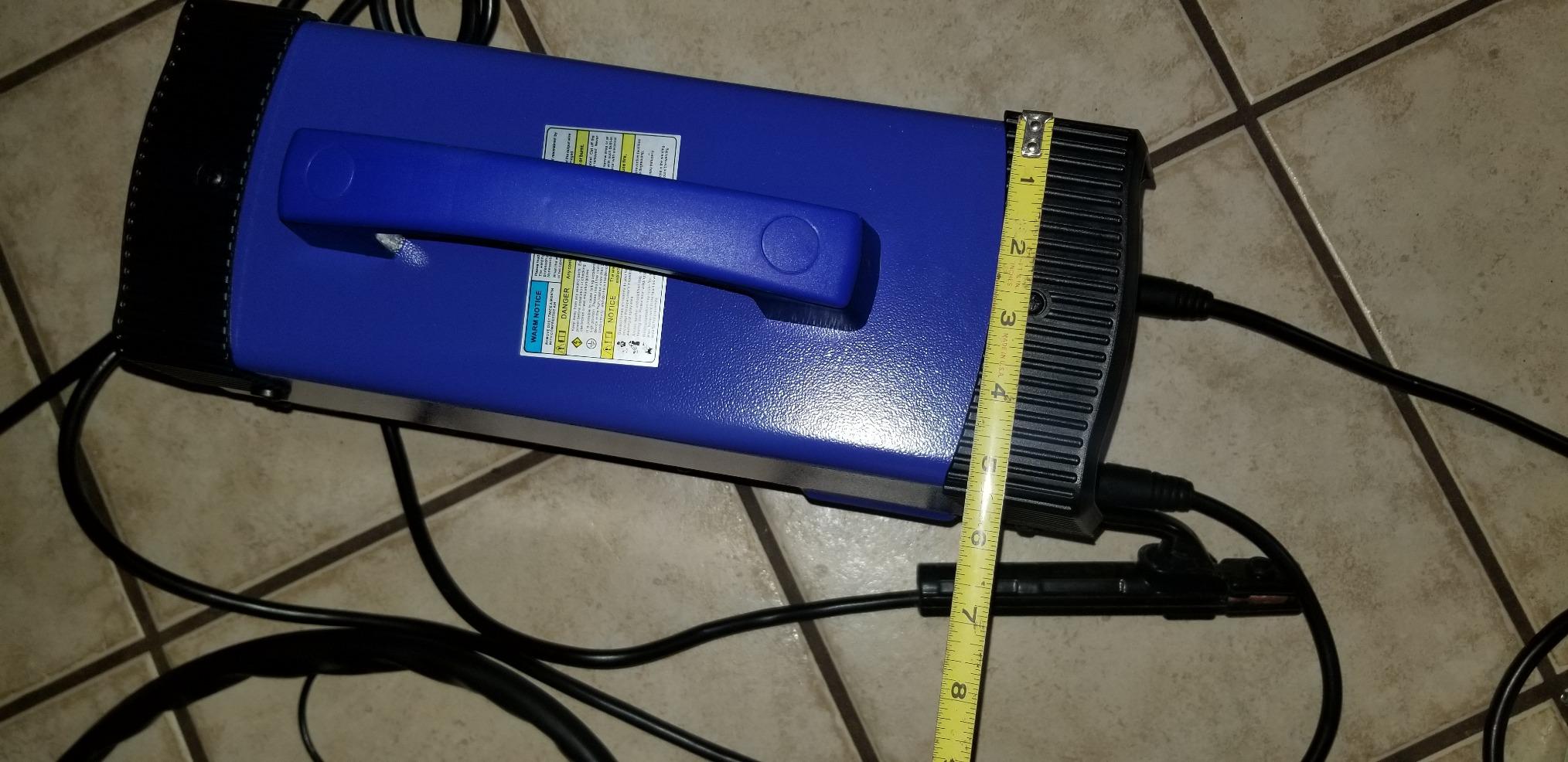
The body is genuinely tiny at 7.8 by 3.9 by 5.3 inches and light in the hand, so it moves between a garage, a rooftop and a remote job site without a cart. Rod compatibility is broad for the class, spanning E6013, E6011, E6010, E7018 and E308 in 1/16 inch to 1/8 inch.
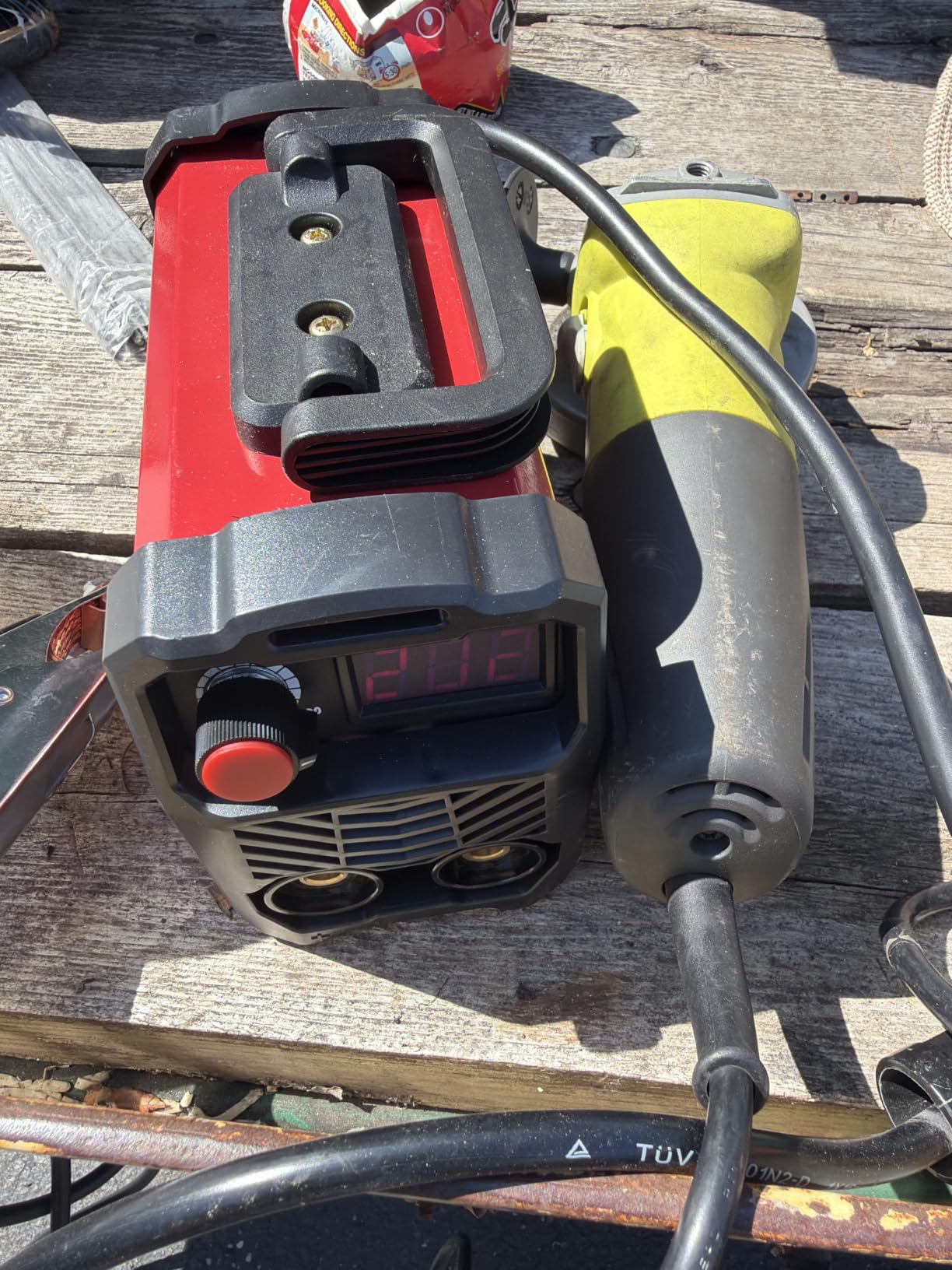
Hot start, arc force and anti-stick cover the three arc behaviours that trip up newcomers. The IGBT inverter adjusts output current in microseconds, which is why the arc stays stable on both a thin bracket and a heavier strap of steel with the same machine.
Adjustable current runs 20 to 200A on a standard 110V outlet, and the stated material thickness range is 0.06 to 0.2 inch. For stainless work the manufacturer specifies E308L-16 rods.
Best for a weekend first weld
Unbox it, put on a helmet, clamp a scrap plate to a table and run a bead. The bundled consumables remove the most common first-week blocker, which is not the machine but the trip to a hardware store for rods, a chipping hammer and gloves.
At this weight it is also the machine we would take to a farm or a remote site. Rooftop and field repair work is where a welder earns its keep, and carrying a transformer machine to those jobs is the part nobody enjoys.
What to watch out for
Polarity is the first hurdle and the manual does not explain it well. The supplied rods are acidic, so the electrode holder and ground clamp must be moved to the opposite terminals before you switch to alkaline 7018. Getting that wrong produces a spitting, unstable arc that looks like a bad machine.
It is also 110V only. That is fine for household repair work, but if you plan to grow into 1/4 inch plate, buy a dual-voltage machine instead and avoid the upgrade later.
5. S7 200A DC TIG and Stick Welder Review
- Performs both stick and DC TIG from one machine
- High frequency arc start is reliable which is the usual weak point on budget TIG units
- Uses standard tungsten electrodes cups and collets
- Quiet and portable for a 200A machine
- Professional stainless users report it survives heat rain and mud
- TIG function needs a separate argon bottle and regulator
- Poor instructions and very few tutorial resources
- Torch trigger is on and off rather than variable amperage
- Gas fitting uses a push-on nozzle that may need modification
- Torch lead is stiff and short for large frames
This is the roundup’s most versatile machine and its lowest-rated one at 4.4 stars across 1530 reviews, and the reason is instructive. The rating spread sits at 69 percent five-star with 9 percent three-star, which is what happens when a machine does two demanding jobs and one of them needs a gas bottle.
Stick performance is good. Dual voltage input means it runs on 120V for light work and 220V for stronger output, and the high frequency arc start gives a clean ignition that many cheaper TIG units fail at outright.
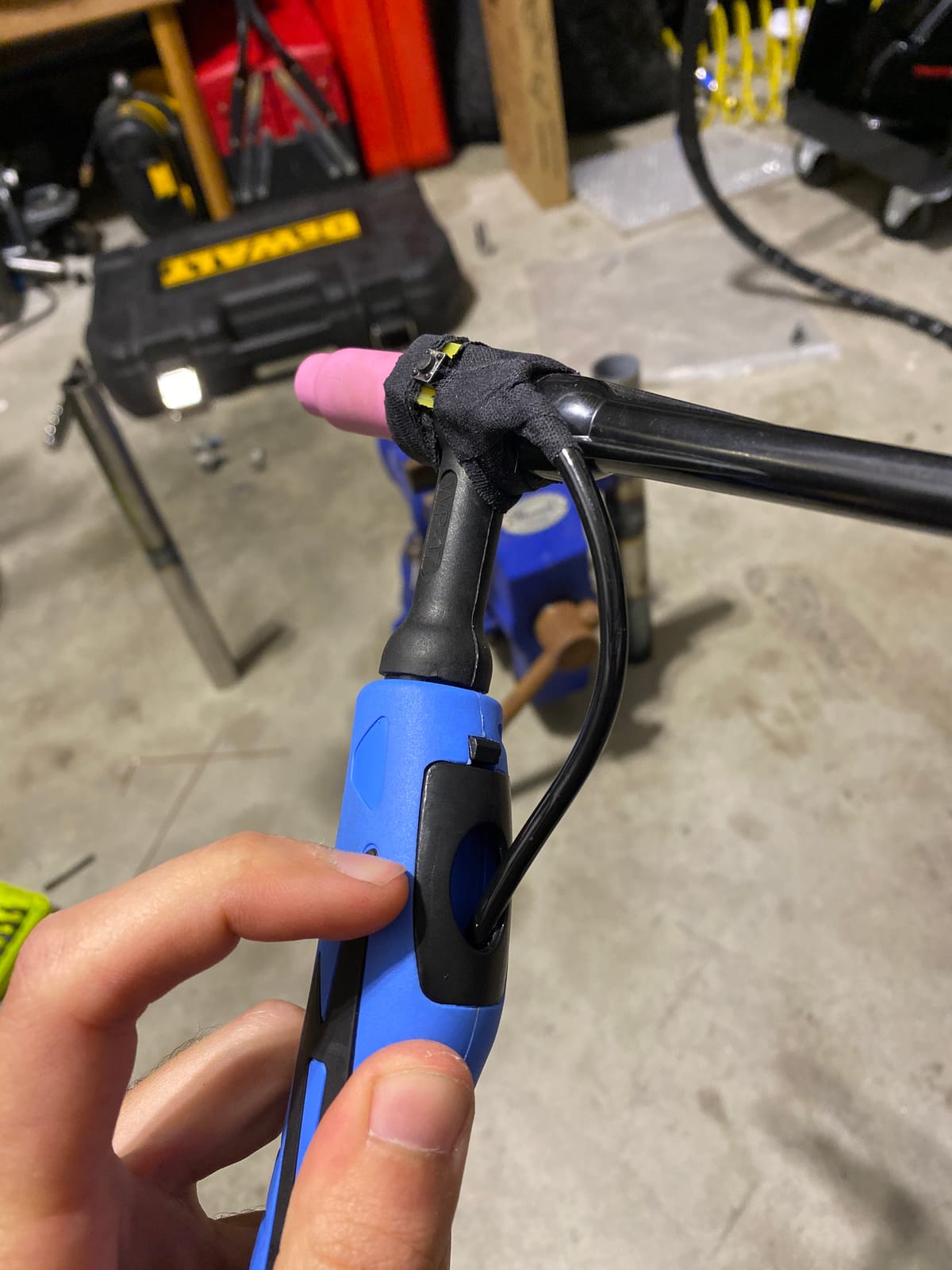
For a beginner who is curious about TIG, having it in the same box is a genuine advantage. TIG is how you weld thin stainless and small, precise joints without the heat of stick, and the arc is far more controllable than an arc you are fighting through a rod.
The post-gas flow timer on the front panel lets you set a shielding gas purge after the arc stops. That matters because tungsten oxidises quickly, and a post-flow setting protects the electrode and cuts consumable waste.
When two processes in one box wins
If your projects are mostly thin stainless, small brackets or hobby metalwork, this machine lets you learn TIG without buying a second power source. It works with standard tungsten electrodes, ceramic cups and collets, so replacement consumables are ordinary purchases rather than proprietary parts.
Owners who weld stainless professionally for a living report it holds up in heat, rain and mud without overheating, which is a meaningful endorsement for a machine people push past its comfort zone.
Where the two-process promise gets expensive
TIG needs an argon bottle and a regulator, and that is a real addition to your first-kit cost that no product page emphasises enough. The torch trigger is on and off rather than variable amperage, so you cannot feather the current with your foot the way a proper TIG setup allows.
The gas fitting uses a push-on nozzle rather than a screw-on connector and may need modification, and the documentation is thin. If you want a pure stick learning machine, you pay for TIG capability you cannot fully use.
6. TOOLIOM TL-135S 135A Mini Stick Welder Review
TOOLIOM 135A 110V Mini Stick Welder, 2-in-1 MMA/Lift TIG Welder
- Measured output verifies close to rated spec
- Digital display and simple anti-stick arc force and hot start controls
- Small and light with an adjustable shoulder strap
- Runs 6013 and 6011 in 3/32 inch and 1/8 inch well
- Users report it paid for itself with a single repair
- 110V input only with an explicit warning against 220V connection
- Runs 6010 3/32 inch poorly
- Included electrode and ground cables are shorter and lighter than standard
- No variable amperage control and no lift TIG torch in the box
- Needs a dedicated 30A or 40A circuit for full output
At 135A this is the smallest machine here, and the one owners are most willing to measure. One owner clocked 80V open circuit and 138 amps at full dial with a multimeter. That honesty matters more than a large headline number, because it means the dial means something.
For a beginner, the control layout is close to ideal. A digital display shows output welding current with a trouble indicator, and anti-stick, arc force and hot start handle the arc behaviours that cause frustration. The adjustable shoulder strap makes it easy to carry between work areas.
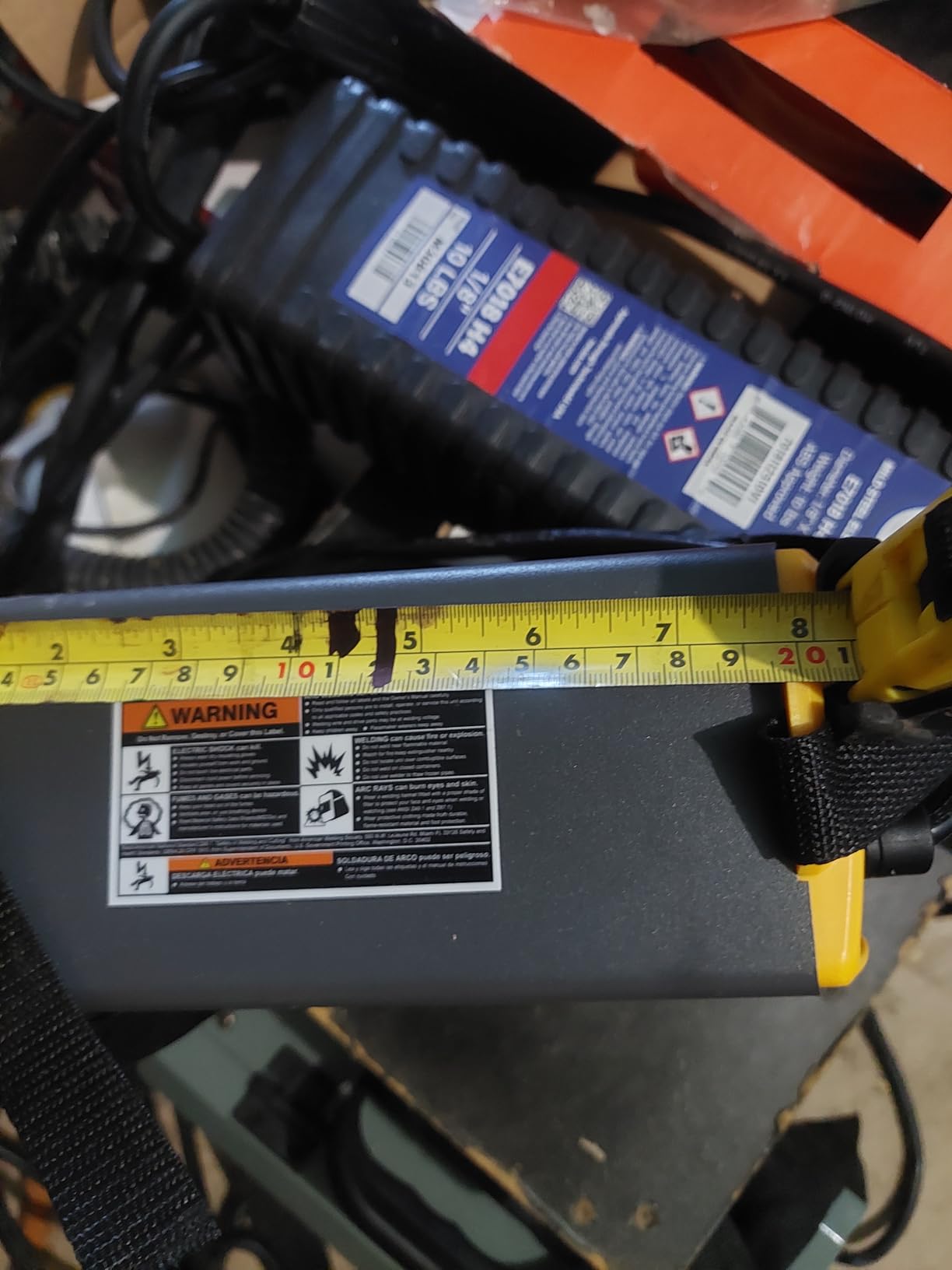
Rod performance is reported as good for 6013 and 6011 in both 3/32 inch and 1/8 inch, and 7018 on AC at 3/32 inch runs very smoothly. Several owners describe finishing a real repair the day the machine arrived.
It is also a 2-in-1 machine: stick or lift TIG, with the TL-WP-17V-10-25 torch sold separately. It handles mild steel, cast iron, stainless steel and hard surfacing.
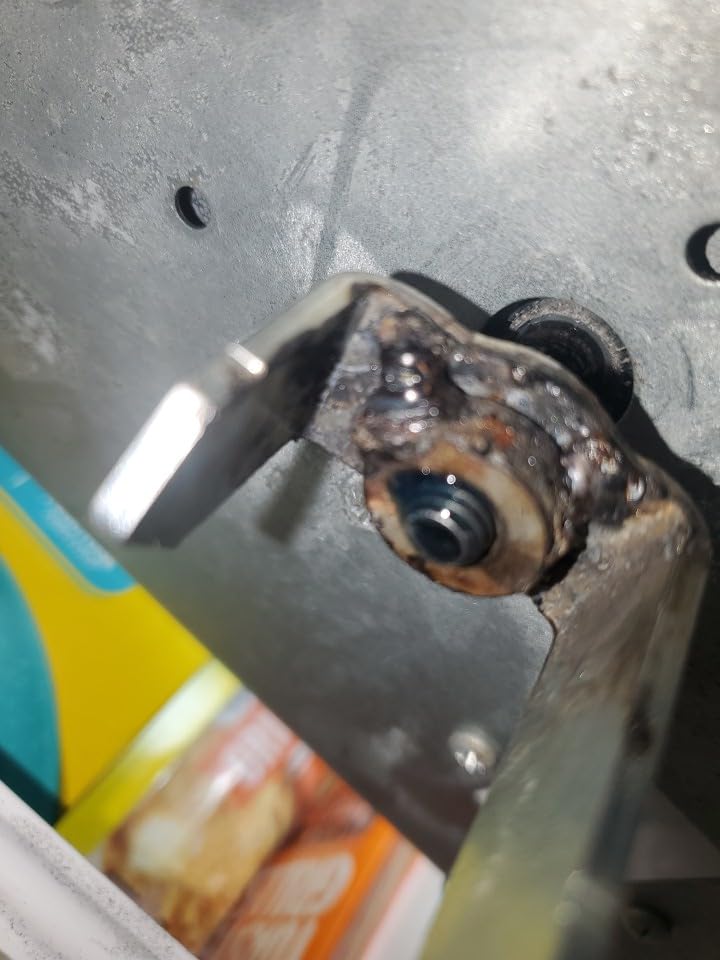
What honest output means for learning
On thin gauge work, a 3/32 inch rod at 70 to 90 amps is exactly what a beginner needs, and this machine reaches that without fuss. Cast iron repair on a small frame or a mower deck bracket is realistic on 135A. Owners routinely report a single job covering the machine.
Because output matches the label, you can plan practice sessions around real numbers rather than discovering mid-bead that the machine is arching at half the setting you selected.
The electrical caveat is not optional
This welder is 110V input only, and the listing carries an explicit warning that connecting it to 220V causes immediate damage and a fire risk. Check your outlet before first use.
It also needs a dedicated 30A or 40A circuit, or a generator of roughly 6000W, for full output. On a 15A household outlet you will not get the rated amps. The included electrode and ground cables are shorter and lighter than those supplied with a full-size machine, so plan on replacing them.
7. S7 250A 110V/220V IGBT Stick Welder Review
250A Stick Welder, 110V/220V Portable IGBT Inverter ARC Welder
- Dual voltage 250A capability
- Hot start arc force and anti-stick with a beginner-friendly digital display
- IGBT inverter keeps weight down versus a transformer of the same class
- Compact enough to move around a garage farm or shop
- Works with 6010 6011 6013 and 7018 rods
- Duty cycle means sustained heavy output needs cooling time
- Performance depends on a suitable power circuit and correct rod selection
- No features beyond the core arc controls
- Value-first machine rather than a feature-first one
This is the most favorable rating distribution in the roundup: 80 percent five-star, 11 percent four-star and 3 percent one-star across 1054 reviews. The headline is 250A output on dual 110V/220V input in a body light enough to carry with one hand.
That combination solves the problem that trips up first-time buyers who buy a 110V-only machine and then discover it cannot push through plate. Use 110V for light home repair, switch to 220V for stronger and more stable output on heavier material.
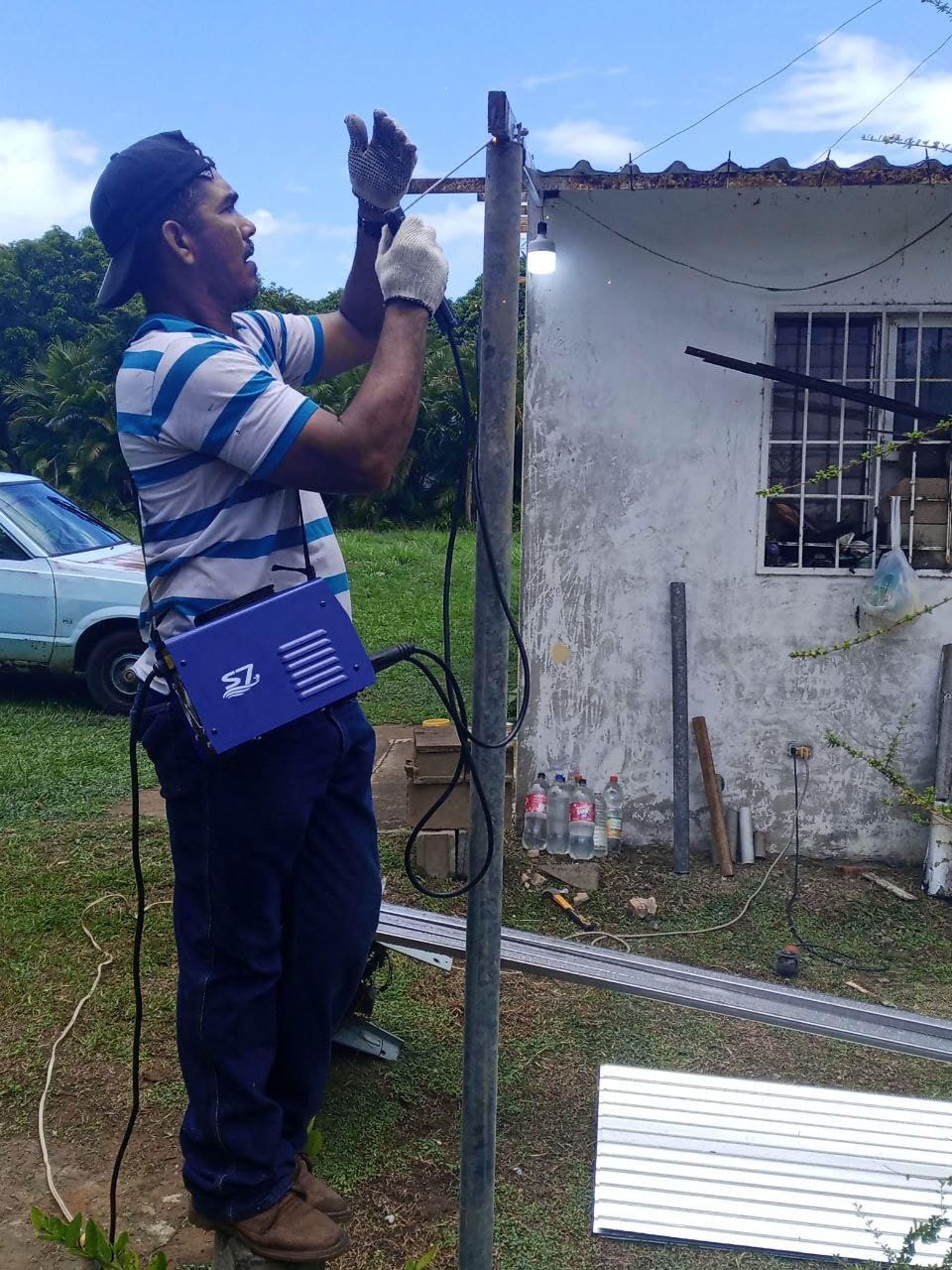
Rod compatibility is the widest of the budget machines here, including E6010 alongside E6011, E6013 and E7018. That matters if your work involves pipe or out-of-position welds, where 6010 is the standard rod and the HONE unit above would not hold it.
Hot start, arc force and anti-stick cover arc ignition and rod release, and the digital display makes current adjustment straightforward for someone who has never set amps before.
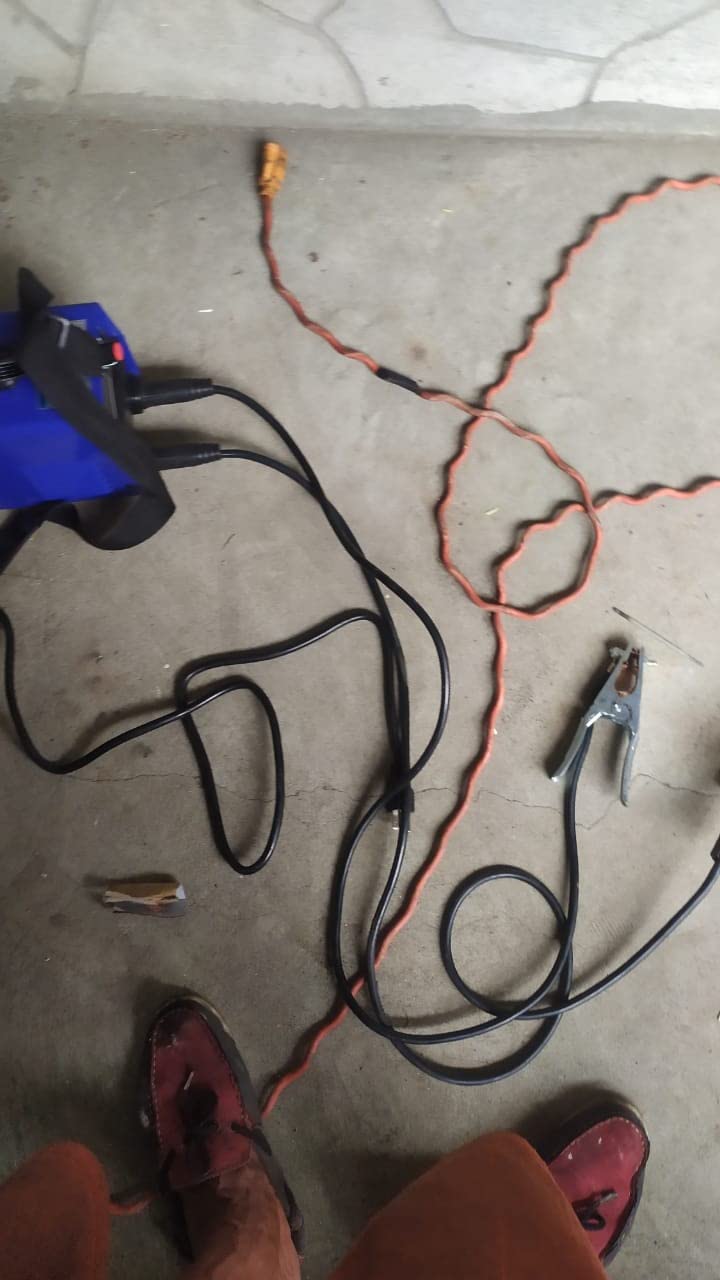
Why the extra amperage matters later
Amps above what you need today are simply unused capability, and that is a reasonable thing to buy if you plan to grow. 1/4 inch plate, thicker fence rail, heavier brackets and structural repair are all within reach on 220V, and they are out of reach on a 135A single-voltage unit.
The IGBT inverter design also cuts weight compared with a transformer machine of the same output class, so you are not hauling 70 pounds to a farm gate to do a job that needs 150 amps.
Where the 250A headline needs tempering
Maximum output is not continuous output. The page itself advises allowing cooling time during extended operation, and sustained heavy welding on a machine this size will hit thermal limits. Read the duty cycle before planning an afternoon of production work.
It is also a value-first machine with no features beyond the core arc controls. If you want adjustable hot start levels, TIG capability or a stated warranty backed by a service network, look at the DEKOPRO or YESWELDER instead.
8. HGNVGZ MMA-250 250A 110V IGBT Stick Welder Review
HGNVGZ 250A MMA Stick Welder 110V, Portable IGBT Inverter Arc Welder
- Very light with an adjustable shoulder strap for rooftops farms and job sites
- Digital LCD shows current and simple controls get a beginner welding quickly
- 60 percent duty cycle plus a large cooling fan and ABS shell reduce overheat shutdowns
- Hot start and anti-stick reduce wasted rods on light repairs
- Long-term owners report it still running after three years
- Light-duty hobby and repair machine rather than a shop welder
- Instruction manual is short and poorly translated with no troubleshooting section
- Needs a 20A circuit breaker rather than a standard 15A outlet
- 110V only so it cannot match a 220V machine on thicker material
- One owner reported the unit ceasing to weld after about six seconds
At 7.63 pounds this is the lightest machine in the roundup, and the adjustable shoulder strap makes it the natural pick for rooftop, farm and field repair. Owners describe carrying it to a roof or a remote gate without planning a second trip for cables.
The cooling design is the standout specification. A 60 percent duty cycle at 250A, a high-performance fan with a large heat dissipation area, and an ABS shell that insulates better than a metal housing all work toward fewer thermal shutdowns during a long session.
Hot start and anti-stick reduce wasted rods on light repair work, and the digital LCD shows the welding current clearly enough to adjust without guessing. Rod support covers 1/16 inch to 1/8 inch E6013, E7018, E6011 and E308, for material up to 0.2 inch thick.
Long-term owners report it still running after three years and heavy rod consumption, which is the durability signal that matters most for a machine you intend to keep.
When a light machine is exactly right
Small household repairs, a broken bracket, a gate latch, a mower deck, a trailer part. These are the jobs a beginner actually has, and they need 60 to 120 amps, not 250. Owners set expectations clearly: it is an excellent light-duty machine for small repairs.
On 110V with a 20A circuit breaker it delivers usable current for 1/8 inch plate work, which covers most of a first year of hobby welding.
The limits you should plan around
Results drop off once you push beyond light material, and at 110V it cannot match a 220V machine on thicker work. If you know you will be welding 1/4 inch plate, this is the wrong size.
Documentation is the most criticised aspect: a short, poorly translated manual with no usable troubleshooting section. Some reviews also describe early unit failure, and the 4.4 rating with 6 percent one-star reflects that. Budget time to learn polarity and amps from written guides rather than the manual.
How to Choose a Beginner Stick Welder in 2026
Most first-time buyers overbuy on amperage and underbuy on accessories. Here is what actually decides whether you enjoy the first six months of stick welding.
How much amperage a beginner actually needs
Community consensus is 180 to 200 amps for general home and garage work, and that 225A and above is overkill for a learner. Practically, a 3/32 inch rod runs at roughly 60 to 130 amps and a 1/8 inch rod at 90 to 160 amps, so a machine that reaches 140A on your power source covers almost every beginner project.
Buy above that only if you know you will weld 1/4 inch plate or heavier structural material. Otherwise the extra capability sits unused and you have spent money you could have put toward a helmet, rods and a proper ground clamp.
120V only vs 120V and 240V dual voltage
Check your outlet before you shop. Most garage outlets are 120V, and only a handful of machines accept both. Dual voltage is the safer first purchase because it removes the decision entirely.
Realistic ceiling by supply: on a 120V circuit, expect 3/32 inch rods on mild steel up to 1/8 inch plate, with more on a dedicated 20A or 30A circuit. On 240V, 1/8 inch rods and 1/4 inch plate become comfortable. The TOOLIOM on this list warns explicitly that 110V only models can be damaged by a 220V connection, so verify the label.
AC vs DC output explained
AC alternates polarity 120 times a second, so the arc is only solid during one half of each cycle. DC holds one polarity steady and gives a noticeably easier strike and a more controllable puddle. AC machines are cheaper and work with both acidic and alkaline rods. DC machines run alkaline rods such as 7018 cleanly.
For a beginner, a machine that runs both AC and DC is the most flexible. Almost everything in this roundup does. The exception to know about: 6010 is an AC rod, and if you ever need it, check that the machine is AC-capable.
Inverter versus transformer buzz box
A transformer welder uses 60 Hz mains current directly. It is heavy, loud, hums constantly, and the arc is harder to strike and control. An inverter welder rectifies the input to DC, runs a high-frequency switch and steps it back down, which produces a stable arc, a far lighter machine and adjustable hot start and arc force.
Every machine here is an inverter. The upside for a learner is decisive: a hot-start inverter does not need the scratch-and-lift technique to strike an arc, and a 9 pound machine beats a 70 pound transformer every time you move it.
The forum argument for used transformer machines is about durability and repairability rather than arc quality. If you find a good used machine, it will practise all day without complaint. But for a first purchase in 2026, a new inverter with a warranty and arc controls is the lower-risk choice.
Hot start, arc force and anti-stick
Hot start boosts current briefly when you strike, so the arc ignites instantly instead of needing a restart. Arc force increases current when the arc lengthens or the rod touches the pool, which stops the electrode freezing. Anti-stick reverses polarity briefly to break a stuck rod free. All three are standard on the machines here, and adjustable versions, as on the YESWELDER, let you tune them as you improve.
What duty cycle actually means
Duty cycle is the share of a 10 minute cycle you can weld at a given amperage. A 40 percent rating at 120A means 4 minutes of arc time followed by 6 minutes of cooling. Beginners rarely notice duty cycle because practice sessions are short. It becomes relevant the day you start a long structural weld, so check the number before buying a machine for production work.
Which electrode should you start with
Start with 6013 in 3/32 inch if your machine is AC/DC, or 7018 in 3/32 inch if it is DC or AC/DC. Both are all-position rods, arc easily and are forgiving of a shaky hand.
7018: the general-purpose structural default, low hydrogen, strong and crack resistant. Works on mild steel, stainless and cast iron. The rod to learn on if your machine runs DC.
6013: the easiest all-round learner rod, fast strike, good on thin and medium mild steel, and it works on AC machines.
6011: similar to 6013 with a deeper penetration and a faster freeze, so it is the better choice for vertical and overhead work.
6010: deep penetration and fast freeze, but messy and prone to spatter. It is a pipe and vertical-up rod, not a beginner rod.
Read the first two digits as tensile strength in thousands of psi (60 means 60,000 psi) and the last two as coating type and position. Then check polarity: acidic rods such as 6013 and 6010 run DCEP, holder to positive terminal, while alkaline rods such as 7018 and 6011 run DCEN, holder to negative. The Hpoouo on this list includes acidic rods, which is why its leads must be swapped before you use 7018.
Common beginner mistakes and how to fix them
Electrode sticking to the pool: your amperage is too low for the rod diameter. Check the rod’s recommended range and set the dial in the middle of it, not at the bottom.
Arc keeps shutting off mid-bead: you are outside the machine’s real output on a 120V circuit. Move up the dial or move to 220V. The HONE unit’s reviews describe exactly this on 6010.
Heavy spatter: too much amperage, or the wrong polarity for the rod. Verify the rod type against the terminal connections.
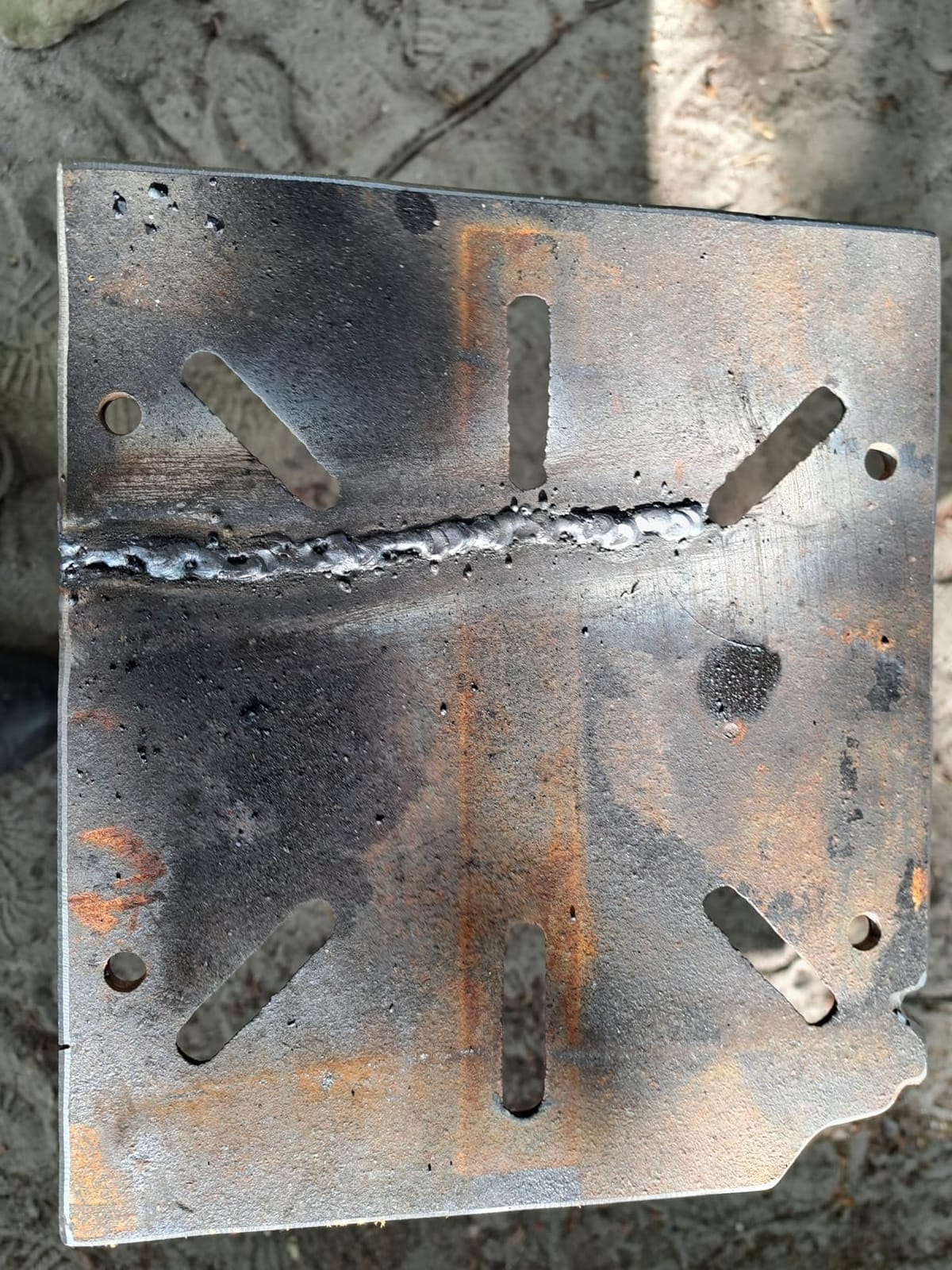
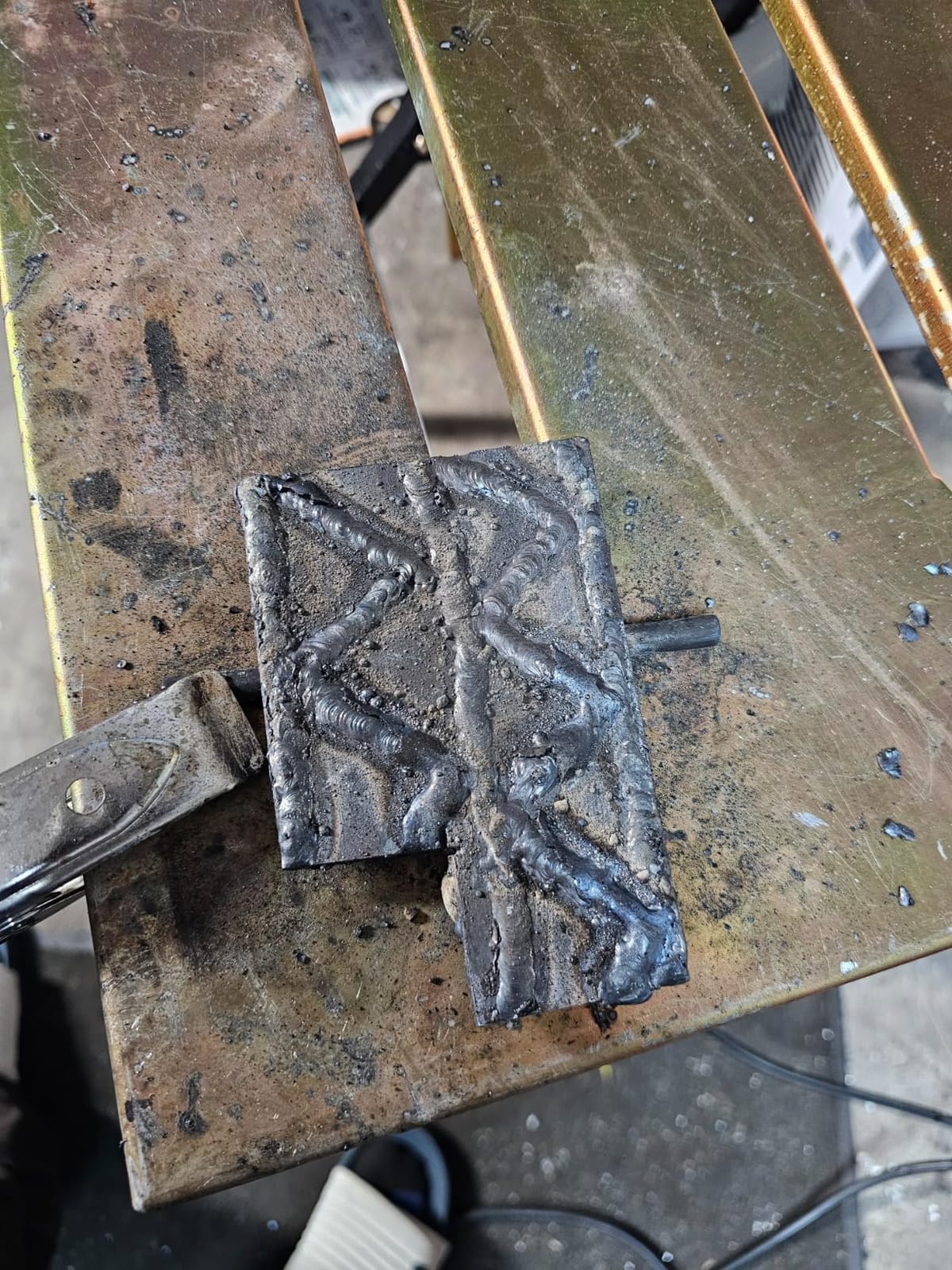
Bead is wide, flat and ugly: you are dragging the rod slowly. Hold a tight arc, about the width of the electrode diameter, and pause at the end of each bead to fill the crater.
Porosity and undercut: the work is dirty, oily or cold. Grind the joint to bright metal and let heavy parts cool between passes.
Used transformer versus new budget inverter
The recurring community argument is worth stating plainly. Used Lincoln, Hobart and Miller transformer sticks are praised for being repairable, never failing electronically, and letting you practise all day. That is true. Against that, a used machine has an unverifiable internal condition, unknown connector quality, and a 240V plug that may need rewiring.
If you can test a used machine and confirm it arcs, a great transformer deal beats a new budget inverter on longevity. If you cannot, a new dual-voltage inverter with a warranty is the sensible first buy.
What a beginner should not buy
Skip engine-driven welders, which are built for field construction sites and are far more machine than a garage practice session needs. Skip a 250A multiprocess machine with flux-core wire capability; you will use a fraction of it. Skip TIG-only packages if your real work is structural. And skip any machine whose listing does not state an input voltage clearly, because that ambiguity is how people damage a power source.
If you are planning a broader workshop rather than a single machine, our guides to beginner-friendly test and measurement gear and entry-level CNC routers for home workshops cover the other half of a first maker setup.
Your First Stick Welding Kit: Gear and Consumables
The machine is the part everyone budgets for and the part that matters least at first. Safety gear is where beginners skip, and it is the one area we would not compromise on.
Auto-darkening welding helmet: the single most important purchase. A shade 10 lens for light electrode work in a garage is the standard starting point. Do not try to learn on a flip-up visor with a fixed dark window.
Welding gloves: gauntlet style leather, for the heat and spatter. Many kits include a basic pair, as the Hpoouo does, but upgrade if yours are thin.
Welding jacket or leather apron: your arms and chest face spatter and radiated heat all session.
Electrode holder and ground clamp: included with most machines here, but the budget units ship lighter versions. Heavier leads are a worthwhile first upgrade.
Rods: a 20 pound box of 3/32 inch 6013 and a 10 pound box of 3/32 inch 7018. That covers months of practice.
Chipping hammer and wire brush: for slag removal. The Hpoouo kit includes both chipping hammers.
Fume extraction: a small fan or extraction hood pointed at the work. Welding fume is a serious health exposure and a garage is a confined space. If your site covers beginners learning tool terms, our plain-language explainer is a useful pattern for technical vocabulary.
Practice steel: a few 1/8 inch mild steel offcuts and some angle iron. A bead-on-plate drill teaches more than any tutorial.
Frequently Asked Questions
What is a good starter stick welder?
A good starter stick welder is a dual 110V and 240V inverter with hot start, arc force and anti-stick, rated for roughly 130 to 160 amps on a household outlet. That combination strikes an arc without a scratch-and-lift restart, recovers from a sticking rod, and covers 3/32 inch and 1/8 inch rods on mild steel up to about 1/8 inch plate. A 135A single-voltage machine is enough for very light work, but dual voltage removes the outlet question entirely.
Are stick welders good for beginners?
Yes. Stick welding needs no shielding gas, no wire feed and almost no setup, and the arc controls on modern inverters handle the two behaviours that frustrate new welders, namely striking the arc and freeing a stuck rod. The process is less forgiving than MIG for thin sheet and out-of-position work, but for mild steel, structural repair, fencing and farm work it is the cheapest and most portable way to learn.
What is the best stick welding rod for a beginner?
Start with 3/32 inch 6013 if your machine runs AC, or 3/32 inch 7018 if it has a DC or AC/DC output. Both are all-position rods that strike easily and tolerate beginner movement. 6011 is a good second rod for vertical and overhead work because it freezes faster. Avoid 6010 as a first rod: it penetrates deeply, spatters and runs hot, which makes it harder to control.
What is the easiest welder to use at home?
The easiest welder to use at home is a MIG machine, because the wire feeds itself and the arc is largely automatic. A stick welder is the easiest to buy and the easiest to keep running, since there is no gas cylinder or spool to maintain, and it tolerates rusty or painted steel. For a first machine on a home circuit, stick usually wins on simplicity and cost.
What are the most common mistakes made when stick welding?
The most common beginner mistakes are running amperage below the electrode’s recommended range, which causes the rod to stick to the pool, and using the wrong polarity for the rod, which causes spatter and an unstable arc. Others include dragging the rod instead of holding a tight arc, welding on dirty or oily steel that causes porosity, and filling the crater at the end of a bead, which causes undercut.
Do I need a 240V outlet to stick weld?
No. A 120V stick welder is enough for 3/32 inch rods on mild steel up to about 1/8 inch plate on a standard household circuit, provided it has a dedicated 15A or 20A outlet. A 240V circuit roughly doubles the usable output and opens up 1/8 inch rods and 1/4 inch plate. If you have the option, buy a dual-voltage machine and decide later.
The Best Stick Welders for Beginners: Final Verdict
The DEKOPRO 160A is our pick as the best stick welder for a first purchase. It is dual voltage, ETL certified, light enough for one person to carry, and the arc controls do the difficult work of striking and restriking for you. It is also the most reviewed machine in this roundup, which means you will find real owner reports at almost any current setting you land on.
If you want the most control for learning, the YESWELDER ARC-205DS PRO offers adjustable hot start and arc force plus lift TIG capability. If your only outlet is 120V, the HONE MMA140D gives you the most honest usable current at that voltage. The Hpoouo is the fastest route to a first bead because consumables are in the box.
Before you switch the machine on, buy a proper auto-darkening helmet, a box of 6013 and a box of 7018, and set up fume extraction. Then clamp a scrap plate down and run beads until the arc stops surprising you. That is the whole apprenticeship, and any of these eight machines will get you through it.