
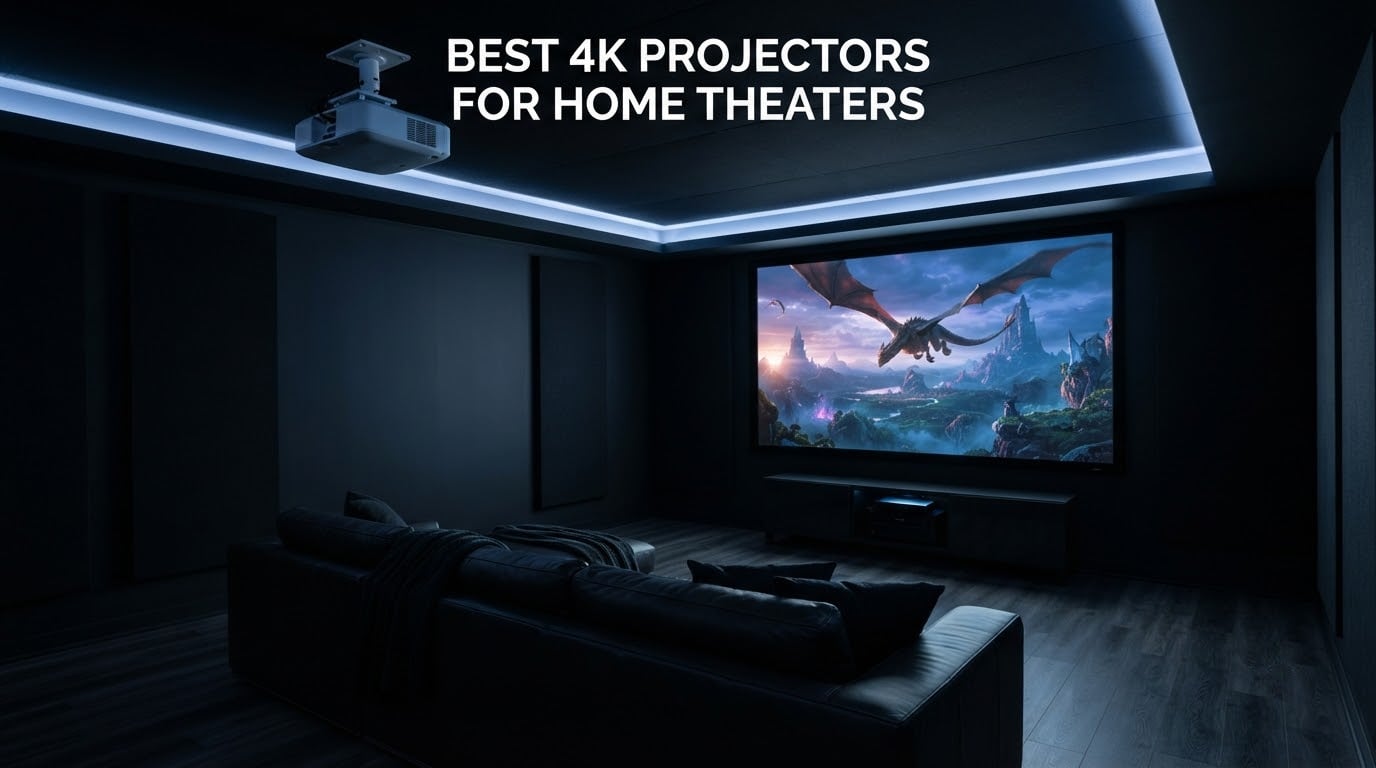
If your room can be blacked out, the Epson Home Cinema 5050UB is the best 4K projector for a home theater, and if you plan to watch with the lights on, the XGIMI Horizon 20 Max handles daylight with triple-laser brightness. That dark room versus bright room split is the single decision that matters more than any other on this page, and it is the one most roundups bury under lumen numbers.
When I started putting this list together I pulled the spec sheets, the review data, and the recurring complaints from buyers who already went through the install. The consensus in those discussions was not “I need more brightness.” It was “I wish it had deeper blacks and the setup had been less painful.” Black level, native contrast, and how much geometry correction costs you in sharpness decide whether a projector looks cinematic or looks like a bright rectangle floating in a dark room.
Every pick below is a real 4K-class projector, and I have flagged honestly which ones deliver native 3840 x 2160 panels versus pixel-shift enhancement. That distinction is the most important honesty signal in this category, and it is the one manufacturers bury in a footnote. Three things to tell me before you read further: how dark the room really gets, roughly what range you are shopping in, and whether movies or gaming are the priority. Those answers cut the list down to two or three models fast.
One note on how we work: we compare published specifications against owner review patterns, and we call out the compromises we would not accept in our own rooms. We may earn a commission from qualifying purchases, and it never changes the ranking.
Table of Contents
Top 3 Picks for a Home Theater 4K Projector (October 2026)

Epson Home Cinema 5050UB
- Three-chip 3LCD
- 2600 lumens
- Motorized lens with memory
- Deep blacks
All 10 Projectors at a Glance in 2026
The table below covers every model in this guide, ordered the way we recommend them. Key features are drawn from each unit’s published specification sheet.
| Product | Specifications | Action |
|---|---|---|
| Epson Home Cinema 5050UB |
|
Check Latest Price |
| ViewSonic PX701-4K |
|
Check Latest Price |
 BenQ TK800M BenQ TK800M |
|
Check Latest Price |
 Epson Home Cinema 4010 Epson Home Cinema 4010 |
|
Check Latest Price |
 Epson Home Cinema LS11000 Epson Home Cinema LS11000 |
|
Check Latest Price |
 XGIMI Horizon 20 Max XGIMI Horizon 20 Max |
|
Check Latest Price |
 Sony VPL-XW5000ES Sony VPL-XW5000ES |
|
Check Latest Price |
 ViewSonic LX700-4K ViewSonic LX700-4K |
|
Check Latest Price |
 BenQ TK700 BenQ TK700 |
|
Check Latest Price |
 BenQ HT5550 BenQ HT5550 |
|
Check Latest Price |
1. Epson Home Cinema 5050UB for deep blacks and near-reference color in a dark room
- Deep blacks owners compare to OLED panels
- Sharp pixel-shift detail
- Accurate color out of the box
- Motorized lens memory simplifies placement
- About 25 pounds so it is a permanent ceiling mount
- Pixel-shift enhanced rather than native 4K
- 10 to 15 second blackout when switching 4K sources
This is the projector I recommend to friends who have a room that goes properly dark. The three-chip 3LCD engine is the reason. Each LCD panel handles one color channel, so there is no single-chip color breakup, and the result is a black level that reviewers keep comparing to OLED panels rather than to other projectors.
Brightness lands at 2600 lumens, which is more than enough once ambient light is out of the picture. The image is 4K PRO-UHD, meaning a pixel-shift processor takes a 1080-class panel and shifts it to present 4096 x 2160 worth of addressable detail. It is not a native 4K panel, and I will not pretend otherwise, but on a 110 inch screen at normal seating distance the difference is hard to see.

Color is the quiet headline. Out of the box the DCI-P3 coverage looks close to reference, and most owners report making little or no calibration. The 10-bit HDR processing and 12-bit digital imaging processor hold shadow detail without blooming or macroblocking on dark scenes, which is exactly where cheaper projectors fall apart.
The motorized lens is the feature I did not expect to care about and now rely on. Lens memory plus generous shift and zoom range means you can dial in a 2.35:1 framing once and leave it. That is a real advantage over a manual-lens projector you have to physically nudge every time you change aspect ratio.

What you get installing it
At 24.7 pounds and 20.5 inches long, this is a two-person ceiling-mount job. Plan the mount before you buy, and confirm your ceiling joists can carry it. The lens memory does not always return to the exact stored position, so re-check framing after a power cycle rather than trusting the preset blindly.
Expect a 10 to 15 second blackout each time you switch to or from 4K sources while the pixel-shift processor re-engages. It is a minor annoyance, but it is one more reason this belongs in a permanent install rather than on a coffee table.
Where it falls short
The weight is the honest drawback. A 25 pound chassis is not a portable device, and moving it around to different rooms is a two-person job. If you are renting or you want one projector you can take to friends’ houses, this is the wrong shape of product.
Beyond that, the pixel-shift approach means you are not getting a native 4K panel, and buyers who came from a native 4K D-ILA or SXRD unit sometimes notice the difference at very short throw distances or with a high-gain screen. For a 100 to 120 inch image in a normal room, I would not let that stop the purchase.
2. ViewSonic PX701-4K for the sharpest entry point at a budget ceiling
ViewSonic PX701-4K UHD Projector, 3200 Lumens, 240Hz HDR, Auto Keystone DLP
- Largest review pool in the group
- Sharp 4K UHD image
- 3200 ANSI lumens tolerates some ambient light
- 4.2ms input lag and 240Hz refresh
- Modest native contrast for a dark theater
- Single-chip DLP can show rainbow artifacts
- Lamp light source needs a bulb eventually
- No built-in streaming platform
The PX701-4K carries the largest review base of anything on this list, at 767 ratings, which means you have a deep pool of real owner reports to read before you commit. It is also one of the few budget models with a genuine 3840 x 2160 DLP panel rather than a pixel-shift approximation.
At 3200 ANSI lumens it is bright enough to tolerate some ambient light, which makes it a genuinely mixed-use machine. You can watch a daytime football match with curtains half open and still switch to a movie with the lights down. That flexibility is why it sits so high on a list dominated by dark-room specialists.

Gaming is where this unit overdelivers for the money. The 240Hz refresh rate and 4.2ms input lag are competitive-class numbers, and owners repeatedly single out the 1.1x optical zoom plus auto keystone and four-corner adjustment as making installation painless. Dual HDMI inputs and a powered USB-A port cover the usual sources.
The listed contrast ratio of 12,000:1 is the weak point. In a fully dark room, a laser or 3LCD model of the same tier will show noticeably deeper blacks. If your room can be made black and your priority is movie night, look past this one.
When to pick it over the Epson
Pick the PX701-4K if you want one projector for everything: sports, gaming, streaming, and movies, in a room you cannot fully black out. The 3200 lumens, the gaming latency, and the optical zoom for placement all point the same direction.
Pick it also if you have never owned a projector and want the least demanding first experience. At 6.2 pounds it is easy to move, and the auto-geometry features mean you can get a square image without special tools.
Where the compromises show
Single-chip DLP can throw rainbow artifacts into dark scenes if your eye moves quickly across the frame. It is not a dealbreaker for most people, but sensitive viewers notice it, and it is the one thing the three-chip Epsons in this list do entirely.
The lamp light source also means budgeting for a bulb eventually, and with no built-in streaming platform you will be attaching a streaming device. Over a five-year ownership window those two facts matter more than the sticker price gap they create.
3. BenQ TK800M for a bright room that cannot go dark
- 3000 lumens works with some ambient light
- All-glass lens array stays sharp
- Accurate Rec.709 color
- Compact at 9.2 pounds
- Keystone only
- no lens shift or optical zoom
- 10000:1 contrast is modest for a dark theater
- Single-chip DLP rainbow risk
- No built-in smart platform
The TK800M is the pick for a living room that has to work during the day. Its 3000 lumens of output is the sort of figure that keeps an image watchable with lamps on, and reviewers consistently frame it as a bright living-room projector rather than a specialist cinema unit.
Optics are the quiet strength. The all-glass 4K-optimized lens array, seven elements in four groups, does a better job of holding sharpness toward the edges of the image than the plastic lenses common at this price. Color coverage of 96% Rec.709 is accurate, and the DLP picture quality enhancement processor produces 8.3 million distinct pixels.
The 3D capability still sets it apart for people with a 3D library and the matching glasses. Few projectors at this tier support it, and BenQ built it in rather than gating it behind a lens accessory.
At 9.2 pounds it is also easy to reposition between the ceiling and a shelf when the seasons change, which is not something you can say about most of the theater-grade models in this list.
How placement works here
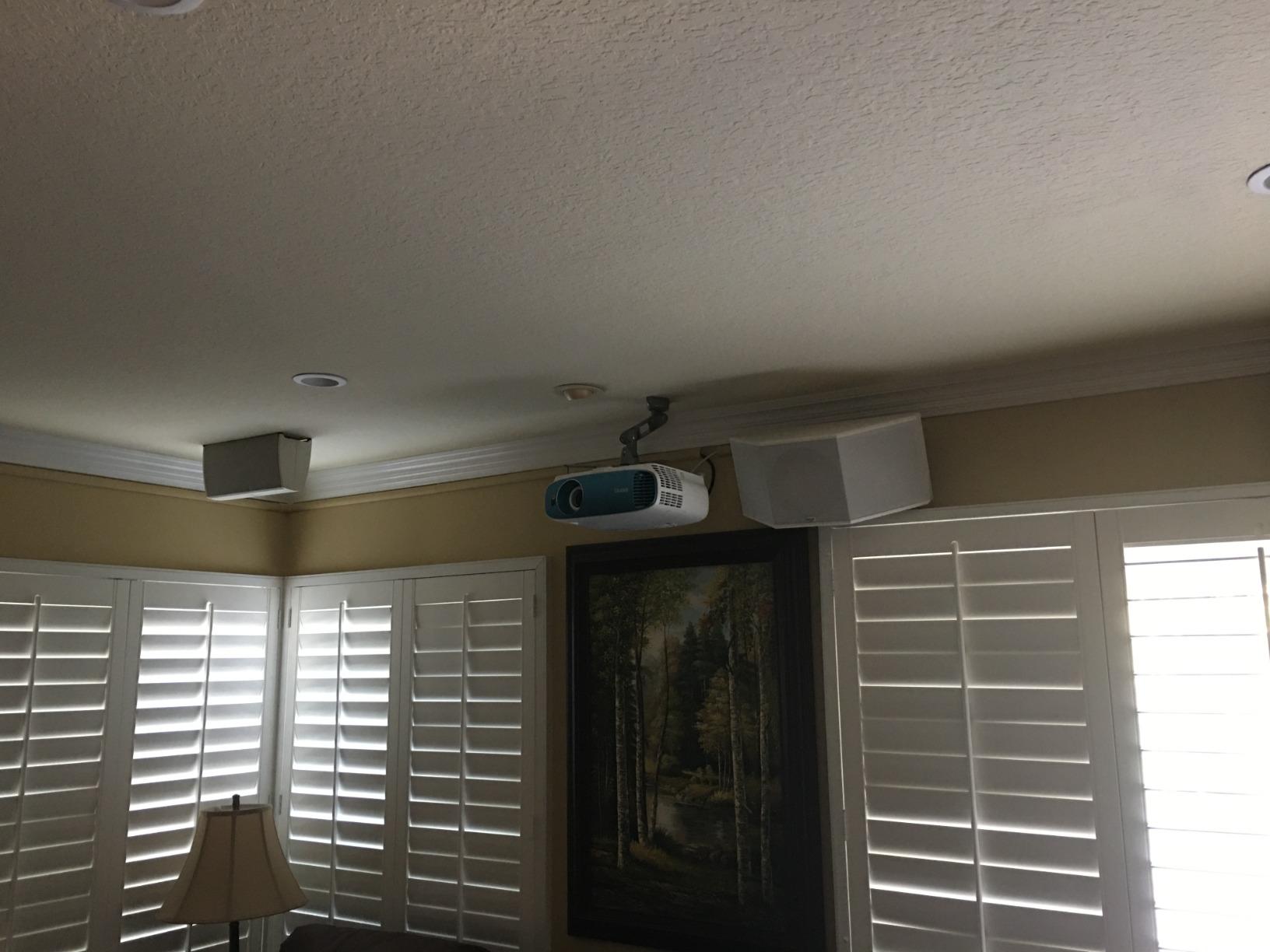
There is no lens shift and no meaningful optical zoom on this model, so you align it with keystone correction rather than by moving the lens. That is fine on a flat white wall and less fine on a fixed screen, where you have little margin for digital geometry.
Plan the throw distance before the screen goes up. With standard-throw geometry you should measure the distance from the mounting point to the screen and confirm the resulting image size against your target. If the room is tight, a short-throw model or one with lens shift will save you a lot of frustration.
What you give up
The 10,000:1 contrast ratio is the honest limit. In a dark room with a light-controlled screen, blacks will look grey next to the Epson models. The TK800M is at its best in a room where you accept some ambient light as a permanent condition rather than something to engineer away.
Single-chip DLP rainbowing is a possibility on dark scenes, and there is no integrated streaming platform, so you will be plugging in a streaming device. For a mixed-use living room that is a fair trade; for a dedicated theater it is not.
4. Epson Home Cinema 4010 for the widest color gamut in the list
Epson Home Cinema 4010 4K PRO-UHD 3-Chip 3LCD Home Theater Video Projector
- Full DCI-P3 color coverage
- Three-chip 3LCD shows no rainbowing
- Ten lens memory presets for scope screens
- Quiet airflow from the seating position
- About 24 pounds for installation
- Accepts 4K HDR only at 30Hz
- No audio output for a soundbar
- Noisy fan in the brightest picture mode
If color accuracy is your top priority, the Home Cinema 4010 covers the full DCI-P3 gamut, roughly 50 percent wider than the Rec.709 coverage typical of single-chip DLP projectors in this group. The three-chip 3LCD engine means each color gets its own LCD panel, so there is no color breakup and no rainbowing at all.
At 2400 lumens it splits the difference between a dark room and a dim one. Owners describe out-of-the-box picture quality as close to reference with little adjustment, which matters if you would rather not spend a weekend calibrating.

The 3-axis motorized precision lens with ten memory presets is the feature enthusiasts care about. It lets you set up 2.35:1 scope framing without an anamorphic lens, then recall it with a click. Very few projectors at this level offer that.
Forward-throwing airflow means the fan is effectively inaudible from a normal seating position, which is unusual for a projector with this much light output. That silence matters more in a quiet dedicated room than any spec on a paper.
The install reality
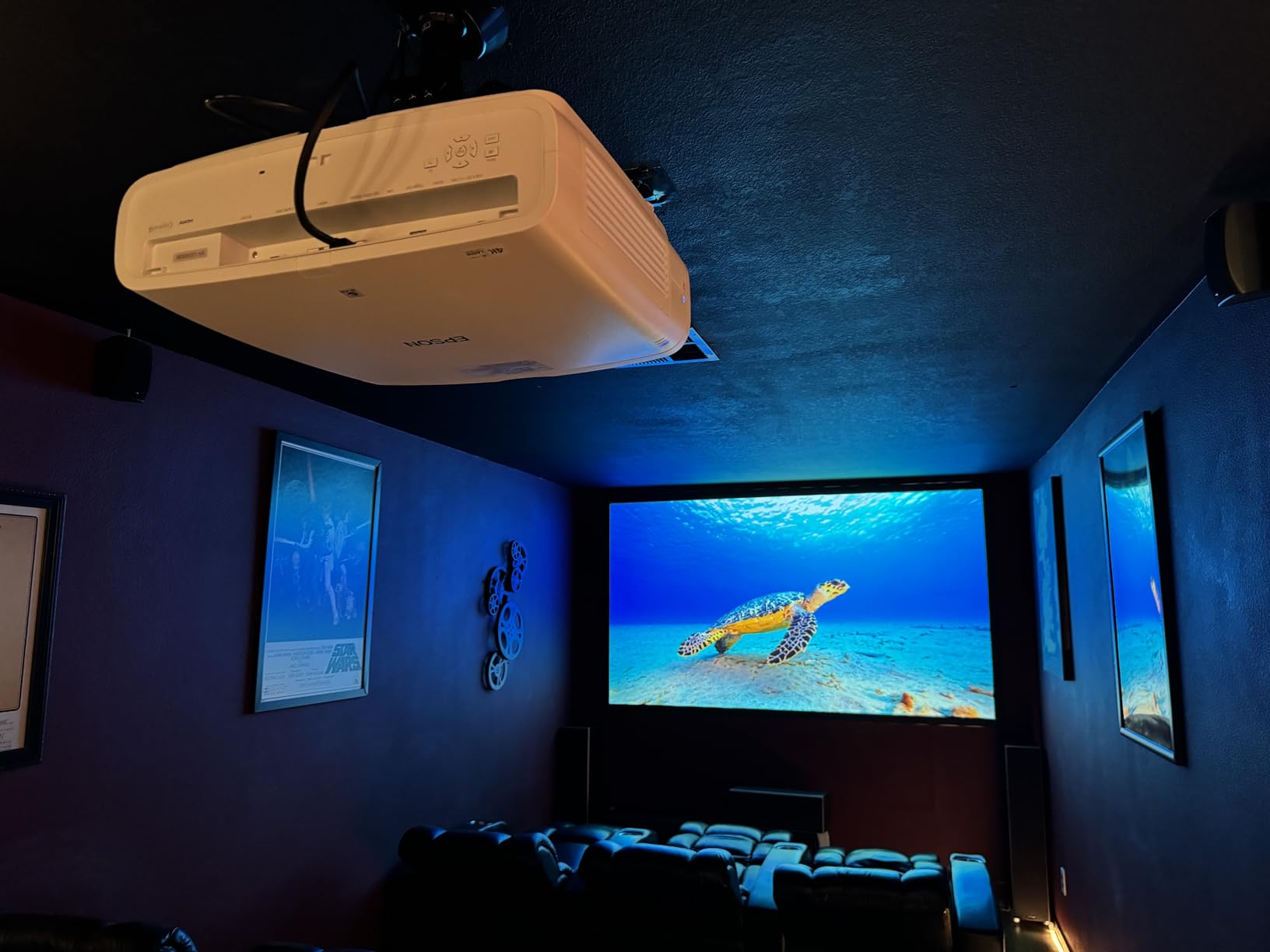
At 24.3 pounds and 20.5 inches long, this is a permanent installation. You will need a proper ceiling mount and likely a second person or a professional. Epson’s zero light-leakage lens design keeps the room dark around the image, but only if the mount is rigid.
The 30Hz-only 4K HDR input is the limitation technically minded owners raise most. It means high-frame-rate 4K sources from a console drop to a lower refresh. If you game, read the gaming section below before settling on this one.
Weak points to plan around
There is no audio output, so a streaming stick cannot feed sound directly to a soundbar. You will need an external receiver or an ARC-capable device in the chain. Several owners also note the fan becomes noticeably loud in Dynamic, the brightest picture mode.
The auto-iris dynamic adjustment can be audible from a seat close to the unit, and black level is not as smooth as on higher-end models. If your room is fully blacked out and you want the deepest blacks available, the 5050UB is the better target.
5. Epson Home Cinema LS11000 for a laser light source and 120Hz gaming
Epson Home Cinema LS11000 4K PRO-UHD Laser Projector with HDR10+
- Instant-on laser with no bulb changes
- Deep clean blacks
- 4K 120Hz over HDMI 2.1
- Motorized shift zoom and focus
- eARC audio return
- No 3D support at any firmware level
- 28 pounds needs professional mounting
- Washes out in a lit room
- Shows flaws in low-quality source material
The LS11000 is the model people who upgraded from a lamp Epson usually name first. The laser array powers on instantly, holds brightness consistently for a rated 20,000 hours, and never asks you to schedule a bulb replacement. That changes the ownership calculation more than the picture does.
Picture-wise it delivers a 3840 x 2160 shift-glass 4K image with detail that holds up on very large screens, exactly where cheaper pixel-shift machines start to show their pixels. The dynamic contrast figure above 1,200,000:1 shows up as genuinely deep, clean blacks in a dark room.
Gaming is a real strength. HDMI 2.1 with 4K 120Hz support, a 120Hz refresh rate, and frame interpolation for content below 120Hz make this one of the few projectors here that satisfies a console on bandwidth as well as latency. The ARC and eARC audio return means you can connect a soundbar directly.
HDR handling covers 10-bit HDR, HDR10+, and HLG with 16-step HDR curve adjustment, so you have real control rather than an on-off switch.
Mounting and calibration
At 28 pounds this is the heaviest unit in the list, and it wants a professional ceiling mount. In exchange you get motorized zoom, focus, and lens shift, which turn installation and 2.35:1 framing into a menu operation instead of a physical one.
Calibration is straightforward. The Epson Picture Processor handles color, contrast, and HDR in real time, and most owners report a stable, repeatable image once the geometry is set.
What to know before buying
There is no 3D support at any firmware level, so if you have a 3D library this rules the projector out entirely. That is a hard line, not a soft one.
More important for most buyers: picture quality degrades noticeably with heavy ambient light. This is a dedicated-dark-room projector. Owners upgrading from lamp models describe it as the decisive improvement in a room that is genuinely dark and a poor choice for a room that is not. It also amplifies low-quality source material more than lower-tier models will.
6. XGIMI Horizon 20 Max for triple laser brightness with built-in streaming
XGIMI HORIZON 20 Max 4K Projector Triple Laser Home Theater 5700 ISO Lumens
- 5700 ISO lumens works with lights on
- 110% BT.2020 color with deep blacks
- Flexible lens shift and optical zoom
- Google TV with licensed Netflix
- Very quiet operation
- Triple laser speckle on a 1.1 gain matte screen
- Rainbow banding visible in dark menus
- No frame interpolation in 3D mode
- No user picture profiles
The Horizon 20 Max is the only unit here that can genuinely replace a television for daytime viewing. Its X-Master RGB triple laser engine puts out 5700 ISO lumens, and owners describe it as watchable with the lights on rather than merely tolerable. For a mixed-use room where the projector is on during the day, nothing else in this list competes.
Color coverage of 110% BT.2020 with a 20,000:1 contrast ratio gives you wide color volume, not just a wide gamut on paper. Dolby Vision, HDR10+, and IMAX Enhanced are all supported, and the built-in Google TV ships with a licensed Netflix so it works as a standalone device.
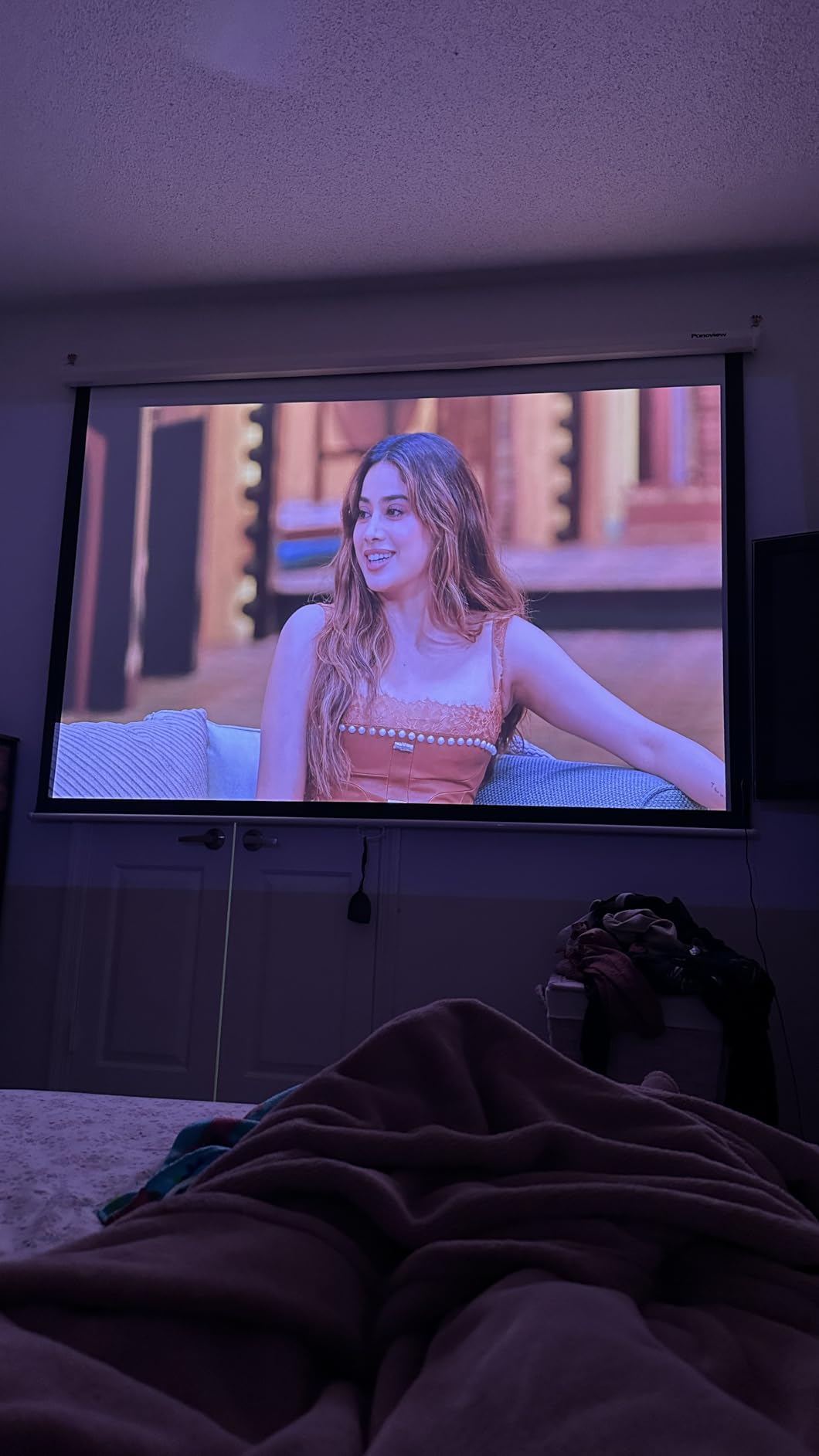
It is also the best-equipped for gaming in the group: 1ms input lag, 240Hz motion, and HDMI eARC plus a 3.5mm audio out for a soundbar. The Harman Kardon built-in speakers are unusually good for a projector, good enough for casual daytime viewing without a separate system.
Setup is where the motorized advantage shows. Flexible lens shift and optical zoom let you align a large image without moving the chassis, and the image scales up to 300 inches. Owners describe setup as close to effortless.
Screen choice matters more here
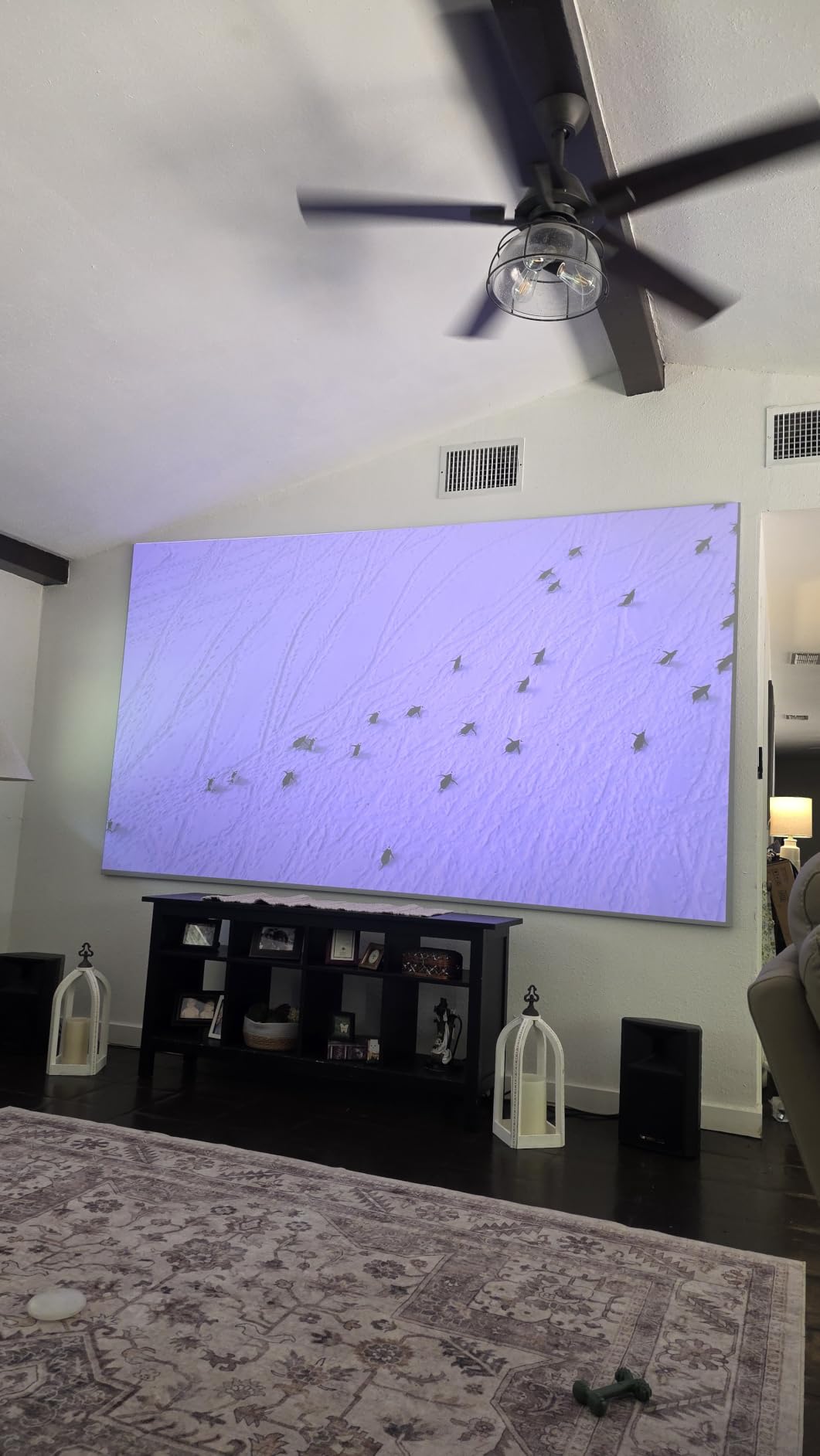
Triple-laser engines produce speckle, and on a 1.1 gain matte white screen several enthusiasts report it clearly on bright skies. If you care about that, plan the screen alongside the projector rather than after. A higher-gain surface or a screen designed for laser sources reduces it.
Also expect rainbow banding artifacts in dark user interface menus and game menus, where near-black pixels sit next to saturated color. It is a trait of the RGB laser engine, not a defect, but sensitive viewers have returned units over it.
Where it is not the answer
The 3D mode has to be enabled manually every time, and some picture settings disable the toggle entirely. There is no frame interpolation in 3D, and there are no user picture profiles, which means manual changes every time you switch between a movie and a game.
Real-world 4K SDR output is dimmer than the 5700 ISO lumen headline figure, so the number flatters the everyday case. If your room is fully dark, that surplus brightness buys you less than you would expect, and the Epson laser models will give you a more refined image.
7. Sony VPL-XW5000ES for a true native 4K SXRD panel
Sony VPL-XW5000ES 4K HDR Laser Home Theater Projector with Native 4K SXRD Panel, Black
- Genuine native 4K SXRD panel
- TRILUMINOS PRO color
- 95% DCI-P3 at 2000 lumens
- No bulb maintenance
- Low lag at 4K 60Hz and 2K 120Hz
- Highest cost in this group
- 2000 lumens demands a dark room
- 28.7 pound chassis
- One-year warranty
This is the only projector here with a true native 4K SXRD panel at 3840 x 2160, no pixel shifting involved. At a 4.7-star average across 52 ratings it also holds the highest rating in the group, with reviewers describing the image as reference-grade and the color science as natural with convincing skin tones.
The Wide Dynamic Range Optics deliver 95% DCI-P3 coverage at 2000 lumens, which is a genuinely useful combination: the gamut is wide and it is held across a usable brightness range rather than only at peak. The X1 Ultimate for projector processor and Motionflow handling cover the image pipeline.
For gaming, the figures are 21ms or less at 4K 60Hz and 13ms or less at 2K 120Hz. That is not competitive-tier latency, but it is fine for console gaming at 4K 60Hz and the 2K 120Hz mode is a real option for fast titles.
The 20,000-hour laser light source means no bulb maintenance for the life of the unit. Owners accept the weight and the cost as the price of the reference image, which is a reasonable position when the room is right.
The brightness trade nobody mentions
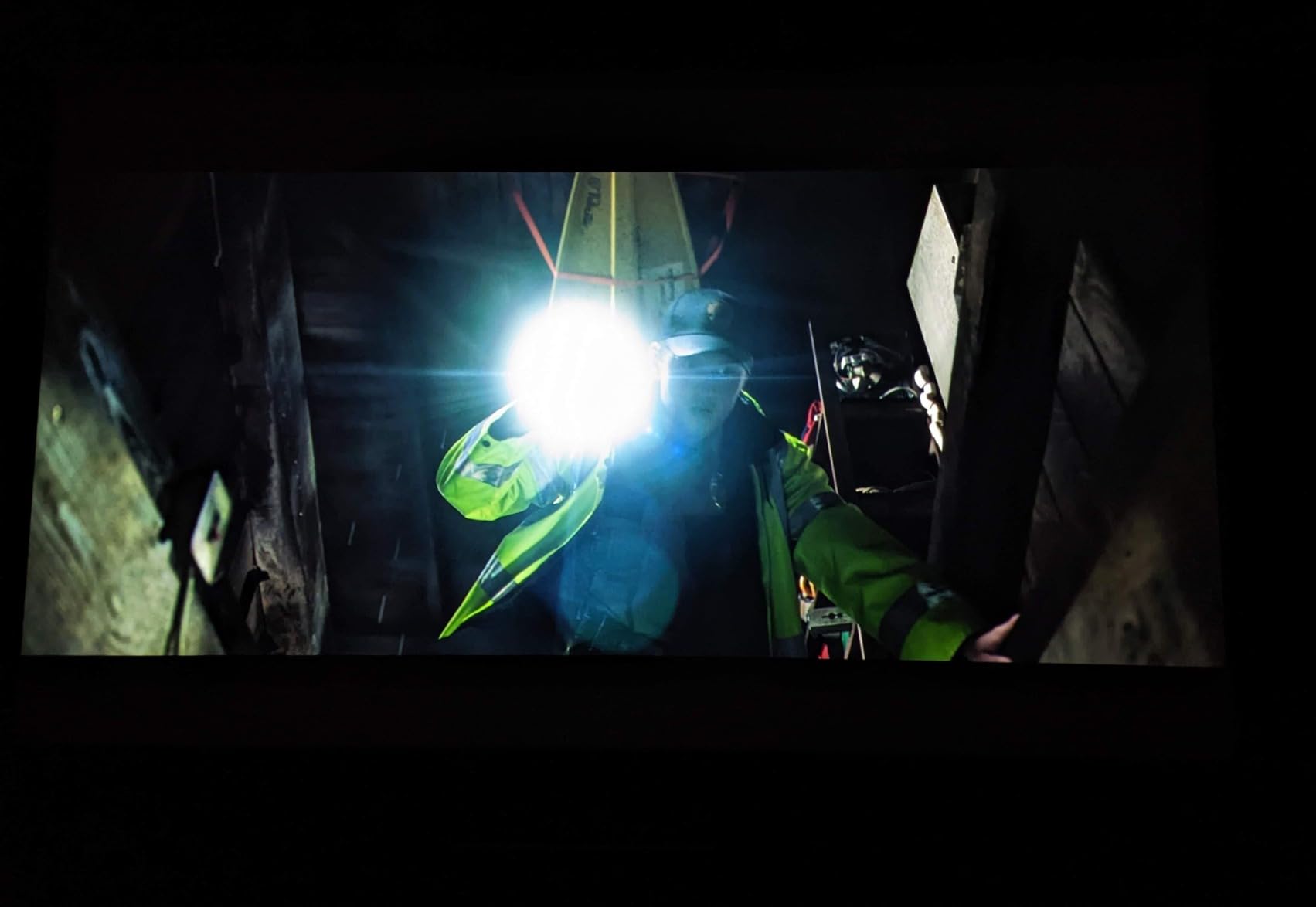
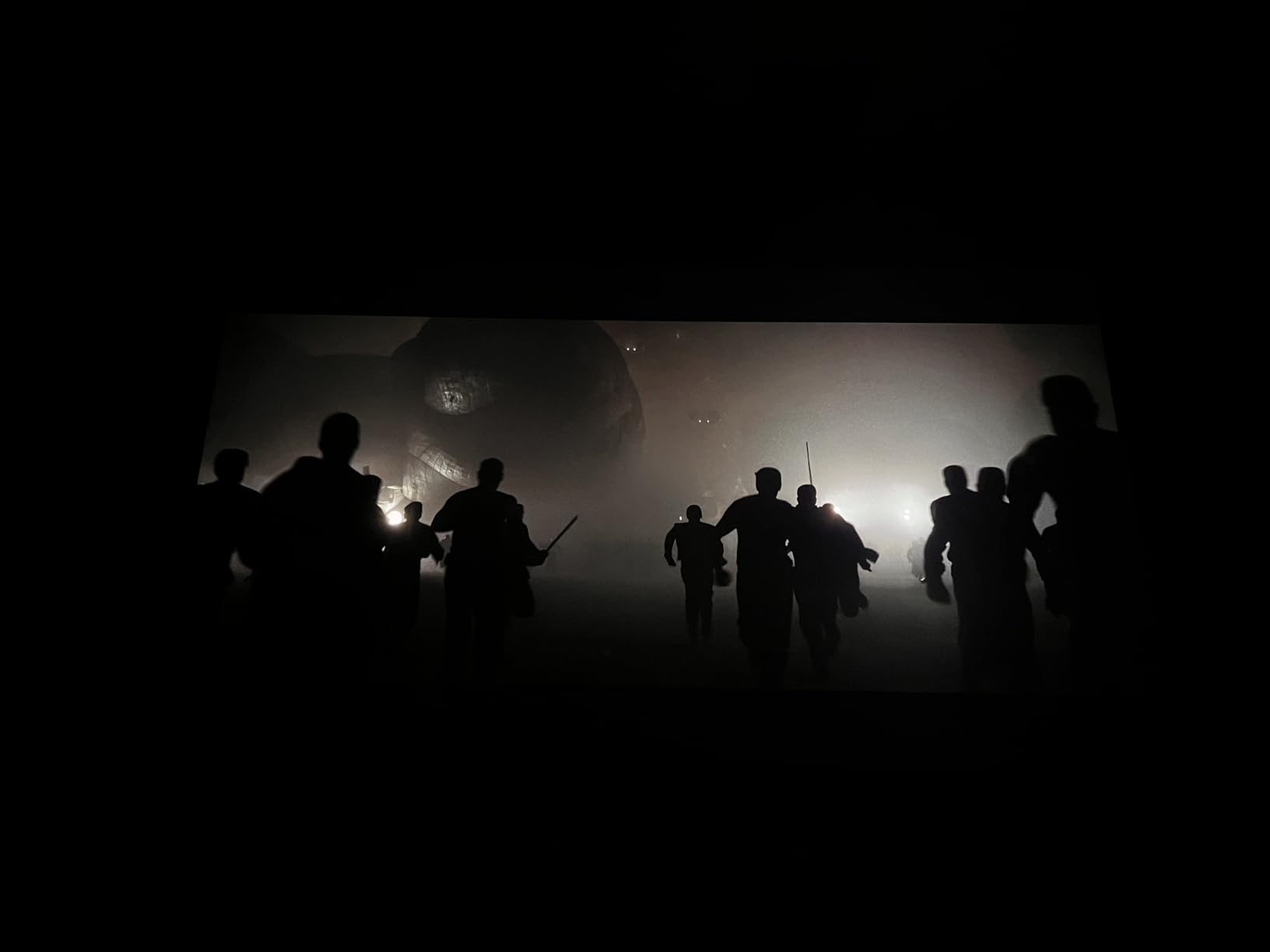
2000 lumens is the lowest brightness figure in this group, and it is the reason this projector demands a properly darkened theater. Reviewers are consistent on this point. With a window uncovered or a lamp on, you are spending most of your image quality on light that never reaches your eyes.
The 28.7-pound chassis and 26.67-inch footprint need planning, and the one-year warranty is shorter than some competitors. Both are the cost of a flagship body, and neither is fixable after purchase.
Who should skip it
Skip this if your room doubles as a daytime living space. The triple-laser XGIMI gives you far more lumens and a built-in streaming platform, and in a lit room that difference is decisive.
Also consider skipping it if gaming is a primary use, because its lag numbers trail every other projector here. For a dedicated cinema room where movies are the point, it remains the sharpest option in the guide.
8. ViewSonic LX700-4K for laser gaming, golf simulators, and quiet operation
ViewSonic LX700-4K 4K UHD Laser Gaming Projector 3500 Lumens 240Hz Xbox
- Bright 3500 ANSI lumens laser image
- No warm-up time and 20000 hour light source
- Very quiet and draws about 40 percent less power
- 4.2ms lag and 240Hz refresh
- Golf simulation mode
- Weak black level
- blacks read as dark gray
- Mono speaker has no bass
- No smart platform or Bluetooth
- High 137 percent vertical offset
The LX700-4K is built for a specific buyer: someone who games on a console or runs a golf simulator and wants a laser light source without paying flagship money. The 4.2ms input lag and 240Hz refresh rate are competitive-class, and the dedicated golf simulation mode is a detail you rarely see outside simulator-specific units.
At 3500 ANSI lumens it stays watchable in a lit room, and the laser has no warm-up time. Owners highlight the quietness, roughly half the fan noise of older lamp projectors, and the roughly 40 percent lower power draw compared with a lamp unit of similar output.
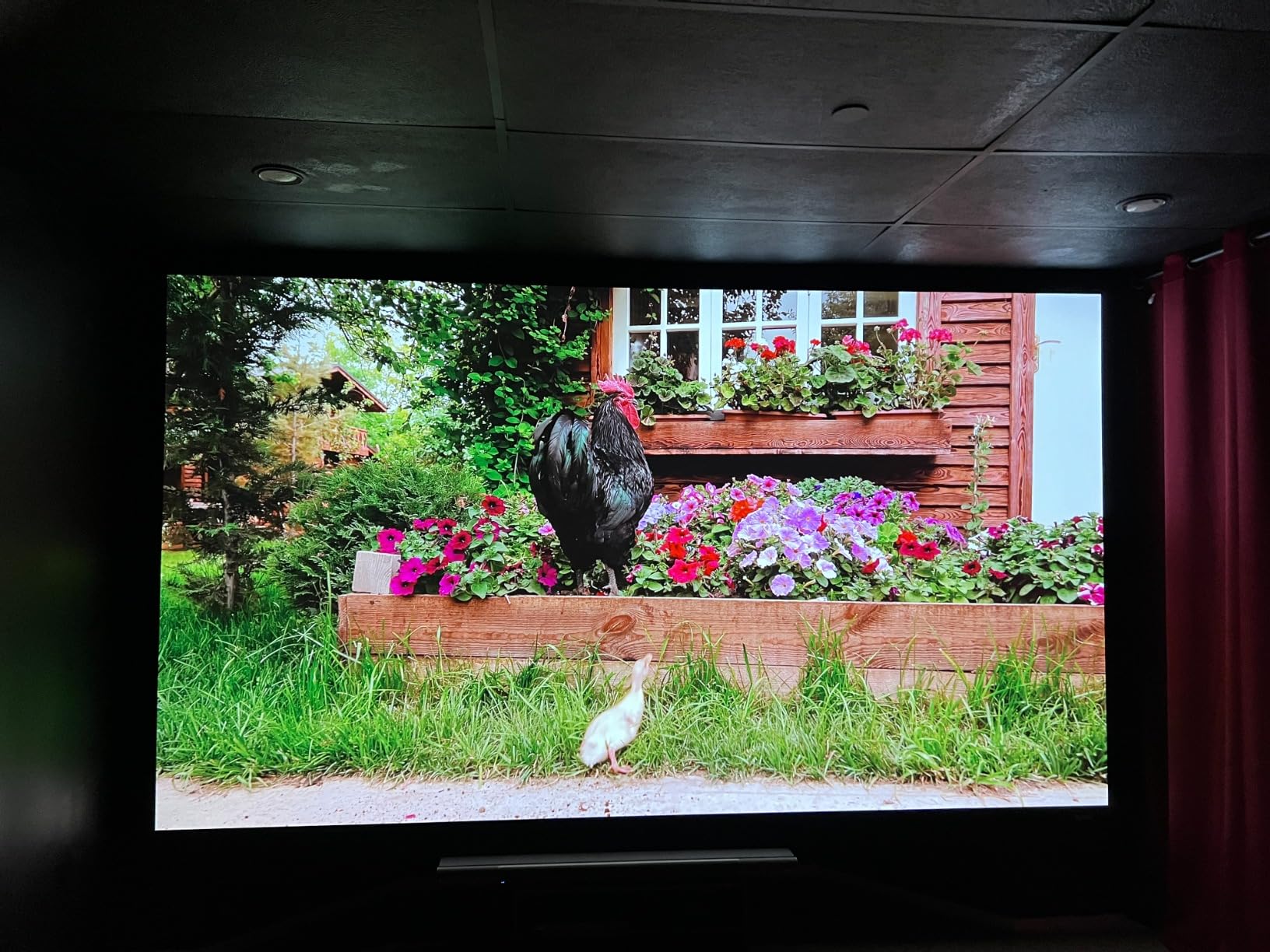
Alignment hardware is better than the price suggests: 1.3x optical zoom, vertical lens shift, and four-corner adjustment. It throws 80 to 150 inch images and supports both flat and curved screens, which matters for simulators.
The three-year limited parts and labor warranty is among the longer ones here, a real advantage on a laser unit where long-term reliability is the main question.
Plan the mount before you order
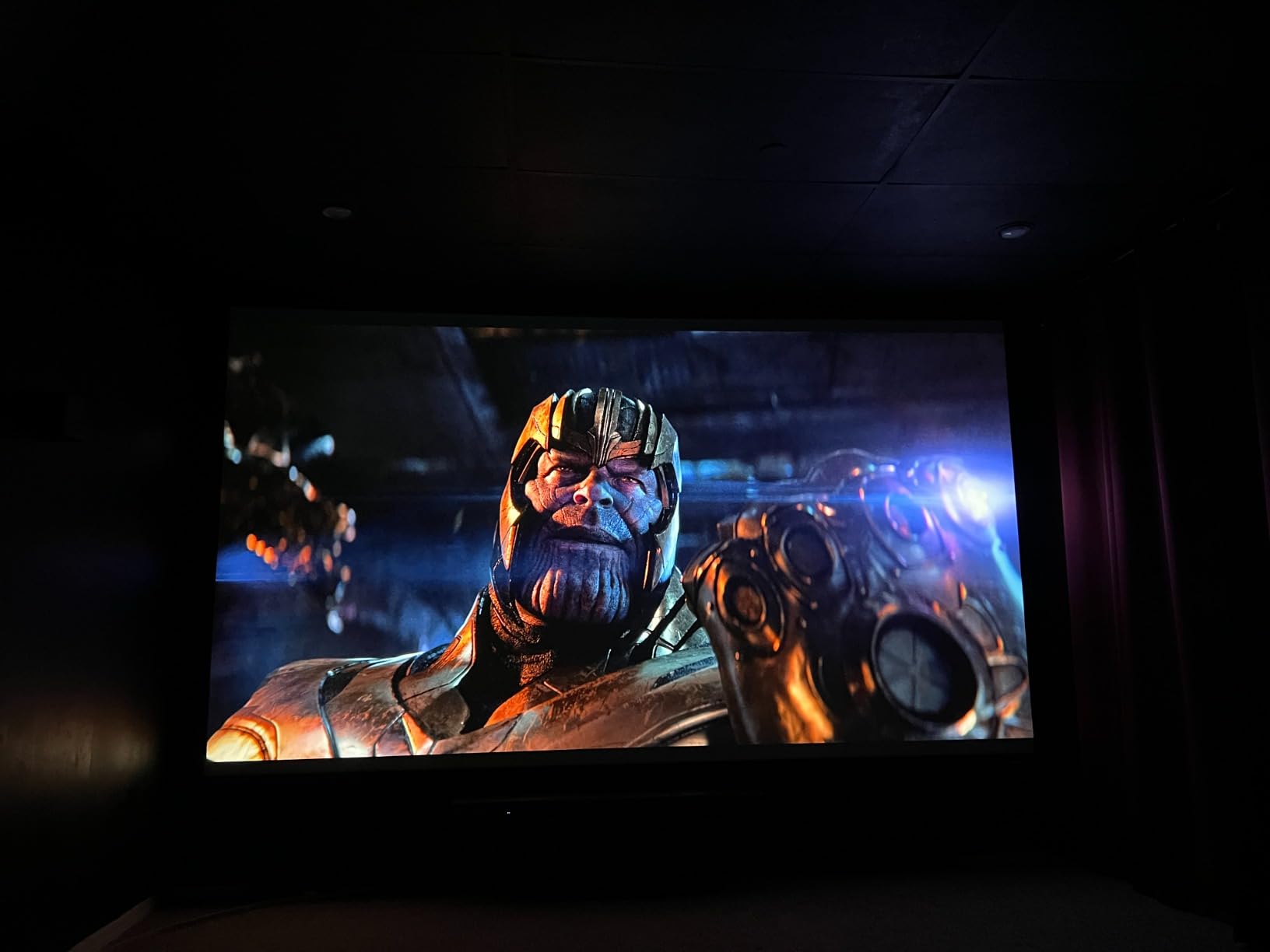
The vertical offset of 137 percent throws the image high. That means the unit can be mounted well below the screen, which sounds convenient, but it also means the physical position needs care. Several buyers report setup surprises because they did not account for the offset when choosing the mounting point.
Note also that four-corner adjustment is disabled while Ultra Fast Input is enabled. If you plan to use the low-lag mode, settle the geometry first and leave it alone.
Where it disappoints
Black level is the consensus weakness. Several buyers say the blacks look worse than cheaper 1080p projectors and read as dark gray rather than black. For a projector whose main appeal is a bright image, that is an honest limitation rather than a dealbreaker.
The built-in mono speaker has no bass and is inadequate for movies, and there is no smart platform, no apps, and no Bluetooth, so an external streaming stick is required. Some users also report reduced brightness and softness in reds over time, which is worth factoring into a long ownership horizon.
9. BenQ TK700 for one projector that does movies, sports, and gaming
BenQ TK700 4K HDR Home Entertainment Gaming & Movie Projector 4.2ms Latency
- Genuinely bright for daylight viewing
- Legible small on-screen text
- HDMI 2.0 with HDCP 2.2 for 4K HDR
- Good HDR10 and HDR Game modes
- Only 6.8 pounds
- Lamp rated 4000 hours needs replacement
- Keystone-only alignment is fiddly
- Fast mode disables keystone
- No optical zoom range
The TK700 answers the most common request in buyer discussions: one machine for movies, sports, gaming, and everyday streaming. At 3200 ANSI lumens it is viewable in daylight conditions, and the native 4K panel with HDMI 2.0 and HDCP 2.2 accepts 4K HDR signals from a PS5 or a laptop without complaint.
Picture quality is crisp enough that small on-screen text stays legible, which matters more than it sounds for menus, subtitles, and desktop use. The HDR10 and HDR Game modes give dark blacks and color that reviewers describe as vibrant rather than washed out.
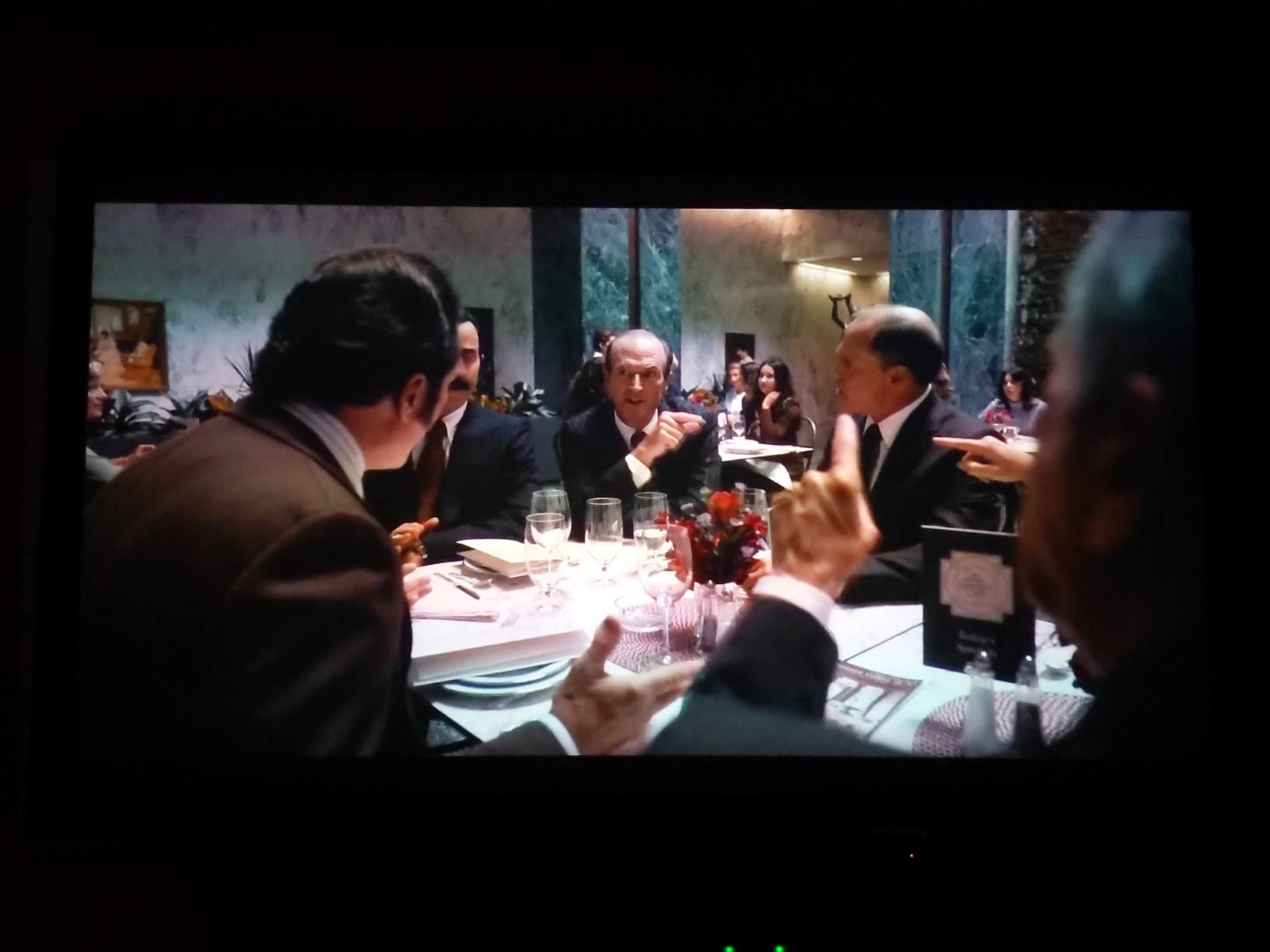
Input lag is 16ms normally and 4.2ms in the dedicated low-latency mode. The built-in 5W Dolby Atmos speaker is a minor convenience, but for a casual watch it saves an extra box. The three-year manufacturer warranty is among the better ones here.
Standard throw geometry is documented at 100 inch from 8.2 feet, which is the kind of concrete number that makes planning a room much easier.
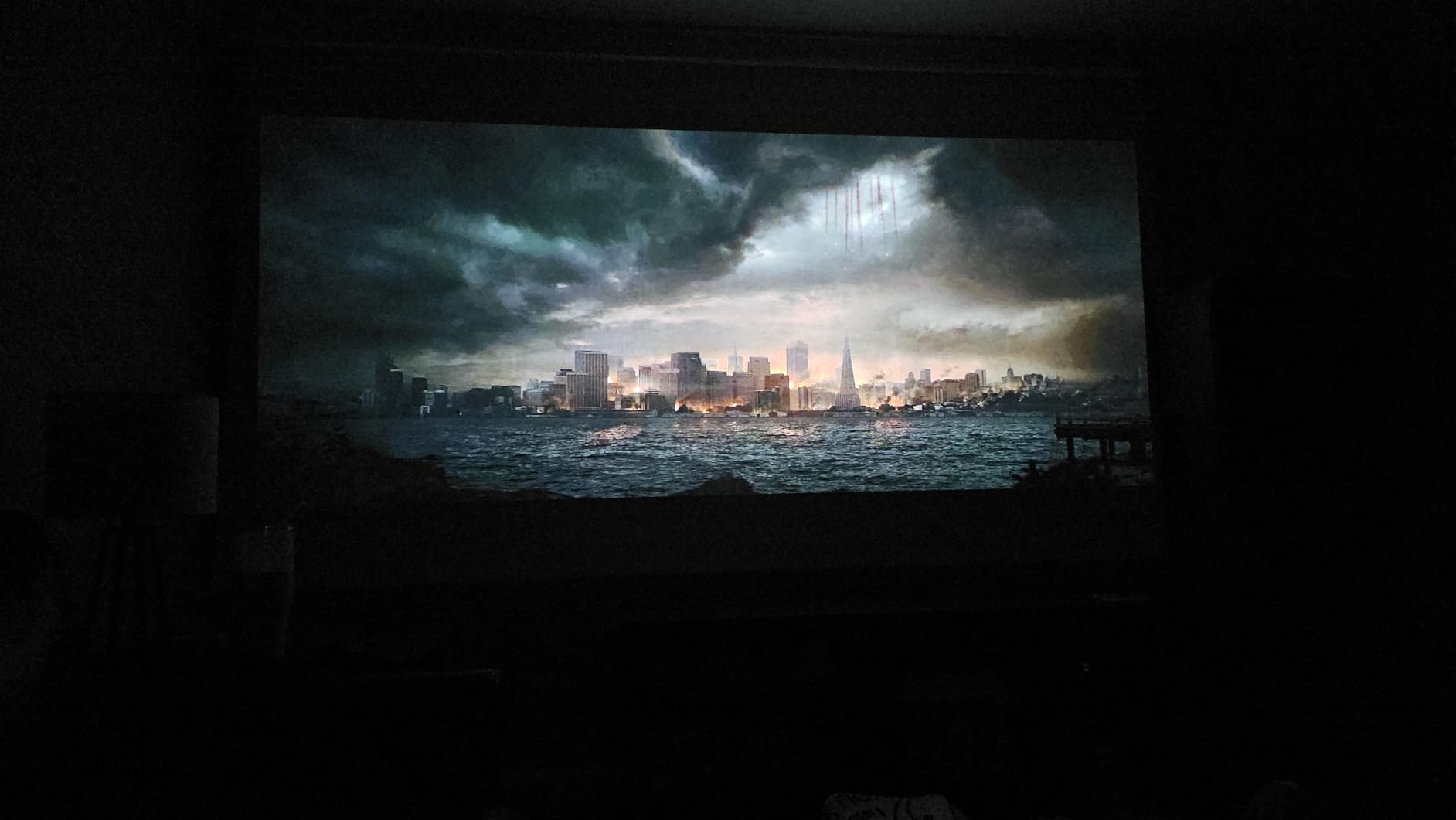
What the setup will ask of you
Alignment is keystone-only, which is the fiddliest part of ownership. There is no optical zoom, so filling a larger screen means physically moving the unit backward, and there is no lens shift to fine-tune the position. Budget an evening for getting it square.
Compounding that: the fast low-latency mode disables keystone correction. If you want both the 4.2ms lag and a perfectly square image, you have to choose one. Getting the geometry right first and using the fast mode afterward is the practical order.
Long-term reliability concerns
The lamp light source is rated 4,000 hours, the shortest in this guide, which means a replacement cycle during normal ownership. That is the running-cost reason to consider a laser model instead.
Several owners also report bulb failures or dead pixel clusters after extended use, and reviewers note plainly that it will not reach the picture quality of the most discerning dedicated cinema setups. Treat it as a capable all-rounder rather than an enthusiast machine.
10. BenQ HT5550 for a fully blacked-out theater and nothing else
BenQ HT5550 True 4K UHD Home Theater Projector with HDR-PRO | 100% DCI-P3 & 100% Rec. 709 for Best Colors | Frame Interpolation for Fluid Picture, Black
- True 4K UHD DLP resolution
- Full DCI-P3 and Rec.709 coverage
- HDR-PRO keeps shadow detail readable
- Frame interpolation for 24fps film
- Designed for dedicated theater rooms
- Lowest brightness in the group at 1800 lumens
- Lamp light source needs a bulb eventually
- Largest chassis and 3D needs an optional lens
- Modest 10000:1 native contrast
The HT5550 is the purist’s pick. It is engineered for a room that goes completely black, and it rewards that with color accuracy most competitors cannot reach: 100% DCI-P3 and 100% Rec.709 coverage on a true 4K UHD DLP panel.
HDR-PRO processing is the reason dark scenes stay readable. Combined with the Active Iris and Dynamic Black system and BenQ’s tone mapping, it preserves detail in shadows rather than crushing them to preserve contrast, which is the right trade in a dark room.
Frame interpolation smooths 24fps film content, which is why a lot of owners pair it with a 2.35:1 screen. Dual HDMI connectivity and HEVC Main 10 decoding cover modern source material properly.
Why the brightness number is the whole story
At 1800 lumens this is the least tolerant of ambient light of any projector analyzed here. That is not a flaw in a room with blackout curtains, where it produces the most cinematic result on the list. In a room with a single uncovered window, it is a bad purchase no matter how good the color is.
Before you commit, sit in the room at night with the lights in their real position. If you can make it genuinely dark, this projector rewards you. If not, move up the list to something with more lumens.
The practical catches
The lamp light source means eventual bulb replacement, and the listed 10,000:1 native contrast is modest against the laser models here. It is also the largest unit in the group, and 3D support requires an optional lens accessory rather than being built in.
With only 39 ratings the review pool is the thinnest on this page, which means less real-world guidance before you buy. The picture quality is well regarded; the long-term ownership reports are simply not there yet in number. That is a reason to buy with your eyes open rather than a reason to avoid it.
How to Choose a 4K Home Theater Projector
The first question is not which projector is best. It is how dark your room actually gets, and how much effort you are willing to put into keeping it that way. Everything else follows from that answer.
Dark room or bright room
A fully blacked-out dedicated room rewards contrast over brightness, and a projector rated at or below 2000 lumens looks better there than one rated at 5700. A living room used during the day reverses that entirely; you need volume of light more than you need black level, and no amount of black level survives an open window.
If you are unsure, count the windows you can cover and the lamps you can switch off. Our experience is that a projector used in a room it was not designed for produces a worse experience than a large television in the same room. Related reading on room setup lives in our home server guide, which covers the same blackout and cabling logic applied to a different piece of the build.
Native 4K, pixel shift, or 4K supported
Native 4K means the imaging panel physically has 3840 x 2160 pixels. Pixel shift takes a lower-resolution panel and shifts it between frames to present more addressable detail, which the Epson 3LCD models in this list do. “4K supported” usually means the HDMI input accepts a 4K signal, which says nothing about the panel underneath.
On a 100 to 120 inch screen at normal viewing distance, the Epson 5050UB and 4010 pixel-shift images are excellent. On a 150 inch screen, or if you sit close, the Sony’s native SXRD panel is visibly sharper. The laser Epson LS11000 sits in between, using a shift-glass approach that holds detail well at large sizes.
ANSI lumens versus ISO lumens
ANSI lumens are measured across nine points on the screen and are the most honest consumer figure. ISO lumens use a different method and usually produce a lower number, so a projector quoted in ISO lumens is often brighter in real use than a competing model quoted in ANSI. LED lumens and “source lumens” are marketing numbers with no consistent basis, so ignore them.
The 5700 ISO lumens figure on the XGIMI Horizon 20 Max is genuine and impressive, but it is not directly comparable to the 3200 ANSI lumens on the ViewSonic PX701-4K.
Black level and native contrast
Native contrast is the ratio between the brightest and darkest pixels the projector can produce at the same instant. Dynamic contrast, the number most manufacturers print largest, is measured by modulating a lamp or iris over time and is largely meaningless for judging image quality. Treat any figure above 100,000:1 with suspicion unless it is explicitly labelled dynamic.
Three-chip 3LCD engines and SXRD and D-ILA panels generally produce deeper blacks than single-chip DLP. If your room is dark, that difference is more visible than any resolution upgrade. Our approach on display hardware is similar to how we handle 4K monitors: measure the spec that affects the actual viewing experience rather than the one that prints largest.
Throw ratio, screen size, and lens shift
Throw ratio is the width of the image divided by the distance from lens to screen. A 1.4 ratio means a 10 foot wide image at 14 feet. Ultra short throw models project 100 inch or more from a few feet away, but they need a dedicated ALR or CLR screen to perform at all.
Lens shift moves the image without distorting it, and optical zoom changes size with no digital processing. Keystone correction does both by squeezing pixels, and that softness is the cost people regret most. Whenever a projector offers lens shift, use it rather than keystone.
Gaming and input lag
For competitive shooters, under 16ms is the class you want and only a few projectors here reach it outside a special mode. Console gaming is comfortable under 40ms, and casual cinema viewing tolerates anything above 60ms. The ViewSonic PX701-4K and LX700-4K hit 4.2ms, the XGIMI claims 1ms, the Epson LS11000 runs 4K at 120Hz over HDMI 2.1, and the Sony manages 21ms at 4K 60Hz.
Watch for the bandwidth trap. A projector that accepts 4K at 60Hz may only accept 4K at 30Hz in HDR mode, as the Epson 4010 does. That silently caps your console’s output.
Laser versus lamp running cost
Lamps are cheap to buy and cheap to power, and they lose brightness gradually before failing. Lasers cost more up front, draw more power in some cases, and hold output flat for a rated 20,000 hours with no consumable. The Epson 5050UB, 4010, and BenQ TK800M and TK700 all use lamps; everything else in this list is laser or LED.
For a dedicated theater you will use most nights, a laser removes the maintenance variable entirely. For occasional use in a bright room where brightness matters more than black level, a bright lamp model is a defensible choice.
Who this is not for
A projector is the wrong purchase for a bright living room used mainly for daytime television, for a very small room where a 65 inch television is the sensible size, and for anyone who wants zero setup effort. If you are renting, a permanently mounted unit is not an option and a UST or short-throw model that needs no ceiling work is the compromise. Our guide to 4K camera equipment covers the same 4K-versus-resolution marketing question from the other side of the lens.
Throw Distance, Screen Size and Room Prep
Nobody in the editorial results for this query publishes throw-distance math, so here is the short version you can measure yourself. Measure the distance from where the lens will sit to the screen. Multiply by the projector’s throw ratio to get the image width, then divide by 16 and multiply by 9 for the height, and by 100 for the diagonal in inches.
As a rough guide, standard throw models need roughly 10 to 13 feet of lens-to-screen distance for a 100 inch image. Short throw models compress that into roughly 6 to 8 feet. Ultra short throw models project from under 2 feet but only work properly against a proper ALR or CLR screen. If you have a shallow room, the short and ultra short throw picks at the top of this list are your starting point.
A 120 inch 16:9 image is about 9 feet wide and 5.2 feet tall. That is the real constraint most buyers underestimate: you need a screen wall at least 9 feet wide, plus room for the projector, plus a walkable path. A 150 inch image needs a 10.8 foot wide wall.
Room prep is where budget overruns hide. Beyond the projector you need a screen, a ceiling mount or a solid shelf, cable runs for HDMI and power, and a soundbar or receiver if the projector has no usable onboard audio. Blackout curtains or panels on every window and a matte dark surface for the surrounding walls make a larger difference to perceived contrast than any projector upgrade in this guide.
Finally, treat the audio plan as part of the install. The Epson 4010 has no audio output at all, several of the bright DLP models ship with a single mono speaker, and the premium models assume you own a soundbar or receiver. Decide the audio chain before the mount goes in, because the cable path is much harder to change afterward.
Frequently Asked Questions
What are the best projectors for a home theater?
For a dedicated room that goes dark, the Epson Home Cinema 5050UB is the strongest all-round choice, with deep blacks, 2600 lumens, and a motorized lens with memory. The Sony VPL-XW5000ES is the sharpest option if you need a true native 4K panel and the room can be blacked out completely.
Which type of projector is best for home theater?
A DLP-based laser projector with a wide color gamut is the standard recommendation for a dedicated theater. Three-chip 3LCD models are the best choice if you want the deepest blacks with no color breakup, and single-chip DLP is the right pick when brightness and gaming latency matter more than contrast.
What is the best portable 4K projector for home theater?
There is not a good one, and that is worth saying plainly. Portable 4K units usually mean 4K input on a non-native panel, lower brightness, weaker contrast, and fan noise. If you move projectors often, the ViewSonic PX701-4K at 6.2 pounds is the most practical option, but a fixed laser unit gives a far better theater image.
What kind of projectors do theaters use?
Commercial cinemas use professional DLP digital cinema projectors with laser or Xenon light sources and a native 2.39:1 aspect ratio. Their brightness and contrast run one to two orders of magnitude above consumer units, which is why consumer spec sheets will always look modest next to a cinema installation.
Do I need a native 4K projector or is 4K support enough?
On a 100 to 120 inch screen, a quality pixel-shift projector is hard to tell apart from native 4K at normal seating distance. Native 4K pays off on screens above 130 inches, at short throw distances, or if you sit close. 4K support alone, meaning the input accepts a 4K signal, tells you nothing about the panel.
How bright should my home theater projector be?
A fully blacked-out room needs 1800 to 2600 lumens, and more brightness there does not improve the image. A dimly lit media room needs roughly 3000 to 4000 lumens. A typical lit living room needs 4000 lumens or more, or an ultra short throw model on an ALR screen.
Is laser or lamp better for a home theater projector?
Laser is better for a dedicated theater. It holds brightness flat for a rated 20,000 hours, starts instantly, and removes bulb replacement entirely. Lamp projectors cost less up front and are perfectly adequate in a bright room where you are not chasing black level, but they lose output gradually before failing.
Do projectors need a special screen?
A standard matte white screen works with standard throw projectors in a dark room. Ultra short throw models require a proper ALR or CLR screen and will underperform badly on a white wall or a standard matte screen, so pair them from the start rather than upgrading later.
What input lag is good for a gaming projector?
Under 16ms is the competitive class and is what fast console titles need. Under 40ms is comfortable for general console gaming, and anything above 60ms suits casual and cinema viewing. Check whether 4K is accepted at 60Hz or 120Hz, because some projectors drop to 30Hz in HDR mode.
Final Verdict
For most people building a home theater in 2026, the Epson Home Cinema 5050UB is the projector to buy. Deep blacks, a three-chip 3LCD engine with no rainbowing, motorized lens memory, and out-of-the-box color that needs no calibration cover the priorities that actually matter at night.
Move up to the Sony VPL-XW5000ES if you want a true native 4K panel and have a room that goes properly black. Move sideways to the XGIMI Horizon 20 Max if the room has to work with the lights on. Start with the ViewSonic PX701-4K if you want one machine for everything at the lowest sensible entry point, and end with the BenQ HT5550 if your theater is fully blackout-curtained and color accuracy is the goal.
Measure your room before you buy anything, and check the black level in person if you can. Those two steps eliminate more bad purchases than any spec sheet.