
The LG 55-inch OLED evo C4 is the best OLED TV under 1,500 for most people. It pairs a 144Hz panel with 0.1ms response time and four HDMI 2.1 ports, and because it is a prior-generation set, it lands inside this budget while the newest models are still landing themselves above it.
There is a fair objection to that answer, and it comes up constantly in buying threads: at 1,500 you can buy a much larger Mini-LED or premium LED set, and a bigger screen is usually a bigger deal than a better panel. That is true. If your room is bright, if you sit far back, or if you want the largest possible picture for the money, a larger non-OLED set is the smarter purchase and we say so in the buying guide below.
What OLED still wins at this budget is contrast. Self-emissive pixels switch off completely, so you get true black and no grey haze in a dark scene, plus the colour accuracy and near-instant response that make films and fast sport look right rather than merely bright. Under 1,500 those qualities used to be flagship-only. Two generations ago they were not.
We spent weeks comparing the seven sets below on specifications, owner feedback and value at this specific ceiling. Nothing in this guide is based on AI picture features, and we do not think you should pay extra for them on any of these sets.
Table of Contents
Top 3 OLED Picks Under $1500 (October 2026)

LG C4 55-inch OLED evo
- 144Hz refresh rate
- 0.1ms response time
- Four HDMI 2.1 ports
- Dolby Vision and Filmmaker Mode

LG C5 42-inch OLED evo
- Up to 144Hz
- Four HDMI 2.1 ports
- Alpha 9 Gen8 upscaling
- Compact 22.3 pound body

Samsung S90F 65-inch OLED
- 65-inch quantum-dot OLED
- 144Hz with VRR
- Four HDMI 2.1 ports
- 40-watt 2.1-channel audio
Every OLED Pick at a Glance Under $1500 in 2026
| Product | Specifications | Action |
|---|---|---|
| LG C4 55-inch OLED evo |
|
Check Latest Price |
| LG C5 42-inch OLED evo |
|
Check Latest Price |
| Samsung S90F 65-inch OLED |
|
Check Latest Price |
 Sony A90K 48-inch BRAVIA XR Sony A90K 48-inch BRAVIA XR |
|
Check Latest Price |
 Samsung S85F 55-inch OLED Samsung S85F 55-inch OLED |
|
Check Latest Price |
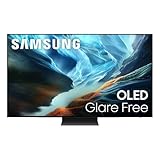 Samsung S90H 55-inch OLED Samsung S90H 55-inch OLED |
|
Check Latest Price |
 LG C6 55-inch OLED evo LG C6 55-inch OLED evo |
|
Check Latest Price |
1. LG C4 55-inch – best OLED TV under 1,500 overall, and the pick for most buyers.
2. LG C5 42-inch – best value when you want a compact OLED for a bedroom or desk.
3. Samsung S90F 65-inch – the biggest screen in this lineup, and the brightest OLED of the group.
4. Sony A90K 48-inch – best for PlayStation 5 owners who care about input lag and tone mapping.
5. Samsung S85F 55-inch – a straightforward 55-inch OLED for streaming and everyday use.
6. Samsung S90H 55-inch – best for a bright room, thanks to its matte anti-reflection coating.
7. LG C6 55-inch – the newest LG panel here, and the one with the least settled owner feedback.
1. LG C4 55-Inch OLED evo – The Best OLED TV Under 1,500 Overall
- True black and deep contrast from self-lit pixels
- 144Hz with 0.1ms response time
- Four HDMI 2.1 ports with G-Sync and FreeSync Premium
- Strong 4K upscaling on older sources
- Filmmaker Mode and Dolby Vision included
- webOS menus are slow to navigate
- Peak brightness trails brighter Mini-LED sets
- Panel compensation routines interrupt static content
Our top pick is the set we keep coming back to. The C4 runs a 144Hz panel with 0.1ms response time, and all four HDMI ports are HDMI 2.1, which means a console or a PC gets full 4K high-refresh gaming with variable refresh rate on any port rather than on one lucky port. Owners rate the gaming feature set as one of the reasons the set stands out, alongside NVIDIA G-Sync and AMD FreeSync Premium support.
On picture, the over 8 million self-lit pixels deliver the inky blacks and accurate colour that define the format, and a listed 1,000,000:1 contrast ratio. Dolby Vision, Dolby Atmos and Filmmaker Mode are all present, so you are not choosing between the panel and the formats.
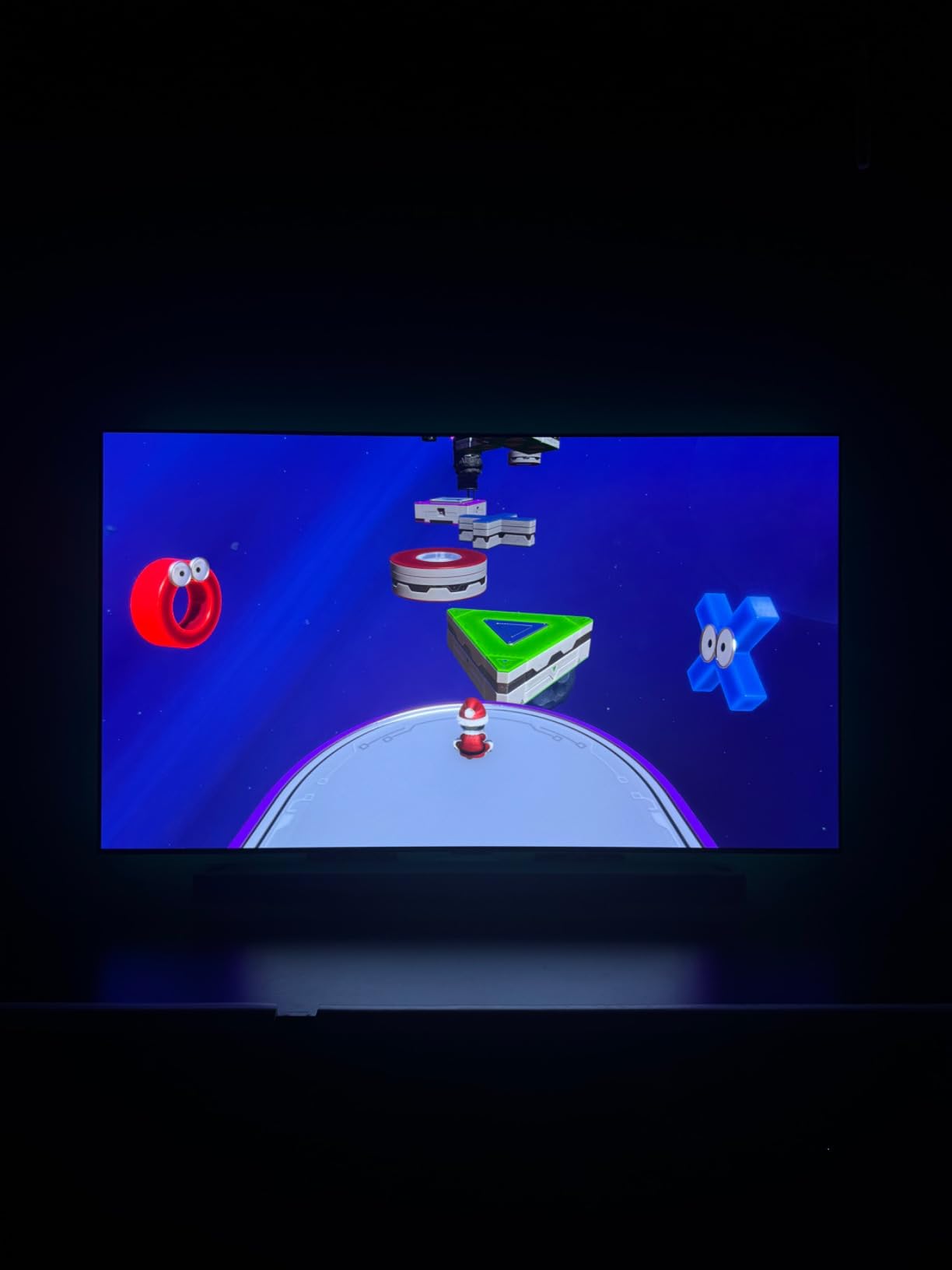
The awkward part of this set is the software, not the screen. webOS menu response is the single most repeated complaint in owner feedback, and the Magic Remote’s pointer behaviour is genuinely polarising. Picture settings are also not fully exposed in every mode, which makes first-time setup more work than it should be.
Second, brightness. OLED is still dimmer than a bright Mini-LED in a sunlit room, and reviewers on this set note the same thing. The trade is real: you get perfect black and you give up some headroom for daylight.
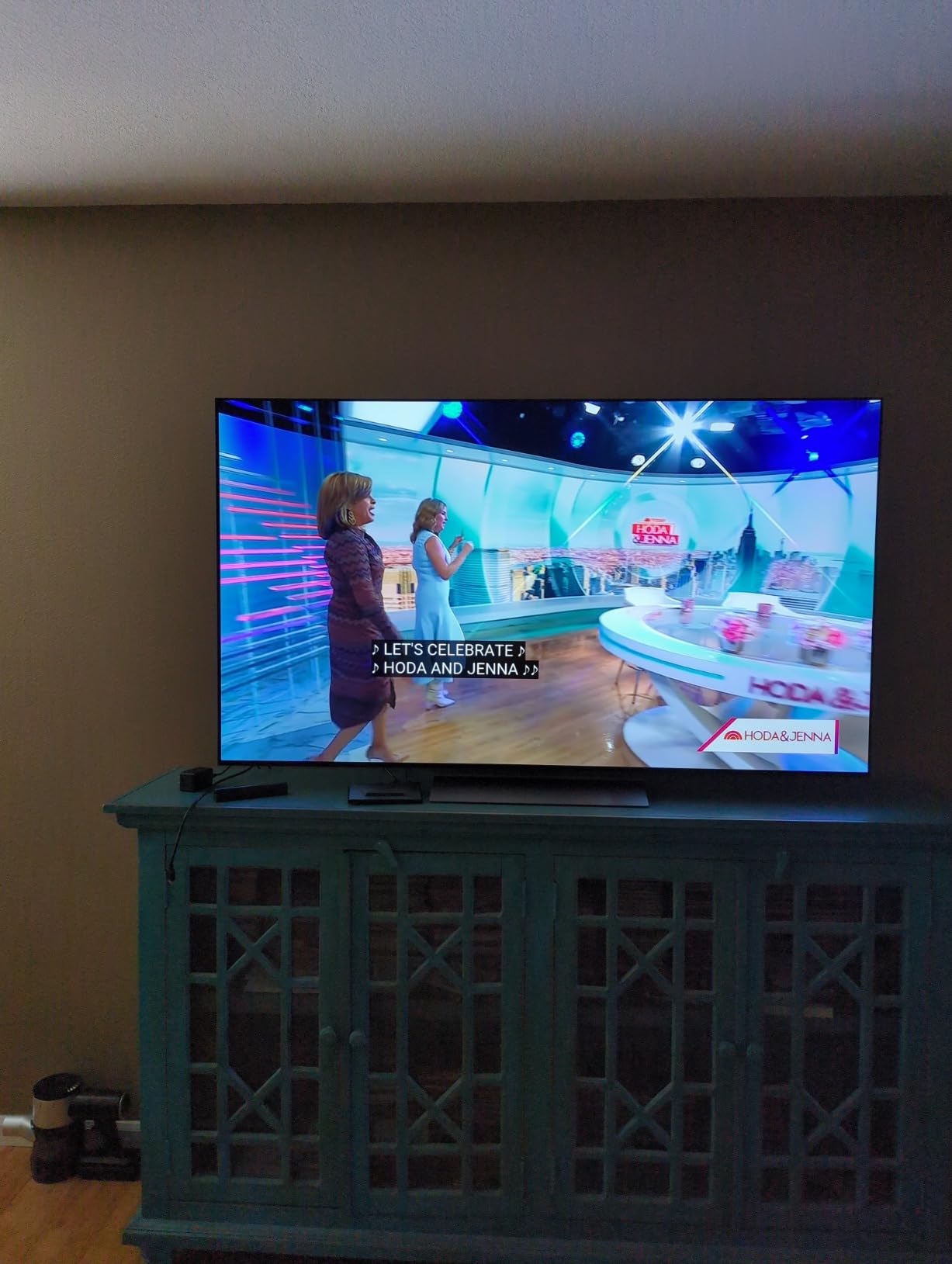
What you get for the money
Four HDMI 2.1 ports, three USB ports, a 2.2-channel 40-watt speaker system and a one-year parts and labour warranty. The tuner is ATSC 1.0 with QAM for cable, so there is no ATSC 3.0 next-generation broadcast tuner here.
Who should look past it
Skip it if the TV lives in a bright room with curtains open, or if you plan to run it as a monitor with static desktop content for long sessions. Panel self-dimming kicks in on static imagery, and the pixel-cleaning routine can prompt on power-up.
2. LG C5 42-Inch OLED evo – Best Value OLED Under 1,500 for Smaller Rooms
- Alpha 9 Gen8 processor sharpens older content
- Deep blacks from 8.3 million self-lit pixels
- Four HDMI 2.1 ports with VRR
- Compact 42-inch footprint suits a desk
- Personalised Picture and Sound Wizard
- webOS navigation is reported as slow
- Magic Remote pointer frustrates some users
- Panel compensation interrupts viewing
- Basic built-in speakers
The C5 at 42 inches is the value pick in this lineup, and it is a different proposition from a 55-inch set rather than a compromise version of one. At 22.3 pounds it is light enough for a desk or a bedroom wall, and the 16:9 panel is small enough that 144Hz gaming is genuinely practical rather than a spec-sheet line.
The Alpha 9 AI Processor Gen8 with AI Super Upscaling is the part owners single out most. Cable and older streaming sources benefit from it in a way that reviewers say compares favourably with competing sets at this tier, and the Personalised Picture and Sound Wizard walks you through calibration by sampling your own content.
Everything else is the LG playbook. Four HDMI 2.1 ports, G-Sync, FreeSync Premium, Dolby Vision, Dolby Atmos and Filmmaker Mode, all included. A small but real share of one-star reviews cite setup friction and app updates that block launch until completed, so budget an extra ten minutes on day one.
Do not mistake this for a bedroom dumbed-down special. Owners upgrading from much larger sets describe the picture as superb for a compact OLED, and the same deep black level and colour accuracy carry over from the bigger panels.
Viewing distance and placement
At 42 inches you can sit closer than with a 55-inch set and still avoid eye strain during long film sessions. That makes it the pick for a bedroom, a home office monitor or a secondary room where a 55-inch panel would dominate.
Where the compromises live
Two-channel audio at 22.3 pounds of glass is thin, and a small share of owners report the panel dimming with static desktop content. The tuner is again ATSC 1.0 rather than ATSC 3.0.
3. Samsung S90F 65-Inch OLED – Best Large Screen Under 1,500
- Quantum-dot OLED runs brighter than typical OLED panels
- NQ4 AI Gen3 processor with 128 neural networks
- 144Hz VRR gaming is smooth and tear-free
- Built-in 2.1-channel audio is fuller than most flat panels
- Handles bright rooms and dark rooms alike
- Glossy panel shows obvious reflections
- Samsung control app is slow and glitchy
- Settings menus are buried in deep sub-menus
- No Dolby Vision
If screen size is your priority under 1,500, this is the set. A 65-inch quantum-dot OLED running at 144Hz with full VRR changes what the budget buys, because size and gaming performance normally compete at this tier. It is a 49.6-pound panel measuring 56.9 inches wide, so plan the furniture before you plan the mount.
Picture quality is the reason many owners call it the best TV they have owned. The blacks match LG’s WOLED sets, and the quantum-dot layer lets the panel run noticeably brighter for an OLED, which is exactly what you want if the room is not fully darkened. Four HDMI 2.1 ports and Motion Xcelerator 144Hz handle console and PC gaming.

The reason it is not our top pick is the ecosystem, not the panel. Samsung does not offer Dolby Vision on this set, so you are buying into HDR10+ and HLG instead, and the Tizen software draws the most complaints: a control app that owners report as slow and glitchy, and picture settings buried several sub-menus deep.
The glossy screen finish is the other one. Dark scenes in a lit room pick up obvious reflections, which is the opposite trade to the matte set later in this list. The rechargeable Solar Remote is a nice idea executed imperfectly, since the solar cell sits on the underside and charges poorly.
Gaming specifics
144Hz with VRR, four HDMI 2.1 ports and 2.1-channel 40-watt audio make this the most complete gaming package in the group. Owners of fast PC shooters rate the VRR performance as smooth and tear-free.
Who should skip it
Skip it if Dolby Vision is a requirement, if you have a bright room and dislike reflections on dark content, or if you want a tuner with next-generation ATSC 3.0 support. The listed tuner is ATSC only.
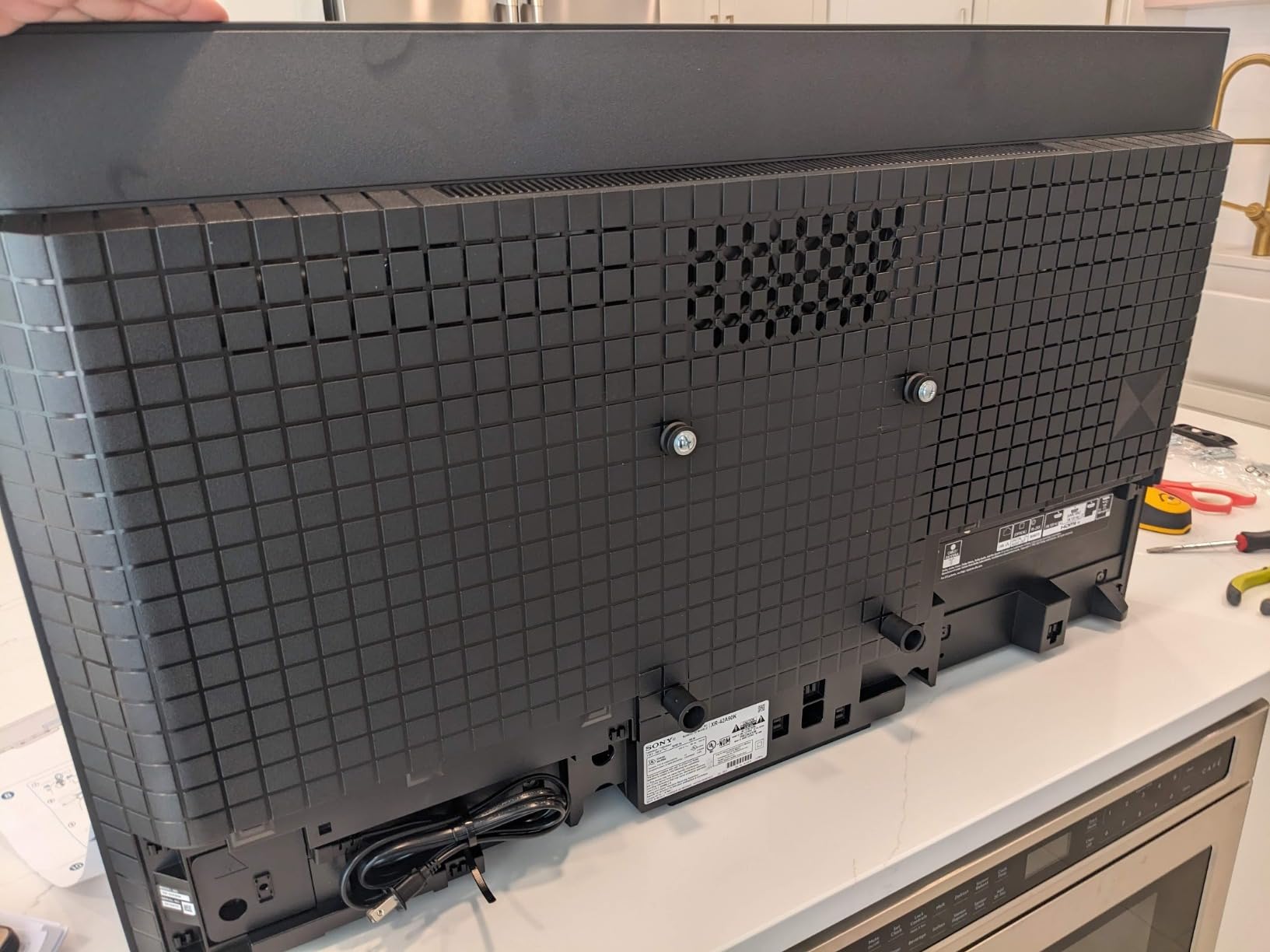
4. Sony A90K 48-Inch BRAVIA XR – Best OLED for PlayStation Owners
Sony 48 Inch A90K BRAVIA XR 4K HDR TV OLED Smart Google TV (XR-48A90K)
- Cognitive Processor XR and XR OLED Contrast Pro
- 8.5ms input lag with PS5 auto tone mapping
- Only OLED here with an ATSC 3.0 tuner
- Acoustic Surface Audio+ adds real bass
- Viewing angles up to 178 degrees
- 120Hz is the lowest refresh rate in this group
- 25-watt audio is modest for a 48-inch set
- Google TV performance is rated average
- Older processing generation versus newer rivals
The A90K carries the highest average rating of any set in this lineup, and the reason is Sony’s processing. The Cognitive Processor XR with XR OLED Contrast Pro and XR Triluminos Pro handles motion and colour in a way that owners consistently describe as best-in-class, and contrast on dark film scenes is exceptional.
It is also the only set here with an ATSC 3.0 tuner, which matters if you cut the cord and want next-generation broadcast formats. Four HDMI 2.1 ports support 4K at 120, VRR and ALLM, and viewing angles are rated at 178 degrees, so off-axis watching is not a problem.
For PlayStation 5 owners this is the clear choice. Input lag measures as low as 8.5ms, with Auto HDR Tone Mapping and Auto Genre Picture Switch, and BRAVIA CORE includes 4K UHD movie credits. The Acoustic Surface Audio+ system uses dual actuators with a built-in subwoofer, which sounds far better than the wattage suggests.
There is one structural limitation worth naming: this is a 48-inch set on a 120Hz panel. That refresh rate is below every other pick in this roundup, and the 25-watt speaker system is small next to the 40-watt systems elsewhere in the list.
What the older platform costs you
The processor generation is older than the newer sets here, so the latest AI-assisted processing features are simply absent. Reviewers note this as the general trade for a set that is well below the price of its successors.
Reliability and support
Sony is a one-year manufacturer warranty on this set, and it comes with fewer size options than competitors at this tier. Buyers in forum threads cite Sony both as a trusted brand and as the source of a real long-term failure, so the warranty terms matter more here than usual.
5. Samsung S85F 55-Inch OLED – Best 55-Inch OLED for Streaming Value
- Vibrant colour and deep blacks for the money
- 120Hz handles high-FPS PC gaming cleanly
- NQ4 AI Gen2 upscaling sharpens older sources
- Strong value against larger OLED sets
- Bluetooth headphone pairing works well
- Tizen menus are slow and non-intuitive
- Switching inputs opens a full-screen marketing menu
- No custom picture profiles or scene presets
- Several AI features disabled in Game Mode
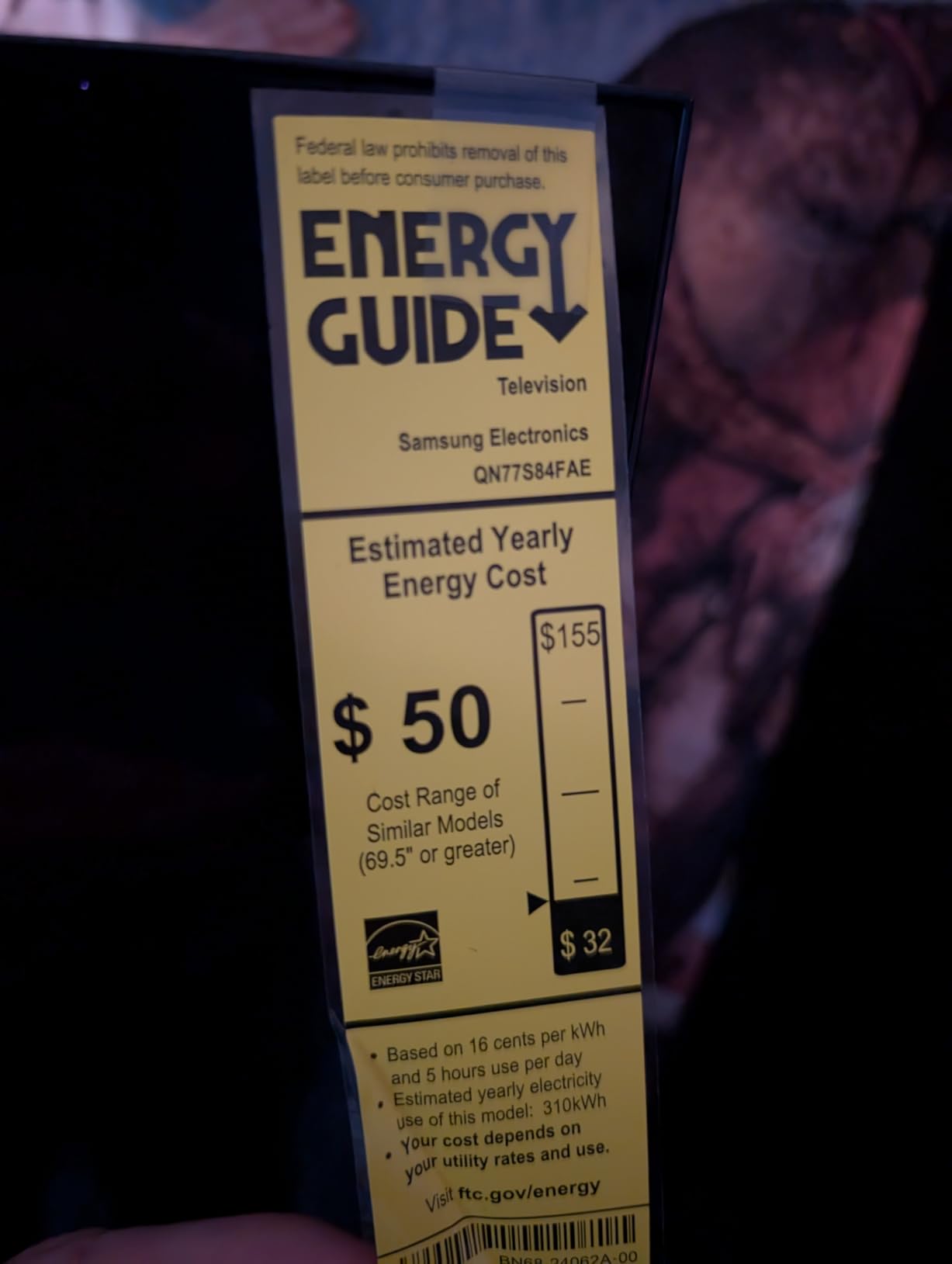
The S85F is the plain 55-inch OLED in this group, and it does the fundamentals without drama. It is a no-backlight panel running at 120Hz through Motion Xcelerator, with four HDMI 2.1 ports, and owners describe the picture as vibrant with deep blacks and strong brightness for the money.
The upscaling is the quietly useful part. The NQ4 AI Gen2 processor with 20 neural networks sharpens lower-resolution sources convincingly to 4K, and Pantone validation covers colour and skin tones, which matters more for streaming than for gaming.
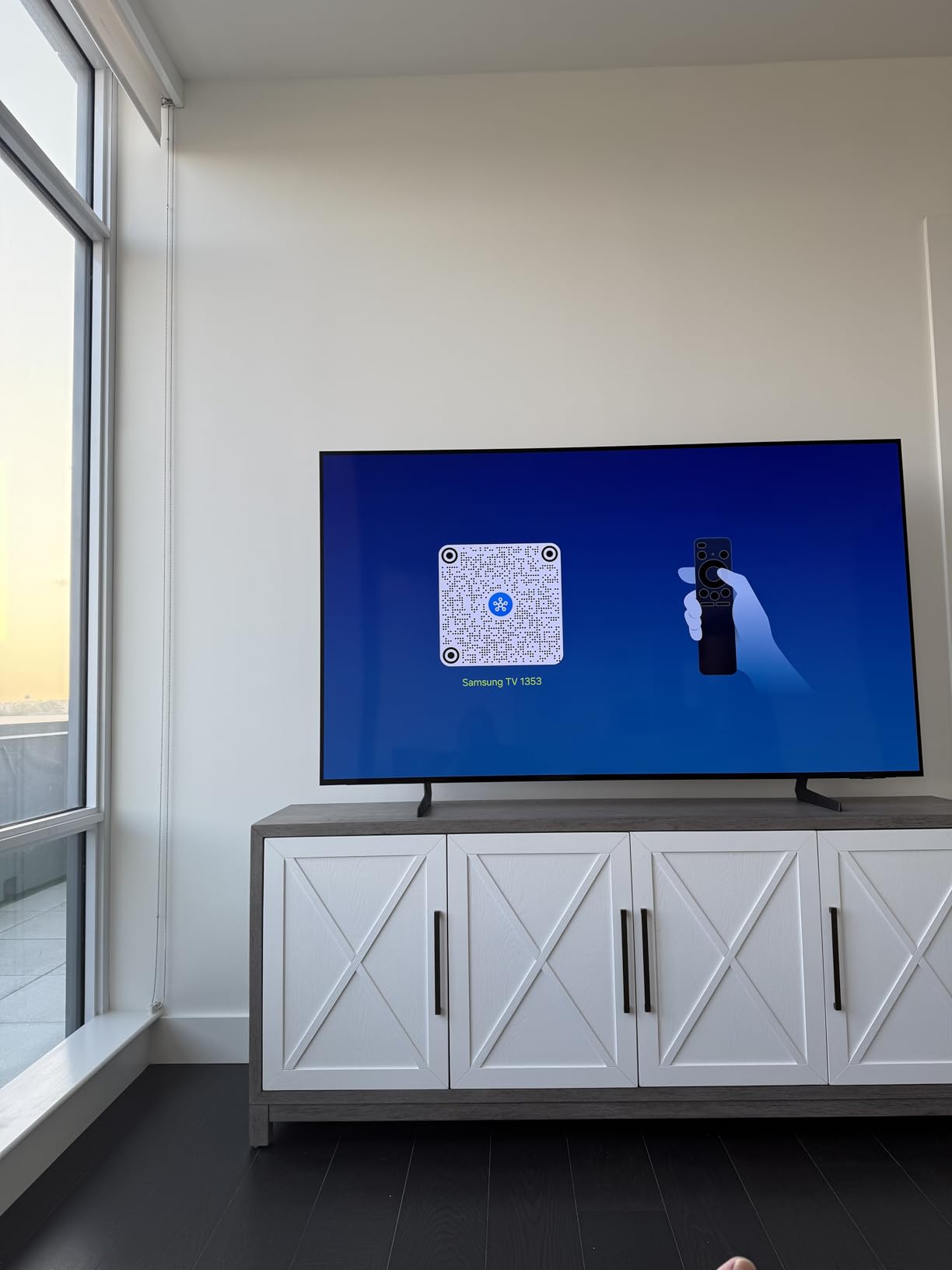
The frustration here is Tizen, and it is consistent across reviews. Owners report slow, non-intuitive menus, and changing inputs takes you through a full-screen marketing panel. There are no custom picture profiles and no fast scene-switching presets, which frustrates anyone who calibrates.
Two more real limits. The refresh rate cannot be adjusted between 60Hz and 120Hz, and many image-enhancing features are disabled or incompatible once Game Mode is engaged, so the picture you calibrate is not always the picture you get. Some owners also report poor Wi-Fi performance, and the very thin panel is fragile in transit.
Best use for this set
Streaming and everyday living-room viewing, where the strong native contrast and colour accuracy do most of the work. Bluetooth headphone pairing makes it a solid late-night option in a bedroom or secondary room.
What to check before you commit
If you are a console or PC gamer, the 120Hz ceiling and the Game Mode feature loss are the deciding factors. If you mostly watch films and streaming and never touch the settings menu, the Tizen friction largely disappears.
6. Samsung S90H 55-Inch OLED – Best OLED Under 1,500 for a Bright Room
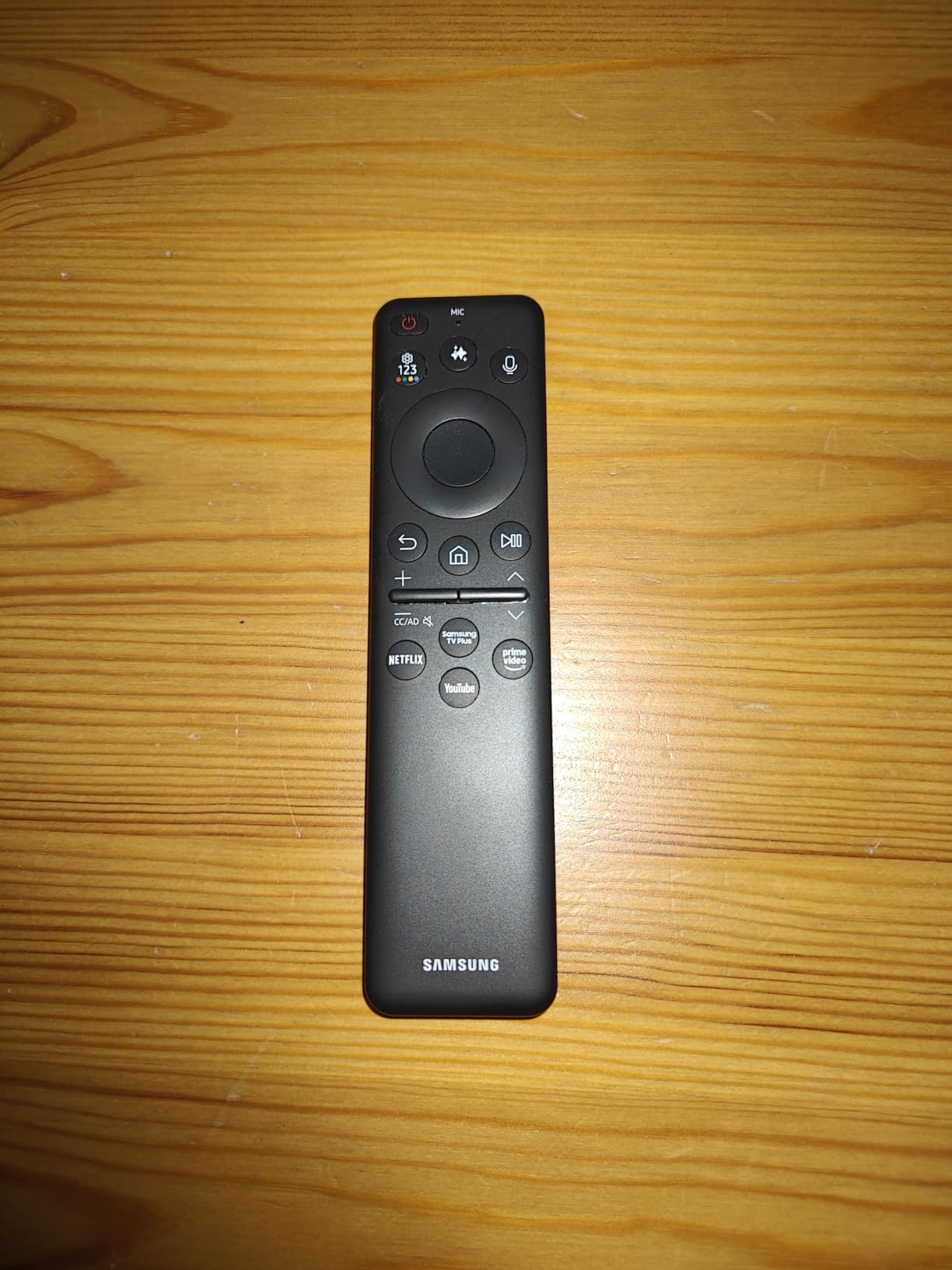
Samsung 55-Inch Class S90H Series, OLED, 4K, Smart TV, 2026 Model
- Matte coating sharply reduces reflections in lit rooms
- NQ4 AI Gen3 with 128 neural networks
- 165Hz with G-Sync and FreeSync Premium Pro
- Auto HDR Remastering improves SDR content
- OLED HDR+ for brightness with deep contrast
- Matte finish can soften perceived contrast
- Newer platform means limited long-term data
- Tizen menu navigation complaints carry over
- Smaller pool of owner feedback
Bright rooms are where OLED usually disappoints, and the S90H is the answer to that in this lineup. Its Glare Free anti-reflection coating handles daylight far better than the glossy panels used on the other Samsung set here, and owner feedback treats it as a genuine improvement rather than a spec line.
Motion Xcelerator 165Hz with NVIDIA G-Sync or AMD FreeSync Premium Pro is the highest headline refresh figure in the group, and four HDMI 2.1 ports are all present. The NQ4 AI Gen3 processor with 128 neural networks handles 4K AI Upscaling Pro and the AI Motion Enhancer for fast-moving balls and text.

The picture trade for matte is real and owners mention it. A matte coating can slightly soften perceived contrast and vibrancy compared with a glossy panel, so if you watch in a fully darkened room and care about punch, the glossy 65-inch set is the more dramatic picture.
The bigger caveat is maturity. This is a new model with the smallest owner base in the lineup, so long-term reliability and software polish are less well documented than for the established sets. Tizen menu navigation draws the same complaints as earlier Samsung models.
Why the matte coating matters
Reflections are the number one reason buyers return an OLED. A matte finish scatters ambient light instead of mirroring it, which makes daytime viewing workable and reduces the temptation to run the set very bright to compensate.
What to weigh before buying
You are buying a first-year platform with thin long-term data and a 5.1-channel 40-watt speaker system as your fallback audio. If you want the safest established bet, the prior-generation LG C4 carries far more owner history.
7. LG C6 55-Inch OLED evo – The Newest LG, With the Fewest Settled Owners
- Brighter than earlier C-series sets for owners upgrading
- 8.3 million self-lit pixels with deep blacks
- Six-speaker 2.2-channel audio many buyers rate good enough
- 165Hz with G-Sync
- FreeSync Premium and 0.1ms
- Built-in OLED Care panel protection
- Lowest average rating in this group
- Reports of faulty sets with pink colour casts
- webOS interface cluttered and slow
- Screen is highly reflective in bright rooms
The C6 is the newest set in this lineup and the one carrying the a11 AI Processor Gen3 with Brightness Booster. Owners upgrading from older C-series sets consistently report it as brighter, and several say the built-in 2.2-channel sound removes the need for a soundbar, which is not a claim you can make about most 55-inch panels at this level.
On paper the specification is the strongest LG here: 165Hz refresh, 0.1ms response, G-Sync and FreeSync Premium, four HDMI 2.1 ports, Dolby Vision and Filmmaker Mode with Ambient Light Technology, plus built-in OLED Care panel maintenance. The mount pattern is also a 600 x 400 mm pattern rather than the smaller 300 x 200 used on the C4.
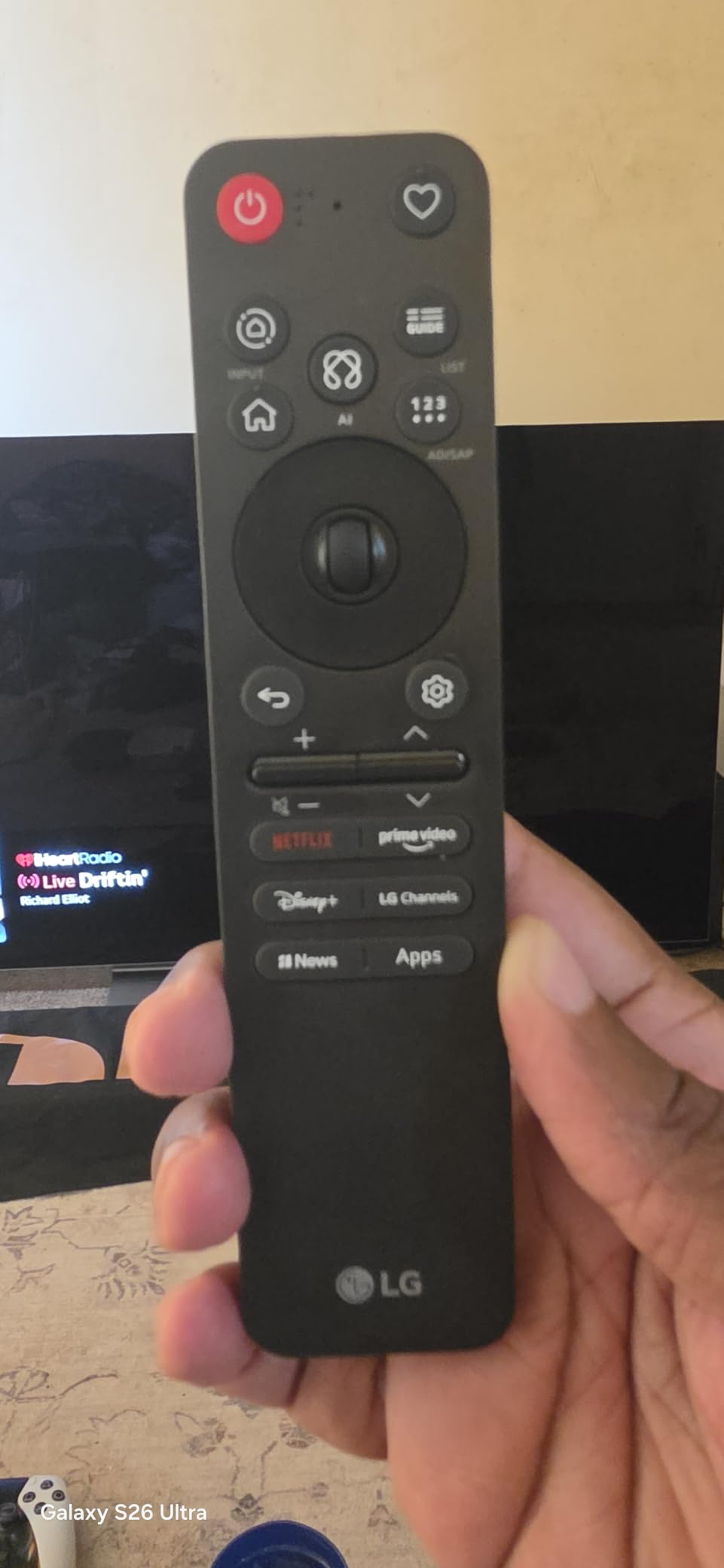
It also has the lowest average rating of the seven, and there are two distinct reasons for that. The webOS interface and its remote are described as cluttered, slow and unintuitive, and a share of one-star reviews cite faulty sets arriving with pink colour casts. That second cluster is small, but it is a build or panel-consistency issue rather than an opinion.
One more recurring note: owners who calibrate the set often recommend turning the AI picture processing off, because it degrades the image. That matches our own view across this entire lineup. Buy these sets for the panel, not the features.
What is genuinely new here
The processor generation, the higher refresh rate and the improved brightness, plus OLED Care for long-term panel protection. The webOS AI Hub powered by Google Gemini is the other headline, and it inherits the same navigation complaints as prior webOS builds.
Who should wait
If you want the newest LG picture, this is it. If you want the proven option, the prior-generation C4 has more than four times the owner feedback and a steadier software experience, which is why it is our pick rather than this one.
How to Choose an OLED TV Under 1,500
OLED or QLED or Mini-LED at the same budget?
QLED is a backlit LCD with a quantum-dot filter. It gets brighter and runs cheaper, but it never reaches true black, so dark scenes carry a grey haze that no amount of local dimming fully removes. Mini-LED sits between the two: a backlit LCD with hundreds of small zones, which delivers far higher peak brightness than any OLED and excellent contrast, but not OLED’s perfect black.
Choose a larger Mini-LED if your room is bright, you sit far back, or screen size matters most. Choose OLED if you care most about films, dark-room contrast and response time. The honest framing is that under 1,500 you are choosing between a smaller perfect-black picture and a larger brighter one.
How big should your screen be, and what does 1,500 buy at each size?
OLED pricing scales steeply with diagonal, which is why buyers know their budget precisely and their size only approximately. Roughly, this ceiling puts a 65-inch set in reach from the Samsung S90F, keeps the mainstream battle at 55 inches with the C4, C6, S85F and S90H, and drops to 42 or 48 inches with the C5 and A90K.
For viewing distance, a 55-inch set works from roughly 6 to 10 feet for most living rooms, a 65-inch from about 8 to 12 feet, and anything larger should be treated as a home theatre screen. A brighter Mini-LED holds up better in a sunlit space at distance, which is again the trade.
What to filter on for gaming
Hard requirements at this budget are a 120Hz or higher refresh rate and at least two HDMI 2.1 ports. Every set in this list clears that bar, and every set here has four HDMI 2.1 ports. Response time is a spec-sheet number that tells you less than measured input lag, which is why we call out the Sony A90K’s 8.5ms figure and the LG panels’ 0.1ms ratings.
For PC gaming, treat the 120Hz panels as a 120Hz experience and do not pay for a headline refresh number on its own. The two 165Hz figures in this lineup are marketing-weighted.
Last year’s model or this year’s model?
This is the most common question in buying threads at this price, and the answer usually favours the discounted prior-generation set. Community consensus repeatedly treats a discounted C-series model as a better buy than a full-price newer one, and the same logic explains why our pick is an older panel rather than the newest one.
The exception is when a newer model fixes something specific. The S90H’s matte coating solves a real bright-room problem, and the C6 adds brightness. Generation itself is not a reason to spend more.
Refurbished, open-box and prior-owner sets
Second-hand is a legitimate way to stretch this budget to a bigger panel or a higher tier, and forum advice frequently points to a prior-owner C-series set from someone upgrading. The rule is simple: confirm the warranty status with the serial number before you pay, because manufacturer coverage is what turns a used set into a safe purchase.
Refurbished and open-box units are the same idea with a safety net attached. Check that the warranty is the full manufacturer term and not a short seller warranty, and inspect for burn-in under a full-screen white and grey test pattern on arrival.
Which brand is most reliable, and does burn-in still apply?
Brand reliability at this tier tracks panel consistency and software stability more than any single component. LG has the deepest owner base in this lineup, Samsung has the most platform variety, and Sony earns trust for picture processing but has fewer size options here. All seven carry a one-year warranty.
Burn-in is real but manageable on current panels. Every set in this list runs panel maintenance features, and LG’s built-in OLED Care on the C6 is the most explicit of them. Turn on screen-shift and logo-brightness adjustment, and avoid leaving a static channel logo or a paused desktop on screen for hours.
Frequently Asked Questions
Do OLED TVs still get burn-in?
Like most long-standing TV myths, there is an element of truth at the bottom of it. Burn-in is not a defect, it is uneven ageing: static elements such as a channel logo, a news ticker or a paused desktop are displayed at full brightness for thousands of hours, and the organic compound in those pixels wears faster than the pixels around it. On the current panels in this guide the effect takes far longer than most buyers expect, and every set here includes panel maintenance routines. Turn on pixel-shift or screen-move if your model offers it, lower the brightness of on-screen logos, and avoid leaving static imagery up for hours at a time.
Which brand of OLED TV is the most reliable?
No brand is free of panel defects at this price, and the honest answer is that consistency matters more than the badge. LG has the largest owner base in this roundup, so its long-term behaviour is the best documented. Samsung’s matte-coated sets are the newest platforms here and have the least long-term data. Sony is trusted for picture processing but offers fewer sizes at this budget. All of the sets in this guide carry a one-year warranty, so buying from a retailer with straightforward returns matters as much as the brand choice.
Which is better, OLED or QLED?
OLED wins on contrast. Every pixel is self-emissive, so a pixel can switch fully off, which gives true black and removes the grey haze that backlit sets show in dark scenes. QLED wins on price and brightness: it is a backlit LCD, so it gets brighter, runs cooler and costs less, which is why it is the better value for a sunlit room. If you watch films at night, buy the OLED. If you watch live sport in daylight or want the biggest screen for your money, buy the QLED or a Mini-LED instead.
Is OLED still worth it today?
More than at any point in the last decade, and more than most buyers expect at this budget. True blacks, flagship-calibre colour accuracy and 120Hz gaming have genuinely become affordable on mid-range sets, which was not true two generations ago. The caveat is brightness: OLED panels do not get as bright as a good Mini-LED, and that matters in a bright room more than anything else in this guide.
What size OLED should I buy?
Buy the largest screen your room can take at a proper viewing distance, then settle for OLED only if the room is dim enough to enjoy it. In practice that means 42 or 48 inches for a bedroom or office, 55 inches for a typical living room viewed from 6 to 10 feet, and 65 inches or larger for a dedicated theatre room. Under this ceiling, 55 inches is the sweet spot and 65 inches is a stretch that only the Samsung S90F clears here.
Final Verdict: The Best OLED TVs Under 1,500 in 2026
The best OLED TV under 1,500 is the LG C4 at 55 inches. It gives you a 144Hz panel, 0.1ms response time, four HDMI 2.1 ports, Dolby Vision and Filmmaker Mode, and it does it on a prior-generation platform that is no longer competing with flagship pricing.
The LG C5 at 42 inches is the best value if you want the format in a smaller room. The Samsung S90F at 65 inches is the one to buy if screen size is the priority. The Sony A90K at 48 inches is the pick for a PlayStation 5, the Samsung S85F is the straightforward 55-inch streaming set, the S90H is the answer for a bright room, and the LG C6 is the newest panel with the least settled feedback.
Go lower than this list if the room is bright, and get a larger Mini-LED instead. Go higher only if you need 65 inches or more and want the newest generation, because the ceiling is what holds the best picture-per-dollar OLED on the table. Check the current price on each model before you buy, since this tier reprices constantly.