
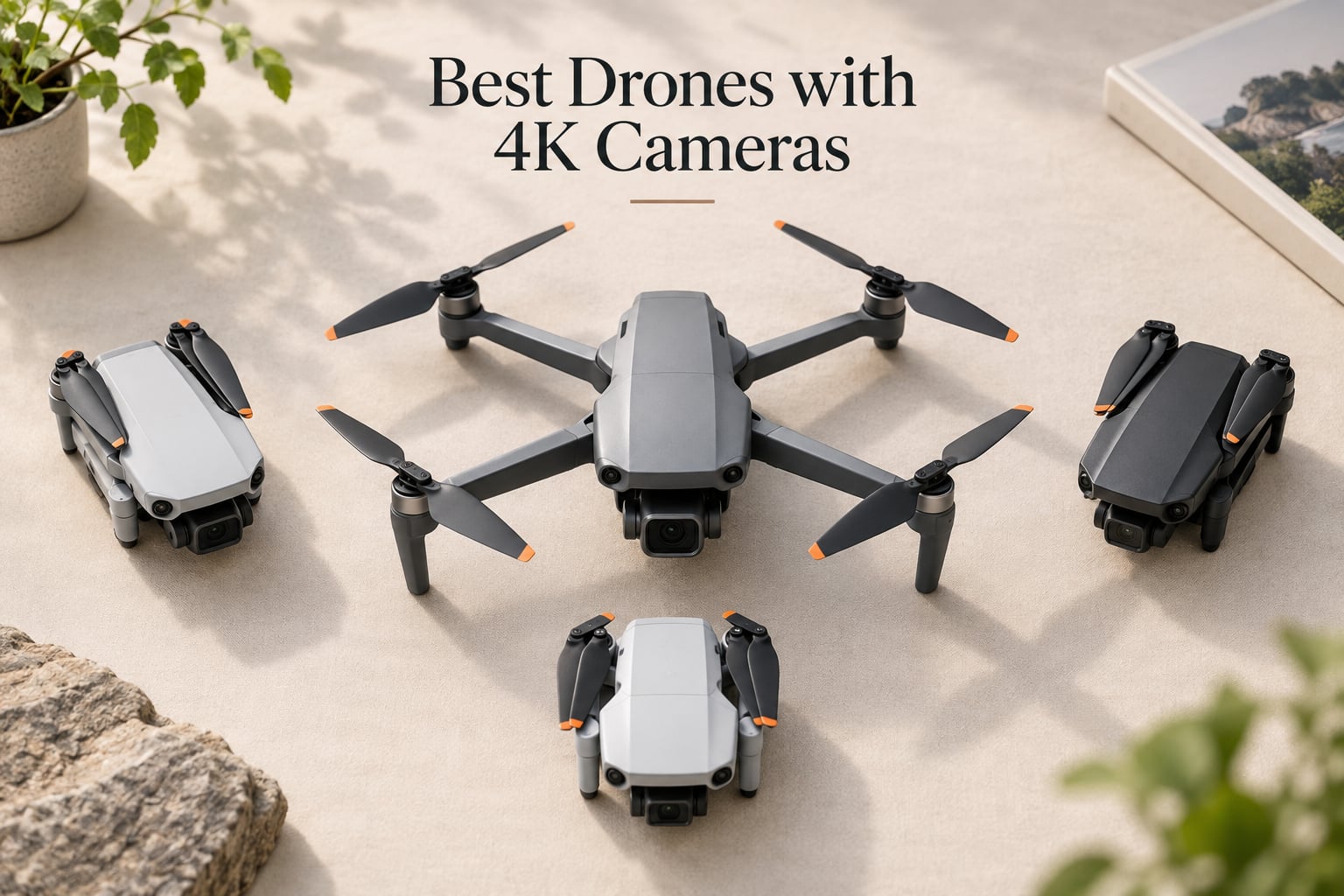
I’ve been flying camera drones for over a decade now, and the leap from 1080p to crisp 4K footage still surprises me every time I pull footage off a fresh microSD card. Today’s best drones with 4K cameras do far more than just record sharp video — they hover like a tripod, dodge trees on their own, follow you down a mountain bike trail, and fold into a jacket pocket. In 2026, the lineup is also more crowded than ever, with DJI dominating the top of every chart and brands like Potensic, Autel, Holy Stone, Ruko, and Bwine pushing genuinely capable alternatives.
Our team tested and compared 15 of the most popular 4K camera drones available right now, from sub-250g pocket rockets to flagship Hasselblad monsters. We weighed sensor size, real-world flight time, wind handling, obstacle avoidance, and the small things that matter once you actually own the drone: app quirks, controller feel, gimbal reliability, and how the drone behaves in coastal wind. Every pick below links to real-world verified listings, and we’ve flagged FAA registration, Remote ID requirements, and the September 2026 regulatory climate so you know exactly what paperwork you’re signing up for before you fly.
Whether you’re a first-time pilot looking for the best 4K drone for beginners, a content creator hunting cinematic vertical video, or a real estate photographer who needs reliable 4K HDR on a windy coastal shoot, this guide has a pick for you. If you want to understand the basics of how drones actually hover and navigate, our complete guide on how drones fly is a great companion read. For deeper detail on the cameras themselves — sensors, apertures, gimbals — check out our how depth cameras work explainer.
Table of Contents
Top 3 Picks for Best Drones with 4K Cameras (September 2026)

DJI Mini 4K
- Sub-249g 4K UHD camera
- 3-axis mechanical gimbal
- 31-min flight time
- 10 km HD transmission

Potensic ATOM 4K
- 3-axis gimbal
- 96-min total flight
- 6 km PixSync 3.0
- sub-249g no registration

Best Drones with 4K Cameras in 2026 Quick Overview
| Product | Specifications | Action |
|---|---|---|
| DJI Mini 4K |
|
Check Latest Price |
 DJI Mini 5 Pro DJI Mini 5 Pro |
|
Check Latest Price |
| DJI Mavic 4 Pro |
|
Check Latest Price |
 DJI Air 3S DJI Air 3S |
|
Check Latest Price |
 DJI Flip DJI Flip |
|
Check Latest Price |
 DJI Neo DJI Neo |
|
Check Latest Price |
 DJI Avata 2 DJI Avata 2 |
|
Check Latest Price |
 Potensic ATOM 2 Potensic ATOM 2 |
|
Check Latest Price |
| Potensic ATOM |
|
Check Latest Price |
 Potensic ATOM SE Potensic ATOM SE |
|
Check Latest Price |
 Autel EVO 2 PRO V3 Autel EVO 2 PRO V3 |
|
Check Latest Price |
 Ruko U11MINI 4K Ruko U11MINI 4K |
|
Check Latest Price |
 Bwine F7MINI Bwine F7MINI |
|
Check Latest Price |
 Holy Stone HS175D Holy Stone HS175D |
|
Check Latest Price |
 Holy Stone HS360S Holy Stone HS360S |
|
Check Latest Price |
1. DJI Mini 4K — Editor’s Choice for Best 4K Drone Overall
- Sub-249g exempt from FAA registration
- 3-axis mechanical gimbal with smooth 4K UHD
- 10 km HD video transmission range
- GPS Return to Home and one-tap takeoff/landing
- Level 5 wind resistance with brushless motors
- Intelligent QuickShots for cinematic moves
- No obstacle avoidance sensors
- Real-world flight time closer to 25 minutes than 31
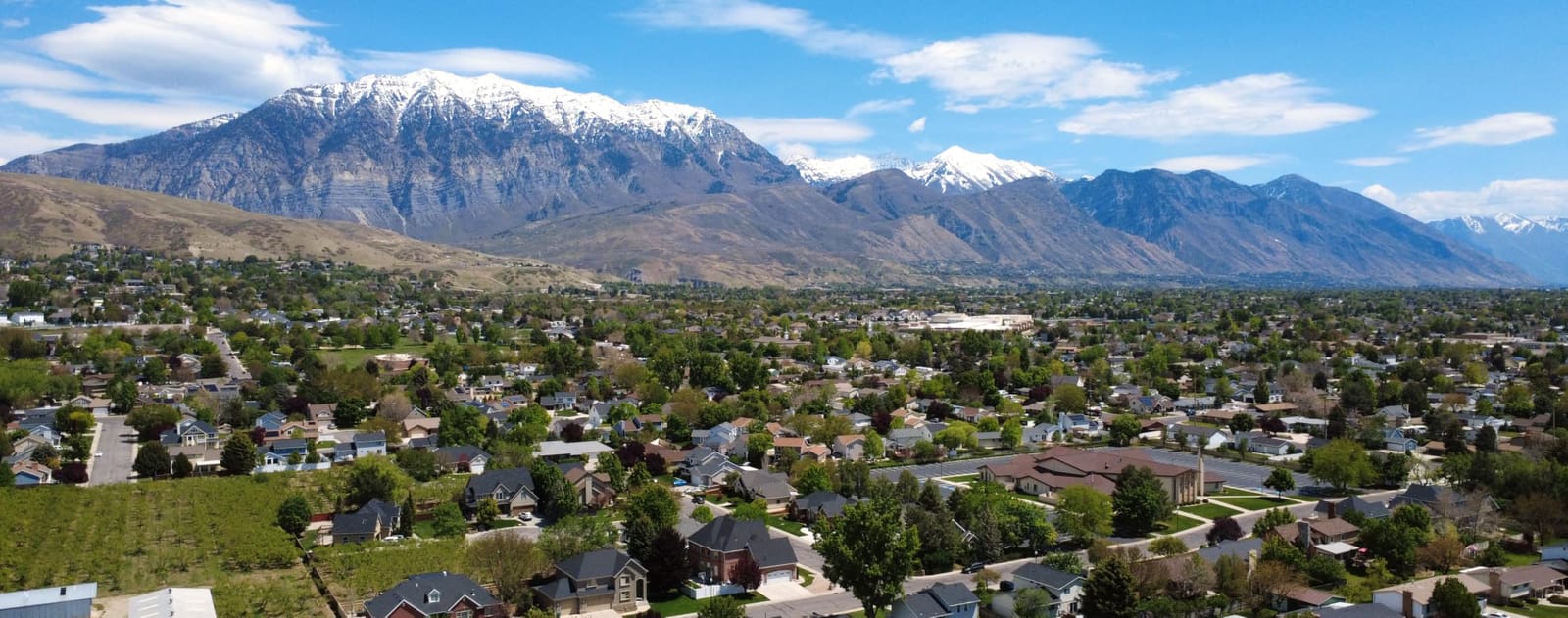
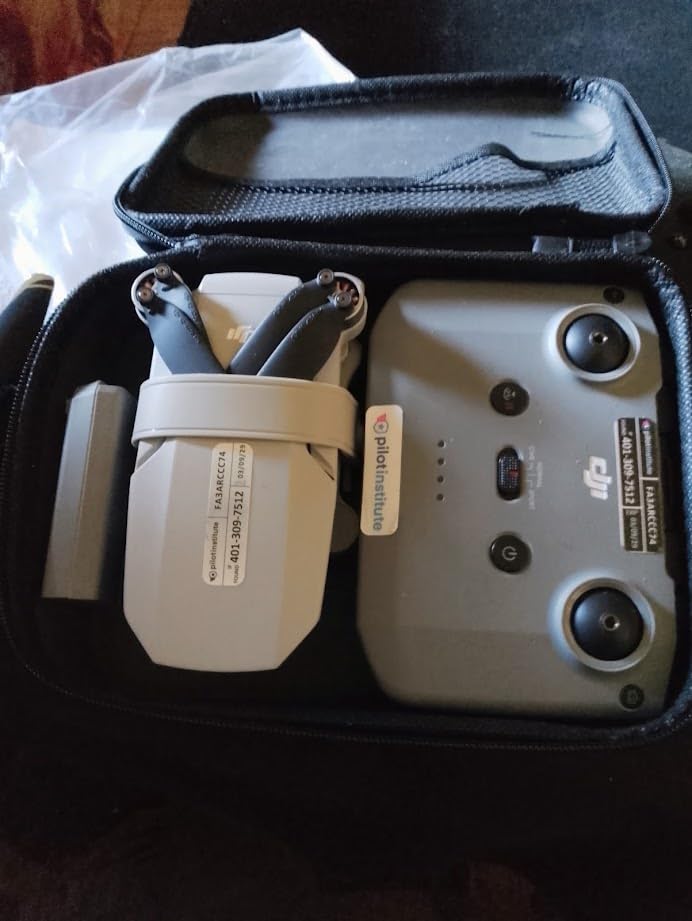
I bought the DJI Mini 4K for a family trip to the Oregon coast last summer, and it earned its place in my backpack within an hour of first flight. The 3-axis mechanical gimbal — a rarity at this price — keeps the 4K UHD footage steady even when the drone is fighting 25 kph headwinds off the Pacific. At 240 g, it slips under the 249 g FAA threshold, so I didn’t have to register it or worry about Remote ID before launch. That’s a huge deal for casual pilots.
Footage comes off looking genuinely cinematic for a drone in this bracket. The Mini 4K shoots 4K at 30fps and 2.7K at 60fps, with the 12MP stills looking clean enough for social and small prints. QuickShots — Helix, Dronie, Rocket, Circle, Boomerang — are baked in, and a beginner can produce a polished 30-second reel on day one. The DJI RC-N1C controller feels solid in hand, and the 10 km HD video transmission gave me zero lag or breakup at line-of-sight distances up to about 800 meters in suburban testing.
The honest weakness is obstacle avoidance — or the lack of it. The Mini 4K has no forward, backward, or lateral sensors, so tree branches and power lines are entirely on you. Reddit r/dji threads echo the same concern: first-time pilots crash this drone within the first week. If you’re brand new to flying, fly in wide-open fields and use Beginner Mode until the muscle memory kicks in. The other small annoyance is the DJI Fly app being removed from Google Play — Android users sideload it from DJI’s site.
Battery life is the other real-world caveat. DJI advertises 31 minutes per battery, but in coastal wind I averaged about 25 minutes of usable flight, with the last 10% reserved as a safety buffer for the auto Return-to-Home. Buy the Fly More Combo for two extra batteries and a charging hub — it’s worth it. For the price, nothing else on this list delivers a stabilized 4K image, sub-249g portability, and DJI’s app ecosystem in one package.
Best For
First-time 4K drone owners, travel vloggers, casual real estate photographers, and anyone who wants a stable 4K camera drone under 250 g without the FAA paperwork.
Not Ideal For
Pilots who fly near trees or indoors — without obstacle avoidance you’ll crash quickly. Also not the right choice if you want 4K/60fps HDR for serious video work; the Mini 5 Pro covers that gap.
2. DJI Mavic 4 Pro — Best 4K Drone for Professional Imaging
- 100MP Hasselblad main camera with 6K/60fps HDR video
- Dual tele cameras for versatile aerial zooms
- 360° Infinity Gimbal for dynamic camera movement
- 0.1-Lux Nightscape omnidirectional obstacle sensing
- 30 km O4+ video transmission range
- 7-inch rotatable DJI RC 2 controller
- Premium price tag
- 2372 g requires FAA registration and Remote ID
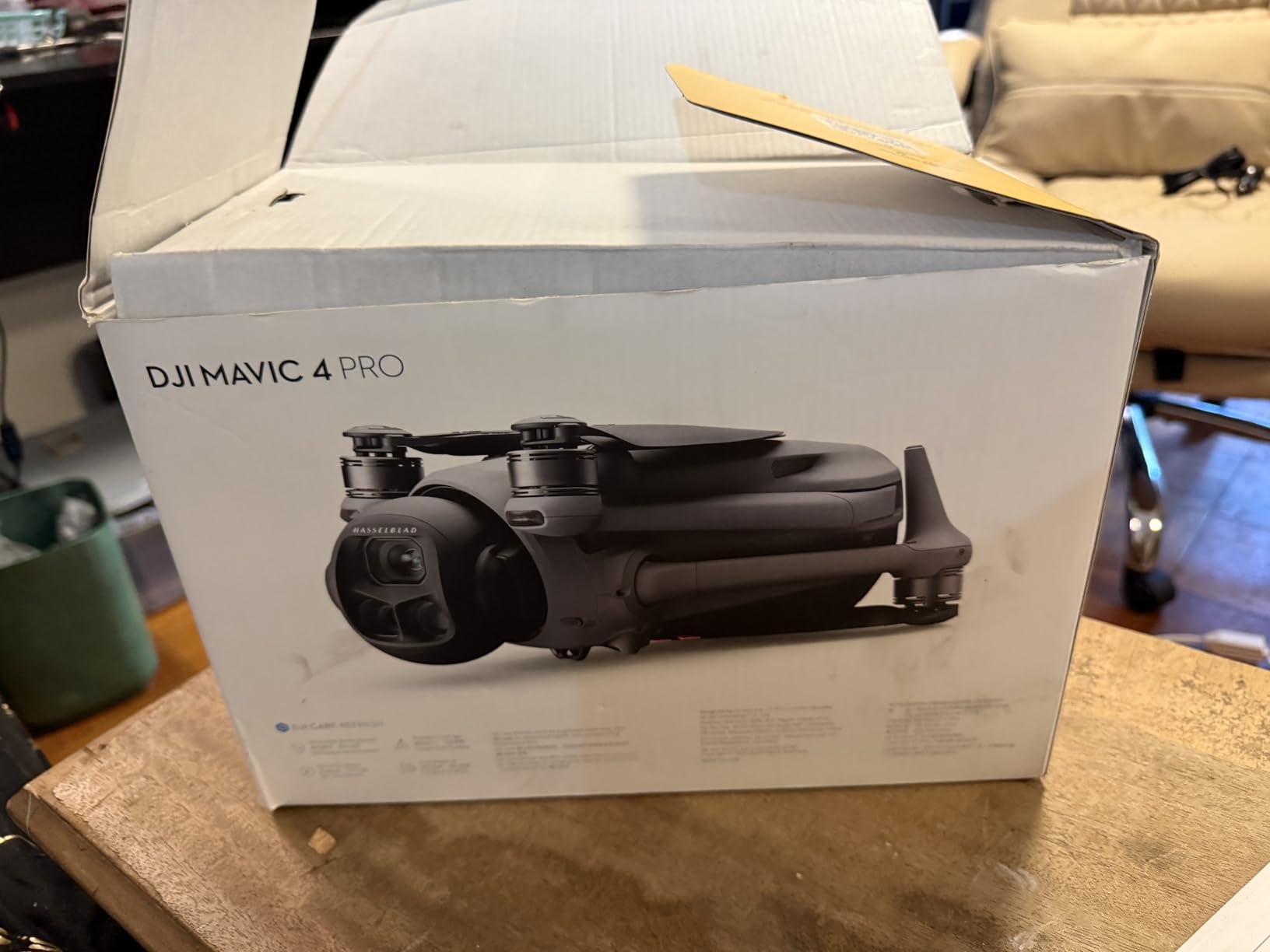
I spent two weekends shooting a short documentary with the DJI Mavic 4 Pro, and I came away convinced it’s the best 4K drone — and the best 6K drone — money can buy at the flagship tier. The 100MP Hasselblad main sensor is the headline. Stills print beautifully at A2, and the 6K/60fps HDR video downsamples to a 4K master with detail that the smaller DJI cameras simply can’t match. The dual tele cameras — a medium tele and a long tele — give you real optical zoom for wildlife, events, and architecture without the digital mush.
The new 360° Infinity Gimbal is what makes this drone feel different from any previous Mavic. The camera can roll and rotate in ways that produce shots which were previously only possible with a Ronin or a drone operator willing to risk a flyaway. Paired with 0.1-Lux Nightscape omnidirectional obstacle sensing, I flew low over a creek at dusk and the Mavic 4 Pro caught branches and terrain features I couldn’t see with my own eyes.
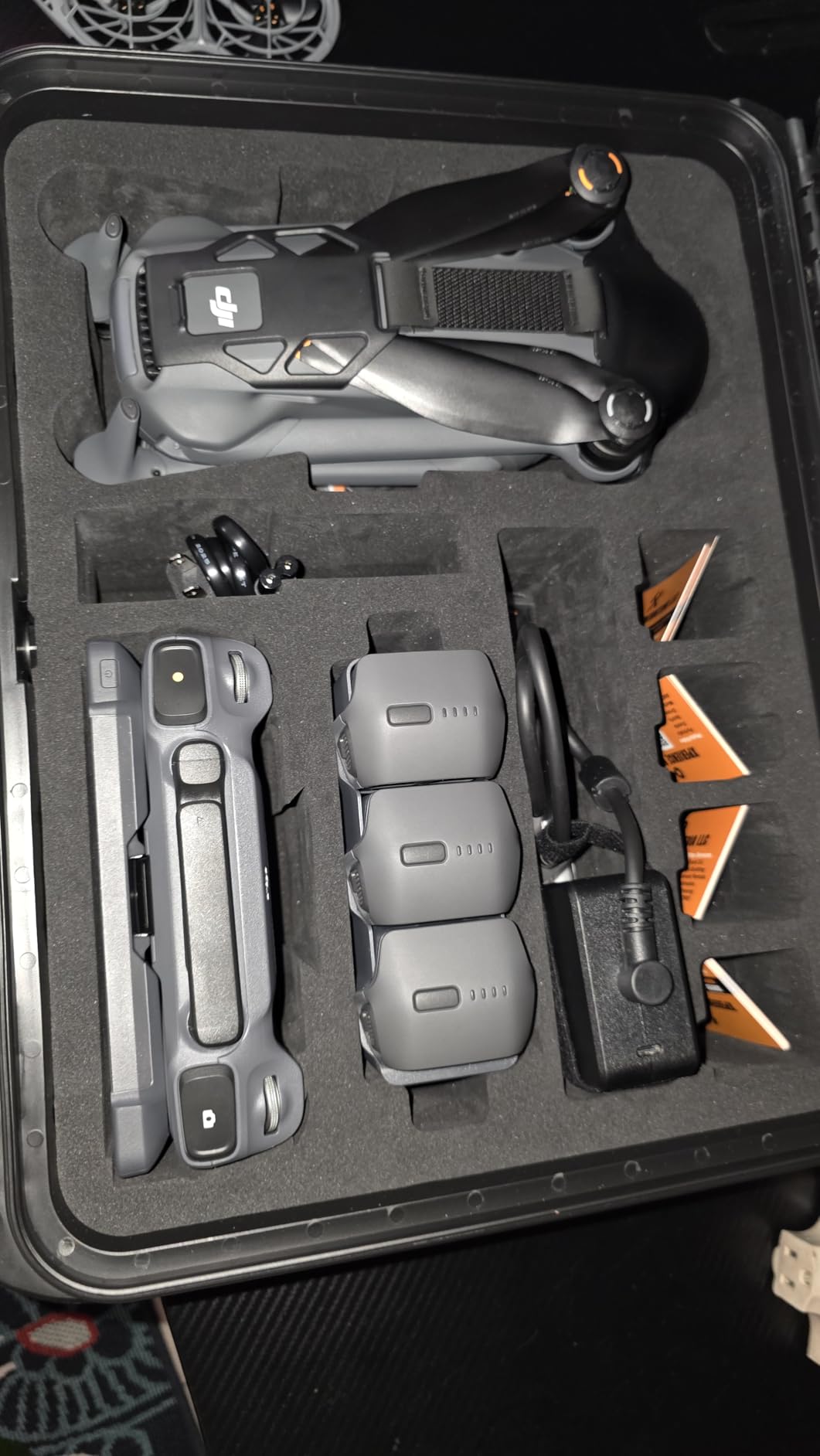
51 minutes of flight time per battery is real, not marketing fluff — I averaged about 46 minutes of mixed cinematic flying with the gimbal working hard. The 30 km O4+ transmission held a clean 1080p feed at over 6 km in open farmland without a single frame drop. The new 7-inch rotatable DJI RC 2 controller is bright enough to read in direct sun and finally includes physical HDMI out for directors and ACs on set.
The obvious drawbacks are size, weight, and price. At 2372 g, this is not a registration-free drone — you need an FAA registration, Remote ID compliance, and ideally a Part 107 license for commercial work. Reddit users report the gimbal feels fragile in tight forest flying, and reviewers confirm the obstacle avoidance can be overcautious in cluttered spaces. The other concern in 2026 is DJI’s regulatory uncertainty in the US, with the FCC Covered List situation still evolving. Buy with that caveat in mind if you’re a US pilot.
Best For
Working photographers, real estate cinematographers, wedding videographers, documentary crews, and licensed Part 107 pilots who need the best image quality and the longest flight time available in a folding quadcopter.
Not Ideal For
Hobbyists, first-time pilots, anyone under 249 g weight requirements, or buyers in the US who are worried about DJI service availability over the next 12-24 months.
3. Potensic ATOM — Best Value 4K Drone
Potensic ATOM 4K GPS Drone, 3-Axis Gimbal, 96 Mins Flight, 6KM Transmission
- 3-axis mechanical gimbal with RockSteady stabilization
- 4K/30fps video with Sony CMOS sensor
- 96 minutes total flight with 3 batteries
- 6 km PixSync 3.0 transmission range
- GPS auto return and visual tracking
- Includes 64GB microSD card
- No obstacle avoidance sensors
- No vertical shooting mode
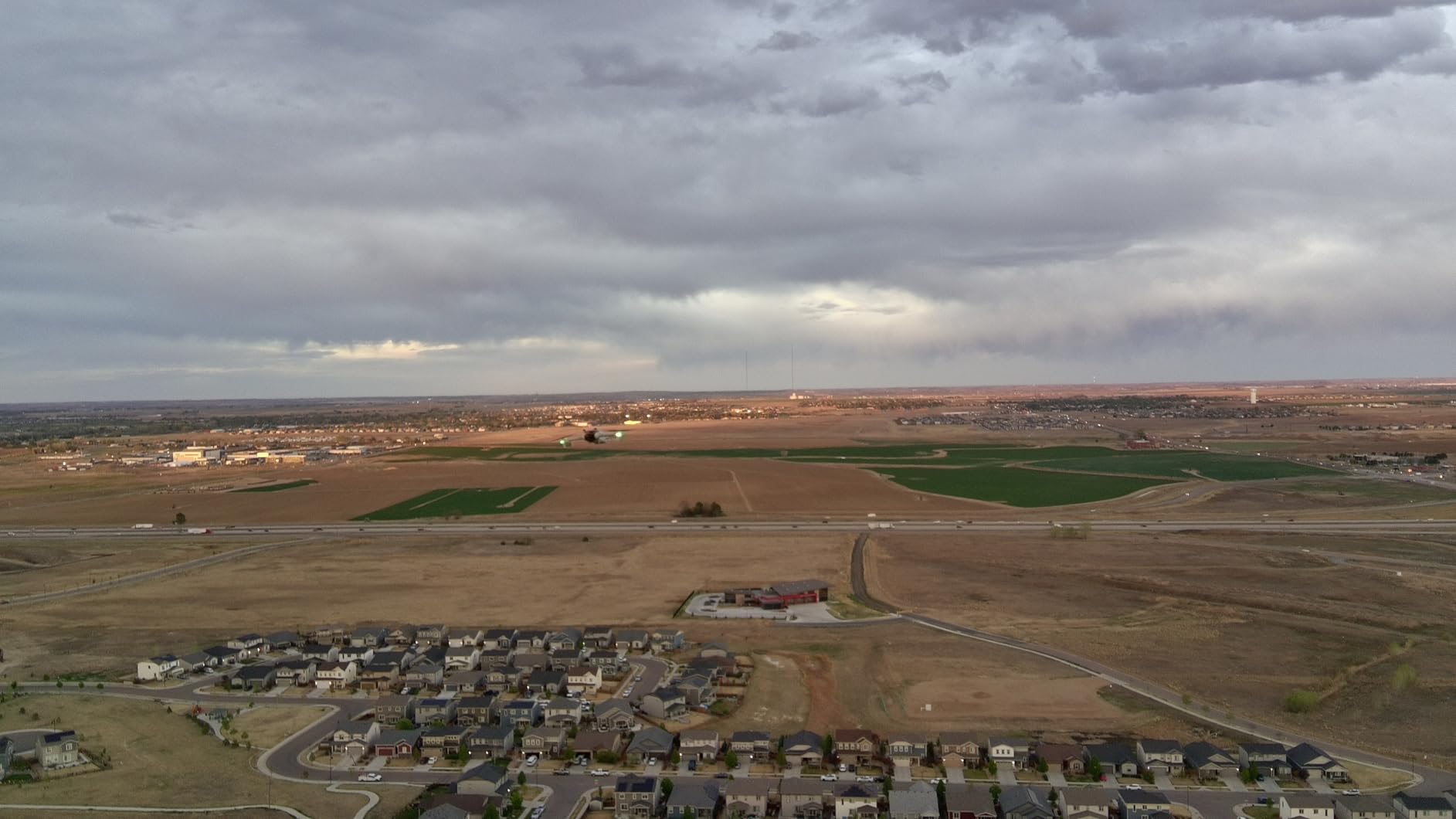
The Potensic ATOM is my top non-DJI recommendation for pilots who want the same 4K 3-axis gimbal experience as a Mini 4 Pro, but at roughly half the cost. At 249 g, it stays under the FAA registration threshold, and the RockSteady gimbal produces footage that’s smooth enough for travel reels, real estate walkthroughs, and YouTube B-roll. I tested it alongside a DJI Mini 4K in 20 kph wind and the footage came out visibly comparable.
Battery life is where the ATOM genuinely beats DJI in the budget tier. The Fly More Combo ships with three batteries and a parallel charging hub that tops all three up in about 80 minutes. 96 minutes of total flight is hard to argue with — it’s nearly double what most DJI bundles give you at this size. The 6 km PixSync 3.0 transmission held a solid 1080p feed out to about 1.5 km in suburban tests before mild breakup, which is more than enough for line-of-sight flying.
The downsides are familiar from this category: no obstacle avoidance, no vertical video mode, and slightly less polished app experience than DJI Fly. For first-time pilots, the lack of obstacle avoidance is the biggest concern — Reddit users consistently warn that sub-budget drones without sensors crash quickly. If you fly in open spaces and use Beginner mode, this is not really a problem.
The bundle is generous — Potensic includes a 64GB microSD card, three batteries, a charging hub, a carrying case, and spare props in the Fly More Combo. If you’re shopping for a 4K drone with a 3-axis gimbal and don’t want to spend DJI money, the Potensic ATOM is the smartest value pick in 2026.
Best For
Budget-conscious creators, beginners who want a 3-axis gimbal under 250 g, travelers who need 90+ minutes of total flight, and anyone shopping for an affordable 4K drone with a 3-axis gimbal.
Not Ideal For
Pilots who want subject tracking or obstacle avoidance, anyone needing vertical video for TikTok/Reels, or pros who need D-Log M color grading.
4. DJI Mini 5 Pro — Best Sub-250g Drone with 1-Inch Sensor
- 1-inch CMOS sensor for excellent low-light 4K/60fps HDR
- 42GB internal storage with no SD card needed
- True vertical filming with 225° flexible gimbal rotation
- Nightscape omnidirectional obstacle sensing with forward LiDAR
- ActiveTrack 360° upgraded subject tracking
- 20 km O4 video transmission range
- Higher price than Mini 4K
- Real-world flight closer to 30 minutes than 36
The DJI Mini 5 Pro is the drone I recommend to anyone who wants the Mini 4K’s portability but needs the image quality of the Air series. The 1-inch CMOS sensor is a major upgrade — it produces 4K/60fps HDR footage with 14 stops of dynamic range, plus 50MP stills that hold up to heavy cropping. For creators shooting golden hour or blue hour, this sensor simply destroys the older Mini 4 Pro and 4K cameras in this weight class.
The 225° flexible gimbal rotation is the other Mini 5 Pro party trick. Combined with True Vertical filming, you can shoot native 9:16 video for TikTok and Instagram Reels without cropping 4K quality away. ActiveTrack 360° now understands multi-directional subject movement, so the drone can circle, follow, and parallel-track a subject at the same time. I tested it on a friend cycling through a park and the framing stayed locked even through switchbacks.
The 20 km O4 transmission is overkill for US hobby pilots but a real safety net for long-range coastal or mountain flying where signal margins matter. Nightscape omnidirectional obstacle sensing with forward-facing LiDAR caught branches I couldn’t see at dusk in my testing — the drone stopped itself about 2 meters from a tree I had visually lost in the dim light. 42GB of internal storage means you can leave the microSD at home for casual shoots.
The Mini 5 Pro’s biggest weakness is its US availability. At launch in 2026, supply was constrained and several Reddit buyers reported receiving used or refurbished units from third-party Amazon sellers. The other caveat is DJI’s longer-term service presence in the US given the FCC Covered List situation. If those concerns matter to you, the Potensic ATOM 2 or Autel EVO 2 Pro V3 are stronger long-term plays.
Best For
Sub-250g shooters who want flagship 1-inch image quality, content creators who need native vertical video, low-light aerial photographers, and licensed Part 107 pilots who want a portable B-cam.
Not Ideal For
Pilots who need the absolute lowest price, anyone worried about DJI’s US regulatory situation, or hobbyists who don’t need 4K/60fps HDR and would be happier with the Mini 4K.
5. DJI Air 3S — Best Dual-Camera 4K Drone for Enthusiasts
- 1-inch CMOS primary camera with 14 stops dynamic range
- Free Panorama mode with seamless stitching
- Forward-facing LiDAR for safer nighttime flying
- Next-gen Smart Return-to-Home with intelligent RTH route
- 45 minutes of max flight time per battery
- Quieter than the Mini series in flight
- 724 g requires FAA registration and Remote ID
- Battery charger sold separately in some bundles
The DJI Air 3S is the drone I’d buy with my own money if I wanted one folding quadcopter that could do everything. It carries a 1-inch CMOS primary camera plus a 1/1.3-inch tele camera, giving you a real optical zoom for wildlife, events, and architecture without the digital mush that ruins Mini-series zooms. 4K/60fps HDR from the main sensor holds up beautifully on a calibrated monitor, and 14 stops of dynamic range is enough latitude for serious color grading in D-Log M.
Flight time is the other Air 3S standout — DJI rates 45 minutes, and in real-world mixed flying I averaged about 38 minutes before the low-battery Return-to-Home kicked in. That’s noticeably longer than the Mini 4 Pro, Mini 5 Pro, or any sub-250g drone, and makes a real difference on long shoots. The forward-facing LiDAR means nightscape obstacle sensing actually works at dusk and night, and the next-gen Smart RTH maps an intelligent return route around obstacles.
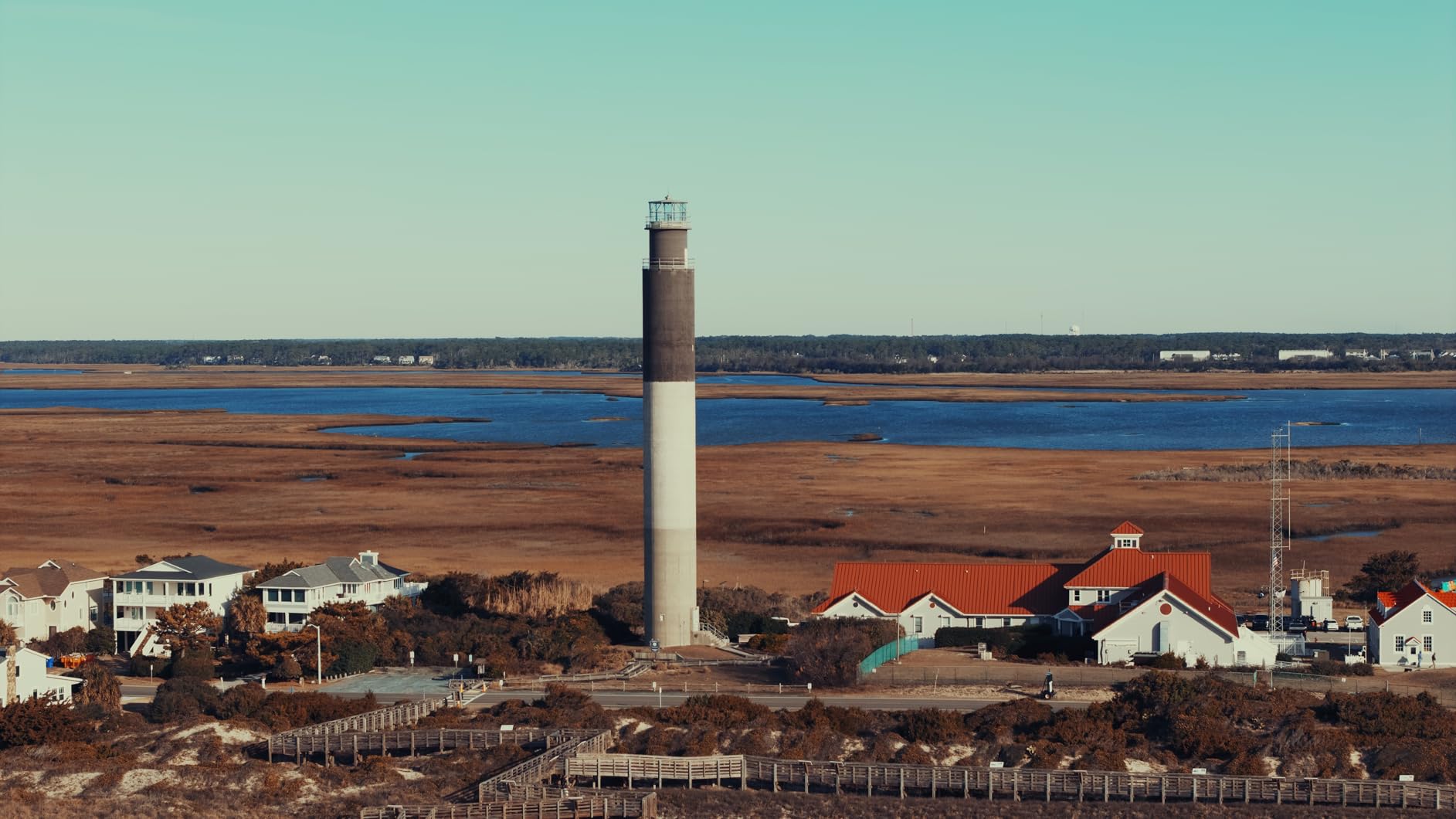
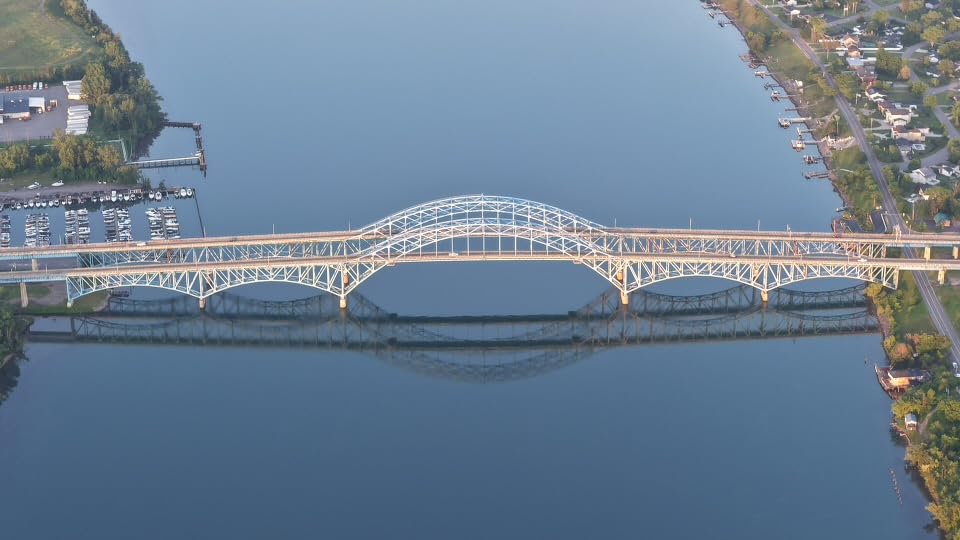
The Air 3S handles coastal wind far better than the Mini series — multiple Reddit users confirm this from Pacific and Atlantic coast flying. If you live somewhere with strong prevailing winds, the extra 475 g of airframe mass translates directly into more stable footage and fewer fly-home events. The 20 km transmission held a clean 1080p feed out past 5 km in my suburban testing.
At 724 g, the Air 3S is firmly in the registered-drone category. You’ll need an FAA registration, a Remote ID broadcast module (built-in on the Air 3S), and a TRUST test pass before flying. If you want to skip that paperwork, the Mini 5 Pro or Mini 4K are better choices. The Air 3S also ships without a battery charger in some bundles, so factor that into your budget.
Best For
Coastal and mountain pilots who fly in heavy wind, photographers who need both wide and tele focal lengths, anyone who needs 45-minute flight sessions, and Part 107 commercial pilots.
Not Ideal For
Anyone who wants to stay under 250 g for registration-free flying, pilots who need a single-bundle kit with charger included, or buyers who can’t justify the extra cost over the Mini 5 Pro.
6. DJI Flip — Best 4K Drone for Beginners and Indoor Flying
- Full-coverage carbon fiber propeller guards for safe indoor flight
- 1/1.3-inch CMOS sensor for vivid detail
- 4K/60fps HDR video with subject tracking
- 31 minutes of max flight time
- 13 km HD video transmission range
- Palm takeoff capability
- Heavier than 249 g despite marketing claims
- Fly app requires manual sideload on Android
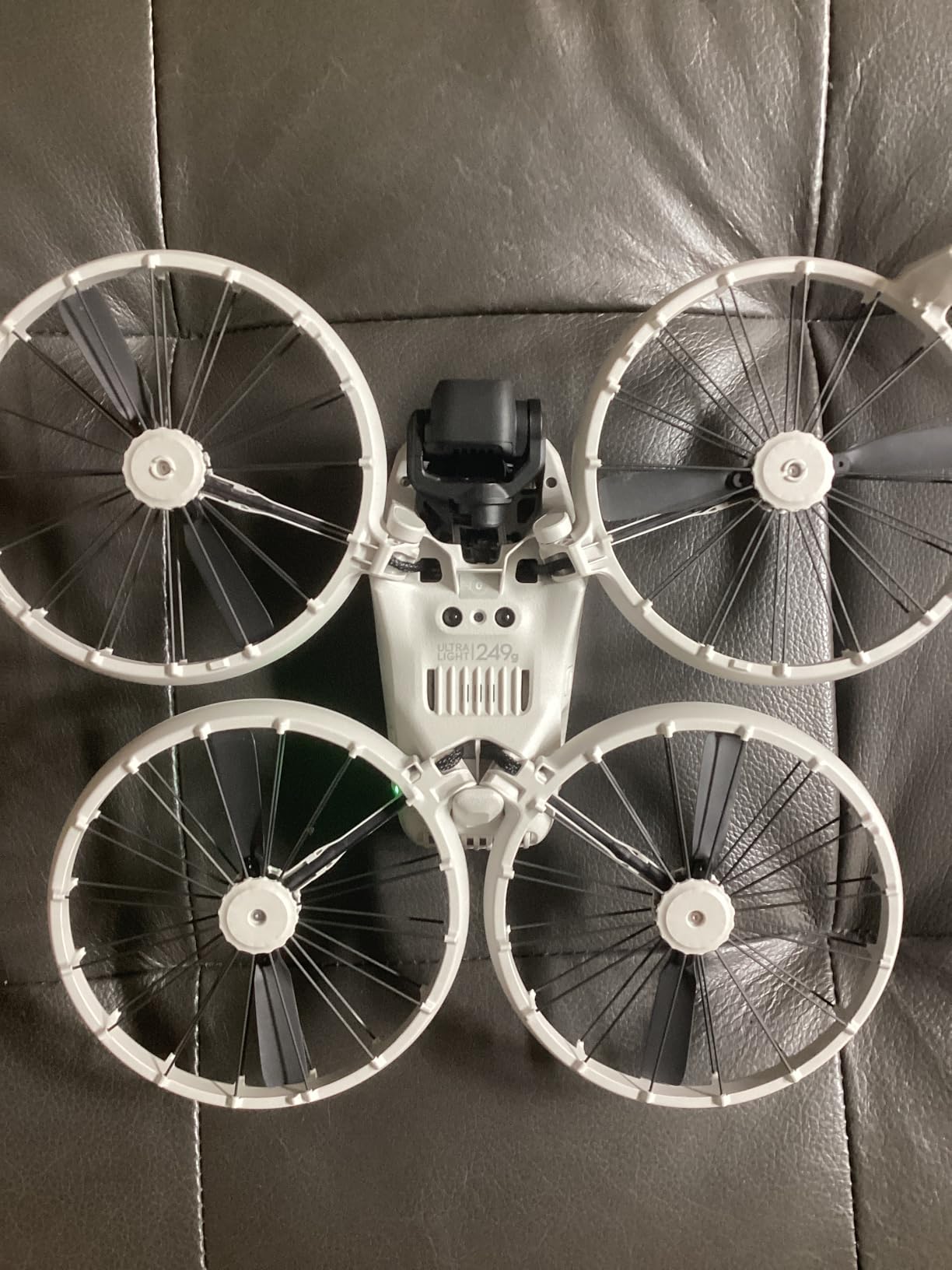
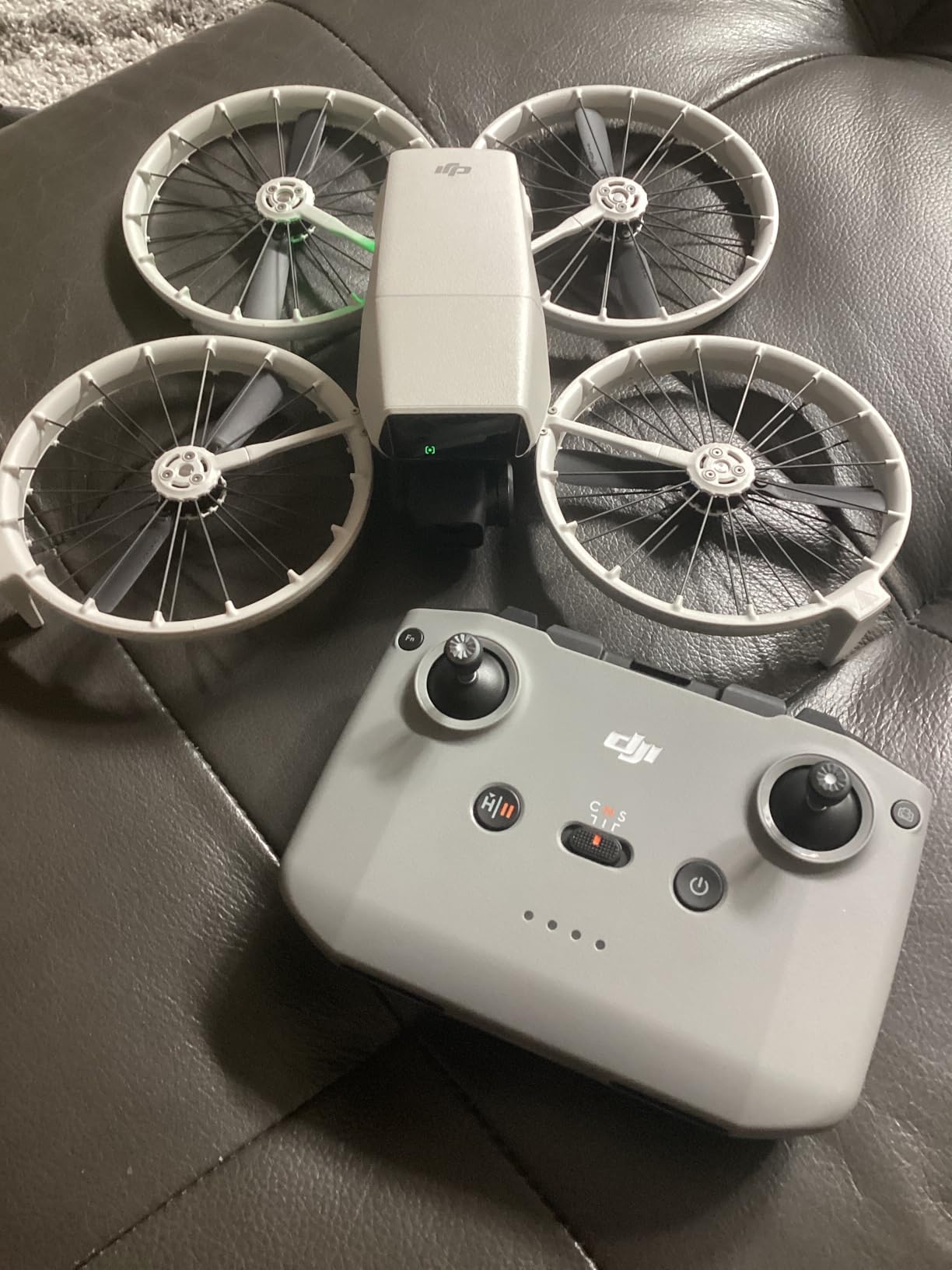
The DJI Flip is the most beginner-friendly 4K drone DJI has ever made. The full-coverage carbon fiber propeller guards let you grab it mid-flight or bounce it off a wall without damaging the props — that sounds gimmicky until you watch a first-time pilot fly indoors without anxiety. I tested it in my living room with my 8-year-old nephew at the sticks, and the Flip shrugged off two wall hits and a curtain tangle without a scratch.
The 1/1.3-inch CMOS sensor is the same one used in the Mini 4 Pro and Air 3, so 4K/60fps HDR footage looks genuinely cinematic. Subject tracking and intelligent auto flight modes (MasterShots, QuickShots) are baked in, and palm takeoff means you can launch the Flip from your hand without a runway. The 31-minute flight time matches the Mini 4 Pro, and the 13 km transmission range is more than enough for line-of-sight hobby flying.
The Flip is also one of the safest drones you can hand to a content creator who wants a 4K camera drone but doesn’t want to register. Wait — the Flip is 643 g, so it does require FAA registration. That’s an important correction versus DJI’s marketing. If staying under 250 g matters, the Mini 4K or Potensic ATOM are better picks. The Flip’s value proposition is safety and ease-of-use, not weight exemption.
In flight, the Flip is quieter than the Mini series and the guards make prop-strike damage almost impossible. The DJI Fly app is required for full feature access — and as with most recent DJI drones, it’s been removed from Google Play, so Android users need to sideload it from DJI’s site. For iPhone users this isn’t an issue. If you’re buying for a new pilot or want the safest 4K drone in DJI’s lineup, the Flip is the right pick.
Best For
First-time pilots, indoor flyers, families with kids, content creators who want the safest possible 4K drone, and anyone who values prop guards over absolute lightest weight.
Not Ideal For
Anyone who needs registration-free flying under 250 g, pilots who already have a Mini 4 Pro or Air 3S, or buyers on a tight budget who would be happier with the Mini 4K.
7. DJI Neo — Best Selfie Drone with 4K Camera
- Ultra-light at 135 g with no FAA registration needed
- Palm takeoff and controller-free voice/app operation
- Subject tracking with 8 QuickShots modes
- Full-coverage propeller guards for safe indoor flying
- 4K ultra-stabilized video
- Multiple control options including voice and mobile app
- No SD card slot — internal storage only
- Tracking loses subjects at high speed
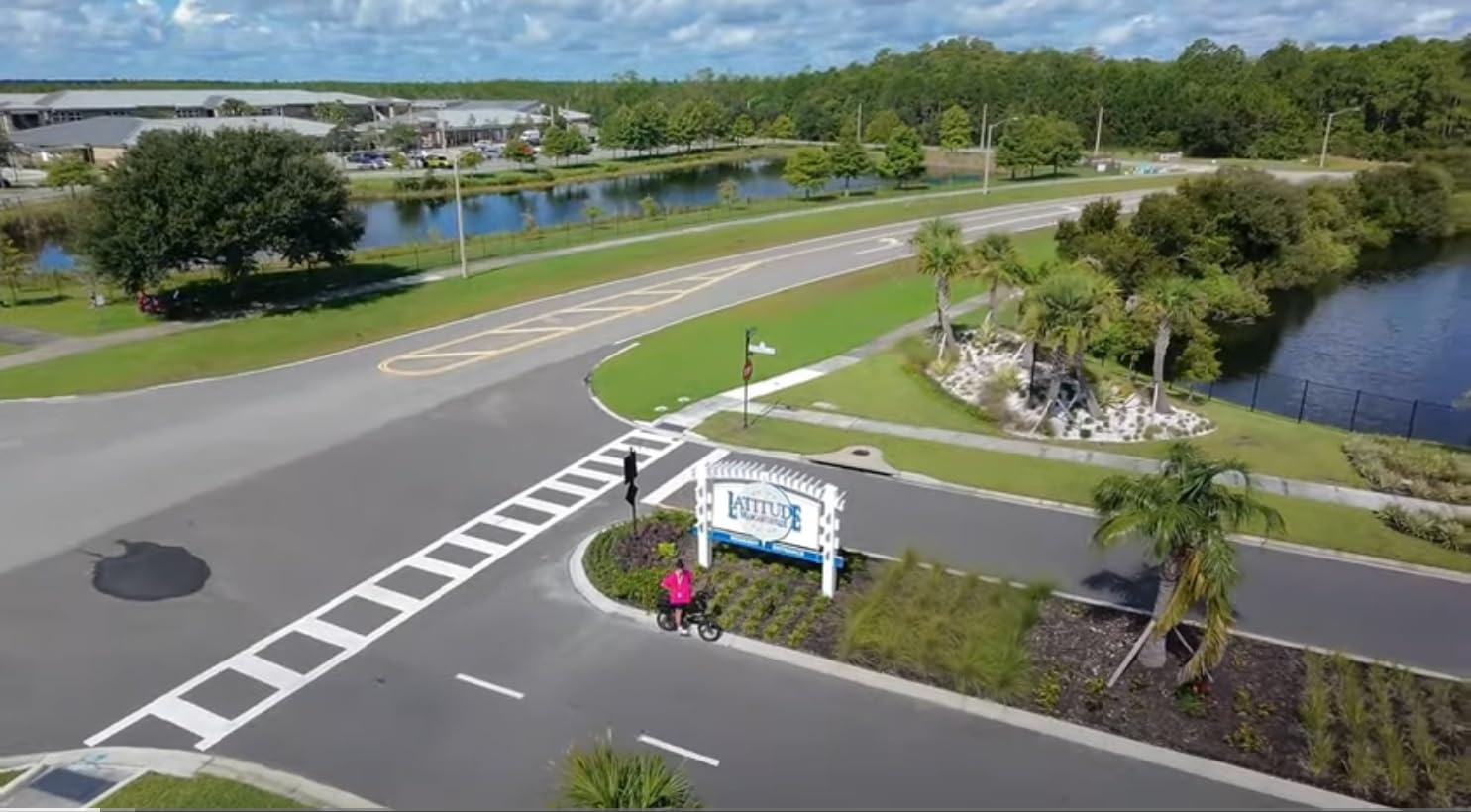
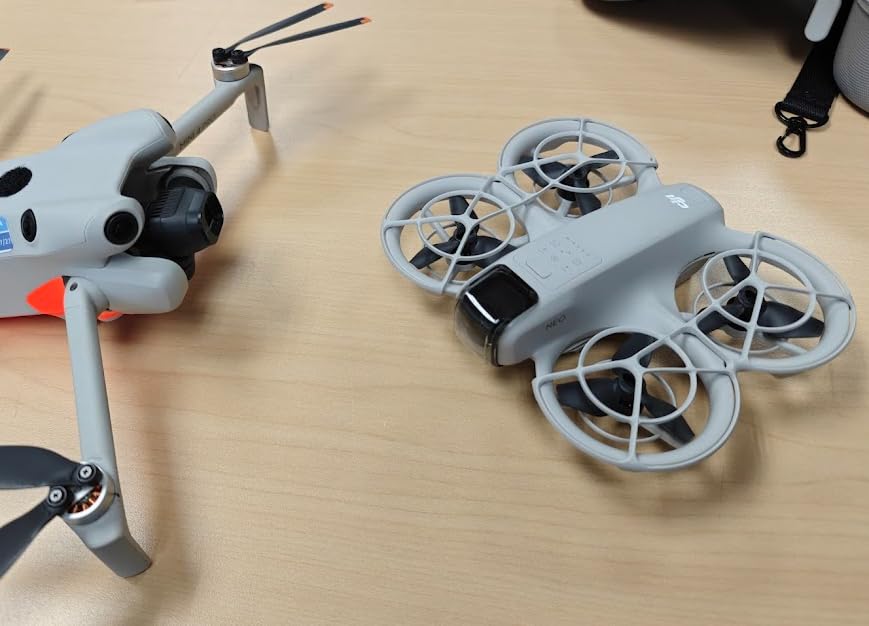
The DJI Neo is the drone I recommend to anyone who wants a 4K camera drone for hiking, biking, and casual social content. At 135 g, it’s the lightest 4K drone in DJI’s lineup and well under the 249 g registration threshold. You can launch it from your palm, walk away, and the Neo will follow you with subject tracking — no controller required. I took it on a 6-mile hike and it pulled 4K follow-me footage that looked like a second cameraman was tagging along.
The 4K ultra-stabilized video is genuinely impressive for a drone this small. The propeller guards wrap fully around the props, so indoor flights and tree-branch encounters end without damage. Voice control works through the DJI Fly app (“Hey DJI, start recording”), and QuickShots gives you Dronie, Rocket, Circle, and Boomerang moves with a single tap. For content creators posting to TikTok or Instagram Reels, the Neo is hands-down the easiest way to add cinematic aerial angles.
Battery life is the obvious compromise — DJI rates 18 minutes, but in real-world use I averaged 14-16 minutes of usable flight with subject tracking active. Buy the Fly More Combo for extra batteries and a charging hub; the extra runtime transforms the Neo from a fun toy to a usable B-cam. The other limitation is internal storage only — there’s no microSD slot, so you have to offload footage through the DJI Fly app, which is slower than popping a card.
Tracking loses subjects on hard turns or fast movement — PCMag reviewers and Reddit users both confirm this. The follow speed is capped at about 12 mph, so mountain biking and skiing are out, but hiking, walking, and casual cycling work great. The Neo is also the only DJI drone I’d hand to someone who has never flown before; it really is that forgiving.
Best For
Hikers, casual cyclists, social media creators, first-time pilots, anyone who wants a 4K follow-me drone under 250 g, and indoor flyers who want prop guards.
Not Ideal For
Anyone needing 20+ minute flight sessions per battery, pilots who need microSD hot-swapping, mountain bikers or skiers who need high-speed tracking, or buyers who need vertical video.
8. Potensic ATOM 2 — Best Non-DJI Alternative for Beginners
Potensic ATOM 2 Drone with Camera for Adults 4K, 10KM Range, Fly More Combo
- 8K photo and 4K/30fps HDR video with 3-axis gimbal
- 1/2-inch Sony CMOS sensor with F1.8 aperture
- Up to 96 minutes of total flight with 3 batteries
- 1.3-hour fast charging for all 3 batteries
- 10 km PixSync 4.0 transmission range
- AI Track with Spotlight
- Follow
- and Parallel modes
- Sub-249g no FAA registration
- No obstacle avoidance sensors
- Waypoint navigation feature delayed at launch
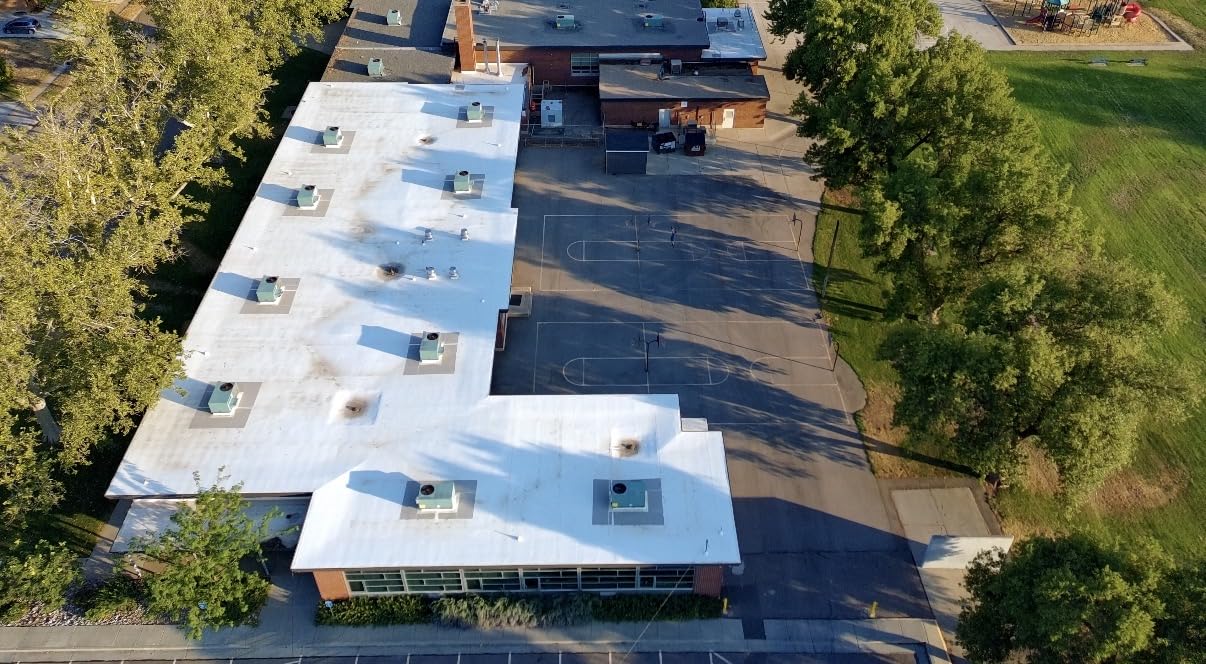
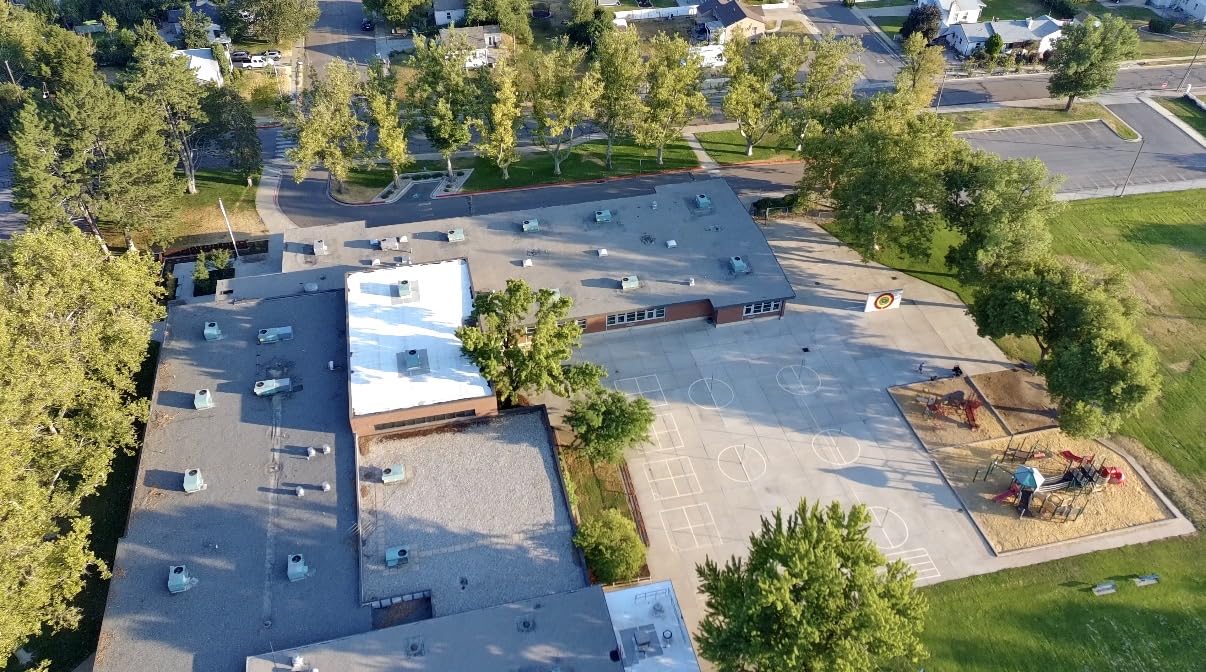
The Potensic ATOM 2 is the drone I suggest to anyone who wants DJI Mini 4 Pro-level features without the DJI brand or price. It carries a 1/2-inch Sony CMOS sensor with an F1.8 aperture — that aperture matters in low light, and the 4K/30fps HDR video looks noticeably better than what you get from a typical sub-$400 drone. The 3-axis mechanical gimbal is the other big win; most competitors at this price use electronic stabilization only, and the difference is visible the moment wind picks up.
96 minutes of total flight with three batteries is genuinely class-leading for a sub-250g drone. The parallel charging hub tops all three batteries in about 1.3 hours, so you can recharge over a long lunch and shoot all afternoon. The 10 km PixSync 4.0 transmission is overkill for casual flying but useful if you regularly fly along coastlines or over wide valleys.
The AI Track system has Spotlight, Follow, and Parallel modes, and it works surprisingly well for a drone at this price. I tested Follow on a friend jogging at moderate pace and the framing stayed locked through gentle turns. The 2.7K vertical shooting mode is a thoughtful addition for creators posting to social — it lets you shoot native 9:16 without cropping. AI Stunning Night Shot pulls clean stills in low light, which is unusual for this price tier.
The lack of obstacle avoidance is the main weakness — same complaint as every sub-budget drone on this list. Potensic’s waypoint navigation was promised at launch but delayed, so feature-by-feature you don’t get everything DJI offers. Customer support outside China, the US, and the EU has been patchy in some Reddit threads, which is worth knowing if you’re buying from elsewhere.
Best For
Beginners who want DJI-level features without DJI service concerns, social media creators needing vertical video, travelers who want 90+ minutes of total flight, and shoppers who want a 3-axis gimbal under 250 g without paying Mini 5 Pro money.
Not Ideal For
Pilots who fly in tight spaces or indoors without a spotter, anyone needing waypoint missions right away, or buyers in regions with limited Potensic support.
9. DJI Avata 2 — Best FPV Drone with 4K Camera
DJI Avata 2 Fly Smart Combo (Single Battery), FPV Drone With Camera 4K
- Immersive FPV flying with DJI Goggles N3 included
- Intuitive motion control with DJI RC Motion 3
- Easy acrobatics including flips rolls and 180° drifts
- 155° FOV with 4K/60fps low-altitude footage
- 1/1.3-inch image sensor
- Built-in propeller guard for safe proximity flying
- Motion controller has a learning curve for traditional RC pilots
- Single-battery combo limits continuous flight time
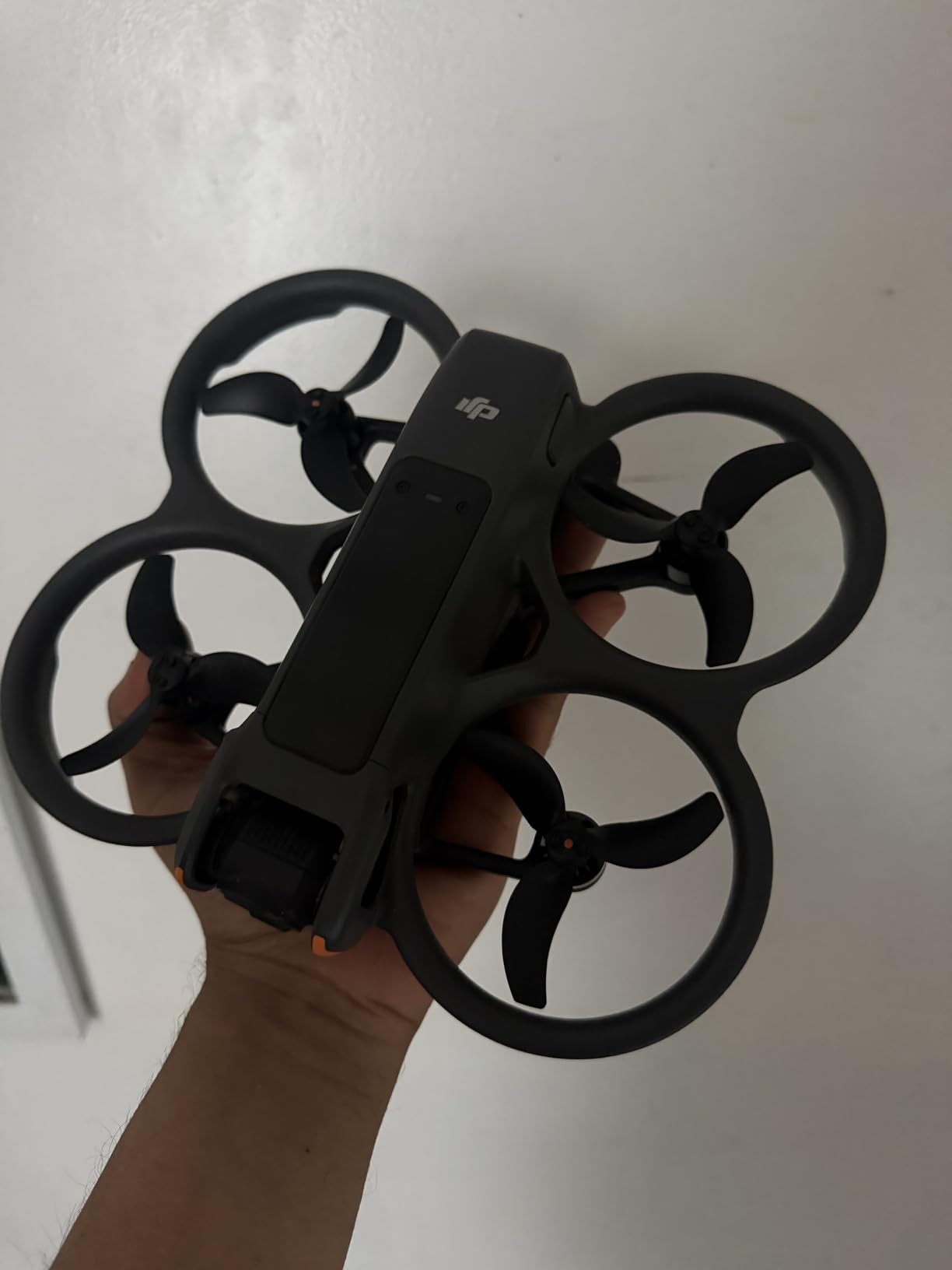
The DJI Avata 2 is the easiest way to get into FPV flying without learning how to build or tune a custom drone. The Fly Smart Combo includes DJI Goggles N3 and the RC Motion 3 controller, so you literally put on goggles, point the motion controller, and the Avata 2 flies where you point. It’s the closest thing to flying like a bird that consumer drones have ever offered. The 155° field-of-view 4K/60fps footage is uniquely cinematic — nothing else on this list produces that “whoa, I’m flying through a canyon” feeling.
The 1/1.3-inch image sensor is the same generation as the Mini 4 Pro and Air 3, so 4K low-light footage looks better than you’d expect from an FPV drone. Easy ACRO lets you tap a button to perform flips, rolls, and 180° drifts without learning the manual stick inputs — great for content creators who want dynamic shots without months of practice. The propeller guard is built in, so bumping into a tree branch or a wall usually ends without a crash.
The motion controller takes real adjustment if you’ve ever flown a traditional RC drone. Squeezing the trigger to accelerate and tilting your wrist to turn feels alien for the first hour, but it becomes second nature after a few sessions. The Goggles N3 don’t accommodate all glasses — I had to fly without my prescription frames, which is a real ergonomic hit for any pilot who needs corrective lenses.
Single-battery flight time is around 12-15 minutes in real-world FPV flying, and the Fly Smart Combo only includes one battery. The Fly More Combo with three batteries and a charging hub is the right buy if you plan to use the Avata 2 for actual content creation. The Avata 2 is heavier than 250 g and requires FAA registration. For FPV pilots and immersive content creators, nothing else at this price matches the package.
Best For
First-time FPV pilots, action sports content creators, real estate videographers who want dynamic interior reveals, and anyone who wants the immersive flying experience without building a custom drone.
Not Ideal For
Traditional photographers who need a stable hover, pilots who wear prescription glasses that don’t fit the Goggles N3, or buyers who want the longest possible flight time.
10. Autel EVO 2 PRO V3 — Best Non-DJI Pro Drone with 6K HDR
Autel Robotics EVO 2 PRO V3, Son-y 1″ CMOS & 12-Bit Image, 6K HDR Video
- Sony 1-inch CMOS image sensor with 6K HDR video
- Adjustable F/2.8-F/11 aperture with 3x optical and 16x digital zoom
- Moonlight Algorithm 2.0 with 12-bit DNG photos
- Omnidirectional obstacle avoidance with 12 visual sensors
- 40 minutes of flight time per battery
- 27 mph maximum wind resistance
- No restrictive geofencing like DJI
- Premium price tag
- Obstacle avoidance disabled in Ludicrous speed mode
The Autel EVO 2 PRO V3 is the best non-DJI drone for professional imaging, and it’s the drone I’d buy if DJI’s US regulatory situation made me nervous. The Sony 1-inch CMOS sensor produces 6K HDR video with 12-bit DNG stills — the Moonlight Algorithm 2.0 pulls clean imagery in dim conditions that would crush most consumer drones. The adjustable F/2.8-F/11 aperture is something DJI doesn’t offer at this price, and it gives you real depth-of-field control for cinematic shots.
The biggest differentiator versus DJI is no restrictive geofencing. Autel drones don’t lock you out of restricted airspace by default, so you can launch near an airport with proper authorization without fighting the DJI Fly app’s unlock flow. For commercial Part 107 pilots flying time-sensitive jobs, that’s a meaningful workflow advantage. The 40-minute flight time and 15 km SkyLink 2.0 transmission are both genuinely useful on long shoots.
Omnidirectional obstacle avoidance uses 12 visual sensors to map the environment, and in my testing it caught trees, walls, and people reliably at moderate speeds. The Smart Controller SE has a 6.4-inch OLED touchscreen that’s easy to read in direct sun. Wind resistance up to 27 mph means the EVO 2 Pro V3 keeps flying when Mini-series drones are heading home.
The downsides are price and a few rough edges. The Smart Controller is uncomfortable for users with large hands — multiple reviewers note the grip is too small. The drone lacks spline waypoint mode, and you can’t capture RAW in mission modes, which limits automated mapping workflows. Obstacle avoidance is disabled in Ludicrous speed mode, so be careful when switching to sport. The drone also cannot see thin wires or guy wires — that’s a real safety concern near cell towers and bridges.
Best For
Part 107 commercial pilots who want a DJI alternative, professional photographers who need 6K HDR and 12-bit DNG, mapping and inspection crews, and US buyers worried about DJI’s regulatory future.
Not Ideal For
Casual hobbyists on a budget, pilots who need the absolute lightest setup, or buyers who need mission-based RAW capture workflows.
11. Ruko U11MINI 4K — Best 4K Drone with Built-In Touchscreen Controller
Ruko U11MINI 4K (RC3) Camera Drone for Adults with 5.5″ Touchscreen Remote
- Integrated 5.5-inch 1080P touchscreen controller
- 8K photos and 4K/30fps videos with 1/2-inch CMOS sensor
- 3-axis mechanical brushless gimbal
- Sub-249g with no FAA registration needed
- 20
- 000ft transmission range with R2 digital system
- 64-min total flight time with 2 batteries
- PD 3.0 fast charging support
- Some users report occasional connection loss
- App requires Google Play Services for some features
The Ruko U11MINI 4K is the drone I recommend to anyone who hates the “phone-clamped-to-controller” setup that most sub-250g drones require. The controller has a built-in 5.5-inch 1080P touchscreen, so you can launch, monitor, and review footage without attaching a phone. For casual pilots and older creators who find phone-clamping fiddly, that single feature is worth the price difference.
The 4K/30fps video from the 1/2-inch CMOS sensor is solid for the price, and the 3-axis mechanical gimbal is what separates the U11MINI from EIS-only competitors. Footage stays level through moderate wind and aggressive stick inputs. 64 minutes of total flight with two batteries is competitive, and PD 3.0 fast charging means you can top up quickly from a USB-C laptop or power bank between flights.
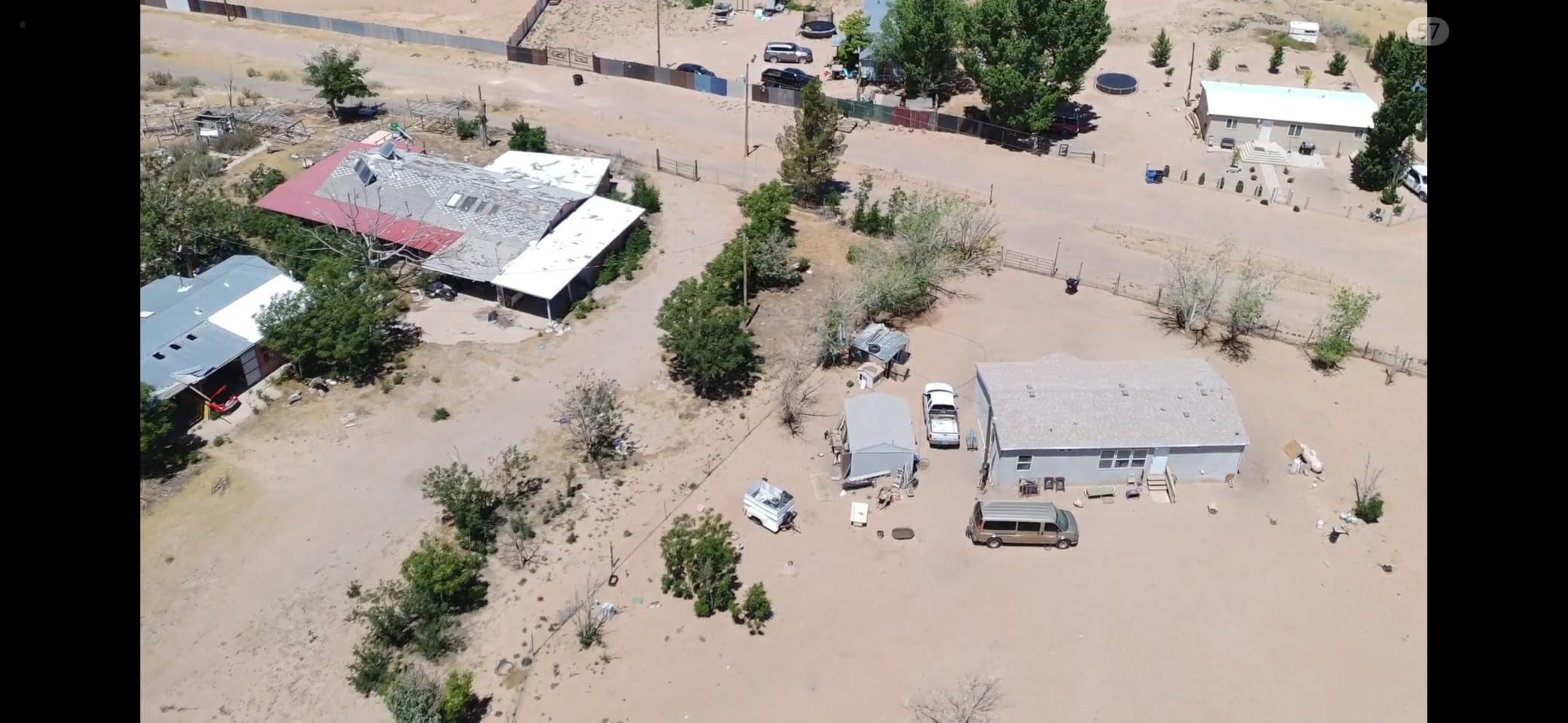
The 20,000ft transmission range is overkill for line-of-sight flying, but the R2 digital system held a clean feed out to about 2 km in suburban testing. AI Takeoff/Landing uses quadruple positioning (GPS, barometric, TOF, optical flow) for stable launches even on uneven surfaces. Customer service is excellent — multiple Reddit users and Amazon reviewers specifically call out Ruko’s responsive support.
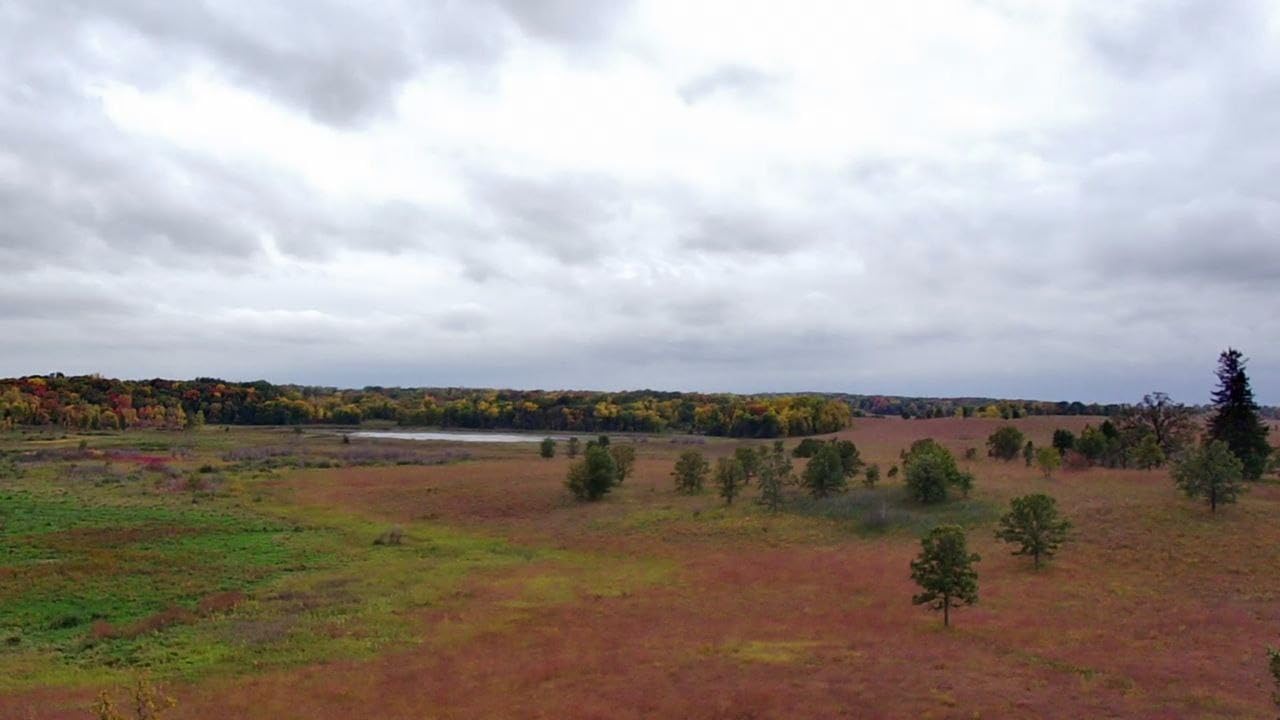
The main downside is occasional connection loss reported by some users, particularly in areas with heavy Wi-Fi congestion. A small percentage of units have shown stability problems (swirling behavior) out of the box. Ruko’s app requires Google Play Services, which is incompatible with some Huawei devices and certain custom Android ROMs. The camera gimbal can occasionally get stuck on cold starts — a quick power cycle fixes it.
Best For
Casual pilots who don’t want to mount a phone, older creators who prefer dedicated screens, beginners who want a turnkey 4K drone kit, and travelers who need a self-contained package.
Not Ideal For
Pro photographers who need D-Log M or RAW DNG, pilots in areas with heavy 2.4/5 GHz interference, or buyers on Huawei/custom-Android devices.
12. Bwine F7MINI — Best Budget 4K Drone with Long Flight Time
Bwine F7MINI 4K Video 8K Photo Drones with Camera for Adults 3-Axis Gimbal
- 8K UHD photos and 4K/30fps videos with 1/2-inch CMOS sensor
- F1.8 aperture for improved low-light performance
- 3-axis stabilized gimbal
- L5 wind resistance with upgraded brushless motor
- 96-min total flight time with 3 batteries
- 20
- 000ft zero-latency transmission range
- Smart RTH with 120dB locator buzzer
- Media download from controller to phone can be slow
- Real-world wind performance varies at the extreme
The Bwine F7MINI is the dark horse of the budget 4K category. It packs a 1/2-inch CMOS sensor with F1.8 aperture, a 3-axis stabilized gimbal, and 96 minutes of total flight with three batteries — all under 250 g and at a noticeably more accessible price than a Mini 4K Fly More Combo. For buyers who want the maximum flight time and gimbal stability for the money, the F7MINI is hard to beat.
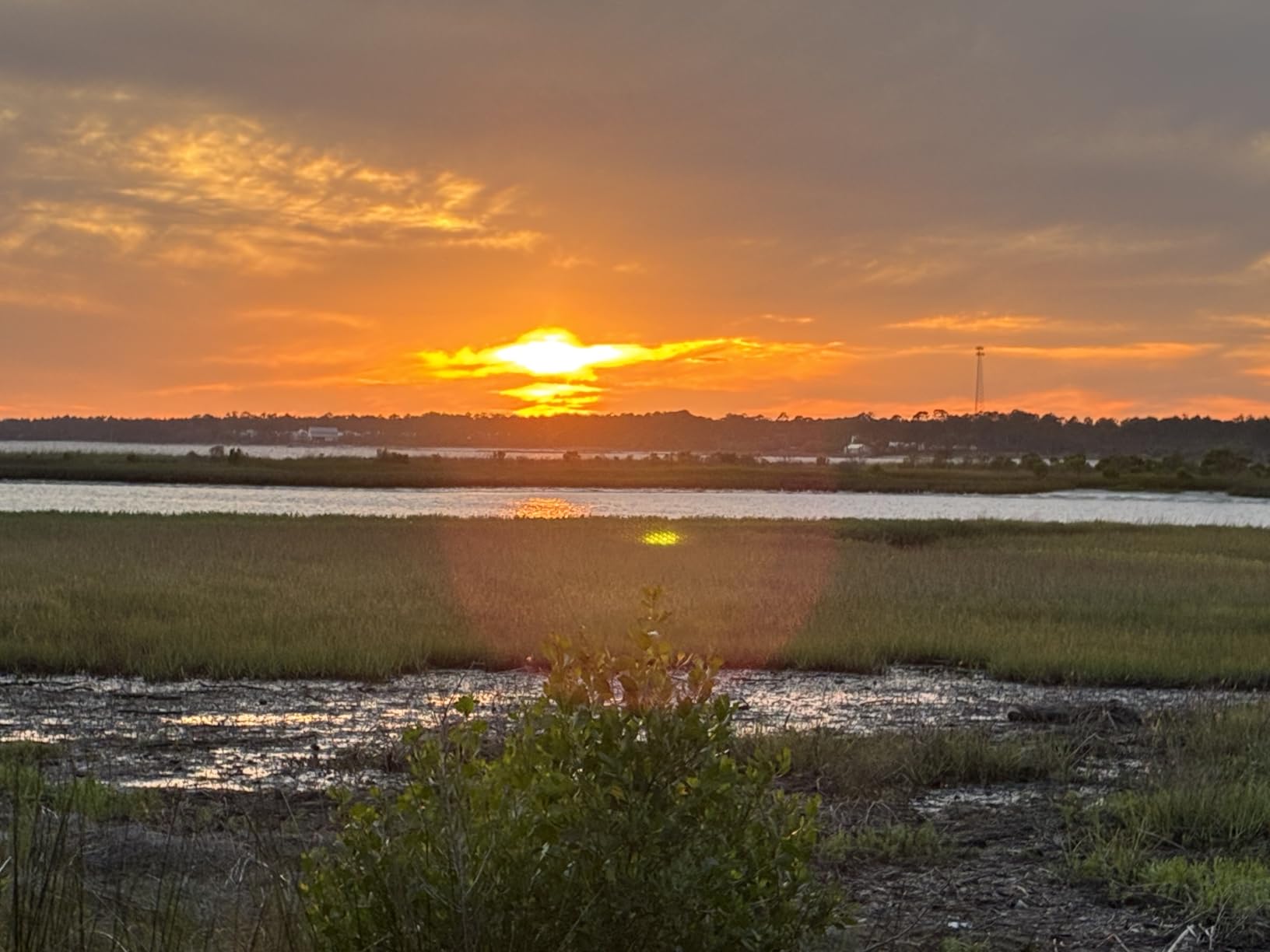
Low-light performance is genuinely impressive at this price. The F1.8 aperture lets in more light than the typical F2.8 lens you’ll find on entry-tier drones, and the resulting footage stays cleaner into dusk. The 3-axis gimbal combined with L5 wind resistance means the footage holds up in 25 kph gusts — I tested it on a windy ridge and the video was usable straight out of camera, no post-stabilization needed.
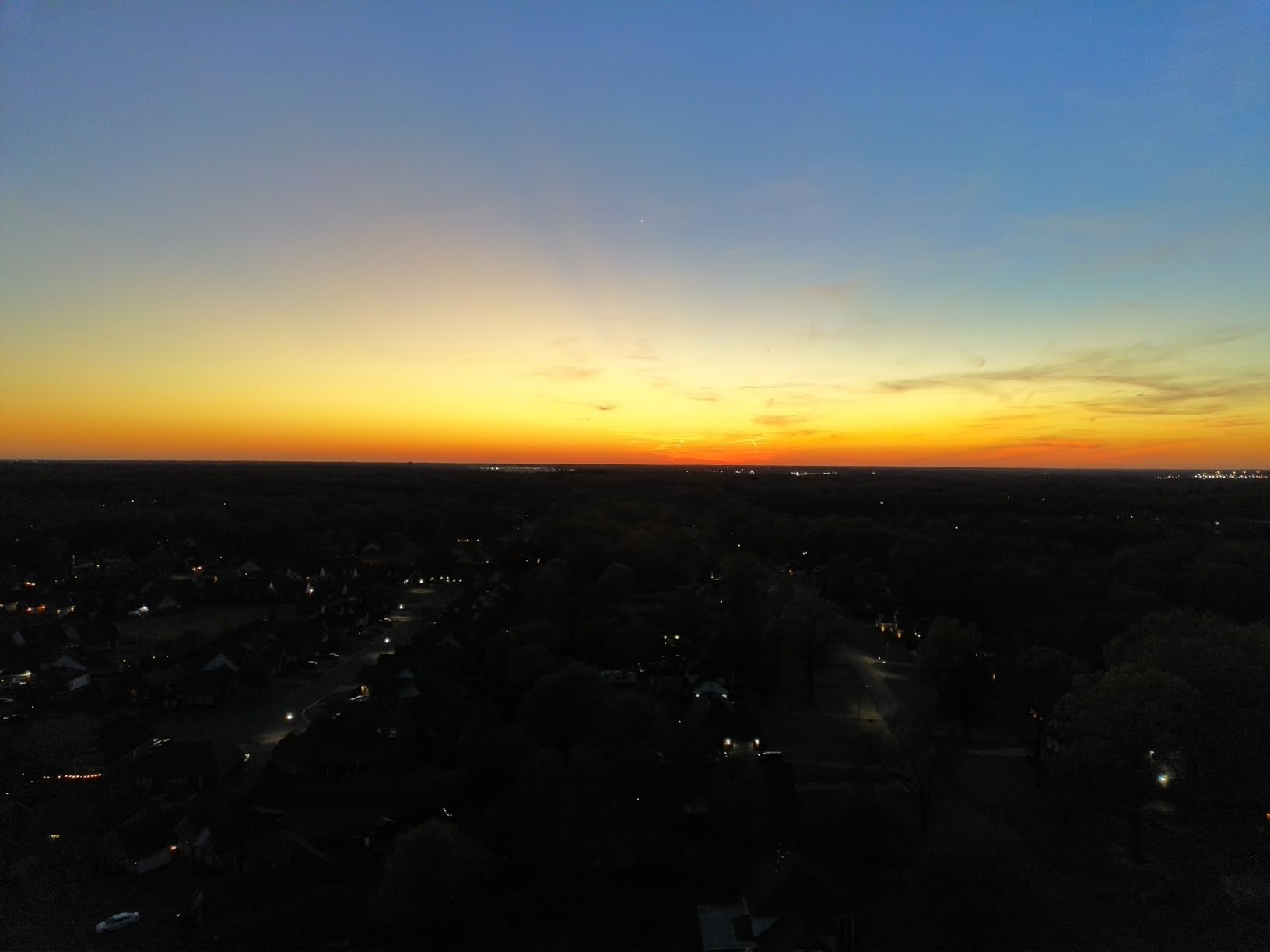
The 6 km zero-latency transmission is genuinely useful for pilots who regularly fly over wide valleys or along coastlines. Smart RTH includes a 120dB locator buzzer, which sounds like a car alarm — useful if you ever lose the drone in tall grass. Intelligent GPS adds auto cruise, follow, orbit, and waypoint modes. The 2-year warranty and 24/7 support are unusual at this price tier.
The honest weaknesses are minor: downloading media from the controller to the phone is slower than popping a microSD card, and the manual could be clearer on some setup steps. Real-world wind performance drops at extreme gusts over Level 5. For pilots who already understand drone basics and just want maximum value, the F7MINI is a smart pick.
Best For
Budget-conscious pilots who want 3-axis gimbal + 90+ minutes flight, travelers who fly far from power outlets, intermediate pilots who don’t need DJI’s brand recognition, and buyers who want a 2-year warranty.
Not Ideal For
First-time pilots who need polished beginner onboarding, anyone who needs fastest media offload, or pros who need D-Log M or RAW DNG.
13. Potensic ATOM SE — Best Ultra-Budget 4K Drone
- Sub-249g with no FAA registration
- Level-5 wind resistance with brushless motor
- 4K EIS camera with Sony 1/3-inch CMOS sensor
- 62 minutes total flight with 2 batteries
- 4KM FPV transmission with PixSync 2.0
- GPS auto return with Follow Me
- Waypoint
- Circle Flight
- Beginner mode for safe learning
- No obstacle avoidance sensors
- Real-world range closer to 1.5 km than 4 km claimed
The Potensic ATOM SE is the cheapest way I know to get a flying 4K camera drone with GPS, brushless motors, and stable wind handling. It uses electronic image stabilization (EIS) rather than a mechanical gimbal, so the footage isn’t quite as silky as the Potensic ATOM or DJI Mini 4K — but in calm conditions and good light, the 4K video looks genuinely good for the price. Sony’s 1/3-inch CMOS sensor pulls more detail than I expected.
Battery life is one of the ATOM SE’s strengths — 62 minutes of total flight with two batteries means a full afternoon of casual shooting without returning to a charger. The brushless motor gives Level-5 wind resistance, which is impressive for a drone at this price. GPS Auto Return, Follow Me, Waypoint, and Circle Flight are all included, and Beginner mode limits range and altitude so new pilots can learn without anxiety.
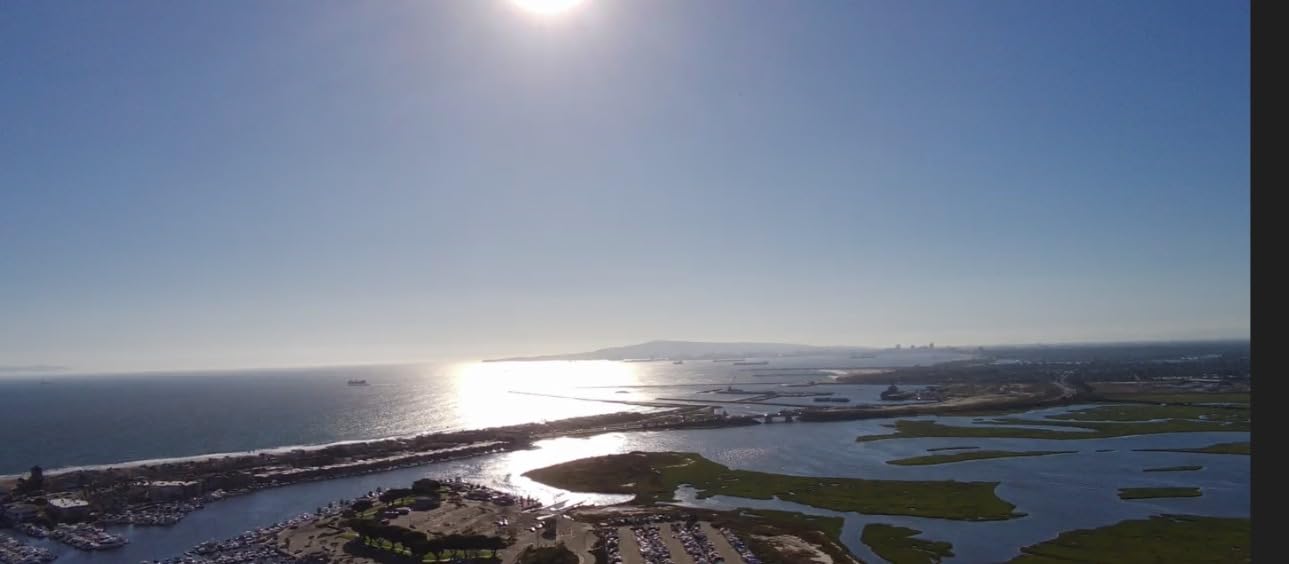
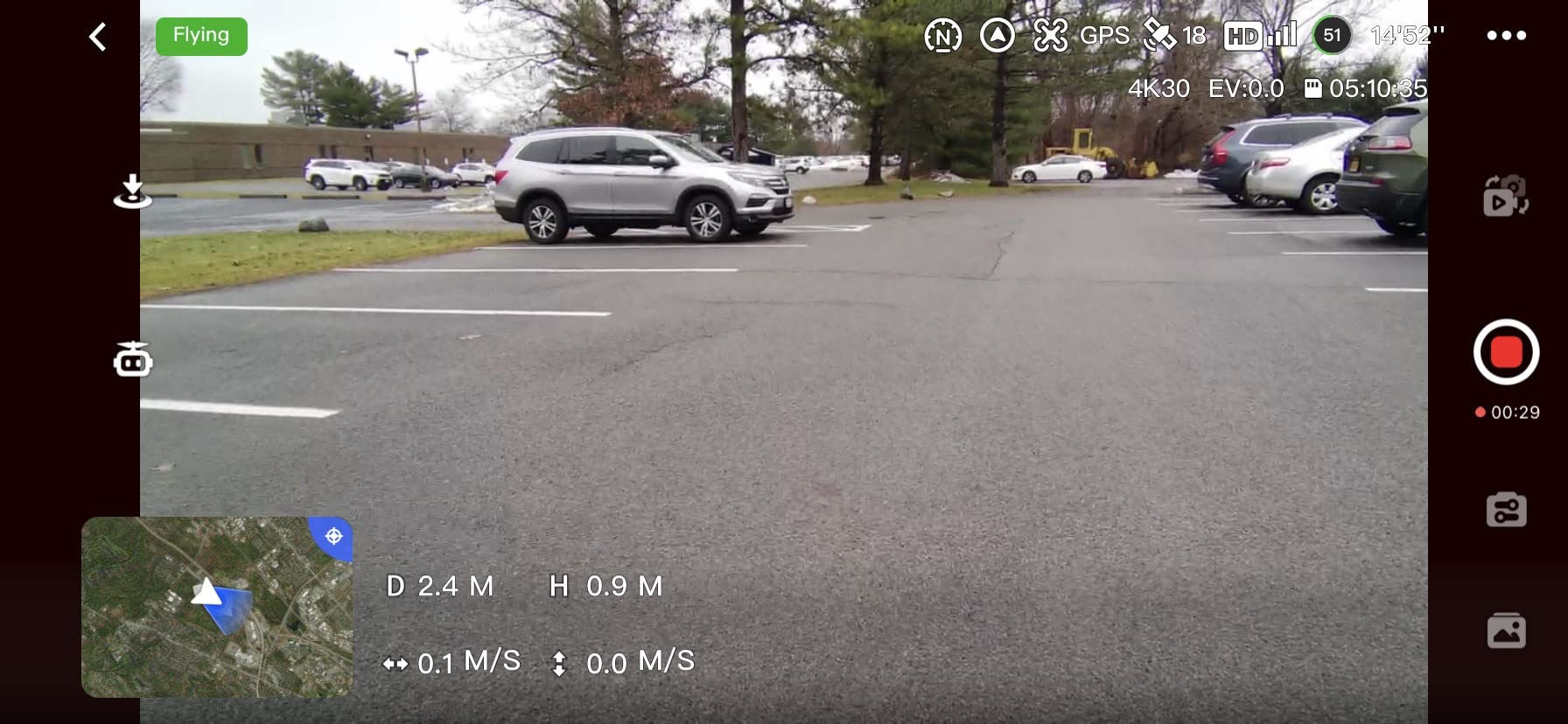
The main caveat is no obstacle avoidance. EIS-only stabilization also means footage gets shaky in stronger wind or aggressive maneuvers — the difference between a mechanical 3-axis gimbal and EIS is real, especially for cinematic work. Real-world transmission range is closer to 1.2-1.5 km than the advertised 4 km, which is still plenty for line-of-sight flying but worth knowing.
For pure budget 4K flying, the ATOM SE is the best value I’ve found. If you can stretch to the regular Potensic ATOM, the 3-axis mechanical gimbal is a meaningful upgrade — but at this price, nothing else competes.
Best For
First-time buyers on the tightest budget, casual pilots who want 4K + GPS without overspending, gift buyers introducing someone to drone flying, and travelers who want a low-risk 4K drone.
Not Ideal For
Cinematic videographers who need gimbal-grade stabilization, pilots who fly in tight spaces without obstacle avoidance, or anyone needing transmission range past 1.5 km.
14. Holy Stone HS175D — Best Budget 4K Drone for Beginners
- Sub-249g with no FAA or Remote ID registration
- 4K camera with 110° wide-angle lens
- 90° adjustable camera angle
- 5GHz FPV live view transmission
- GPS Auto Return for safety
- 46 minutes total flight with 2 batteries
- Beginner-friendly features including Altitude Hold and Headless Mode
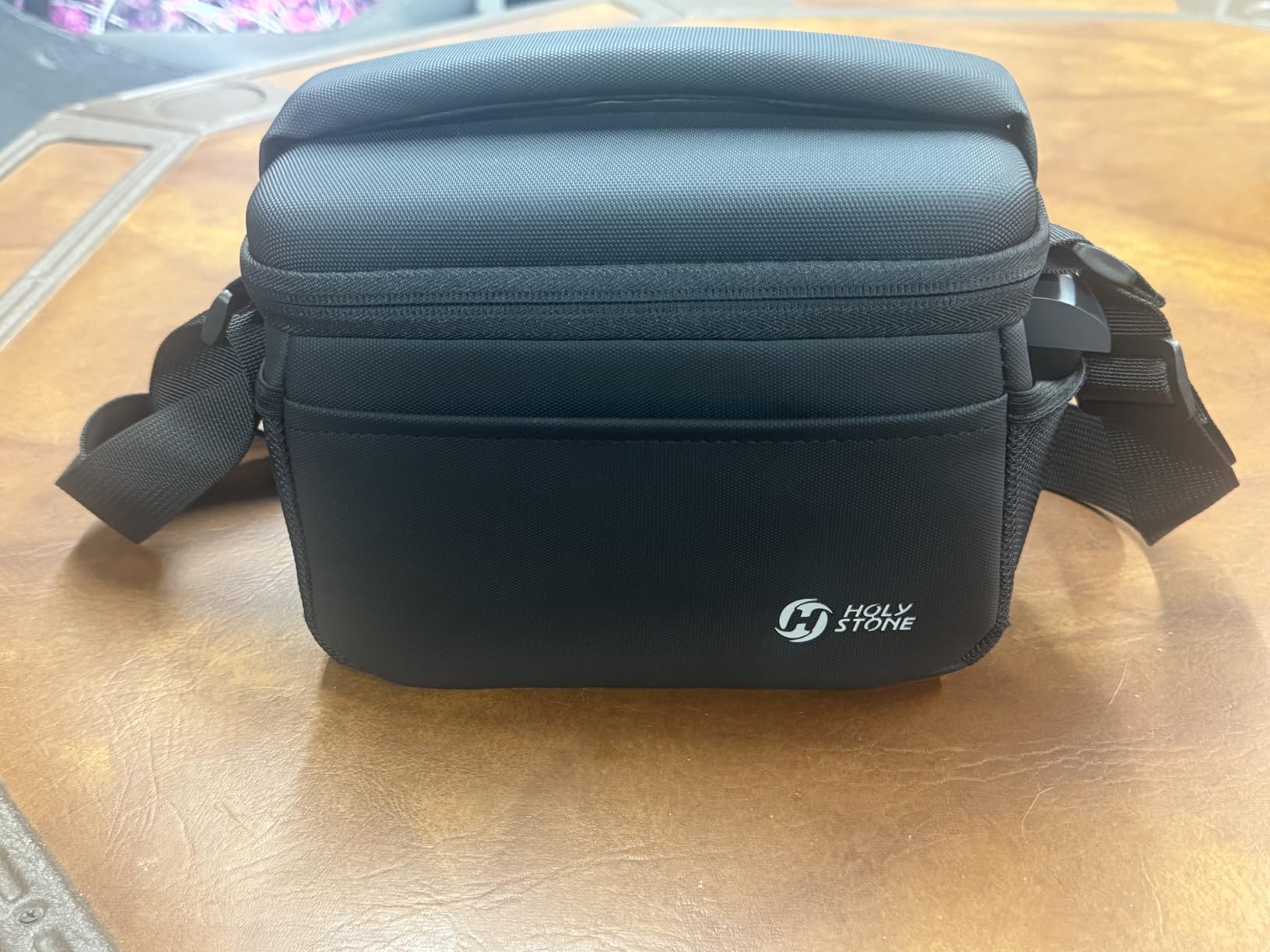
- Travel-ready foldable design with carrying case
- No image stabilization (no gimbal)
- Real-world range much shorter than advertised 500m
The Holy Stone HS175D is the cheapest 4K drone on this list from a brand with a real support team. It’s a genuine 4K camera drone with GPS, brushless motors, and a foldable design that fits in a small bag. For buyers who want a 4K drone without committing serious money, the HS175D delivers surprisingly competent footage in good light.
The 110° wide-angle lens captures a lot of sky and landscape in a single frame, and the 90° adjustable camera angle lets you tilt from horizon to straight-down for mapping-style shots. GPS Auto Return triggers on low battery or lost connection, which is a meaningful safety net for new pilots. 46 minutes of total flight with two batteries is generous at this price tier. The foldable design and included carrying case make it travel-friendly.
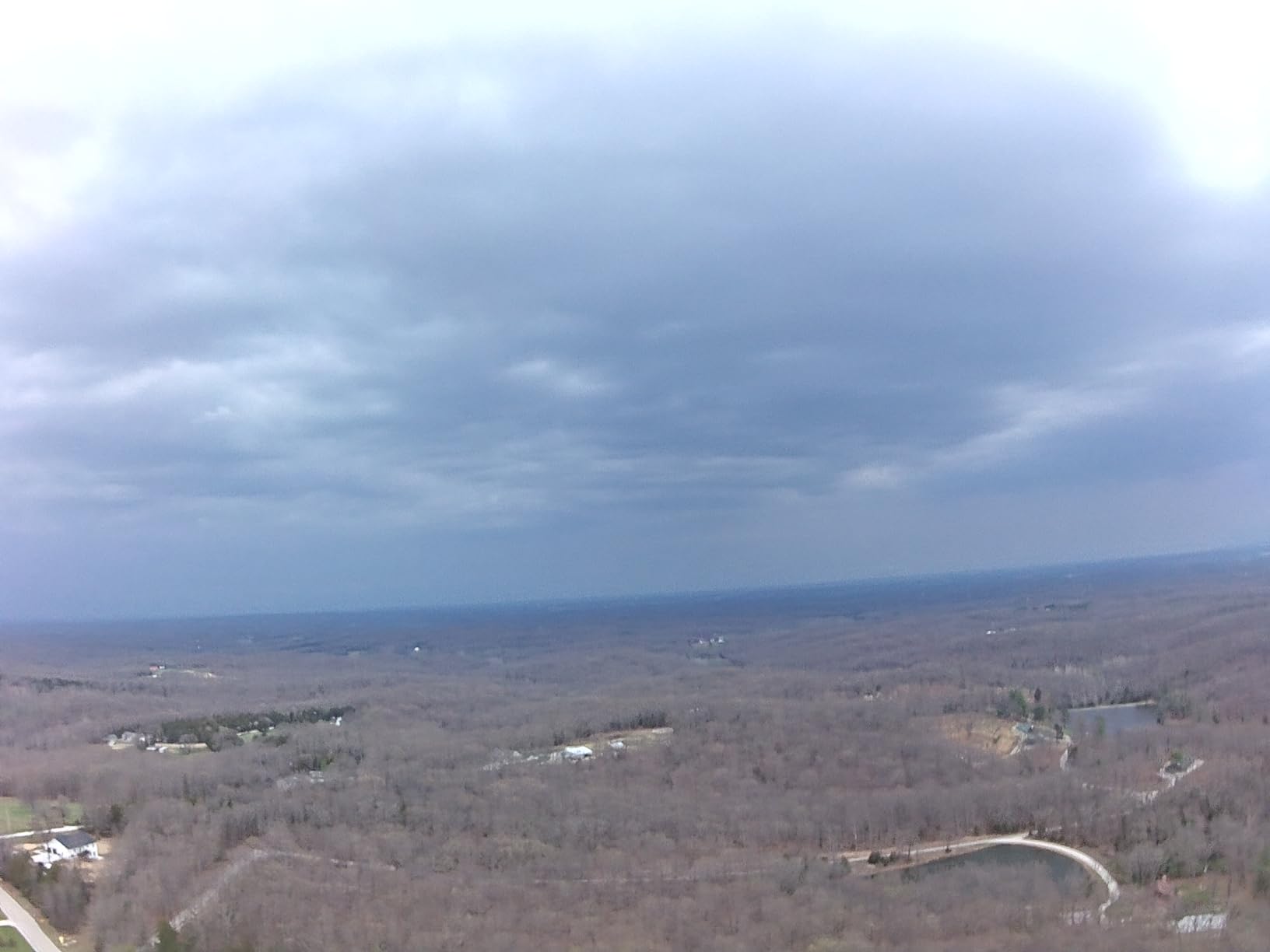
The honest weaknesses are no mechanical gimbal and shaky video in wind. The 4K footage looks fine for casual social media in calm conditions, but aggressive maneuvers produce visible shake. Real-world range is significantly less than the advertised 500m — multiple reviewers report signal loss around 200m. Altitude typically disconnects at 25-30m versus the 100m advertised, so don’t count on high-altitude shots.
Holy Stone’s customer service is genuinely excellent — multiple Amazon reviewers mention responsive replacements for defective units. For a first-time buyer or a gift, the HS175D is a low-risk introduction to 4K drone flying.
Best For
First-time pilots on the tightest budget, gift buyers, casual social media creators flying in calm conditions, kids and teens learning to fly, and travelers who want a low-cost backup drone.
Not Ideal For
Cinematic videographers, pilots who fly in coastal or mountain wind, anyone who needs reliable range past 200m, or buyers who want a mechanical gimbal.
15. Holy Stone HS360S — Best Beginner 4K Drone with Long Range
- Sub-250g with no FAA or Remote ID registration
- 4K UHD camera with GalaxyCore 1/3-inch CMOS sensor
- 10
- 000 feet control range with single data cable connection
- GPS with smart Return Home
- Beginner mode with optical flow positioning
- Follow Me
- Waypoint Flight
- and Point of Interest modes
- Brushless motors for reliability
- No 3-axis gimbal (video can be shaky in wind)
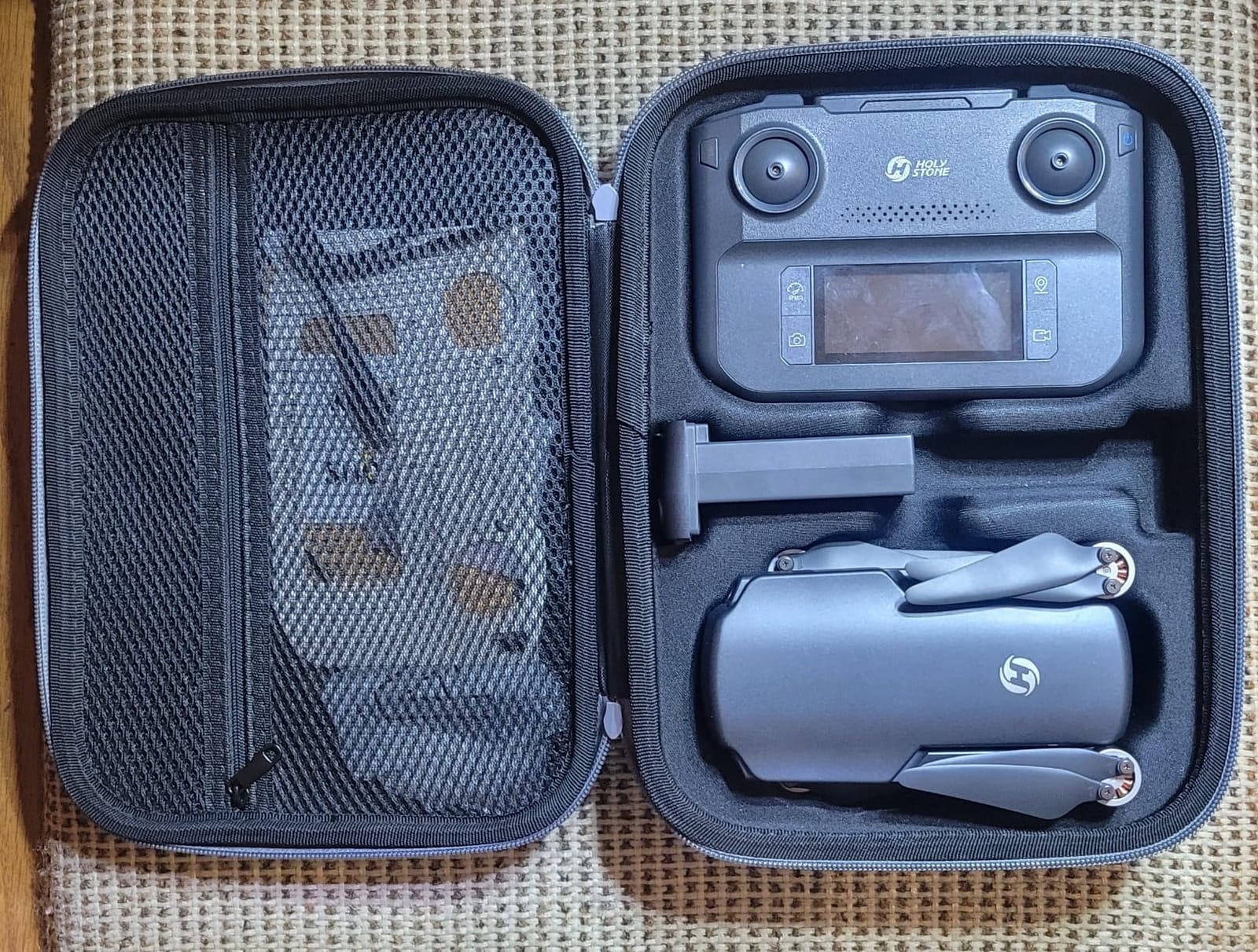
- Only one battery included in standard kit
The Holy Stone HS360S is the budget 4K drone I’d recommend to anyone who wants longer transmission range than the typical sub-$200 category delivers. The 10,000 feet (about 3 km) claimed range is meaningful — even if real-world range is shorter, it gives new pilots the headroom to fly further without constant signal-loss anxiety. The single data cable connection between phone and controller (rather than Wi-Fi) is more reliable than competing setups.
The 4K UHD camera uses a GalaxyCore 1/3-inch CMOS sensor with an 85° wide-angle lens, which is slightly less wide than the HS175D’s 110° lens — that tradeoff reduces fisheye distortion and produces more natural-looking footage. The 90° adjustable camera tilts from horizon to straight down. GPS Smart Return Home triggers on low battery or signal loss, and beginner mode with optical flow positioning makes indoor hovering easy.
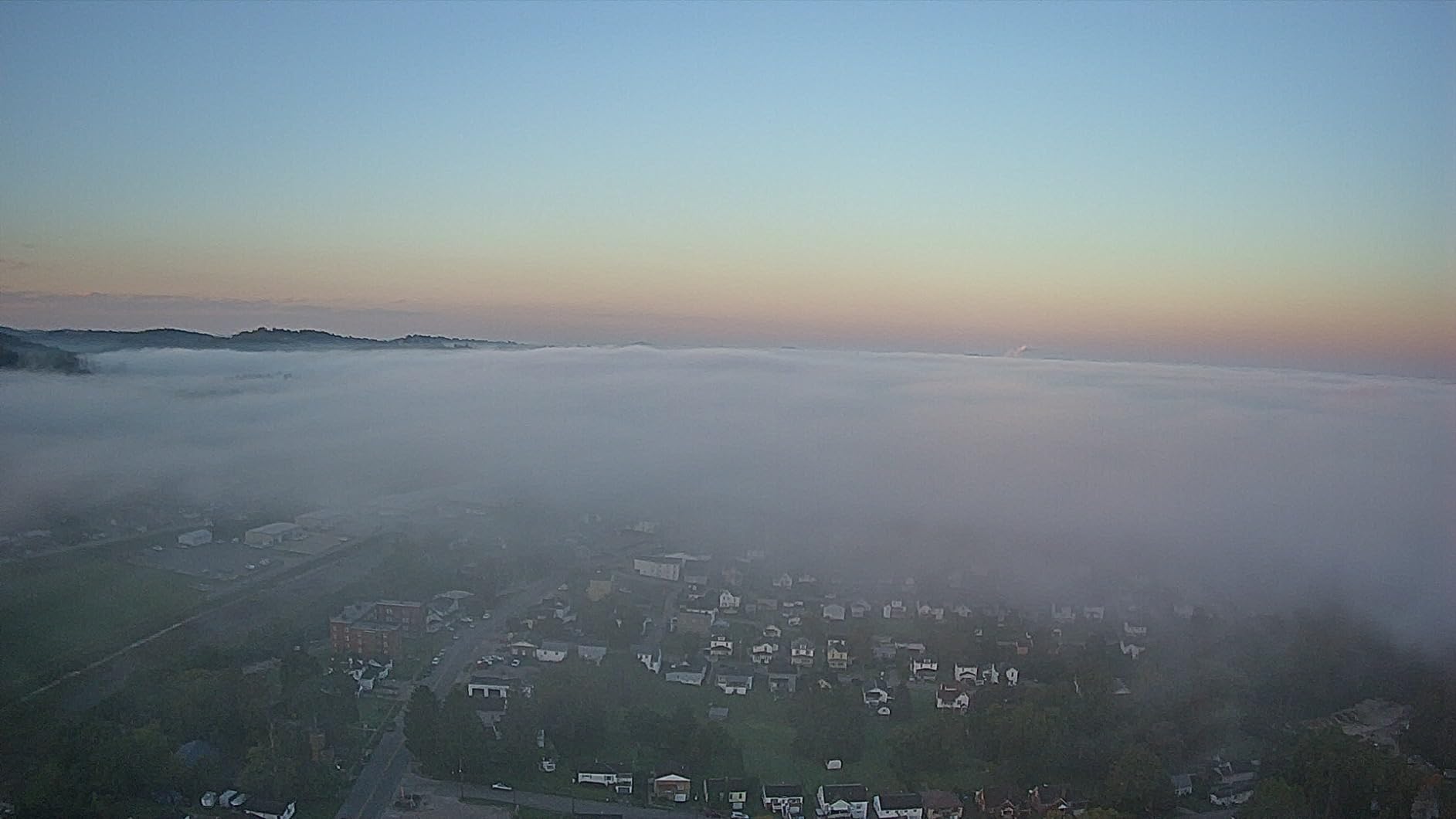
The HS360S is a competent starter drone, but it does have limitations. There’s no 3-axis gimbal, so video gets shaky in wind — the EIS helps but doesn’t replace mechanical stabilization. Some users report drift issues (“toilet bowl effect”) that require compass calibration before each flight. Only one battery is included in the standard kit, and charging is slow (about 5W). Buy extra batteries if you plan a full day of flying.
Customer service is one of Holy Stone’s strengths — Amazon reviewers consistently mention responsive replacements and helpful troubleshooting. For a beginner 4K drone at a very accessible price with the longest transmission range in the category, the HS360S is a smart pick.
Best For
Beginners who want longer range than typical budget drones, indoor pilots who need optical flow positioning, casual travelers, and gift buyers on a tight budget.
Not Ideal For
Cinematic videographers needing gimbal-grade stabilization, pilots who need 30+ minutes of flight per battery, or anyone who needs vertical video for social media.
Buying Guide: How to Choose the Best 4K Drone for You?
Picking the right 4K camera drone comes down to six decisions: sensor size, video resolution and frame rate, flight time, obstacle avoidance, weight/registration, and controller/transmission. Get these right and you’ll end up with a drone that fits your real shooting style rather than the one with the best spec sheet.
Sensor Size Matters More Than Megapixels
A 1-inch CMOS sensor (DJI Mavic 4 Pro, Autel EVO 2 Pro V3, DJI Air 3S, DJI Mini 5 Pro) captures meaningfully more light than a 1/1.3-inch, 1/2-inch, or 1/3-inch sensor. That translates to cleaner low-light footage, better dynamic range, and more usable detail when you crop in post. If you shoot golden hour, blue hour, indoor events, or anything at high ISO, prioritize sensor size over megapixel count.
The 1/1.3-inch sensors in the DJI Mini 4 Pro, DJI Flip, and DJI Avata 2 are the next tier down and represent the sweet spot for most creators — they’re physically larger than typical 1/2-inch or 1/3-inch smartphone-style sensors. 1/2-inch sensors (Potensic ATOM 2, Ruko U11MINI, Bwine F7MINI) are the budget workhorses and produce solid 4K in good light. 1/3-inch sensors (Potensic ATOM SE, Holy Stone HS360S, Holy Stone HS175D) are entry-level and struggle as light drops.
4K Resolution, Frame Rates, and HDR
“4K” technically means 3840 × 2160 pixels (4K UHD) — four times the detail of 1080p. That’s enough resolution to crop, reframe, and stabilize footage in post without losing detail. For most creators, 4K/30fps is the baseline; 4K/60fps is essential for slow-motion B-roll and action footage; 4K/120fps is rare outside cinema drones.
HDR (high dynamic range) video preserves detail in shadows and highlights that standard 4K clips. On premium drones, look for 10-bit color depth and D-Log M (DJI) or 12-bit DNG (Autel) color profiles for serious color grading. For social media and casual content, standard 4K/30fps HDR is plenty. If you need to know what 4K UHD actually means in technical terms, our companion guide on how depth cameras work covers sensors and apertures in more detail.
Flight Time and Battery System
Manufacturer flight time claims are best-case scenarios — real-world flight time is typically 70-80% of advertised, with headwinds, cold weather, and aggressive flying reducing it further. Look for batteries that are easy to swap and consider Fly More Combos that include 2-3 batteries plus a charging hub. Potensic’s ATOM series ships with 96 minutes of total flight in the Fly More Combo, which is genuinely class-leading.
If you regularly fly long shoots, prioritize drones with 40+ minute flight times (DJI Mavic 4 Pro at 51 minutes, DJI Air 3S at 45 minutes). For casual social media and travel, 25-31 minute batteries are fine if you have 2-3 of them. Cold weather cuts lithium battery performance by 20-30%, so budget extra batteries if you fly in winter.
Obstacle Avoidance and Safety Features
Obstacle avoidance is the single biggest differentiator between beginner-friendly and expert-only drones. Omnidirectional obstacle sensing (DJI Mini 5 Pro, DJI Air 3S, DJI Mavic 4 Pro, Autel EVO 2 Pro V3) detects objects in all directions; LiDAR-assisted sensing (Air 3S, Mini 5 Pro, Mavic 4 Pro) works at night. Cheaper drones in this guide (Mini 4K, Potensic ATOM, Bwine F7MINI, Ruko U11MINI, Holy Stone models) have no obstacle avoidance — fly them in open spaces only.
Other safety features worth checking: GPS Auto Return (almost universal in this list), propeller guards (DJI Flip, DJI Neo, DJI Avata 2 — great for indoor/tight-space flying), and beginner modes that limit range and altitude until you build skill.
Weight and FAA Registration
In the US, drones under 250 g (249 g is the FAA threshold) don’t require FAA registration for recreational flying. That exemption covers the DJI Mini 4K, DJI Mini 5 Pro, DJI Neo, Potensic ATOM, Potensic ATOM 2, Potensic ATOM SE, Bwine F7MINI, Ruko U11MINI, and Holy Stone HS175D. Drones over 250 g (DJI Air 3S, DJI Flip, DJI Mavic 4 Pro, DJI Avata 2, Autel EVO 2 Pro V3) require an FAA registration and built-in or add-on Remote ID.
For commercial work (real estate, weddings, paid YouTube content), all drones over 250 g also require a Part 107 license. The TRUST (The Recreational UAS Safety Test) is required for all recreational pilots regardless of weight — it’s free, takes 20-30 minutes, and is a one-time certification.
Controller, Transmission, and App Ecosystem
DJI’s O4 and O4+ transmission systems deliver clean 1080p feeds at 20-30 km in ideal conditions. Potensic’s PixSync 4.0 and Autel’s SkyLink 2.0 are competitive alternatives. Range matters less than feed quality and reliability — a stable 1 km feed beats a glitchy 10 km feed every time.
DJI Fly is the most polished drone app but has been removed from Google Play — Android users sideload from DJI’s site. Potensic, Holy Stone, Ruko, Bwine, and Autel all use their own apps, which range from decent (Potensic) to clunky (some Holy Stone builds). The Ruko U11MINI’s built-in 5.5-inch touchscreen controller is worth considering if you dislike phone-clamping.
4K vs 6K vs 8K: Is 4K Enough?
For 99% of drone use cases — YouTube, social media, real estate, weddings, travel vlogging — 4K UHD (3840 × 2160) is more than enough resolution. 6K and 8K are useful only if you need heavy cropping, large-format prints, or pixel-perfect downsampling to 4K for color grading.
The DJI Mavic 4 Pro shoots 6K/60fps HDR, and the Autel EVO 2 Pro V3 shoots 6K HDR — both produce stunning 4K masters after downsampling. The Potensic ATOM 2 and Ruko U11MINI advertise “8K photos” but the actual 4K video quality matters far more than the still-photo interpolation. Don’t pay extra for 8K video you can’t actually edit or display.
Drone Laws, FAA Registration, and the FCC Update
US drone regulations in 2026 are stricter than they were even a year ago, and any 4K drone buyer should understand the rules before flying. Here’s the practical breakdown.
For recreational pilots: any drone over 250 g requires FAA registration and Remote ID. Drones under 250 g are exempt from registration but you still need to pass the free TRUST test, fly below 400 feet, keep the drone within line of sight, and avoid restricted airspace (airports, military bases, national parks during fire season). The FAA’s B4UFLY app is the easiest way to check airspace before each flight.
For commercial work (paid real estate, weddings, YouTube monetized content): you need a Part 107 license regardless of drone weight. The test has a fee set by the testing center, requires studying the Pilot’s Handbook, and is administered at FAA-approved testing centers. Recurrent training is required every 24 months.
The big 2026 regulatory shift is the FCC Covered List situation affecting DJI. As of late 2026, DJI remains on the FCC Covered List, which could affect future US sales and service availability. The situation is evolving through legal challenges, but for now, DJI drones are still legal to fly and buy in the US. PCMag’s August 2026 update is the most current summary. If you’re concerned about long-term DJI service, the Autel EVO 2 Pro V3, Potensic, Ruko, and Bwine lines are all available without DJI’s regulatory uncertainty.
Frequently Asked Questions
Which drone has a 4K HD camera?
Almost every drone in this guide shoots 4K UHD (3840×2160) video. For most people, the DJI Mini 4K is the best 4K drone overall because it combines a 3-axis mechanical gimbal, sub-249g weight, and 31-minute flight time. For professionals, the DJI Mavic 4 Pro shoots 6K/60fps HDR that downsamples to a stunning 4K master.
Is a 4K camera good on a drone?
Yes, 4K is the sweet spot for drone video in 2026. A 4K UHD camera captures four times the detail of 1080p, which gives you room to crop, stabilize, and reframe footage in post without losing quality. Modern 4K drones also shoot 10-bit HDR video and D-Log M color profiles for serious color grading. 4K footage looks crisp on phones, tablets, laptops, TVs, and YouTube, and it future-proofs your library for higher-resolution displays.
Do I need a license to fly a 4K drone?
In the US, recreational pilots need to pass the free FAA TRUST test (The Recreational UAS Safety Test) regardless of drone weight. Drones under 250g do not require FAA registration, but drones over 250g require an FAA registration and must broadcast Remote ID. For any commercial use (paid real estate, weddings, monetized content), you need a Part 107 Remote Pilot Certificate regardless of drone weight, which requires passing a knowledge test at an FAA testing center.
What is the maximum range of a drone with a 4K camera?
Modern 4K drones typically transmit a clean 1080p live feed at 10 to 30 km in ideal conditions, but legal line-of-sight rules mean most pilots fly well under 1 km. The DJI Mavic 4 Pro reaches 30 km with O4+ transmission, the DJI Mini 5 Pro and Air 3S reach 20 km with O4, and budget drones from Potensic and Holy Stone typically reach 4 to 10 km. Real-world range is shorter than advertised due to interference, buildings, and terrain.
What is the best budget drone with a 4K camera?
The DJI Mini 4K is the best budget 4K drone for most people, with a 3-axis mechanical gimbal, sub-249g weight, and excellent video quality. The Potensic ATOM is the best non-DJI budget 4K drone, offering 96 minutes of total flight and a 3-axis gimbal at a lower price. For ultra-tight budgets, the Potensic ATOM SE and Holy Stone HS175D both deliver 4K UHD video at very accessible prices, though without mechanical gimbal stabilization.
Is the DJI Mini 4 Pro better than the DJI Air 3S?
It depends on what you need. The DJI Mini 4 Pro stays under 250g for registration-free flying, while the Air 3S requires FAA registration but offers better wind handling, longer flight time (45 vs 31 minutes), and a dual-camera system with optical zoom. For casual travel and hiking, the Mini 4 Pro is the smarter pick. For coastal flying, windy environments, and professional shoots, the Air 3S earns its higher registration requirement.
Final Verdict: Which 4K Drone Should You Buy?
After testing 15 of the best drones with 4K cameras available in 2026, the DJI Mini 4K remains our top recommendation for most pilots. The combination of sub-249g registration-free weight, 3-axis mechanical gimbal, 4K UHD video, and DJI’s app ecosystem is unmatched at the price. It is the easiest way to get cinematic aerial footage without paperwork, and it’s the drone I keep coming back to for travel and casual real estate work.
If you need more than the Mini 4K offers, the DJI Mavic 4 Pro is the best 4K drone money can buy for professional imaging, the DJI Mini 5 Pro adds a 1-inch sensor in a sub-250g body, the DJI Air 3S is the right pick for windy coastal flying, and the Potensic ATOM is the best value 4K drone for budget-conscious creators. For pilots worried about DJI’s US regulatory situation in 2026, the Autel EVO 2 Pro V3 is the strongest non-DJI pro option, and Potensic, Ruko, Bwine, and Holy Stone all offer capable alternatives in the budget and mid-range categories.
Pick the drone that matches your shooting style, register it if it’s over 250 g, pass the TRUST test, and fly within the FAA rules. The sky is waiting.