
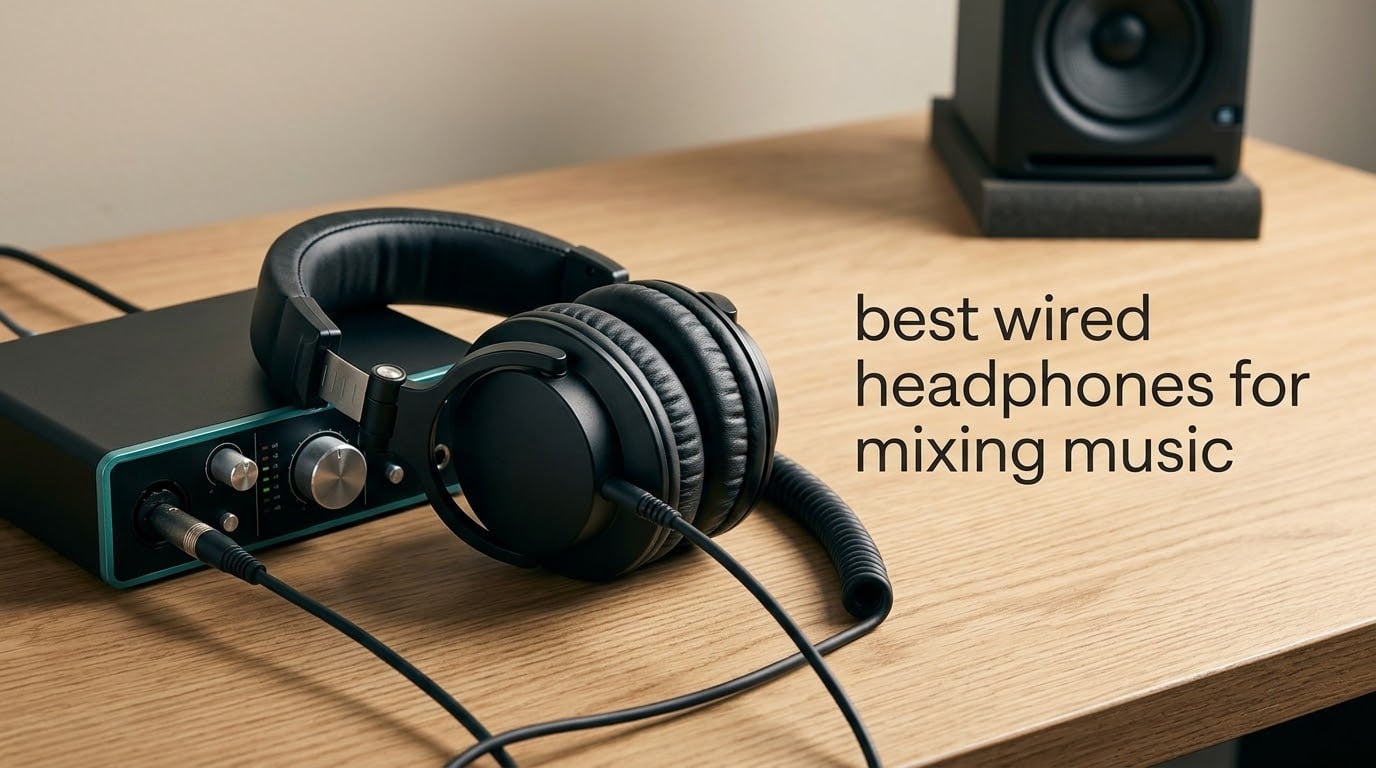
Most home studios are bedrooms, offices and dens where the room decides what you hear long before the speakers do. That is the whole argument for putting a pair of the best wired headphones for mixing music on your head instead of chasing acoustic panels you cannot afford yet. A headphone sends an unprocessed analogue signal straight from your interface to the driver, so no Bluetooth compression, no pairing delay and no battery limit sit between you and the mix.
I have spent the last few months moving between the ten wired headphones below on the same chain: interface out, no EQ, no room correction, the same rough mix. That matters more than any spec sheet, because the numbers a manufacturer prints are not the numbers you mix on. What you mix on is the balance between the low end and the midrange, whether the treble lets you hear sibilance without flinching, and whether you still trust your ears after four hours.
Every model here is wired, current and in service across real studios, and every model here is a genuine mixing tool rather than a lifestyle headphone with a studio sticker. I have flagged the trade-offs as firmly as the wins, including the models with loud reputations that I think are overrated for mixing specifically. You will also find the two questions that decide most purchases, open-back versus closed-back and do you need a headphone amp, answered in full before you reach the individual reviews.
Table of Contents
Top 3 Picks for Mixing (October 2026)

Audio-Technica ATH-M50x
- 45 mm rare earth drivers
- 38 ohm impedance
- Closed-back circumaural
- Detachable cable


Beyerdynamic DT 990 Pro
- 250 ohm studio impedance
- 5 Hz-35000 Hz
- Open-back design
- Velour pads
All 10 Picks at a Glance in 2026
Read the table first, then the reviews. The impedance column tells you whether your interface can drive the pair properly, and the enclosure column tells you whether you can use it while something is being recorded in the same room.
| Product | Specifications | Action |
|---|---|---|
| Audio-Technica ATH-M50x |
|
Check Latest Price |
| Sony MDR-7506 |
|
Check Latest Price |
| Beyerdynamic DT 990 Pro 250 Ohm |
|
Check Latest Price |
 Audio-Technica ATH-M40x Audio-Technica ATH-M40x |
|
Check Latest Price |
 AKG K240STUDIO AKG K240STUDIO |
|
Check Latest Price |
 Sennheiser HD 280 Pro Sennheiser HD 280 Pro |
|
Check Latest Price |
 Sennheiser HD 599 Sennheiser HD 599 |
|
Check Latest Price |
 Samson SR850 Samson SR850 |
|
Check Latest Price |
 Yamaha HPH-MT5W Yamaha HPH-MT5W |
|
Check Latest Price |
 Shure SRH840A Shure SRH840A |
|
Check Latest Price |
What Makes a Wired Headphone Good for Mixing
The best wired headphones for mixing music share four traits, and only one of them is on the box. You want a frequency response that stays close to flat through the midrange, because that is where most mix decisions live. You want low-end extension deep enough to judge a sub-bass note rather than merely feel it on your skull. You want a top end that is smooth enough to survive a six-hour session. And you want a frame, pads and cable that can be repaired rather than replaced.
The fourth trait is the one the spec sheet never mentions, and it is the one that decides whether a pair survives five years of work. Foam and velour pads flatten, flake and stop sealing properly, which changes the bass response and therefore changes your mixes. A permanently attached cable is a warranty on your own ability not to trip over it. Every model below with a detachable cable scores better on longevity, and I call this out in each review.
Staying wired is not nostalgia. Bluetooth codecs compress, add latency and vary their behaviour between devices, so the same session can sound different on your laptop and your phone. A wired chain sends the analogue signal intact, which is what makes headphone mixing repeatable. The one genuine advantage of wireless is convenience, and it is not worth the inconsistency when you are EQing a vocal.
Be honest about one thing. A headphone cannot show you what a mix sounds like on a club system or a phone speaker. It shows you the recording as it exists inside your room, without the room baked in. Translation checks still need a second device, and the strongest workflow is headphones plus one nearfield monitor plus a phone.
Open-Back vs Closed-Back for Mixing
Mixing decisions go on open-backs. Tracking, isolation and anything recorded in the same room go on closed-backs. Semi-open designs sit in between and are the compromise choice when your room is not quiet and you cannot afford two pairs.
Open-back for mixing: widest soundstage, the most natural instrument placement, no cup resonance colouring low mids. The cost is total leakage in both directions.
Closed-back for tracking: passive isolation that keeps microphone bleed out of your recording. The cost is a narrower stage and a bass response shaped by the sealed cup.
Semi-open for everything else: partial isolation with a more open presentation than a sealed cup. Use it for editing, rough mixes and playback checks, never for a source you are recording.
Forum consensus on r/audioengineering and GearSpace lands in exactly the same place, with open-backs winning the critical decisions and closed-backs kept for tracking and for blocking out a noisy room. r/mixingmastering owners working on open planars still keep a closed-back on the desk for isolation during live sessions.
Watch for the trap most people fall into. They buy a superb mixing headphone, love the sound, then try to track on it. Every open-back in this roundup leaks enough to contaminate a live microphone, and the semi-open models leak enough to matter. If you record anything at all, treat the mixing headphone and the tracking headphone as two different purchases.
Impedance, Sensitivity and Whether You Need an Amp
Impedance is how much the driver resists the signal. Higher impedance models demand more voltage, which means a quiet output on a modest interface. It is not a quality measure, and a 32 ohm headphone is not inherently worse than a 250 ohm one. What changes is how far you can turn it up before the amp runs out of headroom.
Under 40 ohm: interface, laptop or phone is enough. The ATH-M40x at 35 ohm, the ATH-M50x at 38 ohm and the Samson SR850 at 32 ohm all fall here.
40 to 100 ohm: fine on most modern interfaces. The Sony MDR-7506 at 63 ohm, the Sennheiser HD 280 Pro at 64 ohm, the AKG K240STUDIO at 55 ohm, the Yamaha HPH-MT5W at 51 ohm, the Shure SRH840A at 40 ohm and the Sennheiser HD 599 at 50 ohm sit comfortably here.
Over 200 ohm: buy an amp, or at least confirm your interface has a real headphone output. The Beyerdynamic DT 990 Pro at 250 ohm is the only model in this group that really demands one.
Sensitivity tells the other half of the story. It is how efficiently the driver converts power into sound, so a high-sensitivity pair reaches comfortable monitoring levels at a lower volume, which is better for your ears. The AKG K240STUDIO at 104 dB and the ATH-M50x at 99 dB are the most efficient models here, while the DT 990 Pro at 96 dB asks the most of an amp.
One more practical point. The models in the 40 to 100 ohm band still benefit from a dedicated amp on an entry interface, because a shared output circuit often shares the noise floor of the microphone preamps. A small dedicated amp removes that noise, which is easier to hear on a low-frequency reverb tail than you might expect.
1. Audio-Technica ATH-M50x – The All-Rounder for Mixing and Tracking
- Critically acclaimed monitoring sound
- Neutral and reliable across long sessions
- 90 degree swiveling cups for one-ear cueing
- Detachable cable system
- Strong passive isolation
- Closed-back means no open soundstage
- Memory foam earpads need replacing every few years
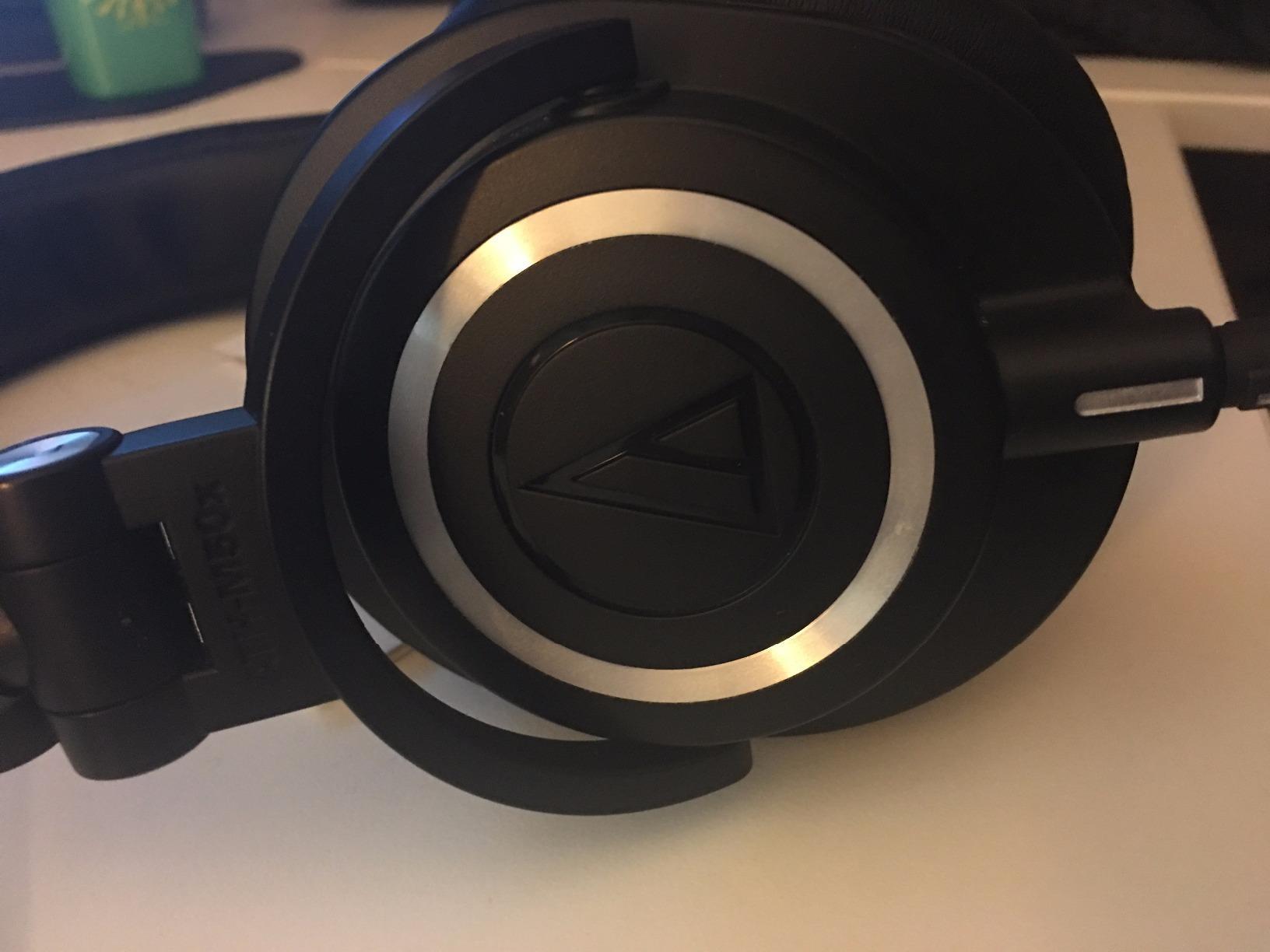
The M50x is the pair I hand to people who do everything. Mixing, tracking, editing, podcasting, whatever the session throws up, the 38 ohm load and the 45 mm drivers behave predictably and the detachable cable means a bad cable is a two-minute fix rather than a funeral.
What I notice after long sessions is how quickly I stop thinking about the headphones. The clamp is moderate, the pads seal well without crushing, and the 90 degree swivel means I can cup one cup to an ear for cueing without stopping what I am doing. That combination of isolation and comfort is why it has stayed in continuous studio service for over a decade.
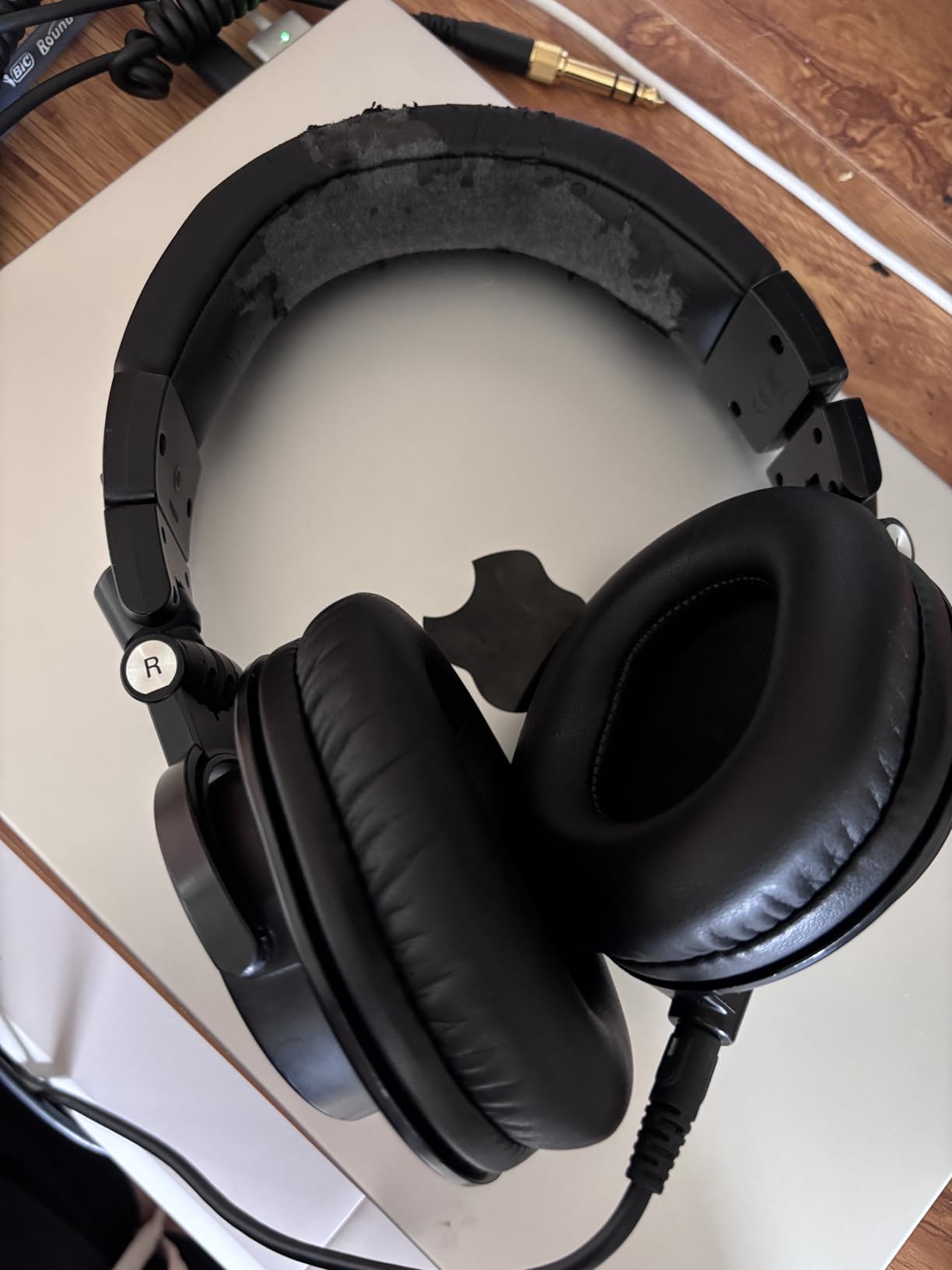
Sonically it sits in a useful middle place. The response is even and extended from 20 Hz to 28,000 Hz, the midrange is detailed without being analytical, and the bass has enough weight to judge without being the reason you cannot sleep. Out of the ten here it is the model I would trust with a mix I intend to send to a mastering engineer without a second opinion.
The weakness is enclosure, not tuning. As a closed-back it gives you almost no sense of depth or air, and a reverb tail collapses toward your head. If your main job is arranging, spacing and depth, pair it with an open-back rather than trying to hear those decisions through a sealed cup.
Who this suits
Bedroom producers, tracking vocalists, podcasters and anyone who mixes on a laptop or a two-channel interface. It is the least risky first mixing headphone here because it needs no amp, it isolates well and it survives being moved between the studio and the couch.
Where it falls short
It will not tell you much about depth, front-to-back placement or the size of your room. If you mix dense arrangements with a lot of reverb, you will eventually want an open-back reference even if you keep the M50x for everything else.
2. Sony MDR-7506 – The Studio Standard That Divides People
- Extremely detailed with clear instrument separation
- Very light at 8 ounces for long sessions
- Rugged build with decades of studio use
- Coiled cable resists tangling
- Screw-on 1/4 inch adapter included
- Non-detachable cable cannot be replaced
- Sub-bass is light so mixes can skew bass-heavy
- Narrow soundstage next to an open-back
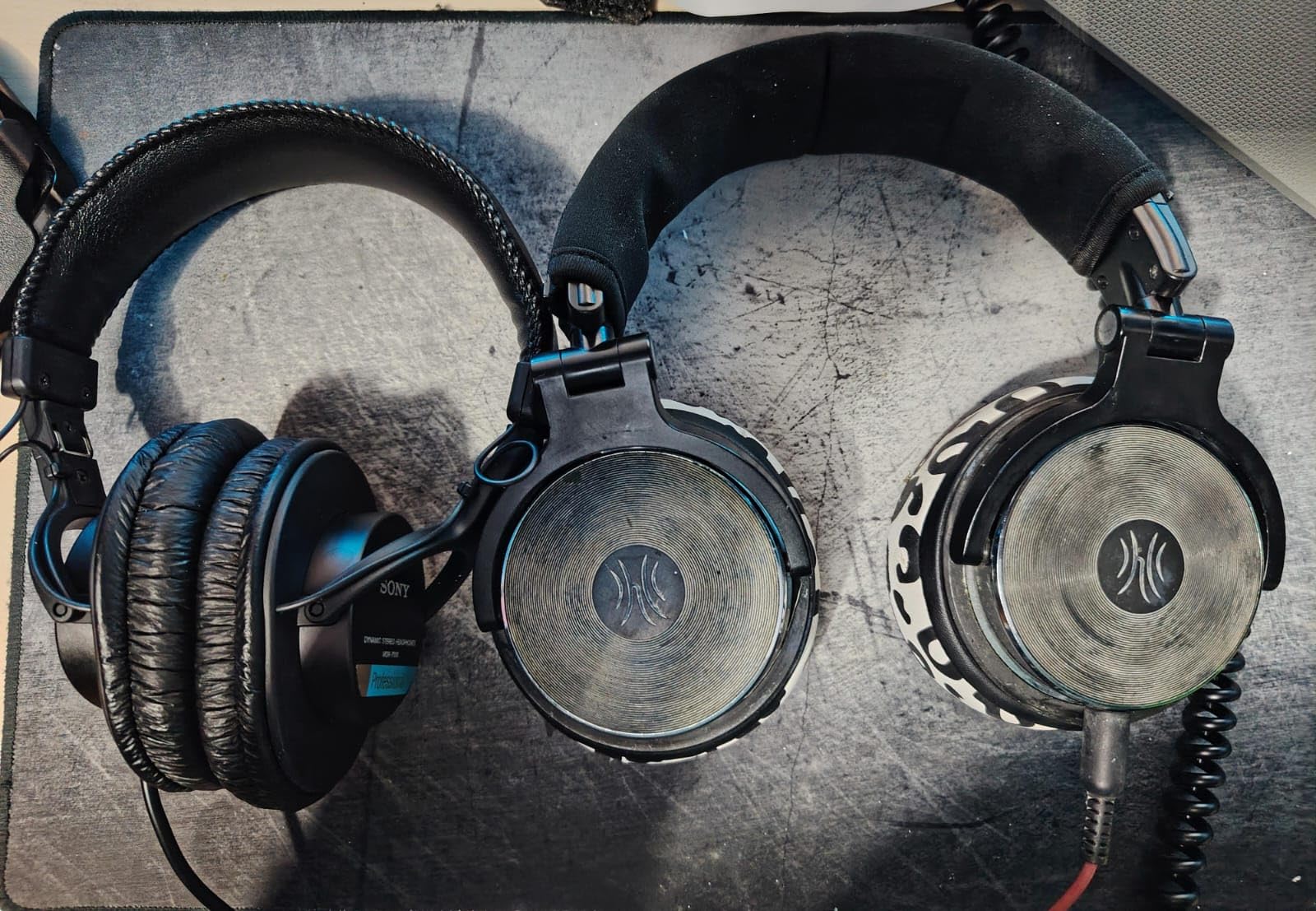
There is a reason the MDR-7506 has been in broadcast and studio racks since 1991, and at 8 ounces it remains the most comfortable monitoring headphone I can wear for a full day without thinking about it. The clamped, revealing presentation tells you about problems in a mix immediately.
That revealing quality is exactly the argument r/audioengineering users make, and exactly the reason others call it harsh. Owners in that same community report two very different experiences: some lean on the bright top end to catch sibilance, others find it fatiguing on dense material. Both reports are honest, and the deciding factor is usually the person rather than the headphone.
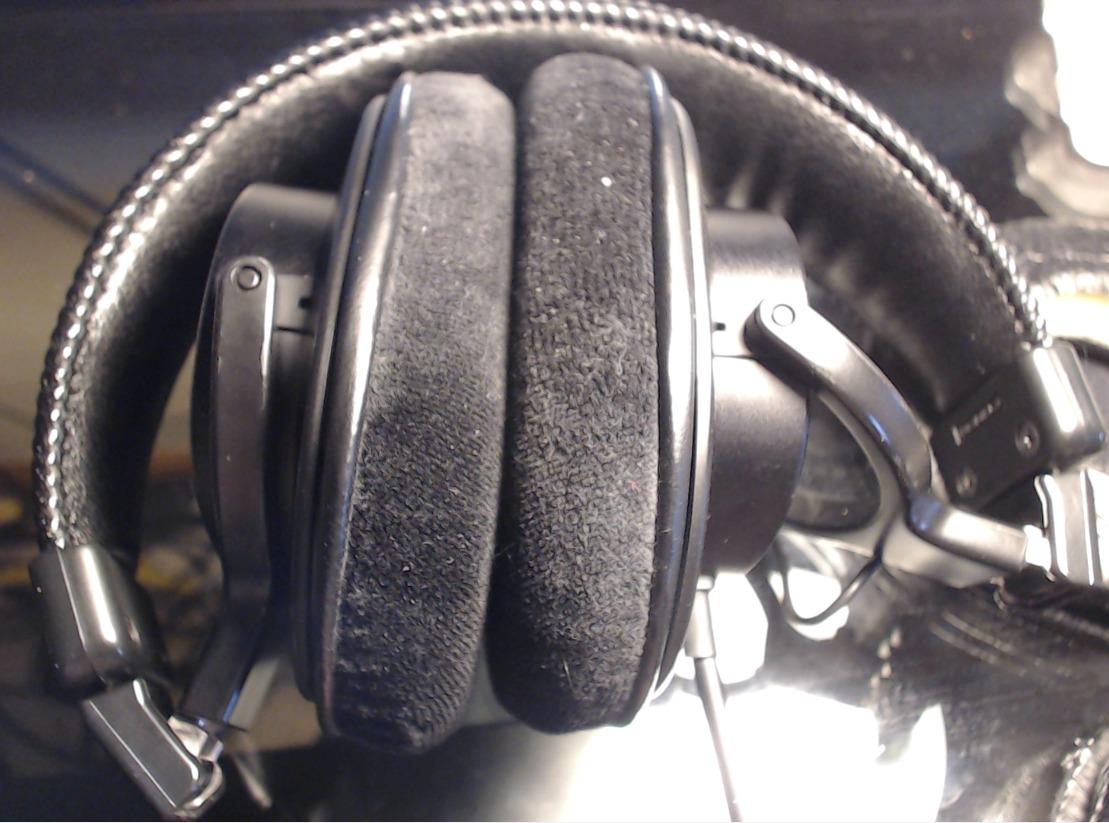
For mixing work the practical details matter. At 63 ohm it plays well on almost any interface, the 9.8 foot coiled cord stays out of the way and resists tangling, and the folding design with its soft case makes it the easiest pair here to move between a studio and a location. The 3.5 mm and 1/4 inch connections cover desktop and monitor use.
The light sub-bass is the trap I would warn you about. Because the response is specified from 10 Hz to 20,000 Hz but the perceived weight down low is modest, it is easy to finish a mix that sounds full on headphones and bloated everywhere else. Cross-check the bottom end on a second system and do not trust the headphone alone.
Who this suits
Mixers who work fast and want faults announced, engineers who already know their room, and anyone mixing on the move. It is the best value in the group for a first serious mixing headphone, provided you are comfortable making EQ decisions you might not make on a warmer pair.
Where it falls short
The permanently attached cable is a genuine longevity problem, and the narrow stage makes it a poor choice for judging depth. If you work on ambient, cinematic or heavily reverberant music, the limitation will shape your decisions more than the tuning does.
3. Beyerdynamic DT 990 Pro – The Widest Soundstage for Placement Decisions
- Exceptionally wide open soundstage
- Very light at 8.8 ounces
- Excellent detail retrieval
- Solid German build
- Generous low bass for an open-back
- 250 ohm needs a capable amp or interface
- Bright treble can fatigue
- Leaks sound in and out
- Fixed cable cannot be replaced
The DT 990 Pro is where I go when the question is spatial. Of the ten pairs here it gives the most natural stereo image, and the 5 Hz to 35,000 Hz specification is backed by genuinely generous low-bass presence for an open-back, which is rare.
Owners on GearSpace and r/mixingmastering consistently praise the imaging and the ability to place an instrument in a mix, and they just as consistently note the same cost: the treble is deliberately forward. Some describe that brightness as the reason they catch sibilance before a mastering engineer does. Others describe it as clinical and tiring after a few hours.
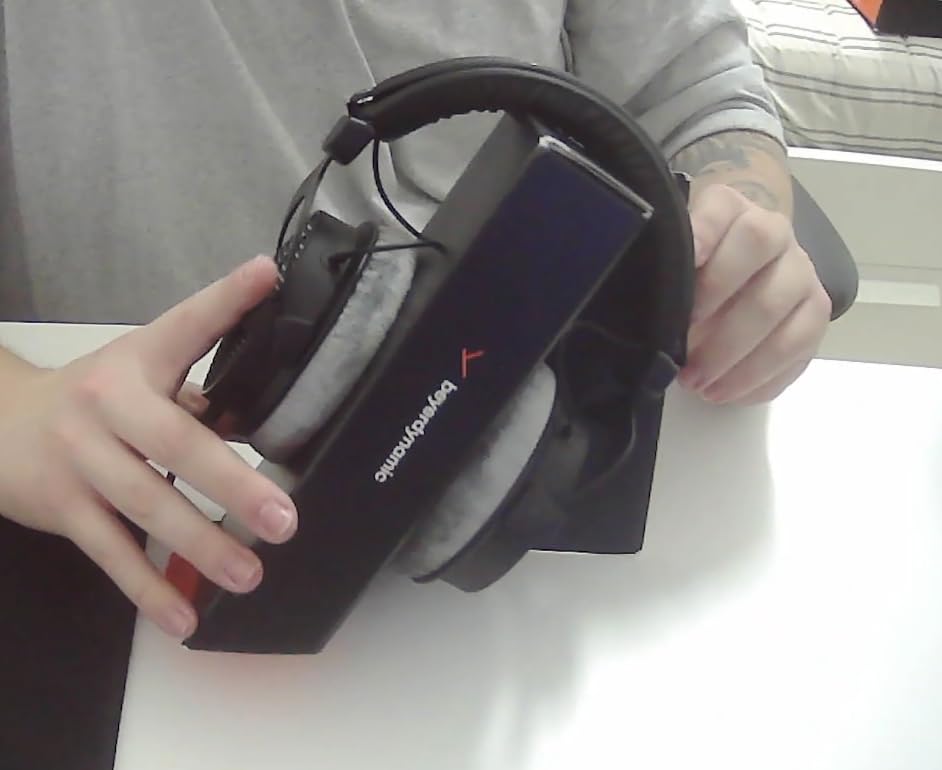
At 250 ohm this is the one model here that genuinely wants an amplifier. On a bare interface you will get sound, but you will not get headroom, and you will be tempted to push the volume higher than you should. Owners who report it going quiet on an interface are describing the impedance, not a fault.
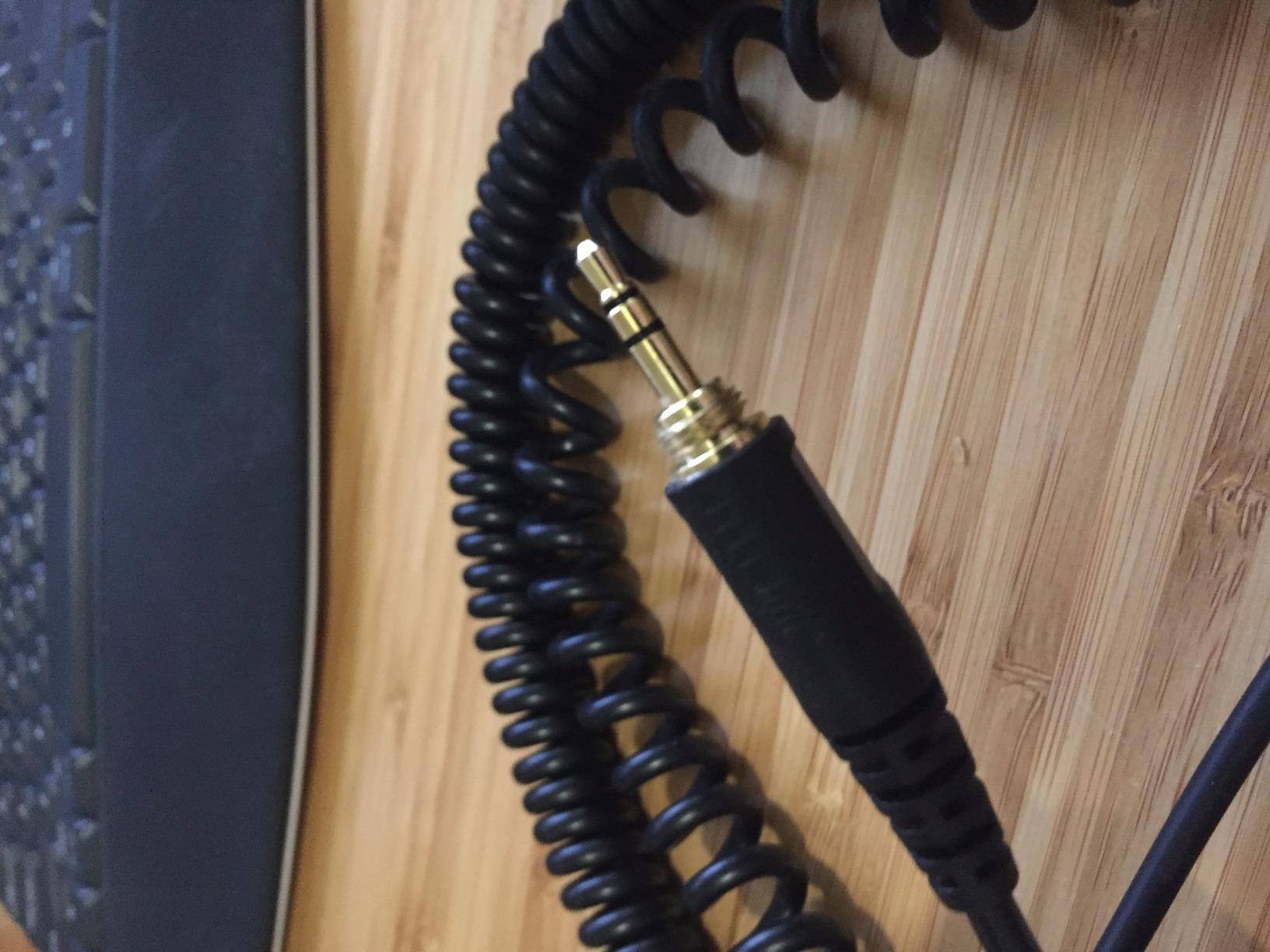
Comfort is a genuine strength. At 8.8 ounces with replaceable velour pads and a spring-steel headband, it is a headphone you can keep on through a long revision session, and the pads are user replaceable, which protects the investment over the long term. The fixed 3 m coiled cable is the main serviceability weakness.
Who this suits
Mixers working on arrangements, drum programming and anything where front-to-back placement matters. It is also the pair I recommend for mastering revisions, provided you have an amp and you take breaks from the top end.
Where it falls short
It is unusable while tracking in the same room because of the leakage, and the 250 ohm load rules it out for laptop-only or mobile work. If your room is not quiet, the open cups will also let outside noise into the mix decisions you are trying to make.
4. Audio-Technica ATH-M40x – The Most Neutral Monitor in the Group
- Exceptionally flat and neutral response
- High sensitivity drives easily without an amp
- Angled drivers give good instrument separation
- Strong passive isolation
- Straight and coiled cables included
- Free-rotating cups feel floppy
- Clamp can feel tight on larger heads
- Sub-bass rolls off around 70 Hz
The M40x is the flattest option here, and the M-series popularity often buries that fact. Users on r/mixingmastering report it as more accurate for mixing than the more famous M50x, and in my own comparisons the M40x is the pair I reach for when an EQ decision is going to be hard to reverse.
At 35 ohm and 98 dB sensitivity it will play at a usable level from a laptop or an entry interface, which makes it one of the easiest recommendations in this list for someone building a first bedroom studio. Two detachable cables, one straight and one coiled, plus a case, are included, so nothing has to be bought separately.
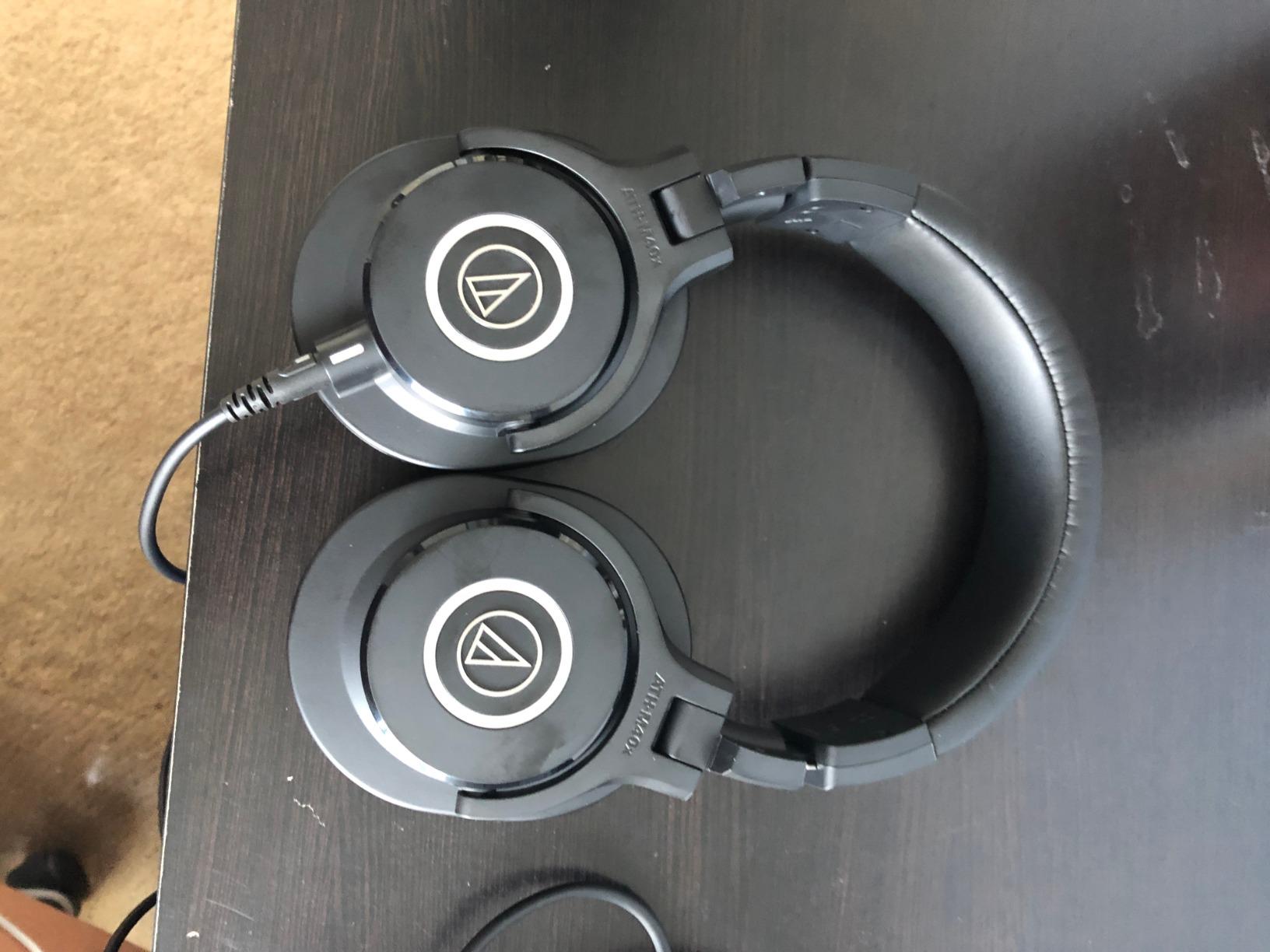
The angled driver design is the reason instrument separation is better than a typical closed-back, and the 90 degree swivel cups give quick one-ear cueing. Those are real functional gains when you are working from a mix that has not been balanced yet.
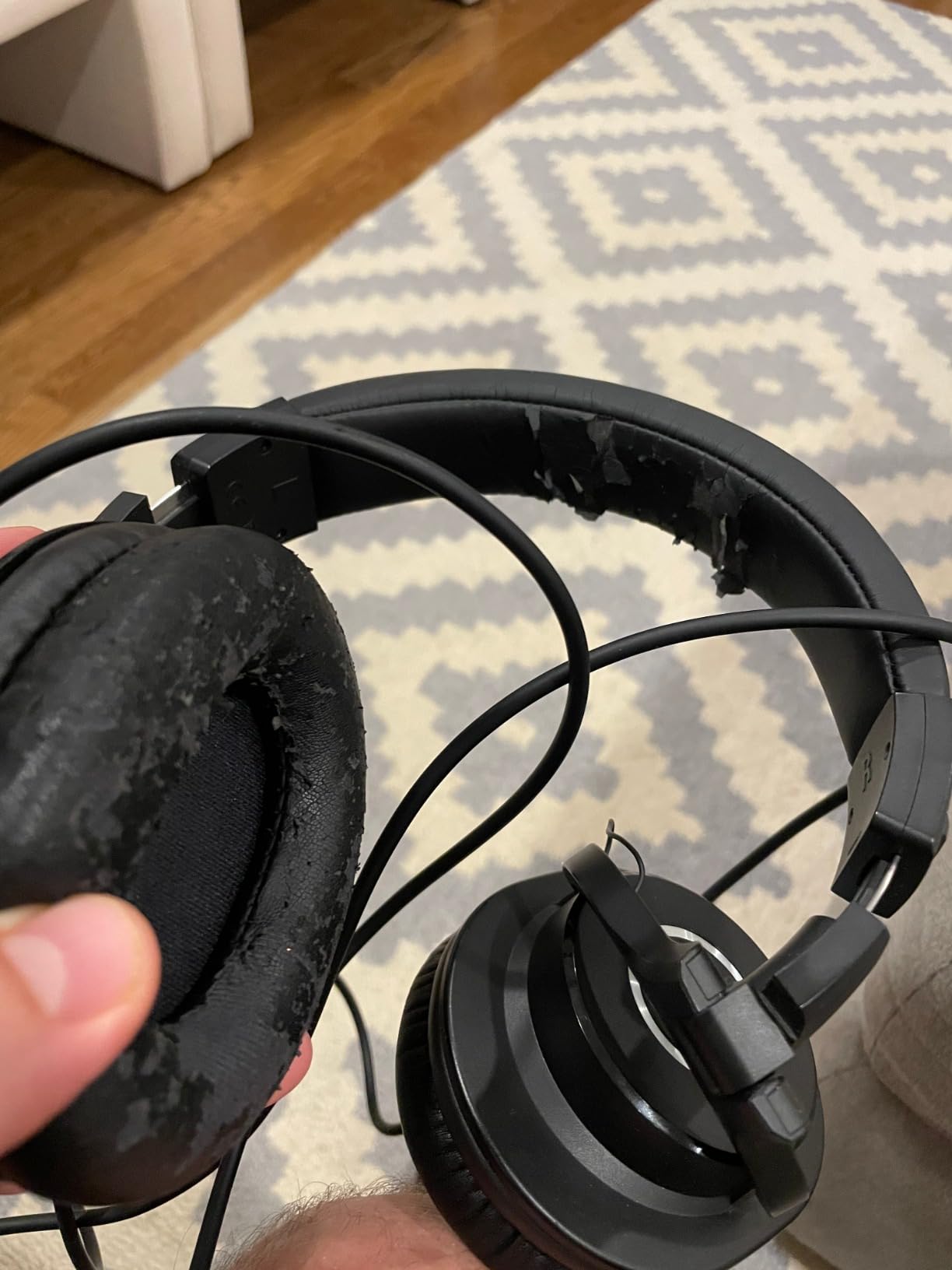
The criticisms are physical rather than tonal. The freely rotating cups feel floppy and can take two hands to position, the clamp can feel tight on a larger head, and the swivel hinge is a known weak point that has failed for some owners after years of daily handling. Sub-bass rolls off around 70 Hz unless you boost it, which is the one acoustic compromise worth planning around.
Who this suits
Mixers who want the least coloured starting point and who work on a laptop or a modest interface. It is also a strong second pair for anyone who already owns a brighter headphone and needs a neutral counterweight.
Where it falls short
The loose swivel and tight clamp are frustrating if you move your head a lot while working, and the rolled-off low end means bass-heavy mixes need cross-checking elsewhere. Like any closed-back it tells you very little about depth.
5. AKG K240STUDIO – The Lightest Long-Session Option
- Very light and often described as disappearing on the head
- Honest sound with no artificial bass boost
- Locking mini-XLR detachable cable
- Self-adjusting headband fits most head sizes
- Semi-open leakage rules out tracking use
- Soundstage roughly half the width of a good open-back
- Treble can be slightly harsh on sibilant material
The K240STUDIO is the pair I put on when I know I will be working for five hours and the clamp is not something I want to negotiate with. At 104 dB sensitivity it is also the most efficient model here, so it reaches working level at lower volume than anything else in the group.
That efficiency has a second benefit. Because it plays loudly without being pushed, it is one of the safer choices for long sessions, and the 60-60 rule of no more than 60 percent volume for no more than 60 minutes at a stretch is much easier to respect on a pair this sensitive.
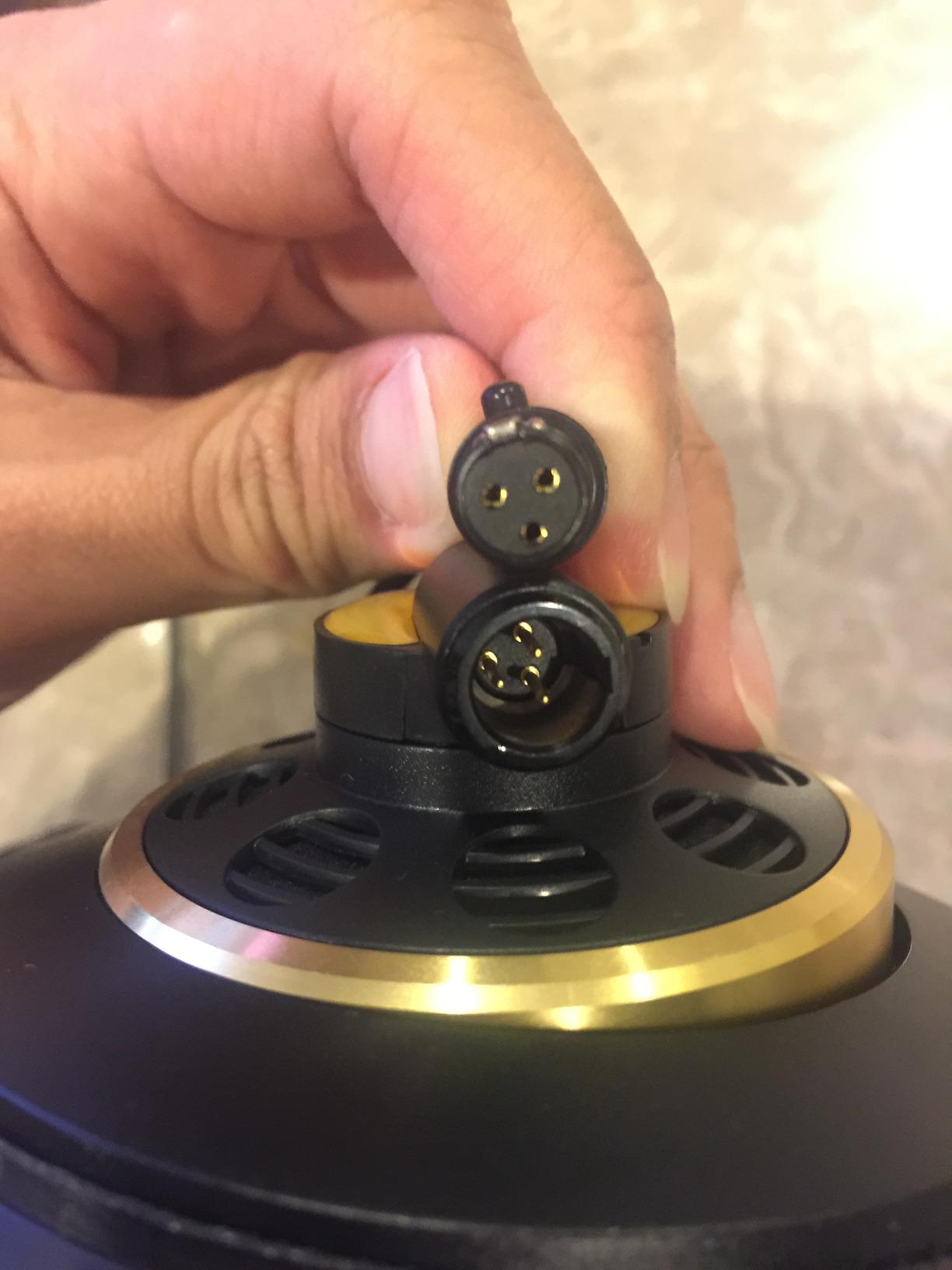
Sonically it is honest rather than exciting. The response runs 15 Hz to 25 kHz, the bass is light with no artificial boost, and the semi-open design gives a more open presentation than a sealed cup without the total leak of a true open-back. The 3 m detachable cable with a locking mini-XLR connector is a genuinely good piece of engineering.
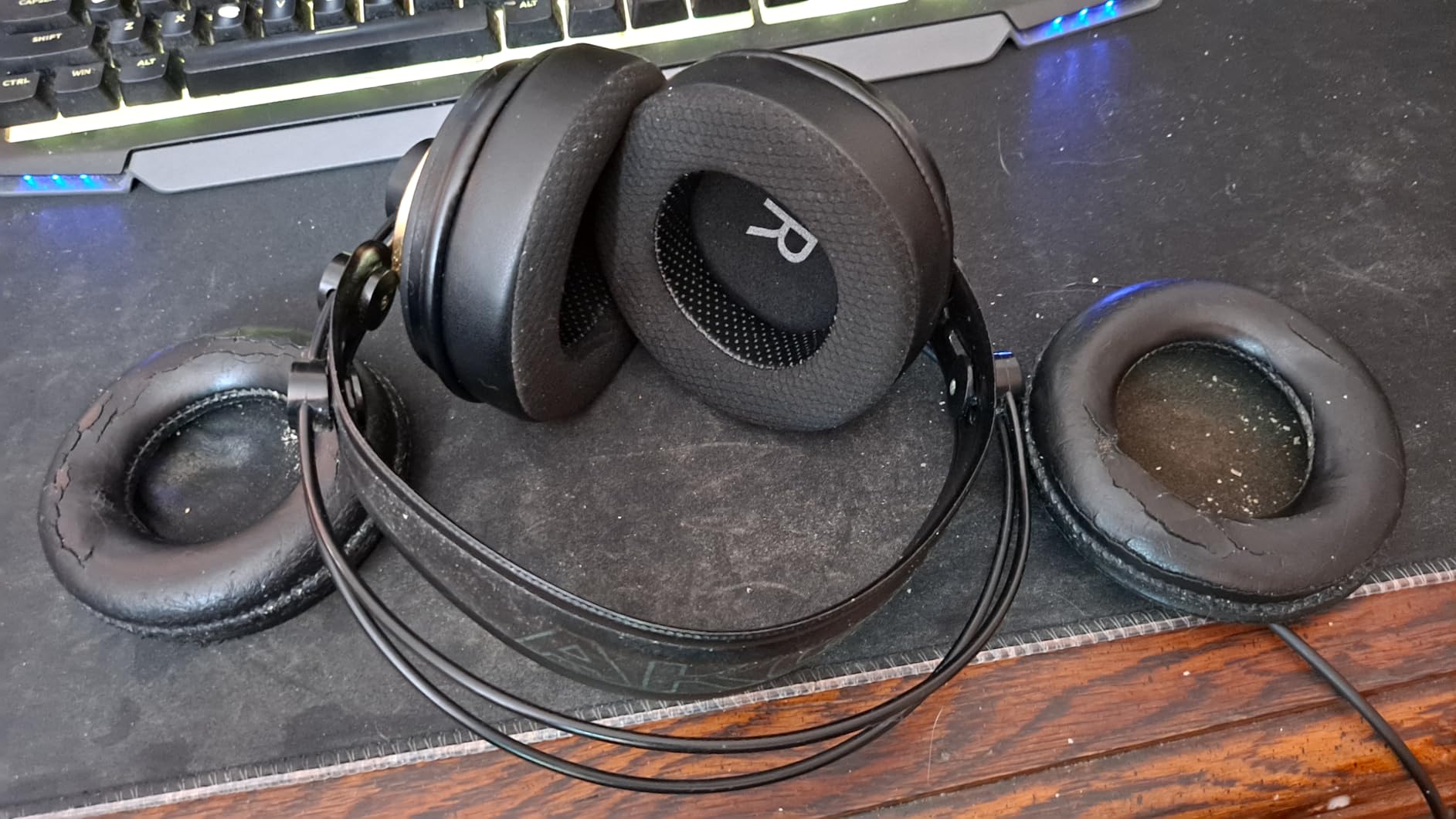
The soundstage is the compromise, and it is the one that shows up in reviews. Owners regularly describe it as roughly half the width of a good open-back reference, and the self-adjusting gimbal headband, while comfortable, does not fix the shallow sense of space. Tracks with a lot of ambience will feel smaller than they are.
Who this suits
Anyone who does long editing or arranging sessions and values comfort and low volume over spaciousness. It is also a sensible second pair for editing, because it plays quietly and accurately enough for EQ and comping work.
Where it falls short
It leaks, so keep it away from an active microphone. The limited stage width and light bass mean it is not the pair to make final low-end and depth judgements on, and the treble can turn slightly harsh on sibilant material before break-in.
6. Sennheiser HD 280 Pro – The Isolation Champion
- Best-in-class passive isolation at up to 32 dB
- Warm and evenly balanced tuning
- Collapsible cups for instant one-ear cueing
- Pads
- headband padding and cable all replaceable
- Heavy coiled cord tugs on one side
- Original pads and headband material are thin
- Low bass rolls off below about 80 Hz
- Narrow soundstage for a closed-back
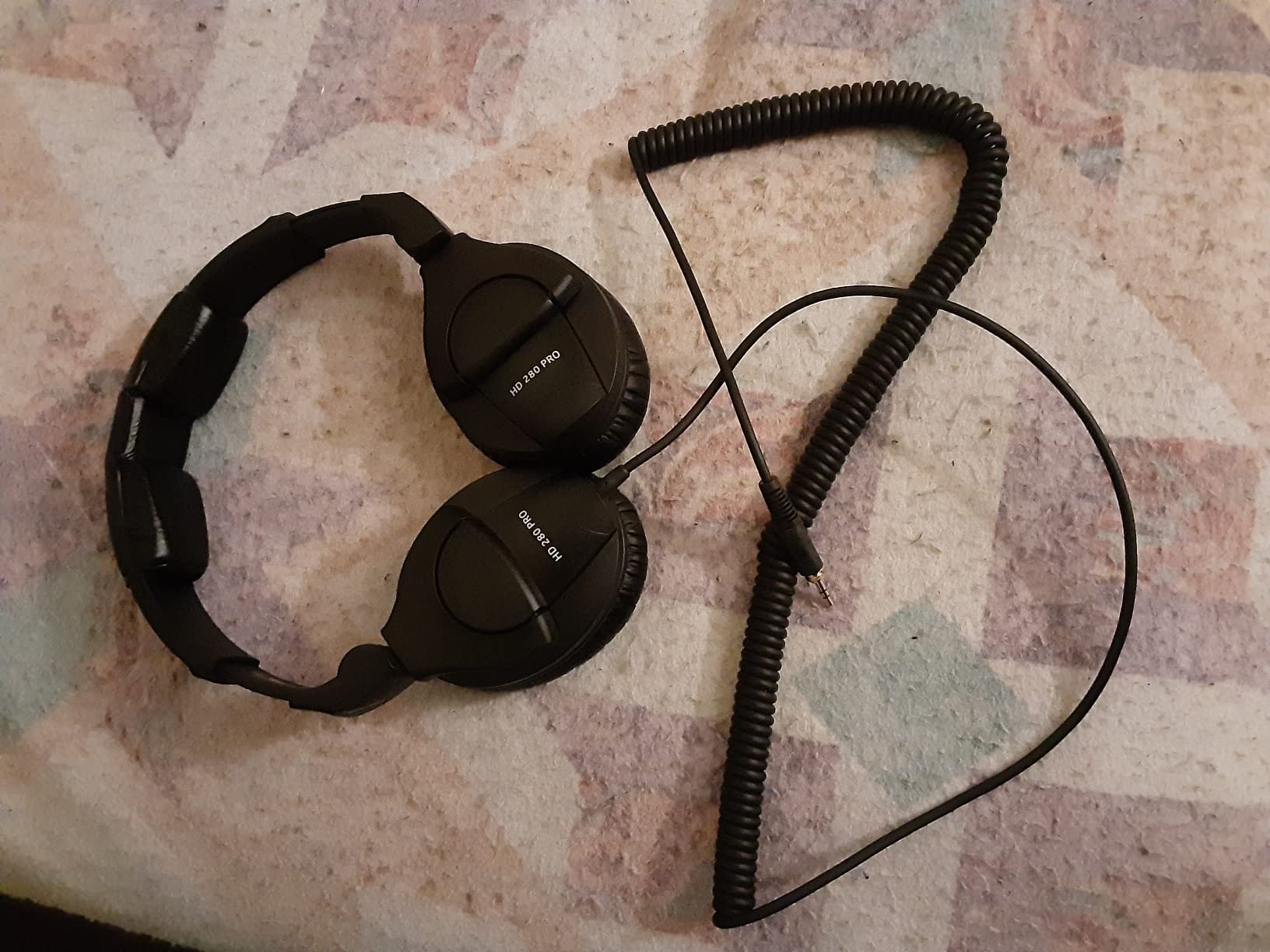
With up to 32 dB of passive attenuation, the HD 280 Pro isolates better than anything else in this roundup. That number is the reason drummers, DJs and front-of-house engineers have used it for decades, and it is the reason it is the pair I recommend for tracking.
The tuning is warm and natural with no artificial boosts, and the 8 Hz to 25 kHz range is used with restraint rather than exaggeration. For editing and rough-mix work in a loud room it is excellent, because the isolation lets you work at lower volume and still hear everything.
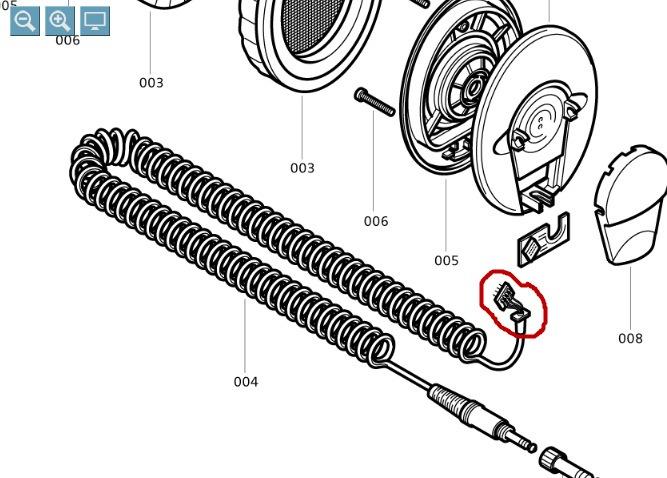
Two design details make it genuinely practical. The earpieces collapse inward so you can cup a single cup to your ear in one motion, and the pads, headband padding and audio cord are all user replaceable, which is rare in this class and keeps the pair alive well past the warranty.
The drawbacks are consistent across reviews. The 3.3 m coiled cord is heavy and pulls on one side when the headphone rests on a desk, the original pads and headband material are thin and collect oil quickly, and the low end rolls off noticeably below about 80 Hz. Later production runs have also drawn complaints about thin internal wiring that is not repairable.
Who this suits
Tracking in a shared or noisy space, on-location work, and anyone who needs to hear their mix without hearing the room. It is also the most comfortable choice here for mixing by ear in a loud environment.
Where it falls short
It is not a critical-listening headphone. The narrow stage and the 80 Hz roll-off both push you toward an open-back for final decisions, and the heavy coiled cord is a constant small irritation in a small workspace.
7. Sennheiser HD 599 – The Most Comfortable Open-Back
Sennheiser HD 599 Open-Back Wired Audiophile Headphones, Ivory
- Wide natural open-back soundstage
- Aluminium voice coils for low distortion
- Velour pads stay comfortable for long sessions
- Two detachable cables included
- Open design gives no isolation
- Heaviest headphone in this group at 0.71 kg
- Bass is politely tuned rather than deep
The HD 599 is the Sennheiser approach taken literally: a comfortable, spacious, low-distortion open-back for people who want to mix for hours. The 12 to 38,500 Hz range and the aluminium voice coil transducers keep distortion low enough that you are not chasing artefacts that the hardware created.
At 50 ohm it is easier to drive than the DT 990 Pro, so it works on more interfaces, and the detachable 3 m and 1.2 m cables cover studio and portable use. The velour pads and padded headband are what make it the pick here for long sessions, and reviewers describe it as an easy headphone to forget you are wearing.
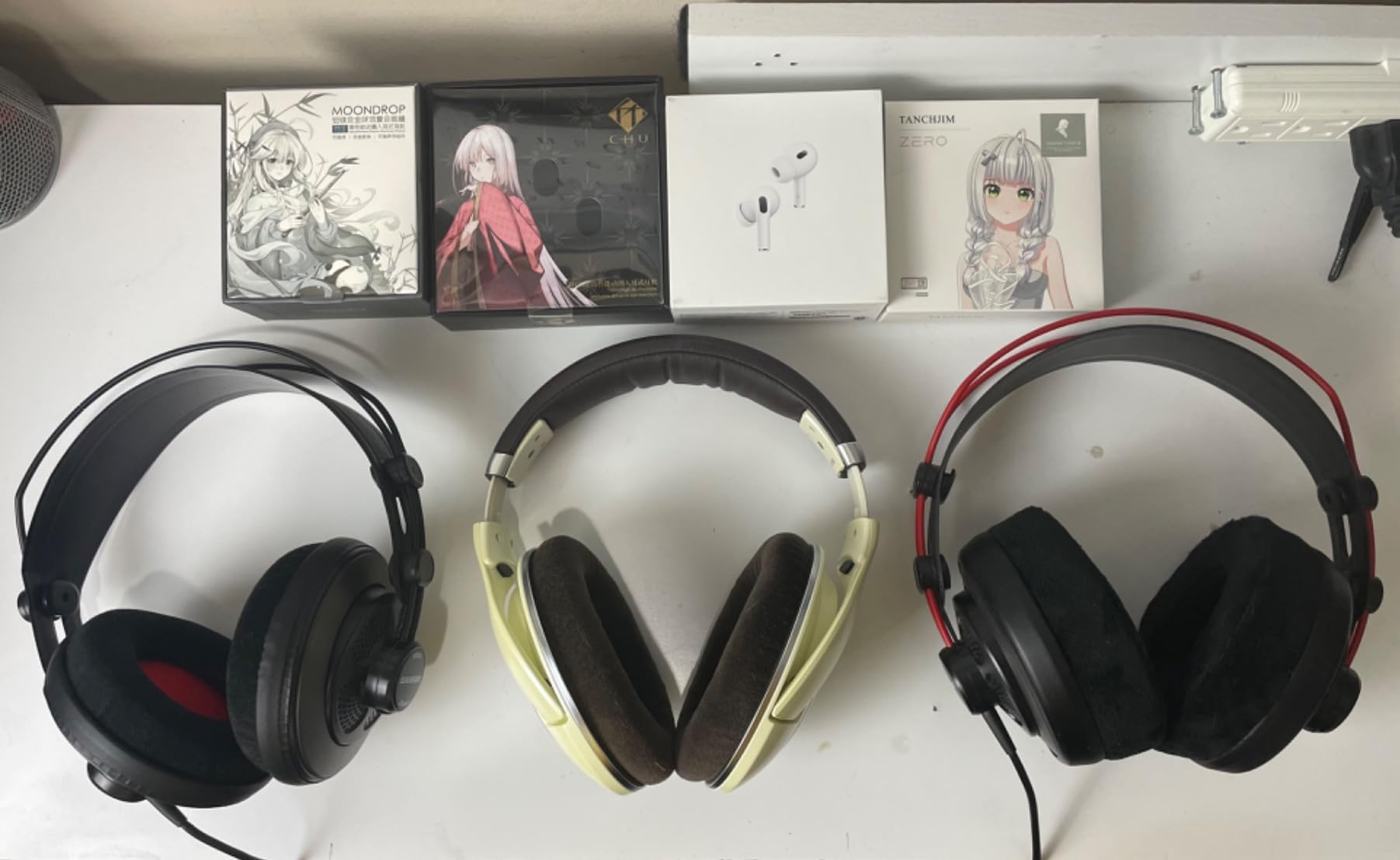
Where it differs from the DT 990 Pro is emphasis. The HD 599 is gentler in the bass and smoother at the top, which makes it more forgiving and slightly less revealing. For a mix you are still shaping, that is often the better trade, and it is the pair I recommend for long editing sessions rather than final mastering passes.
Two things to plan for. At 0.71 kg it is the heaviest headphone in this roundup, so the comfort advantage narrows over many hours, and the open design gives no isolation at all. The bass is politely tuned, so low-end decisions need a second reference.
Who this suits
Mixers and mastering engineers who want a smooth, fatigue-free open reference for extended sessions, and anyone who finds the DT 990 Pro treble too forward. It is also a good first open-back for a bedroom studio.
Where it falls short
It is not a tracking headphone and the absence of isolation rules that out entirely. The light bass and the weight are the two things that will show up in your workflow if you work on bass-heavy or sub-heavy material.
8. Samson SR850 – The Budget Semi-Open Starter
- Semi-open design lets you hear mix and room together
- 50 mm drivers give a wide full soundstage
- 32 ohm runs from a laptop or interface
- Self-adjusting headband with velour pads
- Semi-open leakage rules out tracking
- Bass and treble slightly boosted versus a flat monitor
- Velour pads wear faster than leather
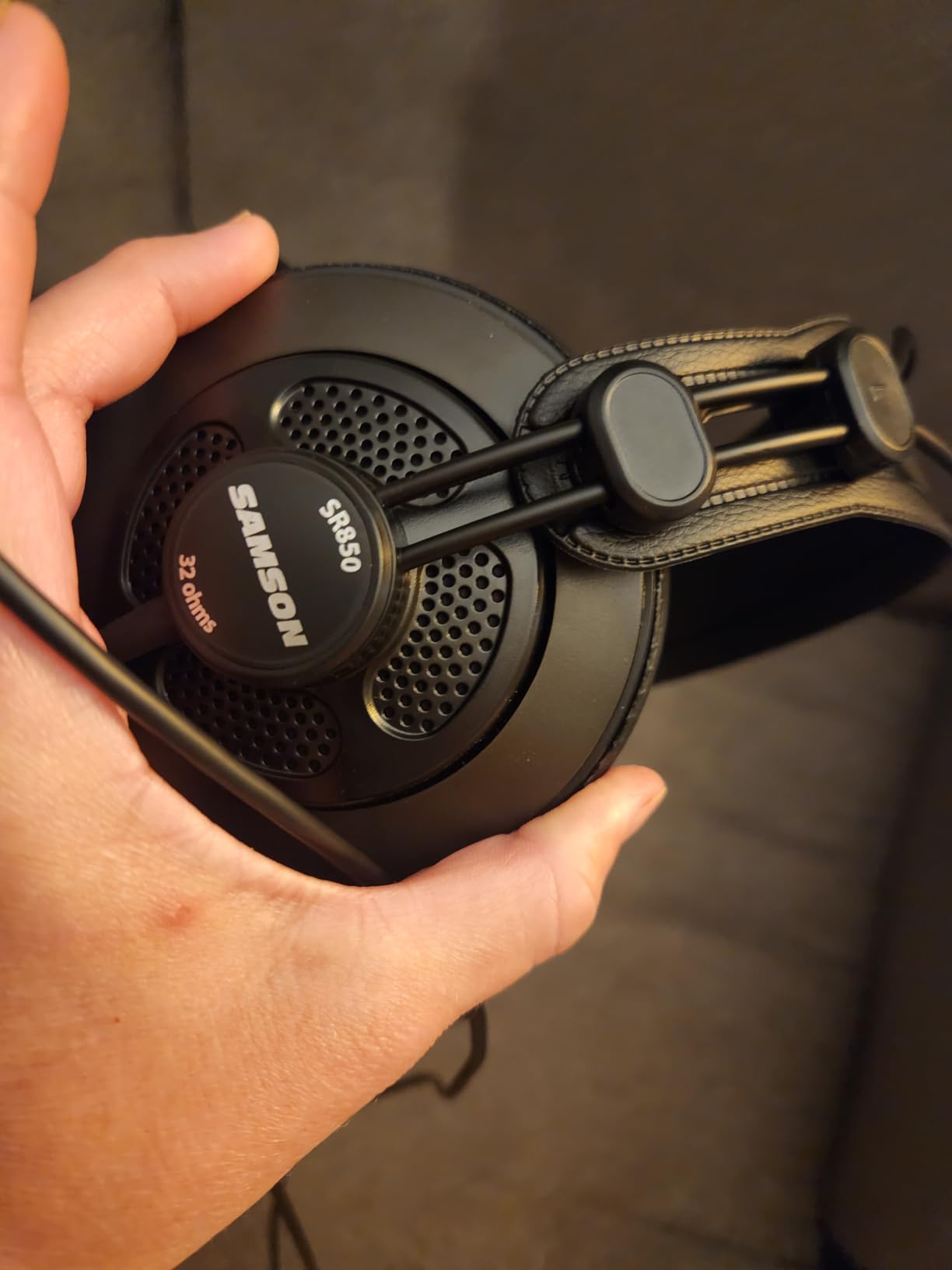
The SR850 is the cheapest way into the category and, at 32 ohm, the easiest to drive. Plug it into a laptop headphone jack and start mixing. The 50 mm drivers give a wide, full presentation with more bass weight than the other entry models here, which makes it feel less thin on a rough mix.
The semi-open design is the interesting part for mixing. You hear the mix and the room at the same time, which is unusual at this level and gives a slightly more relaxed sense of space than a sealed budget headphone. It is also why the same design makes it useless beside a live microphone.
What you give up is neutrality. Owners consistently report slightly boosted bass and treble compared with a truly flat monitor, and less detail and extension than models costing two or three times as much. That is a fair trade at this budget as long as you know it is happening and check your mix elsewhere before you export.
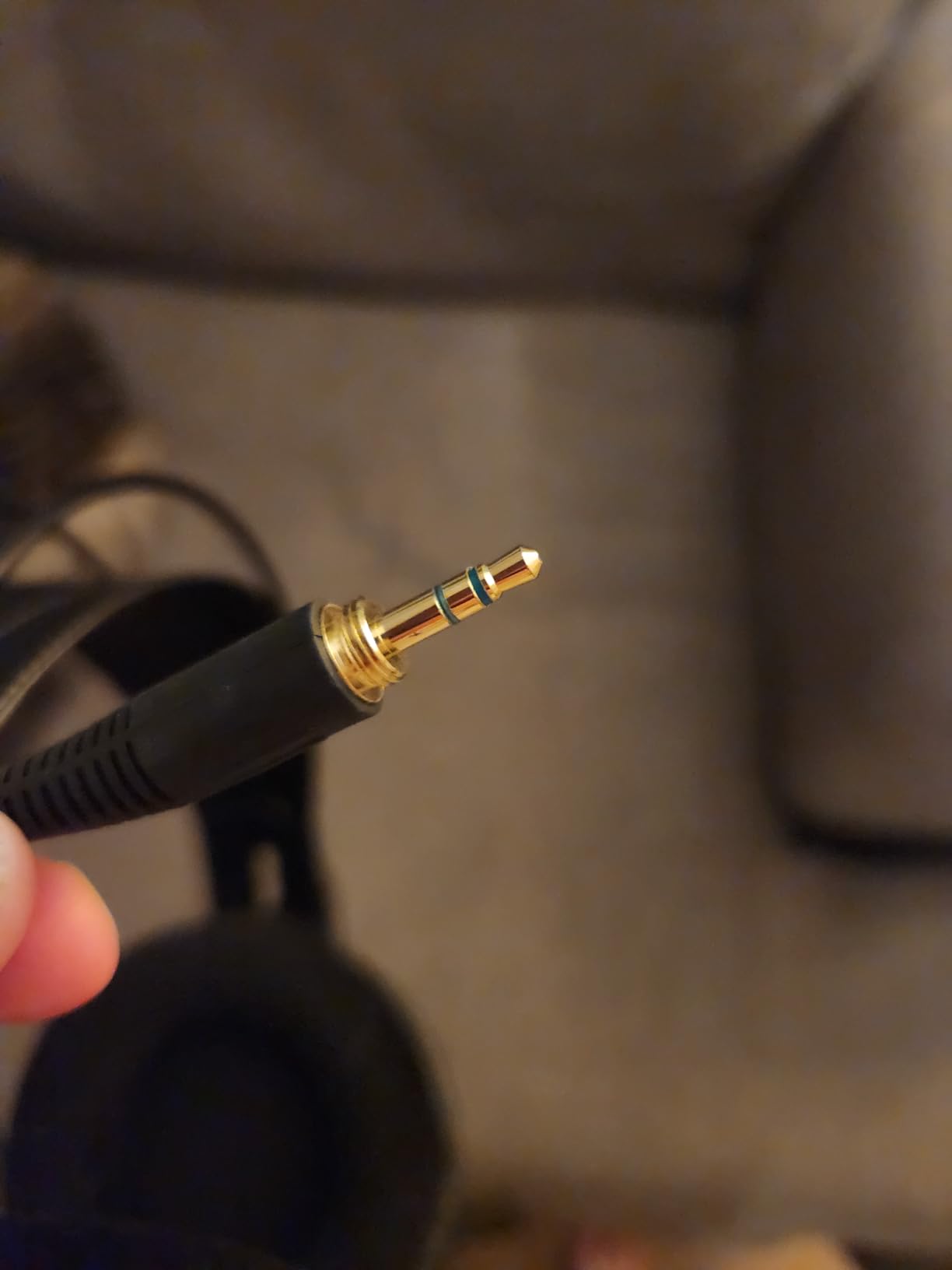
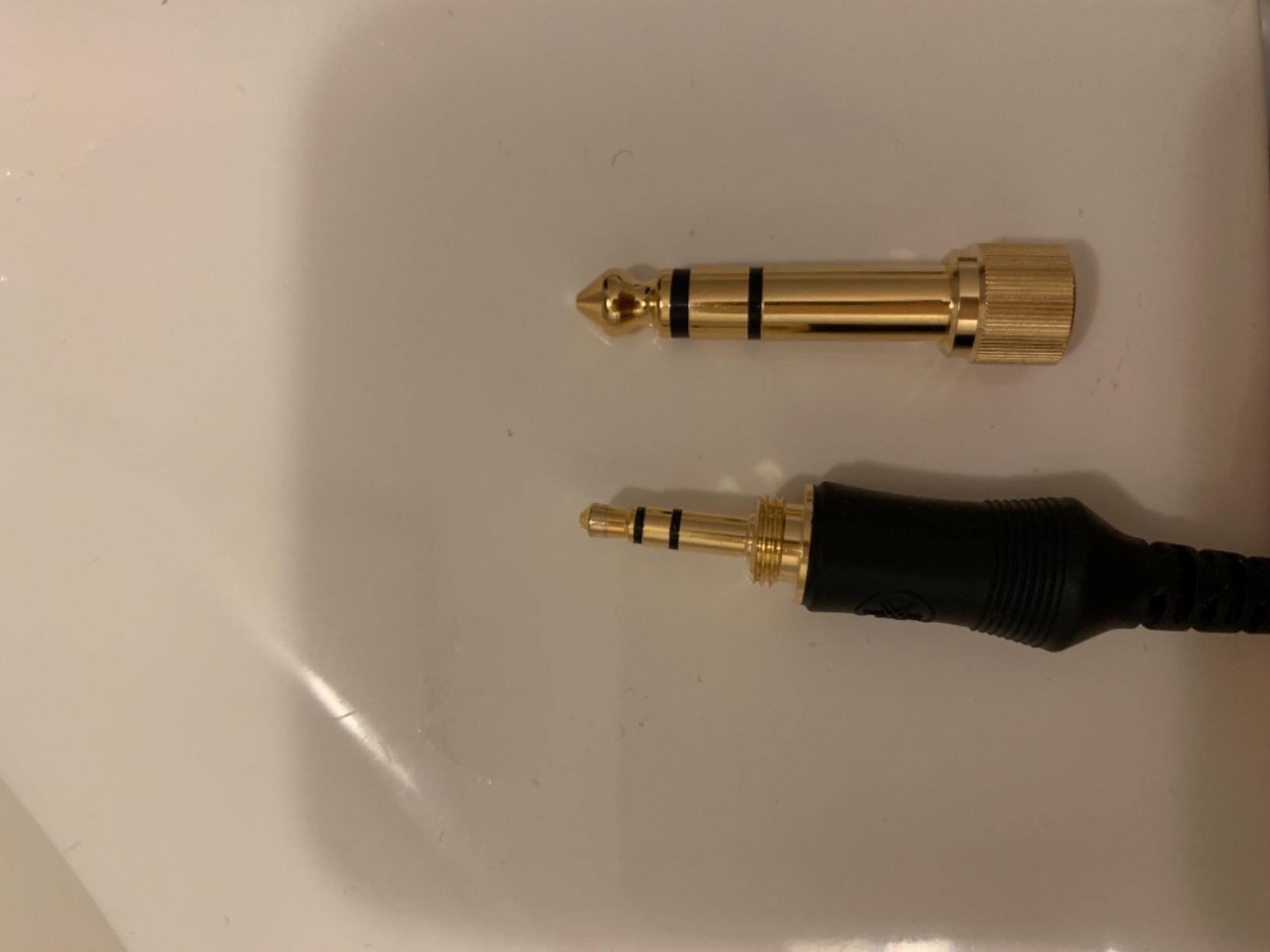
Other notes from reviews: the velour pads degrade faster than leather and attract dust, and no hard carrying case is included. The self-adjusting headband and gold plated 1/8 inch to 1/4 inch adapter are both welcome at the price.
Who this suits
Students, bedroom producers starting out, and anyone who wants a second headphone for rough edits and playlist checks. At 32 ohm it is also the safest recommendation here for laptop-only or mobile work.
Where it falls short
It is a monitor with a tilt, so treat it as a starting point rather than a reference. The leakage rules out tracking, and the fast-wearing velour pads are the part most likely to need replacing within a couple of years.
9. Yamaha HPH-MT5W – The Lightweight Closed-Back with 250 g of Comfort
Yamaha HPH-MT5 Monitor Headphones, White, (HPH-MT5W)
- Balanced accurate monitoring with low distortion
- Exceptionally light at 250 g
- Good closed-back isolation
- Drives easily from a phone or laptop
- Low end is light next to the mids and highs
- Original earpads are thin and often upgraded
- Build feels lightweight
- Only a soft carrying bag included
The Yamaha HPH-MT5W is the model people in the comments consistently describe as underrated. It is a closed-back circumaural design at 250 g, which makes it one of the lightest full-size monitoring headphones in this roundup, and the balance between accurate monitoring and low clamping force is unusual at its size.
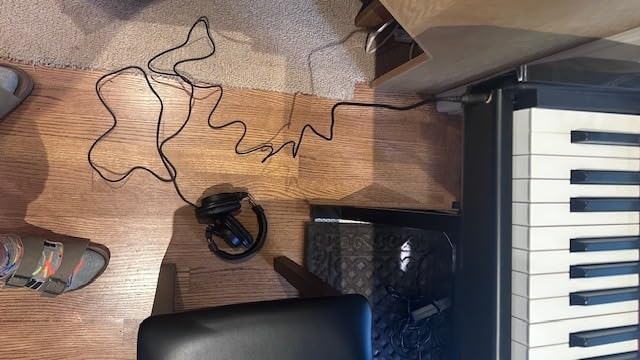
Sonically it is balanced and resolves detail without adding much of its own. Owners report low distortion at higher volume, which is useful because it means you are not pushing the amp to hear the mix. The 51 ohm load and 6.3 mm jack mean you will want an adapter for a laptop or phone, but most interfaces will drive it comfortably.
The recurring critique is the low end. The bass is light relative to the mids and highs, so mixes can end up under-weighted at the bottom if you do not cross-check. The 20 Hz to 20 kHz specification is honest about that and is narrower at the top than most models here.
Build is the other theme in reviews. Several owners replace the thin original earpads with third-party pads almost immediately, and the general impression is that the hardware feels light rather than premium. The detachable 3 m straight cable uses a locking connector, which is a good decision for a design this light, and only a soft carrying bag is included.
Who this suits
Anyone who finds clamping force painful after a couple of hours, and anyone mixing pop, folk, acoustic or vocal material where the midrange matters more than sub-bass. Digital piano players and home recordists get a lot out of it too.
Where it falls short
It is a poor choice for bass-heavy mixing because the low end is light, and the light build and thin original pads mean it may not age as gracefully as the heavier models here. The included cable is also long and studio-oriented.
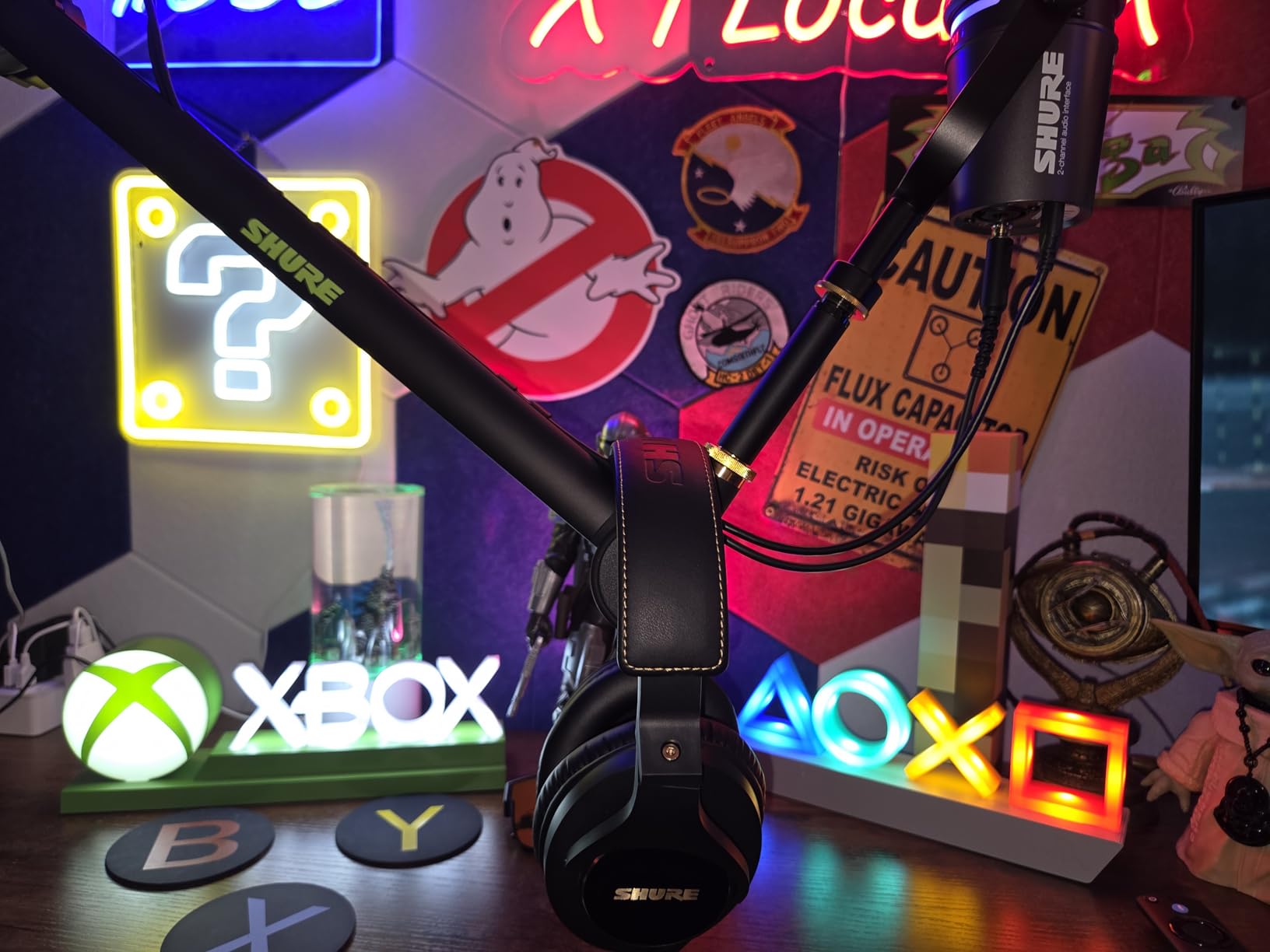
10. Shure SRH840A – The Detail Retrieval Specialist
Shure SRH840A Over-Ear Wired Studio Monitoring Headphones
- Accurate natural tonality for long critical listening
- Superb build quality
- Very comfortable plush cushions
- Locking detachable cable is easy to replace
- Bass is light for a closed-back
- Cable is stiff and thin
- Cups can shift and change the tonal balance
- Passive isolation only with some bleed
The SRH840A is the best-built headphone in this roundup, and the owner comments focus on that constantly. The wide padded headband and plush ear cushions get described as comfortable for hours, and the tailored frequency response with controlled bass and extended highs is a rarity in a closed-back at 40 ohm.
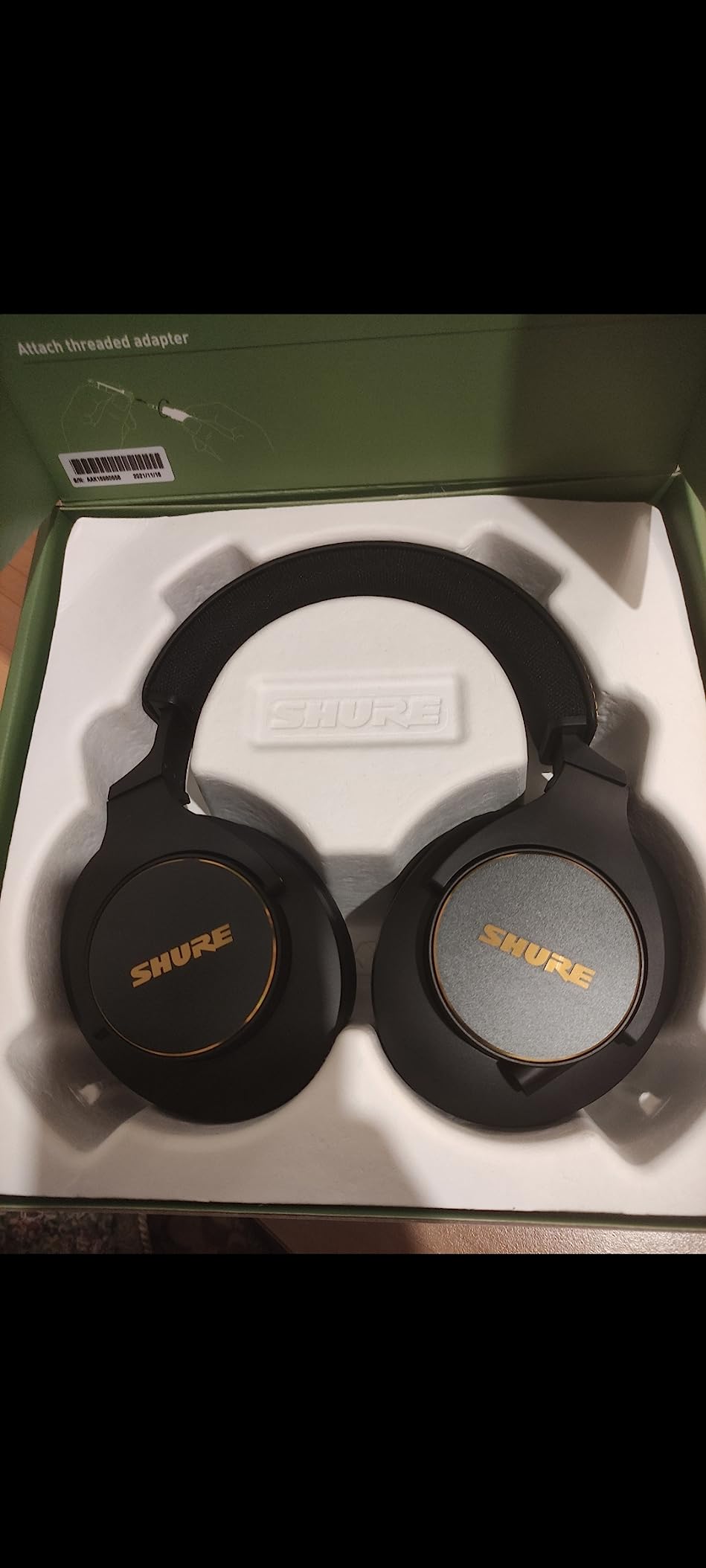
At 40 ohm it drives easily and produces comfortable levels from a modest DAC, which means you are not forced into loud listening to do critical work. The detachable locking cable system means a cable failure is a replacement rather than a write-off, and the 1/4 inch threaded adapter and carrying case are included.
The honest caveat is that the bass sits on the light side for a closed-back, so a mix will need a low-end check elsewhere. The cable itself is stiff and thin, which is the one place the build quality does not carry over, and some owners find the fit uncomfortable over very long sessions.
There is also a design consequence worth knowing about. Because the cups are collapsible and move on the head, shifting them can change the tonal balance slightly, which matters if you are making fine EQ judgements. Keep the fit consistent and it is a non-issue.
Who this suits
Mixers and editors who want a durable, accurate closed-back for vocal editing, comping and arrangement work. It is also a good long-term buy for a student because the construction and the replaceable cable are built for years.
Where it falls short
Light bass and a passive-only isolation level mean it needs an open-back for depth decisions and a second system for low-end checks. The stiff cable and the fit sensitivity are worth thinking about if you move around a lot while working.
Earpads, Cables and Total Cost of Ownership
A pair of studio headphones is a five-year purchase, and the two things that end that purchase early are pads and cables. Pads flatten, harden or flake, and once they stop sealing the bass response changes, which means your mixes change with them. Plan on replacing pads rather than tolerating a shift you cannot explain.
The models here split clearly. Detachable cables and replaceable parts cover the ATH-M50x, the ATH-M40x, the AKG K240STUDIO, the Sennheiser HD 280 Pro, the Sennheiser HD 599, the Yamaha HPH-MT5W and the Shure SRH840A. The Sony MDR-7506, the Beyerdynamic DT 990 Pro and the Samson SR850 ship with permanently attached cables, which caps their service life at whatever the cable allows.
Velour and foam pads also behave differently. Velour feels better in a warm room and resists sweat, but it traps dust and wears down faster in heat. Foam pads seal hard and go flat sooner. Leatherette is durable and the least comfortable of the three in my experience, and it is the usual upgrade path for thin original pads on closed-backs.
Coiled cables deserve their own warning. They resist tangling and keep a slack loop out of the way, but the heavier ones tug on one side when the headphone rests on a desk. The HD 280 Pro is the clearest example, and for small workspaces a straight cable is often the more practical choice.
How to Choose a Pair You Will Trust
Choose by the work you do, not by the reputation. Forum complaints repeat one theme constantly: guides keep naming the same three models and never mention the trade-offs, so people buy a bright headphone, fight fatigue, and conclude headphones do not work for mixing. They do. The match was wrong.
Map colouration to the error it encourages. A headphone with boosted bass will push you toward over-bright, thin mixes because the low end feels adequate while it is not. A bright, forward pair pushes you toward dull, scooped, bass-heavy mixes. A recessed midrange model makes it easy to leave vocals buried, because the vocal position reads as neutral when it is not.
Then decide what your tolerance is for volume. The 60-60 rule, no more than 60 percent volume for no more than 60 minutes at a stretch, is a reasonable habit for long sessions. If your mix is loud, a high-sensitivity pair such as the AKG K240STUDIO lets you work at a lower setting and hear everything.
Finally, consider owning two headphones rather than one expensive one. A neutral closed-back for tracking and editing plus an open-back for spatial and low-end decisions is the setup most professionals in the r/audioengineering threads describe, and it costs less than a single reference-tier model. Cross-check on a phone speaker before you export, and keep the loudness target in mind, since headphone listening at low levels tends to hide the top end.
Frequently Asked Questions
What are the best headphones for music mixing?
The best headphones for music mixing are wired studio monitors with a flat, revealing frequency response, extended low end and an impedance your interface can drive. In our testing the Audio-Technica ATH-M50x was the most dependable all-rounder, the Sony MDR-7506 the best value for fast work, and the Beyerdynamic DT 990 Pro the widest soundstage for placement decisions.
Should I get open-back or closed back headphones for mixing?
Open-back for mixing decisions, closed-back for tracking and isolation. Open-backs give a wider soundstage and more natural placement with no cup resonance, but leak sound in both directions. Closed-backs isolate well enough to record beside and keep outside noise out of your work, but the sealed cup narrows the stage. Most engineers end up owning one of each.
Is 32 ohm impedance good for headphones?
Yes. 32 ohm is a low impedance that laptop, phone and entry interface headphone outputs can drive easily. The Samson SR850 and the Audio-Technica ATH-M40x at 35 ohm fall in this range. Low impedance is not a quality measure, it simply means you can reach a comfortable monitoring level without a dedicated amplifier.
Do higher impedance headphones sound better?
No. Impedance describes how much the driver resists the signal, not how good it sounds. Higher impedance models need more voltage, so they can play quietly on a modest interface. The Beyerdynamic DT 990 Pro at 250 ohm is the most demanding model in our roundup and needs a capable amp or a strong interface to reach working volume.
What is the 60-60 rule for headphones?
The 60-60 rule is a listening habit: keep your volume at no more than about 60 percent and limit continuous listening to around 60 minutes before taking a break. It reduces listening fatigue and protects your hearing during long mixing sessions. Higher-sensitivity headphones let you work at a lower setting and still hear everything in the mix.
What are the best wired over-ear closed-back headphones?
Among the wired over-ear closed-backs we reviewed, the Audio-Technica ATH-M50x is the strongest all-rounder, the Sennheiser HD 280 Pro wins on isolation with up to 32 dB of passive attenuation, and the Shure SRH840A wins on build quality and detail retrieval. The Audio-Technica ATH-M40x is the flattest option if neutrality matters most.
The Bottom Line for 2026
Buy the Audio-Technica ATH-M50x if you want one pair that mixes, tracks and survives, because it needs no amplifier, isolates well and takes a replacement cable. Buy the Sony MDR-7506 instead if you work fast, want faults announced, and prefer the lightest monitor on your head. Buy the Beyerdynamic DT 990 Pro if placement and depth are the decisions you struggle with, and add an amplifier to drive it.
For neutrality specifically, the ATH-M40x is the flattest monitor here. For isolation and tracking, the Sennheiser HD 280 Pro is untouchable in this group. For long sessions on a budget, the AKG K240STUDIO is 240 g of relief, and the Samson SR850 gets a beginner mixing at all.
Whichever you land on, the best wired headphones for mixing music are the ones whose biases you understand. Know what your pair exaggerates, check the low end on a second system, and stop second-guessing decisions the headphone is pushing you toward.