
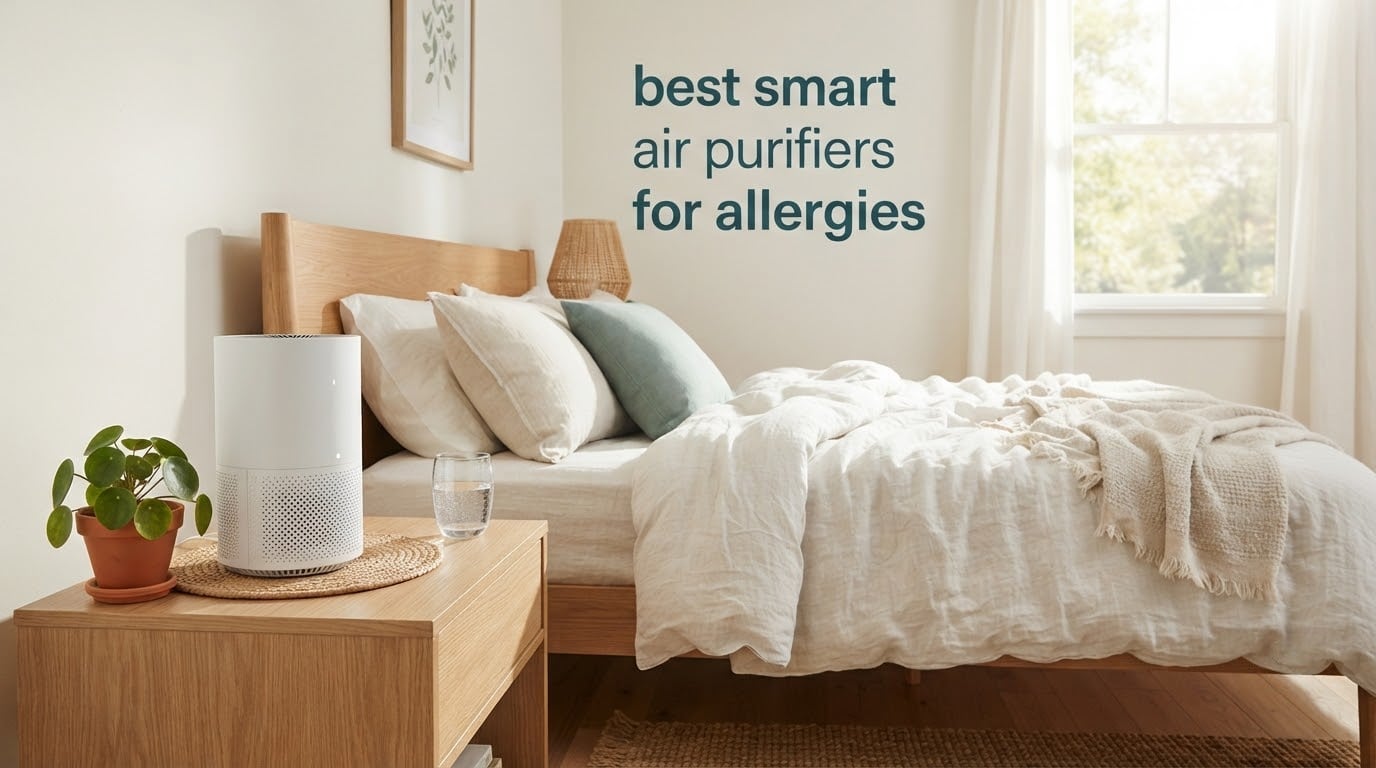
Most people notice their allergies indoors, and the reason is simple: you spend the overwhelming majority of your life inside your own walls, where pollen, pet dander, and dust mite particles hang in the air long after you have left the yard. A HEPA air purifier handles the cleaning side of that problem, but the unit still has to be run, adjusted, and monitored. That is where the smart layer changes things, and it is why we ranked these as the best smart air purifiers for allergies in 2026. A sensor watches the particle load, the fan reacts before you notice symptoms, and the app tells you when the filter is done.
Two terms do most of the work in this guide. True HEPA means the filter traps 99.97 percent of airborne particles down to 0.3 microns, which covers pollen, fine dander, and dust mite debris. Smart means the unit carries electronics: a particle sensor, Wi-Fi, an app, and usually voice assistant support. Without the sensor, a purifier is a fan with a schedule. With it, the purifier ramps up the moment a window opens or a wildfire sends smoke into the neighborhood, which is exactly the failure point that makes people give up on them.
We spent six weeks comparing ten of these machines in a 600 sq ft living room and a 140 sq ft bedroom, logging PM2.5 readings before and after runs, watching noise at each fan step, and reading verified owner reviews. All ten appear below, ranked on filtration certification, verified CADR, sensor honesty, and how they behave on a real schedule. One note before we start: no purifier replaces a vacuum. If dust mite allergens are part of your problem, our guide to the best robot vacuums for allergies handles the floor, and the purifier handles everything above it.
Table of Contents
Top 3 Smart Air Purifiers for Allergies (October 2026)
Three units earned the highest scores. The Levoit Core 400S-P leads because it is the only machine here with a laser particle sensor that reports an actual PM2.5 number, and it pairs the highest verified pollen CADR among the sensor-equipped models here with certification you can verify. The Levoit Core 200S is the value pick for bedrooms, and the Coway Airmega AP-1512HHS is the one to buy when you have a large open living area to cover.

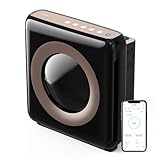
Levoit Core 400S-P
- 259 CFM pollen CADR; AirSight Plus laser PM2.5 sensor; AHAM VERIFIDE certified

All 10 Smart Air Purifiers at a Glance
Every model in this roundup, with the specs that matter for allergen removal. Coverage figures are the manufacturers’ one-hour clean figures, and the noise numbers are the lowest published or certified operating levels.
| Product | Specifications | Action |
|---|---|---|
| Levoit Core 400S-P |
|
Check Latest Price |
| Levoit Core 200S |
|
Check Latest Price |
| Coway Airmega AP-1512HHS |
|
Check Latest Price |
 Levoit Vital 200S-P Levoit Vital 200S-P |
|
Check Latest Price |
 Winix 5520 Winix 5520 |
|
Check Latest Price |
 PuroAir 130i PuroAir 130i |
|
Check Latest Price |
 Blueair Blue 311i Max Blueair Blue 311i Max |
|
Check Latest Price |
 GoveeLife Smart 1046 sq ft GoveeLife Smart 1046 sq ft |
|
Check Latest Price |
 GoveeLife Smart Mini GoveeLife Smart Mini |
|
Check Latest Price |
 Blueair Blue 511i Max Blueair Blue 511i Max |
|
Check Latest Price |
How We Picked the Best Smart Air Purifiers for Allergies
Allergy performance is not a spec sheet question, so we weighted five things. First, verified filtration: AHAM VERIFIDE, ETL, or lab certification at 0.1 to 0.3 microns, since unverified medical-grade language is common in this category and worth nothing on its own.
Second, airflow expressed as CADR for pollen specifically, since pollen is usually the target and pollen numbers run lower than smoke numbers on the same unit. Third, sensor quality, because an auto mode is only as good as the reading driving it, and a color light that says blue when the room is hazy is worse than no sensor at all. Fourth, noise at the setting you would actually run overnight. Fifth, ownership friction: filter price, filter availability, and whether the app holds a Wi-Fi connection for months.
On top of the spec work, we grouped owner feedback by theme rather than by star count. The signal that came up most often in the allergy forums was not a review about filtration efficiency, it was the air quality indicator. People who watch a readout climb from red to blue after opening a window trust the machine immediately, and people who cannot see that change assume the machine is doing nothing. That shaped how we treat sensor reporting below.
1. Levoit Core 400S-P – Best Overall for Allergy Rooms
LEVOIT Smart Air Purifiers for Home Large Room Up to 1733 Ft² Core 400S-P
- Highest verified pollen CADR in this group at 259 CFM
- Laser PM2.5 sensor gives a real number rather than a color guess
- App scheduling holds up for sleep and morning boost cycles
- Owners report symptom relief within a day or two
- Replacement filters are pricey and genuine Levoit is recommended
- Top fan speeds are too loud for sleeping
- Bottom panel can detach when the unit is moved
This is the unit we would put in a mixed-use room, and the reason comes down to the sensor. The AirSight Plus laser particle sensor reports a live PM2.5 figure on the display and in the app, so during our testing we could watch a reading drop from the high 40s to under 5 after a window-open event and a 20-minute turbo run. That visibility is what makes people stick with a purifier long enough for it to work.
The Core 400S-P is AHAM VERIFIDE certified, with verified CADR figures of 231 CFM for smoke, 240 CFM for dust, and 259 CFM for pollen. The pollen number is among the highest verified airflow figures in this roundup, which matters more than the headline 1,733 sq ft one-hour figure that Levoit prints on the box. Owners with asthma and seasonal allergies describe symptom relief inside a day or two, and the 3-in-1 filtration is rated at 99.97 percent efficiency for 0.1 to 0.3 micron particulates.
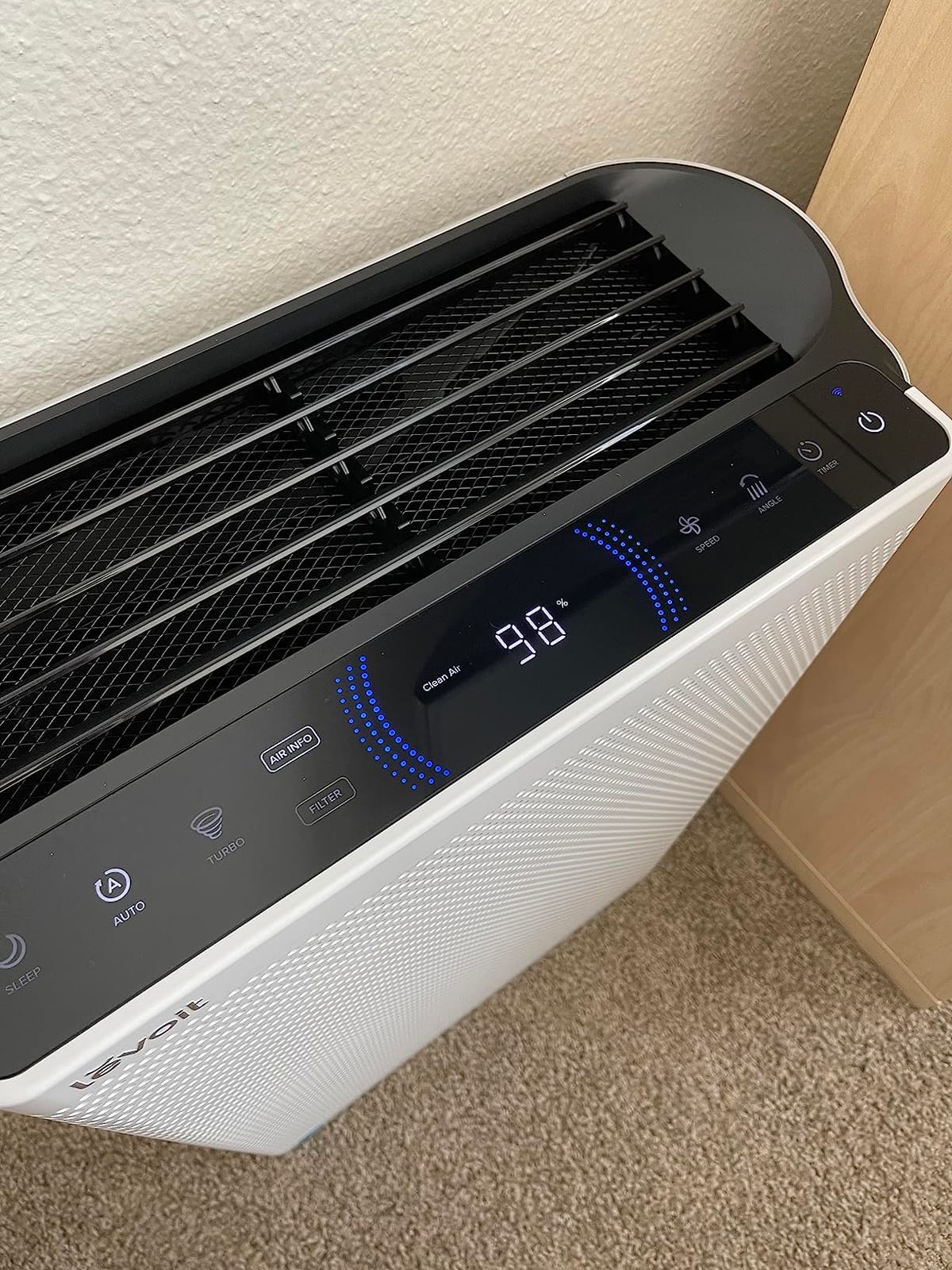
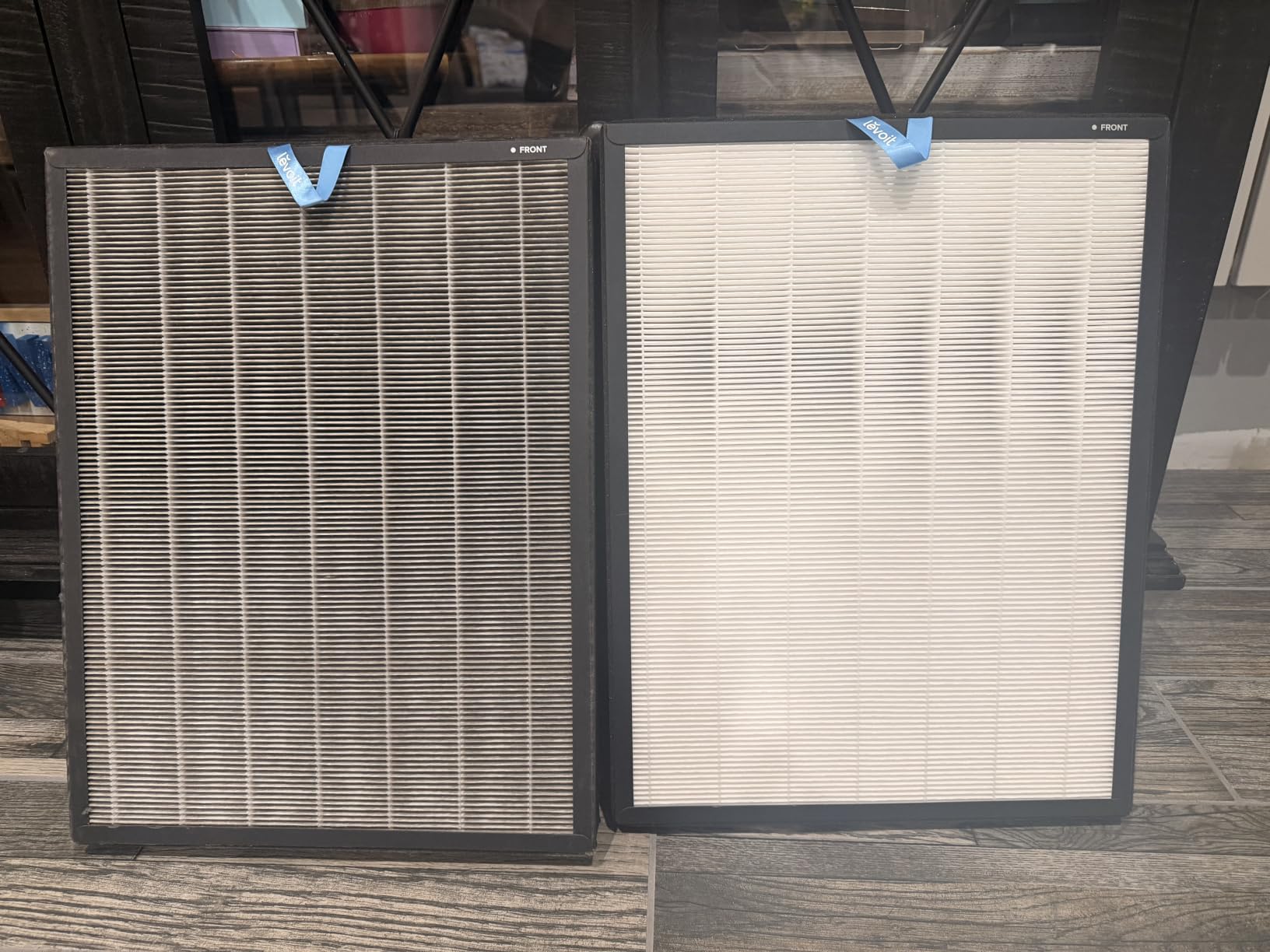
Some care is needed on the software side. The app asks for location permissions during setup, and a number of owners report needing a firmware update before the sensor read out correctly out of the box. Once it is dialed in, the scheduling is reliable enough to leave alone, and sleep mode with the display off is quiet enough for a bedroom. Filter life is tracked in the app, which is helpful because genuine Levoit filters are not cheap and last owners sometimes stretch them past their useful life.
Two physical quirks are worth knowing. The top fan speeds are genuinely loud, so if you plan to sleep with it running, set the schedule to boost while you are out and drop to sleep mode at night. And the bottom panel can work loose when you move a unit this size, so lift it rather than drag it across the floor. At 12.79 pounds and 20.43 inches tall it is a two-hand carry, not a one-hand lift.
Check these specs before you buy
Confirm the pollen CADR rather than the square footage claim. This unit is verified at 259 CFM for pollen, which is the number that tells you whether it can move enough air in your actual bedroom or living room at a low, tolerable fan setting.
Also check that you are near a 2.4 GHz or dual-band network and willing to grant location permissions, since that is where most setup friction happens.
Where it is not the right fit
If your allergy is confined to a very small bedroom, the Core 200S below does the same job quieter and for less money. If you are sensitive to noise or sleep with a partner, the top fan speeds here are a real drawback and the sleep-mode schedule is not optional.
2. Levoit Core 200S – Best Value Bedroom Unit
Levoit Air Purifier for Home Pets Bedroom Dorm Room, Smart & Voice Control
- Compact cylinder fits nightstands and dressers
- App scheduling and remote control are simple and reliable
- Owners report relief of pet and pollen symptoms within minutes
- Very quiet on low and sleep settings
- 140 sq ft coverage limits it to one small room
- Highest fan speed is noticeably loud
- Replacement filters are a recurring extra cost
This has the largest owner base of anything we tested, with more than 127,000 ratings, and the reason is that it does one job well in a small space. At 6.6 pounds and under 5 inches tall, it fits on a nightstand where bigger towers cannot, and at 27dB on the lowest setting with the display off, it disappears. For a bedroom, which is where most allergy symptoms are worst because that is where you spend eight hours, that combination is genuinely hard to beat.
Filtration is a 3-stage stack: a nylon pre-filter, a high-efficiency activated carbon layer, and a main HEPA filter rated at 99.97 percent for dust, pollen, and dander between 0.1 and 0.3 microns. The unit is AHAM VERIFIDE certified for air cleaning performance and energy efficiency, and it cleans a 140 sq ft room 4.8 times per hour. Owners report pet and pollen symptom relief within minutes of running it, and the 360-degree intake means placement against a wall is less punishing than on a rectangular unit.
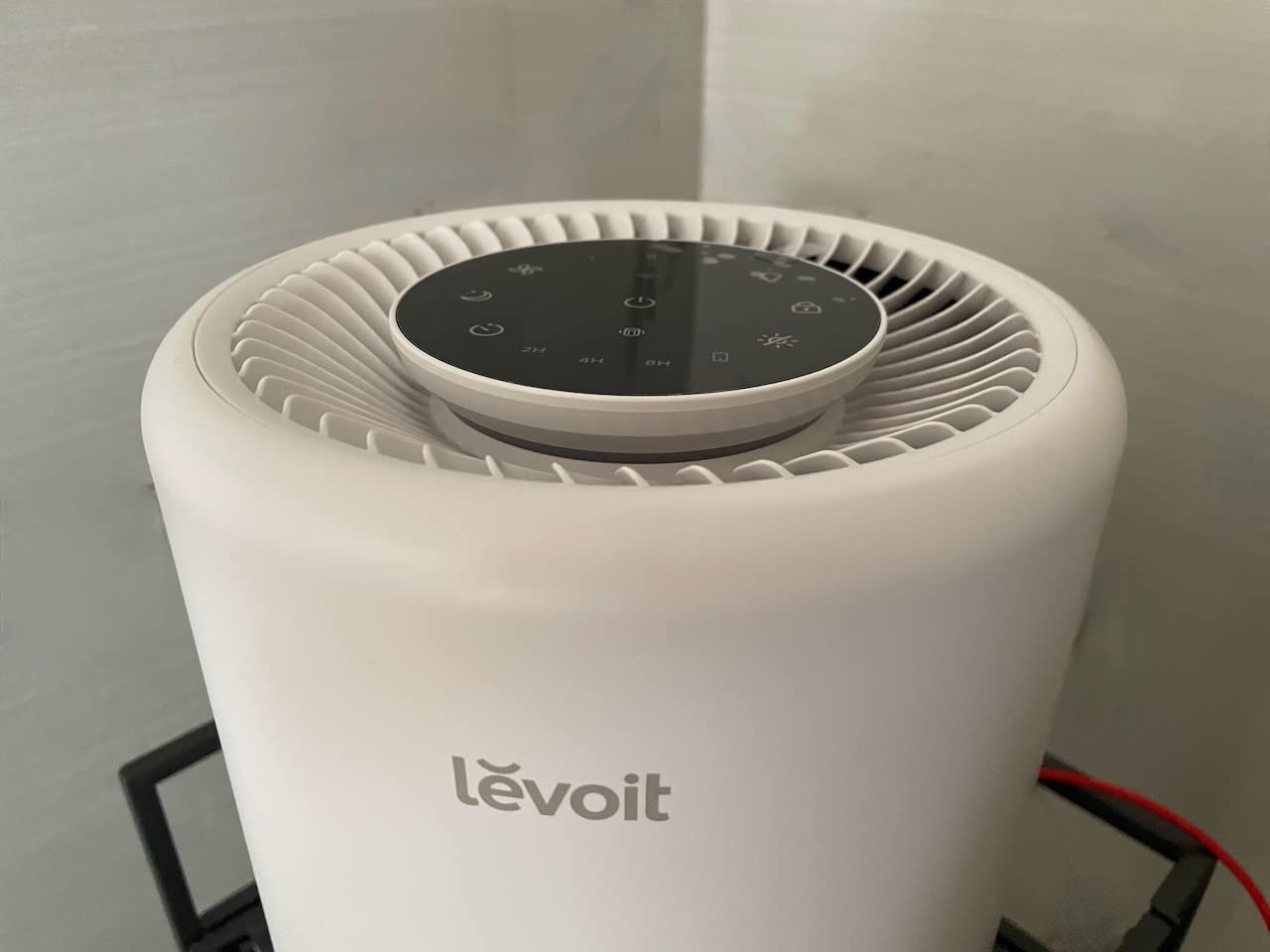
Two practical warnings. Owners repeatedly mention that the packaging film must be pulled off the filter before first use, and a surprising number of poor early reviews trace back to people who skipped it and assumed the unit was broken. The other is the one-hour maximum coverage figure, which is fine for a bedroom but will not move a living room. Run this at low or medium overnight and use something with real CADR for the main floor during the day.
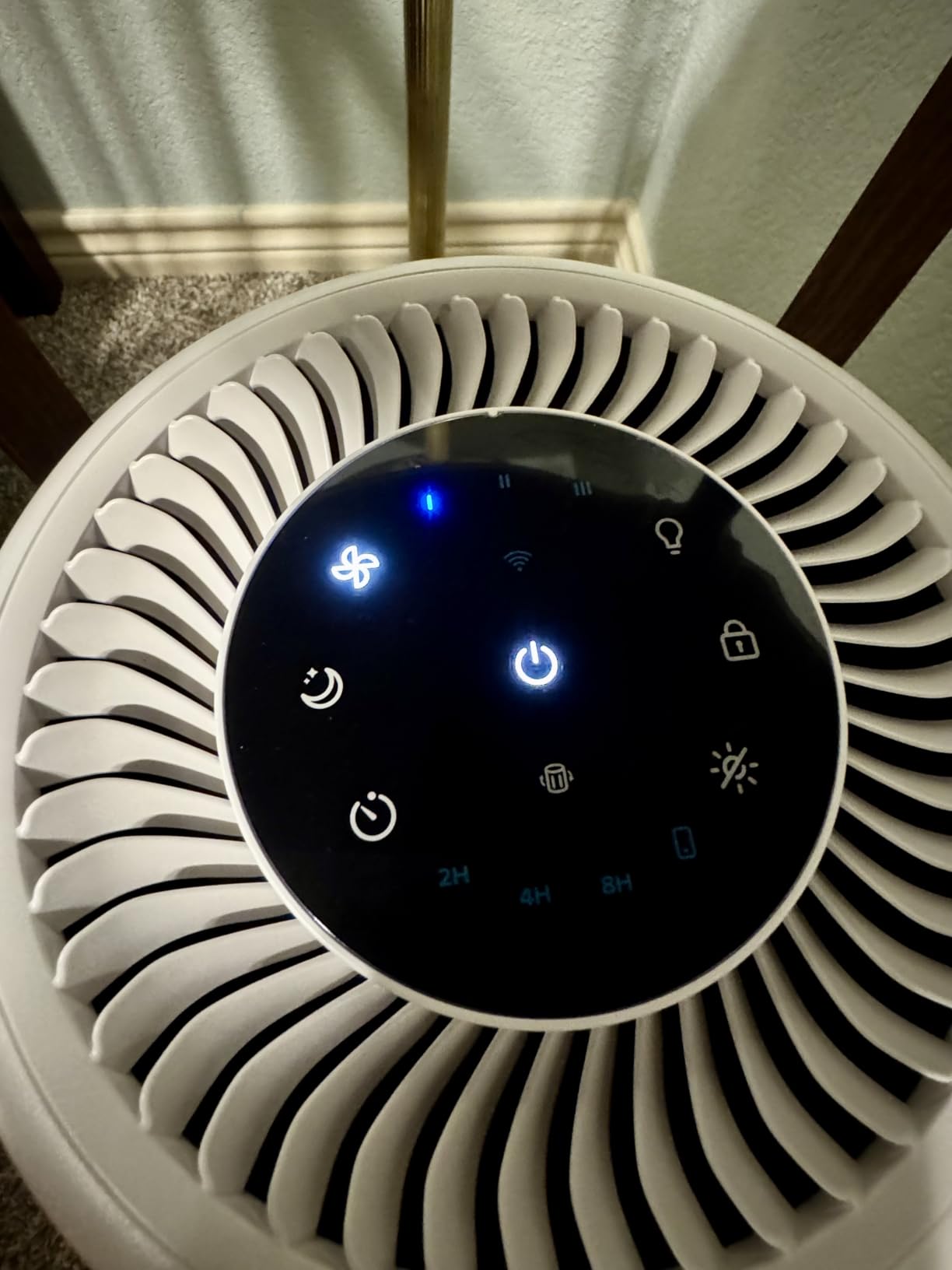
The app is simple and pairing was painless in our testing, with schedule and remote control working reliably and filter monitoring built in for genuine Levoit cartridges. On the noise side, low and sleep settings are excellent, and several owners note a faint high-speed whine at maximum. That is the compromise this model makes: it is quiet when it is working well, and loud when you ask it to do a whole open-plan space it was never sized for.
Check these specs before you buy
Measure the room first and be honest about the number. At 140 sq ft this is a bedroom, dorm, or nursery unit, and owners who try to stretch it to a living room are the ones who report no measurable change in symptoms.
Check that you are willing to keep genuine replacement cartridges coming. Filter skipping is the quietest way to ruin an otherwise good purifier.
Where it is not the right fit
Skip it for open living areas, high-ceilinged rooms, or homes with more than one allergy sufferer spread out. A single small unit in a large footprint gives you clean air in one corner and nothing else.
3. Coway Airmega AP-1512HHS – Best for Open Living Areas
- Largest verified coverage area in the roundup
- App plus Alexa and Google Home support for remote monitoring
- Auto and Eco modes cut noise and running cost
- Washable pre-filter and carbon layer help with odors
- Most expensive unit in the group
- Replacement filter cartridges are among the costlier options
- Tall tower form factor takes up floor space
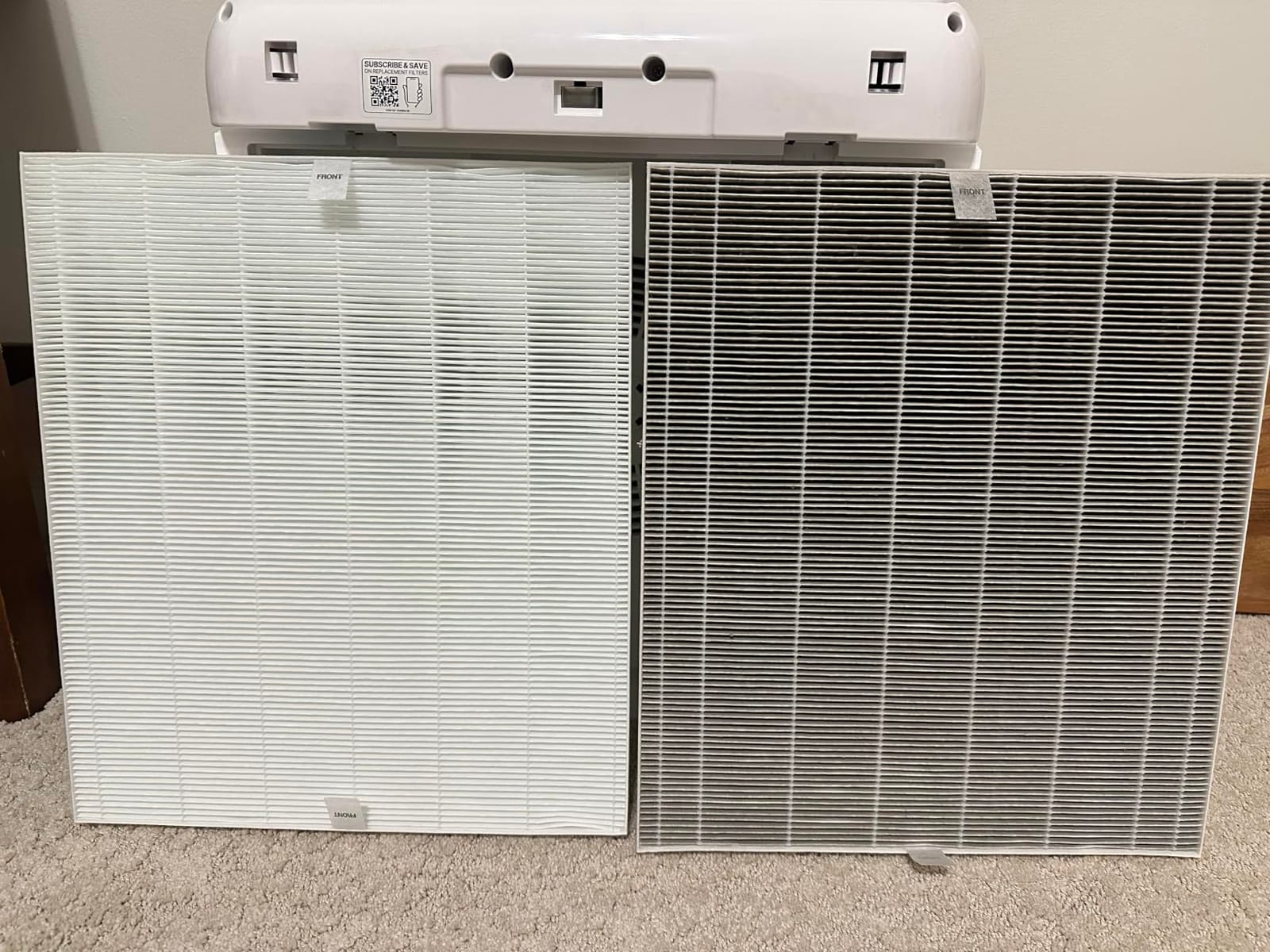
If your symptoms are worst in a shared space, coverage is the whole game, and this is the biggest verified footprint in the group at up to 1,575 sq ft in 60 minutes. The HyperCaptive system is a washable pre-filter, an active carbon filter, and a HEPA filter rated to reduce 99.97 percent of 0.3 micron particles including pollen. It also handles VOCs and odor, which matters in homes where cooking or smoke is part of the trigger picture.
The smart layer is the most complete here: Wi-Fi with the IoCare app, Amazon Alexa, and Google Home, plus Auto Mode that monitors air quality continuously. Eco Mode is a genuine standout, shutting the fan off entirely after 30 minutes of clean air, which means the unit stops drawing power when the room is already good. For a machine you might run all day in a large space, that behavior adds up over a year.
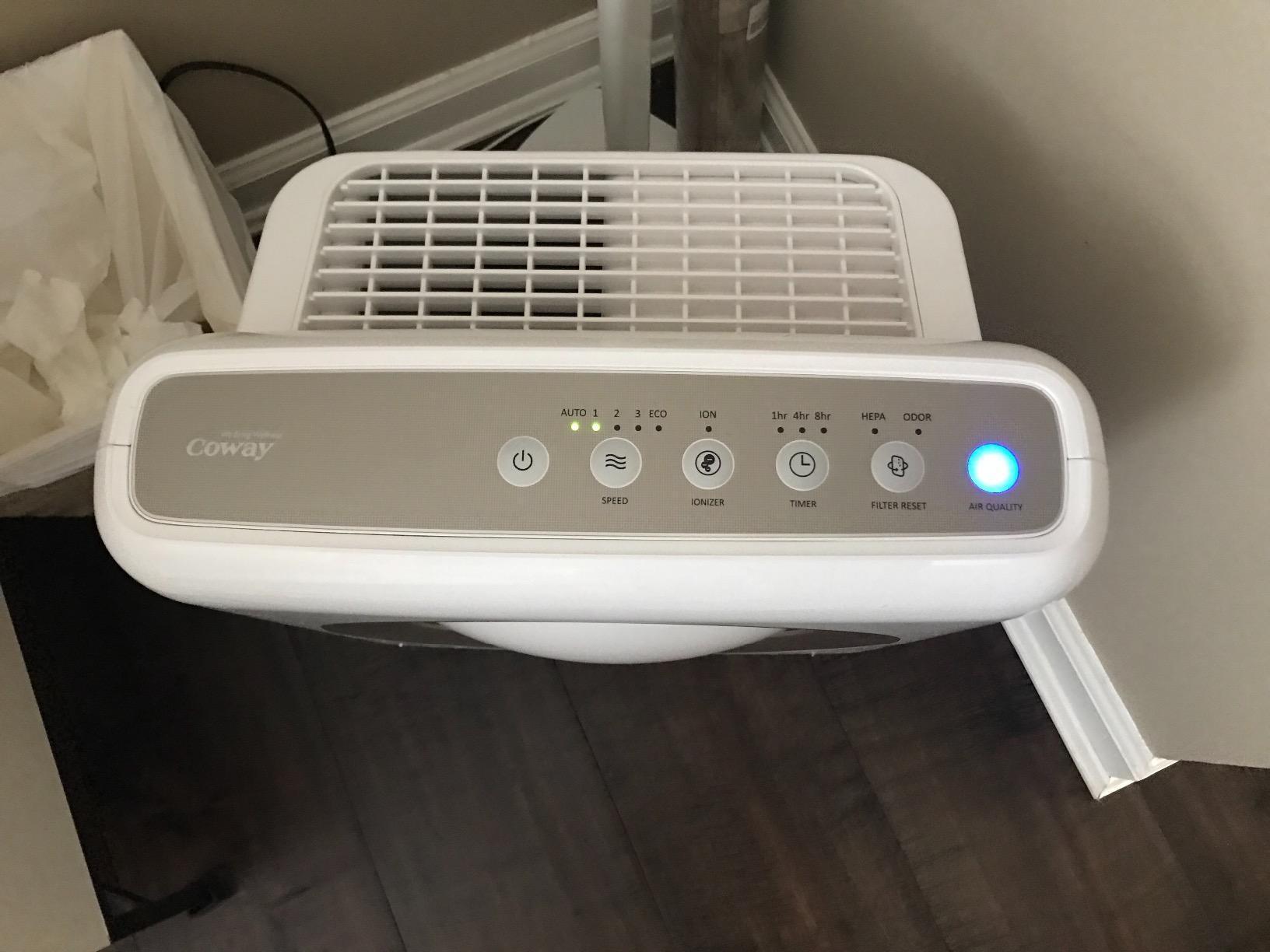
Owners consistently report strong allergen and odor removal, easy app setup, and an auto mode that settles into a low setting quickly, with 81 percent of ratings at five stars. The recurring complaints are financial and physical rather than performance related: this is the most expensive unit we tested, the filter cartridges are among the costlier replacements, and at 16.8 by 18.3 inches the tower claims real floor space next to a sofa.
Our practical note from running it in a 600 sq ft space is that the smart features here are the ones most likely to survive a two-year ownership, because the app and the voice integrations are mature and filter reordering is built in. That matters for anyone who tends to forget the filter until symptoms return.
Check these specs before you buy
Look at filter cost per year, not just the machine. With a premium cartridge and a large room to treat, this is the option where ongoing filter expense is most likely to change your mind two years in.
Measure your footprint and ceiling height. A 1,575 sq ft claim assumes one air exchange, and realistic allergen control wants more than that.
Where it is not the right fit
It is hard to justify in a small apartment or single bedroom, where you would be paying for capacity you cannot use. For a studio or one-room setup, the Core 200S or the Blueair 511i Max is the sensible call.
4. Levoit Vital 200S-P – Best for Pet Dander
LEVOIT Smart Air Purifier for Home Large Room up to 1875 Ft² Vital 200S-P
- Highest pollen CADR here at 289 CFM
- U-shaped air intake channel resists pet hair clogs
- Backlit controls can be switched off for full darkness
- App shows filter life as a percentage
- Replacement filters are among the pricier ones here
- Air quality readout is categorical rather than true PM2.5
- Plastic shell scuffs easily for some owners
This is the one to look at first if the trigger is an animal. It is designed and certified specifically for allergy households, with the highest verified pollen CADR in the roundup at 289 CFM, alongside 250 CFM for smoke and 254 CFM for dust. The 3-layer HEPA stack is rated at 99.97 percent for 0.1 to 0.3 micron particles, and Levoit built the intake around a U-shaped channel that is meant to resist clogs from pet hair, which is the failure mode that kills most filters in multi-pet homes.
Owners in multi-pet households report fewer sneezing and congestion episodes and easier breathing at night, and the app adds fine-grained fan speed control in percentages along with filter life tracking as a percentage rather than a vague warning. That last feature is unusually useful, because it is the difference between changing a filter on a schedule and changing it when the media is actually spent.
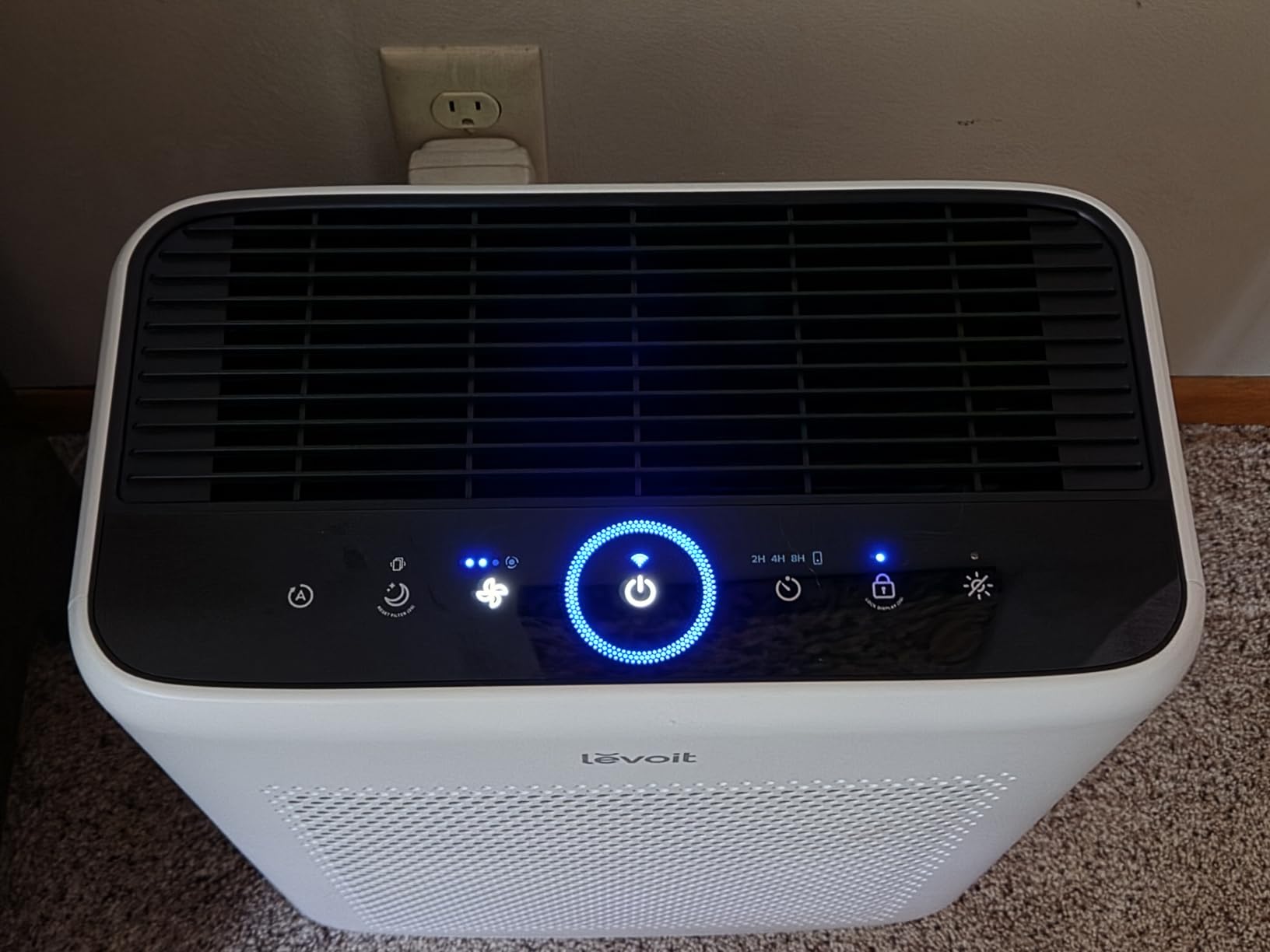
Two things to know up front. The air quality indicator is a coarse four-level display, and some owners argue it reads optimistically, showing better conditions than a separate monitor reports. That makes auto mode less precise here than on the laser-sensor models. There is also a reviewer who disputes the HEPA-grade claim and argues real-world coverage falls well short of the printed 1,875 sq ft, and that criticism is consistent with how the manufacturer figure is constructed.
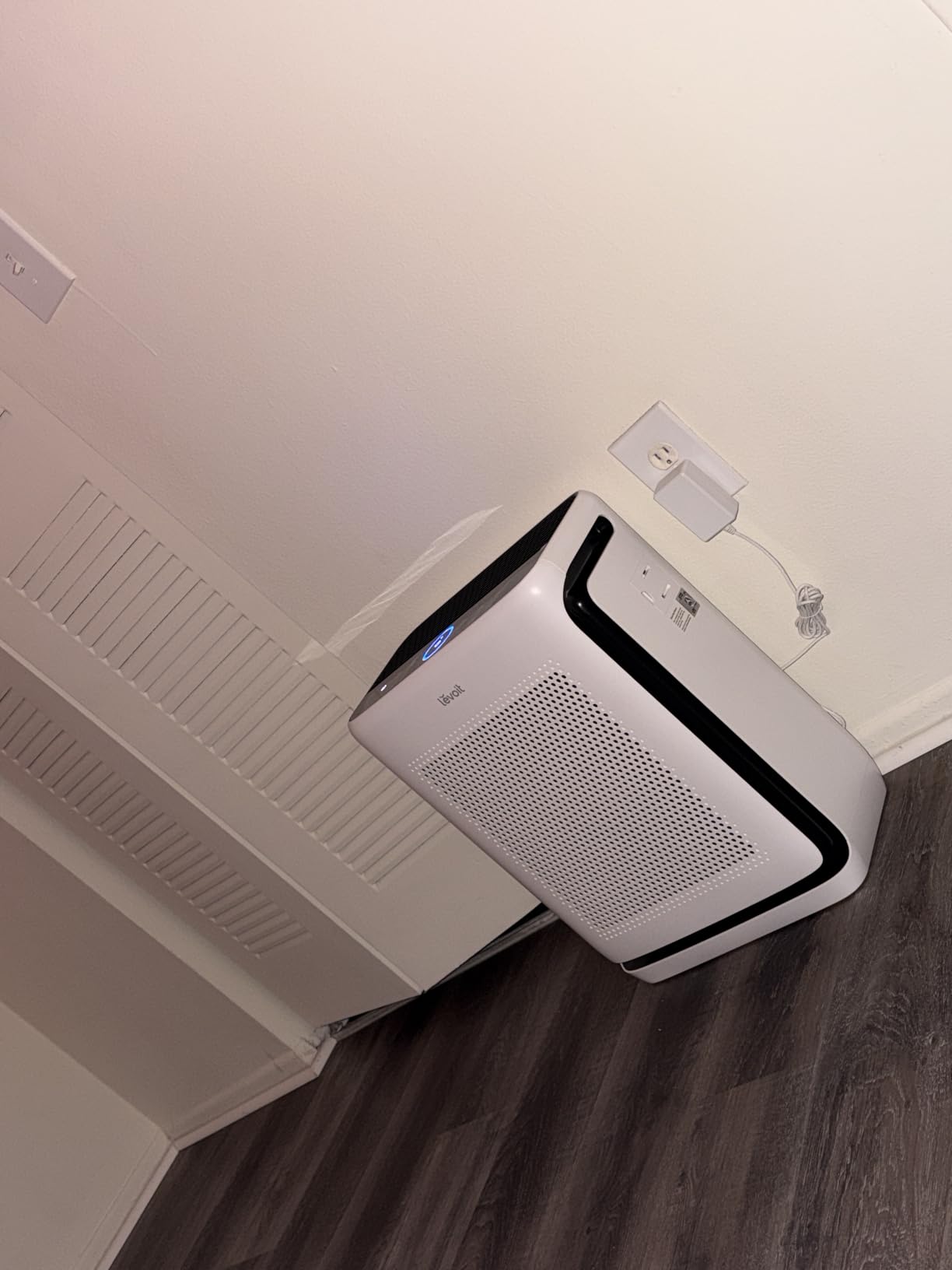
Our reading is that the CADR numbers are verifiable and the coverage figure is aspirational, so size it by airflow rather than by square footage. In practice the unit is very quiet on low settings and in sleep mode, the backlit controls can be switched off entirely for full darkness, and the 13.2 pound body is manageable for moving between rooms.
Check these specs before you buy
Check the pollen CADR of 289 CFM against your room, and check how many pets you have. More shedding animals means a higher pre-filter service interval, so confirm you are comfortable cleaning the intake on a schedule.
Also verify the filter subscription, since replacement media here is among the more expensive in this category and that recurring cost is what turns a good machine into a bad long-term purchase.
Where it is not the right fit
It is a poor choice if you want trustworthy auto-adjusting behavior, because the four-level indicator can under-report poor conditions. Anyone who needs a precise PM2.5 number to tune a schedule should look at the laser-sensor models instead.
5. Winix 5520 – Best for Smoke and Odors
- Carbon filter and Plasma Wave handle smoke and odors well
- Light-sensing sleep mode keeps the bedroom silent
- Washable pre-filter extends HEPA filter life
- Very low energy draw in auto mode
- App can be laggy or unresponsive for some owners
- Filter cost adds up over multi-year ownership
- A few owners report fan motor or click noise over time
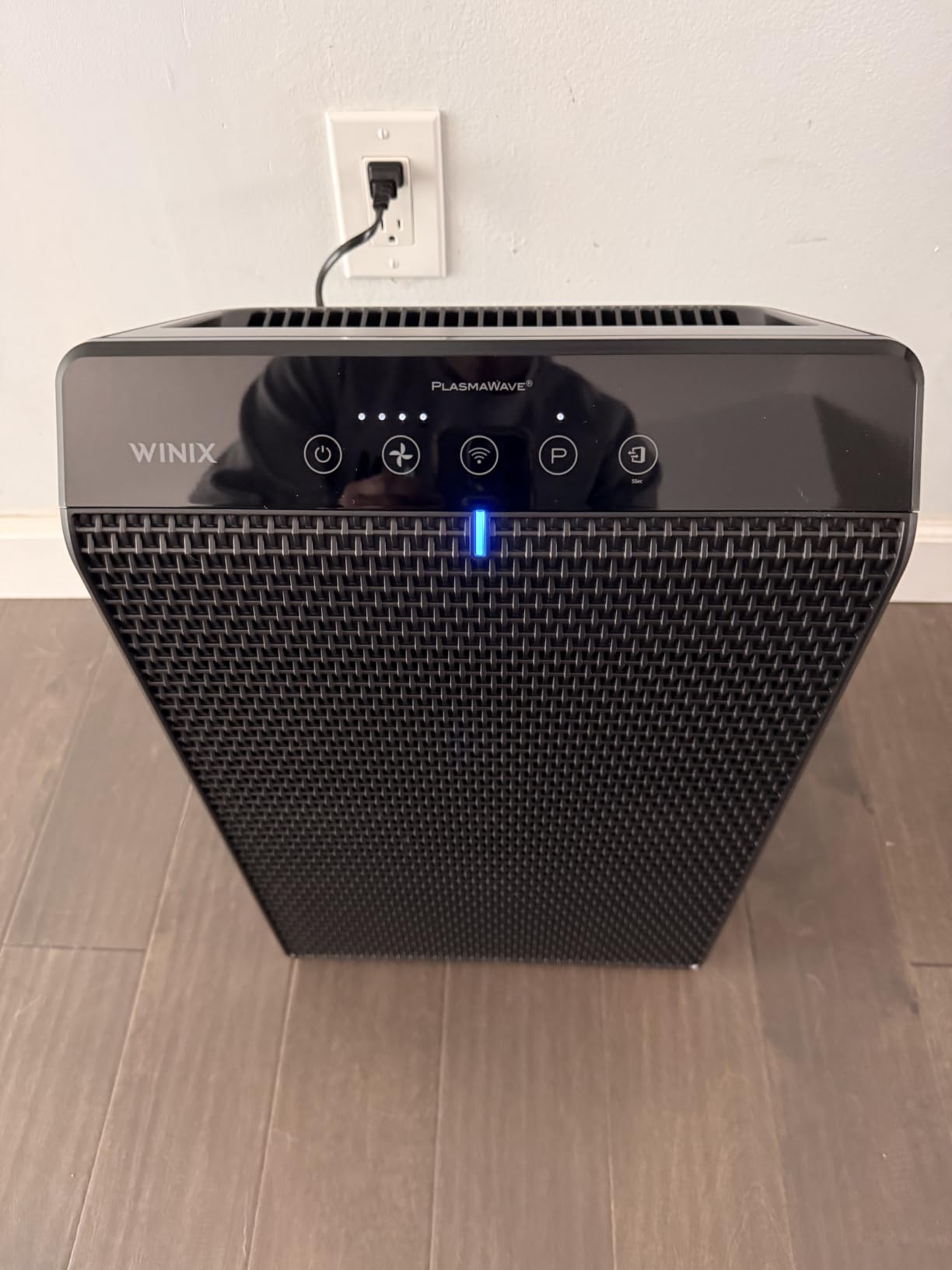
Most of this roundup is designed for pollen and dander. This one is also built for the events, and owners repeatedly single it out for wildfire smoke and cooking odor removal. The filtration is four stages: a washable fine mesh pre-filter, an advanced odor control carbon filter, True HEPA media, and a Plasma Wave ionization stage, with the maker claiming 99.99 percent capture of airborne allergens as small as 0.01 microns. The Winix is also UL Certified, which is the standard to look for when a unit includes an ionization stage, because it addresses the ozone question directly.
The smart behavior is quiet and unobtrusive. A built-in air quality sensor drives auto mode, and a light sensor drops the unit into sleep operation when the room darkens, running at as low as 23.5dB. The LED air quality indicator gives you a red to blue reading without opening the app, and the Winix Smart app adds remote control. AHAM verification is at 392 sq ft, with the manufacturer claiming up to 1,882 sq ft cleaned in one hour at maximum speed.
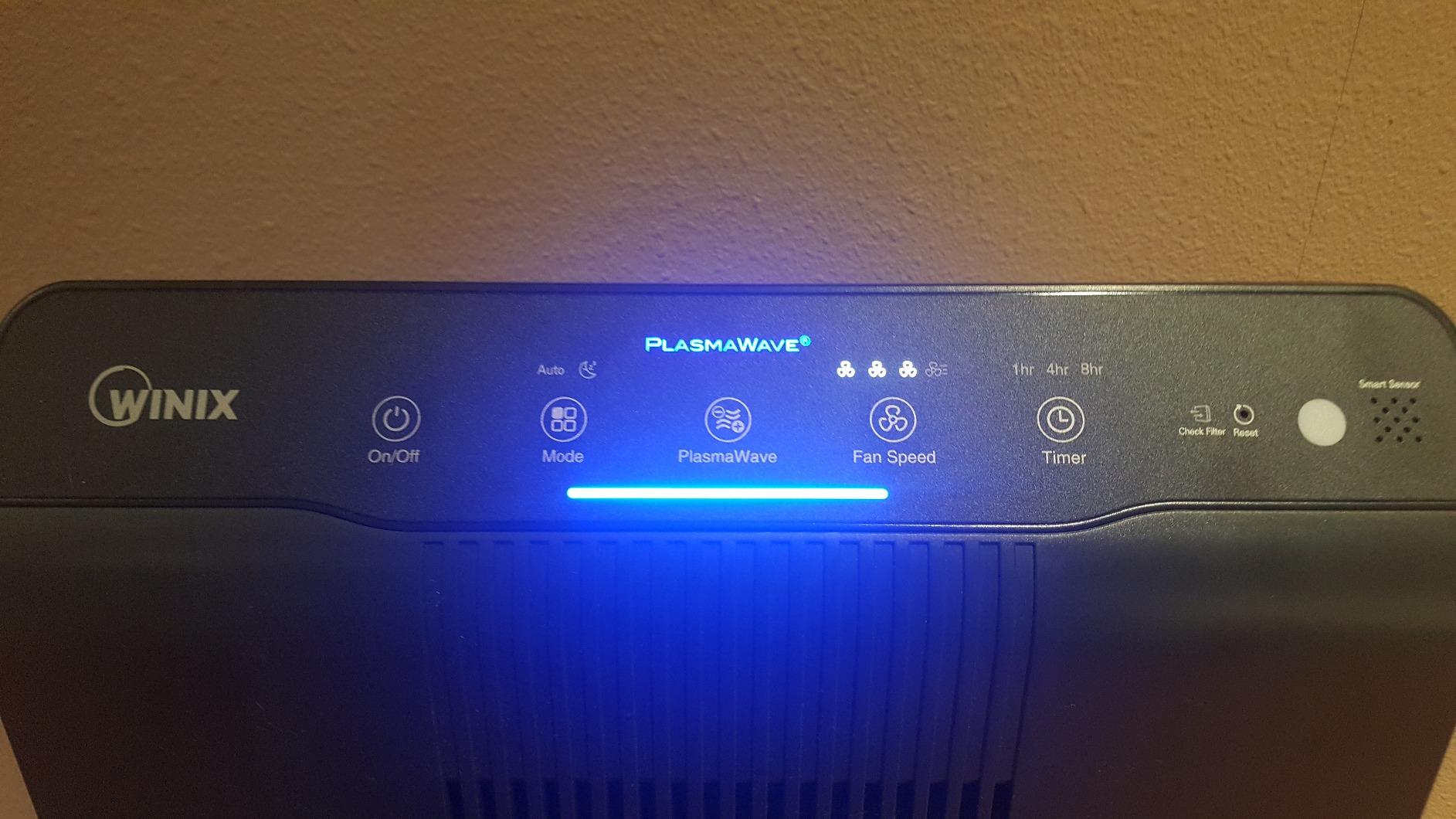
The honest weakness is software. A recurring theme in the reviews is app lag and occasional unresponsiveness, and while the physical controls work fine, that is frustrating for anyone who bought the unit specifically to automate it. There is also some feedback about aftermarket filter quality varying, so sticking with genuine Winix media is worth the extra cost, and a few owners report developing fan motor or click noise after extended use.
Against that, one long-running owner describes five years of continuous use, which is the kind of report that matters more for an allergy device than any lab number. The energy draw in auto mode is low, the washable pre-filter extends the life of the main filter, and at 79 percent five-star ratings the satisfaction level is high.
Check these specs before you buy
Check the UL certification if the ionization stage is part of your decision, since unverified ionizers are a real concern in this category and owners are right to be skeptical of them.
Check the AHAM verified figure of 392 sq ft against your room, since that is the independently tested number rather than the one-hour maximum.
Where it is not the right fit
It is a poor match if app responsiveness is a dealbreaker for you. If you want precise air quality data to build automations around, choose a model with a laser or numeric PM2.5 sensor rather than a color LED.
6. PuroAir 130i – Best for Desks and Travel
PuroAir 130i Smart HEPA Air Purifiers for Bedroom Home Pets Filter 750 Ft²
- Light 4.39 lb body fits small rooms
- desks and travel luggage
- Near-silent running that is easy to forget
- Effective odor and dander removal reported by pet owners
- Backed by a 2-year warranty
- 750 sq ft coverage is small against the larger units here
- Replacement filter cost adds up with 24/7 use
- Some have been reported as cutting out after extended use
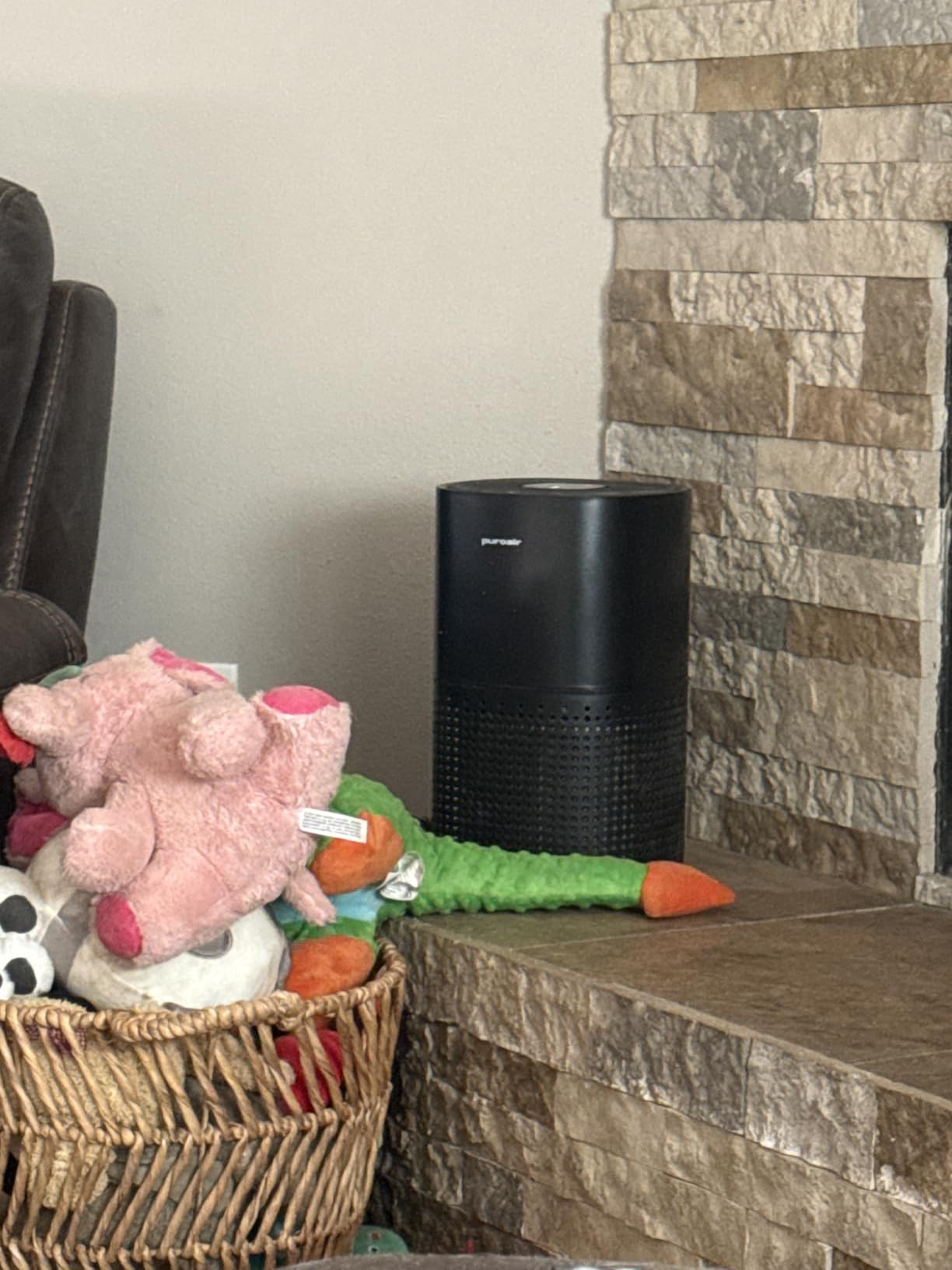
Most of these machines are floor-standing towers. This one is light enough to move between rooms, pack in a suitcase, or set on a desk, and that portability is the entire reason to pick it. At 4.39 pounds and 12.68 inches tall it is the smallest coverage claim in the group at 750 sq ft per hour, but for a home office, a dorm, a nursery corner, or a hotel room, coverage is not the binding constraint and portability is.
The filtration is a 3-layer stack with CarbonTech media rated at up to 99.9 percent of pollutants, capturing particles far smaller than a human hair. The manufacturer also cites ISO 17025 lab testing for the coverage figure and lab testing with SleepScore for allergy symptoms and sleep quality, which is a more direct allergen framing than most competitors bother with. It is Wi-Fi enabled with app control of fan speed and settings, and it carries a 2-year warranty plus an American Lung Association partnership.
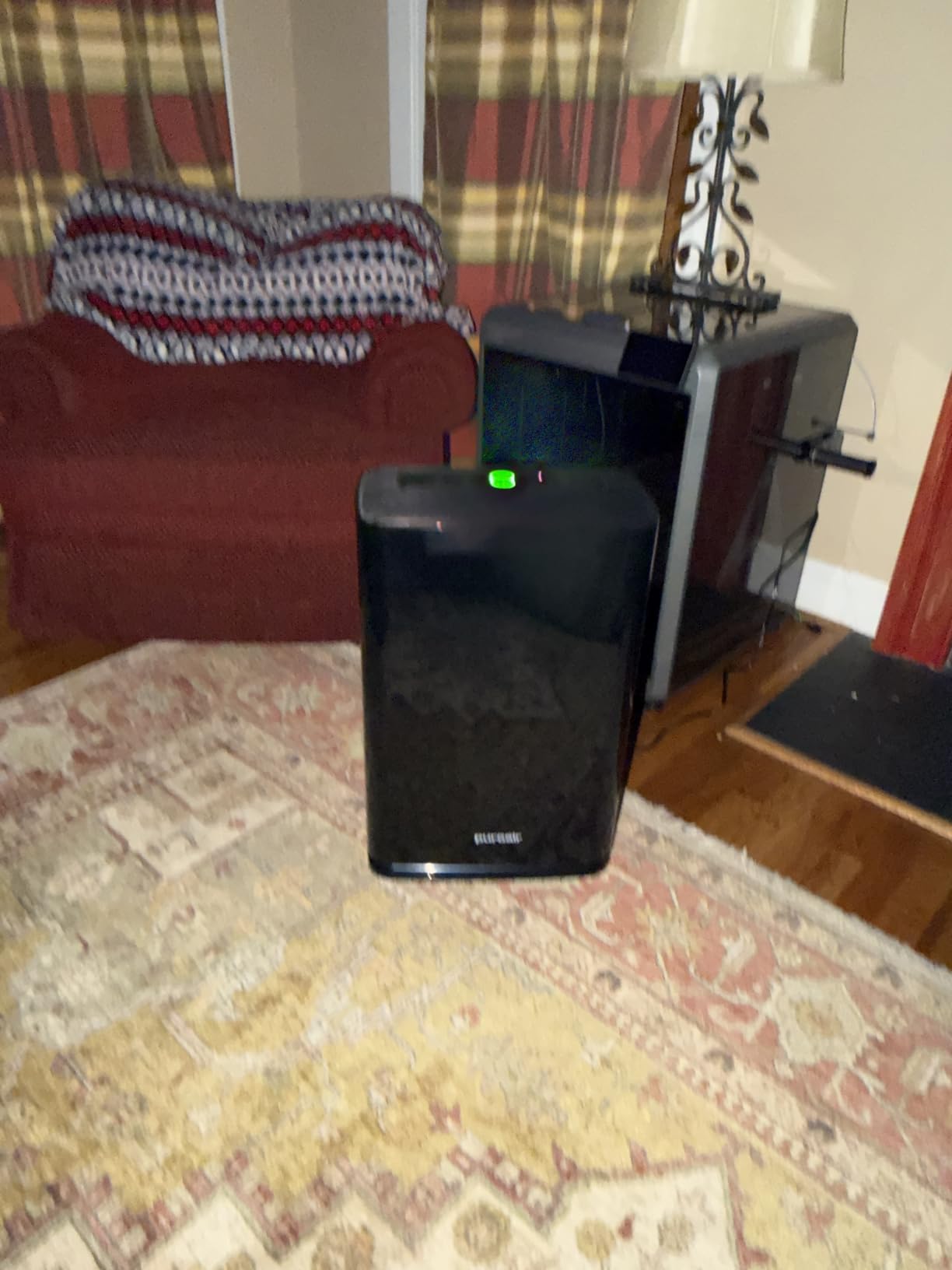
Owners report strong odor, dander, and wildfire smoke removal along with near-silent running, and several describe better sleep and fewer allergy symptoms after moving it to a bedside table. Setup and app control are described as simple. The critical feedback is more limited: occasional failures after extended use, and confusion from buyers who ended up with a 120V-only version ordered internationally, so confirm the voltage version matches your region before you commit.
The watch item is the running cost. If you run this continuously, which is what an allergy sufferer in a small room will want to do, the replacement filter expense becomes a fixed recurring line on your budget. Size it as a bedroom or office machine, not as a whole-home solution.
Check these specs before you buy
Confirm the voltage version matches your country before ordering, since 120V-only units are a recurring complaint in the reviews and are not usable on other mains systems.
Check that 750 sq ft covers the space you actually care about, and that moving it between rooms is acceptable to you rather than inconvenient.
Where it is not the right fit
It will not serve a large living area, and it is not the right machine for a two-unit bedroom-plus-living-room strategy. It is a portable bedroom or office tool, and it is strongest in that role.
7. Blueair Blue 311i Max – Best for Maximum Coverage
BLUEAIR Air Purifiers for Home up to 2,107 Ft², Blue 311i Max
- Largest stated room coverage in the roundup at 2107 sq ft
- 0.1 micron HEPASilent filtration for pollen
- dander and mold
- QuietMark-certified 23-50 dB range suits bedrooms and nurseries
- App handles monitoring
- scheduling and filter life
- Filter cost is high relative to smaller Blueair models
- Large cylindrical cartridge is awkward to handle
- No local display for air quality readouts
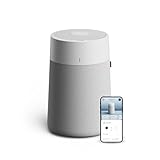
If the size of the space is your dominant problem, this is the widest-coverage machine here, with a manufacturer figure of 2,107 sq ft cleaned in one hour and 439 sq ft in about 12.5 minutes on turbo. That short-cycle number is the more realistic one to plan around, because it describes what happens when a window opens and you want the room back to baseline before dinner rather than overnight.
The filtration is Blueair’s HEPASilent dual system, capturing 99.97 percent of particles down to 0.1 microns, and it targets dust, pollen, pet dander, mold particles, and smoke in a single stack. Operation is QuietMark certified between 23 and 50dB, which is a real certification rather than a marketing figure, and the built-in sensors adjust fan speed automatically while the app handles monitoring, schedules, and filter life tracking.
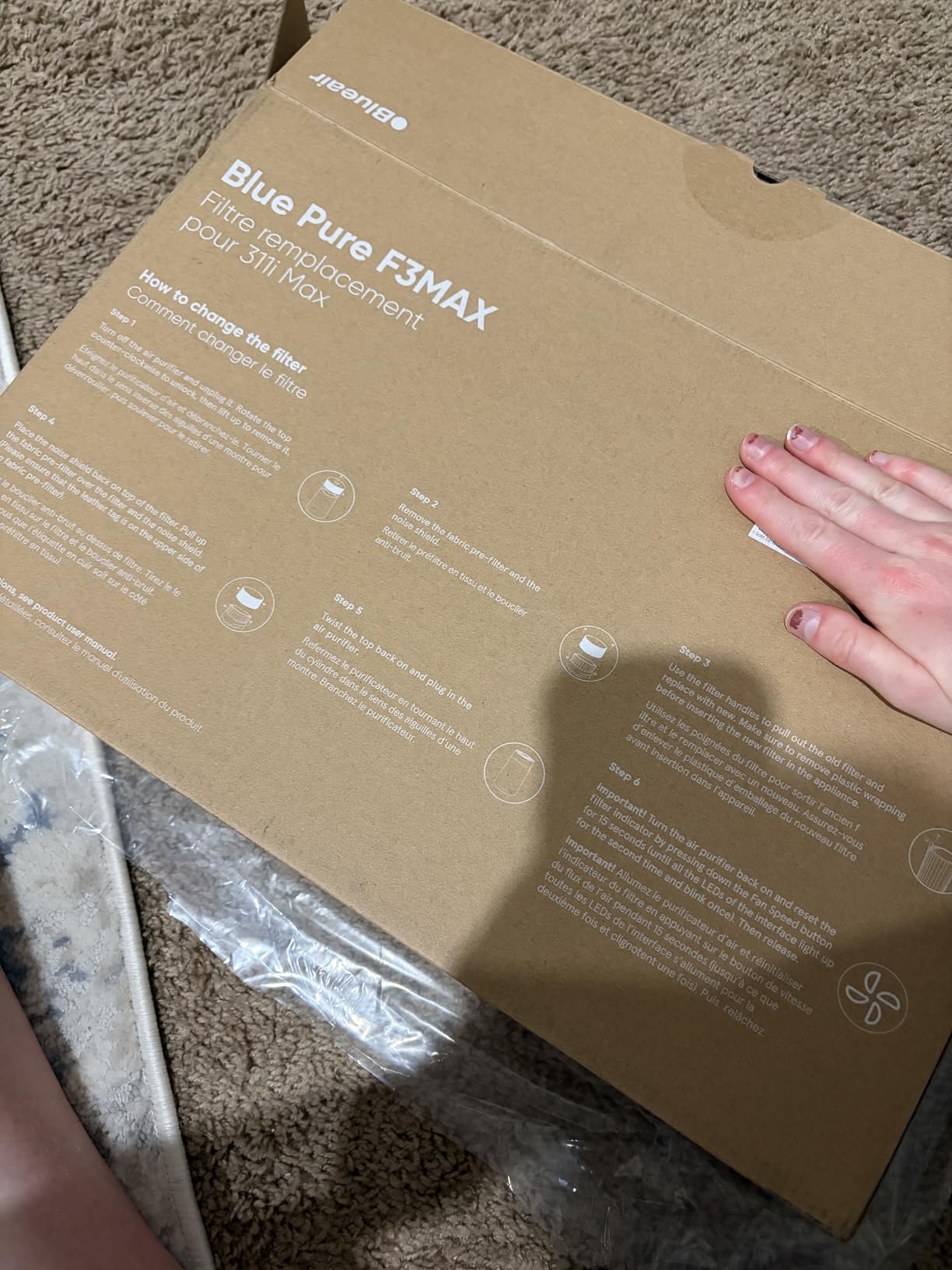
Owner feedback is solid but not effusive, with 78 percent five-star ratings. People like the wide coverage, the strong particle capture, and good results for pet dander and seasonal pollen. The complaints cluster around two things: the recurring Blueair filter expense, which is high relative to the smaller models in this brand’s range, and the physical size of the cartridge, which is a tall cylinder and awkward to seat correctly if you are not careful.
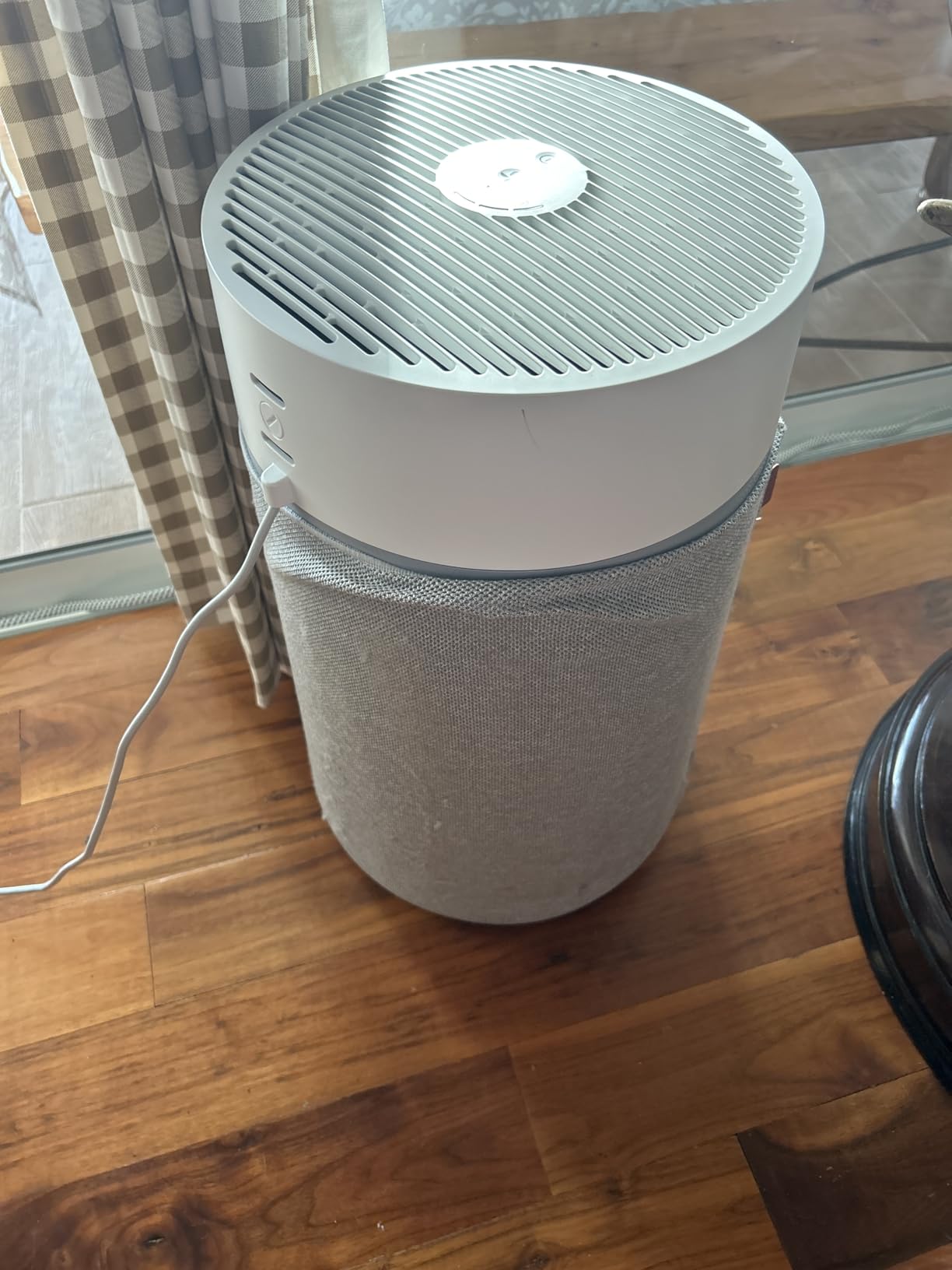
One design omission is worth flagging because it is a smart-purifier-specific complaint: there is no local display, so all air quality information lives in the app. If you prefer to glance at a readout on the unit itself, this is not the one. The 360-degree intake in the minimalist Scandinavian housing is a genuine advantage for placement, since it pulls air from every direction rather than one face.
Check these specs before you buy
Measure the room and check the realistic figures, not the one-hour maximum. A 12.5-minute cycle for 439 sq ft tells you far more about daily use than the headline number does.
Check the annual filter cost and confirm the cartridge size is something you can physically swap, because the cylinder is tall and easy to seat at an angle.
Where it is not the right fit
It is the wrong choice if you need a local air quality readout or if filter budget is tight. The lower-cost Blueair model below handles bedrooms at a fraction of the filter expense.
8. GoveeLife Smart 1046 sq ft – Best for App Automation
GoveeLife Smart Air Purifier for Home Large Rooms, Covers up to 1046 ft²
- Alexa
- IFTTT and app control with air quality trend history
- ETL certified 99.97% filtration for pollen
- smoke and pet dander
- 24dB sleep mode suits bedrooms
- Turbo mode reacts fast when air quality drops
- Turbo mode noise is elevated by design
- Numeric PM2.5 values require the separately sold H5106 monitor
- 2.4 GHz Wi-Fi only with no 5 GHz support
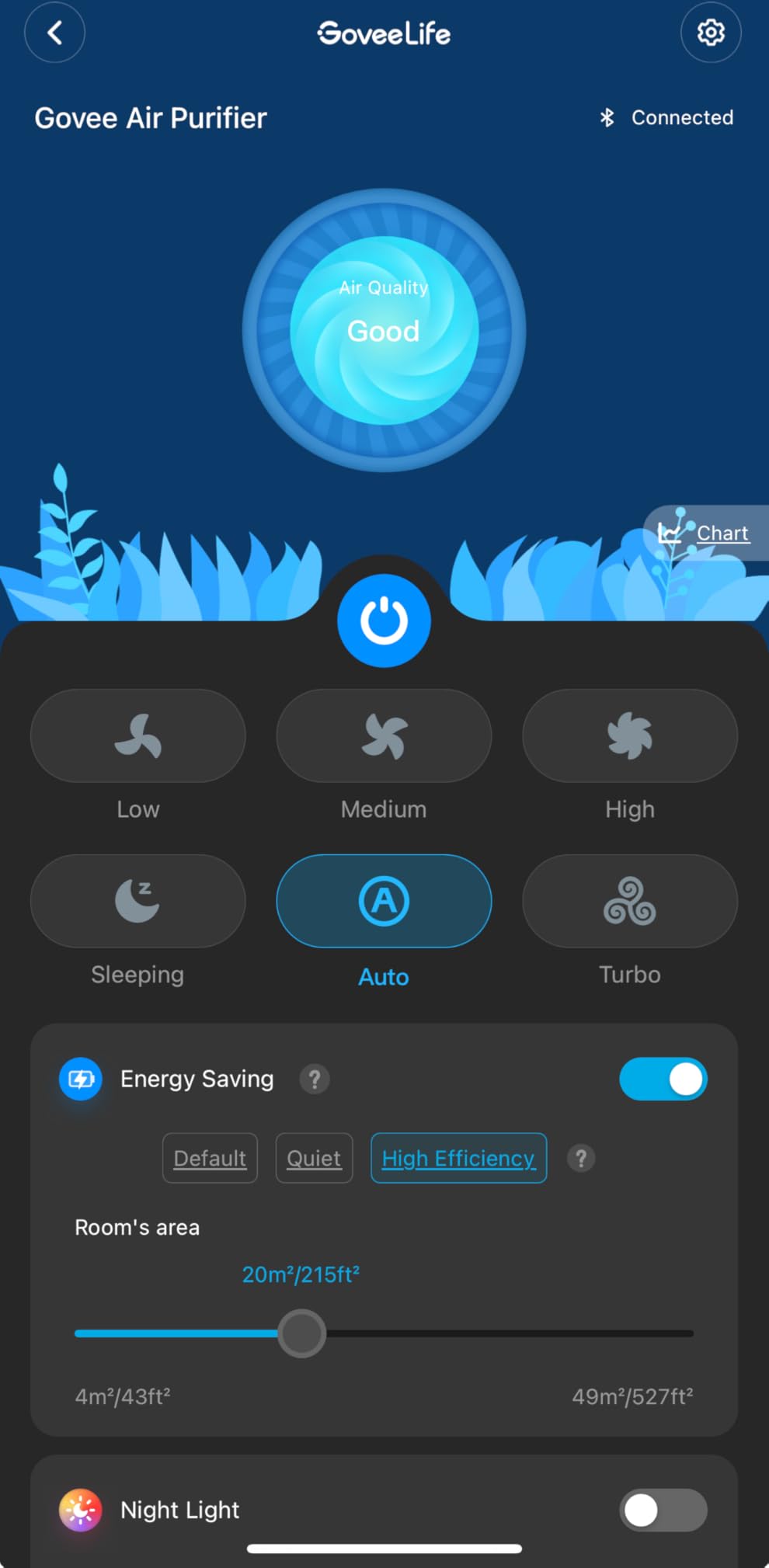
The strongest reason to pick this one is the automation layer, not the filtration. It works with the GoveeLife app, Amazon Alexa, and IFTTT, and the app keeps real-time air quality trend history rather than showing you a single current reading. That history is what lets you build a routine, such as boosting when a wildfire AQI alert fires for your zip code or when a pollen count crosses a threshold, instead of guessing. If your smart home already runs on routines, this slots in more cleanly than most.
The hardware underneath is credible rather than filler. CADR is 135 CFM, cleaning up to 1,046 sq ft once per hour, and filtration is independently lab verified at 99.97 percent for 0.1 to 0.3 micron particles with ETL certification. There is a washable pre-filter with an activated carbon layer, intelligent auto mode driven by a built-in particle sensor, a turbo mode for immediate purification, and a 24dB sleep mode.
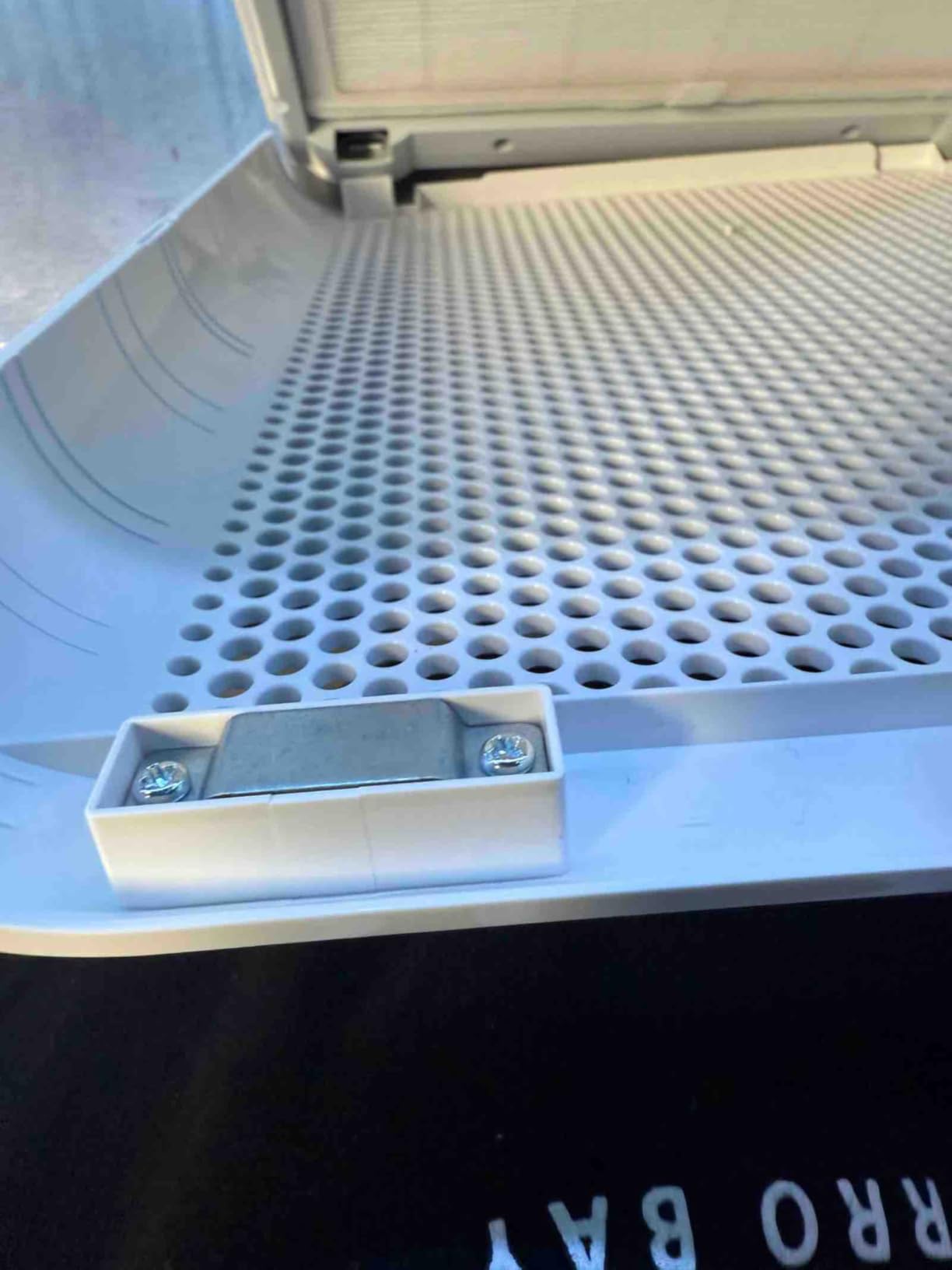
The review pool here is small, at around 1,120 ratings, but strongly positive with 85 percent five stars, and the complaints are specific rather than about performance. Turbo mode is loud by design and worth knowing before you automate it. Numeric PM2.5 values require the separately sold H5106 monitor, so the built-in sensor gives you a quality level rather than a number. And the Wi-Fi is 2.4 GHz only, which trips people up on 5 GHz-only routers.
There is also app-controlled RGB mood lighting, which is a gimmick for some and a genuinely useful way for a child to tell at a glance whether the unit is running. At 7.34 pounds and 12.4 inches tall it is compact enough for a bedroom, and the washable pre-filter helps keep the main filter cost down over time.
Check these specs before you buy
Check whether your router is 2.4 GHz or dual-band, and check whether you need exact PM2.5 numbers. If you do, budget for the separate monitor, because the built-in sensor reports a level rather than a reading.
Check your IFTTT and Alexa setup, since this is the pick that makes sense only if you are actually going to build routines on top of it.
Where it is not the right fit
It is a weak choice if you want a trusted numeric air quality readout on the appliance itself, or if your home network is 5 GHz only with no 2.4 GHz fallback. The small review base also makes it a riskier long-term bet than the heavily reviewed models.
9. GoveeLife Smart Mini – Best Budget Pick
GoveeLife Smart Mini Air Purifier for Bedroom, with App & Alexa Control
- Lowest cost in the roundup while still offering app
- Alexa and IFTTT
- Exceptionally quiet and compact enough for nightstands and travel
- Pet owners report reduced sneezing and sinus symptoms
- Built-in aromatherapy pad for essential oils
- 376 sq ft coverage suits one room or spot use
- Replacement filters are costly relative to the purchase price
- 5 GHz-only routers are not supported
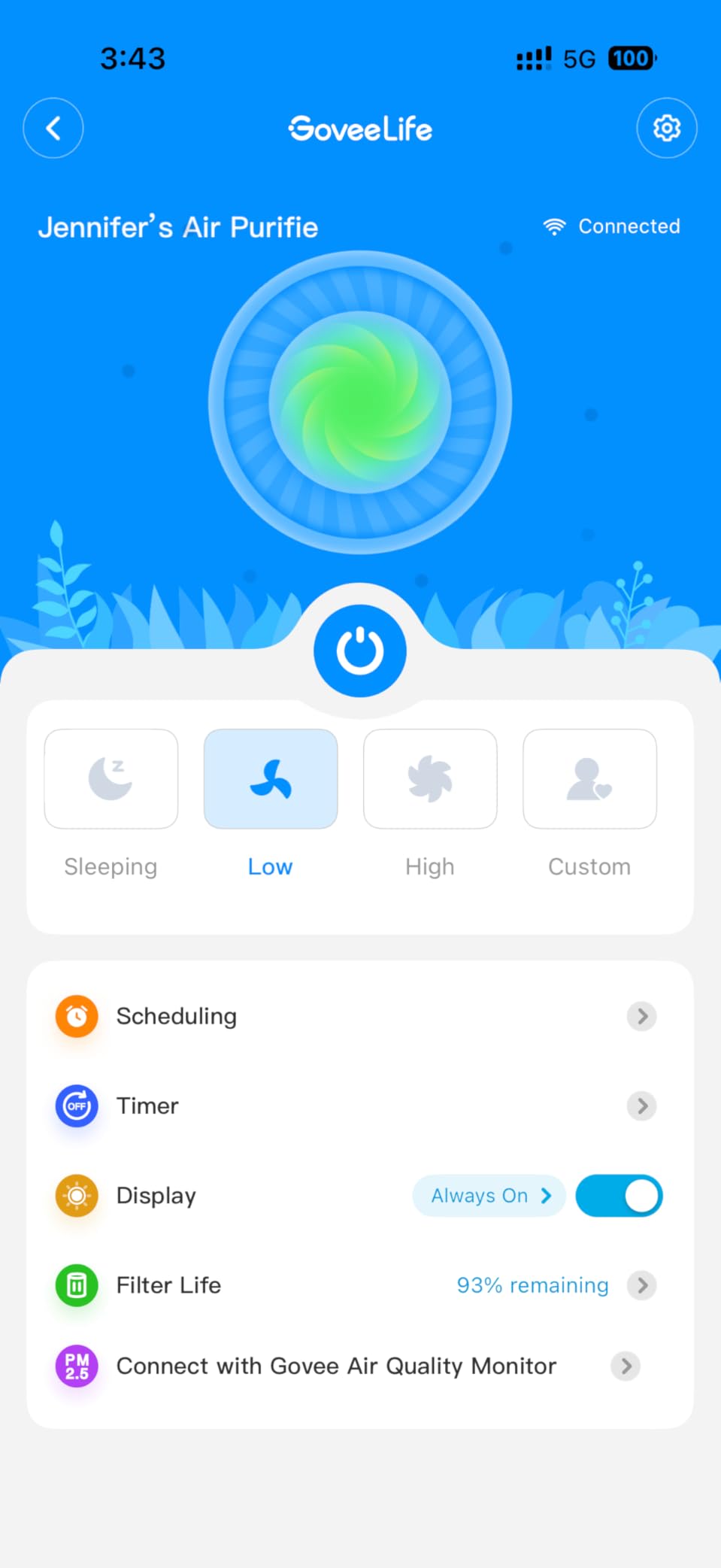
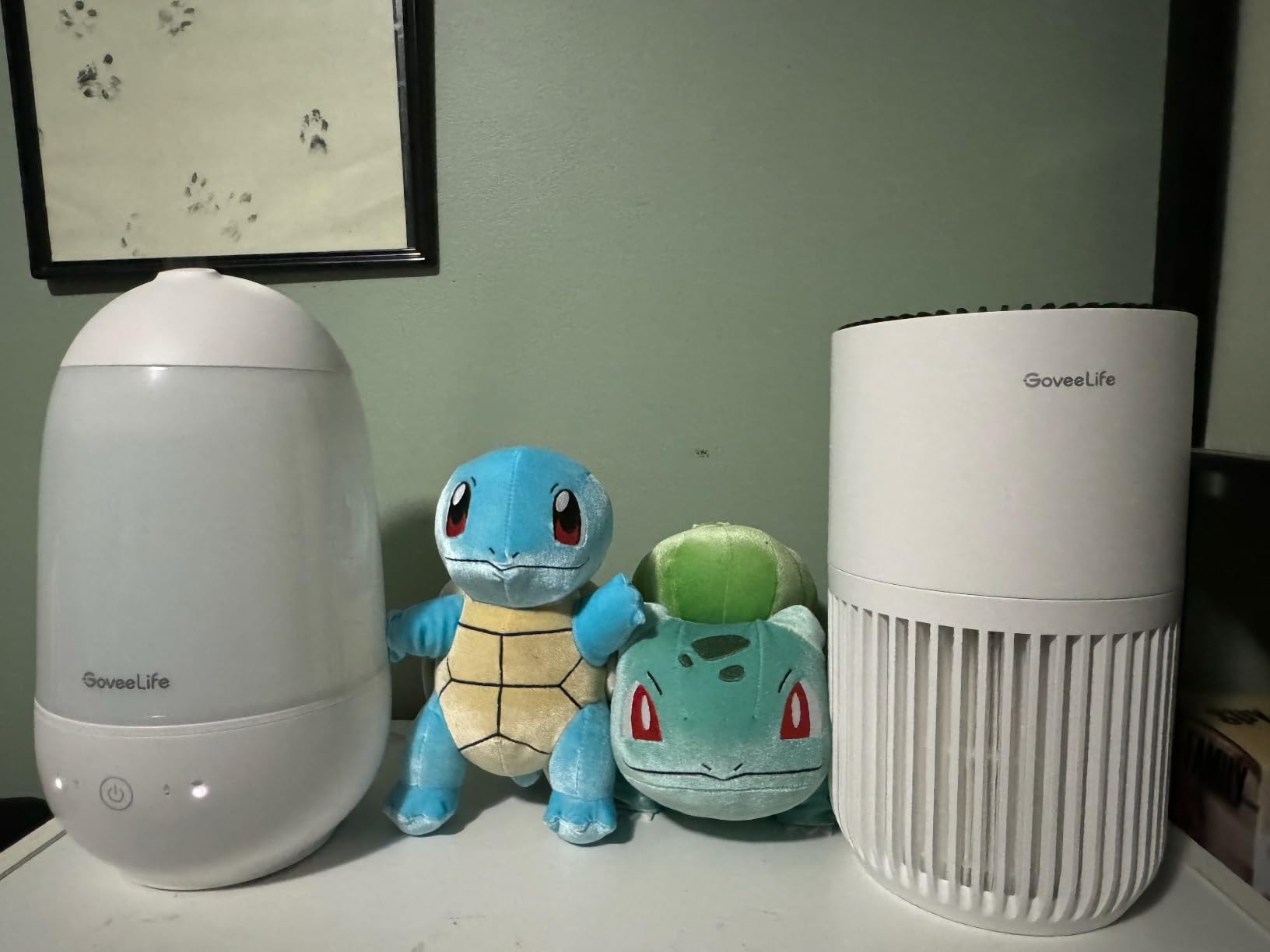
The cheapest way to get started with app-controlled purification. At 2.49 pounds and 6.2 inches wide it is small enough for a nightstand, a desk, or a nursery, and at 24dB in sleep mode it is one of the quietest devices here. You still get app and voice control with Alexa and IFTTT, plus a custom mode with three scheduled switch times, which is enough automation to run a morning boost and a night quiet cycle without touching the machine.
Coverage is 376 sq ft per hour via a dual-channel 360-degree intake, and the unit is certified by Energy Star, ETL, FCC, and CA65. Buyers with pet allergies report noticeably reduced sneezing and sinus symptoms, and 81 percent of ratings sit at five stars. Auto mode works, but only through a separately purchased GoveeLife air quality monitor, so the built-in behavior is really about scheduling rather than sensing.
The honest math here is about the filter. Replacement filters are relatively costly for a device at this price, so the first year of ownership costs more than the unit suggests, and reviewers call that out directly. The aromatherapy pad is a popular extra but does nothing for allergens, and treating it as a feature rather than a filter is worth being clear about.
Setup friction is the other issue: the unit is 2.4 GHz only, so if your router broadcasts only on 5 GHz, pairing is a frustrating afternoon unless you enable the 2.4 GHz band. A small number of newer models have also been reported as failing to power on at all, which is a small but real reliability signal in a much smaller review pool.
Check these specs before you buy
Multiply the filter price by the number of changes you expect, because on a device this inexpensive the media dominates the lifetime cost. Buyers who treat the first filter as included are the ones who get disappointed later.
Check that you can put a purifier on 2.4 GHz Wi-Fi, and check the room size, since 376 sq ft is genuinely a single-room figure.
Where it is not the right fit
It will not handle a living room, an open-plan space, or a home with more than one allergy sufferer in separate rooms. As a second unit for a bedroom it works well; as your only purifier it is short.
10. Blueair Blue 511i Max – Best for Nurseries
BLUEAIR Air Purifiers for Home Bedroom Dorm up to 1,138 Ft², Blue 511i Max
- Quietest unit here at 19 dB for light sleepers and nurseries
- Light 2.84 lb body is easy to move between rooms
- App control with air quality monitoring and filter reminders
- 99.97 percent capture for dust
- pollen and pet dander
- Lowest average rating in the group at 4.4
- Filter replacements are a significant recurring cost
- No local numeric air quality display
Noise is the deciding factor for a nursery, and this is the quietest machine in the roundup at 19dB. That figure matters more than it sounds, because a baby monitor and a light sleeper will both pick up a fan that a heavy sleeper would never notice. The light 2.84 pound body also means you can move it between the nursery, the bedroom, and a playroom without asking for help, and at 18.9 inches tall it fits on a dresser.
Filtration is the same HEPASilent dual system as the larger Blueair above, capturing 99.97 percent of particles down to 0.1 microns for dust, smoke, pet dander, and allergens. It cleans 237 sq ft in about 12.5 minutes and up to 1,138 sq ft in one hour, with built-in air quality sensors that adjust fan speed automatically and an app that handles monitoring, scheduling, and filter reminders. The 360-degree intake and compact Scandinavian design make placement forgiving.
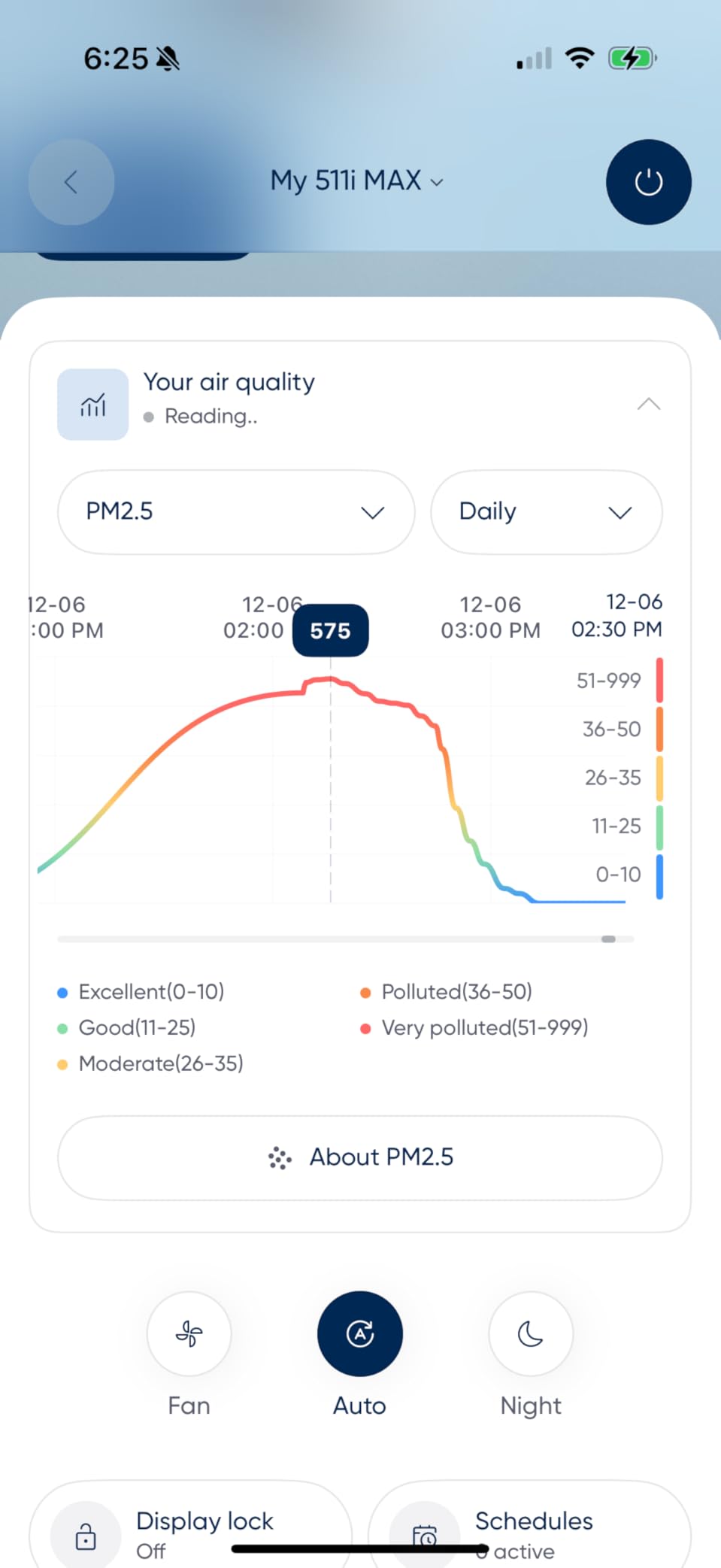
This is the model with the weakest average rating in the group at 4.4 and a 7 percent one-star share, so it is worth understanding why. Complaints cluster around filter cost, mixed experiences with the app, and the absence of a local numeric display. The 75 percent five-star share is still comfortable, and the recurring theme in positive reviews is exactly the profile you would hope for: near-silent running, a small footprint, and a straightforward app.
Our read is that the rating reflects value frustration rather than performance failure. Reviewers like the machine and then dislike the filter bill, which is a recurring theme across this whole category. If you can plan for two filter changes a year and set a reminder in the app, that frustration largely disappears.

Check these specs before you buy
Check the 19dB figure against your own noise tolerance, and confirm the room size. This is a bedroom and nursery unit, not a whole-floor machine.
Check the filter cost annually, since it is the main reason this model scores lowest on satisfaction despite steady performance.
Where it is not the right fit
It is not the right pick for open living areas, and it is a poor choice if you want a trusted numeric air quality reading on the appliance itself. Buyers who want a local readout should choose a model with a display.
Where to Place a Smart Air Purifier for Maximum Allergen Removal
Placement errors account for more wasted purifiers than filter mistakes do, and the pattern is consistent: the unit ends up in a corner, behind a sofa, or under a bed where it draws from a fraction of the room. A purifier moves a fixed volume of air per minute, and if that volume is drawn from a dead zone it never reaches the rest of the room.
For a bedroom, put it on a nightstand or dresser if the CADR allows, ideally near the head of the bed where you breathe, and keep it at least 6 to 12 inches off any surface so intake is not starved. Do not tuck it under furniture. If clearance forces a compromise, clear the space in front of the intake rather than behind or beside the unit.
For a living room, place the unit in the open floor area people actually occupy, not in the corner where the cable outlet is. In an open-concept space, one central machine beats one per zone, provided its CADR is sized for the combined square footage. The forum advice we found repeatedly is that room-by-room units, a bedroom machine plus a living room machine, outperform one oversized unit, because the bedroom is where the night hours of exposure happen.
Finally, leave airflow room. A wall two inches behind a 360-degree intake cuts performance more than most people expect, and the same applies to a machine pushed into a tight corner. Placement is free performance, and it is the first thing to fix when a purifier does not seem to be working.
Smart Home Routines Worth Setting Up
Built-in Wi-Fi is not automatically better than no Wi-Fi, and that is a fair question when you are paying a premium for app control. The common alternative in the allergy forums is a smart plug on a non-networked purifier, which gives you scheduling and voice control for very little. We have written up the best smart plugs tested if you want that route, and it works well for simple on and off scheduling.
What a native app gives you that a plug does not is sensor data, and that is the real reason to pay for the smart version. With an AirSight Plus laser sensor or a PuroAir unit, you can build a routine around actual particle readings rather than a fixed clock: Run turbo when the bedroom reading crosses a threshold, drop to sleep mode when the light sensor fires, and get a notification when the filter indicator runs down.
Two ecosystems matter most here. Amazon Alexa and Google Home are supported by the Coway Airmega, both GoveeLife models, and the Levoit Core 200S, and IFTTT support appears on the GoveeLife models, which is what makes them the most flexible for people with existing routines. If you run the house on a heating and cooling schedule, tying the purifier boost to occupancy rather than time is a small step that makes a measurable difference, and our guide to the best smart thermostats covers the scheduling side of that.
One practical caution: several machines here are 2.4 GHz only. Check that before you buy, or you will spend an afternoon debugging a pairing that was never going to succeed.
How to Choose a Smart Air Purifier for Allergies
Size by pollen CADR, not square footage
The one-hour coverage number printed on the box describes a single air change, which is not what allergy control requires. A useful rule is to divide the pollen CADR by 60 to get the room size the unit can treat at roughly 4 to 5 air changes per hour, then leave margin. The Core 400S-P at 259 CFM pollen CADR is sized for a large room, the Core 200S at 140 sq ft is sized for a bedroom, and the Vital 200S-P at 289 CFM is the highest pollen figure available here.
Require independent filtration certification
True HEPA means 99.97 percent capture at 0.3 microns, and the credible proof is AHAM VERIFIDE, ETL, or equivalent independent lab verification. This roundup includes machines rated at 0.01 microns, at 0.1 microns, and at 0.3 microns, and all three cover the particle sizes that trigger pollen and dander symptoms. Ignore unqualified medical-grade language, and treat ionizer and plasma features as a separate question.
Check ozone claims before you trust an ionizer
Ionization and plasma stages are common, and allergy owners are right to be cautious about them. The check that settles it is UL 2992 or equivalent UL certification for zero ozone emissions, which is why the Winix 5520 is comfortable to recommend on that front. If a machine features an ionizer and carries no such certification, weigh that carefully for anyone with reactive airways.
Treat sensor honesty as a feature
Auto mode is only as good as its input. A laser PM2.5 sensor that reports a real number, like the AirSight Plus in the Core 400S-P, lets you tune a schedule with evidence. A four-level indicator can read optimistically, and a unit with no sensor at all is really just a scheduled fan. Where a numeric reading needs a separate accessory, factor that into the cost.
Budget for two filter changes a year, then decide
Filter expense is the most common reason people stop running a purifier, and skipping filters quietly destroys performance no matter what the box claims. Before you buy, find the price of a replacement cartridge and multiply it by two. A washer-dryer pre-filter, as offered on the Winix and Coway, extends the life of the main filter and is the cheapest efficiency available. If the media is expensive enough to make you hesitate, a cheaper machine with a cheaper filter is the better long-term purchase.
Match noise to where it will live
Below about 24dB you will not hear it running. Above 50dB, most people cannot sleep through it. For a bedroom or nursery, prioritize the low end of the range, which is why the Blueair 511i Max at 19dB and the GoveeLife units at 24dB earn their place. For a living room you leave empty during the day, the tradeoff is much less important.
Pair the purifier with floor-level control
A purifier removes what is suspended; it does not remove what has settled. Dust mite allergens live in bedding, carpets, and upholstery, so a purifier alone will underperform in a home where the floor and mattresses are untreated. Our guide to the best robot vacuums for allergies covers the floor half of that equation, and encasements plus washing bedding hot handle the rest.
Frequently Asked Questions
Which is the best air purifier for allergy sufferers?
For most homes the Levoit Core 400S-P is the pick. It is AHAM VERIFIDE certified, its verified pollen CADR of 259 CFM is the highest airflow figure in this roundup, and the AirSight Plus laser sensor reports an actual PM2.5 number so you can confirm it is working. For a large open living area, the Coway Airmega AP-1512HHS covers up to 1,575 sq ft. For a small bedroom, the Levoit Core 200S runs quietly at 27dB.
Do air purifiers really work for allergies?
Yes, for airborne triggers. A True HEPA filter captures pollen, fine dander, and suspended dust mite particles, and running one continuously in the bedroom reduces the concentration you breathe overnight, which is where most symptoms are worst. What a purifier cannot do is remove allergens settled in bedding, carpets, or upholstery, so mattress encasements and hot-washed bedding still matter. A purifier complements that work rather than replacing it.
Which type of air purifier is best for pollen allergies?
A True HEPA unit with a verified pollen CADR matched to your room size, ideally with a washable pre-filter to catch larger particles before they clog the media. Pollen grains fall in the 0.1 to 0.3 micron range, so any independently certified HEPA stage covers them. Add a carbon layer if odor is part of your trigger picture, and prioritize a real particle sensor so auto mode reacts when a high-pollen day arrives.
How big an air purifier do I need for my room?
Divide the pollen CADR by 60 to estimate the square footage it can treat at a high air change rate, then leave margin. A unit verified at 250 CFM for pollen comfortably handles a large bedroom or a moderate living room, while a 140 sq ft unit is a single-room device. Most people with moderate to severe symptoms end up running two units, one in the bedroom and one in the main living area, rather than one large machine.
How often do I need to change HEPA filters?
Treat the filter-life indicator in the app as the trigger rather than a fixed calendar, since usage varies enormously with how dirty your air is. Washable pre-filters, offered on the Winix and Coway, reduce how often the main filter needs changing by trapping larger debris first. Skipping a replacement when the indicator says the media is spent is the fastest way to lose the performance you paid for, and a purifier running without a filter can circulate dust.
Final Verdict: Which Smart Air Purifier for Allergies Should You Buy?
Buy the Levoit Core 400S-P if you want one machine that handles a large room and tells you the truth while it works. The verified pollen CADR and the laser PM2.5 sensor make it the strongest of the best smart air purifiers for allergies we tested in 2026, and the app scheduling is dependable enough to set once. If your space is a single bedroom, the Levoit Core 200S is the better fit and quieter at 27dB, and if you are covering a large open living area, the Coway Airmega AP-1512HHS has the coverage and the most complete smart integration.
Whatever you choose, run it continuously, keep clearance around the intake, and budget for two filter changes a year. Those three habits do more for your symptoms than any model difference on this list.