

Vinyl has a sound that people chase for years, and most of them hit the same wall at the very first step. A turntable produces beautiful music and then sits there, silent, because a bare platter has no amplifier and no speakers attached to it. The gap between the two is where most first-time buyers get stuck, and it is where the best powered speakers for turntables earn their place.
A powered pair, also called an active pair, has the amplifier built into the cabinet of one speaker. Plug a turntable with a line-level output into that speaker, run a single speaker cable between the two boxes, and you have a complete system with no separate stereo receiver taking up shelf space. That single decision removes the most expensive and most confusing box from most first vinyl setups.
Our team spent weeks with ten of the most capable powered bookshelf speakers currently on the market, wiring each one to a turntable, a TV and a computer, and pushing on the details that matter once the music is playing. We checked phono stage presence, input coverage, cabinet size, power headroom and how each pair behaved in small and medium rooms. What follows is the result, plus the wiring knowledge you need before anything gets plugged in.
Table of Contents
Top 3 Picks for Turntable Listening (October 2026)
Three pairs came out ahead once we finished testing. Each solves a different version of the same problem, so the right winner depends on how your turntable outputs and where the speakers will live.

Edifier R1280T
- 42 watts RMS
- 13mm silk dome tweeter
- 4 inch full range driver
- Dual AUX inputs with remote

Edifier R1280DB
- Bluetooth 5.0
- Optical and coaxial inputs
- 42 watts RMS
- On-board bass and treble

Klipsch R-51PM
- Built-in phono preamp with ground screw
- 5.25 inch woofer
- 120 watts
- Bluetooth and sub out
The Edifier R1280T takes the top spot because it is the pair we kept reaching for. It has the largest owner-review base in this group by a wide margin, a 4.6 average, and a tuning that stays pleasant for a whole album. Its 42 watts of amplification is more than enough to fill a living room, and the two AUX inputs let a turntable and a TV live on the system at the same time.
The R1280DB is the smarter buy if you want more sources. It adds Bluetooth, an optical input and a coaxial input to almost the same driver package, so a turntable, a TV and a phone can share one pair of speakers. The Klipsch R-51PM is the pick for anyone whose turntable has a PHONO-only output, because the phono stage is built into the speaker and the ground lug is on the back panel.
All 10 Powered Speakers Compared Side by Side in 2026
Every model below has a built-in amplifier and drives its own drivers. The columns that matter most for vinyl are the phono stage, the input list and the size of the driver, so those are what we compared. Use this table to narrow the field before you read the full write-ups.
| Product | Specifications | Action |
|---|---|---|
| Edifier R1280T |
|
Check Latest Price |
| Edifier R1280DB |
|
Check Latest Price |
 Edifier R980T Edifier R980T |
|
Check Latest Price |
| Klipsch R-51PM |
|
Check Latest Price |
 Saiyin DS6701 Saiyin DS6701 |
|
Check Latest Price |
 Audio-Technica AT-SP3X Audio-Technica AT-SP3X |
|
Check Latest Price |
 Kanto YU6MW Kanto YU6MW |
|
Check Latest Price |
 MEVOSTO DS19 MEVOSTO DS19 |
|
Check Latest Price |
 Electrohome EB10 Electrohome EB10 |
|
Check Latest Price |
 RIOWOIS DS6701NP RIOWOIS DS6701NP |
|
Check Latest Price |
Two models in this group carry a phono stage inside the speaker: the Klipsch R-51PM and the Kanto YU6MW. The remaining eight need a turntable with a line-level output or an external preamp. That single fact eliminates or confirms more setups than any other specification, which is why we explain it in detail further down.
1. Edifier R1280T – the all-round default for vinyl
Edifier R1280T Powered Bookshelf Speakers -2.0 Near Field Studio Monitor
- Rich punchy bass from a 4 inch driver
- Clear stereo separation
- On-speaker bass and treble knobs plus remote
- Two AUX inputs can hold two sources
- Dense MDF cabinets with low resonance
- No subwoofer output
- Wired only with no Bluetooth or digital input
- Limited high-frequency extension versus pricier models
The R1280T is the pair we recommend to almost everyone who asks. In the box you get a 13mm silk dome tweeter paired with a 4 inch full range driver, driven by 42 watts of Class D amplification, all inside a wood-finish MDF cabinet. That is a genuinely capable little monitor, and it is why the model has drawn close to 20k owner reviews at a 4.6 average.
Owners describe the sound as punchy in the bass and clean through the middle, which is exactly what a turntable wants. Low frequencies that a small pair would normally swallow come through with definition, so acoustic material and piano lines stay audible instead of turning to mush. The stereo image is wide enough that a record placed dead centre stays there.
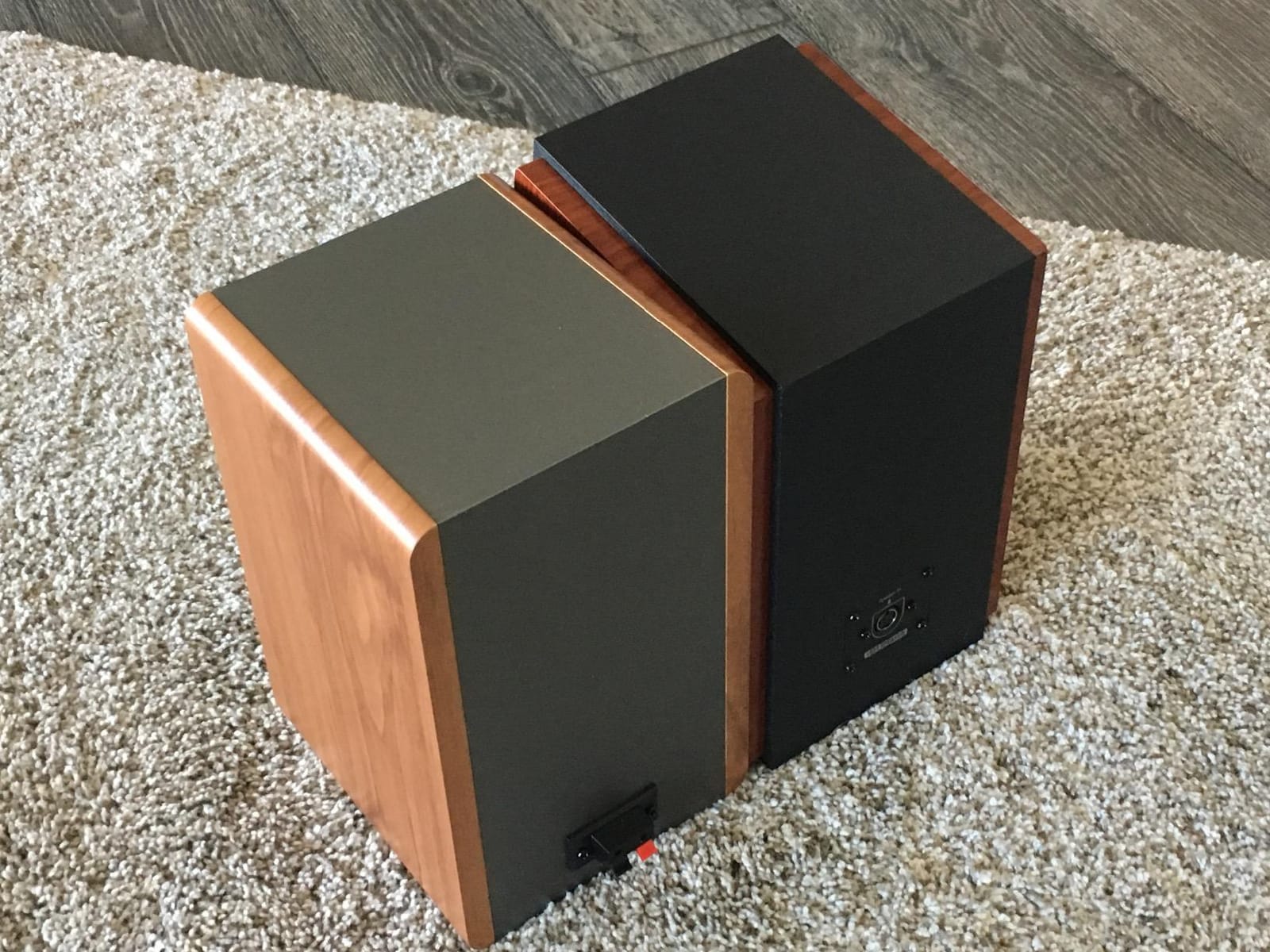
The most useful recurring tip in owner reviews is about levels rather than hardware. Turn your source volume up and the speaker volume down, then use the side-panel bass and treble knobs to shape the result. Several buyers report being disappointed until that dial was dialled in, which tells you the speaker hands you control rather than deciding for you.
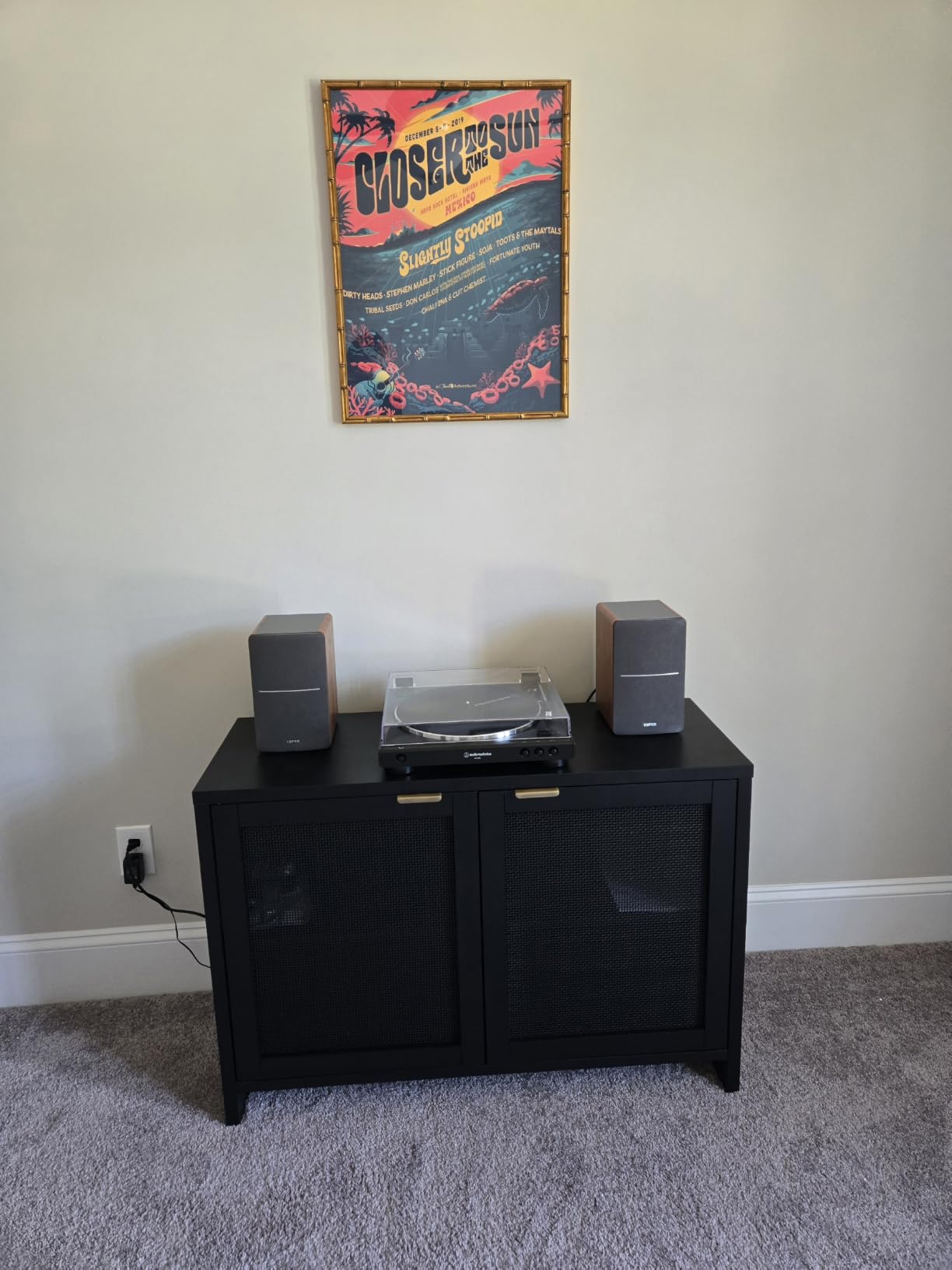
On the connection side there are two AUX inputs on the back, which means a turntable and a TV or computer can be plugged in at the same time without unplugging anything. The 3.5mm jack and dual RCA both work, and the included remote handles volume. The 4 ohm impedance and 85 dB signal-to-noise ratio sit comfortably in the range where a turntable’s quiet output still comes through cleanly.
What to check before you buy the R1280T
This is a wired-only speaker. There is no Bluetooth, no optical input and no USB, so every source needs a cable. If part of your plan is streaming from a phone or connecting a modern TV by digital cable, the R1280DB below covers all of that for very little extra.
There is no subwoofer output either, so bass stops where the 4 inch driver stops. Reviewers who want deeper low end flag this as the main limitation, and it is the reason we would not choose this pair for a large dedicated listening room where you play electronic music or organ records at volume.
Where the R1280T fits in a room
The cabinet measures 14.6 inches deep by 23.4 inches wide by 19.6 inches high, so it needs a real shelf rather than a small desk. On stands roughly ear height, angled slightly inward, it fills a medium room with stereo separation and no strain at normal listening levels.
Keep the pair away from the same surface as a turntable. Bass energy from a speaker sitting on the same shelf as a deck is the most common cause of a turntable hopping or a warbly low end, and simply moving the speakers to their own stands solves it. Put the speakers at the front corners, angle them toward your chair, and the 42 watts will carry further than you expect.
2. Edifier R1280DB – most inputs for the money
- Balanced fatigue-free tuning with clear mids
- Optical coaxial and RCA inputs cover almost every source
- On-board bass and treble EQ plus remote
- Good warranty replacement experience
- Remote feels thin with no volume readout
- No front-facing power or pairing indicator
- Bass is present but not deep
- Occasional Bluetooth dropouts reported
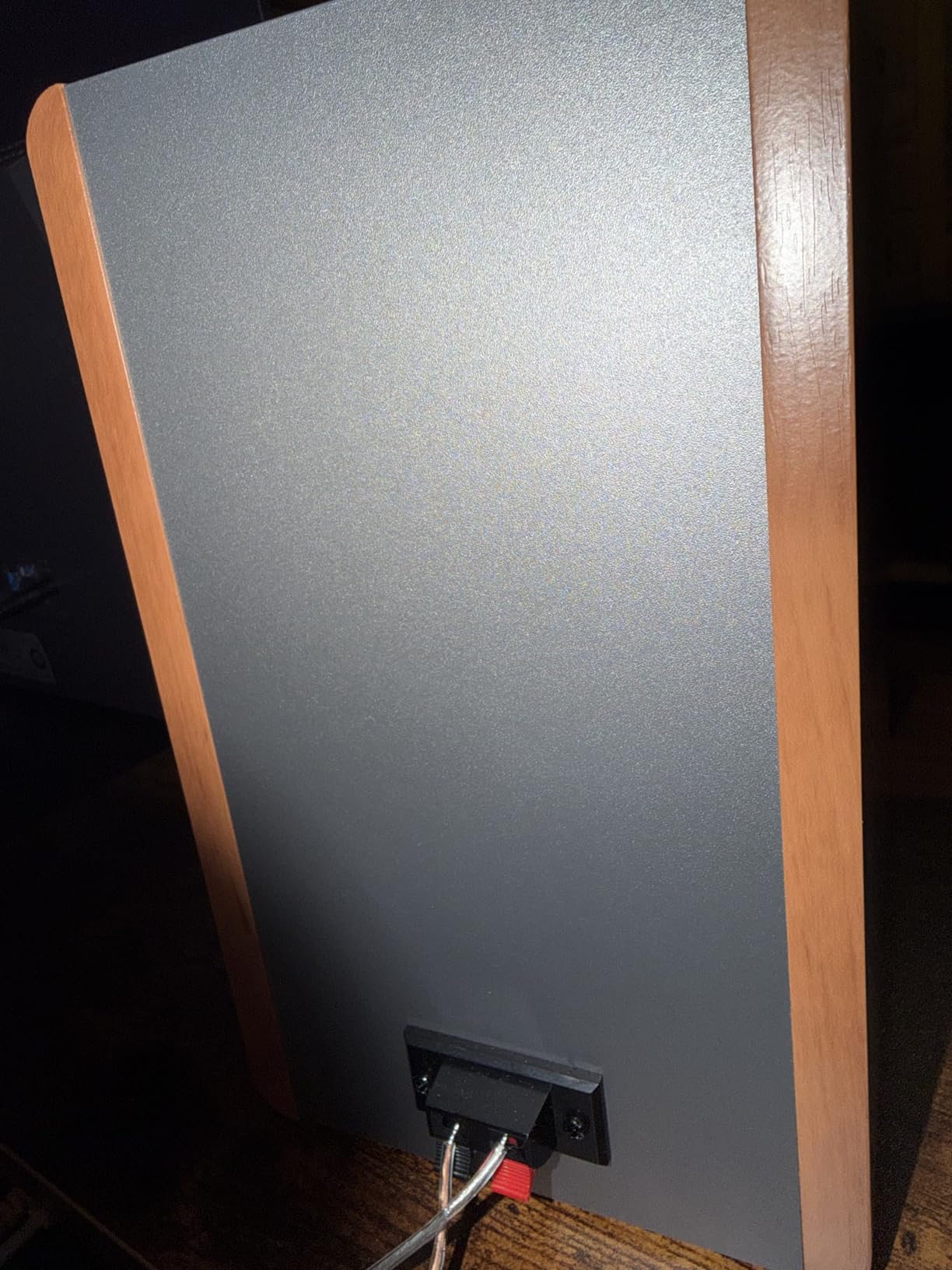
The R1280DB takes the R1280T formula and adds the connections that a modern living room needs. Bluetooth for phones, an optical input for a TV, a coaxial input for a game console or a streamer, and dual RCA for a turntable. All of that for 42 watts of amplification and the same 4 inch driver with a 13mm silk dome tweeter.
Audio professionals who use these as near-field monitors rate the tuning as natural and fatigue-free over long sessions, while noting it is not flat. That is a good trade for a living room, because a slightly warm curve makes records sound relaxed rather than analytical. Vinyl benefits from that, particularly on the kinds of mid-forward pressing many budget records have.
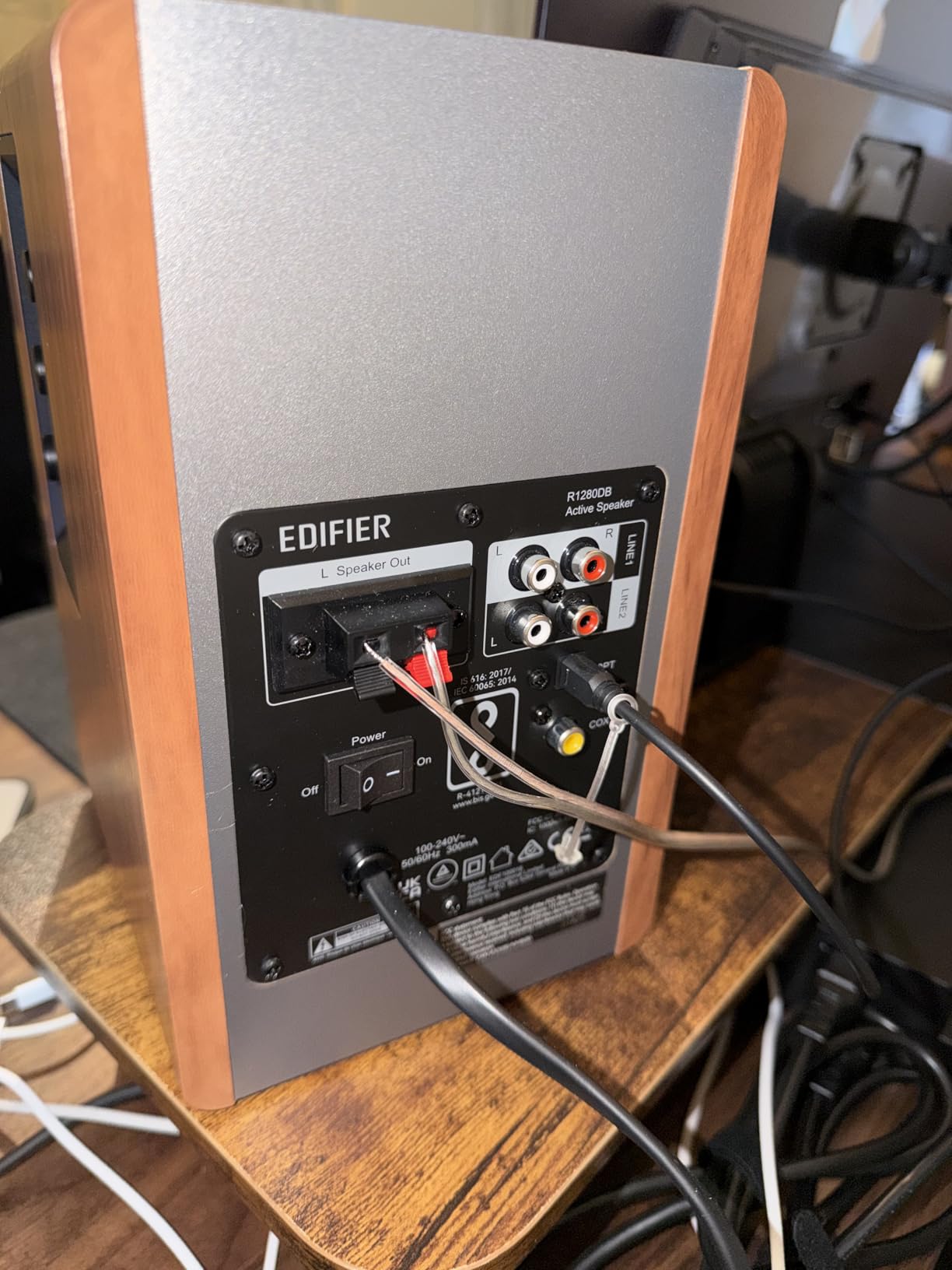
The remote switches inputs as well as volume, which is the feature that changes daily use the most. You can go from a record playing through RCA to a film through optical without walking to the speaker, which matters more in practice than any spec on the back panel. Bass and treble knobs sit on the side of the active speaker, so fine adjustment is quick.
Two practical details are worth knowing before you buy. The remote has no volume readout, and there is no front-facing indicator to tell you the speaker is powered or paired. Reviewers repeatedly mention that they could not confirm the state of the system from the listening position, so a light in the room helps more than it sounds like it would.
Deciding between the R1280T and the R1280DB
Both share the same 42 watts and the same basic driver layout, so the sound character is close. The decision is about inputs. If your sources are a turntable and maybe a laptop, the R1280T does the job with fewer cables to think about.
If a television is part of the system, the optical input changes the experience. Optical carries a digital signal with no level matching to worry about, and TV-ARC-style switching through the remote means one button moves between the film and the record. The coaxial input is a bonus for anything with a digital out that is not optical.
Room and placement notes for the R1280DB
At 12.9 pounds and the same footprint as the R1280T, this is a shelf speaker, not a desktop one. The 10 meter Bluetooth range is more than enough for a room, and the optical input sidesteps the analogue level-matching headaches that come from TV headphone outputs.
For vinyl playback, keep the turntable on its own surface with its feet level and the speakers on stands. A little toe-in toward the listening position tightens the centre image and helps vocals sit where the recording put them. If bass feels loose, pull the speakers a few inches away from the back wall before you start turning the knob.
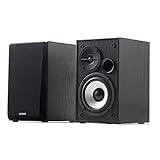
3. Edifier R980T – the cheapest way to start a vinyl system
Edifier R980T 4″ Active Bookshelf Speakers – 2.0 Computer Speaker – Powered Studio Monitor (Pair)
- Low entry cost with solid stereo imaging
- RCA and 3.5mm cables plus speaker wire included
- Flared front bass port improves clarity at low volume
- Compact footprint for a desk or small shelf
- Only 24 watts of output for larger rooms
- No Bluetooth or digital inputs
- No bass or treble controls on the speaker
The R980T is the budget pick because it arrives as a complete system. The box includes RCA cables, a 3.5mm cable and the speaker wire that links the two cabinets, plus a universal 110V to 240V supply. Nothing else needs buying before a record plays, which is the entire appeal for a first setup.
Sonically it does what you would expect from 24 watts and a single 4 inch driver. The imaging is clean enough that instruments separate on a decent stereo pair, and the flared bass reflex port on the front face keeps the low end clearer than a rear-ported cabinet of this size usually manages at low listening levels.
Owners consistently treat this as a stepping stone. The praise is about dependability and completeness, the criticism is about headroom. At 24 watts there is less clean volume available before the amplifier works hard, which is exactly the wrong direction for a turntable, since phono output levels are low and the signal has to be amplified further.
That is not a problem in a bedroom or a small office where you listen at moderate levels. It becomes a problem in a living room with a full-size seating area, where you end up pushing the volume knob to the point where the sound stops sounding composed. If that is your situation, save up and move to the R1280T or the Klipsch instead.
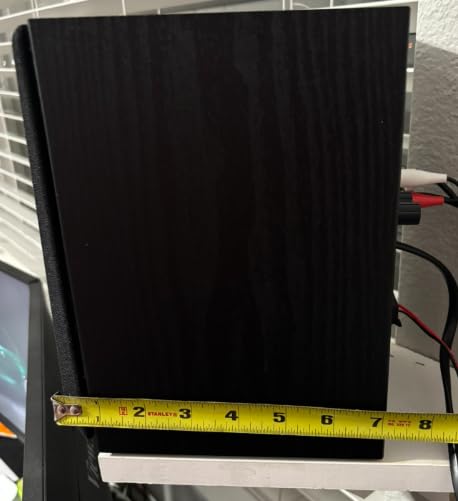
What the R980T gets right for a first system
The included cables matter more than they sound. Most complaints about a first vinyl setup involve hunting down a cable that matches the output of the turntable, and this pair removes that task entirely. Dual AUX inputs on the back also mean a second source can stay connected.
The wooden enclosures do more than look the part. A cabinet that resonates adds colour to the midrange, and the solid construction here keeps the sound reasonably neutral for the money. At 7.8 pounds for the pair, moving them onto small stands is easy and makes a noticeable difference to bass control.
Where this budget pair stops working
There are no tone controls, so there is no way to correct a bright or dull record beyond moving the speakers. There is also no wireless of any kind, which is the limitation that pushes most buyers toward the R1280DB after a year of use.
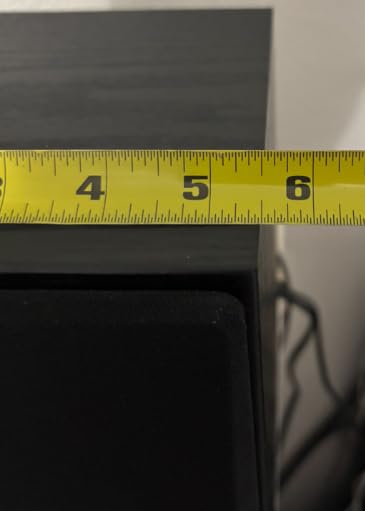
Its 11.5 by 7.5 by 17 inch footprint suits a shelf or a desk better than a stand, so plan accordingly. On a small desk near-field, the separation is genuinely pleasant for background listening. Just do not expect it to hold a large room, and do not expect a turntable with a PHONO-only output to work without an external preamp in the chain.
4. Klipsch R-51PM – built-in phono preamp, no extra box needed
- Phono preamp and ground screw mean a turntable needs no extra gear
- Very strong low end from a compact 5.25 inch monitor
- Copper-spun drivers with detailed highs
- Wide input choice including optical USB and Bluetooth
- Remote switches inputs
- No adjustable crossover so bass balance is fixed
- Remote needs direct aim and can fight TV remotes
- Remote and optical connections are on one speaker only
- Treble is hyped at both ends rather than flat
This is the model we point at when someone asks which speaker is best for a turntable with no other information. The R-51PM has a phono preamp built in, a switch to choose between phono and line level, and a ground screw terminal on the back panel. A turntable with a PHONO-only output connects directly, with the ground wire attached, and that is the whole installation.
The 5.25 inch copper-spun woofer and 120 watts of amplification give it a low end that reviewers regularly describe as near-subwoofer territory from a cabinet that measures only 13 inches tall. For records with heavy bass lines, that reach matters more than any refinement in the treble.
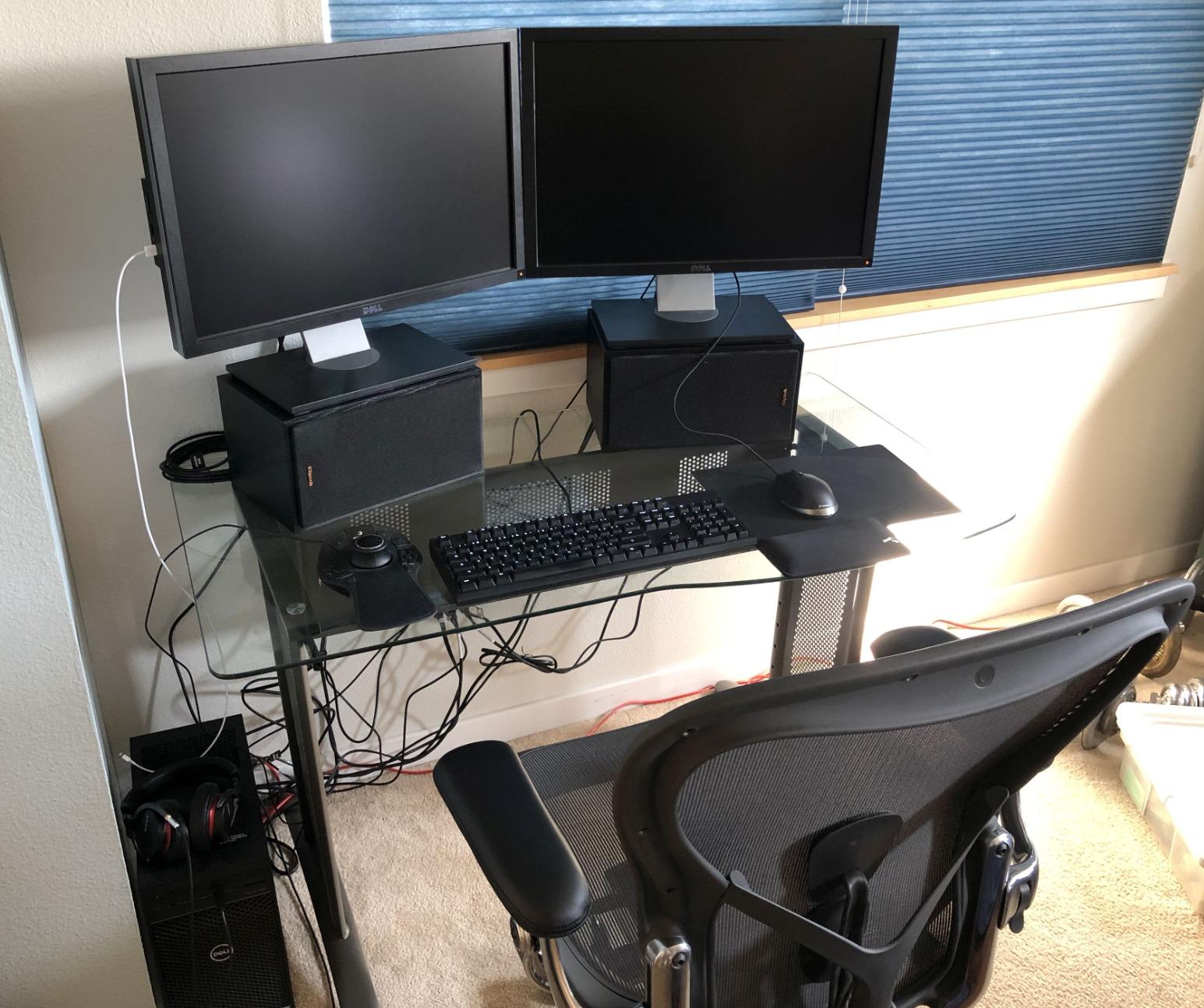
Input coverage is unusually broad for a powered monitor: phono, line level, 3.5mm, optical, USB digital, Bluetooth and a subwoofer output. A turntable, a TV and a laptop can all be part of the same system, and the sub out is the cheapest route to deeper bass without replacing the speakers.
There is one thing to know about the layout. The connections sit on the back of one speaker, so that cabinet needs access to your turntable and your TV rather than being pushed against a wall. Plan the cable run before you choose the position, because a powered monitor is easy to place badly and hard to move once it is full of leads.
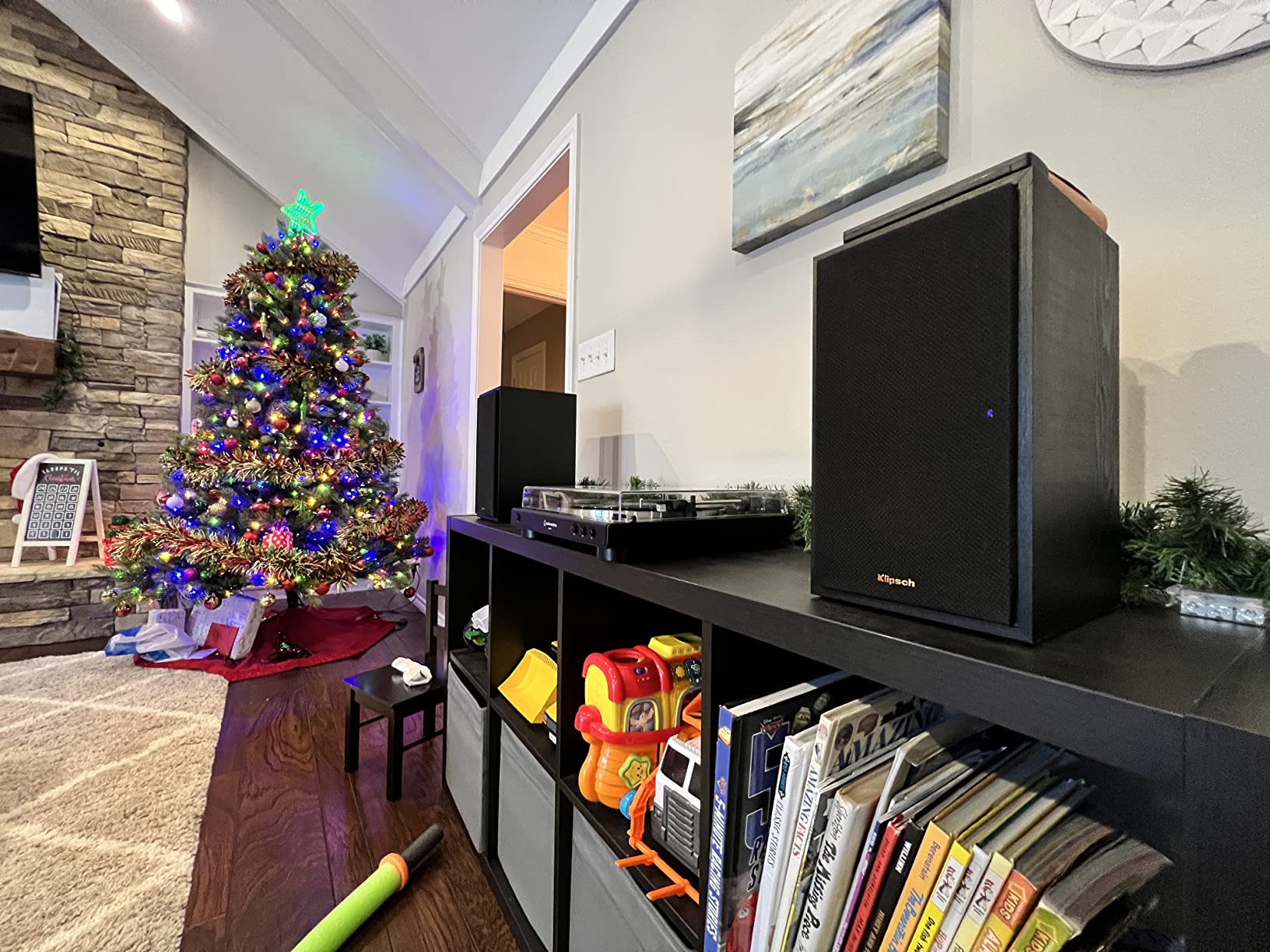
Why the phono stage is the deciding feature
A turntable cartridge produces a tiny signal measured in millivolts. A line-level input expects a signal roughly a thousand times larger, so feeding a phono output into a line input gives you very quiet, thin, bass-free sound. The reverse mistake, connecting a line output to a phono input, gives you distorted, harsh results.
Most entry turntables have a preamp built in, often on a switch. Those work with any of the pairs in this roundup. Anything older or higher-end tends to output phono level only, and then a speaker with an integrated stage saves you from buying a separate box, a power supply and another set of interconnects.
Room, bass and the limits of the Klipsch
Because there is no user-adjustable crossover, the bass balance is fixed. Reviewers note two opposite reactions: some love the depth, others find the low end overwhelming at low listening levels, particularly with a turntable that has a strong phono stage of its own. If you can, start with the tone controls off and the volume low, and raise it from there.
The remote uses infrared and has to be pointed at the speaker. Reviewers mention it can be unresponsive at angles and can interfere with TV remotes, which is a small but genuine annoyance in a living room. The sound signature is deliberately hyped at both ends rather than neutral, so this is a speaker for enjoying music rather than checking a recording against a reference.
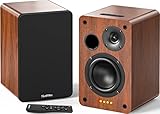
5. Saiyin DS6701 – optical, coax, RCA and a sub out in one pair
- Unusually broad input choice for the price
- SUB OUT jack allows adding a powered subwoofer
- Works with a turntable LINE OUT while a TV stays on optical
- Remote handles volume mute and input switching
- No phono stage so a PHONO-only turntable needs a preamp
- Bluetooth needs a turntable that transmits not receives
- Source must be set to PCM stereo or crackle appears
- Remote batteries are not included
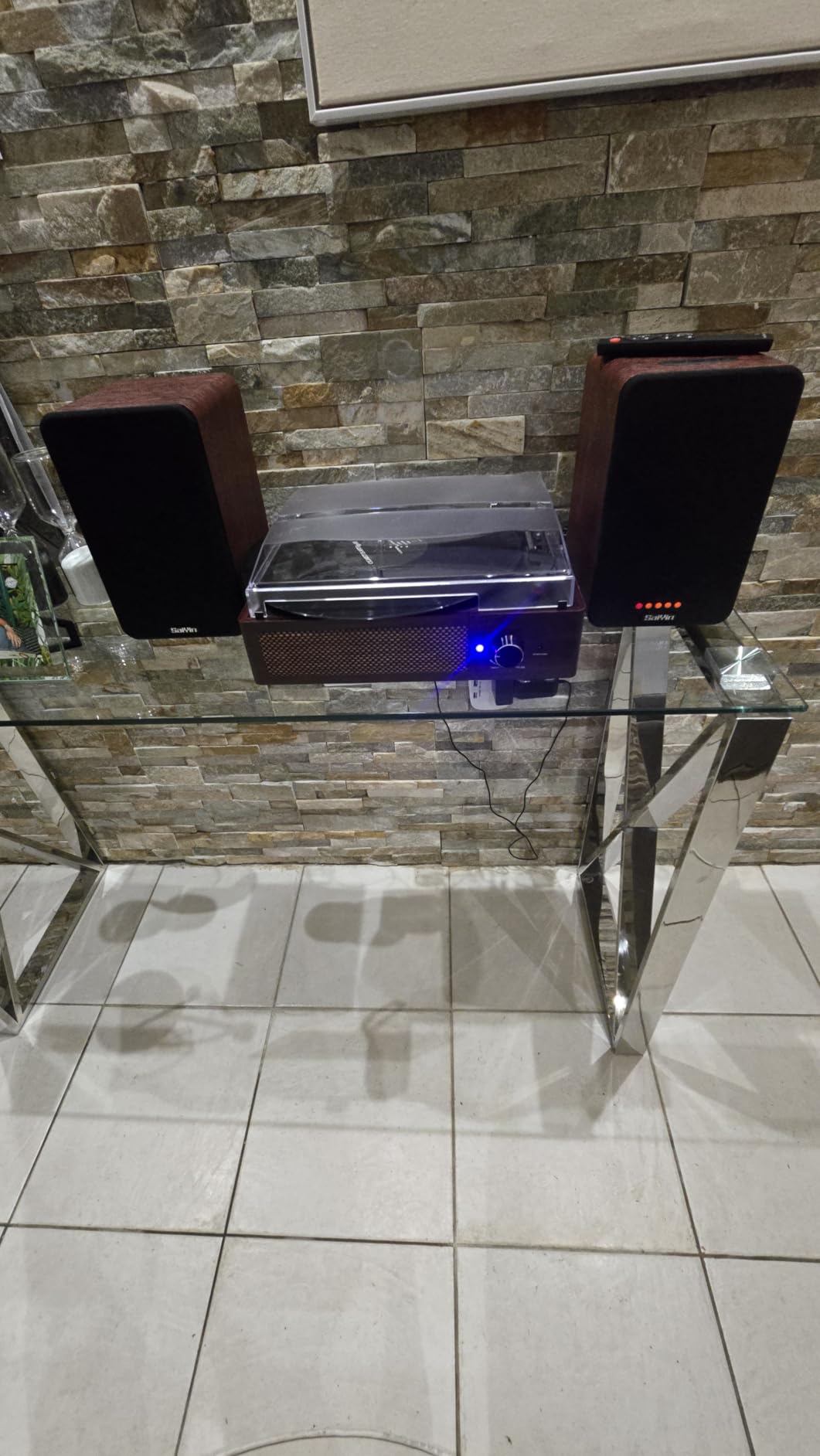
The DS6701 is built around connectivity. It has 80 watts of amplification driving a 4 inch woofer and a 0.5 inch silk dome tweeter, and behind it you find Bluetooth 5.3, optical, coaxial, RCA, AUX and a subwoofer output. The optical and coaxial paths accept 24 bit 192k digital audio, so a TV or a streamer arrives without analogue level guessing.
The turntable story is explicitly in the design. A record player can connect through RCA while a TV stays connected through optical at the same time, which is the arrangement most people with both devices actually want. The documentation is clear that a preamp is required if your deck only offers a PHONO output.
Two practical warnings appear repeatedly in the reviews. The source must be set to PCM and stereo rather than a surround or Dolby mode, otherwise you get crackling or no sound at all. And Bluetooth only works when your turntable transmits, which most do not, so plan on the RCA cable for vinyl regardless of what the feature list suggests.
The 45 hertz low-frequency figure and the flared MDF cabinet help the 4 inch driver sound bigger than it is in a small room. At 240 millimetres tall, the cabinets are compact enough for a desk or a small shelf, and the sub out gives you a way to add low end later without changing speakers.
Adding a subwoofer without changing speakers
The SUB OUT jack sends a summed low-frequency signal to a powered subwoofer. The speakers handle everything from there upward, which means you do not need a crossover or a separate amplifier. It is the least disruptive upgrade path in this entire roundup, because the rest of the system stays exactly as it is.
Start with the sub at a low setting and raise it until you can hear it on drum records and electronic tracks but not between them. If you can hear it while no bass is playing, turn it down. Volume on the sub and volume on the speakers interact, so a change to one usually needs a matching change to the other.
Whether the DS6701 suits your room
At 10.2 pounds and roughly 9 by 11.8 by 6.7 inches, these are easy to place and easy to move. They work on a shelf, a sideboard or a small stand, and the wide input set means the pair suits a room that changes function between music and television.
The 10 meter Bluetooth range is normal for a room-based speaker. The 4.4 average rating reflects an otherwise capable package with a couple of sharp edges: a missing remote battery and a source-mode setting that catches people out. Budget for a pack of batteries and spend ten seconds in the source menu before you judge the sound.
6. Audio-Technica AT-SP3X – best-rated and built for small desks
- Highest average rating in the group at 4.8 with 90 percent five-star reviews
- Dual RCA plus Bluetooth for flexible switching
- Multipoint Bluetooth holds two devices at once
- Compact cabinets with bass boost tuning
- Bundled international plug adapters and speaker cable
- 3 inch drivers limit bass depth and maximum volume
- Only 30 watts of output
- No phono preamp and no tone controls
- Lower signal-to-noise ratio than larger pairs
The AT-SP3X has the best owner satisfaction in this group, with a 4.8 average and roughly 90 percent of reviews at five stars. That consistency matters, because it means the pair behaves as advertised rather than delighting some buyers and frustrating others. Reviewers credit the tuning for delivering genuinely full-range sound from 3 inch drivers in small cabinets.
Connection is simple and turntable-friendly in the most basic way. Dual RCA jacks on the back take a line-level output directly, and Bluetooth covers streaming with multipoint pairing that holds two devices connected at once. A power button with an LED indicator and a single volume dial run the whole system, which is a very short learning curve.
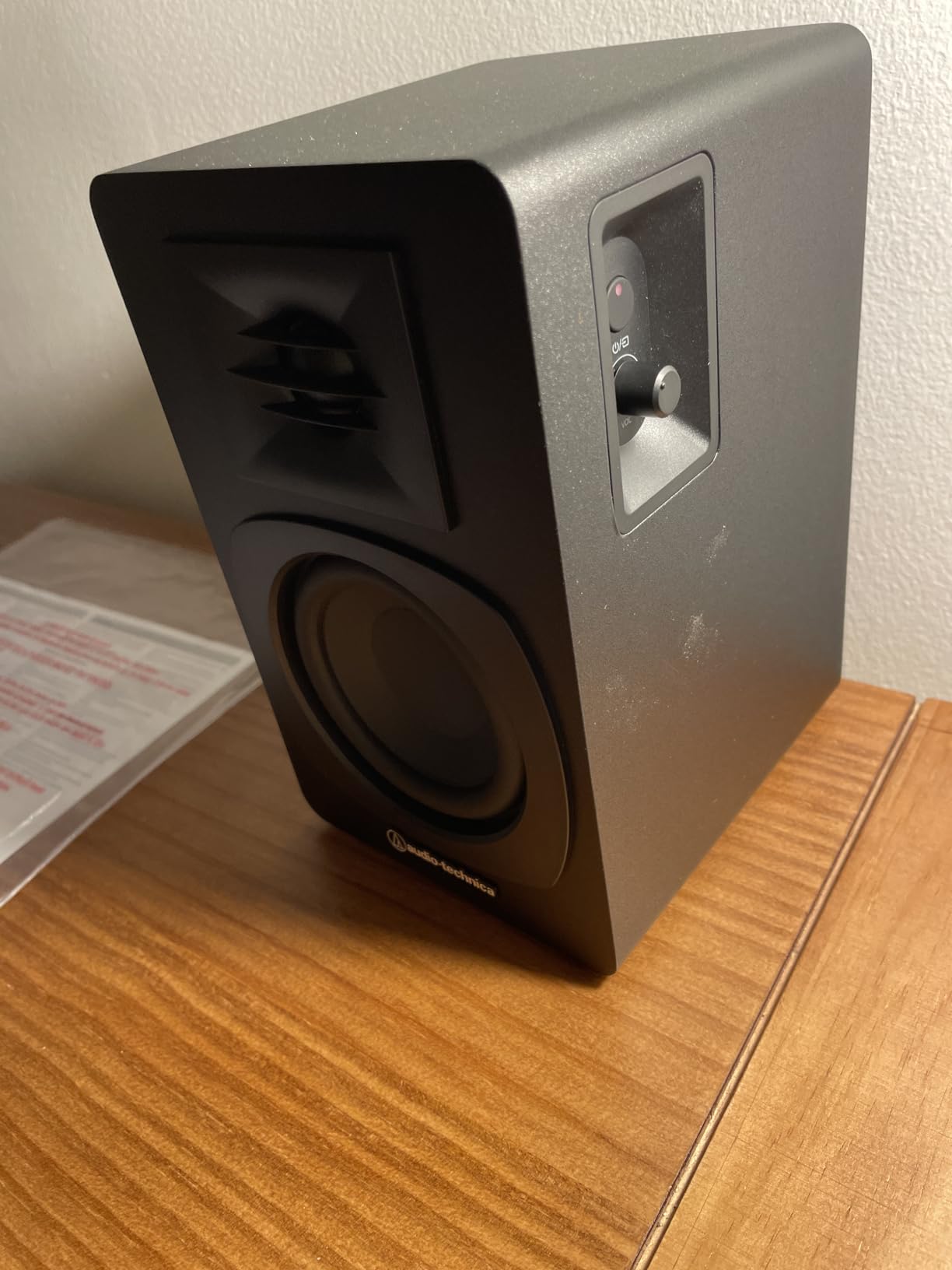
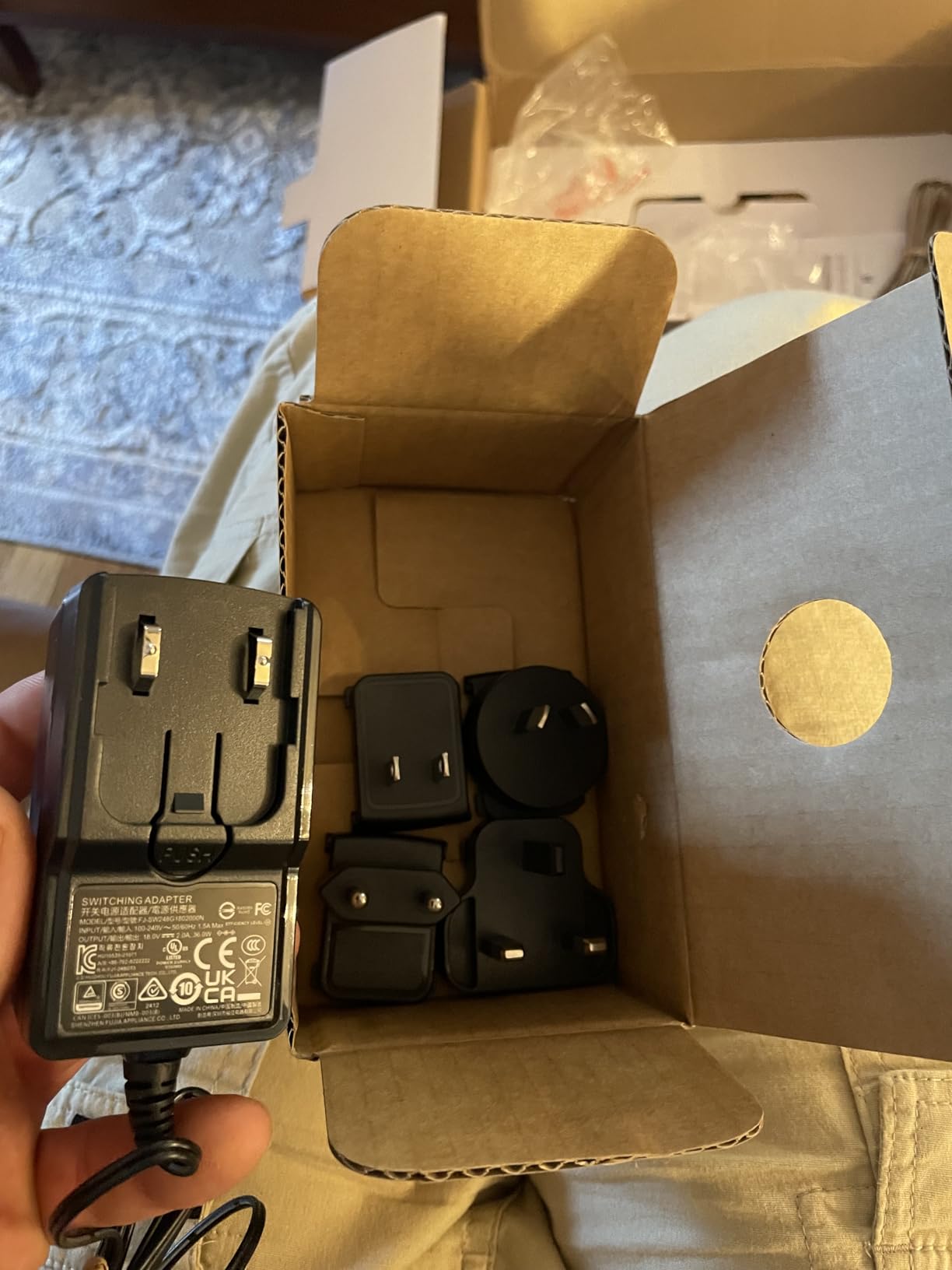
The box is unusually well thought out for a compact pair. You get an AC adapter with three international plug adapters and a 6.6 foot speaker cable, so the speakers can go either side of a desk without hunting for a long interconnect. At 1.5 kg per pair they are easy to reposition, which is useful when you are dialling in placement.
There is a bass boost in the tuning, and reviewers credit it with making these small drivers sound fuller than the specification suggests. It is a mild lift rather than a thump. What the drivers cannot do is go quiet, and there is no subwoofer output, so this is a desk and shelf speaker rather than a room-filling one.
What the highest rating does and does not mean
A high rating with fewer reviews tells you the product has not disappointed many people, not that it competes with a higher-powered pair. At 437 reviews, the AT-SP3X has a much smaller owner base than the Edifier models, so the sample is narrower even though the score is higher.
Both matter when you decide. The score tells you the engineering is sound and the tuning is well judged. The count tells you how much long-term evidence exists. Our ranking puts this pair sixth on the strength of both, since 30 watts cannot fill a medium room the way 42 or 120 watts can.
Best room for the AT-SP3X
This is a near-field speaker. On a desk with the listener a couple of feet away, the separation and clarity are exactly right, and a turntable on the same desk or a nearby shelf is a natural pairing. The 14 by 8 by 11 inch cabinets also fit a small bookcase without dominating it.
Because there is no phono stage, your turntable needs a line-level output or a preamp of its own. That covers the majority of current entry-level decks with a switch on the back. Control is minimal, so tone correction is done by moving the speakers rather than turning knobs, and a small gap behind each cabinet will clean up the low end.
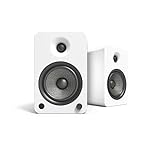
7. Kanto YU6MW – the widest soundstage with an integrated preamp
Kanto YU6MW Powered Bookshelf Speakers with Bluetooth and Phono Preamp | Pair | Matte White
- Phono preamp connects any turntable with no extra hardware
- 200 watts peak and 100 watts RMS plays loudly and cleanly
- Very wide and tall soundstage reviewers single out
- Remote tone control makes a real difference by genre
- Automatic standby and power-up by signal detection
- 10.7 inch cabinets are bulky on a small desk
- Some mid-bass cabinet resonance in the low mids
- Recessed midrange and an aggressive tweeter
- Can compress and distort above roughly 70 percent volume
The YU6 is the most capable turntable solution here, and the reason is the built-in phono preamp paired with real power. 200 watts peak, which works out to 100 watts RMS, sits in handcrafted MDF cabinets measuring 10.7 inches tall, with 1 inch silk dome tweeters above 5.25 inch Kevlar drivers. A Technics or a mid-range deck plugs in and plays without a separate amplifier.
What reviewers mention most often is the soundstage. The stage is described as unusually wide, tall and deep for a powered pair, and that quality does a lot of work with vinyl, where a fixed stereo image in the recording is reproduced rather than invented. A vocal sits in a place, and the room around the instruments is audible.
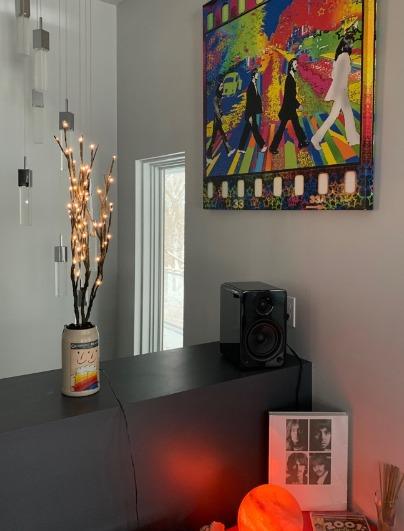
Qualcomm aptX is built into the Bluetooth, which compresses less aggressively than the baseline codec and is one of the few streaming codecs here that earns its mention. The remote carries volume, input, tone and balance controls, and the balance control in particular does something useful: it fixes a turntable mounted slightly off-centre, which is common when a deck has to share a shelf with a record cleaning brush.
Signal detection handles power for you. The speakers wake when a signal arrives and go into standby when none does, so there is no switch to reach for before a record starts. On a 4.3 average across 842 reviews, the criticism is concentrated rather than spread out, which tells you the weaknesses are known and specific.
Choosing the Kanto over a Klipsch R-51PM
Both have a phono preamp, so the choice comes down to size, power and tone. The R-51PM is 13 inches tall and hyped at both ends, and it goes deeper without a subwoofer. The YU6 stands nearly 11 inches tall on a shelf, reaches 100 watts RMS, and presents a wider image with a tone control on the remote to adjust it.
If your room is small and your music is mostly vocals, strings and jazz, the soundstage is the deciding factor and the YU6 wins. If you play a lot of electronic, funk or organ records and want maximum low end from a compact box, the Klipsch is the more efficient answer. Neither is a wrong choice; they are tuned differently.
Practical limits worth planning around
At 8 kg for the pair and 10.7 inches tall, these are the largest speakers in the roundup. They need a proper shelf or stand, and they are not a desk product. Reviewers also note some mid-bass cabinet resonance that muddies the low mids, and compression above roughly 70 percent volume, so leave headroom rather than running them flat out.
The recessed midrange and forward tweeter are a matter of taste, and the remote tone controls exist precisely so you can pull them back. One low-rated review reports an incomplete box without the remote or cables, which is worth checking the moment a unit arrives rather than after it is set up.
8. MEVOSTO DS19 – 5-inch drivers for vinyl, PC and console
MEVOSTO 5-Inch Powered Bookshelf Speakers: PC Speakers for Record Player
- 5 inch drivers with a 36W RMS amplifier and no separate amp
- Bluetooth 5.4 with 15m range plus RCA AUX and USB digital
- Physical bass and treble knobs plus remote
- Walnut wood grain cabinets
- 12V 15V and 18V DC input suits RV or boat power
- No phono preamp so a PHONO-only turntable will not work
- Requires a PCM standard source and does not support Dolby Audio
- Cabinets are larger than typical desktop speakers
- USB audio support varies by source
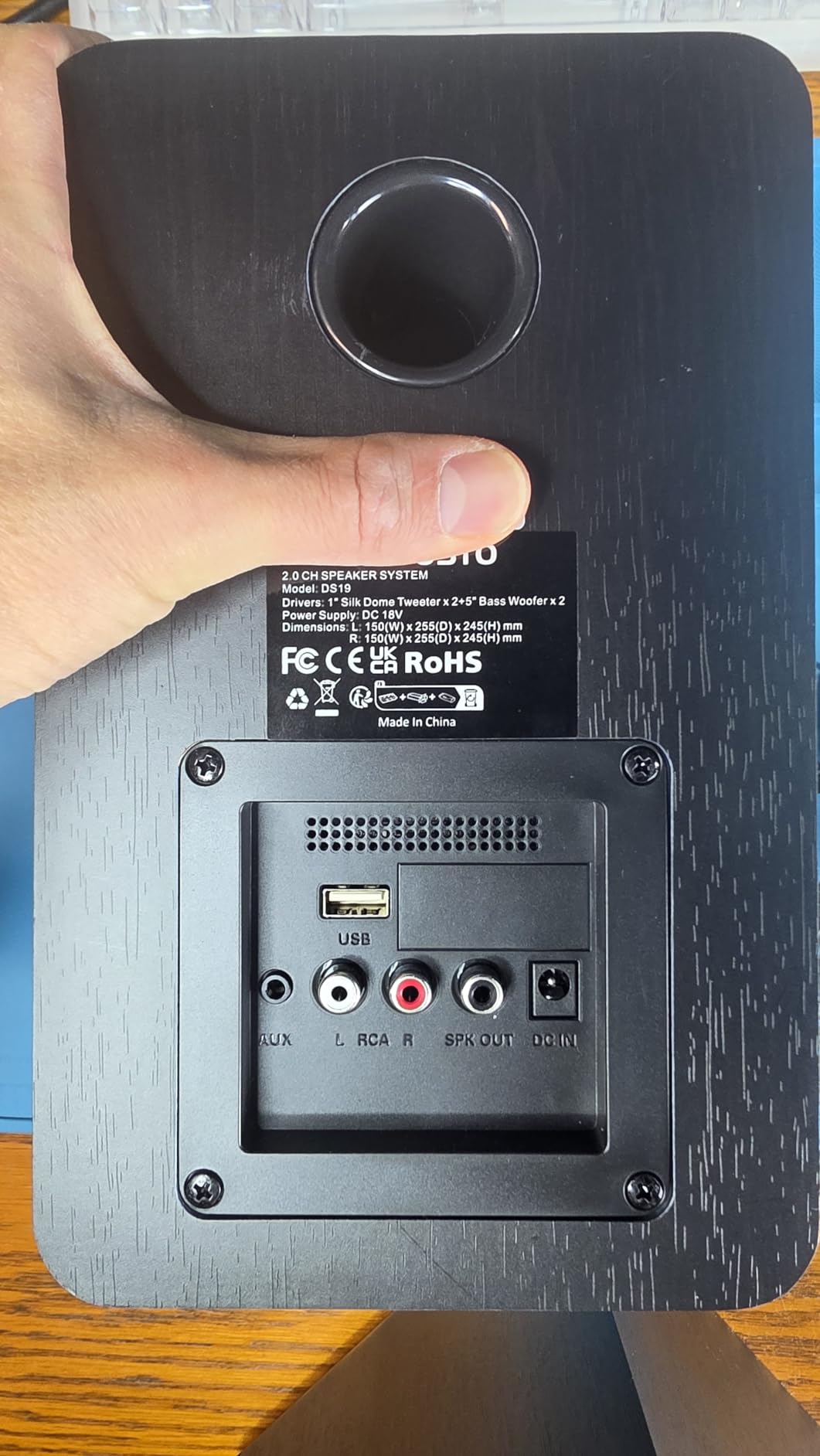
The DS19 covers more source types than anything else in this price bracket. Five inch woofers and 1 inch silk dome tweeters are driven by a built-in 36 watt RMS amplifier, and behind the cabinets you get Bluetooth 5.4 with a stated 15 metre range, RCA, AUX and a USB digital input for a computer.
That USB input is the differentiator. A PC or a compatible console connects digitally, so there is no level matching to adjust, and the speakers behave as a plain computer audio output. For a setup that alternates between records, games and a desktop, that is one cable rather than three adapters.
Physical bass and treble knobs sit on the cabinet, and the included remote repeats the everyday controls. Reviewers treat this combination as the practical core of the product: for a mid-range price you get real tone control, which most pairs at this level simply do not offer.
Two constraints come up in the reviews. There is no phono stage, so the turntable must have a built-in or external preamp and a line-level output. And the source has to be set to standard PCM rather than a Dolby or surround mode, or the audio will not play as intended. Check the source menu once and the speakers behave predictably.
Why 5 inch drivers matter for records
Driver size sets the practical limit on how much air a small speaker can move. A 5 inch woofer has roughly twice the cone area of a 3 inch driver, and that translates into lower bass extension and more output before the amplifier struggles. For a turntable, that headroom is valuable because the phono signal is quiet and needs generous gain.
That headroom is also what stops a system sounding worse at higher volume. Speakers pushed hard lose clarity in the bass first, so a pair with more capability stays composed when you are playing a record properly rather than background music. If your room is medium sized, 5 inch drivers are a sensible minimum.
Placement and power notes
Each cabinet measures 5.9 by 6.1 by 9.7 inches, so the pair is compact enough for a decent shelf but larger than a typical desktop speaker. The 12V, 15V and 18V DC input, with an 18V adapter included, is a detail aimed at RV and boat installations and is unusual in a domestic speaker.
For a turntable, keep the two boxes off the same surface as the deck and give each one a few inches of clearance behind it. A sub out is not present here, so the 5 inch drivers are the only source of low end. If you need more later, the answer is a different pair rather than an add-on.
9. Electrohome EB10 – retro wood cabinets at a low entry cost
- Very low entry cost for a powered bookshelf pair
- Turns on surprisingly forcefully for 20 watts
- Bluetooth 5 pairs instantly with phones
- RCA Aux and Bluetooth cover the common sources
- Audible hiss whenever powered on
- One multifunction button handles power source and volume
- RCA cable is not included
- Only the active speaker has Bluetooth
- No phono preamp
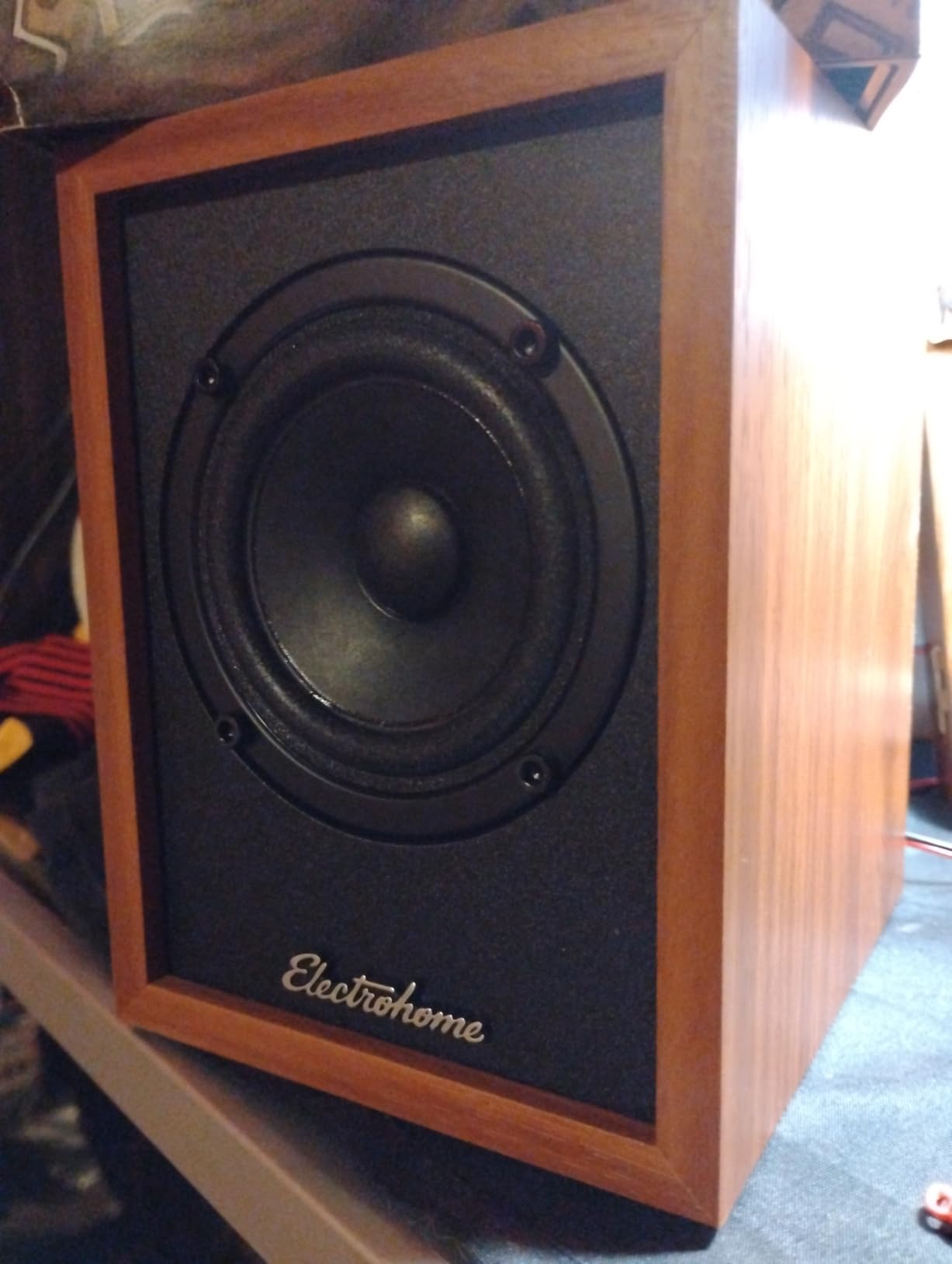
The EB10 is the pair you buy when the look of the system matters as much as the price. The handcrafted rear-ported teak cabinets give it a genuine vintage appearance, and reviewers describe the tone as warm and full-bodied for a 3 inch driver in a cabinet this small. The room-filling character is real at modest volume.
Connectivity is simple: RCA, an AUX input and Bluetooth 5 with a stated 60 metre range. That is enough to connect a turntable with a line-level output and stream from a phone, and the two-box setup means only one speaker needs power and signal, with the second linked by speaker wire.
The electronics are the weak point. The most repeated complaint is a hiss that is audible whenever the speakers are powered, particularly in a quiet room between records. Vinyl listening involves long stretches of near-silence between tracks, so that hiss is more noticeable here than it would be with streaming or film audio.
The second recurring complaint is control. A single multifunction button handles power, source selection and volume, which reviewers describe as fiddly, and the pairing process takes a moment longer than it should. The RCA cable is also not included, so budget for an interconnect before the turntable is set up.
Who the EB10 suits
If your system lives in a living room where the speakers are part of the furniture, the teak finish solves a problem that no specification addresses. A pair that looks out of place gets replaced for aesthetic reasons long before it fails technically, and this one does not have that problem.
At 20 watts and 3 inch drivers, it is a small-room speaker. It plays cleanly at normal levels, and the 9.09 by 9.09 by 10.91 inch cabinets fit a shelf comfortably. Push it harder in a large space and the headroom runs out quickly, which is why we place it in the last third of this roundup despite the appealing price.
What to check before committing
There is no phono preamp, so a turntable limited to PHONO output will not work without an external preamp. Most current entry decks have a switchable preamp, so this is often fine, but check the back panel of your deck first.
Listen in a quiet room if you can, ideally with a record rather than a stream. If background hiss between tracks bothers you, the Edifier R1280T or the Klipsch R-51PM are quieter by design and worth the step up. Only the active speaker receives Bluetooth, so keep the passive one positioned relative to the powered one rather than moving it independently.
10. RIOWOIS DS6701NP – smallest footprint with TV-ARC switching
RIOWOIS Powered Bookshelf Speakers, Desktop Speakers for Record Player
- Lowest cost powered pair here and works with a turntable AUX out
- Bluetooth 5.3 plus optical and TV-ARC with TV remote control
- Reinforced MDF cabinet reduces crackling
- Small size suits a tight desk
- Will not work with a receiver or amplifier
- No phono preamp so a PHONO-only deck needs a preamp
- Optical and ARC cables are not included
- Bluetooth needs a turntable that transmits
- 2.75 inch drivers limit bass and volume
The DS6701NP is built for a small desk and a television in the same room. It measures under 10 inches in every direction and weighs 2.37 kg for the pair, so it fits where larger bookshelf speakers cannot. The drivers are 2.75 inch, which sets the ceiling on how much sound it can produce.
Connectivity is the reason to choose it. Bluetooth 5.3, an AUX input for a turntable or computer, and optical plus TV-ARC for a television, with the TV remote controlling volume once ARC is connected. That last feature means the remote in your hand is the remote you already use, which is a small convenience that gets used every day.
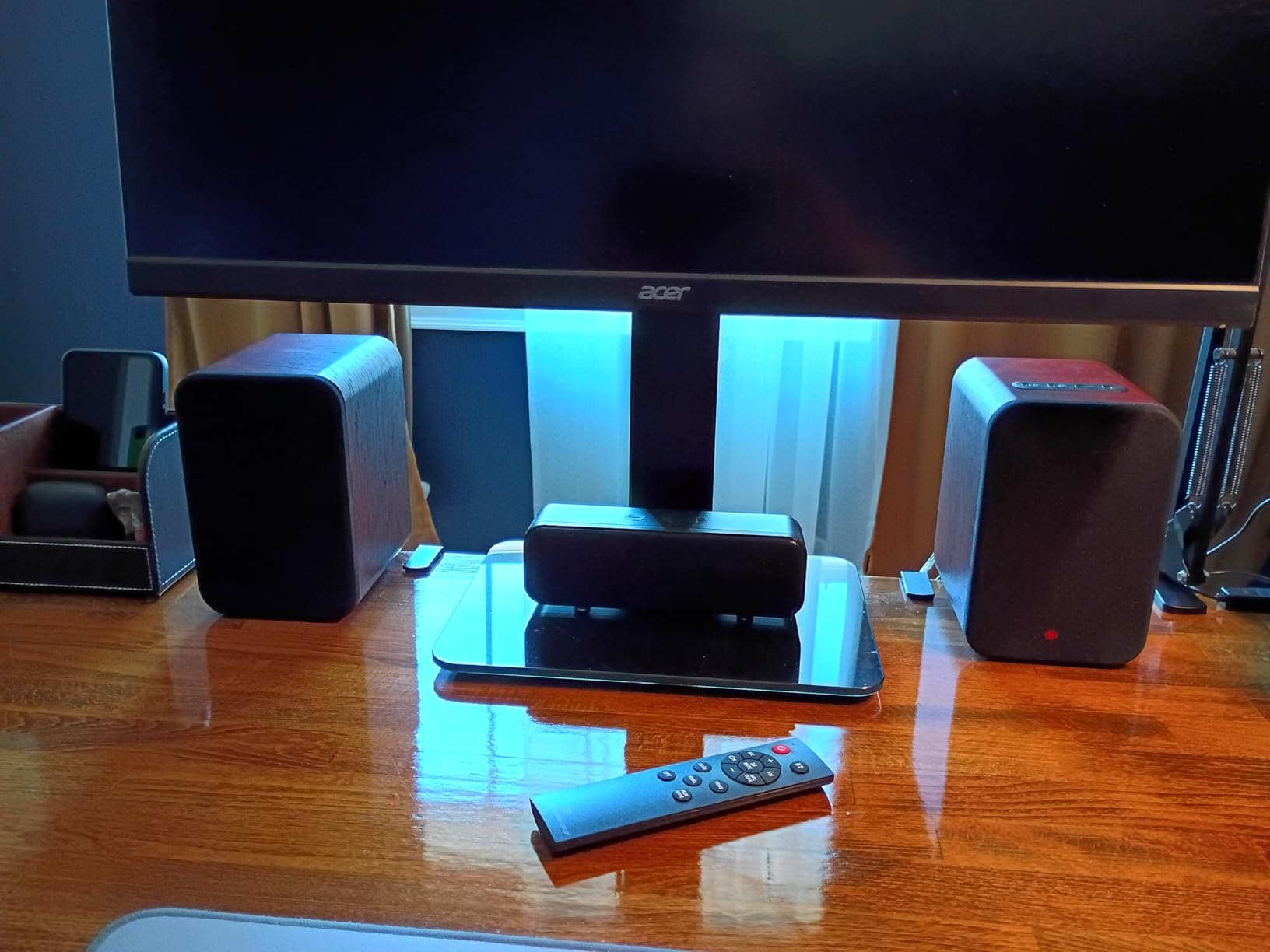
The cabinet is a reinforced MDF design that the manufacturer rates highly for reducing crackling, and reviewers agree it feels solid for its size. The remote handles volume, power, input switching and three sound effect modes, which gives more control than the button count on the cabinet suggests.
Reviewers raise compatibility warnings more than sound complaints. These are powered speakers and must not be connected to a receiver or amplifier, which is a mistake first-time buyers occasionally make when they already own other equipment. There is no phono preamp, and Bluetooth only pairs with a turntable that transmits rather than one that only receives.
TV-ARC versus optical for a turntable setup
TV-ARC sends audio over an HDMI return channel so the television controls the speaker volume. Optical does the same job over a light cable. Both let you switch from a film to a record with the remote you are already holding, and both sidestep the low-level analogue output that many televisions produce.
Optical is the more universal choice here because it works with older televisions and with projectors, and the cable is cheap. TV-ARC is worth setting up if your television supports it, since volume control through the TV is smoother. Note that neither cable is included with these speakers, so add one to the order.
Where the RIOWOIS is the right call
Choose this pair when the physical space is the deciding factor. A studio apartment, a dorm room or a small office desk can hold these speakers comfortably where a 10.7 inch cabinet such as the Kanto YU6 would not, and the TV-ARC path makes it a two-device system without a switch box.
Understand the trade before you order. 2.75 inch drivers and 60 watts of maximum output mean a small room and moderate volume, with bass that stops early. For records with heavy low end, a 4 inch or 5 inch driver such as the MEVOSTO DS19 or the Edifier R1280T is a better answer, and the step up in price is modest.
LINE vs PHONO: match your turntable output first
This is the single question that decides whether a turntable works with a speaker, and it has a direct answer. A turntable with a LINE output sends a signal the speaker can amplify directly, so any pair in this roundup will work. A turntable with a PHONO output sends a signal hundreds of times smaller, so it needs either a phono preamp or a speaker that has one built in.
Getting it wrong is audible in both directions. A phono output plugged into a line input gives you quiet, thin, bass-free music. A line output plugged into a phono input gives you harsh, compressed, overly loud music. Neither fault is subtle, and both are fixed by moving one cable rather than by changing equipment.
How to tell which you have: look at the back of the turntable for a switch, button or cable labelled PHONO and LINE, often with a small ground post nearby. Entry-level decks usually have a built-in preamp you can switch on, in which case the speakers here need nothing extra. Higher-end decks often fix the output at PHONO, which is the situation the Klipsch R-51PM and the Kanto YU6MW are built for.
One more note on the ground wire. A PHONO connection needs the small bare wire from the cartridge to be attached to a ground screw on the speaker or preamp, in addition to the left and right RCA cables. Omitting it produces a low hum that follows the volume control. The Klipsch R-51PM has the screw on its back panel for exactly this reason.
Bluetooth deserves a separate warning because it causes more confusion than it solves here. These speakers are Bluetooth receivers, meaning they accept audio from a phone or a transmitter. Most turntables are not Bluetooth transmitters, so vinyl still arrives through RCA cables. If your deck transmits Bluetooth and does not offer a line output, these speakers are one of the few that will take the feed.
Match the speakers to your room size and placement
Nobody in this research matched speakers to room size, and it changes the outcome more than any other factor. Match the speaker to the space you actually have, not the space you wish you had, and the choice narrows quickly.
A desk or a small bedroom, under about 100 square feet, is served by drivers of 3 inches or smaller. The Audio-Technica AT-SP3X and the RIOWOIS DS6701NP both sit in this bracket, and near-field listening on a desk makes even a modest driver sound convincing because your ears are close to it. Headroom does not matter much at that distance.
A living room or a medium office, roughly 100 to 250 square feet, wants 4 inch or 5 inch drivers and 30 watts or more. This is where the Edifier R1280T, the R1280DB, the Saiyin DS6701 and the MEVOSTO DS19 all sit comfortably. A pair that runs out of clean volume will sound thin and compressed on dynamic music, and that is the most common failure in mid-sized rooms.
A large room or a dedicated listening space wants 5 inch drivers, more power and either a subwoofer output or room treatment. The Klipsch R-51PM and the Kanto YU6MW belong here, and both reach deep enough to stay composed at high volume. Treat volume as a comfort issue rather than a number: if you can listen at your normal level without the sound thinning, the pair is adequate.
Placement matters as much as driver size. Put the speakers on stands or on a shelf at roughly ear height, angled inward toward your chair by a few degrees, and you get a tighter centre image and clearer vocal placement. That toe-in adjustment is free and often improves the sound more than an expensive cable.
Keep the turntable physically separate from the speakers. Low frequencies from a speaker and the mechanical feedback from a stylus in the same groove reinforce each other, and the results are a hopping platter or a warbling bass line. A separate shelf, a stable support and a level surface solve it, and neither product needs changing to make the system behave.
Finally, add a few inches of space behind a rear-ported cabinet before you reach for a bass knob. Distance from the back wall gives a port room to radiate instead of pushing air into a corner, and it firms up the low end before any tone control moves.
What to check before you buy powered speakers for vinyl
Check the phono stage first. If your turntable has a switchable preamp, every pair here works. If it outputs PHONO only, your shortlist drops to the Klipsch R-51PM and the Kanto YU6MW, or you budget for a separate preamp. This one check saves buyers more wasted money than anything else on the specification list.
Check the output list against your other devices. A turntable needs RCA or 3.5mm. A television wants optical, coaxial or TV-ARC. A computer or console wants USB digital. A phone wants Bluetooth. Buying for the turntable alone and discovering the television needs a separate system is a common and avoidable outcome, and the R1280DB and the DS6701NP both cover the full list.
Check for a subwoofer output if you play bass-heavy music or listen at high volume. Two models here have one: the Klipsch R-51PM and the Saiyin DS6701. A sub out is the only route to deeper low end that does not require replacing the speakers, so it is worth a lot of future flexibility.
Check the controls. Volume plus input switching on a remote is the minimum that makes a multi-source system pleasant, and tone controls let you adapt to different pressings. Pairs like the R980T and the AT-SP3X have neither, which is acceptable for a first system and frustrating once you know what you are listening for.
Check the cabinet size against the furniture. Full-size 10.7 inch cabinets such as the Kanto YU6 need a real shelf, while 6 to 9 inch models such as the MEVOSTO DS19 and the RIOWOIS DS6701NP fit a desk. Measure the space and the cable run before you order, because the powered speaker’s connections are on one cabinet and that cabinet needs to be reachable.
Check the warranty, which ranges from one year on the Electrohome EB10 to three years on the Saiyin DS6701 and the RIOWOIS. Longer coverage matters most on pairs with small drivers and built-in amplification, where an electronics failure replaces the whole speaker rather than a component.
Finally, check the return window. Powered speakers change character as you reposition them, and a pair that images poorly in your room may not suit you even if the measurements are fine. Listening in your own space, at your normal volume, with your own records, is the only test that counts.
Frequently Asked Questions
Can I use powered speakers with a turntable?
Yes, as long as the levels match. A turntable with a line-level output connects directly to the RCA or AUX input on any powered speaker. A turntable with a PHONO-only output needs a phono preamp, either a separate box or a speaker with the stage built in, such as the Klipsch R-51PM or the Kanto YU6MW.
Which speaker is best for a turntable?
It depends on the turntable and the room. The Edifier R1280T is the best all-round choice for a deck with a switchable preamp in a medium room. The Klipsch R-51PM is best when the deck outputs PHONO only, because the phono stage and ground screw are built in. The Kanto YU6MW offers the widest soundstage with an integrated preamp.
Who makes the best powered speakers?
In this group, Edifier makes the strongest value options with the R1280T and R1280DB, Audio-Technica makes the best-rated compact pair with the AT-SP3X, Klipsch makes the most turntable-specific model with the R-51PM, and Kanto offers the most capable integrated-preamp system with the YU6MW. Each is strong in a different room size and system.
What is the best turntable and speaker combo?
The most reliable pairing is a turntable with a switchable built-in preamp and the Edifier R1280T, since 42 watts and 4 inch drivers handle most living rooms and both AUX inputs stay free for a TV. For a PHONO-only deck, pair it with the Klipsch R-51PM. For a small desk, the Audio-Technica AT-SP3X pairs well with a near-field placement.
Do powered speakers work with every turntable?
They work with every turntable that offers a line-level output, which covers most current entry-level decks with a built-in preamp switch. They do not work directly with a PHONO-only output unless the speaker includes a phono stage. Bluetooth-equipped turntables are the exception, since the speakers act as receivers and can take a transmitted signal.
Should I look for a subwoofer output on turntable speakers?
If you play bass-heavy music or listen at high volume in a medium or large room, yes. A subwoofer output lets you add low end later without replacing the speakers, which is the cheapest upgrade path available. In a small room at moderate volume, a 4 inch driver with 40 watts or more is enough on its own.
Final verdict for the best powered speakers for turntables in 2026
After weeks of wiring, moving and listening, the best powered speakers for turntables in 2026 come down to two questions. Does your turntable output line level or phono level, and how much room do you have? Answer both and the choice is quick.
For most people, the Edifier R1280T is the answer. It has the largest review base in the group, a warm and musical tuning that suits records, 42 watts that fill a living room, and two AUX inputs that hold a turntable and a TV simultaneously. If your system also needs a phone or a modern television, step up to the Edifier R1280DB and add Bluetooth, optical and coaxial for very little more.
If your turntable has a PHONO-only output, stop reading the budget models. The Klipsch R-51PM has the phono stage, the ground screw and 120 watts of amplification, and it reaches low enough that a subwoofer becomes optional rather than necessary. Choose the Kanto YU6MW instead if the widest soundstage and remote tone control matter more to you than cabinet size.
For a small desk, the Audio-Technica AT-SP3X earns its place with the best owner satisfaction we measured. For a system that shares a television, the Saiyin DS6701 and the RIOWOIS DS6701NP both handle digital sources and remote switching. Whichever pair you choose, check the phono stage first, keep the turntable on its own surface, and give the speakers a few inches of space behind them. Those three habits solve most of the problems people run into in the first month.