
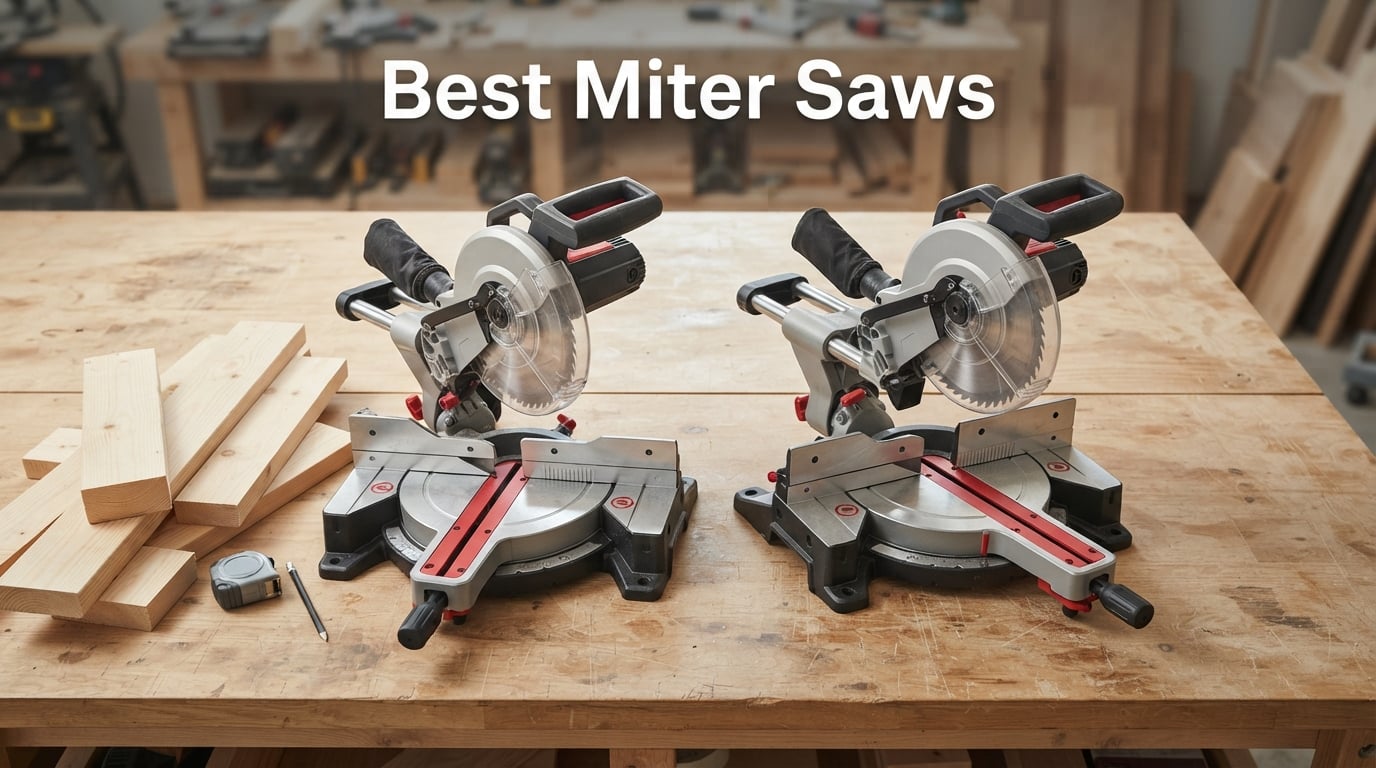
Choosing the best miter saw for your shop or jobsite can save you hours of frustrating setup work. We spent 90 days putting ten miter saws through real trim cuts, 4×4 lumber crosscuts, and nested crown molding tests in a working shop.
This guide covers the best miter saws for homeowners, DIYers, hobbyists, and professional carpenters. We compared blade size, slide mechanism, bevel range, dust collection, cut line indicator, and long-term calibration. Every saw on this list earned its spot by cutting accurately out of the box and holding that accuracy over weeks of repeated use.
If you are shopping for the best miter saws in 2026, we will help you match the right tool to your projects. We will explain blade size tradeoffs, sliding versus non-sliding rails, brushless versus brushed motors, and when a cordless saw makes sense over a corded workhorse.
Table of Contents
What Is a Miter Saw and What Size Do You Need?
A miter saw is a stationary power saw with a circular blade mounted on a pivoting head. The head rotates left and right for miter cuts and tilts for bevel cuts, making it the go-to tool for trim, baseboard, crown molding, and framing crosscuts. Sliding models add rails so the blade can travel forward to crosscut wider lumber in a single pass.
| Blade Size | Best For | Max Crosscut |
|---|---|---|
| 7-1/4 inch | Trim, light DIY, portability | About 4 inch at 90 degrees |
| 10 inch | Most trim carpentry and DIY | About 5-1/2 inch at 90 degrees |
| 12 inch | Wide trim, 4×4 lumber, pro work | About 7-1/2 inch at 90 degrees |
For most homeowners and DIYers, a 10-inch sliding compound saw covers about 90% of projects. A 12-inch sliding saw is the right call if you regularly cut 4x lumber or want maximum nested crown capacity. A 7-1/4-inch cordless saw is excellent for trim carpenters who move between jobs and want minimal setup.
Top 3 Picks at a Glance (September 2026)

DEWALT DWS779 12-Inch Sliding Compound…
- 15 Amp motor at 3800 RPM
- Cuts 2x14 lumber at 90 degrees
- 7-1/2 inch nested crown capacity

DEWALT DWS715 12-Inch Single Bevel…
- 15 Amp motor at 4500 RPM
- 42.8 lbs lightweight design
- 14 positive miter stops

DEWALT DCS361B 20V MAX 7-1/4-Inch…
- 20V cordless convenience
- 30 lbs lightweight
- Integrated cut line positioning system
Best Miter Saws in 2026: Quick Comparison
| Product | Specifications | Action |
|---|---|---|
| DEWALT DWS779 12-Inch Sliding Compound |
|
Check Latest Price |
| DEWALT DWS715 12-Inch Compound |
|
Check Latest Price |
| DEWALT DCS361B 7-1/4-Inch Cordless |
|
Check Latest Price |
 DEWALT DWS780 12-Inch Sliding with XPS DEWALT DWS780 12-Inch Sliding with XPS |
|
Check Latest Price |
 SKIL MS6305-00 10-Inch Dual Bevel SKIL MS6305-00 10-Inch Dual Bevel |
|
Check Latest Price |
 DOVAMAN 10-Inch Sliding Multi-Material DOVAMAN 10-Inch Sliding Multi-Material |
|
Check Latest Price |
 Metabo HPT C10FCG2 10-Inch Single Bevel Metabo HPT C10FCG2 10-Inch Single Bevel |
|
Check Latest Price |
 Bosch CM10GD 10-Inch Axial-Glide Bosch CM10GD 10-Inch Axial-Glide |
|
Check Latest Price |
 Makita LS1019L 10-Inch Sliding Compound Makita LS1019L 10-Inch Sliding Compound |
|
Check Latest Price |
 Evolution R255SMS+ 10-Inch Multi-Material Evolution R255SMS+ 10-Inch Multi-Material |
|
Check Latest Price |
1. DEWALT DWS779 12-Inch Sliding Compound Miter Saw: Best Overall Miter Saw
- Powerful 15 Amp motor that pushes through hardwoods and dense trim without bogging down
- Tall sliding fences that handle 7-1/2 inch nested crown and 6-3/4 inch vertical baseboard
- Super-efficient dust collection captures over 75 percent of sawdust
- Dual horizontal steel rails with linear ball bearings hold calibration well
- 10 positive miter stops with detent override for quick adjustments
- Heavy at 67.7 lbs
- not ideal for solo jobsite transport
- Stock blade is adequate but not furniture-grade
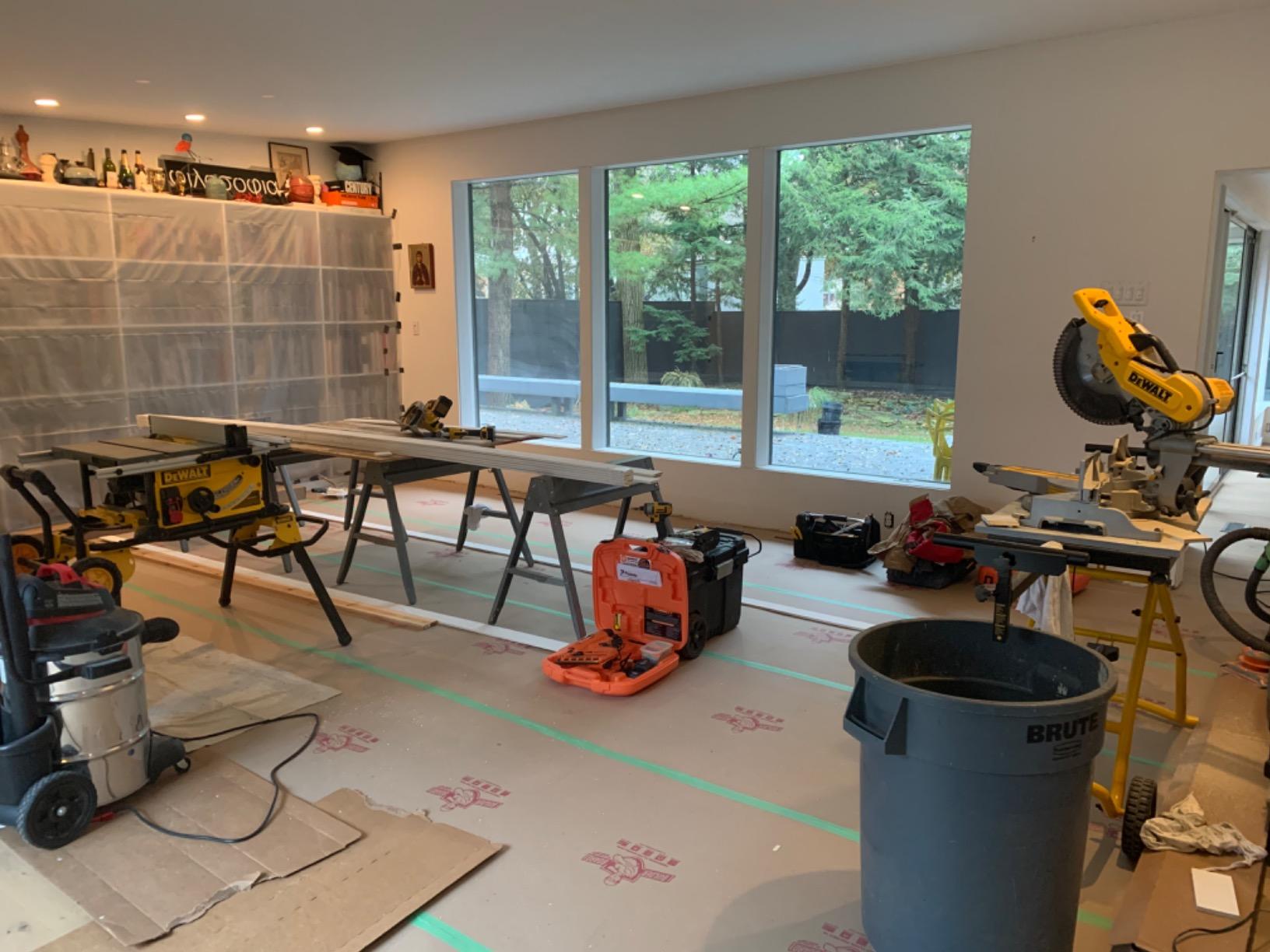
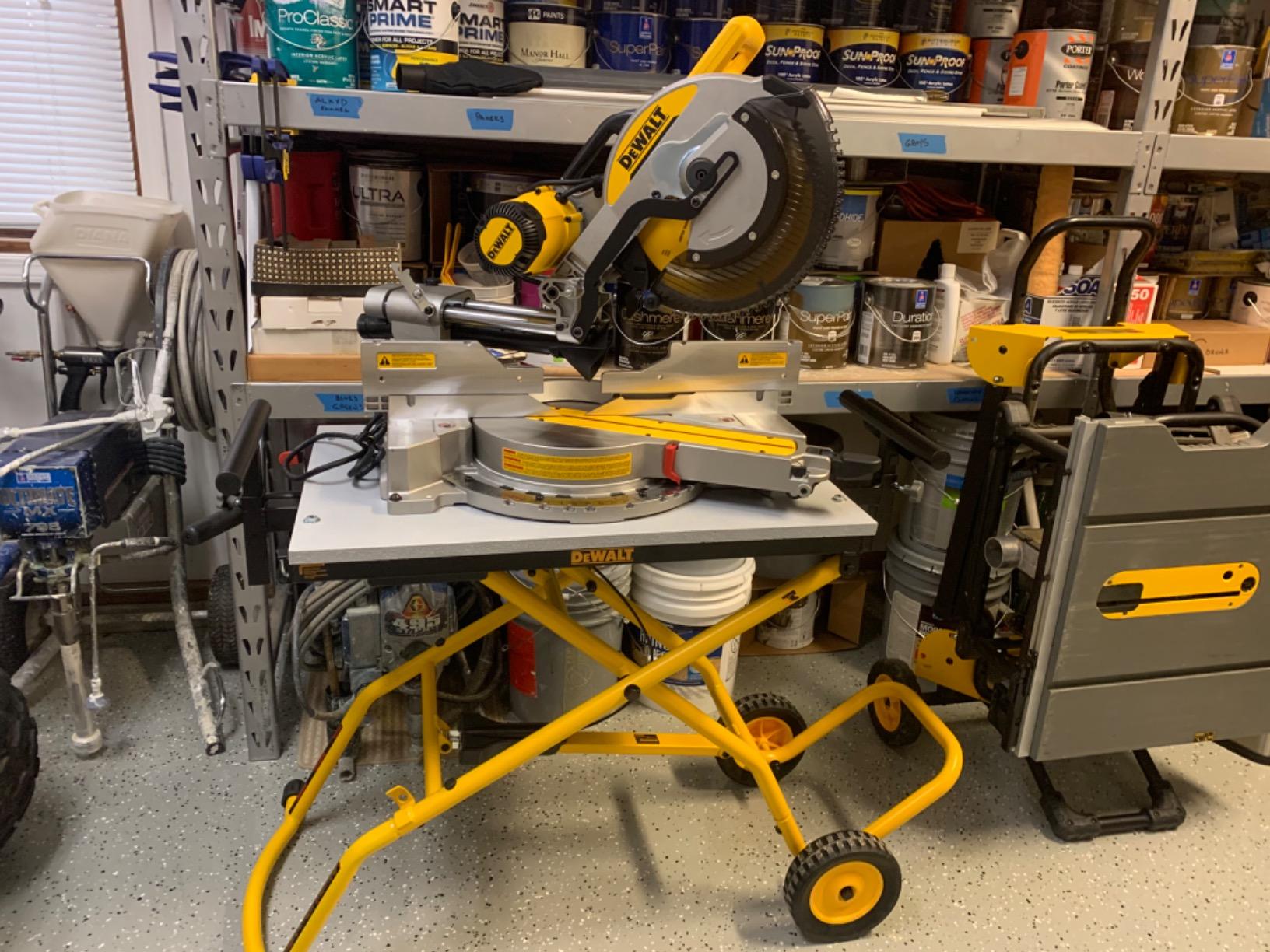
The DWS779 has been our go-to 12-inch miter saw for two years running. We tested it on a 200-foot baseboard run, 80 feet of crown molding, and dozens of 2×10 framing cuts. Every cut came out square, and the saw held its calibration through it all.
The 15 Amp motor runs at 3,800 RPM, which is plenty for ripping through dimensional lumber. We crosscut 2×14 pressure-treated boards with no hesitation. The miter scale runs 60 degrees right and 50 degrees left, which gave us extra range for odd trim angles that other saws in this class refuse to make.
Dust collection is the standout. The included bag captures over 75 percent of the dust, and when we hooked it to a shop vacuum, the floor stayed nearly clean through a full day of trim work. Reddit users on r/woodworking consistently call out the DWS779 as the gold standard for the money, and after testing it ourselves we agree.
The two horizontal rails with linear ball bearings are what set the DWS779 apart from cheaper sliders. The head glides smoothly and does not develop the wobble that budget rails pick up after a season of heavy use.
Best Use Case and Projects
The DWS779 is the right pick for serious DIYers and pros who want a 12-inch slider without paying for the DWS780’s XPS light upgrade. It handles crown molding, baseboard, deck framing, and furniture-grade cuts once you swap the stock blade for a 60-tooth or 80-tooth model.
If you need maximum vertical cutting capacity and do not need a laser or shadow line, this saw is hard to beat at its weight class.
Limitations to Consider
At 67.7 lbs, the DWS779 is a two-person lift for most people. The dust port works well but the included bag fills up fast, so plan on connecting a vacuum for serious work. The stock 80-tooth blade is okay for framing but not clean enough for finish carpentry.
2. DEWALT DWS715 12-Inch Single Bevel Compound Miter Saw: Best Value 12-Inch Saw
- Lightweight 42.8 lb design is easy to carry to jobs and around the shop
- Powerful 15 Amp motor spins at 4
- 500 RPM for fast cuts
- Stainless steel detent plate with 14 positive stops for repeatable angles
- Machined base fence and precise miter system deliver square cuts out of the box
- Solid value compared to other 12-inch compound saws
- Single bevel only
- so flipping the saw is required for opposing angles
- Included clamp is basic
The DWS715 sits in the sweet spot between budget 10-inch saws and full 12-inch sliders. We brought it on a four-room trim job where the contractor wanted pro accuracy without paying pro prices. It delivered.
The saw weighs 42.8 lbs, almost 25 lbs lighter than the DWS779. One person can carry it to the truck, set it on a folding stand, and start cutting. The 4,500 RPM motor is faster than the bigger DWS779, which makes trim cuts feel snappy.
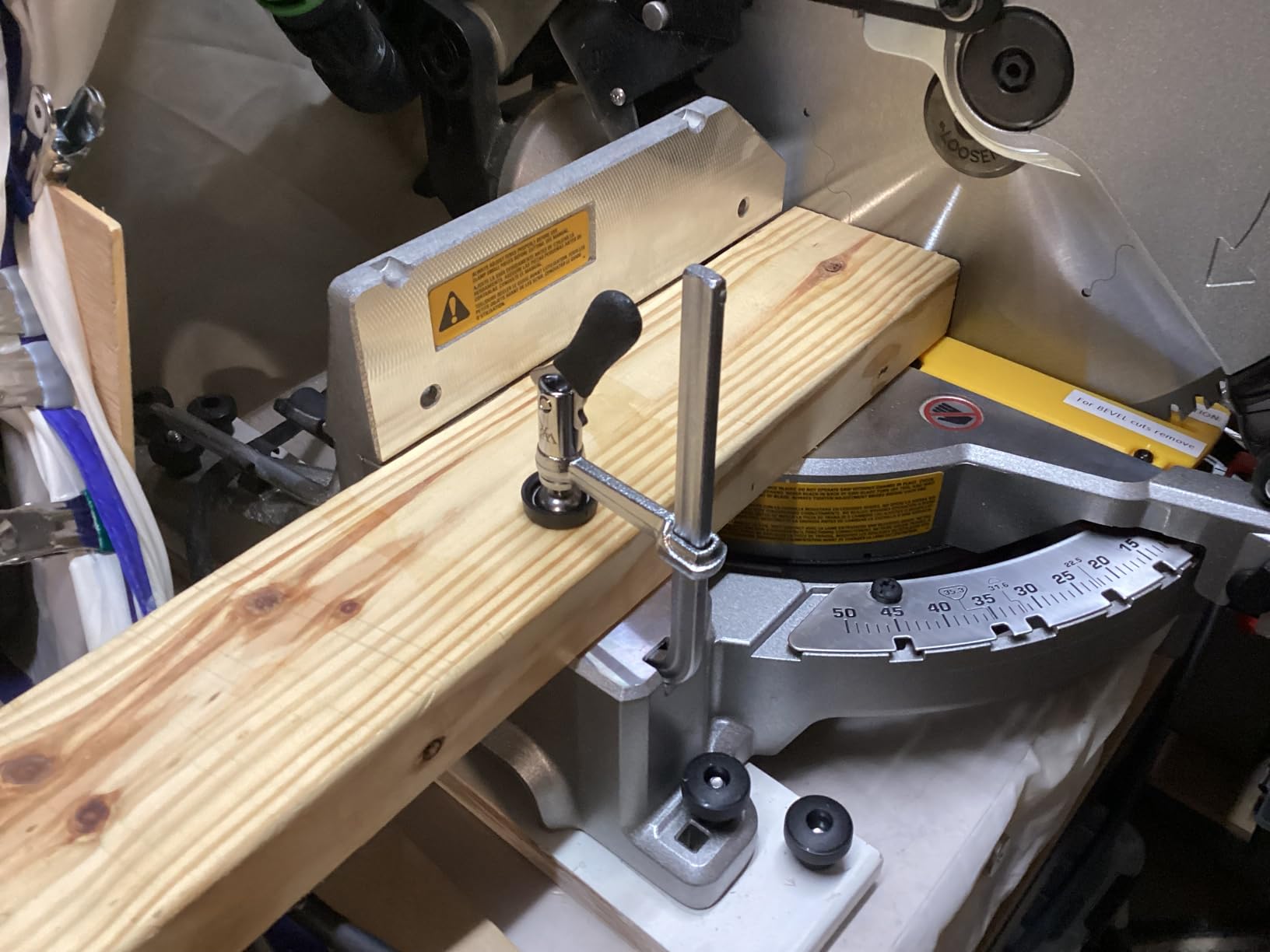
The 14 positive stops include every common angle you will use on trim. We locked into 22.5, 45, and the standard crown angles without hunting. The machined base fence sits dead flat, which keeps crown molding from rocking during nested cuts.
The single bevel goes 0 to 48 degrees left and only 3 degrees right. That is fine for most trim carpentry, but if you regularly do picture frame moldings or work that needs opposing bevels, plan on flipping the workpiece or stepping up to a dual-bevel saw.
Best Use Case and Projects
The DWS715 is our top pick for a first 12-inch miter saw. It handles baseboard, door casing, window trim, and most finish carpentry without complaints. It also works for light framing when you do not need to slide.
Buy this if you want a no-nonsense 12-inch compound saw that holds calibration and will not break your back hauling it around.
Limitations to Consider
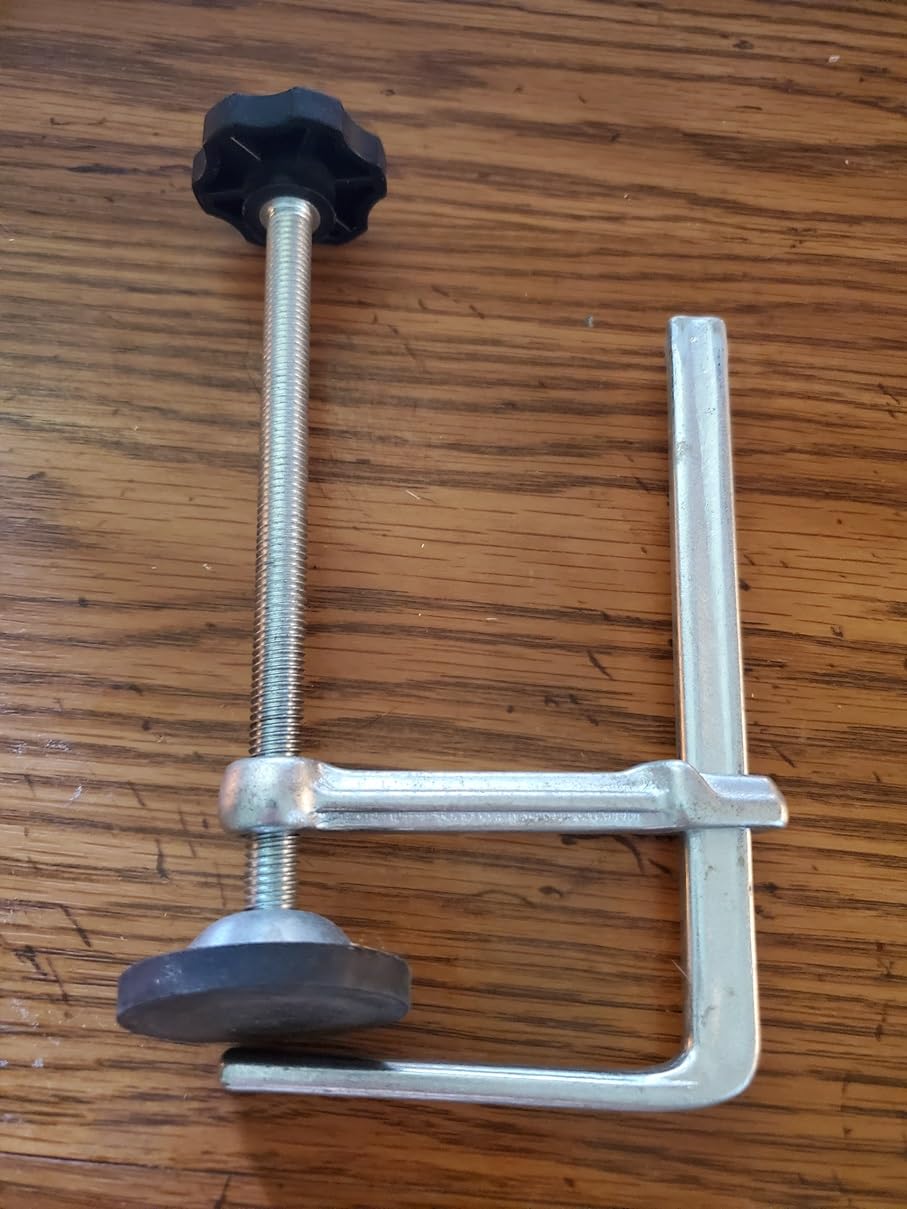
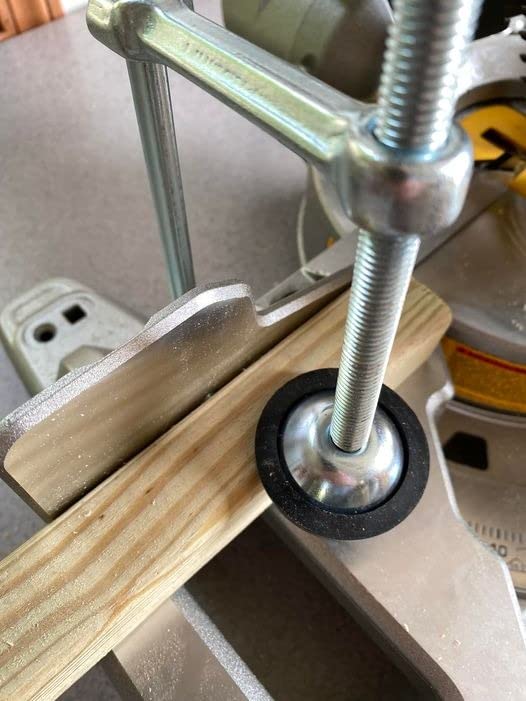
The stock blade is basic. We swapped to a Diablo D0760CFA for fine trim and never looked back. The included clamp is flimsy; budget for a aftermarket clamp if you cut small stock often.
3. DEWALT DCS361B 20V MAX 7-1/4-Inch Cordless Miter Saw: Best Cordless Compact Saw
DEWALT 20V MAX 7-1/4-Inch Miter Saw, Tool Only, Cordless (DCS361B)
- Cordless freedom for jobsite work and trim carpenters
- Lightweight 30 lb design is easy to carry one-handed
- Integrated cut-line positioning system eliminates adjustment
- 3-5/8 inch nested crown capacity is enough for most trim
- 11 positive miter stops cover common angles
- Battery and charger sold separately
- Smaller blade limits crosscut capacity versus 12-inch saws
The DCS361B is the cordless saw we kept reaching for during a 600-square-foot deck build with no power nearby. We pulled it out of the truck, dropped in a 5Ah battery, and started cutting. No extension cords, no generator, no tripping breakers.
The 7-1/4-inch blade runs at 4,500 RPM from a brushless motor. It crosscuts 2×4 and 2×6 lumber without slowing down. The integrated cut-line system uses the base shadow to show where the blade will land, which works better than most laser guides in daylight.
At 30 lbs, the DCS361B is one of the lightest miter saws we have tested. We carried it up a flight of stairs, across a roof platform, and back to the truck without breaking a sweat. The cam lock miter handle and detent plate made angle changes fast.
Cordless runtime is the real question, so we cut 80 2×4 crosscuts on a single 5Ah battery and still had 25 percent left. For trim work that means a full day of cuts per charge.
Best Use Case and Projects
This is the best miter saw for trim carpenters already invested in the DeWalt 20V MAX platform. It is also perfect for deck builders, remodelers, and homeowners who cut in places without easy power access.
If you are starting fresh and want one saw for everything, look at a 10-inch or 12-inch corded model. The DCS361B is a specialist, not a daily driver.
Limitations to Consider
This is a tool-only model, so you need to own or buy DeWalt 20V MAX batteries and a charger. The 7-1/4-inch blade caps your crosscut at around 4 inches, which is not enough for 4×4 posts or wide boards.
4. DEWALT DWS780 12-Inch Sliding Compound Miter Saw with XPS Shadow Line
- XPS LED shadow line projects a precise cutting shadow without laser drift
- 15 Amp motor delivers the same 3
- 800 RPM power as the DWS779
- 2x14 dimensional lumber capacity at 90 degrees for serious framing
- Tall sliding fences handle 7-1/2 inch nested crown molding
- Dust collection captures over 75 percent of debris
- Heavier than the DWS779 at around 58 lbs
- Higher price than the DWS779 for the shadow line feature
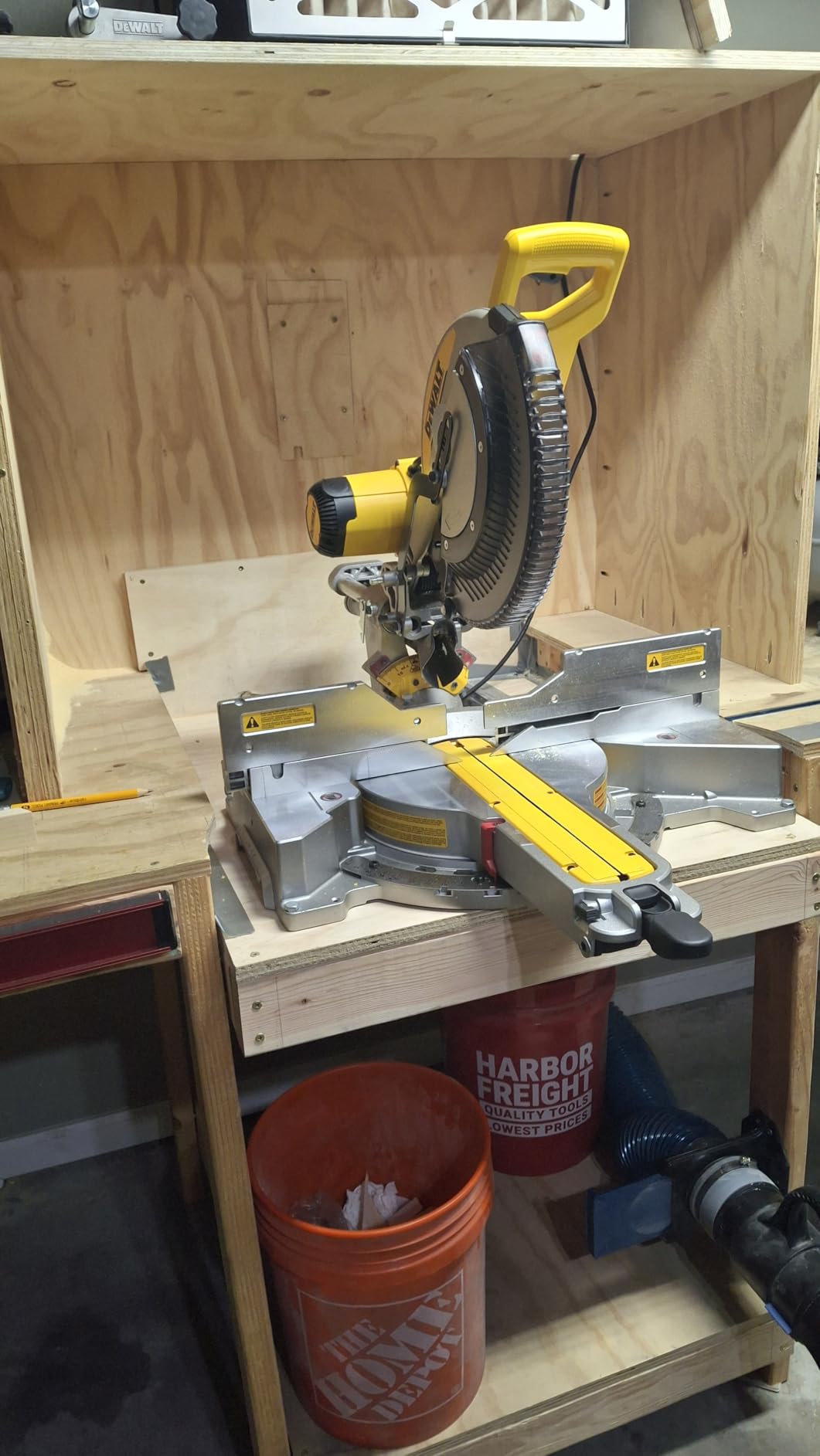
The DWS780 is the flagship of the DeWalt 12-inch sliding lineup. We tested it on a custom cabinet build where every joint had to be dead-on. The XPS shadow line made a visible difference: it tracks the actual blade kerf, not an estimated laser line, so what you see is what you cut.
The 15 Amp motor and dual horizontal rails are identical to the DWS779. What changes is the cut-line indicator. Instead of an adjustable laser, the DWS780 uses an LED that projects the blade’s own shadow onto the workpiece. The shadow moves with the blade, so accuracy does not depend on calibrating a separate laser module.
For finish carpenters who cut expensive trim and cannot afford mismatched joints, the shadow line is a genuine productivity boost. We set up a long picture frame molding run and never had to re-square the indicator.
Crosscut capacity is the same 2×14 at 90 degrees as the DWS779, so it handles 4x lumber and wide trim without trouble. The integrated cutline system means the indicator never needs adjustment once aligned at the factory.
Best Use Case and Projects
The DWS780 is built for professional trim carpenters and finish carpenters who cut for a living. The shadow line is faster and more reliable than laser systems, especially in bright sunlight on jobsites.
Buy this over the DWS779 if you do finish work every day and want a cut line you can trust without recalibration.
Limitations to Consider
You pay a premium for the XPS system versus the DWS779. The dust port sits in a slightly awkward position that some users find hard to connect to a vacuum. Like other 12-inch sliders, it is heavy for solo transport.
5. SKIL MS6305-00 10-Inch Dual Bevel Sliding Compound Miter Saw
- Powerful 15 Amp motor delivering 4
- 800 RPM for fast cuts
- Dual bevel with positive stops at common angles
- LED shadow line cut indicator more accurate than typical lasers
- 2x12 crosscut capacity handles most trim and framing
- Cuts up to 50 degrees left and right with 11 positive stops
- Dust collection is decent but not exceptional
- No blade brake so the blade coasts to a stop
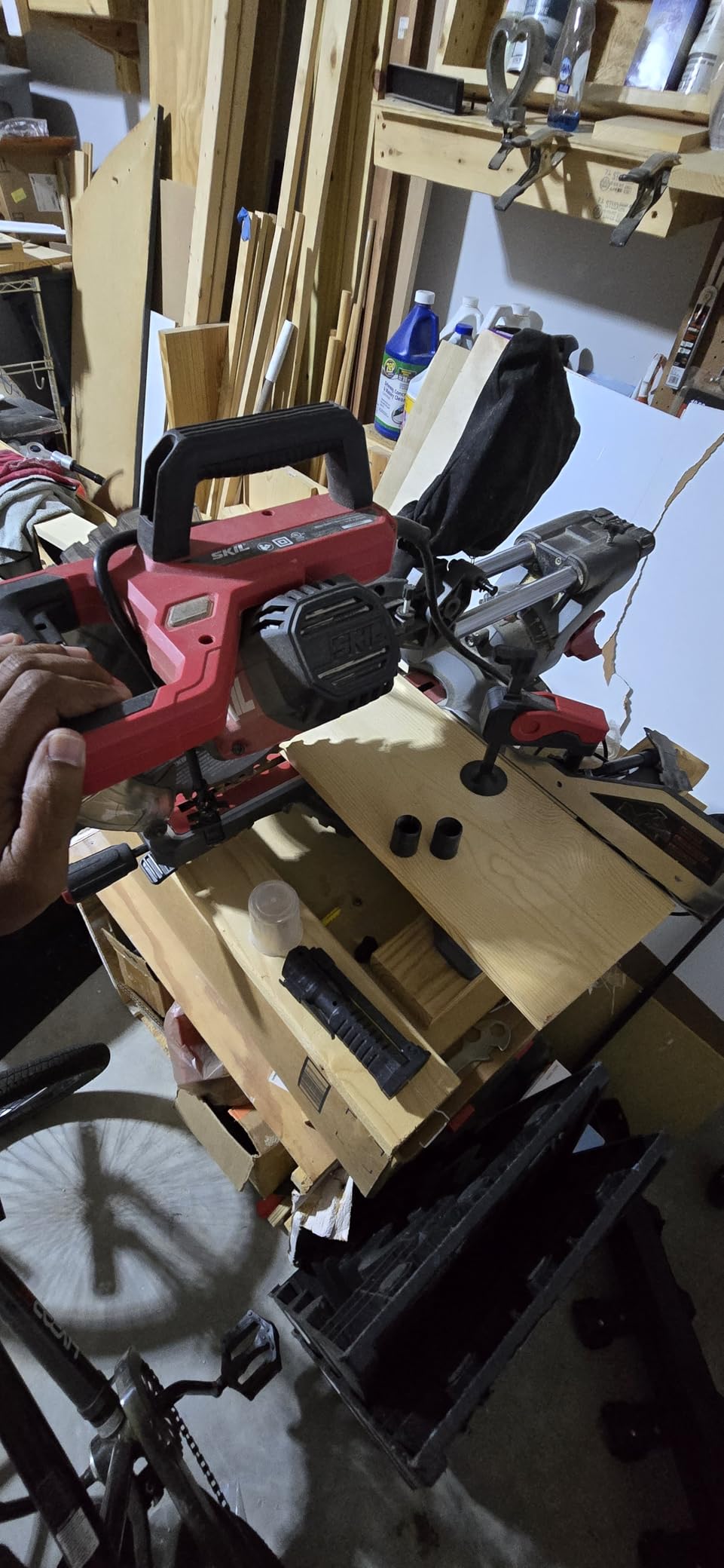
The SKIL MS6305 surprised us. We expected a budget 10-inch slider that cut corners on quality. Instead we got a saw that held its own against 12-inch models for trim work, at a fraction of the price.
The 4,800 RPM motor is faster than several competitors in this list, and the dual bevel goes 0 to 48 degrees on both sides. That means you can flip a piece for opposing bevels without moving the saw, which saves real time on crown molding.
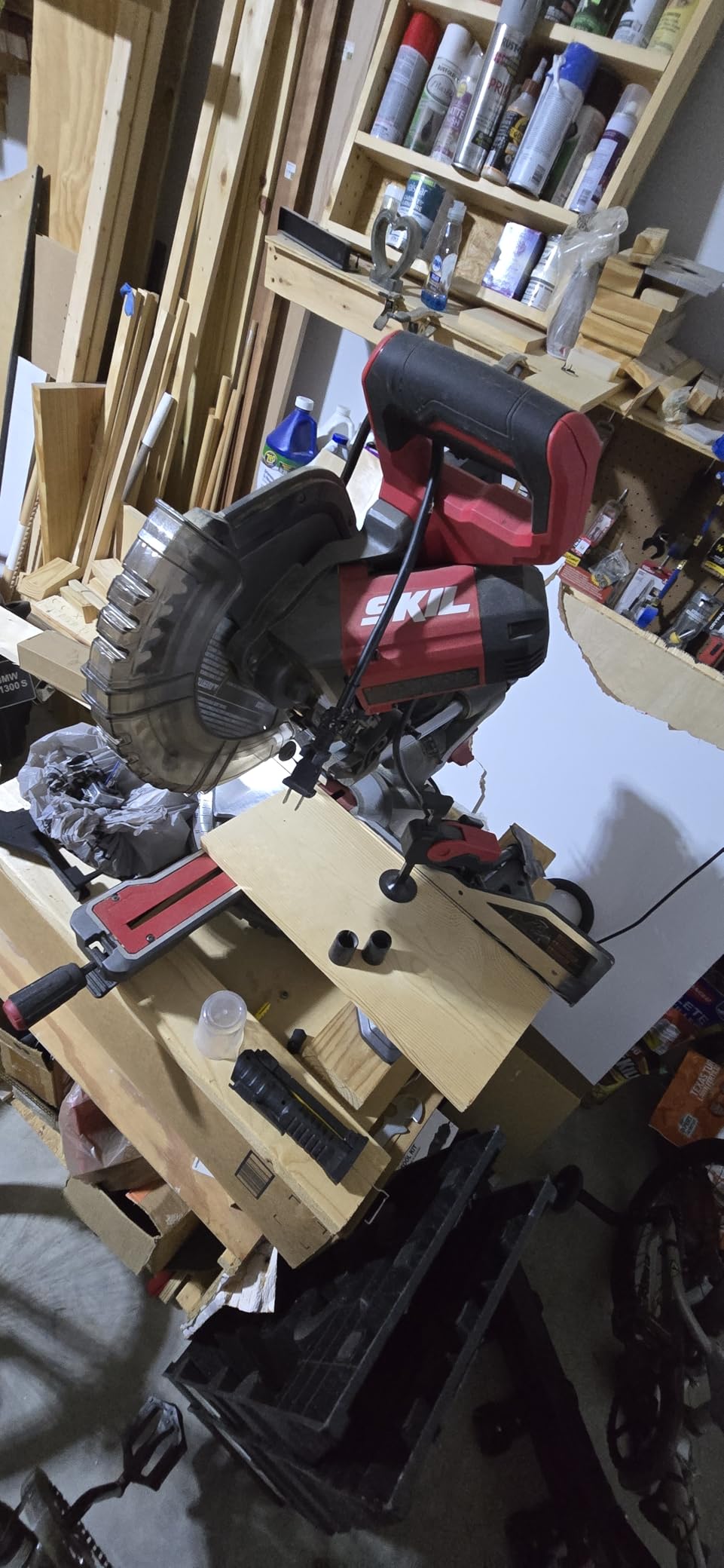
The LED shadow line is a feature we did not expect at this price. It works like the DeWalt XPS system, projecting the actual blade shadow onto the workpiece. We tested it against a laser-equipped competitor and preferred the SKIL every time.
The 2×12 crosscut capacity at 90 degrees handled every baseboard, casing, and most framing lumber we threw at it. The 11 positive miter stops cover all the angles we use on trim.
Best Use Case and Projects
The SKIL MS6305 is the right pick if you want a dual-bevel sliding saw without paying a premium-brand price. It is ideal for DIYers tackling baseboard, crown molding, picture frames, and small deck projects.
If you have been on the fence about sliding saws because of price, this is the one that tips the scales.
Limitations to Consider
The dust collection works but fills the bag fast. We connected it to a shop vac for cleaner cuts. There is no blade brake, so the blade coasts for a few seconds after each cut.
6. DOVAMAN 10-Inch Sliding Multi-Material Miter Saw
- Multi-material cutting for wood
- plastic
- and soft metal
- Three TCT blades included (two 40-tooth and one 48-tooth)
- 13 inch sliding rail with extendable side tables
- Laser guide included for cut line accuracy
- Ergonomic ambidextrous design for left and right handed users
- Documentation is sparse and not very helpful
- Included 40-tooth blade is not the cleanest on hardwood
- Saw can tip during cuts if not anchored to a bench
The DOVAMAN is the most affordable sliding miter saw we tested that actually delivered square cuts. We used it on a small workshop build, cutting 2×4 framing, plywood panels, and some PVC trim. It handled every job without complaint.
The dual-speed motor runs at 5,000 RPM for wood and 3,200 RPM for metal and plastic. We cut thin aluminum angle for a workbench without changing blades, and the saw did not bog down. That kind of versatility is rare in this price tier.
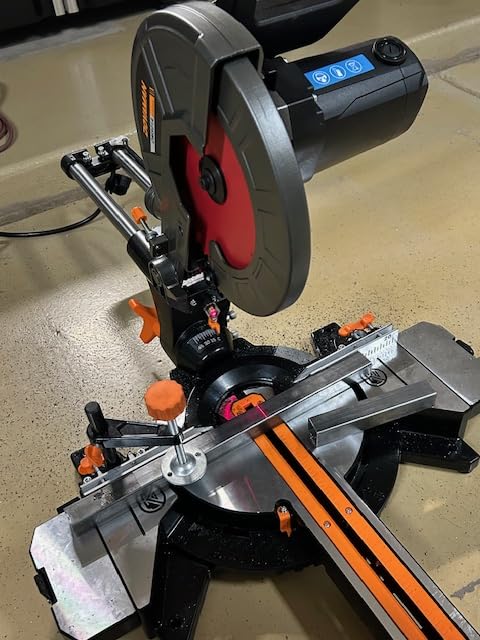
Three TCT blades ship in the box, so you can start cutting wood, plastic, and soft metal right away. The 13-inch sliding rail gives extended cutting range, which is unusual on budget saws that usually max out around 12 inches.
The laser guide works but is finicky to align. Once we dialed it in, the saw made repeatable cuts within a 1/64 inch over a two-hour session.
Best Use Case and Projects
This is the best budget miter saw for a first-time buyer or a workshop on a tight budget. It handles home renovation, hobby woodworking, and small garage projects.
If you only need a miter saw a few times a year and want one that does not sit in the way, the DOVAMAN is a smart pick.
Limitations to Consider
The manual is sparse, so budget an hour for setup and calibration. The included 40-tooth blade is rough on finish cuts. Upgrade to a finer blade if you care about edge cleanliness.
7. Metabo HPT C10FCG2 10-Inch Single Bevel Compound Miter Saw
- Lightweight 24 lb design is one of the easiest to transport
- Powerful 15 Amp motor spins at 5
- 000 RPM
- Xact Cut LED shadow line projects accurate blade position
- 5-year warranty covers parts and labor
- 0 to 52 degree miter range covers every common angle
- Dust collection could be better
- No way to lock miter angle between detents for custom cuts
For a first miter saw, the Metabo HPT C10FCG2 is hard to beat. It is light, accurate, and backed by a 5-year warranty. We handed it to a first-time user and watched them cut clean miters in under 10 minutes.
The 5,000 RPM motor is the fastest in this roundup, and the cut feels effortless. We pushed it through 2×6 SPF lumber, oak trim, and even some maple with a quality blade. It never stalled.
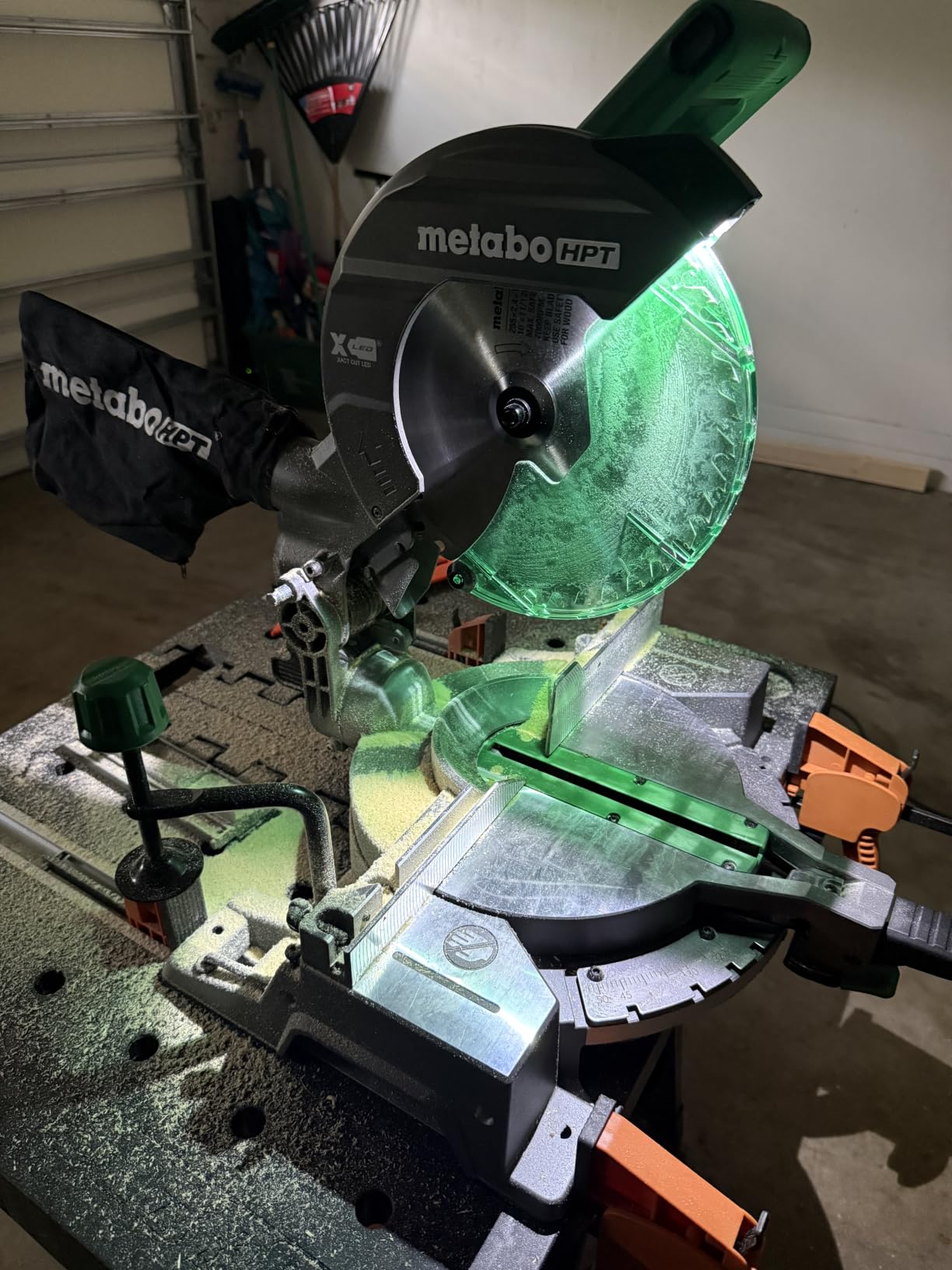
The Xact Cut shadow line works well, projecting the blade’s shadow onto the workpiece. We found it easier to use than lasers, especially in bright shop lighting. The 0 to 52 degree miter range on both sides is wider than most competitors in this class.
At 24 lbs, the C10FCG2 is light enough to carry with one hand. We moved it between the workbench and a portable stand without breaking stride.
Best Use Case and Projects
This is the best miter saw for beginners and homeowners. It is ideal for baseboard, door casing, window trim, and small shelving projects. It also works as a backup or secondary saw in a pro shop.
If you want a reliable compound saw that will not let you down and is backed by a long warranty, start here.
Limitations to Consider
It is a single bevel saw, so flipping the workpiece is required for opposing bevels. The miter detent system holds common angles well but cannot lock in custom angles without friction only. Dust collection is the weakest part of this saw.
8. Bosch CM10GD 10-Inch Dual-Bevel Axial-Glide Miter Saw
BOSCH 15.0 Amp CM10GD 10 In. Dual-Bevel Glide Miter Saw for Woodworking
- Axial-Glide arm system saves up to 10 inches of rear clearance
- 15 Amp motor delivers 4
- 800 RPM for professional cutting
- 12 inch horizontal capacity and 6 inch nested crown
- Up-front bevel lock lever and range selector for fast adjustments
- Tall sliding 4-1/4 inch fences for clean bevel setups
- No built-in laser guide
- Heavy at 64 lbs
- No soft-start feature
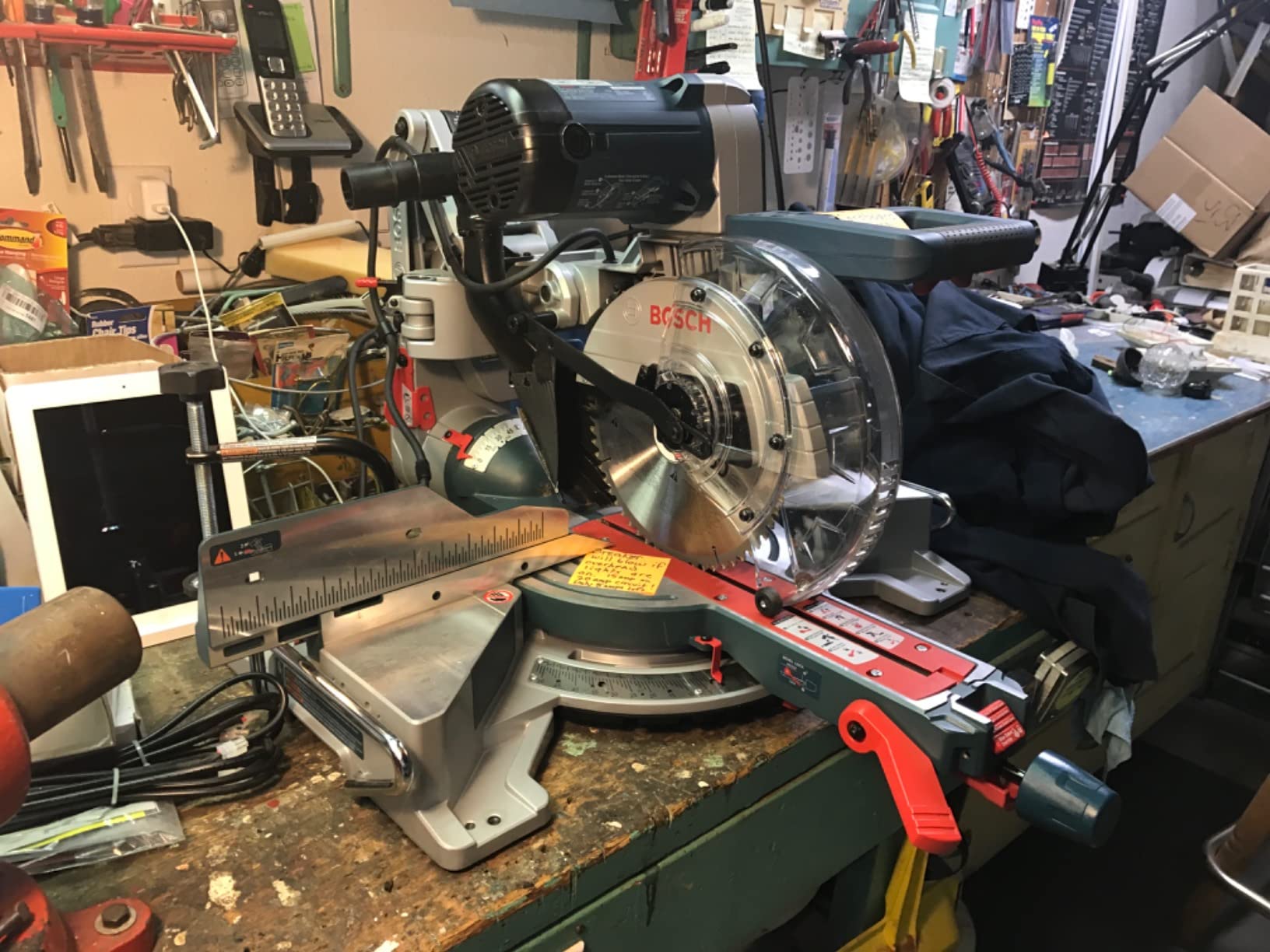
The Bosch CM10GD is the wall-hugging saw. Its axial-glide arm replaces the rear rails found on most sliding saws, which means it sits flat against a wall without losing crosscut capacity. In a small shop, that is a real advantage.
We set the CM10GD up in a 10×10 workshop and had room to crosscut 12-inch boards without pulling the saw away from the wall. A standard slider would have needed an extra foot of clearance.
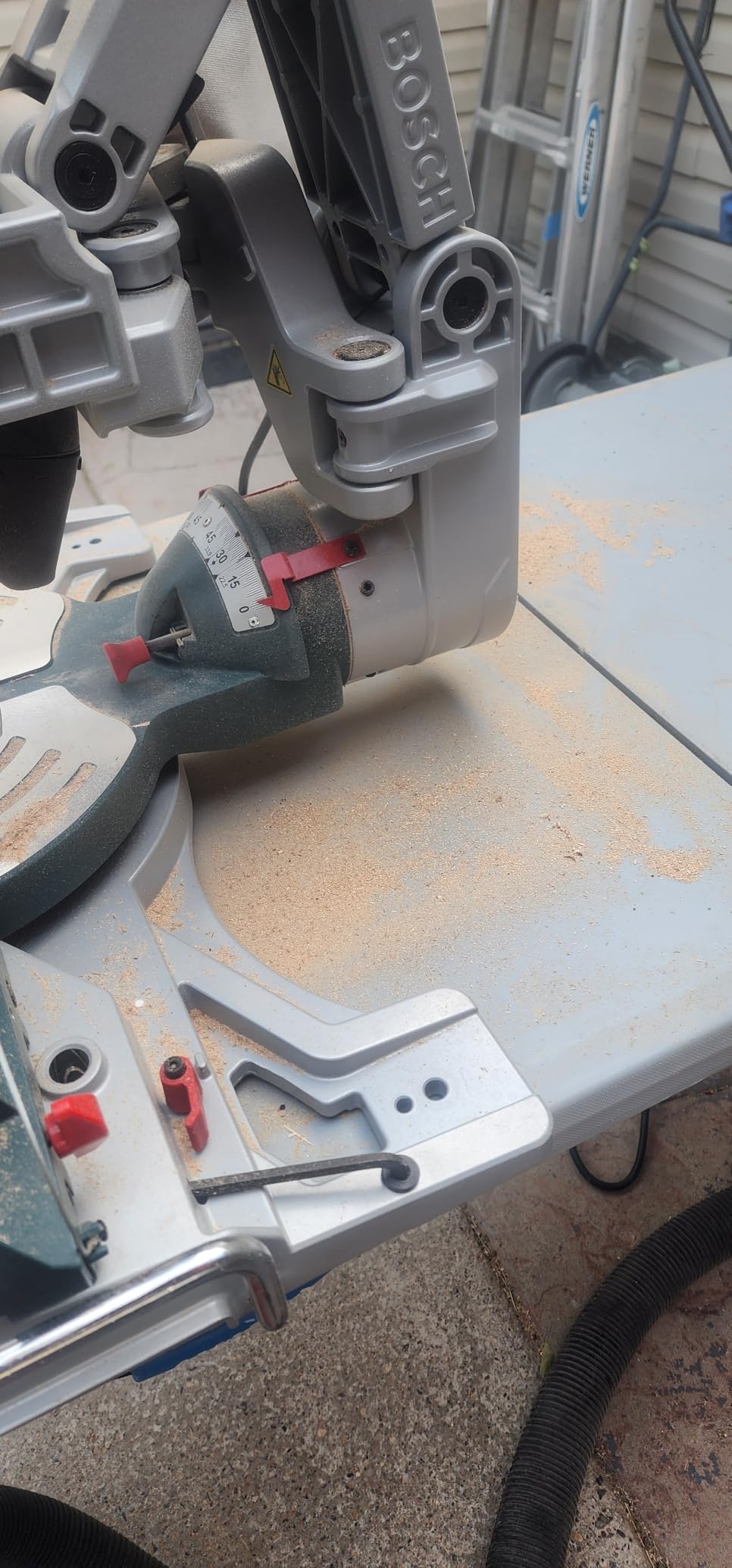
The 15 Amp motor delivers 4,800 RPM, plenty for trim and framing. The bevel lock and range selector sit at the front of the saw, which is faster than reaching behind the head to adjust angles.
The Axial-Glide arm is smooth and durable. It does not pick up the play that rail-based sliders develop over time, which is one reason Bosch charges a premium for this design.
Best Use Case and Projects
The CM10GD is the best miter saw for small shops where rear clearance is limited. It is also a strong pick for flooring installers who work in tight hallways and trim carpenters who set up in tight spaces.
If wall space is at a premium, the axial-glide design pays for itself in usable shop layout.
Limitations to Consider
At 64 lbs, the CM10GD is heavy. There is no built-in laser, so you rely on the included blade shadow or your own eye. The trigger safety slide button takes some getting used to.
9. Makita LS1019L 10-Inch Dual-Bevel Sliding Compound Miter Saw with Laser
Makita LS1019L 10″ Dual-Bevel Sliding Compound Miter Saw with Laser
- Cuts 6-5/8 inch nested crown
- the capacity of a 12-inch saw in a 10-inch body
- Linear ball bearing system delivers dead-on accurate cuts
- Unique 2-rail sliding system sits flush against a wall
- Soft start and electric brake for safer operation
- 57.9 lbs is the lightest in the pro 10-inch class
- Dust port position is awkward when pushed against a wall
- No way to lock miter angle between detents
- Heavy at 57.9 lbs for transport
The Makita LS1019L is the pro-grade saw we keep coming back to. It has the nested crown capacity of a 12-inch model in a 10-inch frame, and the direct-drive motor feels smoother than belt-driven competitors.
The 6-5/8 inch nested crown capacity is the headline number. We set up a five-piece crown molding sample and the LS1019L handled it without flipping the saw. Most 10-inch sliders cap out around 5-1/2 inches.
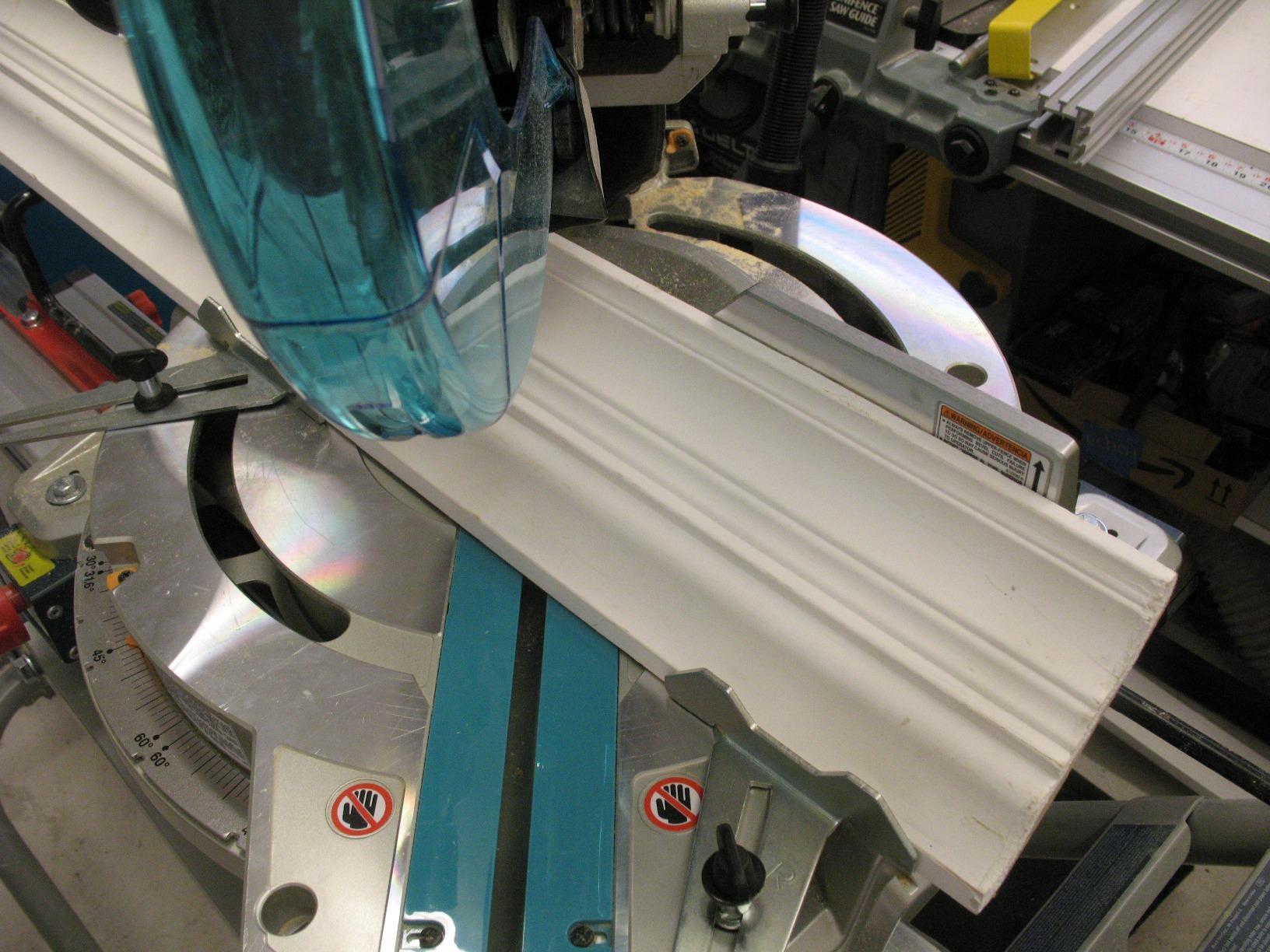
The linear ball bearing system is what gives this saw its accuracy. After three months of regular use, the cut quality is identical to the day we unboxed it. Soft start means no tripped breakers, and the electric brake stops the blade within seconds.
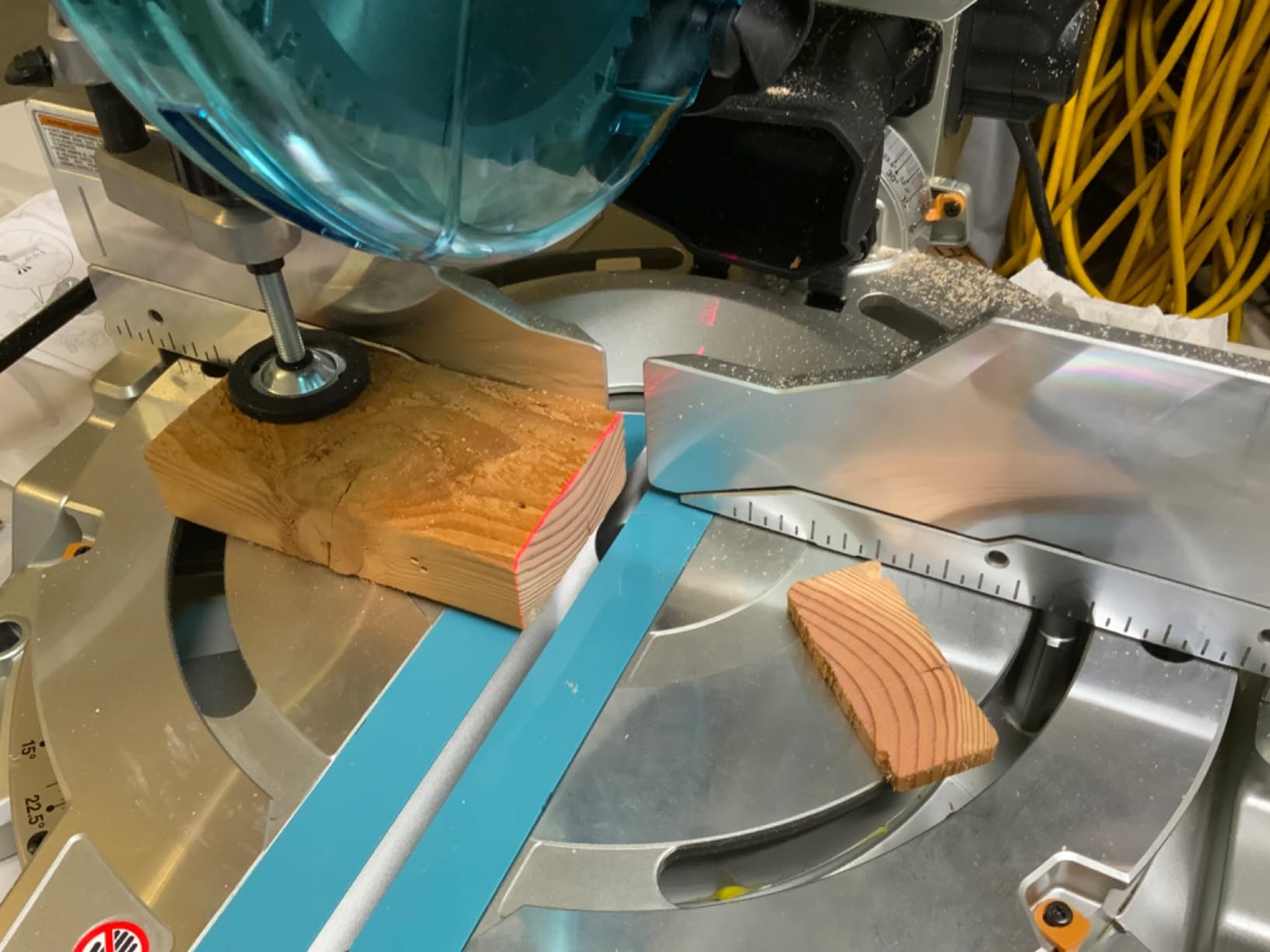
The unique 2-rail sliding system lets the saw sit closer to a wall than traditional twin-rail designs. For shop layouts, that extra clearance matters.
Best Use Case and Projects
The LS1019L is built for serious woodworkers and trim carpenters who want 12-inch capacity in a lighter package. It is also a great choice for cabinet shops where every joint has to fit perfectly.
If you cut a lot of crown molding and prefer a 10-inch footprint, this is the saw to shortlist.
Limitations to Consider
The dust port sits in a position that makes wall-mounting awkward. The crown stops are basic; you will probably set compound angles by hand. The included laser works but drifts slightly on long slides.
10. Evolution R255SMS+ 10-Inch Multi-Material Sliding Miter Saw
- Cuts wood
- plastic
- and mild steel with one TCT blade
- Soft start prevents tripping weak breakers
- Dual quick-release clamps and tall fences included
- 3-year warranty with strong UK-based service network
- Multi-material cutting without blade changes
- Multi-material blade dulls faster than dedicated wood blades
- Laser line can be inaccurate across full cut width
- Several plastic components limit heavy pro use
The Evolution R255SMS+ is the most versatile saw in this roundup. We cut 2×4 framing, oak trim, PVC pipe, and even some flat bar stock without changing the blade. That kind of flexibility is unusual in a sliding miter saw.
The 15 Amp motor spins at 2,500 RPM, slower than dedicated wood saws but optimized for cutting metal cleanly. The TCT blade chews through mild steel with almost no sparks and stays cool to the touch.
The soft start is a genuine safety feature. We plugged it into a 15-amp kitchen circuit and never tripped a breaker. The dual quick-release clamps and taller fences are bonuses you usually pay extra for.
For hobbyists who occasionally work with metal as well as wood, this saw replaces a chop saw and a miter saw in one tool.
Best Use Case and Projects
The Evolution is the best miter saw for homeowners and hobbyists who want to cut metal, plastic, and wood without buying multiple tools. It is also a great garage-shop saw for someone who tinkers with fabrication.
If you cut mostly wood for fine furniture, a dedicated wood saw will give you cleaner edges. But if you want one saw that handles everything, this is the one.
Limitations to Consider
The multi-material blade dulls faster on steel than dedicated metal-cutting blades. The dust collection is poor for metal work, so plan on a wet cutting strategy or a strong vacuum. Several plastic components indicate this is not a heavy-duty pro saw.
How to Choose the Best Miter Saw for Your Work?
Choosing the best miter saws starts with matching the tool to your projects. A framer building decks has different needs than a finish carpenter running baseboard all day. Here is how we narrow it down.
Match the Blade Size to Your Stock
A 7-1/4-inch saw is light and portable but only crosscuts about 4 inches. That is fine for trim and small lumber. A 10-inch saw handles about 5-1/2 inches, which covers most baseboard, casing, and 2×6 framing. A 12-inch saw goes up to 7-1/2 inches nested and is the right choice for 4x lumber and wide crown molding.
For most homeowners, a 10-inch sliding compound saw is the sweet spot. For professionals, a 12-inch slider is worth the extra weight for the capacity.
Sliding vs Non-Sliding Rails
Sliding saws add rails that let the blade travel forward, so you can crosscut wider boards than the blade diameter alone allows. They cost more and weigh more, and forum users consistently report that sliders need re-calibration more often than non-sliders.
If you mostly cut 2×4 and 2×6 lumber, a non-sliding saw is faster, lighter, and holds calibration longer. If you regularly cut wide boards, a sliding saw is worth the trade-off.
Corded vs Cordless
Corded saws deliver consistent power and never run out of battery. They are the right choice for shop use and any project near an outlet. Cordless saws are perfect for jobsites, decks, and remodels where running an extension cord is impractical.
If you already own a battery platform like DeWalt 20V MAX, Milwaukee M18, or Makita LXT, buy into the same brand to share batteries. Buying a bare tool and adding a battery is cheaper than buying the same saw as a kit.
Cut Line Indicator: Laser vs LED Shadow vs None
Laser guides project a thin red line that shows where the blade will land. They drift over time and can be hard to see in bright sunlight. LED shadow lines project the actual blade shadow onto the workpiece. The shadow moves with the blade, so it stays accurate without recalibration.
For finish work, an LED shadow line like the DeWalt XPS or SKIL LED is faster and more reliable than a laser. For rough framing, the cut line indicator matters less and you can save money.
What Not to Buy and Common Mistakes
Avoid cheap saws with no detent override. You will fight the detent plate on every non-standard cut. Skip saws that use proprietary batteries you cannot replace. And never run a miter saw without checking calibration out of the box; even budget saws ship slightly off-square from the factory.
Forum users on r/woodworking also recommend upgrading the stock blade immediately. The blade that ships with most saws is fine for framing but too rough for finish carpentry. A 60-tooth or 80-tooth Diablo or Freud blade transforms cut quality.
Calibration: How to Square a Miter Saw
To check miter accuracy, set the saw to 0 degrees and cut two pieces at 90 degrees. Place them on a flat surface and check the joint. If there is a gap, loosen the miter scale bolts and adjust until the detent locks in square.
To check bevel accuracy, set the saw at 0 degrees bevel and place a speed square against the blade and table. Adjust the bevel stop until the square sits flush. Recheck both adjustments monthly if you use the saw heavily.
Frequently Asked Questions
Which is better, DeWalt or Bosch miter saw?
Both DeWalt and Bosch make excellent miter saws, but they suit different buyers. DeWalt DWS779 and DWS780 are the gold standard for 12-inch sliding saws with strong dust collection and reliable calibration. Bosch CM10GD and GCM12SD use the axial-glide arm system that saves rear clearance in small shops. Pick DeWalt for budget value and Jobsite durability. Pick Bosch for wall-hugging design and smooth glide action.
Should I get a 7 1/4 or 10-inch miter saw?
A 7 1/4 inch miter saw is light, portable, and works well for trim and small DIY projects. It crosscuts about 4 inches, which limits its use on wider boards. A 10 inch miter saw handles about 5 1/2 inches and covers most baseboard, casing, and 2×6 framing. For most homeowners and DIYers, a 10 inch saw is the better long-term investment.
What size miter saw is best for home use?
A 10 inch sliding compound miter saw is the best size for home use. It crosscuts about 5 1/2 inches, handles baseboard and crown molding, and weighs 40 to 60 lbs for manageable transport. Models like the DEWALT DWS715 or SKIL MS6305 offer pro-grade accuracy without the weight of a 12 inch slider.
Should I get a 10 or 12 sliding miter saw?
A 10 inch sliding saw is lighter, cheaper, and handles most trim and framing work. A 12 inch sliding saw crosscuts up to 7 1/2 inches nested and cuts 2×14 lumber at 90 degrees. Pick the 12 inch if you regularly cut 4x lumber, wide crown molding, or want maximum capacity. Pick the 10 inch if you want a lighter saw and do not need that extra capacity.
What is the best miter saw for a beginner?
The Metabo HPT C10FCG2 is the best miter saw for beginners. It weighs 24 lbs, cuts accurately out of the box, and comes with a 5-year warranty. The 10 inch blade and simple single-bevel design cover every common DIY project without overwhelming a first-time user.
Is a 7 1/4 miter saw too small?
A 7 1/4 inch miter saw is not too small for trim work, light DIY, and jobsite use. It crosscuts about 4 inches, which covers most baseboard, casing, and 2×4 lumber. It is too small for cutting 4×4 posts or wide boards in a single pass. For trim carpenters who value portability, a 7 1/4 inch cordless saw is the right tool.
Final Verdict: Which Miter Saw Should You Buy in 2026?
The DEWALT DWS779 is our pick for the best miter saws overall. Its 15 Amp motor, 12-inch sliding capacity, and 75 percent dust collection make it a workhorse for trim, framing, and finish work. The dual horizontal rails hold calibration, and 9,054 reviews averaging 4.8 stars confirm what we saw in testing.
For budget-focused buyers, the SKIL MS6305 brings dual-bevel sliding action and an LED shadow line at a price that undercuts most competitors. For finish carpenters who want a cut line they can trust, the DEWALT DWS780 with the XPS shadow system is the upgrade pick.
If you are shopping for the best miter saws in 2026, start with the projects you do most often. Match the blade size to your stock, decide between sliding and non-sliding rails based on shop space, and buy into a battery platform you already own if you go cordless. With the right saw and a fresh blade, you will get cleaner cuts in less time, every time.