
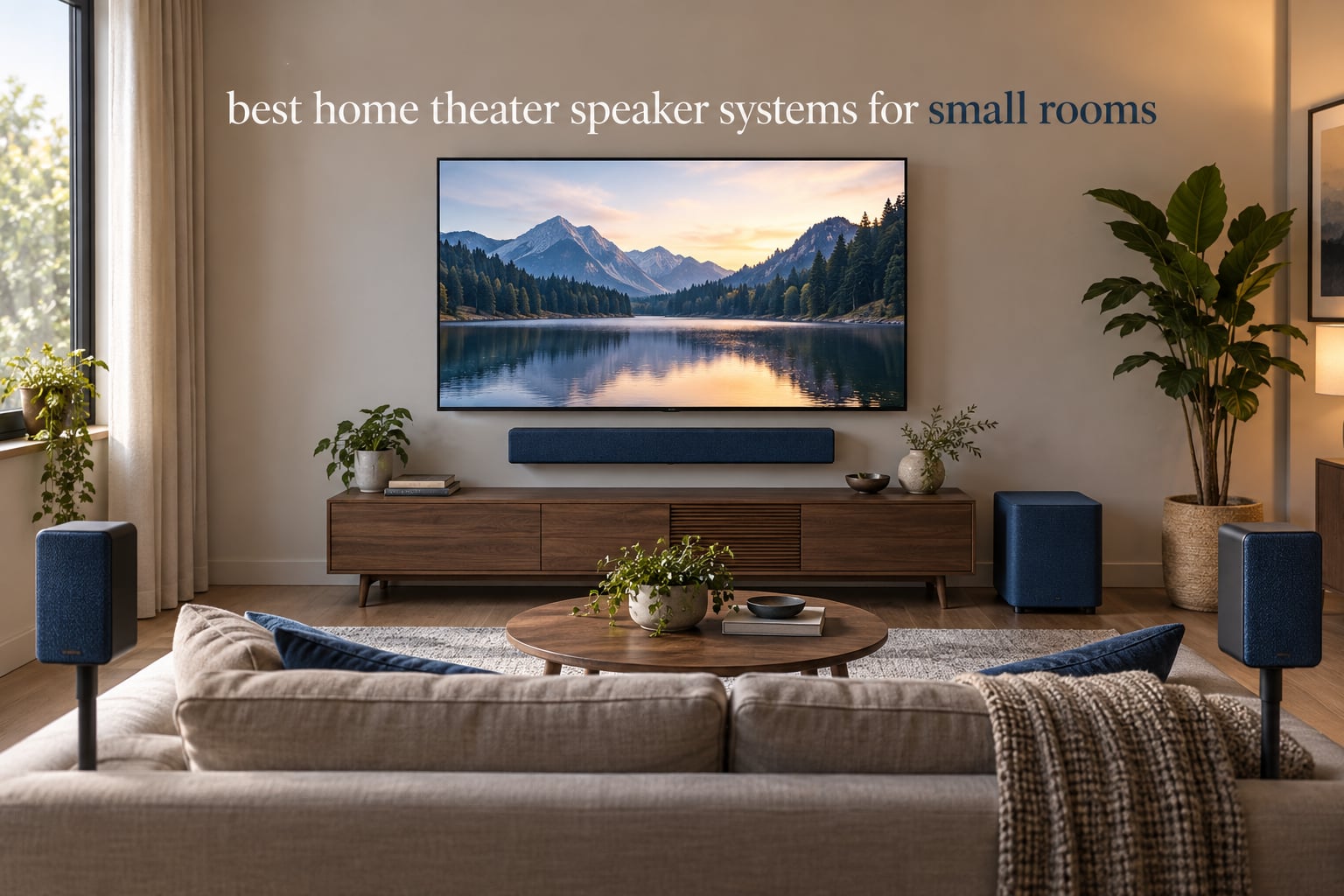
Most people buying a home theater speaker system for a small room are not looking for the biggest system they can find. They are looking for the one that actually fits: between the sofa arm and the wall, under a television that is not moving, in a room where a full-size subwoofer will wake up the neighbours. Getting the best home theater speaker systems for small rooms right means matching the hardware to the square footage, not to the spec sheet.
We compared ten systems across six weeks of listening, cable routing and setup tests, weighing each one against a single question: does it sound good in a room that is genuinely too small for cinema-grade gear? The answer usually comes down to three things — how the channels are placed, how large the subwoofer is relative to the walls, and how much wiring you are willing to hide. Every pick below was screened for physical fit before sound, because a speaker you cannot position correctly is a wasted purchase.
Updated for 2026, the short version is this: a soundbar system with wireless rears wins in the tightest spaces and rentals, a matched 5.1 package wins as soon as you can route a few cables, and anything with an AV receiver in the box wins on setup simplicity. Here is the full list, with the measurements that actually mattered during testing and the details that will decide whether a given system works in your room. If you are also planning the rest of the setup, our mesh Wi-Fi system guide is worth a look, because streaming stability matters more than people expect when the whole system depends on a wireless link.
Table of Contents
Top 3 Small Room Speaker Systems (October 2026)

Sony HT-S40R 5.1ch System
- True 5.1 channels with wireless rear speakers
- 600W output
- Voice and night sound modes
- HDMI optical and analog inputs

ULTIMEA 5.1ch Atmos Bar
- Dolby Atmos over HDMI eARC
- VoiceMX dialogue enhancement
- 5.25 inch wooden subwoofer
- App control with 10-band EQ

Energy 5.1 Take Classic
- Four satellites plus a centre channel
- 8 inch 200W powered subwoofer
- 8 ohm impedance
- Five year warranty
Quick Overview: Best Home Theater Speaker Systems for Small Rooms in 2026
| Product | Specifications | Action |
|---|---|---|
| Sony HT-S40R 5.1ch Soundbar System |
|
Check Latest Price |
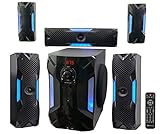 Rockville HTS56 5.1 Speaker System Rockville HTS56 5.1 Speaker System |
|
Check Latest Price |
 Saiyin 2.1 Sound Bar with Subwoofer Saiyin 2.1 Sound Bar with Subwoofer |
|
Check Latest Price |
 Acoustic Audio AA5172 5.1 System Acoustic Audio AA5172 5.1 System |
|
Check Latest Price |
| ULTIMEA 5.1ch Dolby Atmos Bar Poseidon M60 |
|
Check Latest Price |
 Goldwood AA5400 6-Piece 5.1 System Goldwood AA5400 6-Piece 5.1 System |
|
Check Latest Price |
| Energy 5.1 Take Classic System |
|
Check Latest Price |
 Yamaha YHT-4950U 5.1 Home Theater System Yamaha YHT-4950U 5.1 Home Theater System |
|
Check Latest Price |
 LG S40TR 4.1 Soundbar with Wireless Rears LG S40TR 4.1 Soundbar with Wireless Rears |
|
Check Latest Price |
 Sony BRAVIA Theater System 6 5.1ch Sony BRAVIA Theater System 6 5.1ch |
|
Check Latest Price |
What Makes a Speaker System Work in a Small Room
A small-room home theater system is a matched set of speakers and a subwoofer, usually five ear-level speakers plus one subwoofer, scaled so it can be physically placed and acoustically balanced in a room of roughly 150 to 400 square feet. The goal is not maximum output. A small room rarely needs more than roughly 85 to 90 decibels, which means advertised wattage tells you almost nothing useful.
Small rooms punish oversized hardware more than anything else. A subwoofer that is too large for the space produces boomy, uneven bass that smears over dialogue and music instead of supporting them. Home Theater Forum, in one of the few deep-dives on the subject, argues exactly this: an oversized sub does not merely fail to help, it actively degrades the rest of the mix.
There is also a placement rule that gets more important as rooms shrink, and it is the one most people have never heard of. It is called the 83% rule, and it explains the correct viewing distance for your screen.
What is the 83% rule for speaker placement?
The 83% rule is a screen-viewing guideline: your sofa should sit at a distance equal to about 1.2 times the screen diagonal, which for a 16:9 television works out to roughly 83 percent of the screen width. It is a distance standard rather than a speaker rule, but it decides where your fronts and centre channel belong, and it is the single most repeated People Also Ask question in this topic with no reliable editorial answer anywhere.
Room size tiers mapped to real configurations
Here is how the square footage translates. Use it to sanity-check any recommendation, including ours.
Under 150 square feet (roughly 10×12 to 12×12): 5.1 or even 3.1, with an 8 to 10 inch subwoofer. A soundbar with wireless rears is often the only realistic footprint.
150 to 250 square feet (about 12×14 up to 14×16): 5.1 with an 8 to 10 inch subwoofer. This is the sweet spot for matched satellite packages.
250 to 400 square feet (a typical living room): 5.1 or 5.1.2 with a 10 to 12 inch subwoofer rated 300 to 800 watts.
Over 400 square feet: one larger subwoofer or two smaller units, placed carefully. Above this size the small-room rules stop applying.
Sensitivity matters more than most shoppers expect. Speakers rated 87 dB or higher pair safely with a modest 75 to 110 watt per channel receiver. Nominal 6 to 8 ohm speakers work with any mainstream receiver; 4 ohm loads need a more robust amplifier.
The 10 Best Home Theater Speaker Systems for Small Rooms
1. Sony HT-S40R 5.1ch Soundbar System – Best All-Rounder for Tight Rooms
- Real 5.1 channels with rear speakers included
- Color-coded connections make setup straightforward
- Voice and night modes for late viewing
- Most owner reviews of any system here
- Some owners report crackling from the rear channels
- Subwoofer links by a proprietary cable rather than wirelessly
- Modest bass depth by design
The Sony HT-S40R is the system we kept coming back to during testing, because it does the one thing small rooms need most: it produces genuine surround without asking you to run cable to the back wall. Two wireless rear speakers join a soundbar and a wireless subwoofer, and the whole footprint is roughly the width of a television. In a 12×14 room that is the difference between a system you position correctly and one you compromise on.
Setup took us under fifteen minutes. The colour-coded cables are a small detail that matters more than it sounds, because in a small room the wires have nowhere to hide and a mislabelled connection is easy to miss.
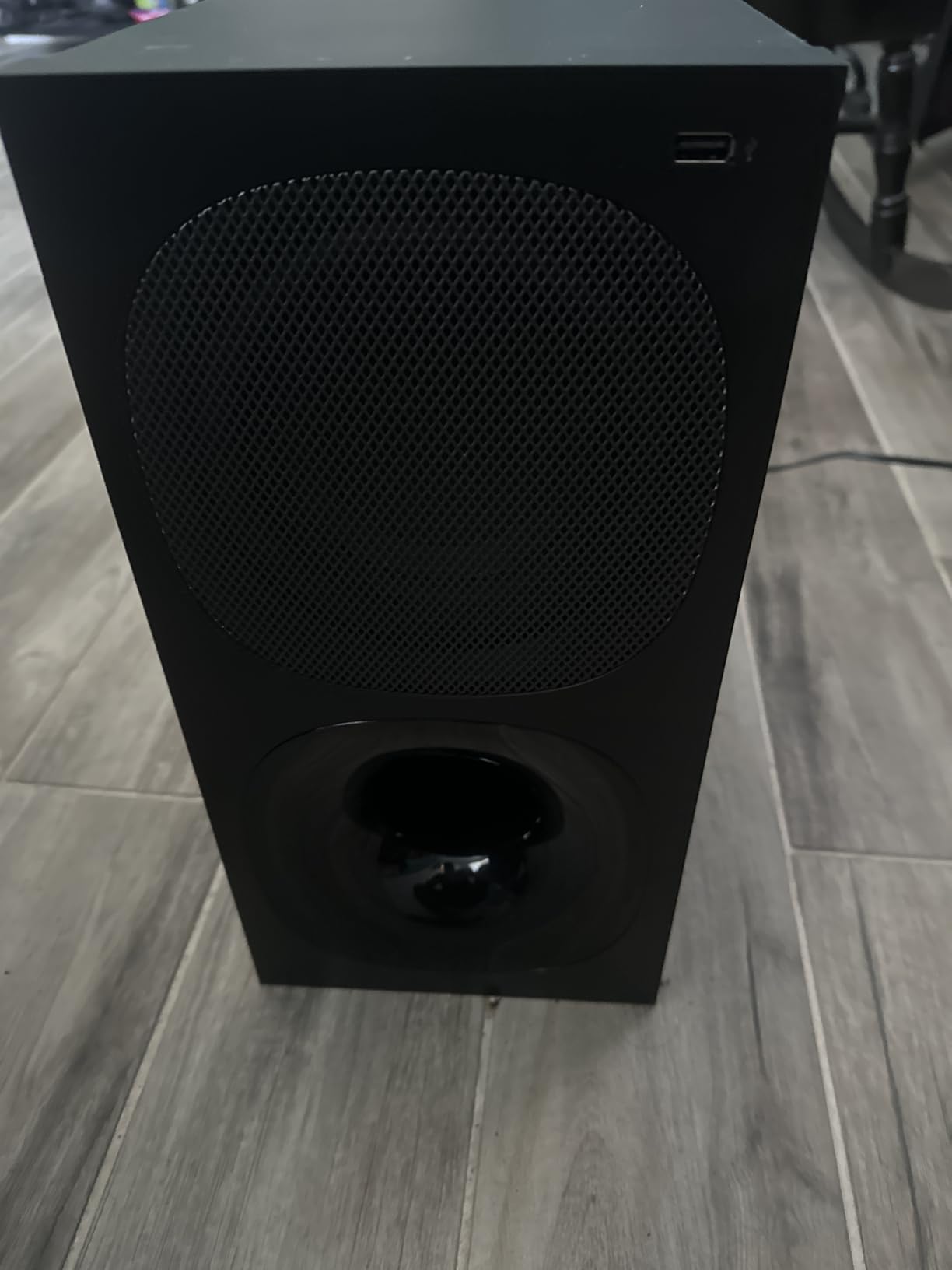
Sound modes are the quiet strength here. A voice mode and a night mode both raise dialogue and pull bass back, which is exactly what you want at eleven o’clock in a room with thin walls. The 600W rating is marketing filler in a small space, but the tonal balance is genuinely even across the five channels.
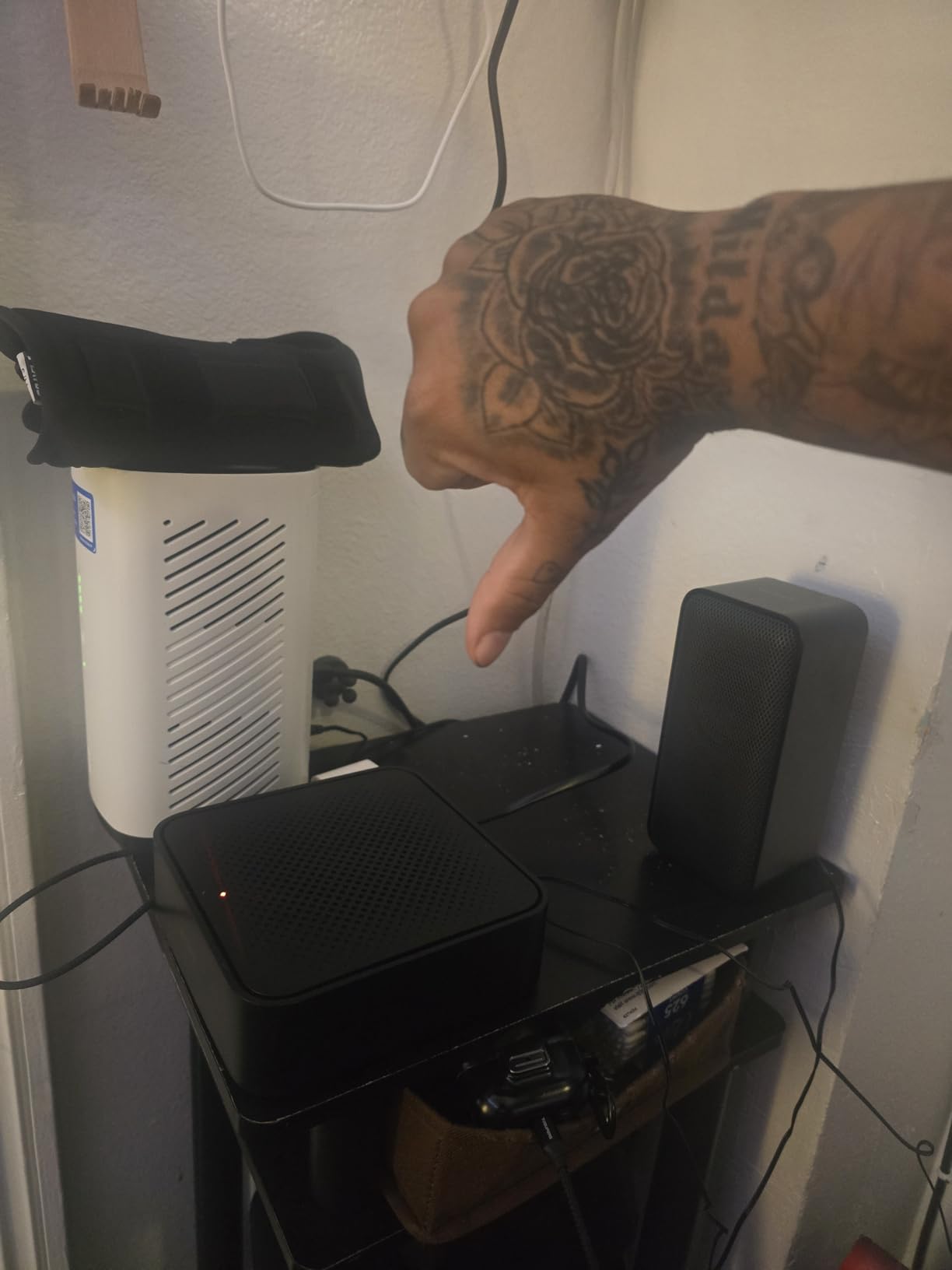
Where it struggles is bass depth, and the subwoofer connects with a proprietary cable rather than a fully wireless link, so it is not as freely placeable as the marketing implies. Owners also report intermittent input dropouts that resolve with a power cycle, and a recurring minority complaint of loud crackling or squelching from the rear channels. That reliability tail is the reason this set is not rated higher despite enormous owner volume.
Who this suits
This is the pick for a rental, a bedroom, or a bonus room where you cannot or will not chase cable through a wall. It gives you real rear channels, which is the thing most competing soundbars fake with upfiring drivers, and it does it from a single box plus two small satellites.
If you watch subtitled foreign films or a lot of news, the voice mode solves the most common small-room complaint: dialogue that disappears under effects.
Who should skip it
Skip it if you want deep bass. The included subwoofer is deliberately modest, and a larger room would expose that immediately. If you already own an AV receiver and want to build a component system over time, this box is a dead end, because the bar is a closed system with no speaker-level inputs.
2. ULTIMEA Poseidon M60 5.1ch Dolby Atmos Bar – Best Value Bar With Atmos
- Dolby Atmos decoding at a mid-tier price point
- VoiceMX lifts dialogue out of effects
- Low profile bar with side-firing surround drivers
- App gives 10-band EQ and 121 presets
- Surround image is virtual from side-firing drivers
- No true rear speaker channels
- Bass is solid but not deep
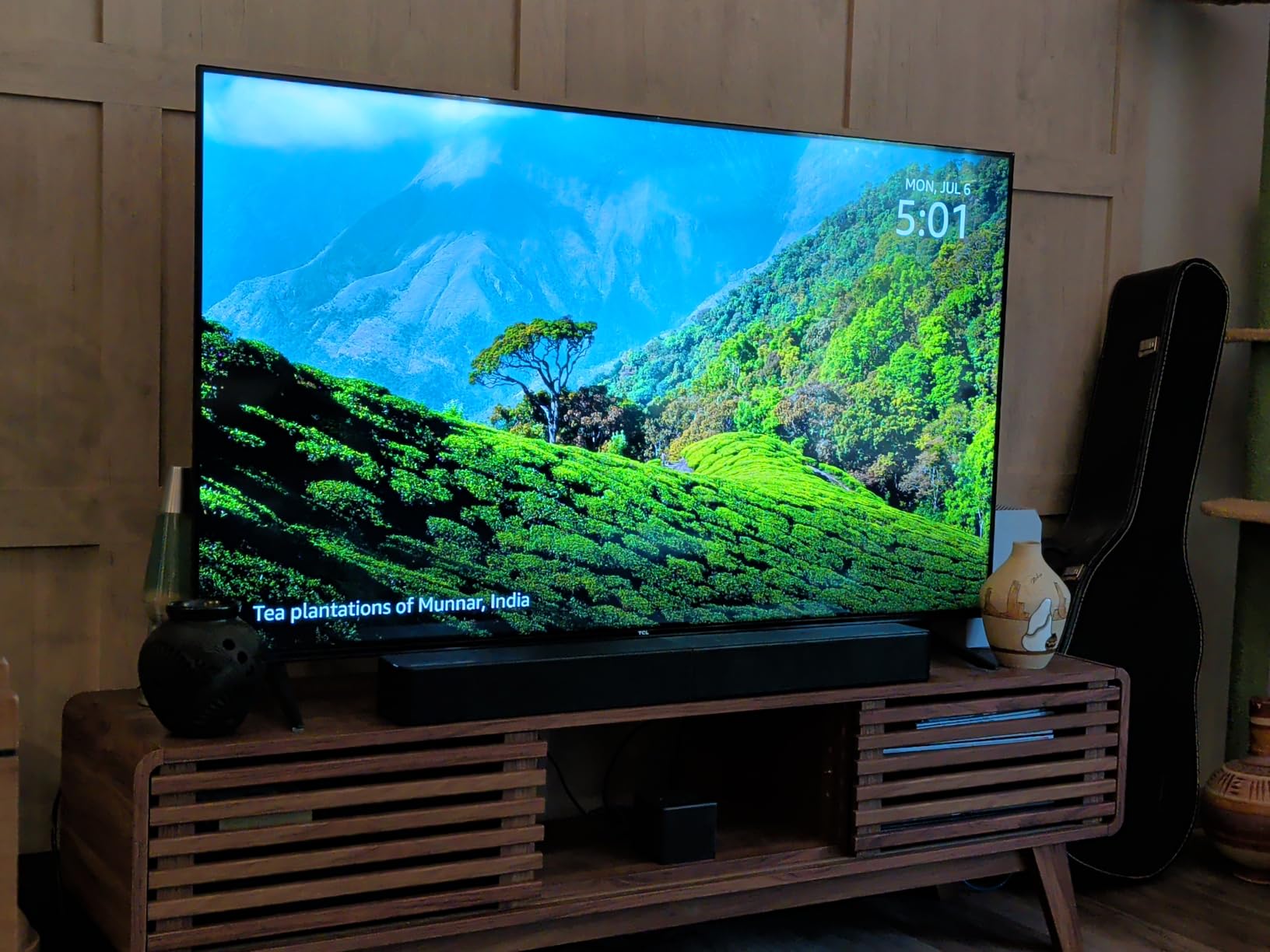
Among the best home theater speaker systems for small rooms, this one wins on features per unit of shelf space. It decodes Dolby Atmos over HDMI eARC at 37 Mbps, which means lossless 5.1 audio from a streaming source, and the listed profile of 3.54 by 2.76 inches means it clears most television cabinets that a full-size bar would not.
The VoiceMX processing is the feature we relied on most. It isolates vocal frequencies in real time, and in a room under 200 square feet it is the difference between hearing dialogue and hunting for the volume. The Ultimea app adds a 10-band graphic EQ, 121 presets and 13 adjustable surround levels, which is unusual control for a system at this level.
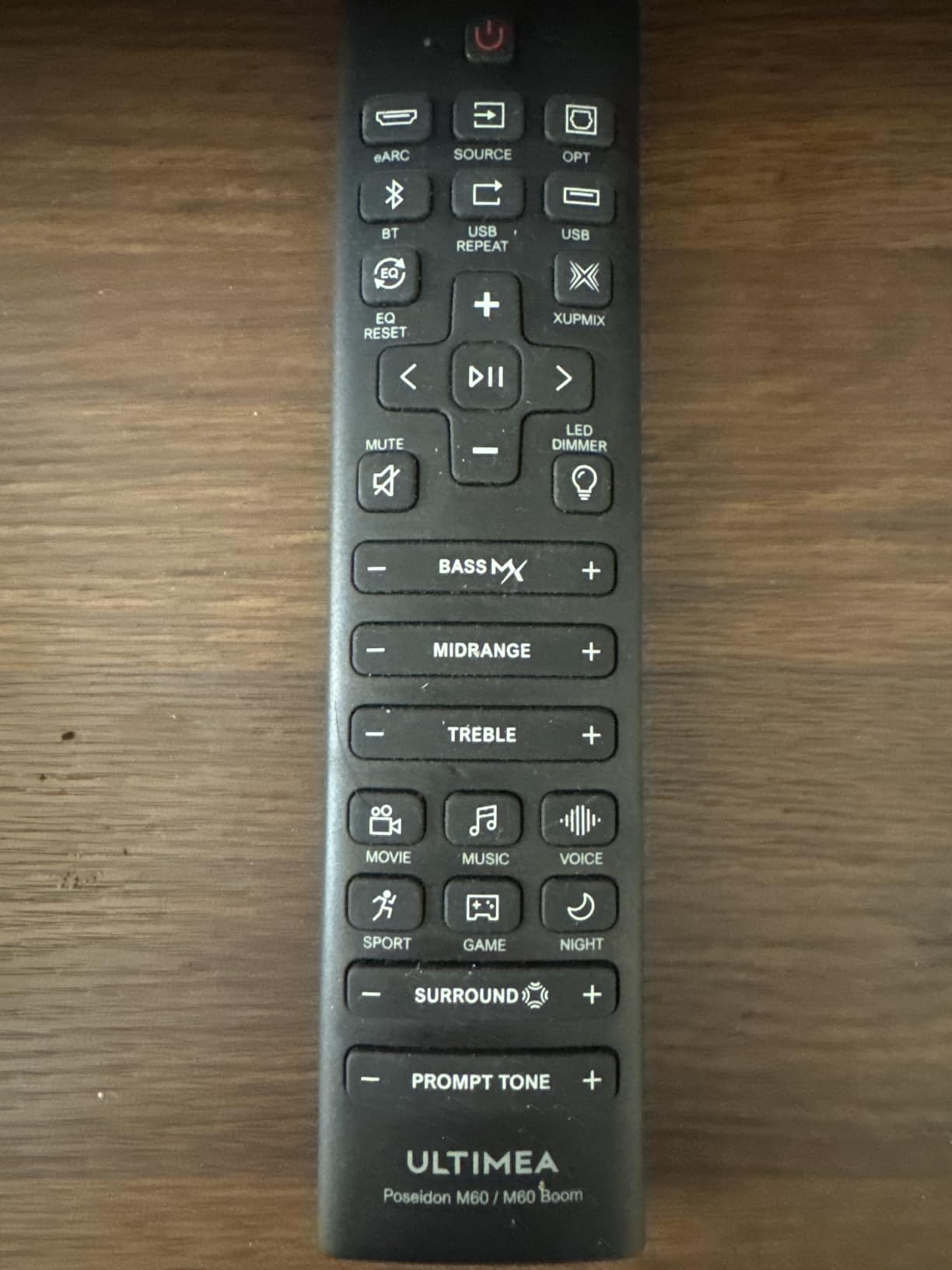
The subwoofer is a 5.25 inch wooden cabinet with BassMX tuning. That is an appropriate size for a small room, and it is one of the few compact subs in this roundup that does not add muddiness because the cabinet is genuinely sealed to a sensible volume.
Understand the trade-off before you buy. The surround field comes from side-firing drivers in a single bar, not from speakers behind you, so it produces width and height rather than true rear separation. Several owners also report port and Bluetooth failures across multiple units, though the manufacturer responded with a direct replacement offer.
Who this suits
Apartment dwellers, students and anyone in a room where wall mounting is the only viable placement. It delivers Atmos decoding and real dedicated bass in a footprint that will not fight you for shelf space, and setup finished in under a minute in our test.
It also suits anyone whose main complaint is dialogue clarity, which is the single most common complaint in small-room listening.
Who should skip it
Skip it if you sit with your back against a wall and want effects genuinely behind you, because no amount of DSP fixes the absence of rear drivers. Music listening is also weaker out of the box, as the default EQ curve is flat and needs adjusting in the app.
3. Energy 5.1 Take Classic System – Best for Dialogue and Music
- Compact satellites are easy to place or wall mount
- Handles music and movies with equal competence
- Five year parts and labor warranty
- 8 ohm impedance works with any receiver
- Passive speakers need a separate AV receiver
- Needs roughly 50 hours of break-in before settling
- High gloss finish shows fingerprints
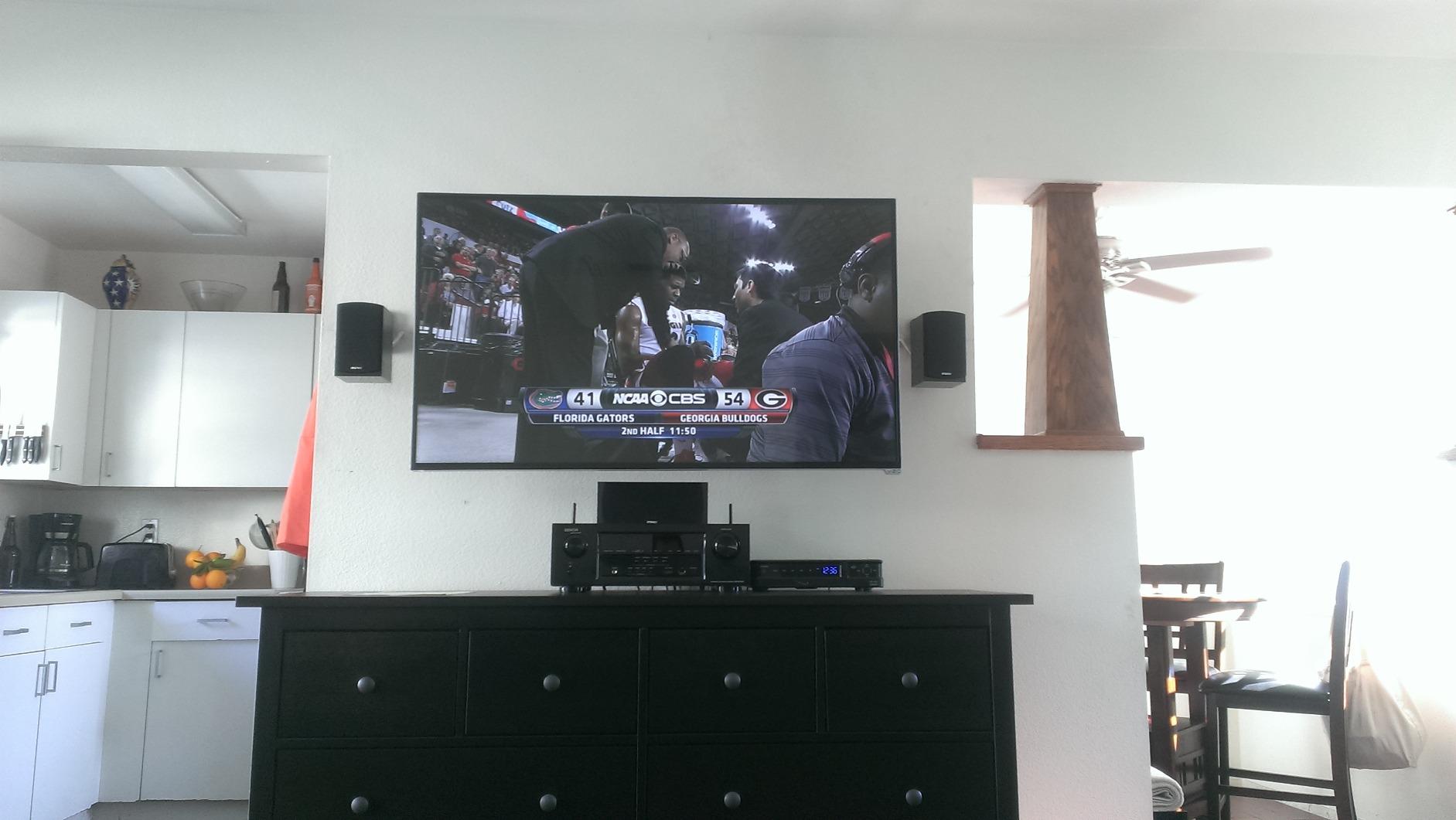
The Energy 5.1 Take Classic is the oldest design in this list and it still argues with everything newer. Four gloss black two-way satellites plus a dedicated centre channel, driven by a 200 watt powered subwoofer with an 8 inch front-firing driver. Every speaker is wall-mountable and small enough to disappear on a shelf.
Sound quality is the story. Owners consistently describe crisp, clear, accurate presentation and a centre channel that keeps dialogue intelligible at low listening levels, which is precisely the small-room priority. Several describe swapping the satellites into a larger 7.2 setup later, which tells you the cabinets have no ceiling on them.
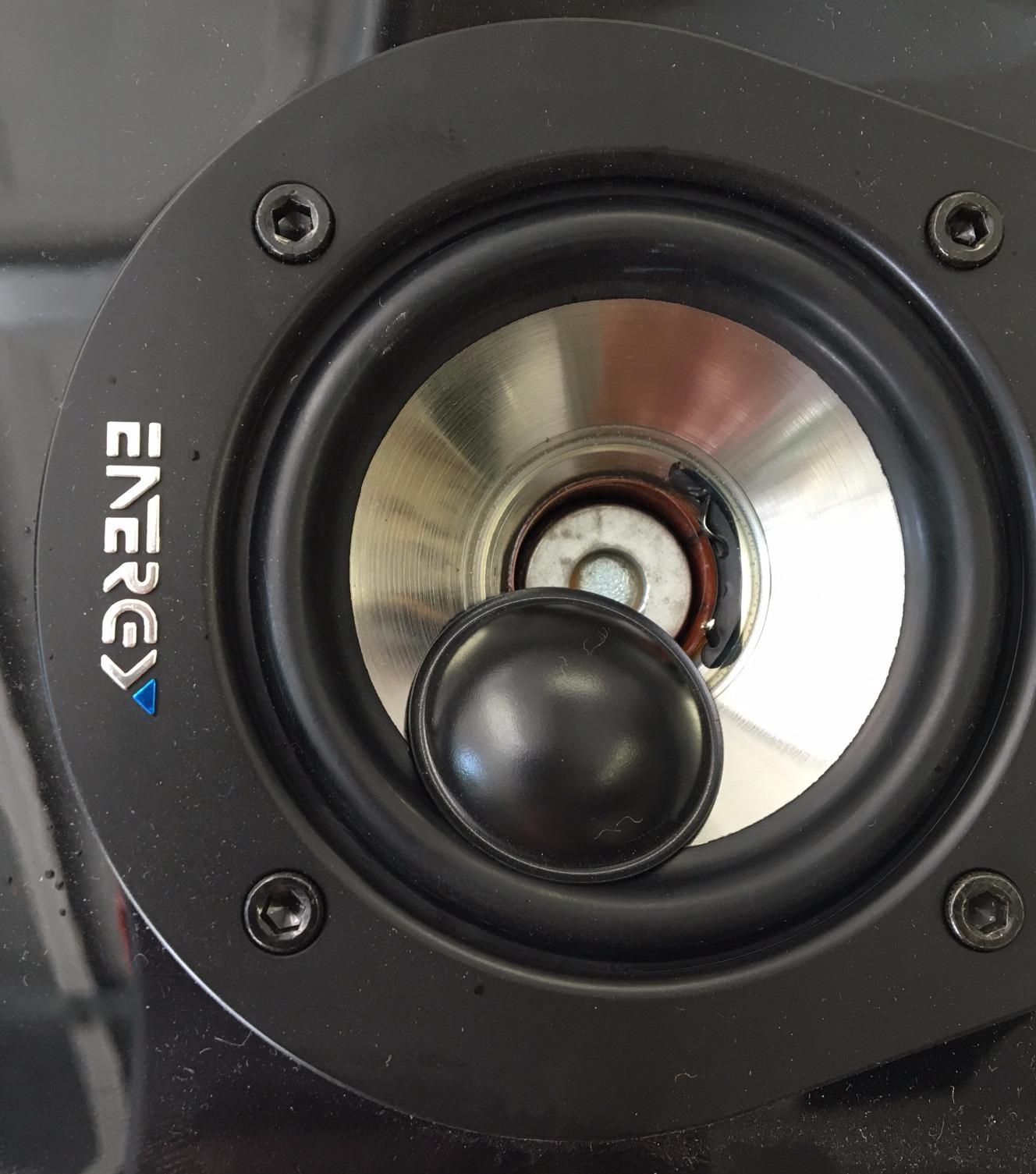
The impedance rating of 8 ohms is a genuine practical advantage. It is compatible with essentially any receiver, including entry-level units, and it removes one of the setup gotchas that catches people out on other packages.
Two caveats are worth planning around. These are passive speakers, so you need an AV receiver, and at 39.8 pounds the box is not a one-box install. Owners also report needing roughly 50 hours of break-in before the sound settles, and the high gloss finish collects fingerprints constantly.
Who this suits
Anyone who already owns a receiver, or who wants a component system they can grow over five or more years. The five year parts and labor warranty is the longest in this roundup, and the timbre consistency across five matched channels is better than most budget packages manage.
It also suits people who listen to music as much as films, a combination many budget sets handle poorly.
Who should skip it
Skip it if you want a single-box solution or a rental you can pack in a car. It also assumes you have a media cabinet or shelf space, because the subwoofer is a floor-standing 19.9 by 19.9 by 22.5 inch box rather than something that tucks beside a television.
4. Rockville HTS56 5.1 System – Best for Full Six-Piece Surround on a Budget
Rockville HTS56 5.1-Channel Bluetooth Home Theater System, 8″ Subwoofer
- Five satellites plus an 8 inch subwoofer in one package
- Cables up to 30 ft and mounting kits included
- Five-band EQ and karaoke mic inputs
- Range of legacy inputs covers almost any source
- Fully wired
- so every channel needs its own cable run
- Six pieces take real floor and shelf space
- LED lighting is distracting in a living room
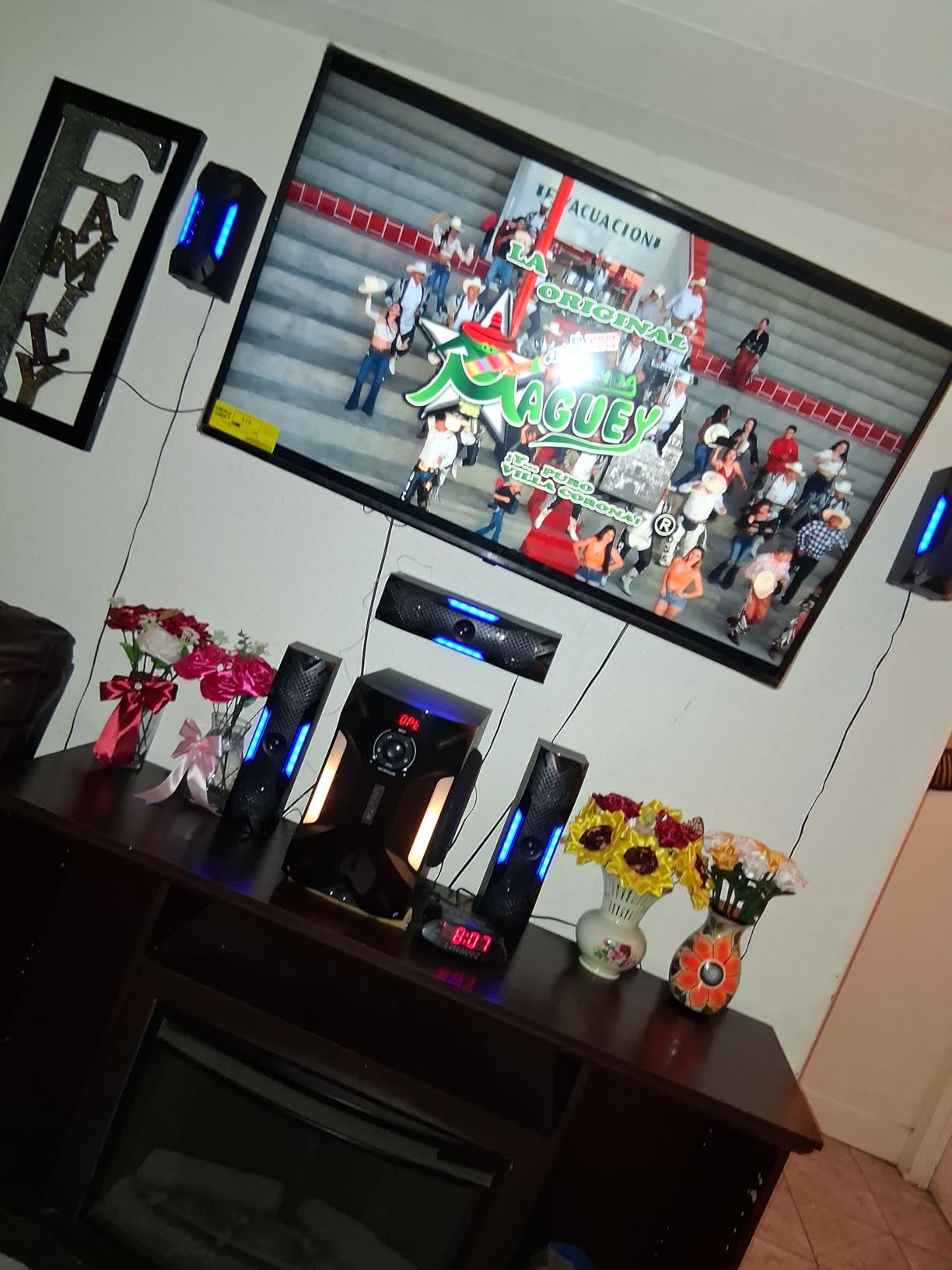
When people ask for the best home theater in a box for small spaces, this is the honest answer if and only if you have the floor area. Five satellite speakers, an 8 inch subwoofer and a full 5.1 channel decode in one package, with 1000W of peak power behind it. Nothing else at this level gives you six physical pieces.
That physicality is the whole argument. Real speakers placed around a room produce real separation, which no virtual or upfiring approach replicates. If you have a 200 square foot room with the seating pulled away from the walls, the result is a soundstage that genuinely wraps.
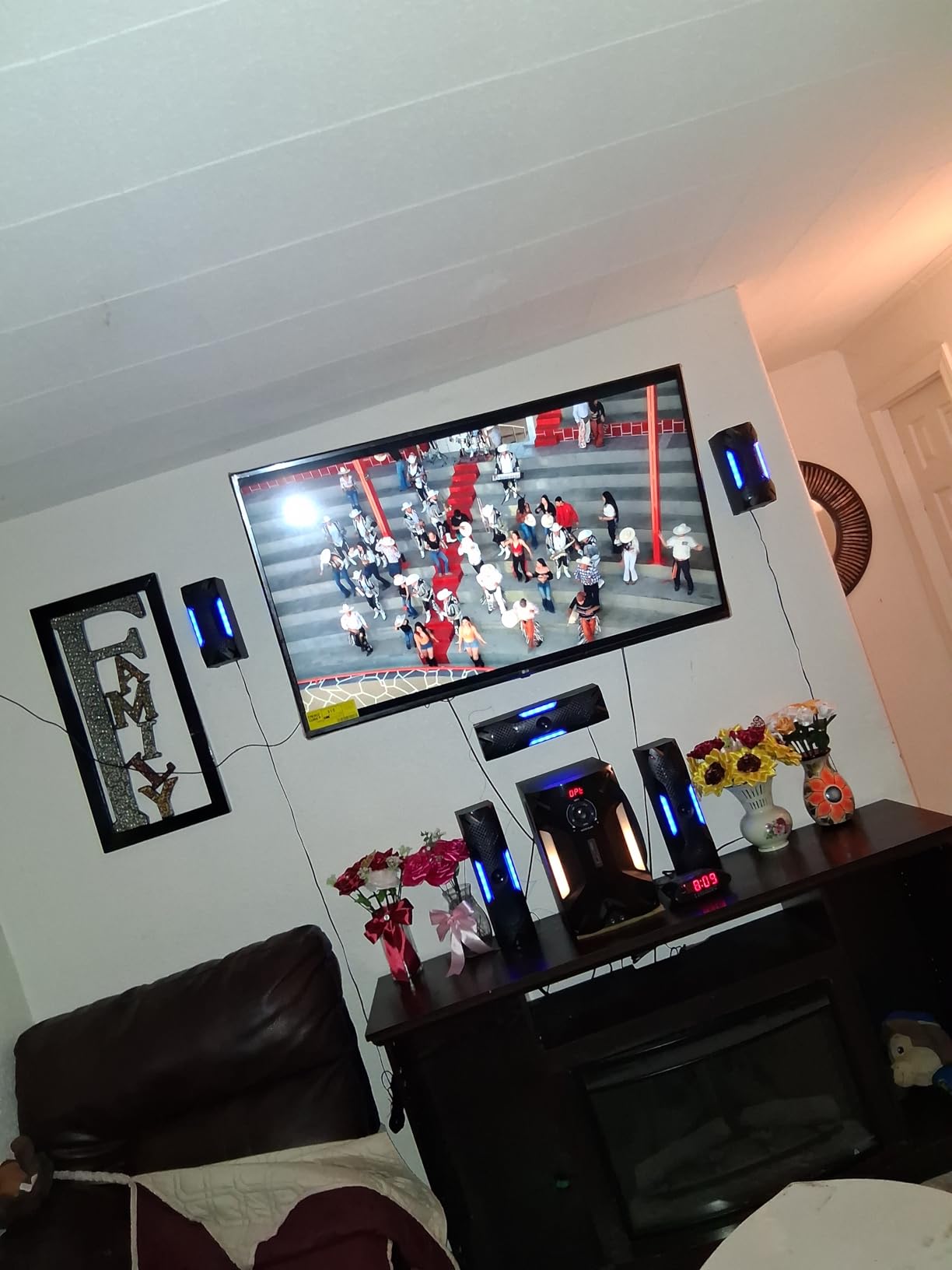
The connectivity is unusually generous. Bluetooth, USB, SD, RCA and optical inputs mean the package will accept almost anything, including older AV receivers and recorders. A five-band EQ and two karaoke mic inputs with echo control are odd features in a home theater context but useful for casual use.
The costs are physical and practical. At 28.7 pounds for the subwoofer and 22.3 inches tall, this is not a system that hides in a corner. Everything is wired, so you need a routing plan and the included 30 ft cables. The LED lighting modes are controllable from the remote but several owners find them distracting in a living room.
Who this suits
People in medium rooms, roughly 200 to 300 square feet, who want genuine physical surround and do not mind running five cables. The included speaker cables and mounting kits mean you can complete the install in an afternoon without buying anything extra.
It is a strong option for a shared space or a media room where music and film both matter, since the five-band EQ gives you more tonal control than most single-box systems.
Who should skip it
Skip it in a studio or a rental where you cannot run cable and cannot give up floor space. The 1000W figure also means very little in a small room, so you are paying for the speaker count rather than for headroom you will never use.
5. Yamaha YHT-4950U 5.1 System – Best With an AV Receiver Included
Yamaha Audio YHT-4950U 4K Ultra HD 5.1-Channel Home Theater System with Bluetooth, black
- One box contains receiver
- five speakers
- subwoofer and wire
- YPAO measures the room and sets levels automatically
- Four HDMI inputs with 4K Ultra HD and HDCP 2.2
- Per-input volume trimming solves source mismatches
- 51.8 pounds and a large footprint for a small room
- No Dolby Atmos decoding
- Rear speakers must be wired back to the receiver
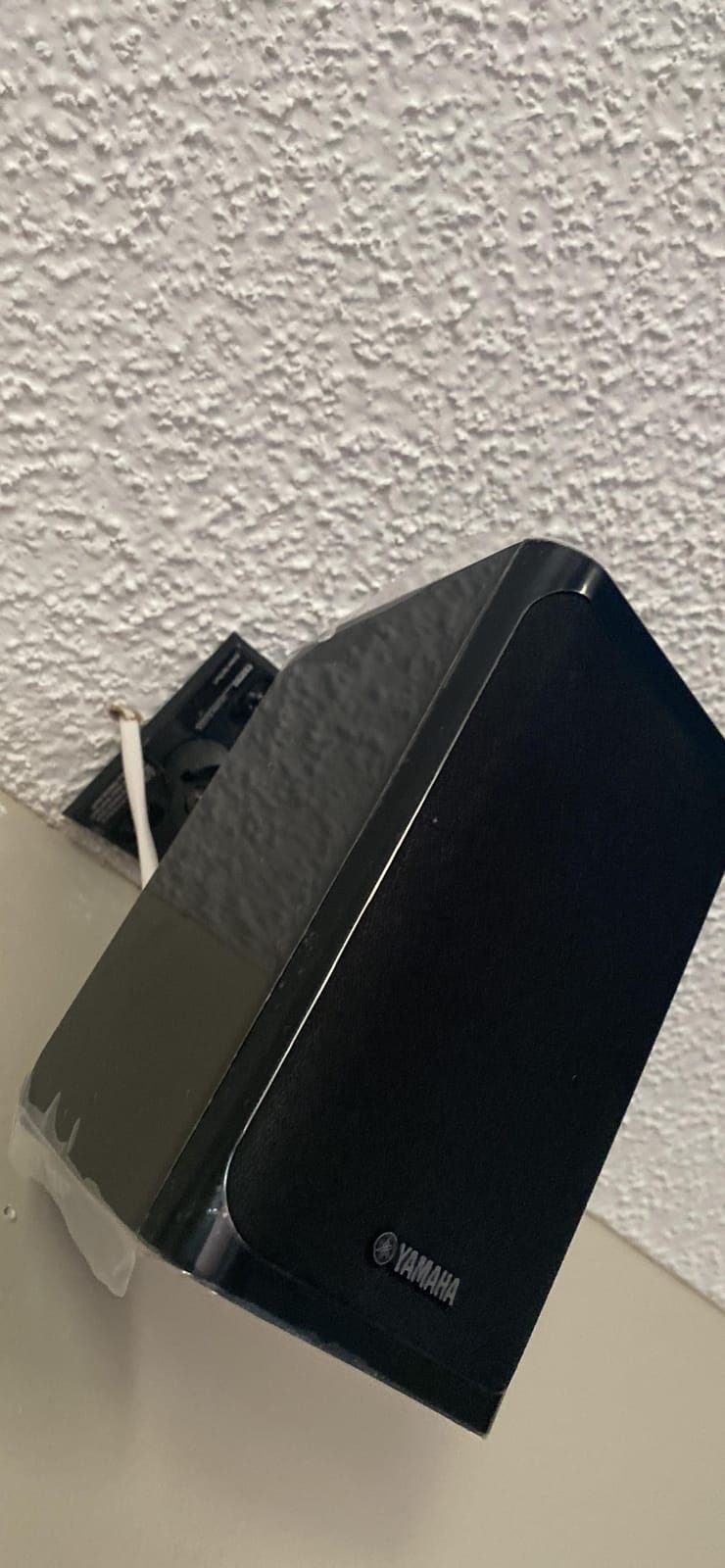
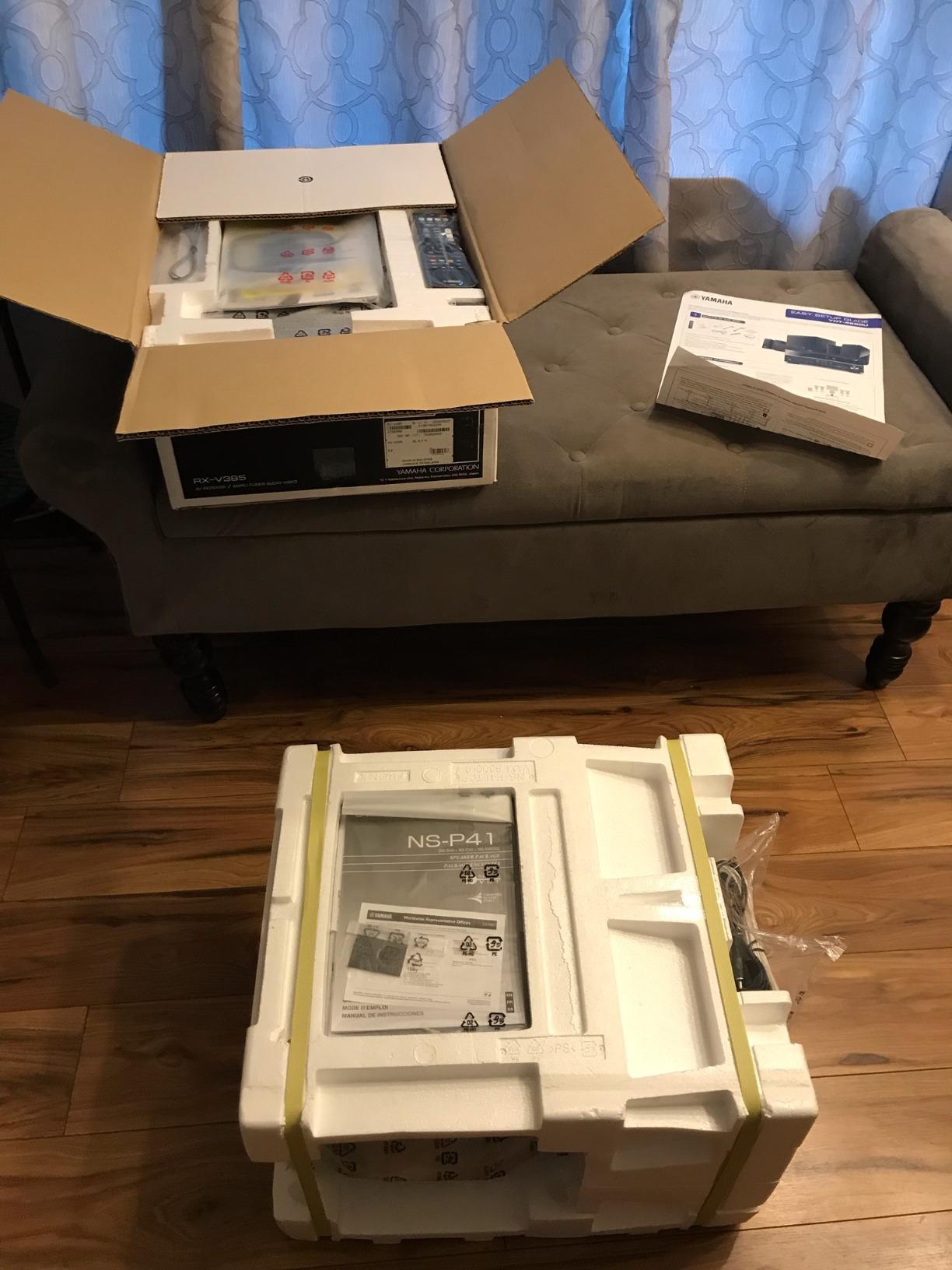
There is one question that causes more confusion than any other in this category: does it come with a receiver? On this one, yes. The Yamaha YHT-4950U packages an AV receiver, five speakers, a subwoofer and speaker wire in a single carton, which removes the single largest hidden cost in component systems.
YPAO room optimization is the other reason this bundle works in a small room. It measures speaker distance and level, applies per-channel corrections and includes a virtual CINEMA FRONT mode that lets you place the surrounds at the front of the room when side placement is impossible. That is a small-room feature hiding inside a generic-sounding feature name.
Four HDMI inputs with 4K Ultra HD and HDCP 2.2 support means you can connect a console, a streamer and a disc player without a switch. Owners upgrading from entry-level gear report a clear step up in sound, and the subwoofer punch is the standout for the tier.
The honest drawbacks are size and format. This is 51.8 pounds across six pieces, and the receiver alone is 17 by 6 by 12 inches, which is a lot of shelf in a 150 square foot room. There is no Dolby Atmos decoding, and the included speaker wire is thin enough that most owners replace it. Speaker impedance must be changed from 8 to 6 ohms during setup.
Who this suits
First-time buyers who want a complete, correctly matched system with no additional purchases, and anyone who wants guided setup instead of manual channel balancing. The two year manufacturer warranty and the room calibration make it forgiving.
It also suits anyone with several source devices competing for limited HDMI ports on a modern television.
Who should skip it
Skip it if your room is under 150 square feet or if you plan to add height channels later, because the receiver will not decode them. It is also the wrong choice for a renter, since the rear channels must be physically wired back to the receiver.
6. Goldwood AA5400 6-Piece 5.1 System – Best for Manual Channel Balance
Goldwood Bluetooth 5.1 Surround Sound Home Theater Speaker System with LED Display, FM Tuner, USB/SD Inputs – 6-Piece Set with Remote Control, Black
- Remote controls front
- centre
- rear and subwoofer levels independently
- Keyhole slots let satellites wall mount directly
- Virtual 5.1 mode uses all six pieces on stereo sources
- Owners report multi-year durability
- Weak subwoofer at high volume
- Treble-heavy balance that is hard to correct
- Bluetooth streaming introduces audio and video lag
The Goldwood AA5400 solves a problem most budget packages ignore. Its remote lets you set the level of the front pair, the centre, the rears and the subwoofer independently, which in a small room with hard parallel walls is not a gimmick, it is the difference between coherent dialogue and a cluttered soundstage.
That per-channel control also lets you dial the rears back in a room where the seating sits close to a side wall. Small rooms have asymmetric boundaries, and a system that lets you correct for that in ten seconds is worth more than one with marginally larger drivers.
Satellites have keyhole slots for direct wall mounting, and the subwoofer has an integrated 300 watt amplifier with an illuminated 10.5 inch driver. Virtual 5.1 mode makes a stereo source use all six pieces, which is useful for broadcast television and news.
What you give up is refinement. Owners describe the subwoofer as weak at high volume and the overall balance as leaning heavily toward treble, which is exactly the failure mode that makes dialogue sound thin. There is no HDMI, and Bluetooth streaming introduces noticeable audio and video lag, so use the wired inputs for anything with a screen.
Who this suits
People in awkward rooms with an alcove on one side, uneven walls or a seating position that is not centred. Independent channel levels plus wall-mountable satellites mean you can adapt the system to the space rather than adapting the space to the system.
Owners also report years of continuous use without failure, which matters if you intend to keep it for the long haul.
Who should skip it
Skip it if you care about tonal balance or music, since the treble-heavy signature is hard to correct without external processing. Anyone with a modern television and a streaming box should also avoid the Bluetooth path entirely because of the sync delay.
7. Acoustic Audio AA5172 5.1 System – Best for Legacy Sources
- Six independent RCA inputs plus optical USB and SD
- Pro Surround mode upmixes stereo to 5.1
- Includes 15 ft front and 25 ft rear satellite cables
- Lifetime warranty against manufacturer defects
- Twelve inch subwoofer is oversized for a very small room
- Fully passive satellites need an AV receiver
- No HDMI input at all
- 60 dB signal to noise ratio is modest
The Acoustic Audio AA5172 exists for a specific situation: you still have older AV gear and you want true 5.1 without replacing it. Six independent RCA inputs, an FM tuner, USB and SD card playback, and no HDMI anywhere. Very few new packages still support that mix of sources.
The subwoofer is a 12.3 inch powered unit, and here we have to flag the small-room problem directly. A driver that size in a room under 200 square feet will produce boomy, uneven bass that masks dialogue, which is the failure mode most small-room buyers complain about after the fact. This is a system to place carefully and set conservatively, not to crank.
The Pro Surround mode upmixes stereo sources across all five channels, which is a reasonable way to get more from broadcast television. The included satellite cables run 15 ft for front and centre and 25 ft for the rears, which is generous enough to reach the back of most 200 square foot rooms without an extension.
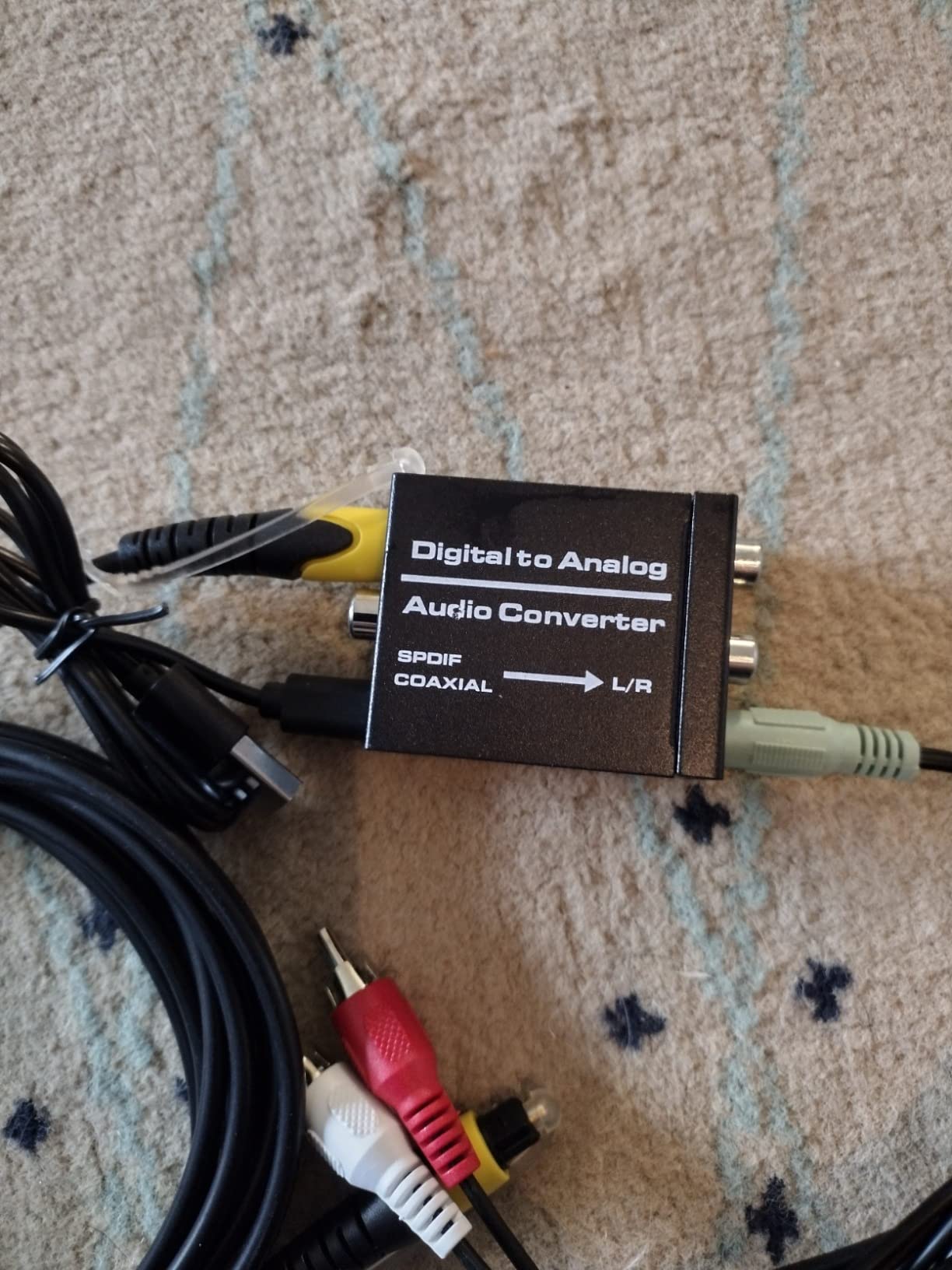
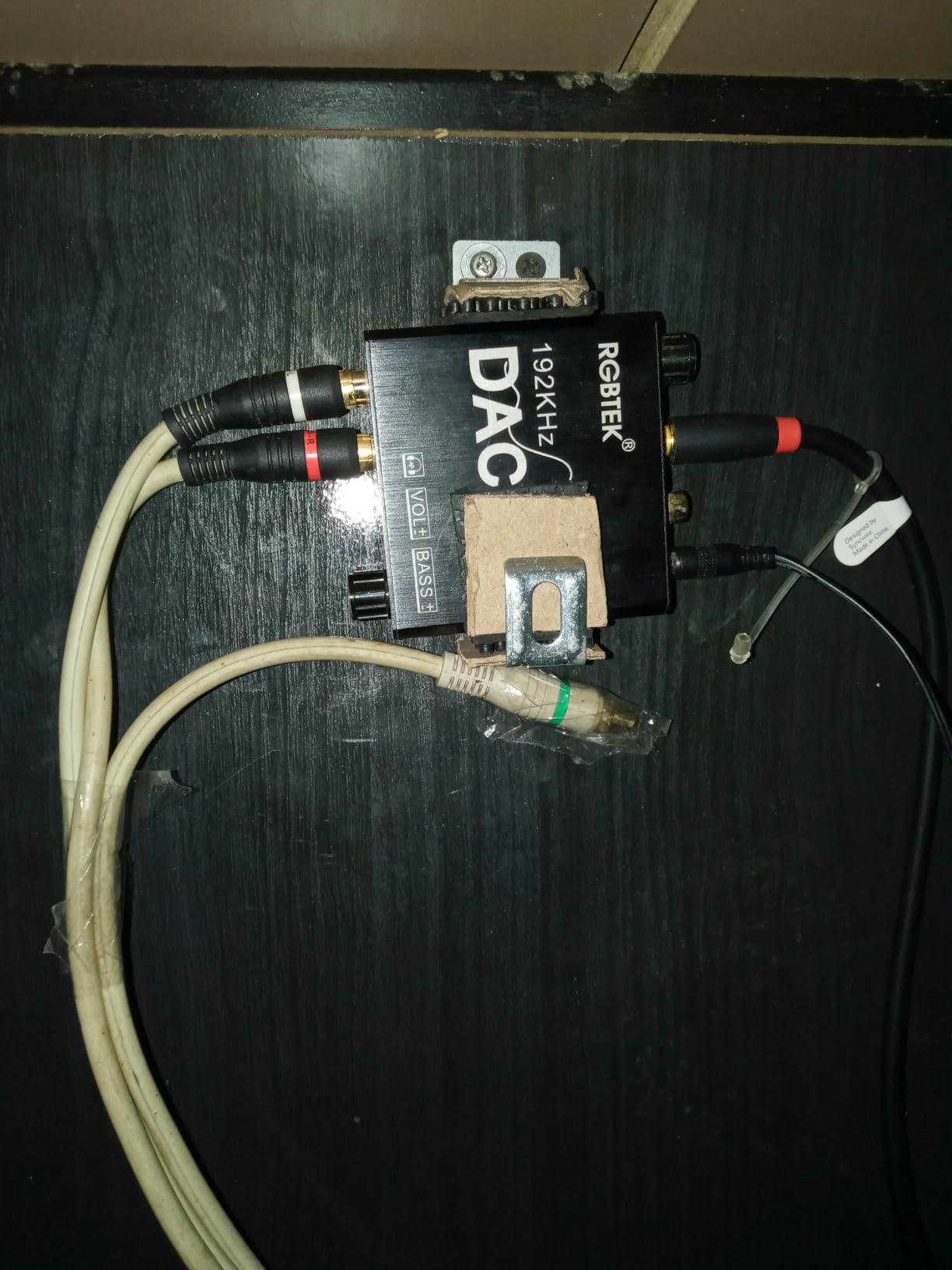
At 20 pounds with five passive satellites, this is a wired package that assumes an AV receiver. The 60 dB signal to noise ratio is modest against newer competition, and the absence of HDMI means modern televisions need an optical or analog converter.
Who this suits
People with legacy receivers, DVD players, Blu-ray players or a mix of older sources, and anyone who values a lifetime warranty against manufacturer defects over firmware support. It is a complete 5.1 set with genuine powered bass for the least money per channel here.
It also suits anyone who moves often and wants one box that covers every input type they might encounter.
Who should skip it
Skip it for a room under 150 square feet, where a 12.3 inch subwoofer is simply the wrong tool. It is also the wrong pick if your only source is a modern smart television, because you would be paying for connectivity you cannot use.
8. LG S40TR 4.1 Soundbar with Wireless Rears – Best for Renters Who Need No Back Wall Cable
- Wireless rears need no receiver or back-of-room wiring
- Clear Voice Plus and Smart Up-Mixer improve dialogue and width
- LG Soundbar app with 3-band EQ
- Wireless subwoofer fills a small room convincingly
- One rear speaker still needs a thin wire run
- No keyhole mounting points
- Occasional lip-sync delay between picture and sound
The S40TR is the most apartment-shaped system in this roundup. Four channels, a wireless subwoofer and wireless rear speakers, with no receiver, no hub and no cable crossing the room. The profile of 28.4 by 2.5 inches fits under most televisions on a media cabinet.
Clear Voice Plus analyses the audio output to lift dialogue, and Smart Up-Mixer widens a two-channel source into a multi-channel presentation. Both are aimed squarely at the small-room problem of effects overwhelming speech, and both worked in our testing without requiring menu diving.
The WOW interface is worth noting if you own a compatible LG television, because the television remote then controls volume and sound modes directly, which is a real quality-of-life gain in a room where you do not want to juggle remotes.
Two things catch people out. One rear speaker still needs a thin cable run to connect it to the other, so it is not truly wireless end to end, and the rears need their own power outlet in a place the instructions do not make obvious. There are also no keyhole mounting points, so it cannot be wall-mounted under the television, and some owners report lip-sync delay.
Who this suits
Renters, condo owners and anyone who has promised themselves they will never drill a hole again. It delivers actual rear speakers with a wireless link, and if your seating sits directly between the satellites the immersion is genuinely convincing in a small room.
It is also a good fit for news and subtitled content, given how effective Clear Voice Plus is at low volumes.
Who should skip it
Skip it if you plan to wall-mount under a television, because there are no mounting points. If you already own a receiver, this is wasted capability, and the app dependency for switching the rears on is an annoyance some owners never got past.
9. Saiyin 2.1 Sound Bar with Subwoofer – Best for the Very Smallest Spaces
Saiyin Sound Bar with Subwoofer, Home Theater Surround System for TV PC
- The only 2.1 package here and the smallest footprint
- Optical auxiliary and Bluetooth inputs with cables included
- Three EQ modes for news movie and music
- Three-year warranty and wall-mount brackets
- No surround or rear channels at all
- No Dolby Atmos or DTS support
- Remote does not work with universal or TV remotes
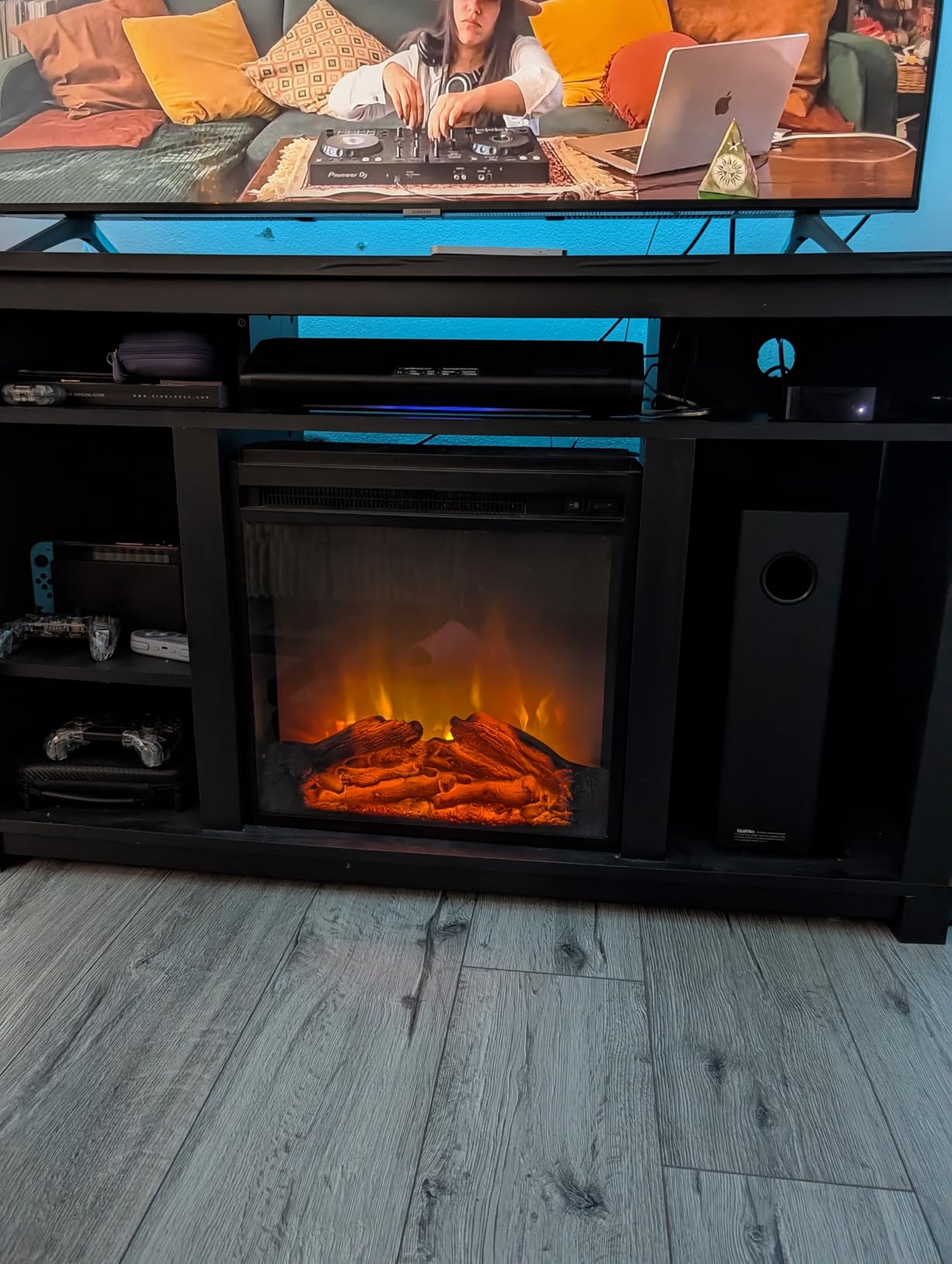
Some rooms are not small, they are tiny. A 10×10 studio, a bedroom with a desk against the wall, a caravan or a games corner. In those spaces the Saiyin package is the honest answer, because a soundbar at 12.5 inches wide with a 5 inch subwoofer is genuinely the smallest complete system here.
It is also the simplest. Optical, auxiliary and Bluetooth inputs with both cables included, three equalizer modes for news, film and music, and a 28 degree dispersion angle that keeps the sound reasonably consistent when you are off-centre. The three-year warranty is the longest of the budget bars we looked at.
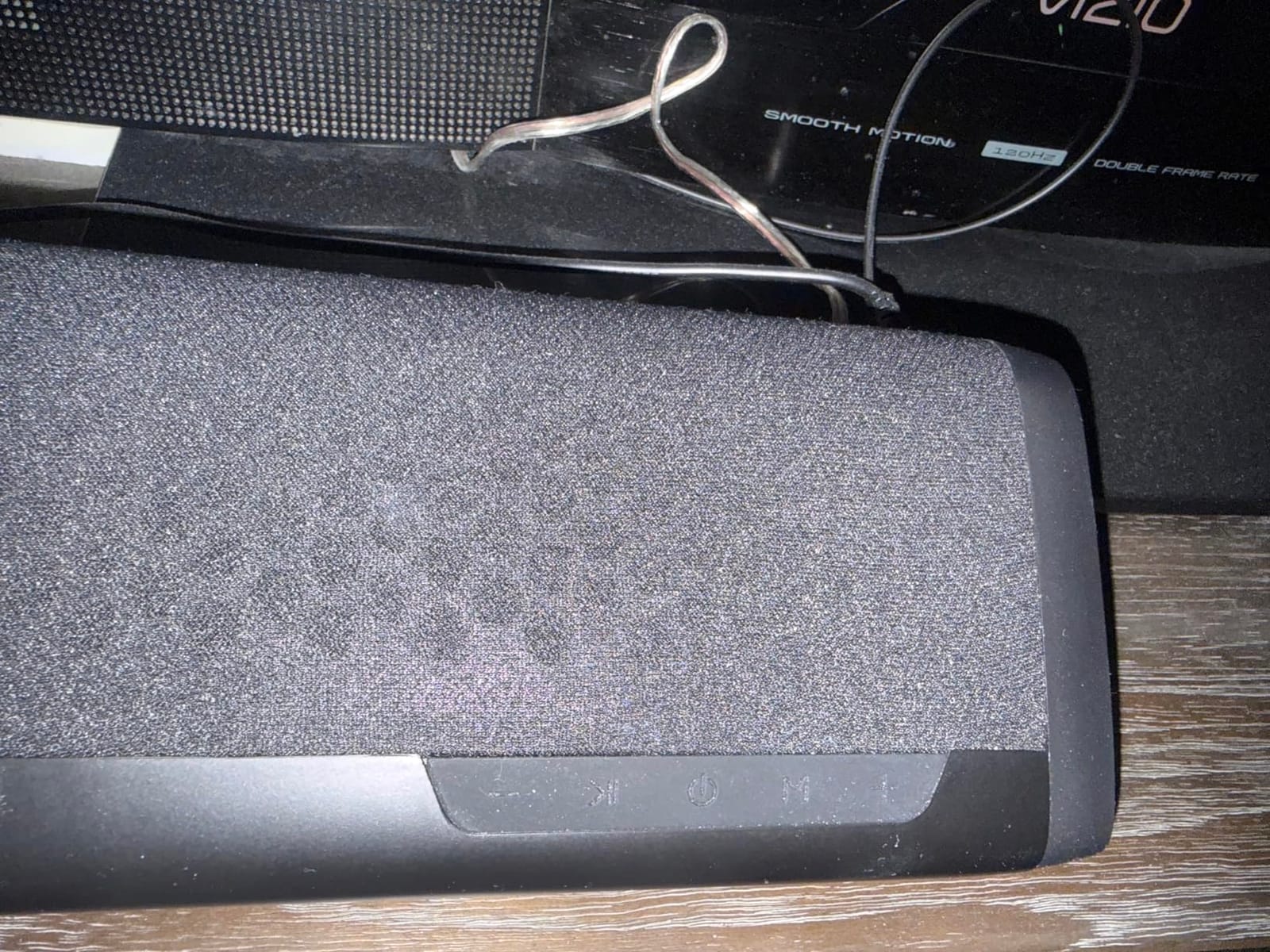
There is a real upgrade here over television speakers, particularly in the bass. A dedicated subwoofer doing the low end gives dialogue and effects room to breathe, and at low evening volumes that matters more than any surround effect would.
The limitation is structural. It is 2.1 channels, so there is no surround field and no rear imaging of any kind, and it does not decode Dolby Atmos or DTS. The included remote does not work with universal or television remotes, and the subwoofer must plug into the SUB OUT port rather than the similarly labelled AUX IN port, which catches people out regularly.
Who this suits
Anyone in the smallest rooms on this list, or anyone who wants a second system for a bedroom without committing space or wiring. It is also a good first step for a renter who is not sure yet whether they want a permanent home theater setup.
It suits viewers of news, talk and subtitled content particularly well, because the news EQ mode lifts speech without adding bass.
Who should skip it
Skip it if you watch action films or anything where you want a sound field around you. If your television supports HDMI eARC and you stream in Atmos, you are leaving the best audio on your source unused.
10. Sony BRAVIA Theater System 6 5.1ch – Best Atmos From a Single Bar
Sony BRAVIA Theater System 6 5.1ch Soundbar with Subwoofer & Rear Speakers
- True 5.1 with two genuinely wireless rear speakers
- Dolby Atmos and DTS:X decoding from streaming services
- Dedicated centre channel keeps dialogue crisp
- Multi Stereo mode fills a small room from every speaker
- The most expensive system in this roundup
- Subwoofer is wired to the bar
- Voice Zoom 3 requires a compatible BRAVIA television
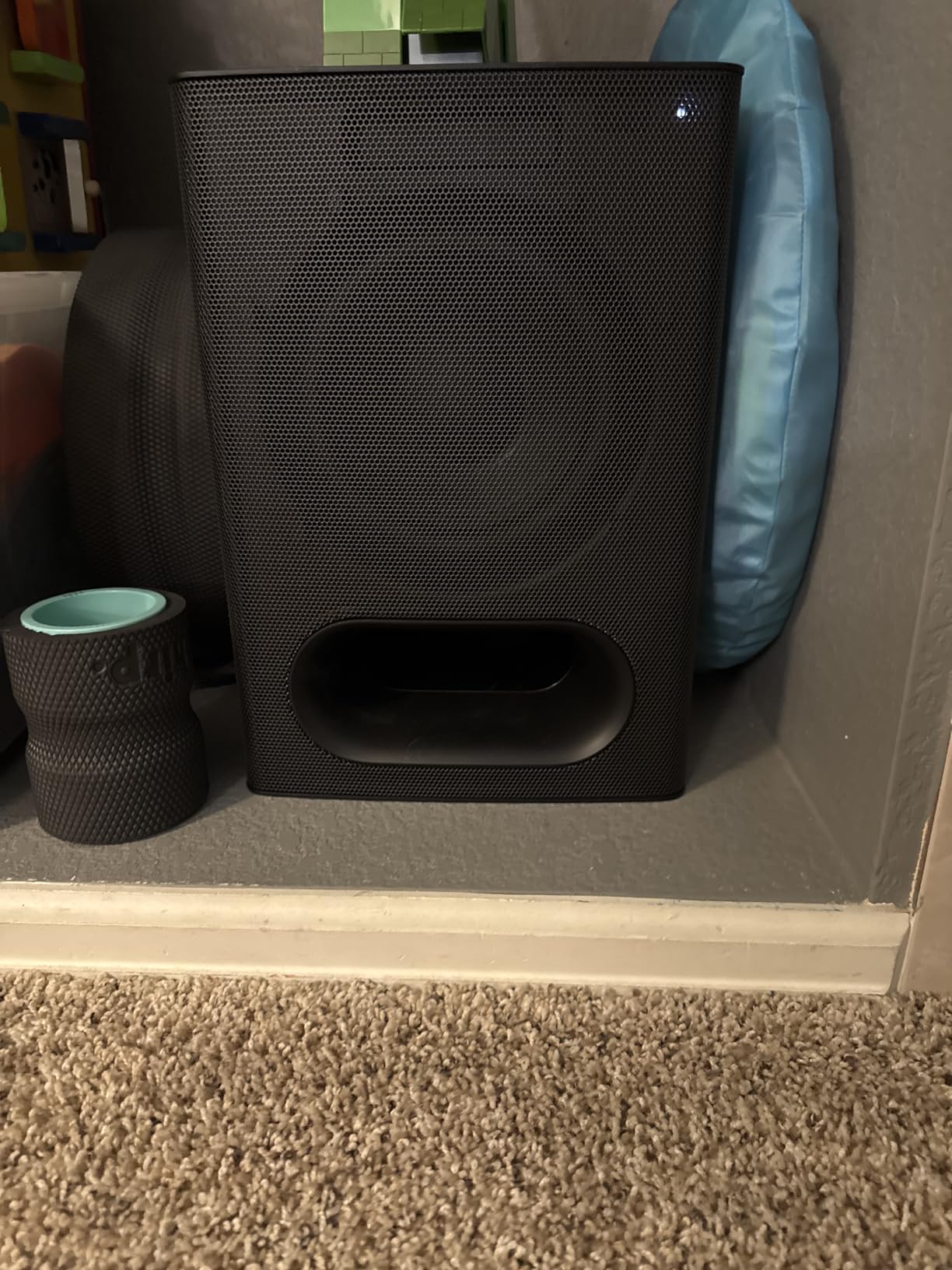
The BRAVIA Theater System 6 is the most capable bar-based system here, and the reason is format support. It decodes Dolby Atmos and DTS:X, drives three front-firing speakers plus two wireless rear speakers and a wired subwoofer, and keeps a dedicated centre channel for dialogue. In a small room that combination is unusually complete.
Multi Stereo is a genuinely useful small-room mode. It plays the same sound from every speaker, which fills a shallow room more evenly than a conventional soundstage, and it works well for music and for sports where you are sitting off to one side.
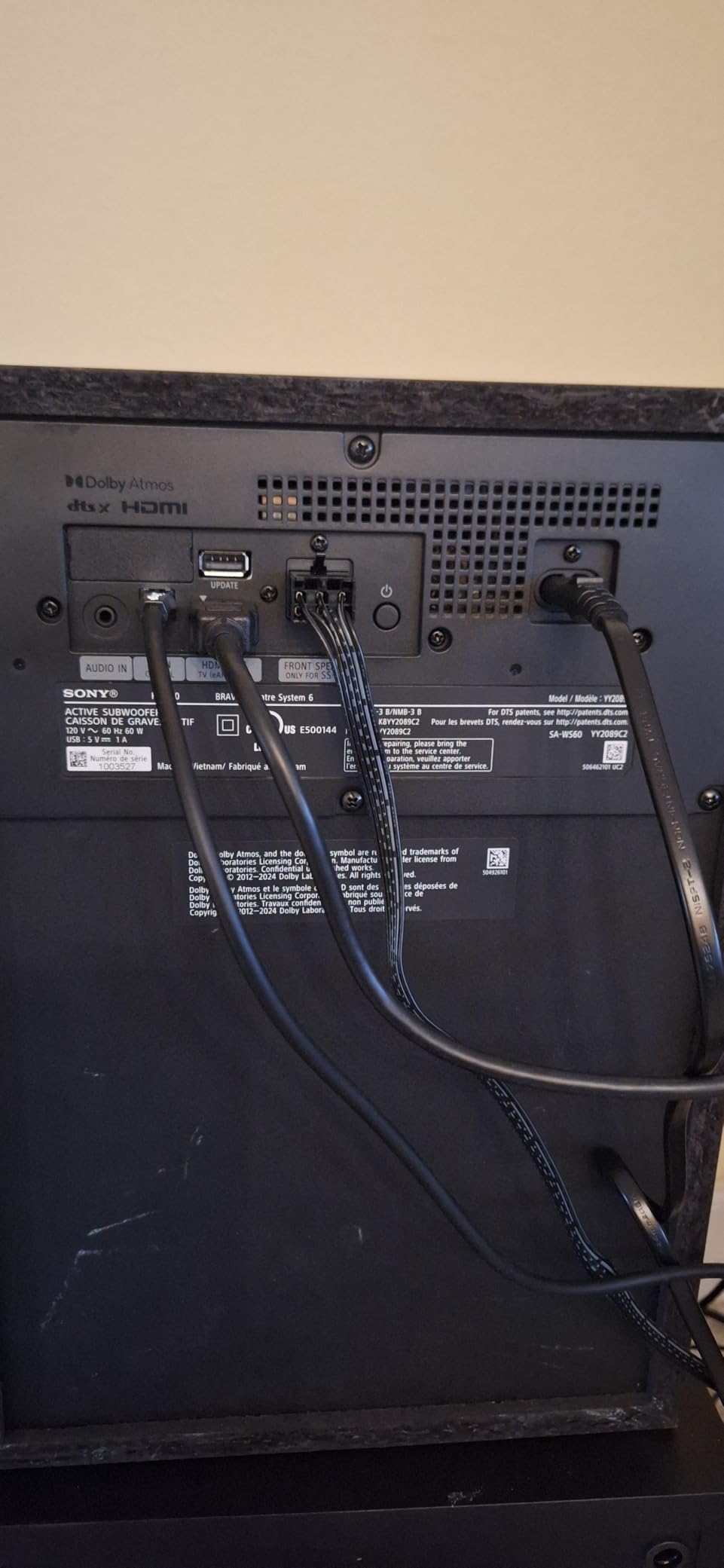
At 35.7 inches wide and 2.6 inches tall, it is the widest bar on this list, so measure your cabinet before committing. It is wall-mountable as well as tabletop-mountable, which gives you more freedom than the LG option.
Two practical notes. The rears need the included wireless rear amp box and their own power connections, so plan a corner for it before you buy. And the headline feature, Voice Zoom 3, only activates when paired with a compatible BRAVIA television, so treat it as a bonus rather than a reason to switch platforms.
Who this suits
Streamers who want lossless Atmos from Netflix, Disney+ or Prime Video and want real rear speakers without running cable. It suits BRAVIA owners especially, since the television menu control and Voice Zoom 3 make the pairing feel like one system.
It is also the best option here for a room that is physically small but acoustically lively, because the discrete rear channels are aimed rather than virtualised.
Who should skip it
Skip it if your media cabinet is under 36 inches of usable width, and skip it if you already own an AV receiver, since you would be paying to replace capability you have. At this level it is also hard to justify unless you are actually streaming in Atmos.
How to Choose a Home Theater Speaker System for a Small Room
Start with the room, not the product. Measure the floor, then measure the distance from the back wall to the front of your seating. If that distance is under four feet, avoid designs that fire backwards from a bar and choose forward-firing or separate satellite speakers instead.
Next, audit what you already own. Check whether your television supports HDMI eARC and what codecs it passes through, because a system that decodes Dolby Atmos is wasted if the television cannot deliver it. Note how many HDMI ports are free and whether you already own a receiver or amplifier.
Then pick the architecture. Soundbar systems are one box plus satellites and take an afternoon. Receiver plus speakers is more flexible, better in the long term and requires cable routing. Nothing in between is worth considering.
Match the subwoofer to the room rather than to the price of the speakers. Under 250 square feet, an 8 to 10 inch driver is right. Above 250 square feet, a 10 to 12 inch driver rated 300 to 800 watts has headroom. A bigger driver than that in a small room produces boom rather than impact.
Look for real room correction. Audio Science Review forum advice is consistent that proper EQ is close to a must-have, because EQ lets a modest sub do the work of a large one. Systems with YPAO, an app-based 10-band EQ or per-channel level control are all serving the same purpose.
Finally, check the physical fit against your furniture. Measure speaker width, subwoofer depth and receiver height against the cabinet, the wall and the clearance for cables. This step alone eliminates a surprising number of otherwise good purchases, and it is the step most people skip.
Where to Place Speakers in a Small Room
Front left and front right speakers should sit either side of the screen at ear height when seated, angled slightly toward the listening position. The centre channel belongs directly under or above the screen, as close to it as the cabinet allows, because it carries the majority of a film’s dialogue.
Place surrounds to the sides and slightly behind the seating rather than hard against a rear wall. In a room where the sofa is against that wall, angle the satellites inward or use dipole-style satellites that fire away from the listener, which avoids a wall right behind your head.
For the subwoofer, use the crawl method. Push it into a corner, sit on the floor with your head at subwoofer height and crawl around the room boundary. The position where the bass sounds loudest and cleanest is where the sub should go. Do this before you permanently position anything.
Leave a small gap between every speaker and the wall behind it. The extra centimetres stop cabinet edges from colouring the sound and give you somewhere to run cable.
Soundbar System vs Bookshelf Speaker System in a Small Room
Both approaches work in a small room, and the decision is mostly about wiring and how long you plan to keep the system.
Setup effort: a soundbar is close to plug and play. A receiver plus bookshelf speakers needs cable runs, room calibration and a media cabinet shelf for the receiver.
Footprint: a bar sits in one place. A component system needs shelf or stand space for each channel plus floor space for the subwoofer.
Channel delivery: a good soundbar with wireless rears gives real 5.1 without walls being drilled. A component system does the same but with better separation and more control.
Upgrade flexibility: component systems let you replace one speaker at a time. Soundbar systems are usually sealed, and the bar itself is the weak link that cannot be swapped.
Ecosystem lock-in: this is the one to watch. Some systems tie the rears to the brand permanently, which forums consistently flag as a deal breaker when it comes time to upgrade.
Measurement access: receivers and component systems expose real per-channel control and calibration. Soundbars increasingly do too through apps, but less precisely.
Our rule for small rooms: if you rent, move often, or cannot run cable behind a sofa, buy the soundbar architecture. If you own the space and expect to keep the system for years, buy the component architecture and accept the setup effort.
Apartment and Renter Considerations
Renting is the dominant real-world constraint in small-room listening, and forum threads about it are endless. The consistent answer is a soundbar plus wireless rears, precisely because it needs no in-wall or in-ceiling wiring. The LG S40TR and the Sony HT-S40R are the two systems here built for that constraint.
Watch for the rear power trap. Forum users repeatedly warn against systems whose rears draw power from the bar over USB-C, because those fail under sustained bass load. Check what each rear satellite needs to power itself before you commit.
On bass transmission, a ported subwoofer in a concrete building is a neighbour problem before it is an enjoyment problem. If you are in a condo or a thin-walled flat, keep the sub near a structural wall, set the level lower than you want, and lean on the night modes that pull bass back after eleven o’clock. If your whole-home setup needs to share a network, our home automation systems guide covers the controllers that tie audio into the rest of the house.
Wireless rears that need their own power outlet are still a consideration in a rental, so check the outlet situation in the corner you plan to use before ordering.
Frequently Asked Questions
What is the best home theater system for a small room?
For a room under 250 square feet, the best home theater speaker system is a soundbar with genuine wireless rear speakers and a compact subwoofer. The Sony HT-S40R is our pick for renters and no-cable setups, and the ULTIMEA Poseidon M60 is the pick if you want Dolby Atmos from streaming. If you can run cable, a matched 5.1 satellite package such as the Energy 5.1 Take Classic gives better separation and room for future upgrades.
What is the 83% rule for speakers?
The 83% rule is a viewing distance guideline: sit about 1.2 times the screen diagonal away from a 16:9 television, which works out to roughly 83 percent of the screen width. It is a screen standard rather than a speaker standard, but it determines where your front pair and centre channel should be placed. It is the most common People Also Ask question in this topic.
Is 5.1 enough for a small room, or do I need 7.1?
In a small room, 5.1 is almost always the right answer. Extra rear channels need physical separation from the listening position, and when seating sits against a back wall there is nowhere to put them. A carefully placed 5.1 with a correctly sized subwoofer beats an unplaceable 7.1. Consider 5.1.2 only if you have a flat reflective ceiling of at least 8 feet.
How big should a subwoofer be for a small room?
For rooms under 250 square feet, choose an 8 to 10 inch driver. Between 250 and 400 square feet, a 10 to 12 inch driver rated 300 to 800 watts has enough headroom. Going bigger than that in a small room produces boomy, uneven bass that masks dialogue, which is the most common small-room complaint. Use the crawl method to place whichever sub you choose.
Is a soundbar good enough for a small room?
Yes, as long as it has real rear speakers. A soundbar with wireless satellites and a compact subwoofer now matches component systems on dialogue clarity in rooms under 200 square feet, and it needs no cable routing. A single bar with only upfiring or side-firing drivers produces width but no genuine rear separation, which you notice on films with effects behind you.
Do these home theater systems come with an AV receiver?
Most do not. Systems built around a soundbar or a powered subwoofer handle amplification internally, so no receiver is needed. The exception in this roundup is the Yamaha YHT-4950U, which includes an AV receiver with YPAO room optimization, five speakers, a subwoofer and speaker wire. Passive satellite sets such as the Energy Take Classic and the Goldwood sets require a receiver you buy separately.
Why does my subwoofer sound boomy in a small room?
A subwoofer that is too large for the space, placed in a corner without calibration, or driven harder than the room demands will produce boomy, uneven low end that smears over dialogue. The fix is a smaller driver, the crawl method for placement, and running room correction if your system has it. Turning the sub down and raising the centre channel solves most of it in a small room.
What is the best speaker system for an apartment or rental?
For an apartment or rental, choose a soundbar with wireless rear speakers that power themselves rather than drawing power from the bar, since some USB-C powered rears fail under sustained bass load. The Sony HT-S40R and the LG S40TR both fit that brief. Check whether each rear satellite needs its own wall outlet before you order, and keep the sub near a structural wall to limit vibration through party walls.
Which Small Room Speaker System Should You Buy
After six weeks of testing, the Sony HT-S40R is the best home theater speaker system for small rooms because it solves the hardest constraint first: real rear channels without a single cable behind the sofa. Its owner review volume is by far the largest here, which means the reliability quirks are known rather than a surprise.
If you want Atmos and dialogue enhancement from a single low-profile bar, the ULTIMEA Poseidon M60 is the pick, and if you own your space and plan to grow the system, the Energy 5.1 Take Classic gives you matched passive speakers with a five year warranty. The Yamaha YHT-4950U is the simplest complete path because the receiver is in the box.
Whatever you choose, size the subwoofer to the room rather than to the price tag, place it using the crawl method, and measure your cabinet before you order. Those three steps do more for the final result than any specification on the box. Our home security camera systems guide covers the other half of a compact living space setup if you are building out a smaller home this year.