
Every runner who has watched their watch lose GPS signal halfway up a forested climb already knows why trail running deserves its own buying guide. A trail watch has to hold a lock under tree cover and canyon walls, record elevation gain accurately, survive a full day of moving, and stay comfortable through hour six of a 100-miler. Most running watches are sold on road metrics that simply do not decide the outcome out there.
Our team spent weeks putting 12 of the best GPS watches for trail running through the criteria that actually matter on dirt: battery hours in GPS mode separated from battery hours in smartwatch mode, multi-band or dual-frequency reception, the difference between breadcrumb lines and full-color topographic maps, case size on a small wrist, and whether the watch survives creek crossings. The result is a list that deliberately ignores road-running fashion and ranks on trail fitness.
Short version: the GPS basics worth knowing matter here more than marketing language, and the watches below are scored on them.
Table of Contents
Top 3 Trail Running GPS Watches (October 2026)
These three cover the widest range of trail use. The KOSPET Tank T4 is the rugged all-rounder, the Garmin Forerunner 965 is the navigation and training-data benchmark, and the COROS PACE 3 is the ultralight you would pack for a fast-hiked ultra.

KOSPET Tank T4
- Dual-band GNSS with offline maps
- 10ATM and IP69K sealing
- 22 hours GPS mode
- Inox 360 stainless steel case
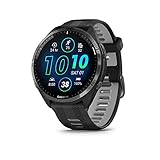
Garmin Forerunner 965
- Full-color onboard topo maps
- Multi-band GPS
- 31 hours GPS mode
- 53g titanium bezel

COROS PACE 3
- 30g with nylon band
- 38 hours continuous GPS
- Dual-frequency GPS
- Trail run and ski modes
Best GPS Watches for Trail Running at a Glance (October 2026)
All 12 watches in one view. Every battery figure below is manufacturer-stated in the relevant tracking mode, not the much friendlier smartwatch number.
| Product | Specifications | Action |
|---|---|---|
| KOSPET Tank T4 |
|
Check Latest Price |
 COROS PACE Pro COROS PACE Pro |
|
Check Latest Price |
 Garmin Forerunner 265 Garmin Forerunner 265 |
|
Check Latest Price |
 Suunto 9 Peak Pro Suunto 9 Peak Pro |
|
Check Latest Price |
| Garmin Forerunner 965 |
|
Check Latest Price |
| COROS PACE 3 |
|
Check Latest Price |
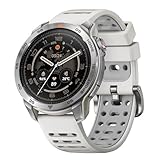 mibro GS Pro2 mibro GS Pro2 |
|
Check Latest Price |
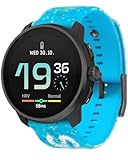 Suunto Race S Suunto Race S |
|
Check Latest Price |
 Polar Grit X Pro Polar Grit X Pro |
|
Check Latest Price |
 Suunto Run Suunto Run |
|
Check Latest Price |
 Polar Vantage M3 Polar Vantage M3 |
|
Check Latest Price |
 Garmin Instinct 3 AMOLED 45mm Garmin Instinct 3 AMOLED 45mm |
|
Check Latest Price |
1. KOSPET Tank T4: the steel-built dual-band watch with offline maps
KOSPET Tank T4 Rugged Smart Watch, GPS/Offline Maps, 10ATM/IP69K Waterproof
- Dual-band GNSS with offline maps and route planning
- Inox 360 Shield stainless steel case with 10ATM and IP69K sealing
- 22 hours GPS mode and up to 15 days typical use
- Large 1000 nit AMOLED with Gorilla 9H glass
- Built-in walkie-talkie
- Third-party app ecosystem and training analytics are less mature than the big brands
- Thinner owner feedback base than established running-watch brands
- Sport profiles tuned for general outdoor use rather than ultra-trail detail
Of everything we tested, the KOSPET Tank T4 is the one that made us most reconsider our assumptions about what a trail watch needs. It is a steel-bodied watch rated 10ATM and IP69K, and it runs dual-band GNSS with downloadable offline maps. That combination is normally associated with watches costing several times more.
The 1.43-inch AMOLED runs at 1000 nits, which is bright enough to read on a shaded slope at midday. We found the touch response acceptable for scrolling a route, though on steep technical singletrack the watch is quicker to follow as a glance-at-the-wrist device than a map-review tool.
Battery is the headline: 22 hours in GPS mode and up to 15 days of typical use from a 500 mAh cell, with a two-hour charge. For a 50-miler that is comfortable headroom, and for a genuine multi-day effort you would still plan a mid-race charge. Reviewer sentiment backs the endurance claim, with roughly 60% five-star ratings across more than 1500 reviews.
What you give up is depth of analysis. The in-house Apexmove app handles Strava sync and basics, but it does not produce the training-load, recovery-time or race-prediction modelling that Garmin and Polar generate. Sport profiles number 23 dedicated modes plus 160 further training modes, which is generous on paper and less relevant in practice for a runner who only needs a trail profile.
The 6-axis gyroscope handles orientation and acceleration, and the 4PD sensor covers SpO2, sleep, stress and cycle tracking. The 22mm band width is standard, so third-party strap swaps are easy. The Inox 360 Shield body carries 20 US military-standard certifications, which is why we rated it to 148 feet for freediving-level water handling.
Where the Tank T4 fits your training
This is the watch for a runner whose local trails are unmarked, who crosses water regularly, or who wants a phone-free setup that still shows a route line. The offline map download means you can scout a route once and leave the phone in the pack, which matters more on a long solo day than any notification feature.
The built-in walkie-talkie is genuinely useful for a partner or pacer on the same channel, and the 10ATM plus IP69K rating means you can run it in sustained rain, snow and creek crossings without thinking about it.
Where the Tank T4 disappoints
If your training is structured around heart-rate zones, VO2 max trends or load balancing, the analysis layer here is thinner than the ecosystem on a Garmin or a Polar. The watch records well; it advises less.
Because the app ecosystem is young, long-term firmware support and community data export are less certain than the established platforms. If you plan to analyse every run in a desktop tool for a decade, weigh that carefully. Reviewers also flag the sport profiles as broad rather than trail-specific.
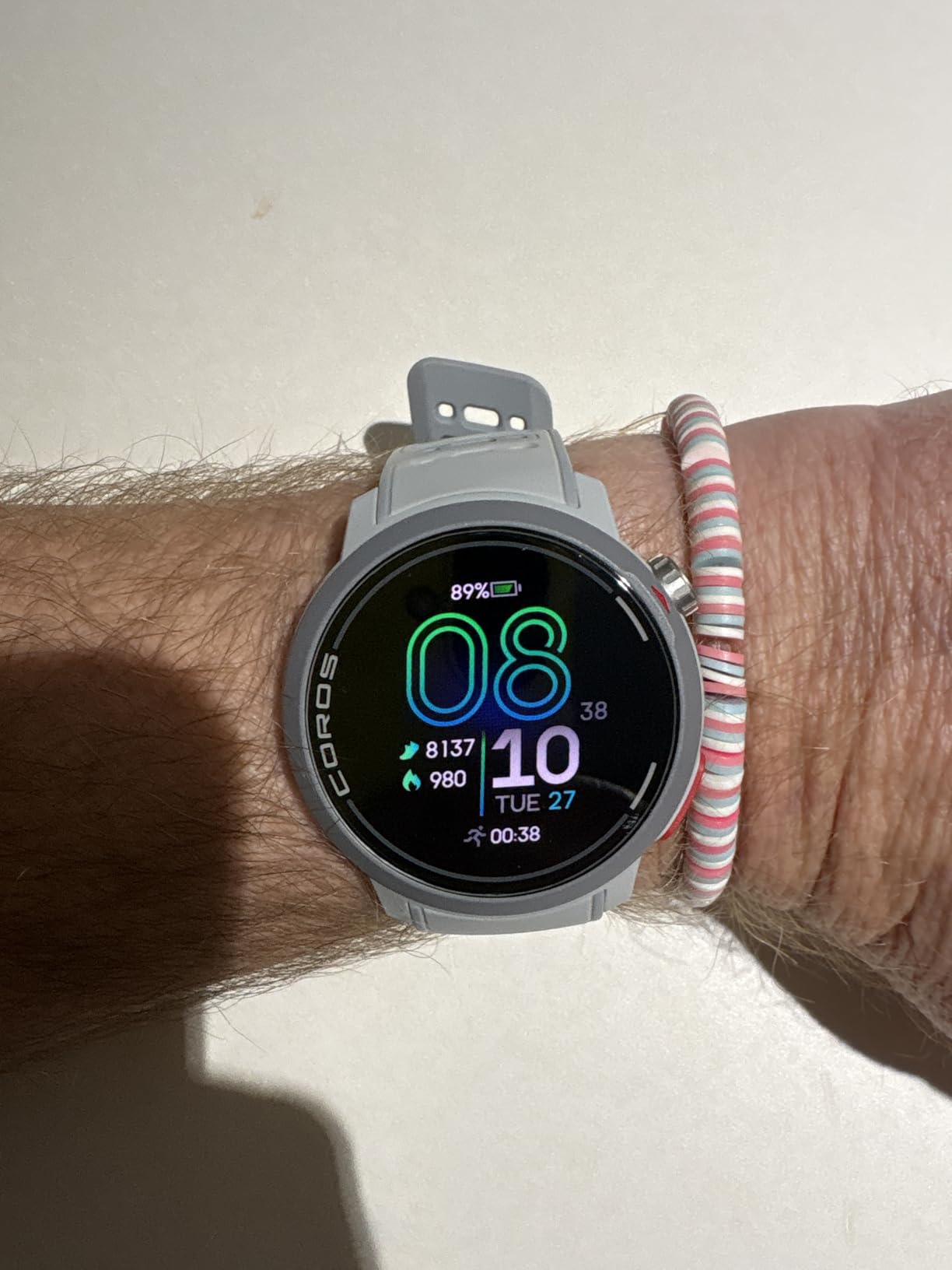
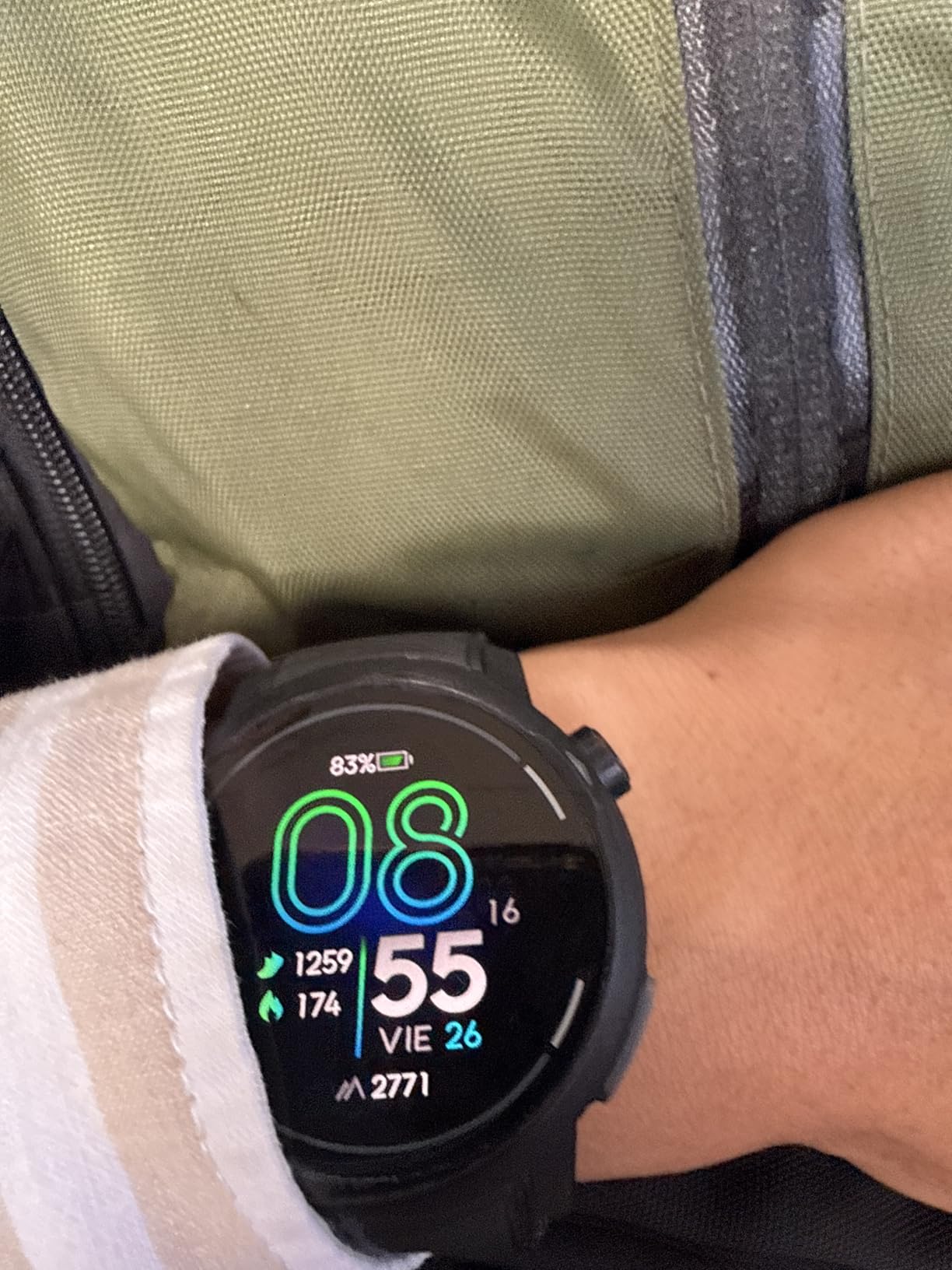
2. COROS PACE Pro: 31 hours of dual-frequency GPS at 49 grams
- 31 hours of battery with dual-frequency GPS enabled
- 4.6 star rating with 84% five-star across roughly 879 reviews
- Topographic route planner with offline maps and turn-by-turn navigation
- Always-on 1500 nit AMOLED for trail visibility
- Light 49g body with a new satellite chipset
- The 1.3-inch screen feels cramped for reviewing long routes
- Ecosystem and third-party app integration narrower than Garmin's
- Ultra-trail specific features are limited next to dedicated adventure watches
The PACE Pro is the watch we recommend to a runner who wants a serious GPS watch with real navigation and does not want to spend flagship money. The new satellite chipset paired with 31 hours of dual-frequency battery is the spec sheet that changes how you plan an ultra.
In practice the 1500-nit always-on AMOLED is the brightest panel in this group. We could read pace and grade data on a south-facing ridge with the sun behind us without triggering the backlight, which is not true of the transflective and MIP screens in this roundup.
The route planner supports topographic and landscape maps with turn-by-turn prompts, so you get a mapped line rather than a bare breadcrumb. It is not full topographic map browsing, but it covers the “will I get lost” question for most trail runners who are not crossing true wilderness.
Battery splits into 38 hours of outdoor use and 31 hours with dual-frequency GPS active, with 20 days in normal use. The processor claims more than twice the performance of the previous generation and three times the zoom speed, which shows up as less lag when scrolling through long activities.
The 22mm silicone band covers wrists from 130 to 220mm, so small-wrist owners can usually get a secure fit. USB-C charging with the keychain adapter is a small quality-of-life win over proprietary cables.
Where the PACE Pro fits your training
It suits the very large group of runners who want 30-plus hours of dual-frequency battery and offline mapping without a flagship bill. Reviewers repeatedly single out accurate positioning in urban canyons and wooded trails, which is exactly the terrain that punishes standard GPS.
Training Status, custom workouts and sleep analysis live in the COROS app, which is more capable than most people expect. If you want a measured, data-driven plan and your navigation needs stop at turn-by-turn, it is difficult to argue with.
Where the PACE Pro disappoints
The 1.3-inch display is the real constraint. When you need to check a junction on a long route, a bigger panel would settle the question faster, and that is the practical cost of the 49g weight.
The ecosystem is narrower than Garmin’s, and there is no solar charging, flashlight or 10ATM sealing. COROS owners do report firmware and app-sync friction after updates, so treat the app as a live product rather than a finished one.
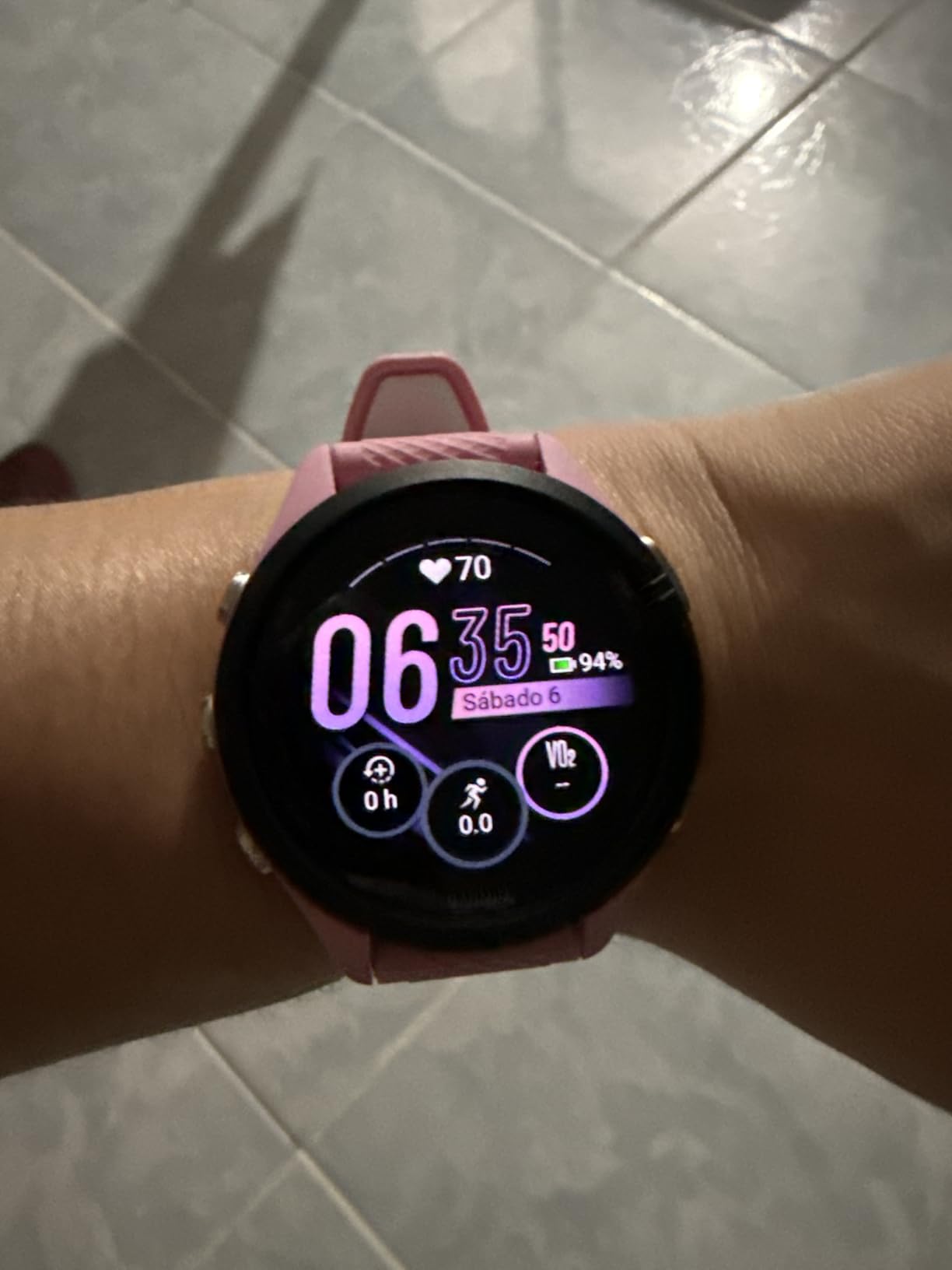
3. Garmin Forerunner 265: the training and recovery analytics benchmark
Garmin Forerunner® 265, Running Smartwatch, 46mm, Black/Powder Gray
- Multi-band GNSS with SatIQ for reliable accuracy on rough terrain
- Best-in-class training readiness and recovery analytics
- 13 days smartwatch and 20 hours GPS
- Light 47g AMOLED body with both buttons and touchscreen
- 4.6 stars across more than 3100 reviews
- No onboard topographic maps
- courses must be pushed from Garmin Connect
- 46mm case is bulkier than dedicated trail watches
- On-wrist music and mapping trail the Forerunner 965 tier
- Touchscreen is awkward with wet or gloved hands
If your trail running is training-led rather than navigation-led, the Forerunner 265 remains the most complete analysis watch we have used. Training Readiness pulls from sleep quality, recovery, training load and HRV status into a single morning number, and Training Status tells you whether the block you are running is productive, peaking or straining.
Multi-band GNSS with SatIQ is the reason accuracy holds up when you drop into dense second-growth forest. In our runs, tracks stayed clean where a single-band watch wandered by several meters, and the same held when running beside a rock wall.
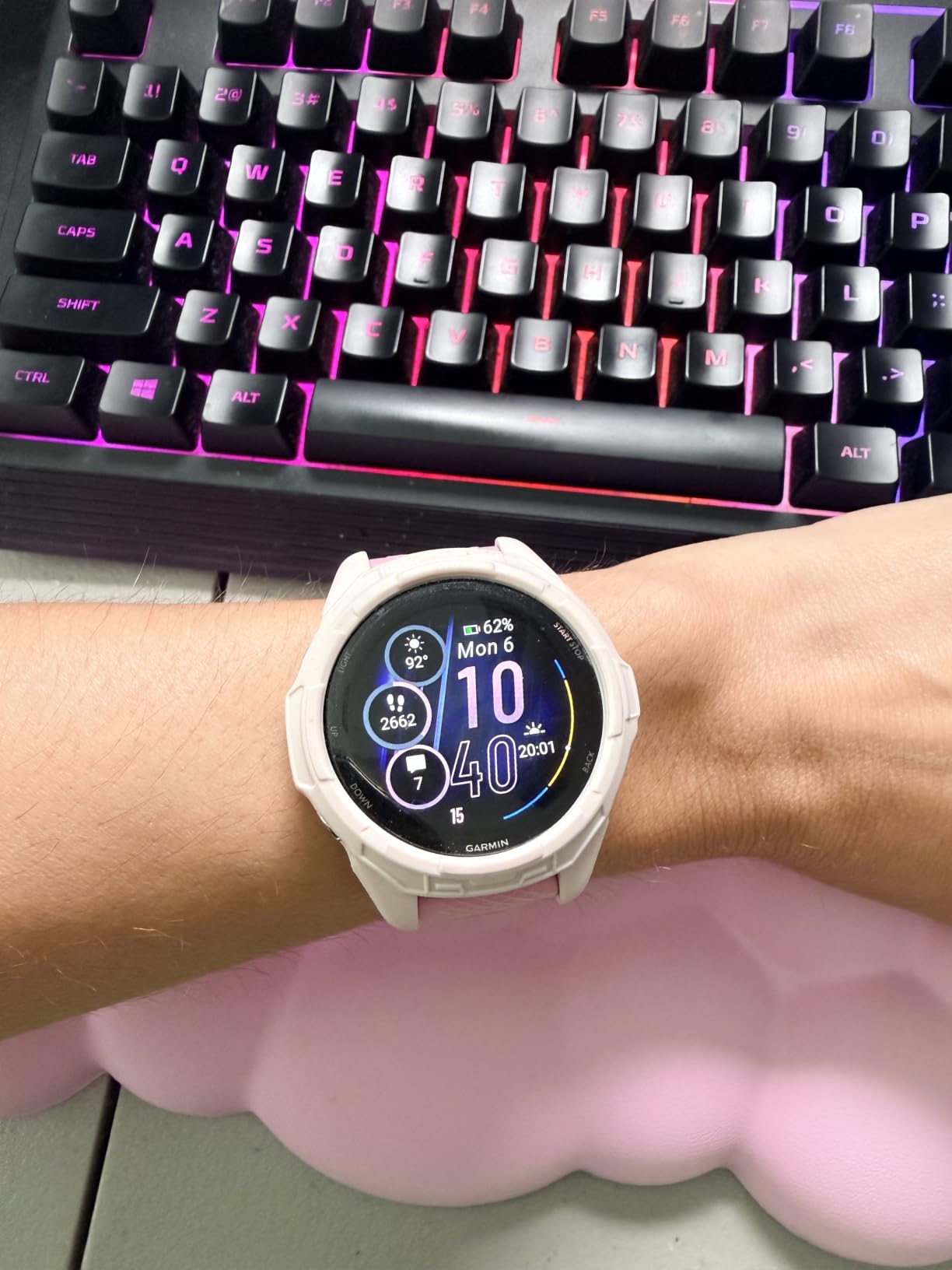
Battery is 13 days in smartwatch mode and 20 hours in GPS mode. That is enough for a full long trail day but not a full 100-miler without a plan, and the 5 ATM rating is modest for a watch that might get submerged in a deep creek.
More than 30 built-in activity profiles cover running, trail running, triathlon, cycling and open-water swimming, and the daily suggested workouts can use a course entered in Garmin Connect. Incident Detection and Assistance allow live location sharing with emergency contacts if you run remote trails solo.
Where the Forerunner 265 fits your training
This is the pick for someone building a trail plan around paces, HRV and load, who runs familiar routes and does not need to navigate by the watch itself. Reviewers rate the all-day comfort highly, and at 47g it is one of the lighter AMOLED watches here.
Morning Report, Garmin Pay and smart notifications are the small things you notice daily. The recovery tooling is the reason this watch has more than 3100 reviews averaging 4.6 stars.
Where the Forerunner 265 disappoints
No onboard topographic maps. Routes must be pushed from the Garmin Connect app, which is fine for your own trails and a real limitation for spontaneous route-finding in unfamiliar terrain.
At 46mm it is bulkier than the dedicated ultralight options, and the touchscreen is difficult to operate with wet or gloved hands even though the physical buttons are excellent. Music storage and mapping also sit below the 965 tier.
4. Suunto 9 Peak Pro: 70 hours of endurance mode and 300 hours of tour mode
SUUNTO 9 Peak and Peak Pro Sports GPS Watch for Demanding, Performance Driven Athletes and Adventurers
- Exceptional endurance and tour modes that outlast every rival here
- Sapphire glass with titanium and stainless steel construction
- Weather alerts and avalanche maps for mountain terrain
- Four satellite systems tuned for mountains and steep canyons
- 97 sport modes with training surface selection
- MIP-style 1.2-inch display is dimmer and smaller than AMOLED rivals
- Wrist heart rate can be inconsistent and some users report dropouts after updates
- Battery drain reported to worsen significantly after software updates
- Fixed sport list with no manual reordering
- Short proprietary charging cable
No other watch in this roundup comes close to the 9 Peak Pro on endurance. 40 hours in best GPS mode, 70 hours in endurance mode and 300 hours in tour mode mean a 100-mile effort does not need a battery conversation at all. For racers nervous about dying watch at hour 30, that is the single most reassuring spec on this page.
The build is the other argument. Sapphire glass over a titanium and stainless steel case rated to 100 meters, and a two-year manufacturer warranty. We ran it in sustained rain and cross-stream without any concern.
Four satellite systems are specified for mountainous terrain and steep canyons, and 97 sport modes include a training surface selection, so you can tell the watch you are on technical singletrack rather than road. Turn-by-turn navigation is included, along with weather alerts and avalanche maps that add genuine safety value in alpine terrain.
The 10-minute quick charge is one of the better emergency tools here, giving two hours of GPS training from a short top-up on a rest stop. A full charge takes one hour on a 600 mAh cell.
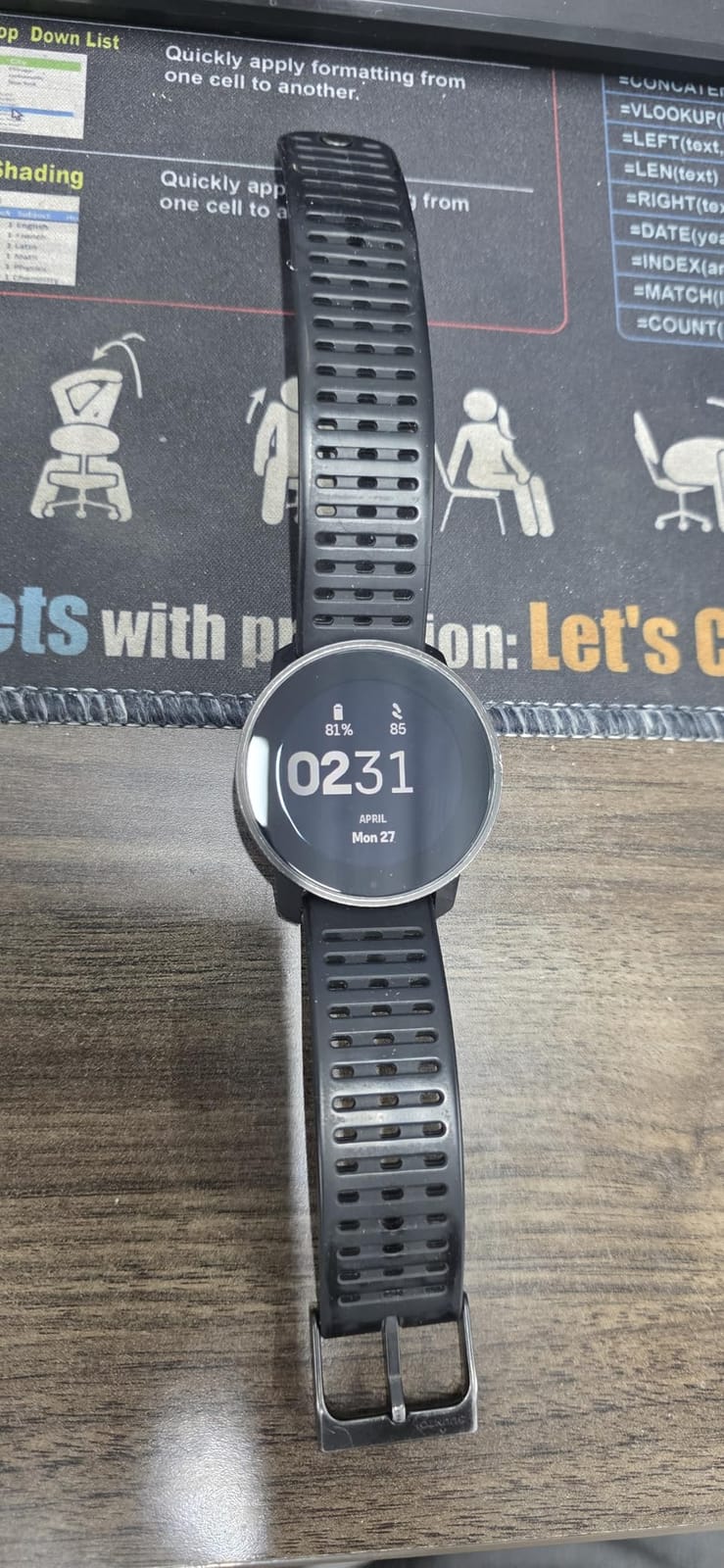
The trade-off is the display. A 1.2-inch MIP panel at 1000 nits is readable in sunlight without draining power, which is why the battery numbers are so good, but it is smaller and lower-contrast than the AMOLED panels on the Garmin and COROS options. Checking a heart-rate zone on a cold, wet climb is more work.
Where the 9 Peak Pro fits your training
It is built for mountain and ultra use where battery duration is non-negotiable. Suunto’s own forum community defends this line specifically for trail and hiking, and that brand loyalty is a fair signal of how these watches perform in real mountain terrain.
Music controls, sleep and recovery analysis in the Suunto app, and connectivity to Strava, TrainingPeaks and 200 other fitness apps make it a complete daily watch rather than a race-day-only device.
Where the 9 Peak Pro disappoints
Sentiment here is more mixed than the AMOLED rivals, sitting at a 4.0 average across 868 ratings. The recurring complaints are post-update battery drain, inconsistent wrist heart rate and limited sport-profile customisation, and all three matter on a watch whose selling point is endurance.
Also be aware that watch face customisation has moved behind a subscription in recent updates, and the stock strap runs short on larger wrists. If you care about wearing one watch for everything, check the software terms before you commit.
5. Garmin Forerunner 965: full-color maps, 31 hours GPS and wrist-based running power
Garmin Forerunner® 965, Running Smartwatch, 47mm, Black/Powder Gray
- Full-color onboard maps with multi-band GPS make it a genuine navigation watch
- Longest battery life in the Forerunner line; wrist-based running power and dynamics on technical terrain
- Titanium bezel keeps weight at 53g
- 4.6 stars across more than 2000 reviews
- Most expensive watch in this roundup
- 47mm case is at the larger end for slim wrists
- 5 ATM water resistance is lower than rugged adventure alternatives
- Touchscreen responsiveness in wet conditions can be awkward
The Forerunner 965 is the most complete trail-capable watch here for a runner who does not want to compromise on either navigation or training data. It carries full-color onboard maps with multi-band GPS and turn-by-turn course navigation, which removes the single biggest limitation of running-first watches.
32GB of storage holds the maps and music, and the 1.4-inch AMOLED at 454 x 454 is big enough to read a junction without stopping. Owners report the GPS holding lock under tree cover and beside canyon walls, and the track staying clean through long point-to-point days.
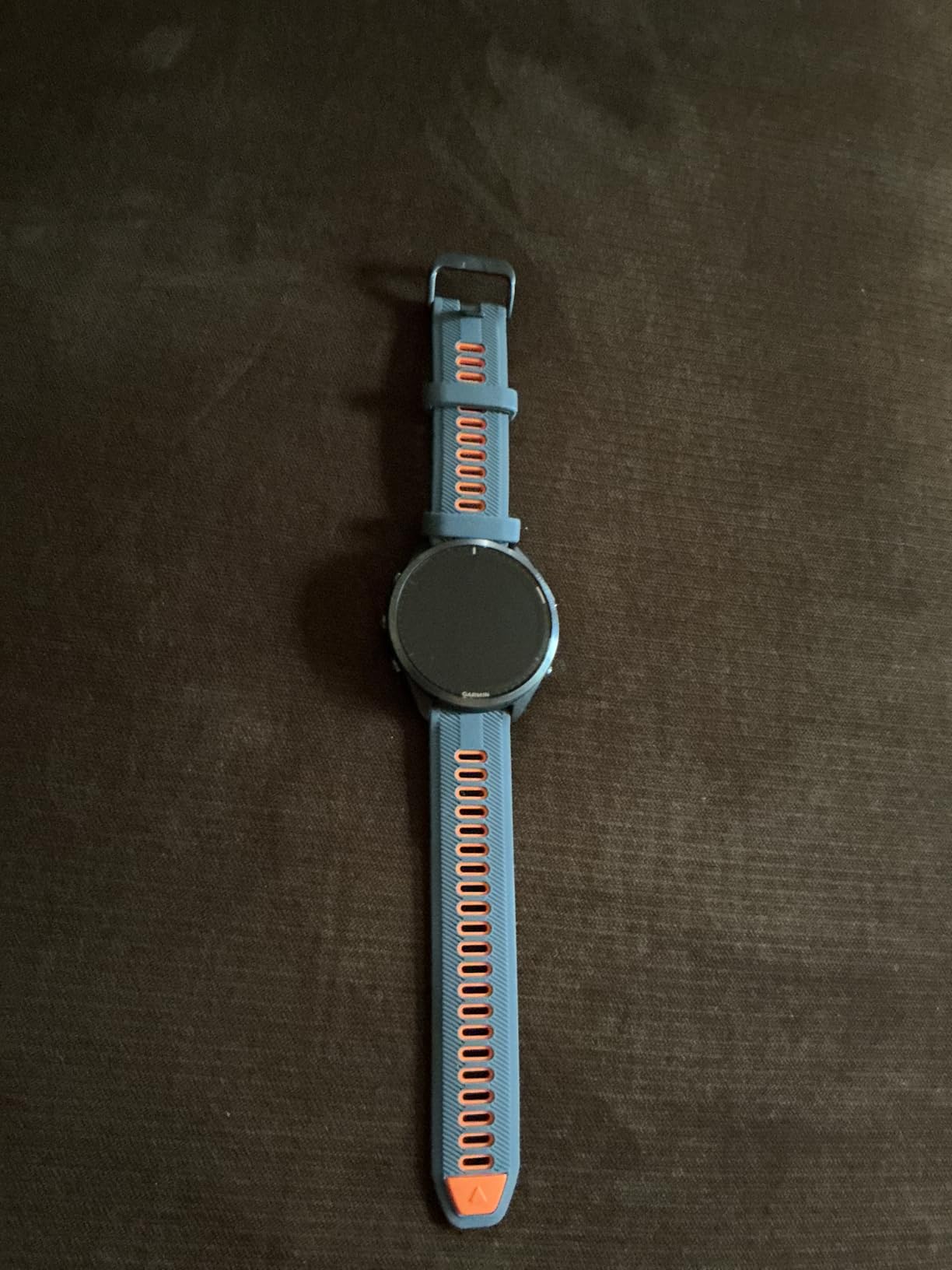
Battery is 23 days in smartwatch mode and 31 hours in GPS mode, which comfortably covers multi-day hiking and most single-day ultras. Wrist-based running dynamics cover cadence, stride length and ground contact time, and wrist-based running power gives continuous power measurement on steep terrain where pace alone tells you very little.
Race adaptive training plans, daily suggested workouts with a race widget, race predictor, VO2 max, Body Battery and sleep score round out an unusually deep feature set. The 22mm band and 20.5cm length fit a wide wrist range.
Reviewers holding 85% five-star ratings highlight onboard mapping, multi-band lock and endurance. The trade-off they name most is simply cost, and then case size at 47mm.
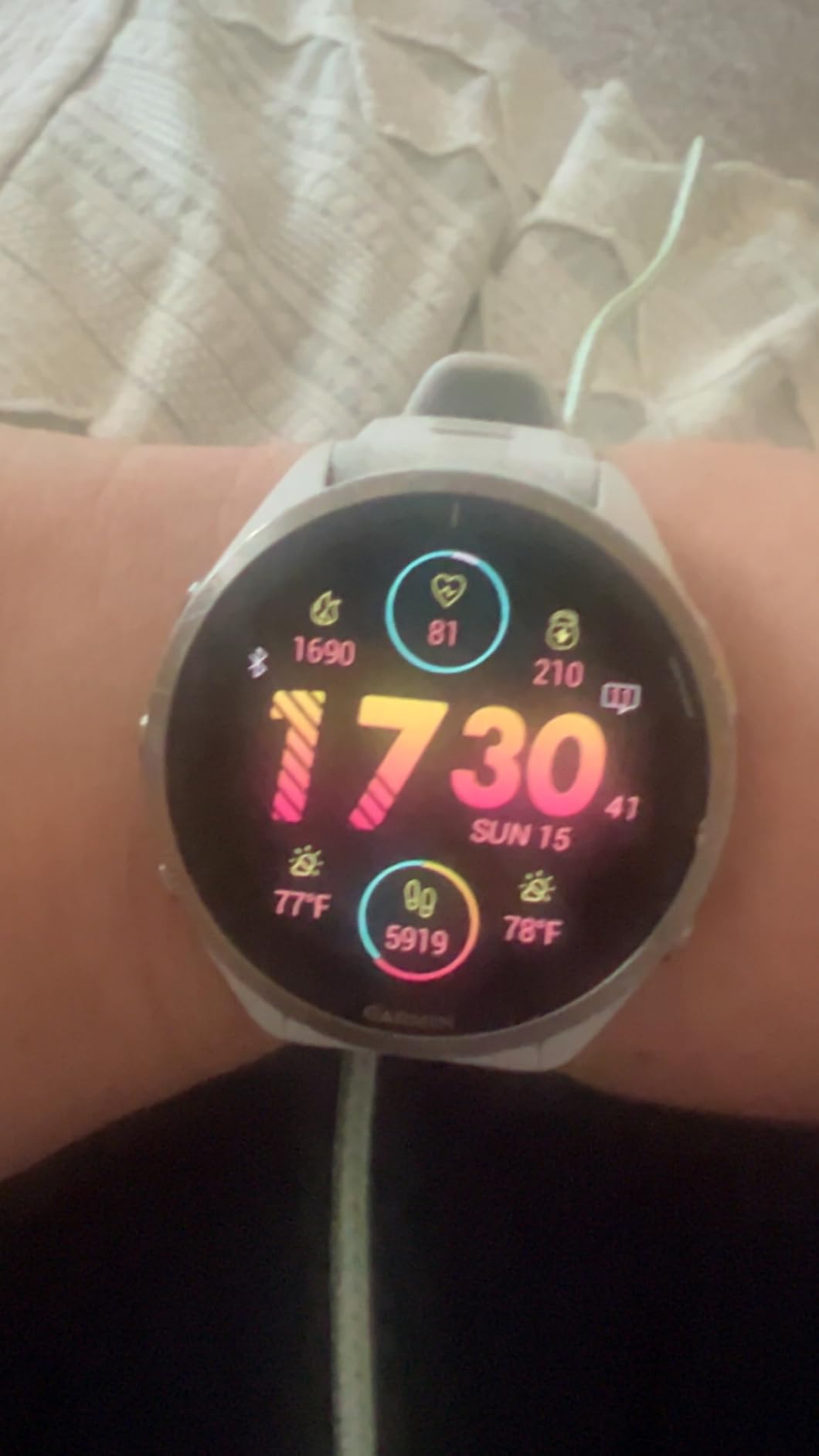
Where the Forerunner 965 fits your training
Pick this if you run unfamiliar routes, do point-to-point races with self-navigation, or want a watch that doubles as a hiking and travel device. Full-color topographic maps are the deciding feature for most trail runners who buy once and keep for years.
It is also the natural upgrade path from a lighter Garmin running watch, and built-in triathlon, duathlon, brick workout and swimrun profiles make it useful if you cross-train through the off-season.
Where the Forerunner 965 disappoints
It is the most expensive watch in this group, and 47mm with a titanium bezel is a large footprint for a slim wrist. If you have run with smaller watches before, try it on with the running posture before buying.
5 ATM water resistance is lower than the 100-meter adventure watches here, so a deep ford or a whitewater-adjacent trail is a compromise. The touchscreen also remains awkward with wet hands, so plan to use the buttons on technical descents.
6. COROS PACE 3: 30 grams and 38 hours of continuous GPS
COROS PACE 3 GPS Sport Watch, Lightweight Running Watch – Chalk Nylon
- Exceptionally light and slim at 30g and 11.7mm
- 38 hours of continuous GPS tracking
- Transflective always-on display readable in direct sun without a backlight
- Dual-frequency chipset plus barometric elevation gain recording
- Dedicated trail run
- ski and XC ski activity modes
- No onboard topographic maps
- breadcrumb navigation only
- 3GB internal storage limits offline content
- Transflective screen is dimmer and lower-contrast than AMOLED rivals
- App analytics less detailed than Garmin or Polar
Weight is the quiet variable that decides comfort over 80 kilometers, and at 30 grams with an 11.7mm profile the PACE 3 is the watch we would hand to a runner who cares most about that. On repetitive downhill sections the difference between 30g and 74g is not abstract, and reviewers name the low weight and slim profile as the decisive factors for ultra use.
It records 38 hours of continuous GPS and 24 days of daily use on a single charge, with a redesigned dual-frequency satellite chipset and barometric elevation gain. That combination makes it viable for a full 100-miler without a mid-race charge plan.
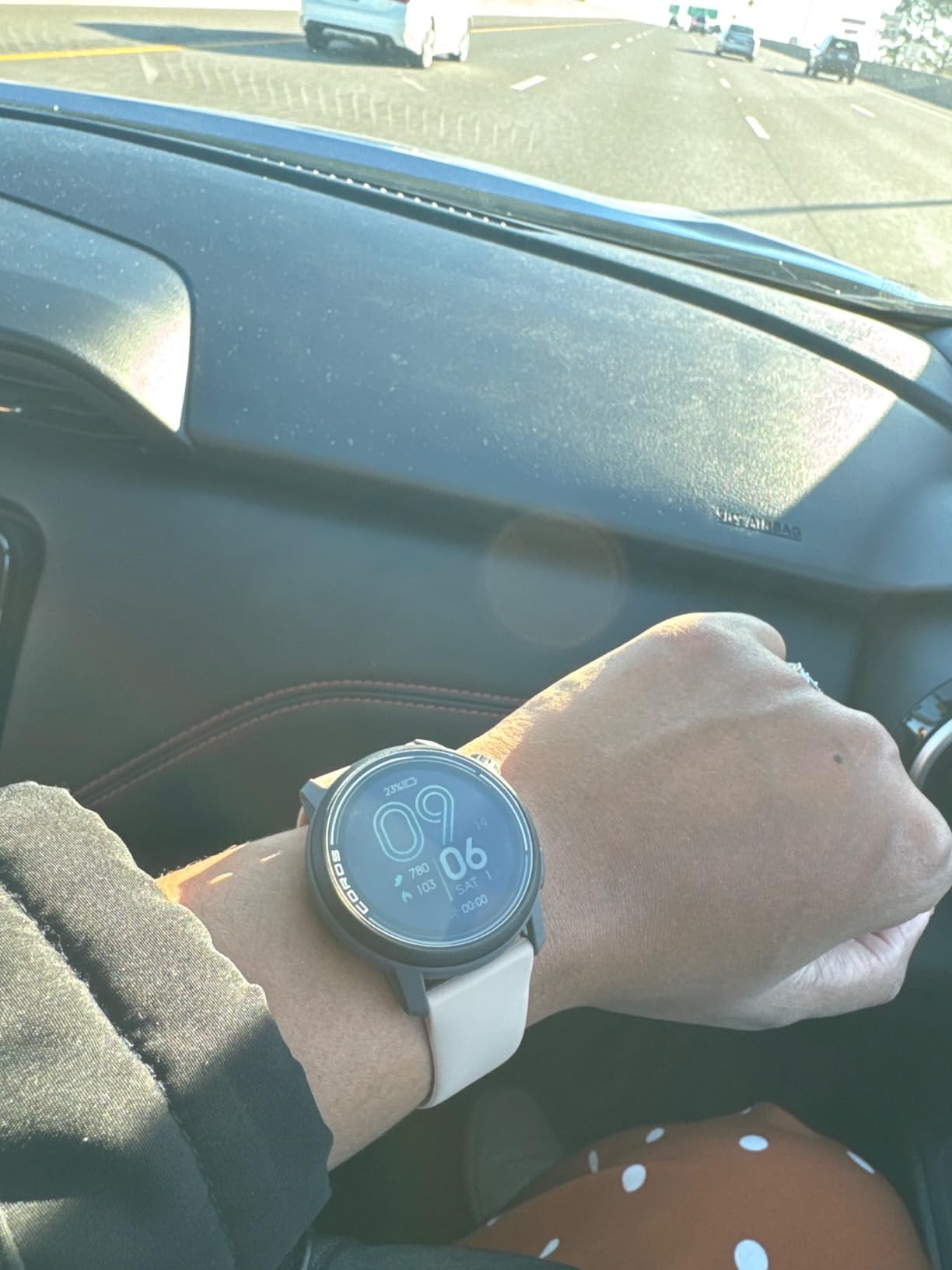
The always-on 1.2-inch transflective touchscreen has three backlight modes and stays readable in direct sun without switching anything on. It is a different experience from the AMOLED panels: less vivid, less reflective, and far easier on battery. The nylon band with a hook-and-loop closure is quick to adjust mid-race, including when your hands are wet or cold.
Activity modes include a dedicated trail run mode alongside run, bike, swim, strength, snowboard, ski and XC ski, and the two-year warranty is longer than most rivals offer.
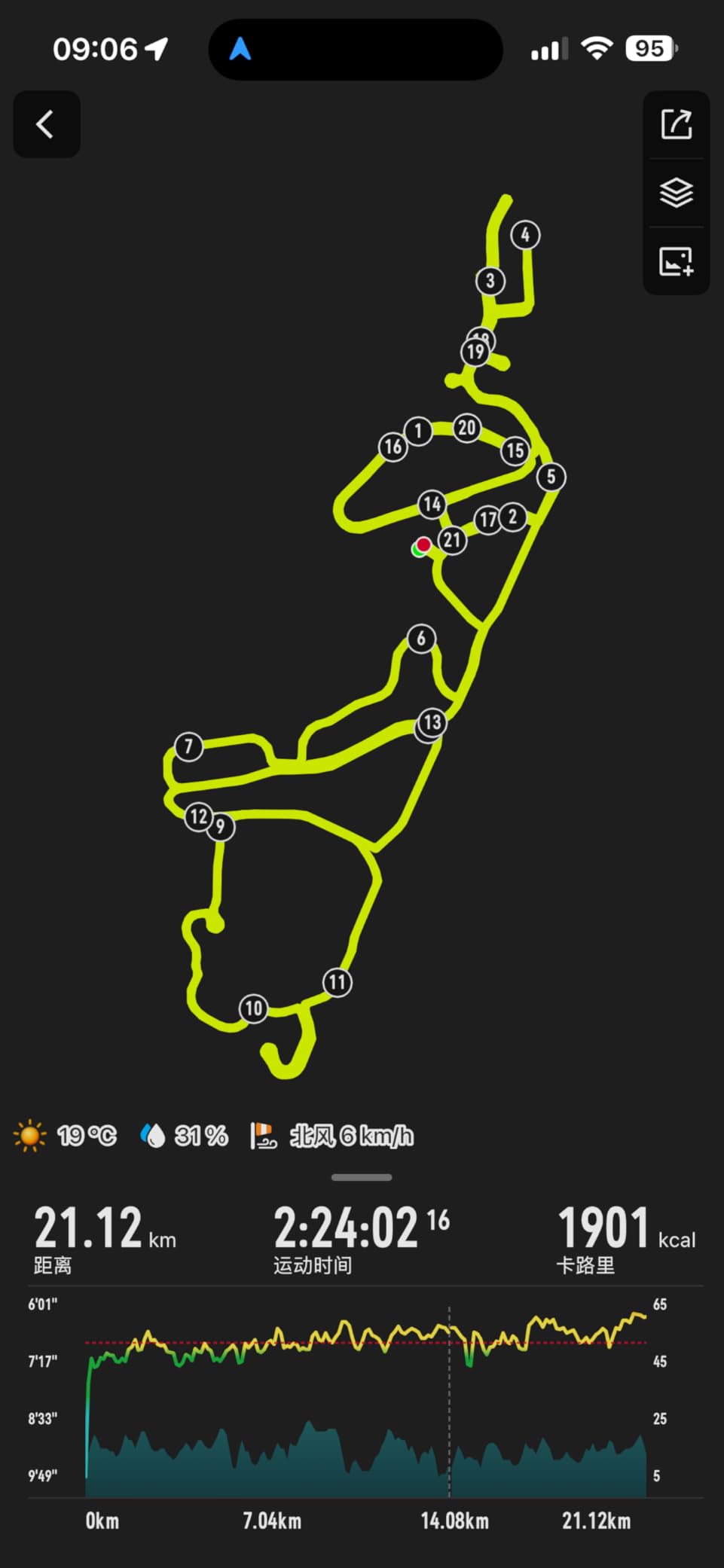
Navigation is breadcrumb only, built from routes created in the COROS app, and 3GB of storage is the smallest usable margin on this list. It is enough for routes, not enough for maps or much music.
Where the PACE 3 fits your training
It suits fast hikers, FKT attempts, ultras and any runner whose wrists get sore on long repetitive days. Dual-frequency GPS plus barometric elevation gives trustworthy climb data without draining the battery.
It is also a strong budget-efficient choice: reviewers rate it 4.3 stars across 606 ratings, and the transflective display is a genuine advantage in full sun.
Where the PACE 3 disappoints
No onboard maps. If your routes are new, remote or unmarked, the breadcrumb line will not tell you where a side trail goes, and you will be back to your phone.
The app gives you training data but not the depth of load and recovery modelling that Garmin or Polar produce. If you plan your season with data, this is where the lower price shows up.
7. mibro GS Pro2: dual-band GPS and two straps at the entry price
mibro GS Pro2 GPS Running Smartwatch with Dual Band GPS, 48mm, Light Beige
- Dual-band GPS at an entry-level cost
- 20 days daily use and 20 hours in GPS mode
- 1200 nit AMOLED with both buttons and touchscreen
- Nylon and silicone straps both included
- mibro Coach builds personalised training plans
- One of the most polarised review distributions here
- with 14% one-star ratings
- 1GB internal storage is the smallest
- 5ATM rating is thin for alpine terrain
- App and analytics ecosystem less refined than the established platforms
- 48mm case is a large footprint for a budget watch
The GS Pro2 answers a fair question: how little do you have to spend to get dual-band GPS? You get it here, along with a 1200-nit AMOLED, buttons plus touchscreen, and two straps in the box.
Battery is 20 hours in GPS mode and up to 20 days of daily use from a 460 mAh cell, with a 2.5-hour charge. mibro Coach generates personalised training plans from your running habits, and the watch tracks real-time pace, cadence and stride length alongside heart rate, SpO2, training load and recovery time.
There are 150-plus workout modes and 5ATM water resistance, which handles rain runs and pool swimming. The stainless steel case is 48mm, which is the one sizing problem in an otherwise well-equipped package.
The rating distribution is the widest in this roundup: 60% five-star and 17% four-star against 14% one-star. Positive reviews centre on value for the dual-band GPS, battery life and the included straps, while the one-star cohort reports connectivity and app-sync frustration alongside inconsistent sensor readings. Firmware stability is a real consideration with a brand at this stage.
Where the GS Pro2 fits your training
It suits a runner moving up from a basic fitness tracker who wants satellite accuracy and training metrics without flagship spend. Dual-band GPS is a genuine step up from the single-band trackers most people start with.
Having both a nylon and a silicone strap means you can use the lighter one on long days and the more secure one on technical terrain, which is a thoughtful two-watch setup for the money.
Where the GS Pro2 disappoints
1GB of internal storage is the smallest here and rules out offline maps and meaningful music storage. With a 48mm case it also looks and feels bigger than watches costing more.
5ATM is thin if you run alpine routes with snow and ice, and the app ecosystem is less refined than the established platforms. Budget for a possible upgrade once your running becomes serious.
8. Suunto Race S: a compact AMOLED with dual-band GNSS and global offline maps
SUUNTO Race S GPS Sports Watch, 1.32” AMOLED 95+ Sports Modes, Powder Blue
- Dual-band L1 and L5 GNSS across five satellite systems
- Global offline maps with find-back
- bearing and route navigation
- Compact 60g body at 11.4mm with a digital crown
- 30 hours of best-GPS battery and a one-hour full recharge
- 95-plus sport modes with TSS
- HRV
- VO2 max and TSB metrics
- Smallest review base in the mid-field at 185 ratings
- 60g is heavier than the ultralight options
- Offline map detail zooms out to about 2km
- 50m water resistance is modest for alpine routes
The Race S is the most compact watch here that still gives you real maps. A 1.32-inch 466dpi AMOLED, 11.4mm thick and 60g, with a digital crown that makes scrolling a route possible with one thumb or a gloved hand.
It runs dual-band L1 and L5 GNSS across GPS, GLONASS, Galileo, QZSS and BeiDou, which is one of the broadest satellite combinations in this group. That is meaningful in a canyon, where five systems give the receiver more to work with when the signal bounces.
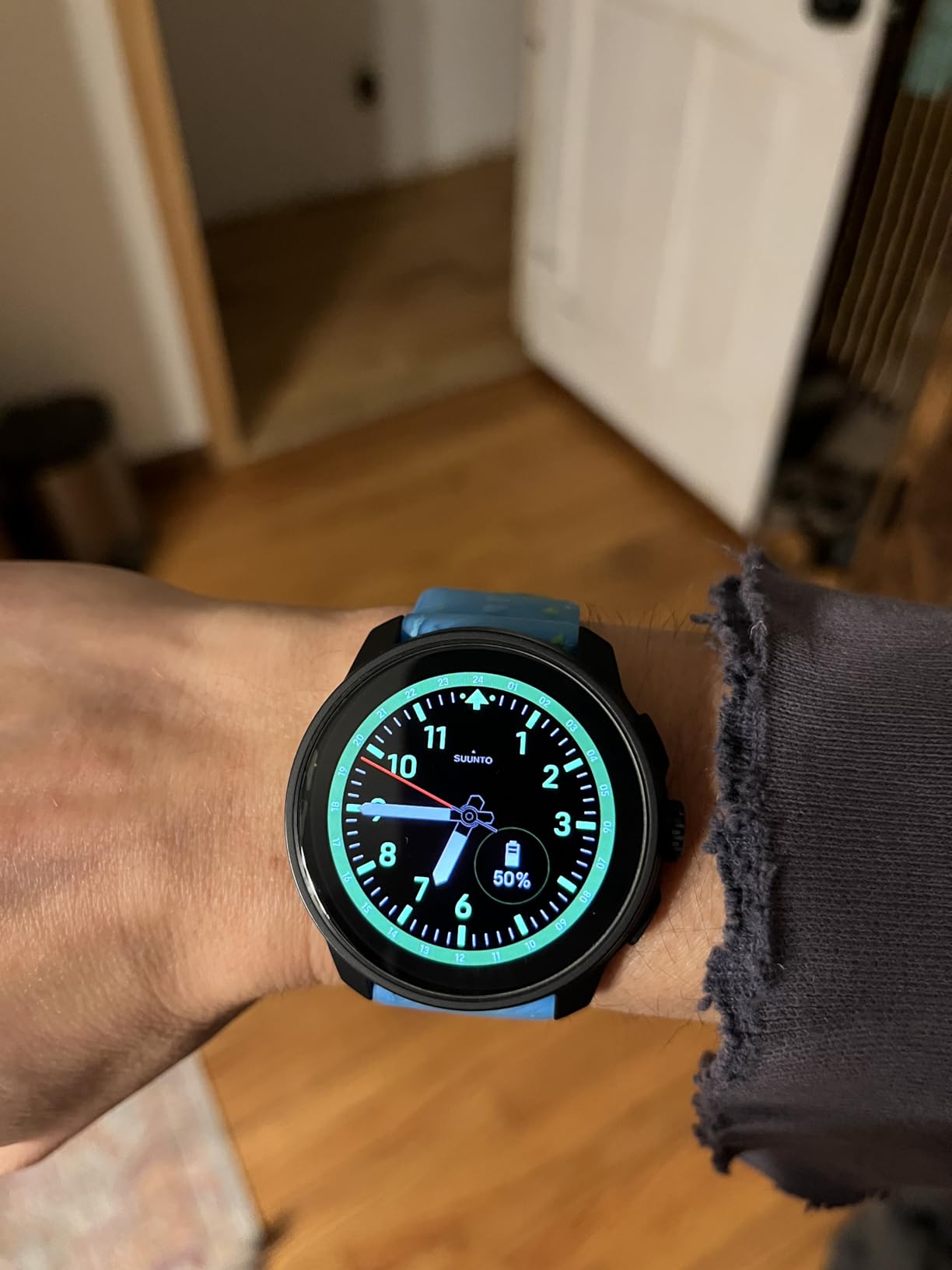
Battery is 30 hours in performance mode at best GPS accuracy and 13 days of daily use, with a full recharge in one hour. Global offline maps cover route navigation, points of interest, bearing and find-back, so you can navigate without your phone at all.
Weather forecast, storm alert via the barometer, sunrise and sunset alarms, an altimeter and a compass round out a well-considered trail feature set. The Suunto app adds TSS, CTL, HRV, VO2 max and TSB metrics with an AI Coach, and 95-plus sport modes go far beyond running.
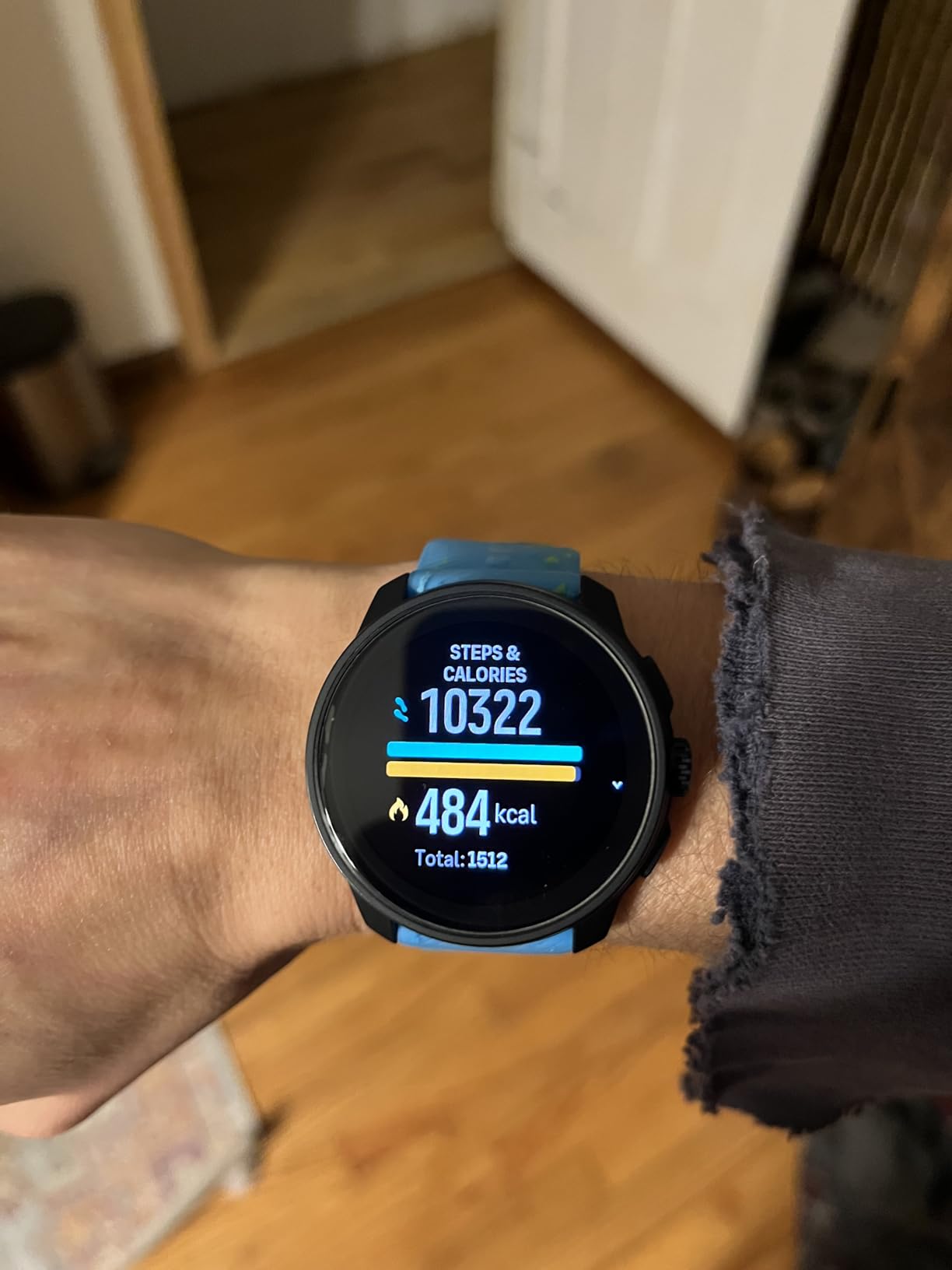
Reviewers rate it 4.4 from 185 ratings with 72% five-star, favouring the GNSS and map combination and the crown for glove-friendly control. Reservations centre on map detail and the water rating rather than core performance.
Where the Race S fits your training
It is a good pick for a runner with a smaller wrist who still wants offline maps and dual-band reception. The 11.4mm profile sits flatter than most adventure watches and does not catch on sleeves.
The barometer-driven storm alert and find-back are practical safety additions on remote routes, and the 95-plus sport modes make it viable for hiking and ski touring in the same year.
Where the Race S disappoints
At 185 ratings it has the least proven long-term reliability in this roundup, so you are buying less field history. The offline maps zoom out to roughly 2km of detail, which is fine for a route but not for reading terrain features.
50m water resistance is modest for alpine and multi-day wet-weather use, and 60g is heavier than the ultralight picks if wrist bounce bothers you on long descents.
9. Polar Grit X Pro: 40 hours of full GPS and a lifetime warranty
- Up to 40 hours of full GPS and heart rate training
- 100 hours in power-save mode
- MIL-STD-810G build with sapphire glass and 100m rating
- Komoot turn-by-turn navigation with track-back
- Consistently praised optical heart rate accuracy
- Lifetime warranty and a breathable FKM strap
- Heaviest watch here at 74g
- Single-band GPS only with no dual-frequency
- No onboard full-color maps
- Dim 700 nit touchscreen that is slow to respond
- Key lock can be bypassed during some sports
The Grit X Pro is the endurance watch for runners who treat a race as a multi-day logistics exercise. Up to 40 hours of training with full GPS and heart rate, 100 hours in power-save mode and seven days in watch mode, plus a lifetime warranty that few brands will match.
The build is genuinely military: MIL-STD-810G, sapphire glass, 100m water resistance and FKM fluoroelastomer straps that dry quickly and stay comfortable when wet. Turn-by-turn navigation runs through Komoot with track-back route guidance.
Where Polar leads the industry is heart rate. The optical sensor is praised for accuracy across this group, and fully automatic overnight recovery measurement gives you a recovery read without thinking about it. Assisted GPS gives fast fix times, which matters when you start a race in the dark.
Five physical buttons sit alongside the touchscreen, and the sport list includes hiking and running. At 1.85 x 1.85 x 0.51 inches it is a substantial watch in the hand.
Ratings split at 4.0 from 476 reviews: 61% five-star, 15% four-star and 15% one-star. The persistent complaints are the 74g weight, the single-band GPS, the absence of onboard maps and a dim, slow 700-nit touchscreen. A minority also report the key lock failing to prevent accidental shut-offs during some sports.
Where the Grit X Pro fits your training
It fits 100-mile and multi-day racers who want battery, ruggedness and heart-rate accuracy, plus a lifetime warranty that reduces the risk of a long-term ownership decision.
Users also report the app-based training analysis outperforming competitors, and Polar’s recovery model is a real strength for athletes training by load.
Where the Grit X Pro disappoints
At 74g it is the heaviest watch on this list, and that is noticeable on long repetitive downhills. If you are a small-wrist runner, 74g plus a 1.85 inch case is a lot of hardware to wear all day.
Single-band GPS is the biggest functional gap, and it shows under tree cover and in canyons where the multi-band and dual-frequency watches hold a cleaner track. There are no onboard full-color maps either.
10. Suunto Run: 36 grams, a textile strap and dual-frequency GPS
SUUNTO Run GPS Sport Running Watch, Lightweight 1.32″ AMOLED Black Textile
- Lightest watch in the roundup at 36g with a textile velcro strap
- Dual-frequency GPS with breadcrumb trail navigation
- 12 days daily use and 20 hours of high-precision GPS
- AMOLED display with crown control suited to one-hand running
- Offline music storage and broad sport mode coverage
- No offline maps
- breadcrumb navigation only
- App cannot build weekly or monthly training plans
- Sleep
- stress and workload readings reported as inaccurate by some users
- Crown and touchscreen sensitivity means lock mode is needed during activity
- Smallest review base here at 143 ratings
The Suunto Run is the watch for a small wrist and a fast hike. At 36g with the textile velcro strap, 11.5mm thick and 46mm in diameter, it is the lightest and least bulky watch here, and the strap adjusts in seconds with cold or wet hands.
It still runs advanced dual-frequency GPS with breadcrumb trail navigation, 20 hours of high-precision GPS training and 12 days of daily activity and sleep tracking, with a full recharge in one hour. The 1.32-inch AMOLED and digital crown mean you can control it one-handed while running.
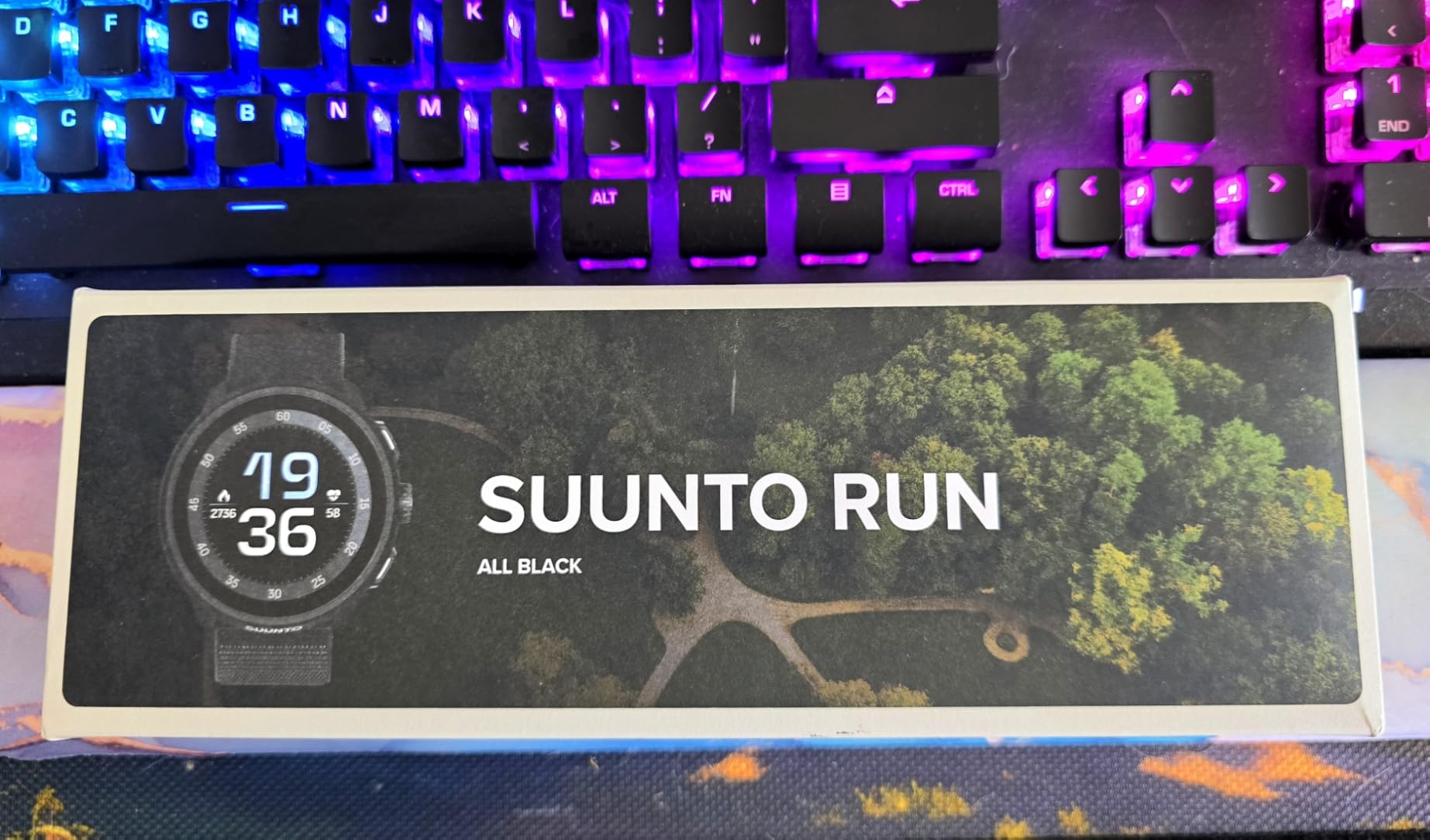
Training load tracking, post-exercise heart rate monitoring and a Training Stress Score give it more substance than the price suggests, and 4GB of storage supports offline music. Sport modes cover hiking, cycling, yoga, tennis and boxing alongside running.
Owners frequently describe it as a satisfying entry-level alternative to the usual Garmin budget running watch. Praise concentrates on weight, comfort, GPS accuracy, display quality and battery life.
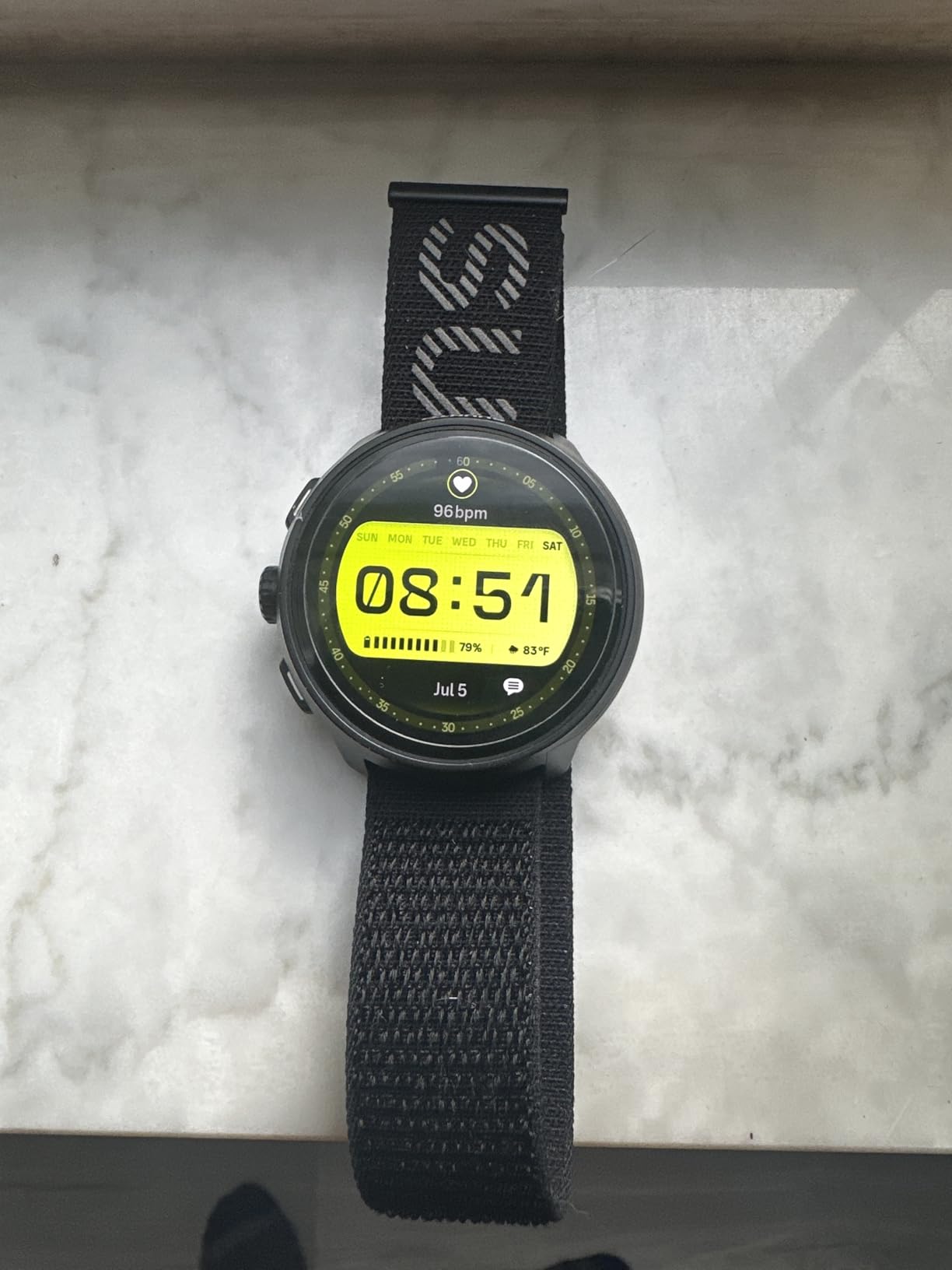
Limitations are real. There are no offline maps, the app cannot build weekly or monthly plans or calendar-based targets, and some users report inaccurate sleep, stress and workload readings along with unreliable heart rate and swim tracking. Music transfer from a Windows PC is difficult; phone-side transfer works better.
Where the Suunto Run fits your training
It is the strongest choice here for small wrists and for runners who want the lowest possible weight without dropping to a MIP screen. The 46mm diameter and 36g are easy to forget you are wearing.
If you run known routes and want dual-frequency accuracy plus music without a subscription, it covers the brief well. The textile strap is genuinely comfortable over a full day.
Where the Suunto Run disappoints
No maps at all, so it is strictly a breadcrumb watch. If you travel and run unfamiliar trails, that is a hard limit.
At 143 ratings it has the smallest feedback base in the roundup, and crown plus touchscreen sensitivity means you need lock mode during activity, which is an extra step every run.
11. Polar Vantage M3: dual-frequency maps with Polar recovery tooling
POLAR Vantage M3 – Multi-Sport Smartwatch with AMOLED Display, Dual-Frequency GPS, Turn-by-Turn Navigation, Up to 7-Day Battery Life, Black
- Dual-frequency GPS with offline topographic maps and Komoot turn-by-turn
- 1000 nit AMOLED with Gorilla Glass 3 in a 53g case
- Up to 30 hours training mode and 7 days smartwatch mode
- Running power measurement with Training Load Pro recovery analytics
- 150-plus sport profiles with performance tests
- Both small and large wristbands included
- Smallest review base in the roundup at 103 ratings
- Second-highest cost in the group
- 50m water resistance is modest for outdoor adventure use
- 1.28-inch AMOLED is small for reading topographic maps
- Only 37MB of internal storage
The Vantage M3 is the most interesting map-and-recovery combination Polar has put into a lighter case. It carries dual-frequency GPS, offline topographic maps and Komoot-powered turn-by-turn navigation, which is a real step up from the mapping on previous Grit models.
At 53g in a stainless steel case with 1.28-inch AMOLED at 1000 nits under Gorilla Glass 3, it is bright enough for open terrain and light enough for daily wear. Battery runs up to 30 hours in training mode and 7 days in smartwatch mode.
The analytics are the reason Polar people stay with Polar. Running power measurement, training load, and Nightly Recharge, SleepWise and Training Load Pro recovery tools give a fuller picture of readiness than most rivals. Over 150 sport profiles with performance tests are included.
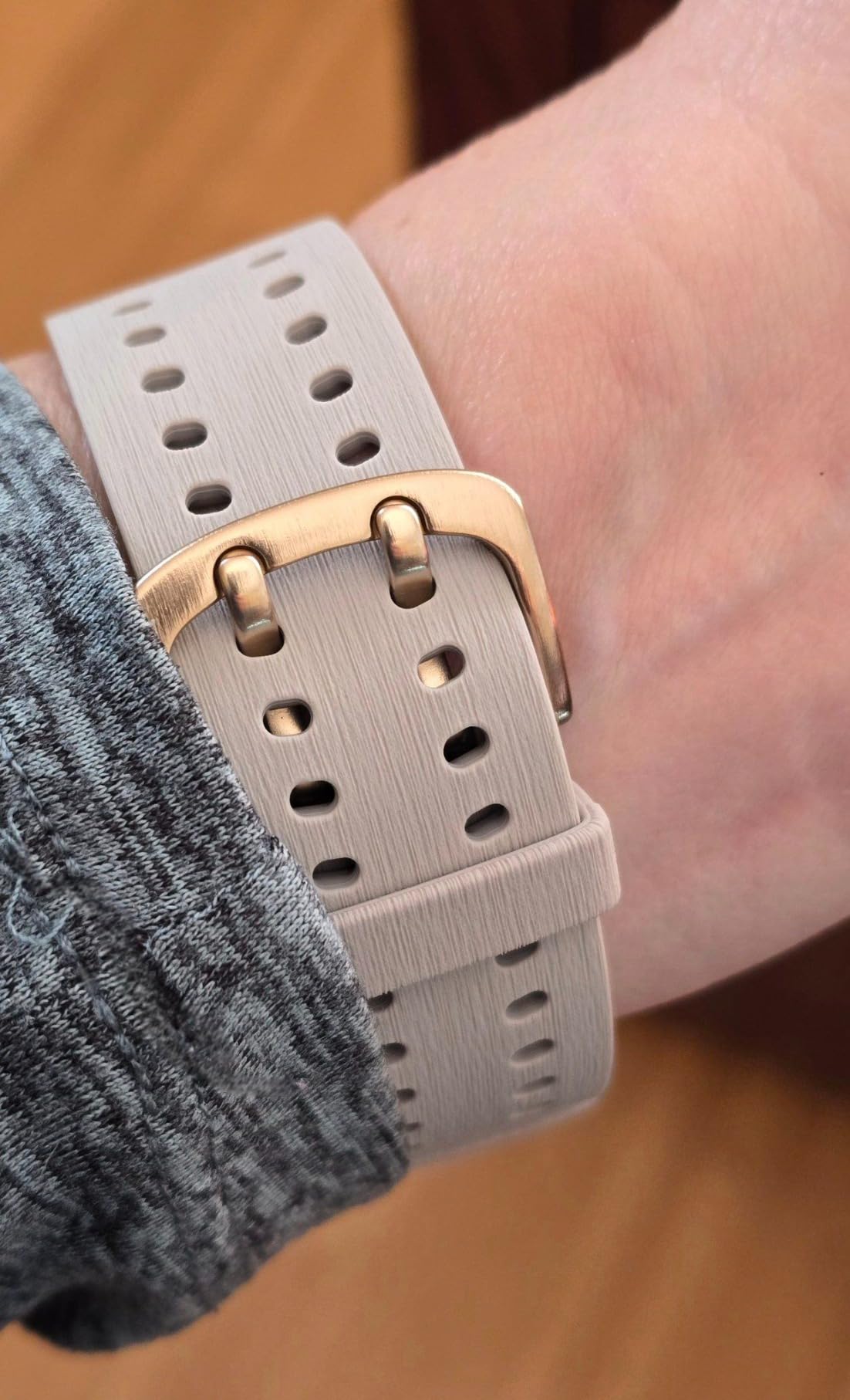
Both small and large wristbands ship in the box, which makes the case size a less risky purchase for anyone between sizes. USB-C charging, two-year warranty.
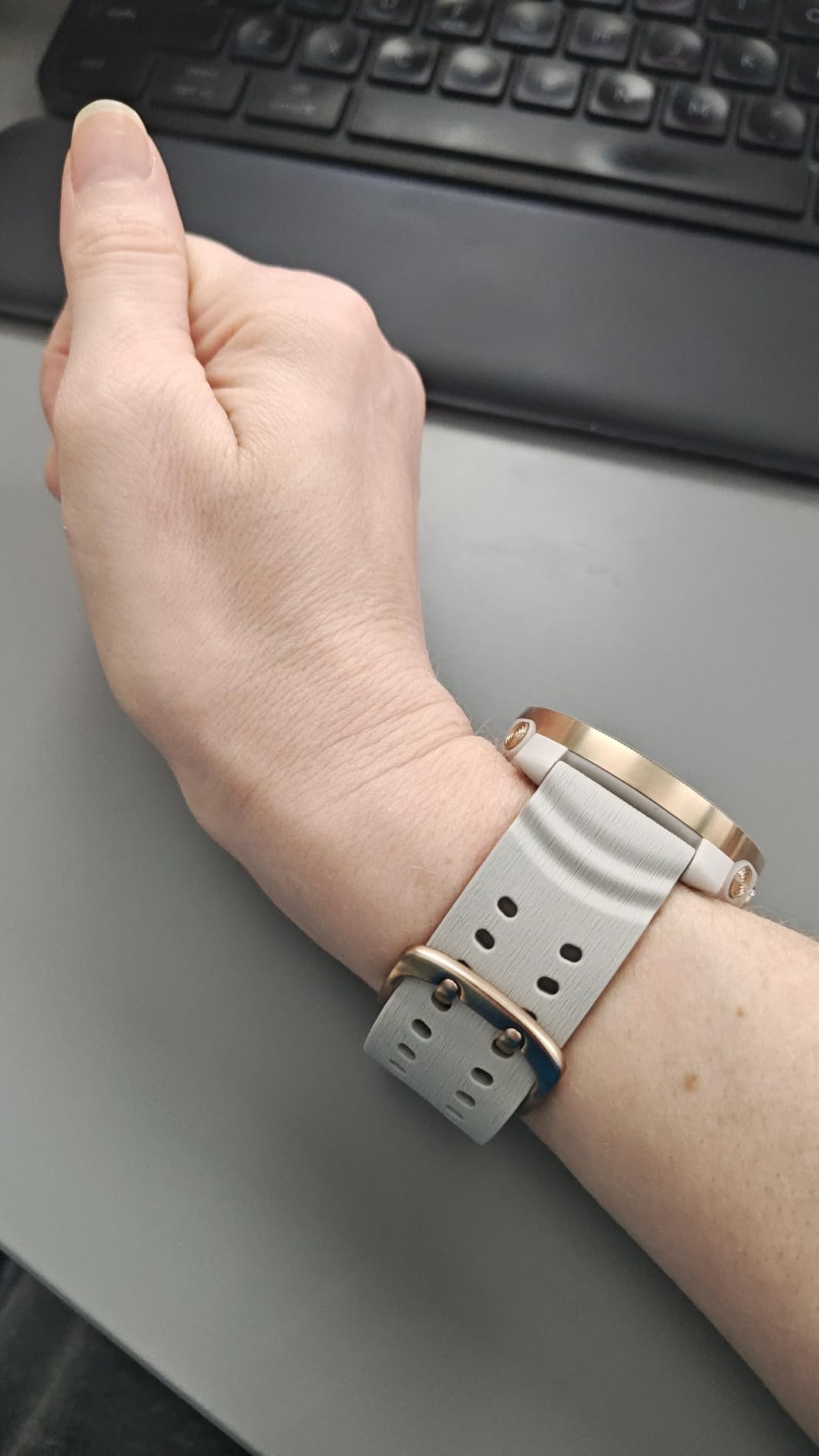
At 103 ratings this has the smallest review base in the roundup, so long-term durability feedback is limited despite an 80% five-star share. The 1.28-inch screen is small for reading topographic detail, 37MB of storage is restrictive, and 50m water resistance is modest for a watch aimed at outdoor adventure use.
Where the Vantage M3 fits your training
Choose it if you want Polar’s recovery methodology and training-load depth alongside genuine offline topographic maps. That combination is rarer than it should be, and dual-frequency GPS improves the track in exactly the terrain that frustrates you.
Including two wristband sizes makes it a safer buy for small and large wrists alike, and the AMOLED panel is bright for early starts and ridge navigation.
Where the Vantage M3 disappoints
It is the second-highest cost in this group, and with only 103 ratings you are buying a very lightly proven product. Budget-conscious buyers may find the coverage thin for the money.
The screen size and 50m water rating are the two limitations owners flag most, particularly if you plan to read maps on the wrist or run alpine routes with snow and ice.
12. Garmin Instinct 3 AMOLED 45mm: the button-driven watch that survives everything
Garmin Instinct® 3 AMOLED, Rugged GPS Smartwatch, 45mm, Black
- Supertough fiber-reinforced polymer case with metal bezel and 100m rating
- Built-in LED flashlight with variable intensity and strobe modes
- Multi-band GPS with SatIQ for canyons and forest
- 18 days of battery life in smartwatch mode
- Button-only control so it works with wet or gloved hands
- 4.6 stars across 860 reviews
- No onboard topographic maps despite the adventure positioning
- 1.2-inch AMOLED is small for map review
- Only 4GB of internal storage
- Bulkier 45mm case and 0.59 inch profile
- Fewer sport-specific analytics than the Forerunner line
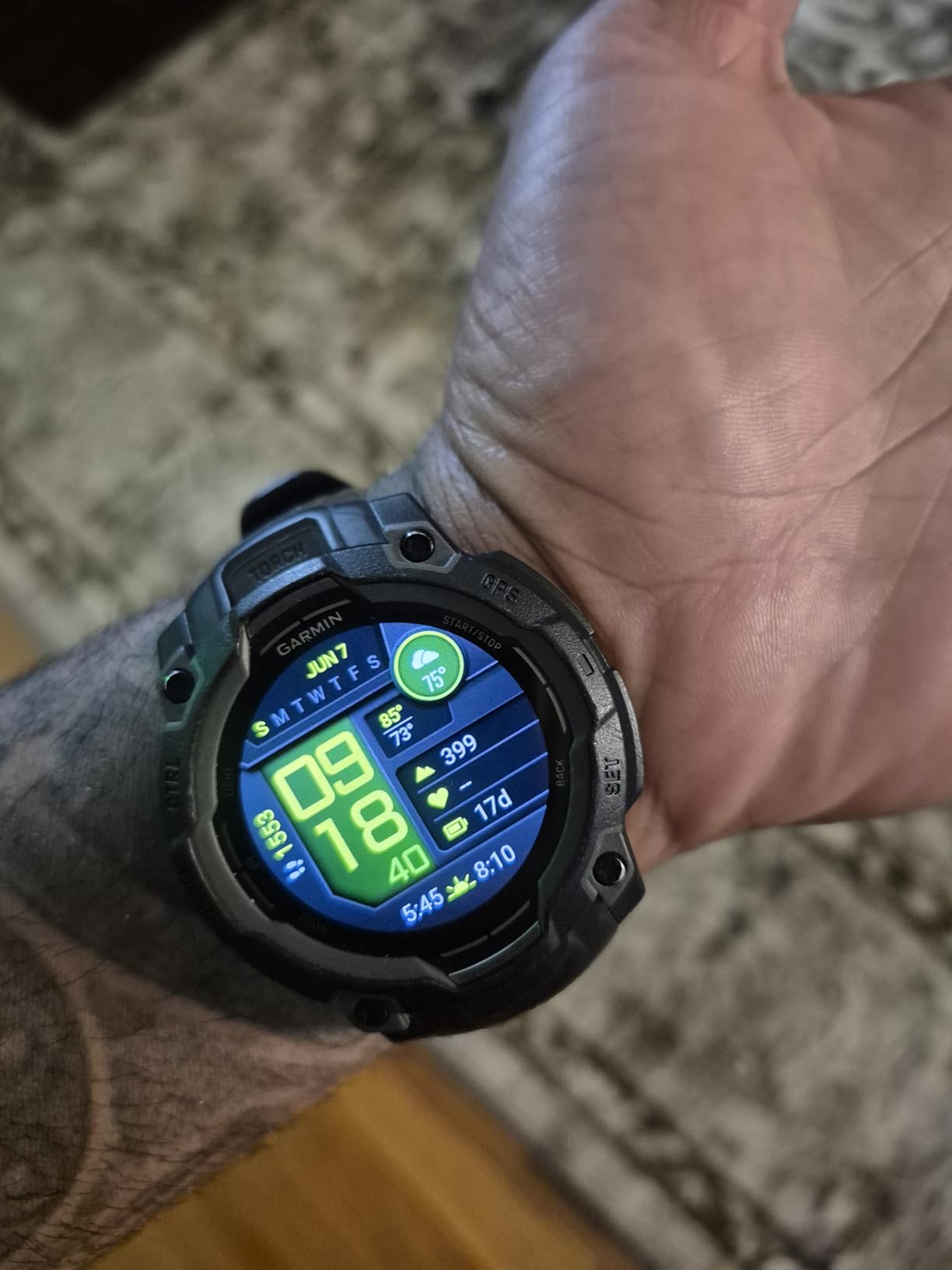
The Instinct 3 AMOLED is the watch you buy when the trail is harder than the watch. The fiber-reinforced polymer case with a metal-reinforced bezel, 100m water resistance and button-only control make it the most forgiving device to operate on wet, gloved, filthy hands.
Multi-band GPS with SatIQ, a 3-axis compass and a barometric altimeter cover positioning and navigation basics, and the built-in LED flashlight with variable intensity and strobe modes is the feature that gets used most on night trail work.
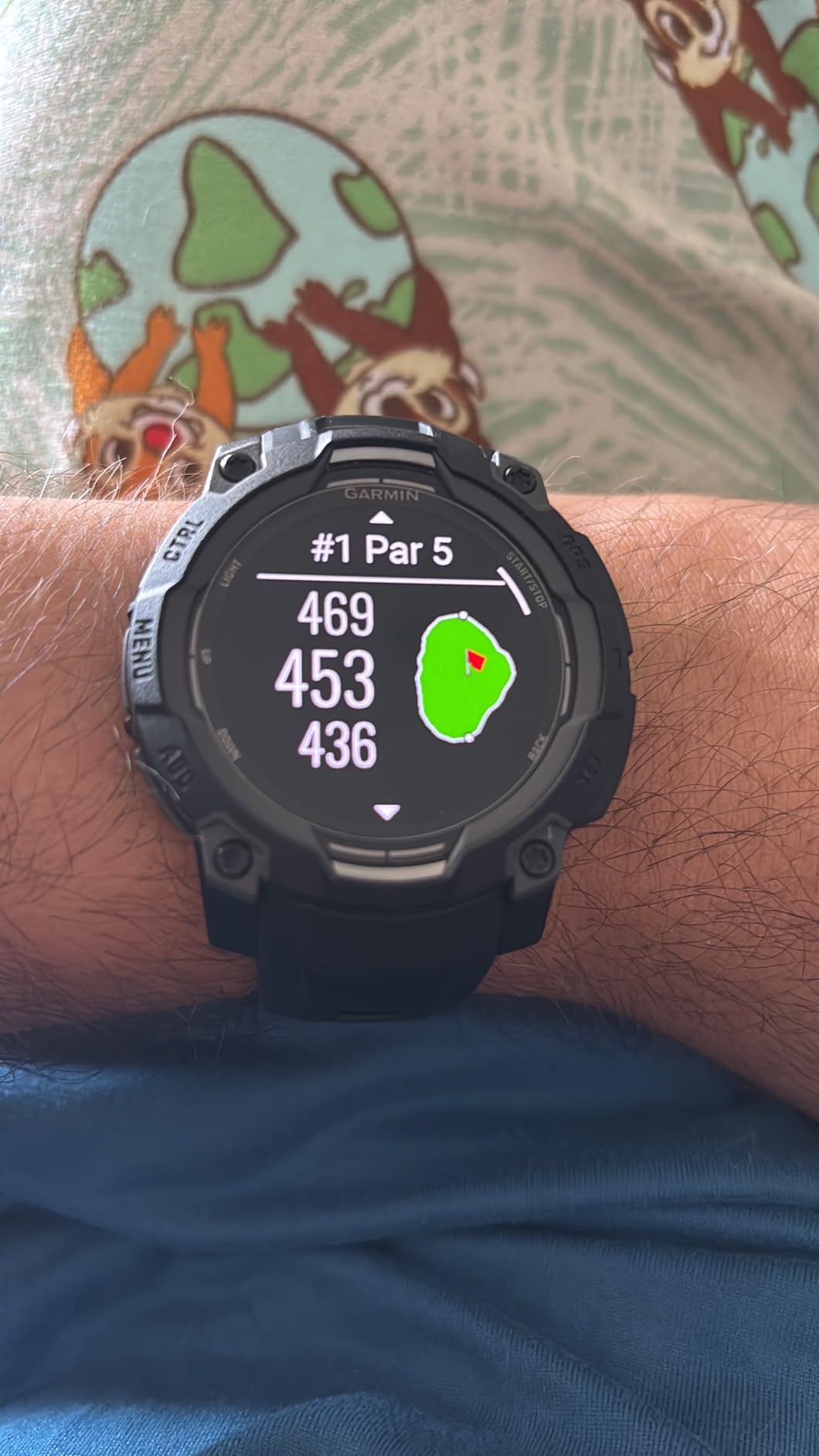
18 days of battery in smartwatch mode means you charge it weekly at most, and the 350 mAh battery handles race day without planning. Owners consistently praise the rugged build, the endurance and the flashlight, and rate the button-only interface as a genuine advantage in bad conditions.
At 1.2-inch AMOLED with 390 x 390 resolution, 4GB of storage and a 45mm case at 0.59 inch thick, this is a substantial watch. Rankings in Electronics and Smartwatches reflect how well it has been received at 4.6 stars across 860 ratings with 84% five-star.
The common complaint is the absence of onboard topographic maps, which is odd for a watch with adventure positioning. Navigation is delegated to phone-loaded courses and breadcrumb guidance.
Where the Instinct 3 fits your training
It fits runners who work night shifts, run in winter conditions, or simply want a watch that survives being dropped on rock. Water to 100 meters removes creek and weather anxiety entirely.
For anyone who hates touchscreens on the trail, the five-button interface is the most reliable control scheme in this roundup. Garmin Connect handles the training and recovery side well.
Where the Instinct 3 disappoints
No onboard maps, a 1.2-inch screen that is too small for map review, and only 4GB of storage. If navigation is a core part of your running, this is not the watch.
The analytics are shallower than the Forerunner line, and at 45mm with a 0.59 inch profile it is the bulkiest watch here. Small-wrist runners should try it with the shorter band before committing.
How to Choose a Trail Running GPS Watch
Trail watches are not road watches with a different strap, and the buying criteria that matter change with distance. Short runs and FKTs reward weight and display size. Long ultras reward battery planning and durability. Unfamiliar routes reward mapping. Here is how to weigh each one.
Battery life: read the mode, not the headline
Almost every manufacturer quotes a smartwatch battery figure because it is the largest number available. The 46mm Instinct 3 is 18 days in smartwatch mode and far less in GPS. The 47mm Forerunner 965 is 23 days and 31 hours in GPS. The Suunto 9 Peak Pro is 300 hours in tour mode and 40 hours at best GPS accuracy.
Plan against the GPS number, then add headroom. Our rule is roughly 1.5 times your longest expected moving time: a 30-hour watch covers a 20-hour effort, not a 30-hour one. The 38 hours on the COROS PACE 3 and the 40 hours on the Polar Grit X Pro are the two that let you stop thinking about it.
Multi-band and dual-frequency modes cost battery. On the PACE Pro, 38 hours outdoor drops to 31 hours with dual-frequency running. Every multi-band watch on this list has that trade. The explainer on why signals degrade around obstacles is worth reading if you regularly run in forest or canyon terrain, because it explains exactly what you are paying battery for.
GPS accuracy: multi-band versus dual-frequency
Standard GPS uses one frequency band, which means one channel, which means tree cover and rock walls can push your track sideways. Multi-band reception uses two bands simultaneously to correct for that interference. Dual-frequency is the marketing name for the same idea, and the two terms are not meaningfully different in practice.
Single-band watches still track fine in open sky. They struggle in the conditions trail runners care about: dense second-growth, slot canyons, alpine bowls with heavy multipath. The Polar Grit X Pro is the clearest single-band case in this roundup, and it is the one watch here where we would upgrade the receiver before anything else. The Suunto Run and COROS PACE 3 list plain GPS in their specifications but pair it with a dual-frequency chipset, so check the mode list rather than the headline. The KOSPET Tank T4, mibro GS Pro2, COROS PACE Pro, Garmin Instinct 3, Garmin Forerunner 265, Garmin Forerunner 965, Suunto Race S and Polar Vantage M3 all run multi-band or dual-frequency hardware.
Barometric altimeter versus GPS elevation is a separate issue and a common source of frustration. A barometer measures air pressure and converts it to altitude, so it keeps working with no satellites, but it drifts when the weather changes. GPS elevation is noisier but self-correcting. A watch recording both gives you the honest number, which is why climb figures differ between devices on the same route.
Navigation: breadcrumb, course or full topographic maps
Three tiers exist and they cost different amounts. Breadcrumb navigation draws the line you already ran, so it helps you retrace a route but cannot show you an unmarked junction. Course navigation follows a track you created in an app and gives turn-by-turn prompts, which is enough for most trail runners. Full-color topographic maps let you read terrain and pick a line in real time, which matters for point-to-point racing and travel.
Onboard full-color maps appear here on the Forerunner 965 and, in a more limited form, the Suunto Race S. Offline topographic maps appear on the KOSPET Tank T4 and the Polar Vantage M3. Komoot-powered turn-by-turn on the Polar Grit X Pro and Vantage M3 handles course navigation well. Everything else is breadcrumb or course only.
One practical tip: whatever you buy, scout routes before you run them, ideally with a trail camera or a local route source, and push them to the watch while you still have Wi-Fi. A watch is a navigation aid on a route you know, not a substitute for preparation.
Heart rate, weight and the small-wrist problem
Wrist optical heart rate is good on flat terrain and on descents where cadence settles, and it drifts on steep climbs where the wrist angle changes constantly and you brace on poles. If you make training decisions from heart rate zones, a chest strap is the fix on the days it matters. Polar has the strongest wrist sensor reputation here, and the best reviews mention pairing it with a strap for accuracy.
Weight matters more on trail than on road. The 30g COROS PACE 3 and 36g Suunto Run are the picks here for long ultras and small wrists. The 74g Polar Grit X Pro is the opposite trade, and owners report noticing it on long downhills. A recurring complaint in trail running communities is a watch that is too big and heavy for a small wrist, and it is a real deal-breaker, not a detail.
Case diameter is the number to check. The 46mm Instinct 3 and 46mm Forerunner 265 sit at the larger end, the 48mm mibro GS Pro2 is larger still, and the 46mm Suunto Run is the most compact AMOLED option. The Polar Vantage M3 ships with both small and large wristbands, which solves the sizing problem out of the box.
Safety, connectivity and the ecosystem
Running alone on remote trail, the Garmin Forerunner 265 and 965 carry Incident Detection and Assistance, which share your live location with emergency contacts if you stop moving. A dedicated watch is not a satellite communicator, so a Garmin inReach or a paired phone messenger remains the honest answer for genuine backcountry risk. Several trail runners in our research pair a watch with a personal GPS messenger for exactly that reason.
App quality shapes daily experience more than most spec sheets admit. Garmin Connect is the most complete, COROS is strong on training metrics with fewer integrations, Polar leads on recovery analytics, and Suunto connects to Strava, TrainingPeaks and 200-plus partner services. Smaller brands offer fewer third-party integrations and less stable firmware, which is a real consideration when you plan to own a watch for years.
Trail GPS Watch, Apple Watch, or a Smartwatch?
A fair number of people searching for the best GPS watches for trail running already own an Apple Watch, and the crossover question comes up constantly in trail-running communities. The honest answer is that the two devices solve different problems, and many runners end up using both.
A general smartwatch handles notifications, payments, music and calls well, and it is a better daily device than a dedicated multisport watch. What it does not do is give you 38 hours of continuous dual-frequency GPS, a barometric altimeter that keeps climbing through a storm, a battery you can rely on at hour 30 of an ultra, or a control scheme that works with gloves and mud.
So the decision is straightforward. If you run on familiar trails and mostly want training metrics, a general smartwatch with fitness apps may be enough. If you run unmarked routes, race long distances, or care about the track staying clean under tree cover, a dedicated trail GPS watch is the right tool. For the physical side of why satellite positioning behaves the way it does outdoors, our guide to how GPS works for outdoor machines covers the same principles in detail.
Frequently Asked Questions
What is the best GPS running watch for trail running?
The KOSPET Tank T4 is the best all-round choice here because it combines dual-band GNSS, downloadable offline maps and a 10ATM plus IP69K steel build at an entry-level cost. If you want deeper training analytics, the Garmin Forerunner 965 adds full-color onboard maps, multi-band GPS and 31 hours of battery.
What is the best smartwatch for trail running?
A general smartwatch is fine for notifications, music and payments on familiar trails, but dedicated trail GPS watches win on battery, barometric altitude and satellite accuracy. If you already carry a phone in a vest, the extra smartwatch features go unused, and 30-plus hours of continuous GPS is worth more than another notification.
Which Garmin is best for trail running?
For navigation on unmarked routes, the Forerunner 965 is the strongest Garmin here, with full-color onboard maps, multi-band GPS and 31 hours of battery. For rugged, button-only operation in bad weather, the Instinct 3 AMOLED 45mm is hard to beat with 100m water resistance and a built-in flashlight. For training analysis, the Forerunner 265 leads on readiness and recovery metrics.
Do I need maps for trail running?
You need maps if you run routes that are not marked, do point-to-point races, or travel to unfamiliar trail. If every run is on a trail you have run many times, breadcrumb and course navigation are enough. Onboard topographic maps are worth paying for when route choice matters, not when you only need to know how far you have run.
How long should a trail running watch battery last?
Plan for at least 1.5 times your longest expected moving time in GPS mode, because multi-band and dual-frequency modes drain faster than standard GPS. A 100-mile effort needs roughly 30 hours of moving time, which means 45 hours of rated battery. Watches quoting 40 hours of full GPS or more let you stop planning around the battery entirely.
Is multi-band GPS worth it for trail running?
It is worth it if you run in dense forest, slot canyons or alpine terrain, where single-band signals bounce off trees and rock walls and your track wanders. On open mountain trail with a clear sky, single-band is usually accurate enough. The cost is battery, typically 15 to 25 percent less runtime when the mode is active.
Is a chest strap better than wrist heart rate for trail running?
Yes, on steep climbs and technical terrain. Wrist optical sensors drift when your wrist angle changes constantly and when you are bracing on poles, so a chest strap gives more accurate zone data on the climbs that decide your race. On flat trail and descents, wrist optical is reliable and far more convenient, so many runners use both.
What is the best watch for ultras and 100-mile races?
The Suunto 9 Peak Pro leads on endurance with 70 hours in endurance mode and 300 hours in tour mode, plus sapphire and titanium construction. The Polar Grit X Pro is a strong alternative with 40 hours of full GPS and heart rate, 100 hours in power-save mode and a lifetime warranty, though it is the heaviest watch at 74g.
The Verdict: Which Trail Running Watch Should You Buy in 2026
The KOSPET Tank T4 is our default pick of the best GPS watches for trail running because it is the only watch in this roundup that pairs dual-band GNSS and offline maps with a 10ATM and IP69K steel body at an entry-level cost. For most trail runners it covers the widest range of terrain for the least money.
Buy the Garmin Forerunner 965 if you want full-color onboard maps, multi-band GPS and the deepest training and recovery data available. Buy the COROS PACE 3 if weight is your binding constraint. Buy the Suunto 9 Peak Pro for ultras where battery is a race-ending variable, and the Garmin Instinct 3 AMOLED 45mm if you run in the dark or in conditions that punish electronics.
Whichever you choose, set the trail-specific fields before your next long run: turn on multi-band or dual-frequency, check the elevation gain source, set a battery alert, and load your route while you still have Wi-Fi. Last updated for 2026, and we earn a commission on purchases made through the links on this page.