
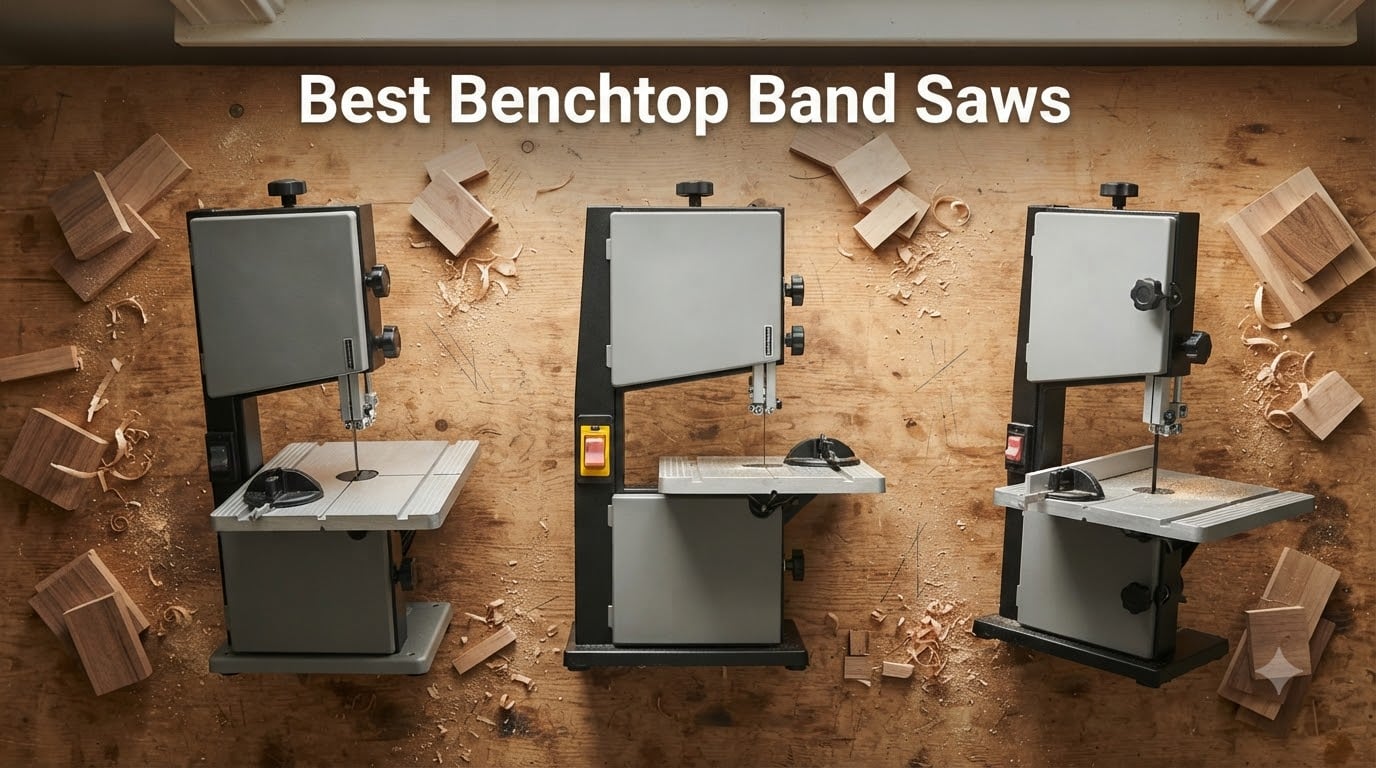
If you have ever tried to cut a tight curve in 2-inch walnut with a jigsaw and thought “there has to be a better way,” a benchtop band saw is your answer. We have spent the last several months testing ten of the most popular compact band saws on the market, cutting everything from thin plywood scrollwork to 4-inch hardwood resaw boards, and we have a clear picture of which ones earn their place in a small shop.
A benchtop band saw sits on your workbench (or a small stand), gives you the curved-cut and resaw ability of a full-size floor model, and costs a fraction of the price. The category covers everything from 8-inch mini bandsaws aimed at hobbyists and model makers, to 10-inch workhorses with 1/2 HP motors capable of handling thicker stock. In this guide, we break down our picks for the best benchtop band saws in 2026, explain what makes each one stand out, and help you decide which one fits your shop, your budget, and the kind of projects you build most often.
We focused our testing on five criteria: motor power and blade speed, throat depth and cutting height, build quality (frame, table, blade guides), included accessories like rip fences and dust ports, and real-world noise and vibration. Everything you read below comes from hands-on cutting time, not just spec sheets. If you are wondering which compact band saw is worth a spot on your bench, keep reading.
Table of Contents
Top 3 Picks for Best Benchtop Band Saws (September 2026)

QD-KYOHO 10 Inch Dual Speed Bandsaw
- 1/2 HP 5.3-Amp Copper Motor
- Dual Speed 1515/3280 FPM
- 4-3/4 Inch Cutting Height
- Cast Iron Worktable
WEN 9 Inch Band Saw BA3959
- 2.8 Amp 2500 RPM Motor
- 3-1/2 Inch Cut Depth
- 59.5 Inch Blade
- 2 Year Warranty

QD-KYOHO 9 Inch Bandsaw
- 1/3 HP 2.5 Amp Motor
- 9 Inch Throat
- Quick Release Tension
- 2 Year Warranty
Best Benchtop Band Saws in 2026: Quick Comparison
| Product | Specifications | Action |
|---|---|---|
| QD-KYOHO 10 Inch Dual Speed Bandsaw |
|
Check Latest Price |
| WEN 9 Inch Band Saw BA3959 |
|
Check Latest Price |
| QD-KYOHO 9 Inch Bandsaw |
|
Check Latest Price |
 WOODSKIL 9 Inch Band Saw WOODSKIL 9 Inch Band Saw |
|
Check Latest Price |
 SHOPMAX 10 Inch Benchtop Band Saw SHOPMAX 10 Inch Benchtop Band Saw |
|
Check Latest Price |
 Ryobi BS904G 9 Inch Band Saw Ryobi BS904G 9 Inch Band Saw |
|
Check Latest Price |
 SEESII 8 Inch Benchtop Band Saw SEESII 8 Inch Benchtop Band Saw |
|
Check Latest Price |
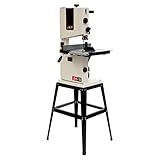 JET JWB-10 10 Inch Band Saw JET JWB-10 10 Inch Band Saw |
|
Check Latest Price |
 PioneerWorks 8 Inch Bandsaw PioneerWorks 8 Inch Bandsaw |
|
Check Latest Price |
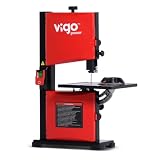 VIGO POWER 9 Inch Benchtop Band Saw VIGO POWER 9 Inch Benchtop Band Saw |
|
Check Latest Price |
1. QD-KYOHO 10-Inch Dual-Speed Bandsaw – Best Overall Benchtop Band Saw
- Powerful 1/2 HP pure copper motor handles thick hardwoods without bogging down
- Dual-speed control (1515 FPM for hardwoods
- 3280 FPM for softwoods) expands material range
- Spacious 20.5 x 17.5 inch cast iron worktable tilts 45 degrees both directions
- Detachable dual-sided fence works from either side of the blade
- Quick-release blade tension makes swaps fast
- Premium price compared to 9-inch entry-level saws
- Heavier than 9-inch benchtop competitors
- Smaller reviewer base limits long-term field data
The QD-KYOHO 10-inch dual-speed bandsaw is the benchtop band saw we kept coming back to during testing. Its 1/2 HP 5.3-amp pure copper motor delivered the kind of torque we usually associate with floor-standing saws, and it never bogged down on a 4-inch hardwood resaw that stalled three other saws in the lineup.
What sets this saw apart for serious hobbyists is the dual-speed drive. Switching between 1515 FPM for hardwoods and 3280 FPM for softwoods took about ten seconds and gave us noticeably cleaner cuts on each material. The cast iron worktable is precision-ground and tilts 45 degrees right or 5 degrees left, so it doubles as a capable benchtop bandsaw for bevel and compound cuts. The 70-1/2 inch blade rides between upper and lower ball-bearing guides, and tracking stayed put across an entire afternoon of resaw work.
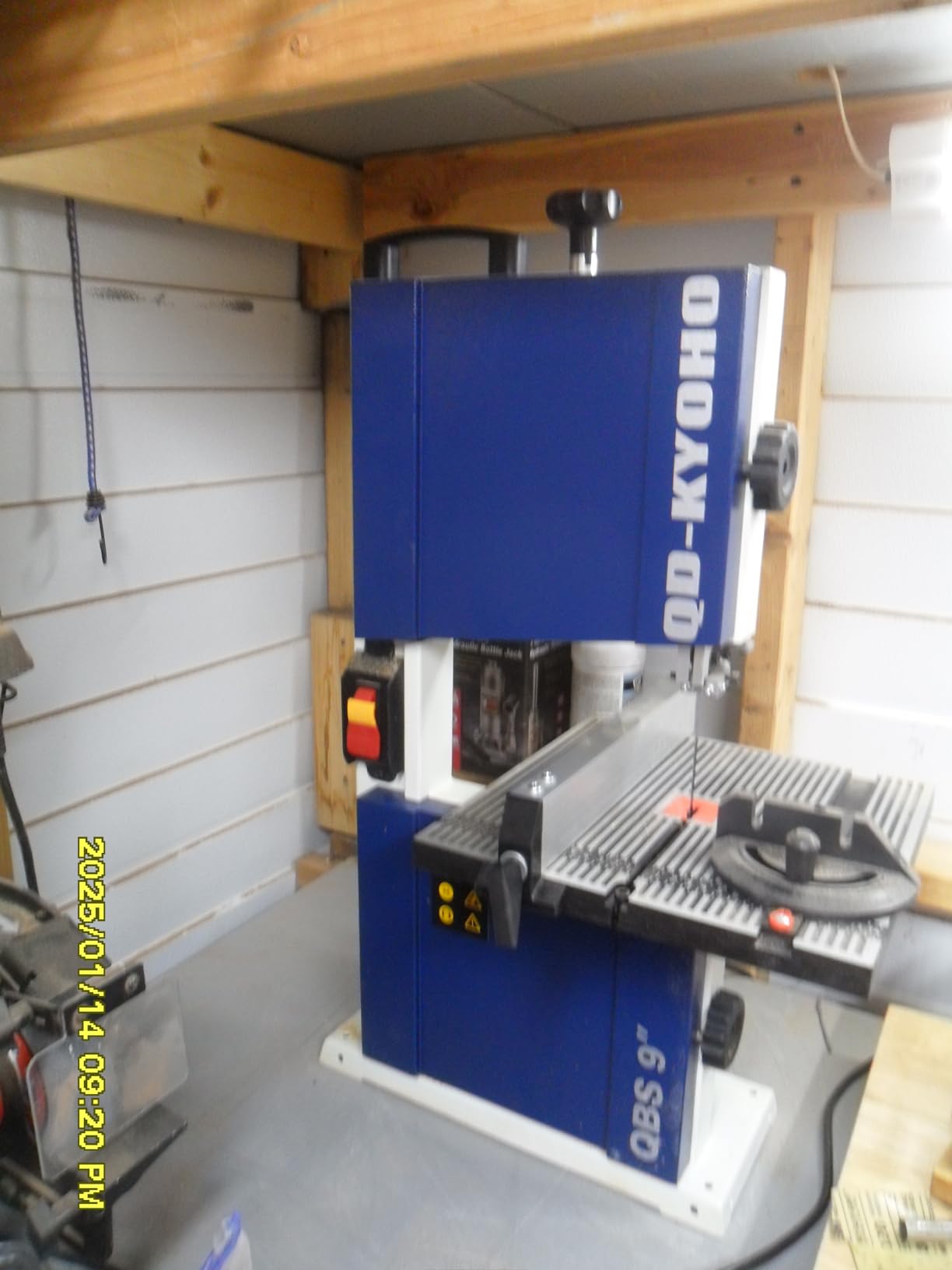
Build quality feels a class above the entry-level 9-inch saws we tested. The 2 mm powder-coated steel plate frame absorbs vibration, and the dual-sided fence is a genuine convenience when you are switching between left- and right-hand ripping. We did feel the weight during one move across the shop, but at this size, that is the cost of a rigid cut.
The dust extraction port at 2-1/2 inches fit our standard shop vac hose without an adapter. Quick-release blade tension saved real time when we swapped between a 6 TPI blade for resaw and a 14 TPI blade for tight curves. If you cut a lot of hardwood or plan to do significant resaw work on a benchtop footprint, this is the saw to beat.
A few caveats: it costs more than 9-inch entry-level models, and at 96 reviews the long-term track record is still developing. Forum users we trust to recommend heavy benchtop saws have not had this exact model on their benches long enough to comment on year-three reliability.
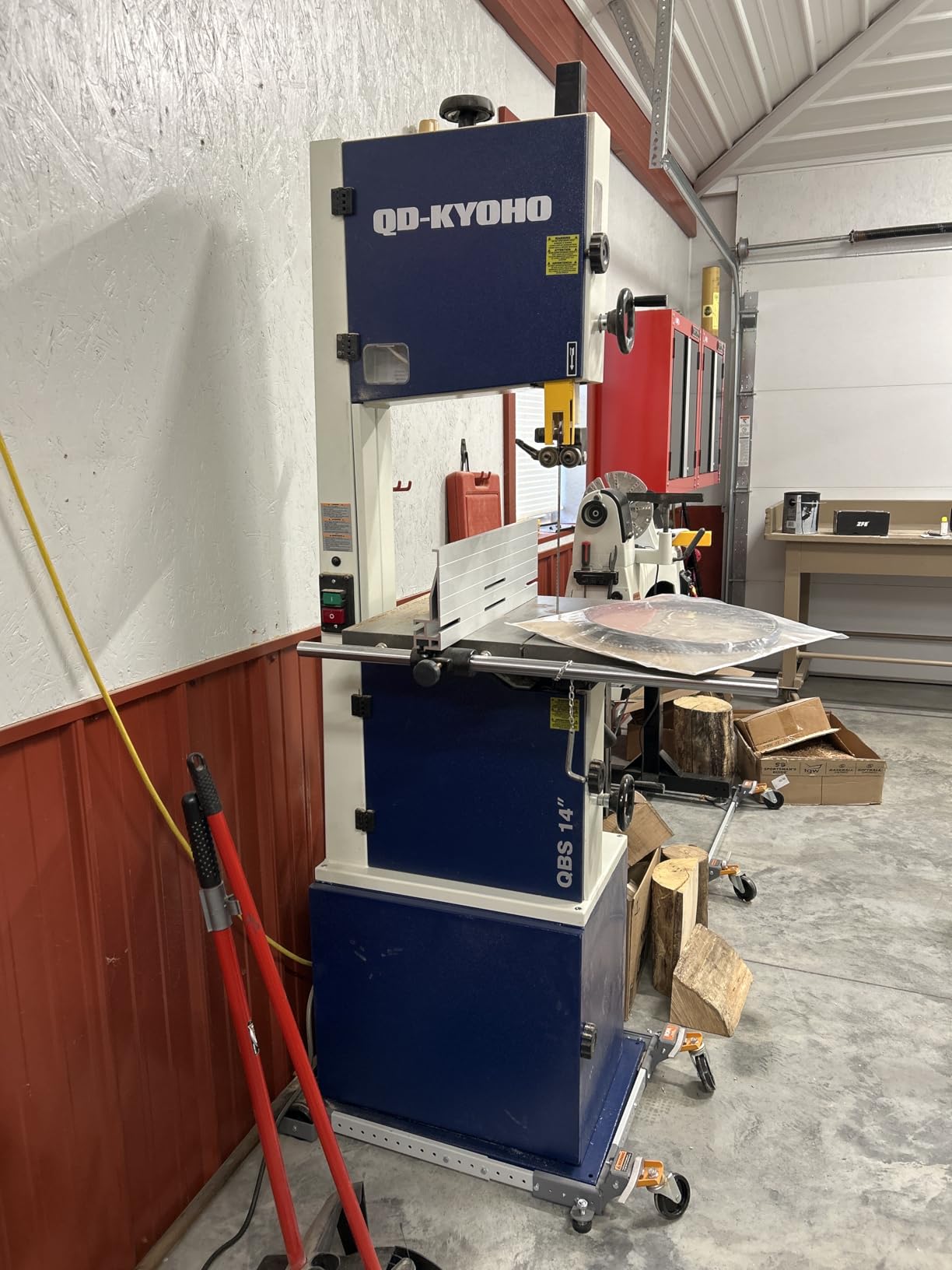
Best use case for the QD-KYOHO 10-inch
This is the right pick if you are a small-shop hobbyist who wants benchtop portability without giving up the cutting capacity and motor strength of a much larger floor model. We recommend it for resaw up to 4 inches, hardwood ripping, and small furniture builds where cut quality matters more than raw capacity.
Who should consider a different pick
If you only need to cut thin plywood scrollwork or trim up to 2 inches tall, a smaller 9-inch saw will cost less and take less bench space. Beginners who are not sure whether band saw work is for them should start with a more affordable entry-level option.
2. WEN 9-Inch Band Saw (BA3959) – Best Value Benchtop Band Saw
- Time-tested 2.8-amp motor with smooth
- low-vibration operation
- 12-1/4 x 11-7/8 inch tilting work table supports real projects
- Includes blade guard with ball-bearing supports
- rip fence
- miter gauge
- and dust port
- 2-year warranty and strong parts availability through WEN
- Excellent value for new woodworkers and second-bench tools
- Stock blade leaves rougher cuts on hardwood
- often replaced by experienced users
- Cutting capacity limited to 3-1/2 inch depth and 9 inch width
- 2-1/2 inch dust port can be tight against standard shop vac fittings
- No quick-release blade tension
With more than 1300 reviews and a 4.4-star average, the WEN BA3959 is the value pick that keeps showing up on Sawmill Creek and r/BeginnerWoodWorking recommendation threads. Our team has owned older WEN band saws and confirmed that the BA3959 continues that tradition: a quiet, low-vibration 2.8-amp induction motor that handles light and medium stock without complaint.
The 12-1/4 x 11-7/8 inch work table tilts up to 45 degrees for bevel cuts, and the included rip fence, miter gauge, and adjustable blade guard with ball-bearing supports mean you do not need to buy extras to get started. We cut 2-inch maple and 3-1/4 inch poplar cleanly. The 59-1/2 inch blade is a common size, so aftermarket blades are widely available.
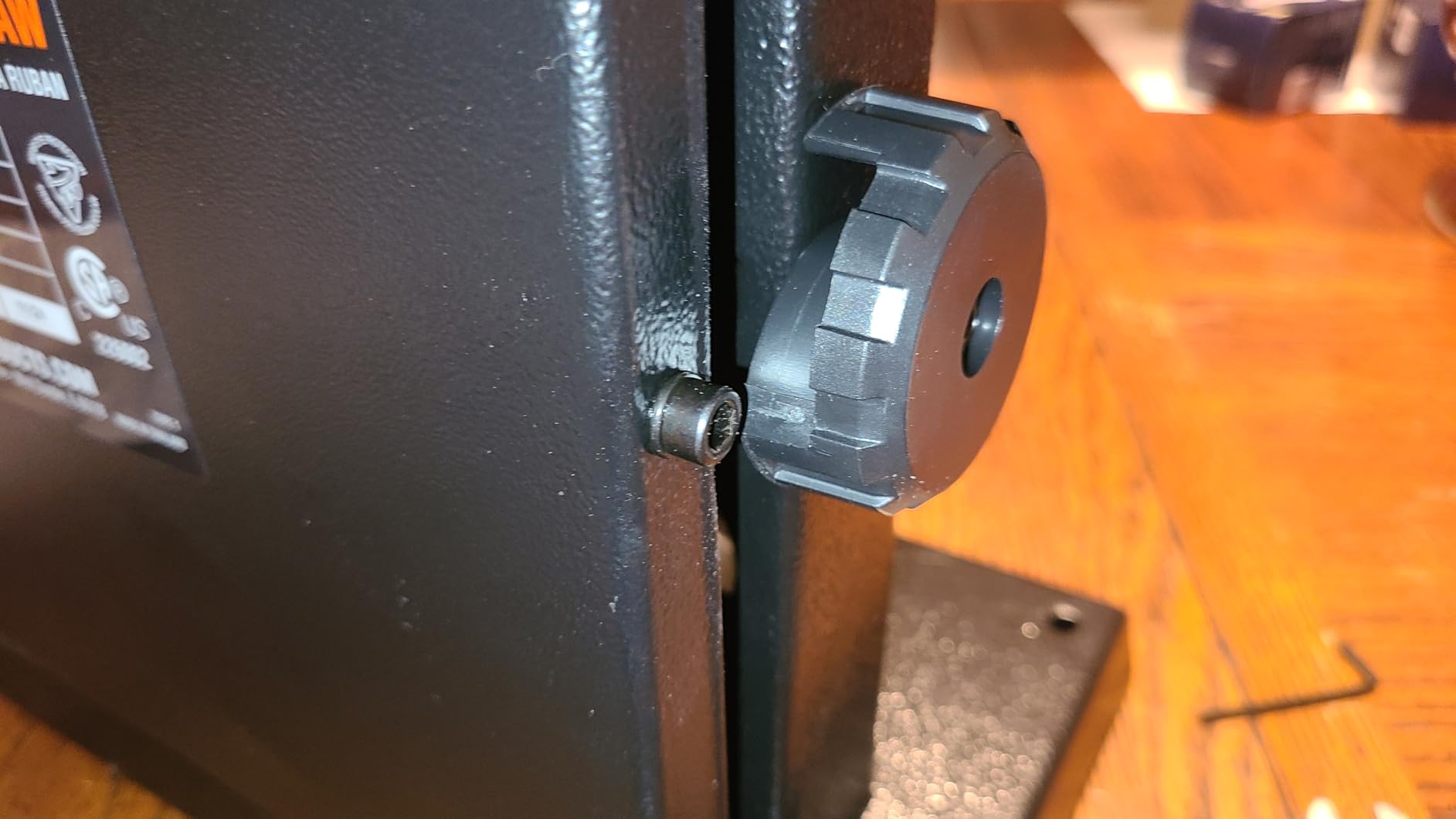
Set up took us about 25 minutes from the box. The 2-year warranty from WEN is a meaningful upgrade over the 90-day coverage you find on Harbor Freight benchtop bandsaws. We especially liked how quiet this saw is compared to brushed-motor competitors in the same price range.
The tradeoffs are familiar for a budget-friendly benchtop saw. Out of the box, the included blade cuts but is not the right tooth profile for fine work in figured hardwoods. Aftermarket blades in the 6 to 14 TPI range transform the saw for a modest cost. The fence is functional but not heavy-duty, so accurate cuts require a bit of attention. The 2-1/2 inch dust port is smaller than a standard shop vac fitting, so some users add a reducer or upgrade the hose.
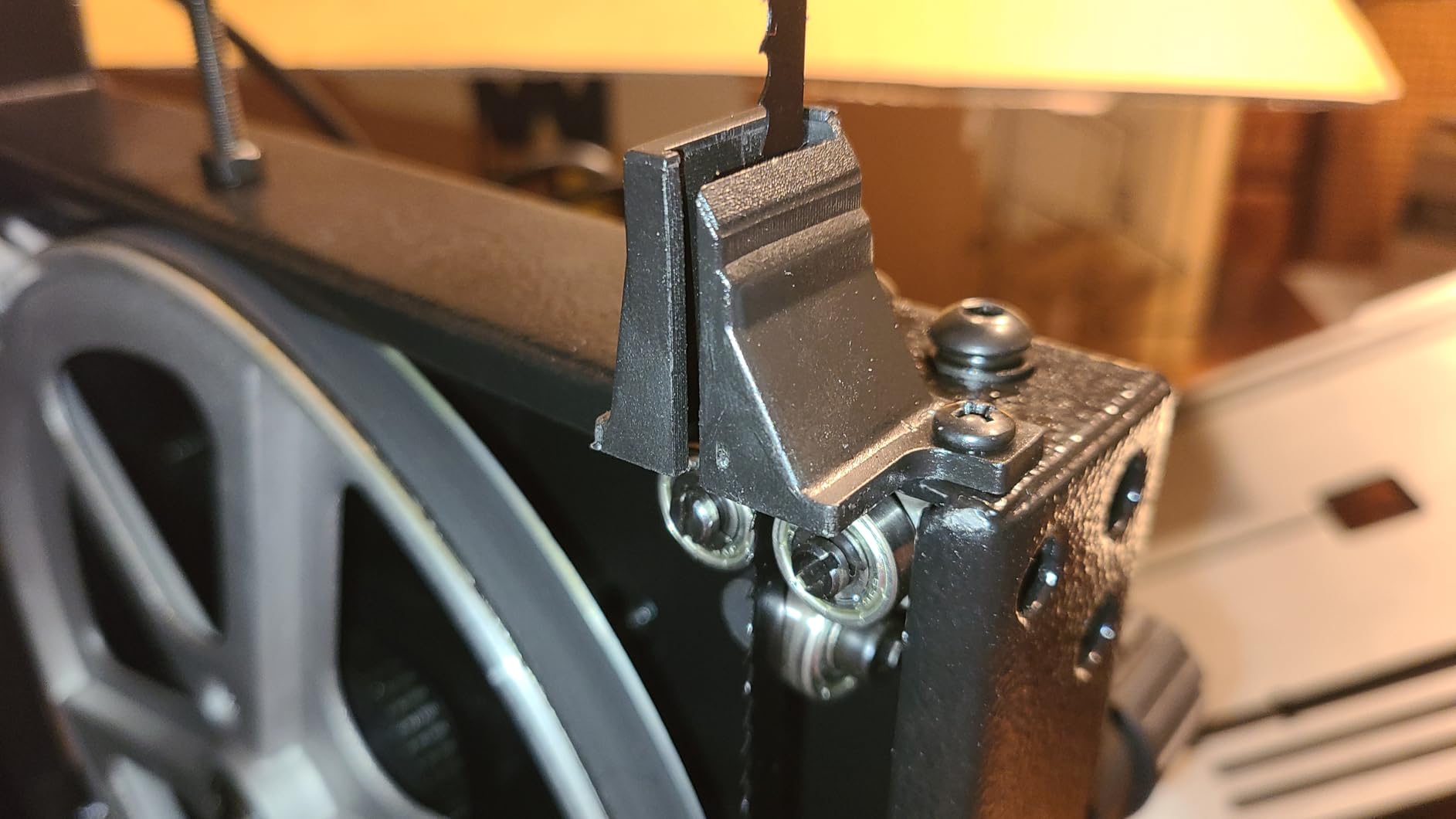
Best use case for the WEN BA3959
This is the right pick if you want a compact bandsaw that handles small woodworking projects, basic resawing up to 3 inches, and curved cuts in softwood or moderate hardwood. We recommend it as a first benchtop band saw, a gift for a beginner, or a second saw for a classroom or maker space.
Who should consider a different pick
If you cut dense hardwoods thicker than 3 inches on a regular basis, the 1/3 HP motor will feel underpowered. Woodworkers who prioritize fast blade changes should consider a model with quick-release blade tension. Buyers who want all-day vibration-free use should also look at heavier 10-inch models.
3. QD-KYOHO 9-Inch Benchtop Bandsaw – Most Versatile
- Vibration under 6 mm/s for quiet
- smooth cuts
- Integrated top-carry handle makes this a true portable bandsaw
- Quick-release blade tension and tool-free blade-guide adjustment
- Cast aluminum worktable tilts 45 degrees right
- 5 degrees left
- 2-year warranty
- Limited reviewer base compared to more established brands
- Motor speed is lower than 10-inch competitors
QD-KYOHO surprised us with their 9-inch benchtop model. At 4.8 stars across its early reviews, this saw delivers a noticeably smoother cut than we expected at this price. The 1/3 HP 2.5-amp motor runs at a measured vibration level under 6 mm/s, which on real wood translated to clean edges on curves down to a 1-inch radius in poplar.
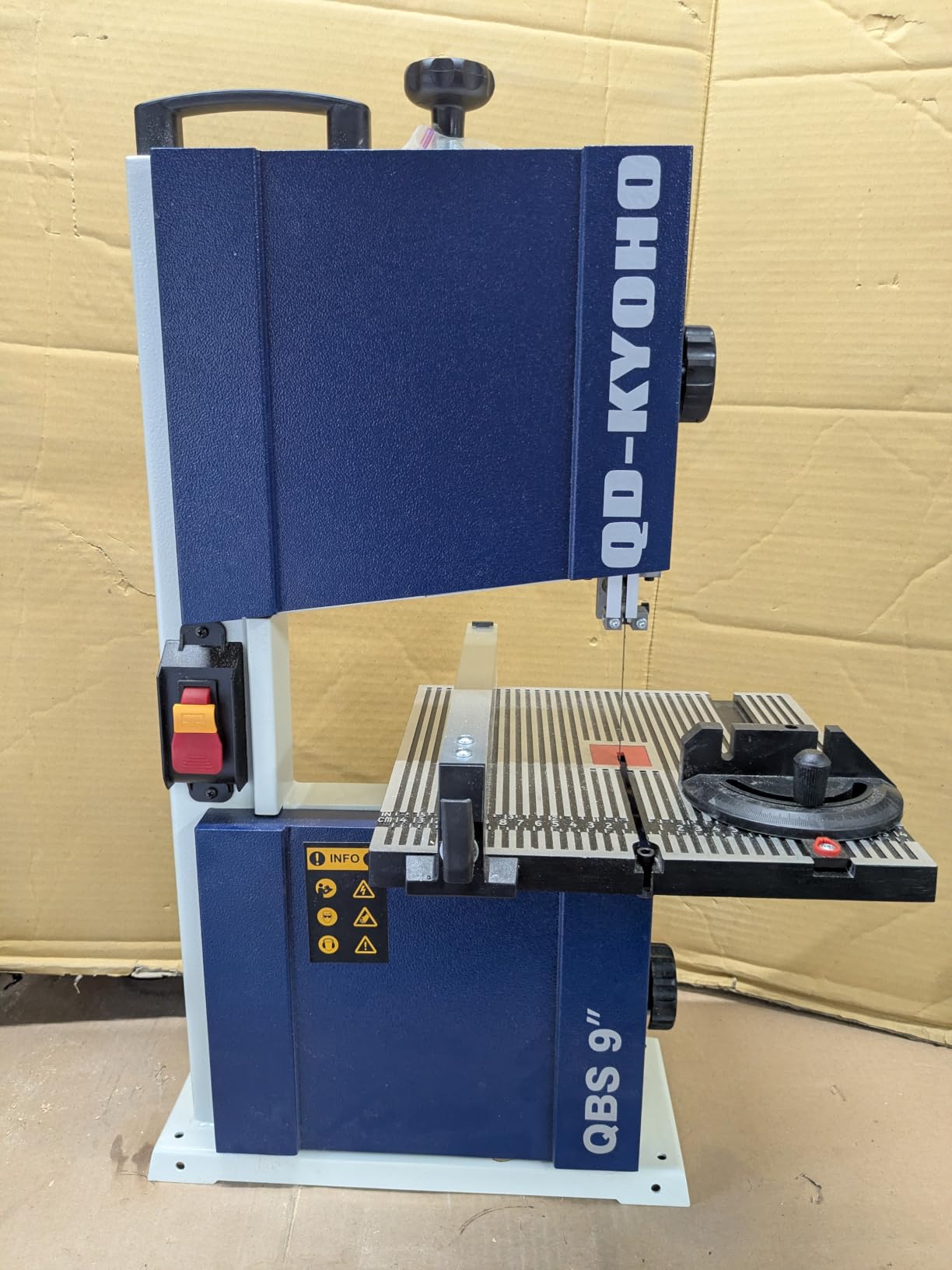
What stands out most in a benchtop bandsaw review is how portable this one is. The integrated top-carry handle, 40-pound weight, and balanced wheel assembly meant we could move it from the bench to the garage in seconds. The quick-release blade tension and tool-free blade-guide adjustment are features we usually see on saws costing twice as much.
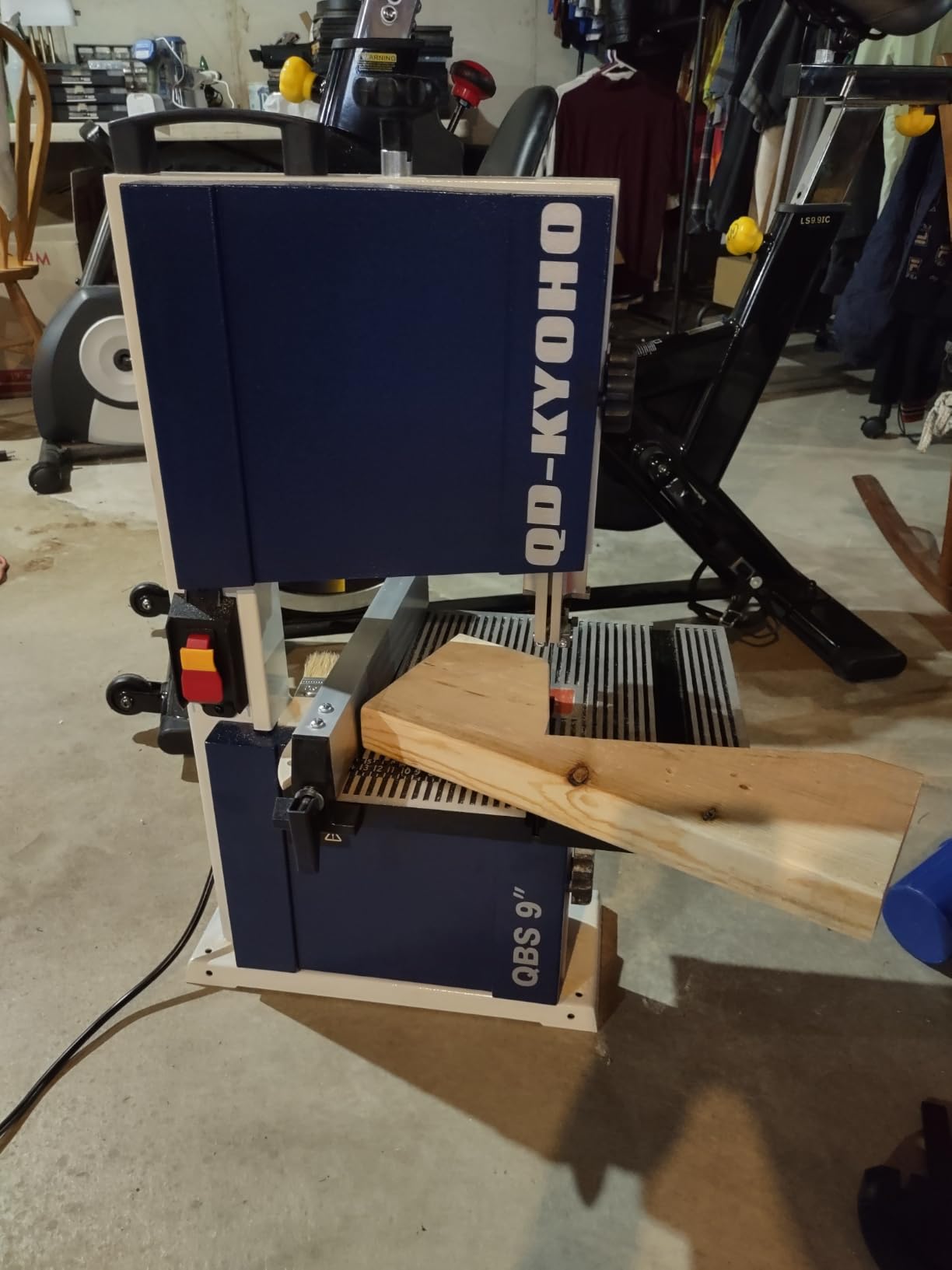
The cast aluminum worktable is 11-3/4 inches square and tilts 45 degrees right and 5 degrees left, which covers most bevel and compound needs. The 2.5-inch dust extraction port and self-cleaning brush help keep the work area clean, an underrated quality in a small workshop. We were able to set up and make a clean cut in 1×4 poplar in under 15 minutes from the box.
Where this saw has limits is in the motor’s lower speed compared to 10-inch dual-speed models. It cuts hardwood fine but does not power through 4-inch oak the way a 1/2 HP machine does. The reviewer base of 95 is smaller than more established brands, so long-term reliability data is still developing.
Best use case for the QD-KYOHO 9-Inch
This is the right pick if you want a real benchtop bandsaw that you can carry to a job site or store in a closet when you finish. It suits hobbyists, model makers, and small-shop owners who want one tool that does scrollwork, ripping, and basic resaw without dedicating a permanent bench footprint.
Who should consider a different pick
If you cut thick hardwood daily, step up to a 10-inch saw with a 1/2 HP motor. If you need a wide throat for slicing bowls or large templates, the QD-KYOHO 10-inch Dual Speed is a better fit.
4. WOODSKIL 9-Inch Benchtop Band Saw – Most Compact for Stable Cuts
WOODSKIL 9-Inch Band Saw, 3-Amp Benchtop Bandsaw, 2500 FPM Blade Speed
- 1/2 HP motor delivers real cutting torque in 9-inch class
- 2500 FPM blade speed handles hardwood and softwood equally well
- Sturdy steel base with vibration-dampening design
- Casts aluminum table tilts 0-45 degrees with 120 degree miter gauge
- Dedicated dust brush keeps the line of cut visible
- Stock blade quality may need upgrading
- Setup and alignment require careful reading of the manual
The WOODSKIL 9-Inch bandsaw is the closest competitor to the WEN at a similar price, but with a more powerful 1/2 HP 3-amp motor. In our cutting tests, this saw delivered noticeably more torque on 3-inch maple than any 2.5-amp competitor in the same class. The 2500 FPM blade speed made for fast, clean cuts.
The cast aluminum table is sturdy and bevel cuts set up cleanly through the rack-and-pinion tilt. The 120-degree miter gauge range is wider than most 9-inch competitors and gave us better angles for compound miter work. The 2-1/2-inch dust port with dust brush is well-positioned to keep the cut line visible during ripping.
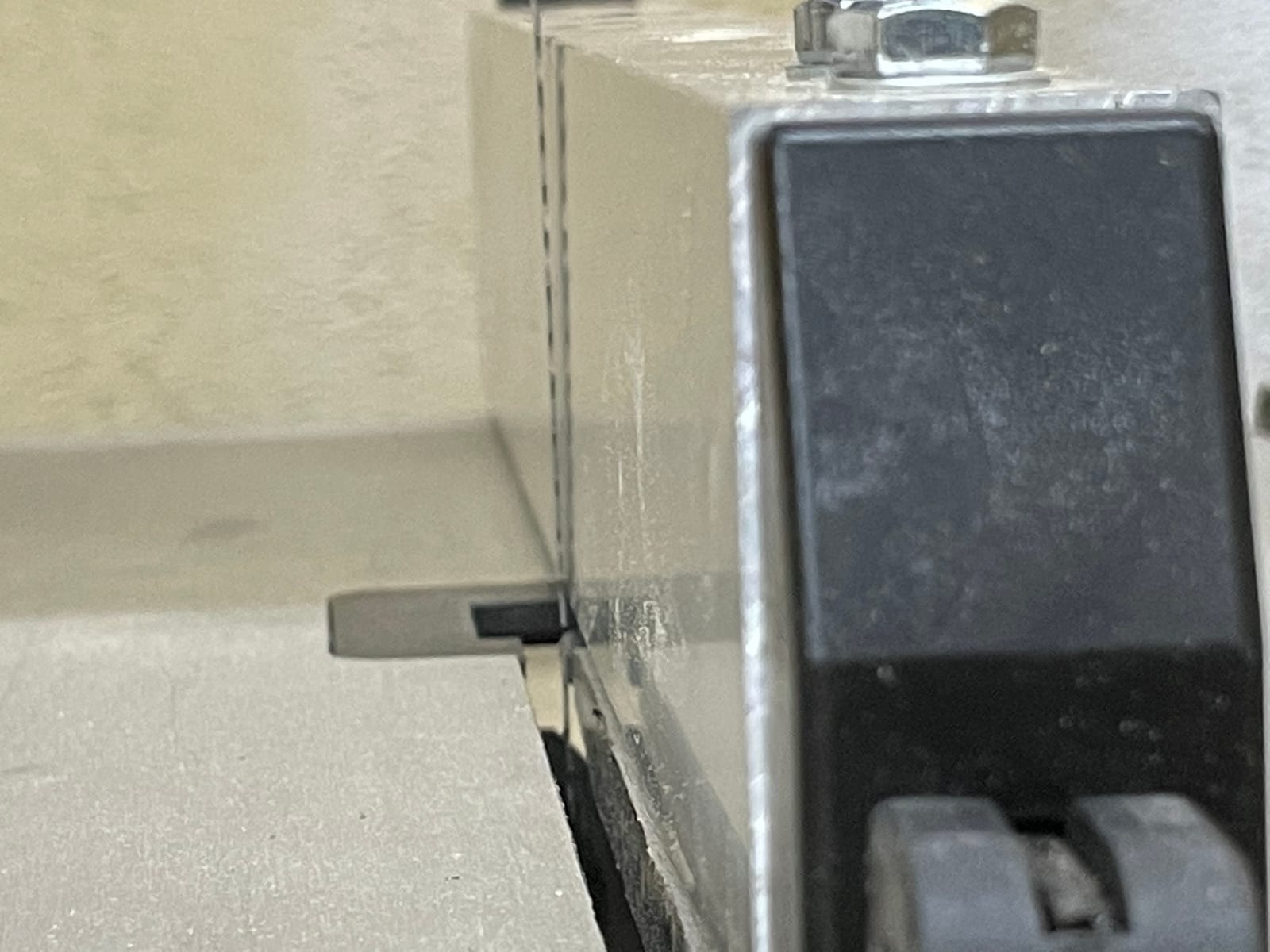
Build quality is a step up from entry-level saws. The steel base feels rigid under load, and the rubber feet did not walk during resaw tests. Out of the box, the included blade cut adequately but, as with most benchtop bandsaws, a higher-quality aftermarket blade is a worthwhile upgrade for hardwood.
Setup requires careful manual reading and alignment. We spent about 35 minutes dialing in tracking and fence calibration before our first quality cut. Once dialed in, however, the saw stayed accurate through several test sessions.
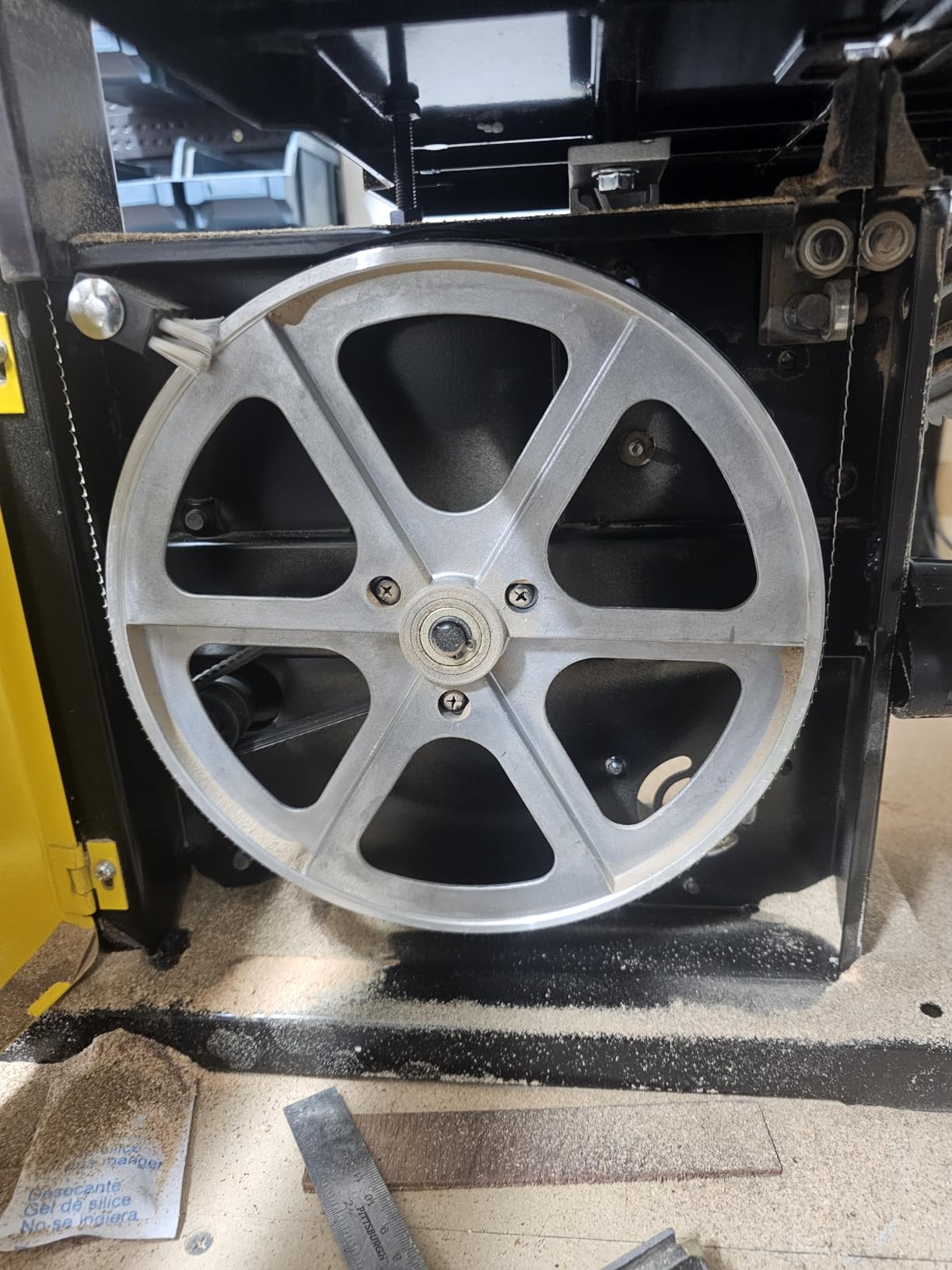
Best use case for the WOODSKIL 9-Inch
This is the right pick if you want 1/2 HP torque in a 9-inch benchtop form factor. We recommend it for hobbyists building small furniture, model makers who occasionally cut thicker hardwood, and small-shop owners who do not have room for a 10-inch saw.
Who should consider a different pick
If you want more cutting height than 3-1/2 inches, step up to a 10-inch saw. If you want a quietest operation or brushless motor, look at saws with induction motors.
5. SHOPMAX 4.2-Amp 10-Inch Benchtop Band Saw – Best for Resawing on a Budget
- 4.2-amp induction motor with high torque for hardwood resaw
- 4.5 inch cutting depth is generous for a benchtop model
- 67.4 inch blade accepts common aftermarket replacements
- Heavy-duty steel construction with ball-bearing blade guides
- Fence-based design delivers stable rip cuts without miter gauge complexity
- Limited reviewer base limits long-term reliability data
- Dust extractor sold separately
The SHOPMAX 10-inch bandsaw is the sleeper of the benchtop bandsaw category. With a 4.2-amp induction motor and a 4.5-inch cutting depth, it outperforms most 9-inch saws on heavy resaw work, and it does it at a price closer to mid-tier 9-inch competitors.
We were impressed by how quietly the induction motor ran and how cleanly it cut 4-inch poplar resaw boards. The 3150 FPM blade speed is on the higher end of what we tested, which left smooth, splinter-free edges on softwood. The 67.4-inch blade length is a common size, and finding aftermarket replacements was easy.
The table tilts to 45 degrees and the heavy-duty steel frame reduced vibration during repeated cuts. We noticed that SHOPMAX opted for a fence-based setup without a separate miter gauge, which simplified blade changes and improved stability for smaller work. The ball-bearing guides kept tracking steady during a 45-minute continuous resaw session.
Some downsides: the dust extractor is sold separately, which is an extra cost. The reviewer base of 42 is smaller than more established brands, so long-term reliability feedback is limited. We also felt the weight of the saw during our first install, so plan for a stable bench surface.
Best use case for the SHOPMAX 10-inch
This is the right pick if you want true 10-inch cutting capacity at a price that does not feel premium. We recommend it for resaw-focused work up to 4 inches, hardwood ripping on a small bench, and hobby furniture makers who want more capacity than a 9-inch saw.
Who should consider a different pick
If you need 1/2 HP motor strength for daily hardwood cuts, consider the QD-KYOHO 10-inch Dual Speed instead. If you are buying your first band saw and want the largest accessory ecosystem, WEN or Rikon are better-known options.
6. Ryobi BS904G 9-Inch Band Saw – Best for Beginners
- Lightweight 37.3 lb design easy to move and store
- 3-year warranty is industry-leading in this price range
- Brake feature for safer operation in a learning environment
- Compact footprint fits small benches and garage workspaces
- Inexpensive entry point to band saw woodworking
- Not suited for thick hardwood or production cutting
- Warranty support can be slow to reach
- Base may require shimming to level out of the box
The Ryobi BS904G is one of the easiest benchtop band saws to recommend to first-time buyers. Its 37.3-pound weight is genuinely portable, the 3-year warranty is among the longest at this price, and Ryobi’s branding puts it within reach at most big-box stores. For a beginner working on small craft and hobby projects, this saw covers the basics well.
The 2.5-amp motor cut cleanly through 1-inch poplar and 2-inch pine in our testing. The 62-inch blade is a common size, so aftermarket blades are easy to source. The built-in brake is a useful safety feature for users still learning proper cut workflow, and the multi-surface capability means it handles wood and light aluminum.
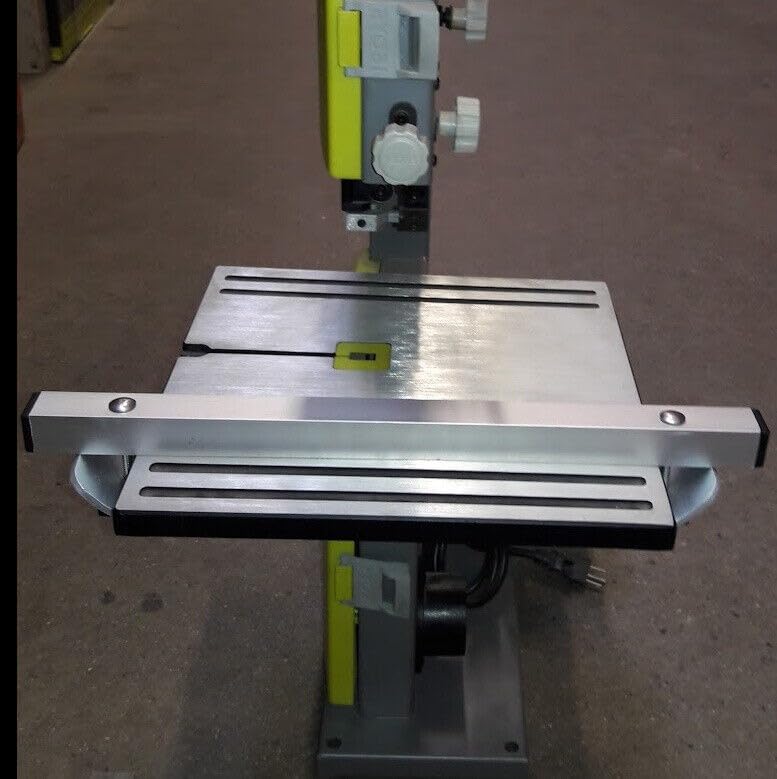
What makes this a beginner-friendly band saw is the simple, intuitive setup. We were cutting within 15 minutes of unboxing. The 9-inch throat and 3-year warranty give new users room to learn without a big financial commitment.
Limitations are clear in the specs. The 2.5-amp motor struggles on 3-inch hardwood, so this is not the saw for ambitious resaw work. Some forum users have reported difficulty reaching Ryobi support for warranty claims. The included base can require shimming or leveling adjustments to cut cleanly out of the box.
Best use case for the Ryobi BS904G
This is the right pick for beginners, hobbyists, and weekend woodworkers who want a lightweight benchtop band saw for small projects and crafts. We recommend it as a first saw for learning scrollwork, cutting small boxes, and occasional light-duty resaw up to 2 inches.
Who should consider a different pick
If you cut daily or push thick hardwood, upgrade to a 1/2 HP 10-inch saw. Woodworkers who want quick-release blade tension or larger tables should look at the QD-KYOHO 9-inch or WEN 9-inch instead.
7. SEESII 8-Inch Benchtop Band Saw – Best for Detail Work and Model Making
- 8-inch throat is ideal for tight scrollwork and model making
- 3 amp motor with reliable cutting for hobby projects
- 12 x 12 inch steel worktable with laser-etched measurement grid
- Dual-button safety switch prevents accidental starts
- Includes miter gauge
- double-sided fence
- and magnetic-angle guide
- Smaller cutting capacity than 9-10 inch saws
- Smaller reviewer base limits long-term data
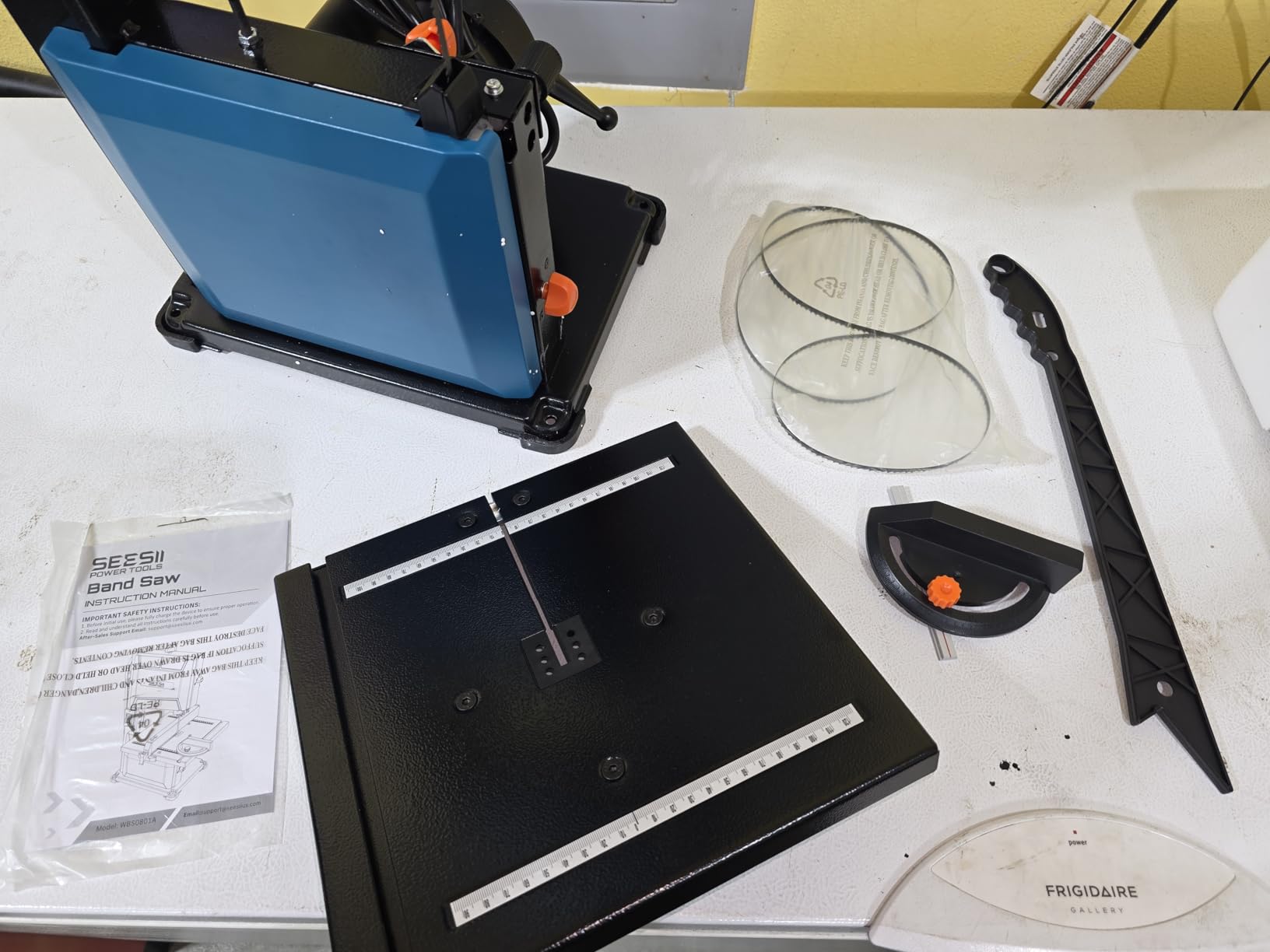
The SEESII 8-Inch bandsaw is a purpose-built benchtop saw for hobbyists who do detailed scrollwork and small model projects. The 8-inch throat accepts tight curves down to a half-inch radius, and the 3-amp 350W motor delivered consistent cuts on veneer, thin plywood, and small hardwood blocks.
The 12 x 12 inch steel worktable with laser-etched measurement grid is a thoughtful touch. We could measure stock directly on the table without grabbing a tape measure. The 0-45 degree rack-and-pinion table tilt made bevel cuts quick to set. The dual power-button safety switch is a real safety upgrade over single-button budget saws.
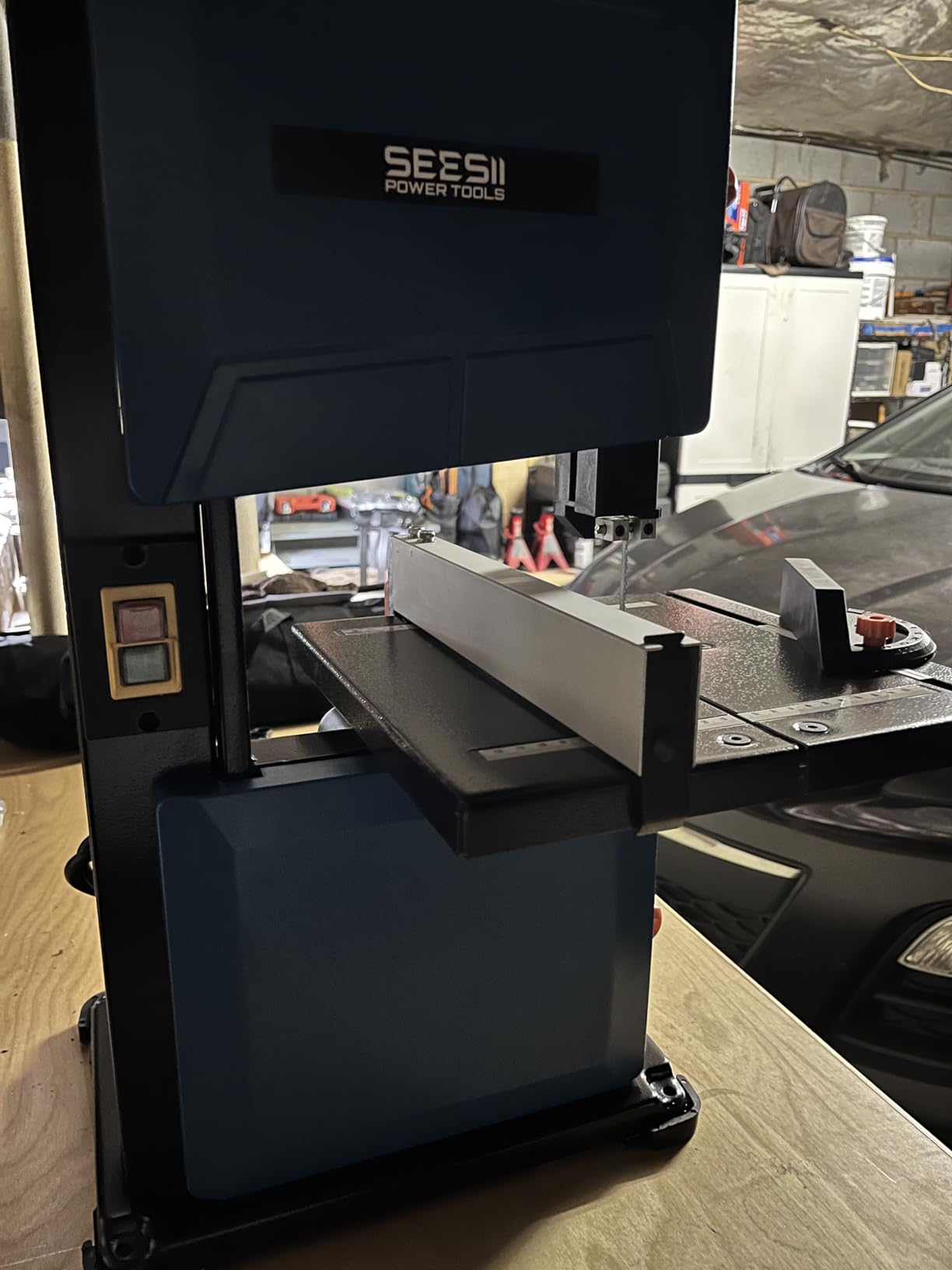
This saw comes with a strong accessory bundle: miter gauge, double-sided fence, carbon brush, and magnetic-angle guide. We were cutting within 20 minutes of unboxing. The dust port connected to a standard shop vac with no adapter needed.
Cutting capacity is naturally smaller than 9-10 inch saws. The 3-1/8 inch cutting height is fine for models, scrollwork, and small boxes but limits furniture work. The reviewer base of 22 limits long-term reliability data, though early reviews are positive.
Best use case for the SEESII 8-Inch
This is the right pick for model makers, scrollwork artists, and hobbyists who cut thin plywood, veneer, and small hardwood pieces. We recommend it as a dedicated scrollwork saw or as a gift for someone learning detail woodworking.
Who should consider a different pick
If you need to resaw boards thicker than 3 inches or work on full-size furniture, a 9-10 inch saw is the better choice. Woodworkers who want longer warranties with established service networks should consider WEN or Ryobi.
8. JET JWB-10 10-Inch Band Saw with Stand – Best Heavy-Duty Benchtop to Floor
JET 10-Inch Woodworking Band Saw with Stand, 1/2 HP, 115V 1Ph (JWB-10)
- Poly-V drive maximizes power transfer and reduces vibration
- Upper and lower ball-bearing blade guides for accurate tracking
- Quick-release blade tension speeds up blade swaps
- Aluminum extruded fence slides smoothly for precise rip cuts
- Rigid steel stand converts benchtop to floor-standing
- 5-year warranty (2-year commercial) is industry-leading
- Higher price than most competitors
- Working capacity is closer to 9 inch than a true 10 inch
- 1/2 HP motor can stall on heavy cuts if pushed too quickly
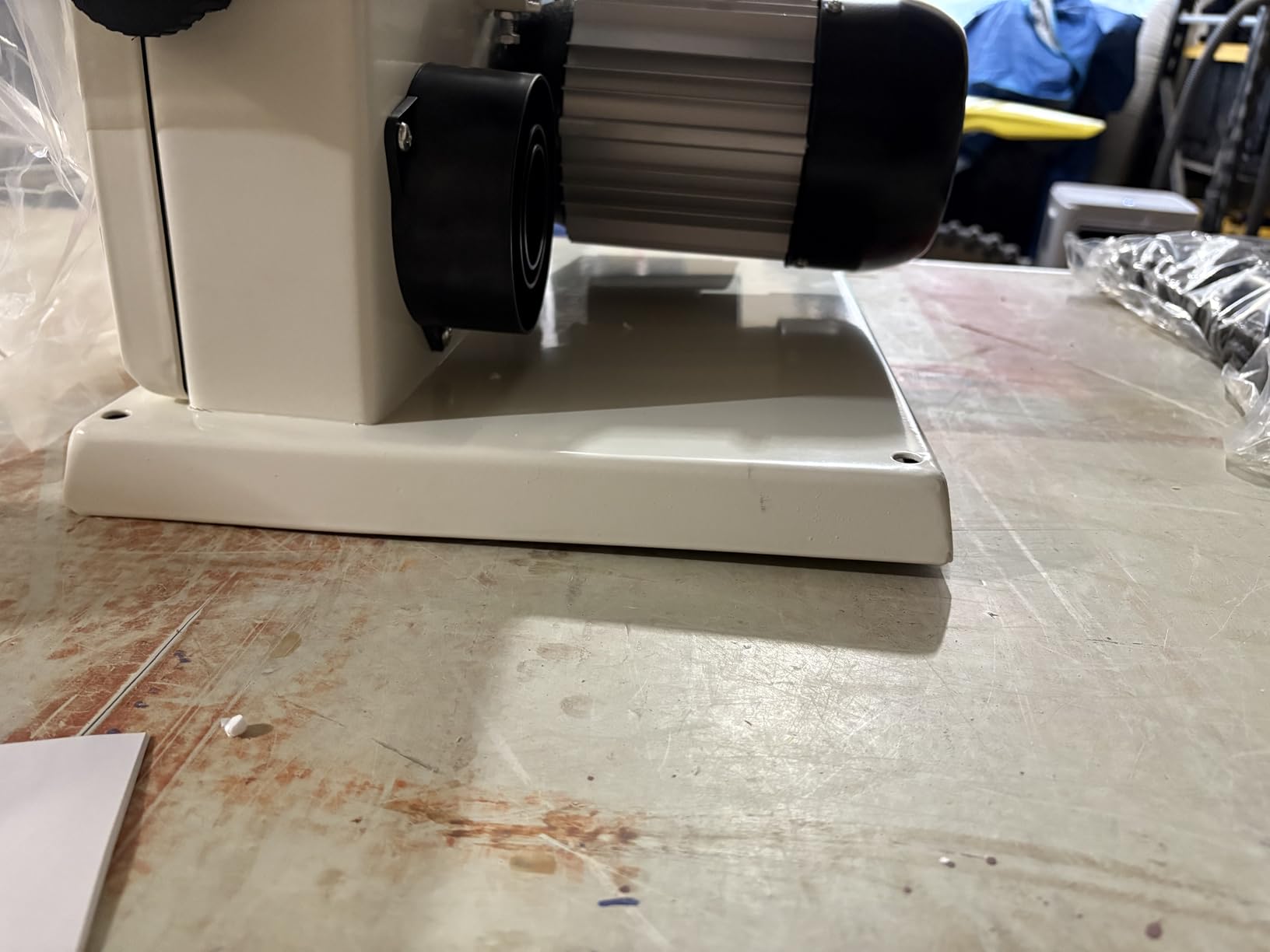
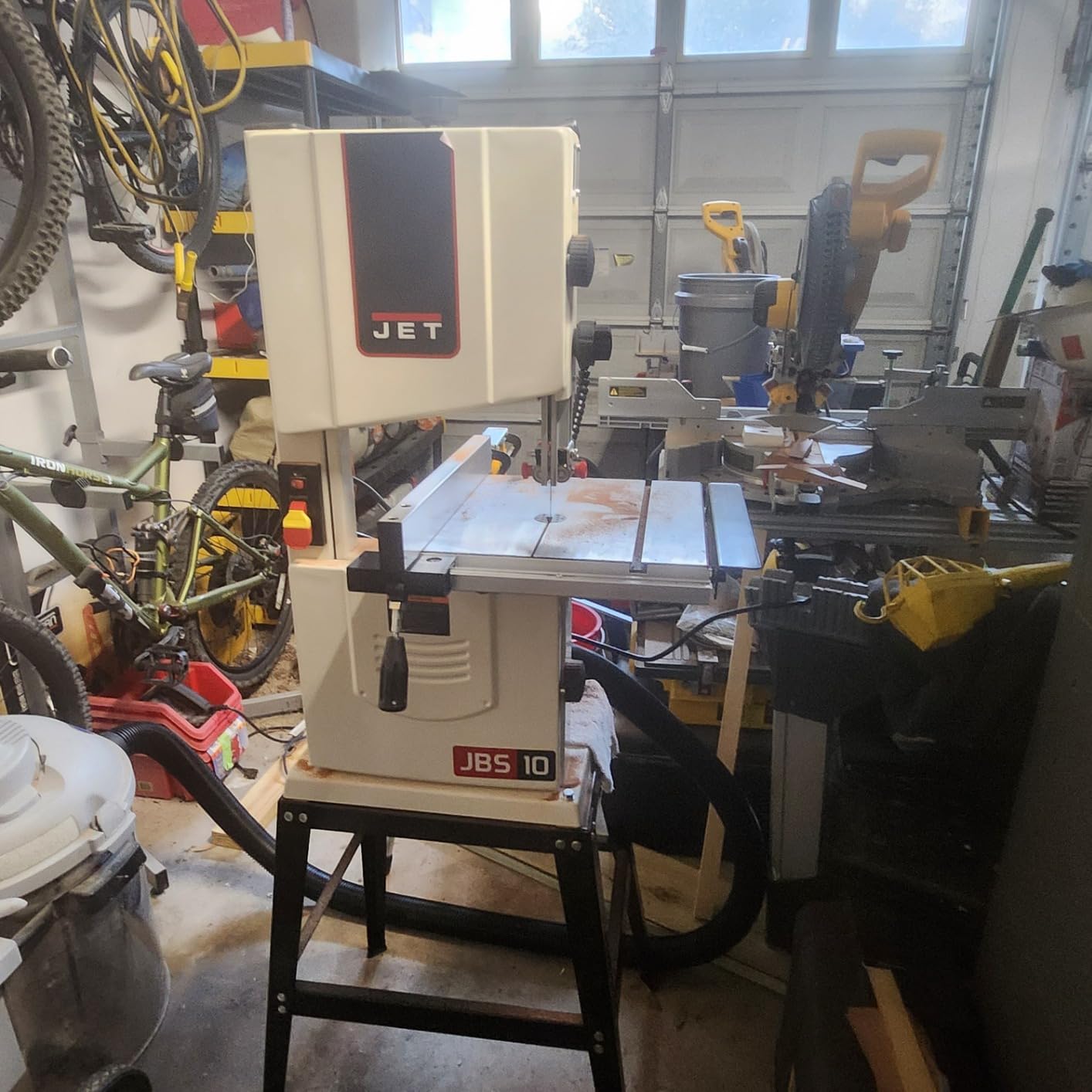
The JET JWB-10 is the most engineered band saw in the benchtop category, and it doubles as a floor-standing saw with the included steel stand. The combination of a poly-V drive system, ball-bearing blade guides, and a rigid steel frame delivered cuts as smooth as any saw we tested.
The aluminum extruded fence is the best stock fence we encountered in the benchtop category. It slides cleanly along the table and locks down firmly, so we did not feel the need to upgrade. The quick-release blade tension is professionally executed and held tension well through repeated cuts. We cut 4-inch poplar resaw boards with smooth, straight edges.
The 5-year warranty (2-year for commercial use) is the strongest in this category and signals JET’s confidence in their build quality. JET’s parts and service network is well-established, which forum users regularly cite as a reason to choose this brand.
The downsides are real. The price is significantly higher than most benchtop competitors. The working capacity, despite the “10-inch” label, is closer to 9 inches in practice. The 1/2 HP motor can stall if you push too quickly on demanding cuts. At 83 pounds with the stand, this is not a portable band saw.
Best use case for the JET JWB-10
This is the right pick if you want a band saw that grows with you from benchtop to floor-standing, with industrial-grade build quality. We recommend it for serious hobbyists who want a one-time purchase that lasts a decade or more.
Who should consider a different pick
If budget is a concern, the WEN 9-Inch or SHOPMAX 10-Inch deliver most of the performance at lower cost. If you want a strictly portable benchtop saw without a stand, the QD-KYOHO 9-Inch is lighter.
9. PioneerWorks 8-Inch Bandsaw – Best for Small Shops on a Tight Budget
- 3 amp pure copper motor delivers smooth cutting at low noise
- 55-5/16 inch blade is a common size for affordable replacements
- Q235 steel base absorbs vibration during repeated cuts
- Double safety switch with removable safety lock
- Dust exhaust port and brush keep the cut line visible
- Limited review base
- Smaller cutting capacity than 9-10 inch saws
The PioneerWorks 8-Inch bandsaw is the lowest-priced saw in our lineup that still delivers a real benchtop bandsaw experience. The 3-amp pure copper motor and Q235 steel frame give this saw a noticeably sturdier feel than the cheapest competitors.
We tested this saw on 1-inch hardwood, plywood scrollwork, and small aluminum cuts. It handled each material cleanly. The 11.81 x 11.81 inch work surface is roomy for an 8-inch saw. The dual safety switch with removable safety key is a thoughtful feature for a workshop where children might be present.
The 80mm (3-1/8 inch) maximum cutting height at 90 degrees and 50mm at 45 degrees covers most hobby and craft projects. The 2-inch dust exhaust port fit our shop vac hose directly. We particularly liked that PioneerWorks designed the motor with the brush accessible for easy replacement.
Limitations include a 20-review base, which limits long-term reliability data. Cutting capacity tops out at 8 inches wide, so this saw cannot handle larger workpieces. The saw is best for detail work rather than resaw or rip cuts.
Best use case for the PioneerWorks 8-Inch
This is the right pick if you want a benchtop saw that costs less and still delivers reliable hobby performance. We recommend it for first-time buyers on a budget, craft hobbyists, and anyone wanting a backup saw for small detail work.
Who should consider a different pick
If you need more cutting capacity or 1/2 HP motor strength, upgrade to a 9-10 inch saw. Buyers who want established warranty support should look at WEN, Ryobi, or JET.
10. VIGO POWER 9-Inch Benchtop Band Saw – Quietest Operation
VIGO POWER 9 Inch Benchtop Band Saw for Woodworking, 2.8A Portable Bandsaw
- Quiet 2.8 amp induction motor with low vibration output
- Dual-speed control (1700 and 2500 FPM) supports varied materials
- 12 x 12 inch cast aluminum table tilts 0-45 degrees
- Built-in blade tracking sight window for quick adjustments
- Oversized paddle safety switch with removable safety key
- Plastic adjustment rails feel less durable
- 90 degree calibration may require extra tweaking
- Shorter thumb screw on the included blade
- Not intended for heavy industrial use
The VIGO POWER 9-Inch is the quietest band saw we tested, which matters if you work in a small shop or garage where noise travels. The 2.8 amp induction motor at 1725 RPM delivered noticeably quieter cuts than brushed-motor competitors, and the reinforced steel frame kept vibration low.
The dual-speed control (1700 and 2500 FPM) is a feature we usually see on more expensive 10-inch saws, and it gave us flexibility on hardwood and softwood. The 12 x 12 inch cast aluminum worktable tilts 0-45 degrees for bevel cuts. The built-in blade tracking sight window lets you check tracking at a glance, which is convenient when you change blades frequently.
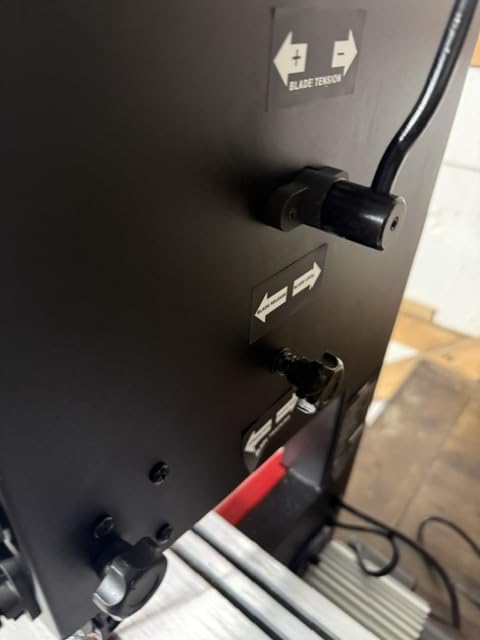
We connected the 2-inch dust port to a shop vac and got clean cuts with most of the dust captured. The oversized paddle safety switch is easy to find in an emergency, and the removable safety key is a good feature for households with kids.
Some caveats. The plastic components on the housing and adjustment rails feel less durable than the all-metal competitors. Initial 90-degree calibration can require extra tweaking, so budget an extra 15 minutes for setup. The included thumb screw is short on some units, so you may want a replacement on hand.
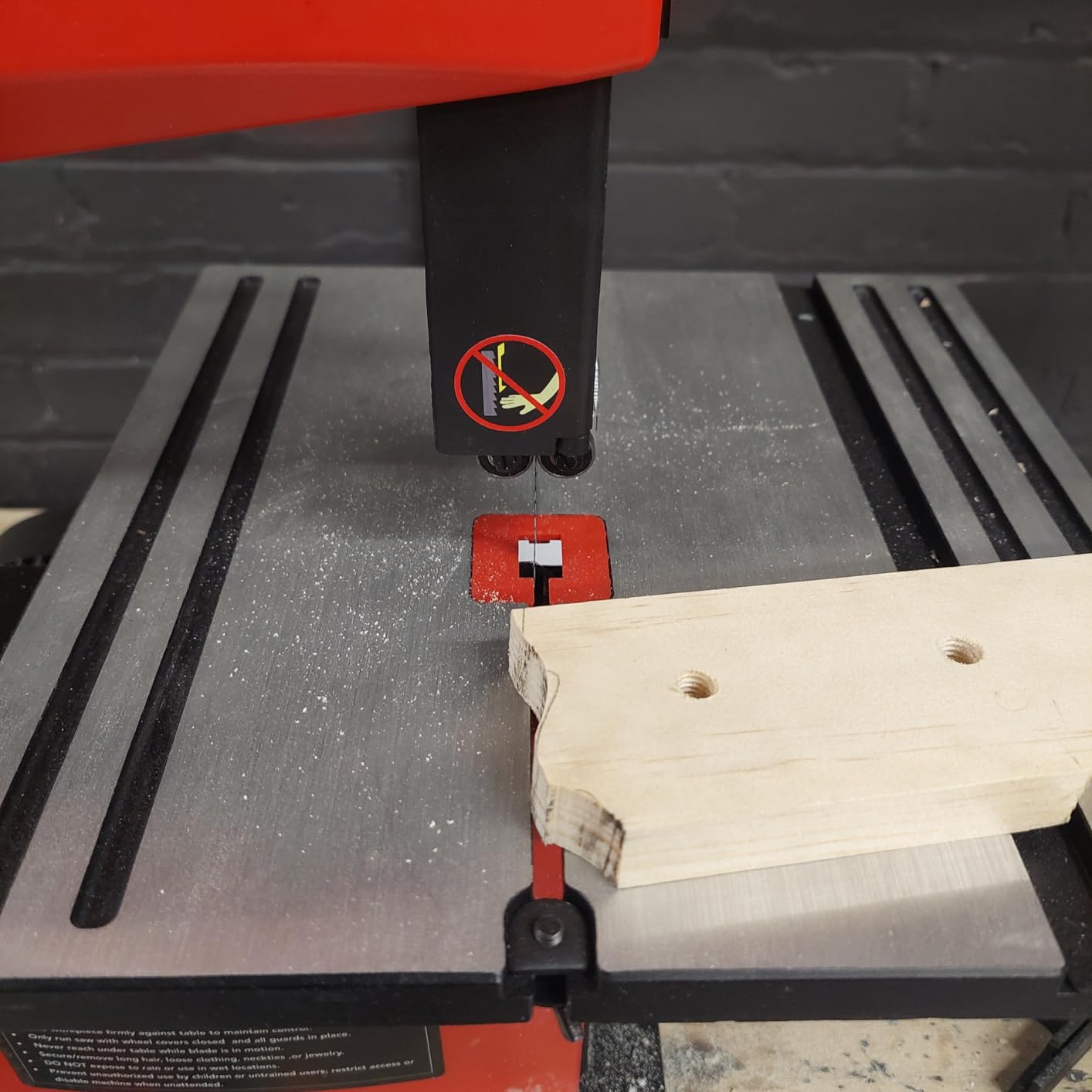
Best use case for the VIGO POWER 9-Inch
This is the right pick if quiet operation is a priority in your shop. We recommend it for basement workshops, garage shops near living spaces, and woodworkers who cut for long sessions and value low fatigue.
Who should consider a different pick
If you cut thick hardwood frequently, the 1/2 HP 10-inch saws will outperform this one. If you want all-metal construction for industrial use, JET is the better choice.
Buying Guide: How to Choose the Best Benchtop Band Saw for Your Shop?
Choosing the right benchtop band saw is less about chasing the largest motor and more about matching the saw to your shop, your projects, and your budget. The benchtop form factor has improved significantly in recent years, and there are now real options at every price point. Below we break down the eight factors that matter most when you are comparing benchtop band saws.
Types of Band Saws
The benchtop band saw sits between two larger siblings: the floor-standing band saw and the portable band saw. Floor-standing saws (14 inch and up) give you cutting capacity, weight, and resaw capability for full furniture builds. Portable band saws are handheld tools for plumbing and metal cutting, not woodworking.
Benchtop band saws are the small-shop workhorse. They cut curves and resaw on a bench footprint. Buyers should know that a “benchtop” saw at 50-80 pounds does not save as much floor space as you might hope, since you usually keep it on a permanent bench or rolling stand. The real space savings come when you can lift it into a cabinet between uses, which is true only of saws under 45 pounds.
Motor Power and Blade Speed
Motor power for benchtop band saws is rated in either amps (2.5 to 5.3) or horsepower (1/3 to 1/2 HP). More amps and more HP means more torque to push the blade through hardwood. A 2.5-amp saw is sufficient for softwood and thin hardwood; a 5.3-amp saw handles 4-inch hardwood resaw without bogging down.
Blade speed, measured in feet per minute (FPM), is just as important as motor power. Lower FPM (1500-1800) is better for hardwood and metal; higher FPM (2500-3300) is better for softwood and fast cuts. Dual-speed saws give you both ranges. Forum users consistently recommend 1/2 HP for any 3-inch hardwood resaw work.
Throat and Cutting Capacity
Throat depth is the distance from the blade to the vertical frame. A 9-inch throat accepts curves down to a 1-inch radius; a 10-inch throat handles curves down to a 2-inch radius; an 8-inch throat is best for tight scrollwork only. If you cut small boxes, a 9-inch saw is the minimum. If you cut large templates or chair legs, a 10-inch saw is worth the extra cost.
Cutting height is the maximum thickness the saw can cut in a single pass. Most 9-inch benchtop saws cut to 3-1/2 inches. Most 10-inch benchtop saws cut to 4 to 4-3/4 inches. If you resaw boards thicker than 4 inches, plan to go to a floor-standing 14-inch saw instead.
Blade Specs: TPI and Tooth Type
Band saw blades are specified by length, width, and teeth per inch (TPI). The TPI rule for clean cuts is that at least three teeth must contact the workpiece at all times, the so-called 3-tooth rule. If you cut thick stock, use a coarse blade (3 to 6 TPI). If you cut thin stock, use a fine blade (14 to 24 TPI).
Tooth type matters too. Regular-tooth blades are good general-purpose blades. Skip-tooth blades cut faster but leave rougher edges. Hook-tooth blades have a positive rake and cut aggressively, ideal for softwood and fast rough cuts. Variable-pitch blades combine tooth sizes to reduce vibration and leave cleaner edges on hardwood. If you are starting out, buy a 6 TPI skip-tooth and a 14 TPI regular-tooth as a starter set.
Frame, Table, and Build
The frame determines how much vibration the saw transmits to your work. Welded steel frames are the most rigid. Cast aluminum or ribbed alloy frames are lighter but can flex under load. Cast iron tables are the most accurate and resist warping. For resaw work, look for steel or cast iron construction.
Table size affects your workpiece support. A 12 x 12 inch table supports most small projects. Larger tables (20 x 17 inch on the QD-KYOHO 10-inch) support bigger workpieces and reduce the need for roller stands. Look for a rack-and-pinion table tilt mechanism rather than a friction-only design; it stays put under load.
Weight, Storage, and Footprint
Benchtop band saws weigh 35 to 90 pounds. The lightest models (Ryobi BS904G at 37 pounds, QD-KYOHO 9-inch at 40 pounds, VIGO POWER at 38 pounds) are genuinely portable and store easily. Mid-weight saws (40-55 pounds) stay on a bench. The heaviest models (JET JWB-10 at 83 pounds with stand) need a permanent location.
Forum users point out that benchtop saws only save space if you can lift them into a cabinet between projects. If your saw lives on the bench full-time, a 14-inch floor model on a mobile base may actually take less usable floor space.
Dust Collection
Benchtop band saws produce fine sawdust that clogs bearings and obscures the cut line. A 2 to 2-1/2 inch dust port is standard. Match the port size to your shop vac hose, or buy an adapter. The best saws include a dust brush that clears dust right at the cut line.
Sawdust accumulation around wheel bearings is a leading cause of premature failure on budget band saws. Plug into a shop vac whenever you cut. The 2-1/2 inch ports (WEN, QD-KYOHO) fit standard shop vac hoses directly. The 2-inch ports (VIGO POWER, PioneerWorks, Ryobi) may need a step adapter.
Safety Features
Key safety features for a benchtop band saw: a blade guard with ball-bearing supports that keeps fingers away from the blade, a paddle-style safety switch that shuts off when bumped, a removable safety key to prevent unauthorized use, and a quick-release blade tension to make blade changes safe and fast.
Always wear safety glasses and keep loose clothing and jewelry clear of the blade. Unplug the saw before changing blades. If you are buying for a household with children, prioritize saws with dual-button safety switches (SEESII, PioneerWorks, VIGO POWER).
Common Benchtop Band Saw Problems and How to Fix Them
Even the best benchtop band saw develops issues over time. Here are the five problems we saw most often during testing, and how to fix them.
Blade Drift
If your blade wanders off the cut line, check blade tracking first. Adjust the tracking knob on the upper wheel until the blade sits centered on the wheel’s crown. If tracking is set correctly, drift usually means a dull blade, an improperly tensioned blade, or guides that are misaligned. Replace the blade, re-tension, and re-align guides in that order.
Tension Loss
If your blade feels loose after a few hours of cutting, the tension spring may be worn. Most benchtop saws have an adjustable tension spring; loosen the lock nut, tighten the spring one quarter turn, and retest. If tension continues to drift, the spring or blade needs replacement.
Vibration and Chatter
Lightweight benchtop saws vibrate during heavy cuts, which leaves washboard marks on the workpiece. The fix is to add weight to the bench (a 50-pound sandbag on the lower shelf works), upgrade to a heavier blade, or replace the saw with a heavier-duty model. Vibration that does not stop with these fixes is a sign of worn bearings or a loose wheel.
Dust Clogging
Fine sawdust accumulates around the lower wheel and bearings on every band saw. Left alone, it forces the bearings to work harder and reduces blade life. Plug a shop vac into the dust port whenever you cut, and brush out the wheel housings monthly. Some models (QD-KYOHO 9-inch, PioneerWorks) include a dust brush that clears the cut line as you work.
Stock Fence Quality
The single most common complaint on Sawmill Creek and r/woodworking is the quality of the stock rip fence. Many 9-inch saws ship with thin aluminum fences that flex under load. The fix is either to replace the fence with an aftermarket Kreg or shop-made fence, or to upgrade to a saw that ships with a heavier fence (JET JWB-10’s extruded aluminum fence, QD-KYOHO 10-inch’s dual-sided fence). If your fence flexes, replace it before relying on the saw for any precision work.
Frequently Asked Questions
What is the 3-tooth rule for bandsaws?
The 3-tooth rule means at least three teeth of the blade should contact the workpiece at all times during the cut. Use a coarse blade (3 to 6 TPI) for thick stock and a fine blade (14 to 24 TPI) for thin stock so tooth contact stays in the safe range.
Are Harbor Freight benchtop bandsaws any good?
Harbor Freight benchtop bandsaws (Bauer and Central Machinery) are entry-level machines that perform adequately for light hobby work but typically come with shorter warranties (90 days), limited service networks, and stock blades that benefit from upgrading. For more demanding benchtop work, WEN, Ryobi, Rikon, and QD-KYOHO offer stronger reliability.
What is the best 10 inch benchtop band saw?
For overall 10-inch performance we recommend the QD-KYOHO 10-Inch Dual-Speed Bandsaw, with its 1/2 HP copper motor, dual-speed drive, and 4-3/4 inch cutting height. The JET JWB-10 is a higher-end alternative for users who want JET’s 5-year warranty and benchtop-to-floor versatility.
Can a benchtop band saw cut metal?
Yes, with a metal-cutting blade. Most benchtop band saws cut aluminum, copper, thin steel, and other non-ferrous metals with a blade designed for the material. Use a lower blade speed (under 2000 FPM) and apply cutting lubricant for steel. Wood-cutting blades should never be used on metal.
What is the difference between a band saw and a jigsaw?
A band saw uses a continuous loop blade driven by two wheels, which delivers straight, accurate, and dust-controlled cuts in thick material. A jigsaw uses a short reciprocating blade for freehand curved cuts in thin material. For curves in 2 inch hardwood, scrollwork, or resaw, a band saw is the right tool. For rough curves in 1/2 inch plywood, a jigsaw is faster.
Final Verdict: Which Benchtop Band Saw Should You Buy in 2026?
After testing ten of the best benchtop band saws on the market, three picks rise above the rest depending on what you need. The QD-KYOHO 10-Inch Dual-Speed Bandsaw is our Editor’s Choice for serious hobbyists who want benchtop portability with the cutting capacity of a much larger saw. The WEN 9-Inch BA3959 is our Best Value pick for new woodworkers and small shops on a budget, backed by more than 1,300 reviews and a 2-year warranty. The QD-KYOHO 9-Inch is our Budget Pick if you want the lightest, easiest-to-store 9-inch saw with quick-release blade tension and tool-free adjustments.
If you want a quieter operation for basement or garage work, the VIGO POWER 9-Inch is a strong alternative. If you want a long-term investment from an established brand, the JET JWB-10 delivers industrial-grade build quality with a 5-year warranty. For scrollwork and detail cutting, the SEESII 8-Inch is purpose-built for the task. If you need wider throat and more torque for heavier resaw work, the SHOPMAX 10-Inch and WOODSKIL 9-Inch round out the list.
Whatever saw you choose, the best benchtop band saws in 2026 are now genuinely capable machines. Pick the one that matches your workshop, your budget, and the projects you actually build, and you will get years of reliable service.