
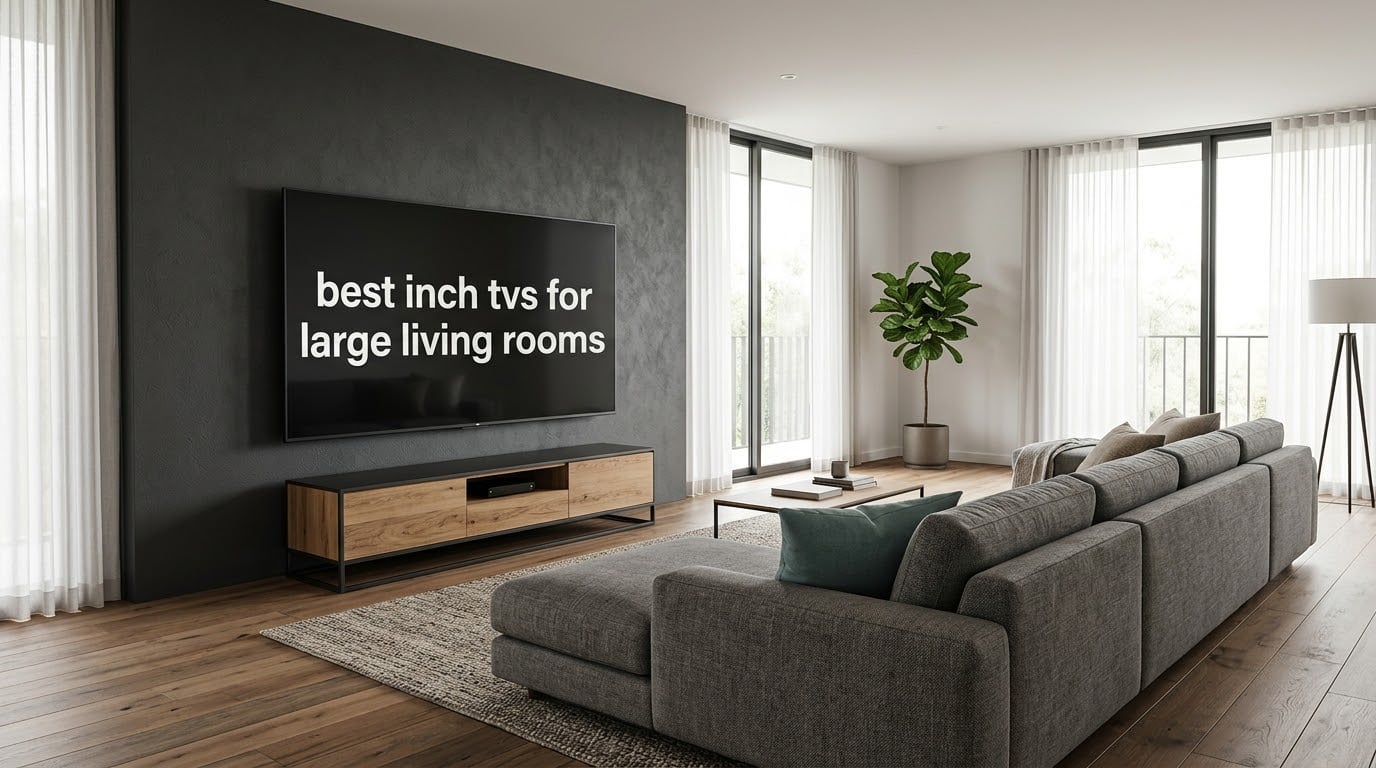
At 85 inches, you are not buying a television. You are committing a wall to it. The panel is roughly 74 inches wide, it weighs between about 64 and 112 pounds depending on the backlight, and whatever you hang has to stay hung for a decade. That is why the best 85 inch TVs for large living rooms is not really a spec question. It is a room question first and a picture question second.
We spent the last few weeks working through the ten 85-inch sets that sit in the realistic range for a big room, and the pattern was consistent: the right model depends on two variables almost nobody sells against. How far your main sofa sits from the wall, and how much daylight lands on the screen at 3pm. A dim media room and a sunlit family room need different panel technology, and the same set that looks superb in one looks flat in the other.
Everything below reflects the market as of October 2026, with ratings and review counts taken from live listings rather than press releases. If your home is large enough that a robot vacuum is a consideration rather than a luxury, you may find our robot vacuum picks for large homes and the robot lawn mower guide for large yards useful reading alongside this one.
Table of Contents
Is an 85-Inch TV Too Big? It Depends on Your Room
No, not if your main seating sits roughly 8.5 to 12 feet from the screen and your wall can carry the weight. Below about 8.5 feet an 85-inch panel starts to feel overwhelming in ordinary viewing. Past about 13 feet you lose the impact the size was meant to deliver.
Two checks decide it. Measure the distance from your eyes to the wall while seated, and measure the wall itself. An 85-inch panel is about 74 inches wide without the stand, so you want a wall at least 80 inches across before you think about bezels, cable routing and breathing room on each side.
There is an honest argument for stepping down. A 75-inch set costs less, mounts on far weaker walls, and on a sofa positioned 9 feet back the difference is far less obvious than the spec sheets suggest. If your seating distance is under 9 feet, or your wall is plasterboard with no stud behind the mount point, a 75-inch panel is the better purchase and we would tell you so before anything else.
What is not true is that 85 inches is a mistake in a genuinely large room. In a space with a sectional, a wide viewing spread and windows that can be darkened, the extra screen area is the whole point. It is the single largest jump in image size available without going to a projector.
Top 3 Picks for Large Living Rooms (October 2026)

Hisense 85E6QF Hi-QLED
- Hi-QLED quantum dot colour
- Dolby Vision and Dolby Atmos
- 60Hz panel
- Fire TV with Alexa

TCL 85T7 QLED 144Hz
- 144Hz native refresh
- Full DCI-P3 quantum dot colour
- Four HDMI ports
- Adjustable feet

Hisense 85E7SF Mini-LED
- Full Array Local Dimming
- Native 144Hz
- Dolby Vision IQ
- 66.1 pound chassis
All 10 Picks at a Glance
Every set below is 4K, roughly 74 inches wide and made for a room where the main seating is nine feet or further back. The columns that actually change your decision are backlight type, refresh rate and viewing angle, so those are what the table leads with.
| Product | Specifications | Action |
|---|---|---|
| Hisense 85E6QF Hi-QLED |
|
Check Latest Price |
 Sony BRAVIA 3 K-85S30 Sony BRAVIA 3 K-85S30 |
|
Check Latest Price |
 Samsung U8000H Crystal UHD Samsung U8000H Crystal UHD |
|
Check Latest Price |
| TCL 85T7 QLED |
|
Check Latest Price |
| Hisense 85E7SF Mini-LED |
|
Check Latest Price |
 Sony BRAVIA 7 K-85XR70 Sony BRAVIA 7 K-85XR70 |
|
Check Latest Price |
 Sony BRAVIA 5 K-85XR50 Sony BRAVIA 5 K-85XR50 |
|
Check Latest Price |
 Samsung M80H Mini-LED Samsung M80H Mini-LED |
|
Check Latest Price |
 TCL QM64L QD-Mini LED TCL QM64L QD-Mini LED |
|
Check Latest Price |
 TCL 85F7D QLED TCL 85F7D QLED |
|
Check Latest Price |
1. Hisense 85E6QF Hi-QLED – Best Overall for a Large Living Room
- Quantum dot colour with a wide gamut at an entry spend tier
- Dolby Vision plus Dolby Atmos and HDR10+ Adaptive
- AI Light Sensor adjusts brightness to room conditions
- Fire TV with Alexa built into the remote
- 60Hz native refresh rate holds back fast sports
- Modest 30 watt 2.0 speaker system for a room this size
- Fire TV software and limited internal storage frustrate some owners
Our overall pick is not the flashiest set on this list. It is the one with 2665 reviews behind it, the widest review base in this group by a wide margin, and that volume of long-term ownership tells you something no spec sheet does. The Hi-QLED quantum dot layer delivers wide colour at a spend level that leaves room in the budget for a soundbar and a proper mount.
The format coverage is unusually generous for an entry-tier 85-inch panel. Dolby Vision, HDR10+, HDR10+ Adaptive, HDR10 and HLG are all supported, and Dolby Atmos runs through a 2.0 channel system rated at 30 watts. The AI Light Sensor reads the room and shifts brightness on its own, which matters more in a large living room than most buyers expect.
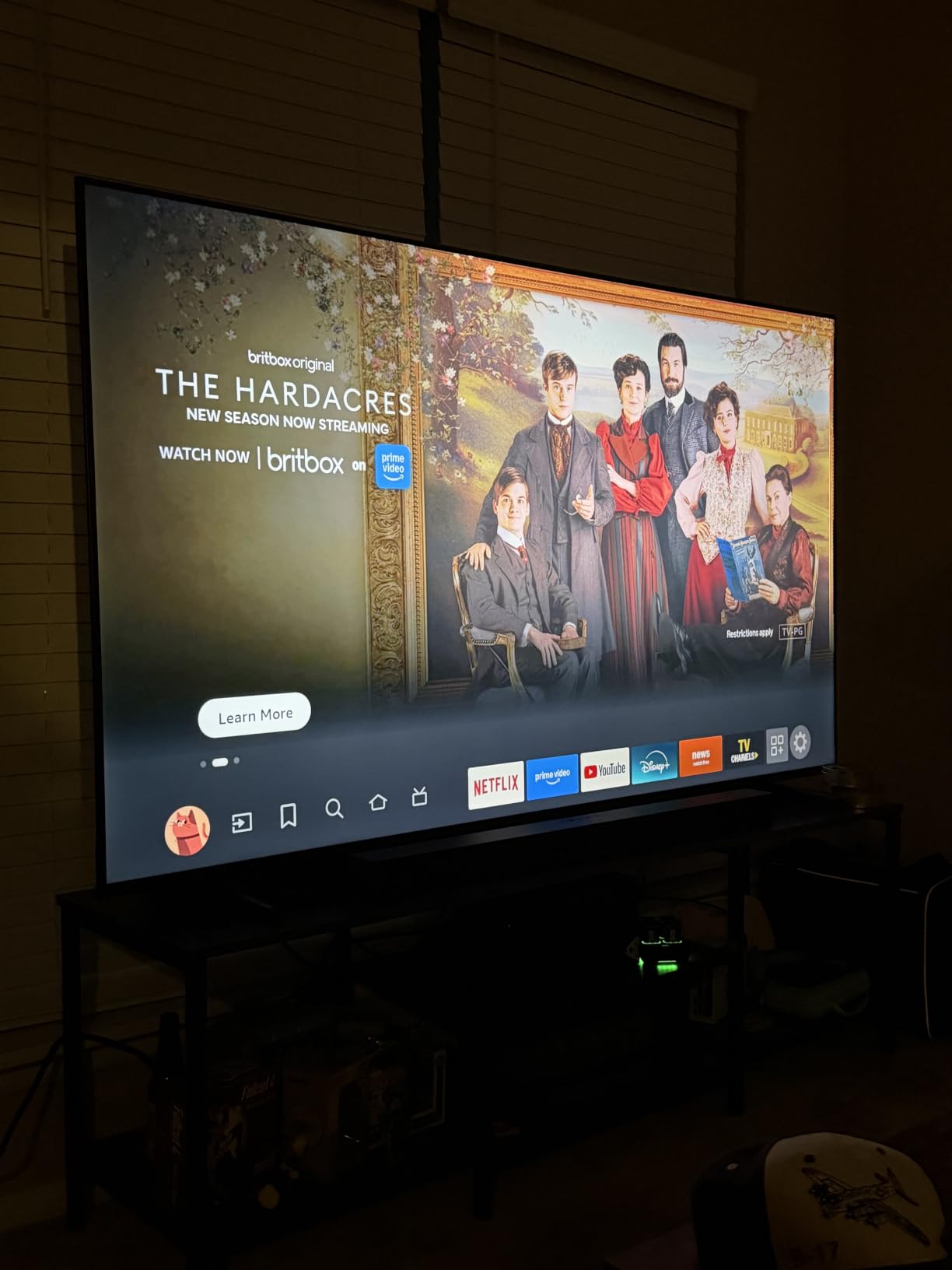
Fit is the reason it earns the top slot. The direct LED backlight and 178 degree viewing angle mean the picture holds from the edges of a sectional, and the 600 x 400 mm VESA pattern is one of the more common large-panel mount formats. Reviewers repeatedly note the visible jump in colour and clarity when replacing an older, smaller set.
The compromise is refresh rate. A 60Hz native panel will not resolve fast console action or fast football as cleanly as the 120Hz and 144Hz sets further down, even with AI Smooth Motion frame insertion doing its work. Owners who stream primarily and watch films by night will not notice. Owners who watch live sport every weekend may want to look at the TCL 85T7 instead.
Who should buy the Hisense 85E6QF
Buy this one if your room is used for films, streaming and general family viewing rather than competitive gaming. It is also the safest choice for anyone who wants a large screen without a large setup commitment, since the platform is familiar and the physical footprint is manageable.
It is a particularly good fit for a bright, lived-in room, because the AI Light Sensor handles the daytime washout that reviewers report on fixed-brightness sets at this size. A wide seating spread is also fine, given the 178 degree viewing angle.
Who should look elsewhere
Skip it if you are a sports-first household or you have a current generation console where input response matters. The 60Hz panel is the reason, and no amount of processing changes the underlying motion behaviour.
Also weigh the software complaints. Reviewers report slow app loading, occasional buffering and a limited internal storage figure of roughly 9.5GB, and the first power-on can take close to a minute to reach the home screen. If you already plan to attach a streaming box, that friction matters less.
2. Sony BRAVIA 3 K-85S30 – The First 85-Inch Set to Buy
- Colour accuracy from Triluminos Pro is consistently praised
- Strong upscaling makes older content look sharp
- Clean fast Google TV interface with reliable voice search
- Four HDMI ports plus optical audio out
- Edge-lit backlight means modest contrast for the class
- 60Hz native refresh rate limits fast motion
- Speakers are adequate rather than immersive
The BRAVIA 3 is the set we would hand someone stepping up from a 55-inch main room television for the first time. It does the fundamentals properly. Colour is accurate and natural thanks to Triluminos Pro, the X1 processor handles upscaling well, and Google TV is the interface most people already know from a streaming stick.
Sony lists a recommended viewing distance of 15 feet and above, which tells you how the brand itself thinks about this panel. That is further than most large living rooms allow, so treat the 85-inch size as the ceiling rather than the sweet spot for this specific set.
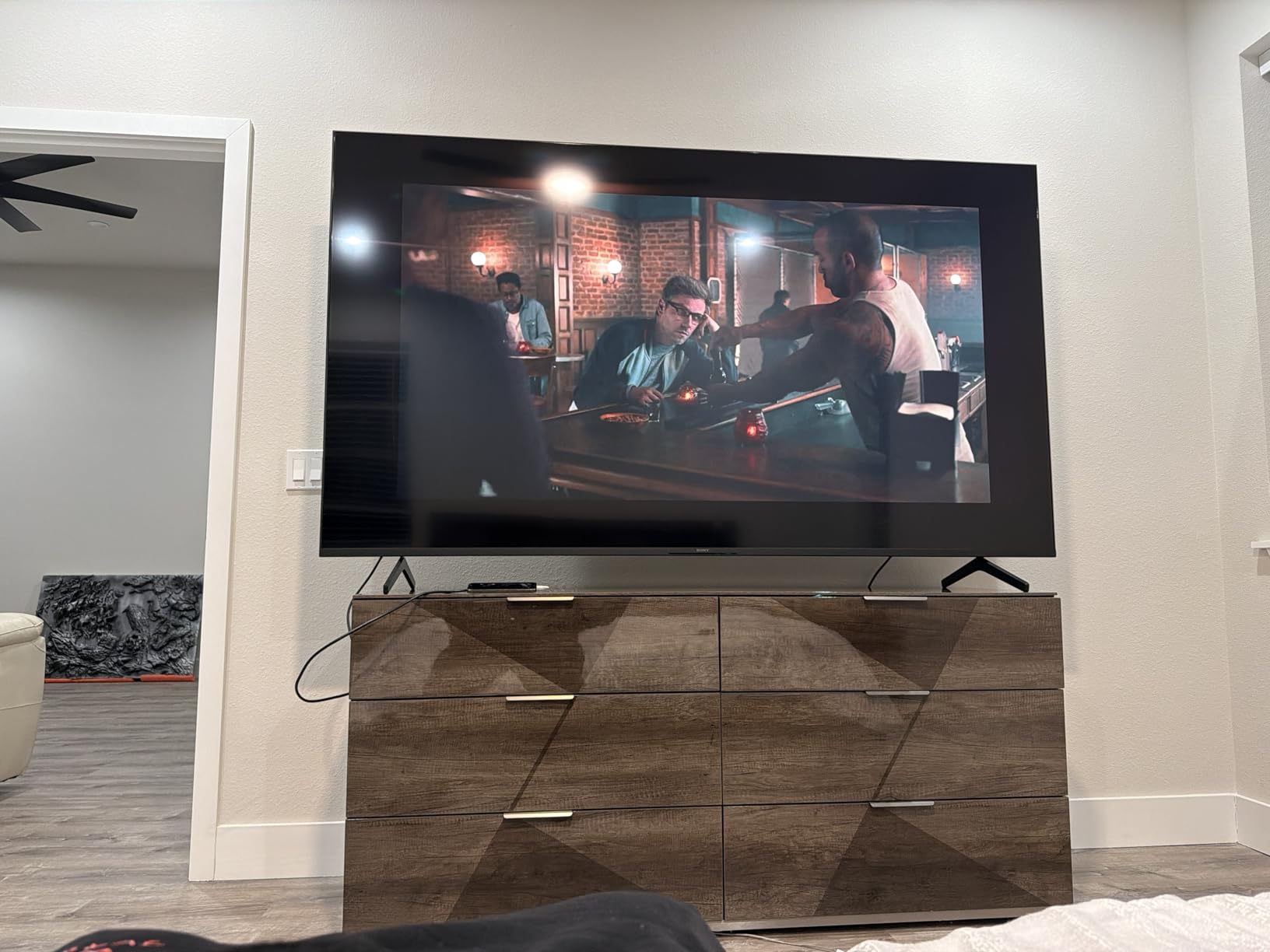
Two ports of four are worth noting. Sony provides four HDMI inputs and an optical audio output, which gives you more flexibility than several competing sets at similar spend, and PS5 features including Auto HDR Tone Mapping and Auto Genre Picture Mode are built in. Sony Pictures CORE also arrives with credits and a year of classics.
Picture contrast is the honest limitation. The backlight is direct LED with dimming but not full array local dimming, so dark scenes in a night-time film will not reach the depth a Mini-LED panel delivers. The listed contrast ratio of 1,000,000:1 is a dynamic figure rather than a measured one, so read it accordingly.
What the BRAVIA 3 does better than most
Upscaling is the standout. Reviewers consistently single out 4K X-Reality PRO for making standard definition and older HD streaming look sharp, and Motionflow XR 240 helps with motion on compatible sources. For a room where daytime TV is the main use, that processing work matters.
The Google TV experience is the second strength. It is described as clean, fast and easy to browse, and the voice search is reliable, which is more than can be said for the Fire TV builds used by two of the sets in this group.
Where it falls short
The 60Hz panel and the edge-lit backlight are the two constraints that define this set. Neither matters much for films and general viewing, and both matter the moment you want deep blacks in a dark room or smooth motion in a fast game.
Note the weight at 99.6 pounds and the 400 x 400 mm VESA pattern. This is a two-person handling job, and a smaller VESA square can limit your mount options compared with the 600 x 400 patterns used by several rivals here.
3. Samsung U8000H Crystal UHD – Best for Free Streaming Content
Samsung 85-Inch Class U8000H Series Crystal UHD, 4K, Smart TV, 2026 Model
- 750+ subscription-free channels through Samsung TV Plus
- Lightest chassis in the group at 63.8 pounds
- Ambient light sensor adjusts brightness automatically
- HDMI CEC lets one remote run a box and soundbar
- Only three HDMI ports for a set this size
- Remote design is the single most repeated complaint
- Red tones wash out in bright daylight
This is the practical pick for a household that does not want to stack subscriptions on top of a purchase this size. Samsung TV Plus gives more than 750 channels with no monthly fee and around 2700 free streaming options, and owners treat that as the main reason to pick it.
It is also the easiest large panel here to deal with physically. At 63.8 pounds it is among the lightest, and Samsung has put the power supply in the stand so the panel body stays slim. Two people can position it without the drama that a 110-pound set creates.
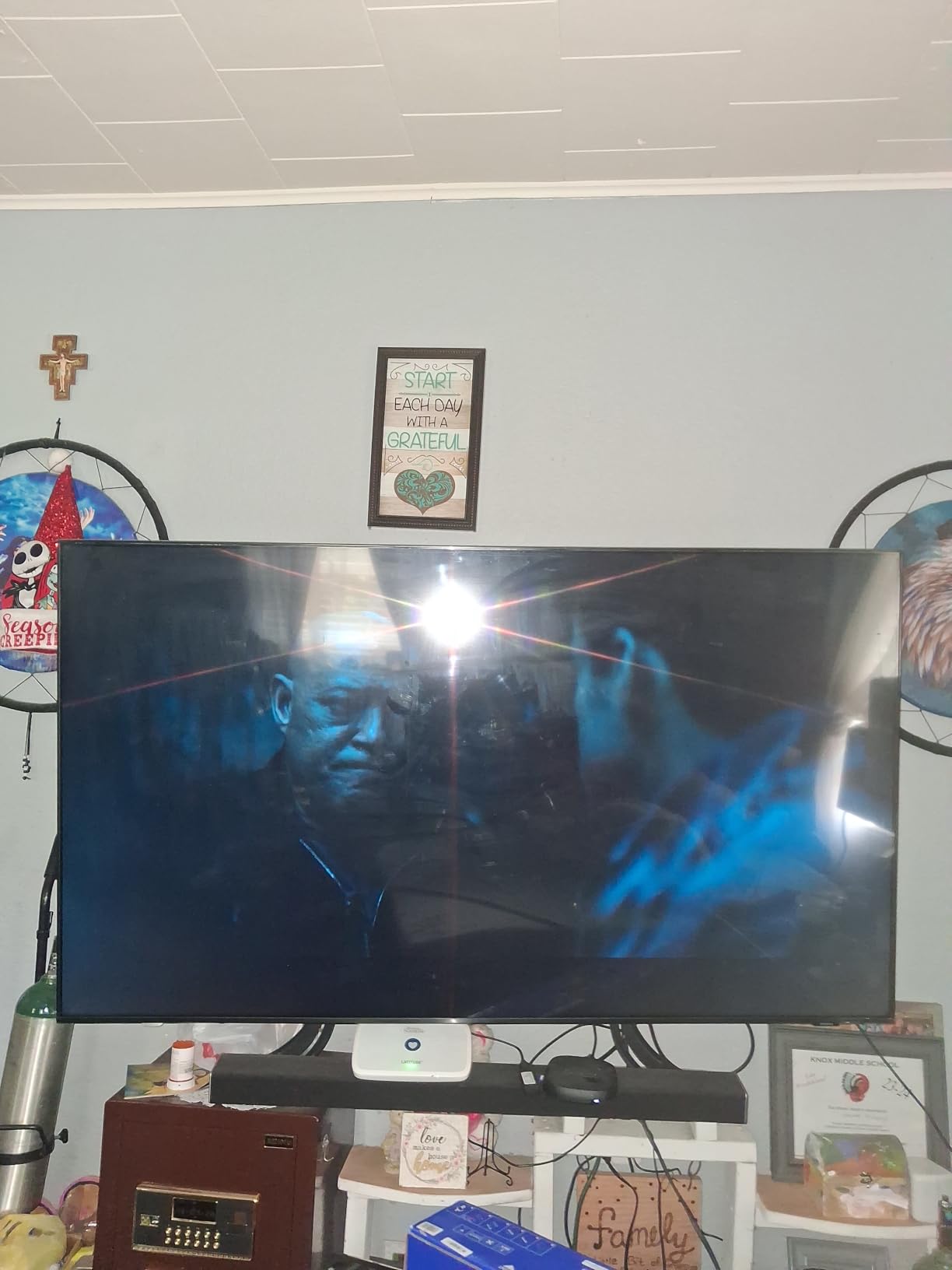
Crystal Processor 4K handles upscaling and Color Booster adds punch, and the ambient light sensor is genuinely useful in a large living room where the light changes through the day. A 2026 model year means this is current hardware rather than last year’s stock with a new price.
The picture is the compromise, and reviewers are direct about it. Reds wash out in daylight, there is no local dimming to hold black levels, and the 60Hz Motion Xcelerator target is modest. Treat this as a room-filling screen for casual viewing and live sport rather than a cinema panel.
Reasons to choose it over the alternatives
The free content library and the light weight are the two answers, and for many rooms both matter more than image processing. Families who watch a lot of live sport and general entertainment will find plenty to watch without adding another monthly bill.
It is also a 2026 model, which usually means the newest platform generation, and the 400 x 300 mm VESA pattern is a common size for full-motion mounts in the large-screen category.
The remote is the real problem
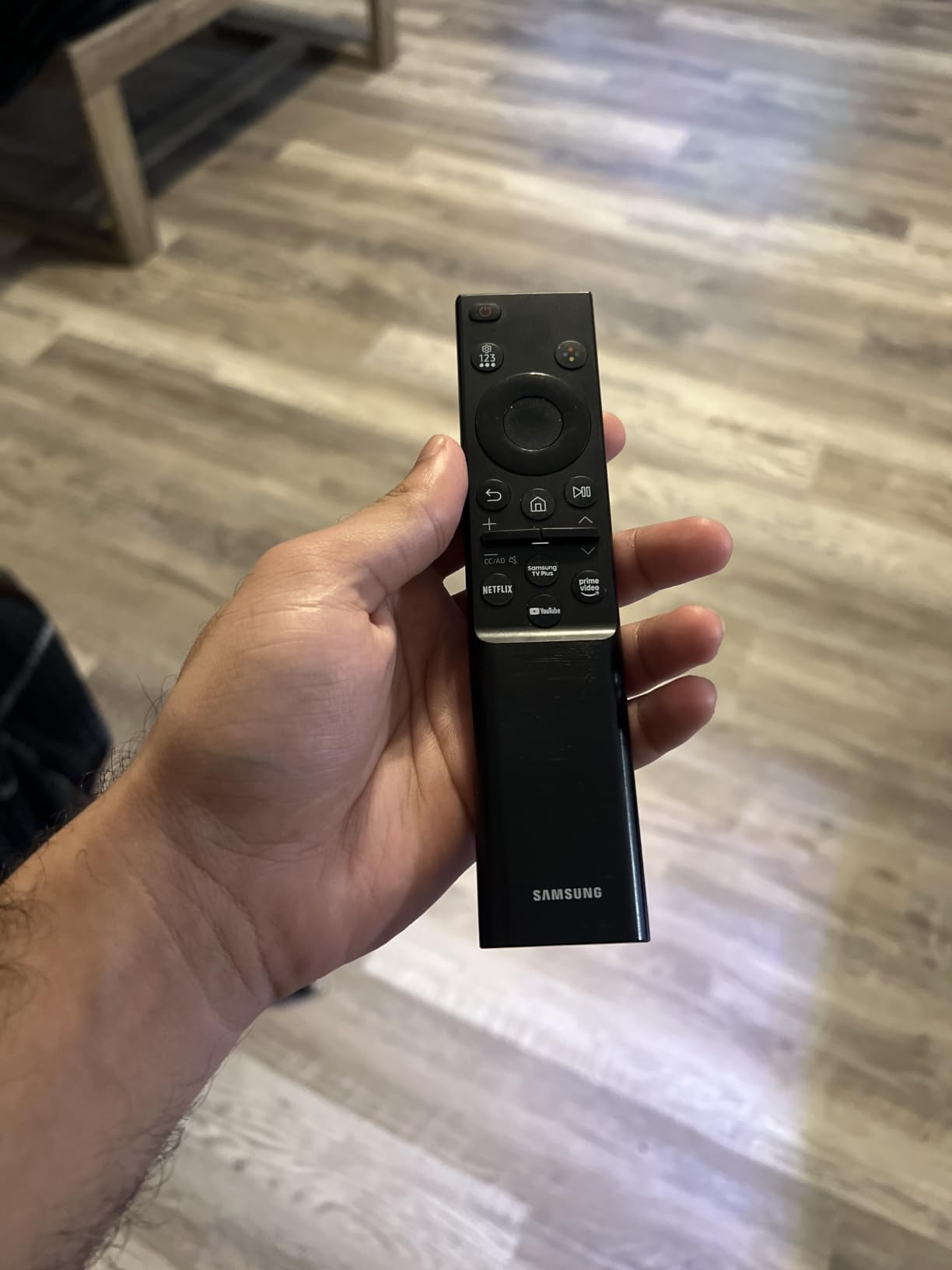
Owners mention the remote more than any other single feature, describing it as cheap-feeling, slow to respond and awkward for switching inputs or adjusting volume. If you already own universal remote hardware, test it against this set before you commit.
Connectivity is also thinner than the price suggests, with three HDMI ports and a single USB 3.0 port. If you plan to run a console, a soundbar and a disc player, count the cables first.
4. TCL 85T7 QLED 144Hz – The Best All-Round Performer
- 144Hz native refresh with 288Hz variable refresh for gaming
- Quantum dot colour covering nearly the full DCI-P3 gamut
- Adjustable feet clear a soundbar and fit narrower furniture
- Four HDMI ports including one with eARC
- Noticeable glare in bright rooms with large windows
- Operating system speed is not the fastest
- Remote drains batteries quickly with the backlight on
On measured performance per unit of spend, this is the hardest set in the group to argue with. A 4.4 rating from 659 reviews, a native 144Hz panel with 288Hz variable refresh, and quantum dot colour covering nearly the entire DCI-P3 gamut on an 85-inch screen is a rare combination.
Owners describe it as the best value in its class repeatedly, and many report moving up from much larger-spend brands and being surprised by the result. The TCL AIPQ Pro processor handles colour, contrast and clarity, and HDR PRO+ covers Dolby Vision, HDR10+, HDR10 and HLG.
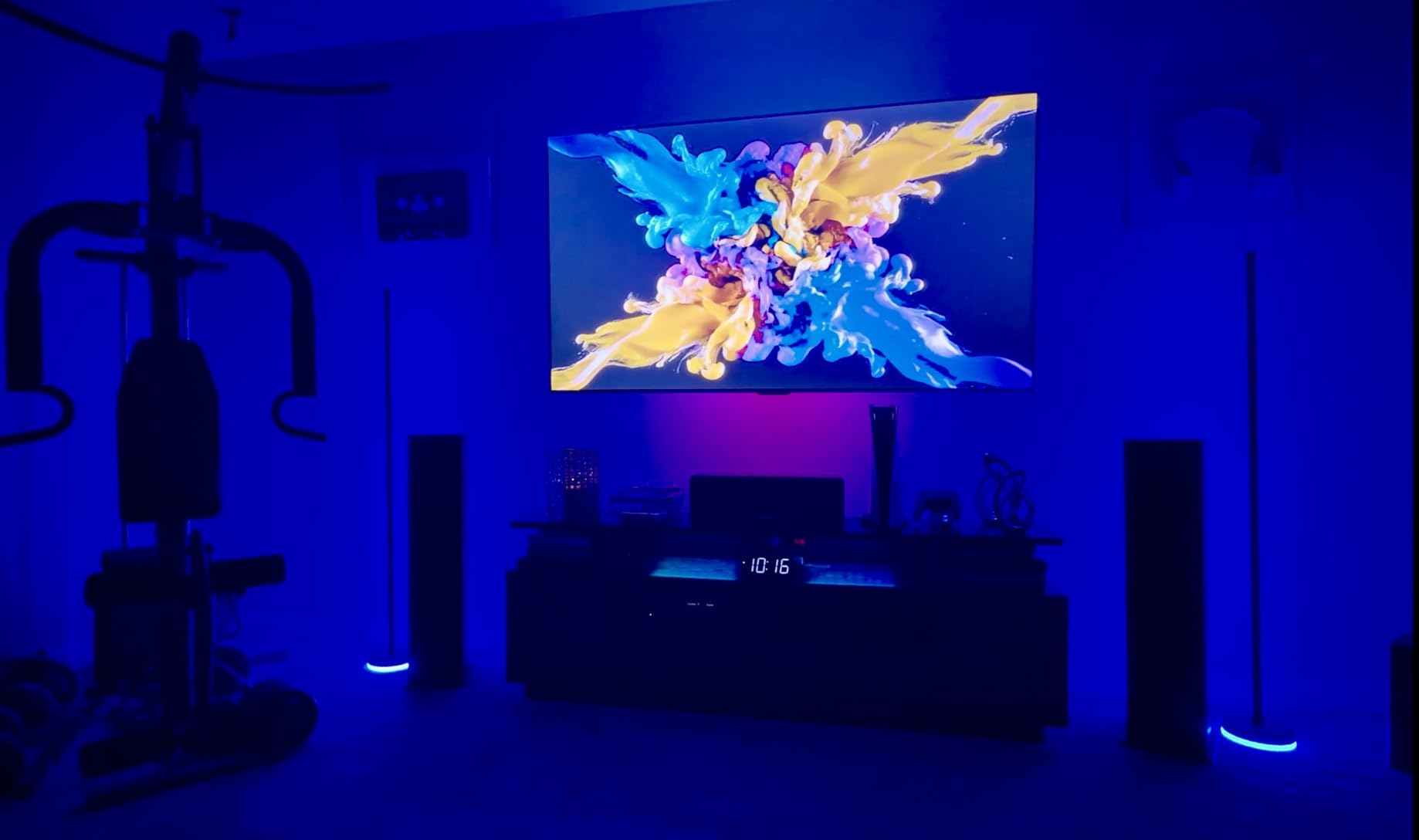
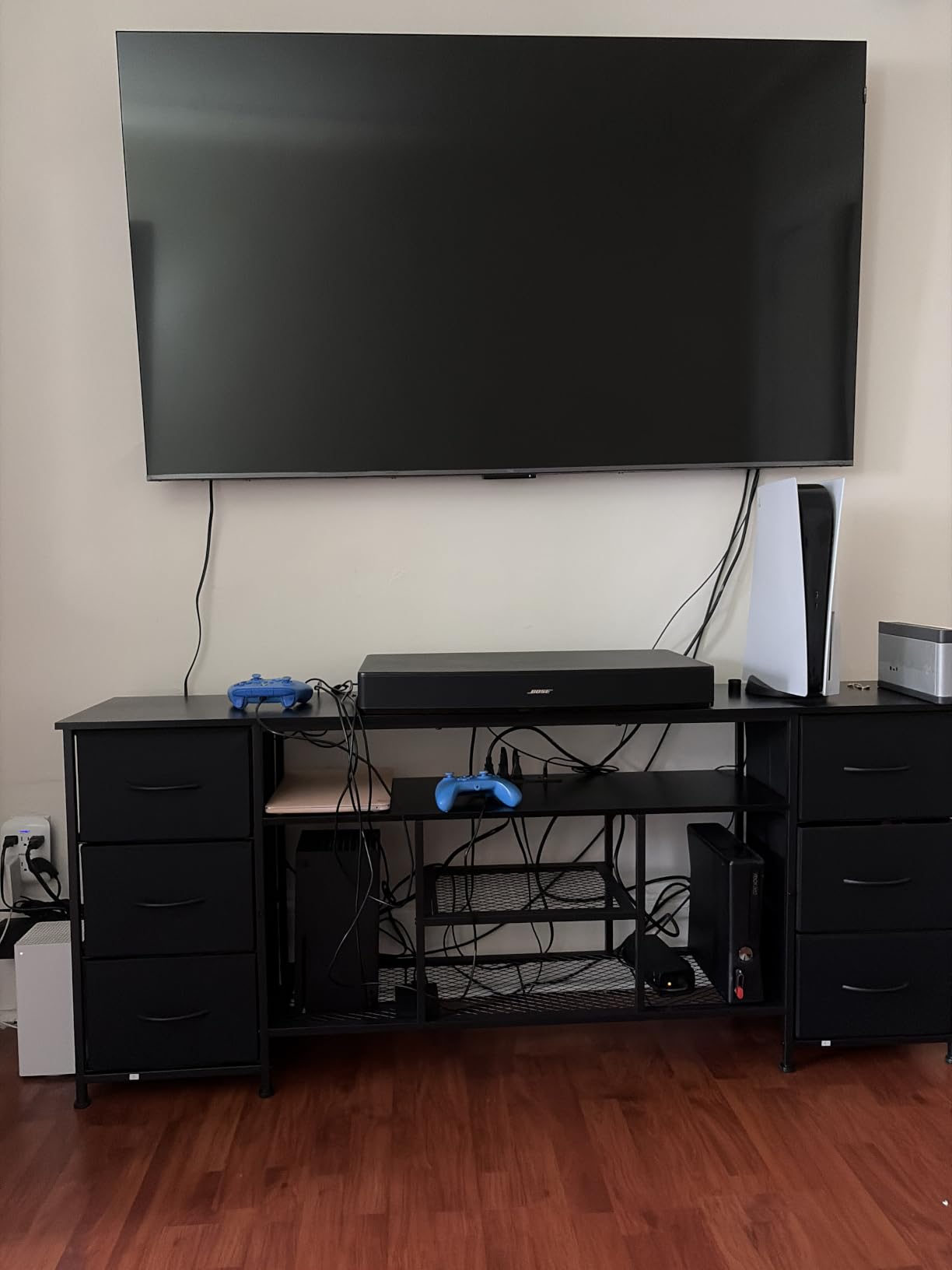
The physical design is unusually well thought out for a large screen. The FullView 360 bezel-less metal frame keeps the set looking compact, and the width-adjustable feet are a practical touch because they let the panel sit on narrower furniture and leave clearance for a soundbar underneath.
Audio is a 2.1 channel Dolby Atmos system rated at 40 watts, which is better than most thin panels at this size manage, though it is still no substitute for a soundbar in a large living room. Four HDMI ports with eARC give you room for a console, a player and a soundbar without a switcher.
Why it wins for most large rooms
It handles every use case in one panel. Sports, console gaming, films and daytime viewing all work, and the 144Hz native rate means you do not lose motion detail on a fast pitch or a fast turn.
For a mixed-use family room this is the recommendation we make most often. It is also light at 66.8 pounds, which keeps the install manageable, and the 600 x 400 mm VESA pattern is widely supported on large mounts.
What to watch out for
Glare is the first limitation. Owners with large windows report noticeable reflections, so if the screen faces a window directly, this is not the panel for that wall. Pair it with curtains or blinds before you blame the picture quality.
Software speed is the second. The Google TV build is responsive but not the fastest, and some owners add an external streaming device. The remote is another repeated complaint, draining batteries quickly when the backlight is on, and advertised motion enhancement falls short of its advertised Motion Rate on fast sport.
5. Hisense 85E7SF Mini-LED – Local Dimming Without the Premium Step
- Full Array Local Dimming produces deep blacks at this tier
- Native 144Hz keeps fast action fluid
- Dolby Vision IQ and Dolby Atmos
- Light 66.1 pound chassis with two stand positions
- Picture processing is adequate rather than class leading
- 20 watt 2.0 speakers are modest for a large room
- Stand pieces feel plastic
Local dimming is the spec that explains most of the price spread in the 85-inch class, and this set has it. The Mini-LED backlight with Full Array Local Dimming gives you real black-level control in a darkened room, which is exactly what an edge-lit or basic LED panel cannot deliver.
Adding a native 144Hz rate and Dolby Vision IQ on top makes it the strongest gaming option at this level of spend. Reviewers specifically call it out for PC gaming and for current generation consoles at high refresh, and the AI Sports Mode boosts crowd audio for live matches.
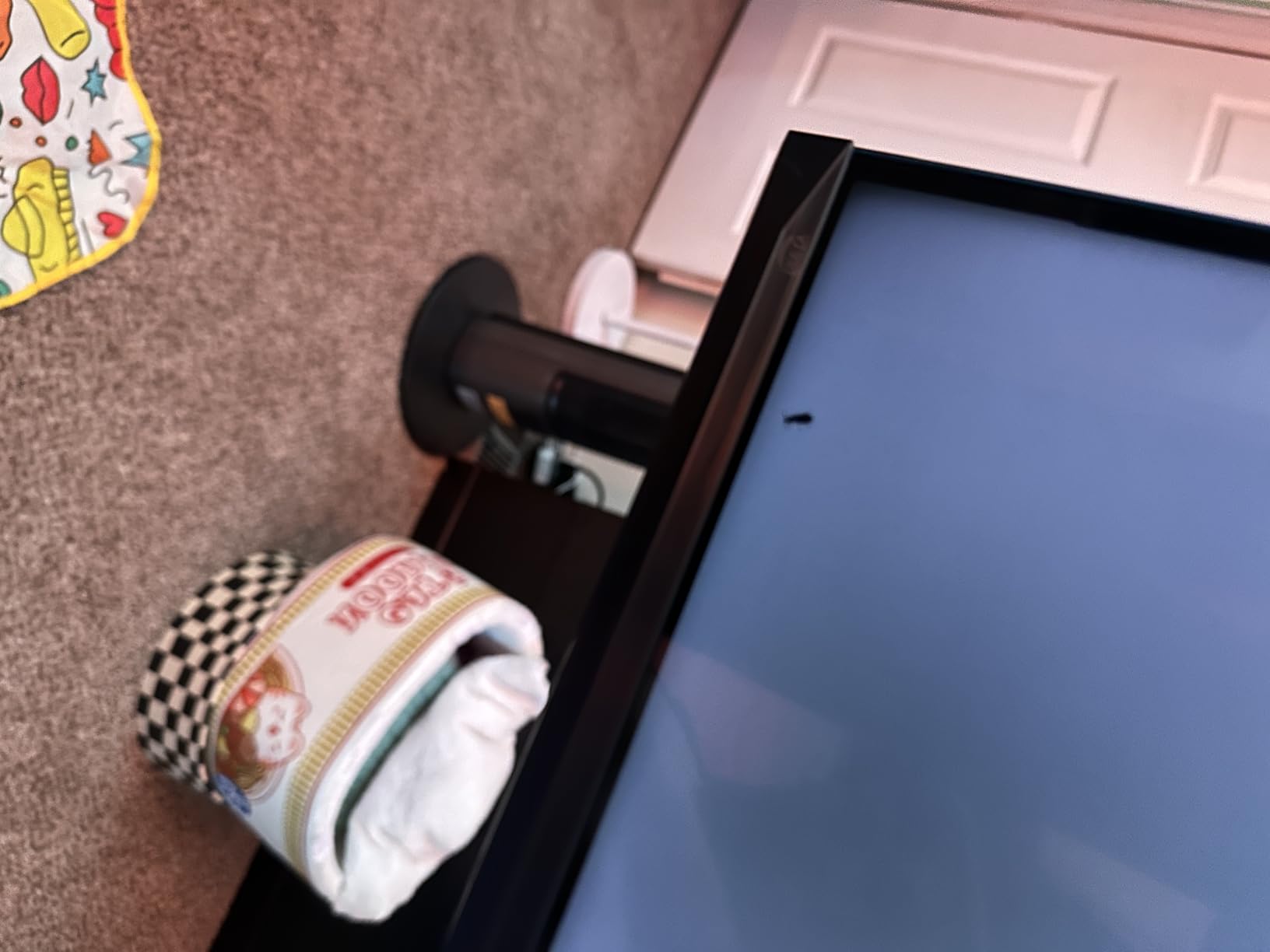
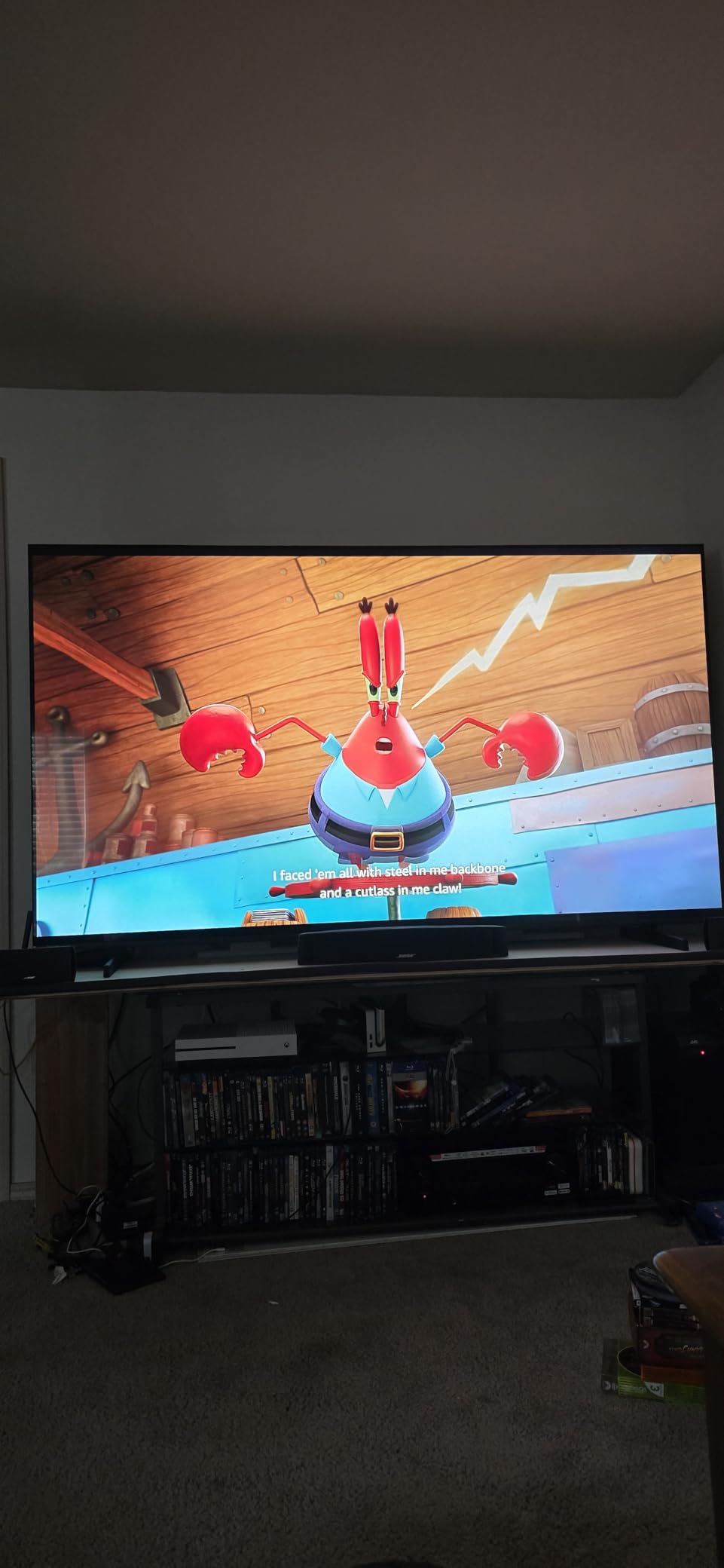
AI Light Sensor handles room brightness, AI Picture runs scene-by-scene optimisation, and the Filmmaker Mode preserves original aspect ratio, colour and frame rate for anyone who wants an unprocessed look on a big screen. An AI 4K upscaler handles lower-resolution sources.
At 66.1 pounds with two stand position options, this is one of the friendlier large panels to install, and the 600 x 400 mm VESA pattern is a workhorse mount format.
Where it earns its place
It suits a room that is used for both dark-room film sessions and daytime sport. Local dimming makes the evening case much stronger, and the 144Hz rate covers the daytime case that a 60Hz set handles poorly.
Reviewers also note the setup is guided and quick, with fast app switching on Fire OS, which shortens the path from delivery box to picture on a very large screen.
Where it disappoints
Picture processing is the fair criticism. Some owners feel the AI Picture engine falls short of expectations at this level and would have preferred to spend more on a different brand entirely. The panel is good, the processing around it is merely competent.
Audio is a 20 watt 2.0 system, which is thin for a large living room, and the stand pieces feel plastic. There are also isolated reports of Wi-Fi and software stability issues, so allow for the possibility of adding a streaming device later.
6. Sony BRAVIA 7 K-85XR70 – Best for Cinema Formats
Sony 85 Inch BRAVIA 7 Mini LED QLED 4K HDR Smart Google TV (K-85XR70)
- XR Backlight Master Drive with local dimming for premium HDR
- Widest format support including IMAX Enhanced and DTS:X
- Studio calibrated modes for Netflix and Prime Video
- PS5 features including Auto HDR Tone Mapping
- Screen is not anti-reflective so windows and lamps cause glare
- Viewing angles are narrower with off-axis dimming
- 111.7 pounds makes setup a two-person job
Format support is what separates this set. Alongside Dolby Vision, HDR10 and HLG, it accepts Dolby Atmos, Dolby TrueHD, DTS:X and IMAX Enhanced, and it carries studio calibrated picture modes for Netflix, Prime Video and Sony Pictures CORE. If your source material arrives in those formats, this panel shows them properly.
The Mini-LED backlight with XR Backlight Master Drive and local dimming handles contrast, and the XR Processor with AI, XR Triluminos Pro and XR Clear Image does the upscaling. Owners with long Sony histories rate the picture quality very highly for the money.
At 120Hz with PlayStation 5 features it handles gaming competently, and the Google TV performance is described as smooth with almost no buffering. Acoustic Multi-Audio gives a 40 watt 2.0 output, plus ATSC 3.0 reception for next-generation broadcast in the United States.
The reflective screen is the key physical fact. There is no anti-reflective coating, so lamps and windows create visible glare. In a large living room with a window opposite the screen, that will be the first thing you notice.
Who it suits
A media room with controlled lighting, a wall that is not opposite a window, and a viewer who watches a lot of film in a proper format. The studio modes mean you can hand it to someone who cares about accuracy without reconfiguring anything.
It also works well for console gamers, since 120Hz and the PS5 integration cover the main features, and the optical output and RS232C give more control options than most sets here.
What gives it away
Viewing angles are narrower than flagship panels and the picture dims off-axis, which matters in a wide room where people sit at the edges of a sectional. If your seating spreads across more than about 40 degrees, this is the wrong shape of screen.
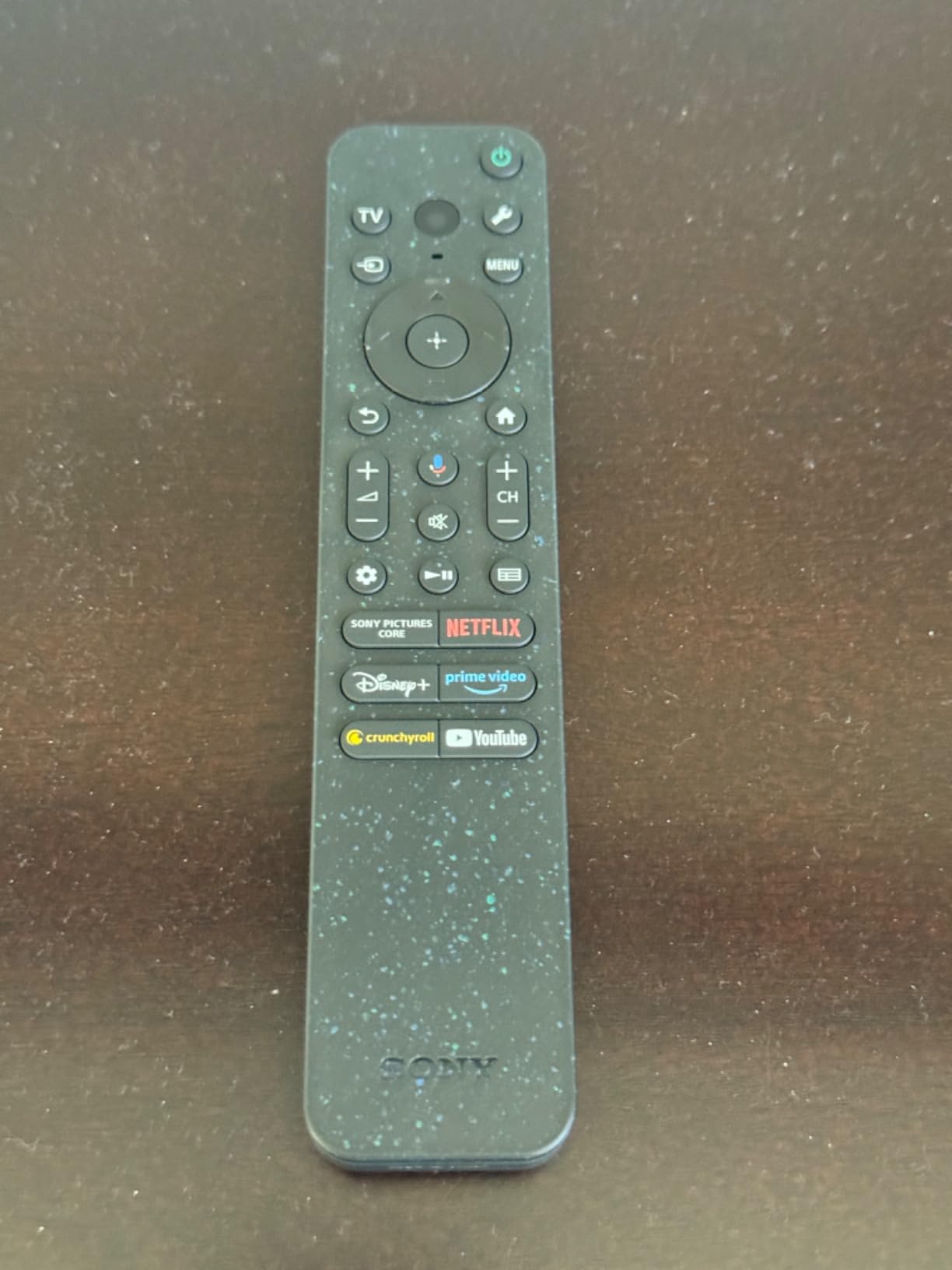
At 111.7 pounds it is one of the heaviest sets in this group, and the 400 x 400 mm VESA pattern is smaller than some alternatives. The bundled remote is small, unlit and made from recycled plastic, and the settings menus are deep enough to overwhelm casual users.
7. Sony BRAVIA 5 K-85XR50 – Best for Film and Console Gaming Together
Sony 85 Inch BRAVIA 5 Mini LED 4K HDR Smart Google TV (K-85XR50)
- Mini-LED panel with local dimming for deep blacks
- Matte screen finish reduces reflections
- 120Hz with HDMI 2.1 suits PS5 and PC gaming
- 5.1 channel Acoustic Multi-Audio
- Picture needs meaningful calibration out of the box
- Bundled remote lacks number buttons
- Only two of the four HDMI ports are HDMI 2.1
This is the highest-rated set in the group at 4.5, and the spec sheet explains why. Up to 1000 nits of peak brightness with XR Contrast Booster 10 and XR Backlight Master Drive local dimming gives it the headroom to hold HDR detail in a room that is not fully darkened.
The matte screen finish is the detail most buyers miss and most appreciate. It is less reflective than competing glossy panels, which makes it the more practical choice for a bright living room where a lamp sits opposite the sofa.
Gaming is handled properly too. A 120Hz native rate with HDMI 2.1 support, plus PlayStation 5 features including Auto HDR Tone Mapping and a Game Menu, make it a genuine two-console set. The Google TV interface is described as notably smooth compared with other brands.
Audio is unusual for a flat panel. Acoustic Multi-Audio provides a 5.1 channel setup at 40 watts, which owners say punches above expectations for a television, though it will not replace a soundbar in a large room.
What makes it the balanced pick
Brightness, contrast and a matte surface in one panel is the combination that solves the most room types at once. The IMAX Enhanced and DTS:X support sits alongside Dolby Vision, HDR10 and HLG, and studio calibrated modes cover the major streaming services.
It also pairs a built-in microphone off switch, a 32GB internal storage figure, and an ECO Dashboard showing annual consumption of 546 kWh per 1000 hours. Those are small things that matter for a set you keep for a decade.
What to budget for in time
Owners consistently report that the picture needs meaningful calibration out of the box to reach its potential. Plan an evening with the settings menus, and expect the first week to look different from the store display.
Only two of the four HDMI ports are HDMI 2.1, so plan which device gets full bandwidth. The remote lacks number buttons and is widely criticised, and at 102 pounds this is a two-person job on a 400 x 400 mm mount pattern.
8. Samsung M80H Mini-LED – The Lightest Premium Panel Here
Samsung 85-Inch Class M80H Series, Mini LED, 4K, Smart TV, 2026 Model
- Mini-LED picture with vivid colour for the money
- 63.7 pound chassis is easy to handle
- Motion Xcelerator 144Hz with variable refresh rate
- Physical microphone off switch
- Only three HDMI ports and no optical audio output
- Remote shortcut buttons are widely disliked
- Onboard sound is only fair
Mini-LED backlighting and a 63.7 pound chassis do not usually appear on the same spec sheet. That is what makes the M80H the practical premium pick here, and why it earns a place in a roundup where most 85-inch Mini-LED panels land between 100 and 112 pounds.
The NQ4 AI Gen2 Processor sharpens and processes in real time, and the Supersize Picture Enhancer is tuned specifically for very large panels, which is a real consideration when your screen is wider than most sofas. Pure Spectrum Color covers one billion colours and AI Mode analyses scenes frame by frame.
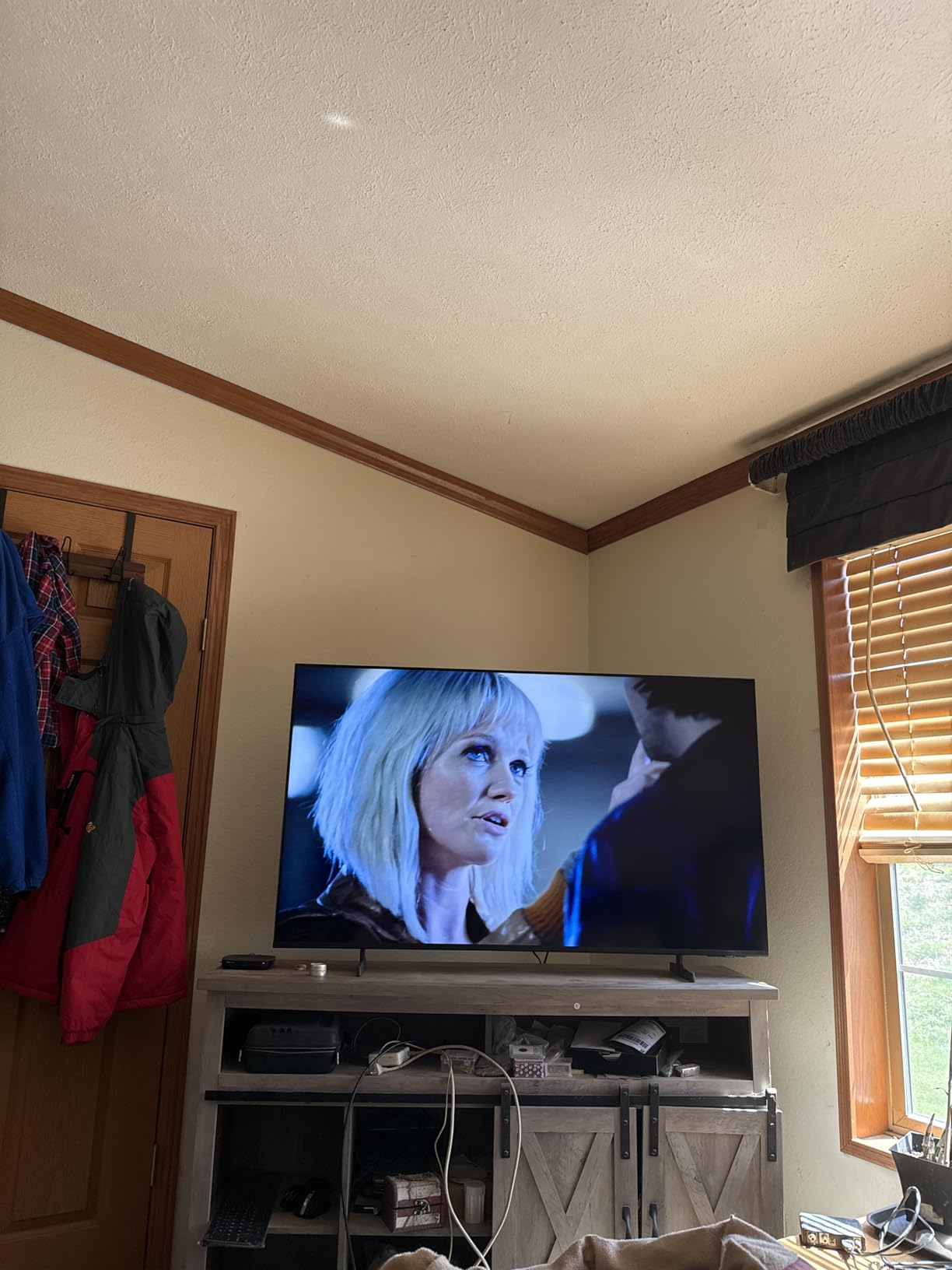
Motion Xcelerator 144Hz with variable refresh rate handles sport and console motion, and Auto HDR Remastering gives SDR sources a pass. The Tizen platform runs fast enough that owners report no noticeable lag, and built-in streaming apps remove the need for an external dongle.
The 2026 model year also brings seven years of EU spare part availability, which matters more than it sounds for a panel this heavy and this expensive to replace.
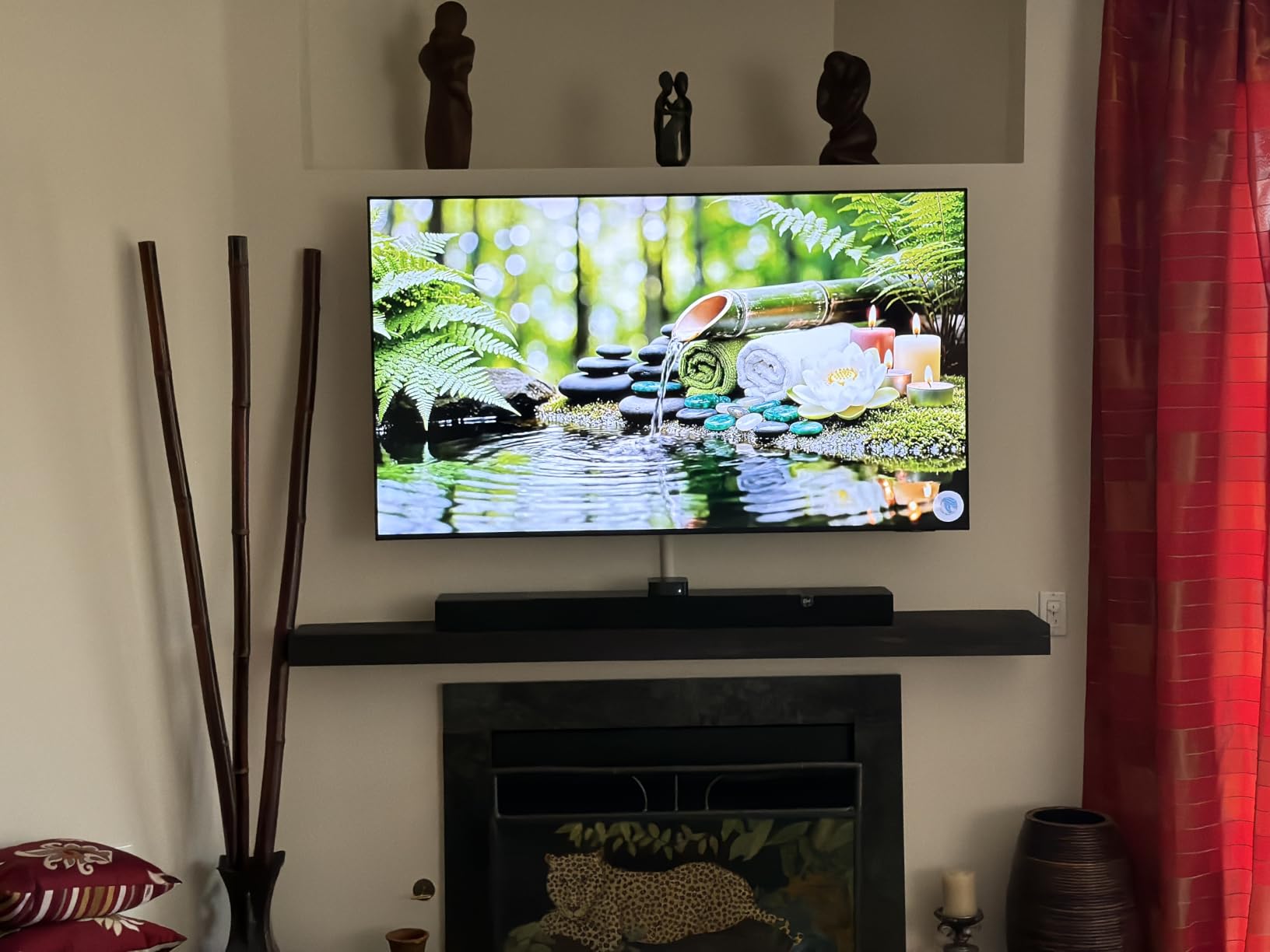
Where the light chassis pays off
On stairs, in loft conversions and in rooms with awkward access, panel weight decides whether an install is straightforward or a drama. Two people can lift and position a 63.7 pound set far more easily than a 111.7 pound one, and it matters more at 85 inches than at any other size.
Picture-wise you give up the 1000 nit class peak brightness and the wide viewing angles of the heavier sets. For a mixed-use room, the trade is usually worth taking.
What to plan around
Port selection is the weak point. Three HDMI ports, one low-power 0.5A USB port and no optical audio output all limit your options, and there is no Bluetooth headphone support without a transmitter workaround.
The remote draws the most complaints. Reviewers dislike the app shortcut buttons and report the set will not stay paused when you leave content, which is irritating on a panel this size. Onboard 5.1 channel sound is fair rather than good, so budget for a soundbar.
9. TCL QM64L QD-Mini LED – Best for Bright Rooms and Wide Seating
- Up to 500 local dimming zones with minimal blooming
- Peak brightness tuned for sunlit rooms
- 178 degree viewing angle holds up from the side
- Onkyo 2.1 audio with Dolby Atmos
- Fire TV interface is slow and inconsistent
- Bundled remote is unreliable
- Apps take a minute to load
Zone count is the number to understand at 85 inches. A panel with a few dozen dimming zones can only darken broad areas, while one with several hundred switches small regions, and the QM64L runs up to 500 zones through the TCL Halo Control System. That is why it holds black levels without blooming halos around bright highlights.
The second reason to like it is the 178 degree horizontal and vertical viewing angle. In a large living room with a sectional, people at the ends of the seats see close to what people in the middle see, which is not true of every set here.
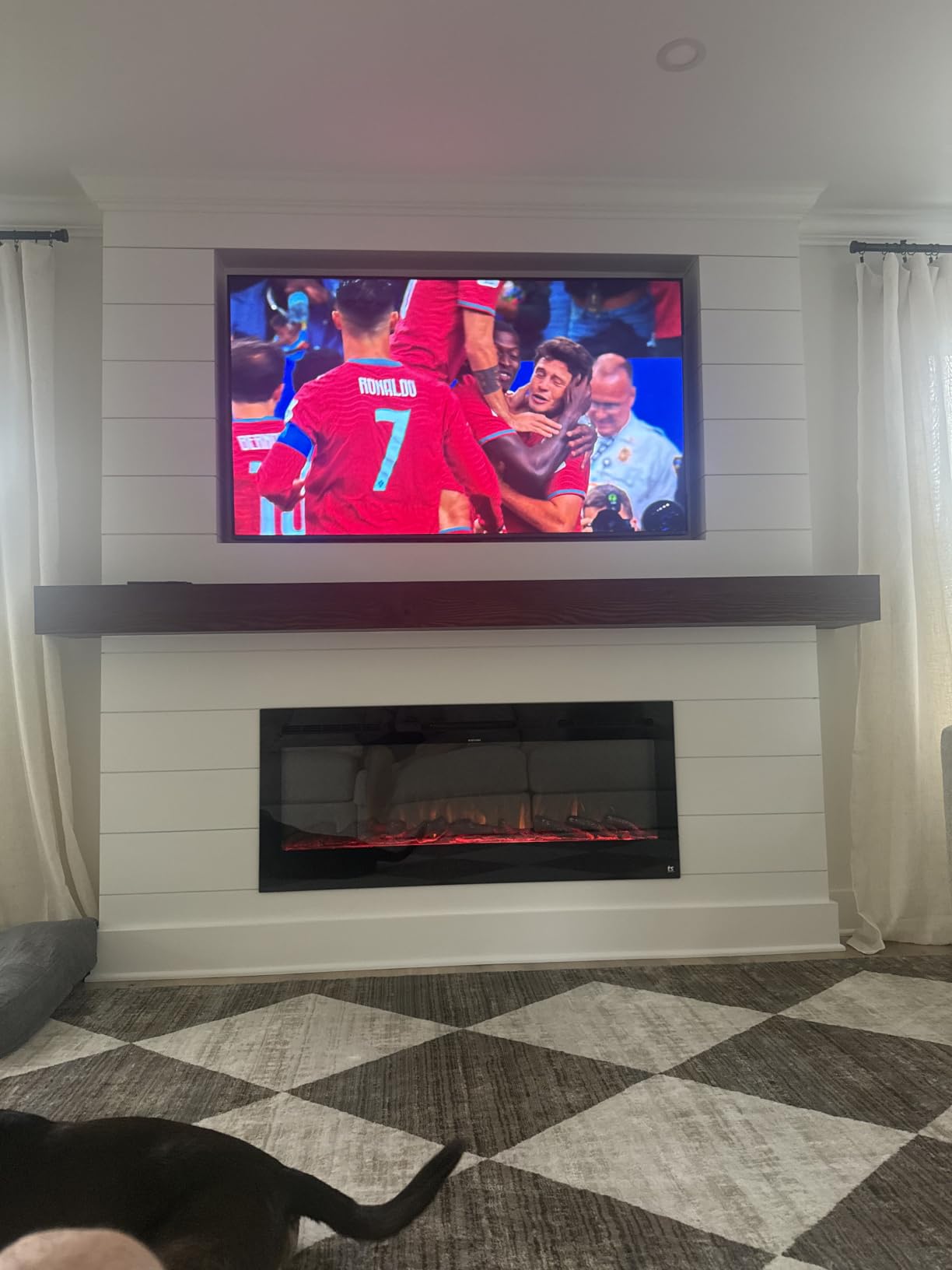
Gaming features are complete at 144Hz native with Motion Rate 480, Game Accelerator 288, VRR and ALLM. Colour runs to 1.07 billion shades through the QLED quantum dot layer, with Dolby Vision, HDR10+, HDR10 and HLG supported.
The audio is the surprise. A built-in Onkyo 2.1 system with Dolby Atmos, DTS Virtual:X and DTS-X passthrough is rare on an 85-inch panel, and owners treat it as a genuine bonus rather than a checkbox.
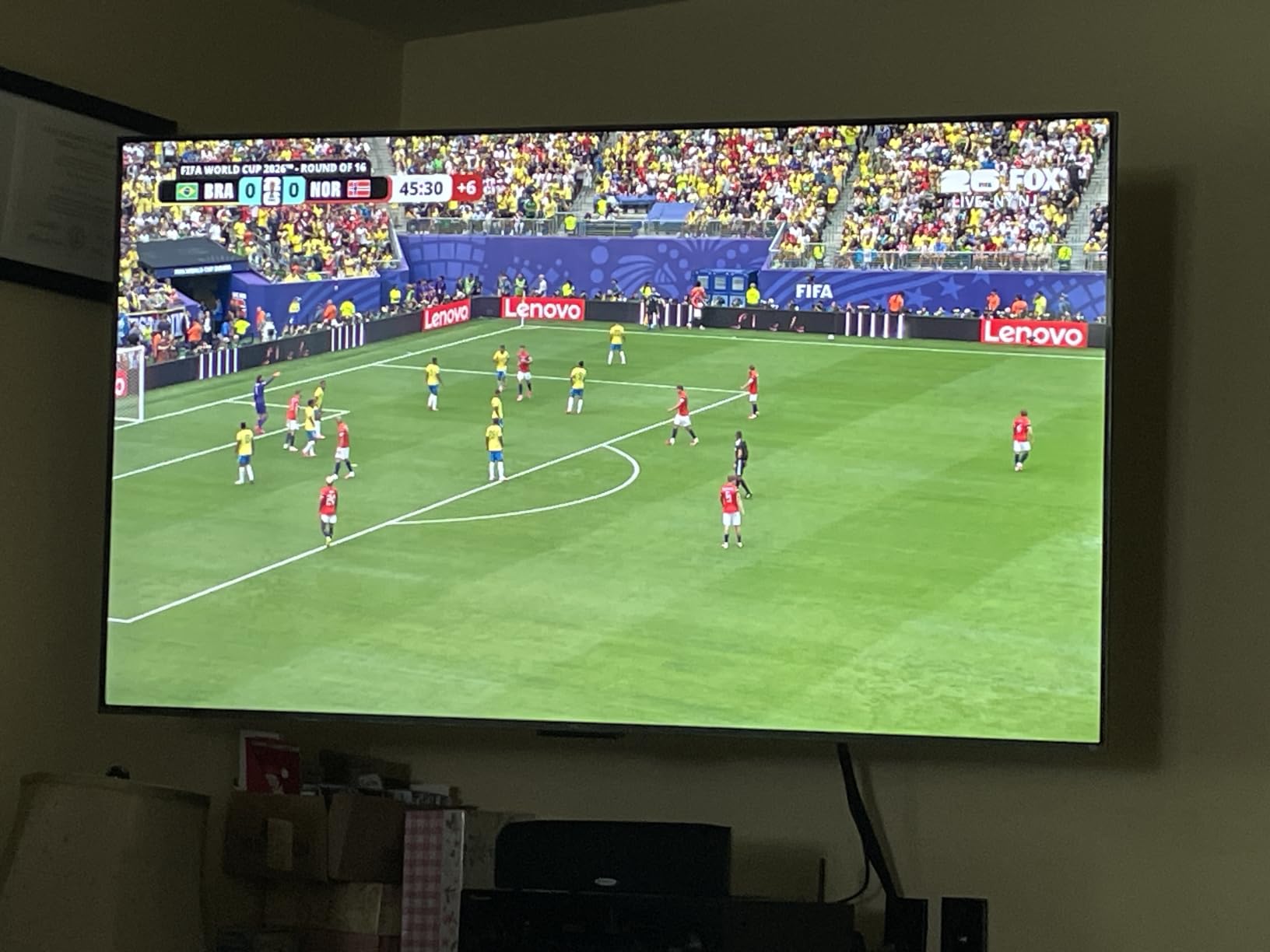
Why it wins in a bright room
Peak brightness is tuned for daylight, and the high zone count means the contrast survives it. Several sets in this group are explicitly reported as washing out or blooming in bright conditions, and this is the one built specifically to avoid that.
The wide viewing angle matters just as much. If your seating is a deep U rather than a straight sofa, this is the panel where nobody at the edge gets a duller picture.
The software is the compromise
Fire TV is the overriding negative here. Owners describe the interface as slow, illogical and inconsistent compared with Roku or Google TV, with apps taking a minute to load and streaming sometimes buffering. Several buyers plan to add an external streamer immediately.
The bundled remote is also unreliable, with Home and Back buttons behaving unpredictably, and third-party universal remotes often fail with the set. Plan on a 30 minute software budget after delivery, and keep your existing remote if you use one.
10. TCL 85F7D QLED – Most Versatile with Dolby Vision
- Quantum dot colour with over a billion shades at the lowest spend
- Dolby Vision plus Dolby Atmos and DTS:X
- Light 64.6 pound chassis
- Open ecosystem with Alexa AirPlay 2 and HomeKit
- 60Hz refresh and no local dimming leave contrast flat
- Picture clarity needs calibration for best results
- Onboard audio is basic for a screen this size
The F7D is the lowest-spend panel in this group, and it still delivers quantum dot colour across more than a billion shades, Dolby Vision with HDR10+ and HDR10, Dolby Atmos with DTS:X and DTS Virtual:X, and a bezel-less design that keeps an 85-inch screen visually compact.
It is also light, at 64.6 pounds, and it runs an open ecosystem with Alexa, AirPlay 2 and HomeKit rather than tying you to one vendor. For a household that already uses Apple hardware, that is worth more than another layer of picture processing.
Gaming support is reasonable rather than special. Motion Rate 240 with MEMC frame insertion, Game Accelerator 120 and Auto Game Mode with a Game Bar overlay handle a current console, and the built-in subwoofer gives the audio more low end than most panels this thin manage.
What holds it back is the 60Hz native panel and the basic LED backlight with no local dimming. The panel cannot resolve fast motion as cleanly as a 120Hz or 144Hz set, and dark scenes in a night-time film will look flat rather than deep. Reviewers also report needing calibration for best clarity, and this is the lowest-rated set here at 3.9 with a notably high share of one-star reviews.
When the budget pick makes sense
This is the right set when the priority is filling a very large wall for the lowest outlay and the main viewing is casual. Streaming, daytime television and general family use are all well served, and the light chassis keeps the install straightforward.
It also suits a room that gets bright, since an ambient light sensor and quantum dot colour help it hold up better than the rating suggests, and it works well for anyone who does not want to manage a vendor-specific ecosystem.
When you should spend more instead
Step up if your room can be darkened. Without local dimming, the picture in a dim media room lacks the depth that a Mini-LED backlight provides, and that gap is obvious on a screen this large once you have seen it.
Step up for sport or console gaming, where 60Hz and frame insertion are a real compromise rather than a nuance. Owners frequently report wishing they had spent more, and the Hisense E7SF or the TCL 85T7 would address both the refresh rate and the backlight in one move.
How to Size an 85-Inch Screen for a Large Living Room
Size by seating distance, not by room square footage. A wide but shallow room can look wrong at 85 inches, while a compact room with a deep nine-foot sofa throw works well. A distance of 9 to 11 feet suits 75 or 85 inches, 11 to 13 feet is where 85 inches sits comfortably, and beyond 13 feet you should weigh an 85-inch panel against a projector.
The second check is the wall. An 85-inch panel is roughly 74 inches wide and about 43 inches tall before the bezel, so you want at least 80 inches of usable wall width and around 50 inches of height. Add room for a soundbar below or a full-motion mount arm behind, and make sure the mount bracket is rated for the specific panel weight with headroom.
Against a 75-inch panel, an 85-inch set gives you roughly 28 percent more screen area. That is a meaningful jump, but it is not the doubling that marketing language implies, and on a sofa at 9 feet the difference is far less obvious than at 12.
One note for OLED shoppers. There is no 85-inch OLED in this group, and 83-inch OLED sets are sold under an 85-inch class name in several markets. The screen areas are effectively the same, so treat an 83-inch QD-OLED as the direct alternative to these 10 rather than a compromise.
OLED vs Mini-LED vs QLED at 85 Inches
Mini-LED wins in bright rooms, OLED wins in dark ones, and QLED sits between them. That one sentence resolves most of the arguments we see about 85-inch sets, and the rest of this section explains why.
Mini-LED uses thousands of tiny backlight zones behind an LCD panel, so it can push high brightness while still switching regions off for darker scenes. Zone count is the spec that matters: the QM64L in this group runs up to 500 zones. A panel with very few zones cannot darken selectively, which is why budget QLED sets look flat in night scenes.
QLED, which several of the entry sets here use, is a quantum dot colour layer on a standard LED backlight. The colour gains are real, but with no local dimming the contrast is limited. Peak brightness in nits tells you how it copes with daylight, and an anti-reflective or matte finish tells you how it copes with a window behind the sofa.
OLED switches individual pixels off entirely, so blacks are absolute and the viewing angle is wide. It is the right choice for a darkened room and a wrong choice for a sunlit one, and it is also the technology most buyers are steered away from at this screen size because 83-inch panels are the largest available.
None of the 10 sets here is OLED. That is deliberate, and it reflects the consensus in the buying communities we reviewed: 85 inches is a Mini-LED and QLED size, while OLED shoppers are usually pushed toward 77 or 83 inches.
Bright Room or Dim Room: Matching the Panel to Your Light
Match the panel to your worst lighting condition, not your ideal one. If your sofa faces a window with curtains that stay open all afternoon, buy brightness and a matte finish. If the room can be properly darkened, buy contrast and local dimming.
For bright rooms, the two properties that matter are peak brightness and surface finish. The BRAVIA 5 has the highest stated peak brightness here at up to 1000 nits and a matte finish, and the QM64L combines high peak brightness with 500 dimming zones. The TCL T7 reports noticeable glare, so window placement still decides.
For dim rooms, local dimming and zone count dominate. The Hisense E7SF with Full Array Local Dimming and the Sony BRAVIA 7 with XR Backlight Master Drive both give you real control over black levels, which is the difference between a dark room looking cinematic and looking grey.
One more variable is who else is in the room. In a wide seating arrangement, viewing angle matters as much as brightness. The QM64L at 178 degrees and the Hisense E6QF at 178 degrees hold up better at the edges than the BRAVIA 7, whose picture dims off-axis.
Installation Reality: Weight, Mount Load and Soundbar Clearance
Weight is the thing buyers discover on delivery day, and it varies more than the screen size suggests. In this group the weight range runs from 63.7 pounds on the Samsung M80H through 64.6, 66.1 and 66.8 pounds on the lighter TCL and Hisense models, up to 99.6, 102 and finally 111.7 pounds on the Sony sets.
Every set here is a two-person handling job in practice, and the heavier Sony panels are close to a three-person job with a full-motion mount. Confirm your bracket is rated for the specific panel weight with headroom, and check that your studs line up with the mount pattern.
Mount patterns matter for hardware compatibility. Five sets in this group use 400 x 400 mm, the M80H and U8000H use 400 x 300 mm, and the Hisense E6QF, E7SF and TCL T7 use 600 x 400 mm. If you already own a mount, check the pattern before you choose.
Soundbar clearance is the detail most people miss. The TCL T7 has width-adjustable feet specifically so a soundbar can sit beneath the panel, and you should plan the same for any set you put on a console. Check the listed depth too, since the Sony sets ship with large pedestal stands that eat console depth.
Finally, plan the cables. A 2026 model typically has three or four HDMI ports and no optical output on some sets, so decide your source list before the installer arrives, and route conduit while the wall is open rather than after.
Frequently Asked Questions
Is an 85 TV too big for a living room?
No, not if your main seating sits roughly 8.5 to 12 feet from the screen and your wall can carry the weight. Below about 8.5 feet an 85-inch panel starts to feel overwhelming in everyday viewing, and past about 13 feet you lose the impact. If your seating is under 9 feet away, a 75-inch set is the better purchase.
What is the best 85-inch TV for a living room?
The Hisense 85E6QF is our overall recommendation for most large living rooms, with the widest review base in this group and the broadest HDR format coverage. The TCL 85T7 is the pick for mixed-use rooms that need 144Hz motion, and the Sony BRAVIA 5 for bright rooms with a matte screen finish.
What is the best size TV for a large living room?
Tie size to seat-to-screen distance. 9 to 11 feet maps to 75 or 85 inches, 11 to 13 feet maps to 85 inches comfortably, and beyond 13 feet an 85-inch panel is worth considering against a projector. Measure from your eyes to the wall while seated rather than using room width as a guide.
What is the best room size for an 85 inch TV?
Gate on seating distance and wall width rather than square footage. You want main seating about 2.6 to 3.7 metres from the screen and a wall roughly 2.4 metres wide minimum, since an 85-inch panel is about 74 inches wide before the bezel. Ceiling height and light control are secondary factors.
How far should you sit from an 85-inch TV?
Roughly 8.5 to 12 feet from the screen is the range that suits an 85-inch panel for ordinary viewing. Some manufacturers recommend more, with Sony listing 15 feet and above for its BRAVIA 3, which suggests the extra screen area is better appreciated further back in a genuinely large room.
Is OLED or Mini LED better for an 85-inch TV?
Mini-LED is better in a bright living room because it holds high brightness while dimming regions for contrast. OLED is better in a darkened media room because pixels switch off entirely for absolute blacks. At 85 inches the choice is largely made for you, since the largest OLED panels are sold as 83-inch sets.
How much does an 85-inch TV weigh and can you wall mount it?
Panels in this group range from 63.7 pounds on the Samsung M80H to 111.7 pounds on the Sony BRAVIA 7, with most between 64 and 102 pounds. You can wall mount any of them if your bracket is rated for the specific weight with headroom and the mount pattern matches, which is 400 x 400, 400 x 300 or 600 x 400 mm here.
Conclusion: The Best 85-Inch TV for Your Large Living Room
Two decisions come before any model. How far your sofa sits from the wall, and how much daylight lands on the screen. Answer those and the field narrows fast. For most large living rooms the Hisense 85E6QF is the pick we make first, with the widest review base and the broadest HDR format coverage in this group.
Move up to the TCL 85T7 if you want 144Hz motion and near-full DCI-P3 colour in a mixed-use room, to the Hisense 85E7SF or TCL QM64L if local dimming matters more than anything else, and to the Sony BRAVIA 5 if you want brightness and a matte finish in one panel. If your seating is under 9 feet away, buy 75 inches and keep the money for a soundbar.
Whichever you choose, measure the wall, confirm the mount pattern and plan the soundbar clearance before it arrives.