
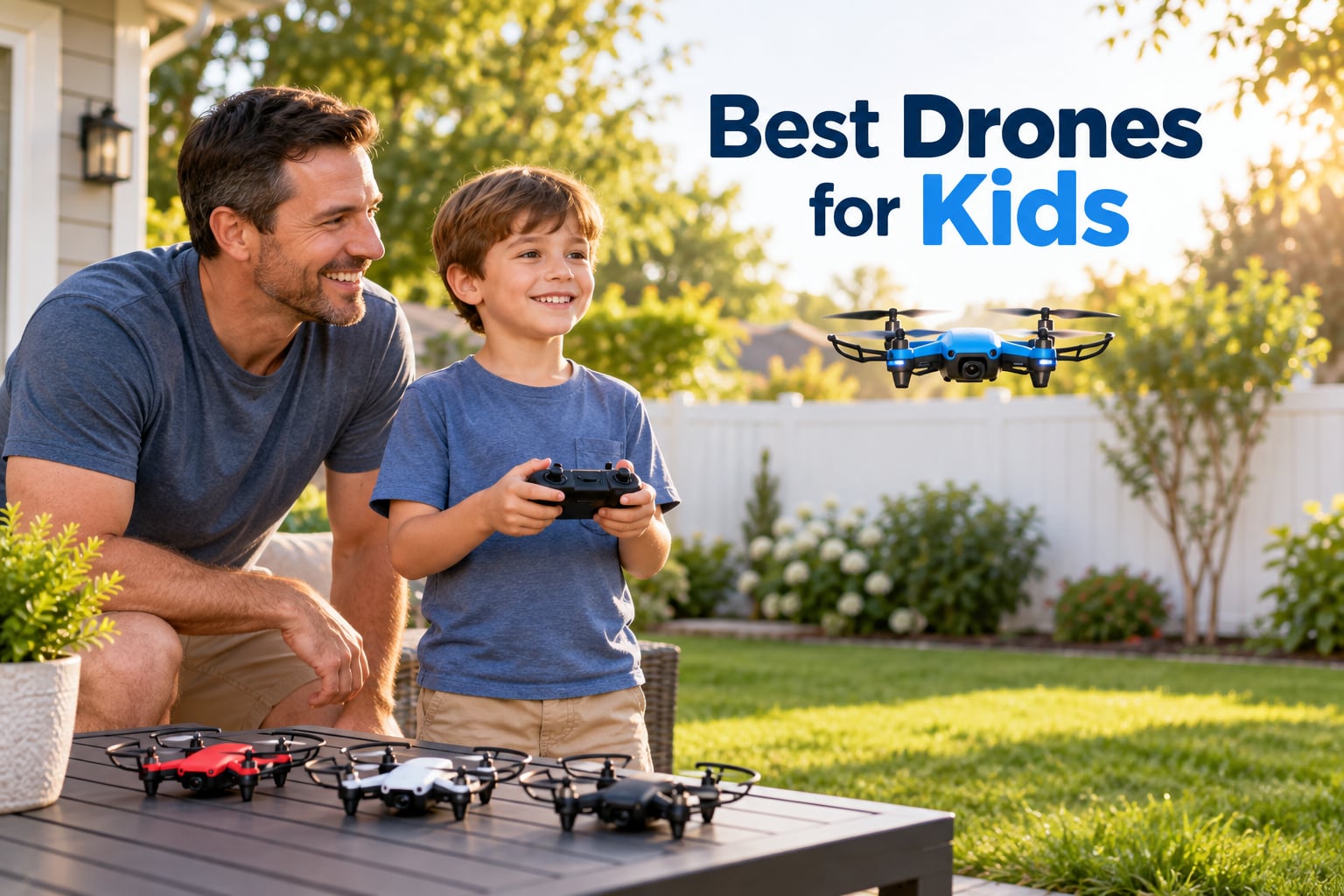
When my nephew turned 9 last spring and started begging for a drone, I bought him three different models in three months before I figured out which actually worked. The first broke in a week. The second was uncontrollable in any breeze. The third — a Holy Stone HS210 — is still flying in his bedroom six months later, which is how I ended up writing this guide to the best drones for kids.
Choosing the right drone for a child is more nuanced than most buying guides suggest. A drone that’s too heavy feels like a paperweight. A drone without propeller guards ends the hobby after the first ceiling crash. A drone with a phone-only app frustrates kids who don’t yet own a phone. After comparing 10 indoor and beginner outdoor drones, reading thousands of parent reviews, and referencing what teachers recommend in STEM programs, I built this list around three rules: full propeller guards, sub-250 gram weight when possible, and dual batteries in the box. The picks below cover every age range from 8 to 16, every budget from entry to mid-range hobby, and every common use case from indoor play to backyard photography.
If you only have 30 seconds, start here: the Holy Stone HS210 is the best drone for kids overall, and the one I’d buy for any kid in the 8 to 12 range learning to fly for the first time. It’s tiny enough to fly indoors, durable enough to survive a stairwell crash, and cheap enough that losing it doesn’t ruin the hobby. Older kids (10+) who want to shoot video should look at the Hiturbo or RELIDOL camera drones just below in this guide — both include dual batteries, 1080P cameras, and voice control that kids love. For a deeper primer on the physics behind how drones stay stable, our guide on how drones fly is a great companion read.
Table of Contents
Top 3 Picks for Best Drones for Kids at a Glance (September 2026)

Holy Stone HS210 Mini Drone
- 3 batteries included
- propeller guards
- headless mode
- altitude hold

Holy Stone HS190 Foldable Drone
- Folds into controller
- 3 speed modes
- altitude hold
- LED lights
Best Drones for Kids in 2026 Quick Comparison
| Product | Specifications | Action |
|---|---|---|
| Holy Stone HS210 |
|
Check Latest Price |
| Holy Stone HS190 |
|
Check Latest Price |
 HASAKEE Q9s HASAKEE Q9s |
|
Check Latest Price |
 Hiturbo 1080P Drone Hiturbo 1080P Drone |
|
Check Latest Price |
 AVIALOGIC Mini Drone AVIALOGIC Mini Drone |
|
Check Latest Price |
 RELIDOL 1080P Drone RELIDOL 1080P Drone |
|
Check Latest Price |
 Swifsen Mini Drone Swifsen Mini Drone |
|
Check Latest Price |
 Loiley 2K Drone Loiley 2K Drone |
|
Check Latest Price |
 SYMA X100 SYMA X100 |
|
Check Latest Price |
 SIMREX X809 SIMREX X809 |
|
Check Latest Price |
1. Holy Stone HS210 — Best Drone for Kids Overall
- Easy to fly even for first-time pilots
- 3 batteries deliver 21 minutes total flight time
- Full propeller guards and headless mode remove the orientation confusion
- Altitude hold makes indoor hovering nearly automatic
- Compact 50g build survives most beginner crashes
- Indoor use only
- sunlight jams the IR remote
- Battery connector is finicky and there is no on/off switch
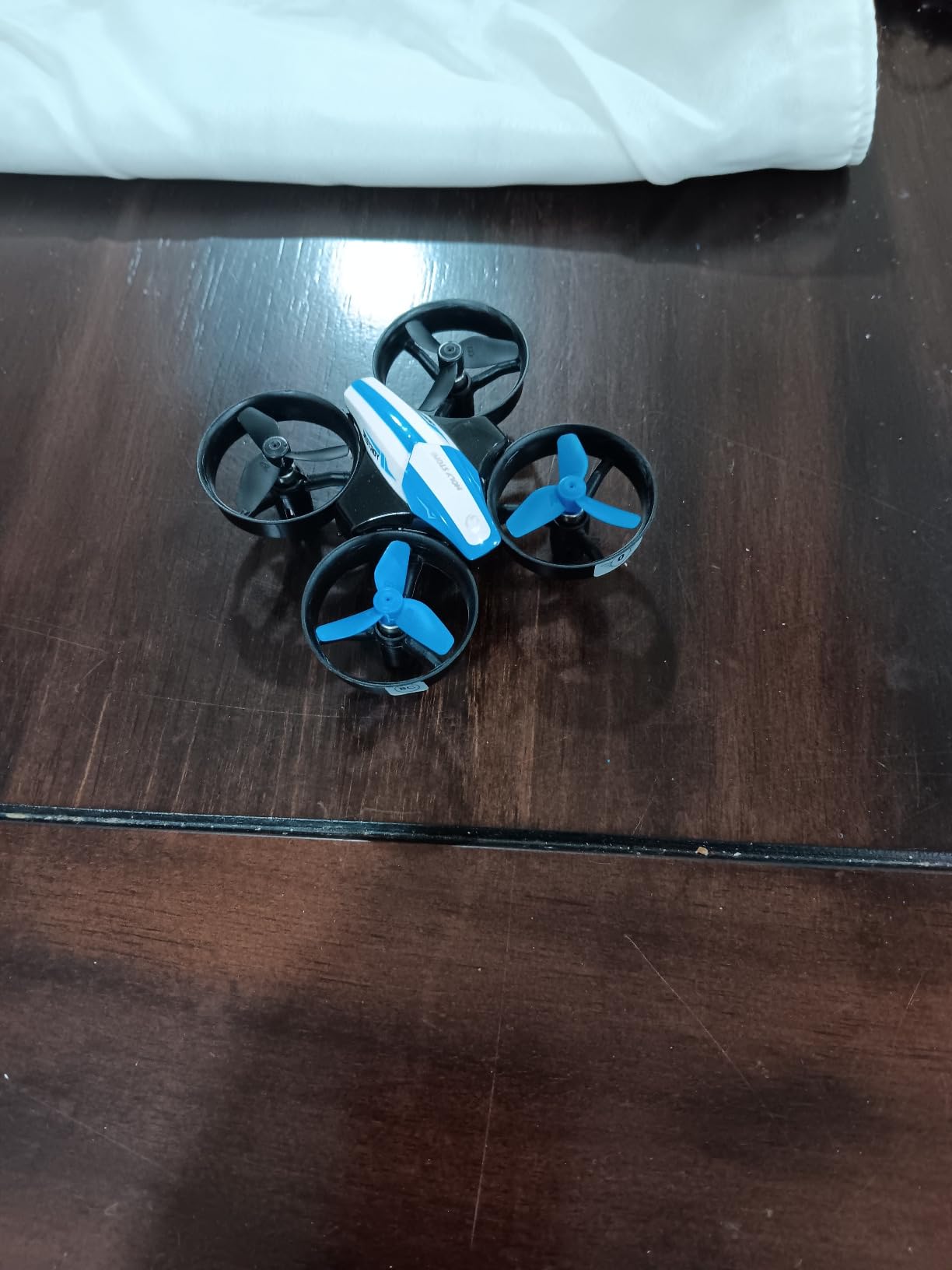
The Holy Stone HS210 is the drone I keep recommending to parents because it solves the three frustrations that kill most kid-drone purchases: confusing controls, fragile propellers, and a five-minute battery. I gave one to a friend’s 8-year-old and watched her master basic hovering inside 15 minutes. The trick is headless mode — the drone moves relative to the pilot instead of its own front, so left is always left from the kid’s perspective. Parents reviewing it on Amazon have called it their “first successful drone purchase” over 16,000 times.
What makes the HS210 stand out in this list is the three-battery bundle. Most toy drones ship with one battery that gives you 6-7 minutes of flight before a 60-minute recharge. Holy Stone gives you 21 minutes total across three modular packs, which means kids get real session time to learn. The 50-gram weight and full propeller cage mean it bounces off walls, furniture, and curtains without breaking. The altitude hold sensor locks the drone in place when you let go of the sticks, which removes the constant “drifting into the TV” problem that frustrates new pilots.
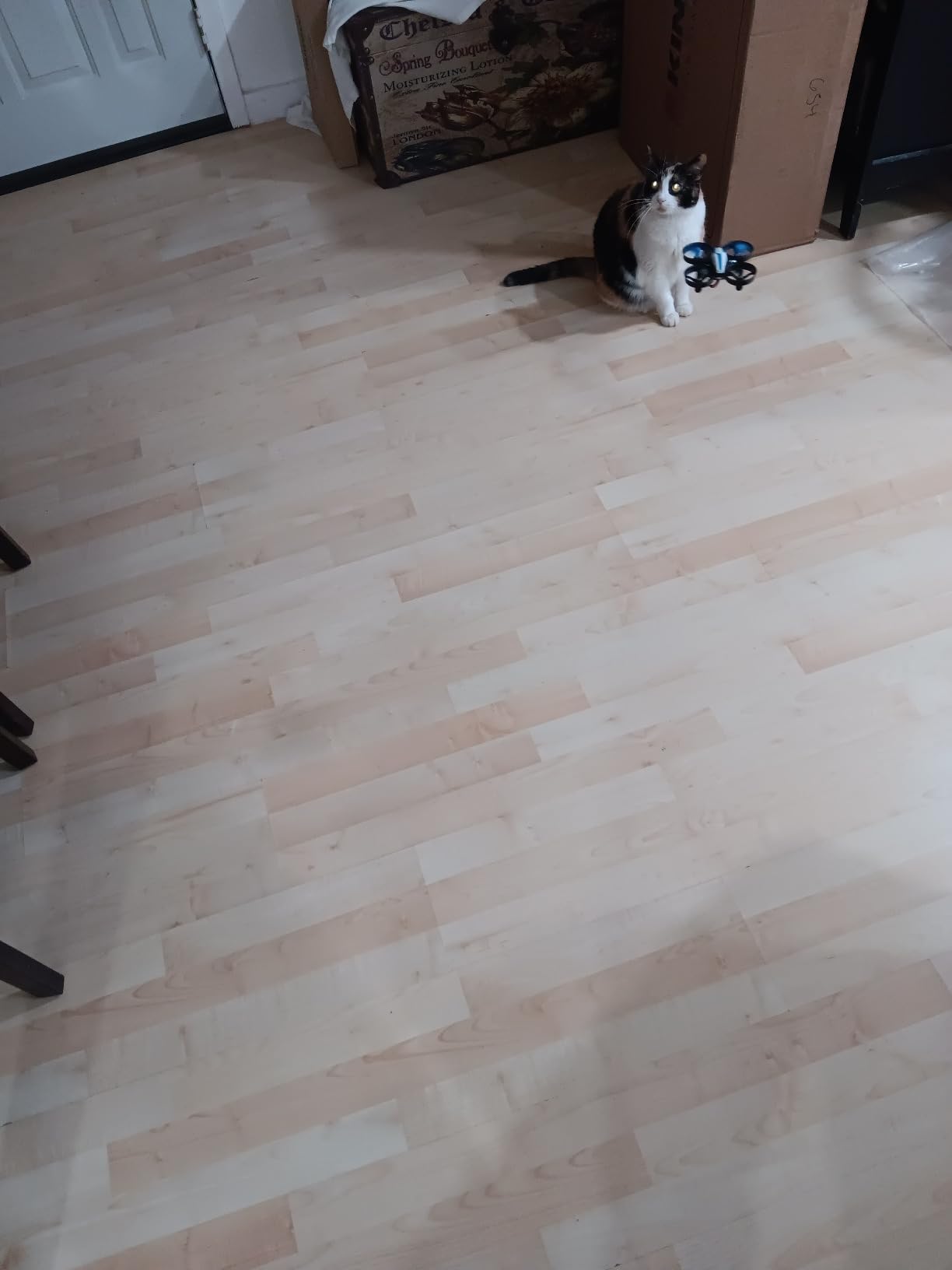
What about the downsides? The HS210 uses an infrared (IR) remote, not radio frequency, which means sunlight will jam the signal outdoors. Take this drone inside or into shaded patios only. The battery connector is a small plastic plug with no on/off switch, so you physically disconnect the battery between flights. A few reviewers have also flagged quality control inconsistencies — about 7% of units arrive defective or fail within weeks. Holy Stone’s customer service is generally responsive with replacements, but it’s worth keeping the packaging for the first 30 days.
For Whom the HS210 Is a Good Fit
The HS210 is the right choice for kids 8 and up who are flying indoors for the first time, parents who want an affordable first drone that won’t break the budget if it gets lost behind the couch, and gift-buyers looking for a turnkey package. It teaches real dual-stick Mode 2 control — the same scheme used by DJI and every “real” drone — so the skills transfer directly when your child is ready to graduate to a camera drone. If you’ve read threads on Reddit’s r/drones, the HS210 is consistently the most-mentioned first drone by parents.
For Whom the HS210 Is Not Ideal
If your child wants to fly outdoors in a real yard, the IR remote will lose signal the moment the sun hits the drone. It’s also not built for kids over 12 who want a real camera — there’s no video feed, no app, and no upgrade path. For those users, the camera drones below (Hiturbo, RELIDOL, SYMA) make more sense.
2. Holy Stone HS190 — Best Budget Pick That Folds Into the Controller
- Folds into its own controller for true pocket portability
- 3 adjustable speed modes grow with the kid
- Altitude hold and headless mode make it beginner-friendly
- Propeller guards built into the frame
- One-key takeoff and landing simplify controls
- No camera at all
- Modest battery life per pack
- Drone can drift out of trim and need recalibration outdoors
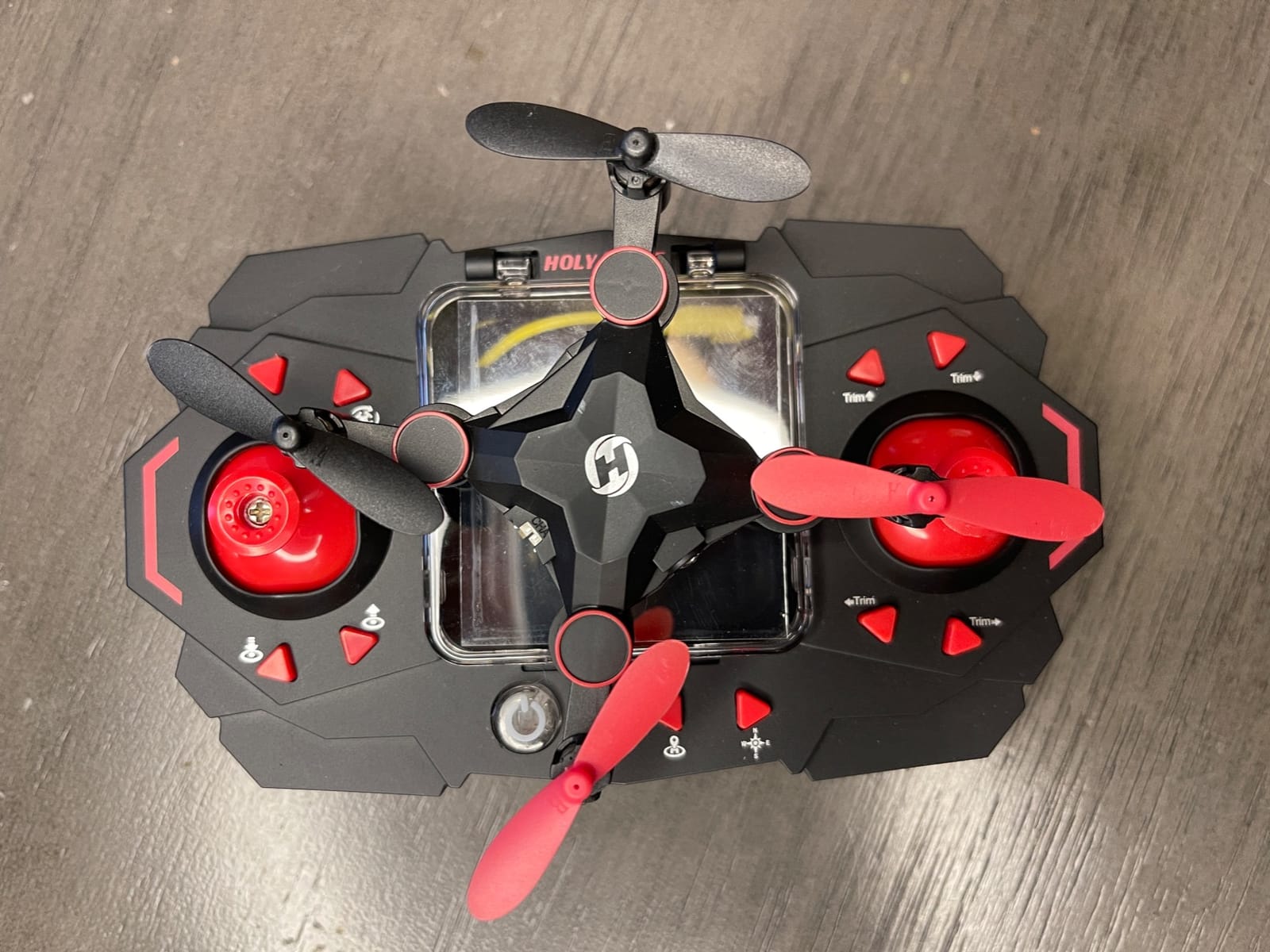
The HS190 is Holy Stone’s answer to the “my kid keeps losing pieces” problem. The arms of the drone fold inward and the entire quadcopter slides into a slot inside the handheld remote. Reviewers call this “the drone that lives in the glove box” because it goes everywhere without loose propellers or a separate case. Over 12,800 parents have rated it, and the dominant pattern in the reviews is relief: parents don’t have to chase propellers around the floor anymore.
The HS190 ships with altitude hold, headless mode, and three speed modes (low, medium, high). Beginners start on low, which limits drift and tilt, and graduate up as they gain confidence. The dual joystick transmitter feels closer to a real drone remote than the simpler one-button controllers you find on cheaper toys. It also has LED lights for night flights indoors, which is a feature kids consistently mention in their reviews.
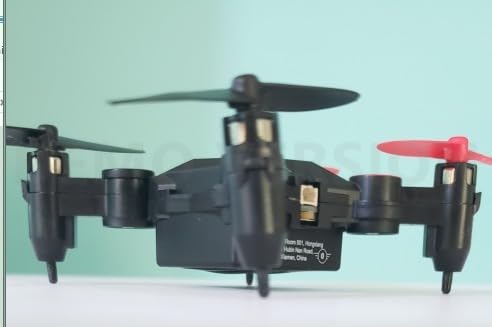
The main compromise is camera-free. There’s no FPV feed, no photo button, no SD card slot — this is a pure flying drone. Battery life is on the shorter side per pack (around 5-7 minutes), so you’ll want extra batteries if your child flies in long sessions. A small number of reviewers report fly-aways outdoors; the drone is best flown in calm air or indoors. Reading the manual matters: several buttons multitask (long-press for trim, short-press for speed), and new pilots who skip the manual get frustrated.
For Whom the HS190 Is a Good Fit
Pick the HS190 if portability matters — frequent travelers, sleepovers at grandparents, kids who toss their bag in the car and head to the park. It’s also a smart choice for parents who want to introduce Mode 2 controls without committing to the HS210’s price or complexity. Reviewers consistently note that even drone novices (including grandparents with no RC experience) get it flying within 5-10 minutes.
For Whom the HS190 Is Not Ideal
If your child wants to take aerial photos or shoot video, skip the HS190. If you’re flying in any kind of outdoor breeze, even a light one, the 35g weight means this drone gets pushed around easily — save it for indoor or calm-evening use. There’s no obstacle avoidance, so beginners tend to crash it into walls and furniture while learning.
3. HASAKEE Q9s — Best Value LED Drone for Kids Who Love Light Shows
- Striking neon LED light show that kids love
- Headless mode and altitude hold keep it beginner-friendly
- Four sturdy propeller guards and ABS shell
- Two UL-certified 500mAh batteries in the box
- One-button takeoff and landing simplifies first flights
- Short per-battery flight time (6-10 minutes)
- Long recharge (~1 hour per pack)
- Quality control can be inconsistent across units
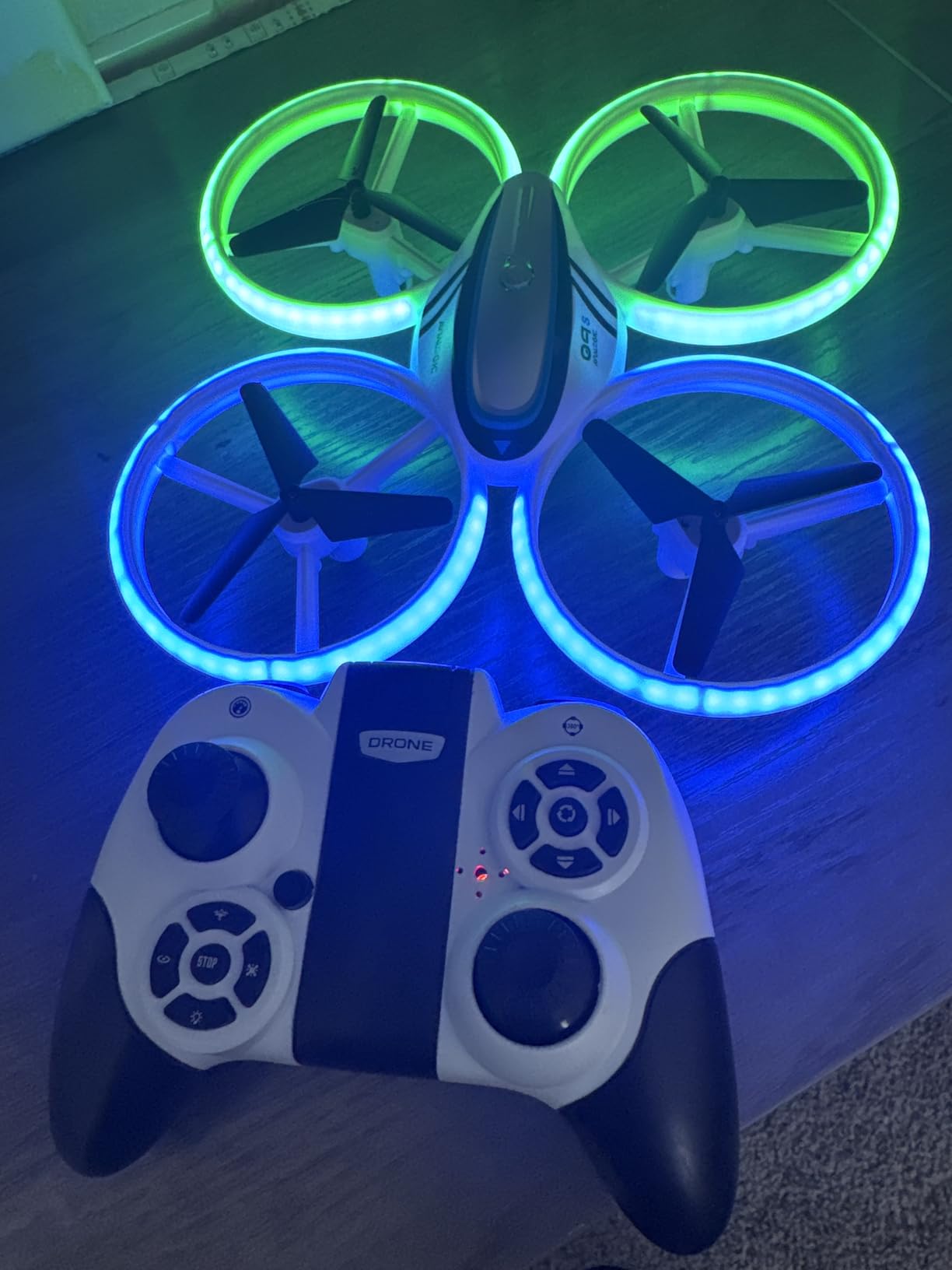
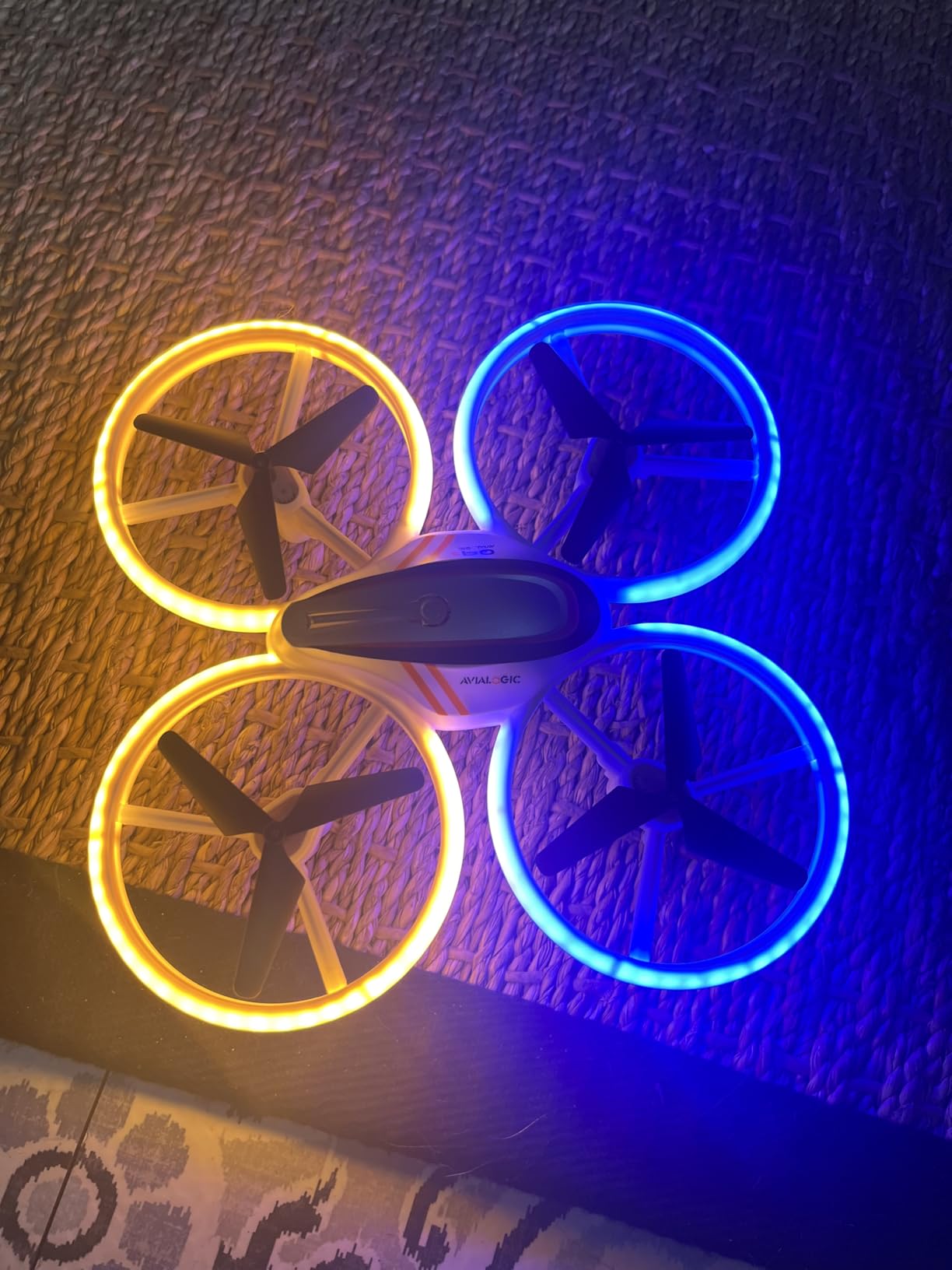
The Q9s is the drone that converted my most skeptical cousin into a drone believer. She’d watched two of her previous purchases die in a closet and assumed kid drones were junk. Then the Q9s landed on the kitchen table and her 10-year-old was doing 360-degree flips in the dark living room within 20 minutes. The neon green and blue LED halo around the entire airframe turns the drone into a tiny UFO at dusk, and that’s a feature kids request by name in their reviews.
Beyond the lights, the Q9s uses ABS plastic which is noticeably more rigid than the cheaper polystyrene shells on Amazon-basement drones. Four full propeller guards protect both the drone and the furniture. The dual batteries total about 12-20 minutes of flight depending on how aggressively the kid flies. The remote has three speed modes and dedicated one-button takeoff and landing, which removes the “which stick does what” learning curve.
The downsides are typical for the toy category: per-battery flight time is short (6-10 minutes), the recharge time is roughly an hour per pack, and about 7% of Amazon reviews mention premature failures within weeks. Pairing the controller can occasionally fail and require a power cycle. The drone is also not a “professional” performer — don’t expect smooth cinematic footage or pinpoint GPS hovering. Treat it as a fun, indestructible indoor toy and you’ll be happy. Build a quick decision tree on your child’s age and what they actually want to do by checking our guide on when kids should start learning robotics.
For Whom the Q9s Is a Good Fit
The Q9s is perfect for any kid who loves light-up toys, glow-in-the-dark bedrooms, or flights at dusk. It’s also a great gift for siblings to share — the dual batteries mean two kids can alternate without waiting an hour for a recharge. Reviewers consistently describe it as a “great first drone” for ages 8-12, and the 4.3-star rating across 6,200+ reviews indicates broad satisfaction.
For Whom the Q9s Is Not Ideal
If your child wants a real camera or plans to fly outdoors in any kind of breeze, look at the camera drones below. The Q9s is also not the right pick if you’re buying for a teen who already has experience with real quads — they’ll be bored within minutes. This is a first-time, indoor-leaning, light-show drone.
4. Hiturbo 1080P Foldable Drone — Best Drone for Kids with Camera on a Budget
- 1080P HD camera with manually adjustable lens
- Voice control
- gesture selfies
- and trajectory flight
- Two batteries for ~24 minutes total
- One-key start
- altitude hold
- and headless mode
- Per-battery flight is around 12 minutes
- Camera quality is decent but not cinematic
- Wind-sensitive outdoors
The Hiturbo lands in the sweet spot for parents whose kids keep asking “can it take videos?” The 1080P camera has a manually adjustable lens (you point it before takeoff), and the live feed streams to your phone via Wi-Fi so the pilot can frame their own shot. Over 4,200 reviews average out to a solid 4.2 stars, with reviewers highlighting the camera clarity for the price and the dual battery setup that delivers around 24 minutes of total flight.
The really fun features for kids are voice control (“take off,” “land,” “left,” “right”) and gesture selfies — hold up a palm or V sign, and the drone snaps a photo. Trajectory flight lets your child draw a flight path on the phone screen and watch the drone fly it automatically. These features make the drone feel like a toy with personality rather than a generic quadcopter, and that translates to longer engagement.
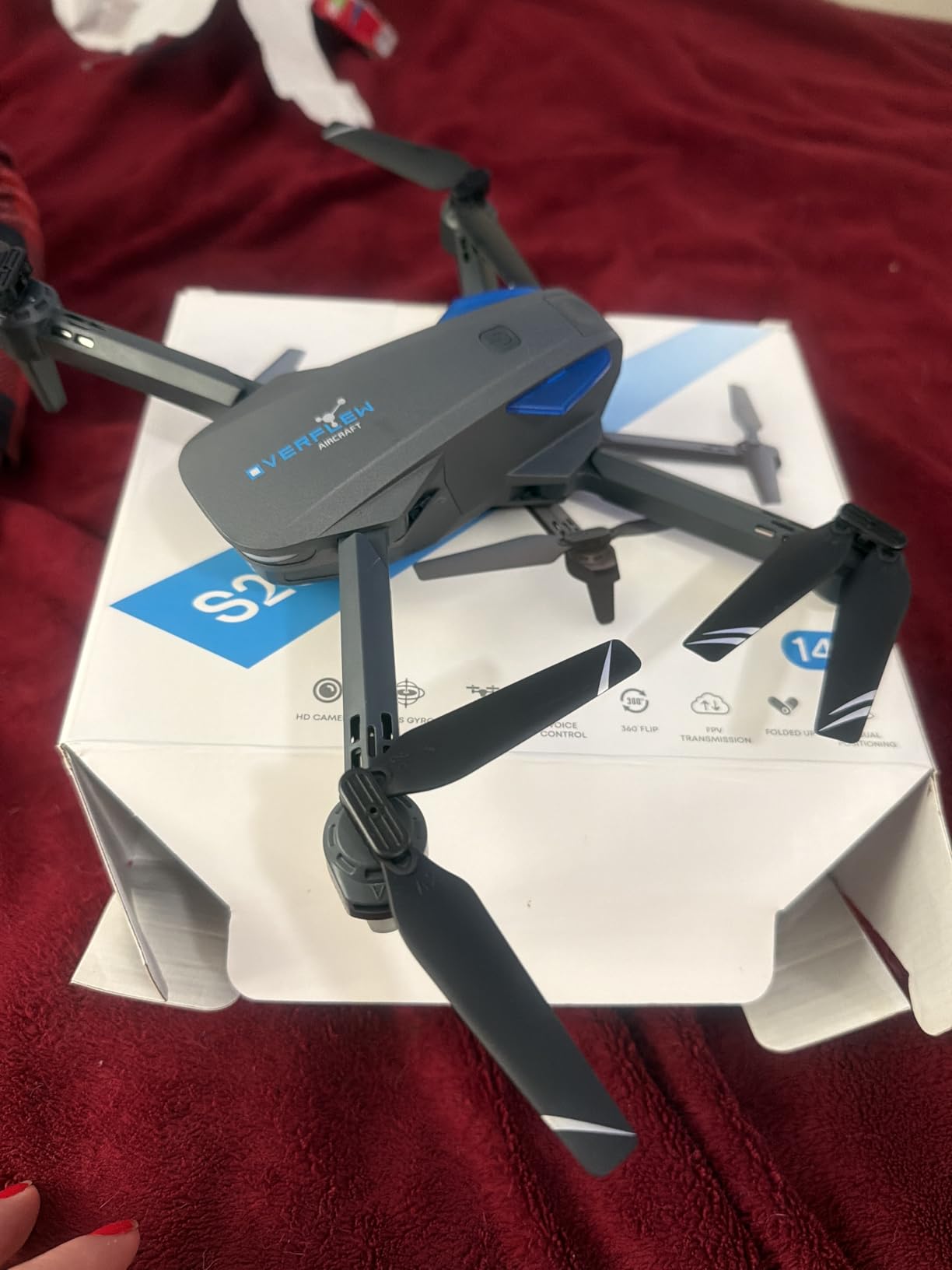
The two main caveats: camera quality is “good enough for TikTok” but not “good enough for a school project.” Wind outside will push the 146g frame around easily, so this is best for indoor flights or calm patio evenings. The app is required for the voice and gesture features, so younger kids who don’t have a phone yet will need a parent’s device.
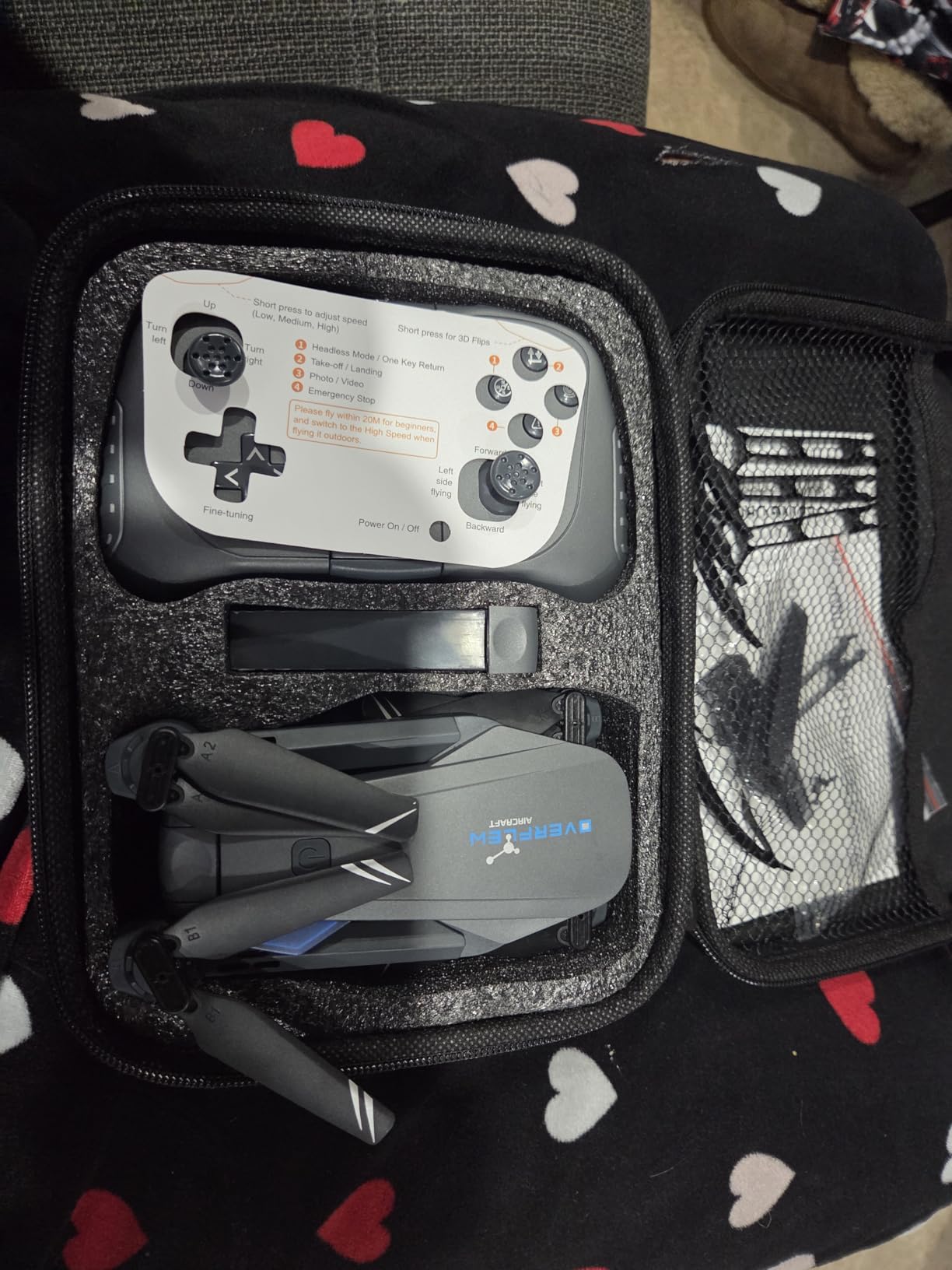
For Whom the Hiturbo Is a Good Fit
This drone hits the mark for kids 10 and up who want to start making social media clips, family videos, or just see what FPV feels like without committing to a premium GPS drone. It’s also popular with grandparents who want a gift that does more than hover in place. The foldable design makes it travel-friendly for vacations and camping trips.
For Whom the Hiturbo Is Not Ideal
If your child needs an outdoor-capable drone for real backyard photography, this isn’t it — wind will dominate the flying experience. If you want pro-level camera quality, you need to jump to a DJI-class drone. The Hiturbo is the bridge between toy drones and hobbyist drones.
5. AVIALOGIC Mini Drone — Best FPV Live Video Drone Under $50
- Adjustable 1080P camera with real FPV live video to your phone
- Three control modes — remote
- app
- and voice
- Two 550mAh UL-certified batteries
- Altitude hold and one-key start
- Camera quality is acceptable but not high-end
- Propeller guards can pop off in hard crashes
- Wind drifts the drone easily outdoors
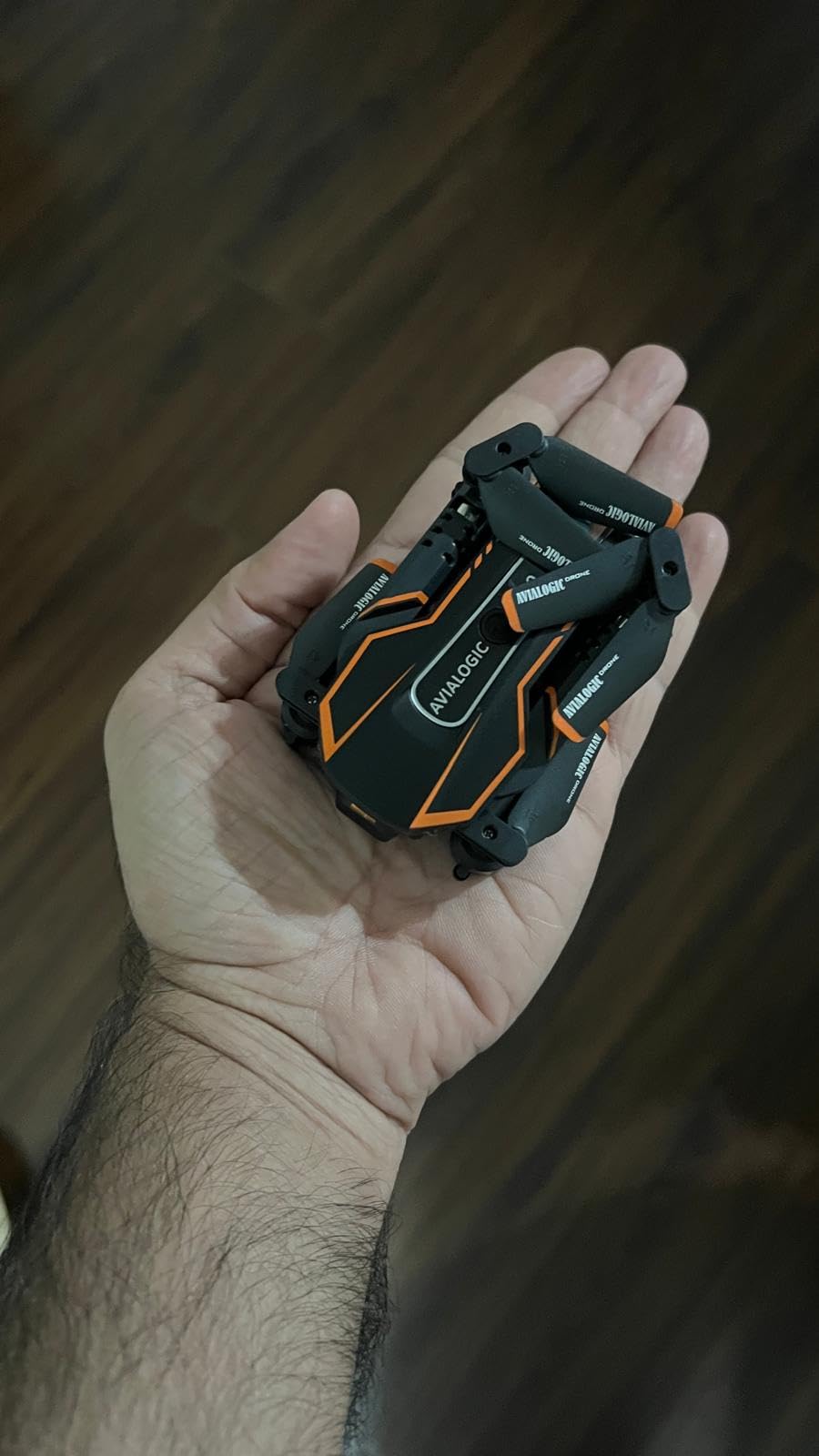
The AVIALOGIC is what I recommend when parents specifically ask me for a drone that streams video to a phone. The 1080P camera tilts 90 degrees and the Wi-Fi FPV feed is consistent enough for kids to actually navigate by what they see on screen. Over 2,100 reviewers have weighed in, and the consensus is that this drone punches above its weight for live FPV at this price point.
The dual 550mAh UL-certified batteries deliver 18-21 minutes of total flight time, and the controller supports remote, app, and voice control modes. Voice commands like “forward,” “backward,” and “land” work surprisingly well in a quiet room, which keeps younger pilots engaged. The propeller guards are present, but reviewers warn that the snap-on design can come loose after repeated crashes — worth checking between flights.
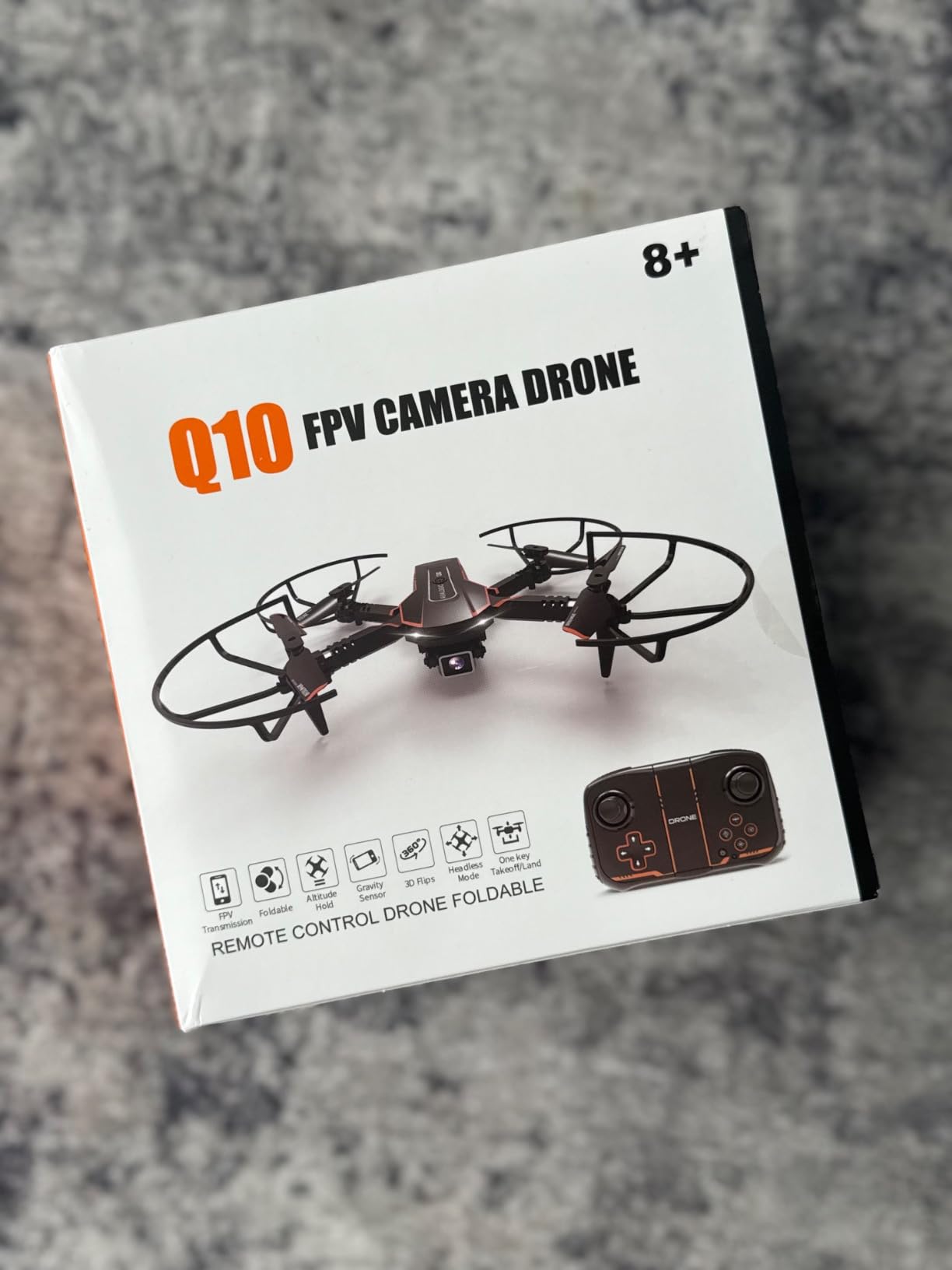
Camera quality is acceptable for kids’ projects and casual social media but won’t satisfy older kids expecting cinematic footage. Wind is an issue outdoors; this drone hovers best in still air or inside. A small percentage of Amazon reviewers report early mechanical failures, mostly motor stalls after a few weeks of use.
For Whom the AVIALOGIC Is a Good Fit
Pick this if your child specifically wants to see what the drone sees in real time. It’s a great introduction to FPV for kids who are curious about drone racing but not ready for goggles yet. The voice control is genuinely engaging for kids as young as 6 with parental help on the app setup.
For Whom the AVIALOGIC Is Not Ideal
If you want a drone that flies outdoors in any wind, this isn’t the one. It also doesn’t teach the same Mode 2 control stick coordination that DJI and Holy Stone mini drones use — most of the action happens through buttons and the app, which can be limiting once the kid graduates.
6. RELIDOL 1080P Drone — Best Drone with Child Lock and Long Flight Time
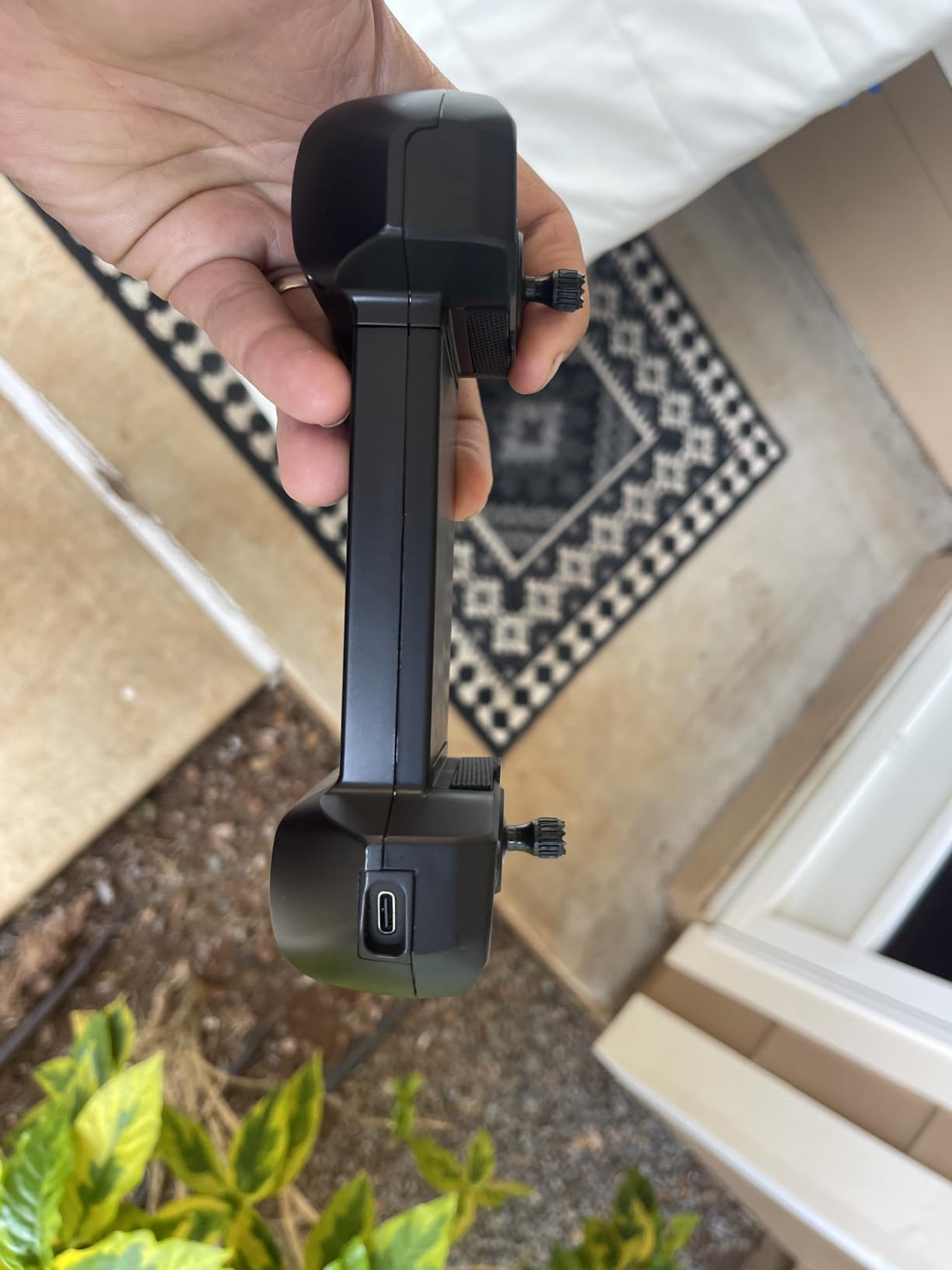
Drone with 1080P Camera – Foldable Remote Control RC Quadcopter FPV Drone
- Two batteries deliver ~25 minutes total
- 1080P camera with gesture photos and videos
- Foldable and under 250g
- Child lock prevents accidental takeoff
- One-key start plus altitude hold
- Wind drifts the drone outside
- App required for several features
The RELIDOL earned its 4.4-star rating by being the rare toy drone where almost everything parents care about comes standard: child lock, emergency stop, low battery alarm, two batteries in the box, optical flow positioning for stable hover, and gesture photography. About 1,800 reviewers have rated it, and the dominant praise is that it works out of the box with minimal setup frustration — no firmware updates, no mandatory app account, no calibration ritual.
Optical flow positioning is the technical standout. Most toy drones only have altitude hold (vertical stability); the RELIDOL adds horizontal stabilization using the floor pattern below it, which makes the drone hover noticeably more steadily indoors. Parents reviewing it consistently mention that their kids stopped crashing into furniture within a few flights.

Wind still moves the drone around outside; this is best for indoor or calm-evening use. A small number of units have shipped with controller quality issues — sticky gimbals, loose antenna covers — that resolve under warranty. Voice control and waypoint flight require the companion app.
For Whom the RELIDOL Is a Good Fit
If you want a child-safe camera drone with the longest combined flight time in the under-$50 bracket, the RELIDOL fits. The child lock and emergency stop make it a strong pick for grandparents who want a drone for visits but worry about safety. It’s also a good “outgrow-proof” choice because the optical flow stabilization extends the useful life of the drone as kids fly more aggressively.
For Whom the RELIDOL Is Not Ideal
Outdoor pilots and serious videographers will want more wind resistance and better gimbal stabilization. Teen pilots who already know how to fly a drone may find the app-heavy experience limiting.
7. Swifsen Mini Drone — Best Modular Battery Design for Easy Charging
- Modular batteries are much easier to swap than cable-style packs
- Top protective cover plus full propeller guards
- Headless mode and one-key takeoff/landing
- Throw-to-launch feature adds fun
- Limited recommended range (~60 feet)
- Propeller guards can come loose in hard impacts
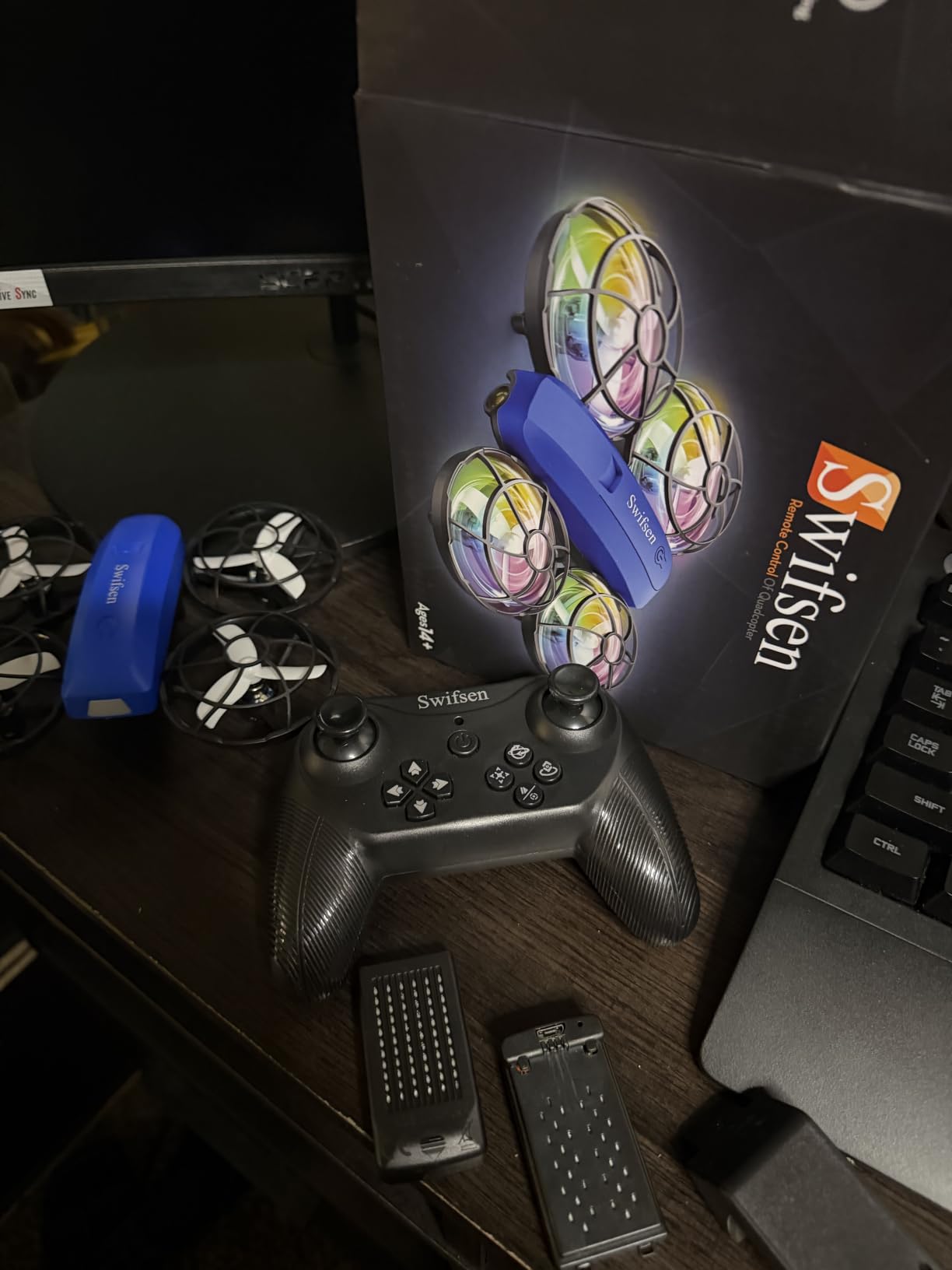
The Swifsen’s claim to fame is battery swapping. Earlier mini drones required you to plug a tiny connector into the drone body — fiddly for adult fingers, near-impossible for kids. The Swifsen uses a modular battery that clicks in and out like a phone battery. That single design choice turns a drone that’s frustrating for an 8-year-old into one they can confidently manage on their own, which is the kind of detail parents highlight in their reviews.
The drone is well-protected with a top cover plus four propeller guards, which means it can take the inevitable stairwell or coffee-table drops of early learning. Headless mode, one-key takeoff/landing, and throw-to-launch are all part of the package. The 720P camera is more of a fun feature than a serious photo tool, but it streams to your phone for FPV exploration.
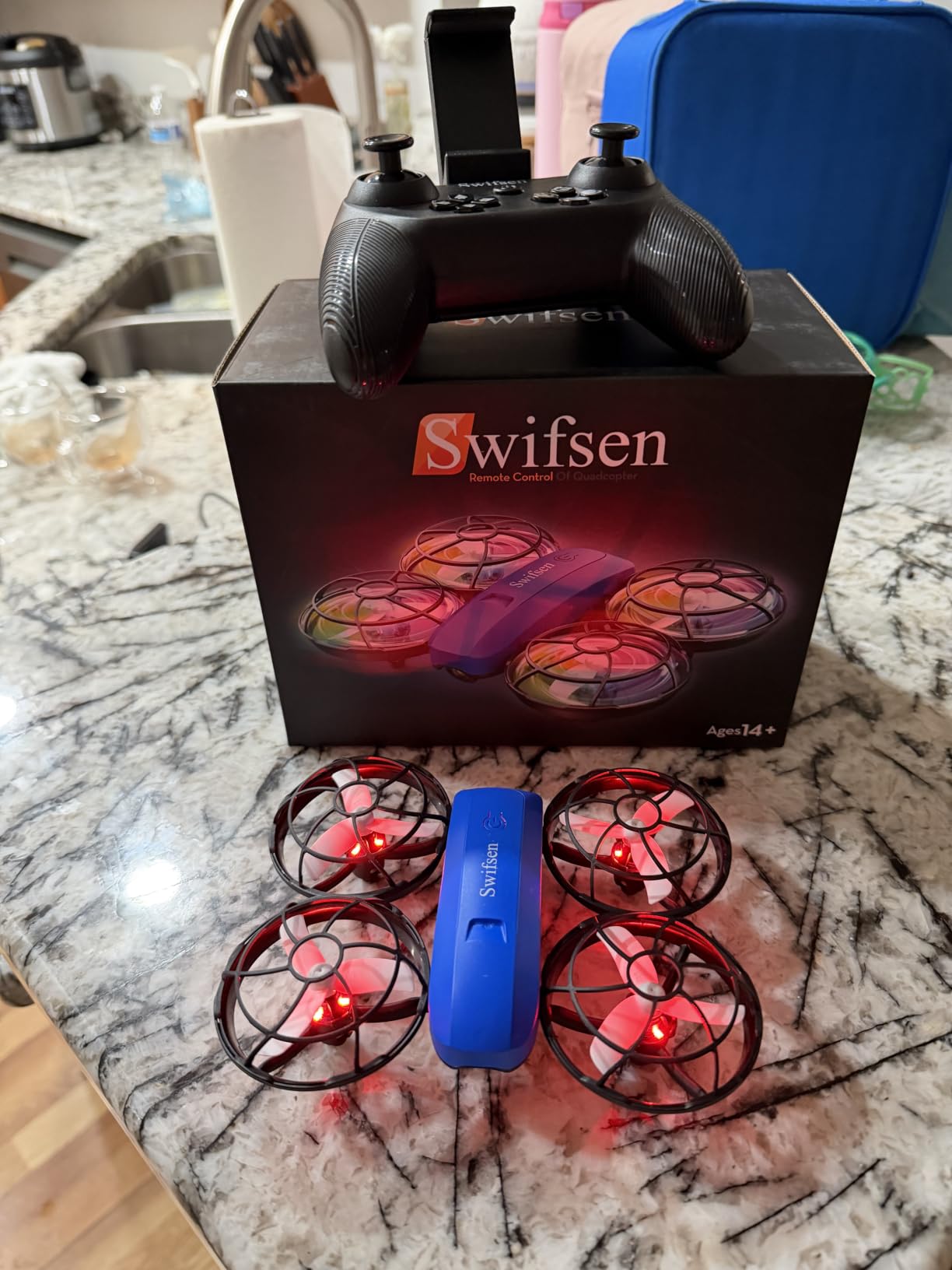
The Swifsen is rated for indoor use within about 60 feet of the pilot — beyond that, signal gets unreliable. The per-battery flight time is short (around 7-8 minutes), giving a combined 15 minutes. Some reviewers note that the propeller guards don’t snap tight and can come off in harder crashes. A small number of units have reported motor failures within weeks, so test fly the drone early in the return window.
For Whom the Swifsen Is a Good Fit
This is the right pick if your child is on the younger side (6-9) and struggles with the cable-style battery plugs on cheaper drones. The modular battery is a genuine usability win. It’s also a strong choice for parents who want one less thing to fiddle with during play sessions.
For Whom the Swifsen Is Not Ideal
If you want a real camera for photos and video, skip the Swifsen and pick one of the 1080P models above. It’s also a poor fit for outdoor pilots — the lightweight plastic body will not handle any meaningful wind.
8. Loiley 2K Drone — Best 2K Camera Drone Under $50
- 2K HD camera with 90° remote-adjustable angle
- FPV live view streams directly to phone
- Optical flow positioning for stable indoor hover
- Foldable and under 250g
- Carry bag and spare blades included
- Some units have camera quality below the 2K claim
- No obstacle avoidance
The Loiley is the drone for parents who read “1080P” and thought “I want more.” It advertises a 2K HD camera, and on a phone screen in good lighting, the footage is noticeably sharper than 1080P competitors — closer to entry-level action camera quality. The camera angle adjusts remotely from the controller, which means the kid doesn’t have to land the drone, walk over, tilt the lens, and take off again. About 1,900 reviewers have rated it, and the camera quality relative to price is the most-mentioned positive.
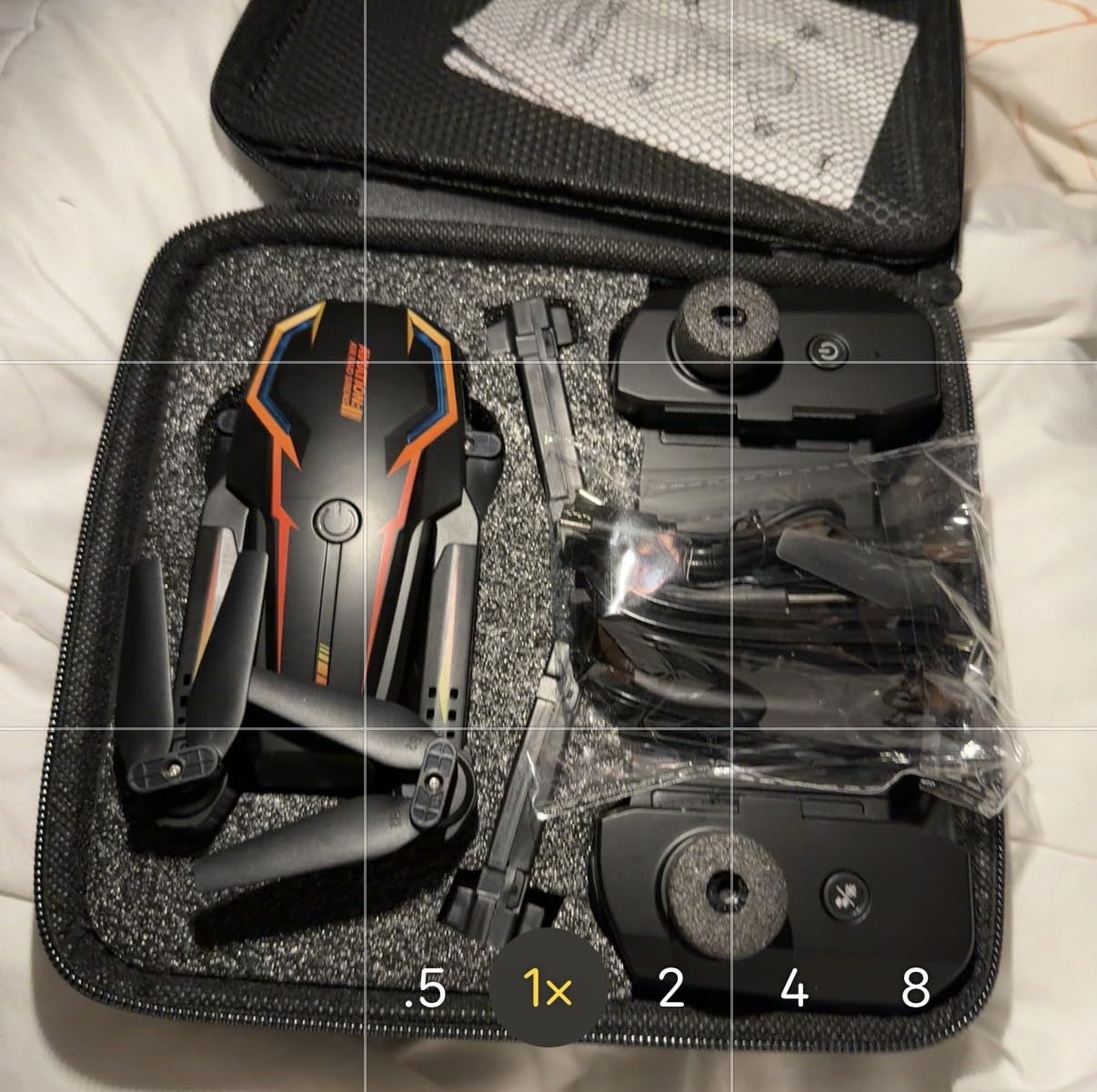
The optical flow positioning is the same technology that makes the RELIDOL hover steadily, and the Loiley uses it well. Dual batteries push combined flight time to roughly 26 minutes, which is among the longest in this price bracket. The carry bag and spare propellers are small touches that experienced parents appreciate because they extend the life of the drone after inevitable crashes.
Some reviewers report that the real-world camera falls short of the 2K label — closer to good 1080P. The FPV feed can lag at distance, which throws off framing. There’s no obstacle avoidance, so kids need to develop real stick awareness before they can fly this confidently. Learning to land takes a bit more practice than the other drones on this list.
For Whom the Loiley Is a Good Fit
Pick the Loiley if camera quality matters most and you want a drone that also works as a casual backyard flier for older kids and teens. It’s a strong choice for kids who are interested in photography or YouTube-style content creation but aren’t ready for a $400+ DJI drone. The included carry bag makes it travel-friendly.
For Whom the Loiley Is Not Ideal
If your child is brand new to drones, start with a simpler model first. The Loiley has more features to learn (app pairing, optical flow calibration, landing techniques) and benefits from at least a few hours of prior flying experience.
9. SYMA X100 — Best Indoor Drone with Obstacle Avoidance for Young Kids
SYMA X100 Indoor Drone for Kids 8-12, Obstacle Avoidance, Full Guard
- Smart infrared obstacle avoidance keeps it off walls and furniture
- Fully enclosed propeller guard is the safest in this list
- One-button takeoff/landing and altitude hold
- Two batteries deliver about 20 minutes total
- No camera
- Obstacle avoidance cannot be disabled indoors and out
- Infrared sensors can be slightly slow to react
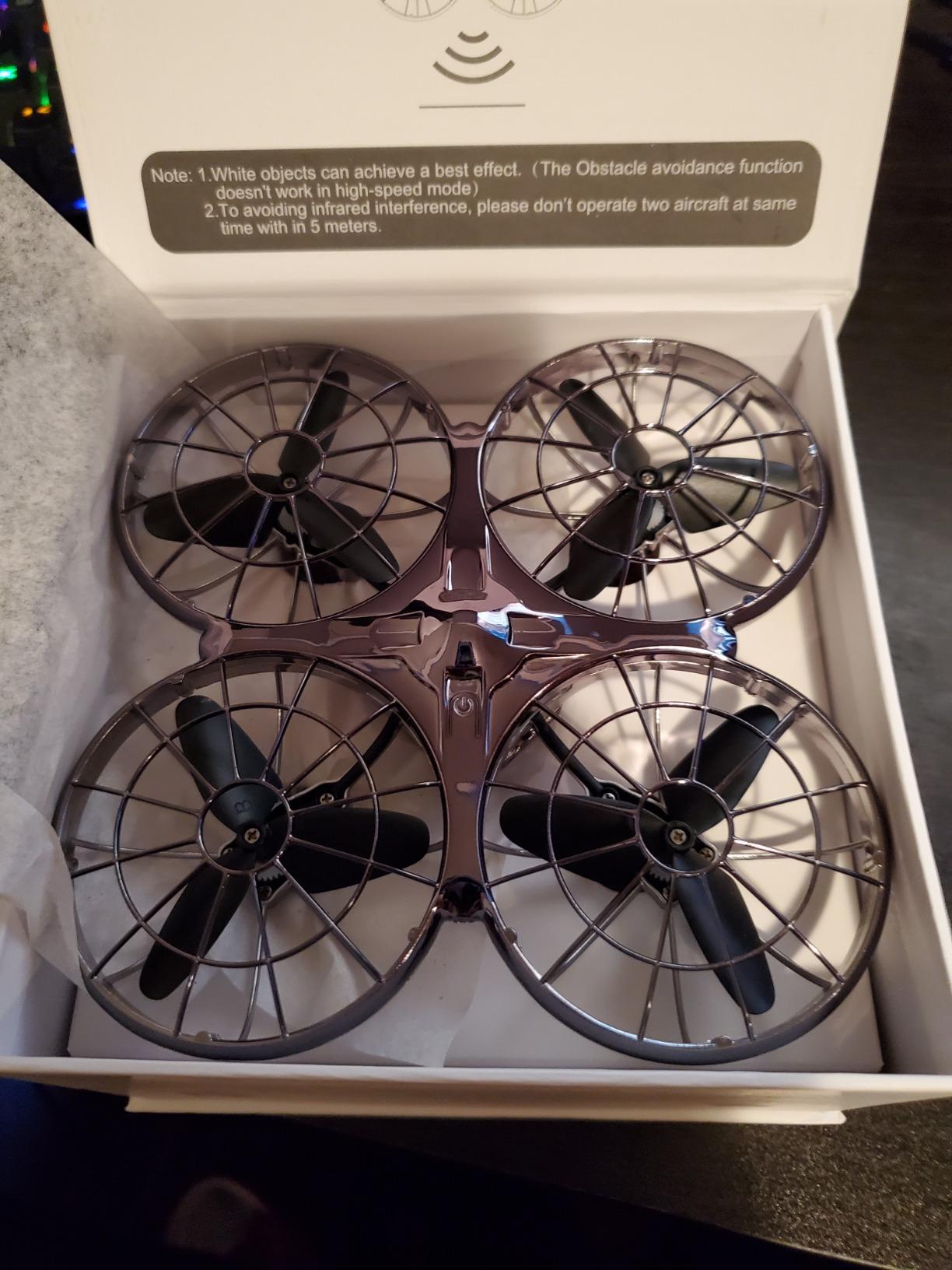
The SYMA X100 is the drone I recommend to parents who are nervous about their kid flying indoors. The fully enclosed propeller guard means there’s no exposed blade, period. And the four-way infrared obstacle avoidance stops the drone about 12 inches from walls, doors, and furniture automatically. Watching a 7-year-old fly this for the first time, you’ll see very few crashes — it just gently bounces off its environment. About 920 reviewers have rated it 4.4 stars, and the consistent praise is “my kid can finally fly without me hovering over them.”
The “air-pass” mode is unique to SYMA: hold your hand in front of the drone and it gently follows your palm around the room. Younger kids who can’t yet handle dual sticks can still “fly” the drone interactively, which is a clever solution to the dexterity-vs-excitement gap. The dual batteries deliver roughly 20 minutes total, and altitude hold locks the drone in place when sticks go neutral.
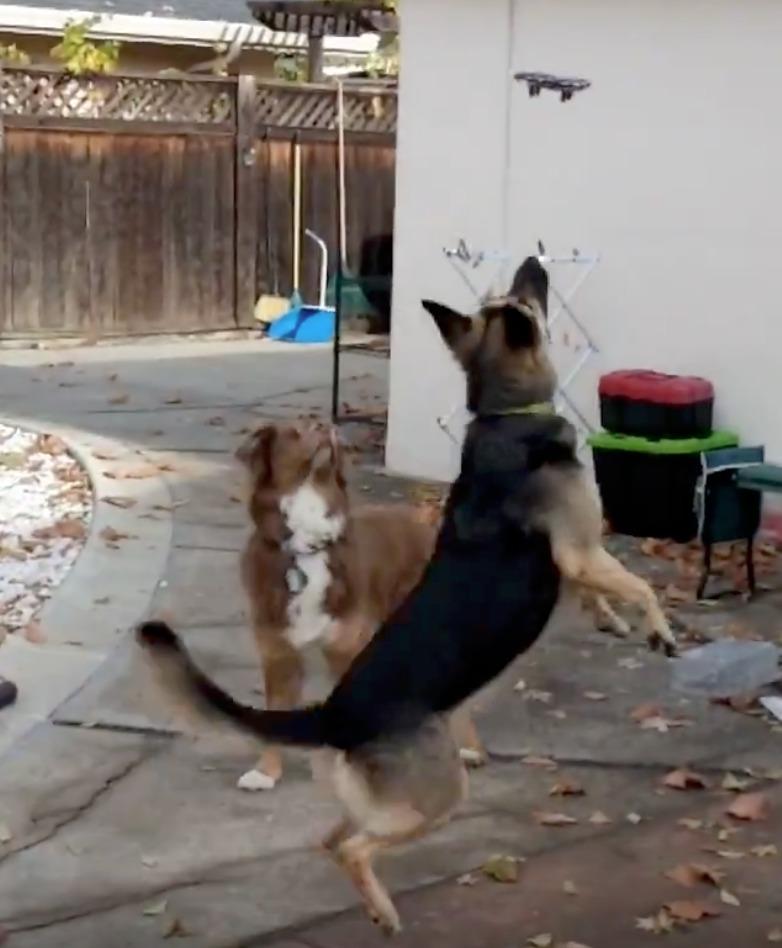
Three real trade-offs: there’s no camera at all (not even FPV), the obstacle avoidance can’t be disabled, so outdoor flying in real wind is essentially impossible, and the reaction time on the infrared sensors is slightly slow on first launch — usually improves after a few flights.
For Whom the SYMA X100 Is a Good Fit
Choose the SYMA X100 for kids 6-10 who want to fly indoors with maximum safety and minimum supervision. It’s also the right pick for older adults (grandparents, aunts, uncles) who want to participate in the hobby without coordination anxiety. The fully enclosed guard makes it the safest drone on this list for shared spaces with pets.
For Whom the SYMA X100 Is Not Ideal
If your child wants a camera, FPV, or outdoor flight, this isn’t the one. Teens will also find it limiting — there’s no upgrade path inside the SYMA toy ecosystem that retains the same safety features.
10. SIMREX X809 — Best Drone for Teens with Longest Combined Flight Time
- Up to 30 minutes of combined flight from two modular batteries
- 1080P HD camera with 90° adjustable lens
- Optical flow positioning for stable indoor hover
- One-key start
- altitude hold
- headless mode
- Camera lens angle is set on the ground not in flight
- No low-battery warning so drone descends gradually
The SIMREX X809 closes out the list with the longest combined flight time in the under-$50 bracket: about 30 minutes across two 1000mAh modular batteries. That’s nearly double the average for toy drones in this price range, and for teens who want to actually use a session to practice skills instead of constantly recharging, it’s a meaningful difference. The drone has earned a 4.4-star rating across more than 700 reviews.
The 1080P camera with a manually adjustable lens produces respectable footage for school projects or social media posts. Optical flow positioning holds the drone steady in still air, and the 96-gram weight is light enough to fold into a backpack pocket. The rainbow RGB lights make night flights genuinely fun, which is something reviewers mention as a favorite feature.
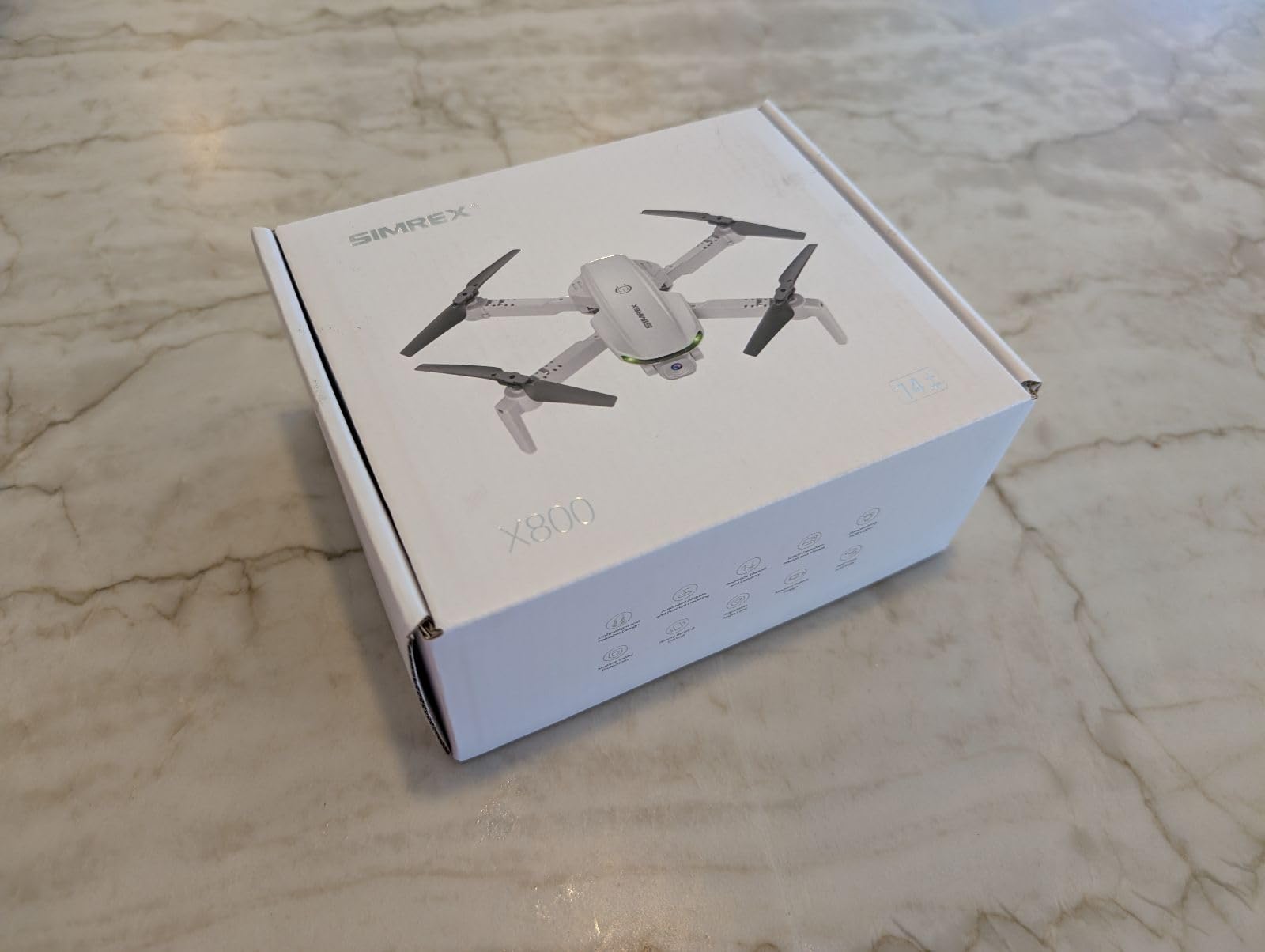
You’ll need to land the drone to adjust the camera angle mid-session — there’s no remote tilt. The drone doesn’t have a true low-battery warning, so it descends gradually near the end of each pack (which is actually safer than a sudden drop, but parents should still supervise). The companion app looks dated compared to DJI or Holy Stone apps. Wind drifts the light frame around outside.

For Whom the SIMREX X809 Is a Good Fit
This is the right pick for teens who are past the basic “will it fly” stage and want longer, more engaged practice sessions. The modular batteries, longer combined flight, and 1080P camera make it feel more like a hobbyist drone than a toy, even at this price. It’s also a strong choice for siblings or friends who want to fly together — both can take turns without waiting an hour for a recharge.
For Whom the SIMREX X809 Is Not Ideal
If you need a drone that flies outdoors in any kind of breeze, this isn’t the one. The camera also doesn’t tilt in flight, which limits creative aerial shots. For teens who need real outdoor camera quality, it’s time to step up to a DJI Neo or DJI Flip class drone.
How to Choose the Best Drone for Your Kid?
Choosing the best drones for kids comes down to matching the drone to your child’s age, where they’ll fly, and what they actually want to do with it. Below are the six factors that matter most, drawn from thousands of Amazon reviews, parent threads on r/drones, and what teachers recommend in STEM programs.
Age Match
Age 6-8: Start with fully enclosed propeller guards (SYMA X100) or a strong cage (HS210). Kids this age lack the fine motor control for dual sticks, so prioritize one-key takeoff and headless mode. Age 9-11: Move up to drones with adjustable speed modes (HS190, Q9s, RELIDOL) so they can grow into the controls. Age 12-15: Camera drones with FPV live view (Hiturbo, AVIALOGIC, Loiley) start to make sense. Age 16+: They probably want a DJI Neo or DJI Flip — these are beyond this list but worth researching separately.
Safety Features That Matter
Full propeller guards are non-negotiable for kids. Altitude hold removes the constant drift that frustrates first-time pilots. Headless mode ensures “left is left” from the kid’s perspective, not the drone’s. Emergency stop and low battery alarm are features every parent should verify. Optical flow positioning is a nice bonus that stabilizes indoor hover using the floor pattern below the drone.
Flight Time and Battery Strategy
Anything under 7 minutes per battery is too short — kids get frustrated waiting for recharges. Look for drones that ship with two or three modular batteries in the box, like the HS210 (3 batteries) or the RELIDOL and SIMREX (2 batteries each). Modular click-in batteries are easier for kids to swap than cable-style plugs. USB-C charging is preferred over proprietary chargers.
Indoor vs Outdoor Use
Most kid drones in this price range use lightweight frames under 150 grams that get pushed around by any meaningful breeze. If outdoor flight matters, look for optical flow positioning, brushless motors (in higher-end models), and a heavier frame. For indoor-only, prioritize enclosed guards and obstacle avoidance (SYMA X100). Always avoid flying near cars, people, or pets regardless of the drone’s safety claims.
FAA Registration Basics
In the US, drones under 250 grams that are flown purely recreationally do not require FAA registration. Every drone on this list except the AVIALOGIC (320g) qualifies for the under-250g exemption. If your child wants to fly outdoors, the FAA does require guardians of minor pilots to be aware of airspace rules (no flying near airports, no flying over people, no flying above 400 feet). For a deeper background on the science of rotor flight, our guide on how drones actually stay in the air is a great companion. Outside the US, rules vary — the UK’s Civil Aviation Authority requires anyone flying outdoors to pass a simple online test (the Drone and Model Aircraft Code), and Canada’s rules require registration for drones between 250g and 25kg.
Battery Safety Tips for Parents
Lithium-polymer and lithium-ion batteries store a lot of energy in a small package. Charge on a non-flammable surface (granite countertop, tile floor), never leave a charging battery unattended, and don’t charge right after a flight — let the battery cool to room temperature first. A swollen or puffy battery should be disposed of immediately at a battery recycling drop-off. If a drone is involved in a serious crash, inspect the battery for punctures before the next charge. These rules apply to every drone on this list.
Age-by-Age Drone Recommendations
If you’re in a hurry, here’s the quick matrix I built from the analysis above. Match your child’s age to the recommendation and you’ll be in the right neighborhood.
Age 6-8: Holy Stone HS210 (indoor basics, three batteries) or SYMA X100 (fully enclosed guards, obstacle avoidance). Both teach Mode 2 control without requiring smartphone setup.
Age 9-11: Holy Stone HS190 (foldable pocket design) or HASAKEE Q9s (LED light show, dual batteries). Both step up the speed range and add features like 360 flips.
Age 12-14: Hiturbo 1080P, RELIDOL 1080P, Loiley 2K, or SIMREX X809. These add 1080P/2K cameras, FPV live video, voice and gesture control, and optical flow positioning. Older kids can handle the app pairing and longer feature lists.
Age 15+: At this point, look beyond toy drones to the DJI Neo, DJI Flip, or DJI Mini series. They’re a step up in price but represent what “real” drones can do. The toy drones in this list work as a stepping stone for the hobby without committing big money up front.
Frequently Asked Questions
What is the easiest drone for a child to fly?
The easiest drone for a child to fly is the Holy Stone HS210 Mini Indoor Drone. It has full propeller guards, altitude hold, one-key takeoff and landing, and headless mode, so the drone hovers in place and responds to the controller instead of its own orientation. Kids as young as 6-8 can fly it indoors within minutes, and reviews consistently call out the fast learning curve for absolute beginners.
What is the best basic drone for kids?
The best basic drone for kids is the Holy Stone HS210, the most-recommended starter drone by parents on Reddit r/drones. It’s inexpensive enough that crashes don’t sting, has full propeller guards for safety, three batteries for 21 minutes of total flight, and teaches real dual-stick control, the same scheme used by every real drone. It’s the best first drone for ages 8-12 and most parents move on from this stage within 2-3 months.
Which drone is the easiest to learn on for beginners?
The easiest drone to learn on for beginners is one with altitude hold, headless mode, and propeller guards, typically a sub-$50 toy drone like the Holy Stone HS210 or the TOMZON-style mini drones. These features let the drone hover in place so beginners can focus on the sticks instead of fighting gravity. After 2-3 months of toy-drone practice, kids are usually ready to step up to a GPS-stabilized camera drone like the DJI Neo.
Should a 10 year old have a drone?
Yes, a 10 year old can safely have a drone and is in the sweet spot for most kid drones on the market. In the US, there is no minimum age to fly a drone recreationally, though kids 13+ can register with the FAA in their own name. For a 10 year old, start with a guarded drone like the Holy Stone HS210 for indoor basics or the Hiturbo 1080P if they want a camera. Outdoor flying should always be supervised by an adult and away from people, cars, and airports.
What is the best drone for children?
The best drone for children depends on age: the Holy Stone HS210 for ages 8+ learning the basics, the Hiturbo 1080P for ages 10+ who want a camera, and the SYMA X100 for ages 6-10 who need maximum safety with obstacle avoidance. All of these are sub-250g except the AVIALOGIC (320g), so they do not require FAA registration for recreational use in the US. For teens ready for a real camera drone, the DJI Neo is the next step up.
Final Verdict: Which Drone Should You Buy?
If I had to buy just one drone for a kid this month, it would be the Holy Stone HS210 — it’s affordable, near-indestructible, ships with three batteries, and teaches real Mode 2 control that transfers to every drone your child will ever own afterward. For kids who want a camera in the same age range, the Hiturbo 1080P is the best balance of features and price. For maximum safety with the youngest pilots, the SYMA X100 wins on enclosed guards and obstacle avoidance.
The best drones for kids are the ones that survive the first month without breaking, teach real skills, and stay interesting after the novelty wears off. Every drone on this list clears that bar. Pick based on age and what features your child actually cares about — camera, lights, portability, or pure indoor hovering — and you’re set. For more on robotics, STEM learning paths, and how drones tie into a broader robotics education, the Smashing Robotics archive at smashingrobotics.com is a good place to dive deeper.