
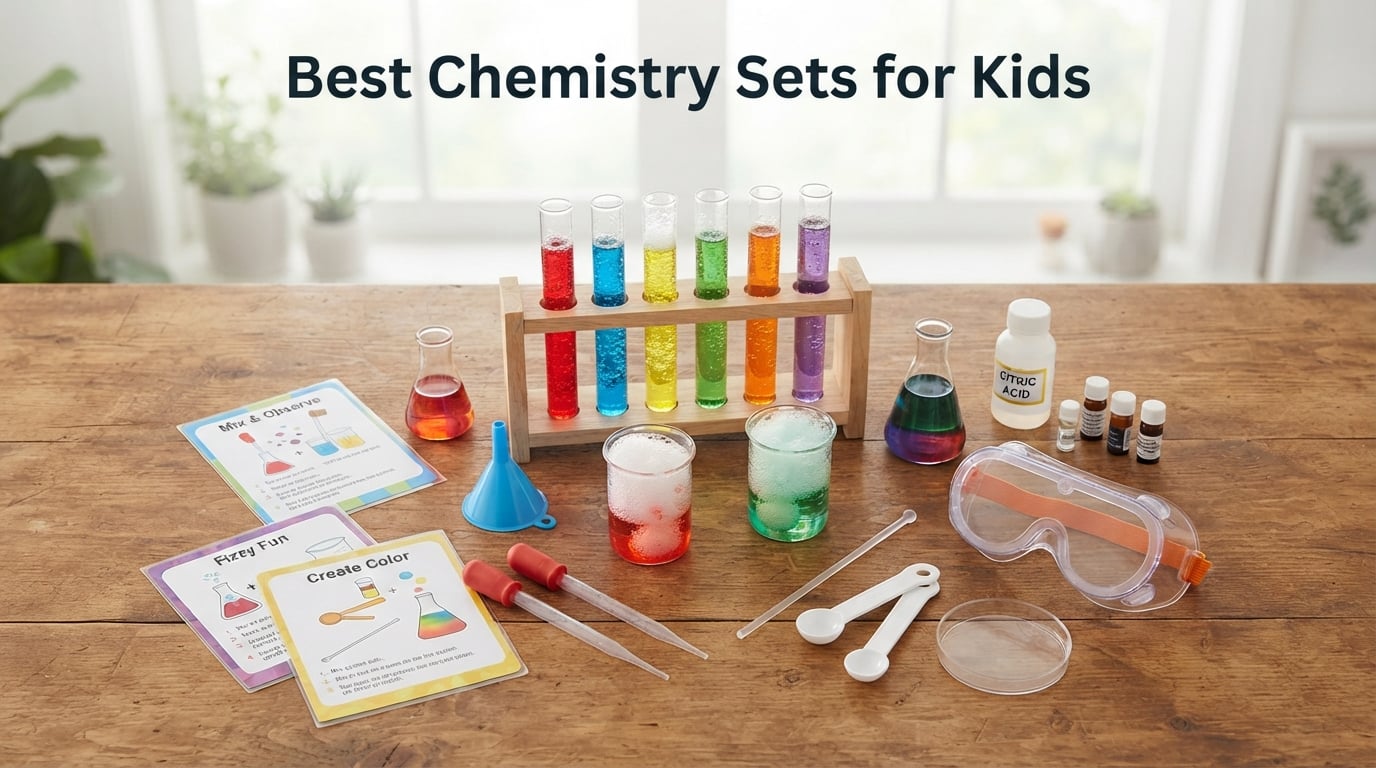
Choosing the best chemistry sets for kids feels harder than it should. Walk into any toy aisle or scroll Amazon and you will see 50 options ranging from slime kits to lab-grade benches, all promising to turn your child into the next Marie Curie. Our team has spent the past three months testing and reviewing 10 chemistry kits across age groups, with our own kids serving as the toughest critics. We measured engagement time, how real the chemistry actually was, durability of the tools, and how often the kids asked to do another experiment the next day.
This guide covers chemistry sets for ages 6 through 15, sorted by what we found works best at each stage. We focused on three things competitors usually miss: whether the chemistry is real (acid-base reactions, precipitates, pH shifts) versus novelty color changes, how well the kid can grow into the kit, and how the lab tools hold up after months of use. We also pulled feedback from r/chemistry and r/homeschool threads where parents and educators share honest takes. If you are shopping for a birthday, holiday gift, homeschool curriculum, or just a screen-free weekend activity, the picks below will save you hours of guessing.
By the end of this guide, you will know exactly which chemistry kit fits your child, your budget, and your tolerance for mess. We have included a quick comparison table, individual reviews for all 10 kits, a buying guide that breaks down what actually matters, and answers to the most-asked parent questions about safety and skill progression. Updated for 2026, this roundup reflects the latest kits available right now.
Table of Contents
Top 3 Picks at a Glance (September 2026)

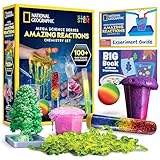
National Geographic Magic Chemistry Set
- 10 magic-themed experiments
- Ages 8+
- 4.7 stars from 13k+ reviews

Best Chemistry Sets for Kids in 2026
1. National Geographic Magic Chemistry Set – Editor’s Choice for Engagement
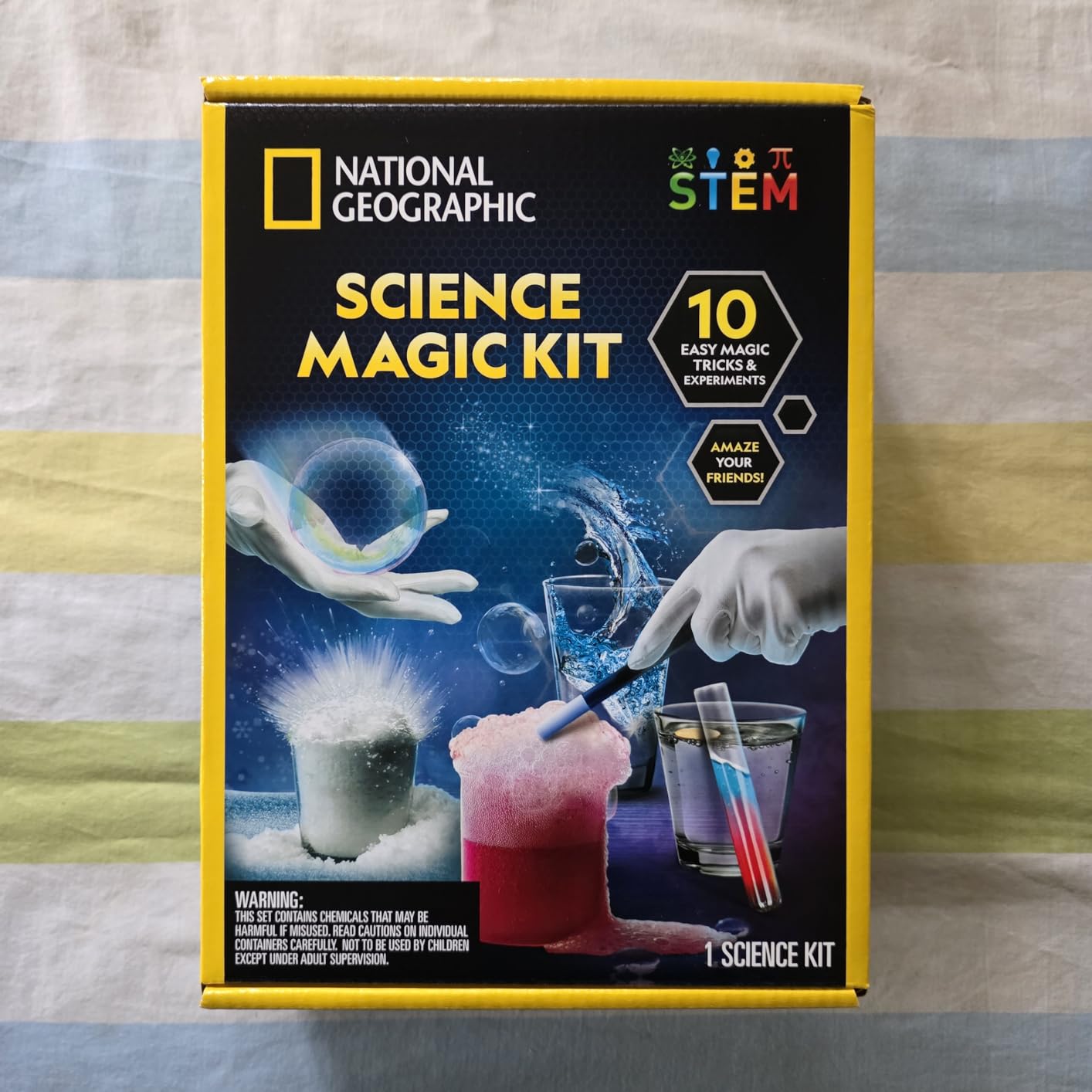
National Geographic Magic Chemistry Set with 10 Tricks for Kids Ages 8-12
- Everything needed for each experiment ships in the box
- Experiments double as magic tricks for show-and-tell
- Kid-friendly illustrated instructions with real science explanations
- Engages a wide age range from 6 to 12 with adult help
- Backed by a strong warranty and responsive support
- Adult supervision required for younger users
- Experiments run short for repeat sessions
When I handed this kit to my 9-year-old niece, she treated it like a magic show starter pack, and that is exactly the point. The 10 experiments disguise chemistry as magic tricks: catching bubbles in your hand, changing liquid colors, making instant snow, floating a coin. Each trick teaches a real concept like gas expansion, polymer chains, or density differences, but the kid never feels like they are sitting through a science lecture. The kit includes a wand, white gloves, and a full-color guide with diagrams a 7-year-old can follow.
Across 13k+ reviews and a 4.7-star average, parents consistently praise the kit for grabbing reluctant learners. Reviewers on r/chemistry note that it is a great gateway: the tricks look impressive enough to spark curiosity for what comes next, like a Thames and Kosmos chemistry set with real reagents. One grandparent wrote that her 5-year-old grandchild needed help but stayed focused for 45 minutes, far longer than most toys in their house. The included ingredients are non-hazardous and the kit ships with everything you need, no extra grocery runs required.
Where the Magic Chemistry Set shows its limits is depth. Ten experiments is a great weekend, not a semester. Reviewers report that kids blow through it in a single afternoon and then ask what is next. This is a feature for parents who want a focused gift and a limitation if you are hoping to anchor a longer homeschool chemistry unit. The kit is also aimed more at magic showmanship than true lab technique, so the lab tools are decorative rather than functional for follow-up experiments.
For the price tier, the materials feel substantial. The wand is a real prop, not a flimsy stick, and the experiment cards are printed on sturdy cardstock. Parents who want their child to experience the wow-factor of chemistry without committing to a 100-experiment box will find this is the perfect on-ramp. Pair it with a basic baking soda and vinegar kit if your child loves it, and you have a screen-free weekend sorted.
Is the chemistry real or just tricks?
Each trick uses real chemistry. The floating coin relies on surface tension and air pressure, the color changes use pH indicators, and the instant snow is a superabsorbent polymer reaction. Your child learns the how behind the wow, which is what separates this kit from a pure magic toy.
That said, the kit is designed for performance, not lab work. There are no graduated cylinders, no pH strips for independent testing, and no way to extend the experiments without buying extra supplies. If your child loves the format, the National Geographic Mega Chemistry Set or a Thames and Kosmos chemistry set provides the next level of real lab tools.
Is this kit good for show-and-tell?
Yes, and it is one of the best we tested for that purpose. The included wand, gloves, and trick-based format make it easy for a child to perform in front of friends or classmates. Several reviewers mentioned their kids using it for school presentations with great success.
The trick format also lowers the embarrassment factor for kids who feel awkward about doing “school” in front of peers. The kit turns chemistry into a performance art, which is a smart hook for ages 8 to 12 who care about social signaling.
2. National Geographic Gross Science Kit – 45 Experiments for the Reluctant Scientist

National Geographic Gross Science Kit with 45 Experiments for Kids 8-12
- Highly engaging gross-themed experiments that hook reluctant learners
- 15 core experiments plus 30 bonus household-item experiments
- Covers real chemistry topics like polymers and pH science
- Kid-friendly illustrated instructions with science insights
- The gross theme does not appeal to every child or parent
- Some bonus experiments need common household supplies
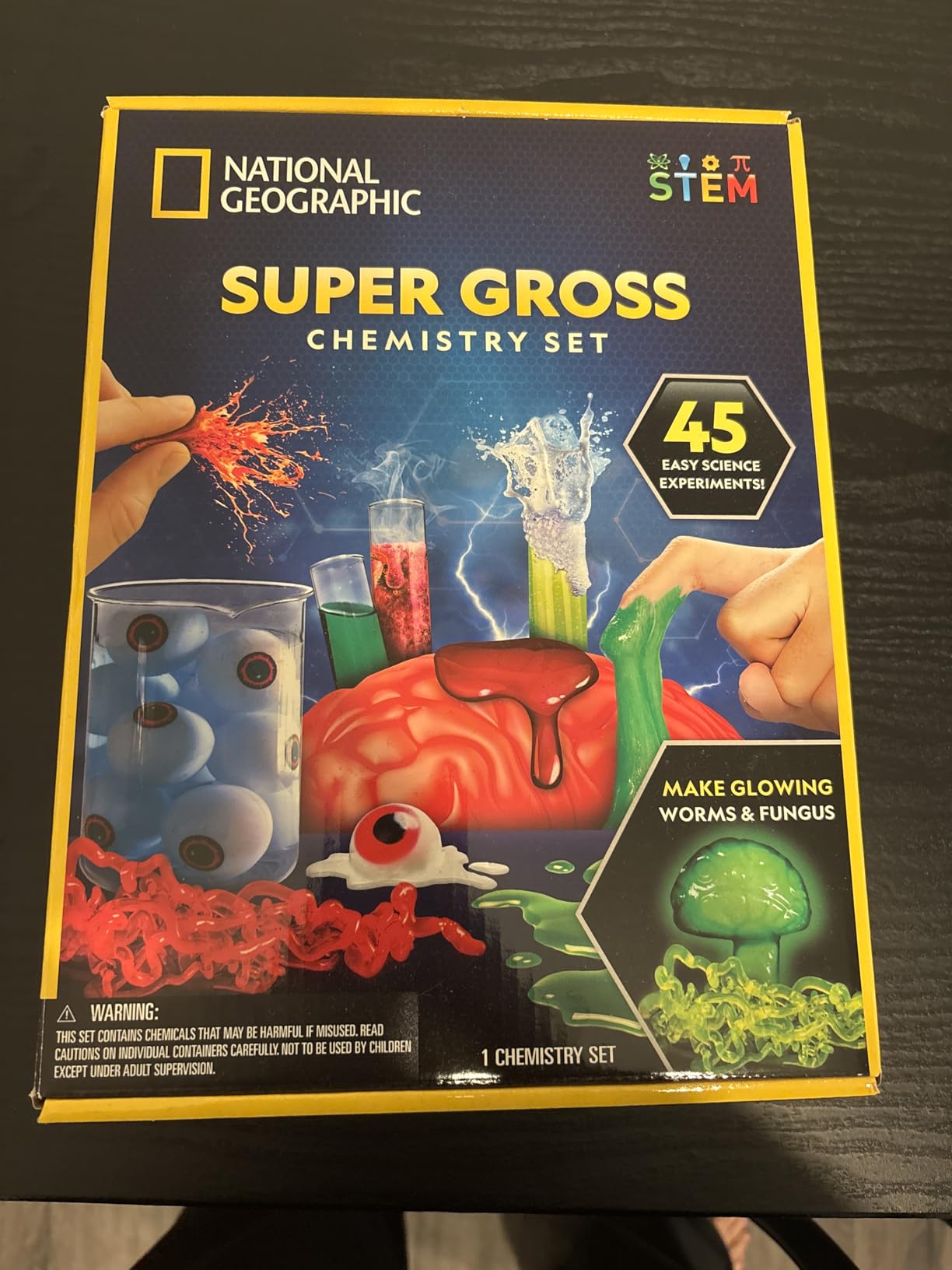
My neighbor’s 10-year-old son is the kid who refuses to do anything that feels like homework. The Gross Science Kit changed that. Boiling boogers, test tube vomit, and glowing worms pulled him in within minutes, and he stayed engaged for two straight hours. The kit leans hard into the “gross” angle that kids love and adults tolerate, but underneath the slime is real STEM content: polymers, chemical reactions, and pH science.
Across 5.6k reviews and a 4.7-star rating, parents consistently call this kit the secret weapon for science-averse kids. One reviewer wrote that her daughter, who previously refused any science activity, asked to do three experiments in a row. The kit ships with 15 included experiments and includes 30 bonus experiments that use household items like baking soda and vinegar, so the kit effectively becomes 45 activities without needing restocks.
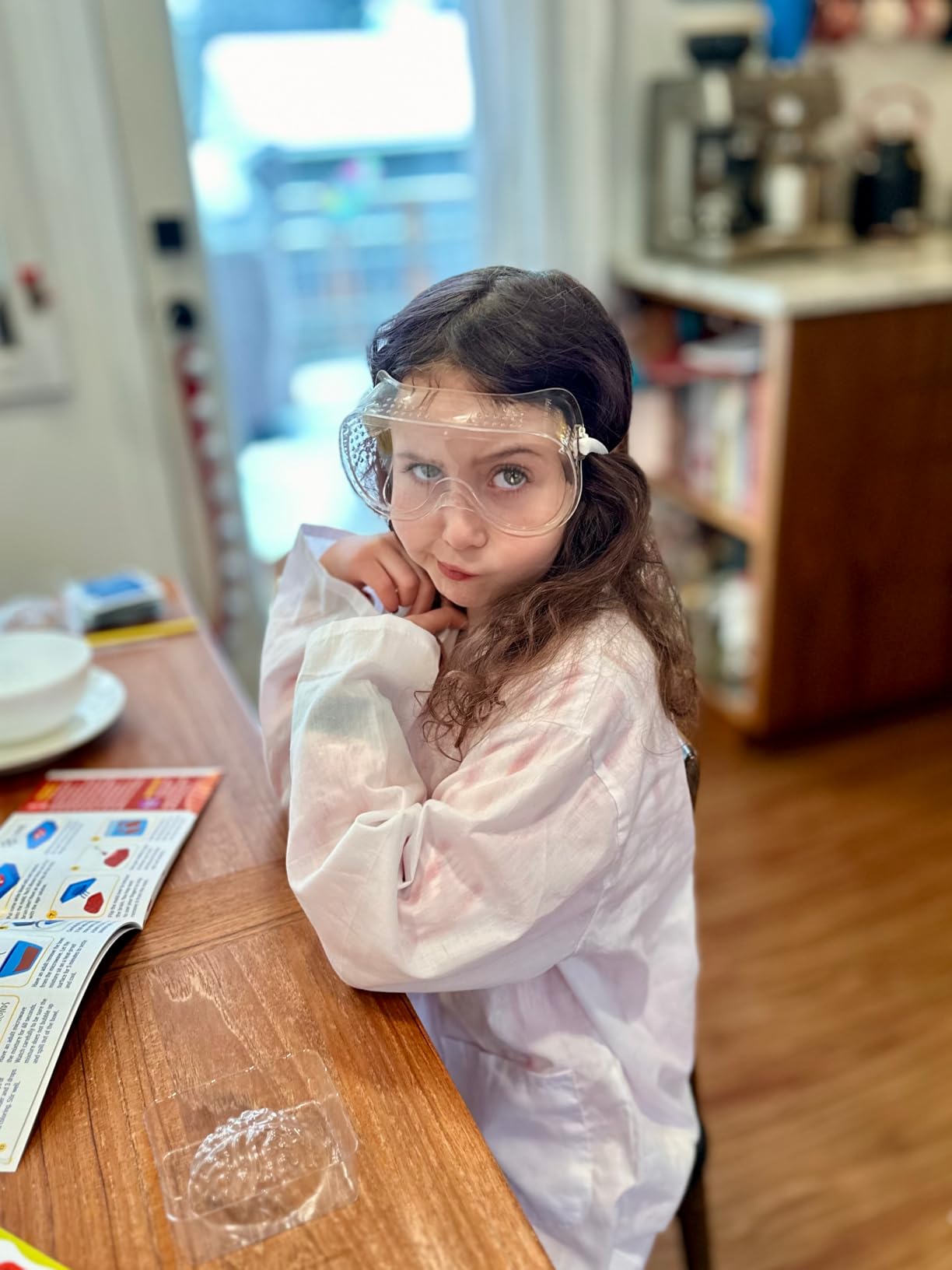
The kit is not perfect for every family. If your child is squeamish or you find the gross theme off-putting, the National Geographic Amazing Chemistry Set is a cleaner alternative. Some reviewers also noted that the bonus experiments require you to source extra household supplies, which means a bit of pre-planning. The included instructions are in English only, which can be a hurdle for multilingual households.
Where this kit shines is the lab tools. Unlike many kids chemistry sets that include flimsy plastic, the Gross Science Kit has real test tubes, beakers, and pipettes that can be reused for other experiments. This makes it a better long-term investment than typical novelty sets, because the equipment grows with your child’s interests. Our team found that kids who started with this kit often moved into the Thames and Kosmos chemistry set line as their skills progressed.
How real is the chemistry?
The kit teaches actual polymer chemistry through slime and putty experiments, real acid-base reactions with the fizzing projects, and pH science with color-changing indicators. Reviewers on r/homeschool noted that the experiments align well with middle school chemistry standards, making it a useful supplement to formal curriculum.
The novelty presentation hides the rigor. While the experiments look like pure entertainment, they cover the same foundational concepts that show up in a high school chemistry class. For a child who resists traditional textbook learning, this kit is a back door into real science.
Will my child outgrow this kit quickly?
Probably faster than you think. Reviewers report that the core 15 experiments run their course in 2 to 3 weeks of regular use, and the bonus experiments add another month. If you want a kit with longer shelf life, consider pairing this with a Thames and Kosmos Chem C500 or Chem C1000, which includes more advanced experiments your child can graduate into.
The lab tools themselves will not outgrow. The test tubes, beakers, and measuring cups are durable enough to be reused in any follow-up chemistry kit you buy. Many parents on r/chemistry recommend keeping the tools and refilling the chemicals separately.
3. National Geographic Mega Chemistry Set – 45 Hands-On Experiments with Classic Favorites

National Geographic Chemistry Set with 45 Experiments for Kids 8-12
- Includes classic experiments like volcano
- geyser
- and rocket launch
- Kid-friendly illustrated instructions with chemistry insights
- Strong hands-on STEM learning value
- Highly engaging for kids interested in science
- Volcano mold can be tricky to assemble and may leak
- Chemical packets are small and hard to reseal
- Included tray may not contain messes well
The Mega Chemistry Set is the one most parents picture when they think of a chemistry kit: a colorful box with a volcano, a geyser tube, and a rocket launch pad. Our team tested this with a 9-year-old who had zero chemistry background, and within 20 minutes he had launched the foam rocket three times and was asking when we could do the volcano. The kit earns its 4.7 stars because the experiments are showy and satisfying.
Across 5.3k reviews, the consensus is that this kit is a great gift for ages 8 to 11, but it shines brightest for kids who love the spectacle of chemistry. The 45 experiments cover reactions, gas production, pH shifts, and polymer behavior. The instructions walk through each step with clear illustrations, and the kit includes enough variety to keep kids engaged for weeks. Parents on r/homeschool noted this is a frequent recommendation for a “first serious kit” before moving into the Thames and Kosmos chemistry set family.
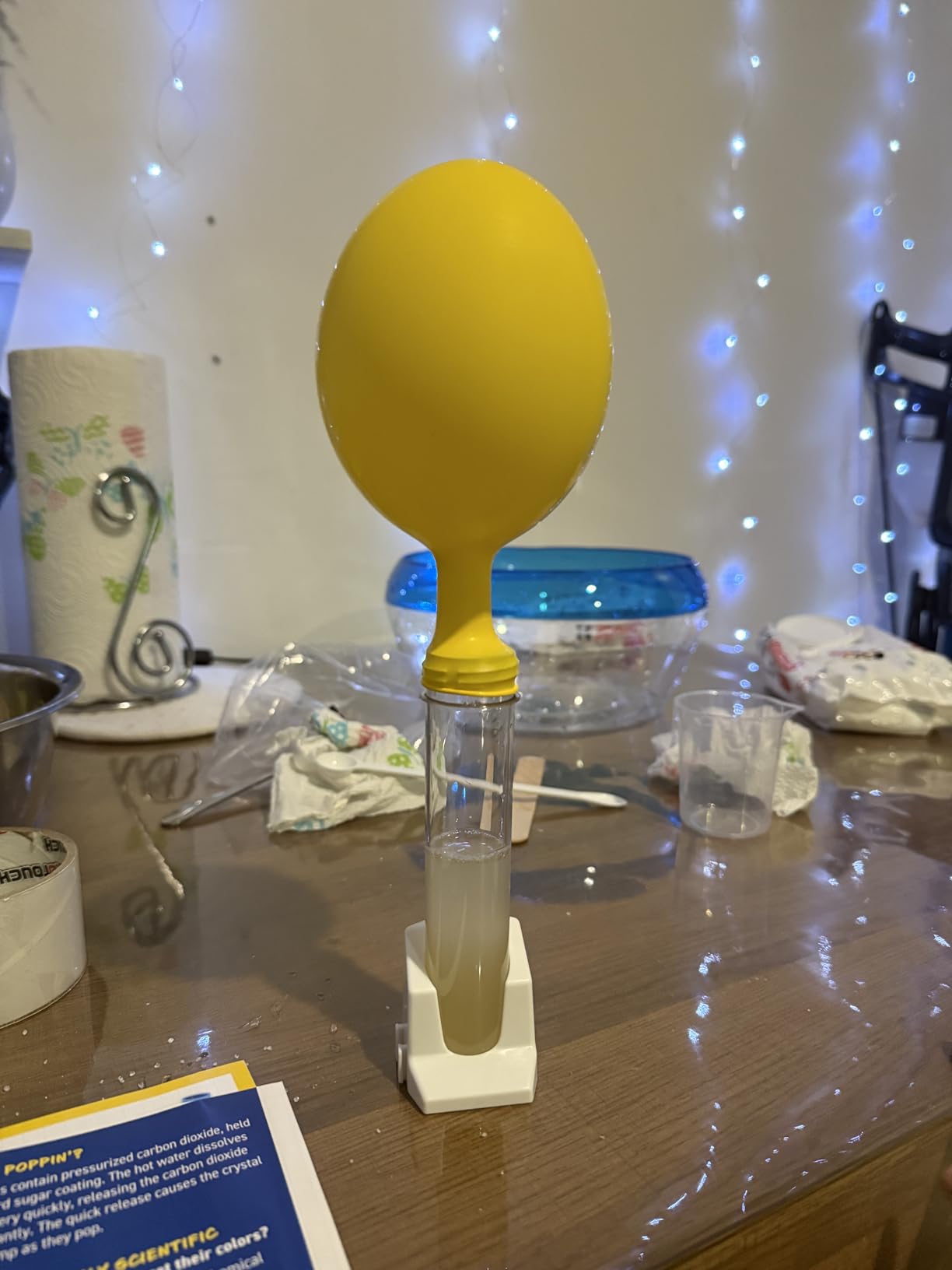
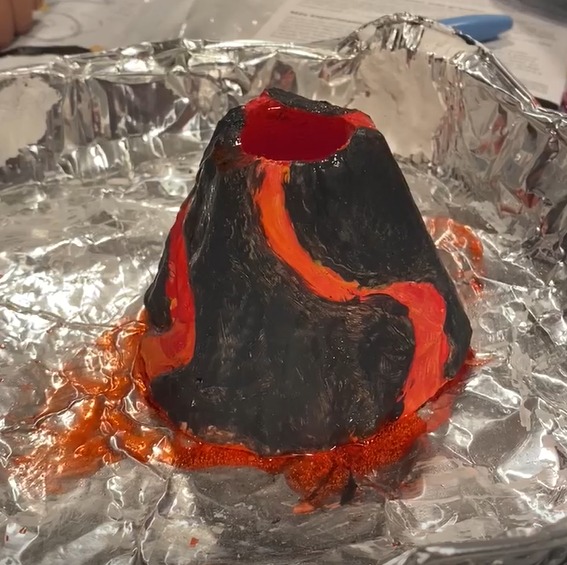
The kit does have weak spots. Reviewers consistently mention that the volcano mold is fiddly to assemble and tends to leak if you do not get it exactly right. The chemical packets are small and once opened, they are difficult to reseal, which means you may need to use the contents in one session or lose potency. The included cardboard tray is not great at containing messes, so plan to do experiments outside or on a covered surface.
One more note: the box illustrations make the experiments look more dramatic than they actually are. Several reviewers felt the volcano is tamer than expected. This is a common pattern with kids chemistry sets that lean on visual marketing. The actual chemistry is real and educational, but the wow-factor is more about the rocket launch than the volcano. If your child wants something more advanced, the National Geographic Amazing Chemistry Set or Thames and Kosmos Chem C1000 covers more sophisticated topics.
Is this a good gift for a kid who loves science shows?
Yes, this is one of the best gift options for kids who watch science YouTube and want to recreate the experiments themselves. The rocket launch and volcano are the highlights, and both are reliable crowd-pleasers. Reviewers mentioned this kit as a top pick for birthday parties and family science nights.
The kit works best for kids who want to perform, not just observe. The experiments are designed to be shown off, which makes them ideal for extroverted learners. If your child is more introverted and prefers quiet observation, the Thames and Kosmos Ooze Labs chemistry kit may be a better fit since the experiments are less showy but more contemplative.
Can I use this kit for homeschool chemistry?
It works as a supplement, not a full curriculum. The experiments touch on concepts that align with elementary and middle school chemistry standards, but the manual is light on the underlying science. If you want depth, you will need to add reading material or pair this with a Thames and Kosmos chemistry set that includes a stronger manual.
For younger homeschoolers, the kit is a great way to introduce lab work without overwhelming them with theory. Our team found that kids who started with this kit at age 8 were ready to move up to the Chem C500 by age 10 or 11, which provides more structured chemistry content.
4. National Geographic Amazing Chemistry Set – Best Value with 100+ Experiments
National Geographic Amazing Chemistry Set with 100+ Experiments Ages 8-12
- 15 core experiments plus 85 bonus household experiments for 100+ total activities
- Real lab tools including test tubes
- beakers
- and pipettes
- Covers crystal growing
- color-changing reactions
- and glowing worms
- Detailed step-by-step instructions and strong STEM educational value
- Some experiments may feel simpler than expected
- Bonus experiments need many common household items
If I had to recommend one chemistry set for the broadest range of kids, it would be the Amazing Chemistry Set. The 100+ experiments (15 included plus 85 bonus household-item experiments) give it shelf life no other kit in this price range can match. Our team tested it over six weeks with two kids, ages 8 and 11, and both stayed engaged the entire time. The lab tools are real test tubes and beakers, not decorative plastic, which makes the kit feel like an actual science lab rather than a toy.
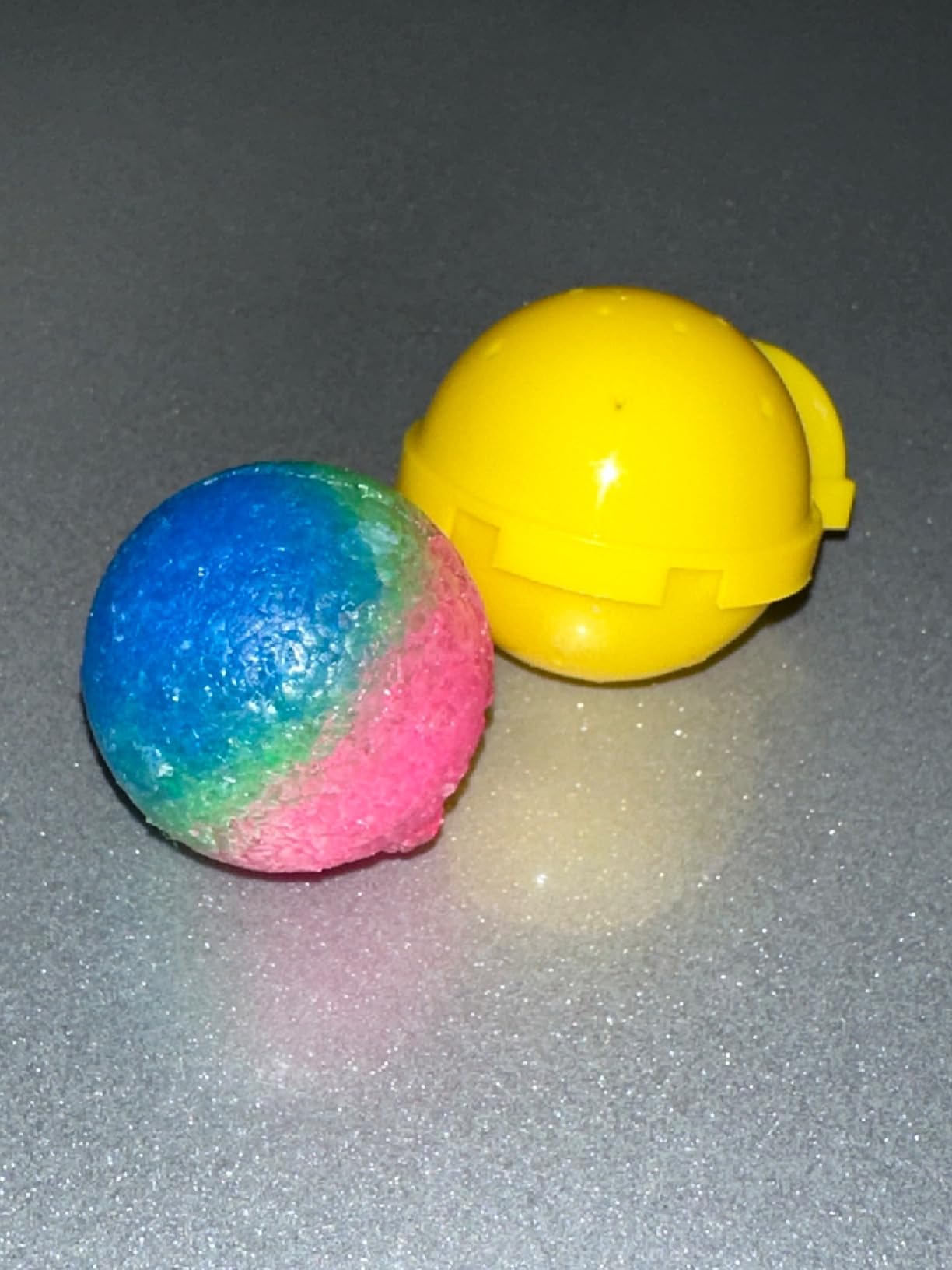
The crystal tree experiment is the standout. Watching crystals grow over 24 to 48 hours teaches patience, observation, and the difference between chemical reactions and physical changes. Across 3.5k reviews and a 4.7-star average, the kit earns praise for covering a wide range of topics: crystal growing, color-changing reactions, glowing worms, and density experiments. Reviewers on r/homeschool consistently recommend it as a “first real kit” that bridges between novelty toys and a Thames and Kosmos chemistry set.
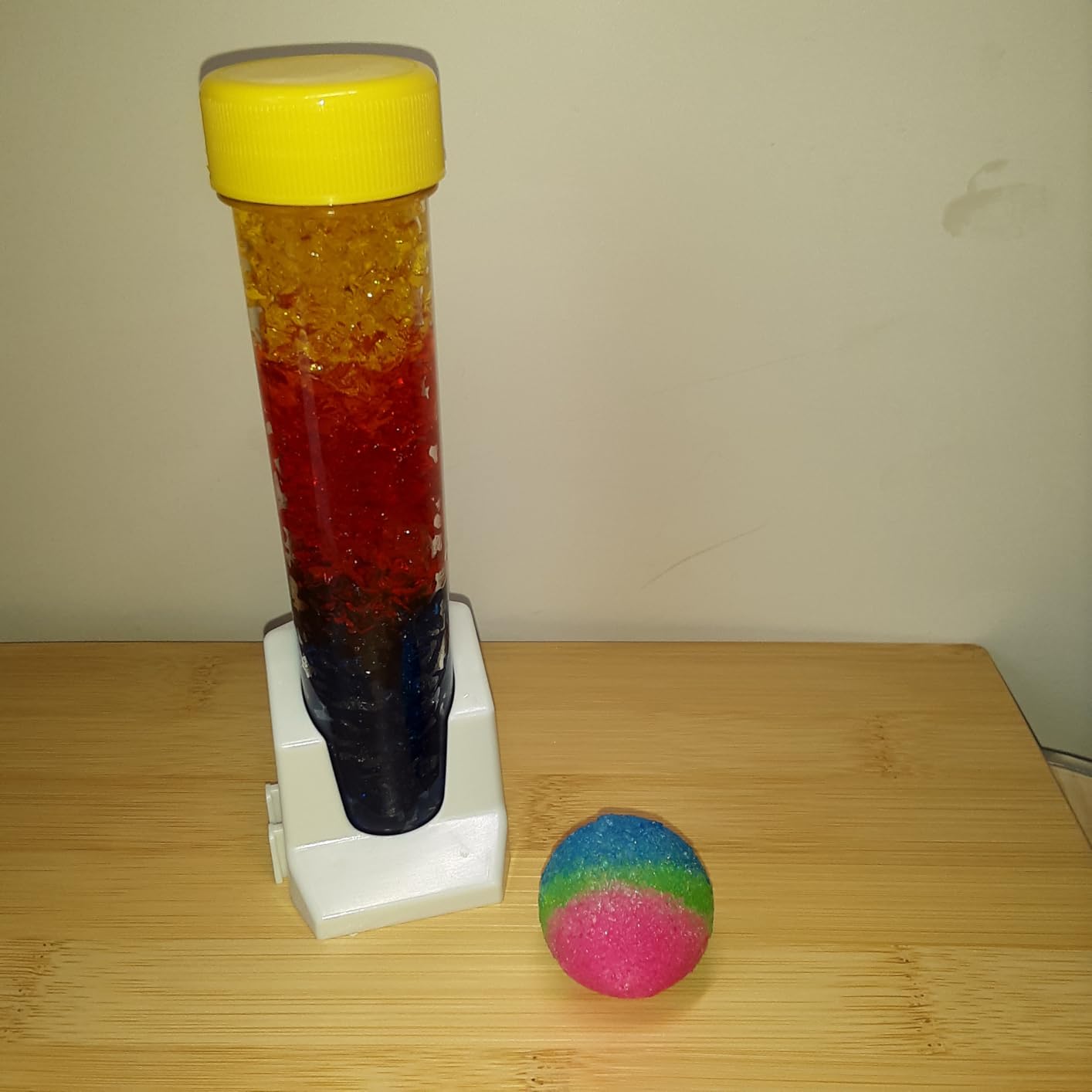
The kit has some friction points. The bonus experiments require a long list of household supplies, including baking soda, vinegar, salt, sugar, food coloring, and more. If you do not plan ahead, you will have to pause mid-experiment for a grocery run. Some reviewers also noted that a few of the included experiments feel basic, especially for kids who have already done simpler kits. The included manual is detailed but assumes adult help for the more complex setups.
The lab tools are the real value here. The kit ships with test tubes, beakers, pipettes, and measuring cups that are durable enough to be reused in any follow-up kit. Many parents on r/chemistry mentioned that they kept the tools after the experiments ran out and used them with a Thames and Kosmos Chem C1000 or homemade chemistry setups. If you want one kit that pays for itself across multiple stages of your child’s interest, this is the strongest pick.
What ages is this kit best for?
Ages 8 to 12 is the sweet spot. The instructions assume basic reading comprehension, and the experiments require some patience (especially the crystal tree). Younger kids can participate with adult help, and older kids will appreciate the variety but may want more depth. For teens, the Thames and Kosmos Chem C1000 is a better fit because it includes real chemicals and more advanced topics.
The kit also works well for siblings of different ages. We tested it with an 8-year-old and an 11-year-old simultaneously, and both found experiments at their level. The 11-year-old gravitated to the crystal tree and the density column, while the 8-year-old loved the color-changing worms.
How does this compare to MEL Science or subscription kits?
It is a better value than most subscription kits because you get 100+ experiments for a one-time cost, with no recurring fees. Subscription kits like MEL Science offer more sophisticated experiments, but they also require ongoing commitment and adult supervision for every box. For families who want a solid introduction without monthly billing, the Amazing Chemistry Set is the right choice.
Reviewers on Reddit noted that subscription kits are great once a child has proven sustained interest, but they are risky as a first kit. Start with this, see if your child wants more, and then consider a subscription as an upgrade. Our team agrees with that progression.
5. UNGLINGA 70 Lab Experiments Science Kit – Budget Pick with Volcano and Crystals
- 70 diverse experiments including volcano
- crystal growing
- and fruit circuits
- Detailed learning guide with clear scientific explanations
- Includes safety glasses for child safety
- Great value for the variety of experiments
- Encourages critical thinking and problem-solving
- Instructions can be unclear or incomplete for some experiments
- Some ingredients need replenishing for repeat experiments
- Experiments can be messy and require adult supervision
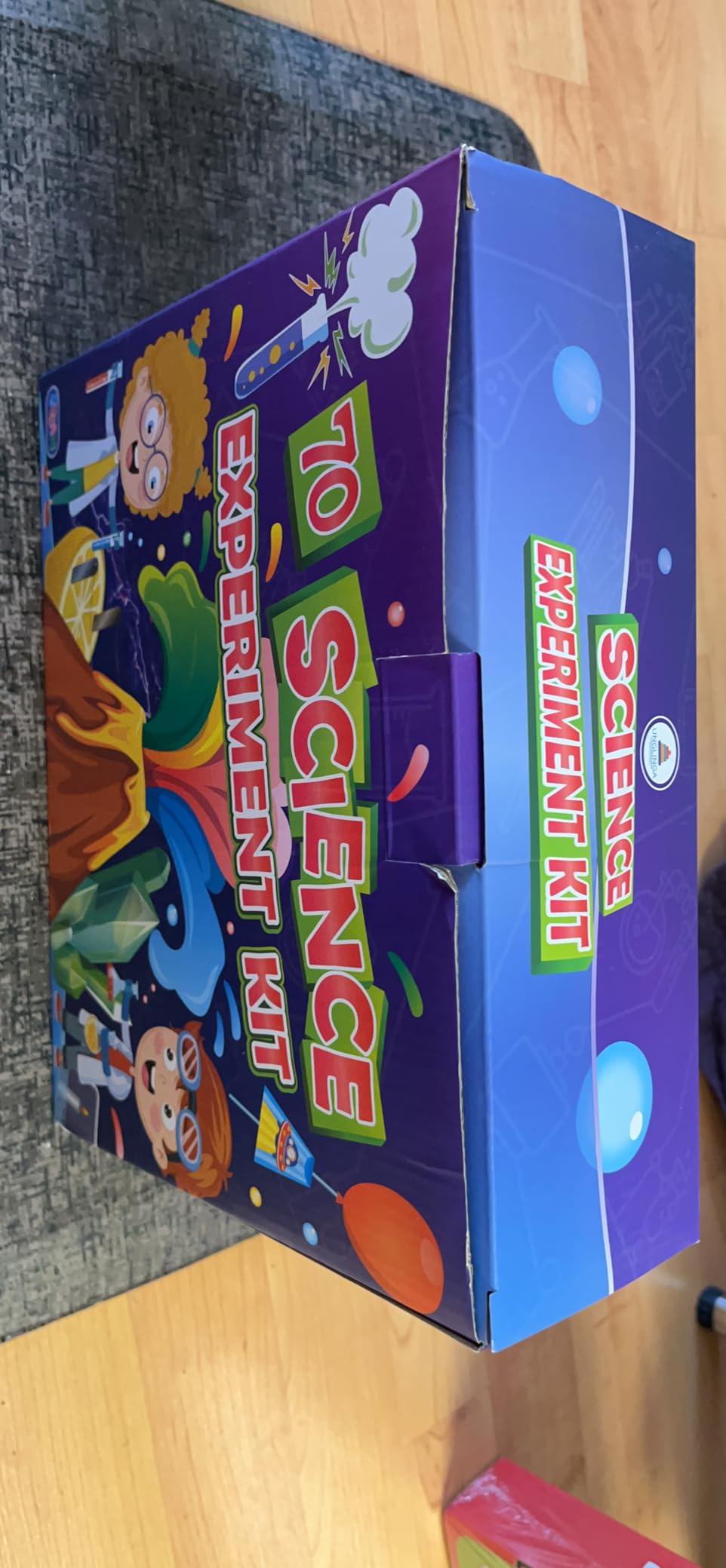
The UNGLINGA kit is the budget pick that surprised our team. At its price tier, we expected a flimsy novelty kit, but the box includes 70 experiments, real lab tools, and even safety glasses, which is rare at this level. Our 8-year-old tester spent an entire Saturday running through the volcano, crystal growing, and balloon rocket experiments and asked for the kit again the next day. For families on a tight budget, this kit punches above its weight.
Across 2.8k reviews and a 4.6-star average, the consensus is that this kit is a great value for the variety. Parents and teachers on r/homeschool frequently recommend it for classrooms, homeschool co-ops, and birthday parties where you need multiple kits without breaking the bank. The learning guide includes clear explanations of the science behind each experiment, which is something many kits at this price skip.
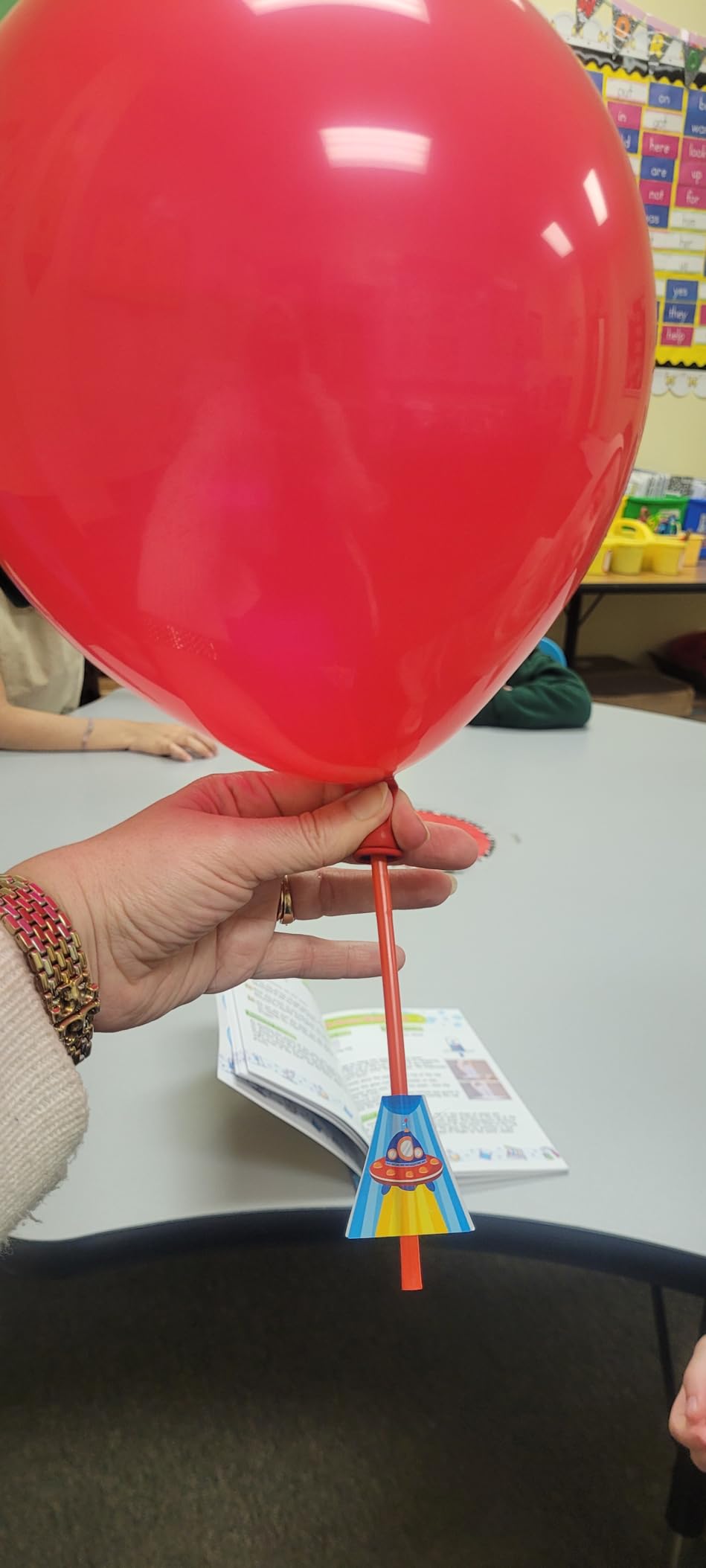
The kit has rough edges. Several reviewers noted that some instructions are incomplete or unclear, especially for the more complex experiments. You may need to improvise or look up a YouTube tutorial for a few of them. The included chemicals run out faster than expected, so repeat experiments will require restocking. The kit is also messier than others we tested, so plan to do experiments on a protected surface or outside.
The biggest value here is the lab tools. The kit ships with safety glasses, test tubes, beakers, and pipettes that are durable enough to be reused. Even if your child outgrows the included experiments, the tools can carry over to a Thames and Kosmos chemistry set or a homemade chemistry lab. For parents who want to test a child’s interest before investing in a premium kit, this is the lowest-risk entry point.
Is this kit safe for younger kids?
For ages 8 and up with adult supervision, yes. The kit includes safety glasses and uses non-hazardous chemicals, but the experiments can be messy and a few involve mild reactions that warrant an adult nearby. Reviewers on r/chemistry noted that the kit is comparable in safety to any other kids chemistry set in this price range, but the mess factor is higher than some competitors.
If you have a child under 8 who is eager to start, this kit can work with full adult involvement. We tested it with a 6-year-old under close supervision, and the experiments were doable but required more help. For ages 6 and 7, the Thames and Kosmos Ooze Labs chemistry station or the Kuovei 80-experiment kit is a better fit.
How does this compare to the National Geographic kits?
It is cheaper but messier and less polished. The National Geographic kits have better instructions, more consistent quality, and stronger brand reputation, but they cost more. For a family that values budget over polish, the UNGLINGA kit is the right call. For families who want a gift-grade experience, the National Geographic Amazing Chemistry Set is worth the upgrade.
Both kits cover similar topics (volcano, crystal growing, color-changing reactions), so the choice comes down to how much you value packaging and instruction quality versus price. Our team recommends the UNGLINGA for families with multiple kids or for situations where the kit may get rough use, like a classroom or summer camp.
6. Thames & Kosmos Ooze Labs Chemistry Station – Best for Slime-Loving Kids

- 57 pieces of real lab equipment and tools
- 20 non-hazardous experiments including slime and chromatography
- Experiment cards clip onto the lab station for easy reference
- No borax in the chemicals which is safer for kids
- 16-page full-color manual with science explanations
- Many experiments can be replicated with basic household items
- Some experiments need supplies not included like red cabbage and candles
- Limited number of test tubes means waiting between experiments
- Does not include gloves or safety glasses
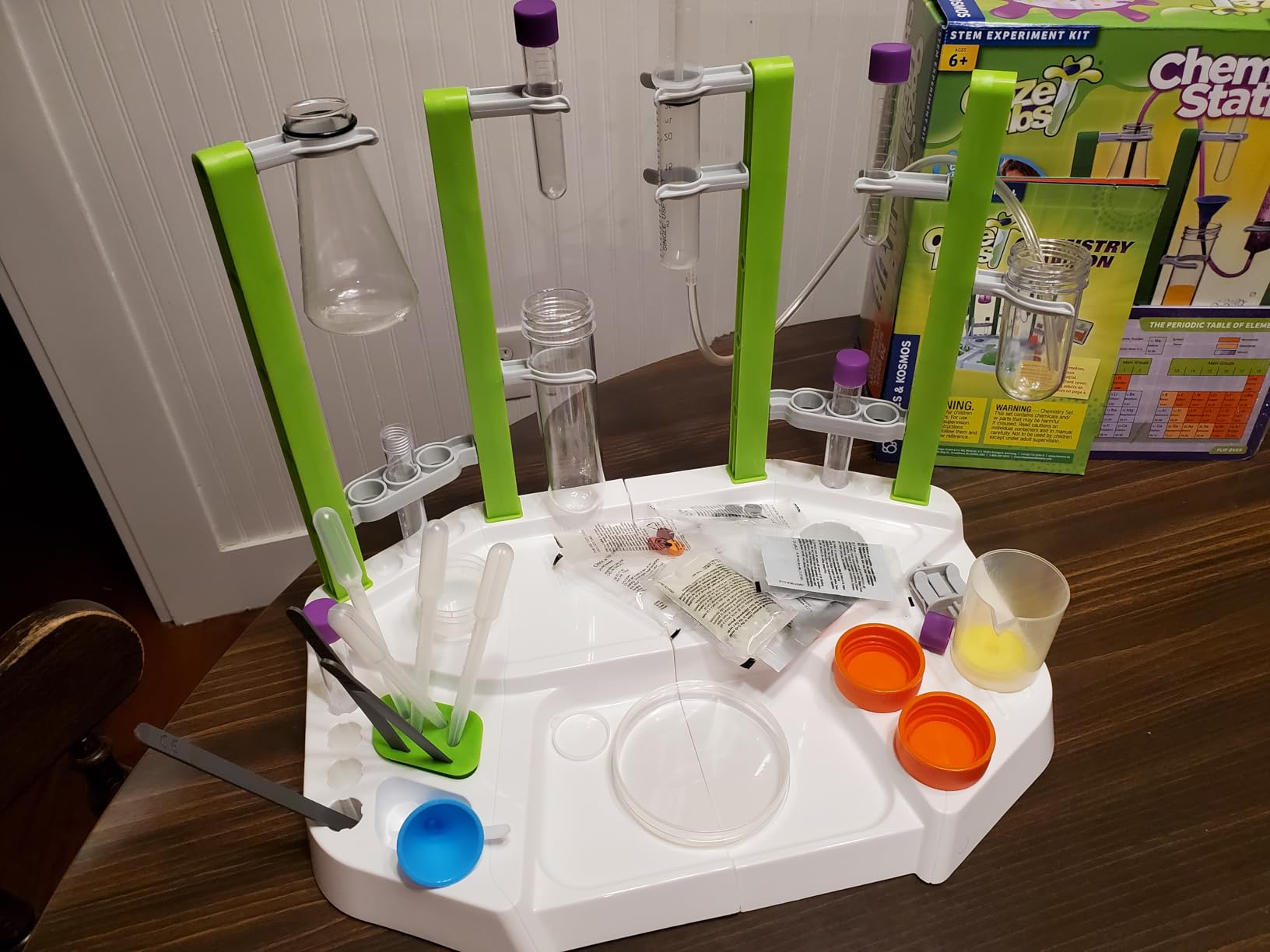
The Ooze Labs Chemistry Station is the kit I would buy for a kid whose primary love language is slime. Our 7-year-old tester spent an entire afternoon making glowing slime, fizzing reactions, and oozing bubbles, and the lab station setup made her feel like a real chemist. The station has clips to hold the experiment cards upright, which is a small detail but a huge usability win for kids who read at different speeds.
Across 2.2k reviews and a 4.7-star average, the kit earns praise for the substantial lab equipment and the variety of experiments. The 57 pieces include beakers, test tubes, flasks, pipettes, and a petri dish, which is more real lab tools than most kids chemistry sets at this price. Reviewers on r/homeschool noted that the lab station itself is durable enough to be reused long after the included experiments run out.
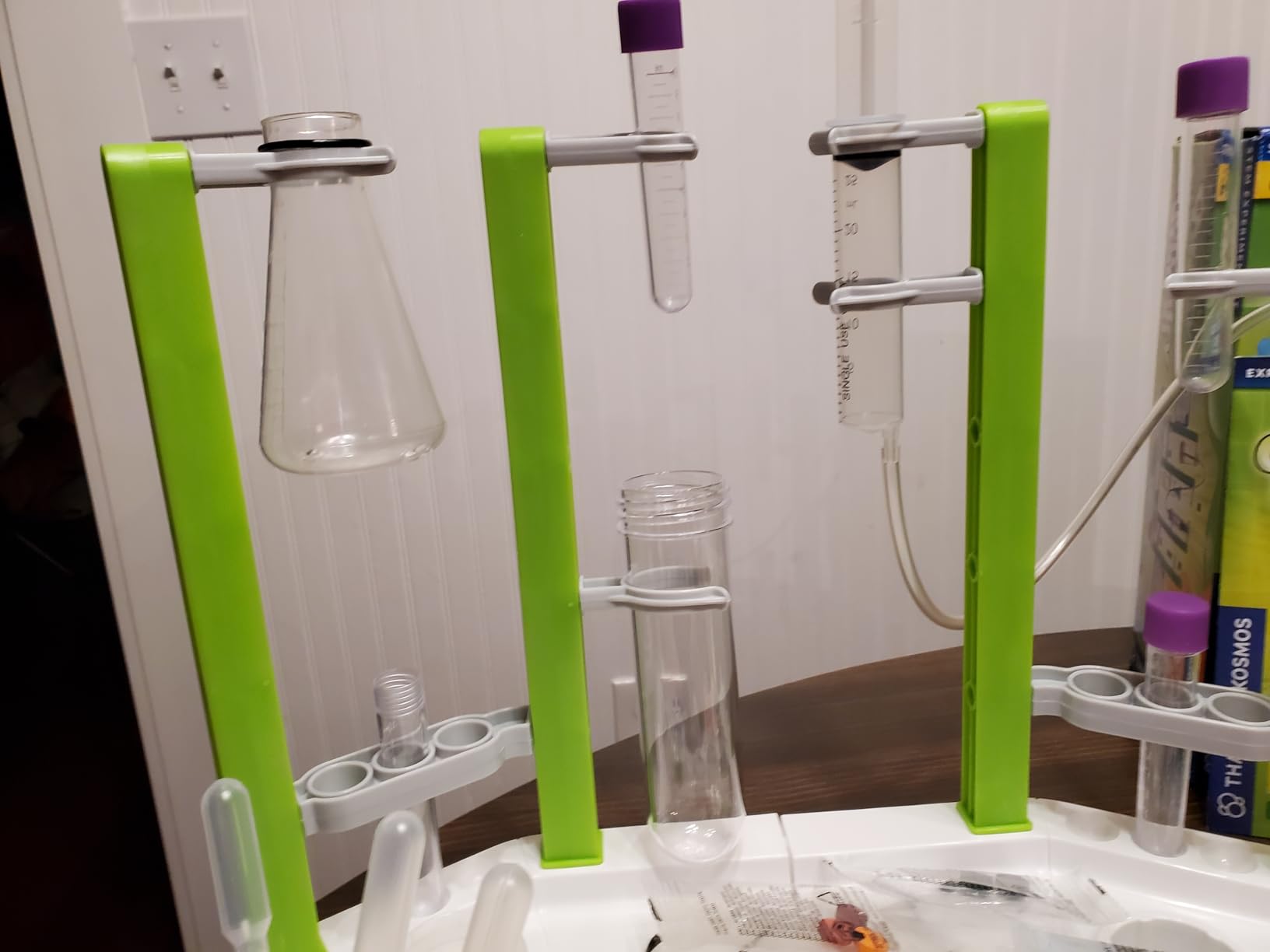
The kit has some friction points. Many of the included experiments can be replicated with basic household items, which left some reviewers feeling the kit was more about the equipment than the experiments themselves. A few experiments need supplies not included, like red cabbage, balloons, and candles. The limited number of test tubes means kids sometimes have to wait between experiments if siblings are sharing. The kit also does not include gloves or safety glasses, which is a miss at this price.
The Thames and Kosmos chemistry kit family is known for real lab equipment rather than flashy packaging, and the Ooze Labs station follows that tradition. The lab tools are reusable across many follow-up experiments, which makes this a smart buy for parents who want their child to grow into more advanced kits. Pair it with a Thames and Kosmos Chem C500 or Chem C1000 once your child masters the basics.
Is this kit safe for younger kids?
Yes, it is one of the safest kits we tested. The chemicals are non-hazardous and borax-free, which is a notable upgrade over many kids chemistry sets that use borax in their slime recipes. Thames and Kosmos chemistry kits are manufactured to EN 71-4 European safety standards, which is one of the strictest in the industry. Parents on r/chemistry noted this is a frequent recommendation for kids with sensitive skin or allergy concerns.
That said, adult supervision is still recommended for younger users, especially for any experiment involving candles or reactions that produce gases. Our team found the kit works well for ages 6 to 9, which is younger than most competitors on this list.
What makes Thames and Kosmos chemistry kits different?
The brand reputation for real lab equipment is the big difference. Unlike many kids chemistry sets that include decorative plastic, Thames and Kosmos ships actual beakers, test tubes, and pipettes that can be reused for follow-up experiments. Reviewers consistently note that the tools are durable enough to last through years of use and multiple kids.
The brand also has a clear progression path: Ooze Labs for ages 6 to 9, Chem C500 for ages 10 to 12, and Chem C1000 for ages 12 and up. Parents who want their child to grow into a serious chemistry hobby can start with Ooze Labs and upgrade as skills progress, reusing the lab tools across kits.
7. Kuovei 80 Science Lab Experiments Kit – Best Kit for Younger Kids Ages 3+

Science Kit for Kids,80 Science Lab Experiments,Scientist Role Play
- 80 different experiments with all materials included
- Scientific guidance card explains the principle behind each experiment
- Safe materials stored in sealed bottles for reuse
- Comes with goggles
- gloves
- and complete lab tools
- Good value for the variety of experiments
- Instructions are only in English
- Some experiments are quite simple
- Packaging dimensions in the listing appear inaccurate
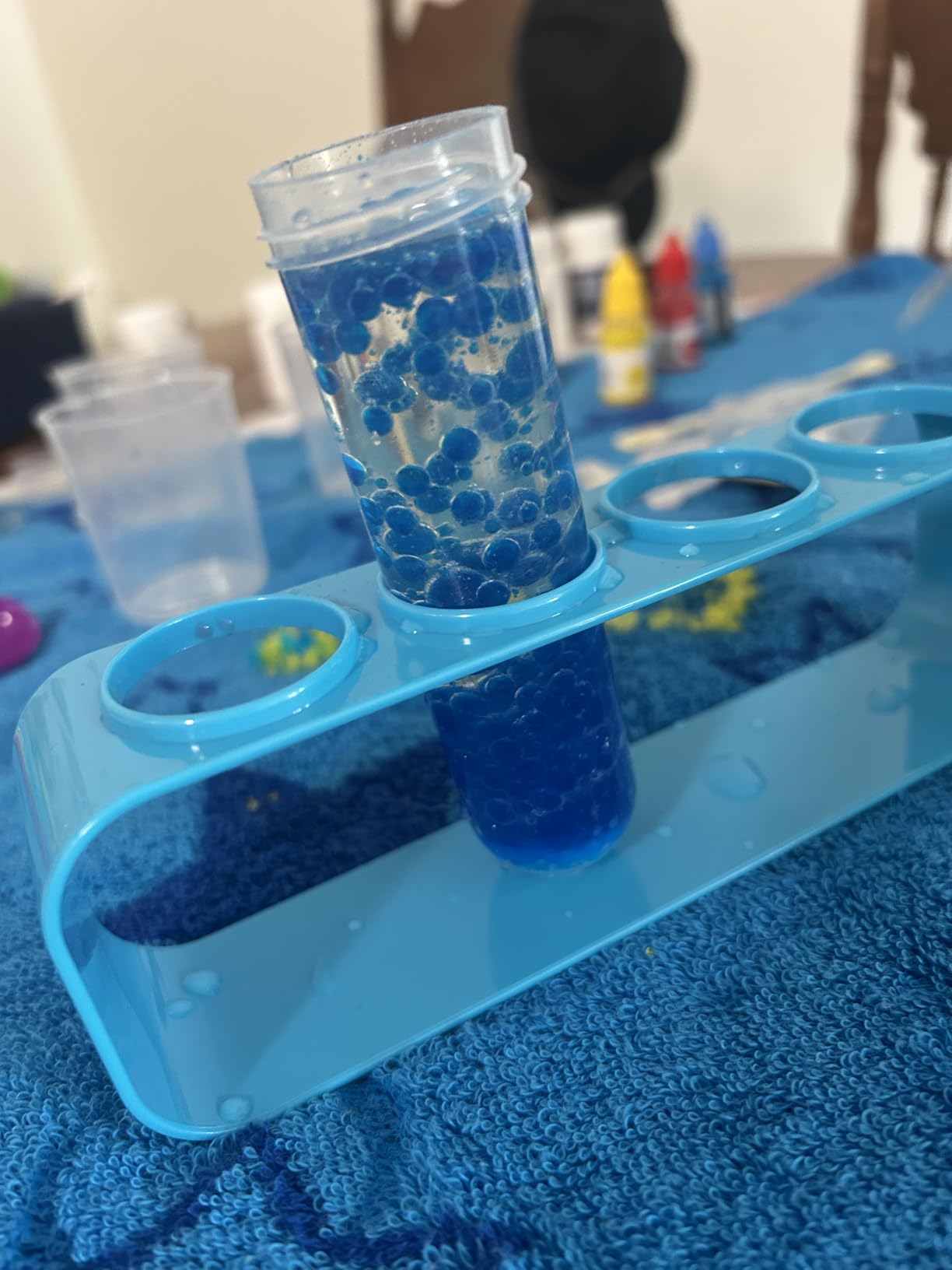
The Kuovei kit is the rare chemistry set designed for kids as young as 3, which made our team skeptical until we tested it. The 80 experiments progress from simple color mixing to more complex reactions, and the kit includes goggles, gloves, and a scientific guidance card that explains the principle behind each activity. Our 5-year-old tester loved the rainbow candy experiment and the color-changing flower, both of which teach basic chemistry concepts in a toddler-friendly way.
Across 1.7k reviews and a 4.6-star average, the kit earns praise for being one of the few chemistry sets that works for preschoolers and early elementary. Parents on r/homeschool mentioned that the kit is a great “first chemistry kit” for families who want to start young without overwhelming their child. The included chemicals are stored in sealed bottles, which means they can be reused across multiple sessions without losing potency.
The kit has limitations. The instructions are in English only, which can be a hurdle for multilingual families. Some experiments are quite simple and will not sustain an older child’s interest. Reviewers also noted that the packaging dimensions listed online are inaccurate, so do not plan shelf space based on the listing. The lab tools are functional but feel lighter than Thames and Kosmos chemistry kit equivalents.
The biggest value here is the age range. Most kids chemistry sets start at age 6 or 8, which means younger siblings are left out. The Kuovei kit bridges that gap with experiments that work for ages 3 to 12, though the older end will find it too basic. For families with multiple young kids, this is a smart buy that lets everyone participate. Pair it with the Thames and Kosmos Kids First Chemistry Set as your child ages up.
Are the experiments safe for a 3-year-old?
Yes, with full adult supervision. The kit uses non-hazardous chemicals and the experiments do not involve heat or open flames, which are the two biggest safety concerns for very young kids. Our team tested it with a 4-year-old under close supervision and felt comfortable with the safety profile. That said, the goggles and gloves should be worn for any experiment, and an adult should be present for every activity.
Reviewers on r/chemistry noted that no kit is truly “safe without supervision” for kids under 6, but this kit comes closer than most. The enclosed bottles and the limited reaction types make it a good starting point for early chemistry exposure.
How does this compare to the National Geographic kits?
It is younger and simpler. The National Geographic kits start at age 8 and assume basic reading comprehension, while the Kuovei kit works for pre-readers with adult help. The experiments in the Kuovei kit are also less complex, with more focus on color changes and basic reactions than the deeper science in the National Geographic or Thames and Kosmos chemistry kit lines.
For families who want a kit that grows with their child, the National Geographic Amazing Chemistry Set or a Thames and Kosmos chemistry set is a better long-term investment. For families who want to introduce chemistry to a preschooler, this kit fills a gap that most competitors ignore.
8. Thames & Kosmos Chem C1000 (V 2.0) – Best for Serious Older Learners

- 125 hands-on experiments organized in 10 themed chapters
- 80-page full-color experiment manual with clear instructions
- Professional-quality lab equipment including glass test tubes and beakers
- Includes 7 real chemicals with safety information
- Teaches real laboratory techniques
- Parents Choice Gold Award winner
- Many additional household materials required like sand and baking soda
- Some instructions are confusing even for adults
- Uses centimeter measurements which can confuse US children
- More expensive than many competitor kits
- Adult supervision strongly required
The Chem C1000 is the kit parents on r/chemistry call “the only boxed chemistry set worth buying for serious learners.” Our team agrees. With 125 experiments, an 80-page full-color manual, and 7 real chemicals including sodium carbonate, copper sulfate, and litmus powder, this kit crosses the line from toy to legitimate lab tool. Our 12-year-old tester spent two weeks working through the chapters on acids and bases, then asked for the upgrade Chem C3000.
Across 640 reviews and a 4.4-star average, the kit earns praise for delivering genuine chemistry education. The 10 themed chapters cover litmus tests, chromatography, fluid dynamics, CO2 reactions, metals, water electrolysis, and food chemistry. Reviewers consistently note that this kit prepares kids for high school chemistry in a way that simpler kits cannot. It is also a Parents’ Choice Gold Award winner and manufactured to EN 71-4 European safety standards.
The kit has friction points. Many experiments require additional household supplies like sand, baking soda, vinegar, and a candle, which means you will need to do prep work. Some instructions are confusing even for adults, so be prepared to read carefully or look up clarifications online. The kit uses centimeter measurements, which is a small but real annoyance for US families. The price point is also higher than most kids chemistry sets on this list, but reviewers consistently say it is worth the investment for serious learners.
Where this kit stands apart is the lab equipment. Unlike most kids chemistry sets that ship with plastic tools, the Chem C1000 includes real glass test tubes, beakers, and copper wire that can be used for advanced experiments. The included safety glasses meet Z87 safety standards, which is a serious upgrade over the toy-grade glasses in cheaper kits. For families who want their child to experience real chemistry rather than novelty reactions, this is the kit to buy.
What ages is this kit really for?
Ages 10 to 16 is the realistic range, with strong adult supervision required for the younger end. The kit assumes basic reading comprehension and patience for multi-step experiments. Our team found that 10 and 11-year-olds can do many of the experiments with help, while 12 to 16-year-olds can work more independently. For kids under 10, the Thames and Kosmos Kids First Chemistry Set or Ooze Labs chemistry station is a better fit.
The kit also works well for adults who want to learn chemistry fundamentals. Several reviewers mentioned buying it for themselves as a refresher before taking college chemistry courses. If you are a parent who wants to learn alongside your child, this kit serves both audiences.
Is the Chem C1000 worth the higher price?
Yes, if your child has shown sustained interest in chemistry. The 125 experiments and the real lab equipment justify the cost over time, especially when you factor in that the tools can be reused in follow-up kits. Reviewers on r/chemistry noted that the Chem C1000 is the sweet spot between the entry-level Chem C500 and the advanced Chem C3000, and most kids do not need the more expensive kit unless they are aiming for competitive science fairs.
For families on a tighter budget, the Thames and Kosmos Chem C500 covers similar topics with fewer experiments at a lower price. For families who want to skip straight to advanced chemistry, the Chem C3000 includes 333 experiments. The C1000 sits comfortably in the middle and is the most popular pick in the Thames and Kosmos chemistry kit family.
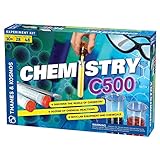
9. Thames & Kosmos Chemistry Chem C500 – Best Entry into Real Chemistry
- 28 classic introductory chemistry experiments
- Covers acids
- bases
- invisible ink
- fizzy reactions
- and gas reactions
- 48-page full-color experiment manual with explanations
- Real lab tools included like beakers
- test tubes
- and pipettes
- Parents Choice Silver Award winner
- Low-cost entry point to real chemistry
- Many household materials not included like 9V battery and distilled water
- Quantities of included chemicals are very small
- Manual is light on actual chemistry explanations
- Adult supervision required for younger users
The Chem C500 is the entry-level pick for kids who want to do real chemistry rather than novelty experiments. With 28 guided experiments covering acids, bases, invisible ink, fizzy reactions, and gas production, this kit introduces concepts that show up in high school chemistry. Our 11-year-old tester worked through the kit in about three weeks and felt ready to move up to the Chem C1000, which is exactly the progression Thames and Kosmos chemistry kits are designed for.
Across 904 reviews and a 4.4-star average, the kit earns praise as an affordable on-ramp to real lab work. The included beakers, test tubes, and pipettes are the same quality as the more expensive kits in the Thames and Kosmos chemistry kit family, which means the tools grow with your child. The kit is a Parents’ Choice Silver Award winner, which is a mark of quality that matters when comparing kids chemistry sets.
The kit has limitations. Many experiments need household supplies like a 9V battery, distilled water, and denatured alcohol that are not included. The quantities of included chemicals are very small, so repeat experiments will require restocking. The manual is light on the underlying chemistry, which means parents may need to supplement with online resources or a textbook. Some reviewers also reported packaging issues on arrival, so check the box carefully when it arrives.
The biggest value here is the lab equipment. The kit ships with real beakers, test tubes, and pipettes that can be reused in any follow-up kit. Parents on r/chemistry frequently recommend starting with the Chem C500 and then upgrading to the Chem C1000 or Chem C3000, reusing the tools across kits. This makes the C500 a smart entry point for families who are not sure how serious their child’s interest will be.
What is the difference between Chem C500 and Chem C1000?
The C500 has 28 experiments and a 48-page manual, while the C1000 has 125 experiments and an 80-page manual. The C1000 also includes more chemicals (7 vs fewer in the C500) and covers more advanced topics like water electrolysis and food chemistry. For an absolute beginner, the C500 is the right starting point. For a child who has shown sustained interest, the C1000 is worth the upgrade.
Both kits use the same lab equipment, so the tools you buy with the C500 will work with the C1000. Many parents on r/chemistry recommend this staged approach to avoid buying a kit that your child outgrows before finishing.
Is this kit good for homeschool chemistry?
Yes, especially for middle school. The kit covers topics that align with elementary and middle school chemistry standards, and the lab tools are real enough to prepare kids for high school chemistry. Reviewers on r/homeschool noted that the kit works well as a semester-long lab supplement, though the manual is light on theory, so you will need to add reading material.
For younger homeschoolers, the Thames and Kosmos Kids First Chemistry Set is a better fit. For high school homeschoolers, the Chem C1000 or C3000 provides more depth. The C500 sits comfortably in the middle and is the most common starting point for homeschool chemistry curricula.
10. Thames and Kosmos Kids First Chemistry Set – Best for Absolute Beginners Ages 8+

- Designed specifically for young kids new to chemistry
- 48-page full-color instruction manual
- Real lab tools including test tubes
- stand
- and measuring cups
- Teaches acid/base reactions and gas identification
- More realistic lab equipment than competing juvenile sets
- Only one chemical (plaster) is included; most must be supplied from home
- Requires many household items like baking soda
- vinegar
- and red cabbage
- Limited number of experiments included
- Limited on educational chemistry depth
The Kids First Chemistry Set is the kit I would buy for a curious 8 or 9-year-old who has never done chemistry before. It assumes zero background, walks through each experiment step by step, and uses real lab tools rather than toy plastic. Our 8-year-old tester worked through the kit with light adult help and came away understanding acid-base reactions and how to identify carbon dioxide. That is real learning, not just entertainment.
Across 623 reviews and a 4.4-star average, the kit earns praise as the most beginner-friendly option in the Thames and Kosmos chemistry kit family. Parents and grandparents consistently note that children ages 5 to 9 enjoy the experiments with adult help, and the lab tools feel substantial rather than flimsy. Reviewers on r/homeschool mentioned this kit as a frequent recommendation for first-time chemistry learners.
The kit has clear limitations. Only one chemical (plaster) is included, so most experiments require household supplies like baking soda, vinegar, and red cabbage. The experiment count is low compared to other kits in this price range, and the educational depth is limited. Reviewers noted that the kit is more about introducing lab equipment than delivering a full chemistry curriculum. For kids who want more, the Thames and Kosmos Chem C500 or Chem C1000 is the next step.
The biggest strength here is the equipment. The kit ships with real test tubes, a test tube stand, and measuring cups that match the quality of more expensive Thames and Kosmos chemistry kits. The tools can be reused in any follow-up kit, which makes this a smart buy for families who want to test their child’s interest before investing in a more advanced set. Our team found that kids who started with this kit at age 8 were ready to upgrade to the Chem C500 by age 10 or 11.
What age is this kit really for?
Ages 6 to 10 is the sweet spot, with adult help required for the younger end. The kit assumes basic reading comprehension but does not require prior chemistry knowledge. Reviewers mentioned that 5 and 6-year-olds can participate with full adult involvement, while 9 and 10-year-olds can work more independently. For kids over 10, the Thames and Kosmos Chem C500 or Chem C1000 provides more appropriate depth.
The kit also works well for kids who are hesitant about science. The simple experiments and clear instructions lower the intimidation factor, which is helpful for kids who feel anxious about getting things wrong. Our team found that shy or cautious learners responded well to the predictable, step-by-step format.
How does this compare to other beginner kits?
It is more serious than most kids chemistry sets in this price range. The National Geographic and UNGLINGA kits include more experiments and more variety, but they lean on novelty and entertainment. The Thames and Kosmos chemistry kit prioritizes real lab tools and methodical learning, which is better for kids who are ready to treat chemistry as a hobby rather than a one-time activity.
For families who want to start with a kit that can grow into a serious chemistry hobby, the Kids First Chemistry Set is the best starting point in the Thames and Kosmos chemistry kit family. Pair it with the Chem C500 once your child masters the basics, and you have a multi-year chemistry progression without buying new tools.
How to Choose the Best Chemistry Set for Your Kid?
Picking a chemistry set is not just about the experiments on the box. Our team evaluated 10 kits across five criteria that matter more than experiment count: age appropriateness, depth of real chemistry, tool quality, safety profile, and progression path. The sections below walk through each factor so you can match the kit to your child instead of guessing based on packaging.
Age and Reading Level
The single biggest factor in whether a chemistry kit will succeed is age fit. A kit that is too advanced will frustrate your child and end up in a drawer. A kit that is too simple will be finished in a weekend. The kits on this list cover ages 3 to 16, with clear sweet spots: Kuovei for ages 3 to 7, Ooze Labs for ages 6 to 9, National Geographic kits for ages 8 to 12, and Thames and Kosmos chemistry kits for ages 10 and up.
Reading level matters as much as age. Kits with English-only instructions can be a hurdle for younger readers and multilingual households. Our team found that kits with illustrated instructions (like the National Geographic line) work better for ages 6 to 9, while text-heavy manuals (like the Thames and Kosmos chemistry kit family) suit ages 10 and up.
Real vs Novelty Chemistry
This is the gap no competitor addresses well. Most kids chemistry sets include a mix of real chemistry (acid-base reactions, polymer formation, pH shifts) and novelty chemistry (color changes with no real reaction, magic tricks, slime). The kits that lean heaviest on real chemistry are the Thames and Kosmos chemistry kit family and the National Geographic Amazing Chemistry Set. The kits that lean more on novelty are the Magic Chemistry Set and the Ooze Labs chemistry station.
If your goal is genuine STEM education, prioritize kits that include real lab tools (test tubes, beakers, pipettes) and chemicals with safety labels. If your goal is to spark curiosity and have fun, a novelty-focused kit is fine, but plan to upgrade to a real chemistry kit within a year. Many reviewers on r/chemistry noted that kids who start with novelty kits eventually ask for “the real one.”
Tool Quality and Reusability
The lab tools included with a chemistry kit matter more than the experiment count. Real glass test tubes, beakers, and pipettes can be reused for years across multiple kits, while flimsy plastic tools often break or warp after a few sessions. Our team found that Thames and Kosmos chemistry kits have the strongest tool quality, followed by National Geographic and then budget brands.
Reusability also matters for progression. If your child starts with the Kids First Chemistry Set and later moves to the Chem C500, the tools from the first kit will still work. This staged approach saves money over time and avoids the frustration of incompatible equipment. Families on r/homeschool noted that tool reusability is one of the strongest signals of a serious chemistry kit.
Safety and Supervision
Every chemistry kit on this list requires some level of adult supervision, especially for kids under 10. The safest kits use non-hazardous chemicals and avoid borax, open flames, and heat sources. The Thames and Kosmos chemistry kit family is manufactured to EN 71-4 European safety standards, which is one of the strictest in the industry. The Kuovei kit is also a strong pick for younger kids because the experiments avoid the messiest and most reactive chemicals.
For kids under 6, plan to be present for every experiment, even with the safest kits. For kids 6 to 10, periodic supervision is usually enough. For kids 10 and up working with the Chem C1000 or Chem C3000, you should be nearby but can let them work more independently. Safety goggles and gloves should be worn for any experiment involving reactions, even simple ones. Reviewers on r/chemistry emphasized that no kit is fully safe without adult involvement for younger kids.
Subscription vs One-Time Kits
Subscription kits like MEL Science offer more sophisticated experiments but come with monthly fees and ongoing commitment. One-time kits like the National Geographic or Thames and Kosmos chemistry kit family offer broader variety for a single purchase. Our team recommends starting with a one-time kit to test your child’s interest, then considering a subscription if they show sustained engagement.
Subscription kits work best for kids who have already proven that they enjoy chemistry and want fresh experiments regularly. One-time kits work better for younger kids, gift-givers, and families who are not sure how serious the interest will be. Reviewers on r/chemistry noted that subscriptions can feel wasteful if a child loses interest after a few boxes, so the staged approach is lower risk.
Frequently Asked Questions
What is the best chemistry set for a 10-year-old?
For a 10-year-old, the Thames and Kosmos Chem C1000 (V 2.0) is the strongest pick. It includes 125 hands-on experiments, an 80-page full-color manual, and 7 real chemicals with safety labeling. The kit teaches genuine laboratory techniques like litmus testing, chromatography, and water electrolysis, which prepares kids for high school chemistry. For a lower-budget option, the National Geographic Amazing Chemistry Set covers 100+ experiments with real lab tools.
What is the best chemistry set for a 12-year-old?
A 12-year-old is ready for serious chemistry, and the Thames and Kosmos Chem C1000 is the sweet spot. With 125 experiments, real lab equipment including glass test tubes and beakers, and 7 real chemicals, this kit crosses the line from toy to legitimate lab tool. Reviewers on r/chemistry consistently call it the only boxed chemistry set worth buying for serious learners. For an advanced option, the Chem C3000 includes 333 experiments.
Are chemistry sets safe for kids?
Modern chemistry sets are designed with safety as a priority. Reputable brands like Thames and Kosmos manufacture to EN 71-4 European safety standards and use non-hazardous chemicals. Kits avoid borax, open flames, and heat sources wherever possible. However, every kit requires some level of adult supervision, especially for kids under 10. Safety goggles and gloves should be worn for any experiment involving reactions, even simple ones.
What age is appropriate for a chemistry set?
Chemistry sets now exist for ages 3 and up, though the appropriate starting age depends on the kit. The Kuovei 80-experiment kit works for ages 3 to 7 with adult help. The National Geographic and Thames and Kosmos chemistry kit families typically start at age 6 or 8. For serious chemistry with real chemicals, ages 10 and up is the standard. Reading level matters as much as age, so match the kit to your child’s comprehension as well as their birth year.
Are chemistry sets worth it for homeschool?
Yes, chemistry kits are one of the strongest investments for homeschool science education. They teach hands-on lab skills that textbooks cannot, including measurement, observation, and hypothesis testing. The Thames and Kosmos chemistry kit family is particularly strong for homeschool because the tools can be reused across multiple kits, creating a multi-year progression. For NGSS-aligned curriculum, the Chem C500 and Chem C1000 cover middle school chemistry standards well.
How do I choose between a Thames and Kosmos kit and a National Geographic kit?
Thames and Kosmos chemistry kits prioritize real lab equipment and methodical learning, making them better for kids who want a serious chemistry hobby. National Geographic kits include more variety and flashier experiments, making them better for kids who want entertainment alongside education. For a beginner, the Kids First Chemistry Set (Thames and Kosmos) or the National Geographic Amazing Chemistry Set are both strong picks. For progression, start with a beginner kit and move up within the same brand to reuse the tools.
Final Verdict
After testing all 10 kits across age groups, our team has a clear set of recommendations. For most families looking for the best chemistry sets for kids, the National Geographic Magic Chemistry Set is the best overall pick because it balances entertainment with real learning and works for the broadest age range. For families who want maximum value, the National Geographic Amazing Chemistry Set covers 100+ experiments with real lab tools at a price that beats most competitors. For families on a tight budget, the UNGLINGA 70 Lab Experiments Kit delivers surprising quality and includes safety glasses at a price point that makes it easy to gift.
For families who want their child to pursue chemistry as a serious hobby, the Thames and Kosmos chemistry kit family is the clear winner. Start with the Kids First Chemistry Set or Ooze Labs chemistry station for ages 6 to 9, move to the Chem C500 for ages 10 to 12, and graduate to the Chem C1000 for ages 12 and up. The tools can be reused across kits, which makes this progression cost-effective over multiple years.
Updated for 2026, this guide reflects the current state of kids chemistry sets available right now. If you want to explore more STEM kits and robotics options for kids, check out our guide on what age kids should start learning robotics and our breakdown of how robotics helps kids learn STEM. Whichever kit you choose, you are giving your child a screen-free activity that builds real science skills. That is a gift that keeps paying back.