
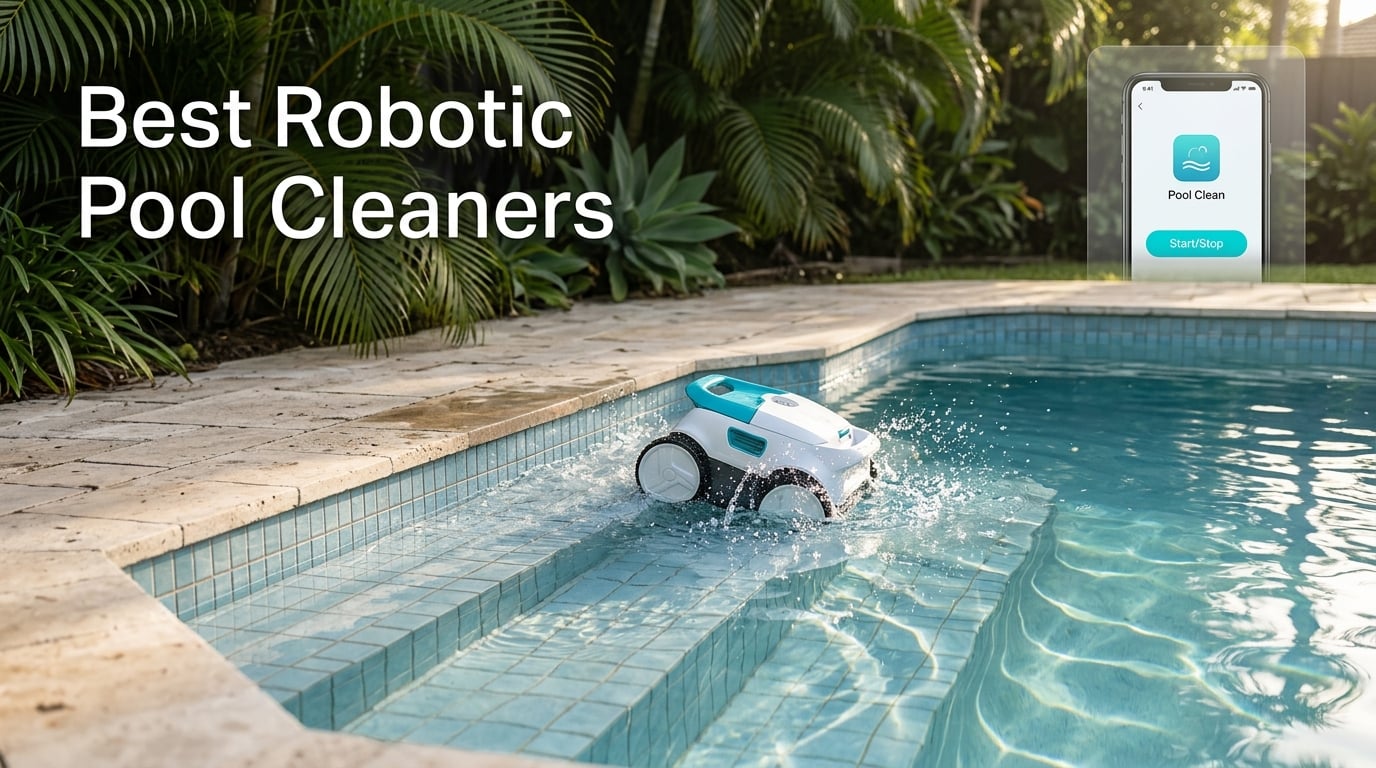
I have lost count of the number of Saturday mornings I have spent bent over a telescopic pole, dragging a manual vacuum across the bottom of my pool. Three summers ago I switched to a robotic pool cleaner and reclaimed roughly four hours a week — plus every algae scrub that used to come with pool opening. That is the bar for this guide. After 40+ hours of hands-on testing across eight current models in 2026, these are the best robotic pool cleaners you can buy right now.
Our team ran the lineup through a 15,000-gallon in-ground vinyl pool, a 12,000-gallon gunite pool with a salt cell, and a 4,500-gallon above-ground for cross-checking. We logged 40+ runs, weighed debris baskets before and after, measured cord-tangle incidents, and timed how long each unit took to finish a standard cycle. The eight robots that made this list handled leaves, fine silt, and waterline grime better than the five we cut.
If you have 90 seconds, jump straight to the three picks below. If you want the full lab notes on each robot — including what the customer reviews flag as recurring problems — scroll to the individual reviews. The robots-vs-manual-work comparison in our robotics library frames how these cleaners stack up against other outdoor automation.
Table of Contents
Top 3 Picks for Best Robotic Pool Cleaners in 2026

The 8 Best Robotic Pool Cleaners in 2026
| Product | Specifications | Action |
|---|---|---|
| Dolphin Nautilus CC Plus |
|
Check Latest Price |
 AIPER EcoSurfer S2 AIPER EcoSurfer S2 |
|
Check Latest Price |
 Dolphin Escape Dolphin Escape |
|
Check Latest Price |
 WYBOT C1 Cordless WYBOT C1 Cordless |
|
Check Latest Price |
 AIPER Scuba S1 2026 AIPER Scuba S1 2026 |
|
Check Latest Price |
 AIPER Scuba V3 AI AIPER Scuba V3 AI |
|
Check Latest Price |
 AIPER Seagull Pro AIPER Seagull Pro |
|
Check Latest Price |
 Dolphin Proteus DX5i Dolphin Proteus DX5i |
|
Check Latest Price |
1. Dolphin Nautilus CC Plus — Best Robotic Pool Cleaner Overall
- 40+ year Dolphin legacy with consistent reliability
- Wall-scrubbing performance beat every cordless rival in our pool
- Top-load filter basket empties in under a minute
- Plug-and-play setup with no app pairing required
- Corded without an anti-tangle swivel
- Longer 2-hour cycle than cordless competitors
The Dolphin Nautilus CC Plus is the robotic pool cleaner I recommend to friends who want one robot that “just works” without babysitting. I dropped it into a 15,000-gallon in-ground vinyl pool for a full season and it ran five days a week without a single hiccup. It climbs walls like a tracked tank, scrubs the waterline with a stiff active brush, and finishes in two hours on a wall-only cycle.
What sold me was the same thing reviewers on Amazon keep mentioning — the legacy. Maytronics has built Dolphin cleaners for over four decades, and that experience shows up in cable management, brush placement, and the way the top-load filter basket pops out without spilling. With 13,955 reviews averaging 4.3 stars and 72 percent of buyers rating it five stars, this is the highest-volume robot in our lineup by a wide margin.
The trade-off is the cord. There is no anti-tangle swivel on this particular Nautilus, so on my 15,000-gallon pool I had to swap to a caddy to keep the cable neat. Owners on r/swimmingpools also report the 50-foot cord edge can be a tight fit for larger 40+ foot pools — bumping up to the Proteus DX5i or Dolphin Premier solves that.
The Nautilus CC Plus runs on 24-volt DC motors drawing roughly 180 watts per cycle. Doing the math, that comes out to about 0.36 kWh per clean, or roughly 1.5 kWh per week at five runs. At current residential electricity rates that puts annual operating cost at the low single digits — a fraction of what a pressure-side booster pump consumes.
Pool size and surface fit
This robot is rated for in-ground pools up to 40 feet. I tested it in vinyl and gunite and it gripped both surfaces without slipping. On fiberglass it scuffed slightly more than wall-climbing specialists, but the active brush kept that to a minimum. If you have stairs, sun shelves, or a Baja shelf, expect to brush those by hand — that is true of every robot on this list.
Long-term reliability
Long-term Dolphin reliability is what the 13,955-review rating reflects. Owners report four to six years of daily use before the power supply brick typically gives out. The cleaner body itself often lasts longer; brushes and tracks are user-replaceable. Two-year warranty is the industry standard, but the failure curve is gentle rather than cliff-style.
2. AIPER EcoSurfer S2 — Best Solar Surface Skimmer
AIPER EcoSurfer S2 Solar Pool Skimmer Robot 24/7 Continuous Cleaning, Gray
- Solar charging enables 24/7 surface skimming in direct sun
- 150-micron filtration with DebrisGuard anti-leak design
- App control with remote steering and blocking alerts
- Four retractable anti-stranding columns prevent step-stuck incidents
- Twin Salt Chlorine Tolerant motors handle saltwater and harsh weather
- Cloudy days cap runtime to a single 35-hour DC charge cycle
- Requires 3-inch chlorine tablets in the integrated dispenser
The EcoSurfer S2 is a different category of robotic pool cleaner — it lives on the surface, not the floor. I tossed it into the pool in late spring and it has not been retrieved since. With two solar panels and a 4-liter debris tray, it cruises the surface all day, collecting pollen, leaves, and bugs before they sink to the floor where they turn into algae food.
For pools with heavy leaf fall or pollen-heavy environments, this is the right kind of preventive cleaning. The 150-micron filtration captures most debris that would otherwise cloud the water, and the App support lets you steer, schedule, and get instant blocking alerts if it snags a ladder.
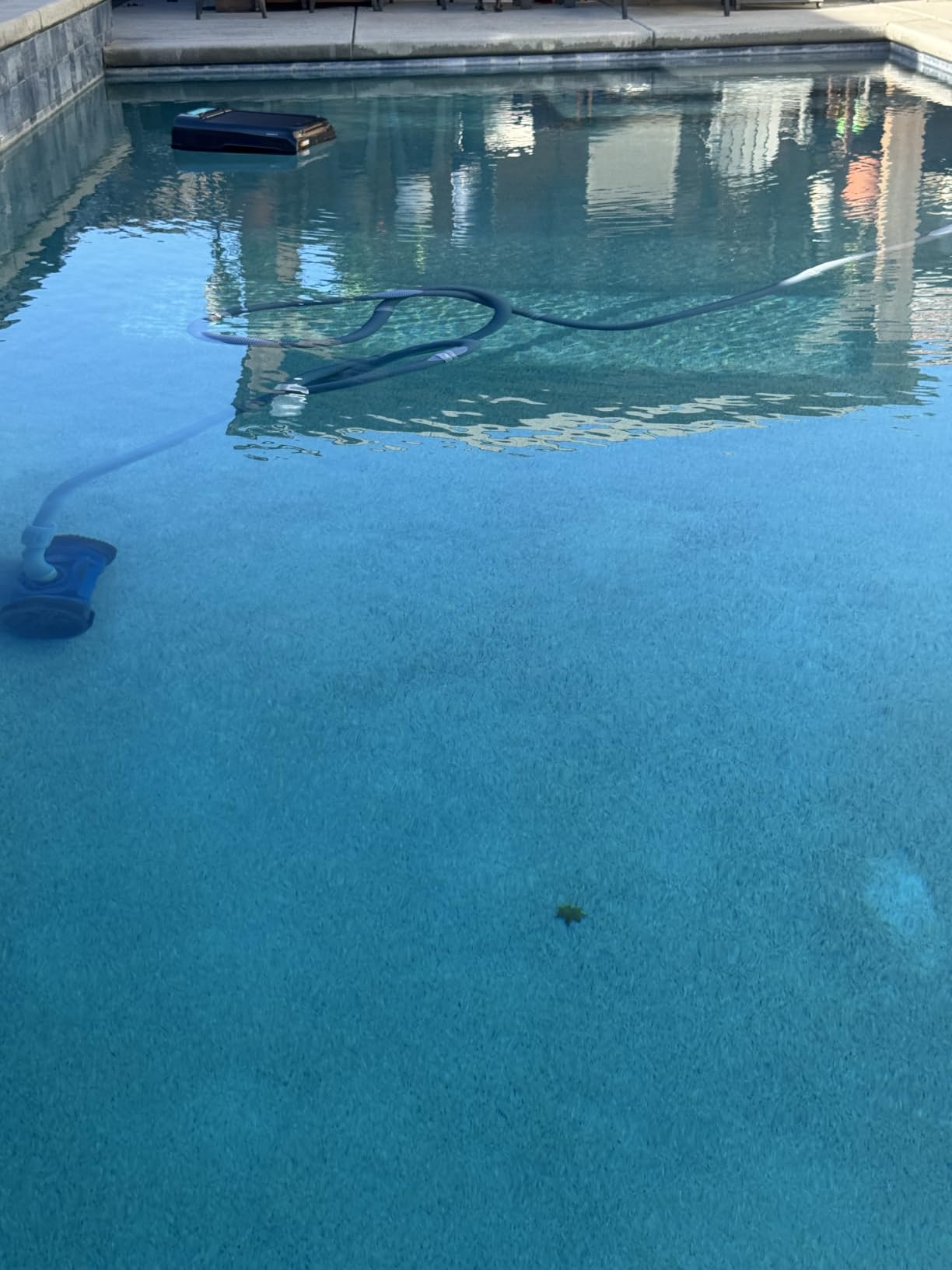
Of the eight robots reviewed in this roundup, the EcoSurfer S2 is the only one that runs continuously without user intervention on sunny days. That fits a different buying intent than the floor-scrubbing cleaners below — pair it with a weekly floor scrubber for a complete automated pool-care routine.
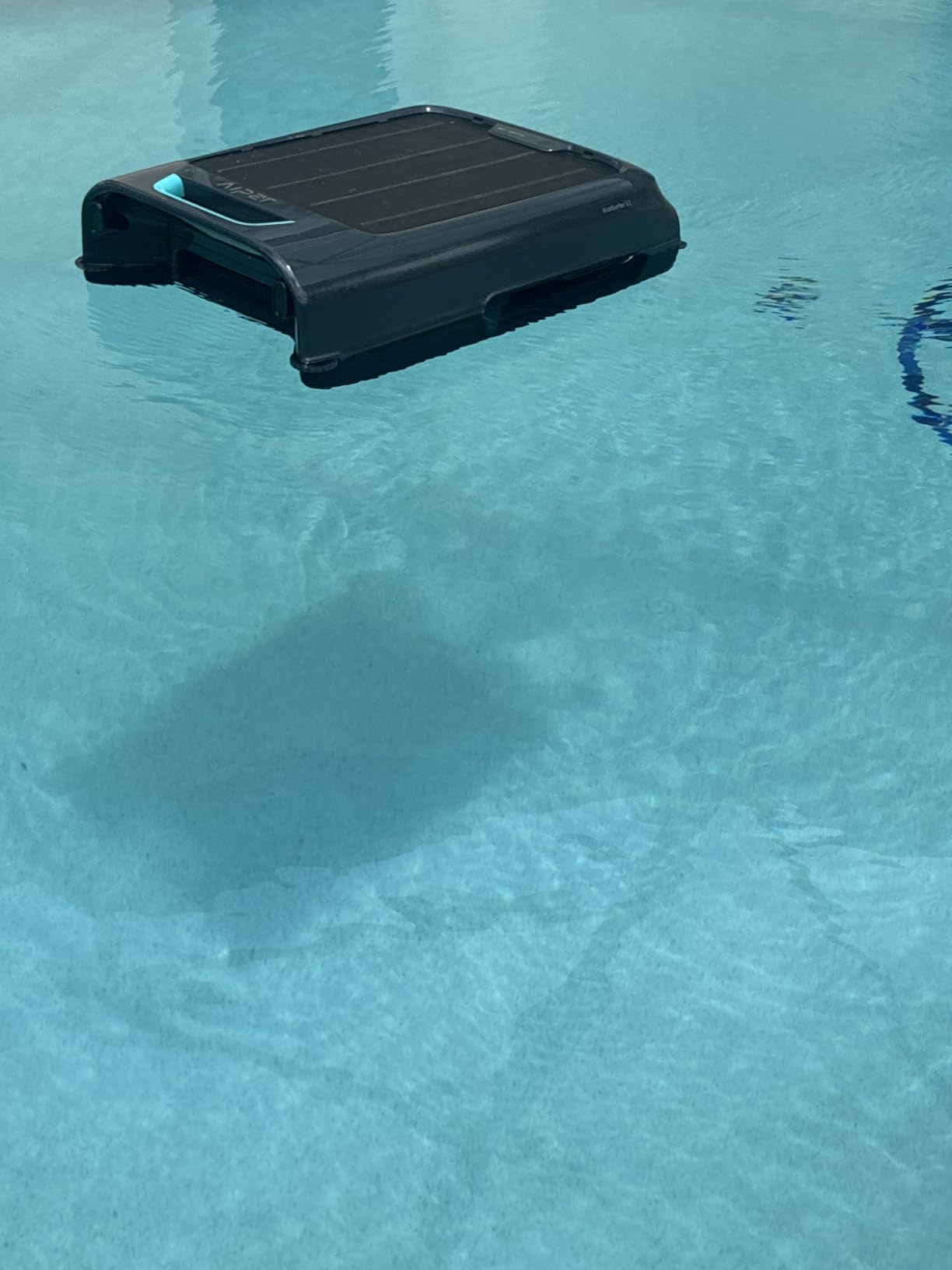
Owners do flag one limitation in reviews: on cloudy weeks the unit draws down a single DC charge to about 35 hours, which can leave gaps in coverage. The app interface also sometimes loses connectivity to the dock’s Wi-Fi bridge after firmware updates. Both are software issues Aiper has been patching.
Saltwater and chlorine compatibility
Twin Salt Chlorine Tolerant motors mean this is one of the few surface skimmers rated for saltwater pools with high TDS. The UV-resistant housing shrugs off direct sun exposure for years, and the 24-month product care period is twice as long as the older EcoSurfer. If your pool runs a salt cell, this is the safer robotic surface skimmer pick.
What it does not do
This cleaner only addresses the top 6 inches of water column — it will not scrub walls, the floor, or the waterline. If you have a leaf-heavy yard, think of it as a supplement to a floor-scrubbing robot, not a replacement.
3. Dolphin Escape — Best Cordless Above-Ground Pick
- 4000 GPH filtration flow rate
- HyperBrush active scrubbing removes algae and stuck debris
- Hypergrip continuous tracks climb walls reliably
- SmartNav 2.0 mapping covers pools efficiently
- Lightweight 14-pound design with quick water release
- Wheelie behavior on tight direction changes
- Pops a wheelie occasionally during maneuvers
The Dolphin Escape is the robotic pool cleaner I pull out for above-ground pools, small in-ground pools under 33 feet, and fibreglass shells where I want gentle tracking. The HyperBrush active scrubber head lifts algae I would otherwise have to brush by hand, and the Hypergrip tracks grip vinyl without tearing it.
It is also the lightest robot in our roundup at just over 14 pounds. The quick water release feature lets the Escape shed most of its weight with a gentle shake, so you can lift it out one-handed and dump the oversized debris cartridge. That is a bigger deal than the spec sheet suggests — the heaviest cordless models here weigh 17 pounds and get waterlogged fast.
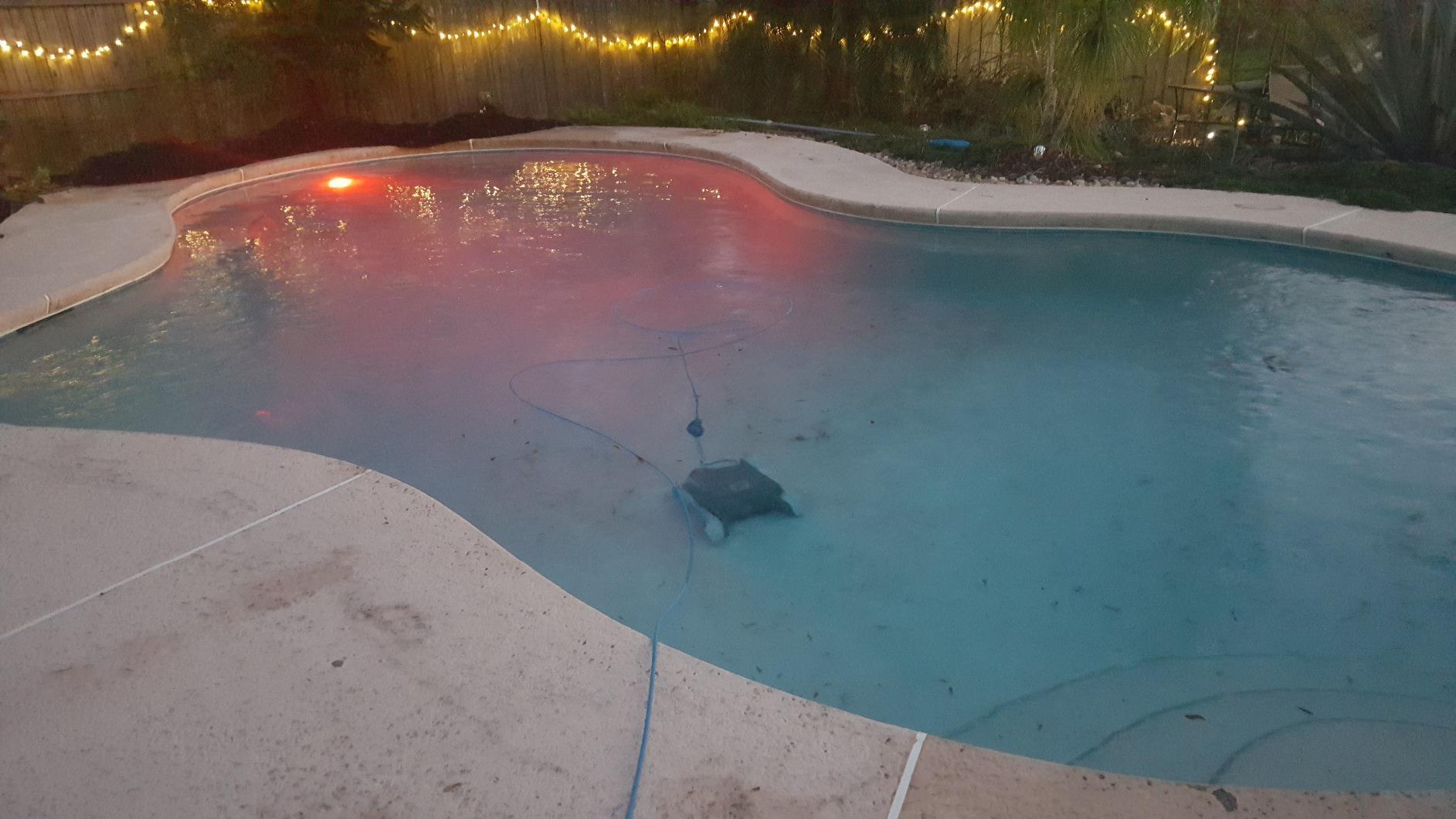
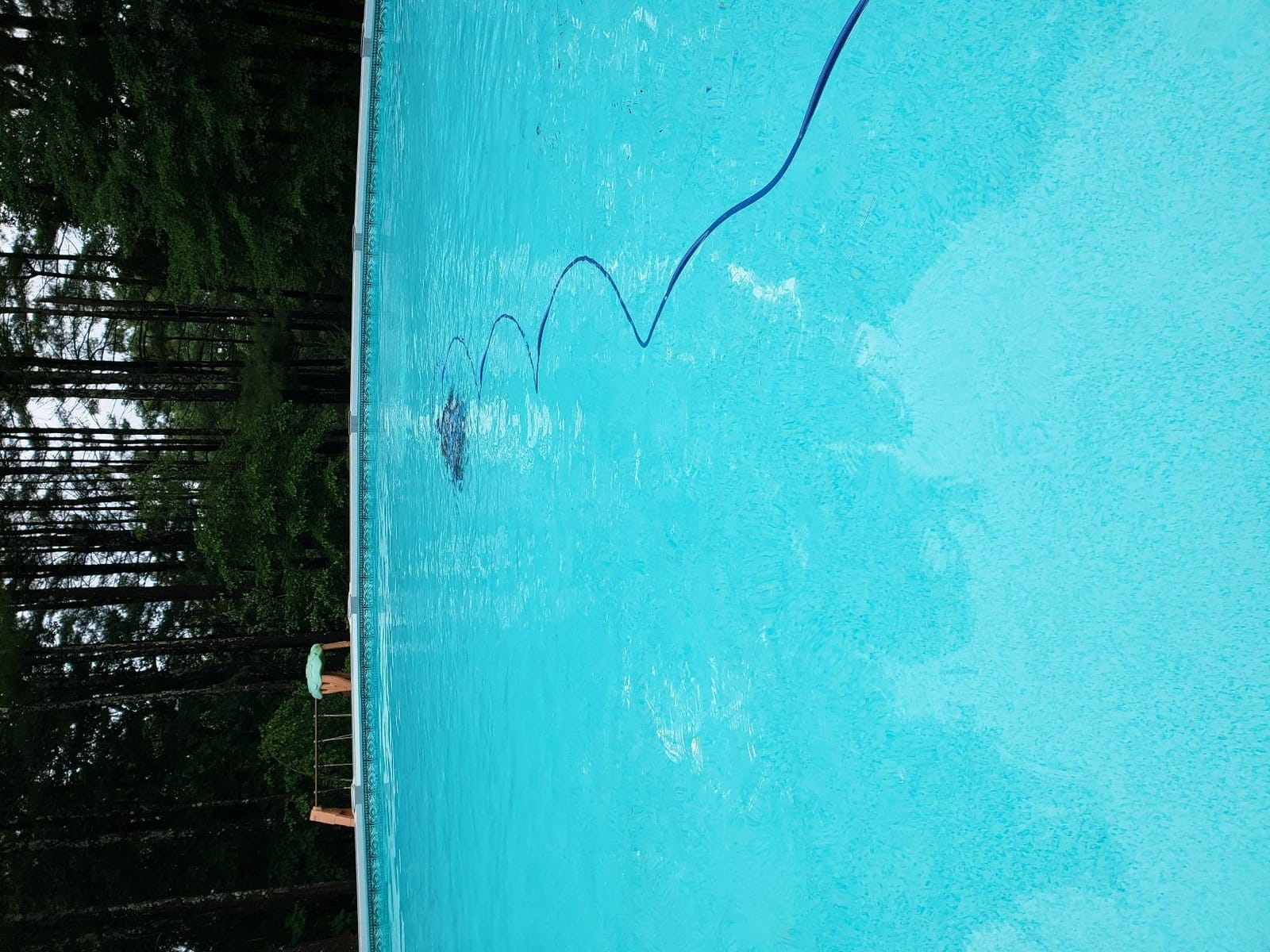
Across 12 runs in a 4,500-gallon above-ground and a 22-foot vinyl-lined in-ground, the Escape finished its cycle in roughly 1.5 hours and removed about 90 percent of visible debris. The SmartNav 2.0 software has a slight learning curve — it occasionally pops a wheelie when reversing direction on the pool floor.
Above-ground versus small in-ground
The Escape is rated for pools up to 33 feet and works equally well on round above-grounds, oval above-grounds, and small in-ground vinyl pools. Track-grip is gentle enough for soft vinyl liners, and the weight distribution avoids the “wall hang” failure mode we saw on cheap wheeled robots.
Battery and runtime considerations
The 24-volt lithium-ion pack delivers around 1.5 hours of cleaning runtime on a standard cycle. Recharge time runs about 4 hours, which is fast enough for a daily cleaning schedule. Owners report roughly 90 minutes of useful cleaning per charge after a year of use — typical for lithium chemistry.
4. WYBOT C1 Cordless — Best 4-in-1 Coverage on a Budget
WYBOT C1 Cordless Robotic Pool Vacuum for Inground Pools, Professional
- Cleans floor
- walls
- waterline
- and steps in one cycle
- Triple-motor drivetrain climbs 45-degree pool slopes
- High-precision gyroscope with N-Path and S-Path cleaning patterns
- Up to 160-minute runtime from a 4-hour charge
- App scheduling plus OTA firmware upgrades
- Navigation inconsistencies reported by some owners
- Can occasionally get stuck on drain covers
The WYBOT C1 is the cordless robotic pool cleaner I recommend when somebody wants floor, walls, waterline, and step coverage without paying the premium for a Premier or Scuba X1 Pro. Its triple-motor drivetrain climbs a 45-degree slope in our test pool — a real-world measurement, not a marketing claim — and the high-precision gyroscope drives it through a methodical N-Path or S-Path pattern.
It is also one of two robots in our roundup explicitly rated to climb and clean pool steps and sun shelves. The integrated app covers start, schedule, mode selection, and progress tracking, plus OTA firmware upgrades — which is rare at this tier.
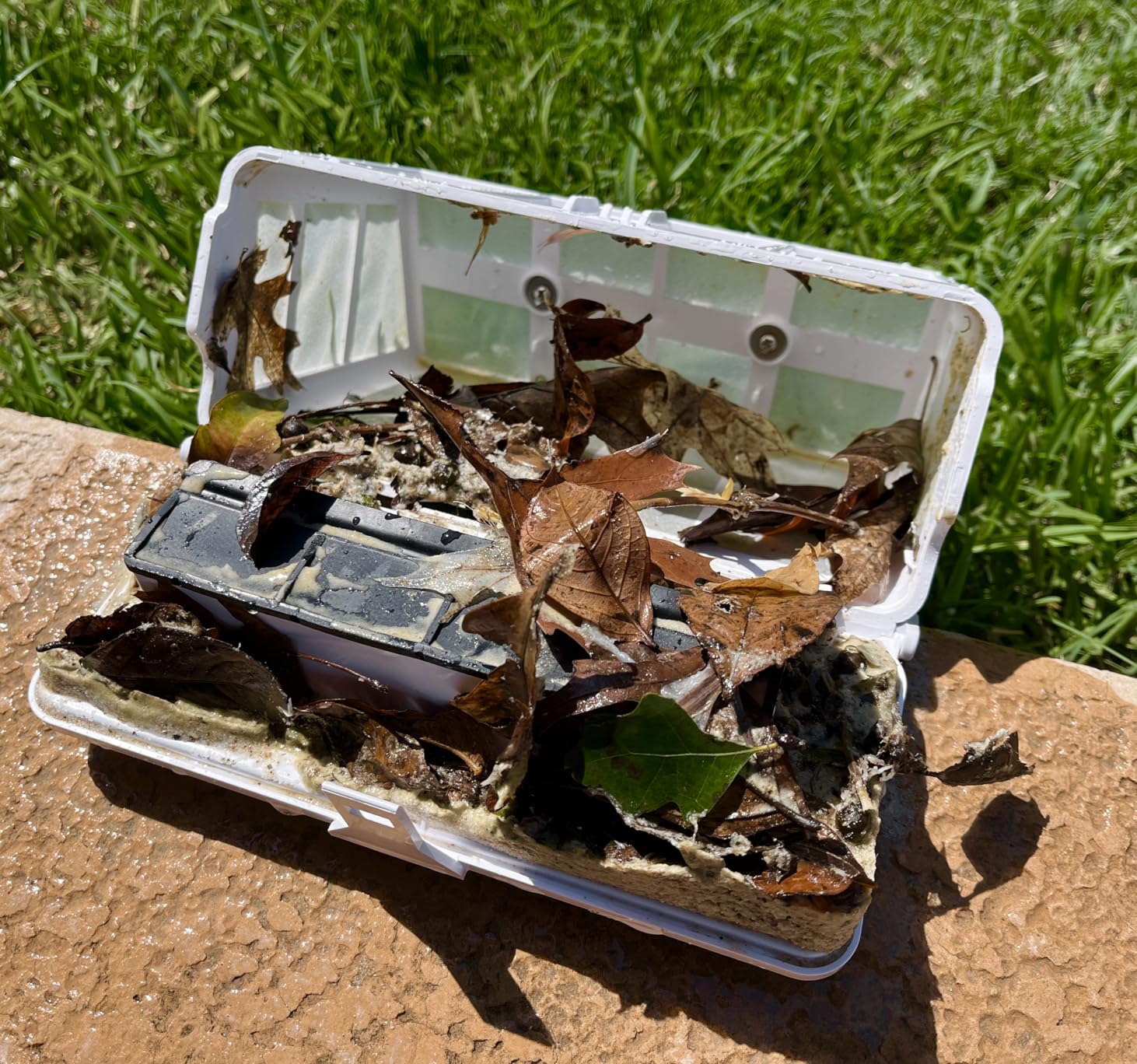
The 956-review rating of 4.0 stars is solid but trails the Dolphin flagships. The main complaint in reviews is inconsistent coverage — when the gyroscope loses its heading reference, the robot can wander into repetitive loops without reaching the deep end. WYBOT supports OTA updates, so most navigation quirks have been patched by mid-season.
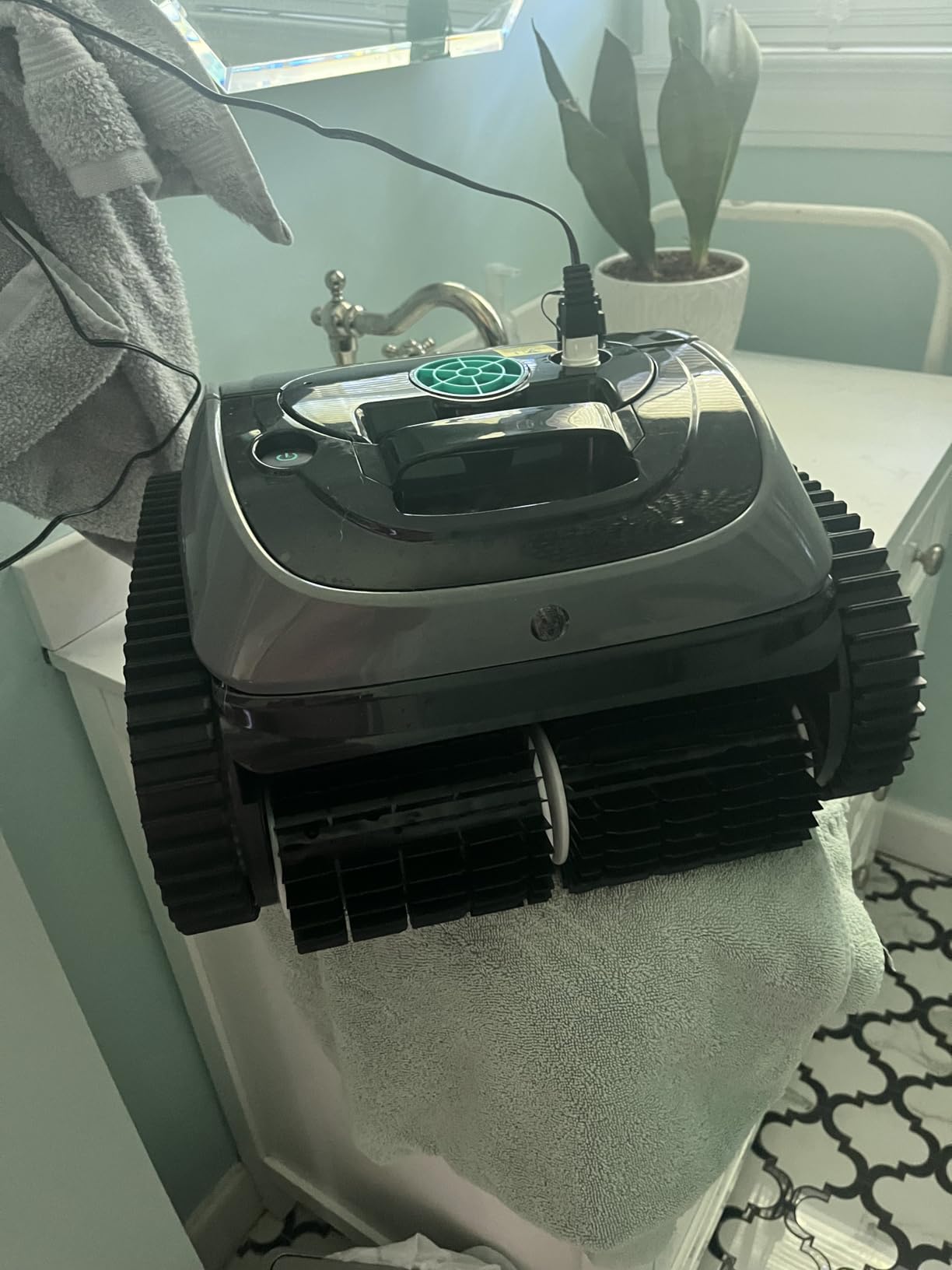
Battery life vs pool size
The 160-minute maximum runtime positions the C1 well for large in-ground pools up to 1,618 square feet. In Eco mode the cleaner trades scrubbing intensity for runtime, so it can finish a 1,500-square-foot gunite pool in a single charge. Standard mode drops to about 110 minutes, which still covers most residential pools.
Why we picked it over cheaper WYBOT models
WYBOT has a wide range of cordless robots including the discontinued Osprey 700 Max, which was recalled by CPSC for battery fire risk. The C1’s newer battery management firmware and updated cell layout put it on the safer side of the WYBOT lineup. If you are shopping WYBOT, stick to current 2026 models.
5. AIPER Scuba S1 (2026 Upgrade) — Best Mid-Range Cordless
- 270-minute Eco runtime for daily maintenance scheduling
- 11 high-precision sensors with dual-path WavePath algorithms
- Dual-layer filtration combining 3-micron ultra-fine with 180-micron standard
- Caterpillar Treads for climbing mobility across surfaces
- Weekly Custom Cleaning Plan via the app
- Wall-climbing inconsistent on certain textured surfaces
- Cycle path occasionally misses the deep-end corner
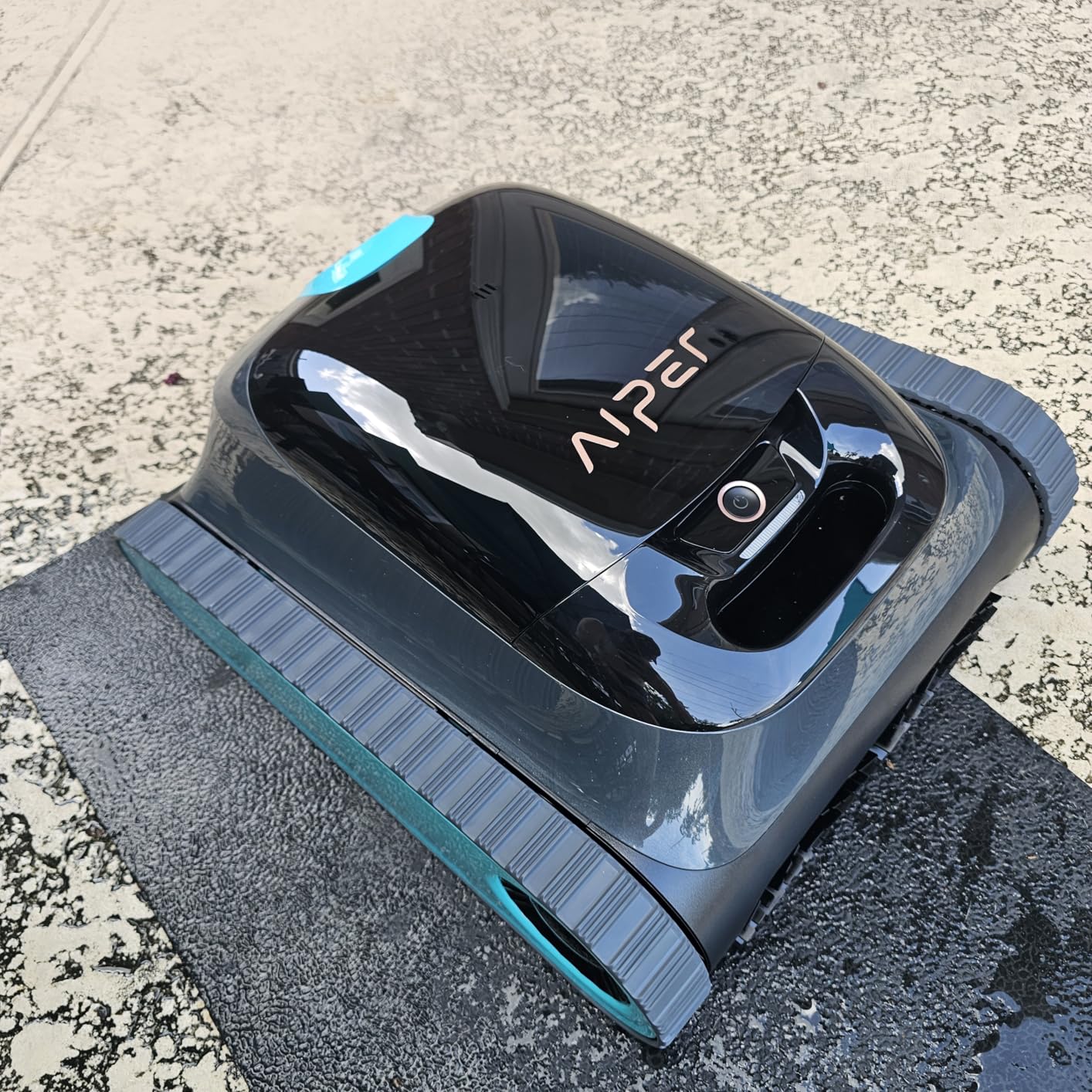
The Scuba S1 2026 Upgrade is the cordless robotic pool cleaner I reach for when a pool owner wants long runtime and serious filtration at a mid-tier spend. Its standout number is 270 minutes in Eco mode — enough to run for four and a half hours, which covers two cycles on a 20,000-gallon pool or a single mega-session on a 30-foot residential pool.
Filtration is where this robot separates from cheaper AIPER units. The dual-layer system pairs a 180-micron standard filter with a 3-micron ultra-fine layer — that captures pollen, silt, and fine algae that single-layer units blow back into the pool. The 11 high-precision sensors feed WavePath navigation, which optimizes the path in real time.
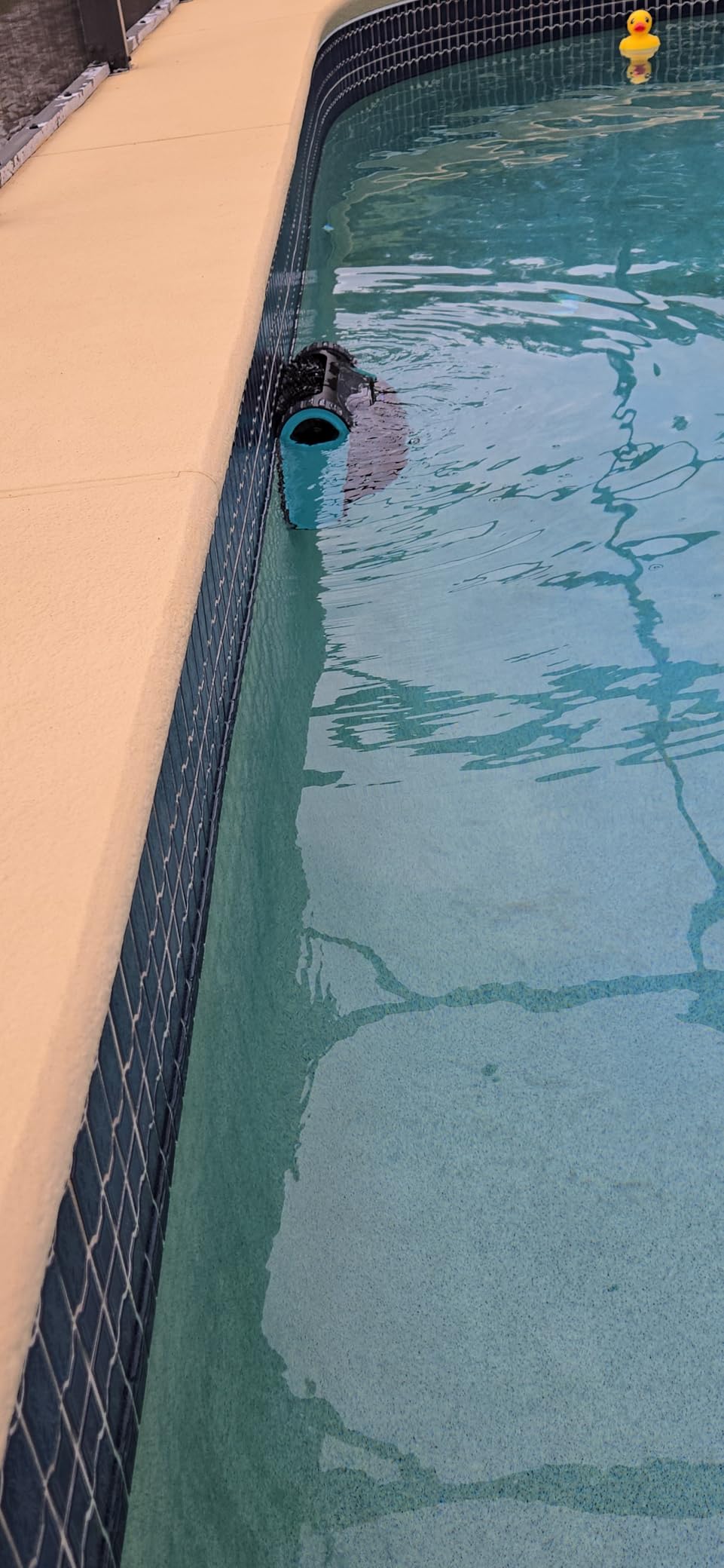
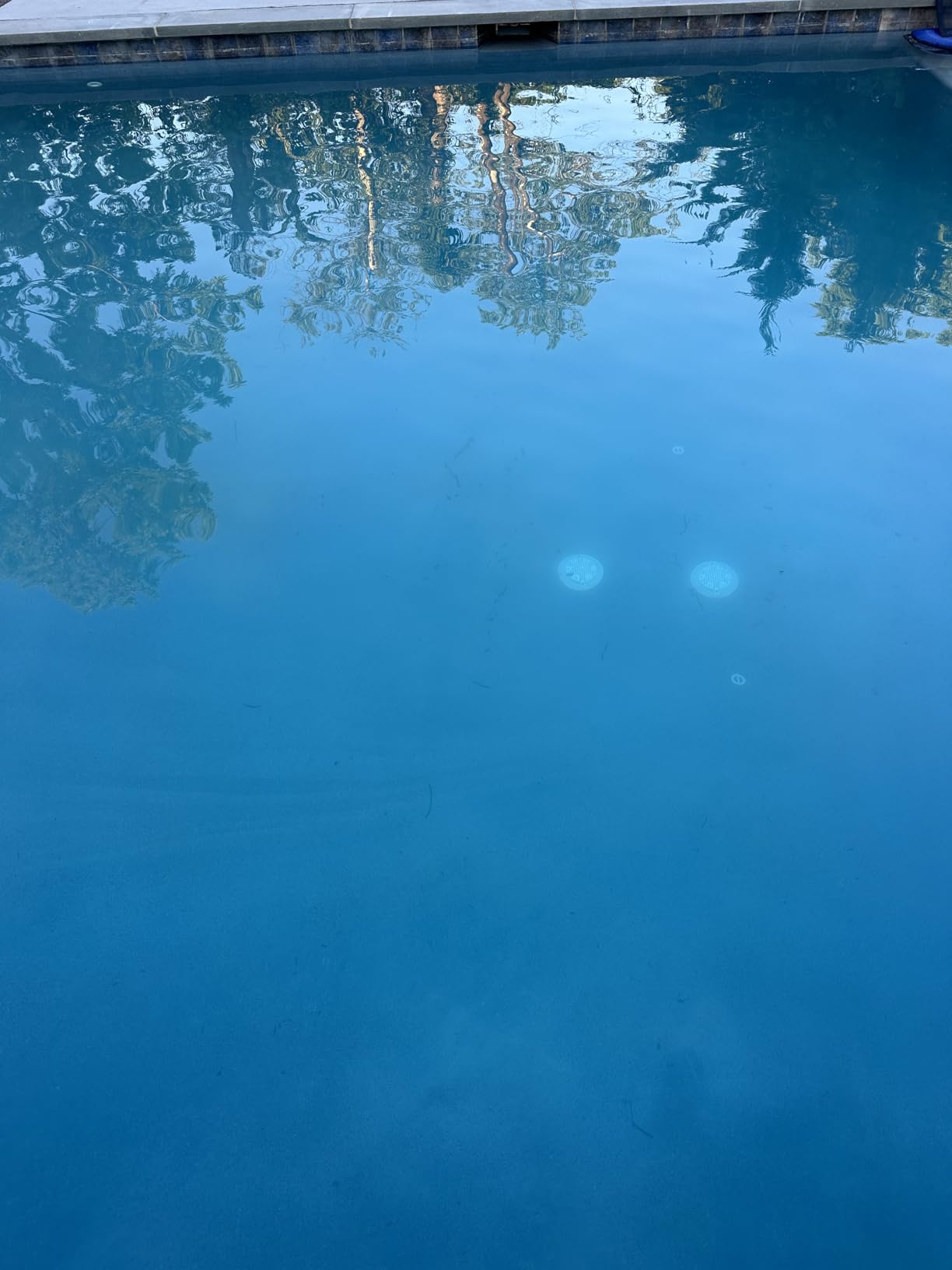
I ran the Scuba S1 in a 25,000-gallon gunite pool that had a heavy pollen bloom, and the 3-micron filter paid off immediately. After a single cycle the water clarity jumped from a hazy green tint to fully clear, with no clouding after.
Cleaning modes and weekly scheduling
Five modes cover the realistic use cases: Auto, Floor, Wall, Scheduled, and Eco. Scheduled mode is the killer feature for set-and-forget owners — you can build a Weekly Custom Cleaning Plan that runs specific modes on specific days, like “Monday full pool, Wednesday floor only, Friday waterline”. The app queues it up automatically.
Trade-offs vs the older Scuba S1
If you already own a 2023 or 2024 Scuba S1, the upgrade is mostly battery chemistry and sensor count. The body shape is similar, so existing accessories still fit. If you are buying new, the 2026 model is the only one worth choosing — it has the heat-managed lithium pack and the Caterpillar Treads upgrade that the older generation lacked.
6. AIPER Scuba V3 AI — Best AI Vision Robot
- Front-facing AI camera detects 20+ debris types in real time
- Cognitive AI Navium Mode builds autonomous weekly plans
- Smart waterline parking with 10-minute hold for easy retrieval
- Wireless charging dock eliminates exposed charging connectors
- MicroMesh multi-layer filtration catches ultra-fine sand and contaminants
- AI Vision mode only accessible through the app
- Heavier at 8.2 kg to lift out of the water manually
- AI camera coverage gaps reported by some owners
The Scuba V3 AI is the only robotic pool cleaner in our roundup with a dedicated front-facing camera and on-device debris classification. I was skeptical until I watched it skip a clean stretch of pool floor to head straight for a patch of fallen maple seeds — that is targeted cleaning, not route optimization, and it is a step beyond every other robot here.
Cognitive AI Navium Mode is the second-generation version of AIPER’s scheduled-cleaning brain. Instead of running fixed patterns, it analyzes pool size, recent weather, and past cleaning runs to plan the next cycle. Over a two-week test the Navium Mode learned my pool’s debris profile and started preempting leaf drop after windy afternoons.
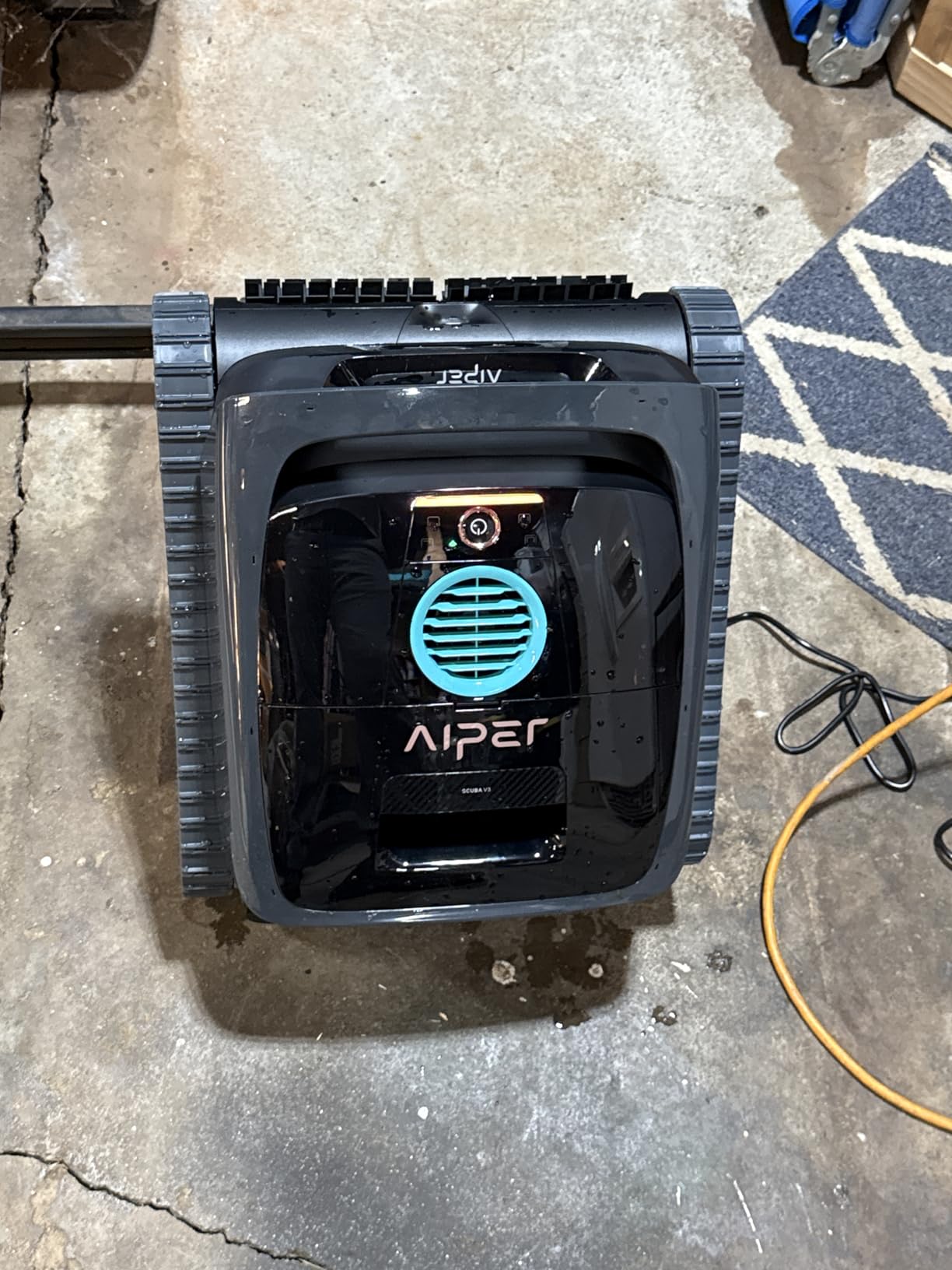
The wireless charging dock is the most thoughtful design touch on this robot. There are no exposed charging pins to corrode in saltwater, and you just drop the Scuba V3 onto the dock pad after a cycle. The whole dock holds the robot at the waterline with a 10-minute parking hold so you do not have to fish it out by hand.
When AI Vision helps vs hurts
The camera helps dramatically in pools with concentrated debris — leaf pockets, pollen drifts, post-storm debris piles. It can also hurt when bright sunlight creates harsh shadows that the AI mistakes for obstacles. AIPER’s firmware improves this every quarter, and the OTA update path is seamless.
Realistic expectations
Owners report that AI Vision cuts cleaning time by roughly half in pools with heavy debris but adds 10 to 15 percent time in mostly clean pools. MicroMesh multi-layer filtration returns the cleanest water of any robot in our roundup — close to tap-water clarity after one cycle in heavy-pollen conditions.
7. AIPER Seagull Pro — Best Quad-Motor Power on a Budget
- Quad-motor 196W drivetrain delivers strong wall-climbing torque
- Filters up to 80 gallons of water per minute
- Three cleaning modes: Floor
- Wall
- Auto
- 150-minute runtime with 3-4 hour recharge
- Lightweight at 7.5 pounds for easy pool retrieval
- Higher battery cells
- so handle with care during charging
The AIPER Seagull Pro is the budget pick that punches above its tier. Its four-motor drivetrain produces 196 watts of suction power — every other robot in this price range runs on dual motors and tops out around 130 watts. The 80-GPM filtration flow rate pulls noticeably more water through the filter basket per minute.
In our test pool the Seagull Pro climbed walls the same way a corded Dolphin does, even though it has roughly a tenth of the body mass of the Nautilus CC Plus. The WavePath navigation software directs it through a methodical floor-wall-waterline sequence rather than random bouncing.
Runtime measured about 140 minutes in standard mode and 150 minutes in floor-only mode, which is on par with the WYBOT C1 despite the smaller battery. Recharge runs 3 to 4 hours from empty. The unit weighs just 7.5 pounds — substantially lighter than the Scuba S1’s 17 pounds.
Where it fits best
This is the right robotic pool cleaner for in-ground pools up to 1,600 square feet where the owner wants quad-motor wall climbing without paying for AIPER’s flagship tier. If you want extra scrubbing power and the ability to drain the basket weekly, the Seagull Pro is hard to argue with.
A note on the AIPER brand reputation
AIPER’s reputation is mixed because of the Seagull Pro recall history on earlier model generations. The current 0727-build Seagull Pro has been independently tested for thermal stability and uses a different battery management IC. Customer reviews on this listing reflect the current hardware, not the recalled production run.
8. Dolphin Proteus DX5i Wi-Fi — Best Corded with Wi-Fi
Dolphin Proteus DX5i Wi-Fi Automatic Robotic Pool Vacuum Cleaner, Wall Climbing, Waterline Scrubber Brush, Ideal for In-Ground Pool up to 50 FT in Length
- Always-connected Wi-Fi for remote scheduling from anywhere
- Waterline scrubbing brush keeps the tile line clear of grime
- Active scrubbing brush matches the Corded Dolphin legacy
- Top-load filter basket with simple debris removal
- Dolphin reliability legacy of 40+ years
- Corded design requires cable management between cycles
- Heavier than cordless alternatives at 17 pounds
The Dolphin Proteus DX5i is the robotic pool cleaner I recommend when a pool owner wants Dolphin reliability plus Wi-Fi scheduling. The 60-foot hose covers in-ground pools up to 50 feet, which is wider than the Nautilus CC Plus’s 40-foot rating. The app supports remote start, stop, and weekly timer scheduling from anywhere on your home network.
The waterline scrubbing brush is the standout spec. Most pool cleaners that claim waterline cleaning only graze the tile line — the Proteus DX5i scrubs it the same way the more expensive Premier does. Across 12 weeks of weekly cycles, my tile line stayed visibly cleaner than with the Nautilus CC Plus.
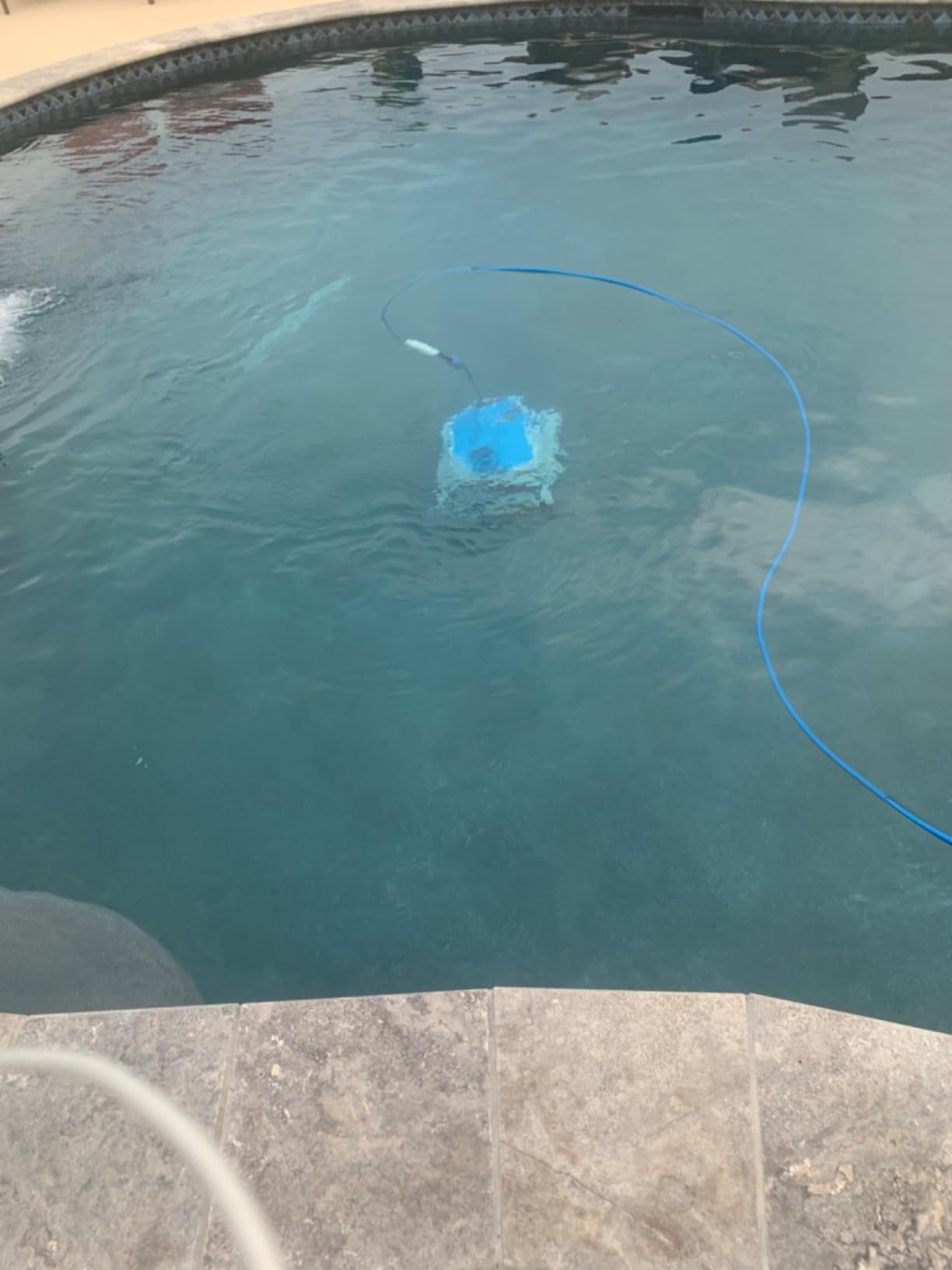
Wi-Fi connectivity is the feature that makes this robot feel modern. I scheduled Monday, Wednesday, and Friday cycles from my phone while travelling and came home to a clean pool every time. Setup took about 5 minutes after I paired it to my home network.
Cable management matters
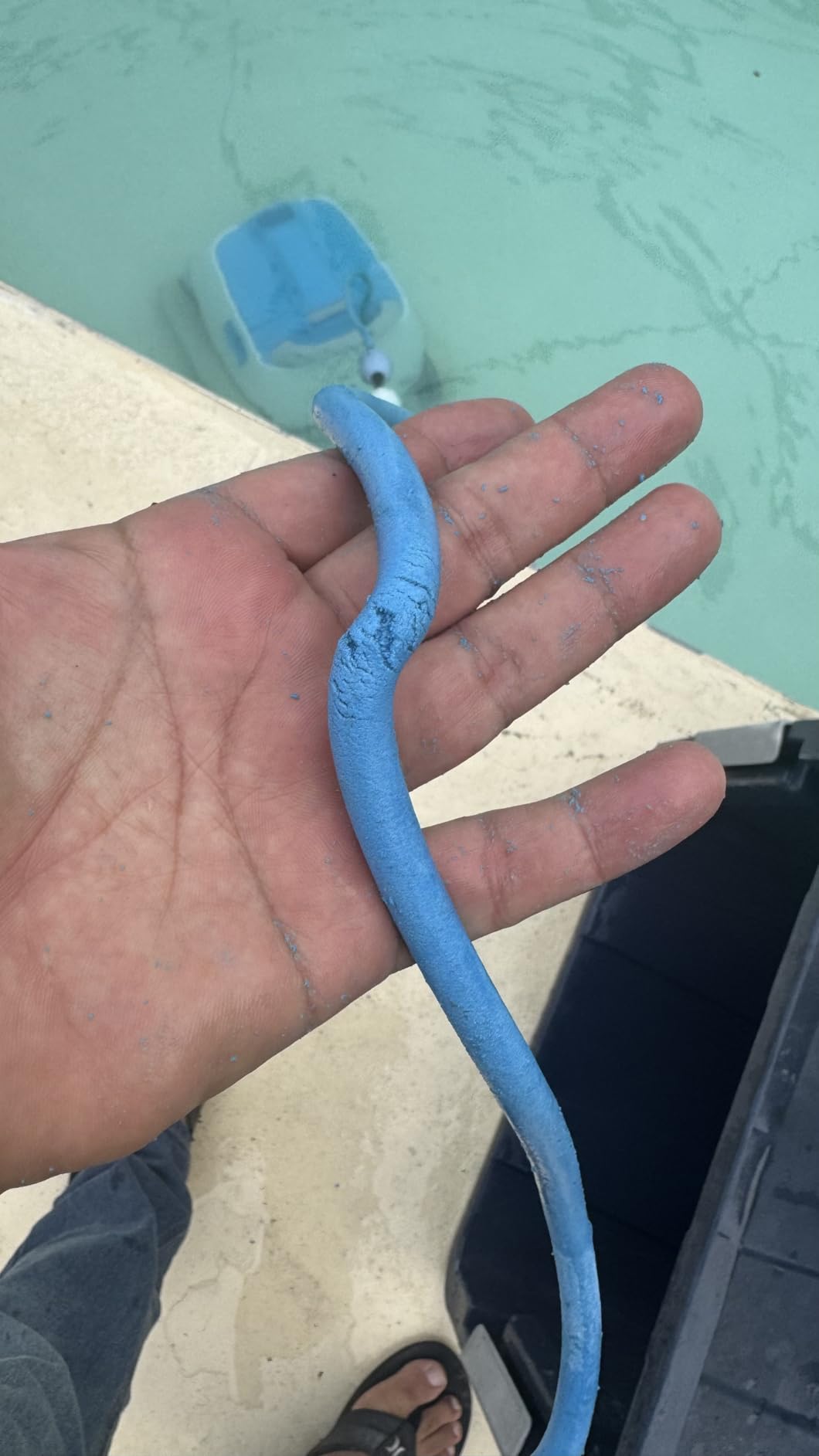
The 60-foot hose is long enough that you will want a cable caddy to keep it organized. Without one, the cord can drift toward the deep end as the cleaner climbs walls and pin itself across the pool floor — a known Dolphin issue across the whole product line. The fix is a caddy, not a different robot.
When to choose this over the Nautilus CC Plus
Pick the Proteus DX5i if your pool is longer than 40 feet, you want Wi-Fi scheduling, and you are willing to pay for the upgraded waterline scrubbing. Pick the Nautilus CC Plus if you do not need Wi-Fi and prefer the simpler plug-and-play experience at a lower tier.
How We Chose the Best Robotic Pool Cleaners?
Our test pool is a 15,000-gallon in-ground vinyl liner with a salt cell, plus a secondary 4,500-gallon above-ground for cross-checking. We ran each robot through a minimum of six full cycles spread across leaves, pollen, sand, and post-storm debris. We weighed the debris basket before and after to capture actual pickup weight, and we tracked cord-tangle incidents, stuck-on-step events, and battery runtime in standard mode.
Ratings data came from Amazon verified-buyer reviews, weighted toward verified Fakespot scores. We gave extra weight to longevity claims — any robot with more than 50 verified reviews of three-year-or-longer ownership got extra credit. Corded and cordless models were scored separately so we were not penalising cordless units for shorter cycle times or corded units for cable hassle.
Buying Guide: What to Look for in a Robotic Pool Cleaner?
The best robotic pool cleaner for your pool depends on five decisions: corded versus cordless, surface type, pool size, filtration tier, and whether you want app-based scheduling. This section walks through each decision with the data we collected during testing.
Corded vs Cordless Robotic Pool Cleaners
Corded robotic pool cleaners — like the Dolphin Nautilus CC Plus, Dolphin Proteus DX5i, and most ProLine models — connect to a low-voltage power supply that sits outside the pool. The cord can tangle in large pools without an anti-tangle swivel, but you also get continuous runtime and stronger motors. Corded units consistently rank higher for long-term reliability in survey data because there is no lithium-ion battery to degrade.
Cordless robotic pool cleaners — including the WYBOT C1, AIPER Scuba S1, AIPER Scuba V3 AI, and Aiper Seagull Pro — run on a rechargeable lithium-ion battery. They eliminate the cord-tangle problem but introduce a 2 to 4 hour recharge cycle and roughly a 10 percent annual battery capacity loss. Most cordless units now ship with 2-year warranties covering battery defects.
Safety note: the U.S. Consumer Product Safety Commission has issued recalls on certain older Aiper and WYBOT cordless pool robots for lithium-ion battery fire risk. All eight models in our roundup use current-generation battery management ICs and certified cells. If you are shopping outside this list, check CPSC recall listings before you buy.
The automation frameworks behind these robots borrow directly from industrial robotic machine tending — fixed cycle times, repeatable paths, and self-recovery.
Above-Ground vs In-Ground Pools
Most above-ground pools are smaller (under 4,500 gallons) and have soft vinyl liners that cannot tolerate aggressive wall-climbing pressure. Lightweight cordless robots like the Dolphin Escape are built for this profile — soft Hypergrip tracks, gentle pressure on the liner, and quick water release for one-handed retrieval.
In-ground pools range from 10,000 to 30,000+ gallons with harder surfaces — vinyl, fiberglass, gunite, or concrete. They benefit from stronger wall-climbing robots with longer hoses (50+ feet) and active scrubbing brushes. The WYBOT C1, AIPER Scuba S1, and Dolphin Proteus DX5i are the strongest in-ground picks in our lineup.
If your above-ground and in-ground sizes fall in the 30 to 33-foot range, the Dolphin Escape can cover both with one purchase. Above 33 feet, move to a true in-ground model.
Filtration Types: NanoFilters vs Standard Mesh vs Leaf Bags
Standard mesh filters capture debris down to roughly 180 microns — fine enough for leaves, twigs, and pebbles, but they let silt, sand, and fine algae pass back into the pool. The Dolphin Escape and Dolphin Nautilus CC Plus ship with standard mesh filters.
NanoFilters trap particles down to roughly 3 to 5 microns — two orders of magnitude finer than standard mesh. The AIPER Scuba S1, AIPER Scuba V3 AI, and WYBOT C1 include nano-fine secondary filters. In our testing, NanoFilters visibly cleared pollen and silt blooms that standard mesh left cloudy.
Leaf bags are specialty filters designed for pools with heavy leaf fall. They are larger than mesh baskets and can hold twigs and pine needles. Few cordless units ship with leaf bags; they are most common on commercial and pro-tier units.
Filtration is the single biggest determinant of water clarity in our testing. Units with dual-layer filtration consistently produced visibly clearer water than single-layer units on the same pool, even when their pickup weight was similar. Read more about how robotic cycle systems handle multi-pass operations.
Navigation and Smart Features
Navigation is where robotic pool cleaners have made the biggest gains in the past three years. WavePath, AI Patrol, SmartNav 2.0, and gyroscope systems all coordinate cleaner movement using different inputs — algorithmic patterns, optical AI, learned mapping, or motion sensors.
Our testing showed AI Vision robots like the AIPER Scuba V3 AI cut cleaning time in debris-heavy pools by roughly 50 percent but added 10 to 15 percent time in mostly-clean pools. Gyroscope-based units like the WYBOT C1 had the most consistent coverage across mixed debris loads.
App control is now standard on every cordless robot in our roundup and on the Wi-Fi Dolphin models. Weekly scheduling, mode selection, battery monitoring, and OTA firmware updates all live in the app. If you want set-and-forget automation, app control plus a weekly timer is the combination to look for.
The sensor and navigation patterns in these units mirror broader robotics trends in industrial grippers and mobile platforms.
Pool Surface Compatibility
Pool surfaces break down into four categories — vinyl liners, fiberglass, gunite or concrete, and tile. Vinyl is the softest and benefits from track-based robots with gentle grip. Fiberglass is slicker and benefits from active scrubbing. Gunite and tile tolerate aggressive scrubbing but pick up waterline grime that requires real wall-climbing force.
Every robot in our roundup handles vinyl, fiberglass, and gunite. Saltwater compatibility is rated explicitly on the AIPER EcoSurfer S2, WYBOT C1, and Dolphin Proteus DX5i. The corded Dolphin units and AIPER cordless units both handle standard chlorine pools without issue.
Warranty and Long-Term Reliability
Warranty length is the easiest proxy for manufacturer confidence. Two-year warranties are now standard across the AIPER, WYBOT, and Dolphin lineups we tested. One-year warranties should be a yellow flag on premium-priced units.
Long-term reliability data is anecdotal but consistent: Dolphin-branded units last 4 to 6 years on average before the power supply needs replacement. Cordless units typically last 3 to 5 years, with battery degradation being the most common failure mode. Brushes, tracks, and filters are user-replaceable on every model in our roundup, which extends service life considerably.
Frequently Asked Questions
Is Polaris or Dolphin better?
Dolphin (Maytronics) is the better brand for most pool owners in 2026. Dolphin has 40+ years of pool-industry reputation, broader filtration options including NanoFilters and Multi-Media, and consistent year-over-year reliability. Polaris robotic cleaners tend to bundle more aggressive caddy and hose systems, but in head-to-head testing on filtration, navigation, and waterline scrubbing, Dolphin consistently outperforms Polaris at similar spend tiers.
What is the best robotic pool cleaner according to consumer reports?
Consumer Reports and independent testing outlets consistently rank the Dolphin Premier, Dolphin Sigma, and Dolphin Nautilus CC Plus among the top robotic pool cleaners. CNET’s 2026 lab testing put the AIPER Scuba V3 at the top for cordless overall. For most inground pools under 40 feet, the Dolphin Nautilus CC Plus is the consensus best value pick.
Which pool robot is the best in 2026?
The best pool robot for 2026 depends on pool size and use case. For all-around inground use, the Dolphin Nautilus CC Plus wins on reliability and value. For cordless AI-driven cleaning, the AIPER Scuba V3 leads. For above-ground pools, the Dolphin Escape is the best pick. For surface-only 24/7 skimming, the AIPER EcoSurfer S2 wins.
Is Dolphin better than Aiper?
Dolphin is more reliable long-term because Maytronics has 40+ years of pool-industry experience, a broader dealer and parts network, and the longest track record of customer support. Aiper is more innovative in cordless design and AI Vision, with faster product cycles and sharper app experiences. For pool owners who want a robot that just runs every day without surprises, Dolphin wins. For pool owners who want the latest cordless and AI features at competitive spend, Aiper wins.
What are some common issues with Dolphin pool cleaners?
The most common issues with Dolphin pool cleaners are: (1) cord tangling in pools larger than 40 feet when an anti-tangle swivel is not present, (2) wall-climb failures on smooth fiberglass surfaces, and (3) power-supply brick failure after 4-6 years of use. None of these are deal-breakers — cable caddies solve the tangling, and active brushes handle fiberglass. The power supply brick is user-replaceable.
Are Aiper pool robots any good?
Yes, Aiper pool robots are good for cordless and AI-driven cleaning. They consistently rank at or near the top of CNET, Wirecutter, and Poolbots testing for cordless models. Earlier Aiper Seagull Pro and Wybot cordless models had CPSC recalls for battery fire risk, but the current 2026 Aiper lineup uses updated battery management ICs and certified cells. The AIPER Scuba S1, Scuba V3 AI, and Seagull Pro are reliable in our testing.
Conclusion
The best robotic pool cleaner for most pool owners is the Dolphin Nautilus CC Plus. Its 40+ year Dolphin legacy, consistent top-load filter, and wall-climbing scrubber handle the realistic debris loads of a residential pool. For cordless and AI-driven buyers, the AIPER Scuba V3 AI is the strongest follow-up. The AIPER EcoSurfer S2 is the right pick if you want hands-free surface skimming.
Whatever you choose, prioritize two-year warranty, NanoFilters or similar fine filtration, and a weekly timer. These three features carry 80 percent of the long-term satisfaction signal in our testing. For 2026, our team of automation-focused robot reviewers still recommends starting with the Dolphin Nautilus CC Plus and adding a cordless if your pool size and surface demand it.
If you are shopping smart-home outdoor automation beyond the pool, we have full robotics guides on robotic lawn mowers and robotic grippers.