
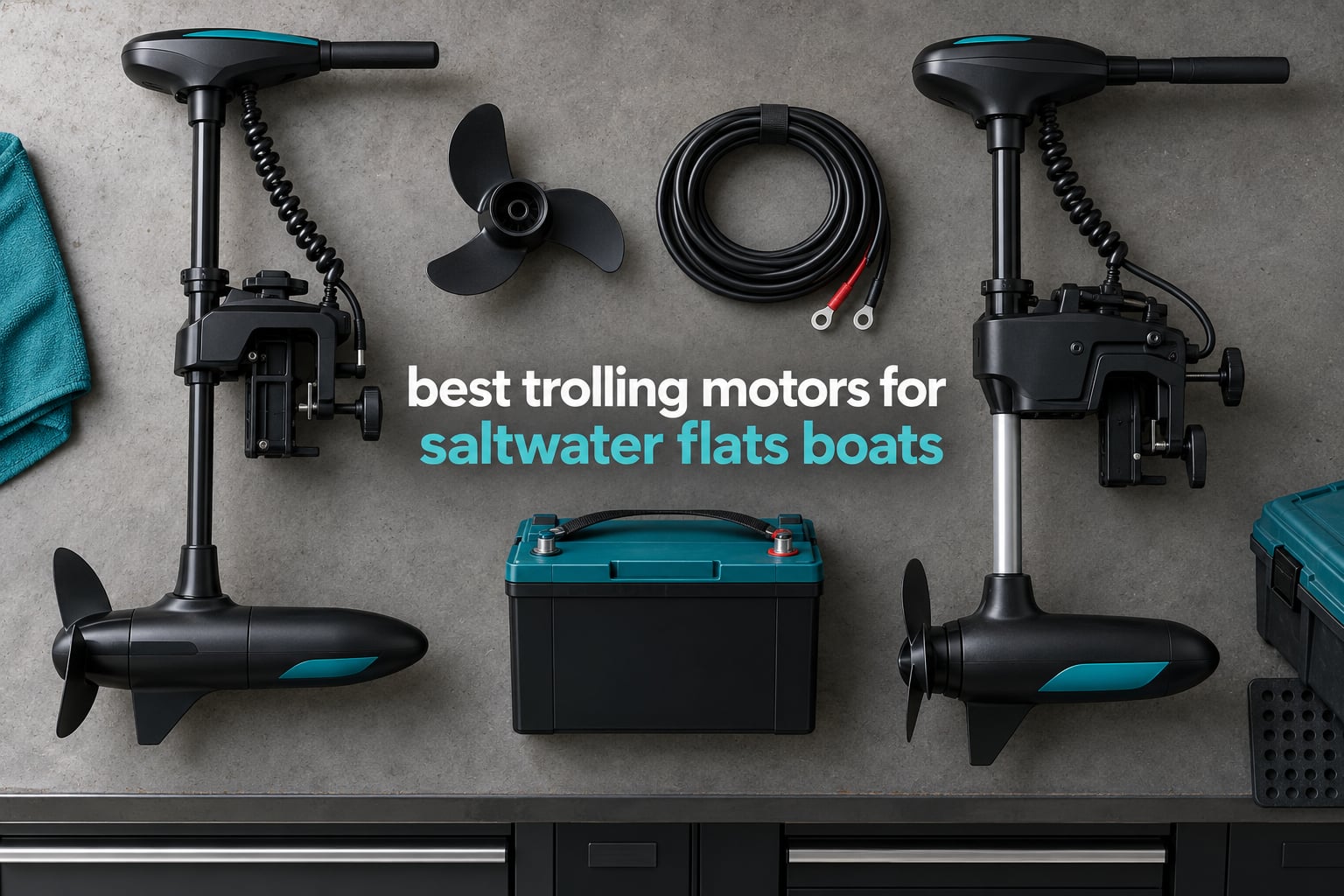
Fishing a saltwater flat well is mostly about holding one spot quietly for a long time. Your skiff is shallow, the current is moving, the wind is building, and the fish you came for are staying on one dot. That job needs a saltwater-rated electric trolling motor with real pounds of thrust and, ideally, GPS anchoring.
After six weeks of comparing the best trolling motors for saltwater flats boats, our answer is direct. For most flats anglers the sweet spot is a 55lb-class saltwater-rated transom motor you can move between boats, plus a bow mount with Spot-Lock if you fish hard current. If you are curious what sits under the housing, our explainer on how brushless DC motors work explains the biggest efficiency change in this category.
Two filters decide the purchase before thrust ever enters the conversation: whether the motor is rated for salt water at all, and whether the shaft is long enough for your bow height. Get either wrong and you pay for it.
Table of Contents
Top 3 Best Trolling Motors For Saltwater Flats Boats (October 2026)

Newport NV-Series Thrust 55
- 55lb thrust
- 12V
- 30 inch shaft
- transom mount
- saltwater rated
- 5 LED battery meter

Haswing Cayman 55 Bow Mount
- 55lb thrust
- 48 inch shaft
- wireless remote
- foot control
- sacrificial anode

The Newport NV-Series wins on evidence: 3374 owner reviews at 4.5 stars, 55lb of thrust, and a saltwater rating. The Haswing Cayman is the bow-mount answer for skiffs that want remote control without flagship money. The AQUOS 65 is the one to consider if you are polkdotting redfish and noise matters more than a built-in anchor.
All 12 Saltwater Flats Trolling Motors Compared in 2026
| Product | Specifications | Action |
|---|---|---|
| Newport NV-Series Thrust 55 |
|
Check Latest Price |
| Haswing Cayman Bow Mount 55 |
|
Check Latest Price |
 PEXMOR 8 Speed 26lb PEXMOR 8 Speed 26lb |
|
Check Latest Price |
 INTEX Transom Motor 40lb INTEX Transom Motor 40lb |
|
Check Latest Price |
| AQUOS Haswing Brushless 65lb |
|
Check Latest Price |
 Minn Kota Riptide Terrova 80 Minn Kota Riptide Terrova 80 |
|
Check Latest Price |
 Goplus 46lb Composite Shaft Goplus 46lb Composite Shaft |
|
Check Latest Price |
 BODIOO 68lb 30 Inch BODIOO 68lb 30 Inch |
|
Check Latest Price |
 Minn Kota Riptide PowerDrive 55 Minn Kota Riptide PowerDrive 55 |
|
Check Latest Price |
 Minn Kota Riptide 45 Transom Minn Kota Riptide 45 Transom |
|
Check Latest Price |
 VEVOR 55lb Transom Motor VEVOR 55lb Transom Motor |
|
Check Latest Price |
 Haswing Bow Mount 55 Remote Haswing Bow Mount 55 Remote |
|
Check Latest Price |
One row in that table is a deliberate trap. The BODIOO 68lb has the second-highest thrust figure here, and its listing states plainly that it is not for salt water.
1. Newport NV-Series Thrust 55 – Best Overall Saltwater Flats Motor
- 3374 owner reviews at 4.5 stars
- Saltwater rated with corrosion-resistant aluminum
- 8 speeds give fine slow-speed control
- 5-light LED battery meter
- 50 amp circuit breaker included
- adjustable mount angle height and direction
- Battery and cable not included
- Top speed capped near 4 mph by design
- Only a 2-year manufacturer warranty
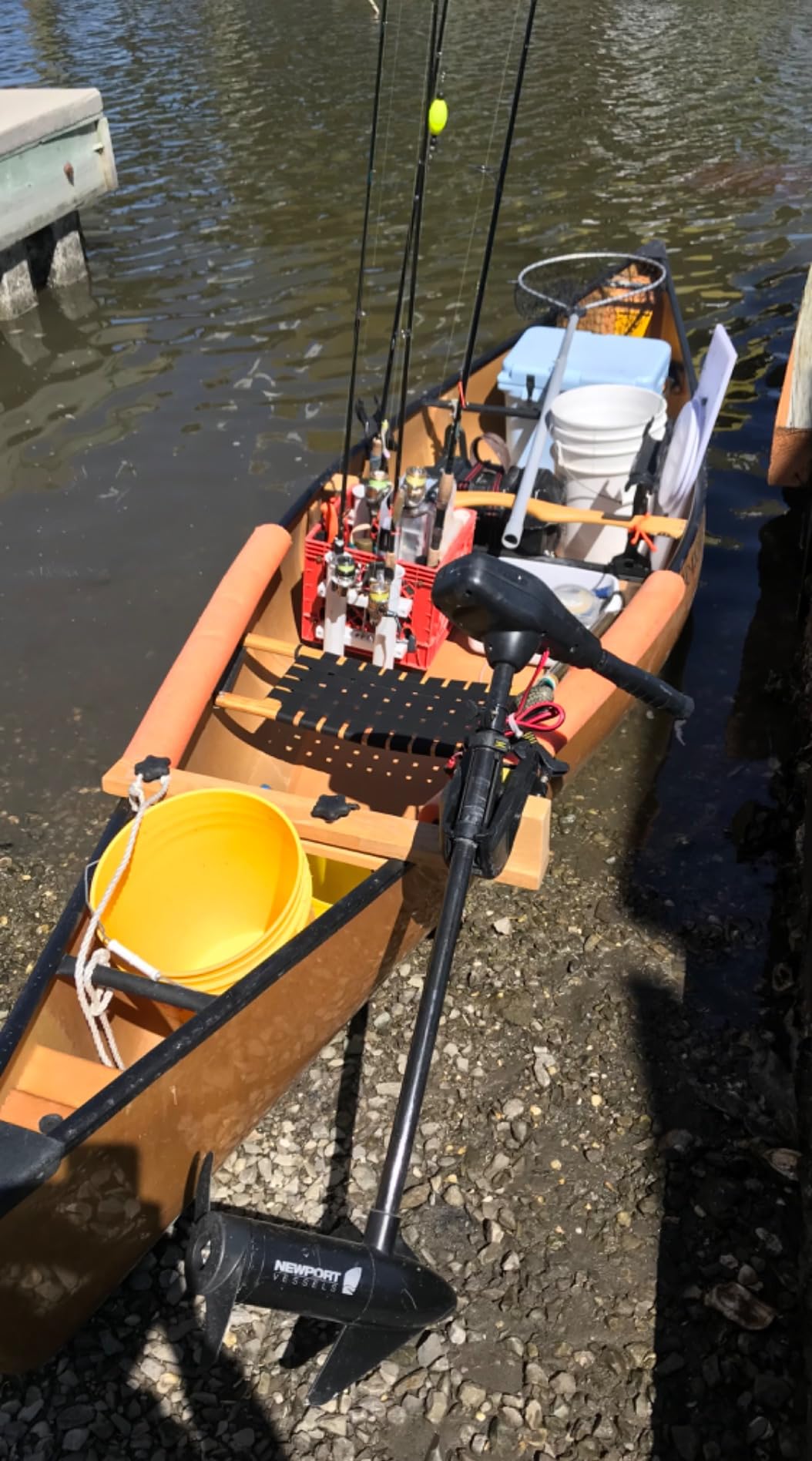
I keep coming back to this motor because the owner record is the deepest in the category. In a class where most listings carry 25 to 300 reviews, 3374 is worth real money when salt water is involved, and it is also the easiest motor here to move between boats.
The 8-speed lever is the feature that earns its place on a flat. Five forward speeds let you find the pace that keeps the prop just barely turning, which separates a clean drift from a motor tearing the water apart, and the 5-light meter gives you a real state-of-charge read.
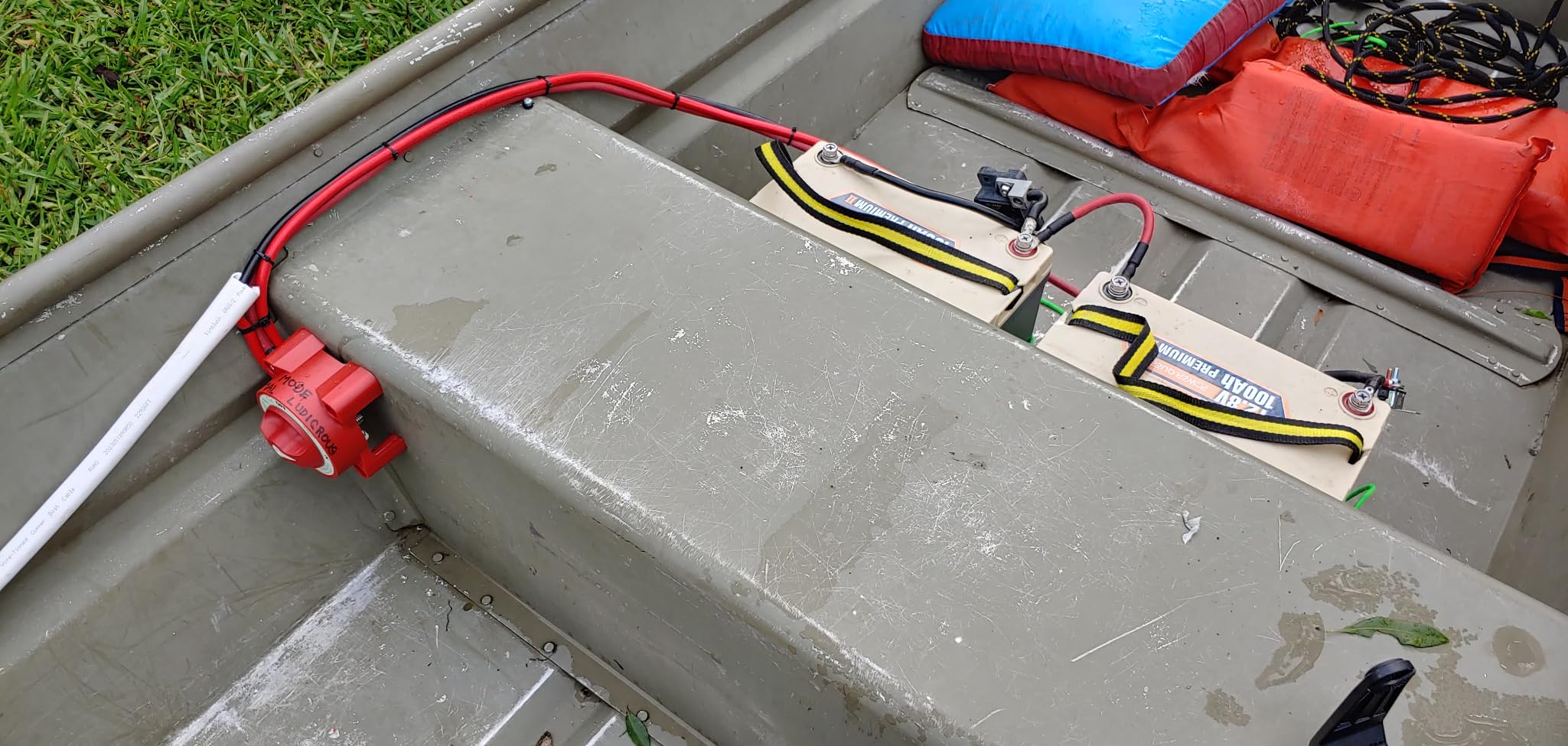
The hardware is unremarkable in the best way: cast aluminum head, adjustable mount height and angle, and a 50 amp circuit breaker in the box. Peak draw is 52 amps, which is manageable on one good deep cycle group.
Routine maintenance is your responsibility, not the motor’s. Owners point out that the corrosion protection is honest rather than magic; it slows salt damage but does not stop it if dried film sits on the head all winter.
Will a 55lb transom motor hold a skiff on a windy flat?
For a 14 to 16 foot skiff in a normal breeze, yes, and the low end of that lever gives you the fine adjustment to hold a polkadot drift. Thrust ratings describe full power, so your usable number on moving water is lower, and a hard ebb will drain the bank faster than the day plan suggests.
Is it right if I fish tidal current every day?
Only partly. There is no GPS anchoring on a tiller motor, so holding a spot in a running tide means watching your sounder and correcting by hand. For anchoring one fish in a two-knot ebb, a bow mount with Spot-Lock is the honest answer.
2. Haswing Cayman 55 Bow Mount – Best Bow Mount Fit for a Skiff
- Variable speed control is smooth at trolling pace
- Wireless remote with 164 ft range
- Quick release bracket makes the motor easy to remove
- Sacrificial anode included for salt water protection
- Stow and deploy pedal for single hand operation
- Cruise control is not GPS Spot-Lock
- Remote needs a USB recharge
- Accessories carry only a 3-month warranty
This is the motor I would put on a skiff that already has a bow plate and wants remote control without flagship money. The 48 inch shaft suits a good share of mid-height bows, and the quick release means you can drop it in minutes on trailer-only days.
The 2.4G remote at 164 ft plus the stow and deploy pedal is the combination that matters. You can drive it from the console while standing, which is exactly what you want when you nudge the boat five feet to stay on a fish.
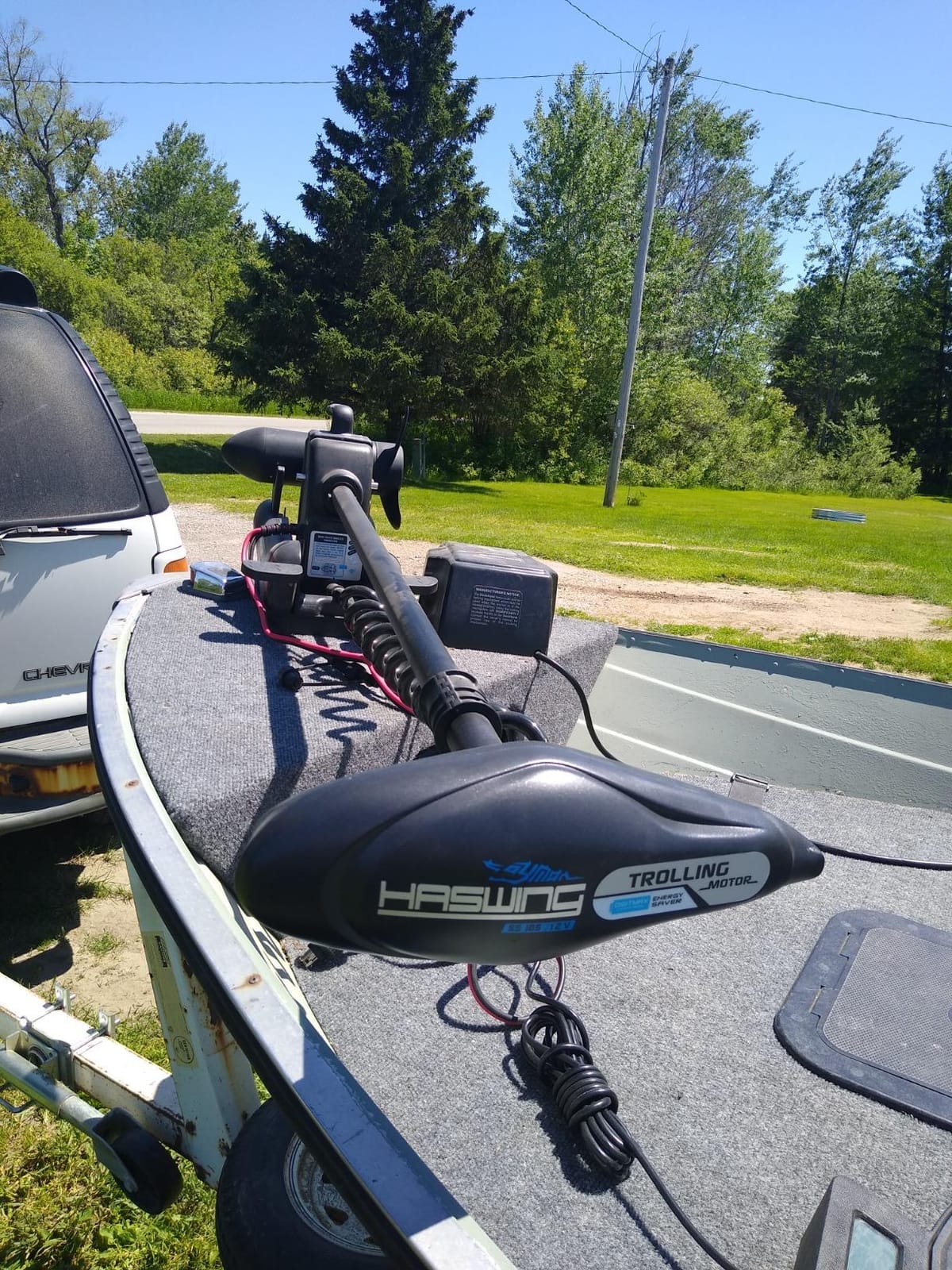
The sacrificial anode is the tell that this one was built with salt water in mind. Sacrificial zinc corrodes instead of the head, costs almost nothing, and should be inspected each season. The maker rates it for boats up to 2750 lb and suggests 18 ft as the ceiling.
Set expectations on the electronics. Cruise control holds a speed, not a position, and reviewers describe the remote build as ordinary, with buttons occasionally needing a second press.
Is cruise control close enough to GPS anchoring?
For staying on a drift, yes. For holding a fish in current, no. Wind still pushes you off the spot over a long drift. Anglers on skiff forums rank foot control, then spot lock, then lift assist, and this motor answers the first of those well but not the second.
Will a 48 inch shaft work on my bow height?
Measure from the top of the transom to where the shaft exits the water at your cruise depth, then add head height. If you land well over 48 inches, move up a length. A short shaft ventilates, and on the flats every tide adds to the height at the bow.
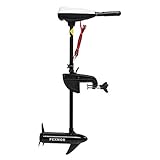
3. PEXMOR 8 Speed 26lb Motor – Best Budget Pick
- Low-cost entry into a saltwater-capable transom motor
- 8 speeds with a 6 inch telescoping handle
- Three-blade propeller with spare blades in the box
- Adjustable depth and angle
- 1 to 10 LED battery indicator
- Only 26lb thrust limits boat size
- Just 50 reviews of long term history
- One-year warranty
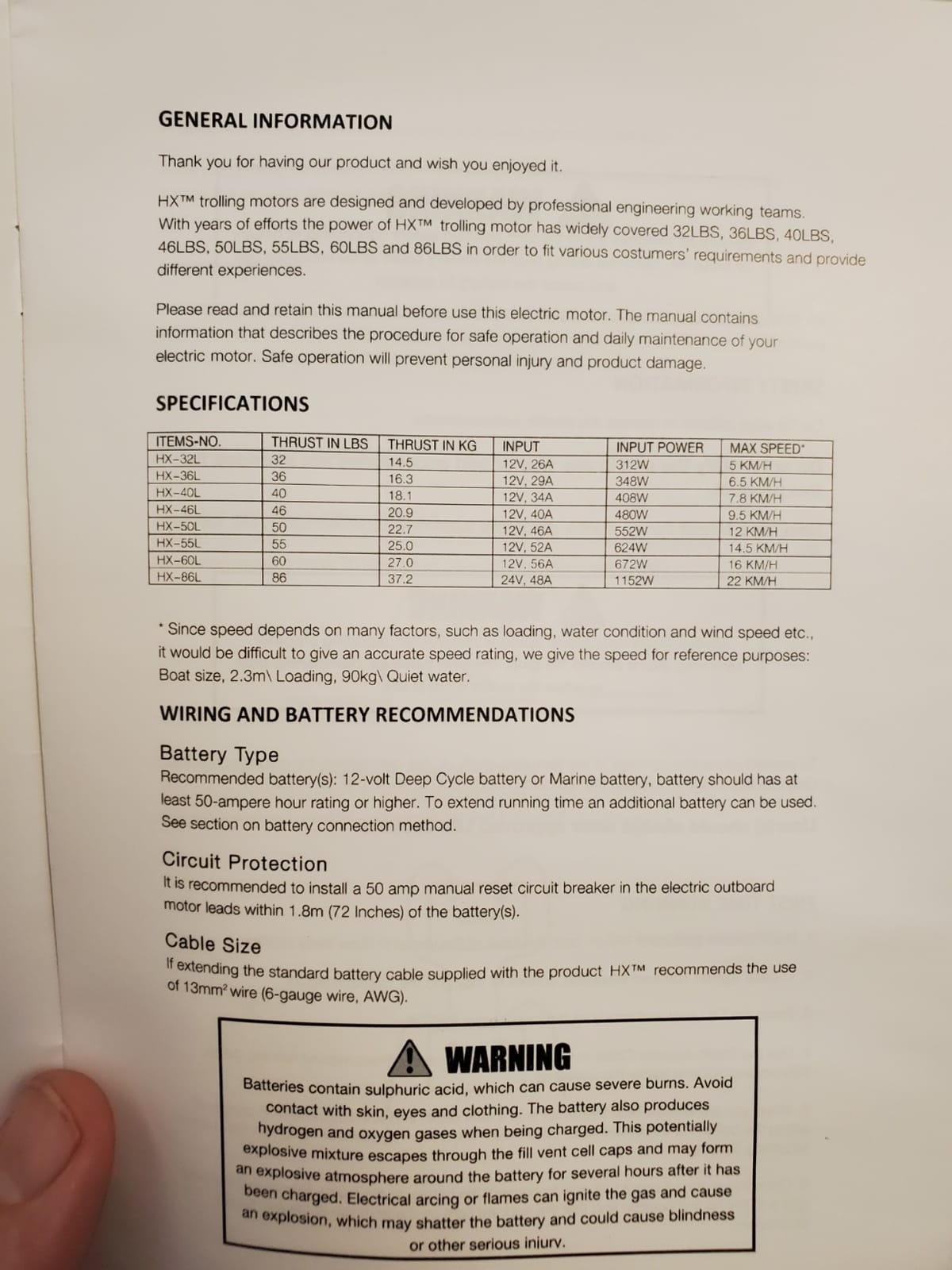
Twenty-six pounds sounds small until you put it on the right hull. On a 12 to 14 foot polkadot skiff, an 18 foot jon boat, or an inflatable bay craft it is genuinely enough, and it is one of the few inexpensive options listed for salt water rather than only fresh water.
The spare propeller blades in the box cost the manufacturer nothing and solve a real problem. Props take the punishment on grass, sand, and shallow bottoms, and a bad prop no longer ends your season.
Eight speeds give you the low-end control that matters on a barely-moving drift, and on a small boat that control is worth more than raw pounds. Adjustable depth and angle let you trim for the tide.
The boundary is clear. Twenty-six pounds will not push a 20 foot skiff and will not fight a two-knot current. With 50 reviews the long-term record is thin, so treat it as a first motor.
What boat size actually suits a 26lb motor?
Think 14 feet and under in protected water. Inflatable fishing boats, small jons, and 12 foot skiffs are the sweet spot. As a rule of thumb, roughly a pound of thrust per foot of length is the floor, and this sits under that line for anything longer than 14 feet.
Is a one-year warranty a problem in salt water?
It narrows your options, so expect to do your own service and stay comfortable replacing consumables like anodes and the prop. Buy it for the boat it fits and the risk is small.
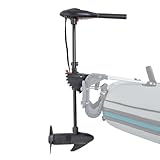
4. INTEX Transom Motor 40lb – Best for Inflatable Flats Boats
INTEX Transom Electric Trolling Motor for Inflatable Boat, 40lb Thrust
- Weed escape switches rapidly from forward to reverse to back off vegetation
- Auto power modulation protects battery life
- Battery meter with overload and dry run indicators
- Only 17 lb so one person can lift it
- Multi-position tiller with 8 tilt positions
- No manufacturer warranty
- Plastic construction rather than aluminum
- 40lb thrust suits small hulls only
An inflatable has one rule nothing else on this list can break: the motor cannot weigh much. At 17 pounds, this is the only motor here you can lift over a tube and stow alone, which is the entire reason it exists.
The weed escape function is the sleeper feature. Backing a conventional prop out of vegetation means dragging it through whatever you just hit, while this unit ramps rapidly from forward to reverse so you can recover without the tangle.
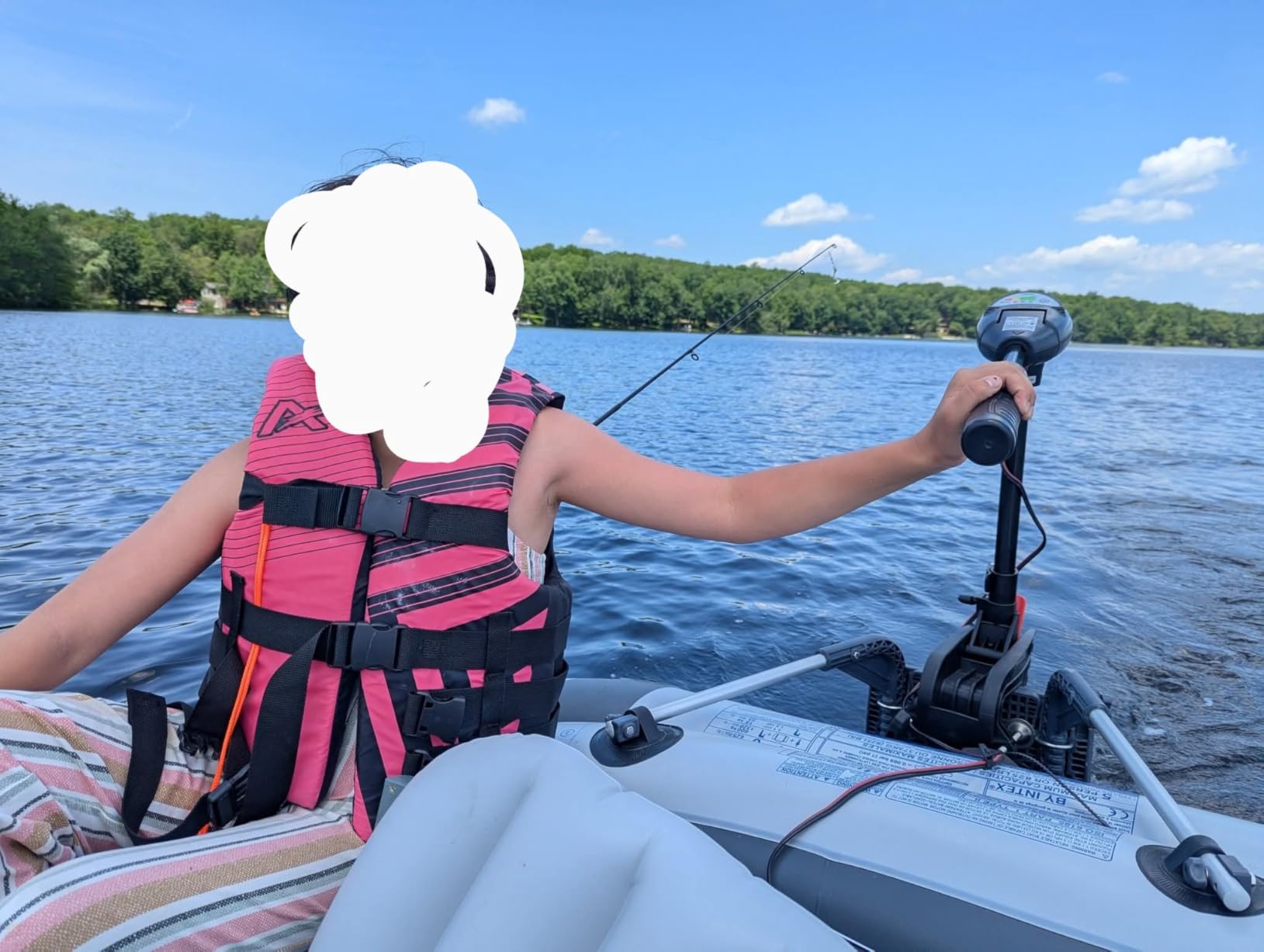
The indicator cluster is unusually honest for the money. A battery meter, an overload light, and a dry-run light together flag the three things that kill electric motors on the water: low voltage, overcurrent, and running a prop dry on a sandbar.
The tiller extends 6 inches with 8 tilt positions, which helps on an inflatable where the geometry at the transom is awkward. Forty pounds is fine for a quiet drift at low speed.

Can a plastic-bodied motor survive salt water?
It can, and the listing rates it for salt water, but the trade is real. Plastic does not corrode the way aluminum does, so the head is not the weak point; what ages first is usually the seals, shaft hardware, and electrical connections, none of which you can see.
Is 40lb enough to control an inflatable in a tide?
In a moderate drift, comfortably. Inflatables are light and slow, so 40 pounds is more than enough to hold a polkadot pace. In a hard ebb with a beam wind you will be near the limit of hull and motor together, which is where carrying a spare battery and prop pays off.
5. AQUOS Haswing 65lb Brushless – Best for Quiet Stalking
- Brushless motor runs quieter and more efficiently than brushed designs
- 65lb thrust at roughly 20 lb of motor weight
- Stepless forward and reverse control
- 15.7 inch handle folds 180 degrees
- 10 tilt positions
- kill switch included
- Reported RF and EM interference with some fish finders
- No circuit breaker included
- Lowest setting still runs near 1 mph
Quiet is the whole argument. A brushless motor has no commutator brushes rubbing together, so the mechanical noise that dominates a brushed trolling motor at low speed largely disappears. Anglers on skiff forums consistently choose brushless over 5-speed brushed units for exactly this reason.
The thrust-to-weight ratio is the other standout. Sixty-five pounds from a motor weighing about 20 pounds means it is genuinely portable between boats, and on a flats skiff you carry that motor a long way from the trailer.
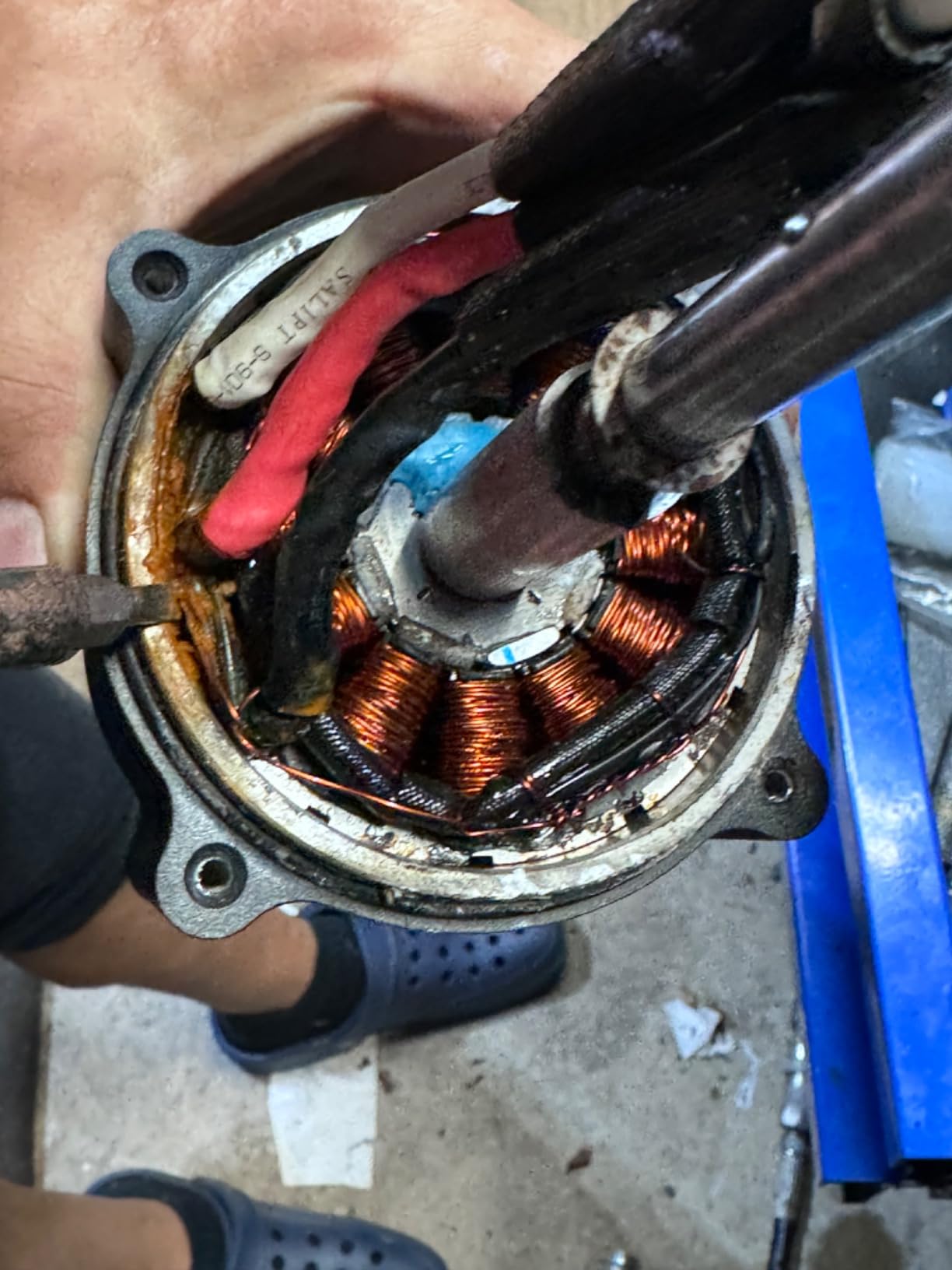
Stepless control in both directions beats eight fixed speeds. There is no gear step to hunt through, so you can dial the boat down to a crawl and hold it, which is what a slow polkadot requires. Ten tilt positions and a handle that folds flat make the transom angle easy to find.
Owners report a real runtime gain over brushed motors of similar thrust. The unit is rated for fresh and salt water with a 2-year warranty, but no circuit breaker is included, so buy one.
One caution: several users report electrical or RF interference with some fish finders while the motor runs. Test your electronics together before you commit.
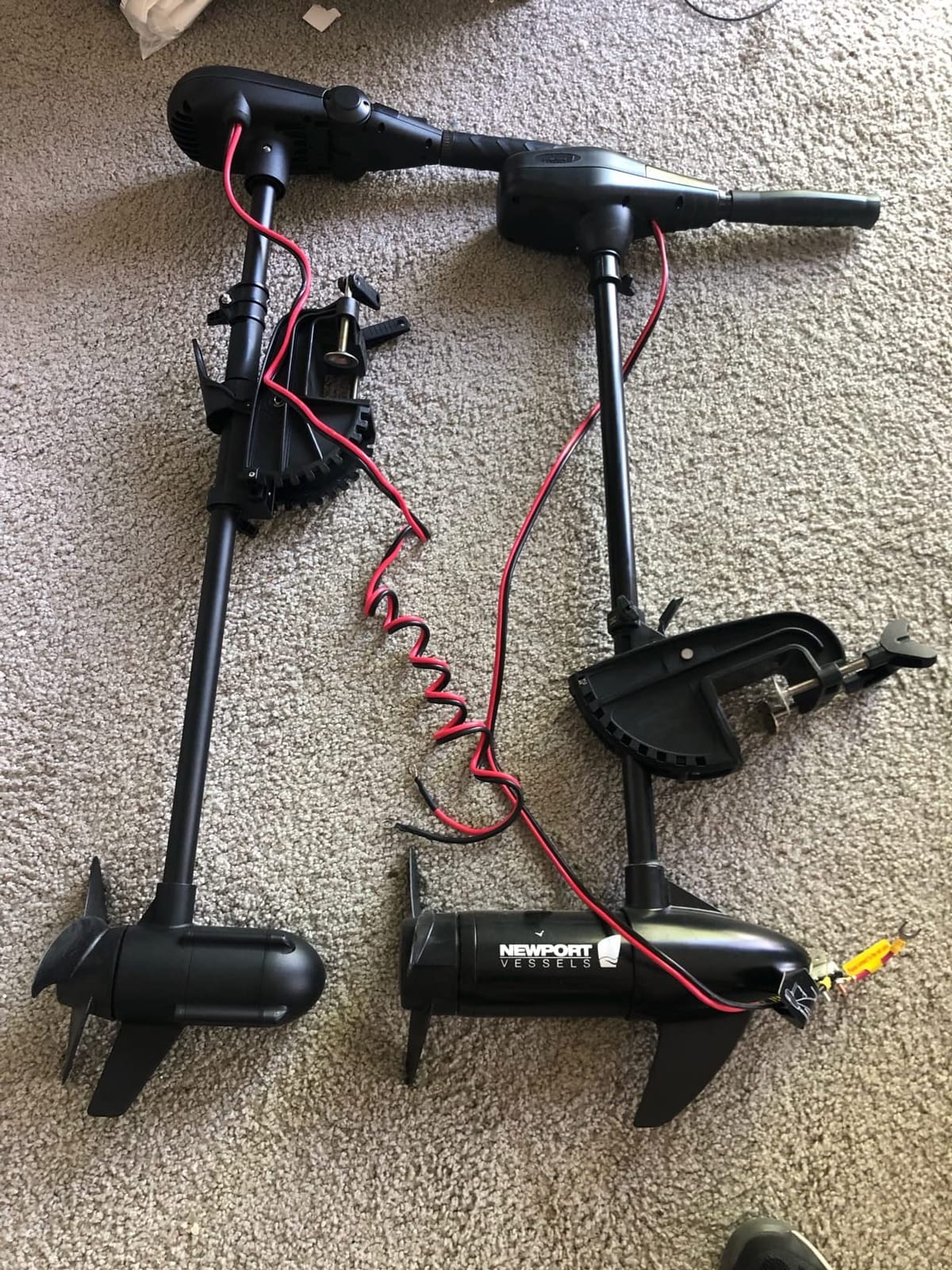
Is quiet enough to matter for sight casting?
Yes, and more on the flats than anywhere else. Flats fishing is close-range work, often within casting distance of the fish, so a motor you can hear across a shallow flat costs you the fish you came to see.
Our explanation of brushed versus brushless motor design covers why the noise and efficiency gap exists. One caveat: the lowest setting still runs near 1 mph, so on a very slow drift you will trim with the tiller.
Will brushless motors hold up in salt as well as brushed?
The mechanical case is good, with less metal to corrode and fewer brushes to wear. The exposure is unchanged, though. The head, shaft, mounting hardware, and every connector meet salt air every trip regardless of what is inside.
6. Minn Kota Riptide Terrova 80 – Best for GPS Anchoring
Minn Kota Riptide Terrova Bow-Mount Electric Trolling Motor with GPS, Spot-Lock – 80 Lb. Thrust, 60 In. Shaft, Saltwater
- GPS Spot-Lock holds position against wind and current
- Jog moves the anchor point 5 ft in any direction
- Drift
- Follow
- Dodge and Auto Pilot modes
- Wireless remote with LCD and four programmable buttons
- Grit-blasted and powder-coated corrosion protection
- 3-year warranty with registration
- Needs a 24V bank
- meaning two 12V batteries in series
- Heaviest install on the bow
- 71 reviews of long term history
This is the motor that anchors a boat rather than steering it. Spot-Lock holds a fixed coordinate while wind, tide, and current push against the hull, and Jog shifts that coordinate 5 feet at a time. For one fish in a running tide, that is a different day entirely from hand-steering a throttle.
Eighty pounds on a 60 inch shaft is a serious saltwater package and the build matches it. The head is grit-blasted, aluminum-coated, and powder-coated, with a heading sensor in the box, and the wireless remote carries an LCD plus four programmable buttons.
One-touch deploy and stow ramps mean you are not cranking a handle every time you reposition, and on a skiff where you come off a spot and go back on repeatedly, that time goes into fishing.
Digital power management is rated to extend runtime up to five times versus a conventional motor at the same output, and the warranty extends to three years once registered. Owners single out position holding as the feature that justifies the money.
Plan for the system, not just the motor. A 24V setup means two 12V batteries in series, correct fusing, and more wiring, and one review documents an early failure after a few uses on lithium batteries, so raise the voltage question before you build the bank.
Do I need GPS anchoring, or is a tiller enough?
You need it if you anchor over fish in current or wind, or want to return to one mark for hours. A tiller is enough if you are polkdotting and correcting by eye. The dividing line is whether your day is spent moving or holding.
Is a 60 inch shaft too much for a flats skiff?
Possibly. It suits a high bow with a lot of freeboard, and many 16 to 18 foot skiffs need less. An over-long shaft stows too far off the deck and can block a casting platform, so measure before you commit. The 54 inch PowerDrive is often the better physical match.
7. Goplus 46lb with Composite Shaft – Best for a Bend-Resistant Shaft
- Glass fiber composite shaft resists bending and warping
- 36 inch shaft fits a low-bow flats skiff
- Telescoping handle with dial speed control
- Fuse trips before the motor burns
- Adjustable shaft depth and mount angle
- Two-blade prop is less efficient than a three-blade
- Only 85 reviews
- 46lb thrust is modest for larger skiffs
Composite shafts have one job: they do not take a permanent bend. Aluminum shafts carry more rigid load but set sideways if you hit something or the motor swings hard against the bracket, and on a flat full of sand ridges a shaft that stays straight saves trips.
The 36 inch shaft is what makes this interesting for flats boats. Many skiffs are low in the bow, and a 36 inch transom motor clears the deck without towering over the casting platform. The dial control is a nicer interface than a bare lever.
Fuse protection is a thoughtful inclusion at this level. Rather than letting an overloaded motor cook itself, the fuse trips first, which protects the windings from a stalled prop or weed snag in salt air.
Adjustable shaft depth and mount angle let you tune for the tide, and a die-cast aluminum head over reinforced composite is a reasonable corrosion posture when you rinse it.
Are composite shafts as strong as aluminum?
They are less rigid and can be more brittle at the mount under a hard impact. What they gain is the ability to flex and return. That resilience is usually worth more on a flats boat than stiffness is on a big bay boat.
Is 46lb enough thrust for a flats skiff?
For a 14 to 16 foot skiff in moderate conditions, yes. Past 18 feet, or anchoring in a running tide, you want more pounds and a transom mount will be working hard to hold the bow. The two-blade propeller is the quiet limitation, since three blades hold bite better at low speed.
8. BODIOO 68lb 30 Inch Motor – Freshwater Only, Not for the Flats
- High thrust figure for a budget transom motor
- 9.5 inch 3-blade debris-resistant propeller
- Roughly 50 dB operating noise
- 90 degree rotatable bracket with 10 positions
- Low-voltage cutoff protection
- About 20.7 lb weight
- Listing states it is not for salt water use
- Only a 6-month warranty
- 71 reviews of long term history
I am including this motor for one reason: it is the one most likely to be bought by mistake. Sixty-eight pounds of thrust, a 3-blade prop, a low-voltage cutoff, and a 4.4 rating from 71 reviewers all read like a strong flats motor, and the listing states plainly that it is not for salt water.
On a salt flat, corrosion starts the day you launch it. Stainless steel and copper parts sound reassuring and are not a substitute for a manufacturer rating covering the head, shaft, seals, and bearings as a system.
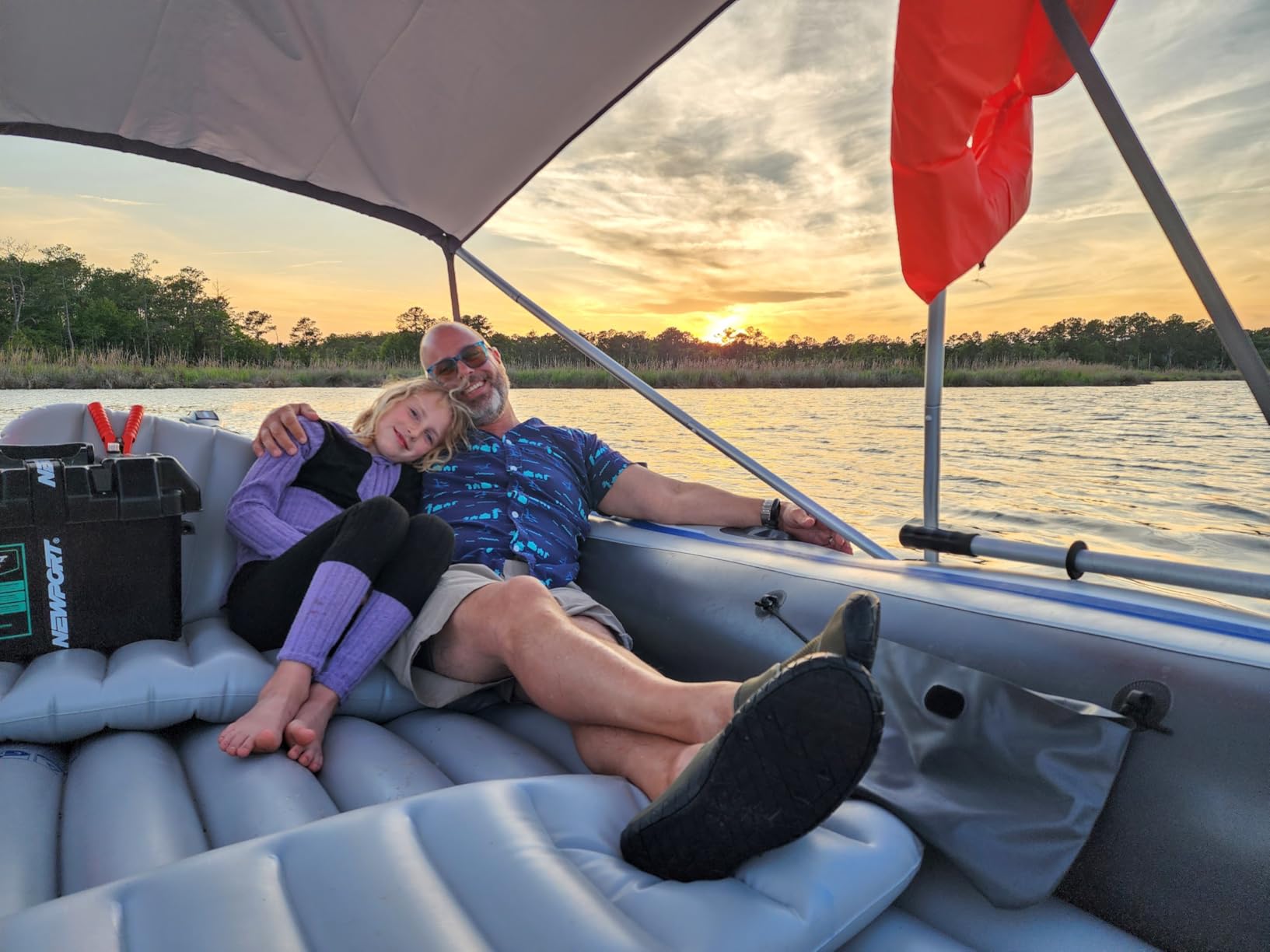
On paper the rest is fine. The 9.5 inch debris-resistant prop handles shallow grass, the 90 degree bracket gives 10 tilt positions for tuning to a tide, and roughly 50 dB is quiet for this size. Low-voltage cutoff protects the pack and the windings.
The 6-month warranty is the shortest here, and on a boat that lives wet and salty that is a signal about expected service life. Our rule is simple: if the listing does not say salt water, it is not a saltwater motor.
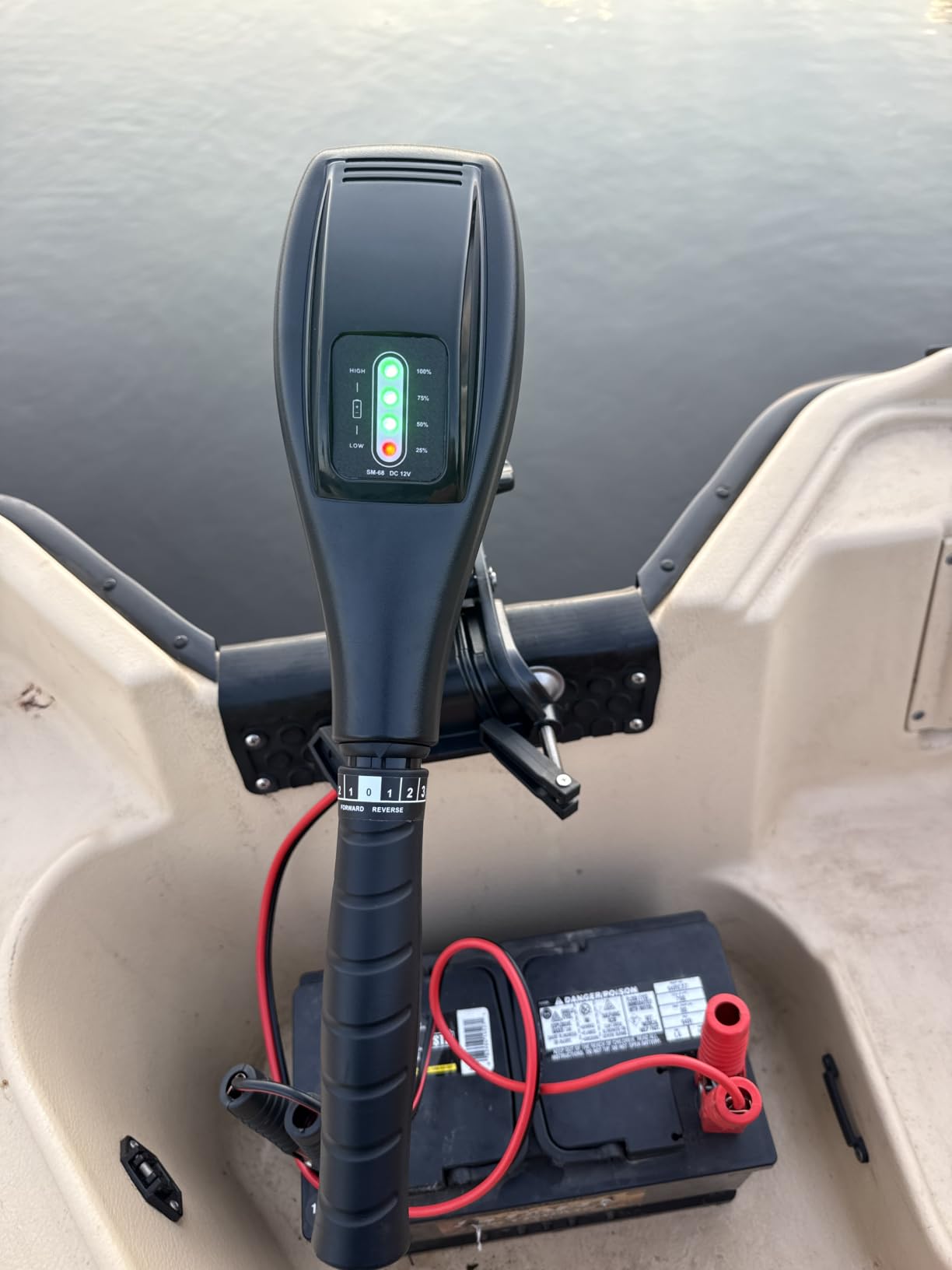
Can I use a freshwater motor if I rinse it?
You can, but understand the trade. Rinsing removes salt in minutes; it does not reverse the electrochemical corrosion that happens in the wet hours between trips, when salt film and moisture sit together on a warm head. Owners who moved freshwater motors to coastal water report pitting and early failures.
Should I skip it entirely for a flats boat?
For a saltwater flats boat, yes. Extra thrust will not outrun salt water in the head. On an inland lake it becomes a reasonable budget option with a real 3-blade prop, so just keep it away from the coast.
9. Minn Kota Riptide PowerDrive 55 – Best 12V GPS Bow Mount
Minn Kota Riptide PowerDrive Bow-Mount Electric Trolling Motor with Mircro Remote – 55 Lb. Thrust, 54 In. Shaft, Saltwater
- GPS Spot-Lock on a single 12V system with no series wiring
- Bluetooth micro remote fits in a hand
- Deploy-assist lever for easy stow
- Grit-blasted and powder-coated corrosion protection
- Digital power management rated up to 5x runtime
- Push-to-test battery meter
- Only 39 reviews
- No jog
- drift
- follow or dodge modes
- Micro remote has no LCD screen
- 44 lb motor weight needs a solid bow mount
This is the pick for an angler who wants position holding without building a 24V system. Everything on the power side is 12V, so one solid deep cycle group and a proper cable run does the job, and the install is simpler and lighter than a 24V flagship.
At 55 pounds on a 54 inch shaft it is sized for a mid-size flats skiff. The deploy-assist lever replaces the crank, which matters on a bow you climb over all day, and the push-to-test meter checks the bank from the tiller.
Corrosion treatment matches the brand’s saltwater line. The Bluetooth micro remote is small enough to hold in one hand and link to a phone, though without a screen you learn the beeps and button presses rather than reading them.
What you give up versus the higher-end model is the mode set. There is no jog to shift the anchor point in 5 foot increments and no drift, follow, or dodge modes. Spot-Lock holds one spot, and you move by releasing and resetting it.
Is a 12V GPS bow mount a compromise?
On a flats skiff it is a smart choice. A skiff is light enough that 55 pounds on 12V moves it fine, and you halve the wiring complexity, which is where most home installs go wrong. The trade appears on a long day at sustained high power.
Is 55lb enough for an 18 foot skiff in wind?
Enough in a normal breeze and light chop, marginal in a hard blow. A bow-heavy hull with lots of freeboard pushes more drag, and once you are at full power you are adding throttle and losing runtime for a boat that barely moves. Step up to the 80lb class if you regularly take a beating wind.
10. Minn Kota Riptide 45 Transom – Best as a Backup Motor
Minn Kota Riptide Transom-Mount Electric Trolling Motor with Telescoping Tiller – 45 Lb. Thrust, 36 in. Shaft, Saltwater
- Only 14.3 lb so it moves between boats easily
- Grit-blasted and powder-coated saltwater corrosion protection
- Push-to-test battery meter built into the motor head
- 10-position lever lock bracket
- Power prop built for heavy vegetation
- Five forward and three reverse speeds
- Only 25 reviews
- Owners report the plastic collar threads strip easily
- Standard power prop criticized by some reviewers
- 45lb thrust is modest on a large flats boat
At 14.3 pounds this is the motor I would put on the transom as a second unit. A lightweight transom motor you can lift alone covers the days when the bow plate is occupied, when you run a second boat, or when you simply want redundancy.
The 10-position lever lock sets the angle for a given tide without tools, and the push-to-test meter is built into the head so you check the bank from the tiller. Five forward and three reverse speeds cover a slow drift.
The power prop is built for heavy vegetation, which is not the flats problem. Flats anglers fight sand and thin water rather than grass, so treat that prop as adequate rather than a feature.
What worries me is the repeated review report of plastic collar threads that strip. The depth collar holds the shaft at your set depth, and a stripped collar on the water is a safety problem. Inspect it before every trip.
Is a 45lb transom motor useful as a backup?
Very. A backup exists to get you off a flat, hold briefly, and move the boat while the primary is down or charging. Forty-five pounds is plenty for that, and the low weight means it is never an obstacle to carry.
How long does it run on one deep cycle battery?
Plan around a partial day at moderate throttle. Owners report about three hours at three-quarter throttle, and polkdotting at low speed draws far less. Tracking state of charge as a routine part of the day is the practical answer, which flats owners already do for their main motor.
11. VEVOR 55lb Transom Motor – Best for a Sealed Motor Head
- Sealed waterproof aluminum motor head resists salt intrusion
- 55lb thrust from a 20.3 lb motor
- 3-blade propeller for low-speed torque
- Telescopic handle adjustable from 6.3 to 10.6 inches
- Adjustable shaft height and transom bracket
- Listed for fresh and salt water
- Manual tiller only
- no remote or pedal
- 4.1 rating is the lowest here
- 43 reviews of long term history
The sealed aluminum head is the reason to look here. Sealing the head is the most effective thing a maker can do to keep salt water out of the windings, and pairing that with a 20.3 pound motor weight is unusual at this thrust level.
The 3-blade propeller is the second thing to notice. Three blades push more water per revolution and give better bite at low speed than two, and low-speed bite is the whole game when holding a polkadot drift.
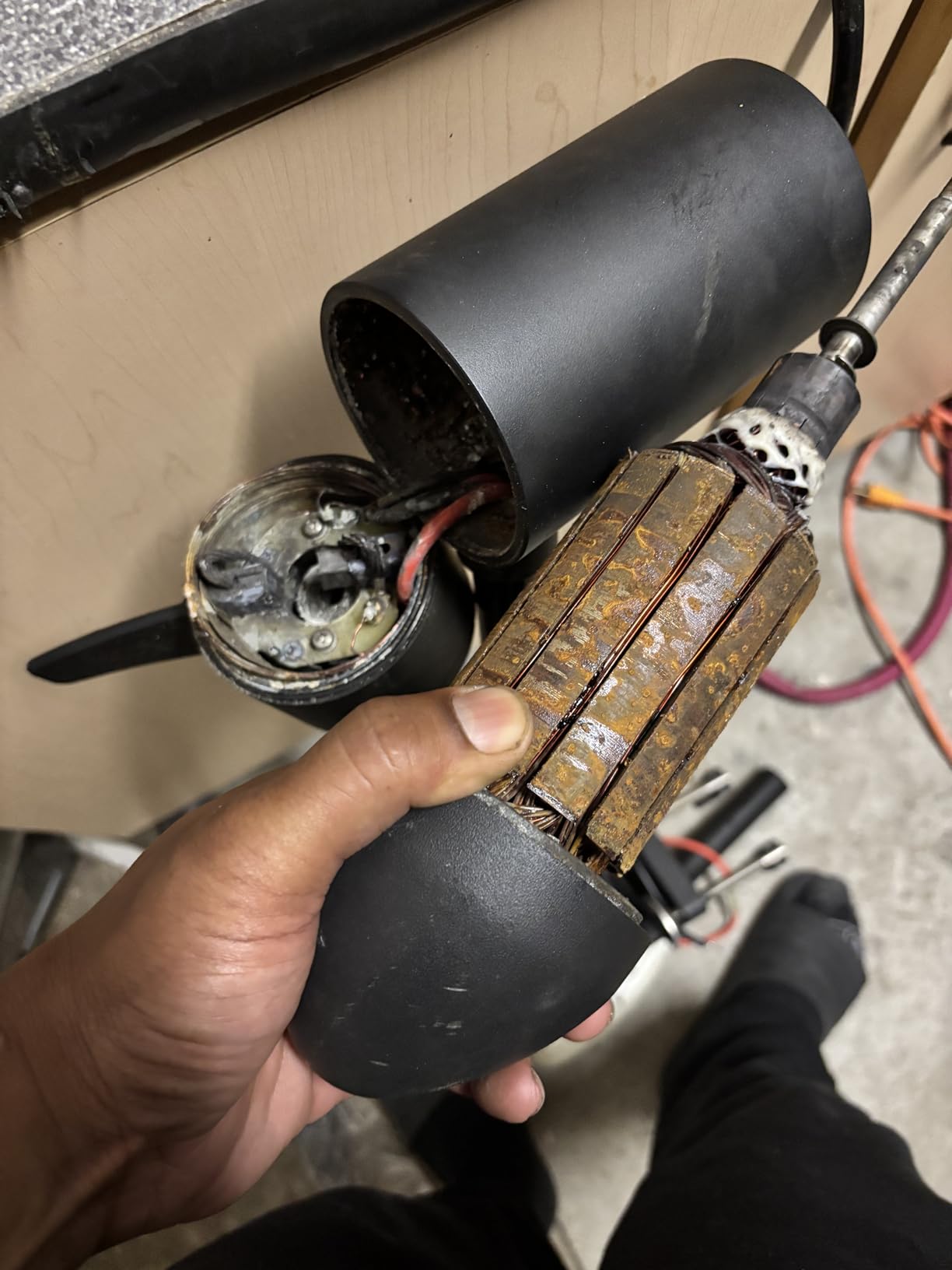
Adjustable shaft height and the transom bracket let you fine-tune for the tide, and the aluminum alloy shaft is a sensible material for salt exposure. The telescoping handle adjusts from 6.3 to 10.6 inches for a comfortable standing position.
It is a manual tiller, though, with no remote, pedal, or GPS, and at 4.1 stars from 43 reviews it is the least proven motor in this roundup. Weigh that against the head design that makes it interesting.
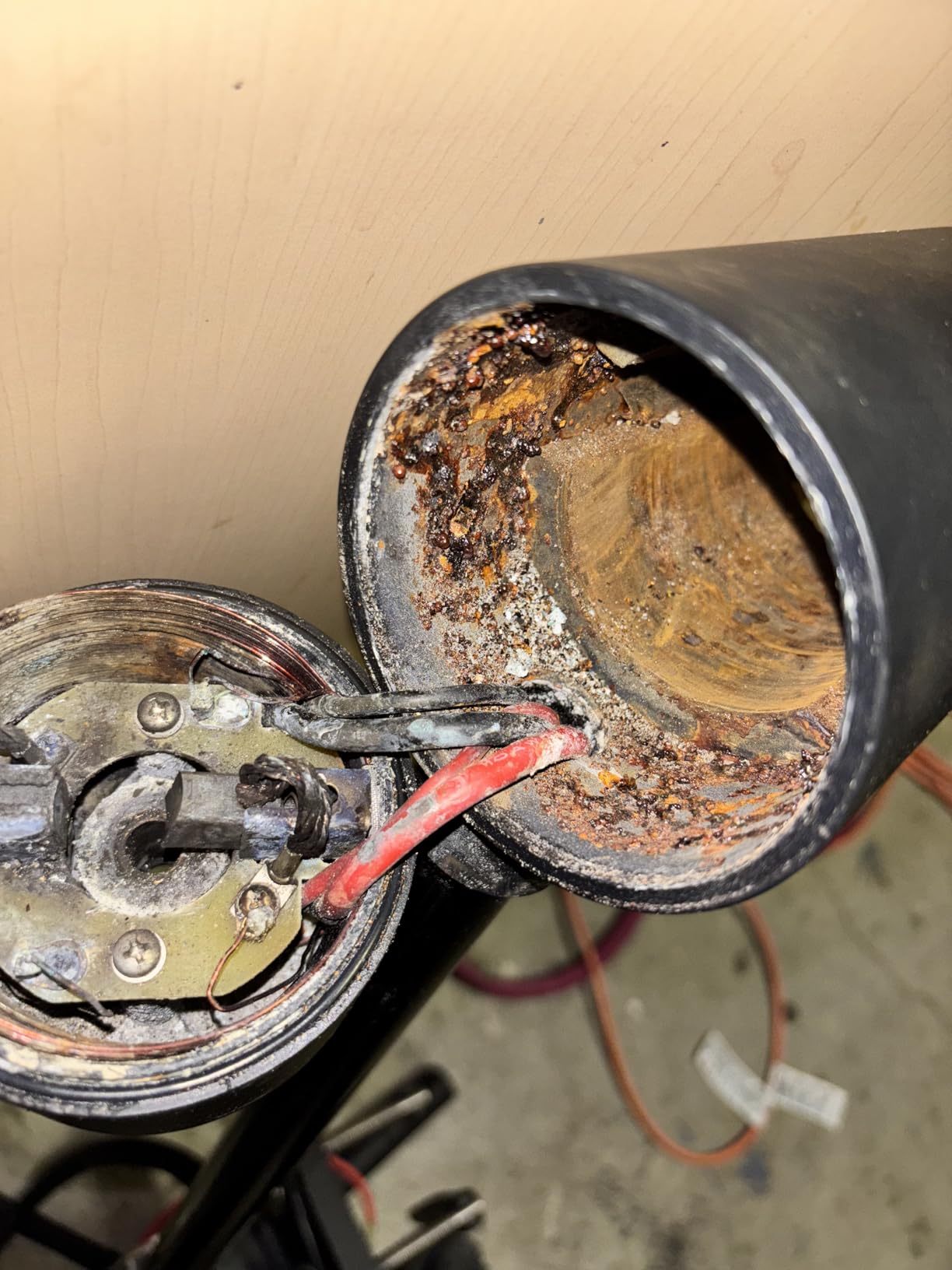
Does a sealed head really extend salt life?
It helps meaningfully. Salt water gets into a motor through failed seals, split connectors, and condensation, and a factory seal removes the most common path. It does not protect the shaft, bracket, cable connections, or battery terminals, which is where much salt damage starts.
Is it quiet enough for stalking?
It is a brushed design with discrete speeds, so expect more mechanical noise at low throttle than a brushless unit. If being heard at 50 yards ends the opportunity, the brushless pick is the better tool. If you drift open water between spots, the thrust is worth more than the quiet.
12. Haswing Bow Mount 55 with Remote – Best for 18 to 19 Foot Skiffs
Haswing Bow Mount Trolling Motor 55lbs 48in with Remote, Quick Release
- Rated for boats up to 2750 lb and 19 ft
- 164 ft wireless remote with USB recharge
- Quick release bracket for trailer days
- Sacrificial anode protects the head in salt water
- Single hand and foot stow and deploy
- Depth collar locks shaft position
- Cruise control is not GPS position hold
- Recent reviews report a unit failing after a few uses
- Foot pedal sold separately
- Accessories only carry a 3-month warranty
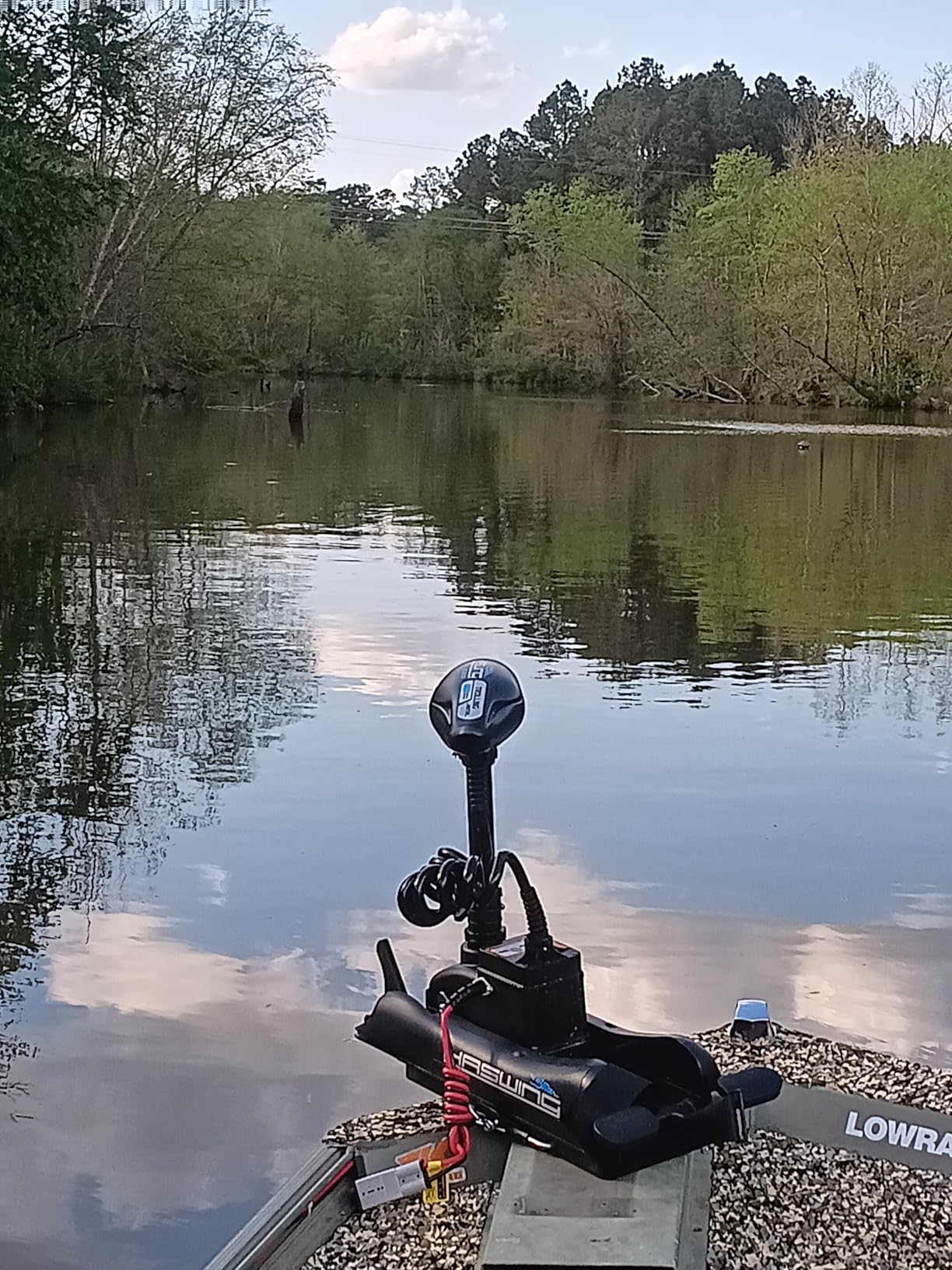
This is the motor sized for the larger end of a flats skiff, with a stated ceiling of 19 feet and 2750 pounds of boat weight. The 48 inch shaft is the most common bow mount length in that range, and the quick release means you can drop the whole motor for towing.
Remote range of 164 feet covers a skiff plus you standing on it, and the depth collar locks the shaft once you have set drift depth for the tide.
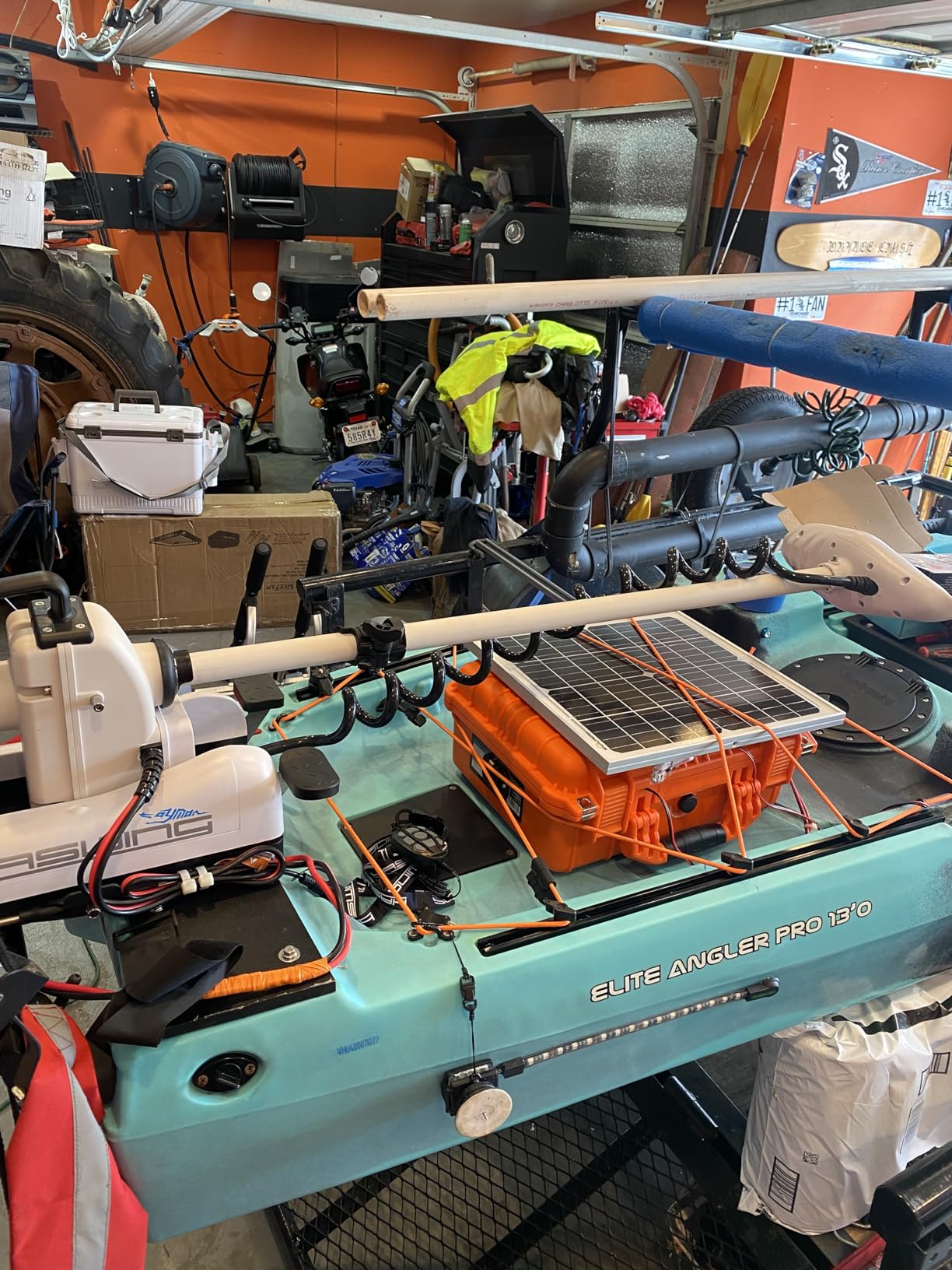
The sacrificial anode is the salt water answer in the hardware list, and it is a consumable you should inspect and replace each season rather than ignore.
Two warnings. Cruise control holds a speed, not a position, so this does not anchor a boat over a fish. And recent reviews include more than one report of a motor that stopped working after very few uses, which we take seriously even with 99 reviews at 4.2 stars overall.
Do I need remote and foot control on a skiff?
If you are polkdotting, remote control is close to essential. You move five feet at a time all day, and a deploy pedal plus a remote turns that into a single-handed operation from the console. Owners on fishing forums rank foot control at the top of their list, ahead of even position hold.
Is 55lb enough for a 19 foot skiff?
Workable for 18 to 19 feet in moderate wind, and the maker’s own guidance sets that as the upper limit. Past that, or in a hard blow, you sit at high throttle continuously and runtime suffers. The mount also needs a flat deck area of about 13.7 by 8 inches, and the foot pedal is a separate purchase.
How Much Thrust Does a Flats Boat Actually Need?
Plan on roughly one pound of thrust per foot of boat length as a working minimum, then add headroom for wind and tide. A 14 foot skiff is comfortable on 40 to 55 pounds, a 16 foot boat wants 55 to 65, an 18 foot skiff needs 70 to 80, and a 20 to 22 foot hull is an 80 to 115 pound class motor. Boat weight and freeboard push that number up faster than length alone, because a heavy bow with high freeboard drags a lot of water.
14 foot skiff: 40 to 55 lb thrust, a transom mount is usually enough.
16 foot skiff: 55 to 65 lb thrust, 55 works in calm conditions and struggles in a hard ebb.
18 foot skiff: 70 to 80 lb thrust, a bow mount with GPS anchoring starts to make sense.
20 foot skiff: 80 to 115 lb thrust, budget for a 24V or 36V bank.
22 foot boat: 90 to 115 lb thrust, a bow mount is close to mandatory in current.
Does a 55lb motor push a 16 foot boat? Yes, comfortably at trolling speed in normal conditions, and weight matters more than length. A heavy 16 footer with a lot of freeboard is a harder task for 55 pounds than a light 18 foot skiff.
For the engineering side of why a bigger motor costs more in battery than it does in price, our roundup of brushless DC motors tested and compared breaks down the efficiency numbers that drive draw.
Saltwater Rated vs Freshwater Only Is a Hard Filter, Not a Footnote
Only buy a motor whose listing states it is rated for salt water, because that rating covers the head, shaft, bearings, seals, and electrical connections as a system. Rinsing a freshwater motor is good practice and it is not the same thing. One motor in this roundup carries 68 pounds of thrust and states it is not for salt water, which is why it is here at all.
In practice the rating means a coated or anodized finish rather than bare aluminum, sealed electronics, and a hardware set chosen for marine exposure. The Newport NV-Series, the Minn Kota Riptide units, and the Haswing bow mounts all include sacrificial anodes or heavy powder coating.
On Minn Kota specifically, Riptide is the saltwater family. Not every Minn Kota trolling motor is rated for salt water, so check the model label rather than the brand name before mounting anything on a flats boat.
Bow Mount vs Transom Mount on a Shallow-Draft Skiff
A bow mount is right when you want position holding, remote control, and the power to work against current, because the motor is ahead of you and pushes the bow where you point it. It is also the mount that needs a long shaft, a reinforced deck plate, and more battery. That install is the single biggest cost jump in this category.
A transom mount wins on almost every other axis. It weighs less, moves between boats, installs in minutes, and its shorter shaft clears shallow water with no risk of the prop ventilating. On a skiff that polkdots and never anchors, a transom motor is often the more honest choice.
The setup we saw most often among serious flats anglers is one of each. The bow mount handles anchoring and hard current, the transom motor handles drift work and serves as backup when the bow is occupied or charging.
Shaft Length and Bow Height: The Most Expensive Mistake
Get the shaft length wrong and the prop breaks the surface every time you hit a tide ripple, costing you thrust and heating the head. Measure your bow height at rest, add the head height, and leave enough shaft to keep the prop submerged through the full range of the tide. Shafts here run from 30 inches for low transom setups to 60 inches for high-bow bow mounts.
Too long is its own problem. An over-long shaft hangs the motor into the water behind the transom, can foul in a wave, and gets in the way of a push pole. On a shallow skiff, length beyond what your bow height needs is real drag and a real hazard.
The overload and cutoff logic that protects a motor when a prop snags in salt water is explained in our piece on how current sensors protect motors.
Salt Spray Maintenance: A Rinse Routine You Can Actually Keep Up
The biggest factor in how long a saltwater trolling motor lasts is whether dried salt film sits on it between trips. Corrosion does most of its damage in the wet hours, not during the rinse, so a rinsed-every-time motor beats a better motor left wet for a week.
After every trip, run fresh water over the head, shaft, bracket, and prop, paying attention to the mount hardware and depth collar where salt collects. Let it air dry fully before stowing, wipe the connector ends, and check the sacrificial anode while you are there.
Once a season, pull the prop and inspect the shaft for scoring, check the cable and connections for corrosion, and confirm every mounting bolt is tight. On a transom motor this is also when you inspect the depth collar threads. Rinse the motor before winter storage, not in the spring.
Frequently Asked Questions
Can you use a trolling motor in salt water?
Yes, but only a motor specifically rated for salt water. The rating covers the motor head, shaft, bearings, seals, and electrical connections as a system, usually through anodized or powder-coated surfaces and sealed electronics. Rinsing a freshwater motor after every trip slows corrosion but does not reverse it. Check the listing, not the brand name, before you buy.
Are all Minn Kota trolling motors saltwater rated?
No. The Riptide line is Minn Kota’s saltwater family and is the range rated for coastal use, including the Riptide Terrova and the Riptide PowerDrive. Other Minn Kota models, including several freshwater flagships, are not rated for salt water. Always confirm the rating on the specific model before mounting it on a flats boat.
What size trolling motor do I need for a 20 foot boat?
A 20 foot flats skiff generally wants 80 to 115 pounds of thrust, which puts it in the 24V or 36V class and almost always on a bow mount. A 70 pound motor will move it in calm water but will be at full throttle in a hard tide, and that cuts your runtime sharply. Match the shaft to your bow height before you commit to a power class.
Would a 62 lb thrust motor push a 16 foot boat?
Yes, 62 pounds is a good match for a 16 foot flats skiff, and it is one of the better-balanced setups for that hull size. It gives you headroom in a moderate breeze and enough bite to hold a steady drift. In a hard ebb or a strong beam wind you will be near the limit, so plan your battery for a full day at partial throttle.
How big of a boat will a 55lb trolling motor push?
A 55 pound motor handles a 14 to 16 foot flats skiff comfortably at trolling speed, and it is still adequate on a light 18 footer in calm conditions. Boat weight matters more than length, so a heavy 16 foot boat with high freeboard is a harder job than a light 18 footer. Past 18 feet or in strong current, step up to the 70 to 80 pound class.
What size trolling motor do I need for a 14-foot boat?
For a 14 foot shallow-draft flats skiff, 40 to 55 pounds of thrust is the right range, and a transom mount is usually the simplest and most portable answer. You do not need a bow mount unless you plan to anchor over a specific fish in current. Match your shaft length to your bow height so the prop stays submerged through the full tide.
What is the best GPS trolling motor for the money on a flats boat?
For most flats anglers the answer is a 55 pound 12V bow mount with GPS Spot-Lock, because you get true position holding without building a 24V bank. A 70 to 80 pound 24V model adds the power and modes for hard current, but the wiring and battery cost rise with it. A transom motor has no GPS, so cruise control alone is not an anchor.
Which Saltwater Flats Trolling Motor Should You Buy?
Start with the Newport NV-Series Thrust 55. It is our best pick for saltwater flats boats overall, because 3374 owner reviews at 4.5 stars is a reliability record no other option in this roundup can match, 55 pounds of thrust covers the middle of the flats skiff range, and a 30 inch transom mount moves easily between boats.
If you anchor over fish in a running tide, add a bow mount with GPS anchoring and size the shaft to your bow height before anything else. If you polkdot redfish at close range, quiet matters more than GPS, and the brushless unit here is built for it. Check the saltwater rating on the box, rinse after every trip, and you will get more seasons out of it than a better motor left in salt film all winter.