
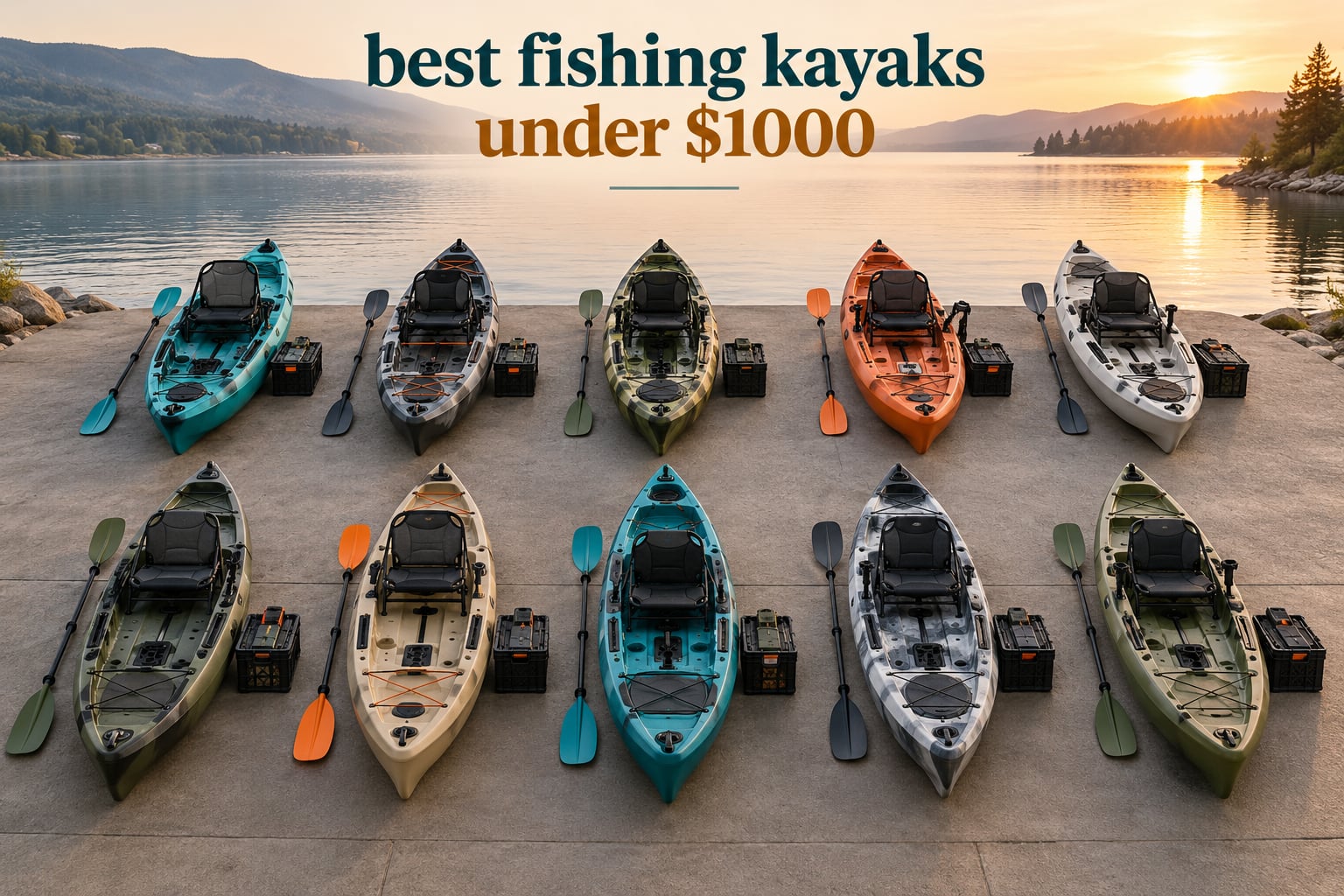
Our answer to the question we get most often is simple: the Lifetime Tamarack Angler 100 is the best fishing kayak for most people shopping the best fishing kayaks under 1,000 dollars in 2026. It is a 10 foot rotomolded polyethylene sit-on-top rated to 275 pounds, it weighs 51 pounds so one person can lift it, and it is the only boat in our test group whose owner feedback runs into the four figures. If your water is different or your body is different, the picks below split cleanly by use case.
Two numbers decide whether a budget fishing kayak works for you, and almost nobody explains them. The first is rated weight capacity, the number printed on the hull. The second is usable capacity, which is lower once your body, a tackle crate, a cooler, a battery bank and a stringer of fish are aboard. The rule of thumb from experienced anglers is a 30 to 40 percent haircut. A hull rated for 400 pounds usually floats best at something closer to 260. This is why a 275 pound rated boat can feel overloaded to a 200 pound angler on a hot August afternoon, and why a hull rated for 350 can feel roomy to the same person.
What 1,000 dollars does not buy you is worth saying out loud. Pedal-drive fishing kayaks from the big names start well above this ceiling and run into four figures, which is why only one of our ten picks carries a pedal drive at all, and we flag it clearly as sitting above the cap. You also do not get a premium framed seat, a rudder included as standard, or a hull thick enough for rocky whitewater. What you do get is a working angling boat with rod holders, storage and a hull that shrugs off rocks, brush and dog claws. Our team put these hulls through launch ramps, car racks and full gear loads over a season of testing, and this is what held up.
Table of Contents
Top 3 Fishing Kayaks Under 1,000 Dollars (October 2026)


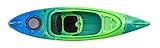
All 10 Picks Compared Side by Side in 2026
| Product | Specifications | Action |
|---|---|---|
| Lifetime Tamarack Angler 100 |
|
Check Latest Price |
| Pelican Sentinel 100X |
|
Check Latest Price |
| Perception Flash 9.5 |
|
Check Latest Price |
 Pelican Catch Classic Angler Pelican Catch Classic Angler |
|
Check Latest Price |
 BKC Brooklyn 12.5 Tandem BKC Brooklyn 12.5 Tandem |
|
Check Latest Price |
 Albott Modular Pedal Kayak Albott Modular Pedal Kayak |
|
Check Latest Price |
 Lifetime Yukon Angler 116 Lifetime Yukon Angler 116 |
|
Check Latest Price |
 Perception Access Perception Access |
|
Check Latest Price |
 Pelican Seek 100XP Pelican Seek 100XP |
|
Check Latest Price |
 Lifetime Lockport 94 Lifetime Lockport 94 |
|
Check Latest Price |
What Is the Best Fishing Kayak Under $1,000?
The Lifetime Tamarack Angler 100 is the best fishing kayak under 1,000 dollars for most anglers, because it combines a stable 10 foot platform with a 275 pound rating and enough owner feedback to prove it holds up. If you want a dry sit-inside ride pick the Perception Flash 9.5, and if you want two people in one boat pick the BKC Brooklyn 12.5 Tandem.
1. Lifetime Tamarack Angler 100 – The Best Overall Budget Fishing Kayak
- Very stable in chop and open water
- Light enough for one person to load solo
- Fast tracking for a wide hull
- Durable hull that shrugs off dings and rocks
- Front and rear T-handles for carrying
- Included paddle is short and flimsy
- Seat connector clips can bend under load
- Plastic chips left in the hull need vacuuming out
Every session I spent on the Tamarack started the same way: 51 pounds onto my shoulder, out of the garage, onto the roof rack, alone. That carry weight is the headline number for this boat, and it is the reason it tops our list. Anything in the 70 to 80 pound class is a two-person lift or an argument with a set of wheels, and the difference decides whether you actually go fishing on a Tuesday evening.
On the water it is a wide, flat-bottomed platform with deep tracking channels and a sharp bow, and it does not fight you. Casting from the seated position in a moderate chop felt unhurried, and the skeg kept it running straight when I stopped paddling to work a lure. Reviewers consistently describe the same thing: stable in choppy and open water, quick for a fishing sit-on-top, and tough enough that dents do not matter.
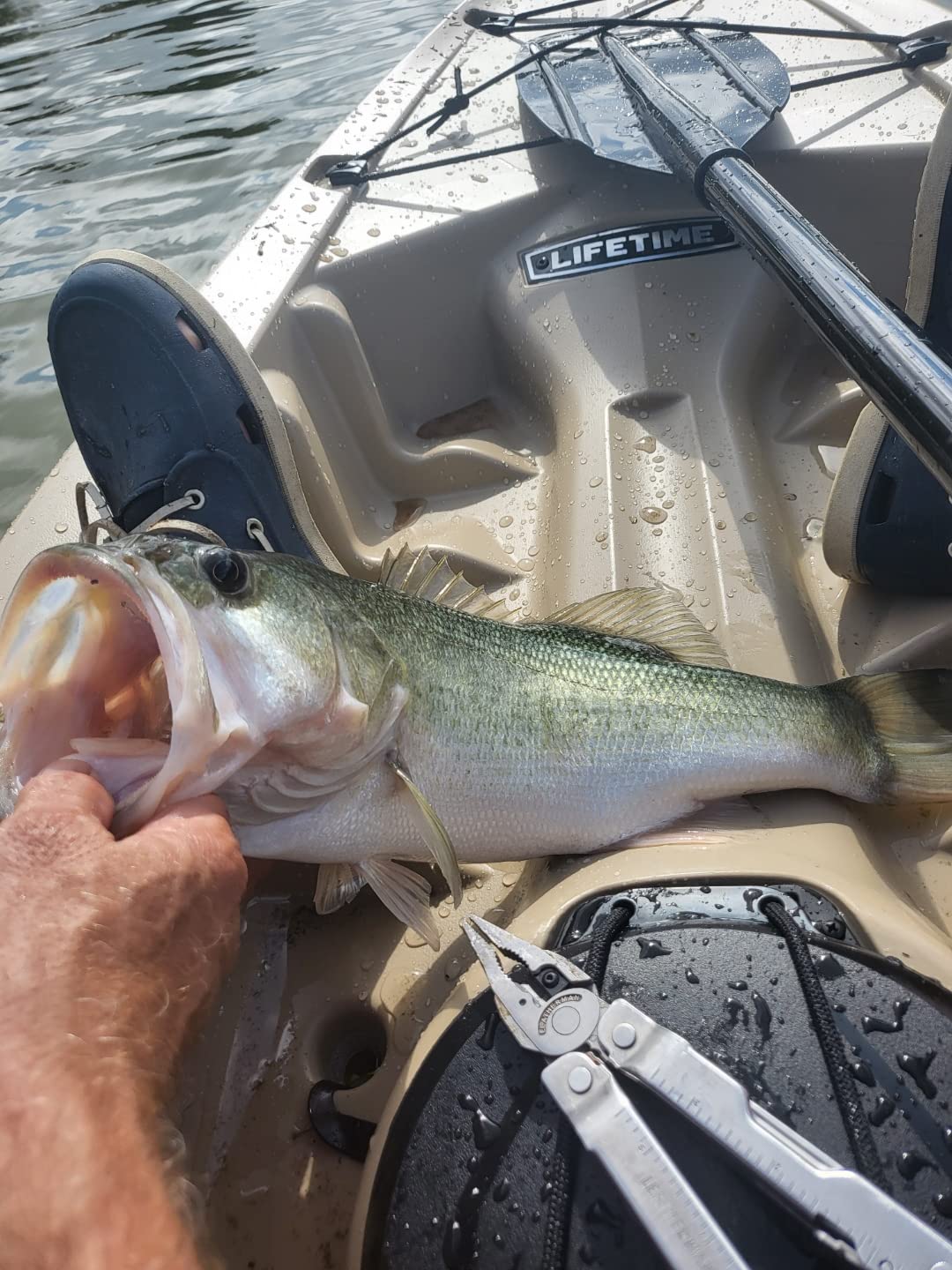
The fishing hardware is unremarkable in a good way. Two flush-mounted rod holders and one top-mount holder give you three lines running, which clears the threshold most buyers insist on, and two 6 inch storage compartments in the rear and center hold a tackle box and a spare layer. Multiple footrest positions let you set the boat up for your height rather than the factory default, which matters more than people expect over a long morning.
The weak points are all upstream of the boat rather than in the hull. The included paddle is short and flimsy, and most owners replace it early, which is normal for this tier. The molded seat connector clips can bend under sustained load, the compartments want cup inserts sold separately, and a few buyers vacuum out loose plastic chips from the hull before the first launch. None of that touches the platform itself.
Who this hull actually suits
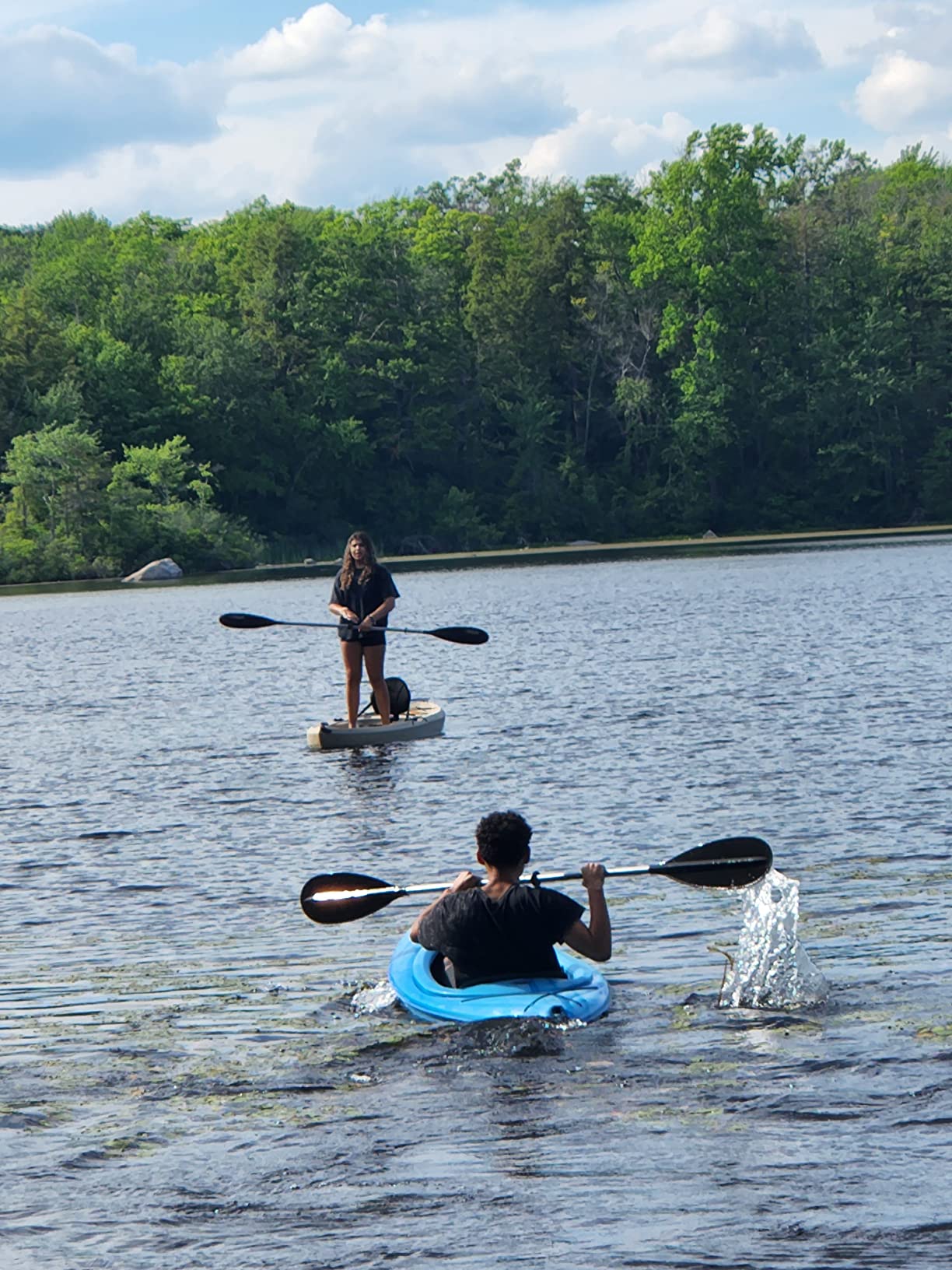
This is the boat for a solo angler fishing lakes, reservoirs and slow rivers who wants a full day on the water without renting a rack or recruiting a second person. The 31 inch beam gives real primary stability, enough to shift position, reach for the tankwell and cast from a knee or a foot up without worrying about the waterline. It also suits anyone still deciding whether kayak fishing is for them, because it is the easiest of our picks to store between trips.
Less suited to an angler over about 230 pounds fully loaded, because 275 rated leaves little usable margin once gear and fish are aboard. Also a poor match for open saltwater surf launches in heavy chop, where a longer, narrower hull with more secondary stability would behave better.
What to check before you buy it
Check your real loaded weight before anything else. Sit down and add up your body weight, the tackle crate, the cooler, the battery, the anchor and the fish you expect to keep. If that total lands above roughly 200 pounds, move up to the 350 pound class hull rather than pushing this one.
Second, plan the paddle replacement in your budget from the start. A properly sized paddle for a 10 foot hull, plus a paddle leash, changes how the boat feels more than any other accessory, and the factory paddle is the weakest link in this package. If you are car-topping, measure your rack straps and your crossbars before you commit, because a 10 foot hull is comfortable for most racks and 12.5 feet is not.
2. Pelican Sentinel 100X – The Best Value Angling Kayak Under 1,000 Dollars
- Lightest angler hull here under 45 lb
- Compact 9 ft 6 in footprint stores anywhere
- Four rod holders plus a removable ExoPak module
- Roomy padded high backrest
- Paddle is not included
- Removable storage module is small for long trips
- Hull scuffs and scratches in transport
The Sentinel 100X is the boat I hand to people who ask me how to get on the water cheaply without buying something disposable. At 44.6 pounds with molded-in side carry handles, it is the easiest hull in the lineup to move from a closet to a shoreline, and the 9 foot 6 inch length means it fits in a tight car trunk or a small apartment without a roof rack.
The Ergolounge seating system is the differentiator at this weight. Extra-thick cushioning and a high, wide padded backrest mean you can sit and fish for hours without the discomfort that pushes people off sit-on-top kayaks in their first season. Owners also like that the ExoPak storage module detaches at the car, so you pack gear at home and drop it in at the water.
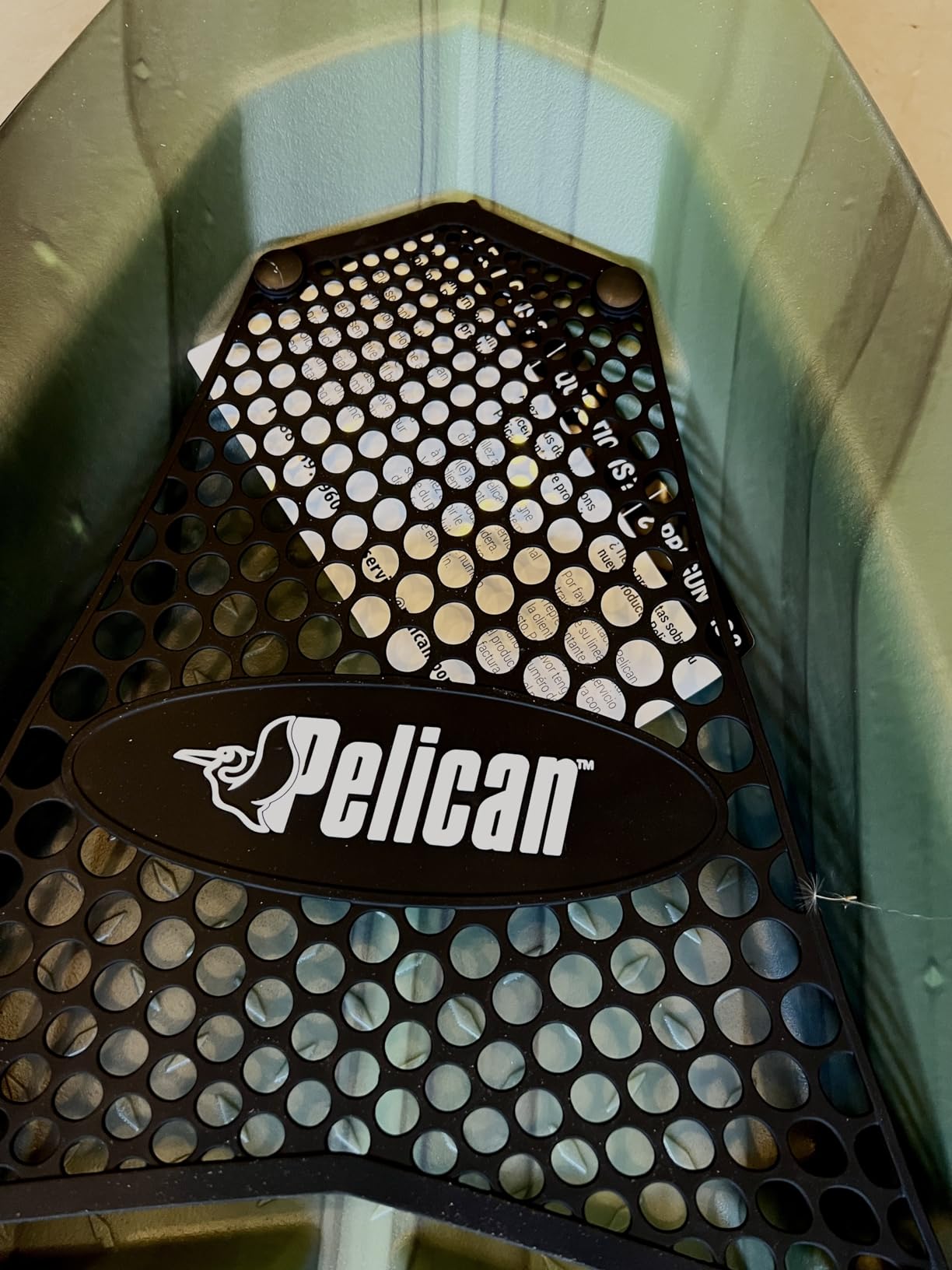
Rigging is where this boat overdelivers for its class. You get four rod holders total, two flush-mounted in the deck and two vertical in the ExoPak, which is more than most hulls twice the price. For a boat this light, that is a genuinely useful amount of deck space for running multiple lines or trolling with hand lines off the bow.
The tradeoffs are honest ones. The paddle is not included, so budget for one. The ExoPak module is small, and owners planning full-day trips report that it fills up quickly with a tackle box, a spare layer and a lunch. And polyethylene scuffs, which is cosmetic but noticeable on a boat you keep in the living room rather than a garage.
Where this boat wins
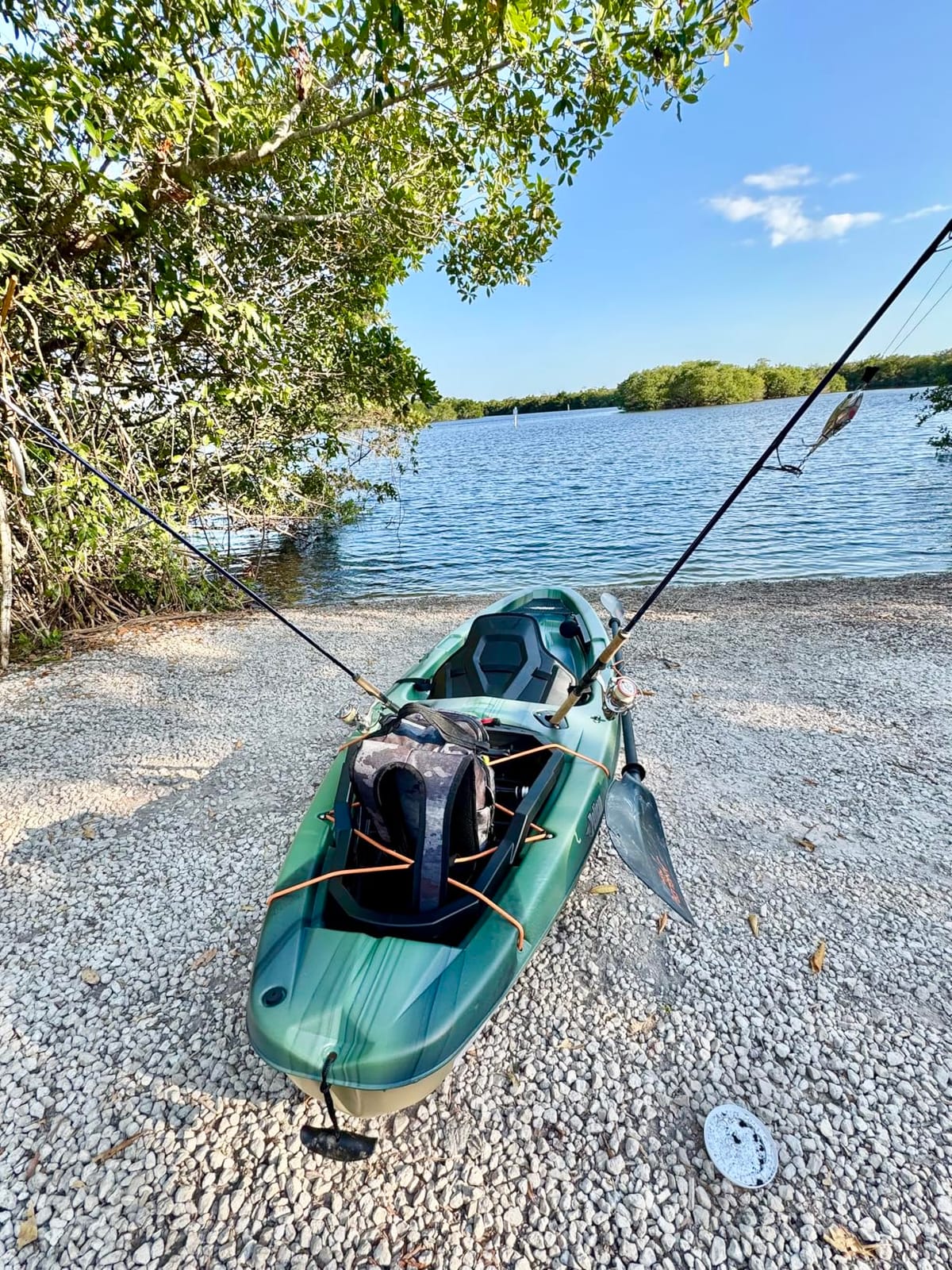
It wins for apartment dwellers, people with no garage, and anyone whose partner does not want a 12 foot hull parked across the kitchen. The weight is the whole story here. If your objection to buying a fishing kayak is lifting something heavy, this hull removes the objection entirely.
It also fits taller paddlers better than its compact length suggests, because the beam and seat height provide more usable space than the dimensions imply. For flat water, calm lakes and sheltered bays, it tracks well and feels responsive.
Where it falls short
The 9 foot 6 inch length with a 30 inch beam is a small waterline, so it pushes more bow wave and gets pushed around in chop and current compared with a 12 foot hull. Anglers who fish open water in wind will feel that more than reviewers who fish lakes at dawn.
Capacity is the other limit. A 275 pound rating is fine for an average angler carrying a light gear load, but a heavier paddler or someone hauling a full tackle crate and cooler will be at the top of the range fast. Plan a lighter gear strategy or save for the 350 pound class.
3. Perception Flash 9.5 – The Best Sit-In Kayak for Cold Water Fishing
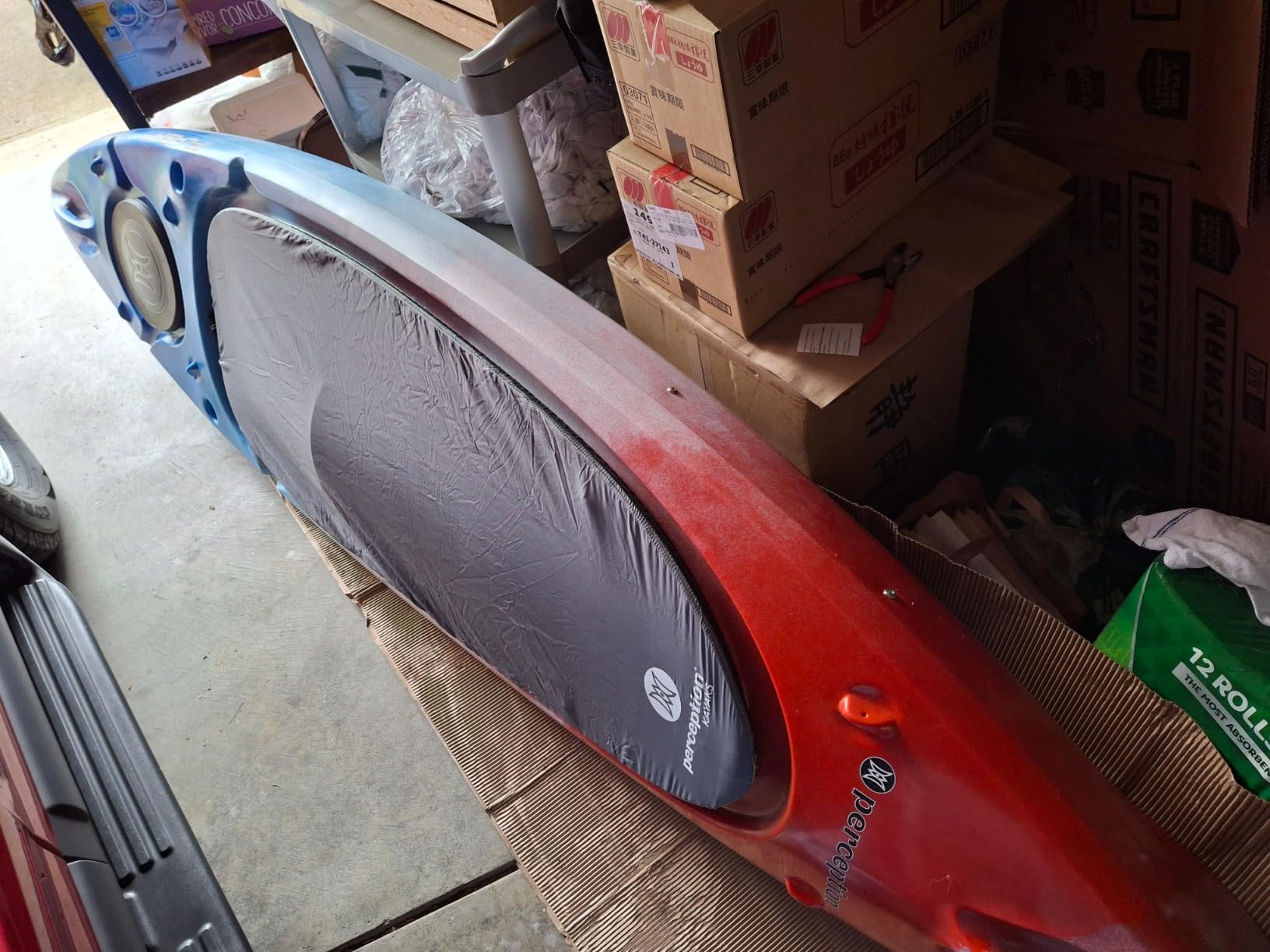
Perception Flash 9.5 | Sit Inside Kayak for Fishing and Fun | Two Rod Holders | Multi-Function Dash | 9′ 6″ | Earth (9331900190)
- Lightest angler option here at 41 lb
- Dry cockpit keeps splash out in cold weather
- Highest capacity per pound of weight
- Nimble on lakes
- rivers and bays
- Sit-inside layout is poor for standing casts
- Less gear space than larger angler models
- Paddle sold separately
The Flash 9.5 is the odd one out in this list and the reason we included it. It is a sit-inside kayak, which means you sit down inside a cockpit rather than on top of a deck, and for anyone fishing in cold water that difference is everything. Spray comes over the bow of a sit-on-top and soaks your legs; a sit-inside throws it off. In early spring and late autumn, that is the difference between a comfortable day and cutting the trip short.
At 41 pounds it is the lightest angling boat we tested, and at a 325 pound rated capacity it also carries more than most of the sit-on-top hulls here. That combination is unusual. Reviewers note the blend of low weight and real capacity, and it makes sense: a short sit-inside hull has less deck to load and a smaller total mass.
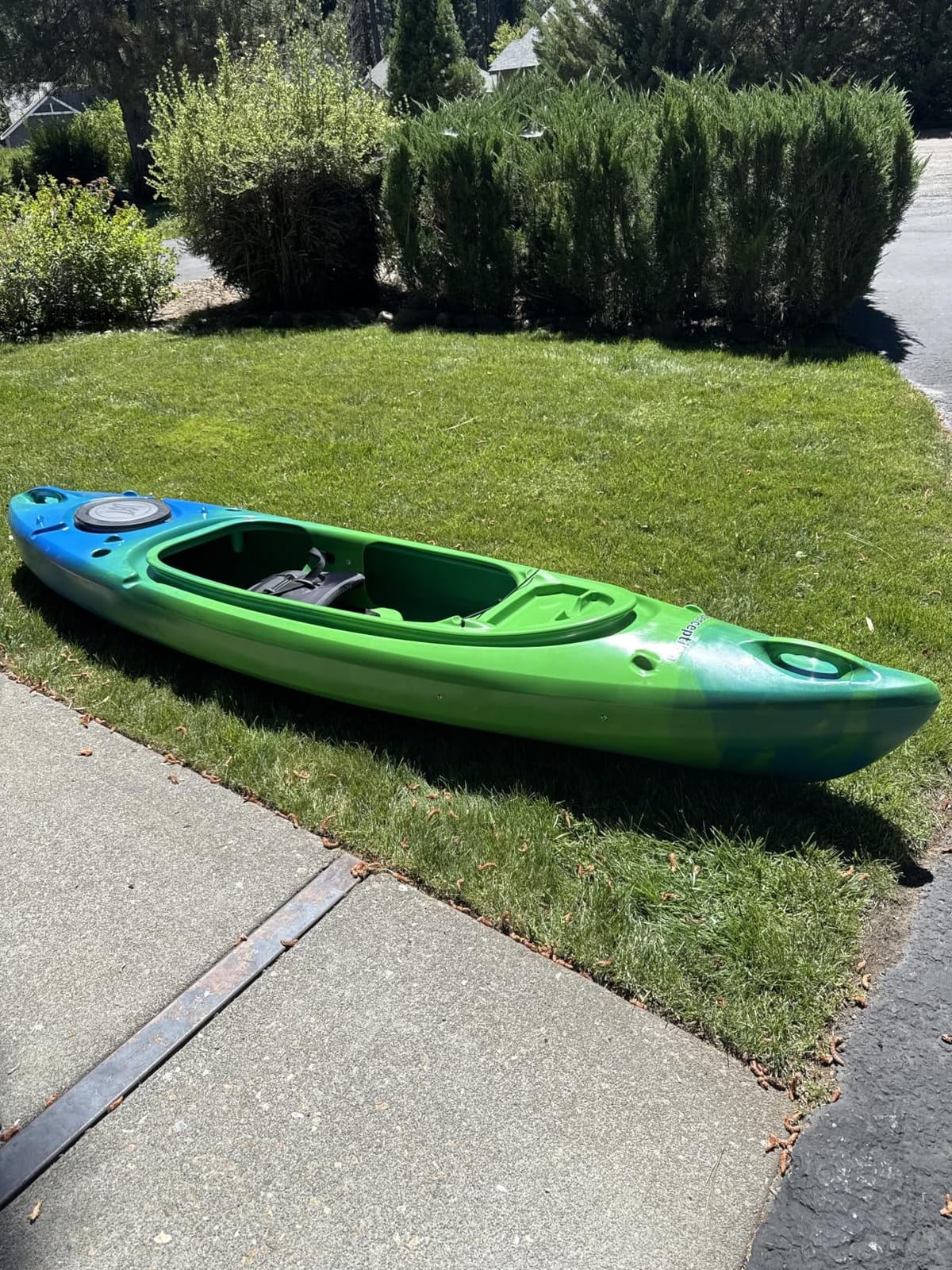
Built-in rod holders and a rear storage compartment for gear and provisions cover the angling basics without any DIY mounting. Adjustable foot braces let you dial the fit, and reviewers describe handling that is nimble on a lake, a slow river or a coastal bay. Made in the USA with a five year hull warranty, which is the best warranty in this group alongside the Lifetime models.
The limitation is structural, not fixable. A sit-inside cockpit is not a place to stand up and cast, and the low, enclosed space makes it awkward to swing a rod overhead or to reach a fish in the water beside you. Anglers who want to move around the boat while fishing should look at a wide sit-on-top instead.
Who should buy the Flash
Cold-water anglers, shoulder-season regulars and anyone fishing a sheltered bay where getting wet ruins the day. Anglers who already know how to get in and out of a sit-in cockpit will find the Flash nimble and quiet, and it is light enough to carry solo to a launch that has no parking.
It also suits a smaller paddler who wants more capacity than a small sit-on-top offers, and an angler who fishes rivers and creeks where a shorter hull with a defined waterline holds its line better than a wide deck boat.
What you give up for that
You give up standing, essentially entirely. There is no deck to stand on and no room to shift position without stepping out of the boat. You also carry less gear, since the rear compartment is a compartment rather than a tankwell, and you need to buy a paddle separately.
Expect a wetter cockpit than the sit-on-top options even with a skirt, and note that fitting one requires care. If you mostly fish warm weather and like to move around the boat, this is the wrong hull and the money is better spent on a wide sit-on-top.
4. Pelican Catch Classic Angler – The Best Stand-Up Casting Platform
Pelican Catch Classic 100 Angler – Sit-on-Top Fishing Kayak – Ergocast Dual Position Seating System – 10 ft – Outback
- Tunnel hull gives a steady platform for standing casts
- Dual-position adjustable seat is very comfortable
- Generous hatch
- tankwell
- tracks and eyelets
- 350 lb capacity for larger paddlers
- Heaviest Pelican angler hull here at 57 lb
- 34 in beam is awkward to solo transport
- Lowest average rating in the set with a 12 percent one-star share
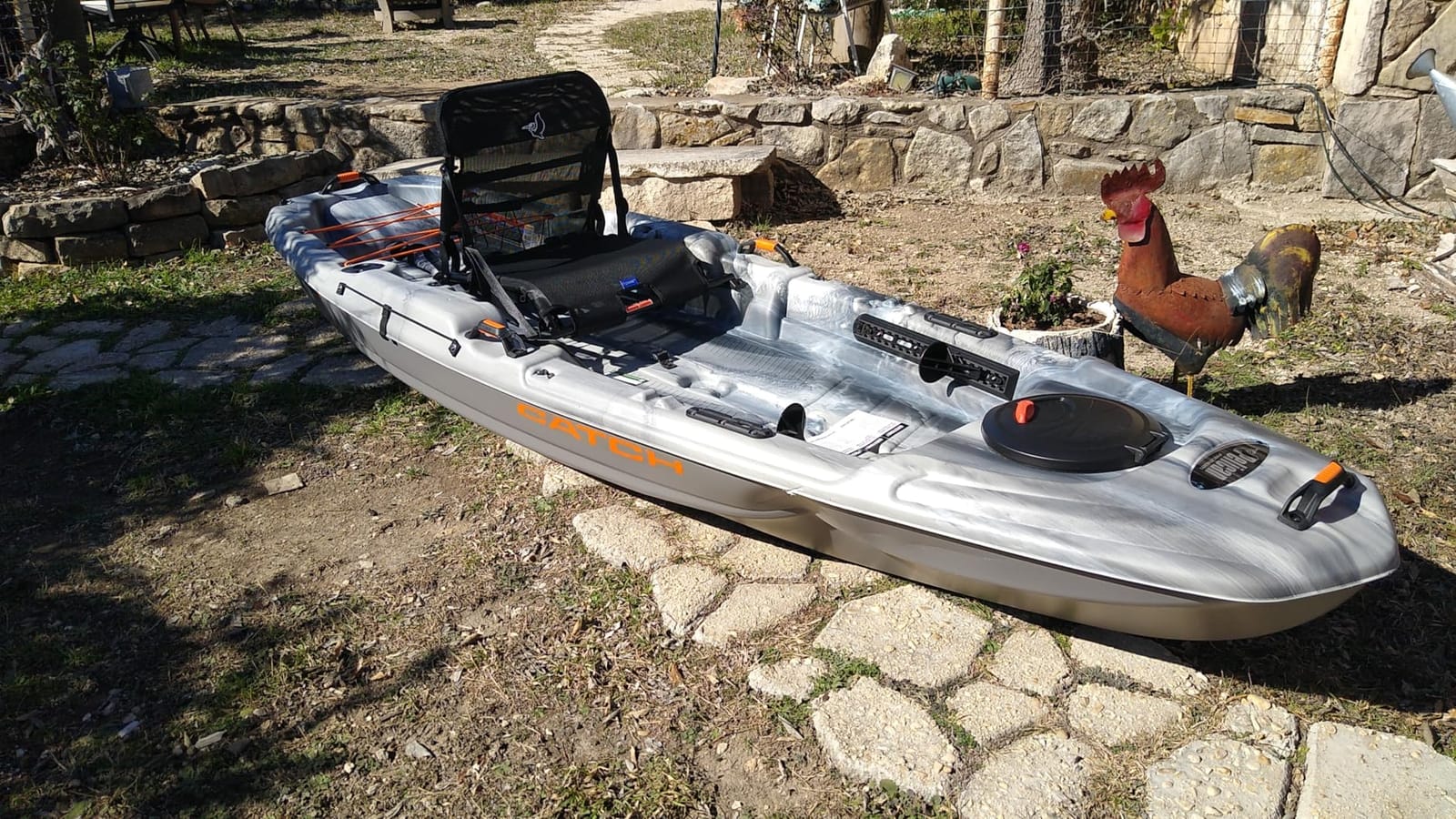
Stand-up casting is the reason to own a fishing kayak rather than a general-purpose one, and the Catch Classic is the hull in our group built specifically for it. The tunnel hull and 34 inch beam give you a wide, predictable platform under your feet, and Pelican describes the deck as designed for standing casts. When I stood to cast into wind on a windy afternoon, the boat did something most budget sit-on-tops did not, which was nothing dramatic.
The ERGOCAST CLASSIC seat adjusts between a high position for fishing and a low position with different support levels. That single feature solves the problem most anglers hit at their first long session: sitting too high makes you unstable, sitting too low makes it hard to see over the water and to reach the deck. Owners rate the chair among the more comfortable ones in this category.
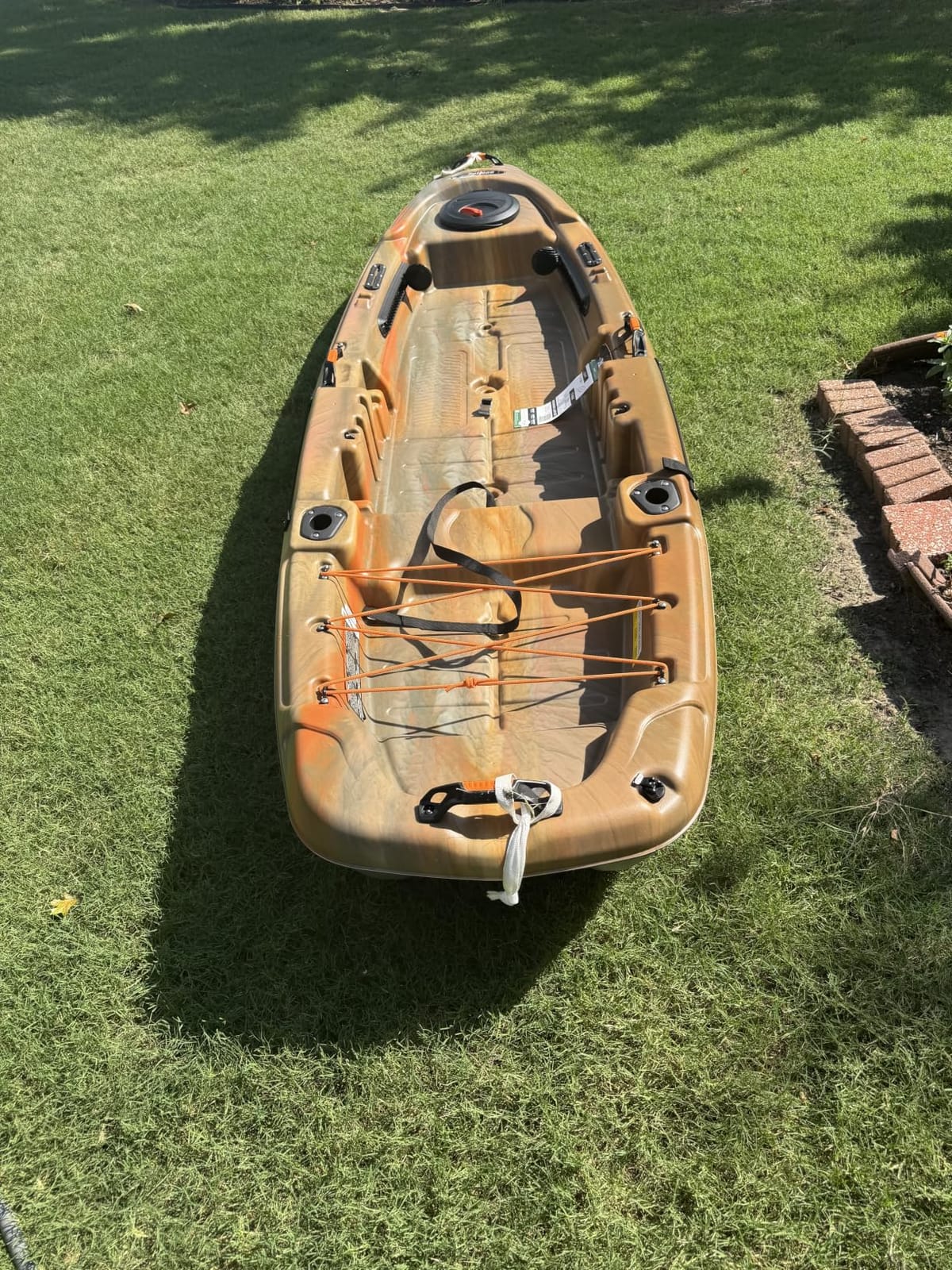
Rigging is the most complete on this list for the money. A front quick-lock hatch, a rear tank well with bungee cords, two flush-mount rod holders, two accessory eyelets, two 4 inch rigging tracks, paddle tie-downs, adjustable footrests and a bottle holder. Those 4 inch tracks are the mounts you attach a fish finder transducer bracket to, which is the single most requested feature in the angler forums we read.
The honesty section: this is the heaviest Pelican angler hull we tested at 57 pounds, and the 34 inch beam that makes it stable also makes it the most awkward to solo handle. It also carries the lowest average rating in our set at 4.2, with a 12 percent one-star share, mostly from quality and seat comfort complaints on individual units.
Why we picked it for stand-up anglers
Beam width is the number that matters, and 34 inches is inside the range where standing feels controlled rather than brave. Add the tunnel hull, the textured deck space and the wide stance, and this is the budget hull we would trust for a full stand-up cast rather than a quick rise from the seat.
It is also the right pick for a larger angler who still wants to move around the boat. The 350 pound rating leaves real usable margin above a typical angler plus gear plus catch, which means you can stand up without the boat sitting uncomfortably low in the water.
Where the compromises show up
Transport is the honest cost of the wide beam. At 34 inches and 57 pounds, this is a two-person lift in most cases, and it needs a roof rack or a truck bed rather than a trunk. If you have no rack and no second person, the lighter hulls on this list are a better fit even if standing matters less to you.
The 4.2 average rating deserves attention too. Individual units show dents, scratches and loose hardware on arrival, so inspect the hull and the seat hardware before your first launch and keep the packaging until you have run it once on the water.
5. BKC Brooklyn 12.5 Tandem – The Best Fishing Kayak for Two Anglers
BKC Brooklyn 12.5 Tandem Fishing Kayak, 2 to 3 Person Sit-on-Top
- Only tandem hull here
- seats two adults plus a child
- Six rod holders including two articulating
- 34 in beam supports standing casts
- Two padded memory foam seats and two paddles included
- Heaviest kayak in the set at 70 lb
- 12 percent one-star reviews cite dents and transit damage
- Included paddles are modest quality
Almost every budget fishing kayak list quietly assumes you are alone. The Brooklyn 12.5 is the exception, and for a specific set of buyers it is the only sensible answer: two adults, a child, or one angler who genuinely wants a second seat and the space to bring a dog, an extra cooler or a full camp of gear.
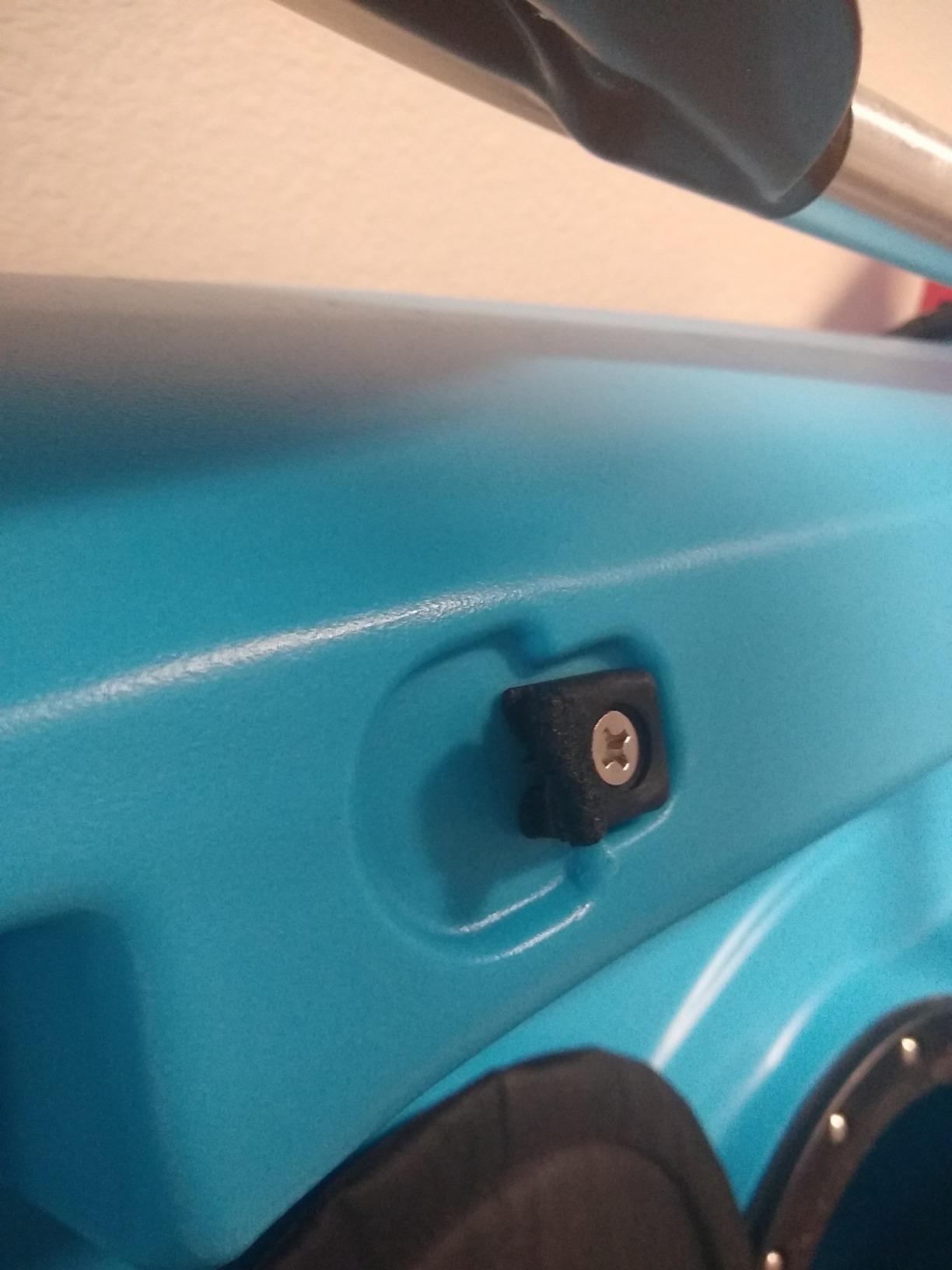
The layout earns the length. Two padded memory foam seats, two paddles included, multiple footrest positions, and six rod holders, four flush-mounted plus two articulating. Those articulating holders are the ones that let you troll or run multiple lines hands-free, which makes this boat useful to a pair fishing together rather than just a bigger boat for one person.
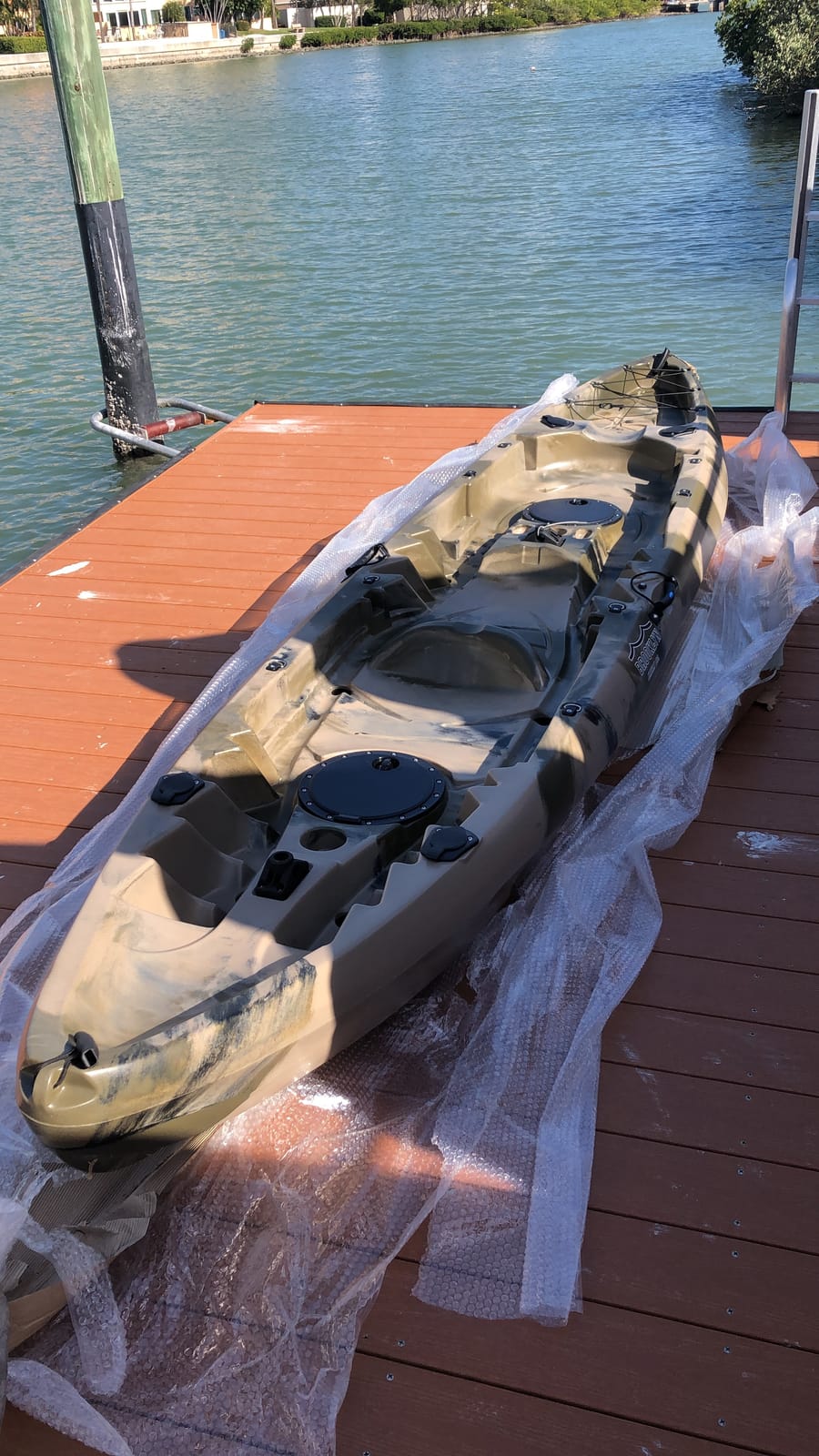
The 34 inch beam gives the same stand-up platform as the Catch Classic, which matters when two people are moving around a boat and casting. There is a built-in trolling motor mount area, motor not included, which makes it one of the few budget hulls here with a real path to powered fishing. The rotomolded single-piece HDPE construction is impact and UV resistant, and the 600 pound rating covers two adults and gear with margin.
What you accept for that room is weight and length. Seventy pounds is a two-person carry, every time, and a 12.5 foot hull does not go in a car trunk. It needs a roof rack on a proper vehicle or a truck bed. Both are fine decisions if you plan for them and frustrating if you discover them at the launch.
Who this tandem hull is for
Families, couples and pairs fishing together, and solo anglers who want the capacity to bring gear, a child or a dog. If you split the boat with someone, the 600 pound rating and the two articulating rod holders turn this into a boat you can both work independently, which no single-seat hull here allows.
It is also the only pick that works as a day-trip platform. The space behind the second seat handles a tackle crate, a cooler and a dry bag without stealing your casting room, which solves the storage problem that limits the smaller budget hulls.
What makes it a hard yes or hard no
It is a hard no if you are a solo angler who wants the lightest boat on your list, or if you do not have roof rack capacity. The 70 pound weight is also the reason the 4.1 rating includes a meaningful share of complaints about dents and transit damage to a rotomolded shell.
The included paddles are the weak point. Both paddles are included, which is generous, but reviewers describe them as modest quality, so treat them as spares and plan a proper paddle purchase. Inspect the hull carefully on arrival, because the shape that makes it stable is the shape that shows transit damage.
6. Albott Modular Fishing Kayak – The Best Pedal Drive Kayak That Fits in a Small Garage
Albott Modular Fishing Kayak with Fin Drive System & Durable HDPE
- Pedal drive allows hands-free fishing while standing
- Two-piece design fits a compact SUV or cargo van
- Stable platform with a roomy foam standing area
- Quiet weed-resistant fins with spares included
- Above the stated budget ceiling at list price
- Thinner hull than premium kayaks and poor for rocky rivers
- Mounting brackets described as the weakest link
- Only a 6-month warranty against 5 years on rivals
We are including this one with a clear flag. Its listed price sits above the 1,000 dollar ceiling this guide is built around, so it does not fit the budget. What it does fit, and what nothing else in this article does, is a genuine pedal drive with a two-piece modular hull, which is the honest answer to the question readers ask most: can I get hands-free fishing inside this price range at all?
The pedal system is an 11 lb fin drive with spare fins, and the fins are weed resistant and quiet. Owners describe the practical effect clearly: you can fish standing up while propelling, hands off, which is the entire appeal of a pedal drive. Without one, standing and moving means paddling with one hand and casting badly with the other.
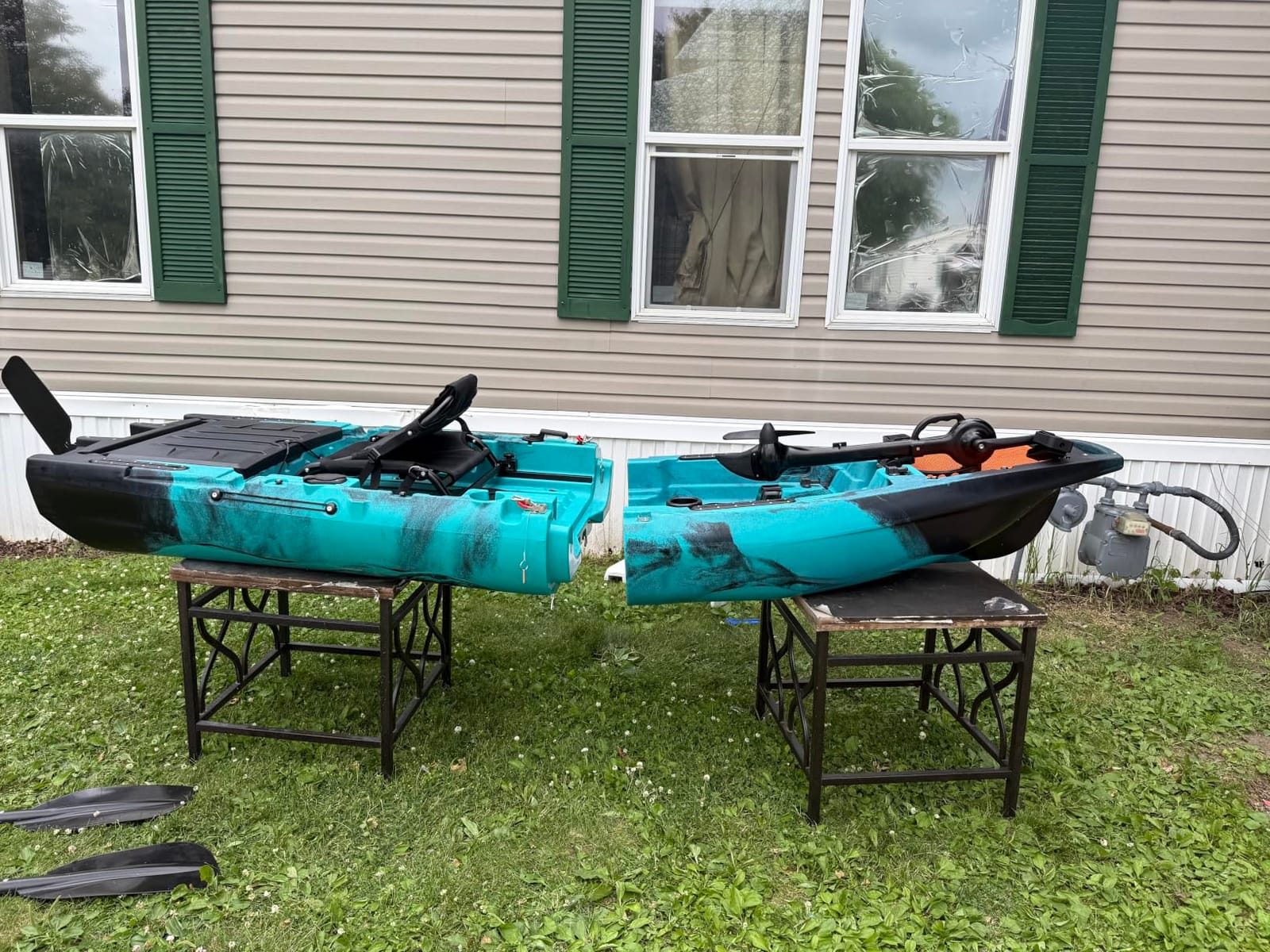
The modular design is the second selling point and arguably the smarter one. Each section has internal handles and the boat assembles in four quick steps, so a hull that would otherwise need a truck bed lives inside a compact SUV or a cargo van. Reviewers who bought it for the car-friendly transport report that this is the feature they mention most. A cable-operated stern rudder handle raises and lowers for shallow water work.
At 420 pounds rated and 34.68 inches wide, it carries a big angler and a big gear load, and owners praise the roomy foam standing area. Be honest about the tradeoffs: it weighs 102.4 pounds assembled, so the modular split is doing real work rather than marketing, and the drive hardware adds maintenance you do not have on a pure paddle boat.
When a pedal drive is worth stretching for
A pedal drive pays off when you fish standing up, when you cover long distances with light gear, or when a hand injury or shoulder problem makes paddling painful. If you fish seated with a rod in one hand most of the day, a good paddle does the same job for a fraction of the cost and none of the maintenance.
The modular split is the transferable idea here. Even if you skip the pedal system, splitting a hull into two sections solves the transport problem that stops people buying 12 foot boats at all. If you need to stay under the ceiling, our Lockport pick later in this list uses the same approach on a paddle-only hull.
Where this one falls down
Hull thickness is the real weakness. Owners describe a thinner shell than premium kayaks, which is fine on open water and a poor choice for rocky rivers where a thinner hull transmits every impact. The pedal drive mounting brackets are also described as the weakest link in the assembly.
The warranty is six months against five years on most rivals in this list, which is a genuine risk on a mechanical drive system. And at 28 reviews, the sample is still small, so treat the enthusiasm as directional rather than settled.
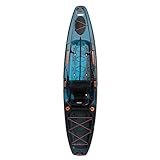
7. Lifetime Yukon Angler 116 – The Best Fully Rigged Fishing Kayak Under 1,000 Dollars
- Most feature-dense angler rig in the set
- Adjustable frame seat switches upright and reclining
- Stability strap assists standing casts
- 350 lb capacity with a 5-year warranty
- Heavy at 78 lb for a solo angler kayak
- Paddle is not included
- Too long for many car trunks without a rack
The Yukon Angler 116 is the boat you buy when you want everything already installed. Where most budget hulls give you two rod holders and hope for the best, this one arrives with a tankwell, accessory tracks, a molded-in fish ruler, a universal mount, rod cradles, self-bailing scuppers, a drain plug and a rudder-ready deck. There is very little left to bolt on.
The seating system is the part owners mention most. It is an adjustable frame with two settings, high for fishing and paddling and reclining for sitting back, plus quick-dry foam-backed mesh. Long sessions on open water are exactly what a rigid molded plastic chair gets wrong, and this is one of the few hulls in the price range that solves it.
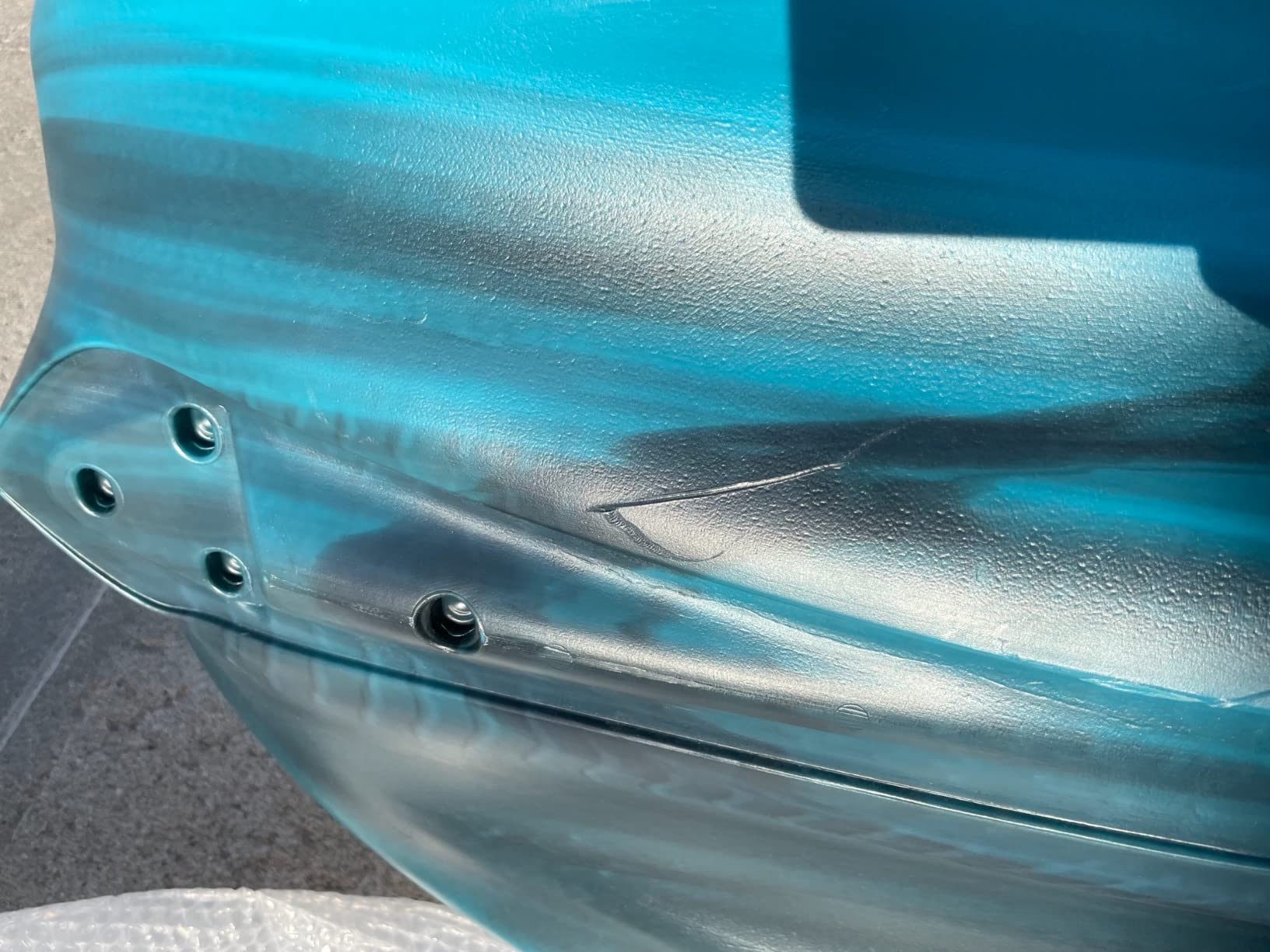
The stability strap exists to help you cast while standing, which combined with a high-initial-stability hull makes this a credible stand-up boat despite the 32 inch beam. The two 12 inch sections of universal accessory track are the mounting point for a fish finder transducer, and the transducer-ready front scuppers mean a sonar install does not require drilling.
Eight self-bailing scupper holes and a side drain plug mean you are not bailing water with a sponge every hour, which is a quiet quality-of-life win on warm days. Owners highlight the fittings list as the reason the boat feels like a finished product rather than a platform.
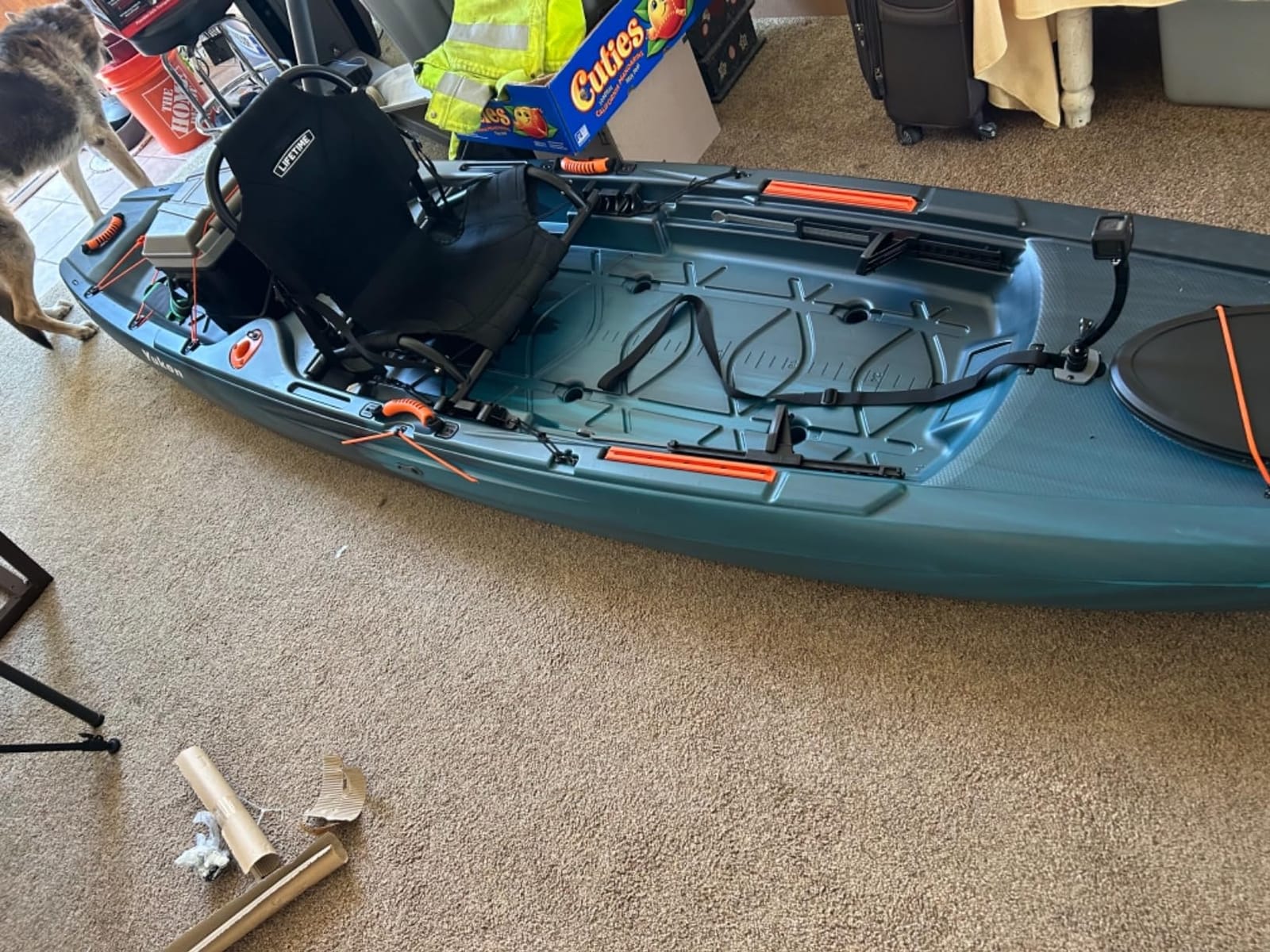
Who this rig is for
Buy this hull if you want to stop adding parts. Someone who already knows their transducer bracket, rudder and track standard can assemble a working electronics setup on day one instead of spending a season hunting hardware. It also suits an angler planning to spend a full day on a large lake rather than a quick trip close to the launch.
The 350 pound rating gives large anglers real margin, and the 5-year warranty is joint best in this group. For someone fishing seated with electronics, this is simply the most complete package available inside the ceiling.
Where 78 pounds becomes a problem
Weight and length, together. Seventy-eight pounds is a heavy solo lift, and at 11 feet 6 inches the hull will not go into most car trunks. You need a roof rack with proper straps, a truck bed or at least a second person. Pairs of anglers often find this boat easier to move than one angler alone.
If you have neither a rack nor a second person, this is the wrong hull despite being the best-equipped. A lighter boat you will actually get to the water beats a complete boat that stays on the trailer.
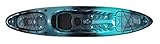
8. Perception Access – The Best High-Back Seated Fishing Kayak
Perception Access 11.5 | Sit on Top Kayak | High Back Seat | Rod Holders | 11′ 6″ | Dapper
- Molded-in high seat needs no separate cushion
- Stable yet playful on the water
- Simple design with few exposed parts to snag lines
- Replaceable skid plate protects the hull when dragging
- Seat straps dig into larger paddlers
- Few accessory clip-on points and no paddle strap clip
- Several reviews report dents and cracks on arrival
The Access is built around a seat rather than a hull. The molded-in high seat back and leg lifter are part of the boat, not an accessory bolted to the deck, which means nothing shifts, nothing comes loose in the car and there is no frame to fail. If your back is the reason you are hesitant about sitting on a flat deck for four hours, this design addresses that directly.
It is also a simpler boat to own. Few exposed parts means fewer places for line, weeds or a paddle to catch, and owners describe it as stable but still playful for recreational floats. The replaceable skid plate is a detail worth more than it sounds, because dragging a plastic hull to the water is how most angling kayaks get their worst scratches, and this one is designed to be replaced.
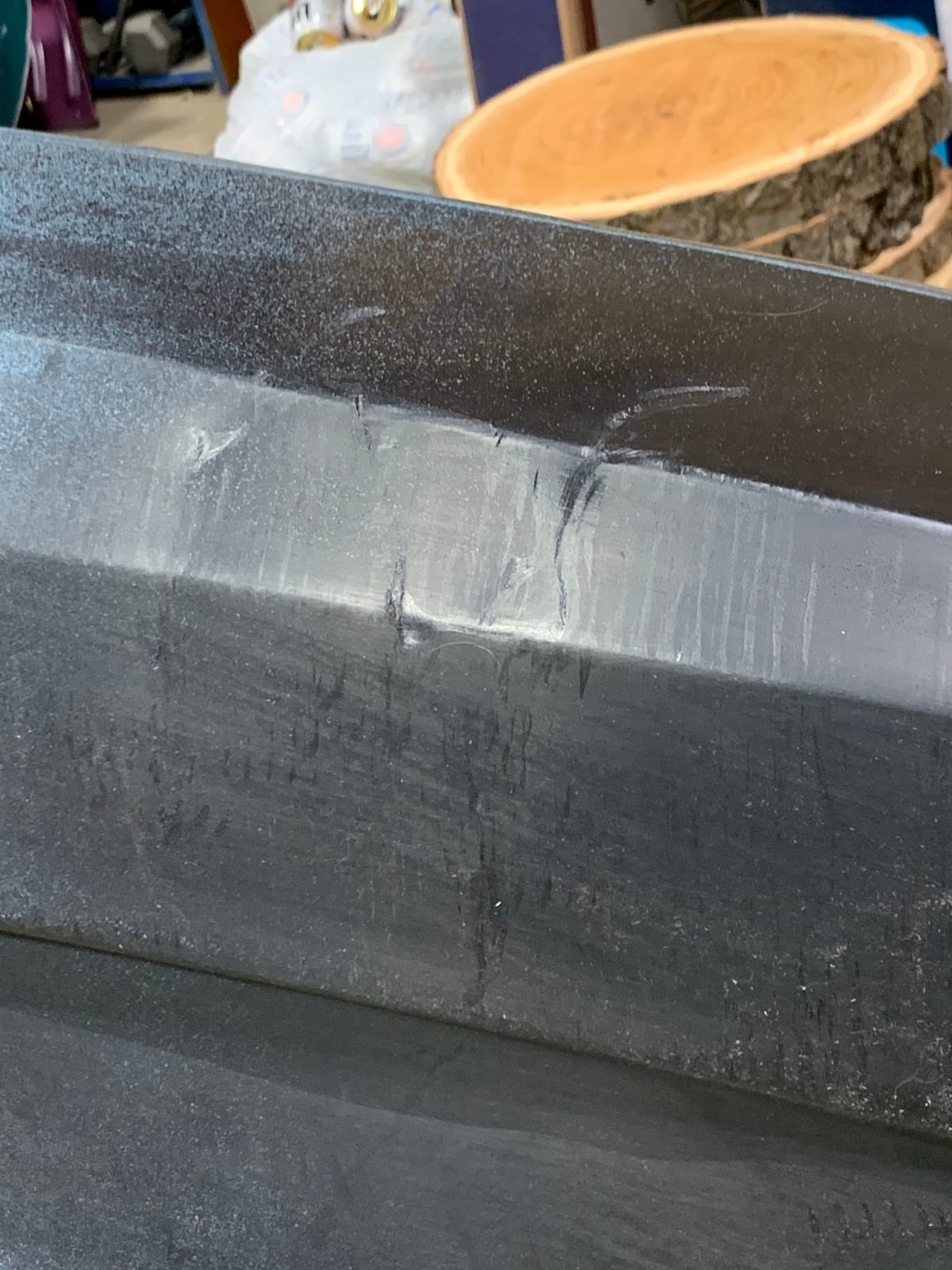
Integrated rod holders and a center console cover the angling basics without extra drilling, and molded front, rear and side handles make the 55 pound hull manageable. Made in the USA with a five year hull warranty. At 11 feet 6 inches by 31 inches with a 300 pound rating, it sits in the middle of the lineup on both size and capacity.
The complaints are specific and worth weighing. The seat straps dig into the sides of larger paddlers, which is a real problem at the 300 pound end of the rating. There are fewer clip-on points for accessories than a comparable budget hull, and no paddle strap clip is included. Several reviews report dents, gouges and cracks on arrival.
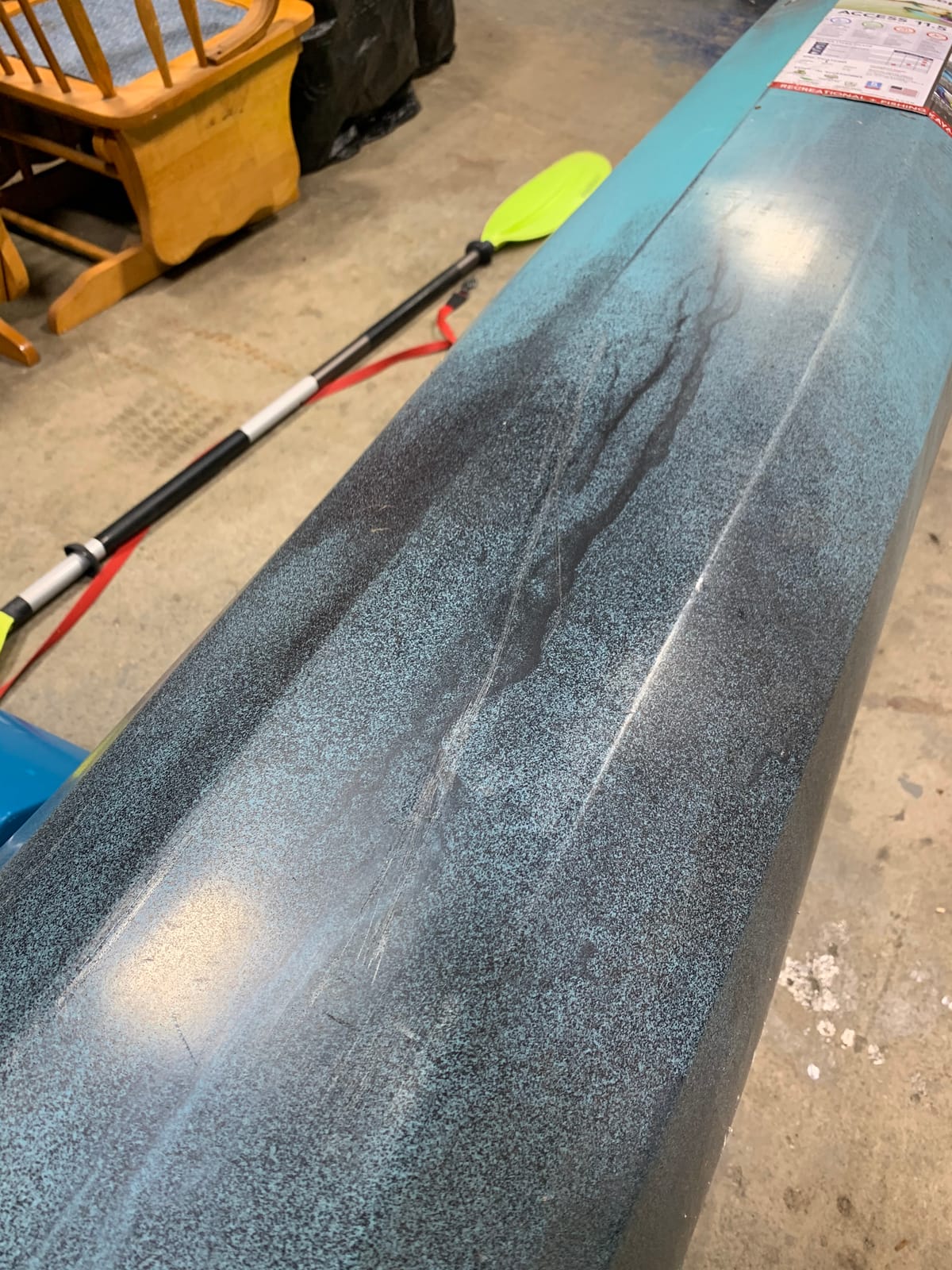
The case for the molded seat
A molded seat never needs a cushion, never slides on launches, never comes loose on a roof rack and never needs to be replaced after a season in the sun. For an angler who fishes long days or has any back sensitivity, that reliability is worth more than a better hull shape, and it is the reason this boat keeps a place on our list despite a 4.1 rating.
It also suits the angler who wants one boat for fishing and for lazy floats on a calm lake. The same hull that tracks well while trolling is pleasant to paddle on a summer afternoon, which extends the number of days you will use it.
The problems you cannot rig around
The strap issue on a high seat is not adjustable, and if you are near the top of the 300 pound rating it will be uncomfortable over a long day. Fewer attachment points also limits your electronics options compared with the Yukon Angler, which is the boat to buy if rigging is your priority.
Inspect on arrival. Several reviews describe transit damage on the plastic shell, and because the seat is molded in, a hard impact near the seat is harder to live with than a scratch on a boat with a removable chair. Keep the packaging until you have tested the fit.
9. Pelican Seek 100XP – The Best 10 Foot Kayak for Tall Paddlers
Pelican Seek 100XP – Sit on top Fishing Angler Kayak – Forest Mist – Twin-Arched Multi-Chine Hull – Lightweight – 10 ft
- Comfortable adjustable backrest rated highly by owners
- Removable bow bag and tankwell cover simplify packing
- Light 48.1 lb weight with a stable multi-chine hull
- Fits tall paddlers including 6 ft 5 in users
- Slightly unstable for standing casts
- Fabric bags let water in
- Side carry handles reported to break off easily
The Seek 100XP solves a specific problem that taller anglers hit constantly: leg room in a 10 foot boat. The seating and footwell arrangement gets repeated praise for fitting paddlers up to 6 feet 5 inches, which is well beyond what most compact angler hulls accommodate. At 48.1 pounds with molded-in handles, it is also one of the lighter ways to solve the leg room problem.
The twin-arched multi-chine hull gives a smooth, stable ride and a textured slip-resistant standing floor. The Ergobar system comes apart in three pieces, which makes entry and exit simple and keeps the bars clear of your paddle stroke. That detail matters more than it sounds, because a bar in the stroke path is the fastest way to turn a fishing kayak into a frustrating one.
Storage is handled with fabric rather than moulded compartments: a removable ripstop ErgoFlip bow bag that you can access while seated and detach for transport, a ripstop tankwell cover, and a dual-position bottle holder. The adjustable Ergobreeze backrest with soft cushioning is the part owners rate highest, and it suits long sessions on a flat lake.
The 4.1 rating reflects some real complaints. The 30 inch beam leaves the boat slightly unstable for standing casts, so this is a seated-fishing hull rather than a stand-up one. The fabric bags let water in and do not shed it, and the side carry handles are reported to break off easily, which undermines the lightweight handling advantage.
Where this boat works best
It works best for a tall angler on a 10 foot hull, on flat water, fishing seated with hand lines or light trolling. The 300 pound rating also gives a bigger angler more room than the compact hulls earlier in this list, without pushing them into the 57 to 78 pound weight class.
Owners also like the detachable fabric storage for short trips where you want the boat lighter in the car and more room on the water. Nothing has to be unpacked at the launch beyond lifting the bag out.
What to watch out for
Do not plan on standing casts. If that matters to you, the wider hulls in this list handle it properly. And handle the boat by the center hull rather than the side grips, because the reported handle failures are common enough to plan around.
The 25-review sample is small and reviewers describe the feedback as short and mixed, with transit problems such as scratches and loose storage-bracket screws appearing more than once. Inspect the brackets and the hull before the first launch.
10. Lifetime Lockport 94 – The Best Modular Kayak for Apartment Storage
Lifetime Lockport 94 Modular Sit-on-Top Kayak with Paddle, Two-Piece Design with SlideLock System, Rod Holders, Adjustable Seat
- Two halves nest and stack in a closet or minivan
- Rated 4.6 with 81 percent five-star reviews
- Tool-free SlideLock joint holds firm in boat wakes
- Molded-in skeg and chine rails track well
- 40 lb total weight
- Each half still weighs about 24 lb
- No rudder and fixed rather than adjustable footrests
- Basic unpadded foam seat
- Turns slowly and is not built for speed
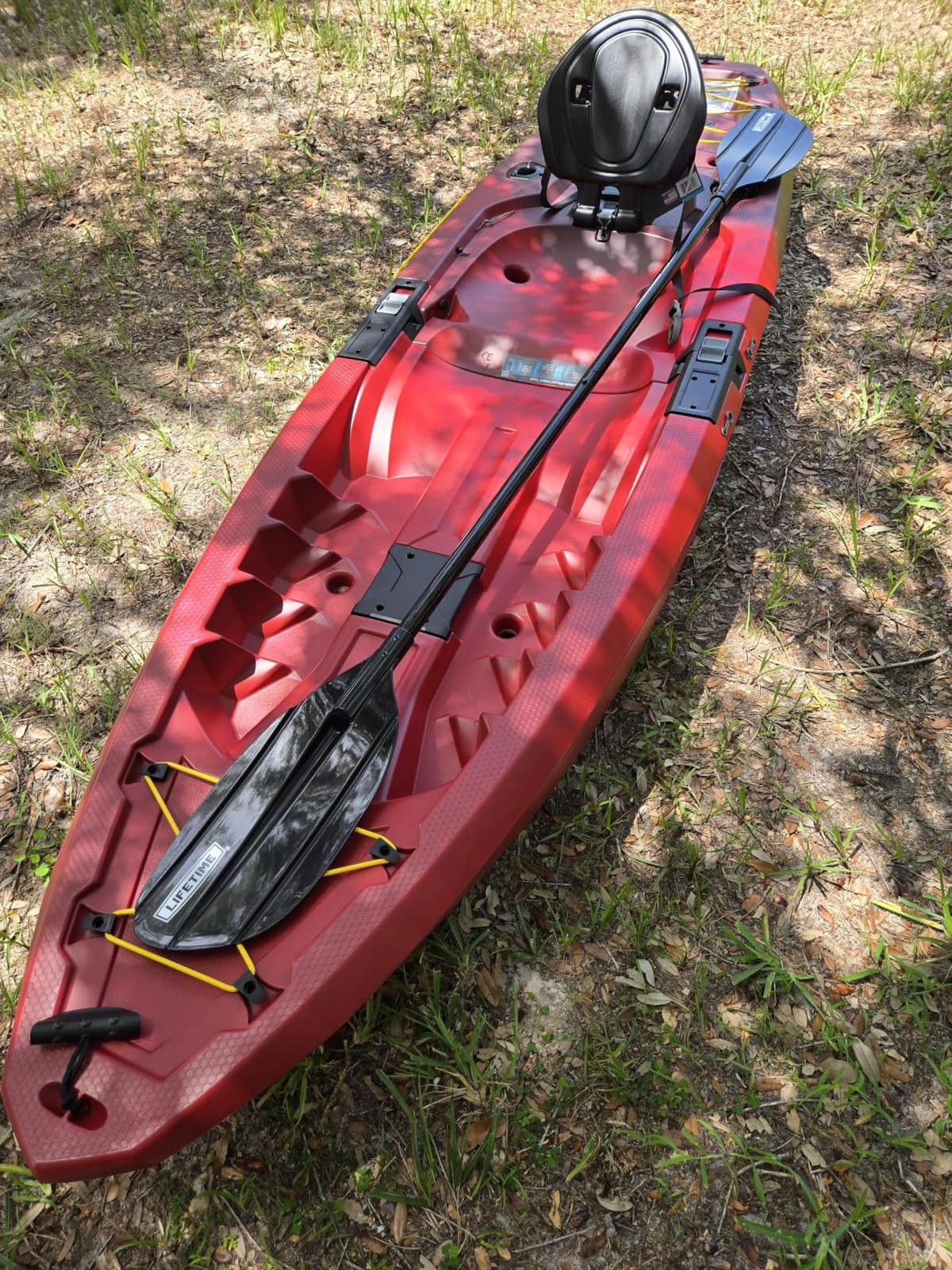
The Lockport 94 solves the storage problem better than any boat here. It splits into two halves that nest and stack, which means it lives in a closet, beside a bed or in the back of a minivan, and it means no roof rack, no tie-downs and no carrying a full-length hull down a boat ramp alone. Owners consistently describe it as an ideal first hard-shell kayak, and at 40 pounds it is the lightest in this group.
The SlideLock tongue-and-groove joint with side latches assembles in seconds with no tools, and owners report it holds firm even through boat wakes, which is the question most buyers have about a two-piece design. The 4.6 average rating and 81 percent five-star share are the strongest sentiment in this lineup, even on a small 31-review sample.
Angler fittings are present and correct: two flush-mounted rod holders, a tankwell with bungee lacing, a water bottle holder and a paddle keeper, and the paddle is included. Molded-in skeg and chine rails give it tracking that is better than the length suggests, and UV-protected HDPE construction is durable without being fragile.
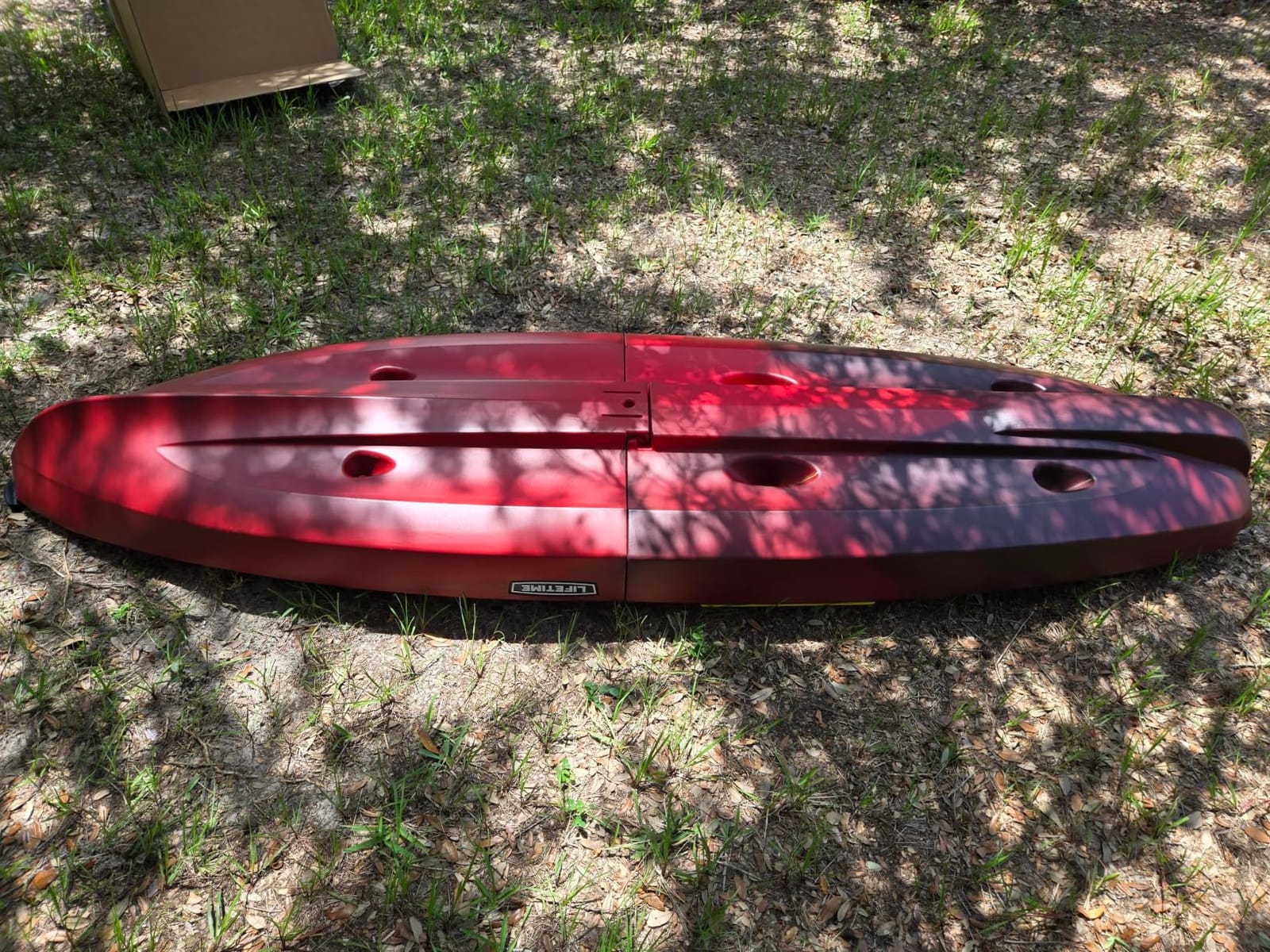
Two paragraphs on the honest limits. The 250 pound rating is the lowest here, which makes sense given the weight budget, and it suits a lighter angler with a modest gear load. There is no rudder, so wind is harder to manage on open water, and the molded footrests are fixed rather than adjustable. The seat is basic unpadded foam, comfortable for a few hours rather than a full day.
It also turns slowly. For an angler used to a 12 foot hull, the turning radius on this boat is noticeably wider, and it is not designed for speed on open water. If you fish fast water, chase long runs or cover distance, that will matter. If you fish ponds, small lakes and slow river sections, it is irrelevant.
Who this modular kayak suits
It suits anyone whose home, garage or vehicle is the reason they have not bought a fishing kayak yet. Apartment residents, people with a small car, and anyone who wants a hard-shell kayak without committing roof-rack hardware or trailer weight. The transport win is the product.
It also suits a first-time buyer who wants a durable boat without the price and without the risk of a large purchase that stays on a rack. The five year warranty and the simple molded construction mean there is very little that can fail.
Where the compromises bite
Twenty-four pounds per half is not a one-hand carry, so you still need a cart for a long shoreline or a bad parking lot. No rudder, fixed footrests and a basic foam seat mean this is a comfortable boat for a few hours rather than an all-day seat.
The 250 pound rating closes the door on larger anglers and heavy gear loads. If you weigh much over 200 pounds fully loaded, step up to a 300 or 350 pound hull even if it means giving up the modular storage advantage.
Which Kayak Is the Most Stable for Fishing?
The most stable fishing kayaks in this group are the widest ones, and beam width is the number that decides it. The Pelican Catch Classic at 34 inches, the BKC Brooklyn tandem at 34 inches and the Albott at 34.68 inches are the stable picks. For standing work, 33 to 36 inches of beam is the range where standing feels controlled; below 30 inches, sitting stability survives but standing casts do not.
Two kinds of stability matter and they are not the same thing. Primary stability is how still the boat sits when you move around it, and that is what you want for casting. Secondary stability is how hard it is to tip past the point of recovery, and that is what you want in chop or current. A wide flat hull wins on primary stability. A narrower hull with a defined waterline wins on secondary stability in wind and waves. Most anglers need primary stability far more often, which is why wide sit-on-tops dominate this price range.
Buying Guide: How to Choose a Budget Fishing Kayak
Sit-on-top or sit-in
Sit-on-top hulls dominate the budget tier because you get a flat deck, easy entry, no spray skirt and far more room to move around while fishing. Sit-in hulls keep water out of your lap, which matters in cold weather, and they are usually lighter for the same capacity. Our Perception Flash is the sit-in pick here. If you fish warm months and want to cast while standing, choose the sit-on-top.
Beam width and hull shape
Beam width is beam in inches, measured across the widest point. Thirty inches and under is a creek and river boat that will feel twitchy when you stand. Thirty-one to thirty-three inches is a general-purpose fishing hull. Thirty-three to thirty-six inches is the range where standing casts are realistic. Hull shape matters too: tunnel and multi-chine hulls feel stable and forgiving, sharp-bowed hulls track and accelerate better.
Rated capacity versus usable capacity
This is the single most useful thing to understand before buying. Rated capacity assumes a perfectly distributed load and no movement. Usable capacity is lower, and experienced anglers plan for a 30 to 40 percent haircut once gear, tackle and catch are aboard. Add it all up honestly before you buy: your body weight, a full tackle crate, a cooler, a battery bank, an anchor and the fish you expect to keep. If the total exceeds the usable figure, buy the next capacity up rather than the boat you actually want.
Rod holders and rigging
Rod holder count is treated as a minimum, not a nicety. Two flush-mounted holders is the baseline; four is comfortable for multi-line work. Flush-mount holders sit flush in the deck and are never a snagging hazard, while adjustable or vertical holders hold more angles and sit higher. Beyond holders, look for accessory eyelets, rigging tracks and a transducer mount, since those are what let you add a fish finder later without drilling holes in your new boat.
Storage: tankwell versus hatch
A tankwell is an open well behind the seat for a tackle crate, cooler and wet gear, usually held by bungee cords. A hatch is a sealed compartment that keeps things dry but is smaller. Anglers who carry a lot of gear want both, and the simplest budget strategy is a plastic crate in the tankwell so you can lift the whole load out at once. Spray skirts, paddle leashes and a fresh water line are cheap items that matter more than most buyers expect.
Length, tracking and turning radius
Longer hulls track straighter and cover water faster, and shorter hulls turn easily and suit narrow water. For lakes and bays you want twelve feet or more if your vehicle allows it. For rivers and creeks, nine to eleven feet is more maneuverable. The conflict is transport: car roof racks push buyers toward ten-foot boats, which is exactly why modular two-piece designs are worth considering. The car topper constraint is the single most common reason people end up in a shorter hull than they wanted.
Why pedal drives sit above this budget
Pedal drive fishing kayaks are a different product category at a different price. The established brands put entry pedal models well above this ceiling and flagship angling pedal kayaks into the mid four figures. What the extra money buys is hands-free propulsion, which means you can stand and cast while moving, cover long distances without paddling and fish without a shoulder injury building up. What it costs is weight, mechanical maintenance and a longer life for the drive unit.
Inside this budget you have two honest options. Buy a paddle-only hull now and accept that standing casts happen when you are stopped, or look at a modular hull like our Lockport pick, which at least solves transport while you decide. One caution: not every budget hull accepts a pedal retrofit, so verify mounting compatibility before you plan around one.
Building a Complete Fishing Rig Inside This Budget
The kayak is not the whole purchase, and a rig that only budgets for the hull leaves you short at the launch. We have seen this pattern repeatedly in the angling forums we read: people buy the boat, then discover they cannot paddle it properly or secure their gear. Here is the honest breakdown for a first setup.
A properly sized paddle for your hull length is the first item and the one buyers most often get wrong. Boat paddles are sized to the hull, and an undersized paddle means poor tracking and a lot of wasted energy. Add a paddle leash so you are not chasing your paddle downriver.
A personal flotation device is not optional for anyone on a fishing kayak, and this is the one place where spending well matters more than spending little. Next comes an anchor system appropriate to your water, a dry bag or two, a tackle crate sized to your tankwell, and a basic safety kit. Only after all of that does an electric trolling motor or a fish finder make sense, because those are the two items you can add later and the ones most often bought first by mistake.
If your kayak is at the lower end of this range, you can typically fund the rest of the rig and still have gear money left. If you are buying at the top of the range, expect the rig total to run above the kayak price. Budget the full setup, not the hull.
Scouting the water from the bank is where a lot of anglers start, and if you want to put a few hundred dollars of your gear budget toward seeing fish before you commit to a full day on the water, our guide to the best drones under 1,000 dollars covers the models that fit the same budget logic.
Safety and Transport Notes for Budget Kayaks
Wear a personal flotation device every trip, every water. Sit-on-top kayaks are low in the water, which helps you remount, but the risk of a capsize in current or a cold water immersion is real and hypothermia is the actual danger rather than drowning in most freshwater incidents. Tell someone your launch point and your expected return time.
On the loading side, the numbers matter more than marketing. Hulls in the 40 to 55 pound range can be managed by one determined person with a decent shoulder or a hand truck. Hulls in the 57 to 80 pound range are a two-person job in most cases. Roof racks also add wind drag and fuel cost, and a twelve-foot-plus hull needs proper straps and bow lines, not bungees.
A kayak cart is the cheapest quality-of-life upgrade in this entire hobby and it turns an awkward carry into a five-minute one. If you plan to fish alone from a shoreline launch, buy one. If the launch is a longer walk from the parking area, a cart is the difference between fishing at dawn and driving home instead.
Budget buyers often ask whether the same money is better spent on other gear first. Our roundup of the best laser engravers under 1,000 dollars covers a very different hobby, but it is a useful reminder that a tight budget works best when you buy one core piece of equipment rather than several cheap ones.
Frequently Asked Questions
What is the best fishing kayak under $1,000?
The Lifetime Tamarack Angler 100 is our pick for most anglers: a 10 foot rotomolded polyethylene sit-on-top rated to 275 pounds, weighing 51 pounds so one person can load it, with three rod holders and over a thousand owner reviews behind it. If you want a dry cockpit in cold weather, choose the Perception Flash 9.5 sit-inside. If you need two seats, the BKC Brooklyn 12.5 tandem is the only option in this range.
Which kayak is the most stable for fishing?
Beam width decides it. In this group the Albott at 34.68 inches, the BKC Brooklyn tandem at 34 inches and the Pelican Catch Classic at 34 inches are the most stable. For standing casts, look for 33 to 36 inches of beam. Wide flat hulls give primary stability, meaning the boat stays still when you move around it, while narrower hulls with a defined waterline handle wind and chop better.
Are pedal drive kayaks better for fishing?
Pedal drives are better for hands-free fishing, because you can stand and cast while moving without holding a paddle. They are also heavier and need more maintenance than a paddle-only hull. The catch is budget: established pedal-drive fishing kayaks from the major brands start above this ceiling and flagship angling models run into the mid four figures. Inside this budget, a modular paddle hull that solves transport is the practical compromise.
Are sit-in kayaks better for fishing than sit-on-top kayaks?
Sit-in kayaks are better if you fish in cold water, because the enclosed cockpit throws spray away and keeps you dry. Sit-on-top kayaks are better for everything else at this price, because you get a flat deck, easy entry and exit, more room to move around and the option to stand and cast. Sit-ins are also usually lighter for the same weight capacity, which matters for solo transport.
What is the best fishing kayak under $500?
The Lifetime Tamarack Angler 100 is the strongest budget choice in this range, offering a 10 foot hull, a 275 pound rating, three rod holders and the largest owner base in the category. The Lifetime Lockport 94 modular kayak is the other one worth considering, because its two halves stack for indoor storage. Both carry real limits at the budget tier: lighter builds, thinner fittings and paddles that often need replacing.
How heavy should a fishing kayak be to load solo?
For a solo load, anything under 55 pounds is manageable with a decent shoulder, and the 40 to 48 pound hulls are genuinely easy. Between 57 and 60 pounds you are usually looking at a two-person lift, and anything from 70 to 80 pounds is a two-person job every time. If you fish alone from a shoreline launch, add a kayak cart, which is the cheapest upgrade in the whole sport.
Final Verdict: The Best Fishing Kayaks Under 1,000 Dollars in 2026
The Lifetime Tamarack Angler 100 wins this roundup because it does the thing nothing else in this price range manages: it stays stable when you move around it, it carries three rod holders and two storage compartments, it weighs 51 pounds so one person can get it to the water, and it has more owner feedback behind it than every other hull here combined. That combination is why it is our pick among the best fishing kayaks under 1,000 dollars for 2026.
Buy the Pelican Sentinel 100X if weight is your blocker, the Perception Flash 9.5 if you fish cold water, the Pelican Catch Classic if you intend to cast standing up, and the Lifetime Lockport 94 if you have nowhere to keep a twelve-foot boat. We also track the gear side of this hobby closely, including our picks for the best drones for fishing when you want eyes on the water above the treeline.
Check the current price and owner reviews before you commit, since both change constantly. Then pick the hull that fits your garage, your vehicle and your body, because the best fishing kayak is the one you actually get to the lake.