
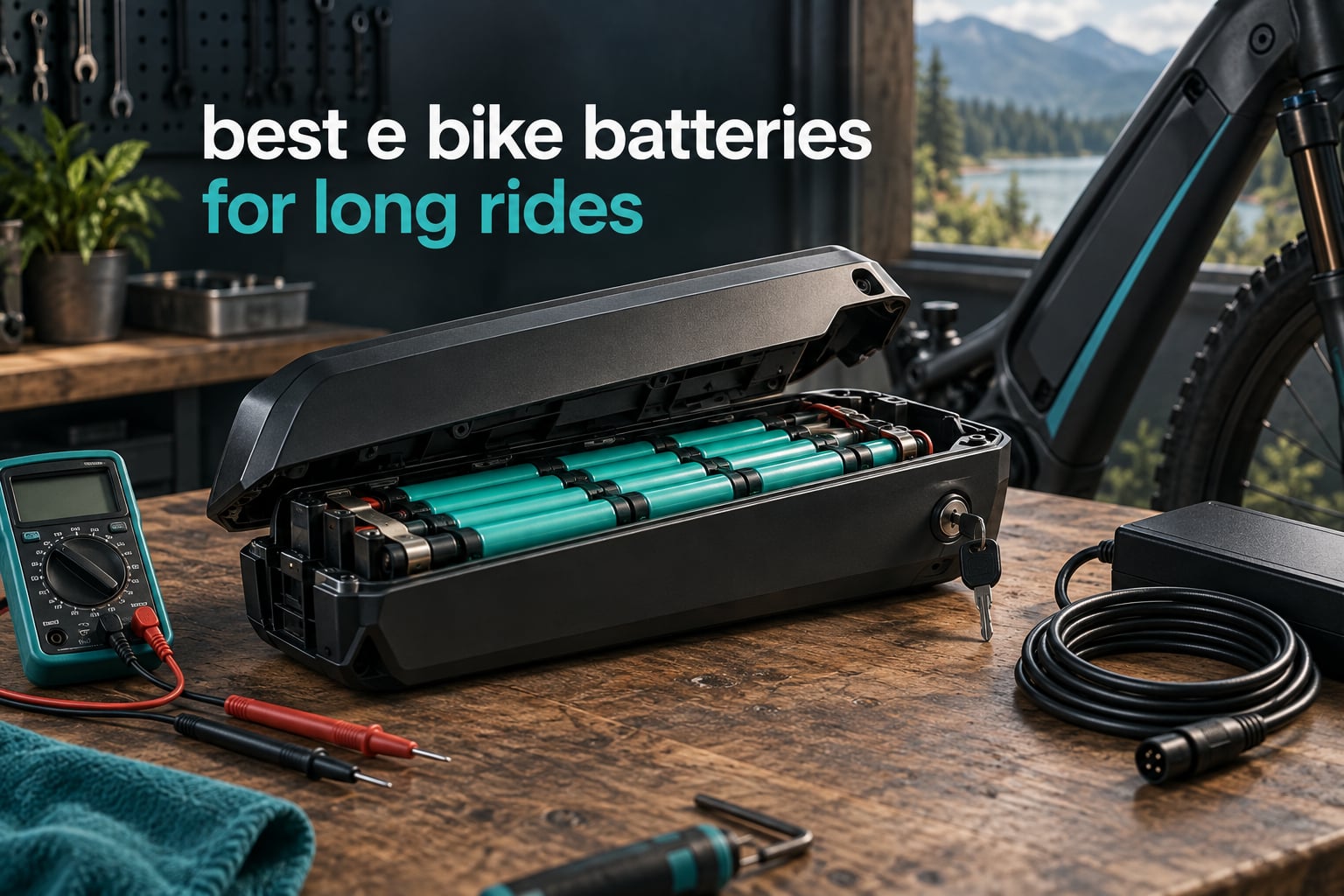
Riders planning 40-mile days and multi-day tours keep hitting the same wall: the range number on a retail listing is a laboratory figure, not a promise. We worked through the specs, discharge ratings, warranty terms and owner reports on twelve packs to find the best e bike batteries for long rides. The pattern was consistent. The right pack is the one with the highest true watt-hour capacity your controller can actually feed, paired with cells from a named manufacturer.
Which e-bike battery lasts the longest? The longest-lasting pack is the highest true watt-hour capacity your controller and frame can accept, typically a 48V pack between 20Ah and 25Ah giving 960Wh to 1200Wh, or a dual-battery setup. Our top pick, the Joyisi 52V 20Ah, pairs 1040Wh with a 50A BMS, while the Varstrom 48V 30Ah carries the most energy of anything we reviewed. Both are capped by your controller’s amperage and your frame’s internal width, not by the label.
Nothing here is a sponsored ranking. Where a manufacturer did not disclose a spec, we say so rather than repeat a marketing claim. For the chemistry side, our LiFePO4 battery guide covers the safety and cycle-life tradeoffs.
Table of Contents
Top 3 E Bike Batteries for Long Rides in 2026
E Bike Battery Specs Side by Side in 2026
| Product | Specifications | Action |
|---|---|---|
 Joyisi 52V 20Ah Joyisi 52V 20Ah |
|
Check Latest Price |
 Yose Power 48V 15Ah Yose Power 48V 15Ah |
|
Check Latest Price |
 Unit Pack Power 48V 20Ah Unit Pack Power 48V 20Ah |
|
Check Latest Price |
 Yose Power 48V 13Ah Yose Power 48V 13Ah |
|
Check Latest Price |
 SDTYYP 48V 17.5Ah SDTYYP 48V 17.5Ah |
|
Check Latest Price |
 ShunTongDa 48V 14Ah ShunTongDa 48V 14Ah |
|
Check Latest Price |
 Varstrom 48V 30Ah Varstrom 48V 30Ah |
|
Check Latest Price |
 PLXNYLB 48V 22.4Ah PLXNYLB 48V 22.4Ah |
|
Check Latest Price |
 DICHOU 48V 20Ah DICHOU 48V 20Ah |
|
Check Latest Price |
 BAFANG 48V 20Ah 960Wh BAFANG 48V 20Ah 960Wh |
|
Check Latest Price |
 Bosch BLP14 12V 4Ah Bosch BLP14 12V 4Ah |
|
Check Latest Price |
 Varstrom 52V 20Ah Varstrom 52V 20Ah |
|
Check Latest Price |
1. Joyisi 52V 20Ah LG Battery – Best Overall for Long Rides
Joyisi 52V 20AH Ebike Battery for 100W-2000W with 3A Charger and BMS Protection Board for Electric Bike Motor Kits
- Genuine LG cells that test authentic
- 20-35 mile real-world range including hills
- Bottle-cage style mounting with pre-drilled slots
- Responsive support that replaced a defective pack
- Some packs cut out under hard acceleration
- Occasional dead-on-arrival examples
- Must be charged in place while locked to the bike
This pack has the strongest combination of energy content, cell pedigree and owner feedback volume in the group. At 116 reviews it has the second-deepest rating base, and owners describe 20 to 35 miles per charge including hilly ground. That is a believable figure rather than a headline one.
The 50A BMS carries far more headroom than most motors will draw, and the XT60 connectors are a real advantage when wiring a pack away from the original system. Pre-drilled bottle-cage slots mean it straps in almost anywhere without a bespoke bracket.
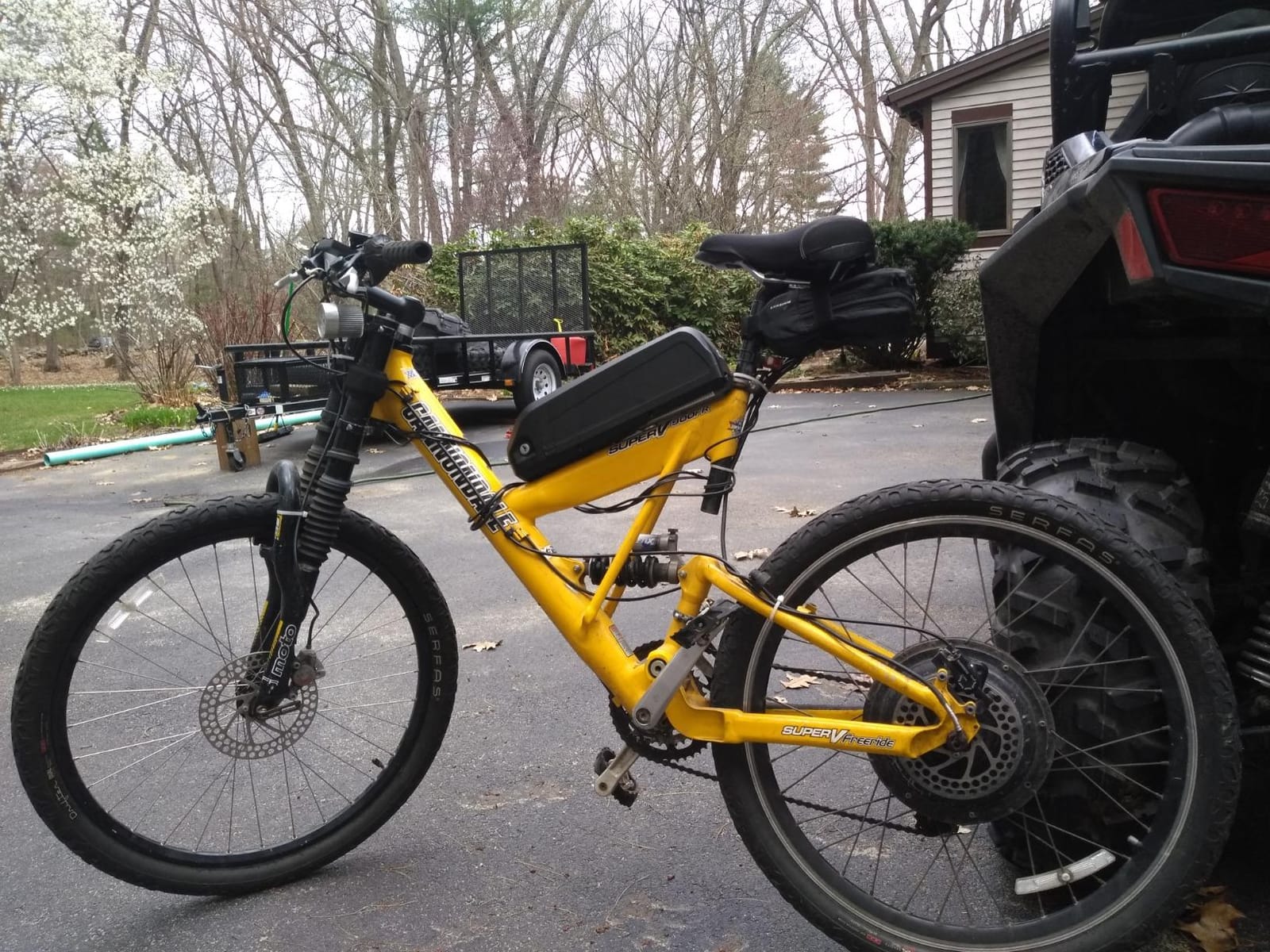
Charging logistics are the honest caveat. The pack stays locked to the frame and powers the bike while charging, leaving the headlight on, so you need an outlet near the machine. A few buyers also report momentary cut-outs under hard acceleration, which points to the connector rather than the cells.
Dead-on-arrival reports with a damaged output BMS appear in a small minority of reviews. The seller’s response is why we picked it: replacements went out quickly under a 12-month warranty with US-based support.
Check the discharge rating before you commit
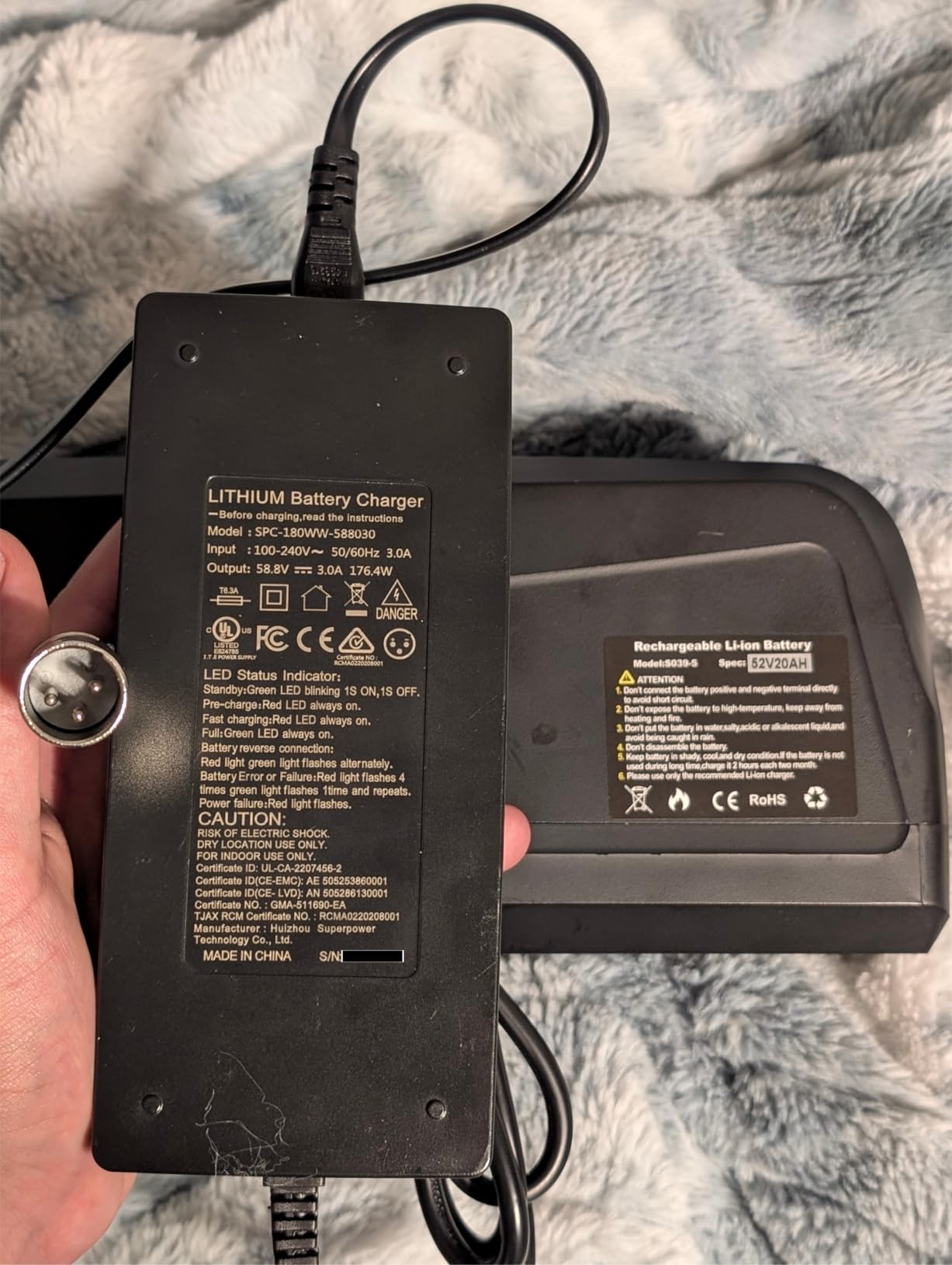
A 50A BMS does not mean the pack pushes 50 amps, only that it survives being asked to. What sets range is stored energy and voltage held under load, and both are strong at 1040Wh.
Where it is the wrong choice
If your plan depends on topping up from a solar panel mid-ride, the in-place charging design rules it out. Bosch PowerTube and newer Rad Power controllers also need a protocol check before this generic pack.
2. Yose Power 48V 15Ah Silverfish Battery – Best Budget Retrofit Kit
48V15Ah Electric Bike Battery with Charger 30A BMS Silverfish Ebike Battery
- Retrofit kit includes holder
- keys
- charger and spare fuses
- Depletes slowly and gives longer power longevity
- Fits common rack mounts with minor modification
- 18 month warranty
- Needs rail modification or drilling on some frames
- Does not fit Nakto and Heybike models out of the box
- Some buyers could not reach the seller for support
This is the pack for replacing a dead OEM battery without deep pockets. At 720Wh it is not the biggest energy store here, but 15Ah at 48V covers a long commute or a hilly loop, and the box holds everything a retrofit needs: holder base, keys, spare fuses and a 54.6V 2A charger.
Owners most often praise how slowly it depletes. The 30A BMS handles short-circuit, overcharge, overdischarge and temperature cut-offs, and the key lock on the holder base is a real deterrent for a bike left outside a cafe.
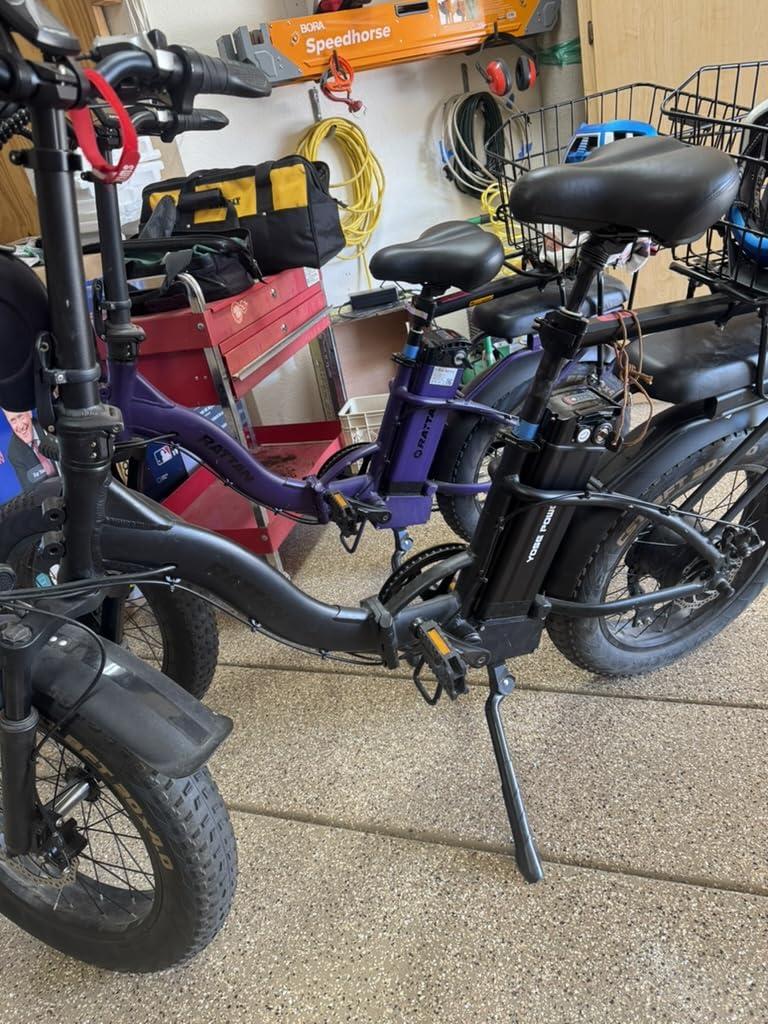
Two cautions before you order. It does not fit Nakto and Heybike e-bikes out of the box, and some bikes need the mounting rail drilled. The 2A charger also means roughly eight hours to full, so plan overnight charging rather than lunch-break top-ups.
Is 15Ah enough for a long ride
On flat to rolling terrain with moderate assist, 720Wh lands somewhere around 30 to 45 miles for a 170 to 190 lb rider. A 250 lb rider on a cargo setup sees considerably less, and a genuinely mountainous route will exhaust it.
What to verify before drilling anything
Measure your rack or downtube bay against the 4.3 by 3 by 15 inch footprint and confirm the controller accepts 48V. An incorrect charger is the fastest way to damage the cells, and no warranty covers it.
3. Unit Pack Power 48V 20Ah LG Battery – Best for BBS02 and BBSHD Kits
Unit Pack Power 48V 20 Ah Electirc Bike Battery – Lithiu-m Ion Ebike Battery 1000W 750W 500W 1500W 1200W for BBSHD BBS02 – LG4800 Cell Ebike Battery
- LG 5000mAh cells in a proven configuration
- Rated to 80 percent capacity after 800 cycles
- More powerful than the factory pack it replaced
- Each pack fully charge and discharge tested before dispatch
- Long charge time relative to capacity
- Some reports of a connector pin shorting and melting solder
- Power cable may need modification for some bikes
If your bike runs a Bafang BBS02 or BBSHD mid-drive, this pack was built for that conversation. The 40A maximum constant discharge rating comfortably exceeds what a 1000W to 1500W mid-drive pulls at full assist, and owners report the replacement feels more powerful than the pack it superseded.
Two details set it apart from generic 20Ah packs. Every pack is run through a full charge and discharge cycle before dispatch, and it is rated at 80 percent capacity or better after 800 cycles. That is a concrete longevity claim rather than a vague promise.
Where the 800-cycle rating matters
On a long-ride rotation, cycle life is the real budget line. At 80 percent retention after 800 cycles, the pack still holds roughly 770Wh. Our deep cycle battery guide explains why that matters more than headline capacity.
Where it falls short
The 54.6V 2A charger is slow for a 960Wh pack, and charge time is the most-cited drawback. Isolated reports also describe a connector pin shorting and melting solder, and some bikes need the power cable modified.
4. Yose Power 48V 13Ah Hailong Battery – Best for Smaller Controllers
YS YOSE POWER Down Tube Ebike Battery 48V 13Ah Electric Bicycle Battery
- Bullet connector plus included XT60 adapter for flexible hookups
- 30A BMS with 50A max current
- Keyed holder base with quick rail removal
- 18 month warranty
- Lowest capacity of the 48V packs reviewed at 13Ah
- Limited to controllers up to 900W
- Heaviest listed weight for its capacity at 12.1 pounds
This Hailong-layout pack sits at the small end and is honest about it. Thirteen amp-hours at 48V is 624Wh, which carries a lighter rider over flat and rolling terrain for a long day but will not power a loaded climbing tour. The value is electrical headroom and connector flexibility.
Sixty-five 2600mAh cells in a 13S5P layout feed a 30A BMS rated for 50A maximum current, generous for a sub-900W controller. The discharge port is a bullet connector with an XT60 adapter in the box, so it mates with either common standard.
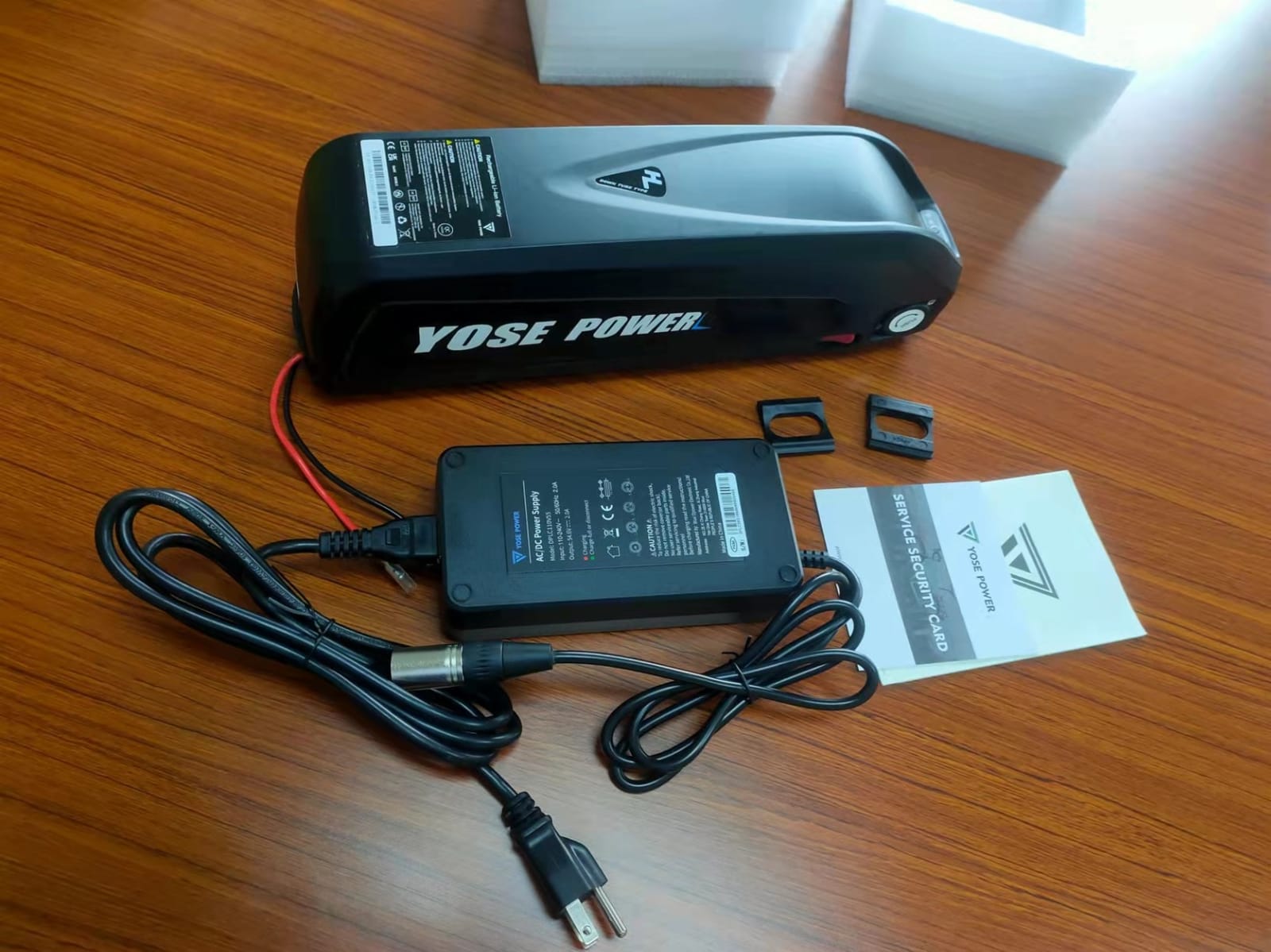
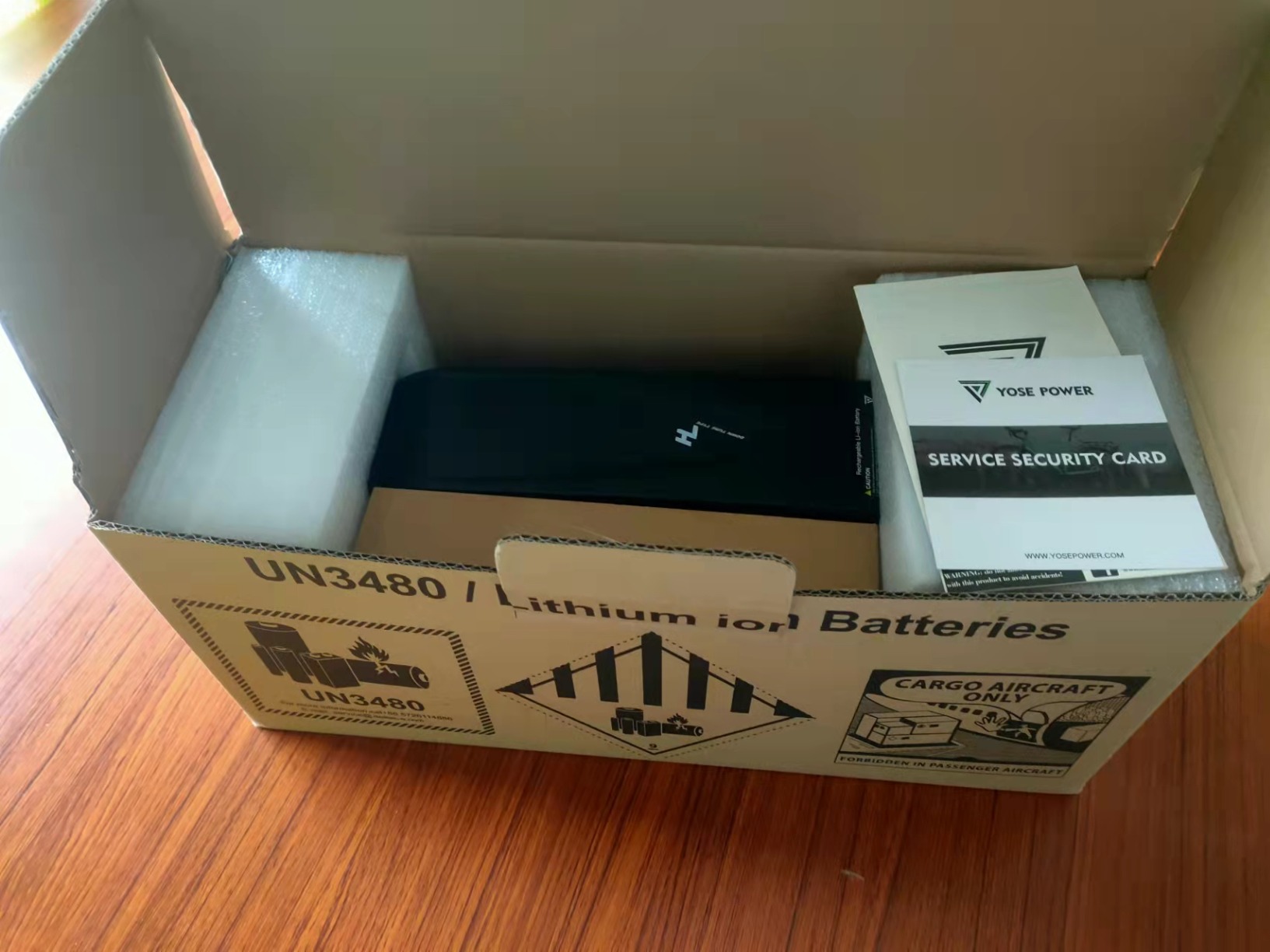
Owners like the quick rail removal on the keyed base, which makes charging at a cafe more convenient than unbolting a downtube pack. The 54.6V 2A charger fills it in roughly seven hours. The 12.1 pound listed weight is the heaviest here for the energy stored, and on a climb you will feel it.
When 13Ah is the right number
For a commuter running 30 miles a day on protected routes with charging at both ends, 13Ah is plenty and keeps the bike light. A smaller pack also sits higher on the discharge curve for less of the ride, meaning less voltage sag on rolling terrain.
Check your controller ceiling first
Because the pack is rated for controllers up to 900W, it is a poor match for a 1200W or 1500W hub motor. Pairing a small pack with a high-current controller is how riders end up with tripped BMS cut-offs under load.
5. SDTYYP 48V 17.5Ah 840Wh Battery – Best OEM-Style Drop-In Replacement
- Direct drop-in for Reention Dorado Plus
- Ride1Up Core 5 and Aurochs XT10
- Higher capacity than the original pack
- Charger
- new lock and mounting brackets in the box
- Seller confirms fitment from photos before you order
- Warranty terms are unclear
- Two lengths offered and the choice is not obvious in the listing
- Cell manufacturer is not disclosed
At 4.5 stars this is joint-highest-rated pack we reviewed, and the reason it edges ahead is fitment. It is a direct replacement for the Reention Dorado Plus, Ride1Up Core 5 and Aurochs XT10, and buyers report a swap that restores a working battery level indicator on the bike screen.
At 840Wh it carries more energy than the packs it replaces, which owners describe as a noticeable range improvement on the same route. The aluminium alloy shell feels a step above the plastic cases used on most budget packs, and the spring-loaded carry handle matters at the end of a long day.
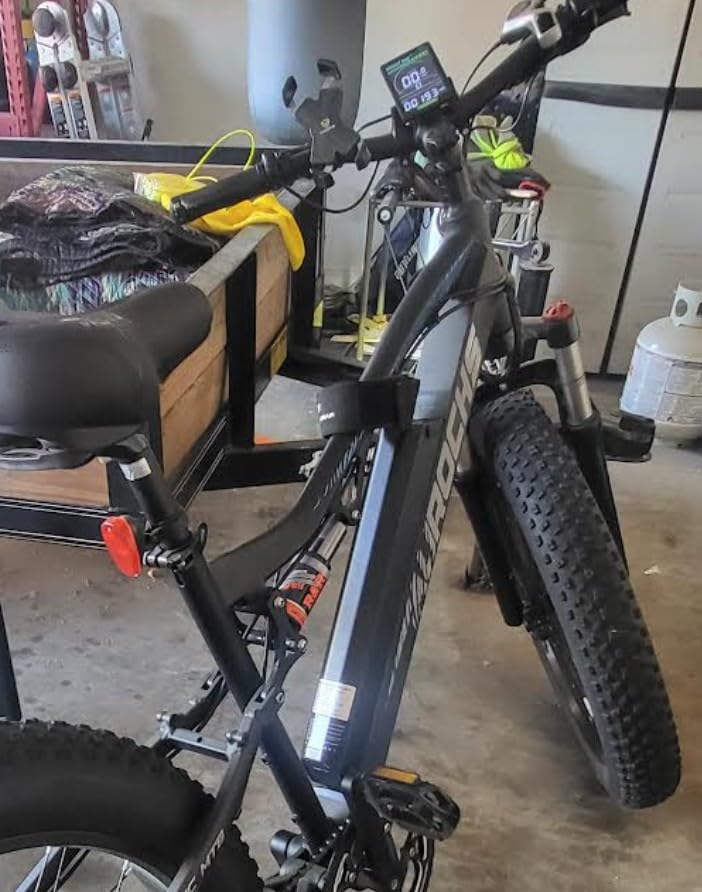
The extras are unusually complete: a four-light level indicator, a USB port for charging a phone, a keyed lock and mounting brackets alongside the charger. Support is the other strength, with the seller confirming fitment from photos before the order is placed.
How to pick the right length
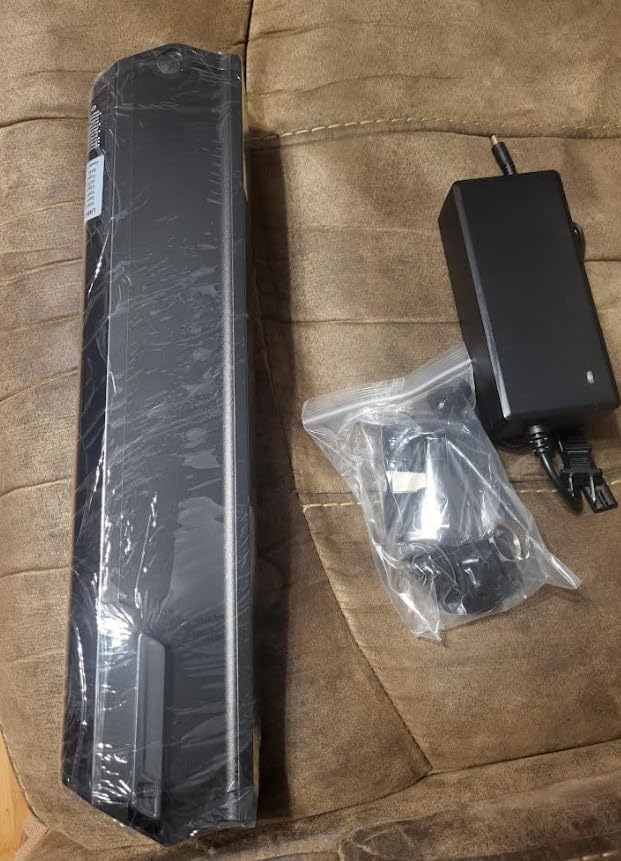
Two lengths are produced and the listing does not make the choice obvious. The 460mm version shown here matches the longer frames in the Dorado Plus and Core 5 families, so measure your existing pack end to end and send the seller a photo with a tape measure in frame.
What the missing disclosure means
The pack uses 65 automotive A+ grade cells without naming the manufacturer, so you cannot verify cycle life the way you can with an LG or Samsung pack. The unclear warranty terms are the other gap, and at least one buyer declined the purchase over it.
6. ShunTongDa 48V 14Ah Battery for Rad Power Bikes – Best Weight-to-Capacity
Ebike Battery 48V 14Ah for RadExpand Bikes No Suport Upgrade APP v1.4.0
- Purpose-built replacement that drops into the stock Rad Power base
- Lightest traction pack reviewed at 3.5 kg for 672Wh
- Plug-and-play XT-60 hookup needs no complex wiring
- Waterproof casing with anti-theft lock and 30-day returns
- Does not work with Rad controller firmware v1.4.0 and above
- 14Ah capacity is modest for very long rides
- Only a 12 month cell warranty
At 3.5 kilograms this is the lightest e-bike traction pack in the roundup and still delivers 672Wh. For a rider whose battery has swollen or lost range, an equivalent-weight replacement is the least disruptive upgrade available. This one is engineered around the Rad Power RadExpand 5, RadWagon and RadRunner 2 base.
Installation is genuinely plug-and-play: the base is pre-installed and the connection is XT-60, so there is no cutting and no custom wiring. The waterproof casing and anti-theft lock suit year-round commuting, and the pack is rated to hold 80 percent capacity after 800 cycles.
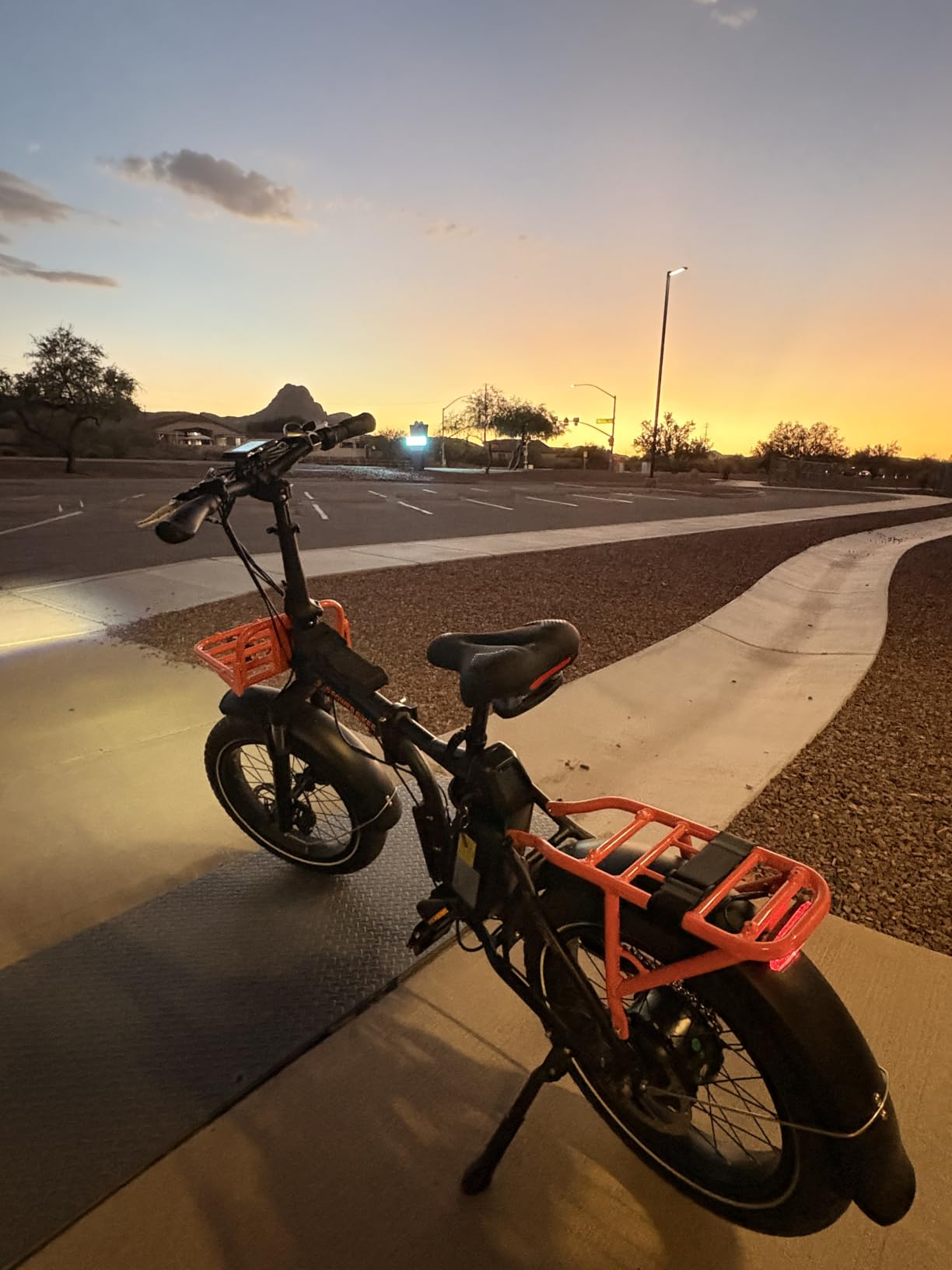
Capacity is the honest limit. 14Ah at 48V is a commuting pack, not a touring pack, and a heavier rider on hilly routes will feel that sooner than a light rider on the flat.
Check the firmware version first
Rad Power added controller firmware that will not accept this pack. Find your version in the bike settings or display menu, and if it reads v1.4.0 or higher, this is the wrong purchase however good the spec looks.
When a lighter pack is the better pack
Weight compounds on climbs. A pack two kilograms lighter changes how a 10 percent grade feels over the fourth hour, and for anyone running a rack, child seat or panniers, total mass matters more than raw watt-hours.
7. Varstrom 48V 30Ah Battery – Best for Maximum Range
Varstrom 48V 30Ah Ebike Battery L*/G Cell Lithium Ebike Replacement Battery
- Highest capacity reviewed at 30Ah for the longest range
- Genuine sustained 40A output that eliminates dips on mid-drive kits
- Holds voltage after hard off-road riding
- 30-day return and 365-day repair or replace
- Heavy enough to need a bottle bob and hose clamps
- Some examples stop charging just below 58.3V
- Does not fit every frame
- Occasional reports of packs that will not charge
This carries the most energy of any pack we reviewed: 1440Wh from a 48V 30Ah configuration built on LG 5000mAh cells. For flat, moderate-assist riding that is the difference between finishing with reserve and looking for an outlet at halfway.
A 40A intelligent BMS provides overcharge, overdischarge, overvoltage, overcurrent, short-circuit and temperature protection across motors from 50W to 1800W. Owners on 1500W mid-drive kits report the sustained 40A output removes the dips that ruin a climb, and reviewers describe 26-mile off-road rides ending still near full.
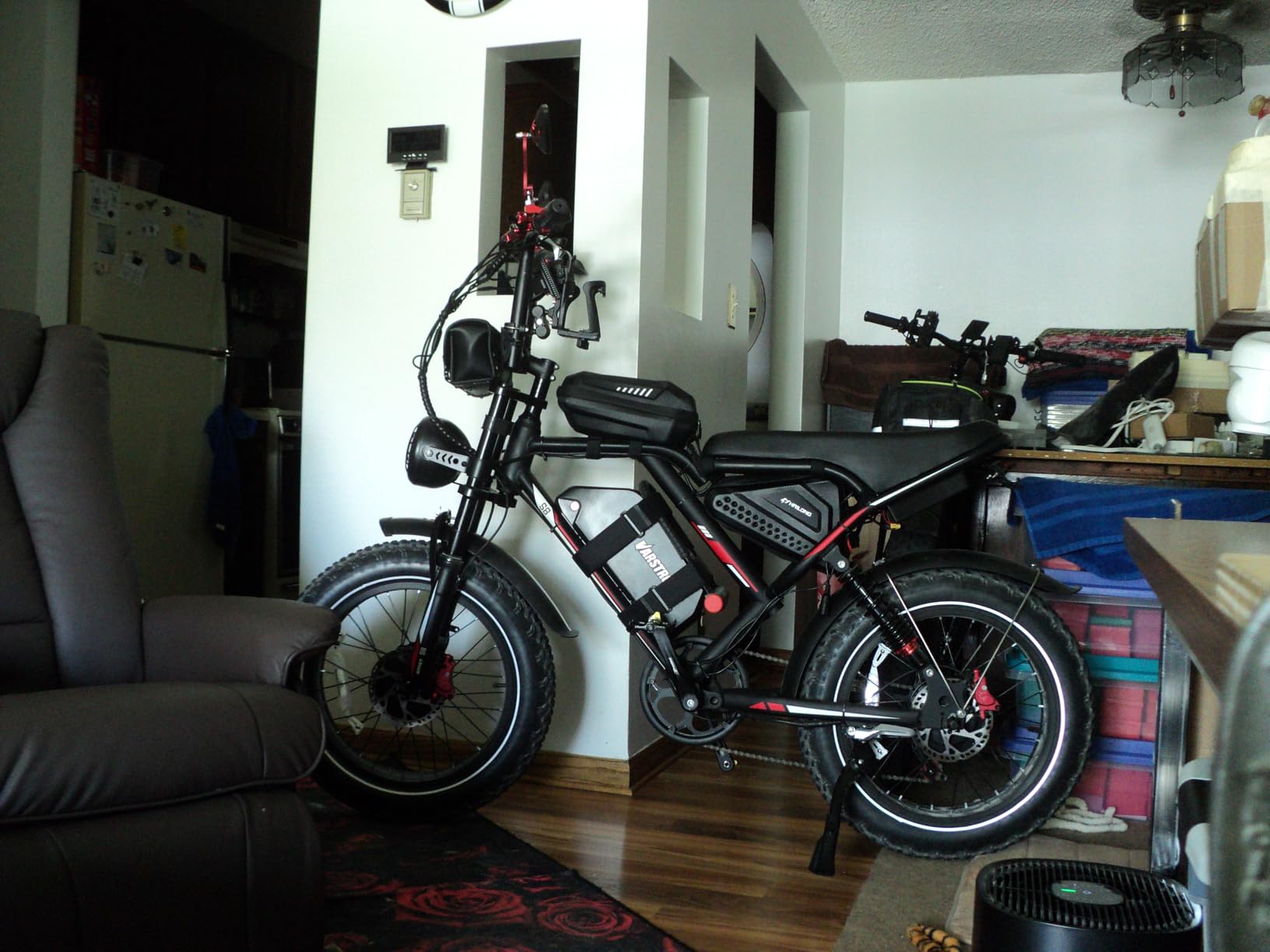
Weight is the trade-off, and the manufacturer does not state it. At 395 by 95 by 156mm this is a large pack, and riders report needing a bottle bob and hose clamps to stop it moving. Several buyers returned it after a sizing mistake.
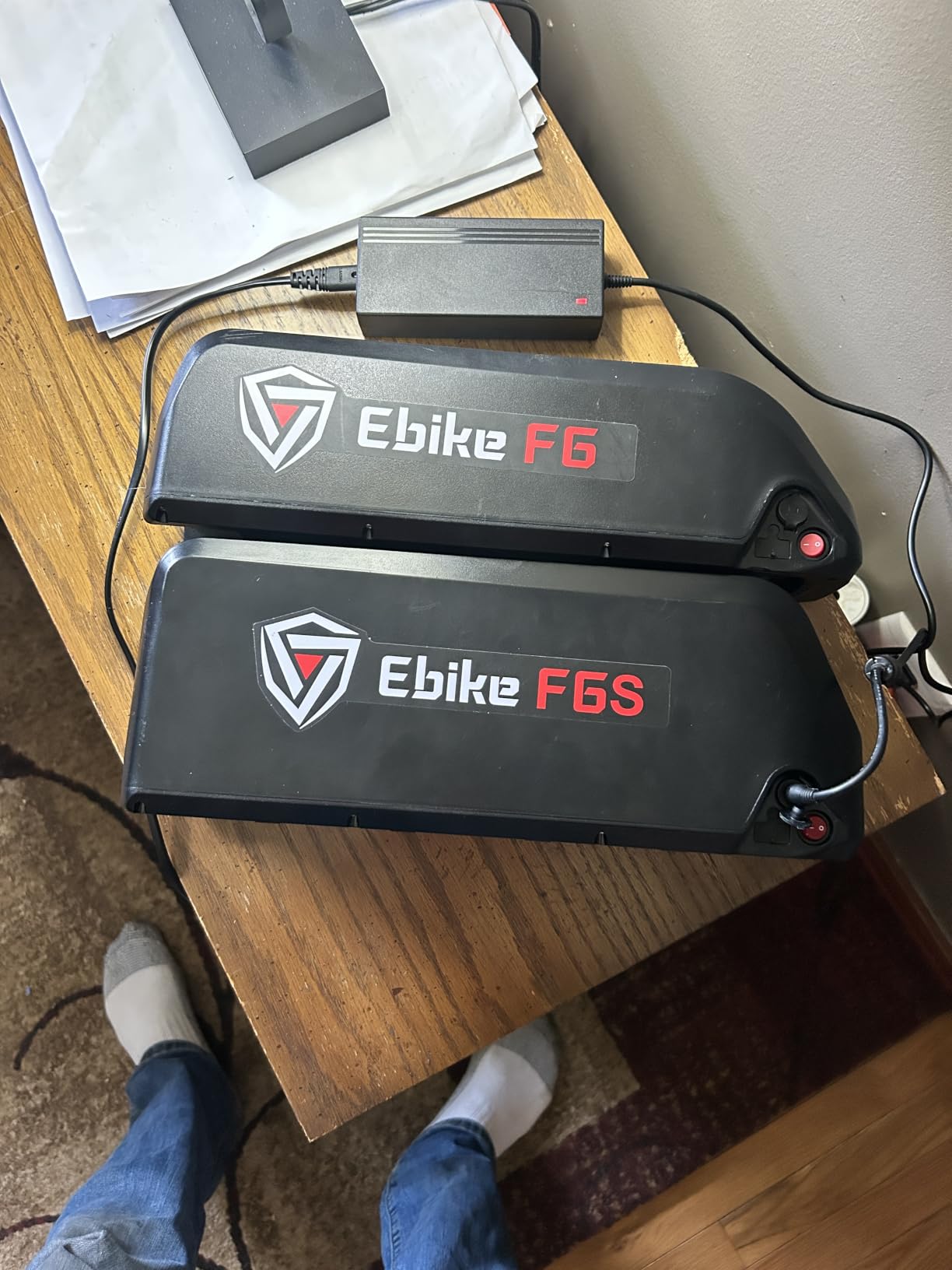
Confirm your controller can feed 40A
Below 30A continuous you will not draw the full 1440Wh at a useful rate, and voltage sag under climbing load will still cut assist. Compare your controller’s rated current against the pack’s 40A before ordering.
What the charging reports mean
Some examples stop charging just below 58.3V, and a small number will not charge at all. That is a small fraction of 32 reviews, but it is the kind of fault that strands you. The 30-day return and 365-day repair-or-replace is the strongest warranty structure here.
8. PLXNYLB 48V 22.4Ah Parrot-Style Battery – Best for Carrier and Rack Mounts
PLXNYLB 22.4AH Electric Bike Lithium Battery, Removable Ebike Battery with 3A Charger 48V Electric Bicycle Battery Pack with Waterproof Holder for 250W-2000W Motors
- Noticeably longer ride time and added top-end speed on flat ground
- Fits several OEM carrier mounts directly including the Aventon Sinch
- 3A charger
- 5-pin mounting plate and two keys in the box
- 50A BMS with a voltage equalisation chip
- One example arrived dead and would not hold a charge
- Cycle life disappointing after a few dozen full cycles
- Capacity listed inconsistently as 22.4Ah and 23Ah
- No USB port for accessories
The parrot-style housing is why this pack exists. Its curved body and 5-pin mounting plate drop into several OEM carrier positions, including the Aventon Sinch, which is rare at this size. At 8.95 pounds for roughly 1075Wh it is lighter than the other large-capacity packs here.
Owners report more range and more top-end speed on the flat than the stock packs it replaces. One rider noted that each assist level on the new pack now performs like the next level up on the old one.
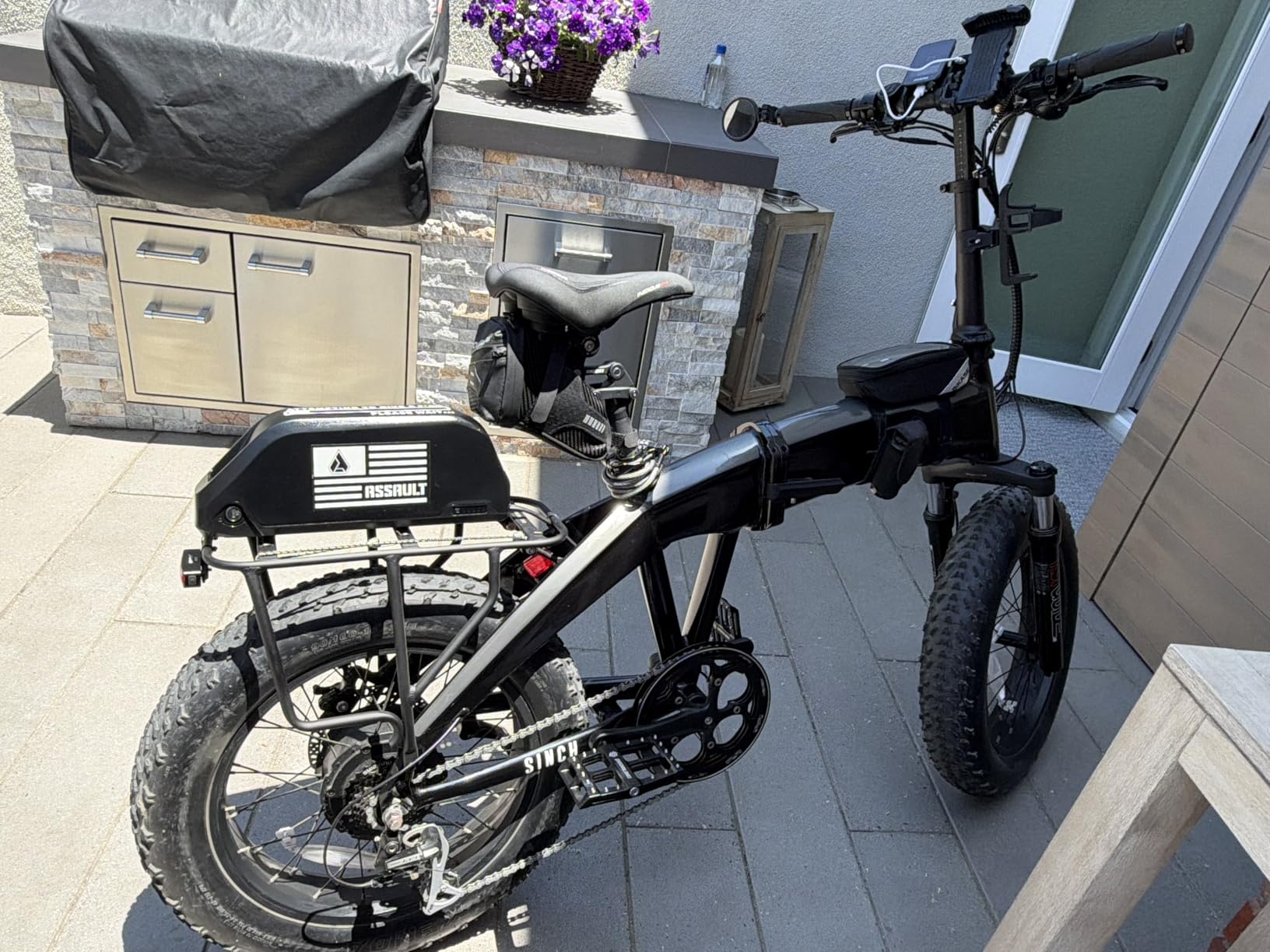
Two things to be clear-eyed about. The listing states 22.4Ah in one place and 23Ah in another, so treat the watt-hour figure as approximate. And the 4.0 rating is tied for lowest here, driven by early failures and disappointing cycle life after a few dozen full cycles despite a claimed 1500-cycle rating. The cells are not named, so that claim cannot be verified.
Is the equalisation chip worth anything
In principle, yes. Voltage equalisation keeps cells balanced as they drift apart, which delays the point where one weak cell drags the whole pack’s cutoff voltage down. In practice, buyers have not reported the longevity the chip should deliver.
Who should still consider it
If your bike uses a carrier mount and the pack drops into the OEM position, the fit alone justifies a look. Everyone else should test it for several full cycles before committing to a tour, and consider the LG and Samsung packs here for stronger longevity claims.
9. DICHOU 48V 20Ah Battery – Best for Bafang Kits and Rad Power Upgrades
DICHOU 48V Ebike Battery Cell for Bafang and Other Bike Conversion Kit Rad Power Runner City – Lithium Ion Bike Batteries for 500W 750W 1500W-Wheel Kit Batteries
- Major range improvement over stock packs with 23-40 mile rides reported
- Fits RadCity
- RadRover and RadRunner after raising the cradle bolts
- 20Ah outclasses the OEM 14-15Ah packs
- Factory short-circuit
- overcharge
- crush and extrusion testing
- Sits roughly an inch taller than OEM Rad Power packs
- Heavier than stock and raises the centre of gravity
- Lithium packs are not returnable so a bad fit costs a return shipment
This is the pack riders cite when they want more capacity than their bike came with. Twenty amp-hours at 48V gives 960Wh, a meaningful step up from the 14Ah and 15Ah packs fitted to many Rad Power models, with owners reporting 23 to 40 mile rides as a result.
The testing regime is the detail that stands out. Each pack goes through short-circuit, overcharge, crush, needle and extrusion safety tests plus a full charge and discharge cycle before dispatch. The included 3A charger is also an upgrade, since many OEM packs ship with a 2A unit.
Reading the fitment complaints accurately
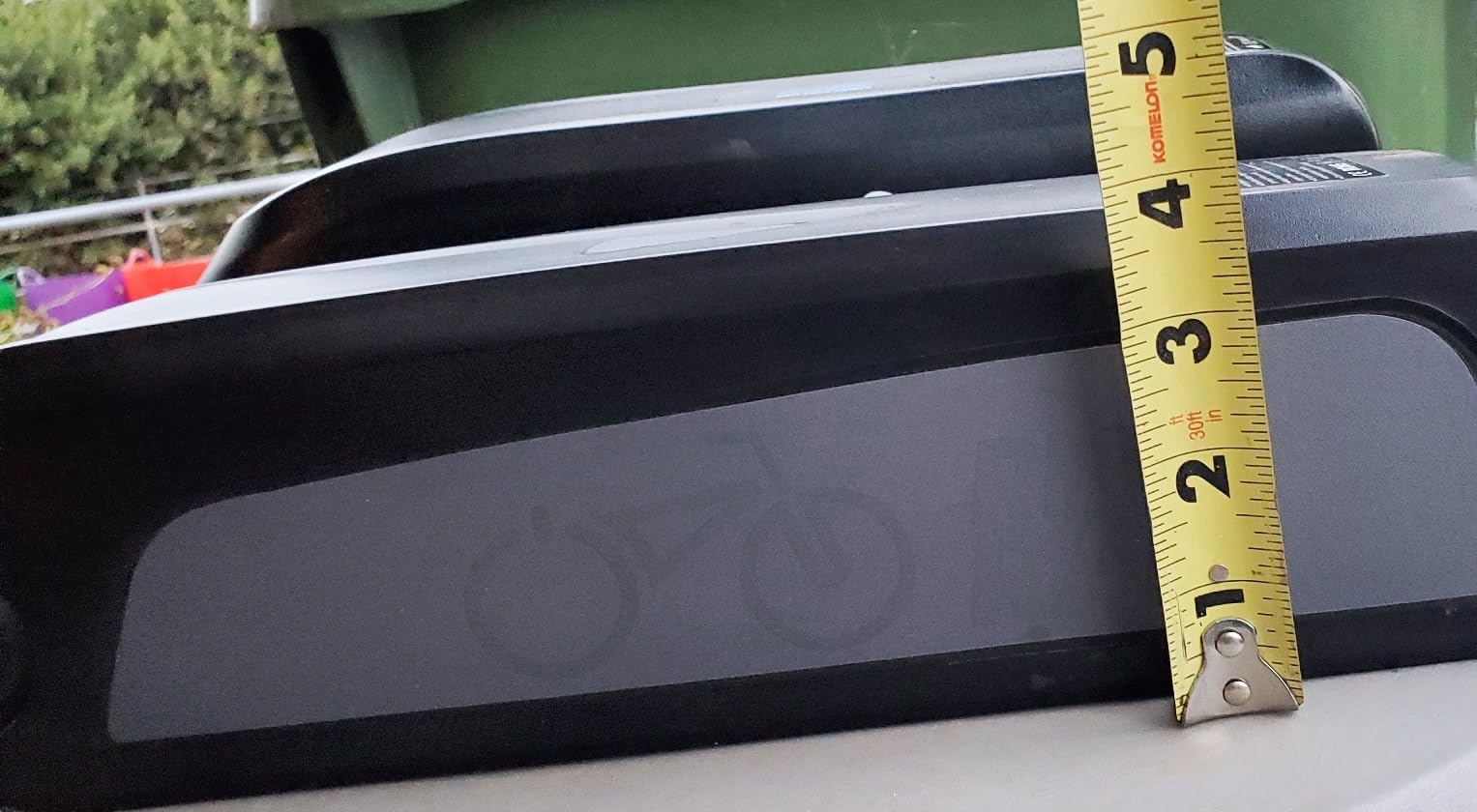
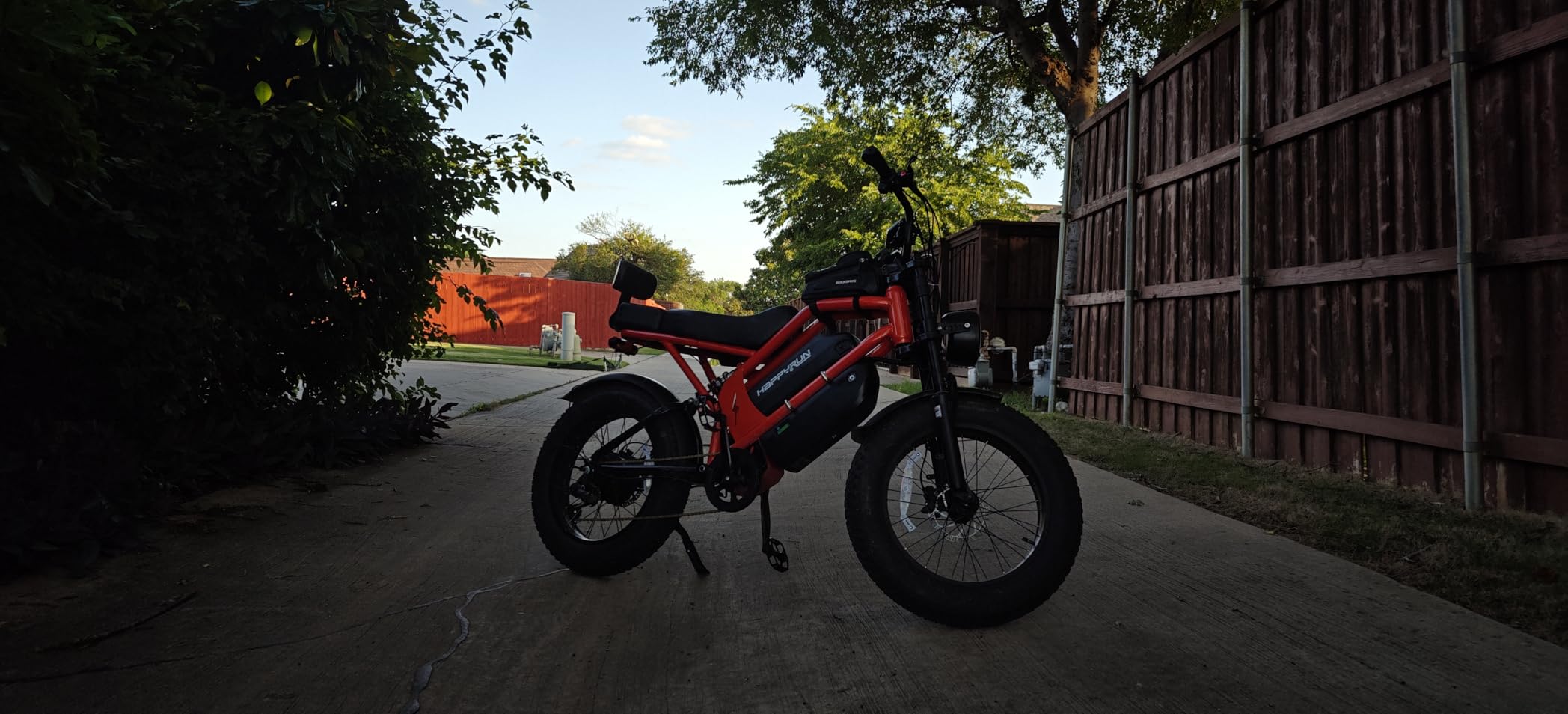
Two fit issues recur. The pack sits roughly an inch taller than the OEM Rad Power units, so a strap or top tube can interfere, and it is heavier than stock. Because lithium packs are generally not returnable, a bad fit means paying to send it back.
What the factory testing proves
Crush and extrusion tests confirm the enclosure survives a knock and the cells are not being punctured by the case, which matters because most pack failures in service are mechanical. It does not tell you cycle life.
10. BAFANG 48V 20Ah 960Wh Samsung Battery – Best for Longest Single-Charge Reports
BAFANG Electric Bike Battery 48V 52V 13Ah 17.5Ah 20Ah Ebike Lithium Ion Battery with Charger and Key 500W 750W 1000W 1500W Motor AW and Other Motors
- Riders report 65-70 miles on a single charge with charge to spare
- Samsung cells give strong long-cycle life
- Balanced BMS charging supports repeated deep discharge
- Case
- bracket
- key lock and charger included
- No cell count or cell brand documentation in the listing
- USB port is very hard to locate if present
- Lockout prevents charging from a solar panel
- Mount security needs your own bracket
The reported mileage here is worth examining closely. At 960Wh built on Samsung cells, riders describe 65 to 70 miles on a single charge with charge still remaining at the end, which is well above what a 48V 20Ah pack should deliver.
The only honest explanation is that those riders are light and riding at low assist on favourable terrain. A heuristic that surfaces repeatedly on r/ebikes and forums.electricbikereview.com is that roughly half of advertised range is achievable, so halve that figure if you weigh 190 lb and ride into a headwind at assist 4.
We would still choose this pack for the long haul. Named cells with published cycle life give you a longevity plan, and BMS balanced charging supports repeated deep discharge, which is what a bikepacking rider does every night.
Which variant to order
The 48V version suits 500W to 1000W motors and the 52V 20Ah variant goes to 1600W systems. Match nominal voltage to your controller rather than the motor label, because a 52V pack on a 48V controller will not charge properly.
What the missing documentation costs
The listing names Samsung cells but publishes no cell count or datasheet, so you cannot verify the configuration or expected retention. The lockout blocking solar charging is a real limitation for bikepackers.
11. Bosch BLP14 12V Lithium Iron Phosphate Battery – Best 12V Auxiliary Pack
BOSCH BLP14 Grp 14 Li-ion Phosphate Battery (120A) 5.91″ x 3.43″ x 5.63″
- Up to 60 percent lighter than the lead-acid battery it replaces
- Low self-discharge and quick recharge times
- Built-in charge indicator
- voltage tester and cell balancer
- Mountable in any position with an 18-month warranty
- Ah rating is far below the AGM batteries it replaces
- Several examples have gone flat despite correct care
- Terminal nuts are not semi-captive and can be lost
- Warranty handling reported as difficult in some regions
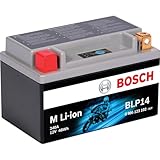
Let us be direct: the Bosch BLP14 is a 12V powersport battery, not an e-bike traction pack. It will not drive a motor and it will not extend your range. What it does is power accessory circuits on a long tour, and at 256 reviews it is the most thoroughly reviewed product here.
For tourers running lights, a USB charging system and a tail light through a converter, a reliable 12V source weighing 2 pounds instead of 6 changes the handling of a loaded bike. A built-in charge indicator, voltage tester and cell balancer let you check its state from the saddle.
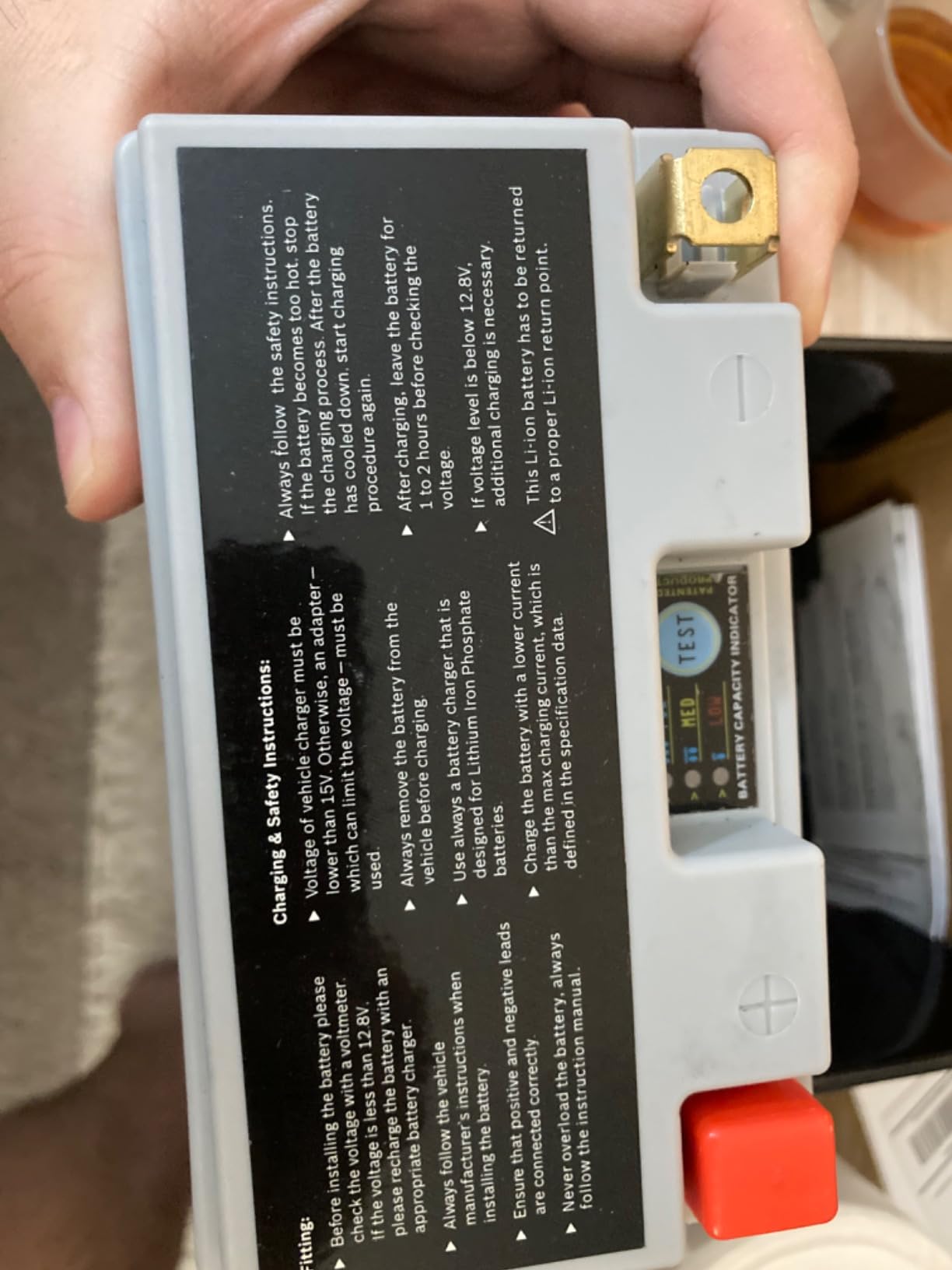
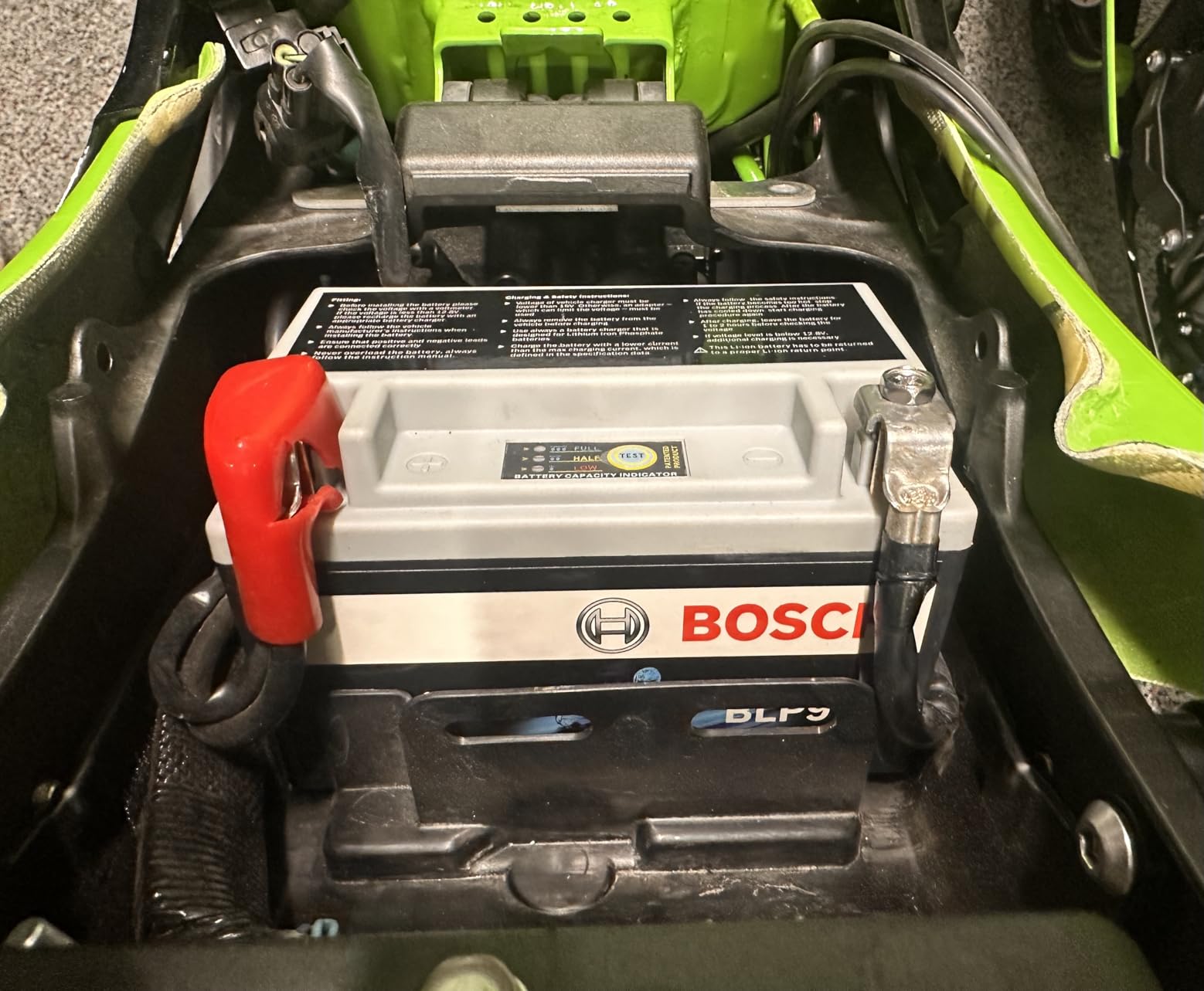
Capacity is the significant limitation. Four amp-hours sits well below the 7 to 12Ah of the AGM batteries it replaces, so a long stop with accessories running will empty it quickly. Several examples have also gone flat despite correct care, and the terminal nuts are not semi-captive, so they can be lost during fitting.
When an auxiliary 12V pack helps
On a two-week tour with a solar panel feeding a 12V buffer, the low self-discharge rated for this chemistry keeps more charge on board between sunny days than lead-acid would. If your e-bike drives all lighting from the main pack, skip this entirely.
Why we included it here
It is the only product in this roundup using lithium iron phosphate, the family covered in our LiFePO4 battery breakdown, whose thermal profile is far calmer than NMC lithium-ion. Do not buy it expecting more miles.
12. Varstrom 52V 20Ah Samsung Battery – Best for Fast 3A Charging
Varstrom 52V 20Ah Ebike Battery Sam*/Sung Cell Lithium Replacement Battery
- Riders reach the end of the same commute still near full
- Genuine sustained 40A output on mid-drive kits
- Quiet 3A charger gives a full charge in 6-7 hours
- 30-day return plus 365-day repair or replace
- Heavy at 6 kg
- which makes sliding it into a tight frame space difficult
- Some examples arrived unable to charge
- Battery must be removed from the bike to charge
- Range varies a lot with motor power and riding style
Charge time is the underrated spec on a long tour, and this pack handles it well. The included 58.8V 3A charger fills 1040Wh in six to seven hours, and buyers describe it as quiet enough to run in a small cabin. For a rider charging between breakfast and departure, that difference is real.
The cells are the selling point for longevity. This pack uses imported Samsung cells with no recycled cells in the mix, is rated 1000+ cycles at 80 percent or better capacity, and buyers report finishing a familiar commute still near full on a pack that had flattened the one it replaced.
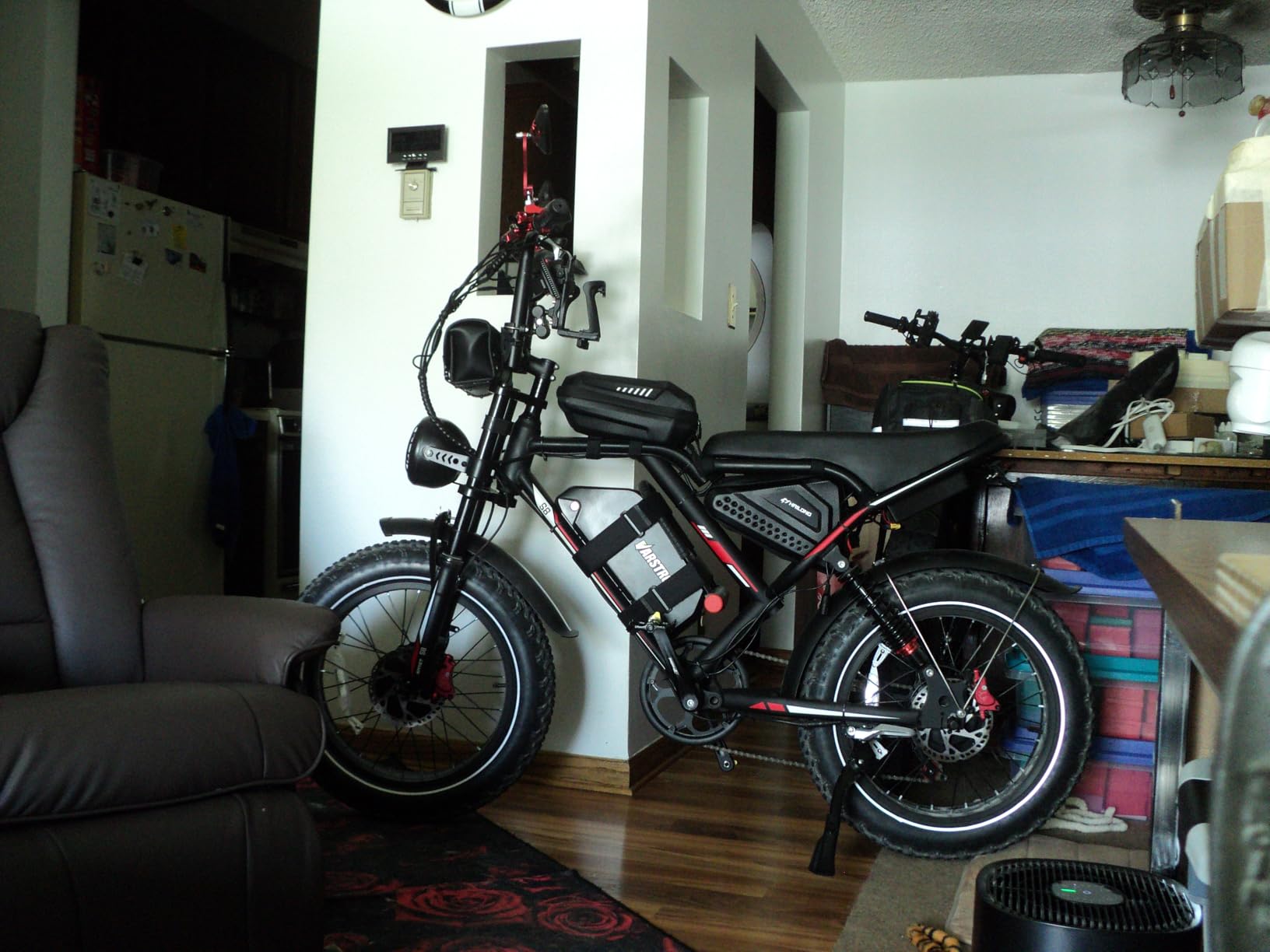
Weight is the recurring complaint at 6 kg, and it is practical rather than cosmetic. Sliding that pack into a tight frame space is genuinely hard, and a few examples arrived unable to charge at all. The pack must also be removed to charge, the opposite of the Joyisi arrangement.
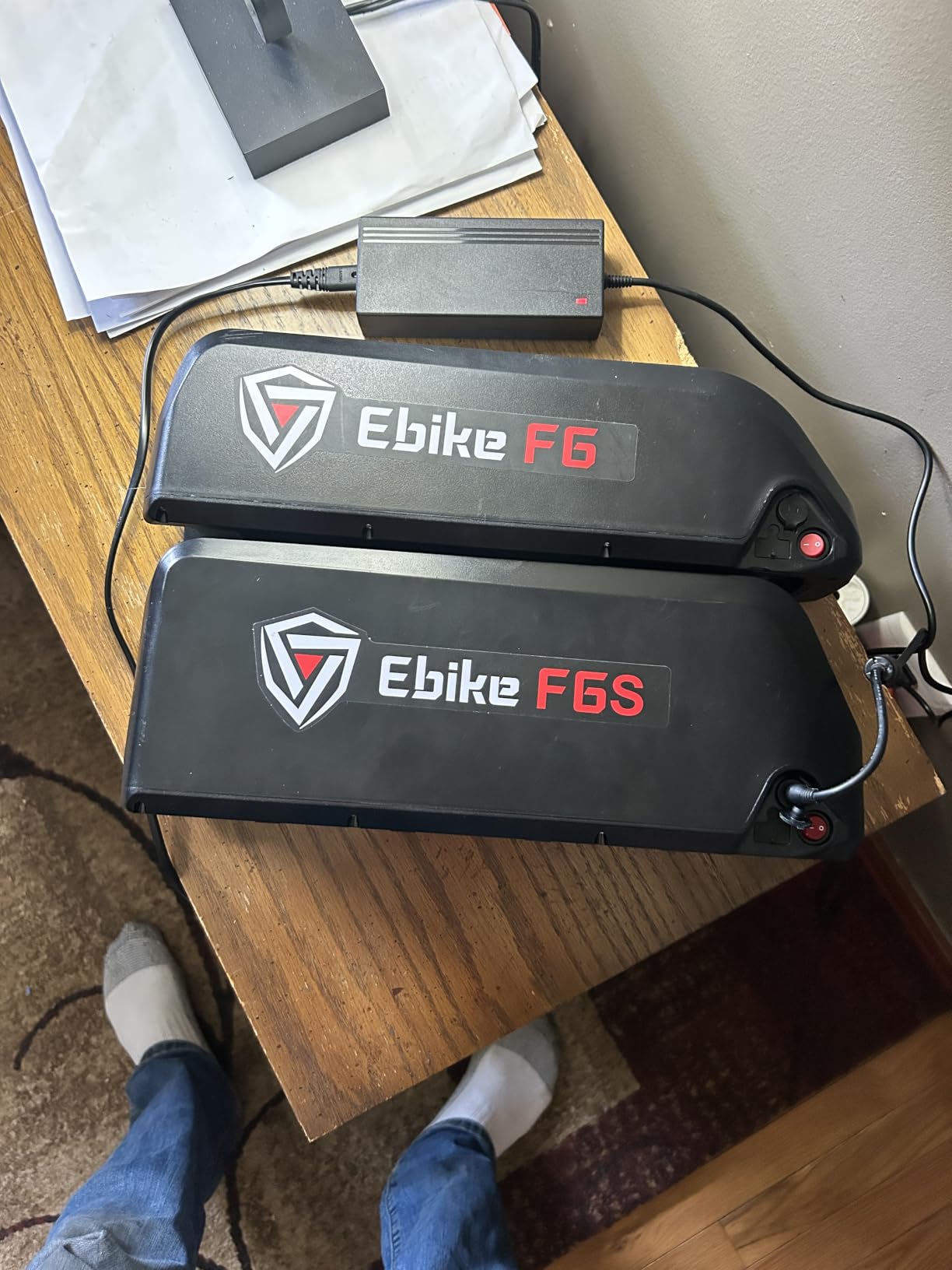
Why UART and CAN bus matters
Modern controllers and batteries talk to each other. CAN bus systems require the battery to identify itself, and a pack that cannot complete that handshake sits dead in the downtube with no error light. Sellers who check this before a sale remove the most common reason a new pack fails to wake.
Choosing between the two 52V options
If turnaround time between rides is your priority, this 3A charger beats the 2A units on several packs here. If raw range in a tight frame is the priority, the 48V 30Ah pack carries more energy in a similar volume. Both use named cell brands.
How to Size an E Bike Battery for Your Long Ride?
Every capacity conversation starts in the wrong place. Amp-hours tell you how much charge a pack holds per hour of discharge, and alone they mean almost nothing. Watt-hours predict distance, and they are voltage multiplied by amp-hours. A 48V 20Ah pack holds 960Wh; a 48V 10Ah pack holds 480Wh.
For the calculation, multiply your target distance by 1.2 for reserve, then by a realistic consumption figure. A light rider on flat ground at moderate assist runs roughly 8 to 10 Wh per mile. Rolling terrain with headwind lands around 12 to 14. Sustained climbing with a heavy rider or cargo pushes toward 18 to 20.
So a 60-mile hilly day at 15 Wh per mile needs 60 x 1.2 x 15, which is 1080Wh. A 40-mile flat commute at 9 Wh per mile needs 40 x 1.2 x 9, or 432Wh. That second figure is why a commuter does not need our first pick, and why buying 1440Wh for a 12-mile round trip pays for weight you carry for nothing.
For a 200-mile day the same math says roughly 3360Wh, and no pack here reaches that. That is why dual-battery systems and mid-ride charging exist. Riders running 50-plus mile days on r/bicycletouring describe occasionally using a third battery and being stranded twice pushing bikes uphill on a dead pack.
The final constraint is your controller, not your wallet. A controller rated 20A cannot exploit a 40A BMS, and where firmware caps capacity a bigger pack will not raise the ceiling. Our deep cycle battery guide covers how cell chemistry changes that long-term picture.
OEM Integrated Batteries vs Aftermarket Packs
The most common question on the r/ebikes thread about longer weekend rides is whether to buy the manufacturer’s extra battery or a cheaper third-party pack claiming compatibility. The honest answer splits by what you value.
Integrated OEM systems such as the Bosch PowerTube and Bosch PowerPack, plus Shimano frame-mounted packs, are engineered as part of the bike. Battery, controller and motor share a protocol, the display reads the pack accurately, and the warranty is handled by the brand that built the machine. The downside raised repeatedly in the same thread is cost and availability: OEM replacement packs are quoted at several times the price of an aftermarket equivalent, and owners of discontinued models report the original is no longer sold at all.
Aftermarket packs are where value sits. Two to three times the capacity of the original at a fraction of replacement cost, named LG or Samsung cells where the manufacturer discloses them, and a 3A charger instead of the 2A unit your bike shipped with. The costs are real too: unclear warranty terms, no cell documentation on some listings, and fitment that may require drilling.
Our position after twelve packs: OEM integrated systems win on reliability and protocol compatibility, and are correct for a new bike still under warranty. Aftermarket wins on capacity per pound and on replacing a pack the manufacturer no longer sells. For long-ride builds, running an OEM pack as primary and an aftermarket pack as tour spare spreads the risk best.
Whichever route you take, verify three things. That your controller’s rated current matches the pack’s discharge capability. That the protocol is compatible, whether UART, CAN bus or a proprietary handshake. And that the pack physically fits the bay, because the most common return in this category is a sizing mistake no specification warned you about.
Storage, Charging and Cold Weather
Long rides mean long gaps between charges, and storage habits decide whether a pack is healthy in year five. Store between 40 and 60 percent charge, keep it near 40 to 60 degrees Fahrenheit, and never leave a pack at full charge in a hot car or on a sunny garage shelf. Cells held at full and hot degrade fastest.
Charge with the approved profile. A 54.6V charger is correct for a 48V 13S pack and 58.8V for a 52V 14S pack. Using the wrong profile is the most avoidable way to destroy cells, and no warranty covers it.
Field charging fails more often than it should, usually because of temperature. A pack taken from cold air into a warm charging environment can refuse to charge until it warms up, and chargers have been reported declining to charge a battery more than once in a row.
Cold cuts range before it cuts power. Below about 50 degrees, a lithium-ion pack’s internal resistance climbs and available capacity drops noticeably, so plan 10 to 20 percent less distance on a cold morning. Heat has the opposite effect on range and a direct effect on lifespan, which is why the BMS temperature cut-off in every pack here matters more than headline capacity.
Frequently Asked Questions
Which e-bike battery lasts the longest?
The longest-lasting pack is the highest true watt-hour capacity your controller and frame can accept, typically a 48V pack between 20Ah and 25Ah, giving 960Wh to 1200Wh, or a dual-battery setup. Named cells from LG or Samsung, a BMS rated above your motor’s peak draw, and a published cycle-life rating matter more than capacity alone.
Which brand of ebike battery is the most reliable?
For protocol compatibility, warranty handling and display integration, OEM integrated systems from Bosch and Shimano are the most reliable. For capacity and value, aftermarket packs built on named LG or Samsung cells are the stronger choice. Bosch, Shimano, Rad Power Bikes and brands like Lectric and Aventon all pair third-party packs with proprietary controllers that limit what will fit.
How many amp hours do I need for a long ride?
Work in watt-hours, not amp-hours. Multiply your target miles by 1.2 for reserve, then by a realistic 9 to 20 watt-hours per mile depending on terrain, weight and assist level. A 60-mile hilly day needs roughly 1080Wh, so 48V 20Ah to 25Ah is the practical range for long rides.
Can I use a bigger battery than my bike came with?
Sometimes, but only if your controller can supply the current and the frame bay fits the larger case. Check your controller’s rated continuous amperage against the pack’s discharge rating, and verify the battery management protocol. Where a controller caps capacity in firmware, a larger pack will simply not be used and may trip cut-offs under load.
How do I extend my e-bike battery range on a long ride?
Ride at a lower assist level and pedal through the harder sections, since most distance is covered under human power. Start with a full charge, carry a second pack or a charger, avoid high assist when climbing, keep tyre pressure high, and expect roughly half the advertised range in real conditions. Cold weather can cost a further 10 to 20 percent.
The Bottom Line on Long-Ride Range in 2026
The best e bike batteries for long rides in 2026 come down to three numbers: your required watt-hours, your controller’s amperage ceiling and the width of your frame bay. Buy the largest pack that clears all three, choose named cells, and buy the charger that suits it. Our top pick, the Joyisi 52V 20Ah, is the safest all-round answer. The Varstrom 48V 30Ah wins on raw range, and the SDTYYP 48V 17.5Ah wins when your bike needs a clean drop-in fit.
Check the firmware and protocol before you order, measure the bay twice, and test the pack through two full charge cycles before you load it for a tour. For storage and degradation over time, our battery lifespan guide goes deeper on cycle wear.