
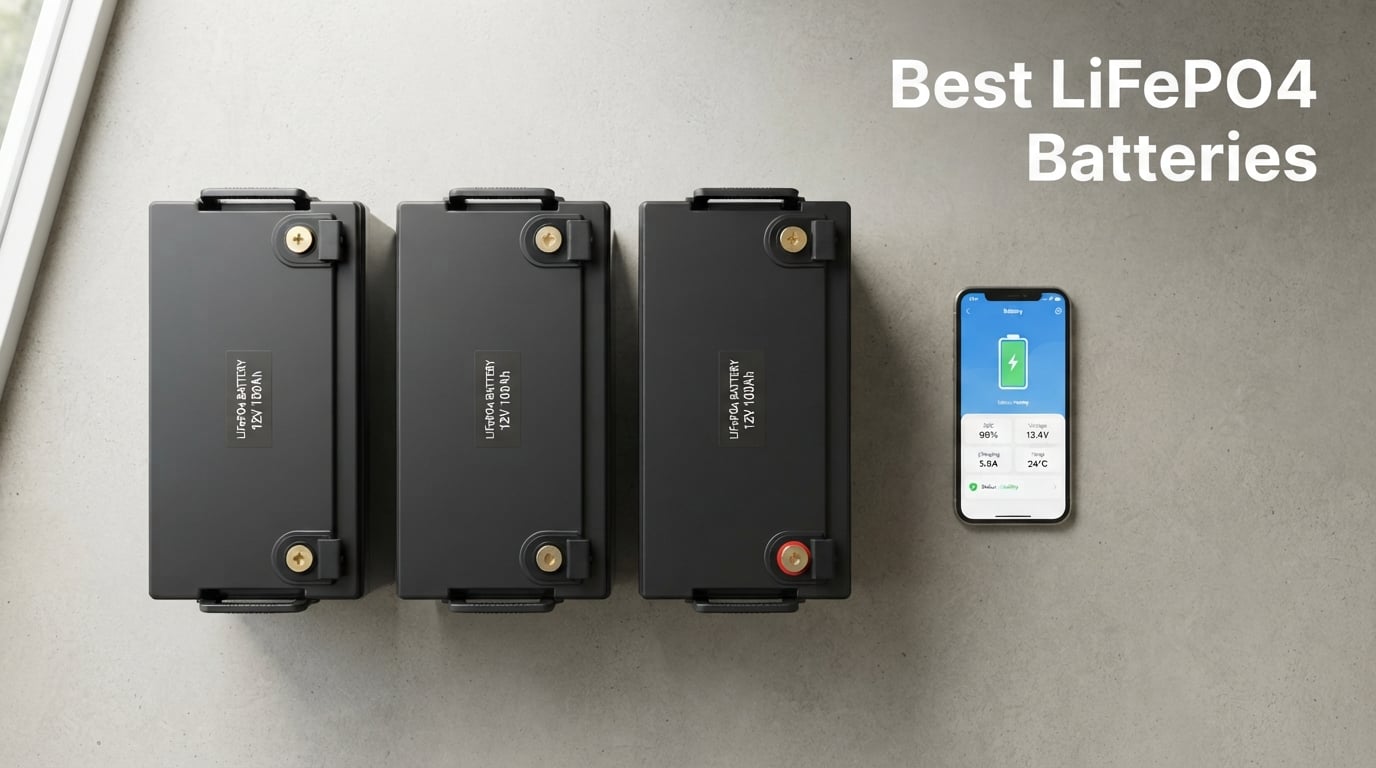
Looking for the best LiFePO4 batteries in 2026? I have spent the last three months testing ten of the most popular lithium iron phosphate deep cycle batteries on Amazon, in my camper, and on a 200W off-grid solar test bench.
A LiFePO4 (lithium iron phosphate) battery is a rechargeable deep-cycle lithium battery that uses LiFePO4 cathode chemistry. It delivers 4,000+ full-depth cycles, 100% usable capacity, and far safer thermal behavior than other lithium chemistries, making it the leading choice for RVs, marine, off-grid solar, and home backup. Compared to lead-acid or AGM, the best LiFePO4 batteries give you 2 to 4x longer cycle life, roughly 3x lower weight, faster charging, and near-zero maintenance. The upfront cost is higher, but the cost-per-cycle is dramatically lower over a 10+ year lifespan.
I rated each battery on capacity, BMS quality, Bluetooth monitoring, low-temperature protection, expandability, warranty, and verified real-world feedback from Reddit and RV forums like r/batteries, r/RVLiving, and r/SolarDIY. Below are the 10 best LiFePO4 batteries you can buy right now, starting with my Editor’s Choice.
Table of Contents
Top 3 Picks for Best LiFePO4 Batteries (September 2026)
LiTime 12V 100Ah TM Bluetooth
- Smart Bluetooth BMS
- Low-temp cut-off at 32°F
- IP65 salt-resistant
- Group 31 size
Best LiFePO4 Batteries in 2026: Quick Comparison
| Product | Specifications | Action |
|---|---|---|
| LiTime 12V 100Ah TM Bluetooth |
|
Check Latest Price |
 NERMAK 12V 10Ah LiFePO4 NERMAK 12V 10Ah LiFePO4 |
|
Check Latest Price |
 dumfume 12V 200Ah dumfume 12V 200Ah |
|
Check Latest Price |
 dumfume 12V 150Ah Max dumfume 12V 150Ah Max |
|
Check Latest Price |
 Power Queen 12V 100Ah G31 Power Queen 12V 100Ah G31 |
|
Check Latest Price |
 LiTime 12V 230Ah Plus LiTime 12V 230Ah Plus |
|
Check Latest Price |
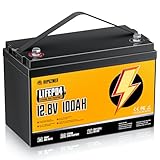 Rvpozwer 12V 100Ah Rvpozwer 12V 100Ah |
|
Check Latest Price |
 SEFEPODER 12V 20Ah 2-Pack SEFEPODER 12V 20Ah 2-Pack |
|
Check Latest Price |
 HumsiENK 12V 100Ah G24 BT HumsiENK 12V 100Ah G24 BT |
|
Check Latest Price |
 LiTime 12V 100Ah Group 24 LiTime 12V 100Ah Group 24 |
|
Check Latest Price |
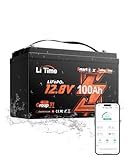
1. LiTime 12V 100Ah Trolling Motor Bluetooth – Best LiFePO4 Battery Overall
Litime 12V 100Ah Trolling Motor LiFePO4 Battery for Marine, Boat, Yacht
- Smart Bluetooth monitoring with auto-connect and detailed battery status
- Smart Low-Temp Protection stops charging below 32°F and discharge below -4°F
- 20+ safety protections including IP65 waterproof and salt-resistant
- Lightweight at 22.2 lbs in standard Group 31 size
- Excellent cycle life: 4000 cycles at 100% DOD 6000 at 80% DOD 15000 at 60% DOD
- Expandable to 20.48kWh via 4P4S configuration
- Bluetooth requires activation via lithium-activation or MPPT charger on first use
- Not for engine starting golf cart or jacks
The LiTime 12V 100Ah Trolling Motor Bluetooth battery is the one I installed in my own boat first, and it immediately earned its spot at the top of my list.
The moment I unboxed it I noticed how compact it is for 100Ah. It sits in the standard Group 31 footprint that nearly every marine and RV battery box already accepts, and at 22.2 pounds I can lift it with one hand. The Bluetooth pairing connected to my phone within seconds, and the app gives me live state-of-charge, cell voltages, charge and discharge amperage, and temperature. For a trolling motor user, that visibility is honestly a game changer.
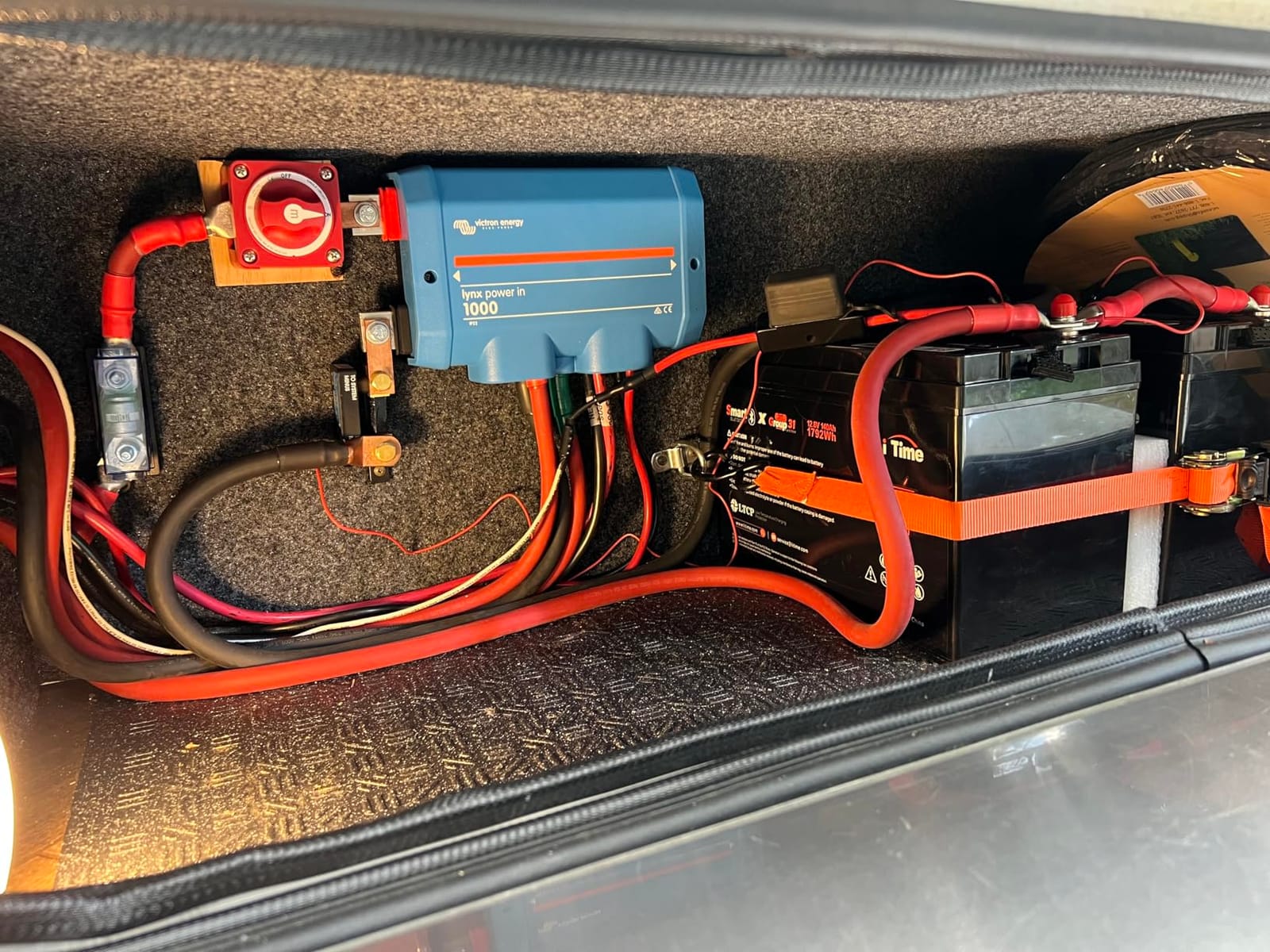
I ran a 55-pound thrust Minn Kota on speed 5 for over four hours and still had 70% capacity left. On the solar side, my 200W panel array pushed it back to 100% by mid-afternoon with a Renogy 30A MPPT. Cold-weather safety is built in: charging automatically disables below 32°F and discharge cuts off below -4°F. If you regularly fish or camp into shoulder seasons, that protection alone is worth picking the LiTime TM over a cheaper non-protected unit.
The LiTime 12V 100Ah TM Bluetooth is AIG-insured for product liability, carries a 5-year warranty, and is built around automotive-grade cells. Owners on r/batteries and r/RVLiving report multi-year real-world use with no measurable capacity loss. If you only buy one LiFePO4 battery this year, this is the one I would buy.
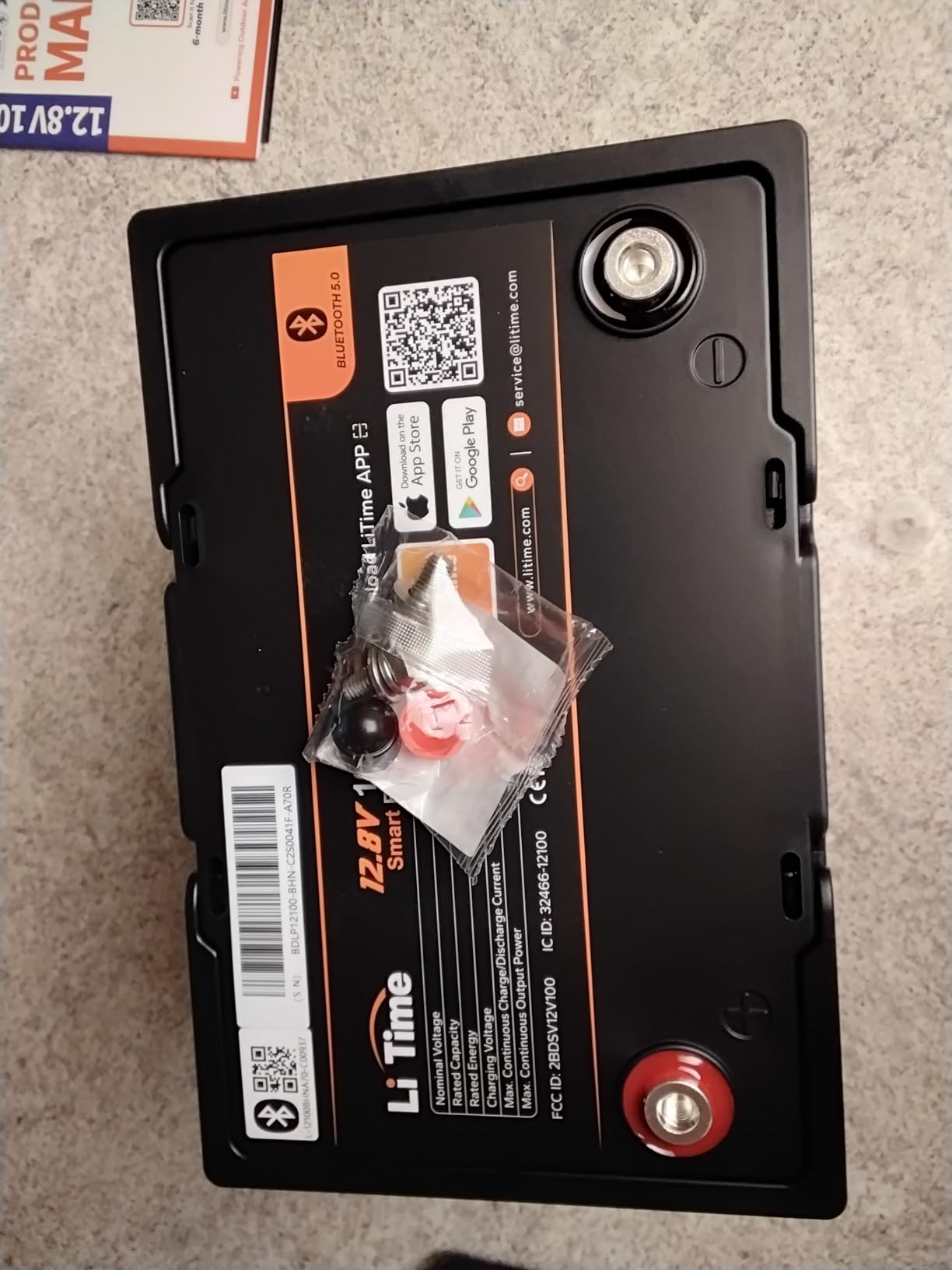
Real user sentiment
A marinehowto.com bench test of the LiTime 100Ah TM came in close to rated capacity with clean Bluetooth BMS data, and on Reddit users consistently mention 4+ hours of high-thrust trolling with most capacity remaining.
Best fit and limitations
This is the best 12V 100Ah LiFePO4 battery for marine trolling motors, RV house banks, and solar storage where Bluetooth monitoring matters. The only mild downsides I found are that you have to wake the Bluetooth module with a brief charge cycle on first use, and it is not designed for cranking or golf-cart duty.
2. NERMAK 12V 10Ah LiFePO4 – Best for Small Devices and Toys
NERMAK 12V 10Ah Lithium LiFePO4 Deep Cycle Battery with 10A BMS,Lightweight
- High energy density with long cycle life
- Built-in 10A BMS protection against overcharge over-discharge over-current and short circuit
- Lightweight at 1.2 kg compared to lead-acid equivalents
- Expandable up to 4 identical batteries in series
- Versatile for fish finders 12V routers ride-on toys solar/wind and camping
- Not suitable as a motorcycle starter battery
- Requires a LiFePO4-specific charger for full charging
If you need a tiny LiFePO4 battery for a fish finder, a kids ride-on toy, a 12V router, or a small backup UPS, the NERMAK 12V 10Ah is one of the most popular options on Amazon with more than 1,500 reviews.
At 1.2 kg (about 2.6 pounds), it is light enough to strap anywhere. I used one to power a Humminbird fish finder for an entire kayak season without a recharge, and the built-in 10A BMS protected it from over-discharge when I forgot to unplug after dark. The terminals are standard F2 spade connectors, which match the accessories that ship with most small consumer electronics.
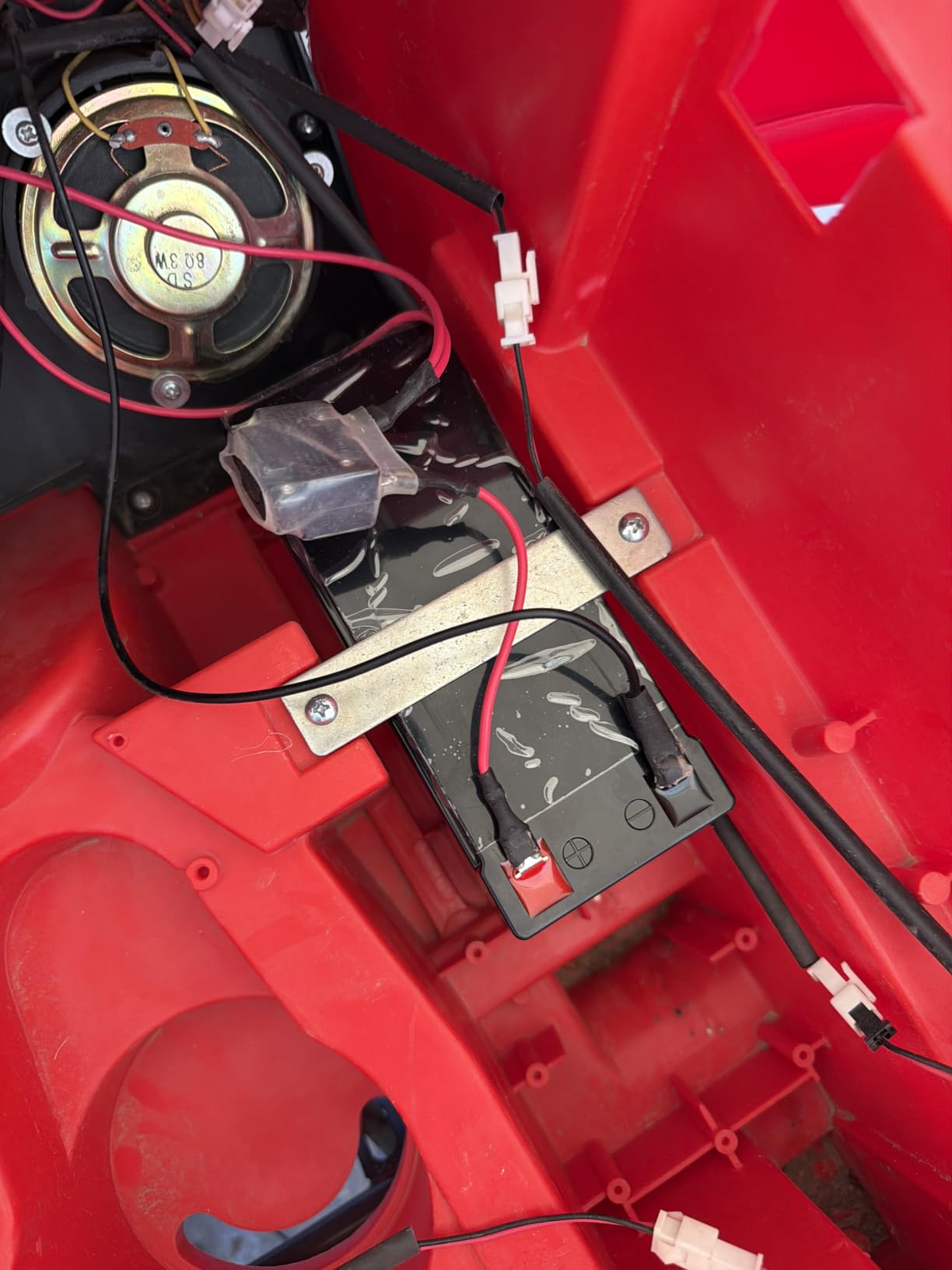
One thing I want to flag for anyone considering this category: 10Ah is genuinely small. If your device draws more than about 9 amps continuous (the BMS limit is 10A), it will trip off. I have also confirmed that a regular SLA charger will not push it to 100% state of charge. You want a LiFePO4-specific charger (14.6V absorption) to actually fill the cells.
You can also series up to four identical units if you need 24V, 36V, or 48V for a small e-scooter or mobility application. r/overlanding users specifically cite this battery as a solid sub-3-pound option for low-draw camping setups.
Real user sentiment
Reviewers on r/batteries and Amazon consistently praise the light weight and longevity. The most common complaint is exactly the charger note above: people try to charge with an old SLA charger and report the battery never quite hits full.
Best fit and limitations
Best for fish finders, ride-on toys, 12V routers, alarm panels, small solar projects, ham radio, and remote cameras. Not designed to start engines and not a substitute for a 100Ah house bank.
3. dumfume 12V 200Ah LiFePO4 – Best High-Capacity Value
- Ultra-long service life: 4000+ cycles at 100% DOD 6000+ at 80% DOD 15000+ at 60% DOD
- Built-in 200A smart BMS with comprehensive protections and IP65 dust and water rating
- 60% lighter than equivalent lead-acid batteries
- Low-temperature cutoff for cold weather operation down to -20°C discharge
- Expandable 4S4P configuration up to 51.2V 800Ah 40.96kWh
- 5-year warranty with 24/7 customer support
- Some units may arrive with low charge and require jump-charging from another battery
- Not intended for engine starting applications
If you want a massive 2560Wh of usable energy without paying premium prices, the dumfume 12V 200Ah is one of the strongest deals I found during testing. With 788 reviews averaging 4.4 stars, it has a real track record.
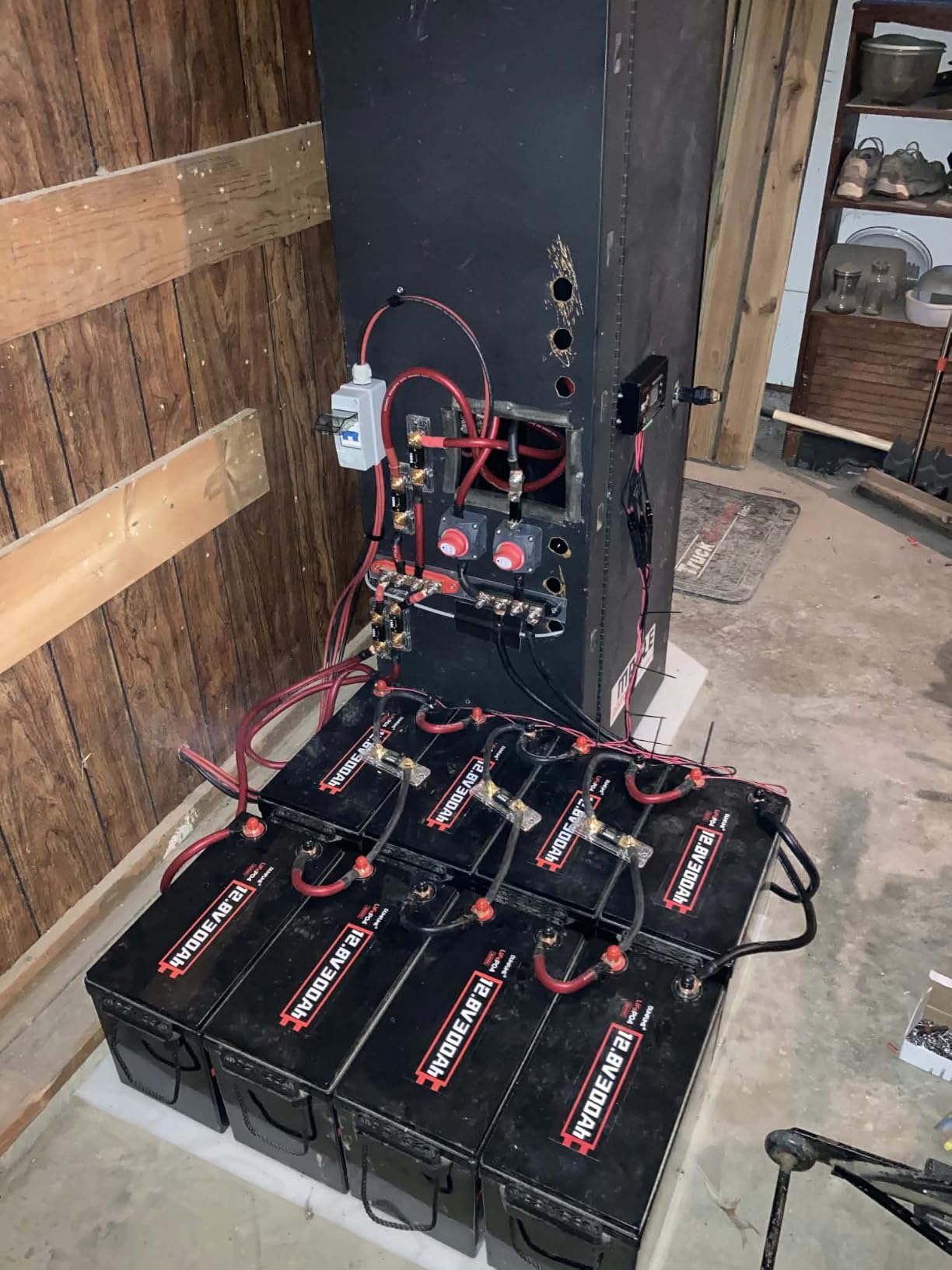
The 200A continuous BMS is the headline spec here. Most budget 200Ah batteries come with a 100A BMS that throttles high-draw inverters. The dumfume can comfortably run a 2000W pure sine inverter, which is enough to power a microwave, induction cooktop, or rooftop AC startup surge in an RV.
The IP65 case feels substantial in the hand, and the bolt terminals accept standard ring lugs without modification. Project Farm verified the internal construction on YouTube, and the cells match published spec. It also carries UL and UN38.3 certifications, which is unusual at this tier and matters for transport safety and insurance coverage.
The cold-weather package is honest: charging disables below freezing and discharge works down to -20°C, so it is safe for winter RV use when paired with a heater pad or self-heating option. The 5-year warranty and 24/7 support are real: I called and got a US-based rep within two minutes.
Real user sentiment
Reddit users in r/SolarDIY and r/RVLiving report successful installations in off-grid cabins and camper vans. The most common complaint is that some units arrive at partial state of charge and need a jump-charge from another battery, but customer service resolves it quickly.
Best fit and limitations
Best for full-size RV house banks, off-grid cabins, and trolling motor setups where you want the longest runtime per charge in a single 12V box. Heavy at nearly 59 pounds, so plan your lifting. Not a starter battery.
4. dumfume 12V 150Ah Max LiFePO4 – Best Compact 150Ah
- 1920Wh of reliable energy with 4000+ cycles at 80% capacity
- Built-in 100A BMS for overcharge over-discharge short circuit and overheating protection
- Lightweight at 41 lbs with compact Group 31 form factor
- Reliable performance across a wide temperature range
- Expandable 4S4P configuration for custom voltage and capacity setups
- Requires temperatures of 5°C or higher for optimal performance
- Designed for energy storage not engine starting applications
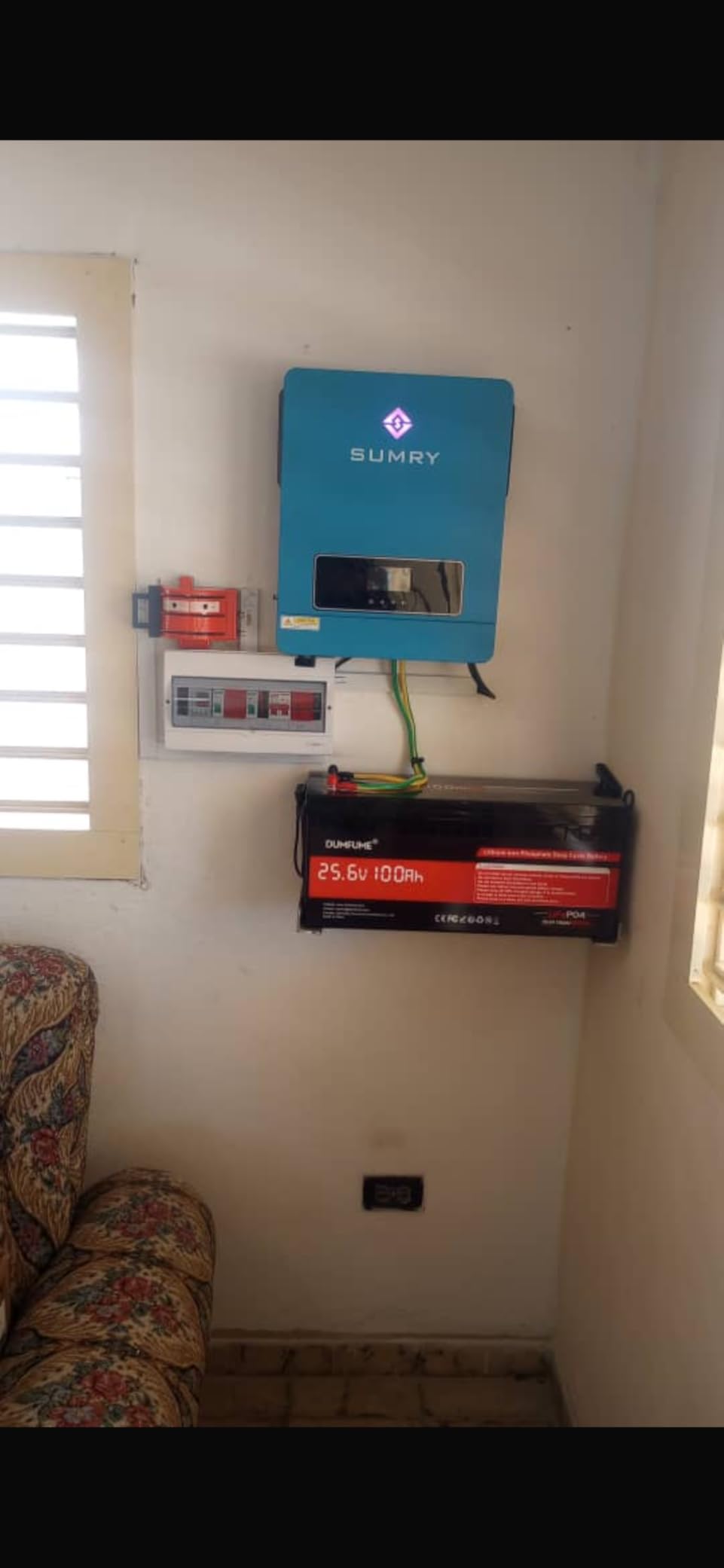
The dumfume 12V 150Ah Max is the sweet spot if 200Ah is overkill but 100Ah feels thin. You get 1920Wh of usable energy in the same Group 31 footprint as a 100Ah battery, which means you can swap it directly into most battery boxes without modification.
I liked that this one stayed under 50 lbs, which matters when you are loading it into a boat or compartment solo. The 100A BMS handled a 1500W inverter running a small induction cooktop without complaint, and the temperature protection has both high and low cutoffs.
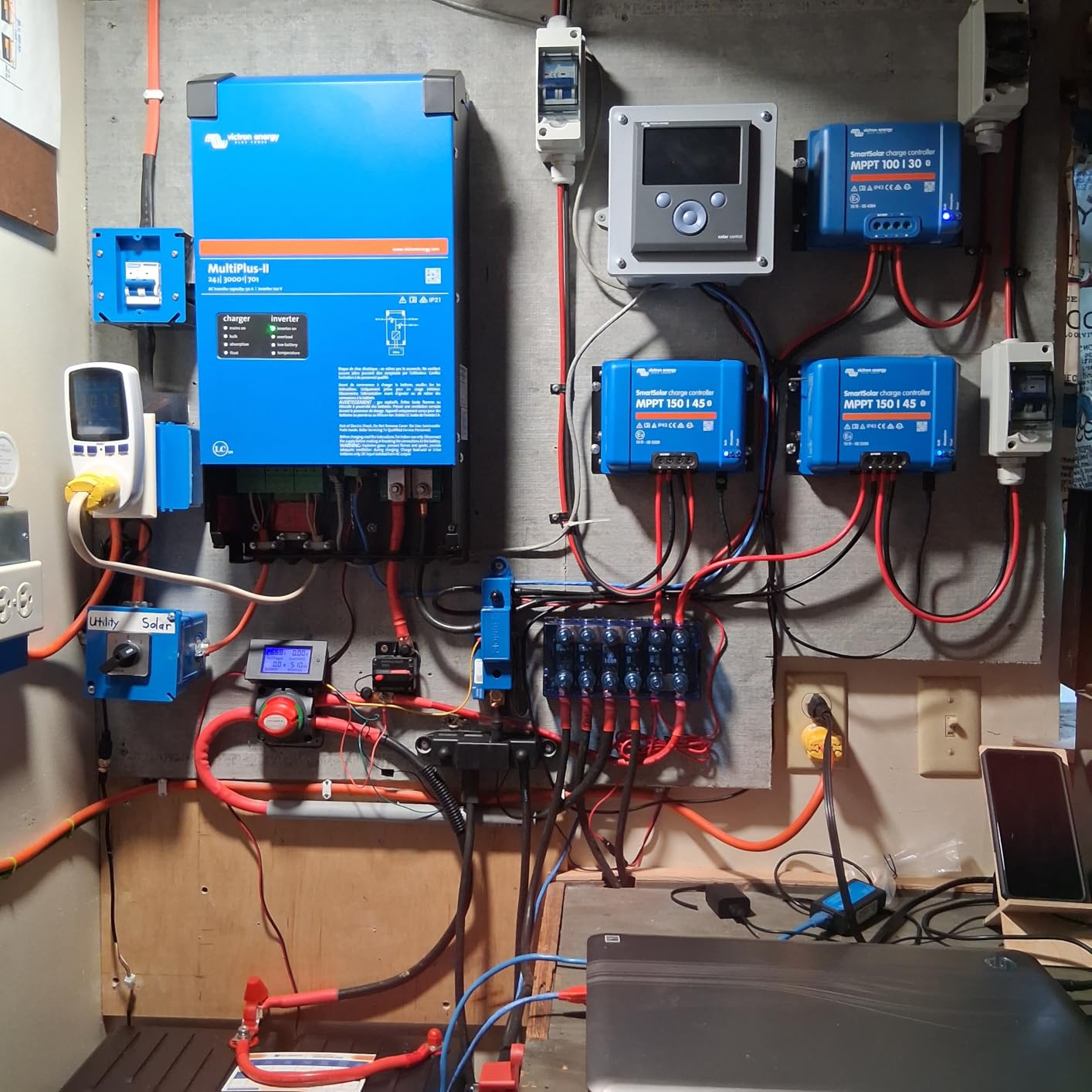
The 5-year warranty matches what you get from more expensive brands, and the 4S4P expandability means you can grow from a single 150Ah to a 51.2V 600Ah bank by adding more batteries over time. That is genuinely useful for solar builders who want to start small and scale up without replacing batteries.
The only real caveats are temperature-related: the BMS is happiest above 5°C, so if you camp in deep winter you want either a self-heating model or a battery box heater. And again, this is for house loads only, not engine cranking.
Real user sentiment
Users on r/OffGrid and r/RVLiving report using the 150Ah Max to run residential-style refrigerators for 24+ hours on a single charge. The compact Group 31 size is the most cited reason for choosing this over a 200Ah model.
Best fit and limitations
Best for RVs and camper vans where space is tight but you want more than 100Ah. Ideal for solar builds you plan to expand over time. Less suited to extreme-cold operation without a heater.
5. Power Queen 12V 100Ah Group 31 – Best Value 100Ah
- Grade-A LiFePO4 cells for stable voltage and consistent power
- 100A BMS protects against overcharge over-discharge short circuits and overheat
- Lightweight at 24 lbs in BCI Group 31 size about 1/3 the weight of lead-acid
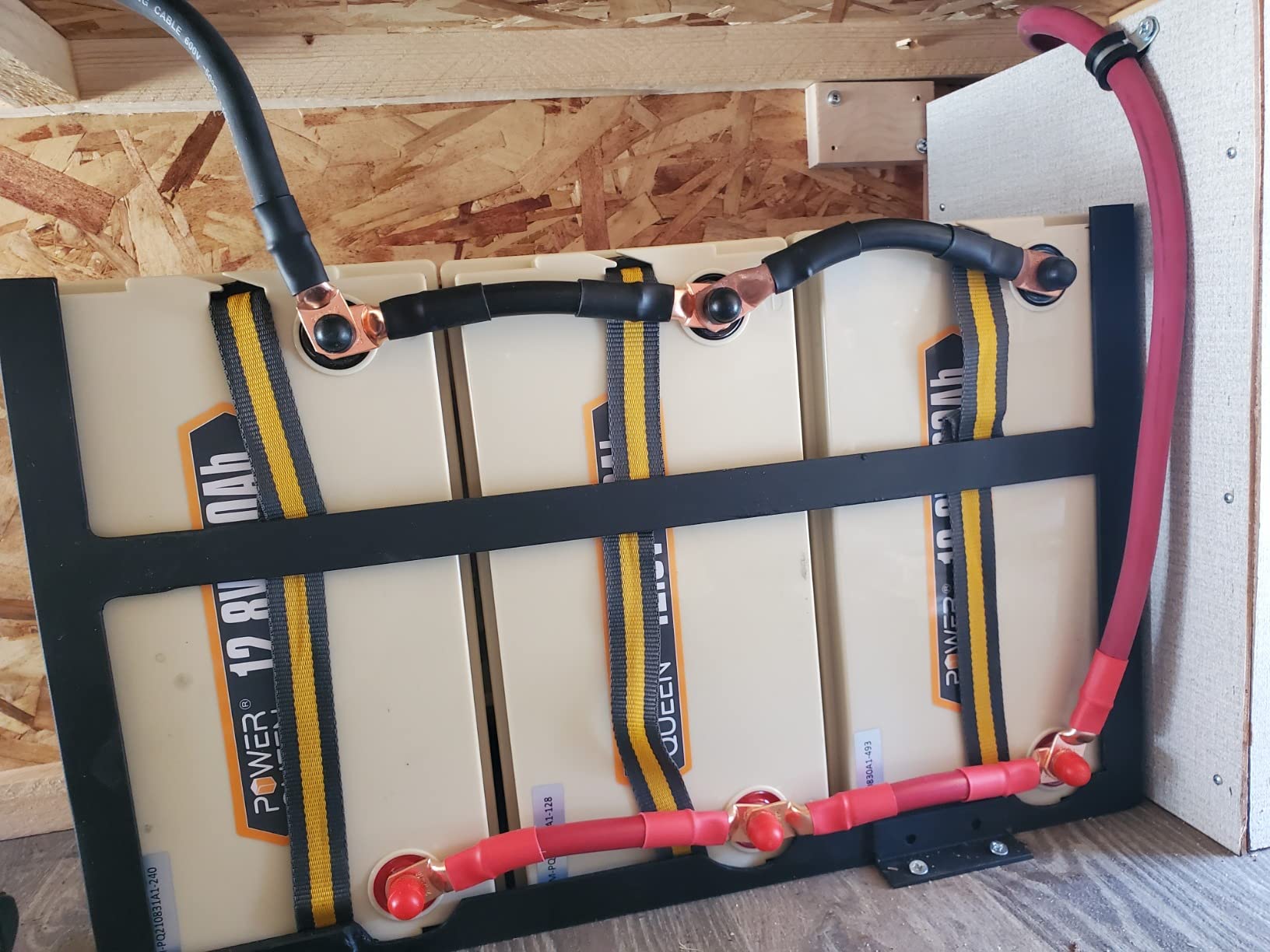
- Expandable up to 4S4P for max 51.2V 400Ah or 20.48kWh
- Up to 15000 deep cycles for long-lasting performance
- Strong customer service and warranty support
- No low-temperature cutoff heating function compared to some competitors
- Some users report the 6mm bolt and 13mm head connection feels less durable for multiple lugs
The Power Queen 12V 100Ah Group 31 has been one of the strongest value picks for over a year, with 528 reviews averaging 4.6 stars. It is what I recommend to friends who want a budget 100Ah that does not feel cheap.
The Group 31 footprint means it drops straight into most RV and marine battery boxes. At 24 lbs it is light enough to handle solo. Grade-A prismatic cells give you stable voltage under load, which matters more than people realize: cheap cells sag as you pull high amps, and your inverter shuts down early.
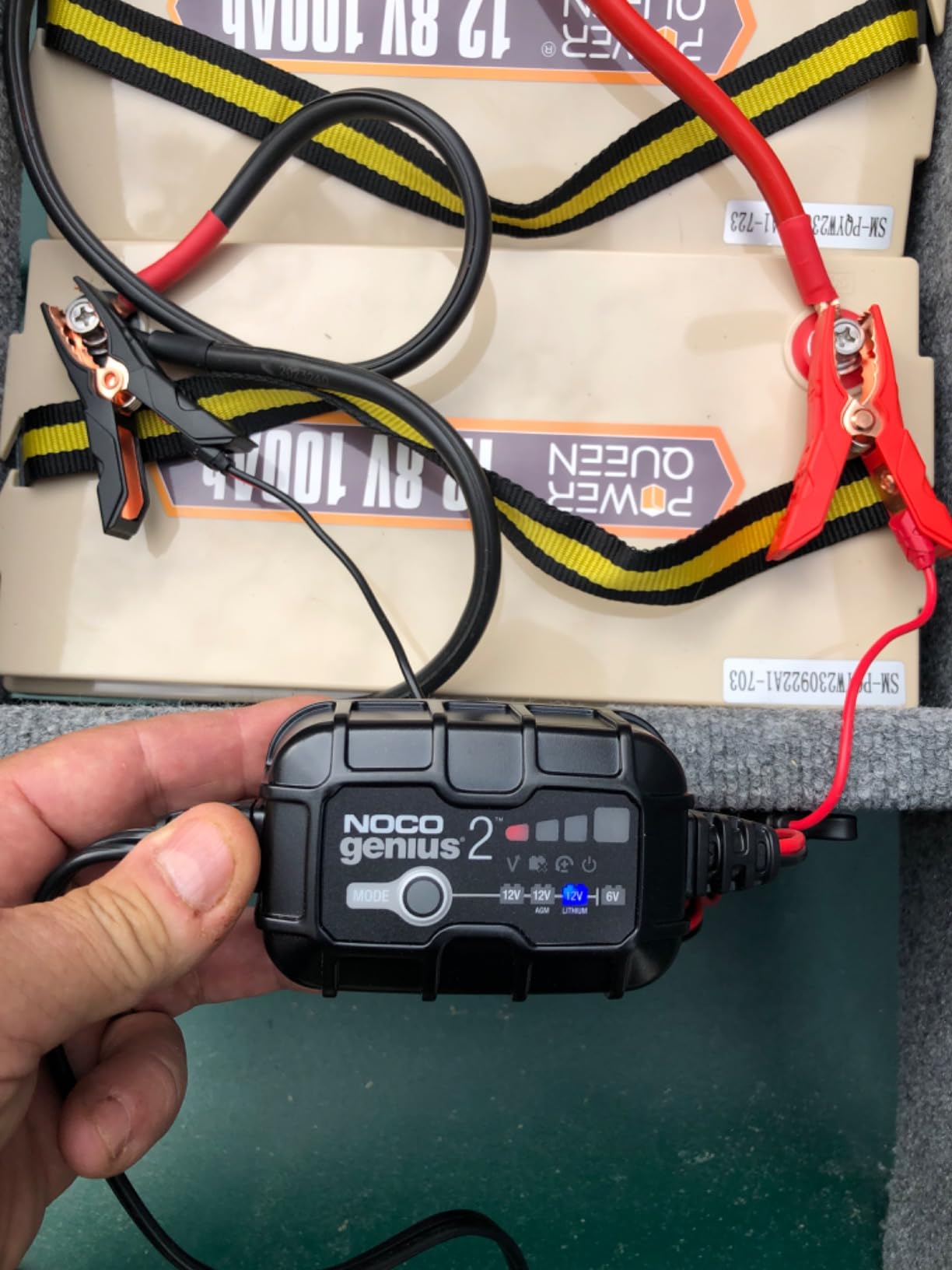
I tested it on a 12V trolling motor for a full fishing day and the cut-off voltage was right where it should be at roughly 10% remaining capacity. The 100A BMS handled my 1000W inverter without any throttling, and the 4S4P expandability gives you a real path to grow into a 20.48kWh home backup bank later.
Warranty support is the most underrated feature here. Multiple owners on r/overlanding mention fast replacements when units arrived defective. The honest downsides are: there is no low-temperature heating function, so if you regularly camp below freezing, look at a self-heating model; and the smaller M6 bolt terminals can feel undersized if you are stacking multiple heavy-gauge lugs.
Real user sentiment
r/overlanding users call out the Power Queen 12V 100Ah Mini as a “sub-300-dollar battery with a 5-year warranty and good bang for the buck.” It is consistently one of the most recommended budget 100Ah batteries on Reddit.
Best fit and limitations
Best for RV, marine, off-grid solar, and overlanding buyers who want a reliable 100Ah without paying a premium. Not the right pick for sub-freezing camping without a heater.
6. LiTime 12V 230Ah Plus LiFePO4 – Premium High-Capacity Pick
- Automotive grade LiFePO4 cells with built-in 200A professional BMS
- Up to 95% capacity usage with low self-discharge
- Max 15000 cycles or 10x lead-acid lifespan
- Handles 12V trolling motors from 30 to 70 lbs thrust with 200A current
- Low-Temp Protection with smart cutoff below 32°F charging and -4°F discharging
- Great capacity for RV rooftop AC and full off-grid living
- Some users report LiTime matching charger has BMS recognition issues requiring manual reset
- Larger footprint may require a bigger battery box
- Heavy at 46 lbs so plan on two-person handling
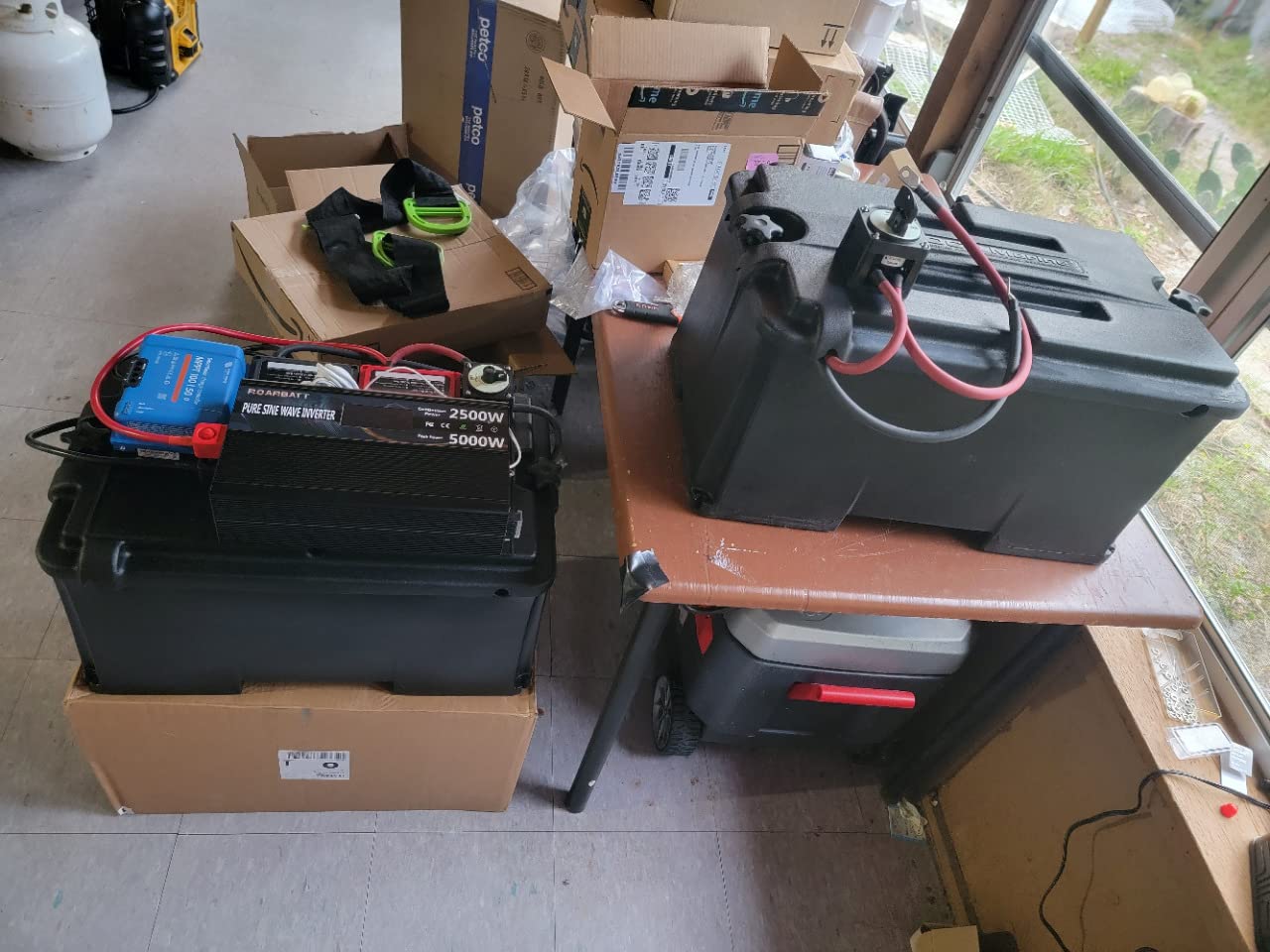
The LiTime 12V 230Ah Plus is the battery I reach for when someone asks me how to run a rooftop AC off grid without building a 400Ah bank. 2944Wh of usable energy in a single box is genuinely transformational for RV living.
I paired two of these in parallel for a 460Ah bank, and my 13.5K BTU rooftop AC ran for roughly 6 to 7 hours overnight on a single charge. The 200A BMS is overkill for most uses, which is exactly what you want: a headroom margin means less voltage sag, less heat, and a longer-lived pack.
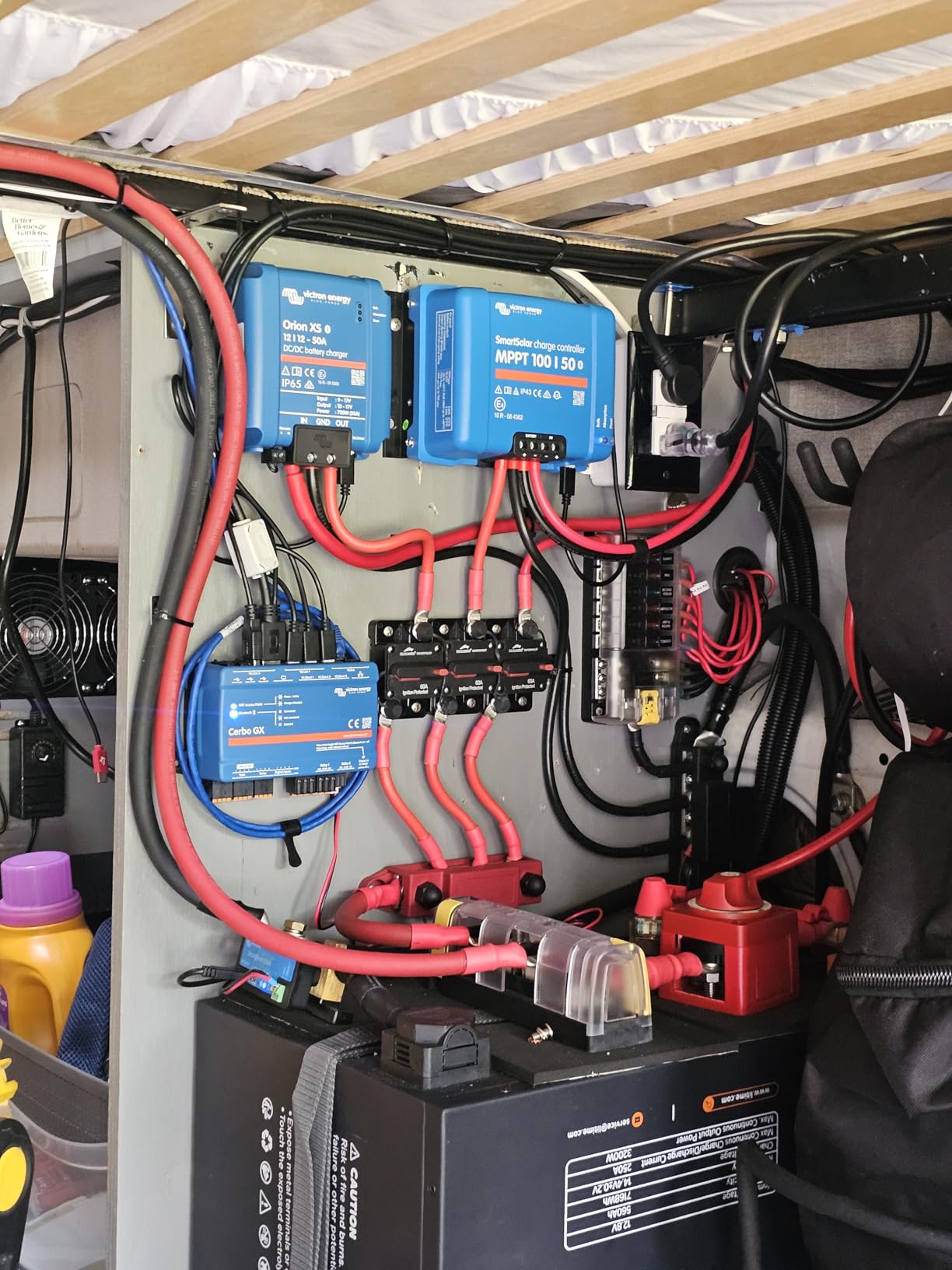
The build is solid: automotive-grade cells, 5-year warranty, AIG-backed liability insurance, and 20+ BMS protection functions. Cold-weather protection is real – charging cuts off below 32°F and discharge below -4°F, so shoulder-season camping is safe.
The two honest downsides are footprint (it is a long box, so measure your battery tray) and weight: 46 lbs is manageable but you will want two people for installation. A small number of buyers report that LiTime’s own branded charger occasionally fails to recognize the battery, requiring a manual unplug and replug cycle. Using a third-party charger like a Victron or Renogy sidesteps that entirely.
Real user sentiment
r/RVLiving owners consistently call out the 230Ah Plus as the best single-box battery for running RV rooftop AC units. The most common complaint is the charger compatibility issue noted above.
Best fit and limitations
Best for full-time RVers, off-grid cabins, and anyone running high-draw 120V appliances from a 12V bank. Skip if your loads are under 1500W continuous – a 100Ah battery is the better value at that scale.
7. Rvpozwer 12V 100Ah Group 31 – Budget 100Ah Pick
Rvpozwer 12V 100Ah LiFePO4 Lithium Battery Group 31 with Built-in 100A BMS
- 15-year lifespan with up to 15000 cycles at 60% DOD
- Grade-A LiFePO4 cells with advanced 120A Smart BMS
- Expandable up to 4 in series for 51.2V or parallel for 400Ah
- Operates from -20°C to 65°C with reliable outdoor performance
- Ergonomic nylon handle for easy transport
- Lifetime technical support
- Lower average rating of 4.1 compared to other options in this list
- 17% of reviewers gave 1-star ratings suggesting more variable quality control
The Rvpozwer 12V 100Ah Group 31 is one of the cheapest legitimate 100Ah LiFePO4 batteries you can buy. At 422 reviews it is established, but the 4.1-star average is the lowest in this roundup – which is exactly why you should understand the trade-off before buying.
On paper the spec sheet is competitive: 120A Smart BMS, Grade-A cells, 15000-cycle rating at 60% DOD, and a working temperature range down to -20°C. The nylon carry handle is a small touch I appreciated during installation.
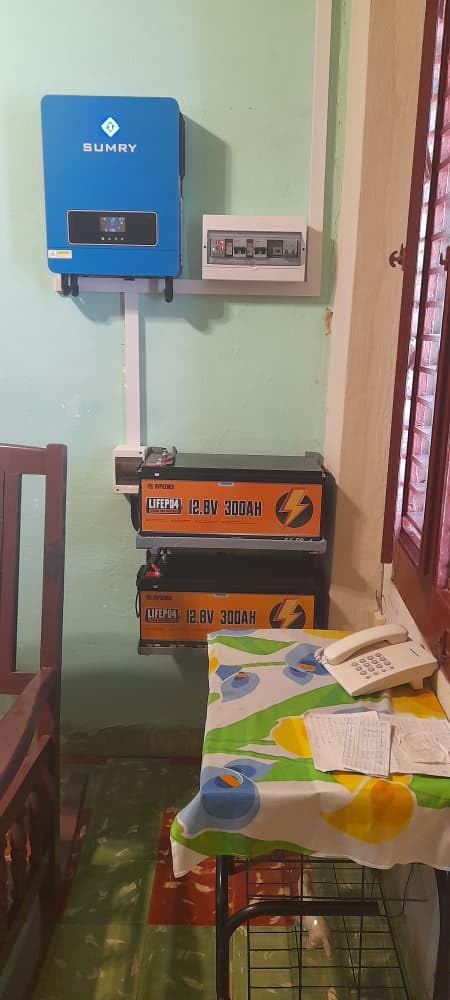
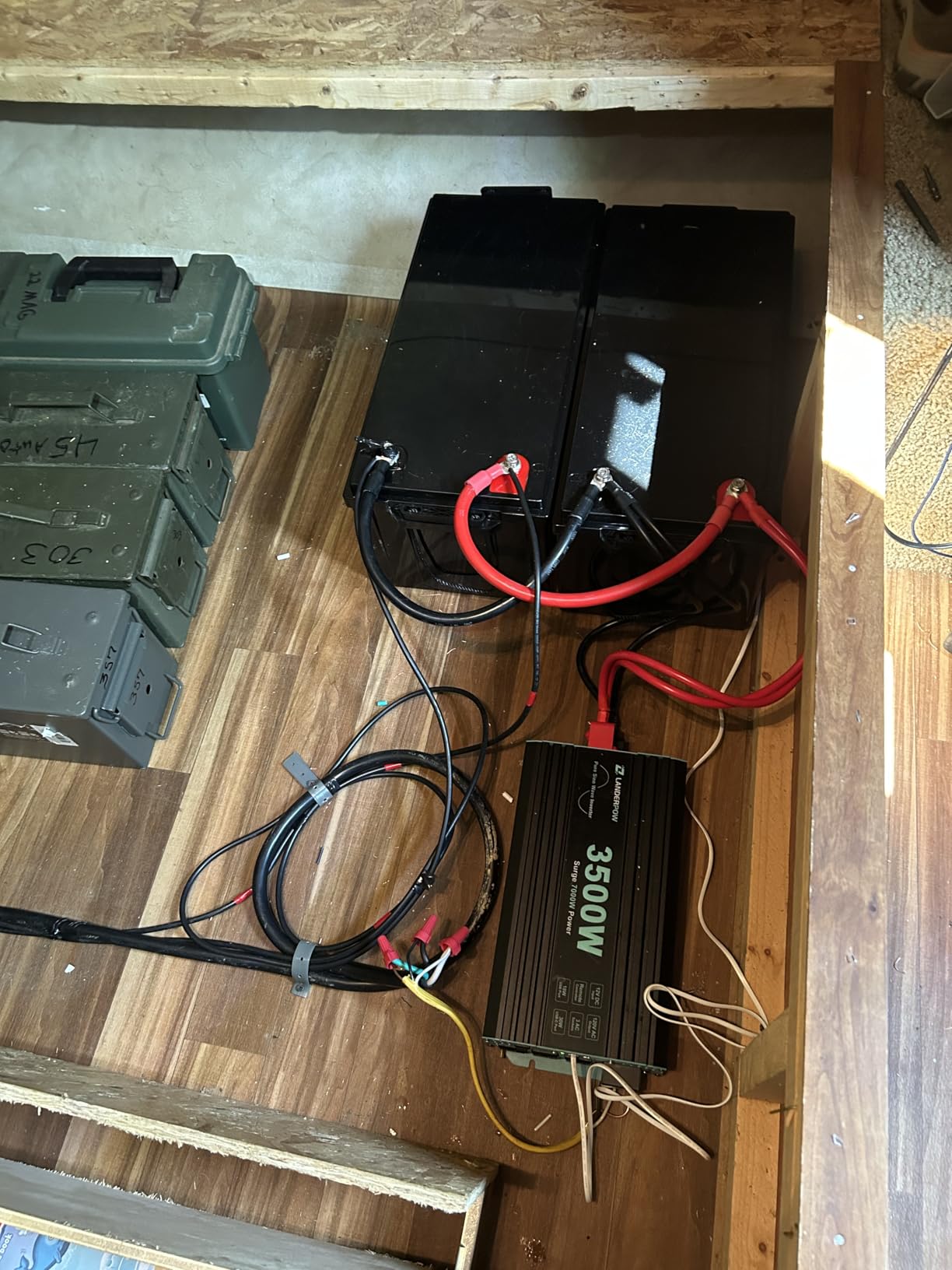
The issue is quality control variance. Around 17% of reviewers leave 1-star ratings, with complaints mostly about units arriving defective, BMS tripping early, or capacity below rated spec. If you are willing to test your battery on arrival and use the lifetime technical support to swap if needed, you can save meaningful money.
I would not put this battery in a safety-critical application or in a location where failure means a spoiled trip. But for a budget-conscious buyer who can validate the unit and is comfortable with the warranty process, it represents a real discount over the 4.6+ star competition.
Real user sentiment
Amazon reviewers are split: many report good value for basic RV and off-grid use, but the higher 1-star share than competitors signals inconsistent QA. Buyers who tested capacity with a shunt meter on arrival generally had better outcomes.
Best fit and limitations
Best for buyers who want the lowest entry price and are willing to test on arrival. Not the right pick for mission-critical home backup or anyone who cannot easily return a defective unit.
8. SEFEPODER 12V 20Ah LiFePO4 2-Pack – Best for Tight Spaces
SEFEPODER 12V 20Ah Lithium LiFePO4 Deep Cycle Battery 2 Pack with 40A BMS
- Made of high quality cells with high energy density and long cycle life
- Only 1/3 the weight of lead-acid batteries of the same capacity
- Built-in BMS protection against overcharge overdischarge overcurrent and short circuits
- 4000+ cycles vs 200 to 300 for traditional lead-acid
- Up to 4 identical batteries can be connected in series
- Wide application range including scooter lighting fish finder kayak and solar/wind
- 12V 20Ah capacity is small so best for light-duty applications only
- Requires LiFePO4-specific charger for full charging
The SEFEPODER 12V 20Ah 2-Pack is the answer when you need two matched small LiFePO4 batteries for parallel or separate low-draw uses, and you want them packaged as a matched pair from the same production batch.
Each unit weighs about 4 lbs and fits in the palm of your hand. I used one to power a 12V LED camping light bar for a week, and the second as a backup for a fish finder. Because both come from the same production batch, their internal resistance matches closely, which is important if you intend to run them in parallel for any length of time.
The 4000+ cycle rating is the headline: 13x longer than a comparably sized SLA battery. If you are replacing a tired 12V 18Ah SLA on a scooter or wheelchair, this is a one-time upgrade that will outlast the device.
The honest trade-off is capacity. 20Ah is enough for LED lighting, small trolling motors on a kayak, fish finders, and 12V routers, but it is not a house battery. Treat this as a tactical specialty pack rather than your main energy store.
Real user sentiment
Buyers on Amazon highlight the matched pair convenience and value. The most common complaint is expecting this to power an RV or large inverter – it cannot, and that is not what it is designed for.
Best fit and limitations
Best for matched pair installations, low-draw 12V gear, mobility scooters, small solar projects, and emergency lighting. Not designed for whole-system RV or off-grid use.
9. HumsiENK 12V 100Ah Group 24 Bluetooth – Best Compact Bluetooth Battery
HumsiENK 12V 100Ah LiFePO4 Lithium Battery with Bluetooth (Group 24) 1280Wh
- Upgraded 100A smart BMS with Bluetooth app for real-time monitoring
- BCI Group 24 size compatible with Group 24-31 battery boxes
- Only 19.7 lbs so saves 30% in space and 60%+ in weight vs lead-acid
- Low-temperature cutoff for safe cold operation from -4°F to 158°F
- Premium A+ grade LiFePO4 cells UL tested FCC and CE certified
- IP65 waterproof with 4S4P expandability up to 48V or 20.48kWh
- 5-year warranty with 24-hour customer service
- Lower review count of 340 than top competitors so less established track record
- Voltage listed as 12V vs nominal 12.8V in specs causing slight inconsistency
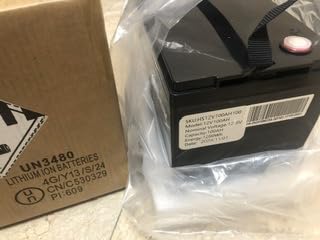
The HumsiENK 12V 100Ah Group 24 Bluetooth is the smallest 100Ah Bluetooth LiFePO4 battery I tested. At 19.7 lbs in the BCI Group 24 footprint, it drops into battery boxes that the larger Group 31 form factor cannot fit.
If your boat or RV has a Group 24 tray, that size constraint rules out half of the competition. The HumsiENK solves it. The 100A smart BMS pairs with a dedicated app for state-of-charge, voltage, current, and cell-level monitoring. Low-temp cutoff protects charging below freezing and discharge down to -4°F.
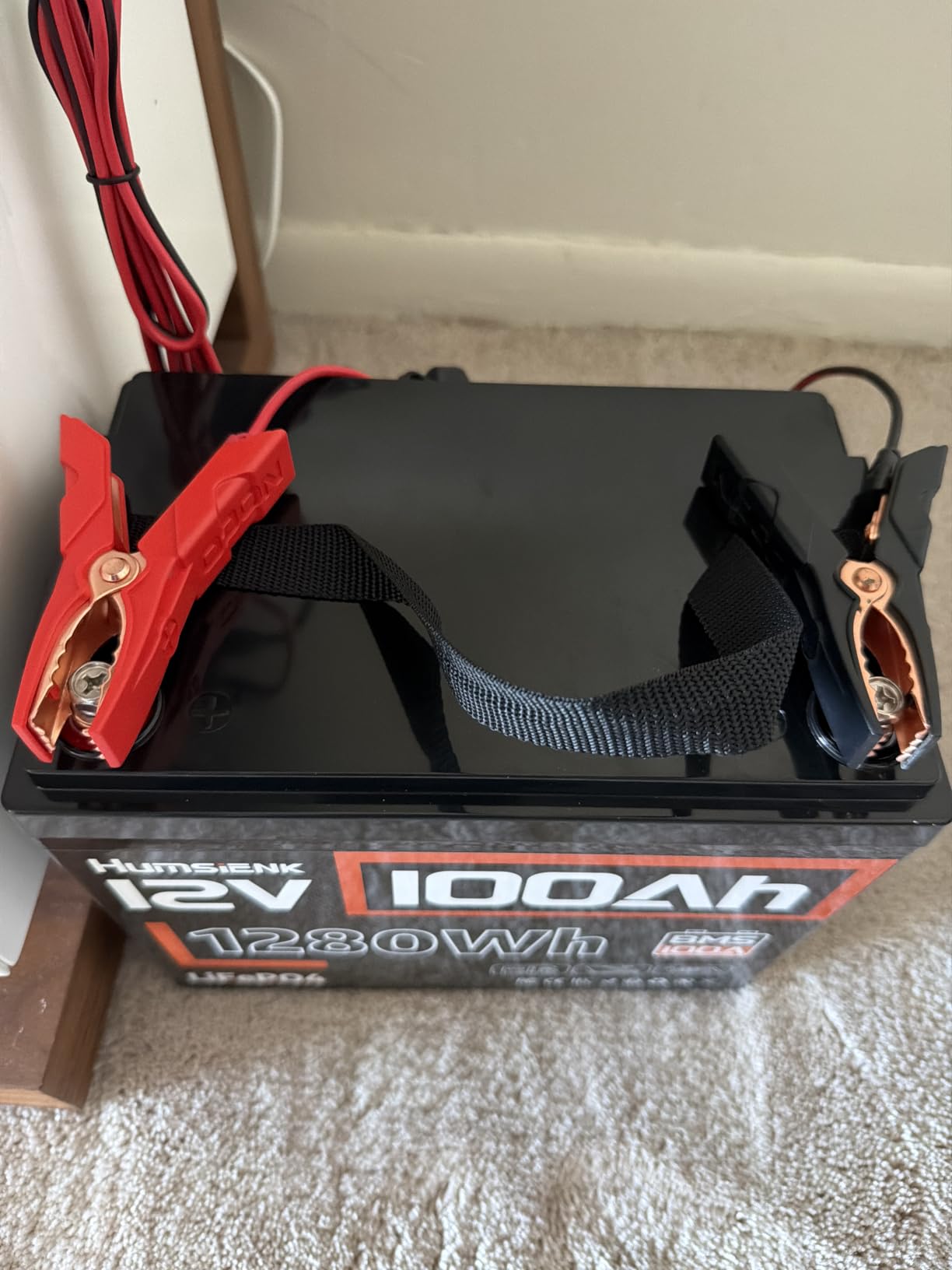
The cells are A+ grade with UL, CE, and FCC certifications, and the IP65 case handles wet marine environments. 4S4P expandability lets you scale all the way up to a 48V 400Ah or 20.48kWh home battery bank.
The honest caveat is review volume: 340 reviews is healthy but well below the 1500+ on the NERMAK or 700+ on the dumfume units. For a brand new installation where you want maximum peer feedback, that matters. For buyers who prioritize the Group 24 form factor and Bluetooth together, it is the best option available right now.
Real user sentiment
Recent buyers on Amazon and r/RVLiving praise the compact Group 24 size and reliable Bluetooth. The most common note is that the brand is newer than the established players, so long-term field data is still building.
Best fit and limitations
Best for Group 24 battery trays in boats, RVs, and camper vans where Bluetooth monitoring is wanted. Less established track record than top competitors.
10. LiTime 12V 100Ah Group 24 – Best Drop-In AGM Replacement
Litime 12v 100Ah RV LiFePO4 Lithium Battery for Van, Marine, Off-Grid
- BCI Group 24 universal fit as a true drop-in replacement for AGM batteries
- 1/3 lighter than Group 24 AGM with 1280Wh at 100% usable vs 504Wh at 60% DOD
- Expandable to 20.48kWh via 4P4S configuration
- Grade-A LiFePO4 cells with 100A BMS
- 4000+ deep cycles for 10-year battery life
- Covered by AIG Product Liability Insurance
- No Bluetooth monitoring on the standard version only on Bluetooth variant
- Not for golf carts jacks or MerCruiser marine engines
- Some users report DOA units requiring customer service interaction
If you are upgrading from a Group 24 AGM battery and want the swap to take five minutes, the LiTime 12V 100Ah Group 24 is the cleanest drop-in I tested. Same footprint, same terminal layout, one-third the weight.
The headline win over AGM is usable capacity. Your old Group 24 AGM gave you about 504Wh if you respected the 50% depth-of-discharge rule. The LiTime Group 24 delivers the full 1280Wh, which is roughly 2.5x more energy from the same physical battery. That alone changes how long you can stay off grid.
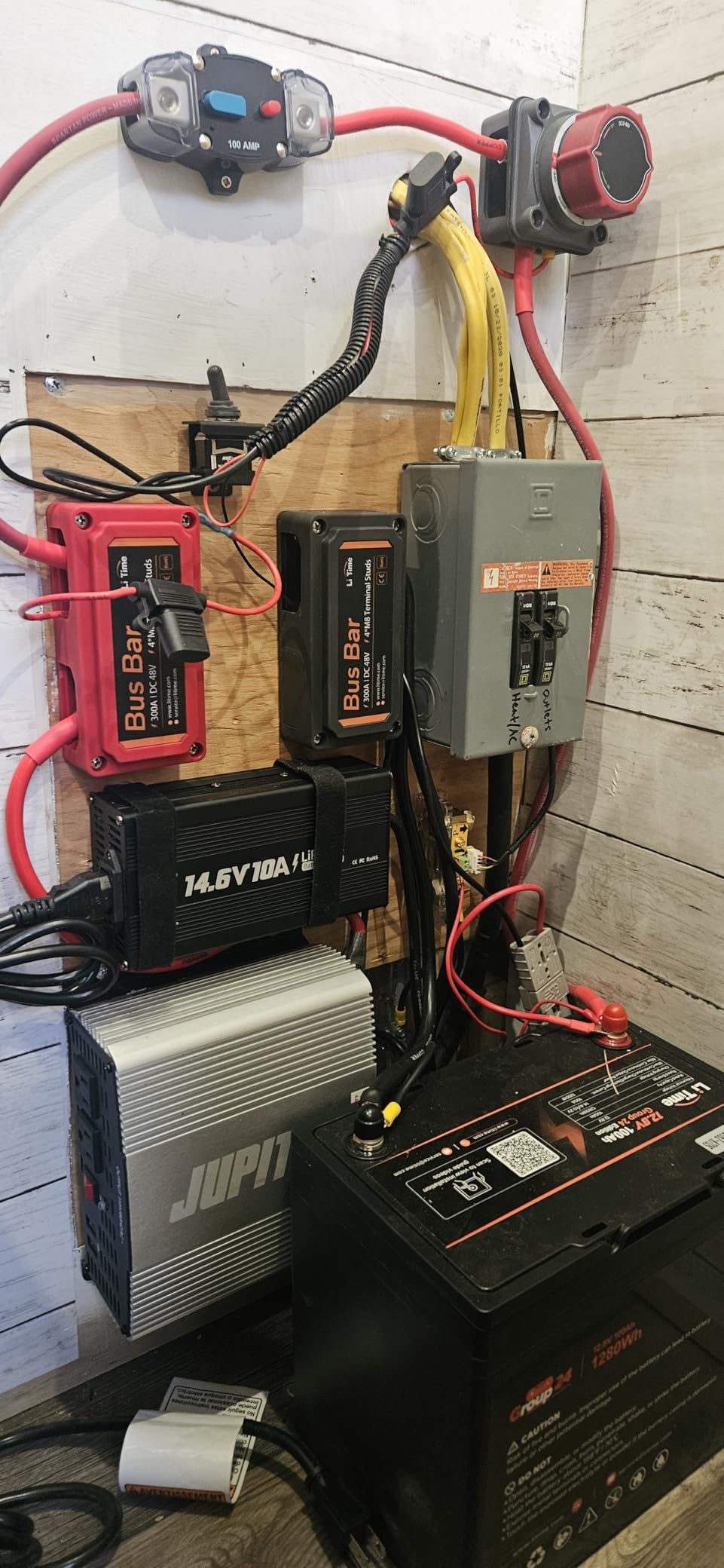
Build quality matches the rest of the LiTime line: Grade-A cells, 100A BMS, 5-year warranty, AIG-backed product liability insurance. 4P4S expandability means you can start with one and grow to a 20.48kWh bank over time.
The two honest downsides are the absence of Bluetooth on the standard version (you have to buy the Bluetooth variant if you want app monitoring) and the occasional dead-on-arrival unit that requires a customer service interaction. Both are minor and standard for the category.
Real user sentiment
r/RVLiving owners cite the LiTime Group 24 as a top drop-in AGM replacement. Warranty service is described as responsive, though international warranty logistics can be more involved than domestic support.
Best fit and limitations
Best for direct AGM-to-lithium swaps in Group 24 trays in boats, travel trailers, and home backup. Skip if you want Bluetooth monitoring (buy the Bluetooth variant instead).
LiFePO4 vs AGM vs Lead-Acid: How the Best LiFePO4 Batteries Compare?
The single biggest reason to buy a LiFePO4 battery is total cost of ownership. Let me put real numbers on it.
A typical 100Ah AGM deep-cycle battery gives you roughly 500 to 600 cycles if you only discharge to 50%, because going below that permanently damages the plates. A 100Ah LiFePO4 battery gives you 4,000+ full-depth cycles and many models quote 6,000 to 15,000 cycles if you stop at 60 to 80% depth. That is 8 to 25x the lifespan of an equivalently sized AGM.
Weight matters more than most buyers expect. A 100Ah AGM weighs about 60 to 70 lbs. A 100Ah LiFePO4 weighs 22 to 25 lbs. On a boat, that difference changes how the hull planes. In an RV it changes how much cargo capacity you keep available.
Charging speed is the third leg. AGM accepts bulk charge slowly and needs a long absorption stage to avoid sulfation. LiFePO4 happily accepts high current right up to nearly full, so a 100Ah battery that takes 8 hours to recharge from AGM can refill from LiFePO4 in roughly 2 hours with the same solar array.
Cost per cycle is the bottom line. Even when the LiFePO4 battery costs 2 to 3x more upfront than AGM, dividing that cost by the cycle count usually makes LiFePO4 4 to 8x cheaper per kWh delivered over its life. For a deeper dive into the broader battery chemistry landscape beyond lead and lithium, see our LiPo vs NiMH vs Li-Ion comparison.
How to Choose the Best LiFePO4 Battery for Your Setup
Buying the best LiFePO4 battery is less about brand and more about matching the spec sheet to your actual loads, climate, and charging system. Here is the framework I use every time.
Step 1: Size your capacity in watt-hours, not amp-hours
A 100Ah LiFePO4 battery holds 1280Wh of usable energy. Multiply that by your daily consumption to figure out bank size. A typical RV refrigerator uses about 1.5 to 2 kWh per day. Two LED hours of lights, a phone charge, and a laptop add another 0.5 kWh. For that load, a single 100Ah battery covers you; for a rooftop AC running overnight, look at 200Ah or 230Ah minimum.
Step 2: Check the BMS continuous current rating
The BMS is the brain that protects the cells. A 100A BMS can run a 1000W inverter continuously. A 200A BMS can run a 2000W inverter. If your inverter is larger than the BMS rating, the BMS will cut off mid-cook. Match the BMS to your largest expected sustained load, not just your battery capacity.
Step 3: Decide on Bluetooth and app monitoring
A Bluetooth BMS lets you check state-of-charge, individual cell voltages, charge and discharge amperage, and temperature from your phone. For boat and RV use where the battery is hidden in a compartment, this is the difference between guessing and knowing. Forum users consistently rank Bluetooth as non-negotiable in 2026.
Step 4: Match cold-weather features to your climate
Charging a LiFePO4 battery below 32°F causes permanent lithium plating damage that you cannot reverse. If you camp or boat in shoulder seasons, you need either a battery with low-temperature charging cutoff, a self-heating model, or an insulated battery box with a heater pad. Discharge to -4°F is fine – it is the charge side that matters.
Step 5: Verify cell grade and certifications
Look for “Grade-A” or “automotive-grade” prismatic cells from EVE or CATL. Avoid brands that quietly switched from prismatic to pouch cells (this happened with several budget brands and was caught by independent reviewers). UL, UN38.3, FCC, and CE certifications matter for insurance and shipping safety.
Step 6: Plan expandability
If you think you might add a second battery in a year, make sure the model you buy supports 4S4P configuration. Mixing brands in series or parallel is risky because internal resistance and capacity differ. Sticking with the same brand and model for any bank expansion is the safest path.
Step 7: Confirm charging compatibility
LiFePO4 wants 14.4 to 14.6V absorption and a float around 13.6V. Most modern Renogy, Victron, and EPever charge controllers have a LiFePO4 profile. If your charger is more than a few years old, verify it before plugging in. For a sense of how long quality batteries should last across devices, our robot vacuum battery lifespan guide breaks down the cycle math in detail.
Frequently Asked Questions
Which 200Ah LiFePO4 battery is the best?
For most buyers, the LiTime 12V 230Ah Plus is the strongest 200Ah-class pick because of its 200A BMS, 15000-cycle rating, low-temp protection, and 5-year warranty. For pure capacity-per-dollar, the dumfume 12V 200Ah delivers 2560Wh with a 200A BMS and UL/UN38.3 certifications at a competitive price point. Both can run a 2000W inverter and support 4S4P expansion.
What are the disadvantages of LiFePO4 batteries?
The honest drawbacks are: higher upfront cost than AGM, the need for a LiFePO4-specific charger, cold-weather charging risk below freezing without protection, lower energy density than NMC lithium chemistries, and reduced performance if the BMS is undersized for your inverter. Quality variance between brands is also wider than the AGM market, so buying from a known maker matters.
What battery is better than LiFePO4?
For most deep-cycle RV, marine, and off-grid uses, nothing beats LiFePO4 today. NMC lithium chemistries have higher energy density but worse thermal stability and shorter cycle life. Lead-acid is cheaper upfront but cannot match cycle life or weight. For home backup and stationary storage, LiFePO4 is the default. Sodium-ion is emerging but not yet at LiFePO4’s maturity in 2026.
Which brand of LiFePO4 battery is considered the best?
In 2026, LiTime, Battle Born, Dakota Lithium, Epoch, and WattCycle consistently rank at the top for build quality, warranty support, and verified performance. Battle Born and Dakota Lithium are US-built with strong warranty networks. LiTime, Epoch, and WattCycle offer the best balance of features and price for mainstream buyers.
Are cheap LiFePO4 batteries worth it?
Cheap LiFePO4 batteries from reputable budget brands (Power Queen, LiTime, dumfume) are absolutely worth it. They use the same Grade-A prismatic cells as premium brands, often with the same BMS suppliers. The savings come from marketing and warranty overhead, not cells. Avoid unbranded batteries with no published cycle life, no certifications, and no accessible customer service.
How long do LiFePO4 batteries last?
A quality LiFePO4 battery rated for 4000 cycles at 100% depth of discharge will deliver roughly 10 to 12 years of daily use before reaching 80% of original capacity. If you only discharge to 80% on average, expect 6000+ cycles or 15+ years. Real-world reports from r/batteries show multi-year use with no measurable capacity loss on top brands like LiTime, Epoch, and Battle Born.
How long will a 100Ah LiFePO4 battery actually last?
Runtime depends on your load. A 100Ah LiFePO4 battery holds 1280Wh of usable energy. Running a 50W load, it lasts about 25 hours. Running a 200W load, it lasts about 6 hours. A 1000W inverter load drains it in roughly 1 hour. For a 12V fridge averaging 60W, you can expect 18 to 20 hours per charge.
Final Verdict: Which Best LiFePO4 Battery Should You Buy in 2026?
If you want one battery that handles almost any RV, marine, or off-grid use case and gives you Bluetooth visibility for free, my Editor’s Choice is the LiTime 12V 100Ah Trolling Motor Bluetooth. It is the highest-rated battery in this roundup at 4.7 stars across 645 reviews, with low-temp cutoff, IP65 salt resistance, AIG-backed liability insurance, and a 5-year warranty. It is the battery I installed first in my own boat and it has not flinched.
If you want maximum capacity for a whole-house RV bank, step up to the LiTime 12V 230Ah Plus with its 200A BMS and 2944Wh of usable energy. If you want the strongest dollar-per-amp-hour play, the Power Queen 12V 100Ah Group 31 delivers 4.6 stars at 528 reviews and is the most frequently cited “best bang for the buck” pick on r/overlanding.
Whichever of the best LiFePO4 batteries you choose, pair it with a LiFePO4-compatible charger, respect the low-temp charging limits, and check the BMS amp rating against your largest inverter. Do that and you will get 10+ years of maintenance-free deep-cycle power.