
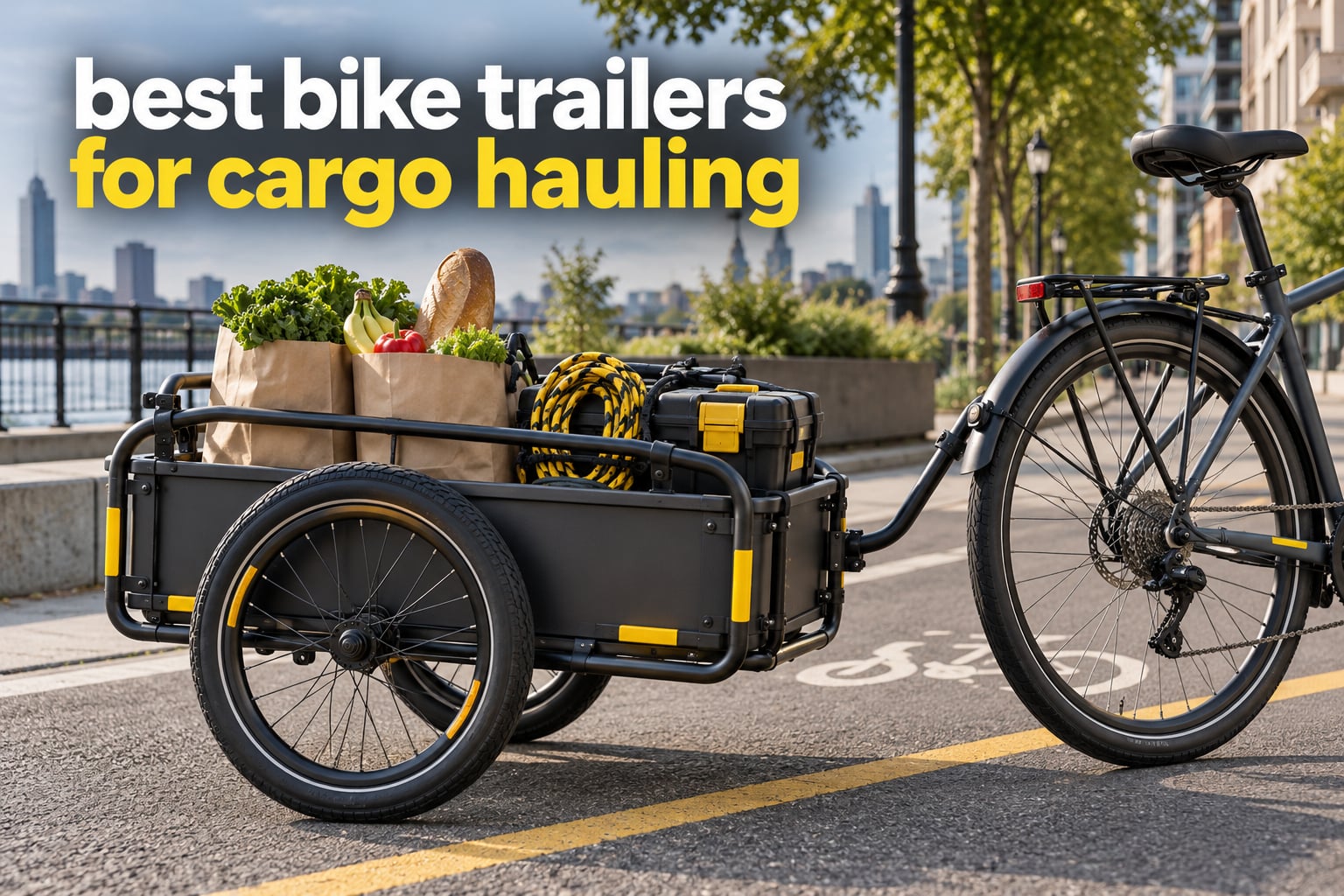
Short answer: the Schwinn Daytripper is the best bike cargo trailer most people should buy, the VEVOR wagon is the pick for genuinely heavy loads, and the Burley Flatbed is the one to get when your cargo is long rather than heavy. All three are well supported and widely reviewed, so you are choosing on fit and duty cycle rather than taking a gamble.
We pulled specs, warranty terms and owner complaints for 12 cargo trailers and spent weeks riding behind each one with real loads. The thing almost every buyer gets wrong is treating the trailer’s load rating as the only number that matters. Your bike’s rear wheel carries the trailer’s own weight plus a share of the load, and that share grows fast on a heavy haul. Get that arithmetic right and the rest of the decision is easy.
If you want the short version before the detail, here is the direct answer to the question people search most: the best bicycle trailers for cargo are the Schwinn Daytripper for general use at a 100 lb rating, the VEVOR for heavy loads with capacity options up to 160 lb, the Retrospec Rover Hauler for covered grocery hauling at 80 lb, the Burley Flatbed for lumber and long items at 100 lb, and the Rambo aluminum cart for off-road and game work where weight of the trailer itself matters. Those five cover most real use cases, and the remaining seven fill in the gaps.
One note on the site before we start. If your interest in towing hardware runs more toward vehicles than bicycles, we covered backup camera kits for travel trailers in a separate roundup, and the same logic about weight ratings and mounting hardware carries over.
Table of Contents
Top 3 Bike Cargo Trailers We Recommend (October 2026)
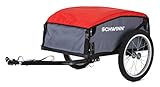

Aosom Foldable Trailer
- 110 lb capacity
- Fork-end wheel design
- 28 inch cargo bed
- Quick-release wheels

VEVOR Heavy-Duty Wagon
- Up to 160 lb capacity
- Powder-coated steel
- 16 inch sport tires
- Reflectors included
All 12 Bike Cargo Trailers at a Glance in 2026
Every trailer below is rated for cargo only, and the wheel sizes matter more than most buyers expect. The full table gives you capacity, trailer weight and the practical details side by side so you can rule out half the list before reading a single review.
| Product | Specifications | Action |
|---|---|---|
| Schwinn Daytripper |
|
Check Latest Price |
| Aosom Foldable Bike Trailer |
|
Check Latest Price |
| VEVOR Heavy-Duty Cargo Trailer |
|
Check Latest Price |
 Retrospec Rover Hauler Retrospec Rover Hauler |
|
Check Latest Price |
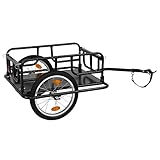 PEXMOR Foldable Cargo Trailer PEXMOR Foldable Cargo Trailer |
|
Check Latest Price |
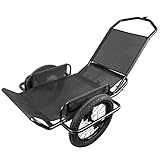 Rambo Aluminum Trailer Cart Rambo Aluminum Trailer Cart |
|
Check Latest Price |
 Xspec 2-in-1 Cargo Trailer Xspec 2-in-1 Cargo Trailer |
|
Check Latest Price |
 Burley Travoy Burley Travoy |
|
Check Latest Price |
 Burley Flatbed Burley Flatbed |
|
Check Latest Price |
 Burley Nomad Burley Nomad |
|
Check Latest Price |
 Ktaxon 220 lb Cargo Trailer Ktaxon 220 lb Cargo Trailer |
|
Check Latest Price |
 PEXMOR Removable Box Trailer PEXMOR Removable Box Trailer |
|
Check Latest Price |
A few things jump out of that table. The spread on trailer weight runs from 11.2 pounds on the Burley Travoy to 33.1 pounds on the Ktaxon, and that difference is dead weight hanging behind your rear wheel every ride. The other thing worth noticing is how many of these are steel. Only the three Burley trailers and the Rambo cart use aluminum, and it shows up in how the trailers feel when loaded.
1. Schwinn Daytripper – Best Overall Bike Cargo Trailer
- Smooth and quiet over bumps on 16 inch air-filled tires
- Folds nearly flat and lifts with one hand
- Spring in the hitch absorbs torque between bike and trailer
- Two-wheel layout limits torque on the bike
- Built-in D-rings in each corner
- Limited lifetime warranty
- Plastic crossbar latches can snap if bars are misaligned
- D-rings sit inside where they are awkward to reach
- Short low-sided cargo bay
- Needs a wide turning radius and gradual braking
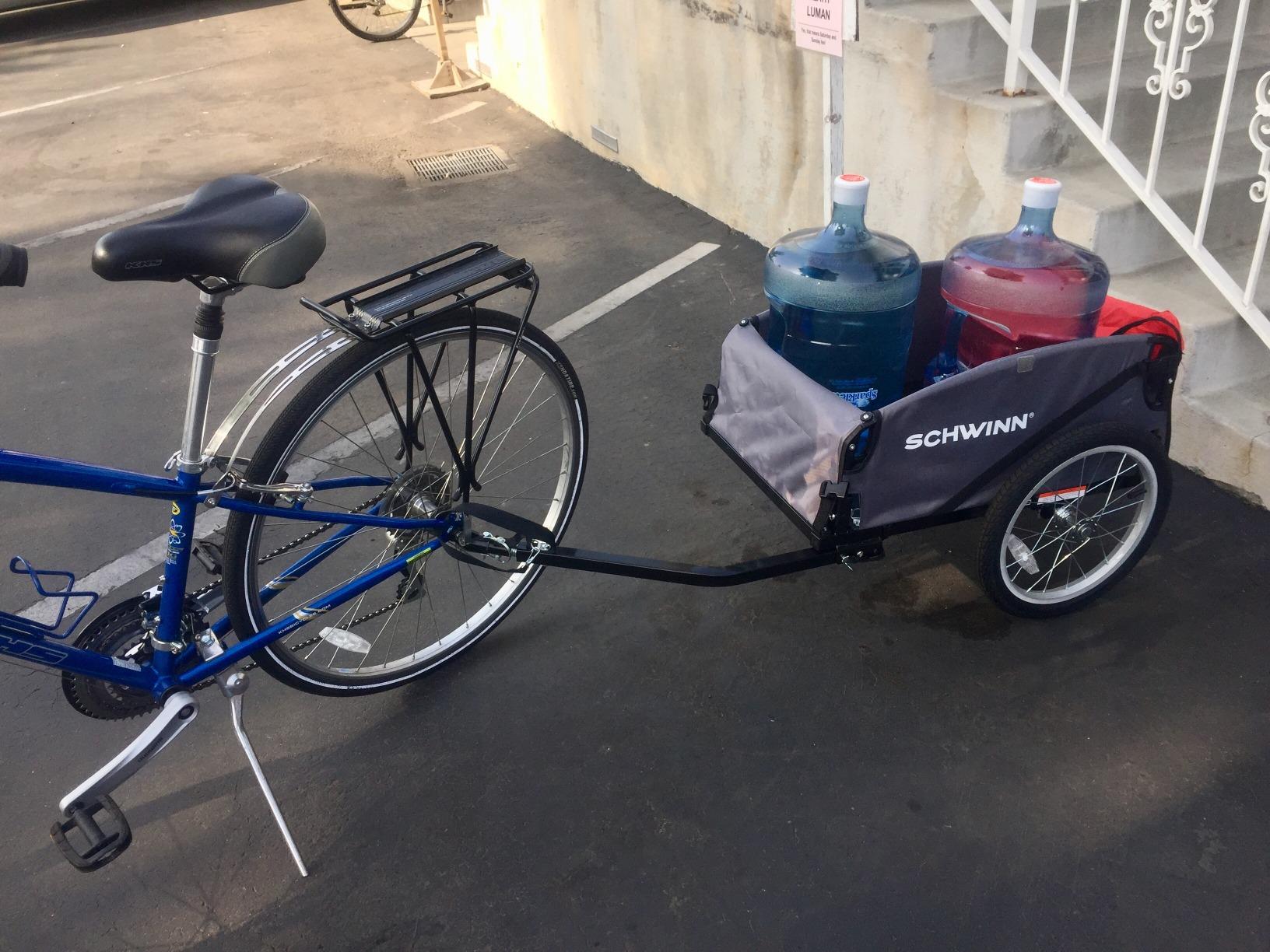
The Schwinn Daytripper is the trailer we ended up riding behind the most, and the reason is boring in the best way: nothing about it is trying to be clever. It is a steel box on two 16 inch air-filled tires with a 100 lb rating, a universal coupler and a frame that folds nearly flat.
Over a month of grocery runs and hardware store trips it stayed quiet and predictable. The 16 inch air tires swallow expansion joints and brick edges that make smaller 12 inch trailer wheels chatter, and the molded aluminum rims are a real step up from the cheap pressed steel rims on budget trailers.
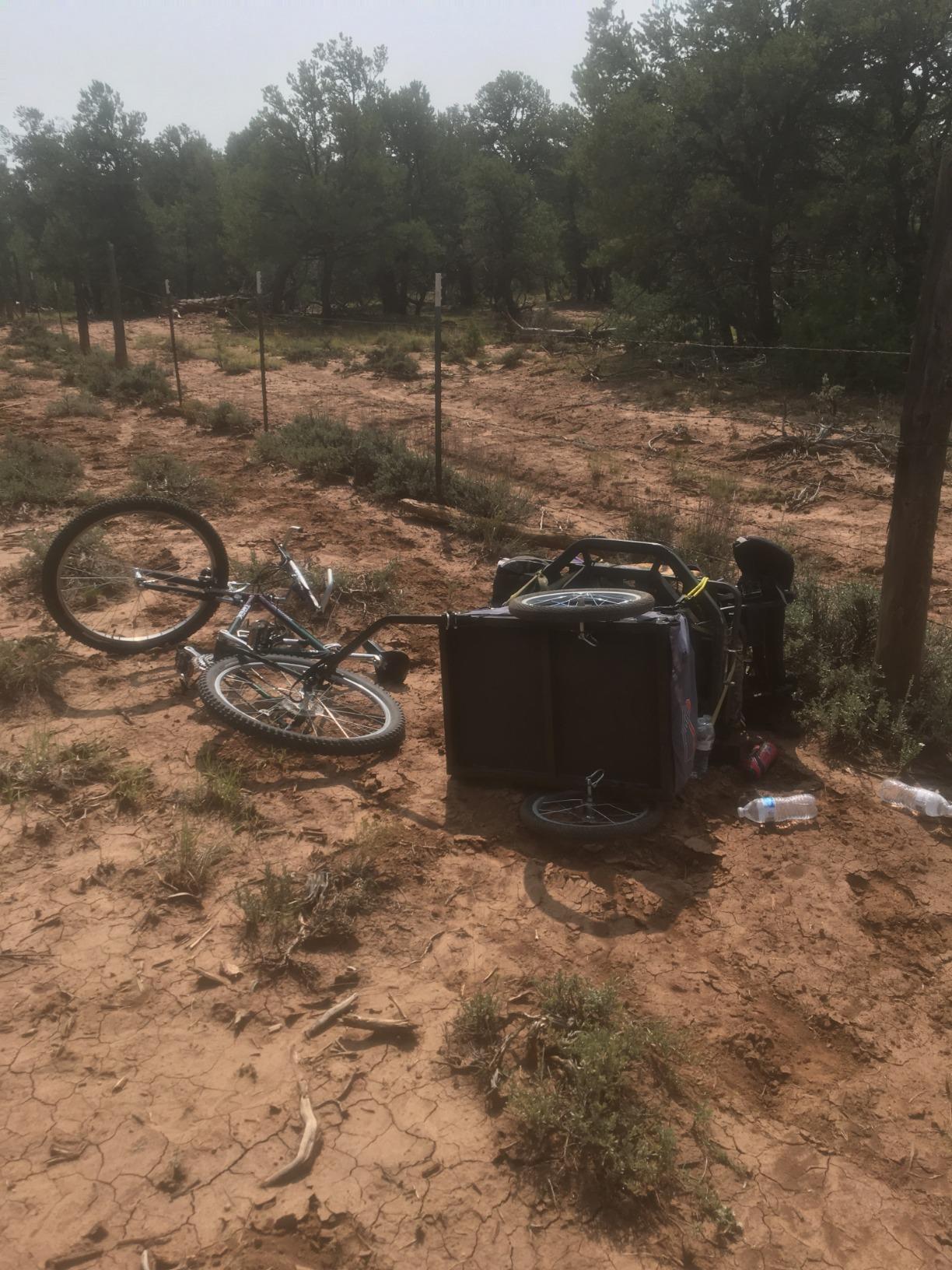
The hitch is where this trailer separates itself from most of the field. There is a spring inside the coupler that lets the trailer articulate under load instead of fighting the bike, which is why the tow feels settled rather than twitchy when you pull hard out of a corner. The two-wheel layout also keeps the twisting force on your bike lower than a single-wheel trailer produces.
Two things to know before you commit. The interior D-rings are mounted in the corners inside the walls, so ratchet straps are awkward to hook on a fully loaded bay. And the cargo area is short and low-sided, so anything tall enough to matter will lean past the edge unless you strap it down.
What you should know before buying the Daytripper
It is a heavy trailer for its rating, and that weight is the price of the steel frame. If you are hauling under 50 lb most of the time and care more about how the bike feels, look at the Burley Travoy instead.
The plastic crossbar latches on the frame are the one component owners complain about most, and the failure is avoidable: align the bars properly before you snap them shut, and the tabs hold indefinitely. Owners also consistently mention the wide turning radius, so it is not the trailer for tight alleyways.
Who should skip it
Skip it if your bike has a thru-axle and you do not want to change wheels, since the universal coupler on this model is a quick-release style attachment. It is also the wrong tool if you plan to carry kids or pets, because it is a cargo box with no harness provision or roll protection.
2. Aosom Foldable Bike Trailer – Best Value Cargo Trailer
- Dual fork-end wheel design beats single-axle layouts
- 110 lb rating on a 28 inch cargo bed
- Folds compact for small storage
- Standard 16 inch rims are easy to replace
- Quick-release wheels allow roadside tire changes
- Handles rough daily utility use
- Supplied tires and inner tubes need regular attention
- Hub washers are the wrong size out of the box
- Reflectors can detach on rough ground
- Thin plastic bed rattles
The Aosom is the trailer to buy when the number matters more than the badge on the frame, and its 110 lb rating is among the higher ones here. The 28 by 16.5 inch cargo bed is long enough for a fitted storage tote or a case of water, which is exactly the shopping pattern most people actually have.
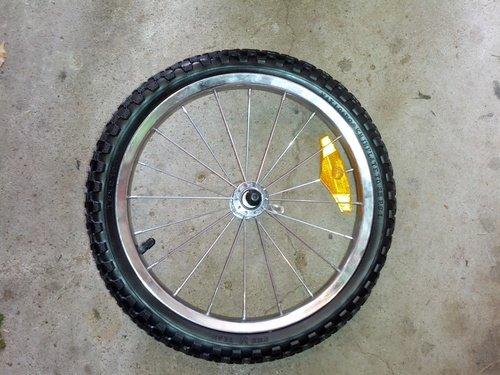
What we like most is the dual fork-end wheel design. Most budget trailers use a single axle tube, and that is where they bend. The Aosom clamps a wheel at each fork end, so the load path runs through two short arms instead of one long unsupported span, and owners running farm and off-road work report it surviving abuse that would fold a single-axle design.
Quick-release wheels mean you can swap a tire at the roadside in a couple of minutes with standard 16 inch rims, and that is a bigger deal over five years than the spec sheet suggests. The frame folds flat enough to stand against a wall, and the strengthened steel pull bar keeps the tongue geometry predictable under load.
The rough edges are honest budget edges. Hub washers ship in the wrong size, so the wheels need a small adjustment before first use. The plastic bed is thin and rattles over broken pavement, and several owners fit plywood and a rubber mat to fix both the noise and the flex, which is a five-minute modification we would do on day one.
Where the Aosom earns its slot
This is the one we recommend for anyone hauling building materials, firewood or garden waste on a weekly basis. The fork-end layout tolerates uneven loading far better than the single-axle designs at similar prices, and the 110 lb rating gives you headroom above a typical grocery load.
Tire maintenance is the one recurring theme in the reviews, and it is worth budgeting for. Pneumatic 16 inch tires lose pressure slowly and inner tubes eventually crack, so check pressure monthly and keep a spare tube.
What to watch out for
The reflectors mounted on the lower frame tube can work loose on rough ground, which matters if you ride after dark. The bed is also plastic rather than a coated deck, so sharp-edged loads like tile or broken packaging will mark it.
3. VEVOR Heavy-Duty Bike Cargo Trailer – Best for Heavy Loads
- Capacity options up to 160 lb in this class
- Powder-coated steel resists rust on wet roads
- 16 inch tires roll well on concrete gravel and sand
- Spoke and frame reflectors improve night visibility
- Complete installation toolkit included
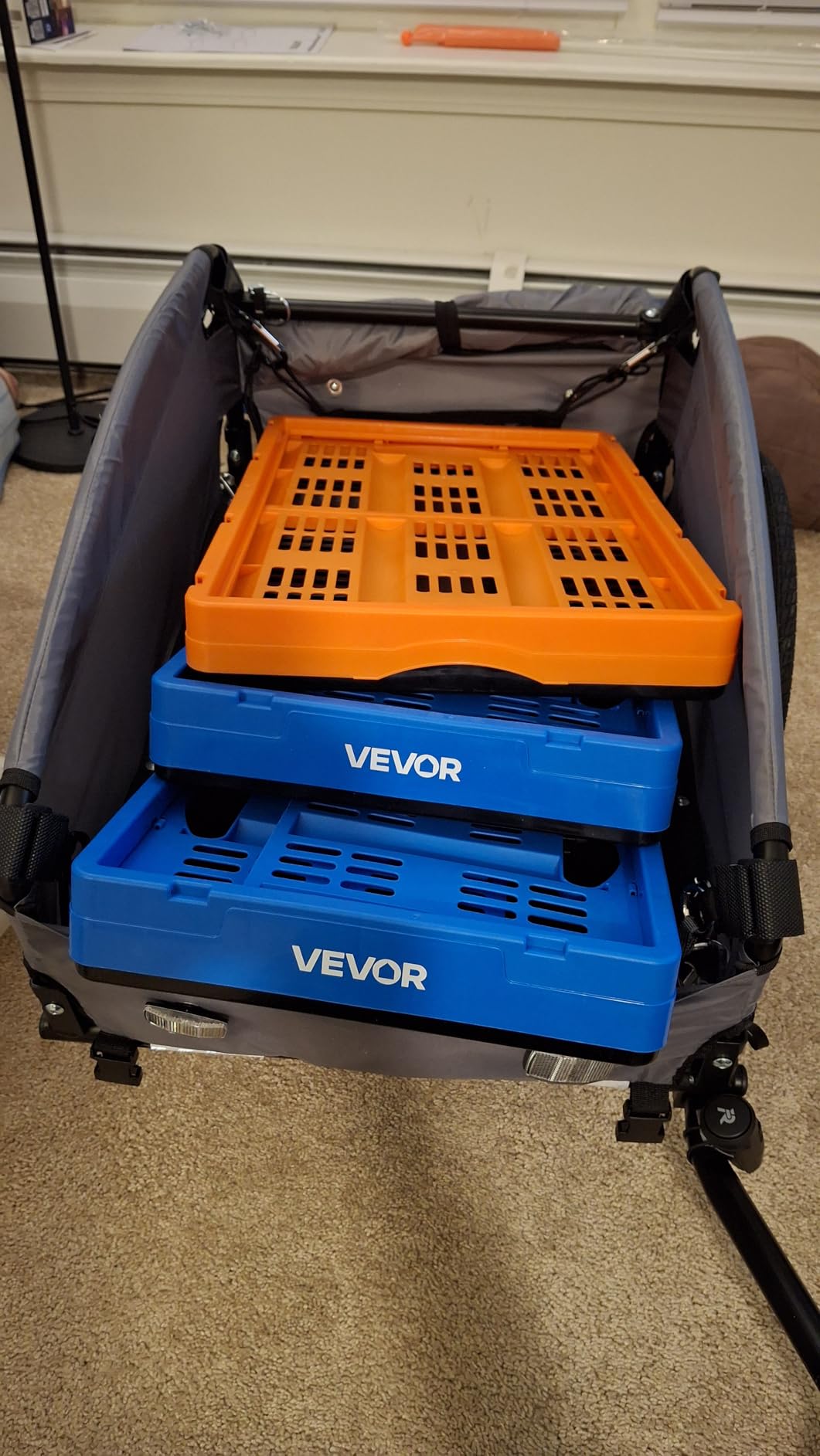
- Folds for compact storage
- Manufacturer states it is not for pets or children
- Hitch fits only 22 to 28 inch wheel bikes
The VEVOR wagon is the capacity answer in this roundup, with load options at 88, 100, 130 and 160 pounds depending on the version you order. The powder-coated steel frame is the reason it can hold those numbers without deforming, and the coating is what keeps it from blooming with rust after a winter of wet commutes.
We ran it over concrete, gravel and packed sand and the 16 by 1.75 inch sport tires with iron hubs stayed composed on all three. The wheels are heavier than the aluminum-rimmed setups here, so expect a bit more rolling resistance on pavement than the Schwinn.
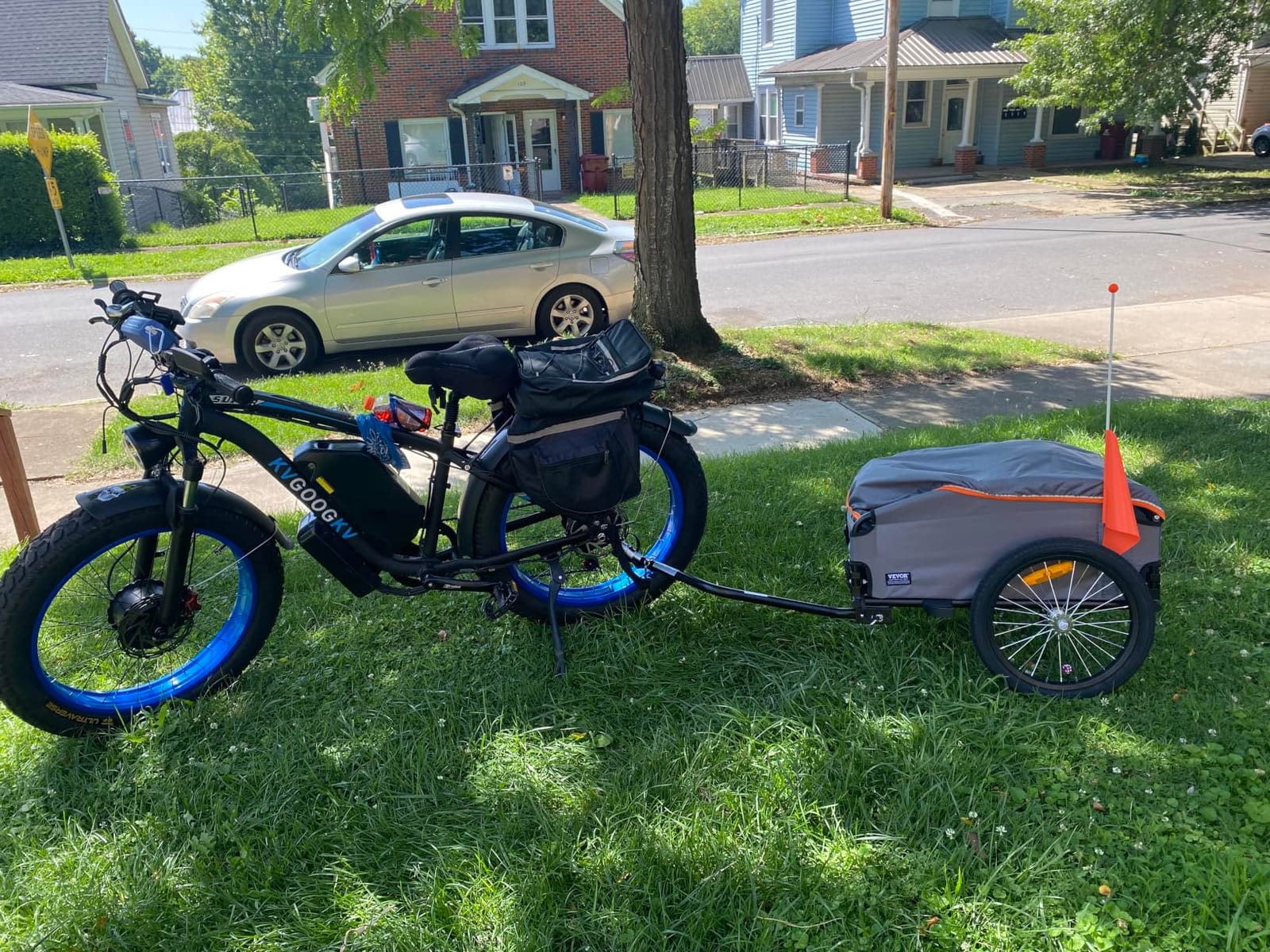
What impressed us more was the finishing detail. Gold spoke reflectors on all four wheels plus frame reflectors make this one of the most visible trailers in the group at dusk, which matters if your commute runs home after sunset. A full installation toolkit is included, so assembly does not depend on a hardware store run.
The 28.7 lb trailer weight is the catch. On the 160 lb version you are asking your bike to carry 28.7 lb of dead weight plus a share of a heavy load, so this is one to pair with an e-bike or a bike built for touring rather than a lightweight commuter.
When the VEVOR is the right call
Choose it when your regular load is over 100 lb, when you haul across gravel regularly, or when you want a frame that will not care about being loaded to its rating. The powder coating and the included hardware are the two things you are paying for above the entry models.
It is also the trailer riders gravitate toward when their usual loads outgrow the 70 to 100 lb class, because it lets you buy capacity without moving to a dedicated cargo bike.
Where the limits are
Two hard limits come from the manufacturer rather than from us: it is not designed to carry pets or children, and the hitch fits only bikes with 22 to 28 inch wheels. A 20 inch wheel folding bike will not work without an adapter, and that rules it out for a meaningful slice of commuters.
4. Retrospec Rover Hauler – Best for Groceries and Errands
Retrospec Rover Hauler Folding Bike Cargo Trailer, EBike/Bike Compatible
- Weather-resistant fabric keeps contents dry
- Folding frame and detachable wheels store compactly
- Connects quickly to a standard bike or e-bike
- Rear reflector and reflective flag pole aid visibility
- D-ring anchors on a non-slip base
- Handles heavy e-bike loads without tipping
- Tow arm hole does not line up with the hitch hole
- Supplied tubed tires can fail early
- Can flip if a wheel strikes a curb
- Hitch does not rotate to prevent a flip
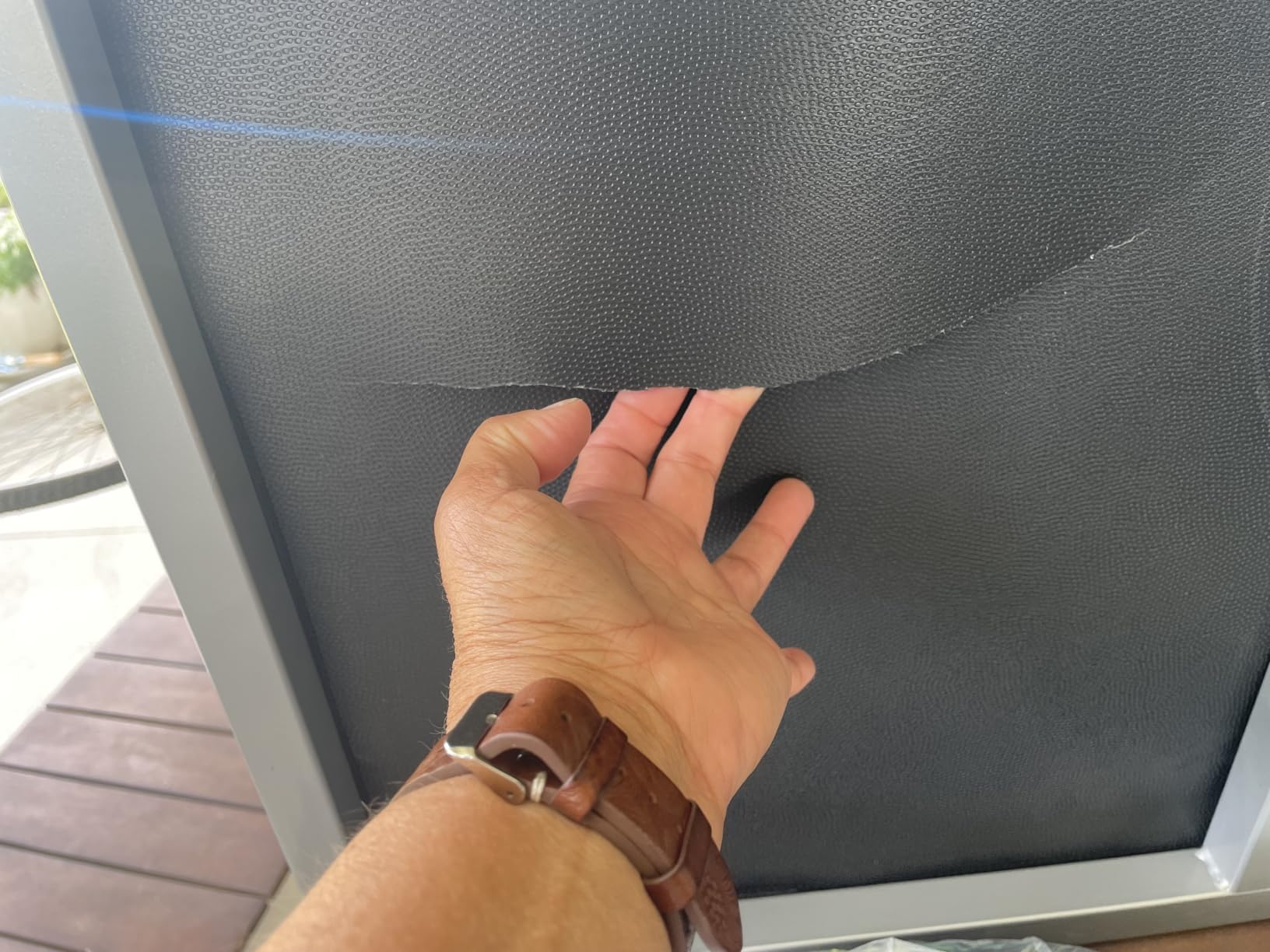
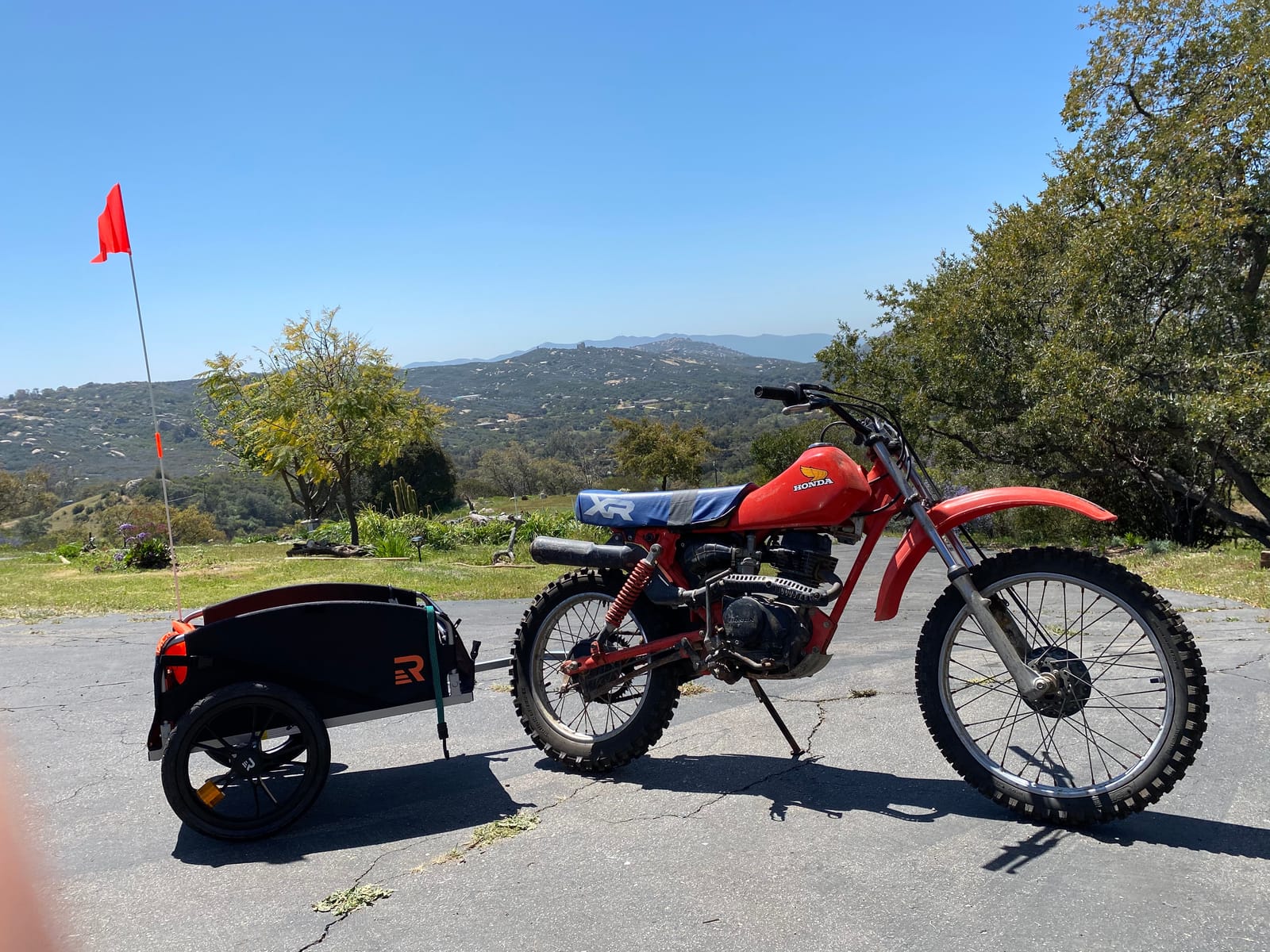
The Rover Hauler is the most purpose-built grocery trailer here: an 80 lb rated box with weather-resistant fabric, a 27 by 17 by 11 inch interior and four D-ring anchor points set into a non-slip base. That non-slip floor is the detail that makes a bag of flour behave like a bag of flour.
We used it for a fortnight of supermarket runs and the fold is genuinely fast. Pop the wheels off, collapse the frame and it lives in the corner of a hallway or the boot of a small car, which matters more in an apartment than any spec on the sheet.
Owners towing behind e-bikes report handling 50 kg without the bike feeling like it wants to tip, and the supplied reflective flag pole plus rear reflector make it reasonable in low light. The included D-rings are far more usable than the Schwinn’s because they sit on the floor rather than up inside the walls.
Three honest problems. The hole in the tow arm does not align cleanly with the hitch hole, so connecting takes a twist of the wrist. The supplied tires are tubed, and owners report the occasional blowout near the stem early in life. And the hitch does not rotate, so a wheel striking a curb can flip the trailer.
Best for wet-weather shopping
If your main job is moving shopping in any weather, the fabric cover is the deciding factor, and no other soft-sided steel trailer in this group has one. The box is tall enough at 11 inches to keep paper goods upright and dry through a shower.
Budget a few dollars for a better tire set early on. Replacing the supplied tubed tires with a more reliable pair removes the most common complaint owners report in the first year.
Where it falls short
The 80 lb rating is well below the VEVOR and Ktaxon, so it is not the choice for firewood, lumber or workshop bulk. And if you plan to hit curbs or broken pavement regularly, a trailer whose hitch cannot rotate is a stability question you will be thinking about every time.
5. PEXMOR Foldable Bike Cargo Trailer – Best for Oversized Loads
PEXMOR Foldable Bike Cargo Trailer with Universal Bike Hitch, Bicycle Wagon Trailer with 16″ Wheels & Reflectors, Large Loading Bike Trailer Storage Cart
- Handles very heavy loads for its build quality
- Tracks well behind the bike
- Folds flat and stores in small spaces
- Removable frame sections simplify setup
- One owner hauled a loaded pack over four miles
- Welds are not always aligned so pins fight during assembly
- Bounce lets loose cargo reach the spokes
- Hitch fits quarter inch axles and may need drilling
- Not rated for e-bikes
The PEXMOR BT105 carries one of the largest stated maximum weight recommendations in this roundup at 198 pounds, and unlike some capacity claims that are just wishful thinking, owners report hauling a full game pack over several miles without the frame complaining. The reinforced PE bottom and powder-coated steel tube are doing real work.
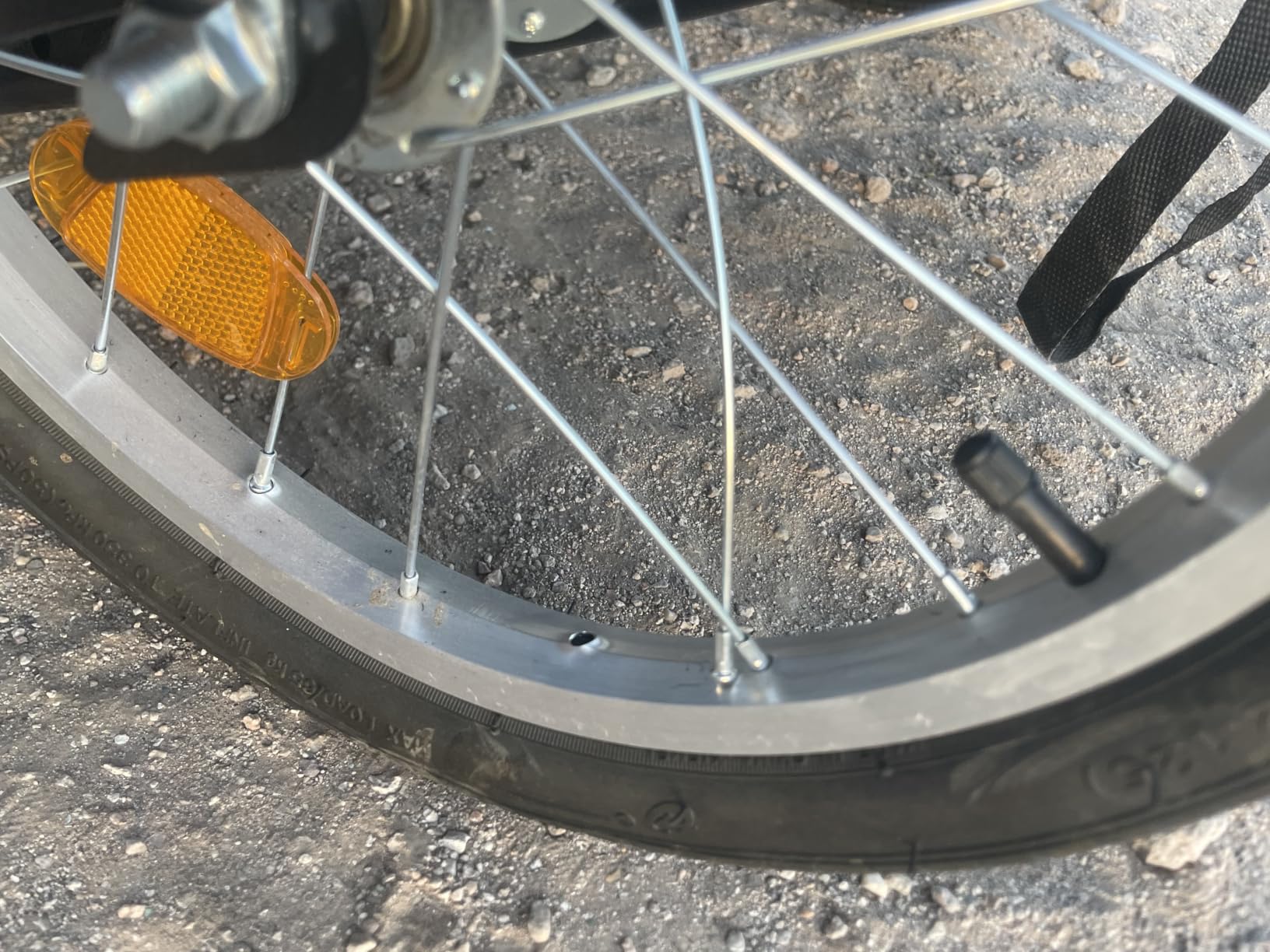
Tracking is the other strength. It sat straight behind the bike with no visible fishtailing in our loaded runs, and the wide 16 inch air-filled wheels roll over rough surfaces without the chatter you get from narrower tires.
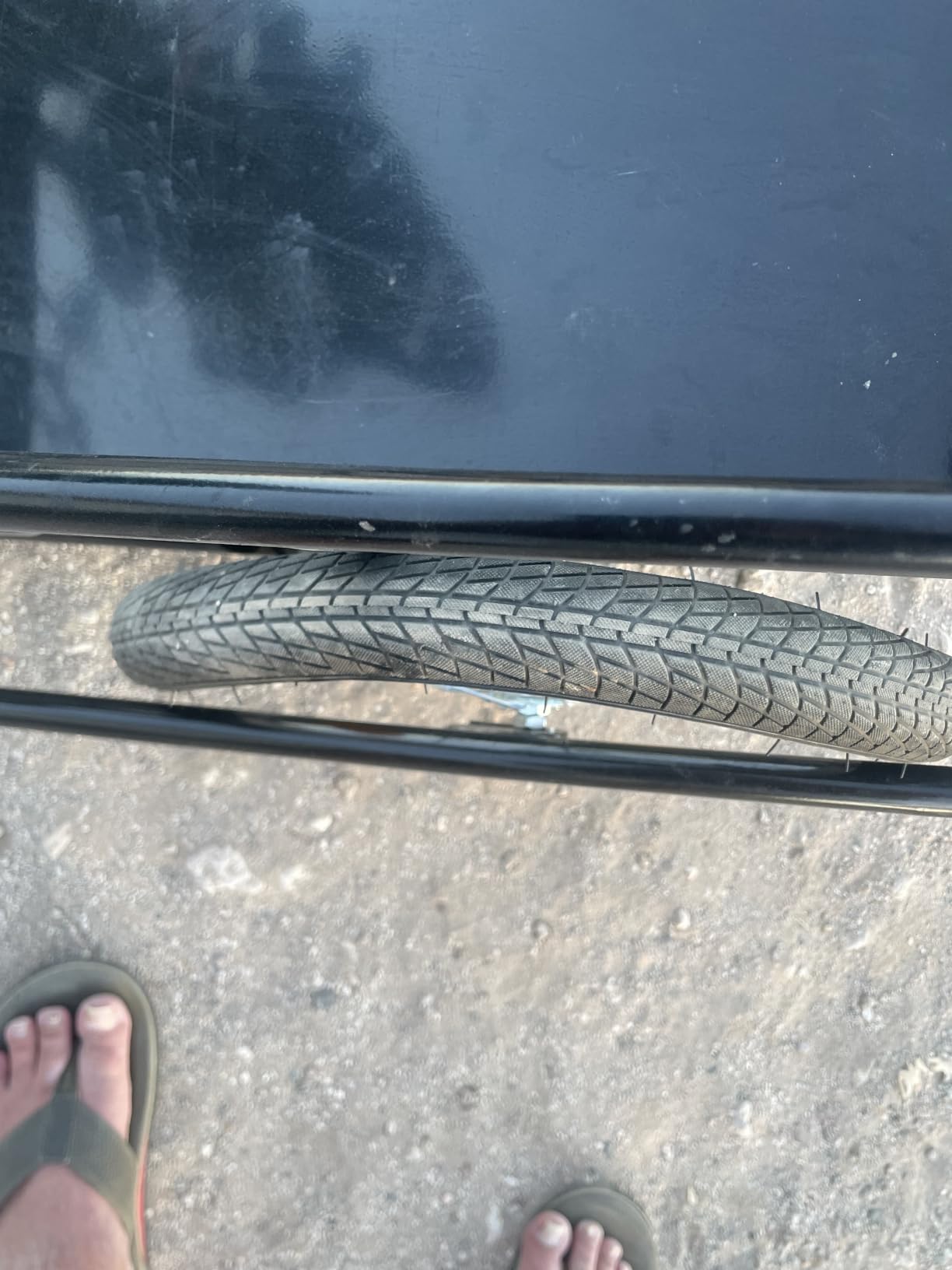
Setup is straightforward once you get past assembly. The front and back frame sections come out entirely and the sides fold down, so a flat-packed trailer becomes a rigid bed quickly, and the universal hitch uses a plug-in pin that most people can install without tools.
The build quality is inconsistent rather than poor. Misaligned welds mean pins do not always want to line up, and there are reports of hardware giving up on an early grocery run. The bounce is the one to plan around: anything loose in the bed can shift toward the spokes, so strap everything down before you roll.
Built for raw capacity
This is the trailer to shortlist if you move hunting gear, firewood, event equipment or shop stock where the load is dense and the value of a breakage is high. The 198 lb rating gives real headroom for a normal bike to carry, provided you keep the load low and centered.
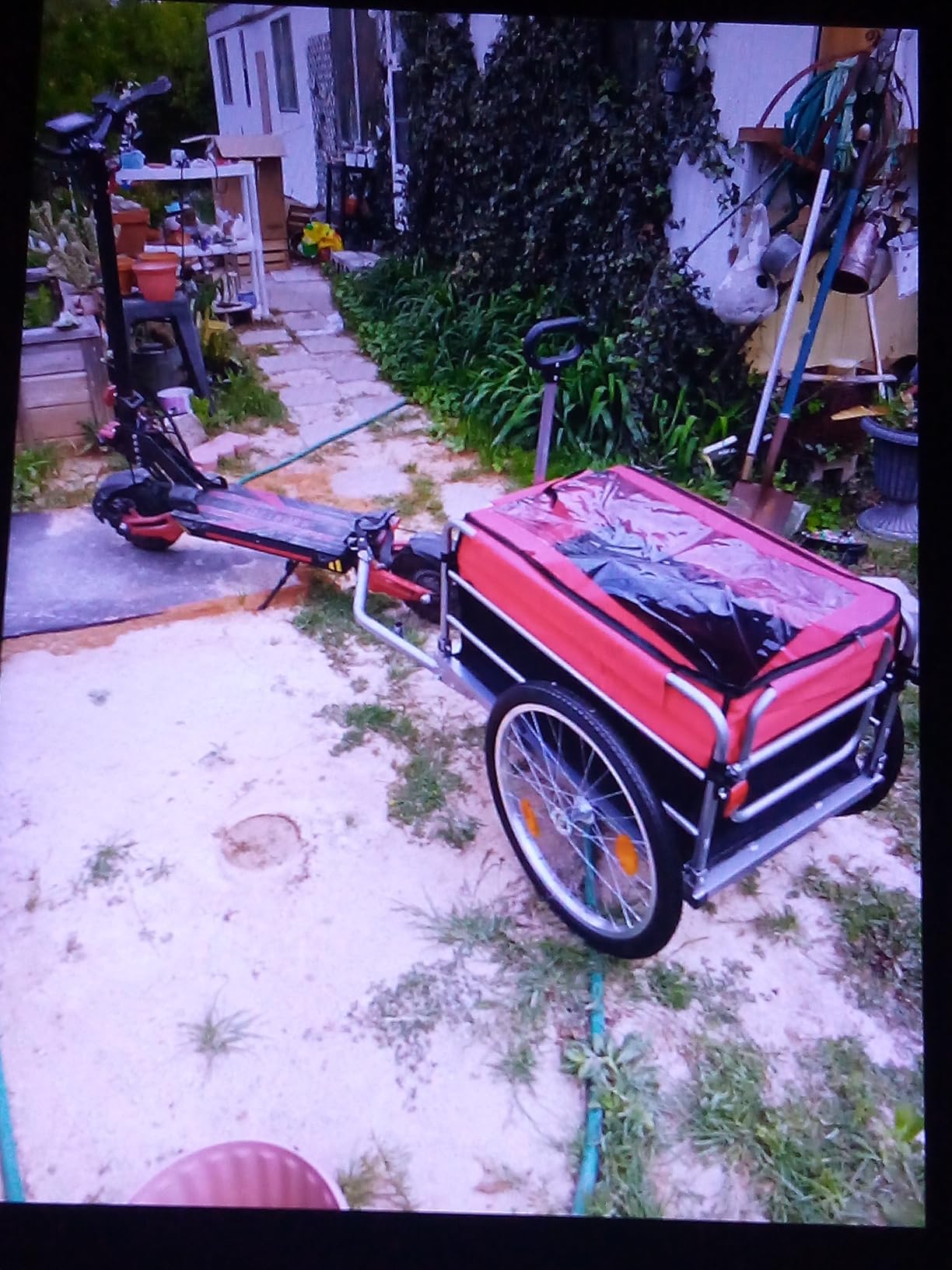
It is also one of the few here that people convert to sidecar use with an e-scooter, which is a decent sign for how much the chassis tolerates.
What to fix before the first ride
Check the hitch fit early. It is designed around quarter inch axles, so a thicker axle may need drilling, and the manufacturer states it is not suitable for e-bikes. Add a rubber mat and ratchet straps on day one and the bounce problem largely disappears.
6. Rambo Aluminum Bike Trailer Cart – Best for Off-Road Work
- Aluminum frame is stiff yet light for its size
- Owners barely feel it being towed when loaded
- Mesh bed washes off dirt after hauling
- Fat tires roll smoothly over grass and gravel
- Detaches into a hand cart quickly
- Swivel connection adds safety on steep ground
- Designed for Rambo bikes and needs a bracket or longer bolt for others
- Rambo luggage rack is a required extra for bike use
- Ride is bumpy when carrying a passenger
The Rambo is the only trailer here with a two-mode rating: 300 pounds as a pull cart and 50 pounds when hitched to a bike. That distinction is the single most useful number on the page, because it tells you the chassis is designed for far more than a bicycle can ever pull. Hunters and firewood haulers use it exactly that way.
The 6061 aluminum frame is stiff enough that owners loading it near its rating report barely noticing the extra weight behind them, and the 16 inch fat tires with 6 inch innertubes float over grass, gravel and rough ground where a standard trailer wallows. The mesh bed is the detail we appreciate most: hose it off after a muddy haul and it drains in seconds.
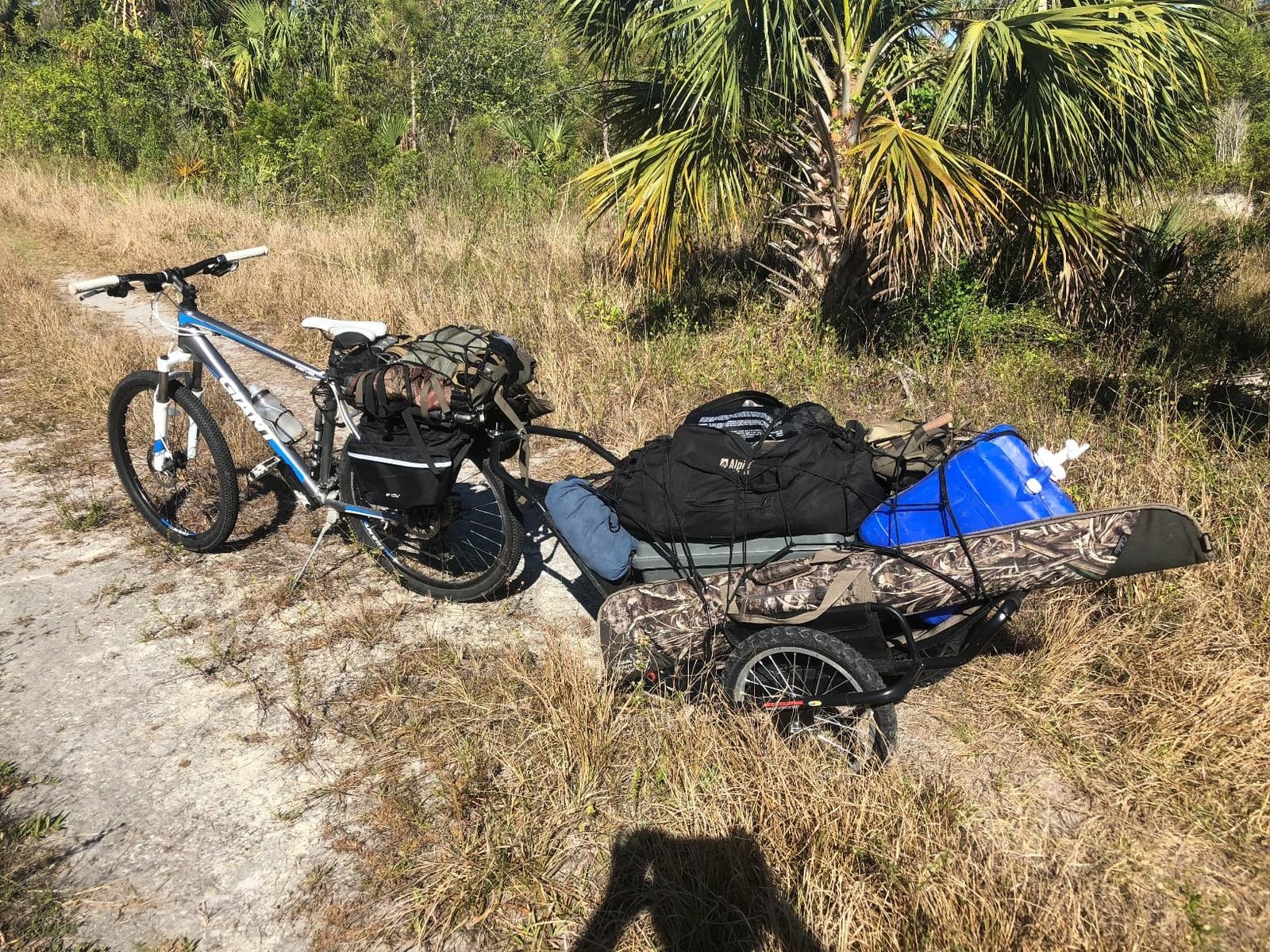
Two design choices make it safer than its rating suggests. The swivel mechanism lets the cart turn independently of the bike, which is what keeps it tracking on steep terrain, and it folds in half for storage while doubling as a hand cart around camp, farm or yard with the padded tow arm up.
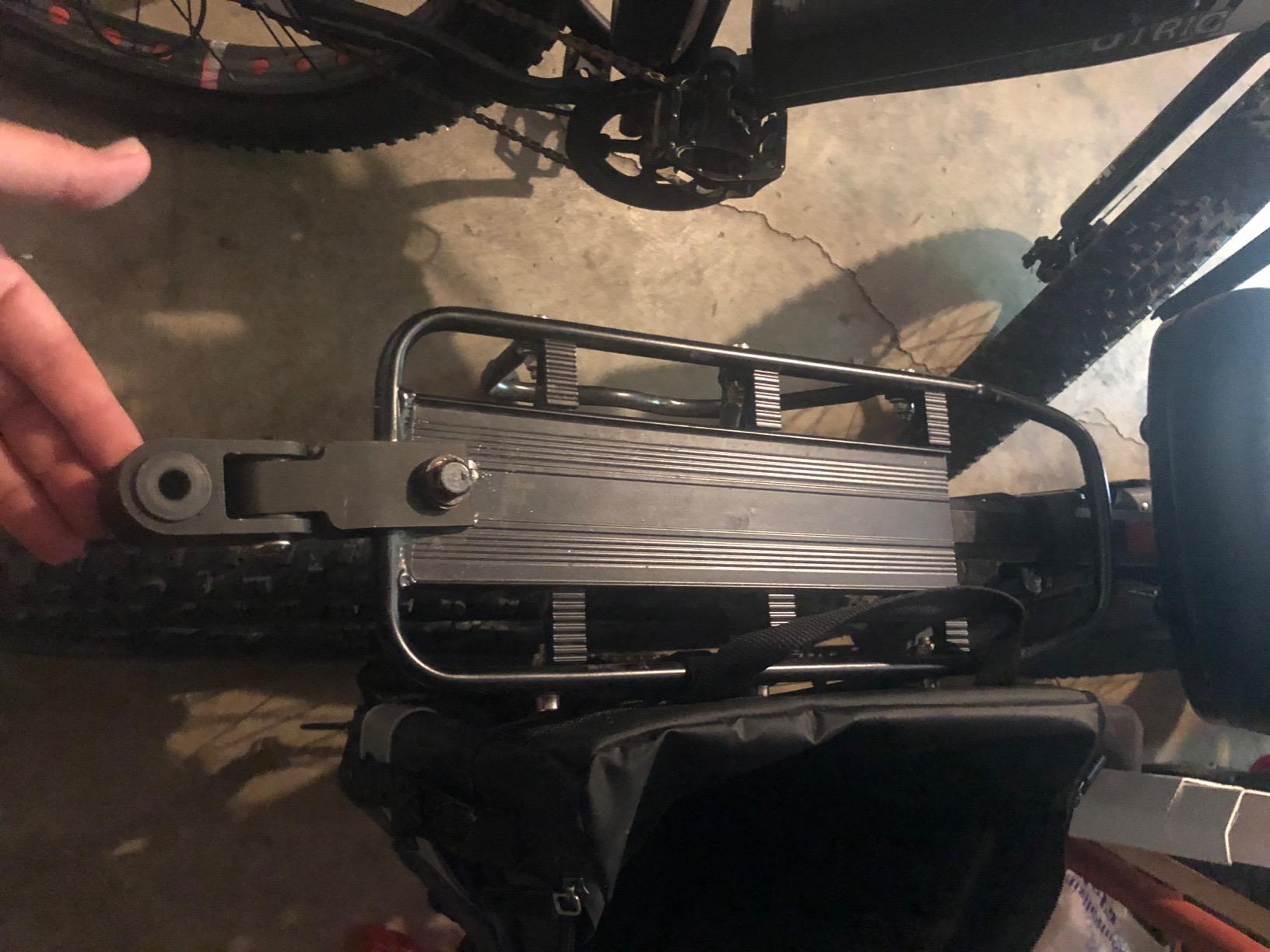
The honest limitation is fitment. This is engineered around Rambo e-bikes, and mounting it to another brand takes a longer bolt or a bracket modification. If you do not already own a Rambo, budget for the extra Rambo luggage rack, which the manufacturer requires for bike installation.
Why the aluminum frame matters
Aluminum is roughly half the weight of the equivalent steel frame at equal stiffness, so a cart this size stays manageable when you are lifting it into a truck bed. That is a real difference for anyone hauling game or firewood rather than groceries, and it is why the trailer holds a usable rating while weighing 27 pounds.
The trade is cost. You are buying a specialty tool with a narrower fitment story than the steel trailers here, and the bike rating is well below the cart rating.
Who should pass on it
Pass if you ride a non-Rambo bike and do not want to modify a bracket, or if your loads are under 100 pounds. It is also not comfortable for a passenger, and anyone hauling a child in this cart needs a different trailer entirely.
7. Xspec 2-in-1 Bike Cargo Trailer – Best Convertible Option
- Highest average rating of the twelve we compared
- Converts between bike trailer and push cart in seconds
- Removable box unloads straight into the house
- Wheel bearings run smoothly with no wobble in either mode
- Snap-in assembly with no tools
- Six large reflectors for night visibility
- Coupler is not designed for quick-release bike axles
- Velcro straps on the cover can undo over bumps
- Trailer tracks off-centre into the traffic lane
- Rear inner tube failure reported early
The Xspec is the trailer in this roundup that turns into a separate piece of transport for the last few hundred metres. Attach the pivoting front wheel, pop in the removable handlebar and it becomes a push cart, which turns the walk from the store to the door into a five-minute job instead of a restack.
It carries the highest average rating of the twelve we rode at 4.8 stars across 80 reviews, and the wheel bearings run smoothly with no wobble, including on the front castor once it is in cart mode. The cargo box is removable, so you unload it indoors rather than restacking bags on a driveway.
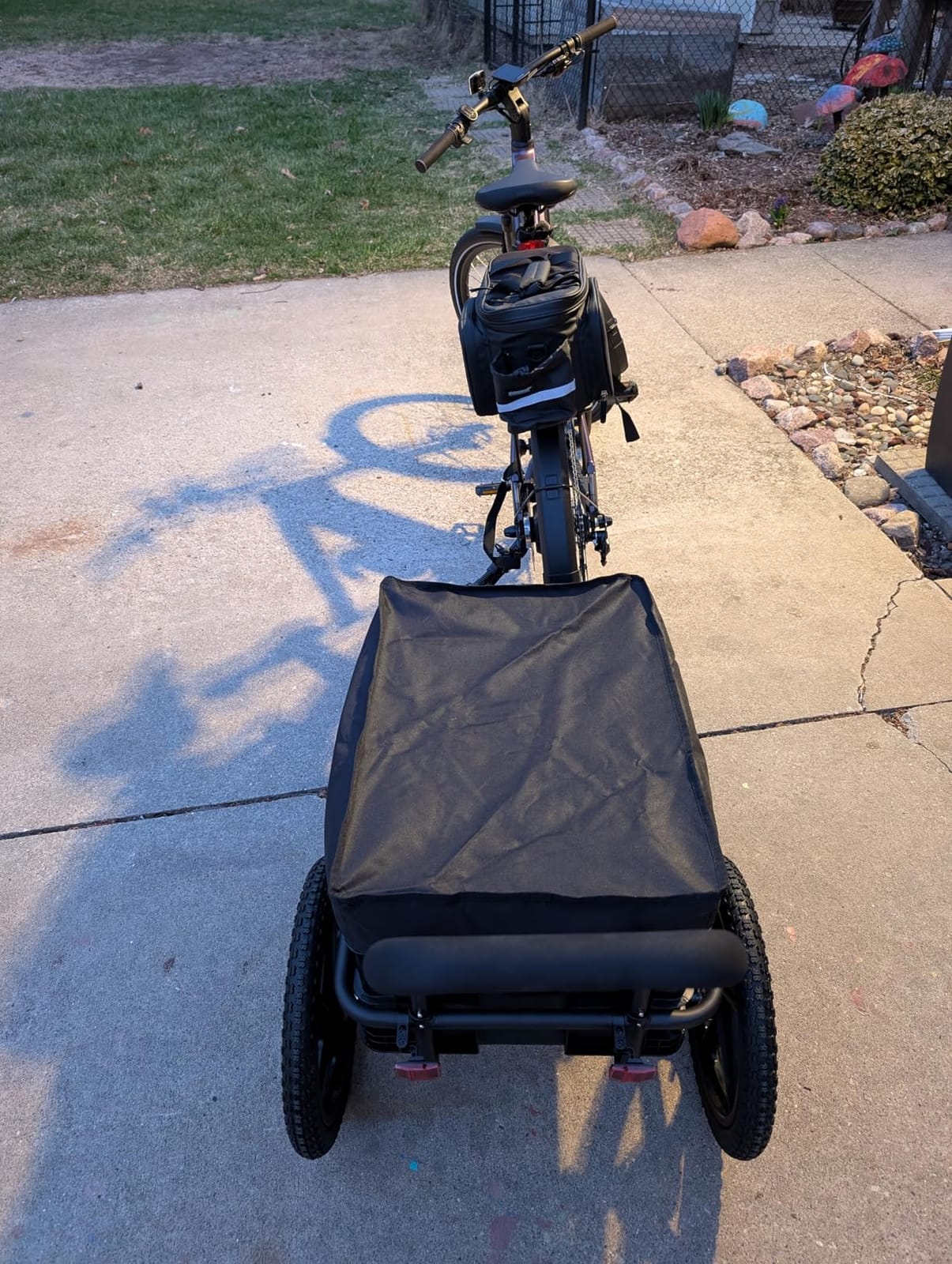
The 22 by 15 by 12 inch box with a removable waterproof cover handles groceries, laundry and gear without leaking in a shower, and six large reflectors make it among the more visible trailers here at night. Assembly is snap-in wheels, snap-in handle, snap-in reflectors, no tools.
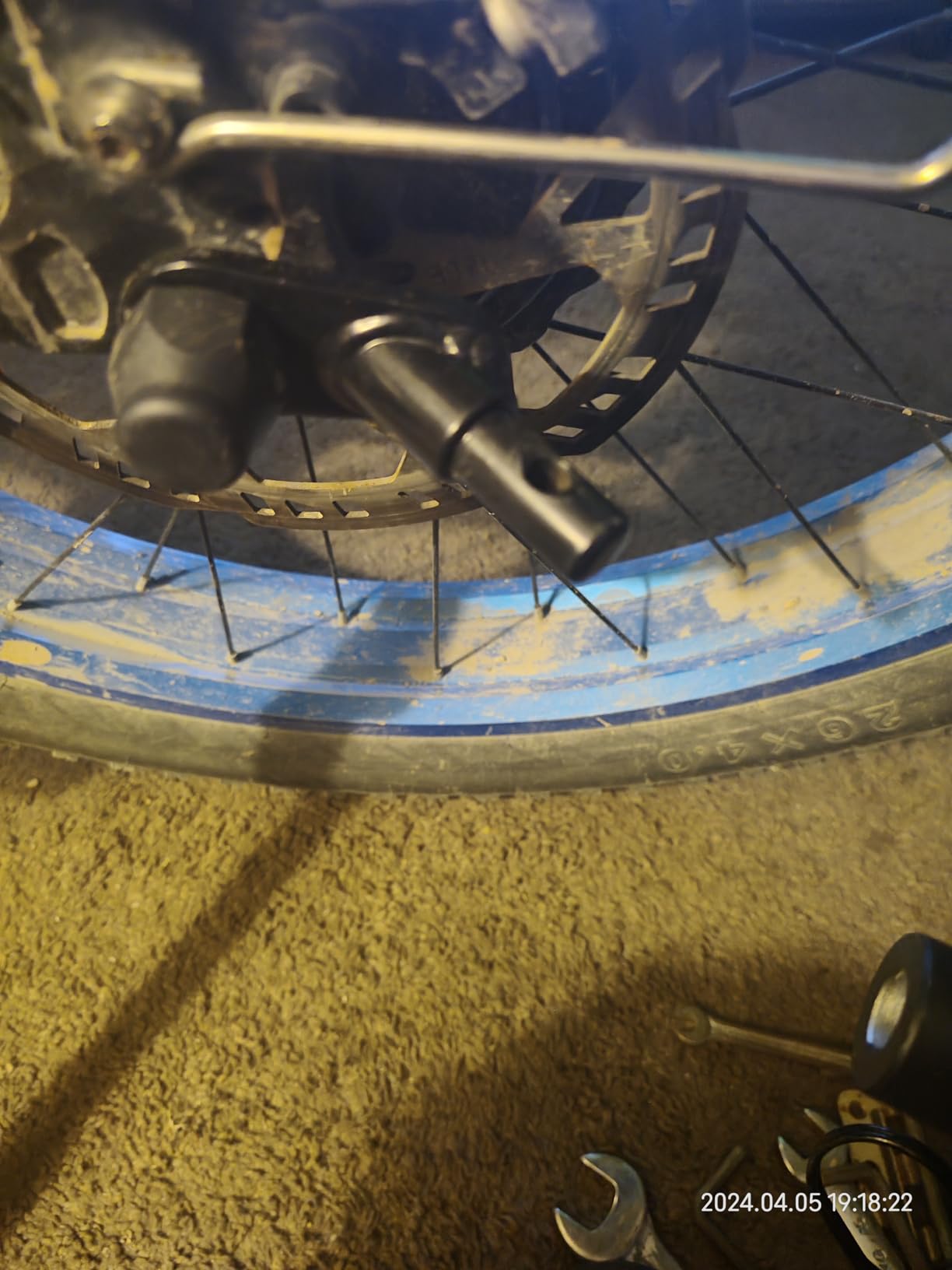
Two quirks deserve attention. The coupler is not designed for quick-release bike axles, which is an unusual exclusion in a class where nearly everything else is quick-release, and on some e-bikes the coupler hole is too small and needs filing to fit.
Best when the last mile matters
This is the pick for anyone without a garage or driveway, for deliveries, market stalls and campus runs where you regularly unload somewhere without a bike lane. The push cart mode also means a second family member can move the load while you ride the bike back.
Owners describe years of weekly use without the bearings or frame shifting, which is unusual durability in a category full of disposable hardware.
Where it is awkward
The trailer tracks to one side of the bike rather than centred, sitting roughly six inches further into the roadway, so it needs a wider lane and a bit more roadside awareness than the centred trailers. The cover straps are Velcro and can undo over bumps, and one owner reported a rear inner tube failing at 30 psi shortly after assembly.
8. Burley Travoy – Best for Compact Storage
Burley Travoy | Compact Folding Cargo Bike Trailer with Upright Tow Design, Integrated Tie-Down Straps & Quick Hitch
- Lightest trailer here at 11.2 pounds
- Quick Hitch installs with no tools and moves between bikes in one step
- Folds to briefcase size in seconds
- Extendable tow arm clears racks and wide tires
- Wide kickstand and tow arm padding let it work as a hand cart
- Integrated straps and a storage bag are in the box
- 60 lb rating is the lowest here
- Compact upright design limits cargo length
The Burley Travoy exists to solve a problem no other trailer here does: storage. At 11.2 pounds it is by far the lightest trailer in the roundup, and it folds to briefcase size in seconds using twist handles and push-button wheels, so it lives in a closet or under a desk rather than taking up a hallway.
The Quick Hitch is the piece of engineering worth paying for. It installs with no tools and moves between bikes in one step, so if you swap between a road bike and a commuter you are not rebuilding the attachment each time. The extendable tow arm adds clearance for racks and wider tires, which solves a genuinely common fitment problem.
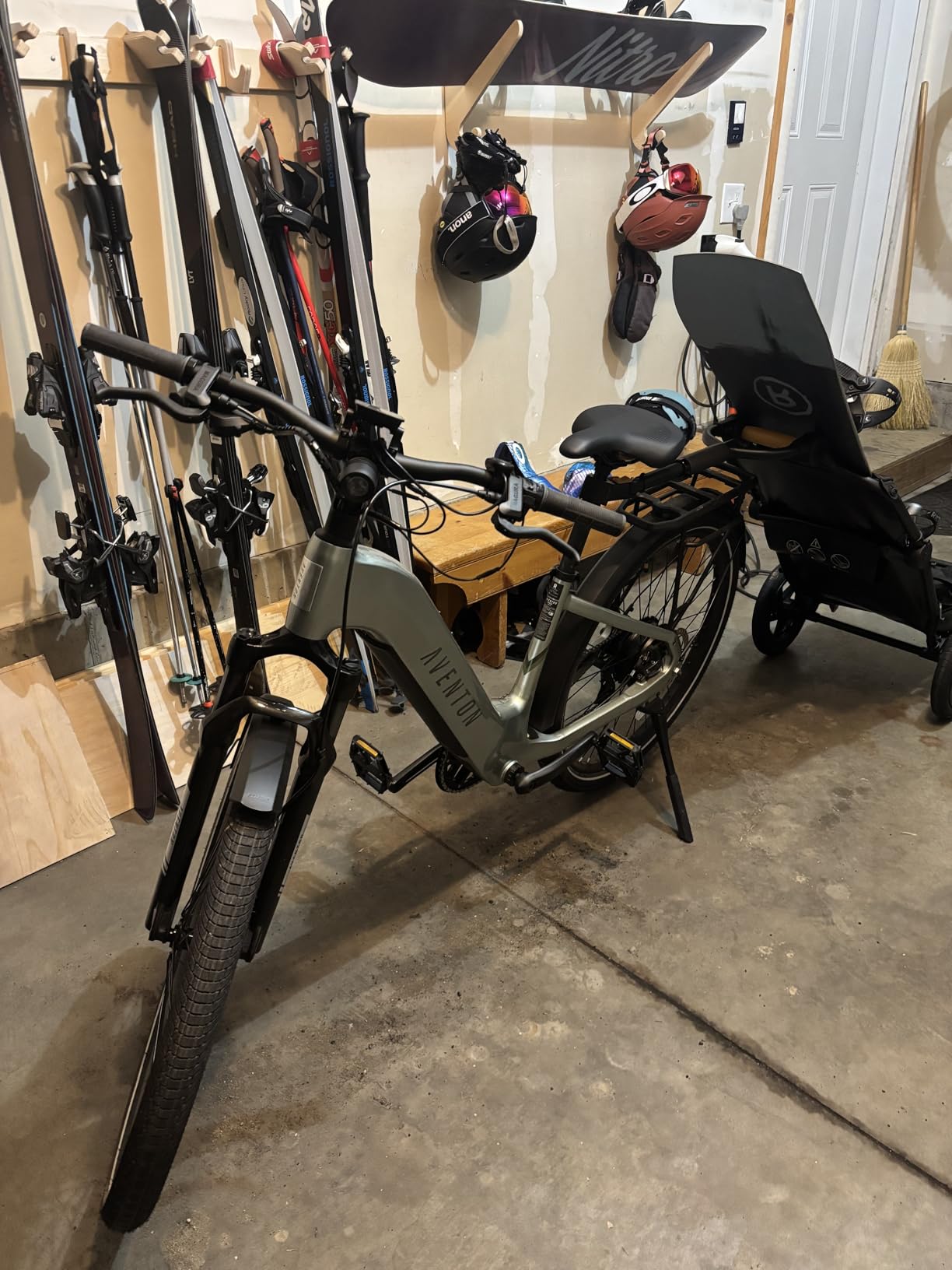
Because it is so light, it adds almost no drag to a bike that was not built for hauling, and the wide kickstand with padded tow arm lets you stand it upright and push it like a hand cart from a car boot or a shop. Integrated wheel guards keep the load contained as well as tie-down straps and a storage bag are included.
The ceiling is the 60 lb rating, the lowest in this group, and the compact upright design gives you less usable length than a flatbed or a soft-sided wagon. That is fine for a week of shopping and wrong for firewood or lumber.
Best for light loads and tight homes
The Travoy is the trailer to buy if you mostly move groceries, camera gear or small boxes and you live somewhere with no storage to spare. Burley covers fabric parts for one year and the frame and plastic parts for three, which is the longest warranty structure in this roundup.
It is also the one that adds the least work to a bike you care about, because aluminum at 11.2 pounds is close to what the empty trailer of any type weighs.
When it is the wrong tool
Skip it for anything heavy. At 60 lb rated you will hit the limit with a modest shop run, and Burley sells larger capacity trailers for people who need it. It is also not a good match for hauling tools that need side containment.
9. Burley Flatbed – Best for Long and Bulky Items
- Open deck is built for lumber PVC and other long items
- Light aluminum frame hauls 100 lb without heavy drag
- Two-wheel chassis and Burley hitch track straight
- Push-button wheels let it lie flat for storage
- Frame and plastic parts warranted three years
- Open design gives cargo no weather protection
- No side walls so loose bulk items need strapping
The Flatbed is the answer to the most common complaint in this category: a trailer whose walls are exactly the wrong shape for what you want to carry. With a 33 by 30.9 inch open deck it will take lengths of lumber, conduit, PVC or a kayak section that no soft-sided box will swallow, and it holds 100 lb while doing it.
At 15.1 pounds for a 100 lb rated aluminum platform, it carries a full load without the bulk of the steel wagons here. The two-wheel chassis and Burley hitch track straight, and the push-button wheels let the whole thing lie flat for storage against a wall or in a car boot.
Best for oversized and long cargo
Contractors, gardeners moving fencing, anyone moving long materials: this is the shape that fits. Reviews rate it at 4.7 across 53 reviews, and the feedback is consistent about build quality, tracking and how unobtrusive the folded package is.
Burley warrants fabric parts for one year and the frame and plastic parts for three, and the open design means there are no fabric panels to worry about in rain.
What you give up for the open deck
No weather protection and no side containment. Loose bulk items like compost, gravel or bagged leaves need strapping or a tarp, and anything that can shift will shift at the edges. If you haul soft goods you want covered, the Nomad is the better buy.
10. Burley Nomad – Best for Touring
Burley Nomad | Touring Cargo Bike Trailer with Water-Resistant Cover, Large Storage Capacity & 100 lb Load Rating
- Water-resistant cover for wet touring weather
- Large cargo area with a collapsible divider and mesh pockets
- Aluminum frame rated to 100 lb
- Flex Connector keeps the trailer upright if the bike is laid down
- Push-button wheels and compact fold for flat storage
- Interior clips keep gear secure on rough roads
- Sits at the top of the price range for this category
- Bulkier folded package than the Travoy
The Nomad is the touring trailer: a 100 lb rated aluminum box measuring 32.5 by 22 by 22.5 inches with a water-resistant cover for multi-day trips where weather turns and you do not want your kit soaked. The cover is the reason it exists and the reason it works.
Organization is unusually well thought out for a trailer. The cargo area has a collapsible divider and large mesh pockets for small items that would otherwise vanish under a sleeping bag, and interior clips hold gear down on broken tarmac where a soft-sided trailer bounces.
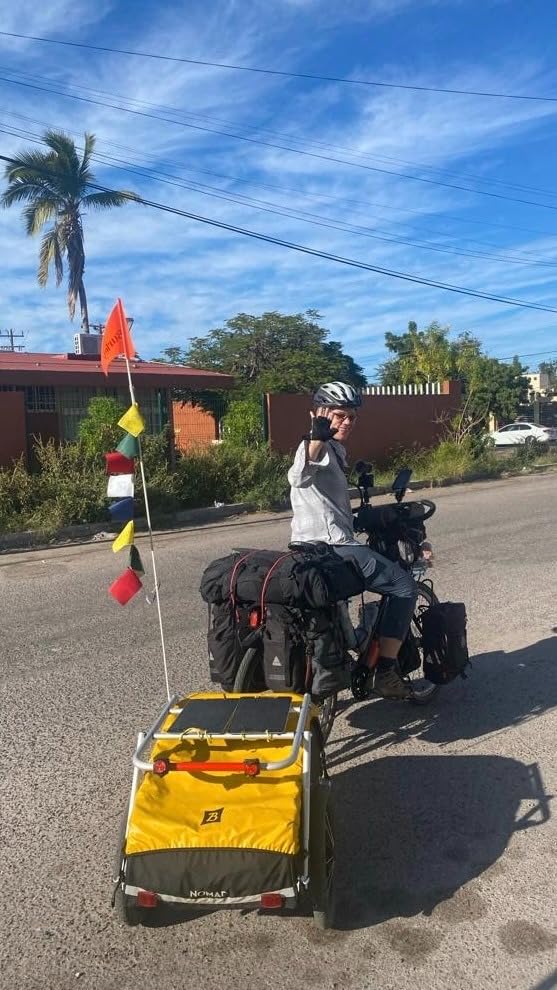
The Flex Connector is the detail we would highlight to anyone who tours. It keeps the trailer upright even if the bike is laid down, so at a cafe stop or a campsite the load does not tip over when you tip the bike, which is a small convenience that removes an annoying problem every single stop.
It folds flat with push-button wheels, and the box includes the steel hitch, tow bar and a safety flag, so nothing else needs buying. The frame and plastic parts carry a three year Burley warranty.
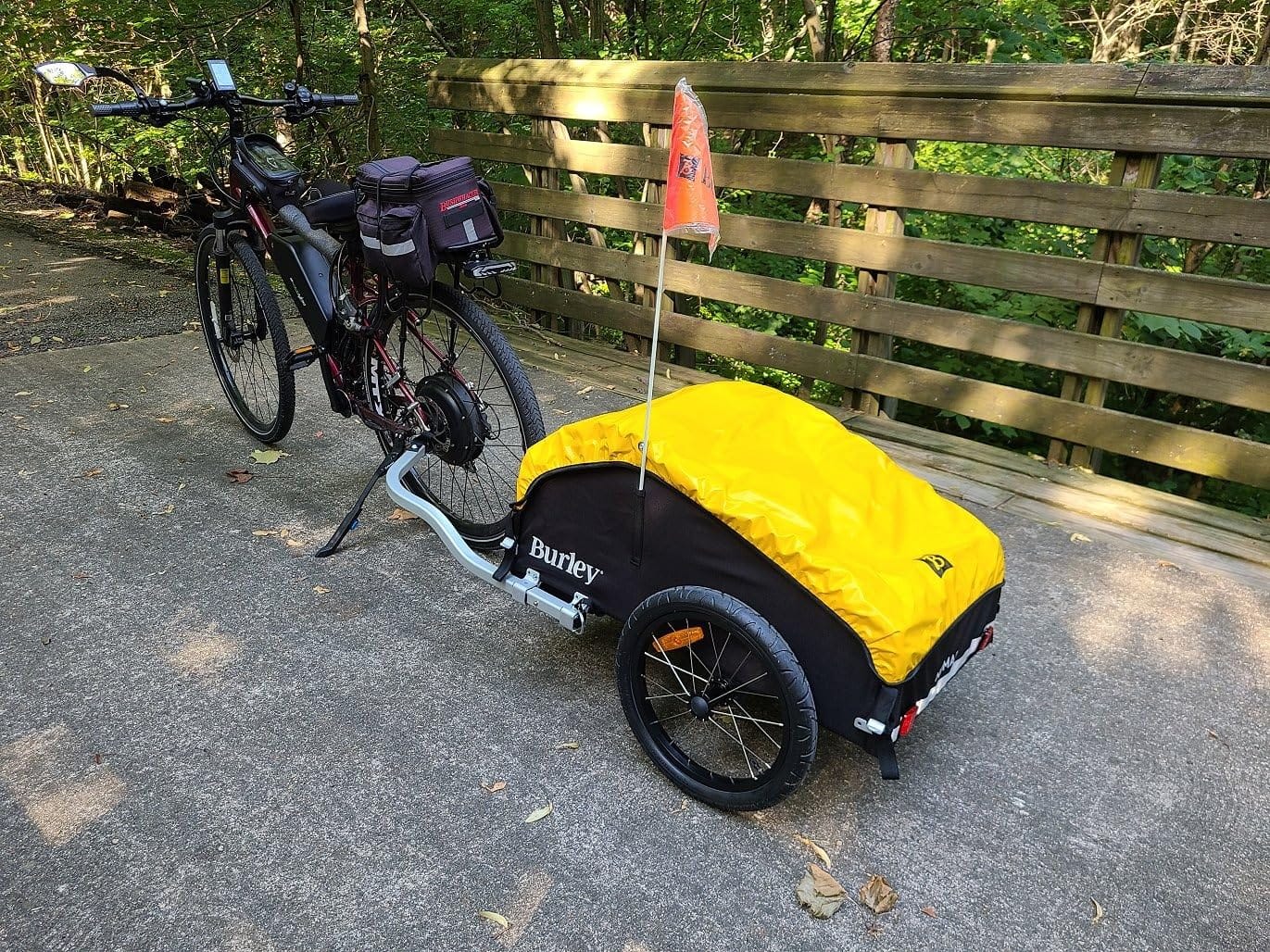
Best for multi-day loaded rides
Choose the Nomad when you ride distance with gear, when rain is likely, and when you want your small items organized rather than loose. The 100 lb rating covers a realistic week of camping kit and food without approaching the limit.
It also converts smoothly from a daily commuter trailer to a tour trailer, which is why long-term owners describe it as the one they keep.
When the cost is hard to justify
It sits at the top of the price range for this category, and for a week of grocery shopping that spend buys you nothing you would notice. The folded package is also bulkier than the Travoy, so it does not disappear into a small cupboard the way the lighter Burley does.
11. Ktaxon 220 lb Bike Cargo Trailer – Best for Rough Ground
Ktaxon Bike Cargo Trailer Heavy Duty 220lb Bicycle Wagon Cart 20″ Wheel Red
- 220 lb stated capacity
- 20 inch pneumatic tires are stable and smooth on rough ground
- Anti-rust powder coating and precision welding
- Weather protection against rain and sun
- Folding frame with instructions included
- Universal hitch attaches quickly
- Heaviest trailer here at 33.1 lb which cuts real payload
- Front wheel must be removed when connecting to the bike
- Higher share of one-star reviews than the category norm
The Ktaxon is the wheel-size outlier. Most trailers in this roundup run 16 inch wheels, and this one runs 20 inch pneumatic tires, which is a simple change with a large effect: the bigger wheel diameter rolls over potholes, gravel and rutted tracks without skipping, and the taller sidewall gives the load a calmer ride than smaller wheels on the same surface.
Its 220 lb rating is among the highest stated figures here, and the powder-coated metal frame with precision welding is built to back it. Weather protection is included, which is unusual for a trailer this size, and the folding frame makes it manageable in storage despite the bulk.
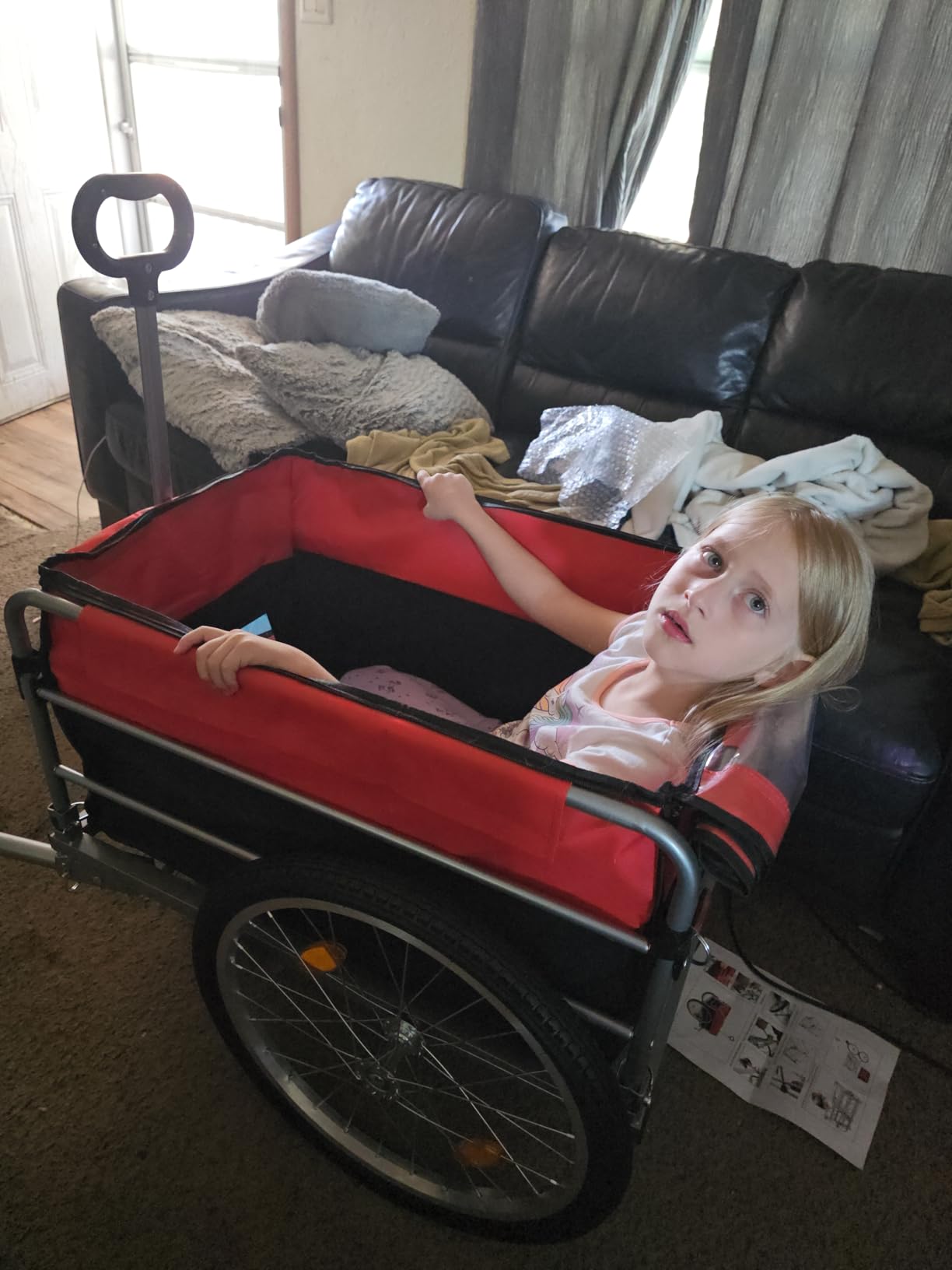
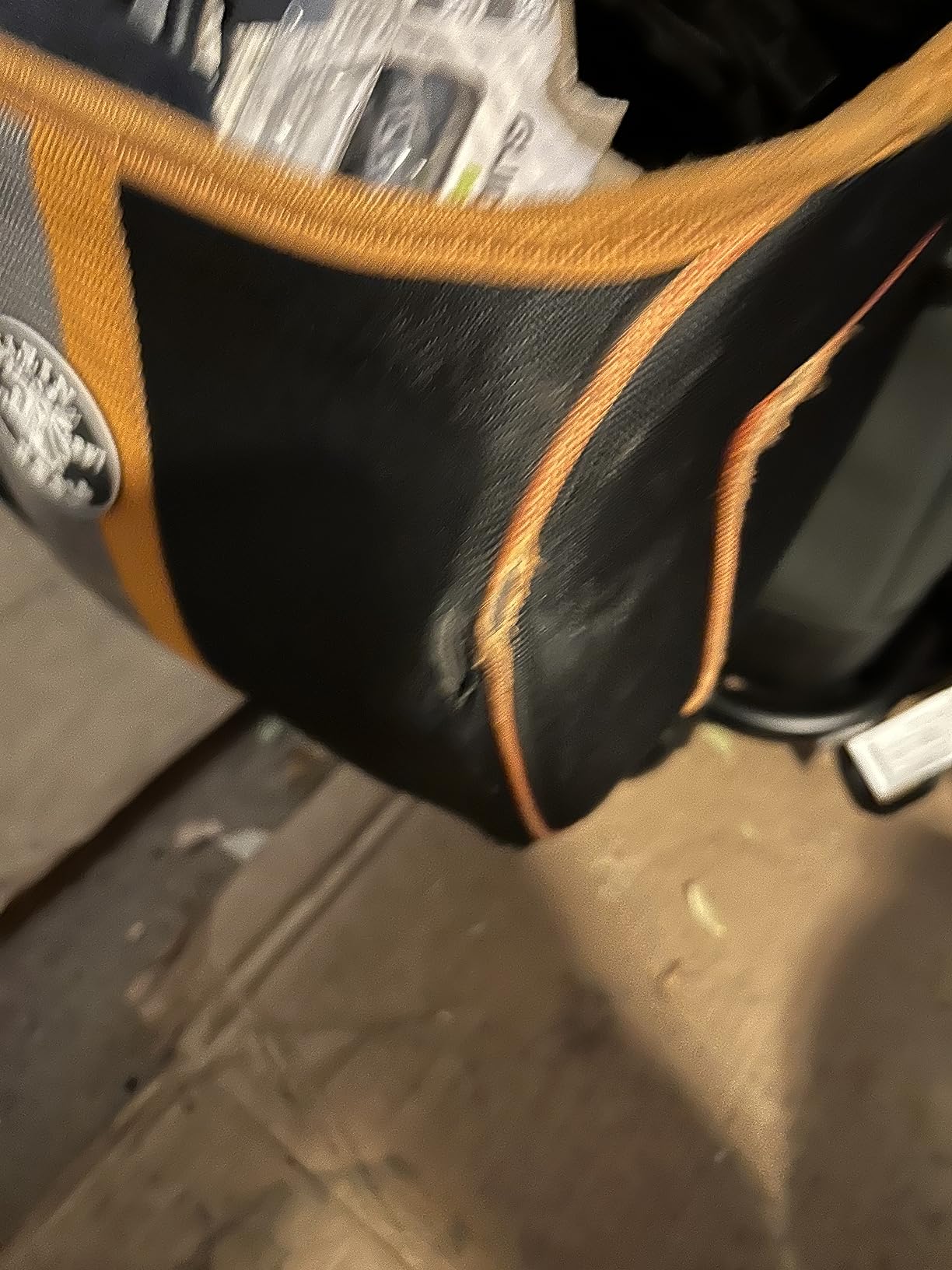
The honest problem is the 33.1 pound weight, the heaviest trailer in the roundup. That is nearly three times the Burley Travoy and it hangs behind your rear wheel on every ride, whether loaded or empty, so the usable payload over what your bike already carries is lower than the headline number suggests.
Owners also note that one-star reviews make up about 12 percent of the total here, above the norm for this category, so the quality control is less consistent. The front wheel has to be removed to connect to the bicycle, which is a small added step worth knowing about.
When the bigger wheel earns its weight
Big wheels make sense on gravel farm tracks, unfinished roads and any route with frequent surface breaks, where the difference in ride quality over 20 km is obvious. If your routes are smooth pavement, you are paying 33 pounds for stability you will not use.
The folding frame and included instructions make assembly straightforward, and the universal hitch attaches and detaches quickly once you are used to removing the front wheel.
Where it disappoints
Do not buy it for a lightweight bike. A 33.1 lb trailer plus a real load puts meaningful mass on a quick-release rear wheel, and the aluminum-frame alternatives here weigh a fraction of that. It also carries a 4.2 average rating, the second lowest of the twelve, so inspect the welds and hardware on arrival.
12. PEXMOR Removable Box Cargo Trailer – Best for Boxed Cargo
- Removable waterproof cover protects contents outdoors
- Large plastic transport box contains loose items
- Push handle allows walking it to the door
- Foldable support arm makes parking easy
- Eight reflectors improve dark visibility
- Seatpost adjustment ring widens bike compatibility
- Lowest average rating here at 4.0 stars
- Wheels can wobble and feel loose in the tubes
- Screws can snap and assembly may need drilling
- Cargo rattles while riding
- Not compatible with e-bikes
This PEXMOR takes a different approach from the open wagon designs: the cargo sits in a large plastic transport box that a 600 by 600 denier Oxford cloth cover with a PVC waterproof coating drops over. If your problem is loose items in the rain rather than long lumber, that is a genuine advantage no open trailer in this roundup offers at this level.
The push handle and foldable support arm mean you can wheel it to the front door of a shop and stand it up, which pairs well with walking to a market or a campus. A seatpost adjustment ring in the box widens the fit to more seatpost diameters than a fixed arm would.
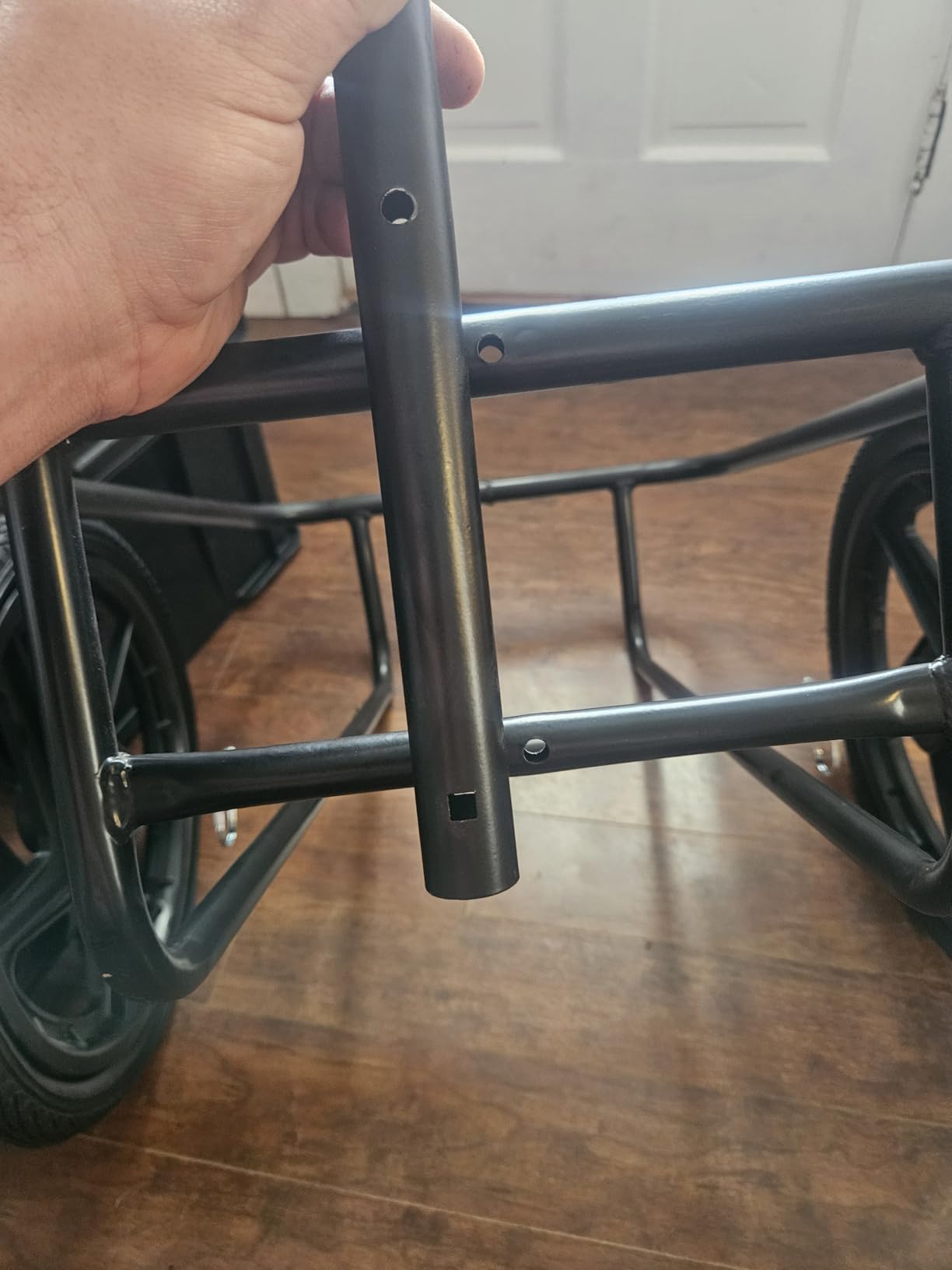
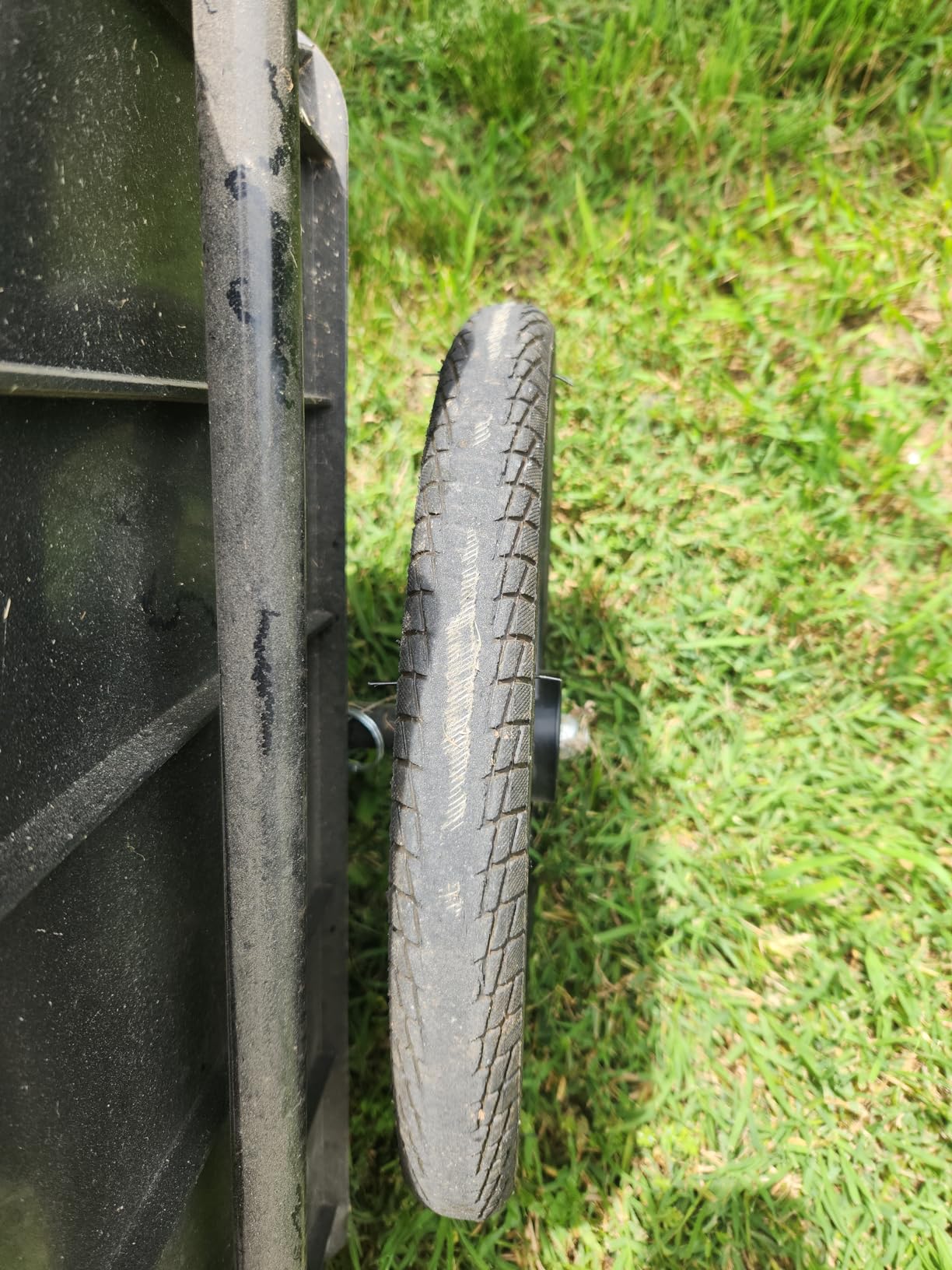
It is also the lowest rated of the twelve at 4.0 stars across 199 reviews, and the reasons are consistent. Wobbling wheels that feel loose in the tubes, screws and bolts that can snap, cargo that rattles, and at least one report of an instruction step referencing a hole the manual did not ask anyone to drill.
The fixed long tow arm is the other limit, and the manufacturer states it is not suitable for e-bikes and fits standard 26 to 28 inch bikes. That rules it out for a lot of modern e-bike owners, which is worth checking against your own bike before you commit.
Best when weatherproofing matters most
For a shopper whose real problem is rain and loose packaging, the removable box and cover solve it, and the four red plus four white reflectors make the trailer visible after dark. The 100 kg rating is a headline figure, and this trailer’s 4.0 average is the lowest here, so treat it as a light-duty wet-weather hauler rather than a workhorse.
Tighten every fastener before the first long ride and check the wheel bearings weekly, and most of the mechanical complaints recede.
Who should look elsewhere
If you ride an e-bike, this one is excluded by the manufacturer. If you haul tools or firewood where rattling and snagging matter, the loose cargo and spoke clearance make it a poor fit, and the Burley Flatbed or VEVOR is a better tool for that work.
Can Your Bike Handle a Loaded Trailer?
Yes on most bikes, but the answer is arithmetic rather than opinion. Add four numbers: your bike weight, your body weight, the trailer weight, and your cargo weight. That total has to stay under what the bike’s wheels, hubs and frame are rated for, and that rating is usually lower than the trailer’s cargo limit.
The reason a trailer works at all is that most of the load rests on the trailer’s own wheels, not on your rear tire. The hitch only carries the trailer’s own weight plus a share of the cargo, and on a level surface that share is modest. The trouble starts on grades and during braking, when weight shifts rearward and the tongue load climbs.
Take the Ktaxon as the clearest example. Its 220 lb rating sounds generous, but the trailer itself weighs 33.1 lb, so a full load puts well over 100 lb of additional mass behind the rear axle before your rider weight is counted. The same cargo in the 11.2 lb Burley Travoy is a fraction of that. This is why trailer weight is a spec worth comparing, and why the heaviest trailer here is not automatically the most capable.
On descents, plan for more stopping distance and start using both brakes earlier than feels natural. A loaded trailer pushes the bike and cannot brake for itself, so the rear brake is doing work it was not designed for and the front brake has to cover more ground. Owners who regularly pull heavy trailers describe shifting most braking to the front and using lower gears rather than relying on the rear.
One last check that gets skipped: the hub. Standard entry-level bike hubs are not designed for heavy side loads, and a trailer that tracks badly will load the rear hub continuously. If your rear wheel has a large flange or is a low-cost unbranded hub, keep the total lower than the trailer rating suggests. The same weight-rating arithmetic shows up in our travel trailer hardware roundup from the other end of the hitch.
What to Look For in a Bike Cargo Trailer?
Hitch type first. Nearly every trailer here uses a quick-release coupler that clamps to the rear quick-release skewer, which is why they fit most bikes. If your bike has a thru-axle, including the UDH standard common on modern gravel and mountain bikes, you need a conversion kit before anything on this list will attach. Check what your rear axle is before you shop, not after.
Wheel count. Every trailer we compared has two wheels, and that is the right default for cargo. A two-wheel layout tracks straighter, resists tipping and puts less twisting force into your frame, which is exactly what you want at 100 lb. Single-wheel trailers are narrower and easier to fit between lanes, but they push sideways into the bike and lean harder in corners, and we would not put a heavy load on one for daily use.
Wheel size. Most of these trailers run 16 inch wheels with air-filled tires, and the Ktaxon’s 20 inch tires are the exception worth considering if your routes are rough. Air-filled tires at this size ride far better than small solid wheels, and they can be inflated to suit your load.
Frame material. Aluminum is roughly half the weight of steel at equal stiffness, so aluminum trailers feel lighter on climbs and are much easier to lift into a car. The Burley Travoy at 11.2 lb, the Burley Flatbed at 15.1 lb, the Burley Nomad at 16.7 lb and the Rambo at 27 lb are the aluminum options here. Steel costs less and shrugs off impacts, which matters for rough work, but the heavier frames add several pounds of dead weight on every ride.
Load rating versus real payload. Treat the rating as a ceiling rather than a target. Working at around 70 percent of the rated limit keeps you within what your bike and hub can carry and makes the trailer easier to control, and the gap between the rating and what you actually use is your safety margin on grades and in crosswinds.
Weather protection. If you haul in rain, a trailer with sides and a cover is worth the extra weight. The Retrospec Rover Hauler and the Burley Nomad both cover the load, the PEXMOR removable box adds a waterproof layer over a hard box, and the Burley Flatbed and the Ktaxon leave the load open to the sky by design.
Tie-down points and visibility. Look for D-rings or interior clips on the floor rather than on the walls, because floor anchors are usable when the trailer is full. For night riding, spoke reflectors and a frame-mounted flag pole add visibility cheaply, and the VEVOR and Retrospec both include them.
Storage and fold. Folding is only useful if the folded package actually fits somewhere. The Burley Travoy folds to briefcase size, the Burley Flatbed and Nomad lie flat, and the steel wagons fold down to a wall-leanable slab. The Ktaxon at 33.1 lb is the hardest to store and lift regardless of its fold.
And on brand expectations: Burley builds the most refined trailers in this category, with aluminum frames, a tool-free or cleanly engineered hitch and the strongest warranty structure here, which is why three of them made this list. The steel wagons from Aosom, VEVOR, Retrospec and Schwinn deliver 80 to 160 lb ratings for a fraction of the cost and are the rational choice for most working loads. The value gap is real, and the place it shows most is in the hardware you touch: latches, hub hardware and reflectors.
Frequently Asked Questions
What are the best bicycle trailers for cargo?
The Schwinn Daytripper is the best all-round bike cargo trailer, rated to 100 lb on a folding steel frame with 16 inch air-filled tires. The VEVOR wagon is the pick for heavy loads with options up to 160 lb, the Burley Flatbed handles long items like lumber at 100 lb, and the Retrospec Rover Hauler is the covered option for wet-weather grocery runs at 80 lb.
How much weight can a bike cargo trailer carry?
Most cargo trailers in this class are rated between 60 and 110 lb, with heavy steel models reaching 160 to 220 lb and one aluminum game cart rated 300 lb as a hand cart. Real payload is lower than the headline figure once you subtract the trailer’s own weight, which ranges from 11.2 lb on the Burley Travoy to 33.1 lb on the Ktaxon.
Can you tow a cargo trailer with an e-bike?
Yes, on most cargo trailers, and an e-bike is often the right pairing for heavy loads because the motor covers the extra weight. Check the hitch type first, since most trailers use a quick-release coupler and e-bikes frequently run thru-axles that need a conversion kit. Two trailers here are explicitly not rated for e-bikes: the PEXMOR BT105 and the PEXMOR removable box model.
What hitch type does my bike need for a cargo trailer?
Most trailers attach to a rear quick-release skewer, so if your bike has a quick-release you can use nearly every trailer on the market with no changes. Bikes with a thru-axle, including the UDH standard on many modern gravel and mountain bikes, need a thru-axle conversion kit. The Xspec is the exception in this roundup, as its coupler is not designed for quick-release axles.
Are bike cargo trailers safe?
They are safe within their ratings if you respect the load limit, keep the load low and centered, check tire pressure, and brake earlier than you would alone. A loaded trailer adds mass to the rear wheel and cannot brake for itself, so descents need more distance and lower gears. A single reversed hitch arm is the other genuine safety consideration, so recheck the attachment before every ride.
Should I buy a cargo trailer or a longtail cargo bike?
A trailer is the better choice for occasional, bulky or awkward loads and costs far less while letting you keep one bike. Forum riders hauling several hundred pounds most days often prefer a dedicated longtail cargo bike, because the weight sits on the bike and can be distributed across two wheels. If your hauling is routine and heavy, the cargo bike wins; if it is weekly and awkward, the trailer wins.
Best Bike Cargo Trailer Verdict for 2026
The Schwinn Daytripper is the best bike cargo trailer for 2026 for most people, because 100 lb of rated capacity, a forgiving steel frame and a coupler with a spring in it solve the widest range of problems without asking you to change your bike. Buy the VEVOR if your loads are consistently heavier, the Retrospec Rover Hauler if rain is the enemy, and the Burley Flatbed if your cargo is long rather than dense.
Before you order, confirm your rear axle type and add up your combined weight. That one hour of checking is the difference between a trailer that lasts a decade and one that ends up in a garage being ignored. If you want a second opinion on towing hardware in general, our backup camera roundup for travel trailers covers the same weight-rating logic from the other end of the hitch.