
Buying your first tracking mount is the point where most beginner astrophotographers either get hooked or quietly give up. The gap between a good night and a wasted one usually comes down to one decision: whether you buy a bare mount head and assemble your own support, or a kit that works the moment it comes out of the box.
We spent weeks with the seven star tracker mounts in this guide across suburban and darker skies, swapping them onto the same tripods and ball heads to see how they behave with the same camera bodies and the same lenses. What follows is our ranking of the best star tracker mounts for beginners, updated for 2026, with the honest trade-offs written next to every pick rather than buried.
Some of these trackers carry a GoTo pointing database that finds targets for you, and some leave you to find and centre everything yourself. That single difference shapes almost every other choice you make, and most beginners underestimate how much it matters. We also cover what you need to spend beyond the mount itself, how polar alignment works, and the failure modes that should make you walk away from a listing.
If you are still building the rest of your kit, our guide to the best beginner gear for travel covers the other things worth carrying on a night out, and we keep a wider look at star trackers for astrophotography as a separate reference for when you outgrow this list.
Table of Contents
What Is a Star Tracker Mount?
A star tracker mount is a small motorised equatorial platform that rotates your camera at the same rate Earth turns. By counter-rotating once per sidereal day of 23 hours, 56 minutes and 4 seconds, it holds stars still while the shutter is open, letting you take multi-minute exposures that would otherwise come out as streaks.
Top 3 Star Tracker Mounts for Beginners (October 2026)
Our overall pick is the Sky-Watcher Star Adventurer 2i Pro Pack, our best value pick is the iOptron SkyGuider Pro, and the best GoTo bundle is the Sky-Watcher Star Adventurer GTi Mount Kit.

Sky-Watcher Star Adventurer 2i Pro Pack
- Illuminated polar finder scope
- Built-in Wi-Fi with SAM Console app
- Deluxe equatorial wedge base
- Tracks up to about 400mm

iOptron SkyGuider Pro
- 11 lb payload when balanced
- Internal battery up to 20 hours
- Integrated AccuAlign polar scope
- 2.2 lb all-metal head

Sky-Watcher Star Adventurer GTi Kit
- Full GoTo pointing database
- Tripod and pier extension included
- Counterweight bar with 5 lb weight
- Built-in illuminated polar scope
Best Star Tracker Mounts at a Glance
Every mount below is a genuine tracking head rather than a plain tripod head. Payload figures are manufacturer ratings, and in practice you want to keep your rig at or below roughly half of them for clean guided or stacked results.
| Product | Specifications | Action |
|---|---|---|
| Sky-Watcher Star Adventurer 2i Pro Pack |
|
Check Latest Price |
| iOptron SkyGuider Pro |
|
Check Latest Price |
| Sky-Watcher Star Adventurer GTi Kit |
|
Check Latest Price |
 Explore Scientific iEXOS-100-2 PMC-Eight Explore Scientific iEXOS-100-2 PMC-Eight |
|
Check Latest Price |
 iOptron SkyTracker Pro iOptron SkyTracker Pro |
|
Check Latest Price |
 Sky-Watcher Star Adventurer Mini Sky-Watcher Star Adventurer Mini |
|
Check Latest Price |
 Vixen POLARIE U Vixen POLARIE U |
|
Check Latest Price |
1. Sky-Watcher Star Adventurer 2i Pro Pack – The One We Recommend Most
- Holds 2-3 minute exposures cleanly up to 300mm
- Illuminated polar finder makes first alignment far less painful
- Built-in Wi-Fi with the free SAM Console app
- About 7 lb for the whole tracking platform
- Deluxe equatorial wedge and ST-4 port included
- Polar alignment still has a real learning curve for first-timers
- Battery door feels flimsy and the power switch is easy to bump
- Tiny plastic accessories are easy to lose
The Star Adventurer 2i is the mount we kept reaching for. It is a modular nightscape platform rather than a fixed equatorial head, which means it clamps onto whatever photo tripod you already own, and the deluxe equatorial base sets the polar angle for you before you ever look through the finder.
Tracking performance was the most consistent of the seven. Once the polar scope was lined up, we got round stars at two and three minute exposures with lenses up to 300mm, and the Wi-Fi connection to the SAM Console app held steady through a whole session without dropping out.
The power story is the part that surprised me. It runs on lithium metal AA cells, and one owner logged close to 40 hours of imaging on a single set, which means a weekend trip needs no charger in the bag. It also accepts external power, so you can top it up from a USB pack if you are shooting somewhere with no spare batteries.
What it will not do is point itself at anything. There is no GoTo database here, so you frame targets manually using a star chart or a phone app. Multiple threads on r/AskAstrophotography advise beginners to skip GoTo complexity entirely and start with a plain tracker plus manual framing, which is a view we broadly agree with for a first mount.
Why we picked it over the others
It is the mount in this list that pairs an accurate drive with an illuminated alignment aid and a base in the same box, so you are not assembling three separate accessories before the first shot. The mount, the finder and the wedge come from the same manufacturer and the same product line, which also means the fit between them is predictable.
The Pro Pack bundles the deluxe equatorial base, the illuminated finder and the app support, which removes the two most common reasons beginners give up in week one. You still need a solid tripod and a ball head, and those two items matter more than most buyers realise.
Where it falls short
The learning curve for polar alignment is real. We spent a session getting comfortable with the finder before the images were clean, and reviewers describe the same pattern. Watch two or three tutorials before your first night and the problem largely disappears.
Small parts are a genuine irritation. The illuminator adapter, the lens cap and the SNAP connector retaining ring are all easy to drop in a bag, and replacement parts are not always easy to source from the manufacturer. The battery door also feels flimsy, and the on/off switch is easy to trigger while the mount is in transit.
One more quirk: the supplied polar scope illuminator does not fit once a camera is mounted, so carry a small red light for alignment work. A small number of owners also reported erratic drive motor behaviour on early mounts, and the kit uses an older-style USB power connector rather than USB Type-C.
2. iOptron SkyGuider Pro – Best Value Tracker You Can Grow Into
- Up to 11 lb payload when balanced
- Pinpoint stars at 2-3 minute exposures even with a 500mm lens
- Internal rechargeable battery runs about 20 hours at 20 degrees C
- Smooth belt and brass worm drive with sidereal lunar solar rates
- Full package includes wedge counterweight shaft and counterweight
- No GoTo so you frame every target yourself
- Supplied 8 inch counterweight bar is short for heavy DSLR plus telephoto
- Polar scope often arrives out of collimation
- Dovetail is not Arca-Swiss compatible out of the box
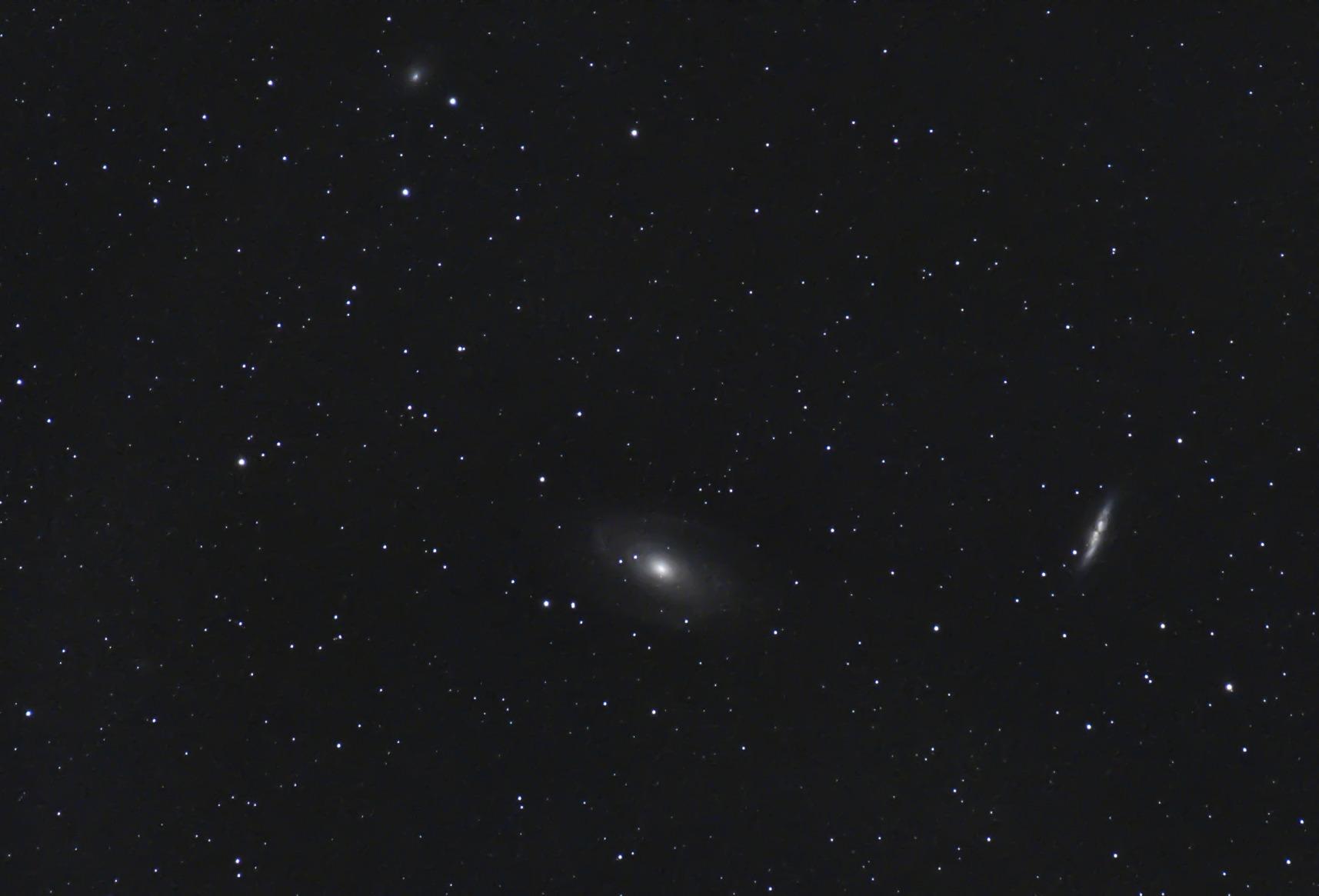
The SkyGuider Pro is the mount the wider community treats as the benchmark camera tracker, and our testing matched that reputation. The head itself weighs just 2.2 lb, yet once the counterweight shaft is fitted it handles an 11 lb balanced load, which is far more headroom than most beginners will ever use.
On the tripod it produced pinpoint stars at two and three minute subs with lenses up to 500mm. The AccuAlign illuminated scope in the base made alignment quick, and the internal battery removed the battery logistics entirely for a normal night out.
Buyers on dpreview.com describe it as bulletproof even in cold weather, and the build quality is noticeably higher than the plastic-and-gear lightweight trackers at the budget end. It uses a belt drive with a brass worm, giving smooth, jitter-free motion and four selectable rates covering sidereal, lunar, solar and half-sidereal tracking.
On r/telescopes, owners repeatedly compare it favourably with larger equatorial mounts on carrying capacity alone, which is exactly the concern we hear most from beginners. If you are pairing a fast prime with a mirrorless body, this is not close.
Why we picked it
You get the payload headroom of a much larger mount at a fraction of the weight, and the ST-4 autoguide port is the most useful upgrade path we can point to here, because it turns a good unguided mount into a proper guided one. The Star Adventurer 2i Pro Pack and the Vixen POLARIE U also carry an ST-4 port, so you are not locked into one brand if guiding is the goal.
The full package includes the equatorial wedge, counterweight shaft and a counterweight, so unlike some bare-head listings you are not assembling three accessories on day one. If you already own a sturdy tripod and ball head, you are one tripod clamp away from shooting.
Where it falls short
There is no GoTo. Finding and centring a target by hand is the single most intimidating part of the hobby for new users, and this mount does nothing to help. Owners on r/AskAstrophotography who value GoTo convenience from a Bortle 9 backyard should look at the GTi kit instead.
The supplied 8 inch counterweight bar is too short for the heaviest DSLR plus telephoto combinations, and iOptron sells extensions separately. The polar scope also frequently arrives out of collimation with a loose eyepiece, and no hex key or O-ring is included to fix it, so plan a few minutes with a small tool set before your first night.
3. Sky-Watcher Star Adventurer GTi Mount Kit – Best GoTo Bundle
- GoTo pointing removes manual target hunting
- Complete kit works straight out of the box
- Illuminated polar scope built in
- Built-in Wi-Fi for smartphone control
- Two-year limited warranty from Sky-Watcher USA
- Weighs 26 lb with tripod and pier extension
- Bulkier to carry than a bare mount head
- Combined bundle is not suited to travel imaging on foot
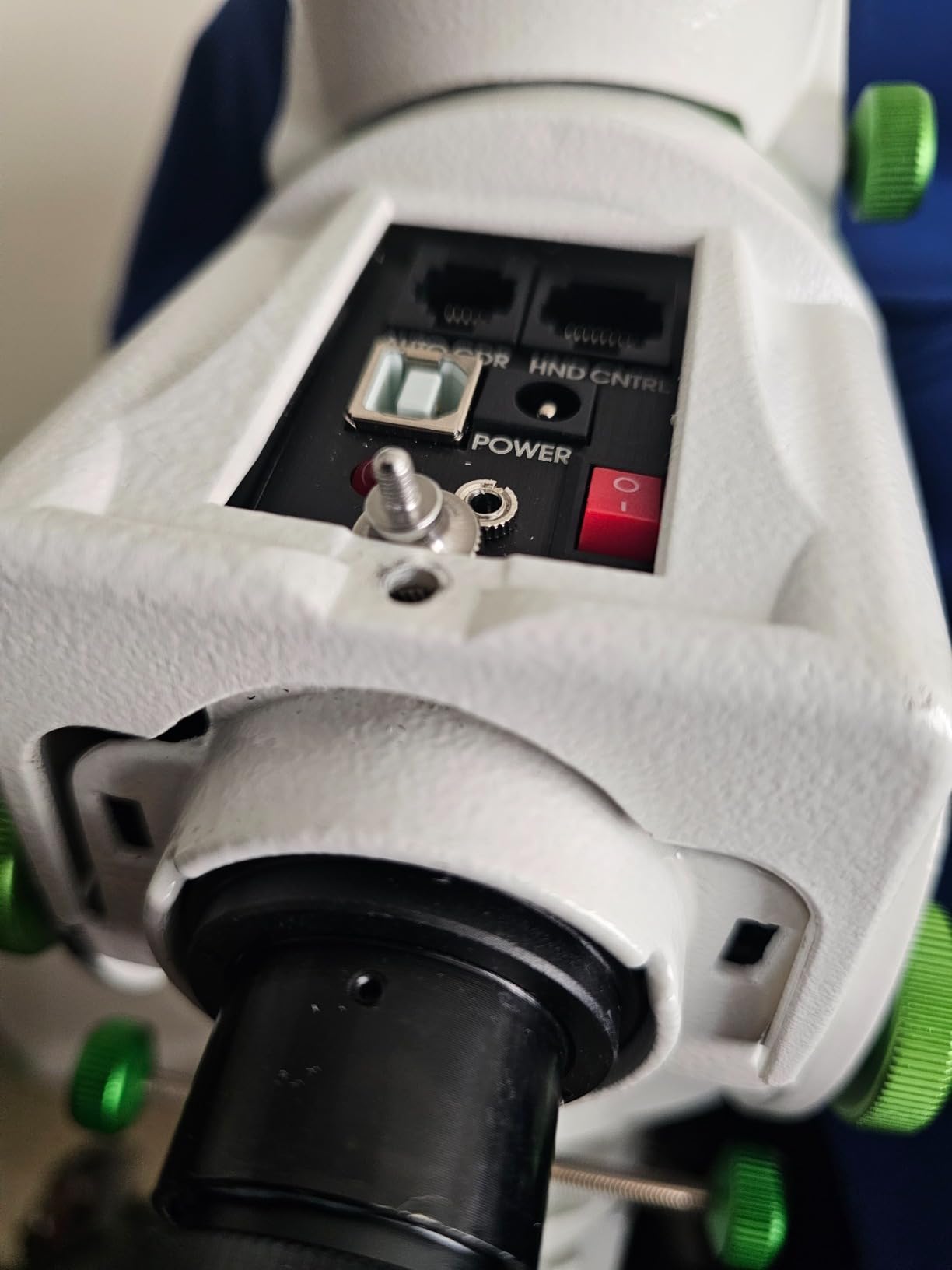
The GTi kit is the one to buy if the idea of hunting for targets by hand is what has been stopping you. The mount head carries a full GoTo database with smartphone control over built-in Wi-Fi, and the bundle arrives with the counterweight bar, a 5 lb counterweight, a tripod and a pier extension.
In practice that means a single box gets you from a dark yard to a tracked image. We set it up in one session and used GoTo pointing to centre targets in a light-polluted backyard where manual star hopping would have been miserable. The pier extension is the piece that makes the whole thing stable enough to be a one-box solution.
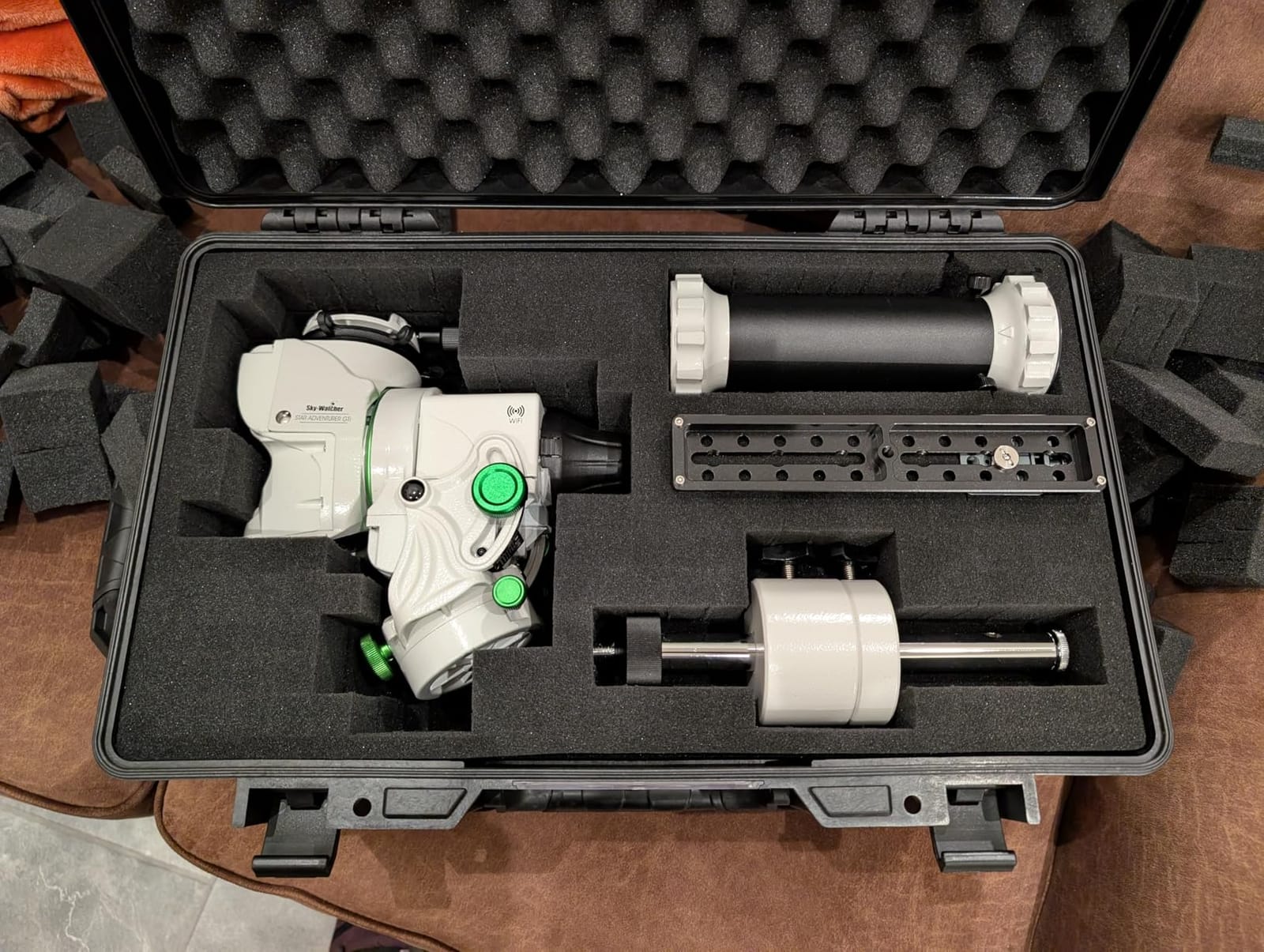
Members on r/AskAstrophotography repeatedly name the Star Adventurer GTi as an ideal first GoTo tracker, and used examples are widely recommended as the value route. The illuminated polar scope in the head streamlines the alignment step, and multiple tracking rates are available for time-lapse work.
If you already own a capable tripod and ball head, we would skip the bundle and buy the mount head alone, which is where this tracker is genuinely light and portable. The 26 lb figure in the listing includes the tripod and pier extension, not the mount itself.
Why we picked it
GoTo earns its place in a beginner rig for one specific reason: sky quality. Under dark skies you can find targets with a chart. From a typical suburban Bortle 7 to Bortle 9 backyard, hunting a faint galaxy by eye is close to impossible, and GoTo turns a frustrating night into a productive one.
The counterweight kit also lets you balance longer lenses properly, which removes a common beginner error of overloading a light tracker with a heavy telephoto setup. And the two-year limited warranty is longer than the one-year cover on the two iOptron mounts here.
Where it falls short
Weight. At 26 lb with the tripod and pier extension, this is the heaviest bundle we tested, and most people will not want to carry it more than a short distance.
The GoTo experience is only as good as the app behind it, and Sky-Watcher has shipped app revisions that left some users frustrated. Have the SynScan-style app installed and paired before you leave the house rather than discovering connection problems in the dark.
4. Explore Scientific iEXOS-100-2 PMC-Eight – Best for Autoguiding
iEXOS-100-2 PMC-Eight Equatorial Tracker System Tripod and Mount for Astrophotography with WiFi and Bluetooth Compatible
- Quiet lightweight dual-axis mount that guides well
- Handles a real imaging load including a small refractor and guide camera
- Smooth clutched axes make balancing easy
- Works with third-party controllers and guides silently
- Strong hardware for a dual-axis mount at this level
- ExploreStars Android app is the weakest link with crashes and failed connections
- A polar scope and azimuth adapter cost extra
- Supplied alignment method is awkward to learn from the documentation
- No hand controller included
The iEXOS-100-2 is the only mount here with a genuine dual-axis design and dual-axis GoTo, and that is why it can find a target and then hold it without you touching anything. The PMC-Eight controller runs eight independent processors, and the tracking is quiet enough that you can hear it in a still night.
One owner runs a small refractor, a mono camera, a guide scope and a guide camera at a combined 14 lb on this mount, which is well past what the portable single-axis trackers here are built for. Several users also report guiding performance comparable to far more expensive equatorial mounts.
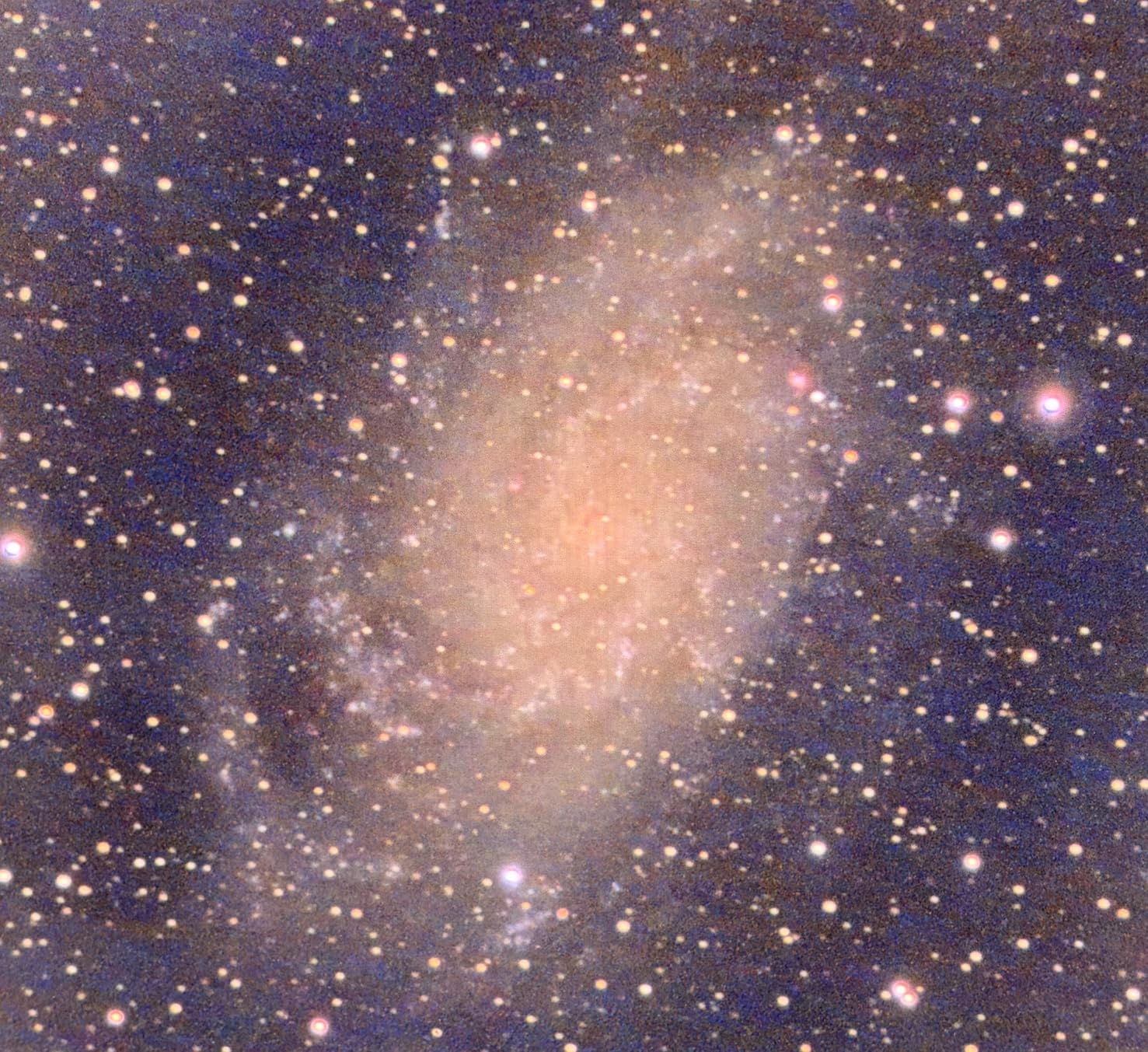
It also works with third-party imaging controllers, so if you plan to use guiding software on a computer you are not locked into one ecosystem. The clutched right ascension and declination axes make balancing and repositioning smooth rather than a fight with a thumbscrew.
We want to be direct about the rating. At 3.9 stars this is the lowest-rated product in the roundup, and almost all of that drag comes from software and support rather than hardware.
Why we picked it
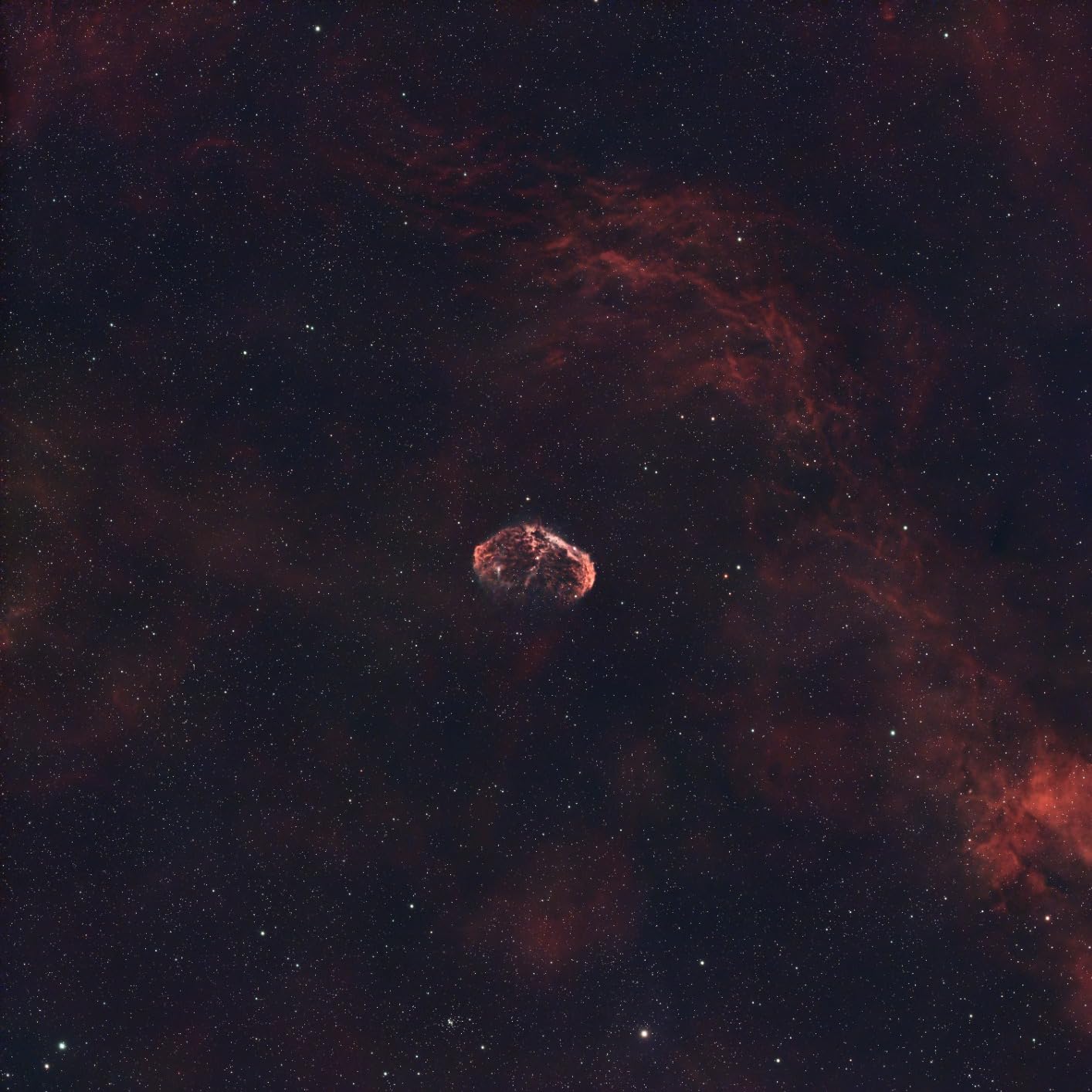
If your goal is guided deep-sky imaging rather than widefield nightscapes, this is the most capable machine on the list. A dual-axis mount can both find a target and correct for field rotation, which is what long guided sessions on galaxies need.
It is also the most upgrade-tolerant, since guiding and plate-solving workflows are first-class here. Budget for the accessories from the start, because the polar scope and azimuth adjuster are effectively mandatory rather than optional extras.
Where it falls short
The ExploreStars app on Android is the single biggest drawback we found. Reviewers report crashes, broken alignment steps and unreliable Wi-Fi connections, and a connection failure at the start of a session is genuinely demoralising. The documentation for the supplied alignment method is also disorganised enough that you will likely need a third-party tutorial.
Add in the missing hand controller, the slow or absent customer support, and the extra spend on a polar scope and a better tripod, and the value calculation gets much less attractive for a first-time buyer. Consider this one your second tracker, not your first.
5. iOptron SkyTracker Pro – Best Budget Tracker
- Owners report 4-5 minute subs with no trailing
- Rechargeable internal battery needs no disposable cells
- Four rates including solar and lunar plus forward reverse jog
- Many fine-tuning knobs make alignment quick
- Dimmable LED in the alignment scope
- Comes with a padded carrying bag
- 6.6 lb payload is reached quickly with a mid-size telephoto
- Supplied dovetail is not Arca-Swiss compatible and feels unstable
- You must supply your own ball head
- Lunar alignment needs a separate paid app
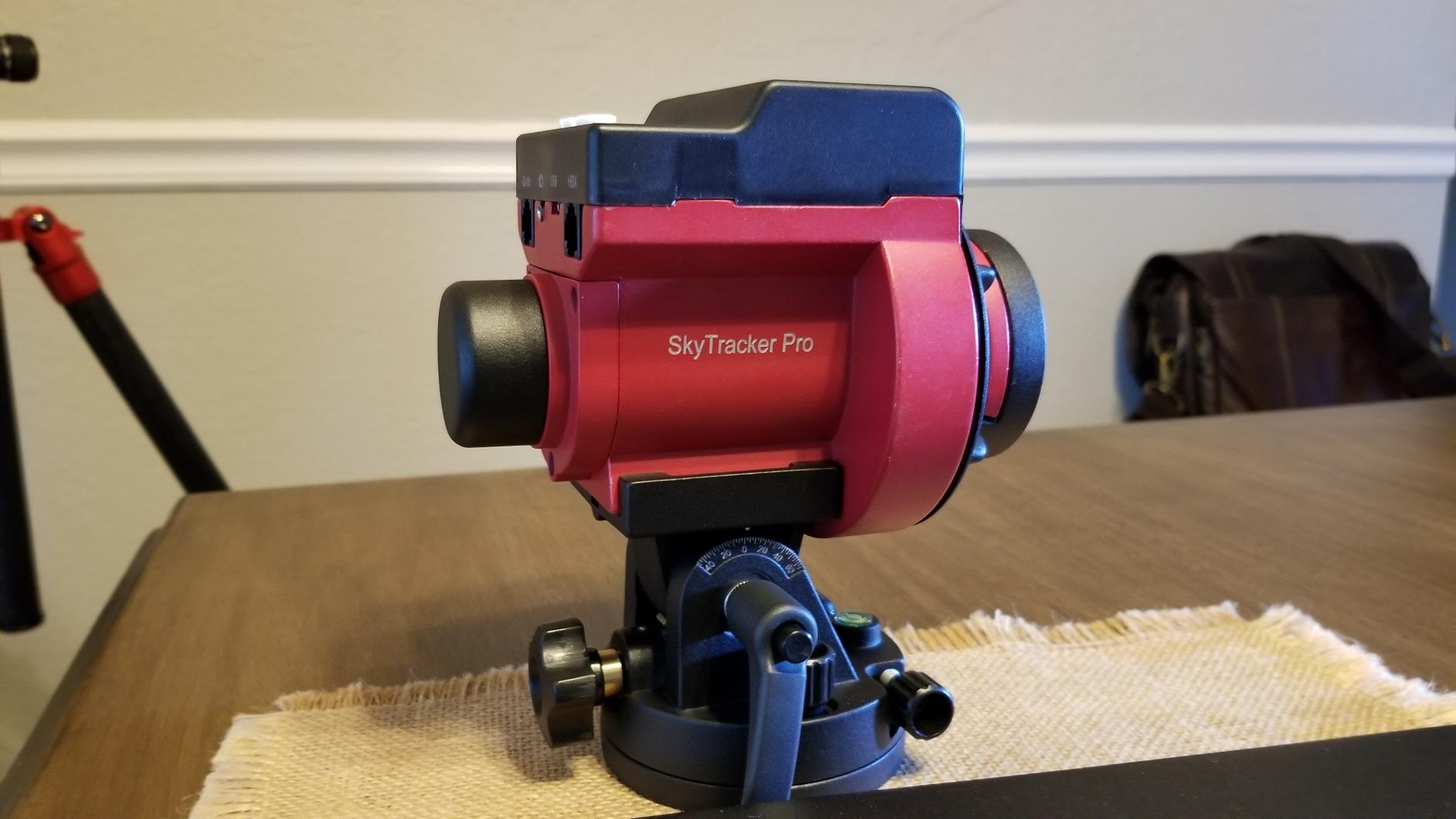
The SkyTracker Pro delivers a lot of exposure time for its size. Multiple owners get four and five minute sub-exposures with no visible trailing, which is longer than the big mounts in this roundup managed unguided at equivalent focal lengths.
It weighs 3.3 lb packed, folds down small, and the internal rechargeable battery charges to 80% in about five hours over micro-USB. There are four selectable rates plus forward and reverse jog, and the dimmable LED in the alignment scope lets you align without wrecking your night vision.
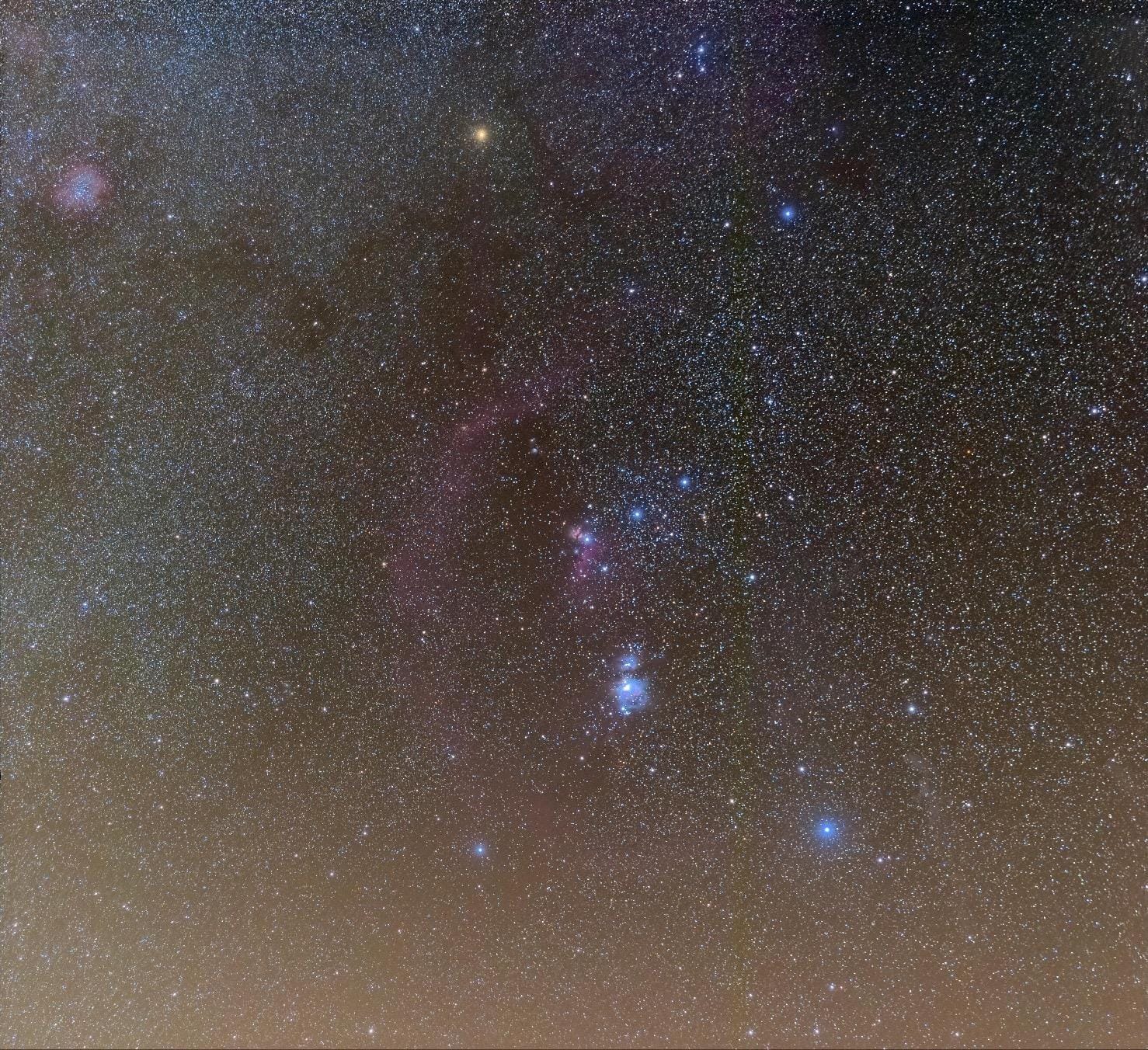
The injection-moulded body feels more stable than the earlier cast-metal generation, and the 600 second worm period with four bearings gives smooth motion. For Milky Way panoramas, time-lapse or a first tracked widefield shot, it is genuinely hard to argue with.
What you give up is headroom and convenience. The 3 kg payload is reached quickly with a mid-size telephoto, and the counterweight package is an add-on. The supplied dovetail base is not Arca-Swiss compatible, so an adapter plate is realistic for most tripods.
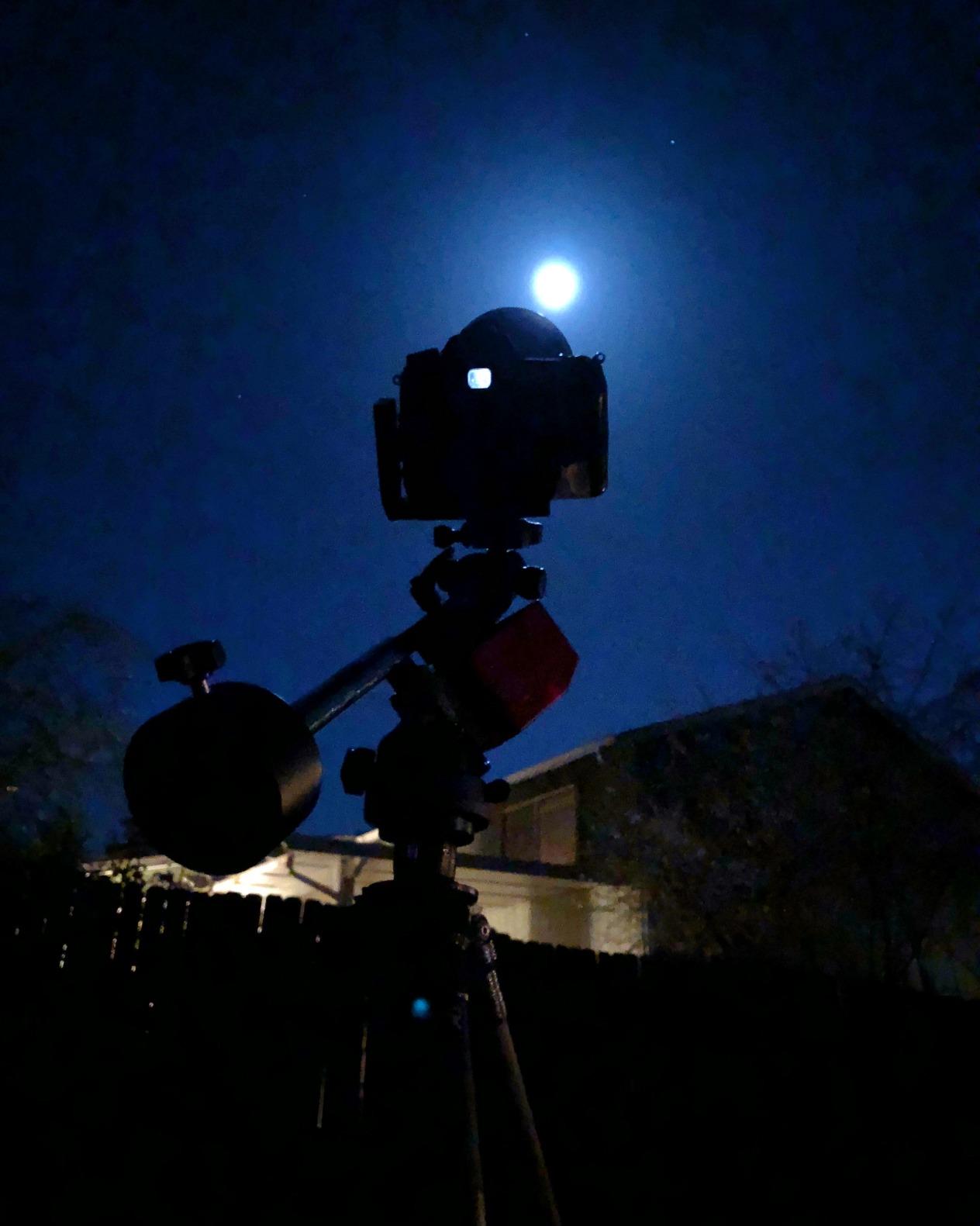
Why we picked it
It is a straightforward route into tracked photography that still produces stackable frames, and the internal battery means there is nothing else to charge or carry. If your plan is widefield nightscapes of the Milky Way, a star trail or a panorama, the payload ceiling will never bother you.
The extra tracking rates also make it useful beyond deep-sky work, including solar and lunar sequences, and the padded bag makes it simple to move between a house and a car.
Where it falls short
Long lenses are the problem. A 200mm to 500mm zoom plus a DSLR body is at or past the payload limit before you have added a filter or a lens collar, and a tracker that is overloaded produces exactly the trailed stars you bought it to avoid.
You also need to bring your own ball head, and the rubber cushion around the swivel head mount can slip, which makes tightening under a heavy load awkward. The included alignment scope does not indicate the Moon, and that feature sits behind a separate paid app.
6. Sky-Watcher Star Adventurer Mini – Best for Travel
Sky-Watcher Star Adventurer Mini – Motorized DSLR Night Sky Tracking Mount For Nightscapes, Time-lapse, and Panoramas
- Small enough to fit a normal photo backpack
- Tracks cleanly with 1-2 minute exposures and a 5 minute sub reported at 300mm
- Brass and aluminum gear train feels solid
- Runs on two AA cells for about 24 hours or any USB power bank
- Doubles as a smooth time-lapse panning head
- No physical button to start tracking so the phone app is mandatory
- SynScan app is complicated and crashes for some Android users
- Crowded WiFi can block the mount hotspot entirely
- A wedge is recommended because flat-base alignment is harder
The Star Adventurer Mini is the lightest and smallest mount in this roundup at 1.5 lb, with a 6.6 lb payload. That is roughly the size of a fast prime lens, and it packs into a normal photo backpack alongside a body and two lenses, which makes it the one we would actually take to a dark sky site rather than a driveway.
Tracking was clean at one and two minute exposures, and one owner reported a five minute sub at 300mm with no trailing. The brass and aluminum gear train gives it a mechanical feel that is out of proportion to its size, and it doubles as a smooth time-lapse panning head, which several buyers prefer over cheap pan units.
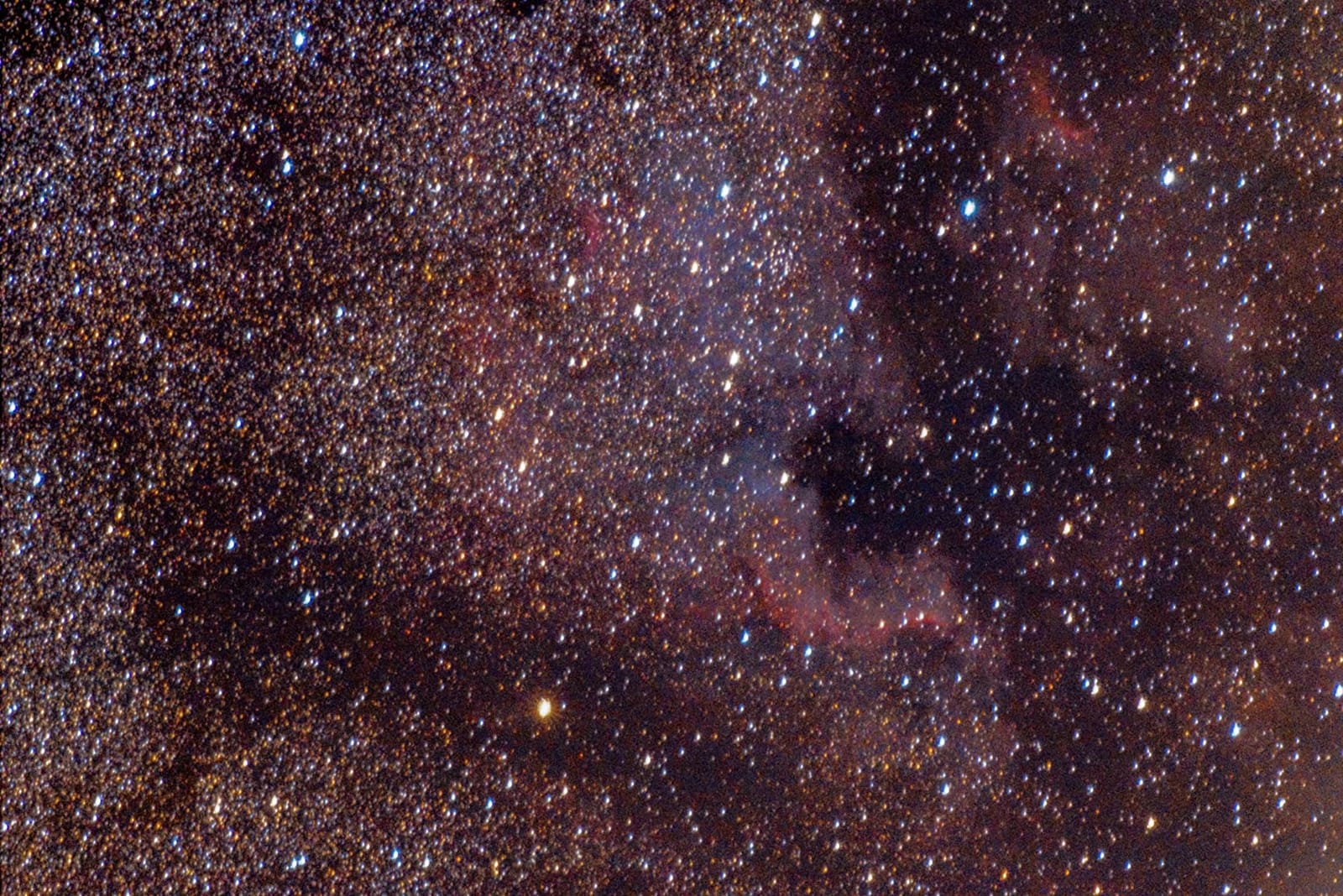
Power is refreshingly simple. Two AA cells run it for up to about 24 hours, and a 5V mini-USB input means any phone charger or power bank will keep it going on a long night. The included polar scope with illuminator makes Polaris alignment straightforward.
It also accepts any ball head through the included adapter, so it pairs with whatever tripod you already own. For travel imaging, that flexibility is worth more than raw payload.
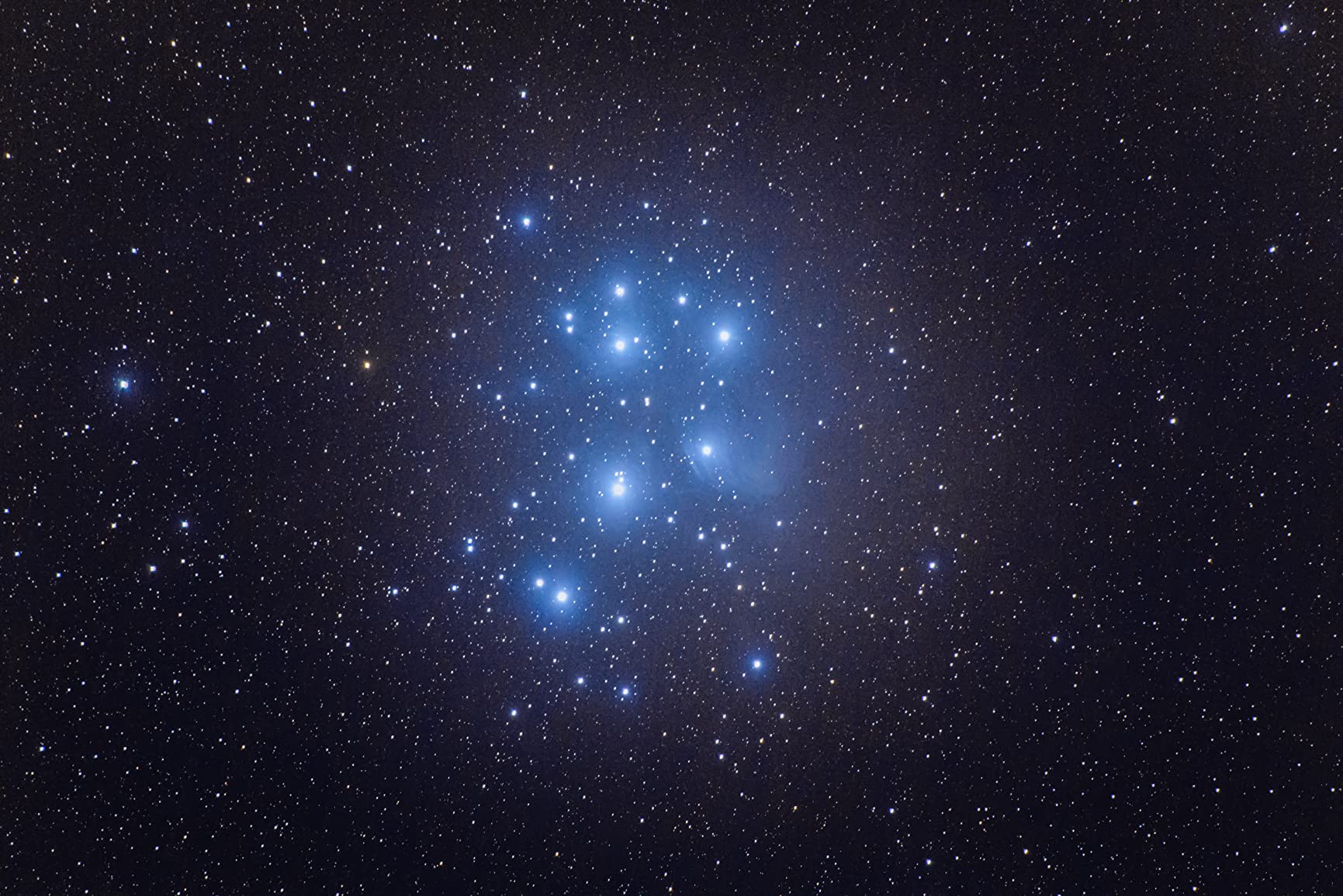
Why we picked it
Portability is the whole argument. If your imaging happens on holiday, at a mountain car park or anywhere you walk in from the car, weight is the constraint that decides your results. At 1.5 lb with a 6.6 lb payload, this has the most capability per pound of anything we tested.
It is also a genuinely good first tracker for learning. The controls are minimal, the alignment is Polaris-based rather than plate-solved, and the time-lapse mode means you can practise in daylight hours before your first night out.
Where it falls short
There is no physical button to start sidereal tracking. You must launch the SynScan app every time, which is genuinely awkward with cold hands and red-light vision, and the app itself is complicated and crashes on launch for some Android users. If several Wi-Fi networks are nearby, the mount hotspot can be impossible to connect to, which leaves you with a paperweight.
There is also a visible cluster of one-star reviews reporting dead mounts on first power-up, though Sky-Watcher replaced at least one of these. The manual is sparse, and a wedge is strongly recommended because flat-base polar alignment is much harder than it looks.
7. Vixen POLARIE U – Best Rigidity and Upgrade Path
- Rigidity and low play feel like a full equatorial mount
- Clean pinpoint stars at 2 minutes around 50mm and 1 minute at 200mm
- ST-4 autoguide port and USB Type-C power add real upgradeability
- Existing POLARIE accessories such as the balance weight still fit
- Variable speeds suit both imaging and time-lapse
- Top tracking speed of 10x is slow for faster time-lapse moves
- Only one tripod adapter screw is included
- Four AA cells make it heavier than two-AA rivals
- Optional accessories cost well above the rest of the range
The POLARIE U is the most mechanically refined object in this roundup, with a rotation axis that has essentially no play. Owners describe a rigidity closer to a full equatorial mount than to a lightweight plastic tracker, and at 0.58 kg it still travels well.
Tracking was very good for something this compact. We got clean pinpoint stars at two minutes around 50mm and one minute at 200mm, and the variable speeds cover sidereal, half sidereal, solar and lunar rates plus time-lapse.
The reason it lands at the bottom of our ranking is the smallest review base here at 36 ratings, though the rating itself is a solid 4.4 with no one-star reviews. We have seen it used less often than the others, so there is less long-term data to draw comfort from.
The features that matter for the future are the ST-4 autoguide port in right ascension only and the USB Type-C external power input. If you know you will grow into guided imaging, those two ports are the most future-proof on any mount in this guide.
Why we picked it
If you already own Vixen POLARIE accessories, such as the 1 kg balance weight, the panorama clamp or the multi-head base, they carry straight over. That ecosystem compatibility is a quiet but real reason to stay in the family, and many reviews are written by owners sharing older POLARIE gear.
Two of the mounts here, the POLARIE U and the SkyGuider Pro, combine a real ST-4 autoguide port with a mechanically rigid body, so either is a natural choice for someone who wants to start with a fast prime and add guiding in a year rather than buying a second mount.
Where it falls short
The maximum tracking speed of 10x is genuinely too slow for anyone who wants faster time-lapse moves, and that is a real limitation rather than a preference. It also runs on four AA cells, which makes it heavier to carry than the two-AA competitors at the same size.
Only one adapter screw is included, and which one you need depends on your tripod, so a single missing screw can leave the mount unusable until a second one arrives. Optional Vixen accessories are priced well above the rest of the range, and many reviews are in Japanese, so expect less English support material.
How to Choose a Star Tracker Mount
Start with payload, because it is the one mistake that cannot be undone by technique. Manufacturer ratings assume a perfectly balanced rig, and for imaging you should keep your total camera plus lens weight at or below roughly half the rated figure. A DSLR with a long telephoto zoom can be heavy enough on its own to rule out the two lightest mounts in this list before anything else.
Next decide whether you need GoTo. This is not about capability, it is about sky quality. Under dark skies a star chart and a red light get you to most targets. From a Bortle 7 to Bortle 9 suburban backyard, GoTo is the difference between imaging galaxies and photographing empty sky, which is why the GTi kit and the iEXOS-100-2 make sense for a large share of beginners.
Polar alignment method is the third filter. An illuminated polar scope with a reticle, like the AccuAlign unit on the SkyGuider Pro, is the fastest route for a beginner. A sight hole through the right ascension axis, like the one on the iEXOS, is accurate but harder without the extra adapter. Plate-solving through a phone app removes the guesswork entirely but depends on software quality, which is where several of these mounts fall down.
Then look at power. Internal rechargeable batteries, as on the SkyGuider Pro and the SkyTracker Pro, are the simplest option for a single night. AA compartments, as on the Star Adventurer 2i and Mini, are more forgiving and cheap to top up on a trip. Make sure your tracker accepts external power as well, because a full weekend away from a car needs more than one charge.
Weight matters more than buyers expect. If you are walking to a site, the difference between 1.5 lb and 10 lb decides whether you go at all. If you shoot from a garden, weight is irrelevant and you should spend that budget on the tripod instead.
Polar Alignment in Six Steps
Polar alignment is the step beginners find most intimidating, and it is also the step that decides whether your stars are round. You are not aligning the mount to a star, you are aligning its rotation axis to point at the Earth’s axis of rotation, which in the northern hemisphere sits above the Pole Star.
First, level the tripod properly. A bubble level on the tripod platform matters more than a spirit level on the mount, because a tilted platform cannot be corrected by the mount’s own latitude adjuster.
Second, set the latitude on the mount or wedge. Every mount here has an altitude or latitude adjustment, and this sets the angle between the rotation axis and the horizon. Read your latitude from a phone app and dial it in.
Third, face the correct direction. In the northern hemisphere the mount points at true north. The Star Adventurer 2i, SkyGuider Pro and Star Adventurer Mini have a polar scope with a Polaris reticle, so you rotate the head until the Pole Star sits in the correct ring and clock position rather than simply centring it.
Fourth, adjust altitude and azimuth in small steps. Turn each adjuster a fraction at a time and re-check the reticle. Fine adjustment is what separates a good alignment from an almost-good one, and the extra five minutes here saves you from throwing away a whole sequence later.
Fifth, balance the rig before you switch the motor on. Slide the camera along the dovetail until it is level and the mount does not want to rotate on its own in either axis. An unbalanced rig will show you field rotation that looks exactly like a bad alignment.
Sixth, run a short test frame and check the star shape at full size. If the corners are elongated, your alignment is off. If they are round and the field is soft, the problem is focus, not tracking.
What to Buy First and What to Skip
The biggest surprise for most beginners is that the tripod, not the tracker, is usually the cause of trailed stars. A light photo tripod with a thin aluminium head flexes every time the motor steps, and no amount of tracker quality will fix that. If you own a decent tripod already, buy the tracker and keep the money. If you do not, buy the tripod first.
Our suggested order from zero is tripod, then ball head, then tracker, then accessories. A sturdy tripod with a decent head is the foundation of the whole rig. The ball head needs to carry the mount plus counterweight without creeping, and cheap heads fail exactly here. Only then does a tracker make sense, because its payload rating assumes a support that does not move.
Expect a fourth and fifth purchase too: a counterweight kit if you plan to use anything longer than a fast prime, and a power bank or spare batteries. Count those before you decide a tracker is expensive, because a complete first rig is always more than the mount alone.
What to skip, then. Skip any tracker listing with no reviews and no established manufacturer support, because you cannot tell whether the drive motor is any good and you will have no warranty fallback. Skip mounts that force you to buy the polar scope, the wedge and the ball head separately just to make them function. And skip anything sold in a bundle whose contents are not itemised, because kit, mount-head and bare-tracker listings are constantly confused and the wrong bundle is the single most common purchasing error in this category.
If you want a wider view of where a tracker sits among mounts, our roundup of the best telescope mounts covers alt-az and full equatorial options for when you move past a camera and lens.
Frequently Asked Questions
What is the best star tracker for beginners?
The Sky-Watcher Star Adventurer 2i Pro Pack is the best star tracker for most beginners because it combines accurate tracking, an illuminated polar finder scope and a deluxe equatorial base in one box. If you shoot from a light-polluted backyard and want the mount to find targets for you, the Star Adventurer GTi Mount Kit is the better fit.
Do I need a star tracker for astrophotography?
If you want anything beyond short frames of the night sky, yes. Earth’s rotation streaks stars at any exposure longer than a few seconds, so a tracker is the cheapest upgrade that turns a blurry star field into sharp frames you can stack. Without one you are limited to single snapshots at wide apertures, which is fine for Milky Way scenery but not for deep-sky detail.
How long can I expose with a beginner star tracker?
It depends on focal length, pixel size and how well you align. As a starting guide we saw clean 2-3 minute sub-exposures up to 300mm on the Star Adventurer 2i Pro Pack and the SkyGuider Pro, and 4-5 minute subs from the smaller iOptron SkyTracker Pro. The 500 rule, where you divide 500 by your full-frame equivalent focal length, gives a rough maximum before stars elongate noticeably.
Is a GoTo star tracker worth it for beginners?
It depends entirely on your sky. Under dark skies you can star-hop to most targets with a chart and a red light, and GoTo adds cost and a phone dependency for little gain. From a suburban Bortle 7 to Bortle 9 backyard, GoTo is the difference between finding a faint galaxy and photographing empty sky, because there is nothing to see by eye.
What payload capacity do I need for a DSLR and telephoto lens?
Add up the body plus the lens, including any filter or collar, and stay at or below roughly half the rated payload for imaging. A DSLR with a long telephoto zoom and a field flattener can exceed what the Star Adventurer Mini and SkyTracker Pro are designed to carry. For that setup, look at the SkyGuider Pro or a full equatorial mount.
Do star trackers need a tripod?
Yes, and the tripod quality matters more than most buyers expect. A tracker needs a rigid support with a ball head capable of holding the mount and any counterweight without creeping, because a flexing tripod produces trailed stars that look exactly like a tracking fault. A cheap tripod is the most common cause of disappointment for new imagers, and it is the mistake we see most often.
The Bottom Line
For most beginners the Sky-Watcher Star Adventurer 2i Pro Pack is the right first star tracker mount: the tracking is accurate, the alignment aid is built in and the base is included. If you want more payload headroom and plan to add autoguiding later, the iOptron SkyGuider Pro is the strongest value in the roundup. If your sky is light-polluted, buy GoTo with the Star Adventurer GTi Mount Kit. The Star Adventurer Mini wins if you carry everything on foot, and the iOptron SkyTracker Pro wins if you want the longest unguided exposures for the least kit. Whatever you choose, sort the tripod and ball head first, and give the polar alignment tutorials an hour of your time before the first clear night. That preparation does more for your images than any mount on this list.
Last updated in 2026, and revised whenever new review data changes the ranking.