
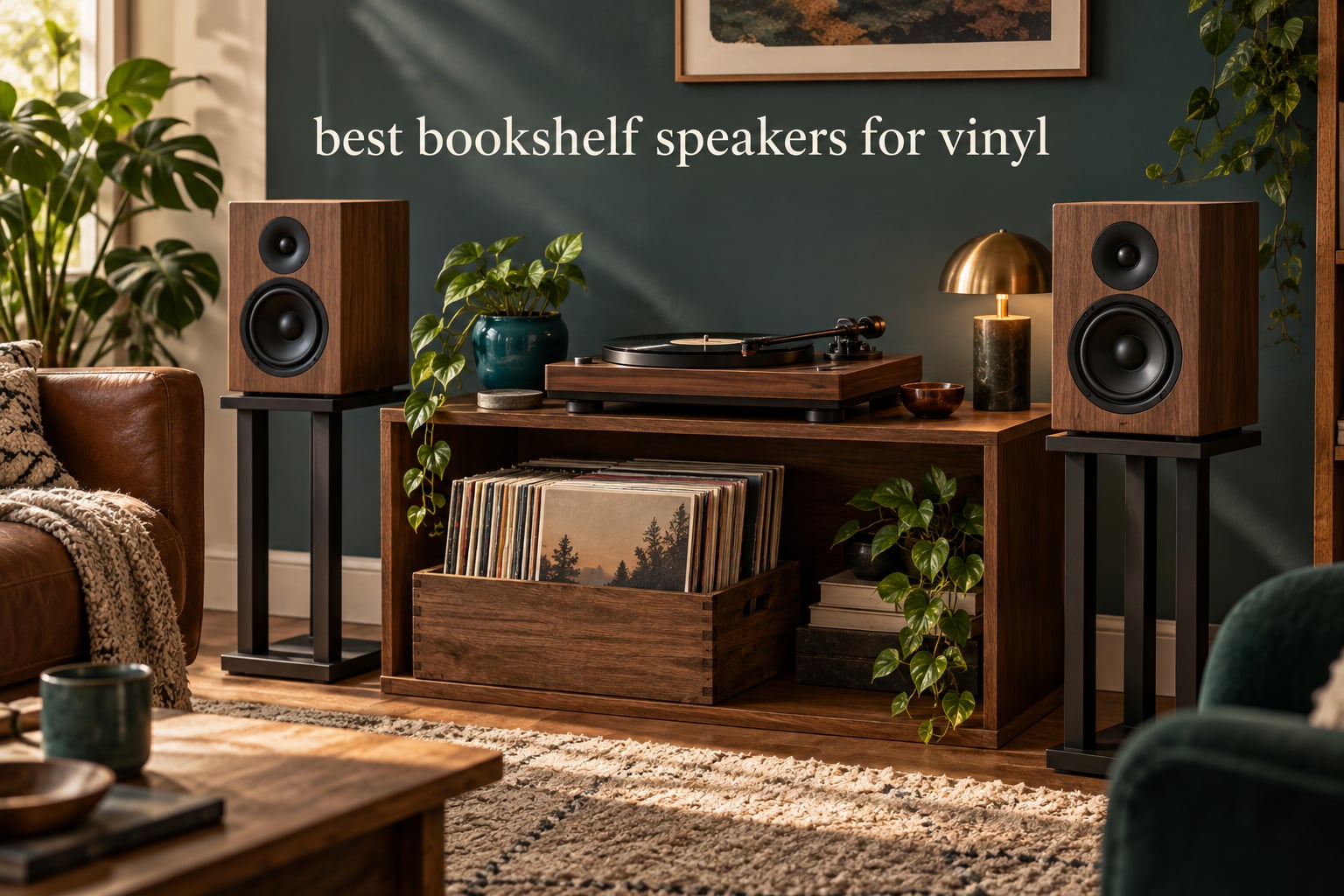
The best bookshelf speakers for vinyl come down to one decision: whether you want a simple all-in-one powered setup, where the amplifiers and a phono stage are built into the speakers themselves, or an audiophile-grade passive system driven by a separate amplifier that has a phono input. Everything else in this guide follows from that choice.
That choice matters more than any spec sheet. A turntable’s cartridge puts out a tiny, bass-light phono-level signal, and something has to boost that to line level before a speaker can play it. If the speakers have a built-in phono preamp, they do that job for you. If they do not, your amplifier has to, and if it does not have a phono input either, you will get a thin, quiet, bass-free signal that people mistake for a broken turntable.
We compared 12 bookshelf speaker pairs to sort out which ones handle a record player cleanly and which ones need extra gear. We grouped them by the two routes, checked every input and terminal against real user reviews, and kept the honest limits in rather than writing a list where everything is perfect.
Last updated: October 2026. We may earn a commission on purchases made through our links, which does not change what we recommend.
If you are still building the rest of your setup, our guide to the best vinyl cutting machines covers the other half of a home record-cutting workflow.
Table of Contents
Top 3 Picks for Vinyl Right Now (October 2026)

Klipsch R-51PM
- Built-in phono preamp with ground screw
- 120W powered monitor
- Bluetooth plus optical and USB
Edifier R1280DB
- 42W RMS powered pair
- Optical and coaxial inputs
- Side-panel bass and treble knobs

ELAC Debut B5.2
- 5.25 inch aramid woofer
- Front-firing port for near-wall placement
- 6 ohm passive design
Best Bookshelf Speakers for Vinyl: All 12 Picks in 2026
Two of the twelve picks below have a phono stage built in, which means a turntable plugs straight into the speakers with nothing else in the chain. The rest are line-level inputs, so they need either a turntable with a built-in preamp or an amplifier with a phono input. That distinction is the single most important thing to check before you buy anything for records.
| Product | Specifications | Action |
|---|---|---|
| Klipsch R-51PM |
|
Check Latest Price |
| Edifier R1280DB |
|
Check Latest Price |
| ELAC Debut B5.2 |
|
Check Latest Price |
 Kanto YU6 Kanto YU6 |
|
Check Latest Price |
 Audioengine A5+ Audioengine A5+ |
|
Check Latest Price |
 Fluance Ai61 Fluance Ai61 |
|
Check Latest Price |
| Fluance Ai41 |
|
Check Latest Price |
 Edifier R2000DB Edifier R2000DB |
|
Check Latest Price |
 Audio-Technica AT-SP3X Audio-Technica AT-SP3X |
|
Check Latest Price |
 MEVOSTO DS19 MEVOSTO DS19 |
|
Check Latest Price |
 KEF LS50 Meta KEF LS50 Meta |
|
Check Latest Price |
 Electrohome EB10 Electrohome EB10 |
|
Check Latest Price |
1. Klipsch R-51PM – Best All-In-One Powered Pair With A Built-In Phono Stage
- Built-in phono preamp with a ground screw
- so a turntable needs no extra box
- Strong low-end weight from a 5.25 inch driver
- Clear horn tweeters that stay detailed at low listening levels
- Optical
- USB
- aux
- Bluetooth and sub out in one cabinet
- No adjustable crossover
- only a fixed low-volume bass and treble toggle
- Bass can be excessive at low listening levels
- IR remote must be aimed directly at the speaker
The R-51PM is the pair we keep coming back to because it removes the single decision that trips up most first-time vinyl buyers. The phono/line input has a switch and a proper ground screw terminal, so a turntable with no built-in preamp connects directly and plays. Nothing else in the box is required.
It is a 5.25 inch powered monitor rated at 120W, and that power shows up where it matters on records: strong low-frequency response that several owners describe as subwoofer-like without adding one. The horn-loaded tweeter stays clear and unfatiguing through long listening sessions, which is the opposite of the fatigue many people associate with horn designs.
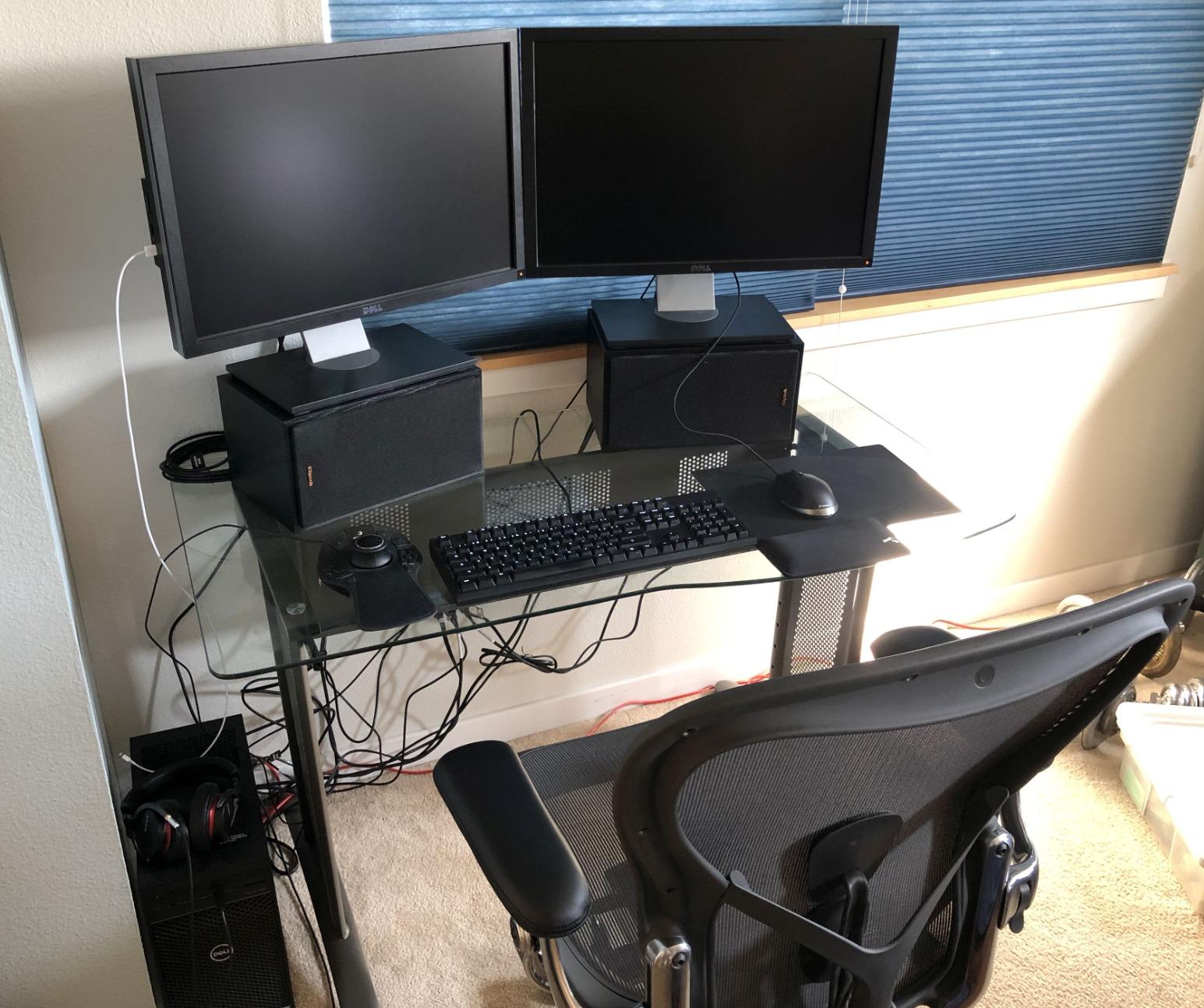
Connectivity is unusually complete for a speaker of this class. The rear panel carries a phono/line input with switch and ground screw, an optical input, a USB digital audio input, a 3.5mm jack, Bluetooth and a subwoofer out, which is enough to run records, a TV and streaming from one system without buying a receiver.
One practical note before you place them: the speaker housing the power amplifier has to sit on the right of the listening position, not the left. Swapping them reverses the channels.
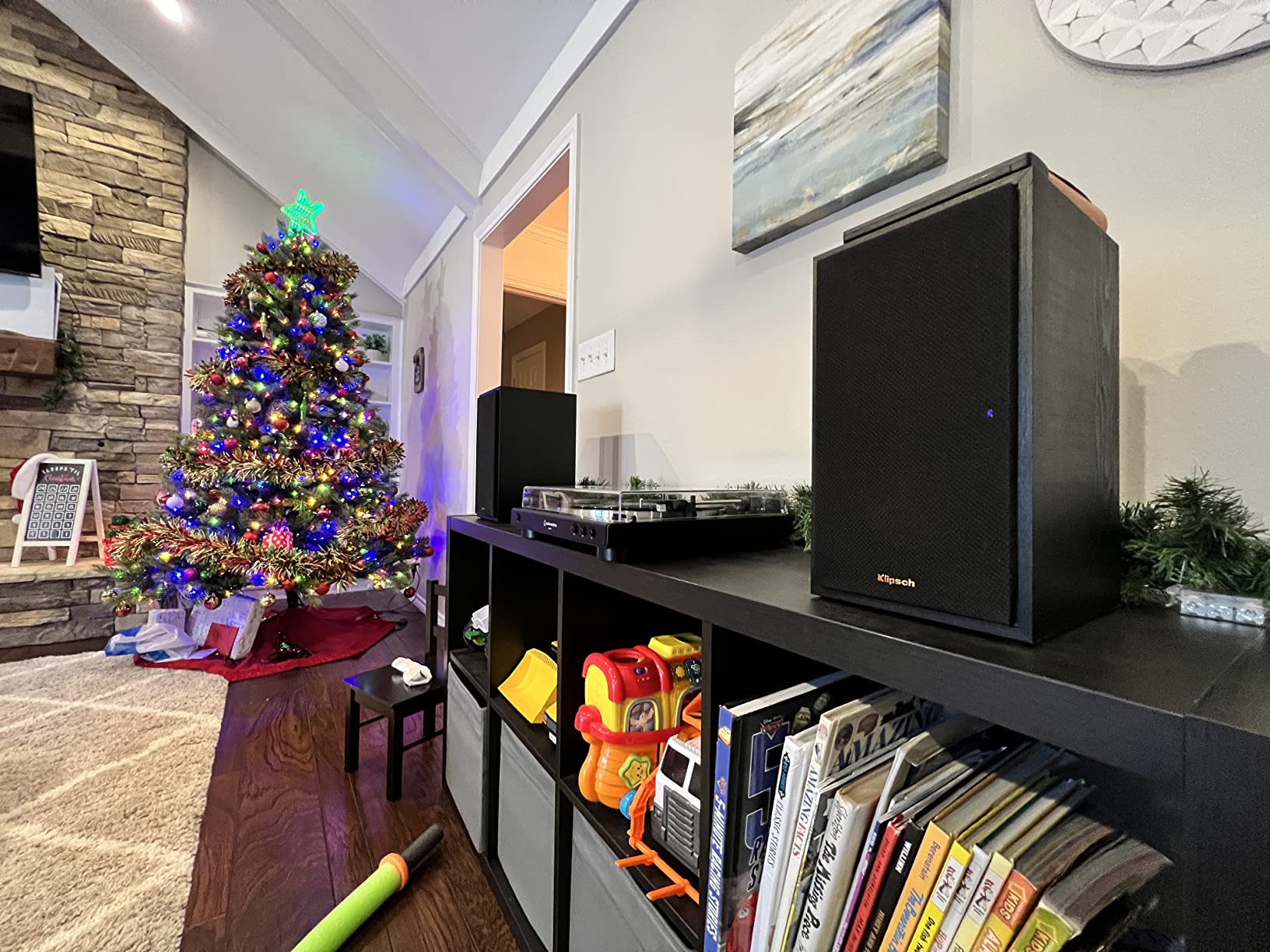
How the Klipsch R-51PM Handles A Turntable Signal
Set the phono/line switch to phono, connect the turntable’s RCA outputs, and tighten the ground wire under the screw. A moving-magnet cartridge outputs a level these speakers’ phono stage handles comfortably. If you later fit a moving-coil cartridge, you will want an external step-up transformer or phono stage instead.
Because there is no crossover control, the practical way to handle the strong bass is volume discipline rather than EQ. Keep the listening level moderate and the low end stays controlled; pushed hard on a small desk, owners report the bass becomes fixed and a little much.
Who The Klipsch R-51PM Is Not For
It is not the right pick if you need a subwoofer with a proper crossover point, since the only tone control is a fixed low-volume toggle. It is also not ideal for a very large room, and the infrared remote can be laggy if it is not pointed at the cabinet.
One reviewer reported a slight hiss at desk distance in a very quiet room, so if you listen late at night at low volume, that is worth knowing about. For everyone else, this remains the most complete single-box answer to the vinyl speaker question.
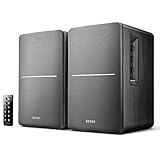
2. Edifier R1280DB – Best Value Powered Pair For A Preamp-Equipped Turntable
- Well-tuned
- near-flat sound for the price
- Optical and coaxial digital inputs for a clean TV or PC hookup
- Physical bass and treble knobs on the active speaker
- Compact wooden cabinets that fit a desk or a shelf
- No built-in phono preamp
- so a turntable needs an external preamp
- Only 42W RMS
- which is limited in a large room
- 4 inch drivers limit true low-end extension
The R1280DB has more reviews than anything else on this list, and the reason is simple: it is the budget powered bookshelf that sounds right rather than merely sounds loud. Owners repeatedly describe the tuning as naturally fine and near-flat, with a clear, balanced presentation that flatters records instead of colouring them.
It runs 42W RMS with a 4 inch bass driver and a 13mm silk dome tweeter, driven through a front-facing bass reflex port. The front port matters more than most people expect: it means you can push the speakers closer to a wall or into a real bookshelf without the port being blocked.
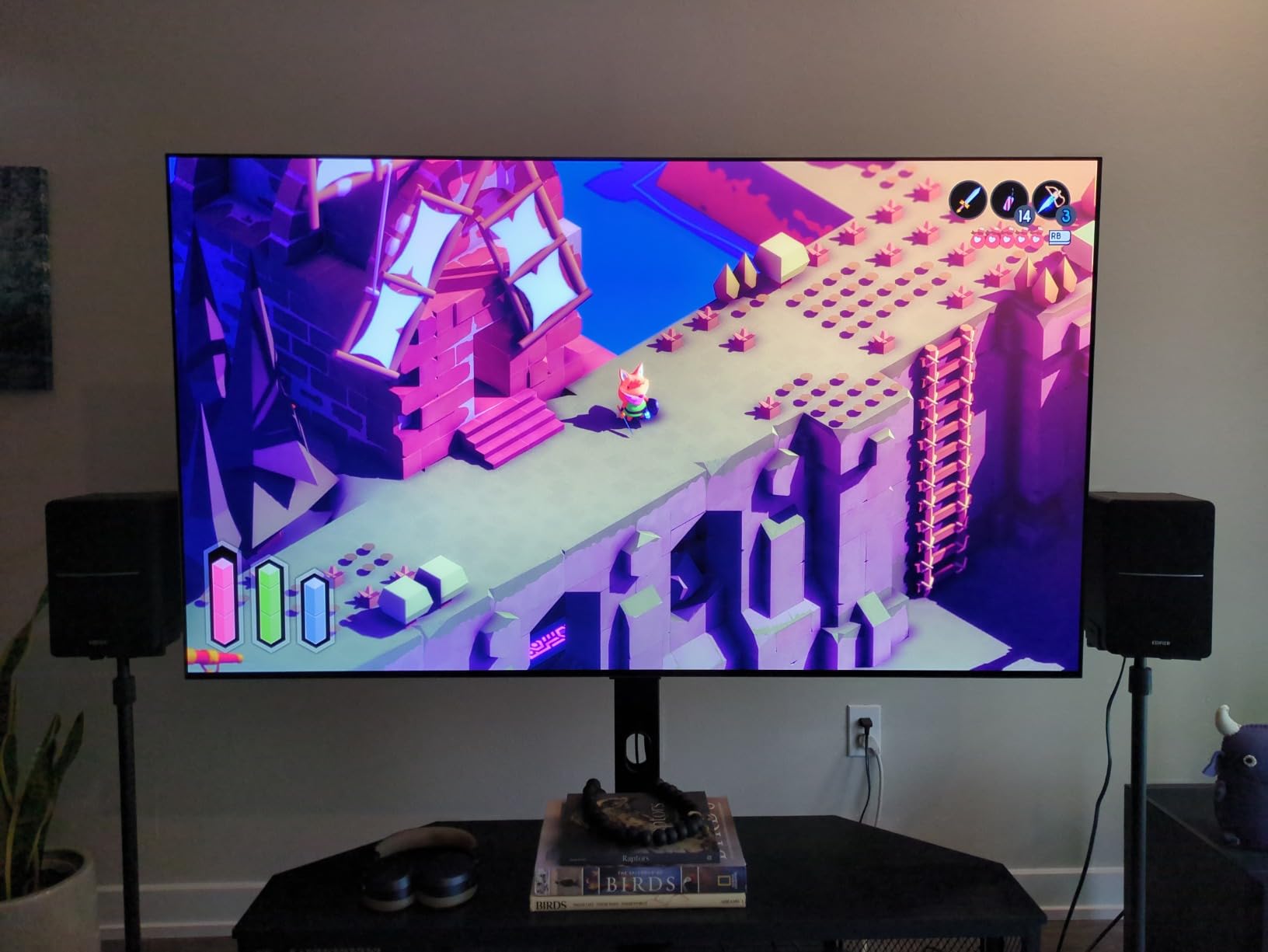
The input selection is unusually complete for the money. Optical and coaxial digital inputs cover a TV or PC with a lossless digital path, dual RCA covers a turntable or a preamp, and Bluetooth handles streaming. There is also a subwoofer out if you want to add low end later.
Tone control is unusually practical: bass and treble knobs sit on the side panel of the active speaker, so you can trim a bright record or a boomy room in a couple of seconds, and a remote handles volume and input switching.
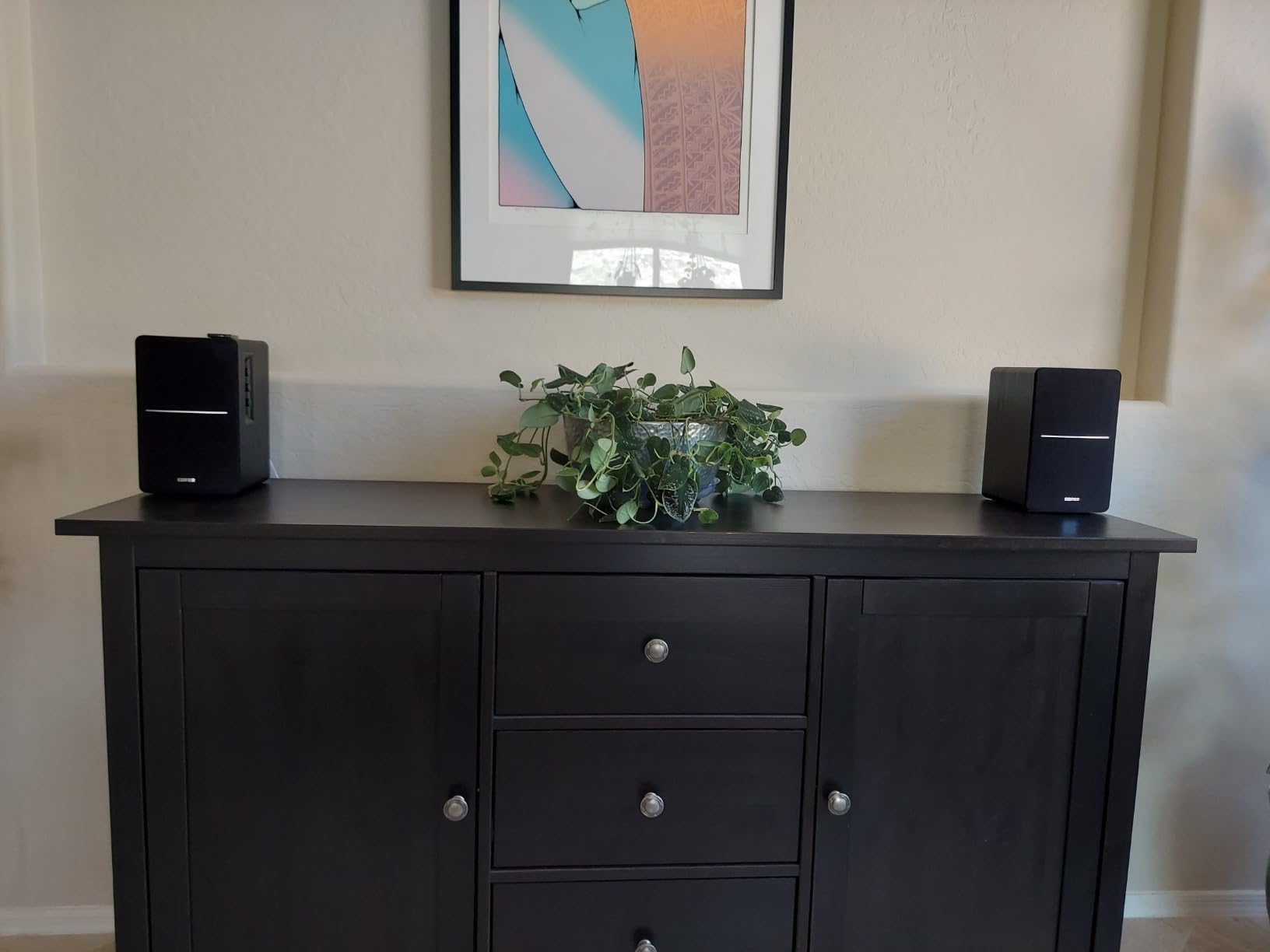
Why The Edifier R1280DB Works Well With A Turntable
This is the pair most people in record-player forums pair with an entry-level deck, and the reason is that the speakers are line-level only. Your turntable needs a built-in preamp of its own, or you add a small external phono preamp between the deck and the RCA inputs. Either way, the result is a clean, quiet, well-tuned signal.
One owner in our research paired a budget turntable with a comparable Edifier powered pair and reports loving the setup, which matches what we hear about this model: the speakers get out of the way and let the record do the talking.
Where The Edifier R1280DB Falls Short
42W RMS is enough for a bedroom, a home office or near-field desktop listening, but it will not fill a large living room at high volume. The 4 inch driver also stops short of true low-frequency extension, so records with heavy bass will benefit from the subwoofer out.
It is worth being explicit that buying this pair for a phono-level turntable and skipping the preamp is the classic mistake. A quiet, thin sound here almost always means a missing or duplicated preamp stage, not a fault in the speakers.
3. ELAC Debut B5.2 – Best Passive Pair That Handles Near-Wall Placement
- Consistently musical and lively
- with strong ratings across thousands of reviews
- Aramid fiber woofer delivers fast
- clean bass with good damping
- Front-firing port works close to a wall or on a bookshelf
- Thick internally braced MDF cabinets reduce vibration
- Passive design requires a separate amplifier or receiver
- No wireless
- Bluetooth or digital audio connectivity
- 6 ohm impedance draws more current than an 8 ohm design
The Debut B5.2 is the passive pair we recommend most often for a turntable, because it solves the two placement problems people hit hardest with bookshelf speakers: a blocked port when the speaker is shoved against a wall, and cabinet vibration that smears the low end. The front-firing port and the thickened, internally braced MDF cabinet were both redesigned to deal with exactly that.
Sonically, owners describe the tuning as musical rather than clinical. The 1 inch cloth dome tweeter with a wide-roll surround and waveguide extends to 35kHz without harshness, and the 5.25 inch woven aramid-fiber woofer gives fast, clean bass with good damping.
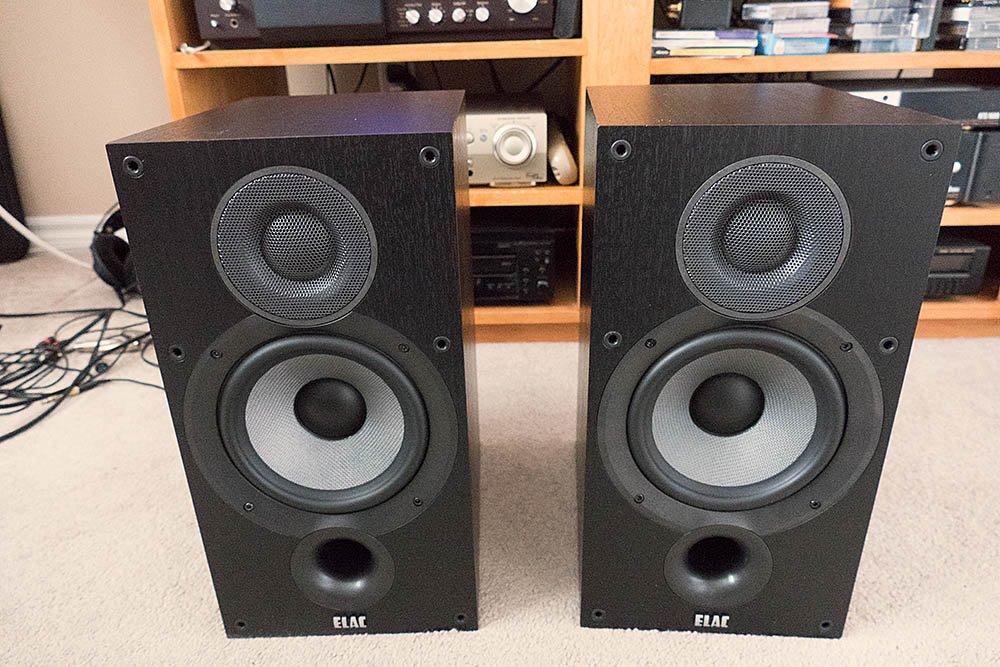
With a 4.7 average across more than 2500 reviews, this is the most consistently rated passive speaker we looked at. The 83 percent five-star distribution reflects a tuning people keep for years rather than admire for a week.
Because it is passive, your amplifier supplies everything: volume, power and the phono stage. The speakers are 6 ohm and rated to 120W, which means they draw more current than an 8 ohm pair, so a modest amp will work but a capable one gives a cleaner result at low listening levels.
How The ELAC Debut B5.2 Fits A Vinyl System
This is a passive 2-way bass reflex design, so the signal path is cartridge, then phono preamp in your amplifier, then the speakers. That means the amplifier’s phono stage does real work here, and a decent one will sound noticeably better than a cheap internal circuit.
Its front port also makes it the pair we suggest when the only available spot is a furniture-height shelf with a wall a few inches behind. Nothing gets blocked, and the internal bracing keeps the cabinet from colouring bass-heavy records.
Who Should Skip The ELAC Debut B5.2
If you have no amplifier and do not plan to buy one, this is the wrong pick, and the same is true for anyone who needs Bluetooth or a digital TV input in the same box. There is no wireless of any kind here.
It is also the pick to avoid if the amp you own is low-current. The 6 ohm load asks more of it than an 8 ohm design would, which is the one spec that matters when you are matching an older receiver.
4. Kanto YU6 – Best For Retro Styling And A Wide Soundstage
Kanto YU6MW Powered Bookshelf Speakers with Bluetooth and Phono Preamp | Pair | Matte White
- Built-in phono preamp lets a turntable plug straight in with no extra gear
- 5.25 inch Kevlar drivers deliver punchy
- detailed and warm sound
- Retro cabinet finishes in a range of colours
- Remote covers volume
- input
- tone and balance
- Cabinet resonance can make the low end boomy at close placement
- Large footprint for a small desk or shelf
- Bass is light for the driver size without a subwoofer
The YU6 is the other pick here with a phono preamp on board, and it wins on presentation. Owners single out the soundstage as the widest in its size class, and the retro cabinet finishes are the ones people mention when the speakers arrive.
Under the cabinet it is a 5.25 inch Kevlar driver with a 1 inch silk dome tweeter per side, rated to 200W maximum output. The sound is described as punchy, detailed and warm, with enough headroom to play records at a real level rather than a whisper.
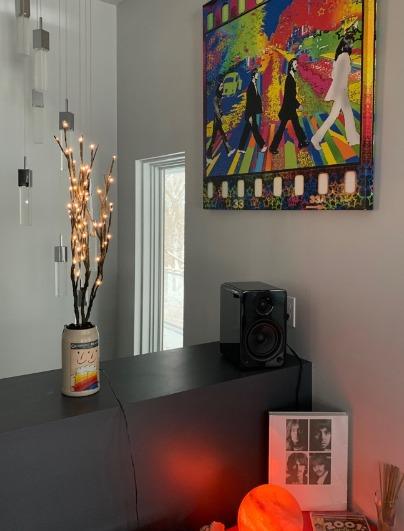
Connectivity covers the vinyl brief well: an integrated phono preamp, Bluetooth with Qualcomm aptX, and automatic standby with signal detection so the speakers wake when you lift the arm. A remote handles volume, input, tone and balance, which is more control than most powered pairs at this level offer.
Reviewers are clear that these are placement-sensitive speakers. Toe them in, keep them a few feet back from the wall, and the midrange and bass tighten up noticeably compared with a close, parallel position.
Why Vinyl Listeners Pick The Kanto YU6
The phono preamp is the decisive feature, and owners consistently praise the plug-and-play experience it creates. There is no external preamp to buy, no receiver to find a phono input on, and no signal-level guesswork.
It is also one of the few pairs here that pairs cleanly with an existing system, since aptX Bluetooth and the multiple analog inputs let you switch between a turntable and streaming without unplugging anything.
Who Should Not Buy The Kanto YU6
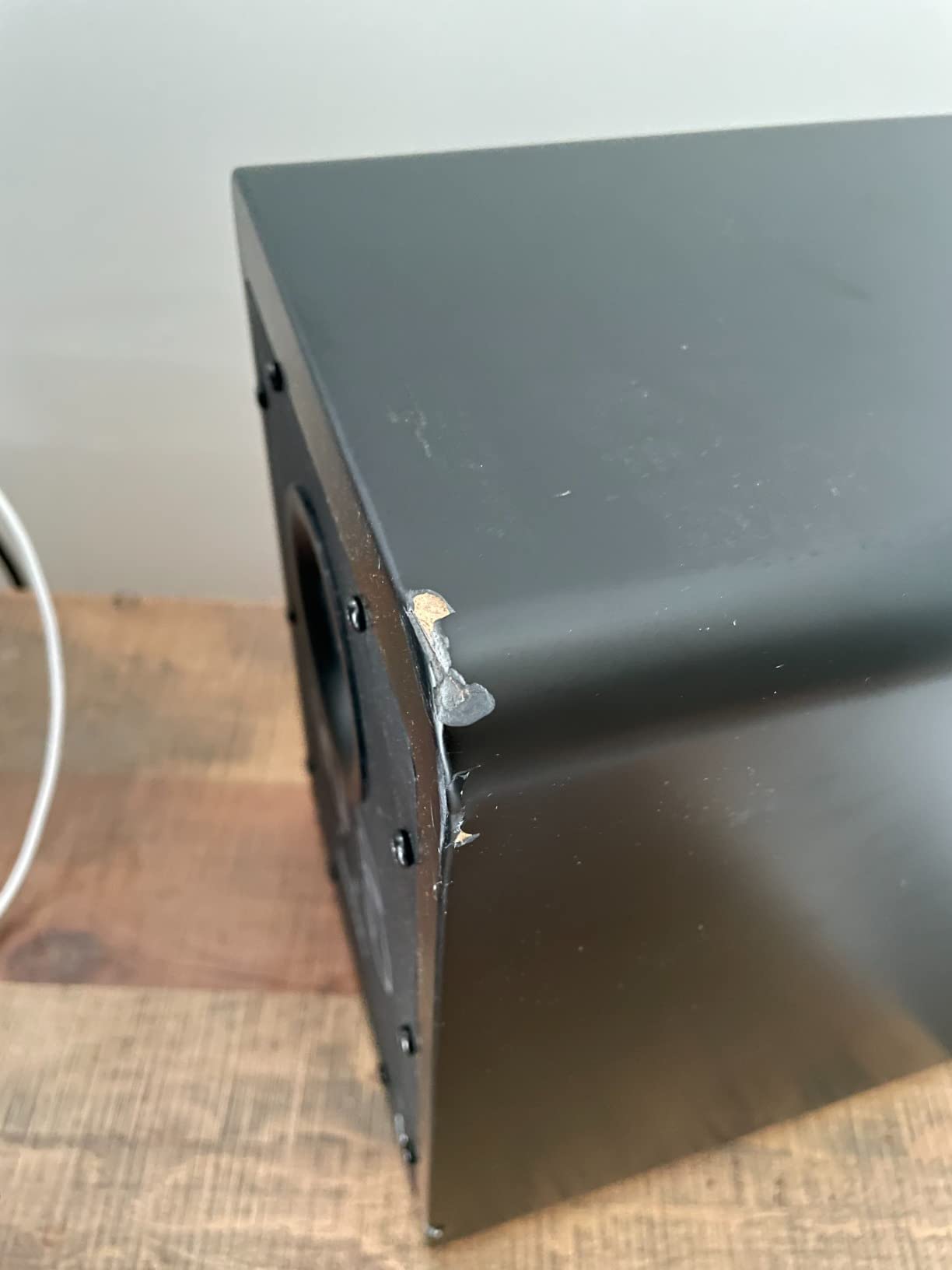
Do not buy it for a small desk or a tight shelf: the footprint is large, and cabinet resonance is the most repeated complaint. A few feet of clearance and a slight toe-in resolve it for most owners.
Records with heavy low end will still need help, because the low end rolls off and is described as light for the driver size without a subwoofer. The tone controls are also on the remote only, with no on-screen reference to tell you where you are.
5. Audioengine A5+ – Best For Neutral Tuning On An Existing Amplifier
Audioengine A5+ Wired Bookshelf Speakers – Powered Speakers
- 150W of built-in amplification means no separate amp is needed
- Neutral
- detailed tuning suited to critical listening
- 95dB signal-to-noise ratio keeps the noise floor very low
- Handcrafted bamboo or gloss wood cabinets
- This wired version has no Bluetooth or optical input
- Bulky cabinets at 25 pounds limit placement flexibility
- No tone controls beyond volume on the active speaker
The A5+ has been a long-running entry point into powered speakers for people who care more about tuning than about connectivity. The amplification is built into the active speaker, so a turntable setup becomes one box, but the signal path stays deliberately simple and the tuning stays neutral.
With 150W of amplification, a 5 inch woofer and a 1.9cm tweeter, this is the pair we suggest when you want to hear the record rather than the speaker. A 95dB signal-to-noise ratio matters more here than in most cases: a quiet noise floor is what makes quiet record passages audible on a system with no separate preamp in the chain.
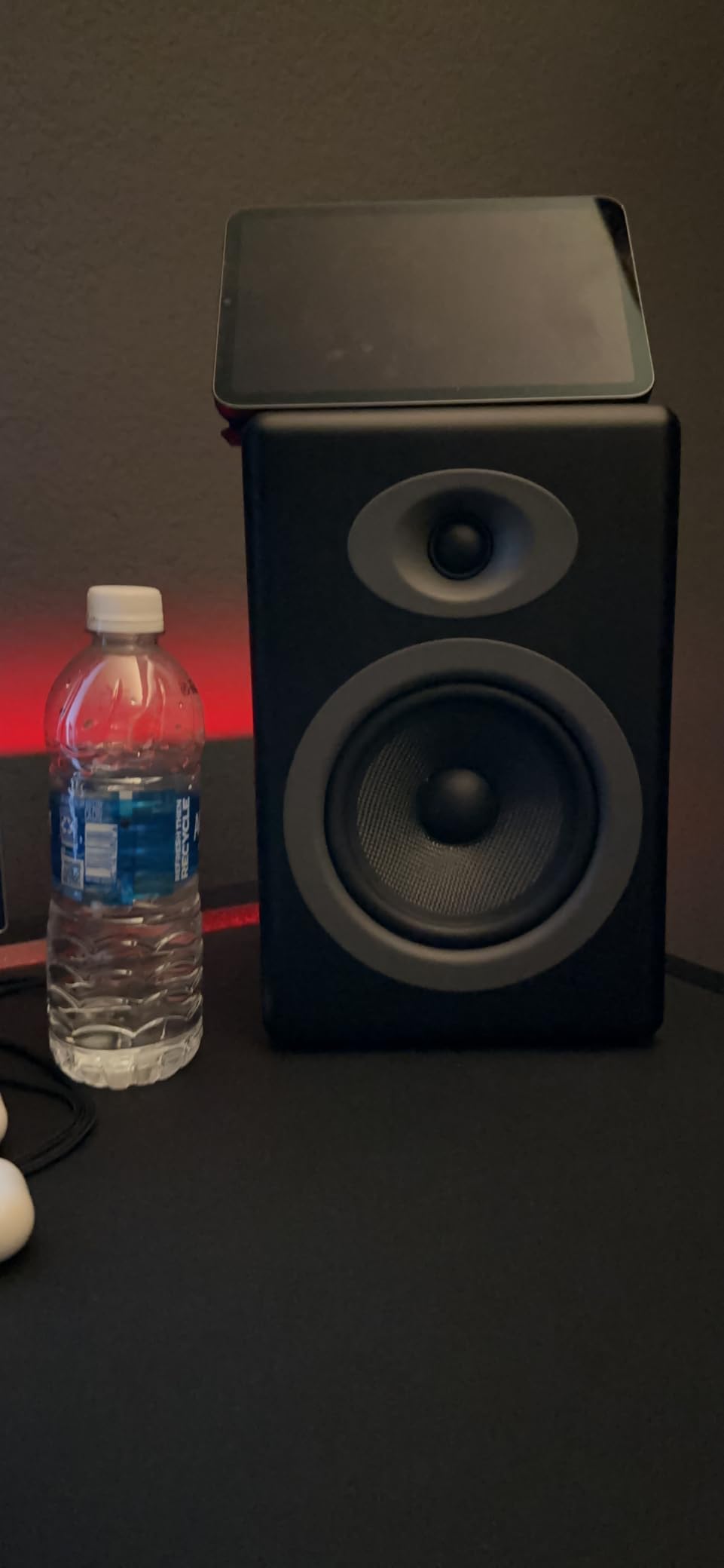
The cabinets are handcrafted wood in natural bamboo or a high-gloss 13-step paint finish, and the build is the kind that survives being moved between rooms. Reviews also point to solid midrange and clean treble as the signature strengths.
RCA and 3.5mm AUX inputs cover a turntable with a built-in or external preamp, plus computers, TVs and consoles. The manufacturer states the tuning was custom-set by professional musicians for studio playback and vinyl use.
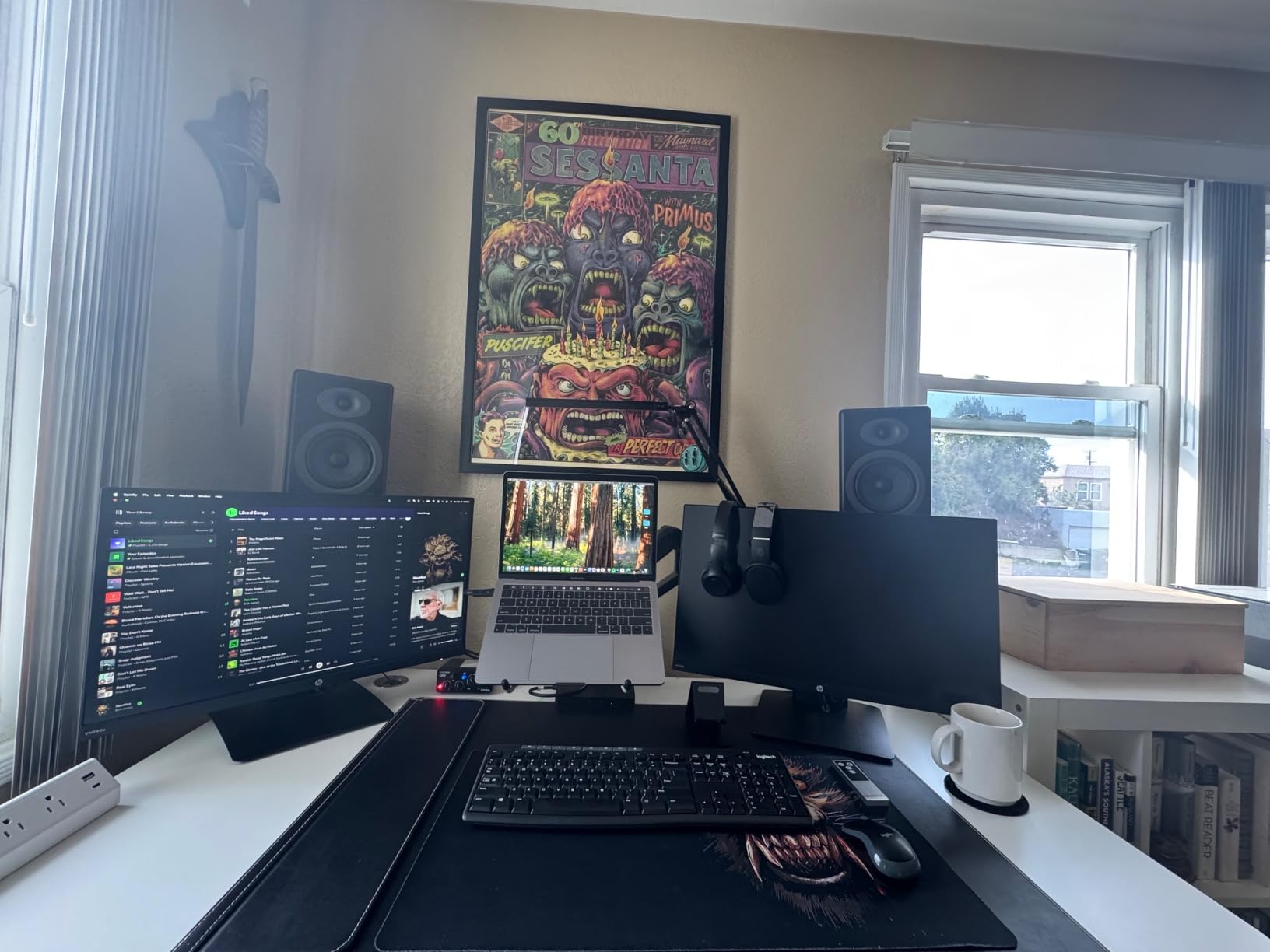
Why The Audioengine A5+ Suits Record Listening
A neutral, accurate signature is what most people want from a first serious system, and the 95dB signal-to-noise ratio means surface noise on a record is audible as a faint floor rather than as a hiss sitting on top of the music. That is a real advantage for vinyl specifically.
The 150W of built-in power also means you are not relying on a small amp to drive the speakers. If you later want to change approach, you can swap this pair for passive speakers and keep playing records through the same source.
What The Audioengine A5+ Cannot Do
There is no Bluetooth and no optical or digital input on this wired version, so a modern TV needs an external converter. If you plan to run records, a TV and streaming from one system, this is not the box for that job.
The cabinets are bulky and weigh 25 pounds, which narrows where you can put them, and there are no tone controls beyond volume. People who want to correct a bright room should look at a pair with rear-panel EQ instead.
6. Fluance Ai61 – Best For Silent Amplification In A Larger Room
- Completely silent between tracks with no hiss on any input
- Solid heavy build that fills a moderate room without a subwoofer
- Bass and treble adjustment on the remote makes a real difference
- Optical
- USB Type-C
- RCA and Bluetooth 5 inputs
- No detachable front grille included
- Included speaker wire is thin with bare tinned tips
- Sound is very flat until you adjust the tone controls
The dominant theme in the Ai61 reviews is relief. Owners who have been burned by hissy budget speakers call out the complete absence of hiss at idle, and that matters more for vinyl than for any other source, because a quiet amplifier makes the difference between hearing the run-out groove and hearing your amplifier.
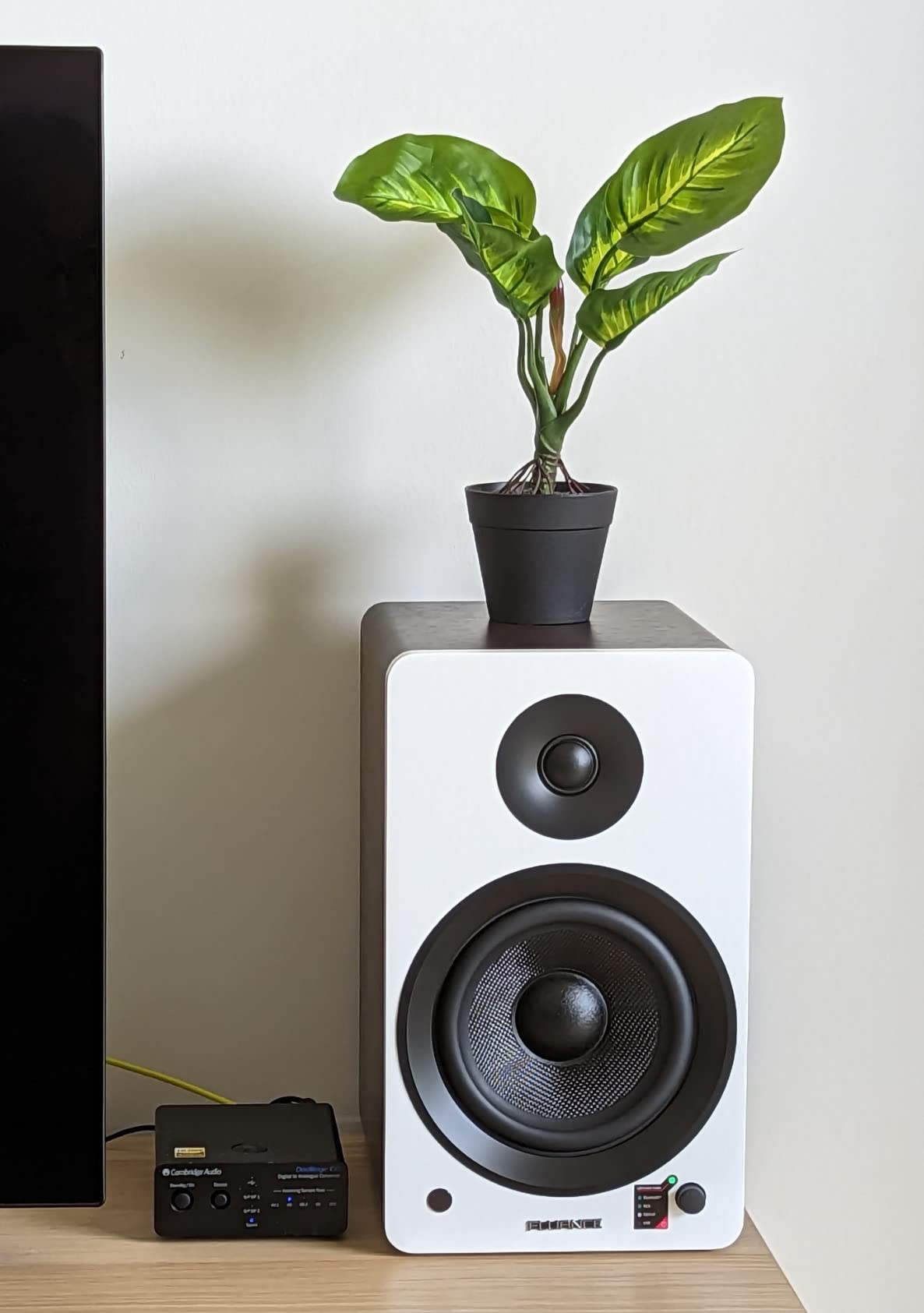
The 6.5 inch woven glass fiber woofers and 120W of integrated power are what make it a room-filling pair rather than a desktop one. Many owners report dropping plans for a subwoofer once they had them in a medium room.
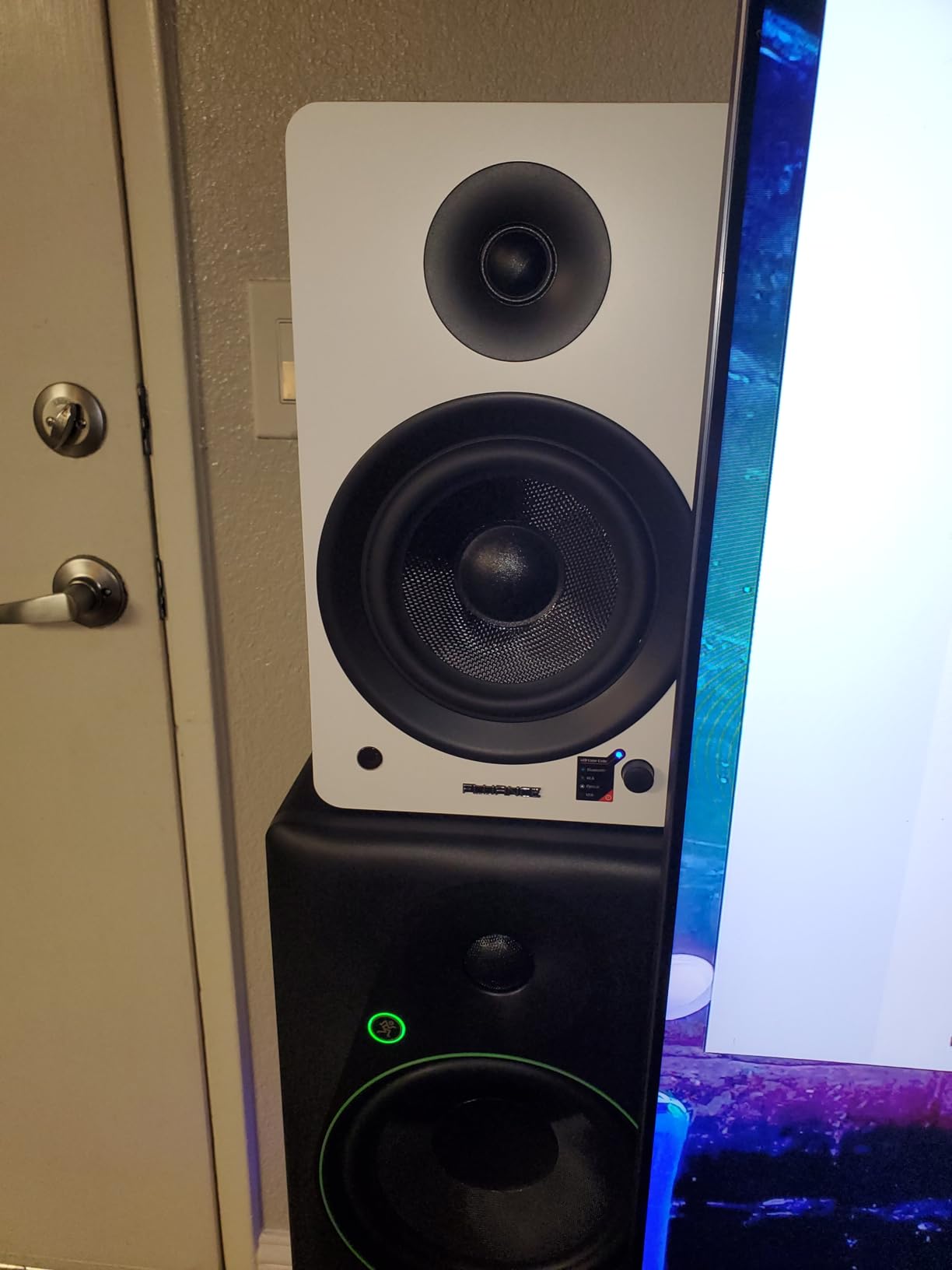
Connectivity is broad: RCA, optical, USB Type-C, Bluetooth 5 and a subwoofer out, all on internally braced MDF wood cabinets with a rear bass port. The inputs are enough to run a preamp-equipped turntable, a TV and a computer from one system.
Build quality is rated consistently at the top of the scale, and the mass of the cabinets at 27.2 pounds is part of why the low end stays tight at volume.
What A Silent Amplifier Does For Vinyl
A turntable signal is small, so any noise the amplifier adds is audible on quiet passages. When the electronics are silent between tracks, the only thing you hear is the record, which is exactly what owners describe as the deciding improvement with this pair.
The 6.5 inch driver size also means you can play at a proper level in a living room, which powered pairs with 4 or 5 inch drivers cannot do without strain.
Where The Fluance Ai61 Falls Down
The sound is very flat out of the box, so you will need to use the remote’s bass and treble adjustment or it will sound unexciting. There is no phone app, only the physical remote, and there is no detachable grille included.
One reviewer reported progressive internal cracking, humming and eventual failure across all inputs. That is a single report rather than a pattern, but it is worth mentioning if you are buying to keep a pair for a long time.
7. Fluance Ai41 – Best For Records And A TV On One System
Fluance Ai41 Powered 2-Way 2.0 Stereo Bookshelf Speakers with 5″ Drivers, 90W Amplifier for Turntable, TV, PC and Bluetooth 5 Wireless Music Streaming with RCA, Optical, Subwoofer Out (Natural Walnut)
- Built-in 90W amplifier removes the need for a separate receiver
- Wide
- deep soundstage for a compact footprint
- Optical input gives a clean digital TV connection
- Wood cabinet finish looks far more premium than the price suggests
- No phono preamp built in
- so a preamp-equipped turntable is required
- Treble and bass can only be adjusted from the remote
- Bass-focused material can benefit from a paired subwoofer
The Ai41 is the pick for the one-system question that shows up constantly in home audio forums: how do you get records, a television and streaming out of a single set of speakers without buying a receiver. The optical input and Bluetooth 5 alongside RCA mean three sources share one pair of cabinets.
Each active speaker carries its own 90W Class D amplifier, driving 5 inch woven glass fiber woofers with neodymium tweeters. Reviewers describe a spacious, natural signature with strong build quality, and the walnut cabinet is repeatedly mentioned as looking more expensive than it is.
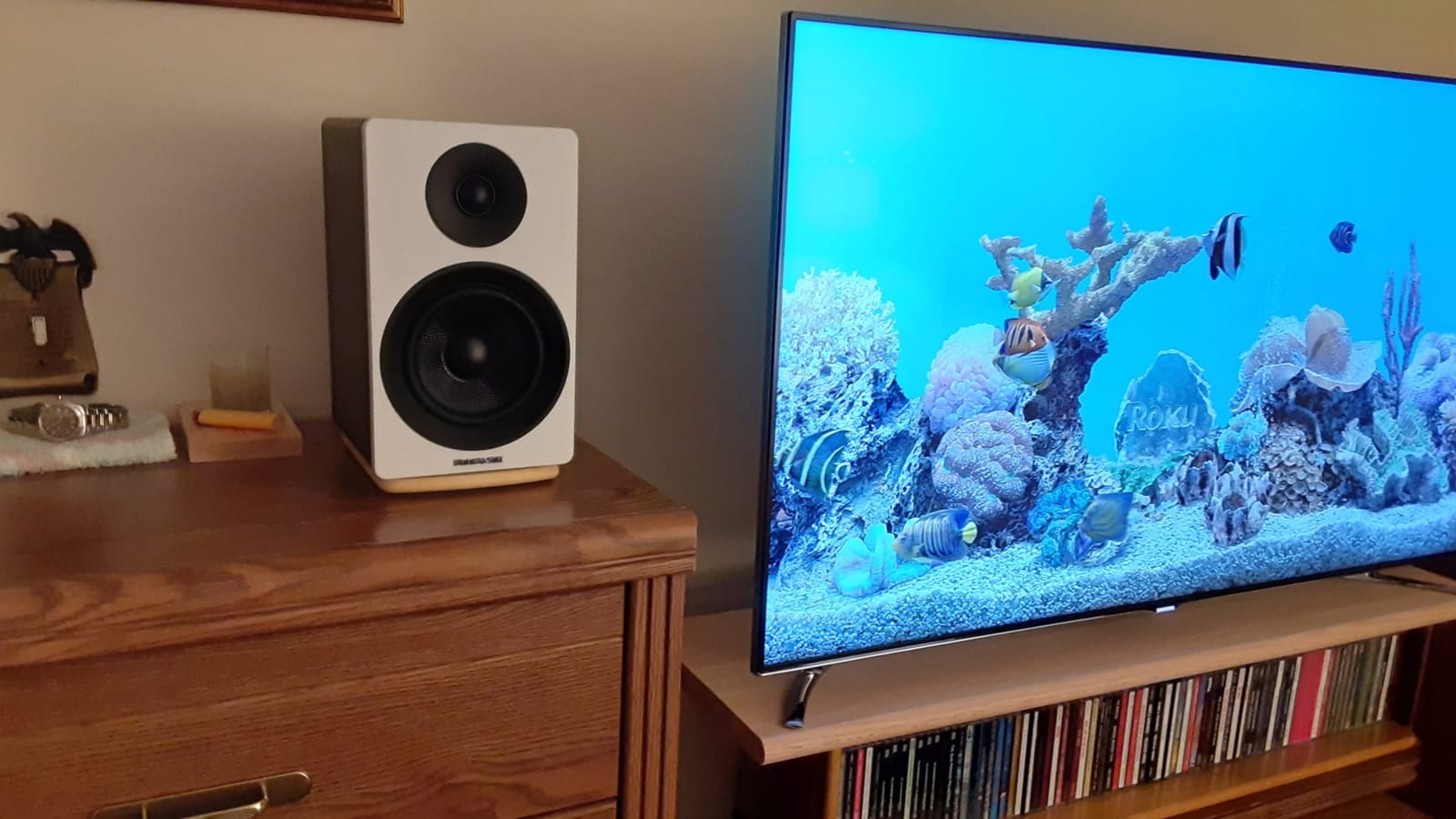
The rear bass port sits in an internally braced MDF cabinet, and the 7.6 inch depth keeps the pair reasonably shallow. A subwoofer out is included for anyone whose records lean heavily on bass.
Switching between the optical TV input and the turntable’s RCA is straightforward, which is the whole point when one pair of speakers has to do three jobs.
Does The Fluance Ai41 Work With A Turntable
Yes, with one condition: the turntable needs a built-in preamp, or you add an external phono preamp. There is no phono stage on the speakers themselves, so a phono-level deck connected straight to these RCA inputs will sound quiet and thin.
That is also the one detail to check before buying, because it is the difference between a working system and a frustrating afternoon. If you already own a preamp-equipped deck, the Ai41 handles the rest of your sources without complaint.
Where The Fluance Ai41 Is Not The Answer
If your turntable has no built-in preamp and you want to avoid buying extra gear, choose one of the two pairs in this roundup with a phono stage instead. That is a hard requirement, not a preference.
Tone adjustment is remote-only with no visual reference, and listeners who play bass-heavy material regularly tend to add a subwoofer. It also does not fill a large room as confidently as a 6.5 inch powered pair.
8. Edifier R2000DB – Best For Volume In A Medium Room
Edifier R2000DB Powered Bluetooth Bookshelf Speakers, 120W RMS, Warmoak
- Substantial 120W RMS output for music
- movies and gaming
- DSP tuning and bass enhancement for deep controlled low frequencies
- Warm oak wooden cabinet looks far more expensive than the price
- Bluetooth
- optical and RCA cover turntables
- TVs and PCs
- No built-in phono preamp
- so the turntable needs its own or an external one
- Larger cabinet footprint than 4 inch alternatives
The R2000DB is the answer to the volume question that comes up repeatedly in forums: people want to know whether better powered speakers will actually play louder before they upgrade anything else. With 120W RMS of total output, this pair does play louder, and reviewers describe it as staying articulate at higher levels rather than compressing.
Each cabinet carries dual 5 inch woofers with a 1 inch tweeter, covering 50Hz to 20kHz, with a built-in DSP processor handling the tuning. The result is a spacious, balanced soundstage that holds together in a medium room.
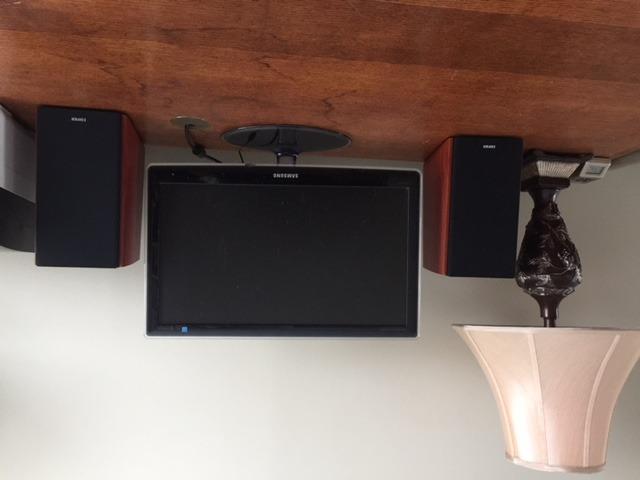
Rear-panel knobs handle volume, bass and treble alongside an infrared remote, so daily adjustment does not require reaching behind the cabinet once you have it set. The warm oak finish is the version most people choose for a living room rather than a desk.
It also works as a near-field monitoring pair, which owners mention as a secondary use. Bluetooth, optical and dual RCA cover a turntable with a preamp, a TV and a computer in a single box.
Matching Amplifier Power To What Vinyl Actually Needs
Vinyl records rarely demand a powerful amplifier on their own, because the phono preamp supplies the gain. What power does matter for is headroom: enough reserve to play a dynamic passage at a reasonable level without the amp running out of clean current.
That is the case for a pair like this one. At 120W RMS it fills a room without strain, and the DSP keeps the low end controlled when you turn it up. People running modest amplifiers often worry they are underdriving larger speakers, and this is the reverse case: a high-output powered pair removes that worry.
Who The Edifier R2000DB Is Not For
If you have a phono-level turntable with no built-in preamp, this pair cannot help you directly, because there is no phono stage on board. Add a preamp and the limitation disappears.
The cabinet footprint is also larger than 4 inch alternatives, so measure the shelf before you order. Anyone who wants a small footprint and a small room should look at a 3 or 4 inch driver instead.
9. Audio-Technica AT-SP3X – Best For Small Rooms And The Highest Customer Rating
- Highest average rating in this roundup
- with about 90 percent five-star reviews
- Compact cabinets that fit a small desk
- shelf or room
- Multipoint Bluetooth keeps two devices connected at once
- Includes an AC adapter with three international plug adapters
- No optical or digital input
- so a TV connection relies on analog or Bluetooth
- Plastic enclosure rather than wood
- so cabinet resonance is more likely at higher levels
- Only 30W maximum output
The AT-SP3X has the highest customer rating of the twelve, at 4.8 with roughly 90 percent five-star reviews. That level of consistency usually means a product that does a modest job extremely well rather than one that tries to be impressive.
Each cabinet has a 3 inch driver, and the pairing is compact enough for a desk, a shelf or a small bedroom. Buyers frequently frame it as an easy, tidy first system: small footprint, a straightforward volume dial, and instant Bluetooth pairing.
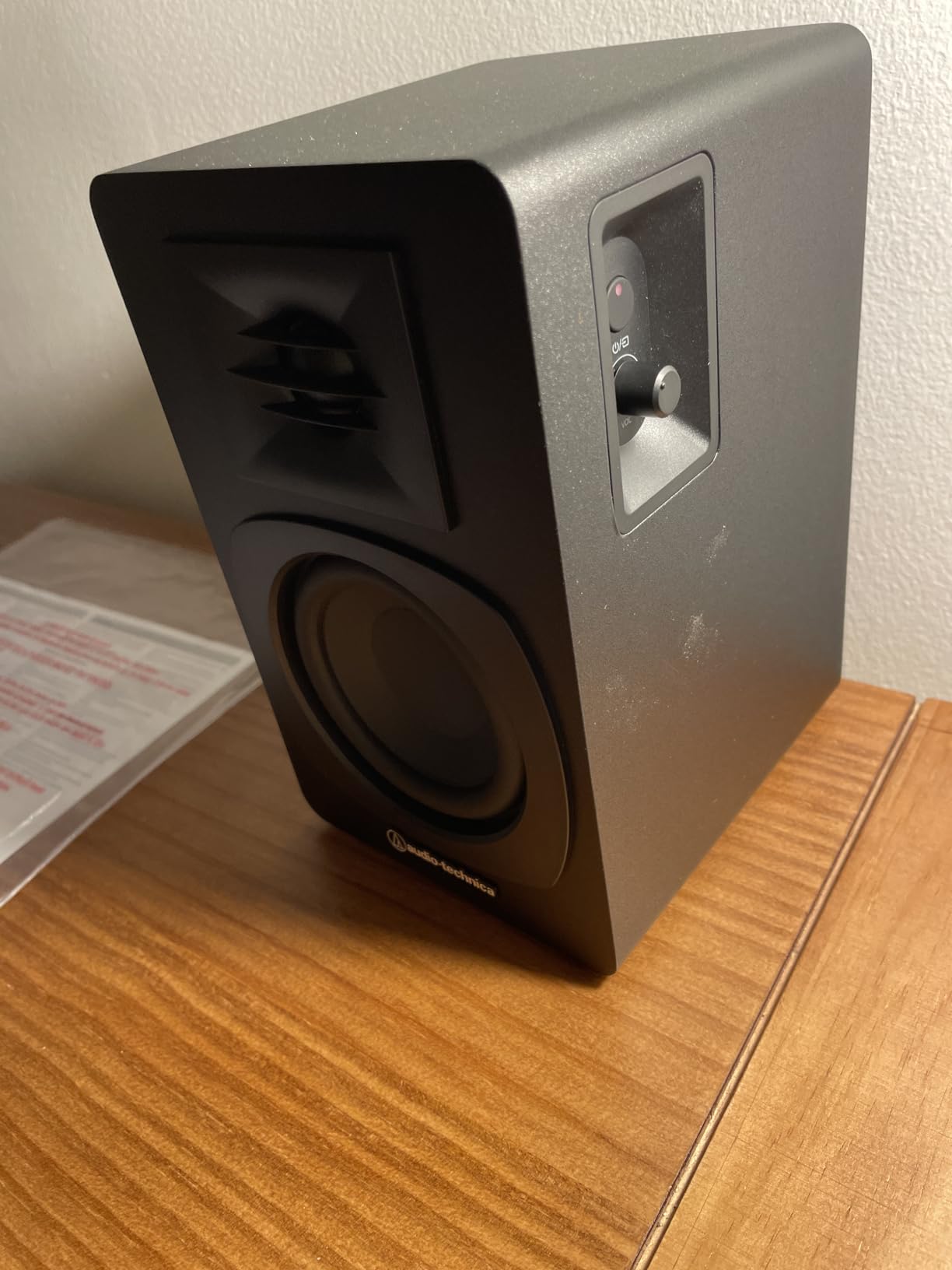
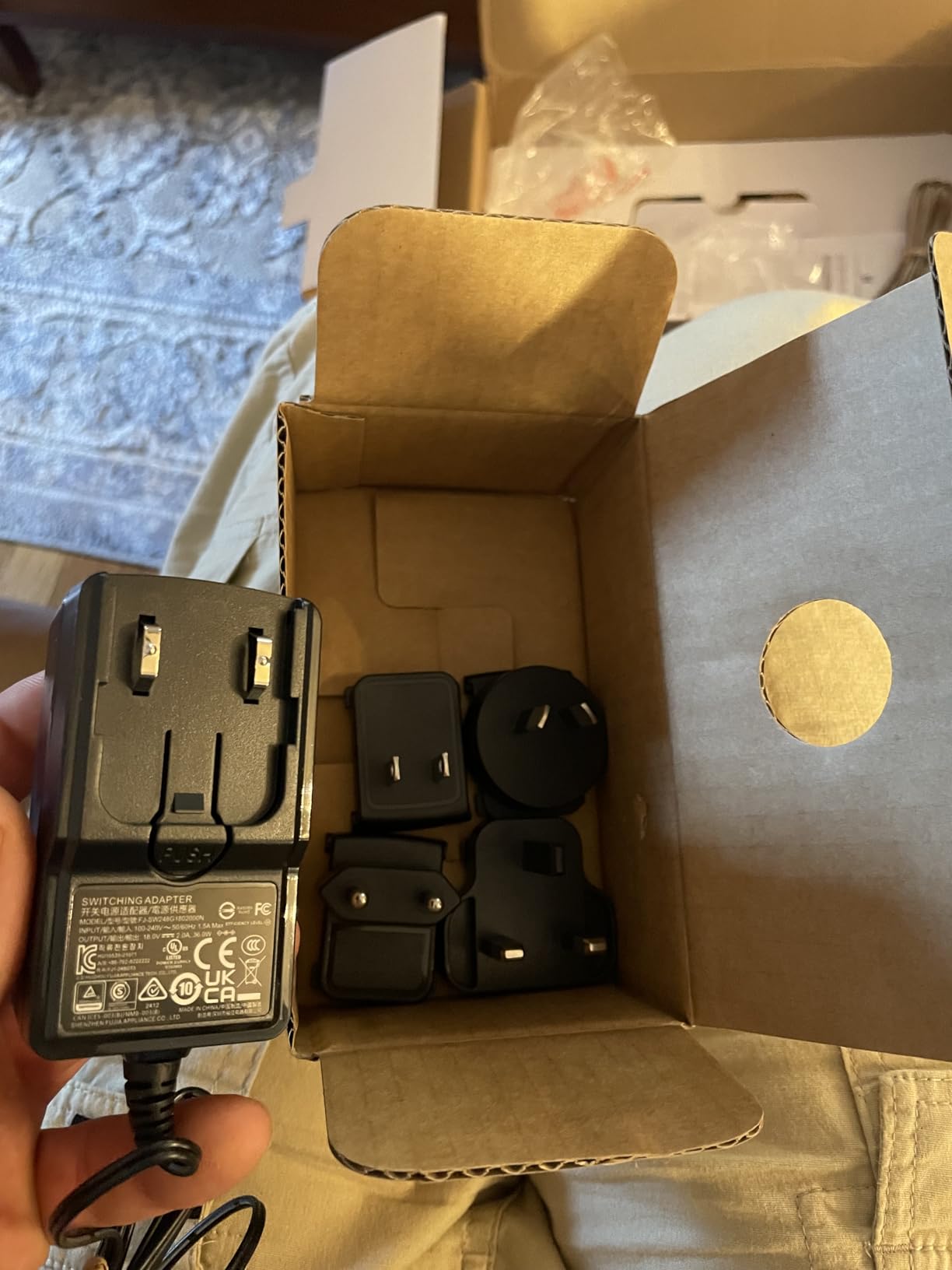
Multipoint Bluetooth keeps two devices connected at the same time, so a record player and a phone can both stay paired. Dual RCA jacks handle the wired connection, and there is a 6.6ft speaker cable plus three international plug adapters in the box.
Because Audio-Technica also makes some of the most popular entry turntables, this pair is a natural match for someone starting a record system from scratch rather than upgrading one.
Room Size And Driver Size For Vinyl Listeners
A 3 inch driver is a genuine match for a small room, a desk or a secondary listening space, and pairing a much larger driver with a small room usually produces boom rather than bass. Match the driver to the space rather than to the spec sheet.
The trade-off is extension. At 30W maximum output with a 3 inch driver, the low end stops early, so records with heavy bass will not have the weight they have on a 6.5 inch pair. If you want both a small footprint and real low end, plan on a subwoofer.
Why The AT-SP3X Is Not For Everyone
There is no optical or digital input, so a television connects through analog or Bluetooth rather than a digital path. For a system built around records, that matters less than it would for a home theatre setup.
The plastic enclosure is also the trade-off for the low price: at higher levels, cabinet resonance is more likely than it would be in a wood or braced MDF cabinet. And because the RCA input is line level, a phono-level turntable still needs a preamp of its own.
10. MEVOSTO DS19 – Best For Connectivity Per Dollar
MEVOSTO 5-Inch Powered Bookshelf Speakers: PC Speakers for Record Player
- Dual 5 inch drivers and silk-dome tweeters give a full sound from a compact cabinet
- The most connectivity per dollar here
- including USB digital
- Bluetooth 5.4
- RCA and AUX alongside tone knobs and a remote
- Walnut wood-grain finish and DC power flexibility for an RV or boat
- No built-in phono preamp
- so a line-level output or external preamp is required
- Compact 5 inch woofers limit deep bass response
- Some computer USB ports do not carry audio output
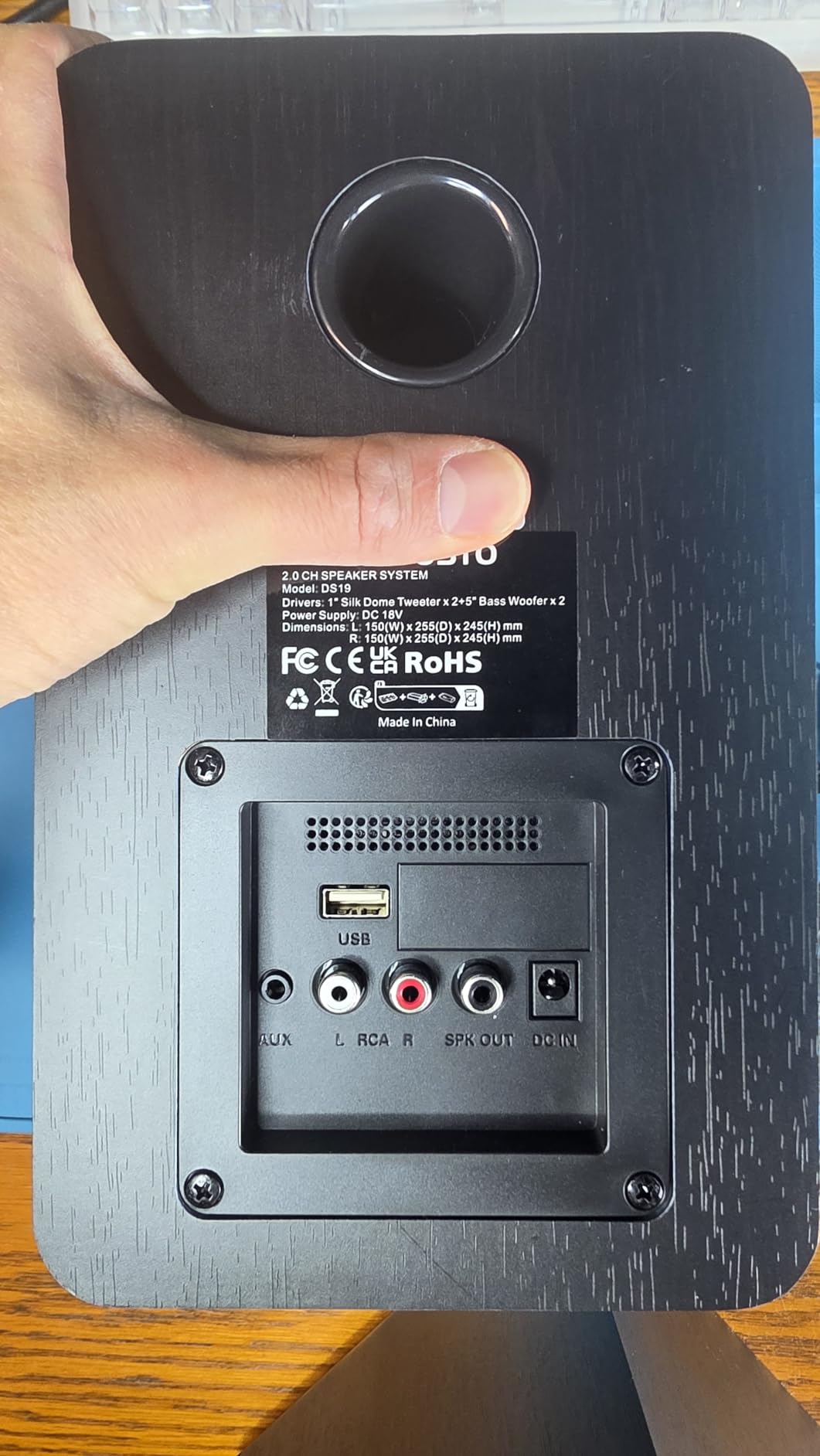
The DS19 is unusual in this roundup because it accepts a USB digital audio input, which no other powered pair here does outside a studio context. For anyone running a desktop PC, a PS5 or a laptop as the source for records, that changes what is possible without an extra box.
Each speaker carries dual 5 inch woofers and dual 1 inch silk-dome tweeters with its own 36W RMS amplifier. The result is a full, room-filling sound from a cabinet that measures 5.9 by 6.1 by 9.7 inches, which is smaller than most of the 5 inch powered pairs here.
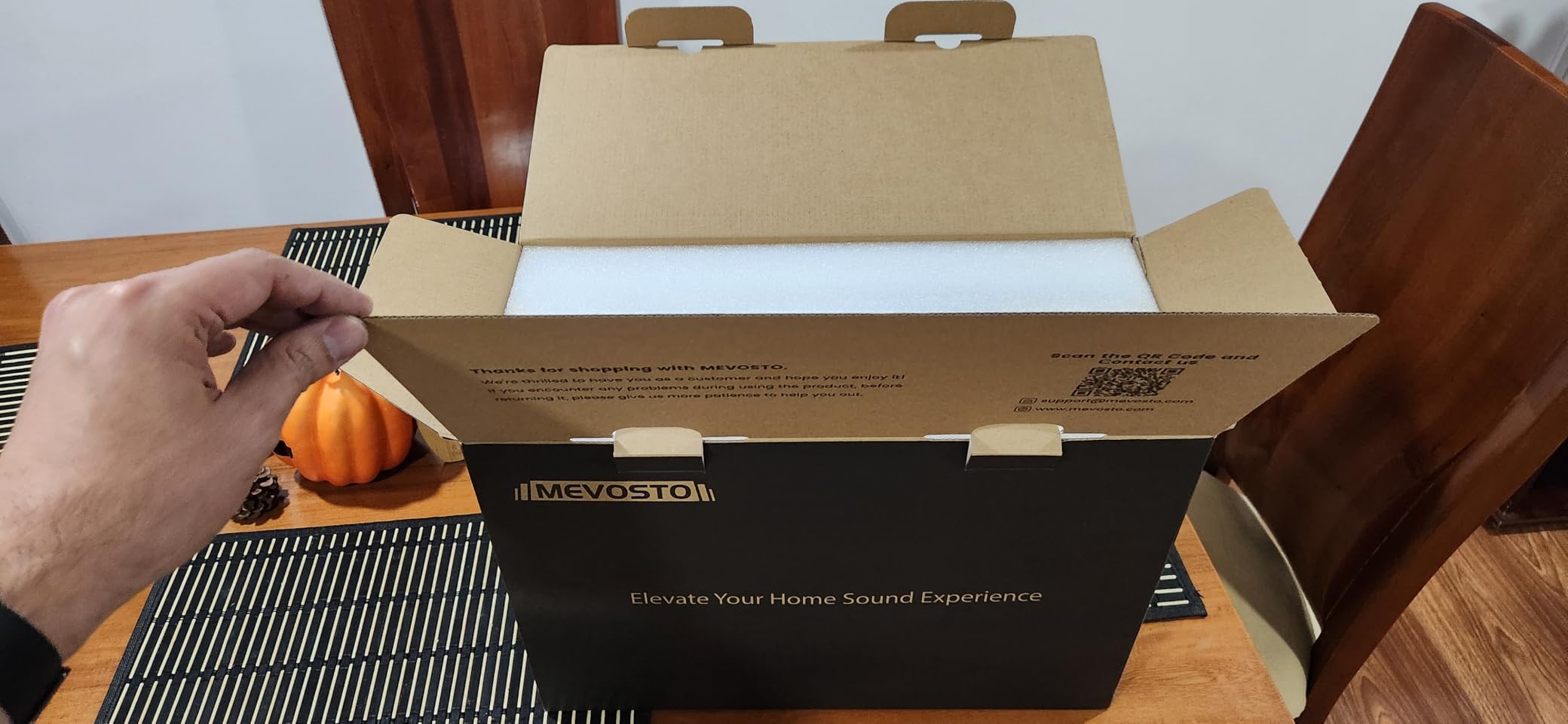
Beyond the USB input there is Bluetooth 5.4, RCA and AUX, independent bass and treble knobs and an infrared remote. The walnut wood-grain finish is a deliberate match for a record cabinet rather than a computer desk.
It also supports 12V, 15V and 18V DC input, with an 18V/2A adapter included, so the pair can run from a vehicle or boat power supply. That is a niche use but a real one for people who listen away from a wall socket.
What The USB Input Changes For A Record System
If you are digitising records or playing files through a computer, a USB digital input gives you a lossless path straight into the speaker’s own amplifier. That removes the need for an external DAC, which at this level of system is often the cheapest real upgrade available.
For a turntable, the relevant inputs are the RCA and AUX connections, which accept a turntable with a built-in or external phono preamp. The RCA path is a line-level input, which is the same limitation shared by the other powered pairs here.
Things To Check Before Buying The DS19
Confirm that your computer’s USB port actually carries audio output, because some do not, and this pair will not detect it. It also does not decode Dolby Audio, which matters only if you plan to use it for films.
The 5 inch woofers are compact, so deep bass is limited and a subwoofer is worth considering. Above all, do not skip the preamp question: without one, a phono-level turntable will sound quiet and thin.
11. KEF LS50 Meta – Best Reference Detail For Audiophile Systems
KEF LS50 Meta Bookshelf Speakers (Pair, Carbon Black) – Passive HiFi Audiophile Bookshelf Speaker with Metamaterial Uni-Q Driver
- Metamaterial tweeter absorption delivers cleaner highs with low distortion
- Single point-source Uni-Q array spreads accurate sound across the room
- Impressive 47Hz to 45kHz extension for a compact bookshelf
- Timbre-matched to a KEF home theatre system for a front stage
- Passive design requires a separate amplifier
- adding cost and a box
- 8 ohm impedance with a 40 to 100W power requirement
- High-end price sits far above the powered options
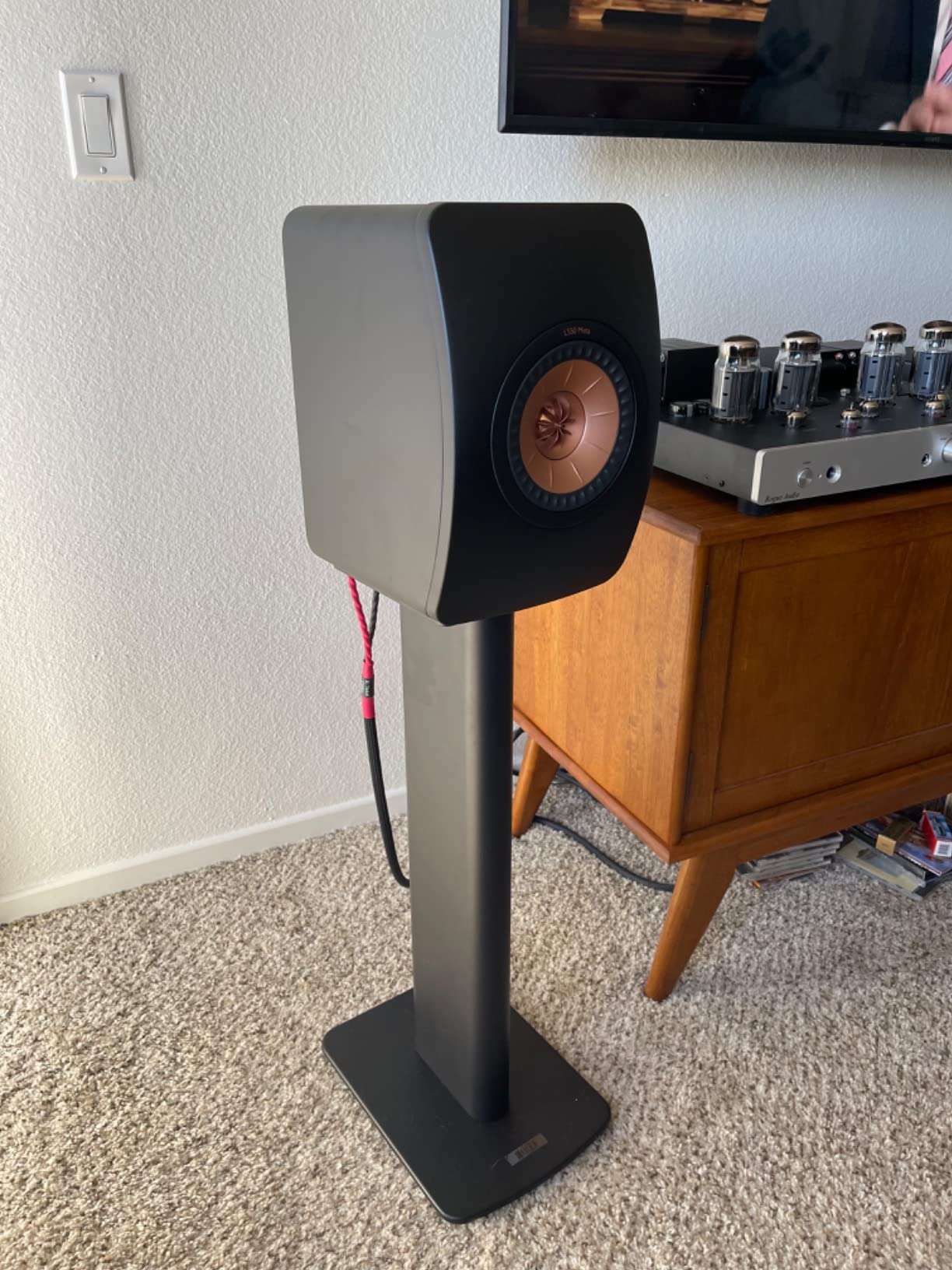
The LS50 Meta is the audiophile-tier pick, and the technology underneath it is the reason. The 12th generation Uni-Q array places a 25mm vented aluminium dome tweeter at the acoustic centre of a 5.25 inch midbass cone, so the speaker behaves as a single point source rather than a tweeter bolted on top of a woofer.
Metamaterial Absorption Technology is the other headline: it absorbs the rear output of the tweeter, which KEF states removes 99 percent of unwanted rear tweeter sound. Owners consistently report cleaner, more natural high frequencies and unusually low distortion for a speaker of this size.
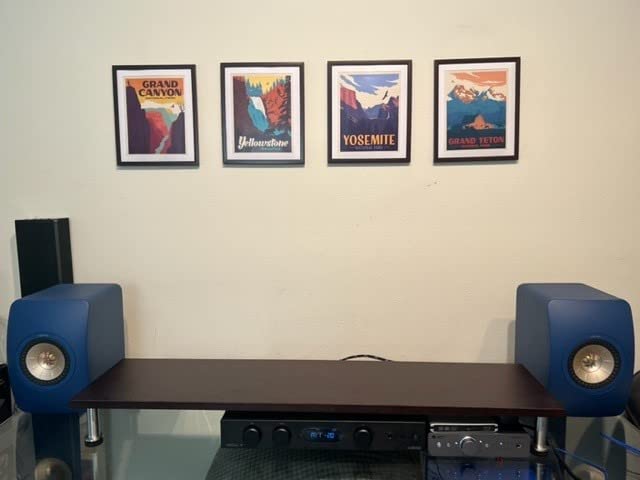
Frequency extension from 47Hz to 45kHz is genuinely remarkable for a compact bookshelf, and the constrained layer damped precision cabinet is what keeps it clean when played loudly. The design won What Hi-Fi? Product of the Year.
Because it is passive at 8 ohm with a 40 to 100W recommended power range, this is a speaker that rewards a capable amplifier. Reviews frequently frame it that way, with a matching KEF or other capable integrated amp being the common recommendation.
Why Audiophiles Choose The KEF LS50 Meta For Records
The wide, even dispersion of the Uni-Q array is the practical advantage for vinyl. Soundstaging depends on the speakers behaving consistently across the room, and a point-source array places a listener off-axis without a dramatic change in tone.
Low distortion is what makes the pair revealing at low listening levels, which is how most people play records. A quiet, undistorted system reveals the surface noise and the details in the groove instead of blurring them.
What You Give Up With The LS50 Meta
It is passive, so you need an amplifier with a phono input, and that amplifier is not included in the cost of the speakers. Readers consistently ask for the hidden cost of completing a passive system, and here it is the largest of any pick in this roundup.
It is also far above the powered options in price for a reason, and the most common hesitation owners mention is exactly that comparison. If you want one box rather than two, this is not the speaker.
12. Electrohome EB10 – Budget Pick With Retro Cabinets
- Retro wood cabinets look far more expensive than the price
- Punchy output for the size
- Fast painless Bluetooth pairing and easy RCA hookup
- Warm full-bodied tone that suits a small or secondary room
- Audible hiss whenever the speakers are powered on
- Power button
- source selection and volume all share one control
- Only 20W maximum output with 3 inch drivers
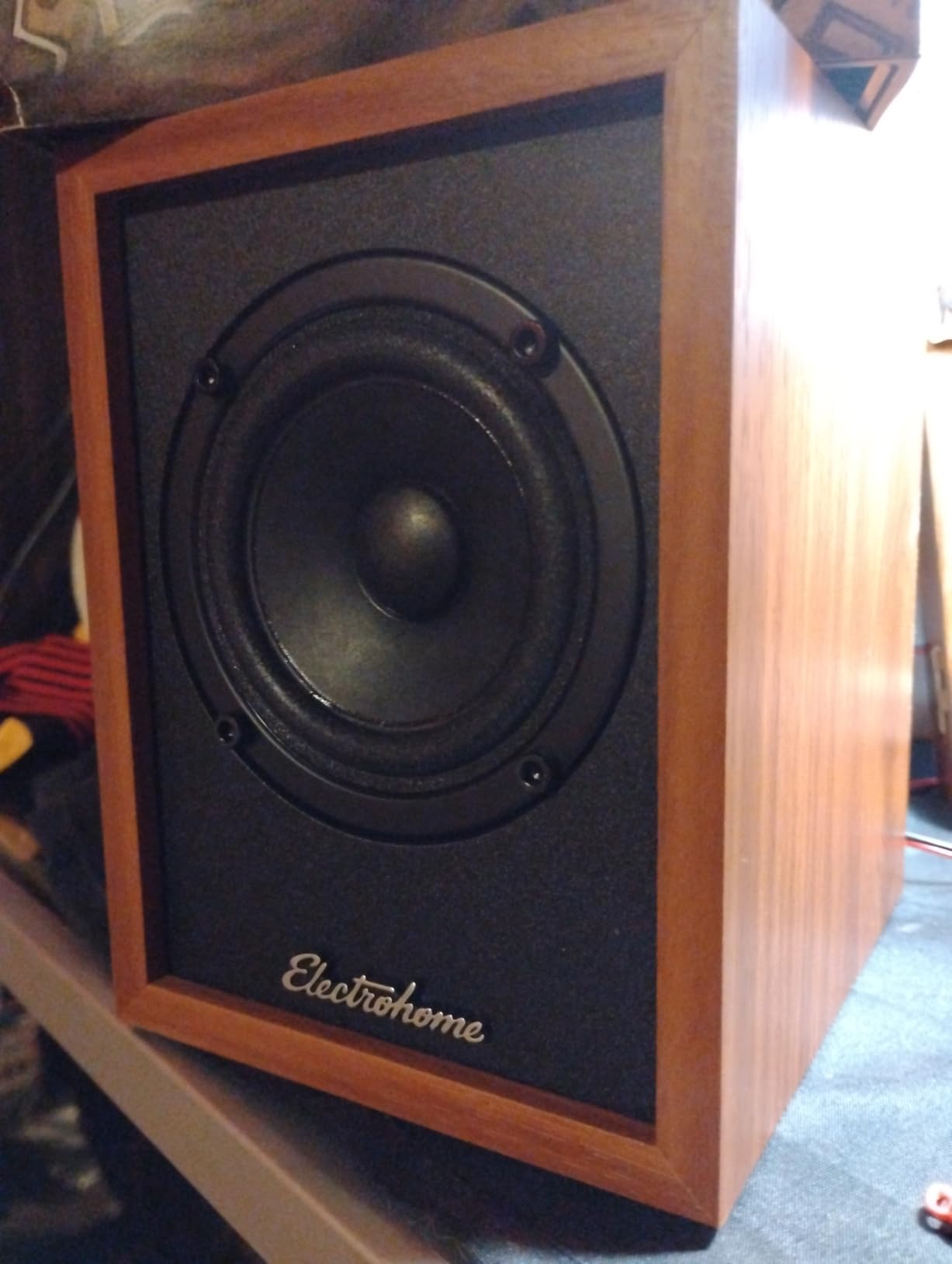
The EB10 exists for a specific situation: a small room, a secondary system, or a first pair of speakers that should not cost much. The retro wood cabinets are the reason it photographs well next to a turntable, and the 20W of built-in amplification is deliberately modest rather than impressive.
Each cabinet has a 3 inch dynamic driver in an acoustically tuned rear-ported wood cabinet, and the tone is described as warm and full-bodied. Owners call it a good first or secondary system rather than a reference, which is honest and useful.
Connectivity is Bluetooth 5, RCA and aux-in. Only the active speaker is Bluetooth capable, and the passive speaker connects by speaker wire, so the pair has to stay where the amp side is reachable.
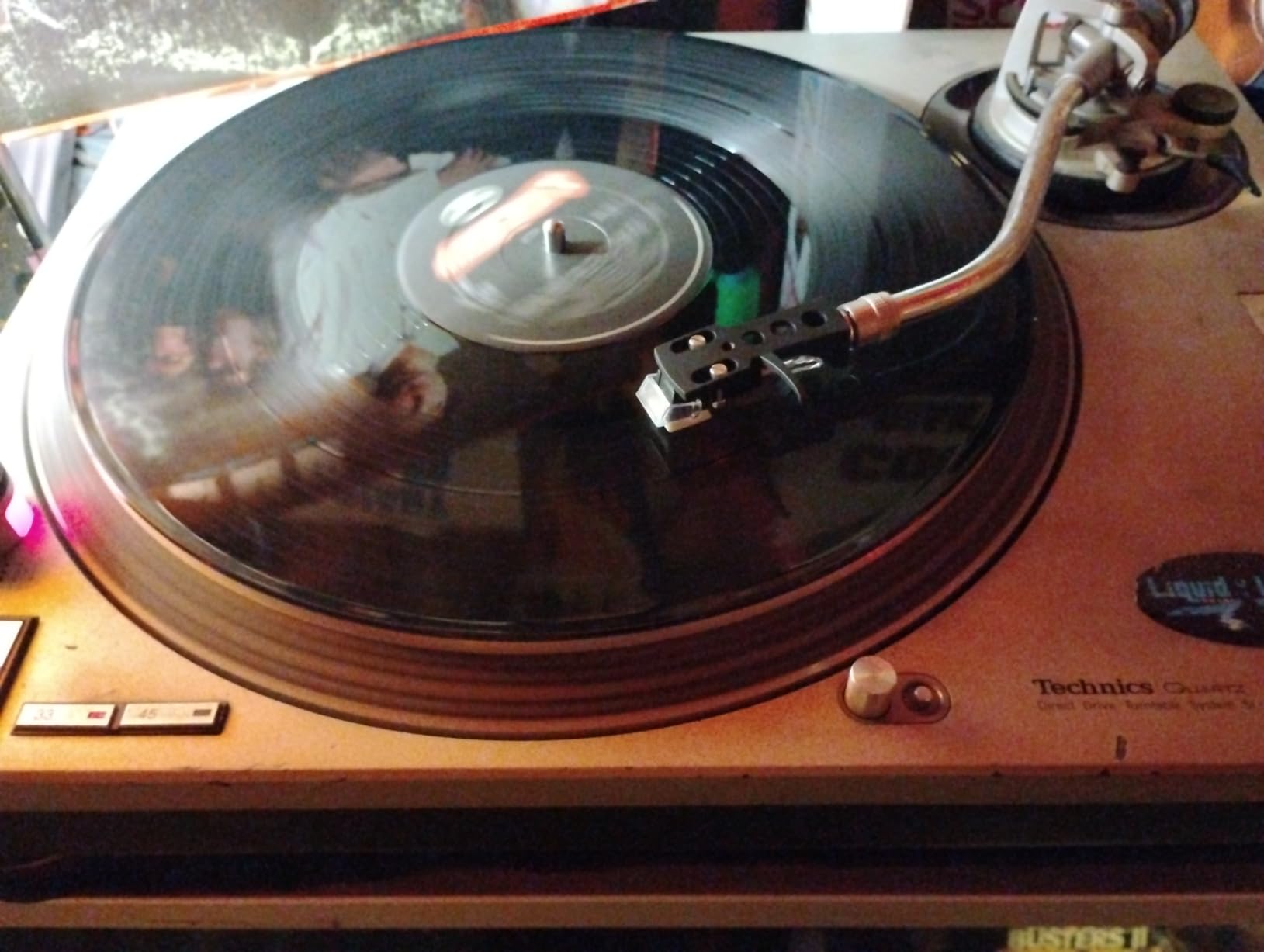
For turntable use the RCA input is the relevant one, and it works well with a preamp-equipped deck. The pair is popular for records precisely because it is inexpensive and the volume ceiling is low enough to listen comfortably in a bedroom.
Is A Budget Powered Pair Good Enough For Vinyl
Yes, for listening at normal volumes in a small room, and the EB10 is a fair example. A turntable with a built-in preamp, an RCA cable and these speakers is a complete system, which is why so many first systems look like this.
The gap between a budget pair and a mid-range one is smaller than the price difference suggests, which is the point people raise when they ask whether inexpensive powered speakers are meaningfully worse. The honest answer is that they trade refinement and low-frequency weight for cost, not that they fail.
The Two Deal-Breakers With The EB10
There is audible hiss whenever the speakers are powered on, especially with nothing playing, and on a record system that hiss sits right where you would hear it. Owners who care about quiet passages should look elsewhere.
Power, source selection and volume share a single control, so powering down and switching inputs is a two-step process that is genuinely awkward to live with daily. An RCA cable is also not included despite what the listing suggests.
How To Connect A Turntable To Bookshelf Speakers Without The Mistakes
Almost every problem we saw reported in vinyl forums traces back to one misunderstanding: what a turntable actually outputs, and what a speaker actually accepts. Get that right and the rest of the setup is straightforward.
Do You Have A Phono Stage? Check This Before Anything Else
A cartridge produces a phono-level signal. A phono preamp boosts that to line level. Your turntable either has that preamp built in, or it does not, and that single fact determines everything downstream.
If the turntable has a built-in preamp, it outputs line level and can connect to any powered speaker with RCA inputs, or to a passive pair through any amplifier. If it does not, the phono preamp has to exist somewhere else: in an amplifier, in an outboard preamp, or inside the powered speakers themselves.
Using a line-level output into a phono input, or a phono-level output into a line-level input, is the mistake behind most quiet, thin, bass-free systems. The second case gives you a signal far too small, and the first gives you a signal far too large and badly equalised.
Which Route Are You? The Three-Question Checklist
Do you already own an amplifier with a phono input? If yes, you can buy any passive pair in this roundup. If no, you need powered speakers with a built-in phono preamp, or a separate phono preamp costing far less than an amplifier.
Does your turntable have a built-in preamp? If yes, every powered pair here will work with it. If no, your choices narrow to the Klipsch R-51PM and the Kanto YU6, or you add a phono preamp to the chain.
How big is the room? A 3 or 4 inch driver suits a desk or bedroom, a 5 inch driver suits a small-to-medium room, and a 6.5 inch driver is what it takes to fill a medium living room with real low end.
Moving Magnet Or Moving Coil Cartridges
Most entry turntables ship with a moving-magnet cartridge, and that is what the built-in phono stages in the powered pairs here are designed for. A moving-coil cartridge outputs a much smaller signal and needs a step-up transformer or a phono stage with a moving-coil gain setting.
If you plan to fit a moving-coil cartridge later, buy a phono stage now rather than relying on a built-in circuit. Nearly all of those circuits are moving-magnet only, and the resulting record will be quiet and lacking in dynamics rather than obviously wrong.
Sensitivity, Impedance And Amplifier Power
Sensitivity tells you how loud a speaker plays for a given voltage, and it is the number that decides whether your amplifier is up to the job. A high-sensitivity pair makes low-level listening easier and reveals quiet record passages, which is exactly what vinyl asks for.
Impedance is the load the speaker presents to the amplifier. An 8 ohm design is easier to drive than a 6 ohm one, and a nominal figure is an average rather than a floor, so a dip below the nominal number at low frequencies can demand more current than the label suggests.
Vinyl itself rarely needs a powerful amplifier, because the phono stage supplies the gain. Power matters for headroom during dynamic passages, not for volume on a quiet record, which is the opposite of the belief that speakers want as many watts as possible.
Placement, Ear Level And Front Versus Rear Ports
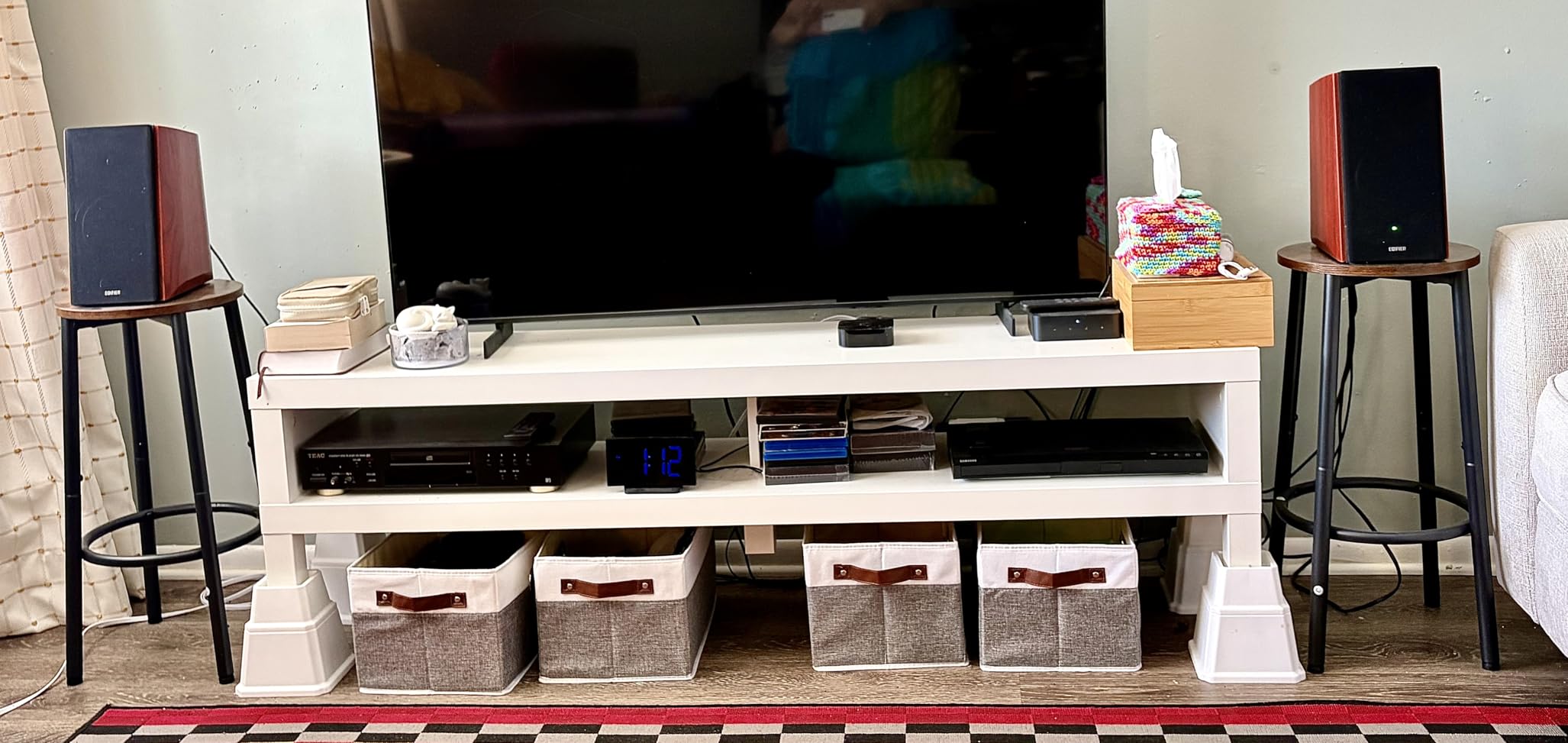
Set the speakers far enough apart to hear the stereo image, at roughly ear height when seated, and angled slightly inward toward the listening position. Speakers pushed together at the front of a shelf cannot produce a soundstage no matter what they cost.
Front-firing and rear-firing ports are a placement decision, not a quality one. A front port works against a wall or in a tight bookshelf because nothing behind the cabinet blocks it. A rear port needs clearance behind the speaker, so it rewards stands and open space.
Owners of the ELAC Debut B5.2 in particular frame front porting as the reason it can sit close to a wall without the low end collapsing. Cabinets that vibrate also add colour, which is why heavier, braced enclosures tend to sound cleaner on bass-heavy records.
Turntable Vibration And Isolation
The AI summary on this topic raises anti-vibration isolation, and the question comes up often in forums: can the turntable and the speakers fight each other? In practice, acoustic feedback through the air is the larger mechanism, and a subsonic turntable is the more likely source of a problem.
Keep the speakers on stands or furniture rather than the same surface as the turntable, and leave a little distance between them. A good isolation mat under the turntable plinth and a firm cabinet on proper feet handles most of what remains.
The other isolation rule matters more: do not put a turntable on top of the speaker cabinet. Mechanical coupling through a shared surface is exactly the path that transfers low-frequency energy, and separating them costs nothing.
One System For Records, TV And Streaming
This is the most common real-world scenario, and it is where optical and coaxial digital inputs earn their place. A TV with optical out, a turntable with RCA out and a phone on Bluetooth can share one pair of speakers, with input switching on a remote.
The caveat is a TV without optical or coaxial output, which now needs an external converter. Pairs with a USB digital input, such as the MEVOSTO DS19, also solve the computer-as-source version of the same problem, and the Fluance Ai41 handles the television case neatly.
Used And Vintage Hi-Fi Speakers: What To Inspect
Used bookshelf speakers occupy two of the top organic positions on this topic, driven by people asking about classics rather than new models. Names like KLH, Nikko, Dahlquist, Altec and classic British monitors come up constantly, and a well-kept used pair can outperform a new budget one.
Check for driver rub by playing a sweep and listening for buzzing at low frequencies, and inspect the binding posts for corrosion or a loose terminal. Listen for cabinet resonance by tapping the enclosure gently, and confirm that tweeter level feels even from a normal listening distance.
For older pairs, ask whether the drivers have been re-foamed or re-bored and whether the crossover capacitors have been replaced. Both are normal maintenance items, they are not cheap when nobody has done them, and their absence is a reason to walk away from a cheaply priced pair.
One reader built a record shelf around used Nikko and KLH speakers bought secondhand, which is the pattern we would point to. The honest caveat is that a passive used pair still needs an amplifier with a phono input, so the connection question does not go away.
Frequently Asked Questions
What speakers are best for vinyl?
The best speakers for vinyl are compact two-way bookshelf pairs that can either accept a phono-level turntable signal directly or be driven by an amplifier with a phono input. Powered pairs with a built-in phono preamp, such as the Klipsch R-51PM and the Kanto YU6, connect a turntable with no other equipment. Passive pairs such as the ELAC Debut B5.2 and the KEF LS50 Meta need an amplifier that contains a phono stage.
Are bookshelf speakers good for turntables?
Yes, and most turntables are designed to drive them. A cartridge puts out a phono-level signal, and either a phono stage inside an amplifier or a phono preamp built into the speakers raises that to line level. Bookshelf speakers are also easier to place and less demanding on amplifier power than floorstanding models, which suits low-level vinyl listening.
What kind of speakers do I need for a vinyl record player?
First check whether your turntable has a built-in preamp. If it does, any powered bookshelf pair with RCA inputs will work, or a passive pair through any amplifier. If it does not, you need either powered speakers with a built-in phono preamp and a ground screw, or an amplifier with a phono input. Then match driver size to room: 3 to 4 inch for small rooms, 5 inch for small-to-medium, 6.5 inch for a medium living room.
Can you put speakers on the same shelf as a record player?
You can, but it is not ideal. A shared surface mechanically couples the turntable plinth to the speaker cabinet, and low-frequency energy transfers between them. Give the speakers stands or separate furniture, leave some distance, keep a turntable on a firm surface with a good isolation mat, and never place a turntable on top of a speaker cabinet. A front-firing bass port matters more than anything else when space is tight.
What is the 83% rule for speakers?
The 83% rule is a placement guideline, not a buying criterion: if you sit 83 percent of the way from the front speaker to the rear speaker along the front wall, you land at the right spot for imaging. It has nothing to do with sound quality and it does not tell you which speaker to buy. Judge a pair on its phono capability, driver size for your room, sensitivity and how the reviews describe the fit for your system.
Do I need an amplifier for a turntable and bookshelf speakers?
Only if the speakers are passive or the powered speakers lack a phono stage. A powered pair with a built-in phono preamp needs nothing else: turntable to RCA in, ground wire under the screw, play. A passive pair always needs an amplifier, and that amplifier must have a phono input unless you add a separate preamp. If your turntable already has a built-in preamp, the amplifier can be any amplifier at all.
Which Bookshelf Speakers Should You Buy For Vinyl?
The best bookshelf speakers for vinyl in 2026 are the Klipsch R-51PM if you want one box that handles a turntable with no built-in preamp, the Edifier R1280DB if you want the most reviewed and most highly rated budget pair, and the ELAC Debut B5.2 if you already have an amplifier and want a front-ported cabinet that tolerates a wall.
Everything else in this roundup is a variation on those three decisions. Check whether your turntable has a built-in preamp first, because that single fact eliminates half the list or doubles it. Then match driver size to your room, and buy the pair you will actually want to leave out on stands.
When you are ready, the price buttons below show the current listing for each model.