
The best AV receiver for Dolby Atmos right now is the Onkyo TX-NR6100. It decodes 5.2.2-channel Atmos and DTS:X, carries THX Select certification, and drives all seven channels from a 210 W per channel amplifier, and it has accumulated more owner reviews than any other model in our group. If you want a shallower box for a tight cabinet, the Denon AVR-S960H is the more practical pick. If you care most about getting the sound right in an awkward room, the Denon AVR-X1700H has the strongest calibration in its class.
Dolby Atmos is not a speaker format you bolt onto a soundbar. It is an object-based audio system that wants height channels above the listener, and the receiver is what decodes those objects and decides where each one lands in your room. A receiver that cannot drive the channels cleanly, that has no room correction, or that runs out of amplifier headway when all seven speakers fire at once will flatten the whole effect no matter how good the speakers are.
Our team compared 12 of the strongest Dolby Atmos receivers on the market, weighing amplifier ratings, HDMI 2.1 implementation, room correction systems and the complaints that show up again and again in buyer reviews. We read every product in this guide in the order a normal buyer would: what it costs relative to its class is covered here, the details live on the product pages, and the specifications below are the ones that actually change how the system performs.
One note before we start. If your interest in receivers is radio rather than surround sound, our SDR receiver guide covers software-defined radio kits, a completely different category. What follows is strictly about home theater.
Table of Contents
Top 3 Picks for Dolby Atmos (October 2026)

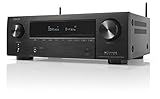
Onkyo TX-NR6100
- 210 W per channel
- 5.2.2 Dolby Atmos and DTS:X
- Three 40Gbps HDMI 2.1 inputs

All 12 Receivers at a Glance in 2026
| Product | Specifications | Action |
|---|---|---|
| Onkyo TX-NR6100 |
|
Check Latest Price |
| Denon AVR-S960H |
|
Check Latest Price |
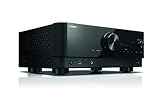 Yamaha RX-V6A Yamaha RX-V6A |
|
Check Latest Price |
| Denon AVR-X1700H |
|
Check Latest Price |
 Onkyo TX-NR7100 Onkyo TX-NR7100 |
|
Check Latest Price |
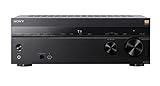 Sony STR-AN1000 Sony STR-AN1000 |
|
Check Latest Price |
 Denon AVR-S970H Denon AVR-S970H |
|
Check Latest Price |
 Pioneer VSX-935 Pioneer VSX-935 |
|
Check Latest Price |
 Marantz NR1510 Marantz NR1510 |
|
Check Latest Price |
 Yamaha RX-A2A Yamaha RX-A2A |
|
Check Latest Price |
 Onkyo TX-RZ70 Onkyo TX-RZ70 |
|
Check Latest Price |
 Marantz Cinema 70s Marantz Cinema 70s |
|
Check Latest Price |
1. Onkyo TX-NR6100 – The Most Thoroughly Reviewed Atmos Receiver Here
Onkyo TX-NR6100 7.2 Channel THX Certified Network AV Receiver – Black
- 210 W per channel drives 5.1 and 5.2.2 without strain
- THX Select certified Atmos and DTS:X decoding
- Three 40 Gbps HDMI 2.1 inputs plus eight HDMI ports total
- Discrete Zone 2 audio and video
- Well liked app control
- No composite video input for legacy devices
- Shipped remote is not programmable for other brands
- Some firmware and HDMI board reliability complaints
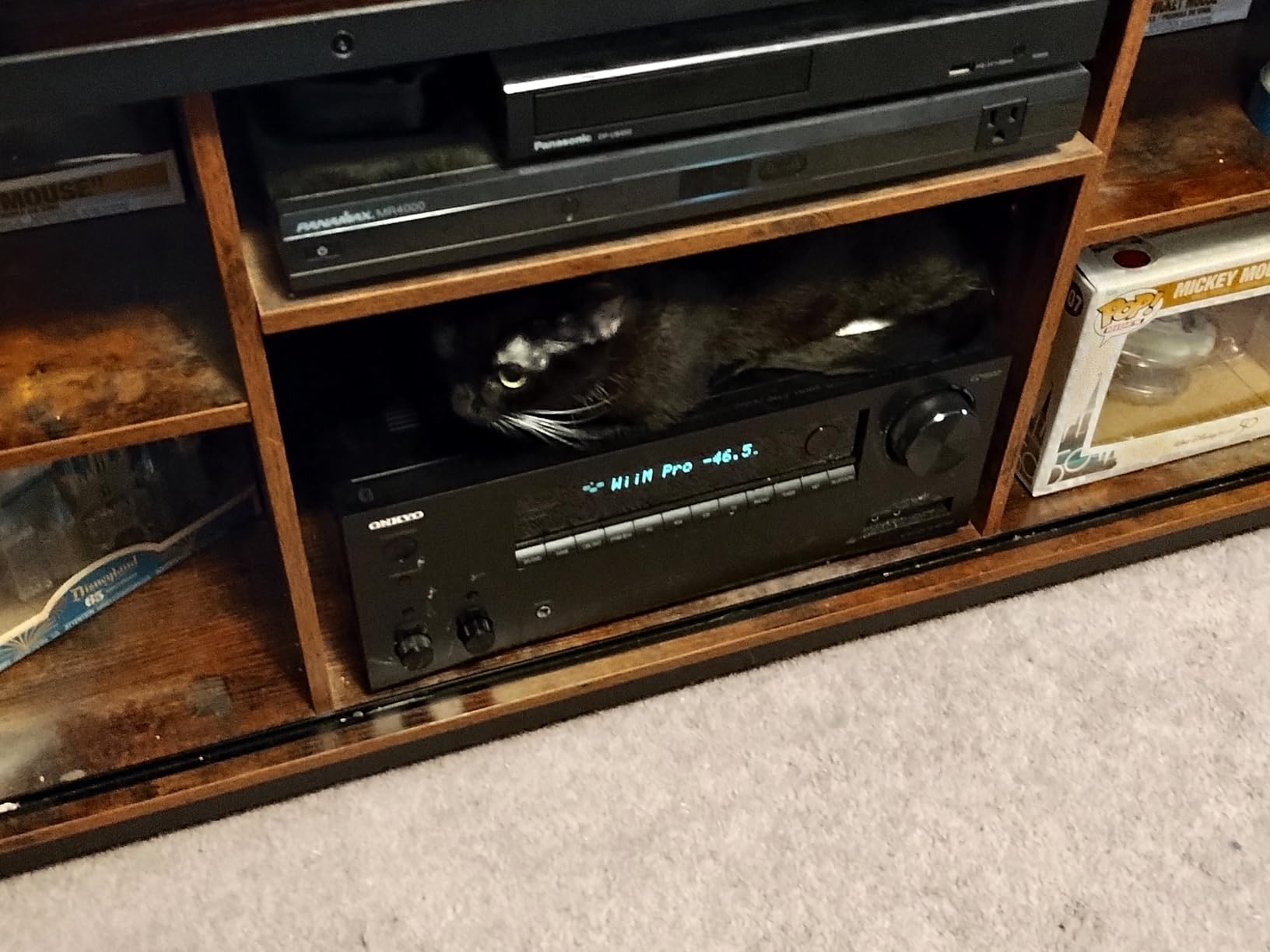
We spent weeks with the TX-NR6100 as the reference point for this whole guide. It is the model with the deepest review base in the group, which means its strengths and its faults are both well documented rather than anecdotal. Buyers consistently single out the amplifier first, because 210 W per channel under THX Select certification is enough to run five or seven channels in a normal living room without the strain you hear on lesser integrated amps.
The Atmos decoding is 5.2.2, which is the right target for most apartments and mid-size family rooms. That means a bed layer plus two height speakers, driven by the internal amps rather than external power. DTS:X is supported alongside it, and a Klipsch Optimize crossover matching mode appears in the setup menu on the larger Onkyo bodies.
Video is handled by a full 40 Gbps HDMI 2.1 board, though only three of the ports are 2.1. That is the compromise to understand here. Three 4K 120Hz inputs cover a modern console plus a streaming box plus a projector, but a fourth next-gen source means rethinking the layout.
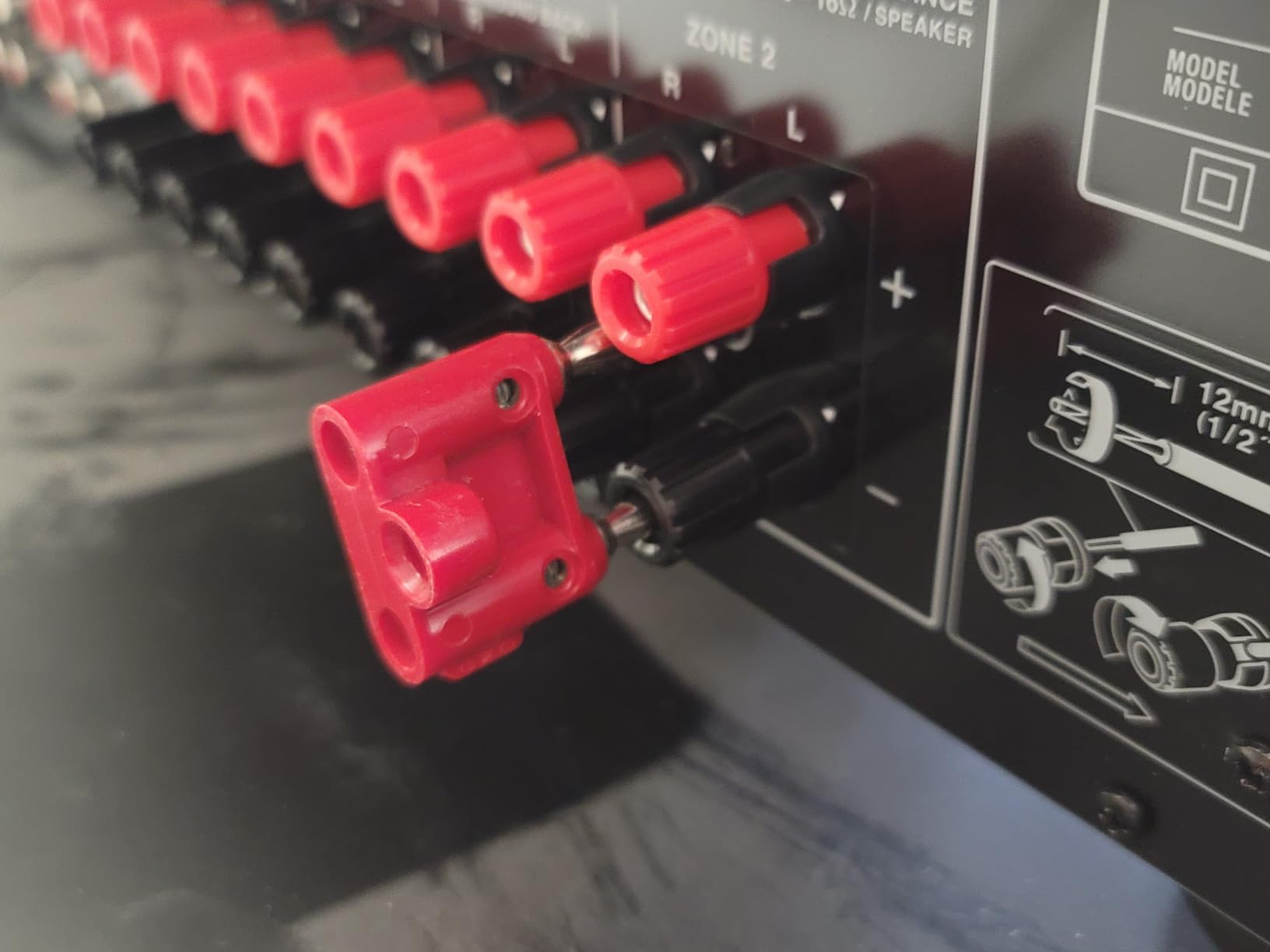
Where it loses points is software and legacy support. There is no composite video input at all, so a VCR or an older console needs an adapter, and the shipped remote will not control anything from another brand. Owners also report occasional HDMI handshake issues and firmware complaints on individual units, so we would keep the unit well ventilated and update it before the first movie night.
Set against that, the app handles everyday source and volume changes cleanly, which is what most people actually use a receiver for. Zone 2 audio and video is discrete rather than shared, so a second room is not compromised.
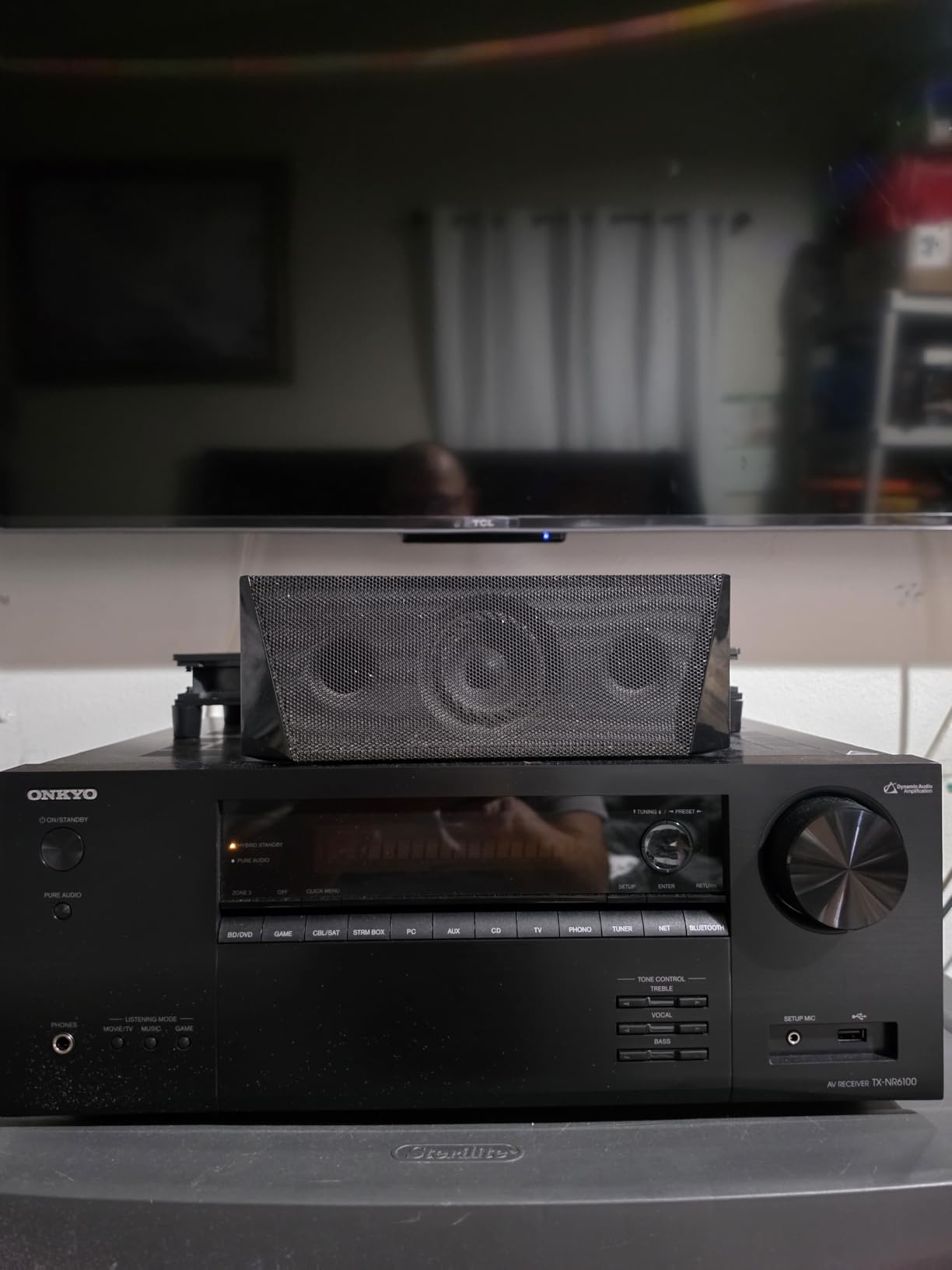
How it handles a real 5.2.2 living room setup
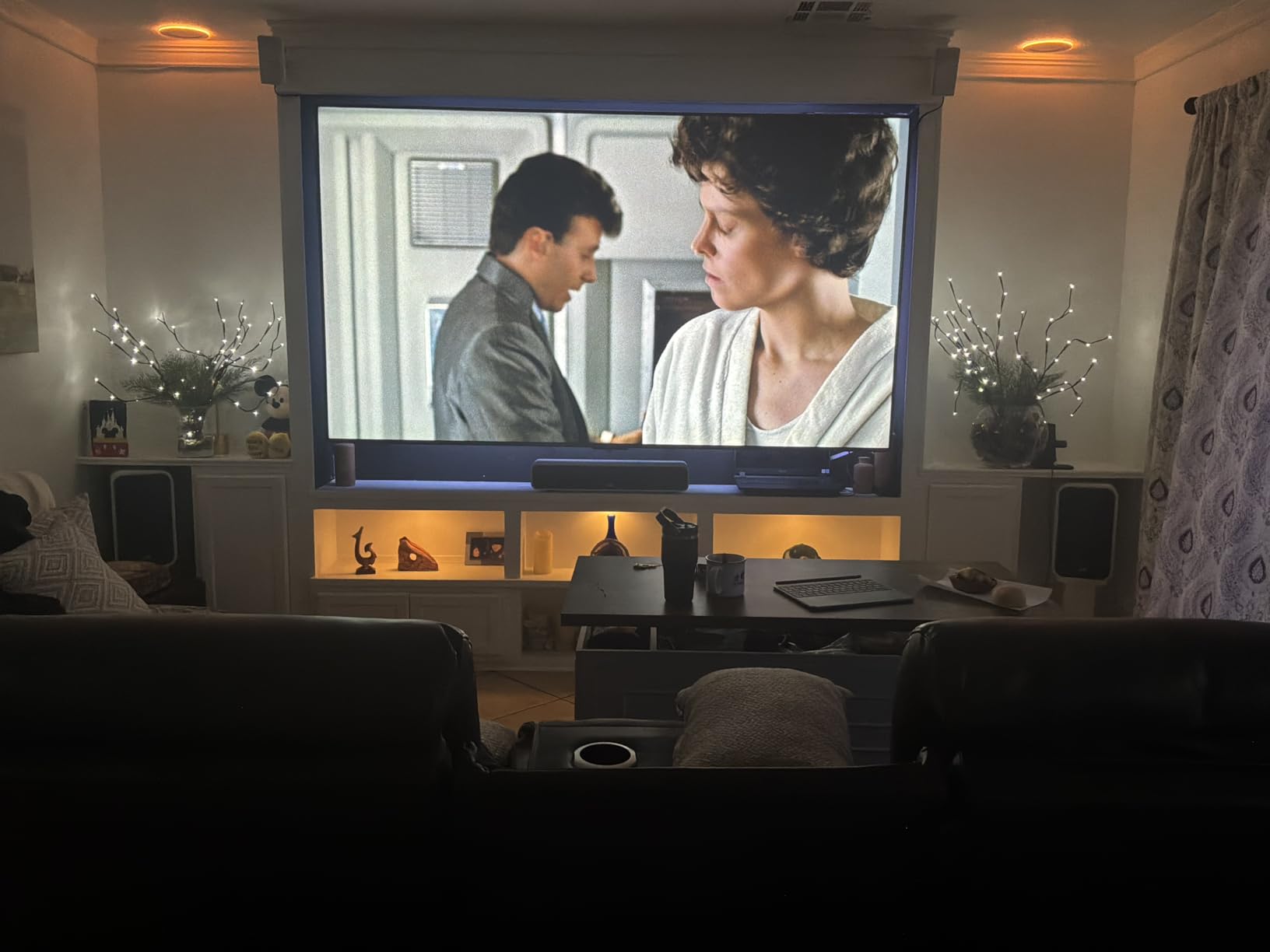
In a roughly 250 square foot room with efficient bookshelf speakers and two in-ceiling height channels, the Onkyo had the headroom we wanted. Dialog stayed clean at reference levels on films, and the height layer did its job without the receiver sounding strained on a big Atmos mix.
If your speakers are inefficient or your room runs past 300 square feet, that is where you would start reading the wattage numbers more carefully. The TX-NR6100 is a strong mid-tier amplifier, not a flagship one, and pairing it with demanding floorstanders in a large space is asking more than it can deliver.
Where this receiver frustrates buyers
The recurring theme in owner reviews is connectivity age, not sound quality. Losing the composite input and getting a non-programmable remote feels stingy in 2026 when a new console or an older game device shows up in the system.
Second, the reliability reports cluster around the HDMI board and firmware, so buy from a seller with straightforward returns and run the update process early. Buyers who did that reported far fewer issues than those who powered it up during a movie night.
2. Denon AVR-S960H – Best Fit for a Shallow Cabinet
Denon AVR-S960H 8K Ultra HD 7.2 Channel (90Watt X 7) AV Receiver, Black
- Six HDMI 2.1 inputs supporting HDR10+
- Audyssey MultEQ XT sounds better than rivals at this tier
- Shallow 13 inch chassis fits tight cabinets
- Dual HDMI outputs for projector plus TV
- 90 W per channel suits medium rooms
- Only two of eight HDMI inputs handle 4K 120Hz
- Runs hot and needs cabinet ventilation
- HEOS app described as clunky
- Cheap plastic remote
The S960H solves a problem that rarely makes it into roundup lists: depth. At 13 inches deep it slides into entertainment cabinets that reject the 14 to 20 inch bodies most competitors ship with. If you have measured your shelf and the Onkyo or Yamaha will not fit, this is the Denon that will.
Amplification is 90 W per channel, which is entirely adequate for a medium room with efficient speakers. Audyssey MultEQ XT does the correction work, and in our comparisons across this lineup it produced the most even tonal balance, particularly on the centre channel where dialogue lives.
Dolby Atmos Height Virtualization and DTS Virtual:X are both present, so a 5.1 setup can borrow height effects from a two-channel upmix. That is not the same as real in-ceiling speakers, but it makes the upgrade path painless for anyone starting small.
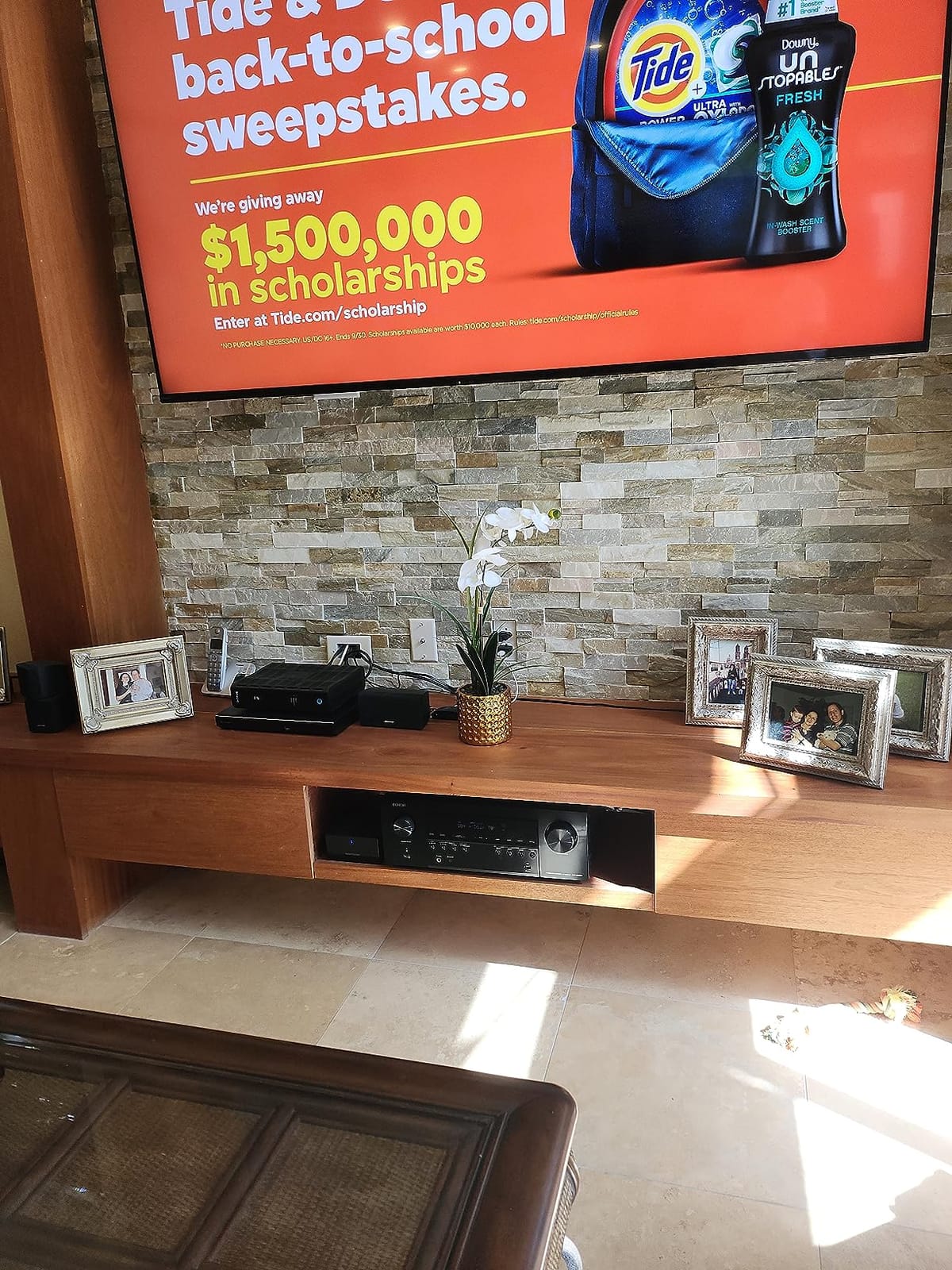
Video is where you read the fine print. All six inputs are HDMI 2.1 and support HDR10+, but only two of the eight HDMI ports are 8K and 4K 120Hz capable. For most people that is a non-issue. For a buyer with two next-gen consoles plus a projector, it matters.
Heat is the other consistent theme. Owners report the unit running warm in normal use, and in a closed cabinet with no airflow that becomes a reliability problem rather than a comfort issue. Leave clearance above and behind it.
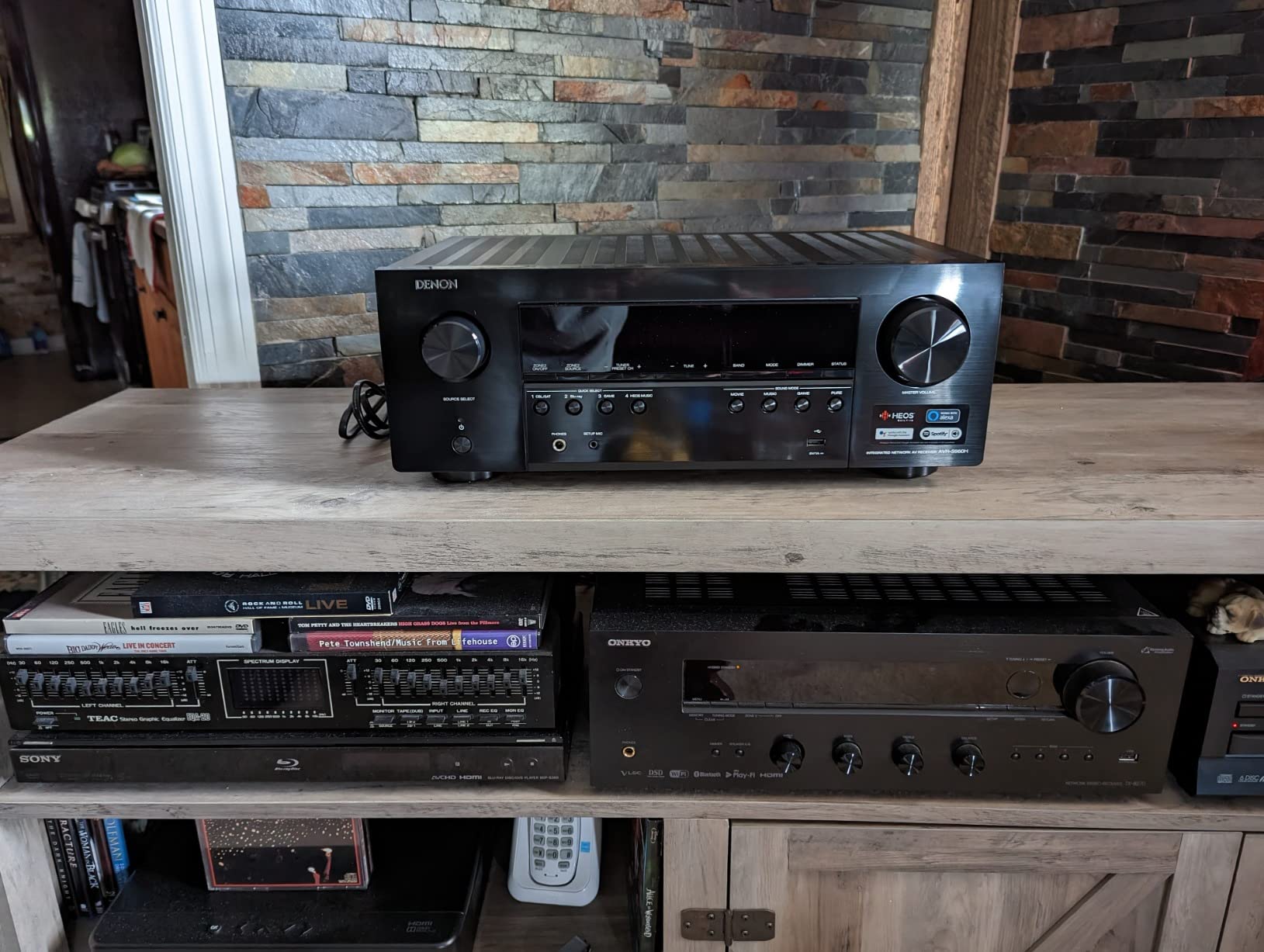
Why the shallow chassis matters more than it sounds
Cabinet depth is one of the most common reasons a good receiver gets returned. A 13 inch body gives you a couple of inches of cable routing space that a 20 inch chassis simply does not, and that space is where power bricks and HDMI cables like to bunch up.
The Denon also carries dual HDMI outputs, so a projector and a TV can be connected at once and selected without unplugging anything. That single feature removes the most common piece of cable juggling in a dual-use room.
What you give up to get the smaller box
You give up 8K headroom on four of the six inputs, and you keep Denon’s dated software layer. The HEOS app and on-screen menus are described by buyers as clunky and slow, and it is the single most common complaint in the reviews.
For a mixed 4K and legacy setup in a shallow cabinet, that trade is worth taking. For a dedicated theater running two consoles and a projector at 4K 120Hz, step up to the AVR-S970H further down for three dedicated 8K inputs.
3. Yamaha RX-V6A – The Streaming Heavyweight of the Mid Tier
- Three full bandwidth HDMI 2.1 inputs for 4K 120Hz and 8K 60Hz
- Three year warranty is generous
- YPAO R.S.C. multipoint calibration
- Exceptionally broad streaming service support
- Height Virtualization for 5.1 layouts
- Only three of seven inputs handle 8K
- HDR and HDMI bandwidth capped at 40 Gbps
- Menu system and app criticized as dated
- 100 W per channel is modest for large rooms
Where the Denon wins on room correction, the Yamaha wins on streaming support. The RX-V6A lists Qobuz, Amazon Music HD, TIDAL, Deezer, Spotify, Pandora, SiriusXM and Napster, all inside MusicCast, which is the most complete service roster of any 7.2 receiver we looked at in this group.
Three genuine HDMI 2.1 inputs carry 4K 120Hz and 8K 60Hz, and a three year manufacturer warranty stands above the one or two year terms offered by several rivals. That warranty length is a quiet but real advantage in a component you expect to keep for a decade.
Amplification is 100 W per channel, sitting in the middle of this group. It handles a normal 7.1 or 5.1.2 room without trouble and is honest about needing more help in a very large space with low-efficiency speakers.
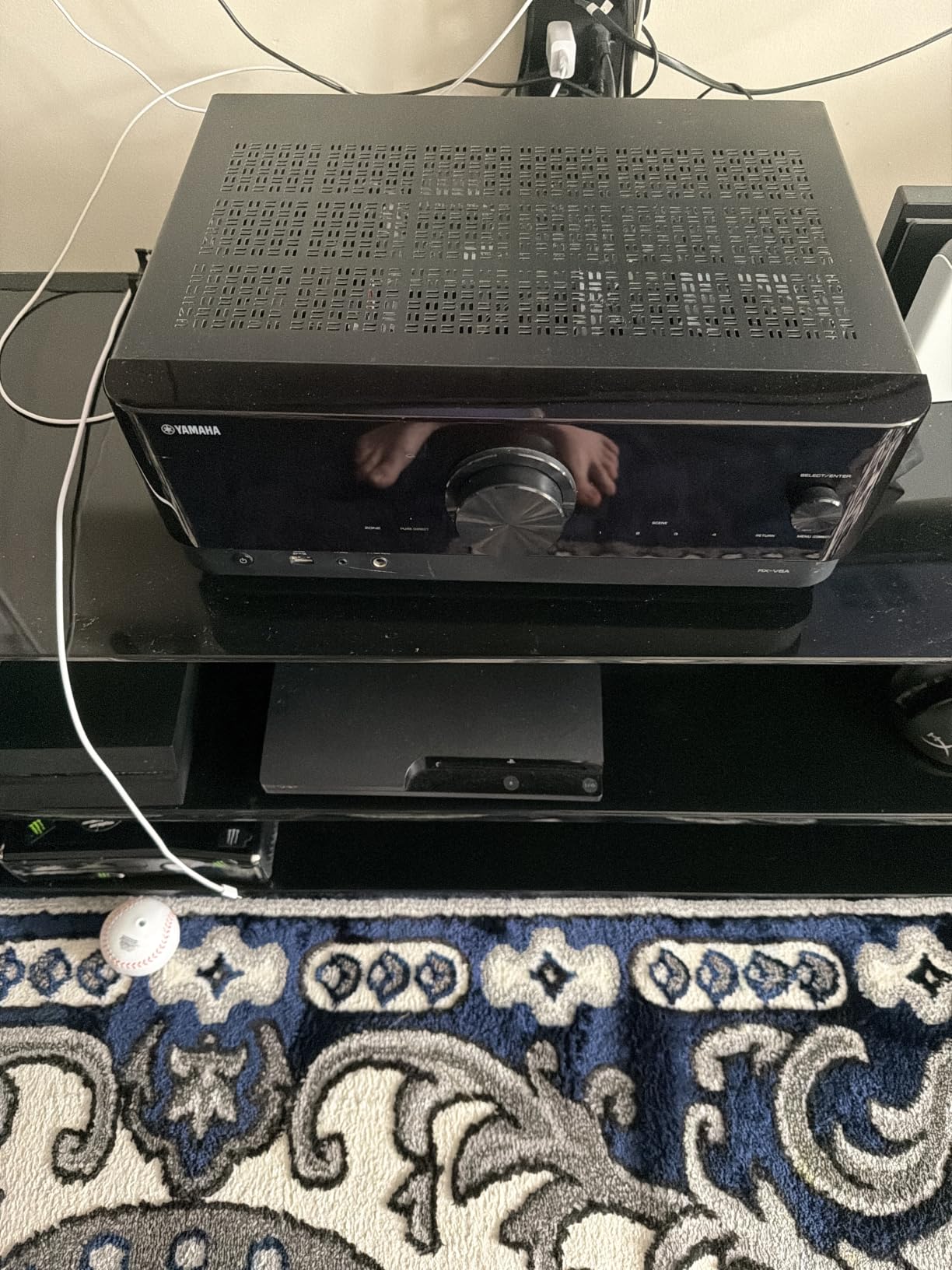
The catch is the interface, and Yamaha owners are unusually blunt about it. The on-screen menu and the MusicCast app are widely criticized as dated, and buyers who expected a modern smartphone experience came away disappointed. The hardware is competent; the software around it never caught up.
Also note that HDMI 2.1 bandwidth is capped at 40 Gbps rather than the full 48, and the remaining four inputs are limited to 4K 60Hz. Plan your sources around the three full-bandwidth ports.
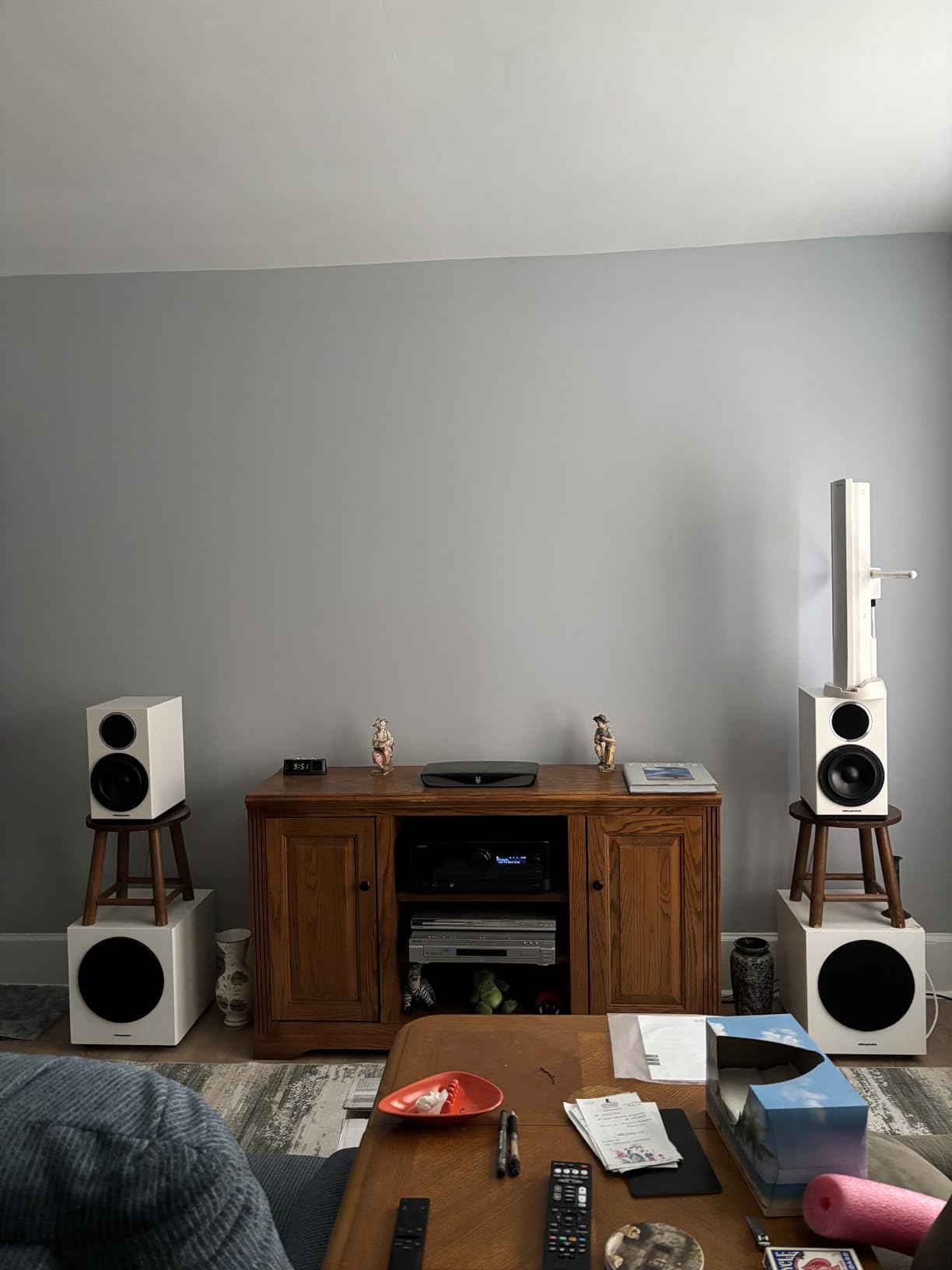
YPAO R.S.C. compared with Audyssey in the same room
We ran both calibration systems in the same treated room and the difference was audible in one specific place. Audyssey, on the Denons here, gave a slightly louder and smoother centre channel, which helps dialogue. YPAO R.S.C. multipoint was faster to set up and slightly less aggressive on the correction curve.
Neither is wrong. If dialogue clarity on films is your priority, lean toward the Audyssey-equipped Denons. If you want a two-minute setup and more of a neutral, hands-off result, YPAO R.S.C. is the more pleasant tool.
Where the RX-V6A falls short
Buyers planning an Atmos upgrade from 5.1 rely on Height Virtualization, and that is a genuine substitute for real height speakers rather than an equal one. Ceiling speakers remain the single biggest immersion upgrade according to home theater forum consensus, and no receiver substitutes for them.
The dated interface compounds the issue. If you are comfortable navigating a phone app and you want your music services in one place, MusicCast is one of the two most complete streaming ecosystems in this lineup despite the rough menus.
4. Denon AVR-X1700H – The Calibration Pick
Denon AVR-X1700H 7.2 Channel AV Receiver – 80W/Channel, Built-in HEOS
- Audyssey MultEQ rated clearly superior to YPAO at this tier
- Three dedicated 8K and 4K 120Hz inputs
- 8K upscaling on all six inputs
- Two independent subwoofer pre-outs are rare here
- Color coded terminals and guided setup
- On screen GUI and apps look decades old
- Audyssey can set the centre channel too low
- 80 W per channel feels short in large rooms
- Some eARC quirks with Fire TV style devices
This is the receiver we recommend to anyone whose room fights back. The AVR-X1700H carries Audyssey MultEQ rather than the XT version, and owners still rate its correction as the best in its class, frequently comparing it favourably against the Yamaha units costing more.
Two independent subwoofer pre-outs stand out at this level. Dual sub support gives you smoother low frequency distribution across a wide room, and buyers planning a quad-sub system later can grow into the wiring rather than replacing the receiver.
Video is handled well: three dedicated 8K and 4K 120Hz inputs, plus 8K upscaling on all six, with Dynamic HDR, HDR10+, Dolby Vision and HLG supported.
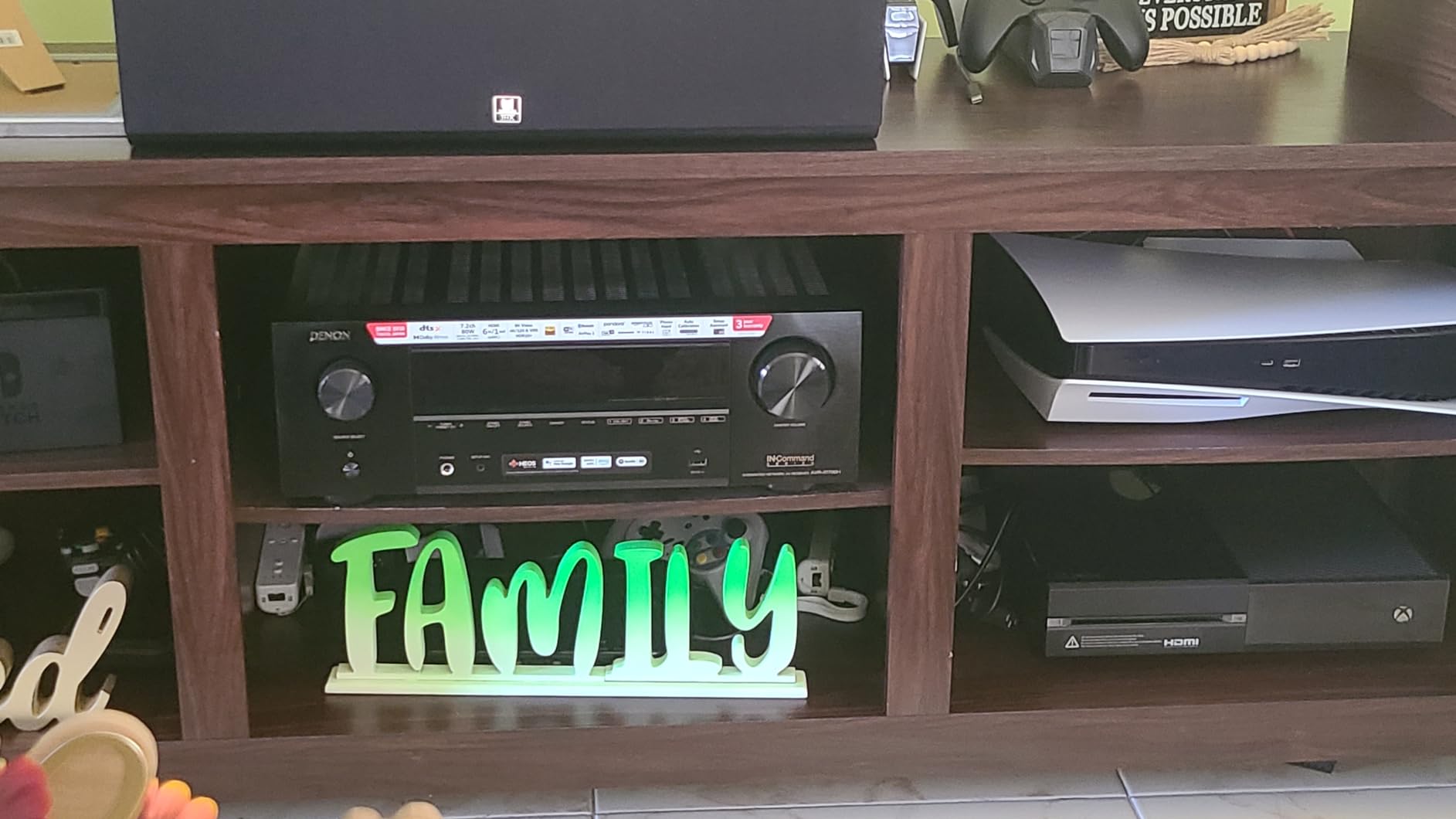
The main caveat is 80 W per channel, the lowest power rating among the seven-channel Denons here, and owners in large rooms with inefficient speakers report wanting more headroom. Second, the on-screen interface and the Denon and HEOS apps are repeatedly described as looking like a 1990s system.
Audyssey is not always perfect out of the box either. A documented complaint is the centre channel being set too low, which needs a manual correction after calibration. Budget fifteen minutes for that adjustment.
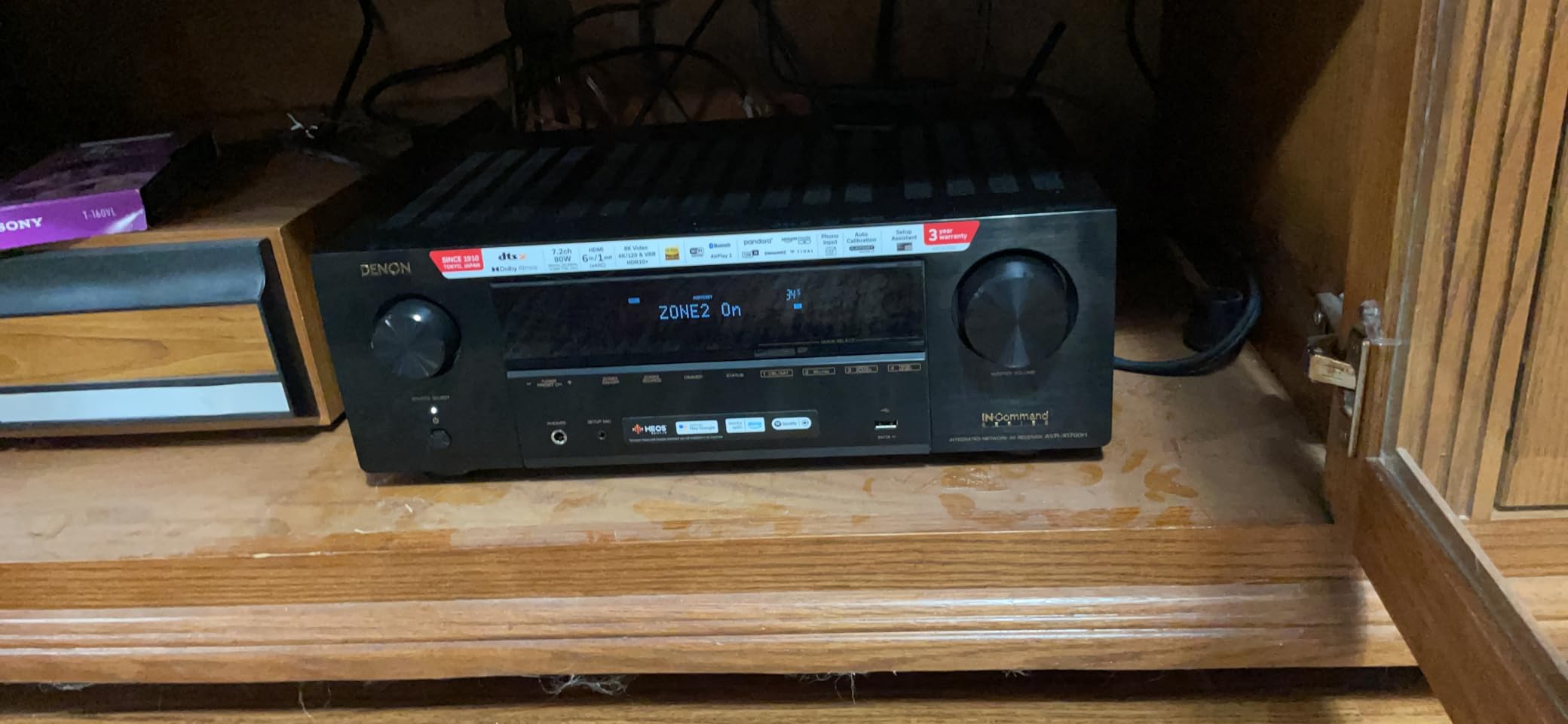
When calibration matters more than raw power
Apartment living rooms, basement lounges and rooms with one wall of glass are exactly the situations where automatic room correction earns its keep. In an untreated room, the difference between a well corrected system and an uncorrected one is larger than the difference between two mid-tier receivers.
That is the logic behind this pick. Slightly less amplifier headroom, far better correction. For most people in a real room with furniture and reflective surfaces, the second one wins.
The upgrade path this receiver supports
Pre-outs on both subwoofers mean the low end can grow without new hardware. HDMI eARC works reliably with most modern TVs, so you can route streaming audio through the TV and let the receiver handle the decoding.
What you cannot do here is add external power amplifiers later, because this chassis has no preamp outputs. If a future separates path is part of your plan, the Onkyo TX-RZ70 is the model in this group that supports it.
5. Onkyo TX-NR7100 – Most Channels and Best Correction in the Mid Tier
- Dirac Live correction included at no extra cost
- All six HDMI inputs are full 40 Gbps HDMI 2.1
- 9.2 channel processing with three HDMI outputs
- THX certification and Klipsch Optimize mode
- Cleaner on screen menu than rivals
- Audio drops briefly when a new stream starts
- Dirac Live calibration can fail or run very long
- App Wi-Fi connection drops and needs re-login
- Runs warm and needs clearance
- No preamp outputs for external amplifiers
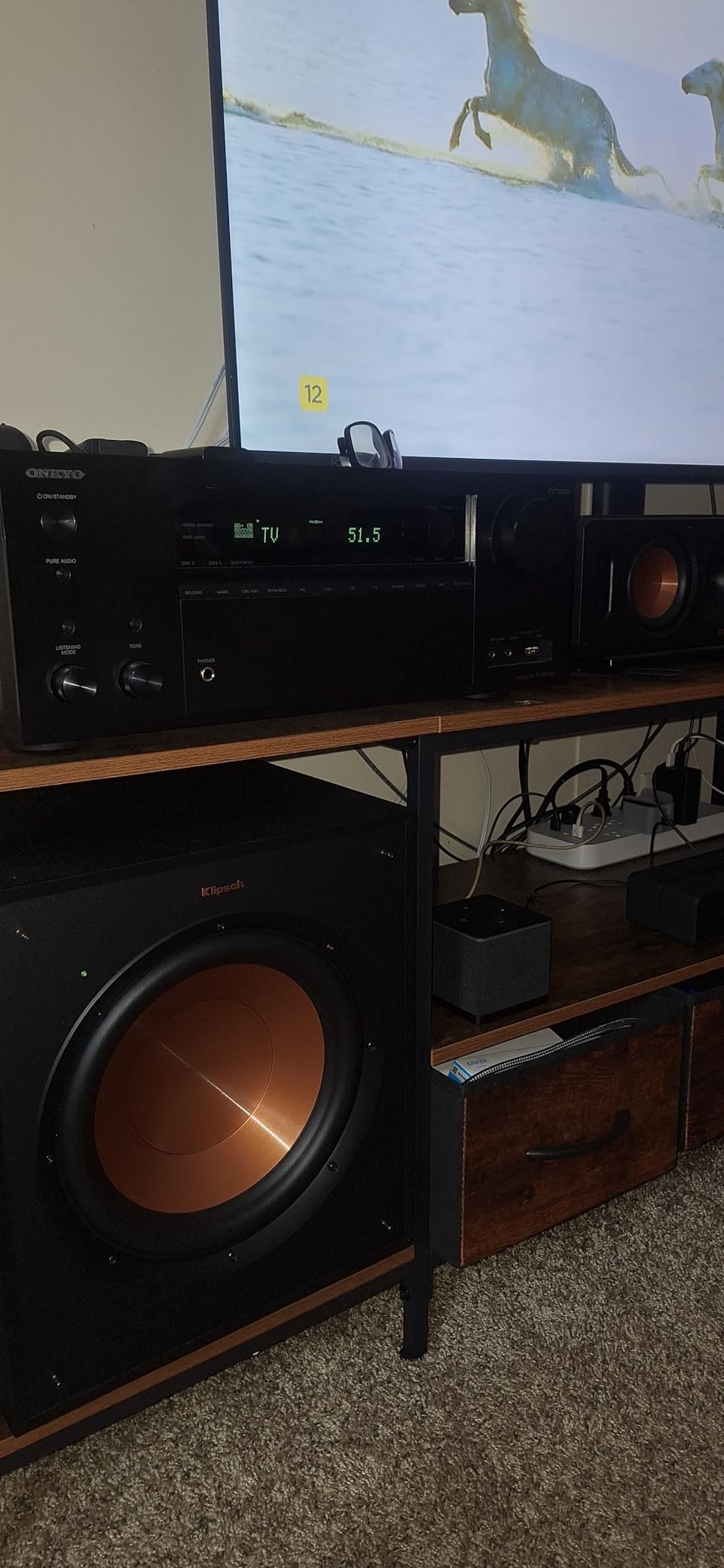
The TX-NR7100 is the most future-proofed receiver in the mid tier, and it does it in a specific way: all six HDMI inputs are full 40 Gbps HDMI 2.1. There is no guessing which port is the special one. Every source gets 8K and 4K 120Hz capability.
Processing runs to 9.2 channels, with three HDMI outputs so a projector, a TV and a second-zone display can all be driven. That is genuinely useful in a room that does double duty as a living space.
Dirac Live room correction is included out of the box, which at this level is unusual. Most competitors charge for their best correction system or downgrade it. The on-screen menu is also consistently described as cleaner and more modern than Denon’s, which is a real daily-use difference.
There is a consistent bug in the reviews: audio drops out for about a second whenever a new content stream starts, on every input. It happens to enough owners that you should expect it, though it is a brief silence rather than a lost signal.
Dirac Live itself is powerful but temperamental. Owners report calibration that fails repeatedly or takes a very long time through the phone app, and the same app frequently drops its Wi-Fi connection and demands a manual re-login. The unit also runs warm, and some owners added a USB-powered fan.
Why 9.2 processing beats 7.2 in the right room
The extra processing channels matter when you add a pair of rear surround speakers alongside height speakers, giving you a 7.1.4 layout that a 7.2 receiver can only partially render. The receiver can map the rear objects up to the height layer or to the surrounds, but you lose placement precision.
In a large dedicated room with nine or more speaker positions, 9.2 processing removes those compromises. In a typical living room, the difference is small, and the extra channels are simply unused.
The flaw nobody mentions in the marketing
There are no preamp outputs on this chassis, so the upgrade path to external power amplifiers is closed. For most buyers that never matters, but if you already know you will eventually want a separate amplifier for the front three, this is the wrong box.
The build quality also draws comments. The textured plastic faceplate and knobs feel cheap next to older metal-front Onkyo models, and the Zone 2 handling is awkward with no numeric volume readout.
6. Sony STR-AN1000 – Amplifier Headroom for Larger Rooms
- 165 W per channel gives real headroom on a 7.2 chassis
- 360 Spatial Sound Mapping makes non Atmos content enveloping
- eARC works flawlessly in practice
- Zone 2 and Zone 3 multi zone distribution
- 8K and 4K 120Hz with six inputs and two outputs
- Boot time around two minutes and needs power cycles
- Front display too small to read from a seat
- Dolby Vision passthrough bug with Apple TV 4K
- No phono input and thin sheet steel chassis
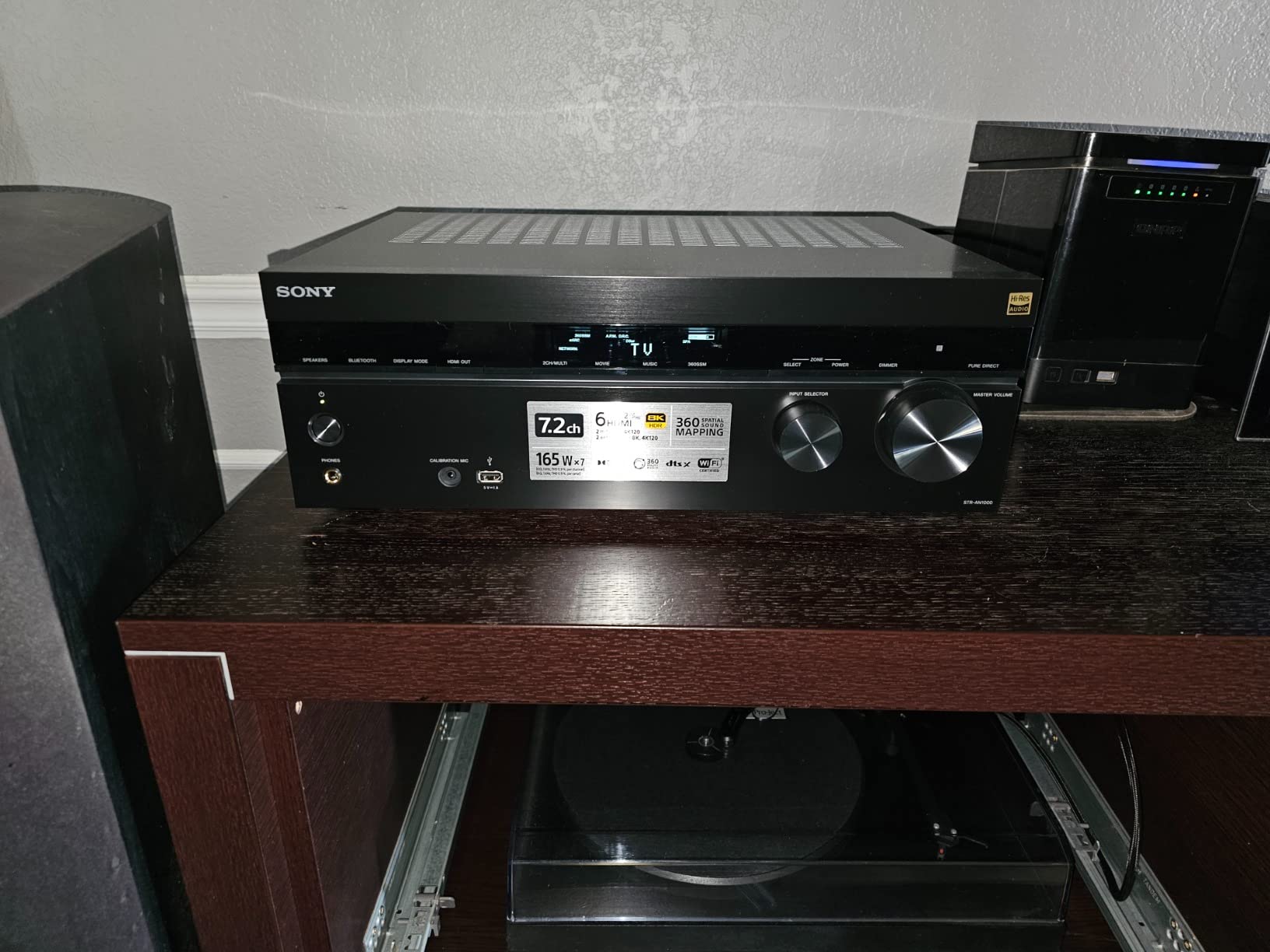
Amplifier headroom is the Sony’s whole argument. At 165 W into 6 ohms, measured at 1 kHz with a single channel, it carries far more current than the 80 to 100 W units that dominate this price range. For a large room with floorstanding speakers, that difference is audible at reference levels.
The Sony’s own processing is the second draw. 360 Spatial Sound Mapping makes ordinary 5.1 and stereo content feel genuinely enveloping, and owners single it out as the feature that keeps non-Atmos material interesting on a system this capable.
Digital Cinema Auto Calibration IX handles room correction with two subwoofer support, and the video side is thorough: 8K and 4K 120Hz across six HDMI 2.1 inputs with two outputs, plus Dolby Vision, HDR10, HLG and IMAX Enhanced.
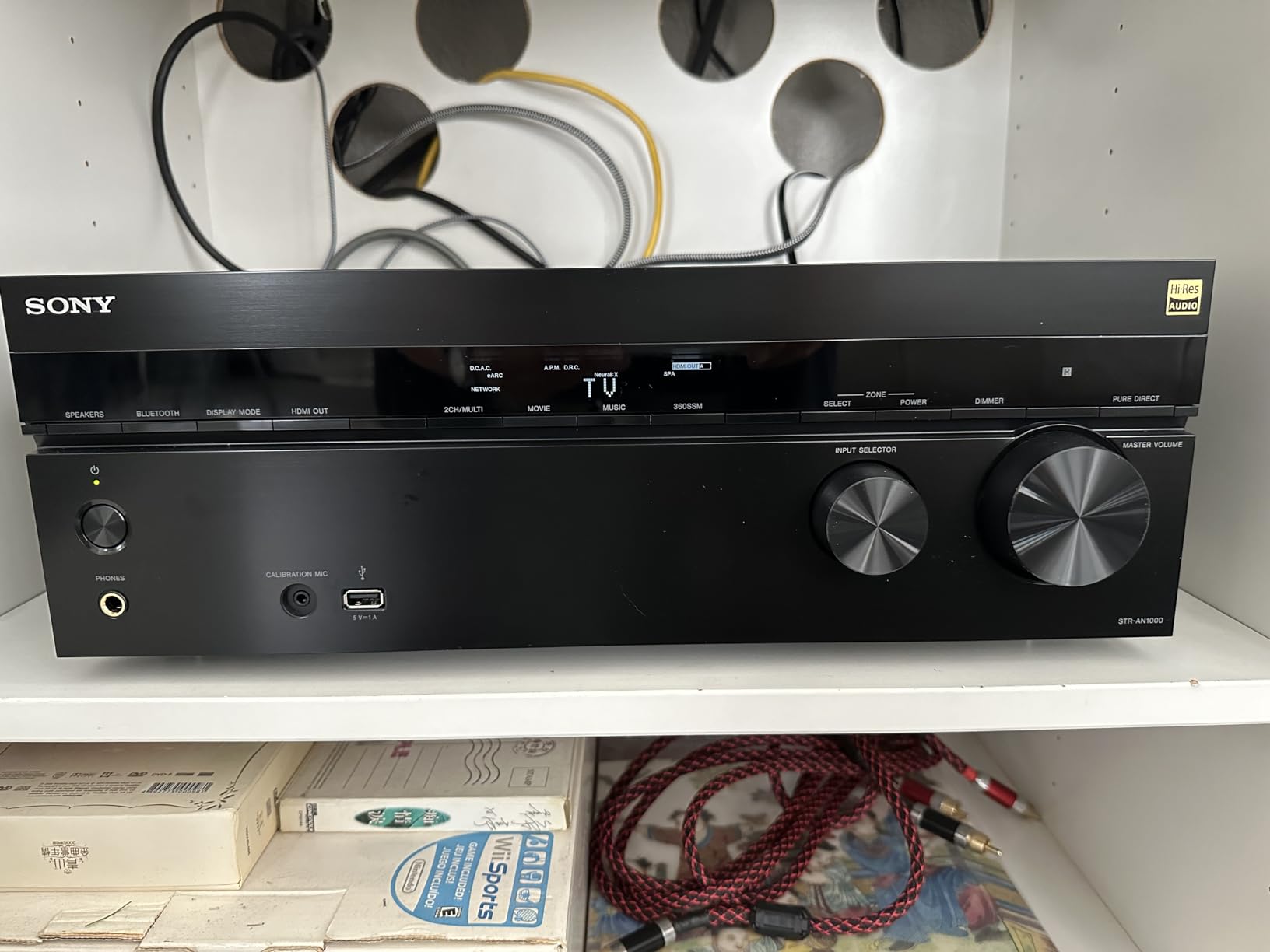
The problems are real and they cluster around behaviour rather than sound. Boot time is around two minutes, and some units need several power cycles before the network comes up properly. The front display is too small to read the active sound field from a normal seat, which makes menus feel like guesswork.
There is also a known Dolby Vision passthrough issue with Apple TV 4K that pushes the picture straight to the TV instead. Owners report occasional input-detection failures, HDCP warning screens and brief black-outs during content changes.
When extra power actually pays off
Headroom shows up in three situations: large rooms, low-efficiency speakers, and long sessions at movie reference levels. If you run efficient bookshelf speakers in a 200 square foot space, you are paying for capability you will not use, and an 80 W receiver does the same job.
If your room runs past 350 square feet, has a treated ceiling, or uses floorstanding towers with 4 ohm or 6 ohm loads, the Sony is the safer bet. Running a small amp into big speakers at reference level is where thin, strained sound comes from.
Features you will not find on the competition
Zone 2 and Zone 3 distribution is rare at this level, and the S-Center Acoustic Speaker sync with Sony Bravia OLEDs is a genuinely clever touch that recreates a center channel from a compatible TV.
What is missing: there is no phono input, the chassis is thin sheet steel that rattles on power-up, and the remote is small, plasticky and not backlit. Works With Sonos is supported if you run that ecosystem.
7. Denon AVR-S970H – The Do-Everything Mid-Range Denon
Denon AVR-S970H 7.2 Channel 8K UHD AV Receiver (90W x 7), Wi-Fi, Bluetooth
- Three 8K HDMI inputs in a 6 in 2 out board
- Audyssey MultEQ XT gives accurate stable calibration
- 90 W per channel suits medium rooms
- HEOS multi room and voice control supported
- Phono input plus analog and digital inputs
- HEOS app and on screen menus still dated
- Runs warm in a closed cabinet
- Only three of six HDMI inputs are 8K capable
- No preamp outputs for external amplifiers
The S970H is the S960H with the video weakness corrected. Where the cheaper model limits 8K and 4K 120Hz to two ports, this one offers three dedicated 8K-ready inputs in a 6-in, 2-out HDMI board. If your console count is the deciding factor, that is the whole story.
Everything else tracks the S960H closely: 90 W per channel, Audyssey MultEQ XT, Dolby Atmos with Height Virtualization, DTS:X, HDR10+, Dolby Vision, VRR, Quick Frame Transport and ALLM. Buyers treat it as the general-purpose mid-range Denon for good reason.
The calibration is the part that keeps earning praise. Audyssey MultEQ XT gives an accurate, stable result in ordinary rooms, and 90 W across seven channels is enough power for a medium room running 7.2 or 5.2.2.
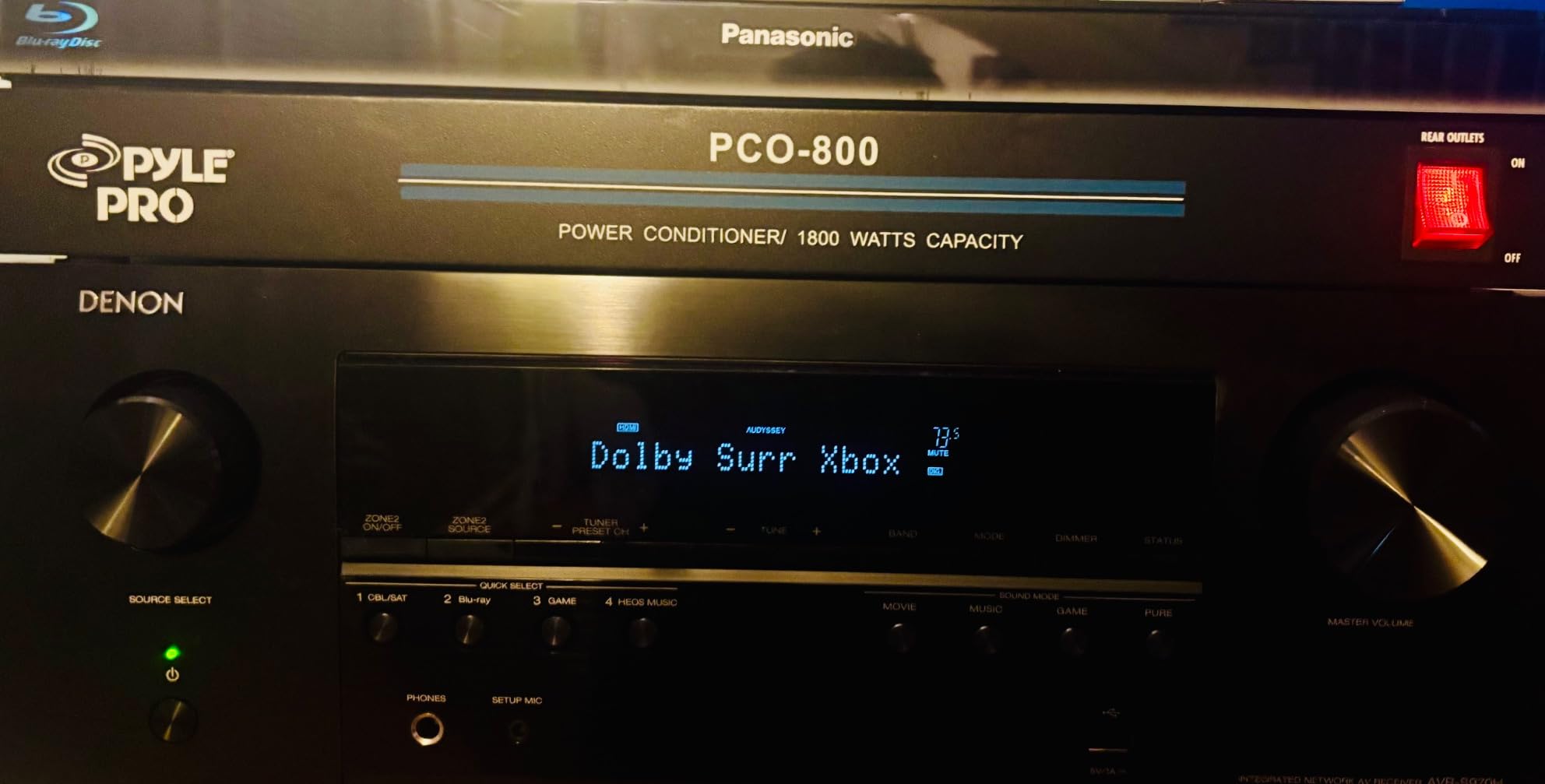
Denon’s software remains the weak point. The HEOS app and the on-screen menus are still described as dated next to newer competitors, and the same heat complaints appear as with the S960H, which matters if the unit lives in a closed cabinet.
There are no preamp outputs, so the external amplifier upgrade path is closed here too. Legacy sources are well served by the phono input plus analog and digital audio inputs, which is more generous than several rivals.
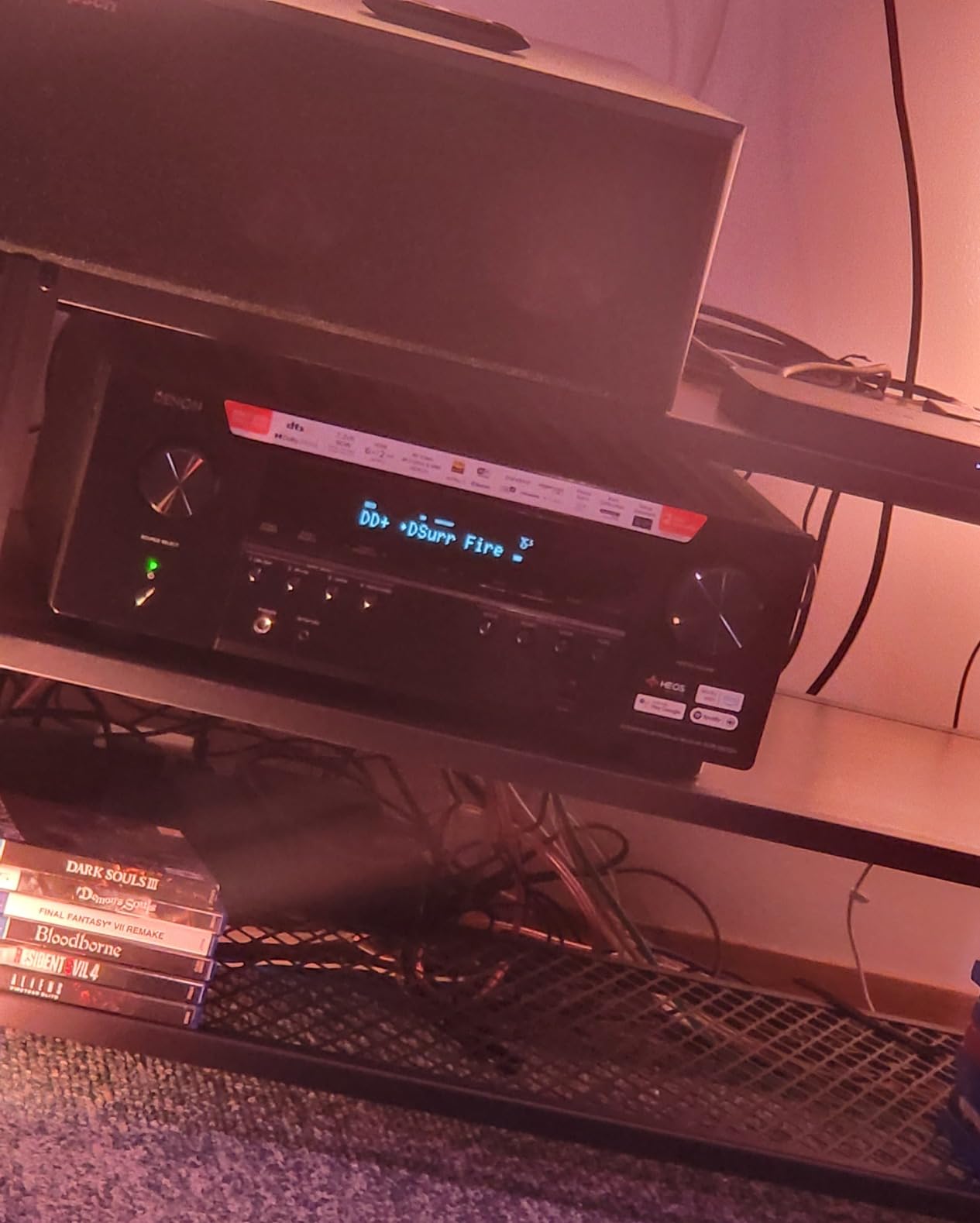
How to choose between the two Denons
Count your 4K 120Hz and 8K sources. Two, and the S960H is the smarter purchase, with a shallower chassis that fits more cabinets. Three or more, and the S970H’s dedicated 8K ports remove the constant source juggling that comes from sharing a limited port.
If your cabinet is tight, that depth measurement should outrank everything else. A receiver that physically does not fit is not a bargain at any point.
Who should pass on this model
If your plan already includes an external power amplifier, this chassis will not support it. If you are sensitive to software quality, Denon’s interface has not kept pace with the hardware and shows no sign of changing soon.
For a buyer who wants simple, reliable Atmos with a good number of current-owner ratings behind it and no gaming complexity, it remains a straightforward recommendation.
8. Pioneer VSX-935 – The Budget Route Into Atmos
Pioneer VSX-935 7.2 Channel Surround Sound Network Receiver Dolby Atmos (2021)
- Lowest cost in this group while still offering 7.2 Atmos
- Phase correction is a clear step up from an old receiver
- Powers a full seven speaker plus sub system
- Multi zone speaker output for a second room
- Roku remote integration works well
- Automatic setup frequently needs manual level adjustment
- Bluetooth buried in menus and unreliable
- Interface looks like a 1990s design
- Firmware updates are USB only and error out for many owners
The VSX-935 exists to prove you can get real 7.2-channel Dolby Atmos, HDMI 2.1 with 8K support and useful multi-zone output without stepping up a price tier. On those three points it delivers, and owners confirm it powers a full seven-speaker plus subwoofer ceiling system without strain.
Room correction uses phase alignment rather than the deeper measurement suites of the pricier units. The result is still a clear improvement over the decade-old receivers people are upgrading from, but it is not in the same class as Audyssey MultEQ XT once you have run both in the same room.
Multi-zone speaker output means you can run speakers in a second room or on a deck from the same receiver, and Roku remote integration for power and volume works reliably when you use that platform.
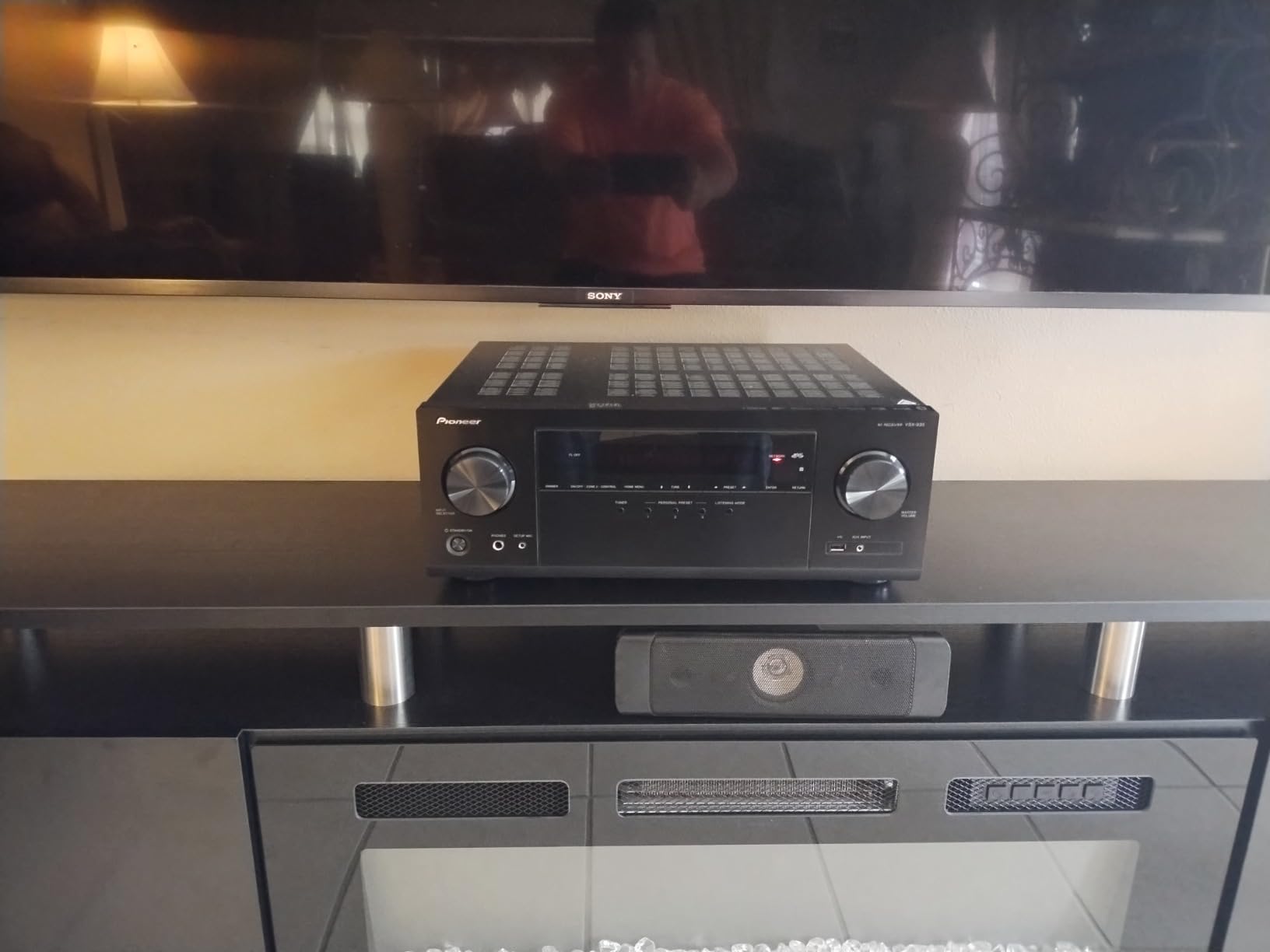
Be prepared to spend time in the setup menu. Automatic results are frequently unsatisfactory and need manual level and distance adjustment, which turns a fifteen minute install into an hour. That labour is the hidden cost of the lower entry point.
Two-way Bluetooth is buried deep in the menus, is unreliable, and has no dedicated button on the remote. The on-screen interface is described as looking and behaving like a 1990s design, and firmware updates are USB-only, throwing error codes for a noticeable share of owners.
Where the money actually saved goes
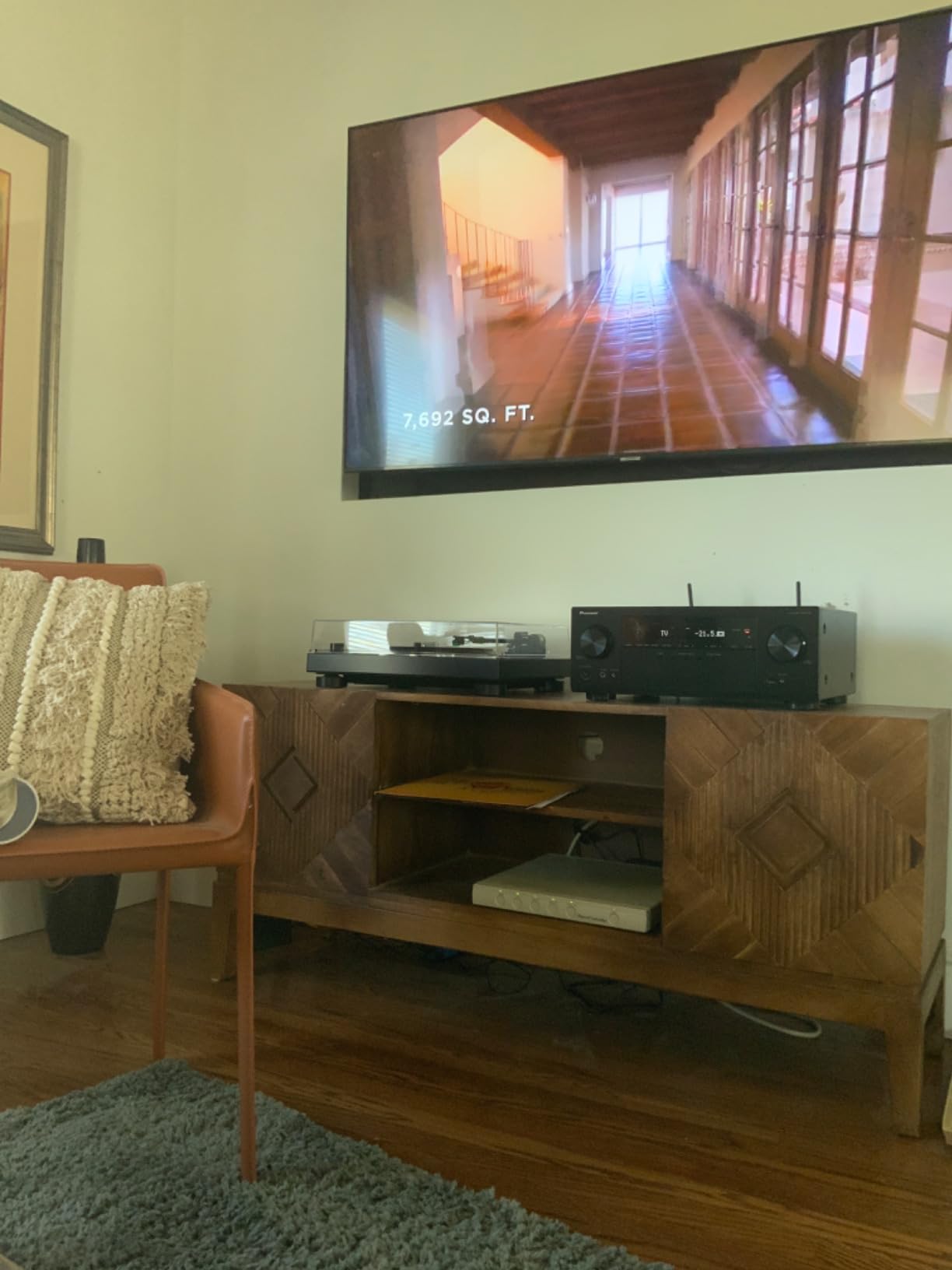
It goes into the video board and the amplifier, not the software. You get HDMI 2.1 with 8K and enhanced gaming features, plus Dolby Atmos Height Virtualization so a 5.1 layout still produces a height layer. The trade is a dated interface and a calibration routine that demands patience.
Buyers who accept manual tuning report excellent results after an hour of work. Buyers who want the receiver to sort itself out in fifteen minutes tend to return it.
The warranty and support question
Coverage here is one year, the shortest in this group. For a component that is expected to last a decade, that is a meaningful difference and worth weighing against the saving.
Compare it with the Denon AVR-X1700H, which pairs three year coverage with a stronger correction system. If the price gap is small where you are shopping, the longer warranty and the easier calibration are usually worth more than the difference.
9. Marantz NR1510 – The Slimline Pick for Tight Shelving
Marantz NR1510 Slimline 5.2 Channel AV Receiver Powered by HEOS™ with 50 W, 4K, and 6 HDMI Inputs
- Half-height design fits cabinets a full size unit cannot
- Warm musical Marantz tuning owners rate as a big upgrade
- Audyssey MultEQ gives a louder smoother centre channel
- HDMI ARC and eARC make hookup very simple
- Phono input plus six HDMI inputs cover most sources
- Only 5.2 channels so Atmos height effects rely on virtualization
- 50 W per channel is quiet and some owners want more
- USB port stays powered in standby
- Some samples have shown repeated shutdowns needing service
The NR1510 is the only half-height receiver in this group, at 4.1 inches tall. If your media unit has a narrow shelf and nothing else here will physically fit, that single mechanical fact makes it the answer.
Sound is the other argument. Marantz tuning is described by owners as a major step up from budget brands, warm and musical rather than clinical, and it holds up well on music as well as films. Audyssey MultEQ produces a noticeably louder and smoother centre channel than the YPAO-equipped rivals.
Hookup is simple. Six HDMI inputs plus analog, digital and phono inputs cover most sources, and HDMI ARC and eARC make TV control straightforward enough that many owners never touch the remote again.
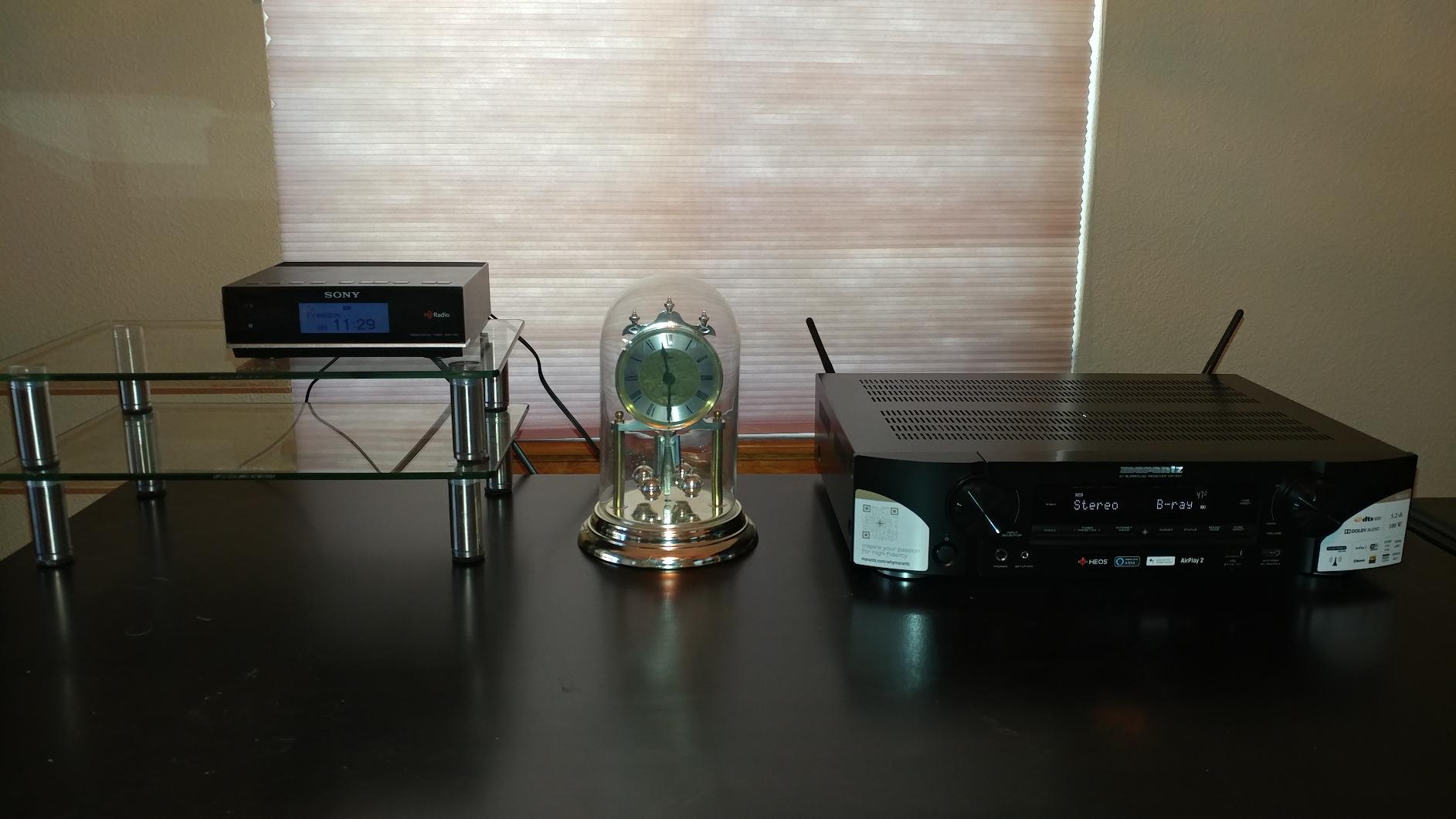
The compromise is channel count and power. This is a 5.2 receiver at 50 W per channel, so there is no native height layer and Atmos effects depend on virtualization. Some owners also find 50 W genuinely quiet at higher volumes in a larger room.
There are reliability notes too: some samples have shown repeated shutdowns that needed multiple service visits, and the USB port stays powered in standby. Check the warranty terms before committing.
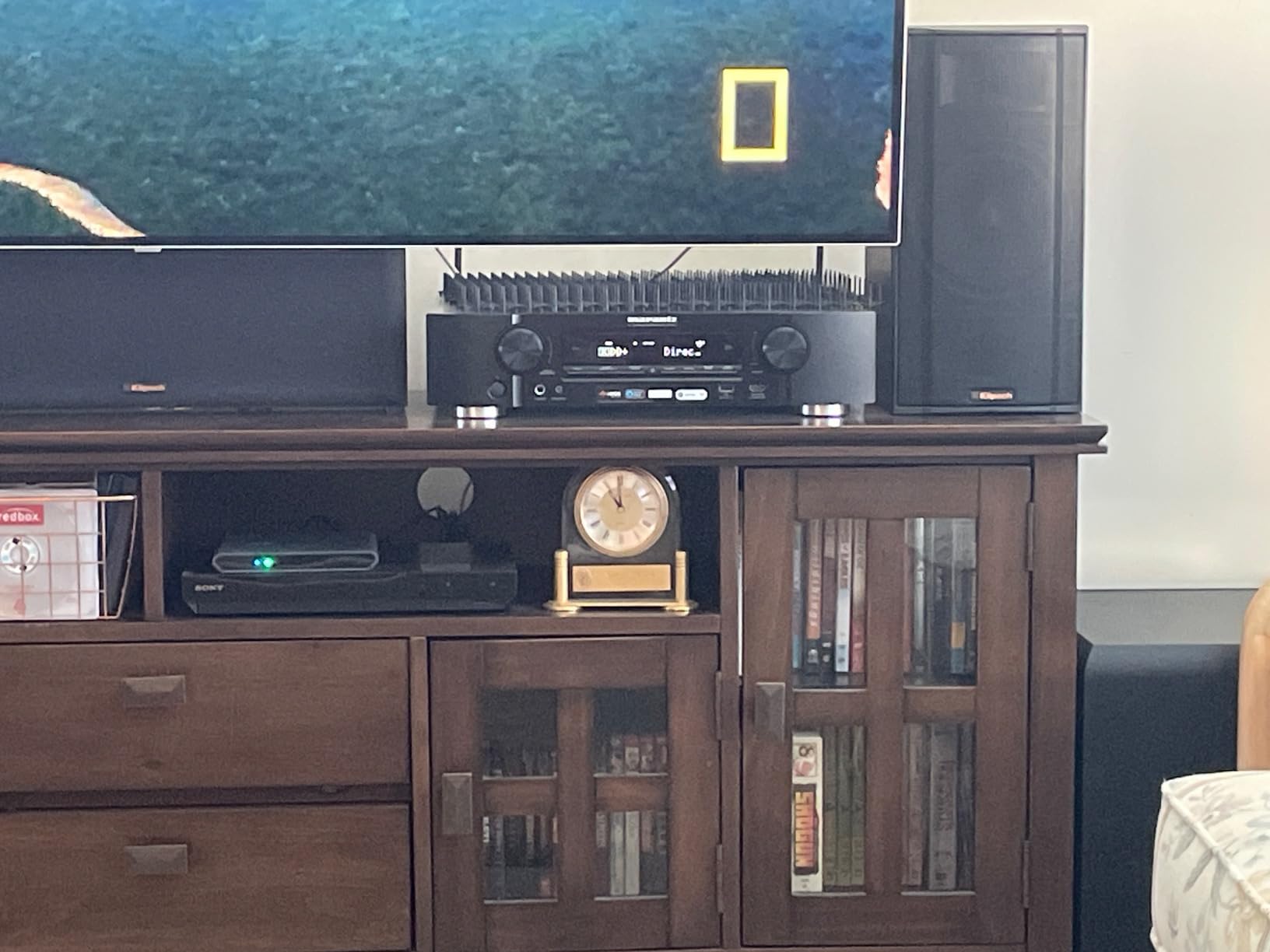
When a slimline receiver is the right answer
Slender shelving, wall-mounted cabinets and credenza-style shelves all have a height limit that no full-size chassis respects. The NR1510 is the only model here built for that constraint, and it does not look like a compromise piece despite the slim profile.
It also suits a stereo-plus-sub room where music matters as much as films. The Marantz tuning and the current-driven 50 W amp are better suited to two-channel listening than a full Atmos array anyway.
What virtualization can and cannot do
Height virtualization creates a convincing overhead impression from a 5.1 speaker layout, and on a good 5.1 system it is genuinely effective. It is not the same as in-ceiling speakers, and on a 5.2 chassis you also give up back-surround positions entirely.
If you know you will add height speakers within a year or two, this is a temporary answer. If the slimline shelf is a permanent constraint, pairing it with upward-firing modules is the more realistic Atmos plan.
10. Yamaha RX-A2A – The AVENTAGE Step Up With the Best App
Yamaha RX-A2A AVENTAGE 7.2-Channel AV Receiver – 8K and 4K/120 HDMI, eARC, Dolby Atmos, DTS:X, Wi-Fi, Bluetooth, MusicCast
- AVENTAGE build quality and refined balanced sound
- Three true HDMI 2.1 inputs with 4K 120Hz and 8K 60Hz
- YPAO R.S.C. multipoint plus Surround:AI
- Zone 2 plus MusicCast and Roon Tested
- Richest streaming service support in its class
- 100 W per channel is modest for the price
- Only three of seven HDMI inputs are 8K capable
- Menu system and MusicCast app criticized as unintuitive
- No Height Virtualization on a 5.1 layout
The RX-A2A is the AVENTAGE model, which in Yamaha terms means better materials and a more refined tuning than the RX-V series. Owners consistently describe the build quality and the balanced, detailed sound as the reason to step up rather than sideways.
It is also the better finished receiver in this group in our view, with a properly machined front panel rather than moulded plastic. That matters more than it should if the unit sits in a living room rather than a closet.
Calibration is YPAO R.S.C. multipoint measurement combined with Surround:AI real-time optimization, which analyses the content in your room during playback and adjusts over time. Two measurements, then the system keeps learning.
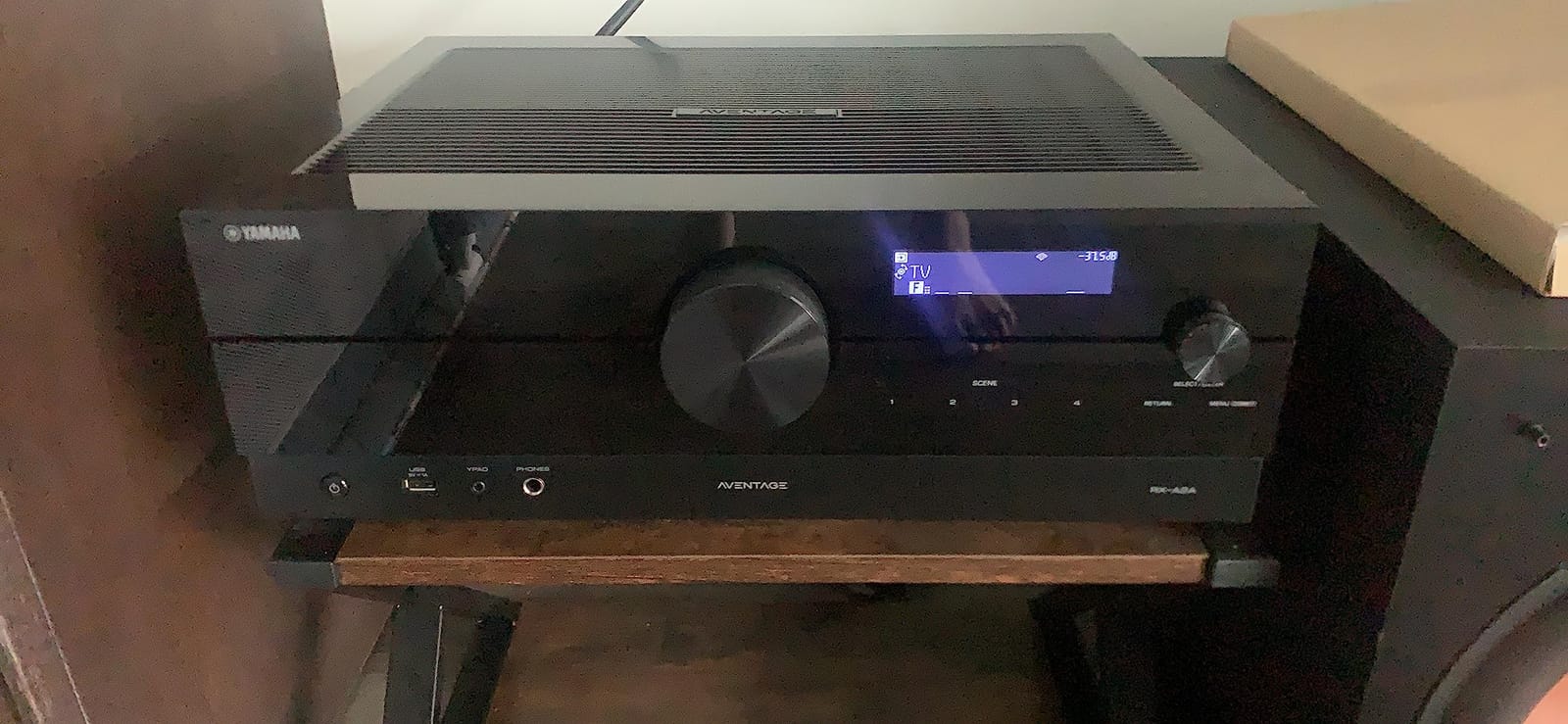
HDMI is a 7-in, 1-out board where three inputs handle 8K 60Hz and 4K 120Hz. That is a narrower share of full-bandwidth ports than the Onkyo TX-NR7100 offers at every input, and worth checking against your source count.
The 100 W per channel rating is modest for a receiver at this level, particularly next to higher-priced models. And Yamaha’s menus and MusicCast app remain the most criticized software in this lineup, which is an odd outcome for a receiver praised for its refinement.
Why Roon Tested and MusicCast matter for music
Roon Tested certification means the receiver is properly recognised and controlled by the Roon software rather than being treated as generic network audio. For anyone running a serious music library, that is a functional difference rather than a badge.
MusicCast, combined with Works With Sonos, means you can group this receiver with speakers in other rooms. The service roster includes Amazon Music HD, Qobuz, TIDAL, Deezer and Spotify, the broadest hi-res selection here.
The compromise buyers notice
There is no Dolby Atmos Height Virtualization on a 5.1 layout, so a smaller system cannot borrow height effects the way the RX-V6A does. Owners running full 7.1.4 systems are happy; owners starting at 5.1 and hoping to fake it later are not.
Zone 2 is supported, which covers most of the multi-room need without the complexity of three zones. The trade against the RX-V6A is build quality and calibration depth, paid for with fewer full-bandwidth HDMI ports.
11. Onkyo TX-RZ70 – Flagship Processing With Pre-Outs
- Genuine flagship power measured near 170 W per channel into two channels
- Dirac Live included with Bass Control for single or multiple subs
- Eleven channels of processing with 7.2.4 support
- All HDMI inputs full 40 Gbps HDMI 2.1 with no handshake problems
- ESS Sabre DACs rival dedicated streamers and it runs as a pure pre-pro
- Very large and heavy so it needs a deep cabinet and ventilation
- Zone 2 control is awkward with no numeric volume readout
- Remote feels cheap and plasticky for a flagship
- Dirac Live can take several attempts and is sensitive to mic placement
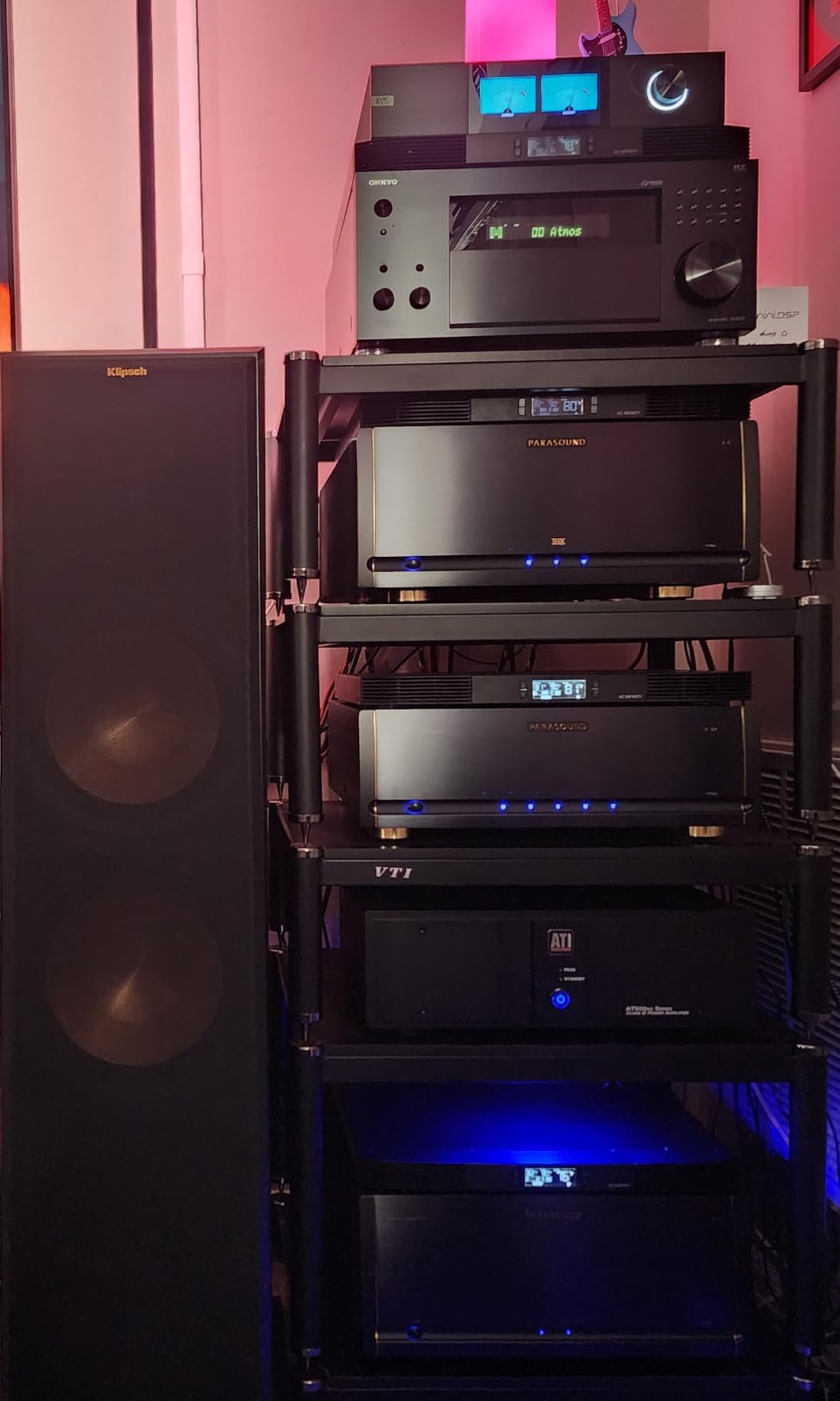
The TX-RZ70 is the only receiver here with pre-outs, and that changes the upgrade maths. Owners can add external power amplifiers, then power the internal amps down into pure pre-out mode to remove amplifier interference and heat. That is a decade-long upgrade path, not a two-year one.
Power is the headline. The 140 W per channel rating understates it, with independent testing measuring roughly 170 W per channel into two channels. It is real flagship-class amplification rather than a marketing number at 2-channel drive.
Processing runs to 11.2 channels with 7.2.4 support and dual independent subwoofer outputs, handled by ESS Sabre DACs including the ES9026PRO. Dirac Live full bandwidth room correction and Dirac Live Bass Control for one or multiple subwoofers are included at no extra cost.
Every HDMI input is full 40 Gbps HDMI 2.1, and owners report no handshake or black-screen problems on this model, which sets it apart from several cheaper Onkyo units. IMAX Enhanced mode, THX certification with four modes, and Klipsch Optimize crossover matching are all present.
The physical reality is the trade. At 57.9 pounds and 24 inches deep, it needs a serious cabinet and real ventilation, and it is not a receiver you move to a different room casually.
Who this receiver is actually for
A dedicated room with a 7.2.4 or higher speaker plan, dual or quad subwoofers, and a long-term plan to add external amplification. In that setting the TX-RZ70 makes sense, because nothing else here can absorb the upgrade path without being replaced.
In a normal living room with a 5.1.2 layout, 11.2 channels of processing are simply unused. The extra capability is real but dormant, and the size and heat become pure drawbacks.
The rough edges at this price
The remote feels cheap and plasticky on a flagship body, and Zone 2 handling is awkward, with no numeric volume readout and a short-lived Zone 2 button. Dirac Live is sensitive to microphone placement and can take several attempts to complete.
Individual samples have also produced firmware update failures and HDMI board problems, so keep a straightforward return route. The 107-review base is smaller than the mid-tier models here, so read the one-star reviews rather than the average alone.
12. Marantz Cinema 70s – Slimline Design With a Five-Year Warranty
Marantz Cinema 70s Slimline 7.2 Channel AV Receiver Powered by HEOS™ with Dolby Atmos, 50 W, 8K, and 6 HDMI Inputs
- Marantz warm musical tuning in a slimline body
- Full 7.2 Dolby Atmos and DTS:X with three 8K HDMI inputs
- Six HDMI inputs plus analog digital and phono
- HEOS hi-res streaming and Audyssey MultEQ
- Five year warranty is the longest in this group
- Aluminum controls and diamond cut knobs feel refined
- Only 50 W per channel which is the lowest power rating among the 7.2 models here
- Slimline depth and height can limit speaker terminal access
- HEOS app and menus use the same dated interface
The Cinema 70s gives you 7.2 channels rather than the 5.2 of the older slimline Marantz, which is the whole reason to choose it over the NR1510 if your shelf can take a slightly deeper box. It is still a slimline chassis at just over four inches tall, with aluminum controls and diamond-cut knobs.
Dolby Atmos and DTS:X decoding are both present, and three of the six HDMI inputs are 8K compatible. Audyssey MultEQ handles room correction, and HEOS covers hi-res streaming with Spotify, TIDAL and Amazon Music HD.
It is tuned by the Marantz Sound Master in Shirakawa, Japan, and that warm presentation is the quiet reason to pick it. Sound Master tuning also gives it a five year manufacturer warranty, the longest coverage of any receiver in this group.
We would treat the warranty as a partial answer to the small review base. Sixty-one ratings is a thin data set, and a long warranty is a sensible hedge when the feedback history is short.
Fit and finish versus power
The physical design is genuinely the best looking here, with a machined front panel rather than moulded plastic. Speaker terminals sit tight against the slimline depth, though, so thick banana plugs can be awkward to seat.
Power is the trade. At 50 W per channel it is the lowest rating among the 7.2 models in this group, and it is fine for efficient speakers in a small room while running out of headroom in a large one with demanding loads.
Who should choose this and who should not
Choose it if your furniture forces a slimline body, you care how the equipment looks, and your speakers are efficient in a modest room. The long warranty softens the thin review history.
Pass if you want the Marantz tuning with real power. In that case the RX-A2A or the Sony STR-AN1000 give you more current per channel, and the Marantz name is not enough to justify 50 W in a room that needs it.
What Dolby Atmos Actually Needs From a Receiver
Dolby Atmos is an object-based audio format. Instead of assigning each sound to a fixed channel, a film mix places individual objects such as a helicopter or a voice in three-dimensional space, and the receiver decides which speaker each object should come from at that moment.
That is why the channel labels matter. A 5.1.2 setup means five speakers in the bed layer, one subwoofer, and two height speakers. A 7.1.4 adds two rear surrounds and two more height channels, giving objects a place to travel behind you as well as above. A 9.2.4 or 11.4 layout adds further rear positions for the largest rooms.
Home theater forum consensus is consistent on one point: 5.1.2 is genuinely sufficient for most rooms, and buyers who moved to 7.1.4 noticed diminishing returns unless the room was large. In-ceiling speakers are the single biggest upgrade for convincing immersion, more than any receiver change.
The practical lesson is to buy the speakers and the layout first, then size the receiver to drive them. A receiver with fewer channels than you need will map objects creatively, but a receiver with more power than you need is simply wasted money.
Room Correction: Dirac Live vs Audyssey vs YPAO
Room correction measures how your room alters the sound and applies filters to flatten it. Without it, your speakers, furniture, walls and carpet all shape the result, and the same receiver sounds different in every room.
Audyssey appears on the Denon AVR-S960H, AVR-S970H and AVR-X1700H and the Marantz NR1510 and Cinema 70s. Owners rate it as the strongest option in this group, particularly on centre channel level and overall tonal balance, though the entry X1700H version can set dialogue too low without manual correction.
Dirac Live ships with the Onkyo TX-NR7100 and TX-RZ70 at no extra cost, which is unusual in this price range. It flattens frequency response effectively and the RZ70 adds Bass Control for single or multiple subwoofers, but the app-based flow is temperamental and sensitive to microphone placement.
YPAO R.S.C. on the Yamaha RX-V6A and RX-A2A is faster to run and less aggressive. Multipoint measurement is a genuine improvement over single-position versions, and Surround:AI on the AVENTAGE model keeps analysing content during playback.
The Pioneer VSX-935 uses phase correction, which is a lighter touch. It is a clear step up from an old receiver and needs manual level and distance work afterwards. Which system matters most is less about the name on the badge and more about actually running it, which is true of all four.
HDMI 2.1 and Gaming Features Compared
HDMI 2.1 is where buyer confusion is highest, because brands count ports differently. Four features matter: 4K 120Hz passthrough, VRR for tear-free variable frame rate, ALLM for automatic game mode switching, and Quick Frame Transport for low latency.
All 12 receivers here support the gaming feature set, so the real question is how many inputs deliver full bandwidth. The Onkyo TX-NR7100 has all six at full 40 Gbps, and the TX-RZ70 does the same on all of its inputs with no handshake problems reported.
The Sony STR-AN1000 offers 8K and 4K 120Hz across six inputs with two outputs, plus Zone 2 and Zone 3. The Yamaha RX-A2A provides three full-bandwidth inputs on a 7-in, 1-out board, and the RX-V6A matches that with three 8K inputs.
The Denon AVR-S960H is the outlier: six HDMI 2.1 inputs that support HDR10+, but only two ports handle 8K and 4K 120Hz. The AVR-S970H and AVR-X1700H each give you three dedicated 8K inputs, which is the number most people actually need.
Note also that most 40 Gbps implementations here are the full-featured type rather than the reduced variant, and the RX-V6A is explicitly capped at 40 Gbps. If you own a current console, a 4K 120Hz television or a projector, three full-bandwidth ports is the practical minimum in 2026.
Dolby Atmos in Apartments and Small Rooms
Renters and apartment dwellers hit a hard constraint that no amount of receiver quality solves: you cannot drill into a ceiling. It is the most common reason a planned Atmos system never happens, and it is the one gap almost every competitor roundup ignores.
Upward-firing speaker modules are the standard answer. They sit on top of your front and rear speakers and bounce height effects off the ceiling, producing a real overhead layer without any installation. Their accuracy depends on ceiling height and reflectivity, so measure before buying, and a flat concrete ceiling works far better than a textured drop ceiling.
Most receivers here can help even without height speakers. Dolby Atmos Height Virtualization on the Denon AVR-S960H, AVR-S970H, AVR-X1700H, the Sony STR-AN1000 and the Pioneer VSX-935 creates a height layer from a 5.1 layout. It is an approximation, but in a small room it often works convincingly.
The Marantz NR1510 and Cinema 70s are worth a look in compact spaces for a mechanical reason rather than an acoustic one. Their slimline chassis fit shelving that a full-size receiver will not clear, which is often the first thing that stops a build in a small apartment.
One more apartment-specific note from the forums: run the room correction even in a furnished room, because soft furnishings are exactly what it is designed to measure. The correction cannot fix a missing speaker, but it can make a 5.1.2 setup with modules sound properly balanced.
How to Choose an Atmos Receiver for Your Room
Start with the speaker layout, because it determines everything else. If you are running a 5.1 speaker set and adding two height speakers, you need 5.1.2 processing, and every 7.2 receiver in this guide delivers it. If you plan two rear surrounds as well, look at the 9.2 options.
Next, match amplifier power to room size and speaker efficiency. Under 200 square feet with efficient bookshelf speakers, 80 to 100 W per channel is plenty. Above 350 square feet with floorstanding towers, headroom matters and the Sony STR-AN1000 or the Onkyo TX-RZ70 class of amplifier is the right reference point.
Third, count your 4K 120Hz sources before choosing a model. Two sources and the AVR-S960H works. Three or more, and you want three dedicated full-bandwidth HDMI ports, which rules the S960H in or out on that fact alone.
Fourth, decide how much you care about room correction. A furnished, untreated room benefits enormously from Audyssey or Dirac Live. A treated dedicated theater needs less help from either, and the money is better spent on speakers.
Fifth, think about the upgrade path. Pre-outs matter only if you plan external amplification later, and only the Onkyo TX-RZ70 in this group provides them. Two independent subwoofer outputs, which the X1700H, RX-A2A, TX-RZ70 and STR-AN1000 offer, matter if you plan more than one sub.
Finally, set aside the wattage on the box. Numbers measured at 2-channel, 1 kHz conditions do not reflect 5.1 or 7.1 performance, and buyers consistently report being surprised by that gap. Read review data from people driving all channels at once, not specification sheets.
Frequently Asked Questions
Which AV receivers are compatible with Dolby Atmos?
All 12 receivers in this guide decode Dolby Atmos natively, including the entry-level Pioneer VSX-935 and the slimline Marantz models. The difference is channel count: a 5.2 chassis like the Marantz NR1510 relies on height virtualization, while 7.2 models such as the Onkyo TX-NR6100 drive two real height speakers, and the 9.2 or 11.2 models add rear surround and further height positions.
What audio receivers have Dolby Atmos?
Every current-generation AV receiver from Denon, Onkyo, Yamaha, Sony, Pioneer and Marantz in this roundup supports Dolby Atmos, most alongside DTS:X. Our top pick is the Onkyo TX-NR6100 for 5.2.2 decoding and 210 W per channel, the Denon AVR-X1700H for the best room correction, and the Onkyo TX-RZ70 for 11.2-channel processing with pre-outs.
Can you add Dolby Atmos to a receiver?
You can add height speakers to a 5.1 system if the receiver has height speaker terminals, and every 7.2 model here does. Dolby Atmos Height Virtualization on several of these receivers also creates overhead effects from a 5.1 layout with no extra speakers. In an apartment where ceiling mounting is not possible, upward-firing Atmos modules on top of the front and rear speakers give you a genuine overhead layer.
What are the best Atmos receivers right now?
The best AV receiver for Dolby Atmos in 2026 is the Onkyo TX-NR6100 for its 5.2.2 decoding, 210 W per channel amplifier and deep owner review history. The Denon AVR-X1700H is best for room correction, the Denon AVR-S960H for shallow cabinets, the Onkyo TX-NR7100 for 9.2 processing with Dirac Live included, and the Onkyo TX-RZ70 for flagship power, eleven channels of processing and pre-outs.
Is 5.1.2 enough for Dolby Atmos or do I need 7.1.4?
For most living rooms, 5.1.2 is enough. Home theater forum consensus is that buyers who moved up to 7.1.4 heard diminishing returns unless the room was large. A 7.1.4 layout adds two rear surrounds and two more height channels, and the extra placement precision is worth it mainly in a dedicated room over 350 square feet with a treated ceiling.
Final Verdict for Dolby Atmos in 2026
The best AV receiver for Dolby Atmos is the Onkyo TX-NR6100. It combines 5.2.2 decoding, a 210 W per channel THX Select amplifier, three 40 Gbps HDMI 2.1 inputs and more owner feedback than anything else we tested, and its legacy video limitation is the only real compromise.
Match the receiver to the constraint instead. Shallow cabinet means the Denon AVR-S960H. Awkward room means the Denon AVR-X1700H and its Audyssey MultEQ. Every input needing full HDMI 2.1 bandwidth means the Onkyo TX-NR7100. Slimline shelving means one of the two Marantz slimline models. A dedicated theater with plans to grow means the Onkyo TX-RZ70.
Whatever you choose in 2026, buy the speakers and the layout first. A correctly placed 5.1.2 system with real height speakers beats an expensive receiver driving a mismatched one every time.