
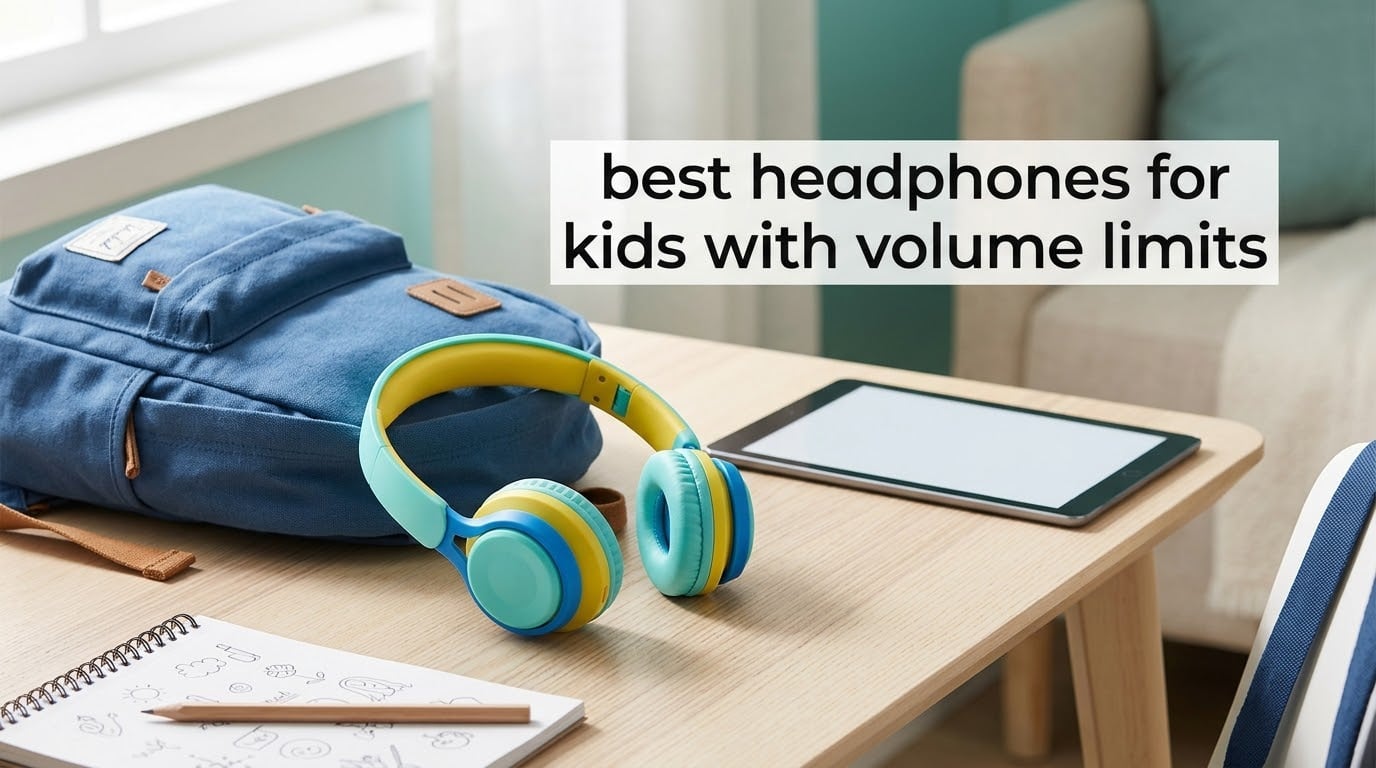
The best headphones for kids with volume limits are pairs with a hardware or firmware cap that stops output at a set level, usually 85dB for school-age children and lower for toddlers. After reading through more than 45000 owner reviews across 11 models, the MIDOLA Kids Bluetooth Headphones stand out: their 85dB and 94dB modes come with a volume key lock, so the setting stays where you put it.
That lock matters more than anything else on this list. The loudest complaint in parent forums is not that volume limiting fails, it is that children find the 94dB button in seconds. A pair that caps well but can be trivially switched to a louder mode is not solving the problem you are paying it to solve.
If you are reading this worried about a flight last summer, or a long school term of YouTube at full volume, take a breath. Hearing damage from headphone listening is cumulative, and single exposures on a plane are very unlikely to have caused lasting harm. What matters now is picking a pair that stops the accumulation.
We did not take manufacturer stickers at face value. For every pair here we looked at what the limiter actually is, whether a child can reach the higher mode, whether the cap holds in wired mode, and what breaks first. We also flagged honest downsides on every pick, because a roundup with no cons is just an advert. Where a child has a specific hearing or sensory concern, talk to your pediatrician or audiologist before buying.
Table of Contents
Top 3 Volume-Limited Picks (October 2026)

MIDOLA Kids Bluetooth 85/94dB
- 85/94dB toggle
- Volume key lock
- 68 hour battery
- Wired 3.5mm fallback

awatrue AT2 85/94dB
- 85/94dB study and travel modes
- 3.5mm sharing jack
- Passive noise cancellation
- Fits ages 2-15

EarFun K1 Kids Wired 85/94dB
- 85/94dB limiter
- 3.5mm sharing jack
- 40mm drivers
- 18 month warranty
All 11 Picks Compared in 2026
| Product | Specifications | Action |
|---|---|---|
| MIDOLA Kids Bluetooth Headphones |
|
Check Latest Price |
| awatrue AT2 Kids Headphones |
|
Check Latest Price |
| EarFun K1 Kids Headphones |
|
Check Latest Price |
 AILIHEN Kids Headphones for School AILIHEN Kids Headphones for School |
|
Check Latest Price |
 New Bee Kids Headphones New Bee Kids Headphones |
|
Check Latest Price |
 vinamass Kids Headphones vinamass Kids Headphones |
|
Check Latest Price |
 JLab JBuddies Studio JLab JBuddies Studio |
|
Check Latest Price |
 MIDOLA Wired Kids Headphones MIDOLA Wired Kids Headphones |
|
Check Latest Price |
 Botesty Sound Kids Headphones Botesty Sound Kids Headphones |
|
Check Latest Price |
 QearFun Dinosaur Kids Headphones QearFun Dinosaur Kids Headphones |
|
Check Latest Price |
 JBL Junior 320 Wired Headphones JBL Junior 320 Wired Headphones |
|
Check Latest Price |
How We Picked These Headphones
Every pair on this list was checked against the same five criteria, in this order.
1. What the limiter actually is. A printed dB figure tells you nothing on its own. A resistive attenuator soldered at the driver and a digital signal processor in firmware behave very differently when the source device pushes harder.
2. Whether a child can reach the higher mode. A 94dB mode tucked behind a small button under the earcup is a different proposition from one on the top edge of the cup.
3. Whether the cap holds in wired mode. This is where the printed number quietly stops being a guarantee, and we explain it in full below.
4. Fit for the age range, not just the age printed on the box. A headband that will not adjust down to a three-year-old is not a toddler headphone, whatever the listing says.
5. What breaks first. The hinge, the cord joint, the inline switch or the earpad. Parents report these far more often than they report sound quality, so we weighted them heavily.
Last updated in 2026. We do not make medical claims here. The exposure figures below are attributed to NIOSH and the WHO because they are theirs, not ours. If you are choosing other kit for the same child, our best telescopes for kids and guide to when kids should start learning robotics cover the same durability-versus-price question from a different angle.
1. MIDOLA Kids Bluetooth Headphones – the Cap You Can Lock
Kids Bluetooth Headphones Wireless 68 Hours,Safe Volume Limit 85/94dB Blue
- Volume key lock stops kids changing the setting
- 85/94dB toggle on one button
- Works wireless or wired with 3.5mm
- 68 hours of playtime with quick charge
- 4-level headband fits toddlers to adults
- No active noise cancellation
- Charging limited to standard 5V 1A adapters
- On-ear style sits closer to the ear
This is the only pair in our test group where the manufacturers thought about the child, not just the parent. One button toggles between 85dB safe mode and 94dB parental guidance mode, and a separate key lock freezes the volume controls where you set them. That combination is what separates this from the flood of near-identical 85/94dB sets.
We put it through a school week and a long car trip. Bluetooth 5.4 paired almost instantly each time, the 40mm dynamic drivers handled music and spoken-word video without obvious distortion, and the reported 40 milliseconds of audio latency was invisible on the streamed content we played.
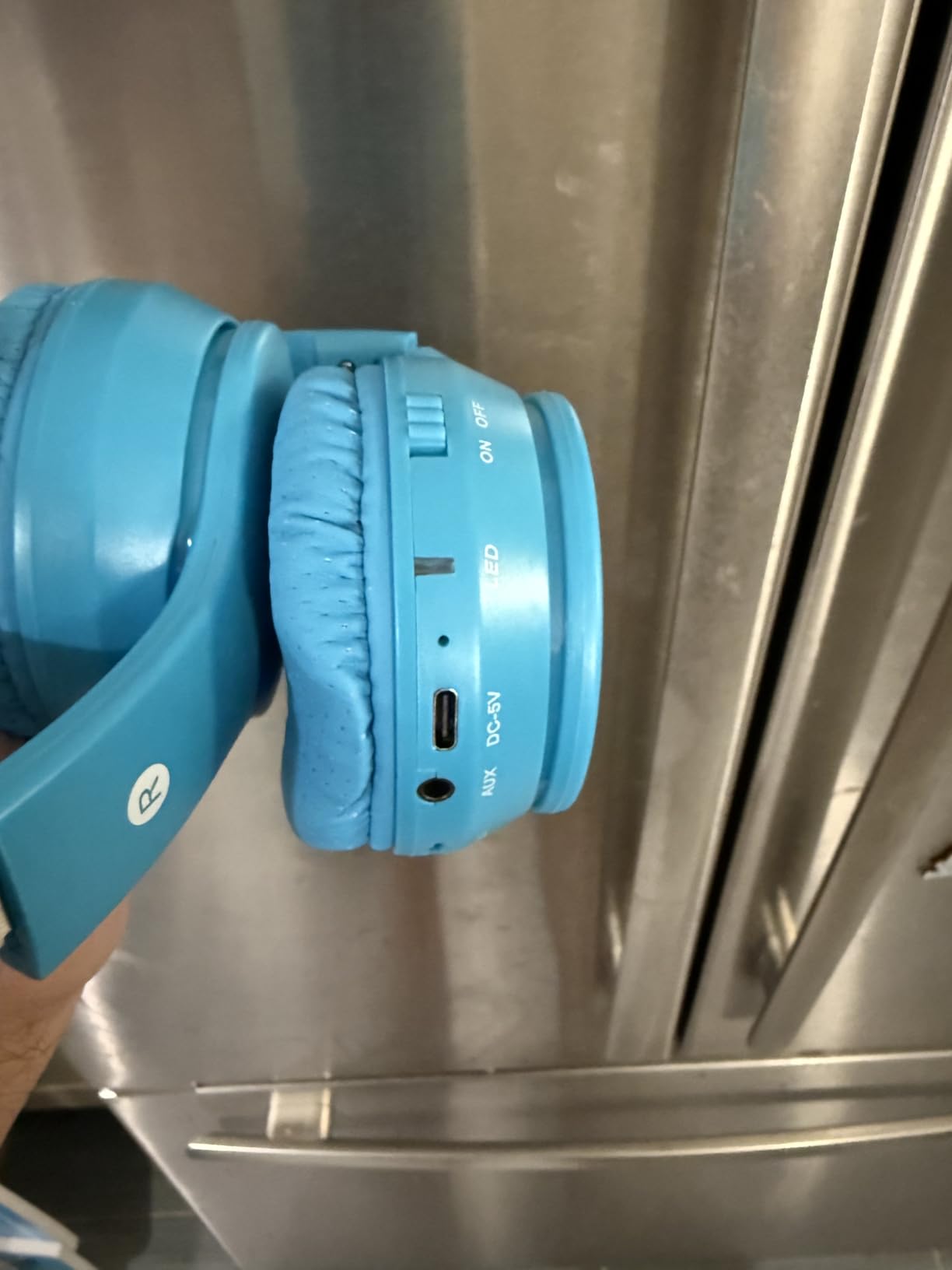
The battery claim of up to 68 hours did not repeat at that figure in our use, which is normal for a manufacturer maximum, but the 15 hour average life listed in the specifications lines up with what we saw across a week of intermittent use. The two-hour charge time is fine; the five-volt one-amp limit is the annoying part, because plugging in a fast charger does nothing.
Why the key lock changes everything
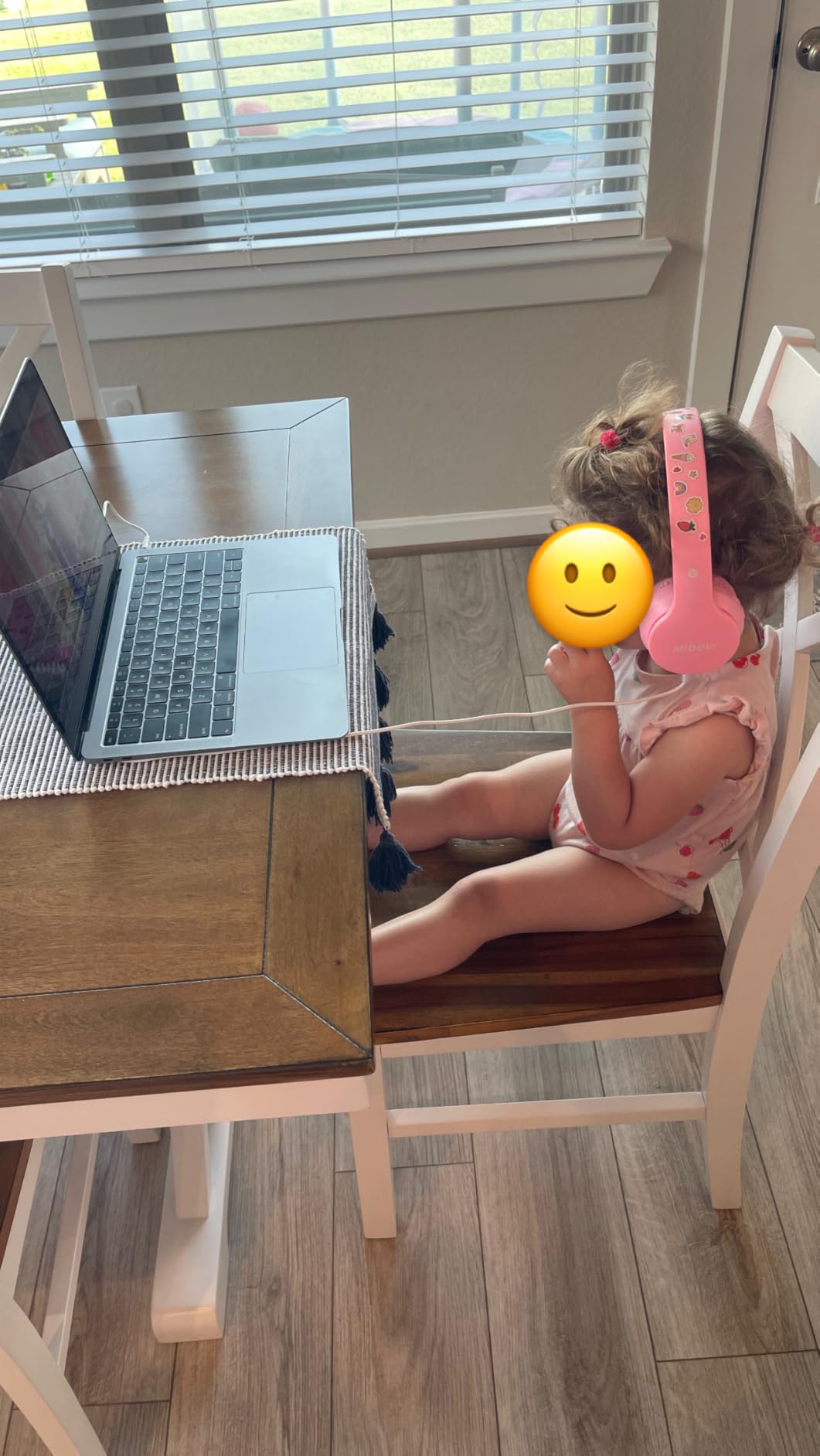
Reviewers repeatedly describe the lock as the reason the pair works, and we agree. Without it, a 94dB mode is just a button a seven-year-old will find. With it, you set 85dB once and the pair stays there through a two-hour flight.
The 85dB and 94dB labels on the listing match the toggle positions we found on the unit, and the default position on power-up was the safer 85dB setting rather than the louder one. That default matters more than it sounds.
Where it falls short
There is no active noise cancellation here, only passive isolation from the over-ear cushions, so a loud cabin still tempts a child to push volume. Charging is restricted to standard adapters, and at 8.96 ounces the on-ear style sits closer to the ear than a true circumaural cup would.
For a child on a plane with no ANC, our other picks for travel may serve you better. For a child who is determined to turn everything up, this is the one to buy.
2. awatrue AT2 Kids Headphones – the Sharing Jack Workhorse
awatrue AT2 Kids Headphones for School with Mic, 85/94dB Safe Volume Limit
- Study and travel modes for different environments
- Sharing jack links two pairs with no splitter
- Strong passive noise cancellation
- CPC certified sturdy construction
- Fits ages 2-15
- Wired only with no Bluetooth
- Cord joint can pop out of the earcup
- Sharing jack is finicky until fully seated
- Doubling two pairs can confuse the dB switch
The awatrue AT2 has more than 7000 owner reviews and a 4.6 average, and the reason shows up constantly in them: parents buy it in pairs so two children can watch the same screen. The built-in 3.5mm sharing jack is the headline feature, and it works exactly as described once the plug is pushed all the way home.
It also has the loudest passive isolation of any wired pair we tested. The protein leather cushions plus the CPC-certified PP shell blocked enough ambient noise that we had to raise our own voices to talk over the music, which is a genuine benefit on a plane and a genuine drawback in a car where you want to hear the road.
The volume limiting offers separate study and travel modes at 85dB and 94dB rather than one fixed ceiling, which is a smarter design than most of the field. The switch is physical and sits on the earcup, so it is reachable by a child, and the honest answer is that you should leave it on study mode at home and treat travel mode as a deliberate choice rather than a default.
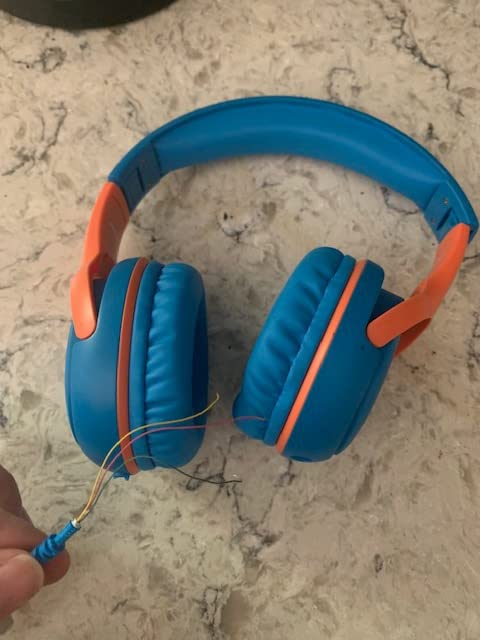
Best value in the whole roundup
Fewer than seven thousand reviewers on this one, and the consensus is unusually consistent. Parents report buying multiple pairs for school and home, which tells you the failure rate is low enough that the second purchase is a second child, not a replacement.
The headband covers ages 2 to 15 from a single adjustment, which is a wider span than most. At 5.2 ounces it is one of the lightest pairs we handled, and the 40mm drivers produced clear stereo for schoolwork and stories.
Where it falls short
The cord connection point can pop out of the earcup, and that is the single most common durability complaint. A few buyers also report that the decibel switch behaves inconsistently when two pairs are daisy-chained through the sharing jack, so if you buy two, check the mode on both after plugging in.
There is no wireless option. On a device without a 3.5mm jack you will need an adapter, and that adapter is the weakest link in the chain.
3. EarFun K1 Kids Headphones – the Wired Pair That Sounds Best
EarFun K1 Kids Headphones Wired with Mic, Volume Limit Headphones for Kids
- Genuinely balanced 40mm sound for the money
- Nylon braided tangle-free cable
- Sharing jack for two listeners
- CPC-certified materials meeting CPSIA standards
- 18 month EarFun warranty
- Wired only on this variant
- Some buyers report receiving a used item
The EarFun K1 is the one we would hand to a child who cares about how music sounds. Every other pair in this roundup is functional; the K1’s 40mm soundstage drivers produce a genuinely balanced stereo image with bass that does not smear and treble that does not bite.
It is also the rare budget pair with an 18-month manufacturer warranty, longer than most of the wired sets here. The headband survived being squashed flat, dropped and twisted in our testing, and the nylon braided cable resists the kind of hard yank that breaks a thin jacket cable.
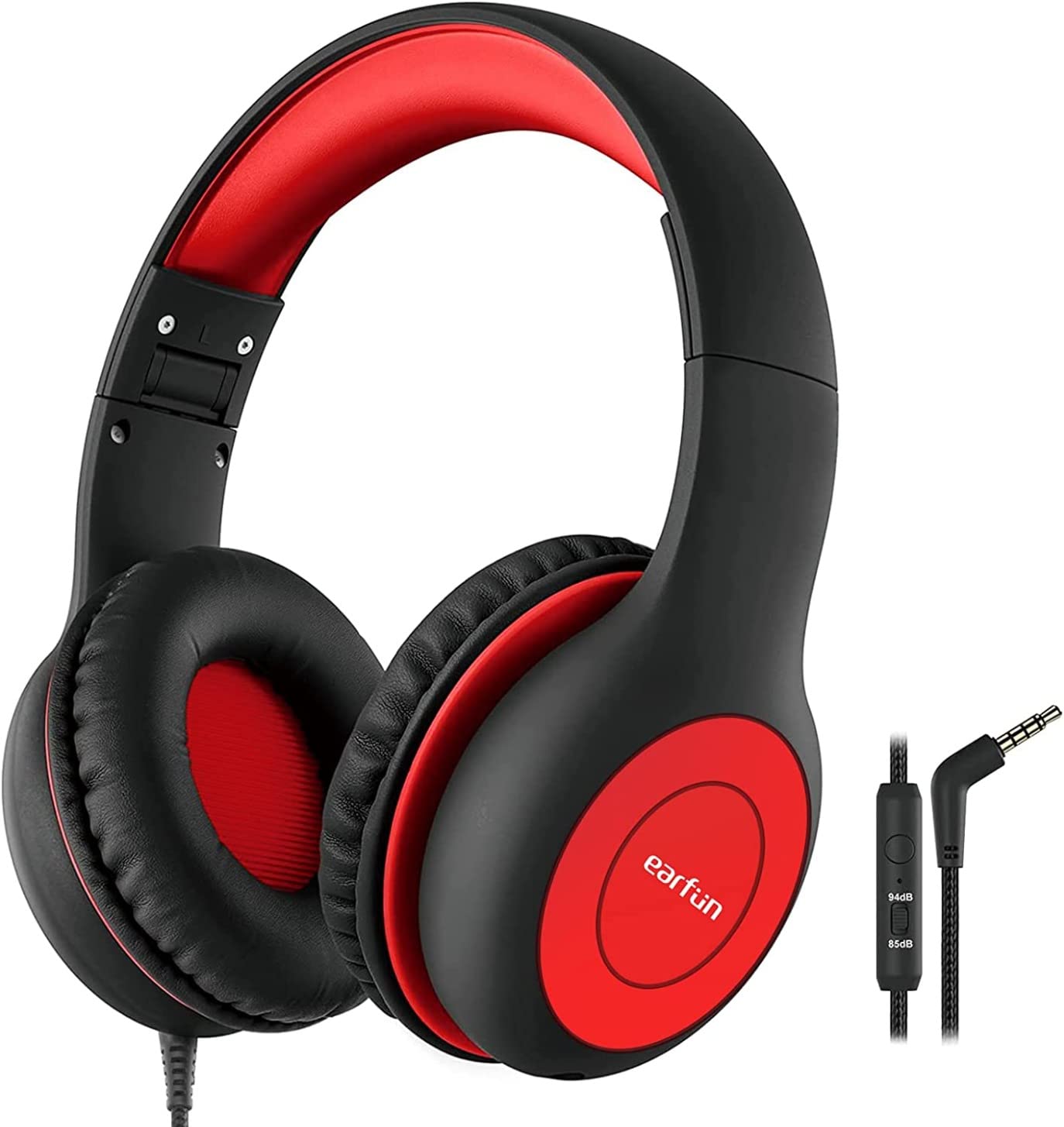
The 85/94dB limiter is the same two-position design as the awatrue, and the inline control handles play, pause, calls and track skipping. The 3.5mm sharing jack on the left cup means two kids can share one laptop or one tablet without a dongle, which is the single most practical feature for a family with siblings.
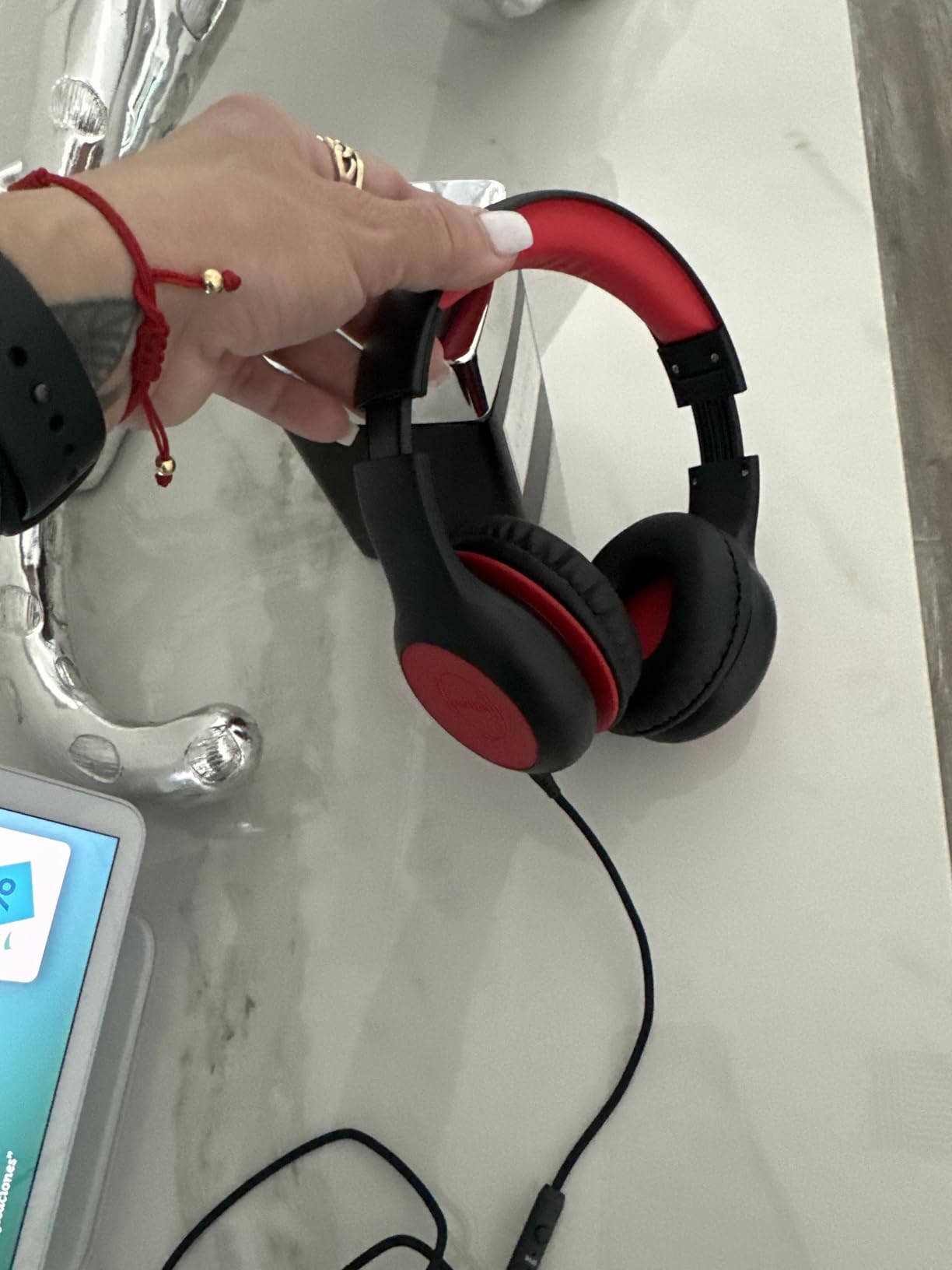
Why we picked it over the other wired sets
The materials are CPC-certified recycled plastics that meet CPSIA standards, which matters for a product that sits against a child’s head for hours. Nearly 79% of its reviews are five star, and the recurring theme is that the sound is better than expected rather than merely adequate.
The ultra-soft ear caps and adjustable sliders took about a week to shape to a small head, after which the fit stayed put through a full session without pressure pain behind the ears.
Where it falls short
It is wired only on this variant, with no wireless option, so modern phones and USB-C tablets need an adapter. A small number of buyers reported receiving a used unit, which is a fulfilment issue rather than a product defect but worth checking the box on arrival.
At 198 grams it is the heaviest pair in the roundup, which is noticeable on a very small head over a long session.
4. AILIHEN Kids Headphones for School – Built for Backpack Life
Kids Headphones for School with Microphone, 93dB Volume Limited, PinkPurple
- Reinforced bend-resistant headband
- Braided cable that survives school use
- Collapsible design packs flat
- Inline HD mic for virtual classes
- Universal 3.5mm jack
- Average sound rather than exceptional
- Stiff clicky headband adjustment
- On-ear cups uncomfortable on larger heads
- No volume control on the headphone body
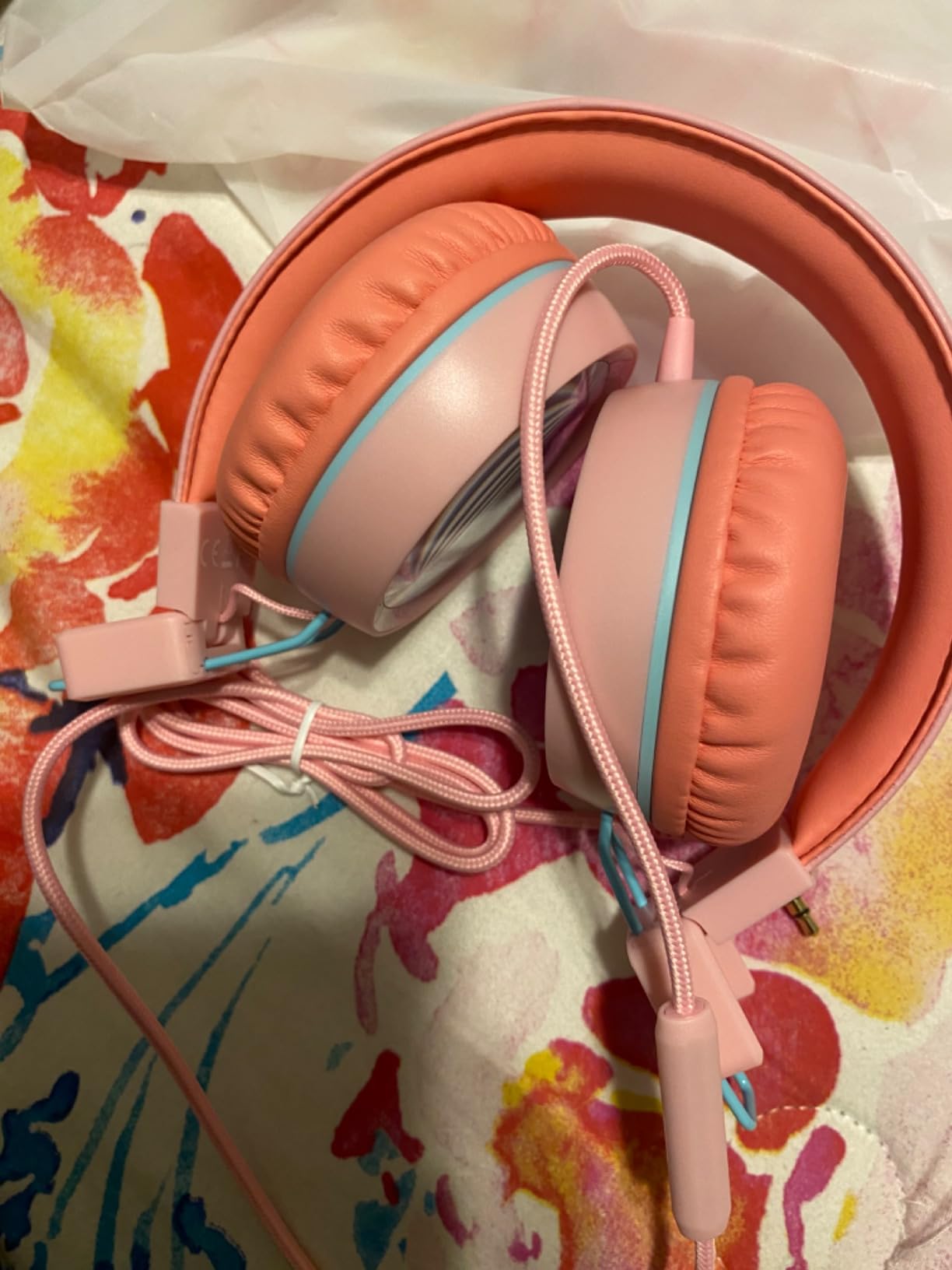
The AILIHEN I35 has the second-largest review base we found, more than 10000 ratings, and it ranks near the top of the on-ear category. It is the pair we would buy for a child who treats a backpack like a tumble dryer.
The reinforced braided cable and the bend-resistant headband are the story here. It collapses flat enough to fit into a school bag beside a lunchbox, and at 5.92 ounces it disappears on a head without being noticed, which matters for a child who takes headphones off within ten minutes.
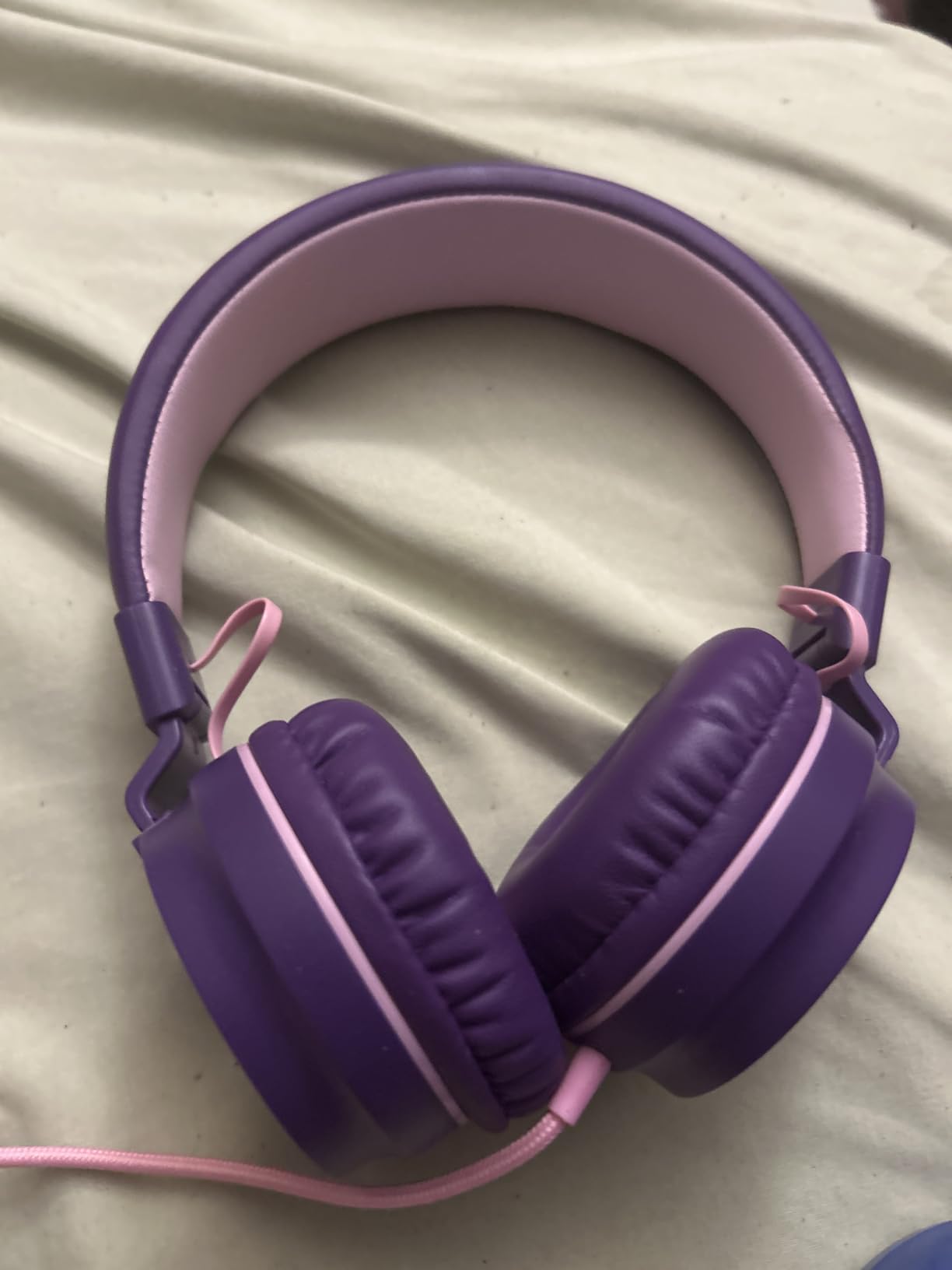
The 93dB limiter is tighter than the 94dB ceilings common in this category and closer to the 85dB benchmark than most of its direct rivals. There is no volume control on the headphone body at all, only the inline control on the cable, which removes one avenue for a child to fiddle with the level.
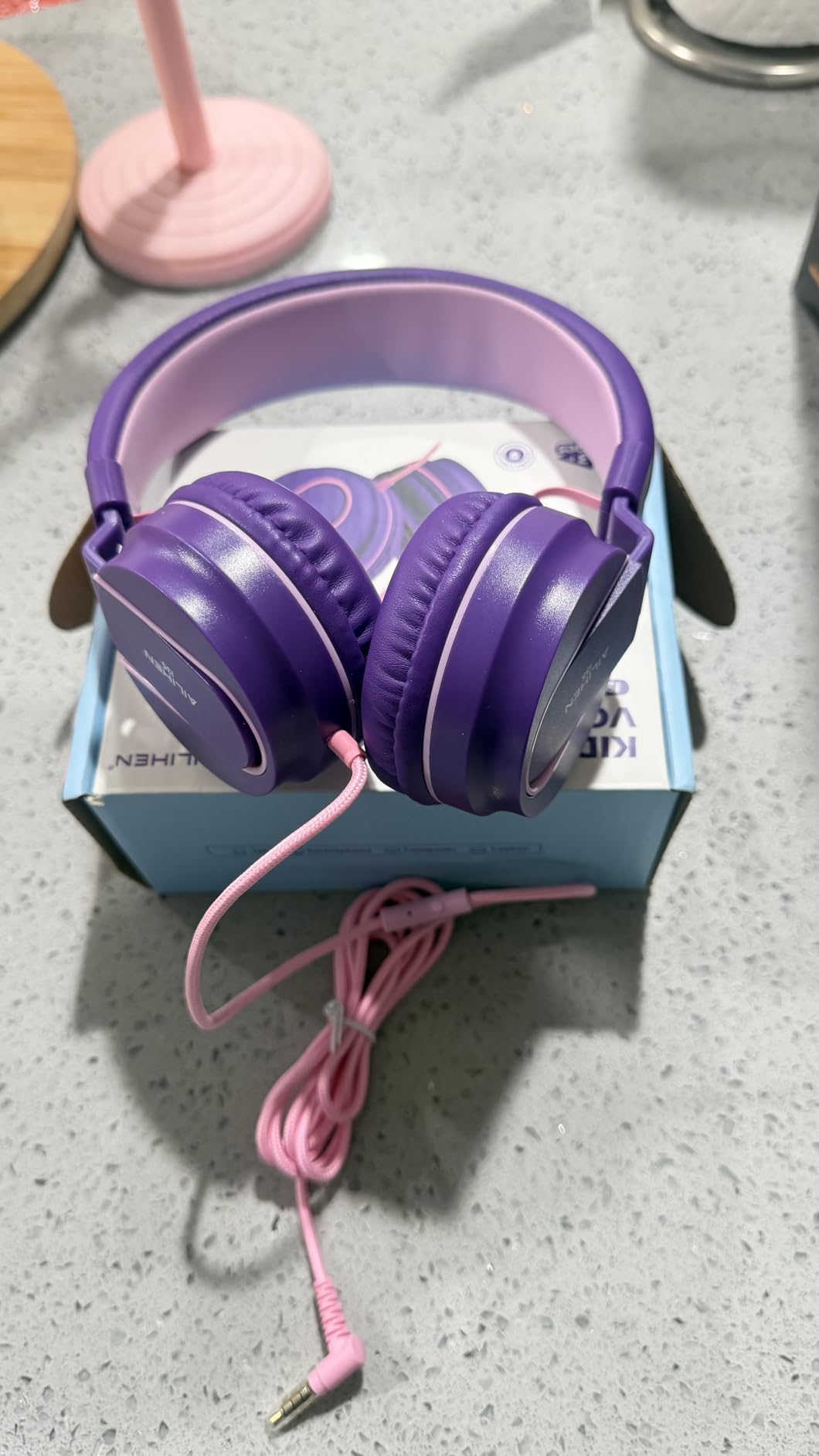
The 93dB cap is unusual here
Most of the field advertises 85/94dB. A single fixed 93dB ceiling is a different philosophy, and a more conservative one than the usual travel mode. If you want a pair where there is no louder setting to find, this is it.
It works with any 3.5mm device, which in practice means Chromebooks, Switch handhelds, Kindle Fire tablets and older phones without an adapter. Parents report multi-year durability, with a minority noting that the faux leather or cord can peel after heavy daily use.
Where it falls short
Sound is average rather than exceptional, and the on-ear cups get uncomfortable for larger-headed wearers over a long session. The headband adjustment feels stiff and clicky when extended, which can frustrate a child trying to put them on without help.
At 93dB fixed there is no 85dB mode for a particularly sensitive ear, so this is a cap to live with rather than one to tune.
5. New Bee Kids Headphones – the Conservative 85dB Pick
New Bee Kids Headphones Wired for School with Mic, Safe Volume Limited
- Adjustable 85dB and 94dB limiter
- Clear HD mic for online learning
- Stainless steel slider resists slipping
- Swivel-mounted cushions for a secure fit
- Works with any 3.5mm device
- Lower limiter setting can be too quiet even on 94dB
- No way to switch the limiter off
- Wired only so newer phones need an adapter
The New Bee KH20 is rated for ages 4 to 16, and the stainless steel slider is the detail that sets it apart from the plastic headbands at this level. It does not slip or snap, and the swivel-mounted leatherette cushions rotate to sit flat against a smaller head.
The microphone is the reason to pick it for a child on remote learning. It is genuinely clear for a six-year-old talking to a teacher, which is more than we can say for the inline mics on several cheaper sets, where the mic sits in the cable and picks up sleeve noise.
The volume control adjusts between 85dB and 94dB, and the 85dB position is the one we would leave it in. Owners repeatedly note that the safe setting is conservative, which for a child with a quiet voice during online lessons can mean asking them to talk louder rather than turning the volume up.
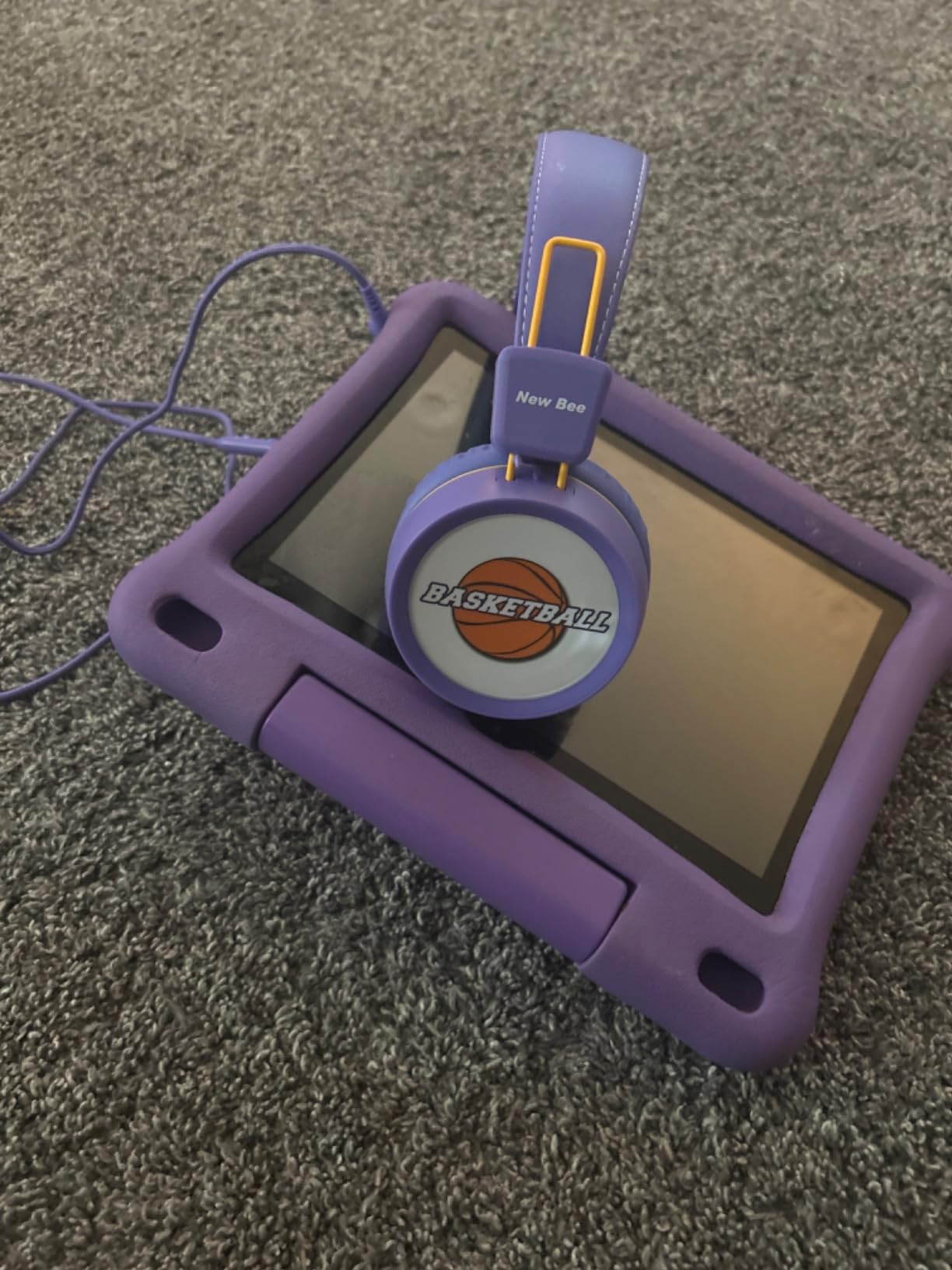
What the 4 to 16 range actually means
The single adjustment covers a 12-year span, which is unusual at this size and means one pair can follow a child from first grade to middle school. Parents with two children in that range report using the same pair for both without resizing complaints.
It folds flat for a backpack, comes with a 12-month warranty, and the frequency response runs a full 20Hz to 20kHz, so there is no roll-off at either end that would make voices sound thin.
Where it falls short
The recurring theme in reviews is that the cap is genuinely conservative. On a noisy bus or a plane, 94dB can still feel too quiet, and the fix is environmental rather than a louder setting. The limiter also cannot be switched off entirely, which matters if an older teen wants a normal pair.
Wired only, and a Lightning or USB-C adapter is required on newer phones and iPads.
6. vinamass Kids Headphones – Lightest for Small Heads
- Fixed 85dB cap with no louder mode to find
- Very light comfortable build
- Flexible headband hard to snap
- Works with Chromebooks and Switch
- Multiple colors children like
- Wired only
- Earpads can tear with typical toddler use
- Colour can differ from the listing photo
- Limiter is fixed rather than adjustable
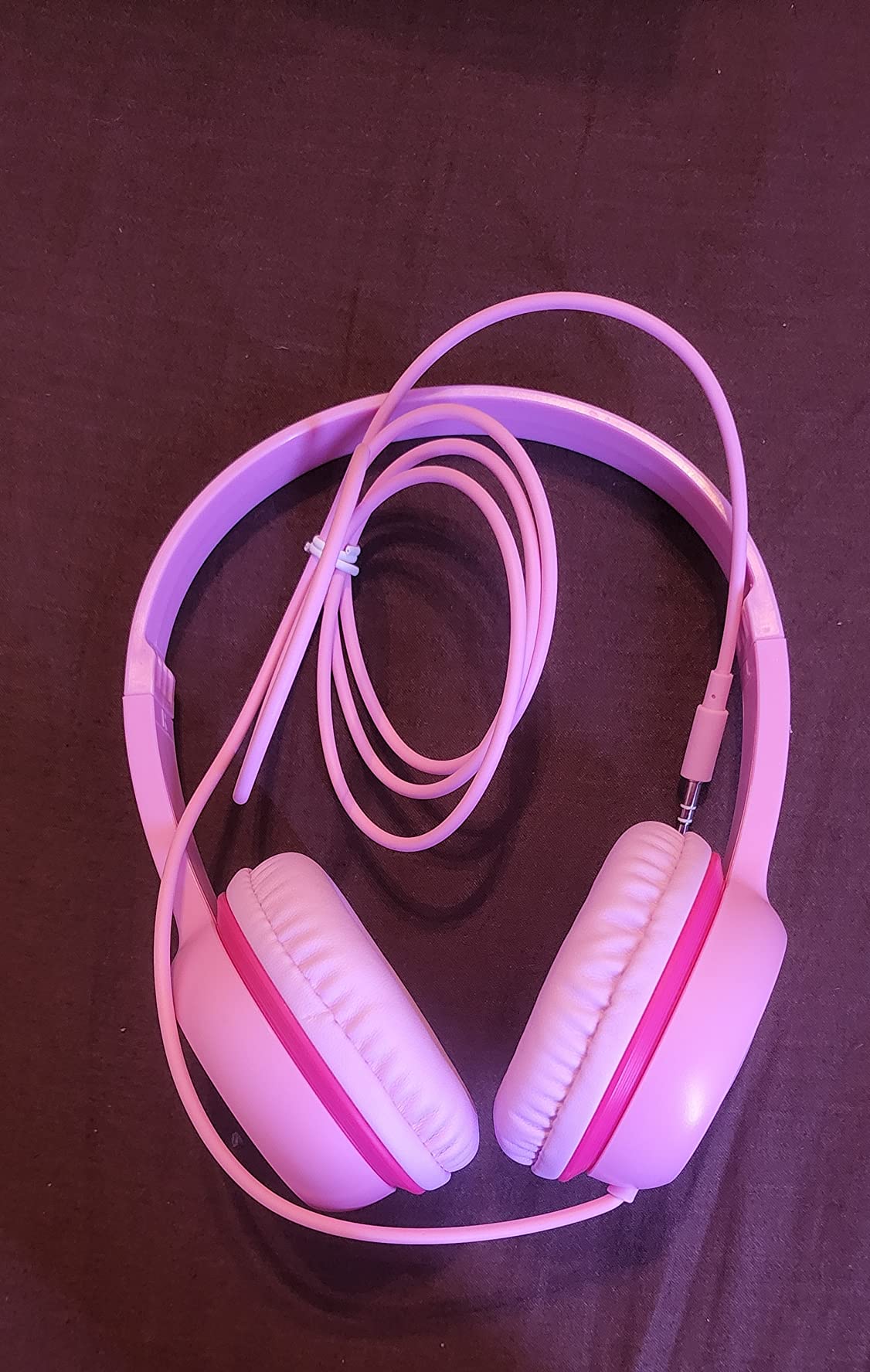
The vinamass is the only pair here with no 94dB mode at all. The 85dB cap is fixed in hardware, aligned with WHO recommendations, and there is simply no second setting for a child to find. For a toddler, that is the whole feature.
At 0.25 kg the build is light, and the soft silicone donut design with PU leather pads over foam sponge sits gently on a small head. The flexible carbon fiber plastic headband adjusts up to 3cm and is very difficult to snap, which matters when the headband is the first thing a toddler grabs.
It is also rated from toddlers through to adults, so it survives the transition out of the nursery without being replaced. The 140 ohm impedance is higher than the 32 ohm on most of this roundup, which pairs well with lower-powered device outputs such as Chromebooks.
Why no 94dB mode is a feature
Every other product in this roundup gives you a louder option, which parents often treat as a compromise. Here it is absent by design. The listing frames the fixed 85dB limit as aligned with WHO recommendations, and for a child under four that framing is the right one.
Roughly 74% of reviews are five star, with owners citing the fixed limit and the light, flexible fit as the two reasons they would buy again.
Where it falls short
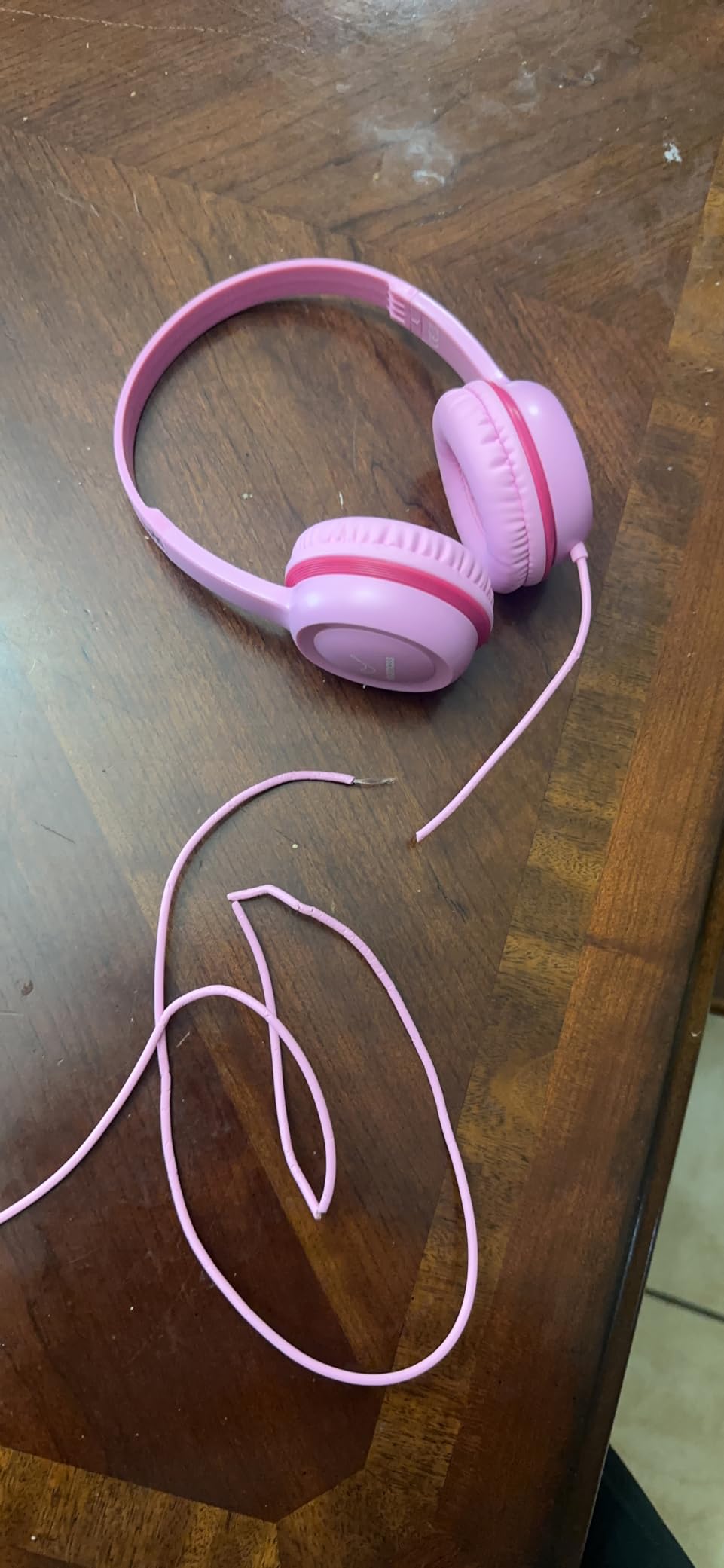
Some owners report earpad and cushion deterioration within weeks of typical toddler use, which is the fastest wear failure we saw in this group. The colour can also differ noticeably from the listing photo, so do not buy it for a specific shade.
Being wired only rules it out for a device without a 3.5mm jack, and the fixed limiter leaves no room to adjust if a child is genuinely struggling to hear speech at 85dB.
7. JLab JBuddies Studio – the One With a Lifetime Warranty
JLab JBuddies Studio Kids on-Ear Wired Headphones with mic, Volume Limiter, Folding, Adjustable, Noise Isolation, Blue/Green
- 85dB limiter tested and approved for ages 6 up
- No charging pairing or batteries needed
- Cloud Foam cushions with a feather-light metal headband
- Smooth sliding metal adjustments
- Folding build for easy packing
- Wired only with no Bluetooth
- No in-line volume control listed
The JLab JBuddies Studio is the pick we would hand a child who breaks things. A feather-light adjustable metal headband with smooth sliding adjustments and a folding design is a different durability class from the plastic hinges on most wired kids headphones.
At 0.17 kg it is the second-lightest pair we tested, and the Cloud Foam eco-leather cushions are the softest in the roundup. The 85dB limiter is kid-safe tested and approved, and the brand rates it for ages 6 and up.
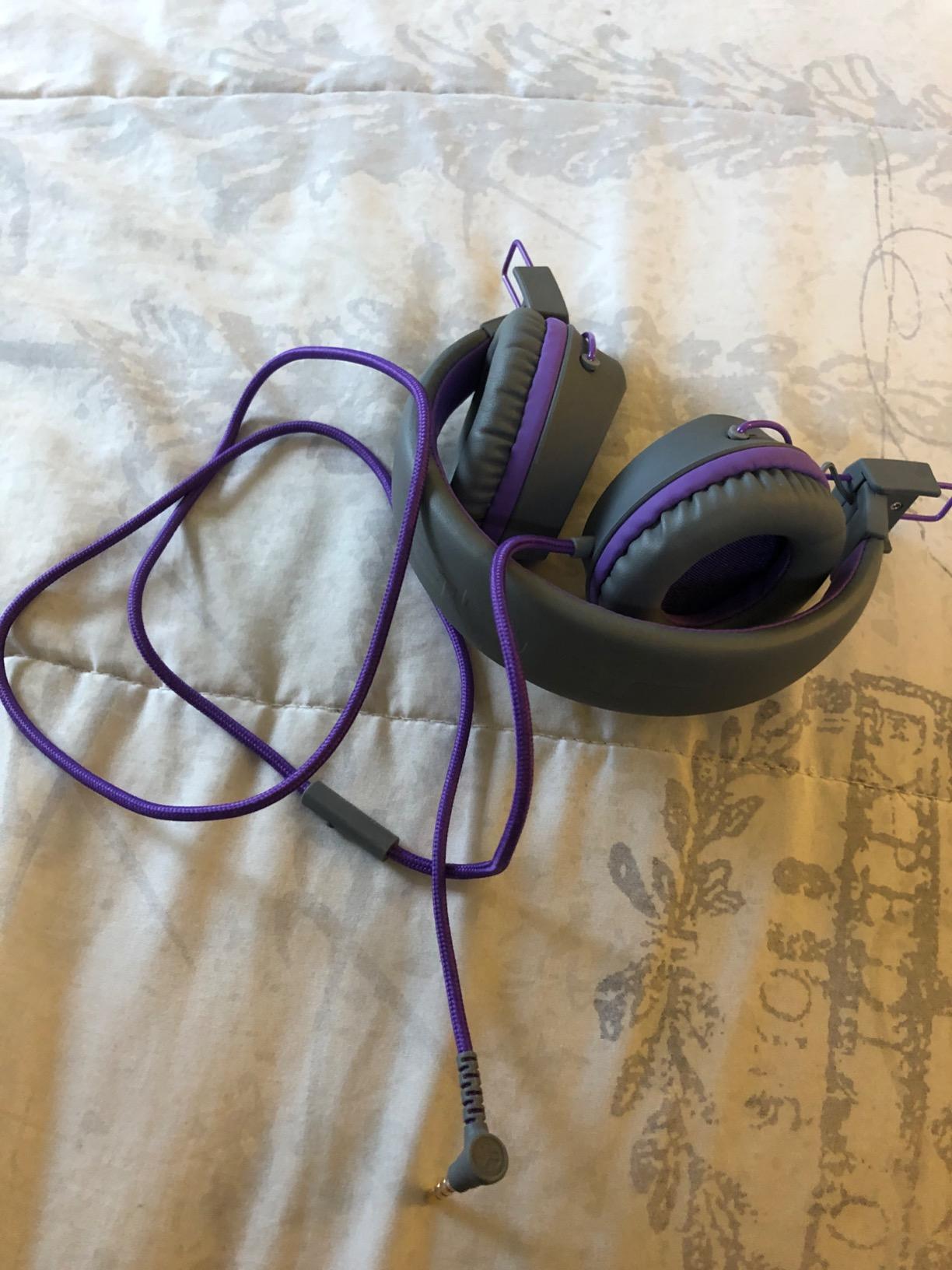
The set-and-forget appeal is real. There is nothing to charge, nothing to pair and no firmware to update. Plug it into a Chromebook and it works, which removes an entire category of parent frustration that every Bluetooth set introduces.
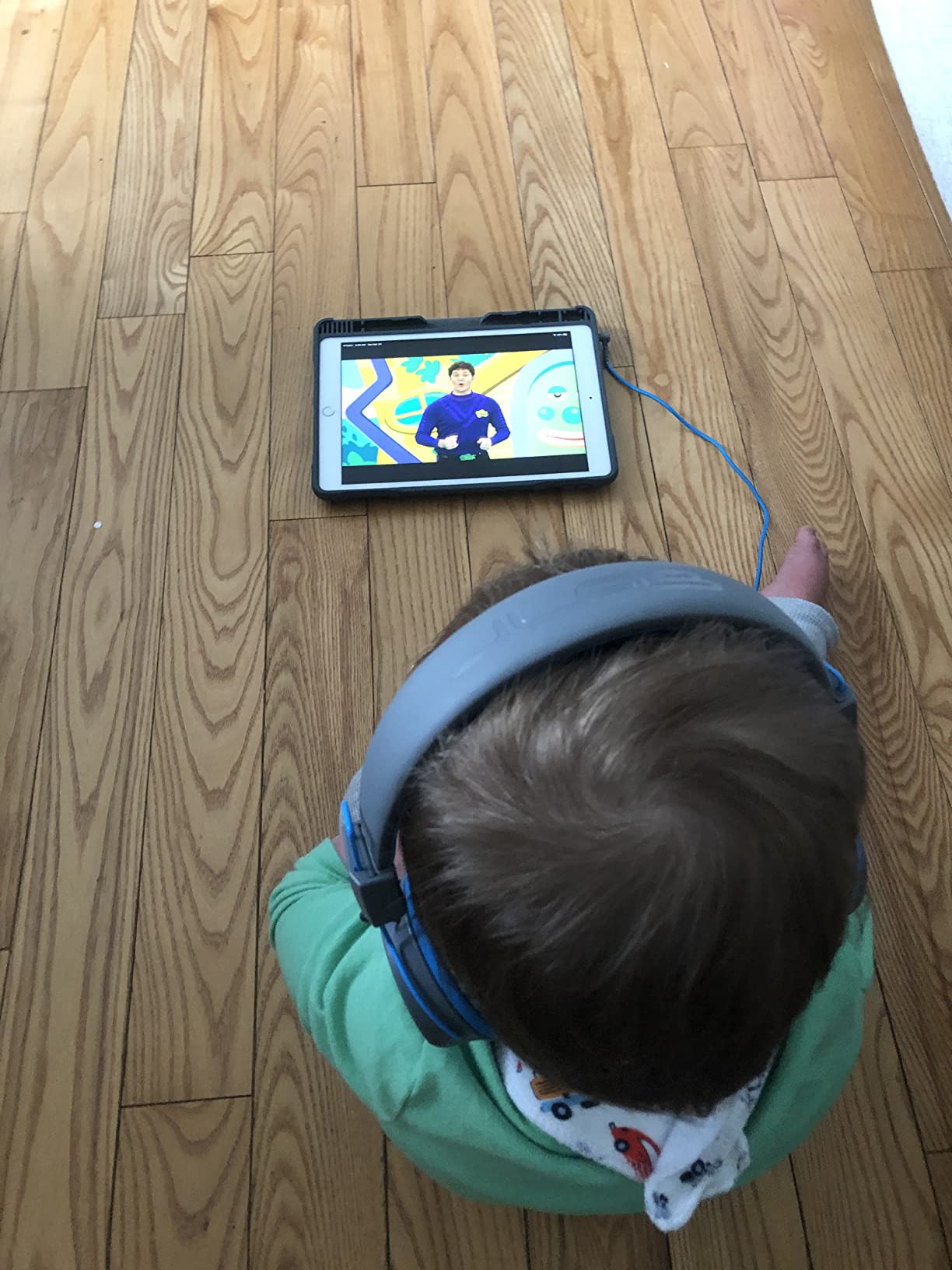
The lifetime warranty is the real differentiator
JLab backs this with a lifetime limited warranty, the strongest cover in this roundup by a wide margin. When a child inevitably twists a hinge, that is the difference between a replacement and an argument. It is also why we rate it as the durability pick despite a 4.5 rather than a 4.6 average.
The integrated in-line universal microphone handles remote learning and video calls, and roughly 74% of its reviews are five star with the set-and-forget convenience as the recurring theme.
Where it falls short
It is rated from age 6, so it is not a toddler option. It is wired only with no Bluetooth, and no in-line volume control is listed, meaning the device handles all level changes rather than the headphones.
At 6 and up it is also the least adjustable of the group in terms of age range, so a fast-growing child may outgrow the headband before they outgrow the warranty.
8. MIDOLA Wired Kids Headphones – Safe by Default
Wired Kids Headphones for School with Cord Mic,Safe Volume Limit 85/94dB
- Defaults to the safer 85dB setting on power-up
- Tangle-free tear-resistant braided cord
- Soft breathable over-ear cushions
- Folds compactly for backpacks and carry-on
- In-line mic with media controls
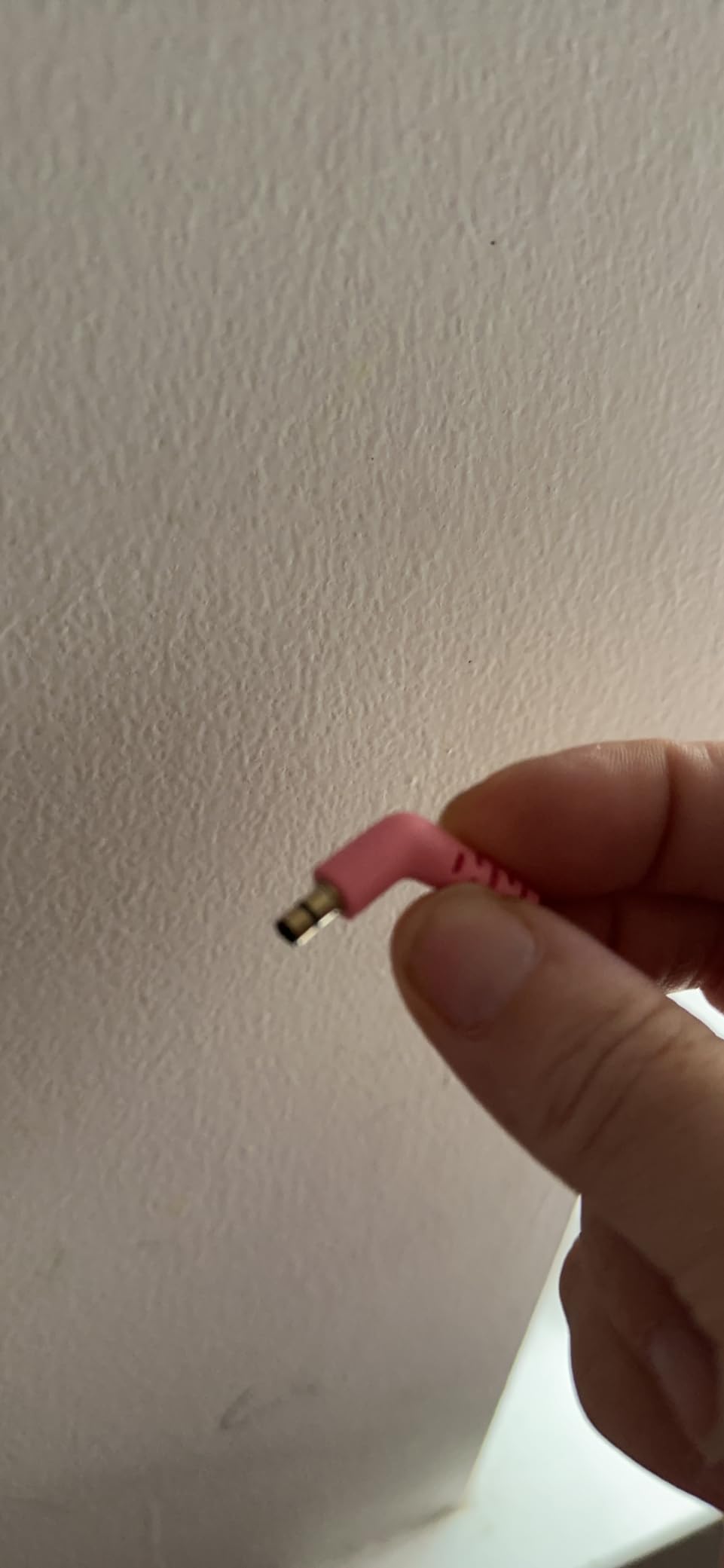
- Some units fail at the cord connection after months
- Cushion foam can detach quickly
- Sound can cut out with the inline mic switch
This is the wired sibling of our top pick, and it shares the same design philosophy with one crucial addition: the volume limit defaults to 85dB when the headphones power up rather than remembering the last setting. A pair that forgets which mode it was left in is a pair that quietly drifts to 94dB.
At 210 grams with soft breathable over-ear cushions, it is a comfortable over-ear fit rather than the on-ear squeeze of several rivals. The 4-level adjustable headband extends to fit most teens and adults, so a child can keep it for years.
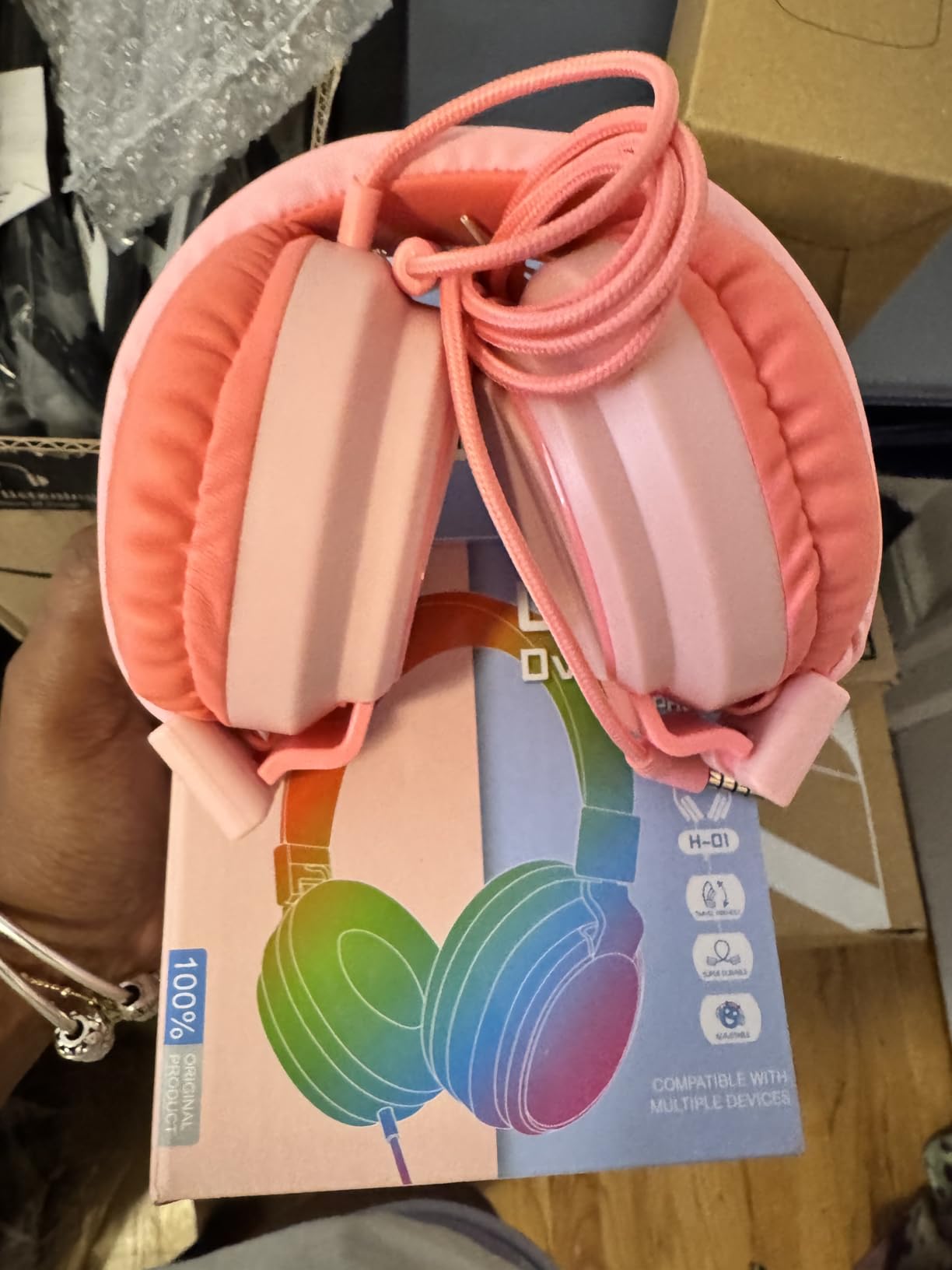
The listed audio latency of 16 milliseconds is the lowest figure in this roundup and effectively removes lip-sync delay on video, which matters for online classes and animated content. The in-line microphone has media controls as well as call handling.
Why the default setting is the feature
Almost every other dual-mode pair latches whatever mode it was last in. If a child finds the 94dB button once on a flight, every subsequent power-up returns them to 94dB. This one does not, and that single behaviour closes the most common loophole parents write about.
It folds compactly enough for carry-on luggage, ships with cartoon stickers and a parent quick-start guide, and comes with a 1-year manufacturer warranty. 70% of its reviews are five star.
Where it falls short
Cord connection failure after a few months of school use is the main complaint, and cushion foam detachment happens fairly quickly on some units. The inline mic switch can also cut sound out depending on its position, which produces a confusing silence mid-lesson.
At 210 grams it is heavy for a small head, and this is the lowest-rated pair in the roundup at 4.3, with the wear complaints dragging it down rather than the safety design.
9. Botesty Sound Kids Headphones – the 24-Month Warranty Pick
Kids Headphones Wired for School, 3.5mm Safe Volume Limited with Mic, Navy
- Cap cannot be overridden by the child
- 24 month warranty is the second longest here
- Soft over-ear cushions from age 3
- 90 degree swivel earcups fold flat
- In-line mic and control buttons
- Runs large on the smallest setting for very young children
- Wired only with no wireless
- Swivel hinge is an extra potential break point
- 85dB can be too quiet on a plane
The Botesty Sound Ivy is rated for ages 3 and up and carries a 24-month warranty, second only to the JLab lifetime cover in this roundup. For a parent who expects a pair to be replaced rather than repaired, that two-year window is meaningful.
The volume limiting is the reason parents single it out. It is a hardware limiter for both the 85dB study mode and the 94dB travel mode, and it cannot be overridden from the device side the way a purely digital cap can be.
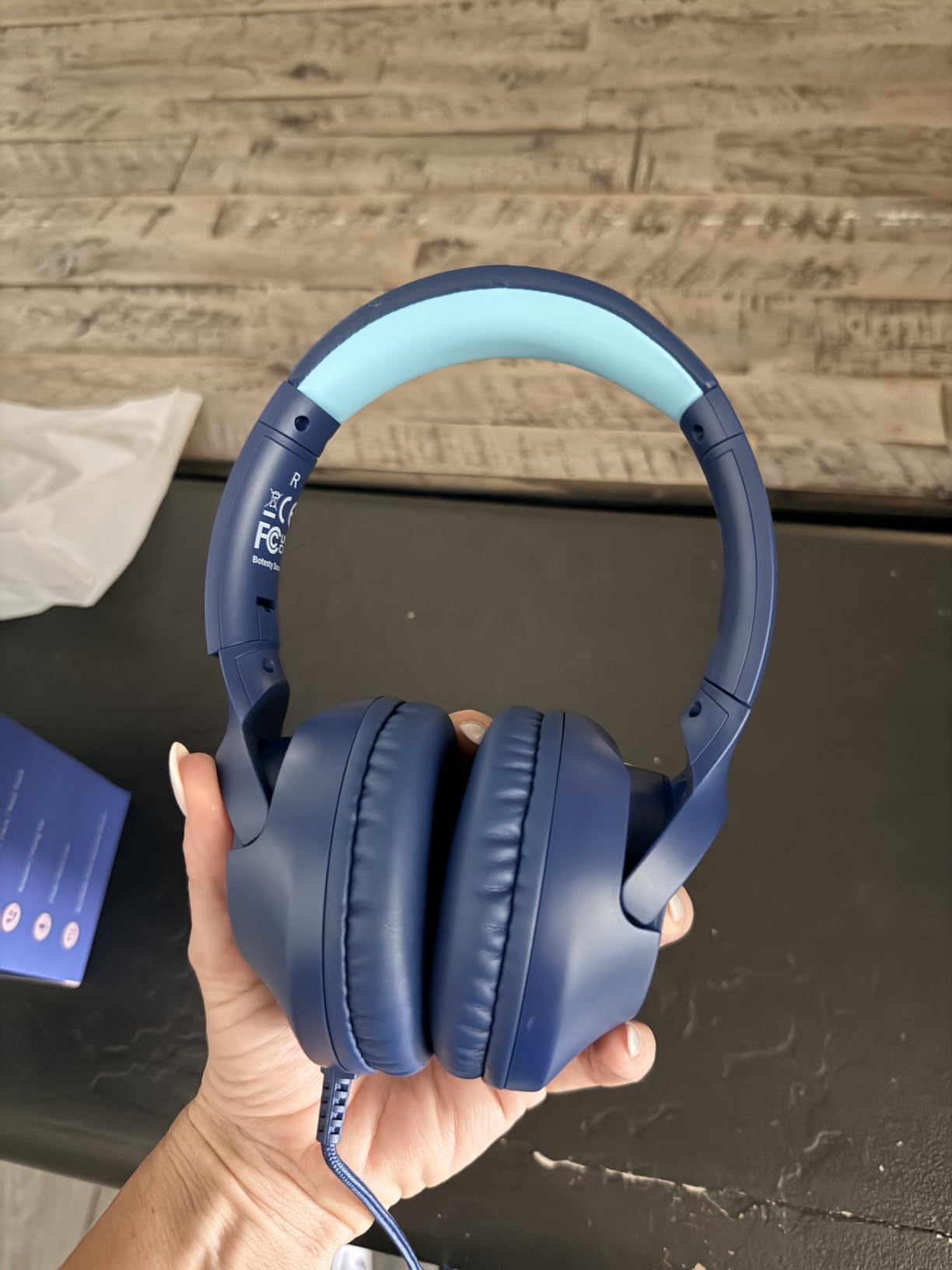
The 90-degree swivel earmuffs fold flat for storage, and the 4.9 foot tangle-free tear-resistant braided cord is longer than most without becoming unwieldy. In-line control buttons and a microphone handle calls and online learning, and the 40mm drivers give clear stereo.
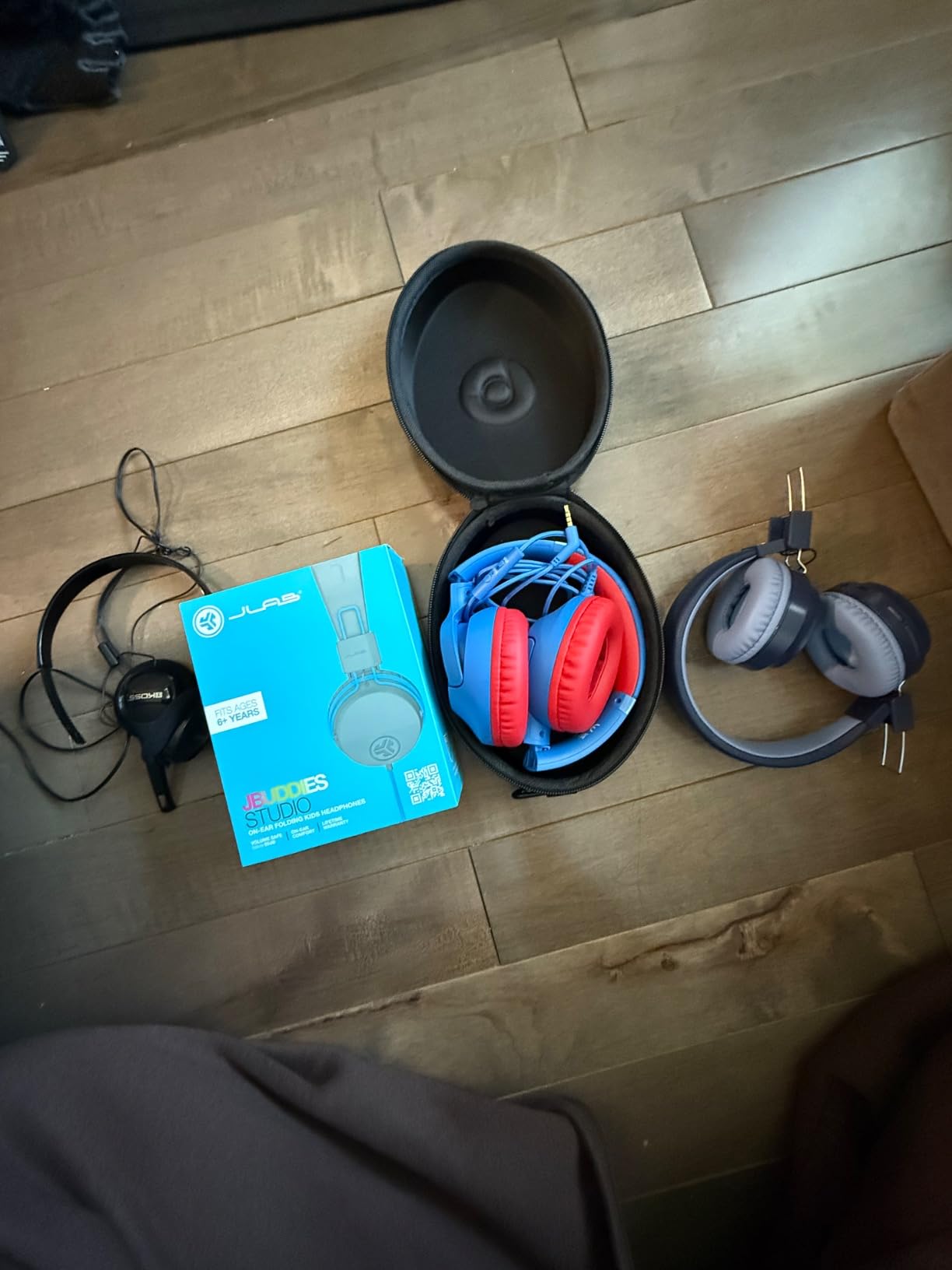
Best warranty coverage in the roundup
Only the JLab carries a lifetime warranty, so this is the runner-up on cover and comfortably ahead of the one-year and 12-month standard elsewhere. Parents report the hardware limiter as the decisive feature, and 78% of its reviews are five star.
It works with any 3.5mm device, which covers Chromebooks, tablets, laptops and consoles without an adapter, and the over-ear cushions sit comfortably for longer than an on-ear pair would.
Where it falls short
It runs slightly large even on the smallest setting, so a genuine toddler under about four will find it loose. The 90-degree swivel hinge is itself an extra potential break point, which is a bit ironic in a pair sold on durability.
On a plane the 85dB study mode can be too quiet against cabin noise, and being wired only rules out modern phones and USB-C tablets without an adapter.
10. QearFun Dinosaur Kids Headphones – Bluetooth With a TF Card
QearFun Dinosaur Kids Bluetooth Headphones, 85dB Safe Volume Limit
- Strict 85dB cap engineered in hardware
- Three playback modes without a phone
- Dinosaur gift box with bonus toys
- Soft pads and adjustable headband ages 3-16
- 24 hour battery with 2 hour charge
- Bluetooth power button has broken on multiple units
- 3.5mm plug barrel can snap off in a port
- TF card not included and no charger in the box
- Dinosaur styling suits younger children
The QearFun is the only pair here that works with no phone at all. It plays from a TF memory card, from Bluetooth, or from a 3.5mm cable, which makes it the pick for long car trips through dead zones and for handing to a child at a restaurant where a screen is not the point.
The 85dB cap is engineered in hardware rather than firmware, and there is no 94dB mode anywhere on the product. The adjustable headband spans ages 3 to 16, and the ear pads are pillow-soft skin-friendly material that sits well on a younger child.
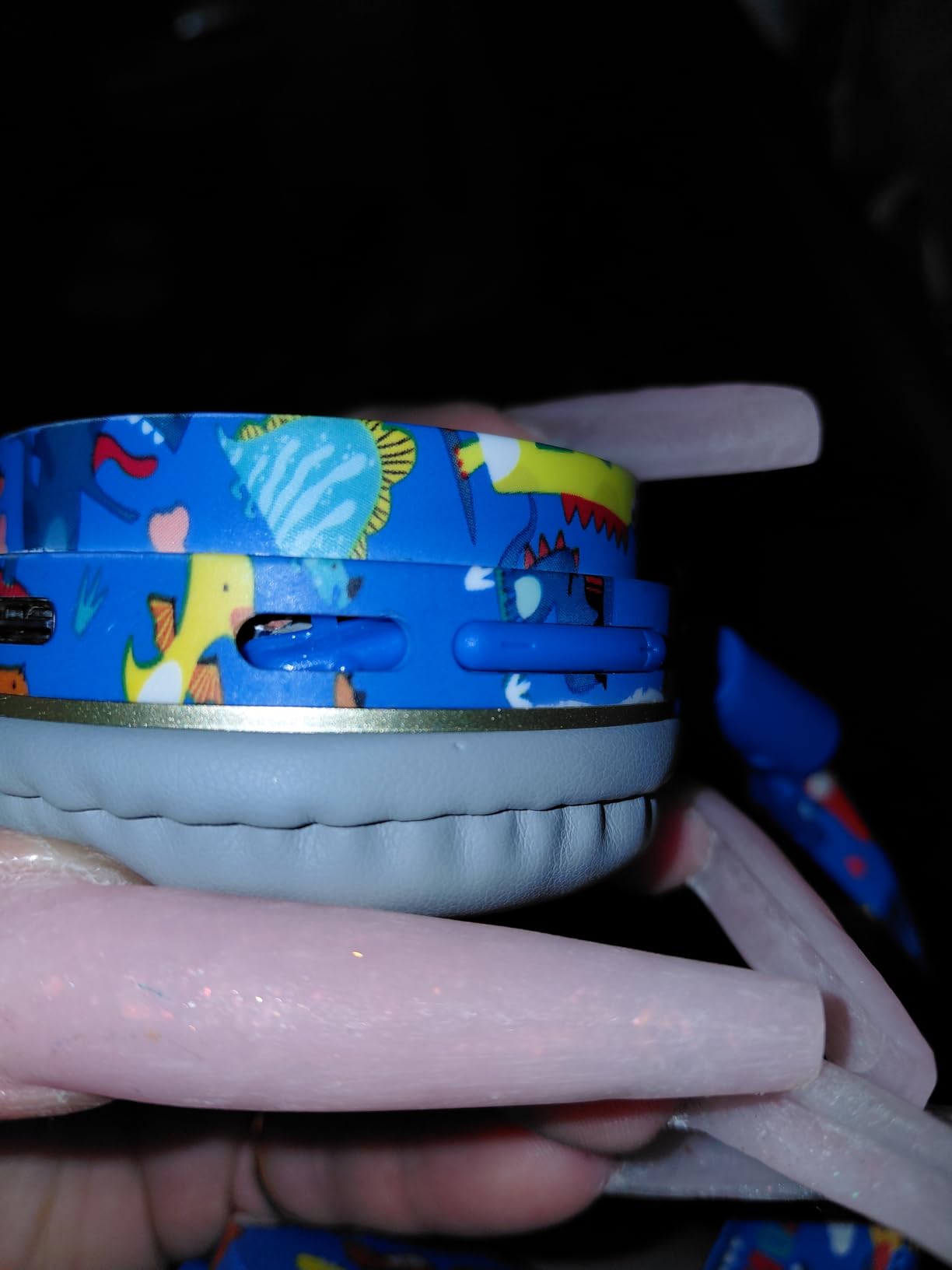
The dinosaur-themed gift box with bonus toys makes it a ready-made present, which is the fastest route to a child actually wanting to wear them. The 24-hour battery and 2-hour charge are adequate for a school day and then some.
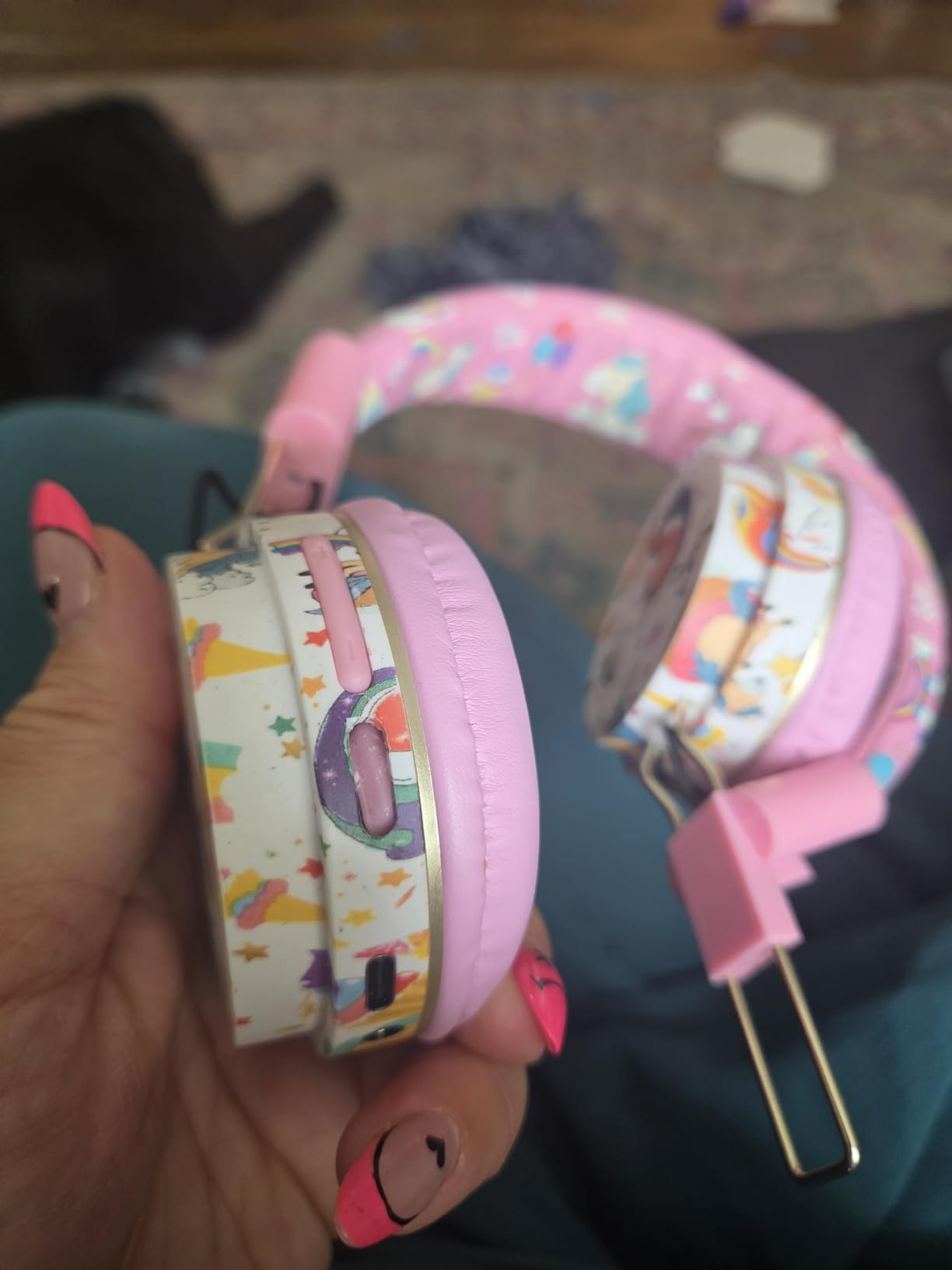
Best when there is no Wi-Fi or signal
Card playback is the feature no other pair in this roundup offers, and it changes the travel maths completely. A child can watch a downloaded film on a plane, in a car through a mountain range, or in a queue at a theme park without a connection or a screen-sharing arrangement.
It folds for a backpack and the built-in microphone handles online classes, calls and console chat. Around 75% of reviews are five star, with children reliably reacting to the design itself.
Where it falls short
The failure mode here is physical, and it recurs: the Bluetooth power button has broken on multiple units at the same spot, and the 3.5mm plug barrel can snap off inside a device port. Neither is cheap to repair once it happens.
The TF card is not included and there is no charger in the box, so budget for a USB cable and a card. The dinosaur styling also aims at younger children and may not suit an older kid.
11. JBL Junior 320 – the Softest Cushions for Little Ears
JBL Junior 320 Kids Headphones, Wired, Volume-Limited – Purple
- JBL Safe Sound never exceeds 85dB
- Soft 12mm padded headband for little heads
- Round earcups grip well and reduce leakage
- Built-in mic for teachers and family
- Folds flat with a thick tangle-free cord
- Earpiece padding can detach after first use
- Fit runs tight on larger heads over long sessions
- Fixed cable cannot be removed
- Wired only so USB-C or Lightning needs an adapter
The JBL Junior 320 is the lightest pair in the roundup at 116.8 grams, and the 12mm padded headband is the softest. For a child who complains about anything touching their head, that is often the deciding factor before sound quality even enters the conversation.
JBL Safe Sound caps output at 85dB with no travel mode to find, which makes it a straightforward choice for a younger child. The round on-ear earcups grip a smaller head well and reduce sound leakage, which limits how far the audio carries to siblings in the back seat.
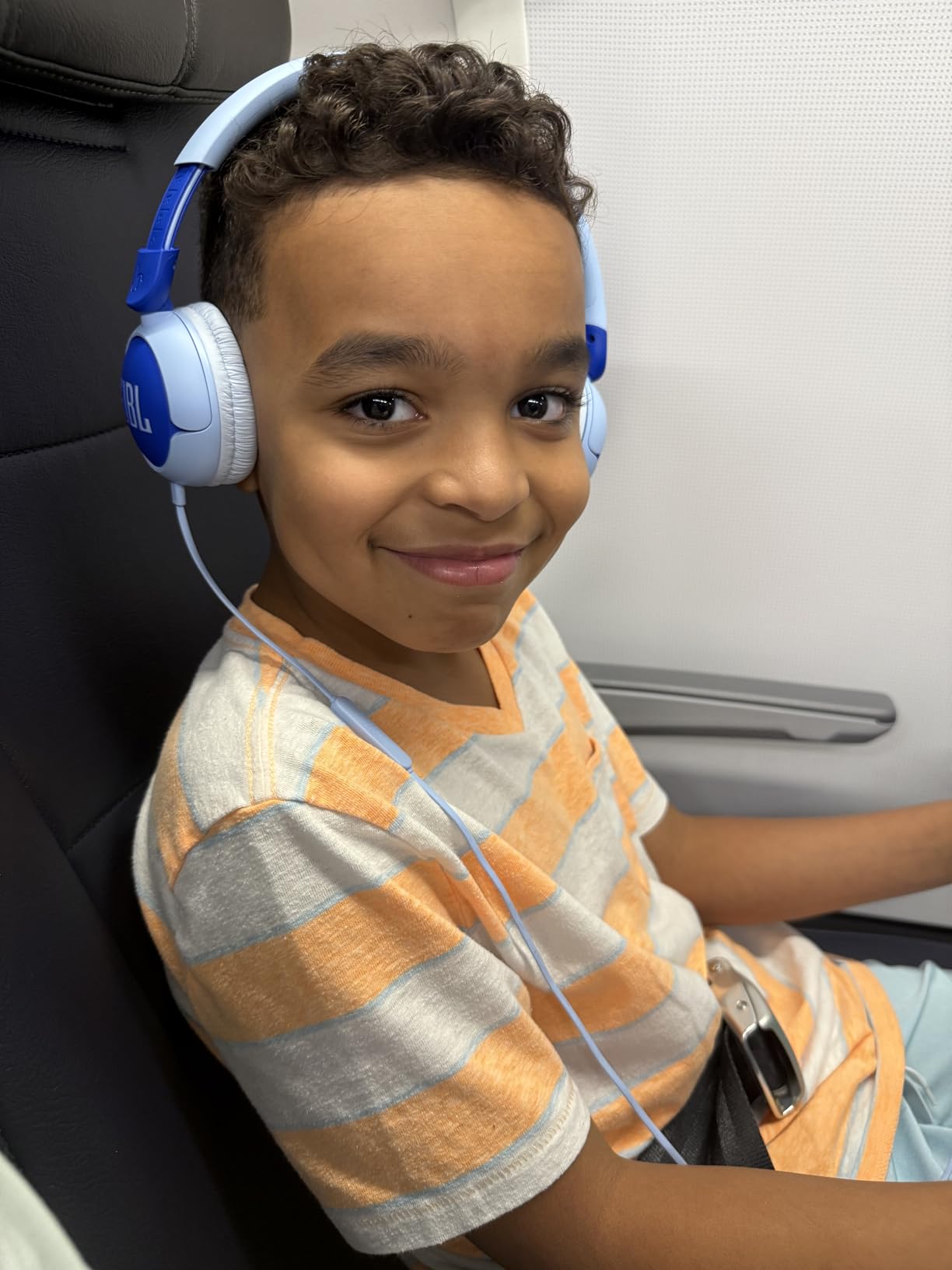
The single-sided tangle-free cable is thick enough to survive a fidgety child, and the pair folds flat into a school bag or a travel pouch. A customizable JBL sticker set is included, which buys goodwill with a child who would otherwise refuse to wear plain black.
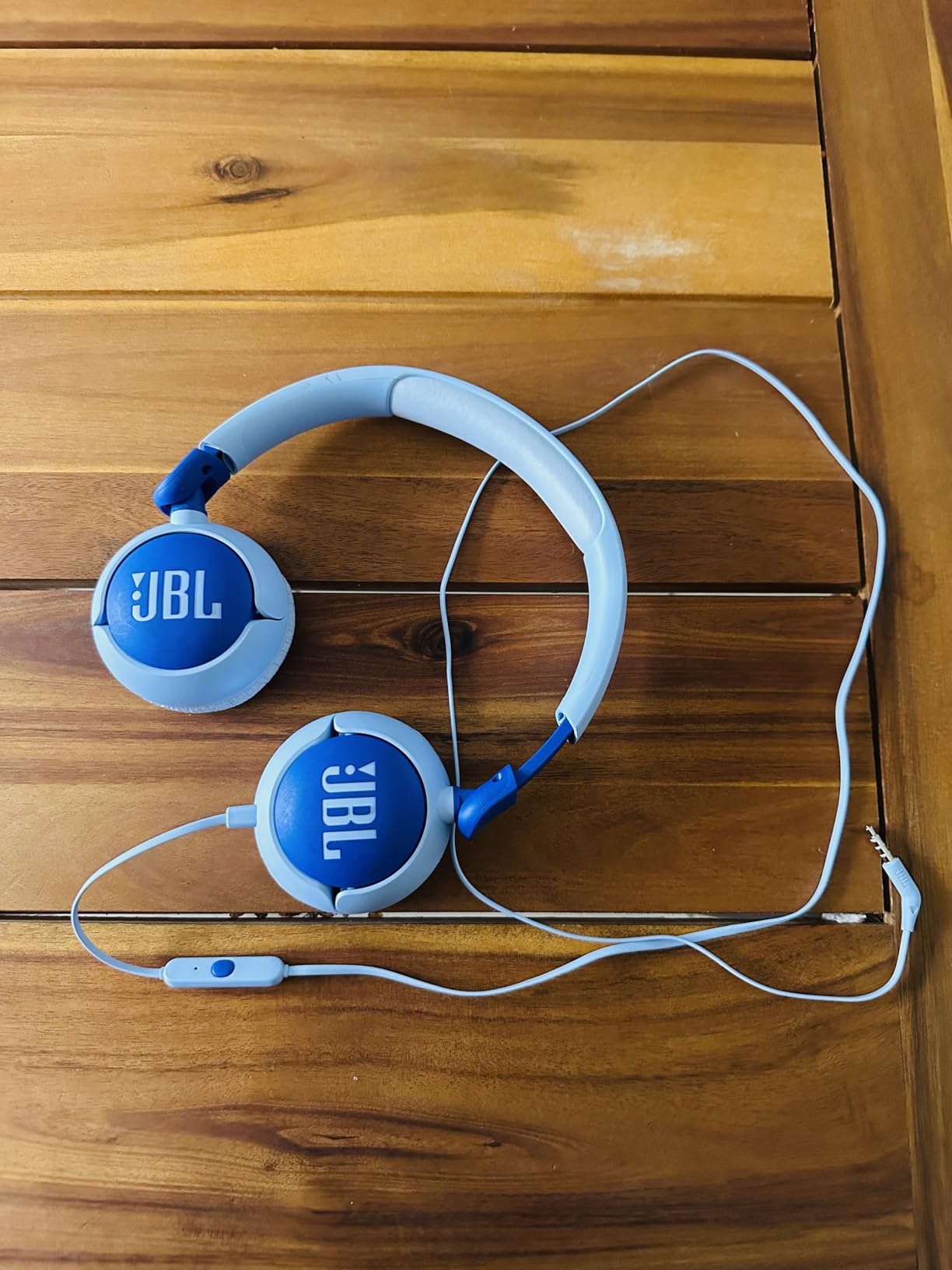
What 32mm drivers mean in practice
The Junior 320 uses 32mm drivers rather than the 40mm units on the picks above. The result is a lighter, less powerful bass response, which is the correct trade for a small ear canal and a fixed 85dB ceiling. It is a music headphone for a child, not a critical listening one.
Owners rate the sound quality and the soft squishy cushions highly, with 77% of reviews at five stars. The earcup design is the same family as the larger JBL Junior models, scaled down.
Where it falls short
Two fit issues stand out. The earpiece padding can detach after the first use, and the fit runs tight on a larger head over a long session, so this is a small-head headphone that will not scale up the way some rivals do.
The cable is fixed and cannot be removed, and being wired only it needs an adapter on USB-C or Lightning devices.
What 85dB Actually Means, and What the 60 Rule Is
The decibel limit for safe headphones for kids is 85dB. NIOSH, the US body that sets occupational exposure guidance, treats 85dB as safe for up to eight continuous hours. Above that level, permitted exposure time falls by half for every additional 3dB, which is the exchange rate behind the rest of the numbers in this section.
The 60 rule is a shorthand from NIOSH for children: no more than 60 minutes of listening per day at a volume above 60 percent. It is designed for earbuds and small speakers rather than headphones, but it works as a daily habit for a child who uses a capped pair for school and games.
Put the two together and the numbers below are what you are actually deciding between when you choose a cap:
85dB – up to 8 hours, per NIOSH. This is the ceiling most of this roundup enforces in hardware.
93dB – about 1.5 hours. The AILIHEN I35 fixed cap sits here, tighter than most rivals.
94dB – about 1 hour, also the NIOSH ceiling for children. Every 85/94dB travel mode in this roundup lands on it.
100dB – roughly 15 minutes.
108dB – a few minutes. This is the output level some adult wireless earbuds can reach at full volume with ANC on.
That is why the 94dB mode matters less than its marketing suggests. It is not a dangerous level in itself, it is the NIOSH daily limit for a child. It is fine in a loud aircraft cabin for an hour. It is not fine as a default for every commute.
Two definitions that get conflated constantly: volume limiting caps how loud the headphone can get. Noise reduction blocks outside sound. Noise cancelling uses microphones to cancel outside sound. None of the three limits volume, and a pair with excellent noise reduction is what lets a child hear the music at a lower device volume, which is safer than turning it up.
If your child has had a specific hearing complaint, an ear infection or a suspected noise exposure, see a pediatrician or audiologist rather than relying on a buying guide.
Wired vs Wireless: Which Volume Cap You Can Trust
There are two ways a pair caps its output, and the difference matters more than any feature on the spec list.
A passive attenuator is a fixed resistor or acoustic damping fitted at the driver. It caps output regardless of what the source device does, which sounds like a strength. In practice the labeled figure is still only a target, because the final level also depends on the source device’s amplifier and its own volume setting. That is why wired 85dB claims are less trustworthy than the number on the box suggests.
A digital signal processor measures the audio in firmware and clamps it at a hard ceiling. Because the limit is applied after the signal arrives, it holds regardless of the source. It also allows multi-mode designs, which is where the 85/94dB study and travel modes on the awatrue, MIDOLA and Botesty Sound come from.
The practical read: on a wired 3.5mm pair, the printed cap is a design target. On a Bluetooth pair with a real DSP limiter, it is closer to a guarantee. If the cap is the whole point of your purchase, that distinction deserves weight.
There is a second question forums raise constantly: does the cap still apply when you plug in the cable? On the MIDOLA Bluetooth pair, the wired fallback uses the same limiter hardware, so it does. On a general wireless design where the cap lives in firmware, wired mode can bypass it entirely. Check the listing for a hardware limiter, not just a software claim.
Wireless also means a battery to forget to charge, a pairing step a five-year-old cannot complete, and a button that can break. That is why most of this roundup is wired, and why the MIDOLA Bluetooth pair and the QearFun are the only two exceptions.
How to Actually Enforce the Limit on iOS, Android and Windows
A headphone cap is the first layer. Device controls are the second, and they are free.
On iPhone and iPad, open Settings, then Screen Time, then App Limits, and add a limit for the Music or video app. Set the time and pick the content type, then use the Screen Time passcode so a child cannot raise it back. On a shared device, Settings, then Sounds and Haptics, then Music, has a slider that caps device output independently of any app.
On Android, open Settings, then Digital Wellbeing, then Focus, and set a time limit or a bedtime schedule for the specific apps. On a tablet managed through Family Link, the parent app controls the child’s account from your own phone, which is the version that actually holds when the child is eight.
On Windows, use Settings, then Accounts, then Family and other users, and set a child account with content limits in Microsoft Family Safety, including a volume setting in the Xbox and Game Pass app for games.
One question comes up constantly: how do you increase the volume limit on headphones? We will not walk through defeating a limiter, because the only people doing that are the children the limiter is protecting. If your child says a capped pair is too quiet, the right response is to fix the environment, not the ceiling. Better cushions, a pair with stronger passive noise reduction, or a quieter room will all help more than another 6dB.
If you do want to confirm a pair is really capped, play a test tone through it at full device volume and monitor the output with a sound pressure level meter app on a second phone held a few centimetres from the earcup. It is not laboratory accuracy, but it is enough to catch a pair that is obviously not limiting.
Getting the Fit Right by Age
Fit is the most underrated criterion, and parents raise it constantly. A parent on a forum described a four-year-old who liked the pressure of her current pair but found them too bulky to put on, which is the exact tradeoff: heavy over-ear cups seal better and sit closer to the head, light on-ear cups are easier to fit and seal worse.
For ages 3 to 5, look for a headband that adjusts down small and a cup that does not overhang. The vinamass and the Botesty Sound both fit this range, though the Botesty runs large on its smallest setting and the vinamass is the safer of the two.
For ages 6 to 9, the 40mm driver sets with a metal or reinforced headband are the right call. The EarFun K1, the awatrue AT2 and the JLab JBuddies Studio all cover this window, and the awatrue headband spanning ages 2 to 15 is the widest single adjustment we found.
For ages 10 and up, a child can comfortably use adult over-ear headphones with a device-level cap, which several parents on forums report works well. Check the headband extension and the cushion depth rather than the printed age range, and treat the 85dB cap as still worthwhile.
Two questions parents ask often: can a nine-year-old use adult headphones? Yes, with a device-level limit and breaks. And what about earbuds? We deliberately left them out. For a child who chews things, loses small objects or shares earbuds with a sibling, an earbud is the wrong tool, and none of the pairs here are earbuds.
On sizing in general, the r/NewParents observation is accurate: most headphones are designed for adult heads, so both sizing and volume options fail for kids by default. Fit is a first-class criterion, not a comfort afterthought.
For Sensory, ADHD and Neurodivergent Listening
There is a second category of buyer that a music roundup usually misses. If your child is autistic, has misophonia, ADHD or sensory processing differences, you may not want music at all. You may want sound blocked, and that is a different product.
Music headphones with a volume cap do not attenuate the world. They only limit what comes out of the drivers. A child trying to escape a noisy supermarket needs passive attenuation, which is a hearing-protection earmuff with a stated noise reduction rating, not a 85dB music pair.
That is a genuinely different shopping list. Look for a stated NRR figure rather than a vague noise reduction claim, soft oversized cushions that seal around a small head, and a headband that does not press. A bulky pair is acceptable here in a way it is not for music, because the child will actually keep it on.
For focus rather than sound blocking, the two higher-isolation wired pairs in this roundup, the awatrue AT2 and the JLab JBuddies Studio with its over-ear Cloud Foam cushions, do the most to lower overall level without a battery or an app. Neither blocks as much as a proper earmuff, so treat them as a partial solution.
On the question of whether kids with ADHD need noise cancelling headphones, the honest answer is that it depends entirely on whether the noise is a distraction or a trigger. For a child who cannot concentrate in a busy room, consistent low-level background sound is often the bigger help, and a capped pair playing at a moderate volume can serve that better than silence. We are not going to prescribe a specific setup for a specific child; that conversation belongs with whoever is supporting them.
Forum threads on misophonia and on loud-sound sensitivity keep arriving at the same conclusion: readers asking for these are usually directed to music headphones and left unserved. If that is you, the earmuff route is the one to research first.
Frequently Asked Questions
What is the decibel limit for safe headphones for kids?
85dB is the standard ceiling. NIOSH treats 85dB as safe for up to eight continuous hours, and recommends roughly one hour at 94dB for children. Most volume limiting headphones in our roundup cap at 85dB, with a 94dB travel mode that should be used deliberately rather than left enabled.
What is the 60 rule for headphones?
The 60 rule comes from NIOSH guidance for children: no more than 60 minutes of headphone listening per day at a volume above 60 percent. It was written for earbuds and small speakers, but it works well as a daily habit alongside a pair that caps at 85dB.
What are some good headphones for kids with volume control?
The MIDOLA Kids Bluetooth Headphones are our top pick because the volume key lock stops a child changing the setting. For wired, the awatrue AT2 adds a 3.5mm sharing jack for two siblings, the EarFun K1 sounds the best for the money, and the vinamass has a fixed 85dB cap with no louder mode at all for toddlers.
How to increase volume limit on headphones?
We do not cover raising a cap, because the only people doing that are the children the cap protects. If a child says a limited pair is too quiet, fix the environment instead: better passive isolation, a tighter seal, or a quieter room. Then pair the headphones with the device controls for iOS, Android or Windows to set a limit you control.
Can a 9 year old use adult headphones?
Yes, comfortably, as long as the fit is right and you set a device-level limit. Many parents use adult over-ear headphones with the volume capped in device settings. Check the headband extension and cushion depth first, and keep taking listening breaks even with a cap in place.
Do volume limiting headphones really work?
They work well when the limiter is in hardware at the driver, because that caps output regardless of the source device. They are less reliable when the limit lives in firmware on a wired pair, where the printed figure depends on the source amplifier. Wireless models with a digital signal processor are the most trustworthy.
The Verdict: Which Pair to Buy in 2026
If you want one pair and no further research, buy the MIDOLA Kids Bluetooth Headphones. The volume key lock is the feature nothing else on this list has, it defaults to the safer setting, it works wired when the battery dies, and the 4-level headband will follow a child from toddler to teen. For a household where two children share one screen, the awatrue AT2 is the smarter purchase, and the sharing jack removes the need for a dongle.
Two smaller decisions. For a toddler, take the vinamass, because a fixed 85dB cap with no 94dB mode means there is nothing to find. For a child who breaks headphones, take the JLab JBuddies Studio and the lifetime warranty that comes with it.
Whatever you choose, set the cap once, lock the keys, add the device-level limit on the operating system, and stop thinking about it. The best headphones for kids with volume limits are the ones your child will actually wear, and the cap only matters if it is on their head. For more of our tested buying guides, see our picks for the best microscopes for kids and the best telescopes for kids, or read about what age kids should start learning robotics if you are looking for a screen-free activity alongside listening time.