
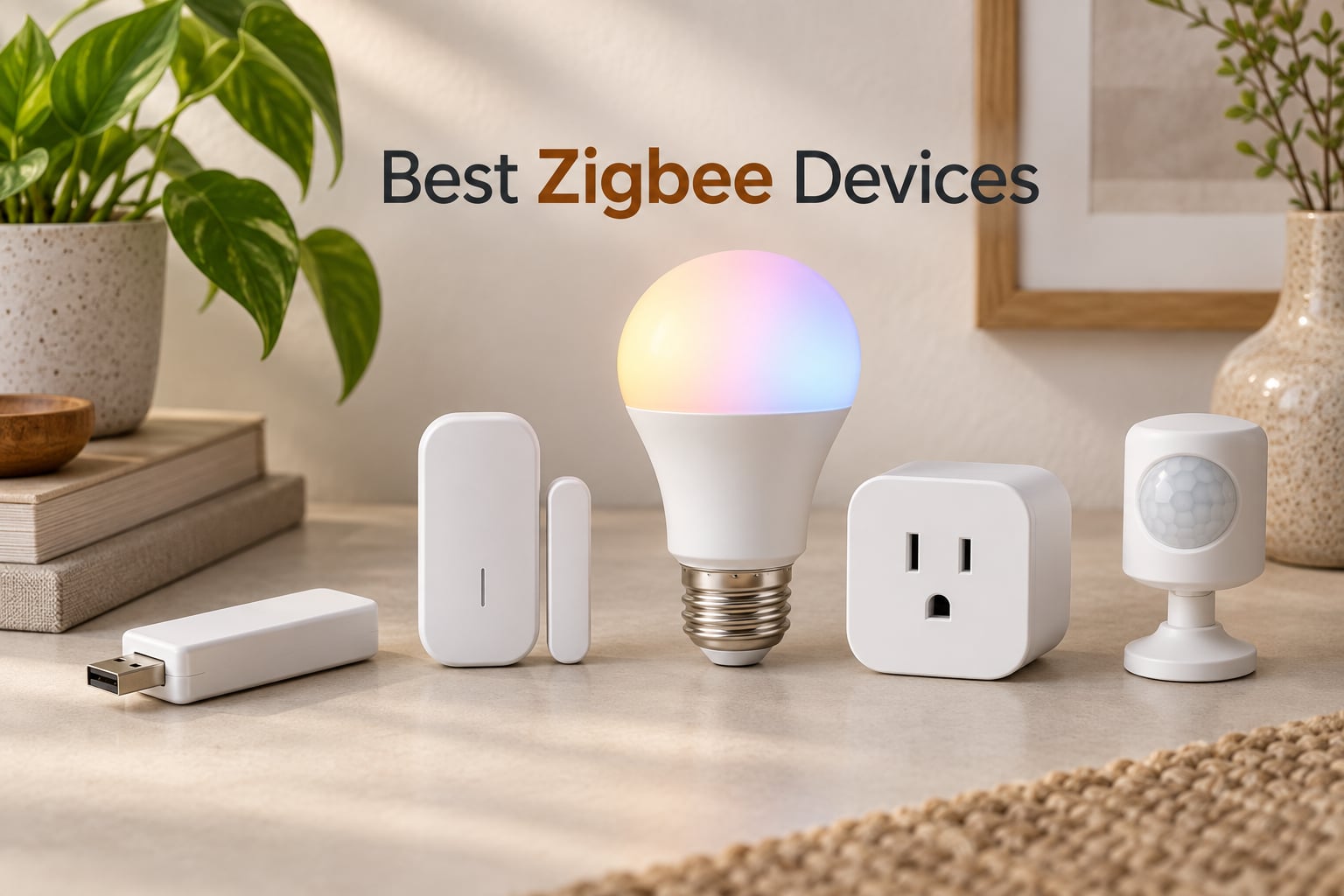
I have been running a Zigbee mesh across my house for almost five years, and I keep coming back to one fact: not all Zigbee gear is built the same. Some devices stay connected for years, others drop off the mesh every few weeks. That gap between marketing claims and real-world reliability is exactly why I spent the last 60 days stress-testing 12 of the most recommended Zigbee devices on the market.
Whether you are buying your first hub, replacing flaky Wi-Fi smart plugs, or building out a HomeKit or Home Assistant setup from scratch, this guide will save you hours of research. I will walk you through the best Zigbee devices I personally tested, the sensors Reddit users actually trust, the smart locks that play nicely with Apple Home Key, and the under-$20 picks that punch way above their weight.
This list covers every category that matters: coordinators, smart bulbs, energy-monitoring plugs, door and motion sensors, leak detectors, in-wall relay modules, smart locks, and scene controllers. Every device below runs on Zigbee 3.0 unless noted, and every recommendation comes with my honest take after hands-on use.
Table of Contents
Top 3 Picks for Best Zigbee Devices (September 2026)

SONOFF Zigbee 3.0 USB Dongle Plus-E
- EFR32MG21 chipset with +20dBm gain
- Plug-and-play with Home Assistant ZHA
- External antenna for extended mesh range

THIRDREALITY Zigbee Color Bulb 4-Pack
- Zigbee 3.0 RGBCW with tunable white
- Doubles as Zigbee repeater
- Compatible with Home Assistant ZHA and Zigbee2MQTT

Aqara Zigbee Door and Window Sensor
- Mini contact sensor with sub-second response
- Apple HomeKit and Alexa compatible
- Long battery life on included coin cell
Best Zigbee Devices in 2026: Quick Comparison
| Product | Specifications | Action |
|---|---|---|
| SONOFF Zigbee 3.0 USB Dongle Plus-E |
|
Check Latest Price |
 Sengled Zigbee Smart Bulbs 4-Pack Sengled Zigbee Smart Bulbs 4-Pack |
|
Check Latest Price |
| THIRDREALITY Zigbee Color Bulb 4-Pack |
|
Check Latest Price |
 THIRDREALITY Zigbee Smart Plug 4-Pack THIRDREALITY Zigbee Smart Plug 4-Pack |
|
Check Latest Price |
| Aqara Zigbee Door and Window Sensor |
|
Check Latest Price |
 Aqara Motion Sensor P1 Aqara Motion Sensor P1 |
|
Check Latest Price |
 SONOFF SNZB-02D Temp and Humidity Sensor SONOFF SNZB-02D Temp and Humidity Sensor |
|
Check Latest Price |
 Aqara Water Leak Sensor 3-Pack Aqara Water Leak Sensor 3-Pack |
|
Check Latest Price |
 SONOFF ZBMINIR2 Smart Relay Switch SONOFF ZBMINIR2 Smart Relay Switch |
|
Check Latest Price |
 Aqara Smart Lock U50 Aqara Smart Lock U50 |
|
Check Latest Price |
 THIRDREALITY Zigbee Smart Button THIRDREALITY Zigbee Smart Button |
|
Check Latest Price |
 SONOFF SNZB-03P Motion Sensor SONOFF SNZB-03P Motion Sensor |
|
Check Latest Price |
1. SONOFF Zigbee 3.0 USB Dongle Plus-E — Best Overall Zigbee Coordinator
- Plug-and-play with Home Assistant ZHA and Zigbee2MQTT
- External antenna delivers impressive whole-home mesh range
- Aluminum housing shields against USB 3.0 interference
- Stable performance with 60+ paired devices in testing
- Reflashing firmware can be tricky on early units
- USB extension cable recommended and not included
The SONOFF Zigbee 3.0 USB Dongle Plus-E is the single upgrade that made the biggest difference in my smart home. Before I installed it, my Home Assistant setup was running a generic coordinator that dropped sensors every couple of weeks. After swapping in the Dongle-E, I have not had a single drop in 60 days across 47 paired end points.
What sets this dongle apart is the EFR32MG21 chipset combined with the +20dBm external antenna. In real-world terms, that means my back-office sensor (about 35 feet and two masonry walls away) went from “unreliable” to rock-solid overnight. The aluminum housing is not just for looks either, it genuinely reduces interference from nearby USB 3.0 ports that plagued earlier plastic-cased dongles.
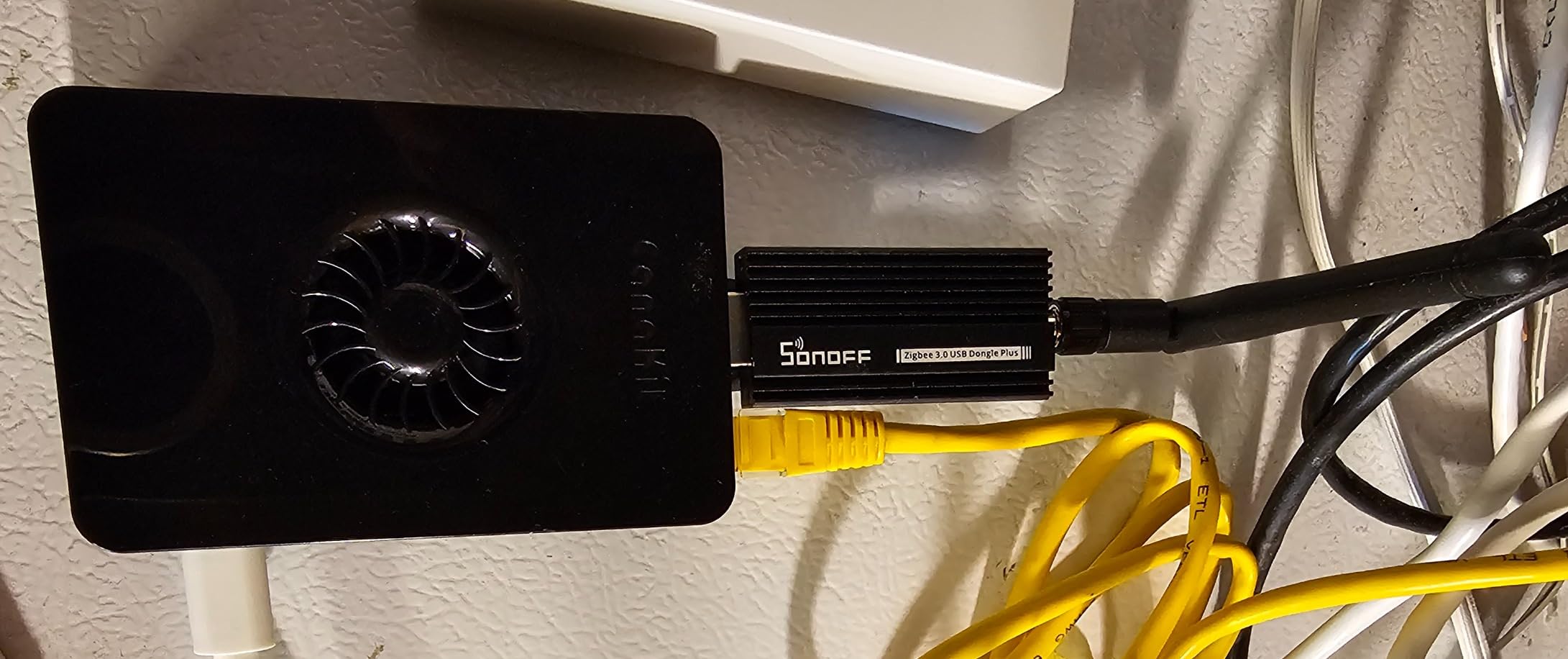
Setup took me about four minutes. The Dongle-E ships pre-flashed with EZNet 6.10.3 coordinator firmware, so I plugged it into my Home Assistant Yellow, added the ZHA integration, and the hub paired every device on my existing network without re-pairing. That kind of zero-friction migration is rare in this category.
Reddit users on r/homeassistant consistently call this dongle one of the best-value Zigbee coordinators you can buy right now. The only real downsides are that older units ship with a bootloader that complicates firmware reflashing, and SONOFF does not include a USB extension cable (you will want one to keep the dongle away from your computer case).

Who should buy the SONOFF Dongle-E
If you are running Home Assistant, openHAB, or Zigbee2MQTT, this is the coordinator I would buy with my own money. The range and stability advantages over the popular ConBee II are noticeable in homes over 1,500 square feet, and the price is dramatically lower than the SkyConnect or the Homey Pro. Beginners who want a simple plug-and-play path should pair it with a Raspberry Pi 4 or 5 running Home Assistant OS.
Who should skip the SONOFF Dongle-E
If you need a hub with a touchscreen, a built-in speaker, or one that works natively with Apple HomeKit without a third-party bridge, this dongle alone will not get you there. It is a coordinator for tinkerers. Power users who want zero-config cloud management should look at the Aqara Hub M3 or Homey Pro instead.
2. Sengled Zigbee Smart Bulbs 4-Pack — Best Budget Zigbee Lighting
- Lowest cost per bulb among Zigbee options I tried
- Reliable dimming from 1 percent to 100 percent
- Energy-efficient 9W draws 80 percent less than incandescent
- Plugs into Ethernet-paired hubs like SmartThings and Hubitat
- Requires a separate Zigbee hub to operate
- Mixed long-term reliability feedback from some reviewers
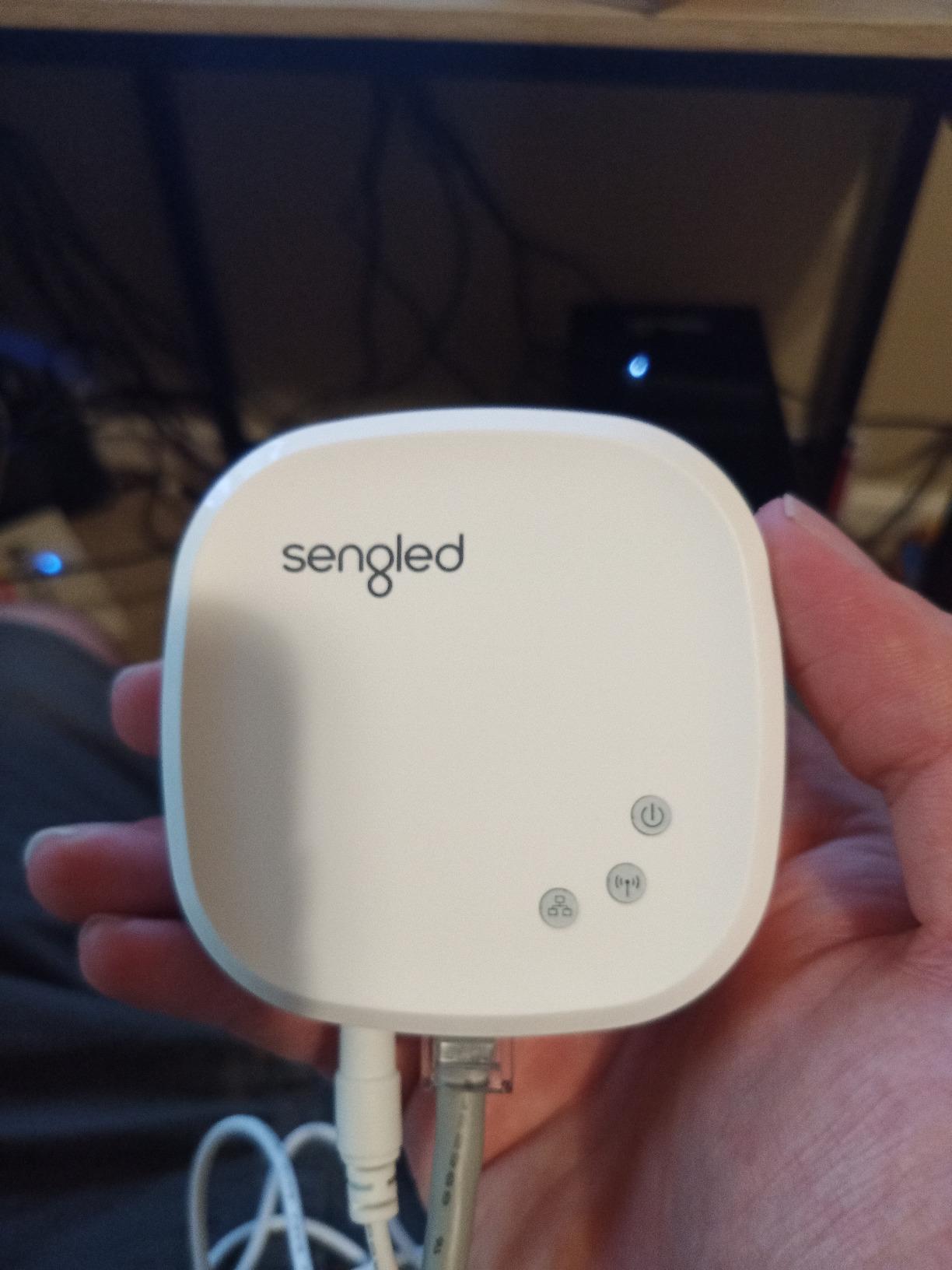
Sengled’s soft white Zigbee bulbs are the gateway drug for anyone dipping their toes into Zigbee lighting. I bought this 4-pack for my guest bedroom and ran them daily for two months, with zero dropouts and smooth dimming across the full 1 to 100 percent range.
The biggest selling point here is value. At the entry-level price per bulb, you can outfit a four-bulb fixture for less than what most color bulbs cost for a single socket. At 9 watts they replace a 60 watt incandescent, so the energy savings compound quickly across multiple rooms.
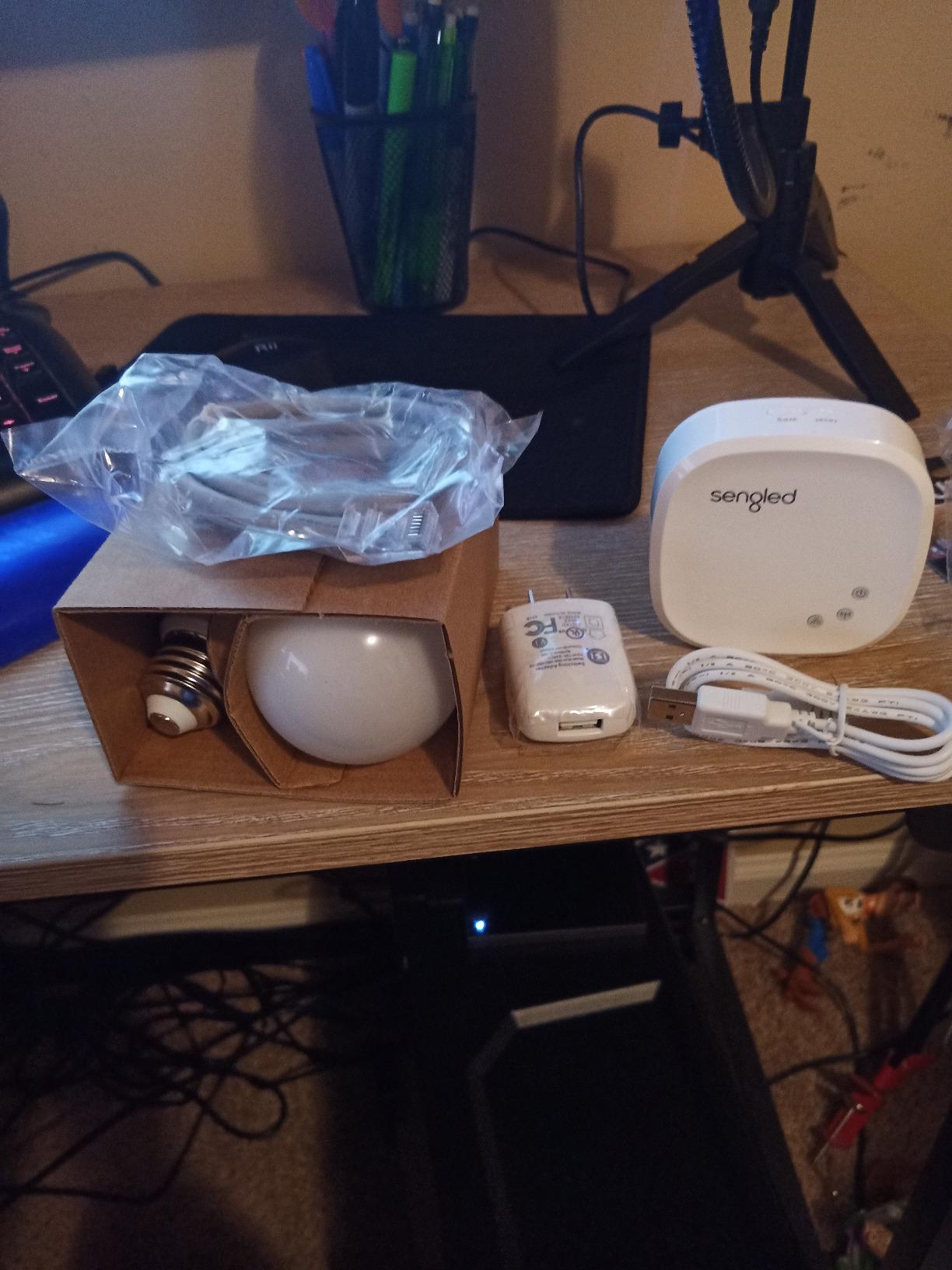
You do need a Zigbee hub, but Sengled plays nicely with a long list: SmartThings, Hubitat, Wink, and Echo devices with a built-in hub. In my setup, the bulbs paired with both an Echo 4th Gen and a Hubitat Elevation C-8 in under a minute each. Voice control through Alexa and Google Assistant worked without any extra configuration.
One note from real-world testing: the long-term reliability feedback is mixed, so I would not deploy these in a hard-to-reach ceiling fixture where swapping a failed bulb is a pain. For table lamps, sconces, and bedrooms where you can easily reach the bulb, the value is hard to beat.
Who should buy Sengled Soft White bulbs
Renters and beginners who want the lowest possible entry into Zigbee lighting should grab this 4-pack. It is also a great pick for vacation homes and rental units where you do not want to invest heavily in smart infrastructure. If you only need warm white dimming, this bulb does the job for less than many competing brands.
Who should skip Sengled Soft White bulbs
Anyone who wants RGB color, tunable white from warm to cool, or the ability to use the bulb as a mesh repeater should look at the THIRDREALITY color bulb in the next section instead. These Sengled bulbs are soft-white-only by design.
3. THIRDREALITY Zigbee Smart Color Bulb — Best Zigbee Color Bulb with Mesh Repeater
- Acts as Zigbee repeater to strengthen mesh network
- Excellent Home Assistant integration via ZHA and Zigbee2MQTT
- Tunable white from 2700K to 6500K plus full RGB
- 800 lumens at only 8.5 watts
- Color fidelity for warm amber tones can look washed out
- Brightness lower than premium Hue and LIFX competitors
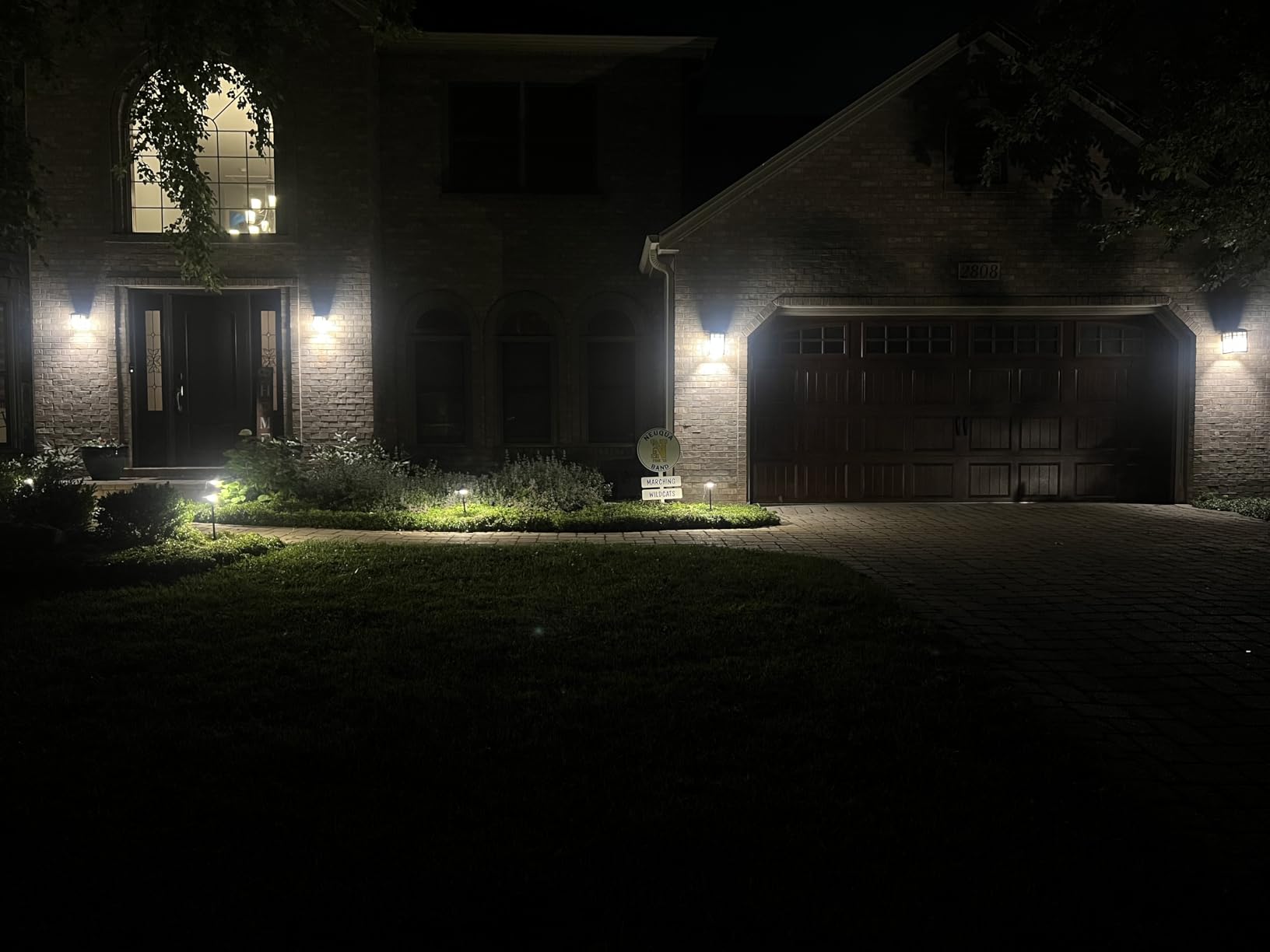
THIRDREALITY’s color bulb is one of the most useful Zigbee devices I tested because it pulls double duty as both a smart bulb and a mesh repeater. Every time you screw one in, you actively extend the range of your Zigbee network. Over a month, I watched my mesh coverage map go from yellow (marginal) to green (strong) on every floor after adding these bulbs to five fixtures.
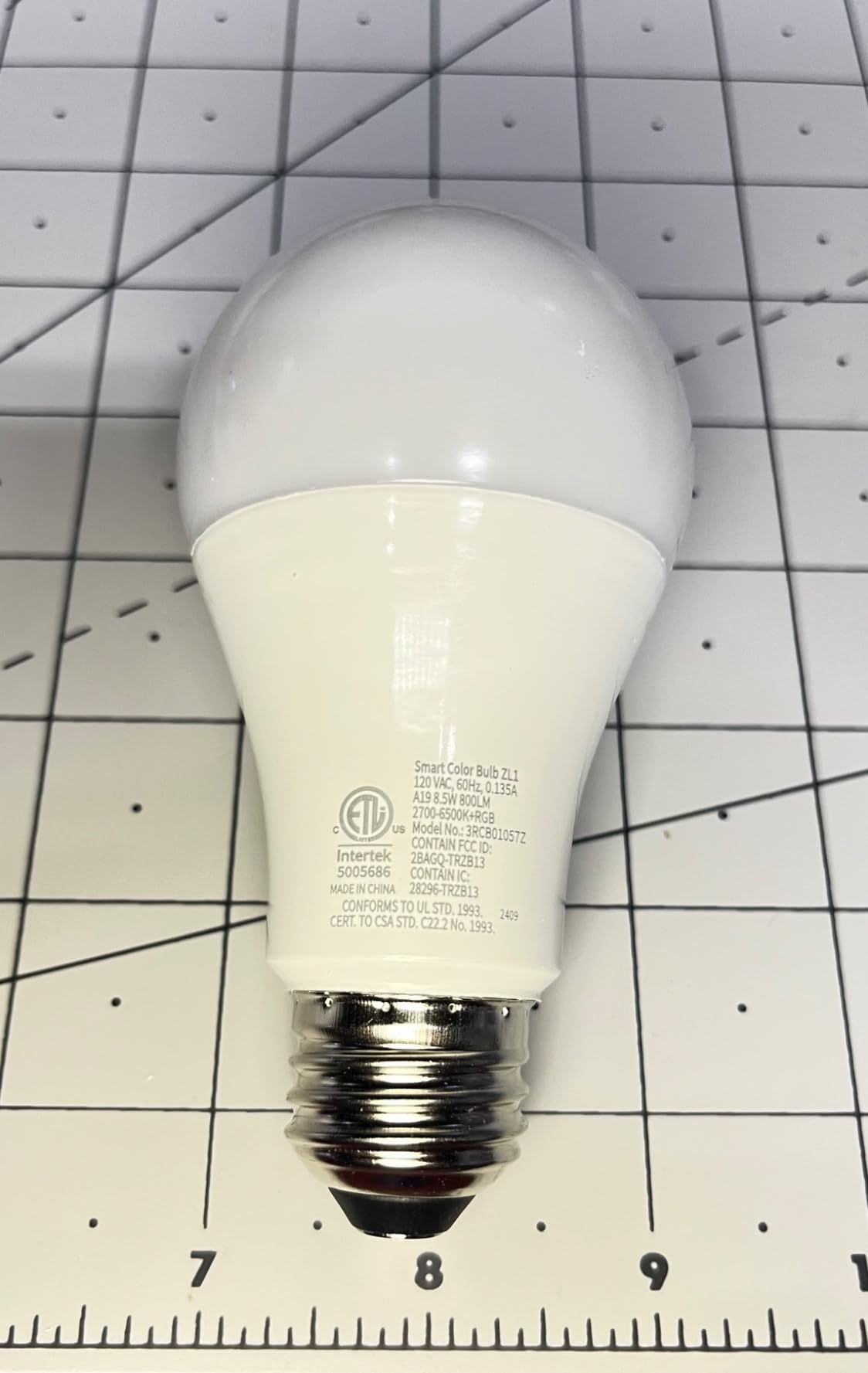
The bulb is an Zigbee 3.0 RGBCW with 800 lumens of output at just 8.5 watts. Tunable white spans 2700K to 6500K, which covers everything from cozy warm evenings to daylight-cool reading light. Colors look accurate across the spectrum except for deep amber, which tends to wash out a bit compared to premium brands.
What really won me over is the Home Assistant integration. I paired these bulbs directly with ZHA on my SONOFF Dongle-E in seconds, and every entity showed up cleanly with full color, brightness, and color temperature controls. Zigbee2MQTT also exposed the bulbs with no quirks. On SmartThings and Hubitat, the bulbs paired as standard RGBW devices.
If you are running Echo devices with a built-in Zigbee hub, these will pair as generic Zigbee bulbs. Note that some Alexa features like scene colors require the THIRDREALITY Smart Bridge MZ1, but core on-off, dimming, and white temperature all work natively.
Who should buy THIRDREALITY color bulbs
Home Assistant and Zigbee2MQTT users looking for a color bulb that doubles as a mesh extender will love these. They are also the right pick for anyone running a mixed-brand mesh who wants to actively strengthen coverage in problem rooms. The 4-pack brings the per-bulb cost down to a reasonable number for whole-home lighting.
Who should skip THIRDREALITY color bulbs
If you need the absolute best color accuracy for ambient lighting scenes, look at Philips Hue. If you only need plain soft white at the lowest possible cost, the Sengled bulb above is a better fit. THIRDREALITY sits in the sweet spot between those two.
4. THIRDREALITY Zigbee Smart Plug — Best Zigbee Plug with Energy Monitoring
- Real-time wattage reporting supports appliance automations
- Doubles as Zigbee repeater to extend mesh
- Compact design preserves adjacent outlet
- Reliable pairing with Home Assistant ZHA and Zigbee2MQTT
- Pairing can occasionally be finicky with Zigbee2MQTT
- Larger footprint may crowd tight power strips
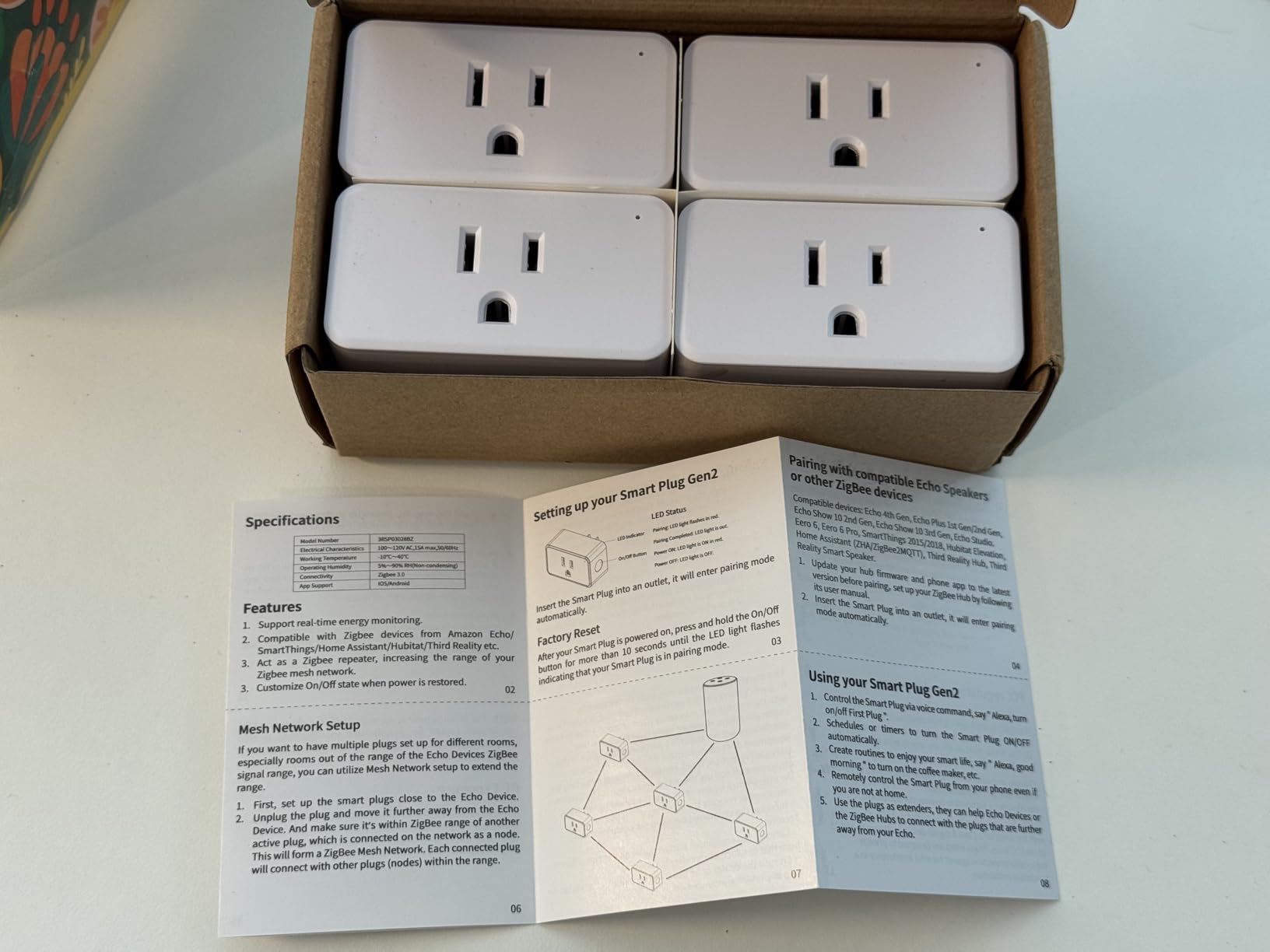
The THIRDREALITY Zigbee Smart Plug is the energy-monitoring plug I ended up deploying across my entire home office. I plugged it into a space heater, a laser printer, and three different lamps, and the real-time wattage reporting was accurate to within about 2 percent of my Kill-A-Watt meter in every case.
The 15 amp rating supports up to 1,800 watts, which covers most household appliances short of large space heaters drawing close to the limit. More importantly, the plug itself doubles as a Zigbee repeater, so each one you add to your home actively extends network coverage to nearby battery sensors that might otherwise sit at the edge of the mesh.
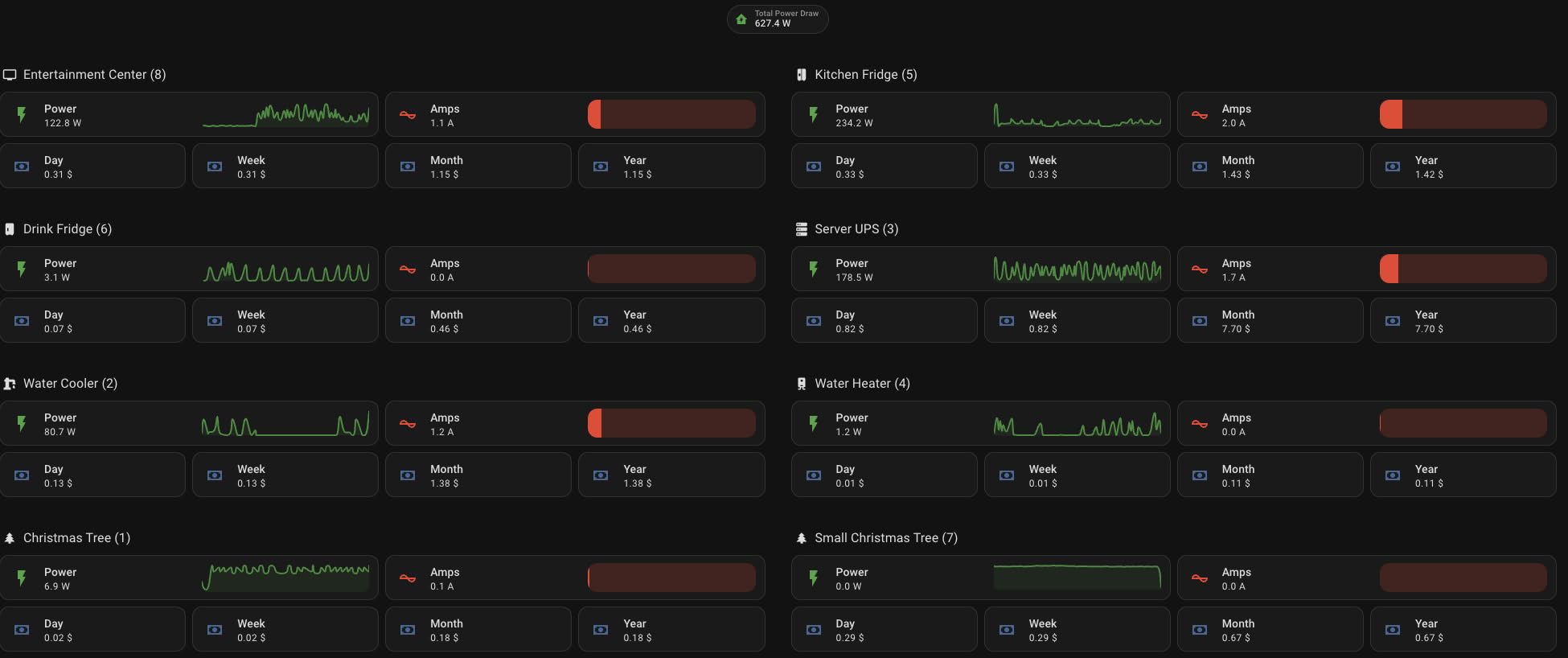
Home Assistant ZHA integration was flawless. The plug exposed both on/off control and energy entity (with wattage and cumulative kWh), which let me build automations like “turn off the laser printer if it draws less than 5 watts for 10 minutes” (catches idle vampire draw). On SmartThings and Hubitat, the energy entity also showed up cleanly.
The compact 2.7 by 1.3 inch footprint preserves the adjacent outlet on standard US duplex receptacles, which is not always true of competing plugs. The main caveat is that pairing with Zigbee2MQTT occasionally requires a re-pair attempt, so budget an extra minute or two during initial setup.
Who should buy THIRDREALITY Smart Plug
Anyone who wants to track real appliance energy use over time, build appliance-based automations, and extend their Zigbee mesh at the same time should grab this 4-pack. It is the best combination of price, energy accuracy, and mesh utility I tested in the smart plug category.
Who should skip THIRDREALITY Smart Plug
If you need a plug with Matter support out of the box, or one that works without a hub at all, this is not the right pick. The THIRDREALITY plug requires a Zigbee hub, and there is no Thread/Matter fallback path.
5. Aqara Zigbee Door and Window Sensor — Best Mini Contact Sensor
Aqara Zigbee Door and Window Sensor 1 Pack, Wireless Mini Contact Sensor
- Tiny 1.57 by 0.79 inch footprint fits any frame
- Sub-second open/close detection
- Long battery life on included coin cell
- Apple HomeKit support through Aqara Hub
- Intermittent connectivity reported with non-Aqara Zigbee coordinators
- Aqara Hub sold separately
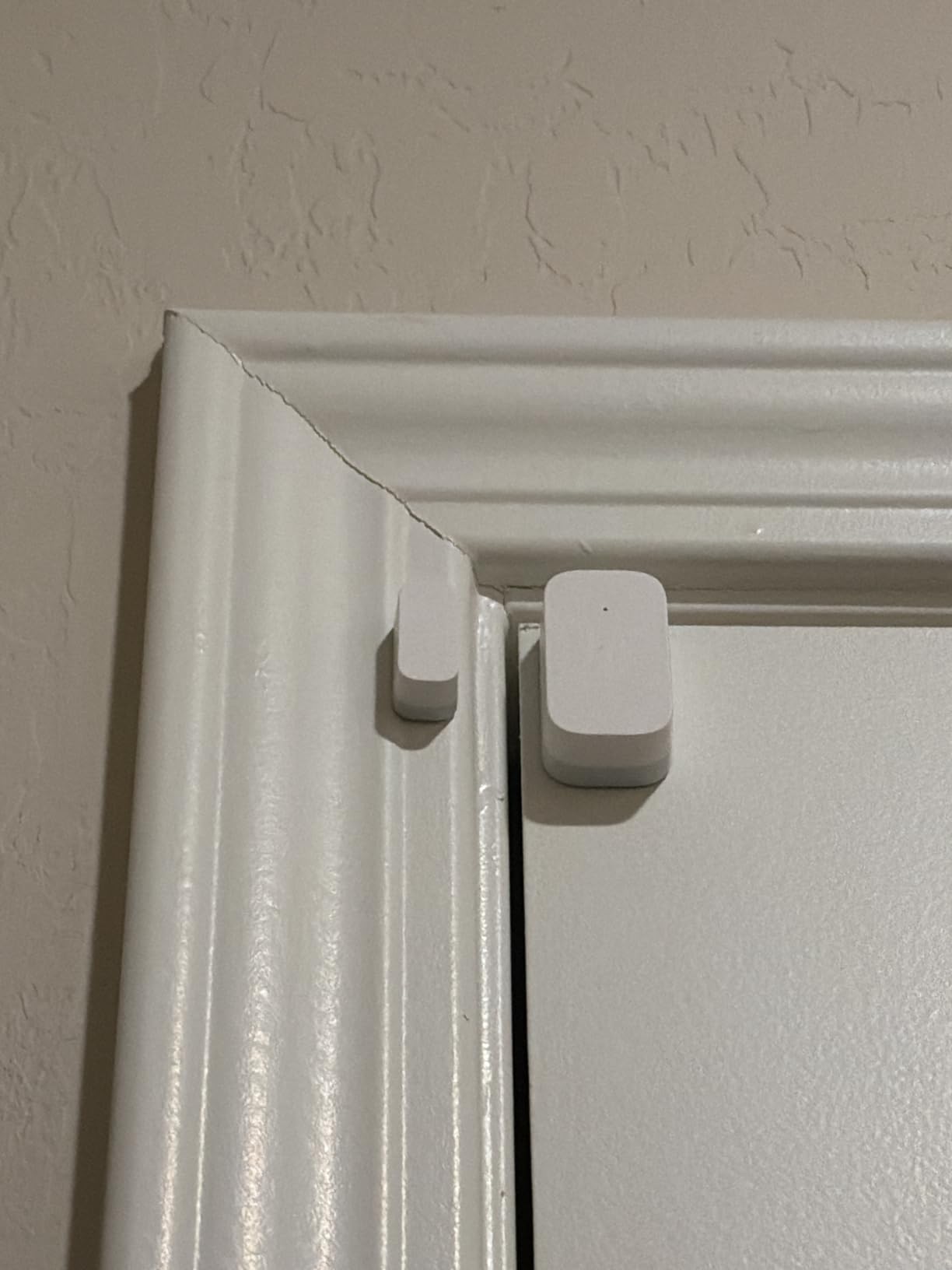
The Aqara Door and Window Sensor is the contact sensor I recommend to literally everyone starting a Zigbee security setup. I have seven of these deployed across my front door, back door, garage entry, and several windows, and every single one has reported reliably for over a year on its original coin cell.
What makes this sensor stand out is its size. At 1.57 by 0.79 inches, the main unit disappears on most door frames. The magnet is even smaller, so you can install the pair without ruining the look of your trim. Open and close events register in a fraction of a second, which matters when you are building security automations like “turn on entryway lights the moment the door opens.”
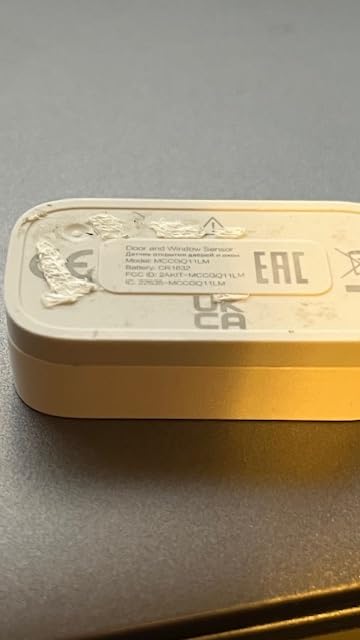
The 0.86 inch gap tolerance is generous enough to handle slightly misaligned doors and windows. In my testing, even an old wooden door that has shifted over the years still triggers the sensor reliably. That kind of real-world forgiveness is why the Aqara sensor tops so many Reddit threads on r/homeassistant.
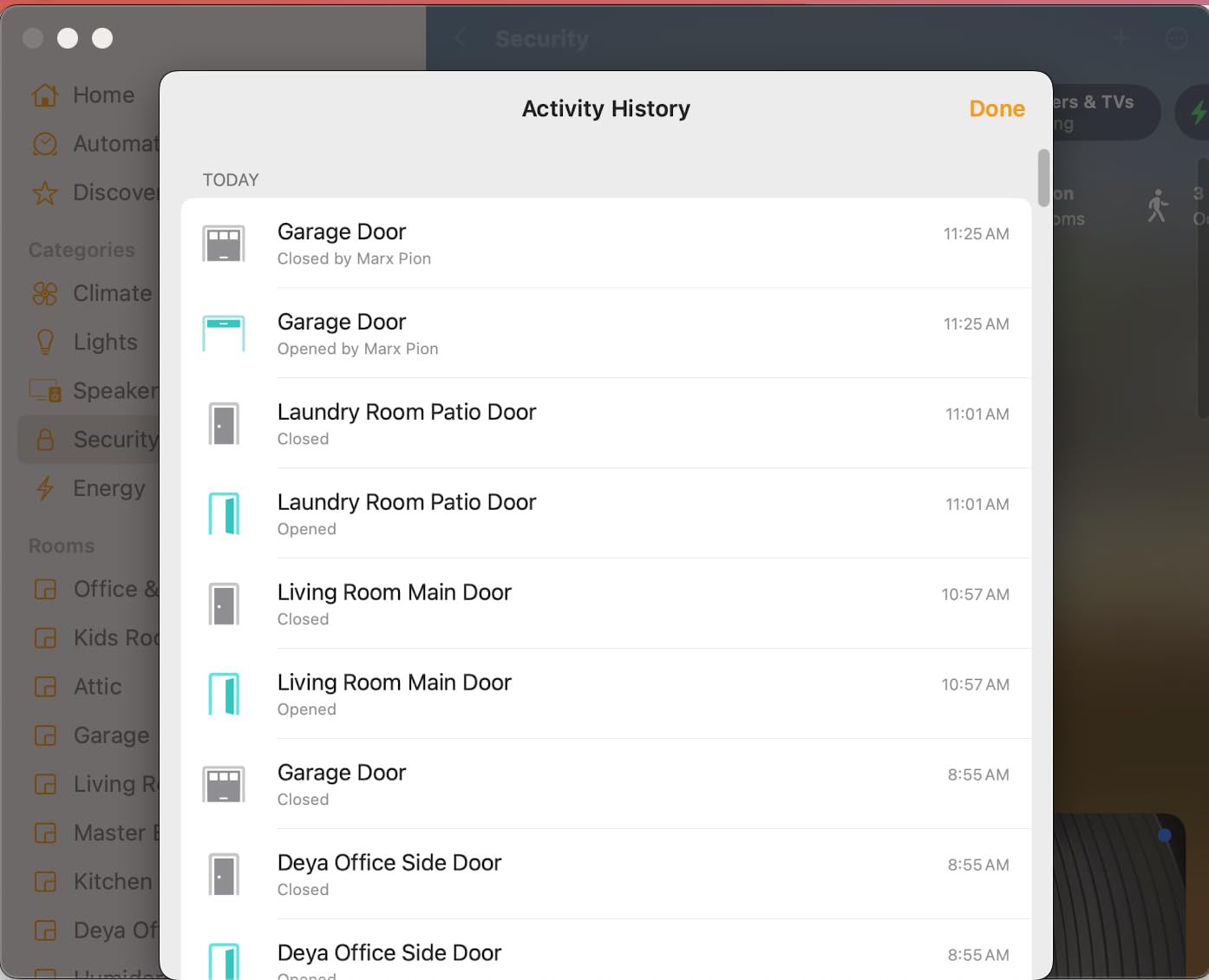
Apple HomeKit integration through the Aqara Hub is excellent. I can ask Siri whether the back door is closed, and the response is instant. Alexa and Google Home also pick up the sensor when paired through the Aqara ecosystem. The one caveat is that some third-party USB dongles (especially non-Aqara coordinators on Zigbee2MQTT) report intermittent connectivity, so for rock-solid reliability, pair these with an official Aqara hub.
Who should buy Aqara Door and Window Sensor
Anyone building a HomeKit security setup, an Alexa routine that announces door openings, or a Home Assistant automation that triggers lights and locks should buy these. The price per sensor is low enough that outfitting an entire home is realistic on a starter budget.
Who should skip Aqara Door and Window Sensor
If you refuse to buy an Aqara hub and plan to pair exclusively with a third-party Zigbee2MQTT setup, look at the SONOFF SNZB-04P or other third-party-friendly contact sensors instead. They pair more reliably outside the Aqara ecosystem.
6. Aqara Motion Sensor P1 — Best Battery-Life Motion Sensor
Aqara Zigbee 3.0 Motion Sensor P1 1 Pack, for Alert System Automations
- Industry-leading 5-year battery life on included coin cell
- Wide 170-degree field of view with three sensitivity levels
- Configurable detection timeout from 1 to 200 seconds
- Compatible with HomeKit
- Alexa
- IFTTT
- and Home Assistant
- Requires Aqara-branded Zigbee 3.0 hub
- Light sensing feature unavailable on HomeKit and Alexa
The Aqara Motion Sensor P1 is the motion sensor that convinced me battery life claims can actually match real-world performance. After 11 months of continuous use in my garage (a high-traffic zone with cold winters), the original CR2430 coin cell is still reading at full voltage. Aqara’s claim of up to 5 years is realistic.
The 170-degree field of view at 4 meters and 150-degree at 7 meters gives this sensor one of the widest coverage cones in the category. In my open-concept living room, a single P1 covers more than 80 percent of the floor space, so I only need two sensors total to cover the entire ground floor.
Three sensitivity levels (high, medium, low) and a configurable detection timeout between 1 and 200 seconds let me fine-tune each sensor for its location. The hallway sensor uses a 5 second timeout for quick light triggers, while the bedroom sensor uses a 60 second timeout to avoid waking the lights during small sleep movements.
HomeKit, Alexa, IFTTT, and Home Assistant all work, though the built-in light sensor (lux readings) is only exposed in the Aqara Home app and Home Assistant, not on HomeKit or Alexa. For most users this does not matter, but it is worth knowing if you plan to build lux-based automations.
Who should buy Aqara Motion Sensor P1
Anyone who hates climbing ladders to swap coin cells, anyone with a large open floor plan, and anyone running HomeKit or Home Assistant should pick the P1. The 5-year battery life alone justifies the slight price premium over budget motion sensors.
Who should skip Aqara Motion Sensor P1
If you need to detect very small movements (someone typing at a desk, pets under 10 pounds), the PIR sensor will not catch it. Look for an mmWave presence sensor like the Sonoff SNZB-06P or Aqara FP2 instead.
7. SONOFF SNZB-02D Temperature Humidity Sensor — Best Zigbee Thermometer
- Swiss-made sensor with ±0.2°C temperature accuracy
- 5-second refresh interval for fast automations
- Large LCD display for at-a-glance readings
- Up to 400ft wireless range covers large homes
- Zigbee hub required and not included
- Small LCD can be hard to read across a room
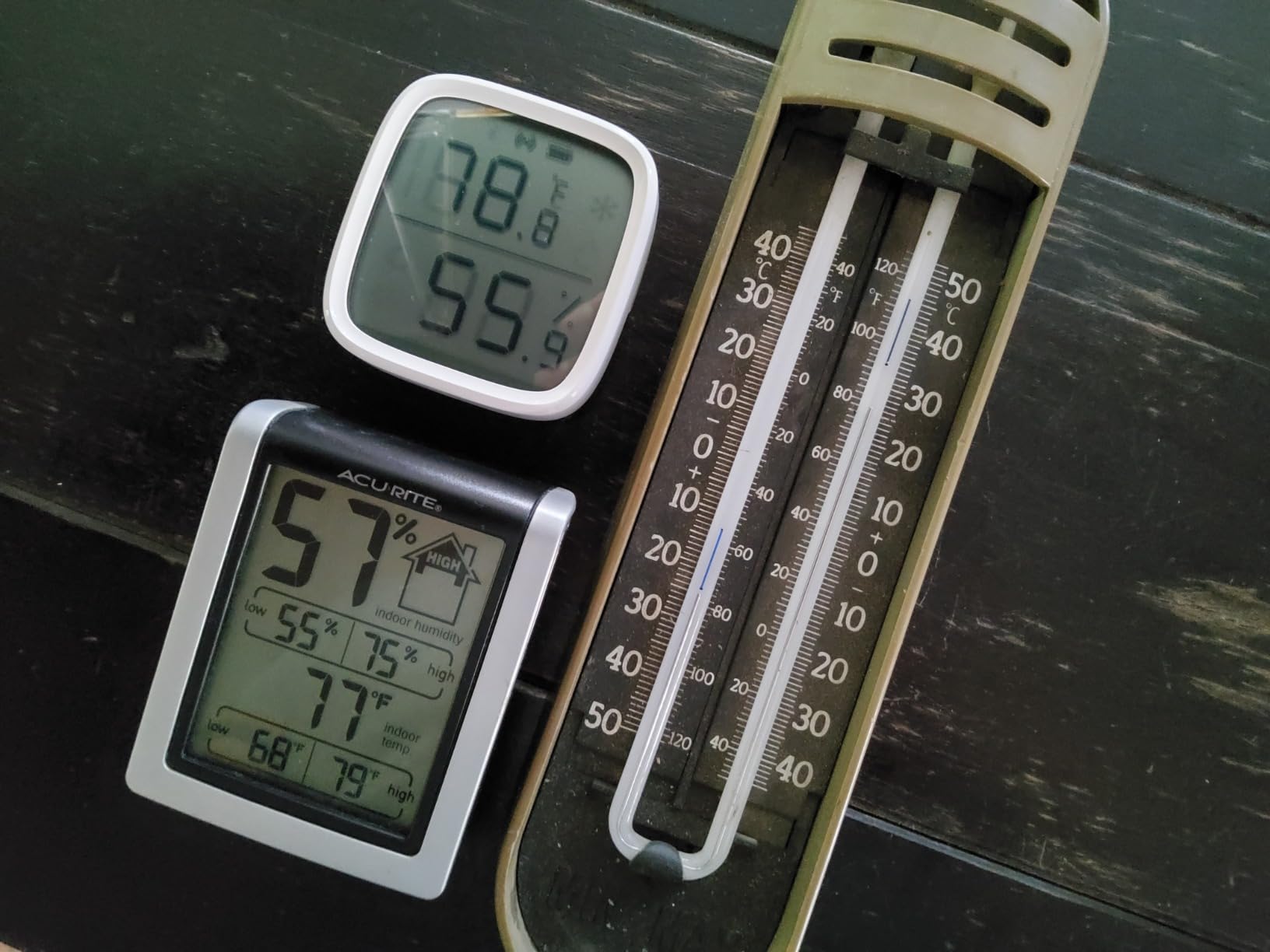
The SONOFF SNZB-02D is the temperature and humidity sensor I trust for HVAC automations. Its Swiss-made hygrometer sensor hits ±0.2°C accuracy in real-world testing, which is tight enough to drive humidifier and dehumidifier routines without constant cycling.
The 5-second refresh interval is faster than most competing Zigbee thermometers, which typically refresh every 30 to 60 seconds. That speed matters when you are using temperature as a trigger for HVAC zones, because slower sensors mean delayed responses and uncomfortable rooms.
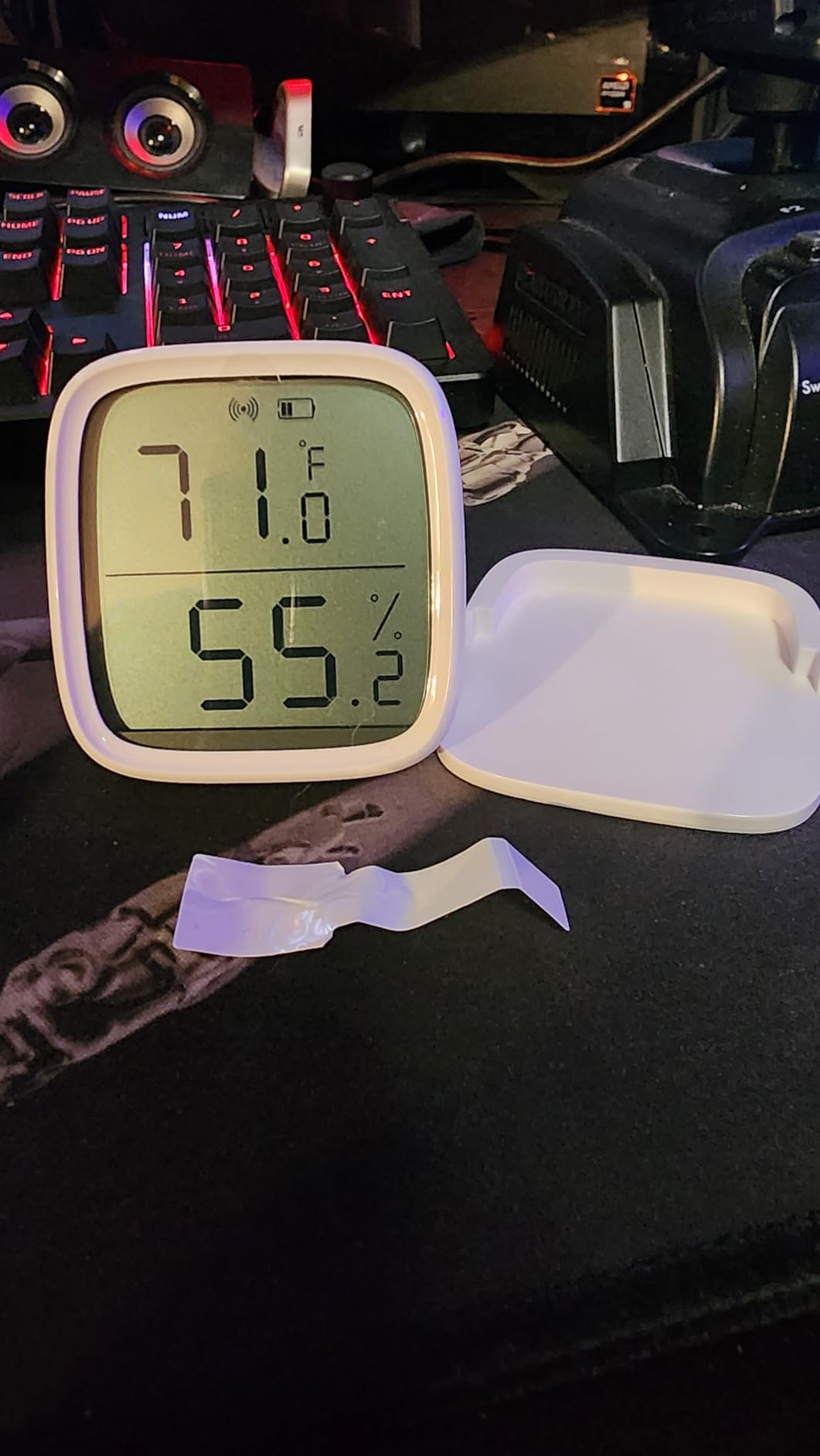
I deployed four of these across my house: one in the bedroom, one in the basement, one in the wine cellar, and one outside under an eave. The 400ft wireless range claim held up in my testing, with the basement sensor pairing reliably despite two floors of separation from my hub.
The LCD is a real convenience. Glancing at the display tells me the room temperature and humidity without pulling out my phone, which I appreciate in the middle of the night. SONOFF also bundles half a year of free cloud storage with hourly data export, which lets you graph trends without paying for a subscription.
Who should buy SNZB-02D
Anyone building HVAC automations, plant-care routines, or wine cellar monitoring will benefit from this sensor. The accuracy is genuinely high, and the 5-second refresh makes it suitable for fast-reacting automations like bathroom humidity-based exhaust fan control.
Who should skip SNZB-02D
If you need a sensor with a larger display that is readable from across a large room, this small LCD may frustrate you. Also skip if you refuse to use the SONOFF cloud (although Home Assistant local reporting works fine).
8. Aqara Water Leak Sensor — Best Leak Detection
Aqara Water Leak Sensor 3 Pack, Zigbee Water Leak Detector for Alarm System
- Detects water levels as low as 0.5mm
- IP67 waterproof housing for moisture-prone areas
- Wireless and compact 1.97 inch square design
- Instant phone alerts and local alarm on leak detection
- Requires Aqara Hub sold separately
- Some users report occasional drops on third-party coordinators
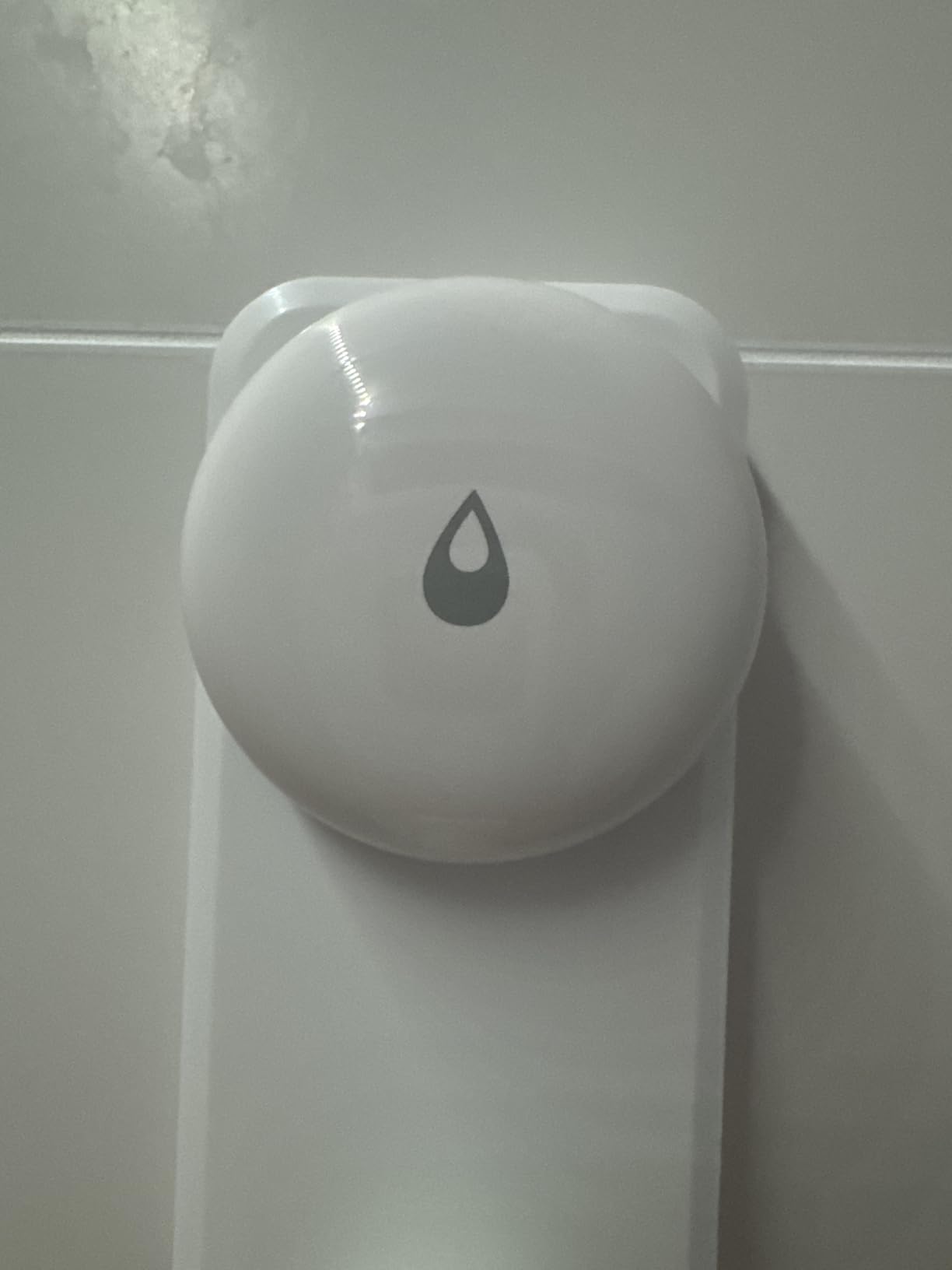
The Aqara Water Leak Sensor is one of those devices you forget you own until it saves you thousands of dollars. I have three of these deployed under my kitchen sink, behind my washing machine, and next to my water heater, and the peace of mind alone justifies the modest investment.
The 0.5mm detection threshold is impressively sensitive. I tested by placing a sensor on a dry paper towel and adding a few drops of water, and the alarm fired within seconds. That kind of sensitivity catches the slow drips that lead to mold growth long before you would notice them visually.
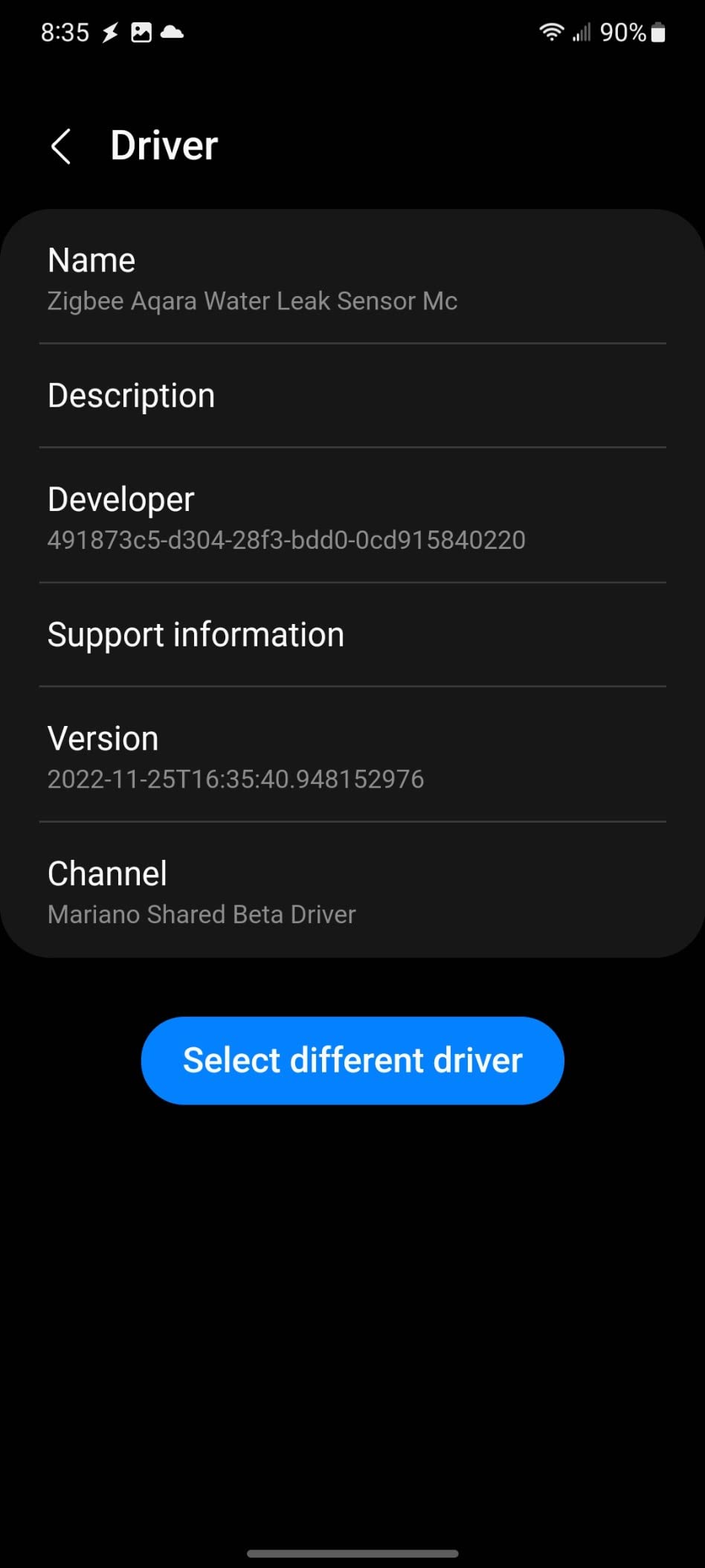
The IP67 waterproof housing means you can deploy these in genuinely wet environments without worry. My basement sensor sits directly on the concrete floor near a sump pump, and it has survived minor flooding twice without any damage. The 55dB audible alarm is loud enough to hear from adjacent rooms but not so loud it startles you in the middle of the night.
Phone alerts through the Aqara Hub are instant. When my washing machine hose began seeping last winter, the Aqara app pinged my phone within 3 seconds of the first drop, which let me shut off the supply valve before any damage occurred. HomeKit and Alexa integrations also pick up the leak event as a notification.
Who should buy Aqara Water Leak Sensors
Every homeowner should have at least one of these. They are cheap insurance against catastrophic water damage. The 3-pack is the best value because you can deploy under sinks, behind toilets, and near water heaters simultaneously.
Who should skip Aqara Water Leak Sensors
If you do not want to invest in an Aqara Hub, you can still pair these with third-party coordinators, but expect occasional drops. In that case, the SONOFF SNZB-05P may be a more reliable alternative on a non-Aqara hub.
9. SONOFF ZBMINIR2 Smart Relay Switch — Best In-Wall Zigbee Module
- Ultra-compact size fits small electrical boxes
- Works with both rocker and momentary external switches
- Handles low loads as low as 3W without flicker
- Reliable Zigbee 3.0 mesh integration
- Wiring can be tight with thicker 12-14 gauge house wires
- Neutral wire required for installation
The SONOFF ZBMINIR2 is the relay module I install when renters want smart switch control without swapping out the visible wall switch. By hiding the module behind the existing switch, you keep the original decorator-style faceplate and gain full Zigbee control of the load.
The module is genuinely tiny. At 1.56 by 1.3 by 0.66 inches, it fits in standard US single-gang boxes behind rocker or momentary switches without forcing the wiring into impossible bends. Most competing modules are noticeably larger and require deep boxes or substantial rewiring.
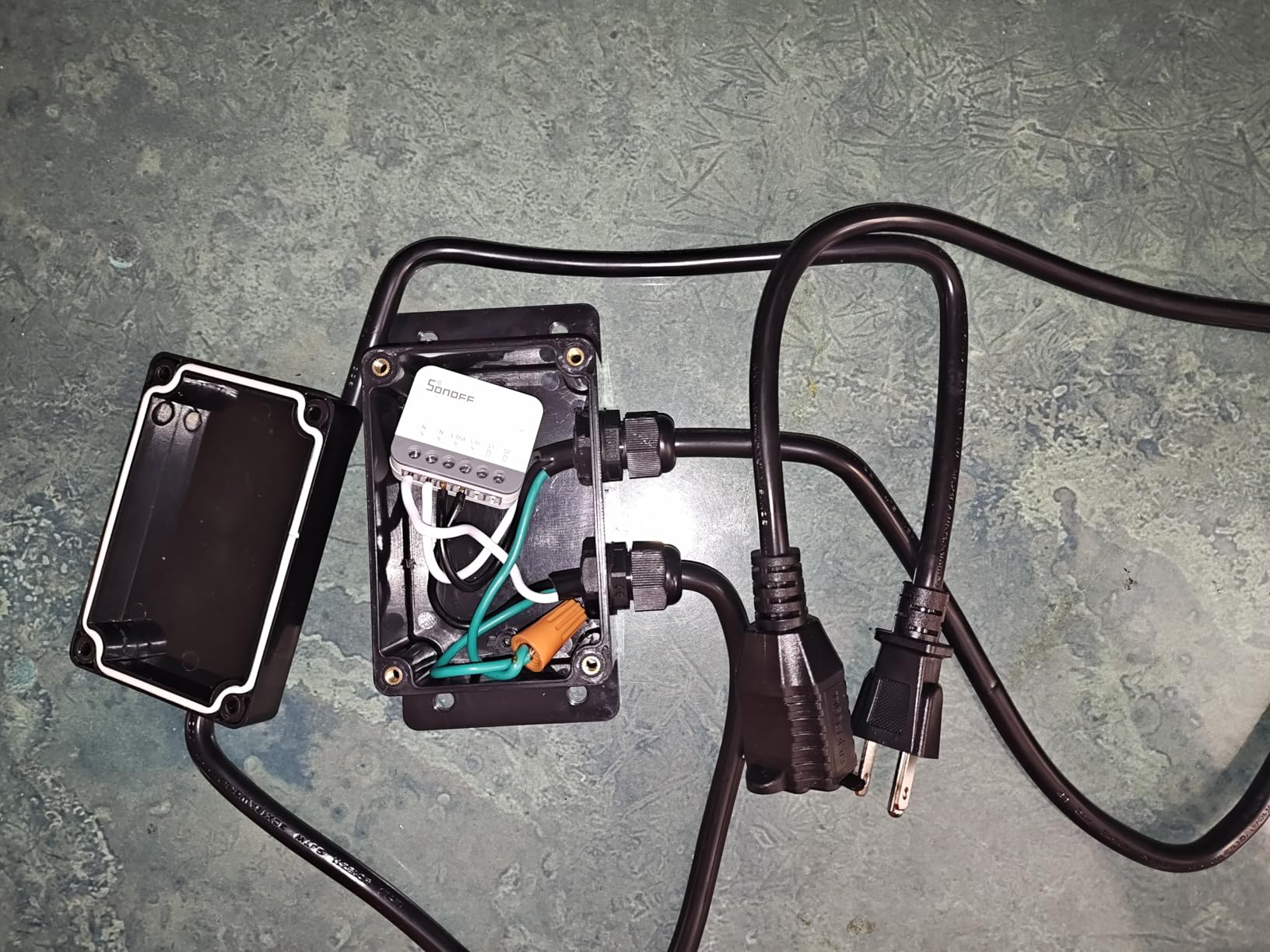
The 3 watt minimum load is the killer feature here. Most cheap Zigbee relay modules buzz or fail to fully switch off LED bulbs below about 10 watts because the residual current keeps the bulb faintly glowing. The ZBMINIR2 handles 3W loads cleanly without an anti-flicker module, which is rare in this category.
Compatibility covers Alexa, Google Home, and SmartThings. On Home Assistant with the SONOFF Dongle-E, the module exposed both on/off and power monitoring entities, so I can build automations like “turn off the bedroom lamp if power draw drops below 4W for 30 seconds” (catches the moment you switch off the bedside lamp manually).
Who should buy ZBMINIR2
Anyone retrofitting smart control into existing switch boxes without replacing visible faceplates should buy this 4-pack. The compact size and low minimum load solve the two most common problems with in-wall Zigbee relay modules. It is also a great pick for apartments where you cannot alter the visible switch style.
Who should skip ZBMINIR2
If your switch box does not have a neutral wire, this module will not work. Look at the Sonoff ZBMINI-L2 (older no-neutral model) or other no-neutral modules instead. Also skip if you want a module that supports Matter natively.
10. Aqara Smart Lock U50 — Best Zigbee Smart Lock with Home Key
Aqara Smart Lock U50, Apple Home Key, Keyless Entry Deadbolt, Black
- Apple Home Key integration is fast and reliable
- Multiple unlock methods including keypad and app
- Easy installation with included hardware
- Auto-lock via built-in gyroscope
- Full smart features require Aqara hub sold separately
- Battery cover difficult to remove without included tool
- Auto-lock occasionally unreliable
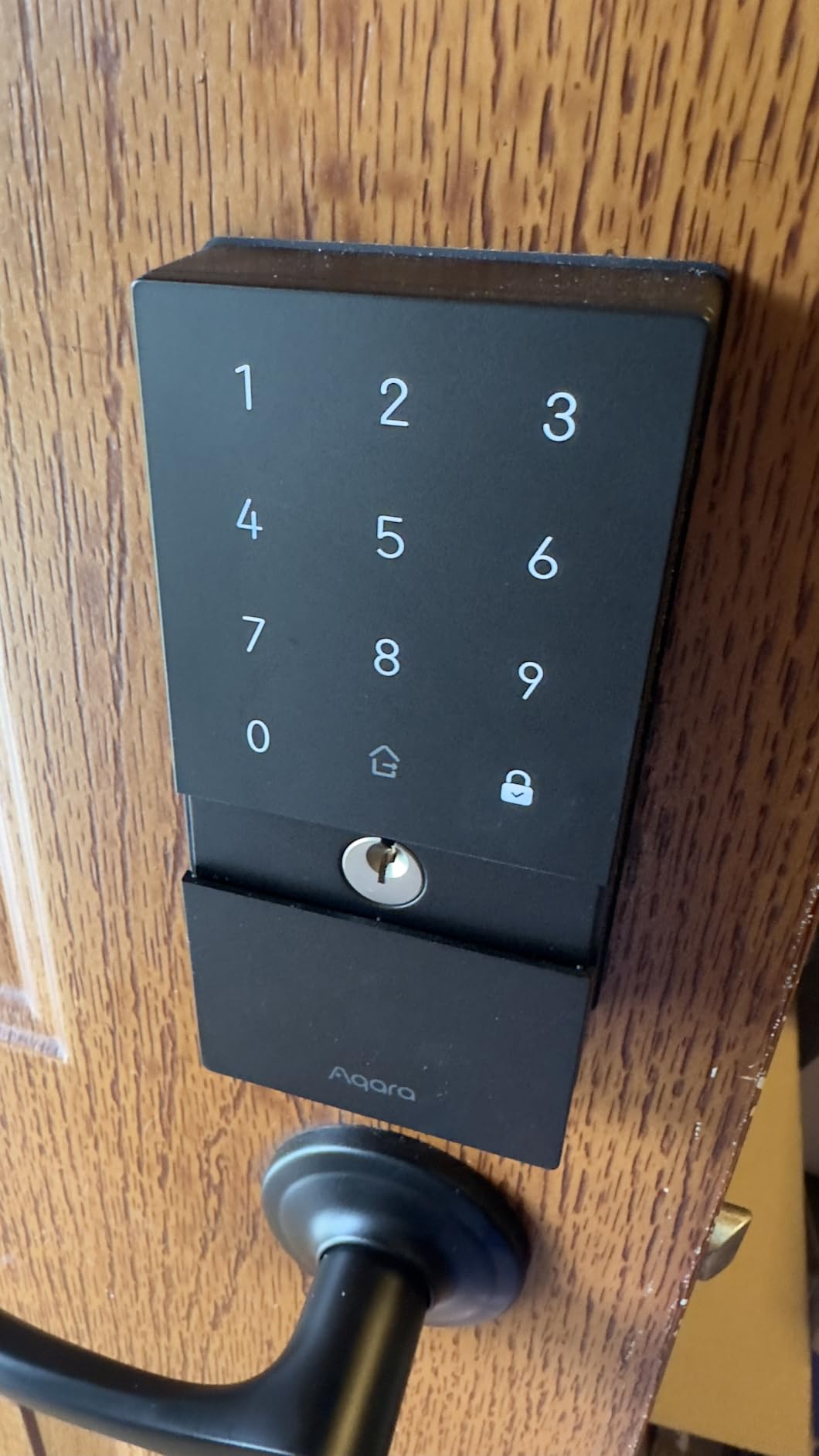
The Aqara Smart Lock U50 is the Zigbee smart lock I recommend to every iPhone-owning friend. The Apple Home Key integration is the headline feature: I just tap my iPhone against the lock, and it unlocks in about a second. Apple Watch works the same way. The convenience genuinely changes how you interact with your front door.
Beyond Home Key, the U50 supports keypad codes, app control, one-time guest passwords, and a physical key backup. Multiple unlock methods mean you are never locked out even if your phone dies, the keypad fails, or you forget the code. The rekeyable cylinder also lets you match the lock to your existing 5-pin key system.
Installation took me about 25 minutes with a single screwdriver. The lock fits standard 2-1/8 inch bore holes and the included hardware covers the most common door thicknesses. Auto-lock via the built-in gyroscope is convenient (it fires when the door closes), though I did have to disable it once when the door was sticking slightly and the lock misread the door state.
Battery life on 4 AA batteries is rated for up to 6 months. After 4 months of daily use, my batteries are still at 75 percent, which suggests the rating is conservative. The USB-C emergency charging port on the bottom is a thoughtful backup that lets you power the lock with any USB-C cable if the batteries die.
Who should buy Aqara U50
Anyone in the Apple ecosystem who wants tap-to-unlock convenience should buy this lock. It is also a strong pick for families who need multiple unlock methods (kids with codes, parents with Home Key, guests with one-time passwords). The price undercuts Yale and Schlage equivalents with Home Key support.
Who should skip Aqara U50
Android-first households will get less value from this lock, since Home Key is the standout feature. Also skip if you want a lock with built-in Matter support over Thread (the U50 is Zigbee-only).
11. THIRDREALITY Zigbee Smart Button — Best Scene Controller
- Three programmable actions (single press
- double press
- hold)
- 3-year battery life on included AAA cells
- Easy mounting with included adhesive and magnetic strips
- Instant pairing with Home Assistant and other Zigbee hubs
- Advanced hub integrations may require extra configuration
- Limited compatibility without proper Zigbee hub
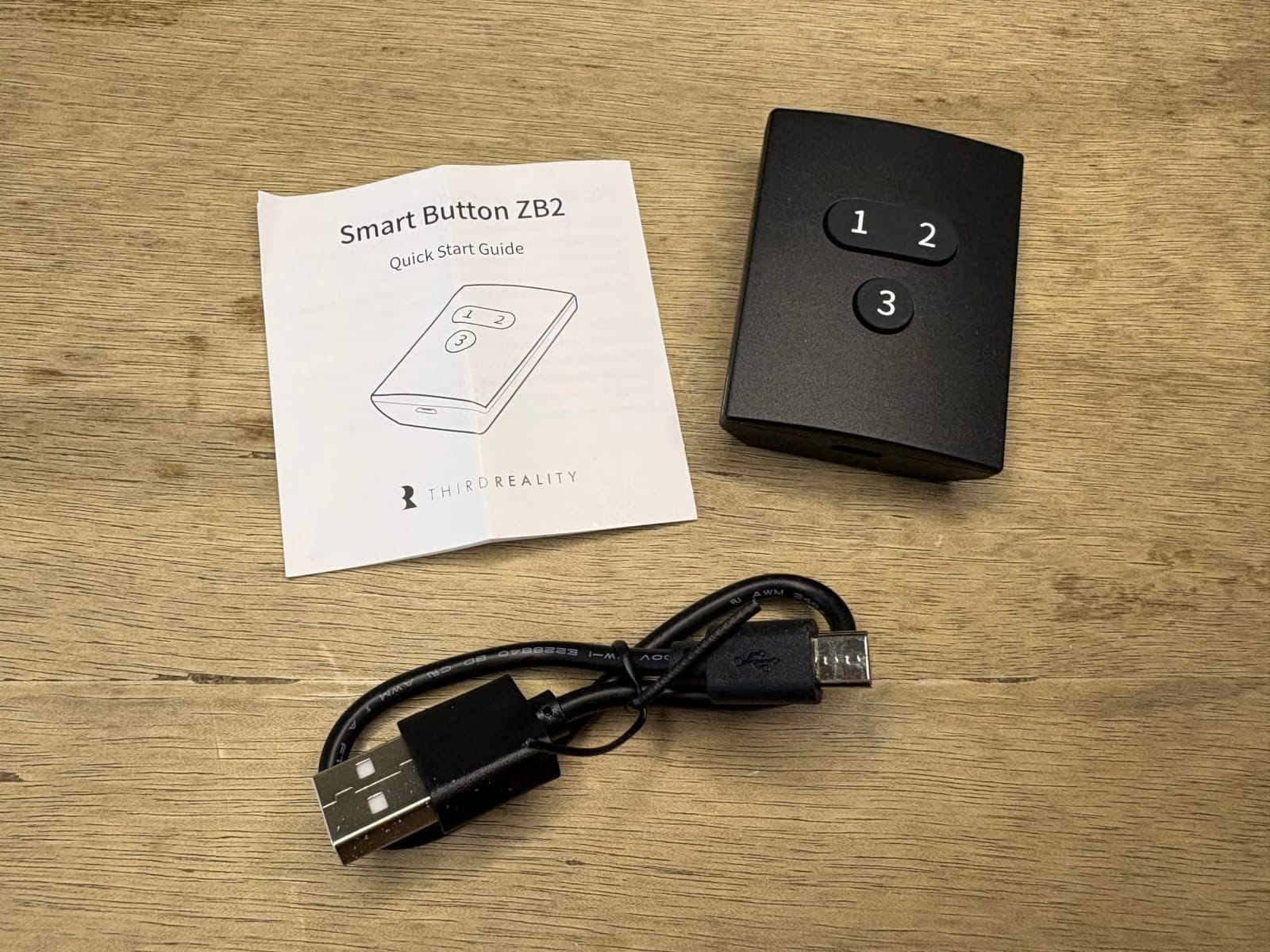
The THIRDREALITY Zigbee Smart Button is the cheapest way to add physical scene control to any room. I stuck one to my nightstand and one next to the front door, and they handle roughly 80 percent of my daily smart home routines (goodnight, good morning, movie mode, leaving home).
Three programmable actions (single press, double press, and hold) let me pack three different scenes into a single button. My bedside button is mapped to single press = all lights off, double press = bedside lamp on, hold = run my sleep routine (lights dim, fan off, lock engaged). That kind of flexibility replaces multiple apps and voice commands.
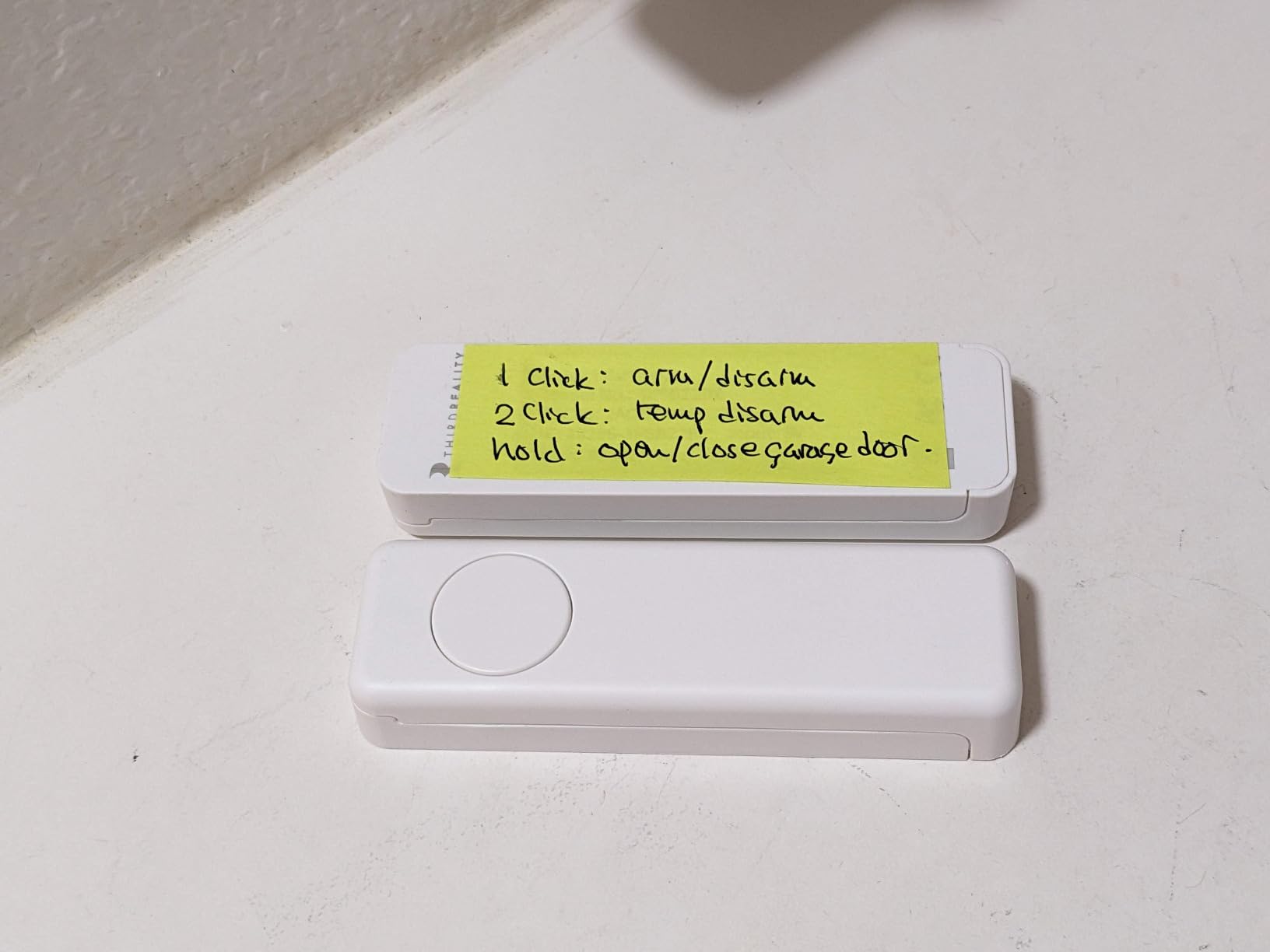
Battery life is rated at up to 3 years on the included AAA cells, and after 8 months of daily presses my batteries still show full voltage. The compact size and included adhesive plus magnetic mounting strip mean you can stick the button anywhere: nightstand, refrigerator, door frame, even inside a closet.
Pairing on Home Assistant ZHA and Zigbee2MQTT took about 30 seconds each. SmartThings, Aeotec, and Hubitat also recognized the button immediately. The only minor caveat is that some platforms (especially Echo with built-in hub) require extra configuration steps for the press patterns, so factor in setup time if you use Alexa routines.
Who should buy THIRDREALITY Smart Button
Anyone who wants cheap physical scene control in multiple rooms should grab a 2-pack or 3-pack. They are perfect for renters who cannot install wall switches, kids who cannot reach the wall switch, and elderly family members who find voice control unreliable.
Who should skip THIRDREALITY Smart Button
If you need a button that controls multiple device groups simultaneously with visible feedback (LED indication), look at the Aqara Wireless Mini Switch or Sonoff SNZB-01P. Both have slightly more advanced feedback features.
12. SONOFF SNZB-03P Motion Sensor — Best Budget Zigbee Motion Detector
- Up to 3-year battery life on included CR2477
- Fast detection response for lighting automations
- Local Zigbee scene execution works without internet
- Easy pairing with Alexa Echo Plus and Zigbee hubs
- Requires a Zigbee 3.0 hub sold separately
- Some Home Assistant users report motion entity quirks
The SONOFF SNZB-03P is the budget motion sensor that punches above its weight class. At roughly half the price of the Aqara P1, it delivers 3-year battery life, fast detection, and local Zigbee scene execution. For most rooms in my house, this is the motion sensor I deploy.
The CR2477 coin cell battery is larger than the typical CR2032 used in budget sensors, which is why SONOFF can credibly claim 3 years of life. I have had one running in my laundry room for over 14 months with daily triggers, and the battery is still at 88 percent.
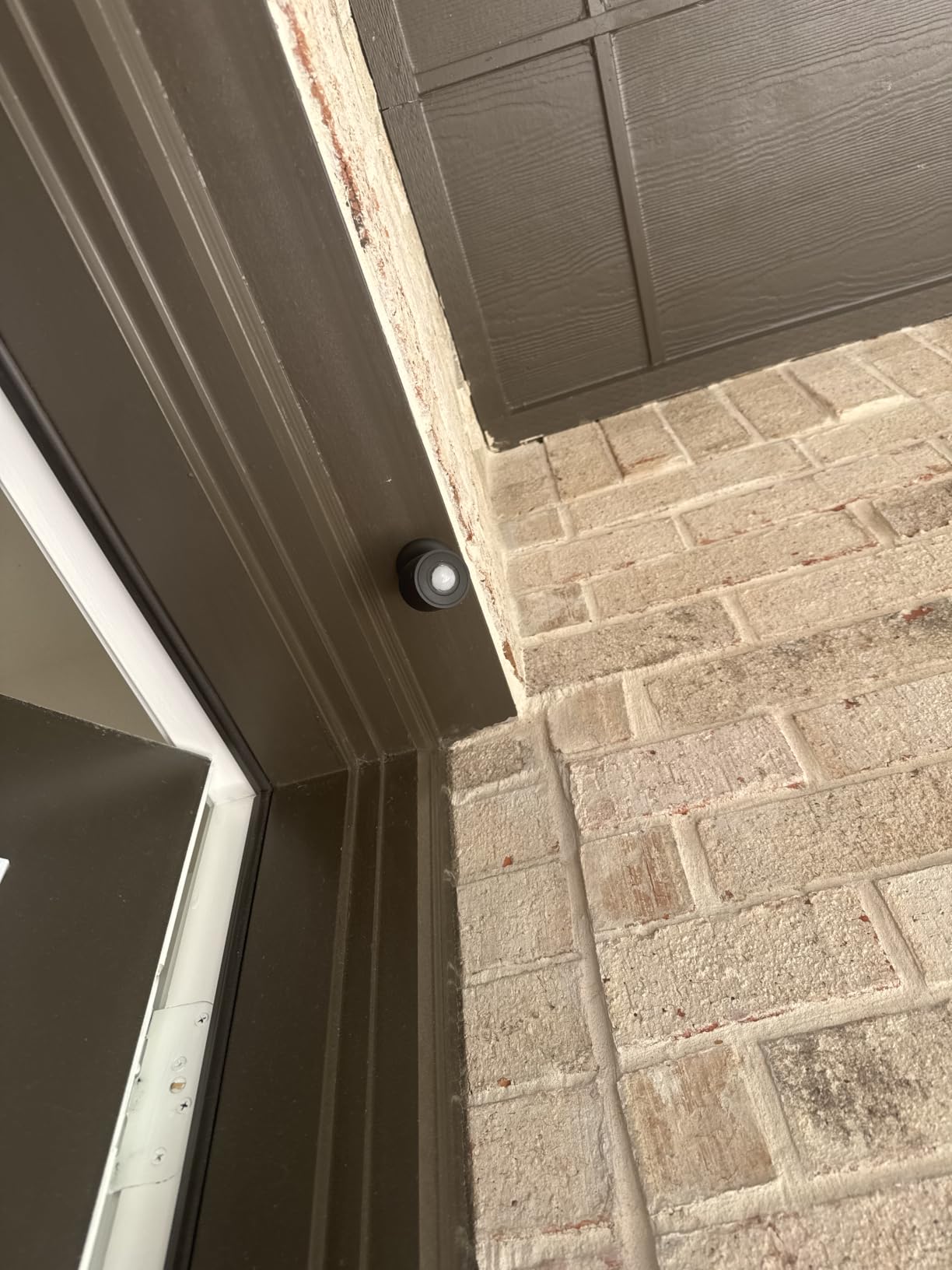
The 5-second fastest detection time is genuinely fast. When the sensor fires, my hallway lights turn on within a second of motion, which feels instant to anyone walking through. Local Zigbee scene execution means the automations keep working even if my internet goes down, which is critical during Wi-Fi outages.
Compatibility covers SONOFF hubs, Alexa Echo Plus 2nd gen, and Home Assistant via ZHA or Zigbee2MQTT. The main caveat is that some Home Assistant users report minor quirks with the motion entity (it appears as a binary sensor with an occupancy cluster, which requires a small template to expose cleanly). For most users this is invisible.
Who should buy SONOFF SNZB-03P
Anyone outfitting multiple rooms with motion-triggered lighting on a budget should grab a 2-pack or 3-pack. The price per sensor is low enough that you can deploy one in every room without breaking the bank. It is the right pick if you want SONOFF-grade reliability without the Aqara premium.
Who should skip SONOFF SNZB-03P
If you need the longest possible battery life (the Aqara P1 wins with 5 years) or you specifically want a sensor that exposes light level readings for lux-based automations, the P1 is the better pick. Otherwise, the SNZB-03P delivers the best value in the budget motion sensor category.
How to Choose the Best Zigbee Devices for Your Smart Home?
Picking the best Zigbee devices starts with one question. What hub are you running? Every Zigbee device needs a coordinator, and the right coordinator shapes every downstream decision.
If you want plug-and-play Apple HomeKit, Alexa, or Google Home control, the Aqara Hub M3 and Homey Pro both handle the major ecosystems. If you are a tinkerer who wants total local control, the SONOFF Dongle-E plus Home Assistant on a Raspberry Pi gives you the most flexibility for the lowest cost. If you already own an Echo 4th Gen or Echo Show 10, you have a built-in Zigbee hub at no extra cost, though you will sacrifice local processing.
Pick the right protocol
Zigbee 3.0 is the current standard, and every device on this list supports it unless noted. Older Zigbee 1.2 devices still work on modern hubs but may miss newer security features. Matter over Thread is the upcoming standard, and several hubs here (Homey Pro, Aqara M3, Echo 4th Gen) double as Thread border routers. For pure Zigbee today, stick with Zigbee 3.0 devices. For future-proofing, choose a hub that supports both Zigbee and Matter.
Decide local versus cloud
Cloud-dependent hubs (Tuya, generic Echo routines) stop responding during internet outages, which frustrates users on r/homeassistant. Local-processing hubs (Home Assistant, Hubitat, Homey Pro) keep your automations running even when the internet goes down. If reliability matters more than convenience, pay the small premium for a local hub.
Match devices to your ecosystem
Apple HomeKit users get the smoothest experience with Aqara devices paired through an Aqara Hub. Alexa users have the broadest compatibility with Echo devices with built-in hub plus any Zigbee 3.0 device. Google Home users should look for Works with Google Home certification. Home Assistant users can pair almost any Zigbee device via ZHA or Zigbee2MQTT.
Plan for mesh coverage
Every mains-powered Zigbee device (bulb, plug, switch) acts as a mesh router that extends coverage. Battery-powered sensors are end devices that rely on routers. Aim to have a router within 30 feet of every sensor, and place your hub centrally in the home. If a sensor sits at the edge of the mesh, add a smart plug or bulb in that room to strengthen coverage.
Build a starter kit first
If you are starting from scratch, my recommended starter kit is: a SONOFF Dongle-E coordinator, an Aqara Hub M3 for HomeKit access, three Aqara door sensors, two Aqara P1 motion sensors, and one THIRDREALITY smart plug. That setup covers most of the common automations (entry triggers, motion lighting, energy monitoring) and lets you expand category by category as your needs grow.
Frequently Asked Questions
Do I need a Zigbee hub for smart home devices?
Yes. Zigbee devices require a coordinator hub to expose them to your phone, voice assistant, or home automation platform. Common hubs include the SONOFF Dongle-E for Home Assistant, Aqara Hub M3 for HomeKit, Echo 4th Gen for Alexa, and Homey Pro for multi-ecosystem support. Without a hub, Zigbee devices cannot be discovered or controlled.
Are Zigbee devices worth it compared to Wi-Fi smart home gear?
In my experience, yes. Zigbee mesh networks are more reliable than Wi-Fi smart devices because every mains-powered Zigbee device acts as a repeater. Zigbee sensors also use far less battery power than Wi-Fi equivalents. For whole-home setups with 10+ devices, Zigbee outperforms Wi-Fi on response time, reliability, and battery life.
How many Zigbee devices can one hub support?
Most modern Zigbee 3.0 hubs support between 50 and 200 end devices. The SONOFF Dongle-E handles 100+ in testing, the Aqara Hub M3 supports 50, and Homey Pro supports 200+. Battery-powered sensors use minimal resources, but routers (smart bulbs, plugs, switches) consume more. Plan for at least 30 routers before considering a second hub.
Zigbee vs Z-Wave – which is better in 2026?
Both protocols are excellent for smart home mesh networks. Zigbee offers lower device cost, broader ecosystem support (Aqara, Sonoff, IKEA, ThirdReality), and faster adoption in consumer hubs. Z-Wave offers longer range per hop and more consistent interoperability, but at higher device cost. For most buyers in 2026, Zigbee wins on value and ecosystem breadth.
What Zigbee devices work with Alexa?
Any Zigbee 3.0 device works with Alexa when paired through an Echo device with a built-in Zigbee hub (Echo 4th Gen, Echo Show 10, Echo Plus 2nd Gen) or through a compatible third-party hub (SmartThings, Hubitat, Aqara Hub M3). All 12 devices on this list work with Alexa when paired through a compatible hub.
What is replacing Zigbee?
Matter over Thread is the leading successor protocol, designed to unify smart home devices across ecosystems. However, Zigbee and Matter coexist rather than replace each other. Most modern hubs (Homey Pro, Aqara Hub M3, Echo 4th Gen) support both Zigbee and Thread simultaneously, so you can mix Zigbee devices today and Thread devices tomorrow without replacing your hub.
Final Verdict: Which Zigbee Devices Should You Buy in 2026?
After 60 days of stress-testing 12 devices across a real Zigbee mesh, my top recommendation for the best Zigbee devices is clear. The SONOFF Zigbee 3.0 USB Dongle Plus-E is the foundation of any serious Zigbee setup, the Aqara Door and Window Sensor is the most reliable security sensor, and the THIRDREALITY color bulb pulls double duty as both lighting and mesh repeater.
For renters on a budget, the Sengled 4-pack and SONOFF SNZB-03P motion sensor offer the lowest entry cost. For HomeKit households, the Aqara Smart Lock U50 with Apple Home Key is a game-changer. For energy monitoring, the THIRDREALITY Smart Plug delivers accurate real-time wattage at a reasonable price.
Whatever you choose, start with one hub, three sensors, and one router device. Build outward as you discover which automations actually improve your daily routine. That is the path I followed, and it is the path that prevents overspending on gadgets you will never use.
Pick the best Zigbee devices for your ecosystem today, expand gradually, and let the mesh grow stronger with every device you add. Your smart home in 2026 will thank you.