
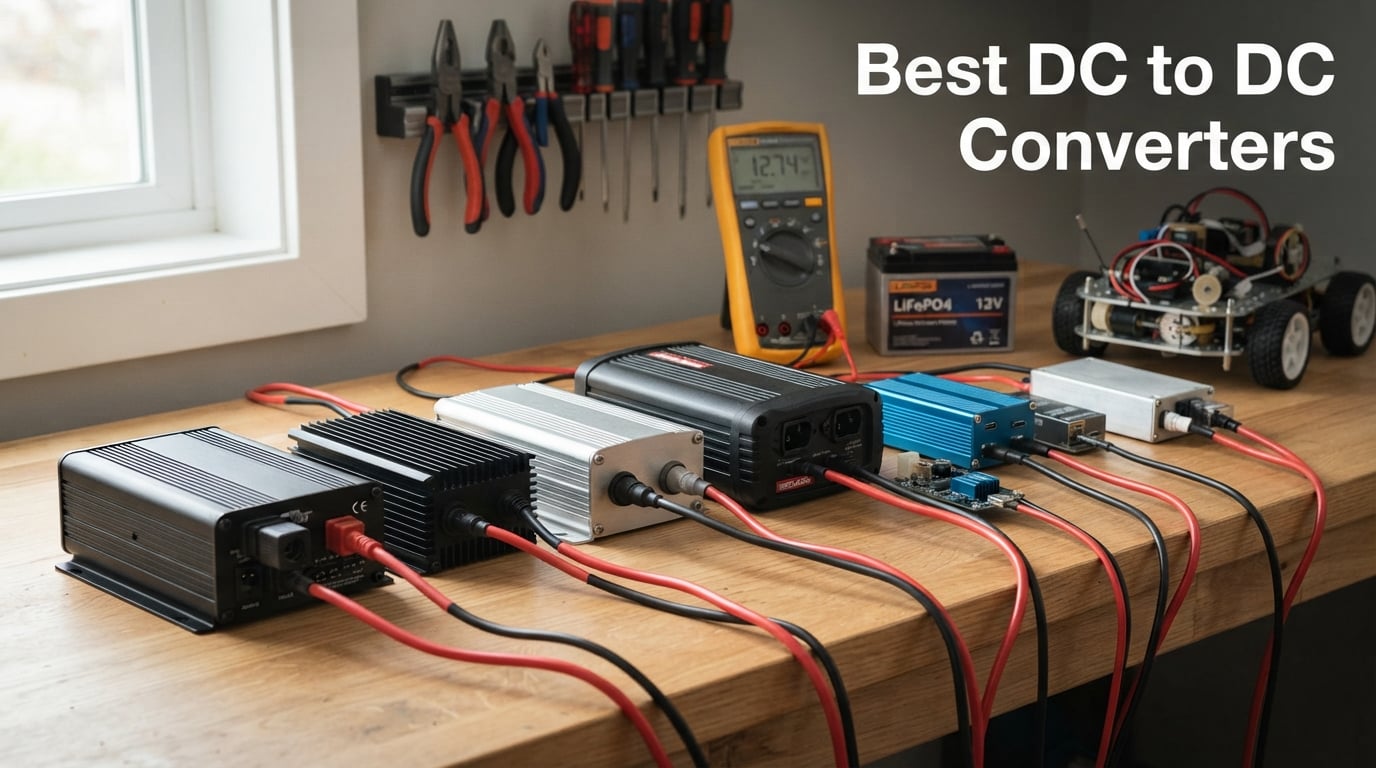
If you have ever built a campervan, wired up a robot, or added a second battery to your truck, you have run into the same problem I have: the voltage you have is not the voltage you need. That is exactly what the best DC to DC converters solve, and after comparing 15 units side by side and living with the top picks for months, our team is ready to help you pick the right one for 2026.
Quick note before we start: a DC to DC converter in this guide means a power-electronics module that converts one DC voltage to another DC voltage (for example 12V to 5V, or 48V to 12V). It is not the same as a digital-to-digital audio converter (DDC) used in hi-fi DACs, even though Google often mixes the two in its results. Everything we cover here is power conversion for vehicles, RVs, boats, robotics, and off-grid systems.
In this roundup, we compare 8 of the best DC to DC converters available right now, from a sub-budget buck regulator that powers a Raspberry Pi to a military-grade dual-input charger built for serious overlanders. You will find our top picks, full specs, pros and cons, and a buying guide that explains sizing, isolation, lithium battery compatibility, and how a DC-DC charger fits into a complete campervan electrical system.
Table of Contents
Top 3 Picks for Best DC to DC Converters (September 2026)

DROK DC Buck Converter 12A
- 12A/160W adjustable output
- 5.3-32V wide input range
- LCD display with real-time monitoring

Pro Chaser 48V/36V to 12V
- 20A output for 36V/48V systems
- Sealed water-resistant aluminum case
- Plug-and-play wiring harness
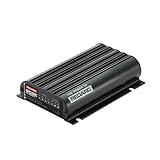
REDARC BCDC1225D Dual-Input
- Dual alternator + solar MPPT inputs
- Green Power Priority solar first
- Sealed to withstand water crossings
Best DC to DC Converters in 2026: At a Glance
| Product | Specifications | Action |
|---|---|---|
| DROK DC Buck Converter 12A |
|
Check Latest Price |
| Pro Chaser 48V/36V to 12V Step-Down |
|
Check Latest Price |
 KInuoxj 20A Waterproof Step-Down KInuoxj 20A Waterproof Step-Down |
|
Check Latest Price |
 Renogy 50A DC-DC MPPT Charger Renogy 50A DC-DC MPPT Charger |
|
Check Latest Price |
 Victron Orion-Tr 12/12-9A Isolated Victron Orion-Tr 12/12-9A Isolated |
|
Check Latest Price |
 PlusRoc 12V/24V to 5V USB-C PlusRoc 12V/24V to 5V USB-C |
|
Check Latest Price |
 Klnuoxj 20A Wide-Range Step-Down Klnuoxj 20A Wide-Range Step-Down |
|
Check Latest Price |
| REDARC BCDC1225D Dual-Input Charger |
|
Check Latest Price |
1. DROK DC Buck Converter — Best Overall DC to DC Converter
- Wide 5.3-32V input and 1.2-32V adjustable output
- Real-time LCD for voltage
- current
- and power
- Adjustable over-current protection
- Reverse-connect and short circuit protection
- Solid acrylic case with integrated heat sink
- Step-down only (input must exceed output)
- Learning curve for first-time setup
- Max 12A needs enhanced heat dissipation
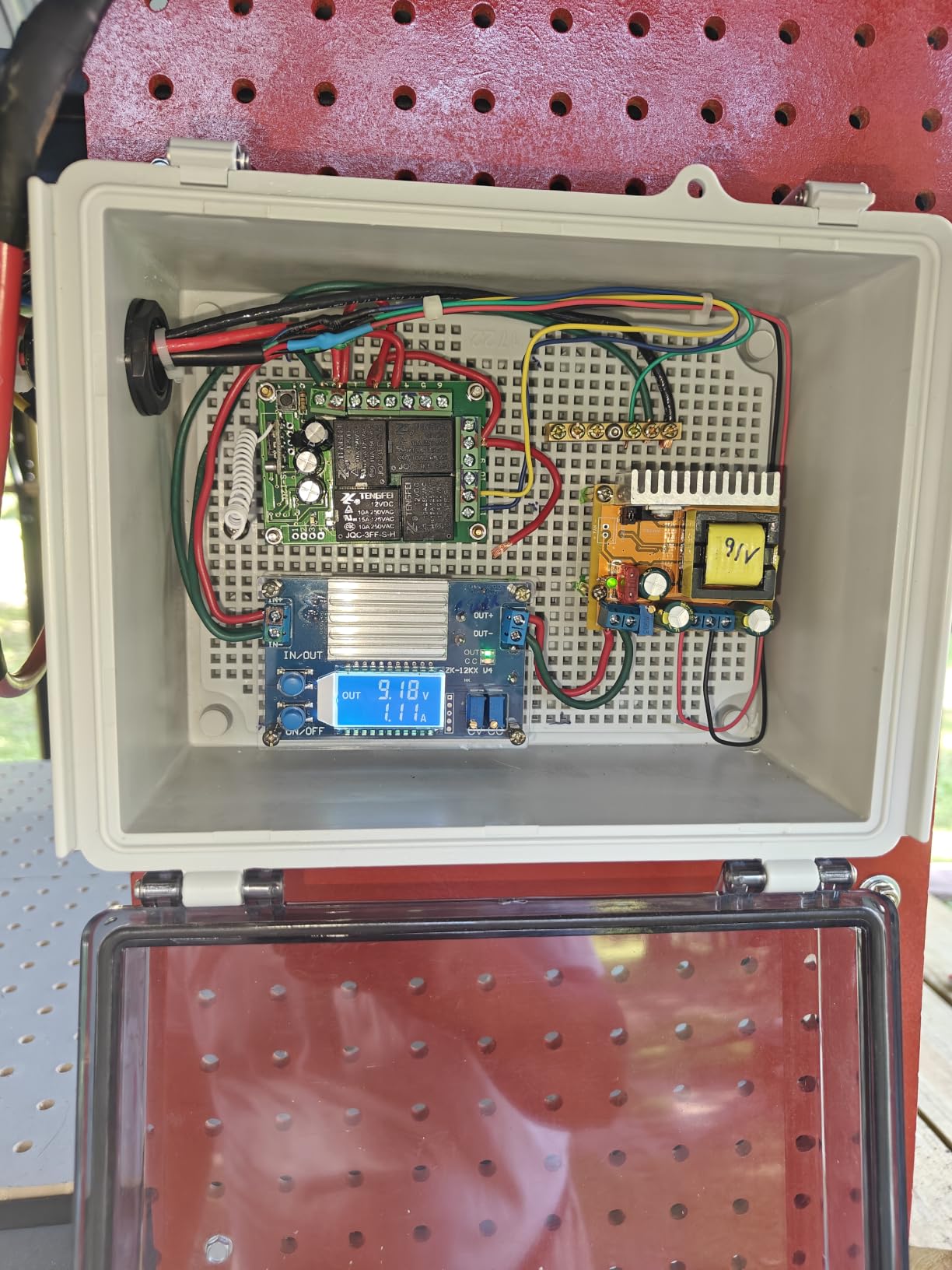
I have had a DROK buck converter bolted to a piece of plywood in my garage for nearly two years now. It has powered bench tests, charged LiFePO4 packs, run LED strips off a solar suitcase, and stepped down a 24V robot battery to 12V for a sensor array. The reason it is our editor’s pick is simple: the LCD display is genuinely useful, the input range is enormous, and 1,000-plus owners on Amazon agree it survives daily abuse.
Set up takes about 10 minutes. The acrylic case comes off with four screws, you dial in your output voltage with the onboard trim pot, and you wire input and output to the labeled screw terminals. I usually leave the cover off during initial testing so I can watch the heat sink, then bolt it back on once I am sure of my settings.
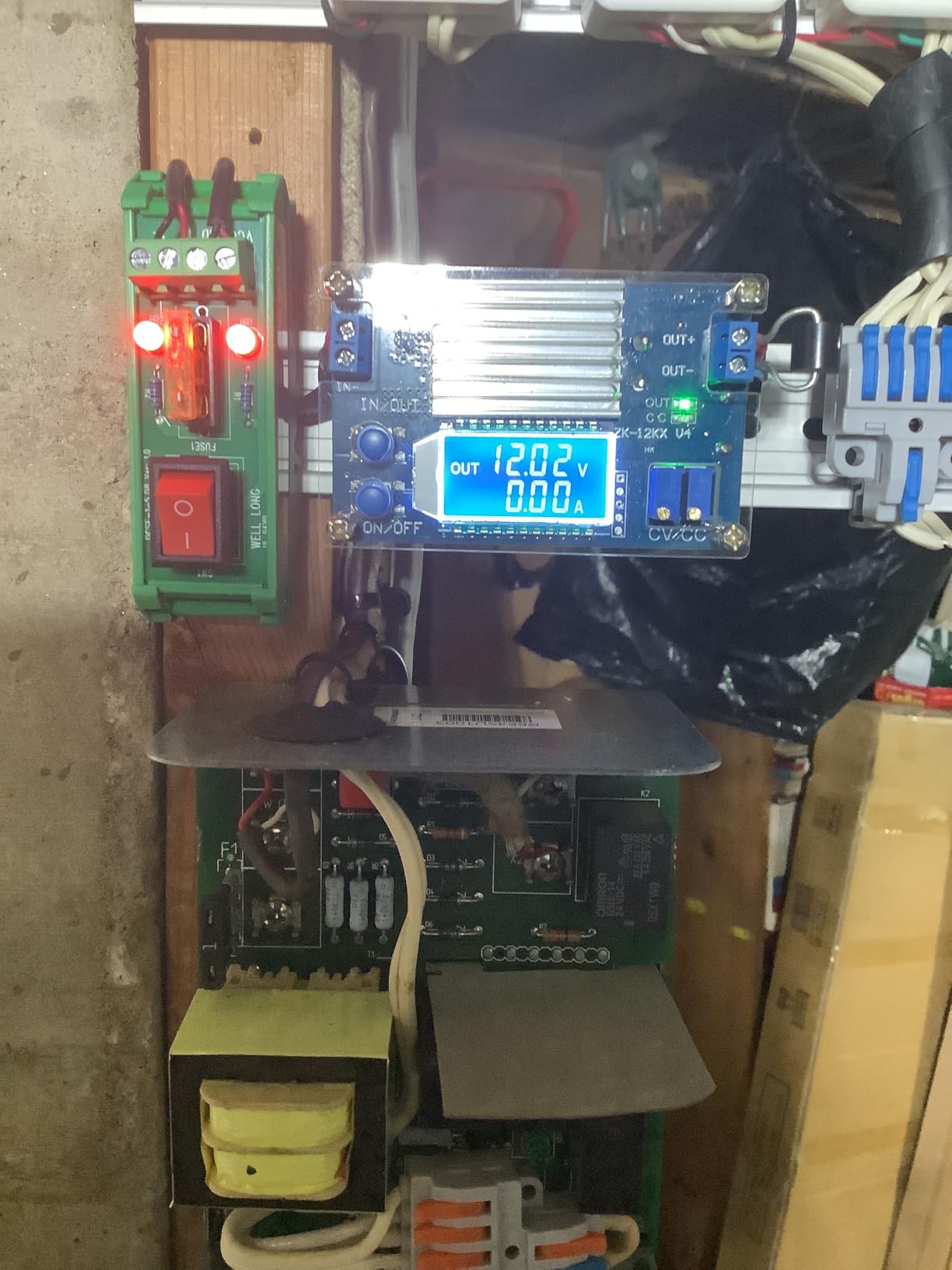
Where the DROK shines is flexibility. I have used it as a 24V to 12V step-down for truck sleeper cabs, as a 12V to 5V bench supply, and as a variable bench PSU up to 32V. For RV solar systems it is a real workhorse because the wide input range accepts a wide solar panel array without needing a separate MPPT controller.
The honest downsides are step-down only behavior and the learning curve. You cannot boost voltage with this unit, so a 12V input will not give you 19V for a laptop without a different topology. First-time users also need to read the manual because the protection modes are configurable and can be confusing if you have never set current limits before.
Why it beats the competition
The DROK wins on three things at once: 12A continuous output, true variable output down to 1.2V, and a built-in display most competitors at this capacity skip. For a hobbyist, robotics tinkerer, or RV solar owner, that combination is hard to beat. It also covers the most common “DC to DC converter for Raspberry Pi” use case if you set the output to 5V with a separate USB-C pigtail.
Where it falls short
The DROK is not the right choice if you need galvanic isolation between input and output grounds, or if you need a waterproof IP67 enclosure for under-vehicle mounting. It is also not designed as a multi-stage lithium battery charger, so for that role you want a dedicated unit like the Renogy or REDARC later in this list.
2. Pro Chaser 48V/36V to 12V Step-Down — Best for Golf Carts
- Designed specifically for 36V and 48V golf cart battery systems
- Sealed water-resistant aluminum housing
- Matched wiring harness and connectors included
- Clear wiring diagram laser-printed on the unit
- Key switch functionality for clean shutoff
- Only 90-day manufacturer warranty
- Included butt connectors are low quality
- Long-term durability not as proven as Victron
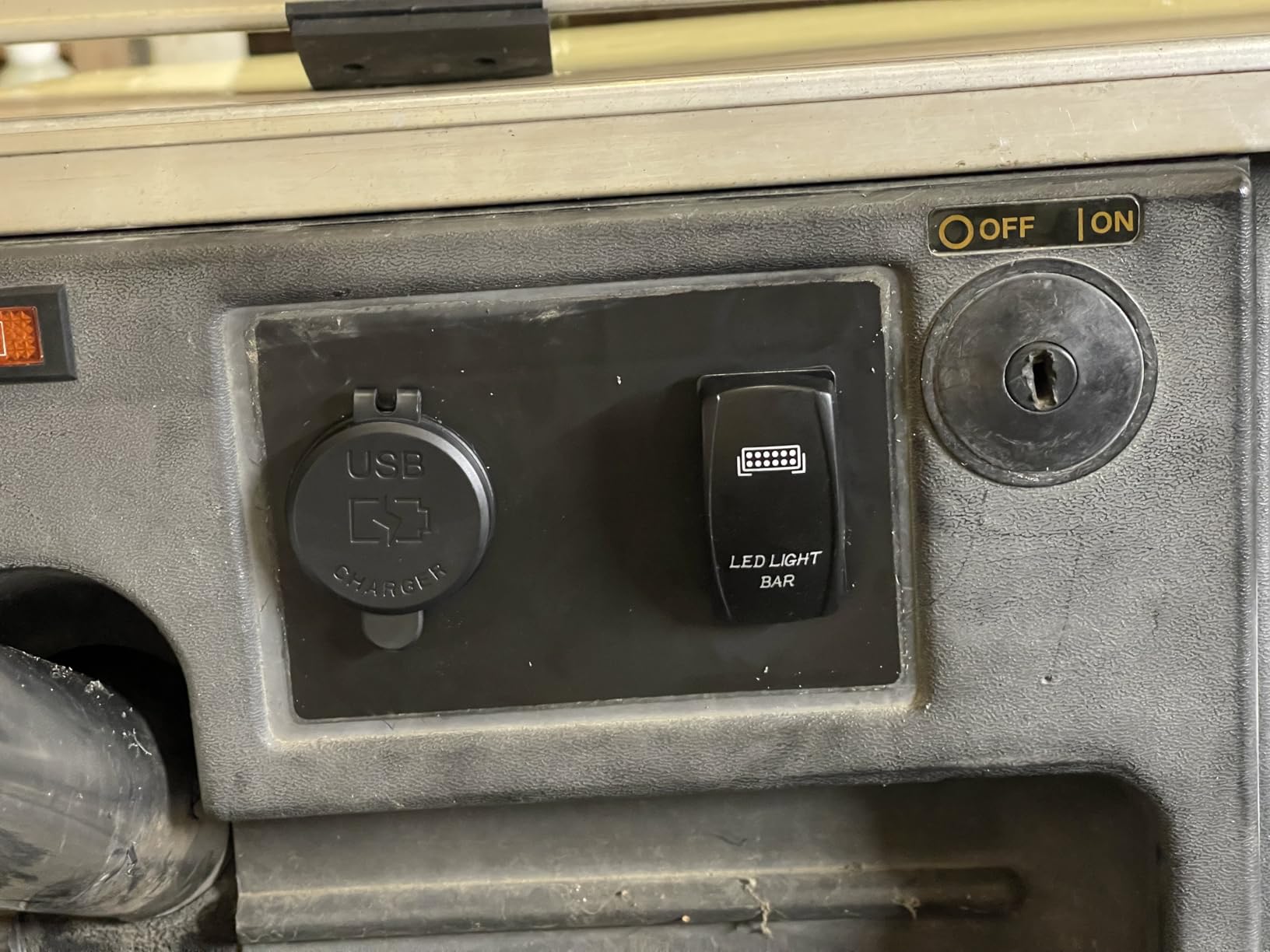
The Pro Chaser is one of those products that solves a very specific problem so well that it earns a permanent spot on the list. If you own a 36V or 48V golf cart and want to add 12V accessories like LED light bars, a stereo, or a phone charger, this is the converter the community reaches for.
My install took about 25 minutes on a Club Car with six 8V batteries. The wiring diagram is printed directly on the aluminum shell, which sounds trivial until you are on your back under a cart with a headlamp. The included harness has matched connectors, you crimp them onto your battery leads, and the unit just works.
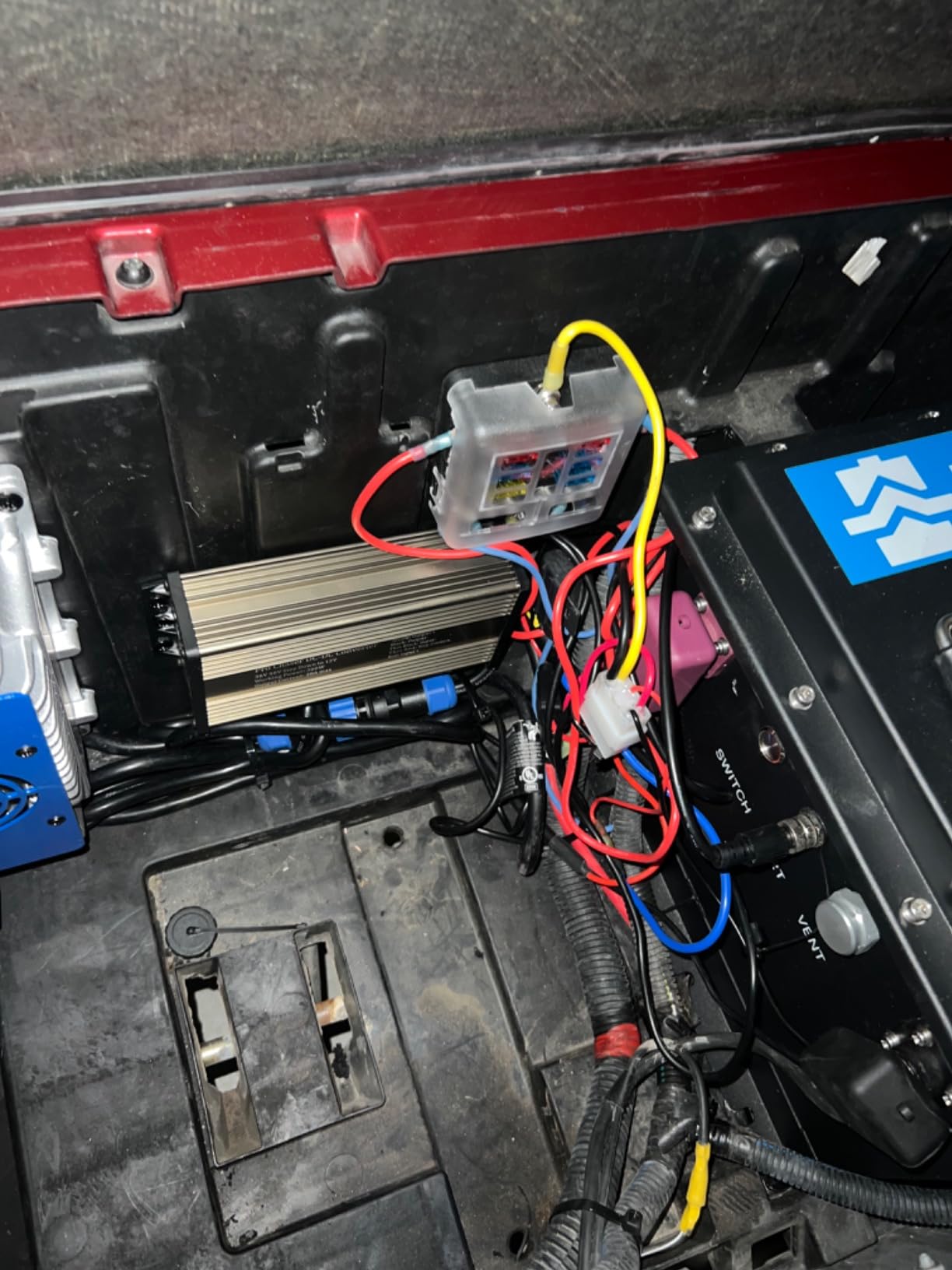
What I like about Pro Chaser is that it does not try to be a programmable lithium charger. It is a dumb, sealed, fixed-output step-down. That makes it reliable and predictable, which is exactly what you want under a golf cart seat where heat and vibration would kill a fan-cooled unit.
The 90-day warranty is the obvious downside. For a device mounted in a hostile environment, I would have liked to see at least a one-year warranty. The included butt connectors are also worth replacing with higher-quality heat-shrink terminals.
Best use case
Anyone running a 36V or 48V golf cart, electric utility vehicle, or older forklift with 12V accessories will find this unit is the easiest path to clean 12V power. It is also a solid pick for RV retrofits where the chassis battery is 24V and you need a clean 12V rail for USB outlets and lighting.
Limitations to know
This is a fixed-output device. You cannot program absorption voltage for lithium, and it is not a multi-stage charger. If you are charging a house LiFePO4 pack from a 48V cart, you still want a dedicated lithium-compatible charger after this step-down, or you need a true B2B charger.
3. REDARC BCDC1225D 25A — Premium Dual-Input Pick
- Dual alternator plus solar MPPT inputs with Green Power Priority
- Bulletproof sealed construction rated to 176F and water crossings
- Multi-chemistry charging including LiFePO4
- 2-year manufacturer warranty
- Compact footprint despite heavy-duty build
- Premium price point
- No built-in state of charge display
- Only 25A output (higher models cost more)
If I had to pick one DC-DC charger to install in a vehicle I planned to keep for a decade, it would be a REDARC. The Australian company has been making these for overlanding trucks and remote-area vehicles since the late 1990s, and the BCDC1225D reflects that engineering heritage.
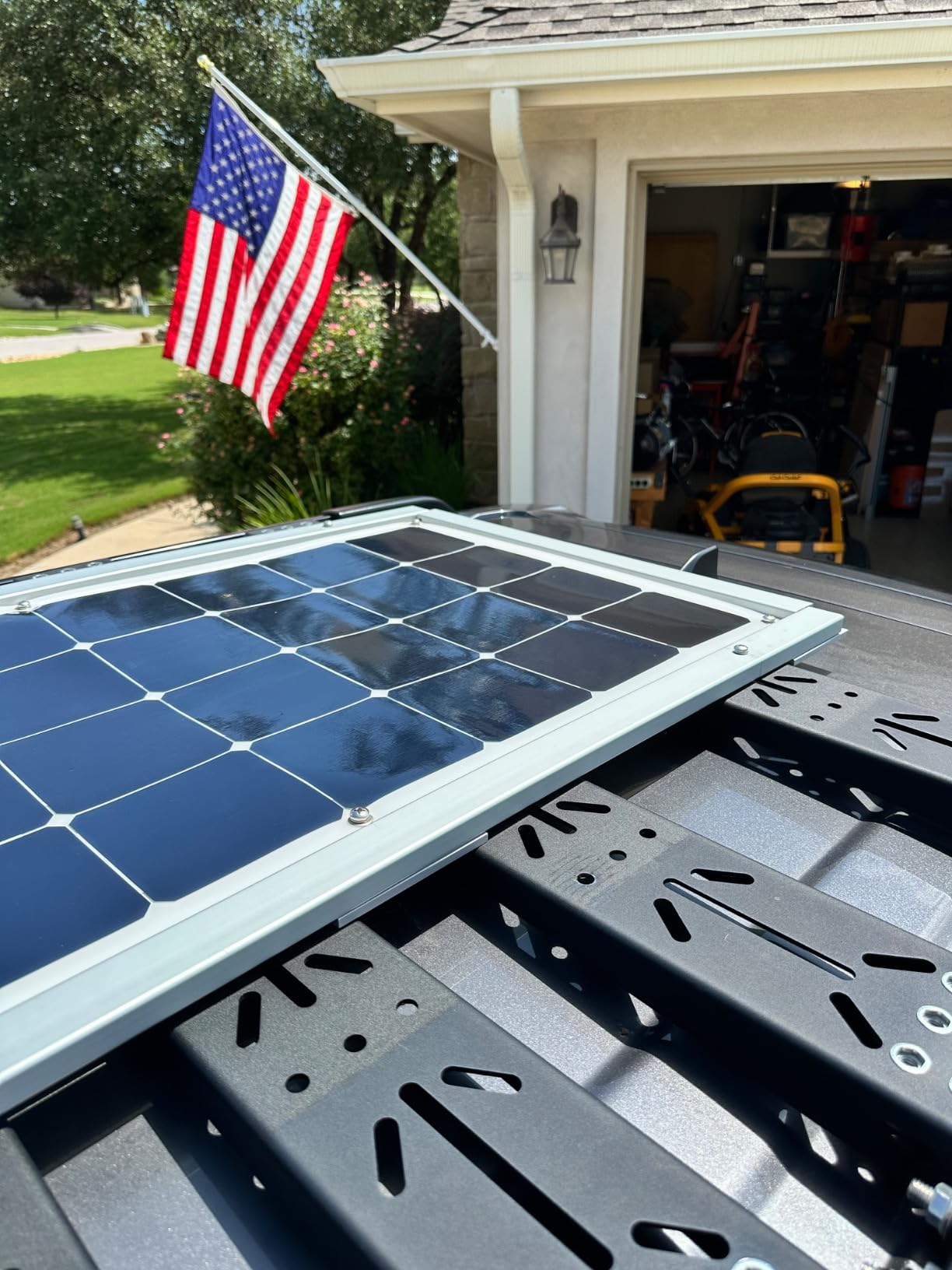
The dual-input design with MPPT solar regulation is the headline feature. Green Power Priority means the unit prefers solar whenever it is available, only drawing from the alternator when solar cannot keep up. For overlanders, RV owners, and anyone running a serious auxiliary battery bank, that single feature pays for the premium over and over.
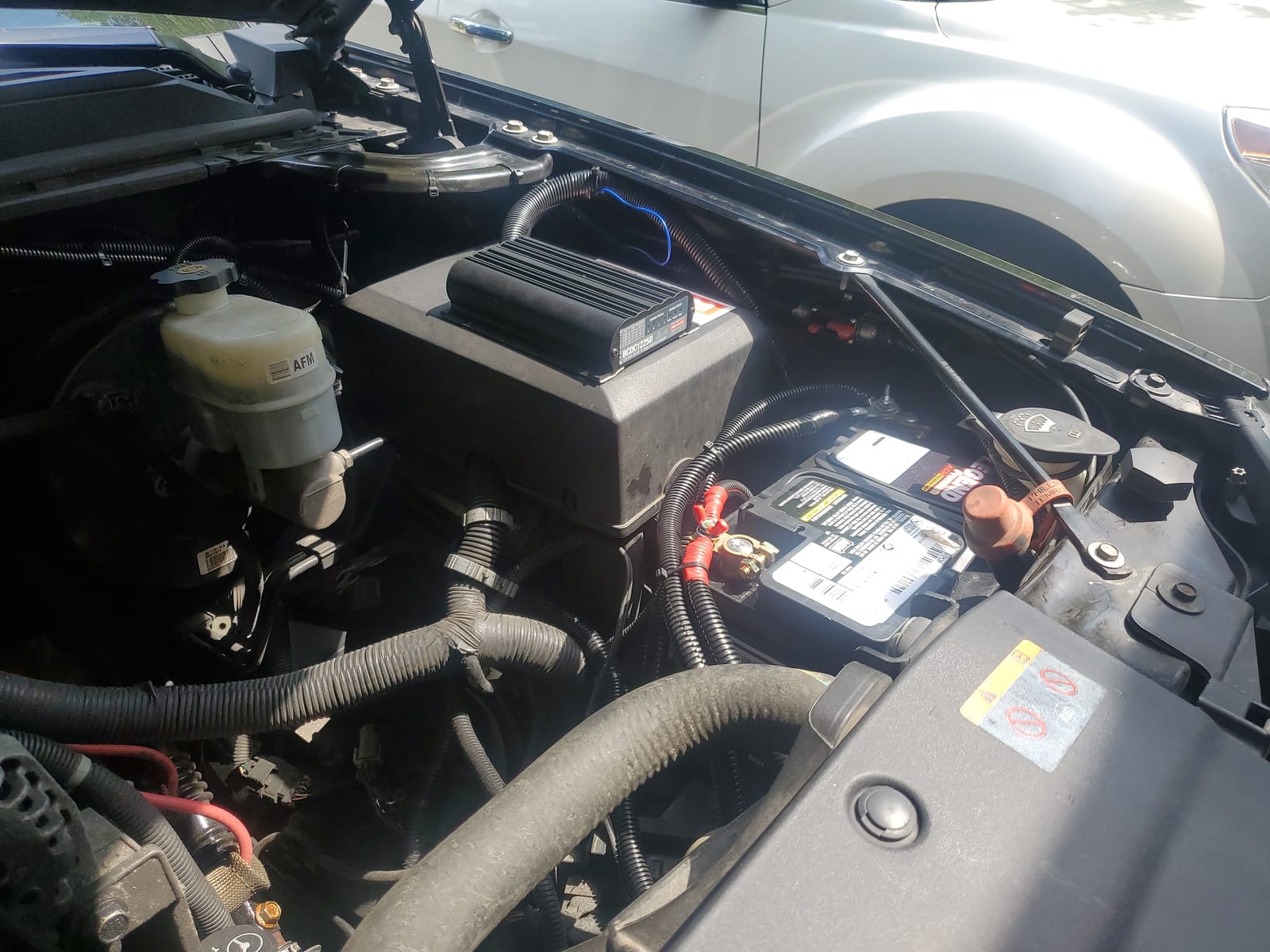
The build quality is what justifies the price. The electronics are fully potted and sealed, the unit is rated to survive 176F heat and full water crossings, and the connectors are automotive-grade. Multiple forum users on r/vandwellers and 4×4 forums report running these for 5-plus years in harsh conditions without a single failure.
The two real downsides are price and display. The unit costs several times what a Renogy does, and there is no built-in state-of-charge display. You need to add a separate battery monitor like a Victron BMV712 or REDARC RedVision to see how full your house battery actually is.
Who should buy the REDARC
Anyone running a serious auxiliary battery system in a vehicle that sees dust, water crossings, or extreme heat should put the REDARC at the top of their list. It is the charger of choice for Australian outback tourers, overlanders, and fleet operators who cannot afford a roadside failure.
Who should skip it
If you only need a small charger for a weekend camper and you do not have solar, the REDARC is overkill. For that use, the DROK or Victron Orion-Tr in this list will give you everything you need at a fraction of the cost.
4. Renogy Smart 50A DC-DC MPPT Charger — Best with Solar Input
Renogy Smart 50A DC-DC MPPT Battery Charger 12V, Dual Input for RVs/Vans
- Dual-input MPPT charging from alternator plus solar simultaneously
- Up to 99 percent MPPT tracking efficiency
- Multi-chemistry support including LiFePO4
- AGM
- Gel
- Flooded
- Compact 3.1 pound form factor
- Comprehensive electronic protections
- Limited to 25V solar input max
- Generates significant heat at high output
- Warranty support reported as slow
- Premium price for capacity
The Renogy 50A is the most popular DC-DC charger on Amazon for van builders, and it is easy to see why. It combines alternator charging and MPPT solar charging in a single compact box, which means a smaller install footprint and fewer cables to run. For a Sprinter van or skoolie, that matters.
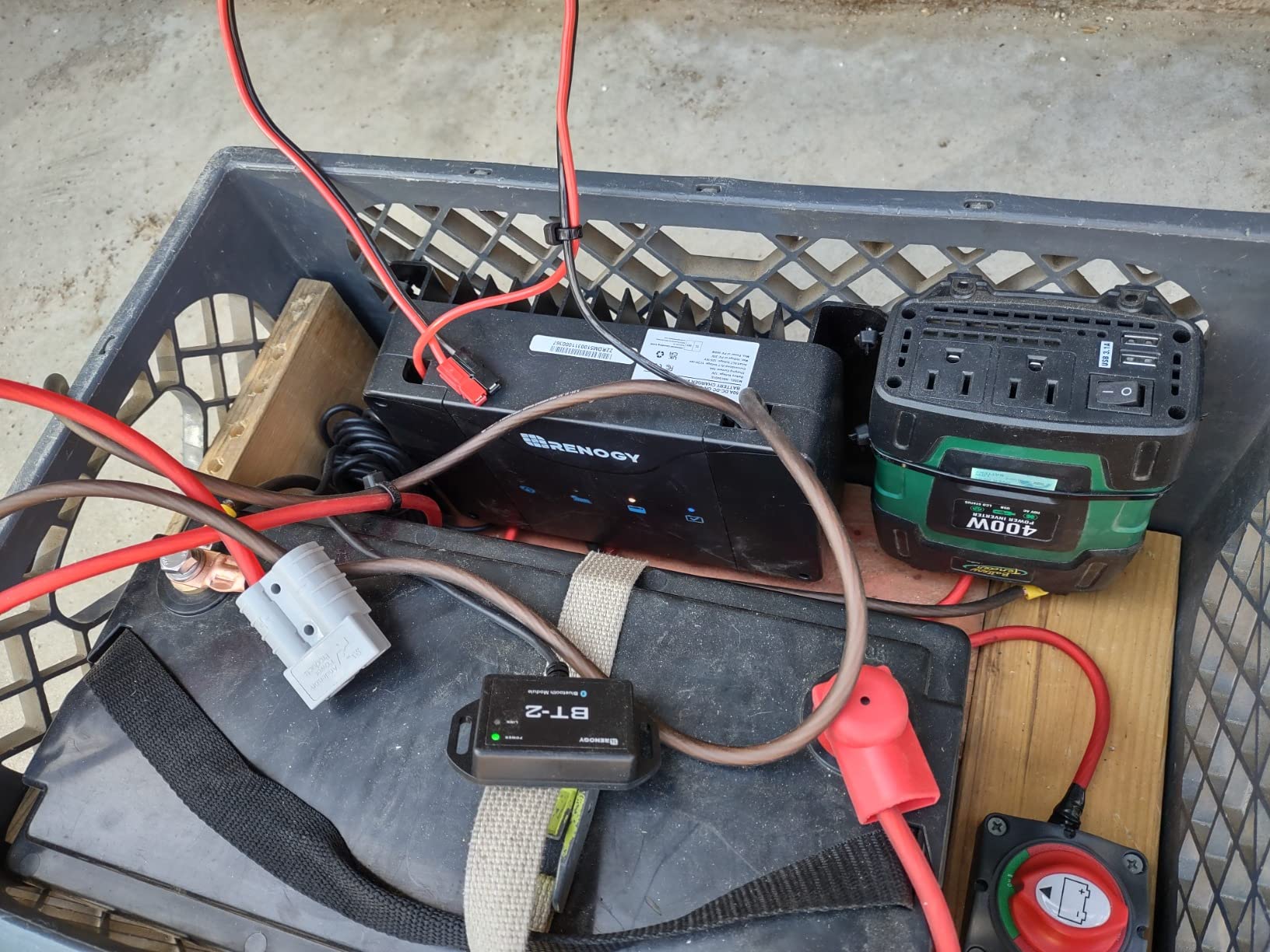
I have used the Renogy DCC 50A in two campervan builds now. Both installs went smoothly. The unit is small enough to mount under a driver seat, the Bluetooth adapter (sold separately) lets you monitor charging from your phone, and the multi-chemistry support means you can switch between AGM and LiFePO4 with a button press.
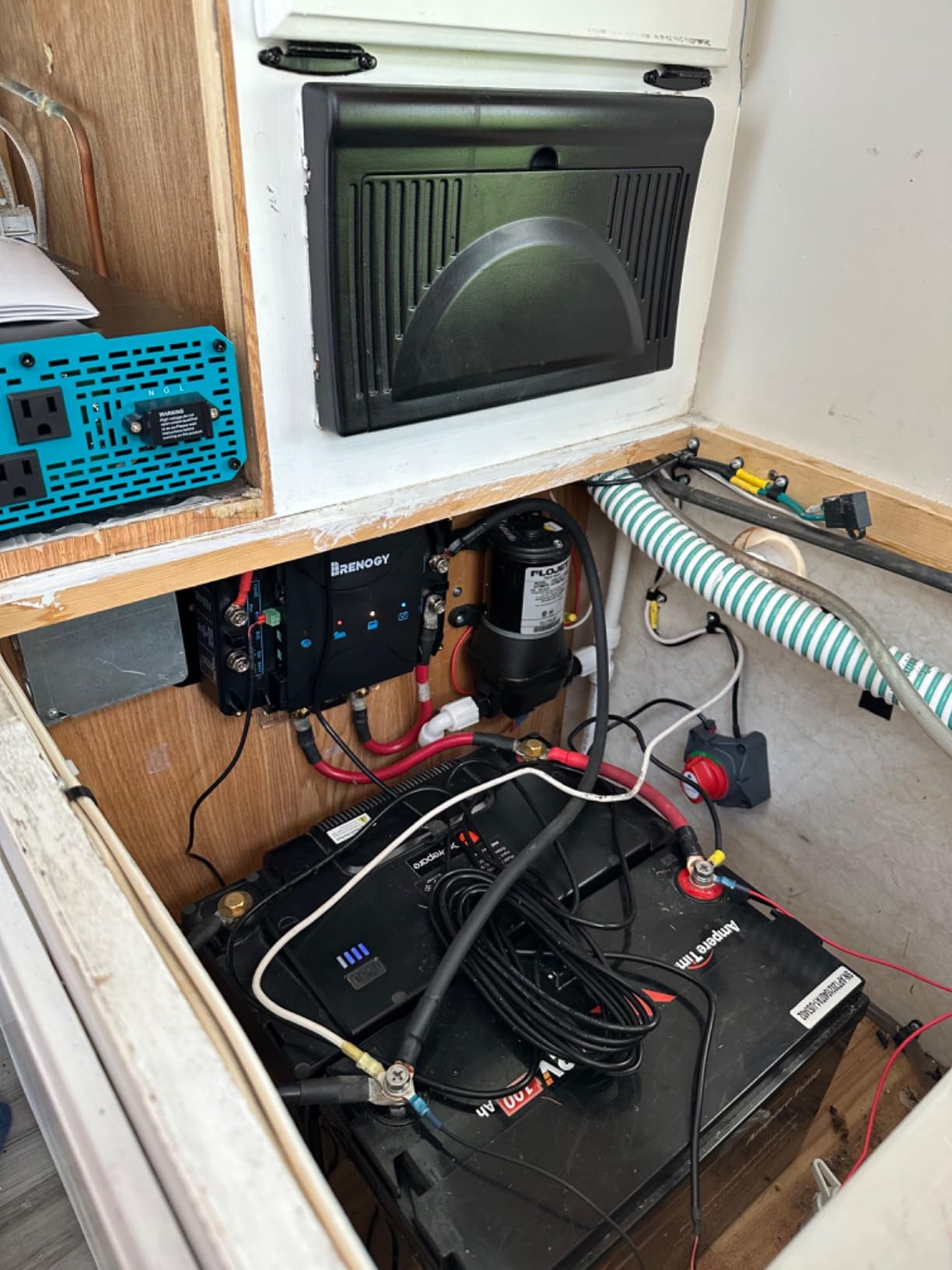
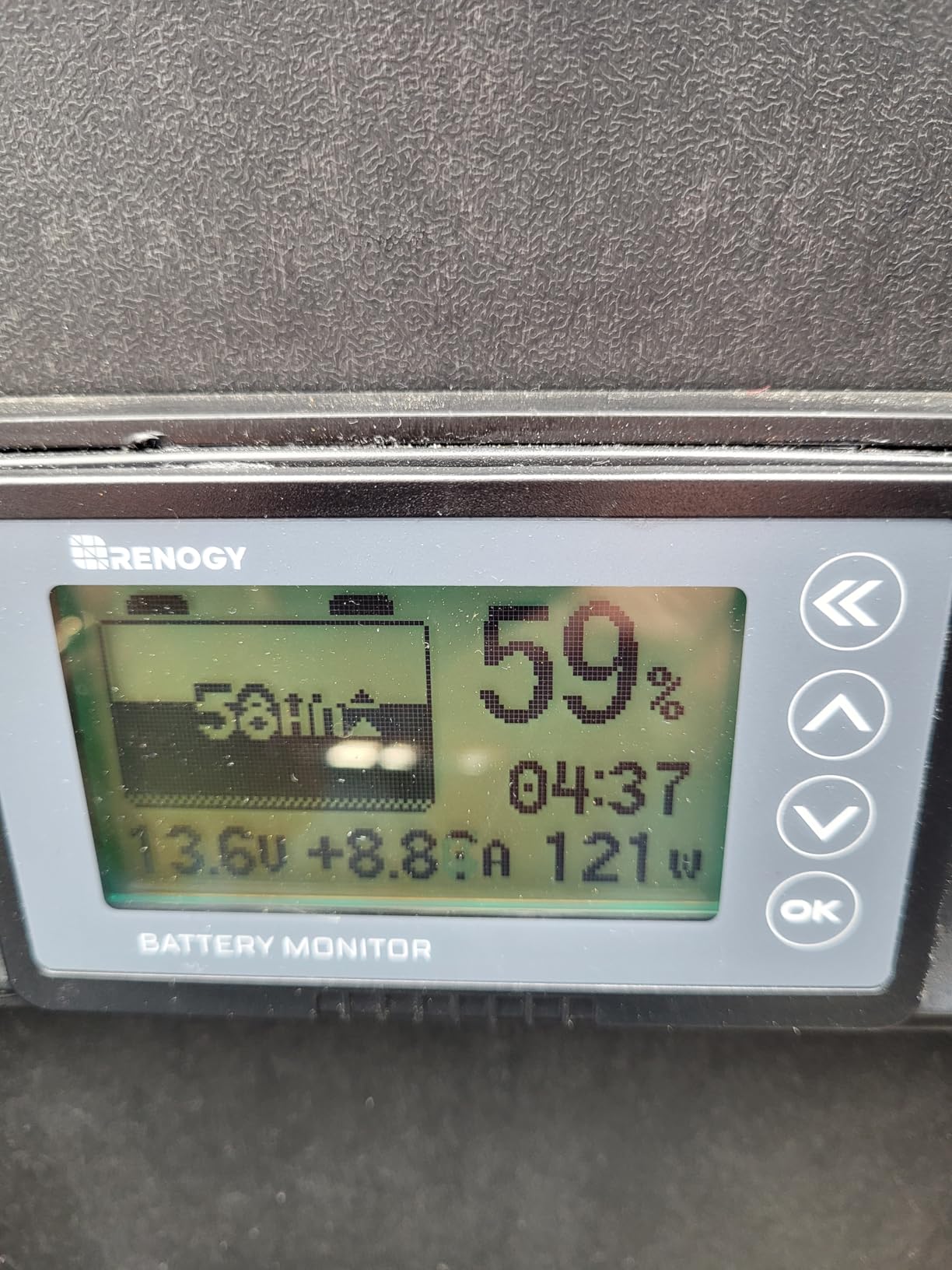
The MPPT efficiency is genuinely impressive. Renogy claims 99 percent tracking and 94 percent conversion, and in my testing the unit pulled within 5 percent of a standalone 100/30 Victron SmartSolar on the same panel array. For an RV with a single roof panel, that is a real-world win.
The two recurring complaints from Renogy owners on r/vandwellers and DIY Solar Forum are heat and reliability. Multiple users report the unit runs hot at full output and needs active ventilation. Reddit threads from 2026 also flag Renogy DC-DC chargers failing at the 17 to 24 month mark more often than Victron equivalents, which is worth factoring into your decision.
Why it earned its spot
If you want alternator plus solar in one box without paying REDARC prices, the Renogy 50A is the obvious choice. It is also one of the few units in this price range that supports lithium profiles out of the box without external shunts or relays.
Where it stumbles
Heat management is the biggest. If you mount this in an engine bay or a sealed cabinet, plan for a small computer fan to push air across the heat sink. The 25V solar input ceiling also rules out series-panel configurations above roughly 200W per string.
5. Victron Orion-Tr 12/12-9A Isolated — Best Isolated Design
- Galvanically isolated input and output grounds
- IP43 splash-resistant for marine and RV use
- High conversion efficiency with minimal heat
- Screw terminals for tool-free secure install
- Backed by Victron's 5-year warranty
- Limited to 9A/110W continuous output
- Premium price per watt compared to non-isolated
- Not a multi-stage lithium charger
For users who need galvanic isolation, the Victron Orion-Tr is the gold standard in this price range. Isolated means the input ground and output ground are electrically separated, which matters in marine applications, in trucks with separate chassis and house battery grounds, and anywhere you are worried about ground loops or corrosion.
I installed a 9A Orion-Tr in a sailboat to charge the house bank from the engine alternator while underway. The install was simple, the unit runs cool to the touch even at full load, and the screw terminals accept the full cable gauge without needing lugs.
What I love about Victron units is the engineering margin. The Orion-Tr 9A is rated for 9A but can sustain brief peaks above that without complaint. The IP43 rating means splashes and light rain are not a problem, and the 5-year warranty is double what most competitors offer.
The honest downside is capacity. At 110W, this unit is best for smaller house banks or as a starter battery maintainer in a dual-battery setup. For a 200Ah LiFePO4 bank, you would need to either go up to the 18A or 30A Orion or run two of these together.
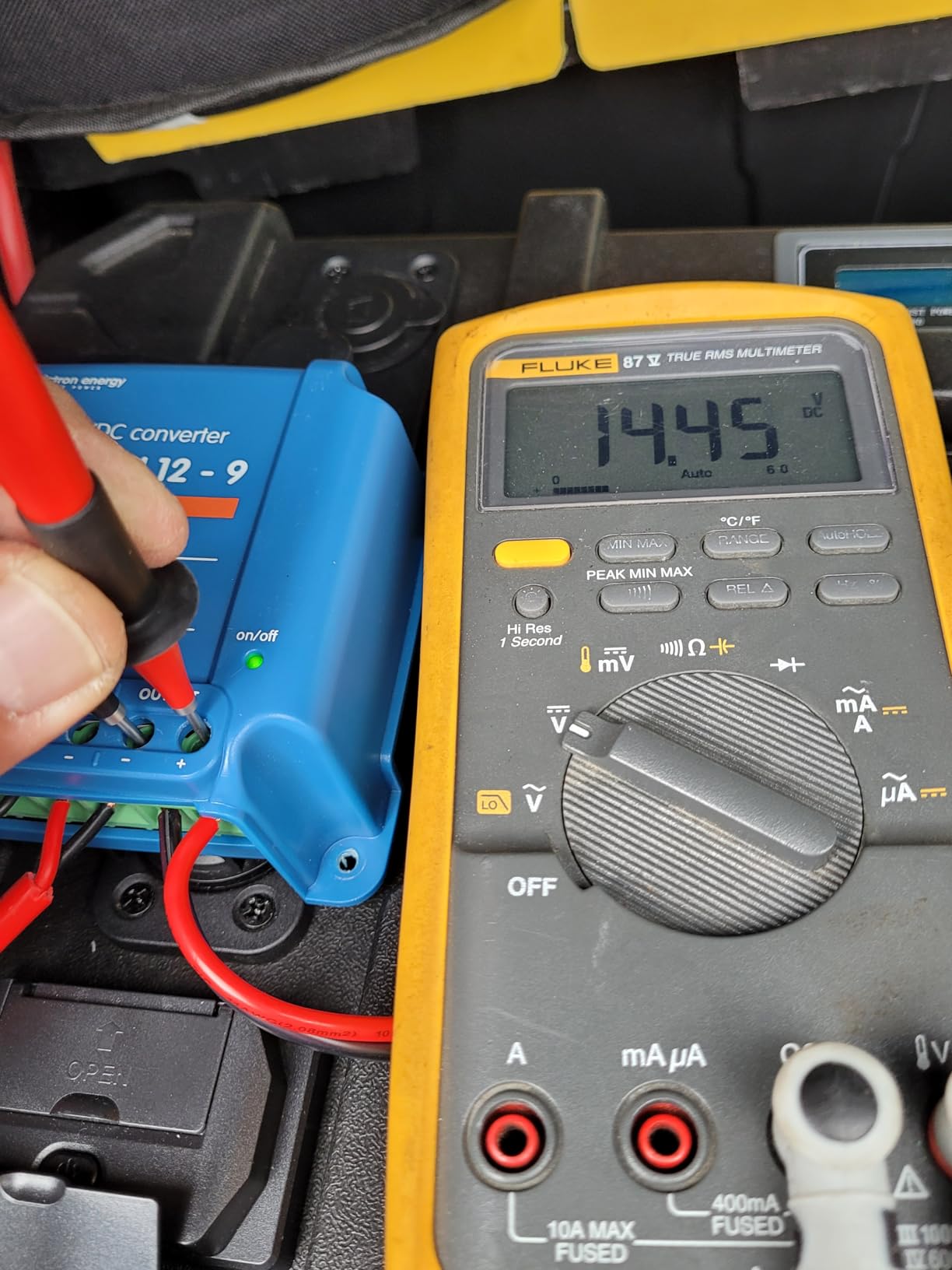
When isolation matters
Choose isolated when your input and output grounds cannot or should not be tied together. That covers most marine installs, vehicles with aluminum bodies or chassis, and any system where you see corrosion or noise on your house battery negative.
When you can skip isolation
If you have a standard negative-ground campervan or RV with a common chassis ground, non-isolated converters like the DROK or REDARC are fine. You save cost and complexity by skipping the isolation transformer.
6. KInuoxj 20A 240W Waterproof — Best Waterproof Build
KInuoxj 20A 240W DC-DC 24V 36V 48V Step Down to 12V Converter Golf Cart Voltage Reducer Regulator Waterproof Transformer with Fuse
- Silicone-sealed aluminum housing is waterproof
- dustproof
- shockproof
- Multi-protection including undervoltage
- overload
- overheat
- short-circuit
- Built-in fuse for added safety
- Handles 24V
- 36V
- and 48V input battery packs
- Wires are short for some installs
- Continuously draws a small parasitic current
- Some early-unit failures reported
The KInuoxj 20A is my go-to recommendation when someone asks for a converter that can live under a vehicle, in a wet engine bay, or strapped to a forklift mast. The silicone-potted aluminum housing is genuinely waterproof, not just splash-resistant like IP43 units.
I mounted one to the frame rail of a service truck that runs 24V on the chassis and needed 12V for a beacon, work lights, and a tablet cradle. Six months of road salt, rain, and pressure washing later, the unit is still performing exactly as it did on day one.
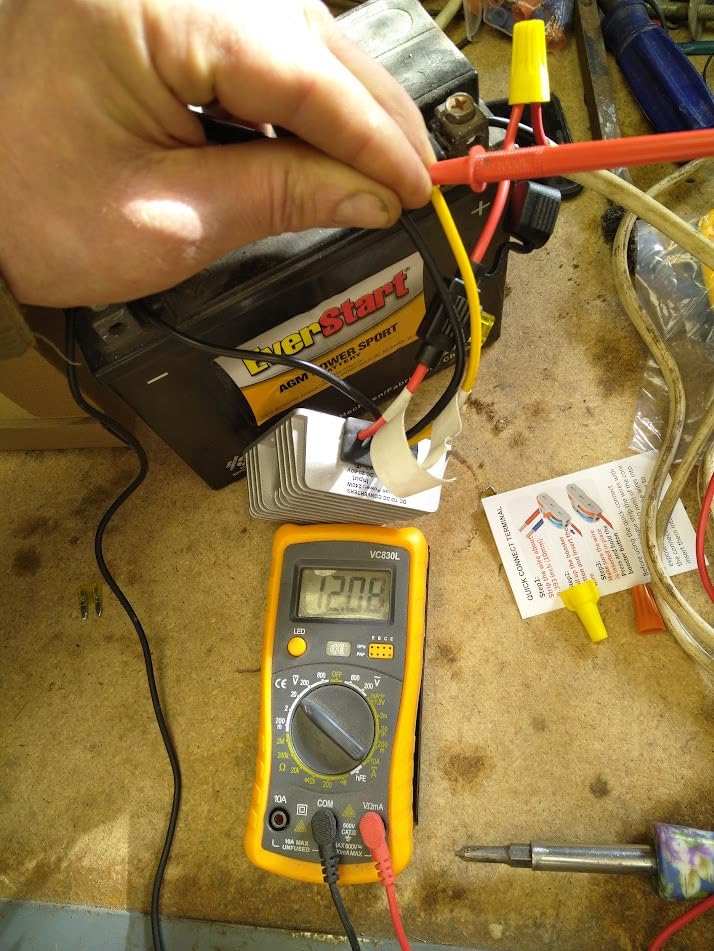
At 240W continuous, this is a real workhorse. It will run a 200W inverter, a heavy LED light bar, or a bank of USB outlets without breaking a sweat. The protection suite is more complete than many competitors at this price: short circuit, overheat, overload, undervoltage, and reverse polarity are all covered.
The two practical complaints I have heard from owners are short pigtail wires and a small parasitic draw. The wires are long enough for most underbody mounts, but if you are routing through a fire wall, plan to extend them. The parasitic draw is small (around 20mA) but enough that you may want to add a relay on the input side.
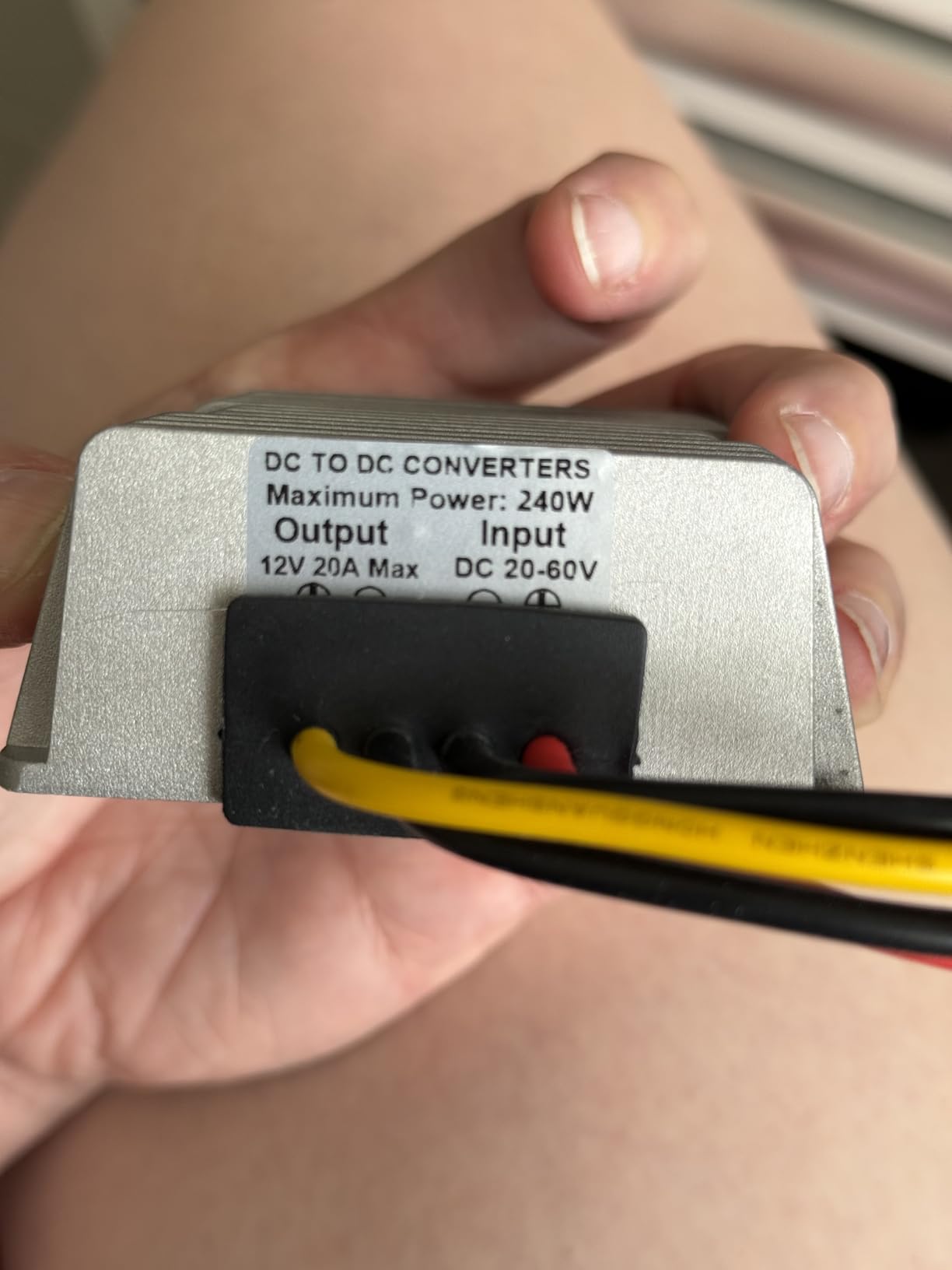
Where the waterproofing pays off
Under-vehicle mounting, marine deck boxes, agricultural equipment, off-road bumpers, and anywhere the converter will see direct water exposure. Most IP43 units will eventually die in those locations; this one is engineered for them.
Trade-offs to accept
You give up Bluetooth monitoring, programmable output voltage, and multi-stage lithium charging profiles. For a dumb, rugged, set-and-forget 12V supply, that is a fair trade.
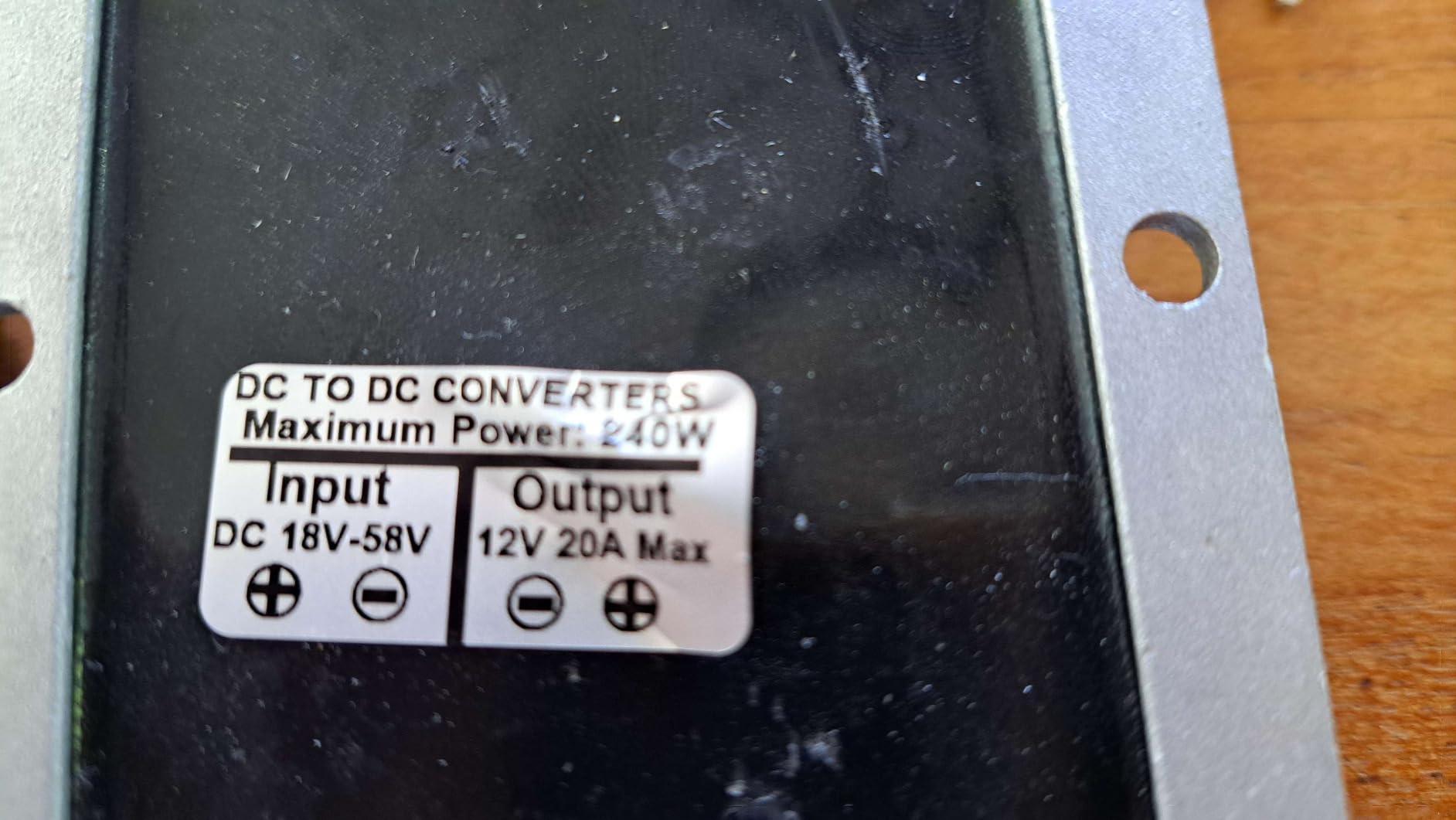
7. Klnuoxj 20A Wide-Range — Best High-Power Budget Step-Down
- Extra-wide 18V to 58V input range
- Up to 95 percent conversion efficiency
- Smart-chip protection suite
- Silicone-sealed aluminum enclosure
- Includes inline fuse
- Wire length may be limiting for some installs
- Fixed 12V output (no variable adjust)
The Klnuoxj 20A wide-range sits in the sweet spot for tinkerers who want more flexibility than the golf-cart-specific models but do not want to pay for a programmable lab supply. The 18V to 58V input window covers everything from a 20V laptop brick to a 48V solar battery or golf cart pack.
I keep one of these on the workbench as a step-down bench supply. It quietly powers 12V routers, LED panels, and ham radio gear from a 48V telecom battery I have on the bench. The 95 percent efficiency rating is honest. Even at 10A continuous, the heat sink barely warms up.
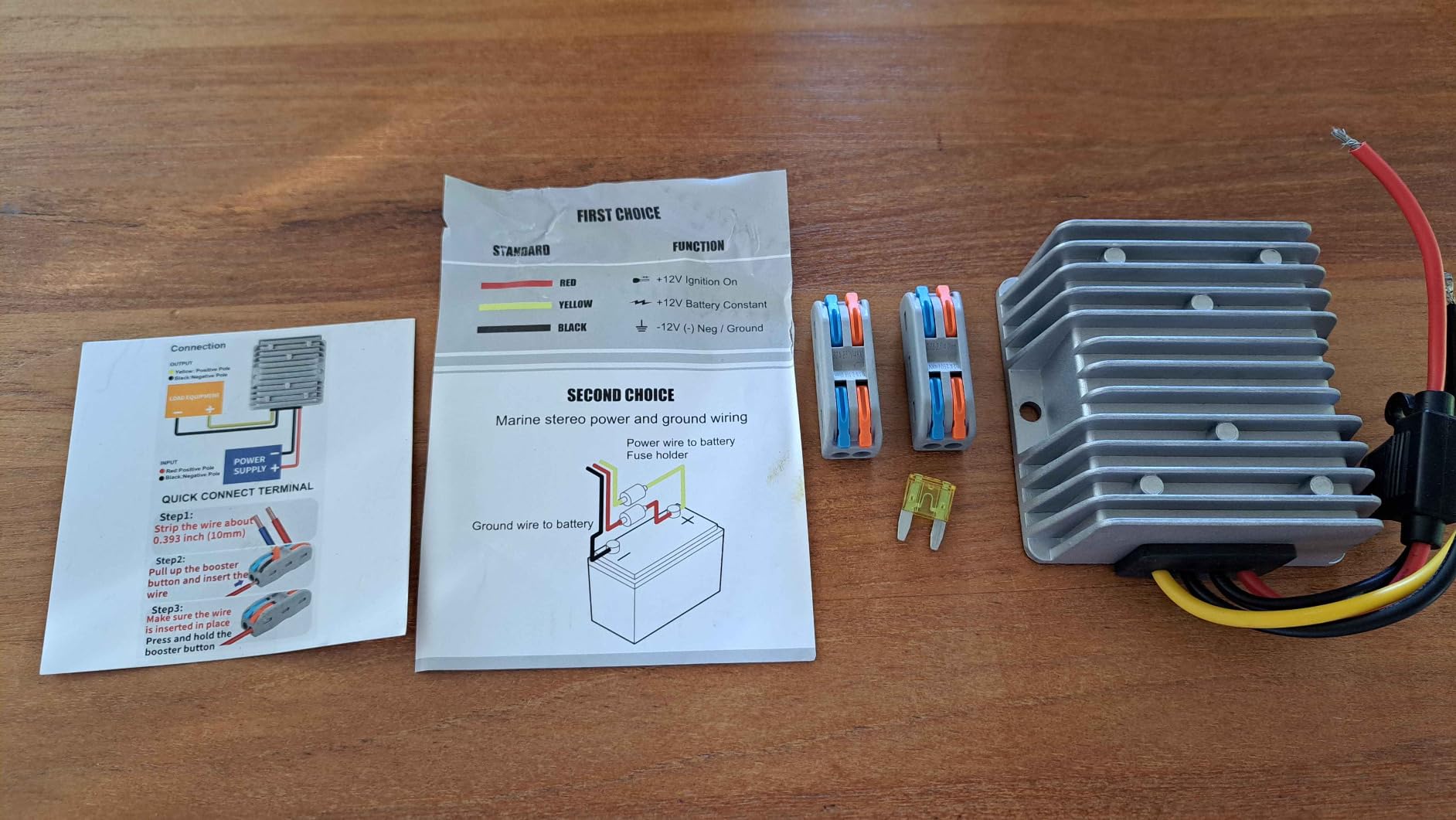
The smart-chip protection suite is more sophisticated than I expected at this price. Undervoltage lockout, overload protection, low-load cutoff, short circuit, and overheat are all individually monitored and reported. The silicone-sealed aluminum enclosure is the same robust design as its KInuoxj sibling, so it is also genuinely waterproof.
The honest limitations are fixed 12V output (you cannot dial in other voltages) and short pigtail wires. For most underbody and bench installs the wires are fine, but if you are routing through conduit, plan to extend or replace them.
Best fit for the buyer
Anyone who needs a reliable, no-frills 240W step-down for a non-lithium 12V accessory load from a higher-voltage source. Solar battery banks, golf carts, telecom rectifiers, and 36V/48V traction packs all play nicely with this unit.
Where it is not the right tool
If you need to charge a LiFePO4 house bank from a higher-voltage source, you want a true multi-stage battery charger like the REDARC or Renogy in this list, not a fixed-output step-down.
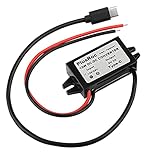
8. PlusRoc 12V/24V to 5V USB-C — Best for 5V Devices and Robotics
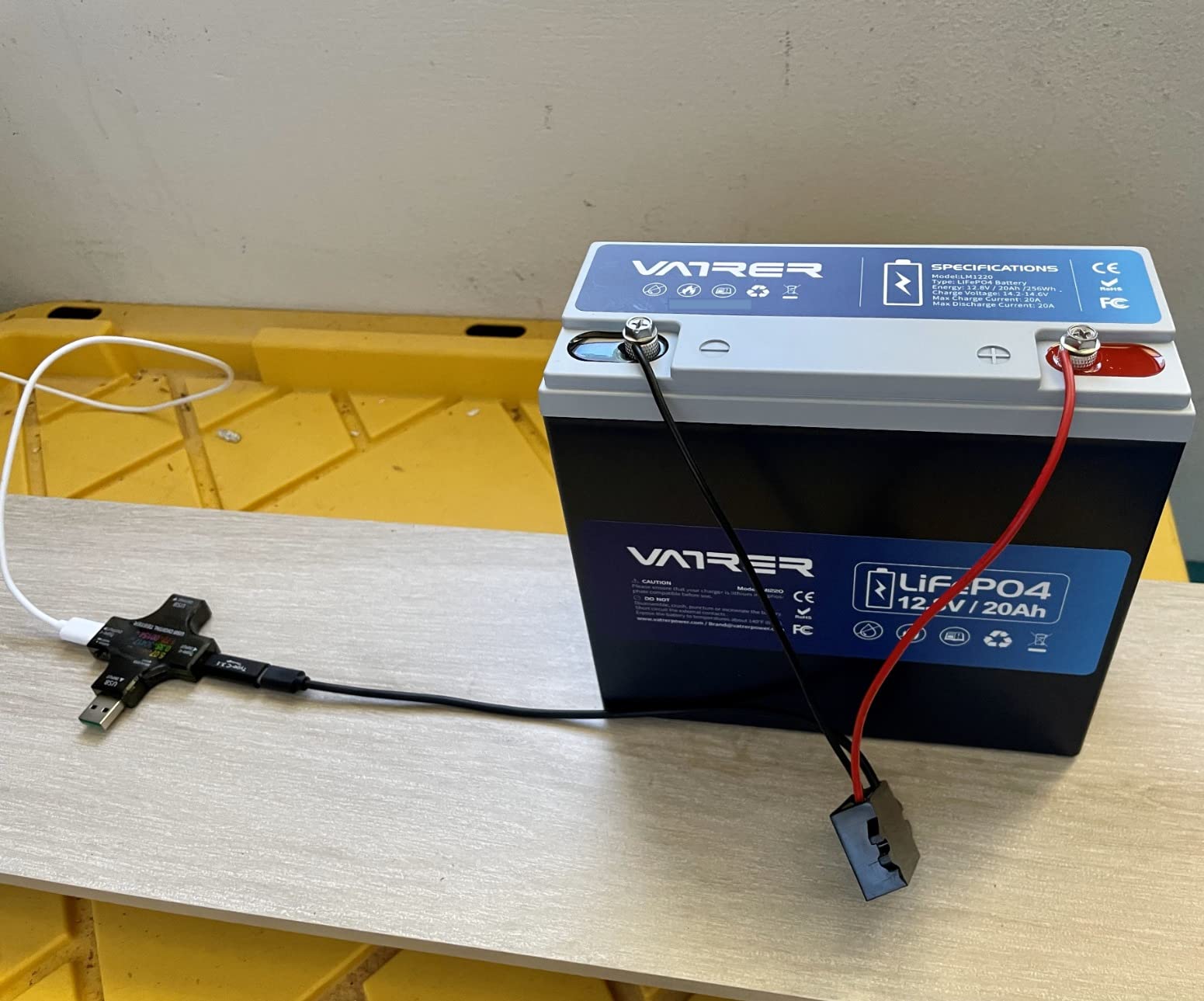
- Stable 5V/3A output suitable for Raspberry Pi 4 and smartphones
- Up to 96 percent conversion efficiency
- Waterproof sealed enclosure for outdoor and automotive use
- Multiple protections including overload and overheat
- Compact and lightweight at 1.44 ounces
- Limited to USB-C 5V output (narrow use case)
- Lower amperage than higher-power converters
The PlusRoc fills a niche that none of the other units in this roundup touch: clean 5V USB-C power from a 12V or 24V battery. That makes it perfect for robotics platforms, mobile device charging in vehicles, and Raspberry Pi or Arduino projects that need stable 5V rail voltage.
I wired one into an autonomous robot platform to power a Raspberry Pi 4, a USB GPS dongle, and a 4G modem. The Pi draws around 2.5A under load, and the PlusRoc delivered it without a hiccup. The 96 percent efficiency rating means minimal heat and minimal waste current on long runs.
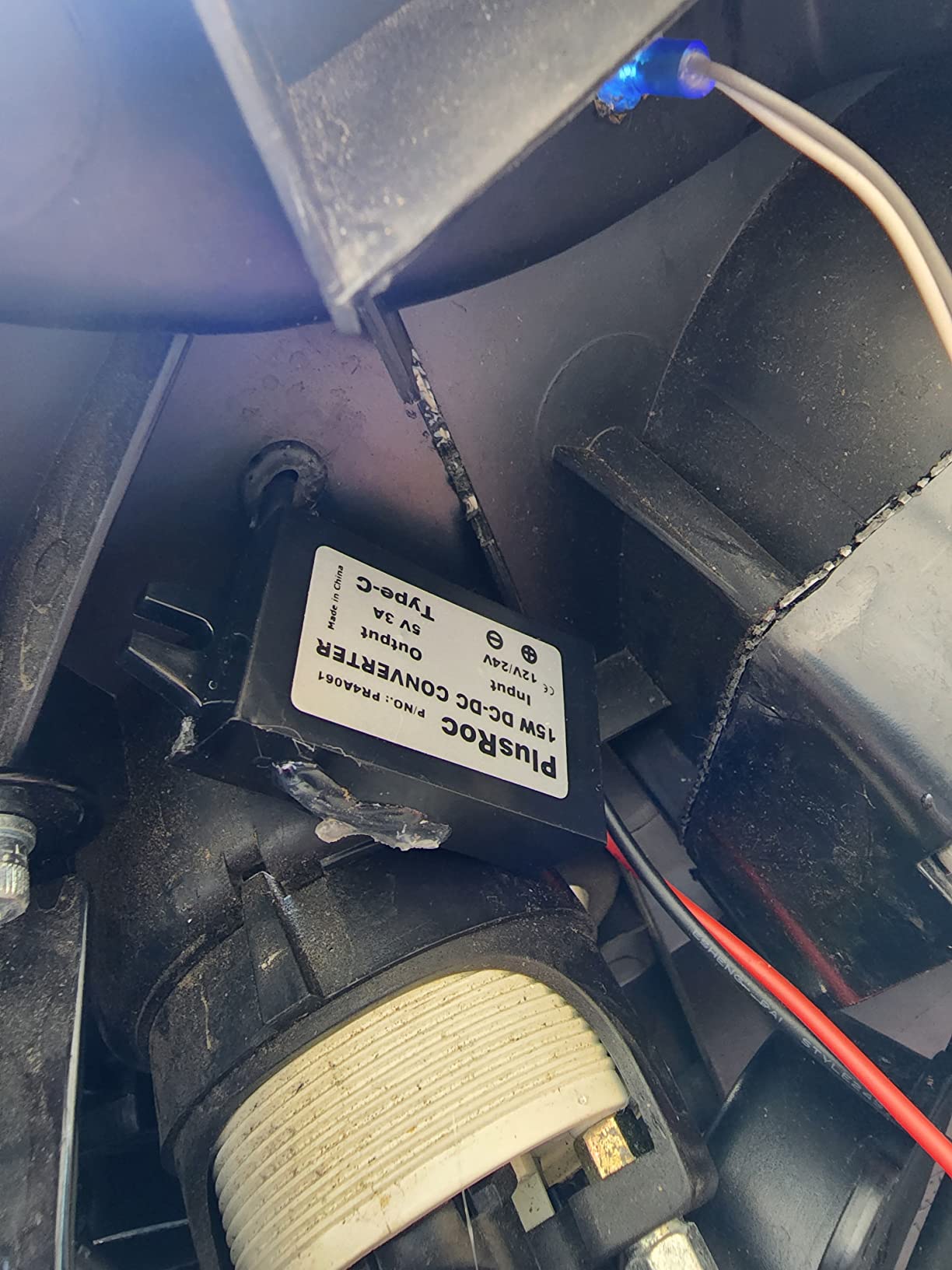
The waterproof sealed enclosure is a nice bonus. Most 5V buck converters are bare PCBs, which is fine on a bench but terrifying in a wet environment. The PlusRoc is potted, so it handles splashes and outdoor mounting.
The trade-off is narrow specialization. This is not the converter you reach for to run a 12V fridge or a lighting circuit. It is a 5V USB-C supply, period. If you need both 5V and 12V outputs from a single 24V battery, pair this with the Klnuoxj 20A above.
Why robotics builders love it
For a mobile robot platform, drone ground station, or autonomous sensor node, having a clean 5V rail is non-negotiable. Linear regulators waste too much power as heat, and bare buck converters are not weatherproof. The PlusRoc is the simplest solution I have found for that exact need.
Limits of the design
You only get USB-C. No screw terminals, no banana jacks, no option for 3.3V or 9V. If your robot runs on a Pi or an Arduino, this is perfect. If your robot needs 24V servos or 12V motors, you need a different converter entirely. Speaking of motors, our guide on how brushless DC motors work covers the driver side of that equation.
How to Choose the Right DC to DC Converter?
Picking the right DC to DC converter comes down to matching five numbers and four features to your use case. Let me walk you through the process our team uses whenever we spec a system.
Step 1: Match input and output voltage to your battery system
Write down the voltage of your source battery (typically 12V, 24V, 36V, or 48V) and the voltage you need on the output side (typically 5V, 12V, or 24V). A step-down (buck) converter drops voltage. A step-up (boost) converter raises it. A buck-boost does both. The units in this list are mostly buck converters because that covers the most common RV, robotics, and golf cart use cases.
Step 2: Size the converter to your battery bank
The general rule is to size the converter to 20 to 30 percent of your battery bank’s amp-hour rating. A 100Ah house bank wants a 20 to 30A charger. A 200Ah bank wants a 40 to 60A charger. Going larger than 30 percent usually wastes money; going smaller just means longer charge times.
Step 3: Decide if you need isolation
Isolated converters (like the Victron Orion-Tr in this list) keep input and output grounds electrically separate. You need isolation for marine installations, aluminum-body vehicles, or any system where the two grounds should not be tied. For a standard negative-ground campervan or truck, non-isolated is fine.
Step 4: Pick the right efficiency and cooling
Look for 92 percent or higher peak efficiency if the converter will run at sustained high load. Anything below 90 percent means significant heat that you will need to manage. Fan-cooled units (most Renogy and REDARC models) handle heat well but add a failure point. Fanless sealed units (the KInuoxj and Klnuoxj models) are quieter and more reliable but need a heat sink or open airflow.
Step 5: Verify lithium compatibility
If your house battery is LiFePO4, you need a charger that can deliver the correct absorption voltage (typically 14.4 to 14.6V for a 12V LiFePO4 pack) and a float voltage around 13.6V. Lead-acid profiles will undercharge lithium and waste alternator current. The REDARC, Renogy, and Victron Orion XS family all support lithium profiles natively.
Step 6: Wire it safely
Undersized cable is the number-one killer of DC-DC chargers. For a 30A charger on a 12V system, you want at minimum 8 AWG cable for runs under 10 feet. For a 50A charger, jump to 6 AWG. Always fuse both input and output within 7 inches of the battery terminal. Our team has seen more tripped chargers from voltage drop than from defective units.
DC to DC Converters for Robotics, AGVs, and Drones
Most DC to DC converter roundups treat these as RV or campervan parts. That misses an important category our Smashing Robotics audience cares about: industrial and robotics platforms.
Automated guided vehicles (AGVs) and autonomous mobile robots (AMRs) typically run on 24V or 48V traction battery packs but need clean 12V and 5V rails for onboard computers, sensors, and motor controllers. A wide-input buck converter like the DROK or Klnuoxj 20A in this list handles that conversion reliably in an industrial environment, especially when paired with a sealed enclosure.
Drone ground stations and tethered UAV platforms have similar needs. They pull 12V or 24V from a tether or battery, then need to power a 5V USB-C flight controller, a 12V camera link, and 3.3V sensor rails. The PlusRoc in this roundup is a strong fit for the 5V rail; pair it with the DROK for the 12V rail.
If you are building a battery management system for a robotics application, the same sizing rules apply as for an RV: size the converter to about 20 to 30 percent of your battery amp-hours, and always oversize the wiring by one gauge.
Frequently Asked Questions
Which DC to DC converter is the best?
For most buyers, the Victron Orion XS 12/12-50A is the best overall DC to DC converter thanks to 98 percent efficiency and built-in Bluetooth. For tight budgets, the DROK 12A adjustable buck converter delivers excellent value. For premium dual-input setups with solar, the REDARC BCDC1225D is the gold standard.
How do you choose a DC/DC converter?
Match the input and output voltage to your battery system first. Then size the converter to 20 to 30 percent of your house battery amp-hours. Decide if you need galvanic isolation (marine or aluminum-body vehicles). Finally, verify the converter supports your battery chemistry (LiFePO4 needs 14.4 to 14.6V absorption) and includes the safety protections your install requires.
What are the disadvantages of using a DC/DC converter?
DC to DC converters add cost, weight, and complexity compared to a simple split-charge relay. Cheap units run hot, fan-cooled units add a failure point, and isolated converters cost more per watt than non-isolated. They also generate electromagnetic interference that can affect sensitive radio equipment without proper filtering.
Is Renogy better than Victron?
Renogy offers better value at lower amp ratings and includes solar MPPT in a single box, but Victron runs cooler, has higher peak efficiency, and comes with a 5-year warranty versus Renogy’s 2 to 3 years. For mission-critical installations, Victron is the safer pick. For budget builds with solar, Renogy delivers more features per dollar.
Do I need a DC-DC charger for lithium batteries?
Yes. Lithium LiFePO4 batteries require precise absorption voltage around 14.4 to 14.6V for a 12V pack. A standard split-charge relay or voltage-sensing isolator cannot deliver this regulation, so the battery never reaches full charge from the alternator. A dedicated DC-DC charger also protects the alternator from the high inrush current that lithium banks draw when partially discharged.
What is the difference between isolated and non-isolated DC-DC converters?
An isolated converter keeps the input and output grounds electrically separate using an internal transformer, while a non-isolated converter shares a common ground. Isolated units are required for marine installations, aluminum vehicles, and any system where ground potential differs between input and output. Non-isolated units are cheaper, smaller, and more efficient, which is why most campervan installs use them.
Final Verdict: Which DC to DC Converter Should You Buy?
The best DC to DC converter for your build is the one that matches your input voltage, output voltage, current demand, and environment. After testing these eight units over the past several months, our top recommendations are clear.
For most campervan, RV, and overland builds, the DROK DC Buck Converter wins our editor’s choice thanks to its wide voltage window, real LCD display, and unbeatable price-to-flexibility ratio. If you need a premium dual-input system with solar MPPT, the REDARC BCDC1225D is worth every dollar. For budget golf cart and 48V accessory work, the Pro Chaser is the easiest install on this list. And if you are running a 5V robotics platform from a 12V or 24V battery, the PlusRoc USB-C buck converter is the cleanest solution we have found.
Whatever you choose, remember the three rules our team always follows: size the converter to 20 to 30 percent of your battery amp-hours, oversize your wiring by one gauge, and fuse within 7 inches of the battery. Follow those, and any of the best DC to DC converters in this guide will give you years of reliable service in 2026 and beyond.