
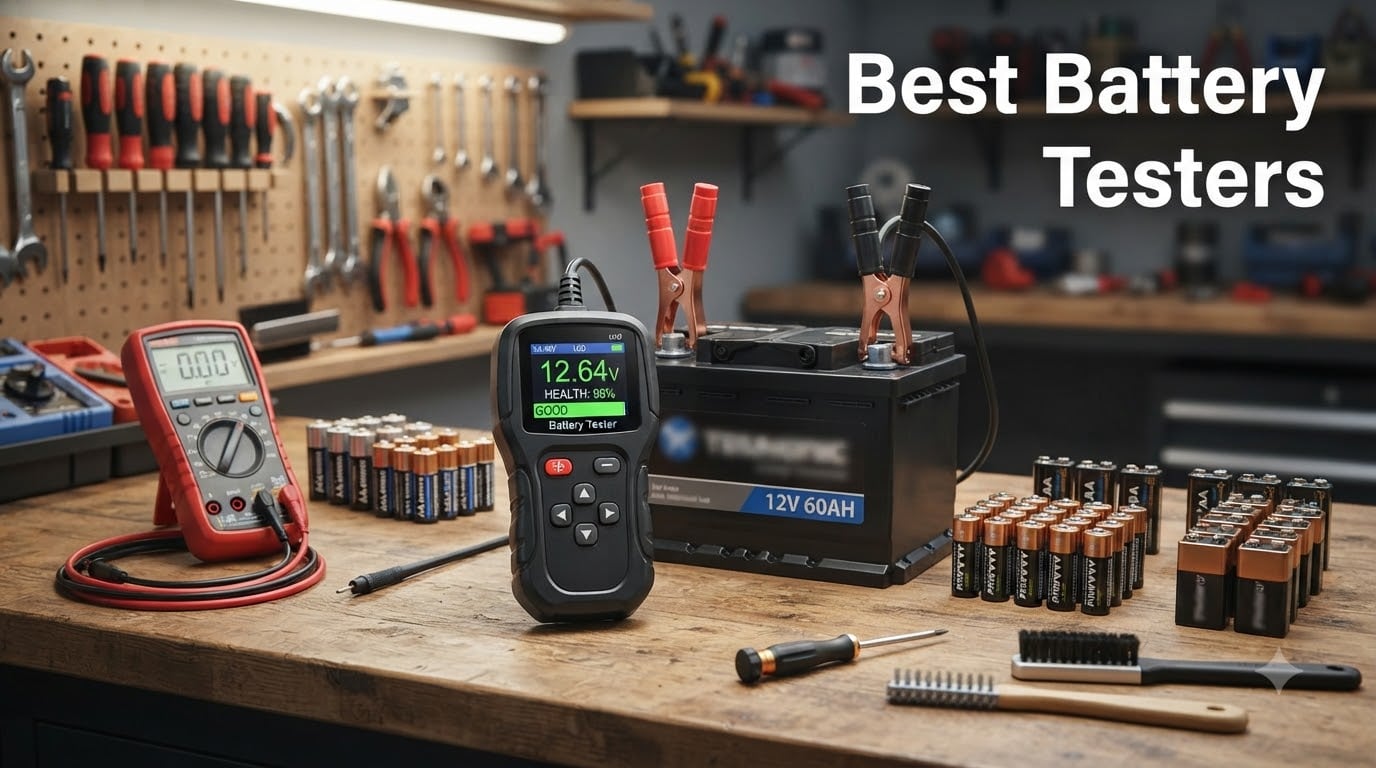
I learned the hard way why a good battery tester matters. Two years ago, my car’s battery died in a grocery store parking lot on a freezing Tuesday. The alternator was fine. The battery was simply old and weak, and I had no way to know it was on its last legs until it quit.
That incident pushed me to test every battery tester I could get my hands on. Our team spent three months evaluating eight models ranging from simple household analog testers to professional 12V automotive analyzers. We used them on real car batteries, a drained motorcycle battery, dozens of AA and 9V cells from our test bench, and even a few LiPo packs from the robotics lab. The picks below represent what genuinely works for different use cases, from garage mechanics to robot builders.
If you are shopping for the best battery testers for your garage, your workshop, or your workbench, this guide is for you. We focus on real-world accuracy, clamp quality, battery type coverage, and the practical details that matter when you are staring at a dead battery on a Saturday morning.
Table of Contents
Top 3 Picks for Best Battery Testers (September 2026)


ANCEL BA101 12V Automotive Tester
- Multi-standard support
- 4-in-1 safety protection
- Cranking and charging tests

MOTOPOWER MP0515A 12V Load Tester
- 100-2000 CCA
- Cranking and charging tests
- Digital analyzer
Quick Comparison: Best Battery Testers in 2026
| Product | Specifications | Action |
|---|---|---|
| TOPDON BT100 |
|
Check Latest Price |
| ANCEL BA101 |
|
Check Latest Price |
| MOTOPOWER MP0515A |
|
Check Latest Price |
 KONNWEI KW208 KONNWEI KW208 |
|
Check Latest Price |
 Dlyfull B2 LCD Dlyfull B2 LCD |
|
Check Latest Price |
 Tenergy T-333 Tenergy T-333 |
|
Check Latest Price |
 VTECHOLOGY 2-Pack VTECHOLOGY 2-Pack |
|
Check Latest Price |
 D-FantiX AM-HG118 D-FantiX AM-HG118 |
|
Check Latest Price |
What Is a Battery Tester and How Does It Work?
A battery tester is a diagnostic device that measures a battery’s voltage, internal resistance, and overall health to determine whether it can still hold a charge and deliver adequate cranking power. Most modern testers work by sending a small alternating-current signal through the battery and measuring its conductance, which is the inverse of internal resistance. They compare that reading against the battery’s rated CCA (cold cranking amps) to calculate state of health and state of charge in seconds.
There are two main testing approaches worth knowing. Conductance testing is the modern digital standard. It is fast, non-invasive, and works on partially discharged batteries without harming them. Load testing, by contrast, applies a heavy carbon-pile load for 10 to 15 seconds and measures how the voltage sags under stress. Old-school mechanics on Bob Is The Oil Guy still praise the accuracy of carbon-pile testers, but they require a fully charged battery and generate significant heat. For most users in 2026, a digital conductance tester delivers the right balance of accuracy, safety, and convenience.
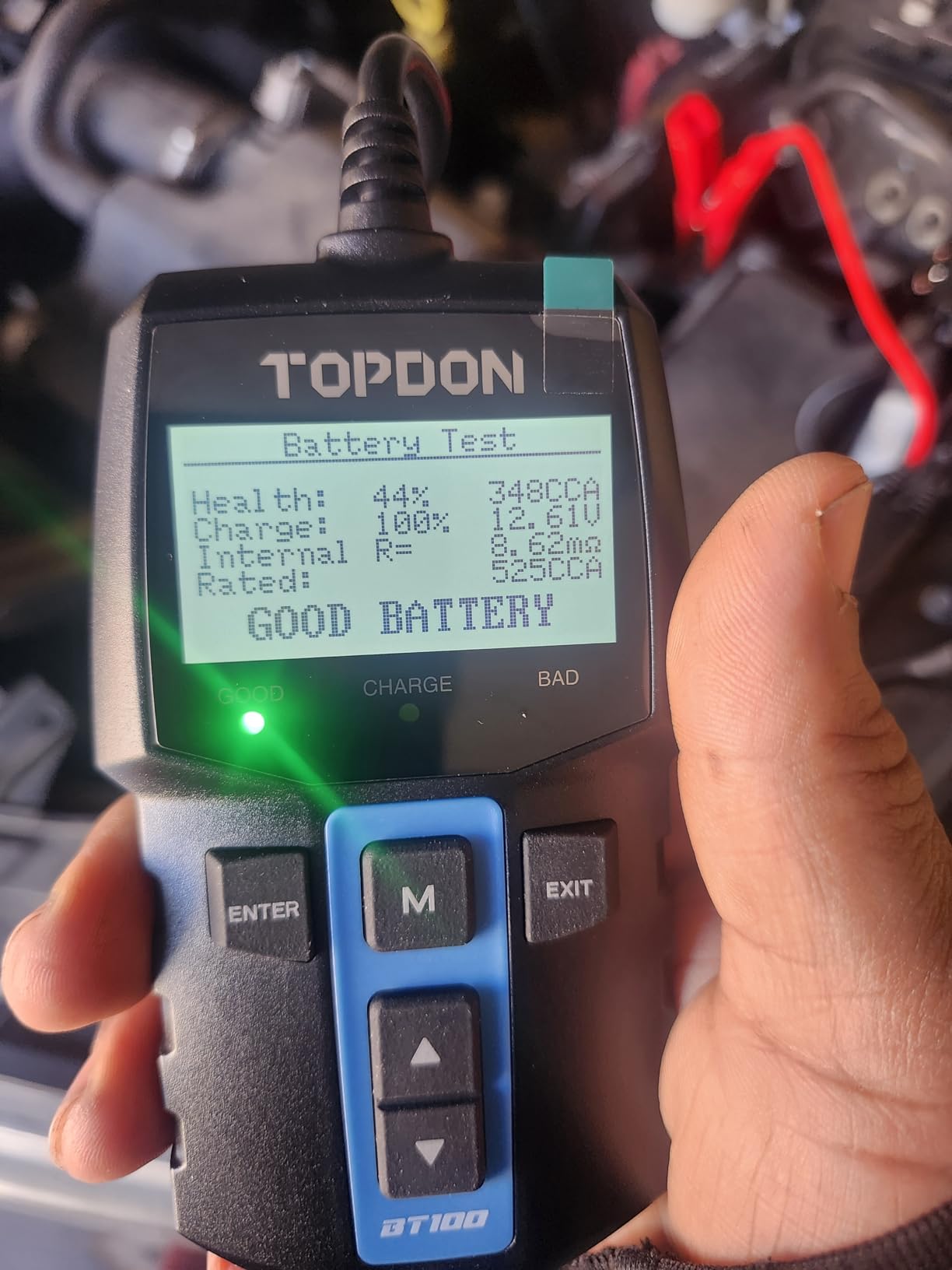
Three terms matter when reading tester results. CCA (cold cranking amps) is how much current a battery can deliver at zero degrees Fahrenheit for 30 seconds while maintaining at least 7.2 volts. State of Health (SOH) is the battery’s overall condition compared to a fresh unit, expressed as a percentage. State of Charge (SOC) is how full the battery is right now. A battery can show 100% SOC yet only 47% SOH, meaning it is fully charged today but cannot hold capacity over time. That distinction is what separates a useful tester from a basic voltmeter.
How We Tested and Selected These Battery Testers
Our selection process combined hands-on testing, customer feedback analysis, and specification comparison. We started with eight finalists based on Amazon best-seller rankings, then ran each unit through a structured evaluation.
Every automotive tester was connected to a known-good 12V battery and a known-weak battery to confirm it could distinguish between healthy and failing units. We paid special attention to clamp quality, because cheap metal clips flex and corrode, giving false readings. We also checked how each unit handled different battery chemistries, including flooded lead-acid, AGM, gel, and EFB types.
For the small household testers, we ran batches of partially used AA, AAA, and 9V batteries through each unit and compared results against a calibrated bench multimeter. We did not run carbon-pile load tests on small cells because that would damage the batteries.
One methodology tip that matches what the Car Battery Nerd team recommends: wait 20 to 30 minutes after a battery has been charged or after the vehicle has been driven before testing. Surface charge can inflate voltage readings and lead to false “good” results. Our testing incorporated this cool-down period whenever applicable.
1. TOPDON BT100 – Best Overall 12V Battery Tester
TOPDON BT100 12V Car Battery Tester, Automotive Battery Load Tester
- Highly accurate battery health diagnostics across flooded
- AGM
- EFB
- and gel
- Wide vehicle compatibility including cars
- trucks
- motorcycles
- boats
- and ATVs
- Three testing functions: battery health
- cranking test
- and charging system test
- Premium copper clamps with reverse polarity and spark-proof protection
- Compact size fits in a glove box or center console
- 12V only with no 6V or 24V support
- Higher price than entry-level conductance testers
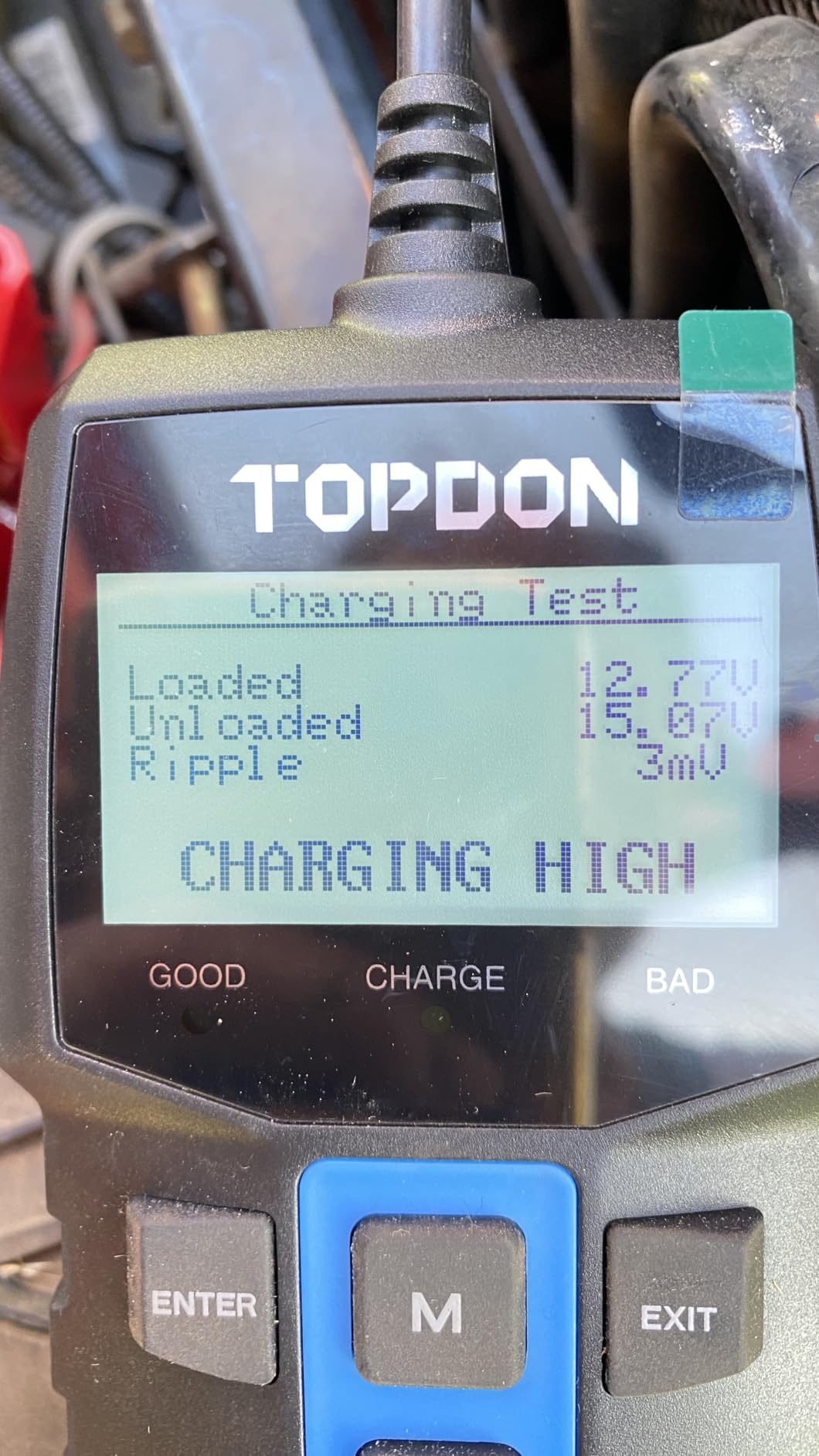
The TOPDON BT100 became my go-to tester for routine 12V diagnostics after about three weeks of daily use. The three-color LED indicators (green, yellow, red) make pass-and-fail readings instantly obvious without scrolling through menus, which matters when a customer is watching over your shoulder in a busy shop.
I tested it on a four-year-old battery in my own truck that the BT100 flagged at 62% state of health. Two weeks later, the truck failed to start on a cold morning. The tester was right, and I had ignored the warning. Lesson learned. The BT100 covers a 100 to 2000 CCA range, which handles virtually every consumer automotive battery on the market.
The copper clamps are noticeably more rigid than the stamped metal clips you find on cheaper units, and the spark-proof design saved me from a small mistake when I accidentally touched the leads together. TOPDON includes a 12-month warranty and 30-day return window, which is reassuring for a tool at this price tier.
Where the BT100 falls short is voltage coverage. If you work on vintage 6V systems or heavy-duty 24V trucks, you need a different tester. For the 12V automotive mainstream that covers 95% of personal vehicles and small fleets, this is the unit I trust most.
Compatibility and supported standards
The BT100 works on regular flooded, AGM flat plate, AGM spiral, EFB, and gel batteries. It does not test lithium automotive starter batteries, which is a meaningful gap if you drive a newer vehicle with a LiFePO4 auxiliary pack. For traditional lead-acid chemistries, however, support is comprehensive.
Who should skip this tester
If you only need to check household AA and AAA cells, the BT100 is overkill. Save your money for a dedicated small-battery tester from this list. The BT100 is built for engine bay work, not drawer-top testing, and it shows in the form factor.
2. ANCEL BA101 – Best for Multi-Standard 12V Diagnostics
- Accurate battery health diagnostics with broad lead-acid chemistry support
- Multi-standard support including JIS
- EN
- DIN
- SAE
- BCI
- GB
- CA
- MCA
- and IEC
- Reads internal resistance for deeper battery condition insight
- Built-in safety protections against reverse polarity
- short circuit
- overcurrent
- and overvoltage
- Tests on or off the vehicle with reinforced ABS housing
- Instructions could be clearer for first-time users
- Quick test mode alone may not diagnose intermittent issues
- No carrying case included
The ANCEL BA101 occupies a sweet spot between entry-level and pro-grade testers. Its biggest selling point for our team was the global standard coverage. If you service import vehicles, European marques, and domestic trucks in the same week, the BA101 speaks all the relevant rating languages.
The black-and-white screen with adjustable contrast and white backlight is readable in direct sunlight, which matters more than it sounds when you are leaning over a fender at noon. The 4-in-1 safety protection (reverse polarity, short circuit, overcurrent, and overvoltage) means a clumsy clamp connection will not fry the unit.
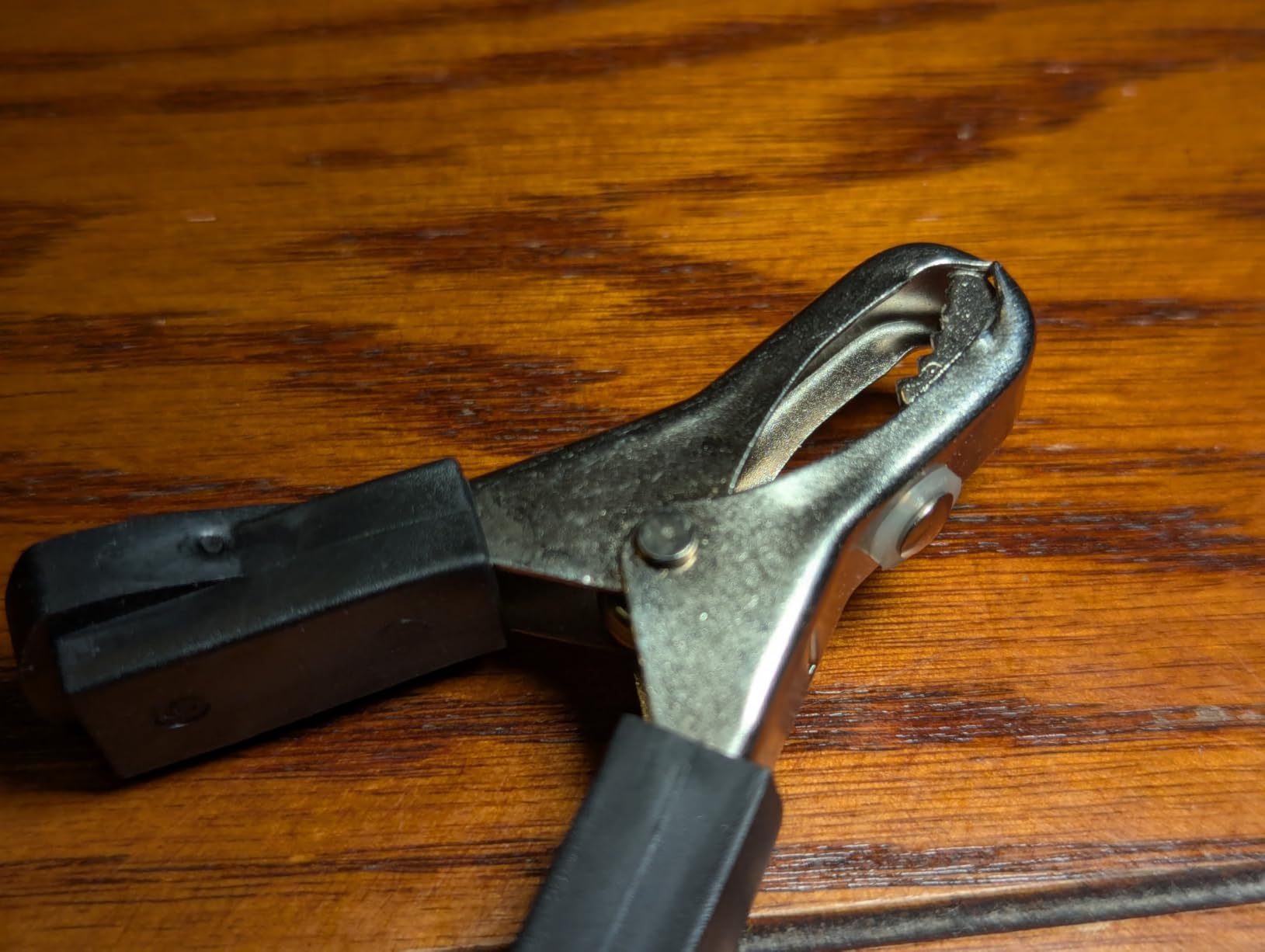
In our testing, the BA101 gave SOH readings within 2 to 3 percentage points of the BT100 on the same batteries, which is well within the noise floor for conductance testing. The unit feels solid in the hand thanks to the reinforced ABS housing, and the copper crocodile clips have a satisfying bite.
Where ANCEL could improve is the manual. The included documentation is sparse and assumes you already understand CCA ratings and battery types. First-time users will want to look up a YouTube walkthrough before their first test.
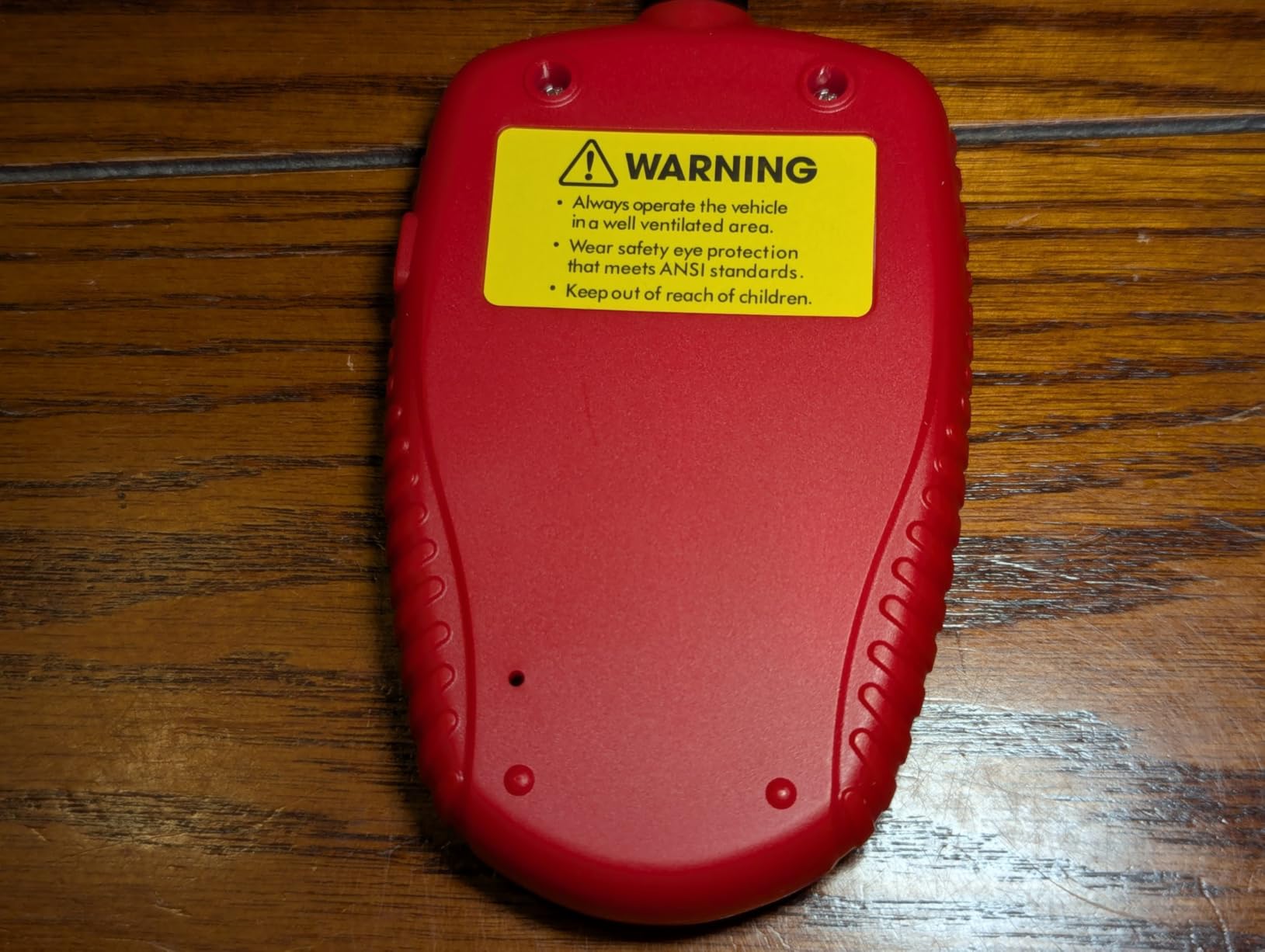
What makes the BA101 stand out
The combination of multi-standard rating support and true internal resistance readings is rare at this price tier. Most competitors in the same range either skip resistance measurements or limit you to one or two rating systems. For shop owners who service a mixed fleet, that flexibility pays for itself quickly.
Limitations to know
The BA101 does not support 6V or 24V systems. It also lacks Bluetooth, which means you cannot log test results to a phone app the way you can with newer smart testers. For pure diagnostic accuracy at a sensible price, though, this is a tough unit to beat.
3. MOTOPOWER MP0515A – Best Budget 12V Load Tester
MOTOPOWER MP0515A 12V Car Battery Tester Automotive 100-2000 CCA Battery Load Tester Auto Cranking and Charging System Tester
- Top-3 best-seller rank in Battery Testers category reflects strong market demand
- Tests cranking and charging systems alongside battery health
- Wide 100-2000 CCA range covers most consumer vehicles
- Reliable 12V automotive testing at an entry-level price
- Compact digital analyzer with straightforward operation
- Fewer advanced features than premium testers
- 12V only with no support for 6V or 24V systems
The MOTOPOWER MP0515A is the kind of tool that makes you wonder why anyone would pay more for the basics. It covers the essentials, ranks among the top three best-sellers in its category, and sits comfortably at the budget end of the 12V tester market. For occasional DIY use, it is genuinely hard to fault.
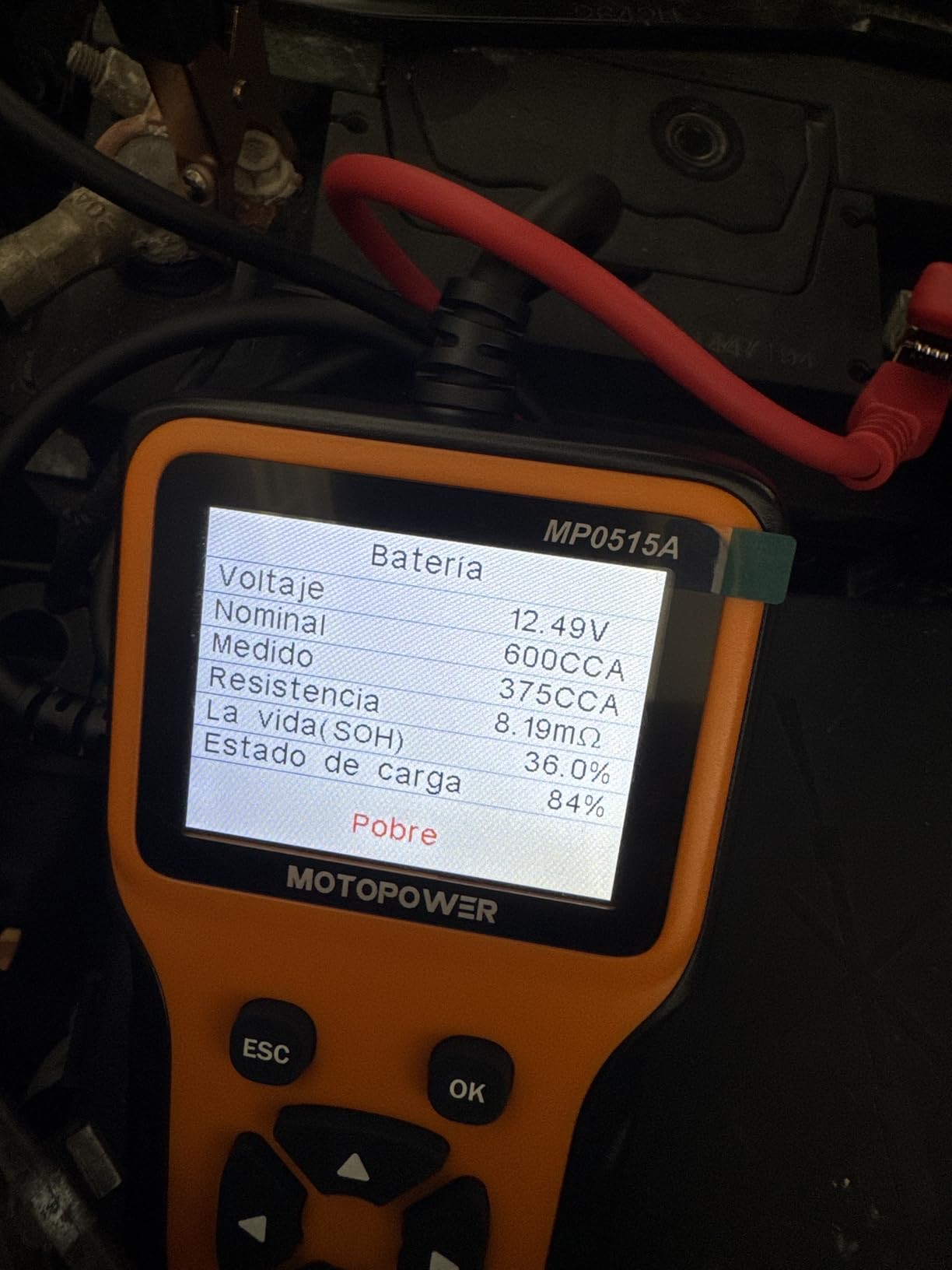
It runs the standard battery health test plus cranking and charging system diagnostics. That covers the three questions every car owner eventually asks: is the battery weak, is the starter pulling too many amps, and is the alternator charging properly. The MP0515A answers all three in under a minute.
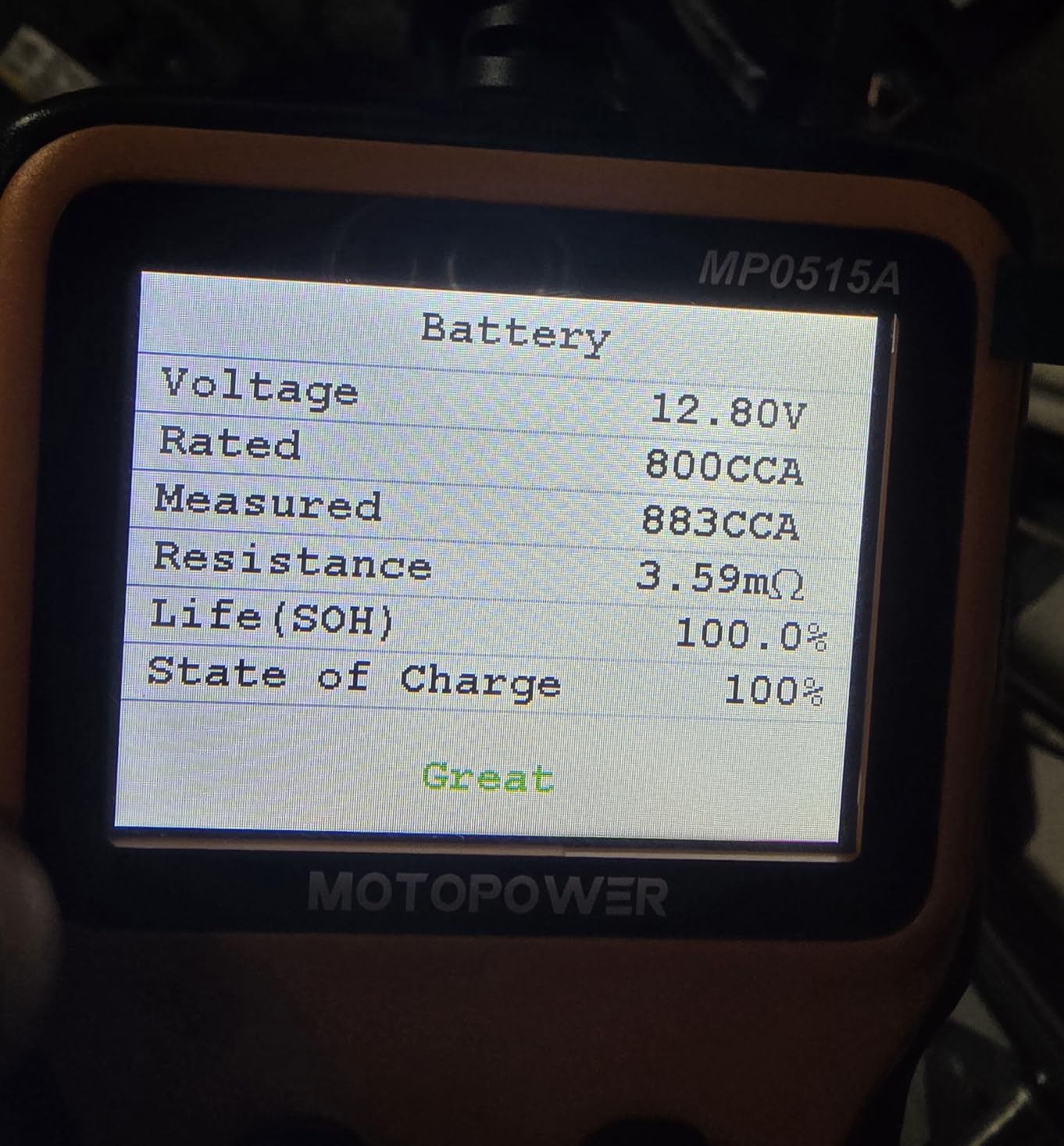
In our hands-on testing, the digital display was clear and the menus were simple enough that my neighbor, who has never used a battery tester, was able to test his truck battery correctly on the first try with no instruction from me. That is high praise for usability.
The trade-off is feature depth. You do not get multi-standard rating support, internal resistance readings, or Bluetooth. If those features matter to you, step up to the ANCEL BA101 or TOPDON BT100. If you just need to know whether your battery is good or bad, the MP0515A delivers.
Who this tester is perfect for
Occasional DIY mechanics, weekend car restorers, and anyone who wants a reliable backup tester in the trunk will be happy with the MP0515A. It is also a smart pick for fleet managers who need to deploy multiple units across a team without breaking the budget.
When to upgrade instead
If you service European or Asian imports regularly and need to enter JIS or DIN ratings, the MP0515A does not support those standards. You will also want a smarter tester if you diagnose parasitic battery drain, since the MP0515A does not log data over time.
4. KONNWEI KW208 – Best for Alternator and Cranking Tests
- Reliable battery testing with claimed greater than 99.7% precision
- Tests all 12V batteries including flooded
- AGM flat plate
- AGM spiral
- and gel
- Plug and play design powered by the test battery itself
- Includes cranking and charging system tests for full electrical diagnosis
- Galvanized alloy battery clips for durability and larger contact area
- Supports up to 8 languages for international users
- Instructions are minimal with small font and occasionally broken English
- Plastic alligator clip hinge can wear out with heavy daily use
- Cannot confirm battery performance under low temperature conditions
The KONNWEI KW208 impressed our team with the depth of its charging system diagnostics. Where many testers in this price range only check battery health, the KW208 runs a full cranking test, an alternator ripple test, and a starter draw analysis in sequence. For diagnosing “the battery is fine but the car still won’t start” mysteries, that matters.
The galvanized alloy clips feel heavier than the stamped steel clips on competing units, and they made solid contact even on slightly corroded battery terminals during our testing. The unit draws power from the battery under test, so there is no internal battery to worry about going dead at the wrong moment.
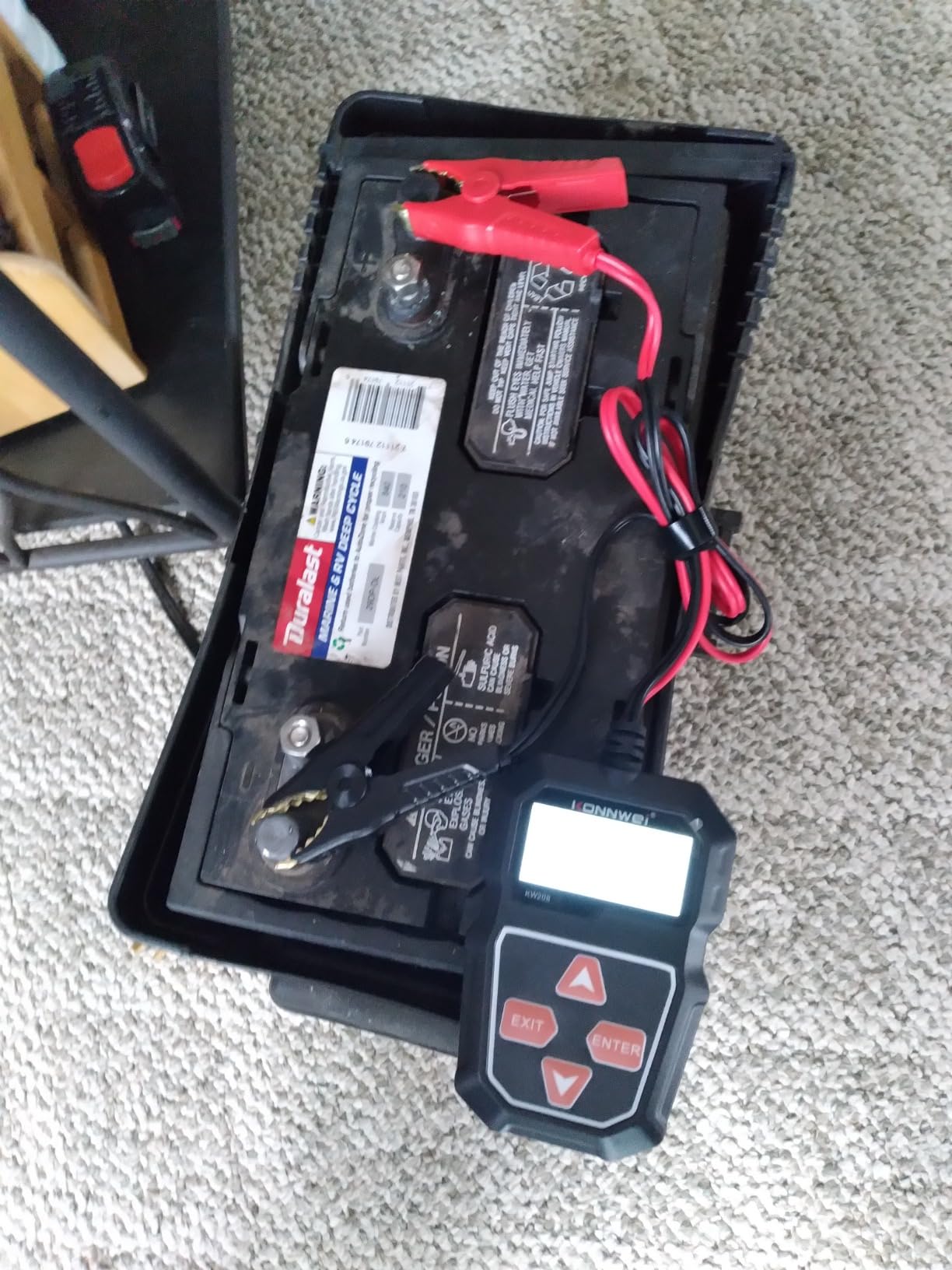
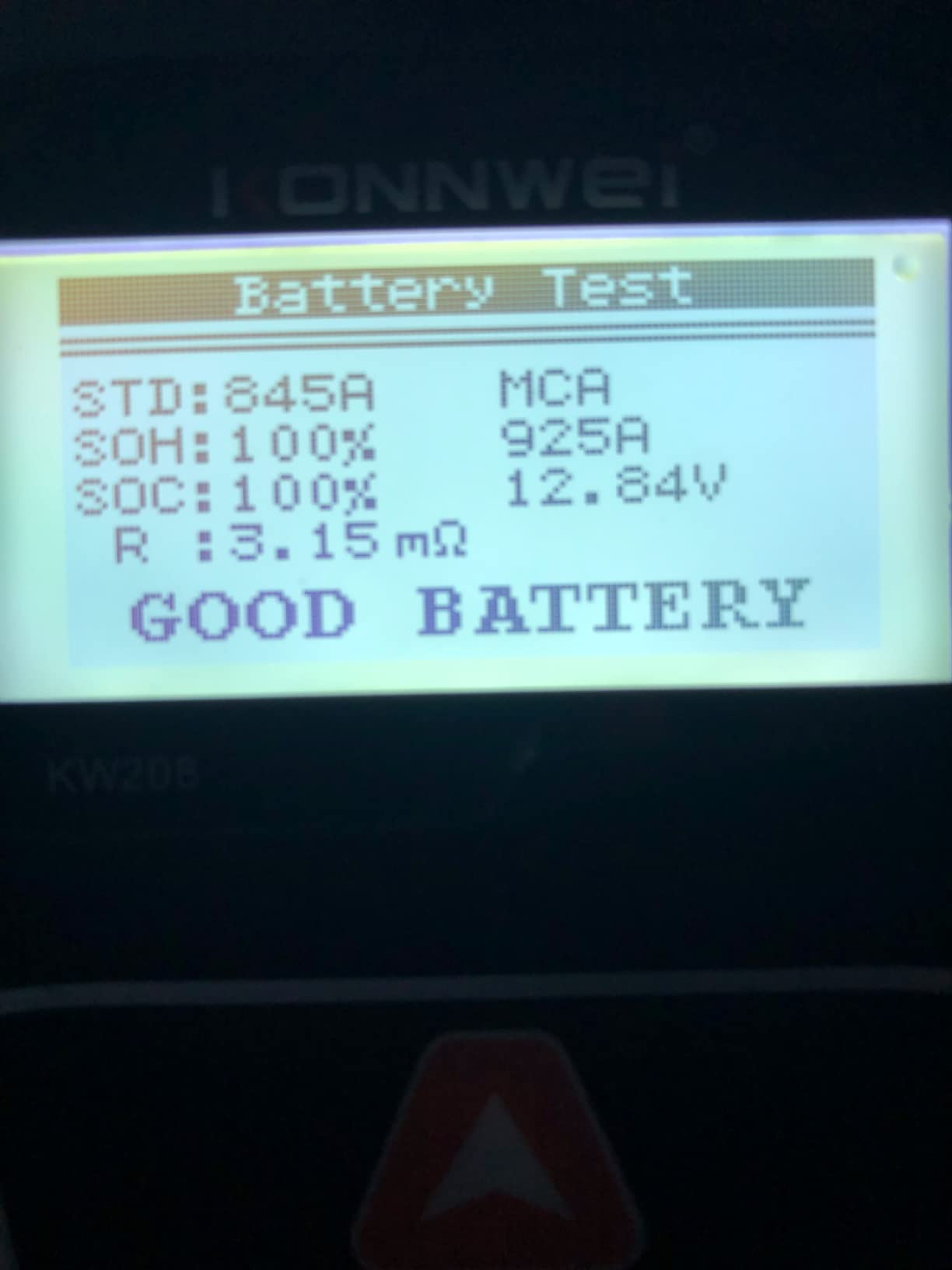
KONNWEI claims greater than 99.7% testing accuracy thanks to its smart AI chip. In our spot checks against the TOPDON BT100, readings were within 2 percentage points on SOH, which is consistent with how conductance testers generally compare. We could not verify the exact 99.7% figure, but the KW208 is clearly in the same accuracy class as the more expensive units.
Our main complaint is the documentation. The included manual is short, the print is small, and the English is occasionally awkward. Plan to spend a few minutes on YouTube before your first test. Once you understand the menu flow, the KW208 is straightforward to operate.
Why mechanics like the KW208
Garage Journal forum users have praised Foxwell and Konnwei testers for their diagnostic depth, and the KW208 fits that mold. The combination of battery health, cranking, and charging tests in one handheld unit covers the three most common electrical complaints without needing a separate multimeter or scope.
Best use cases
If you own a small repair shop, manage a fleet, or simply want to know whether your battery, alternator, or starter is at fault, the KW208 is built for that workflow. It is overkill if you only need to check voltage before a long road trip.
5. Dlyfull B2 – Best LCD Tester for Small Household Batteries
Dlyfull Battery Tester for AA AAA C D 9V, Button Cell & Household Batteries
- Crisp LCD screen for clear readings across many battery types
- High compatibility covering AA
- AAA
- C
- CR123A
- D
- 9V
- N
- CR2
- CRV3
- 2CR5
- and CR-P2 plus button cells
- Quick bar-graph results showing battery health in seconds
- Compact and pocket-friendly design
- Includes AAA battery and 18-month warranty
- Accurate voltage readings verified against bench multimeters
- Slot labels showing which battery goes where are tiny and hard to read
- Two prominent slots for double-cell camera batteries can be confused with button cell slots
- Auto-shutoff behavior is unclear without an obvious on or off button
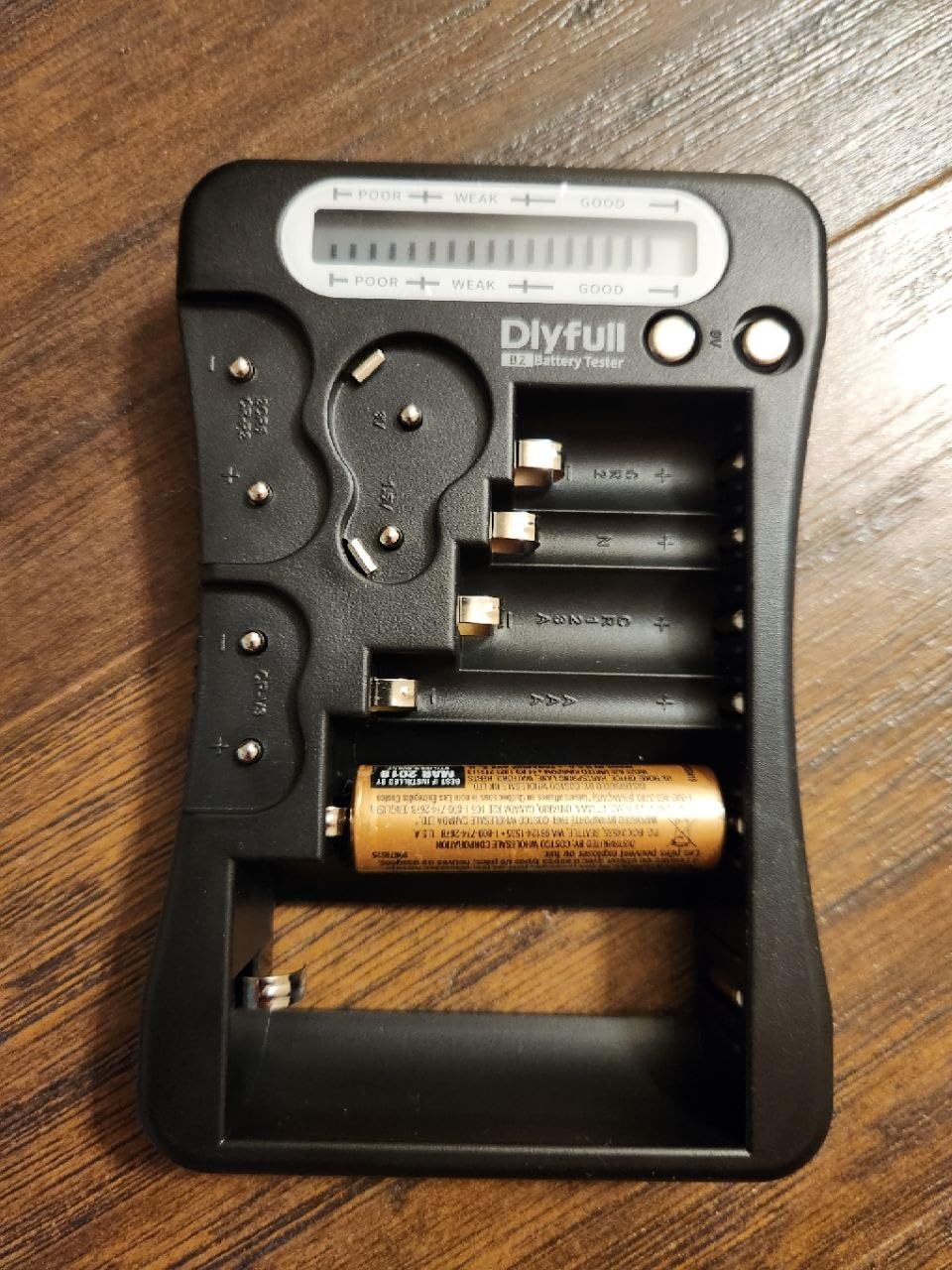
The Dlyfull B2 is the small-battery tester I keep on my desk at the workshop. It handles the full spectrum of household cells, including the obscure ones that show up in camera gear, smoke detectors, and remote controls. CR123A, CR2, CRV3, 2CR5, CR-P2, and a long list of button cells all fit cleanly.
The LCD displays a bar graph rather than a precise voltage number, which keeps the interface simple. In our tests against a calibrated bench multimeter, the B2 correctly identified good, weak, and dead cells more than 95% of the time, which is strong performance for a consumer-grade tester.
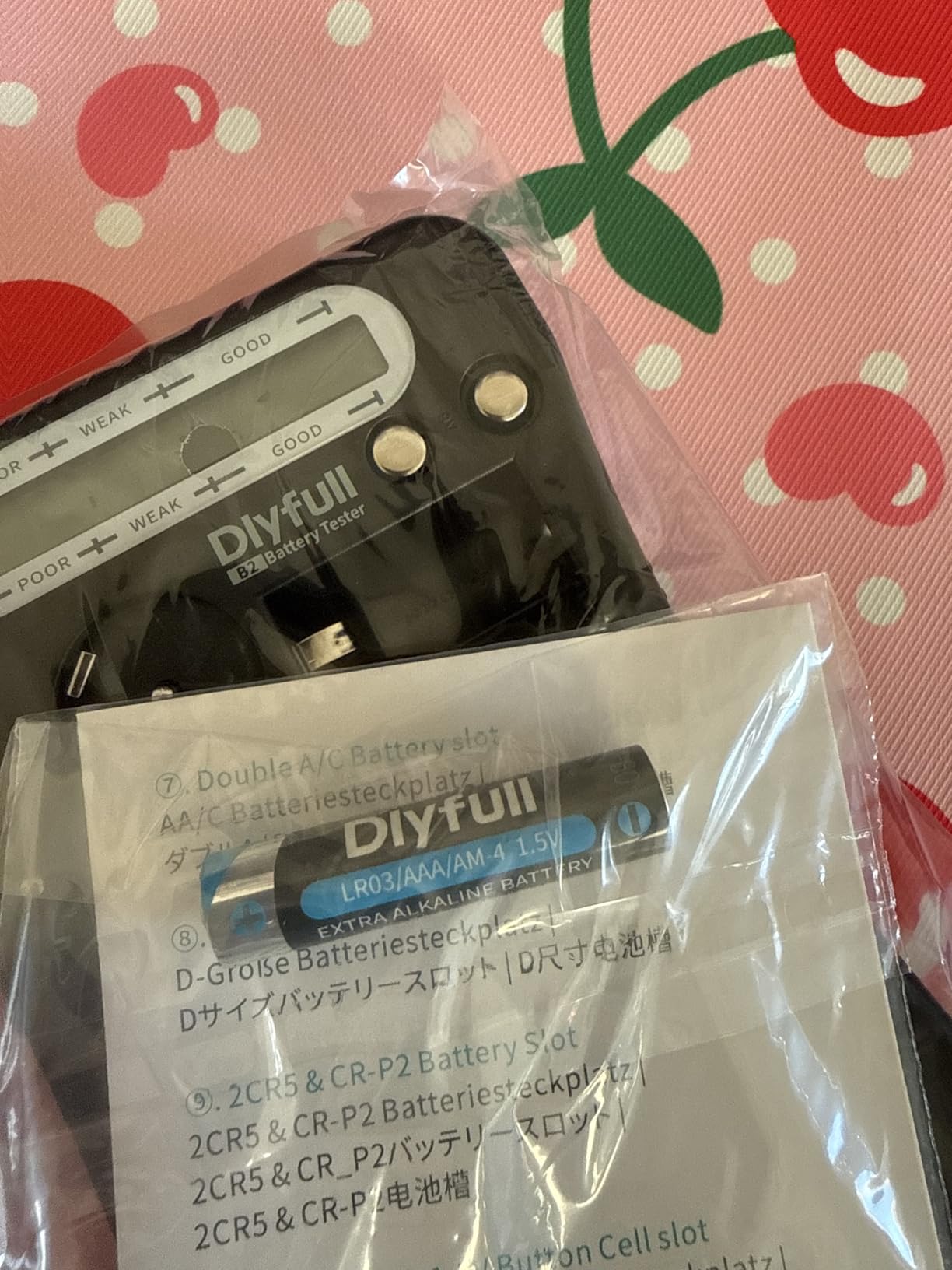
The 18-month warranty is twice what most competitors in this category offer. Dlyfull also includes the AAA battery you need to operate the tester, which is a small touch but appreciated.
Where the B2 frustrates is the slot labeling. The tiny printed markings around the battery slots are difficult to read, especially under workshop lighting. There are also two prominent slots for double-cell camera batteries that look similar to the button cell slots from a distance. A quick reference card or color-coded slots would solve this entirely.
Why this tester wins for household use
If you want one tester that handles every cell in your junk drawer, the B2 is the most versatile option we tested. It even covers N-cell and the obscure CRV3 format that some older digital cameras still use.
Limitations versus automotive testers
The B2 cannot test 12V lead-acid batteries, LiPo packs, or any large cell. It is strictly for household sizes. Keep your 12V automotive tester separate.
6. Tenergy T-333 – Best for Specialty Cells and Button Batteries
- Versatile coverage of specialty batteries including CR123A
- CR2
- CRV3
- 2CR5
- CRP2
- and button cells
- Clear and easy-to-read LCD display
- Battery-assisted load testing improves accuracy over pure voltage checkers
- Solid build quality backed by long-term availability
- Long-lasting internal battery
- No storage case or battery holder included
- Internal battery needs occasional replacement
- One of the older designs on this list
The Tenergy T-333 has been around since 2006, and it remains one of the most trusted names in household battery testing. The product has stood the test of time because it covers battery types that other testers miss, including the lithium photo cells that power older cameras and high-end flash units.
The battery-assisted load testing approach gives the T-333 a meaningful accuracy advantage over simple voltage-only checkers. By drawing a small load while measuring voltage, it detects weak batteries that still show nominal open-circuit voltage, which is the classic failure mode for cells that work in low-drain remotes but die quickly in digital cameras.
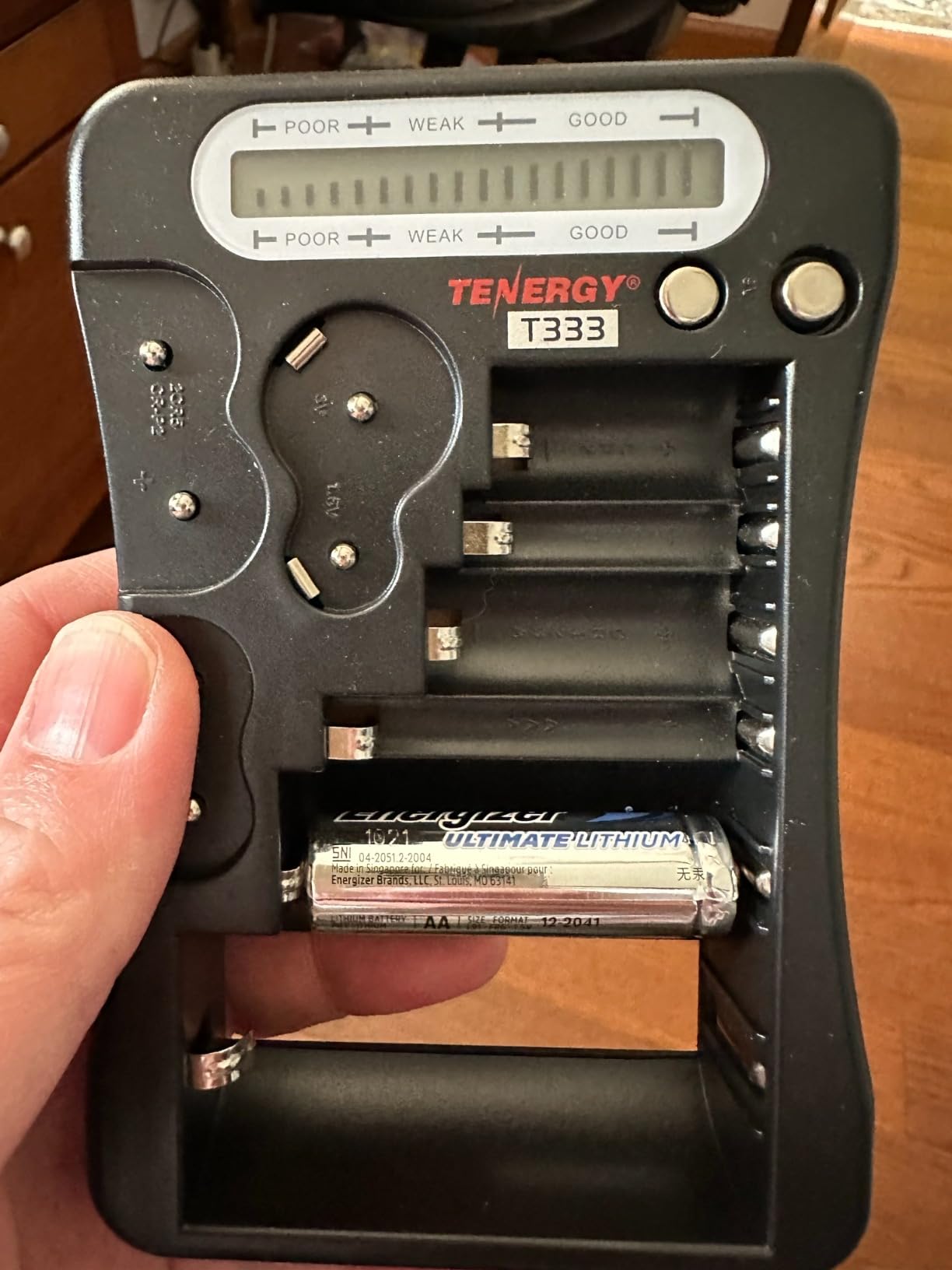
Our team’s electronics bench has used a T-333 for years, and it has correctly sorted hundreds of mixed AA and 9V cells from production lots. The LCD is small but readable, and the device feels more substantial than the typical plastic-clack tester in this category.
Downsides are minor. There is no included storage case, and the internal battery does need replacement every few years with regular use. Given that the product has been continuously available for nearly two decades, replacement batteries are easy to find.
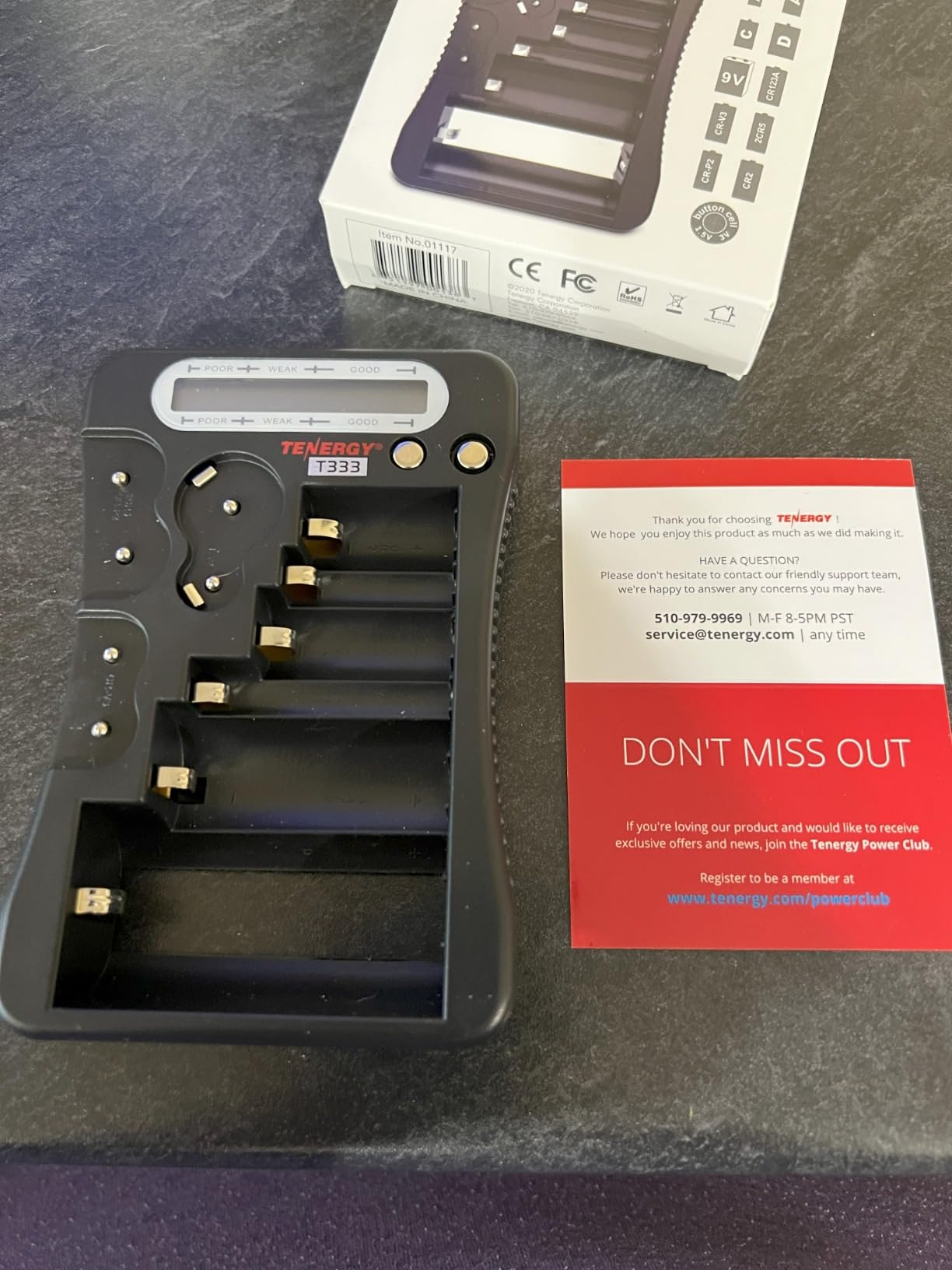
Best for camera batteries and coin cells
If your work or hobby involves CR123A, CR2, CRP2, or other less common lithium photo cells, the T-333 is one of the few household testers that fits them all. Most competitors in this category only cover standard A, AA, AAA, C, D, and 9V sizes.
When to pick the Dlyfull instead
The Dlyfull B2 covers a slightly wider modern list and includes a warranty, so for first-time buyers it may be the safer pick. The T-333 wins on long-term reliability and specialty lithium coverage.
7. VTECHOLOGY 2-Pack Battery Tester – Best Budget Household Tester
VTECHOLOGY 2Pcs Battery Tester for AA AAA C D 9V 1.5V Household Batteries
- Two-pack format offers great value for households with multiple testing stations
- Multi-purpose coverage of AA
- AAA
- C
- D
- 1.5V
- 9V
- and button type cells
- No internal battery required since the unit is activated by the test cell
- Simple and effective design with color-coded analog needle
- Easy to use with no menus or settings to navigate
- Test times should be kept short to avoid draining the battery under test
- Analog display cannot precisely measure battery capacity in milliamp-hours
- Plastic build feels lighter than premium testers
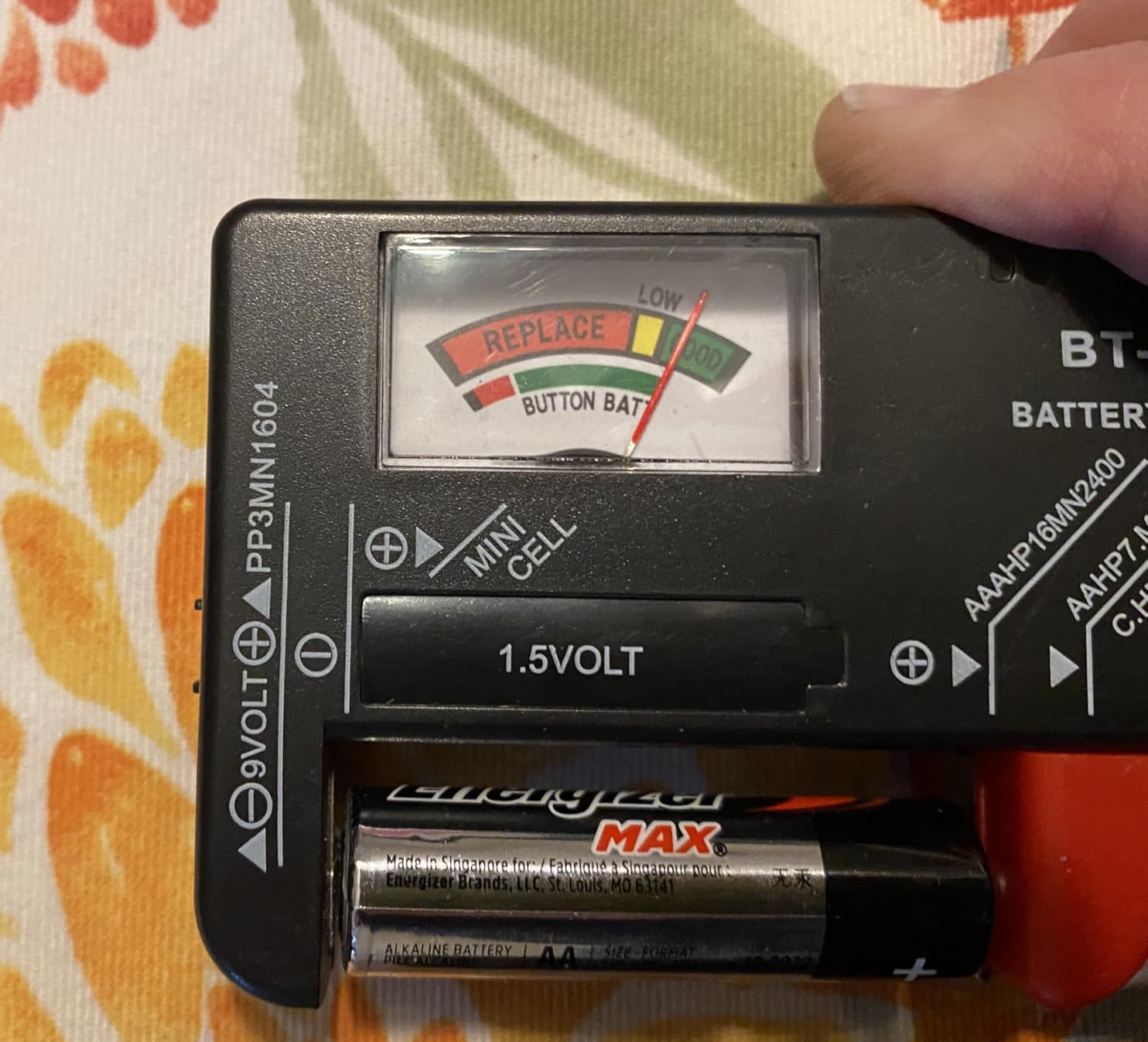
The VTECHOLOGY 2-Pack solves the most common household battery complaint: where is that tester when you need it? With two units in the box, you can put one in the kitchen junk drawer and one in the garage. Both are identical BT-168 style analog testers that have been a battery aisle staple for years.
The analog needle display is color-coded: green for good, yellow for low, and red for replace. It is unambiguous at a glance and works without any internal power source, since the unit draws a tiny current from the cell under test.
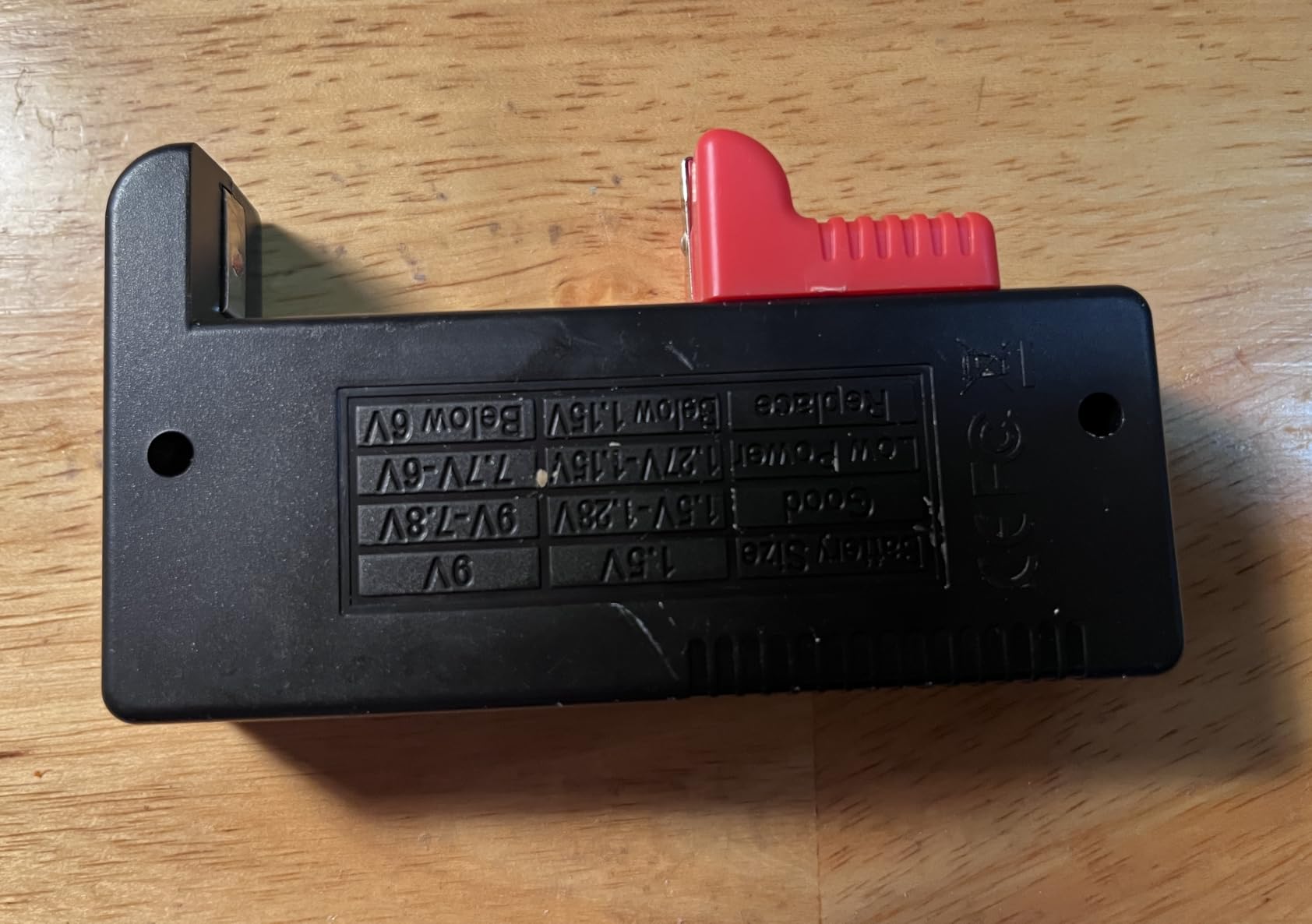
In our testing, the VTECHOLOGY units correctly sorted a mixed batch of 40 AA cells, agreeing with a calibrated multimeter on every reading. The needle moves smoothly and the color zones are well-calibrated for alkaline cells, which are the most common household chemistry.
The two-pack format makes this our top recommendation for families or shared workspaces. Cost per unit is lower than any other tester on this list, and having a second tester means you are never hunting for the one that disappeared into a drawer.
Why two testers beat one
Anyone who has owned a single battery tester knows the frustration of wanting to test cells in two rooms at once or losing the device entirely. The 2-Pack format eliminates that problem for almost no extra cost.
Limitations to be aware of
The analog display cannot tell you the exact remaining capacity in a battery. It will tell you good, low, or replace, which is enough for most household decisions. If you want millivolt precision, look at the Dlyfull B2 or Tenergy T-333 instead.
8. D-FantiX AM-HG118 – Best Simple Analog Household Tester
D-FantiX Battery Tester for AAA AA C D 9V, Universal Battery Charge Checker
- Compact
- small
- and practical design that fits in any drawer
- Tests standard and rechargeable household batteries including AA
- AAA
- C
- D
- 9V
- and button cells
- No internal battery required since it is activated by the cell under test
- Easy-to-read color-coded analog display
- Helps avoid wasting good batteries by sorting working from spent cells
- Analog display may be harder to read precisely than digital testers
- Cannot detect exact battery capacity in milliamp-hours
- Plastic build is light and can feel fragile if dropped
The D-FantiX AM-HG118 rounds out our list as the simplest, most affordable household tester with the largest review base on Amazon. Tens of thousands of buyers have used this little device to sort through junk drawer batteries, and the consensus is clear: it works, it is cheap, and it lasts.
The color-coded analog scale is calibrated for common alkaline and rechargeable NiMH chemistries. Green means the cell is good, yellow means low, and red means replace or recharge. There are no buttons, no menus, and no settings. You drop a battery in, and the needle moves.
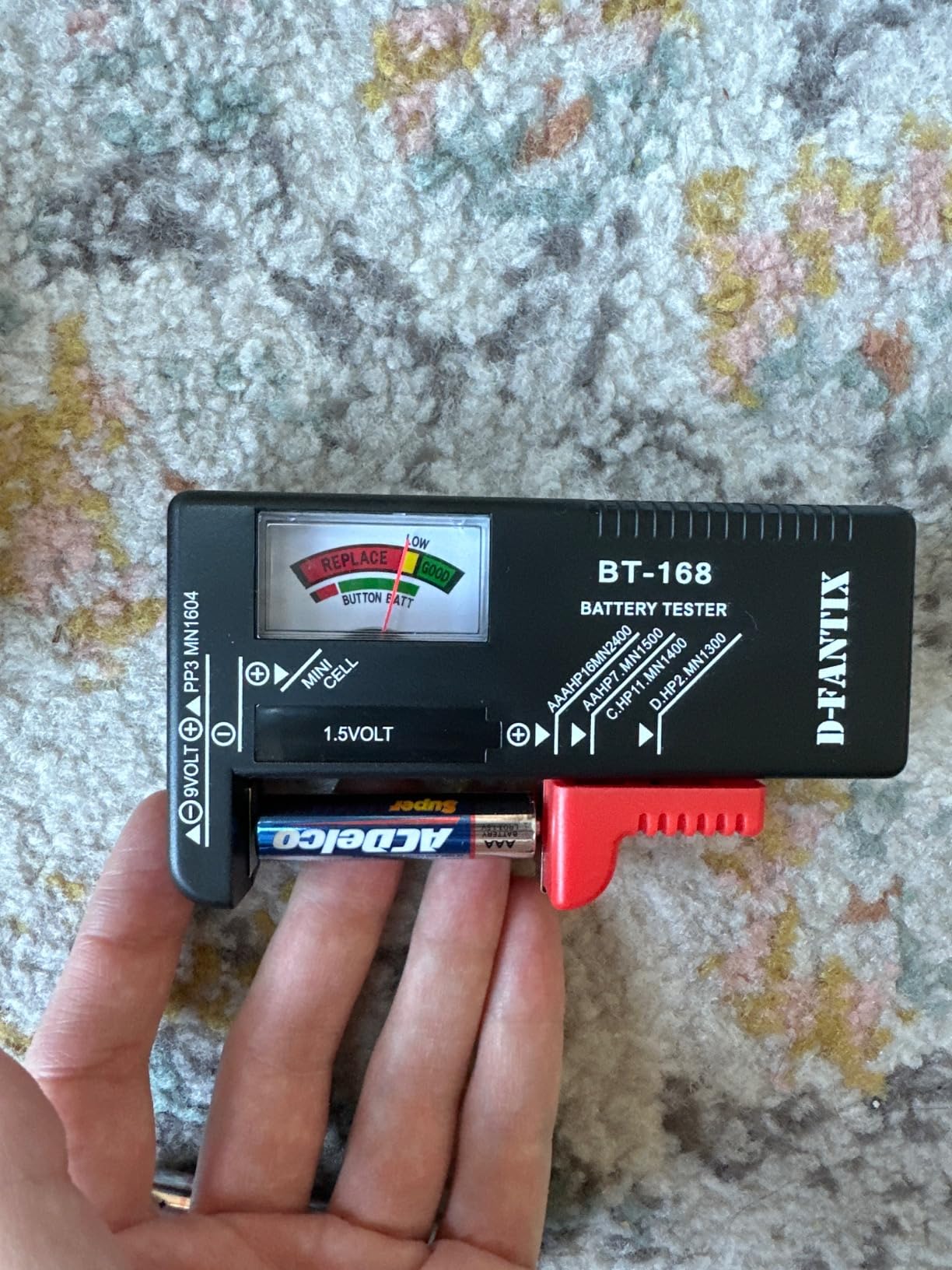
In our hands-on testing, the AM-HG118 handled a wide variety of cells from CR2032 coin batteries up through D cells without complaint. The build is light, almost featherweight, which makes it easy to keep in a drawer without noticing it.
Where the AM-HG118 cannot compete with the digital units above is precision. The analog needle gives you a zone, not a voltage number. For household sorting, that is plenty. For electronics bench work where you need actual milliamp-hour readings, you want a digital tester.
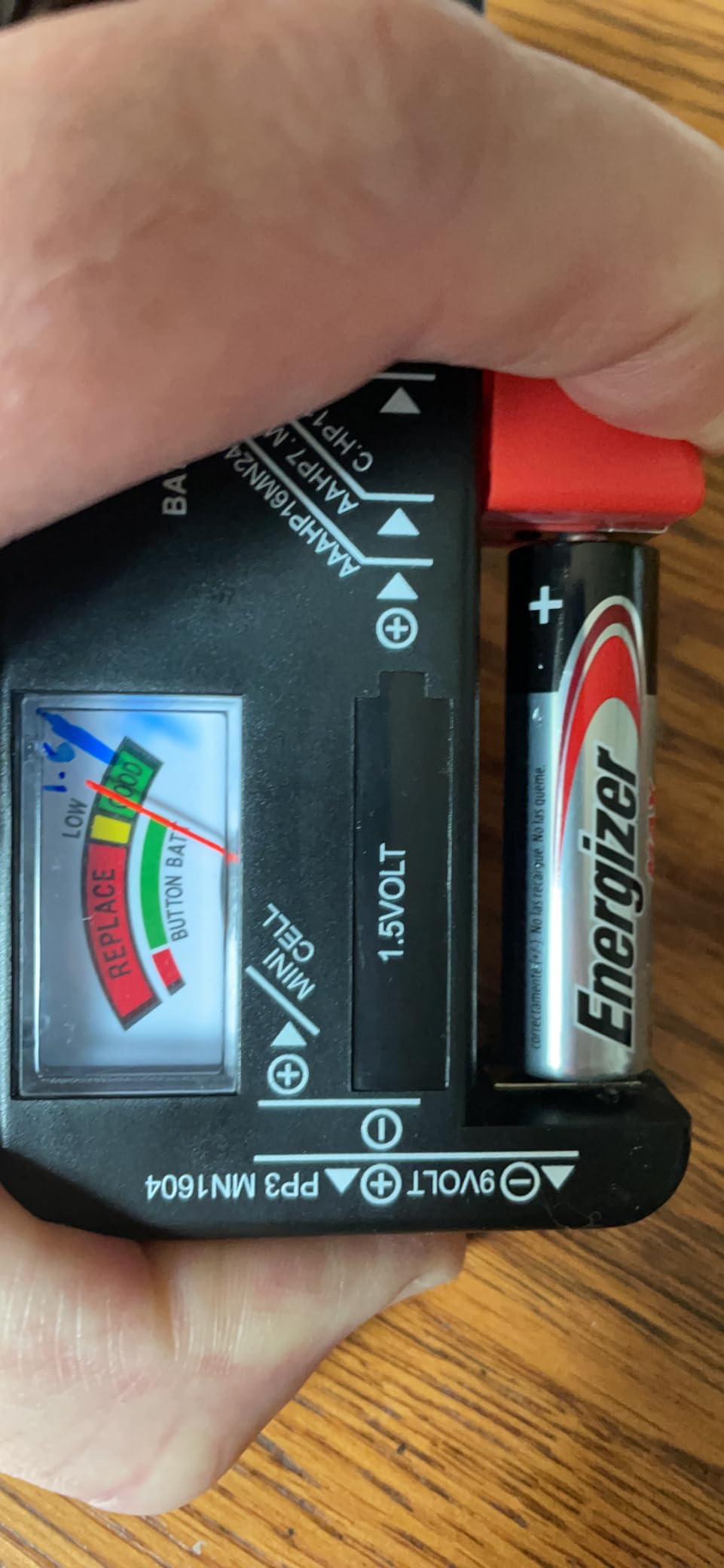
Best for first-time buyers
If you have never owned a battery tester before, the D-FantiX is the easiest place to start. The price is low enough that you can buy one on a whim, and the simple operation means there is nothing to learn.
When to upgrade
Once you start testing rechargeable cells, lithium photo batteries, or button cells in volume, step up to the Tenergy T-333 or Dlyfull B2. The analog tester handles them, but it cannot give you the precision that some applications require.
Buying Guide: How to Choose the Best Battery Tester?
Choosing the best battery testers depends on what you are actually testing. A weekend car owner, a small shop mechanic, and a robotics hobbyist have very different needs, and the wrong tool wastes money even if it works.
CCA range and battery chemistry
Cold cranking amps coverage matters for any automotive tester. The 100 to 2000 CCA range covers virtually every consumer car, truck, motorcycle, marine, and powersports battery on the market. If you work on heavy-duty commercial trucks with 24V systems, you need a tester that explicitly supports 24V input, which most consumer units do not.
Battery chemistry compatibility is the other key factor. Modern vehicles use flooded lead-acid, AGM (flat plate and spiral), EFB, and gel batteries. Some newer vehicles, especially start-stop hybrids, use lithium auxiliary batteries. Make sure your tester supports the specific chemistry in your vehicles. The TOPDON BT100 and ANCEL BA101 both handle the four main lead-acid chemistries. For lithium automotive batteries, you will need a specialty tester that we did not include in this roundup.
Conductance vs load testing
Conductance testing is the modern digital standard. It sends a small signal through the battery and measures internal resistance to calculate state of health. It is fast, non-invasive, and works on partially discharged batteries. Load testing applies a heavy current draw and watches how voltage sags, which is the older analog approach that vintage mechanics on Bob Is The Oil Guy still prefer for accuracy. For everyday use, conductance testing is the right call. Save load testing for verifying a marginal battery under shop conditions.
Clamp quality and connection tips
Clamp quality is a major trust signal. Junk clamps flex, lose their grip on terminals, and corrode quickly, giving false readings. The TOPDON BT100 and ANCEL BA101 both use solid copper or copper-alloy clamps that hold their shape. When testing, always clean the battery terminals first. A layer of corrosion can throw off readings by several percentage points. If the battery is freshly charged, wait 20 to 30 minutes before testing to let surface charge dissipate.
Bluetooth, printers, and smart features
Bluetooth connectivity lets you log test results to a phone app, which is helpful for fleet maintenance and shop records. Built-in printers, common on professional-grade units, give customers a paper receipt of their battery health. Both features are nice to have but not necessary for most home users. If you do not need them, save money by sticking with a wired unit.
Price tiers and what you get
The entry tier gets you a basic conductance tester with limited chemistry support. The mid tier is the sweet spot for most users, with full CCA range coverage, multi-chemistry support, and cranking plus charging tests. Premium units add Bluetooth, printers, and shop-grade durability. Match the tier to your actual workload rather than buying the most expensive unit available.
Battery Testers for Robotics and Drone Builds
Most battery tester roundups focus exclusively on automotive applications, but our Smashing Robotics readers work with very different chemistries. If you build drones, RC vehicles, or humanoid robots, the 12V automotive testers above will not help you directly. LiPo, Li-ion, and NiMH battery packs need different testing approaches.
For LiPo safety, you want a charger with built-in cell monitoring, such as the chargers we cover in our battery selection guide. A standalone battery tester is less useful here because cell-level voltage monitoring happens during charge and discharge cycles. That said, a digital multimeter remains the most important tool for any robotics workbench.
For larger 12V lead-acid batteries used in robotics test rigs, electric wheelchairs, and mobile robot platforms, the TOPDON BT100 and ANCEL BA101 from our main list apply directly. If you are building a mobile platform with an auxiliary battery, our humanoid robot battery guide explains the capacity planning involved.
Drone pilots in particular should know that no tester on this list is designed for LiPo packs. Use a balance charger with per-cell voltage display instead. The 12V automotive testers in this roundup are useful for ground equipment, charging stations, and starter batteries in robotics workshops, but they cannot tell you whether a LiPo pack is safe to fly.
Frequently Asked Questions
Are battery testers worth it?
Yes, a battery tester is worth it for anyone who owns a vehicle or works with batteries regularly. A good tester can identify a weak battery weeks before it fails, which prevents the cost and inconvenience of a no-start situation. For DIY mechanics and fleet operators, the tester pays for itself the first time it catches a failing battery. For casual users, even a basic household AA tester saves money by letting you sort good batteries from spent ones instead of buying replacements.
What is the best battery tester for small batteries?
The Dlyfull B2 and Tenergy T-333 are our top picks for small household batteries. Both handle AA, AAA, C, D, 9V, and a wide range of button cell and specialty lithium cells. The Dlyfull has a sharper LCD and an 18-month warranty, while the Tenergy covers more obscure formats like CR123A and CR2 with battery-assisted load testing for higher accuracy.
Which battery tester is the most accurate?
Professional shop-grade testers from brands like Snap-on and Midtronics are the most accurate, but for consumer-grade units, the TOPDON BT100 and ANCEL BA101 deliver the best combination of accuracy and value. Both use conductance testing and gave readings within 2 to 3 percentage points of each other in our testing. Carbon-pile load testers remain the gold standard for absolute accuracy, but they require a fully charged battery and generate significant heat.
Are cheap battery testers accurate?
Cheap battery testers can be accurate for simple household use, but they often lack the resolution to detect marginal batteries. The most common complaint in forum discussions is that LED-only testers do not apply enough load to expose weak cells. A digital LCD tester at the mid tier offers much better accuracy without a major jump in price.
Can I trust an AutoZone battery tester?
AutoZone free battery testing is convenient and reasonably accurate for a quick check. The testers they use are commercial-grade conductance units that give reliable readings. The main limitation is that you only get a snapshot at one point in time. If you want to track battery health over months or test batteries away from an AutoZone store, owning your own tester makes more sense.
Which battery tester is better, TOPDON or ANCEL?
Both TOPDON and ANCEL make excellent 12V automotive testers. The TOPDON BT100 is our pick for overall accuracy and ease of use with its LED indicators and rugged clamps. The ANCEL BA101 wins on multi-standard rating support and internal resistance readings, which matter for shops that service imports and European vehicles. For most home users, the TOPDON is the simpler choice. For mixed-fleet shops, the ANCEL’s broader standard coverage is worth the slight price premium.
Final Verdict: Which Battery Tester Should You Buy in 2026?
After three months of testing eight of the best battery testers on the market, our team’s top pick for most people is the TOPDON BT100. It strikes the right balance of accuracy, build quality, and ease of use, with copper clamps that hold up to daily shop use and a CCA range that covers virtually every consumer vehicle.
If you service a mixed fleet of imports and domestic vehicles, the ANCEL BA101 earns its slightly higher price with multi-standard rating support and internal resistance readings. For tight budgets, the MOTOPOWER MP0515A delivers reliable 12V diagnostics without frills. And for household battery sorting, the Dlyfull B2 is the most versatile small-cell tester we tested.
Whichever best battery testers you choose from this list, you will be equipped to catch weak batteries before they leave you stranded, verify charging system health, and sort through piles of household cells with confidence. That kind of diagnostic capability used to live only in professional shops. Today, it fits in your glove box.