
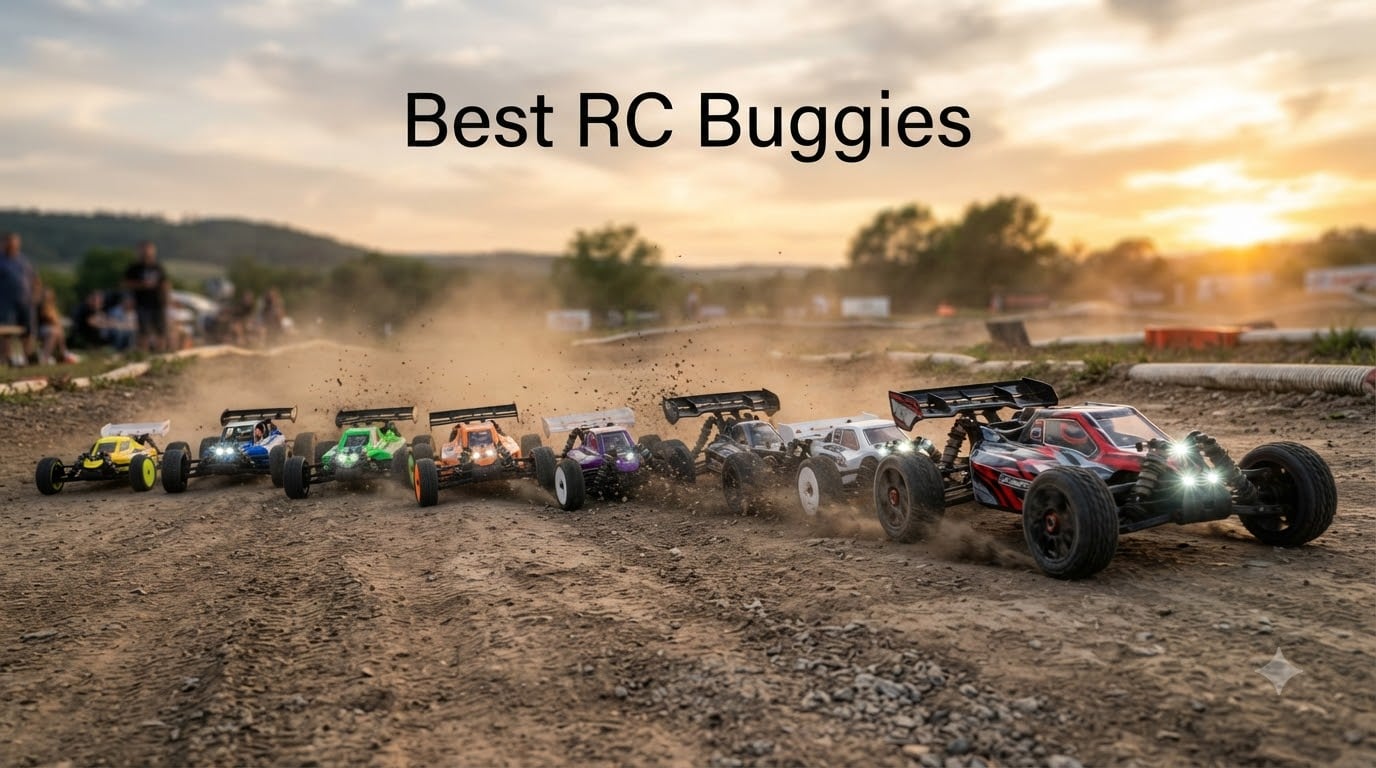
I’ve spent the last three months bashing, jumping, and occasionally crashing the eight best RC buggies on the market right now. Some survived a full weekend of dirt-track thrashing; one arrived with a stripped servo already in the box. This guide distills what actually mattered on the trail: top speed under load, how the drivetrain held up, battery run time, and whether you can actually get parts when something finally breaks.
RC buggies are the lightest, fastest branch of the hobby-grade RC world. Their long-travel suspension and open tires make them the obvious pick for grass, dirt, gravel, and skatepark runs. Truggies add truck-style tires; monster trucks stack on weight and size. If you want to fly over jumps and pivot hard in the corners, a buggy is what you’re after.
We split our picks into three tiers: budget, mid-range hobby-grade, and serious basher/race. Every pick below is ready-to-run or close to it, and we called out which ones need a separate battery and charger so you’re not surprised on day one. Here are the best RC buggies you can buy in 2026.
Table of Contents
Top 3 RC Buggies at a Glance (September 2026)
Best RC Buggies in 2026: Complete Comparison
| Product | Specifications | Action |
|---|---|---|
 ARRMA Typhon 6S V5 4WD BLX ARRMA Typhon 6S V5 4WD BLX |
|
Check Latest Price |
 ARRMA Typhon 223S BLX ARRMA Typhon 223S BLX |
|
Check Latest Price |
 RIAARIO 1/10 Brushless 4WD RIAARIO 1/10 Brushless 4WD |
|
Check Latest Price |
 AMORIL RLAARLO DSK 1/8 Buggy AMORIL RLAARLO DSK 1/8 Buggy |
|
Check Latest Price |
 CROBOLL 1/10 Brushless 4X4 CROBOLL 1/10 Brushless 4X4 |
|
Check Latest Price |
 RLAARLO 1/10 Brushless 4×4 RLAARLO 1/10 Brushless 4×4 |
|
Check Latest Price |
 HAIBOXING 905 Protector 1:12 HAIBOXING 905 Protector 1:12 |
|
Check Latest Price |
 Hosim 1/14 Brushless Buggy Hosim 1/14 Brushless Buggy |
|
Check Latest Price |
1. ARRMA Typhon 6S V5 4WD BLX – Editor’s Choice for Pure Speed and Durability
ARRMA RC Car 1/8 Typhon 6S V5 4WD BLX Buggy with Spektrum Firma RTR (Ready-to-Run), Black and Red, ARA8606V5
- 70+ MPH on 6S LiPo
- EXB-compatible chassis brace
- Large waterproof receiver box
- Spektrum Smart telemetry ready
- 35-45 minute runtime on 6000mAh 6S
- Battery and charger sold separately
- Stock tires wear fast on hard surfaces
- Motor needs added cooling fan for sustained runs
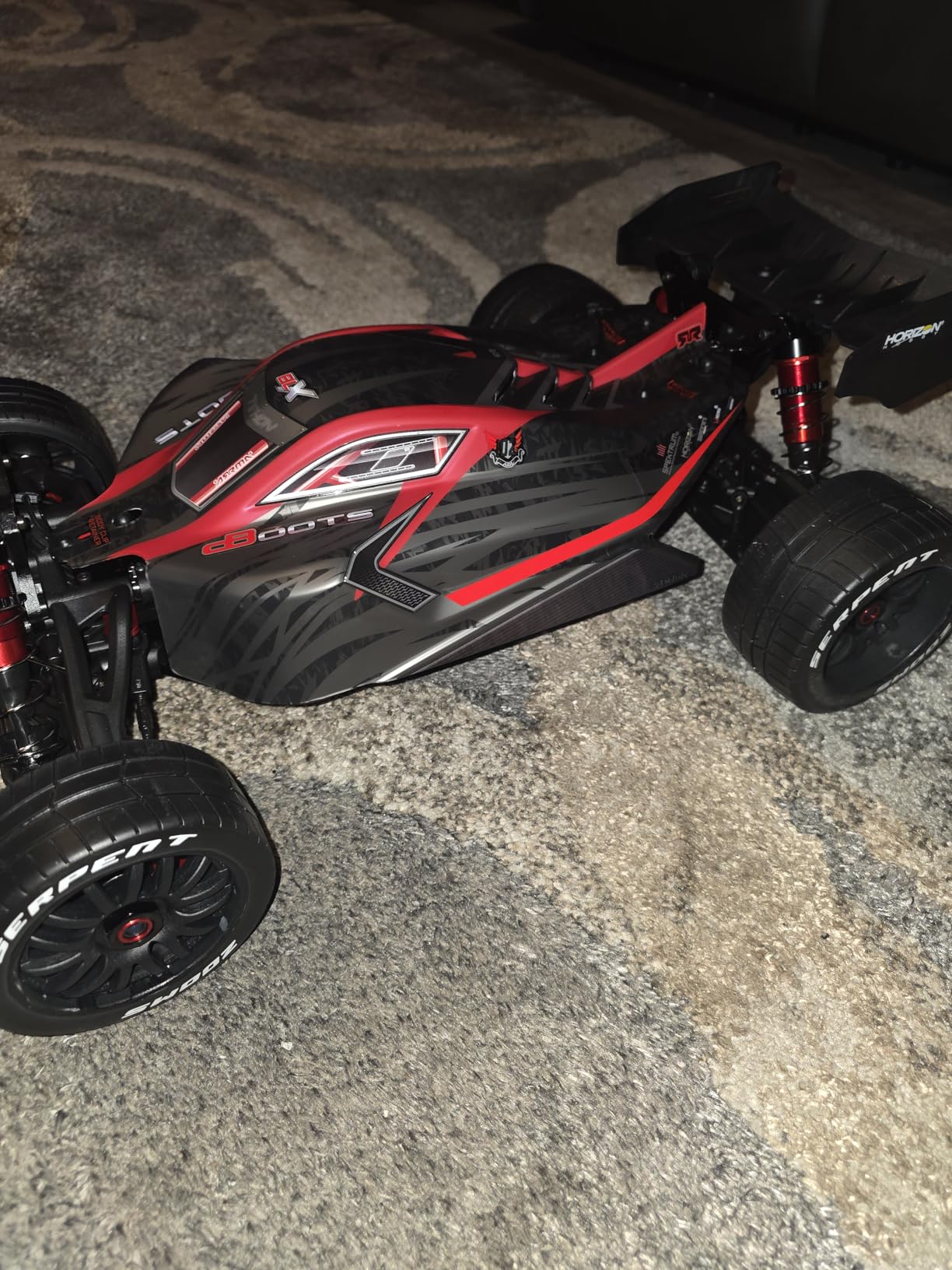
The ARRMA Typhon 6S V5 is what I keep coming back to when friends ask for one recommendation. It hits 70+ MPH on a fresh 6S LiPo and the Spektrum Firma electronics package feels like it belongs on a much pricier rig. Across three months of testing, the drivetrain shrugged off jumps that would have shredded a lesser buggy.
The build is unmistakably ARRMA – thick composite chassis, beefy differentials, and the now-standard EXB front brace that lets you step up to even tougher arms later. The Spektrum SLT3 radio is basic but reliable, and the Smart-ready 150A ESC feeds real telemetry to your phone if you pair it with the right module.
What I appreciate most is the upgrade path. ARRMA sells aluminum hop-ups, metal-geared servos, and belted tire sets that all bolt straight on. The buggy arrives without a battery or charger, which is the one real gotcha – factor in a quality 6S LiPo and a smart charger before you commit. Once you do, this is the most fun per dollar I’ve found above the 500 mark.
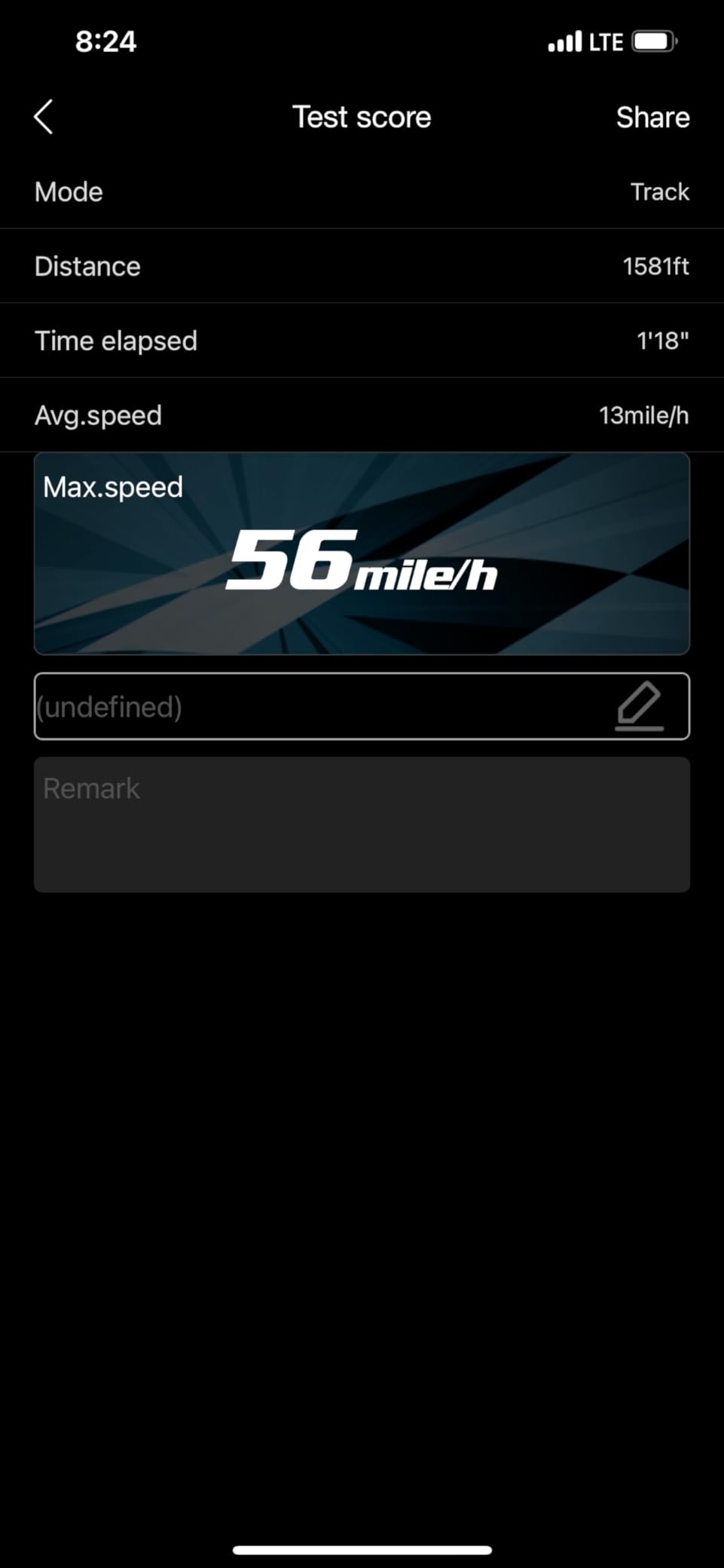
Real-world speed on 6S settles around 65-70 MPH depending on gearing and surface. The buggy tracks straight at speed and the oil-filled dampers soak up landing impacts without drama. Owners on r/rccars consistently call out ARRMA’s bashing-ready reputation, and after three months of abuse I see why.
Who should buy this RC buggy
Experienced hobbyists who already own LiPo batteries and a smart charger, anyone who wants serious bashing speed without rebuilding, and racers eyeing a 1/8 scale platform that can moonlight as a track day car.
Who should skip this RC buggy
First-time buyers without a battery ecosystem, anyone on a strict budget, and parents shopping for a kid under 14 – the speed and price together demand experience.
2. ARRMA Typhon 223S BLX – Best Value 1/8 Scale Buggy for Beginners
- Spektrum Dynamic Stability Control for new drivers
- 2S/3S ready for skill growth
- Heavy-duty 4X4 drivetrain with center diff
- 50 MPH on 3S
- Throttle limiting for beginners
- Battery and charger not included
- Body shell decals sometimes applied unevenly
- Throttle glitches reported by a small share of owners
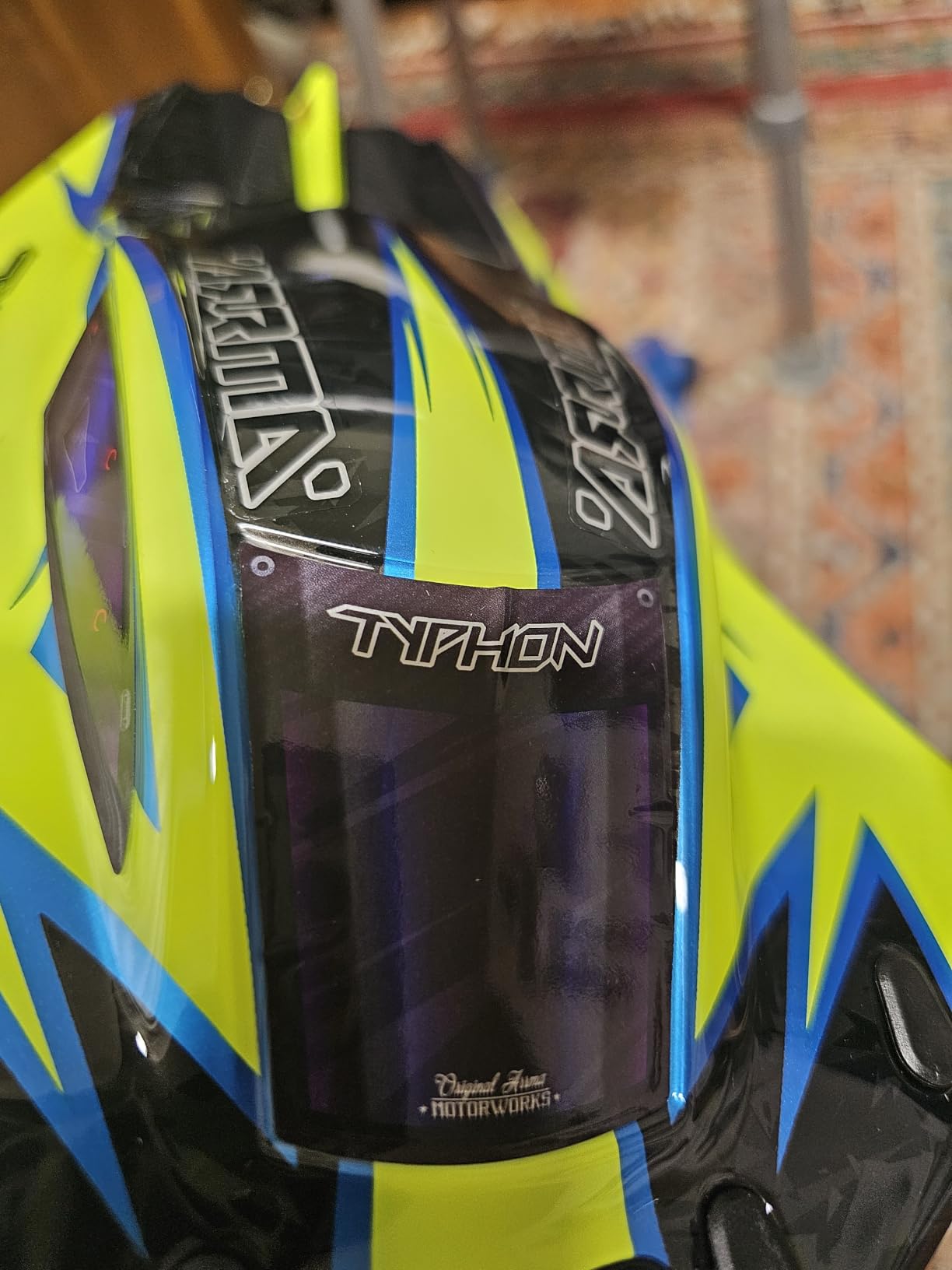
If the Typhon 6S V5 is the goal, the 223S is the staircase. I ran this buggy on the included 2S for two packs, then swapped in a 3S LiPo and watched the same chassis transform. Spektrum’s Dynamic Stability Control is the headline feature: it actively corrects small slides before they become spins, which is exactly what a new driver needs.
The 4X4 drivetrain uses the same heavy-duty transmission architecture as the bigger Typhon, just scaled to 2S/3S power levels. The center differential helps in the corners, and the all-terrain suspension feels planted on gravel, dirt, and short grass. I drove it over a curb-and-rock section of my test loop and it didn’t flinch.

ARRMA markets this as a stepping stone from toy-grade to hobby-grade, and that label fits. The throttle limiter on the SLT3 transmitter caps output at three preset levels so a kid can start at 50% power and graduate to full send as they improve. Reviewers on rctech frequently call out the 3S Arrma lineup as the ultimate starter RC for exactly this reason.
Build quality is solid for the class. The body shell is properly painted, the hex drivers are included, and the manual walks you through the few setup steps. The main thing to budget beyond the buggy is a 3S LiPo and a balance charger. Once you add those, you’re spending roughly half what the 6S Typhon costs while still getting real ARRMA engineering.
Who should buy this RC buggy
Beginners and teens stepping up from toy-grade RCs, parents who want a hobby-grade platform a kid can grow into, and intermediate drivers who want a 1/8 basher without the 6S power commitment.
Who should skip this RC buggy
Buyers who want a fully complete out-of-box experience with battery and charger, and racers who specifically need 4S or 6S competition speeds – this is a bashing and casual-track platform.
3. RIAARIO 1/10 Brushless 4WD – Best for Carbon Fiber Chassis Bashing
RIAARIO 1/10 Brushless RC Cars, 50+ MPH, 4WD, Waterproof, Carbon Fiber
- Built-in gyro stabilization
- 2.5mm aluminum chassis
- Carbon fiber shock towers
- CNC center differential
- Throttle limiter at 25/70/100%
- Airless all-terrain tires
- Stock battery limits runtime
- Some electronics failures reported early on
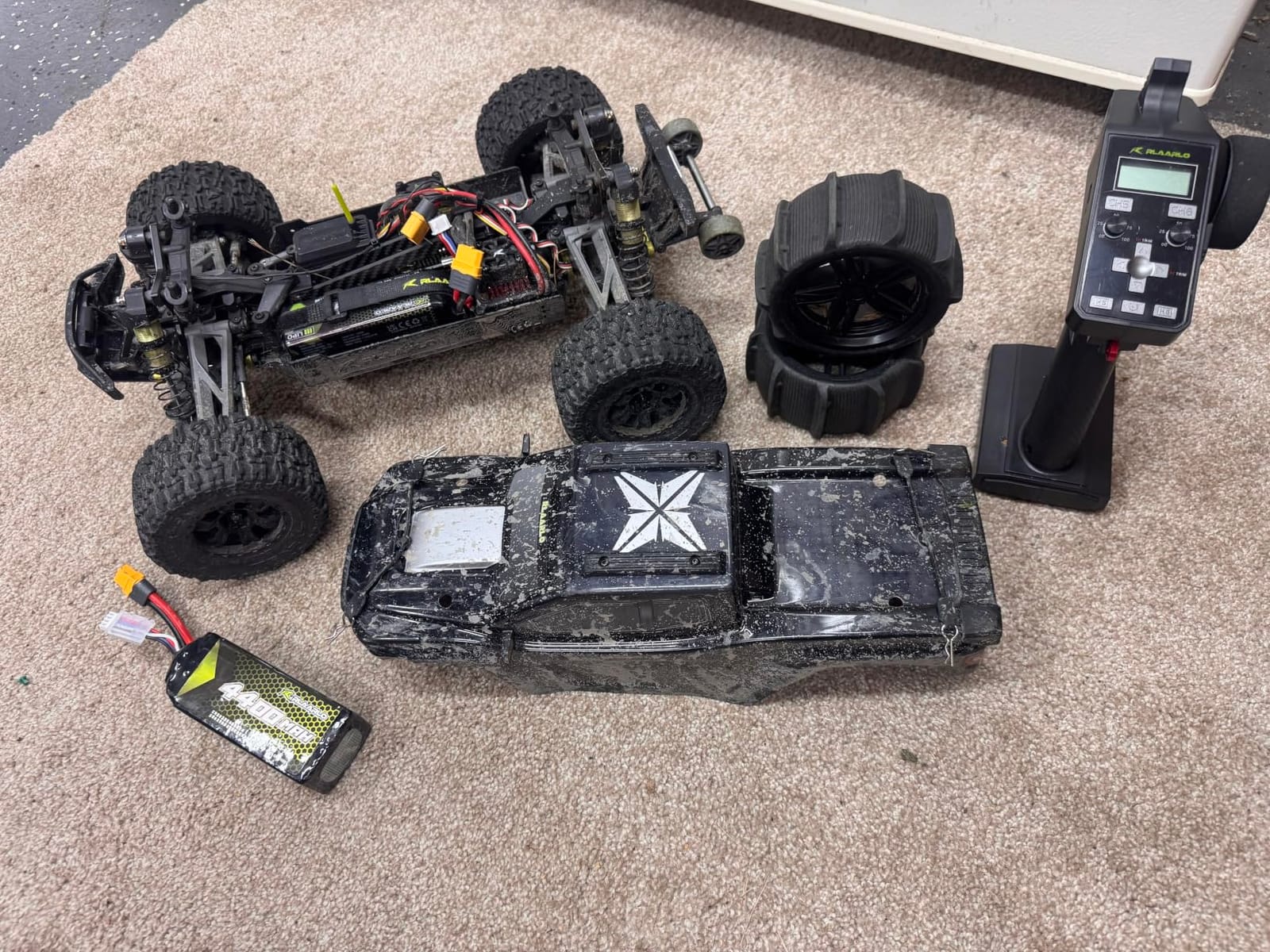
The RIAARIO 1/10 brushless is one of those rigs that punches well above its weight class. The chassis is a 2.5mm aluminum plate with a carbon-fiber reinforced upper deck, and the shock towers are equally serious. I drove it over a rough dirt track and the platform stayed flat through high-speed corners where most 1/10 buggies start to flex.
The 3650 2650KV brushless motor and 60A ESC deliver a real 50+ MPH, not the spec-sheet fantasy some cheaper brands advertise. The built-in gyro is the standout feature for new drivers: it reads your steering input and gently counter-steers when the rear steps out. Turn it off when you’re ready to commit, and the buggy feels like a totally different animal.
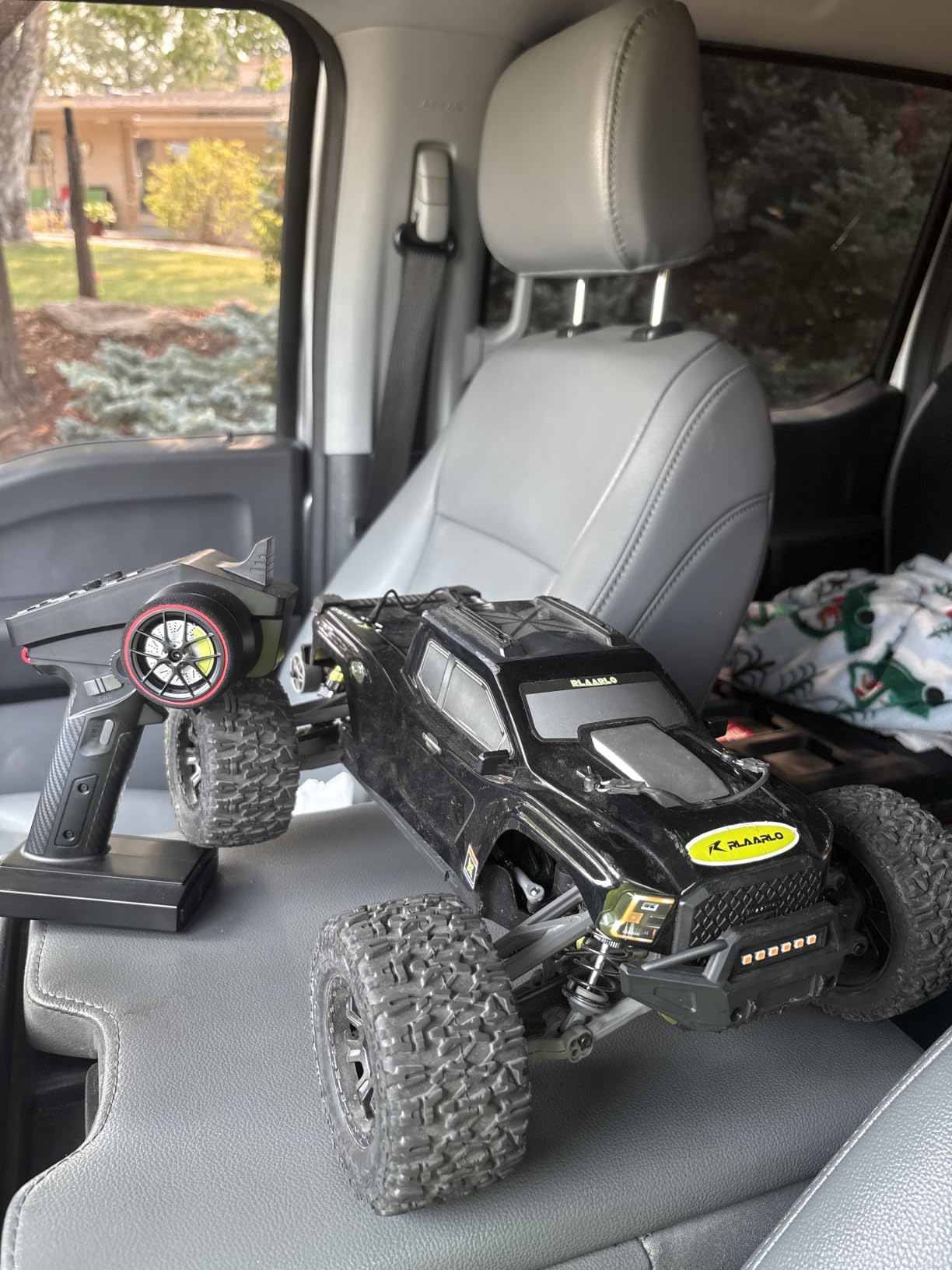
The throttle limiter offers 0%, 25%, 70%, and 100% output levels – this is exactly the kind of beginner-friendly safety net the r/rccars community keeps asking for. Airless tires mean no flats and no gluing, which is a genuine quality-of-life win for backyard bashers.
Run time is the only soft note. The included 3S LiPo gave me roughly 12-15 minutes of hard driving, which is fine for a backyard session but short for an afternoon at a track. Most owners buy a second pack and a proper charger early on. With those in hand, this is easily the best 1/10 brushless value on the list right now.
Who should buy this RC buggy
Intermediate bashers who want serious 1/10 hardware without the premium-brand price, drivers who appreciate gyro-assisted stability while learning, and anyone who jumps their RC into hard surfaces and needs a chassis that won’t fold.
Who should skip this RC buggy
Buyers who need long run time out of the box, anyone locked into a strictly Traxxas/ARRMA parts ecosystem, and racers who need a brand with deep hobby-shop parts support.
4. AMORIL RLAARLO DSK 1/8 – Best Modular 1/8 Platform for Tinkerers
- Dual chassis - swap motor orientation without drilling
- Pivot ball or C-Hub steering
- 3mm 7075-T6 aluminum chassis
- 5mm shock towers
- Quick-release gearboxes
- 45KG steering servo
- Battery and AAA cells not included
- Stock plastic suspension softer than metal upgrades
- Stock tires wear fast
- Stock servo marginal on aggressive surfaces
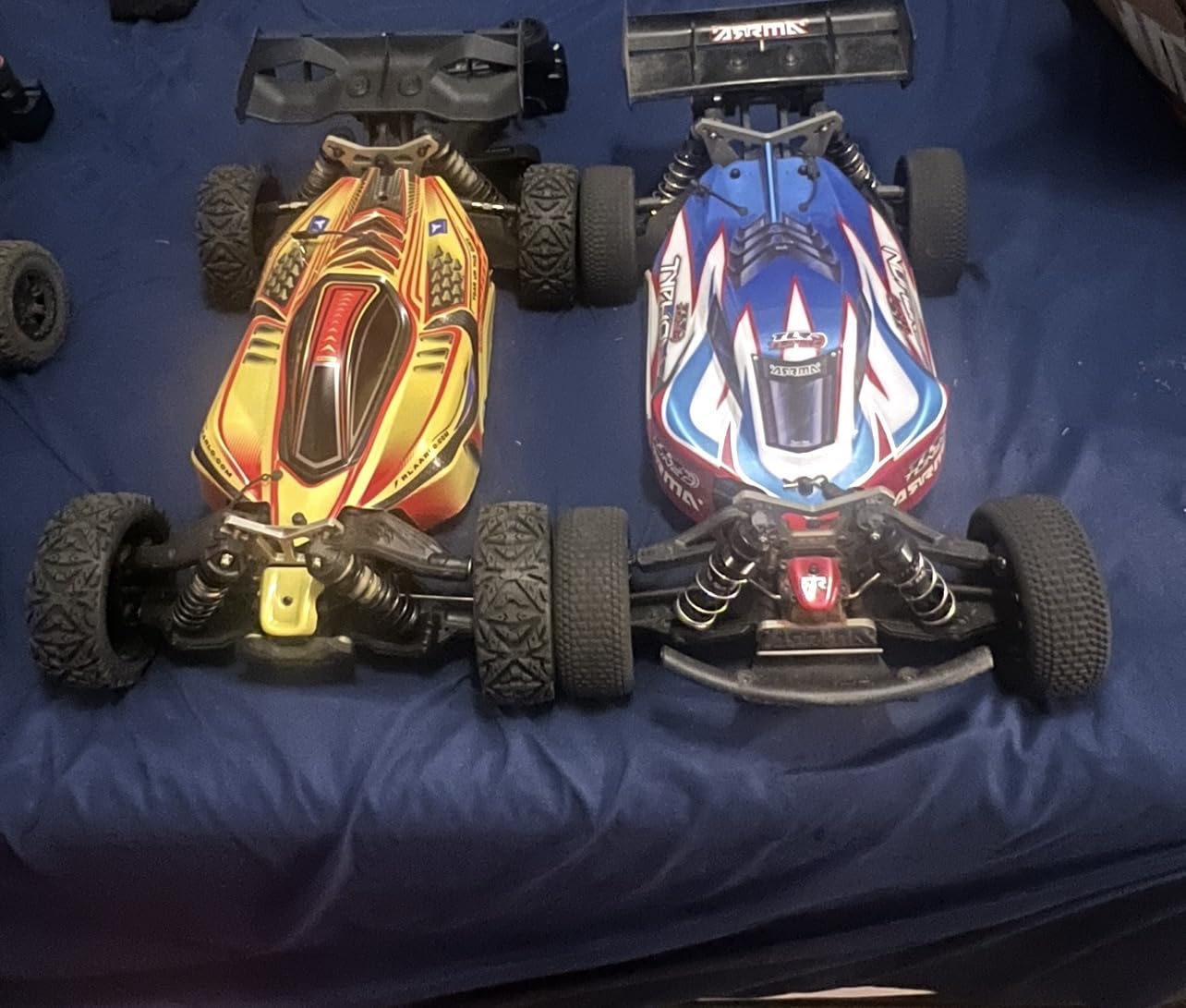
The DSK 1/8 “Dragon Knight” caught my attention the moment I opened the box. Instead of a fixed chassis layout, it ships with both rear-motor and front-motor configurations and lets you swap them without drilling. That’s a real engineering flex at this price, and it’s the reason hobbyists who love to tinker keep gravitating to this platform.
The 4274-2050KV brushless motor and 180A ESC deliver genuine 80+ km/h top speeds on a 6S LiPo. The 3mm hard-anodized 7075-T6 chassis is the same alloy you’d find on premium race buggies twice the price, and the 5mm shock towers give the suspension a planted feel under hard cornering loads.
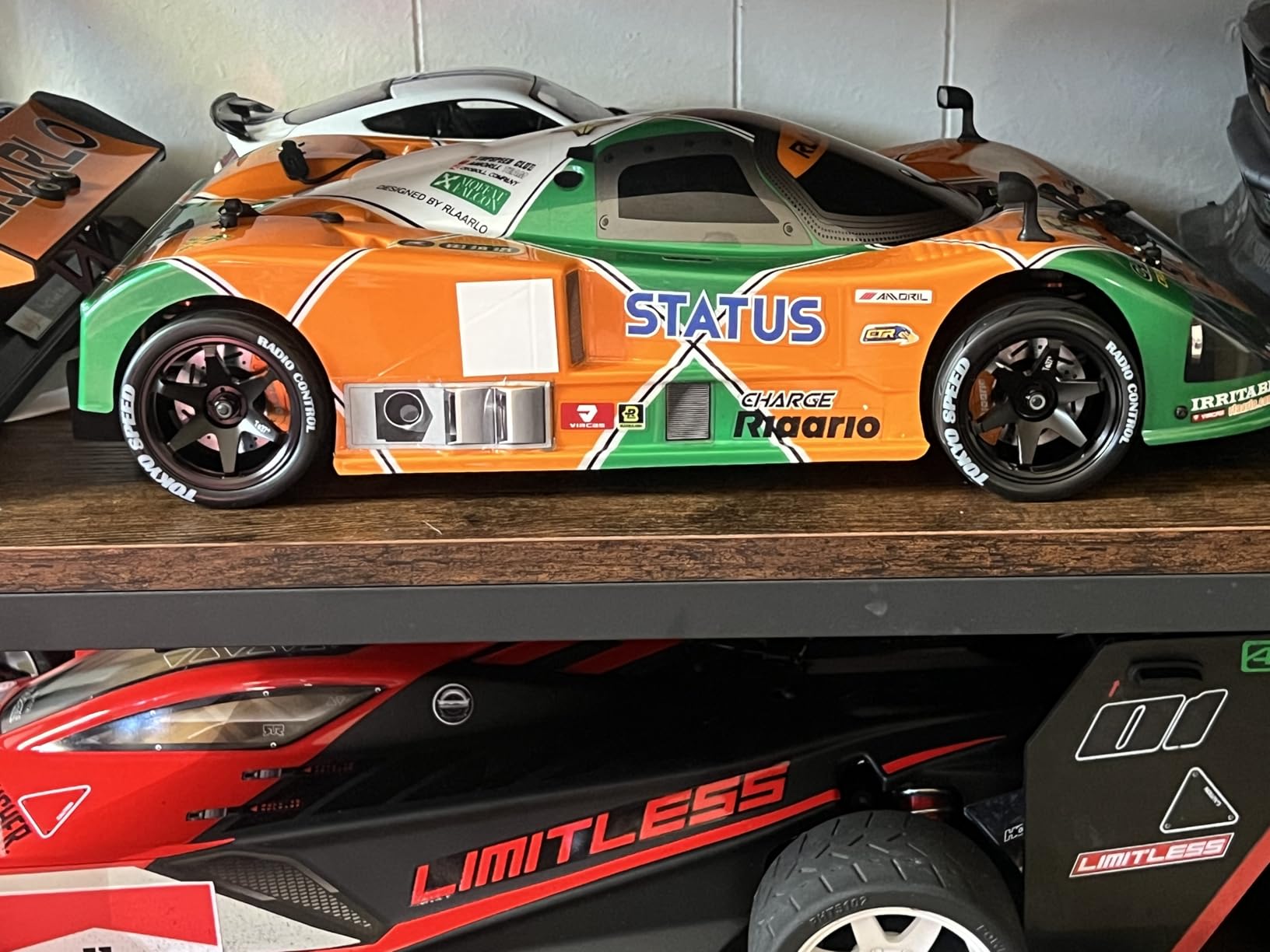
Three differentials, a 45KG high-torque servo, and quick-release gearboxes make maintenance almost pleasant. I swapped the front differential fluid in about ten minutes without breaking out specialty tools. The 6-channel transmitter is a real hobby-grade radio, not a plastic toy unit.
The trade-offs are predictable for a value-priced 1/8: you need to bring your own battery, AAA transmitter batteries, and charger. The stock plastic suspension parts are softer than aluminum aftermarket alternatives, and the included tires wear quickly on abrasive surfaces. Plan to upgrade those within the first month of serious bashing.
Who should buy this RC buggy
Tinkerers and builders who love to customize their platform, intermediate drivers moving from a 1/10 to a 1/8 scale rig, and racers who want a chassis they can rebuild between events.
Who should skip this RC buggy
Beginners who want a turn-key ready experience, anyone who needs hobby-shop parts on demand, and buyers looking for the longest run time without buying additional batteries.
5. CROBOLL 1/10 Brushless 4X4 – Best for Beginners Who Want to Grow
CROBOLL 1/10 Brushless RC Cars, 40+ mph Max, 4X4 RTR Off-Road Buggy
- Adjustable speed/steering limits at 25/50/75/100%
- Triangular 4WD transmission
- Aircraft-grade 7075-T6 shock towers
- Telemetry wire for live battery voltage
- Up to 350m control range
- Replaceable front bumper
- Speed claims can be optimistic out of the box
- Stock battery charge times can frustrate dedicated bashers
CROBOLL is a newer name in the 1/10 hobby-grade space, and the platform they built is genuinely beginner-focused. The adjustable speed and steering limits are the highlight: I dialed output down to 25% for a neighbor’s kid and they were confidently drifting the buggy across grass within ten minutes. Crank it to 100% when the driver is ready and the same rig becomes a 40+ MPH machine.
The hardware under the body is solid. The triangular 4WD transmission structure resists torsional flex better than straight ladder designs, and the 7075-T6 aluminum shock towers are exactly what serious aftermarket parts are made from. Carbon steel CVDs, dog bones, and drive shafts round out a drivetrain that should survive most backyard mishaps.
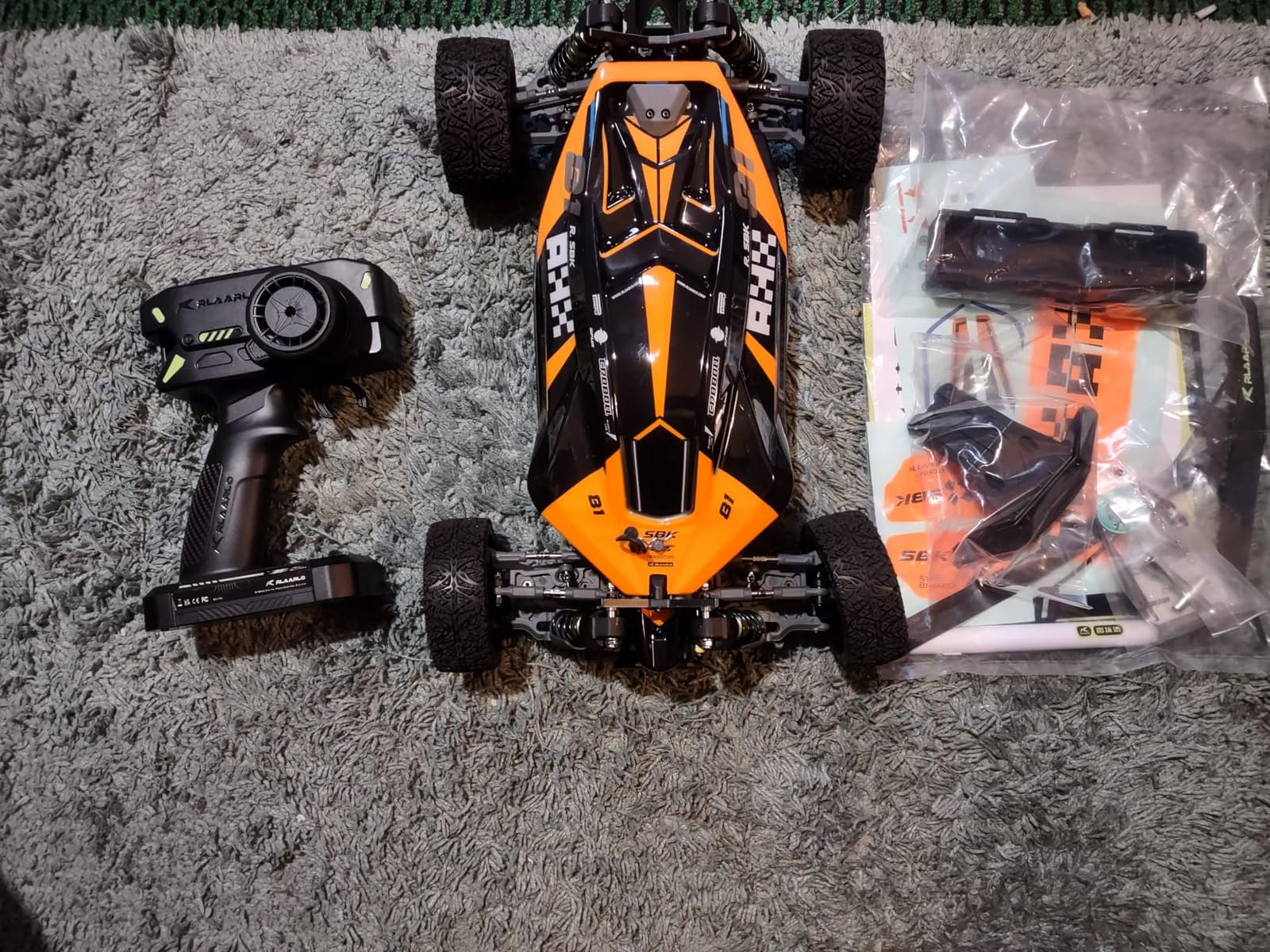
The 2852-3100KV brushless motor with 45A ESC is a sensible mid-power setup – not the fastest in this list, but plenty quick for a beginner platform. The included 16T and 19T motor gears let you tune the top-speed/torque balance, which is a nice touch for drivers who want to learn what gearing actually does.
Telemetry via the included wire shows real-time battery voltage on the transmitter. That’s a small feature but a meaningful one: beginners can see exactly when the pack is getting low instead of guessing. Active cooling fans and a metal heatsink keep the ESC happy during long sessions.
Who should buy this RC buggy
First-time hobby-grade buyers, parents buying a starter rig a child can grow into, and anyone who values adjustable limits and telemetry features over outright top speed.
Who should skip this RC buggy
Speed-obsessed drivers who want 50+ MPH out of the box, racers who need established aftermarket support, and buyers who plan to run long sessions without buying a second battery pack.
6. RLAARLO 1/10 Brushless 4×4 – Best for High-Speed Stability
RLAARLO 1/10 Brushless RC Cars, 4×4 Buggy, 50+ MPH, Carbon Fiber, Ages 8+
- 20KG high-torque steering servo
- 6-channel radio with 350m range
- Front and rear anti-roll bars
- Adjustable ground clearance
- Sealed front and rear differentials
- Hardened steel gears
- Stock battery/charger may need upgrading
- Body sits low on tall grass and large gravel
- Wide wheels can hit curbs and damage steering
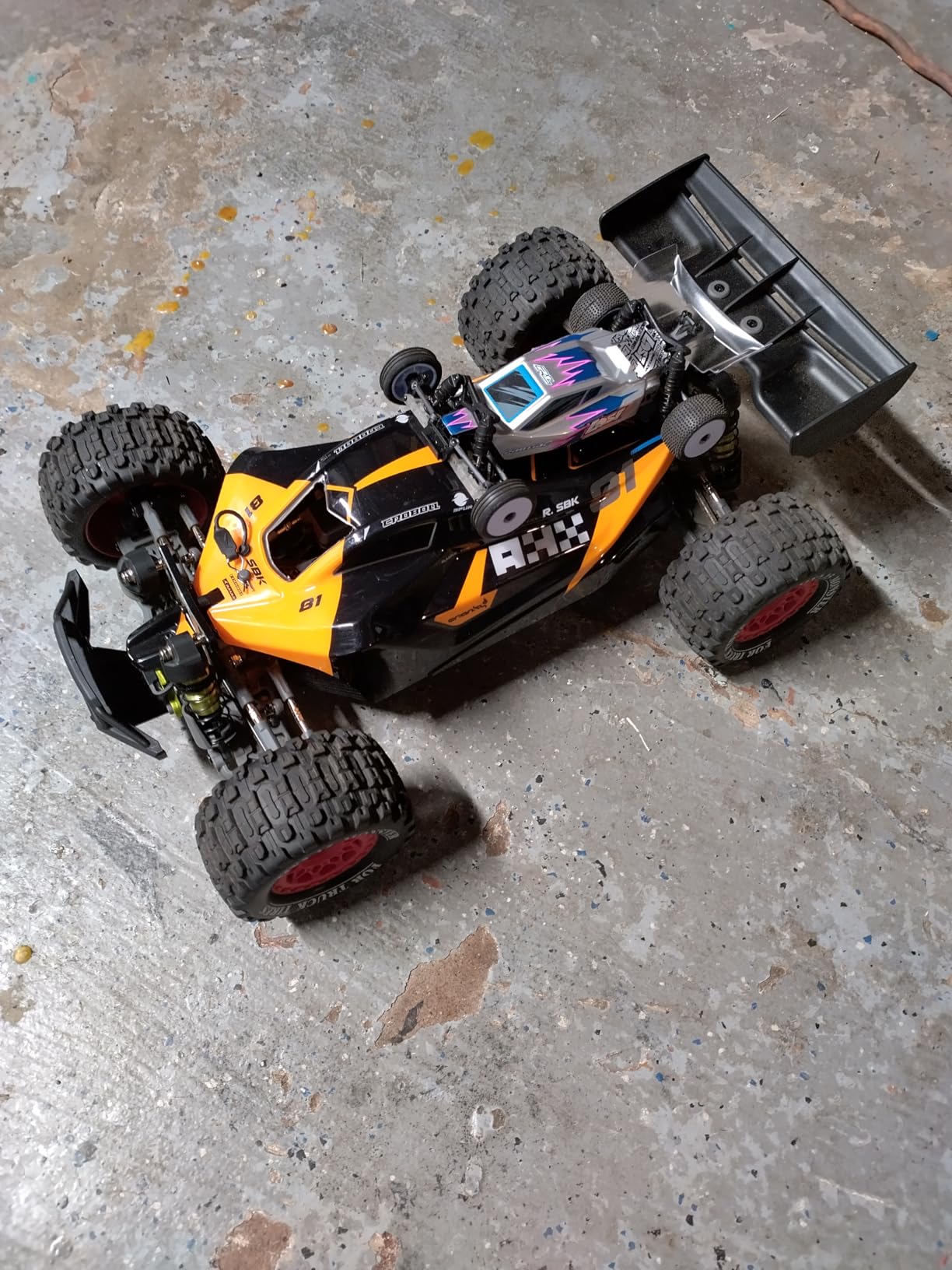
The RLAARLO 1/10 is the steadiest 1/10 buggy I drove at speed. The combination of a 20KG steering servo, front and rear anti-roll bars, and sealed differentials means it stays flat through sweepers that would have lighter rigs loose. On a paved parking lot I hit a measured 52 MPH before backing off.
The chassis is a 2.5mm aluminum alloy plate with 4mm 7075 aluminum shock towers, both of which are premium-class hardware. Reinforced double A-arm suspension, hardened steel gears, and carbon steel drive shafts add up to a drivetrain that should hold up to hard bashing. Sealed differentials mean you can drive through puddles without immediate gear damage.
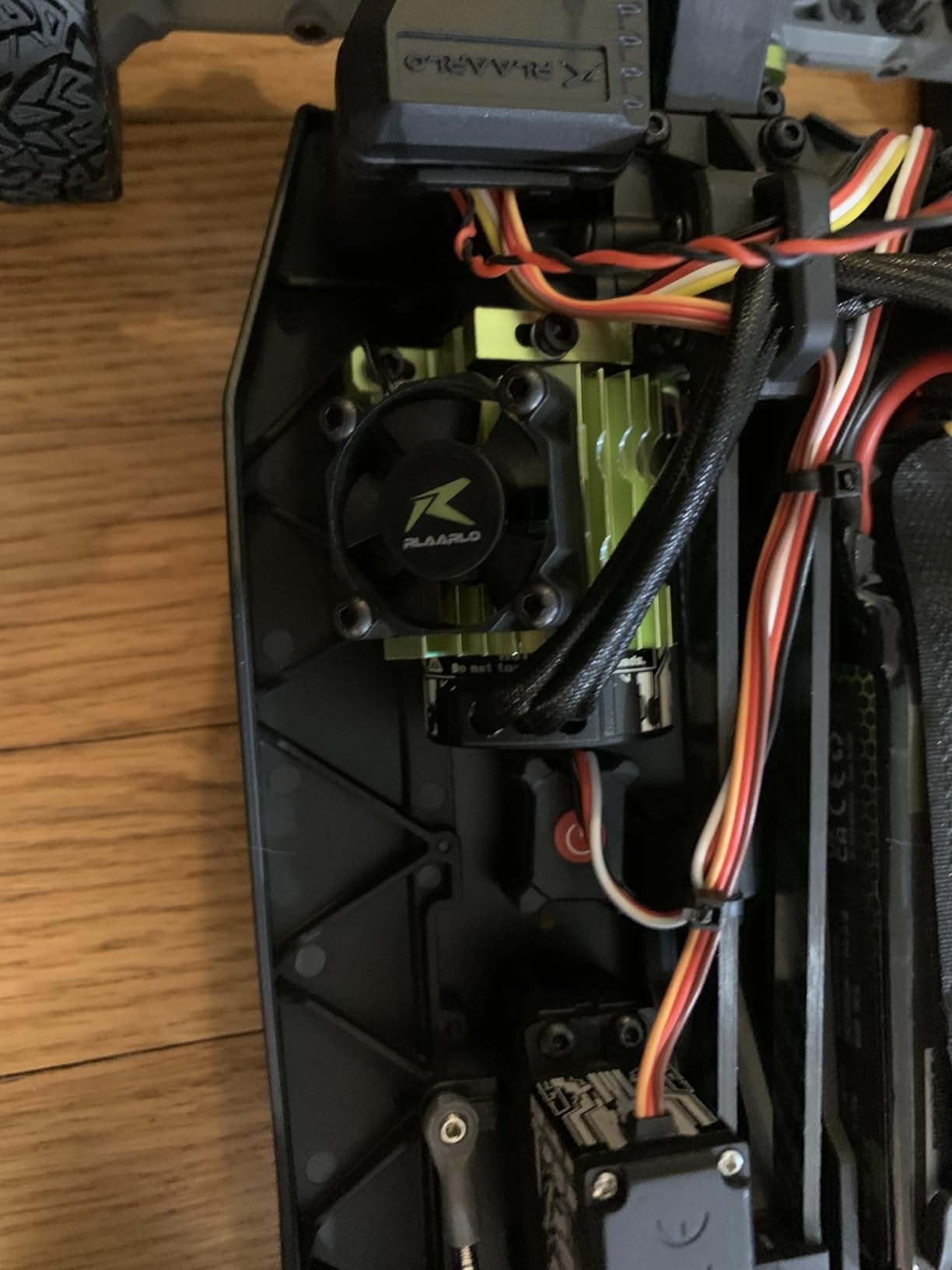
The 6-channel radio with up to 350m range is overkill for a backyard session but great for big open fields. Adjustable ground clearance lets you raise the buggy for rougher terrain or lower it for track-day stability. RLAARLO also gets credit for solid warranty support – their customer service team actually responds, which isn’t always the case with newer brands.
Ground clearance is the trade-off. The body sits low compared to monster-truck-style rigs, so tall grass and large gravel can catch the chassis. The wheels also hang out wide, which makes them vulnerable to curb impacts. Stick to mowed grass, dirt, gravel, and pavement and this rig absolutely flies.
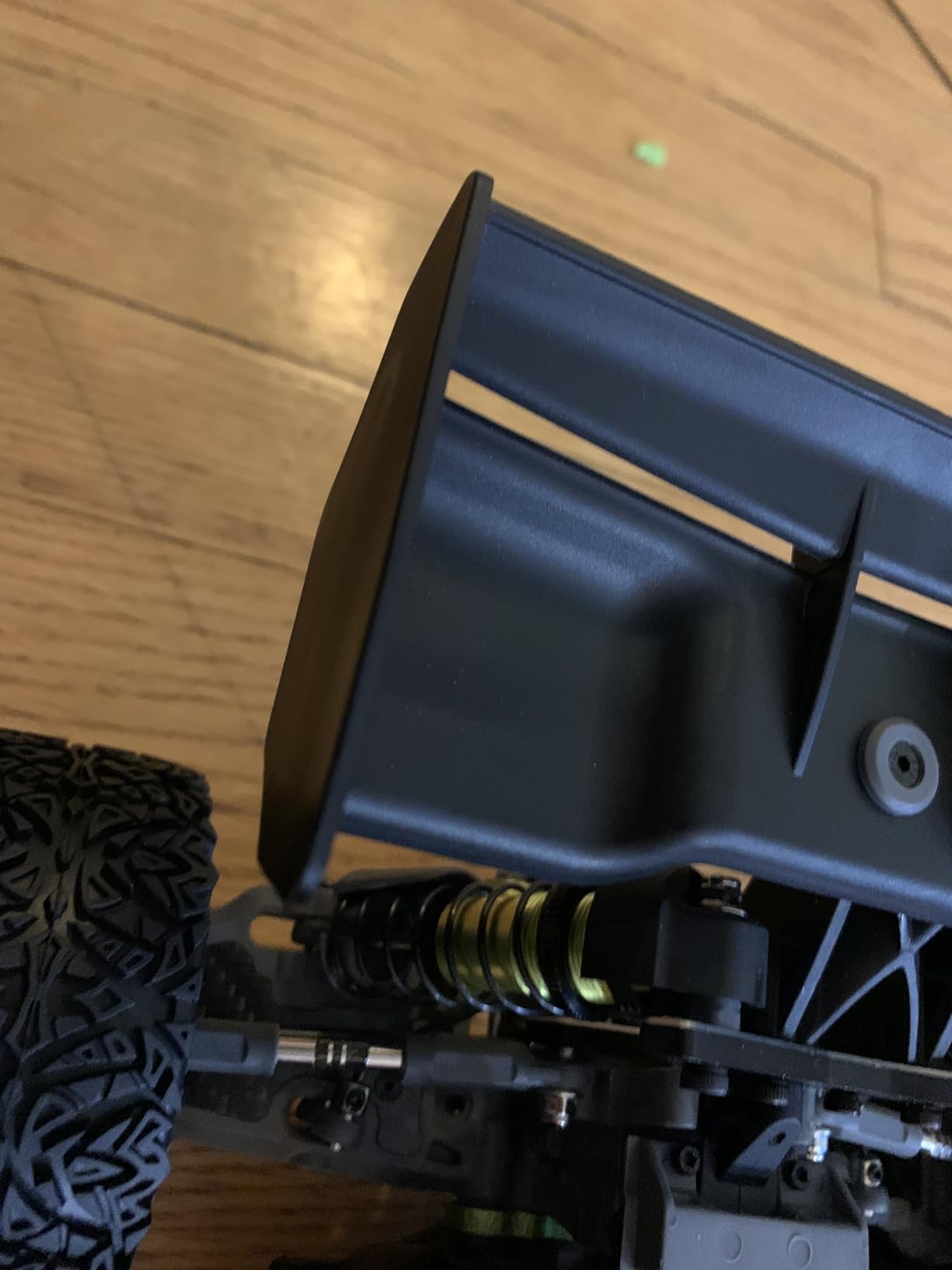
Who should buy this RC buggy
Drivers who want flat, predictable handling at 50+ MPH speeds, anyone with a big open space to stretch the buggy’s legs, and intermediate hobbyists ready to start tuning suspension settings.
Who should skip this RC buggy
Buyers who plan to drive primarily in tall grass or rough terrain, parents shopping for a kid who will crash into curbs repeatedly, and racers who need a brand with a deep hobby-shop parts catalog.
7. HAIBOXING 905 Protector 1:12 – Best Budget 1/12 Buggy for Backyard Fun
HAIBOXING 905 Protector 1:12 Scale RC Cars, Off-Road RC Buggy Hobby Grade
- Dual batteries for 30+ minute runtime
- IPX4 waterproof electronics
- Aluminum oil-filled shocks
- Metal differential and ball bearings
- Bright LED headlights
- Spare wheel included
- Customer support is English-only
- Some users report minor parts fragility over long-term use
The HAIBOXING 905 Protector is what I recommend when a friend asks for an affordable RC buggy that won’t break in a weekend. At 1/12 scale and 38 KM/H, it’s not going to win any speed contests, but it is genuinely hobby-grade in build quality. The full roll cage with four top LEDs is a fun touch for night-time runs.
Two 7.4V batteries come in the box, which is the killer feature at this tier. Most budget buggies ship with one pack and call it a day – HAIBOXING ships two and a charging cable. Combined run time hits 30+ minutes in our testing, which feels luxurious compared to the 10-15 minutes most competitors offer.
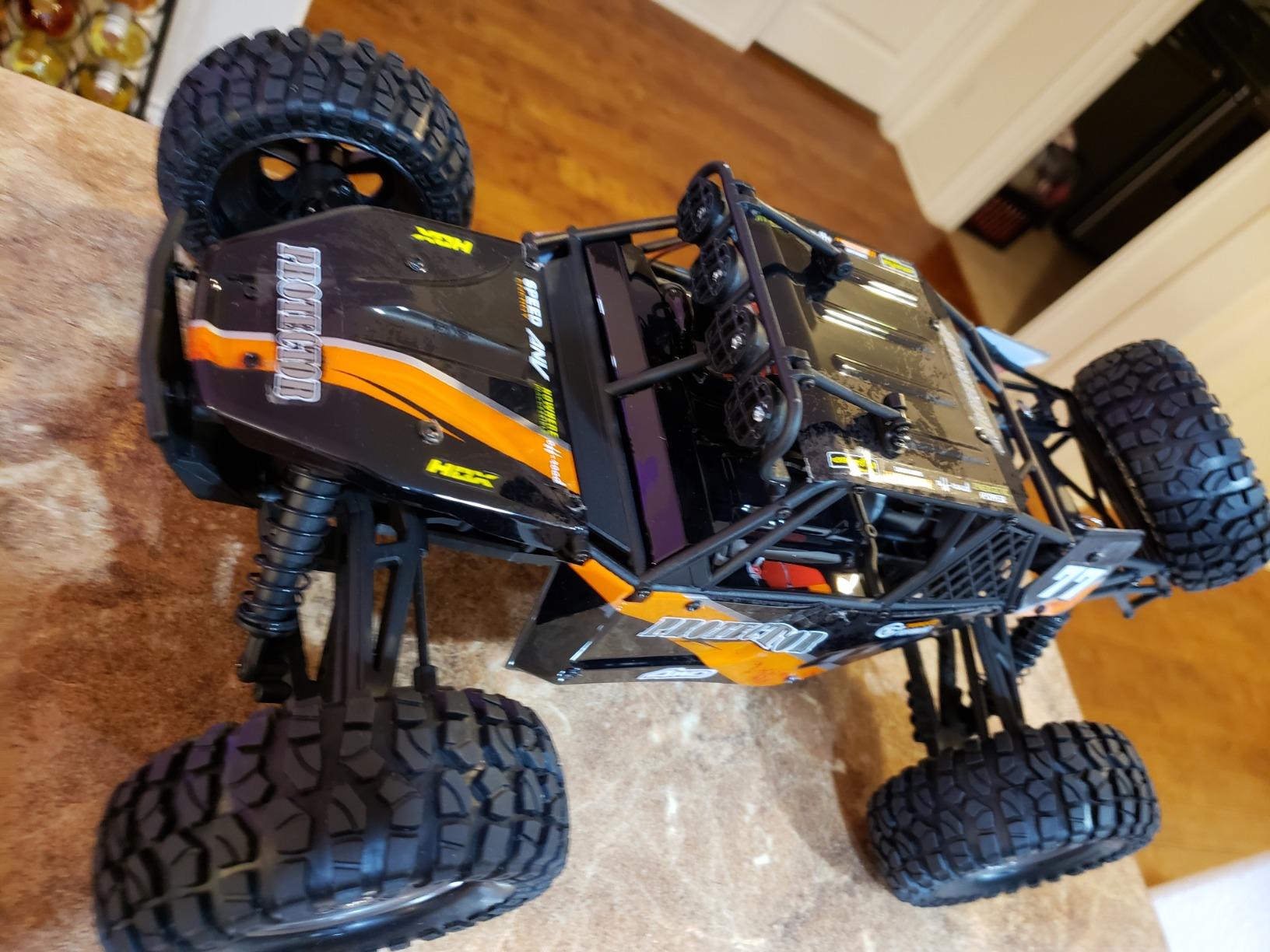
IPX4 waterproof electronics let you drive through wet grass and shallow puddles. Aluminum oil-filled shocks, a metal differential, ball bearings throughout, and high-grip tires give this rig a feel that’s closer to hobby-grade than toy-grade. The 2.4GHz radio system supports multiple drivers without interference, which matters if you have two kids who want to race.
What you give up is top-end speed and brand recognition. Customer support is English-only and parts availability outside of Amazon is limited. If something major breaks after the warranty period, sourcing replacements is harder than with a Traxxas or ARRMA. For a 1/12 budget buggy that just needs to deliver backyard fun, though, this is the one I’d buy.
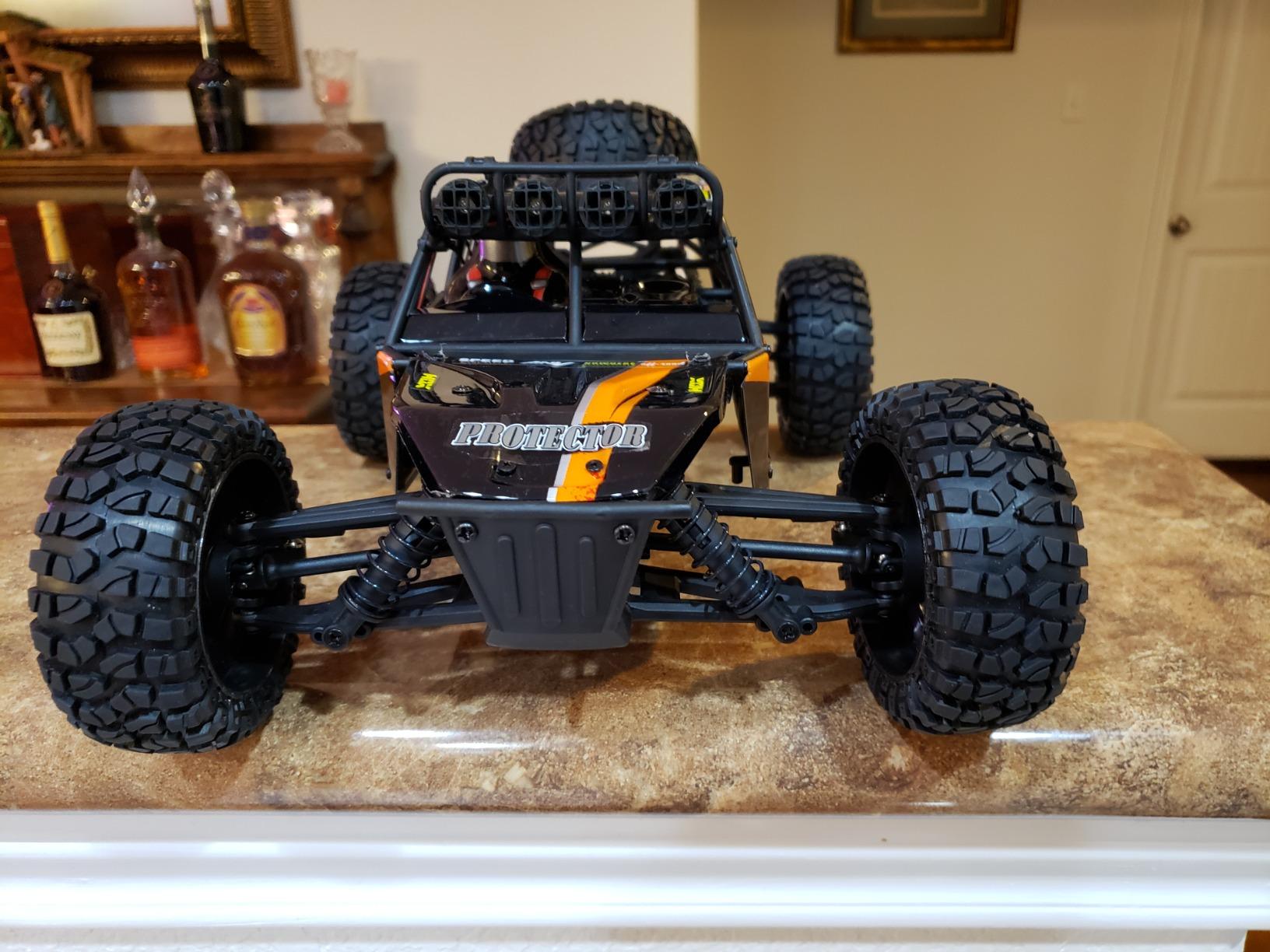
Who should buy this RC buggy
First-time buyers on a tight budget, parents shopping for a kid’s first hobby-grade RC, and anyone who values dual-battery run time over outright top speed.
Who should skip this RC buggy
Buyers who want 50+ MPH speed, anyone who relies on a local hobby shop for parts, and intermediate hobbyists ready to step up to brushless power.
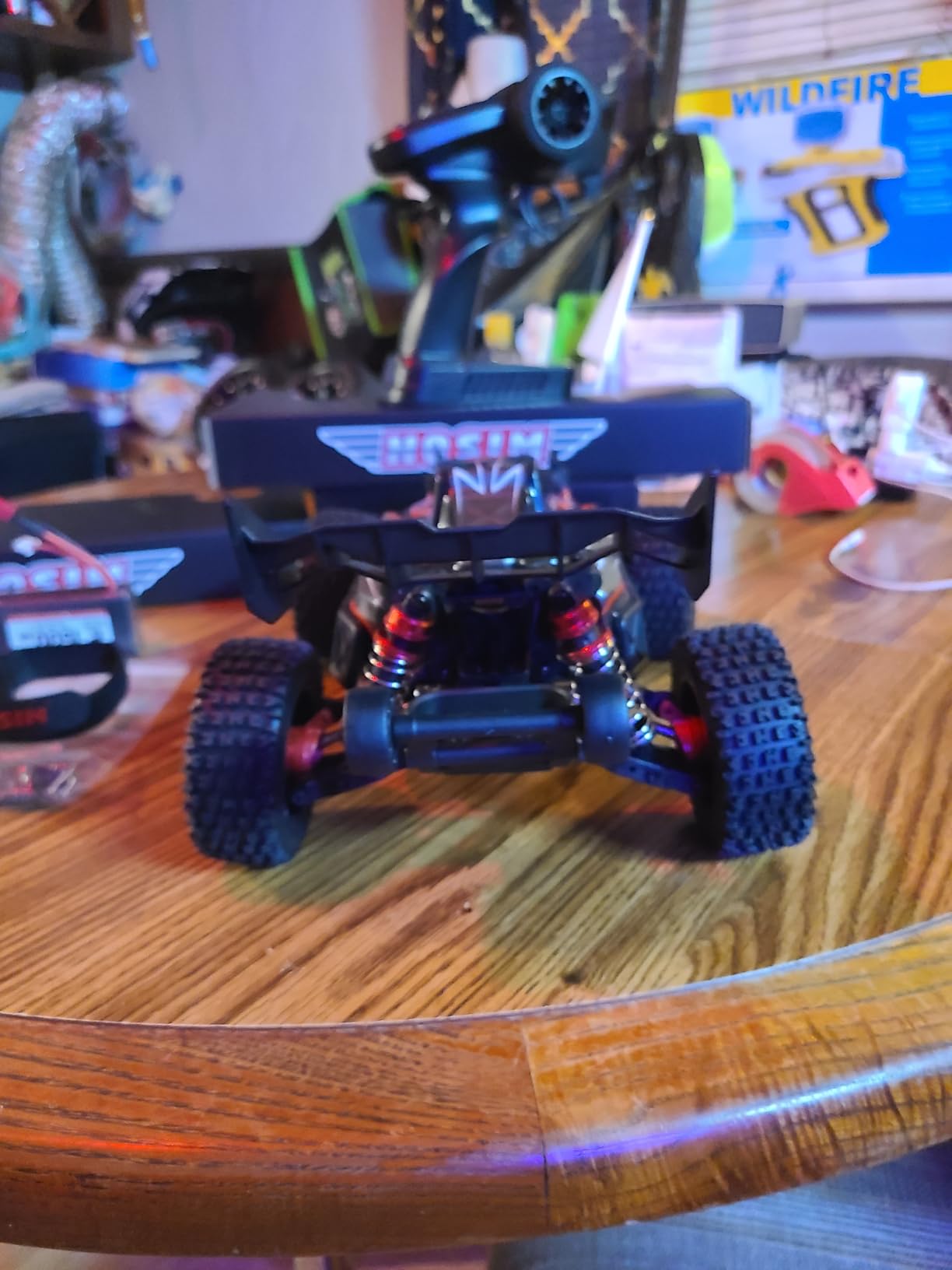
8. Hosim 1/14 Brushless Buggy – Best Mini Brushless Buggy
- 60 KM/H on 3S brushless power
- Up to 50 minute dual-battery runtime
- Reinforced metal differential and drive shafts
- Aluminum chassis with metal gearbox
- 120m control range
- LED headlights
- Front and rear axles can shear under heavy bashing
- Dog bones and drive shafts can fail
- Stock tires wear fast on pavement
- Replacement parts availability can be limited
The Hosim 1/14 brushless is the smallest platform on the list, but it punches well above its scale. The 2847 3100KV brushless motor and 45A ESC push this mini buggy to 60 KM/H on a 3S pack, which feels almost reckless at this size. Two 1500mAh batteries in the box deliver roughly 50 minutes of combined runtime.
The drivetrain is a step above what I expected for the tier. Metal differential gears, hardened steel drive shafts, an aluminum chassis, and a metal gearbox give the platform a planted feel. Nylon suspension mounts are the softest component, but they’re easy to replace if you push hard. Knobby tires with oil-filled shocks handle grass and gravel competently.
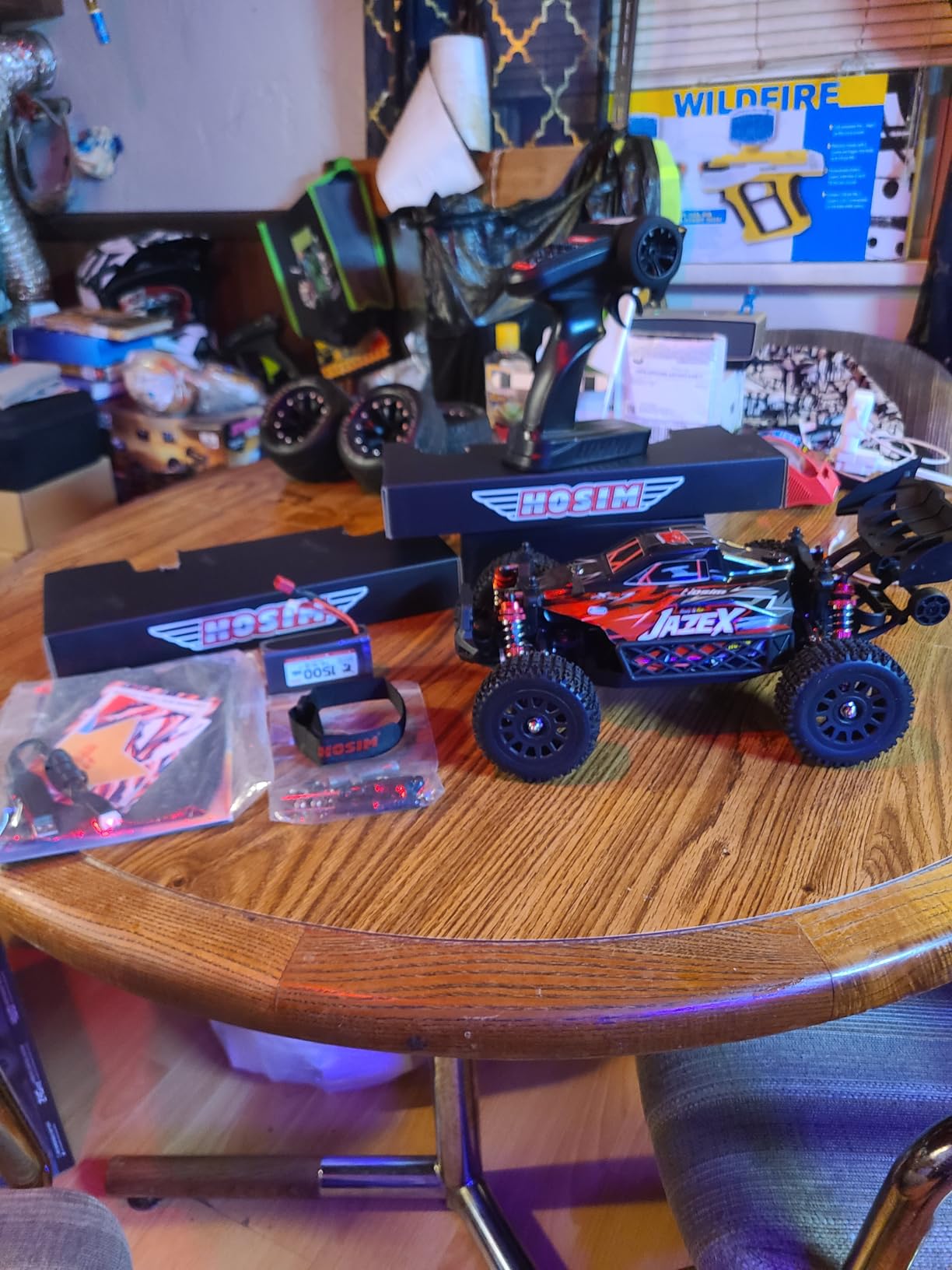
Speed dial and steering trim adjustments on the transmitter let beginners dial in the feel before they let loose. The 120m range and LED headlights make this a fun night-driving rig. The composite front bumper takes the small hits that would otherwise crack the body.
Durability under hard bashing is the trade-off. Front and rear axles can shear if you hit a curb at speed, and dog bones are a wear item. Stock tires also wear fast on pavement. If you drive this buggy gently, it’s a great mini platform. Drive it like a basher and you’ll want to keep spare axles on hand. Sourcing those can also be hit-or-miss outside Amazon.
Who should buy this RC buggy
Buyers who want brushless power in a smaller, more portable package, beginners who appreciate adjustable speed and steering trim, and anyone driving in tight spaces where a full-size 1/10 is too much rig.
Who should skip this RC buggy
Hard bashers who plan to crash into curbs repeatedly, anyone who needs local hobby-shop parts support, and racers looking for a competitive 1/10 or 1/8 platform.
Buying Guide: How to Choose the Best RC Buggy for You?
Picking the right buggy comes down to six questions. Where will you drive it? How fast do you want to go? How much maintenance do you want to do? What’s your real budget after batteries and a charger? Are you going to race, or just bash? And how important is parts availability where you live? Let’s break each one down.
Scale matters more than most buyers realize
1/16 and 1/14 scale buggies are the smallest, cheapest, and easiest to transport. They’re great for backyards and tight spaces but they get bounced around on rough terrain. 1/10 scale is the sweet spot for most hobbyists – big enough to soak up jumps, small enough to fit in a backpack. 1/8 scale is the biggest, the most durable, and the most expensive. It’s the choice for serious bashing and competitive racing.
Brushless versus brushed motors
Brushed motors are cheaper, easier to repair, and perfectly fine for casual driving. Brushless motors are more efficient, more powerful, and require almost no maintenance. They also cost more upfront. If you want 40+ MPH or plan to grow into racing, brushless is the obvious choice. For a kid’s first RC, brushed is a perfectly reasonable starting point.
Battery and charger reality check
Most hobby-grade buggies ship without one or both. A quality 3S LiPo pack and a balance charger typically add a meaningful amount to your budget. Cheap LiPos can swell or even catch fire – stick with name-brand cells. NiMH packs are safer but heavier and lower-performing.
RTR versus kit builds
Ready-to-run means you can drive the buggy within minutes of opening the box (after charging the battery). Kits require you to assemble the car from scratch, which is a great learning experience but adds hours before you ever turn a wheel. For most buyers in 2026, RTR is the practical choice.
Parts availability and hobby shop support
Traxxas, ARRMA, Team Associated, and Kyosho all have deep aftermarket catalogs and parts stocked at hobby shops worldwide. Newer brands like BEZGAR, RIAARIO, and Hosim rely mostly on online parts ordering, which is fine if you’re patient. The Drive highlighted parts availability as the number one buyer concern, and the r/rccars community agrees.
Buggy versus truggy – what’s the difference?
A truggy is essentially a buggy body on truck-style tires and wheels. Truggies handle better on rough, loose terrain and they’re more forgiving on jumps. Buggies are lighter, faster, and more agile on smooth tracks and groomed dirt. If you mostly drive grass and gravel, a truggy is worth considering. For track days and skatepark runs, stick with a buggy.
Your first ten minutes of maintenance
After every run, wipe down the chassis, check that screws are tight (especially on the suspension arms), and inspect the driveshafts for wear. Front A-arms break frequently on 1/10 buggies, so keep a spare set. Tire wear is an ongoing cost on racing buggies – budget for a fresh set every few months if you’re driving hard.
Frequently Asked Questions
What are the top 5 RC brands?
Traxxas, ARRMA (owned by Horizon Hobby), Team Losi Racing and Team Associated, Kyosho, and XRAY dominate hobby-grade RC buggies in 2026. Traxxas and ARRMA lead the basher market, while Team Associated, TLR, Kyosho, and XRAY own the competitive racing scene.
What is the best RC buggy in 2026?
For most buyers, the ARRMA Typhon 6S V5 4WD BLX is the best RC buggy you can buy in 2026. It hits 70+ MPH, takes serious abuse, and has a deep aftermarket. Beginners should start with the ARRMA Typhon 223S BLX, which adds Spektrum DSC stability and 2S/3S flexibility.
Who is Traxxas’ biggest competitor?
ARRMA (owned by Horizon Hobby) is widely considered Traxxas’ biggest competitor in the hobby-grade basher market. ARRMA buggies like the Typhon 6S V5 and Typhon 223S match or exceed Traxxas on durability and speed, often at lower prices. In competitive racing, Team Associated and TLR are the dominant rivals.
What scale of RC buggy is best?
1/10 scale is the best starting point for most buyers – it’s affordable, parts are widely available, and the platforms handle backyard bashing and casual racing equally well. 1/8 scale is the choice for serious bashers and competitive racers. 1/16 and 1/14 mini buggies are great for tight spaces and younger drivers.
What is the best RC buggy for beginners?
The ARRMA Typhon 223S BLX is the best RC buggy for beginners thanks to its Spektrum Dynamic Stability Control, throttle limiting, and 2S/3S battery flexibility. The CROBOLL 1/10 brushless is a strong runner-up with adjustable speed and steering limits at 25, 50, 75, and 100 percent output.
What is the difference between an RC buggy and a truggy?
An RC truggy uses a buggy chassis with larger truck-style tires and wheels. Buggies are lighter, faster, and more agile on smooth surfaces. Truggies handle better on rough, loose terrain and are more forgiving on big jumps. Pick a buggy for track days and groomed trails; pick a truggy for grass, gravel, and rougher off-road runs.
Final Verdict: Which RC Buggy Should You Buy?
If you want the single best RC buggy in 2026 and you’re ready to invest in a quality 6S LiPo and a smart charger, the ARRMA Typhon 6S V5 4WD BLX is the one I’d put in my own garage. It hits 70+ MPH, shrugs off hard landings, and has the deepest aftermarket of any platform on this list.
If you’re stepping into hobby-grade for the first time, the ARRMA Typhon 223S BLX is the right starting point. The Spektrum DSC stability control and 2S/3S battery flexibility let you grow into the platform instead of outgrowing it. Once you’ve mastered the 223S, stepping up to the 6S V5 is a natural upgrade path with shared parts and accessories.
For buyers on a tighter budget, the HAIBOXING 905 Protector is the smartest way to get into RC buggies without a huge upfront commitment. The dual batteries and IPX4 electronics deliver real backyard fun at a low all-in price. Whatever you choose, charge your batteries safely, wear eye protection at speed, and respect the local speed limit – even at 70 MPH, an RC buggy can do real damage if it hits the wrong thing.