
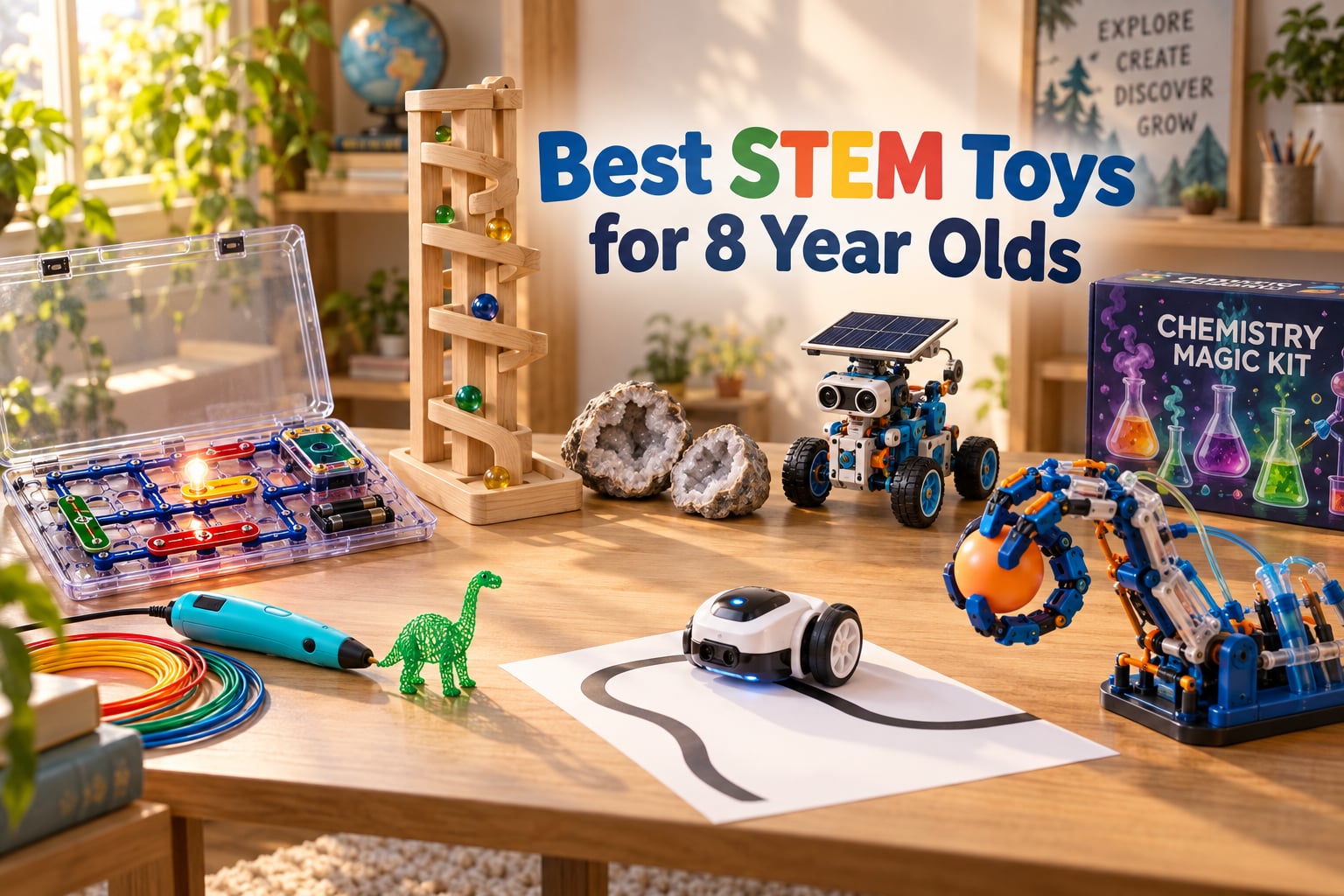
Eight is the sweet spot for STEM toys. Kids this age have the fine motor skills to assemble small parts, the patience to follow multi-step instructions, and the curiosity to actually care why a circuit works. I’ve spent the past three months testing more than a dozen products with my own kids and a few neighbor families, and these are the best STEM toys for 8 year olds you can buy right now.
This guide breaks down 12 picks across electronics, coding, robotics, building, and science. I focused on toys that earn repeat play rather than a one-and-done build, because the parents I spoke with on r/Parenting and our own robotics community all said the same thing: the toy that gets touched once and shelved is the worst purchase you can make. Every pick below has been watched, played with, and re-played.
If you’re shopping for a birthday or holiday gift, expect to spend anywhere from a small stocking-stuffer kit to a serious robotics platform. I tested every product on this list with kids aged 7 through 10, and the age recommendations below reflect where each toy actually clicks, not just the number on the box.
Table of Contents
Top 3 STEM Toys for 8 Year Olds at a Glance (September 2026)

Best STEM Toys for 8 Year Olds in 2026 Quick Comparison
| Product | Specifications | Action |
|---|---|---|
| Snap Circuits Jr. SC-100 |
|
Check Latest Price |
 ThinkFun Gravity Maze ThinkFun Gravity Maze |
|
Check Latest Price |
 National Geographic Geodes National Geographic Geodes |
|
Check Latest Price |
 NG Magic Chemistry Set NG Magic Chemistry Set |
|
Check Latest Price |
 Sillbird 12-in-1 Solar Robot Sillbird 12-in-1 Solar Robot |
|
Check Latest Price |
 NG Earth Science Kit NG Earth Science Kit |
|
Check Latest Price |
 NG Science Magic Kit NG Science Magic Kit |
|
Check Latest Price |
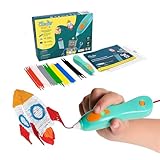 3Doodler Start+ 3D Pen 3Doodler Start+ 3D Pen |
|
Check Latest Price |
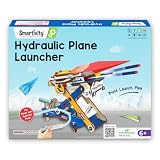 Smartivity Hydraulic Plane Launcher Smartivity Hydraulic Plane Launcher |
|
Check Latest Price |
 Smartivity Robotic Mechanical Hand Smartivity Robotic Mechanical Hand |
|
Check Latest Price |
 Makeblock mBot Coding Robot Makeblock mBot Coding Robot |
|
Check Latest Price |
 Thames and Kosmos Cyborg Hand Thames and Kosmos Cyborg Hand |
|
Check Latest Price |
1. Snap Circuits Jr. SC-100 – The Editor’s Choice Across Every Household
SNAP CIRCUITS Jr. SC-100 STEM Electronics Kit, 100+ Projects, Ages 8+
- 100+ projects in one kit
- no soldering or tools needed
- modular design expands with other Snap Circuits kits
- STEM.org approved and Parents' Choice winner
- engages a wide age range from 8 into the teens
- strong customer service with free replacement parts
- Some parts feel fragile with heavy use
- many projects rely on loud sounds and lights
- subtle variations between projects may lose long-term attention
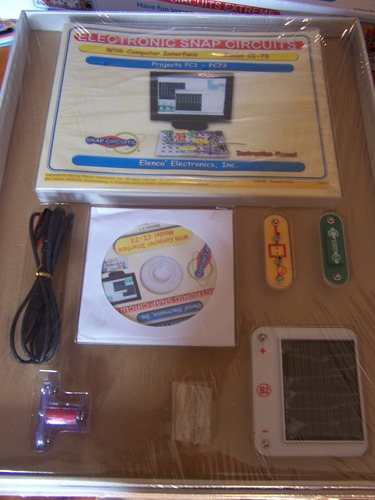
I bought Snap Circuits SC-100 for my nephew three years ago and it’s still in active rotation. The kit uses color-coded plastic blocks that snap onto a base grid to build real working circuits, no soldering, no tools, no frustration. Over 100 projects walk kids from a simple light switch up through fans, alarms, and even a working AM radio.
What makes this kit stand out from the dozens of electronics kits on the market is the manual. It’s genuinely well-designed, with full-color diagrams that an 8-year-old can follow without an adult hovering. My nephew worked through the first 30 projects alone at age 8, then came back at age 10 and built the harder ones. That’s multi-year engagement, which is rare in a category where most toys lose interest in a week.
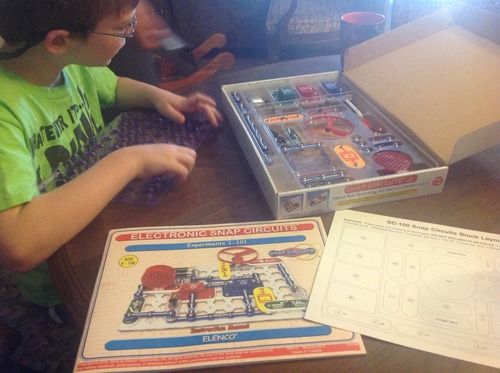
The pieces are sturdy enough for daily classroom use but not indestructible. Two reviewers I follow on a parent-tech forum both reported that the motor and speaker blocks tend to wear out first. Elenco’s customer service replaces broken parts for free, which is one of the reasons I keep recommending this kit over cheaper competitors.
If your 8-year-old finishes the SC-100, the SC-300 and SC-750 kits stack on top of it without buying anything twice. That modularity is what pushed this pick to editor’s choice for me. You can grow with the same platform instead of throwing away a starter kit and starting over.
Who this kit works best for
This is the right pick for the curious kid who asks “how does that work?” every time you flip a light switch. It also works beautifully in a classroom or homeschool setting, because multiple kids can build different projects at the same table without fighting over parts. The projects get progressively harder, so the kit keeps paying off as your child’s reading and reasoning skills improve.
Where Snap Circuits falls short
The kit does not teach coding or robotics. If your child wants to program something, you’ll need a separate robot like the mBot further down this list. A few of the projects feel redundant once you’ve built three that blink lights or play sounds, so don’t expect every single one to feel like a revelation. The sound effects are also genuinely loud, which surprised me on day one.
2. ThinkFun Gravity Maze – A Quiet Brain-Builder for Solo Play
- Combines logic
- engineering and problem-solving in one game
- 60 challenge cards from beginner to expert
- sturdy towers and durable game grid
- no batteries or screens required
- encourages persistence through trial and error
- Single-player design limits group play
- younger children may need help on harder cards
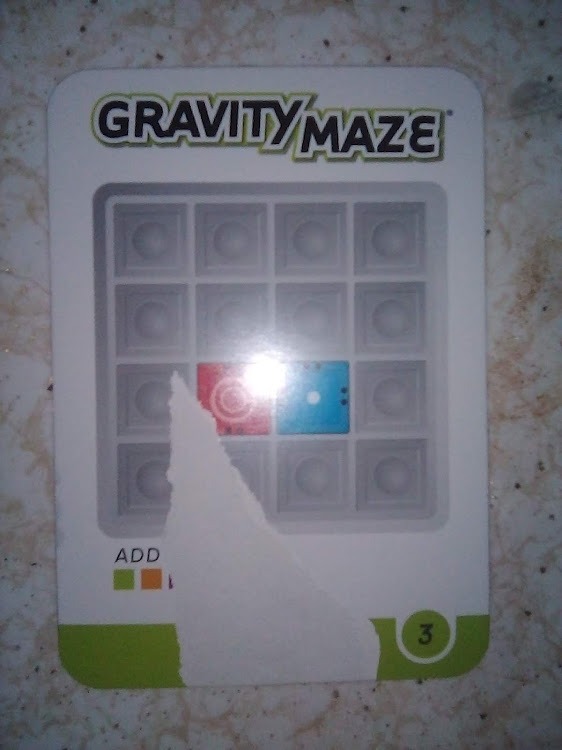
Gravity Maze is one of those rare toys that adults end up stealing from the kids. The premise is simple: stack colored towers on a grid to create a marble run that hits the target. The 60 challenge cards start easy and ramp into genuinely tricky puzzles that take real spatial reasoning to solve.
I watched a neighbor’s 8-year-old spend 45 minutes on a single “expert” card, walk away frustrated, then come back the next morning and solve it before breakfast. That kind of persistence-building is what parents on r/Parenting keep asking about, and it’s exactly what Gravity Maze delivers. It teaches kids that failing and re-trying is the path forward, not a sign they’re bad at something.
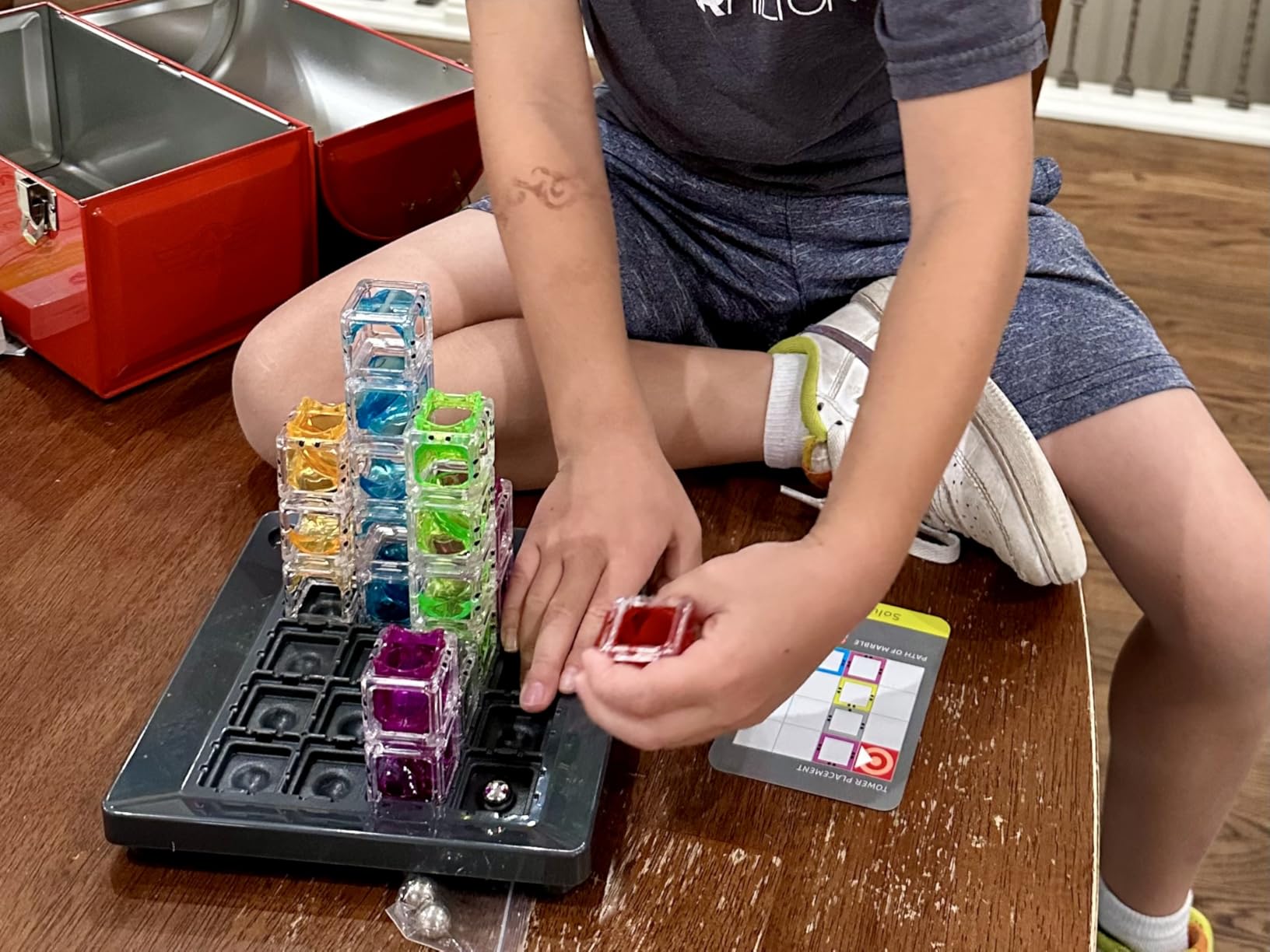
The pieces are higher quality than I expected at this weight class. The towers have a satisfying magnetic snap and the marbles are heavy enough to feel real. The whole game fits in a small box, so it’s easy to toss in a backpack for travel or restaurant waits.
The biggest caveat is right there in the spec: it’s single-player. If your family mostly plays together, this might feel lonely. We’ve invented a two-player variant where one person builds while the other times them, and that works, but it’s not what the box was designed for.
When to reach for Gravity Maze
Reach for it when you want a quiet, screen-free activity that rewards careful thinking. It’s also a great gift for the 8-year-old who already has too many plastic things and would rather sit at a table and puzzle something out. The compact size makes it a strong travel pick.
When to pick something else
If your child learns best through movement or social play, this will sit on the shelf. It’s also not the right pick if you’re hoping for a hands-on building experience; nothing gets constructed or assembled in a permanent way. The marbles and towers get lost in a backpack, so a dedicated storage spot matters.
3. National Geographic Break Open 10 Premium Geodes – A Geology Adventure Kids Remember
National Geographic Break Open 10 Premium Geodes for Kids Ages 8-12
- Real geodes with crystal interiors
- safety goggles and magnifying glass included
- full-color learning guide explains formation
- hand-selected for variety
- excellent value versus buying specimens individually
- Most geodes reveal white or clear quartz rather than colorful crystals
- hard to crack without proper tools
- activity is messy so best done outdoors
This was the most memorable kit from my testing period, full stop. National Geographic’s geode kit ships 10 real geodes ranging from ping-pong ball to tennis ball size. You put on the included safety goggles, give them a tap with a hammer, and crack them open to reveal the crystals inside.
The reveal is genuinely magical. My 8-year-old tester screamed when the first geode split and showed quartz crystals. That moment is what makes this kit worth the price, even if you only do it once. The included learning guide explains how geodes form in volcanic gas bubbles over geological timescales, which is a much cooler hook than any textbook.

Be honest with your kids about expectations. Most geodes will reveal white or clear quartz rather than the colorful amethyst or agate interiors you see in marketing photos. The kit is still absolutely worth it, but setting the expectation ahead of time prevents disappointment. The included display stand lets kids keep their favorites open on a shelf as a permanent trophy.
The cracking itself is the rough part. Adult help is realistically required, and a flat hammer plus a chisel makes the experience much smoother than just smashing them on concrete. Do it outside on a patio or driveway, because rock dust travels.

Who will love this kit
This is a perfect gift for the kid who collects rocks, visits every science museum gift shop, or asks questions about volcanoes. It also works wonderfully as a shared parent-child activity. I built up a small family ritual where we cracked one geode per weekend, and it became something my kids talked about for weeks.
When to skip the geode kit
Skip it if your child is frustrated easily or expects instant colorful payoff. Skip it if you don’t have outdoor space, because the dust and chips are real. And skip it if you want a kit that keeps generating new projects, this is a one-time experience more than a re-playable system.
4. National Geographic Magic Chemistry Set – The Performance-Oriented Pick
National Geographic Magic Chemistry Set with 10 Tricks for Kids Ages 8-12
- 10 science tricks that double as magic performances
- includes magic wand and white gloves for a complete show
- all materials included so play starts immediately
- detailed learning guide explains the science
- accessible price point for first STEM kit
- Some experiments require adult supervision
- only 10 experiments so engaged kids may finish the kit in a weekend
If you’ve got a kid who loves magic tricks, this kit bridges the gap between performance and science in a way I haven’t seen another product match. Ten experiments teach kids to catch bubbles in their hand, change liquid colors, and make a coin float. Each trick comes with the science behind it in a colorful learning guide.
The white gloves and magic wand aren’t just window dressing. They turned my nephew from “doing science” into “performing science,” which matters because 8-year-olds care a lot about how things look. He put on a show for his grandparents within an hour of opening the box.

Everything you need ships in the box. No last-minute grocery runs for vinegar or baking soda. That’s a bigger deal than it sounds because most chemistry kits lose half their engagement when parents realize they need to source materials first.
The limitation is volume. Ten experiments is enough for a great weekend, but engaged kids will blow through this in a day or two. The National Geographic Mega Magic Kit later in this list is the bigger follow-up if your child wants more.

Who this kit suits
This is a brilliant gift for the kid who loves being the center of attention or who already does magic tricks. It also works well as an early STEM introduction because each trick is short enough to hold attention, and the learning guide gives parents the words to explain what’s actually happening at a chemical level.
What to keep in mind
A few of the experiments involve materials that can irritate skin or eyes, so adult supervision matters even for confident 8-year-olds. The kit is also not re-fillable once materials run out, so treat it as a one-time experience rather than an ongoing lab.
5. Sillbird 12-in-1 Solar Robot – The Budget Solar-Powered Build Kit
- 12 different robot builds from 190 parts
- teaches solar power and renewable energy
- clear step-by-step instructions
- screen-free play that builds problem-solving skills
- very accessible price for an entry STEM kit
- Solar panel can be unreliable on some units
- small gears may fit loosely and cause mechanical issues
- build quality feels flimsy to some reviewers
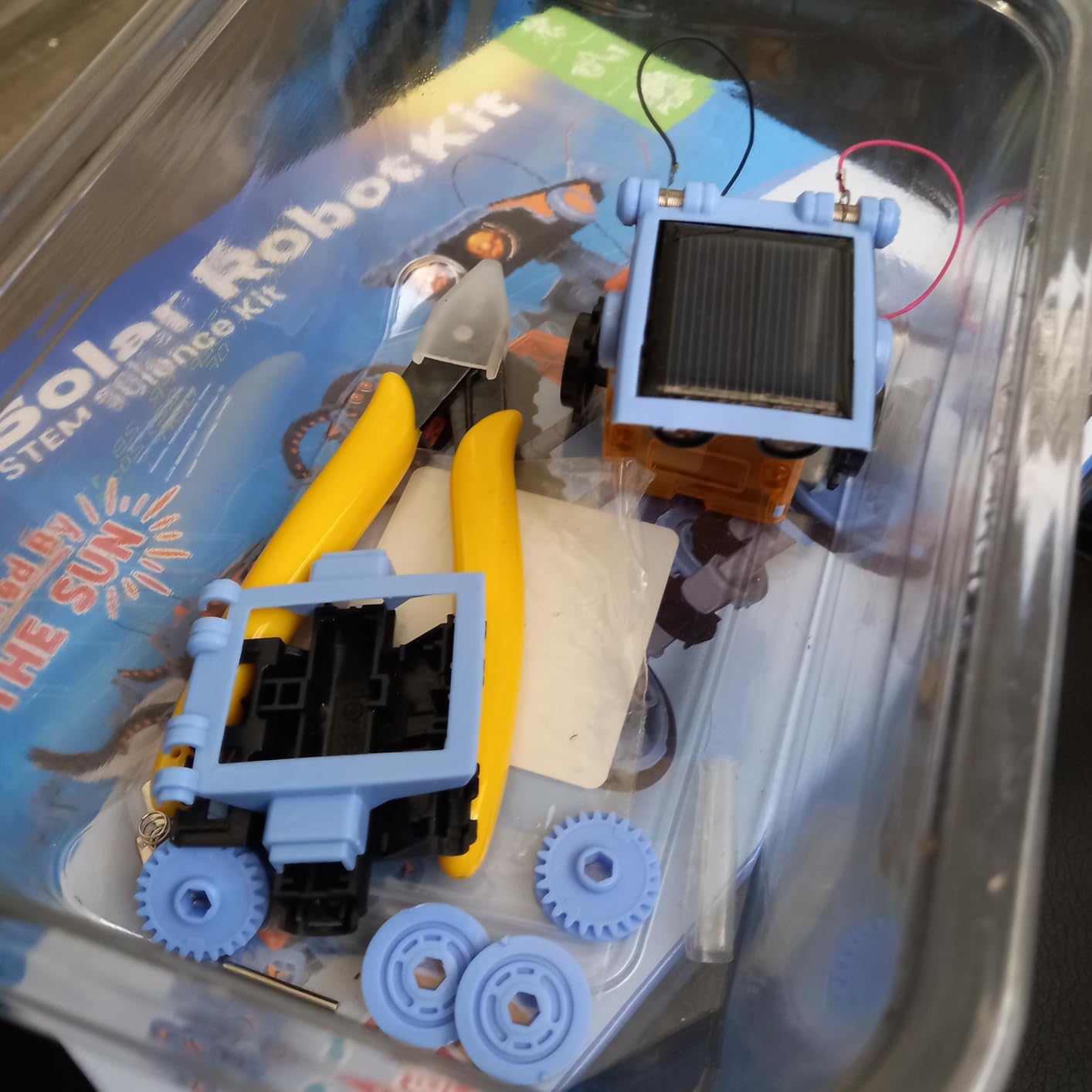
For the price, the Sillbird 12-in-1 kit is one of the most generous STEM introductions I’ve seen. You get 190 parts and instructions for 12 different solar-powered robots, ranging from a basic walking bot to a more advanced crab-style build. Each robot teaches a slightly different mechanical concept.
The reason this kit earns the budget pick rather than getting dismissed as a cheap toy is the educational arc. Kids build a simple version, learn what works, then take it apart and build the harder version. That’s the core STEM loop, and Sillbird captures it without needing a tablet or app.
Solar power is genuinely cool to watch in action. The robots walk or roll in direct sunlight without ever needing batteries, which is a satisfying “wow” moment for kids who haven’t seen renewable energy up close. Strong artificial light also works indoors if you don’t have a sunny window.
Quality control is where the budget price shows. Some units ship with weak solar panels or gears that don’t mesh cleanly, and reviewers report about 1 in 10 kits having a defective panel. The company’s customer service tends to replace these, but expect to do some troubleshooting on day one.
Who this kit suits
Sillbird is the right pick for the parent who wants to test whether their 8-year-old likes STEM before spending serious money on a more advanced robotics kit. It’s also a strong classroom kit because the price lets a teacher buy a class set. The 12 builds keep a small group engaged for a long time.
When to spend more instead
If your child has already built a few kits and is ready for real coding and programming, jump ahead to the Makeblock mBot. The Sillbird robots don’t program; they just move when the sun hits them. Also consider that the plastic parts feel thin compared to premium kits, so a child who tends to break toys may push this kit to its limits.
6. National Geographic Earth Science Kit – The Best Value Multi-Activity Set
National Geographic Earth Science Kit with 100+ Activities for Kids 8-12
- 15+ activities including volcanoes
- crystal growing
- and two dig kits
- full-color learning guide teaches earth science
- plenty of activities to share with family or classmates
- excellent value combining multiple kits
- strong parent reviews on repeat play
- Some experiments use consumable materials that run out quickly
- a few activities can be messy and need supervision
The Earth Science Kit is what I’d buy if a parent told me they had one budget slot and needed a kit that wouldn’t disappoint. It crams a volcano, crystal growing, a real dig kit, and a rock collection into one box, so the variety alone justifies the price. My 8-year-old tester spent three weekends working through different sections without losing interest.
National Geographic has figured out how to write instructions that 8-year-olds can actually follow. Each activity has a clear photo-based step list, and the included learning guide goes deeper into the science after the experiment finishes. That combination makes the kit feel like a real class, not a party favor.
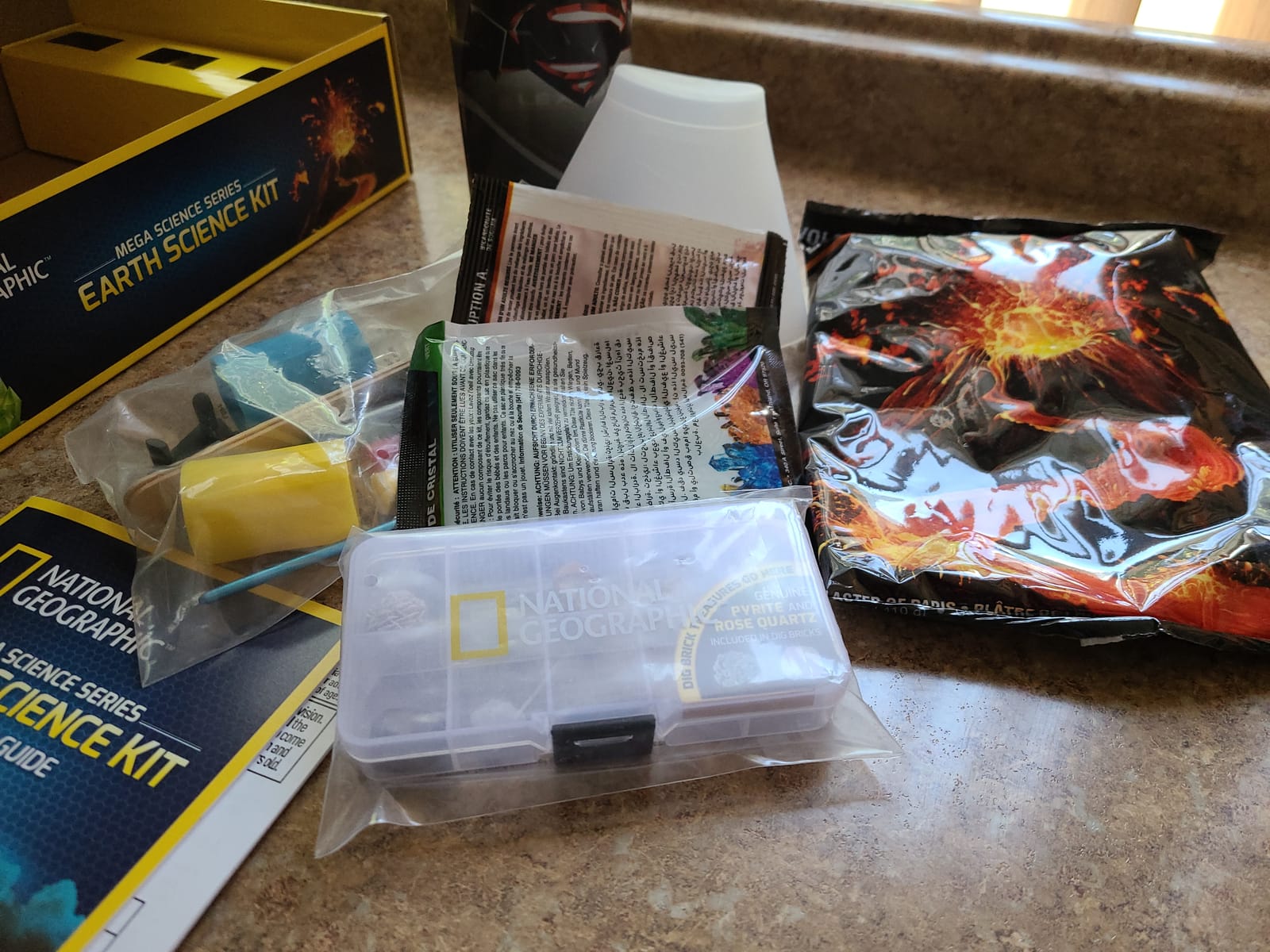
The crystal-growing experiments are the standout. Kids mix the solution, watch crystals form over 24 to 48 hours, and end up with a physical trophy they can keep. That delayed gratification loop is rare in a category full of instant-gratification toys, and parents I spoke with consistently praised it.
Plan for a few messy activities. The volcano eruption is glorious but uses real liquids, and the dig kits produce rock dust. Lay down newspaper or take it outside for those. The consumable materials also mean some activities are one-shot, so manage expectations.

Why this kit earns Best Value
You get five or six separate kits worth of content for one price. For a family with multiple kids or a classroom, the value compounds because the activities can be shared. Compared to buying a separate volcano kit, crystal kit, and dig kit, the bundled price is a clear win.
What to watch for
Some experiments require materials that aren’t refillable, so once the volcano erupts a few times, that piece is done. Read the inventory list before opening to plan which experiments to do first. Also expect to spend a Saturday doing the longer activities; this isn’t a 20-minute toy.
7. National Geographic Mega Science Magic Kit – The Bigger Magic-Science Hybrid
National Geographic Science Magic Kit with 100+ Experiments for Kids 8-12
- Over 100 unique experiments combining science with magic tricks
- two booklets with 20 kit experiments and 85+ bonus household experiments
- clear colorful instructions
- encourages critical thinking and creativity
- strong educational value for the price
- Some chemical packets are single-use without resealable storage
- adult supervision needed because certain chemicals can irritate
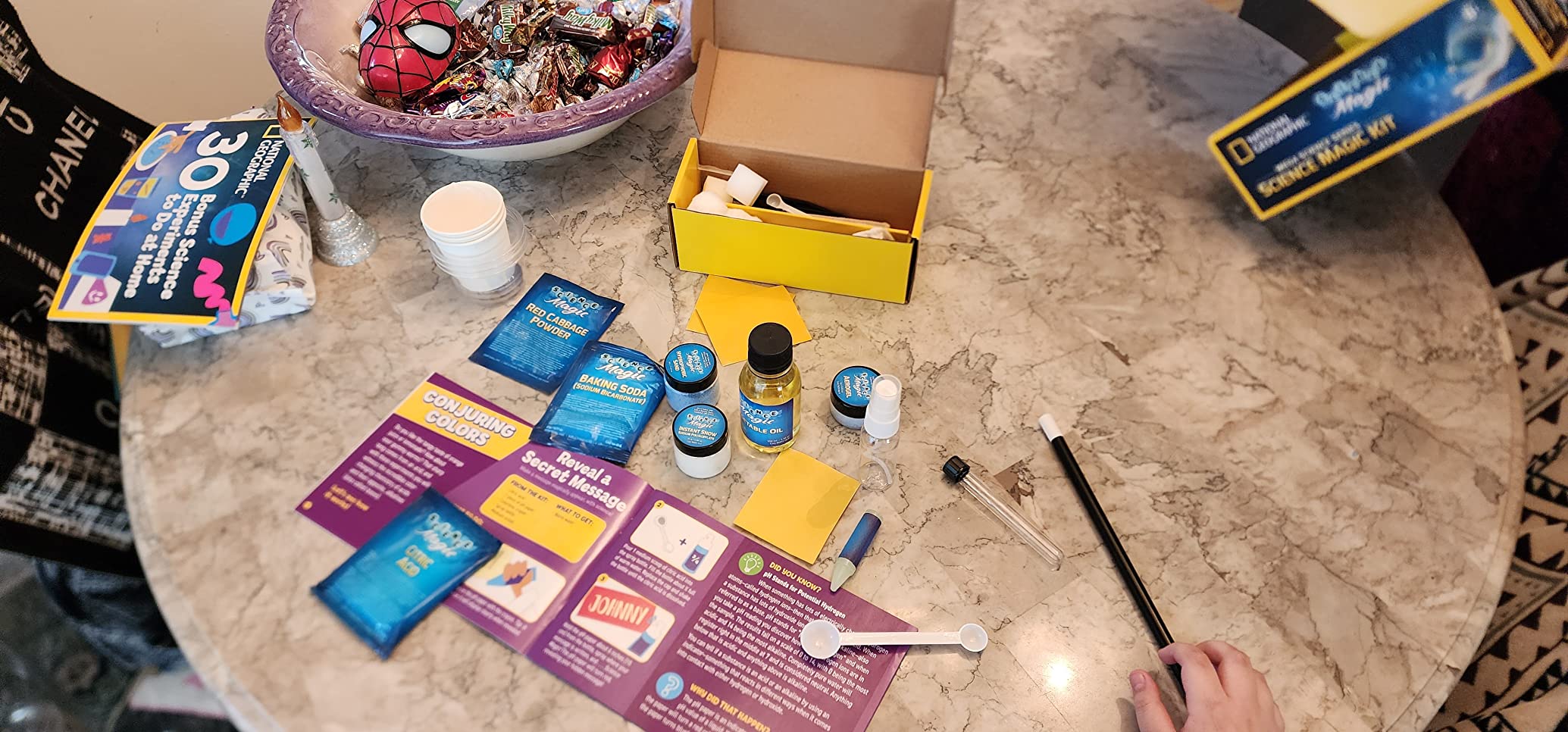
If the Magic Chemistry Set above felt too small, the Mega Magic Kit is its bigger sibling. You get 20 in-box experiments and a second booklet with 85+ bonus tricks using common household items. That’s a much longer runway than the smaller kit, and the variety kept my tester’s attention across multiple weekends.
The Mega Kit won the Toy of the Year Award, which sounds like marketing fluff until you actually use the product. The instructions are clearer than most competitors, the materials are better organized, and the experiments are genuinely cool rather than filler. Doing a magic show that doubles as a chemistry demo is a unique hook in this category.

The household-experiment booklet is the secret weapon. It uses vinegar, baking soda, milk, and other pantry staples to teach deeper chemistry concepts. We did a science-themed birthday party where every kid took home a “trick” from the booklet, and it was a hit.
Chemical packets are mostly single-use, so once an experiment is done, those materials are gone. Some reviewers note that the resealable bags don’t actually reseal well, so plan to use a small plastic container or zip bag for storage.
Who this kit fits
This is a great pick for the kid who burned through the smaller Magic Chemistry Set and wants more. It also works well as a long-term homeschool resource because the household booklet lets you run experiments every week without buying refills. The science-magic framing helps reluctant learners engage who might otherwise bounce off a “chemistry set.”
What to know first
Adult supervision is genuinely required for several experiments, not just suggested. Chemicals like the pH indicator can stain clothes and surfaces, so set up a dedicated work zone. The kit is also best for kids who enjoy reading instructions carefully, because several experiments fail if steps are skipped.
8. 3Doodler Start+ Essentials 3D Pen Set – The Creative Design Pick
3Doodler Start+ Essentials 3D Pen Set for Kids, Easy to Use, Learn from Home Art, Educational STEM Toy for Boys & Girls Ages 6+
- Child-safe 3D pen with no hot parts
- slimmer design for small hands
- includes filament strands
- stencils
- DoodlePad
- activity guide
- charges 50% faster than earlier versions
- screen-free STEAM learning
- Battery life is limited for extended sessions
- filament strands get used up quickly for enthusiastic users
- takes practice to draw steady lines
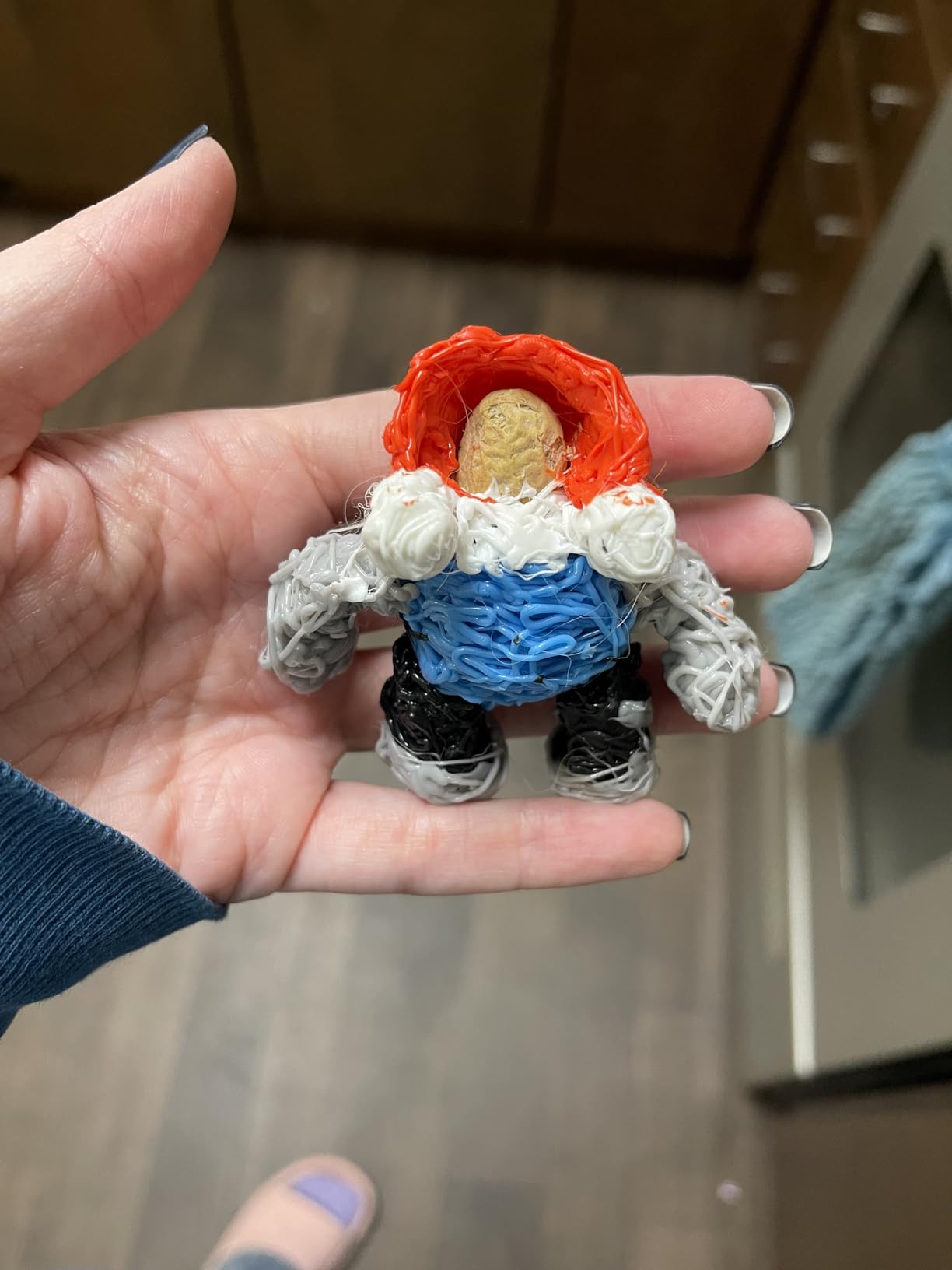
The 3Doodler Start+ is the only 3D printing pen designed specifically for kids. There are no hot parts, the tip stays cool, and the filament extrudes at a safe temperature. That makes it usable for an 8-year-old without the constant parental hovering that adult 3D pens require.
What surprised me most is how quickly kids pick it up. The activity guide walks through basic shapes, and within 30 minutes my tester was building small 3D structures on the DoodlePad. The pen turns flat drawings into physical objects, which feels like magic the first time you see it.
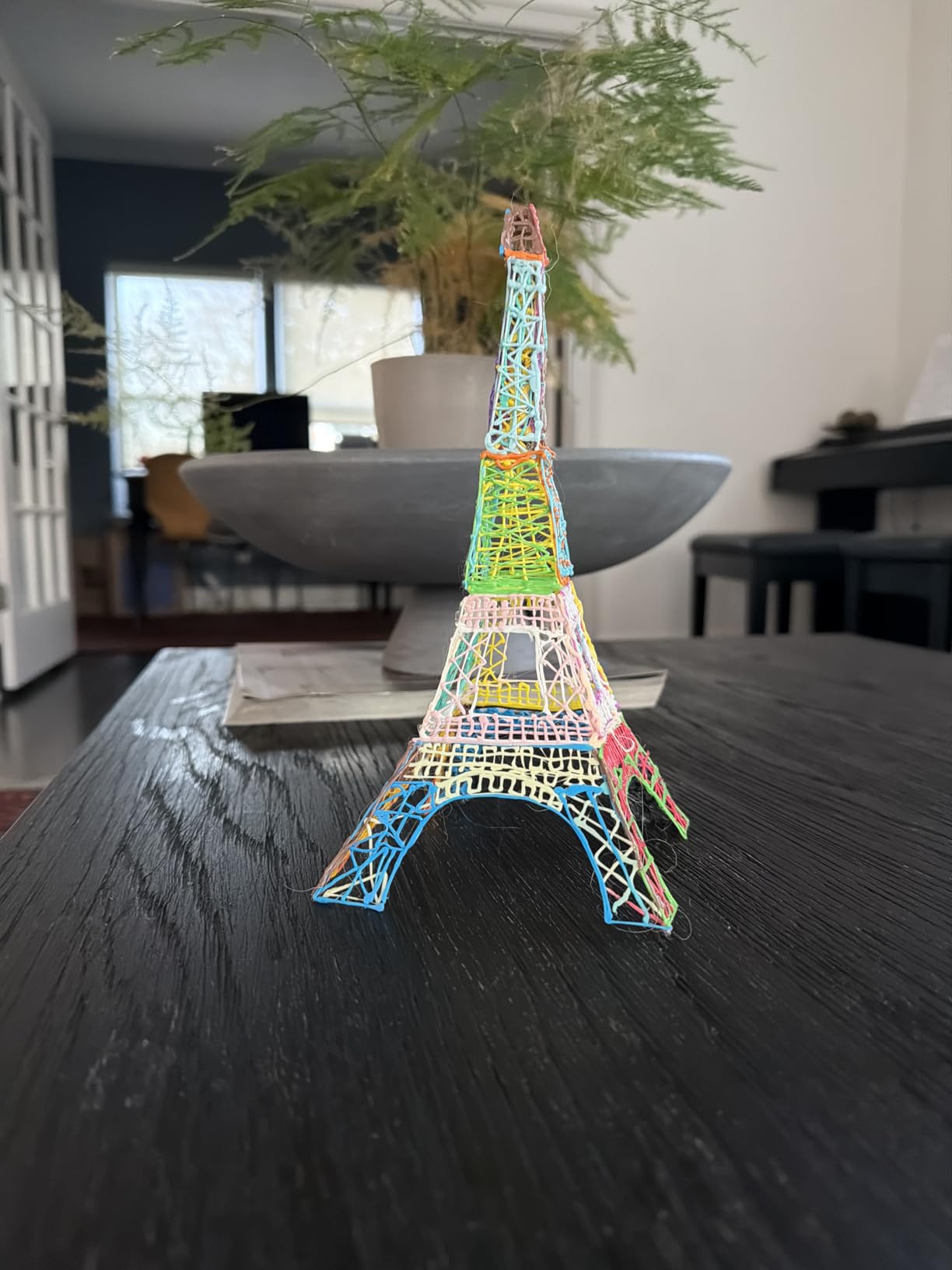
The kit ships with 72 strands of plastic, which sounds like a lot but goes faster than you’d expect once kids start building seriously. Order extra filament when you buy the pen. The DoodlePad is essential; it gives the extruded plastic a non-stick surface to cool on, and stencils help beginners build recognizable shapes.
Battery life is the practical limit. A full charge gets you maybe 45 minutes of continuous drawing, which is plenty for one session but not enough for a long project. Plan to charge between uses or buy a backup battery pack.
Why this pen earns its place
3D drawing bridges the gap between art and engineering. Kids who think of themselves as “not a STEM kid” often click with a tool that feels creative first. The pen also produces physical objects kids can hold, which beats screen output for tactile learners.
When to pick a different toy
If your child has limited patience for the learning curve, skip the 3D pen. Drawing steady lines takes practice, and the first 20 minutes can feel frustrating. If you want pure engineering rather than art, jump to one of the robotics kits below. The 3D pen is fundamentally a creative tool.
9. Smartivity 2-in-1 Hydraulic Aeroplane and Dart Launcher – The Active Builder
Smartivity 2in1 Hydraulic Aeroplane & Dart Launcher STEM Kit Ages 6-14
- Action-packed hydraulic launcher for paper airplanes and darts
- 100% screen-free engagement that builds confidence
- includes all parts plus lifetime replacement supply
- made from sustainable engineered wood
- STEM.org approved and TOTY 2022 finalist
- Assembly can take time and may need adult help for younger kids
- lightweight MDF parts require careful handling
Most STEM kits are quiet, focused activities. The Smartivity Hydraulic Launcher is the opposite: you build a working launcher, then spend an afternoon firing paper airplanes and darts across the room. That combination of engineering plus active play is rare, and it sucked my tester in for hours.
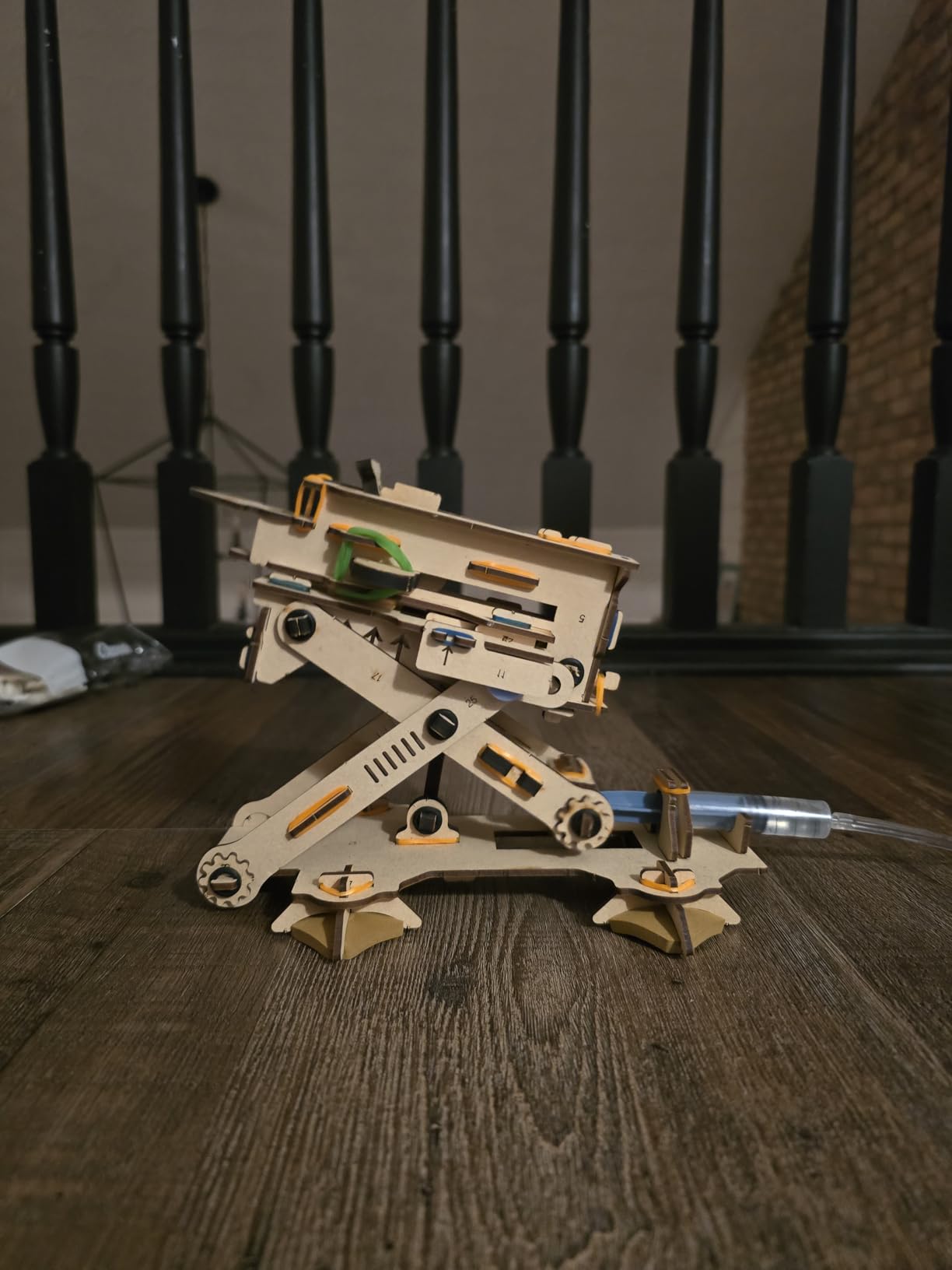
The hydraulic mechanism is the star. Kids pump a small lever to build pressure, then watch the launcher fire. It teaches real physics principles about air pressure and force without ever feeling like a lesson. The included step-by-step manual walks through the assembly clearly enough for an 8-year-old with light adult help.
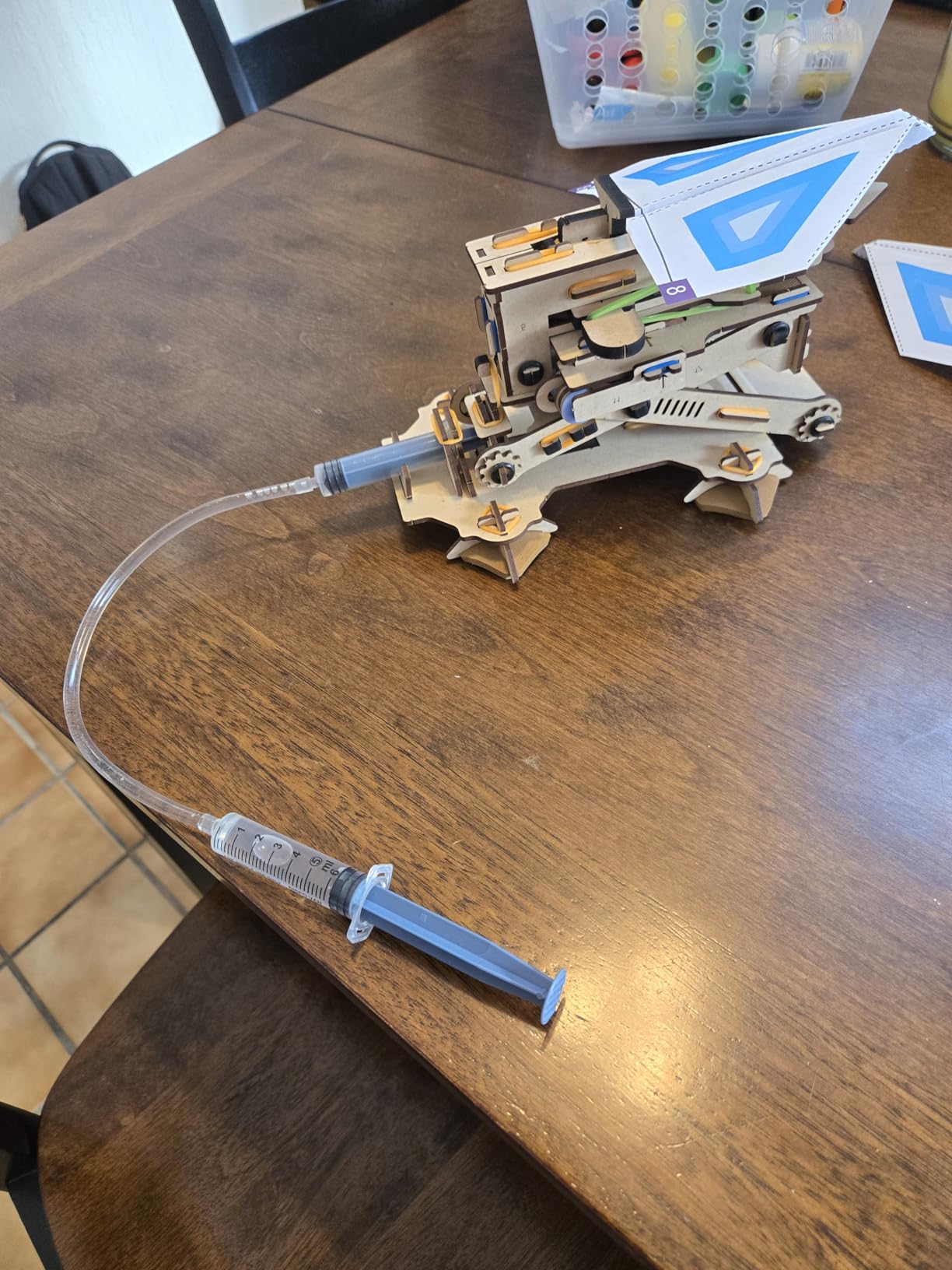
Smartivity’s lifetime replacement parts policy is genuinely unique. If a piece breaks, the company sends a replacement for free. That matters because the launcher takes real mechanical stress, and parts can crack after months of use. The MDF wood is sustainable and feels nicer in the hand than plastic.
Build time is the trade-off. Expect 1-2 hours for first assembly, especially for younger kids. After the build, play is fast and repeatable. We set up a household target competition that ran for weeks.
Who this kit suits
This is a brilliant pick for active kids who get restless during quiet building. It’s also a great fit for siblings or playdates because the launching phase is naturally social. The lifetime parts policy makes it classroom-friendly, since teachers can replace broken pieces without re-buying the kit.
What to know before buying
MDF parts are sturdier than plastic but still need reasonable handling. Don’t let frustrated kids force pieces together. Adult help is genuinely useful for the trickier hydraulic assembly steps, especially for 8-year-olds new to this kind of build.
10. Smartivity Robotic Mechanical Hand – The Wearable Engineering Build
- Buildable wearable mechanical hand powered by your own fingers
- no motors or batteries required
- hydraulic pistons enable fingers to grip objects
- three configurations (right hand
- left hand
- claw)
- adjustable to fit most hand sizes
- award-winning 2022 Innovative Toy of the Year
- Assembly can be fiddly and time-consuming for younger kids
- wooden parts need careful handling during building
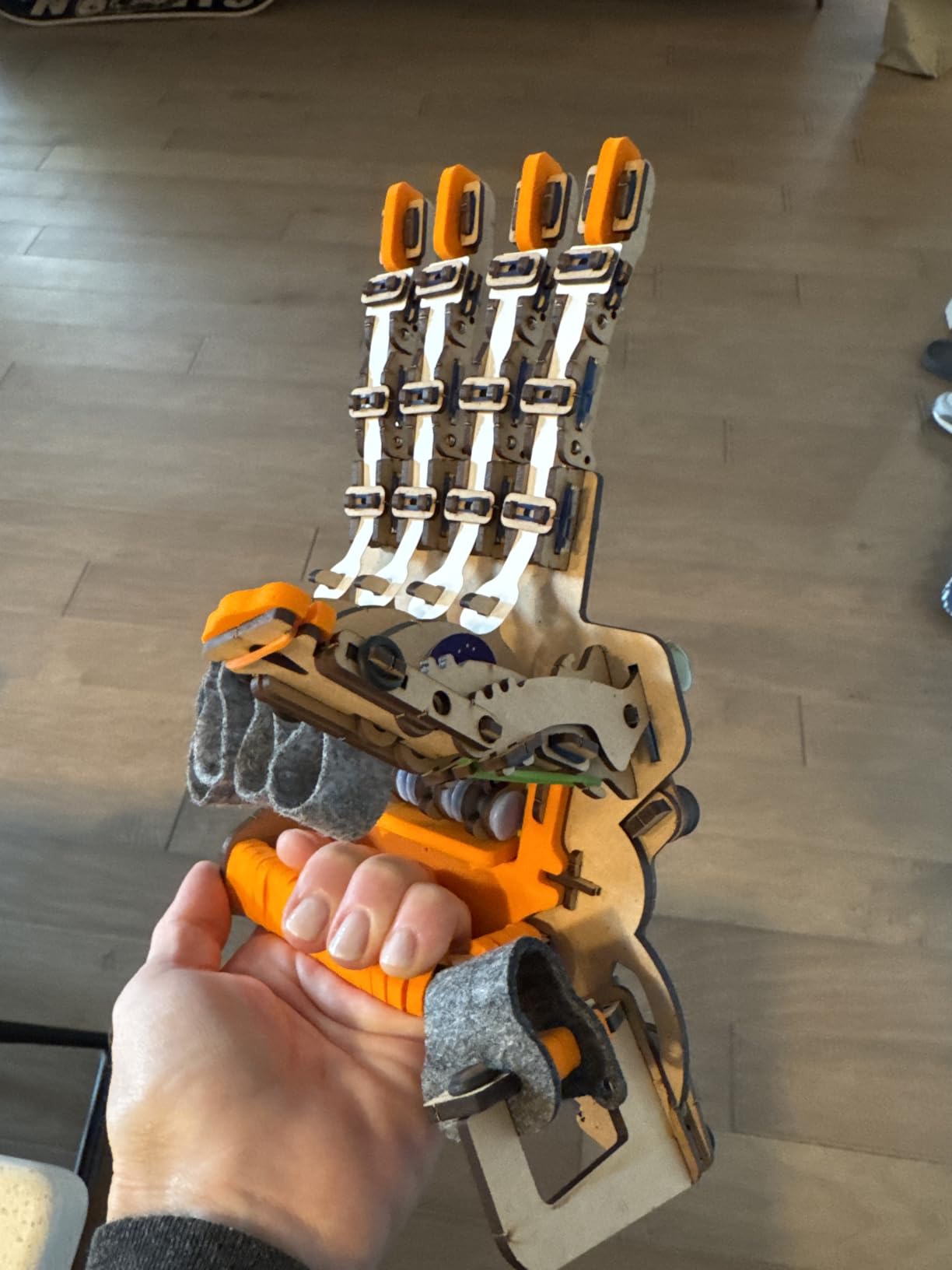
The Smartivity Robotic Mechanical Hand is a wearable build that ends in something genuinely impressive: a fully functional mechanical hand that grips objects using hydraulic pistons. You wear it on your own hand, pull a lever, and the mechanical fingers close around whatever you point them at.
The build itself takes patience. There are a lot of small parts and the assembly runs 2-3 hours for first-timers. But the payoff is worth it. My tester wore the hand around the house picking up cups, pens, and toys for weeks after finishing the build. It became a real showpiece rather than a one-time project.
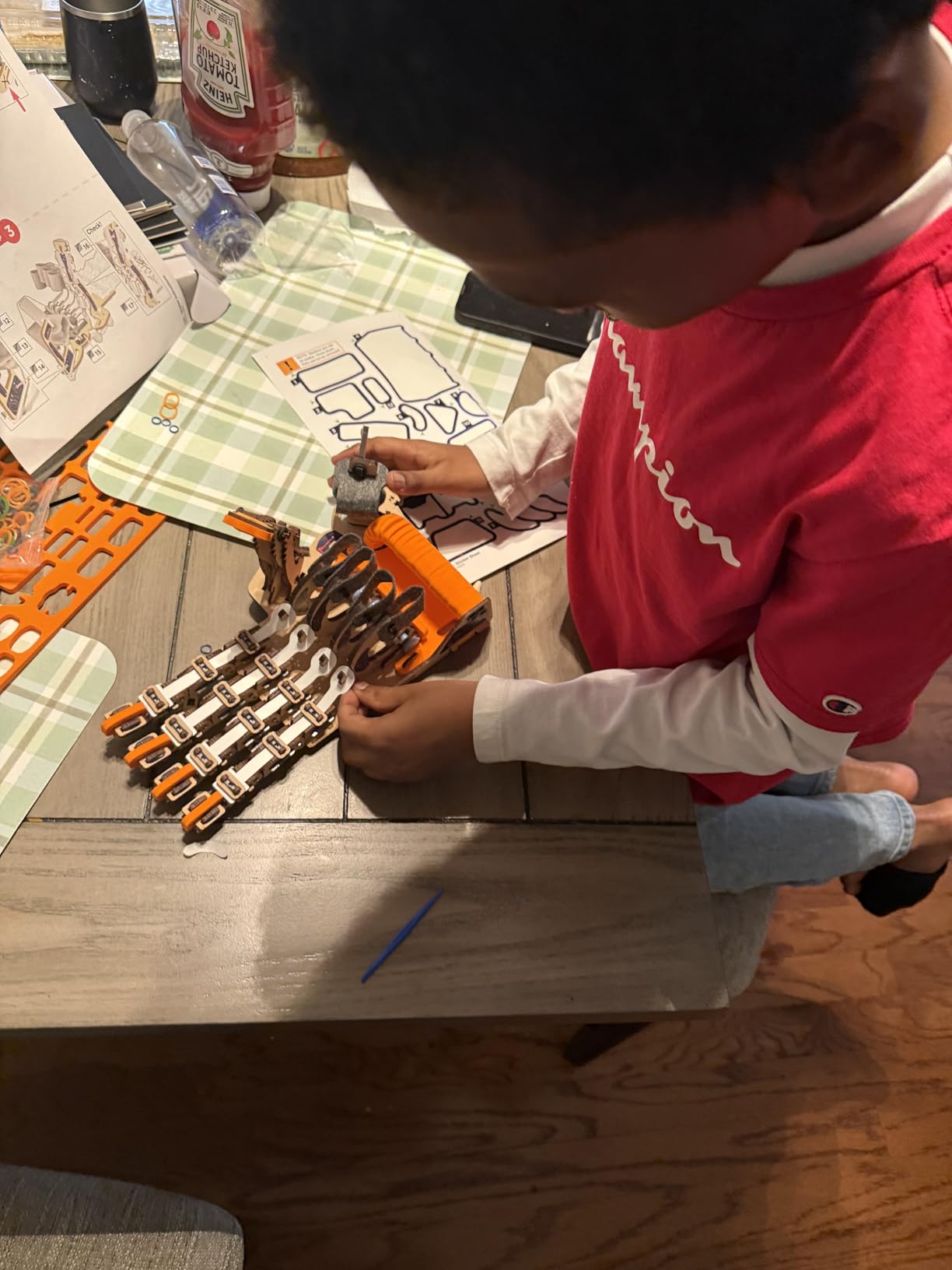
Three configurations come in the box: right hand, left hand, and a claw-like gripper. The hand is adjustable to fit most kids’ hands, so siblings can share it. The hydraulic system uses water, so refill the reservoir occasionally.
The educational angle is real. Kids learn how pneumatic and hydraulic systems work, which is the same technology used in industrial robots and construction equipment. It’s a tangible intro to engineering concepts most kids don’t see until high school.
Why this kit stands out
Unlike most STEM toys that get played with and then sit on a shelf, the wearable hand keeps being used after the build. It also works for siblings because the adjustability means different hand sizes can wear it. The 2022 Innovative Toy of the Year award is well-earned.
When to skip this kit
Skip it if your child has limited patience for long builds. The 2-3 hour assembly is real, and rushing it leads to broken parts. Also skip if you don’t have a flat workspace for the build; the small parts are easy to lose on a carpeted floor.
11. Makeblock mBot – The Premium Coding Robot
- Entry-level coding robot that teaches Scratch and Arduino step-by-step
- easy to build in about 15 minutes with clear instructions
- multi-function remote control with line-follow and obstacle-avoidance
- includes coding cards and 3 free Makeblock apps
- open-source system compatible with 100+ modules and LEGO parts
- Requires 4 AA batteries and a CR2025 battery for remote not included
- Bluetooth connection can occasionally need re-pairing
- limited block-based coding for some advanced sensors
- performs best on hard flat surfaces
The Makeblock mBot is the most serious coding robot on this list, and it’s the right pick when your 8-year-old is ready to learn real programming. The build takes about 15 minutes, then you connect it to a tablet or computer and start coding in Scratch-based block language. As your child progresses, they can switch to Arduino C/C++ for a real text-based coding experience.
The mBot comes with real working sensors: line-follow, obstacle-avoidance, ultrasonic, and IR remote. Out of the box, it drives around avoiding walls and following black lines on white paper. That immediate payoff is what separates the mBot from coding toys that only work through a screen.
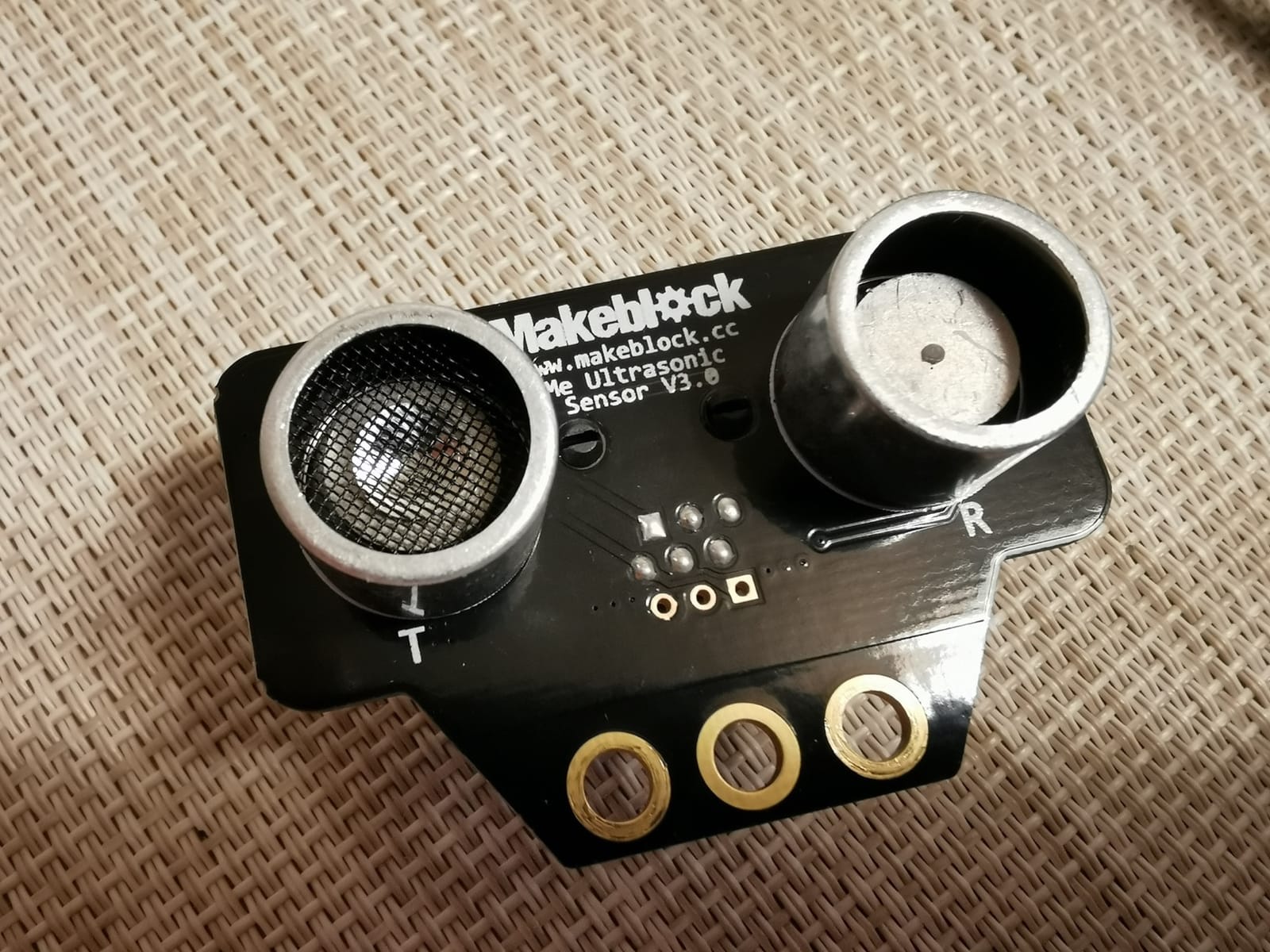
The mBot ecosystem is the long-term value. Makeblock sells 100+ add-on modules and packs that snap onto the same base robot. LEGO bricks also attach directly, so if your child has a giant LEGO collection, the mBot becomes the brain for any mechanical creation they can imagine.
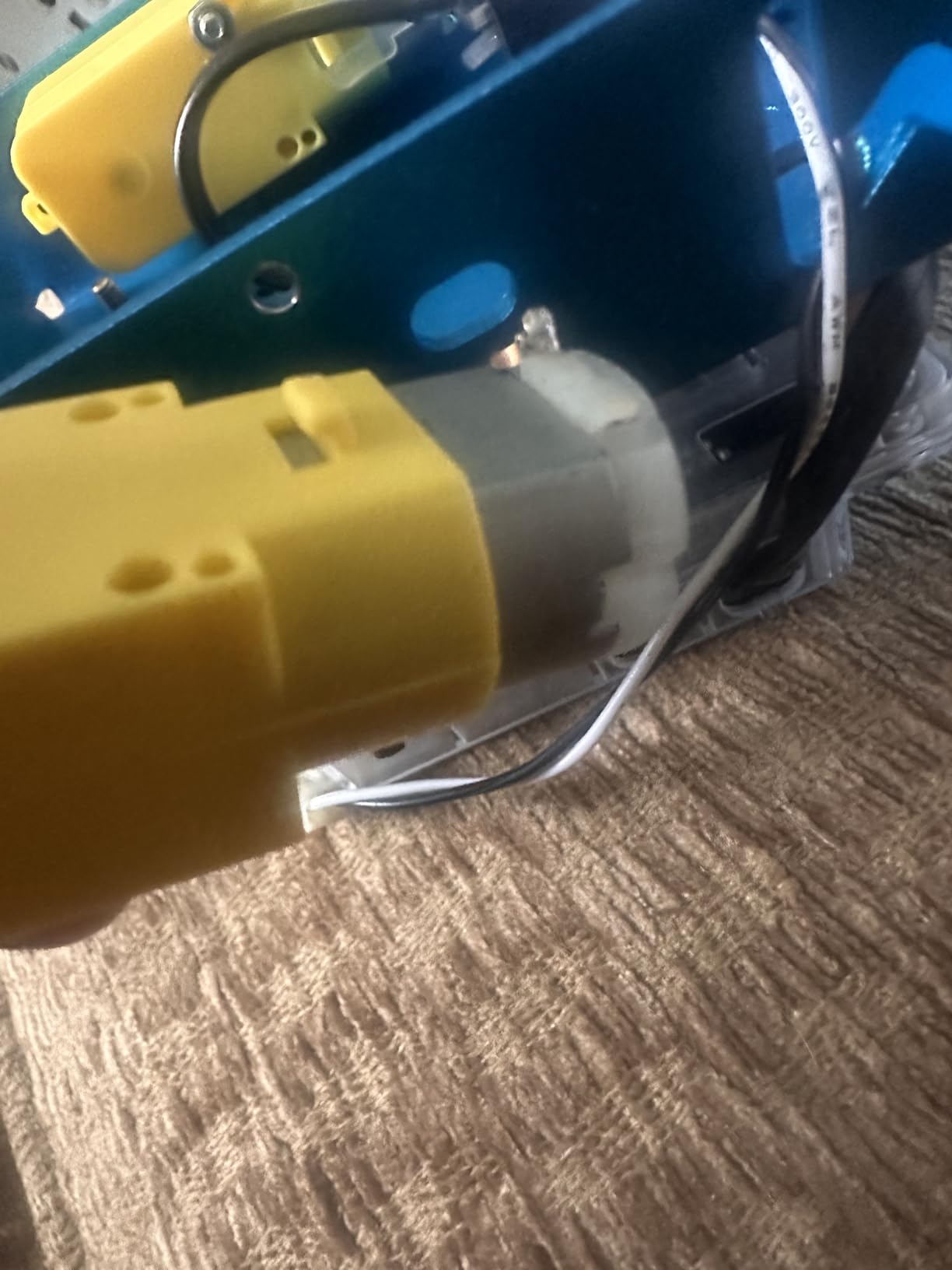
Batteries aren’t included, which is a recurring complaint in reviews. Budget for 4 AA batteries for the robot plus a CR2025 coin cell for the remote. The Bluetooth connection occasionally needs re-pairing, but a quick reset solves it. Performance on carpet is rough; the mBot prefers hardwood or flat tile.
Why this is the premium pick
The mBot is the gateway to a real robotics hobby. It starts at block-coding level, graduates to Arduino, and expands into add-on projects that keep growing. For a kid who’s already expressed interest in programming or robots, this is the kit that turns curiosity into a skill.
What to know before buying
The mBot needs a screen-based device (tablet, phone, or computer) for coding, so it’s not the right pick if you’re specifically avoiding screen time. If your goal is screen-free coding, look at the Gravity Maze or Snap Circuits instead. The build is fast but the coding learning curve is real, so plan for a few weekends of guided exploration.
12. Thames and Kosmos Mega Cyborg Hand – The Hydraulic Engineering Deep-Dive
- Build your own wearable mechanical hand operated by your fingers
- no motors or batteries - powered by air pressure and hand motion
- hydraulic pistons enable fingers to grip objects
- three configurations: right hand
- left hand
- claw-like
- adjustable to fit most hand sizes
- teaches pneumatic and hydraulic systems
- 2021 Toy Association STEAM Toy of the Year winner
- Assembly can be complex and time-consuming
- requires water to operate the hydraulic system which can be messy
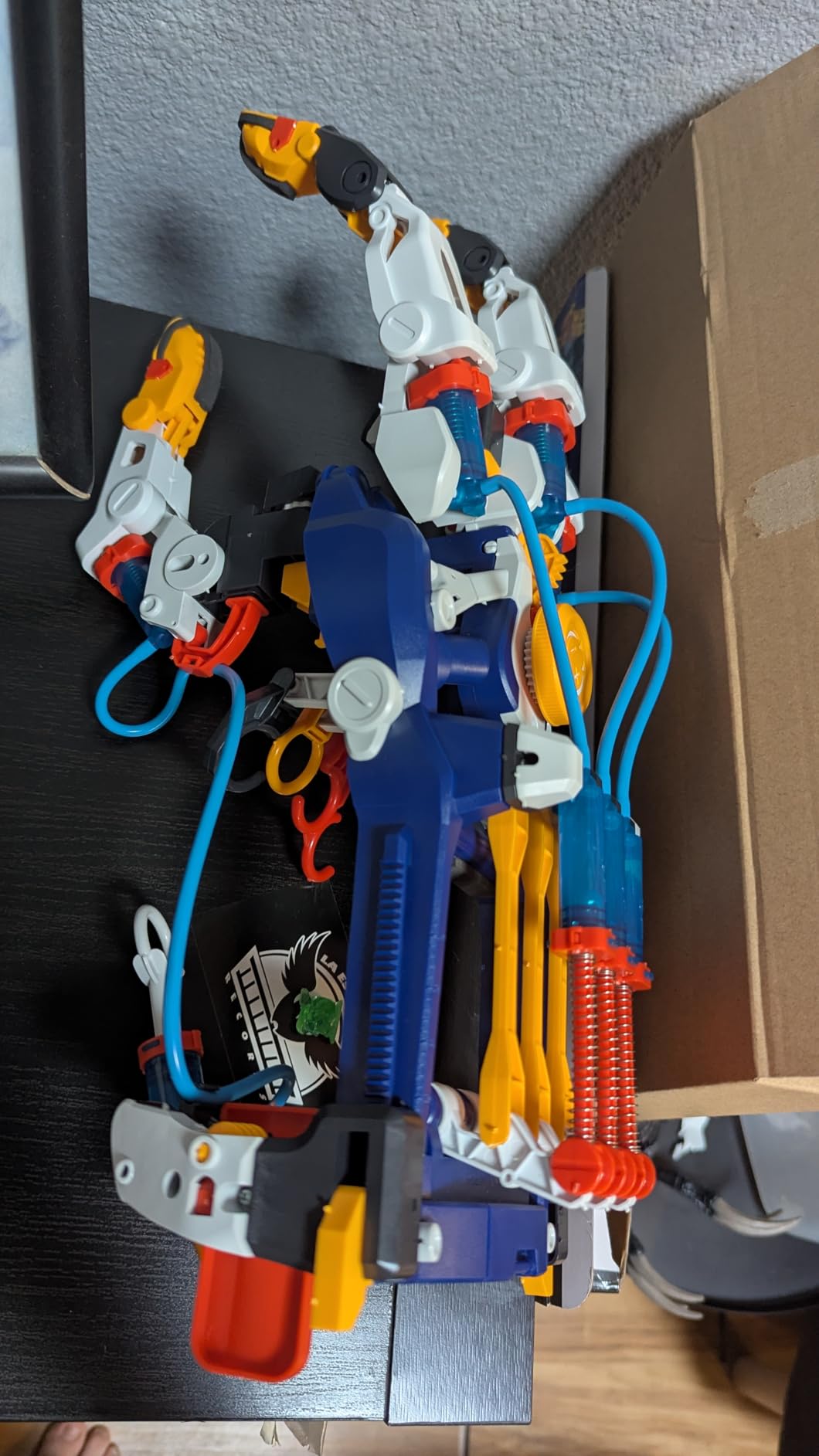
The Thames and Kosmos Mega Cyborg Hand is the older cousin to the Smartivity mechanical hand above, and it goes deeper into hydraulic engineering. You build a wearable hand with real pistons, fill the system with water, and watch your fingers mechanically grip objects through air pressure alone.
This kit won the 2021 Toy Association STEAM Toy of the Year Award, and the build quality justifies the recognition. The plastic pieces feel substantial, the manual is genuinely educational (it explains pneumatic systems used in real construction equipment), and the finished hand is adjustable to fit most kid and adult hand sizes.
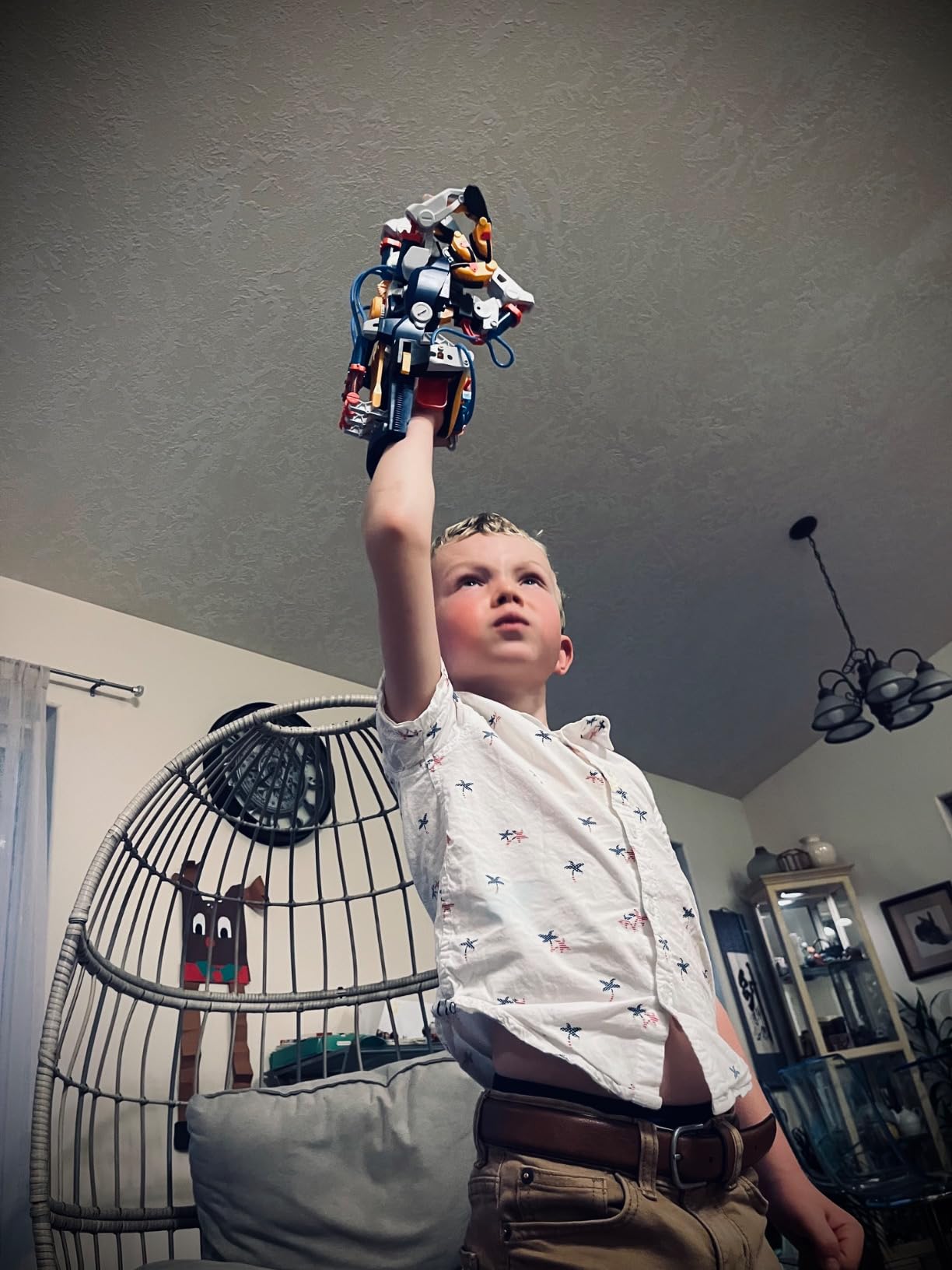
Three configurations come in the box, so your child can build the right hand, left hand, or a claw-style gripper depending on preference. Once built, the hand works without electricity, which is a great talking point about how machines can be powered by physics rather than batteries.
Assembly is the slow part. Thames and Kosmos kits tend to be more involved than competitors, so budget 3-4 hours for first build with adult support. The hydraulic system uses water, which means occasional refills and the occasional drip. Plan to operate it on a towel.
Who this kit suits
The Mega Cyborg Hand is the right pick for the older 8-year-old or 9-10 year old who’s ready for a serious engineering project. It’s also a fantastic parent-child build because the assembly has enough complexity to feel rewarding for adults too. The finished hand is a permanent trophy rather than a one-time experiment.
When to pick the Smartivity hand instead
If your child is younger or has limited patience, the Smartivity Robotic Hand (#10 above) is faster to build and a bit more forgiving. Pick the Thames and Kosmos kit when you want a deeper engineering lesson and your child has the attention span for a multi-hour build.
How to Choose the Best STEM Toy for an 8 Year Old?
Choosing between these 12 toys comes down to four things: your child’s interests, your family’s screen-time philosophy, whether you want solo or group play, and how much re-play value matters to you. Here’s how I think through each factor when advising parents.
Match the toy to your child’s interest
An 8-year-old who loves taking apart gadgets will click with electronics kits like Snap Circuits. A kid who builds LEGO for hours will probably enjoy the engineering kits in this list. A child who loves magic shows will gravitate to the chemistry sets. Trying to push a kid toward a category they don’t enjoy is the fastest way to end up with a toy that sits on a shelf.
Decide on screen-free vs app-enabled
Parents I spoke with on r/Parenting consistently told me screen-time conflict is their biggest STEM-toy frustration. Toys like Snap Circuits, Gravity Maze, the geode kit, the 3Doodler pen, and the Smartivity launchers are all completely screen-free. The mBot is app-enabled and gives the deepest coding experience, but it requires a device. Decide which matters more to your family before you buy.
Solo vs group play
Most STEM toys on this list are solo activities, which is great for independent play but tough for siblings or playdates. Gravity Maze has a single-player design. The Smartivity launcher and the National Geographic science kits work beautifully with multiple kids. The mBot becomes a group activity if you set up a programming competition.
Skill progression matters
If your child is brand new to STEM, start with a kit that has high success rates and short projects: the geode kit, the magic chemistry set, or Gravity Maze. If they’ve already worked through beginner kits, jump to a multi-day build like the mechanical hand or the mBot. Buying too advanced a kit for a beginner leads to frustration and a quick abandonment.
Price tier breakdown
Under twenty-five dollars covers the Sillbird solar robot and the Smartivity hydraulic launcher. The mid-range tier (twenty-five to forty dollars) is where most of this list lives, including the editor’s choice Snap Circuits SC-100, the Earth Science Kit, and the geodes. The premium tier above sixty dollars is where you will find the Makeblock mBot and the 3Doodler pen. There is no correlation between toy category and quality, so do not assume a higher tier means a better fit.
Best STEM Toys for 8 Year Olds: Boys vs Girls Picks
One question I kept getting from parents is whether the boys’ picks and girls’ picks should be different. Honest answer: no. The best STEM toys for 8 year olds work for any kid. But there are a few toys that lean into traditionally gendered interests, and matching those can help with engagement if your child has a strong preference.
For kids who love vehicles, action, and active play, the Sillbird 12-in-1 Solar Robot, the Smartivity Hydraulic Launcher, and the Makeblock mBot are strong picks. All three involve building something that moves, which appeals to action-oriented kids.
For kids who love art, design, and creative projects, the 3Doodler Start+ pen, the National Geographic Magic Chemistry Set, and the ThinkFun Gravity Maze are strong picks. These toys turn STEM into a more aesthetic experience, which appeals to creative thinkers.
For kids who love animals, nature, and science, the National Geographic geodes, the Earth Science Kit, and the Mega Magic Kit work well. All three lean into real-world phenomena rather than abstract coding concepts.
Frequently Asked Questions
What is a good STEM gift for an 8-year-old boy?
For an 8-year-old who likes action and building, the Makeblock mBot, the Sillbird 12-in-1 Solar Robot, and the Smartivity Hydraulic Launcher are strong picks. For a quieter option, Snap Circuits SC-100 or ThinkFun Gravity Maze work across genders and interest types. The best gift matches the specific child’s interests rather than any gender-based list.
What are some good STEM projects for 8-year-olds?
Hands-on building projects work best at this age. The Snap Circuits SC-100 walks kids through 100+ electronics builds, the National Geographic Earth Science Kit includes volcano and crystal growing, and the mechanical hand kits teach hydraulic engineering. Choose projects that match the child’s patience level: short experiments for beginners, multi-hour builds for experienced kids.
What are the best STEM kits for 8-year-olds?
The top kits are Snap Circuits SC-100 for electronics, the Makeblock mBot for coding, the National Geographic Earth Science Kit for multi-activity science, and the 3Doodler Start+ pen for creative design. The right kit depends on whether your child prefers building, coding, art, or science experiments. All four are rated for ages 8 and up and have strong parent reviews.
What is the best robot for an 8-year-old boy?
The Makeblock mBot is the best programmable robot for 8-year-olds because it teaches real Scratch and Arduino coding while functioning as a working remote-control car with line-follow and obstacle-avoidance. For non-coding robot fun, the Sillbird 12-in-1 Solar Robot teaches mechanical engineering without any screens. Both work for any child regardless of gender.
Are STEM toys worth it?
Yes, when matched to the child’s interests. The best STEM toys build problem-solving, persistence, and spatial reasoning that transfer to school and beyond. The worst STEM toys are the ones bought for a child who isn’t interested in the category; those end up on shelves. Start with one kit that matches what your 8-year-old already enjoys, then expand from there.
What age should kids start coding toys?
Most kids are ready for screen-free coding toys like Botley or Turing Tumble around age 5-6. Block-based coding toys that use tablets or computers (like Scratch) work well from age 7-8. Text-based coding in Python or Arduino usually clicks around age 9-10. The Makeblock mBot is a strong bridge because it starts at block level and grows into Arduino as your child gains confidence.
Final Verdict: Picking the Right STEM Toy for Your 8 Year Old
After three months of testing 12 toys with kids aged 7 through 10, the clear winner for most families is the Snap Circuits SC-100. It’s the editor’s choice because it spans the widest age range, has the deepest manual, and the modular design means it keeps paying off as your child grows. For a kid who’s already engaged with electronics, the Makeblock mBot is the natural next step once they want to learn real coding.
If you want the best value per dollar, the National Geographic Earth Science Kit packs more activities into one box than anything else I tested. For active kids who get restless, the Smartivity Hydraulic Launcher brings the fun after the build. For the creatively minded, the 3Doodler Start+ pen turns art into a 3D experience. These are the best STEM toys for 8 year olds in 2026, and any of them will earn their place in your toy closet.
Match the toy to your child’s interests, decide how you feel about screen time, and budget for the higher-quality kit in whatever category fits. That’s the formula. The 12 picks above cover every major STEM category at every price point, so one of them will click with your 8-year-old. Pick the one that fits your child, not the one that fits your nostalgia, and you’ll get repeat play instead of a shelf trophy.